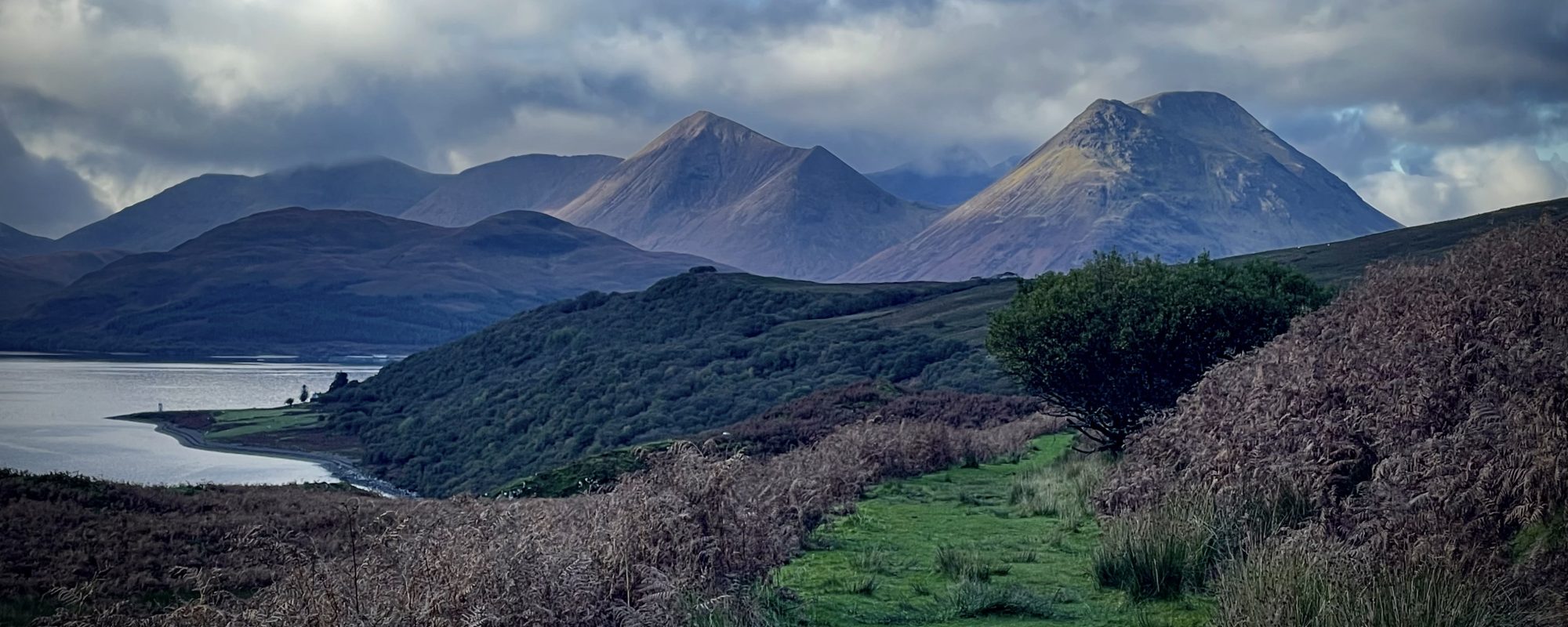
Day three dawned a wee bit rainy, and our planned hike was officially scuppered due to wind, flooding and danger of being blown off a cliff into the sea. Very disappointed, as we were heading to the famed Coulags. Next trip.
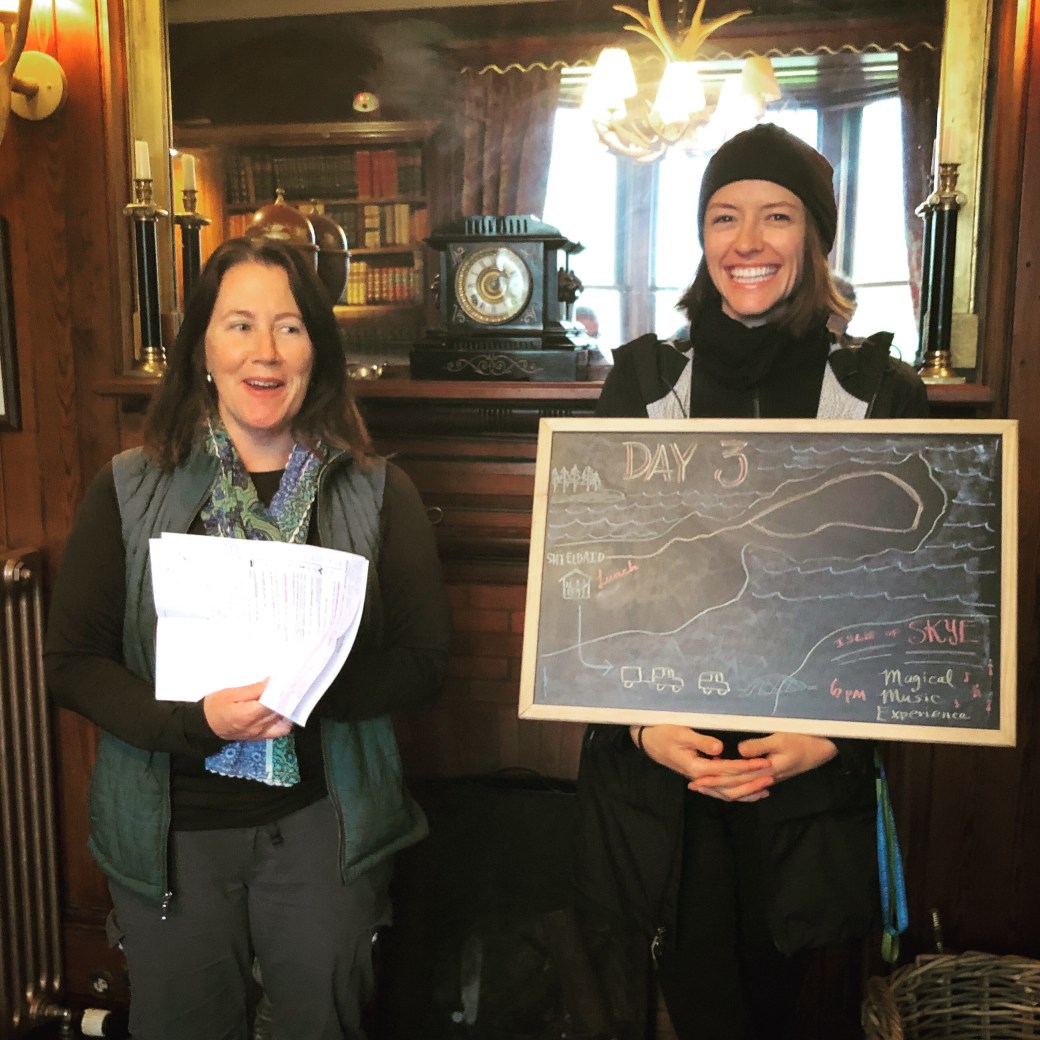
Jenny, Eileen and Keith had another hike in their back pockets, followed by lunch in a little village. Then we would head to the Isle of Skye. Jenny sketched out the day on a chalkboard.
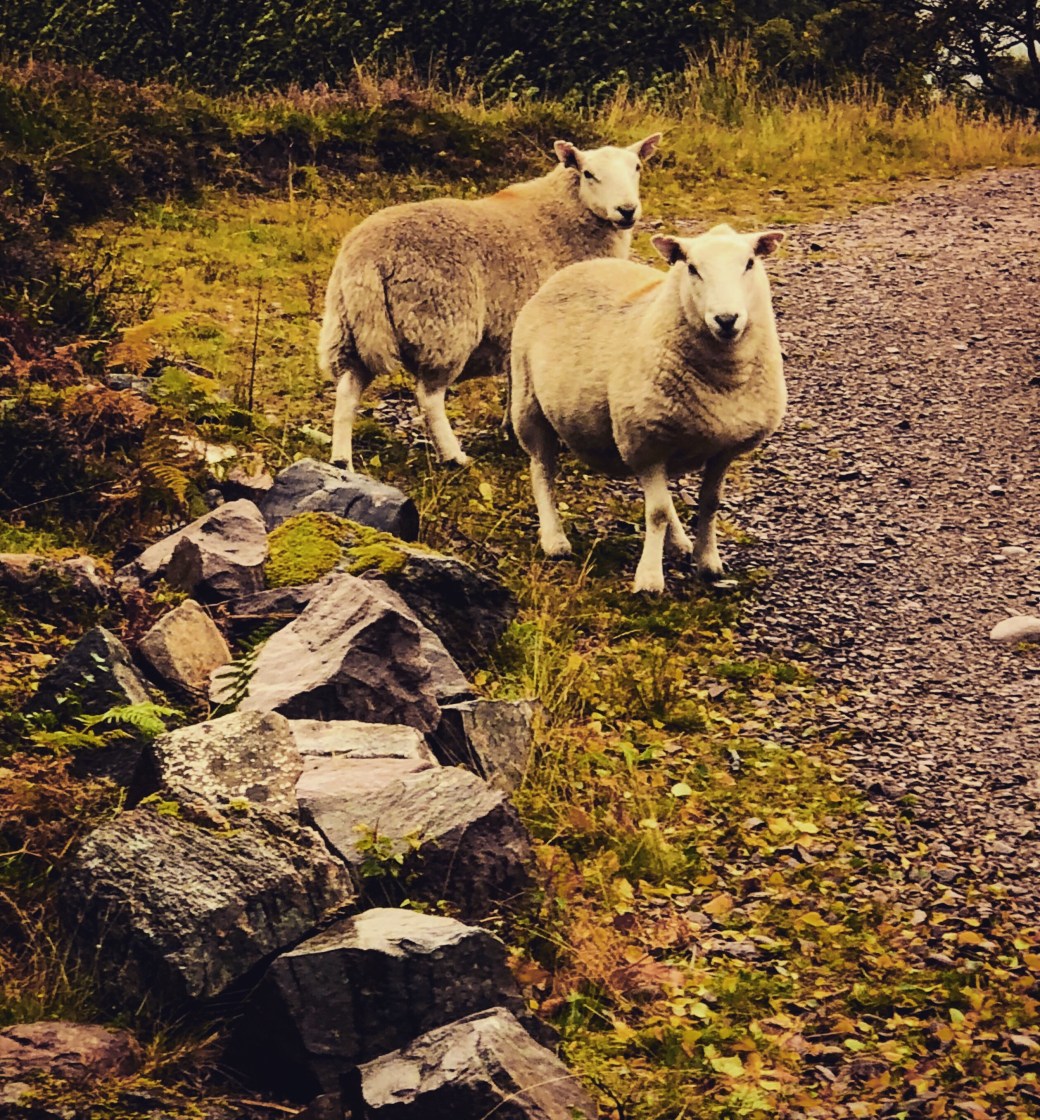
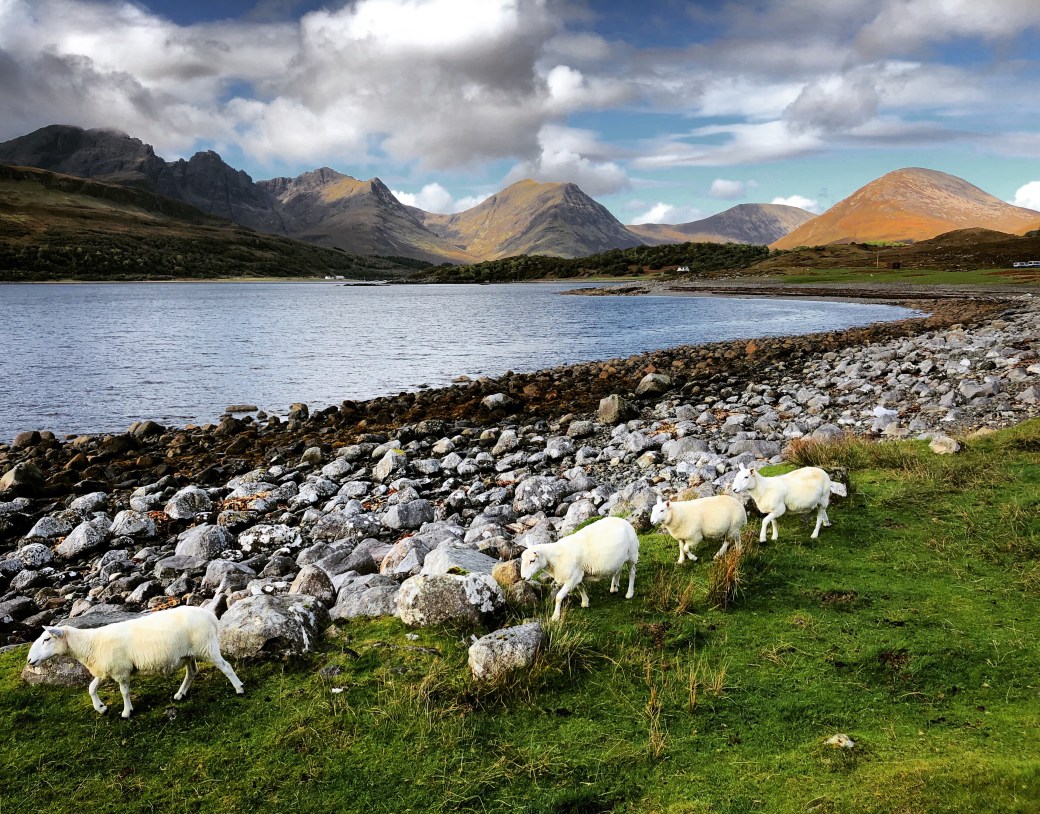
The hike was completely beautiful. Our love of sheep officially began on this day. Adorable Scottish sheep were everywhere. Scotland doesn’t seem to have industrialized its meat production. Unsupervised sheep, cows and chickens are wandering around all over the place completely left to their own devices. Sheep are marked with a splash of color which identifies to whom they belong. Otherwise, they are free to wander, eat grass, and perch picturesquely on the edges of cliffs, gazing out at the ocean.
I kept asking people if the cows and sheep were used for milk and cheese and the people kept raising an eyebrow and shaking their heads. Make no mistake, we are talking about meat here. But at least until their day of doom, Scottish livestock have the world’s most fabulous life.
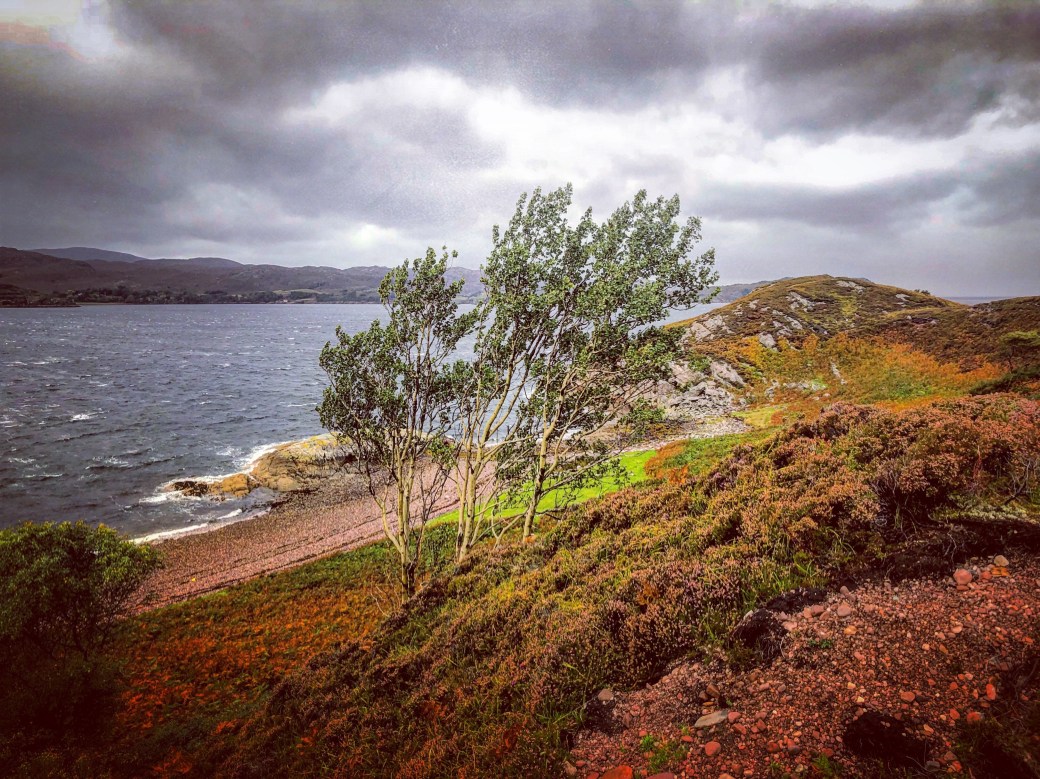
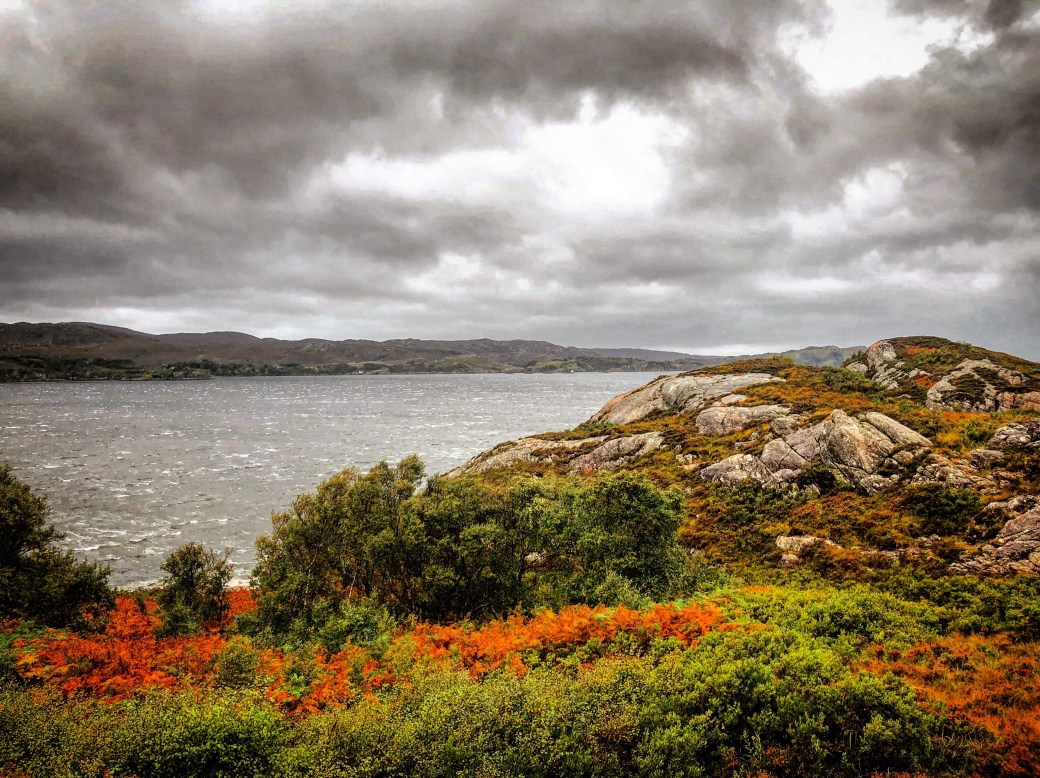
A few pictures of our hike follow, but sadly the most exciting bit went unphotographed. Just after passing someone’s lovely farmhouse (they have a black dog named Merlin who enthusiastically greets ramblers), we needed to haul ourselves up a tall boulder cropping. And to help, there was a rusted chain that had been set into the boulders. Completely awesome. I felt like Tom Cruise in Mission: Impossible as I pulled myself up the outcropping, hand over hand. Which I shared with Keith after triumphantly reaching the top. In response, he cocked his head and asked, “you felt like a Scientologist?”

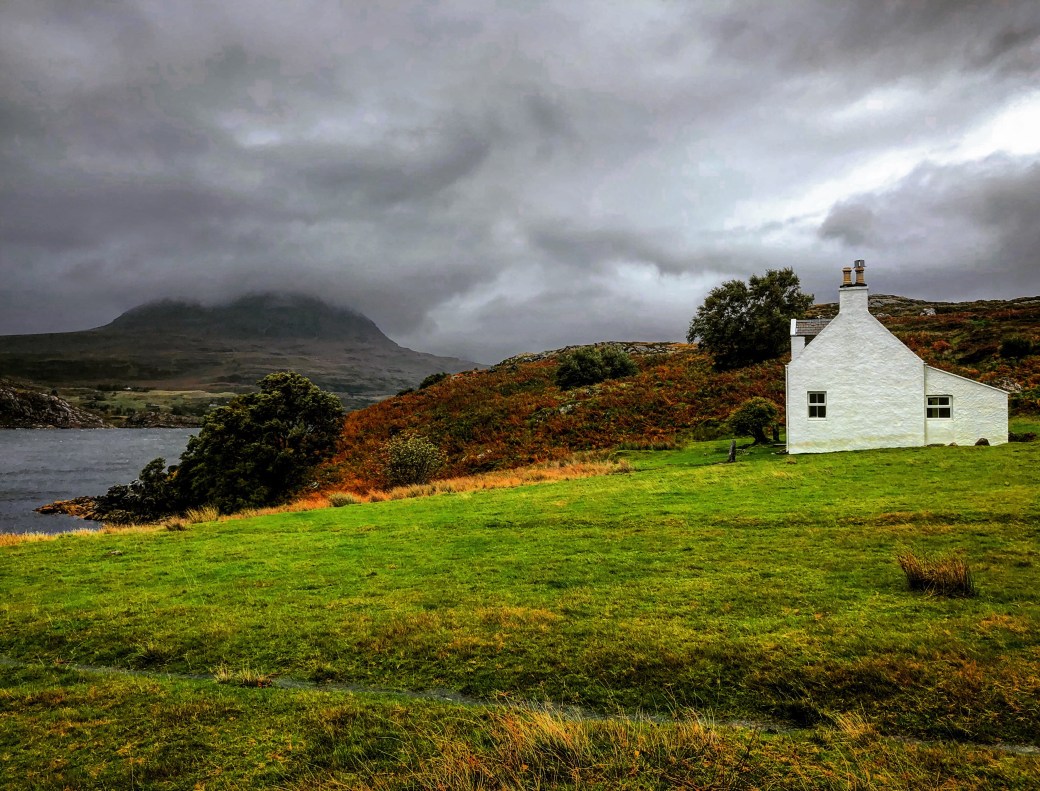
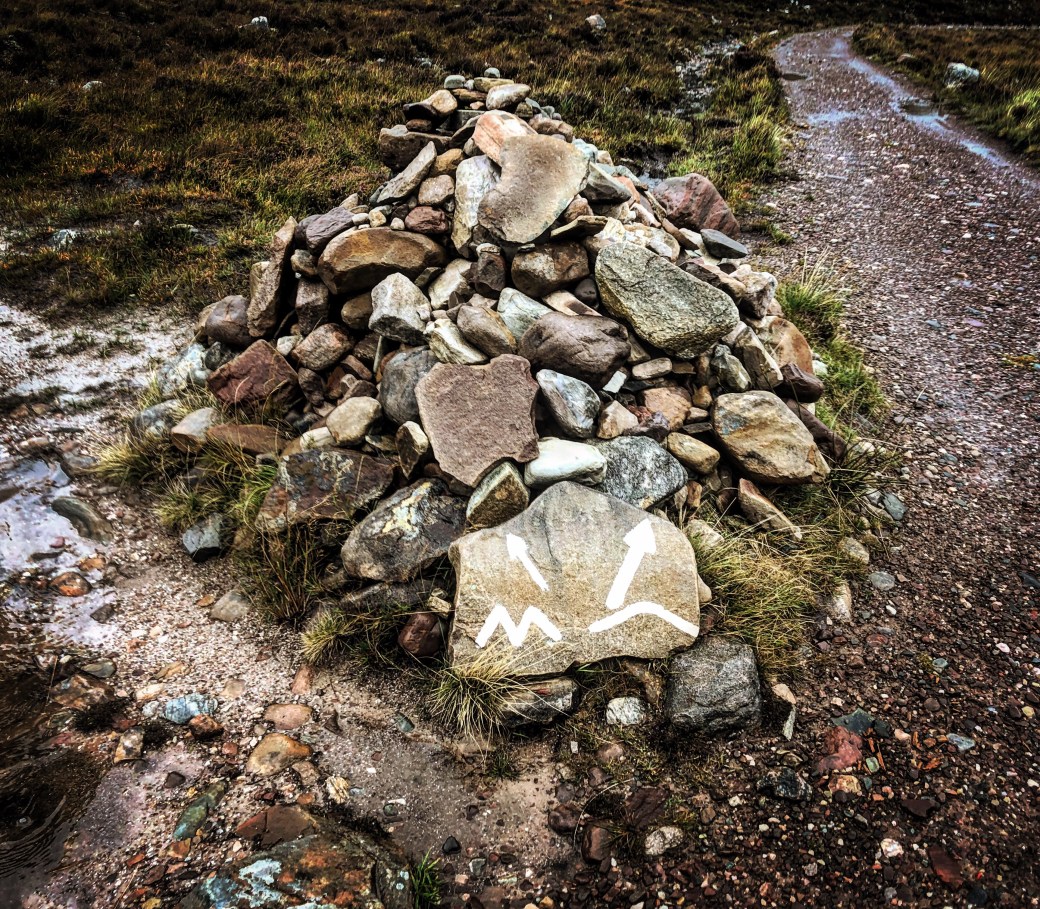
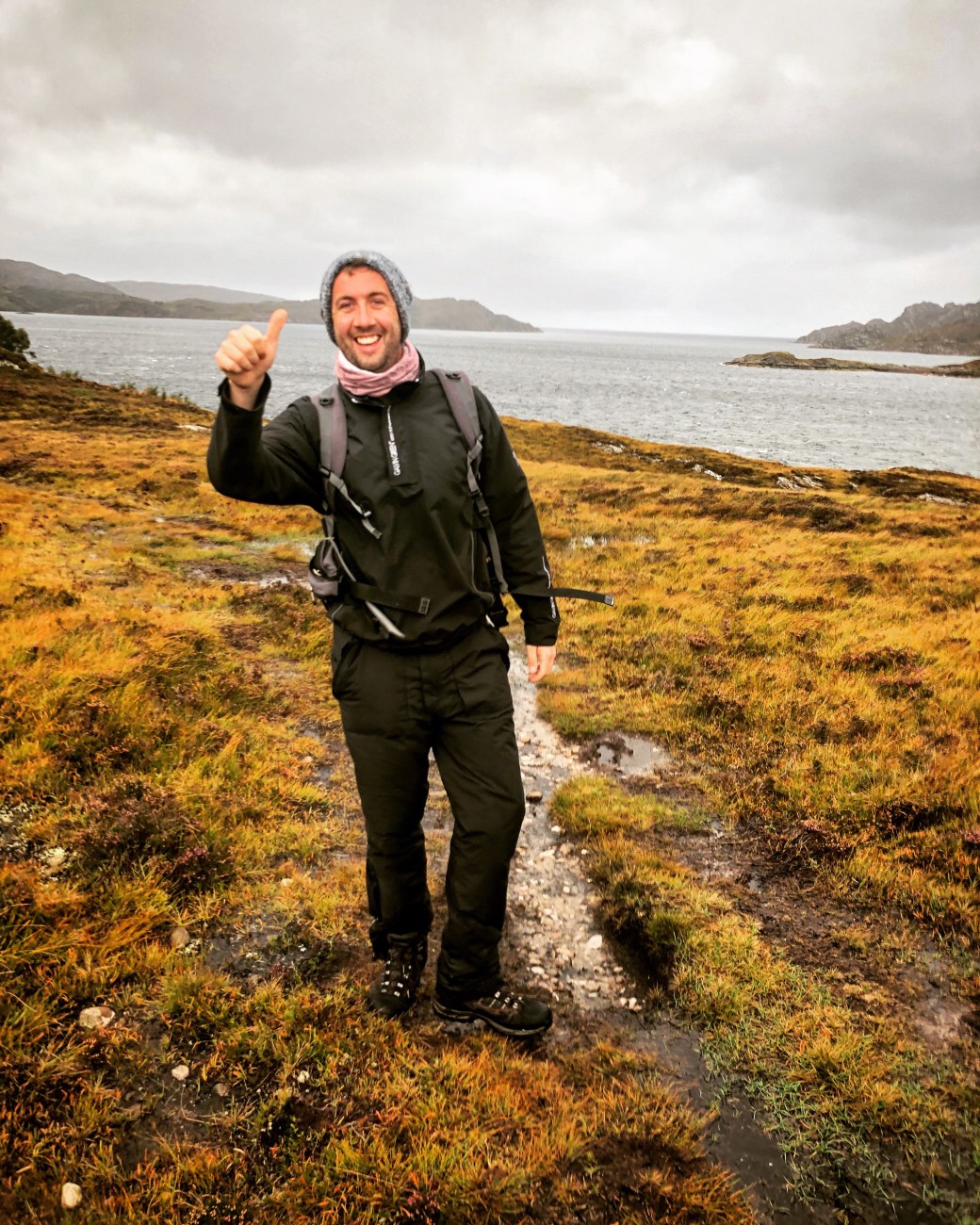
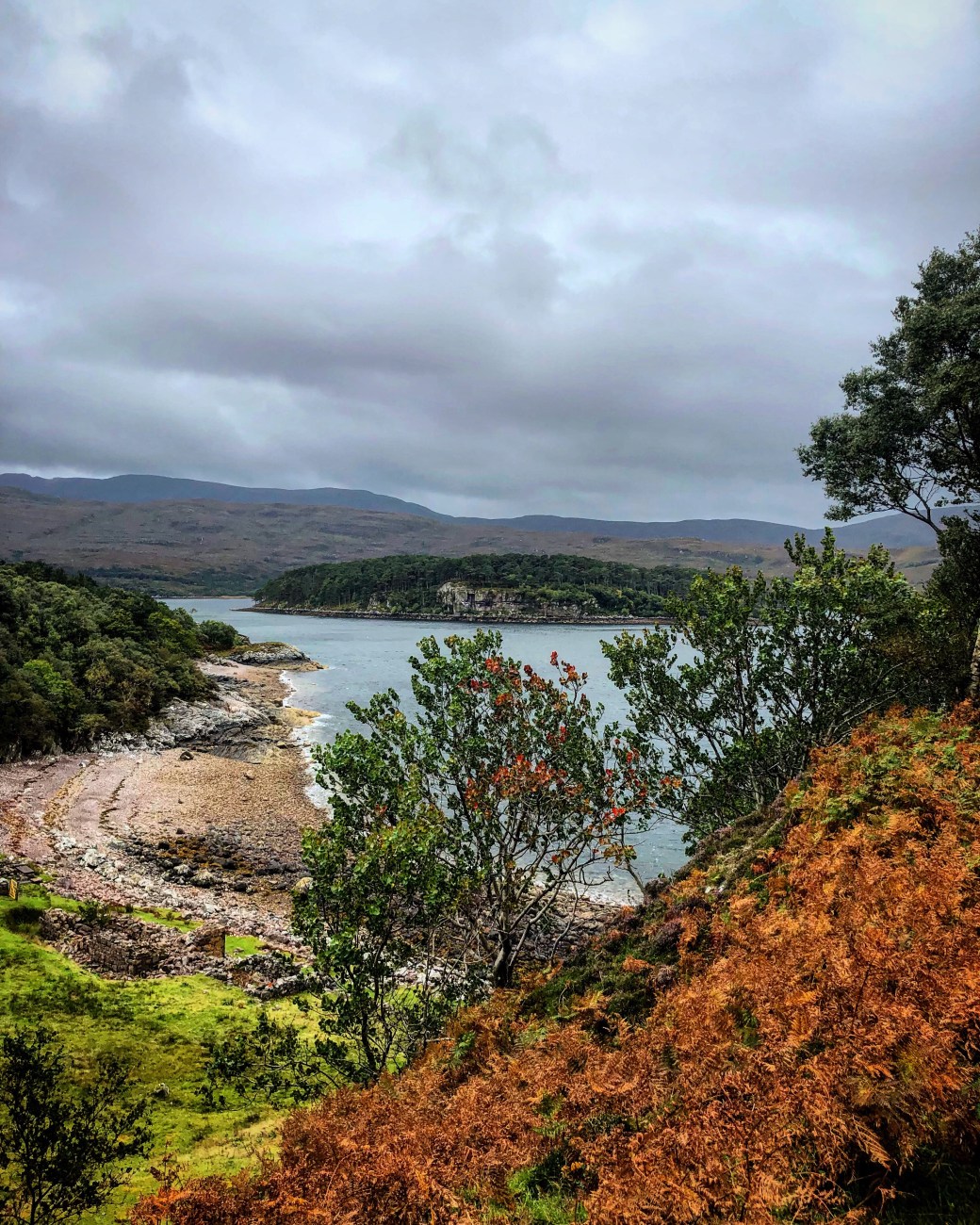
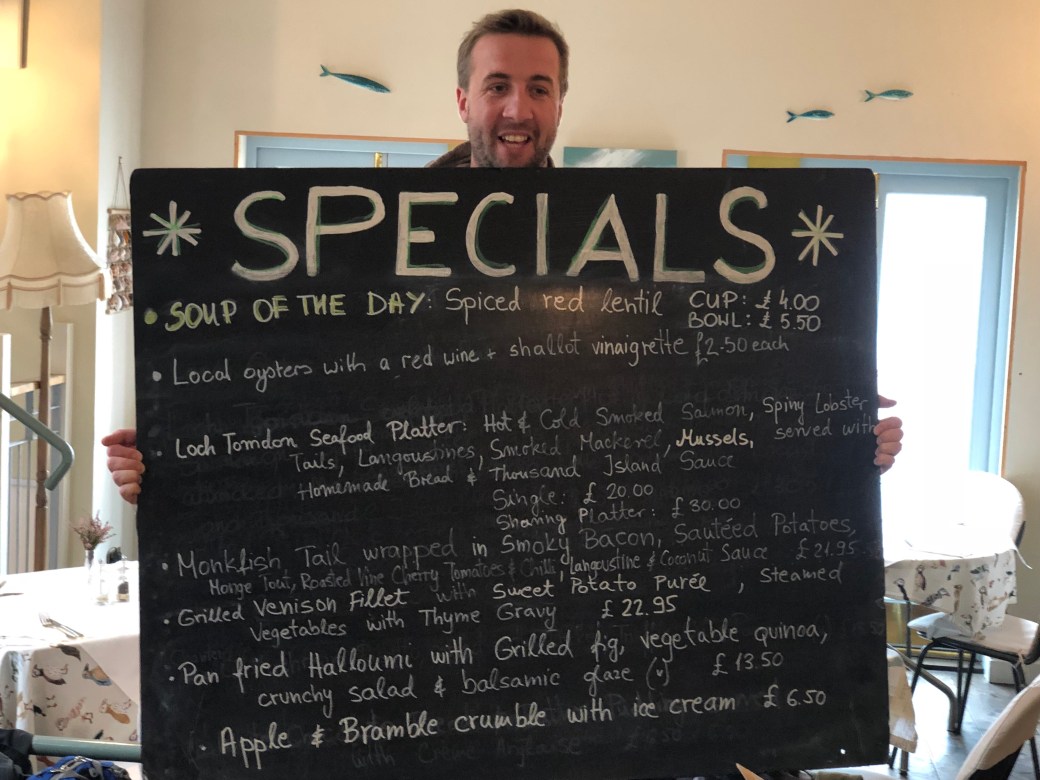
We returned to the little town where we began, and walked to our lunch place, a fabulous little pizza spot on a loch. Keith removed a giant chalkboard from a wall and presented it to the table. He asked the server permission first, and interpreted a disapproving pause as assent. Note to self: adopt this strategy immediately.
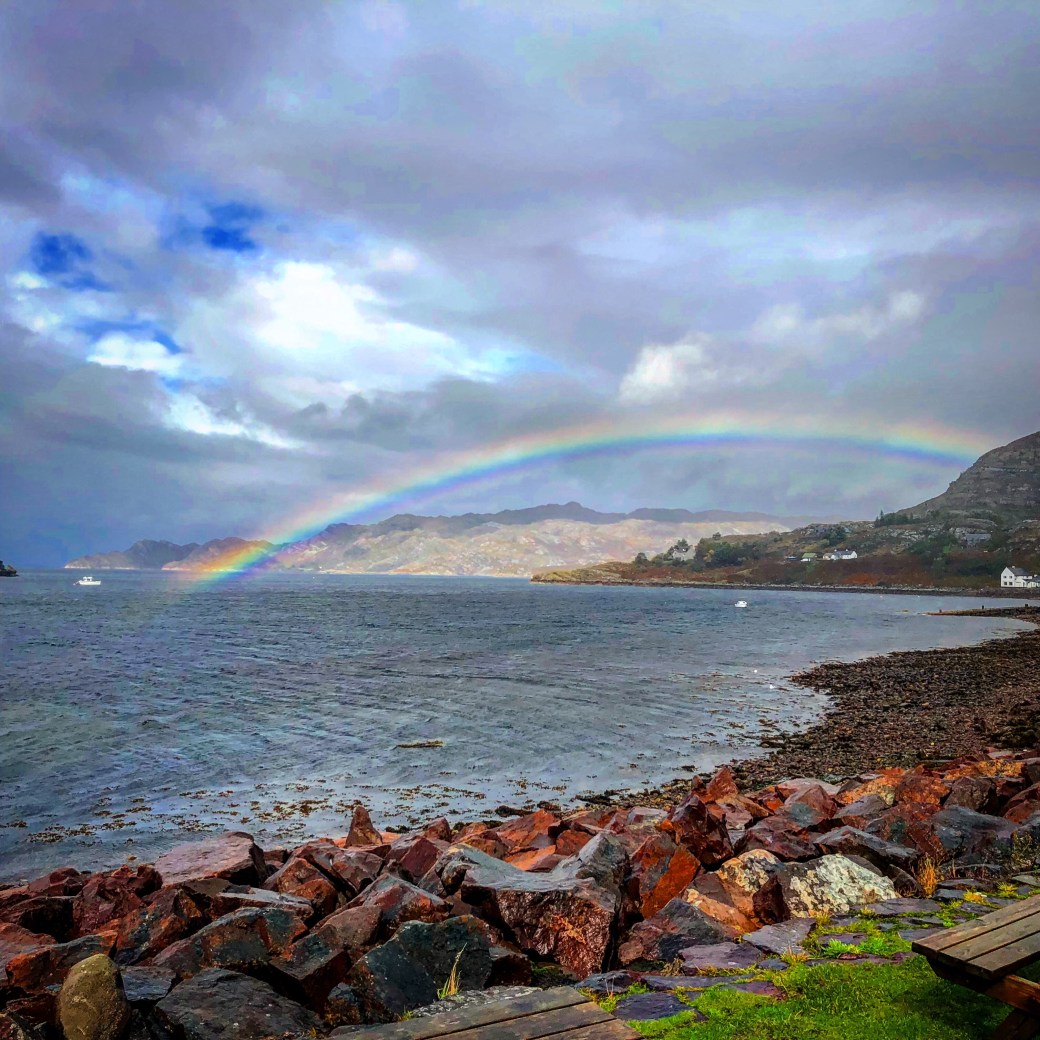
As we left the restaurant, we were greeted with a magical rainbow over the loch. While we pretty much had daily rainbows, this one was the most rainbowish one of all.
We set off in the vans for a bit, finally driving over a lovely bridge to the Isle of Skye. It has been hit pretty hard by tourism over recent years, but Backroads always finds more solitary spots. We stayed at the Duisdale Hotel, on the edge of the water with beautiful views.


On tap for the evening was a musical performance by a local bagpiper and accordionist who teach music at the Gaelic College on Skye, called Sabhal Mòr Ostaig. The college is dedicated to providing education for Gaelic speakers with the goal of widening access to the Gaelic language and culture.
Bagpipe music used to make me cringe and then run out of the room. Maybe one of the things that happens after menopause is that suddenly bagpipes become majestic instruments that make you shiver and then cry.
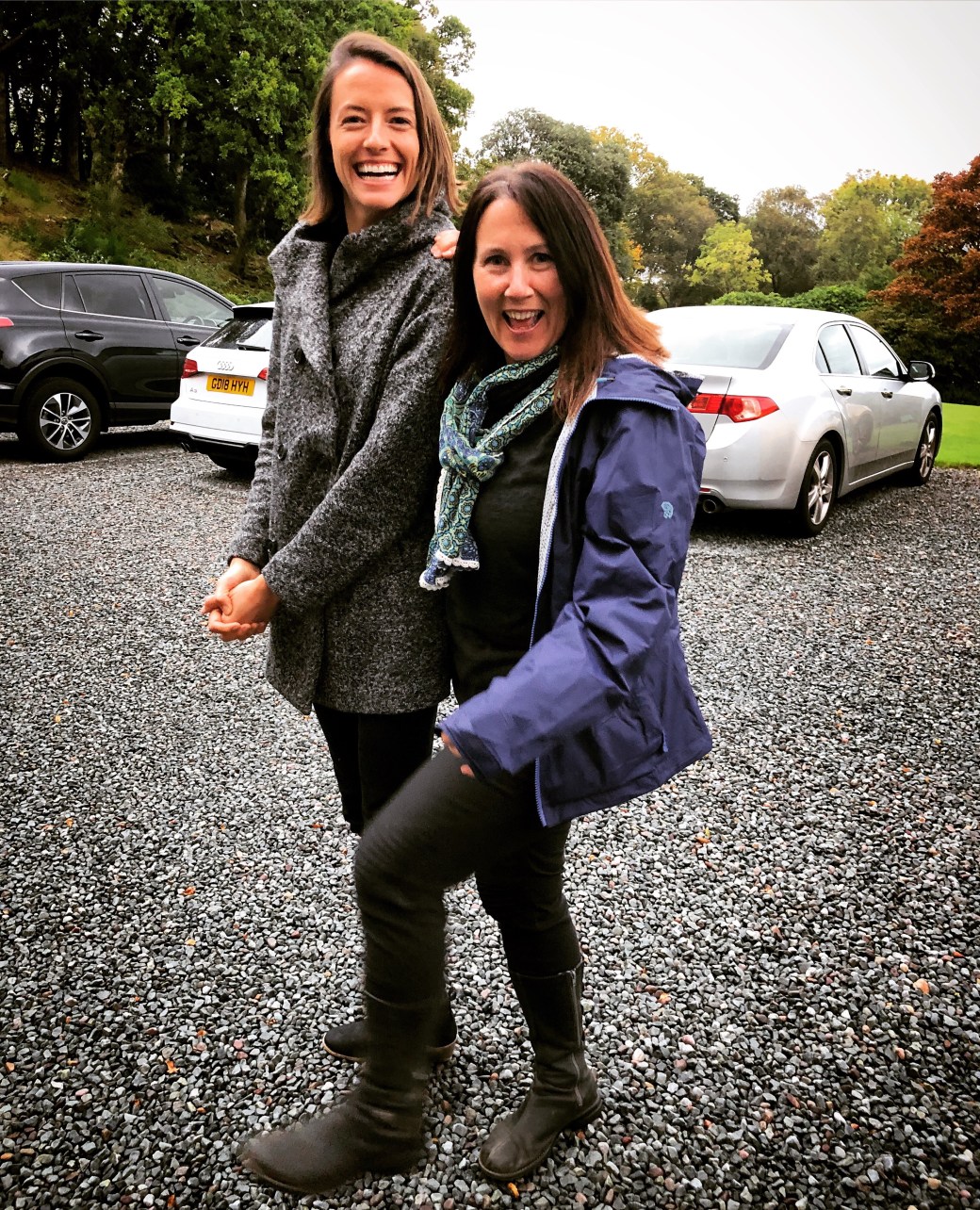
In the middle of the show, our bagpiper challenged us to a bit of Scottish dancing in the parking lot, and so out we went. A documentary of our dance lesson experience is currently being edited for Netflix. The reviews will say, “Stunningly talented Americans and two Canadians change the face of traditional Scottish dance forever.”

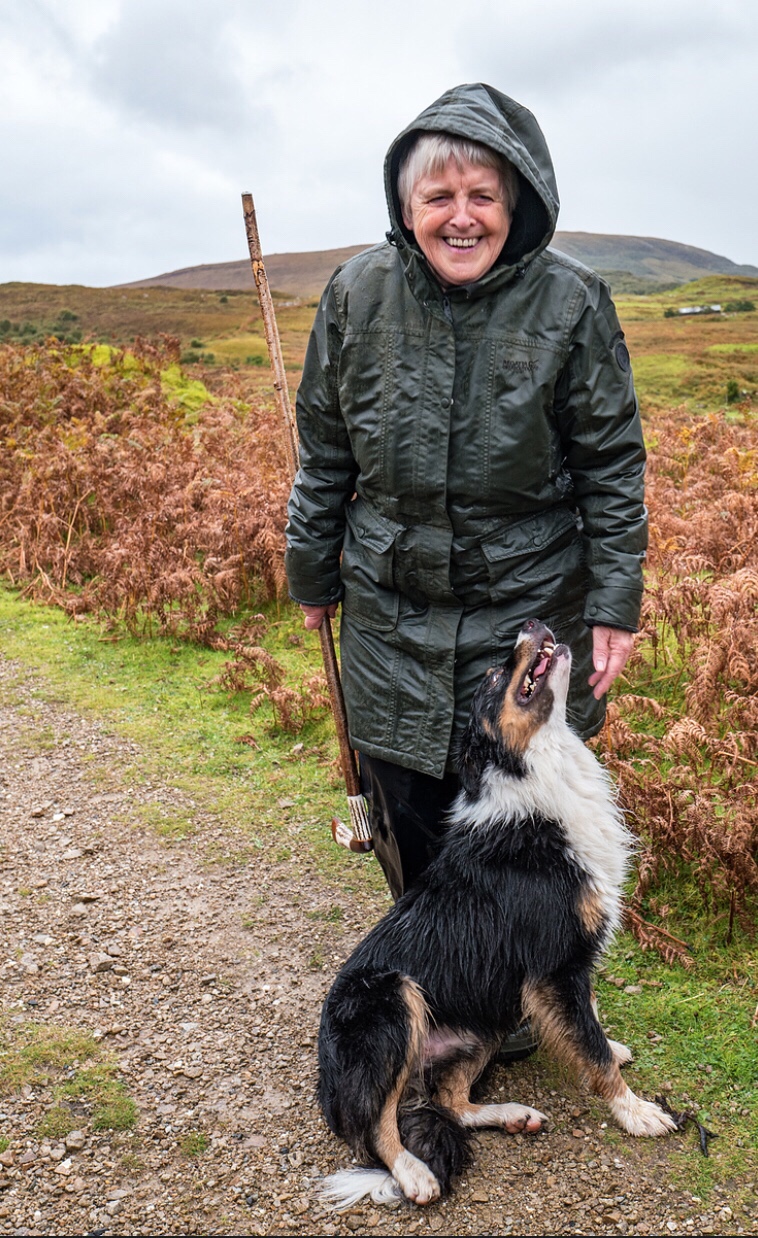
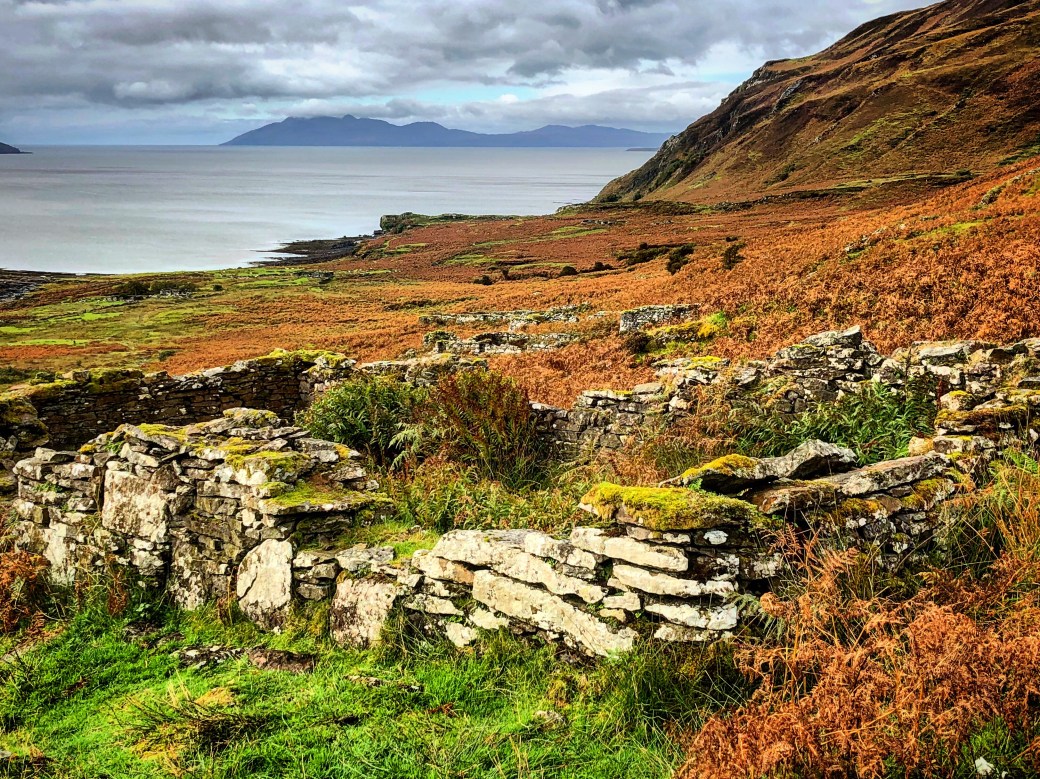
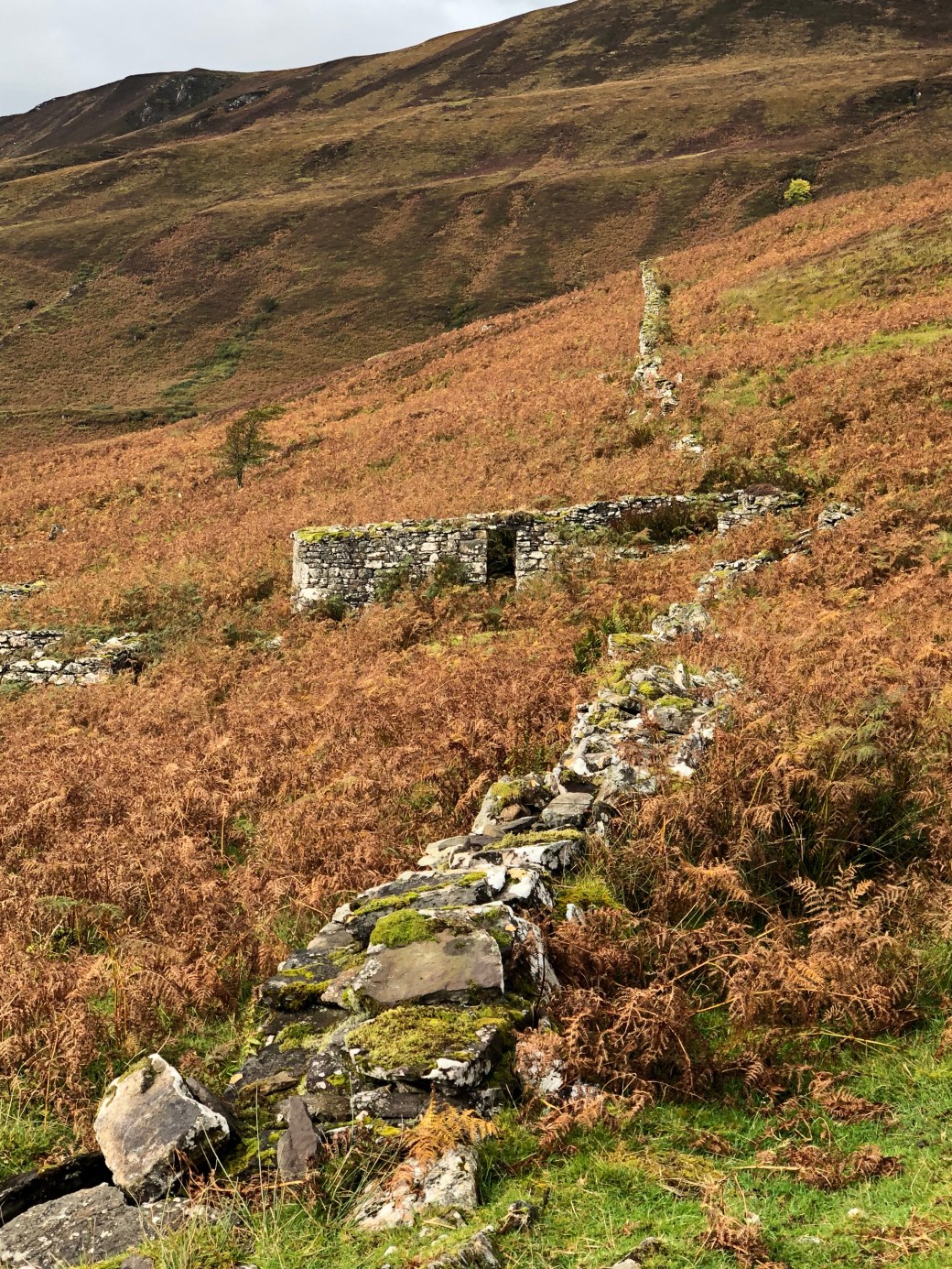
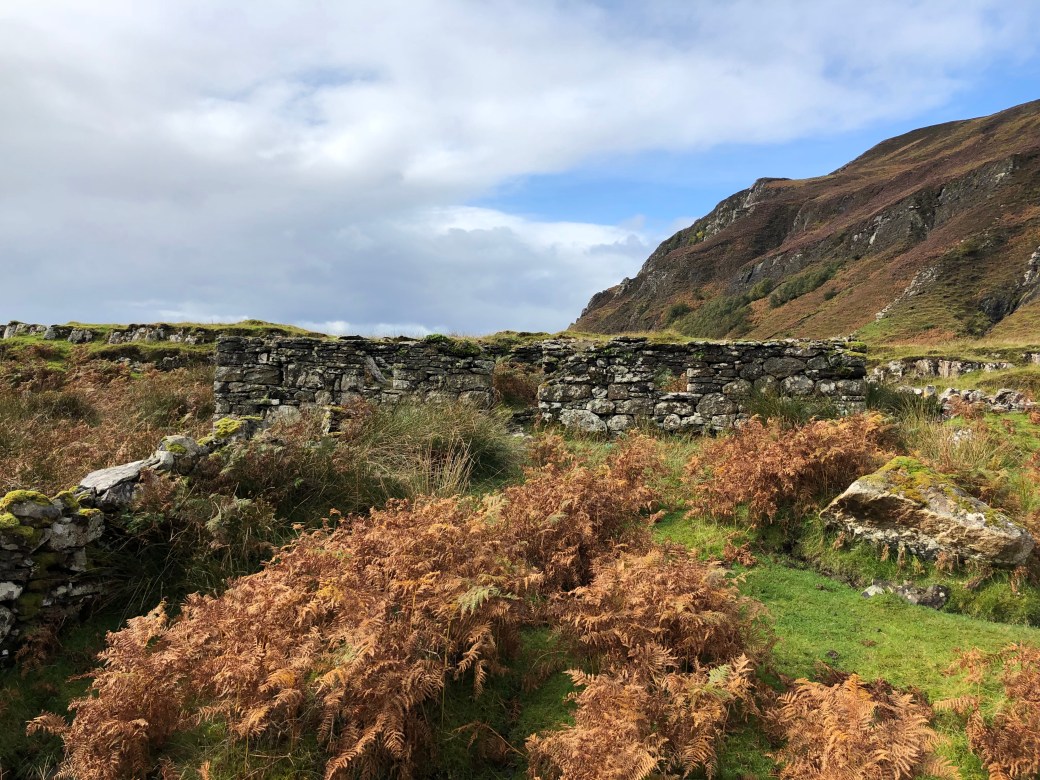
The next day dawned slightly brighter with strange blue areas in the sky. Now old hands at divining Scottish weather, we thumbed our noses at the blue and donned our rain pants. Today we met Sarah, a Scotland ranger, who would accompany us on our hike and tell us about birds, plants and the Highland Clearances. Our trail started at a ruined church (see below) and took us past some old granite mines where we came across a lovely woman out for a walk with her border collie. We then dipped down to a large and desolate ruin of a village that was abandoned as a result of the clearances.
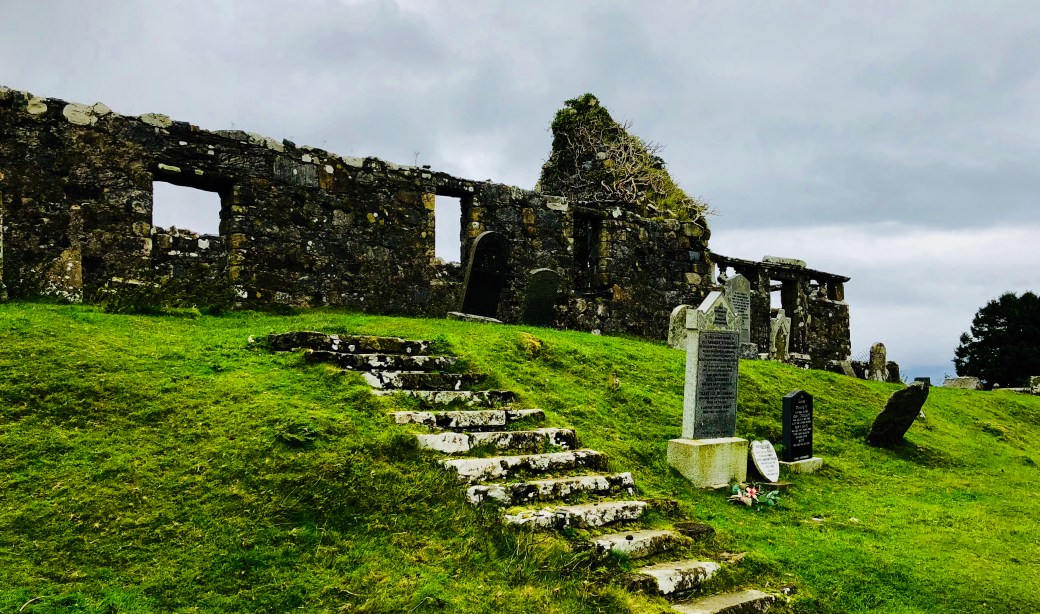
The Highland clearances are an infamous chapter in Scottish history. They were the forced eviction of inhabitants of the Highlands and western Islands, and basically cleared the land of people to allow for the introduction of sheep. For hundreds of years prior to the clearances, the Highlands followed the clan system. The clan was ruled by one family, and others lived together in agricultural townships that functioned like collectives. The land was controlled by the chief but leased by tenant farmers. Very feudal. All the men who worked on the land also owed allegiance and their military service to the clan chief. The clearances, which took place over a century, resulted in the destruction of the traditional clan society and began a pattern of rural depopulation and mass emigration from Scotland to the Americas and elsewhere.
So why? After the Battle of Culloden, the British government (aka evil redcoats) passed repressive legislation designed to compromise the power of the clan chief and Gaelic culture. The 1746 Act of Proscription required all swords to be surrendered, prohibited the wearing of clan tartans, forbade the speaking of Gaelic and the playing of bagpipes (because they were deemed instruments of war). Another act removed the sovereign power which the chiefs held over their clans. The clearances began thereafter, waxing and waning through the collapse of wartime industries after the Napoleonic Wars, a rise in population, famine, and a decline in the economy. Landlords were deeply in debt and were looking for more lucrative uses for their land. Replacement of the old style of peasant farming with well-capitalized sheep farmers allowed the charging of higher rents and required much less manpower.
Nobody knows for sure, but possibly up to 150,000 Scots emigrated during the clearances, and the effect still resonates today. In 1755 it is estimated that 51% of Scotland’s population lived in the Highlands, but by 1981 only 21% were.
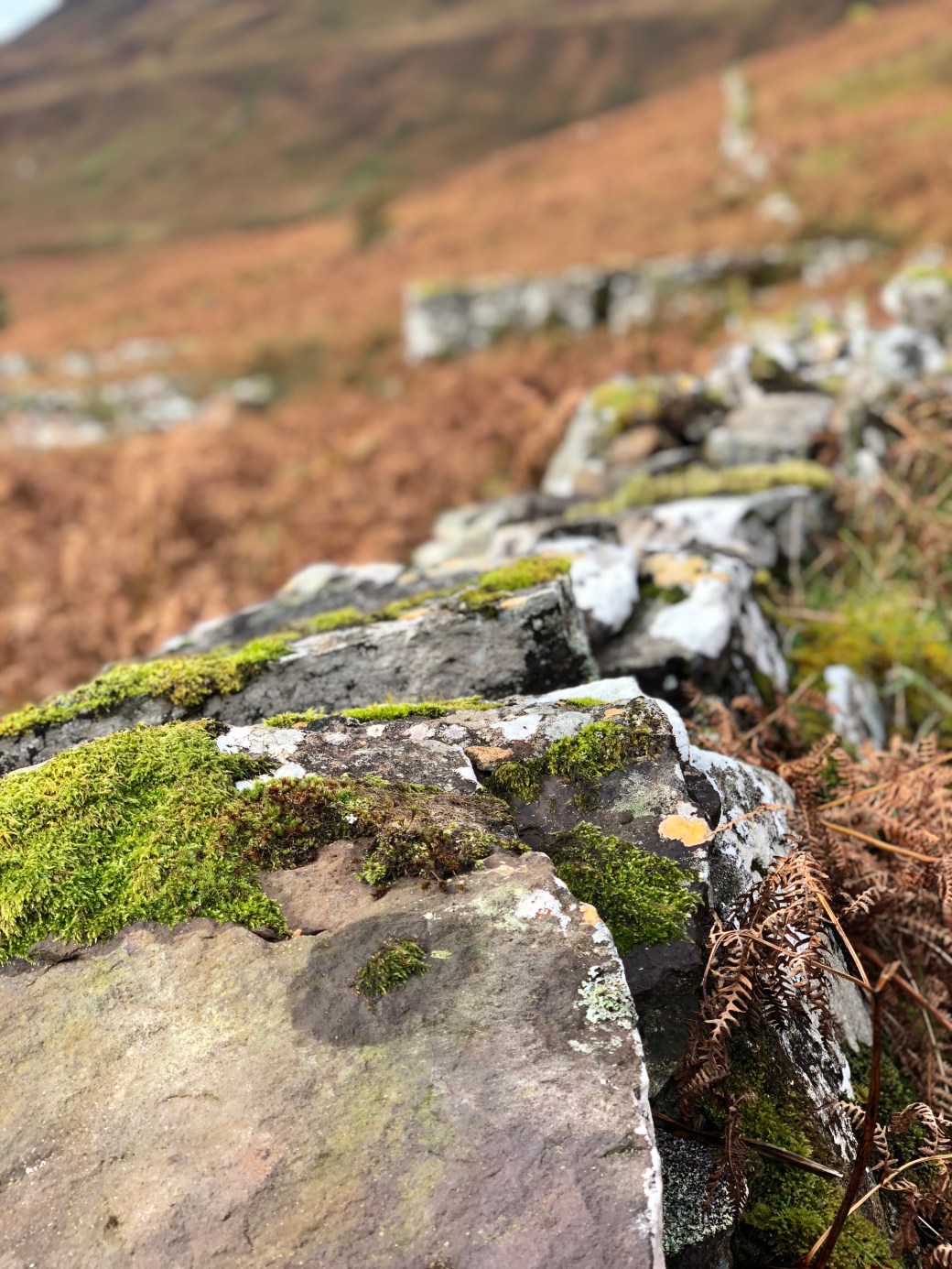
Here are some photos of just one such village left in ruins.
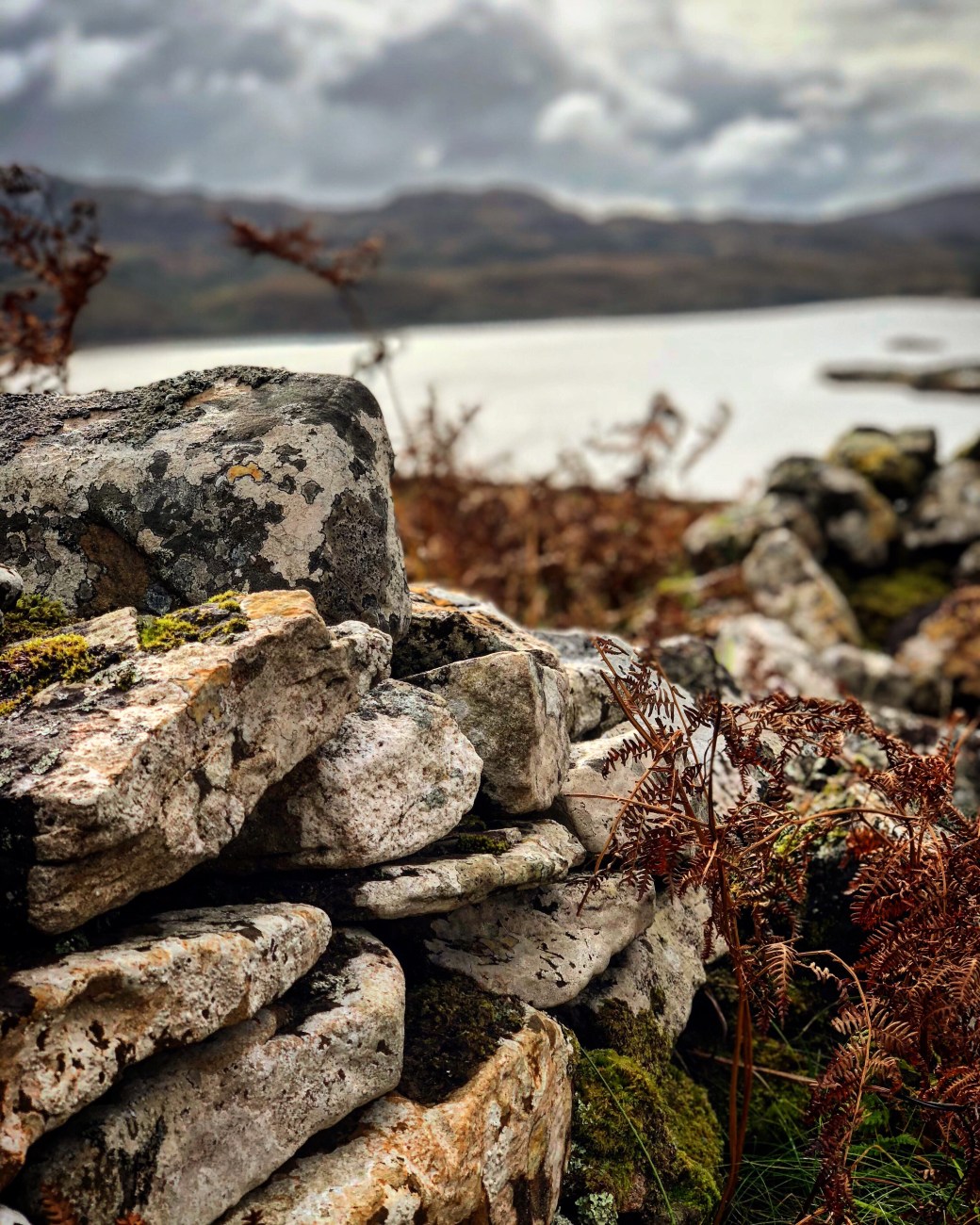
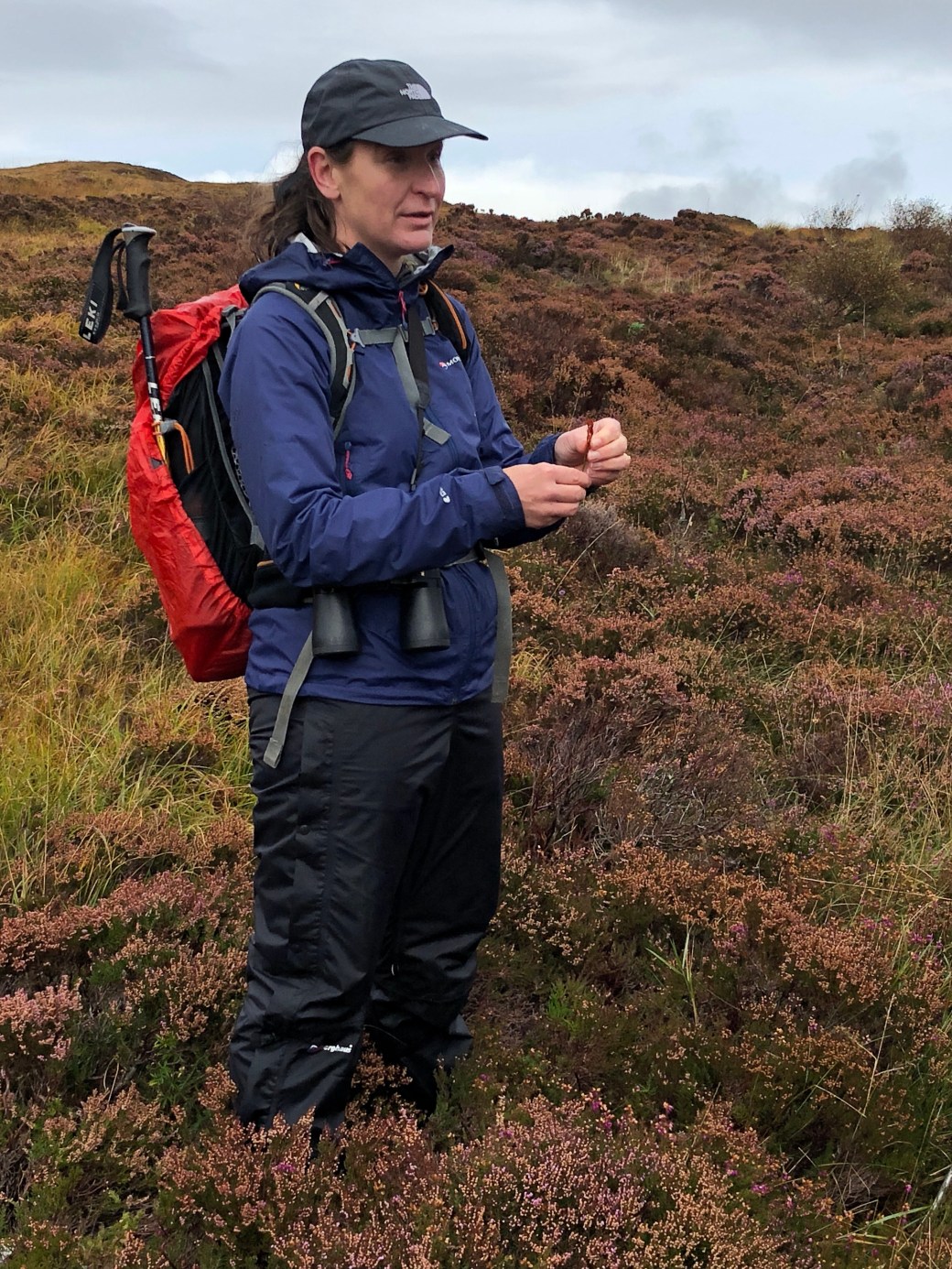
Stop it with the history!! Please may we talk about peat instead. Scotland is covered with peat bogs, and over history Scots have used peat to heat homes, make whisky and so much more. Peat bogs have very low rates of decay and can even preserve food (up to 2,000 year old containers of butter have been found) and dead bodies (watch the BBC’s Shetland on Netflix because Douglas Henshall is gorg – I mean a great actor). Peat’s official name is sphagnum moss. I can go on and on, but since you have already been subjected to background info you can look up yourselves on the internet, suffice it to say that it can hold an amazing amount of water. Sarah stood knee-deep in heather and gave us a very interesting peat talk. She was holding in her hand a tiny bit of sphagnum moss. I mean tiny. When she squeezed it, enough water poured out to fill a juice glass. Magic.
Before I share the next few pictures, allow me to issue a disclaimer. Having learned the devastating story of the clearances, I feel slightly guilty being so enamored of the sheep. I mean, I love them. There are 7 million sheep in Scotland and I love each and every one. My thinking is, though, that those initial displacing sheep are long gone, and the current sheeply inhabitants had nothing to do with the clearances. You are free to judge their culpability for yourself.
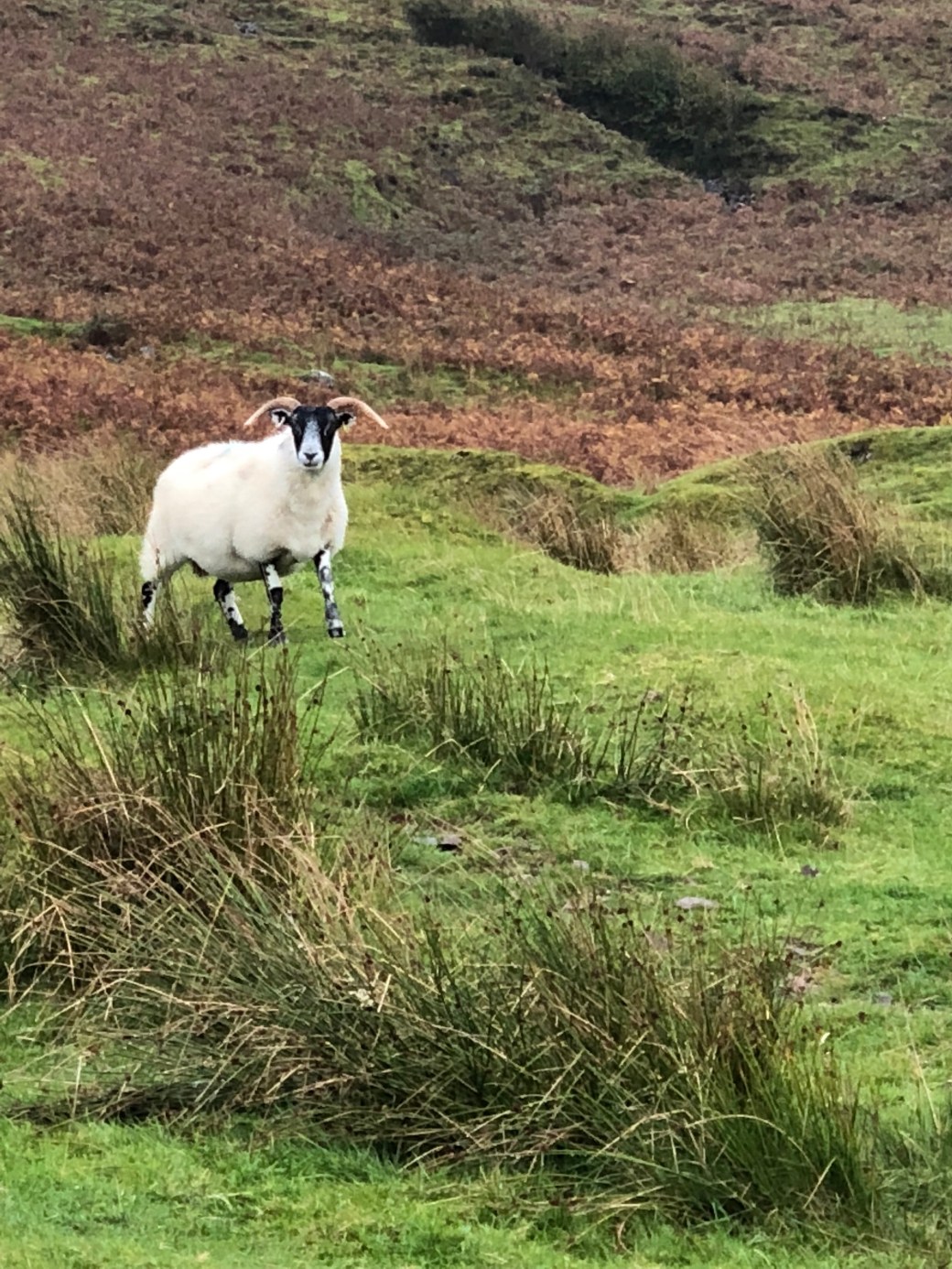
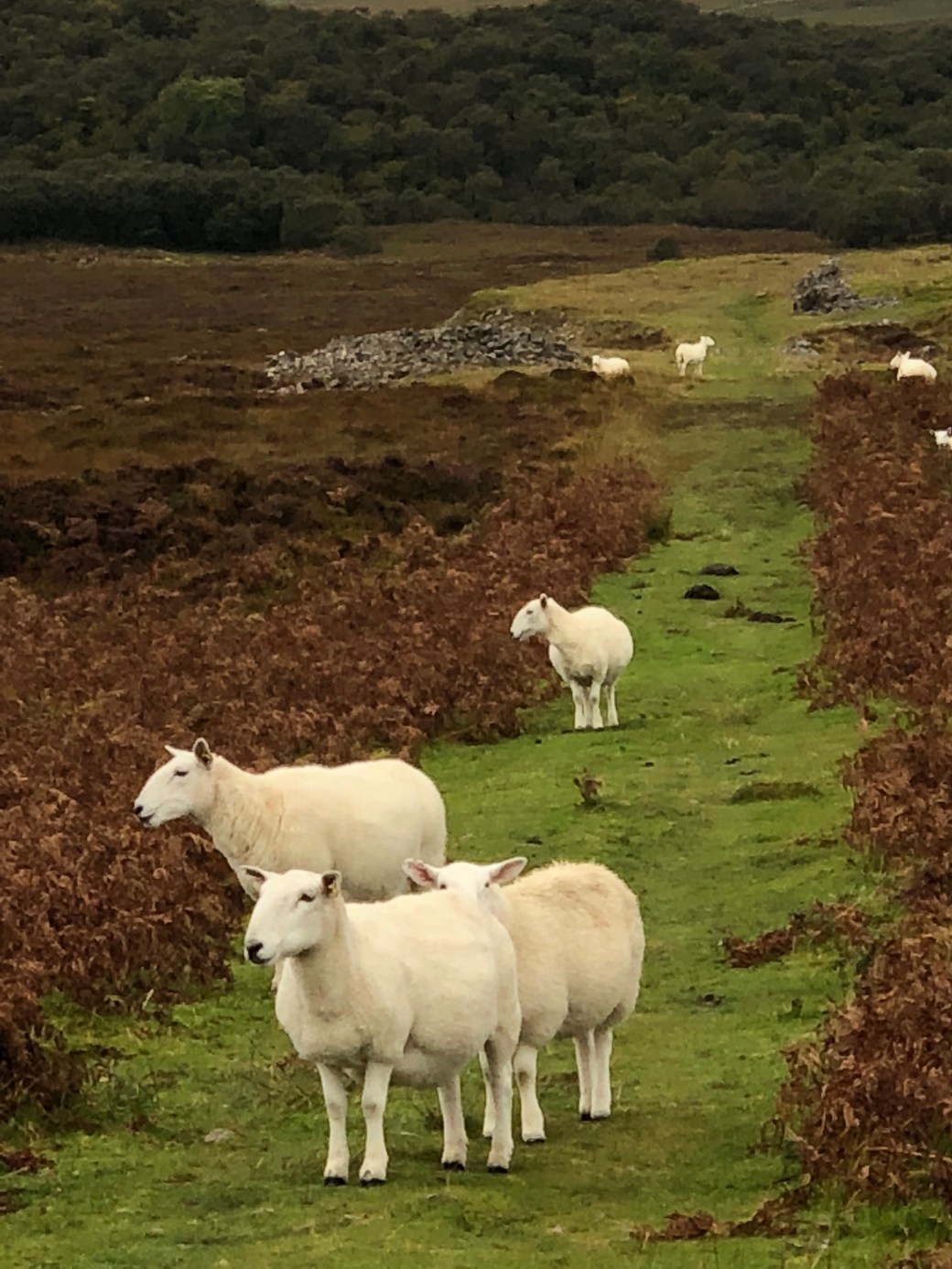
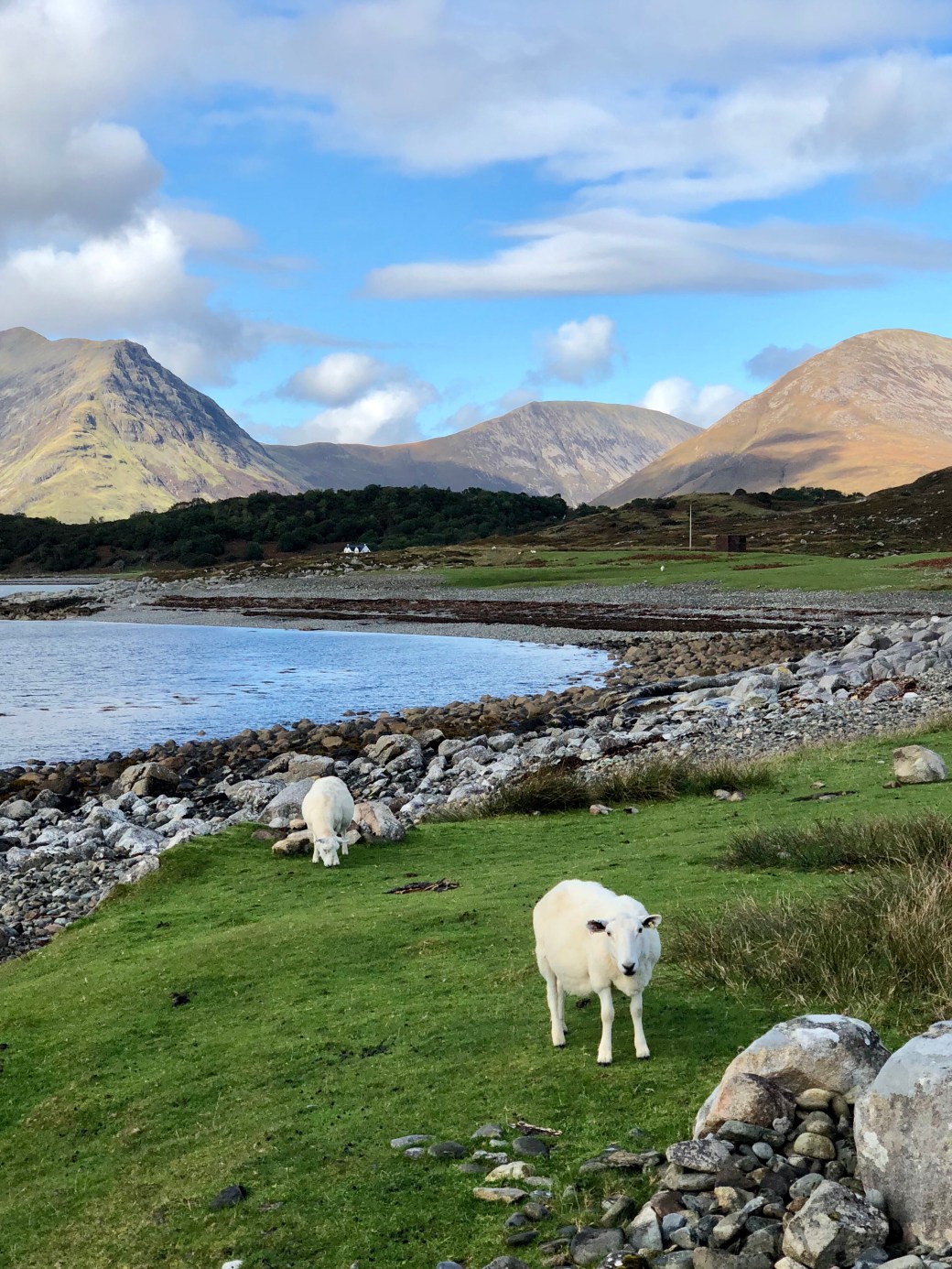
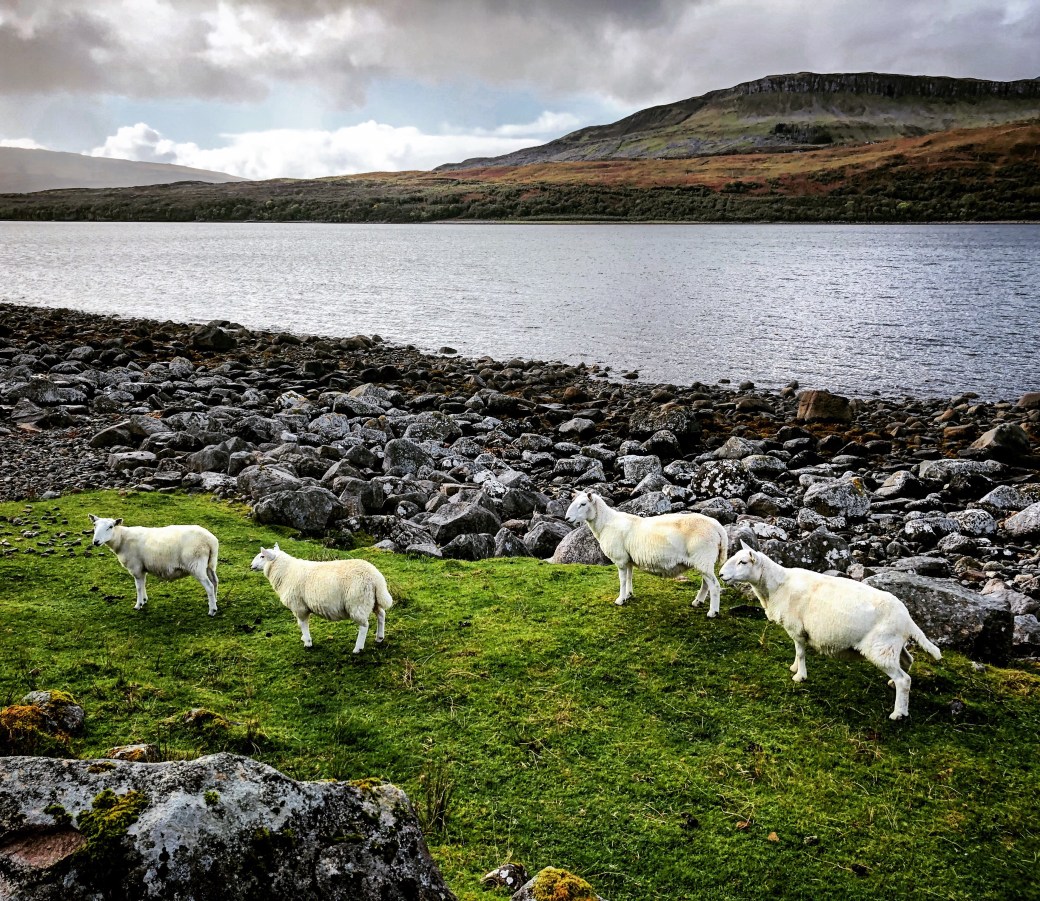
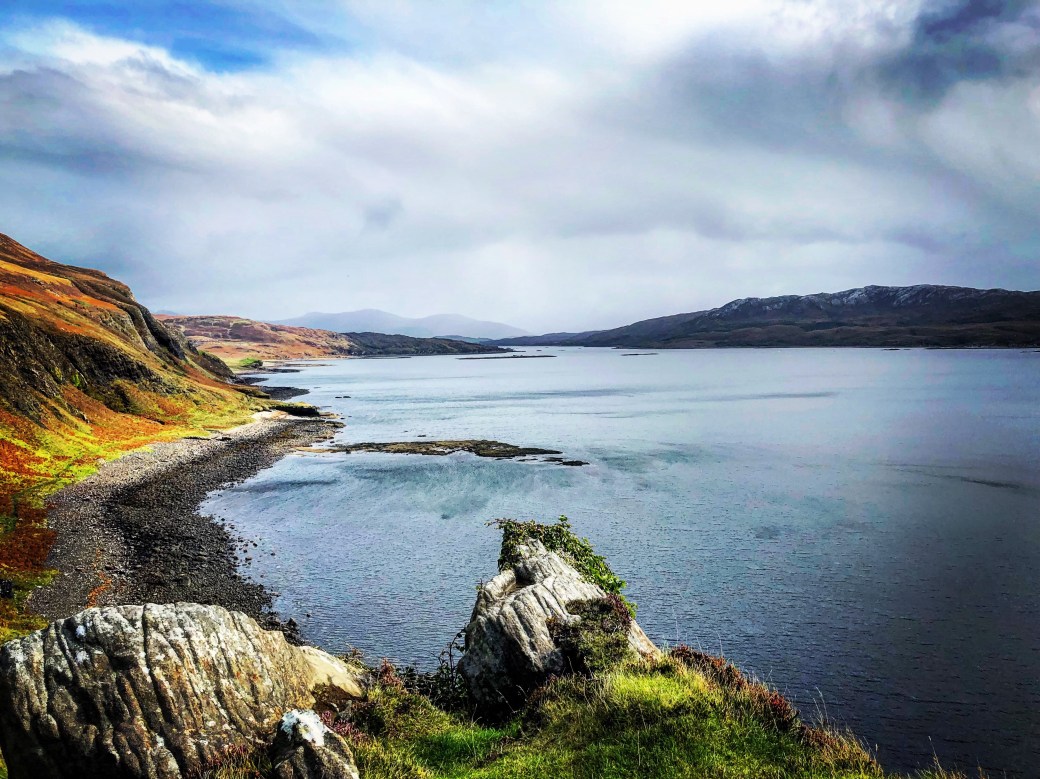
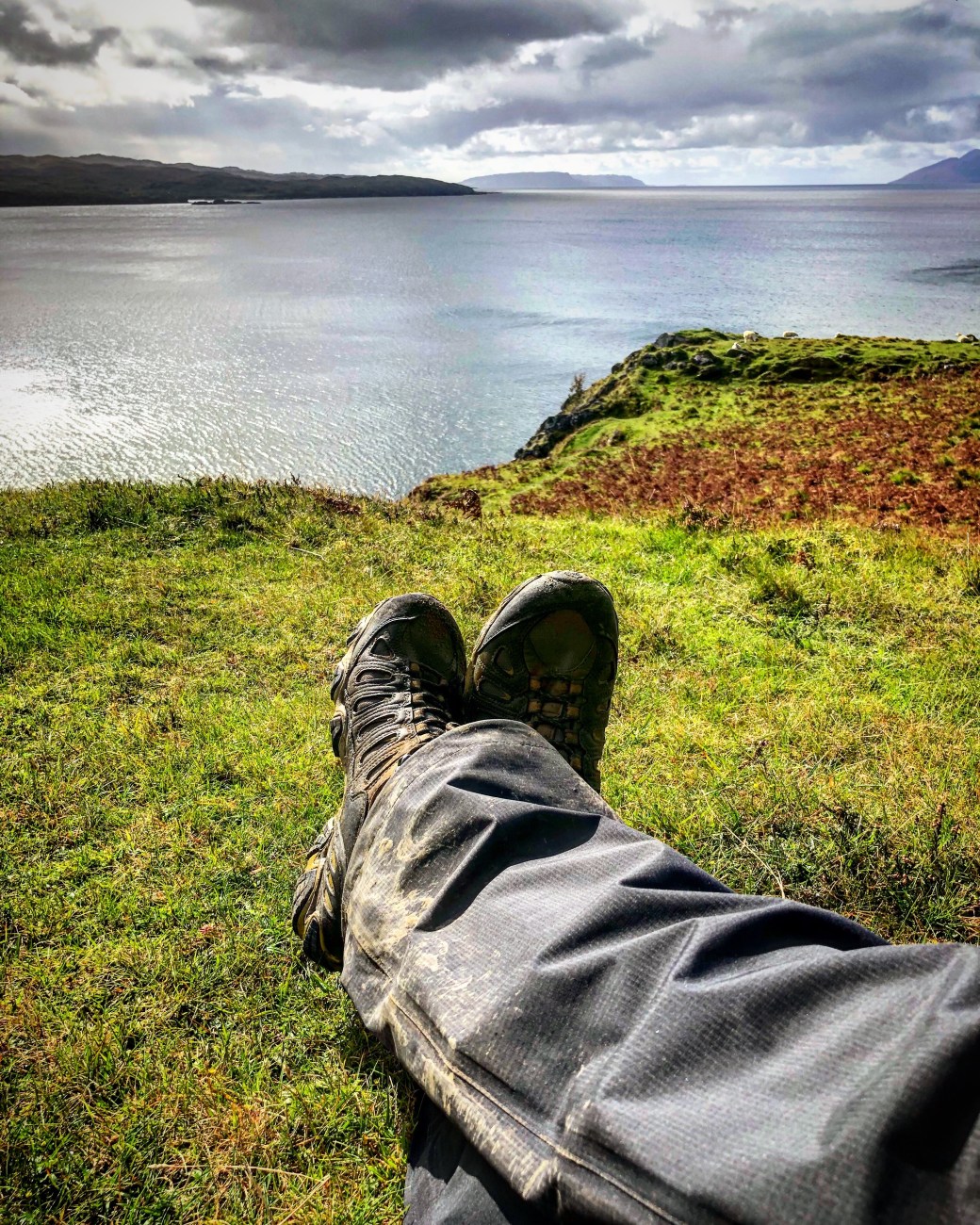
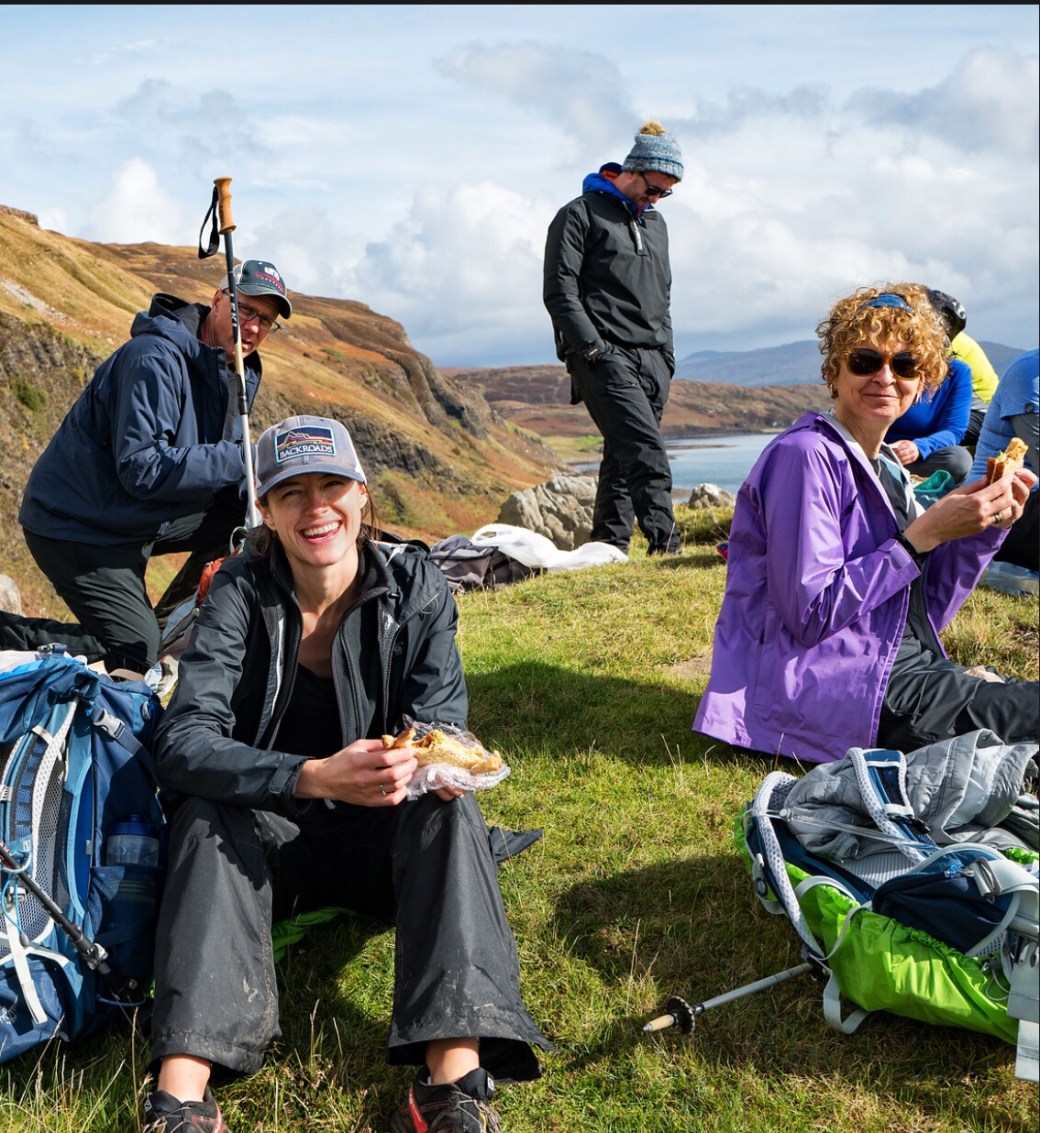
After our visit to the ruined villages, we hiked down to a rocky shore and up the side of a cliff to our dramatic lunch spot overlooking the sea. Keith awaited us with the lunches we ordered on Day 1.
That evening we visited a brand new distillery on Skye, called Torabhaig. It’s so new that they haven’t yet produced a whisky because there hasn’t been enough time to age it the requisite number of years (3) in oak barrels. After the tour, as we were tasting another distillery’s whisky, we chatted with two employees. One shared that he was an extra in the iconic Hardhome episode in Season 5 of Game of Thrones. He also gathers with his mates every week for Dungeons & Dragons – and you got the sense that he is quite the appreciative drinker. The other has exactly one drink every year, a whisky, on Christmas Day. He works in a distillery, he lives and breathes whisky, and yet only one drink per year. He told us in foreboding tones about Scotland’s relatively new zero tolerance policy on drinking and driving, and said that we were all legally drunk after sampling our first wee dram. Scottish authorities warn that the only way to ensure you stay within the limit is to have no alcohol at all. It’s actually had a negative impact on Scotland’s economy and critics say it amounts to a form of prohibition. Dinna fash, though, if you are a non-driving tourist sort of person.
We were amazed by the huge investment it took to start a distillery, especially when you aren’t making gin or vodka (which one can whip up in a matter of days, we were told dismissively). Huge up front expense and a long wait before anything hits the market. A labor of love, to be sure. I bought a tshirt to help things along.
And a last word about whisky. When I first arrived in Scotland, I couldn’t believe how cheap a dram was. Well….it is much cheaper, but it’s also more wee. A pour is about one ounce of liquid, whereas in the States, it is more like 1.5 ounces and maybe even 2 if the bartender is clueless. I never once saw a server eyeball a pour, either, it’s very carefully measured in a jigger, which means that your glass is inevitably sticky from the awkwardness of the transfer. I generally favor the smaller food portions you are served in European restaurants. But with whisky, I say, supersize me.

 Wee Dram of Scotland
Your recent love of bagpipes is classic.
Yes the sheep staring off into the distant seas from a cliff….we loved too.
Can’t wait for the wrap up. Welcome home. Hope reentry tolerable.
Cheers Paul.
Sent from my iPhone
>
LikeLiked by 1 person
Love the “sheep love”!
And how you don’t blame them for the Clearance era….
Very entertaining.
Beautiful / amazing photos!
LikeLiked by 1 person