Our last full day in the Outer Hebrides dawned with a bittersweet tinge. Wind-swept, isolated and bewitching Harris had started to seep into my bones and I felt strangely reluctant to leave. We had one more walk before us, followed by a drive down the Golden Road and a fancy farewell dinner.
We headed to the southwestern corner of Harris, our destination an uninhabited peninsula connected to the rest of the island via a sandy machair in between two bays. A machair (pronounced “mach’ – like loch – er”) is fertile, well-drained grassland found in Scotland and Ireland which is formed by sand being blown over peat. It creates a unique habitat with diverse bird life and blankets of meadow flowers in early summer. However, with winter approaching, the flowers and birdies were long gone.
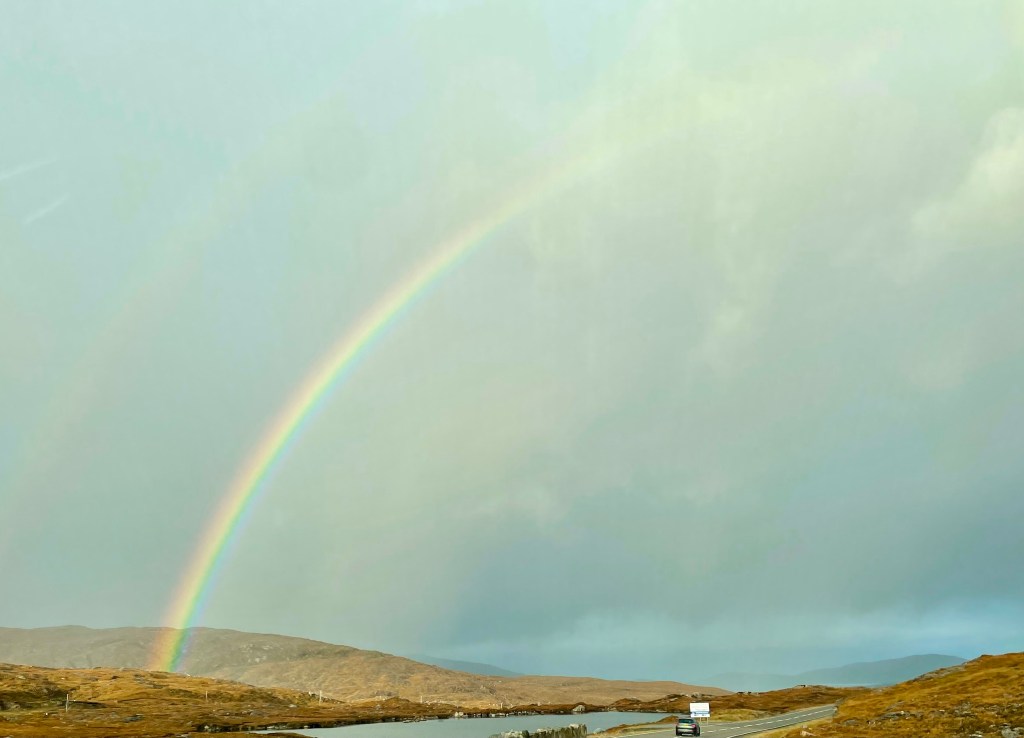
A double rainbow arched over the road on our drive there.
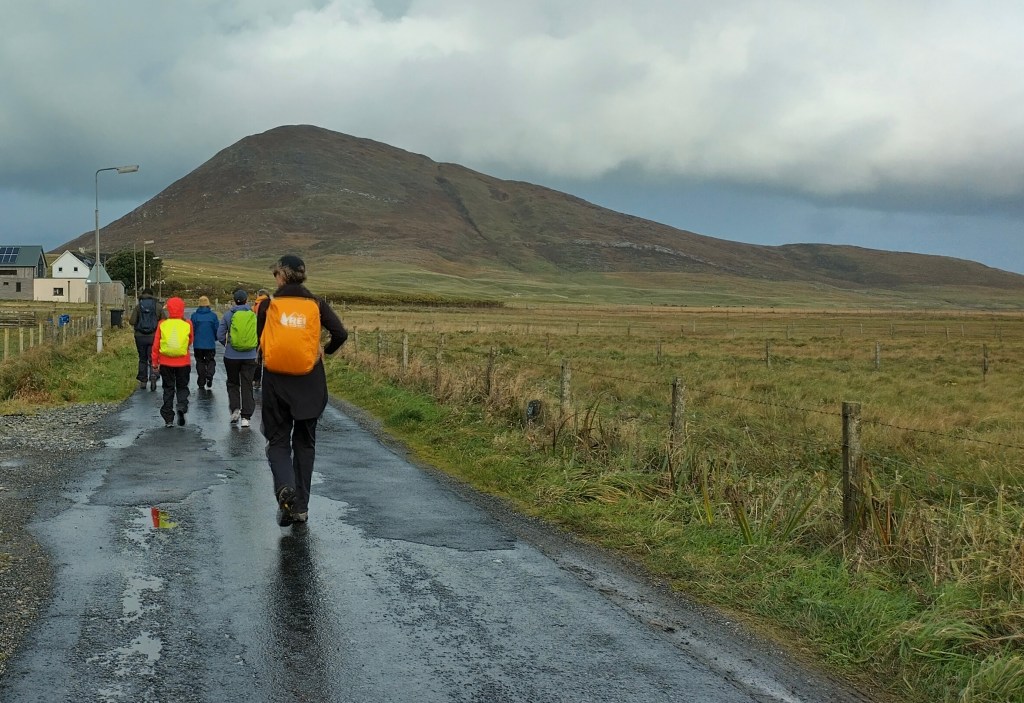
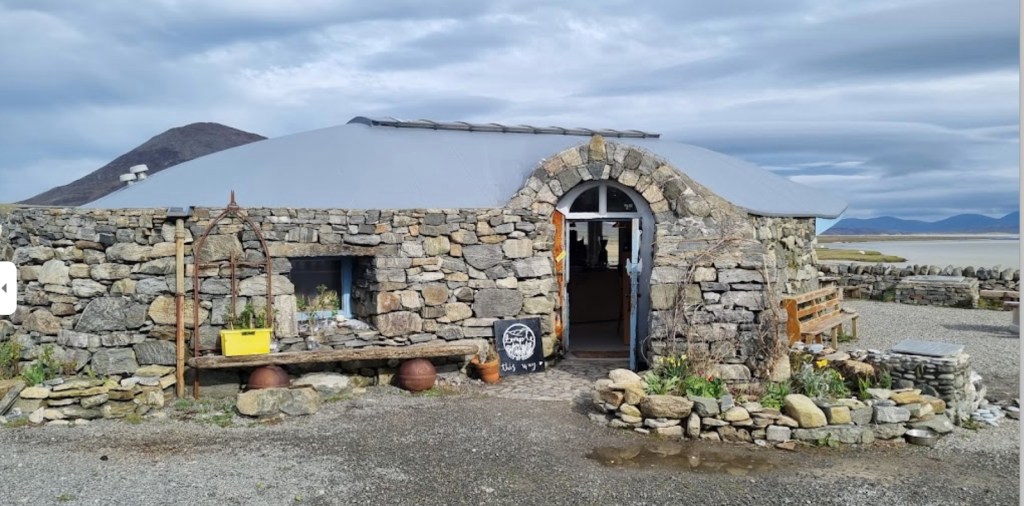
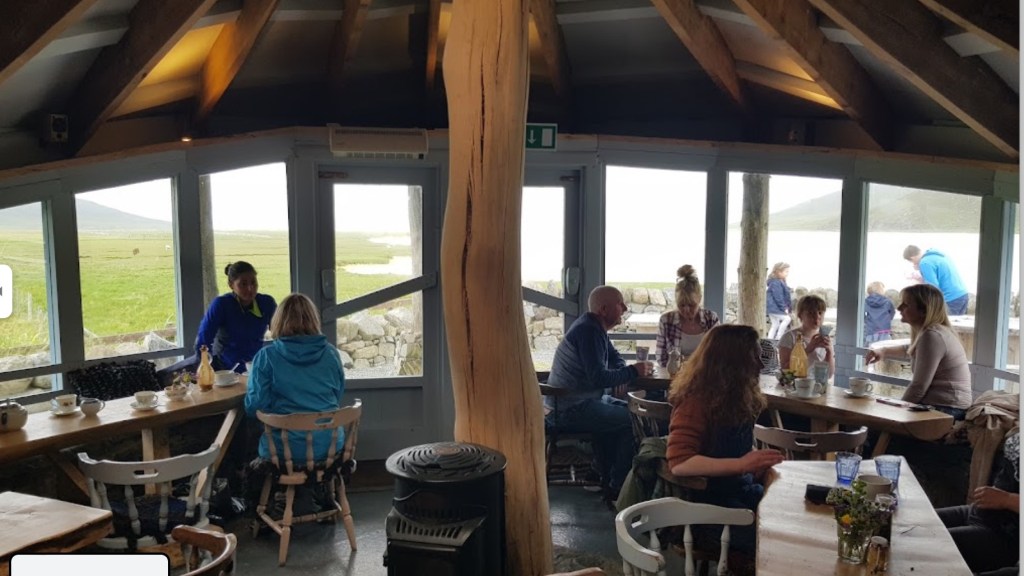
We parked the van next to a charming and quirky cafe snuggled in the middle of nowhere called Temple Harris, featuring a spectacular array of pastries and killer views over a sandy bay ringed with hills. We strolled down a road toward the westernmost summit of Harris and our climb of the day, Ceopabhal (pronounced Chaipaval – p.s., sorry for all these pronunciation tips but I want you to be the hit of your next cocktail party).
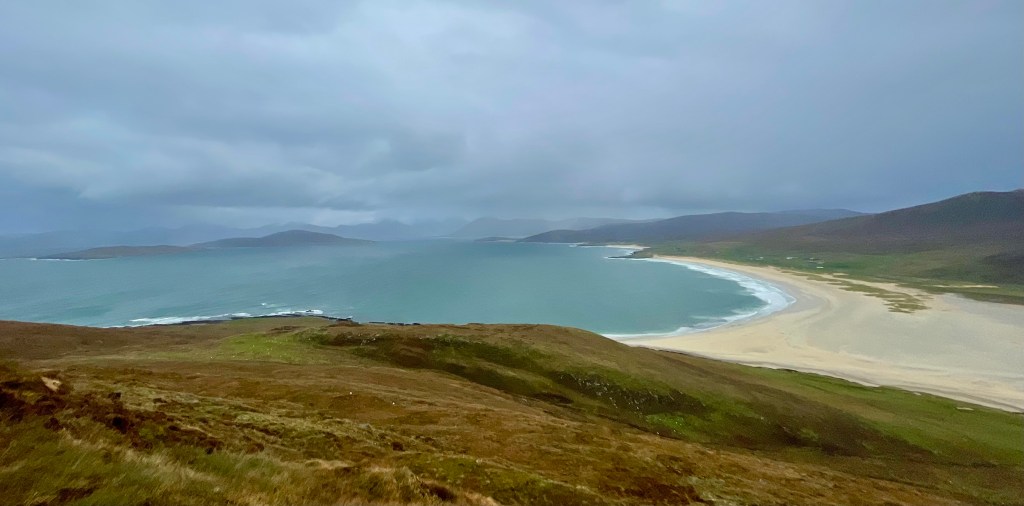
We walked across the machair in capriciously changing weather and made our way through a herd of colorful shaggy cows that appeared to be Highland Cattle/Belted Galloway crosses, which I am totally here for. Fighting our way through a sudden gusty squall, we crested a hill and Traig na Cleavag magically came into view, yet another pristine and deserted Harris beach. This one was guarded by an ancient sentinel – a ruined medieval chapel known as Rubh’ an Teampaill aka Northton Temple. It was built on the site where an Iron Age broch once stood, on land which has been continuously occupied since the Mesolithic era (as this particular era often comes up at cocktail parties, along with Gaelic pronunciation opportunities, a wee reminder this was 10,000 to 8,000 BCE, so very much olden times, or dare I say, days of yore).
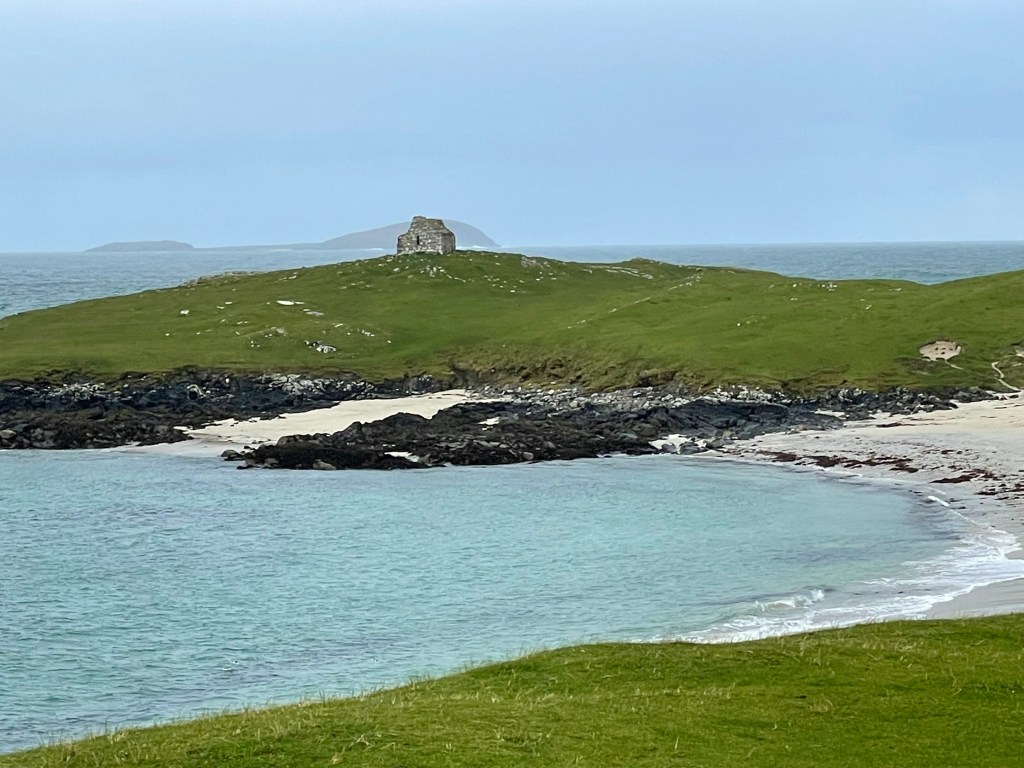
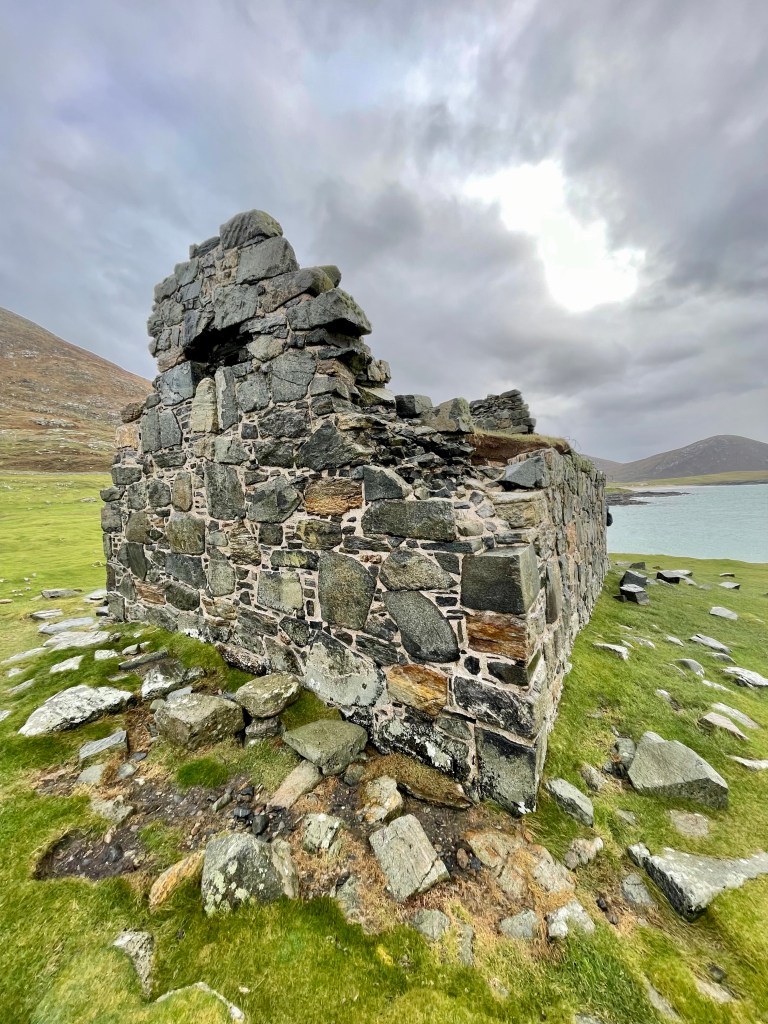
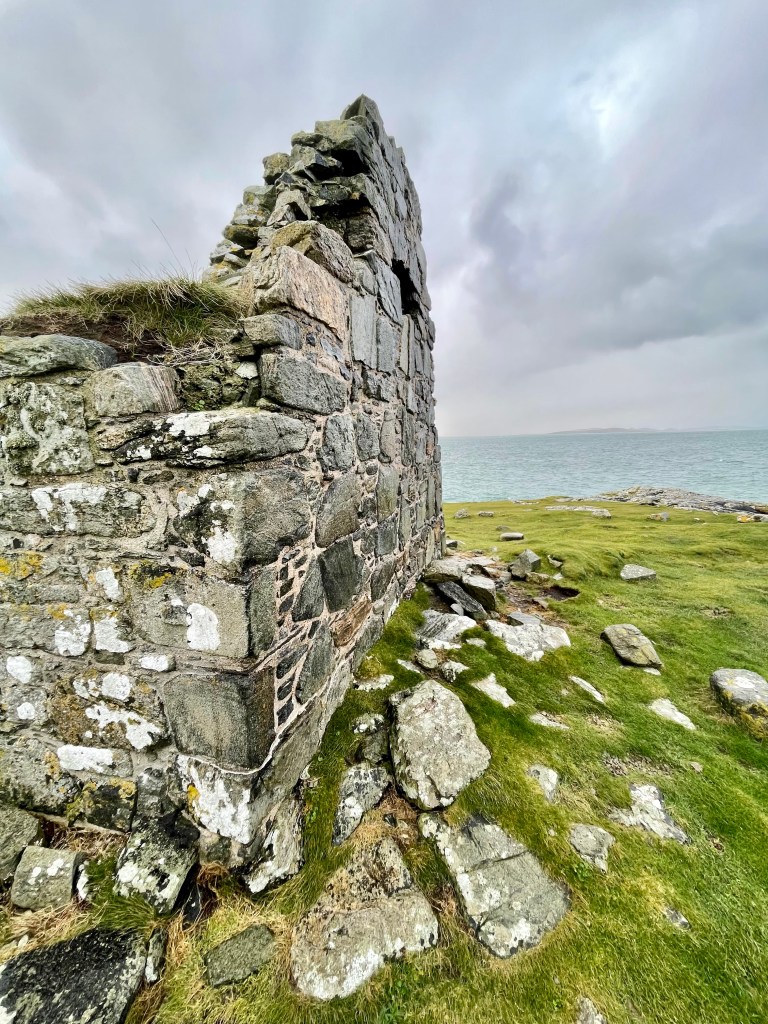
Ceopabhal loomed over us for the entirety of our walk, and I eyed the hill with a slight amount of trepidation, mostly because I made the mistake of reading about it in advance on the Walkhighlands website (the bible of Scottish hillwalking).

The climb featured a 1,200 foot elevation gain over 6/10 of a mile. This is indisputably a bit on the steepish side, in fact Walkhighlands mentioned in passing that a “great amount of effort” was necessary to reach its summit. Also Liam made us stop and eat a protein bar just before the steep bit for “fortification.” Yikes. So once again the ascent was trail-free – we just zig-zagged our way up through clumps of heather. My main pro tip would be to make sure you lean forward into the hill. At least it was so rainy and windy that trying not to get blown off the trail to our deaths (only slightly exaggerating) served as an excellent distraction from the aggressive angle of the climb.
At the summit (yay!), the views were 360 degrees (largely into fantastic storms, but you could see the mountains of Skye). The wind had truly become a biblical sort of tempest, known in these parts as “blowing a hoolie,” although I did valiantly manage a few snaps and a cairn photo.
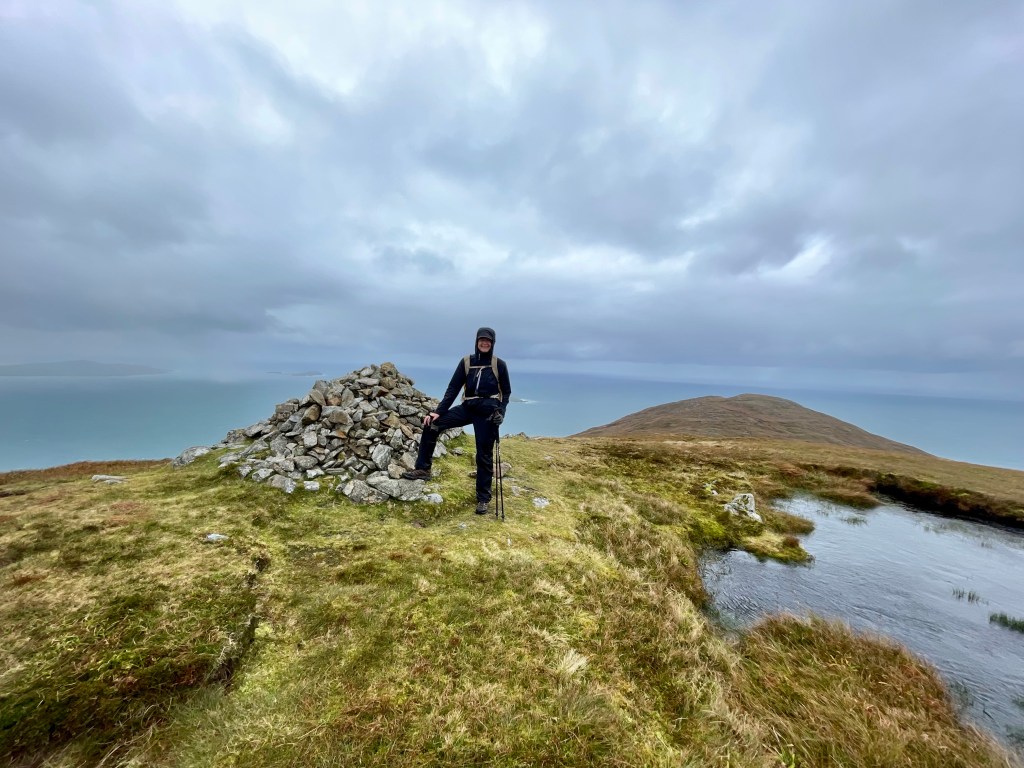
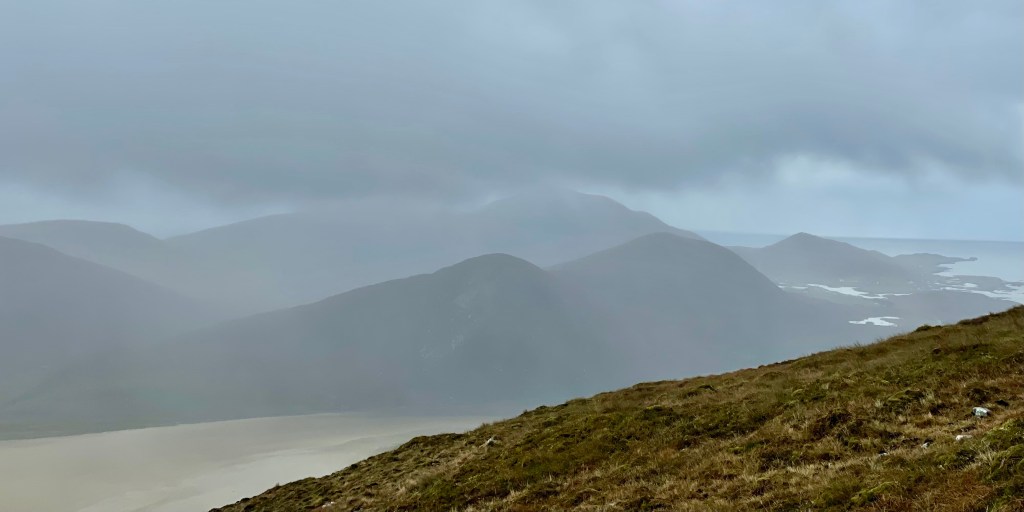
We walked to the lee side of the hill, mercifully sheltered from the hoolie, and sat in some soft comfy moss to enjoy a picnic looking out over a gorgeous bay.
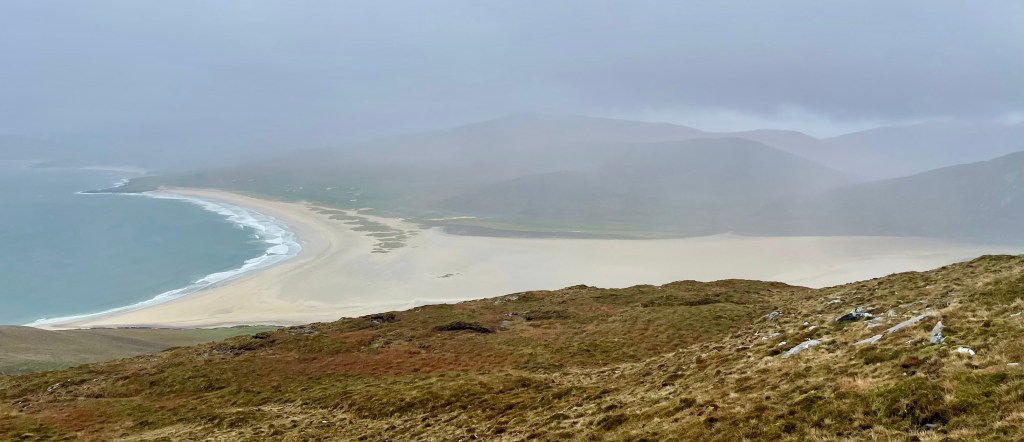
The fine folks at Walkhighlands.com recommended retracing one’s steps back down the hill. My knees were entirely dreading this prospect because going up a steep slope is one thing, going down (while being blown about by a hoolie) is an entirely different situation. This advice was based on their view that walking down the hill on its lee side would take one through “deep heather” and thus should be avoided. Mercifully, Liam had other ideas. We indeed took the more gradual route toward the bay, winding our way through heather and floating across fluffy, deep mounds of sweet, sweet sphagnum moss. Let me tell you it was delightful. Imagine traipsing down a hill on living, breathing sponges of memory foam. That’s what it was like. I put my hiking sticks away.
Speaking of moss, you can’t go to Scotland without considering peat. No seriously. Peat is formed from plant material throughout the ages that does not fully decompose, and sphagnum moss is one of its main ingredients. Peatlands cover about 20% of Scotland and yet 80% has been degraded over time. It has been hacked away and drained since the 1800s to make room for agriculture. For centuries it has also been cut, dried, and used in fireplaces for heating homes. It still is.
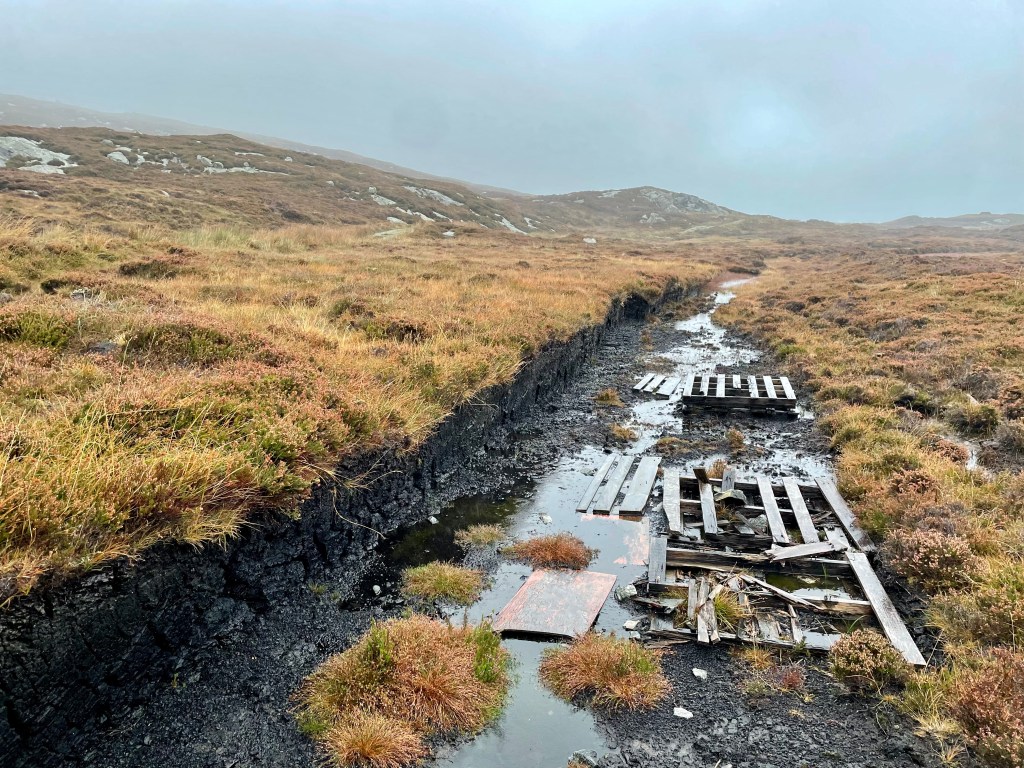
Peatlands are among the most carbon-rich ecosystems on Earth and have a net cooling effect on climate. Healthy peatlands can also reduce flood risk by slowing the flow of water from the uplands. If you hold a small handful of sphagnum moss and give it a squeeze, enough water will run out to fill a juice glass. Without peat, one is left with completely nonabsorbent bedrock which isn’t great in a country where it is usually raining. Peatlands also promote biodiversity by providing vital habitat for birds, insects and plants. Peat bogs are sometimes referred to as the rainforests of the UK.
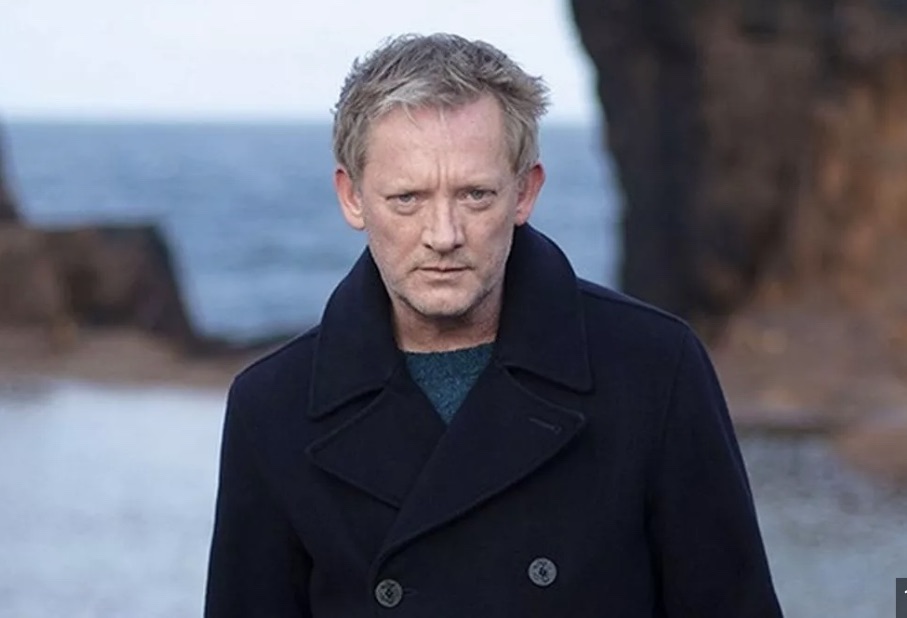
A few more cool things about peat. You may have seen an episode of the BBC mystery Shetland where a decades-old body was found perfectly preserved in a peat bog and wondered why. (Fun fact: There have been only two murders in Shetland over the last 50 years, rather than the 1-2 murders per week as depicted in the show. This aside provides an excuse for a Douglas Henshall call out for a lot of reasons).
The explanation for peat’s ability to preserve (ahem) organic matter is this. As a bog grows, and new peat replaces old peat, the older material underneath rots and releases humic acid, also known as bog acid, with pH levels similar to vinegar. Not to put too fine a point on it, but bog acid preserves human bodies in the same way fruit is preserved by pickling. And of course not just humans – a wooly mammoth was once discovered buried in peat that still had its fur and food in its mouth.
Peat also creates and stores iodine. The iodine causes sphagnum moss to look very yellow and even red when it’s waterlogged. This is why many Scottish rivers appear golden in color – it’s not tea, or (sadly) whisky – it’s iodine-laced runoff. Also, iodine’s antiseptic properties mean that sphagnum moss acts as a water filtration system so in a pinch you can use water squeezed from moss for hydration – and even more interesting, it was used to pack wounds during wartime since it’s both sterile and absorbent.
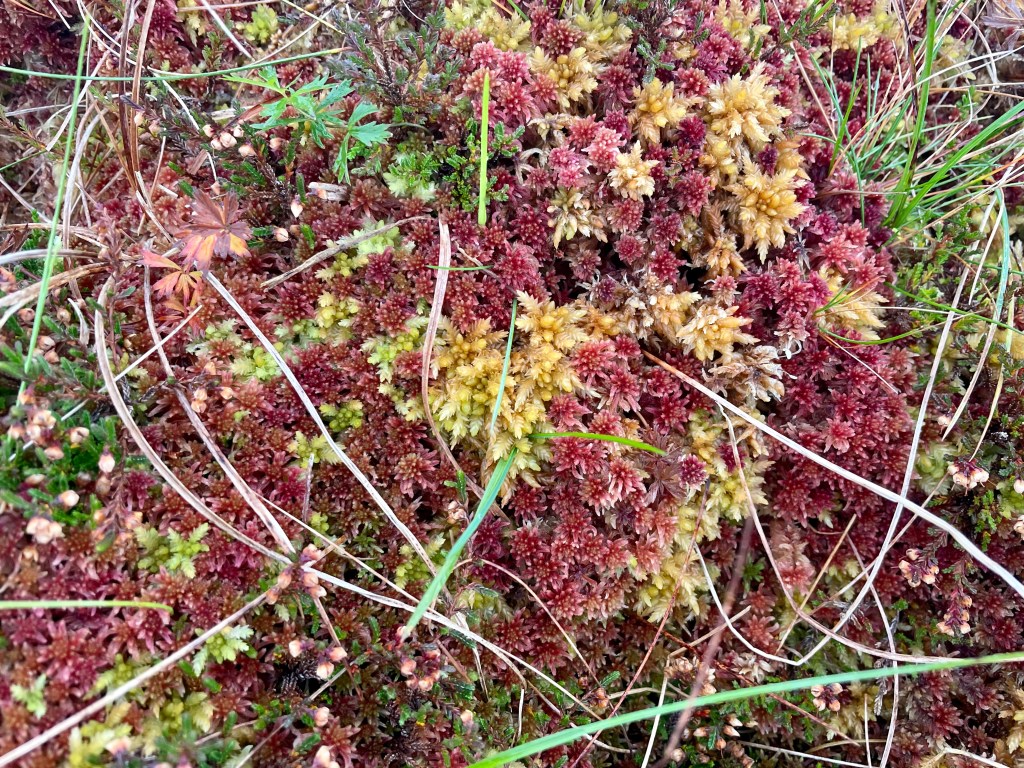
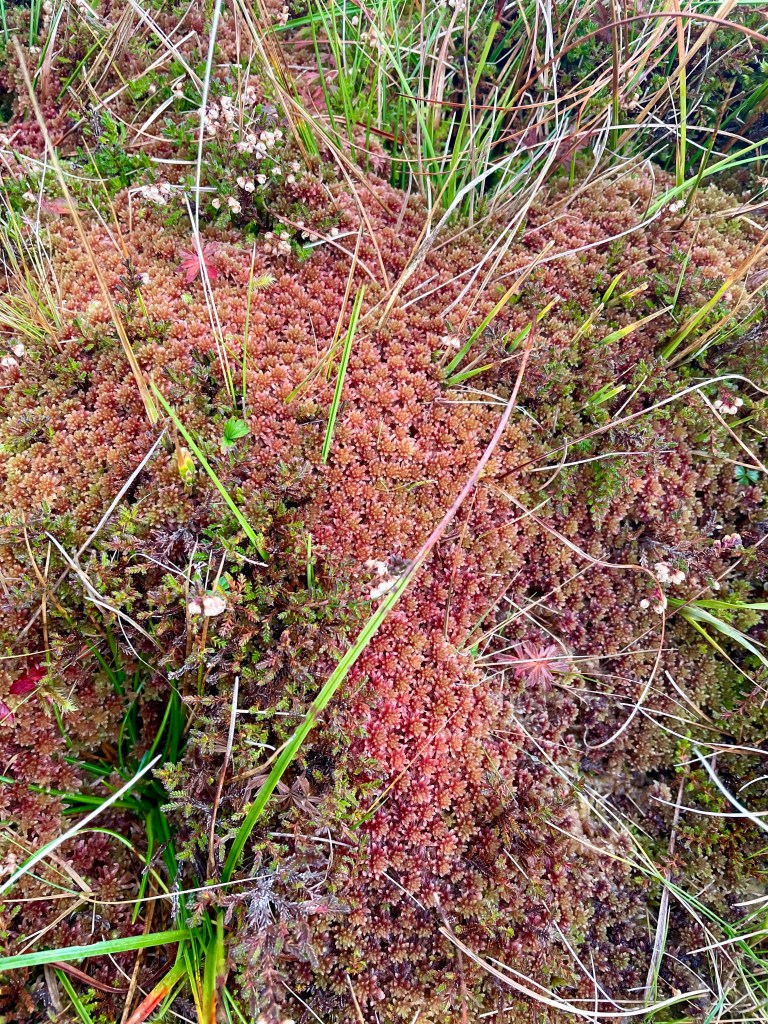
Most crucially from a climate change perspective, Scotland’s peatlands store 16 million tonnes of carbon (one tonne is 9% larger than a metric ton) and possibly shouldn’t be released into the atmosphere at this particular juncture. Draining water away from peat bogs to support agriculture causes the peat to dry, resulting in the vegetation decomposing much faster – and the release of carbon. Similarly, burning peat has the potential to release hundreds of years of stored carbon back into the atmosphere. Ultimately it’s quite beneficial to have large land masses that actually capture and store carbon.
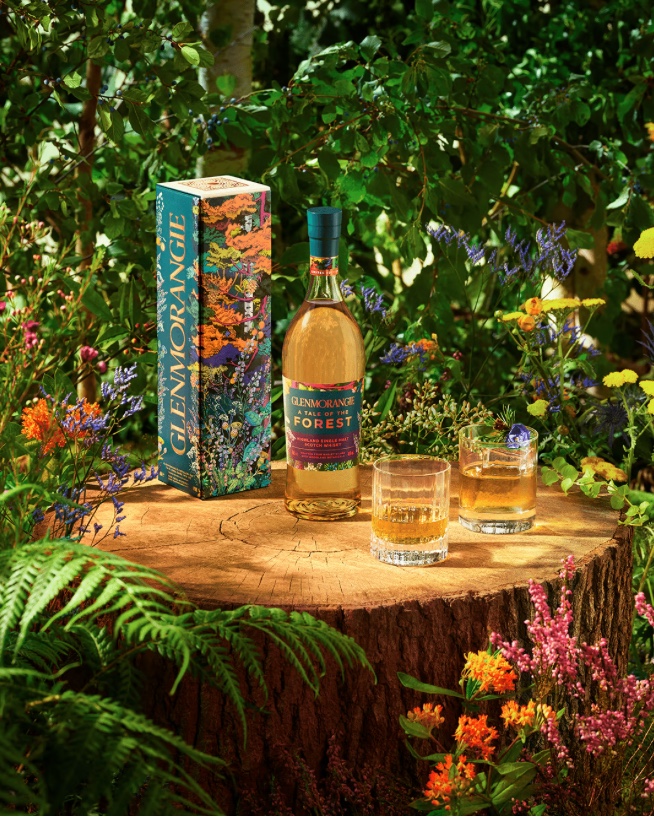
I know what you are thinking – what about (gulp) whisky? Much of Scotland’s whisky is made from sprouted barley that has been dried by peat fire. It imparts a lovely campfire vibe to the golden liquid which causes people to either fall in love or cough with watering eyes and an alarmed expression. An iconic flavor either way, especially with Islay whiskies. As it turns out, whisky accounts for only about 1% of the UK’s peat use and as you can imagine defending the cultural significance of Scotland’s whisky-making tradition has been the central pillar of the industry’s case during the government’s development of its peat policy. Distilleries have pledged to make peat use more sustainable, although given its glacial pace of regeneration (1mm a year) this is a matter of debate. Distilleries are also experimenting with using different botanicals to light on fire for barley drying. Glenmorangie has just released a “Taste of the Forest” expression where they used pine, juniper, woodland moss and eucalyptus as fuel.
The good news is that peatland restoration and preservation is very very big in the UK and heroic efforts are underway to preserve and increase the resource – with some measurable success. So fingers crossed.
Thank you for coming to my Ted Talk.
So let’s rejoin our merry band of descending walkers as they bounce down Ceopabhal on cushions of sphagnum moss. Before I share a few photos, after hearing all this peat talk from Liam we were sensitive about trodding on this precious resource, but he assured us that it quite literally bounces right back due to its buoyant density. Phew.
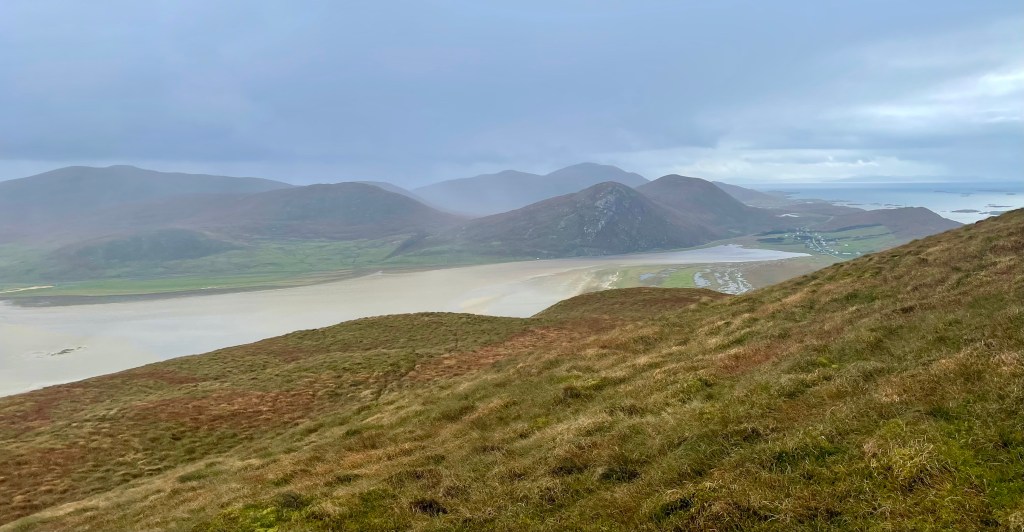

Upon our triumphant return to the van, we snagged a coffee and pastry (and a wee bit of shopping) at Temple Harris. Everyone leaves their packs outside on the wooden bench without worry of misadventure.
Duly fortified, we struck off down the Golden Road, a spectacularly winding single track route along Harris’s rocky east coast. It’s widely assumed it got its name due to its eye-wateringly spendy construction cost. After Liam cheerfully told us that if anyone was going to barf in the van, this would likely be the time, he offered distraction from the terrifying prospect of public motion sickness by launching into storytelling mode. He regaled us with mystical tales of dubious provenance featuring two dangerous and wily Scottish creatures.
First on the agenda – kelpies. Typically residing in and lurking about black lochs, they take the form of a horse, appearing to unwary humans as being a helpful sort of creature. They entice travelers to ride them over the loch, seemingly a more expeditious route than walking around them. It’s a trap! Once a person mounts the horse, it gallops to the deepest end of the loch, dragging its hapless rider below the water to their death and, ultimately, consumption (yikes). This legend was used to keep children away from lochs and also provided therapy fodder for later in life.
You may have seen this gorgeous sculpture by Andy Scott. The Kelpies were installed in 2013 near Falkirk and are a ginormous 98 feet high. It’s beautifully lit at night, and even if you don’t have time to stop, the giant kelpies loom over the M9 between Edinburgh and Stirling.

Next we turned to tales of the more benign selkies. They are also water-dwelling shapeshifters, but transform between seal and human by shedding and replacing their skin. As humans, selkies are incredibly attractive, graceful, kind natured and (avert your eyes) seductive, and so humans tend to fall desperately in love with them. Selkies have also been tricked into marrying humans, usually by a nefarious person who steals and hides their seal skin, preventing them from returning to the sea. Not cool. Selkies are known for their benevolence, saving the lives of children or fishermen who have fallen into the sea.
There you have it. Keep up your guard if you visit Scotland – as these mythical beings pose more danger than any other resident creatures other than – dreaded midges.
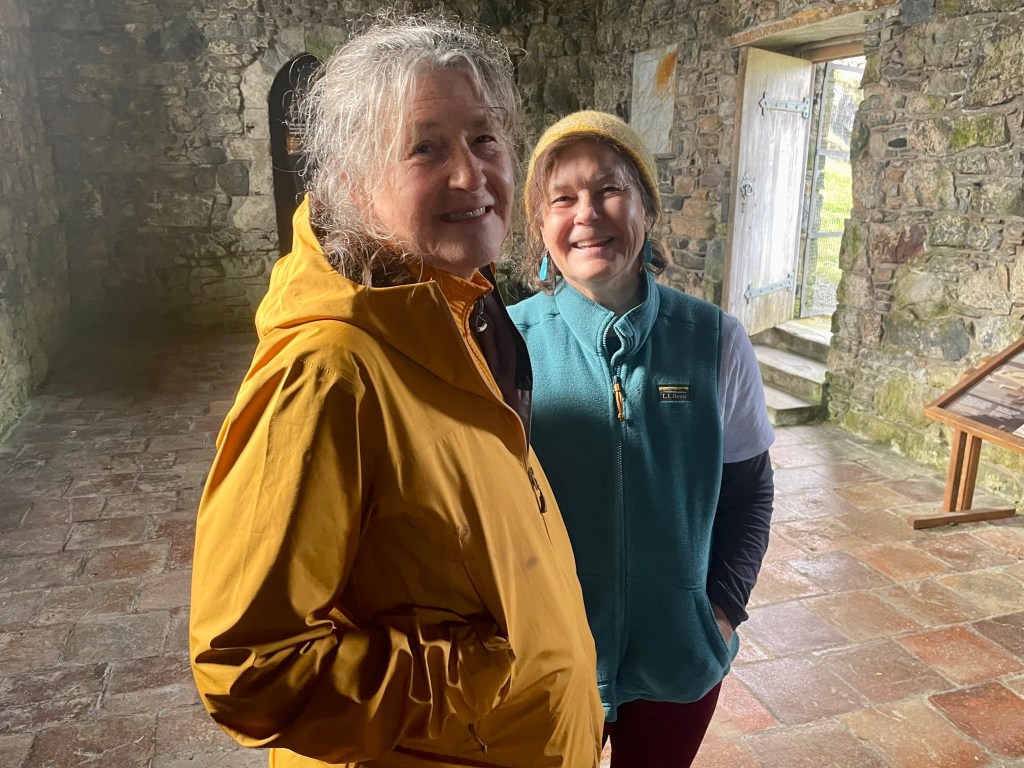
We took a break from the Golden Road at Clo Mor, the charming Harris Tweed Exhibition. I will admit to you that prior to my visit to Harris, I had presumed that Harris tweed, since it’s pretty ubiquitous, was mass-produced, probably in China. Luckily I didn’t say that out loud to anyone. In actual fact, to qualify as Harris tweed, the textile must be “handwoven by the islanders at their homes in the Outer Hebrides, finished in the Outer Hebrides, and made from pure virgin wool dyed and spun in the Outer Hebrides,” according to an actual Act of Parliament. Approximately 400 islanders were working in this industry as of late 2017, and you can visit them in their home, see their looms and watch them work. Consider my eyes opened.
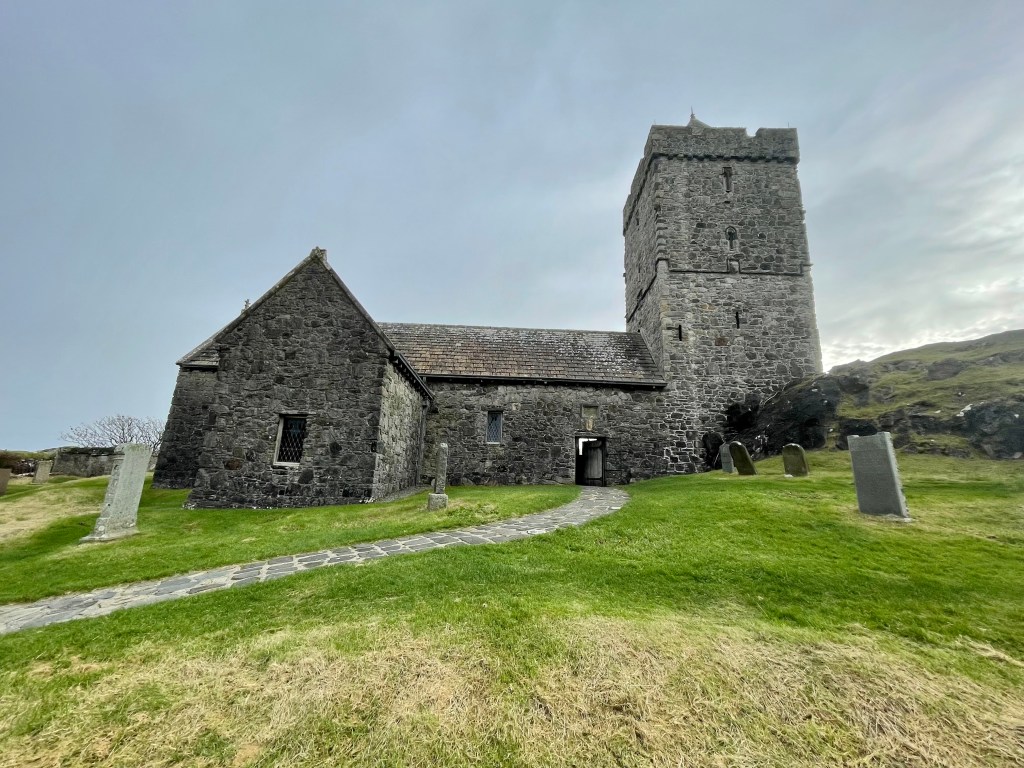
We next stopped at Hebrides People Visitors Center in Northton, a genealogical resource for folks researching their ancestry that tells the history of the people and landscapes of Harris and the Western Isles. Our last stop on the Golden Road was St. Clemens, a medieval church founded by Alasdair MacLeod, 8th chief of Clan MacLeod. He died in 1547, and his tomb is in the church, along with a passle of other ancient MacLeods. One wonders where the 1st – 7th MacLeod clan chiefs are buried.
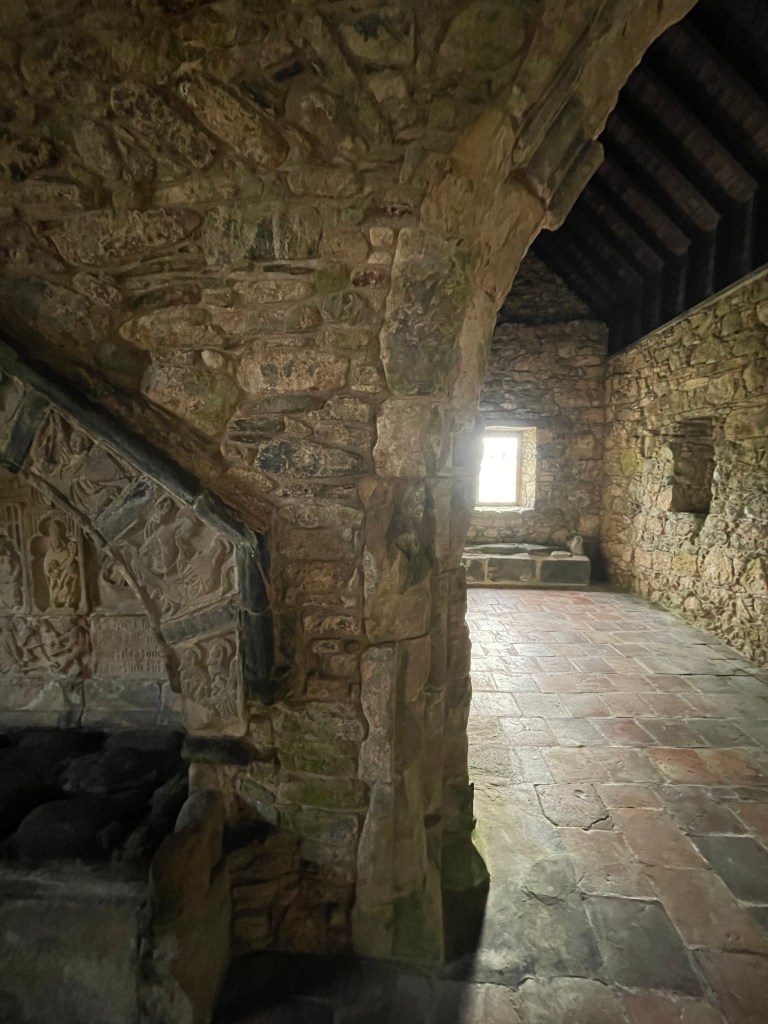
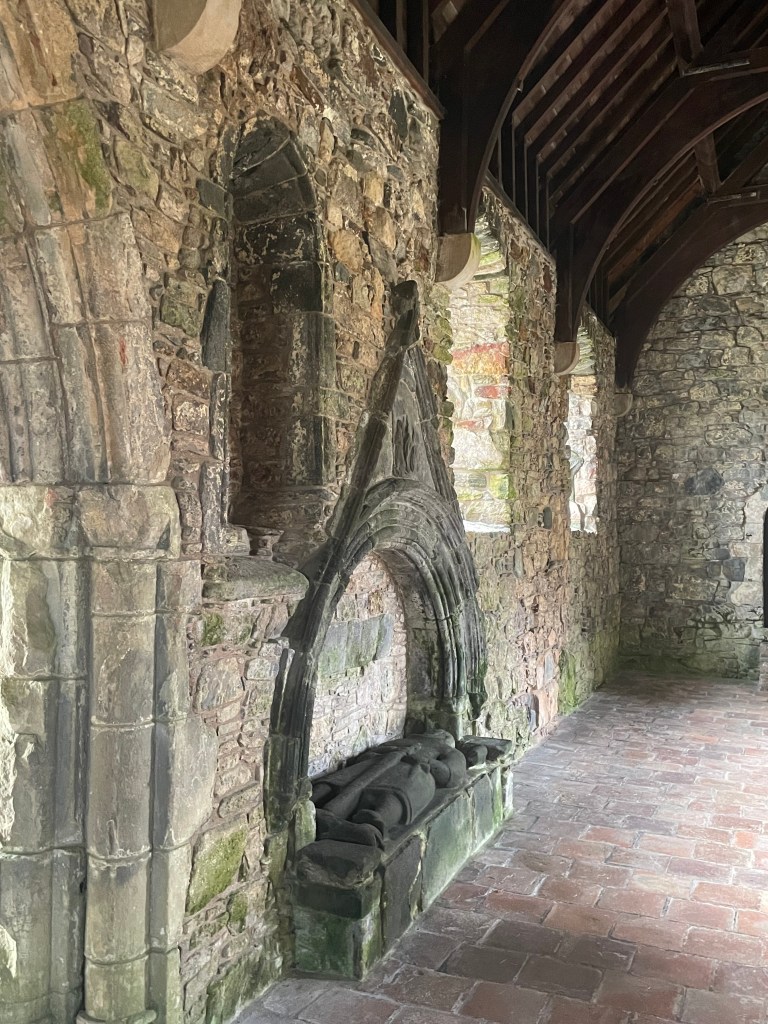
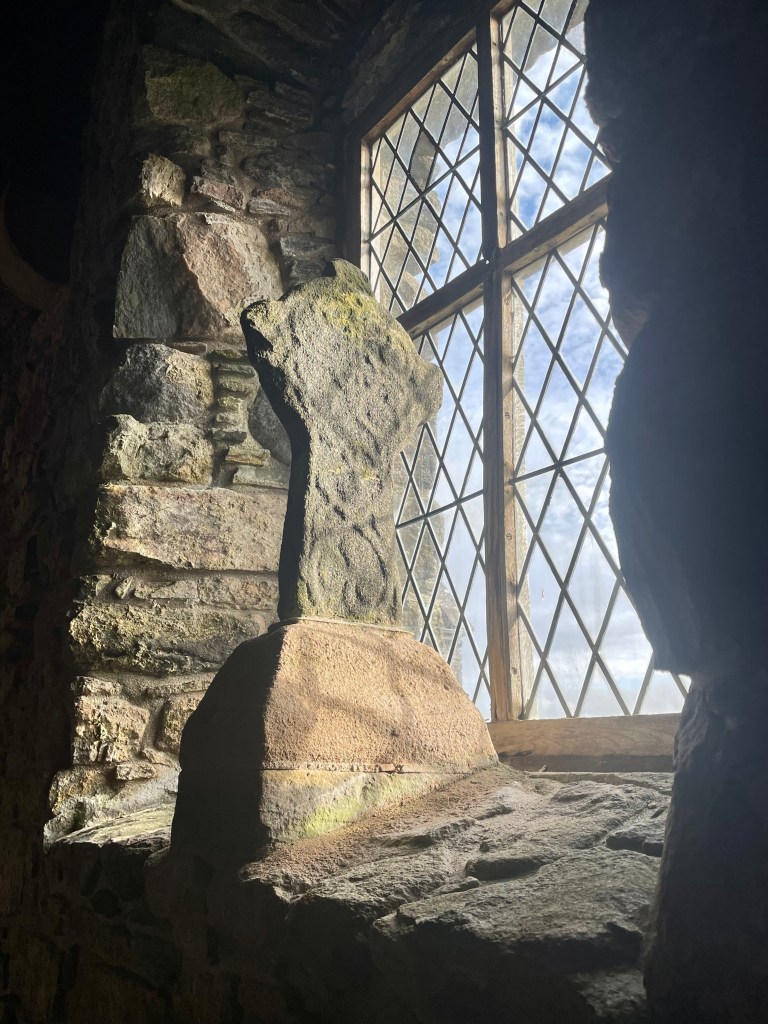
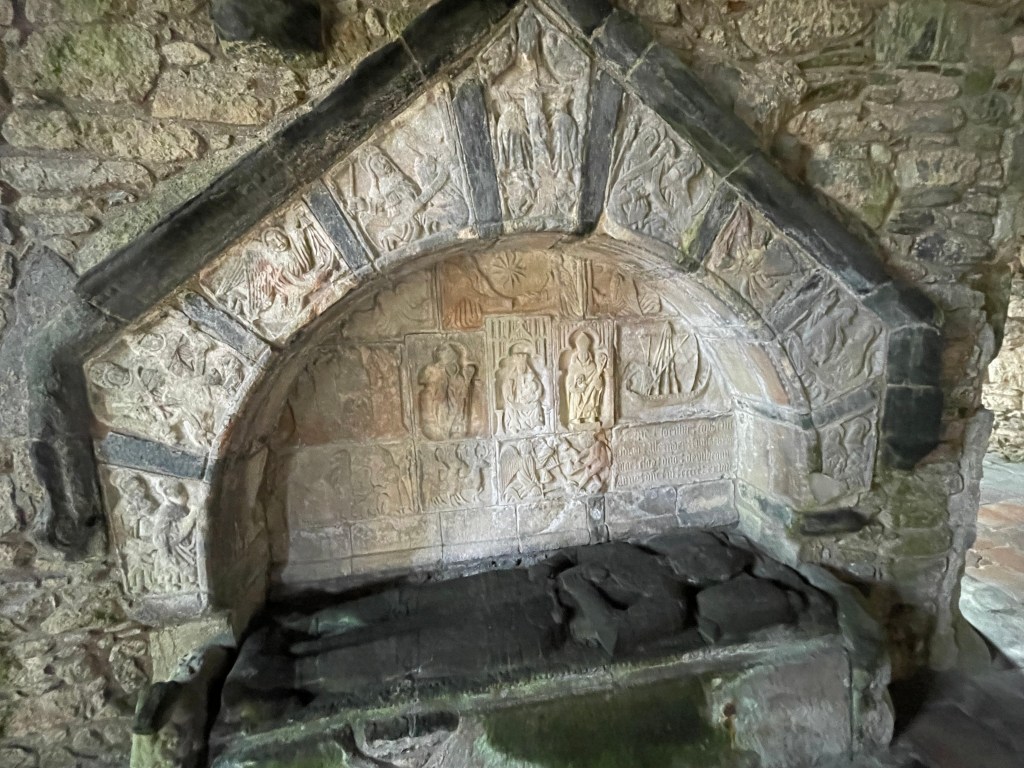
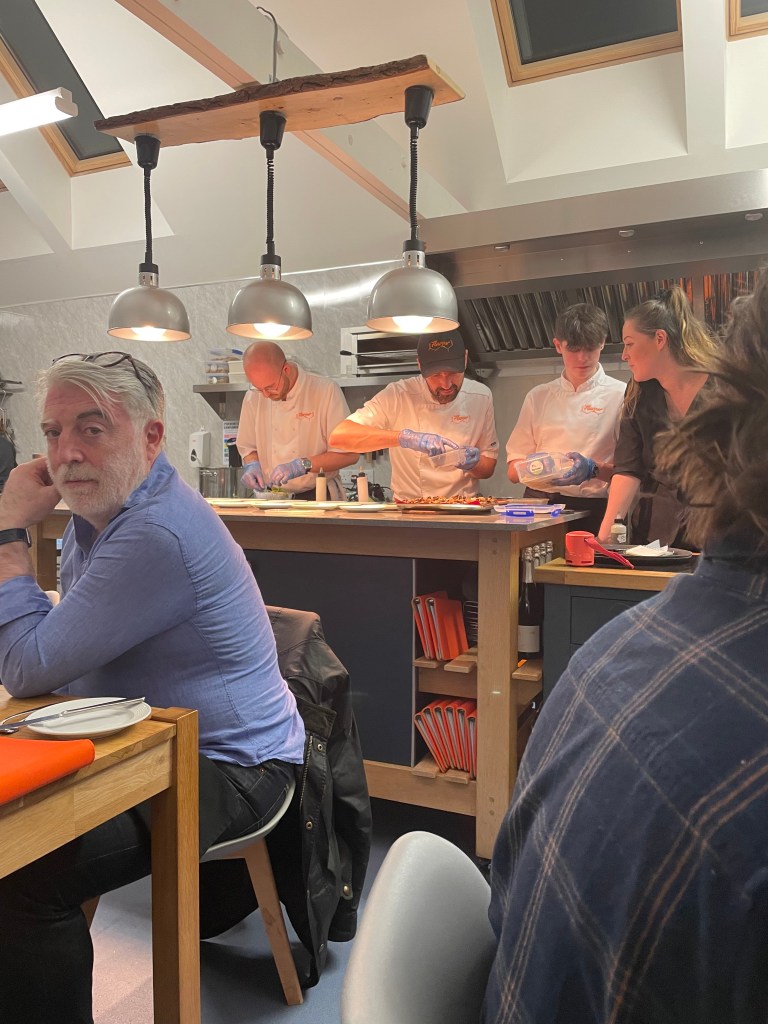
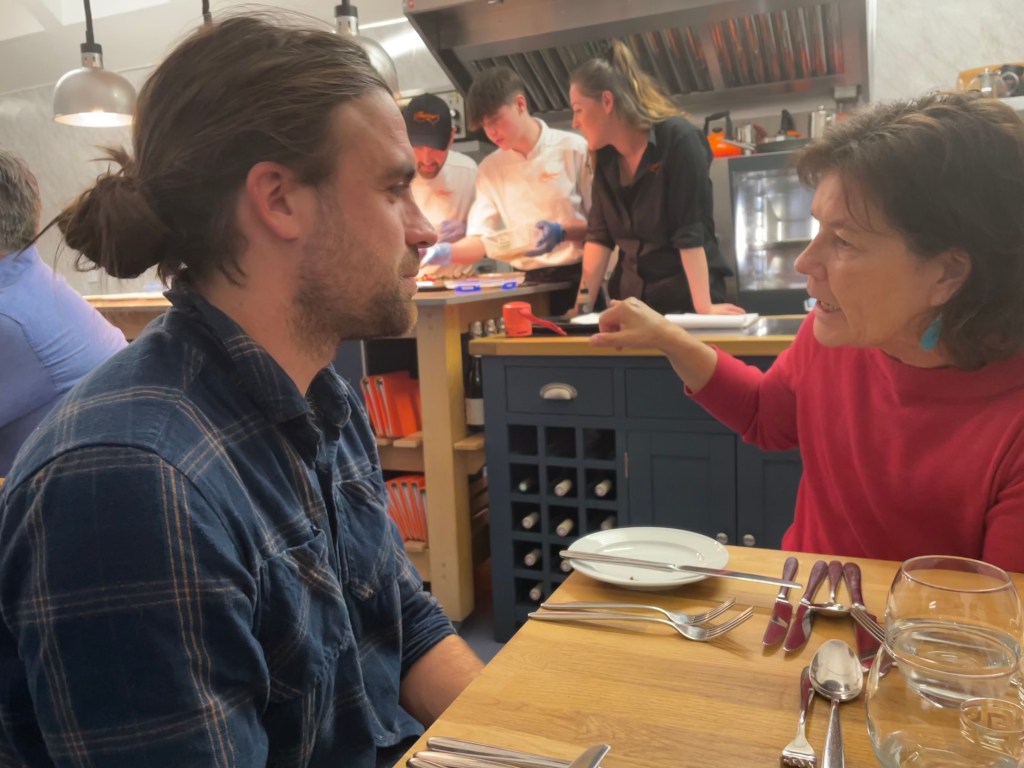
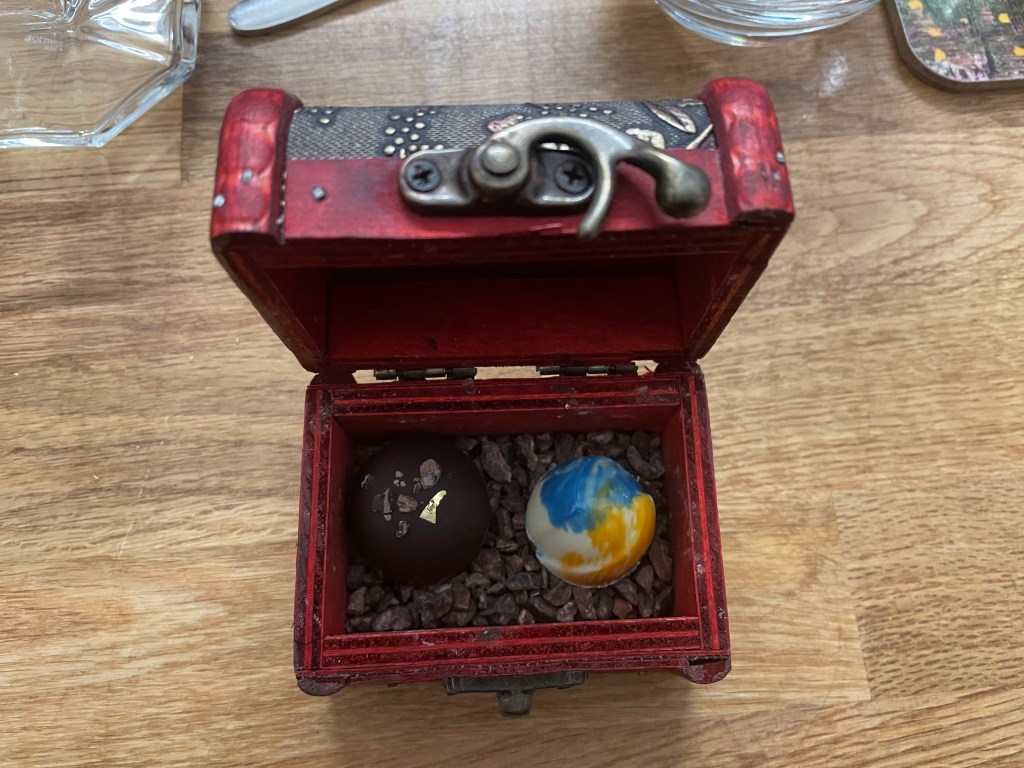
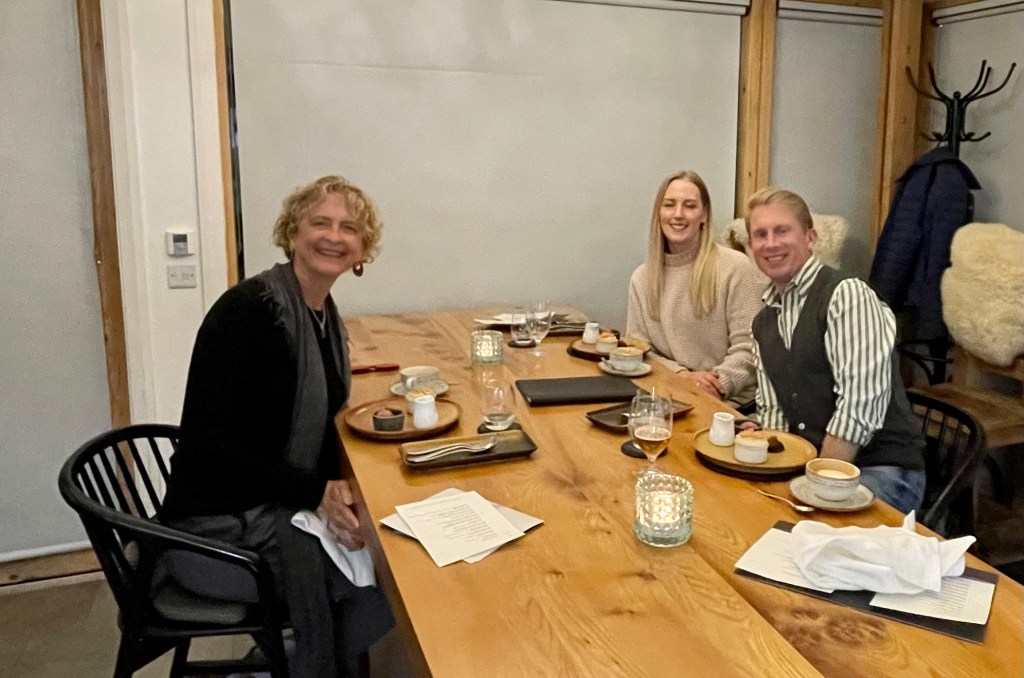
Our day ended in grand style with dinner at Flavour, an intimate restaurant on Harris with one seating and a chef, Chris Loye, who talked us through every beautiful and scrumptious dish on his tasting menu. That night each dish incorporated, with pride, the newly released Heurach whisky from Harris Distillery. A woman from the distillery lovingly shared its story at the conclusion of our meal. She poured everyone a complimentary dram, clocking with a wry smile that I had been accidentally drinking a Talisker (from Skye). Dang. As it turns out, she had been sitting at the table next to us with a couple who were right out of central casting for a show about a boring and very very rich English couple with plummy accents and unfortunate and ostentatious sartorial taste. I only wish I had been able to photograph the man’s pointy and aggressively shiny brown shoes. We decided he was probably an investor in the distillery and so may be forgiven for his wardrobe choices.

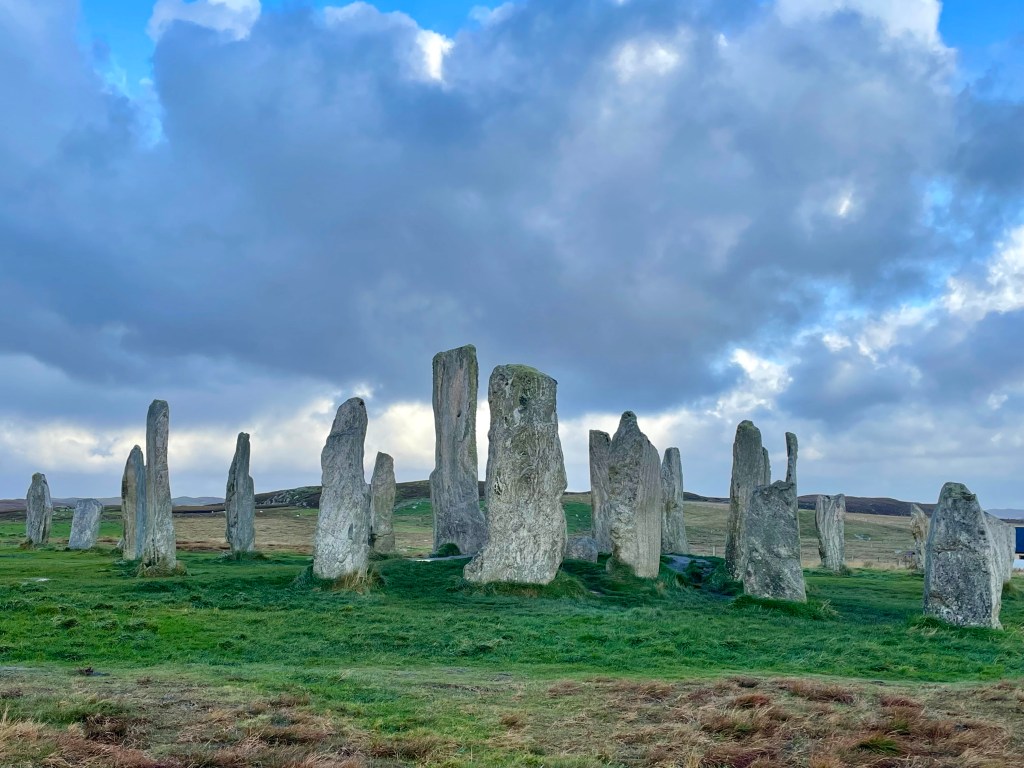
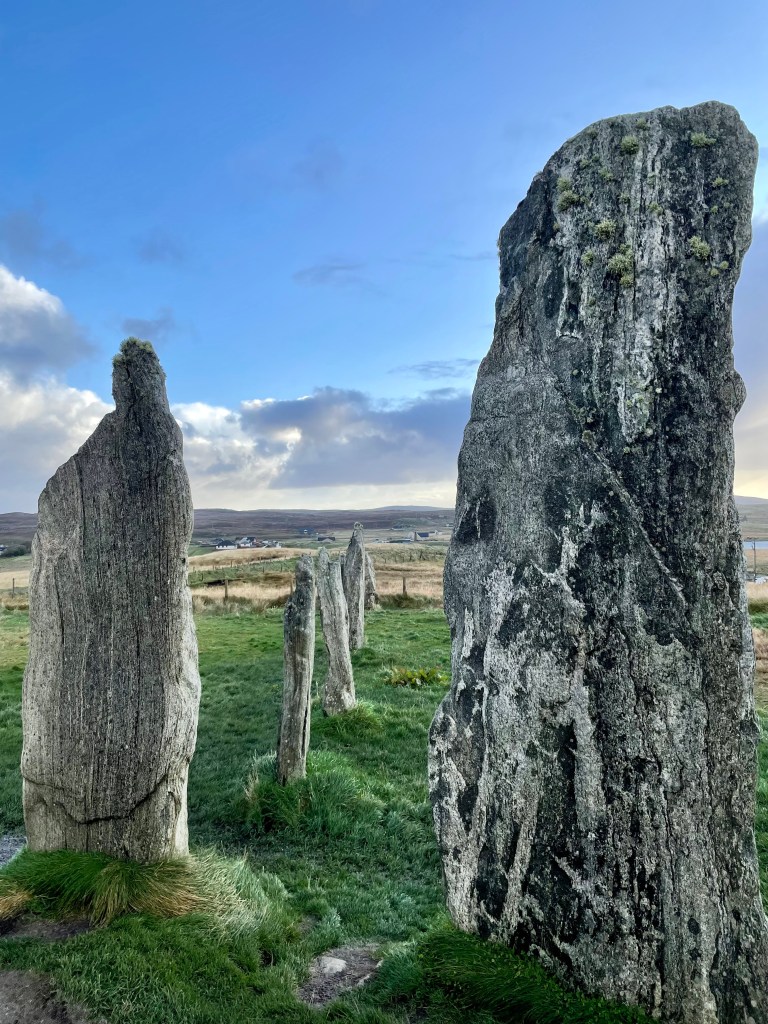
My friends, we have finally arrived on the last day of our fabulous Wilderness Scotland trip. We set off toward Stornaway, on Lewis, to catch the ferry to Ullapool on the mainland. On our way we stopped at, in my humble opinion, the most magnificent stone circle in a country chocked full of them, the Calanais (Callanish) Stones. Yes, yes, yes, replicas were made of these stones and then installed on the mainland at the fictitious site of Craig Na Dun for Outlander. Needless to say, they are so much more than that. Our little merry group had them to ourselves and they did not disappoint.
The stones are installed in the shape of a cross with an inner circle. They were erected 5,000 years ago and predate Stonehenge. It is thought that they were an important place of ritual activity for at least 2,000 years and possibly a kind of astronomical observatory. They are incredibly photogenic, even in the (again) driving rain and wind.


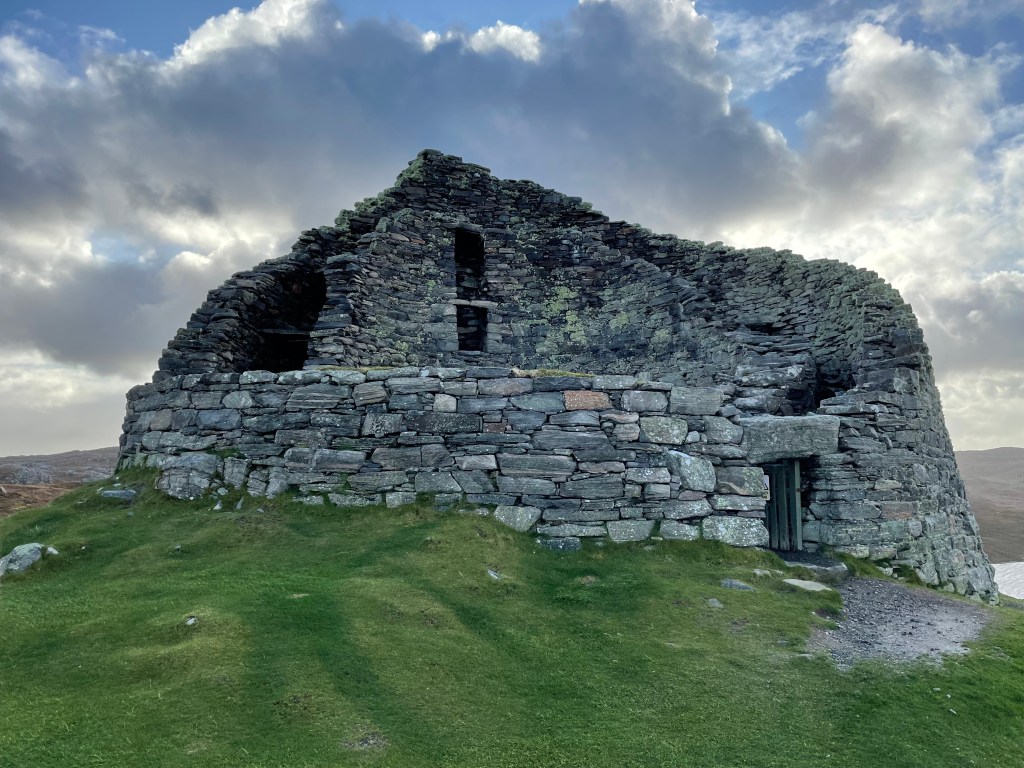
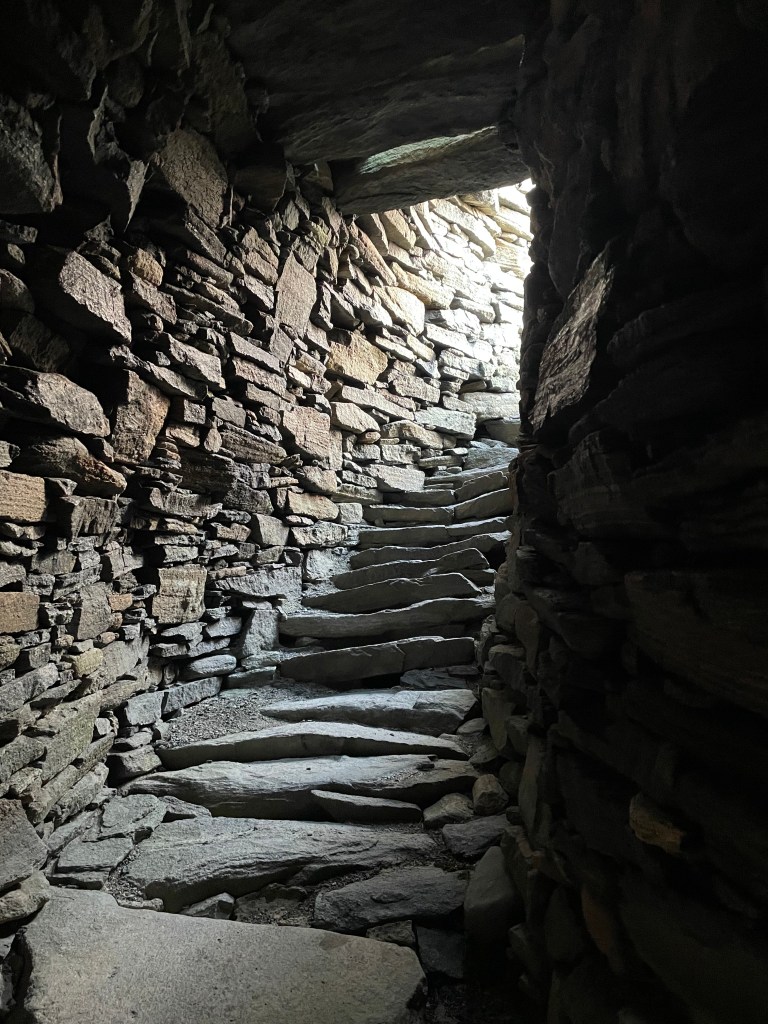
Our last official Outer Hebrides site was Dun Carloway Broch, one of the best preserved brochs in Scotland. These mysterious Iron Age monuments exist nowhere else but here. While these circular structures are as symbolic a feature as any in the highlands, their purpose remains unknown, although it is thought that they were residential structures for fancy people.
On the ferry back to the mainland, as we sailed through calm waters surrounded by hills on various land masses, Jacq, daughter of Margaret and niece of Victoria and awesome human being, turned to me and said incredulously, “There are mountains everywhere here.” I have told so many people about that comment because – I mean it’s true, yes there are. And that is one of the crazy unique Scotland things that for some reason I had never articulated. It doesn’t matter if you are on an island, in the middle of the mainland or on a ferry – there are indeed mountains everywhere. And as a person who needs mountains – that is a plus.
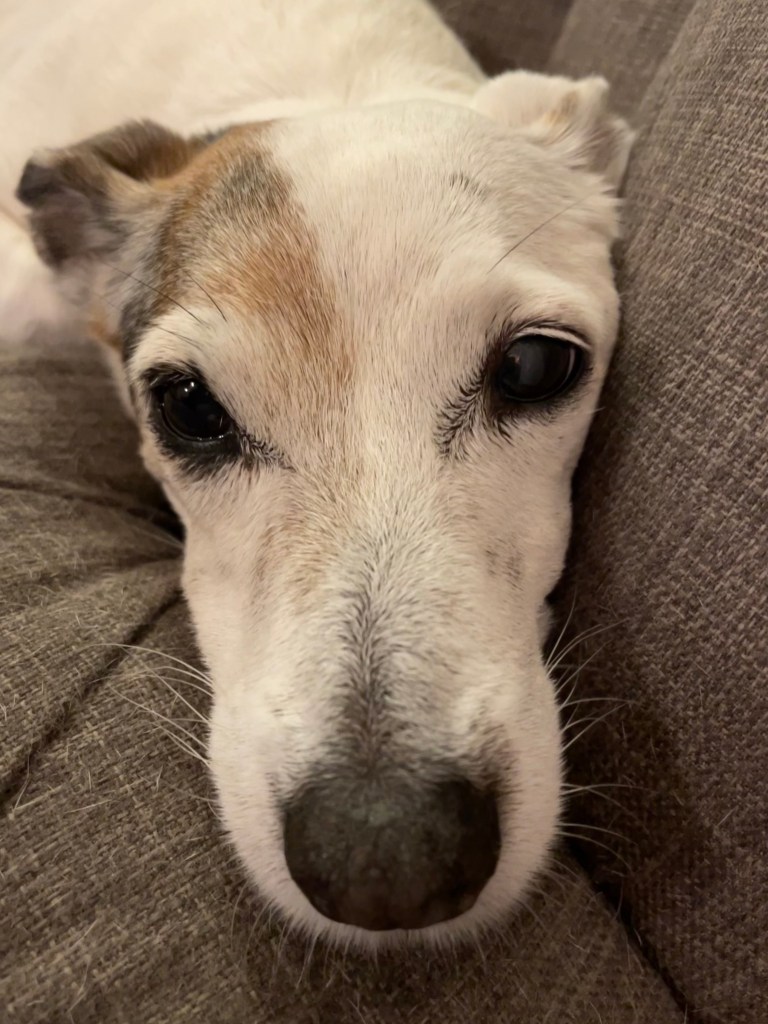
As all things do, the tour at last came to an end and we all bid a fond farewell in Inverness. I snagged dinner at Hootenanny’s, listening to some live music, and spent the night in my favorite B&B in Inverness, Castleview Guest House, run by the wonderful Eleanor and her 14 year old Jack Russell, Mia. I found the place back in 2018 because Rick Steves recommended it, and Eleanor said on his visit years ago he was most enamored of her hand-written, nearly illegible guest reservation book.
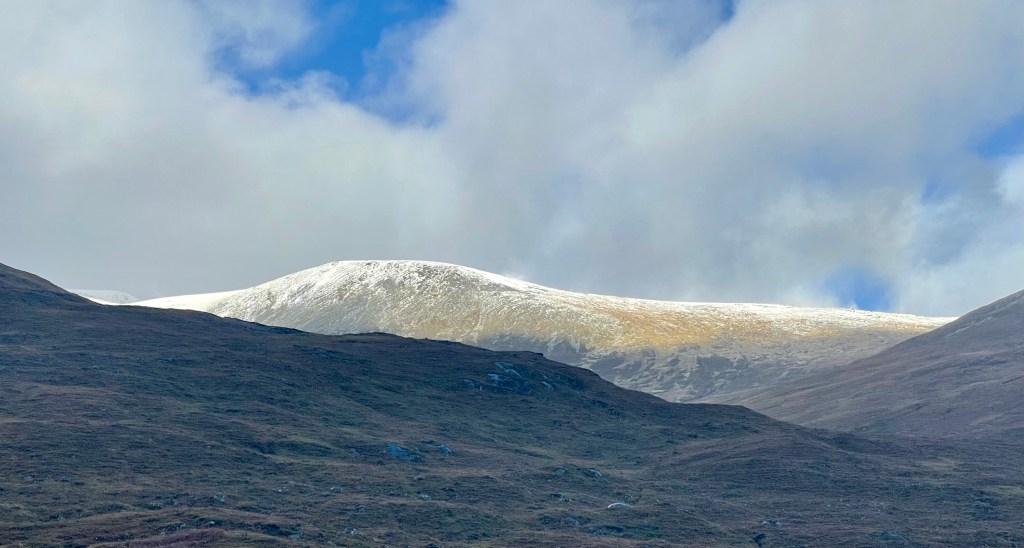
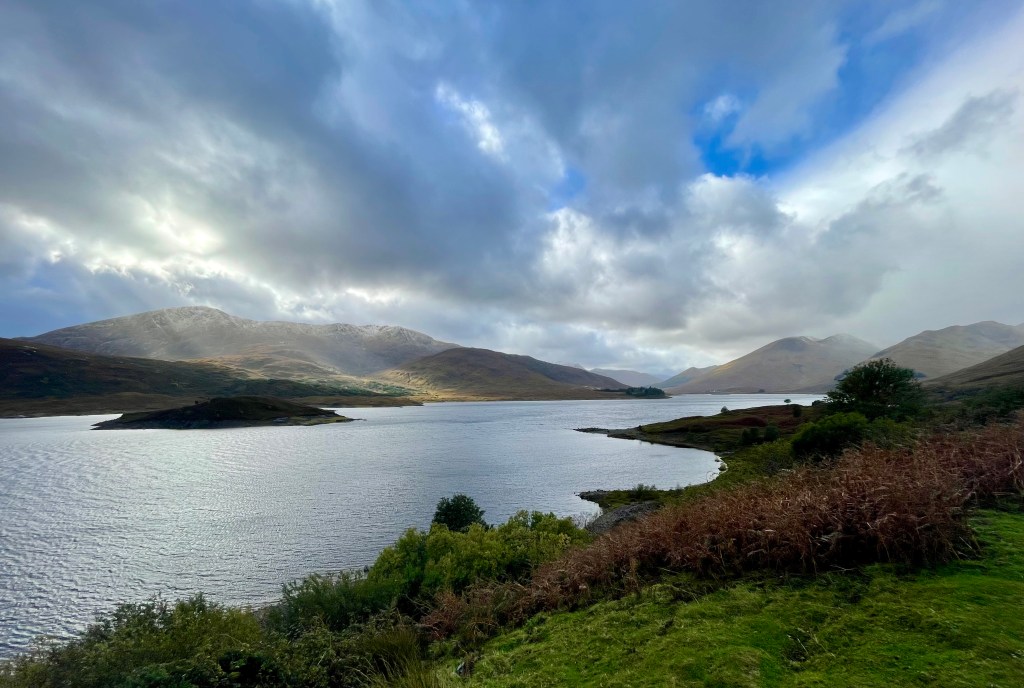
I know this sounds insane but the next day I rented a car and drove back to Skye. It’s actually not that far and Skye is Skye, so maybe not insane but only slightly eccentric. I stopped at Glen Affric, another splendid nature reserve on the mainland. And, best of all, there was snow on them thar hills.
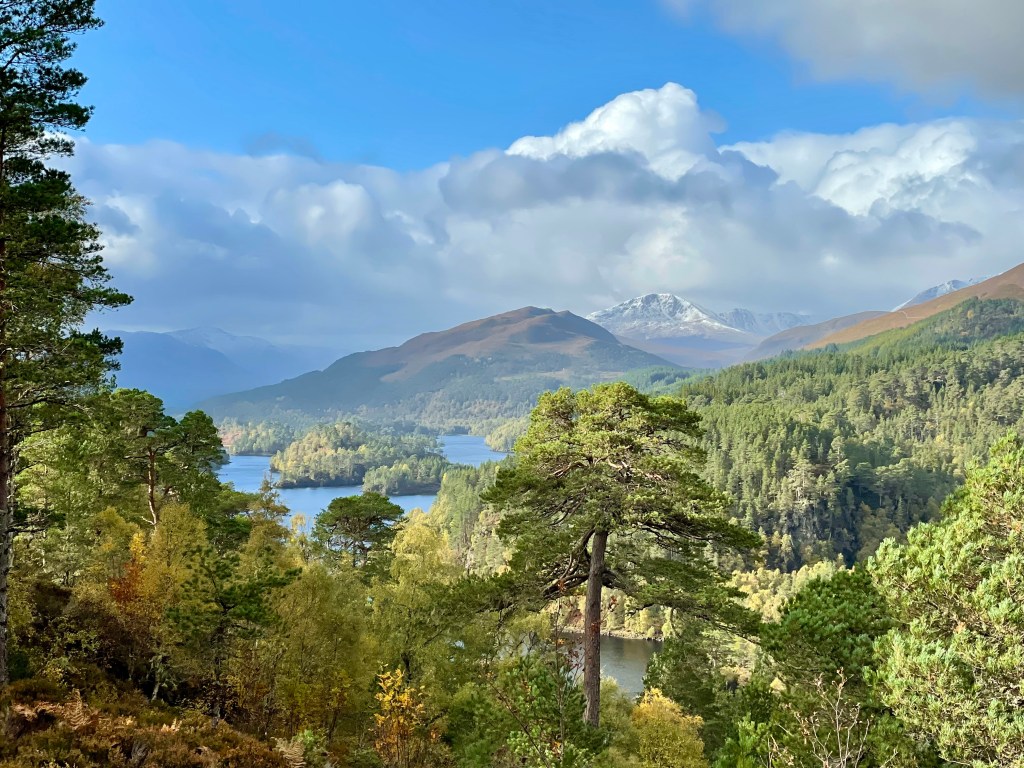
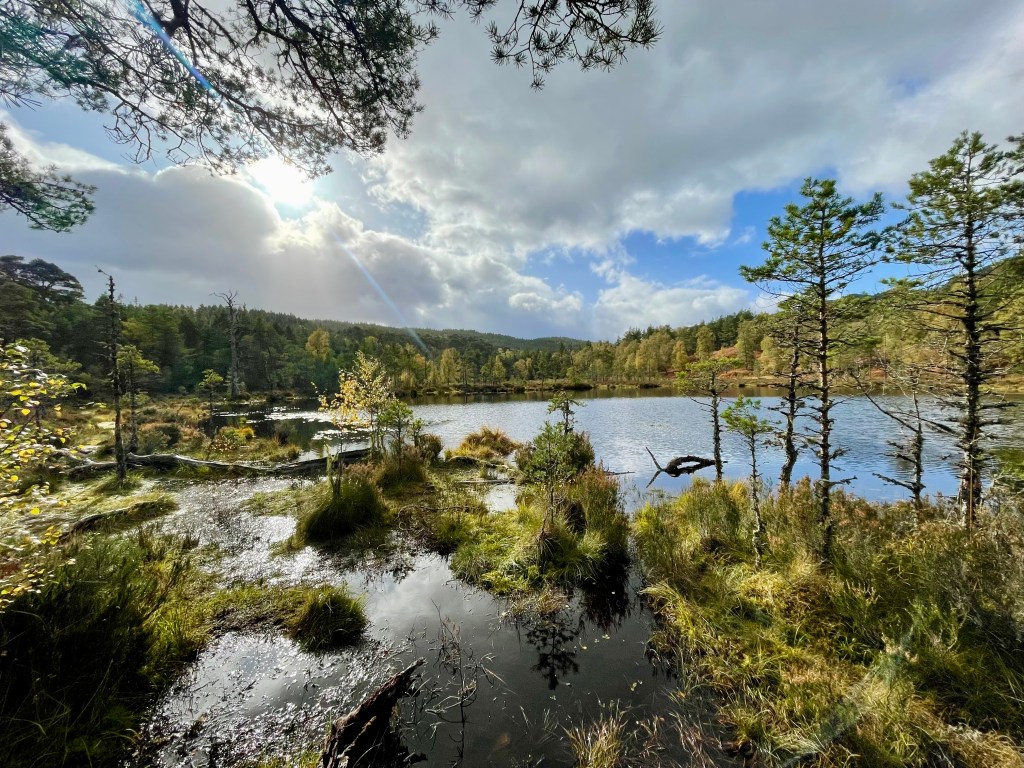
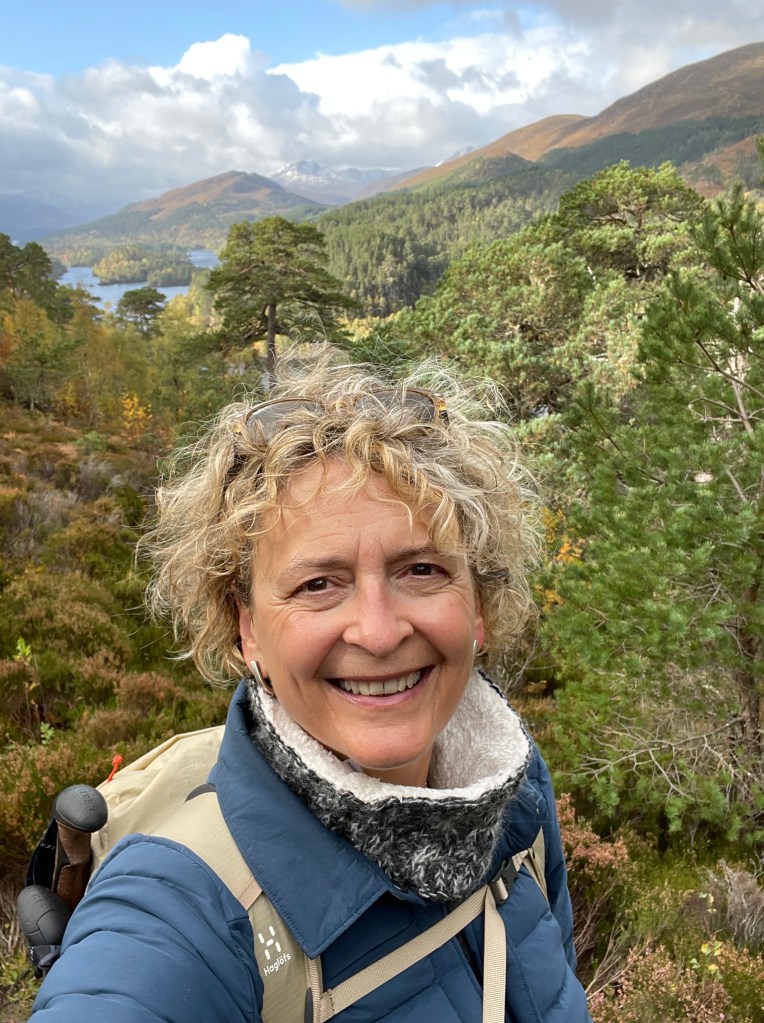
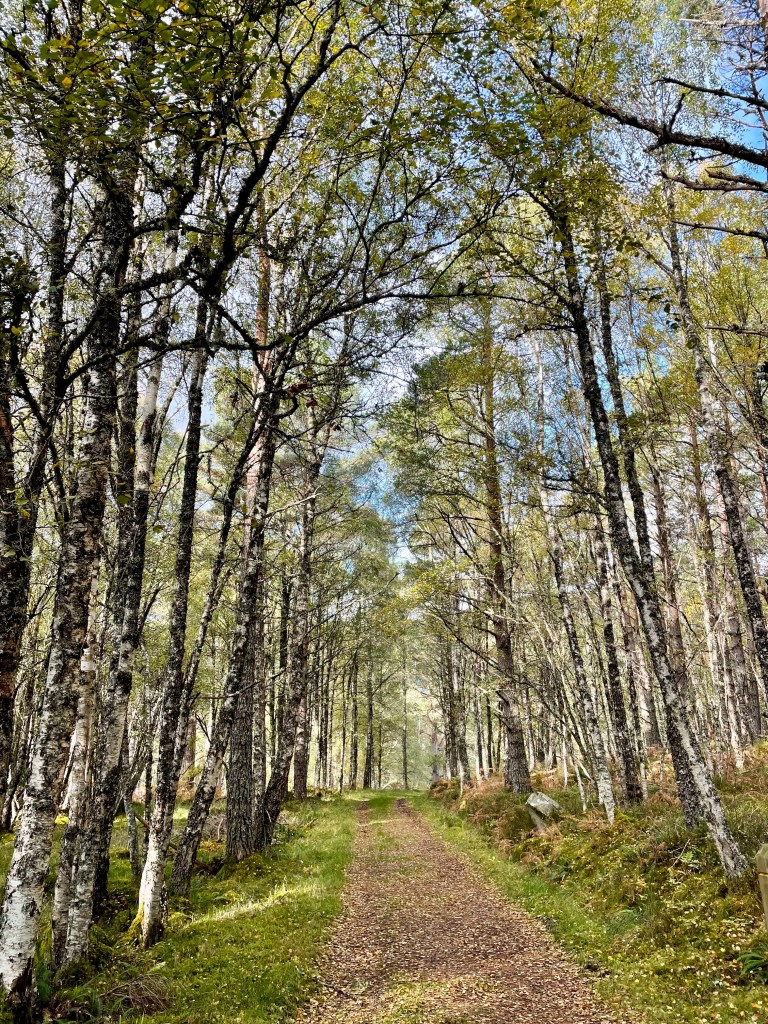
Glen Affric, along with many other reserves I had visited over the past few weeks, is one of rewilding zones of Scotland. This restoration and conservation effort had become rather an unintended but very much appreciated mantra of my trip and thankfully is a government priority. Trees and other vegetation are planted in these areas with the goal of creating a landscape that more closely resembles the Scotland of thousands of years ago, which is not the bare hills of the highlands that we are accustomed to seeing, but rather a more forested landscape providing a more diverse habitat for a greater variety of flora and fauna. For example, trees are often planted along rivers to provide shade and cool the water so salmon can thrive.
Some in the countryside advocate passionately for rewilding, others see it as an existential threat to their culture, history, and way of life. Farmers, deer stalkers, ghillies and gamekeepers are quite anxious about the impact these plans will have on their jobs. For example, Scotland is teeming with too many deer which denude the landscape – contributing to the problem – by eating foliage from the roots (as opposed to sheep whose style is more like a lawnmower) yet efforts to cull the herd have run into resistance from landowners and staff whose income is wedded to the deer stalking business.
Be that as it may, rewilding efforts are grounded in the belief that land is not primarily for generating income from sporting activities, forestry or commercial agriculture, it’s for, you know, life writ large. Creating, nurturing and protecting wild land produces the oxygen and the biodiversity we need to survive and offers solace and inspiration for our imaginations and our souls. So there.
Returning to our beautiful drive back to Skye, there was also a sprinkling of snow on the peaks surrounding Glen Shiel. No matter how old I get, there is always something magical about the first snow of the year.
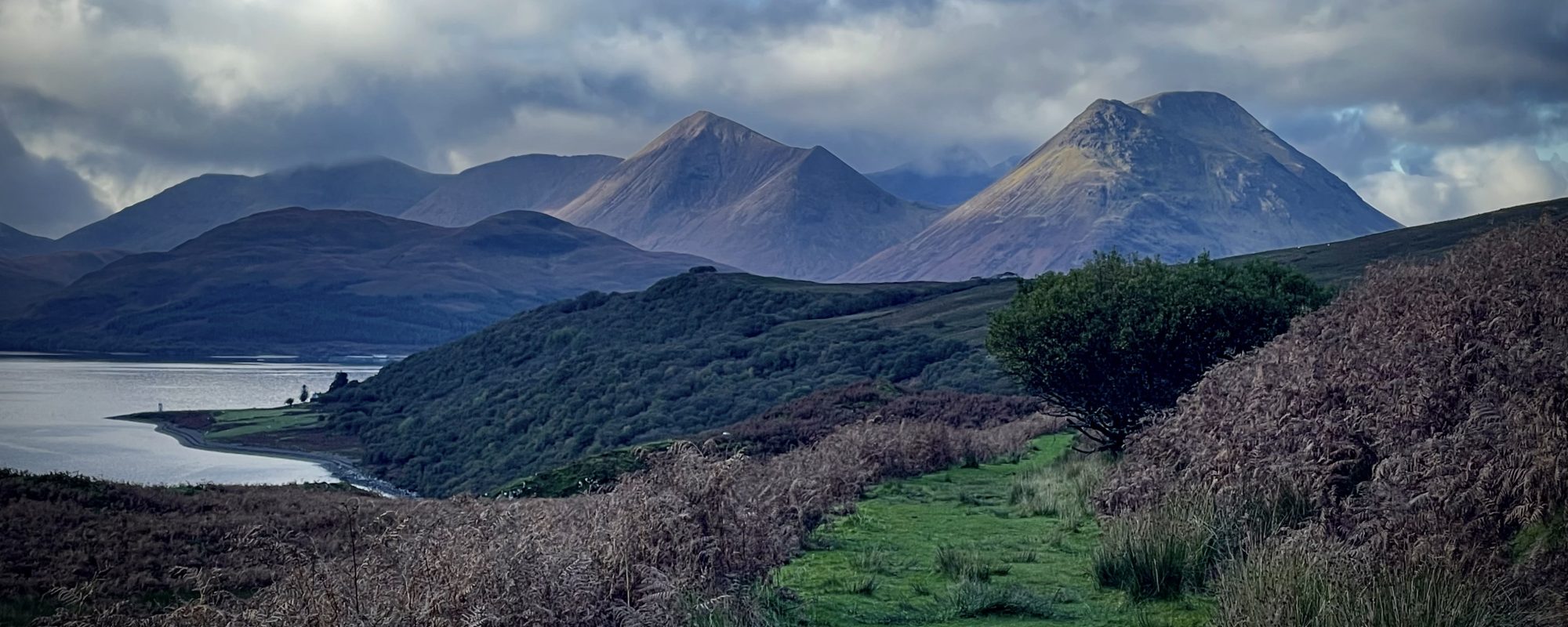
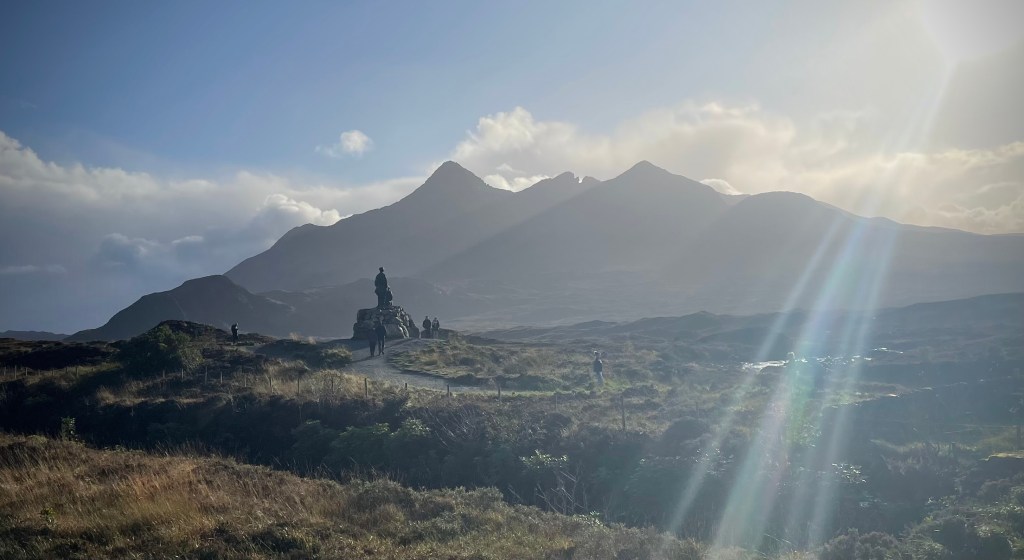
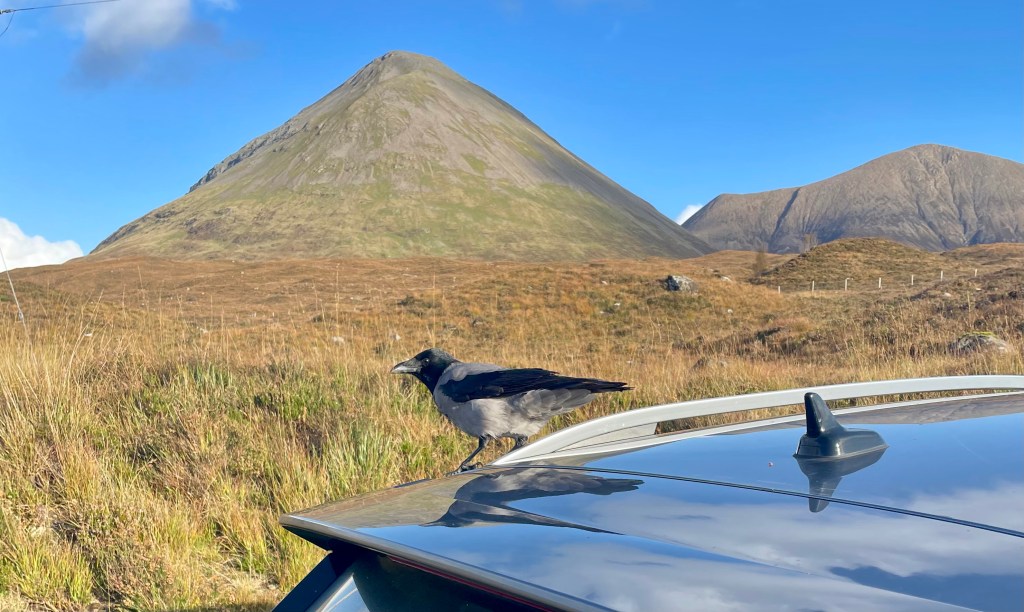
Once over the Skye Bridge, I drove through Glen Sligichan, this time in gorgeous weather and so stopped for a photo of the wily Black and Red Cuillins, since as you’ll remember they were shrouded in mist and dreich the week before.
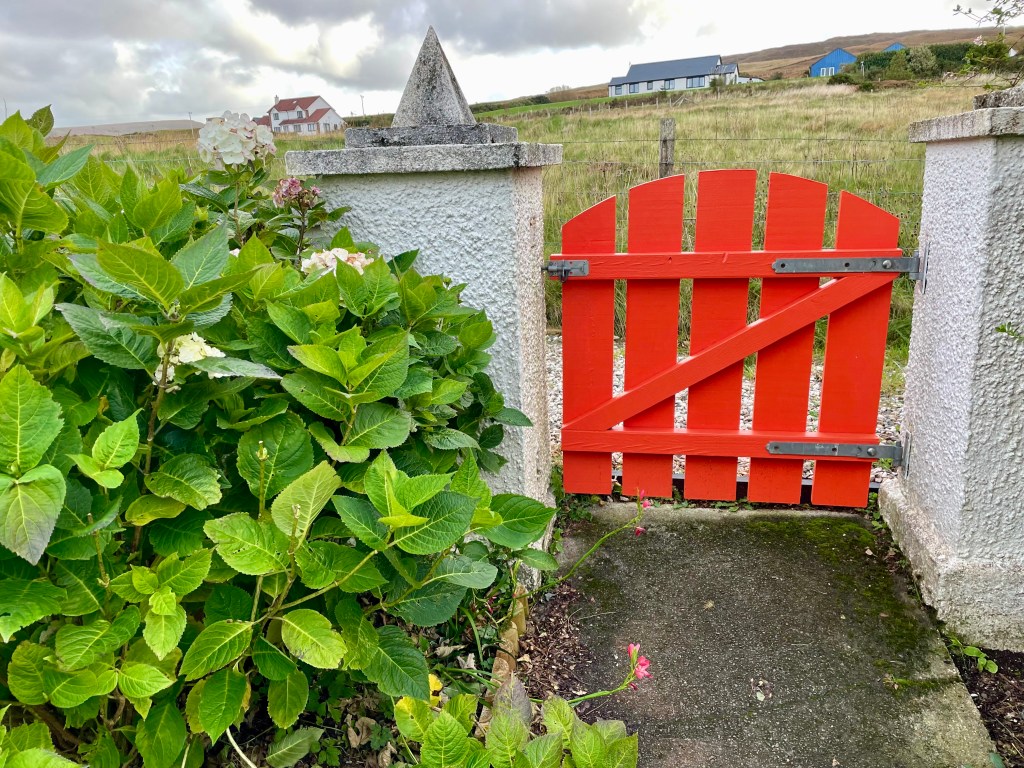
In Skye, I stayed in Uig, where we also stayed during the Wilderness Scotland trip, which I swear I didn’t realize in advance. I knew we were staying somewhere on Skye but no idea where. Crazy. Clearly meant to be, yeah? Anyway, I stayed at a fabulous B&B, Abhaig House, run by an even more fabulous couple, Viv and Steve, who brought me a piece of a home-baked cake every single day. The view from my room was unbelievable, and I arrived to a charcuterie board with fresh salmon prepared by my hosts for a most delectable dinner, complete with a jaw-dropping sunset view.
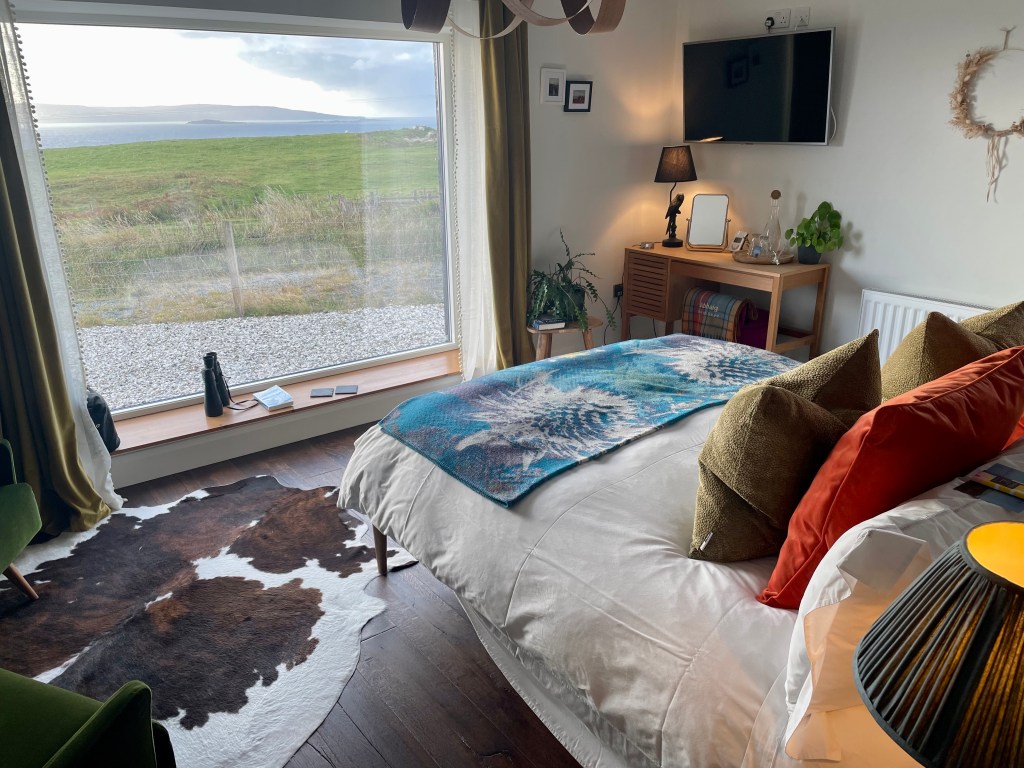
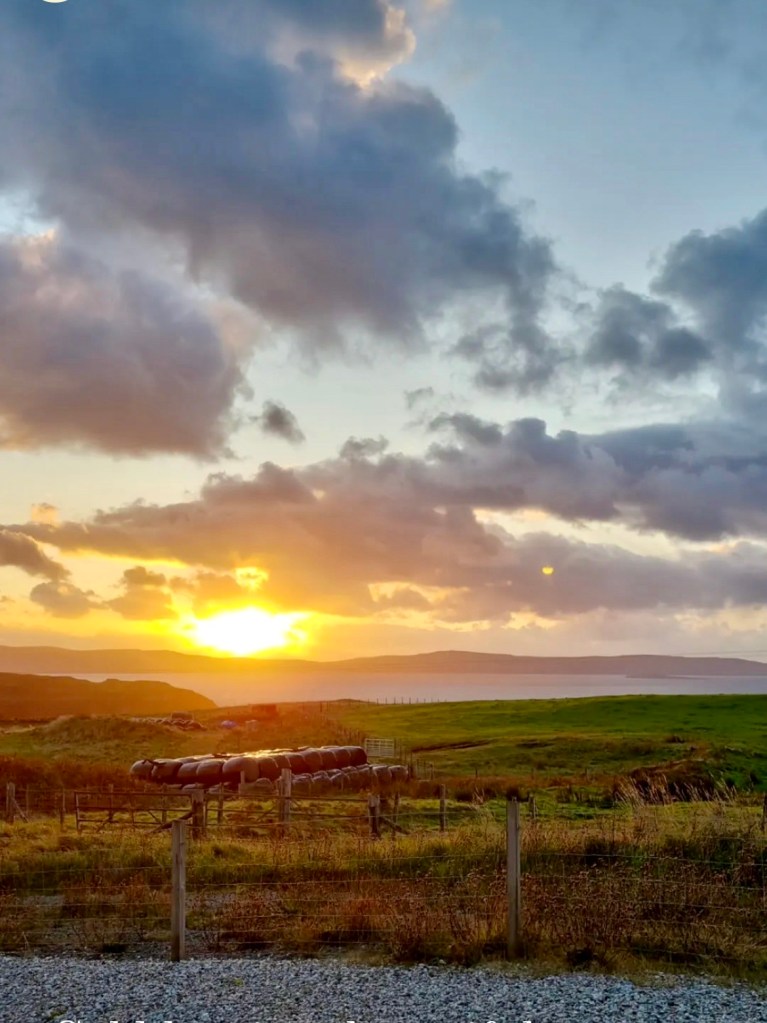
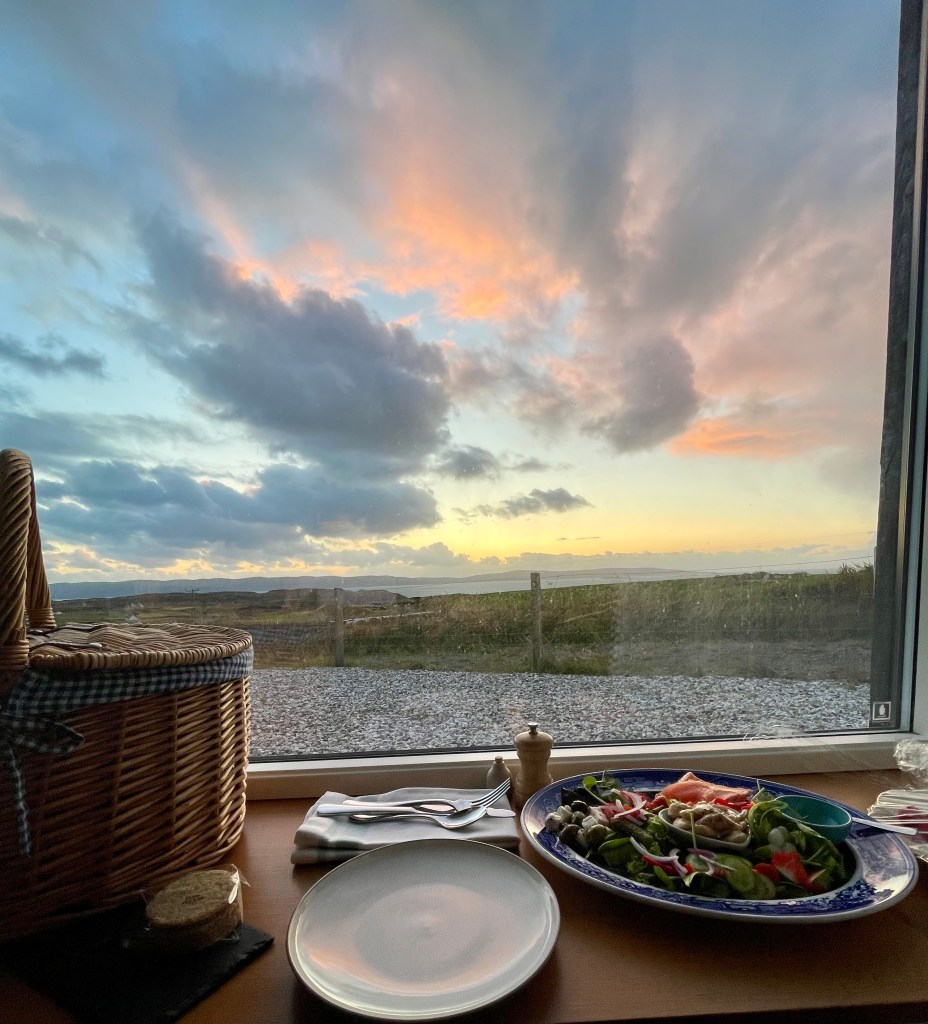
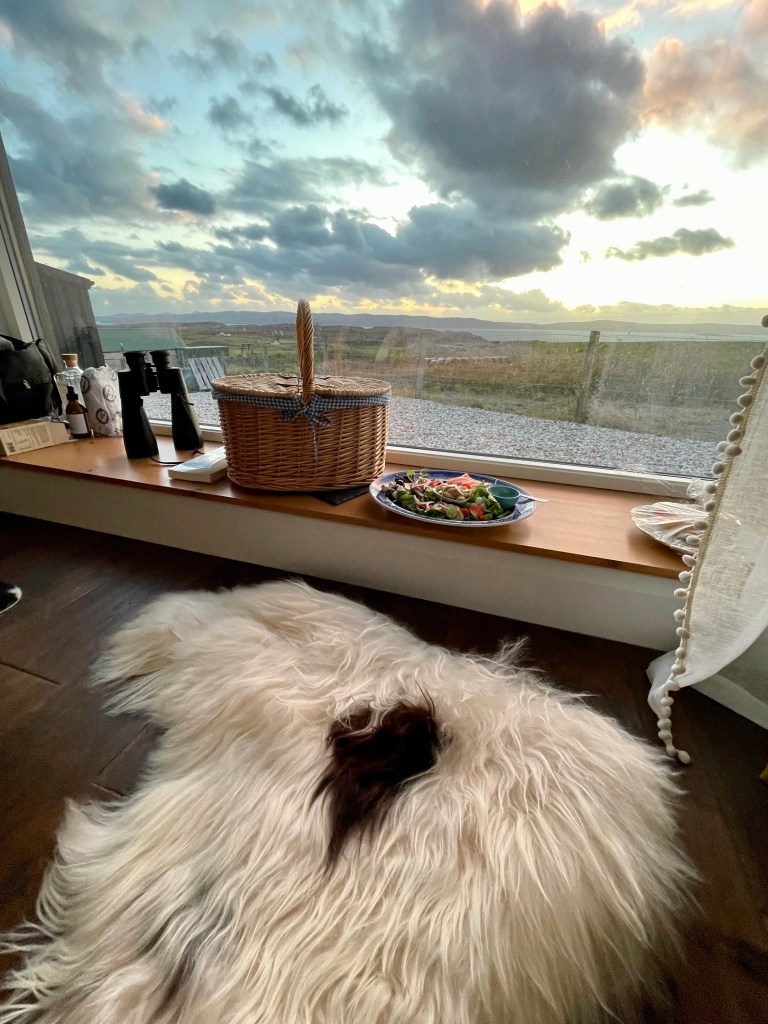
The next morning I woke up early and drove just a few minutes to one of Skye’s honeypots, the Fairy Glen. It’s usually crawling with ugh tourists but we are now in late October, and I arrived at sunrise so it was mine all mine. Just a crazy beautiful and singular area on the backside of the Quiraing. Geology, my friend. Geology. I mean what IS this place.
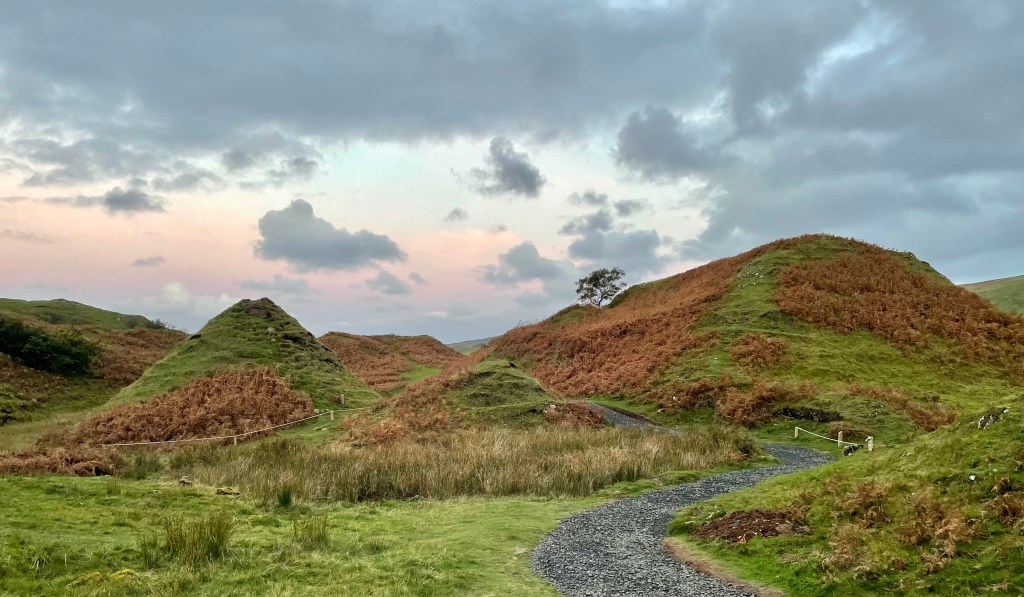
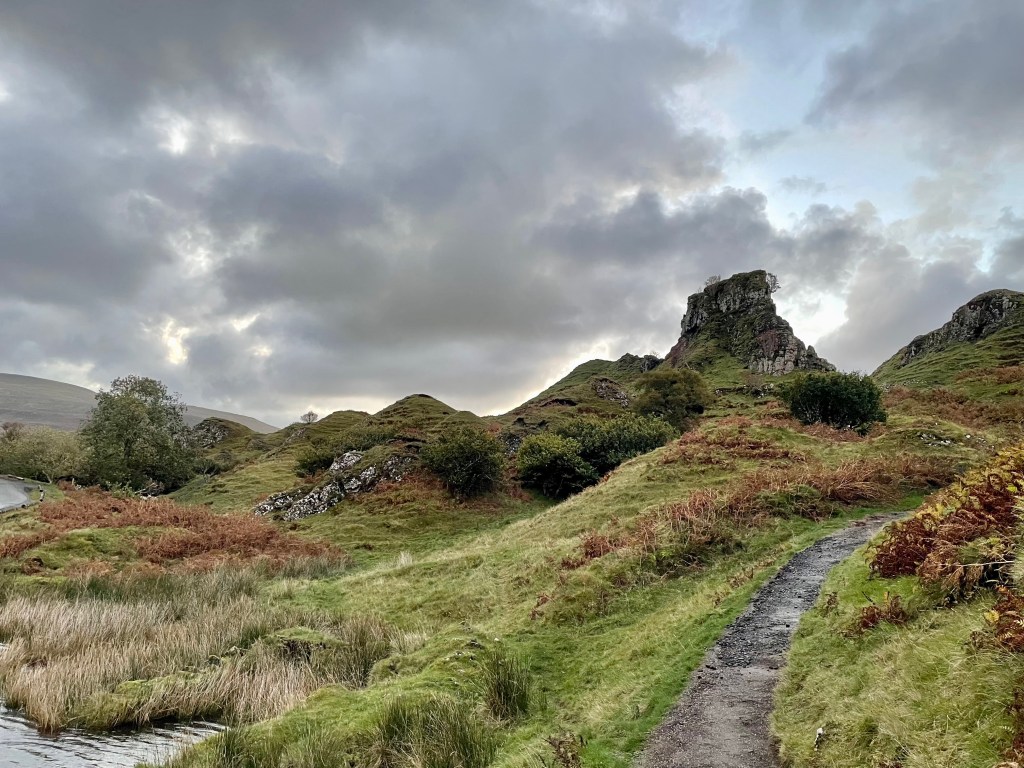
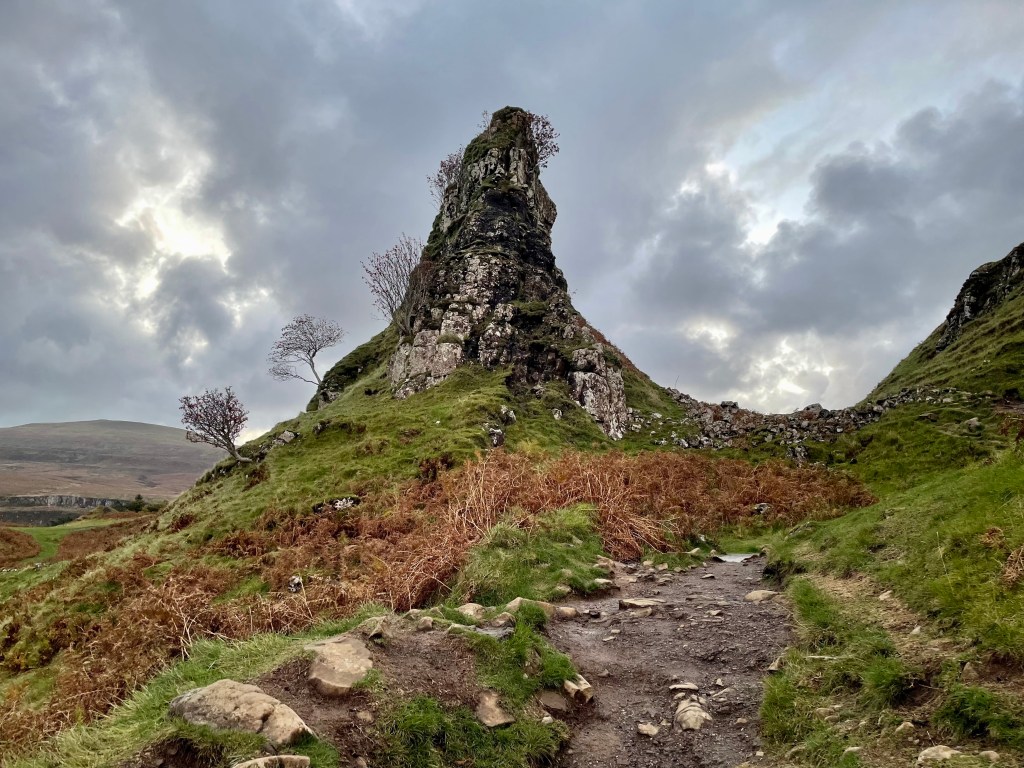

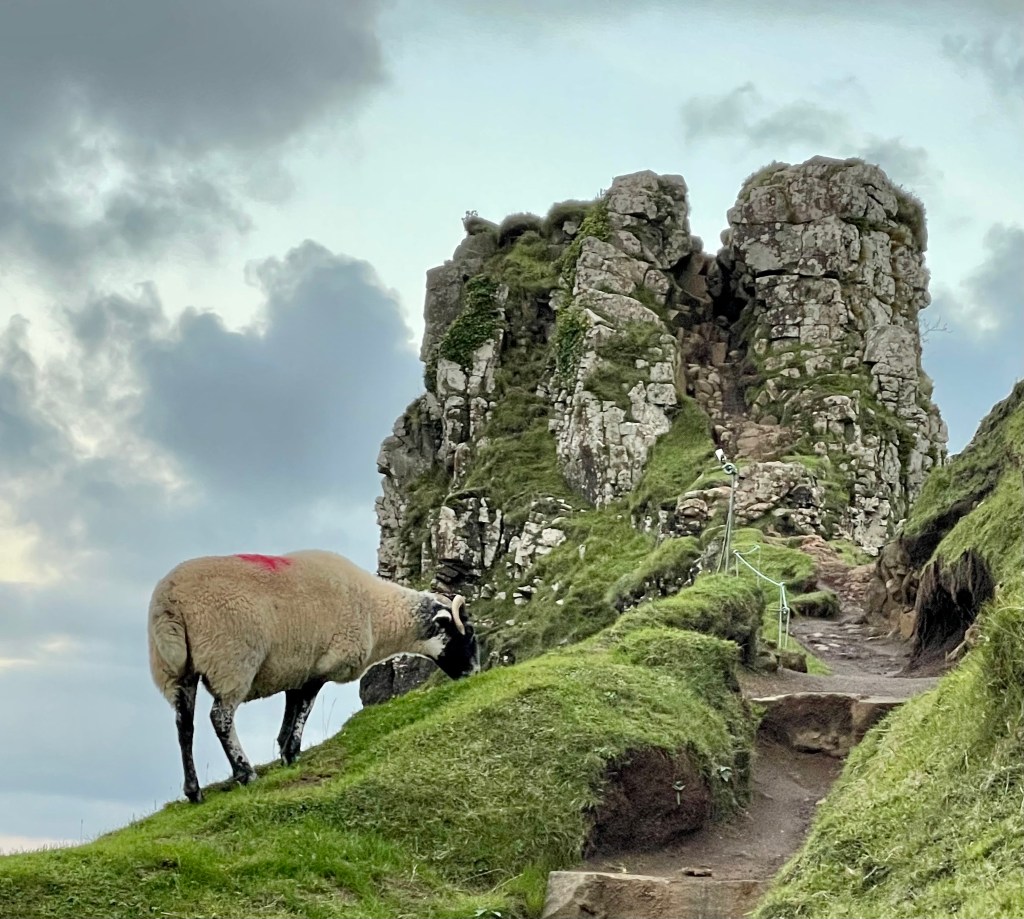
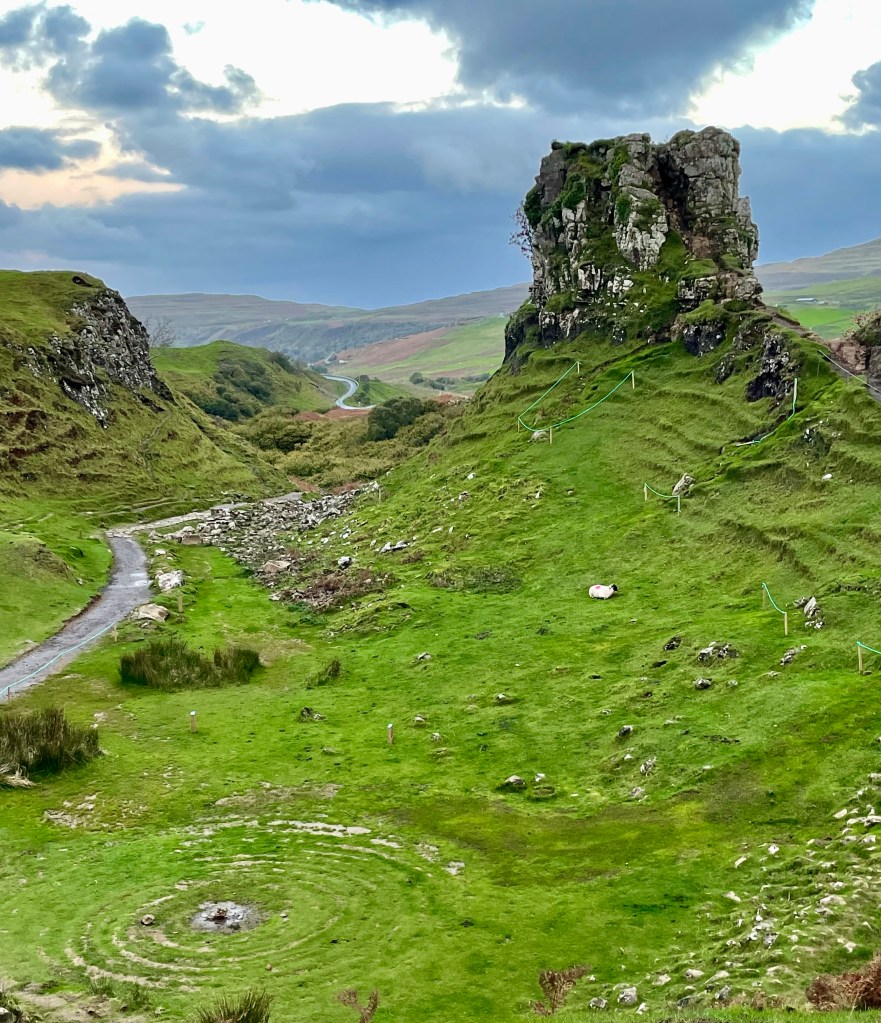

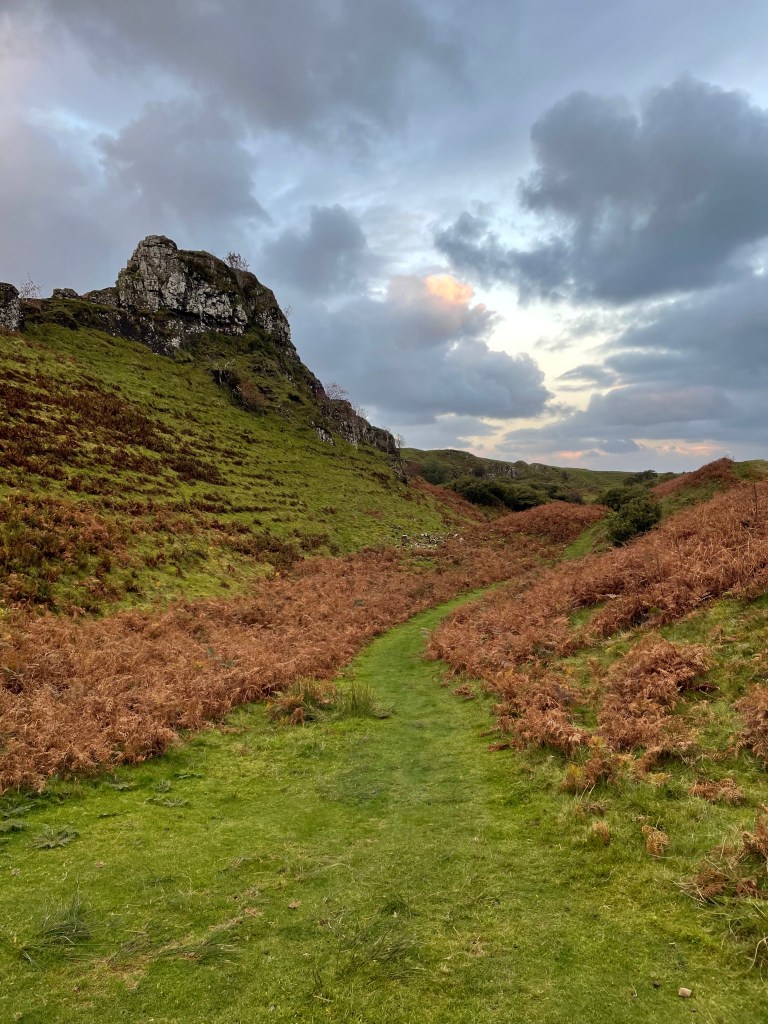


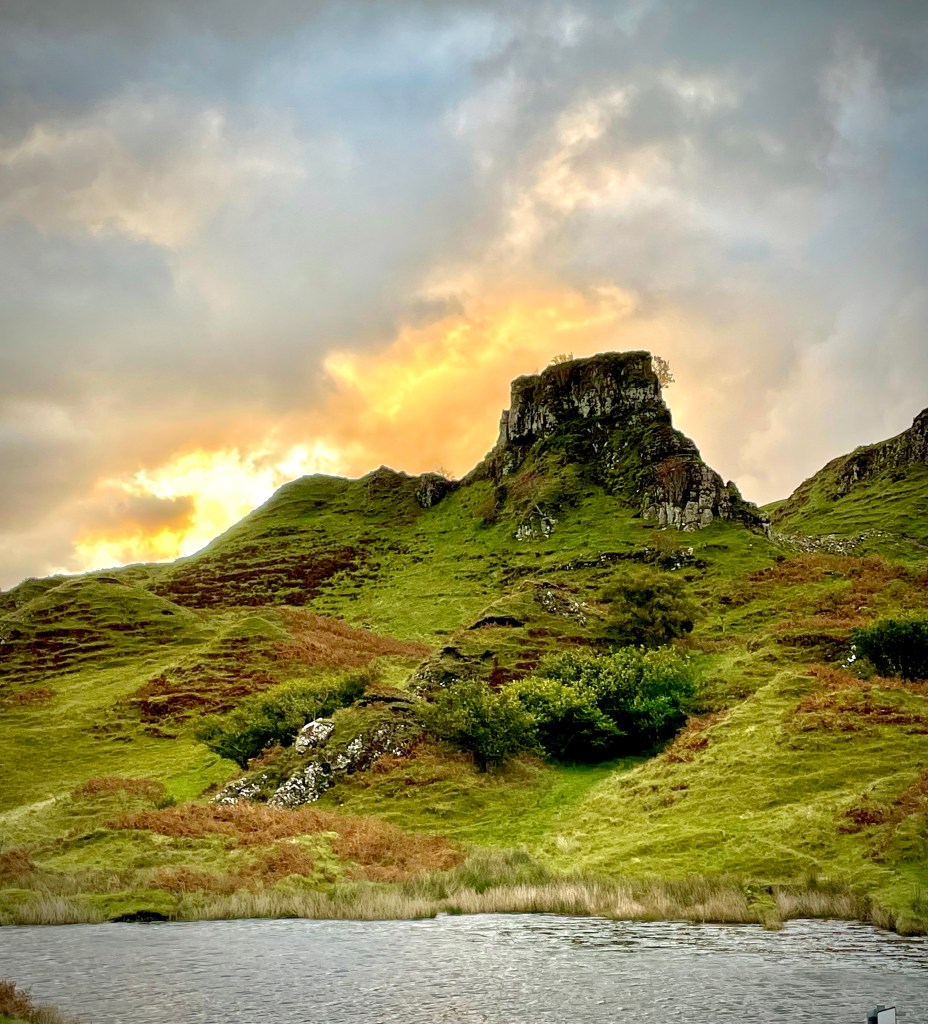
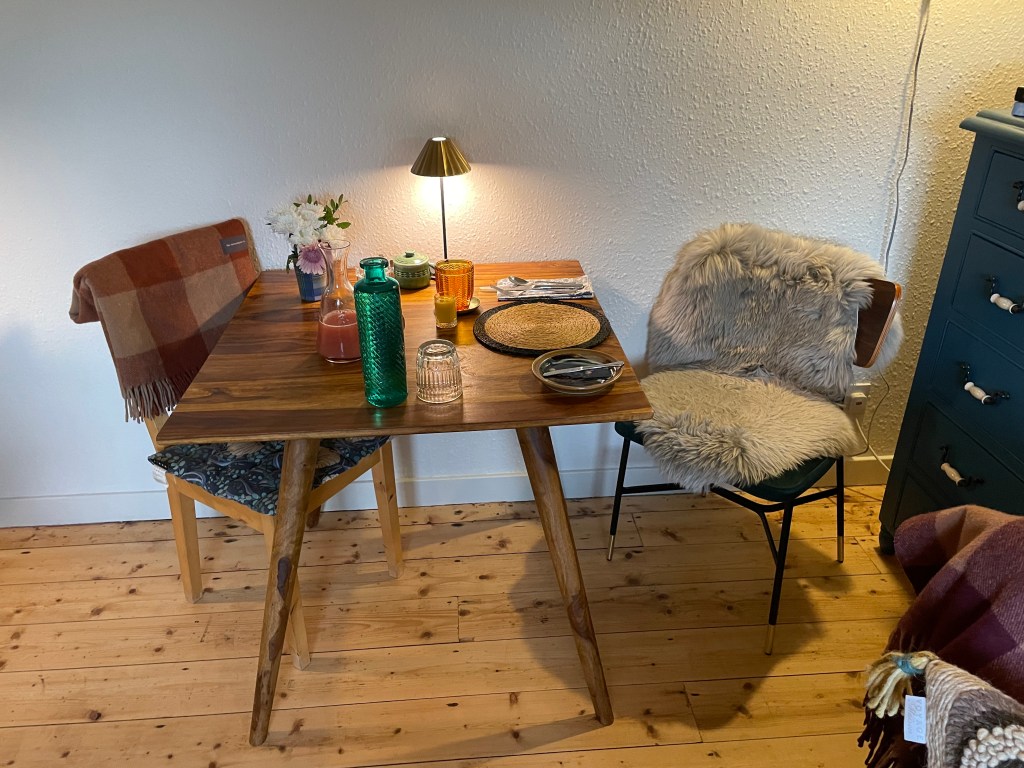
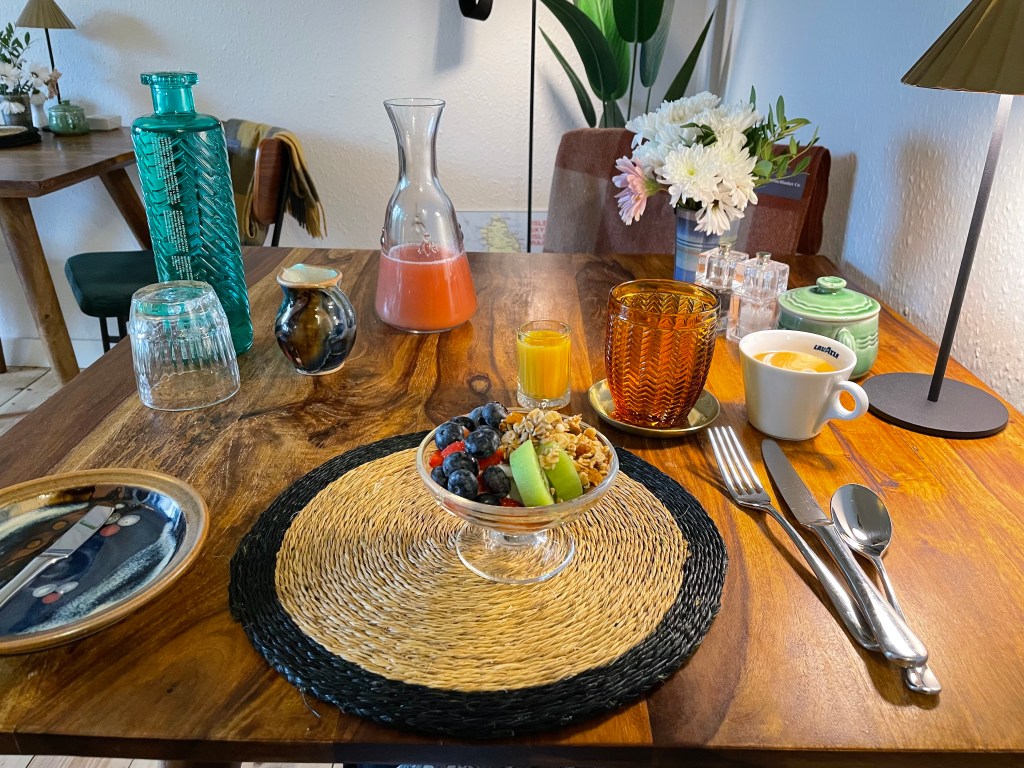
After my little walk, a delightful breakfast at Abhaig.
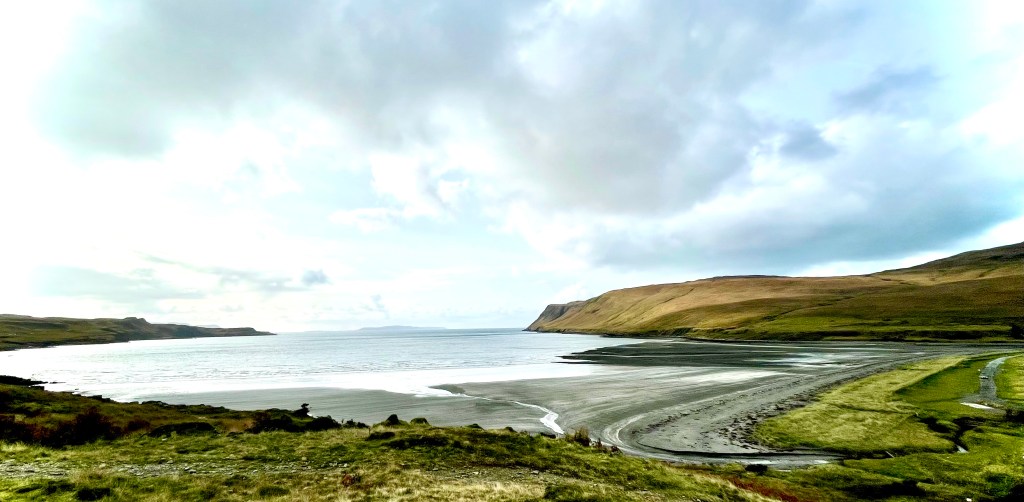
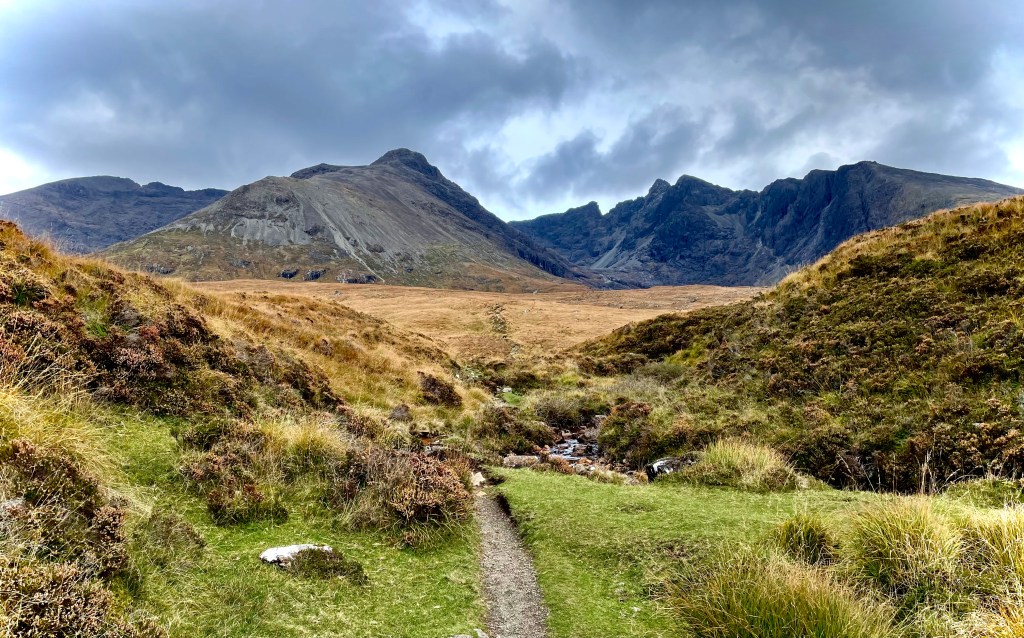
I then drove southwest to Glenbrittle beach, where I thought I’d head partway up the hike to Coire Laggan in the Black Cuillins. I knew I didn’t have enough time to do the entire walk, sadly. I kept going a little bit further and a little bit further still – just to that ridge there, then I’ll turn around, oh wait there’s another little bit….. And lo there came a time when I needed to pull slightly off the trail to drop trou and do a wee pee – and as looked up from my undignified squat toward the Cuillin ridge, to my horror descending walkers appeared in the distance WHO PROBABLY SAW ME and so I took that as my sign and scarpered back down to the car in giggly horror.
The reason I didn’t have enough time is because I had booked a reservation at the chef’s kitchen table at the renowned Three Chimneys restaurant, where I had enjoyed a wonderful meal with Danielle the previous spring. It was super fun sitting in the kitchen and the only other guests were a very blonde and adorable couple from London on their honeymoon. Both lawyers! Both liberal! Brexit is terrible! Trump is terrible! Yay! A chef’s table can be risky, god knows, but we hit the jackpot and had a lively and interesting conversation for the entire meal. They were staying in the lovely rooms at the Three Chimneys, whereas I had a half hour drive back across Skye on single track roads in the pitch dark with silly sheepies snoozing like RIGHT there on the edge of the road like fuzzy doofuses. But seriously – what a great night.
The next day I caught the ferry to Raasay, a small island with 192 denizens just to the east of Skye. It’s a very short and very beautiful ferry ride.
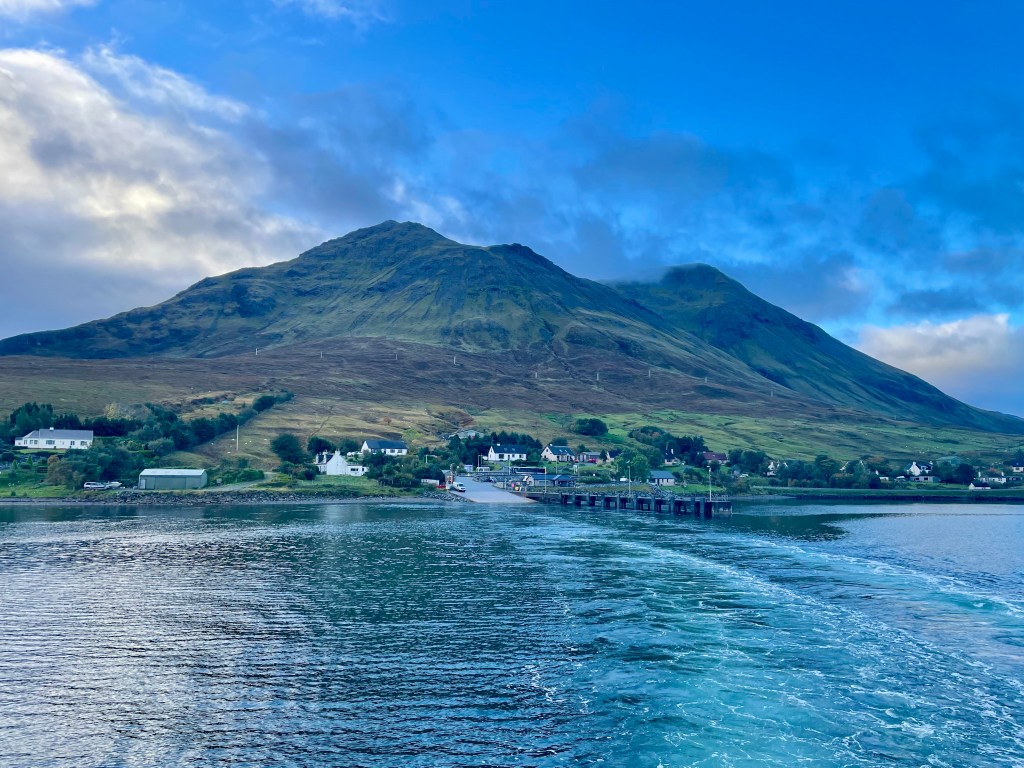
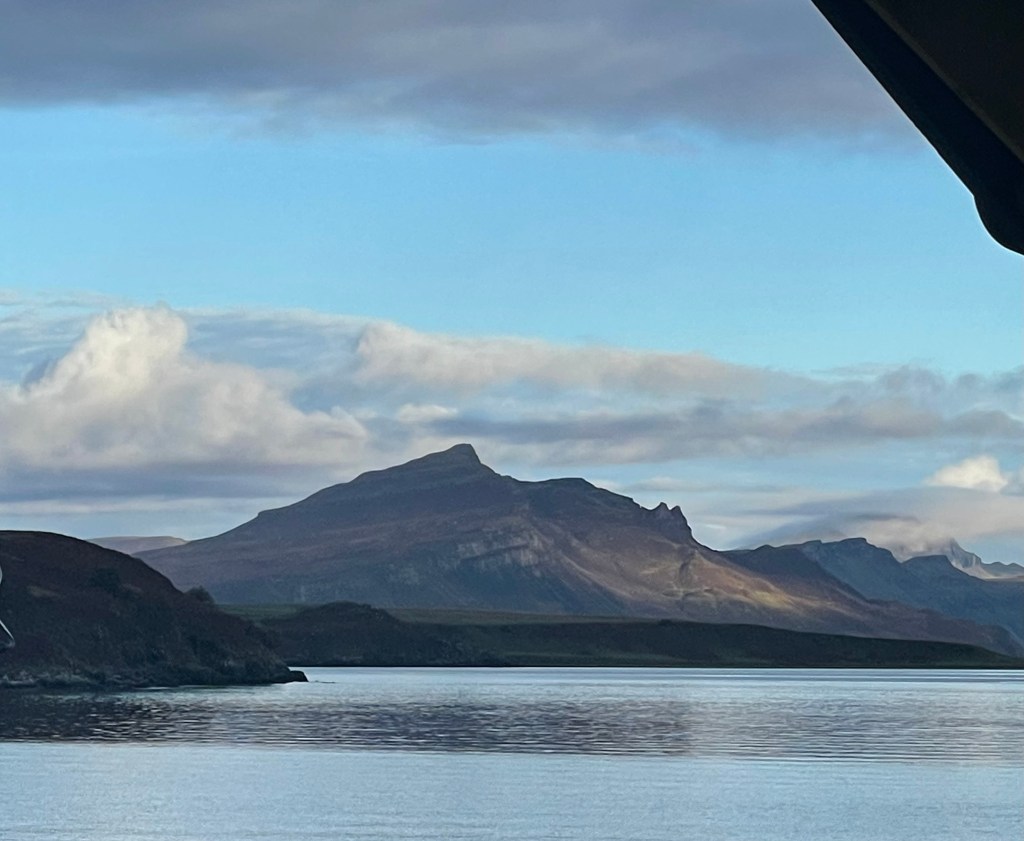
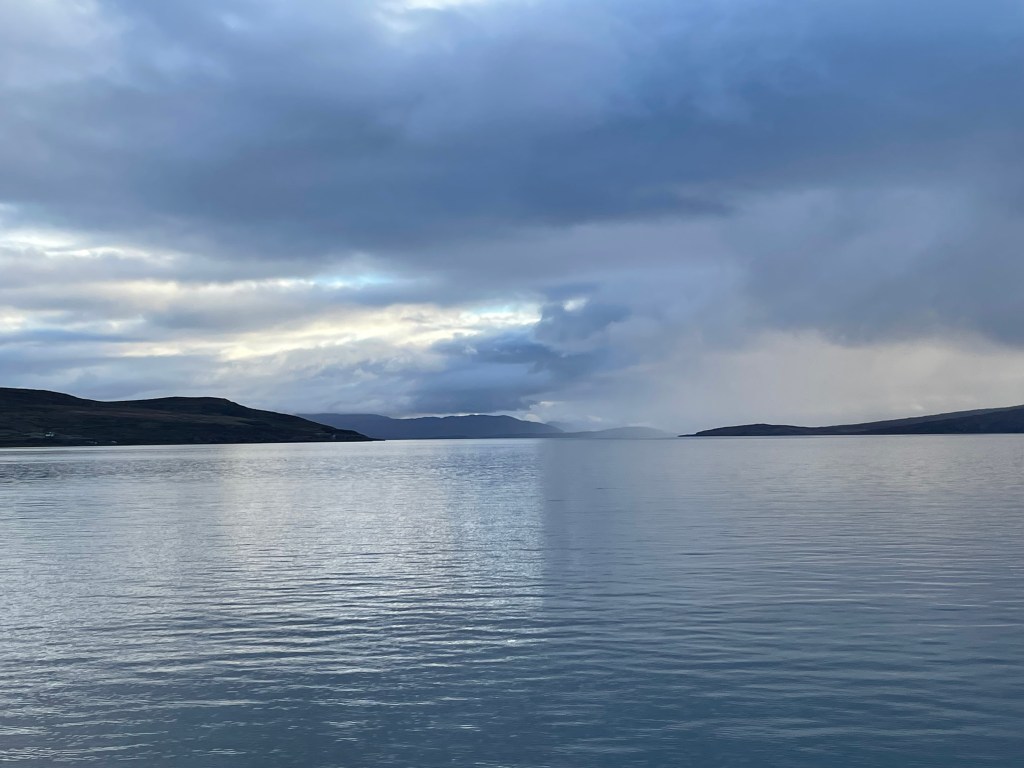
When we disembarked I set off down a crumbly wee road toward a short hike that looked pretty cool. I did not see another car or another person.
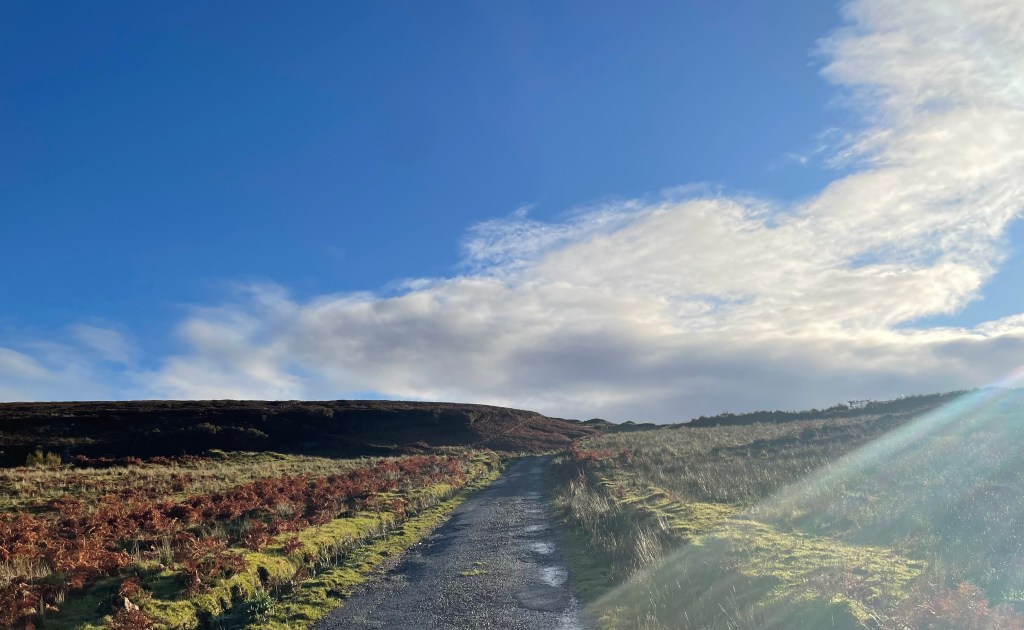
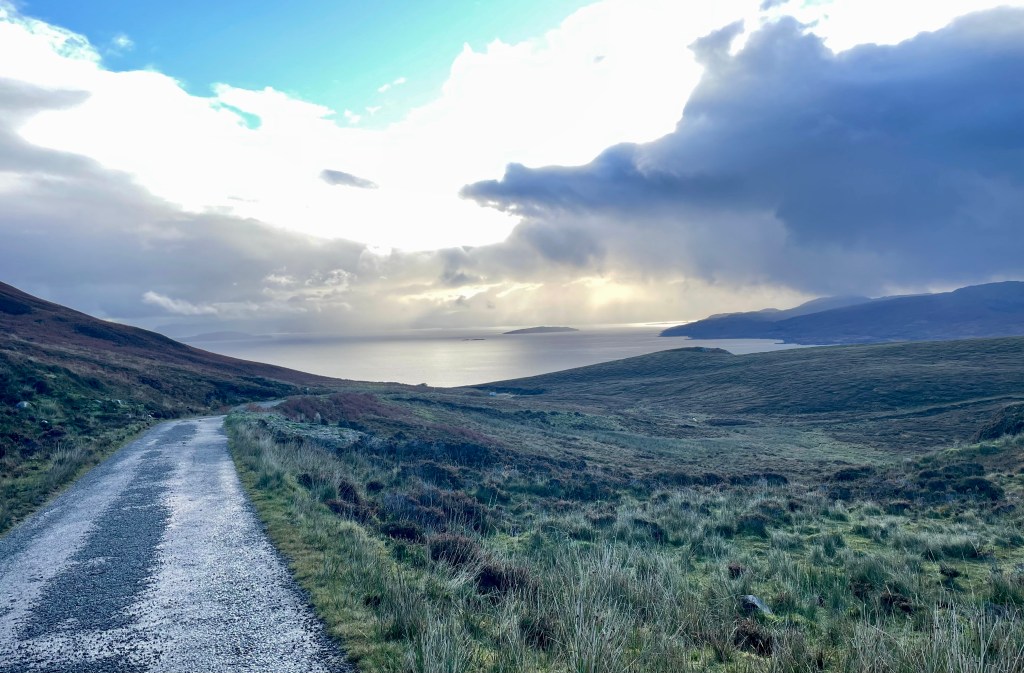
There was a tiny parking area at the end of the road, thus:
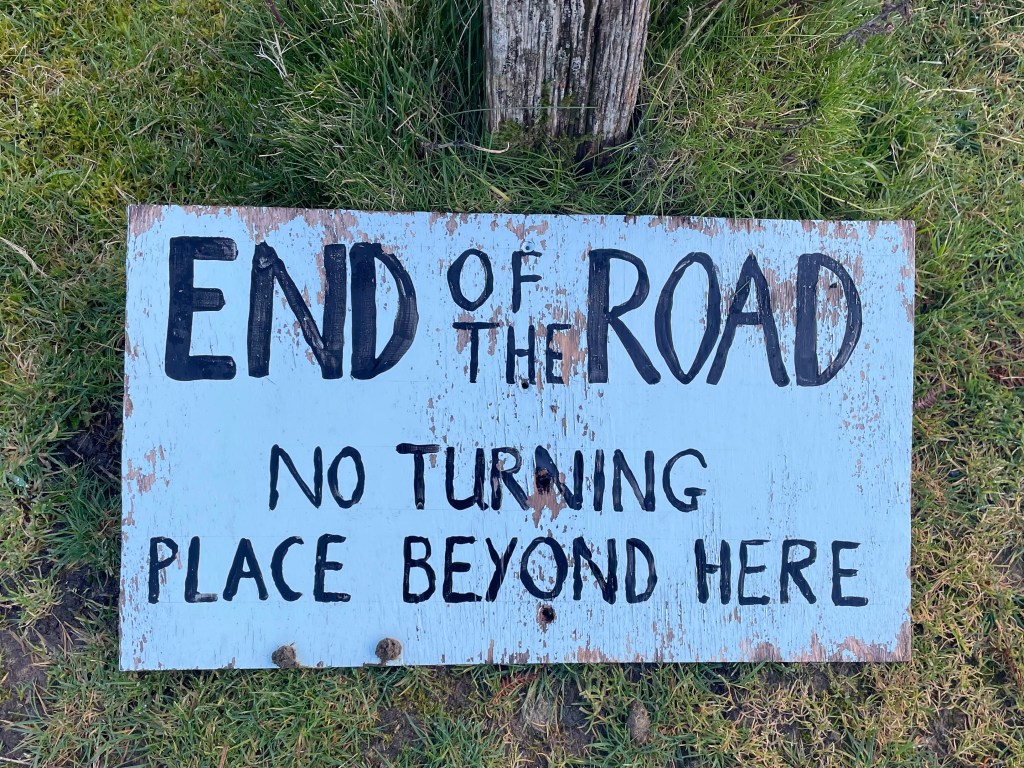
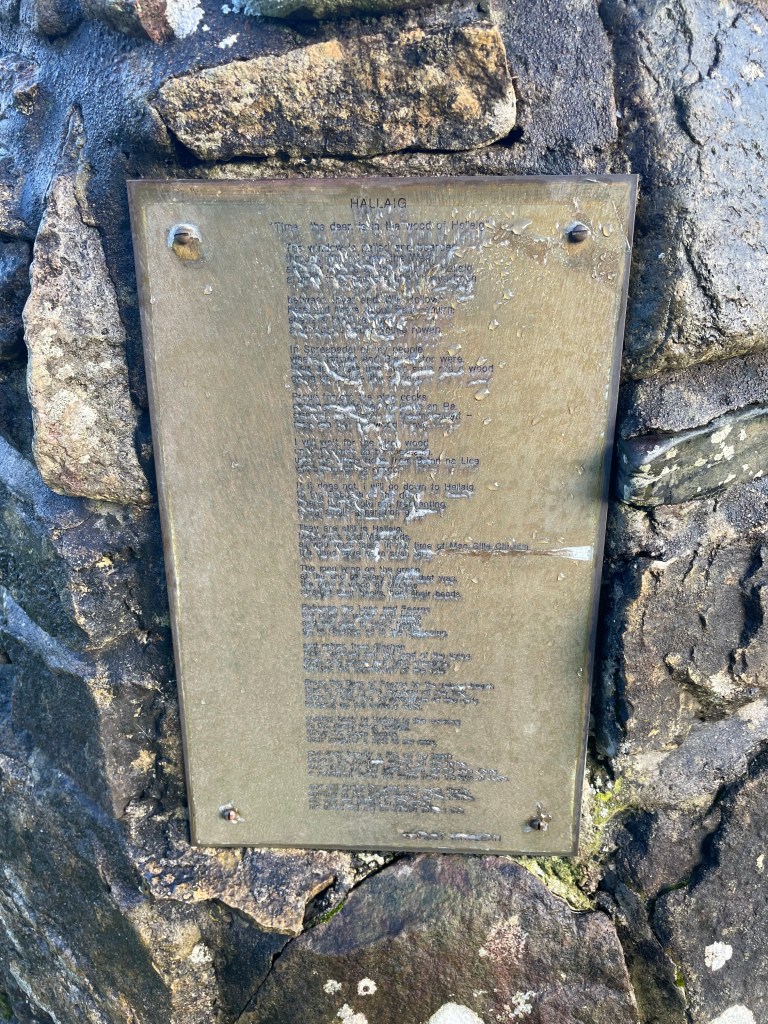
I embarked on yet another gobsmackingly gorgeous coastal hike to the ruins of Hallaig, a clearance village, one of several cleared communities on Raasay, where the residents were forcibly evicted or encouraged to move to make way for sheep grazing on the island in the 1800s. There’s a monument along the trail that includes a poem about the ruins called “Hallaig,”by Sorley Maclean.
Back through the gloaming to Hallaig
Through the vivid speechless air,
Pouring down the steep slopes,
Their laughter misting my ear
And their beauty a glaze on my heart.
Then as the kyles go dim
And the sun sets behind Dun Cana
Love’s loaded gun will take aim.

A few photos of the ruins.

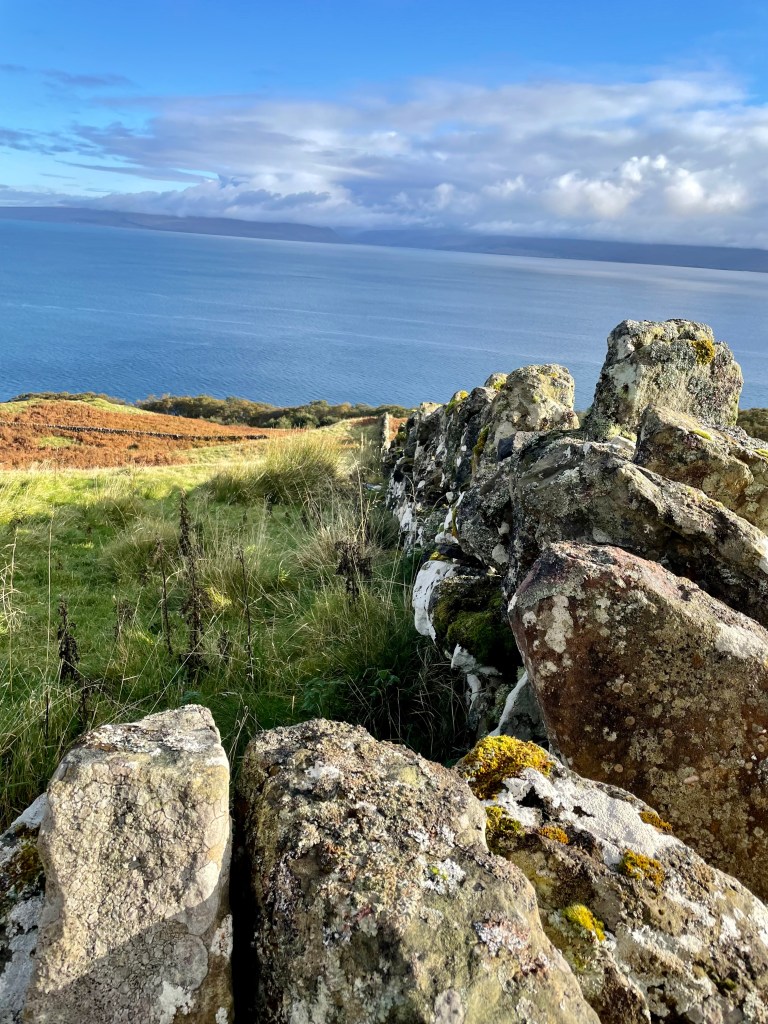
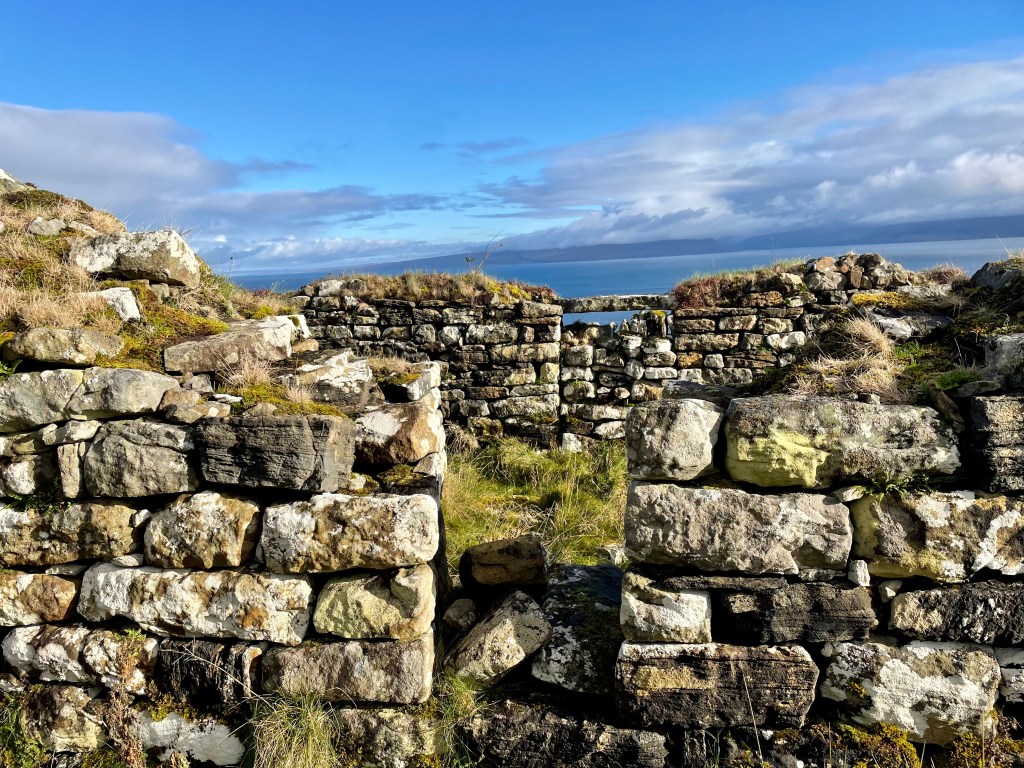

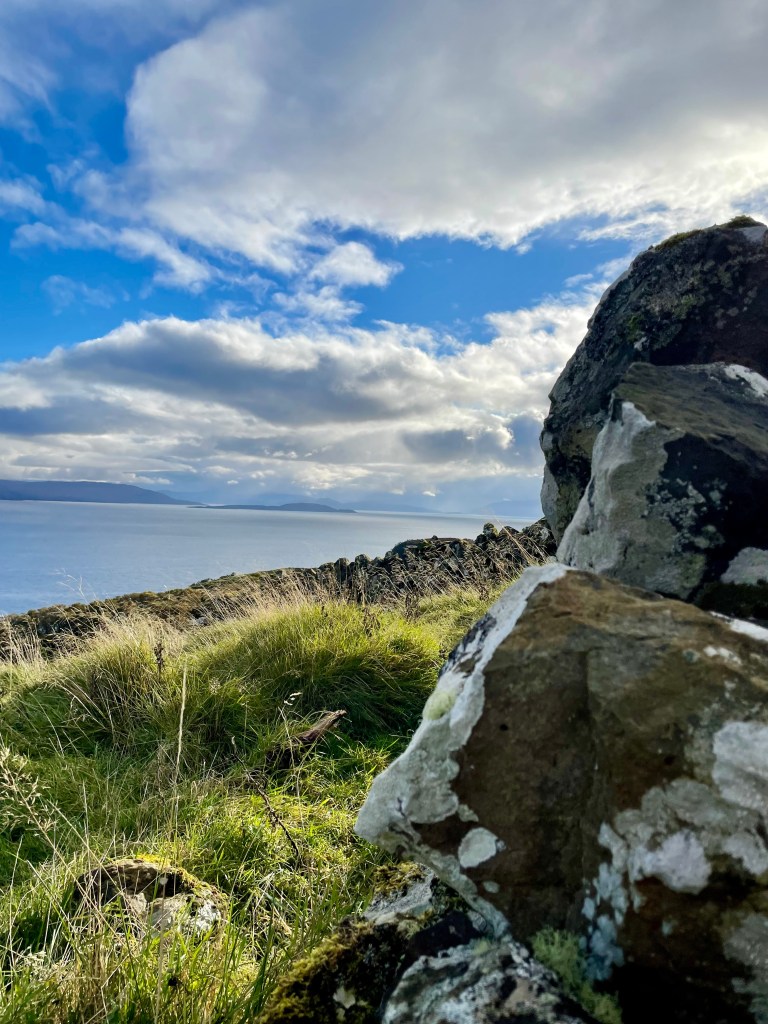
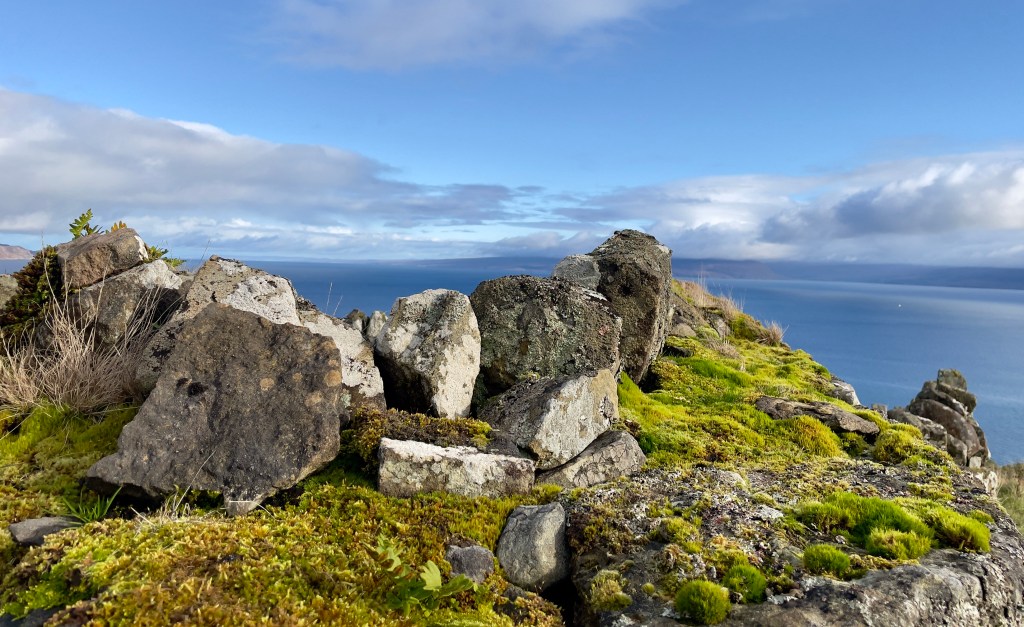
Could not resist a few smiley selfies in that sad and somber place because good god IT WAS SUNNY.
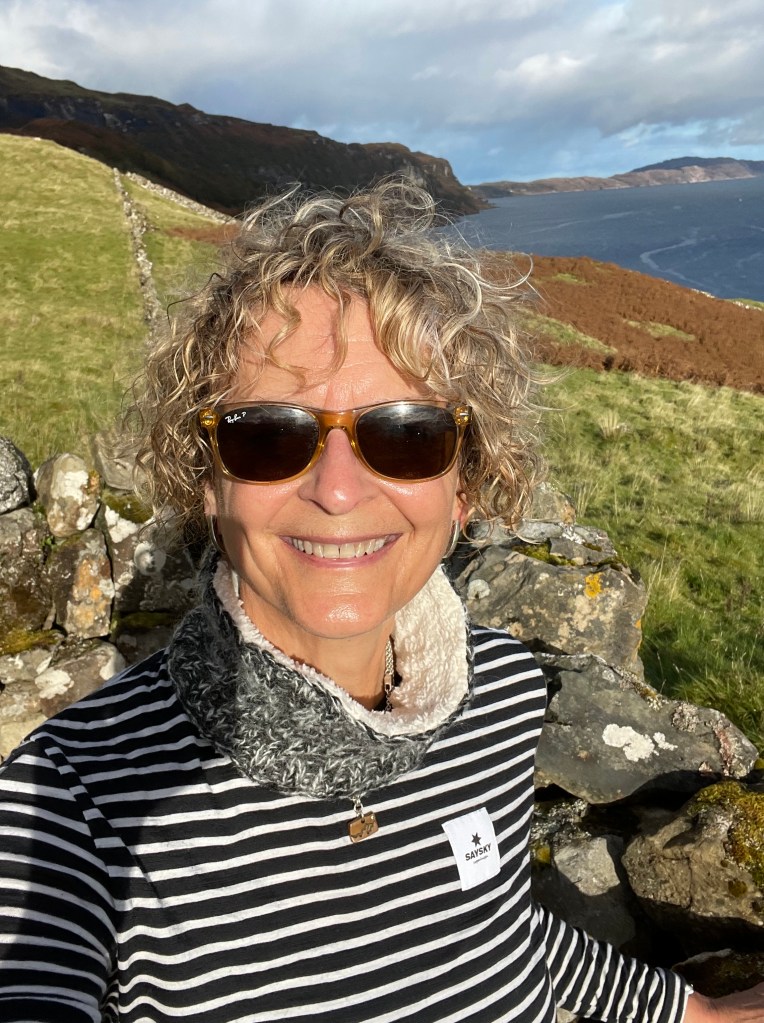
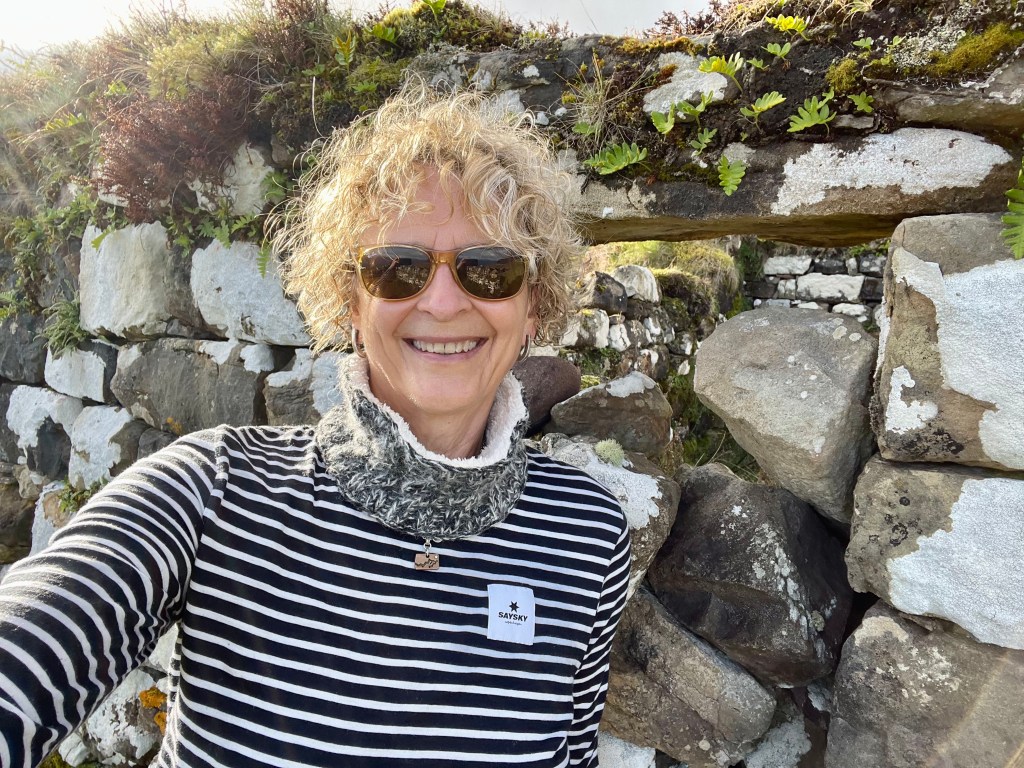
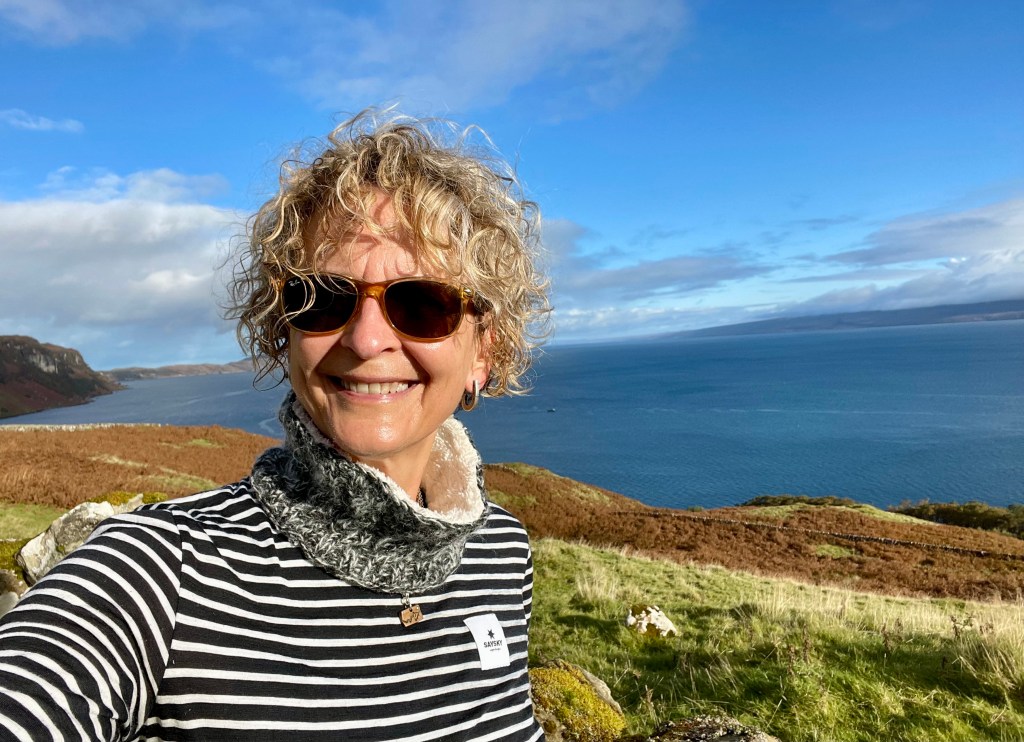
I think this walk resulted in some of the most incredible photos from my entire trip – the light, the location, the mountains, the ocean.
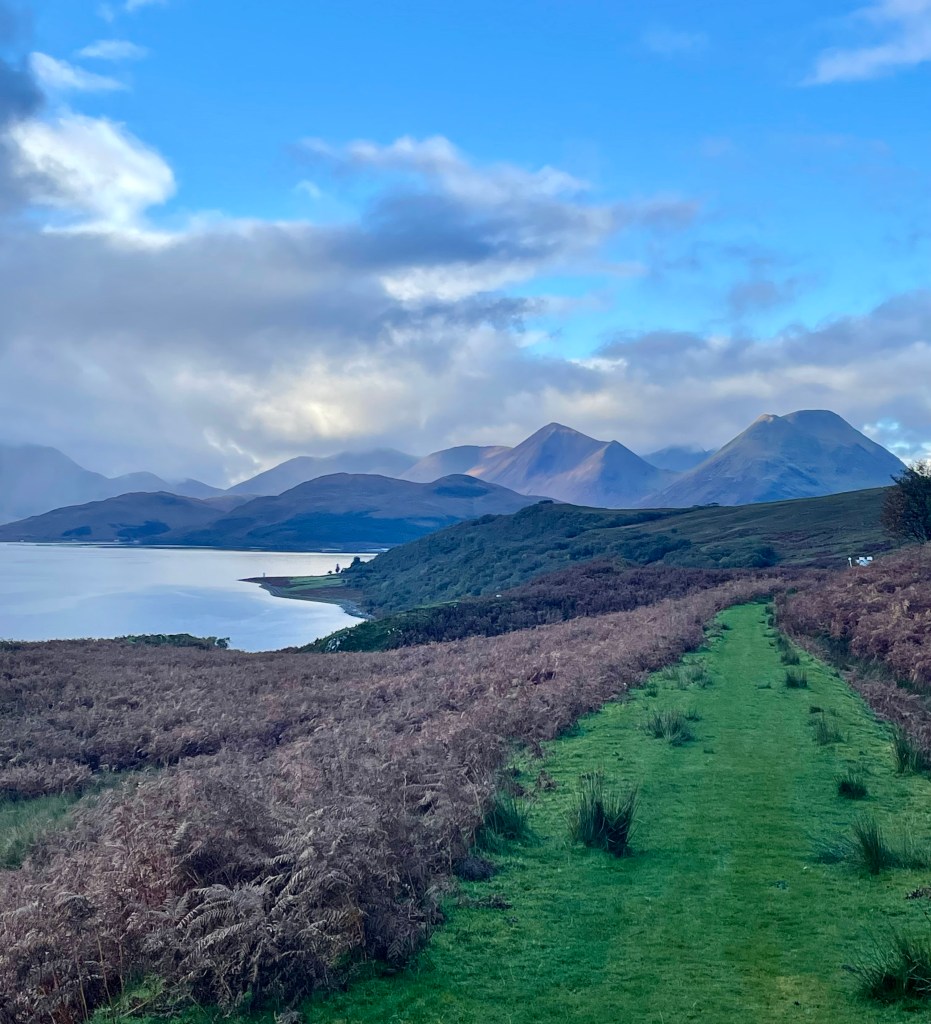
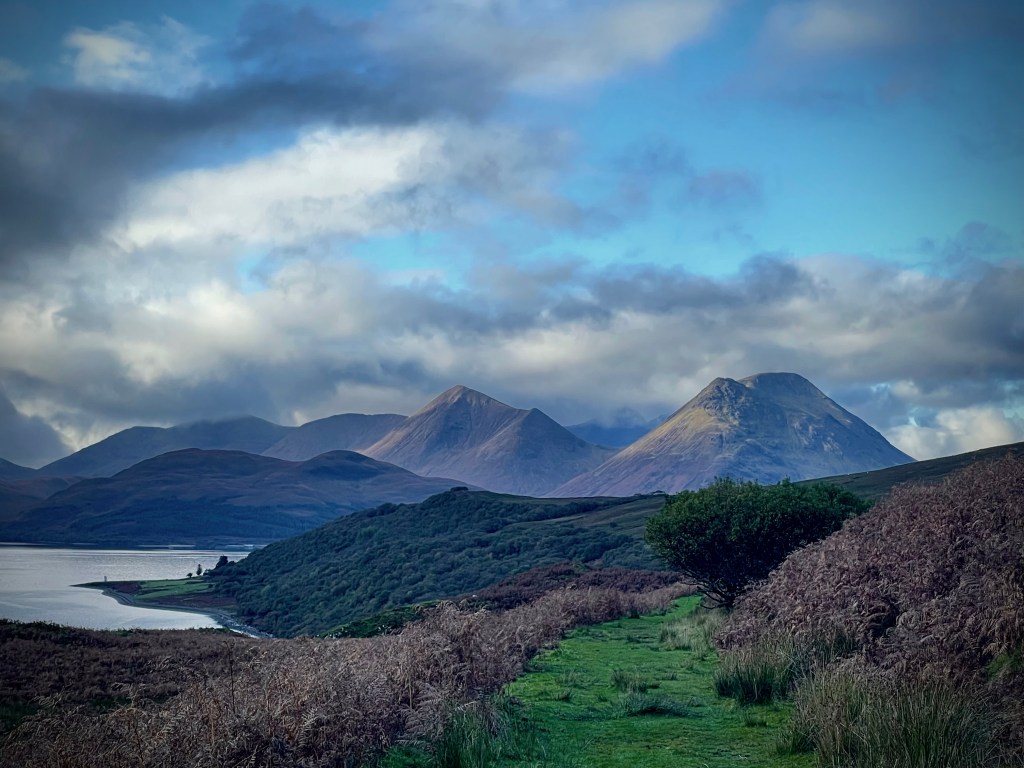
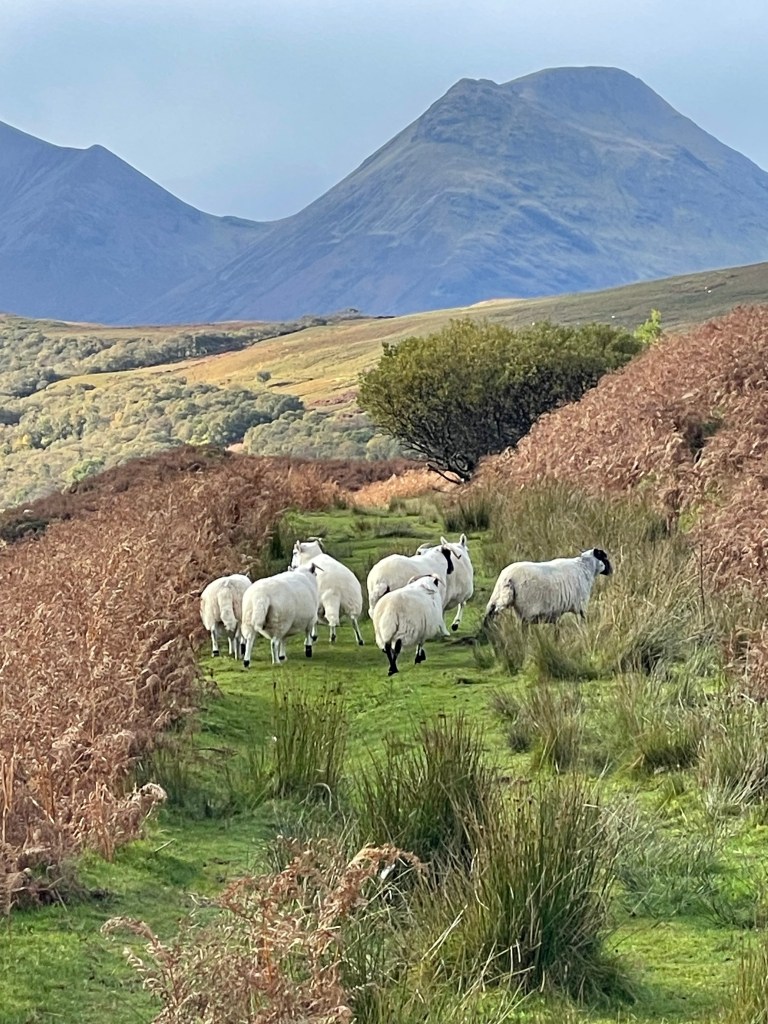
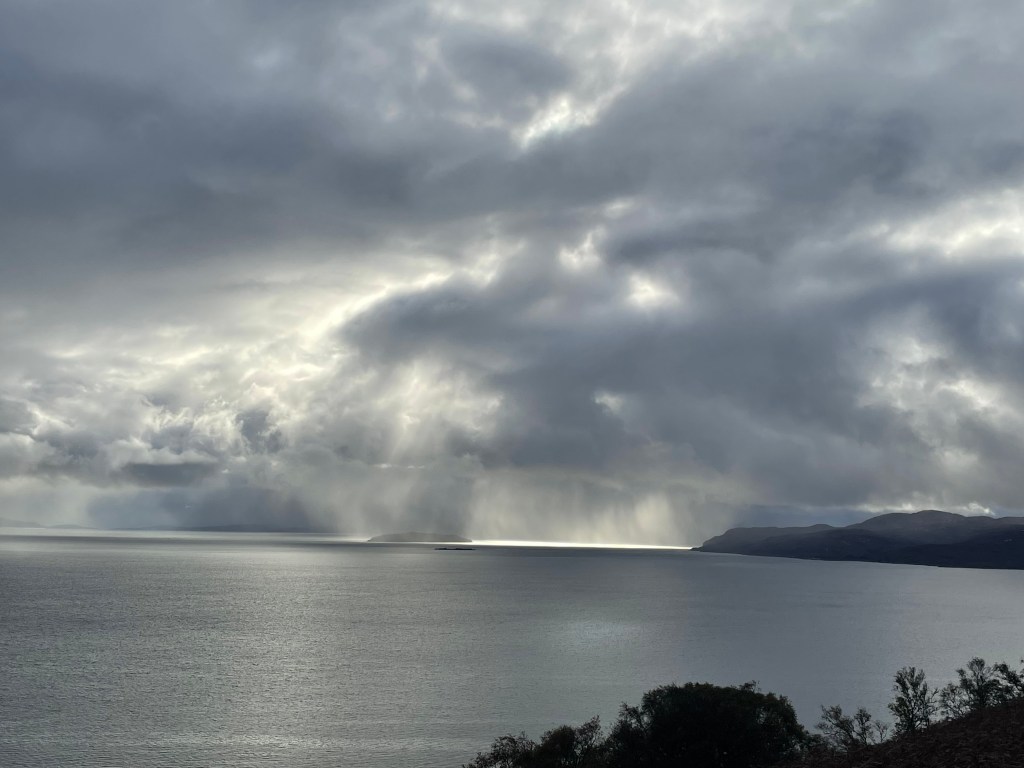
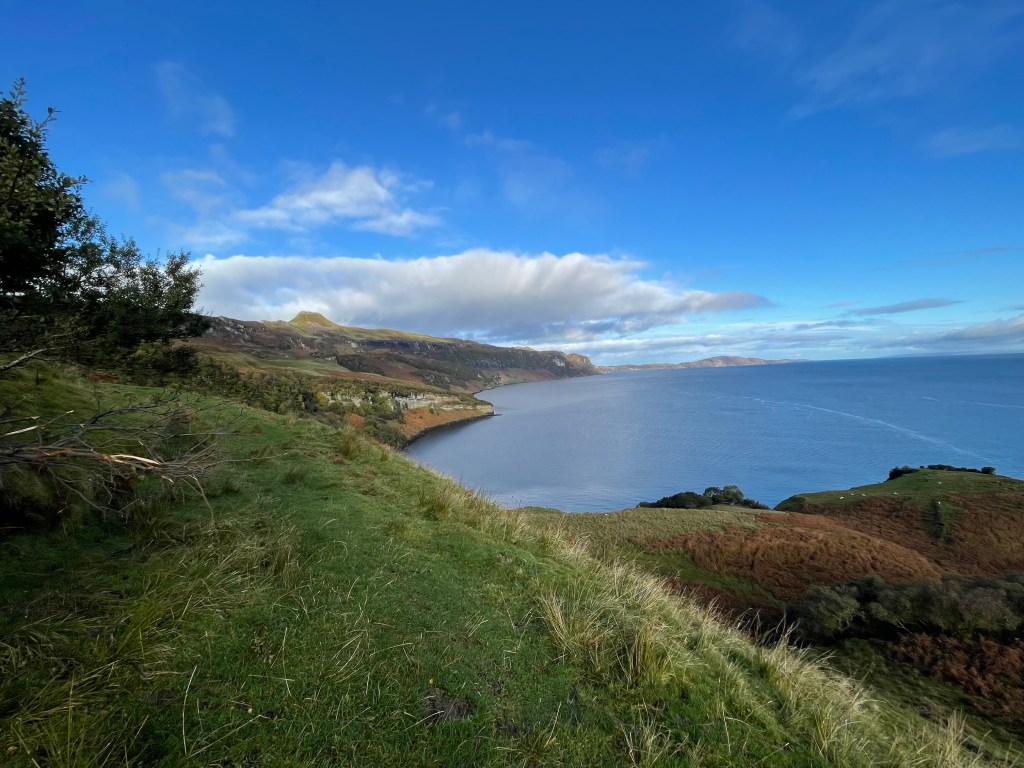

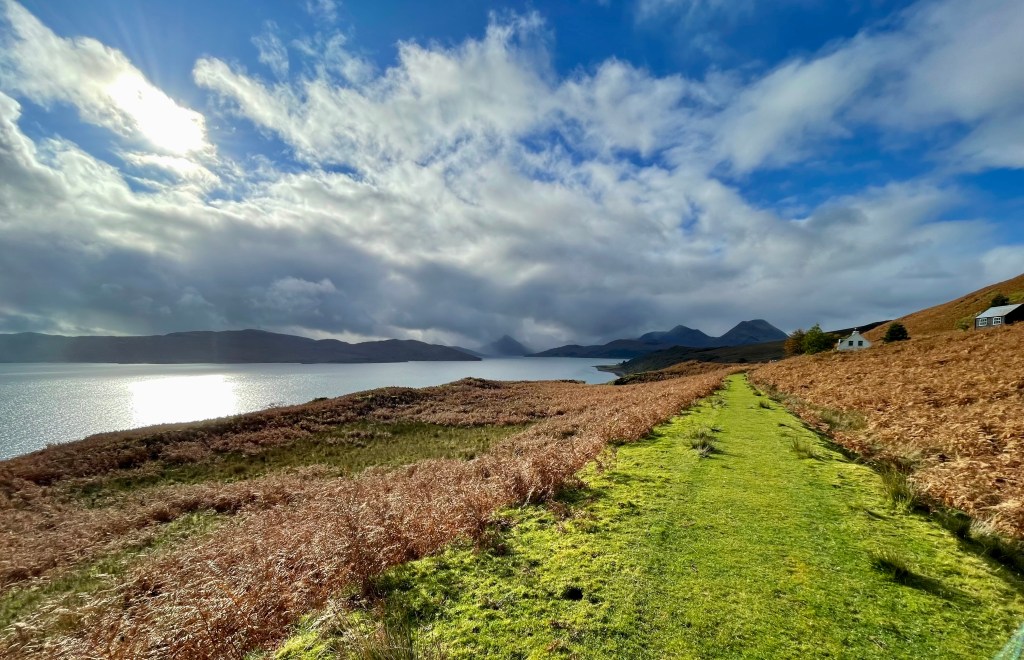
As you can see, this was another walk where I didn’t see another human being, which is absolutely my preference to be honest. My mom asked me to write about what it was like to hike alone in remote areas in a foreign country. The answer is that it’s awesome and makes me blissfully happy and at peace. An adventure in the best possible way because the risk level is very, very low and yet you are out in the wild! On the moors! Gazing across oceans and up mountains! So many wild coos and sheepies! And I’m not naive, I know full well that folks have often found themselves in trouble hiking in the UK, involving mountain rescue teams, helicopter evacs, injury and even death. I don’t know what to say except that the thought never crosses my mind that something bad might happen because a) I’m in Scotland and b) there’s so much joyful zen in my brain. I’m so completely present in the moment as they say, that all thoughts of worry have nowhere to grab hold. For what it’s worth, my mom doesn’t worry about me either, which is quite literally unheard of. So ¯\_(ツ)_/¯
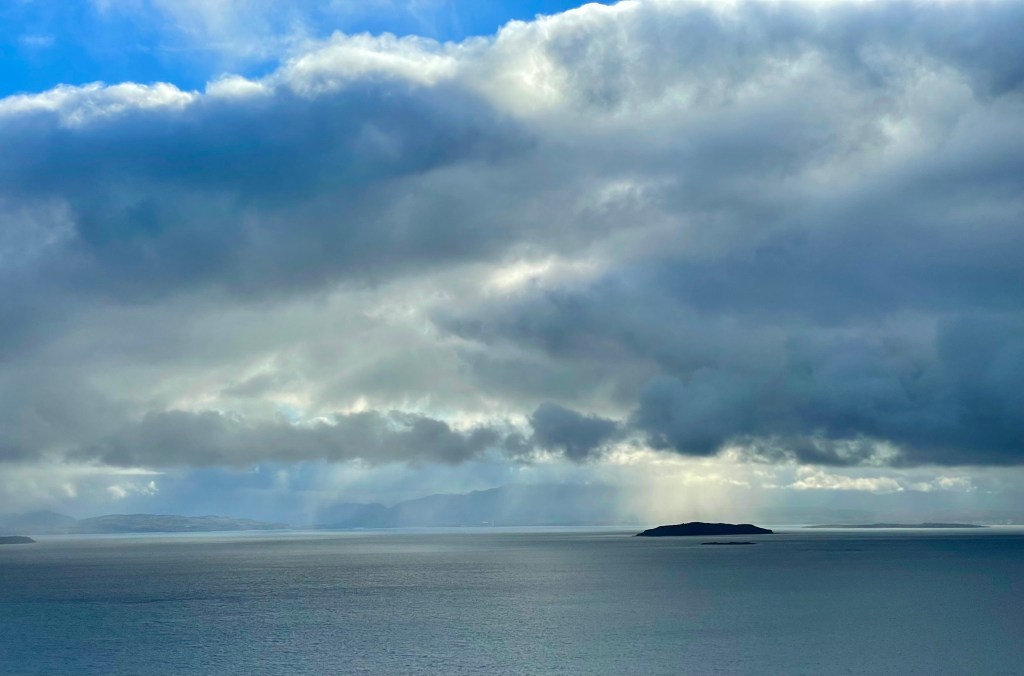
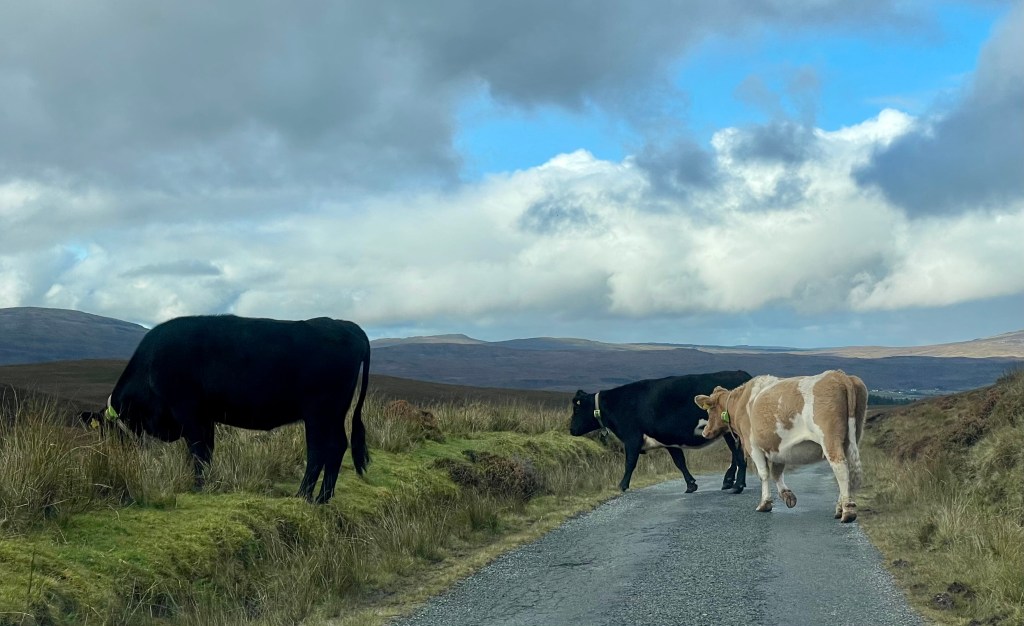
I sat in the car for a few minutes enjoying the bag lunch of a fresh salmon salad Viv and Steve prepared, and then started the short drive back toward the ferry so I’d make it to Raasay Distillery in time for my tour. Along the way I came upon a Scottish traffic jam, but not to worry, I made it.
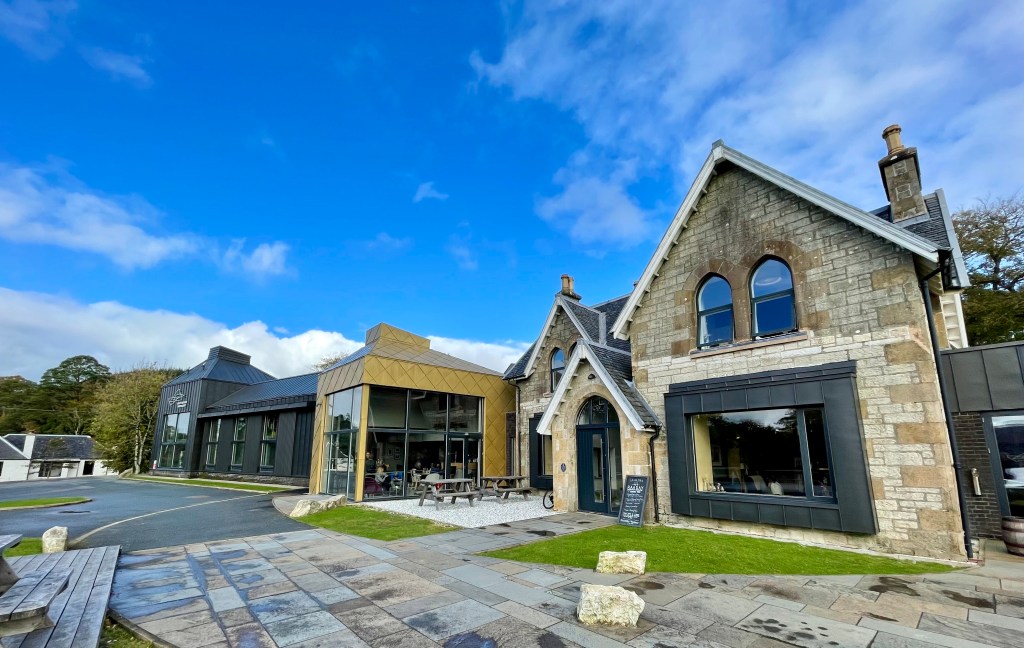
Opened in 2017, Raasay released its first whisky in 2020. The 2022 Scottish Whisky Awards named Rassay Distillery of the Year, and it’s a beautiful facility with drop-dead views. They released their first whisky in 2021 and their single malt combines six signature casks – maturing peated and unpeated spirit separately in ex-rye whisky, virgin Chinkapin oak and Bordeaux red wine casks. The first of this cask combination in Scotch whisky history. The exact proportions are, of course, top secret.
A lovely, sophisticated English woman with a dry wit was our tour guide. She had retired to Raasay a few years prior with her French husband and was obviously enjoying her retirement gig at the distillery. I talked with her afterward about what it was like, and how her Parisien husband was enjoying living on a remote barely populated island in the Hebrides. I shared that I was feeling a similar pull toward Scotland in general. She immediately engaged an eye-lock and encouraged me to start doing something – taking actual measurable steps toward this goal. I don’t know, I got the tingles. Message received.
So the Raasay “Hebridean” is a very very good whisky and I fell in love with the distillery and with Raasay itself. As I had enough space in my luggage to bring one bottle home, I decided this would be The Chosen One. I did a quick search on my phone – without my glasses – to make sure you couldn’t buy Raasay in Oregon. Well. When I got home I looked it up again and sure enough, found that you could acquire a bottle in two local liquor stores. Not only that but one of the liquor stores carried bottles of the single cask versions from the pleated bordeaux and rye casks. Good god. Coals to Newcastle. In retrospect, it’s almost a certainty that I misspelled Raasay as I was standing in line at the distillery on my phone with no glasses. I mean, there are a lot of “a’s” in fairness.
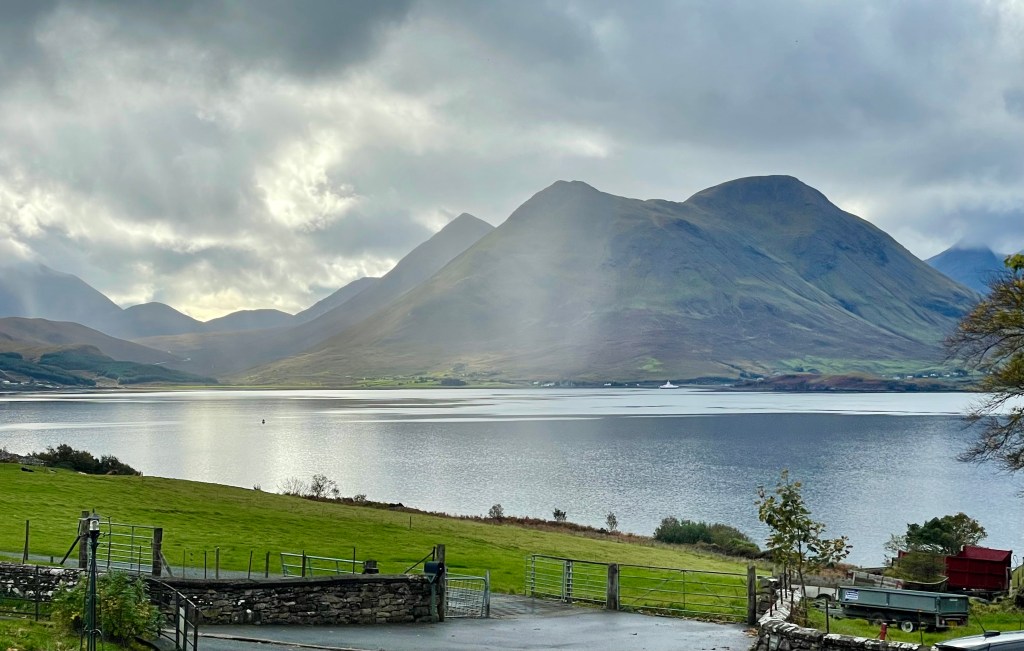
The ferry back to Skye.
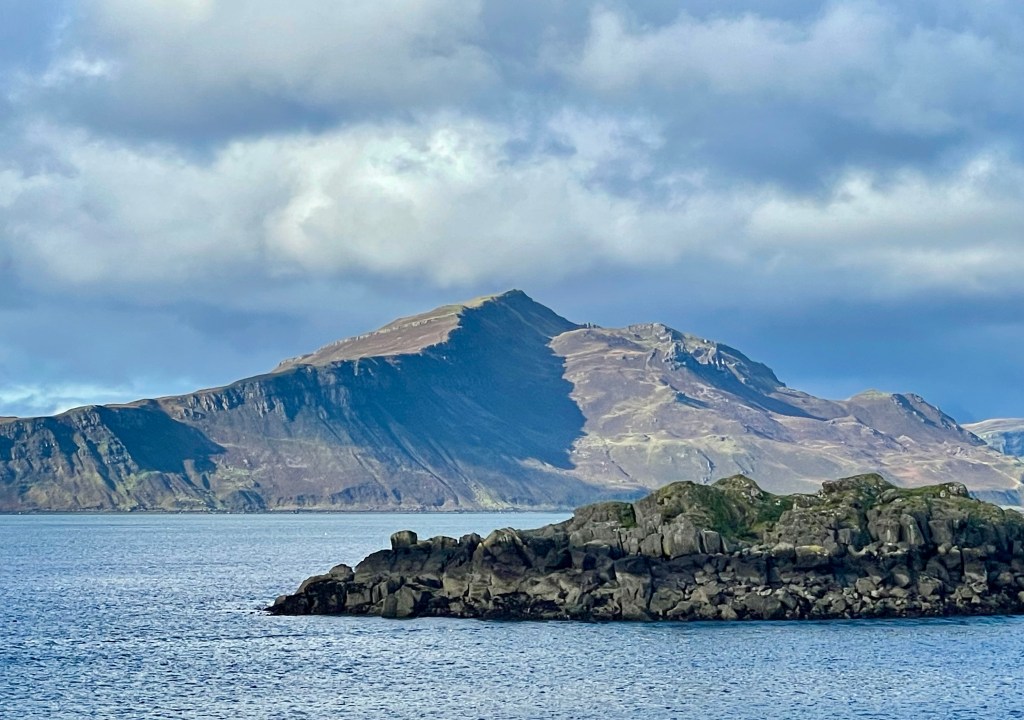
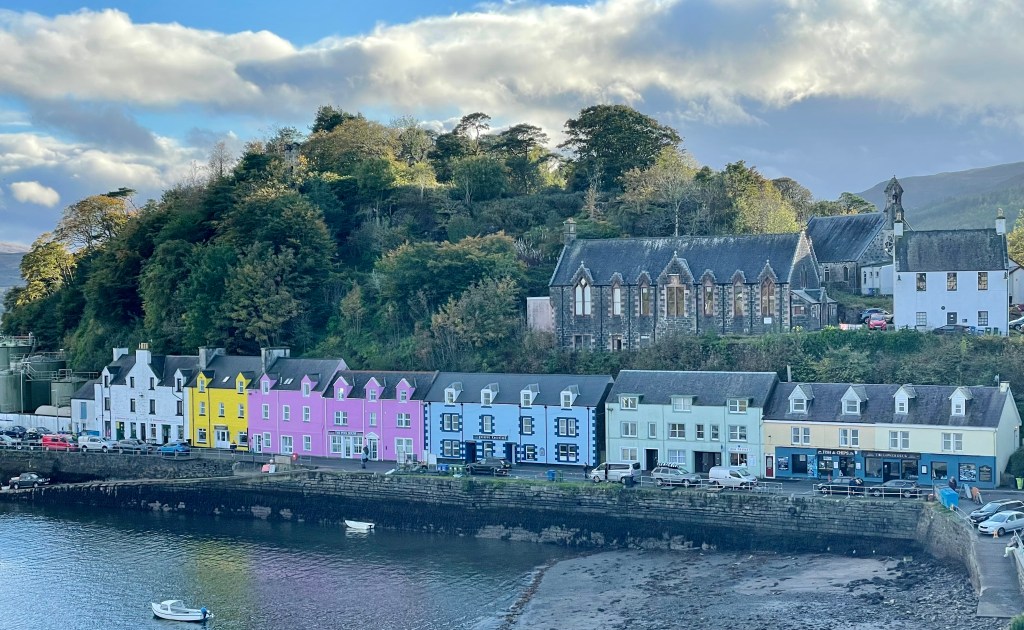
My car and I alighted from the ferry and drove to Portree where I had booked a table at Dulse & Brose, a lovely restaurant of past acquaintance. I was there a bit early and so wandered around Portree seeking a pub. The thing about shoulder season is that places are sometimes closed for the winter – rude! I finally walked along Quay Street, where the lovely painted buildings are, and found a teensy weensy pub inside the Pier Hotel. (The baby blue building below).
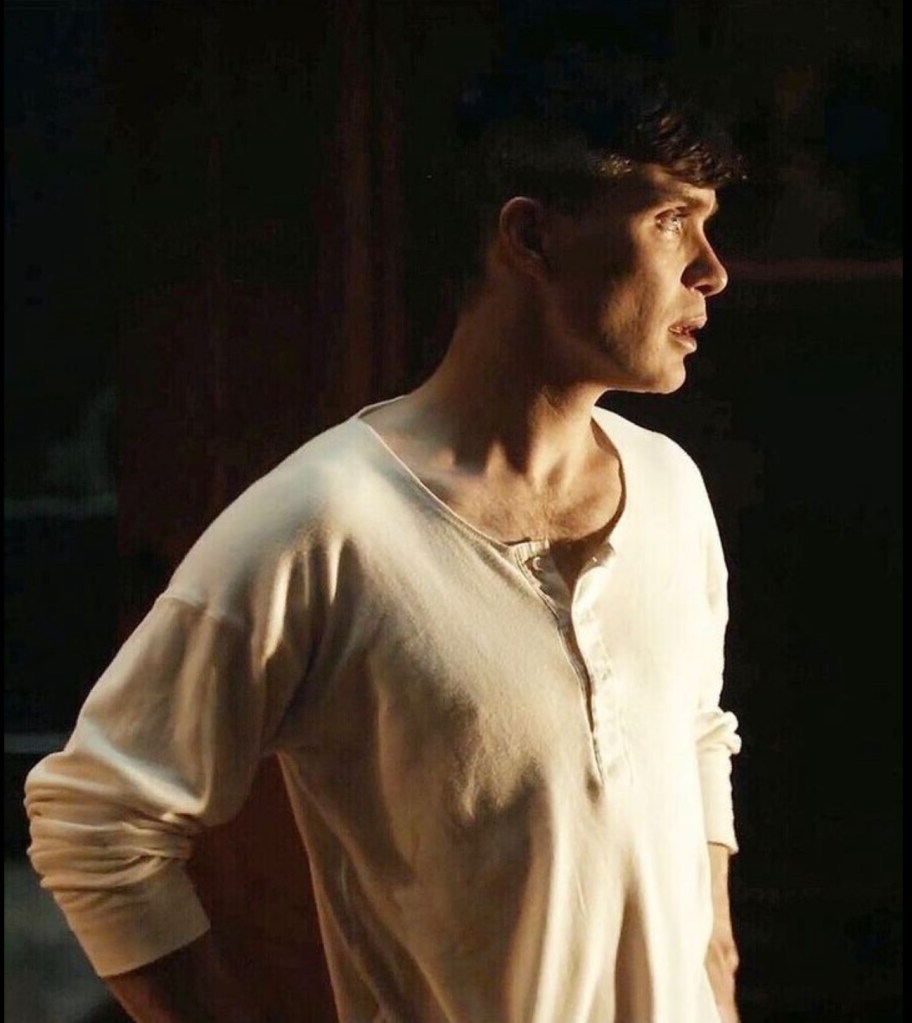
I sat at the bar and had a dram, eavesdropping on a hilarious conversation between a couple of older Scottish men with a fisherman vibe and a small family group from, of all places, Texas. The Texans were trying to explain to the Scots why the phrase, “bless your heart,” (which the Scots had never before heard) could, and often did, actually have a negative connotation. It’s one of those southern idioms that sound polite but are really a highly judgmental put-down. The Scots literally could not understand why we’d take something that sounded like a blessing and turn it into a smug slam. The other conversation I enjoyed was between the bartender and his girlfriend about how amazing Peaky Blinders was. Speaking of which,
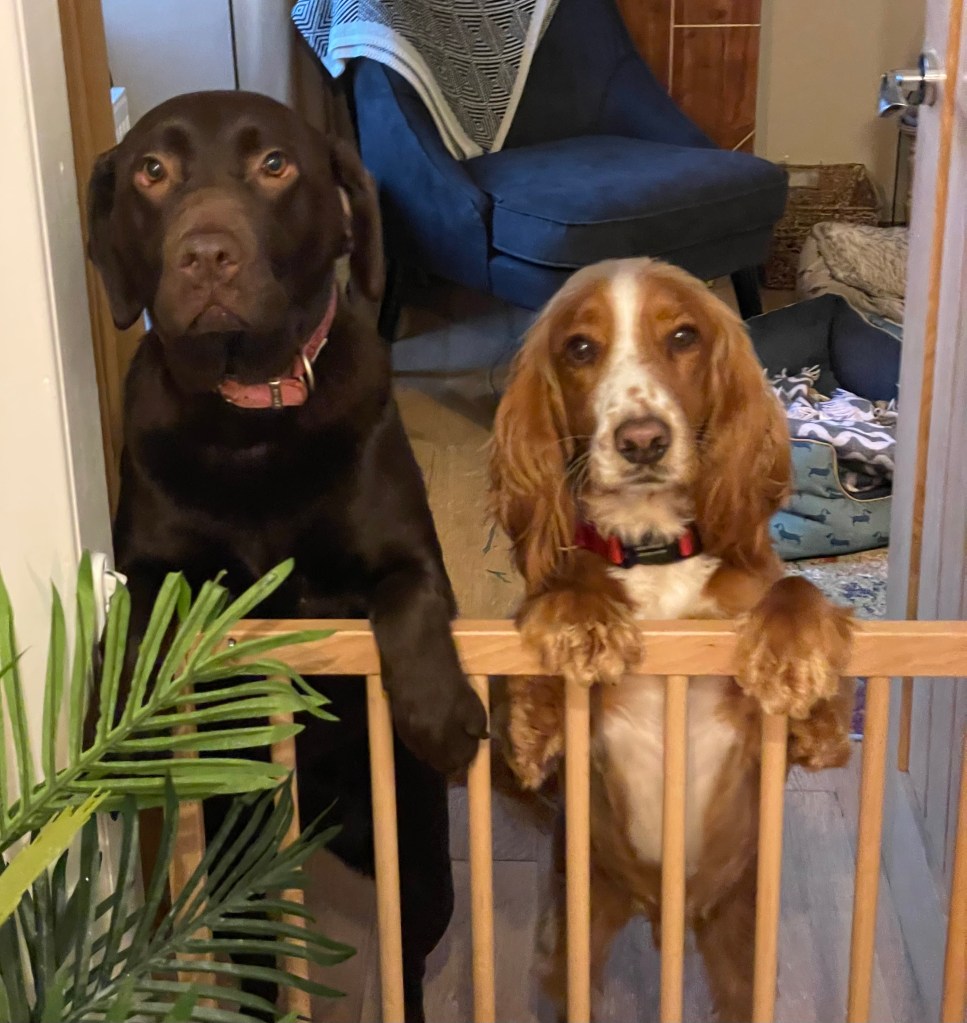
And now I think it’s high time to wrap this installment of The Wee Dram. My last full day had finally arrived, so I bid a sad farewell to Viv and Steve and the cute pups they were dog-sitting.
I then had the dumb idea of stopping by the Old Man of Storr on a gorgeous sunny day at 10:30, thinking I could just bound up the trail of the last Skye honeypot I hadn’t yet done. It was a sh*tshow. Could not believe the huge parking lot packed to the gills with humanity. Nooooooo. No thanks. KThxBai. Next time. I pulled off the road across from the bulging parking lot, grabbed a coffee and had a final wee look across to the mainland where I was headed – and said goodbye to Skye for the fourth time in my life. I also said see ya next year.
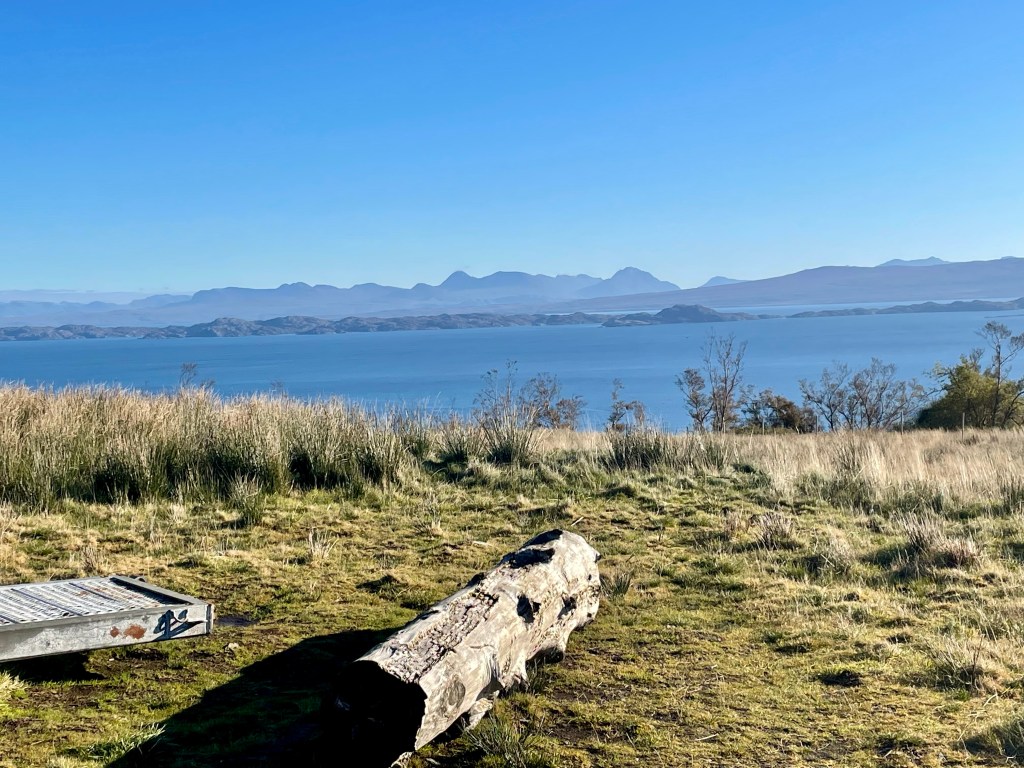
I drove through a bluebird day back to Inverness. It was honestly sort of weird seeing Scotland during a baldly sunny day. It didn’t look like itself.
My last night in Inverness I once again stayed with Eleanor and Mia, enjoying a lovely supper at the Mustard Seed. It was a gorgeous final night of my nearly month-long trip.
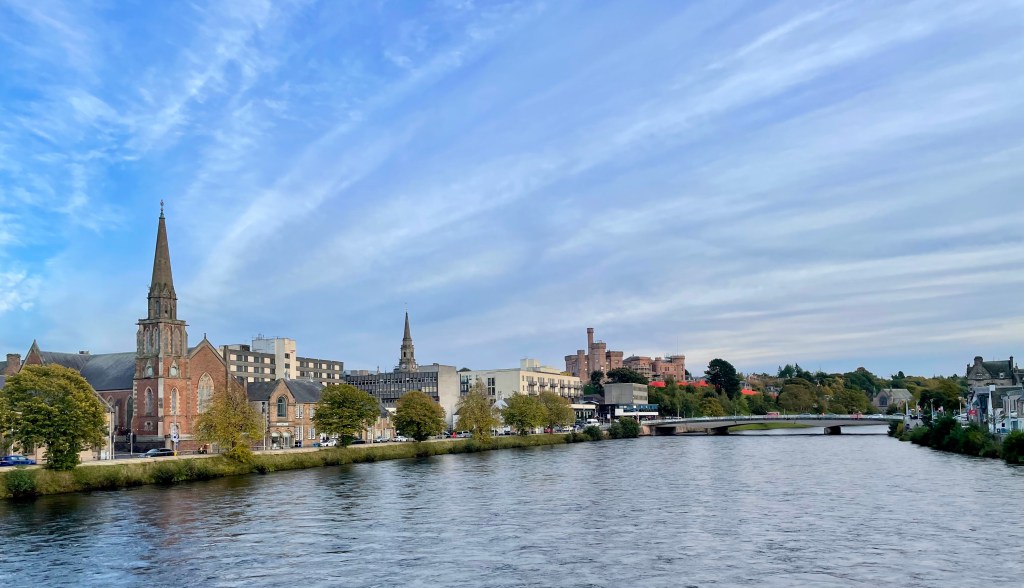

So, dear friend, thank you for reading this blog, for being patient with my many diversions down historical, geological, ecological, cultural, Gaelic pronunciation and whisky-related rabbit holes. I’ll just end by saying that I’m headed back next May to Glencoe (have never missed), the Pentland Hills south of Edinburgh, and……(drum roll) Shetland. And next fall I’m returning with my pal Trish, mostly to visit Arran, Islay and Jura, since our last trip we were stymied by weather, and then back to Skye where I will probably feel drawn to the ferry to sail to the Outer Hebrides again, maybe this time to the Uists.
Because why would I go anywhere else.
 Wee Dram of Scotland
Fabulous photos and tales! Thanks for the Ted Talk about peat. Looking forward to next year x2. ❤️
<
div dir=”ltr”>PS. Sorry if I posted the same comment multip
LikeLike