This was my first trip with Wilderness Scotland, a UK travel company based in Aviemore. They do a bazillion active trips all over Scotland (there’s also a Wilderness Ireland and Wilderness England) generally with one guide and group of eight guests. My conclusion is that it’s an awesome company and 10/10 would recommend.
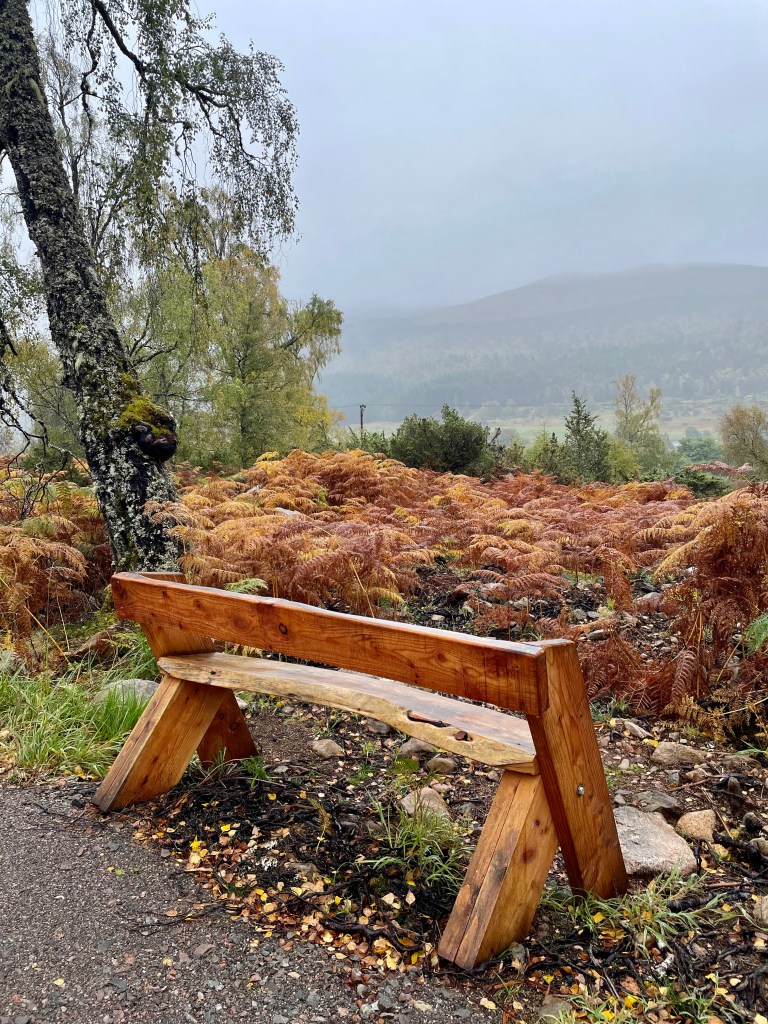
I booked a trip focused on the Outer Hebrides with a couple of days in Skye. Everyone met at the Inverness train station, and I was pleasantly surprised to see that our group was all women. Two friends from Alaska, a mother and daughter from Canada, and a mother, daughter and aunt from Vermont and Arizona. Our guide was Liam, originally from Glasgow and now living in Ft. William. After a round of introductions, we hopped in an unmarked black van (Wilderness Scotland isn’t into excessive branding) and headed west toward Skye. The weather was complete dreich and Liam was worried our planned walk on Skye could be a miserable blend of inhospitable conditions (he wasn’t wrong). He opted for an interim stop for coffee and a lovely, more sheltered walk on the mainland at Dundreggan Rewilding Centre, one of the many, many rewilding efforts taking place across Scotland and indeed the entire UK.
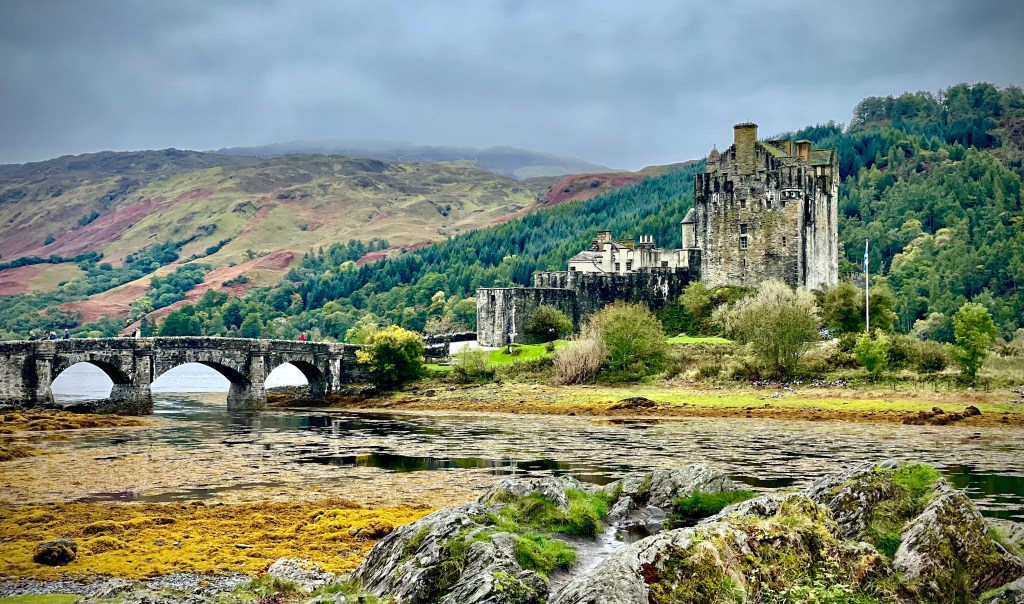
The stop was a perfect way to loosen up and begin the process of getting to know one another. Sufficiently caffeinated, we continued on toward Skye, driving down beautiful Glen Shiel (where Liam told us about the Battle of Glen Shiel during the 1719 Jacobite Rising which was attended by the freaking Spanish Armada) and stopping briefly at the unavoidable Eilean Donan Castle. I probably made enough snarky comments about this tourist honeypot in my last blog but in fairness it is gorgeous and so here’s the equally unavoidable photograph.

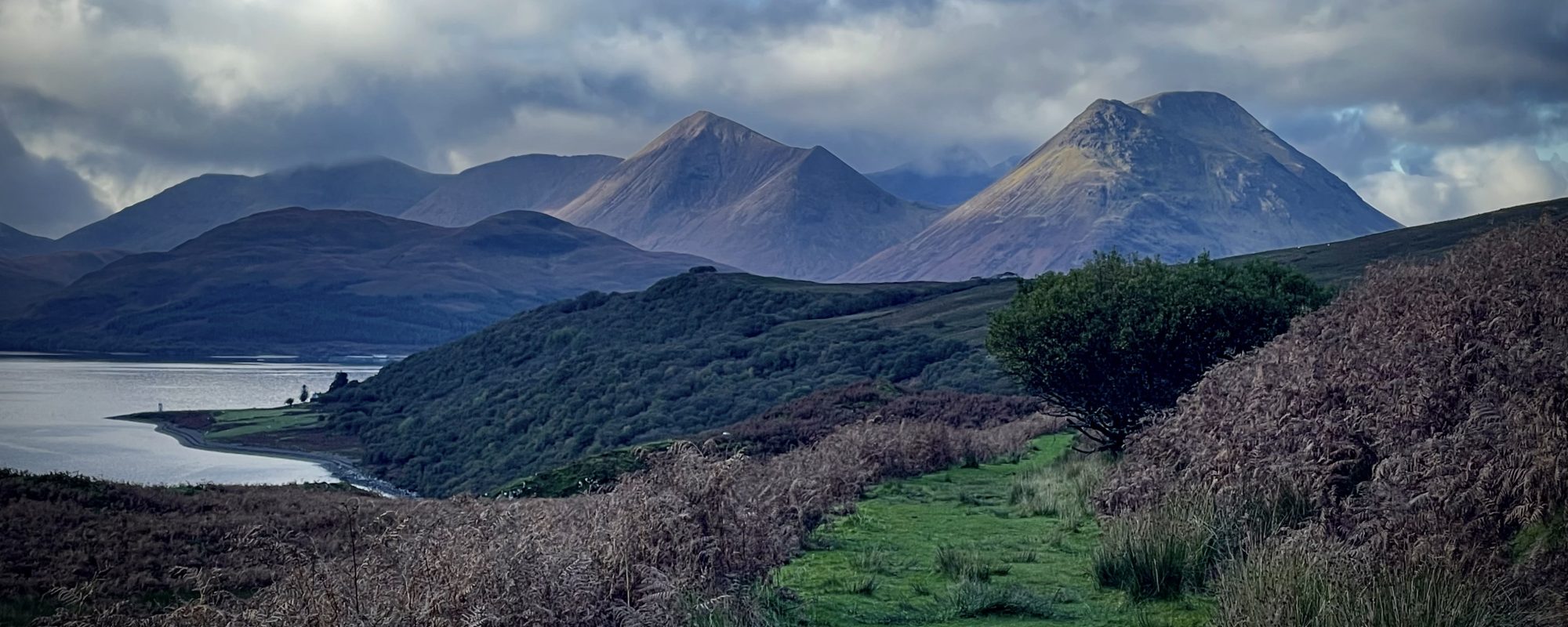
Having ticked that box, we set off over the gorgeous Skye Bridge to Glen Sligichan, where there’s a long trail down the glen between the Black Cuillin and the Red Cuillin, two very different mountain ranges a stone’s throw from one another. The Red Cuillin is composed of reddish-tinged granite, which is less resistant to glacial activity and so its hills are quite rounded and friendly-looking whereas the Black Cuillin (composed of basalt and gabbro) features the highest peaks on Skye and has a forbidding rocky, jagged profile with all the Mordor vibes. Considered to be the most challenging and spectacular range in Britain, twelve of Skye’s Munros are here, and it’s the location of the famous “Inaccessible Pinnacle,” known locally as the “In Pinn” (because, as Liam explained, Scots aren’t that interested in articulating a bunch of unnecessary syllables). And it’s not entirely inaccessible because of course it’s a top mountain-climbing goal for those who partake but it’s definitely a technical climb and looks completely yikes.
The history of these hills began a mere 61 million years ago with volcanic activity during the initial opening stages of the North Atlantic. As North America and Europe ripped apart (!!) large volumes of basalt lava erupted from long narrow fissures on what is now Scotland’s west coast. As time went on, this volcanic activity became focused at several specific locations, creating large, central volcanoes, and ultimately the Cuillin ranges.
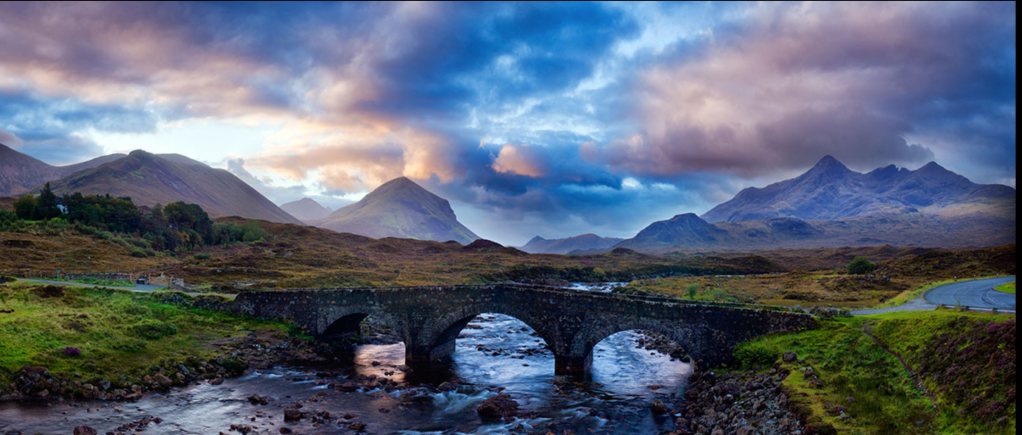
Framing the entrance to the glen is the iconic Sligichan Bridge, built in the early 1800s. The story goes that if you dip your face in the chilly waters of the Sligichan river, you will enjoy eternal youth. I cannot tell you whether this is true because I most assuredly did not do it. I also most assuredly did not take the photo below – a gorgeous shot of Sligichan Bridge flanked by the Red Cuillin on the left and the Black Cuillin on the right.
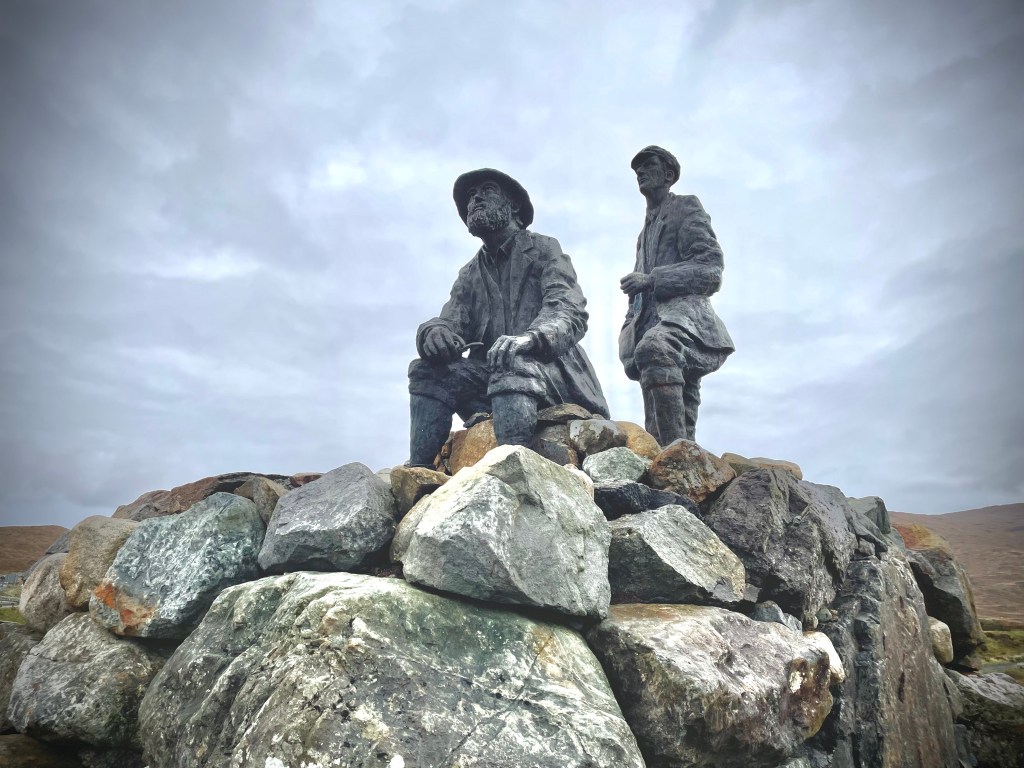
Just beyond the bridge is a recently commissioned and installed bronze sculpture, all thanks to the fundraising efforts of a local historical society. The sculpture pays tribute to two renowned mountaineers, Norman Collie and John Mackenzie. John, born in 1856, grew up in a nearby crofting village and started climbing the Cuillin at the age of 10. He became the first native-born Scot to be a professional mountaineering guide. He met Professor Collie, an internationally renowned scientist and mountain expert, and they formed a friendship that endured for half a century.
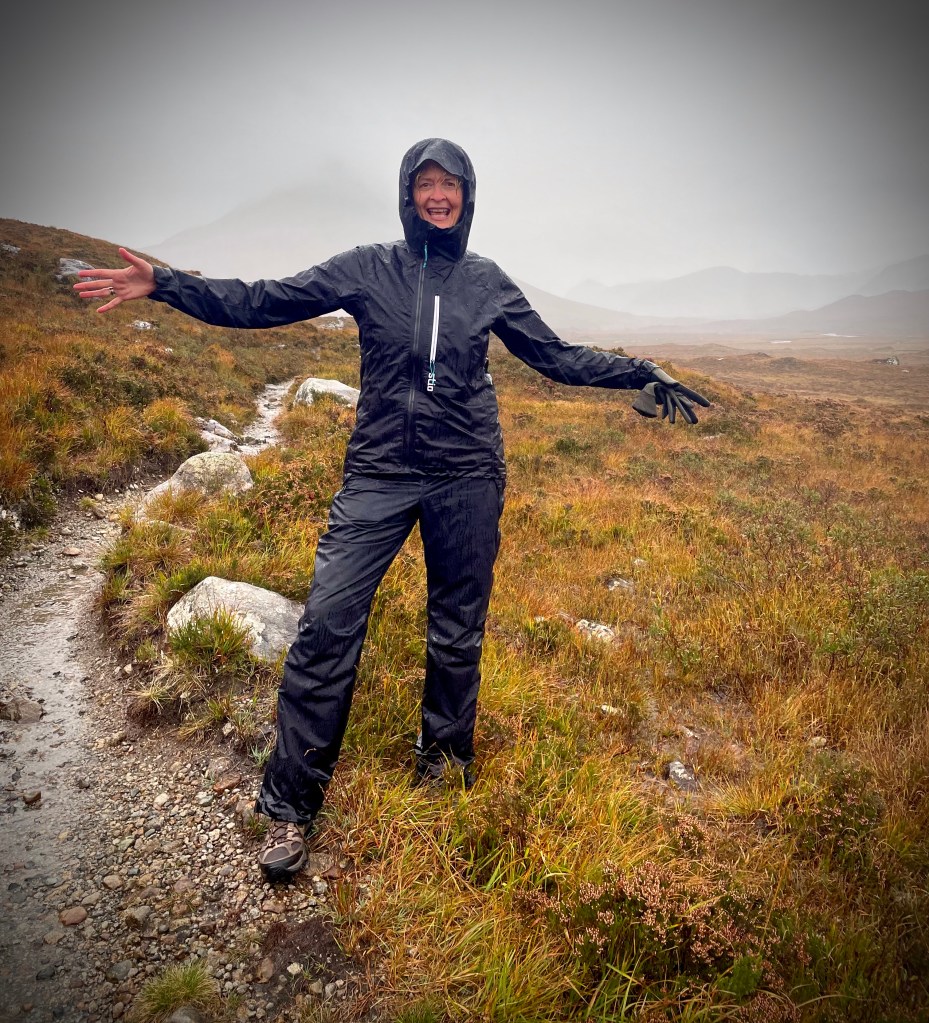
Back to our planned stroll down the glen, Liam’s weather concerns were valid – it was spitting rain, foggy and windy but as always in Scotland, who cares. And on that topic a quick sidebar – Scots have a lot of fun words for bad weather and you can peruse a sampling here: https://www.scotsman.com/whats-on/arts-and-entertainment/15-words-which-can-only-be-used-to-describe-scottish-weather-1478371
We walked into the mist for about a mile or so and even though the Black Cuillin were shrouded, the views were stunningly beautiful. Before we turned around, Liam told us the geological origin story of the glen, and then the inevitable folktale about how things REALLY happened which involved a romantic misunderstanding, anger and revenge, culminating in the sun throwing her spear into the ground etcetera. The trail winds south through the Cuillin all the way to the west coast of Skye and it’s on my bucket list. Not today, though. Not today.

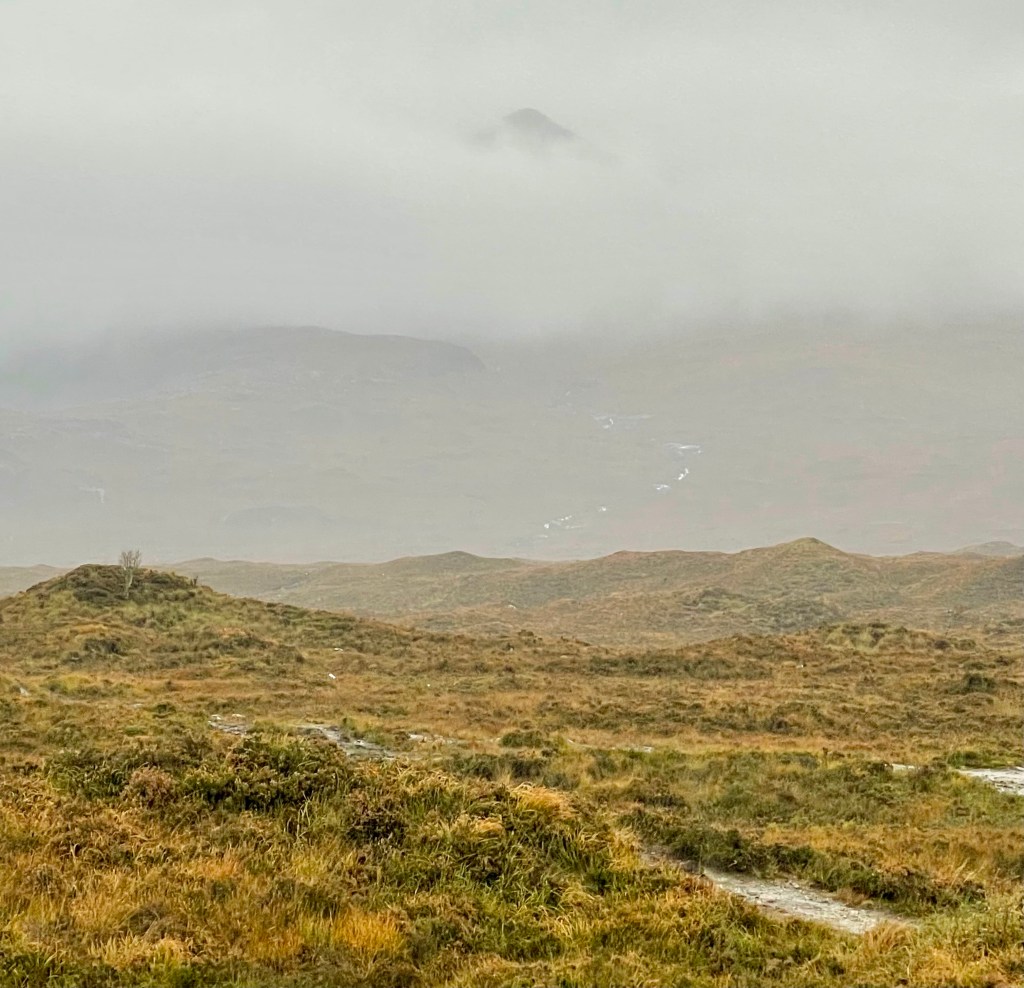
As we were leaving the glen, the top of the Black Cuillin ridge teased us with a shy momentary appearance:

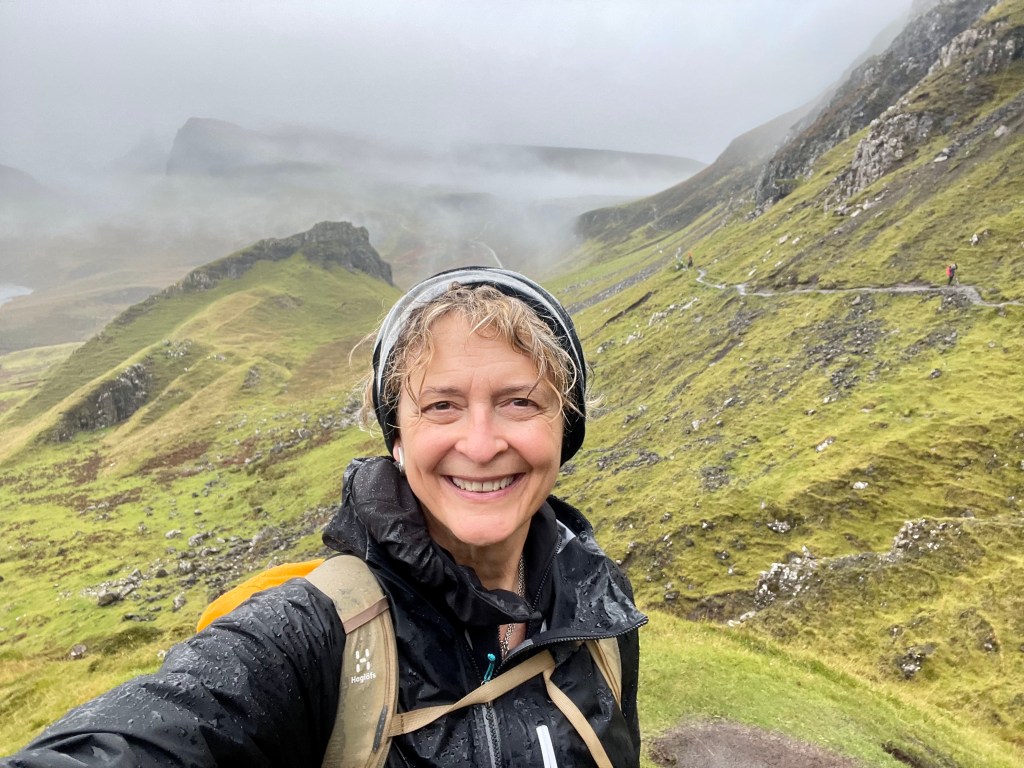
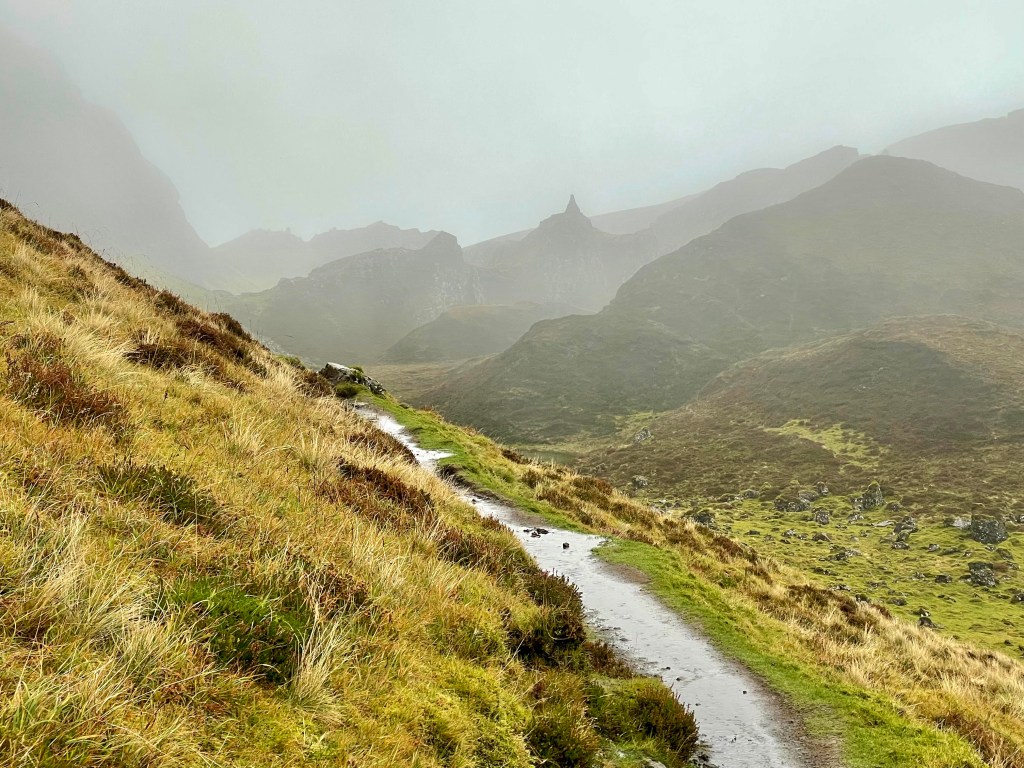
After a lovely evening at the Uig Hotel perched over Uig Bay and the ferry that would take us over the Minch, the next day dawned wet and rainy as Storm Agnes bore down on the UK. Our plan was to hike the Quiraing and so we braved the elements swathed in our waterproofs and enjoyed the lack of crowds. I did this walk last spring in basically the same conditions and Liam expressed some concern about my interest in doing it again which I thought was sweet but bonkers, I mean have you SEEN this place Liam? I’d do it every morning if I lived nearby.
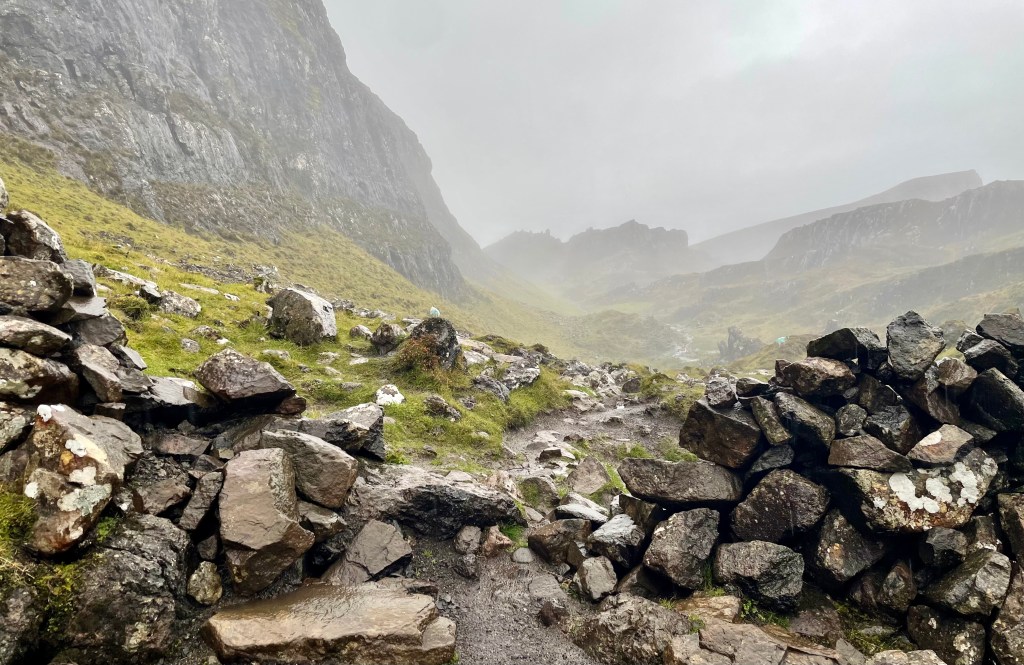
I’ll just share a few photos of the otherworldly Quiraing below.
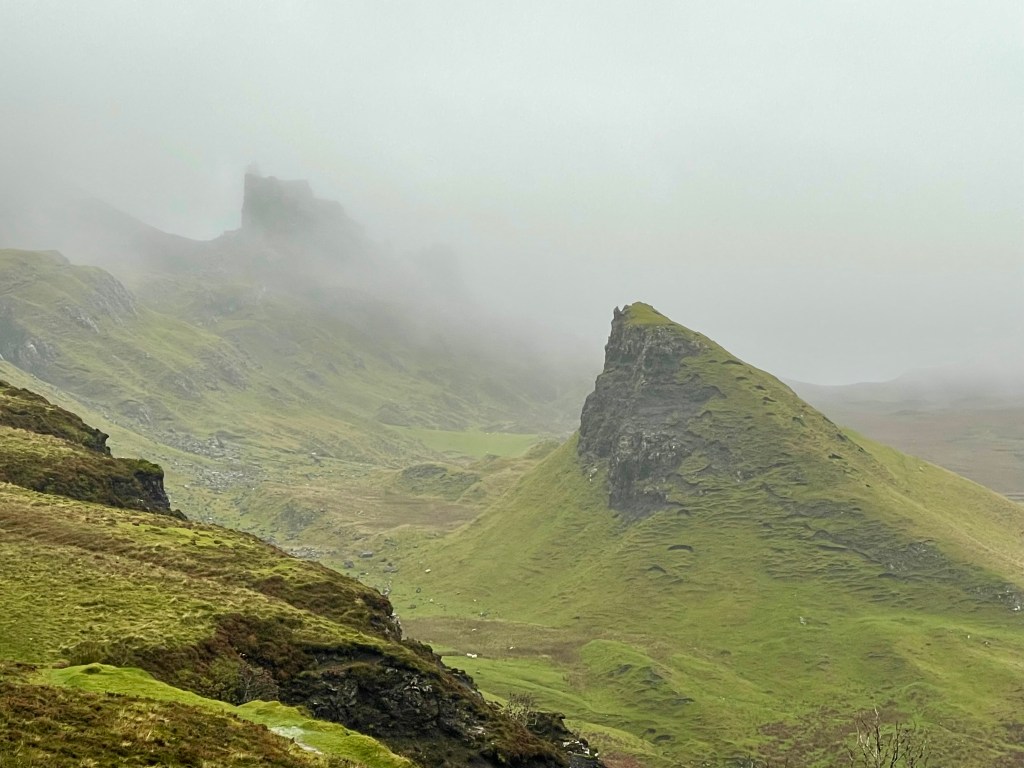
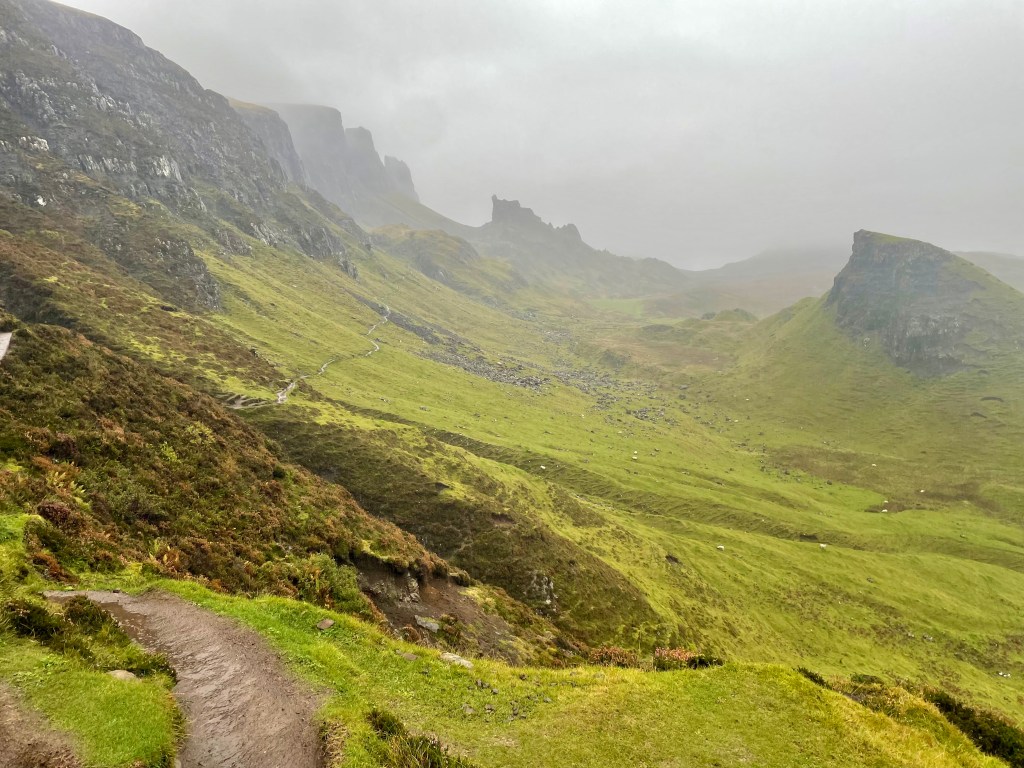
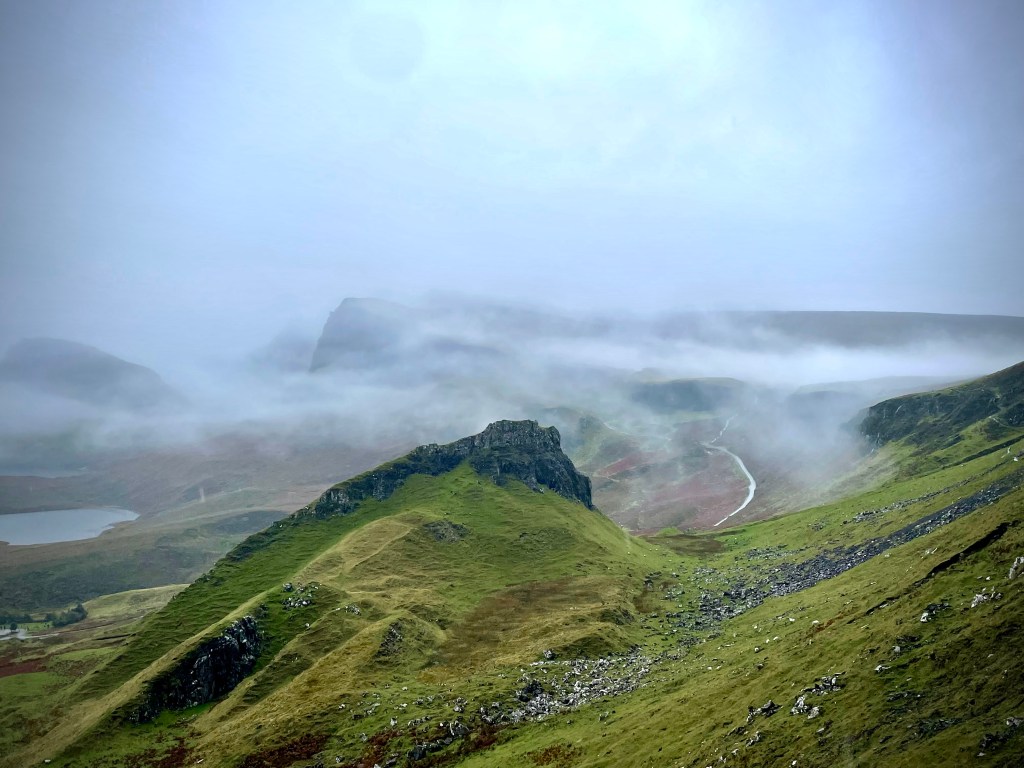
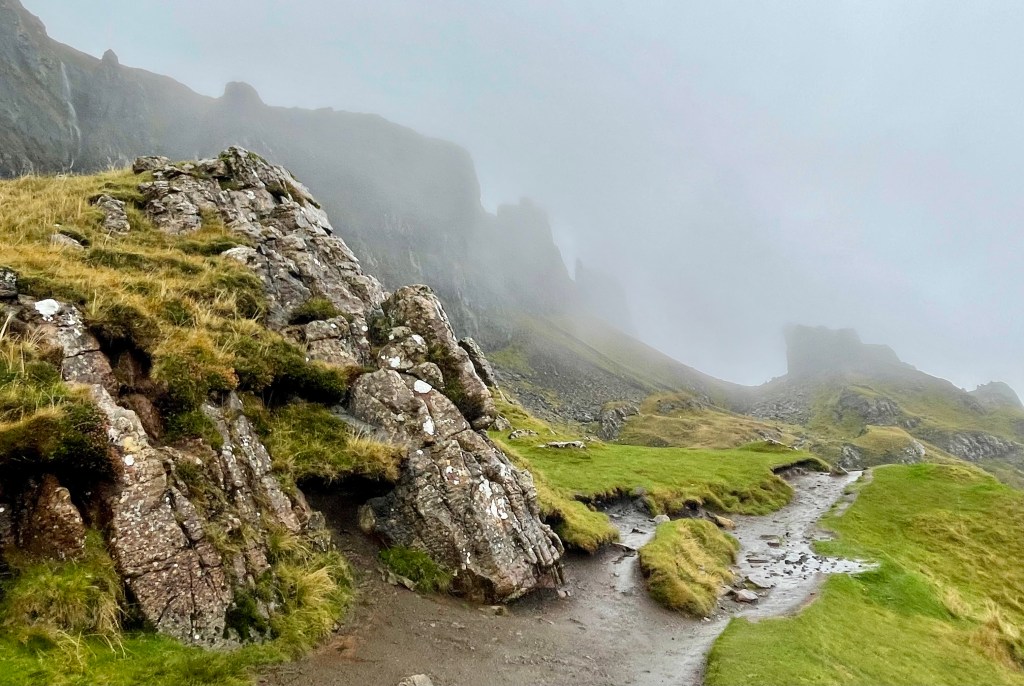
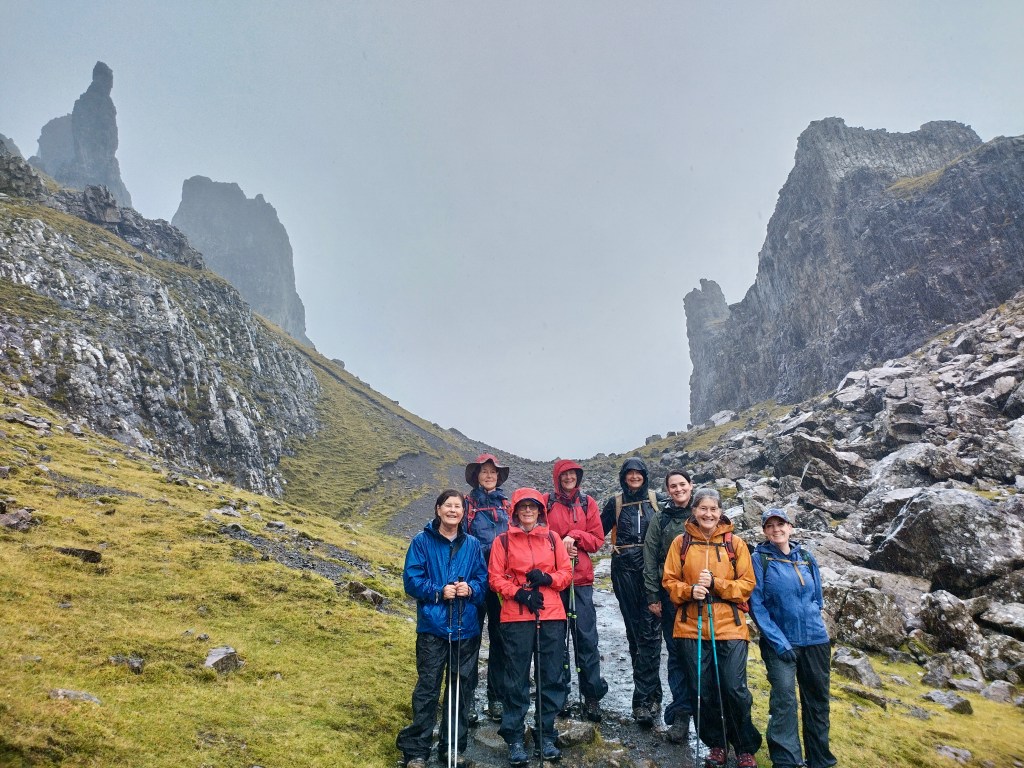
As we approached the top of the walk, a young couple happily walked by who randomly happened to be from Oregon so we had a funny shouted conversation about being from Portland and Bend and what a small world.
During a rainy snack break near an extremely picturesque stone wall, we had another story from Liam, this time about the Bonnie Prince’s escape from Scotland after Culloden, featuring Flora MacDonald, whose grave is nearby (see my post from last spring’s trip).


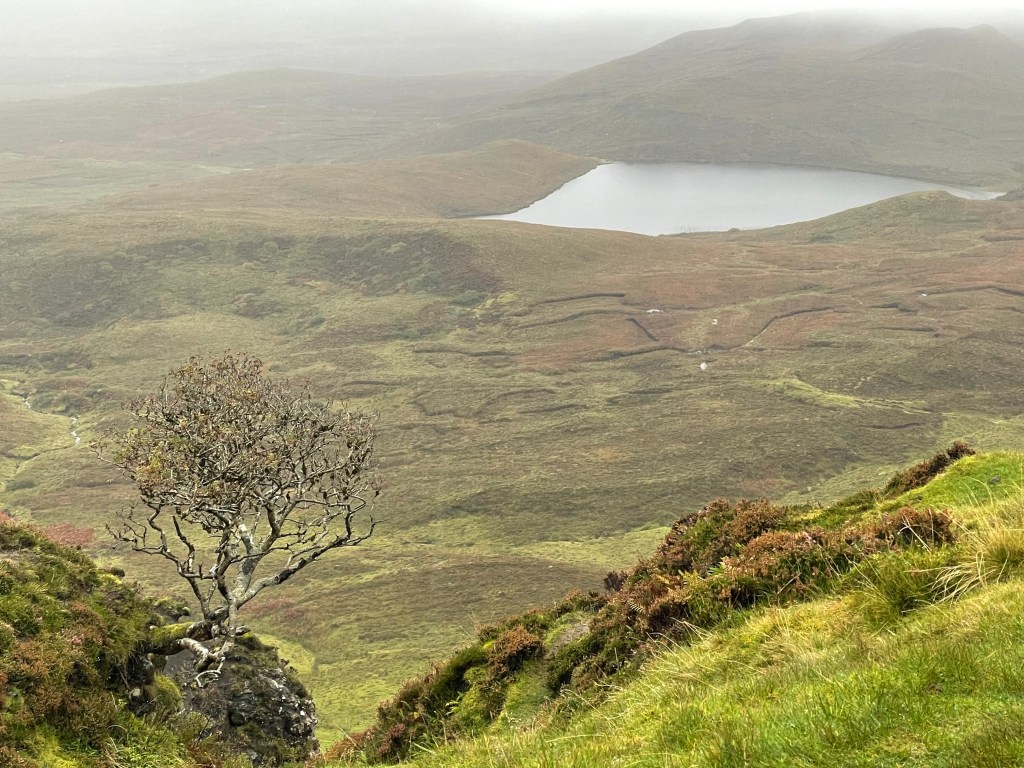
And at last, I found the lone tree that is very very famous on Instagram.
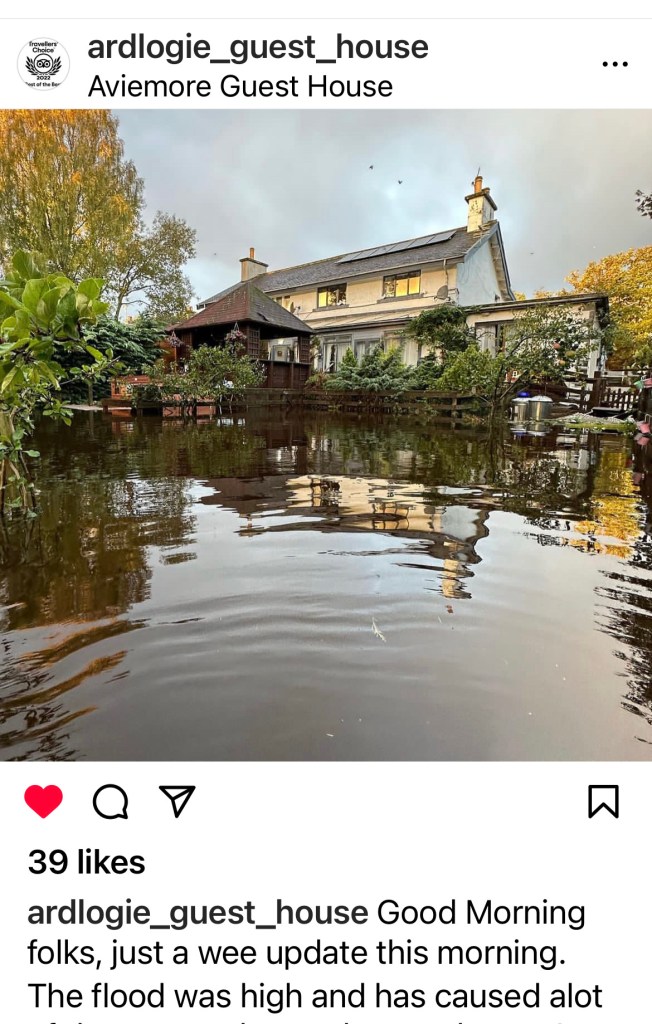
As Storm Agnes slowly moved across the country, I was stunned to see photos posted by Kev and Kirsty of their lovely backyard, usually filled with birds and deer. Yikes. They downplayed the situation, characterizing it as a “wee update,” and they did not have to turn away any guests, but geez. Wilderness Scotland is based in Aviemore, and Liam assured me that this happens more often than one might wish and it is all actually fine.
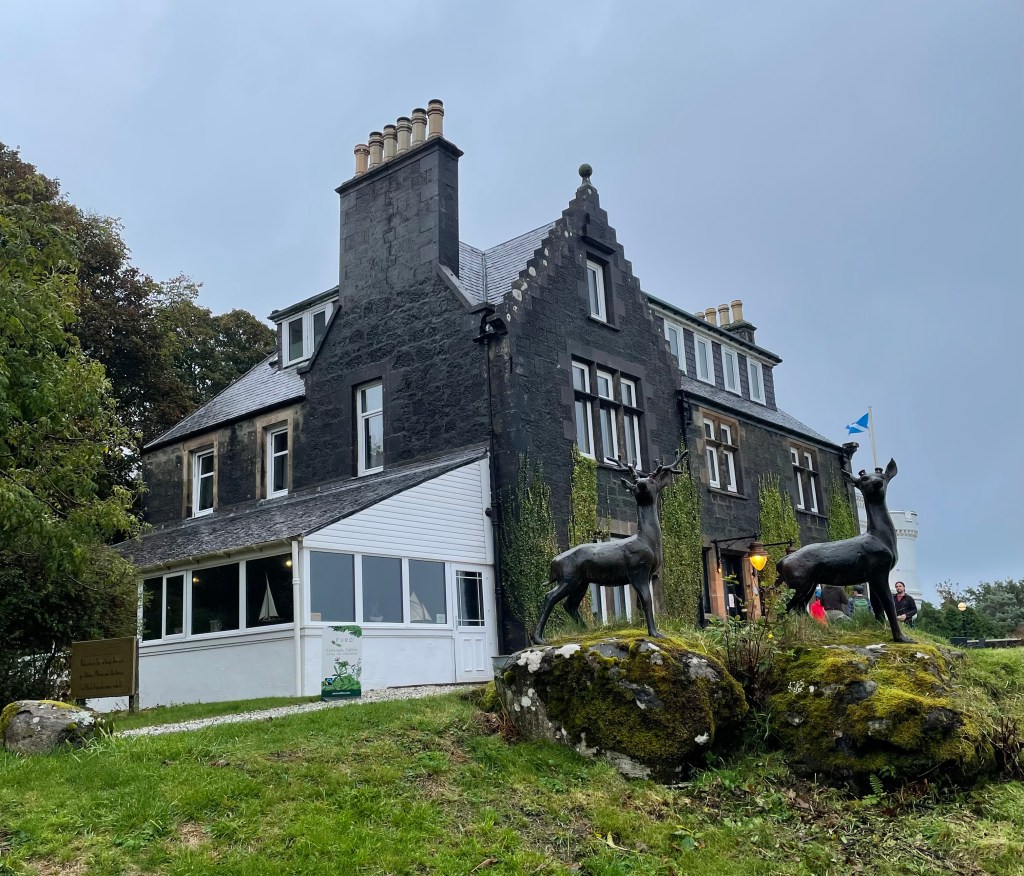
After the Quiraing, we stopped at a very lovely and fancy hotel called the Flodigarry Inn. Amazingly, they didn’t mind that we brought in food from the outside, sat in their lobby and ordered coffees. We were soaking wet and left pools of water everywhere. Nobody said, “You can’t bring that food in here unless you are a hotel guest.” Very kind and civilized.
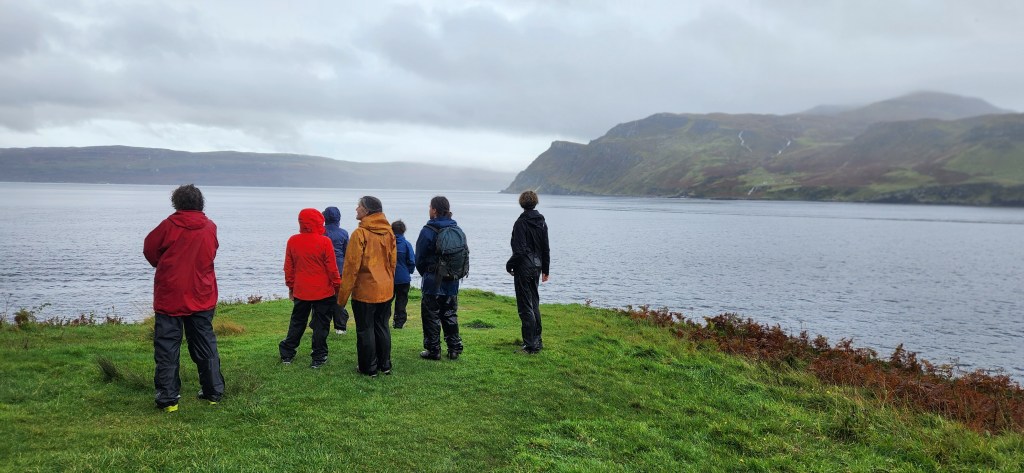
We ended the day with a circular walk around Portree, the largest town and capital of Skye.
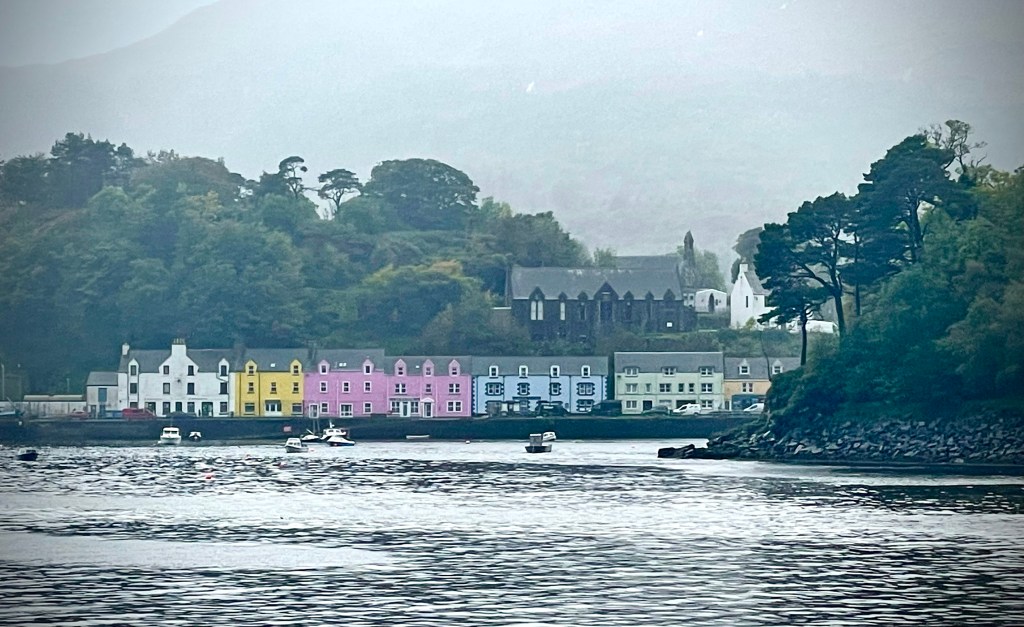

Conde Nast travel named Portree one of the twenty most beautiful towns in the UK and Ireland. As with everywhere it seems, it’s been inhabited probably since Mesolithic times. In the 1700s, Portree was a popular point of departure for Scots sailing to America to escape poverty. And in 1946, The Royal Hotel, the site of MacNab’s Inn, was the last meeting place of Flora MacDonald and the Bonnie Prince after Culloden.
In Agnes’s wake, the next day’s weather actually looked pretty stunning, involving the sun and everything, which was excellent timing for our early afternoon crossing to the Outer Hebrides.
We took advantage of the beautiful morning to drive to the northernmost tip of the Trotternish peninsula for a lovely coastal walk called Rubha Hunish. The trail featured gorgeous views across to the Outer Hebrides, a Coast Guard lookout on a cliff which is now a bothy refuge for hikers, the ruins of Duntulm Castle and the remains of Erisco, a clearance village, which is this day ironically filled with grazing sheep, perhaps descended from the original sheep that displaced the less remunerative crofters who were shipped off to North America and Australia in the years after Culloden.
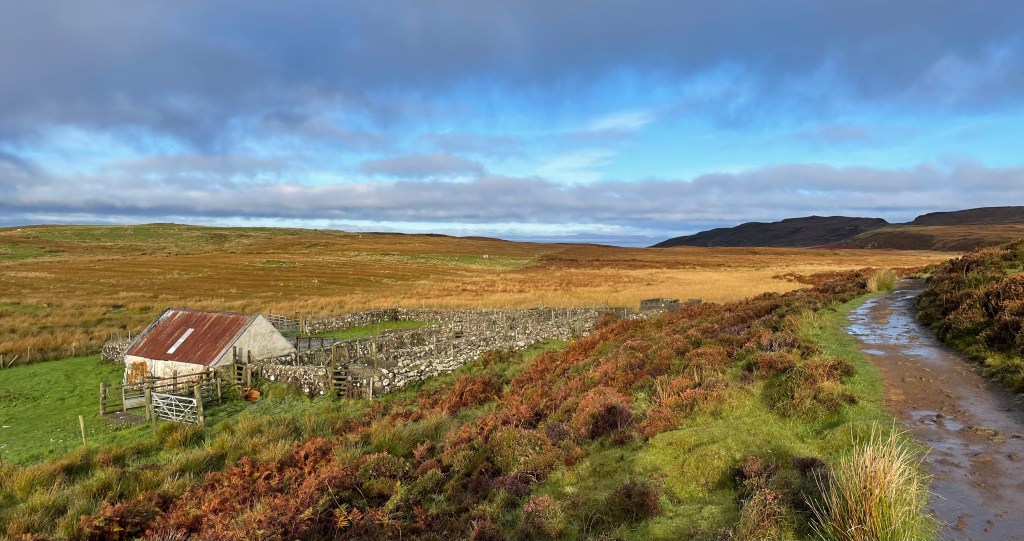
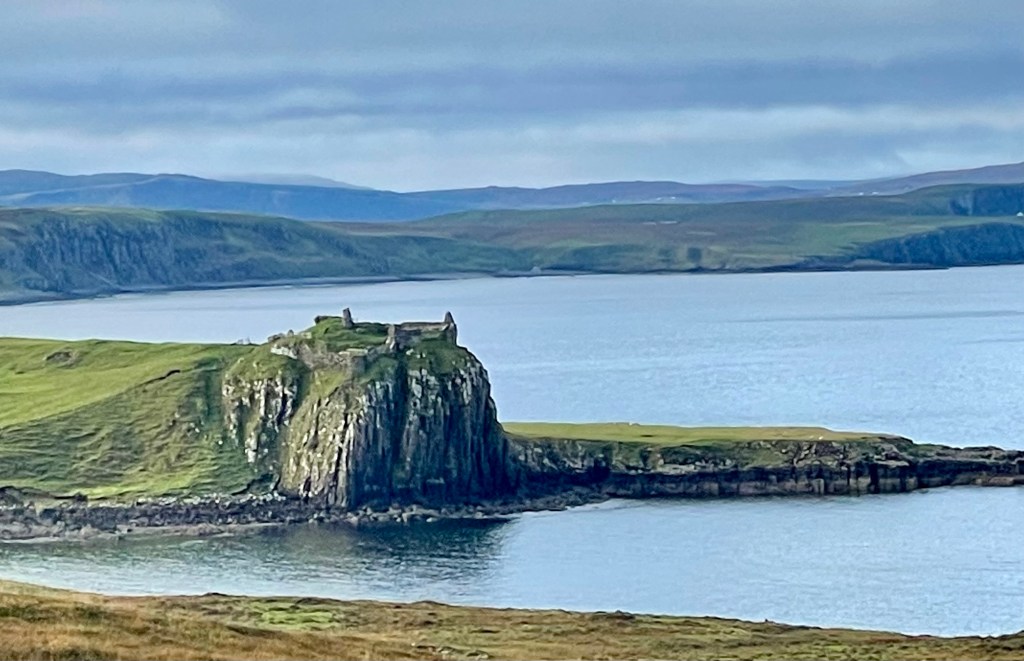
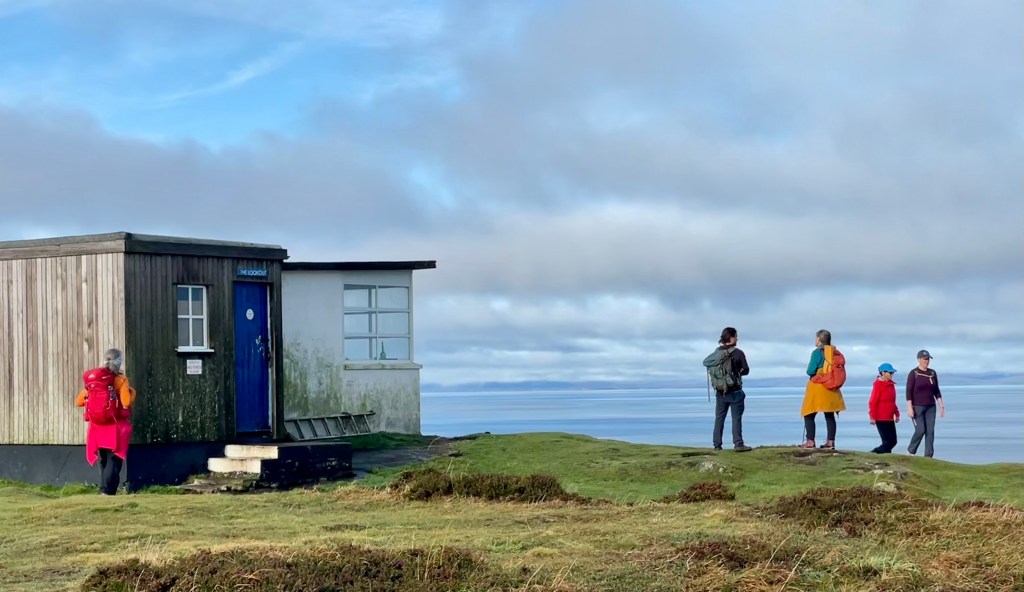
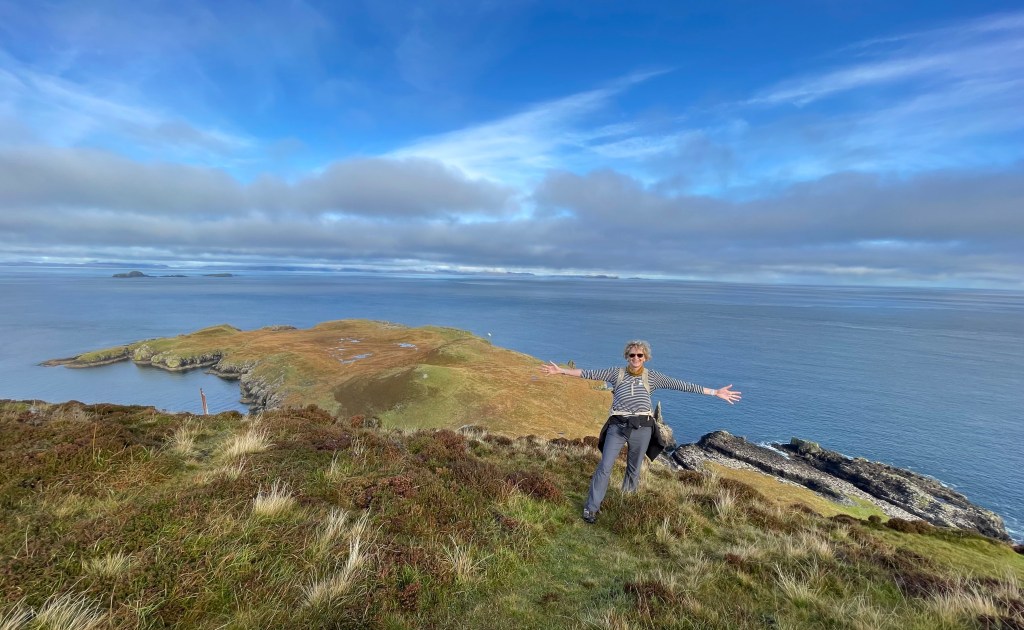
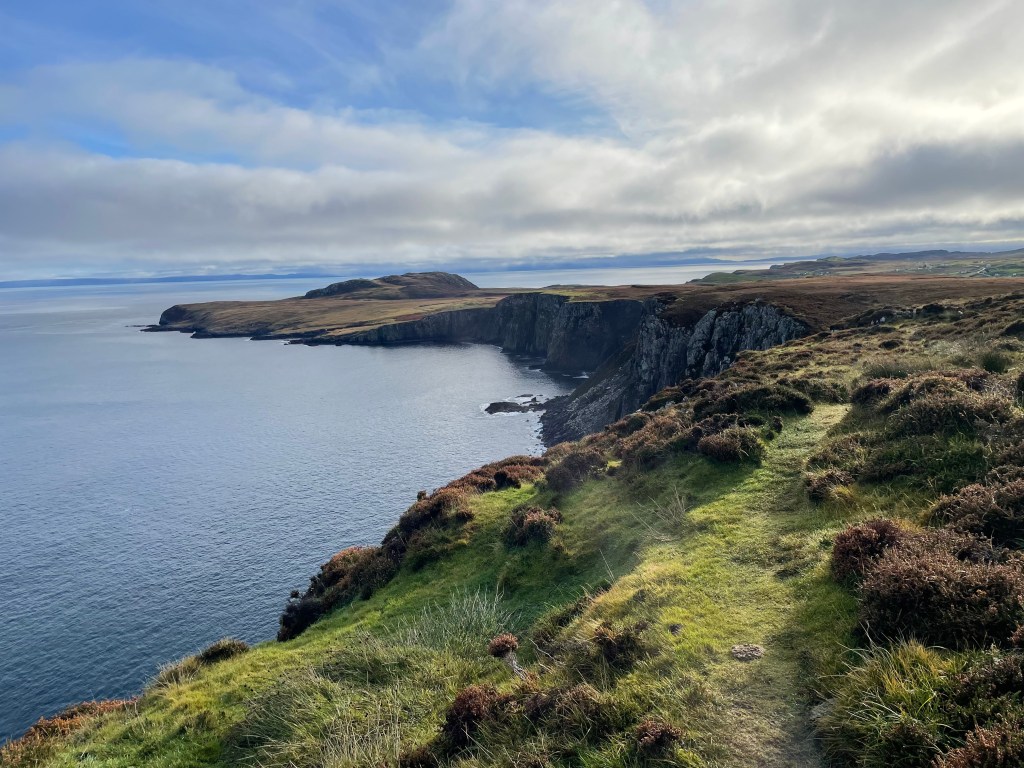
A wonderful way to bid farewell to Skye – before sailing over the Minch to Harris and Lewis. I know I keep mentioning the crossing -the thing is I passionately love ferries and so become inordinately excited about the prospect of boarding one and sailing away.

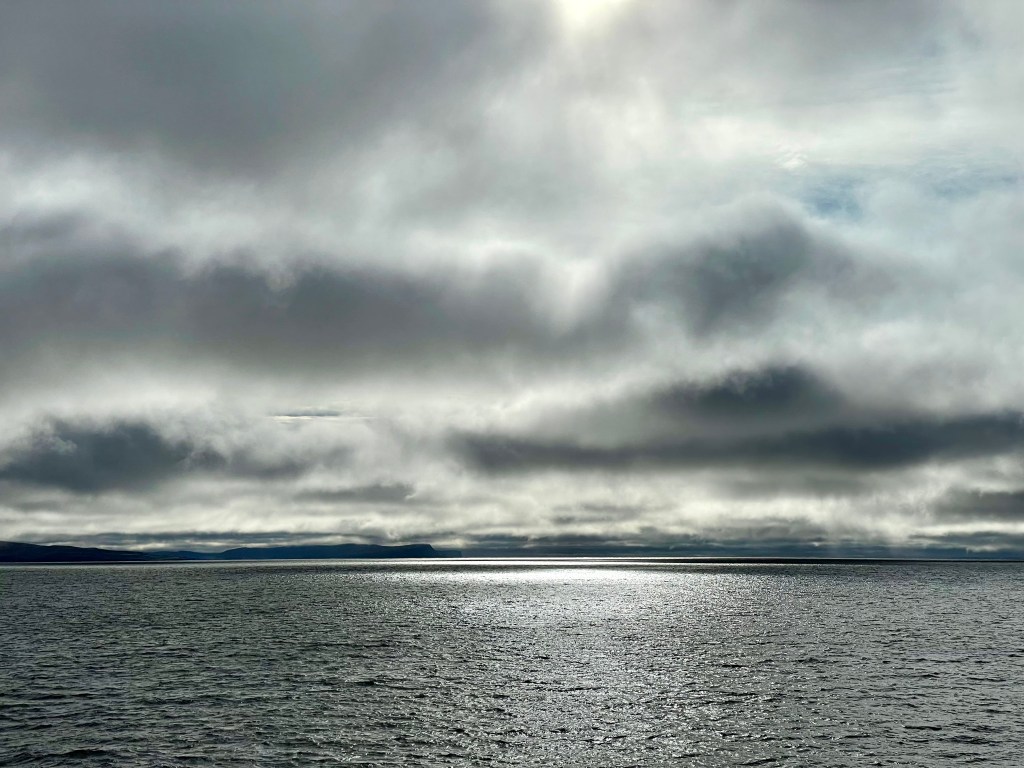
After a delightful crossing (enough already!), we disembarked in Tarbert, the largest town on Harris. I should mention that the Isle of Harris and the Isle of Lewis are actually a single island, the main island of the Outer Hebrides. The northern 2/3 is Lewis, the southern 1/3 is Harris, and there are many cultural and linguistic differences between the two. Also, Harris is quite mountainous, boasting 30 peaks, whereas Lewis is much flatter.
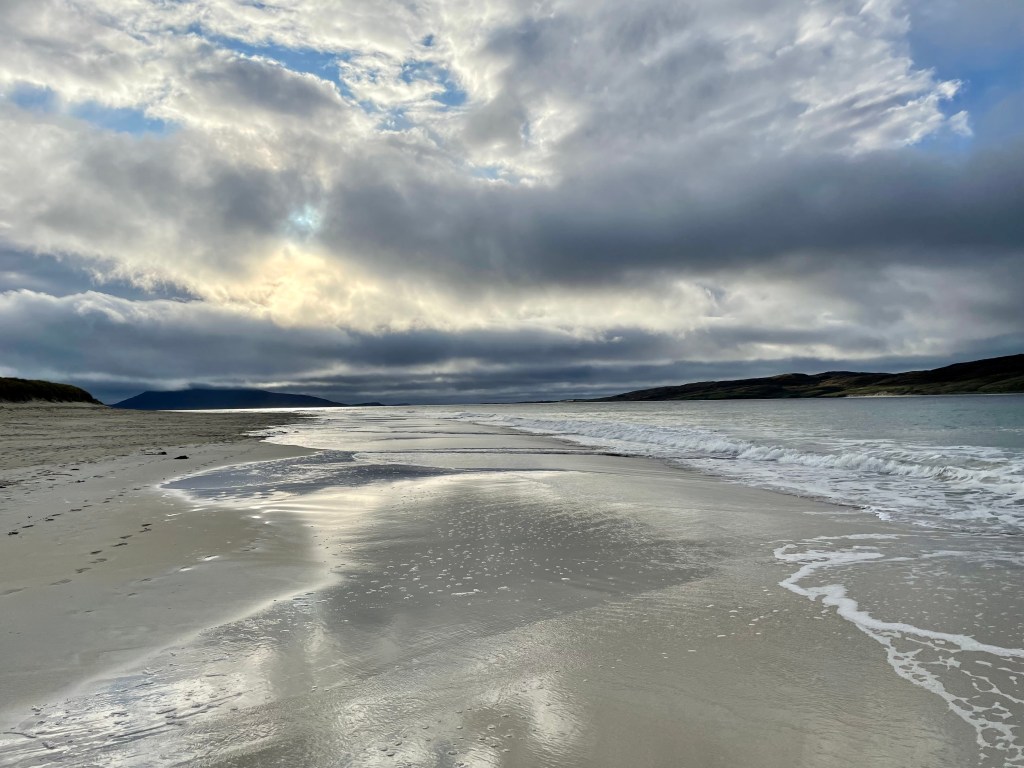
Our first order of business was visiting one of the many, many beaches on Harris, Luskentyre Beach. On the short drive from the ferry, we were awestruck by the island’s striking, otherworldly geography. I’ve never seen anything like it. Very hilly, lots of water and exposed bedrock everywhere.
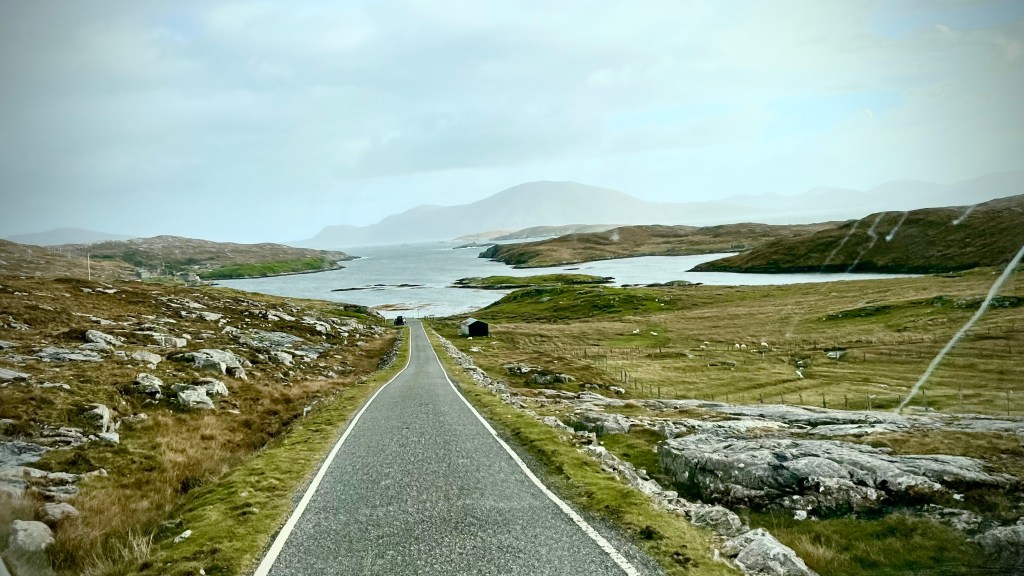
And in fact the geology of the Outer Hebrides is quite unique. The most remarkable rock found there is 300 million year old Lewisian gneiss, which some of the oldest rock in the world. On South Harris, where we were, it is mostly anorthosite, which is similar in composition to rocks found on the freaking moon.
The unfortunate thing is that this bedrock prevents electrical wires and cables from being buried so telephone poles dot this sparse and gorgeous landscape which is slightly jarring. People need power I guess. Also the bedrock is so exposed and the soil so sparse on the east side of Harris that they couldn’t bury anyone there and so the dead had to be hauled over to the west side via the aptly named “Coffin Road.”
Like much of the country, especially the islands, the Outer Hebrides have a Norwegian background, and by that I mean they were invaded by Vikings in the 9th century. Once on a podcast I heard a historian describe being a Viking as more of a job description than a people which is an excellent characterization. At any rate they ended up living there for 450 years.
In 1098 Edgar, a Scottish king, officially signed the islands over to King Magnus III. In the 1200s King Alexander II tried to reverse engineer a return policy and pestered King Haakon IV of Norway to buy them back, alas to no avail.
In the face of the Vikings’ steadfast refusal, these efforts died away until King Alexander III came on the scene. Alex was hell bent on realizing his father’s dream. As with many dysfunctional father-son relationships in powerful families, when Alex made moves to fulfill his father’s legacy, it immediately resulted in armed conflict.
Alex sent a letter to Haakon saying that if he didn’t allow Scotland to buy back the islands he’d just come over there and take them back for free. In response, Haakon gathered a fleet together which ended up getting stranded at Largs (near Glasgow) and Alex took advantage of this by launching a surprise attack. The fleet scarpered all the way back to Orkney where Haakon died unexpectedly in Kirkwall.
Haakon’s successor, Magnus, frankly exhausted by the thought of starting that whole thing over again, agreed to sell the islands back to Scotland in 1266. Alex/Scotland paid 4,000 marks and agreed that Norway could keep Orkney and Shetland (for now). This marked the end of the perhaps unnecessary Scottish-Norwegian War.
As a counterbalance to this rousing tale of war, daddy issues and derring-do, I will leave you with some photos from Luskentyre Beach and a Moment of Zen video, for which you may wish to turn up the volume.

 Wee Dram of Scotland
This looks so amazing Julie! Beautiful pictures. Amazing to be outside there in all weathers.
>
LikeLike