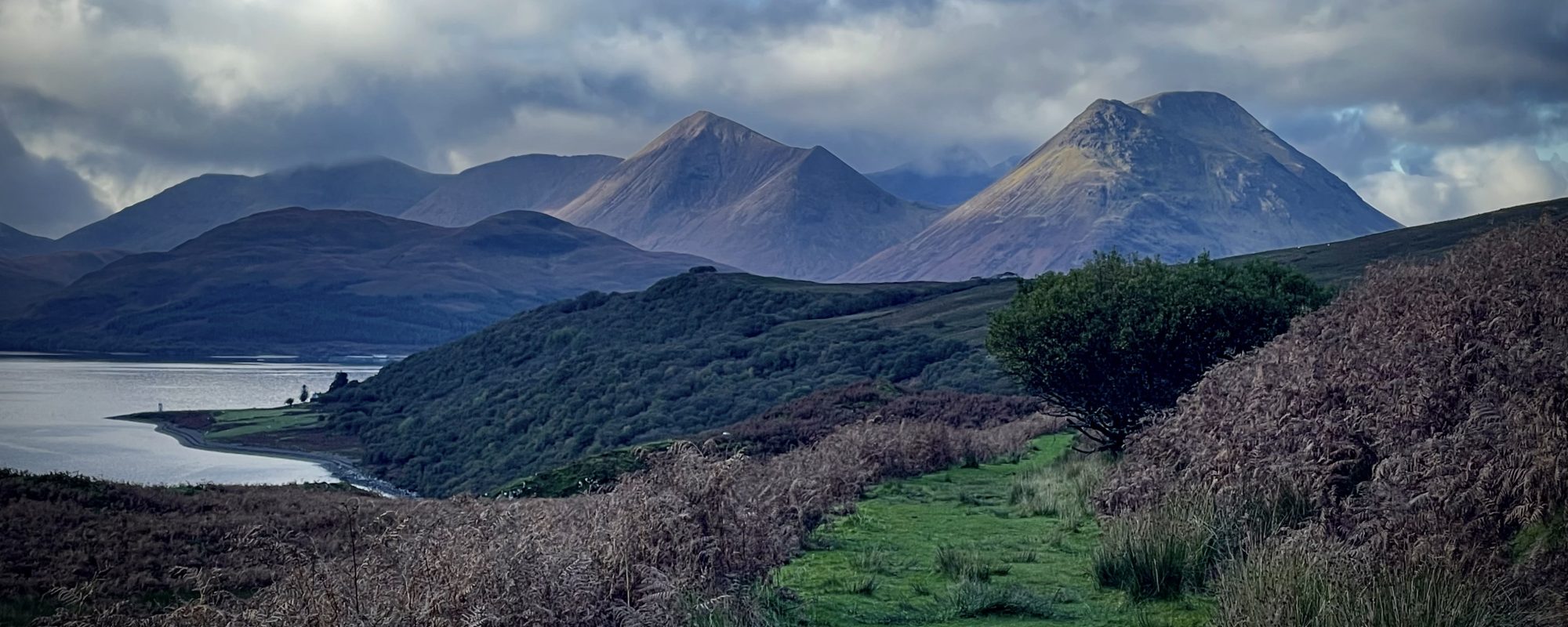
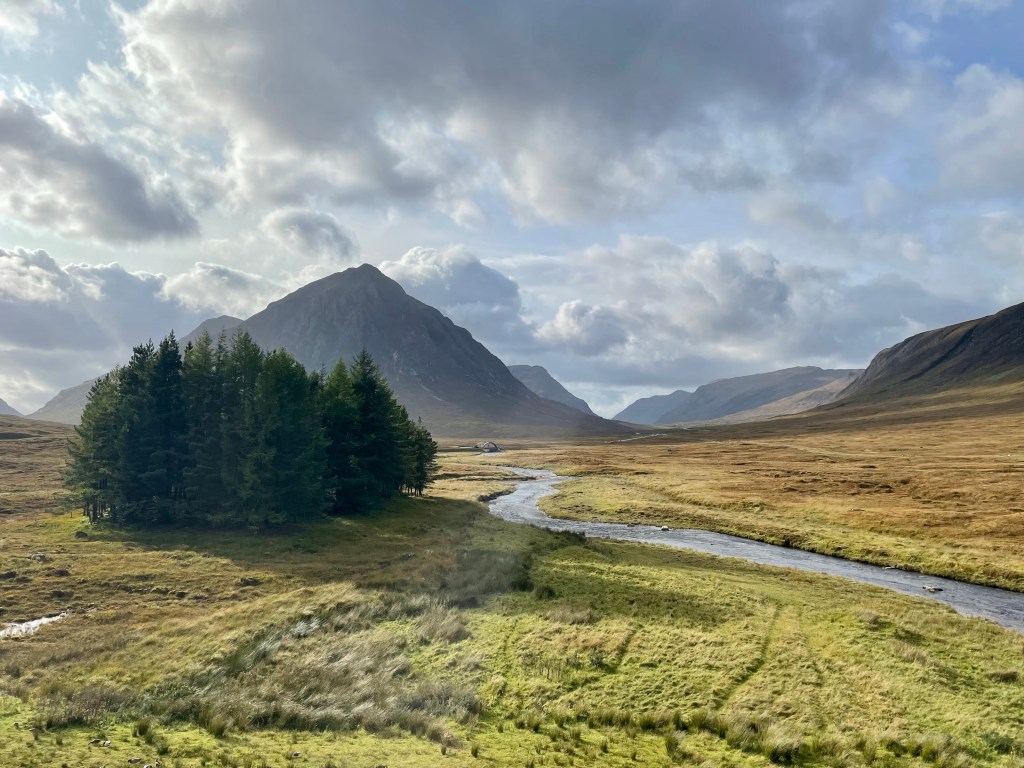
While I truly loved the Backroads tour, I was very much looking forward to a week or so on my own plus yay driving! Being an extroverted introvert and a Gemini, a bit of both is just the ticket. If there were three or four additional personality types in this category I’d for sure want a teensy bit of each.
I headed toward lovely Aviemore in the northern Cairngorms to stay at one of my favorite B&Bs in all the world, with two of my favorite B&B owners, Kirsty and Kev. Along the way, I stopped at Scone Palace, the former home of the Coronation Stone, which you may be familiar with since we just coronated King Charles as he perched on top of it just to make it clear he was also King of Scotland. The stone was tucked away under an 725 year-old wooden high-backed and undoubtedly uncomfortable “Coronation Chair.”
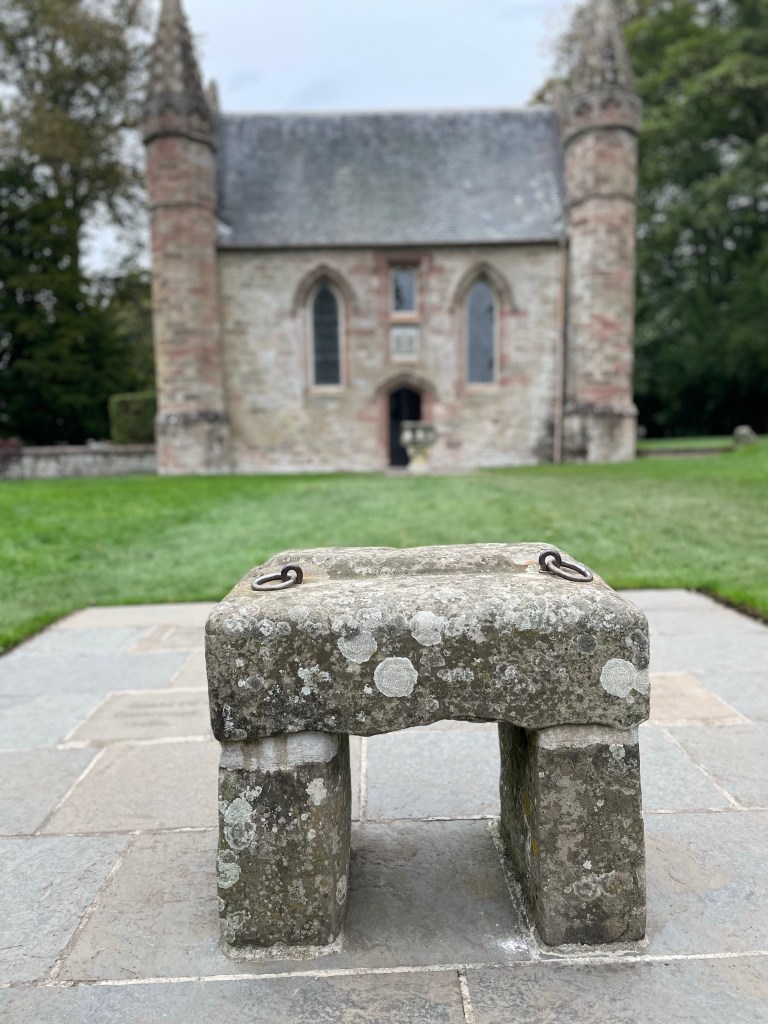
The oblong block atop the bench above is a replica of the Stone of Scone (pronounced “skoon” in this instance), or the Stone of Destiny, depending on how dramatic you might be feeling. The real one (maybe) normally resides in Edinburgh Castle along with the Scottish Crown Jewels which is kind of hilarious because it’s just a block of old red sandstone. It is, however, a block of sandstone that has led the most interesting life of any other existing sandstone in the history of the world. It’s literally the symbol of Scottish sovereignty.
In this very spot, the Abbey at Scone Palace (it’s since been rebuilt), the stone witnessed the crowning of early Scottish Kings Kenneth McAlpin in 843 (!!), Constantine II in 900, Macbeth (the real one) in 1040 and David I in 1124. In 1296 the little asshole known as the Hammer of the Scots, Edward I, swiped it from Scone during the First Scottish (failed) War of Independence and built the aforementioned Coronation Chair in Westminster with the under-ass shelf for the stone upon which later monarchs of England and Scotland were crowned.
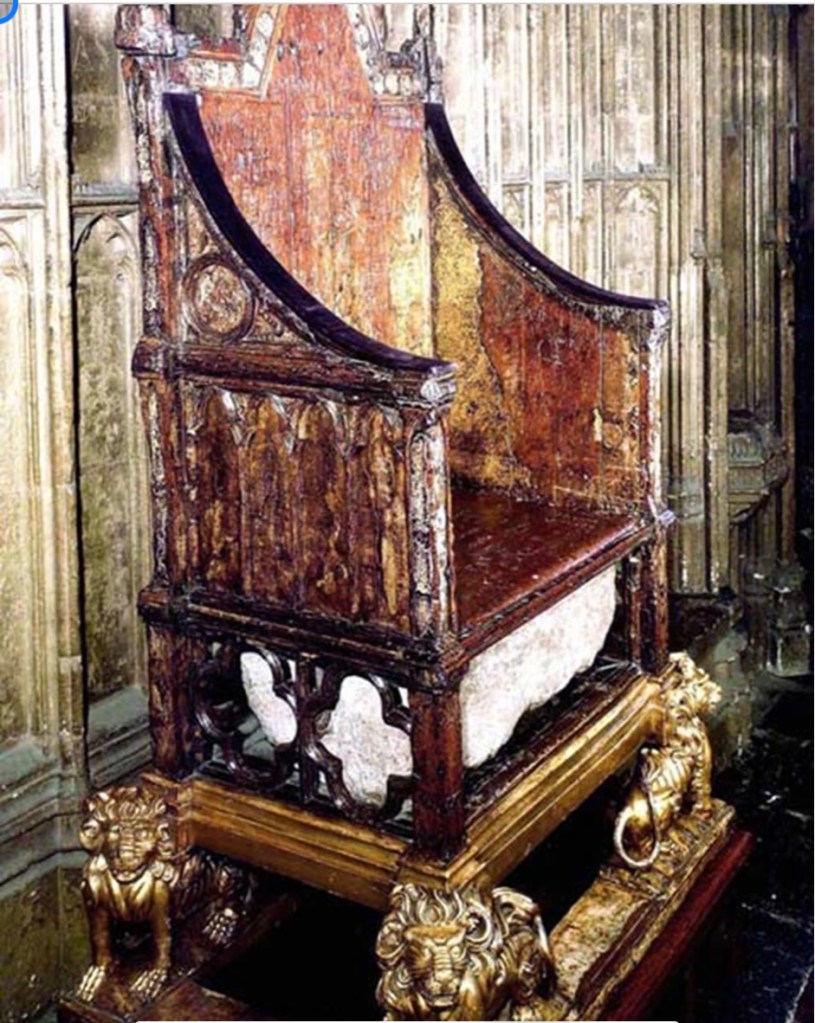
There’s a rumor, though, that wily monks at Scone Palace hid the real stone and the English troops took a substitute. Real or no, the English deigned to finally return it in 1996, seven hundred years after it was stolen, with the proviso that they could have it back whenever they crowned someone, which lately has been hardly ever.
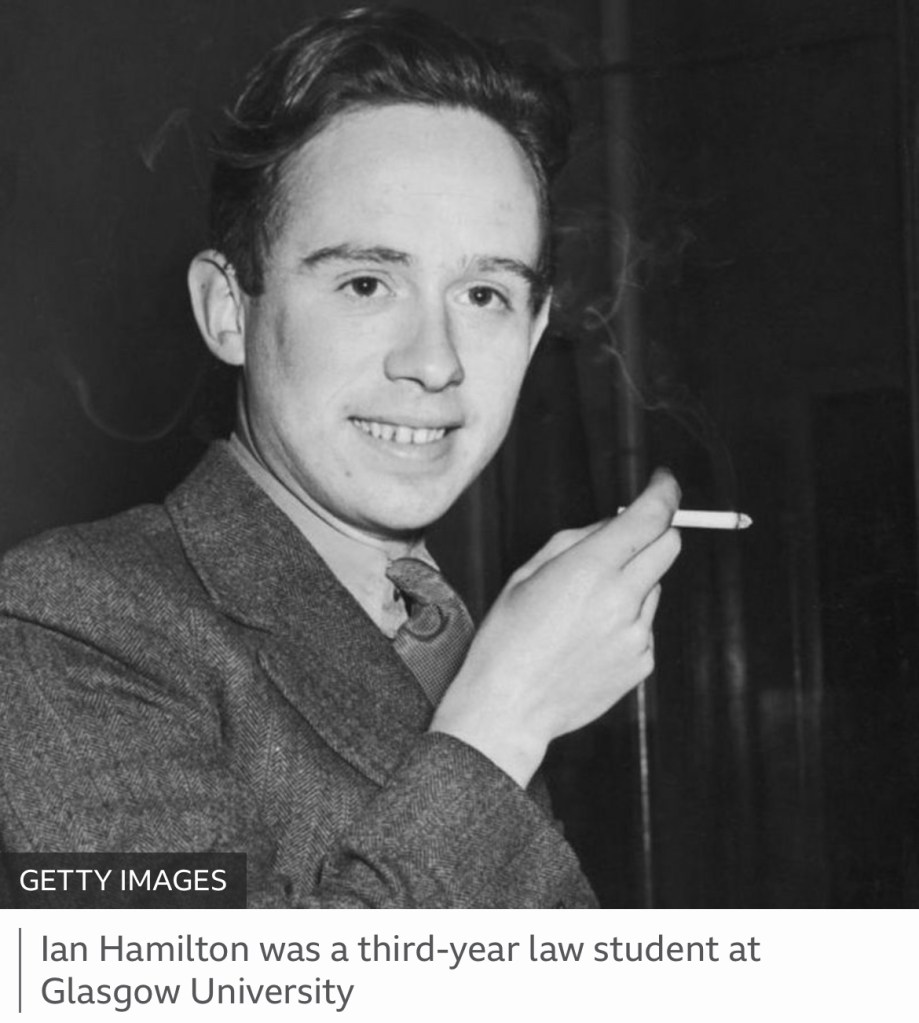
Before the official return, though, there was an exciting unofficial one. Fabulously, in 1950 some Glasgow students nicked it RIGHT OUT OF WESTMINSTER ABBEY and took it back to Scotland, leaving it at Abroath Abbey. The thing is so heavy they dropped it at one point, breaking it in half, necessitating a hasty repair by a Scottish stonemason. One can only imagine what he thought when the stone was presented for repair. When the theft was discovered, the English government literally closed the border with Scotland for the first time in 400 years.
Here is a photo of the unlikely ringleader of the Stone of Scone thieves.
And here is the stone “safely” back in English hands.

James Wiseheart, what a name! Of course, there are also rumors that the English got a replica back, not the real one.
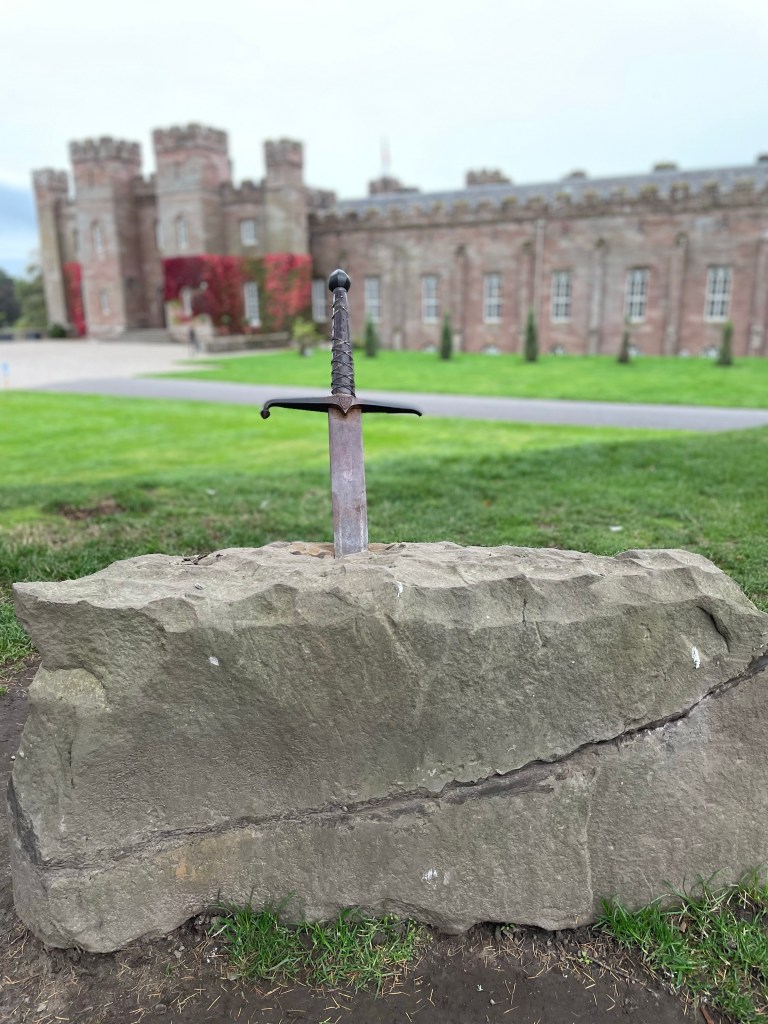
Now that you know everything you’ve ever wanted to know about it, here’s a photo of Scone Palace, which is quite lovely.

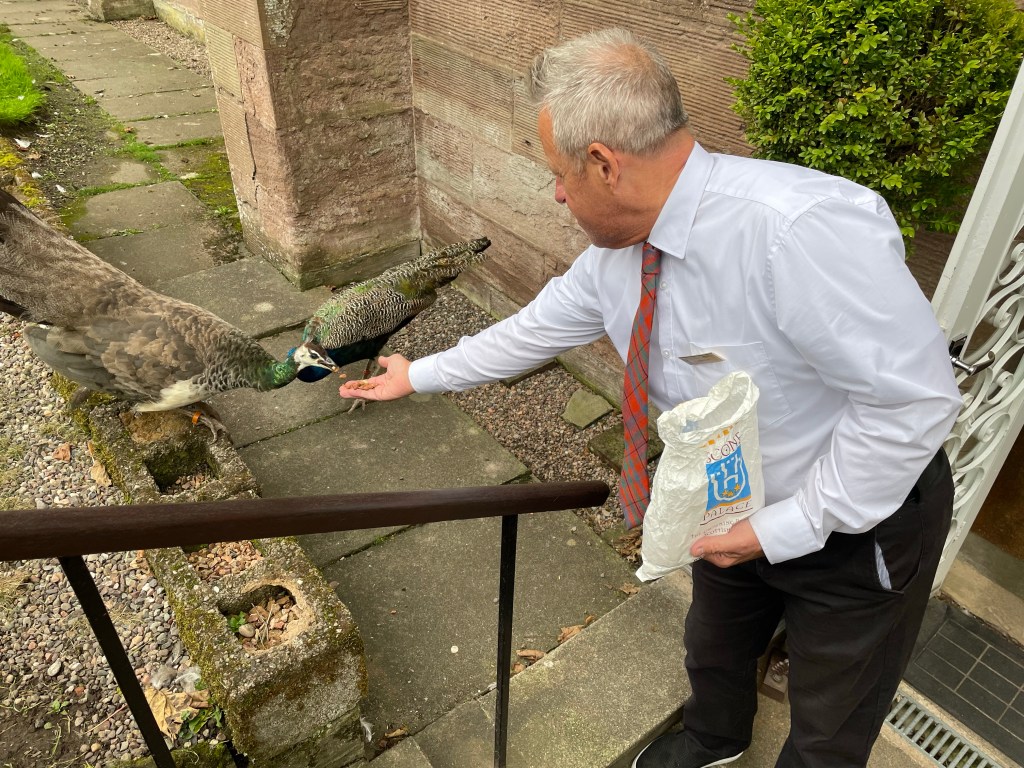
It’s the kind of place where the guy who runs the gift shop feeds the resident peacocks.
Also I’m not sure whether anyone realizes but the Sword in the Stone is also on the grounds.
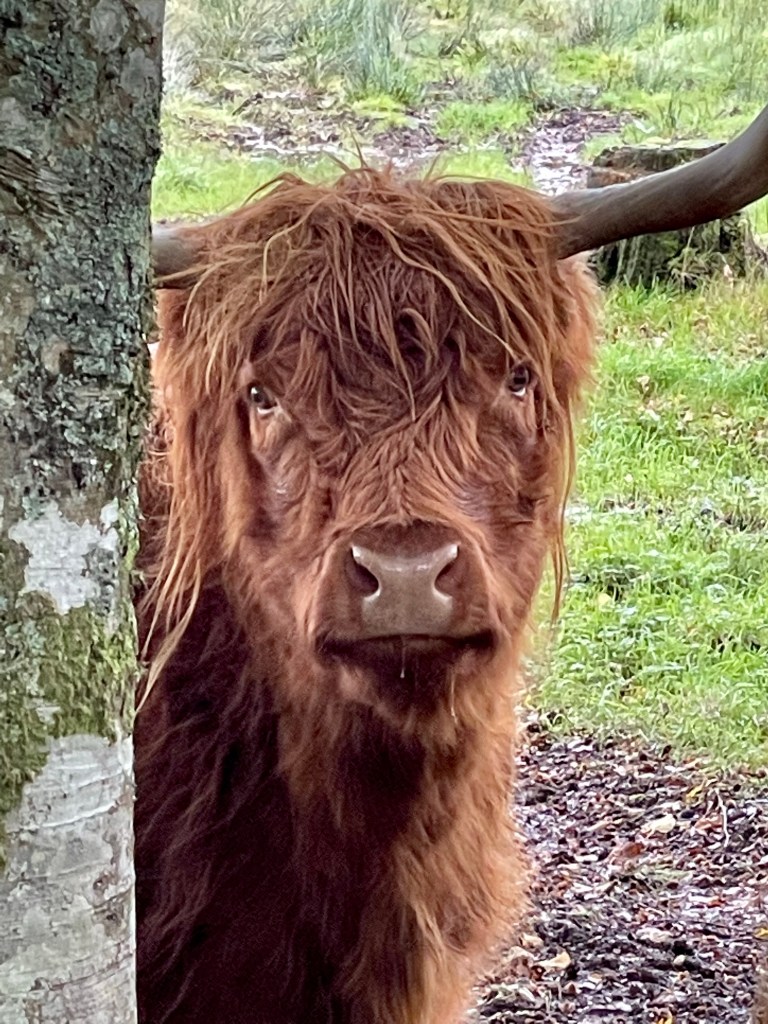
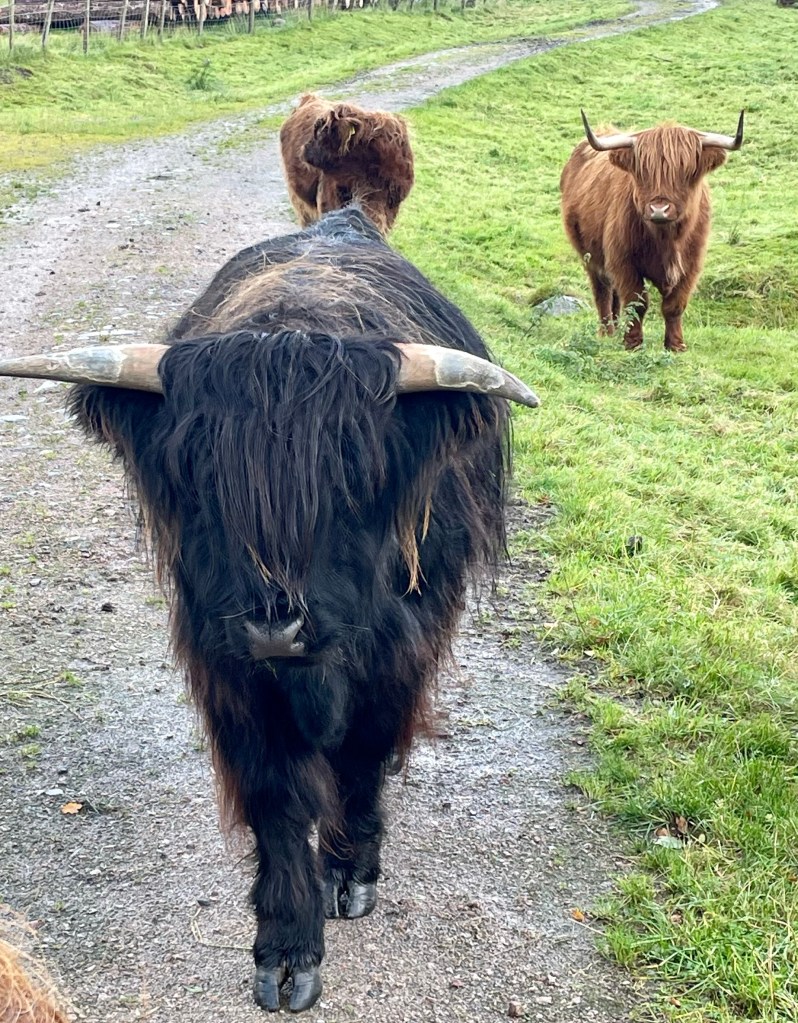
Visiting Scone Palace was a little bit of a full circle that started last fall, when I traveled to Scotland with my pal Trish. We spent some time in Kilmartin Glen, which I would 100% recommend if you’d like to see Neolithic burial sites similar to those on Orkney, standing stones, photogenic highland cattle….
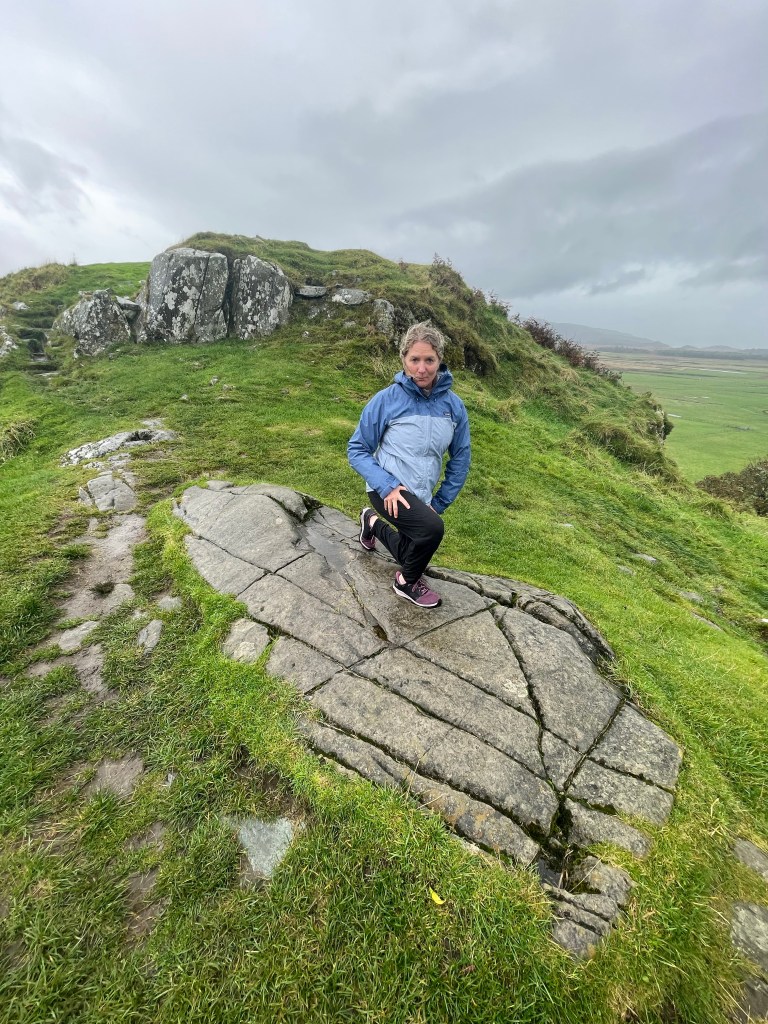
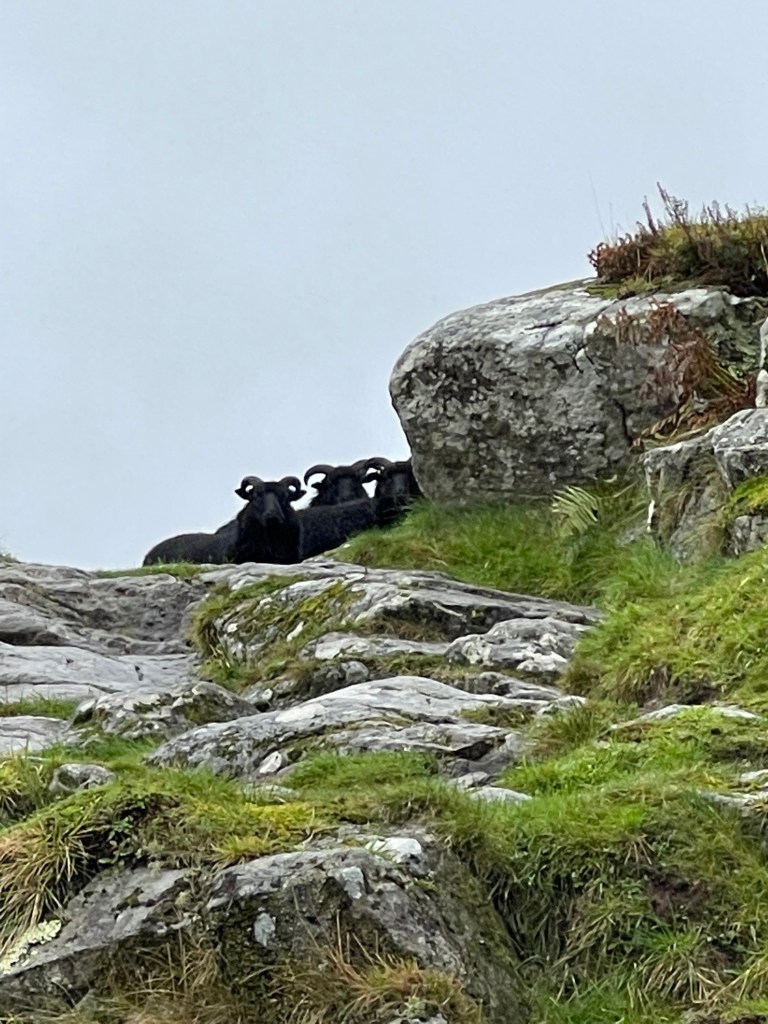
…and another, more ancient, coronation site of Scottish Kings, Dunaad Fort. The ruins are atop a hill in Kilmartin glen and we had the place to ourselves if you don’t count the (black) sheep. The fort was occupied 2,000 years ago and, as the capital city of the ancient kingdom of Dal Riata, was a royal power center of Gaelic kings in the 500s to 800s, and an international trade hub.
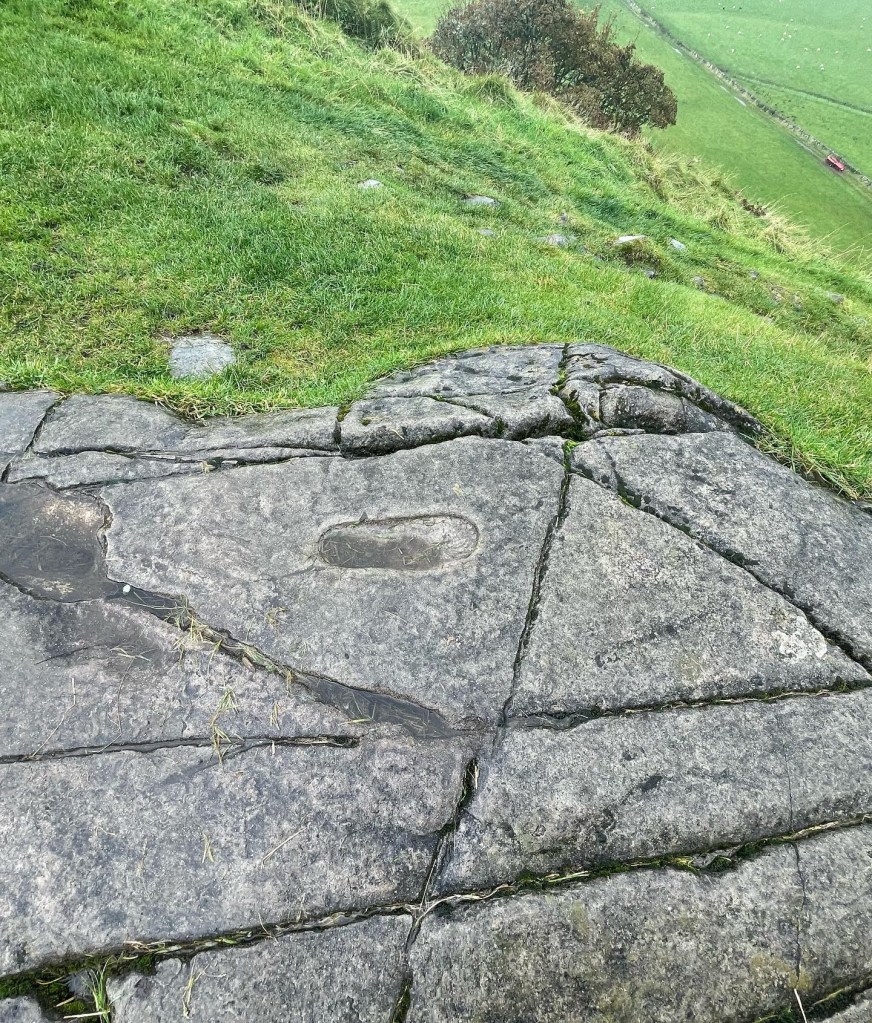
In the Fort’s ruins is a stone with a footprint carved into it (it’s actually a replica installed over the actual stone to protect it but I swear you would never know) and was thought to have been a part of Dal Riata’s coronation ritual whereby ancient kings knelt to declare that they were married to the land and would protect it against all enemies.
We also felt as though we were married to the land and so knelt to pledge our respective troths.

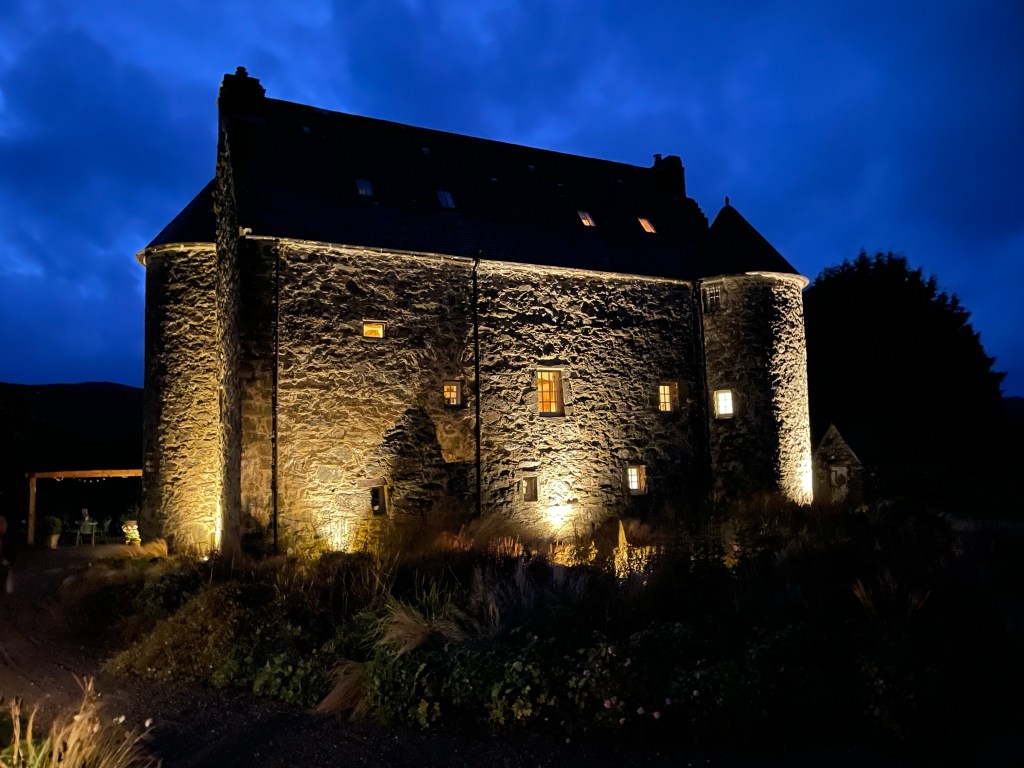
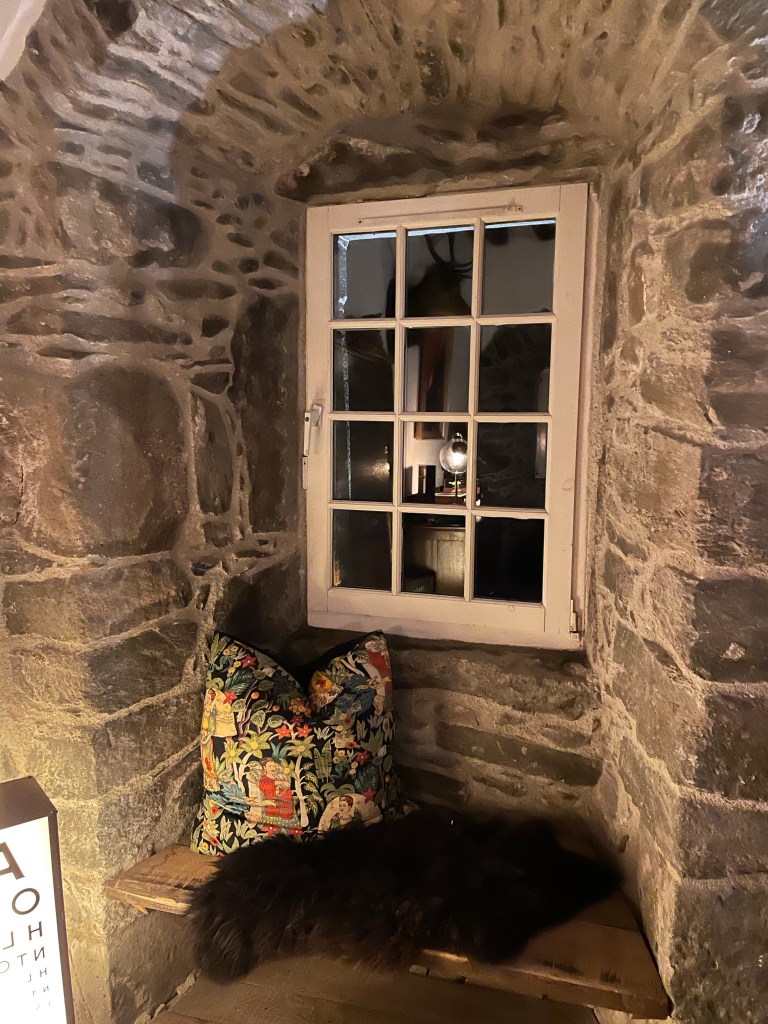
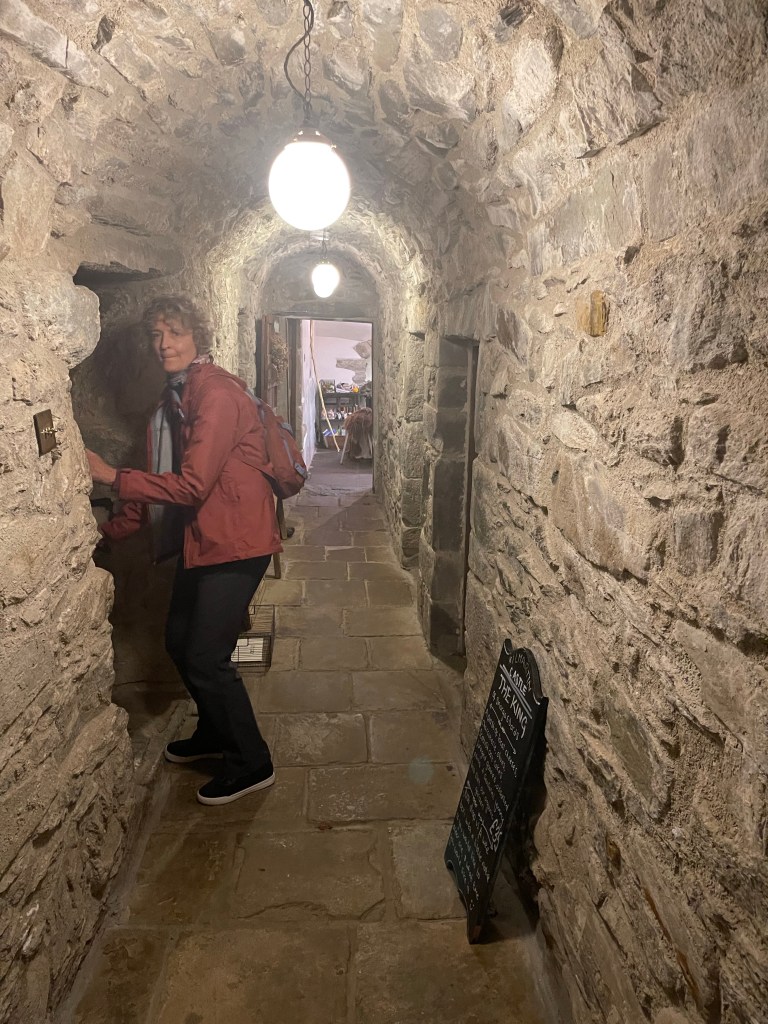
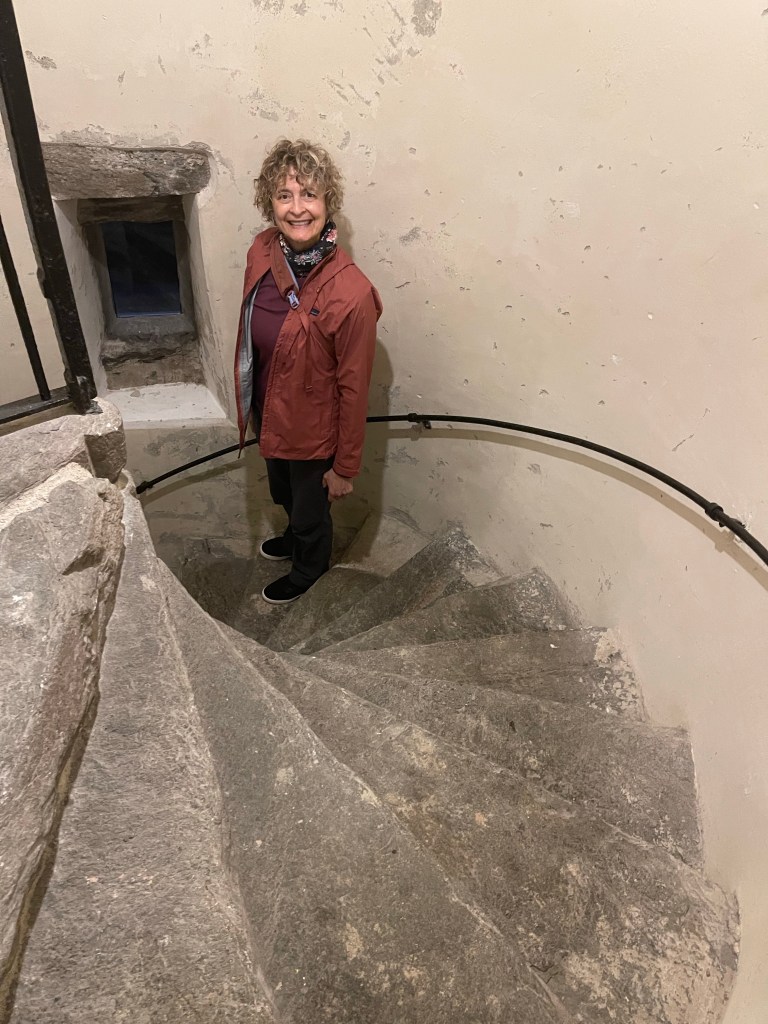
While we spent our days exploring the Glen, traveling to Oban and the Isle of Mull, visiting ruined castles, and driving up to Glencoe, we stayed at Kilmartin Castle. Built in 1550, it was restored by a fabulous couple we loved who took great care to make it look and feel like a castle inside as well as outside. Many inhabited castles in Scotland seem like a normal sort of mansion once you get inside, so I appreciated their aesthetic goals. There was a winding staircase, stone walls and floors, and I had to duck a LOT to avoid braining myself in low doorways. In short, completely brilliant.

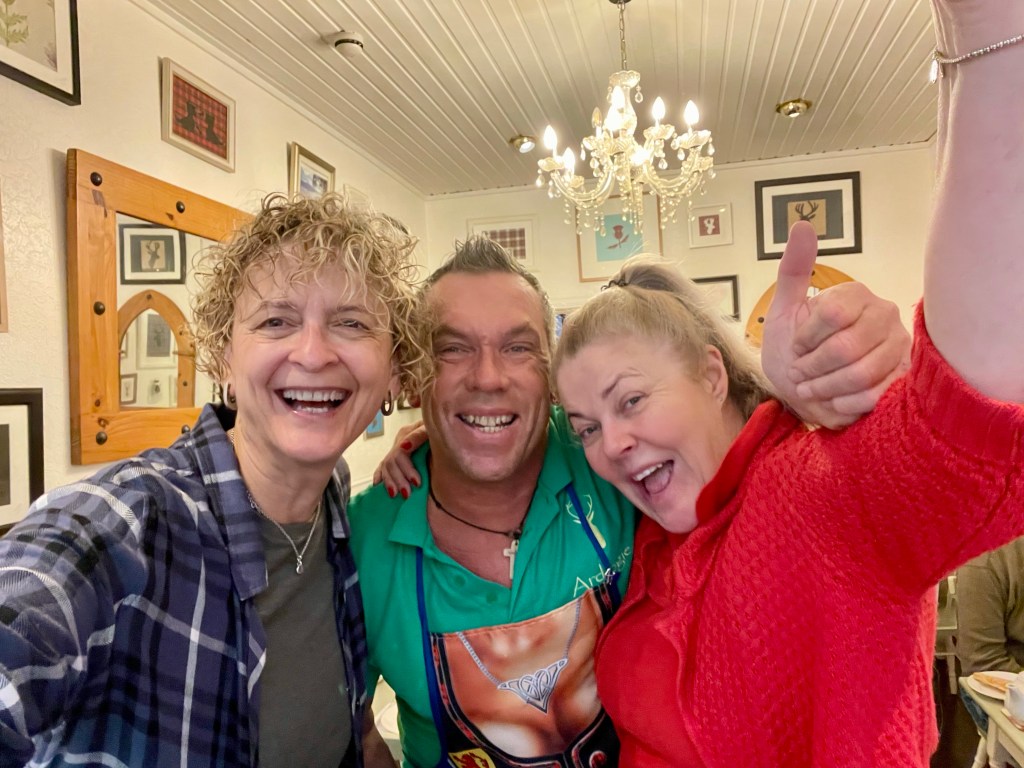
Anyway, bringing us back to the present, I was very happy to arrive at the Ardlogie Guest House in Aviemore, staying in my old room, and seeing Kirstie and Kev who are as lovable, kind and crazy as ever.
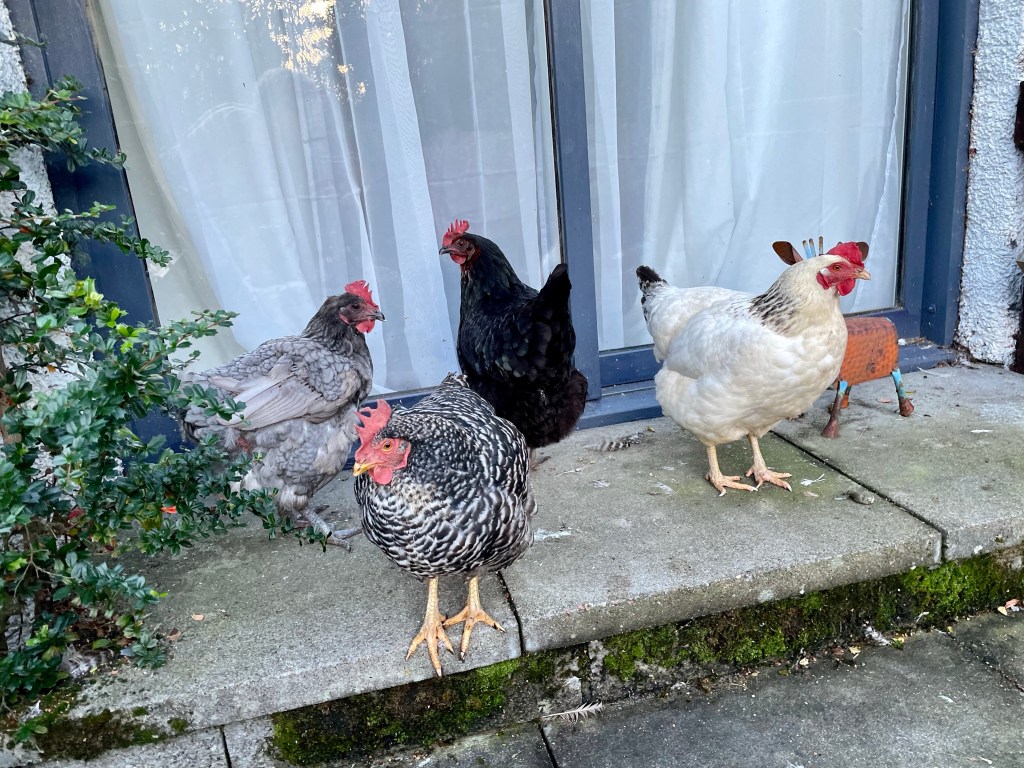
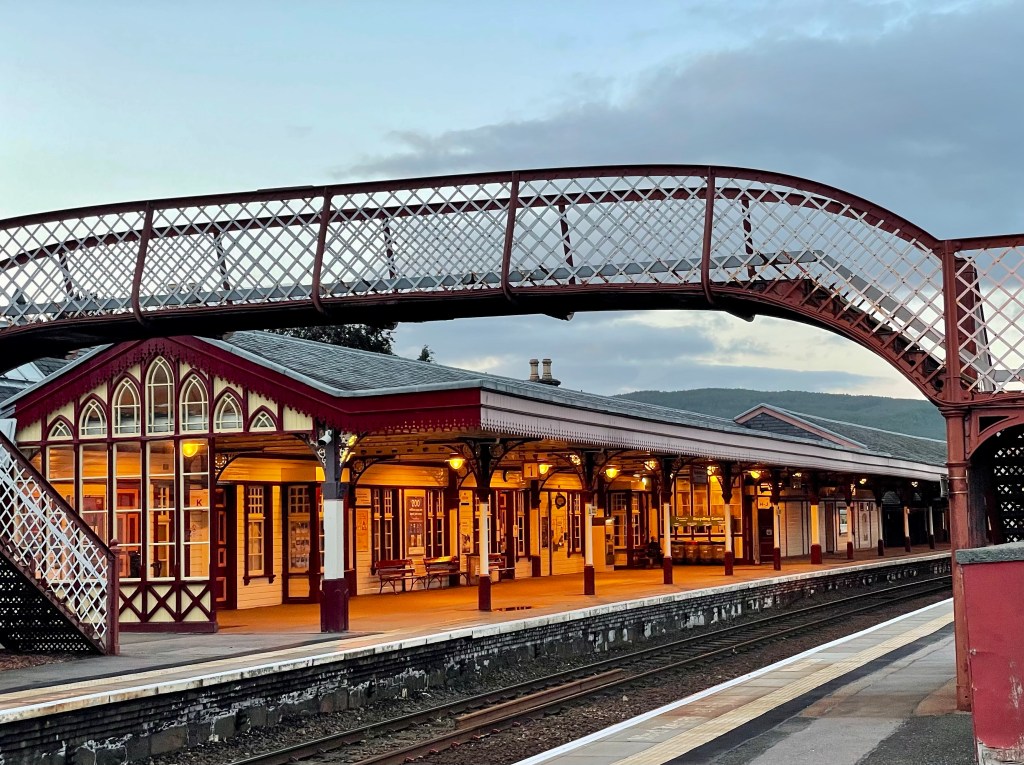
Unfortunately the northern Cairngorms, boasting the coldest climate in the UK, was experiencing high winds and thus the mountains were too unhospitable to climb. Kev ascends Munros on the regular and was like, no, this would be miserable, do not do it. So I saved those hikes for another time and stuck to some gorgeous glens, visited the Dalwhinnie Distillery and enjoyed a few meals at the Old Bridge Inn where you can reserve a table in the main restaurant where children are allowed or in the “lounge with dogs,” which has a fireplace. No-brainer.
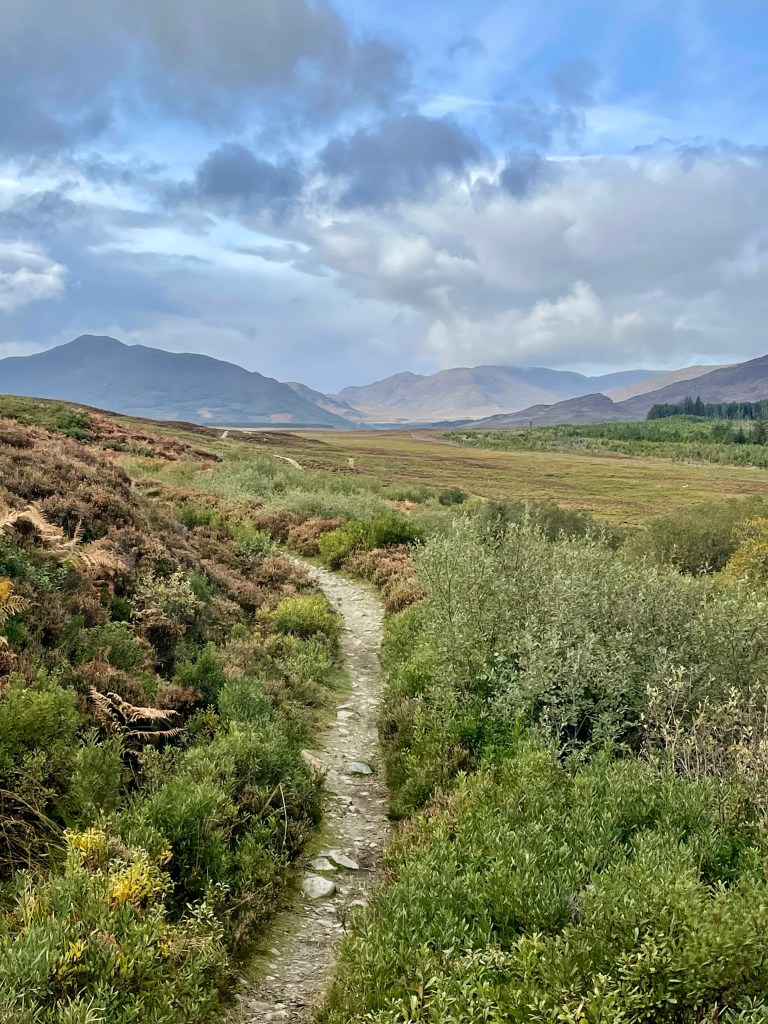
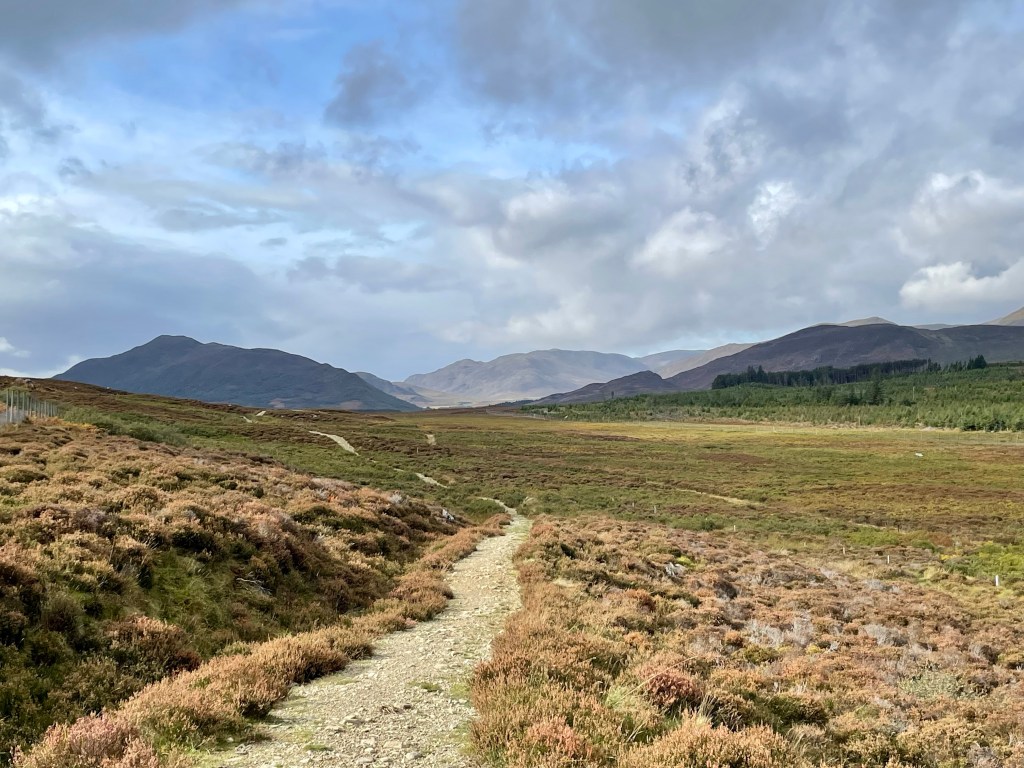
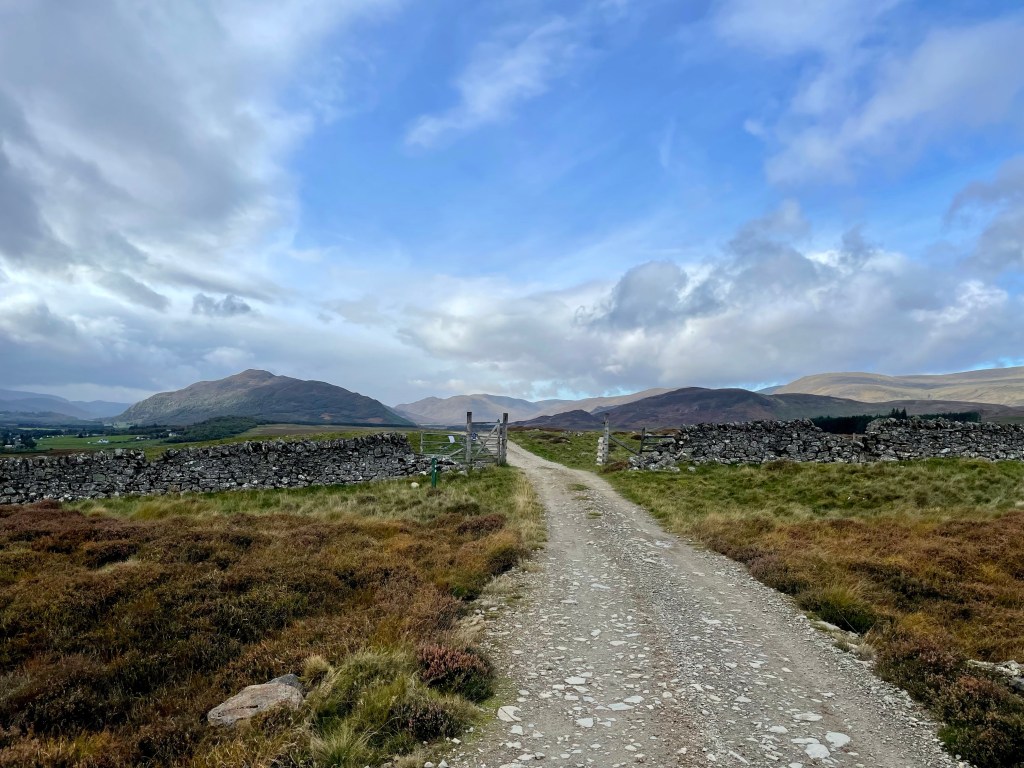
Here are some snaps from Glen Tilt:

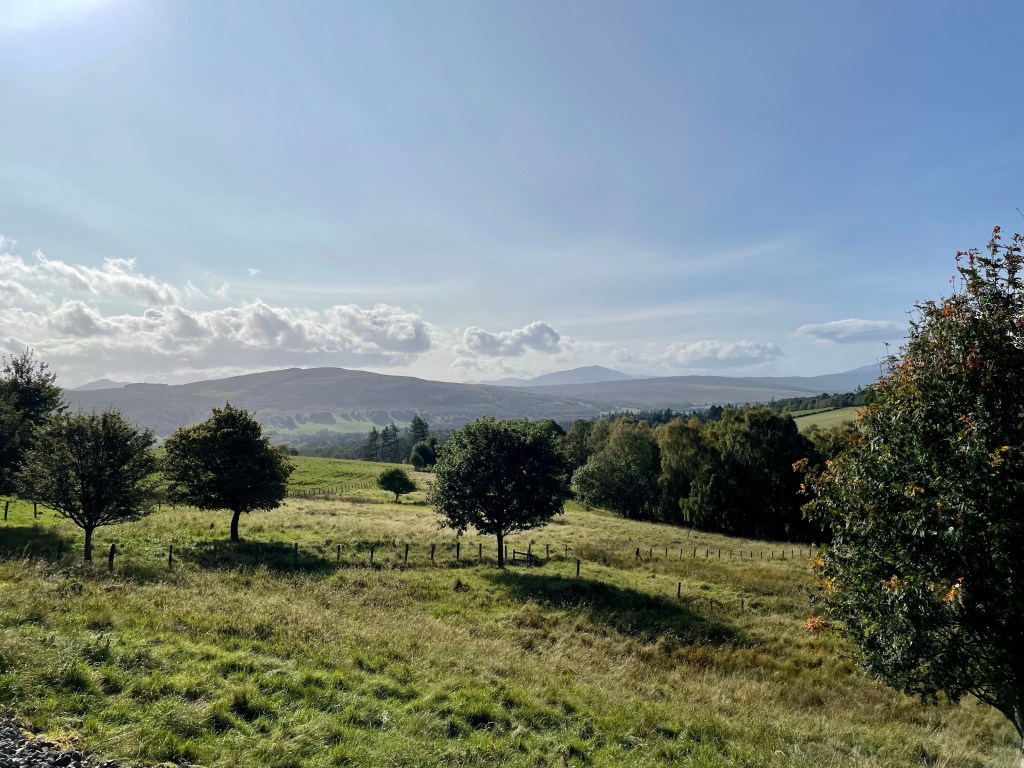
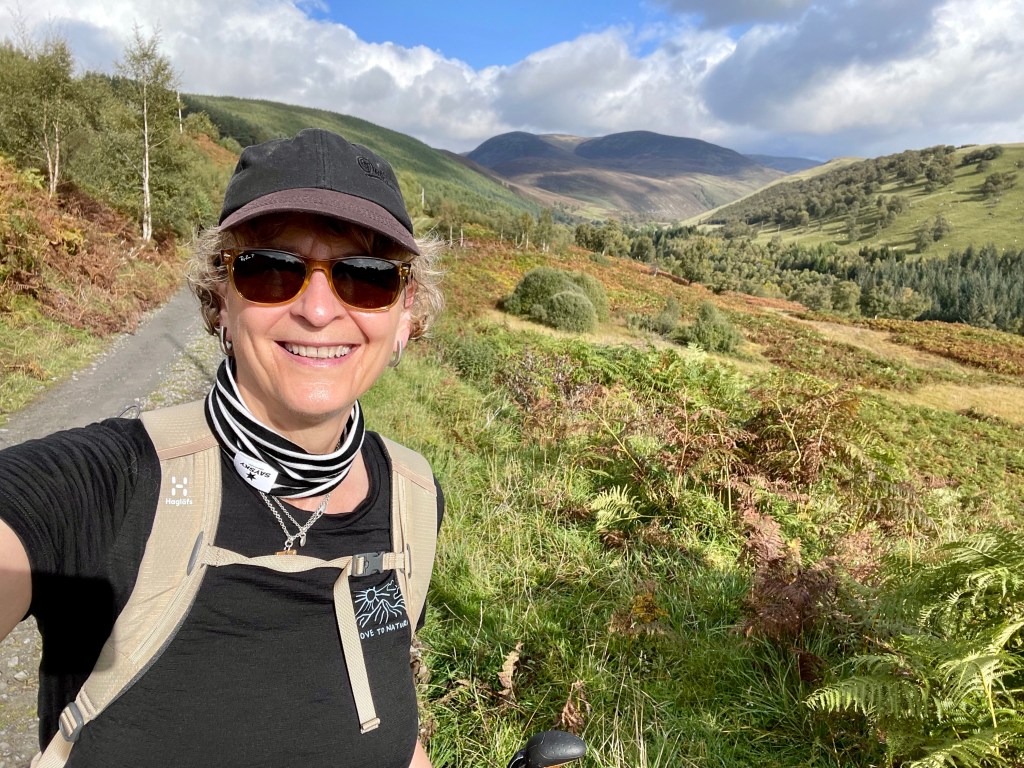
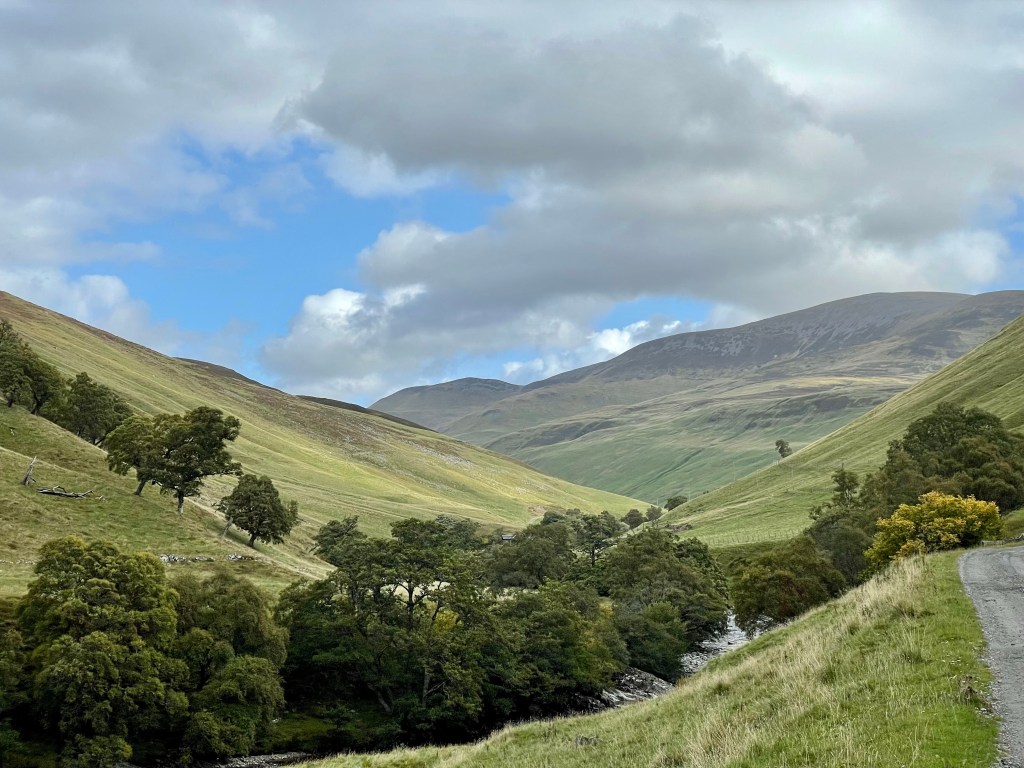
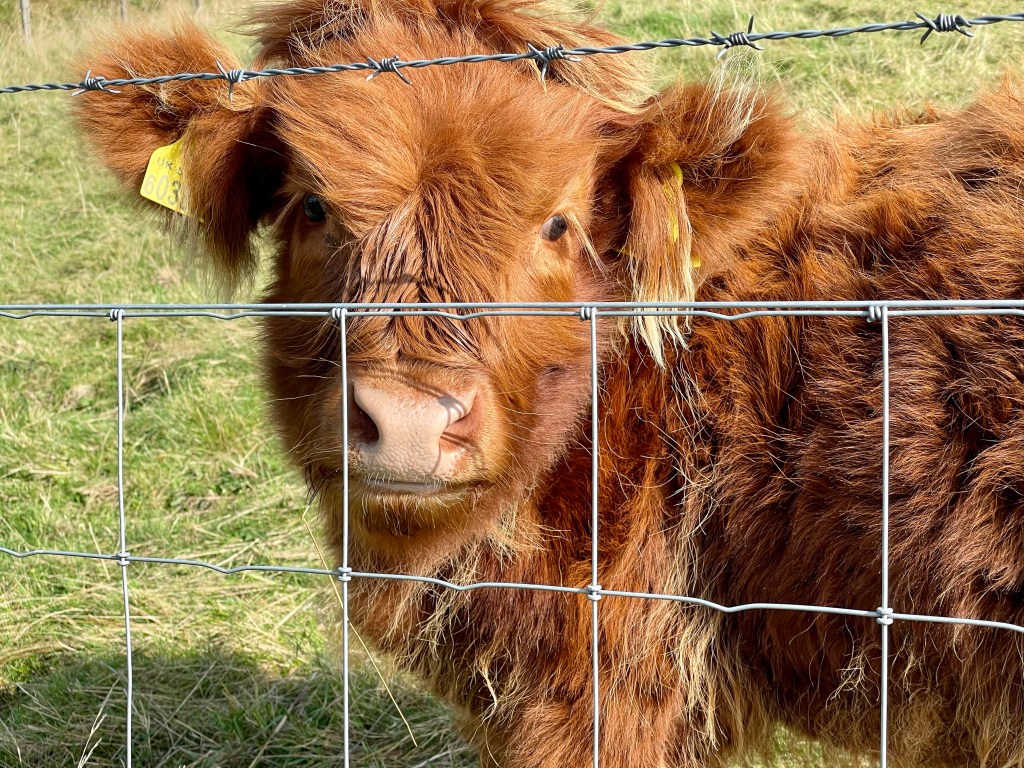
And some from a walk through a glen between Kingussie and Newtonmore, which featured that walking-across-moors vibe I love. And I did not run into one single other human.
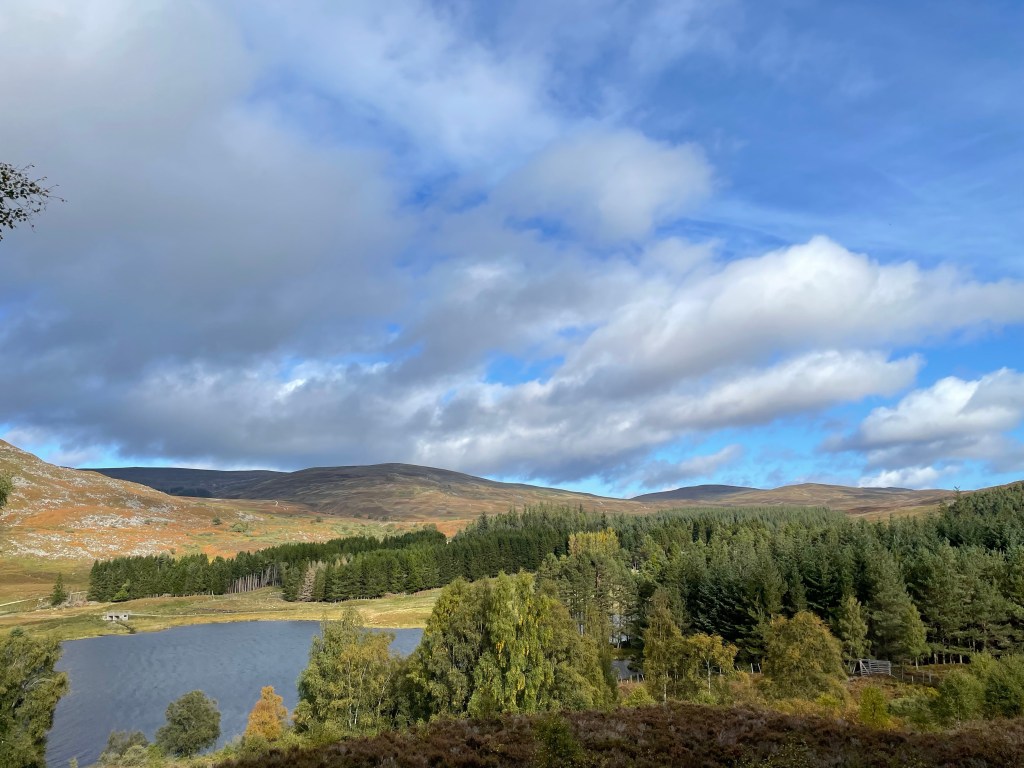
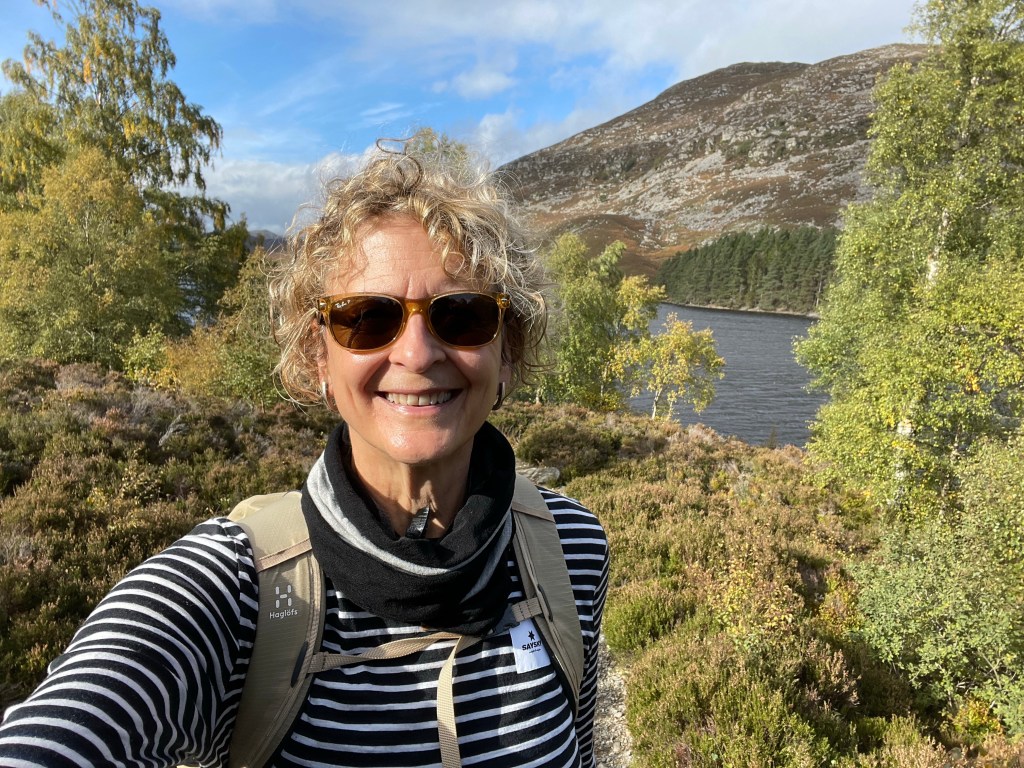

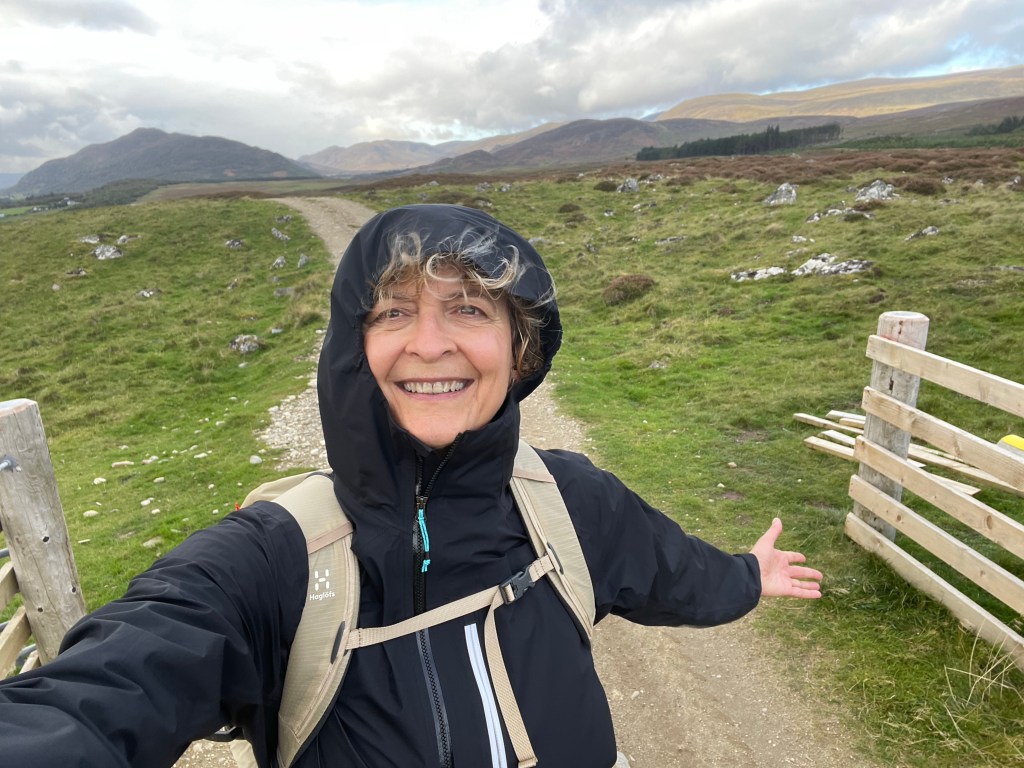
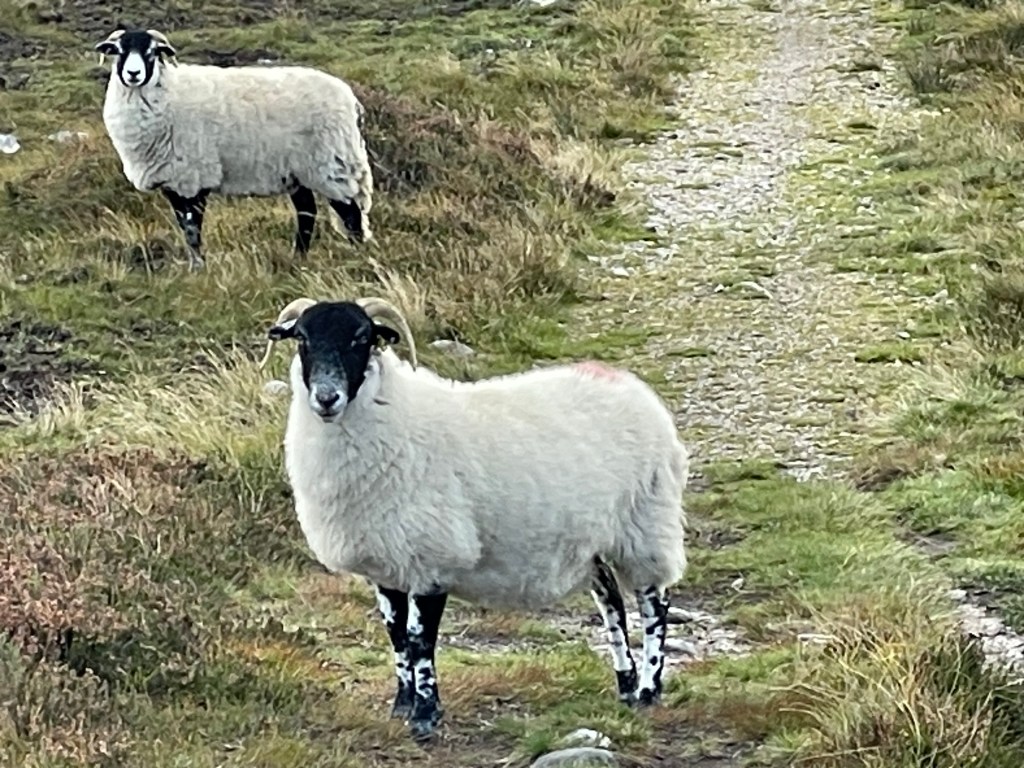
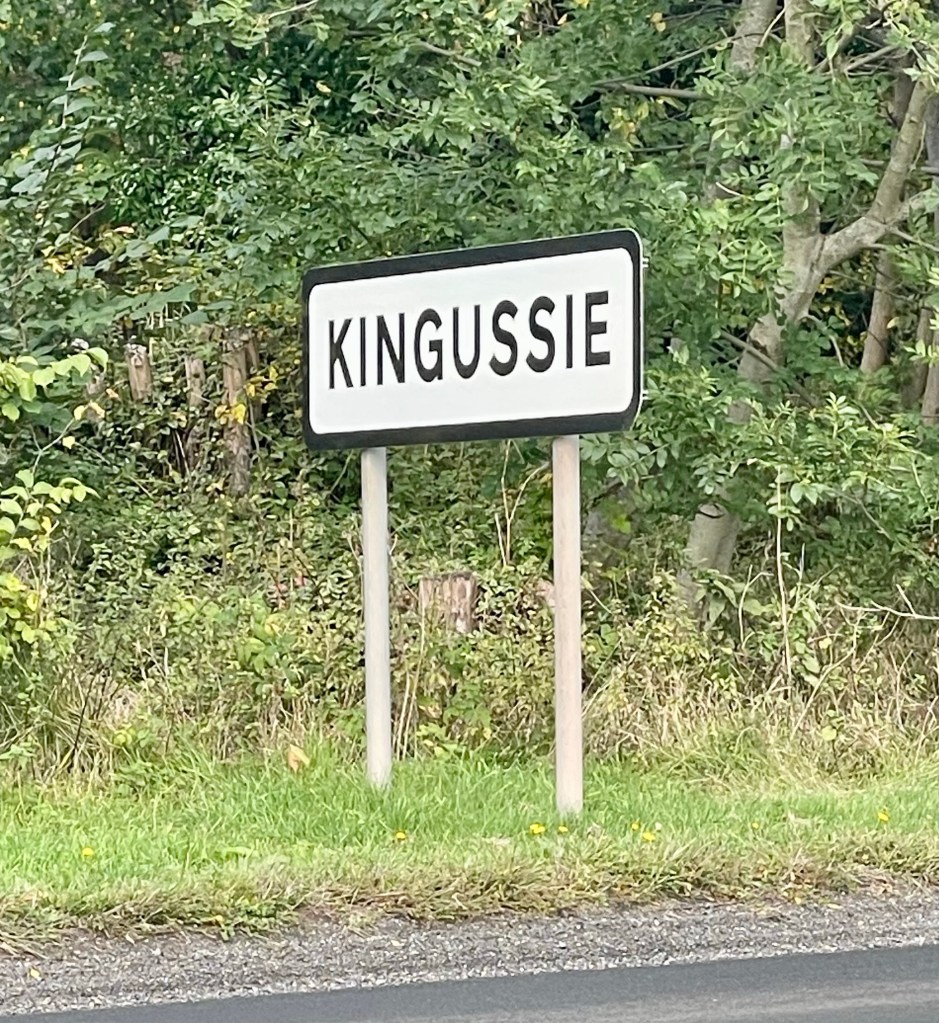
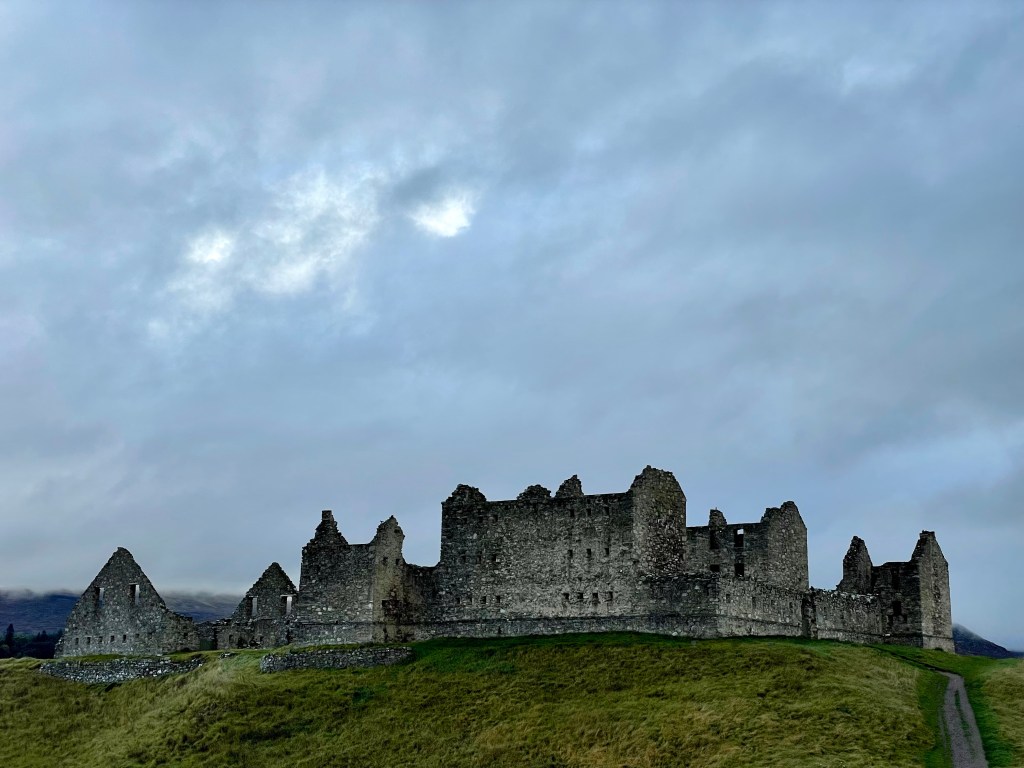
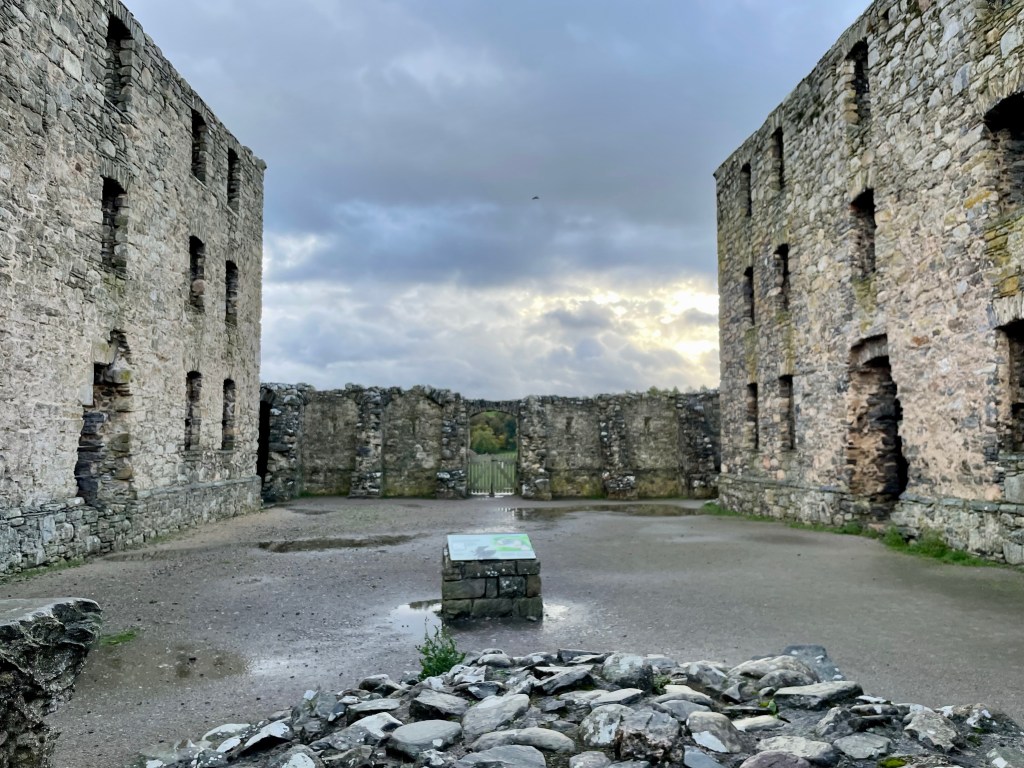
One morning I visited the Ruthven Barracks, a gorgeous ruin of a fort that was built by George II (not personally) on a hilltop visible for miles around. He ordered that it be constructed after the failed Jacobite uprising of 1715. The soldiers stationed there were to maintain law and order in the Highlands and squelch any further unsavory Jacobite activity. In perhaps another full circle moment, after the Battle of Culloden, the remnants of the Jacobite army met there, awaiting word from Prince Charles Edward Stuart about their next move. Not knowing that the Bonnie Prince had scarpered, they finally received word that the Fat Lady had sung and they should go home.
Here are a few photos.

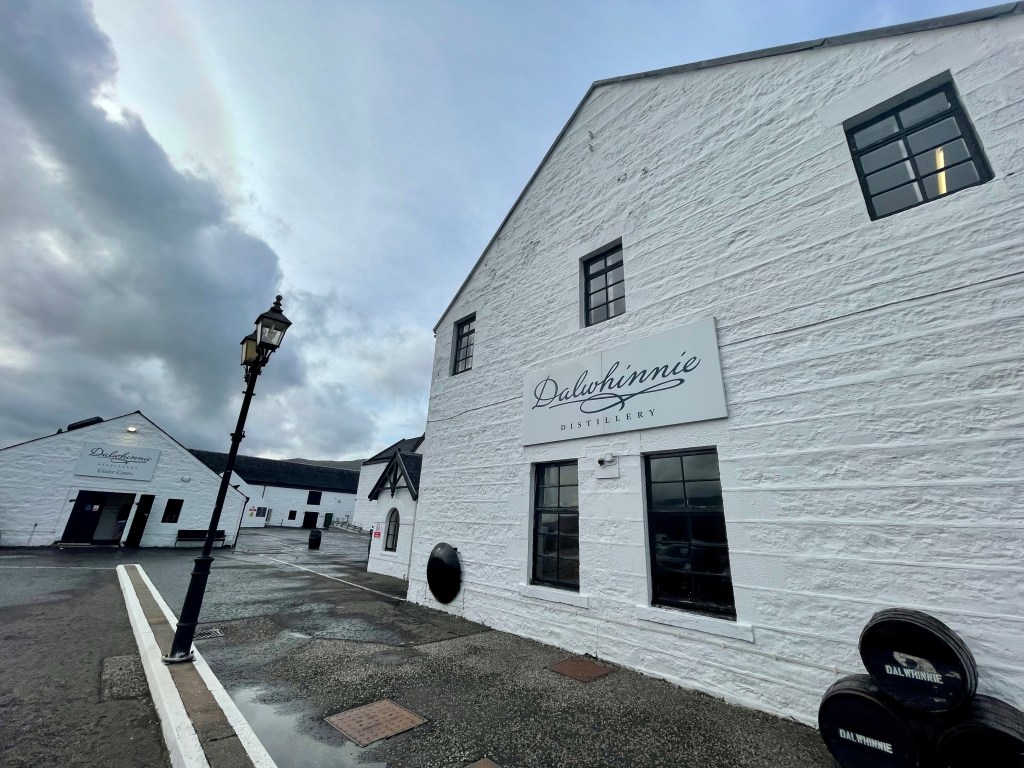
I also booked a tour and tasting at Dalwhinnie Distillery, which is perched on a moor in the Grampian Mountains in Cairngorm National Park – in the middle of nowhere but also entirely visible from the A9. I wanted to visit as this was the first whisky I had ever ordered in a restaurant. I was just beginning to learn about the golden liquid at the time, so I asked the waiter to make a recommendation for a drinkable, smooth and gentle dram. It was my birthday dinner in Bend at one of our finest restaurants and my parents were in town to help celebrate (my Mom and I share a birthday), so Dad had to pay an exorbitant price, which I know he heartily disapproved of but he managed to hold his tongue. Now that he is gone, it seemed like a yet another full circle thing to do.
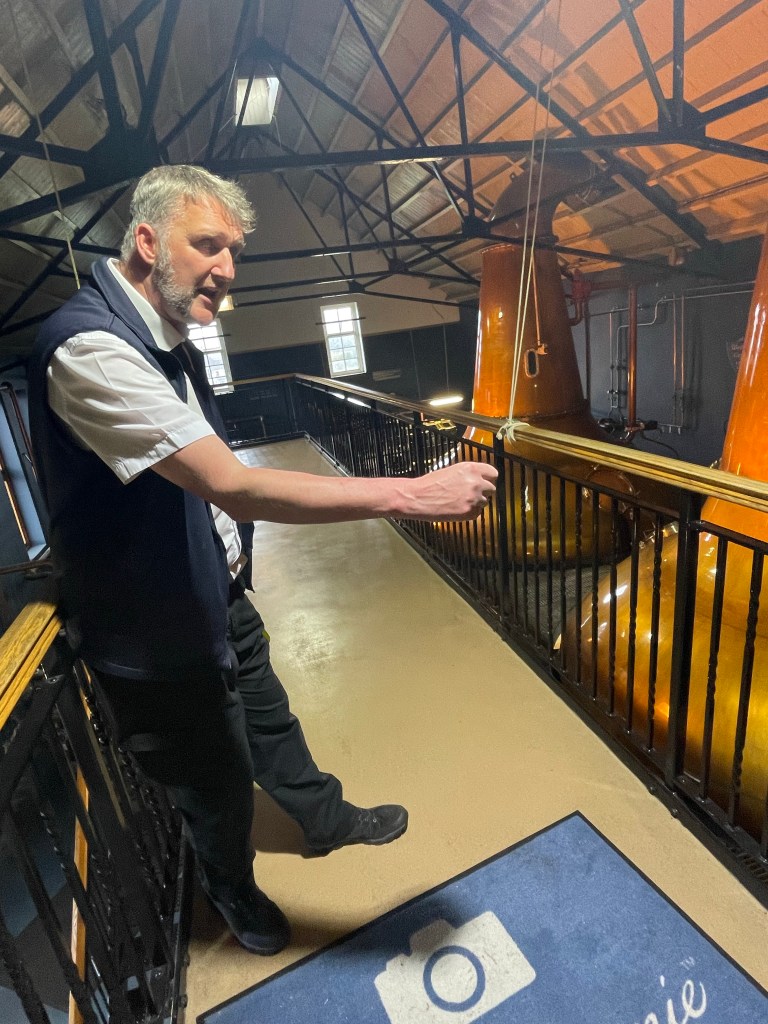
Compared to other distillery tours I’ve done, this one was pretty performative and corporate. Dalwhinnie is owned by London-based mega-company Diagio, there was a huge visitor center and shop that can accommodate loads of bus tourists – and much of the whisky-making process is no longer done on-site. For example, unlike earlier in its history, they now get their barley already sprouted and dried from elsewhere in Scotland. Interestingly, all Diagio distilleries in Scotland (there are 28 out of 140’ish) store barrels all around the country at other distilleries to hedge against fires – which are not as isolated or rare instances as one might assume. In fact the Dalwhinnie distillery burned down in 1934 and it was more than 100 years until they were in production again. All that alcohol and everything. Boom.
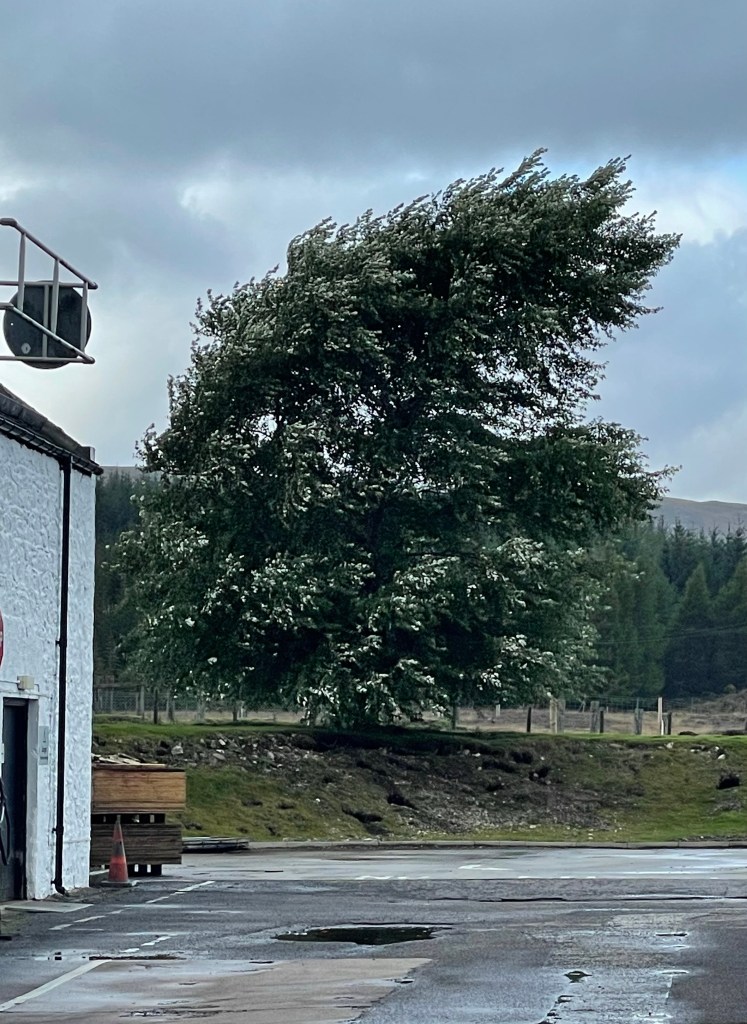
And speaking of the climate in the Cairngorms (Dalwhinnie holds the distinction of being the highest in Scotland, elevation-wise), there’s a tree on the grounds that has been impacted by the wind over time thusly:
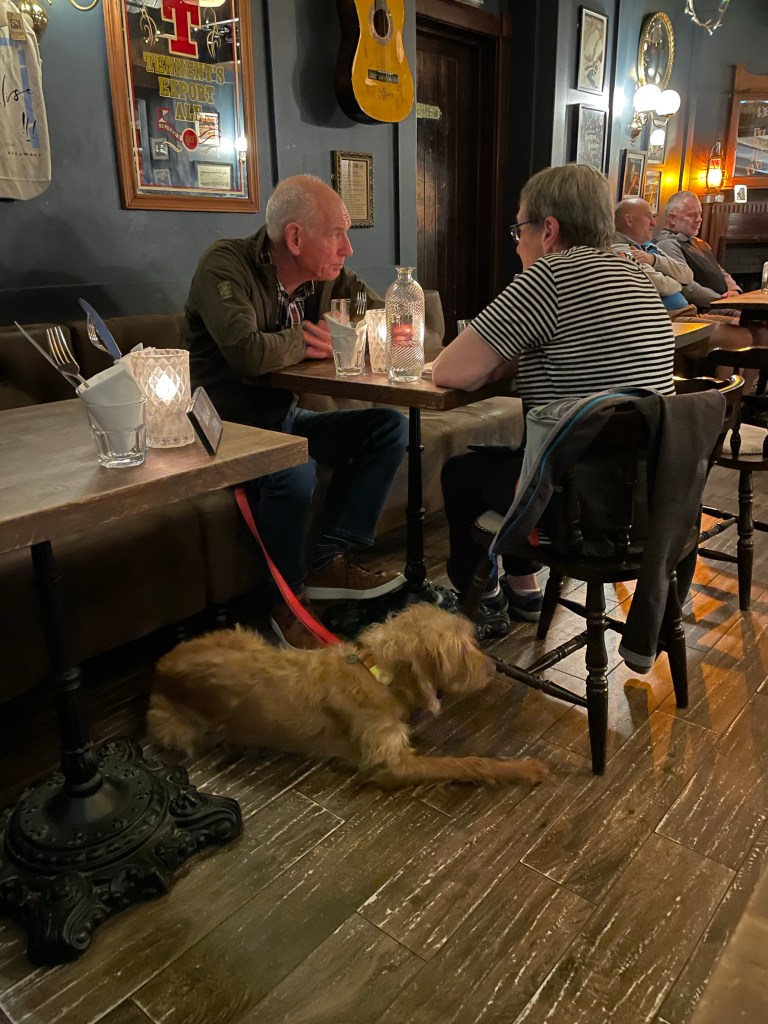
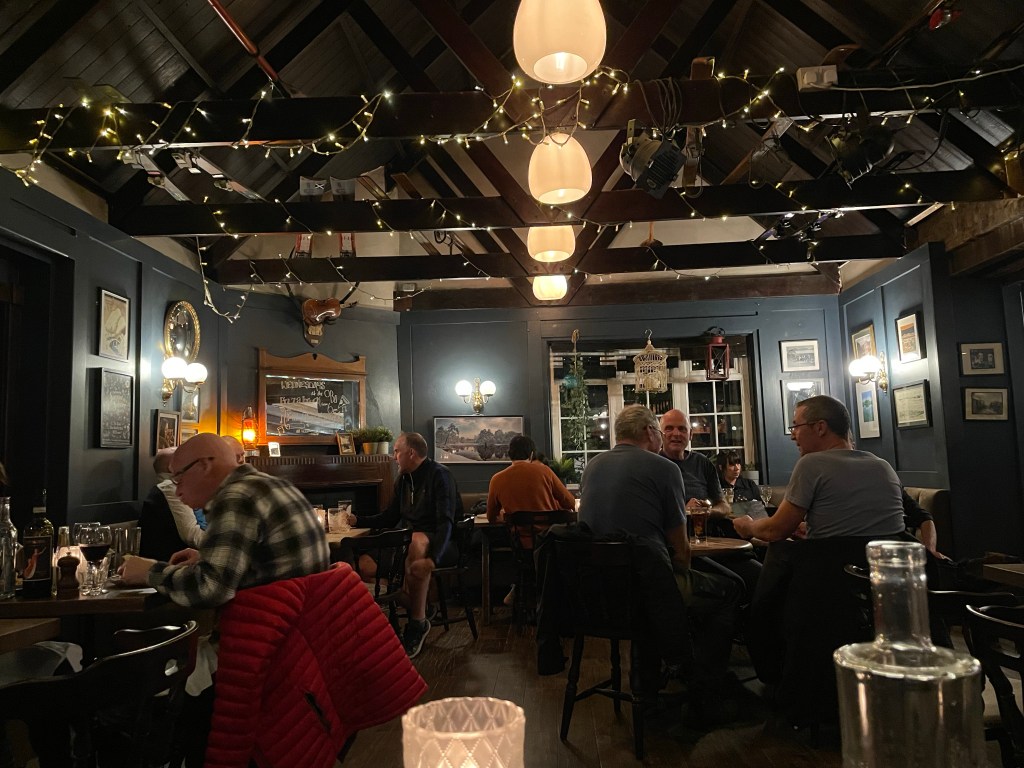
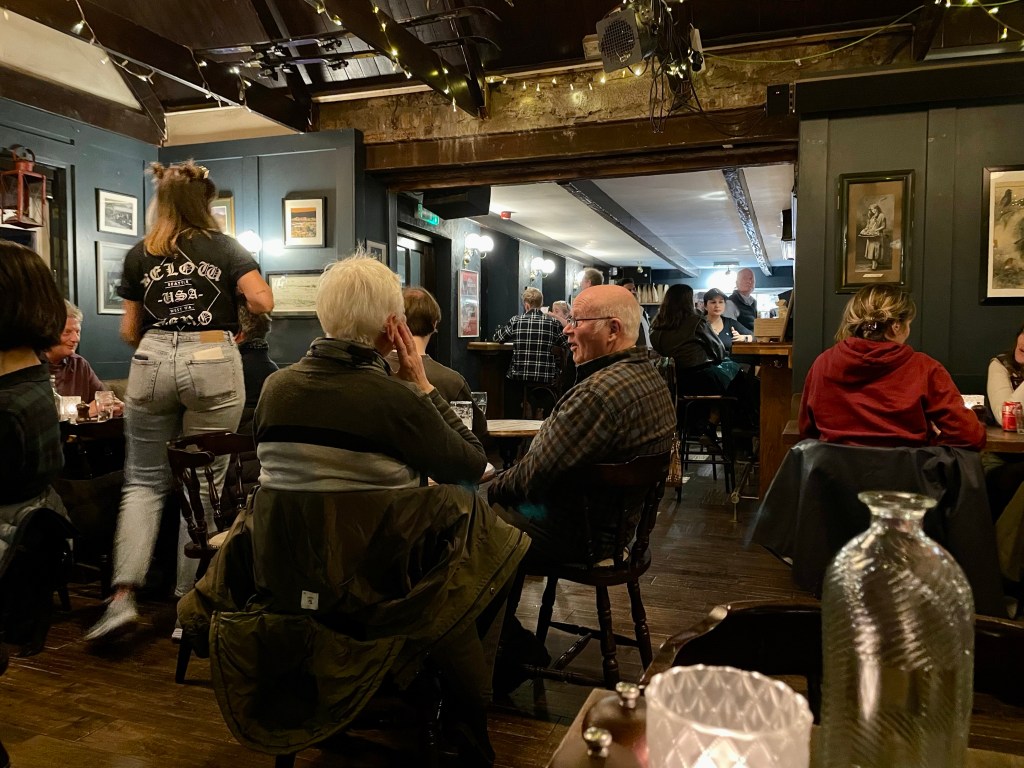
And I’ll leave you in the Cairngorms at the Old Bridge Inn. I first visited five years ago, along with a guide who was squiring me to all the sights in the area. We had lunch there, but I wasn’t really clocking where we were, as we drove around quite a bit and it was my first time in the country. So when I walked in last May, upon Kirsty and Kev’s recommendation, it was like having a happy encounter with an unexpected friend. Oh it’s YOU!!! The place is a true community gathering zone filled with locals, and there’s a stand-up only bar ringing with jovial hilarity that can get quite loud in the best possible way. There is often live music outside, too. I just love it.
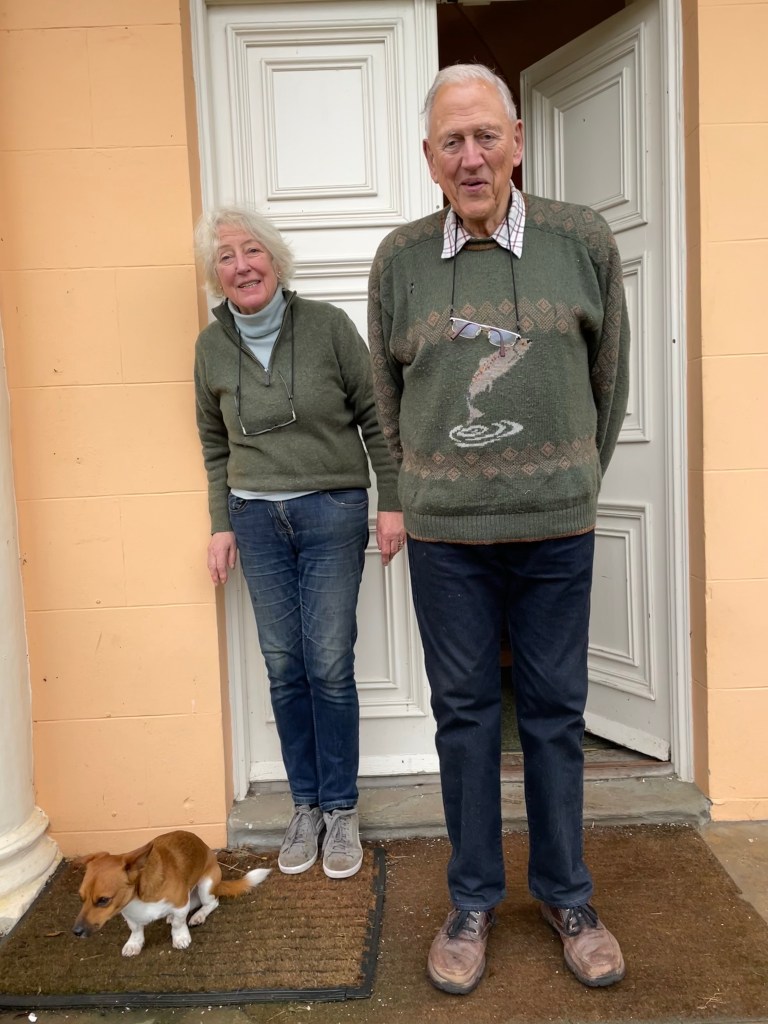
As I bid a fond farewell to Kirsty and Kev, I remembered another very different sort of couple who run a bed and breakfast of a particular sort near Glasgow. Trish and I stayed with them for one night last year. They are a legit Lord and Lady who possibly have come on hard times as it must be challenging and crazy expensive to run an olden times estate these days. They let out two of their bedrooms and also hold an outdoor rock festival on their grounds every summer. I feel sure they hate every minute of both things.
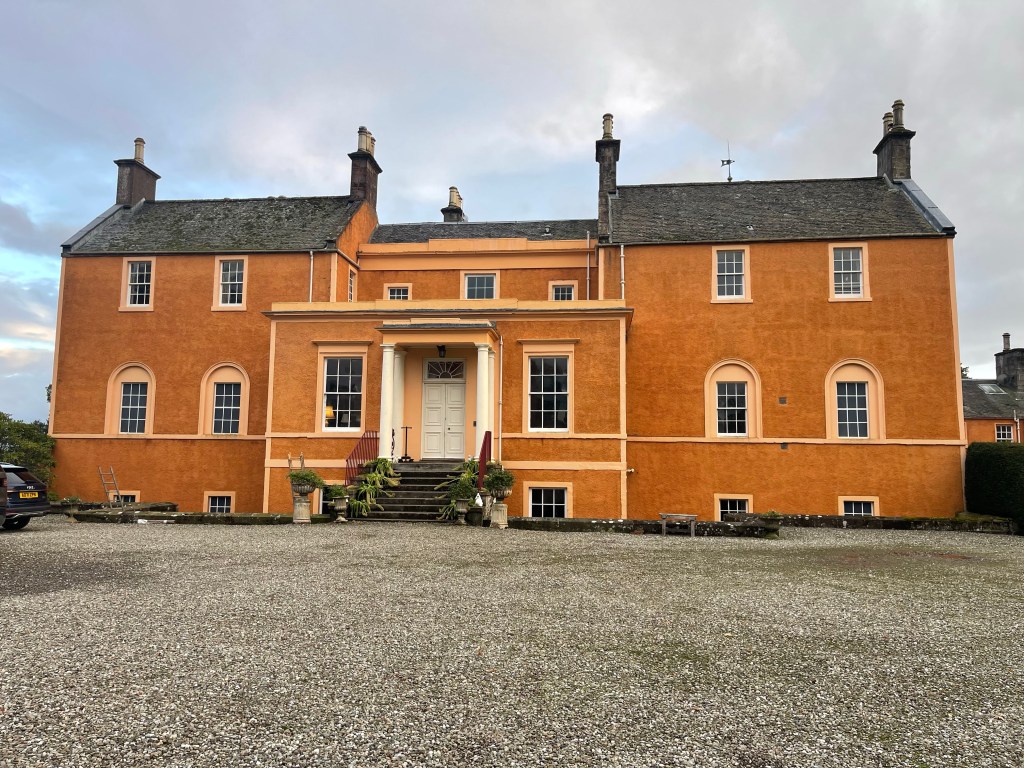
Their home is still quite beautiful although if you look too closely, you see a little fringe around the edges, a little dog-gnawing damage perhaps. The original shabby chic vibe.
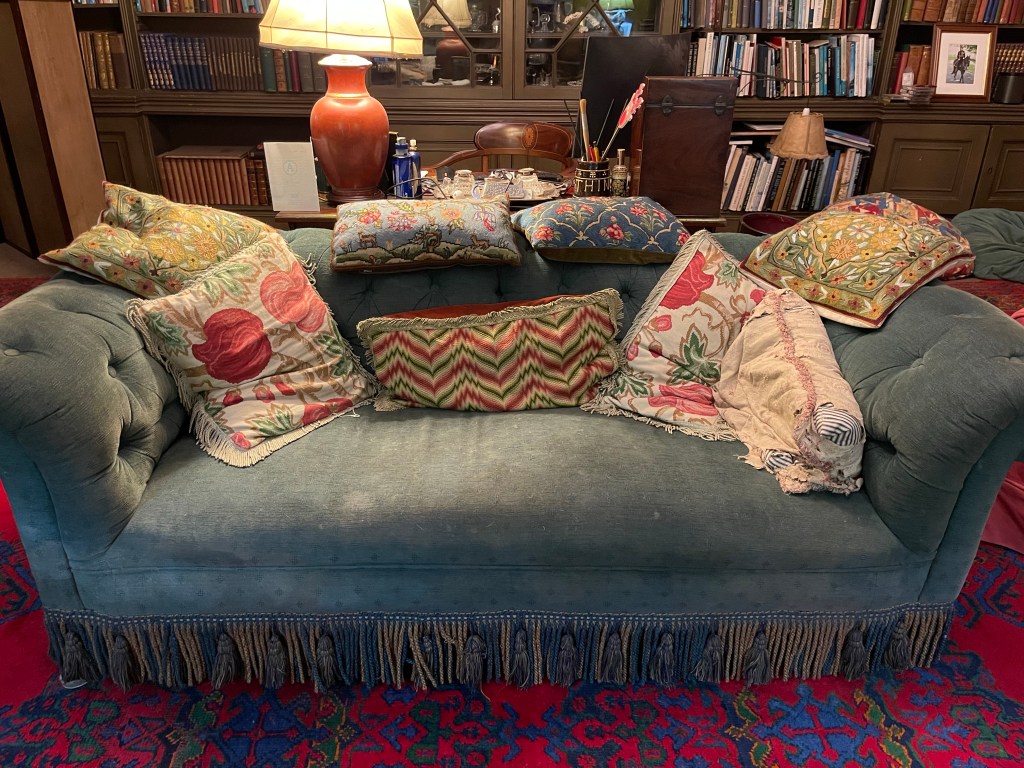
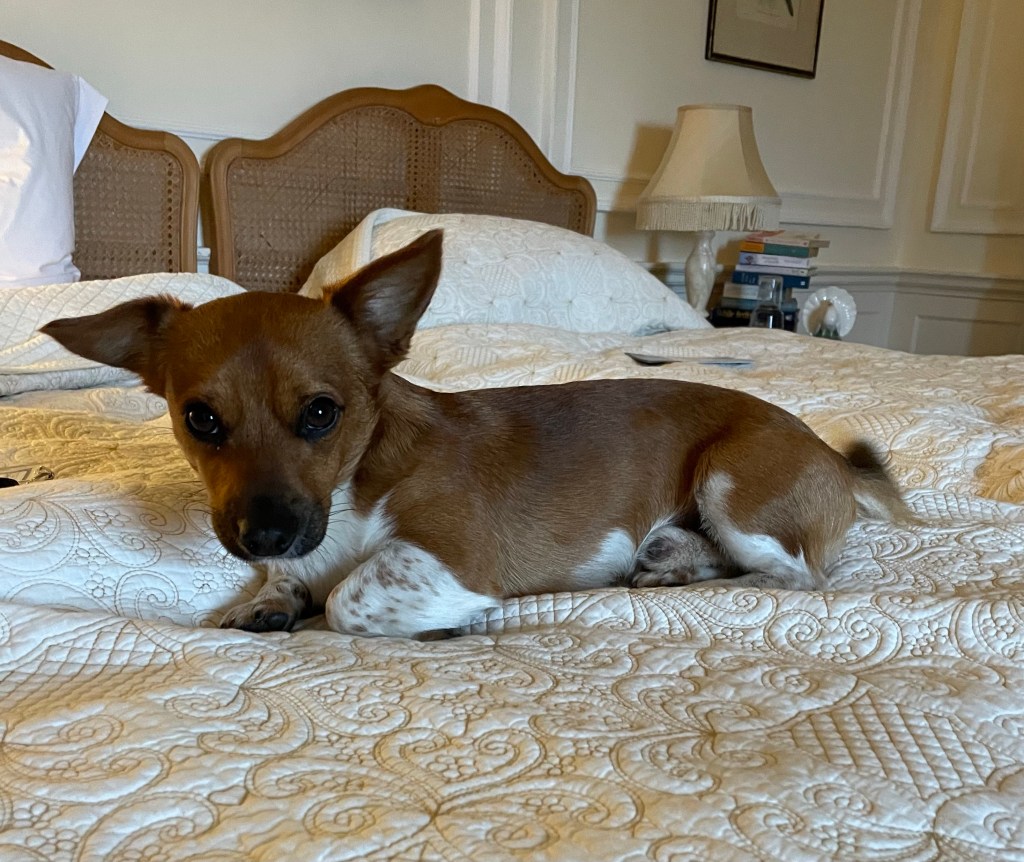
They have several dogs, one of which is a Jack Russell who stole Trish’s glasses from her upstairs bedroom and carried them downstairs, placing them carefully on the worn Oriental rug in front of the wood stove. We were kind of afraid to mention this suspected theft to the Lord and Lady. Luckily, I had taken a random photo of the dogs downstairs and we spotted Trish’s glasses in the photo, blending perfectly into the oriental carpet, and were able to retrieve them without incident and, most importantly, without casting aspersions on their dog.
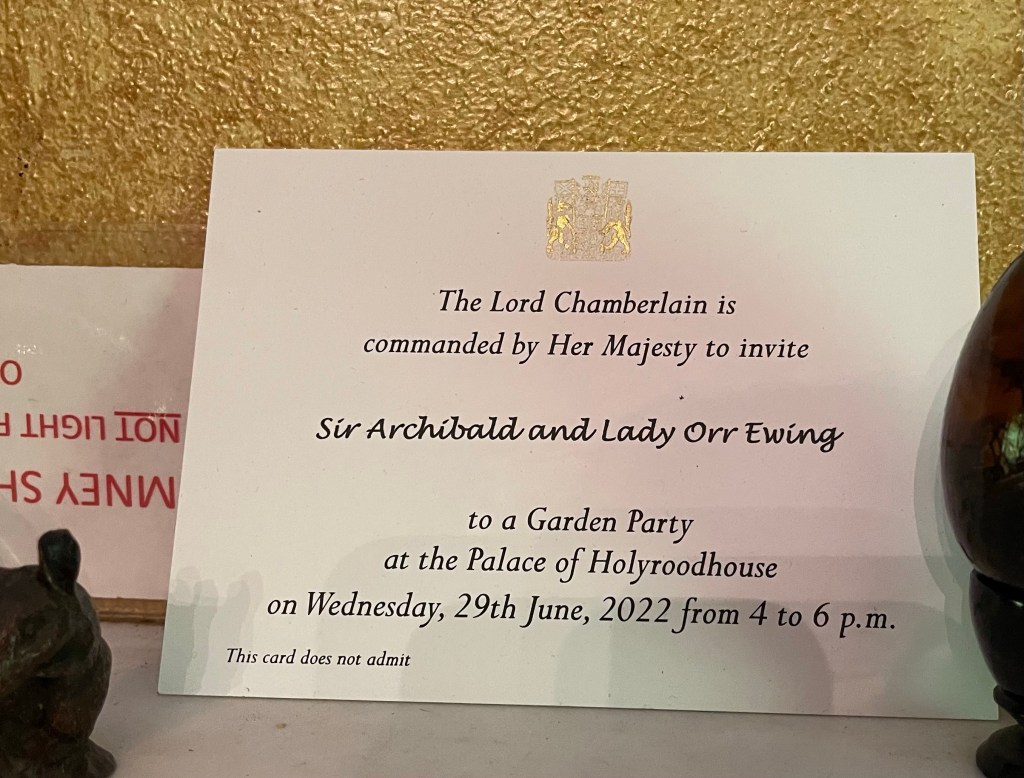
That evening we joined the Lord and Lady for drinks before dinner, where I spotted an invitation on their mantle from the Queen to join her at Holyrood Palace in Edinburgh for a garden party. I mentioned it to our hosts, and the Lady said she couldn’t recall what it was exactly, but that they had other plans for that evening.
We met them for dinner in the huge dining room. They appeared, wheeling a serving trolley into the room and serving up what was a very nice dinner and we engaged in a lovely if somewhat stilted conversation. It was a little bit like Downton Abbey in the Upside Down. And they really were charming, the Lord was very very sweet and kind, the Lady a little more prickly, tending to snappily over-correct the Lord who remained pretty jovial in spite of it.
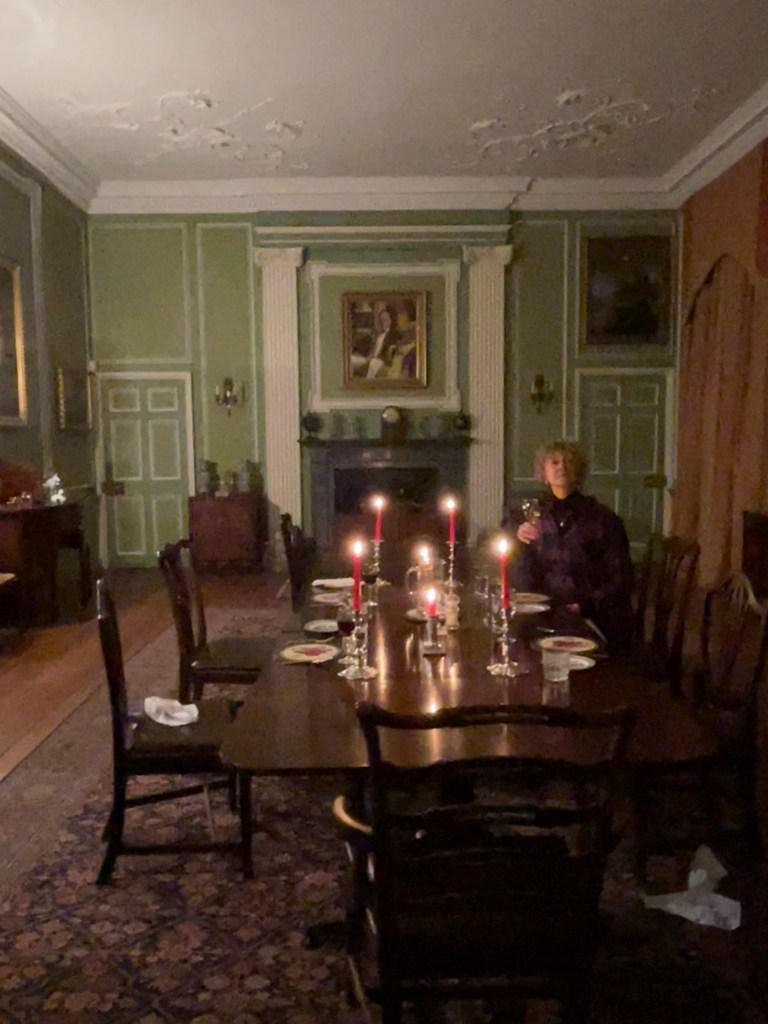
The rooms we saw in the house were generally quite lovely, although we wondered if much of the place had been closed off, as they only seemed to use a few. We continued to wonder whether they truly enjoyed having random guests in their home and so endeavored to be as low maintenance and well-behaved as possible, although I’m sure we used the wrong fork and committed other dreadful etiquette faux pas.
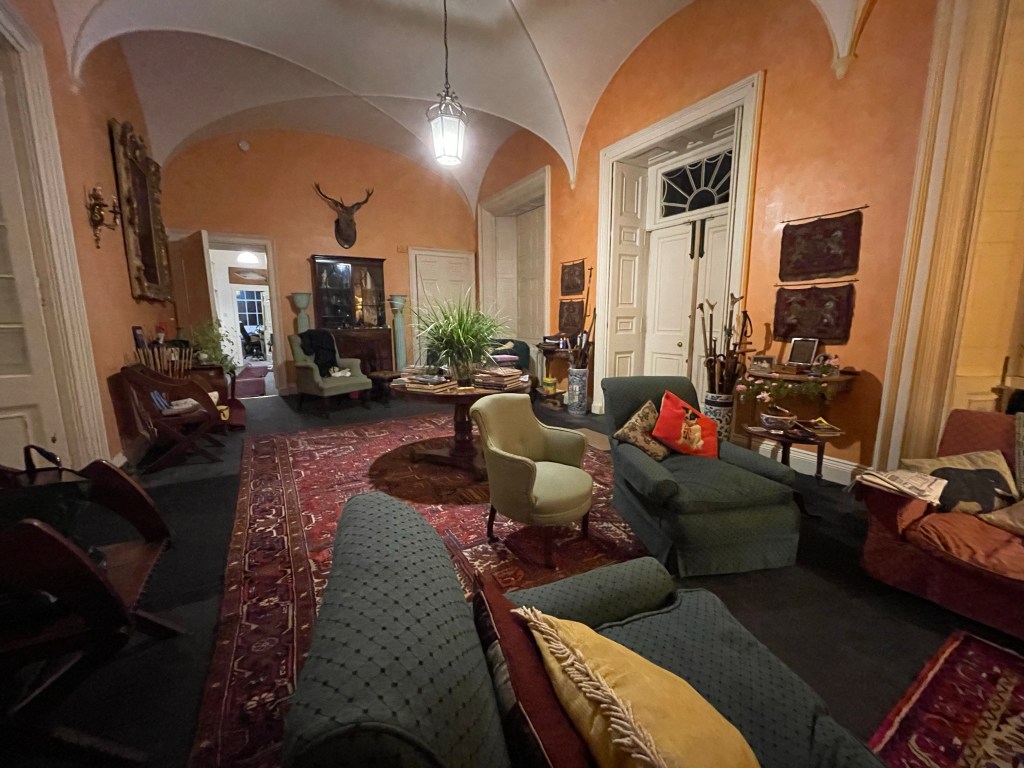
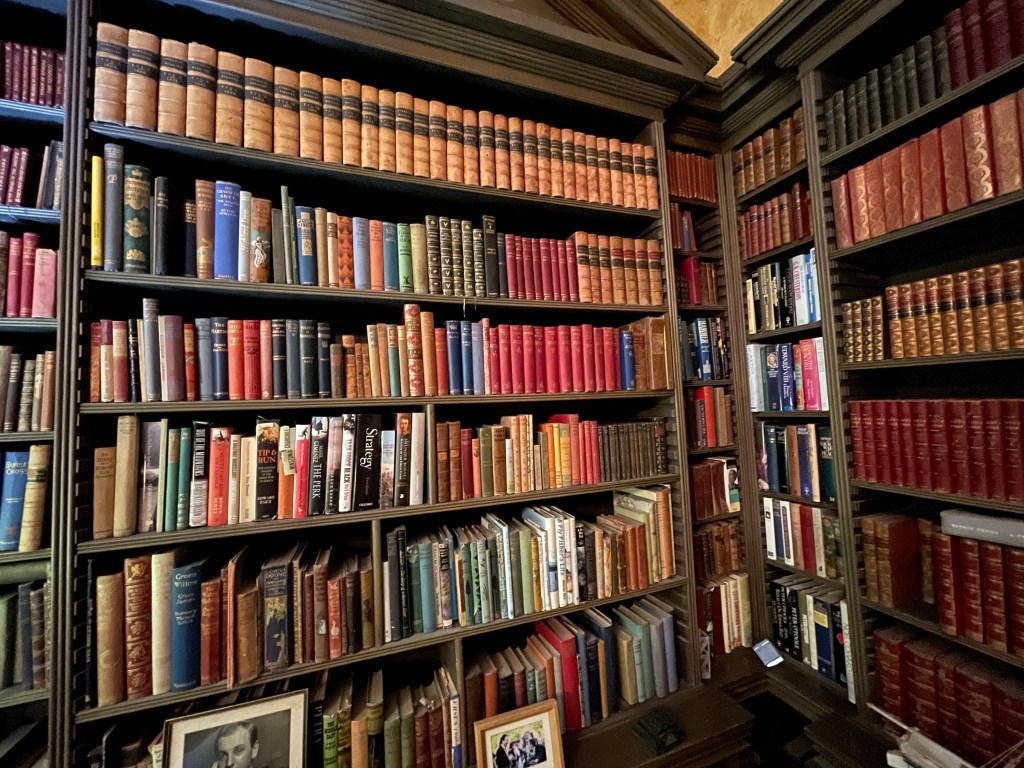
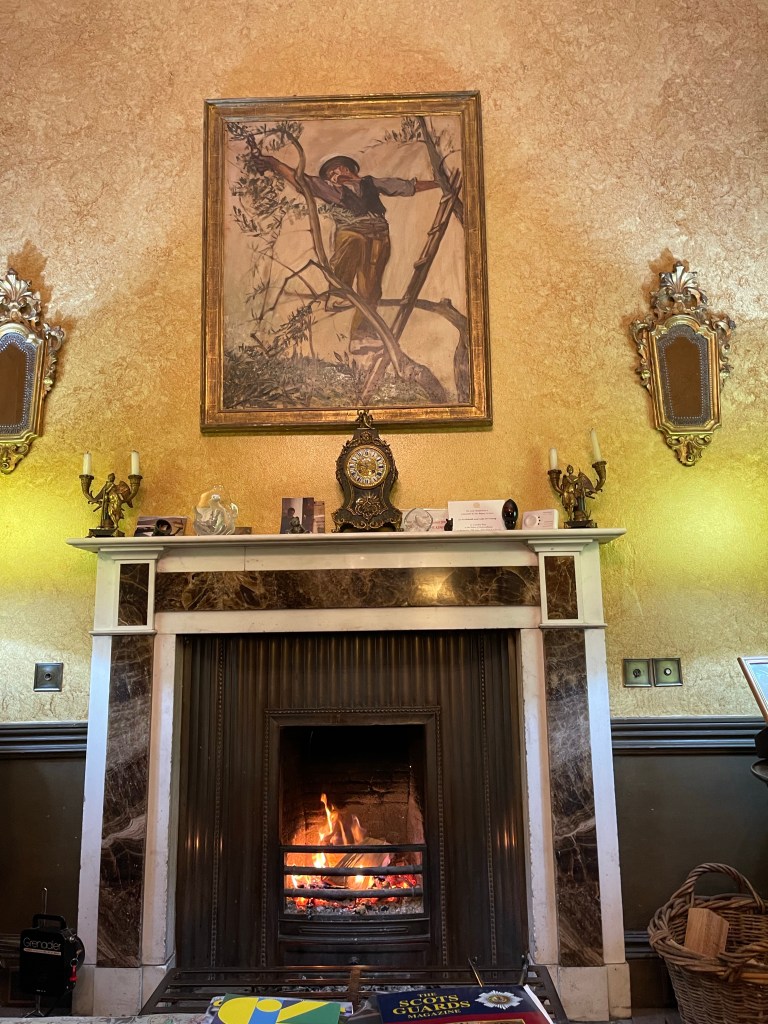
They bid us farewell the following morning and we took our leave. I will never forget this experience and again – travel is the best.
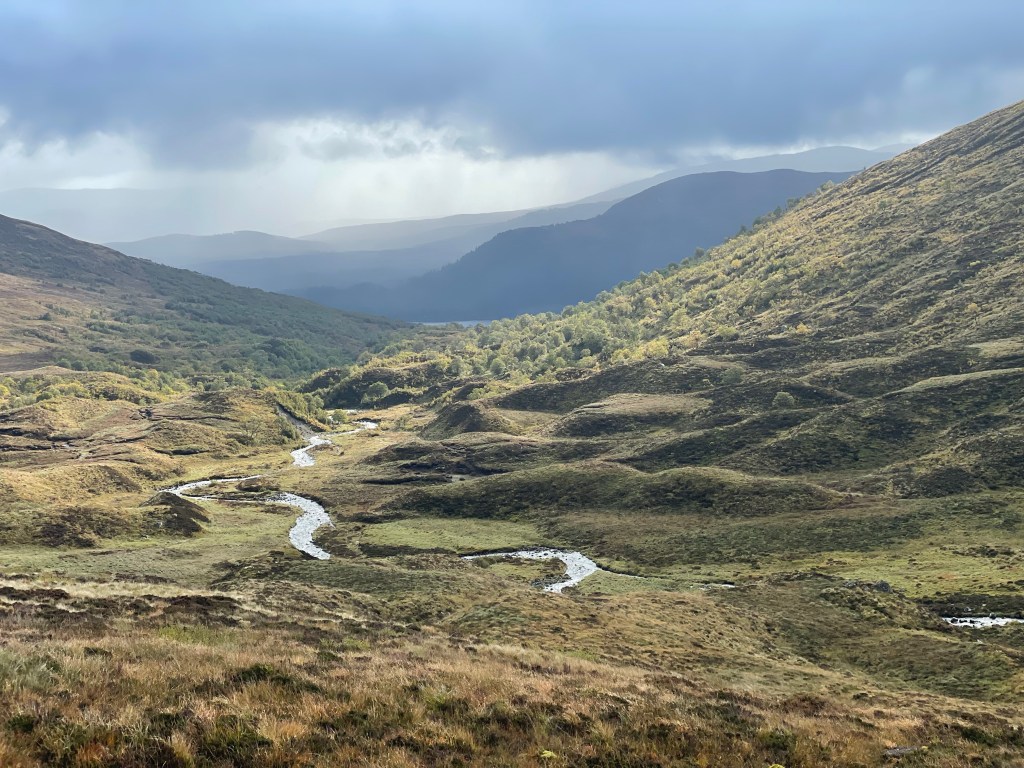
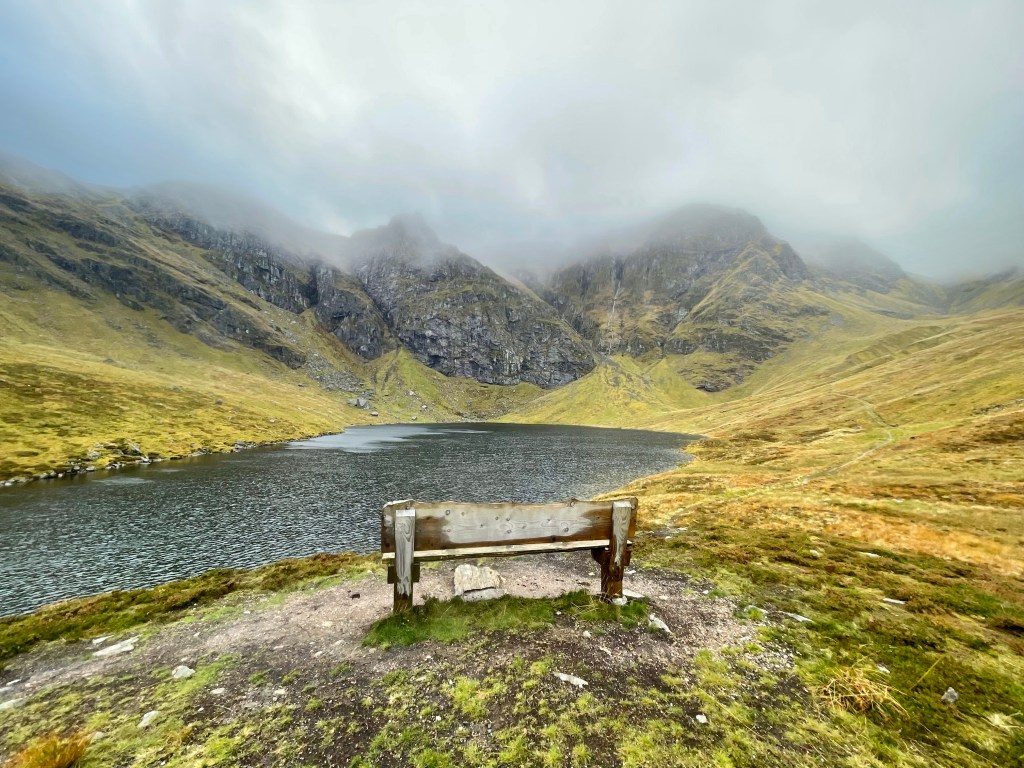
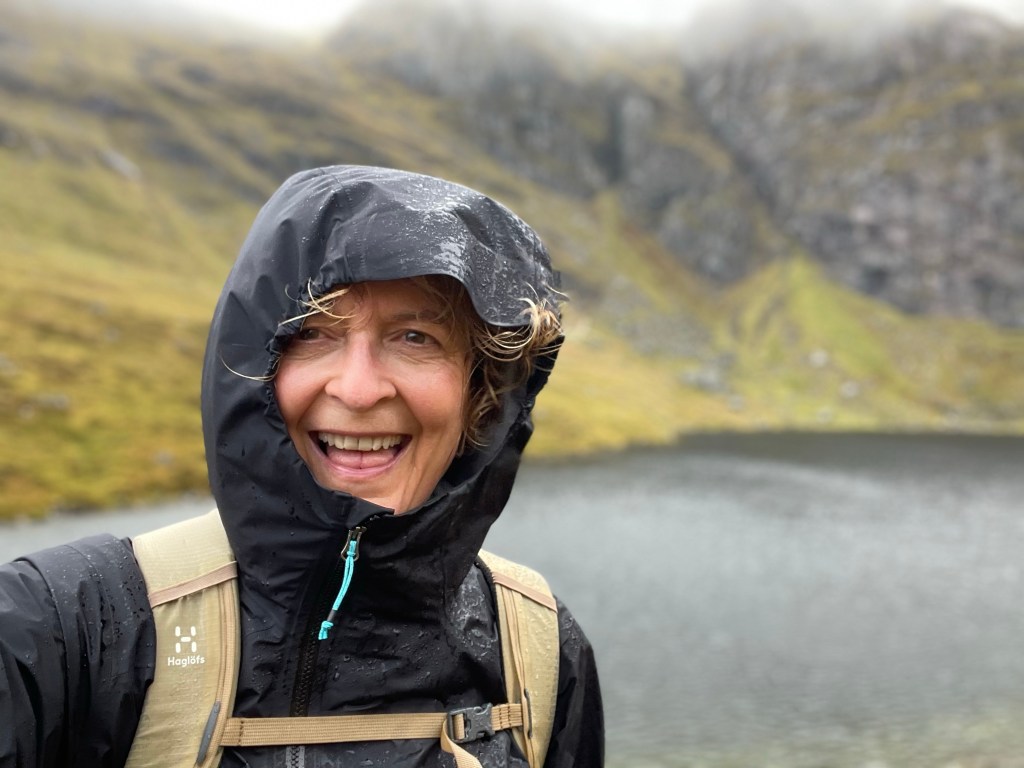
So back to the present, on the way to Glencoe, I stopped in the pouring rain at a nature reserve called Creag Meagaidh (roughly pronounced Creg Meggie). It’s one of Scotland’s many rewilding efforts, and includes a simply gorgeous hike up through planted trees, ferns and other foliage, up into another moors situation along a river with stunning views and as usual all the weathers, before finally dropping down to a gorgeous hidden lochan rimmed with dramatic cliffs. Had the place to myself (I know I keep saying that – I do really like people but not, like “people” if you know what I mean) and would highly recommend!
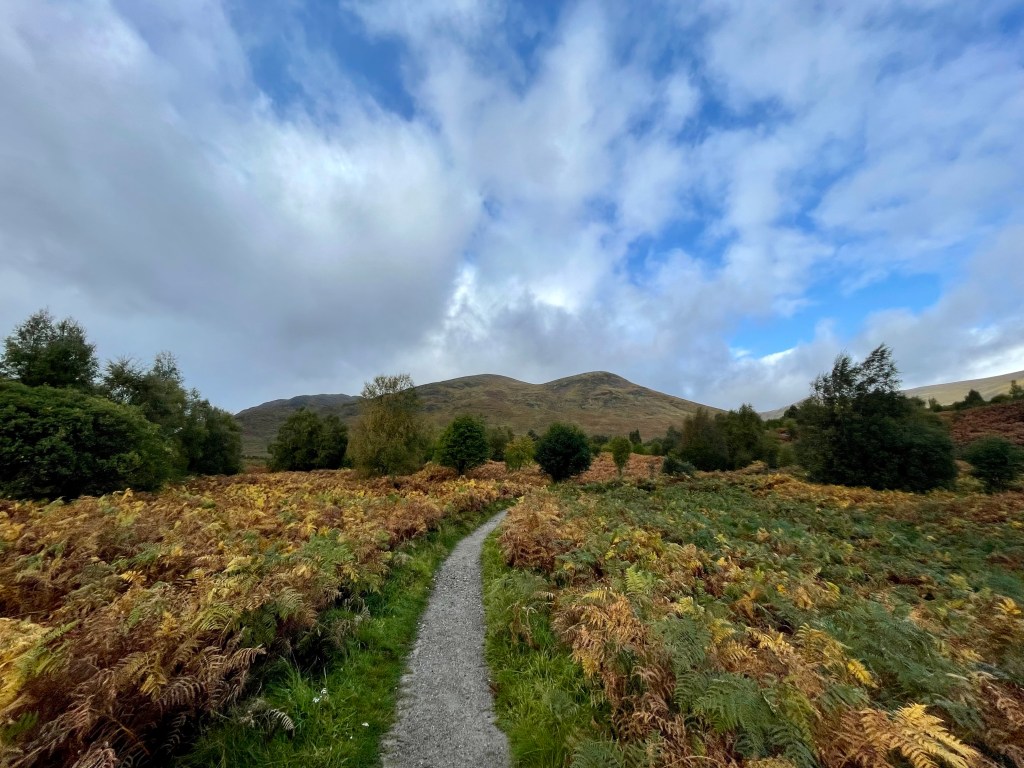
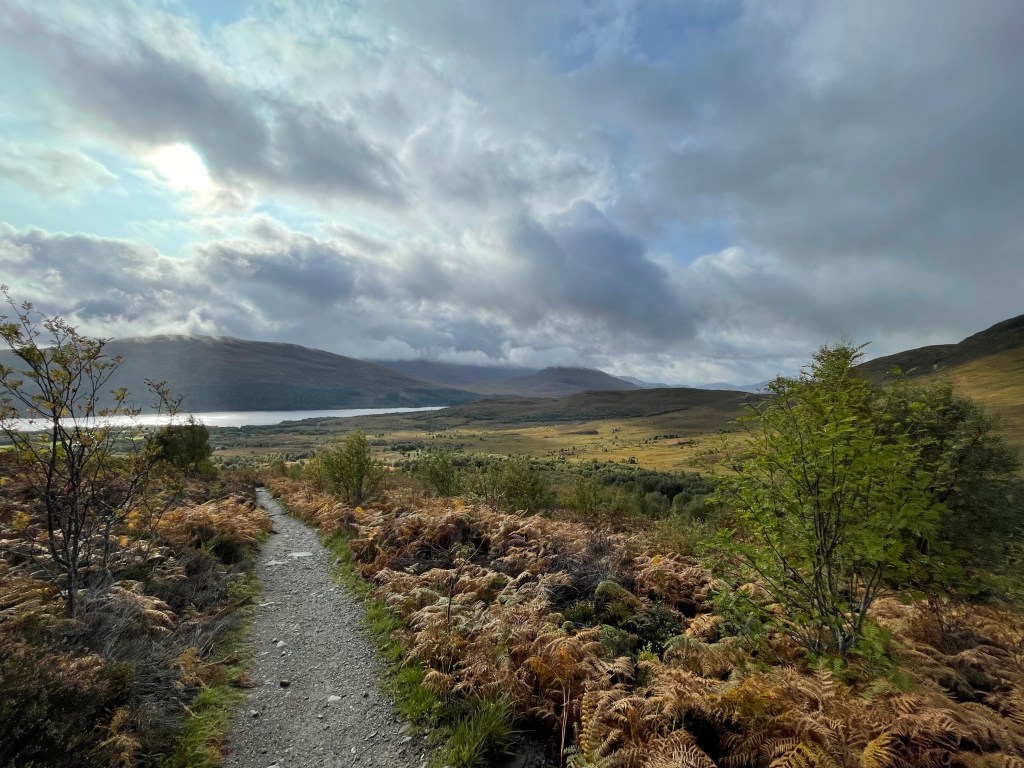
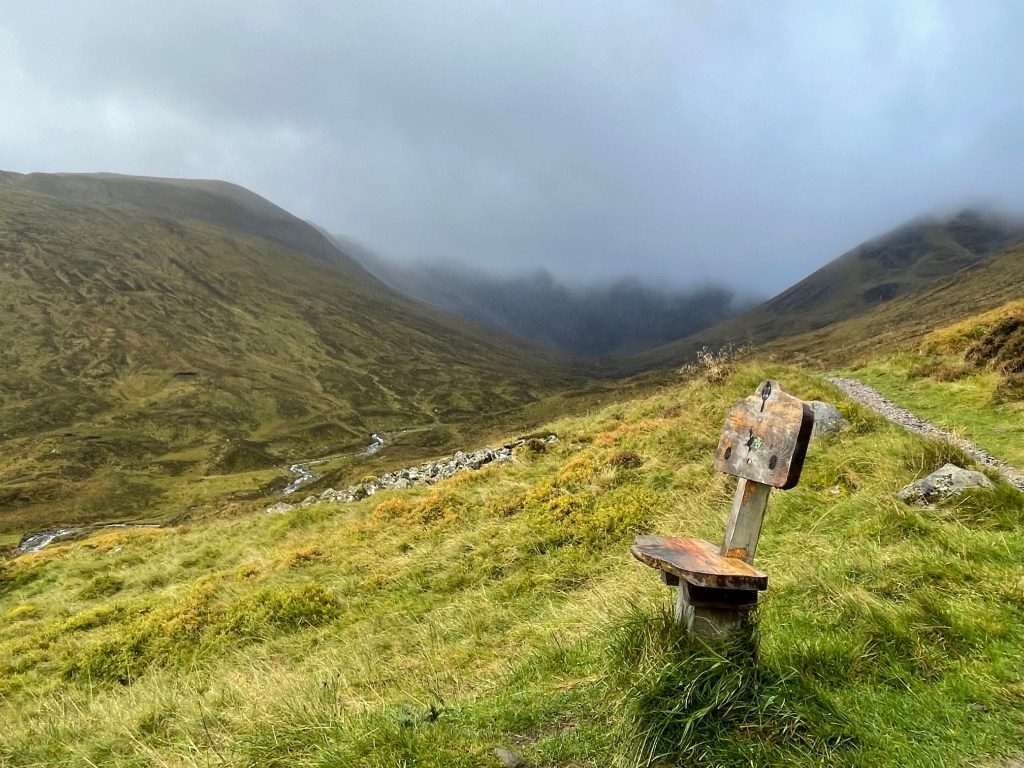
And now we are off to Glencoe.
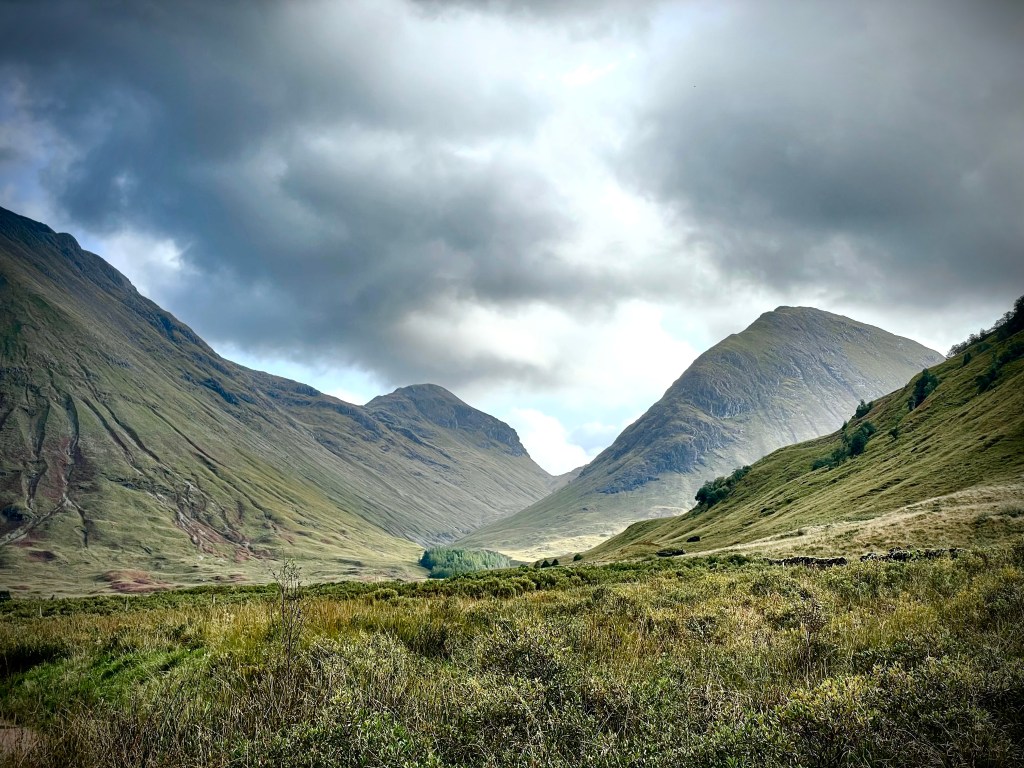
This glen is one of my very favorite spots in Scotland. It’s objectively wild and spectacular to be sure, and so attracts loads of visitors. Most of them pull off and snap photos and don’t step foot on the trails. Even though this is annoying, there’s something about the place that is more than its beauty – and overcomes the touristas. Scotland magic is strong here and not to be weird but I feel a physical reaction when I’m here. It has a deep and bloody history which I swear I won’t go into (google the Massacre of Glencoe because it is something), and some of the best and most dramatic hiking in the world. The iconic West Highland Way runs through, along with famous climbs, the most famous of them all being the Buachaillie Etive Mor, which is also the most photographed mountain in the UK, although not sure how we know this. The UK’s highest peak, Ben Nevis, is just one valley over.
The mountains are steep, dramatic, green and gaspingly spectacular. The weather is often sketchy so they can also be moody, looming and dangerous. Mountain rescue is busy, and recently three folks fell from a ridge in the glen, one of the most narrow in the UK . They had an experienced guide, but the weather was foggy and slippery.
I have made my way to Glencoe on every trip I’ve taken.
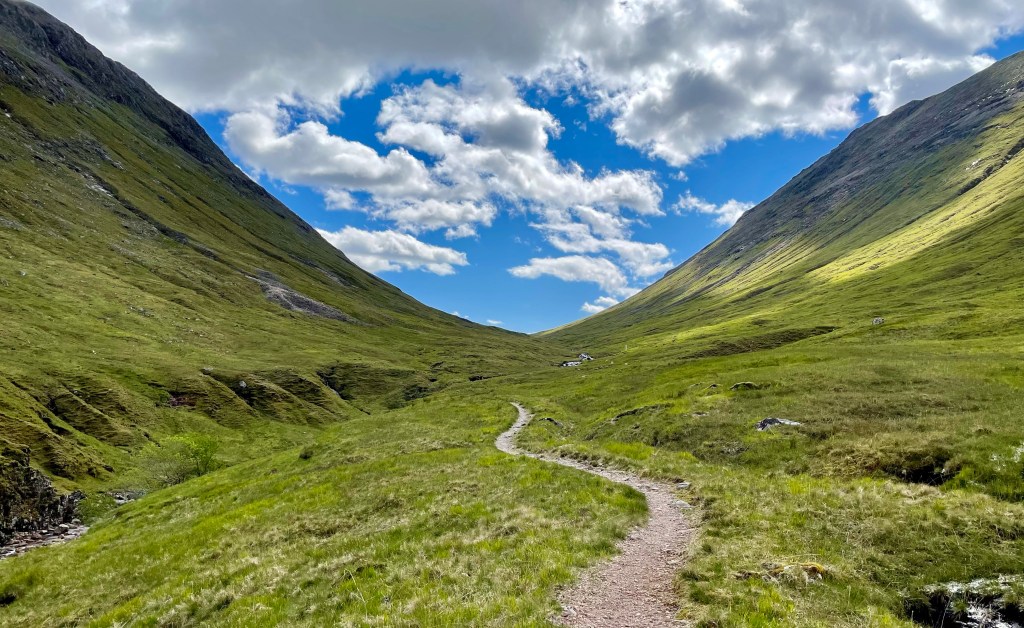
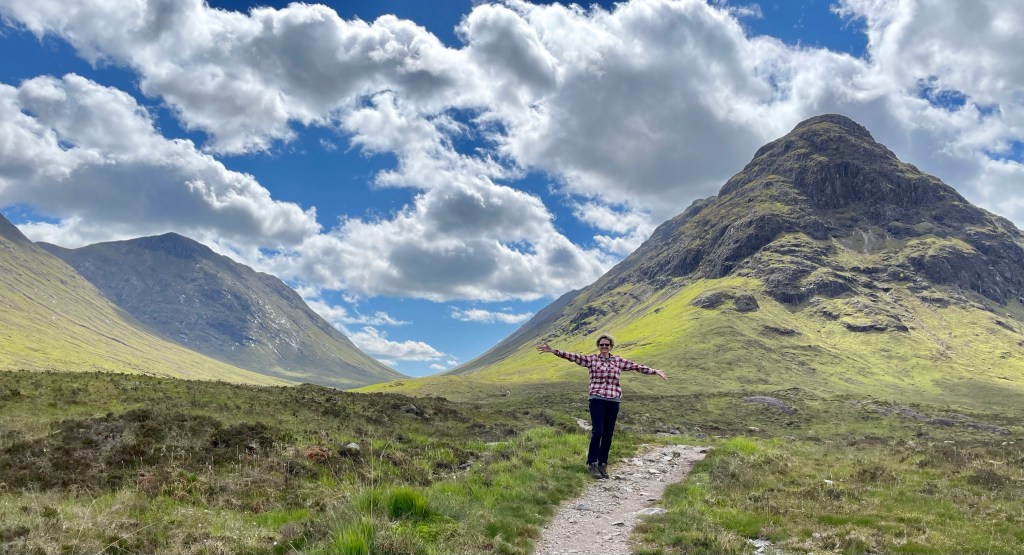
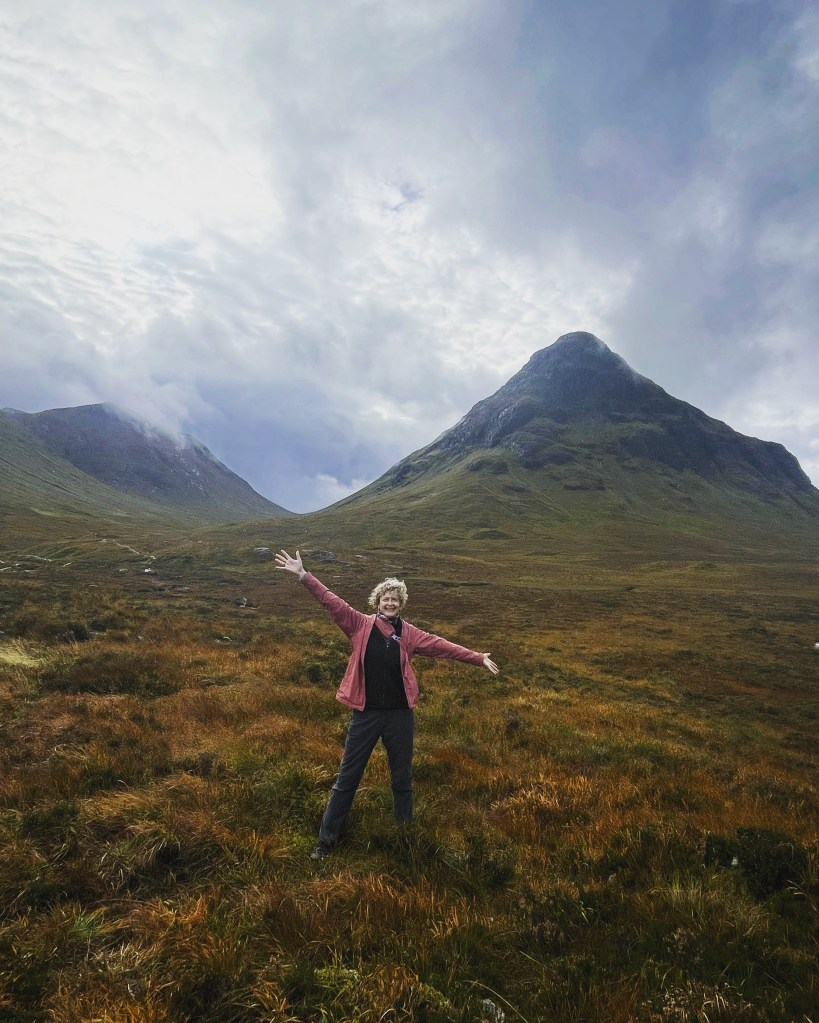
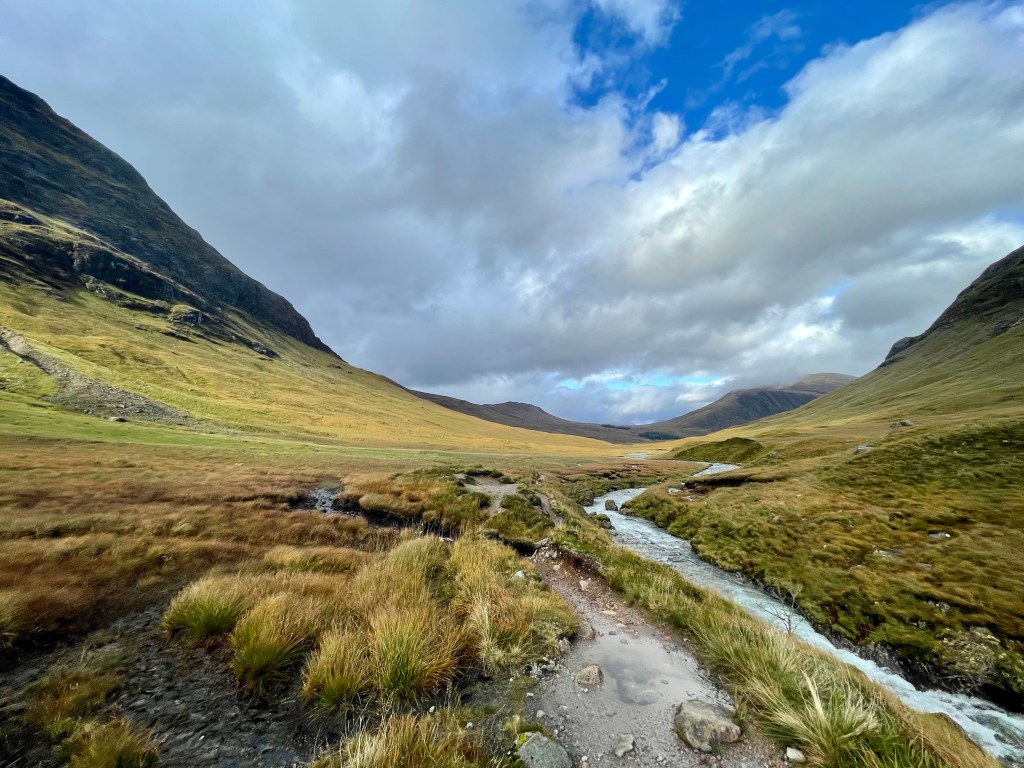
One of my favorite walks is along the River Coupal which cuts through the valley between Glencoe’s two mighty ridges, the Buachaille Etive Mor and the Buachaille Etive Beag. It looks wildly different every time.
Last May it was bright and sunshiny and green.
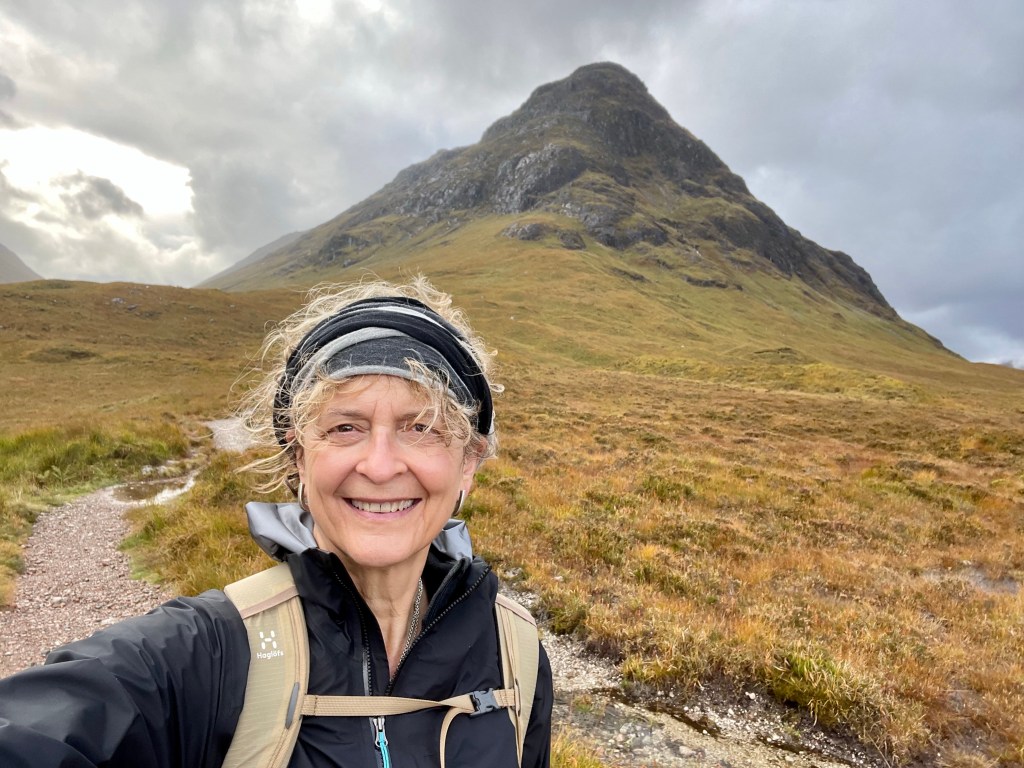
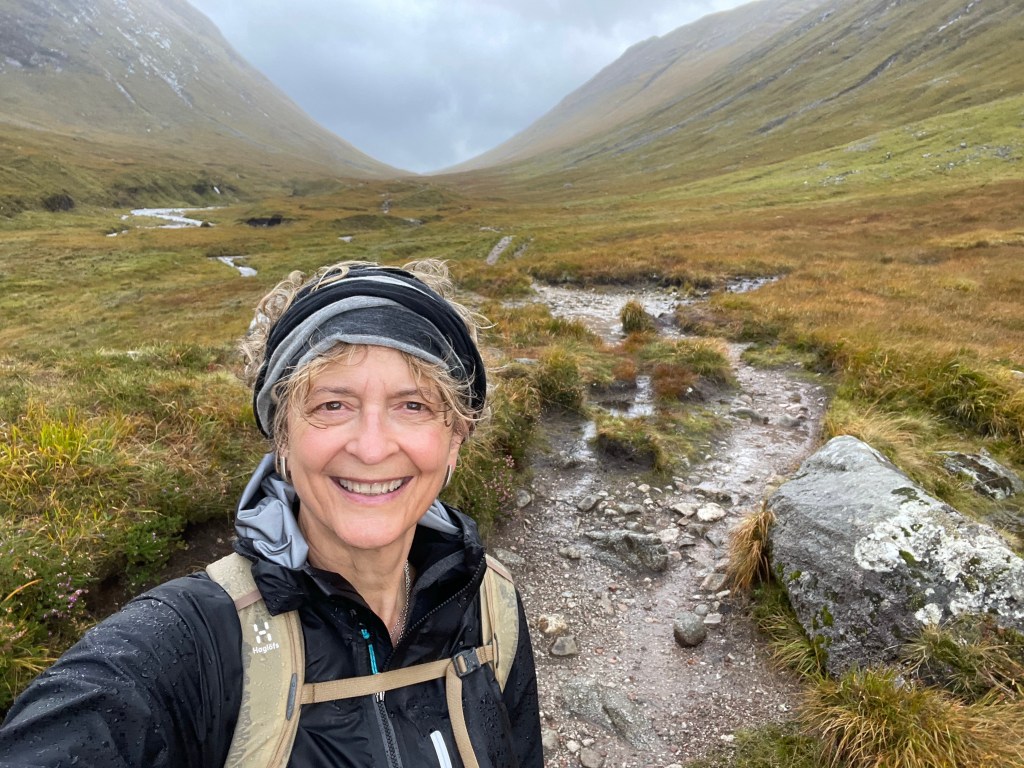
Last September it was misty, moody, and red deer bugled across the glen at one another.
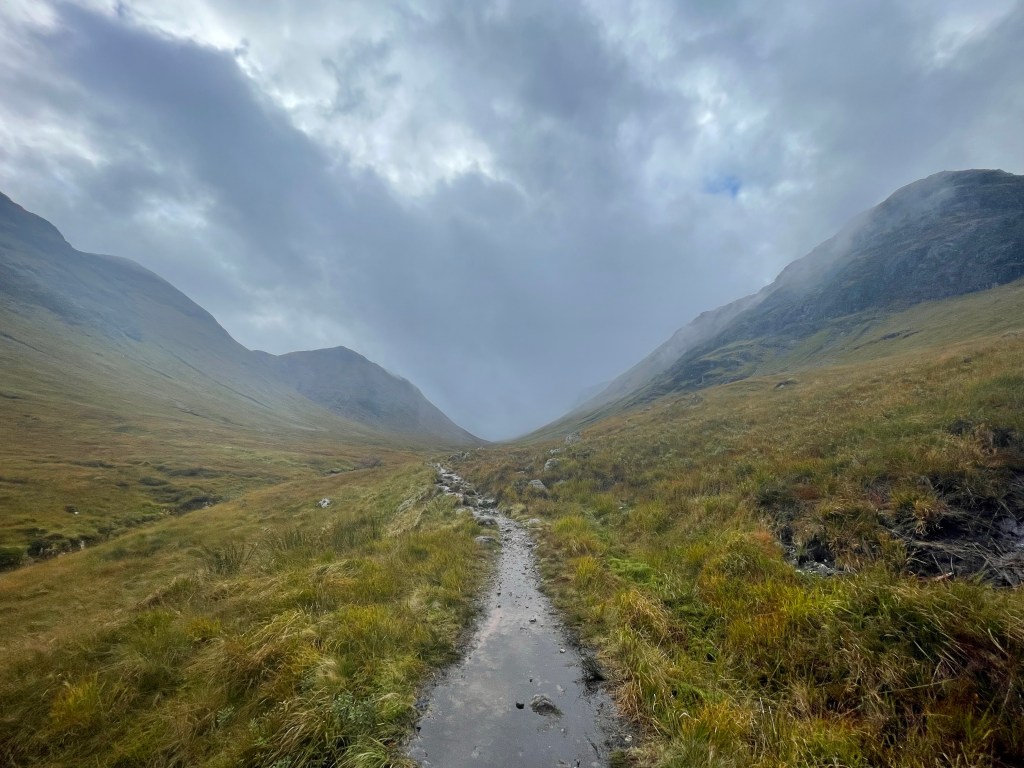
My friend Trish and I had a crazy experience on this one. Trish was walking ahead of me when suddenly she turned around and said something about a Highlander approaching us. I peeked around her and swear to God saw a man approaching in full Highland dress, including a kilt and a sword. We both totally saw it. And then – as he got closer he turned into a hiking dude with a jacket tied around his waist. But we know what we saw.
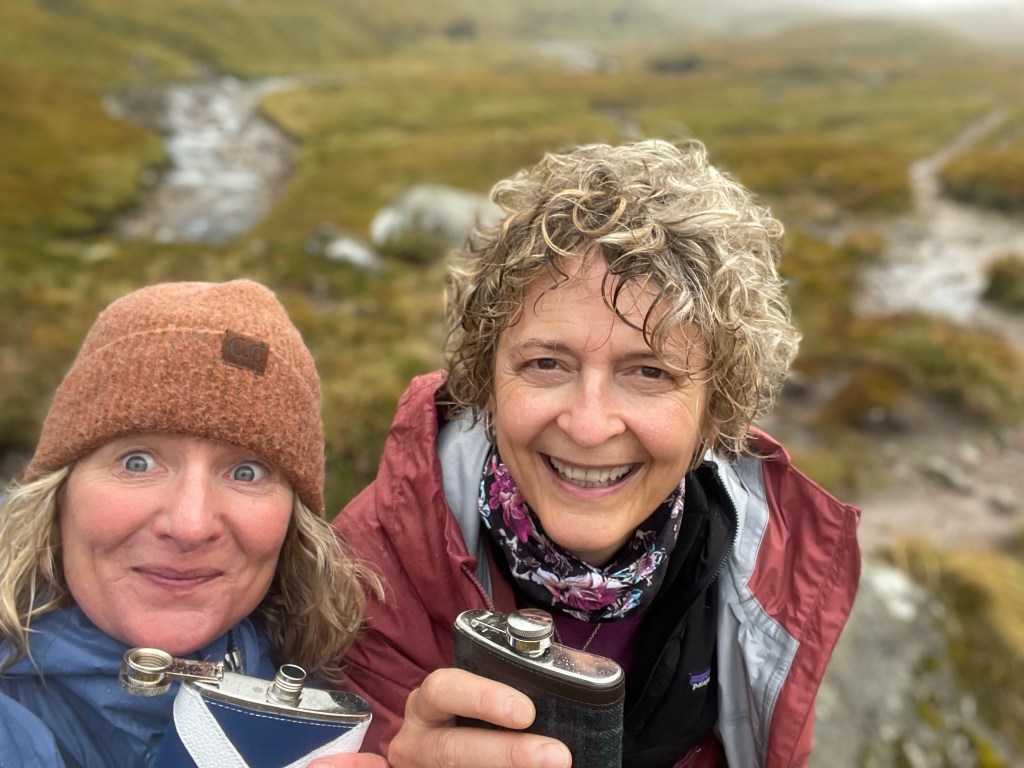
 Wee Dram of Scotland