On my way from Stirling to the Pentland Hills south of Edinburgh, I made a few stops to break up the brutally long 57 minute drive.
First was the picturesque little town of Falkland, a haven for Outlander film locations. Not only the town itself but also Falkland Palace, which was the Stuart Family’s Balmoral Castle in the 1600s.
First, let’s do Outlander so you can roll your eyes and get it over with. Falkland was the main shooting location for Inverness because it looks more like how one imagines Inverness than Inverness itself.
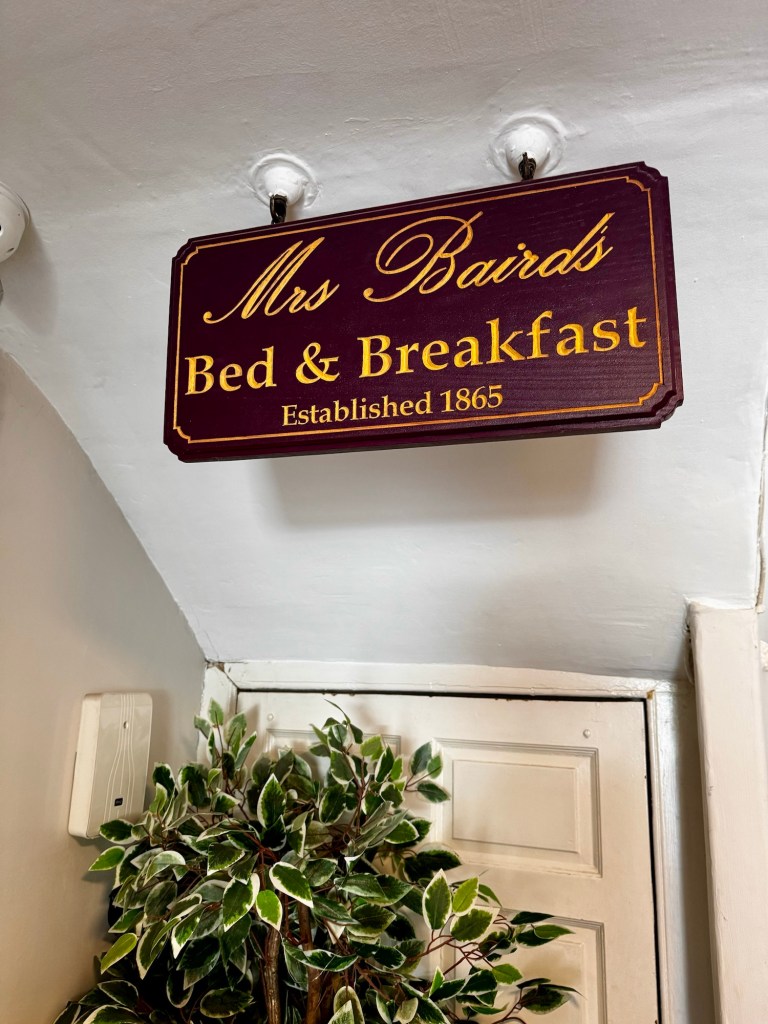
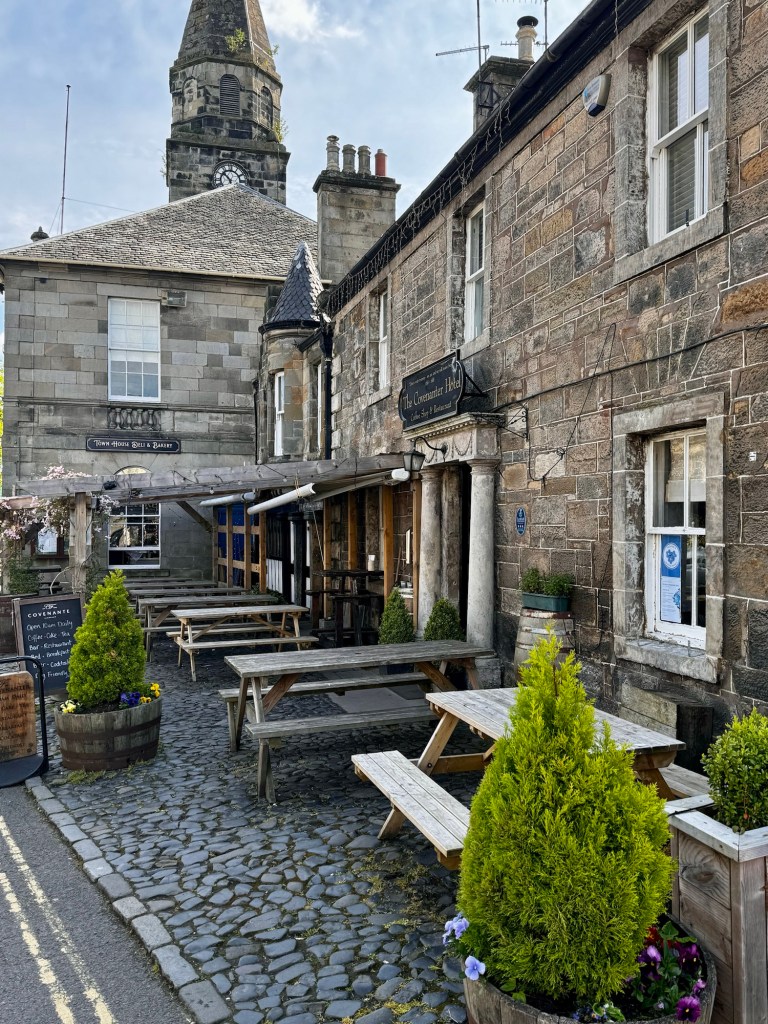
As many of you know, Claire and Frank, after the end of World War II, took a second honeymoon to Scotland and stayed at Mrs. Baird’s Bed & Breakfast, which was shot at the Covenanter Hotel. They display the sign used in the show inside. You will recognize other spots below.

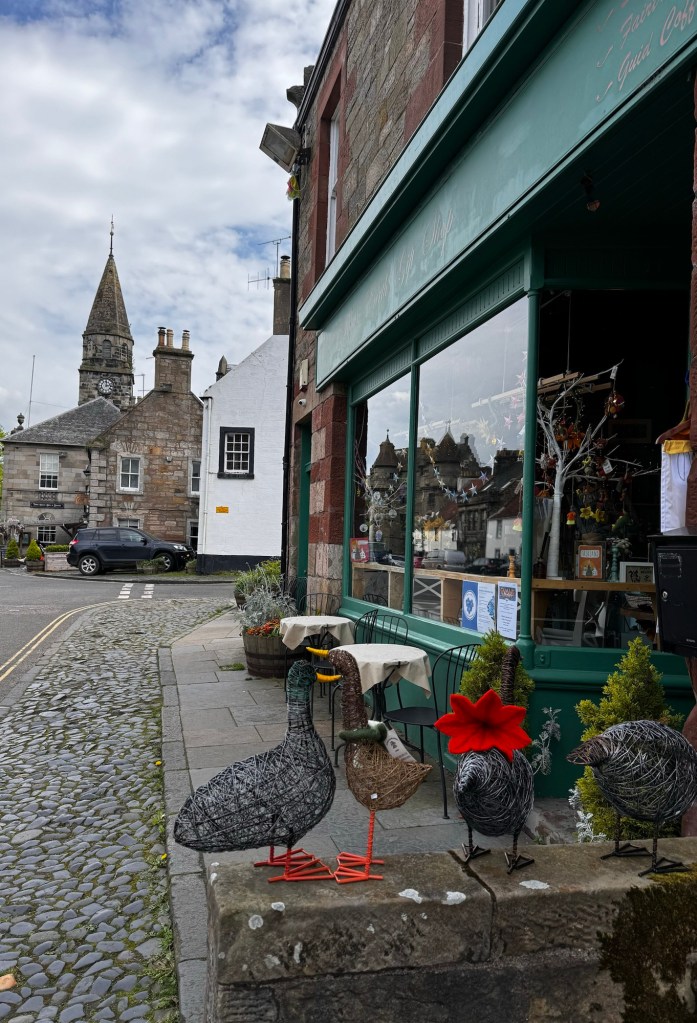
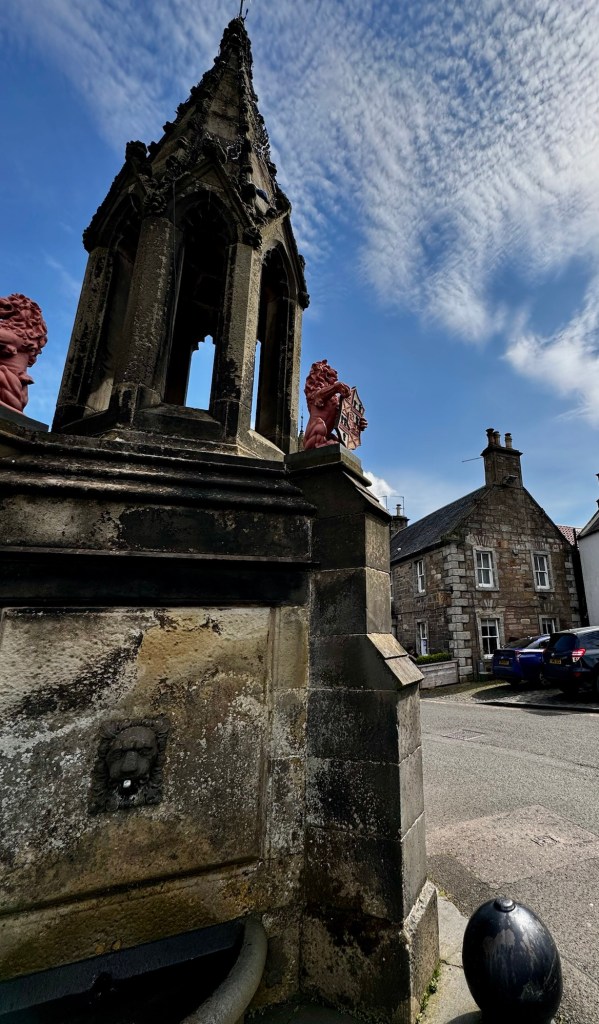
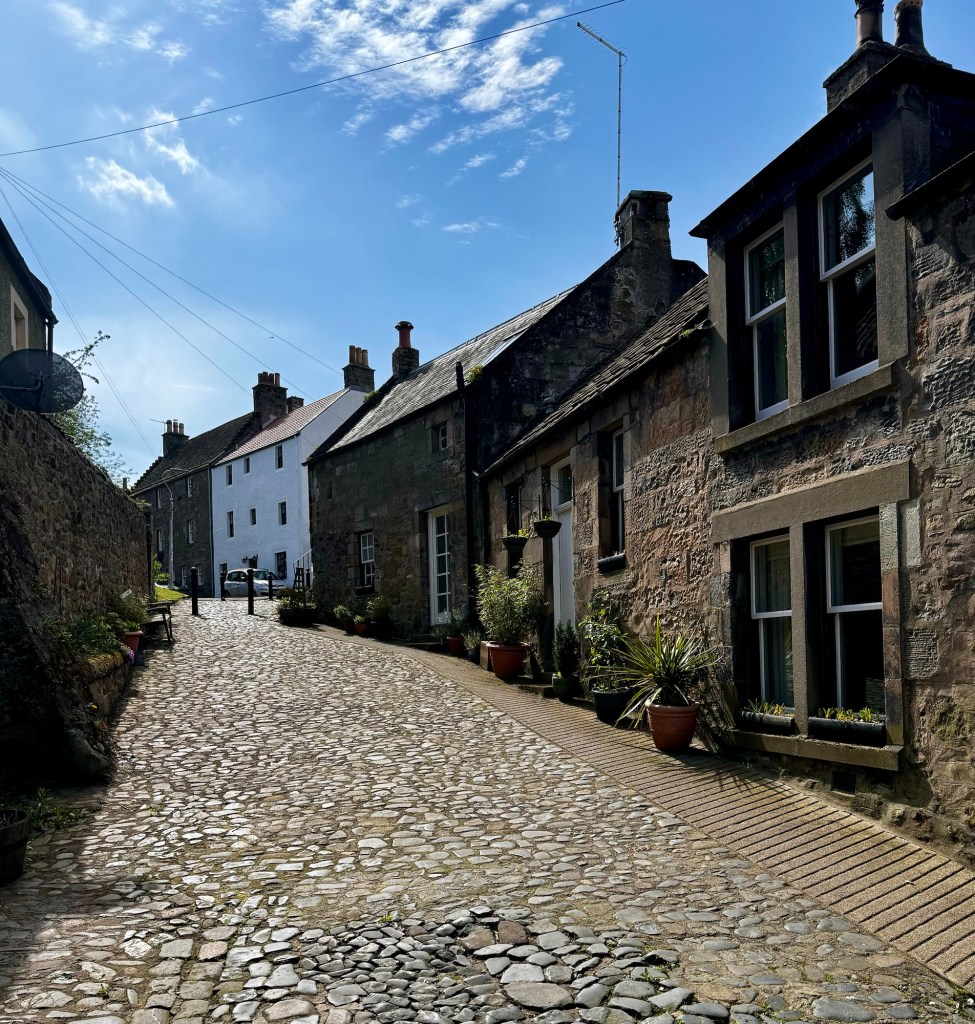
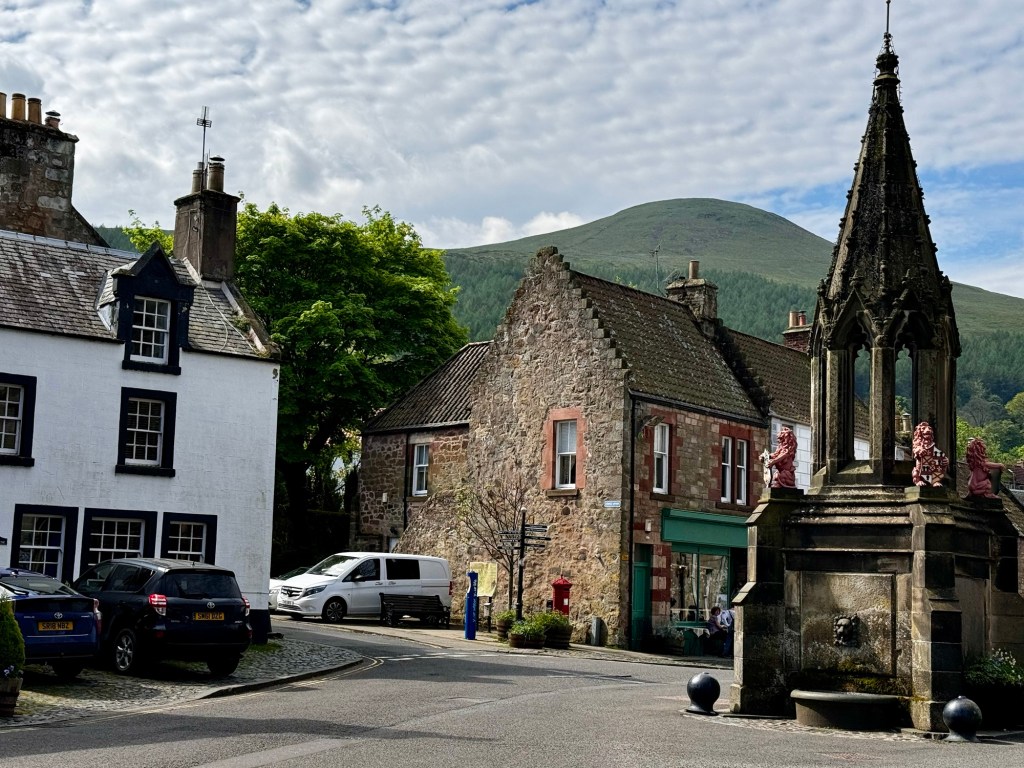
And now to Falkland Palace, which is right in the center of town. Built in the thirteen century, James I (of Scotland) took possession of it for the crown two centuries later, after which it became a popular retreat for all the Stuart monarchs. This was one of Mary QOS’s favorite spots to get away from it all.
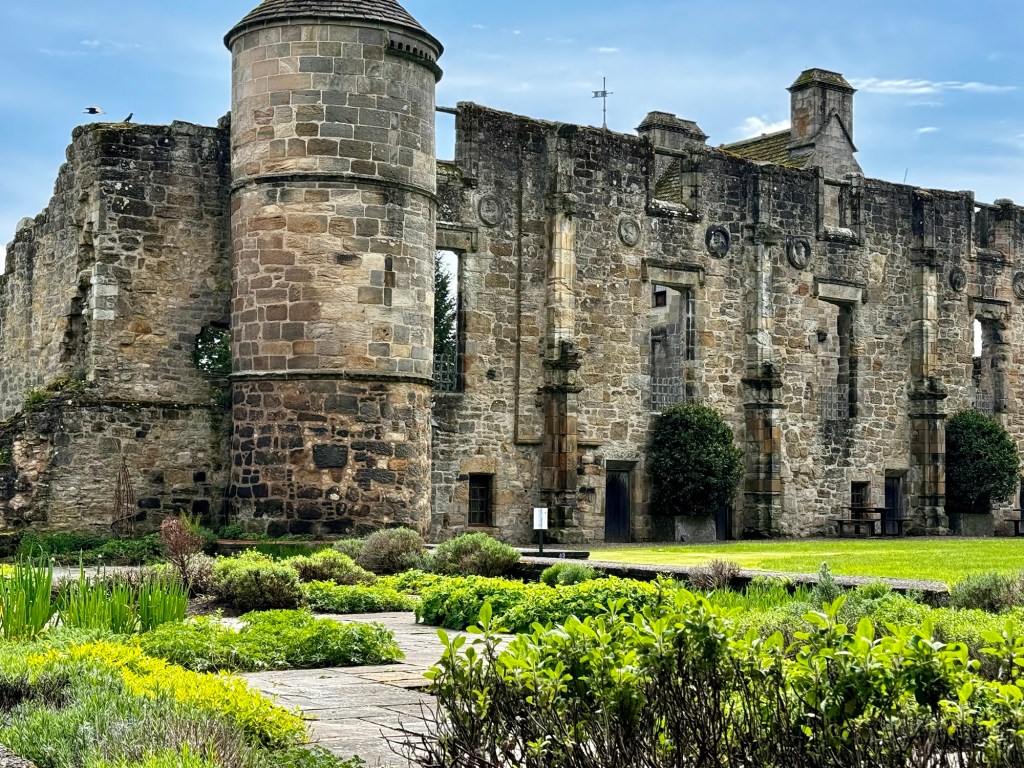
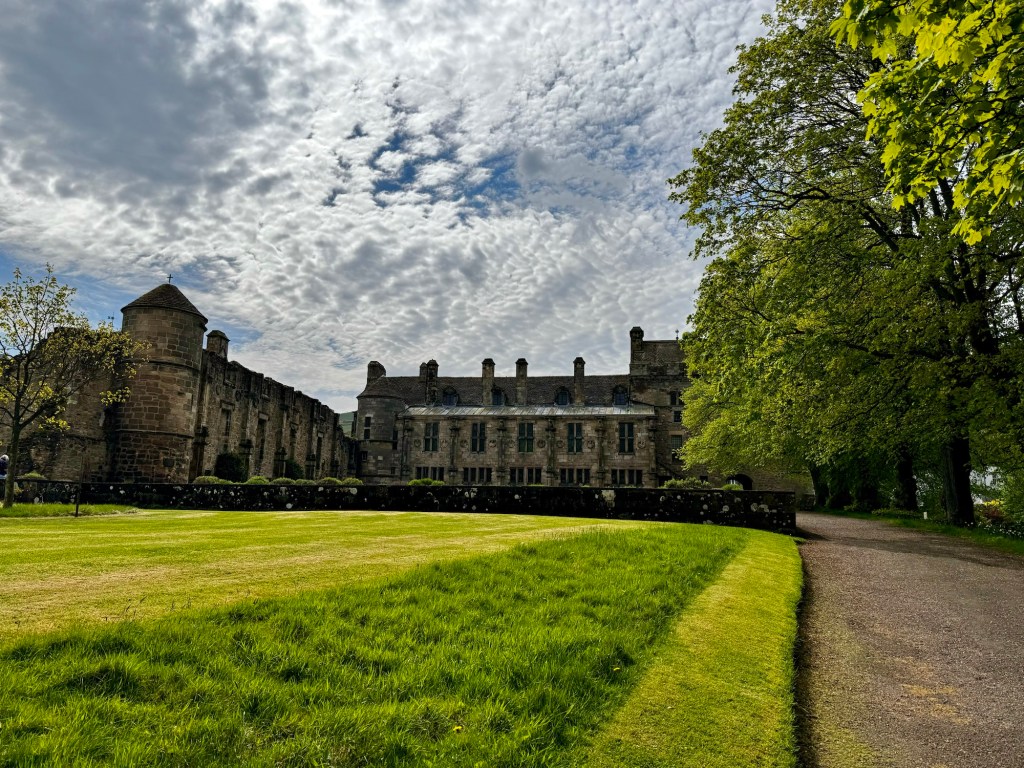
The palace is quite enchanting, and you’ll find the oldest tennis court in the UK on its grounds, built by James V in 1538 – and Mary, an accomplished athlete, often played here. Tennis was originally played by French monks before it became popular with nobility. The word comes from the French word tenez, or “hold on,” the warning that was shouted before every serve. (Let’s bring that back, shall we?) The game had different rules then, it was actually much more complicated – you can see a series of lines, numbers and crowns marked on the floor and walls, which were all used to calculate scores. All four walls and the roof of the spectator’s gallery were used (making it literally a dangerous spectator sport) plus players got extra points if they hit a ball through a hole in the wall. Also a servant would serve to avoid the fancy people having to bend their bodies in their ridiculous restrictive clothing. Mary QOS played in breeches for this reason – badass that she was.

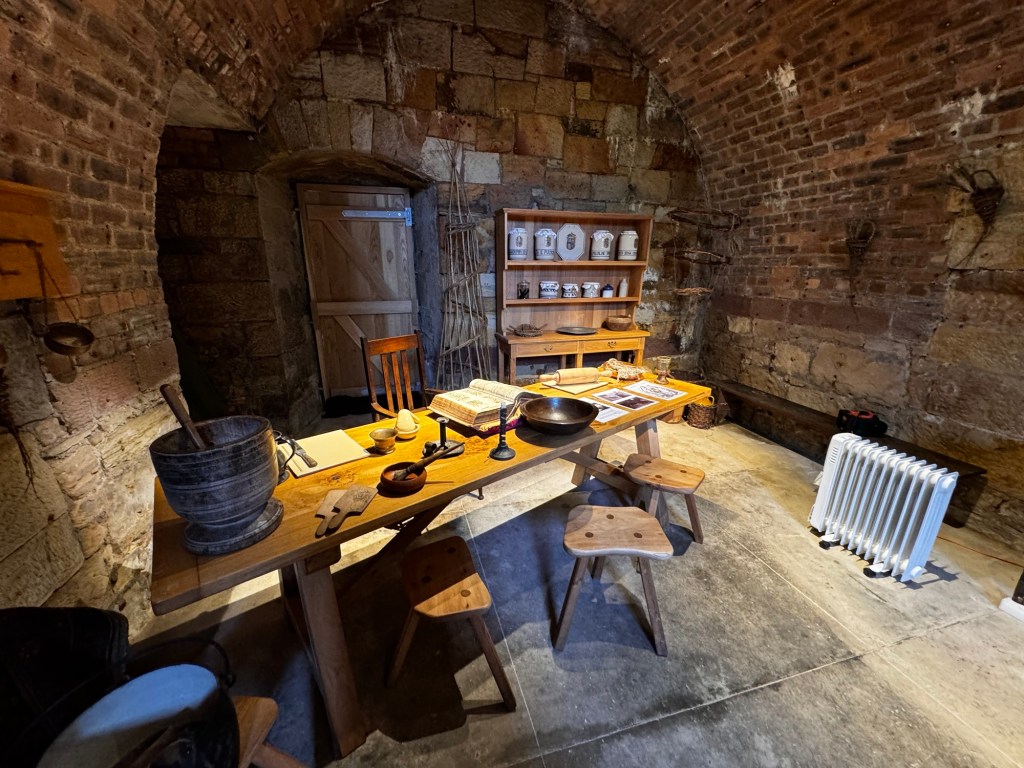
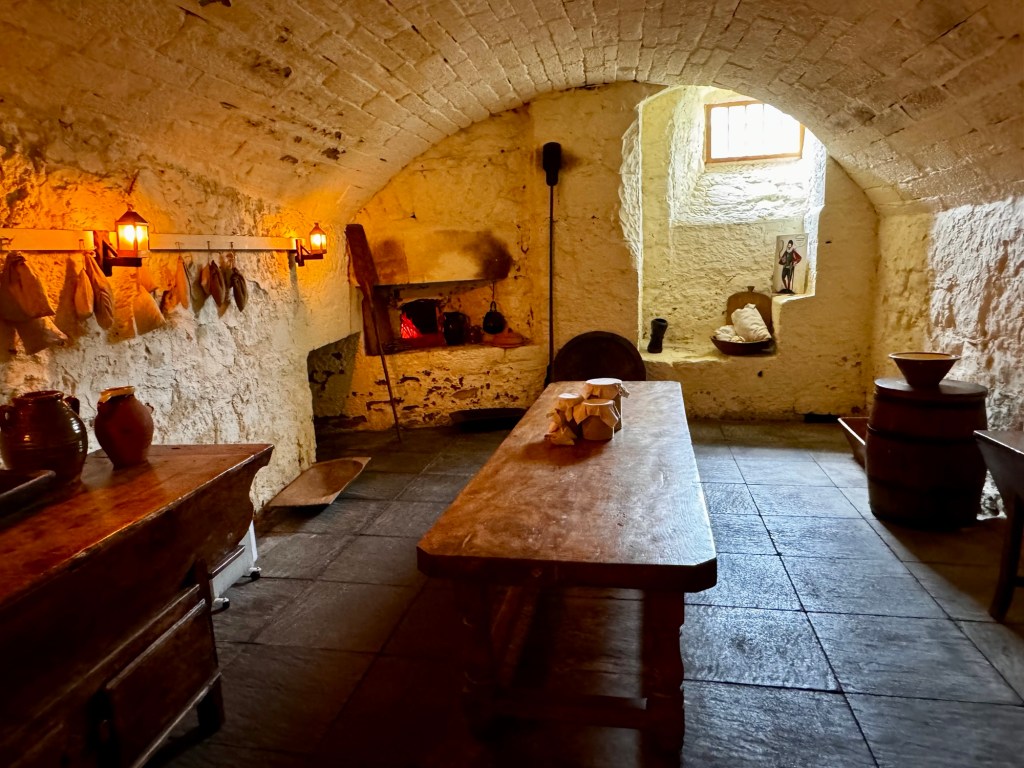
A couple of lovely nooks inside the Palace.
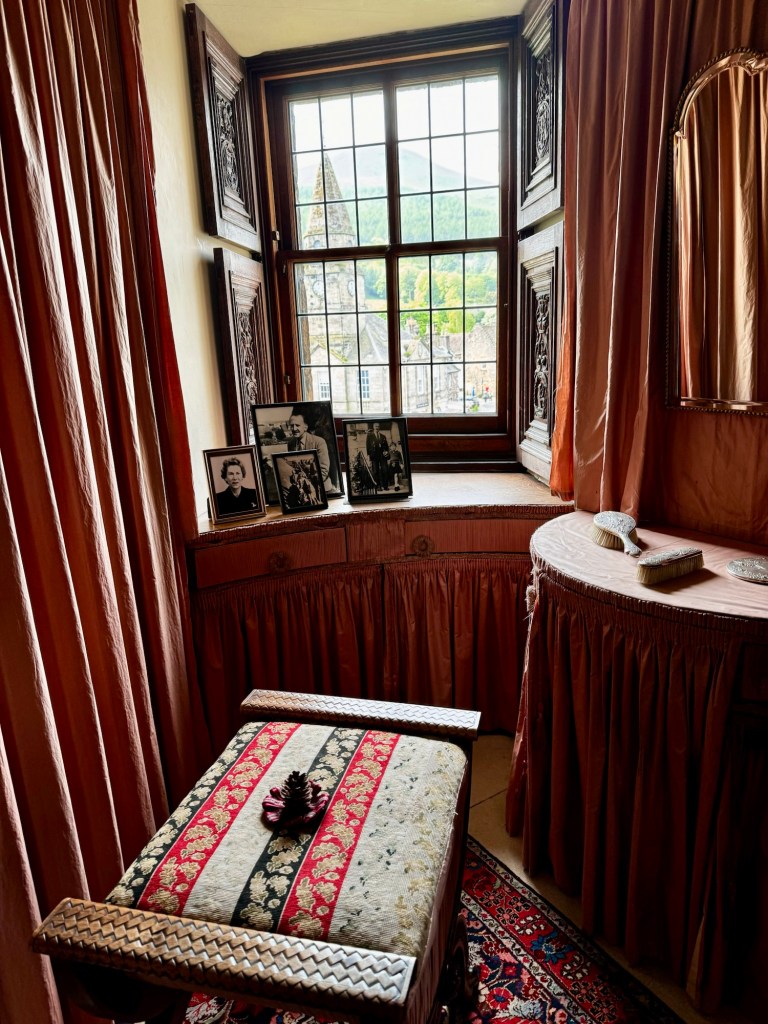
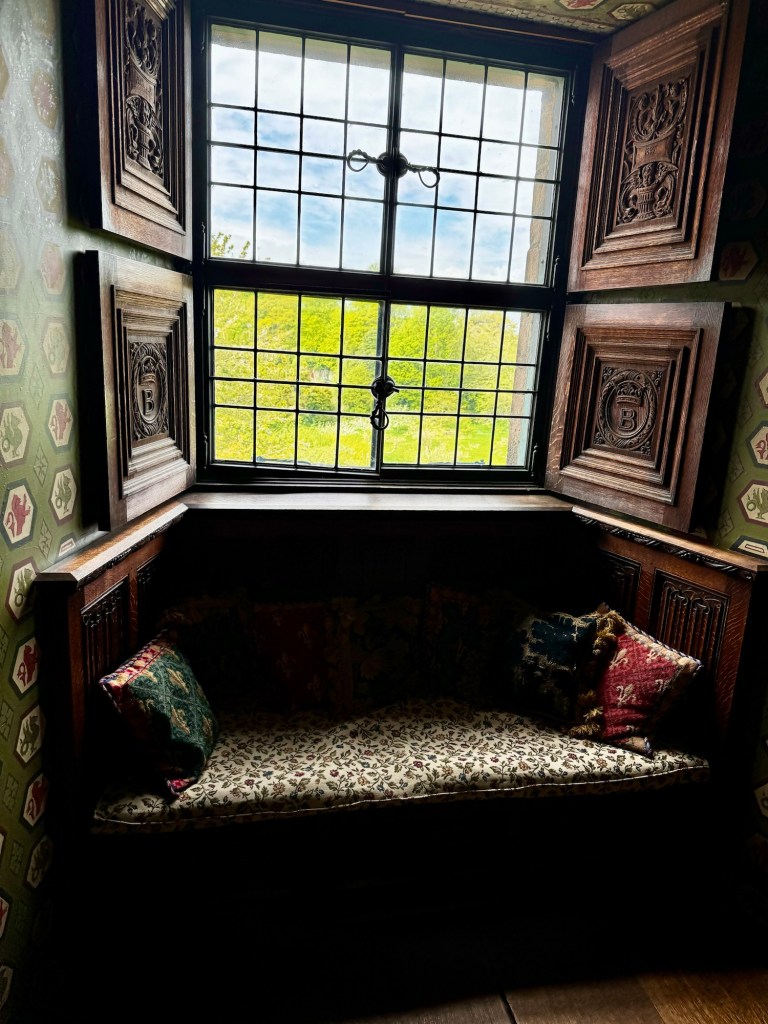
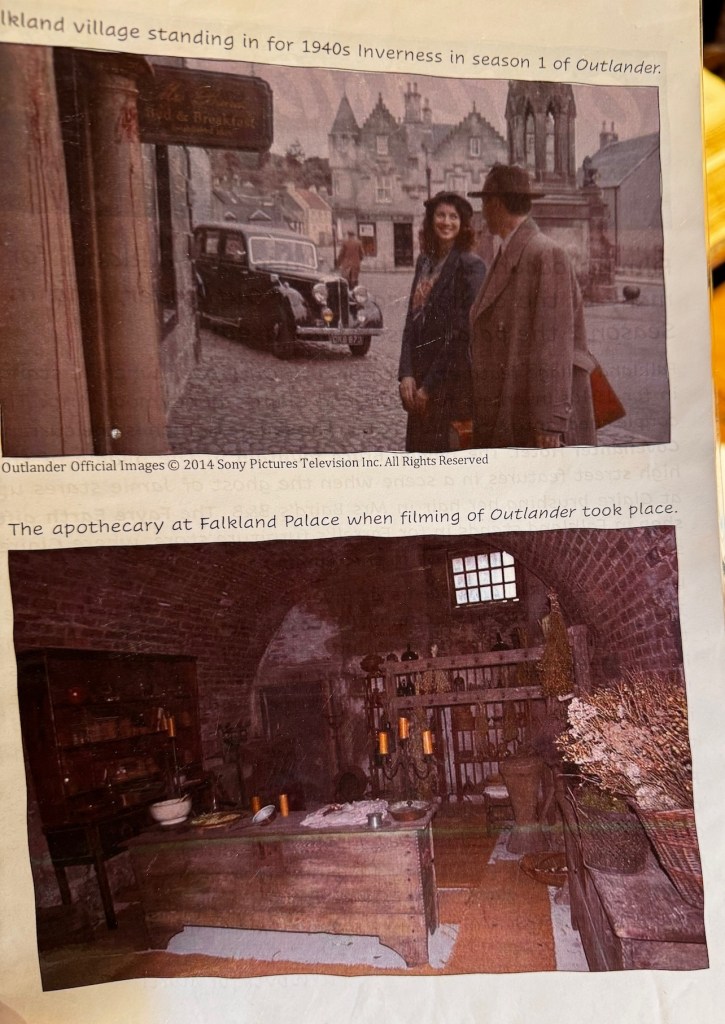
There’s one minor Outlander shooting location inside the Palace. The apothecary scene where Claire sees Mary Hawkins buying laudanum for Alex Randall is there, and the castle has kept the location roughly as it was during filming because why wouldn’t you.
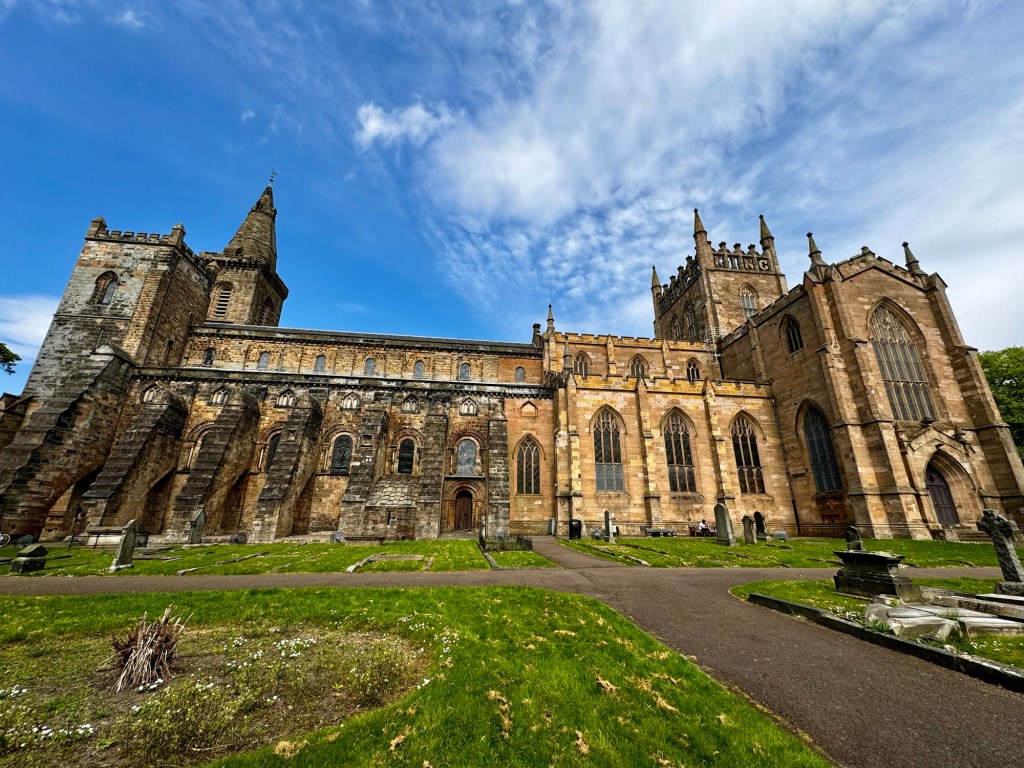
Next on our mini road trip is Dunfermline Abbey & Palace, which was given to Princess Anna of Denmark as a wedding present when she married James VI in 1589. The medieval Benedictine abbey still exists, even after being sacked by Cromwell, and it’s connected to a newer parish church still in use. You can also see ruins from numerous nearby structures, all built by Queen Anna. She turned Dunfermline into an incredible royal residence.
Many of the old kings of Scotland are buried here, including Malcom III and IV, Edgar I, Alexander I, and David I, Malcolm IV, Alexander III, although we don’t know the exact location of their graves, which is disappointing.
The ruins and abbey are stunning.
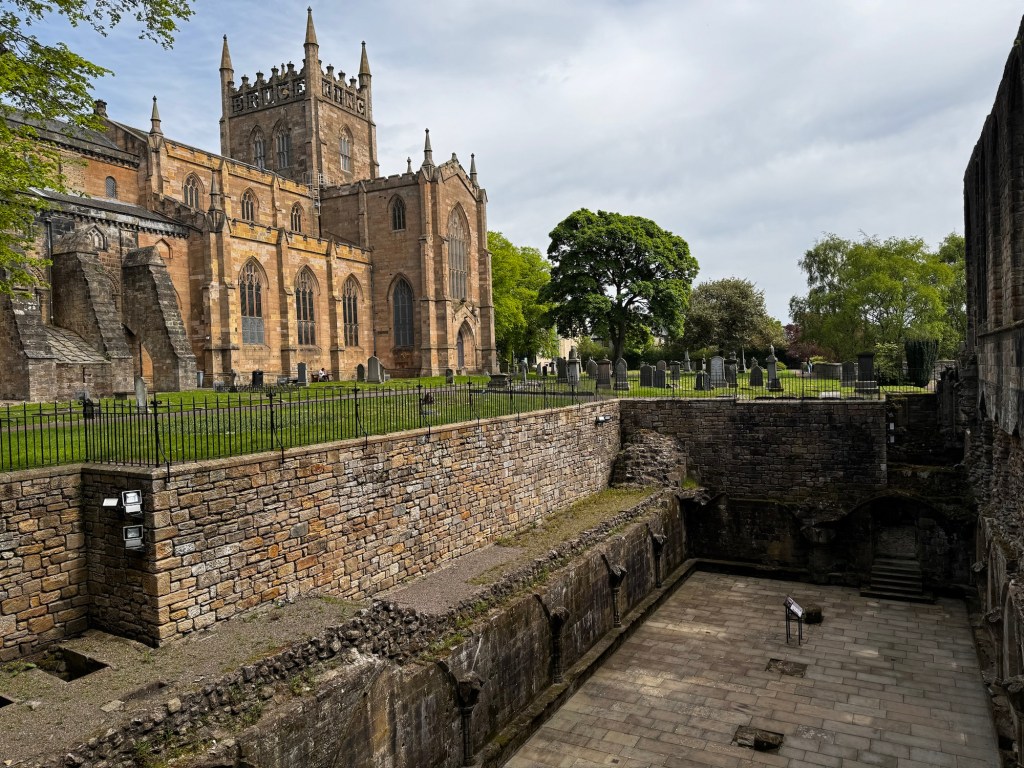

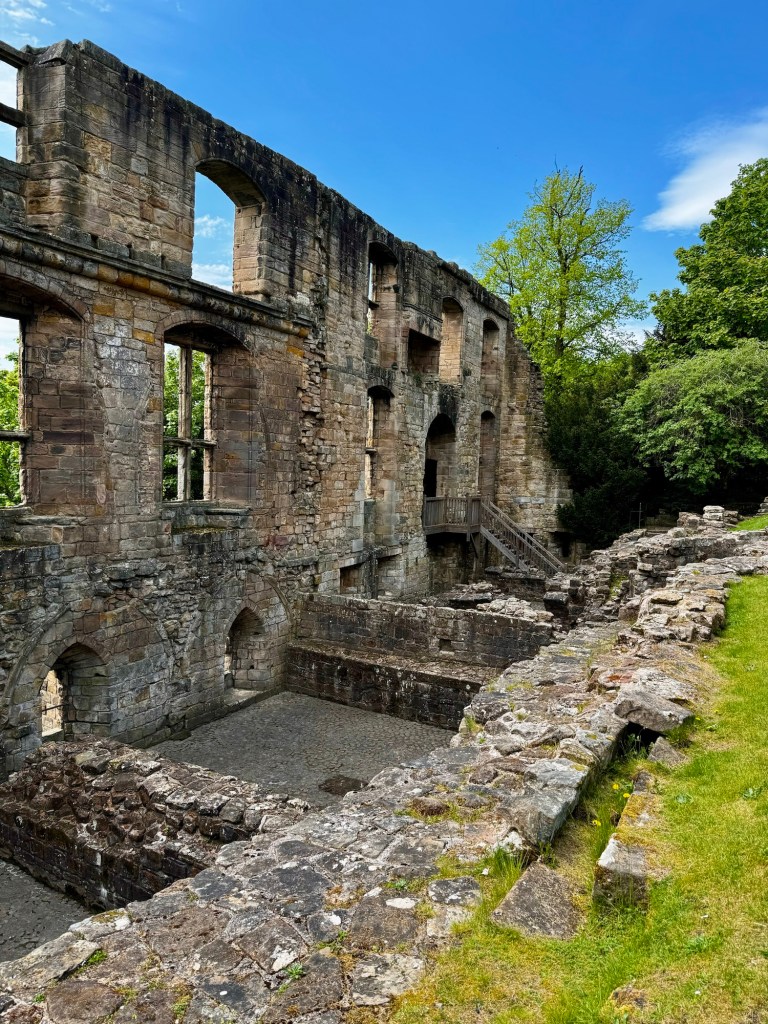
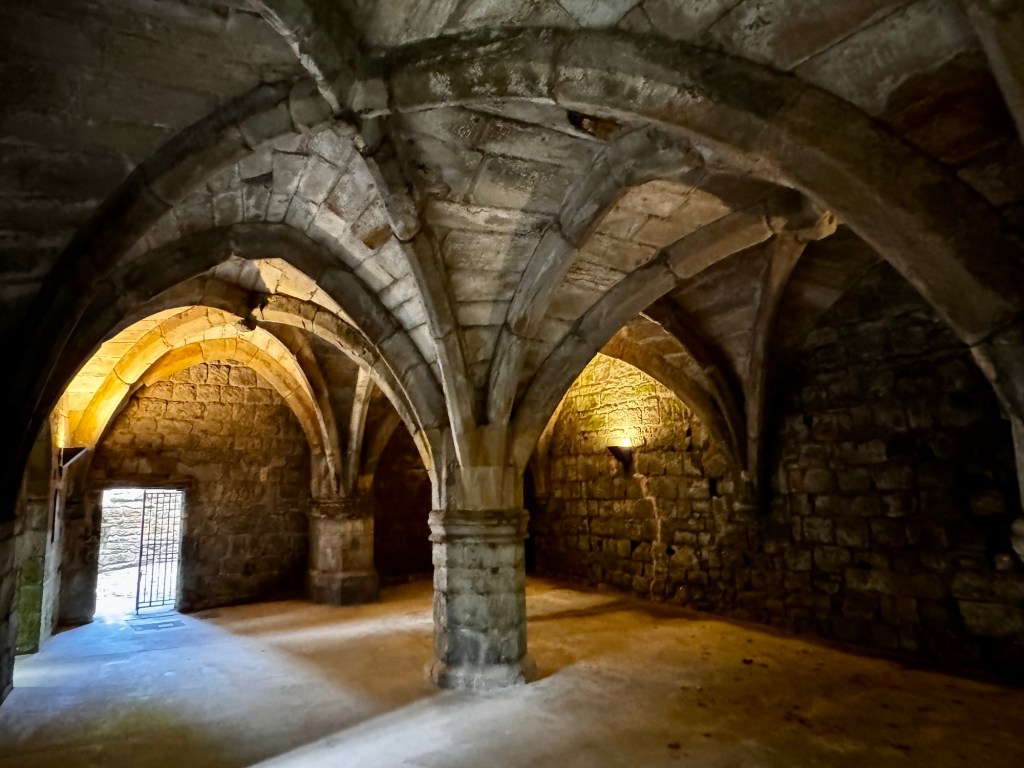
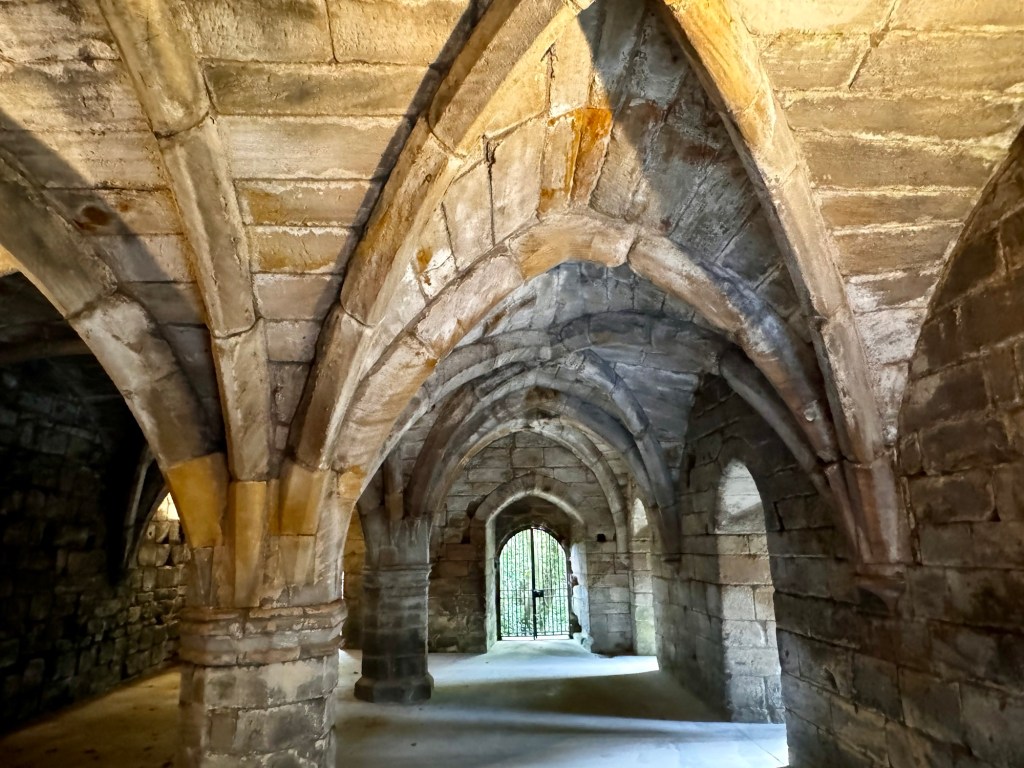
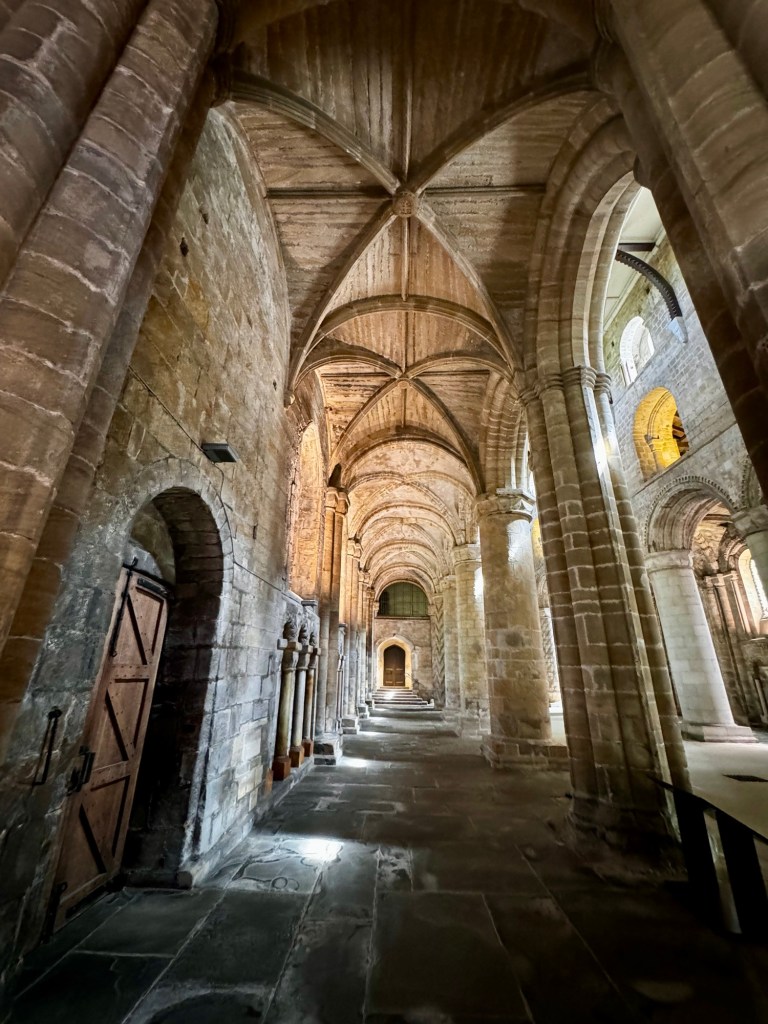


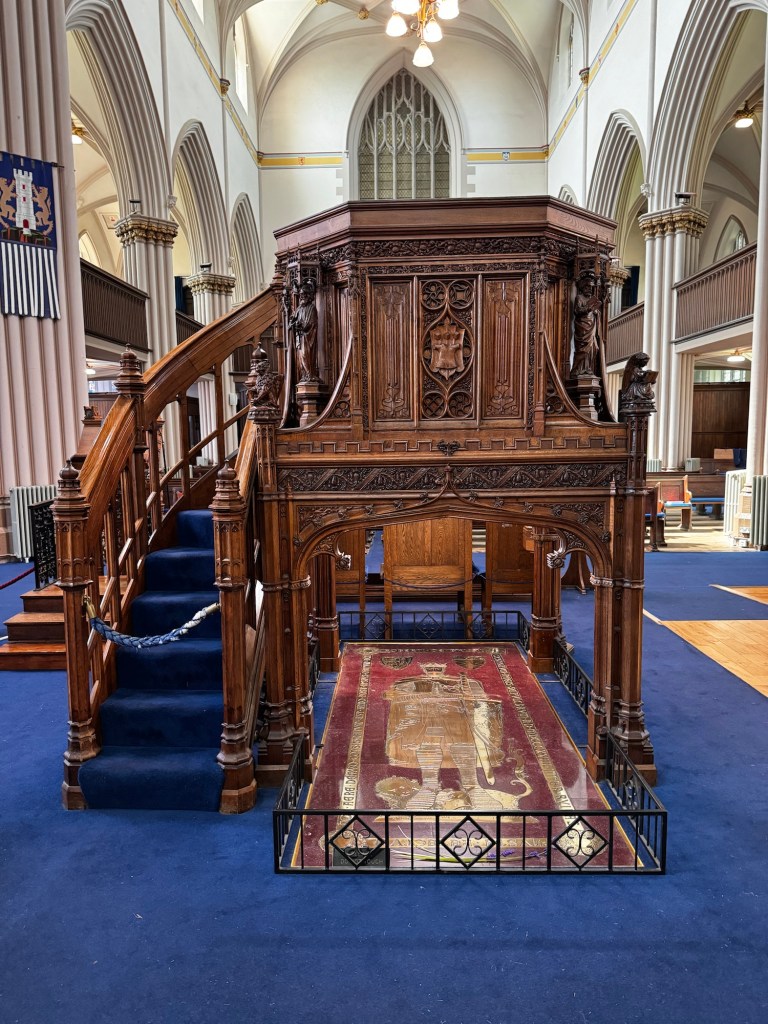
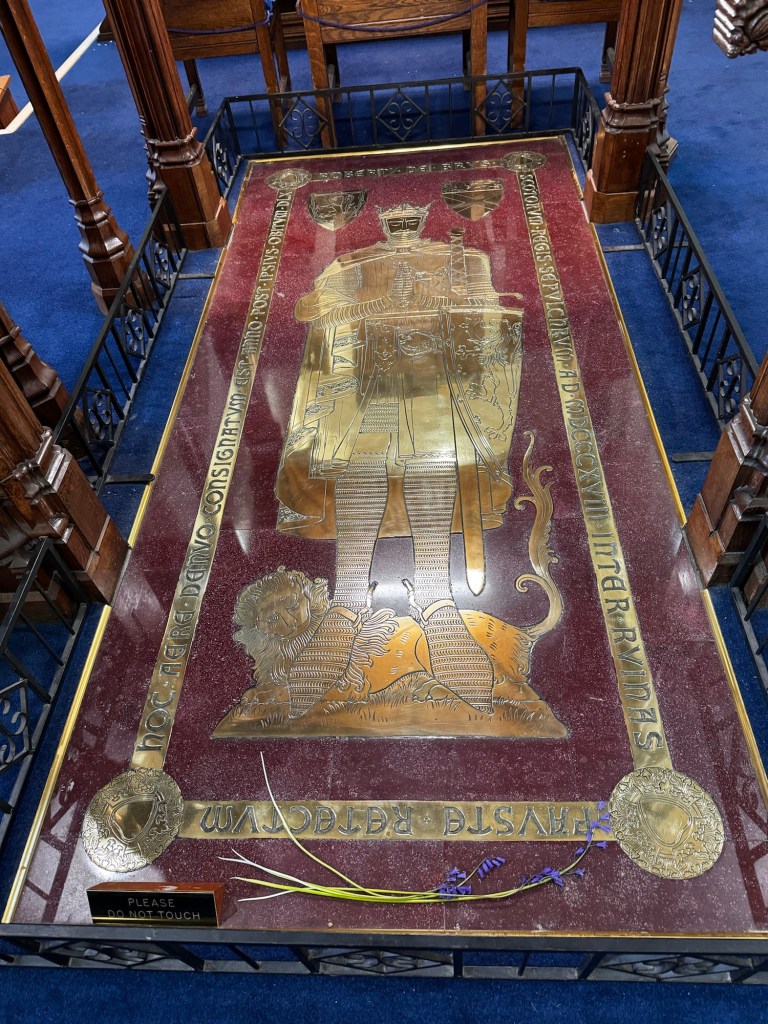
While we may not know exactly who is buried where inside this gorgeous abbey, one dude we do know about, and that is King Robert the Bruce (minus his heart, stay tuned). This is the very incongruous part. His remains were moved around a bit, but he’s now interred in the more recent section of the church (let me tell you its jarring to walk from the ruins of the beautiful stone cathedral into the parish church, like stepping through a portal and not in a good way). The Bruce, man of legend, is installed beneath the raised platform the current pastor sermonizes from, otherwise known as the pulpit. He shouldn’t be underneath this tacky wooden thing. The church is all white walls and blue carpeting and also the shiny gold leaf does not seem like the appropriate vibe. Personally I wouldn’t have planted him there, aesthetically speaking.
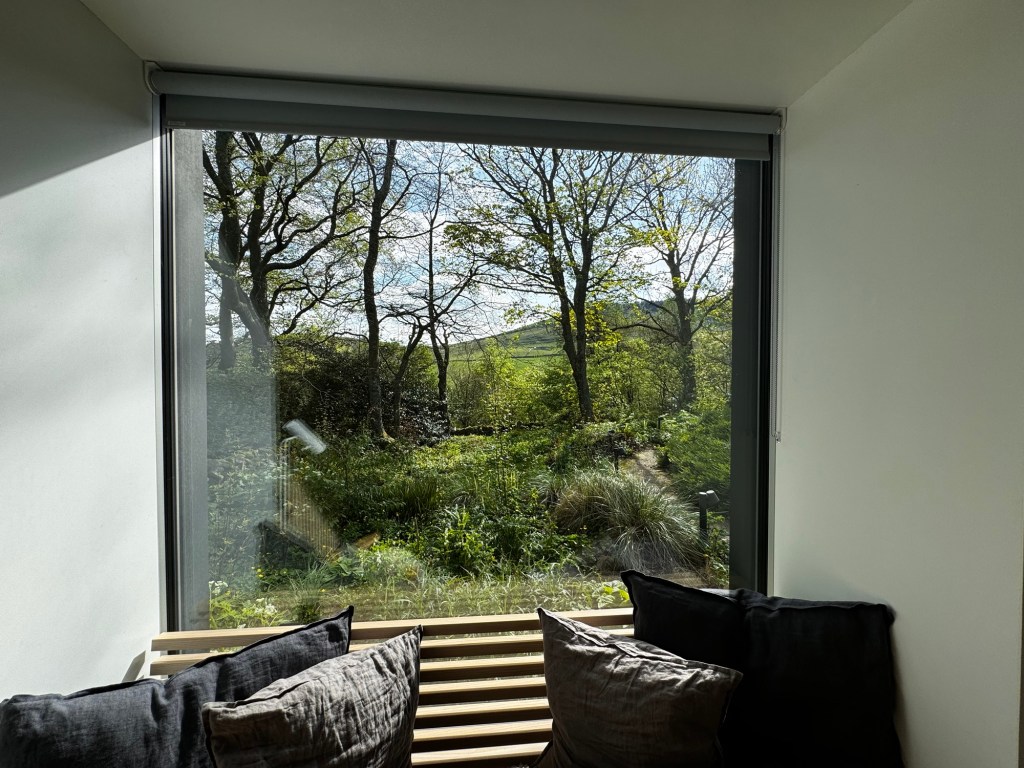
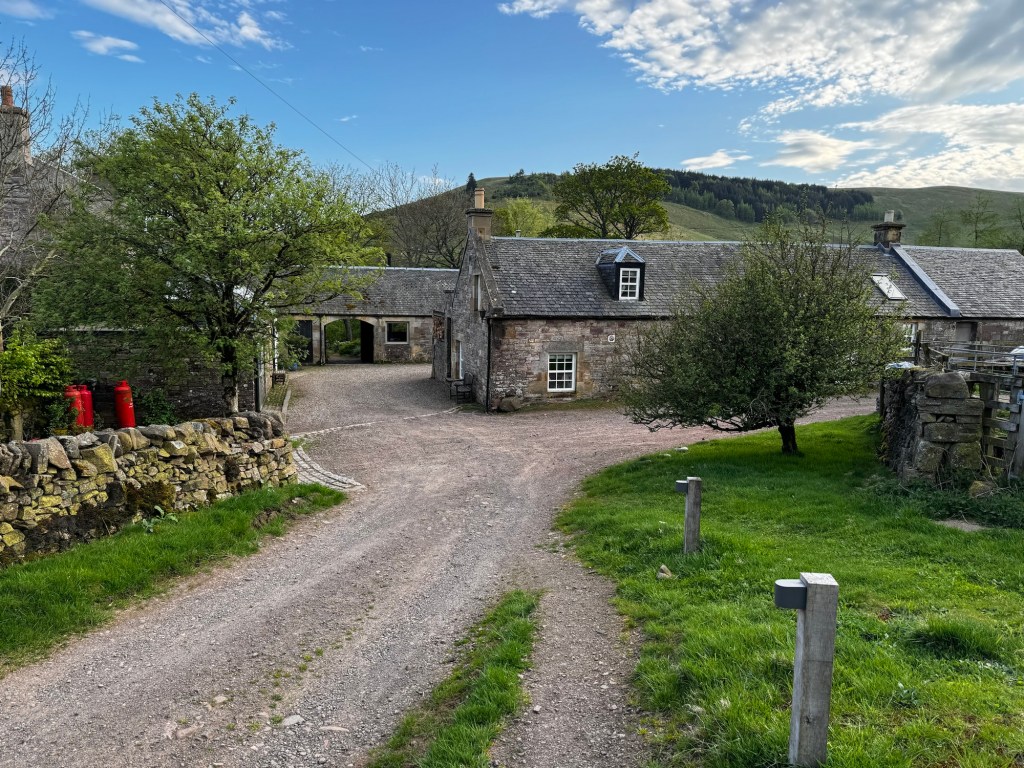
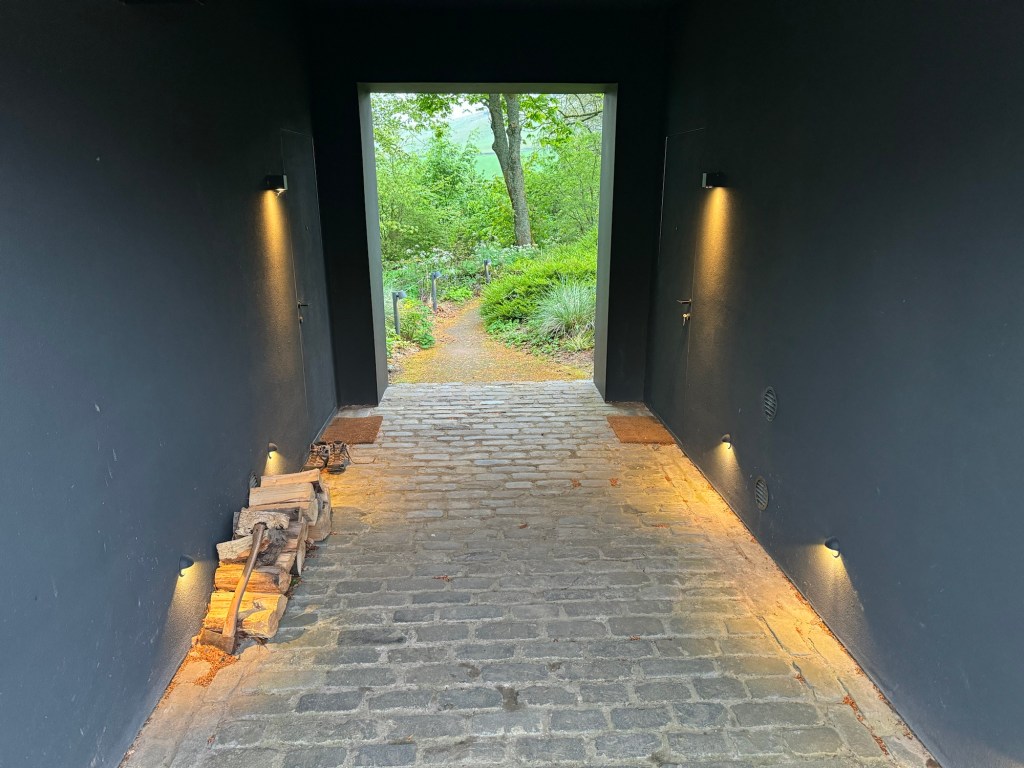
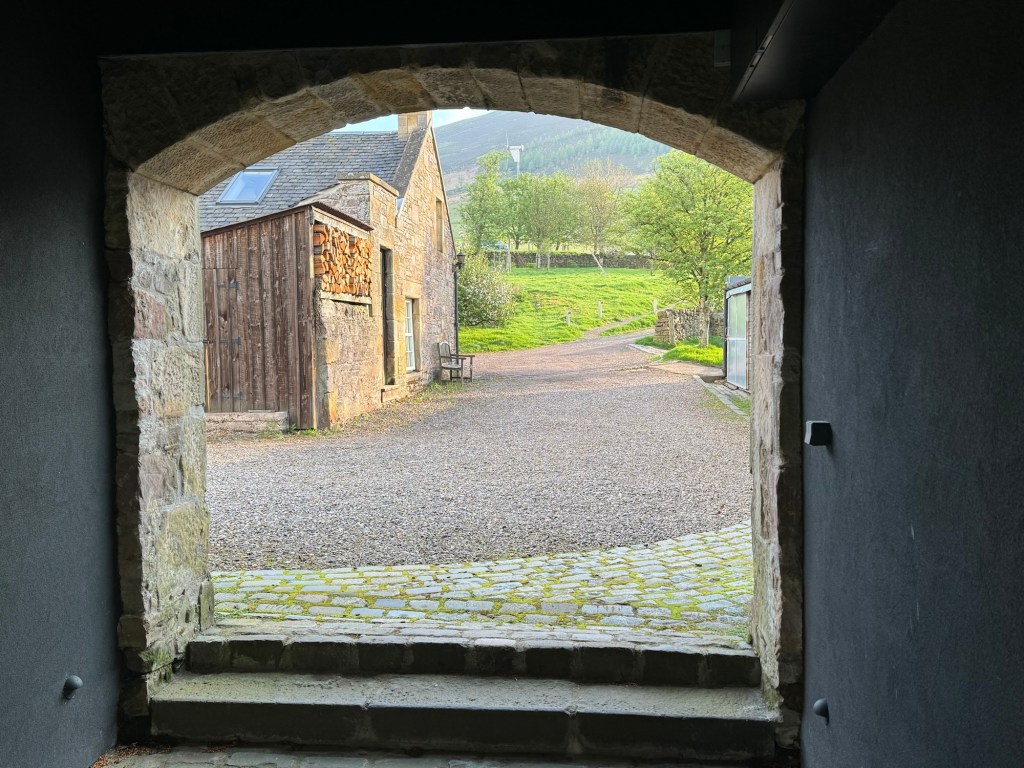
Having had my fill of old royalty, arriving at the beautiful Eastside Cottages was a balm for the soul. The owners of the farm have refurbished the outbuildings with a scandy vibe and it’s quite wonderful. During the pandemic they posted nature moments of Zen on instagram, several minutes of natural beauty, nothing more than a breeze, birdsong, hills and peace. I think I watched every one of them.
Here are a few photos from the lovely five days I spent here.

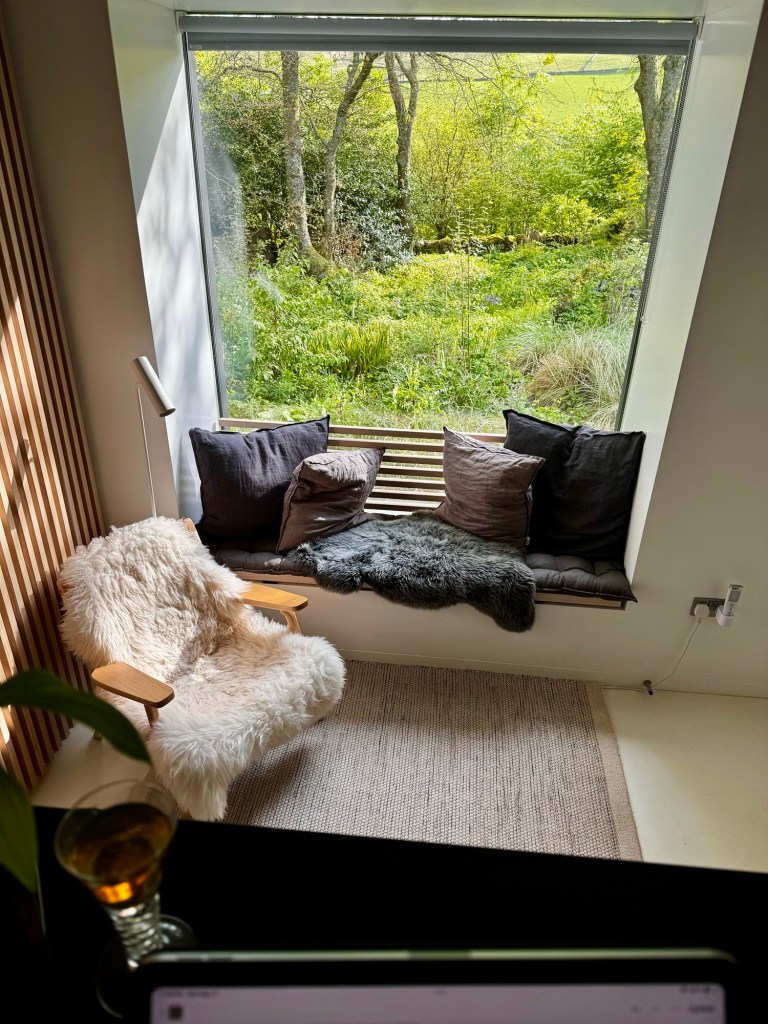
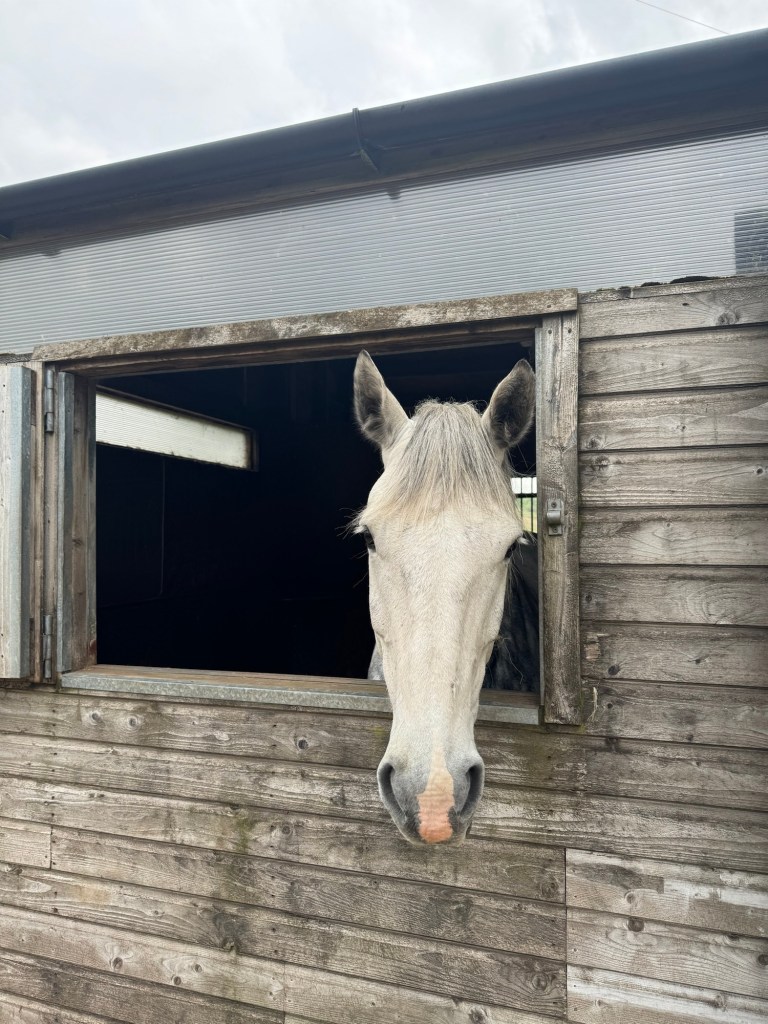


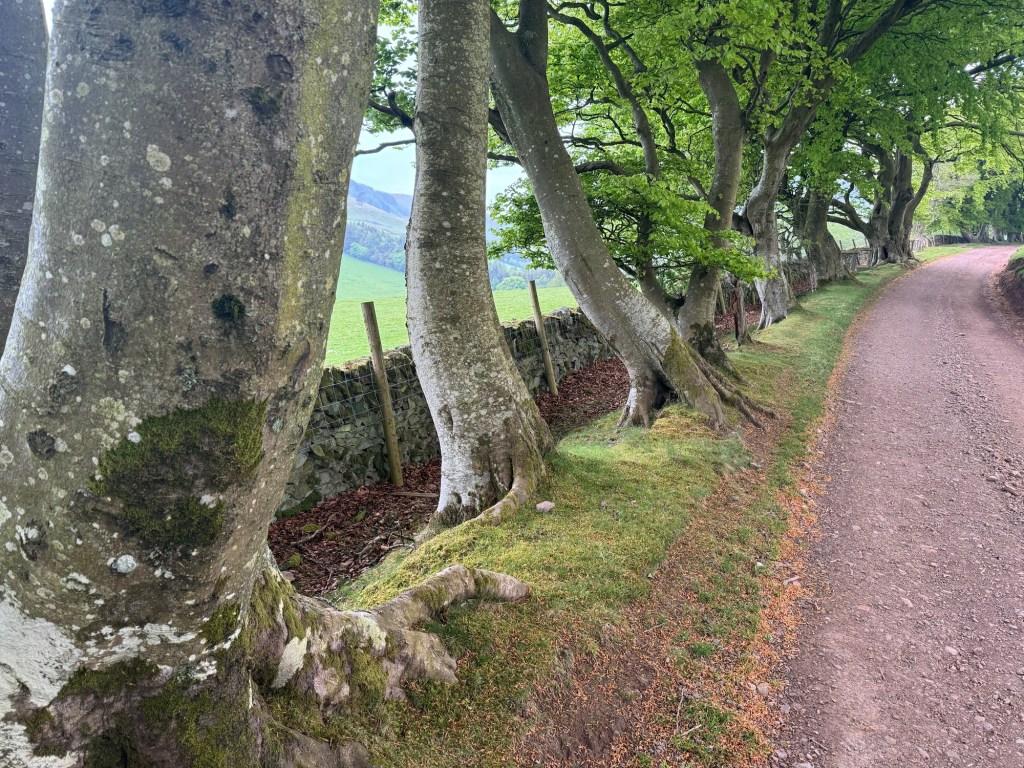
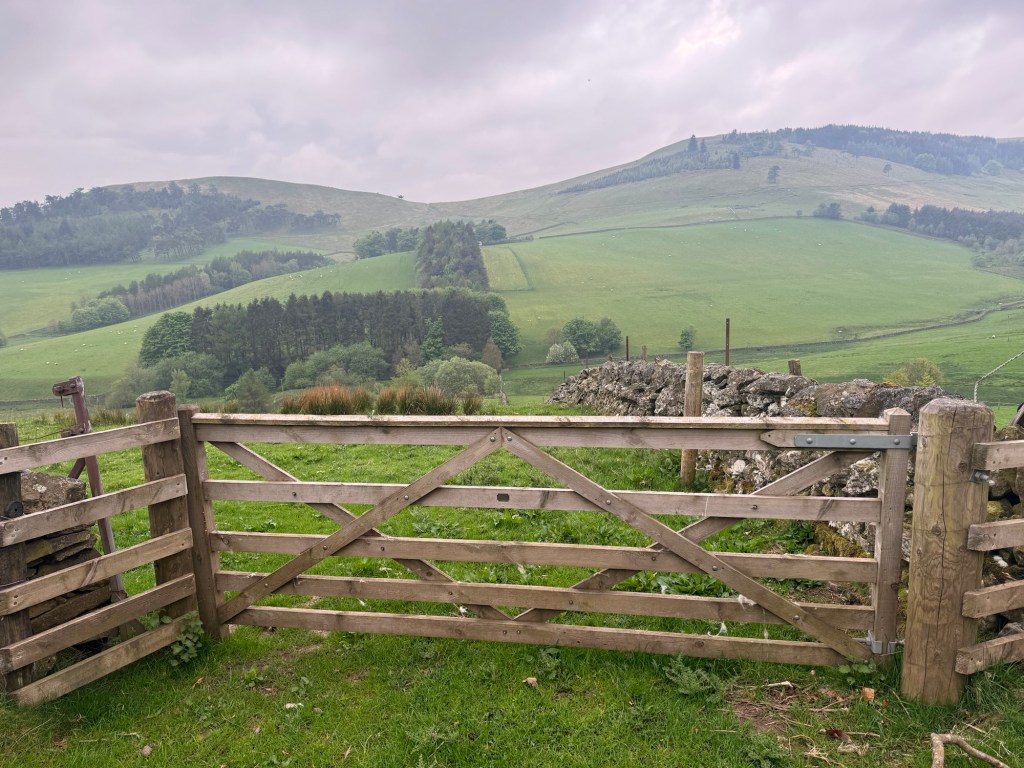
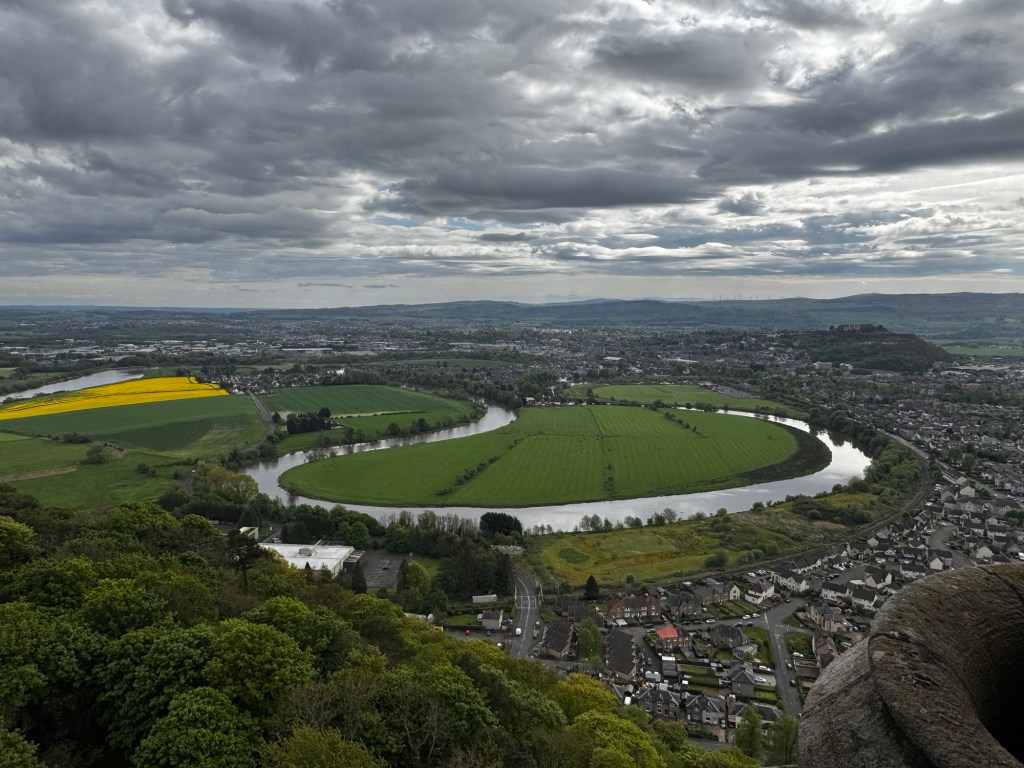
My first night, I walked up to the top of the two hills behind the farm, called West Kip and East Kip. A great walk with unbelievable views toward Edinburgh and the River Forth and across the Pentland Hills.

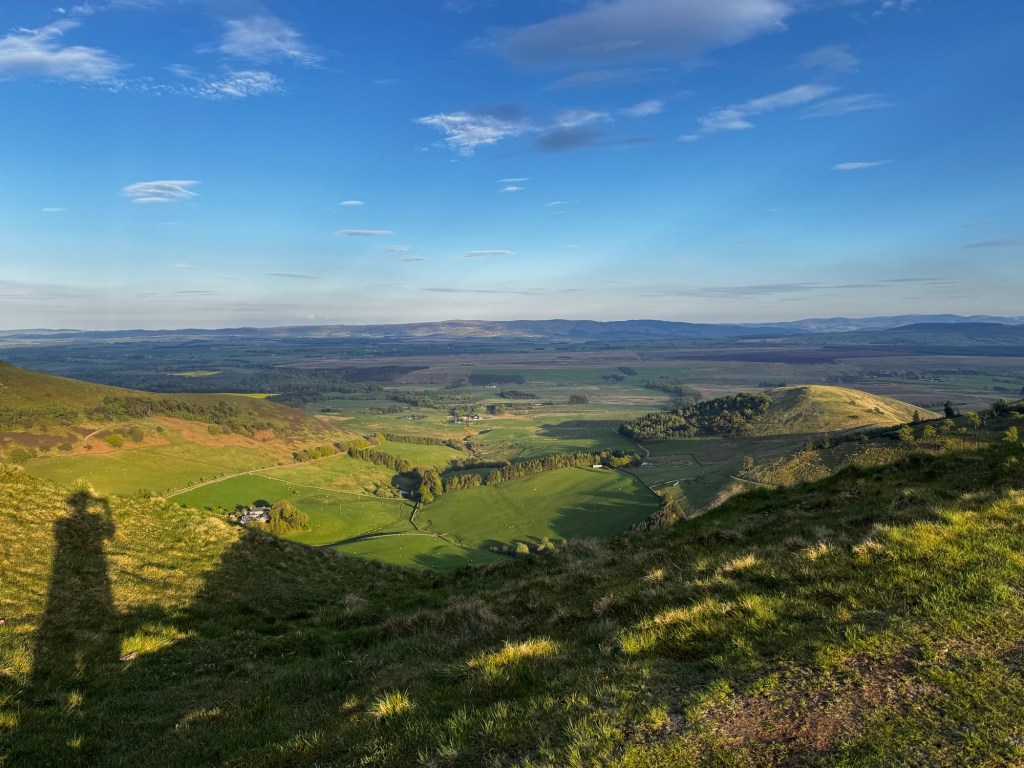
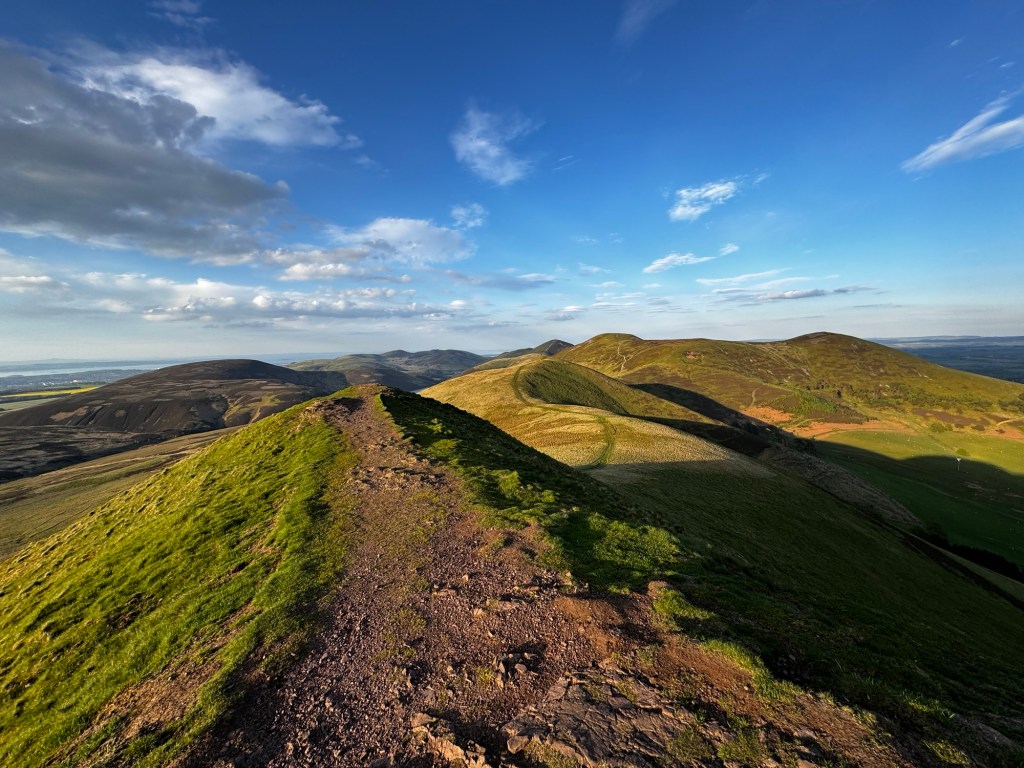

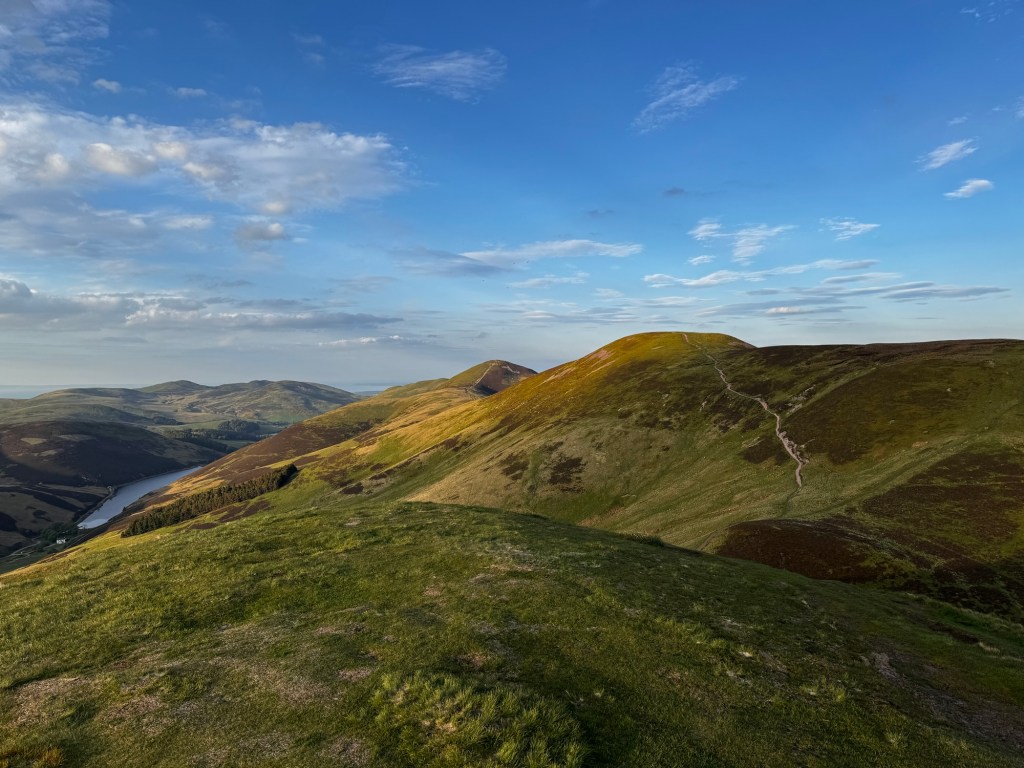
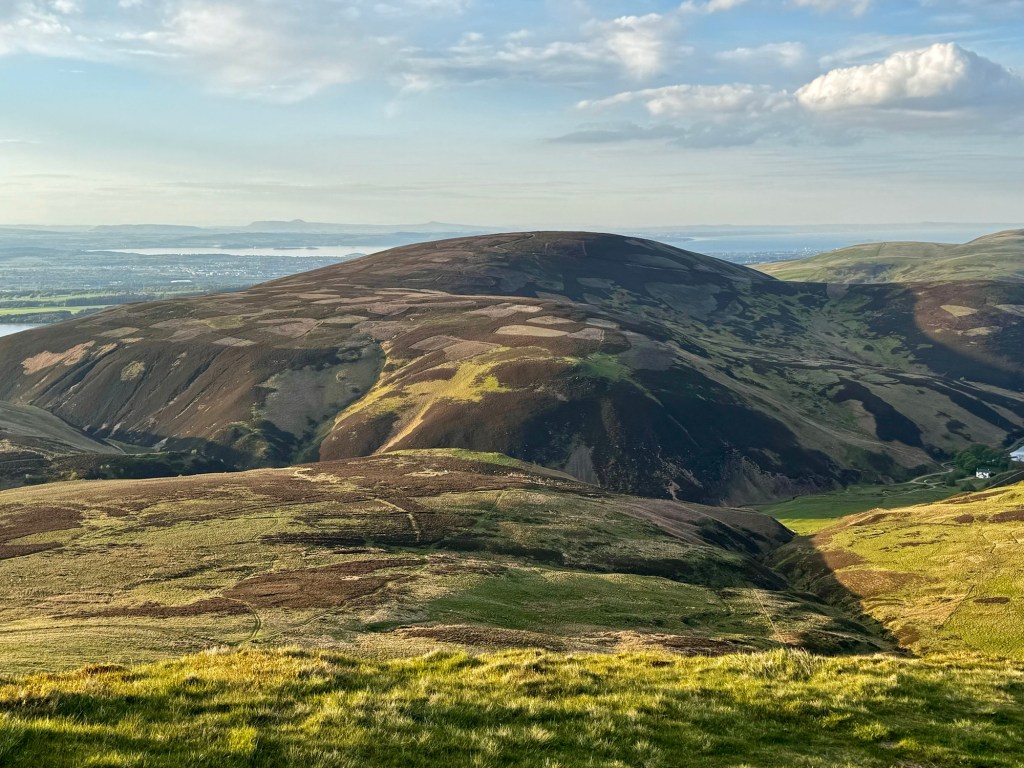

Now listen. This is the part where I missed the most spectacular Northern Lights display in the history of the freaking UK. Why? Largely because my news sources are all eight hours in the past. I simply didn’t realize and it was super irritating to wake up and see my instagram feed the next day. And here I am out in the country with no light pollution and gorgeous hills.
I don’t want to hear any more about it, okay?
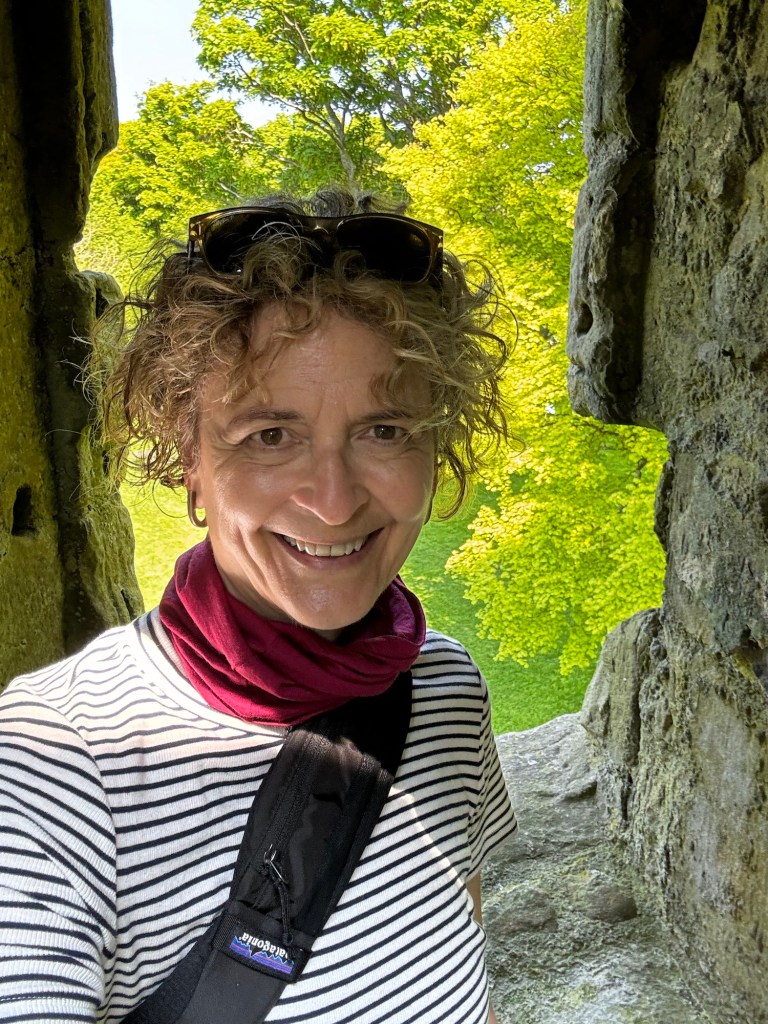
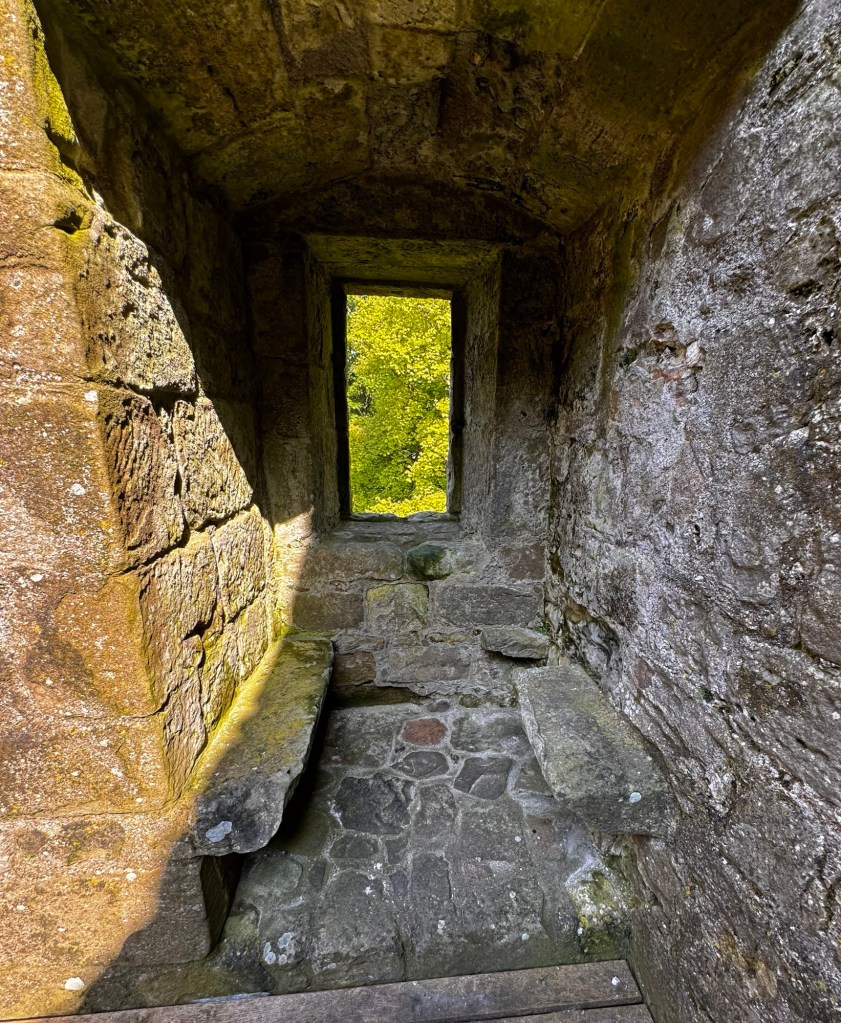
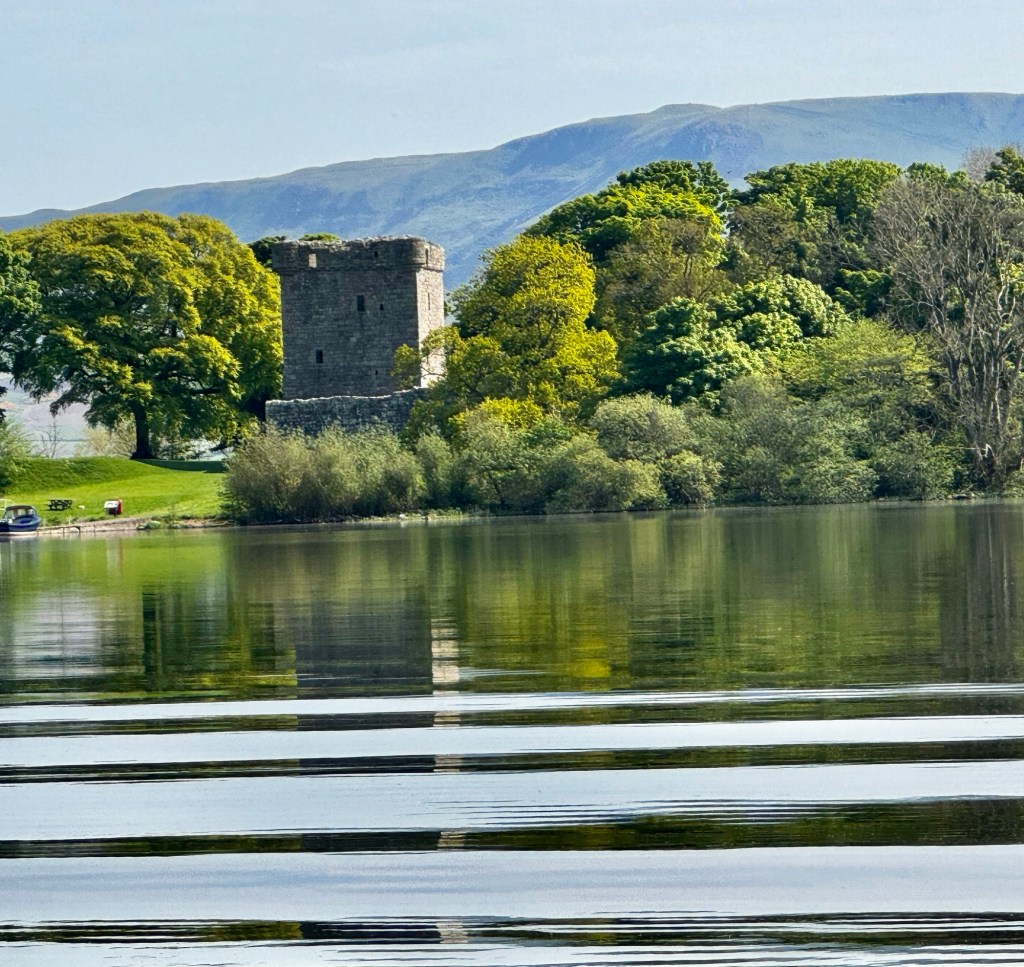
So we’ll not speak of it again but will simply move onto the following morning when I took a boat out to Loch Leven Castle.
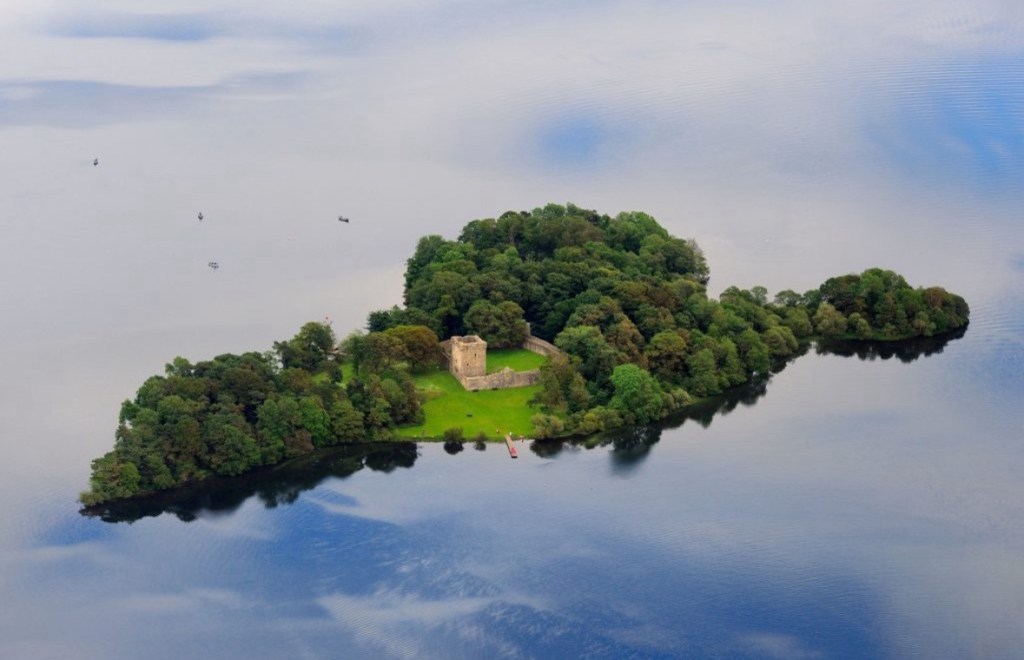
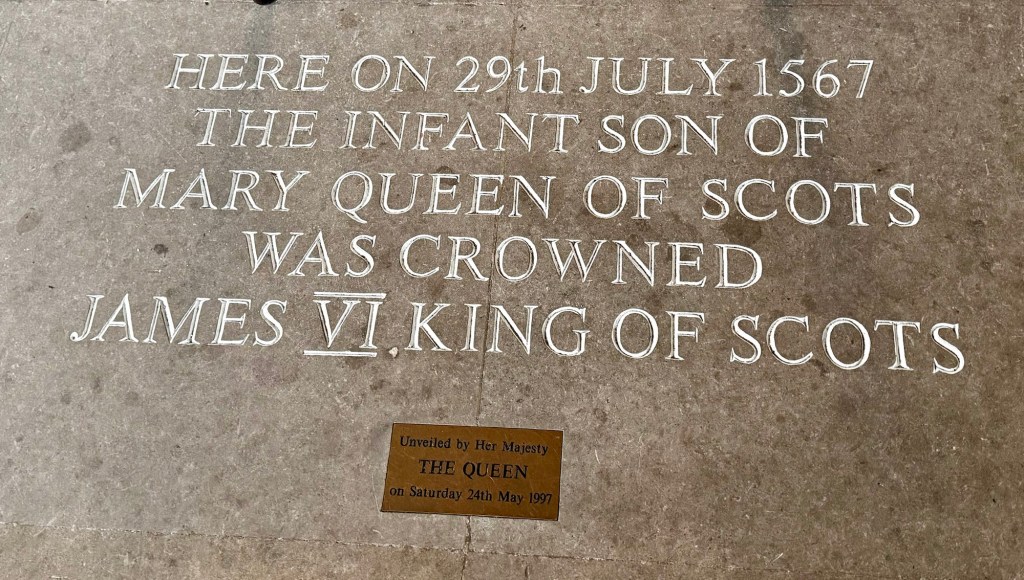
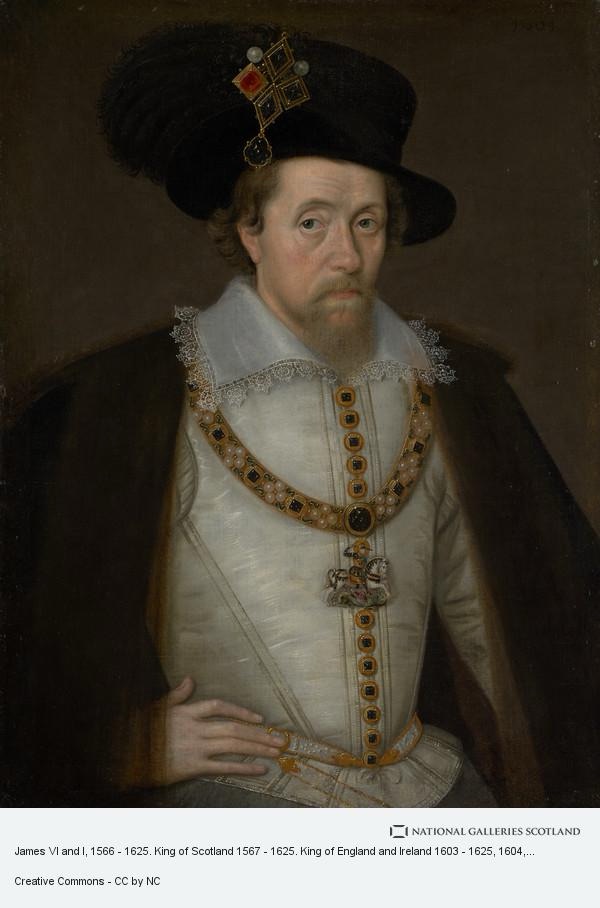
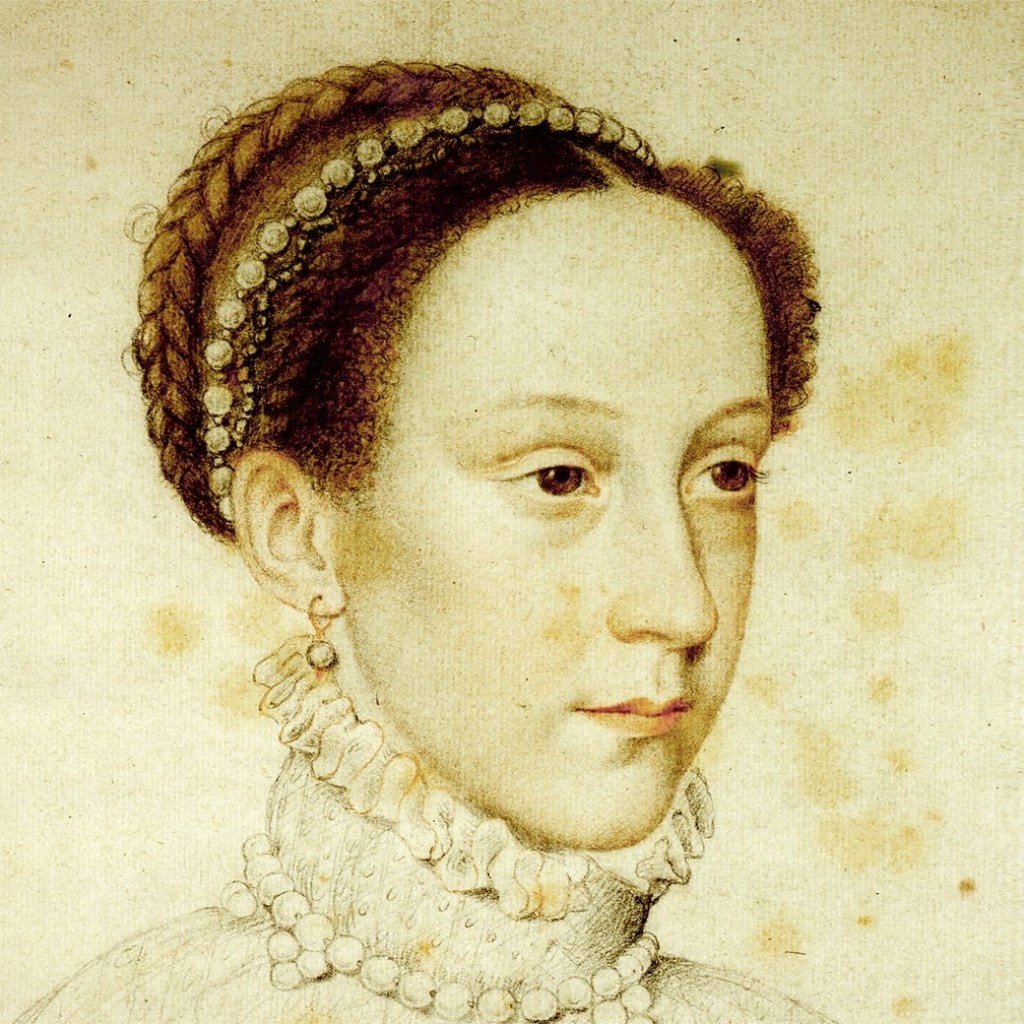
The castle was built in 1300 and was likely captured from the Edward I’s forces by William Wallace. The man was everywhere. It was later visited by Robert the Bruce (also everywhere) and his son David II. Mary QOS (ditto) was a guest there on three occasions, but the castle is most famous for her fourth involuntary return. Her marriage to Lord Bothwell after Darnley’s murder was too much for some of her lords and lo, they became rebellious. Mary ultimately surrendered to them after a battle and was taken prisoner and sent to Loch Leven under the watchful eye of its owner, Sir William Douglas. She was pregnant at the time, and during her year-long imprisonment she miscarried twins. She was also forced to abdicate in favor of her infant son James – he was crowned at Stirling five days later. The original annus horribilis.
With the help of the illegitimate son of her captor, the guy who took care of the boats, she managed to escape, and quickly raised six thousand troops. Sadly she was defeated at the Battle of Langside just two weeks later, and fled to England, never to return.
It was a gorgeous day for a visit, although a little on the warm side for the things in my suitcase.
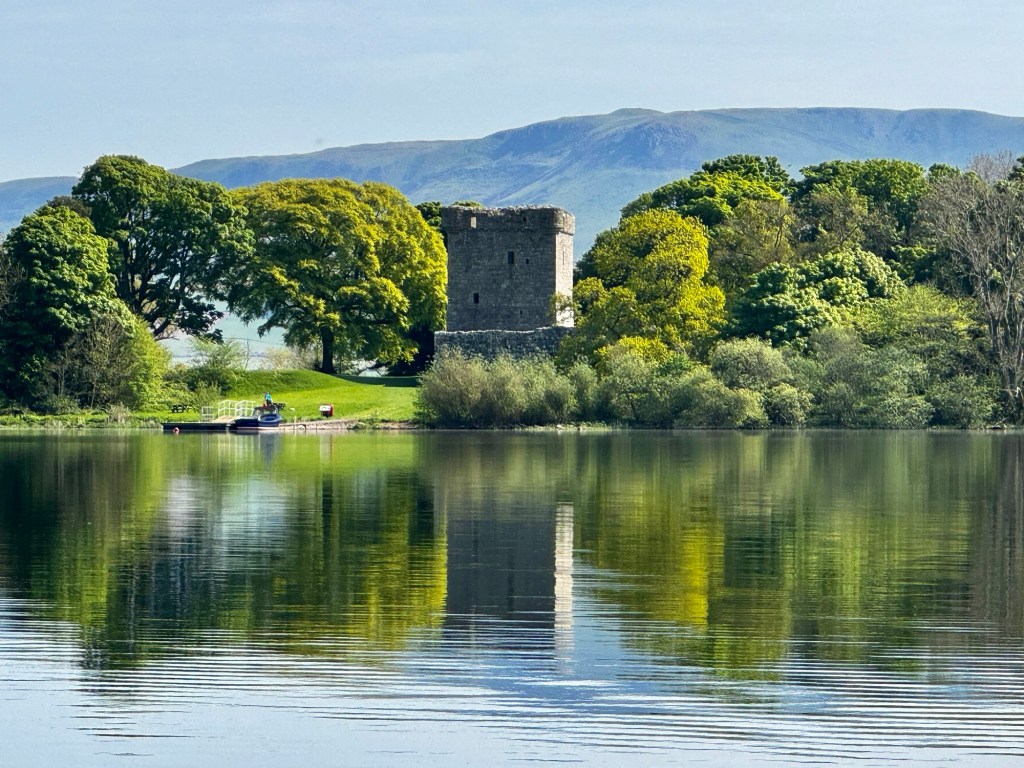

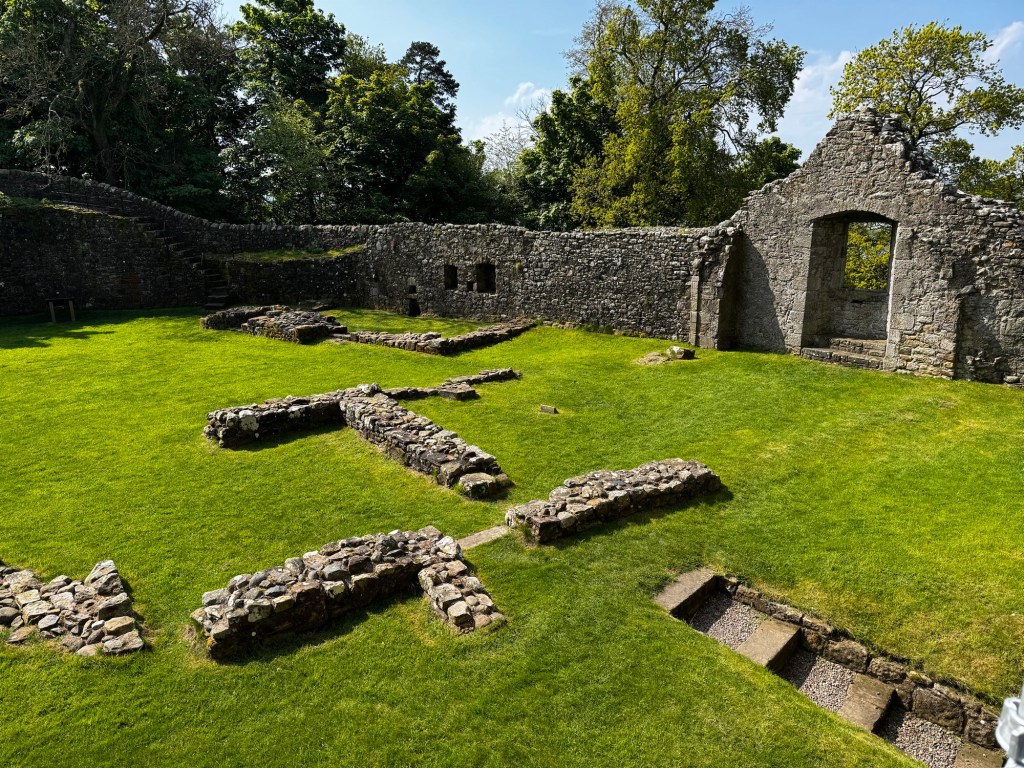
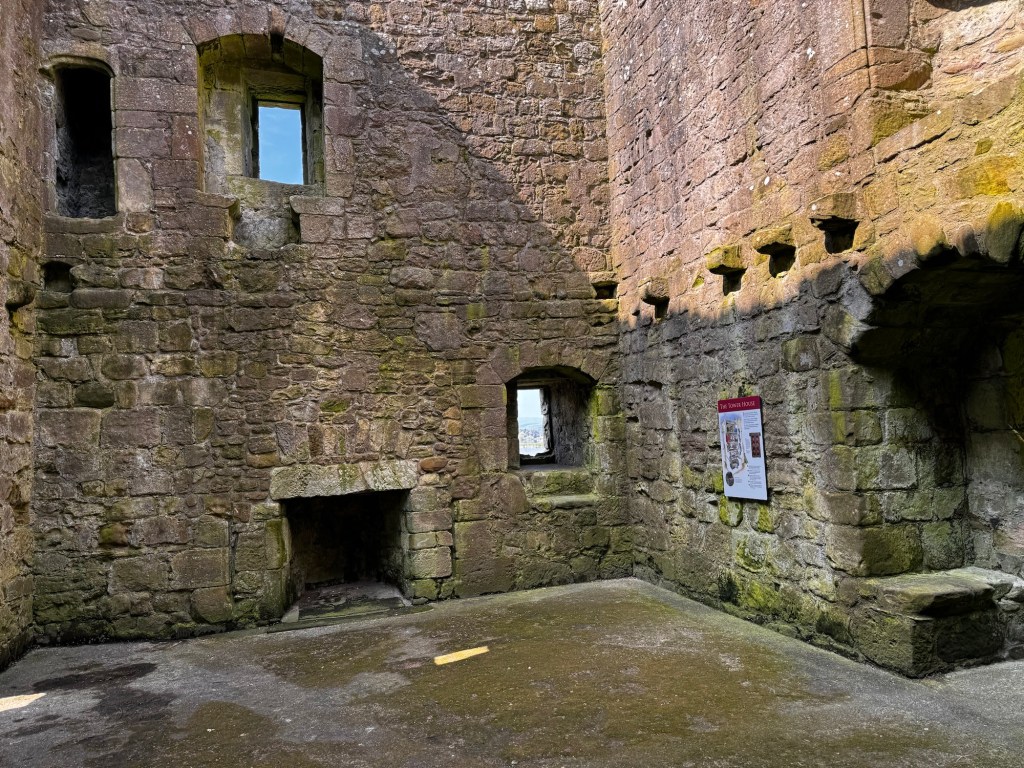
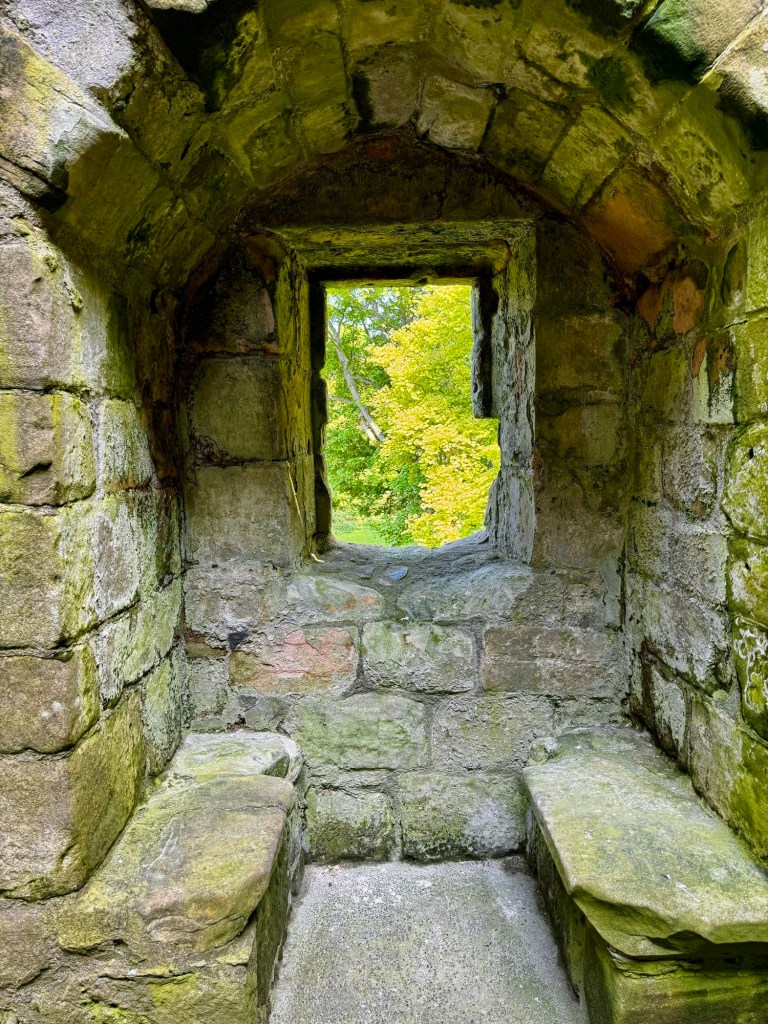
As I waited by the dock for the boat to arrive (yes they take twelve of us out there and then leave us all alone!), I had to appreciate this woman’s going-to-a-castle fashion. She deflected my compliment, as all women do, by telling me she bought it at H&M, and shrugged apologetically. Let’s stop doing that, shall we ladies?
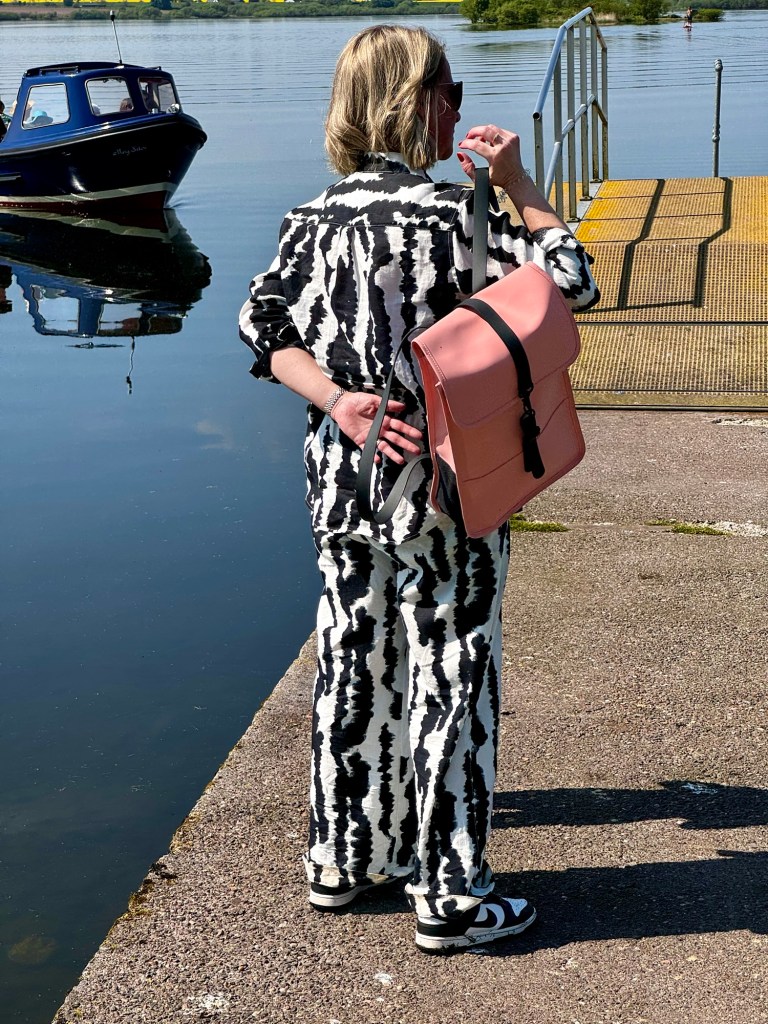
When our boat arrived, a dad and his son appeared at the dock on a paddleboard, basically crashing the party without paying Historic Environment Scotland ten pounds for the privilege. Our boat captain explained they couldn’t land there and kindly asked whether the young boy needed to use the restroom. The dad assured her they were just hanging out for a moment. As soon as the boat launched, we looked back, and sure enough, dad was pulling the board onto the shore. Both the captain and the fashion lady were appalled and agreed this was “quite cheeky” behavior. I know I’m pathologically charmed by a British accent and all, but really what a lovely way to cast shade.
The next day I drove to the East Lothian coast to visit yet another castle and the best place to live in the UK.
The castle is a ruin called Tantallon. It’s stunningly huge. Built in the mid-1300s by the “Red Douglas family,” it’s considered to be the last truly great castle built in Scotland. Besides one recorded visit from Mary QOS, it most notably was besieged a lot. James IV in 1491, James V in 1528 and of course Oliver Cromwell, which explains why there are no windows, just embrasures for cannons. Cromwell’s attack caused such destruction that the fortress was abandoned afterward.
Honestly, wouldn’t you like to tell Cromwell that this whole venture of his doesn’t end well and so he should stop being a destructive dickhead?
The Douglas family was in fact feeling all schadenfreude when they heard the news that Cromwell’s body was exhumed from Westminster Abbey by Charles II after the Restoration, hung and beheaded, with his gnarly old head displayed on a pike for 30 years. Ah olden times. (See previous blog)
Some Tantallon photos:
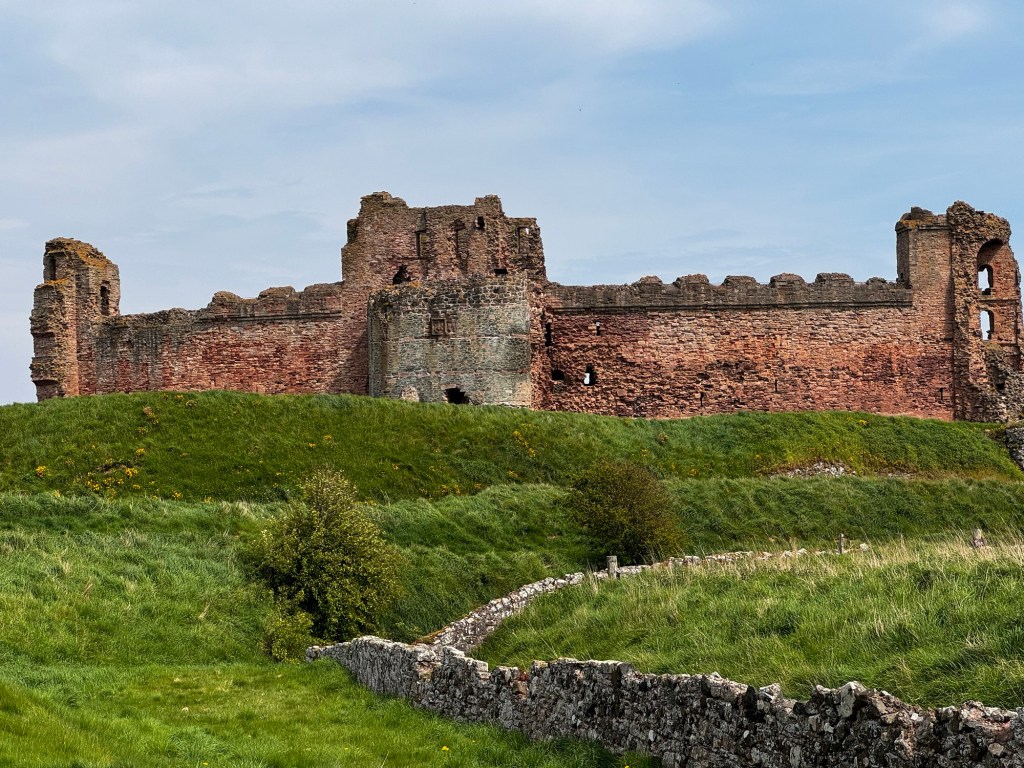
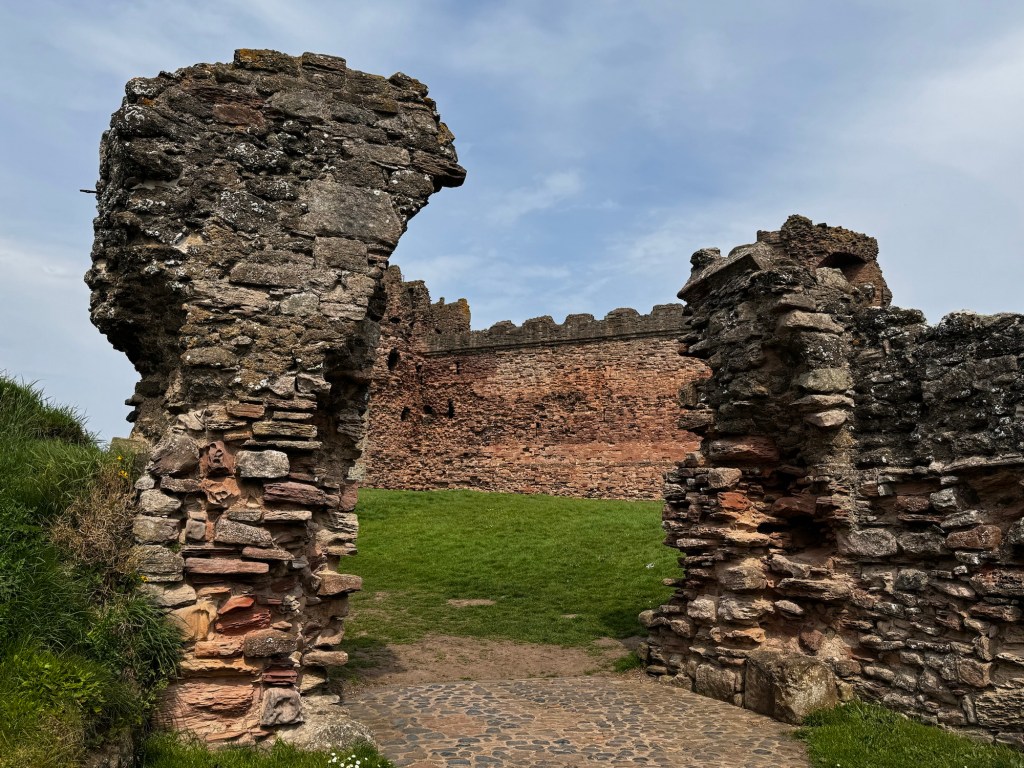
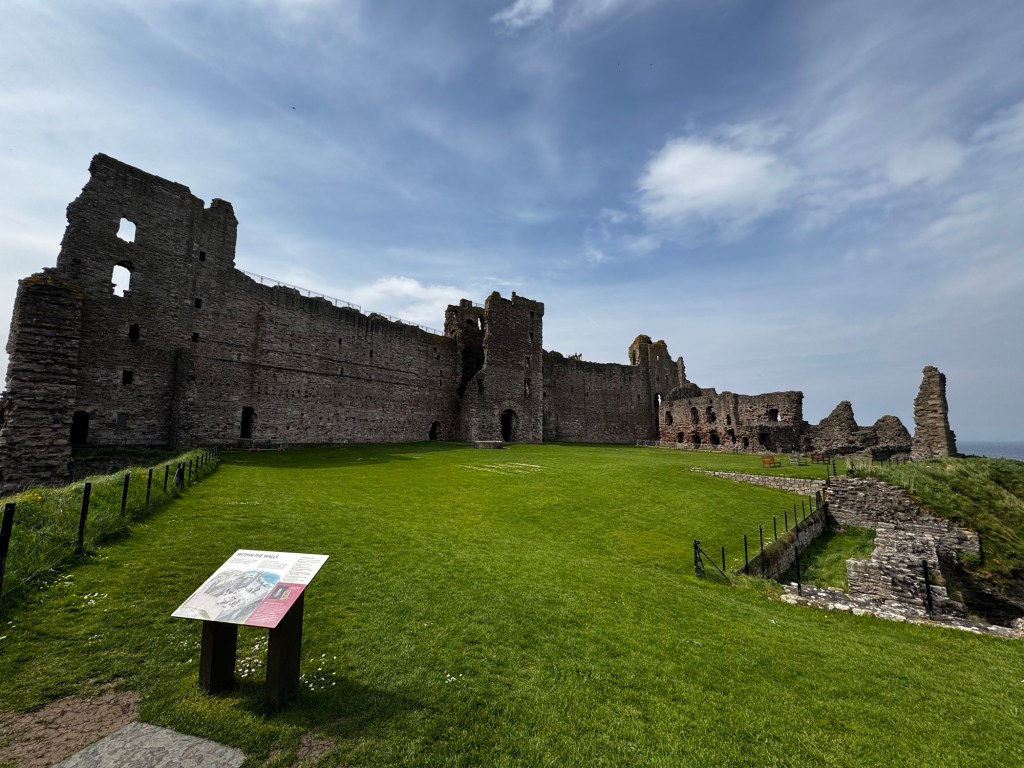
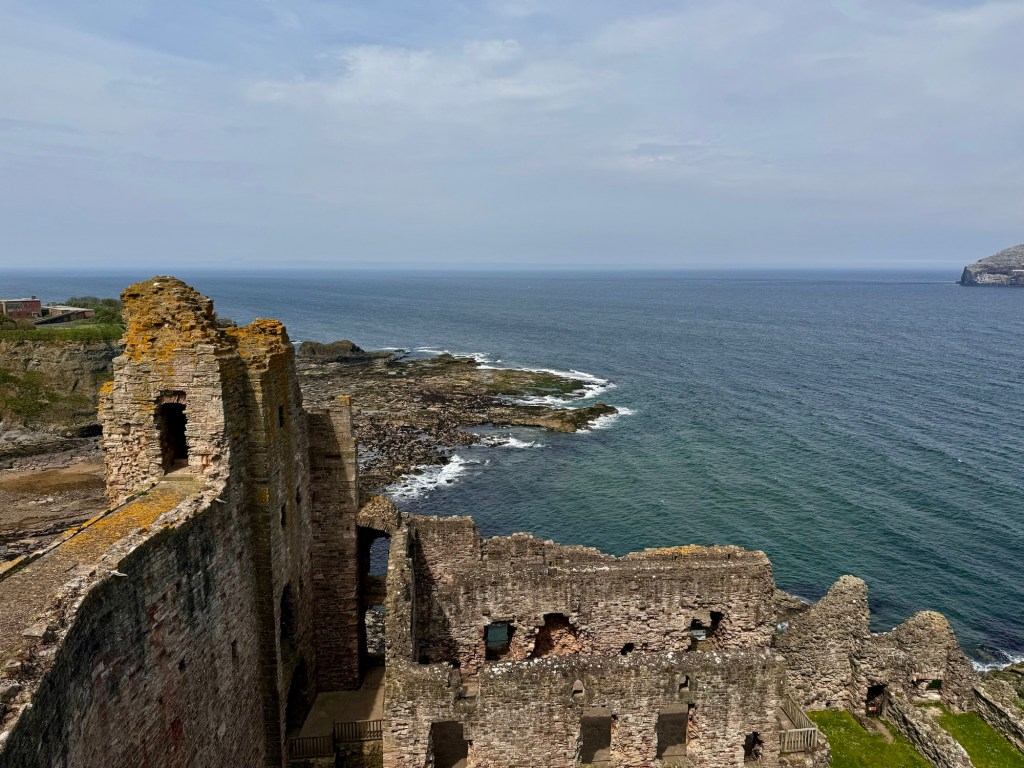
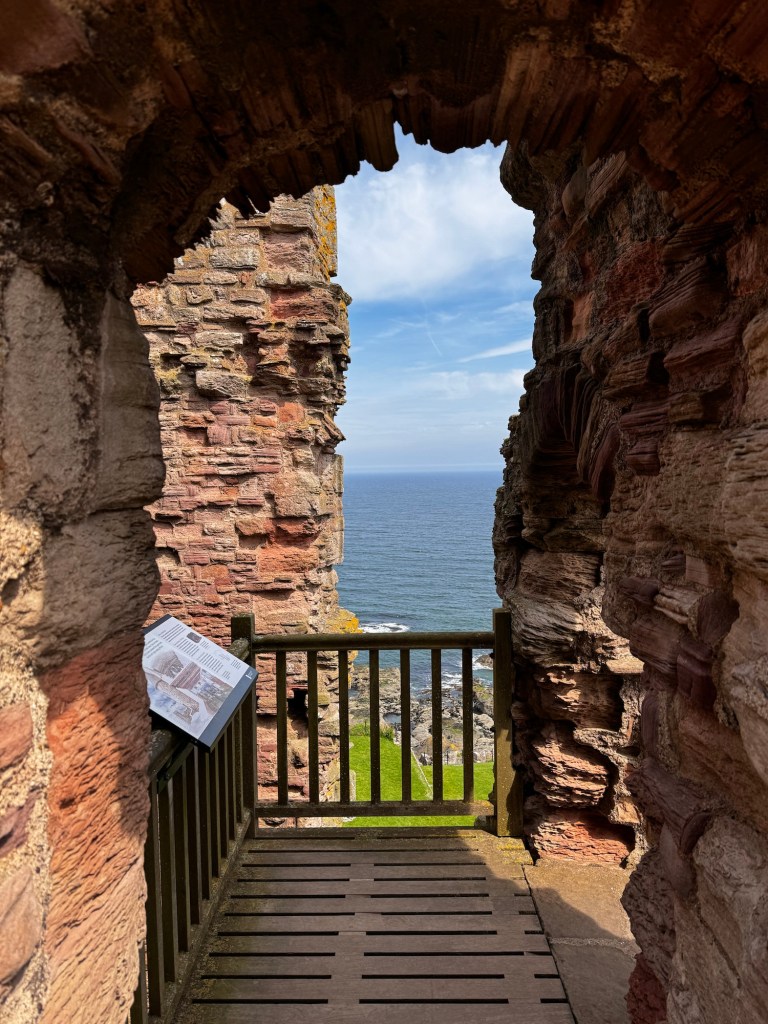
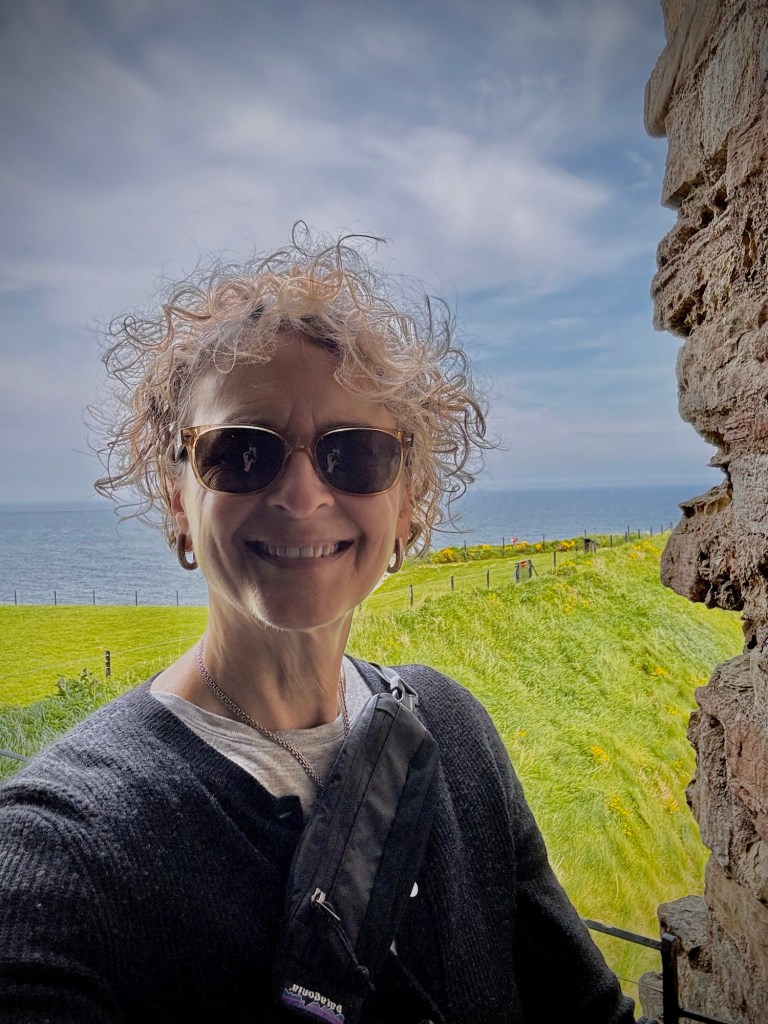
And again with the sketchy spiral staircases and big open climbs to the tippy top, and also, cliffs. Even the warning signs around the property are comical when seen through American eyes where everything is so regulated and guard-railed. Half the ruins in Scotland would be shut down under our public safety rules.
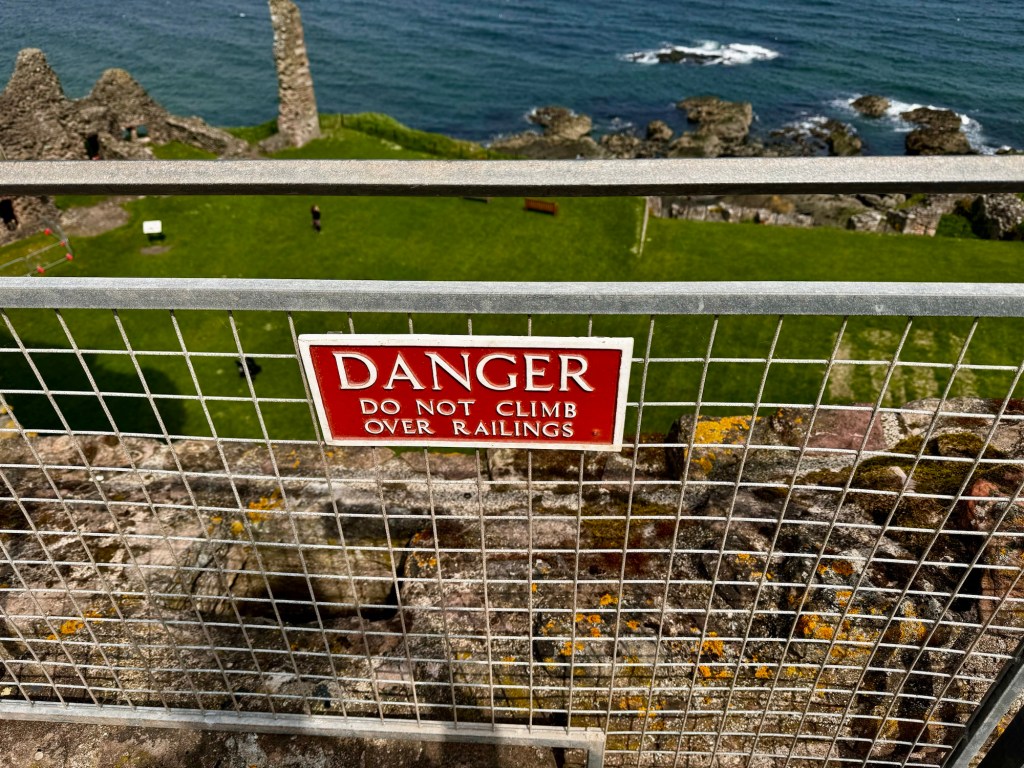
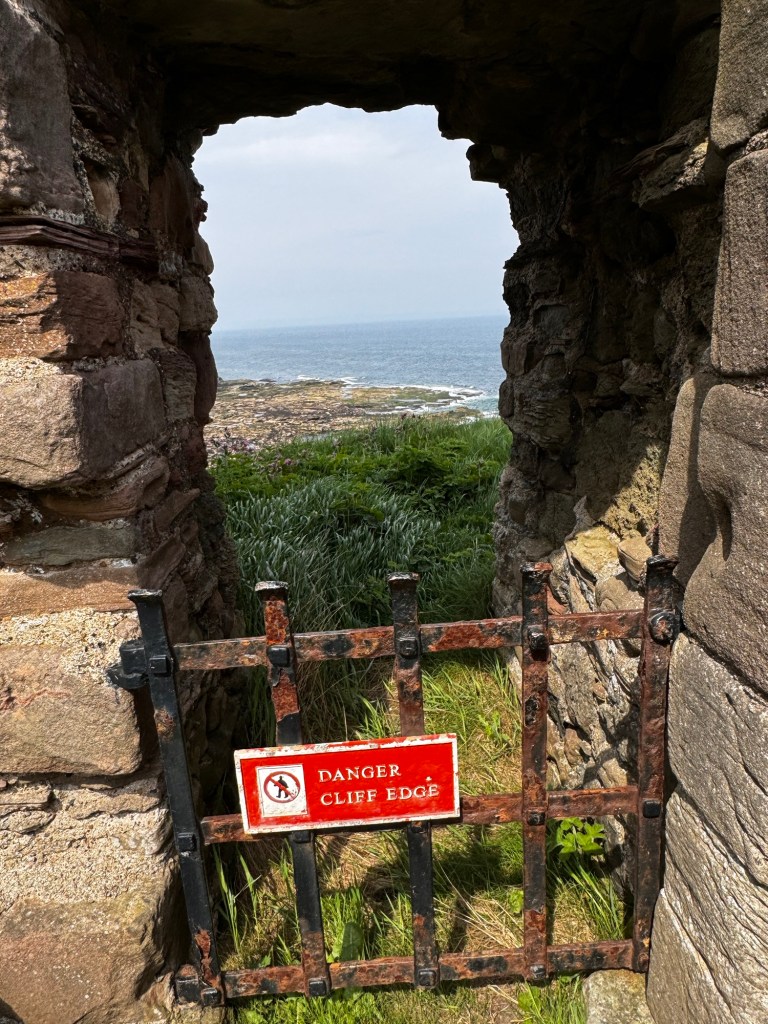

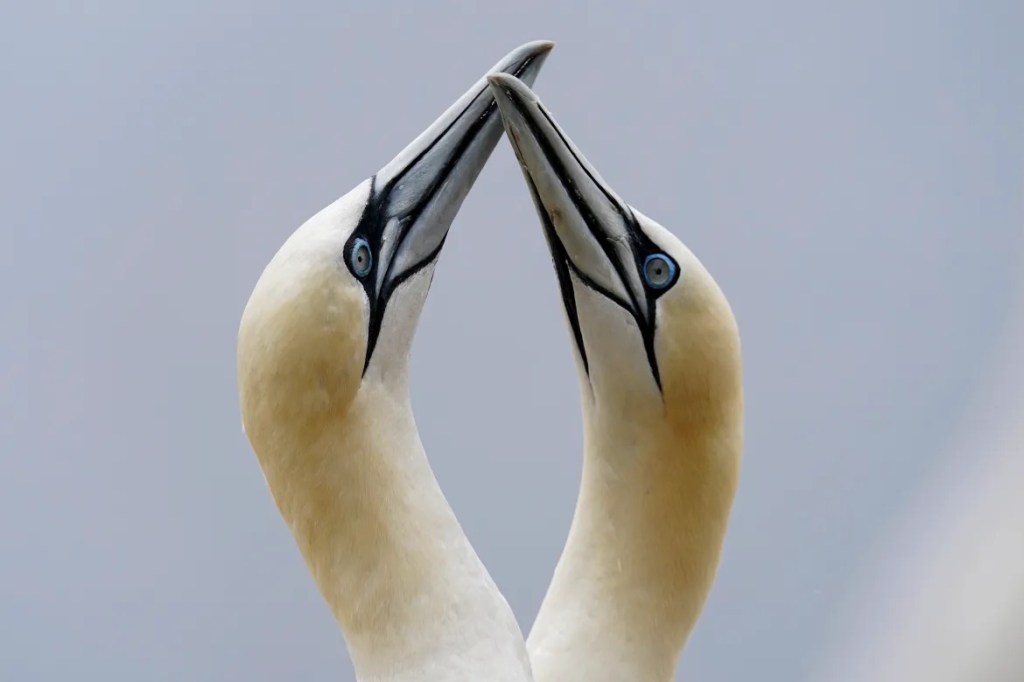
At least the last thing you saw as you plummeted to your death would be Bass Rock. Known as “The Bass,” it is an island in the Firth of Forth that plays host to the world’s largest colony of Northern gannets, namely, 150,000 of them.
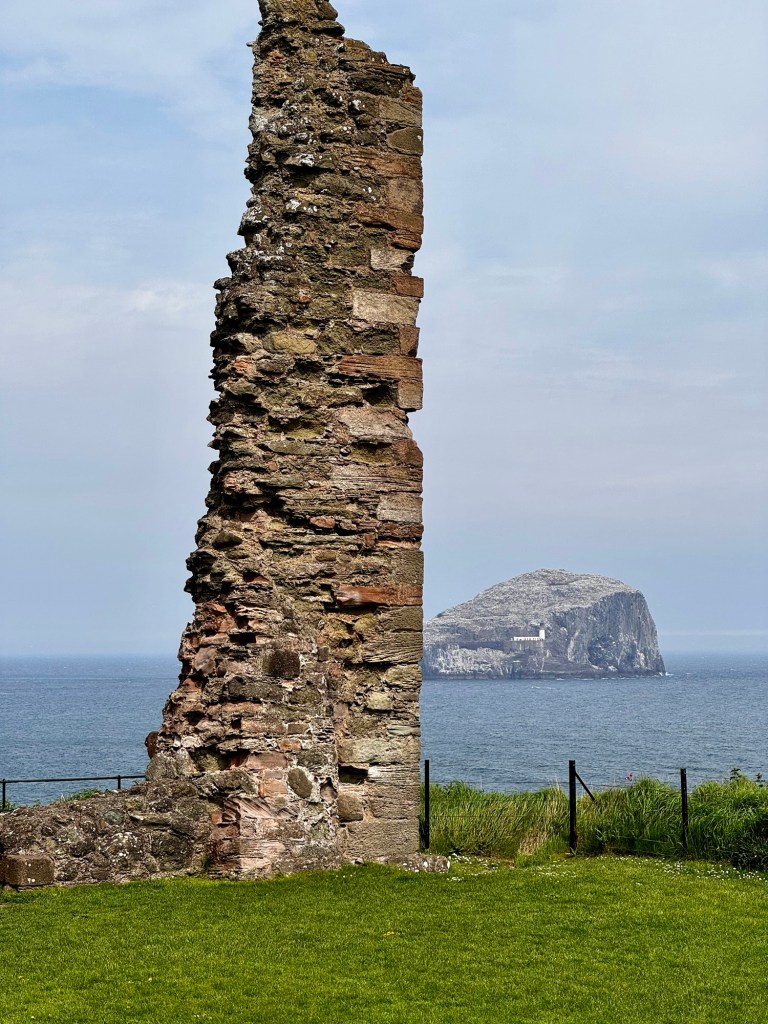
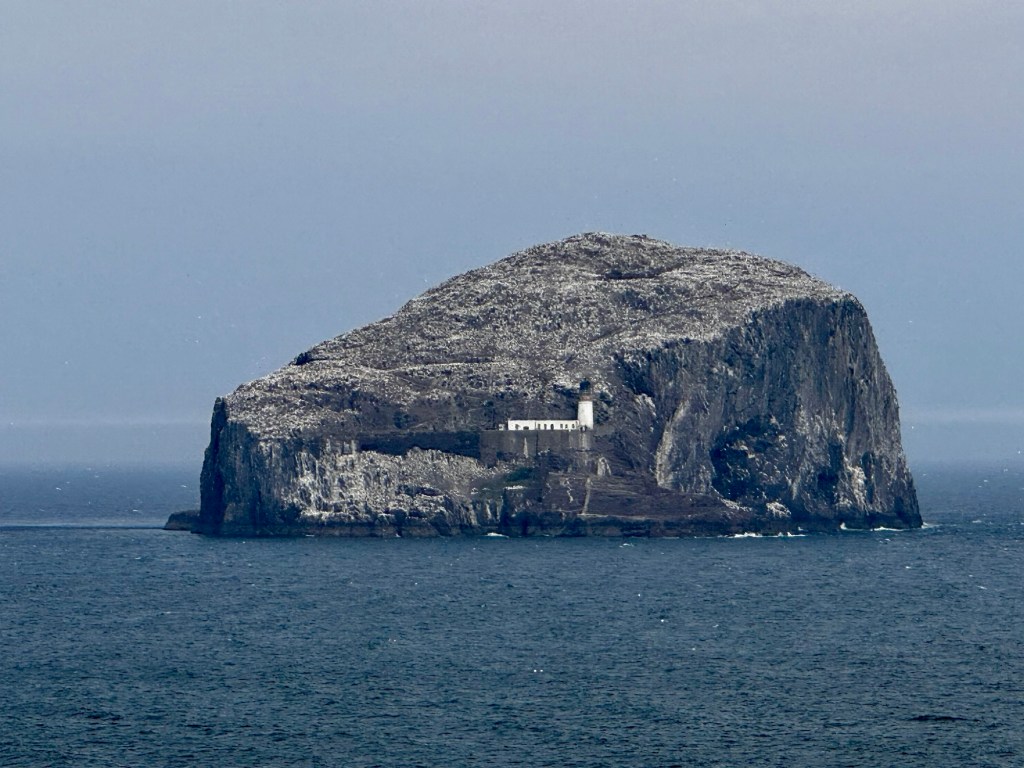
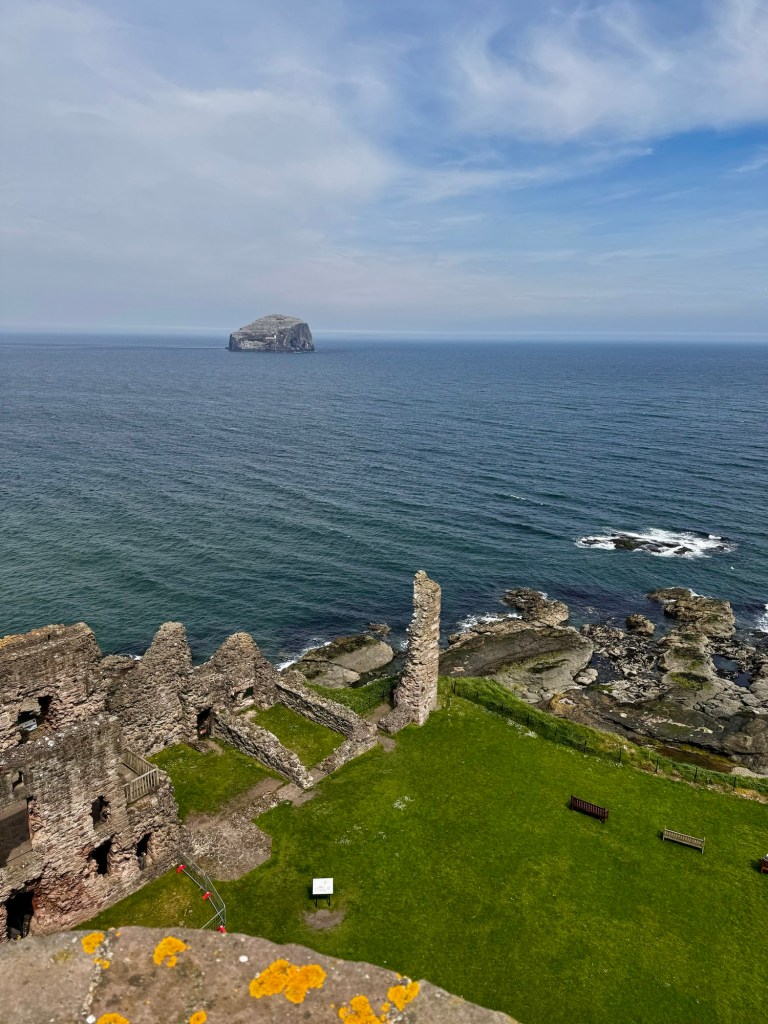
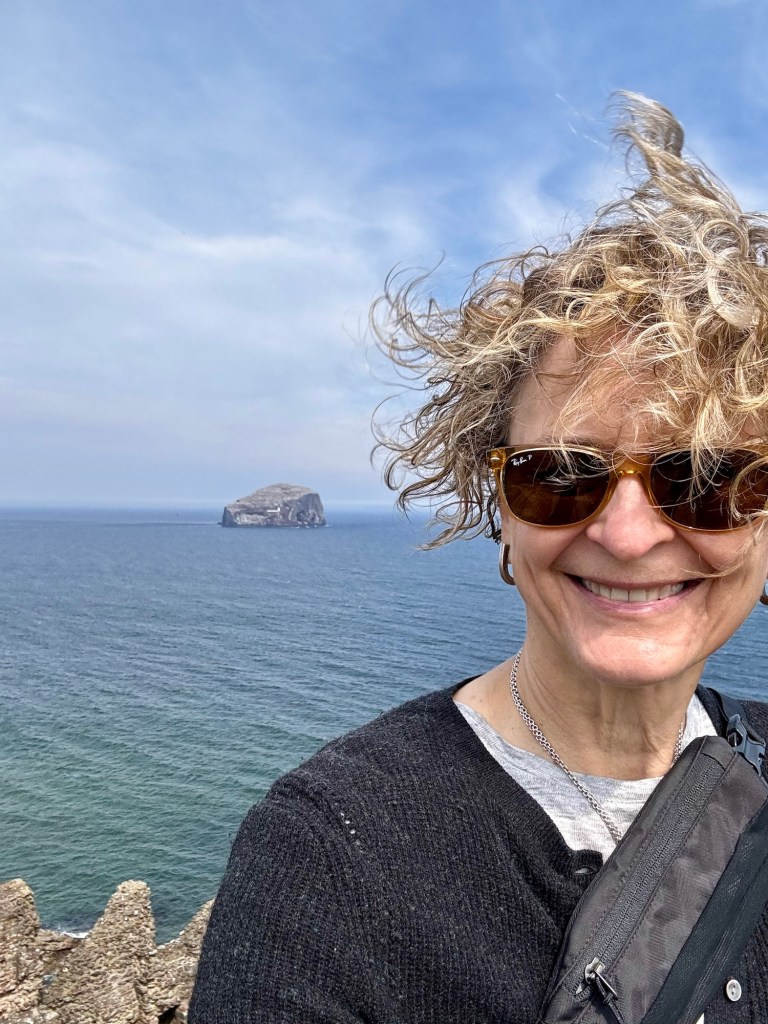
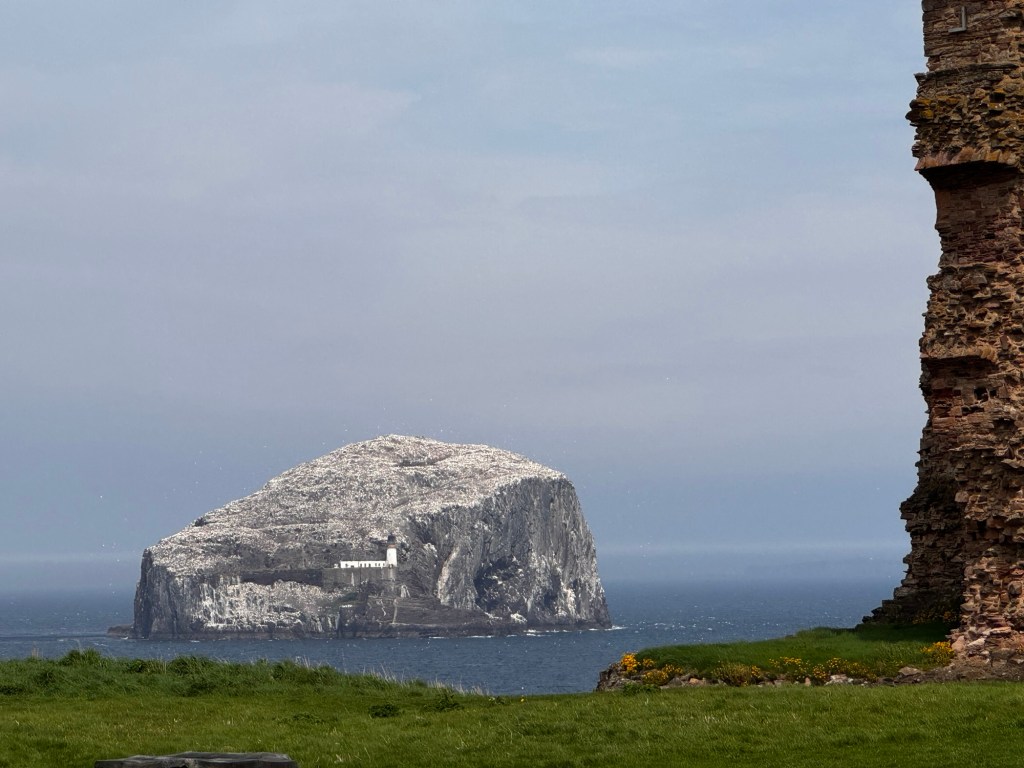
Probably too many photos, but it’s cool, right? Anyway, back to the giant gannet colony! As you can imagine, 150,000 gannets leave droppings that off-gas 152 kg of ammonia per year, and the Bass looks white from above. And the smell would be amazing.
One would think that the island would not have been inhabited throughout history for these reasons, but no. It was settled by an early Christian hermit and later was the site of an important castle, now in ruins. James I of Scotland used to imprison his enemies there in the 15th century. The island belonged to the Lauder family (not those Lauders) for six centuries. In the 1600s it was seized by four Jacobites imprisoned there, which they held against government forces for nearly three years. One of the Stevenson lighthouses is perched on a ledge, built in 1902.
Since 1706 the island has been owned by the Dalrymple family.
Before we leave, let’s return to the gannets. Sadly, in 2022 avian influenza was detected on the Bass and more than 5,000 dead birds were counted on a single day. The disease remains a concern in seabird colonies around the world.
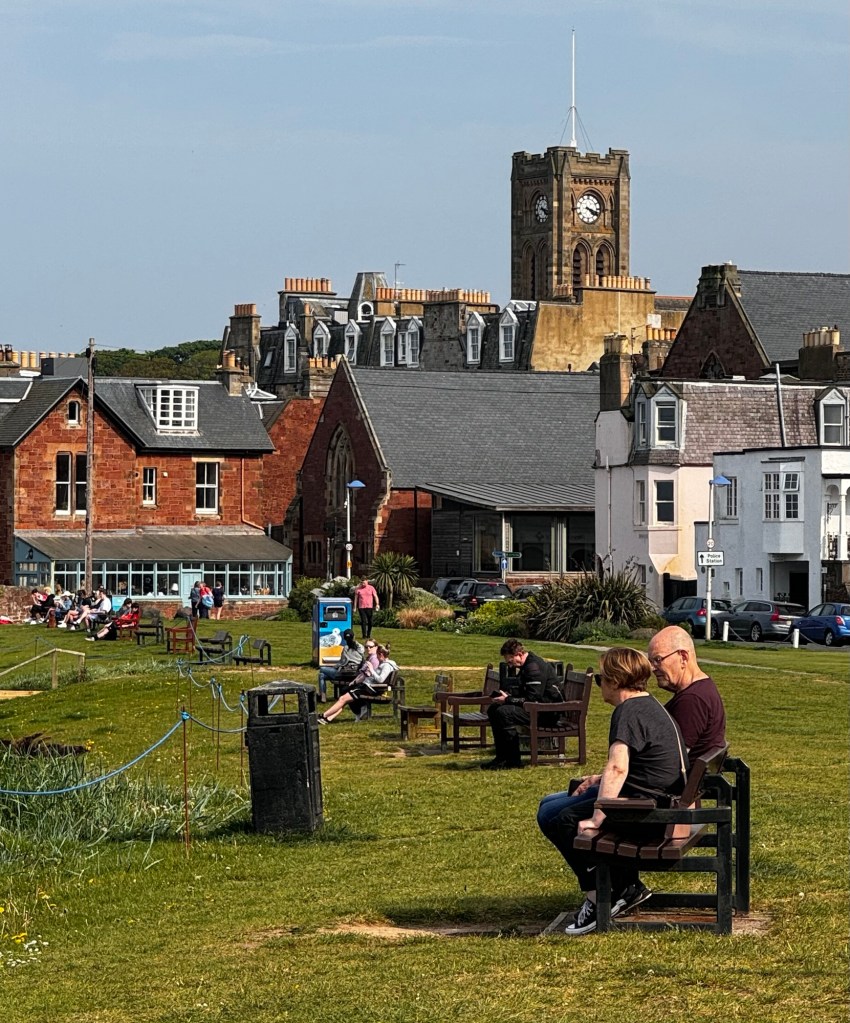
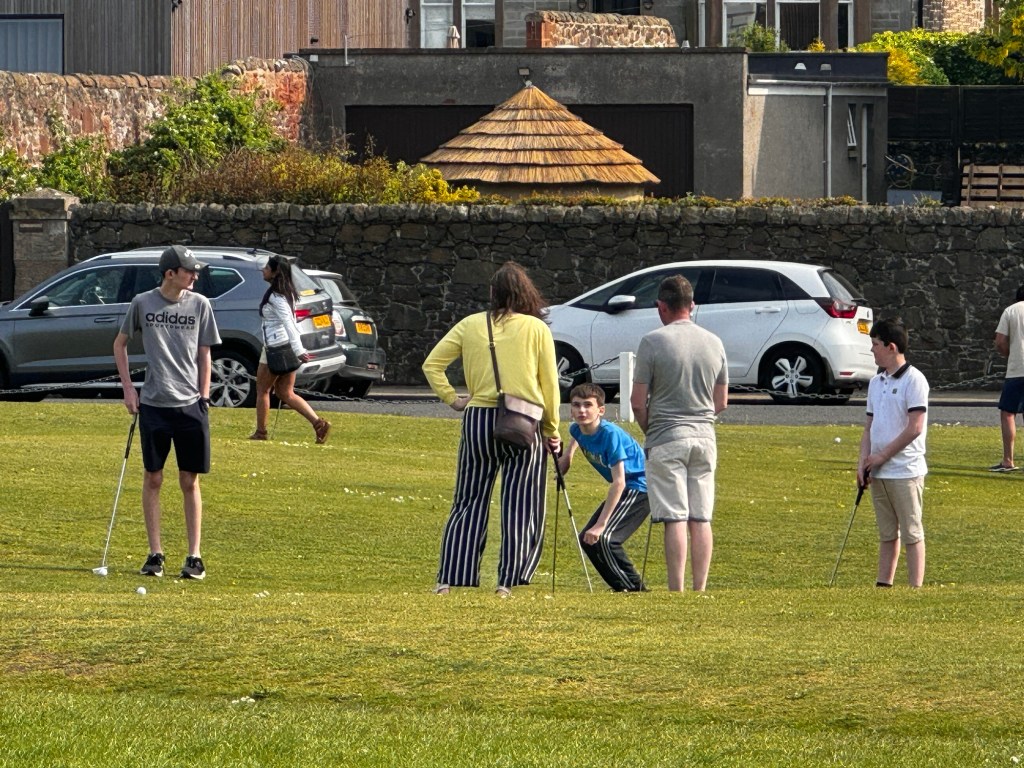
Now onto the delightful seaside town of North Berwick, which topped a list of 72 locations in the Sunday Times’ annual report of best places to live in the UK. It was selected for its combination of community spirit, connections to nearby Edinburgh, a thriving high street with independent shops and two pretty beaches. I have to say I felt the community spirit while I walked around the pretty streets.

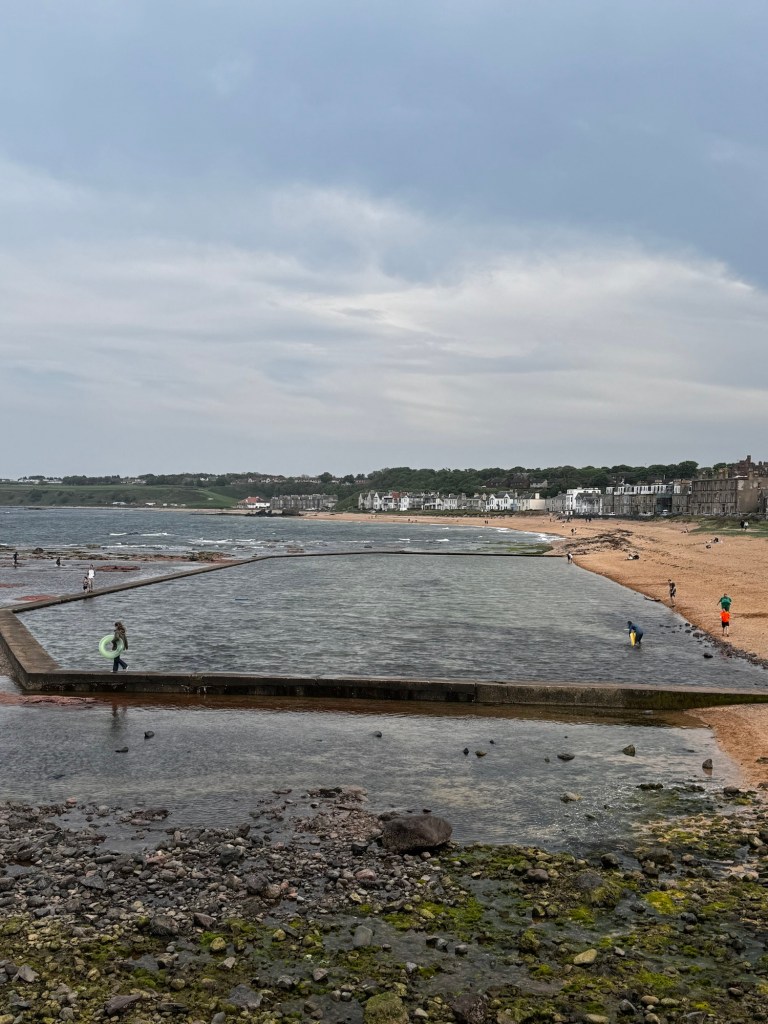
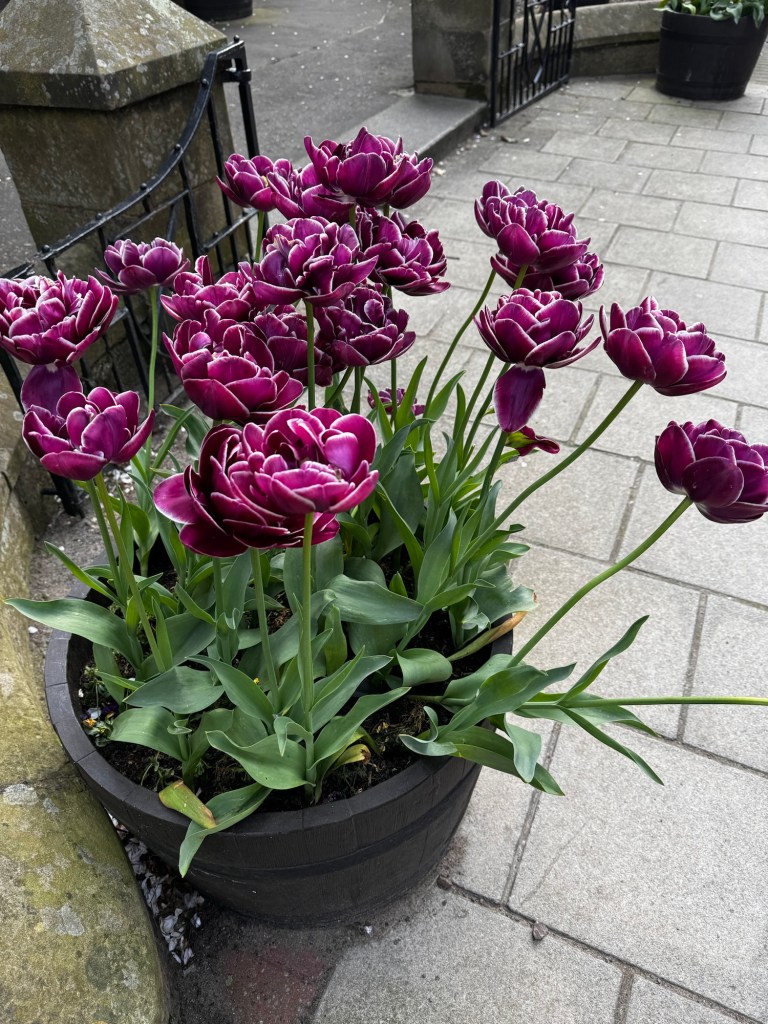
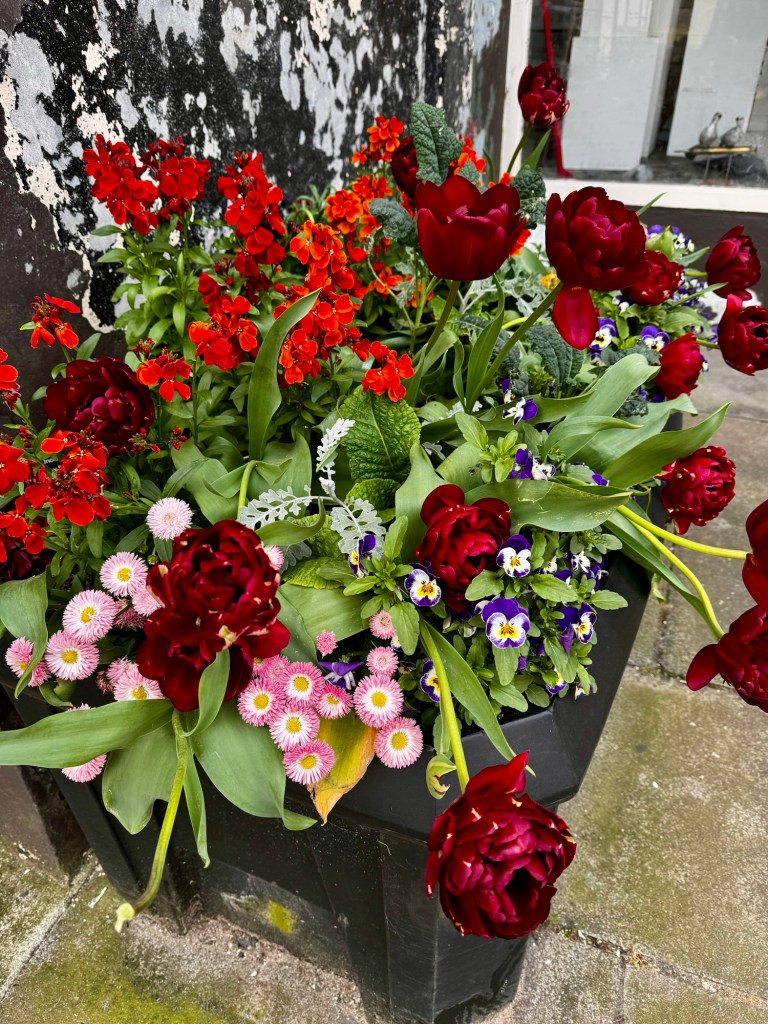
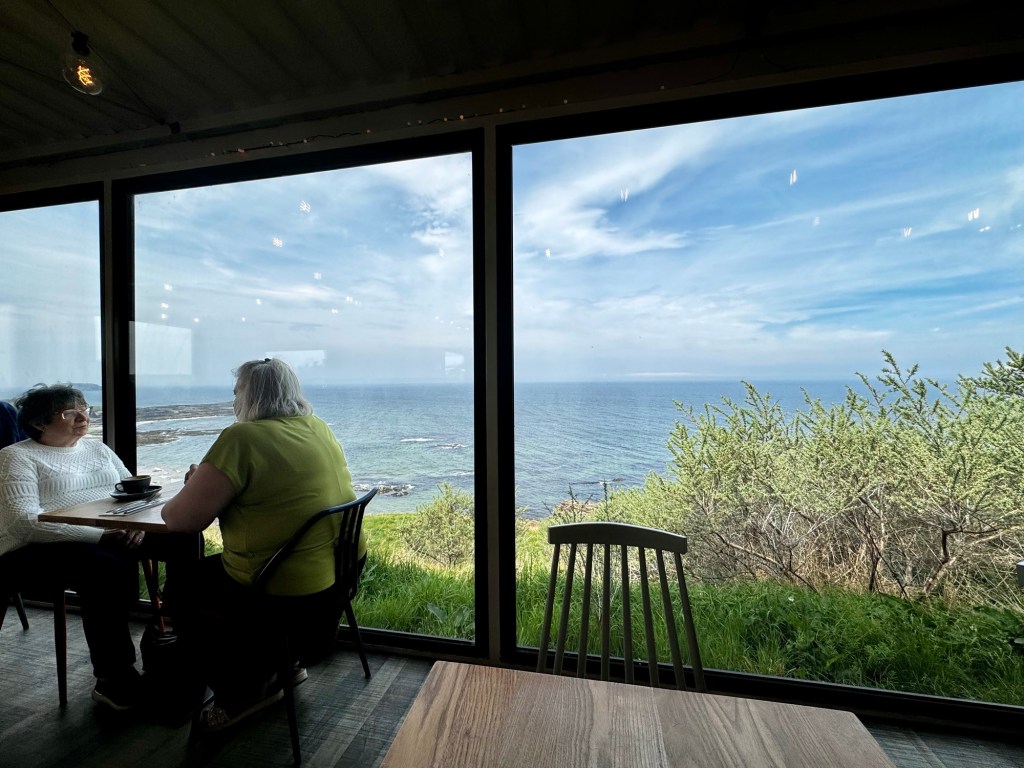
And if you ever find yourself in this beautiful part of Scotland, please have lunch at Drift, an awesome cafe on a cliff with views of the Bass.
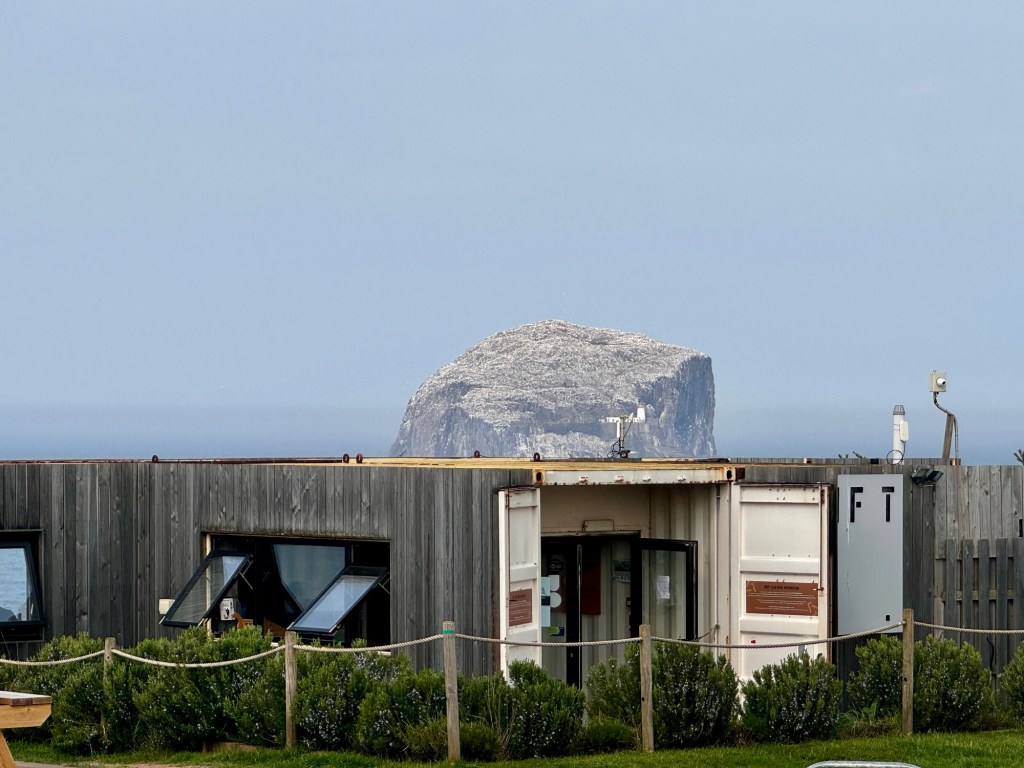
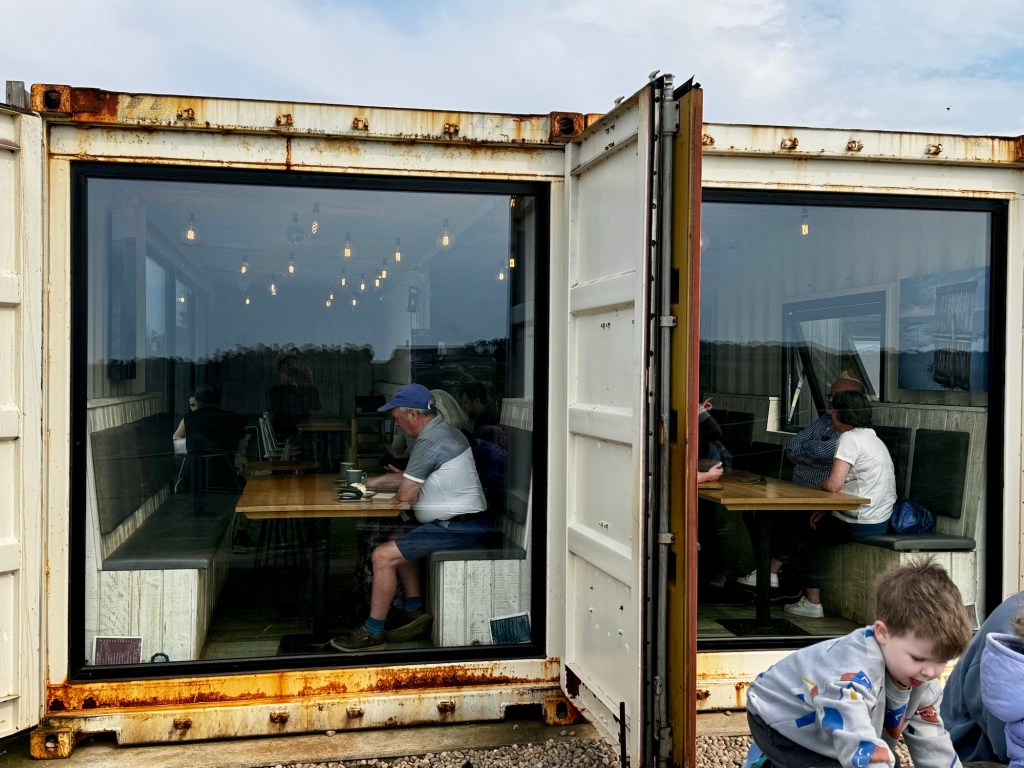
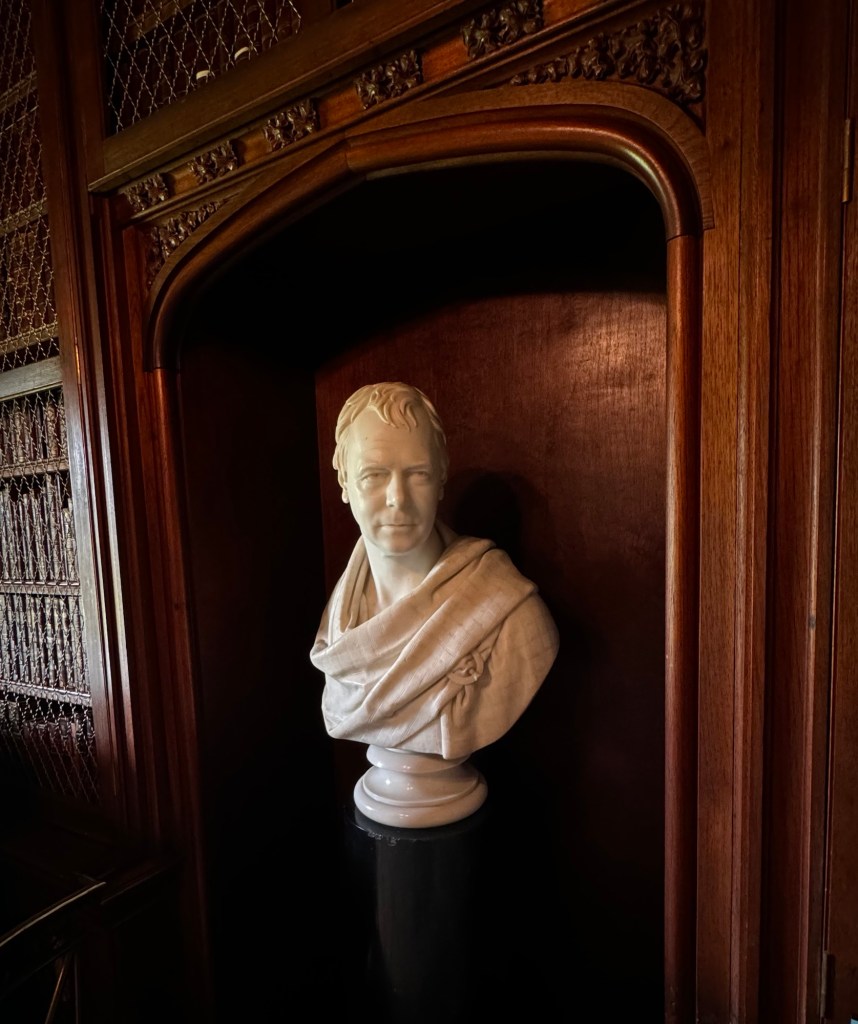
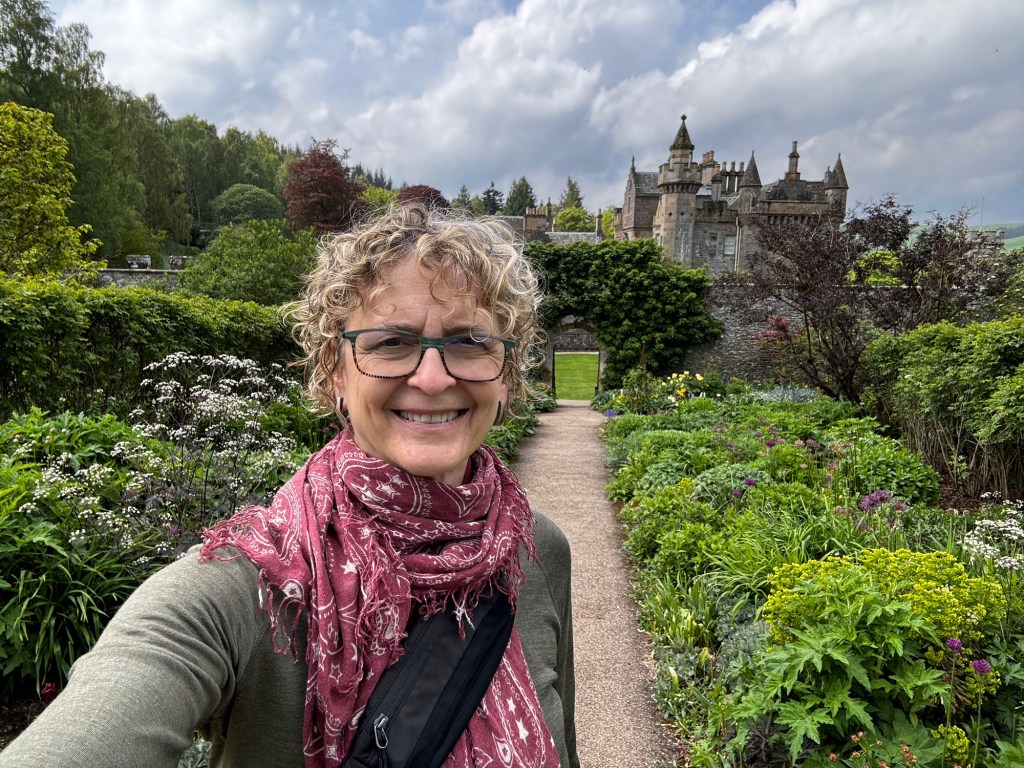
As the next day dawned, I drove to the Scottish Borders, a beautiful, fertile region featuring green, gorgeous hills and a meandering River Tweed. I visited Sir Walter Scott’s home, Abbotsford, a magnificent castle-like abode with gorgeous gardens.
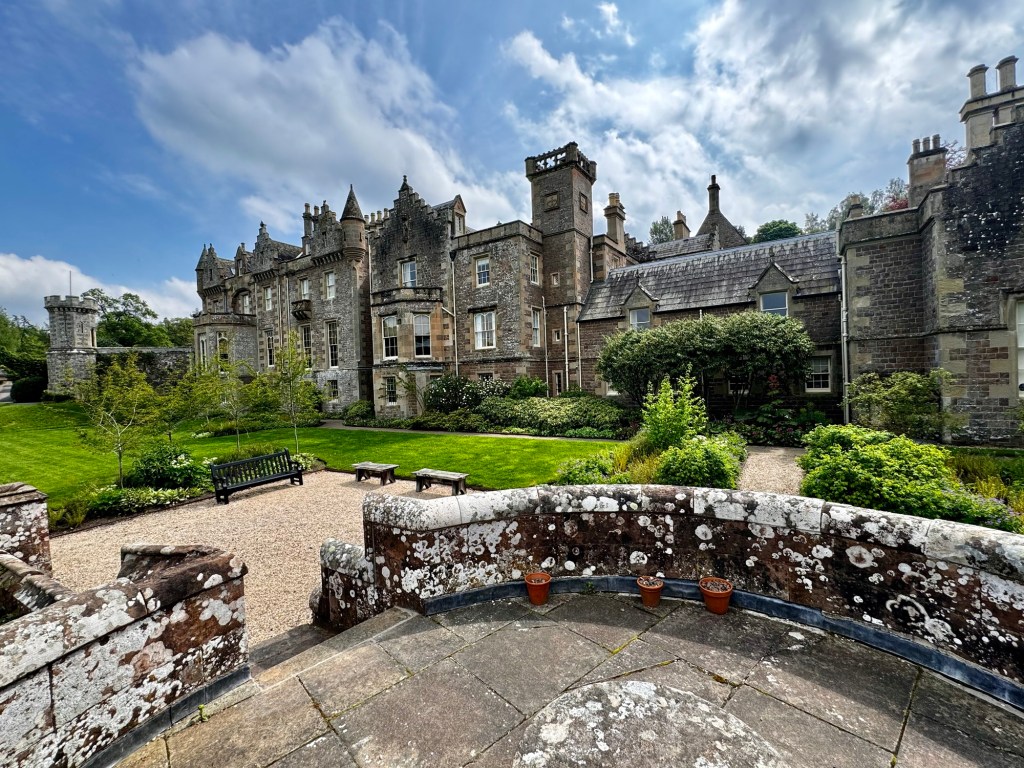
Since we’ve all only read Ivanhoe, it’s interesting to note that in fact Scott wrote 25 books and is considered to be the inventor of the historical novel. He was also a fine poet. In his spare time, he was also responsible for finding the Scottish Crown Jewels after they were lost for a wee while (see previous blog), and he stage-managed George IV’s trip to Scotland which helped rehabilitate and romanticize Highland culture. He wrote books and poems about the 1745 Jacobite rebellion, and our three lads and a lassie, Robert the Bruce, William Wallace, Rob Roy and Mary QOS.
After touring Abbotsford, I have the sense that he was a very cool guy with a cool wife and four successful kids and he’d be on my list of time machine meet-up people.
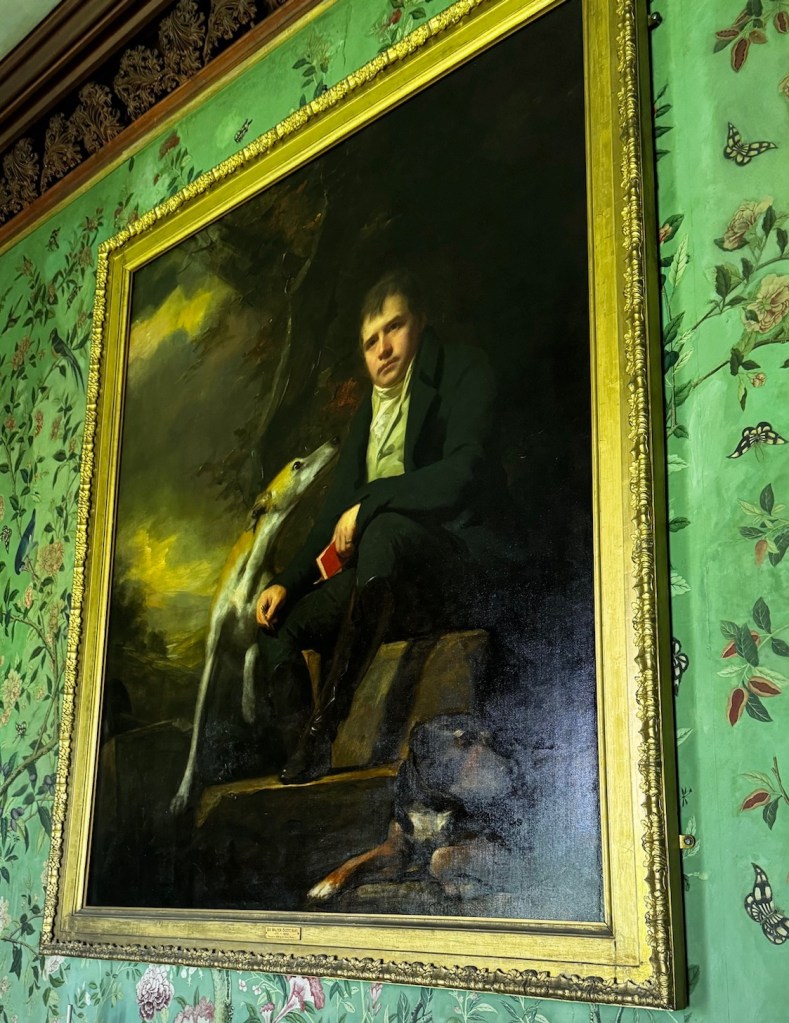
The nucleus of Abbotsford was 100 acres of farmland Scott purchased. He modestly, and then more aggressively expanded over the years, not only creating his large home but adding 900 acres along the River Tweed. Unfortunately, in 1825 a UK-wide banking crisis resulted in the collapse of the Ballantine printing business, of which Scott was the only partner with a financial interest. It had debts of 130,000 pounds (equivalent to 13.5 million today). He refused to accept financial help and instead placed Abbotsford into a trust in the name of his creditors and wrote his ass off. The debt was paid off shortly after he died.
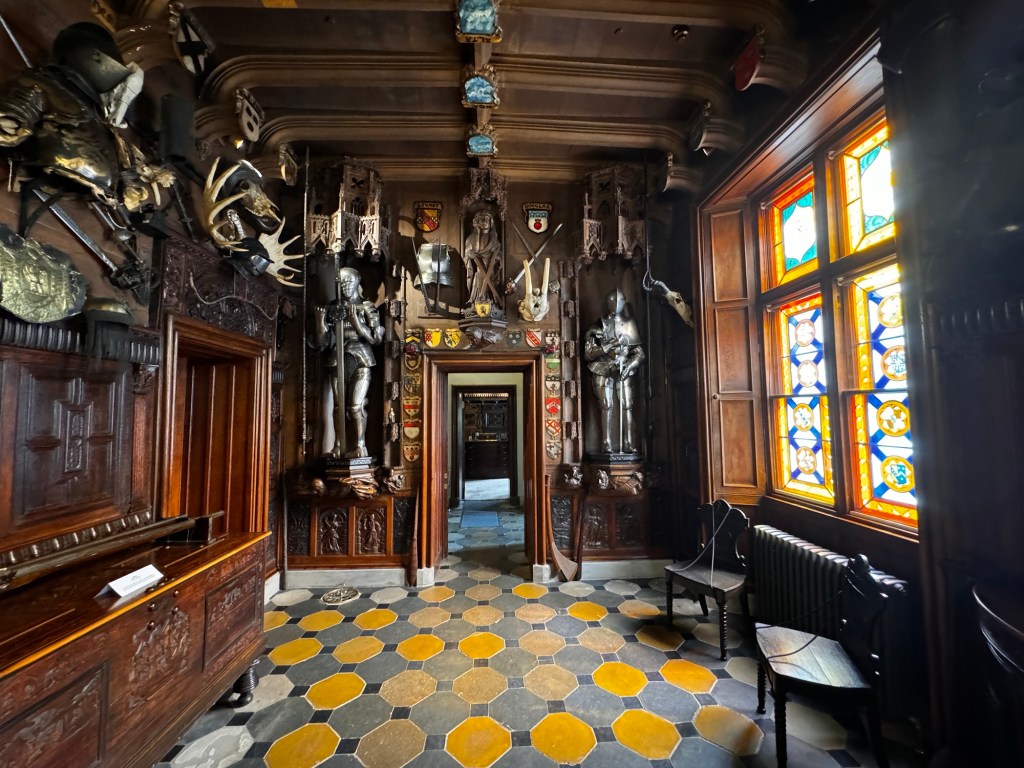
The house is gorgeous, and his interest in Scottish history apparent, as he had a fascinating collection of artifacts on display, including items apparently belonging to Peepaw Roy, Mary QOS and the Bonnie Prince. The lower floors of the house are on the tour, nothing upstairs. The house was exactly as he left it at his direction.
My favorite room was his study with an upper library lining the ceiling. There is a staircase up, and a door in the opposite corner leading to his dressing room, so he could escape uninteresting guests.

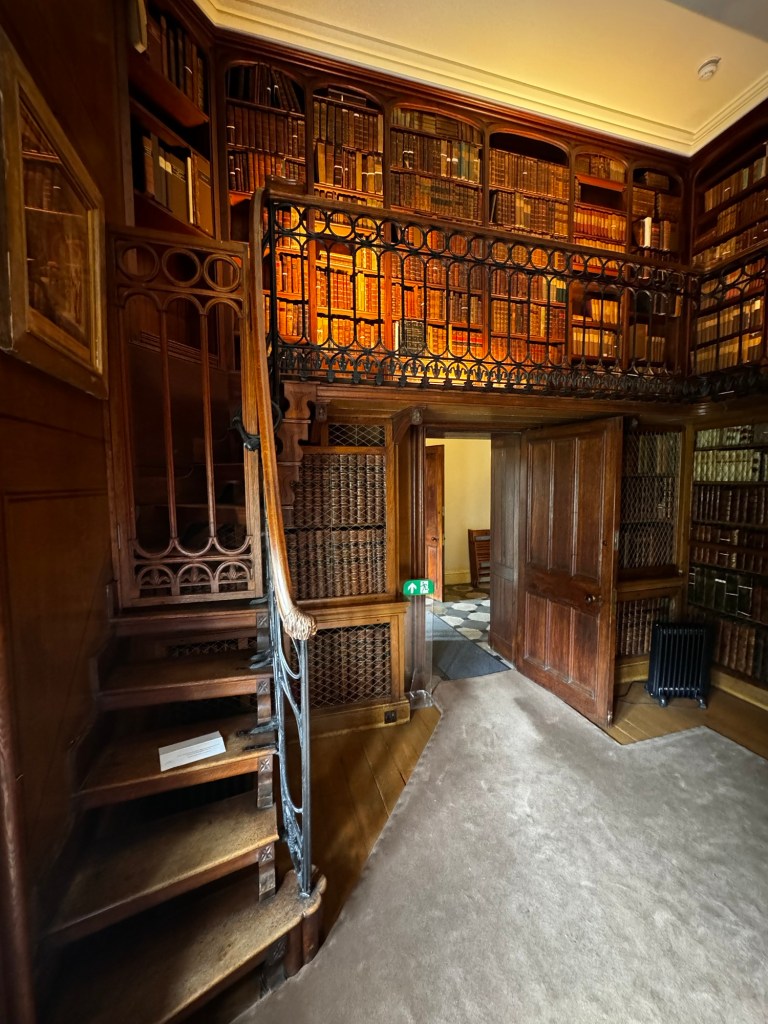
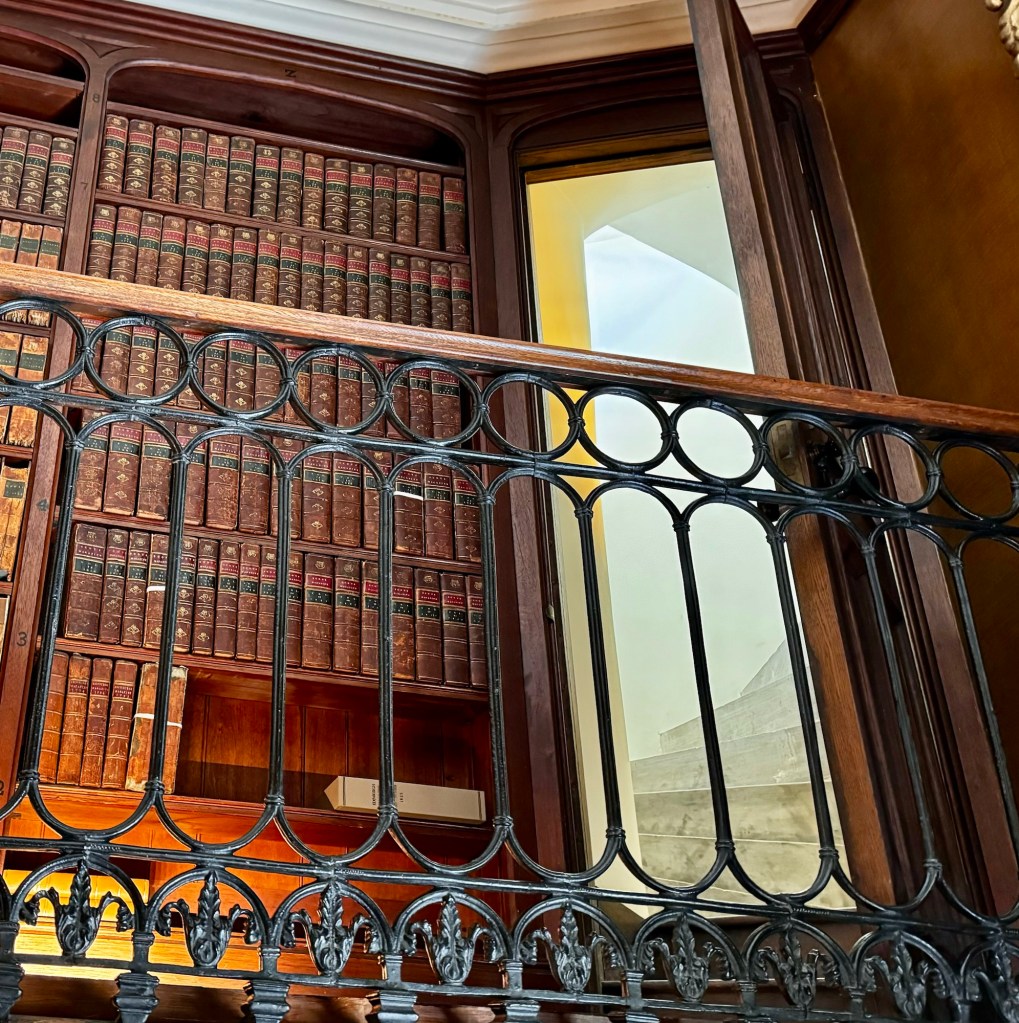
All of the rooms were remarkable.
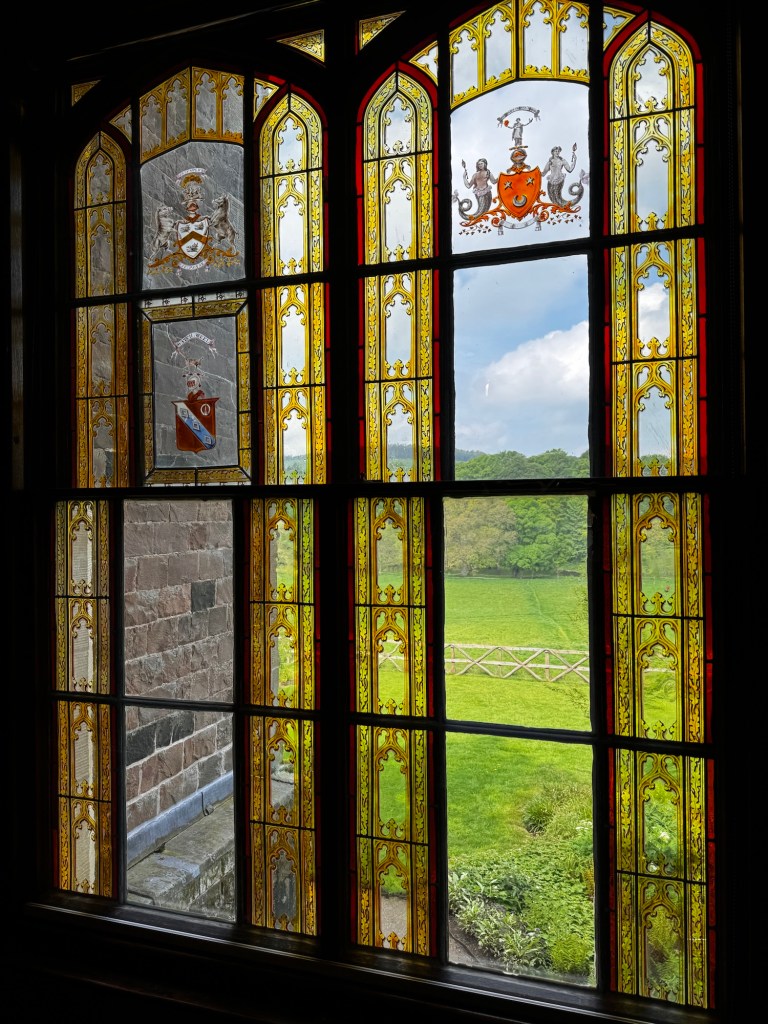
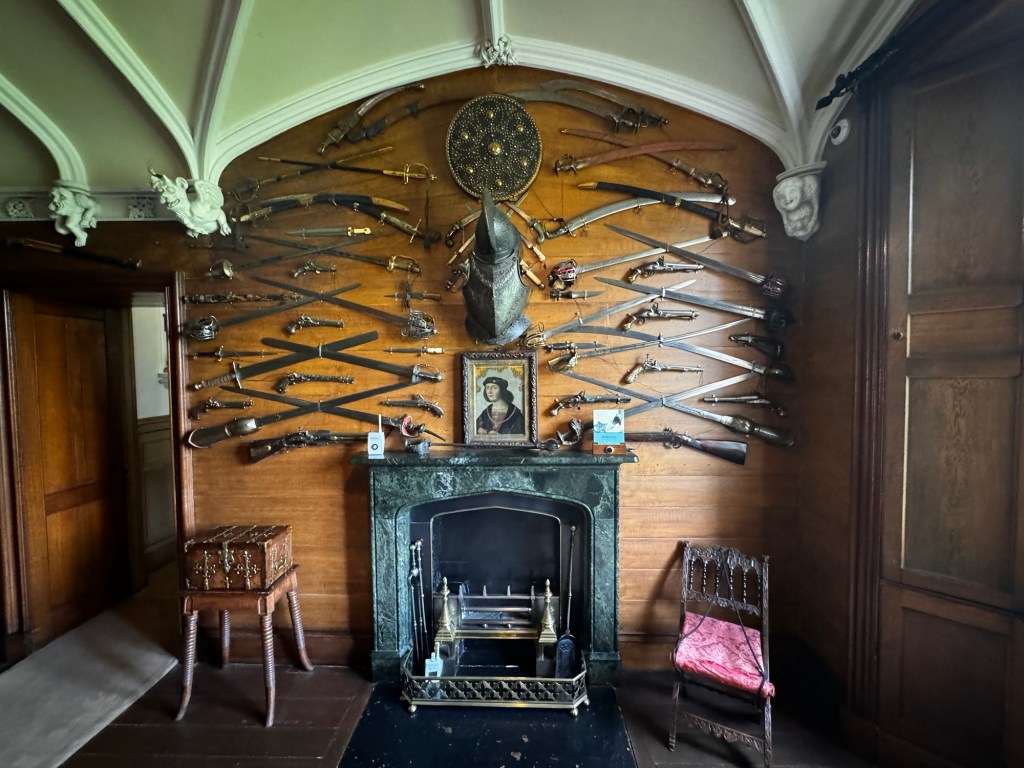
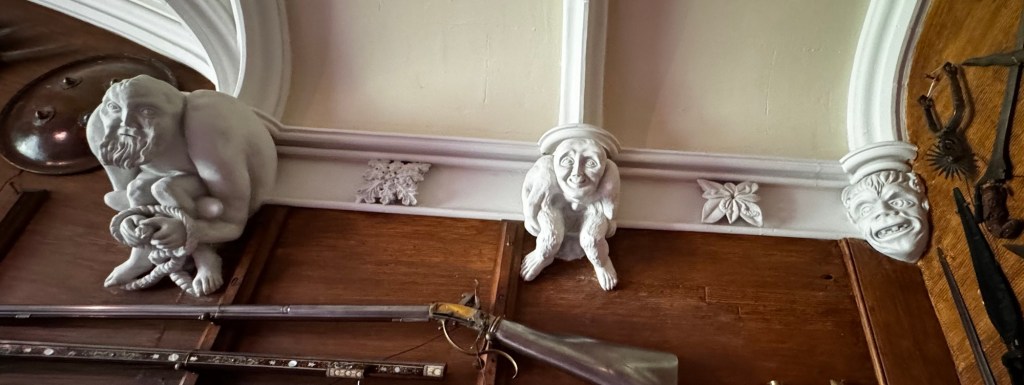
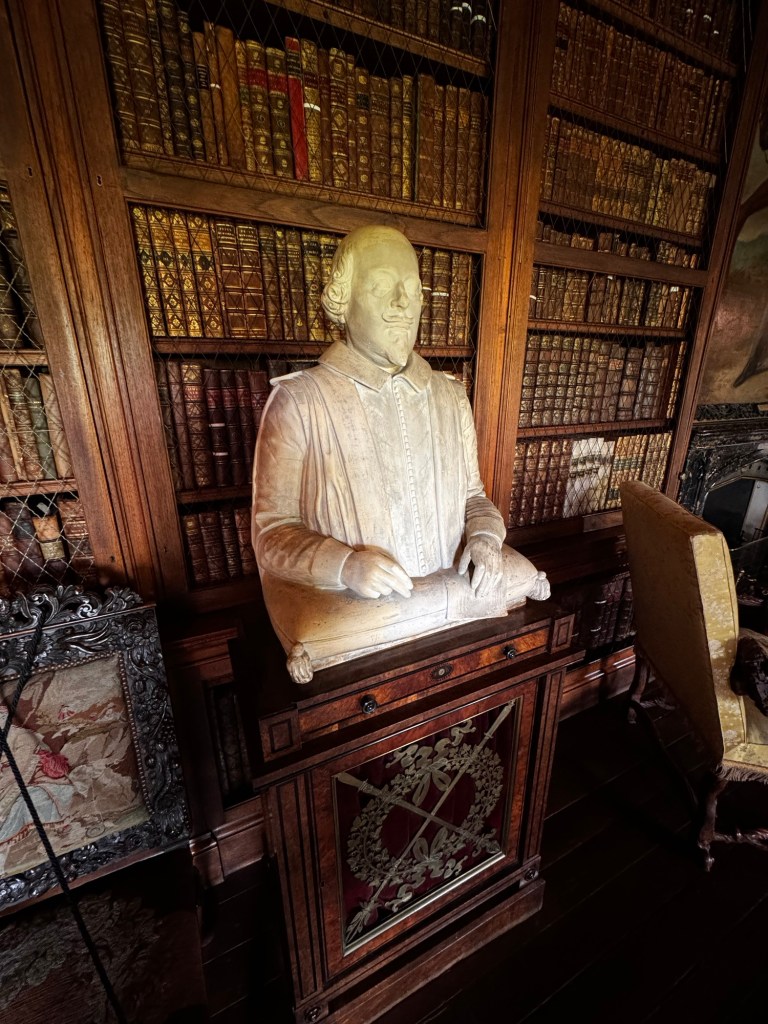
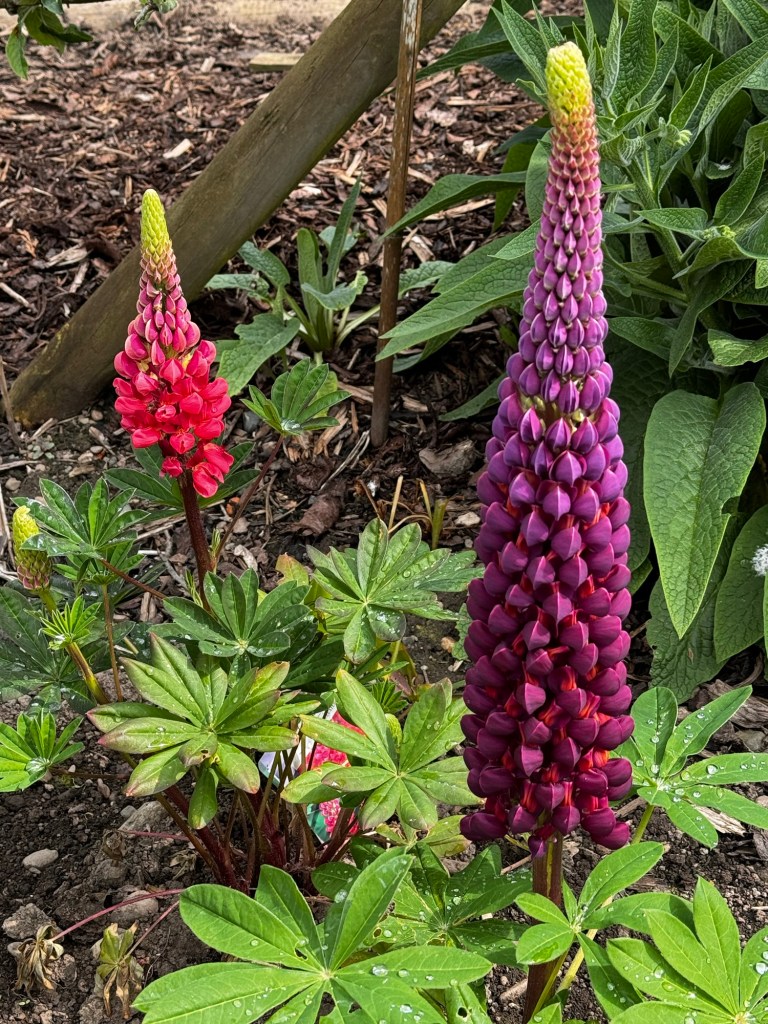
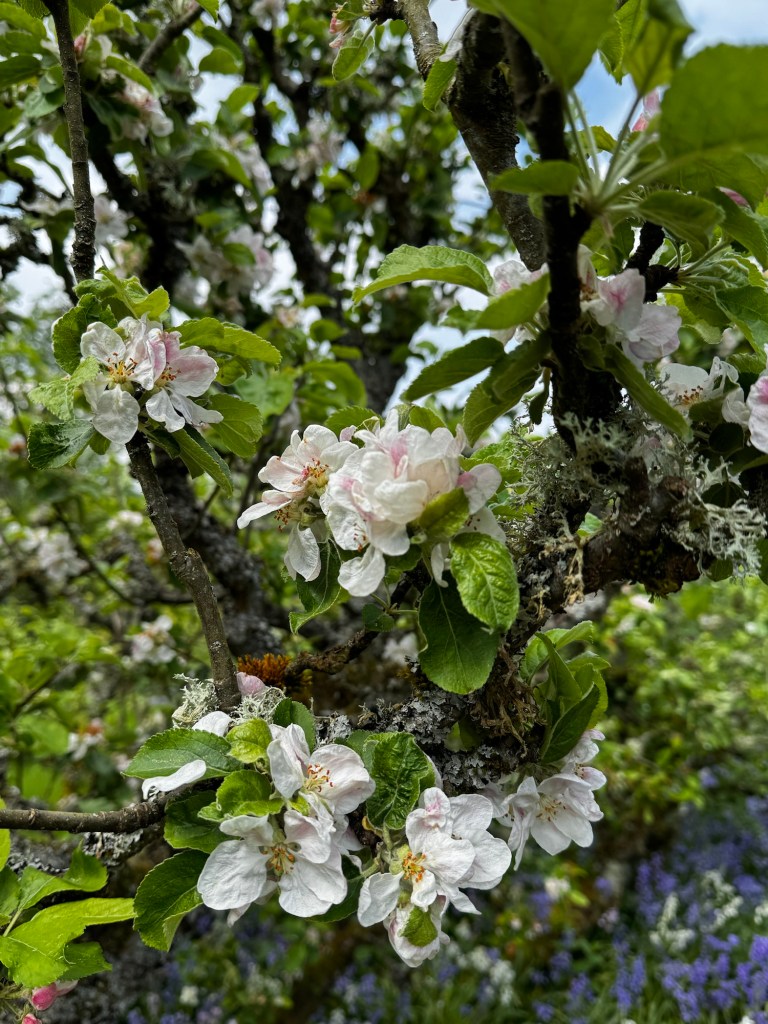
The gardens are dreamy and well tended.
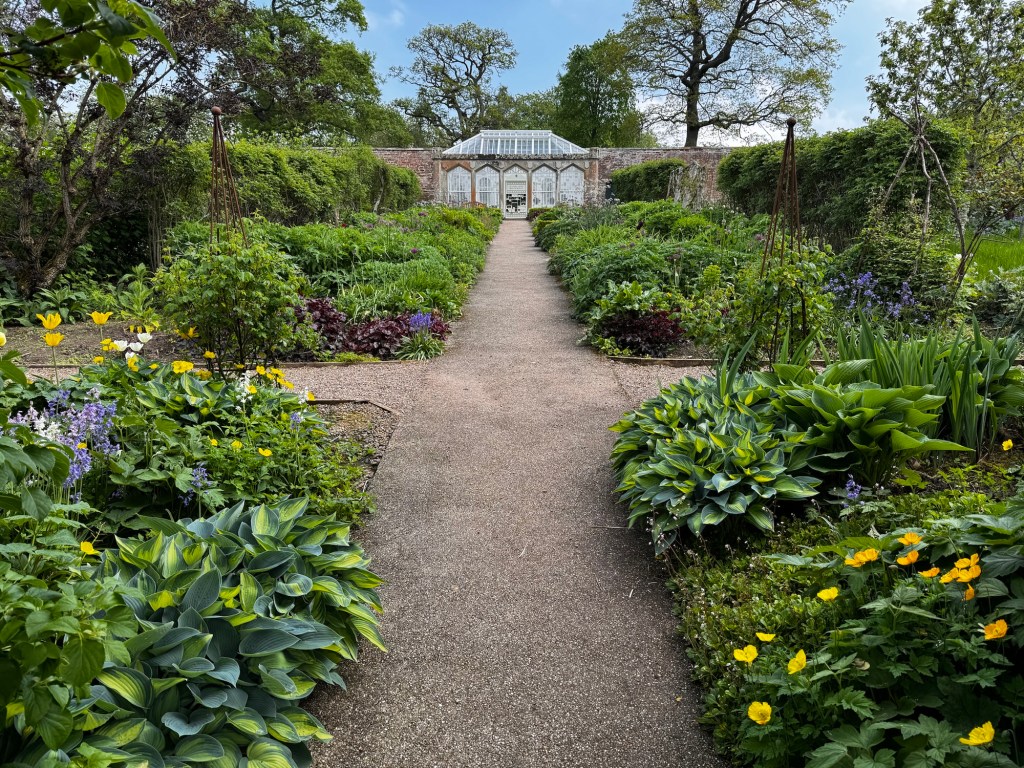

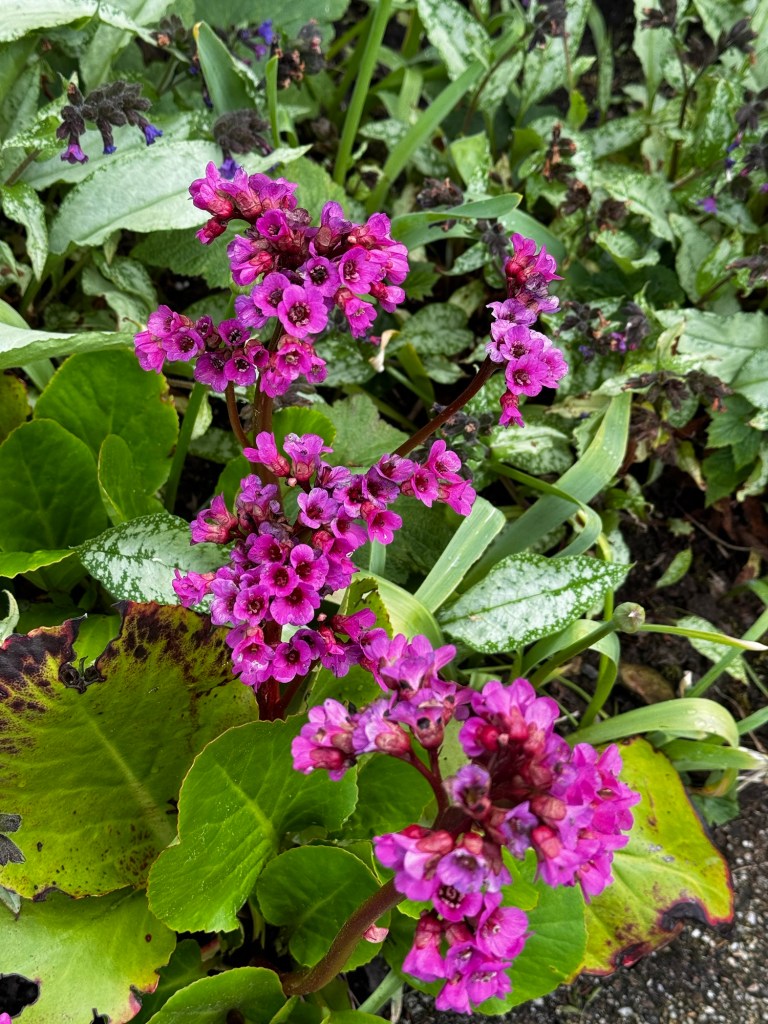
I was surprised by the beauty and character of the Scottish Borders, largely because somehow I’ve turned into a Highlands snob. The Borders are a quaint small town showcase, with wonderful names like Upsettlington, Blyth Bridge, Teviothead, Innerleithen, Tweedbank, Peebles and Melrose.
Speaking of which, I had lunch in Galashiels, recently named the happiest place to live in Scotland, 15th overall in the UK. Called Gala, it’s the cheapest town on the list with average home price of 163,634 pounds, or just $205,000. In addition to a very reasonable cost of living, the town has a strong sense of belonging and community spirit. One resident referred to, “so many little acts of kindness that are carried out without fanfare.”
My last planned stop was the town of Melrose to visit the Abbey. As I walked into the gift shop to check in, a gallant gentleman staff member was capturing a yellow jacket between a map of the grounds and a plastic cup – ugh, those hateful bugs, they are a plague. He was adorable, congratulating me for being the 79th guest of the day and pretending to hand me his spoils as my prize.
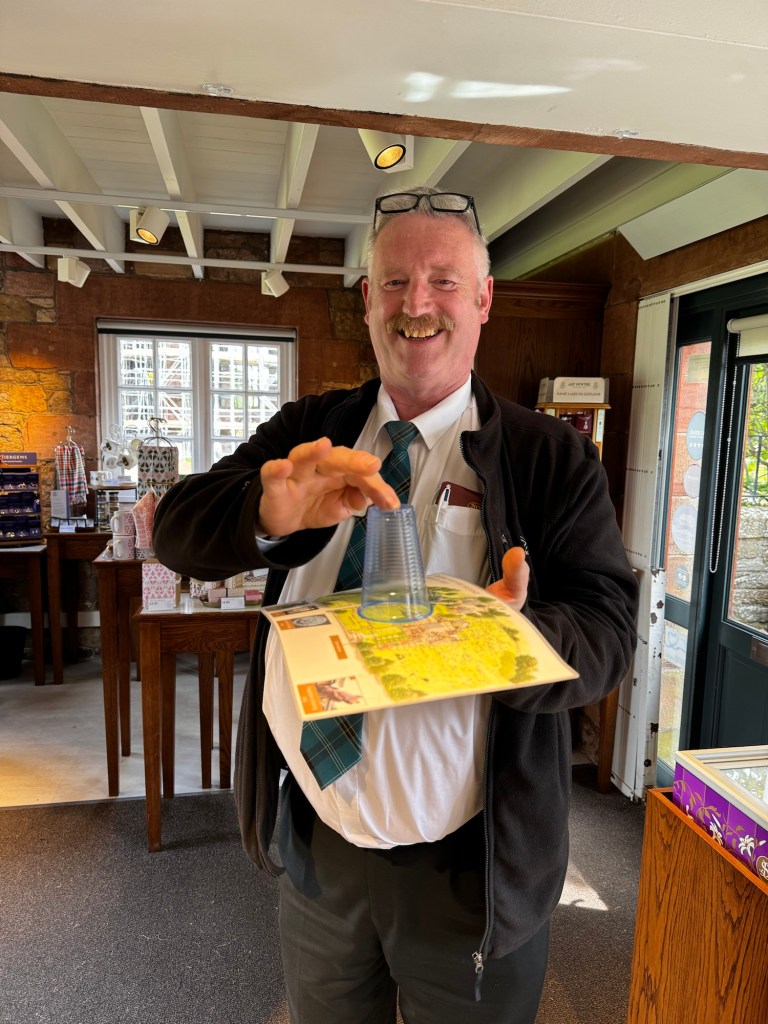
The Abbey is undergoing a wee bit of rehabilitation.
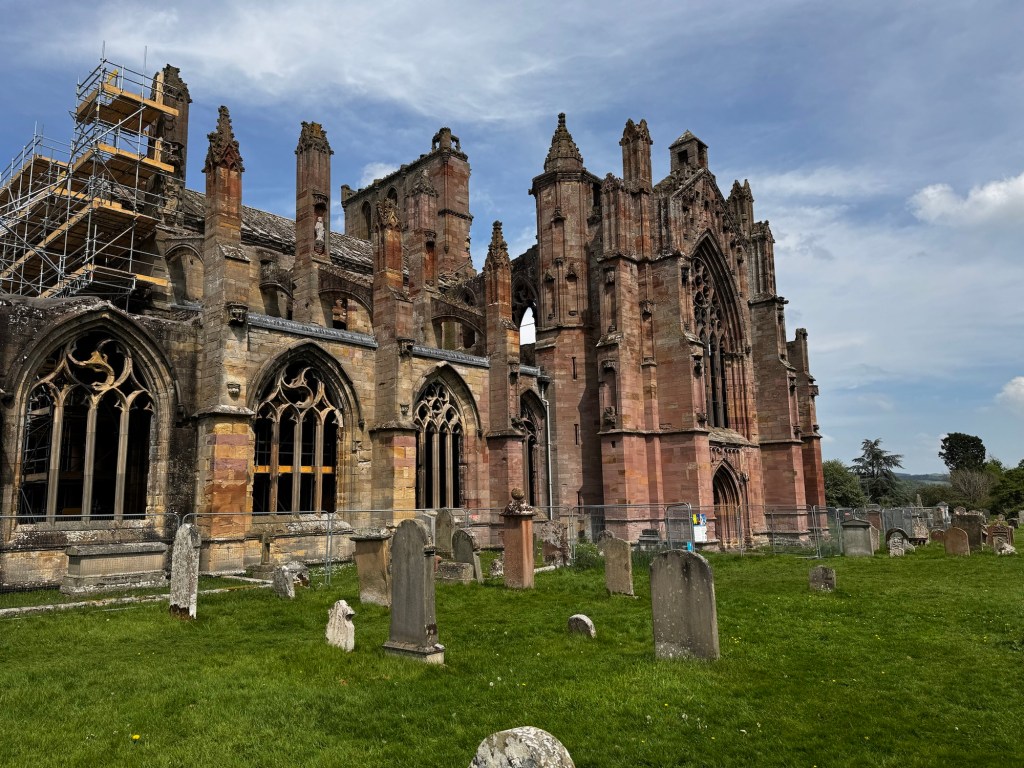
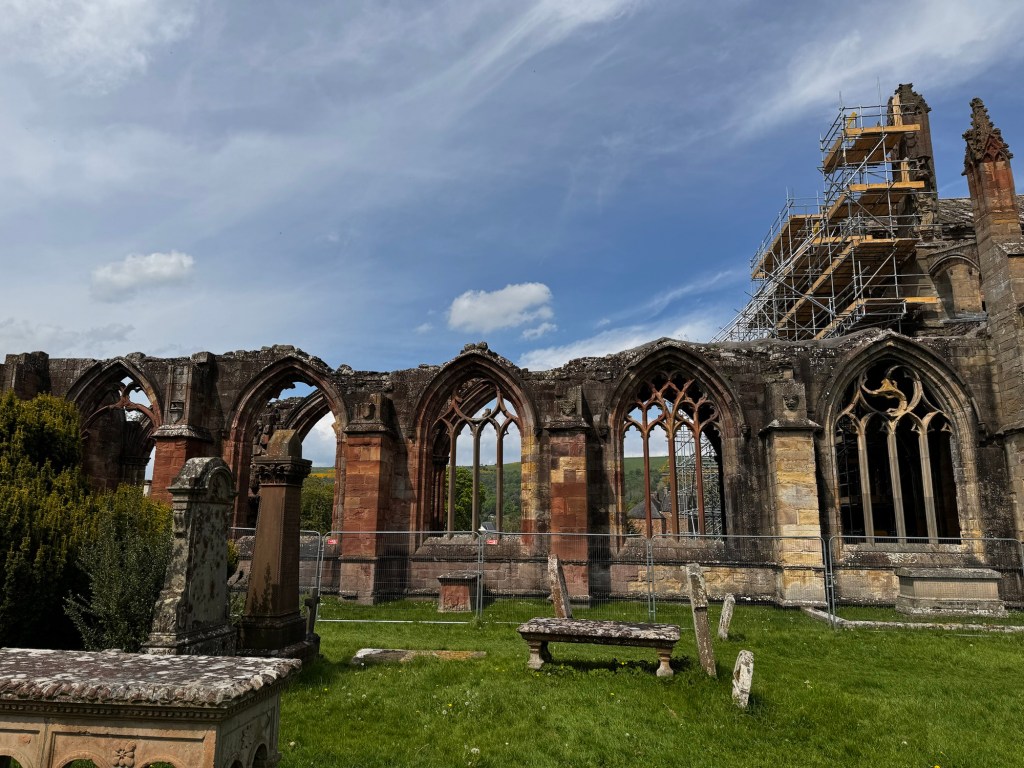
Guess what is buried on the grounds of the Abbey? The heart of Robert the Bruce. Apparently Robert had always wanted to go on Crusade but he had a hard time leaving Scotland because it required ongoing protection. So, on his deathbed, he asked his friend James Douglas to take his heart on one. Sadly the Pope hadn’t called for a crusade for a while and so Douglas intended to take it to Jerusalem’s Church of the Holy Sepulchre before burying it at Melrose Abbey. The heart was given to him in an urn to be worn as a necklace, a questionable choice. Unfortunately Douglas and his knights were instead called to fight against the Moors who were attempting to take Spain, so that’s where Robert’s heart went as well. Douglas was killed in a surprise attack but as he was dying he threw the heart into the air and shouted, “Lead on brave heart, I’ll follow thee.” THAT, my friends, is where Braveheart came from. Bruce’s heart, along with Robert’s remains, were carried back to Scotland.
The heart was buried with Douglas near the Abbey. The heart was exhumed in 1920 and then buried again without a marker, why is beyond me. Luckily, in 1996 during excavations of abbey ruins a canister was discovered with the urn inside along with a note saying it had been found in 1920. Ultimately, this was mostly confirmed to be Bruce’s heart.
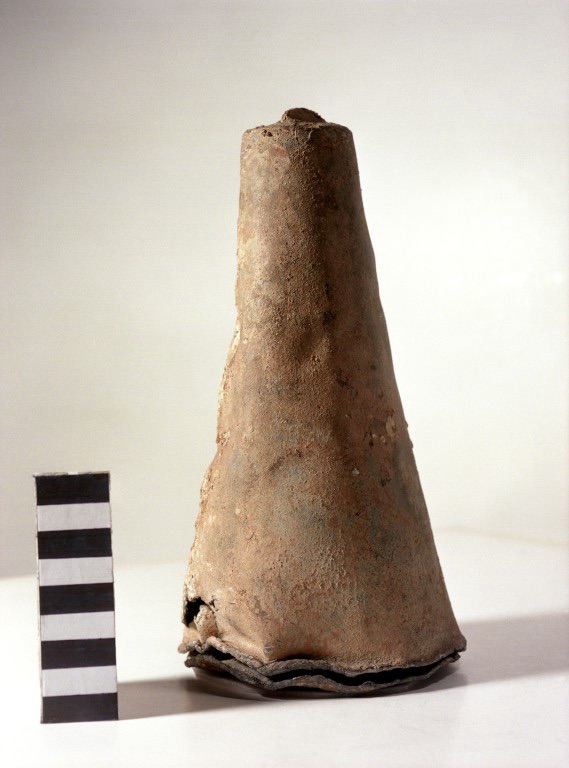
It was the right age, and nobody else had the idea to bury their heart there apparently. And thus here ya go:

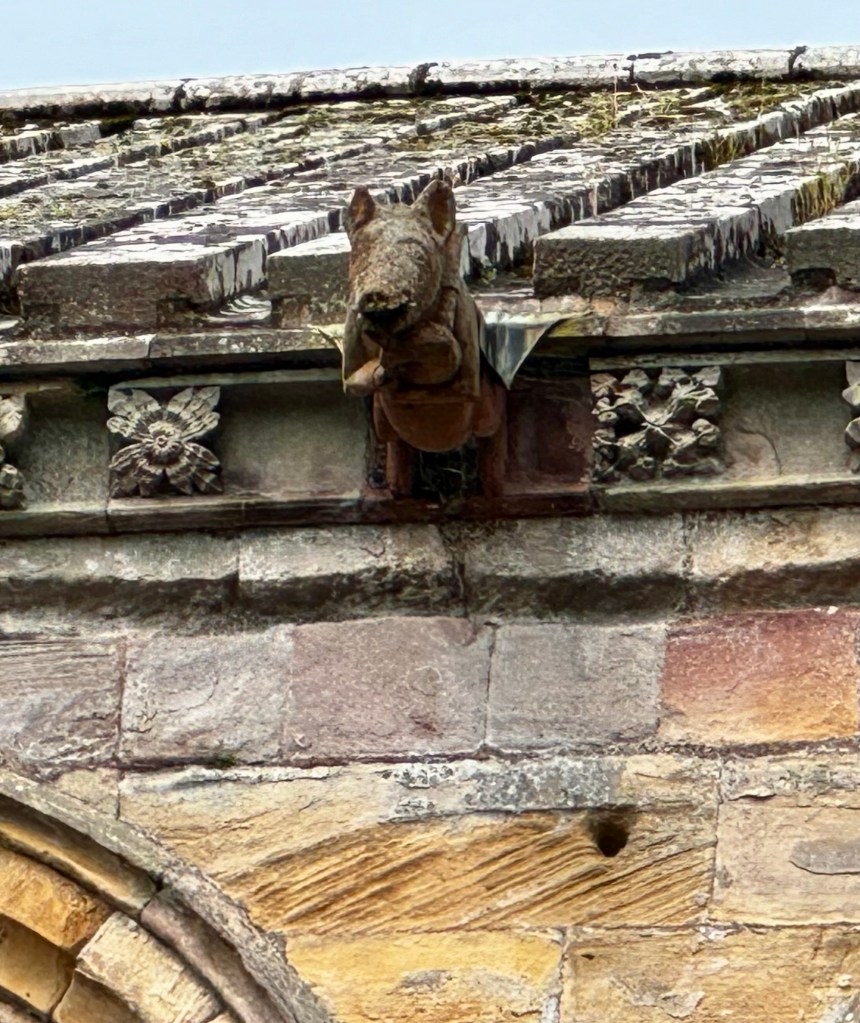
The other best thing about the Abbey is a 14th century gargoyle of a pig playing the bagpipes. It seems an odd thing for a serious place like a church, as medieval churches aren’t generally known for their wit and whimsy. The sculptor is another member of my time machine meet-up list.

I topped off the day with an unexpected visit to a slightly sad roadside attraction. One thing about traveling alone is that you can stop whenever you want without consulting anyone, even for an adventure that might end up being dumb. When I was a kid and we were piled in the car driving across country to visit grandparents, we never got to stop at a roadside attraction. There was really no stopping for any reason unless you convinced my dad you had to pee and it had been a respectable amount of time since you last did so. So forget the Largest Ball of Twine or whatever. So in Dad’s honor, I impulsively stopped at the Great Polish Map of Scotland.
The map was the brainchild of Jan Tomasik, a sergeant in the 1st Polish Armoured Division who was stationed in Galashiels (the happiest town) in WWII. He married a Scottish nurse and became a successful hotelier after the war. He bought the Hotel Black Barony, near Peebles, in 1968 and a few years later had the idea to create a large physical relief map of Scotland on the grounds of his hotel. Out of sculpted concrete. It took six years to build. He told hotel patrons, “I shall die, but I shall leave my map as a gift to the Scottish people to thank them for the hospitality they showed the Poles when it was needed,” which is really nice.
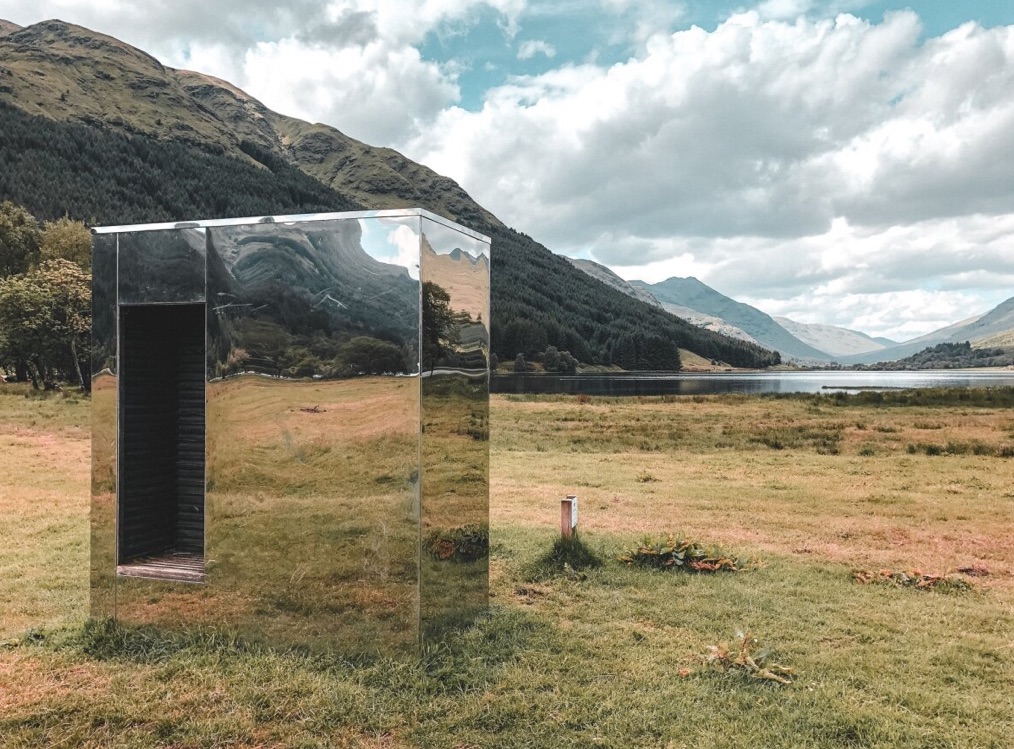
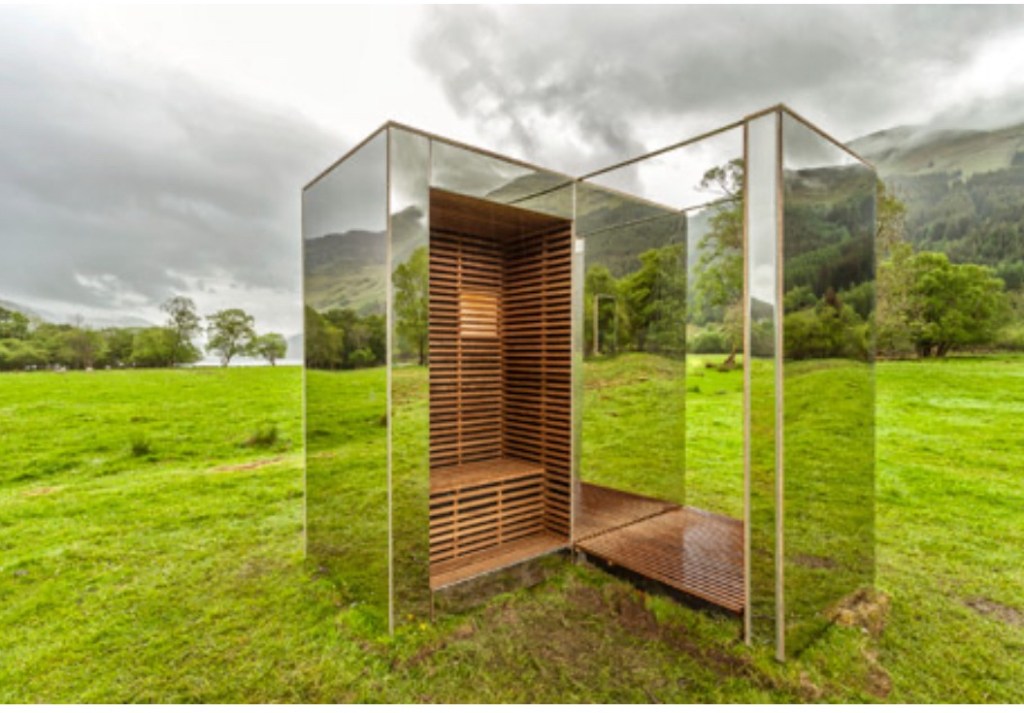
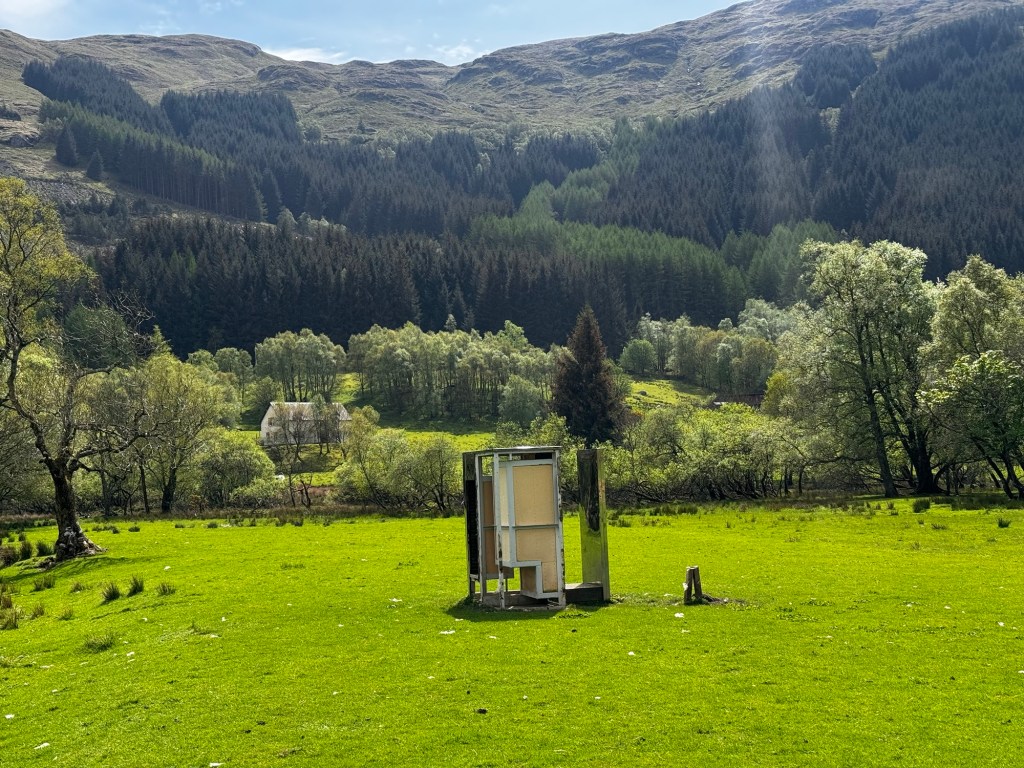
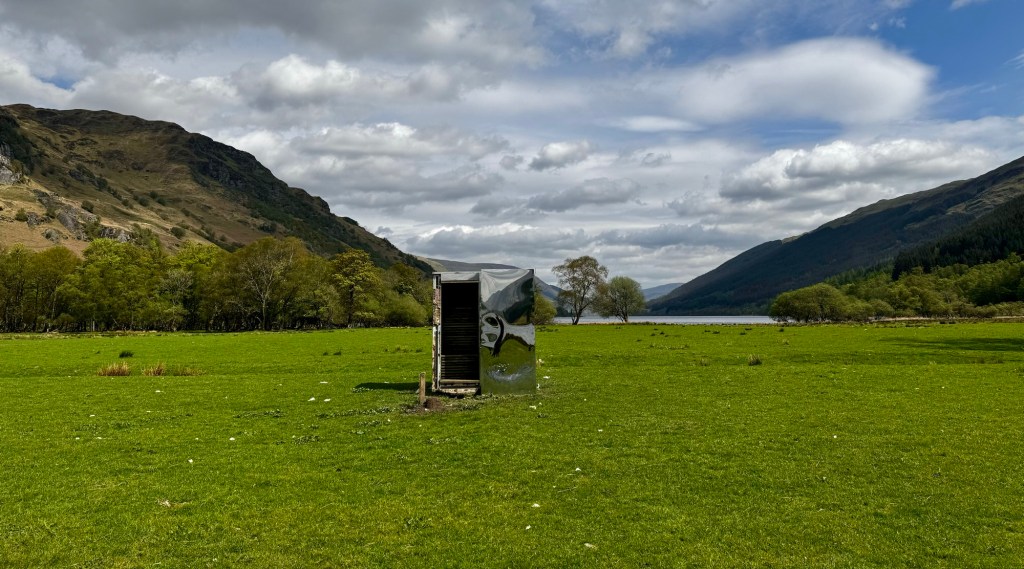
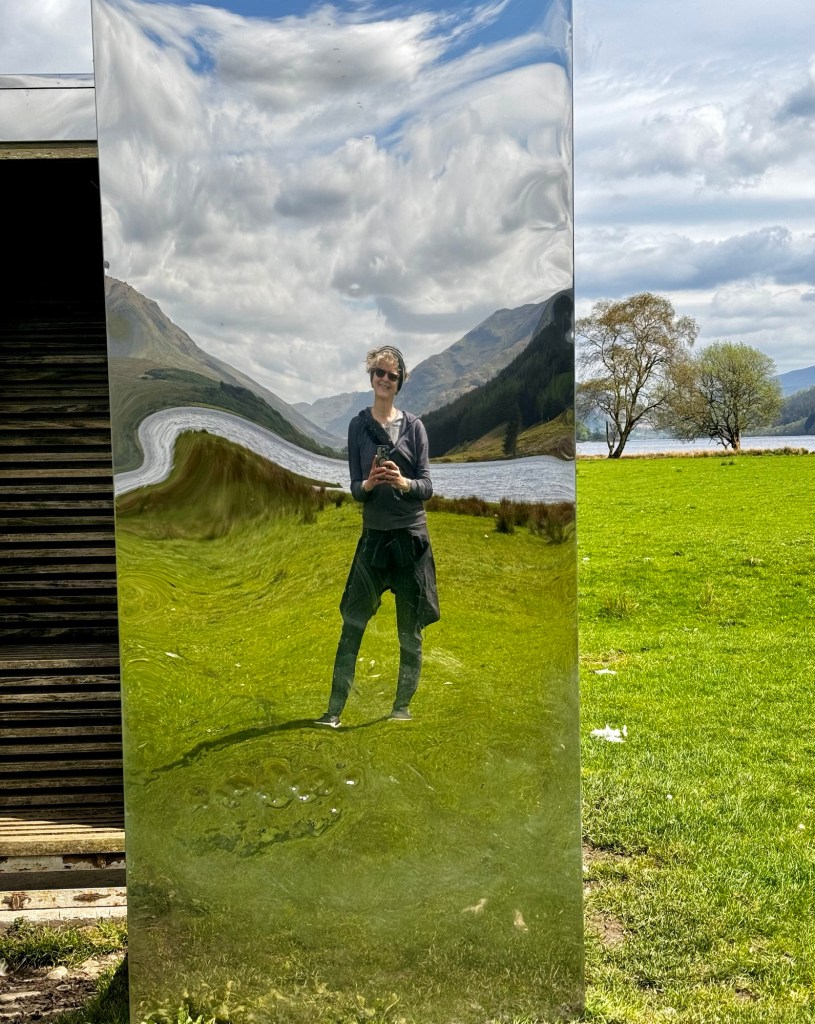
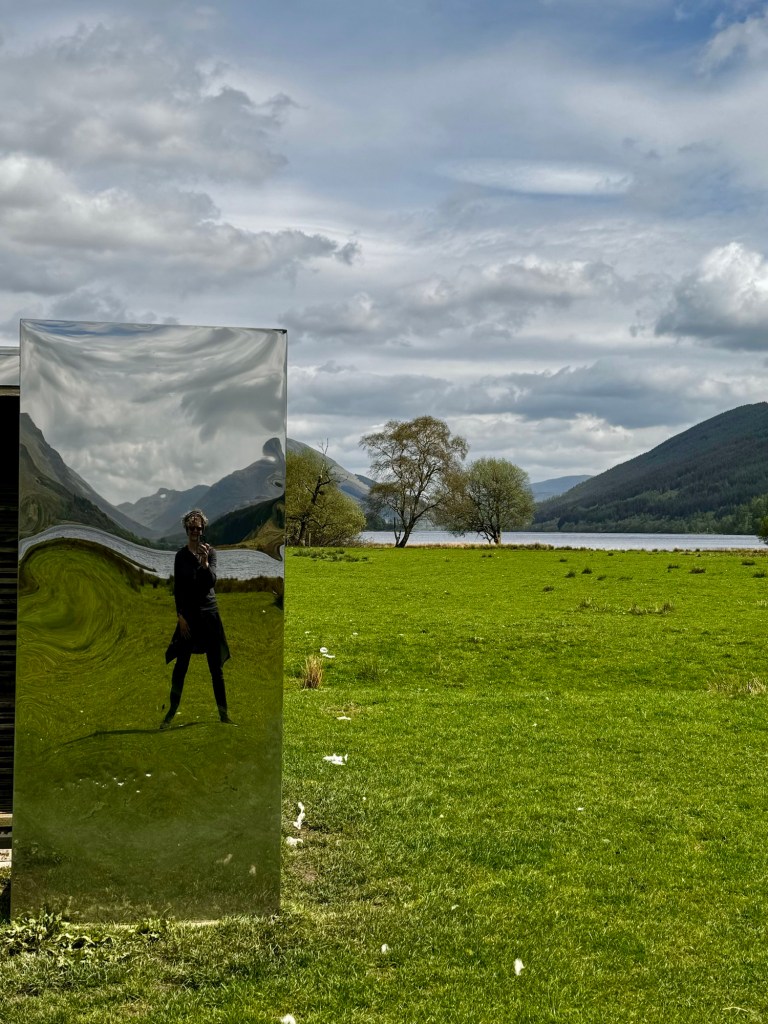
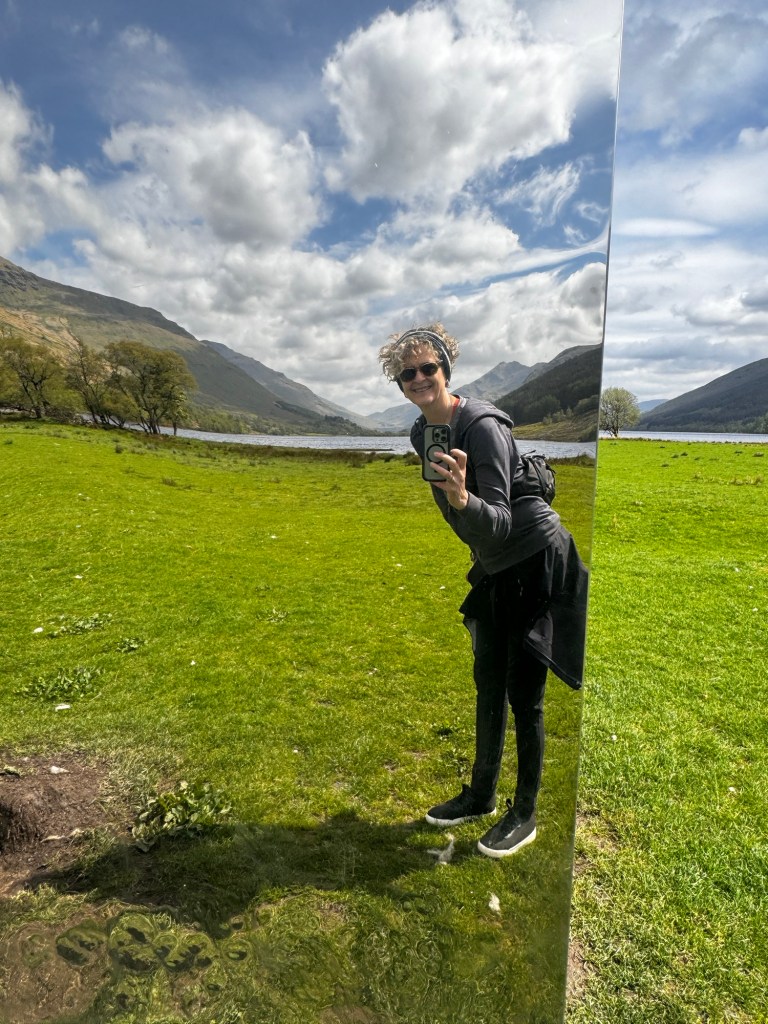
Like the mirror box sculpture, though, it’s a little worse for wear, and you can’t really get high enough to appreciate the full impact of the piece. It’s also supposed to be surrounded by water with even some of the major rivers filled, but it’s just mucky with bits of trash.
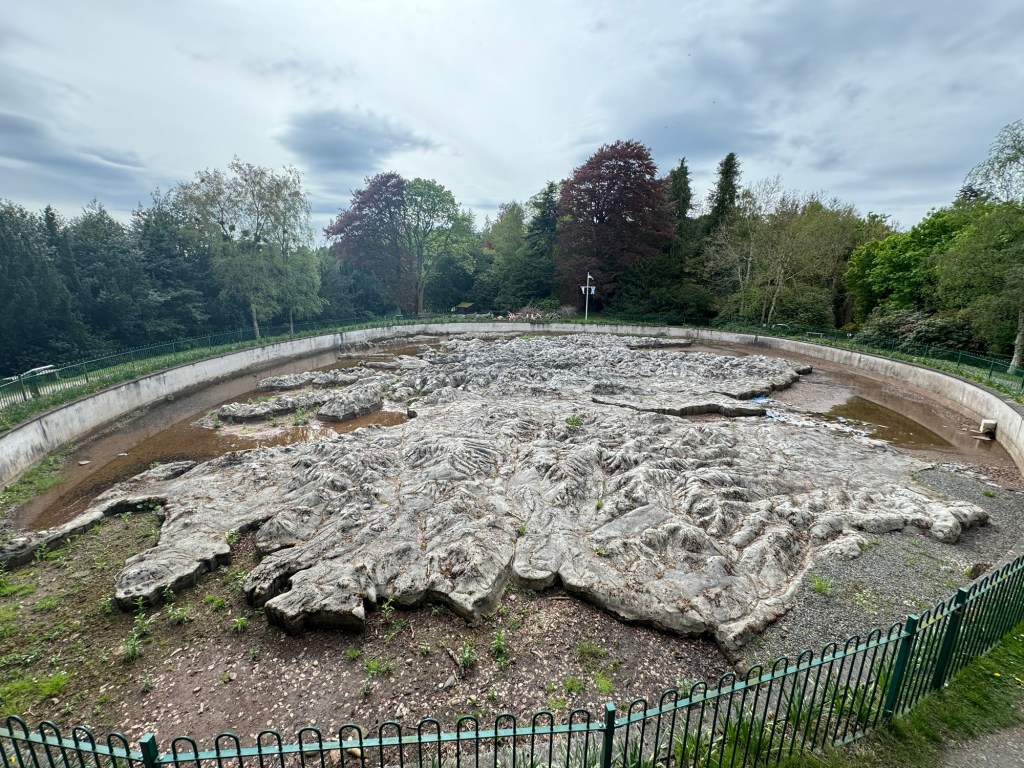

The hotel closed in 1985 and the map became overgrown. In 2010 a group of volunteers decided to save and restore it and they secured funding for it in 2013, ten years ago now. Even though the hotel is back in action, I fear maintaining this might be a lost cause.
Even though it’s the largest outdoor relief map in the world! A few steps up from the largest ball of twine.
And with that, a most excellent day in the Scottish Borders came to a conclusion.
Rosslyn Chapel was on the next day’s agenda.
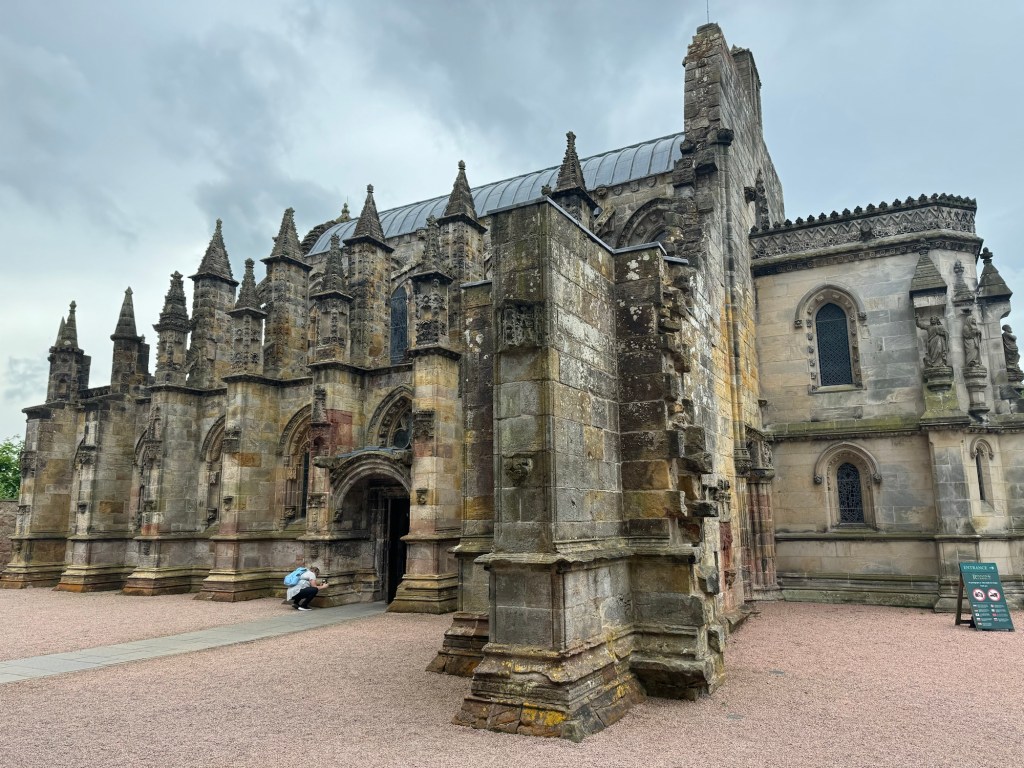
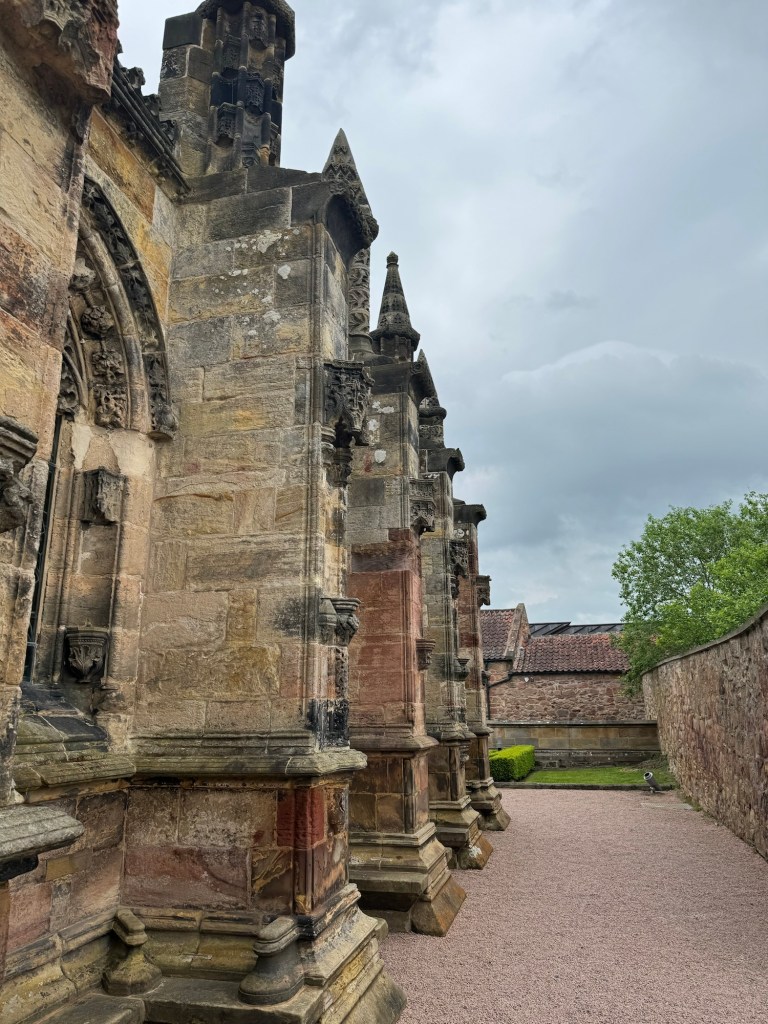
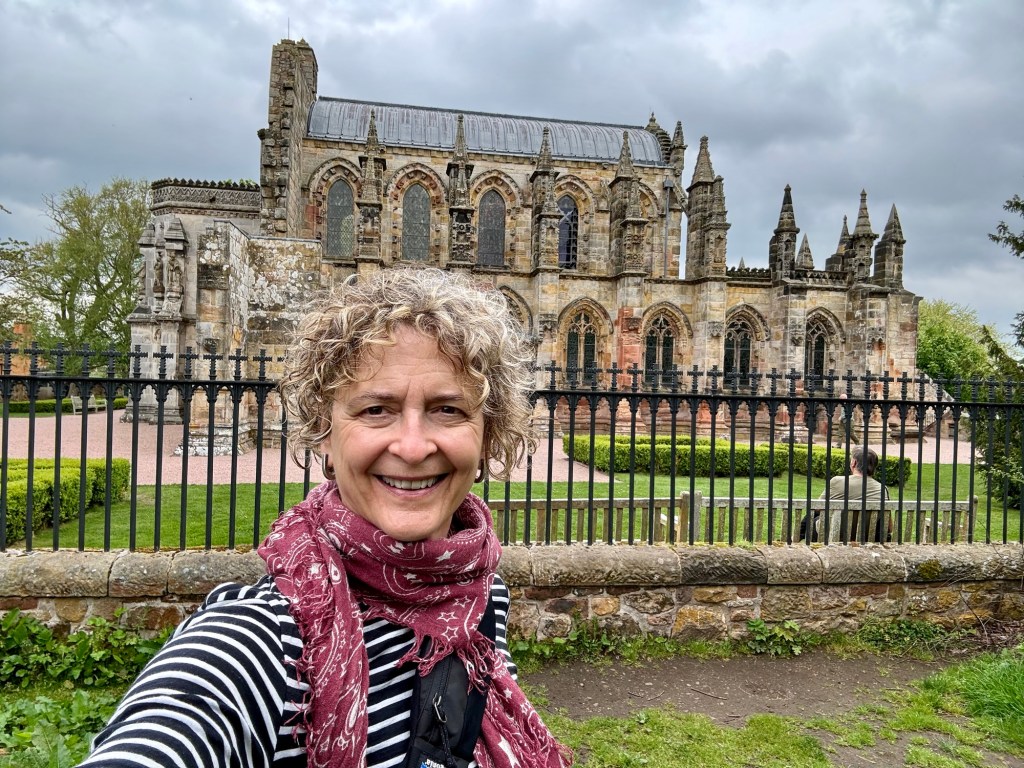
The chapel was designed and built (over a 40 year period) by Sir William St. Clair who had much grander plans than what you see, which is pretty freaking grand. His motivation was to attempt to secure his spot in heaven because that’s how you do it apparently.
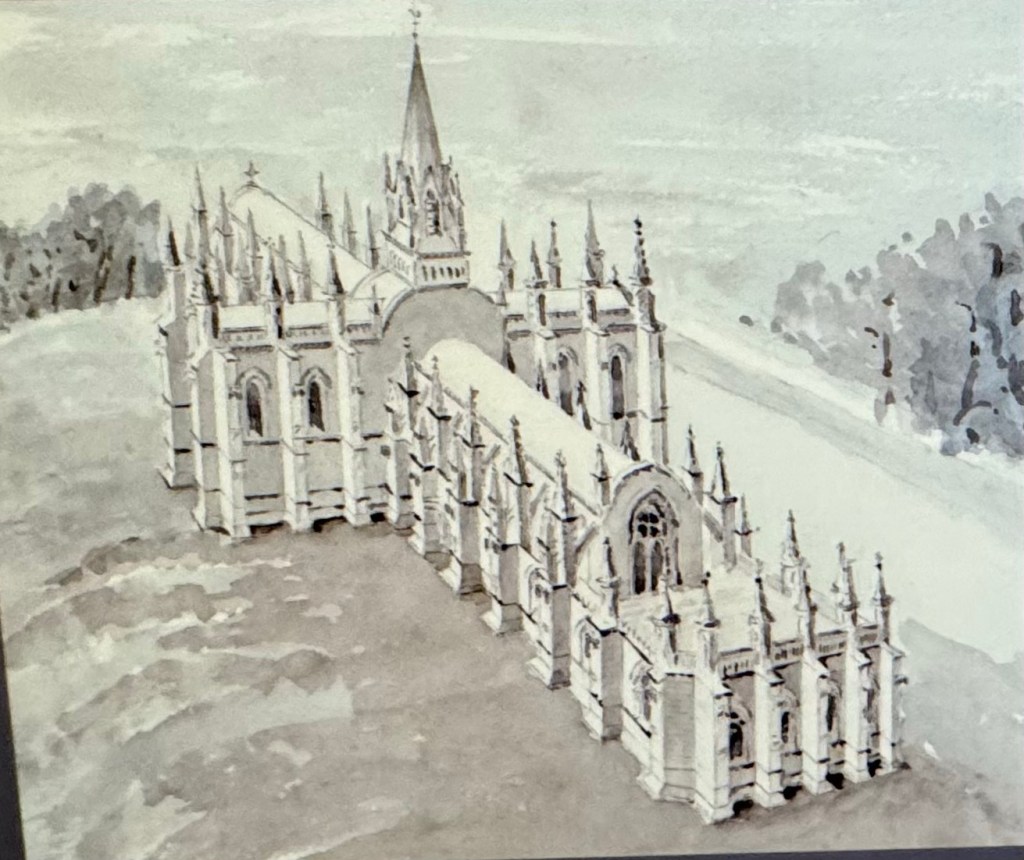
The chapel is undeniably gorgeous – hands down the most incredible church-like situation I’ve ever seen. Yet interestingly, still, after all the time, 50% of visitors are there because of the DaVinci Code.

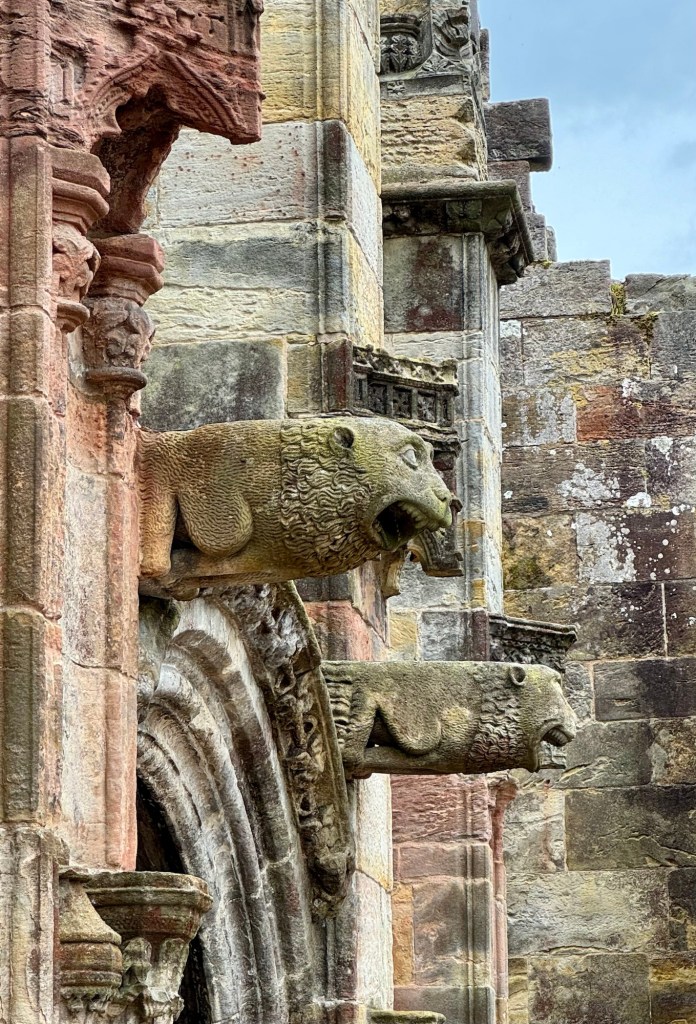
The chapel is the definition of Gothic with flying buttresses and whatnot, and so many gargoyles inside and out. As you aren’t allowed to snap photos inside, here are a couple of fantastic outdoor gargoyles.
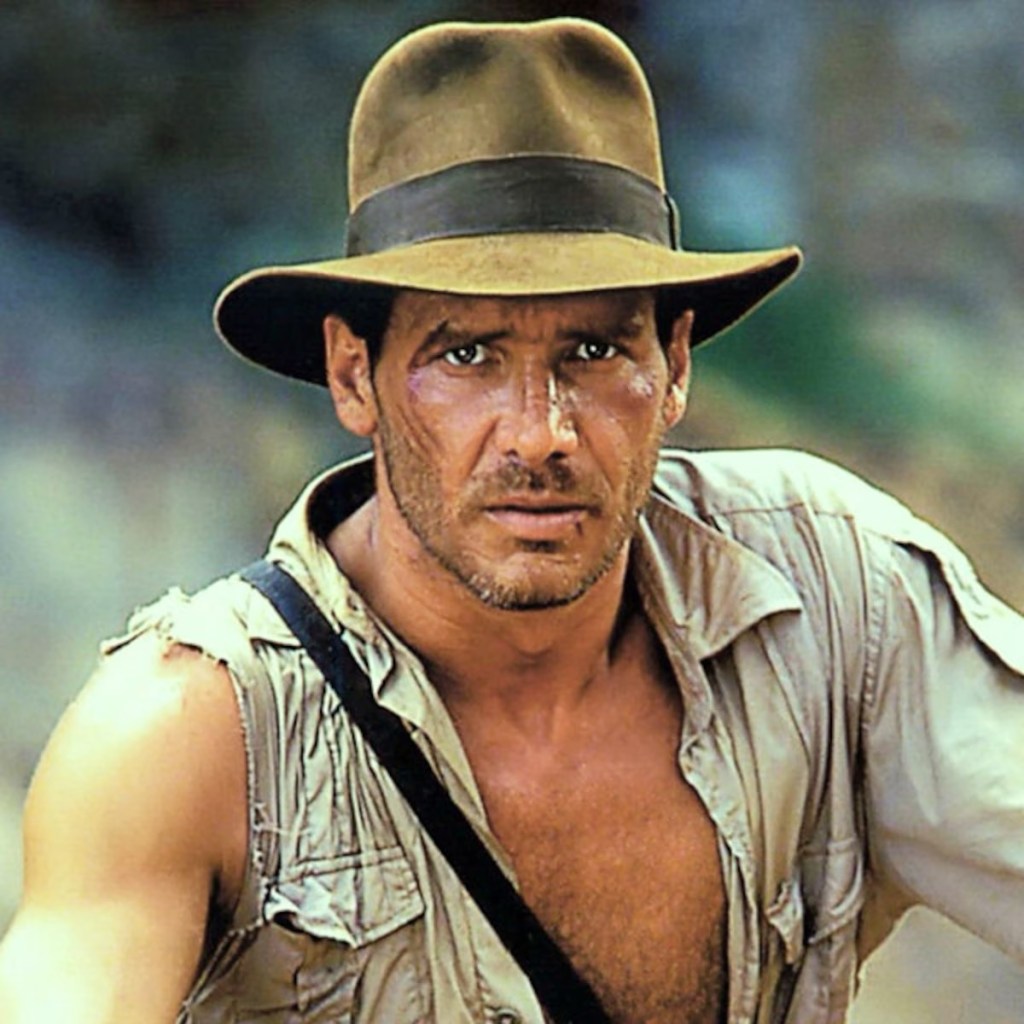
Legend tells us that a vault as deep as the chapel is high is carved out beneath the building, and inside is the final resting place of the medieval St. Clair knights who are laid out in their full suits of armor. Rumors also abound that other cool stuff is down there too, including the Holy Grail (!!), the Ark of the Covenant (!!!) and the head of Christ (!!!!!!!). Alert Dr Jones.
Since I haven’t mentioned Henry VIII yet on this trip – now is the time. In 1544, the chapel was damaged during his so-called “rough wooing,” when he declared war on Scotland in an attempt to force the Scots to agree to a marriage between his son Edward (who died of tuberculosis at 15) and Mary QOS. Cromwell’s troops stabled their horses here while they ransacked nearby Rosslyn Castle (currently being restored), and, in 1842, Queen Victoria visited the Chapel and expressed the desire that it be preserved. Also, the adjacent Rosslyn Inn hosted Edward VII, Dr. Samuel Johnson, Robert Burns and Walter Scott as guests.
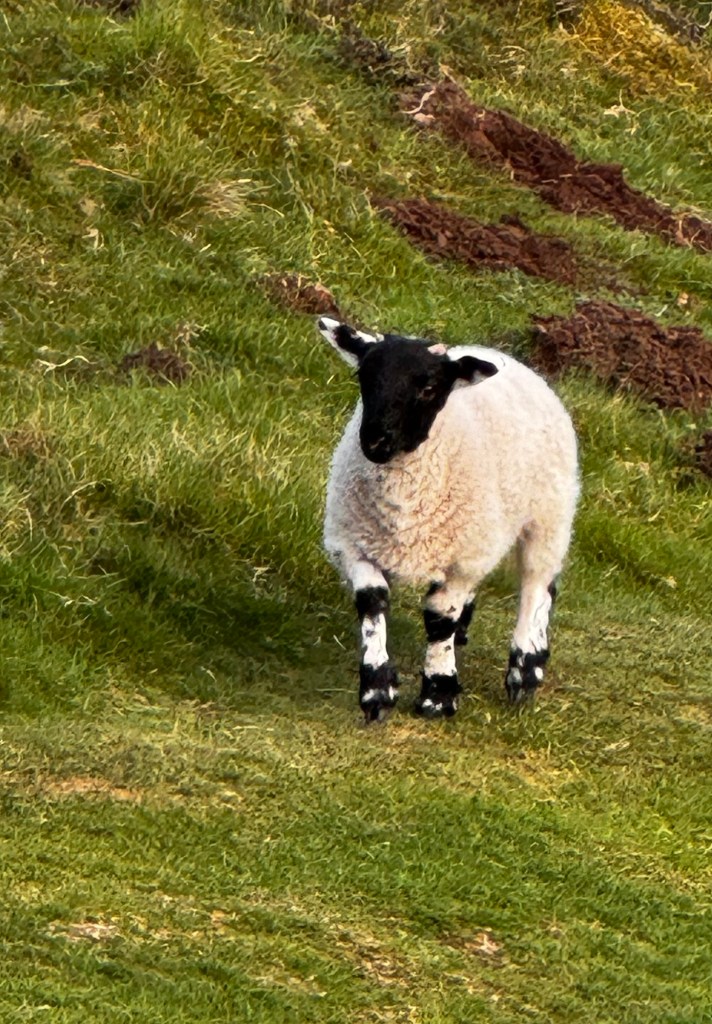
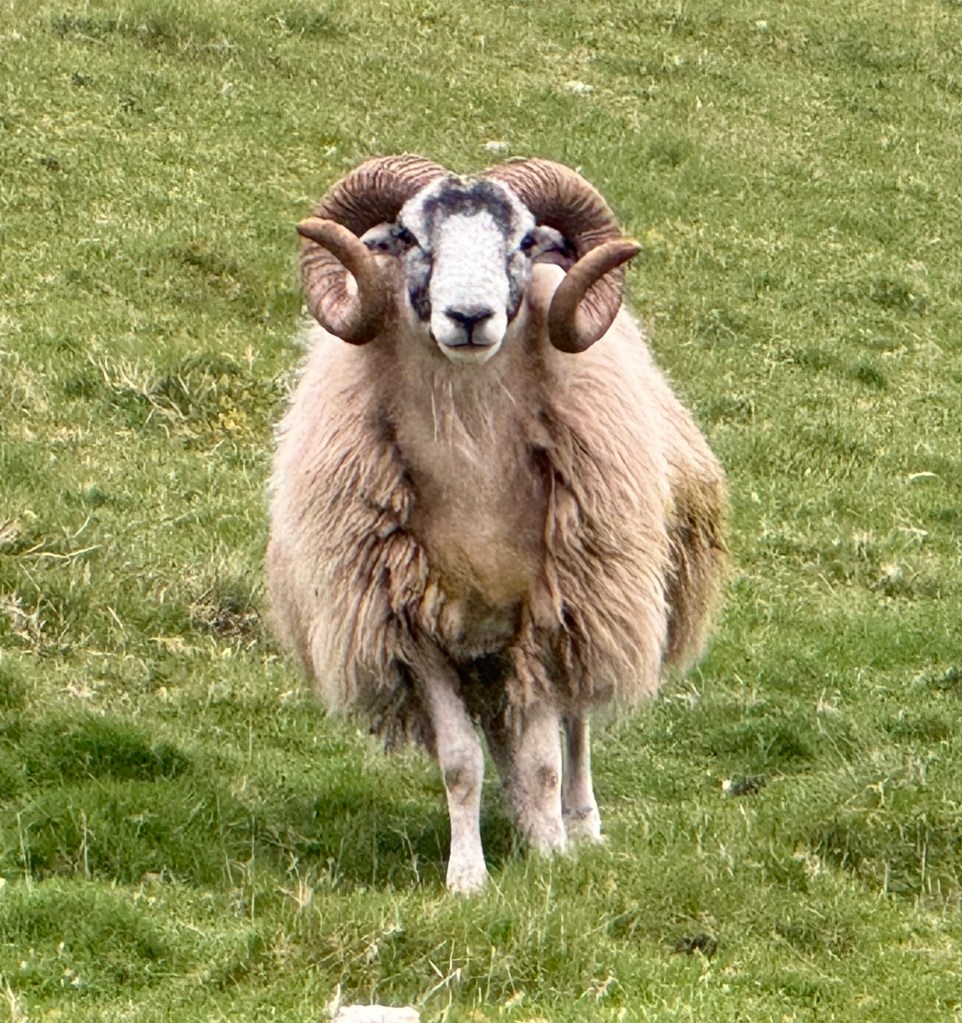
I returned to Eastside Farm, and had one last lovely walk. In my absence, they had moved the sheep around, and so now the males, which are separated from the females and their babies in the spring, were patrolling the road. I wasn’t entirely sure about this guy. We had to negotiate a few things.
And with that, dear readers, we are off to Shetland.







 Wee Dram of Scotland