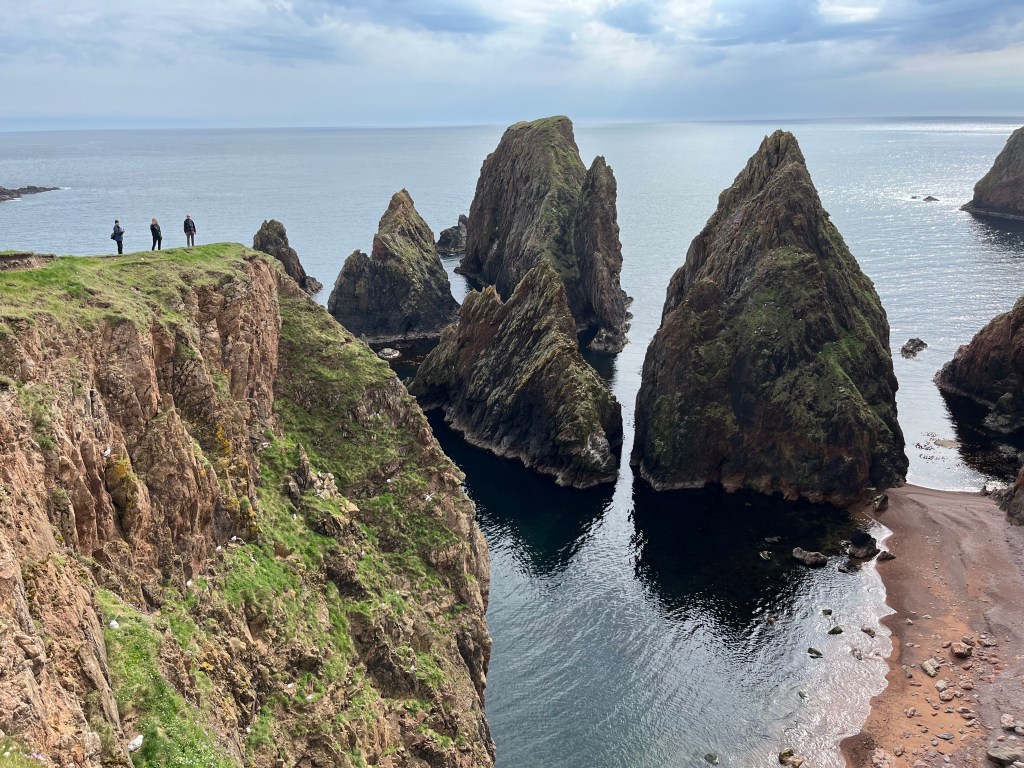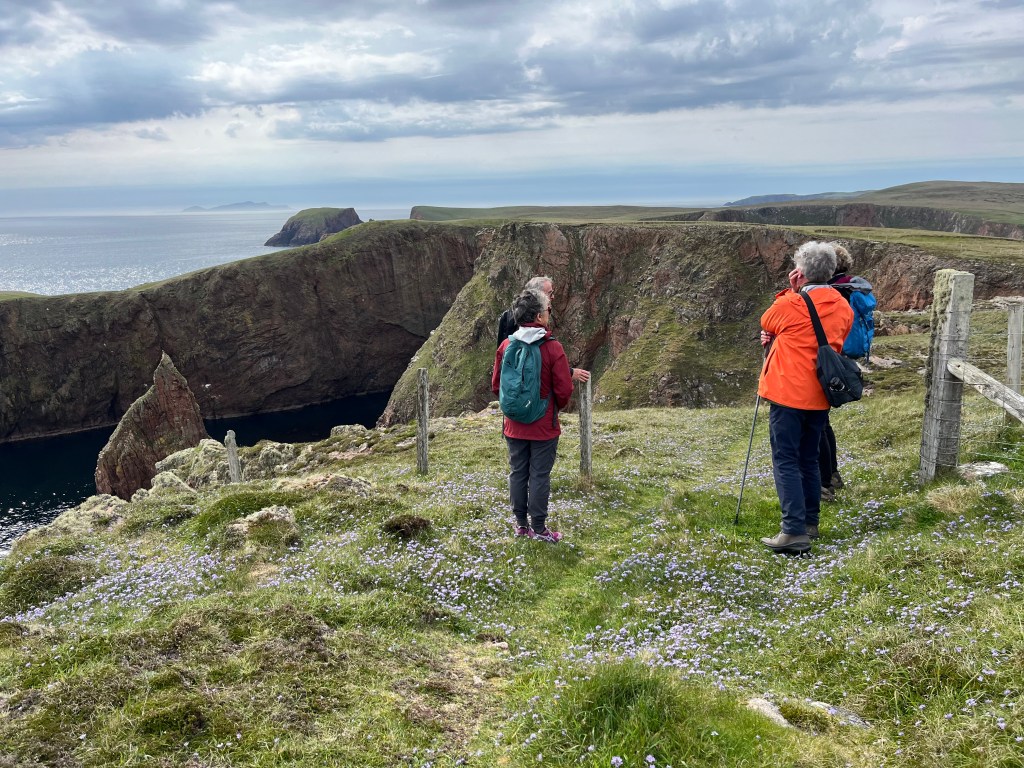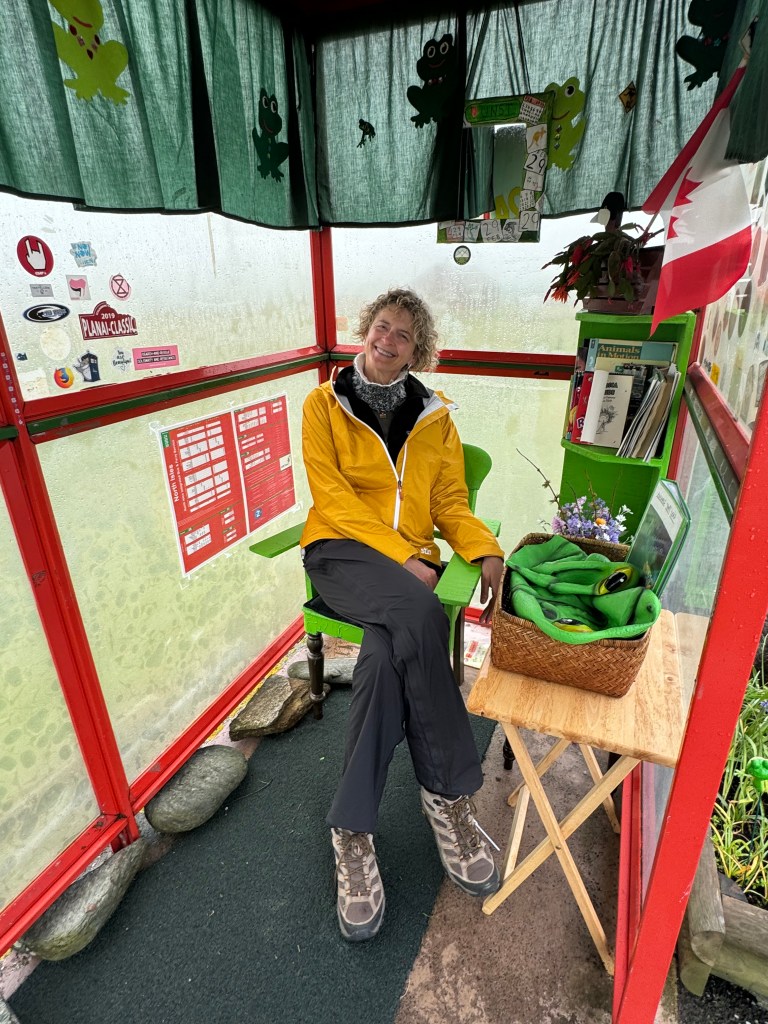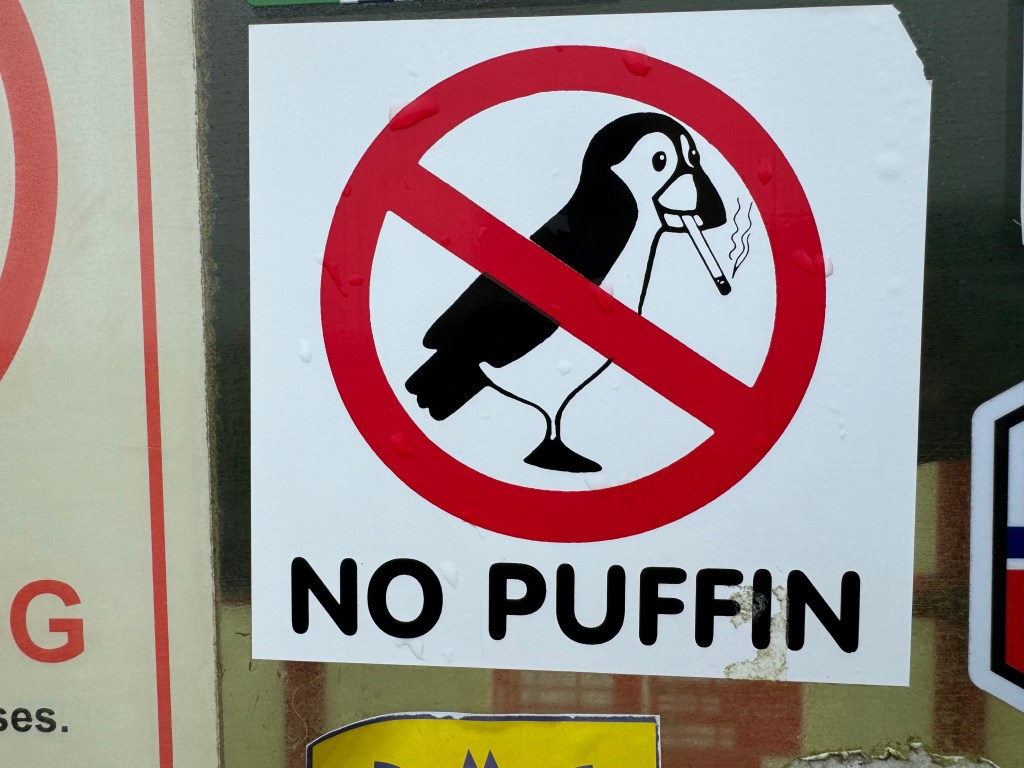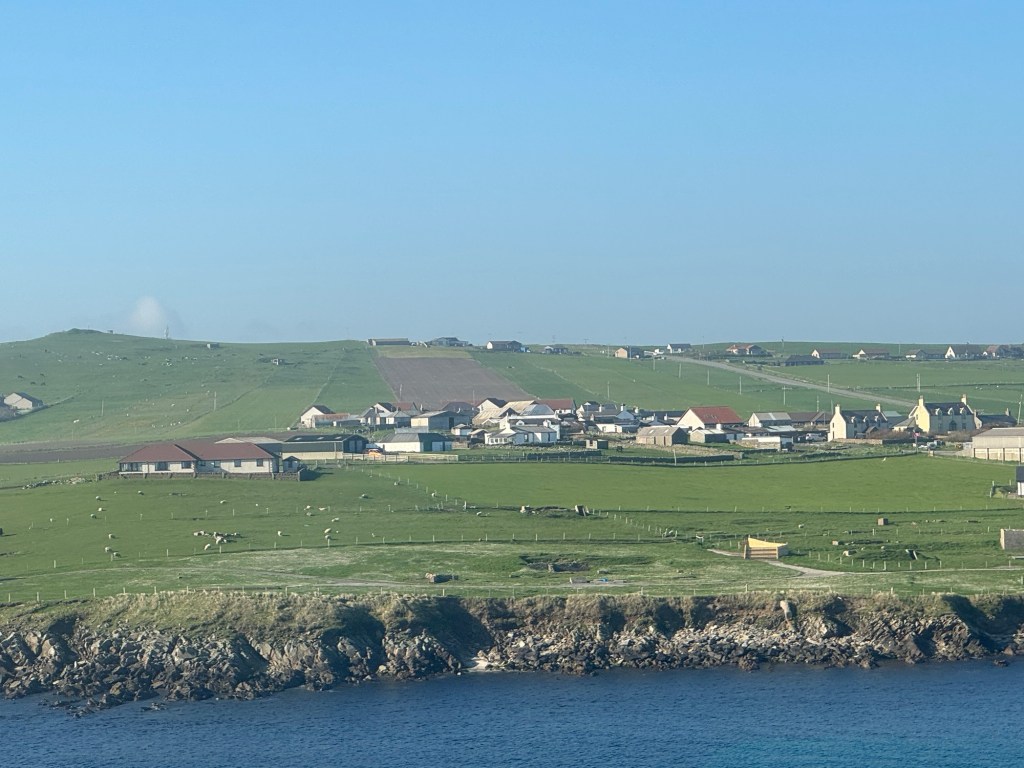
Gannet Woodstock, Unexpected Orcas, Public Bogs, Vikings, Puffins, the Most Northerly, one final Broch and a Spaceport. Featuring various isles: St. Ninian’s, Noss, Bressay, Unst & Yell. And a bit about Leith.

In the category of better late than never, it is time, at last, for a wrapping up of the final days of this trip. Thanks for coming along with me while I was there and now in fond remembrance. This will be a longish one, but hey it’s mostly pictures.

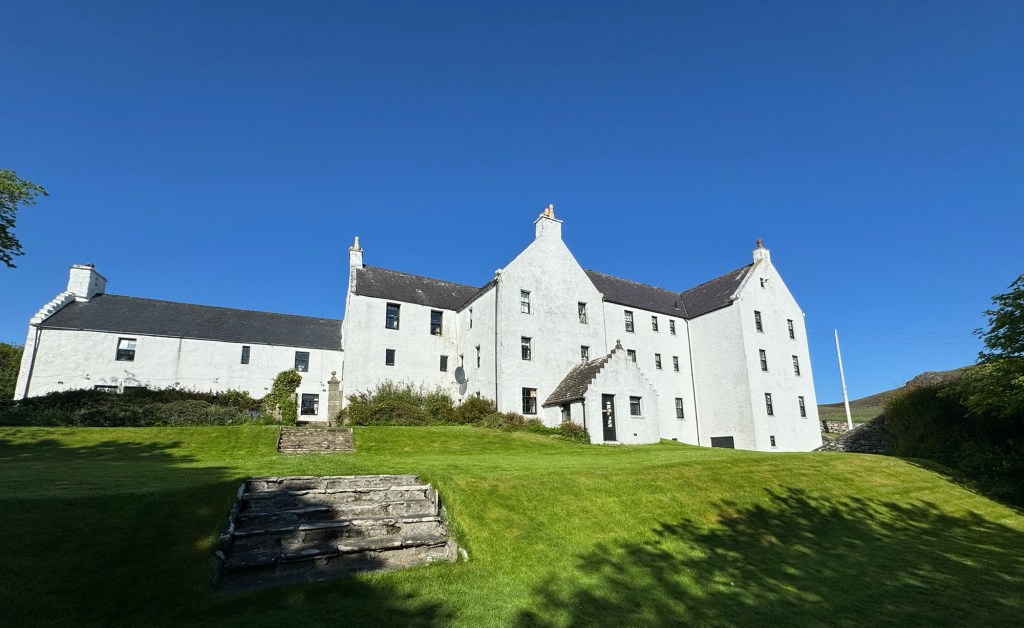
And so onward we go. The highlight of our next day was to be a wildlife boat trip around two nearby islands, Noss and Bressay. On our way to catch our boat we stopped at Lunna House, a 17th century Laird’s home that was requisitioned by the UK War office as the first location for Shetland Bus HQ during World War II.
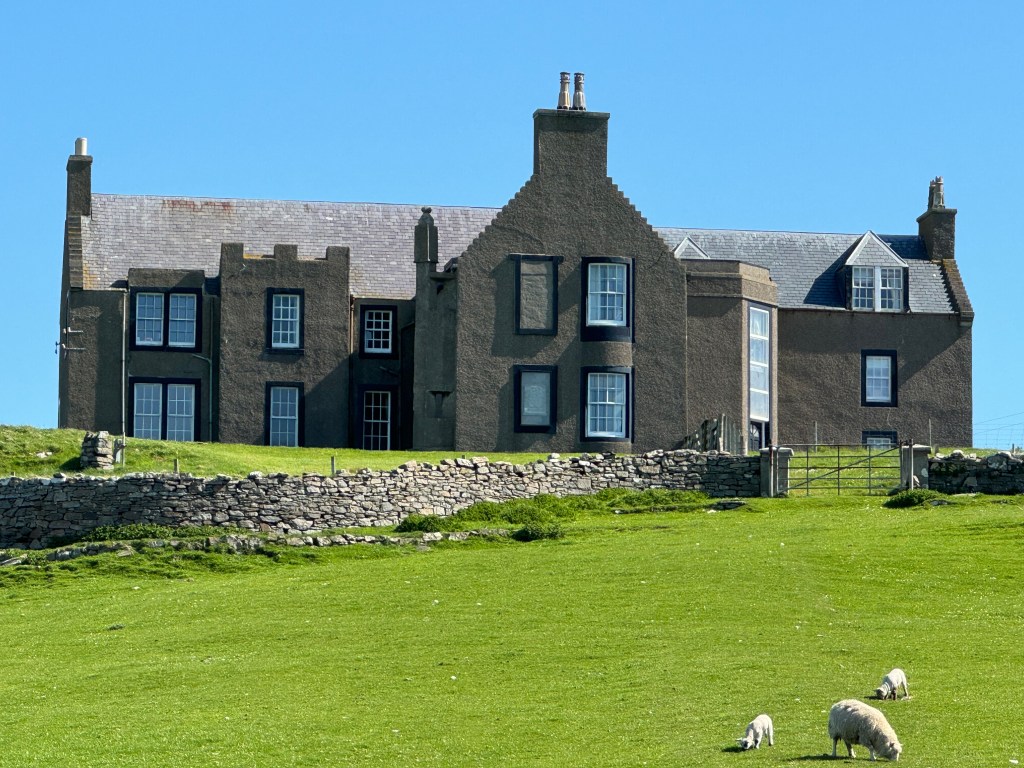
Lunna House

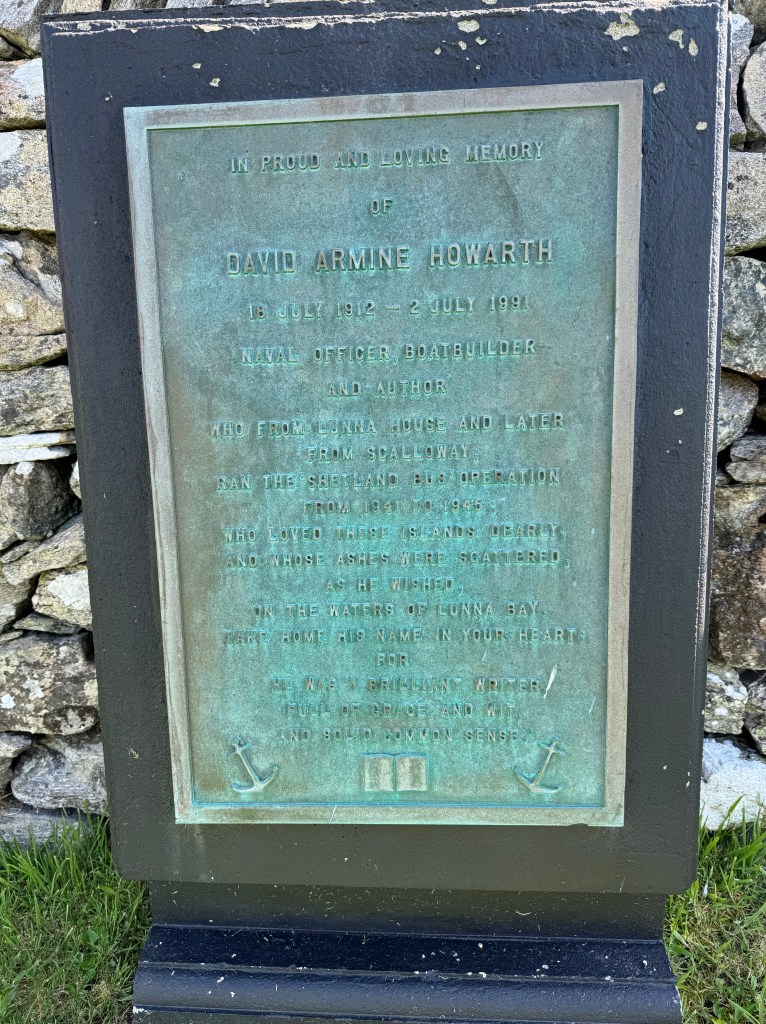
Operations were moved to Scalloway in 1942 (see previous entry), but this is where it all started. As often happened, the stones for the original Lunna House were pilfered from a nearby Iron Age Broch which is one of the reasons why so many broch ruins around the isles are quite a bit shorter than they might otherwise be. Lunna House base was established by David Howarth, who started his career as a BBC War Correspondent before joining the Navy after France fell to the Nazis. His memoir, “The Shetland Bus,” is a gripping account of his extraordinary life. A commemorative plaque for David Howarth can be found in the nearby cemetery of Lunna Kirk (the oldest continuously operated kirk in Shetland), but his ashes were scattered in Lunna Voe per his request.
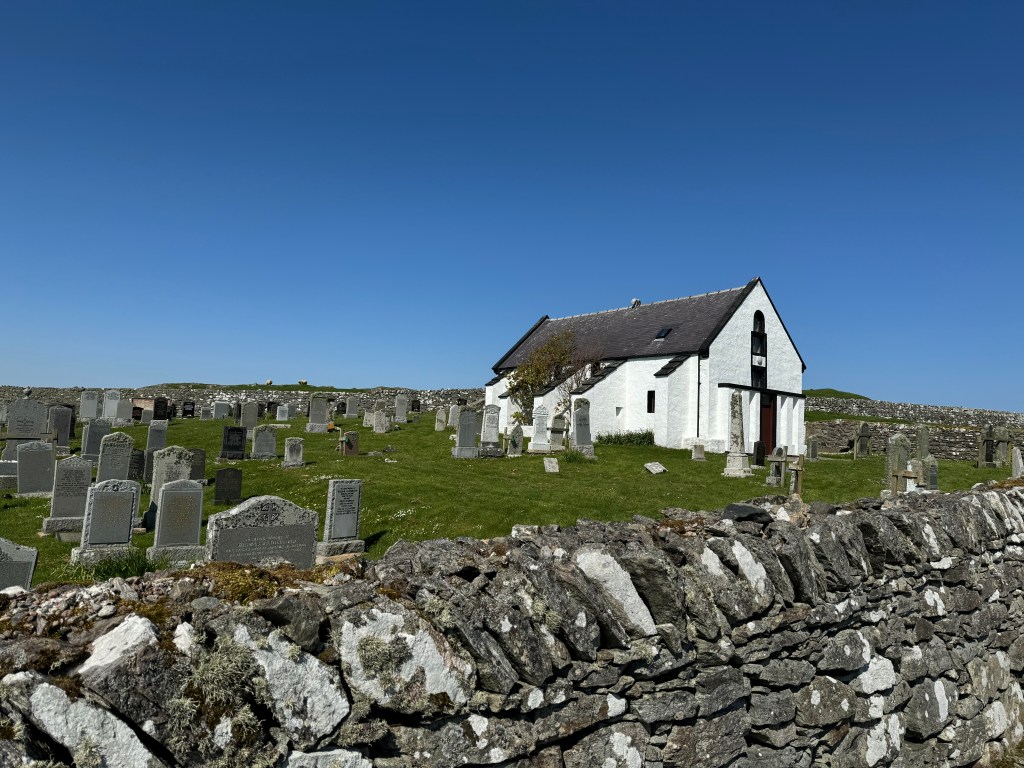
Lunna Kirk
Richard, Jill, Barb and Brent peruse David Howarth’s memorial plaque.

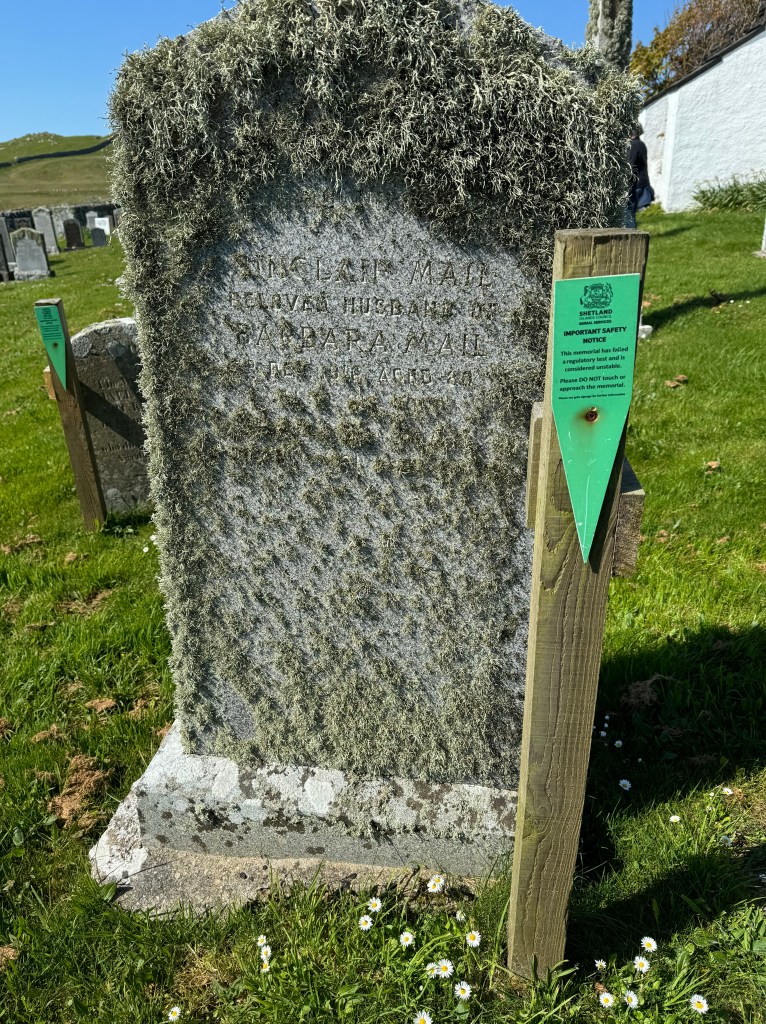
Many of the moss-capped headstones in the kirkyard have been tagged by authorities as having “failed a regulatory test” to the point where visitors are warned against even approaching them because I guess they might slooowly tip over? This strikes me as somewhat hilarious after navigating the Mousa broch steps yesterday. The headstones look pretty solid to me and this one’s hairdo brings to mind four particular lads from Liverpool.
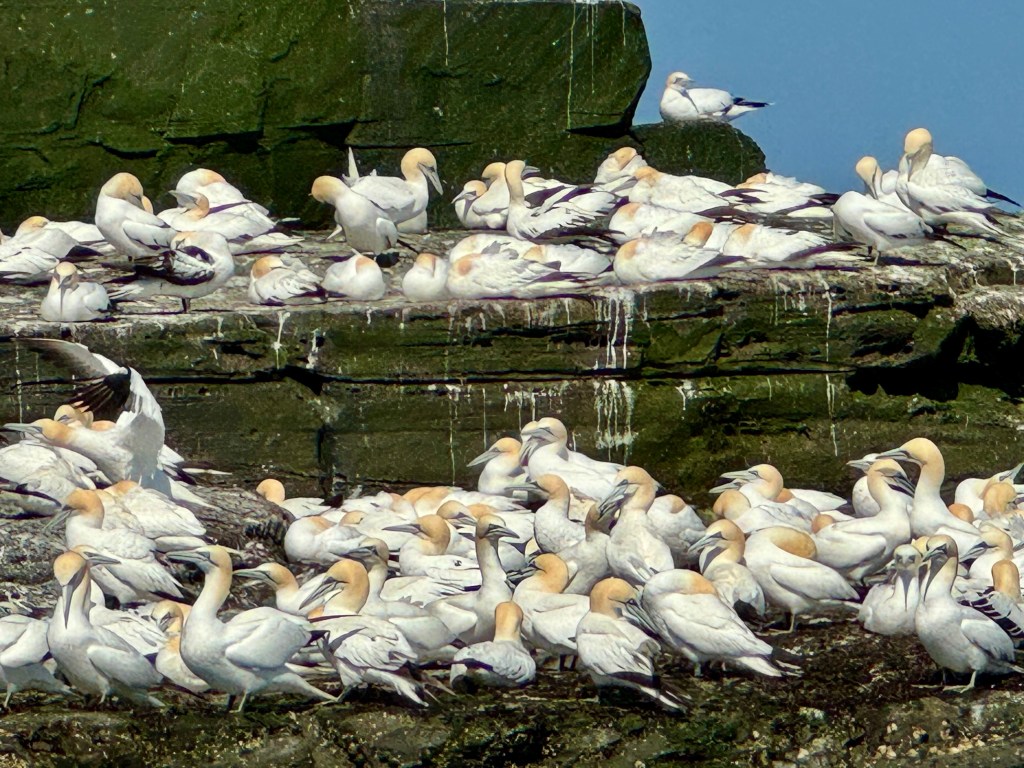
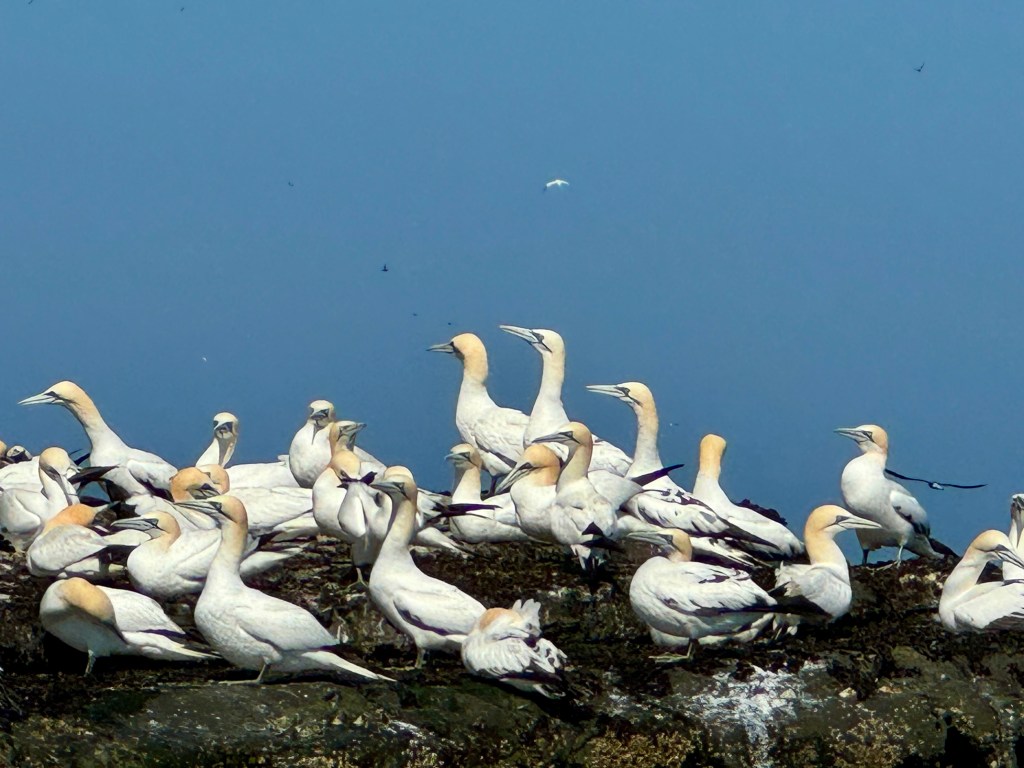
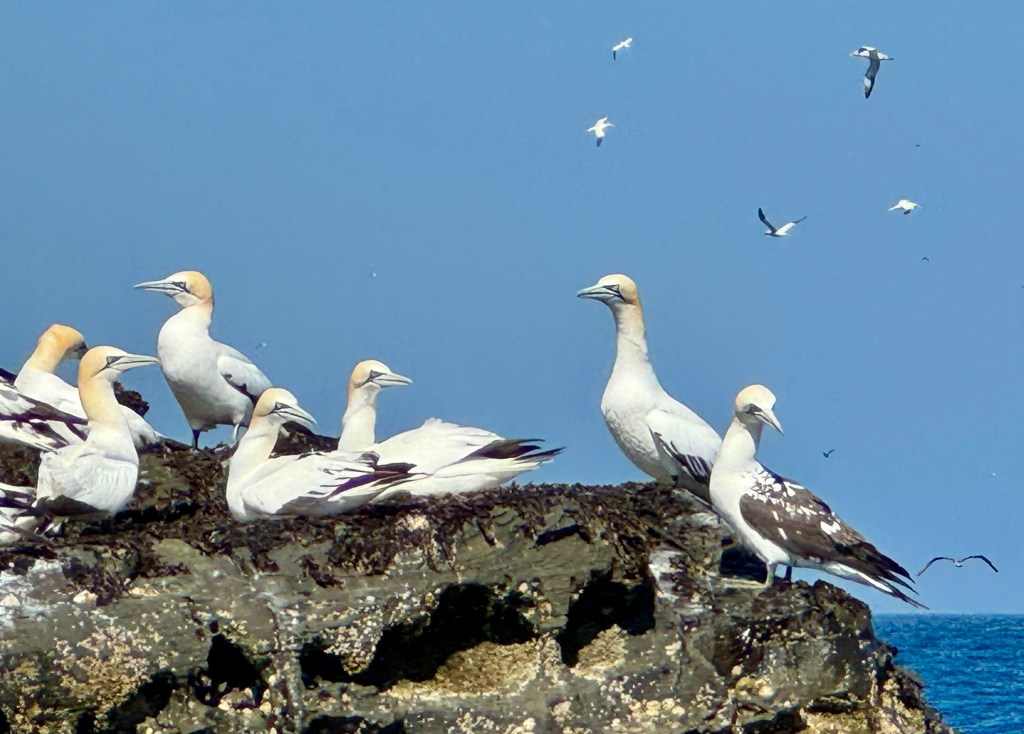
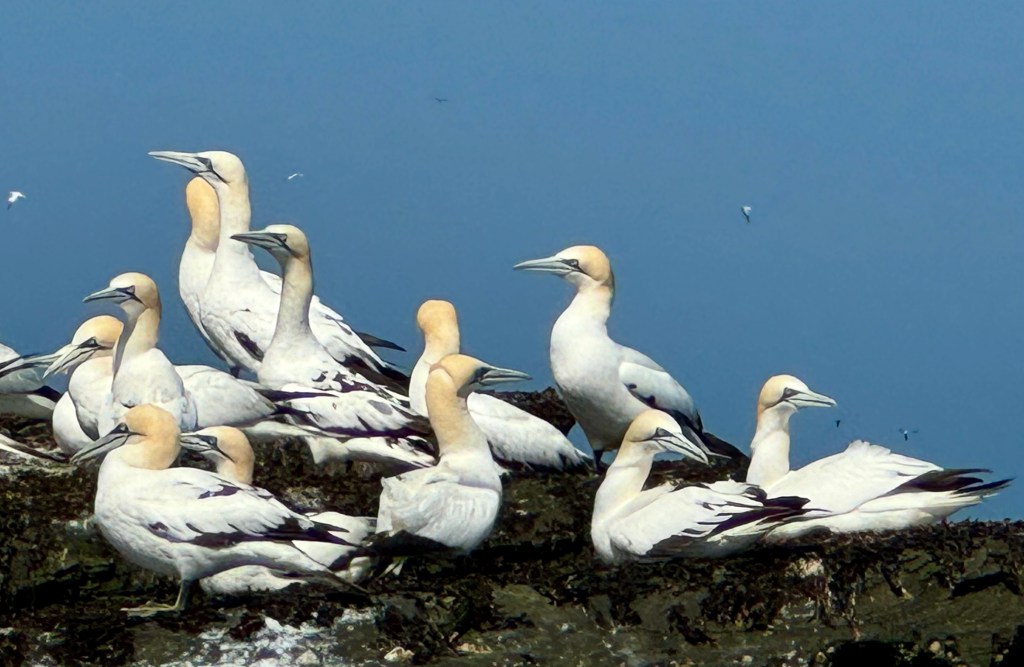
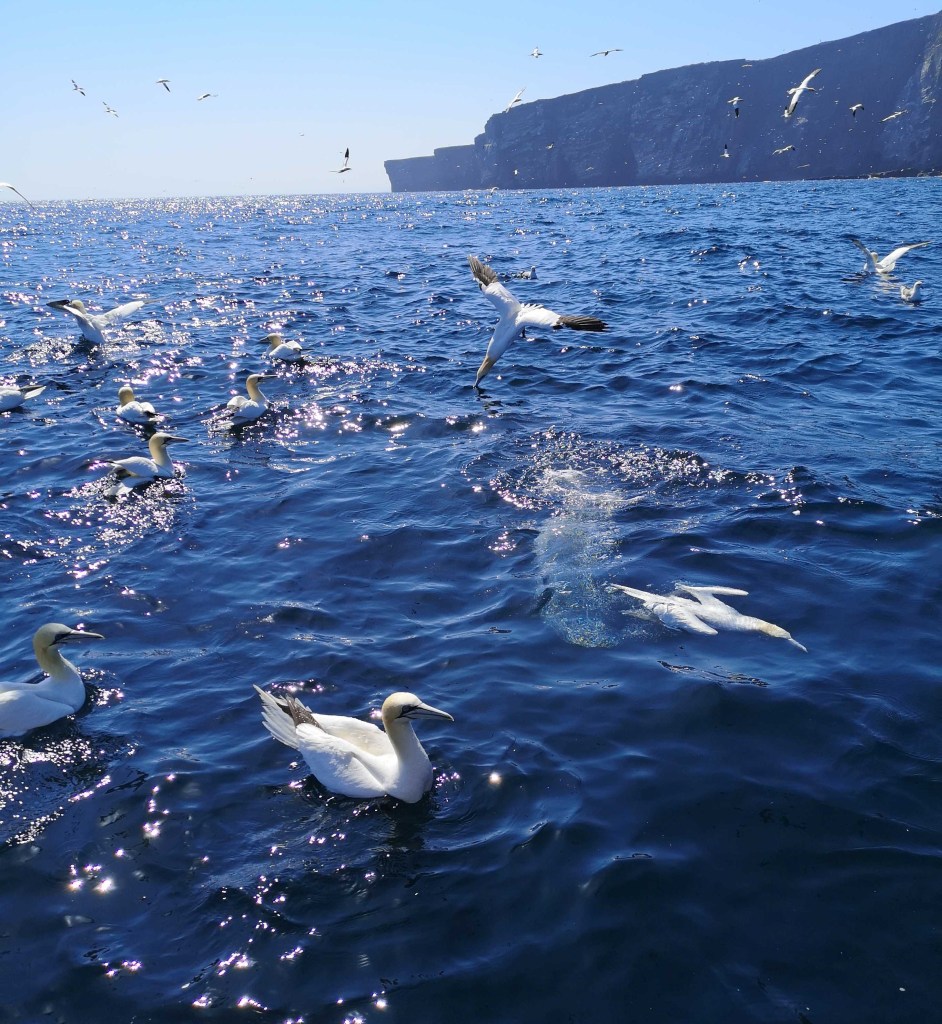
And that’s all the history you are getting for this day. I know you are sad! Wipe your tears away, for we are off to sail around the isles of Noss, an uninhabited nature reserve since 1955, and Bressay. The tides have been sketchy of late which we are told may force an early return to port so fingers crossed. The highlight of the tour is a ginormous gannet colony on Noss, where approximately 150,000 of the gorgeous, graceful seabirds nest along a mile-long stretch of cliffs. I feel a slight kinship with gannets because their 6 foot wingspan matches my own.
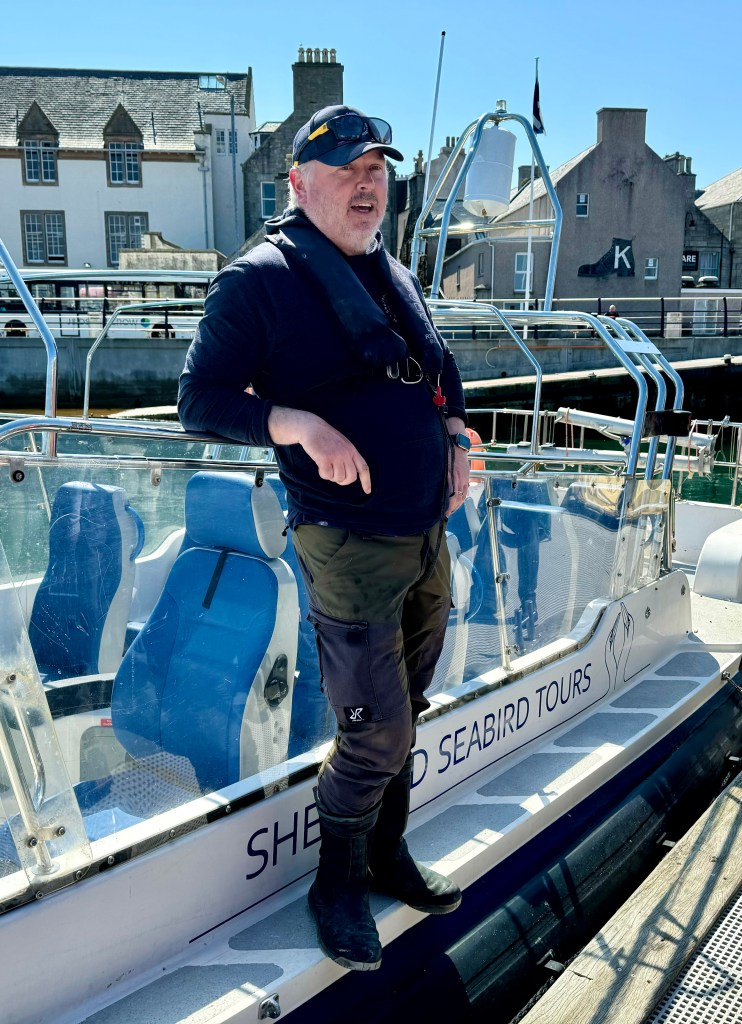
Mr. Nonchalance, our skipper Captain Phil

Phil Harris is the owner of Shetland Seabird Tours and is a life-long birder and naturalist. He started his career as a firefighter and then trained to pilot fast rescue boats in the rough seas around Shetland, so we were in expert hands in many categories. Plus he had a great sense of humor, regaling us on the dock with cheerful warnings about how seasick we were all likely about to become.

One of the many benefits of traveling alone is that you can validly call shotgun in situations like these and nobody gets mad, so just like that I was Captain Phil’s Number One.
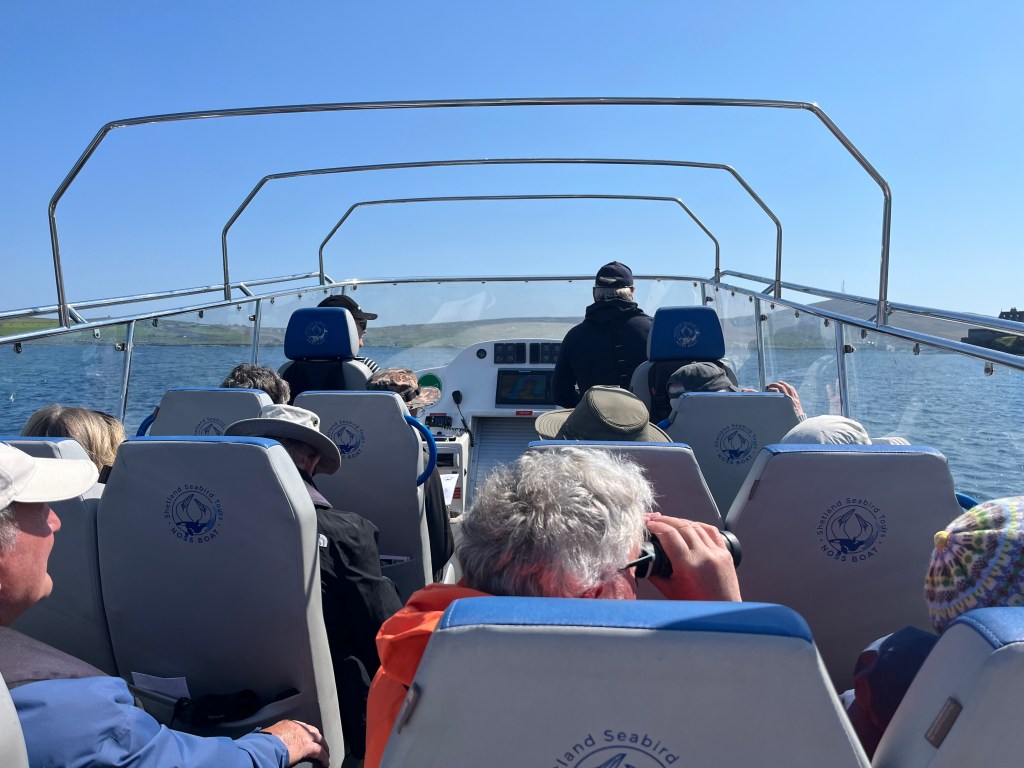
The very first thing that happened when we entered the bay was Phil completely losing his mind and grabbing his big-ass camera because we unexpectedly came across a family pod of orcas. The first orca we saw was a big male, who was bearing down on us with his giant fin piercing the water like freaking Jaws. I had recently seen David Attenborough’s Wild Isles featuring the famous Shetland Pod 27 and watched them brutally murder a baby seal in slow-motion. Circle of life and all but still it was a bit concerning watching the big guy heading straight for us, especially having heard about the orcas that had recently attacked boats near the Iberian peninsula.

Of course the big orca peeled off and Phil, in between snapping photos, reported the sighting in local WhatsApp and Facebook groups. Orca tracking in Shetland is a collegial community effort (as you can imagine, a lot of naturalists live here), and in fact orca-spotting groups were instrumental in assisting the Wild Isles crew in finding Pod 27 after a two-year effort. The community shares sightings and helps build a pool of information so scientists can gain a fuller picture of orcas’ behavior and track their movements. As it turned out, this pod was a new one, heretofore not observed in Shetland, which felt like a bit of good news.

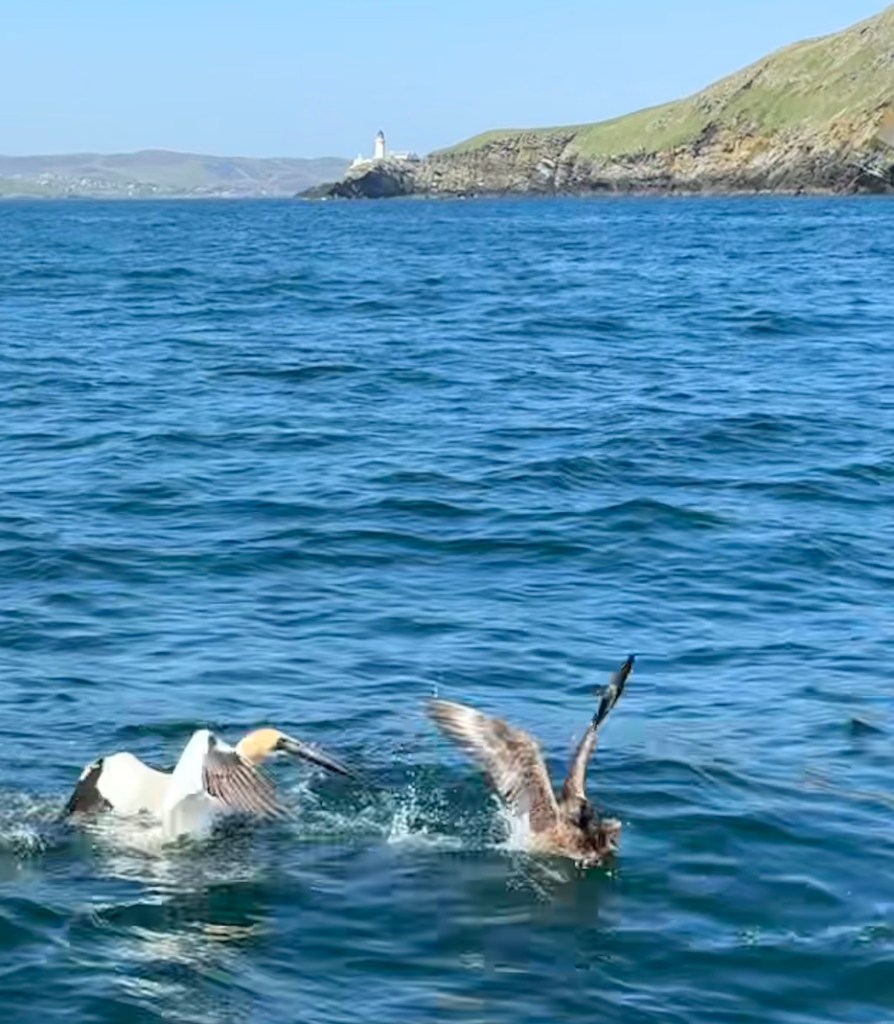
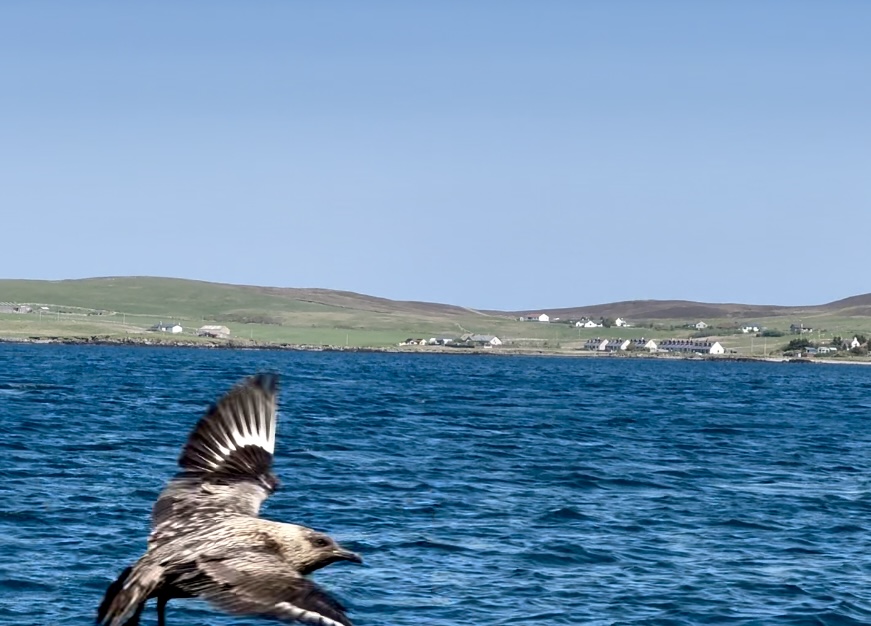
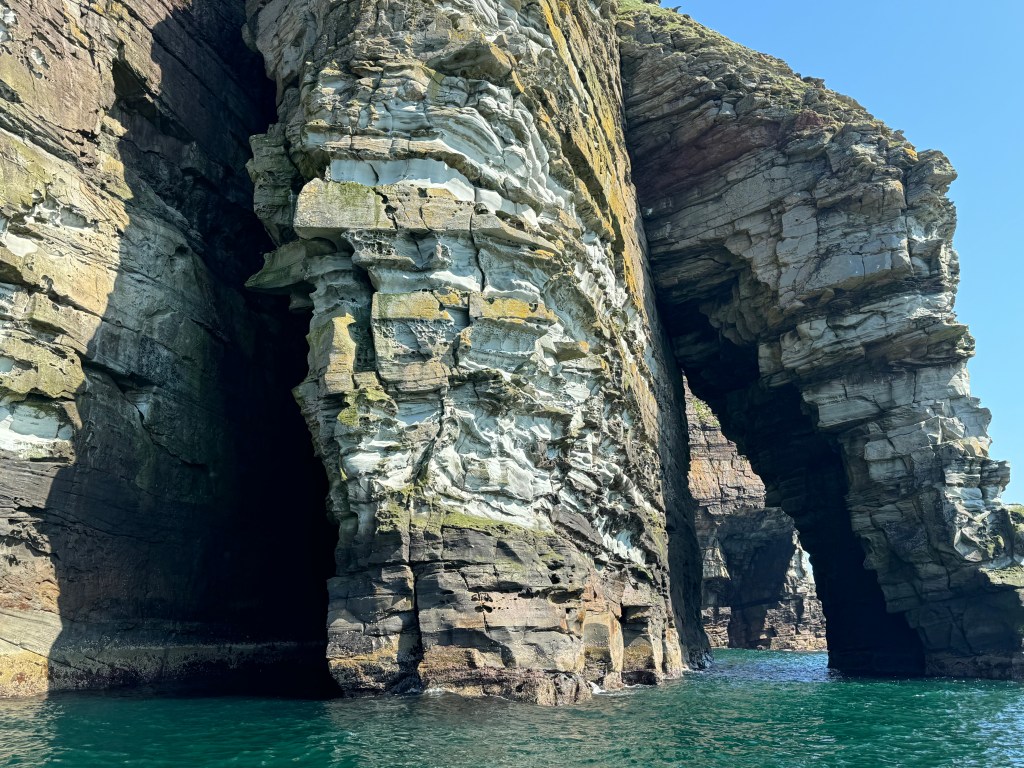
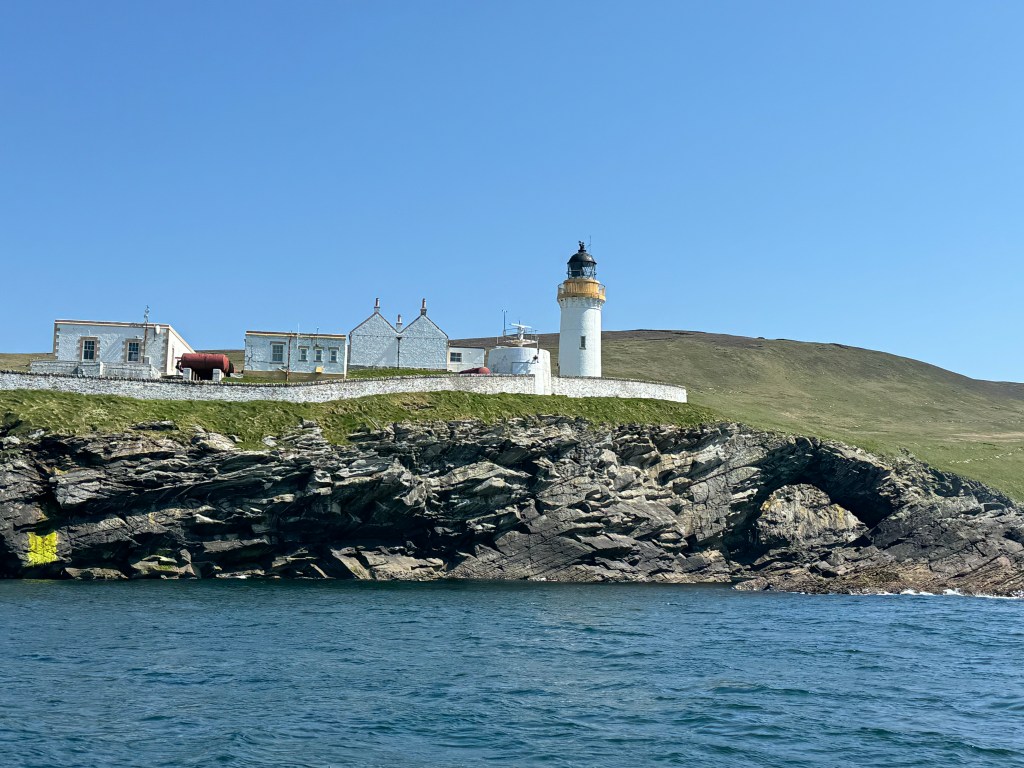
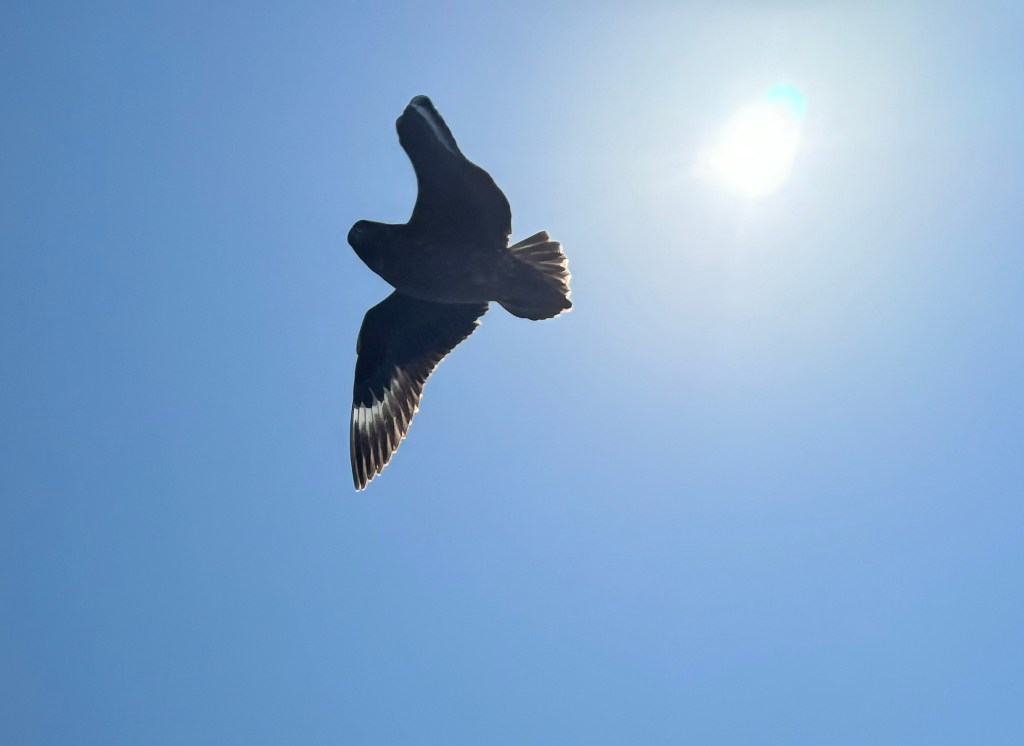
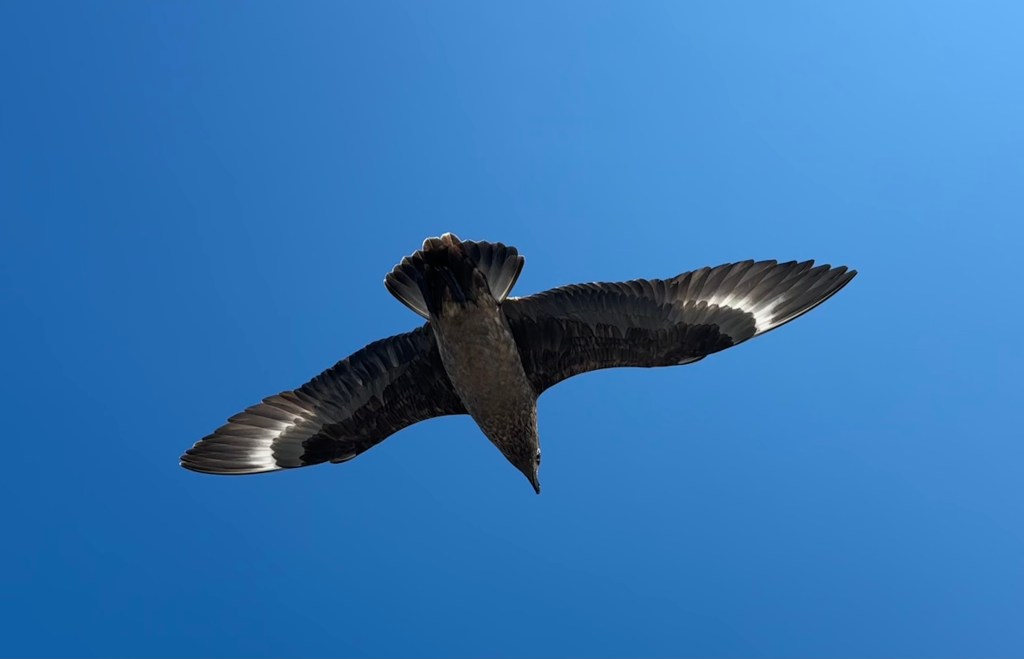
Reluctantly leaving the orcas (who hung around the area for the rest of the day) we sailed around some fabulous cliffs, the Bressay Lighthouse and watched a great skua (called a “bonxie” in Shetland-ese) fend off a gannet for a fish.
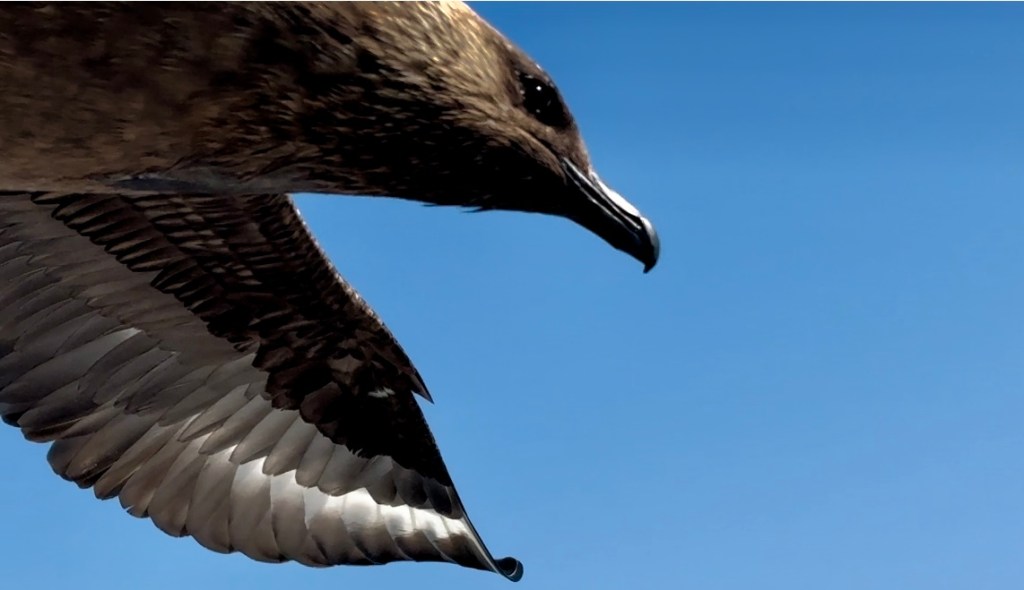
Speaking of bonxies, Phil calls them the assholes of the seabird kingdom due to their general aggression toward other birds. Also if you are dumb enough to walk too near their nest they will absolutely fly at your head. Phil also claimed that they poke the eyes out of puffins but I feel like this was merely a gruesome embellishment. They are kind of cool birds and right now Bonxie is the lead contender for my next dog’s name, so.
And now for the gannet colony. I’ve honestly never seen anything like it. I mean, 150,000 birds is a lot and they layer the cliff walls, packed in like sardines and yacking at each other having a ball like they are at an outdoor music festival. They are also gorgeous and incredible divers. And once they are submerged underwater, they keep flying while they fish. For a short video narrated by Scottish Obi-Wan Ewan McGregor, check this out: https://www.youtube.com/watch?v=mXXuK9eQVUw&t=9s
Below is one of those “wait for it” videos. If you are creeped out by slo-mo Exorcist talking, this is your trigger warning.

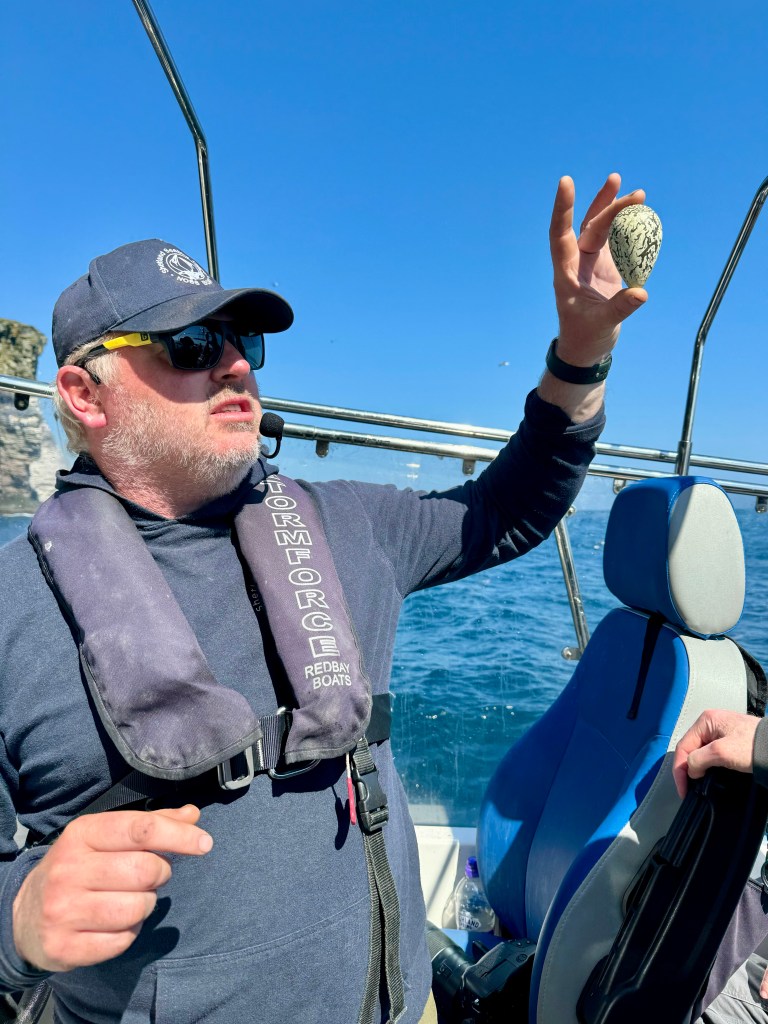
In and amongst the gannet colony were guillemots, members of the auk family, just like puffins. They are literally descendants of the Great Auk from days of yore. The birds nest in colonies to protect their eggs, which they lay directly on the ground, or in this case on top of cliff ledges. The eggs are shaped like pears and so roll in an arc, presumably to keep them from tumbling into the sea.
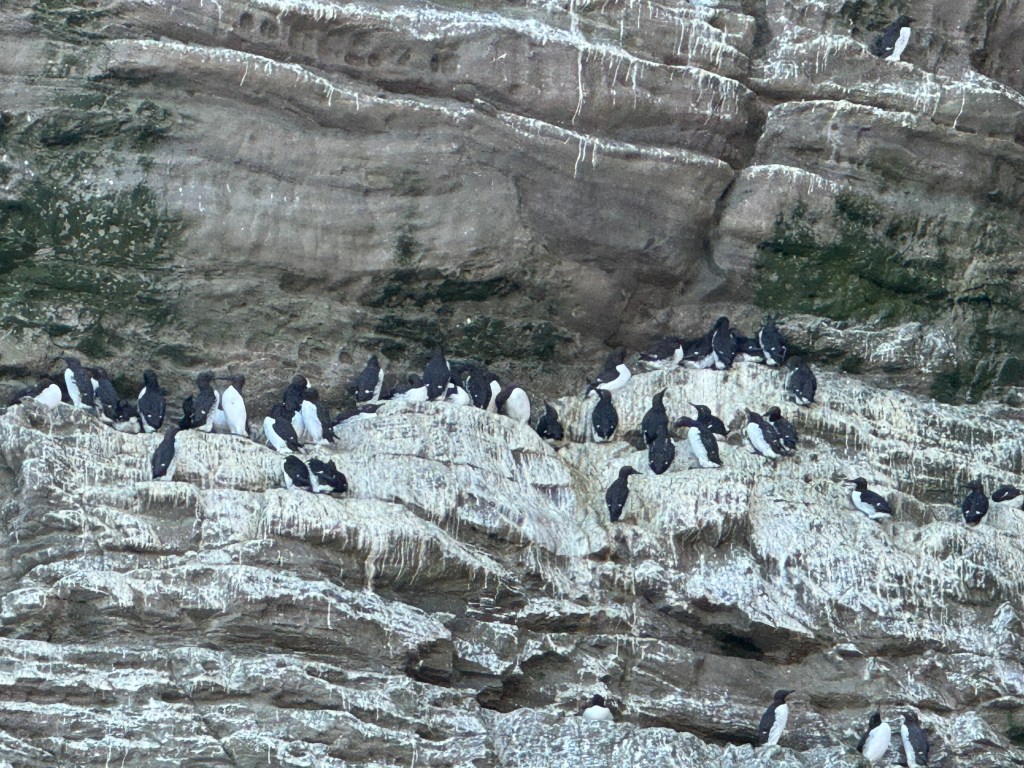
Guillemots!
Phil and his demonstration guillemot egg.
Captain Phil’s lecture about the spa-going habits of female guillemots.

As we continued sailing along the cliffs next to the gannet colony I managed a few awesome photos if I do say so, and have no idea how. Here are just a few.
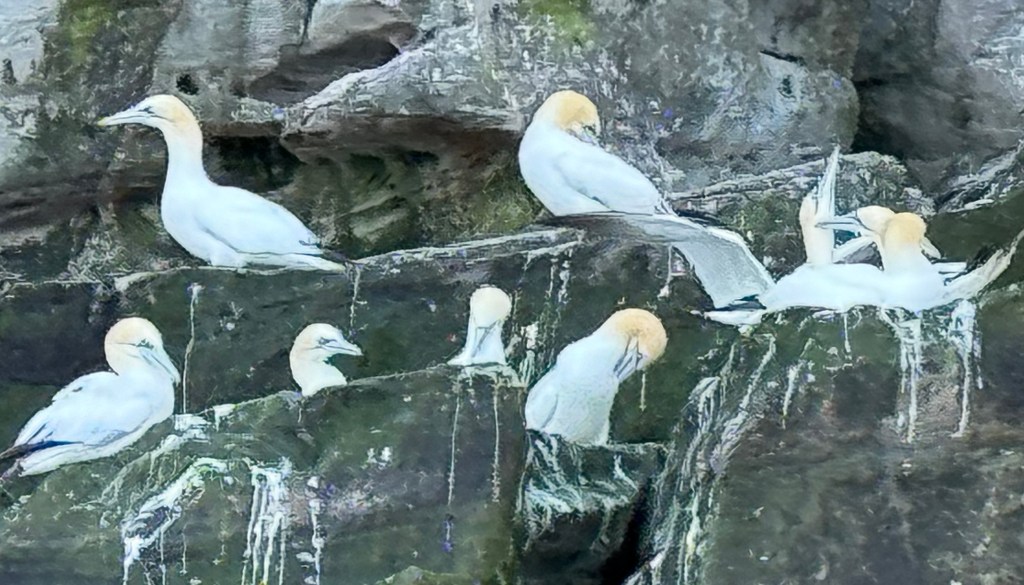
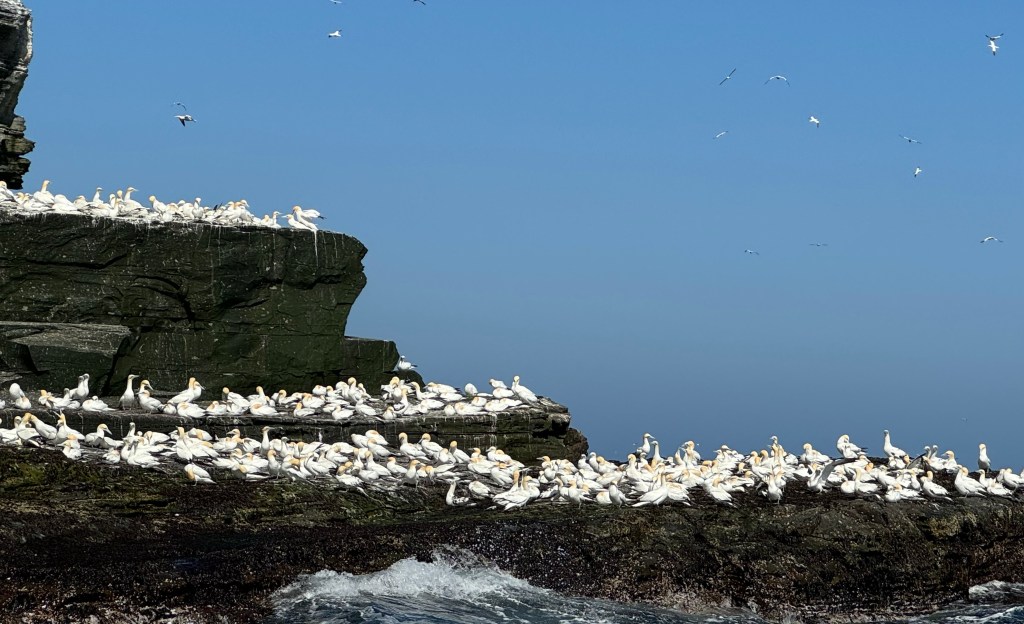
Gannet Woodstock

They flew alongside the boat as we pulled away from the cliffs to round the tip of Noss and head back to Lerwick.

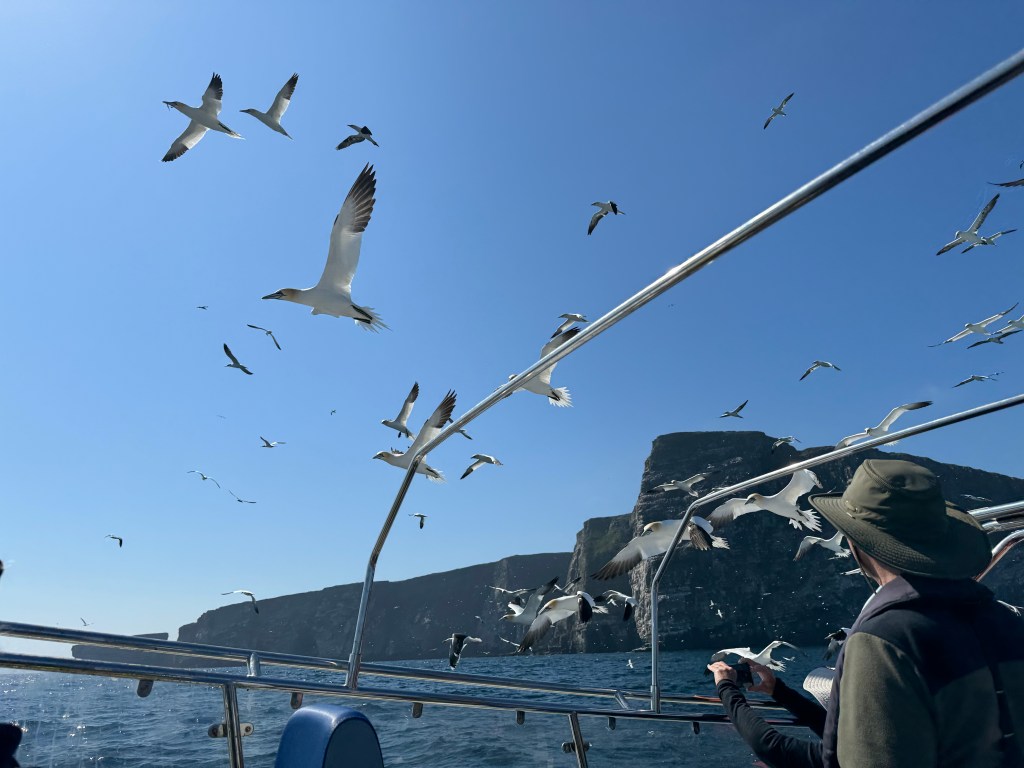
Sound on to experience full gannet exuberance.

I mean what a flipping awesome experience. It even remained fantastic through that one moment when, as I was facing backwards on rough seas taking photos of gannets flying overhead I suddenly realized I was seasick, sat my butt down and grimly faced forward. It passed.

As if we hadn’t seen enough magical wildlife, once we returned to the harbor we were greeted by a friendly and inquisitive seal. I think Phil called him “Freddie,” so he’s likely a regular.
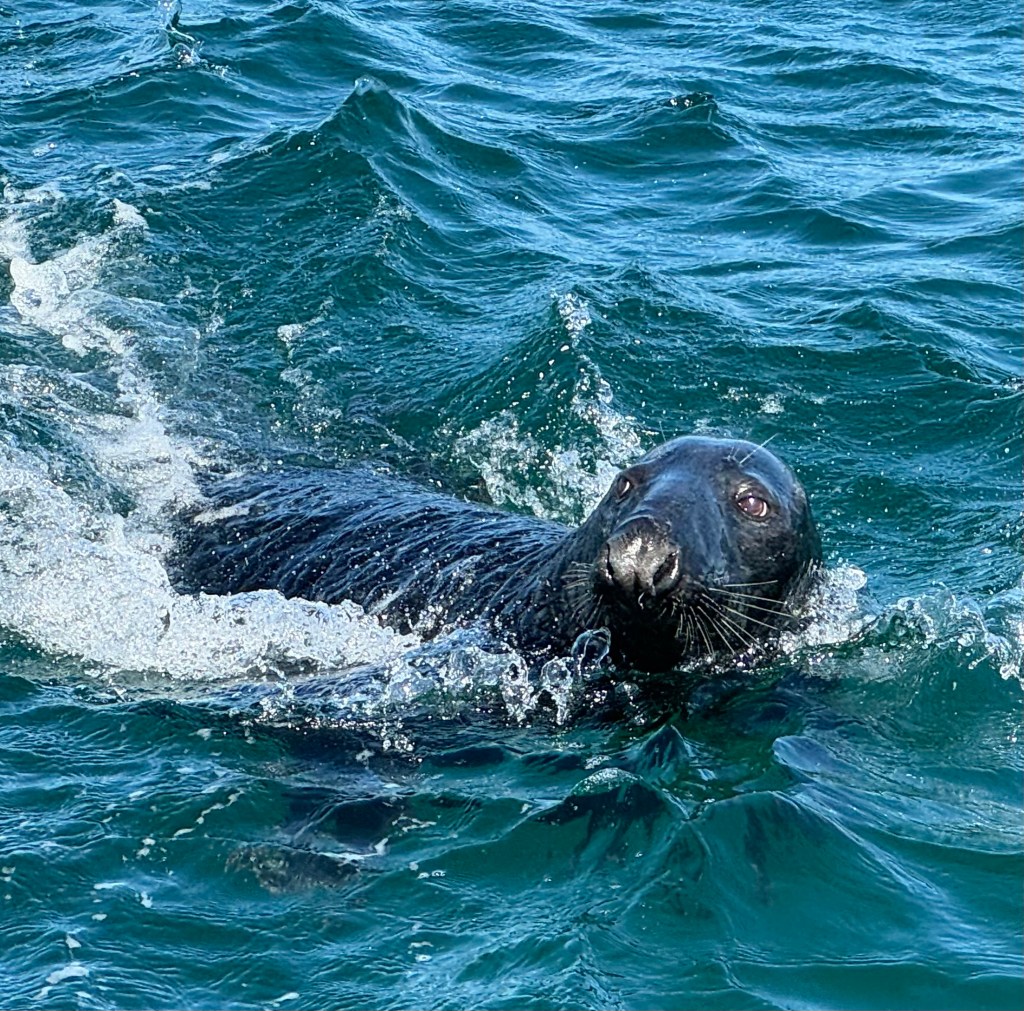
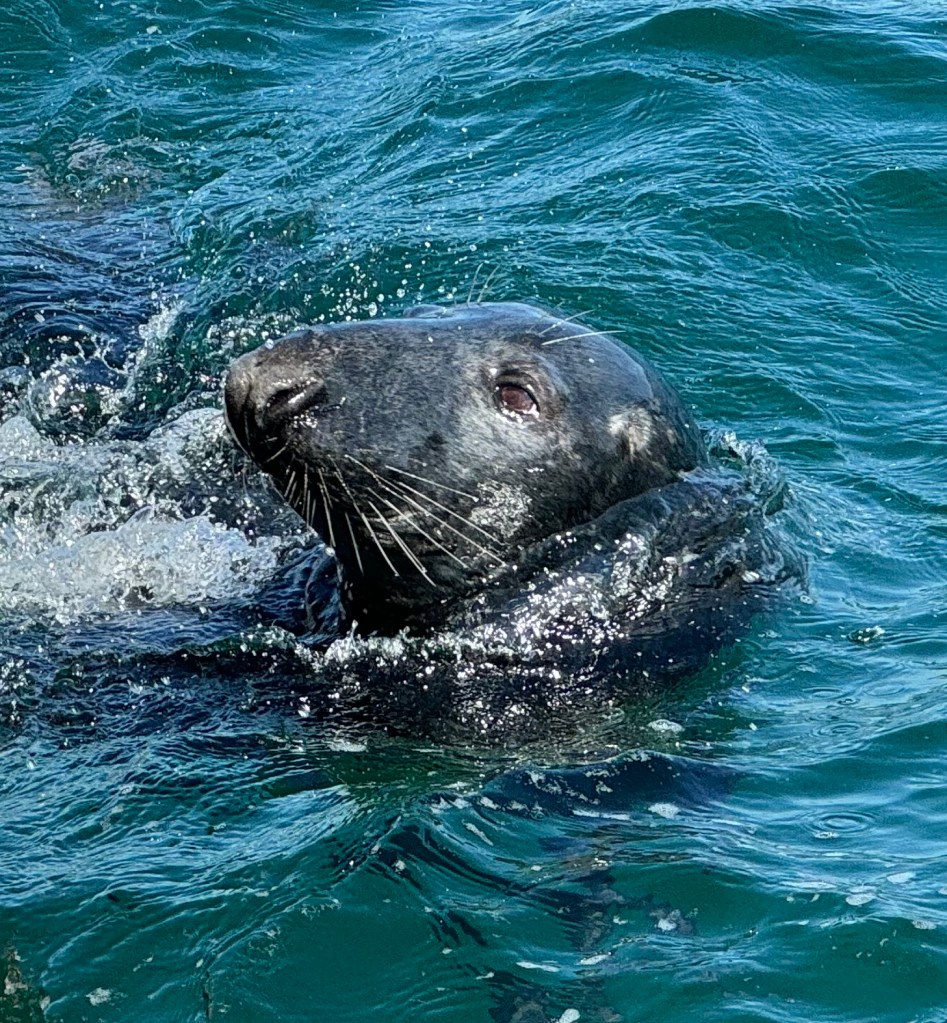
When we parked (is that the right word, I’m not a boat person) at the dock Phil climbed out, tied us off and instructed me to turn off the boat for which I received a round of applause. Aye aye, Captain.
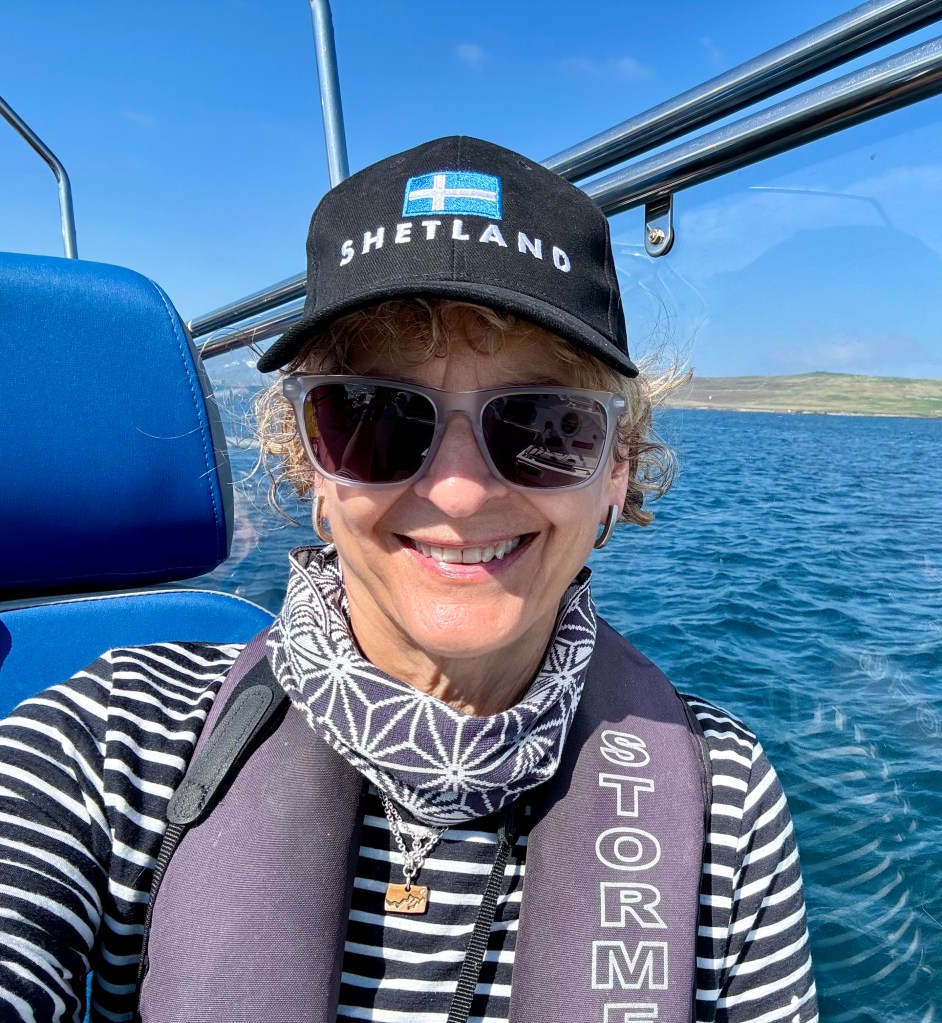
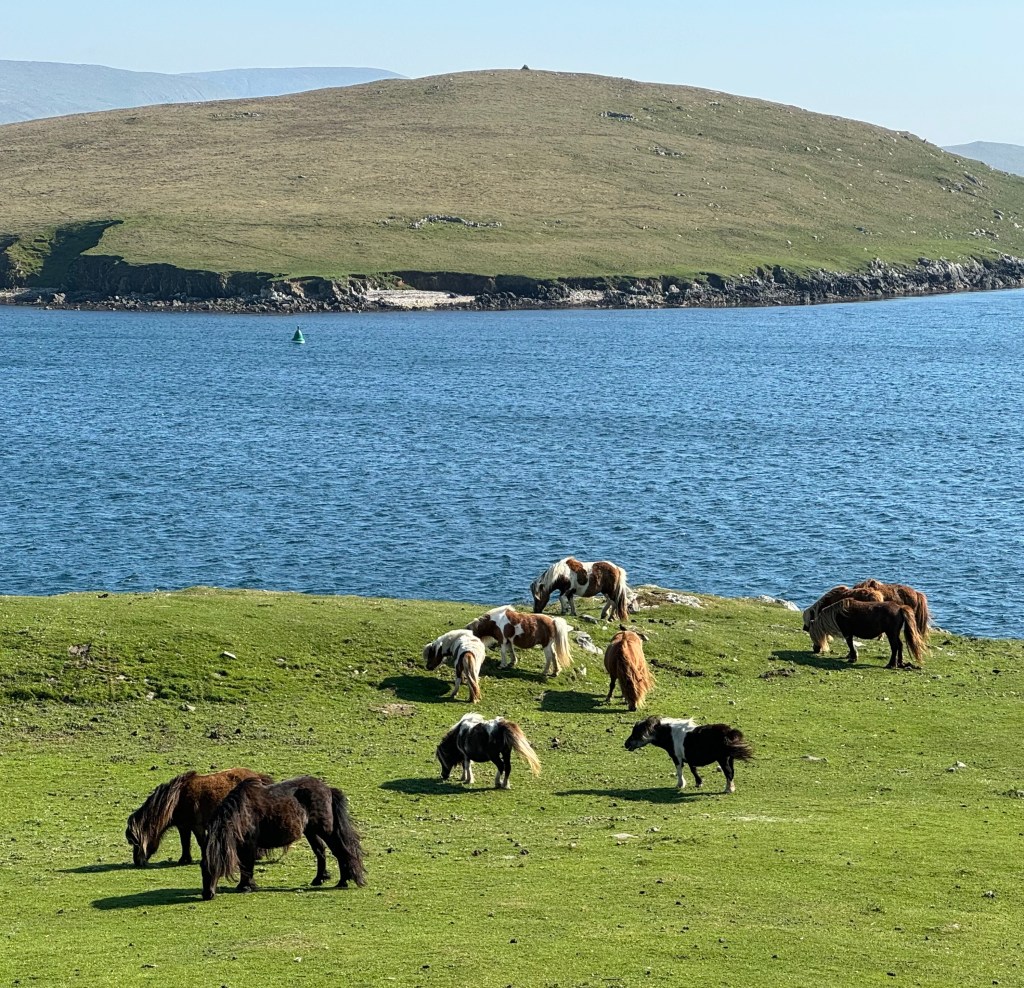
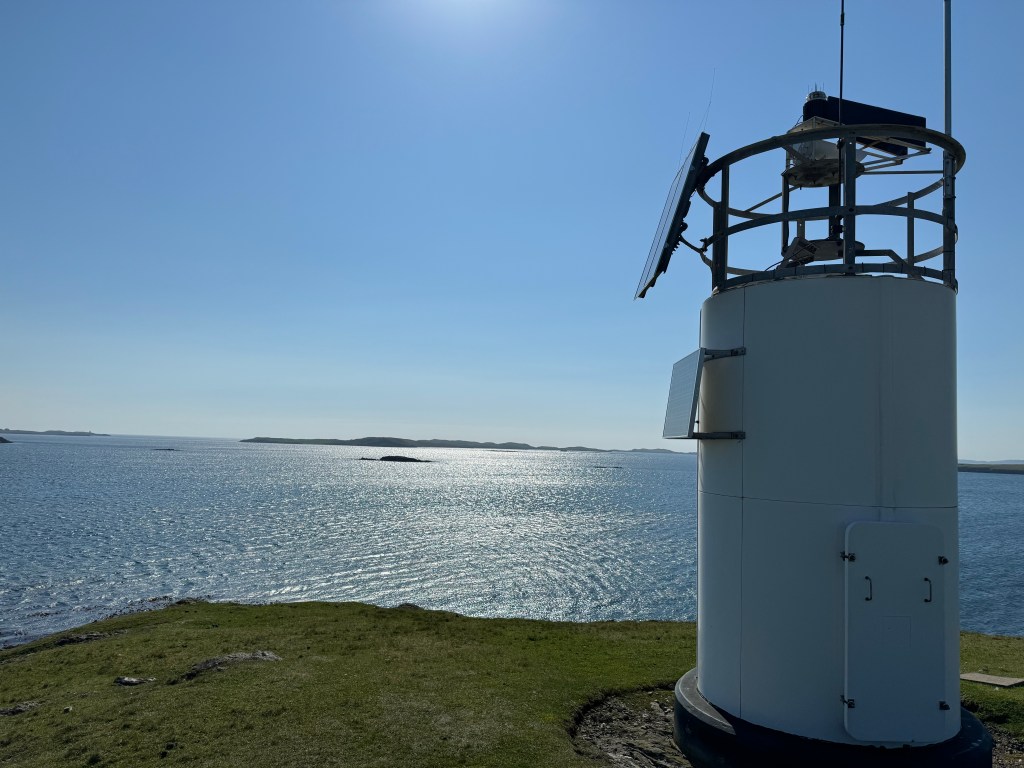
And the day wasn’t even over! We drove west to Scalloway and walked to a lighthouse on a grassy point, passing sheepies and ponies and marveling at the light.

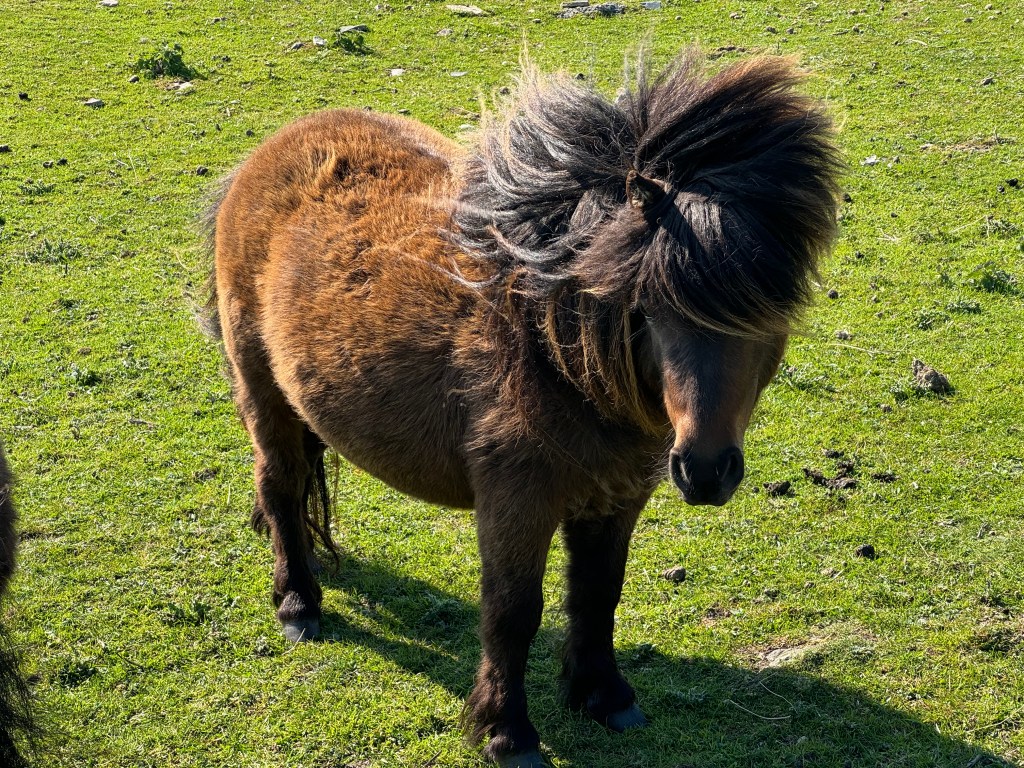
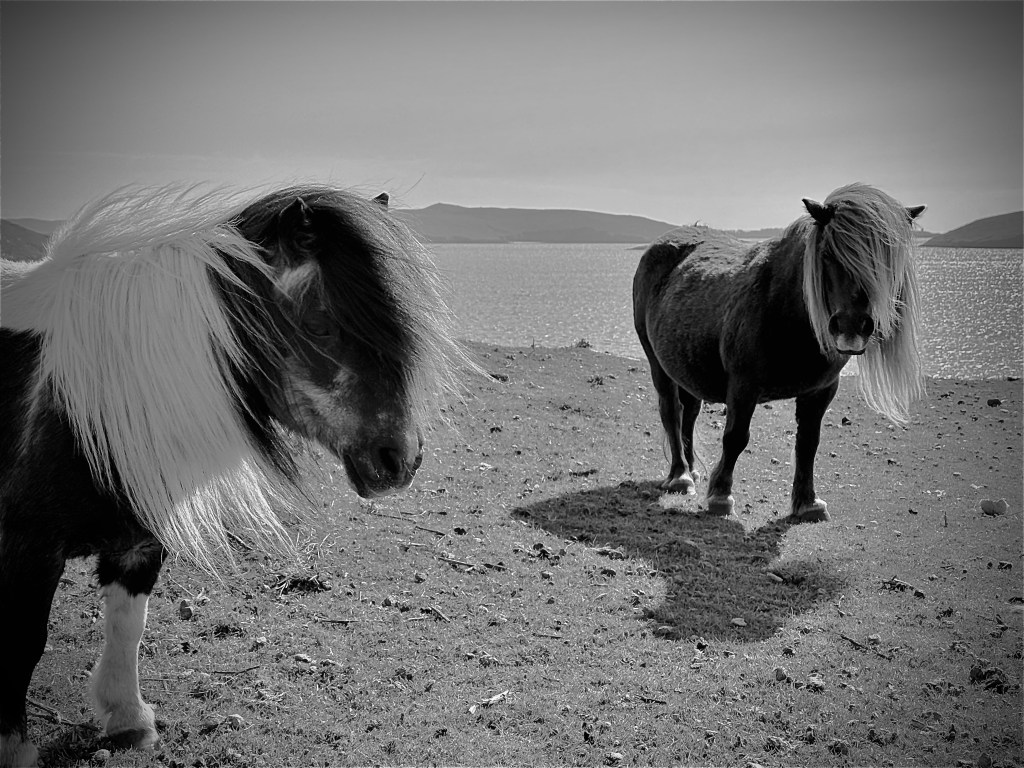
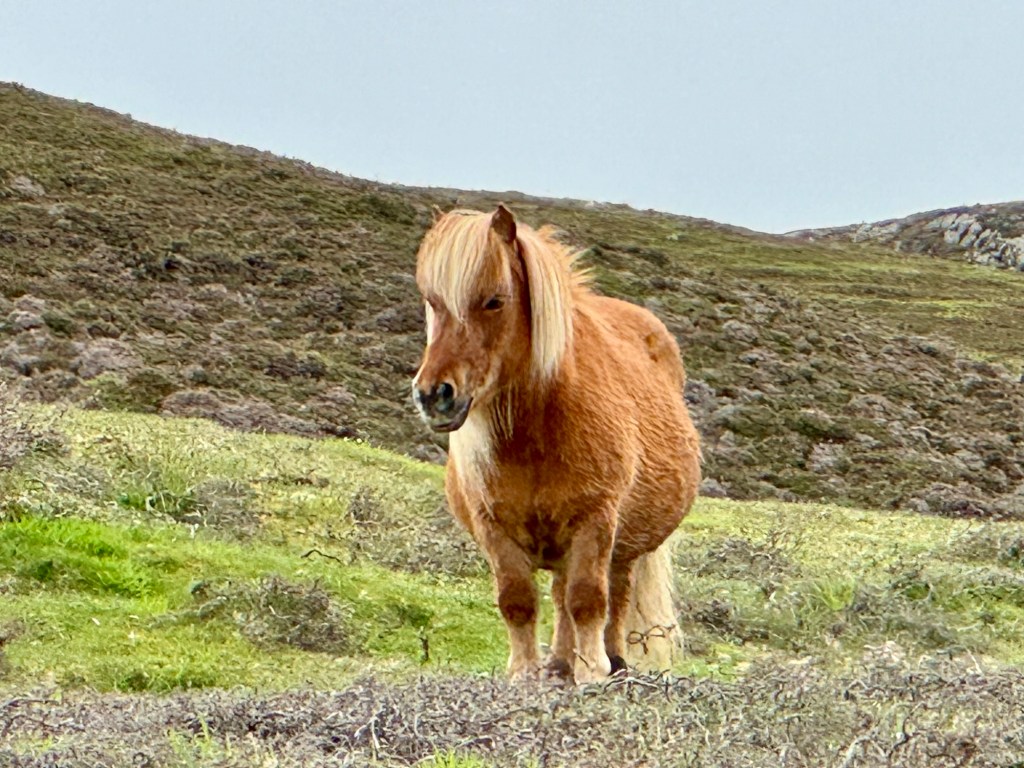
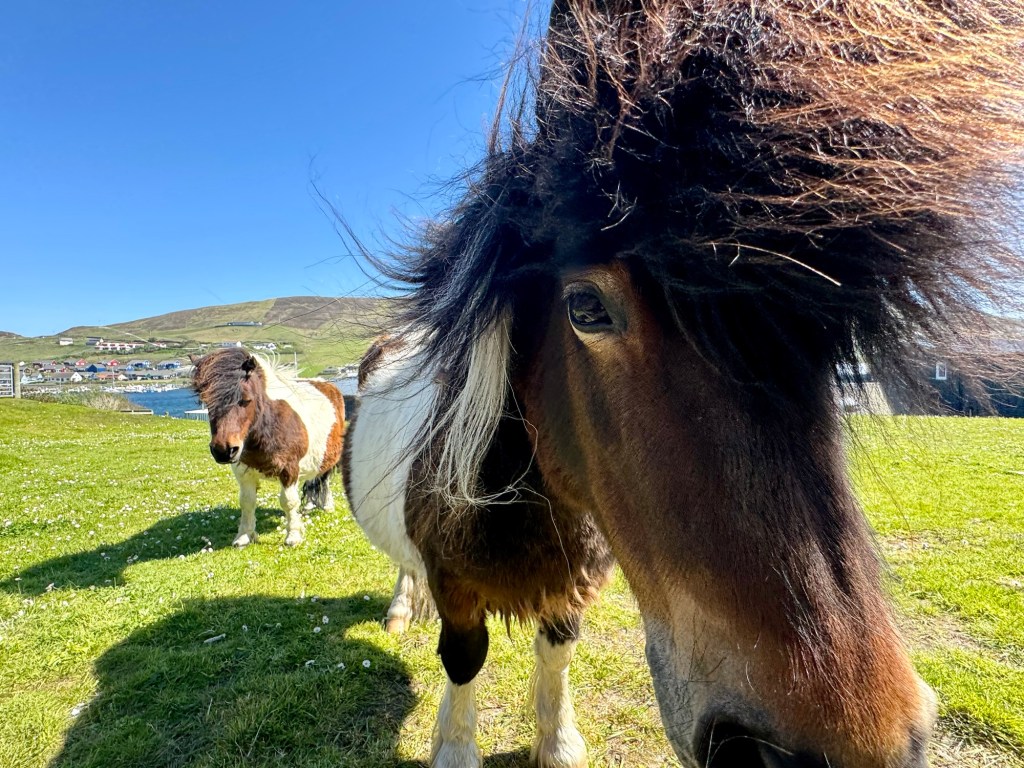
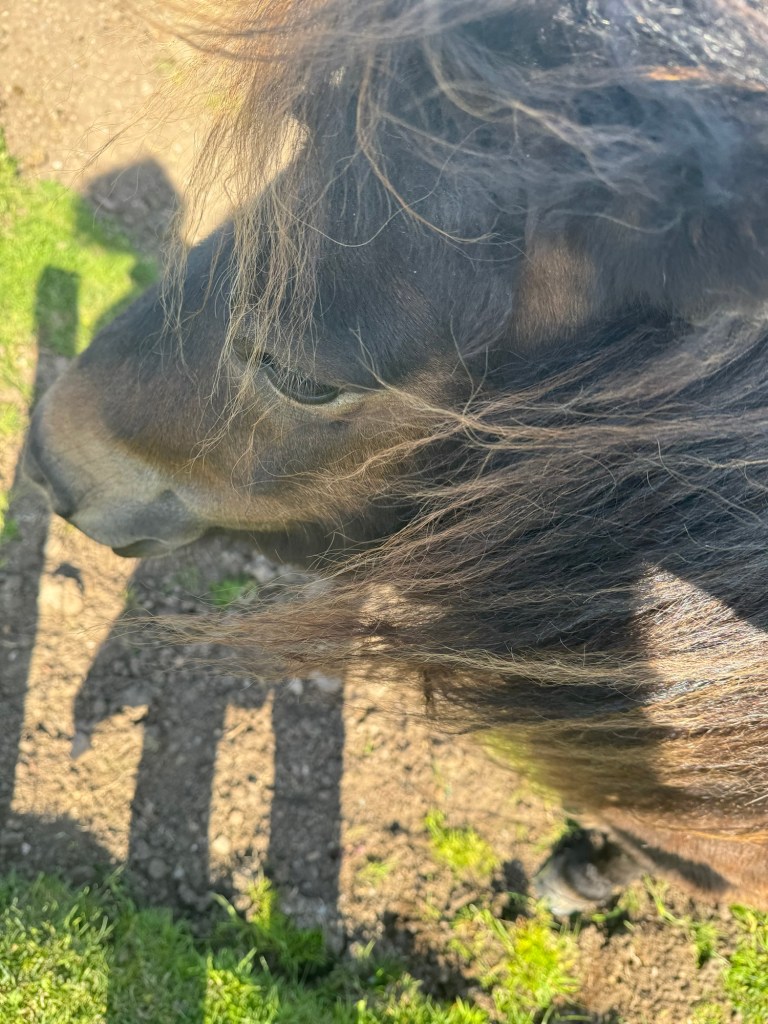
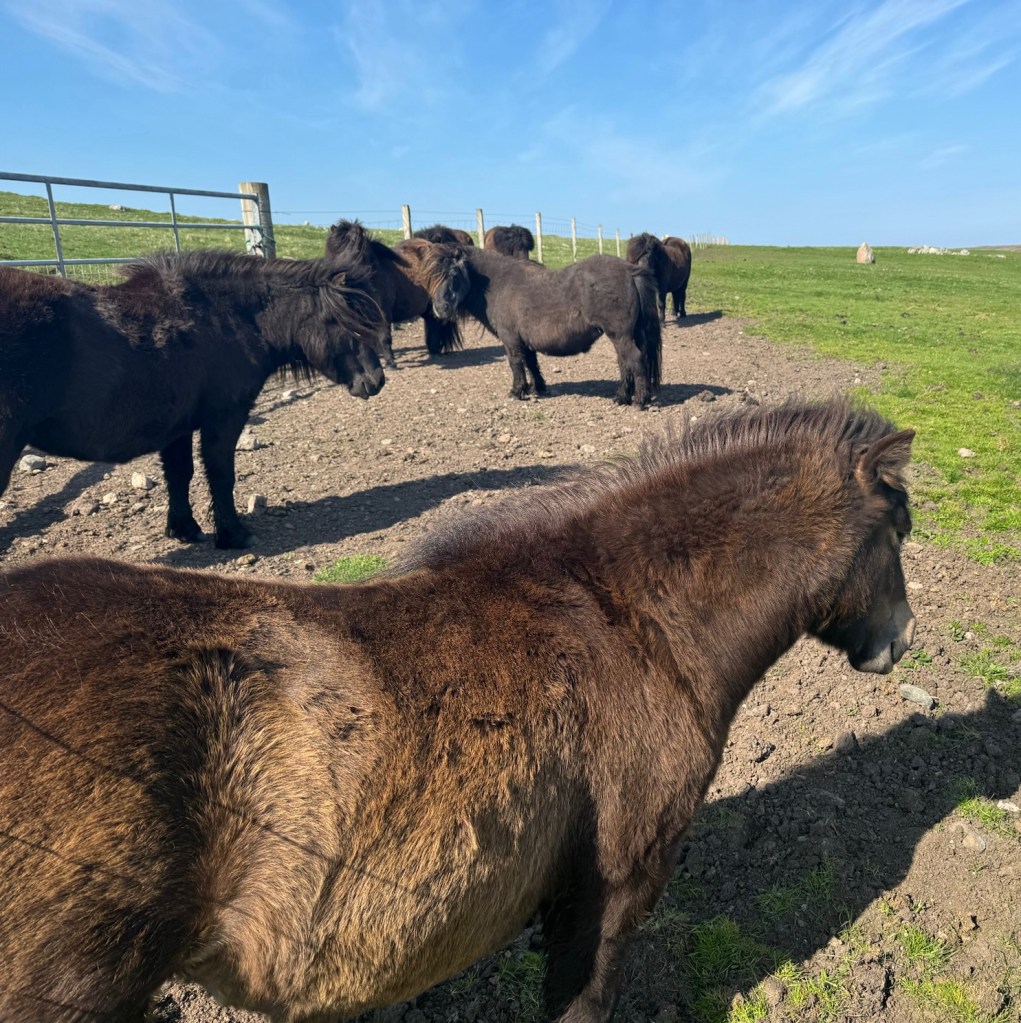
Let’s take a moment, shall we, to appreciate the product-free coiffures of the Shetland pony.
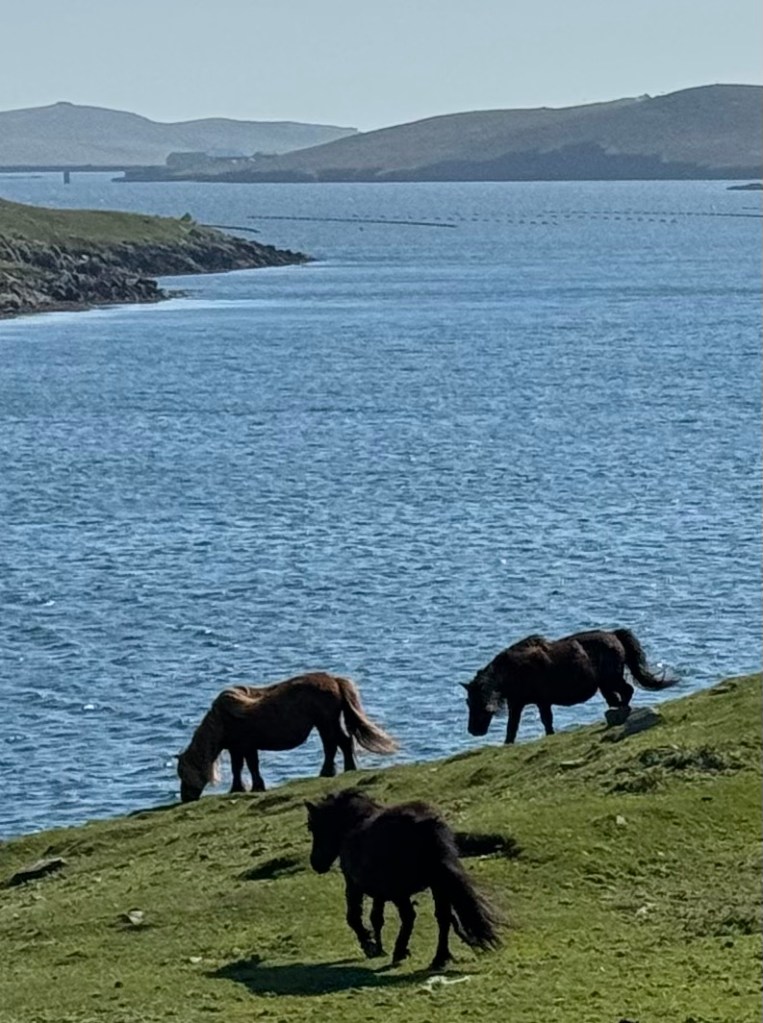
Lighthouse on Point of the Pund

And lest you thought you were going to slip through a single solitary day without a sheepie photo, well that is obviously silly.
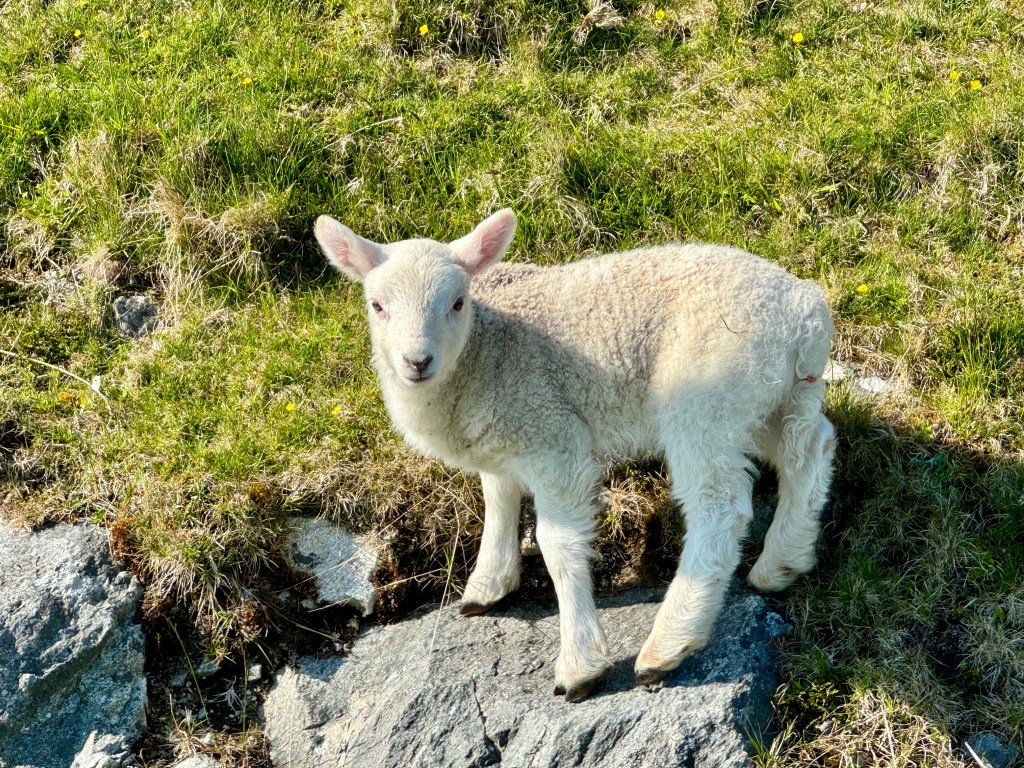
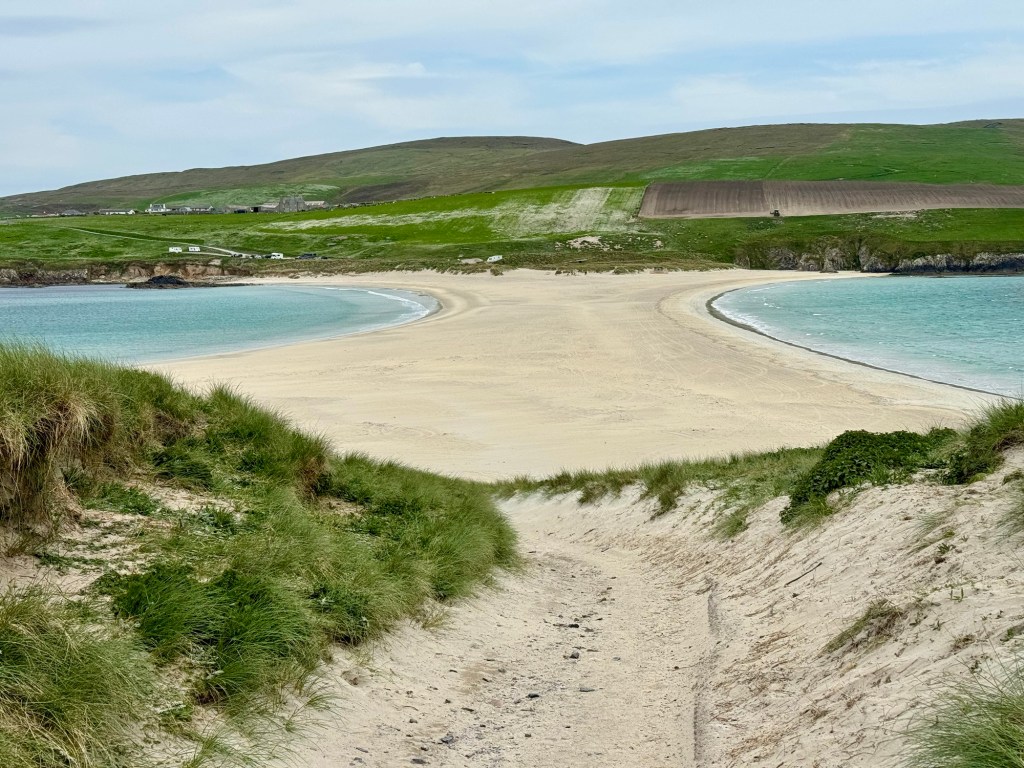
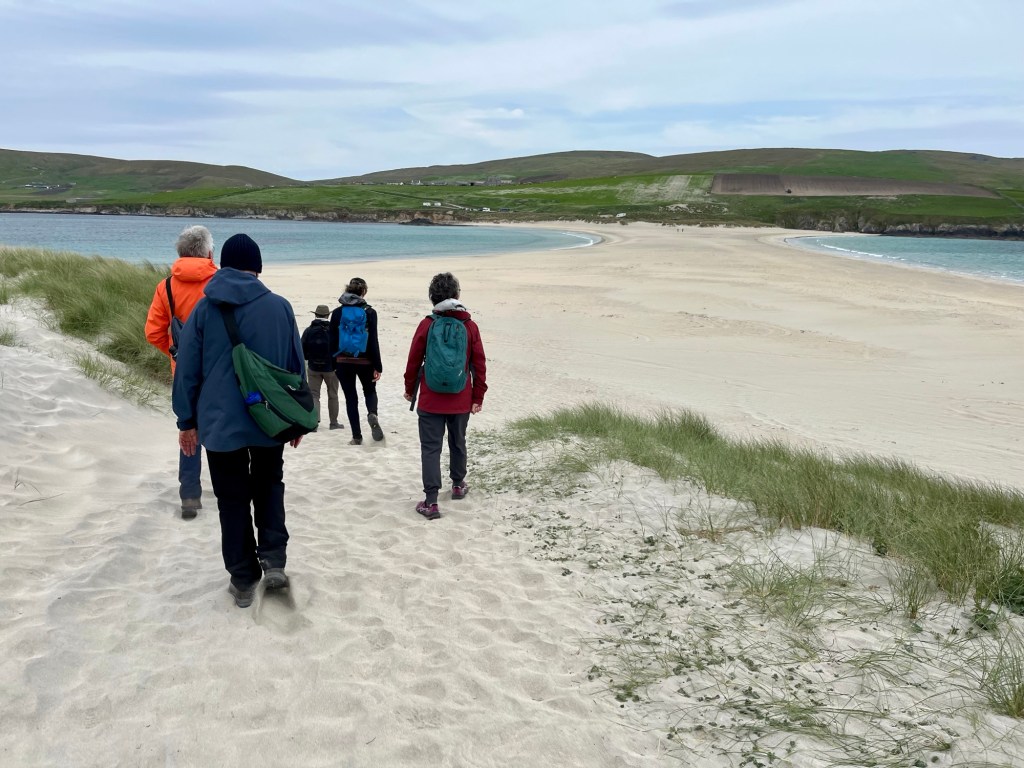
Next morning we were off for a walk around the perimeter of St. Ninian’s Isle, a small island connected to the south Mainland via the largest tombolo in the UK. It’s completely exposed all summer but generally submerged in winter. I can’t explain why, but it was fun to traverse.

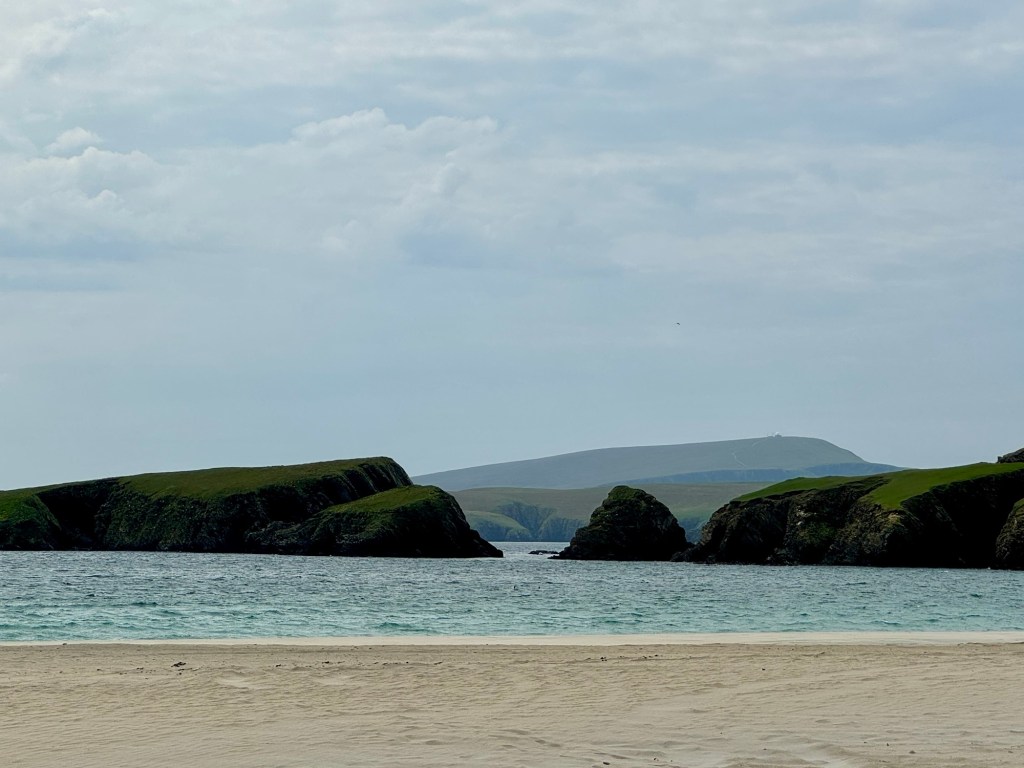
St. Ninian is the patron saint of Shetland. While as usual, Neolithic artifacts have been found on the island, there’s also a ruin of a lovely 12th century chapel named after the saint. In 1958 an excavation on the chapel grounds found a horde of 8th century silver in a wooden box under a stone slab. Eighth century you say? Horde, you say? We know what this means – Vikings! The horde was possibly hidden from the Vikings or by the Vikings after being stolen, who knows. A local schoolboy, Douglas Coutts, who was assisting the grown-up archaeologists from Aberdeen University, made the find on his first day of being a helper. Apparently he wanted to lift up the stone slab to see what was underneath, possibly to find bugs, but the grown-ups ignored him. He did it anyway. You can see the horde at the National Museum of Scotland in Edinburgh. It’s considered to be the best example of surviving silver metalwork from Scotland’s early medieval period, and the pieces are quite intricate and beautiful. Here’s a little video if you’d like to learn more: https://www.youtube.com/watch?v=Fqw7cwYbWzo&list=TLGGrdK6ZEugXgIwNjA3MjAyNA&t=250s
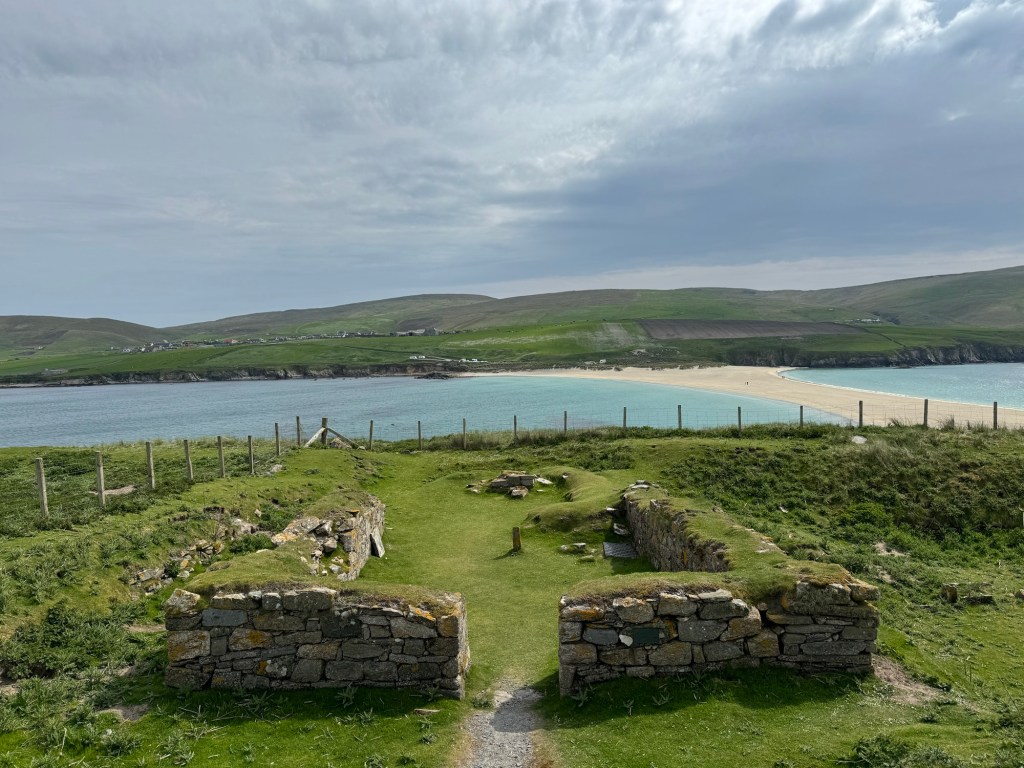
St. Ninian’s Chapel ruins

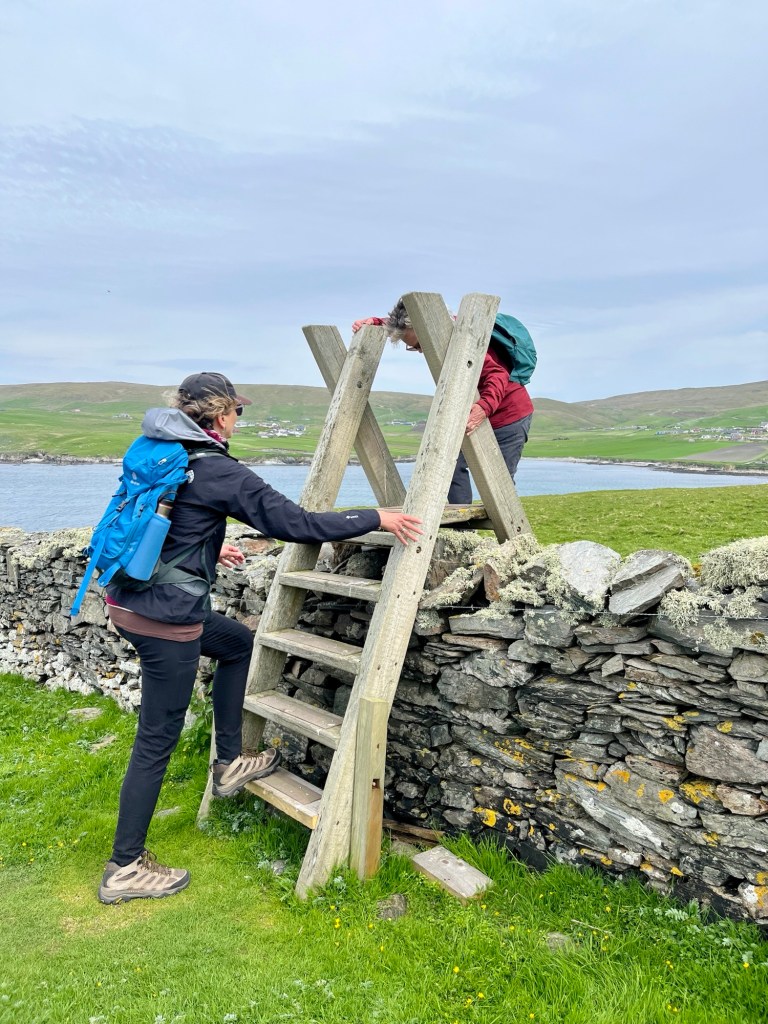
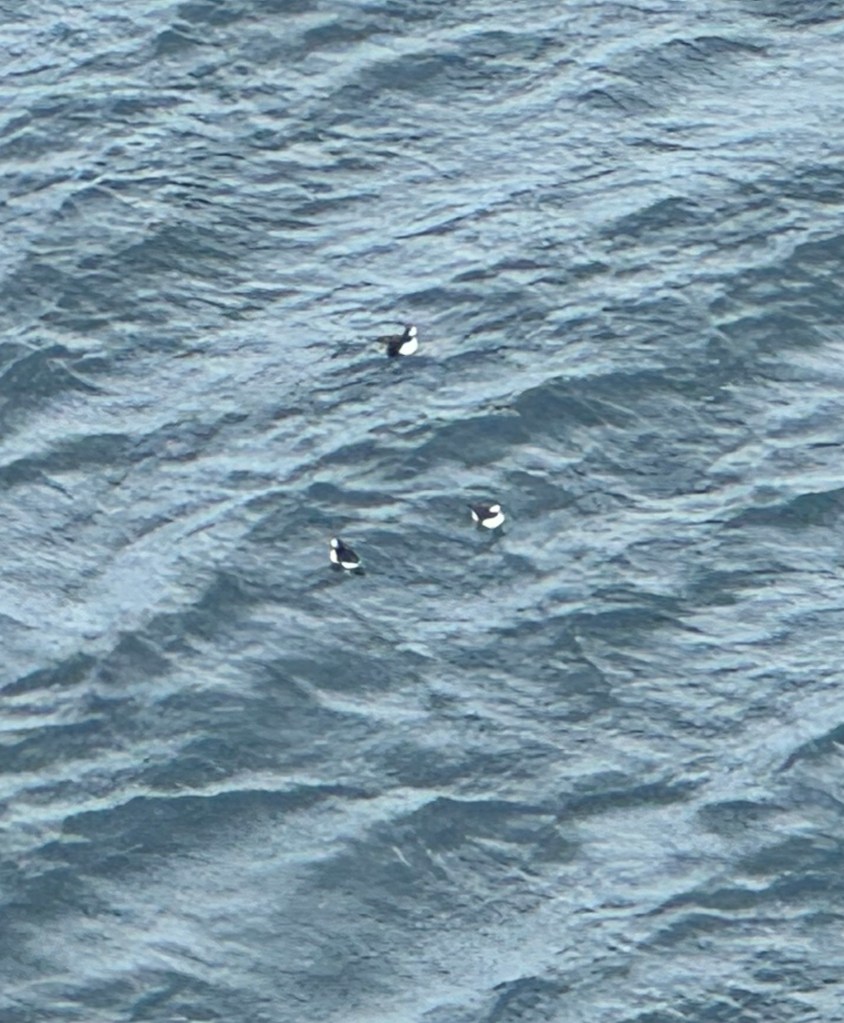
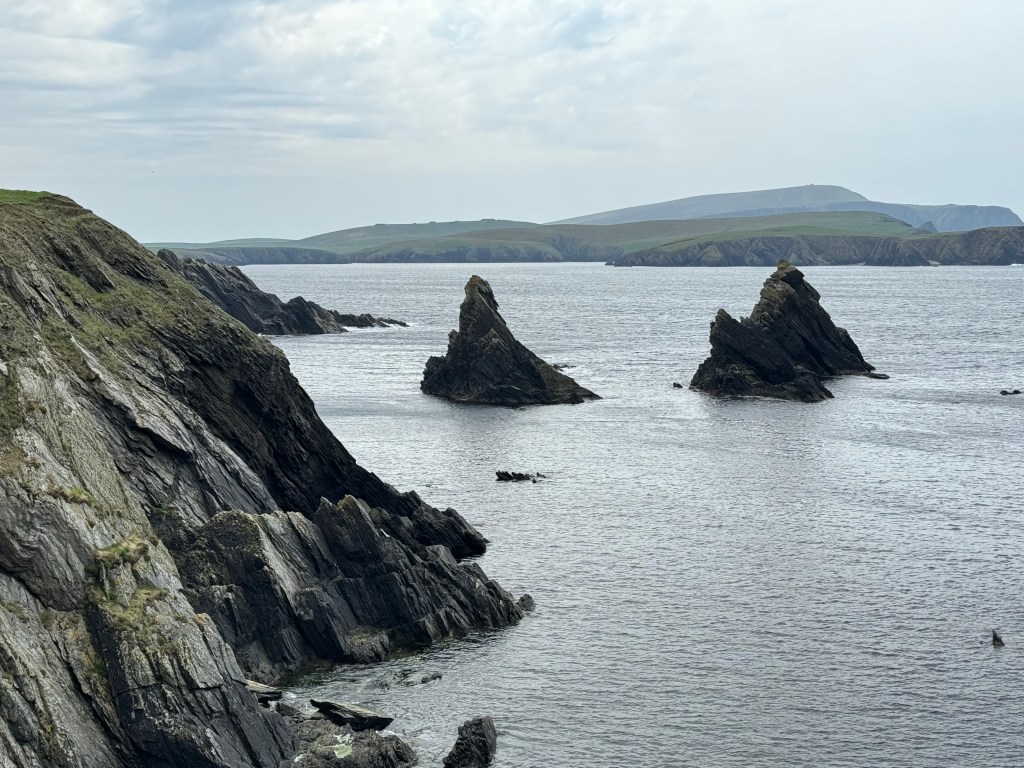
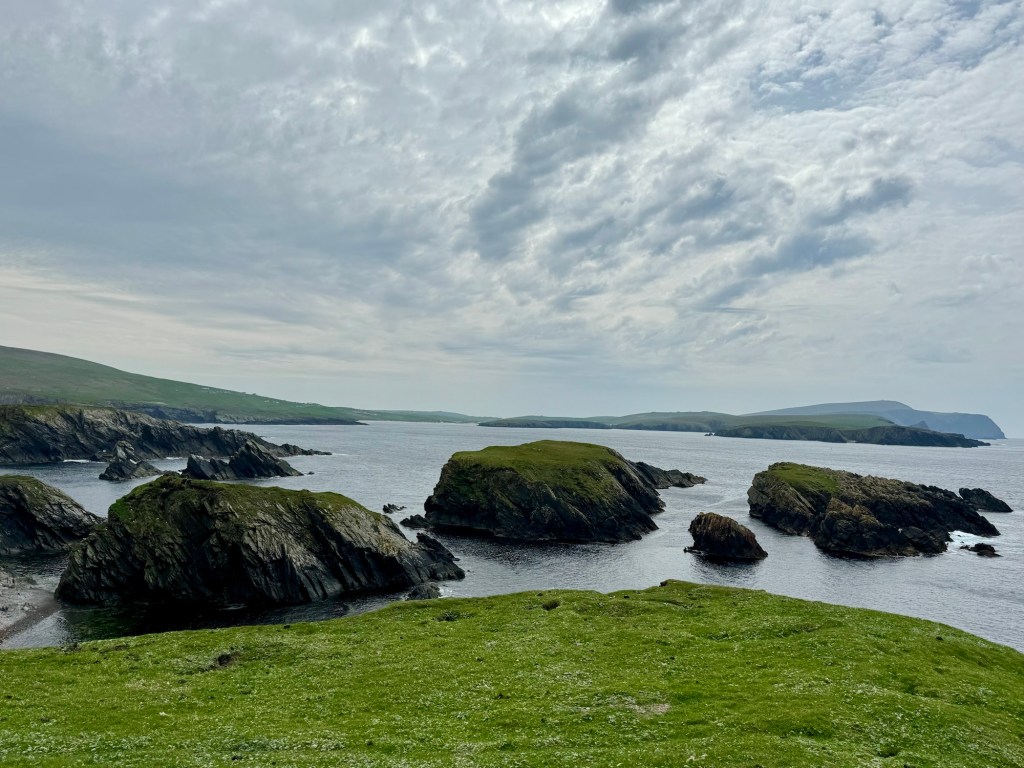
Our merry band set off around the island, taking in beautiful cliffs, a few swimming puffins, a stile or two, and stopping for lunch along the way with views across the sea.
Blurry swimming puffins!
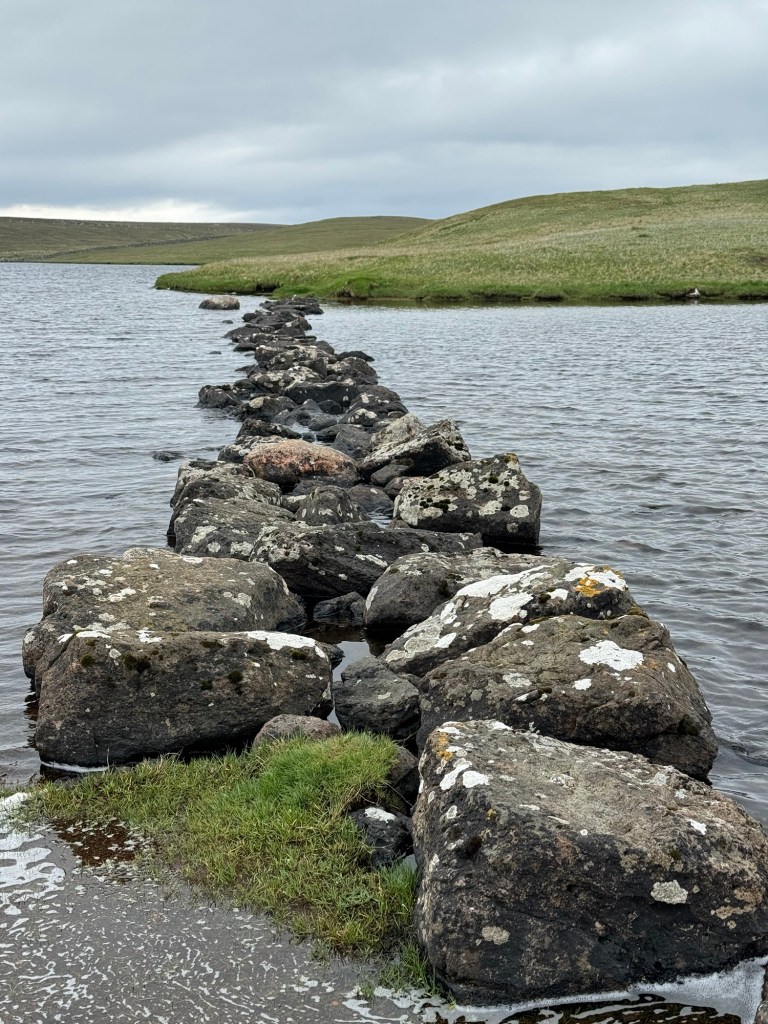
Back over the tombolo.

Kirsty told us she had been talking to a guy and he recommended a remote cliff walk, saying it was his favorite on the island. So we went off-book and drove down deserted roads with Kirsty periodically pulling over and consulting her phone to make sure we were on the right track. At one point she blew her cover about our off-the-grid situation by saying, with a wee bit of relief in her voice, “Oh, there we are.”

We drove through Silwick, a pretty much deserted settlement, and parked in front of a gate, girding our loins to face the only dangerous animal that inhabits Shetland.

Luckily, this was our only animal encounter on the walk.
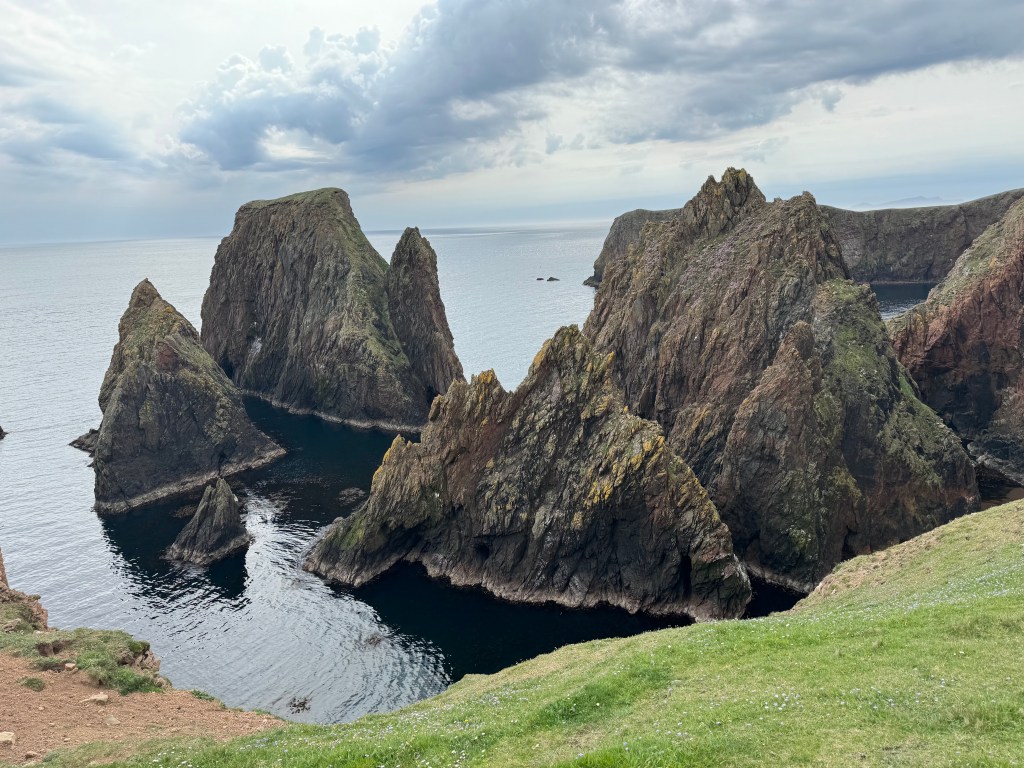
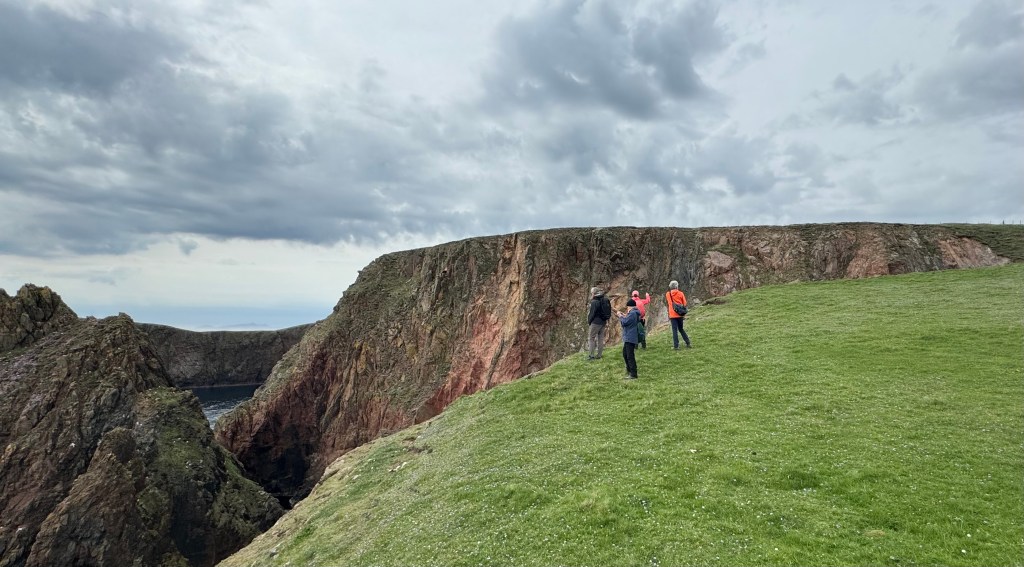
We walked up a hill and were greeted by some of the most spectacular views we had seen to date. Our rogue excursion was a smashing success. Kirsty plans to recommend that this walk be added to the official WS itinerary for future trips.
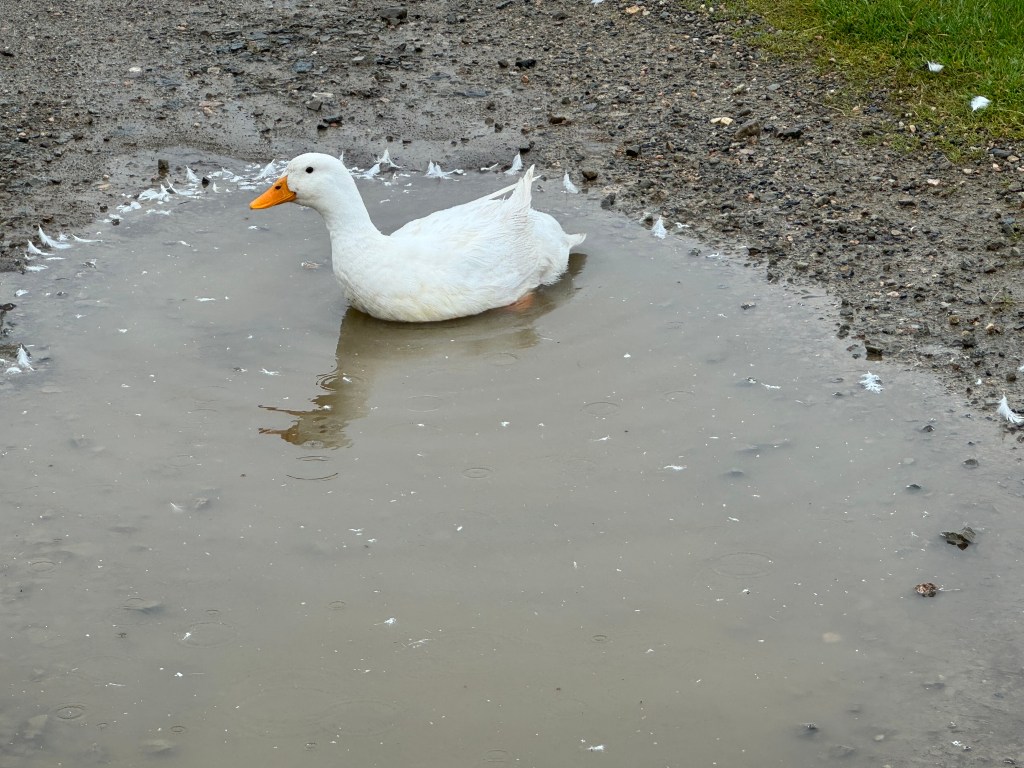
The next day was a momentous one because I was finally able to bust out my new raincoat for the first time this entire trip. And the weather was misty and moody at last! Also, yay, ferries! We took an early ferry to Yell and drove across that island to another ferry terminal to catch a ferry to another island, Unst. We stopped on Yell briefly to view a very, very rare Scottish puddle duck.
Another cool attraction on Yell is the Windhouse (pronounced “windhoose”), a derelict home perched atop a hill along the main road. It was built in 1707 and remodeled in 1885 with all the latest appliances. Silhouetted against the skyline, the creepy looming ruin can be seen for miles around. It has been deemed by experts to be the most haunted house in Shetland if not the entire British Isles. It’s built near the ruins of a broch and bodies are literally buried in the garden. As for ghosts, there’s a Lady in Silk – thought to be the skeleton of a woman with a broken neck who was discovered under the floorboards at the bottom of the staircase (!!), a dapper man in a top hat, a creepy child and a black dog probably named Sirius. There’s also a rumor that nobody can survive a sleepover on Christmas Eve night. The story is that in olden times a shipwrecked mariner turned up at Windhouse on December 24. He crossed paths with the home’s inhabitants getting the heck out. They explained that noone had ever been found alive on Christmas morning after spending the night because they were slain by an unidentified entity. The mariner decided to stay anyway, because this is a horror movie, and in the night he was startled awake by some kind of monster from the sea. He promptly dispatched said creature with an axe and buried it nearby. Sadly we don’t have a description, the body has not been found and it’s unclear whether the mariner’s actions reversed the curse.
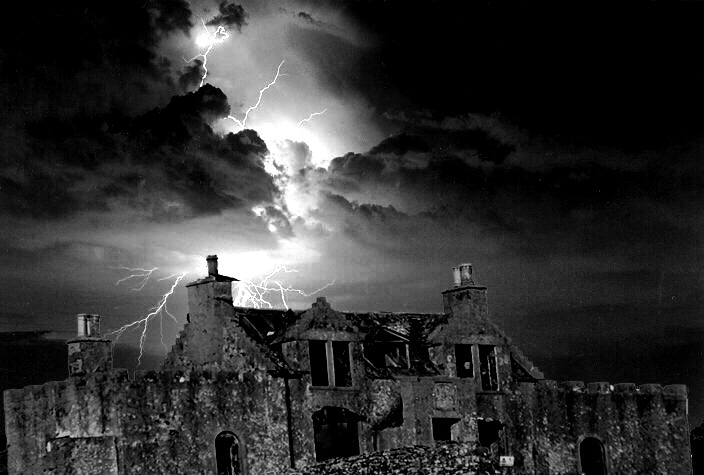
I wish we had been able to stop and wander around the ruin, but we had a ferry to catch and they wait for no one.

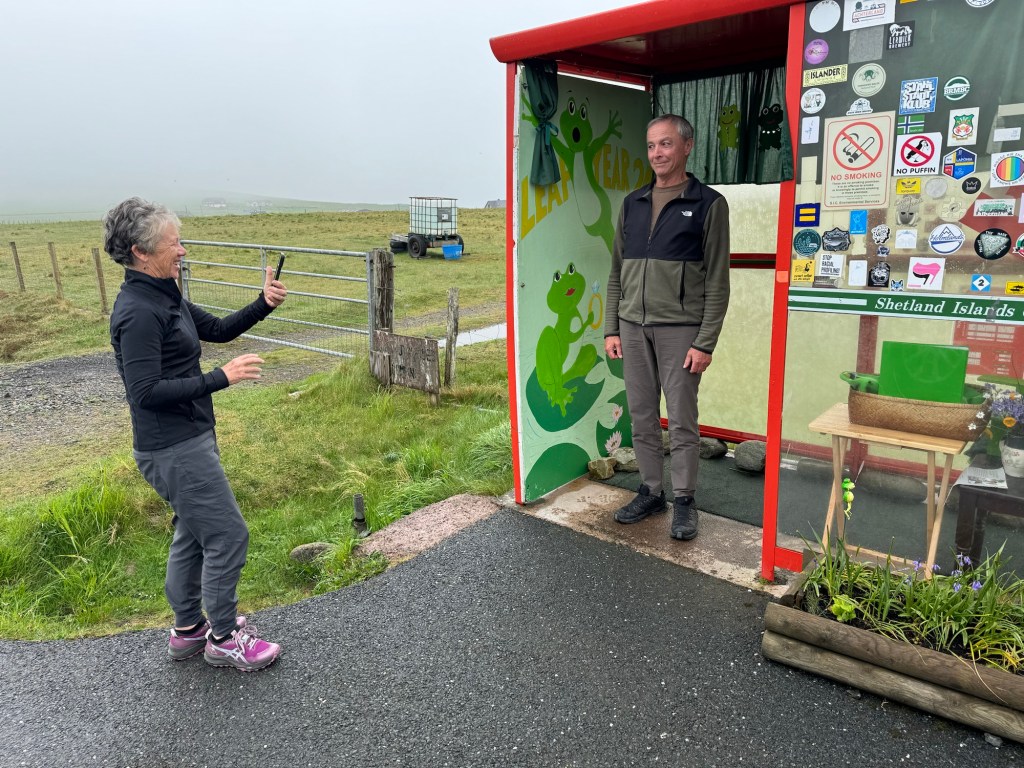
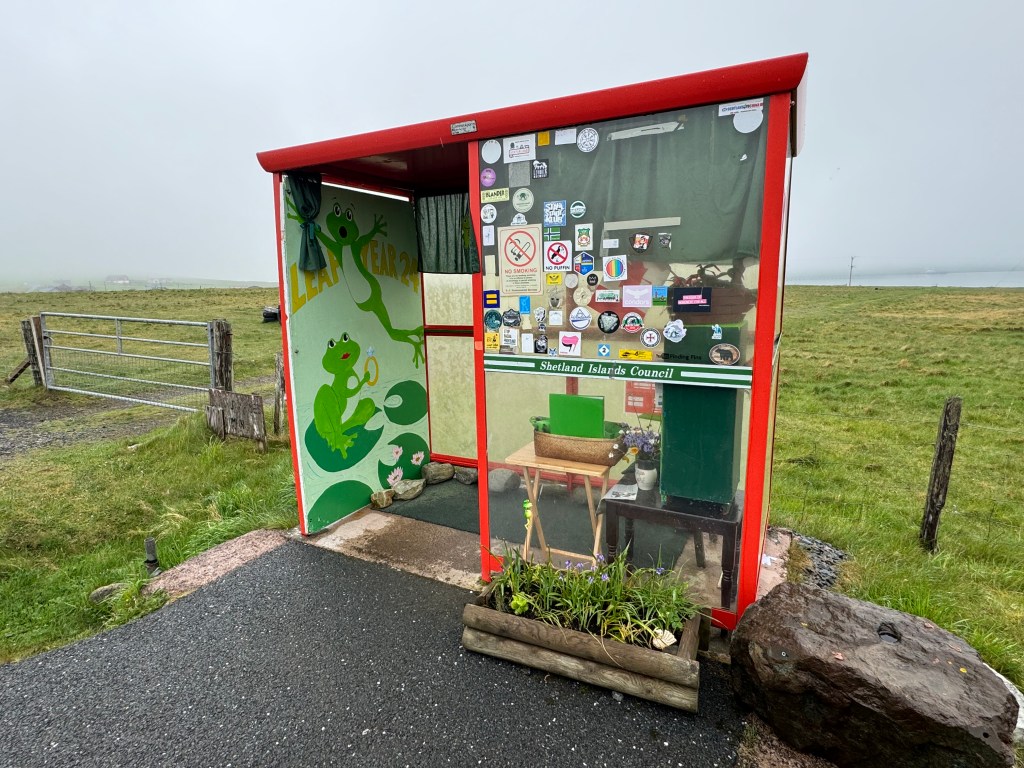
Upon arrival on Unst, the northernmost of the inhabited British Isles, we stopped briefly at Bobby’s Bus Shelter. It’s named after local boy Bobby McCauley. Bobby, who took the bus to school every day, grew weary of the often long, cold and wet waits every morning at the bus stop. He wrote a letter of complaint to the local newspaper requesting that a shelter be built.

What Bobby wants, Bobby gets. The shelter was duly built and, soon after, a sofa appeared, followed by a table, a microwave, a carpet and other comforts of home. Before long, the humble bus shelter was a warm and welcoming place with its own visitors’ book. Now it is one of the most photographed attractions on Unst.

This brilliant shelter is decorated with a different and imaginative theme every year. Some examples: the Queen’s Jubilee, outer space, women’s suffrage, the colour yellow and an underwater theme.

Bobby recently earned his PhD at the University of Glasgow, so the bus shelter served him well.
And now a rather violent segue from sweet bus shelters to Vikings, as Unst is one of the richest Viking heritage sites in Europe, with over 60 longhouses uncovered by archeologists so far. At 61 degrees north, the island was the perfect resting spot for Norse travelers on the trading route between Scandinavia, Greenland and Newfoundland. Many settled in this northerly outpost, working the land and making it their home.

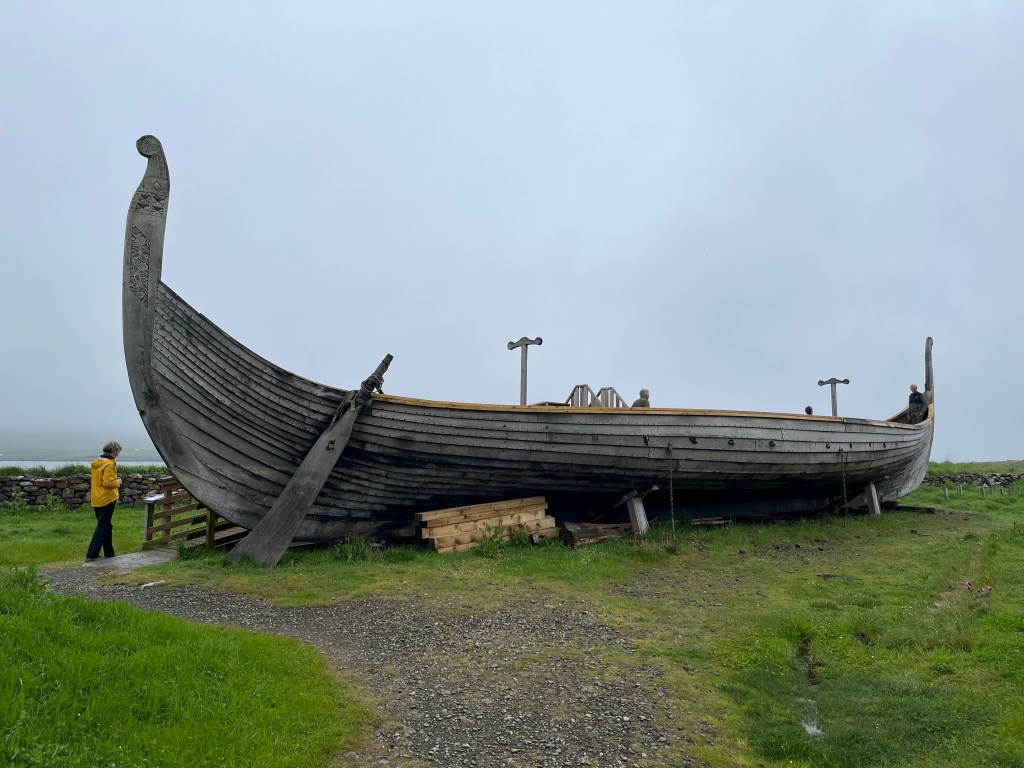
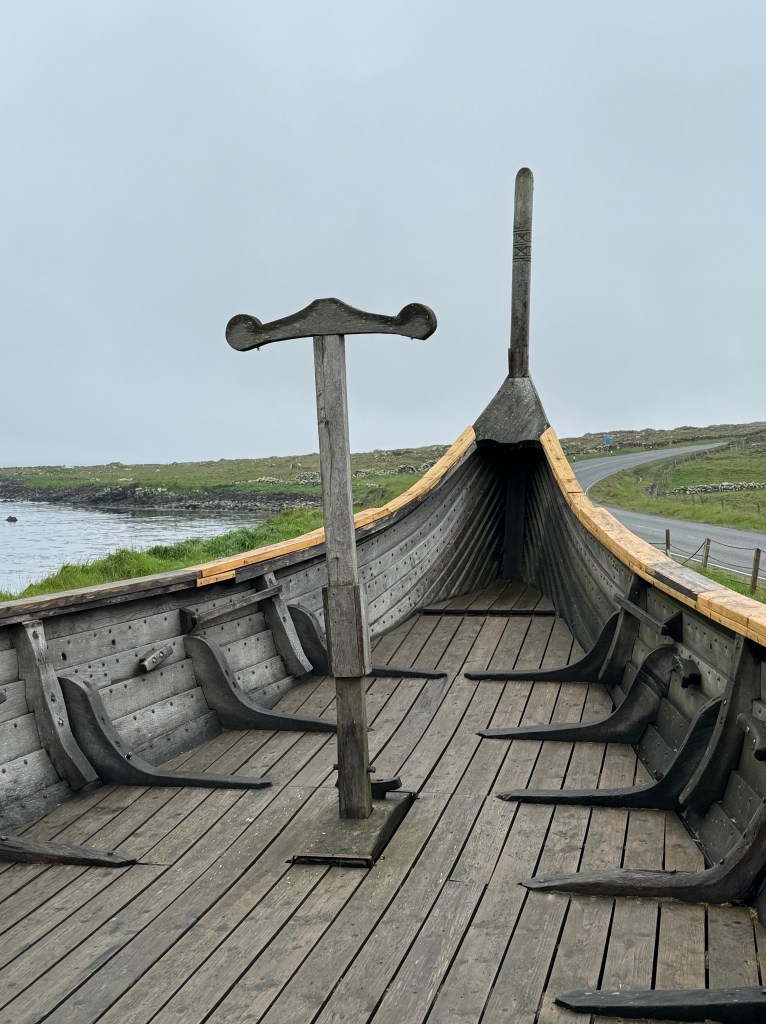
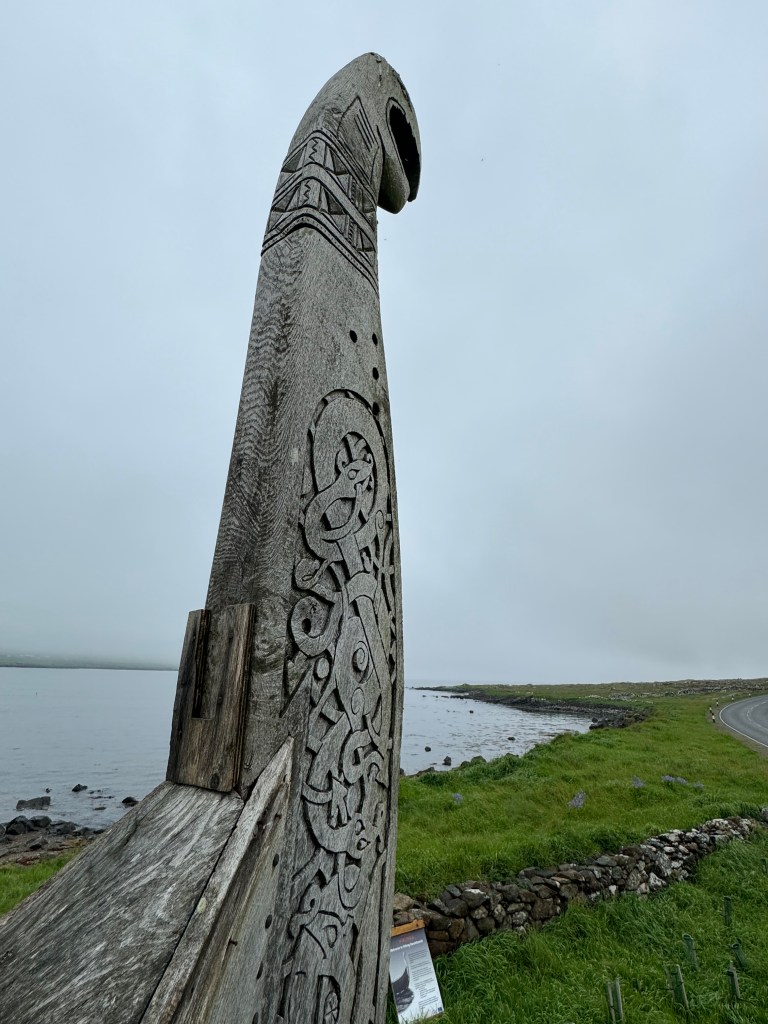
We stopped by the Skidbladner, a model Viking longship perched next to a longhouse replica just off the highway. After seeing all the longhouse ruins on this trip it was fun to see what they might have actually been like. Walking around the deck of the longship brought home how incredible, dangerous and possibly deeply irresponsible it was for the Vikings to set off in wooden ships and sail them westward into completely unknown northern waters. With no GPS, no motor and no idea the world was round they relied solely on a sense of adventure and perhaps too much testosterone. Since they managed to run into the UK, Iceland and further afield as far as Canada (at least), the gods were obviously in their favor.
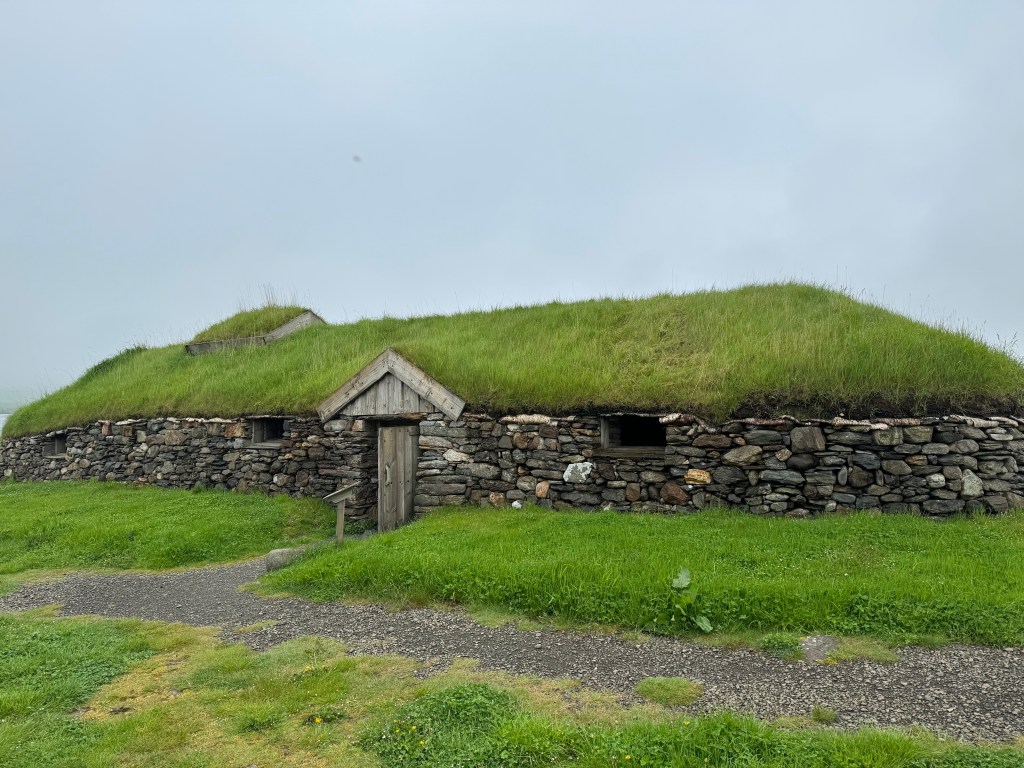
Boarding the longship

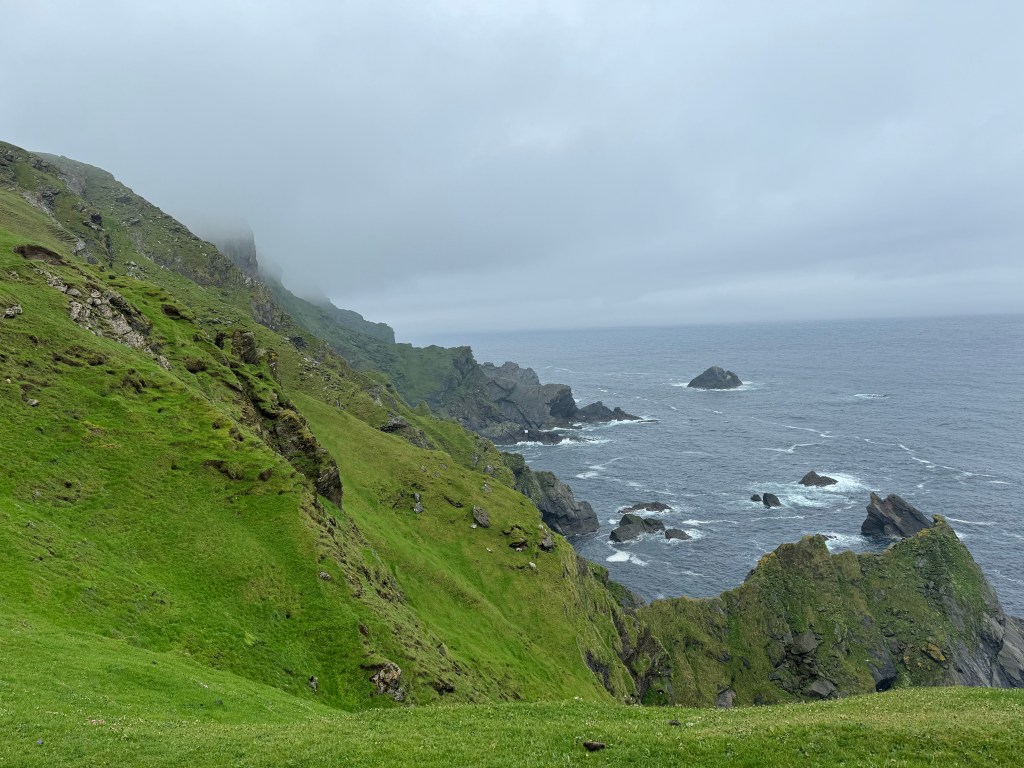
Our walk for the day was through Hermaness Nature Reserve to visit Unst’s northernmost point, which is also the furthest north you can go in Britain. From there we hoped to see the lighthouse on uninhabited Muckle Flugga, which is basically a rock in the sea and a wee bit further north.
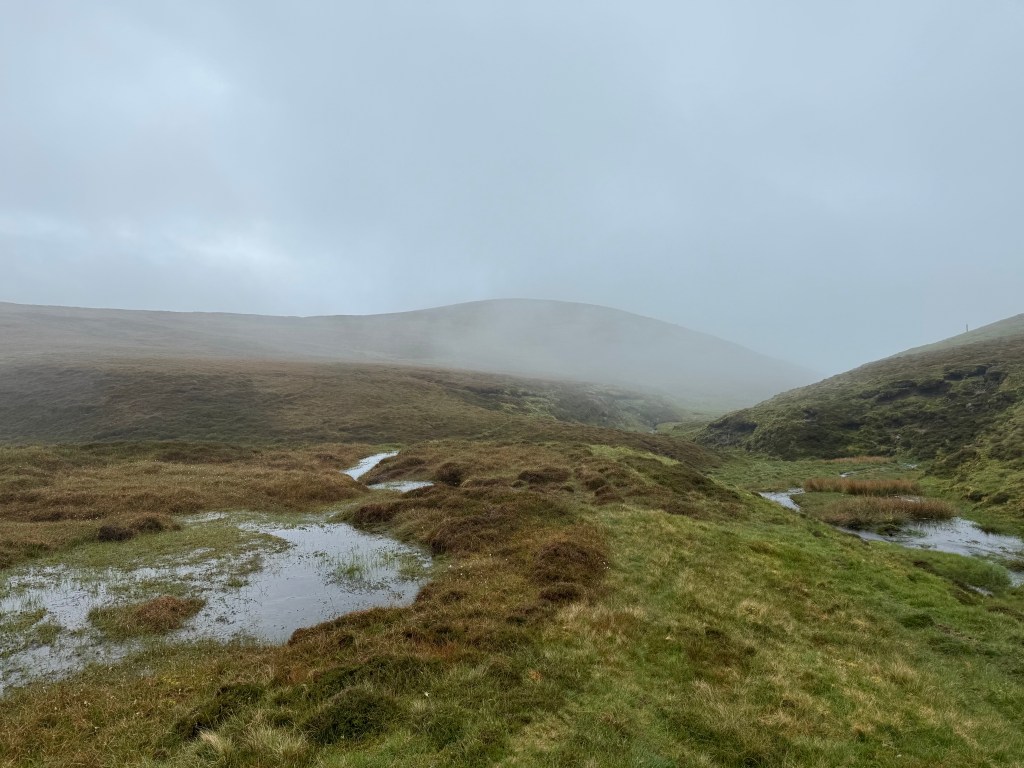
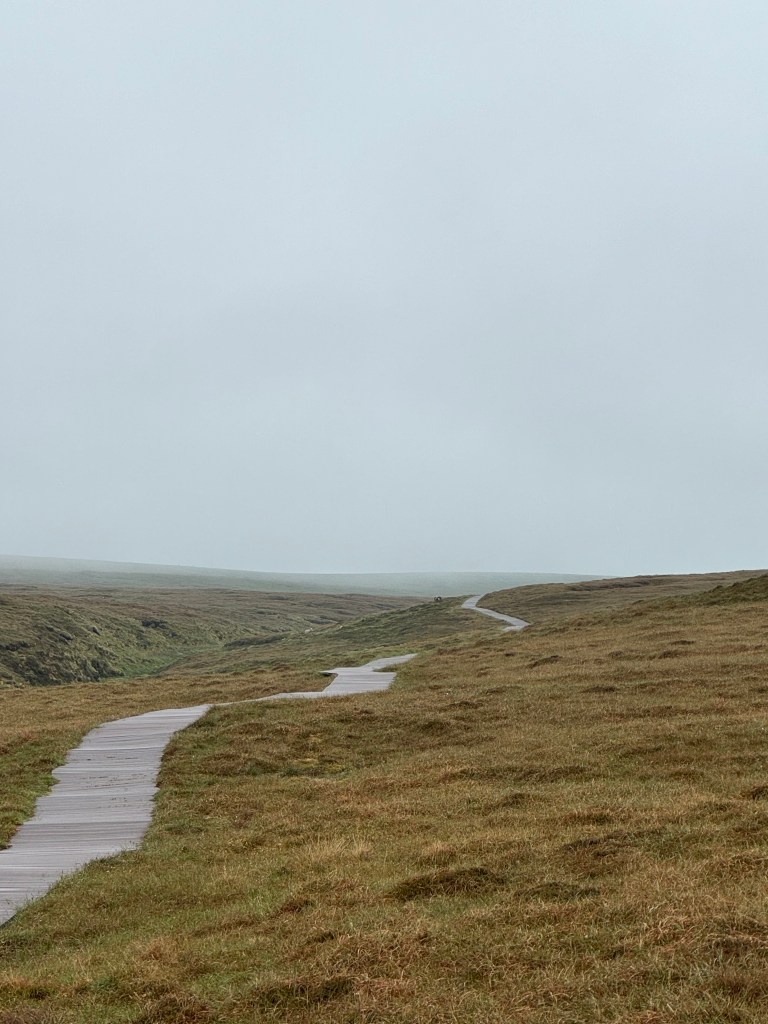
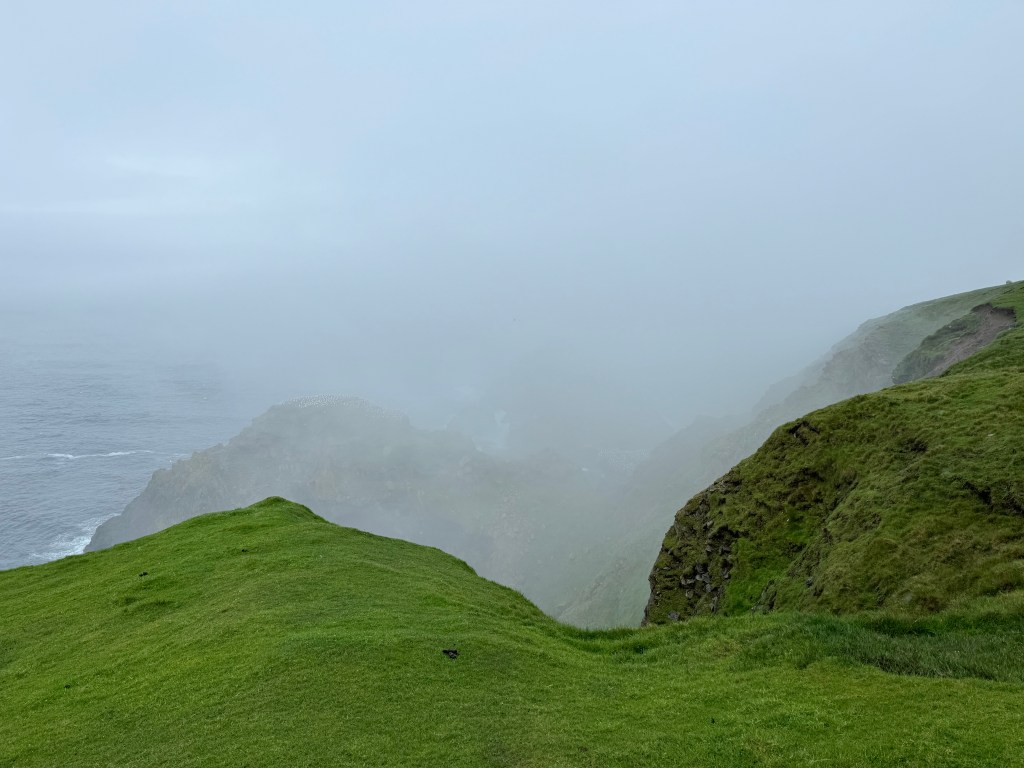
Moody and misty Scotland, my favorite.
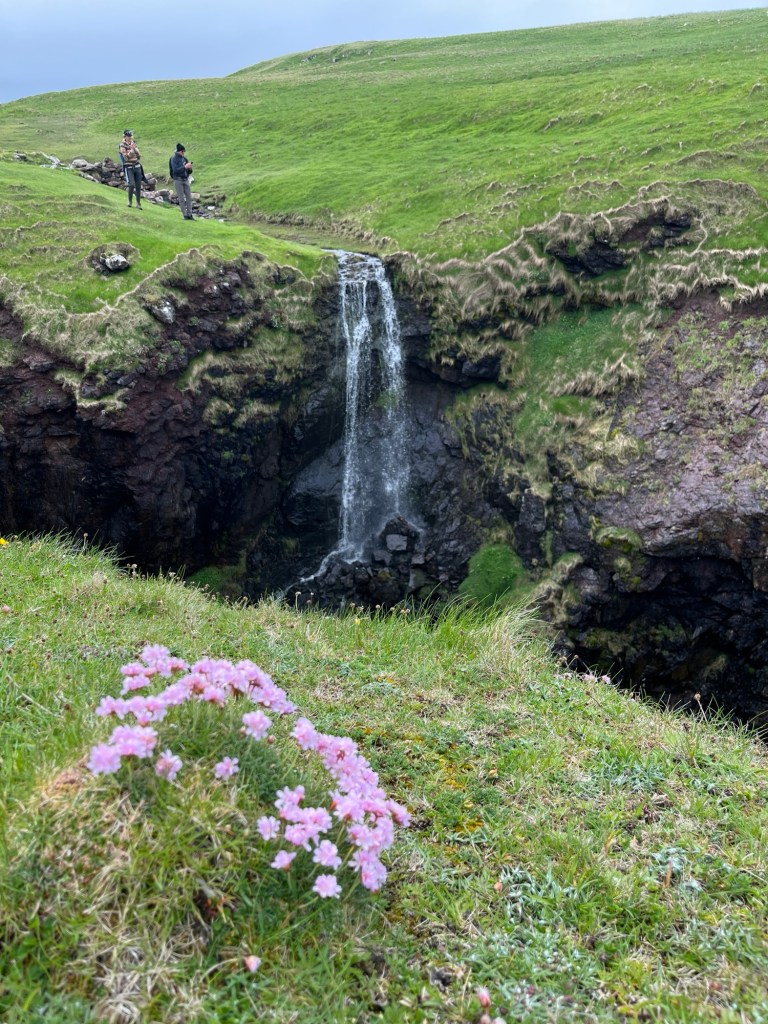
It was super boggy for the first mile or so but this wonderful boardwalk keeps walkers on the path with dry feet and protects the plentiful birdlife.

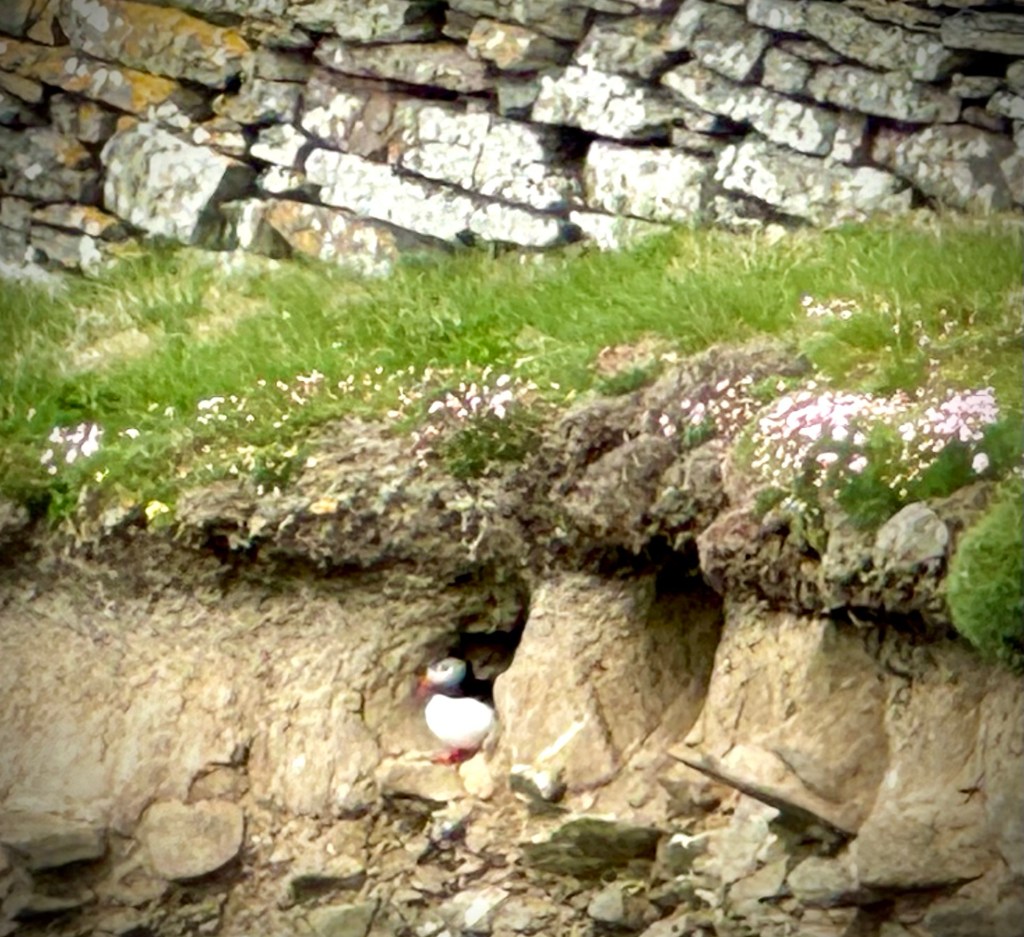
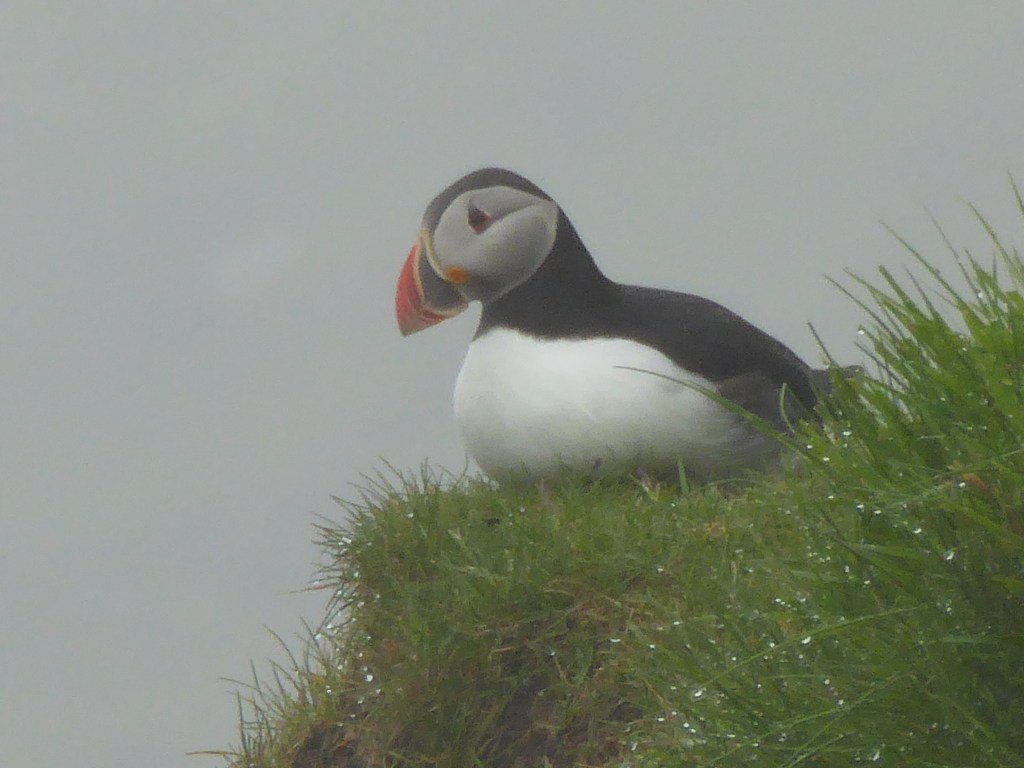
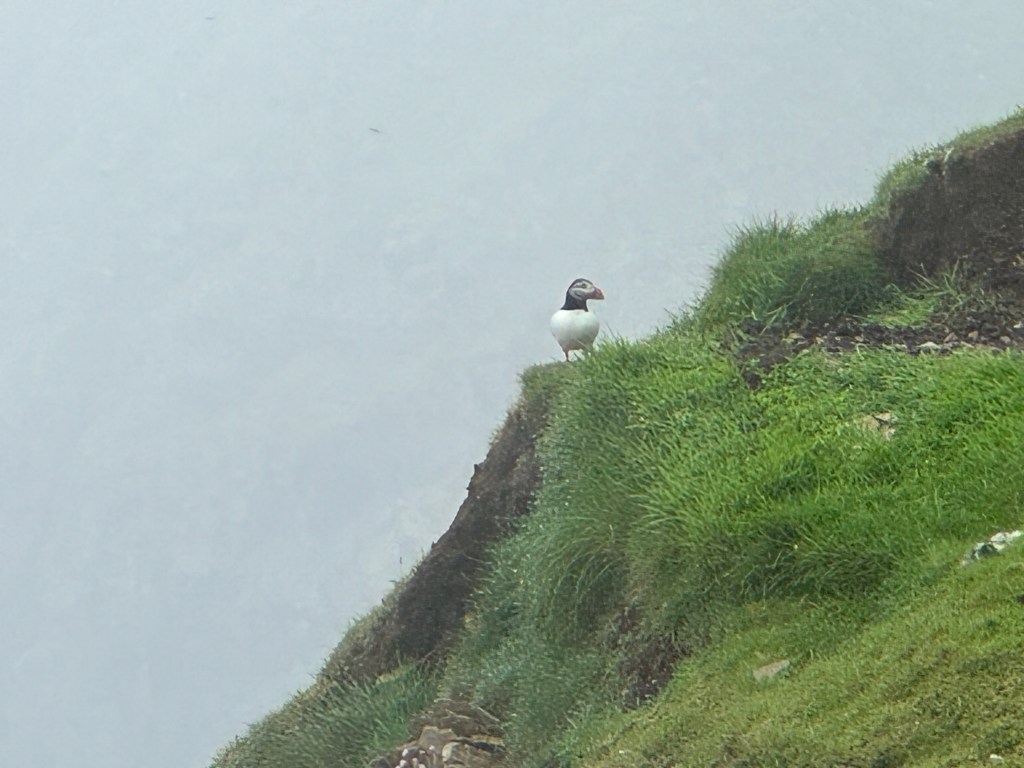
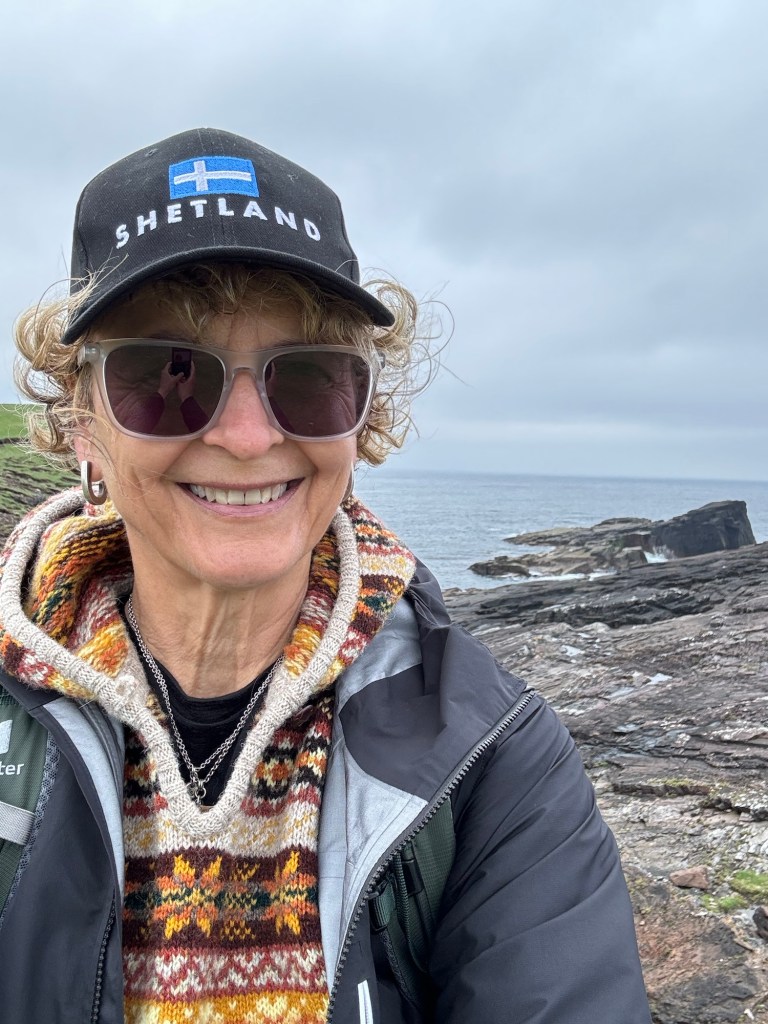
When we ascended to the clifftops, we were rewarded by a single puffin, featured at the beginning of this entry and below. It was thrilling.
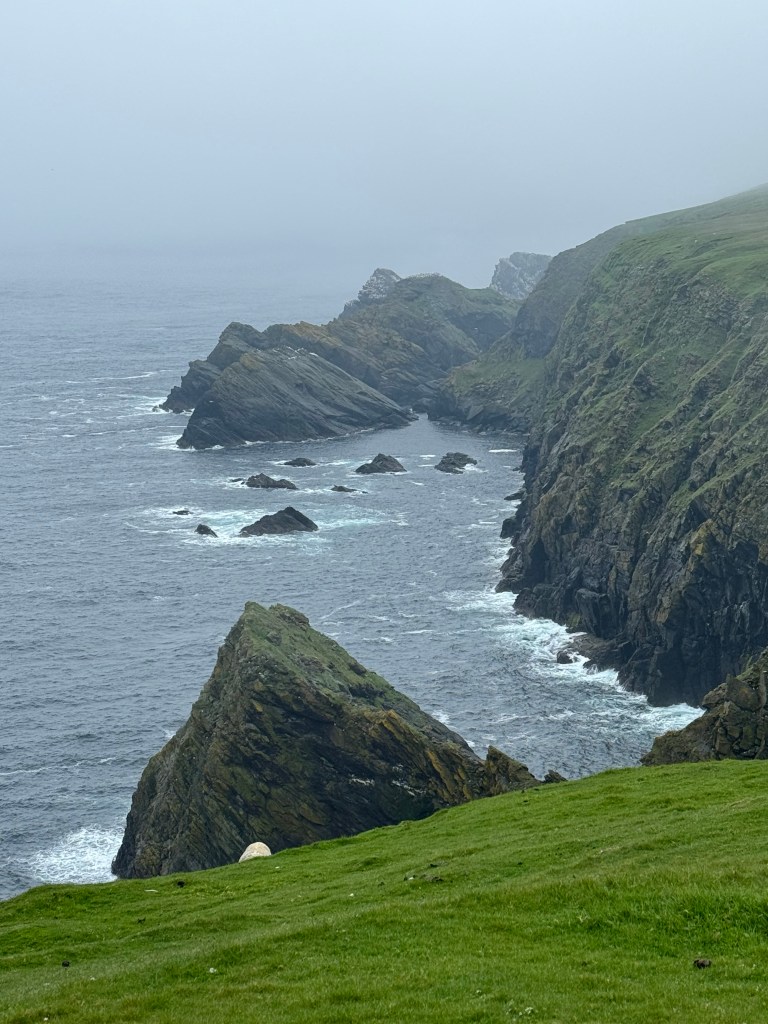
Our scenic lunch spot.
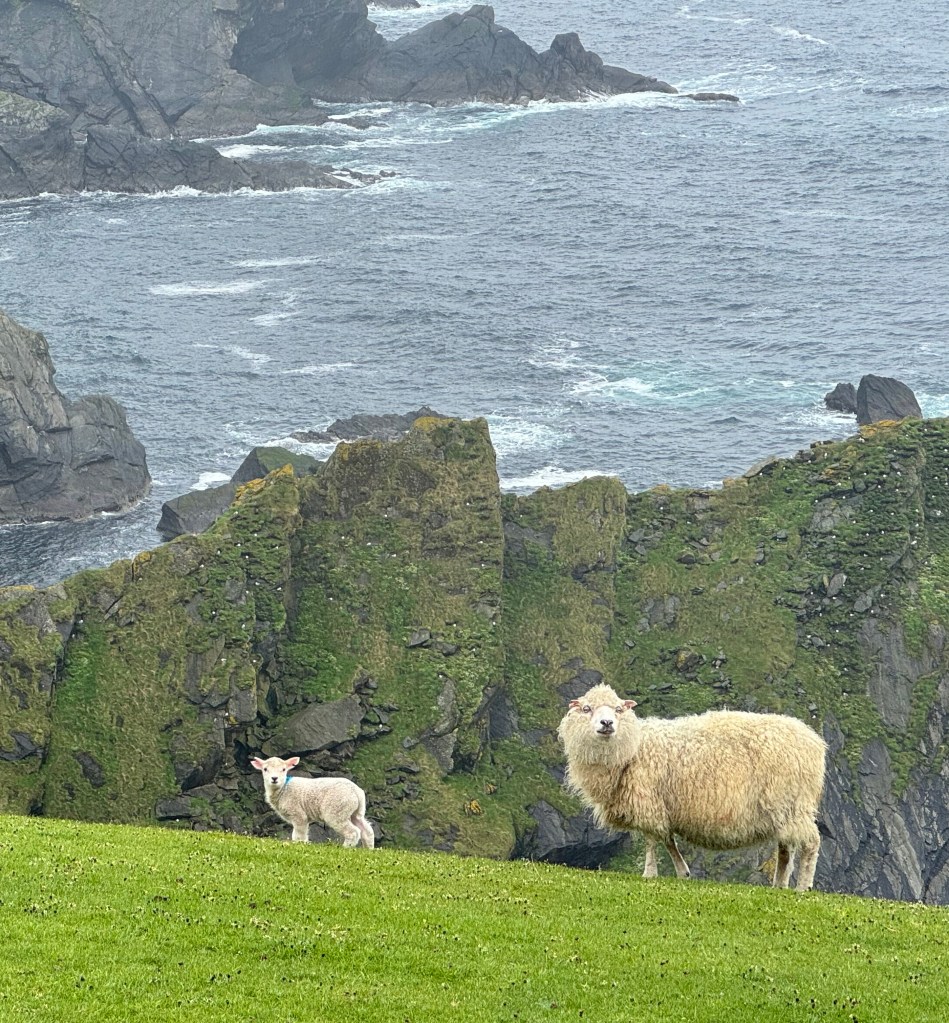
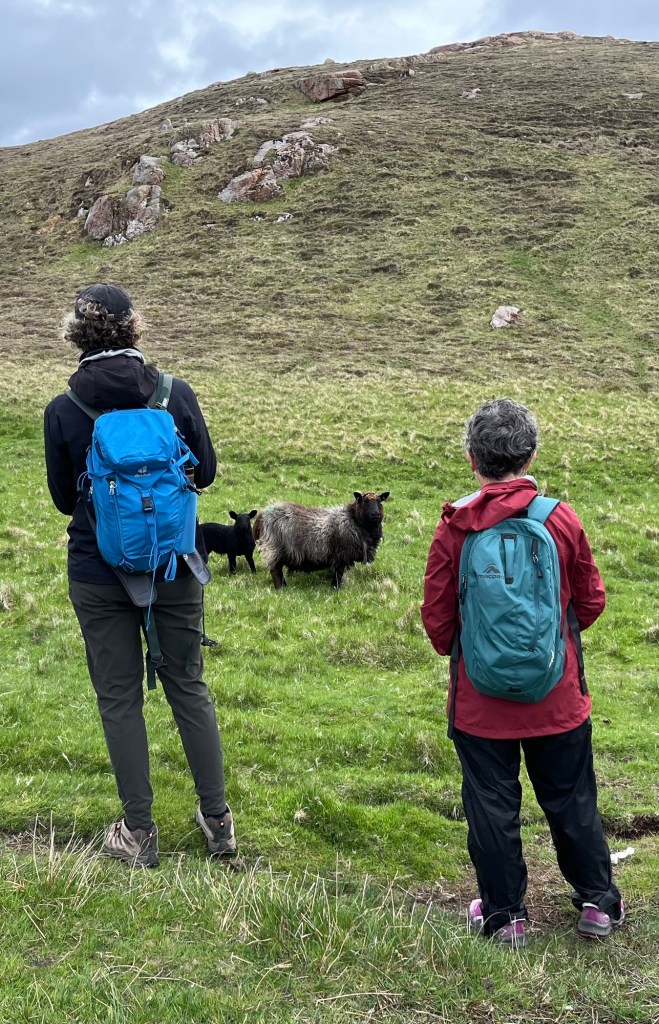
This sweet little baby sheepie perched on his mom’s back was totes adorbs.
Another bonxie!
The mist grew ever more pervasive as we walked, diminishing our chances of seeing the lighthouse.
The furthest north I’ve ever been, with Muckle Flugga in the mist behind me.
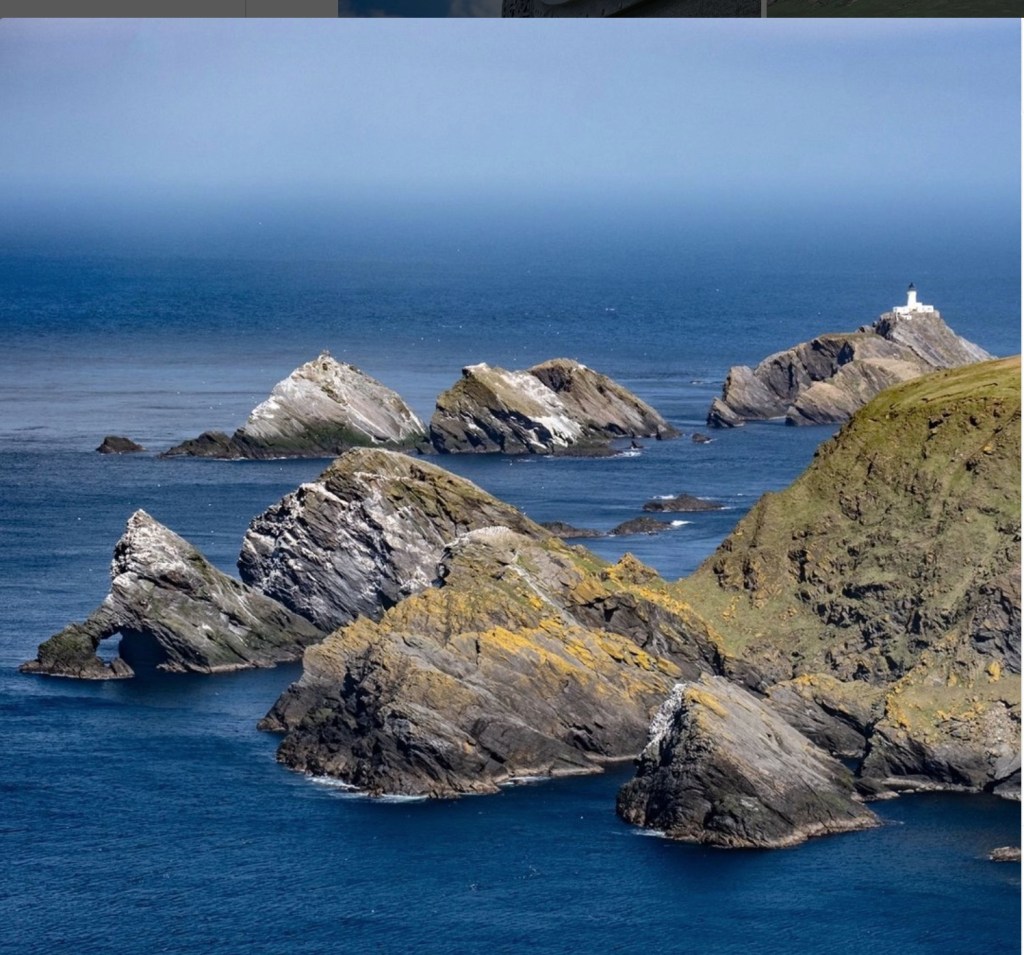
The lighthouse on a mist-free day.

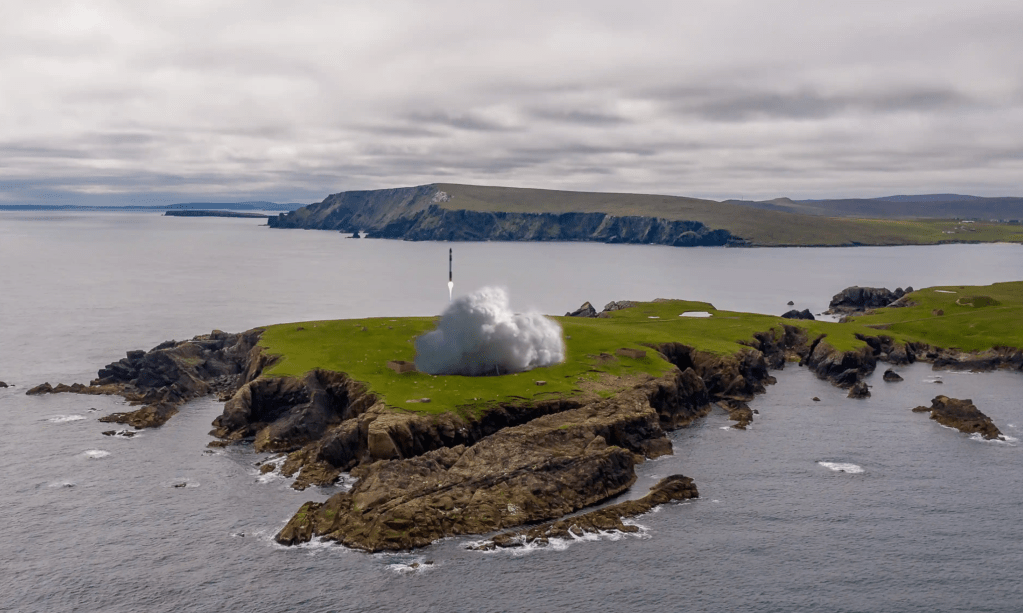
After the hike we intended to visit a teahouse, but overshot it and accidentally happened upon the Saxavord Spaceport, which was awesome. It is a former RAF base on a remote peninsula of Unst which has become the UK’s first licensed spaceport for vertical rocket launches. It will allow up to 30 satellites and other payloads to be launched into commercially valuable polar, sun-synchronous orbits (not taking any questions on that), which are in high demand from satellite operators for communications and Earth observation.

And, best of all, because this is Scotland, even serious rocket launchers have a sense of humor.
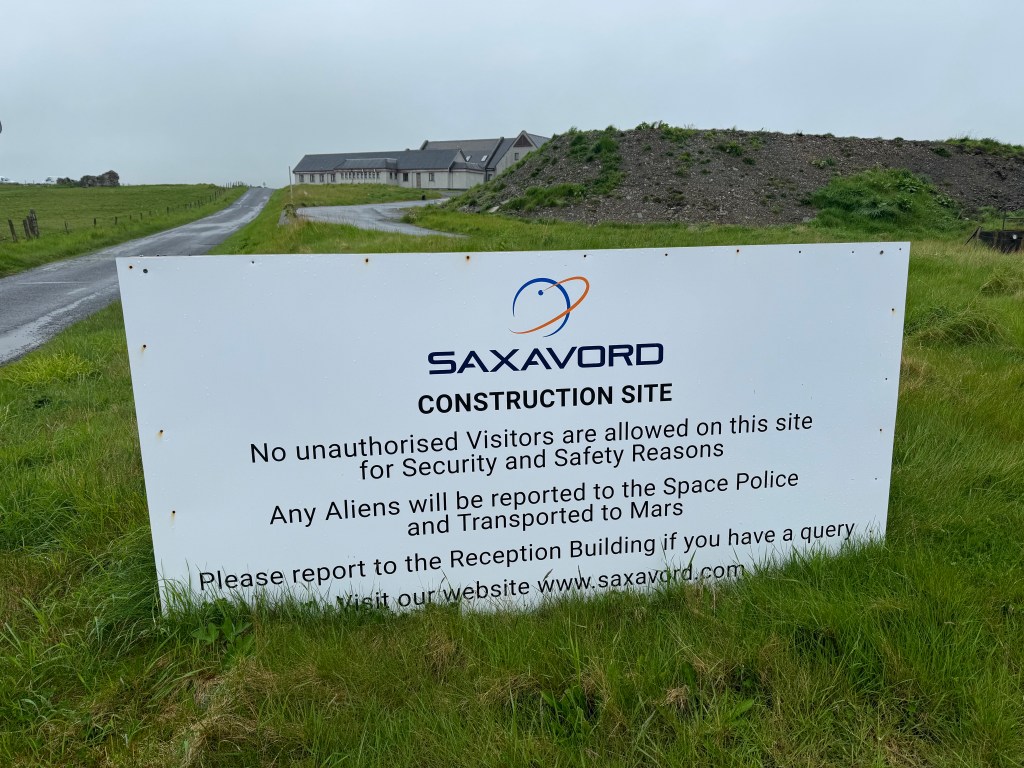
How awesome is this, I mean really.

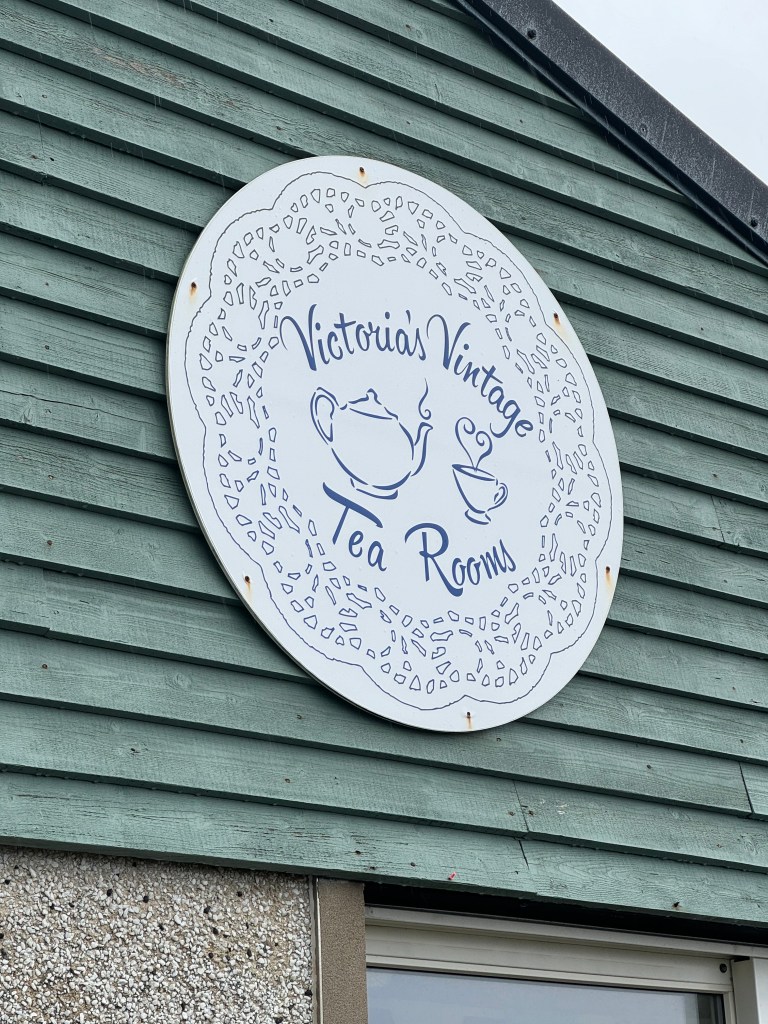
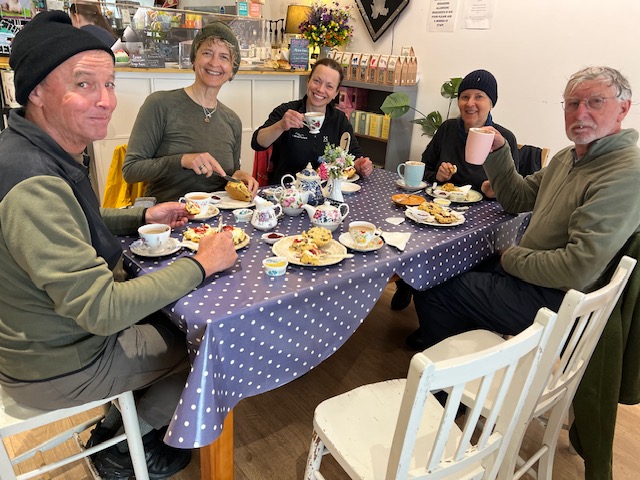
We found our way back to the route and headed to the teahouse. Almost every Unst business, it seems, advertises itself as being the “most northerly.” We even passed by the Most Northerly Kirk. Likewise, Victoria’s Vintage Tea Shop was advertised as the most northerly. And it served the most northerly, and delicious, scones.
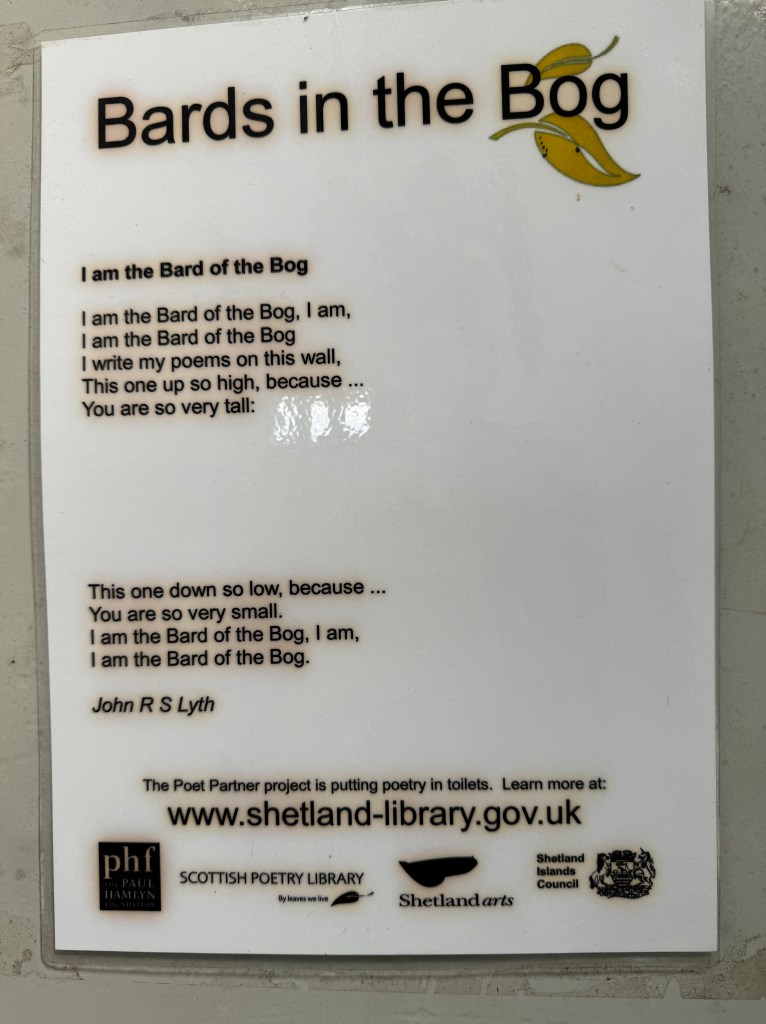
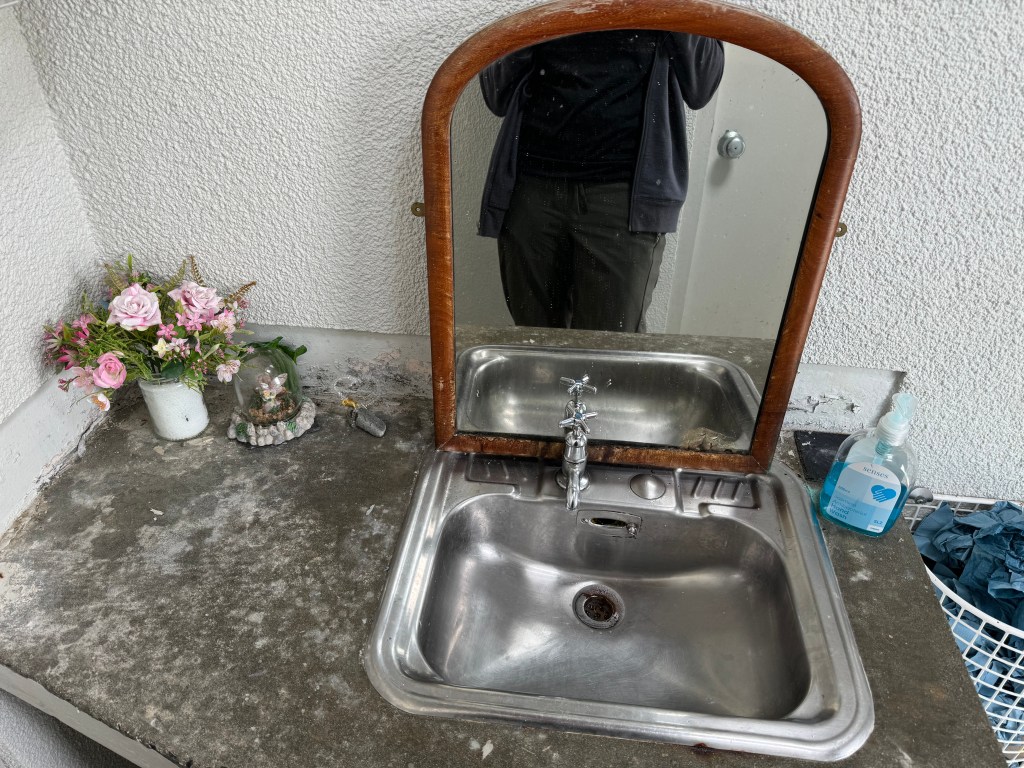
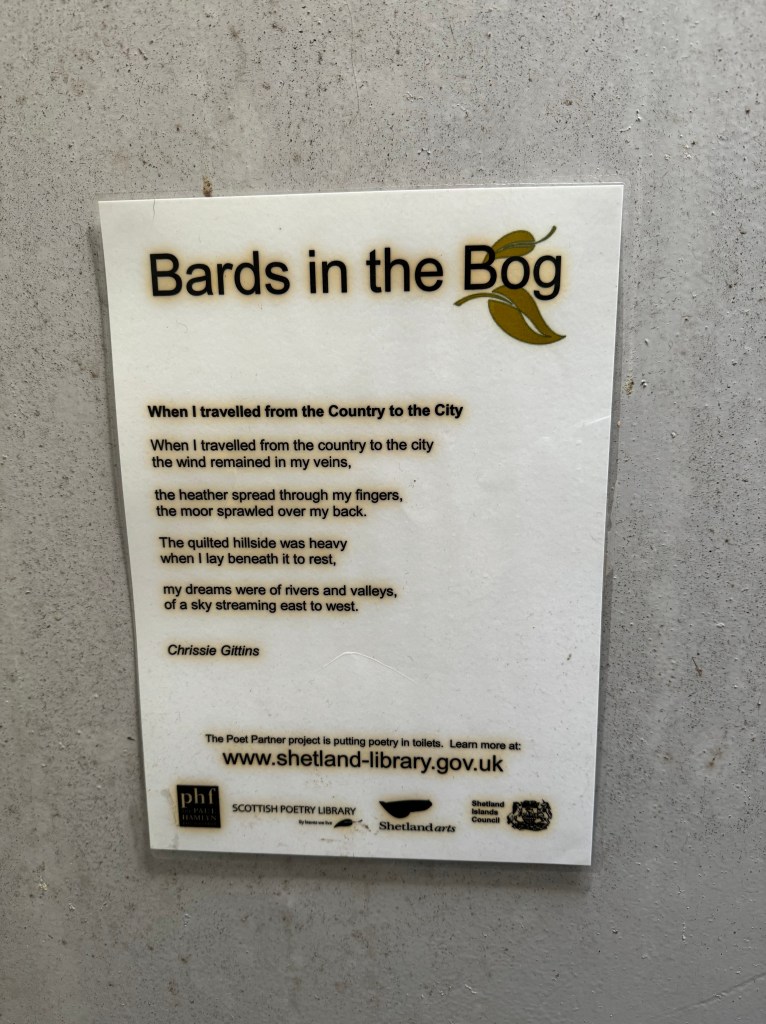
And so, my dudes, we at last find ourselves on our final day in Shetland. We spent our morning on a lovely walk near Eshaness. But first, a note about Shetland’s plentiful public toilets, or “bogs.” There are so many of them and they are all plumbed, well-cared for, and have plenty of parking. As remote as Shetland is, one never has to worry about drinking too much coffee in the morning. Some are quite creatively decorated with special bog poetry framed on the walls.

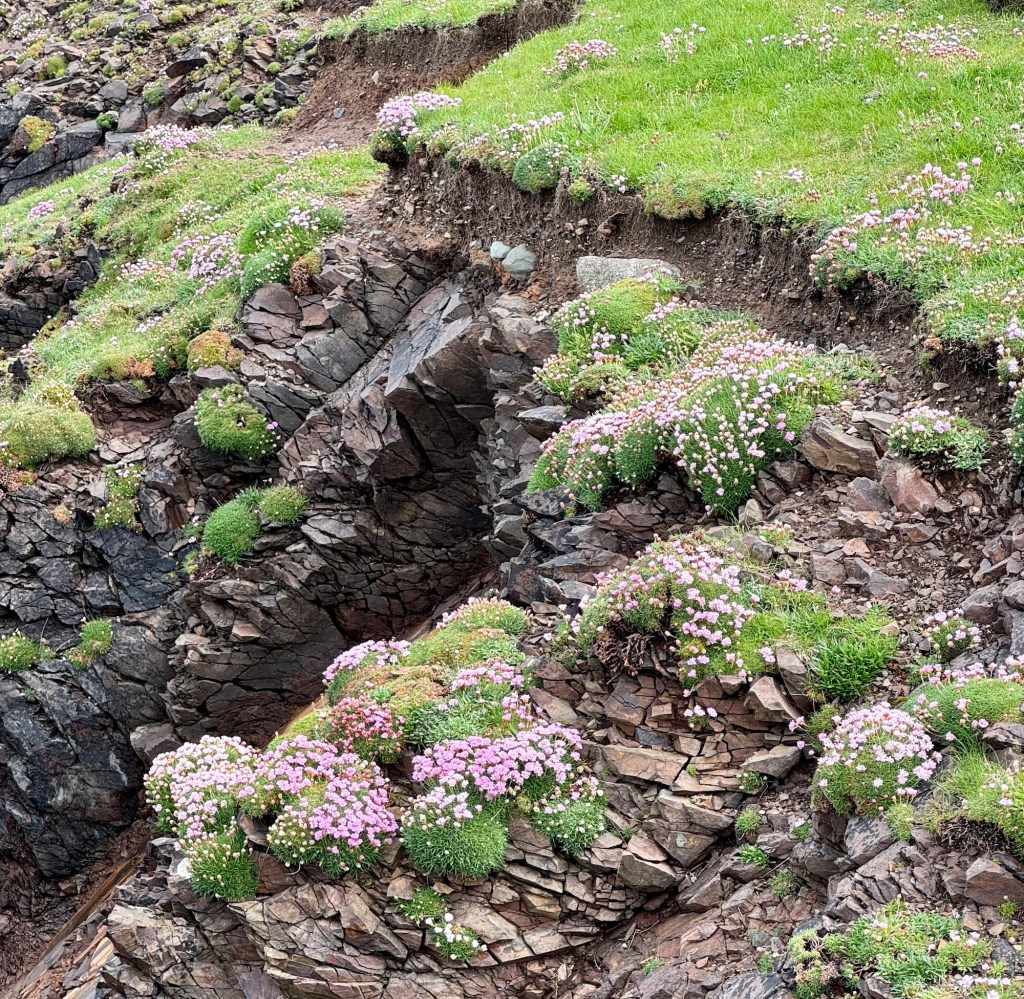
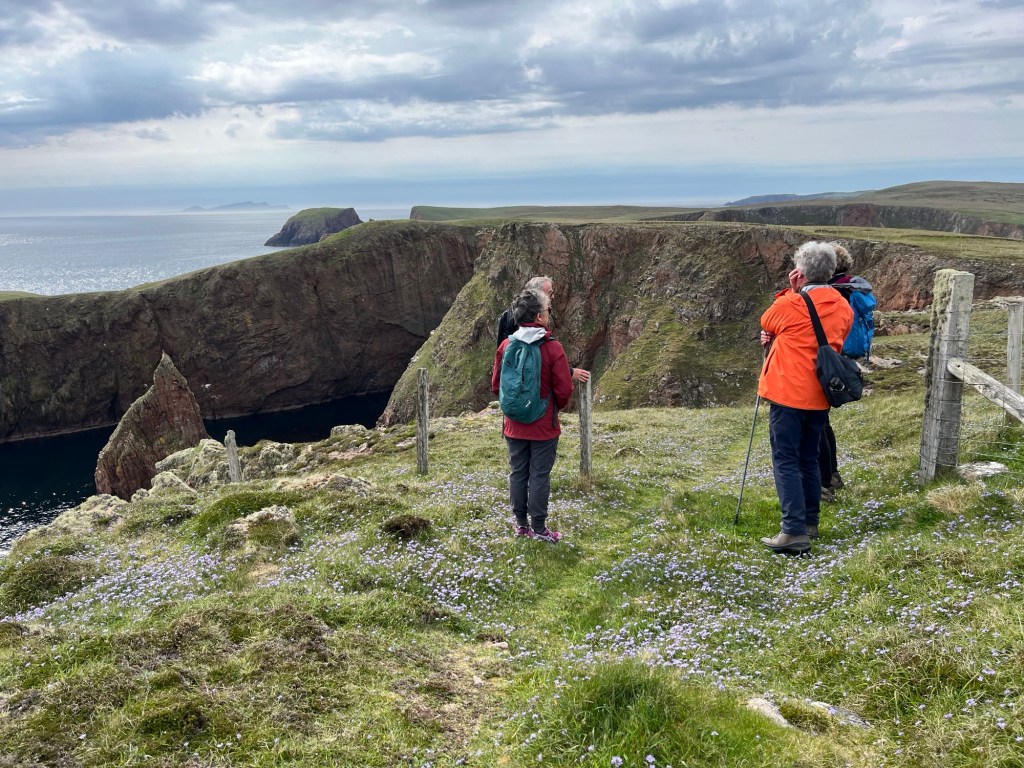
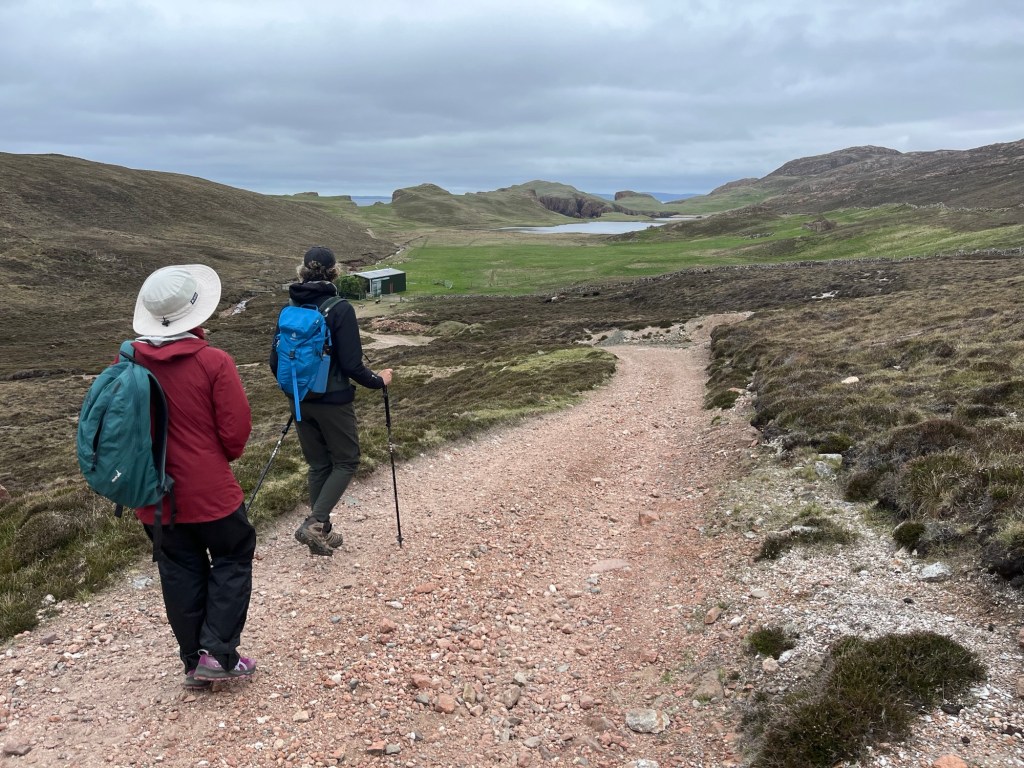
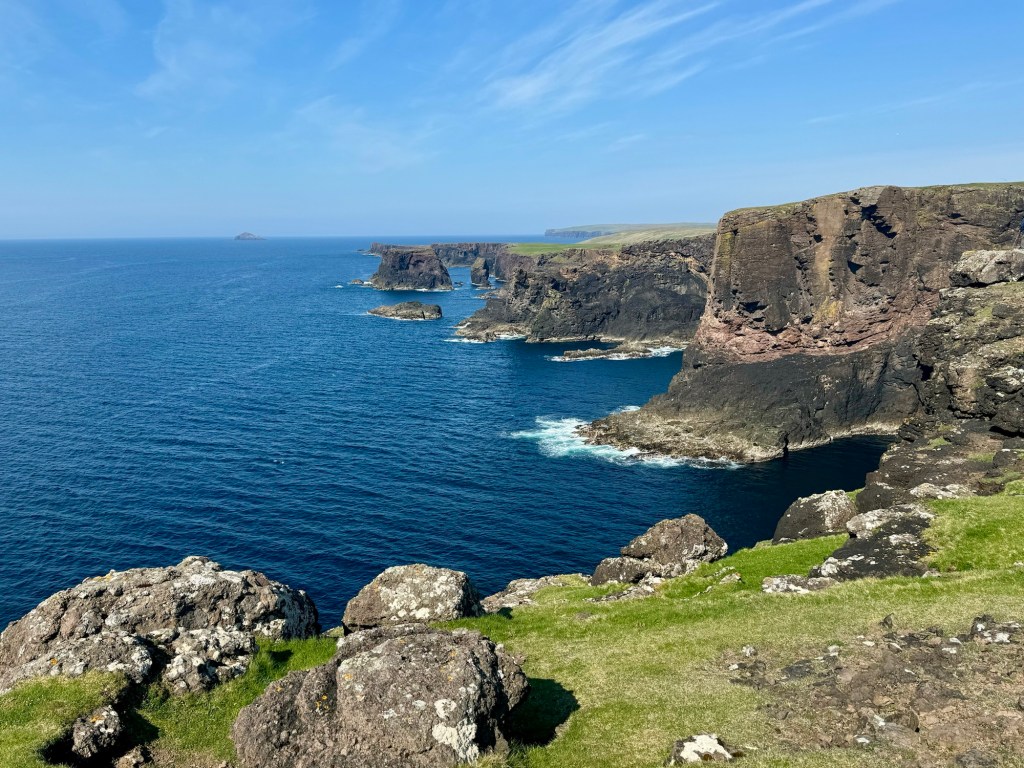
Our walk started at Eshaness Lighthouse, the spot I had visited earlier with Drew. We meandered along the volcanic clifftops, navigating lots of stiles (I love stiles) and reveling in the plentiful wildflowers.
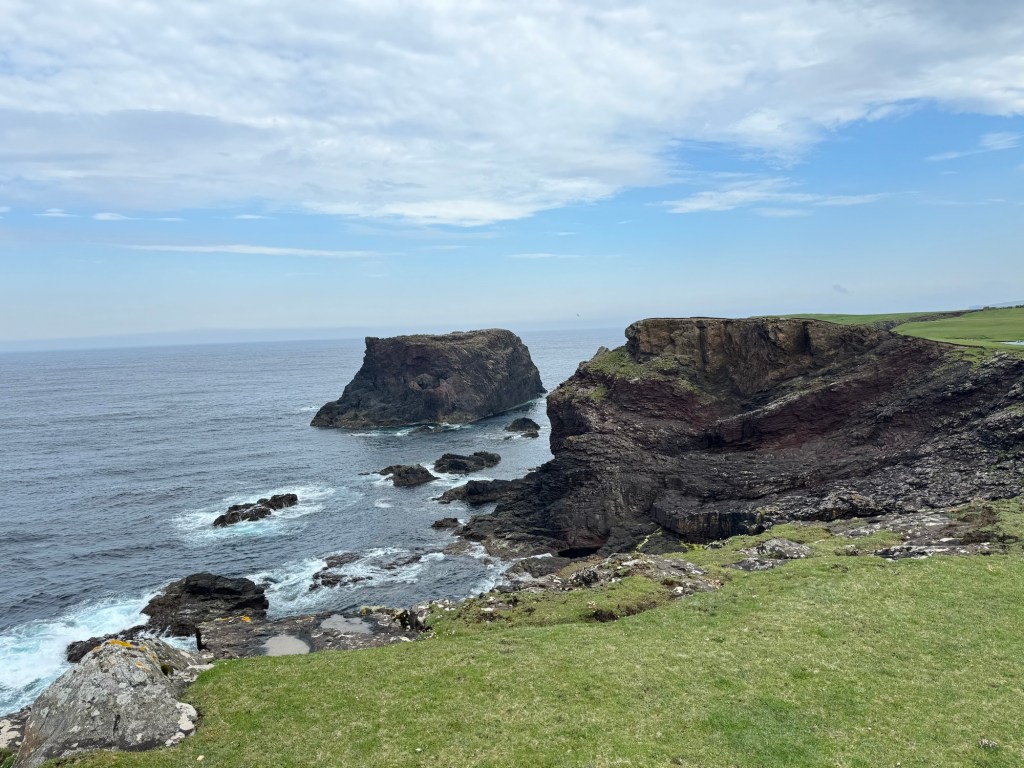
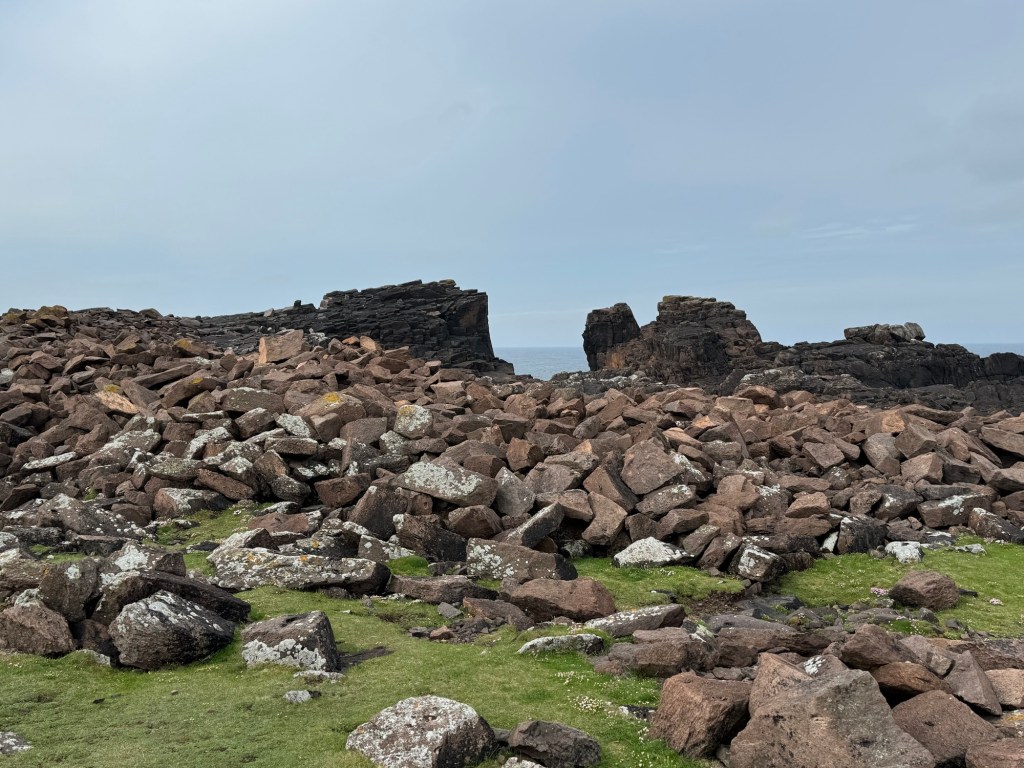
We came across a storm beach composed largely of giant boulders which had been tossed onshore by violent wind and waves over the years. Hard to imagine on this lovely calm day.
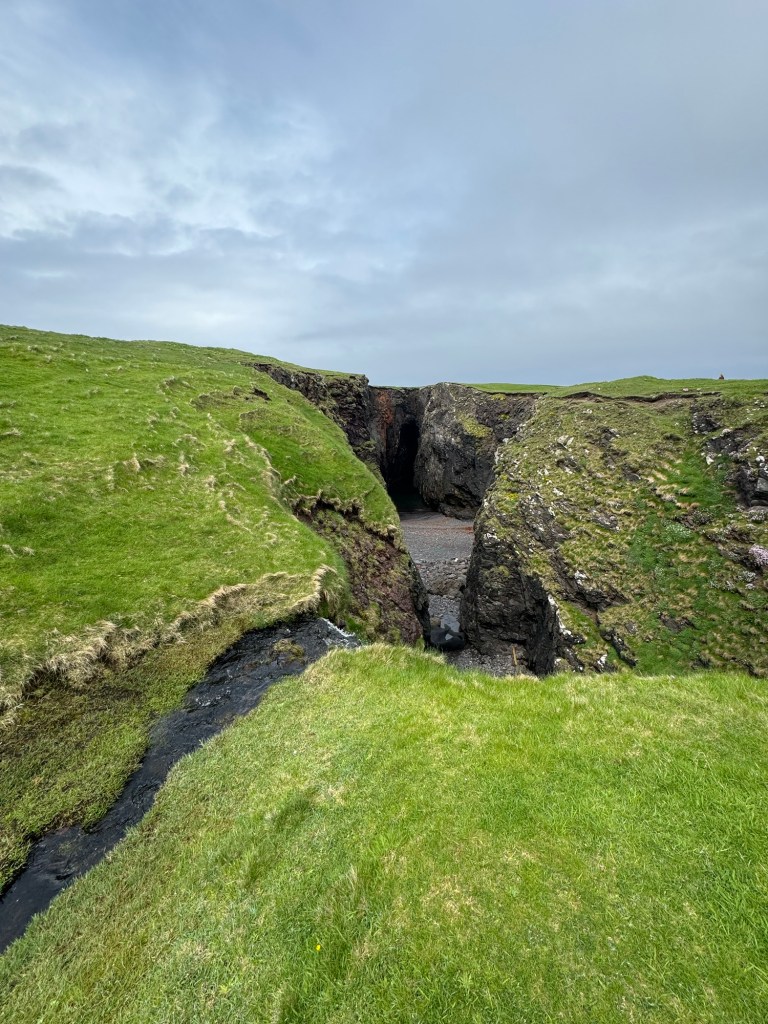
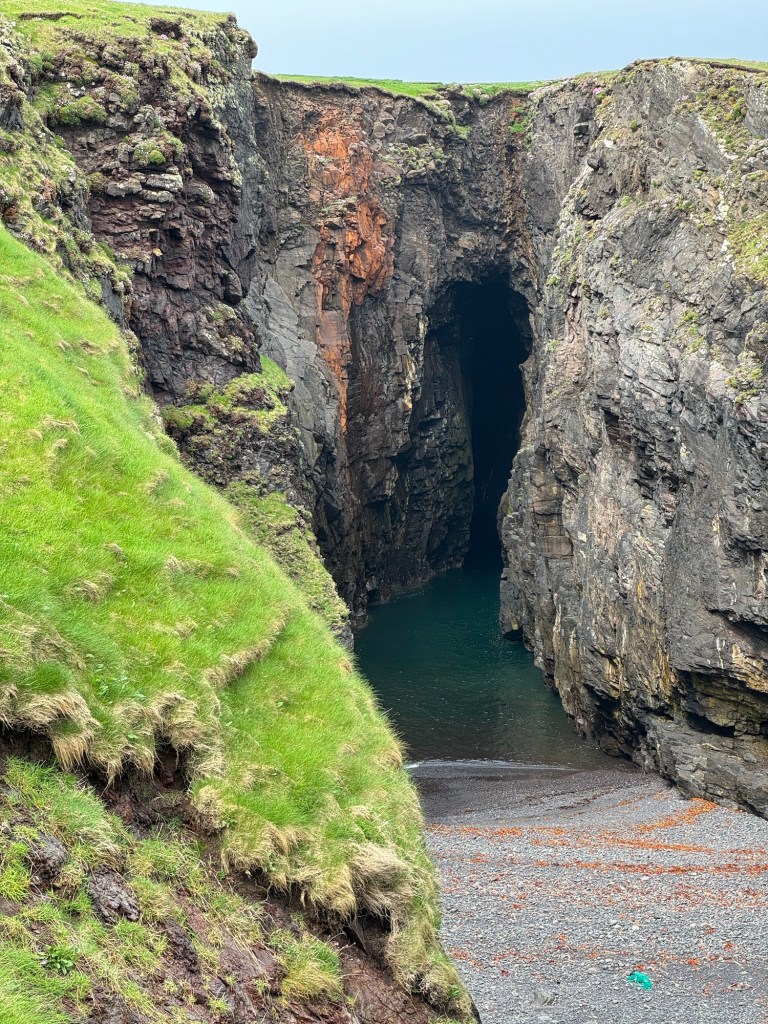
The trail then let us to the Holes of Scraada, a collapsed sea cave, apparently Britain’s largest.
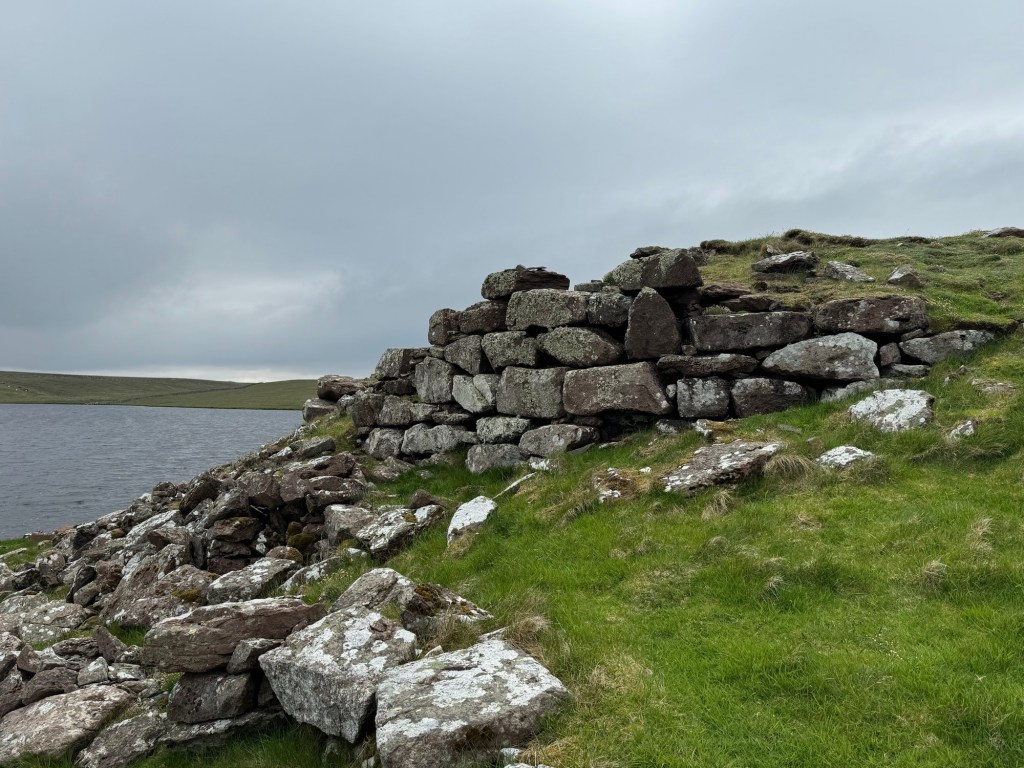
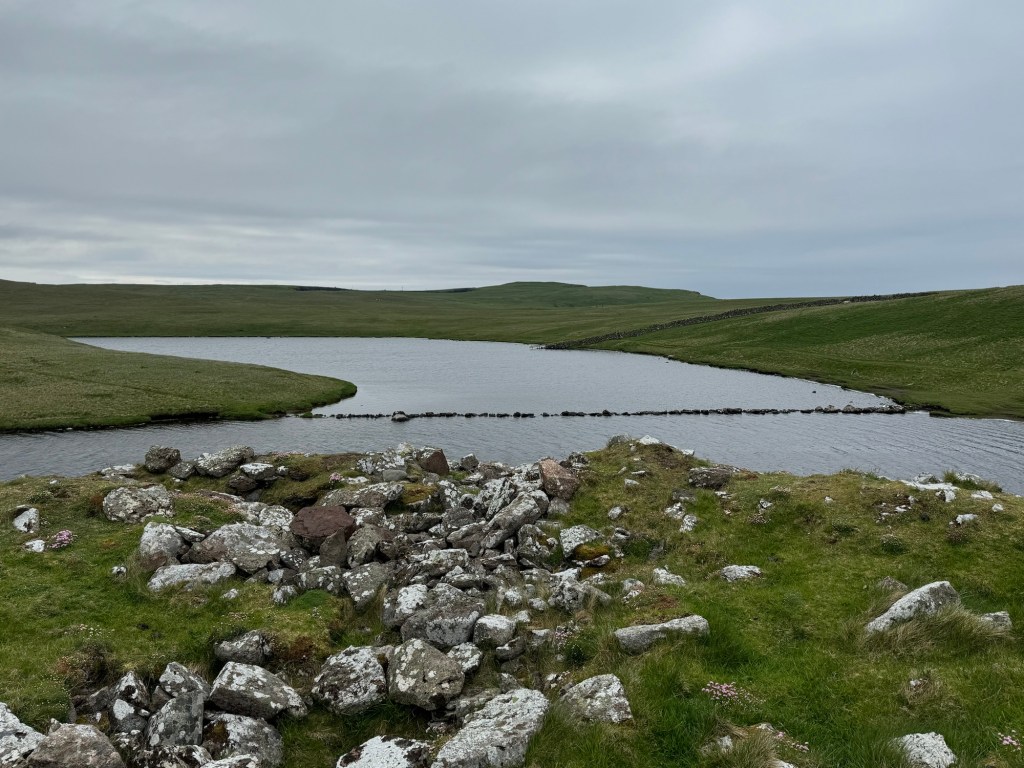
We next walked by the remains of an old water mill and then happened upon the Eshaness Broch, where we had our lunch.
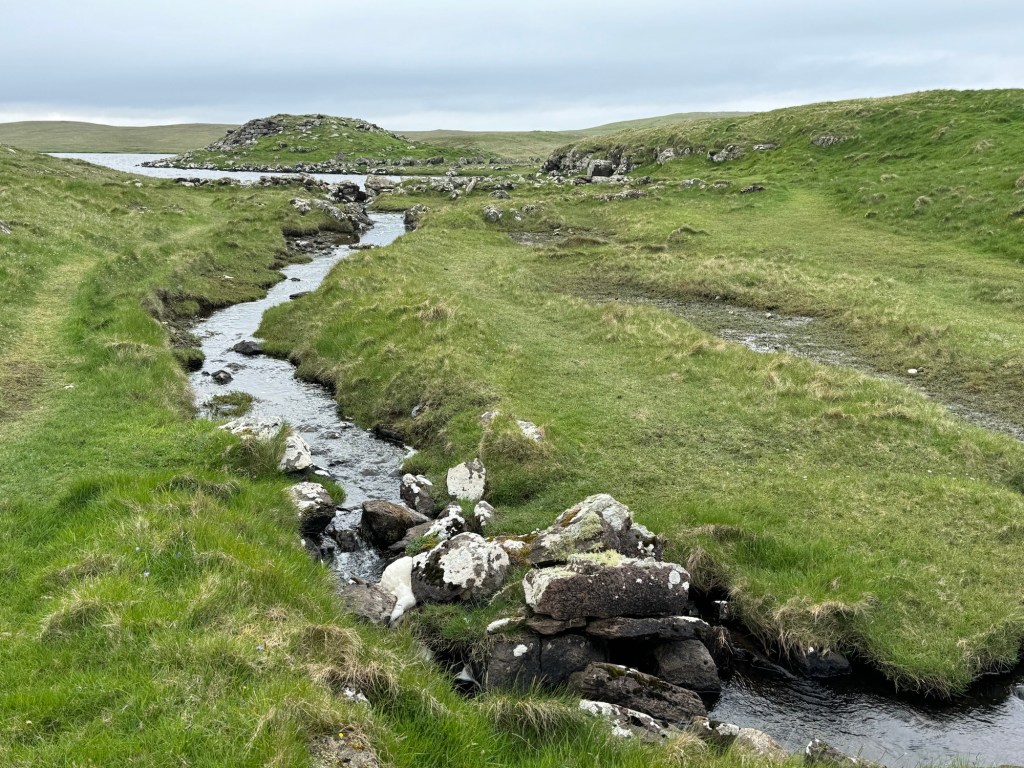
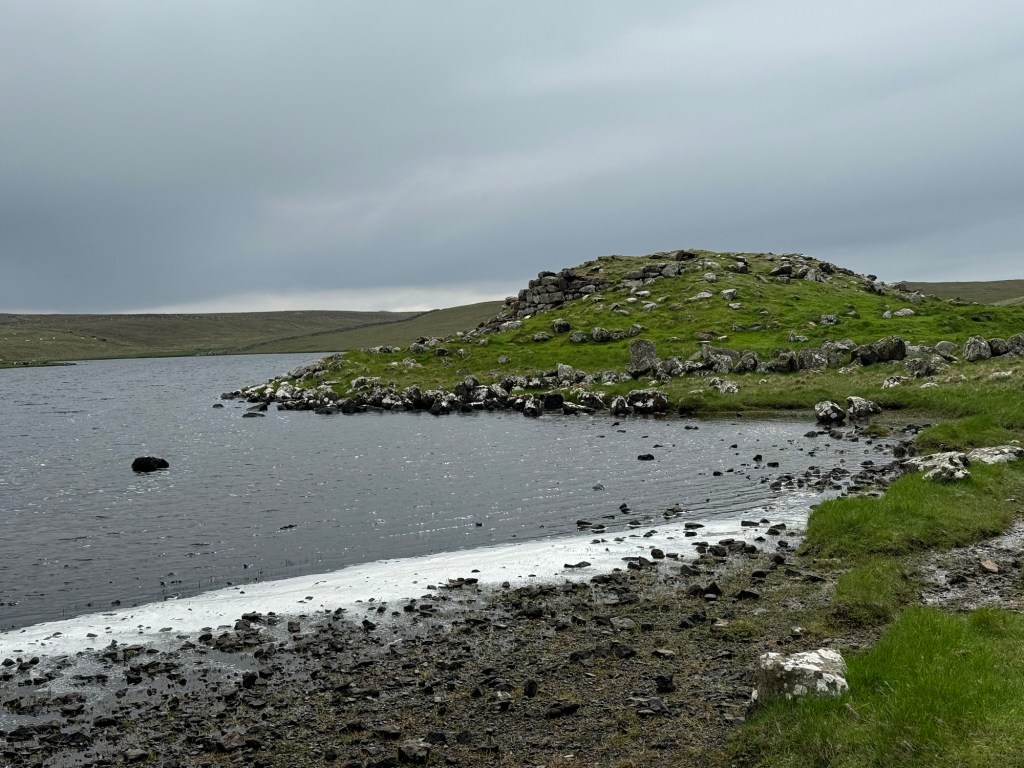
After our last lovely walk, we boarded the van and drove back to Lerwick, where Kirsty dropped folks off at the Shetland Museum and I had to bid a very fond farewell to my intrepid compatriots before heading to Sumburgh Airport for my flight to Edinburgh.

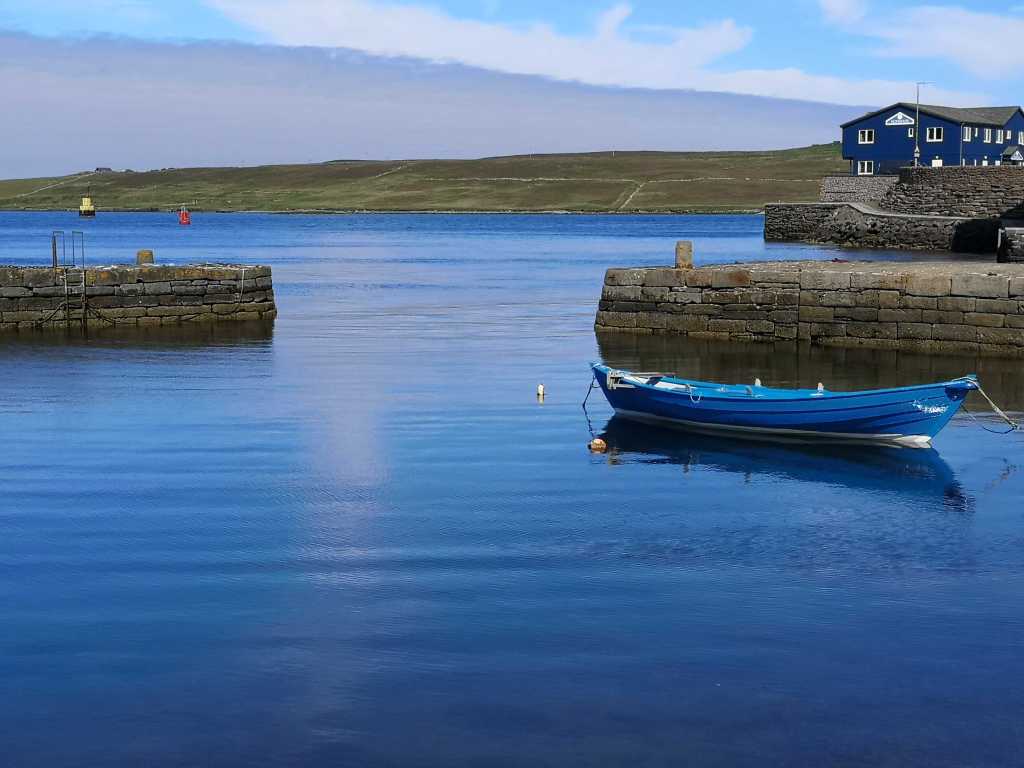
Sadly but fondly bidding farewell to my fellow travelers.
One last and lovely photo of Shetland, courtesy of Jill.
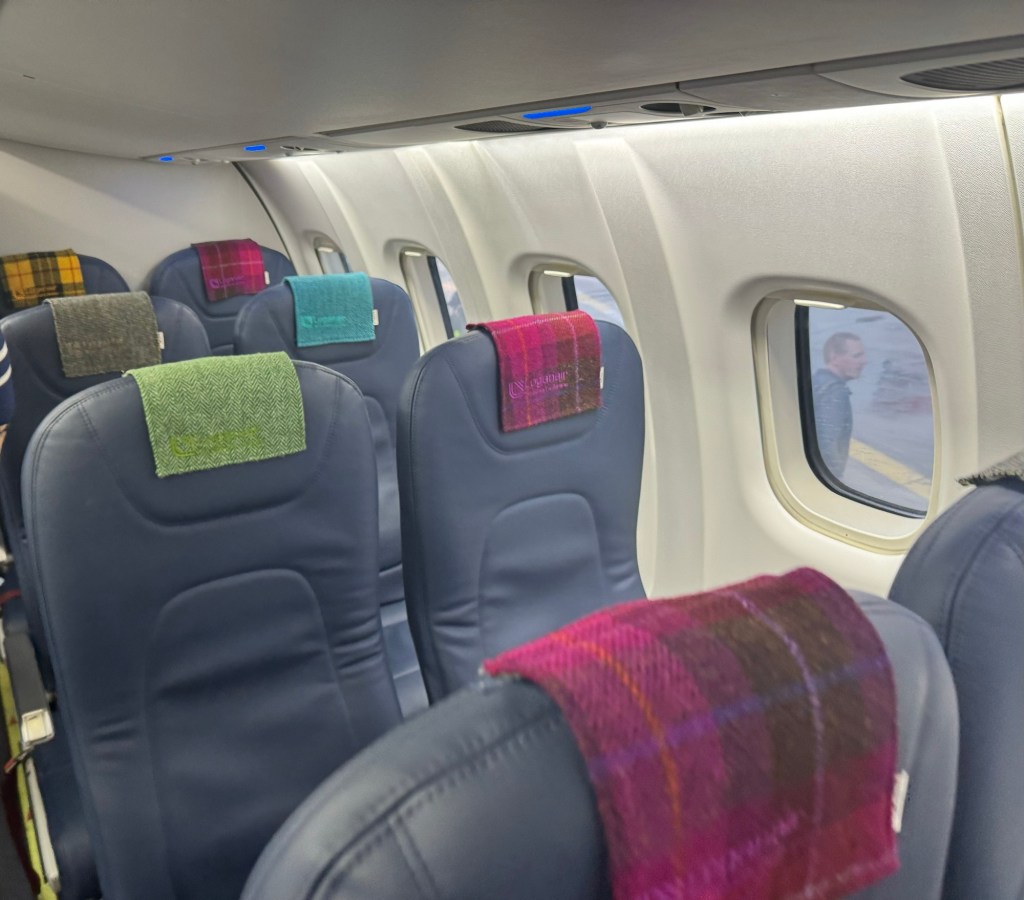
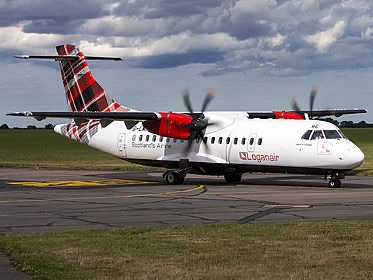
My flight back to Edinburgh on LoganAir – clearly will never get over the plaid headrest situation. It is everything.

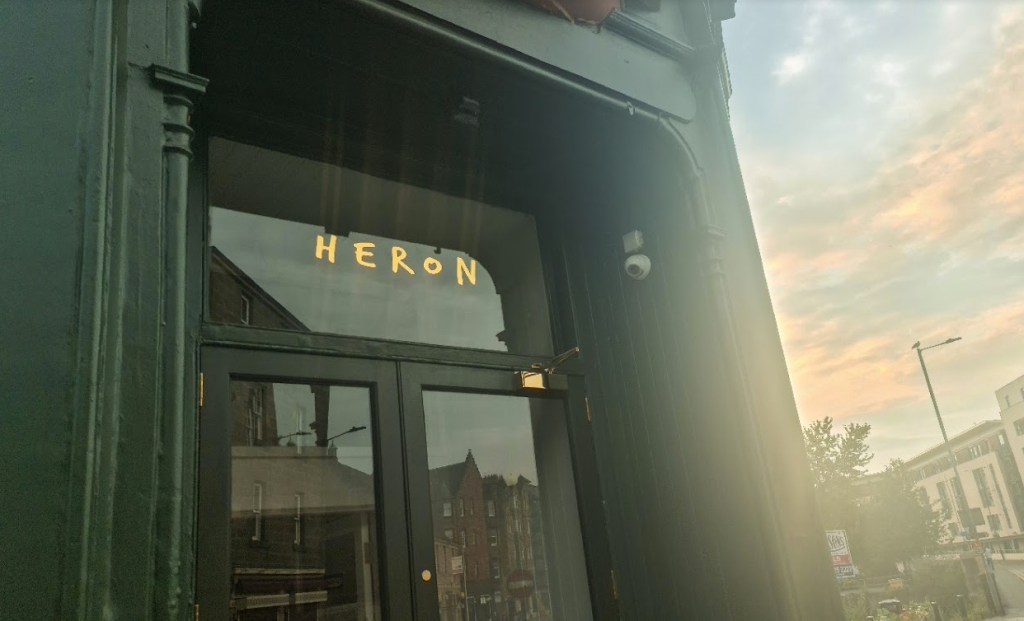
On my last two nights in Scotland I had decided to stay in Leith, a few tram stops and couple of miles north of Edinburgh. It used to be the gritty, druggy dock area of town (see “Trainspotting”) but it has undergone a massive redevelopment and is now known for its vibrant arts and culture scene, cool neighborhoods and a plethora of fabulous restaurants, coffee houses and bars. Edinburgh has five Michelin-starred restaurants and three of them are in Leith, and in fact Leith now has the highest concentration of said restaurants per square meter outside of London. (For the record I have had fabulous meals in two out of the three, Tom Kitchin’s last year, Heron this year and Martin Wishart still to come.)
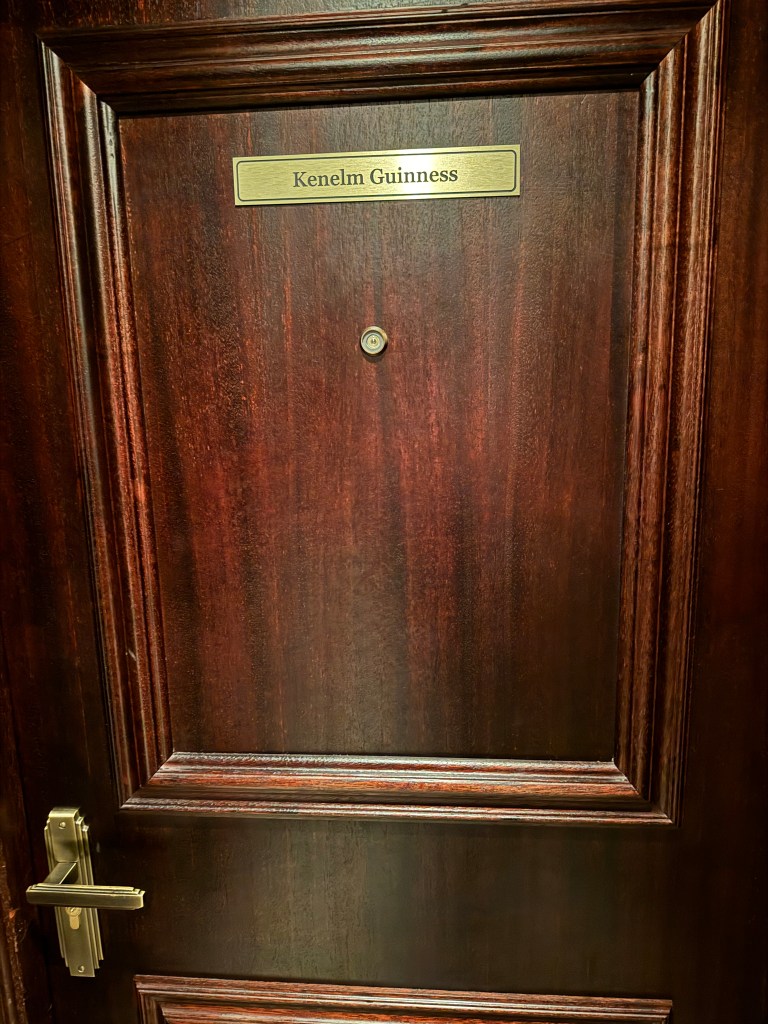
Leith is the home of the Royal Yacht Brittanica, and in honor of her being nearby I booked a room at Ocean Mist Leith, a boat with a singular history. It was built in 1919 as a minesweeper but a year later was sold to Kenelm Guinness (yes that family), a race car driver, inventor and playboy, the kinds of “occupations” men of his circumstances had the freedom to choose back in the day. I mean who wouldn’t choose to be an inventor if having an income didn’t matter? Kenelm converted the boat to a “gentleman’s pleasure yacht,” which – er, whatever.
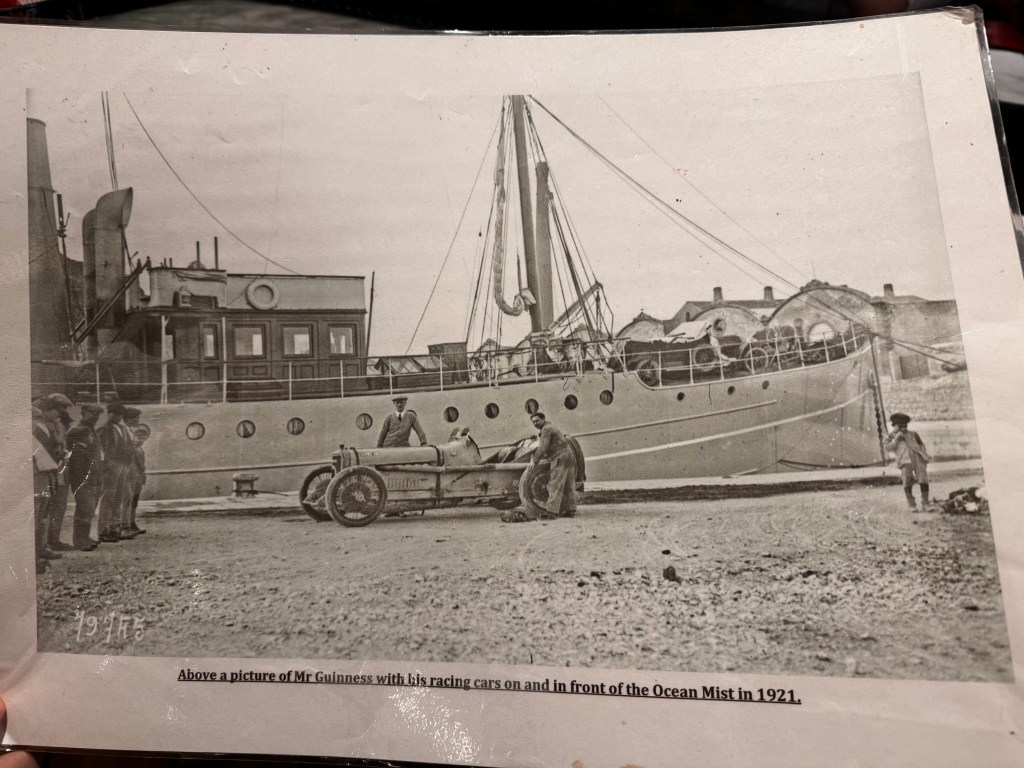
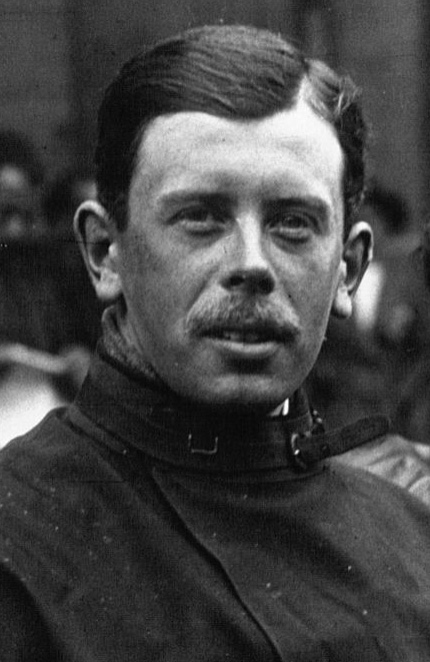
Abysmal haircut, a mustache is never a good idea, and yikes “bvb” alert. (before vital braces)

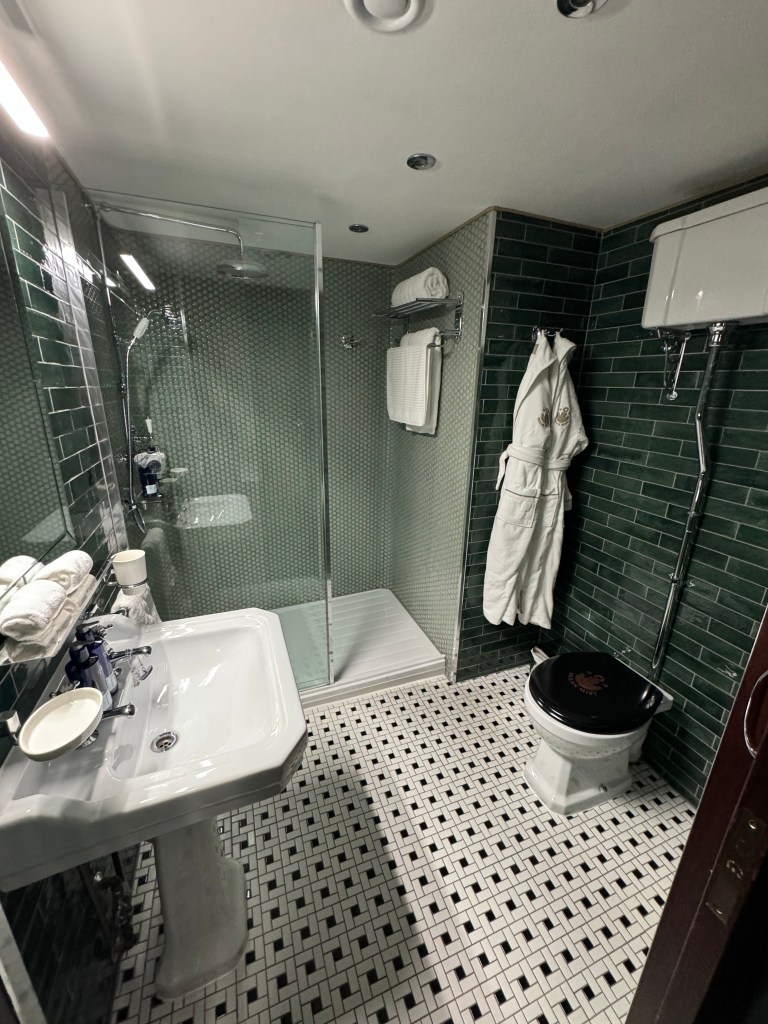
The boat next changed ownership through a series of Dukes, Sirs and MPs until it was requisitioned by the admiralty during World War II, finally fulfilling its original purpose as a torpedo recovery vessel. Then it changed hands through several businessmen, including one who ran whisky from Scotland to California during Prohibition. It docked in Leith in 1983 and became various nightclubs and restaurants before falling into disrepair. The current owners took it down to its bones for a complete, and gorgeous, renovation.

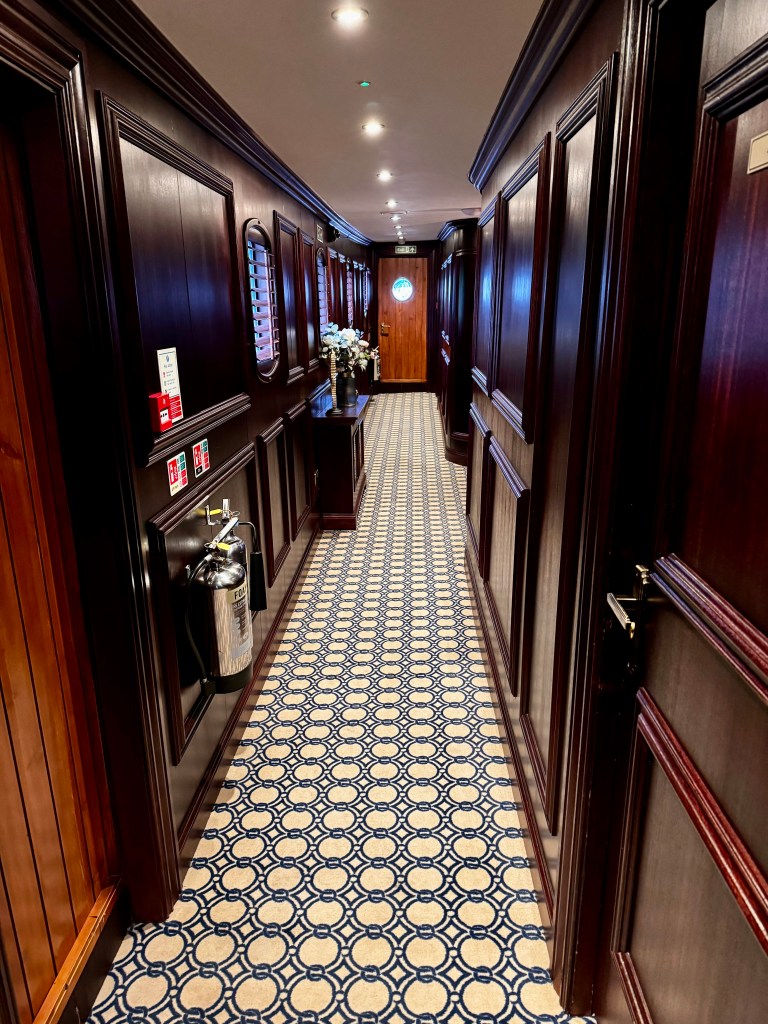
The hotel is extremely, extremely cool and somehow I was given the room at the bow of the boat that served as Captain Kenelm’s quarters.
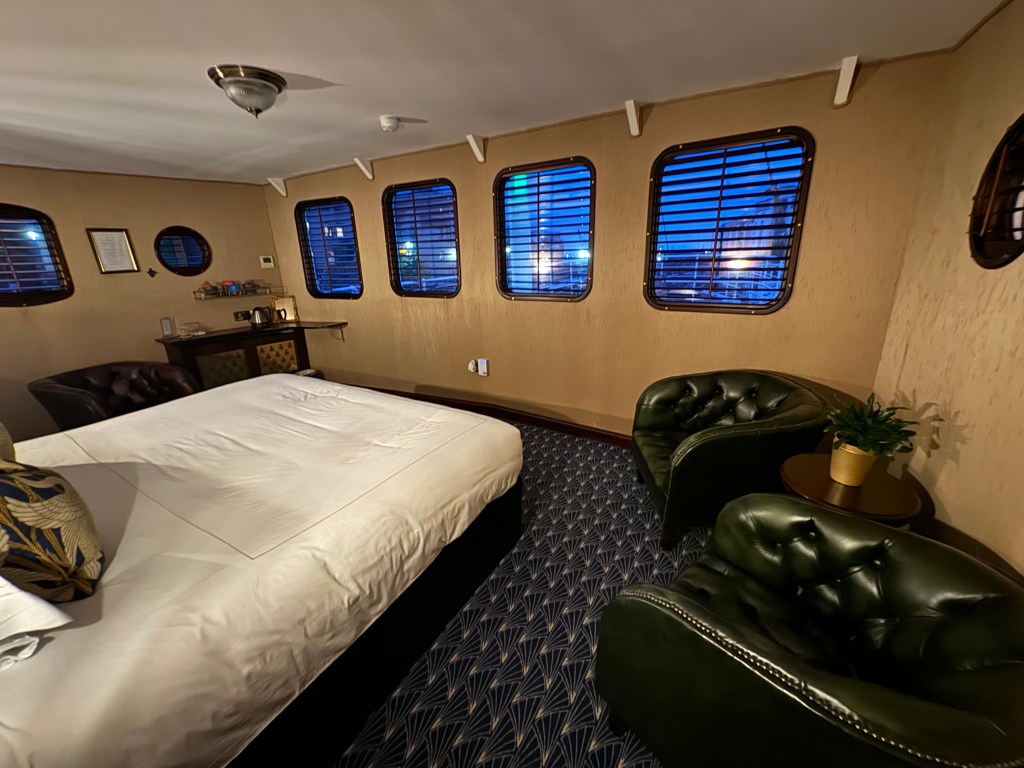
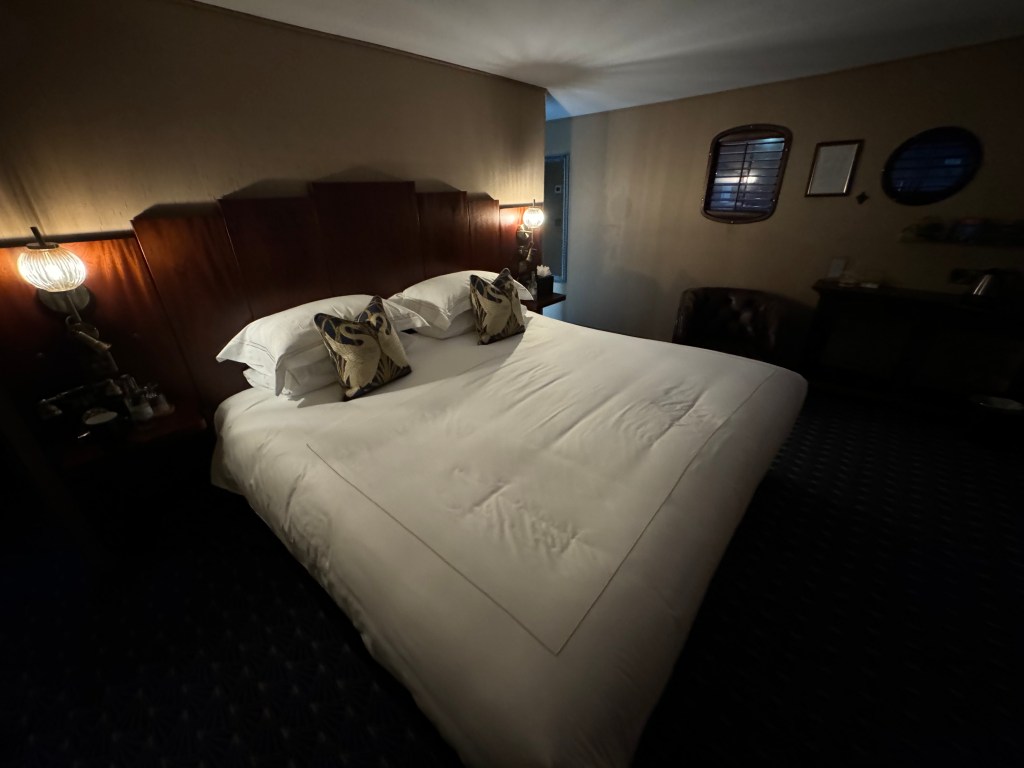
Since the room is at the bow of the ship, the floor slopes sharply upward to the windows.
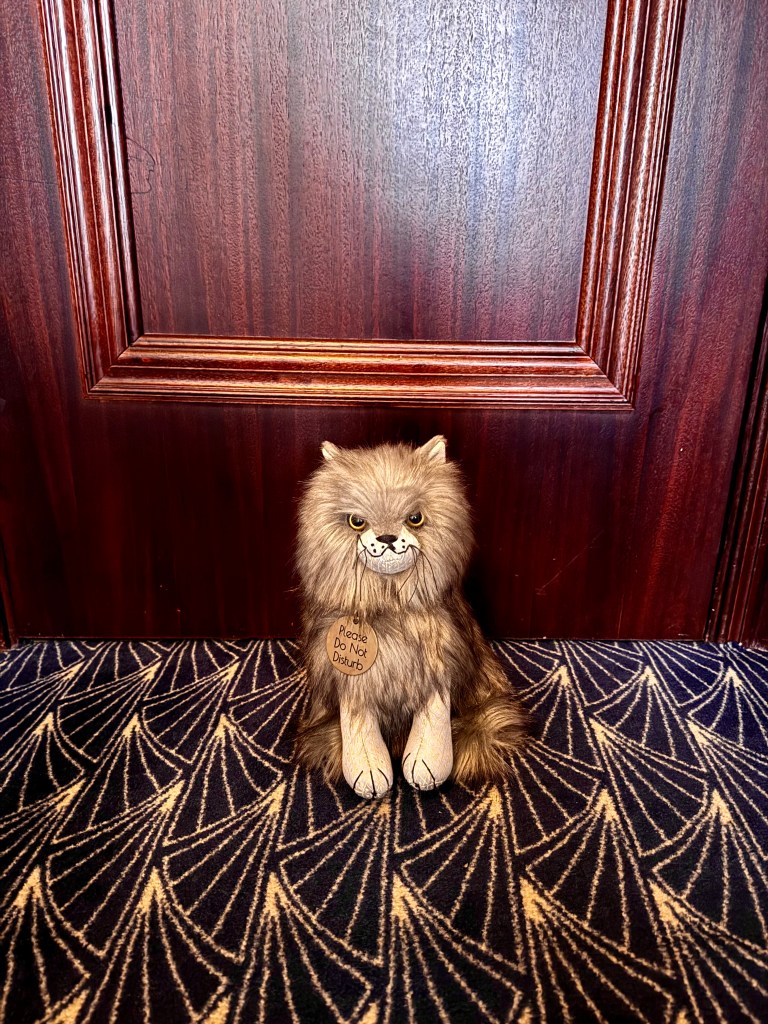
If you don’t want to be disturbed you must put this creepy weighted lion outside your door.

And my dudes, I had my own deck and I must say I was quite, quite fancy during my stay. Here I am enjoying a Guinness on my deck just because.

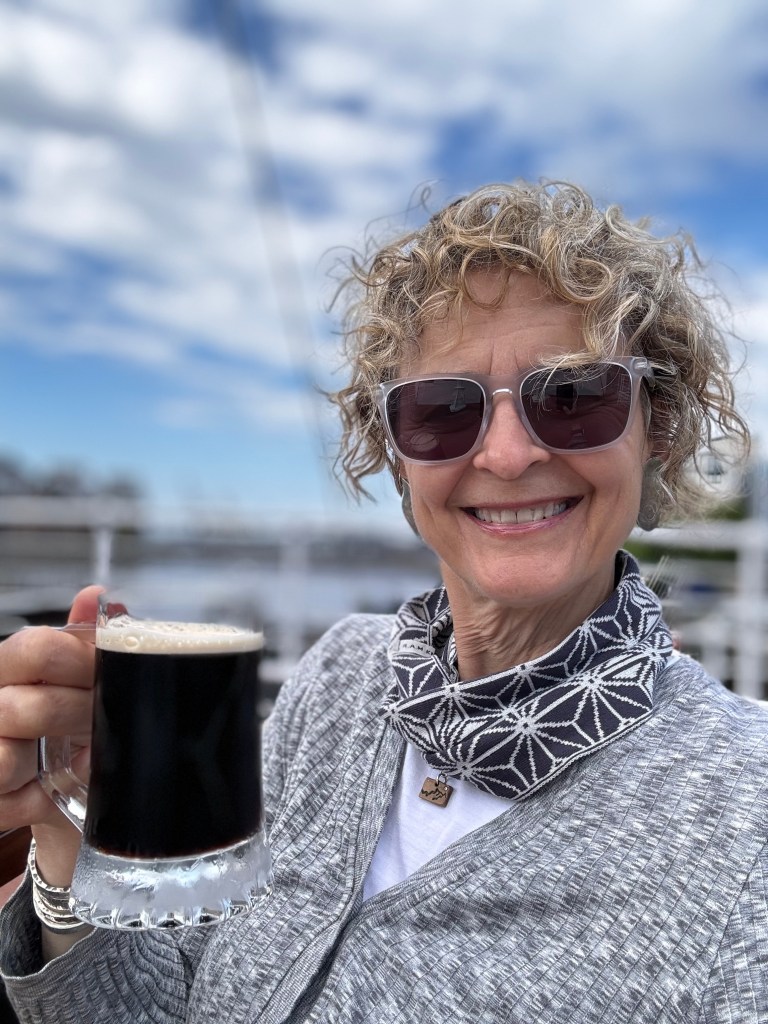
To you, Kenelm. I hope you invented something.

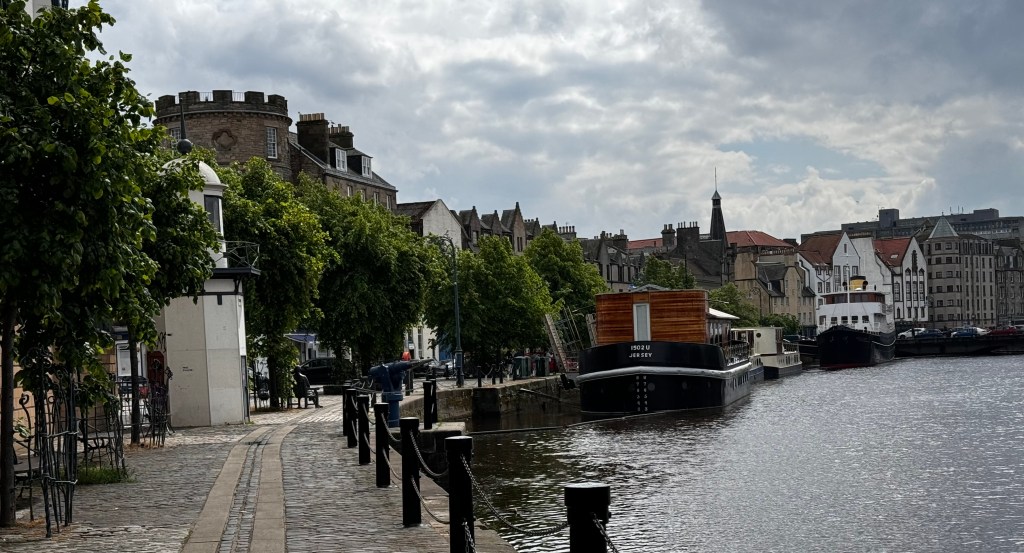
The following morning before heading to the airport I walked around town, grabbed a coffee and snapped a few last photos.
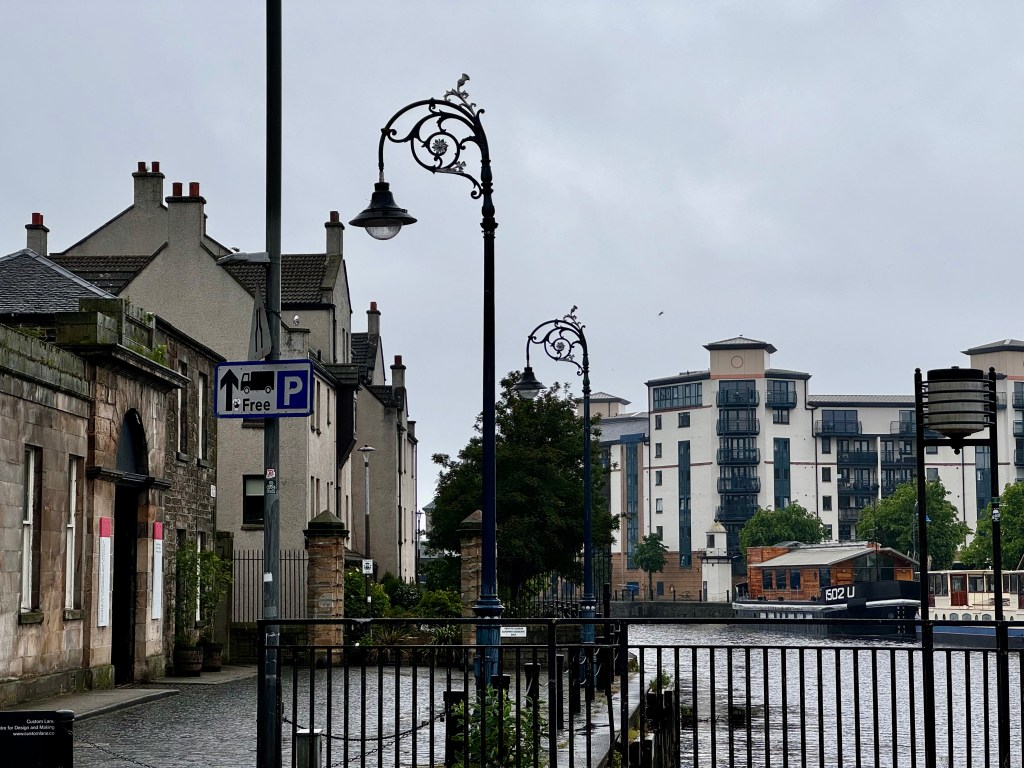
And at last we find ourselves at the end of this trip. So much gratitude to all of you for coming along with me, and for all your kind comments.

I’ll leave you with this sign inside a Leith coffee house called Toast, which is very – Scotland.

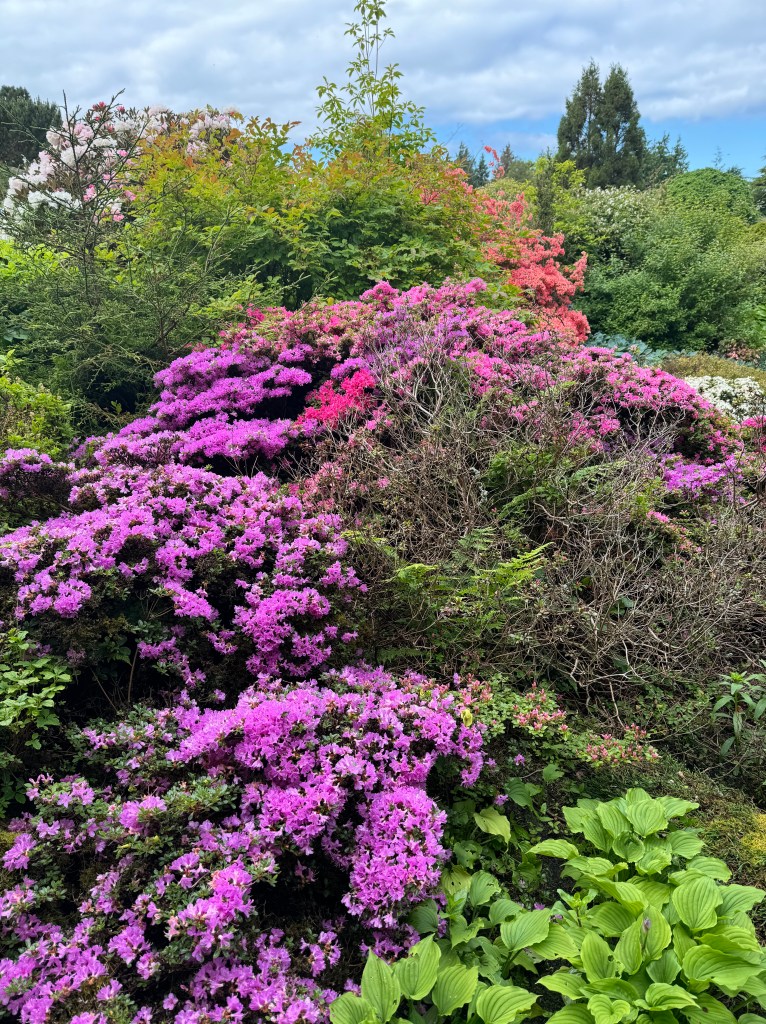
OK and maybe also some blooming azaleas from the Royal Botanical Gardens in Edinburgh.
At the risk of this blog ending like Lord of the Rings, just one more, a farewell poppy from the gardens of Busta House.

Until next time, safe travels, happy landings and all my good wishes.
The Highest Point and the Oldest Staircase

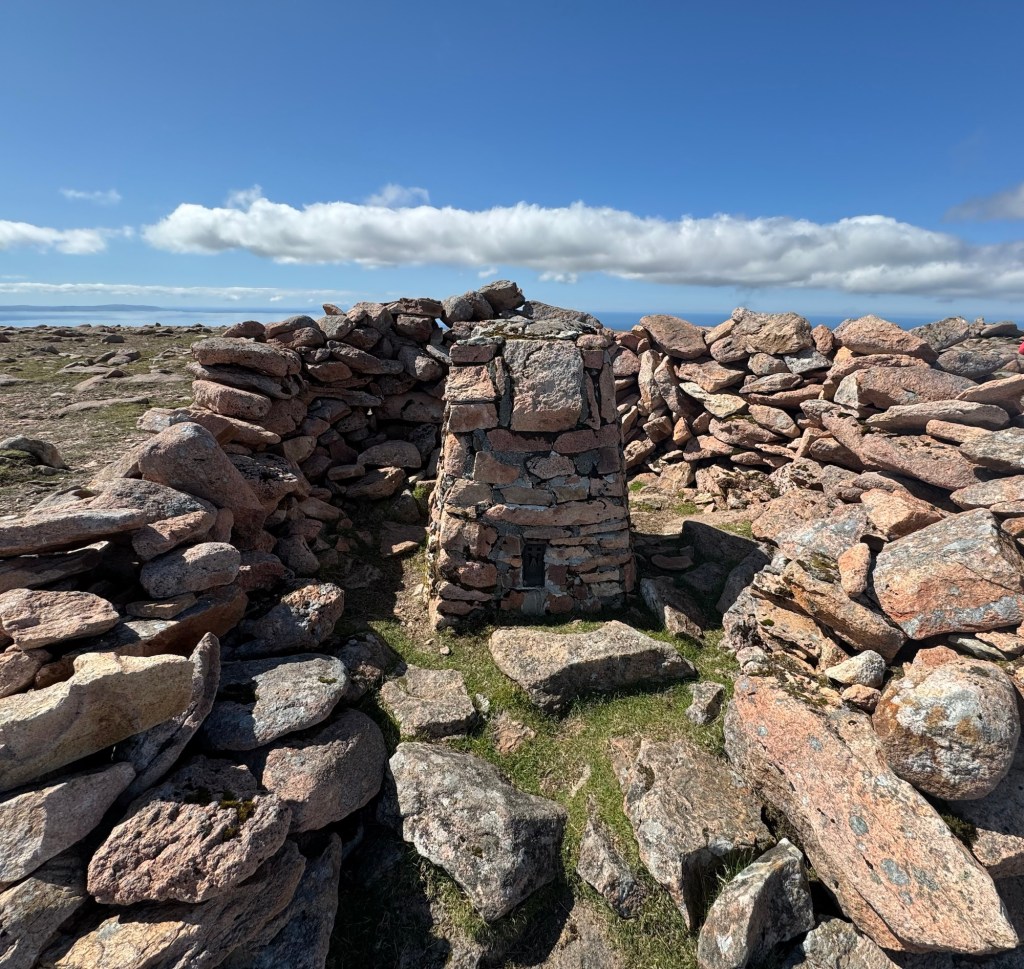
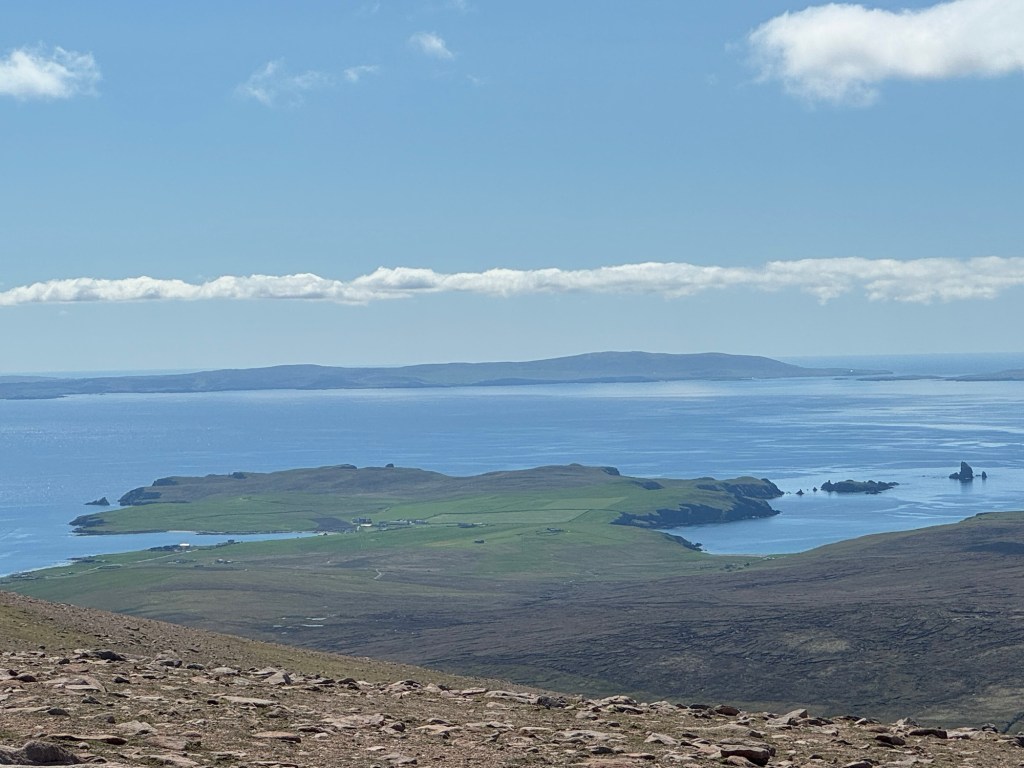
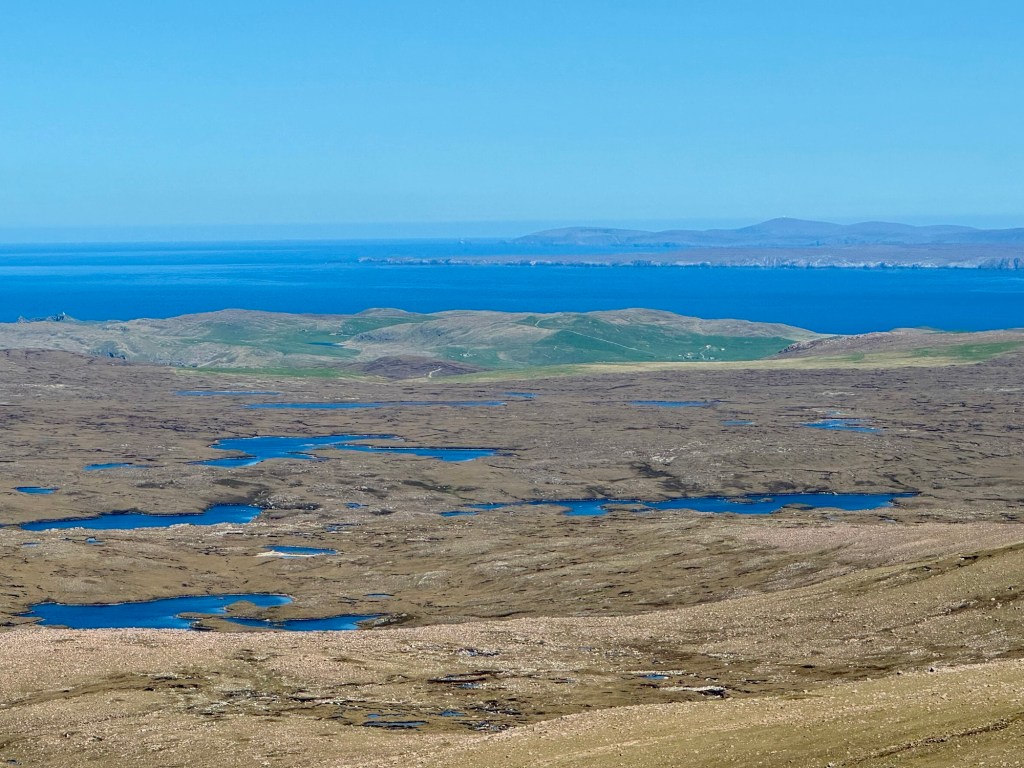
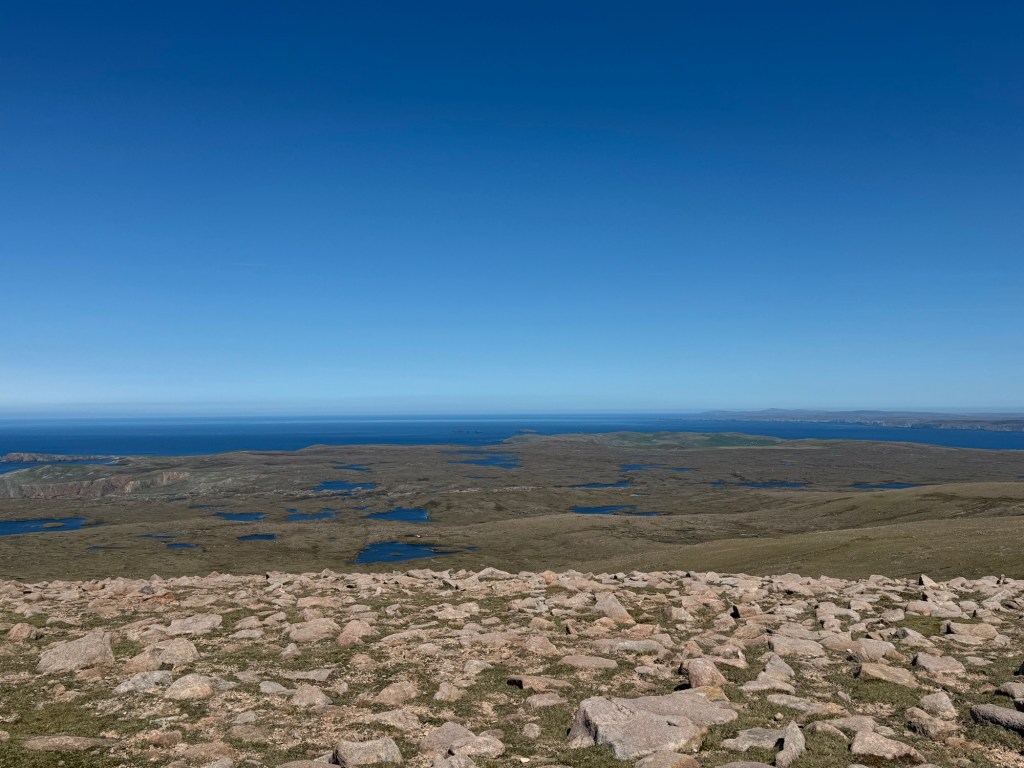
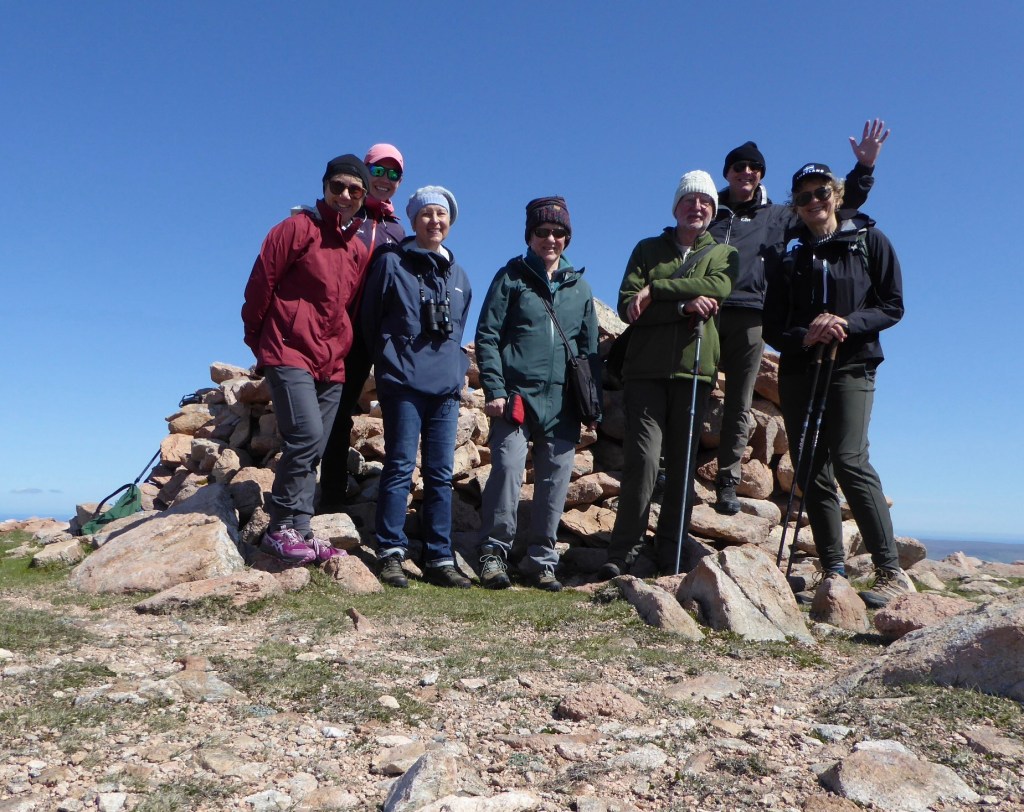
The next morning dawned brilliantly sunny and so was perfect for an ascent to Shetland’s highest point. Ronas Hill reaches a height of 1,480 feet and is a lovely walk with a very gradual slope. It overlooks Yell Sound, the North Sea, the Atlantic and even offers a wee peek at Fair Isle, the most distant of Shetland’s islands. This being Scotland, there’s a Neolithic chambered cairn at the top, which is unusual as cairns usually weren’t built on summits.

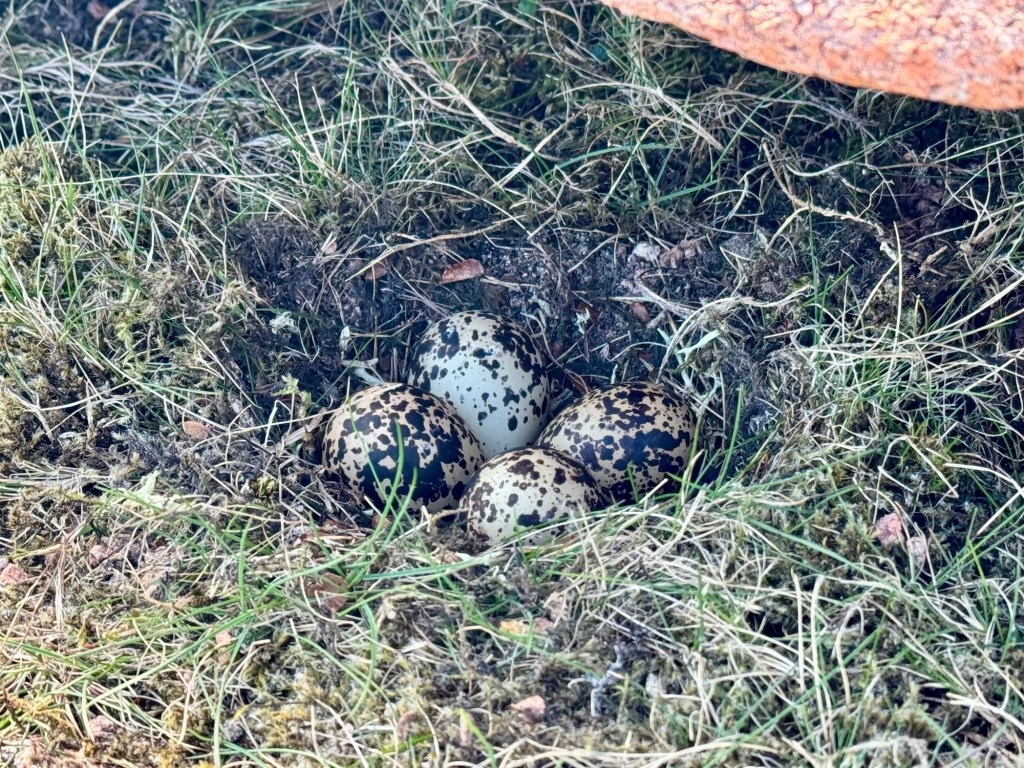
On our way up the hill Barb and I were startled by a sudden rustling of wings as we flushed a plover. We watched her fly away from us, skimming over the ground and flying as though she was under the influence. Whereas I was all, oh no that poor bird, Barb knew what she was seeing and started searching for a nest, as she knew the plover was trying to lure us away with a quite convincing act of being injured and thus easy prey.

We took a quick photo of these gorgeous eggs nestled on the ground under a rock – and moved off. Sorry mama plover.
Barb, expert plover nest spotter

The ascent was barren, tundra-like and largely featureless, but we came upon an oasis midway up. We stopped at a beautiful wee loch which was brimming with squiggly tadpoles.
The summit, as advertised, offered grand 360 degree views, the aforementioned Neolithic cairn, and a trig point, which you are legally required to touch, otherwise your climb did not officially happen.

The walk was a brilliant way to start the day. After some down time at the hotel and a lovely dinner, we met in the lobby and drove to catch a boat with a 10:30 pm launch time to visit the island of Mousa (“Mossy Island” in old Norse), featuring an Iron Age broch and other ruins. Uninhabited since the 19th century, it is now a nature reserve. The island is 1.5 miles long and 1 mile wide, and it is known for its breeding European storm petrels. They are best seen after dark, as that is when they return to the broch after a day spent gallivanting around doing petrel things. They wait until dark to avoid predators, especially the notorious jerk birds called great skuas, locally known as bonxies.
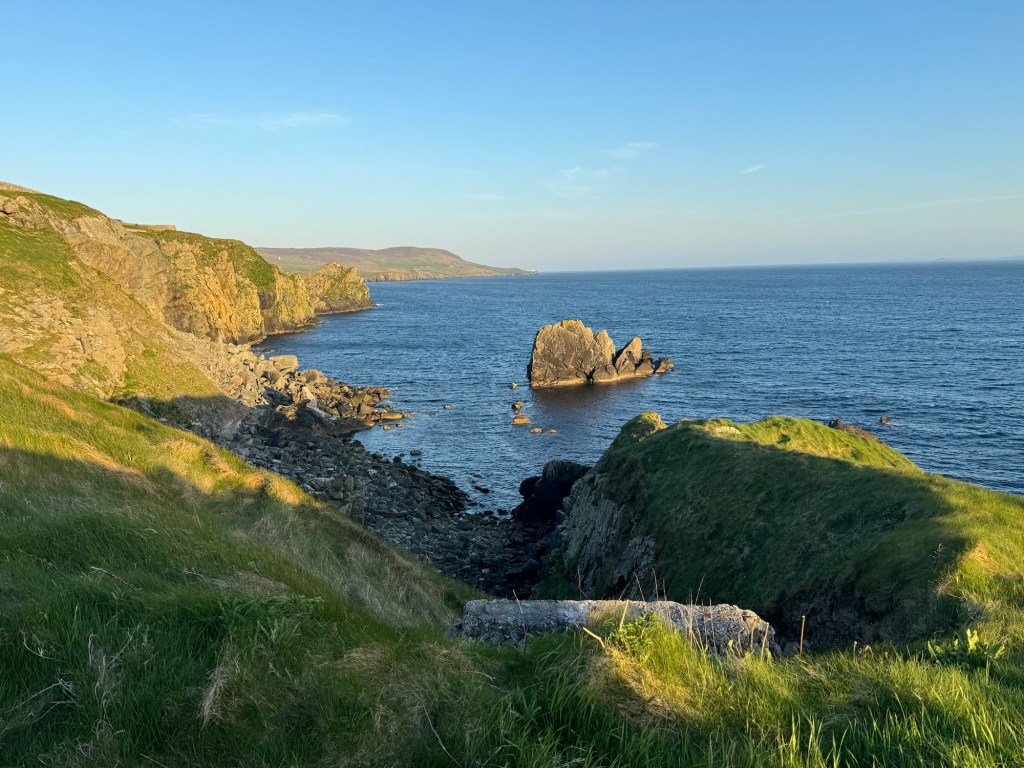
Mousa is the home of around 6,800 breeding petrel pairs, which is 8% of the British population and 2.6% of the world’s. I was also looking forward to properly experiencing the beginnings of “simmer dim,” which is what Shetlanders call the weeks of midsummer when the sun sets, but the situation never progress beyond twilight. We were a few weeks shy of maximum dim, but still something I hadn’t yet experienced. I have no problem sleeping in the light so I had been snoozing through it, much like I had done during the Northern Lights earlier in my trip. Sigh.
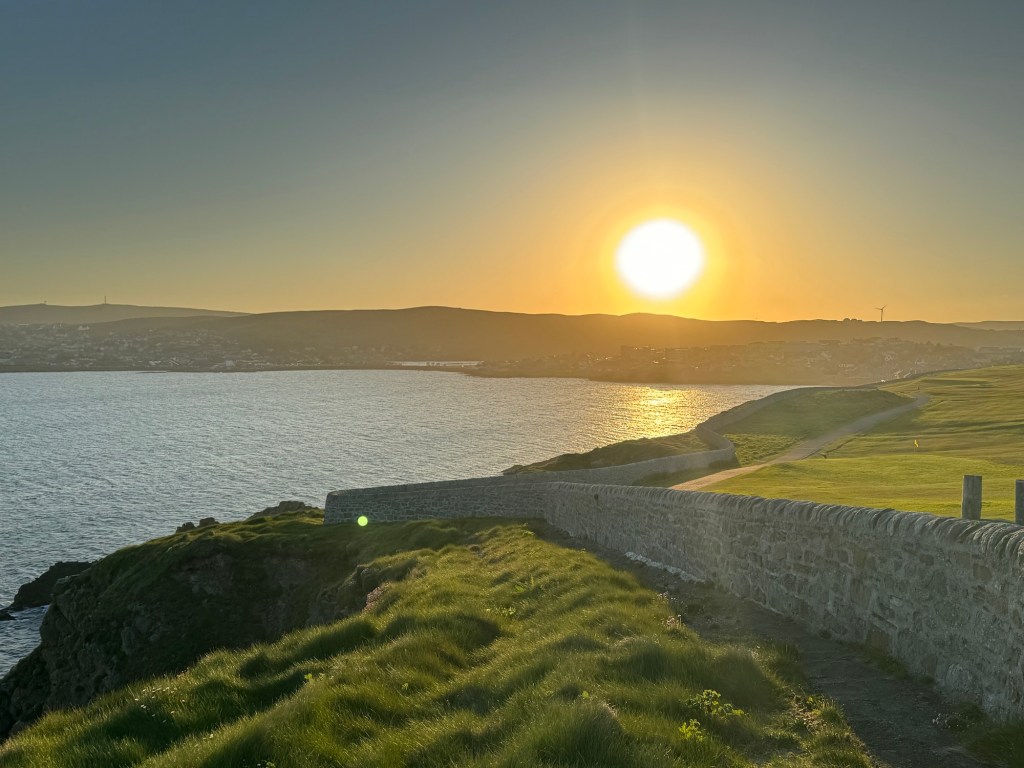
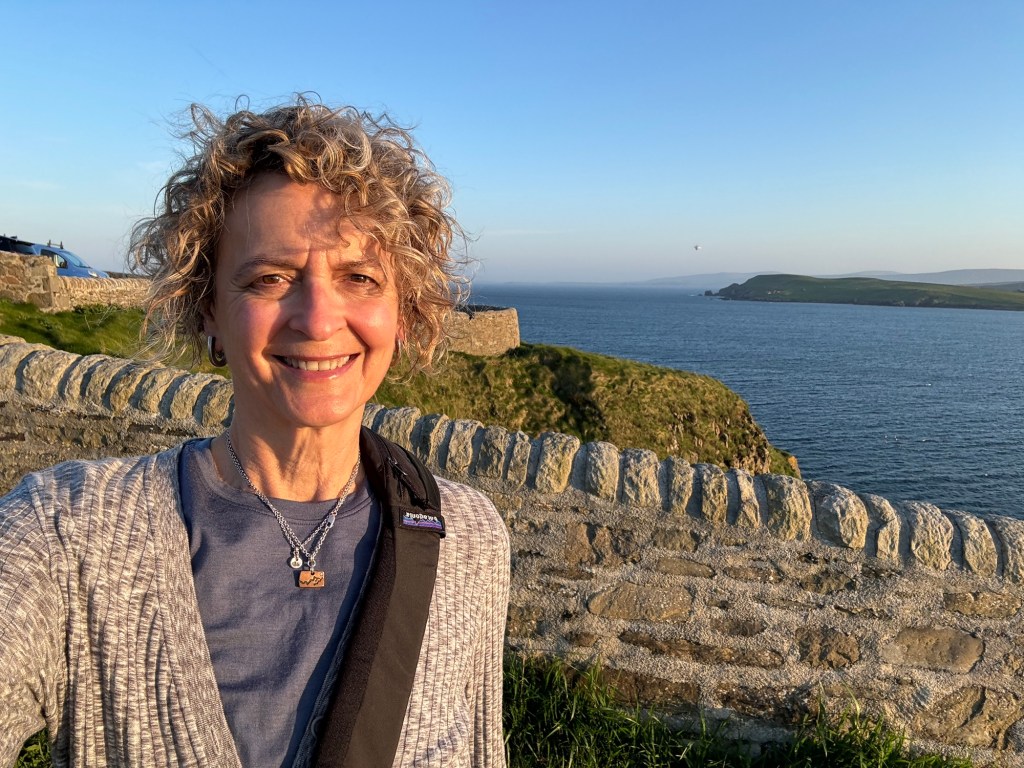
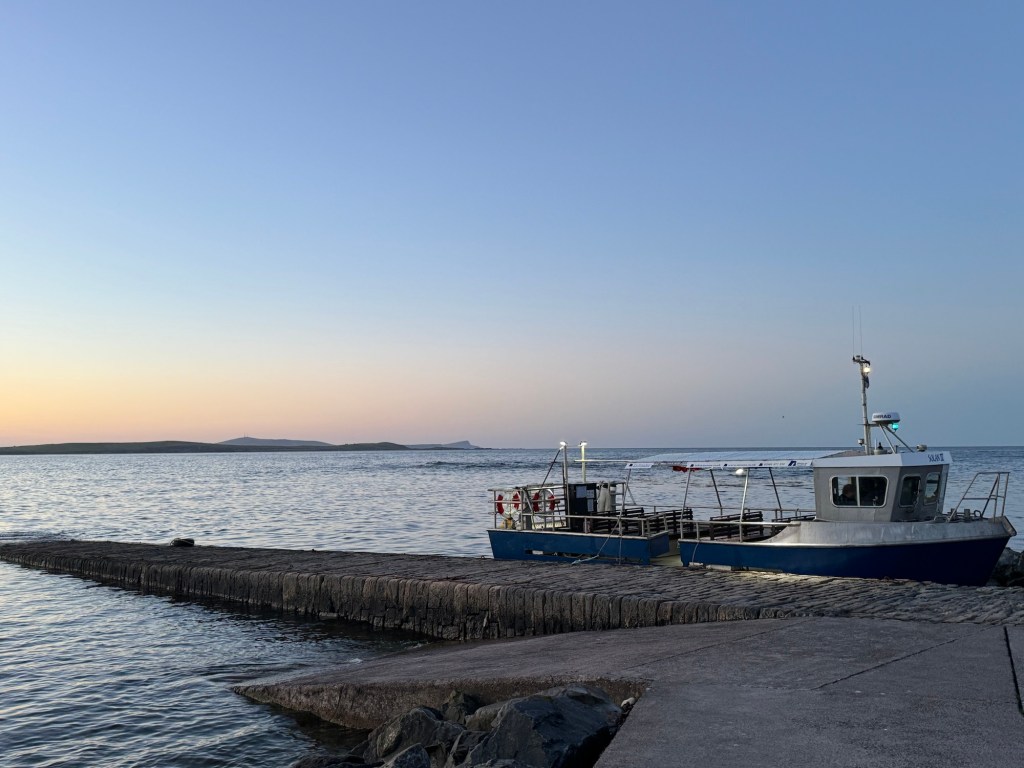
We arrived at the dock at the appointed hour.

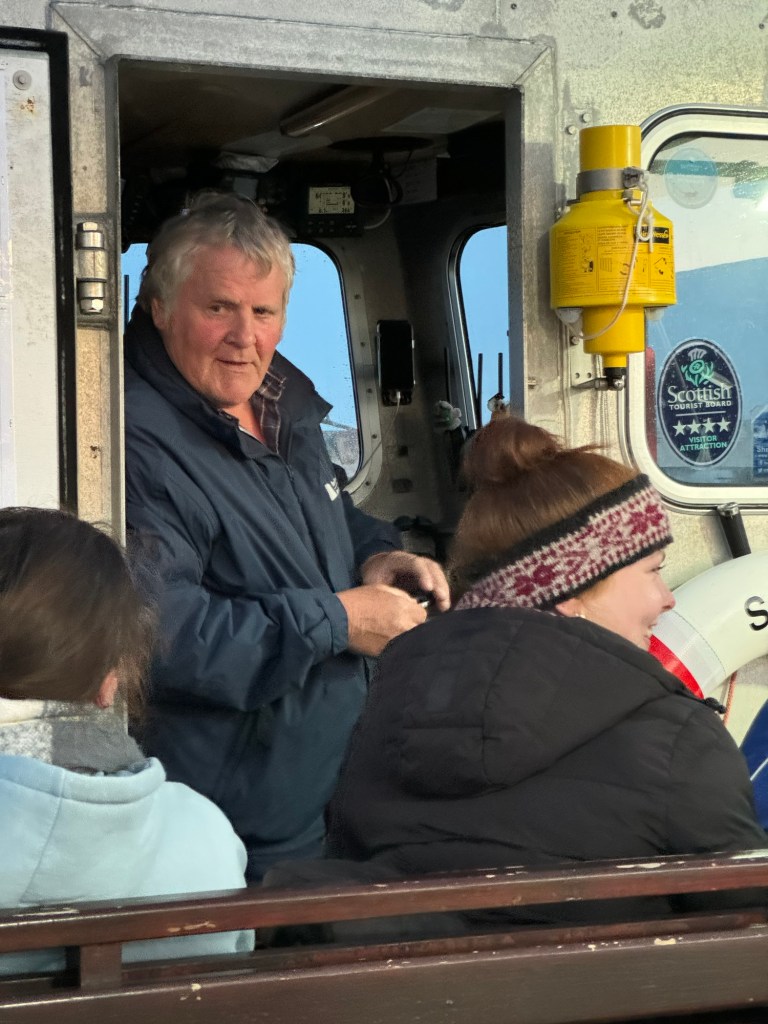
The boat is captained and crewed by father and son comedy team Rodney and Darron – who don’t look related at all. ;o) I forget which is which so for our purposes let’s say Rodney is the dad and Darron the son. They operate their boat all summer, taking folks out at night for the petrel experience and during the day to see all the other ruins on the island. They have deep roots in the area. Rodney’s grandfather was a lighthouse keeper, running the lighthouses at both Mousa and Sumburgh.

On the way, we stopped and picked up a couple from a lovely wooden boat moored off the coast of Mousa which involved some pretty fancy boat maneuvering.

Once we landed, we were given palm-sized lights that had been removed from headlamps. Rodney and Darron gave us the petrel rules, which were basically they don’t like white lights but they don’t mind red, so we practiced activating both. Along our 15 minute walk to the broch Rodney regaled us with a history of the island’s human inhabitants with Darron helpfully piping in with asides, embellishing his dad’s stories.

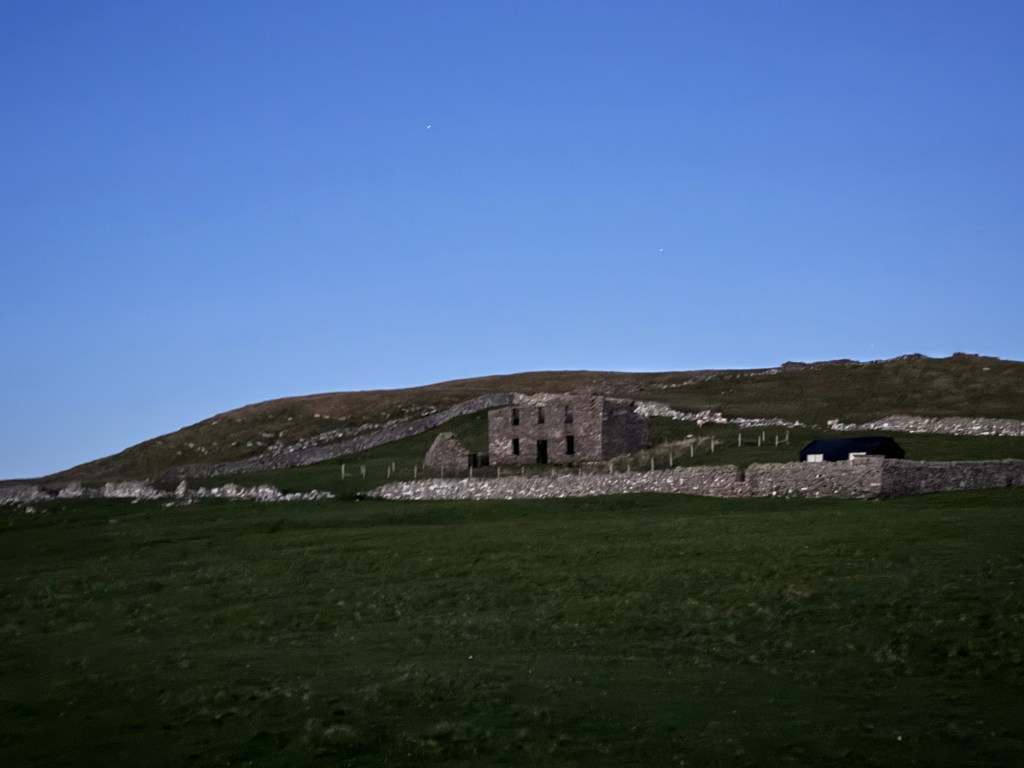
One tale was about the former residents of the Haa, a ruin of a home overlooking the broch. James Pyper, a Lerwick merchant, bought the island and built the Haa in 1783. Rodney winked at us and said, “James built the house for his wife Janet Gray, to keep her from the ‘drraank,'” trilling the r like a boss, at which point Darron lifted his head from his phone and clarified, “alcohol.” Upon Janet’s demise (one wonders how) James next married Anne Linklater who lived alone on Mousa for 25 years after his death. Well, not quite alone, according to the records she had three young servants and a mysterious “lodger” named David Kay. Good for her I say.

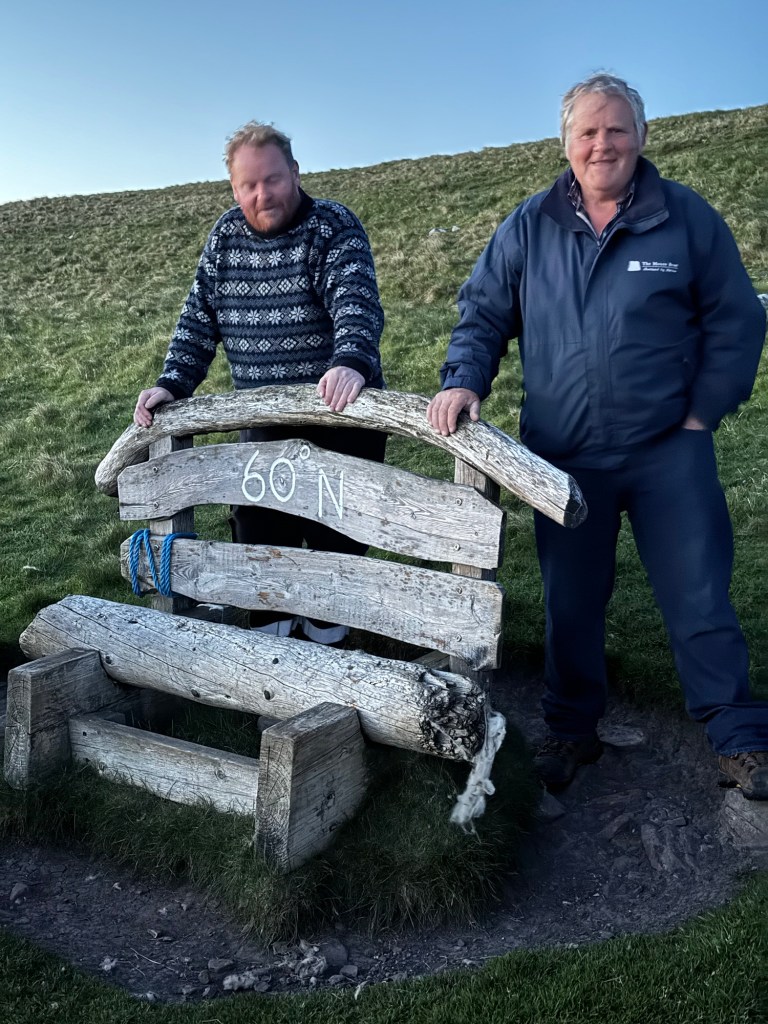
We briefly stopped in front of a bench that Rodney built, as Darron said, “with his own hands,” to mark the 60th parallel. They were both very proud of it.

Malachi Tallack wrote a book published in 2015 called 60 Degrees North, which recounts his circumnavigation of the earth along this latitudinal line, starting from Mousa and passing through Greenland, Canada, Alaska, Siberia, St. Petersburg, Finland, Sweden and Norway. Rodney allowed as how he had written to Tallack requesting that he visit and have his photo taken on the bench. Much to his chagrin, Tallack has not yet given him the courtesy of a reply.

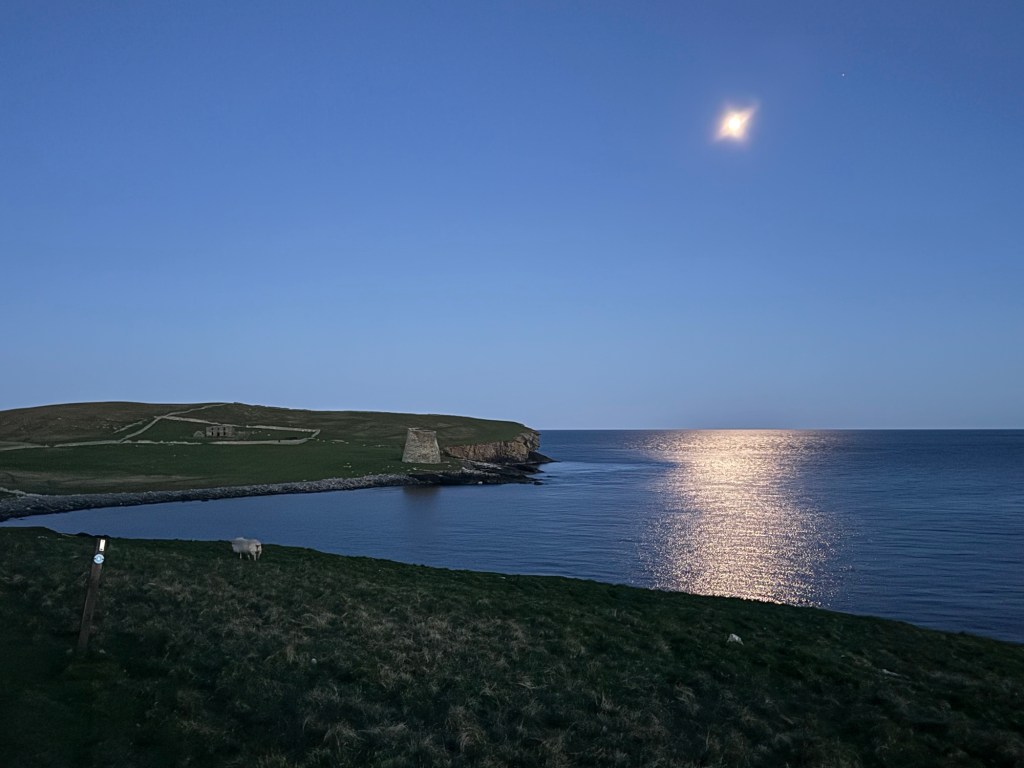
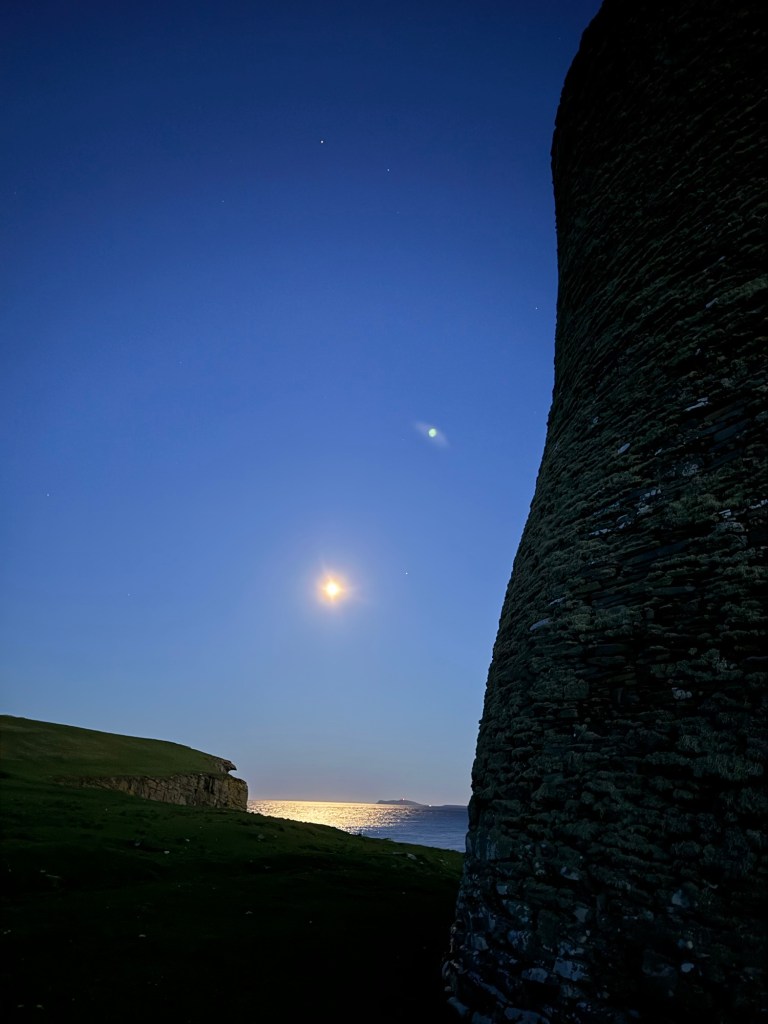
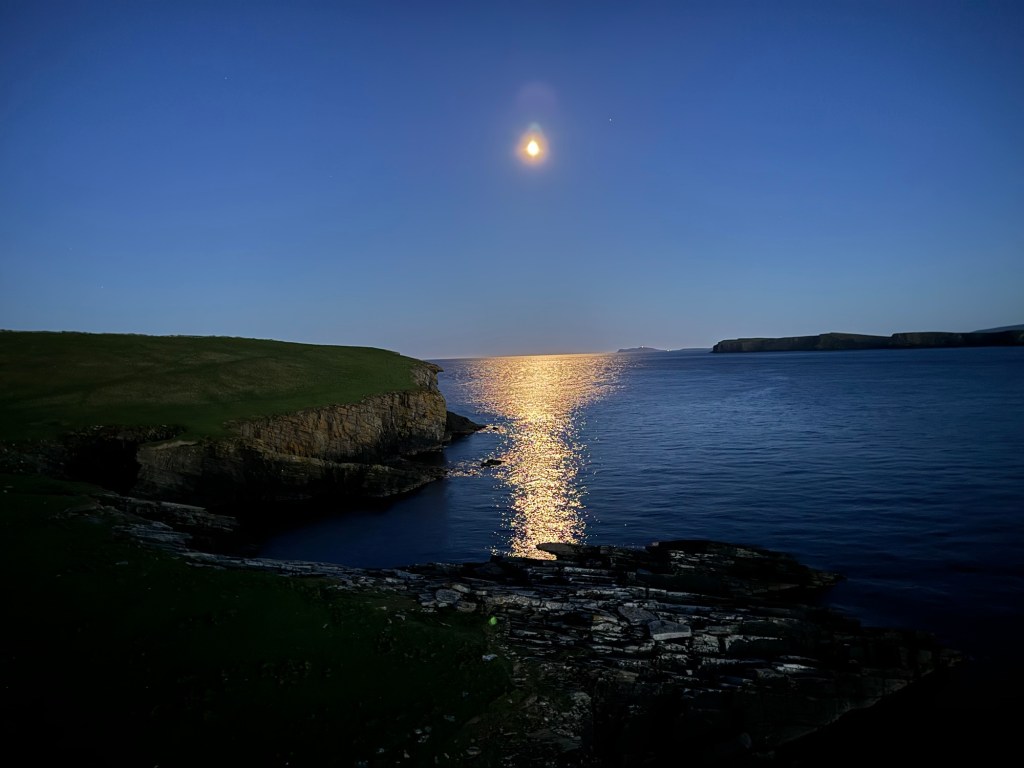
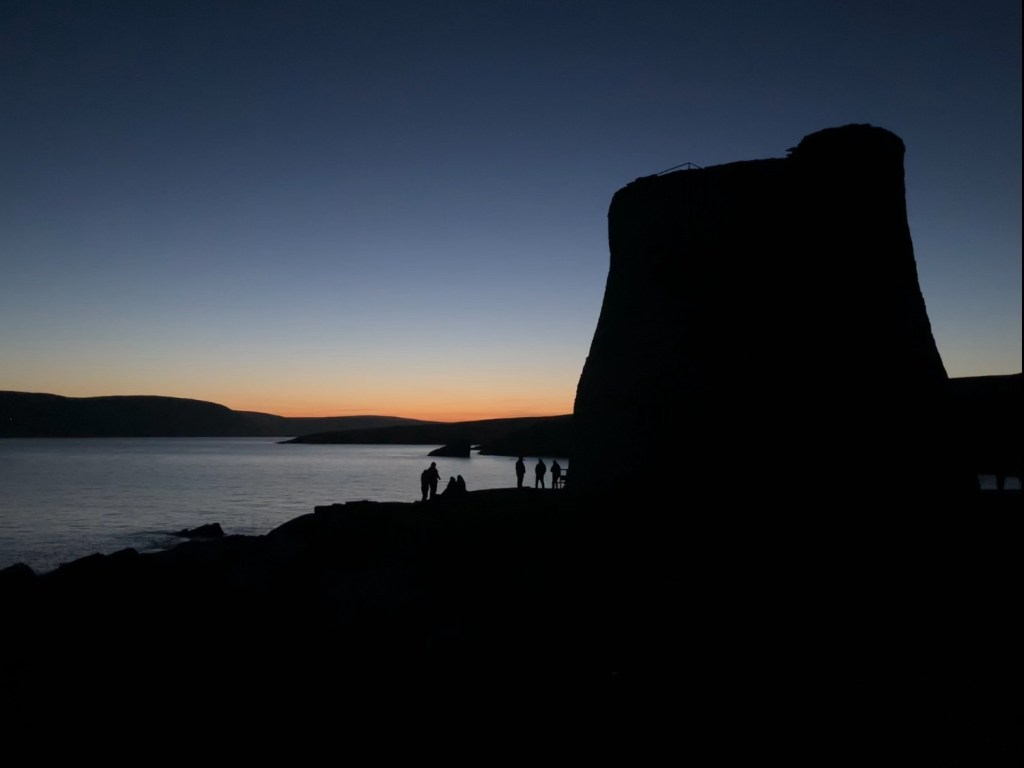
The walk was, in a word, spectacular. In addition to the ongoing twilight, the nearly full moon was kind enough to position itself in an entirely picturesque manner over the broch.

The Haa.

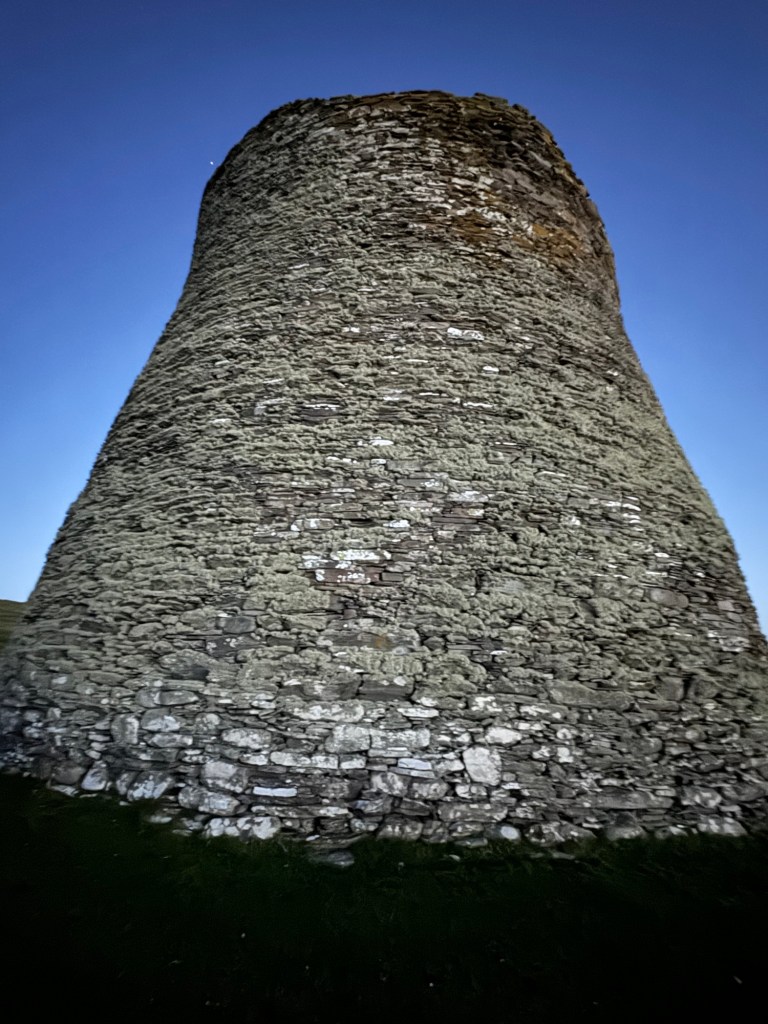
The 2,000 year old broch is the best preserved Iron Age fortification in the British Isles. It’s one of a pair of broths guarding Mousa Sound, and may be part of a chain of them, visible from one another as Lord of the Rings style beacons.

As we stood around the broch, Rodney continued with his stories, a treatise on petrels, and editorial commentary about the automation of lighthouses, “They took something that’s been working fine for 200 years…,” but I was distracted by bats flapping around over our heads, which were in fact storm petrels returning home to roost. They are very small birds, there wasn’t a lot of light and their flight patterns were erratic and swoopy. Darron said on his last trip he was chatting up a guest, and asked whether she had seen the petrels. She said, “No, but I’ve seen quite a few bats,” which he found hilarious.

At last it was time to enter the broch. Rodney warned us again about shining white light on the petrels and said there was a spiral staircase inside that was the oldest continuously in use staircase in UK. He added a semi-disclaimer, to-wit, “I haven’t heard anyone tell me any different so until I do I’m going to keep saying it.” He told us to be careful and hold onto the rail, suggesting that we navigate the staircase sideways, and added that we could use the white light for “your own safety,” but if we saw a bird we must change it to red.

So we walked into the dark broch. On first glance toward the staircase, my reaction was oh hell no but then for some reason I crossed the uneven stone floor of the broch and started climbing stairs that made the Wallace Monument’s seem like Tara’s sweeping grand staircase in Gone With the Wind. I feel pretty confident that this is indeed Ye Oldest Staircase. In the States it would have been roped off from tourists hundreds of years before.

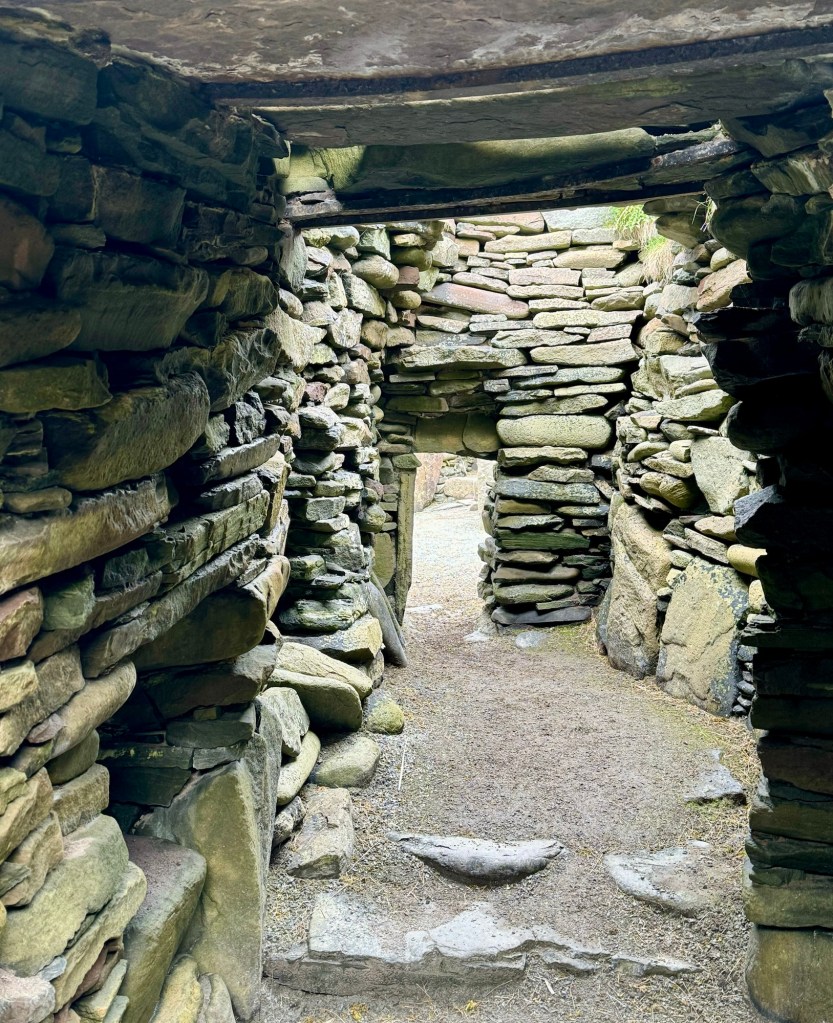
There was indeed a wrought iron bar bolted into the side of the stairwell. On average, the stairs were maybe four inches wide with some less and some more. And being inside the best preserved broch in the UK it was extra double dark in there.

I shined the white palm light down at my feet with one hand and gripped the iron bar in the other, leaned back and sidestepped up the uneven shallow steps that weren’t wide enough to support the entire width of my foot. I jettisoned the instruction that if I saw a bird I was to switch the light to red because unless a petrel alighted on my foot, it wasn’t going to happen.

When at last I emerged onto the roof of the broch, the view made me forget the perils of the climb.

That is, until I decided to come down. Which was worse as far as peril level was concerned. Barb was behind me and said in my ear with her fabulous Kiwi accent, “If I take you out it’s going to be sudden and spectacular,” and so the two of us made our descent with hysterical laughter echoing through the broch which I’m sure the petrels weren’t stoked about but probably better than a white light.

Speaking of petrels, you might be wondering what that experience was like. Well I’ll level with you. While the idea of it was very cool, the experience of it was like seeing bats flapping around outside an ancient stone wall in very dim light. I didn’t see any petrels inside the broch because the moon’s light didn’t penetrate the walls and my gaze was affixed to my feet an ongoing effort to not die. Richard approached as we waited to walk back to the boat and said, “To be honest I’m more interested in the archaeology than I am in these birds,” which was pretty much aligned with my point of view.

What a seriously wonderful experience though. We walked back to the boat in silence and enjoyed a beautiful ride back to the dock, dropping off our friends at their wooden boat along the way. We left for the hotel at about 1:00 am. The eastern horizon was glowing with the light of an impending dawn.

On the drive I shared the above photo with my friend Drew in New York who can monitor my location on FindMy. He sent me this:

The sad thing is, I never visited Twatt. Next time.

As Barb would say, “This was the best day.”

Walking Across Shetland with Wilderness Scotland

While I do wish I were still in Scotland, I’ve been back stateside for a couple of weeks enjoying a minor, but dumb virus I caught on the flight home (people were hacking up lungs all around me – could I have put on a mask? Why yes I could have.) Being a completist, it’s my pleasure to welcome you to the final blog posts of this trip in which I join some boon companions for a lovely guided walking tour around the Isles. To give you an overall sense of how it all went, at the end of each day, our Kiwi compatriot Barb announced, ‘This was the BEST day.”

I met my fellow voyagers at the Holmsgarth Ferry Terminal in Lerwick where they had just disembarked from the overnight ferry from Aberdeen. We were an intrepid troupe of seven, a couple from New Zealand, a couple from the Scottish Borders who had moved from Wales in solidarity with the Scots’ (futile) vote against Brexit, and a couple from Boston. Our guide was a fabulous woman named Kirsty, who lives in Aviemore and has guided for Wilderness Scotland for years.

Kirsty’s brilliant personality pretty much captured here.

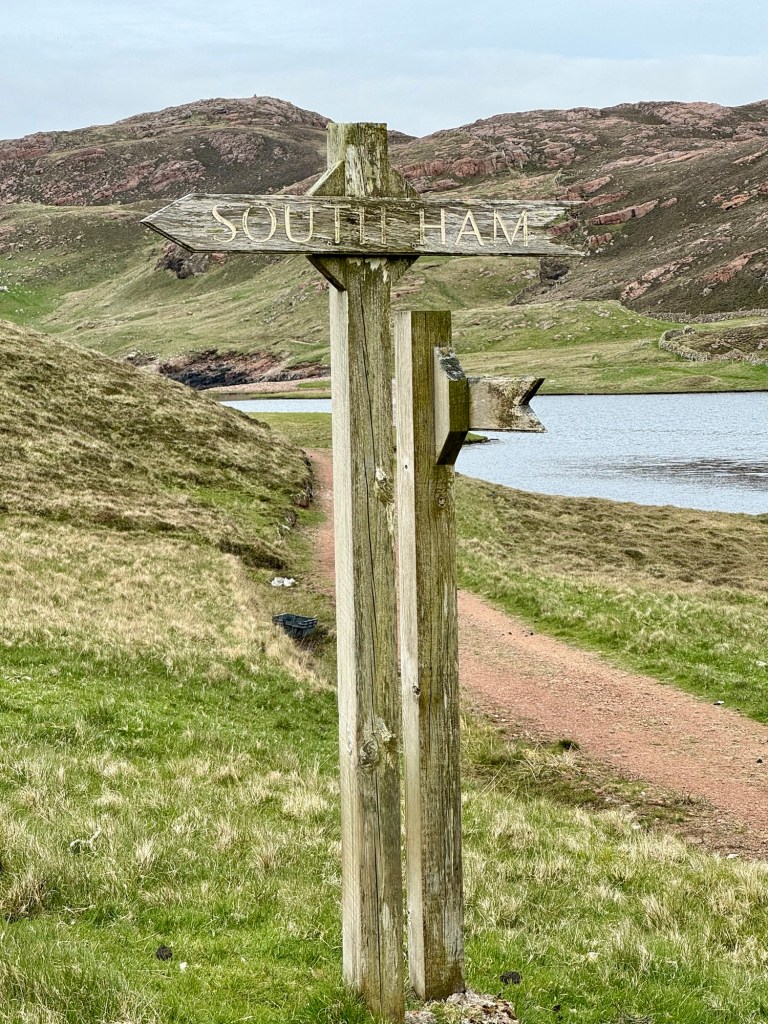
Our break-in walk was the Hams Circular on Muckle Roe, and just a warning, town names on Shetland are generally delightful. Just a taste – Brettabister, Bridge End, Dale of Walls, East Hogaland, Fladdabister, Funzie, Heglibister, Oddsta, Skarpigarth, Southpunds, Stebbligrind, Wadbister, Virkie and, weirdly, Ireland, and everyone’s favorite, Twatt.

The suffix “bister” is Old Norse for dwelling or farm.

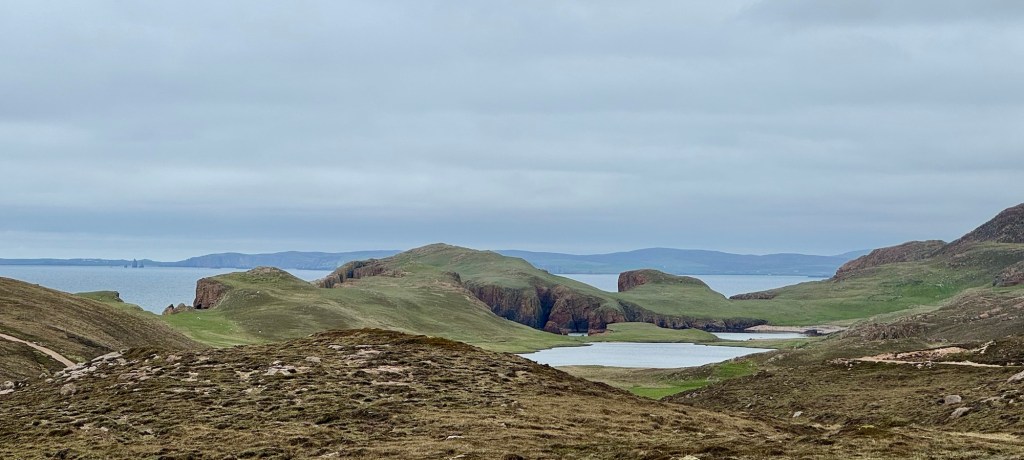
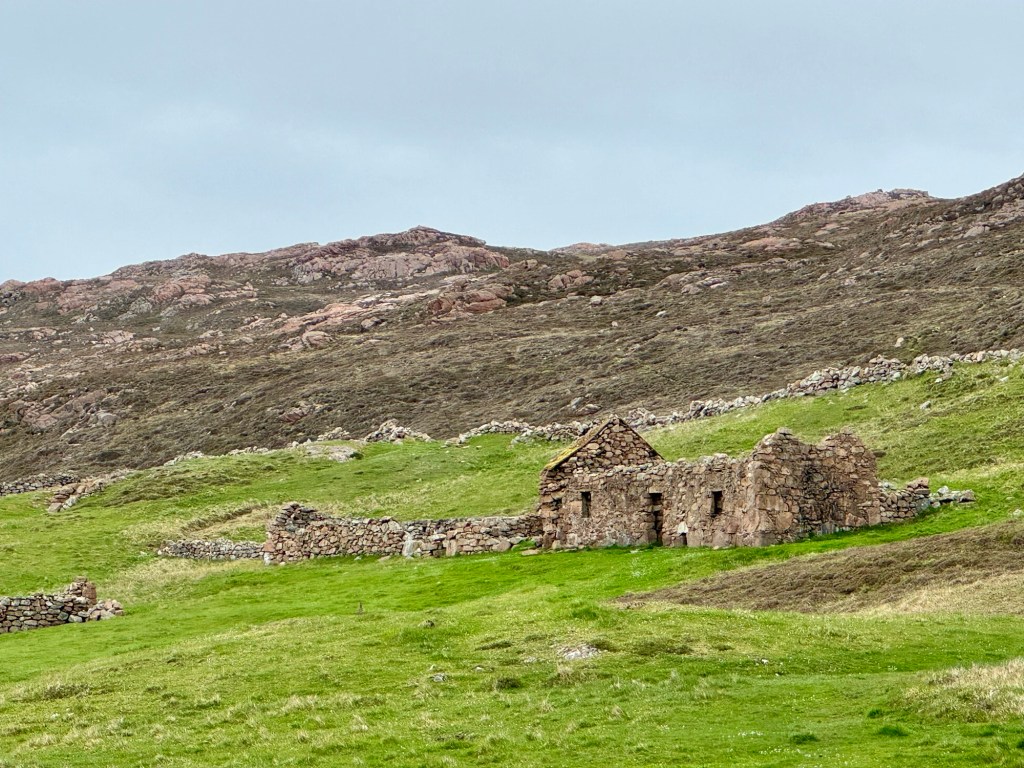
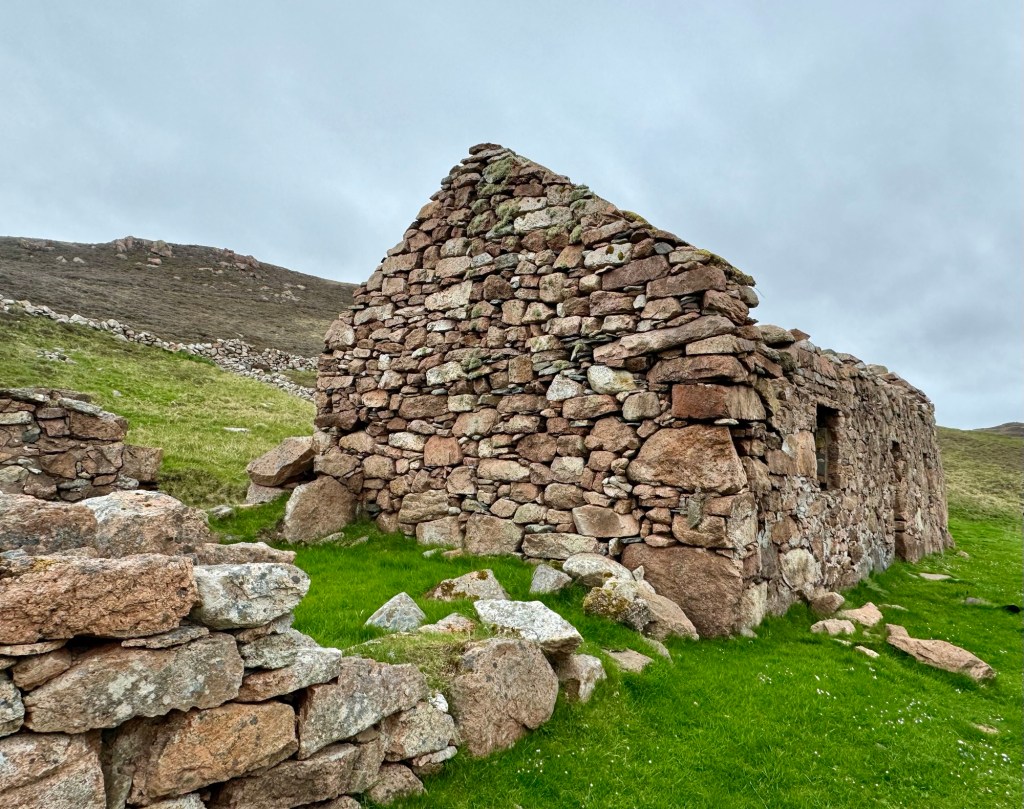
We walked across active peatlands to cliffs overlooking the sea, passing croft ruins, wildflowers, sheep and seabirds along the way. And of course a pony because Shetland.

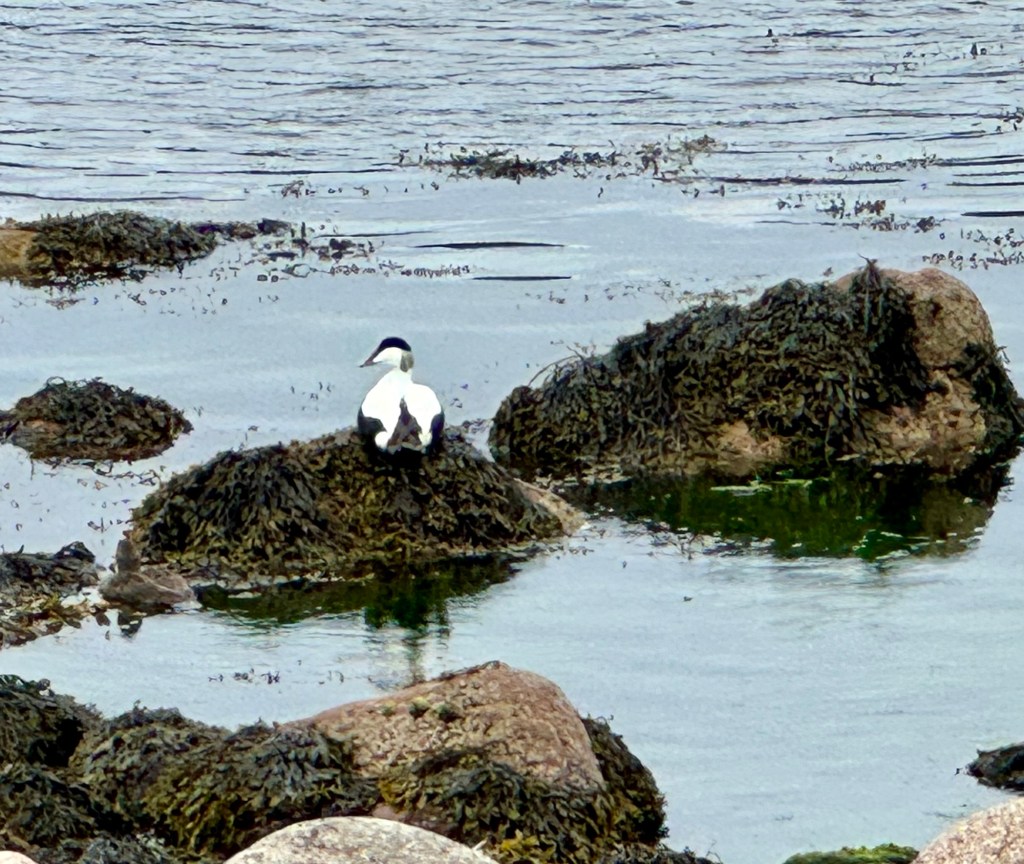
A male eider. The drab brown female is in the water to his left.
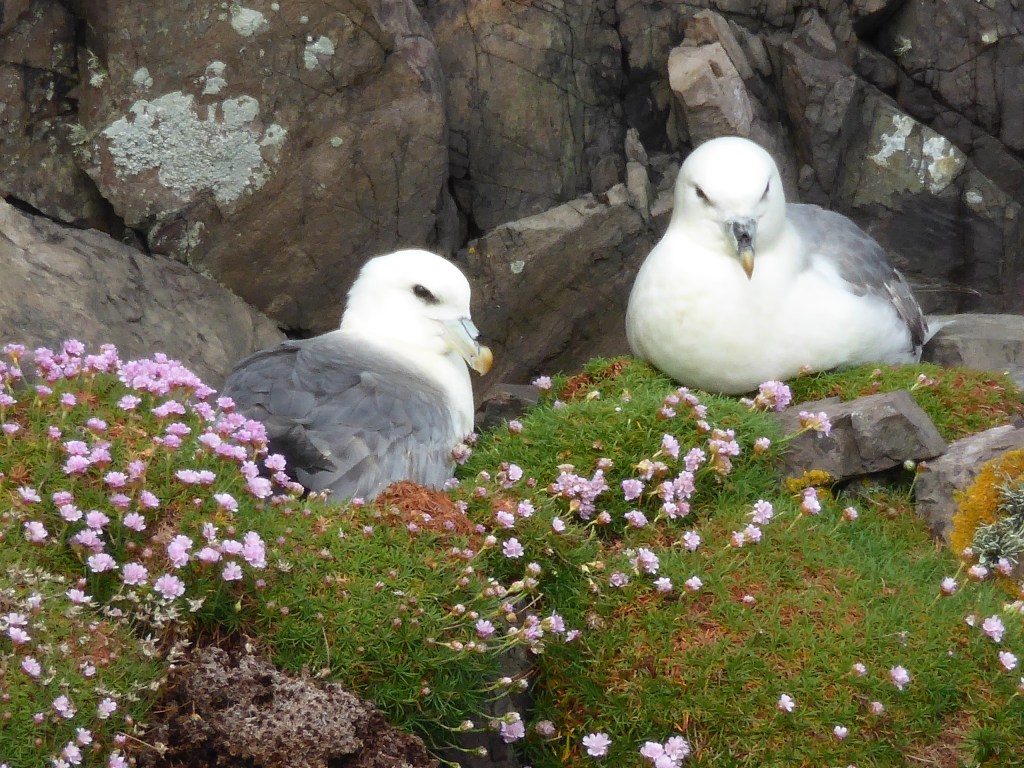
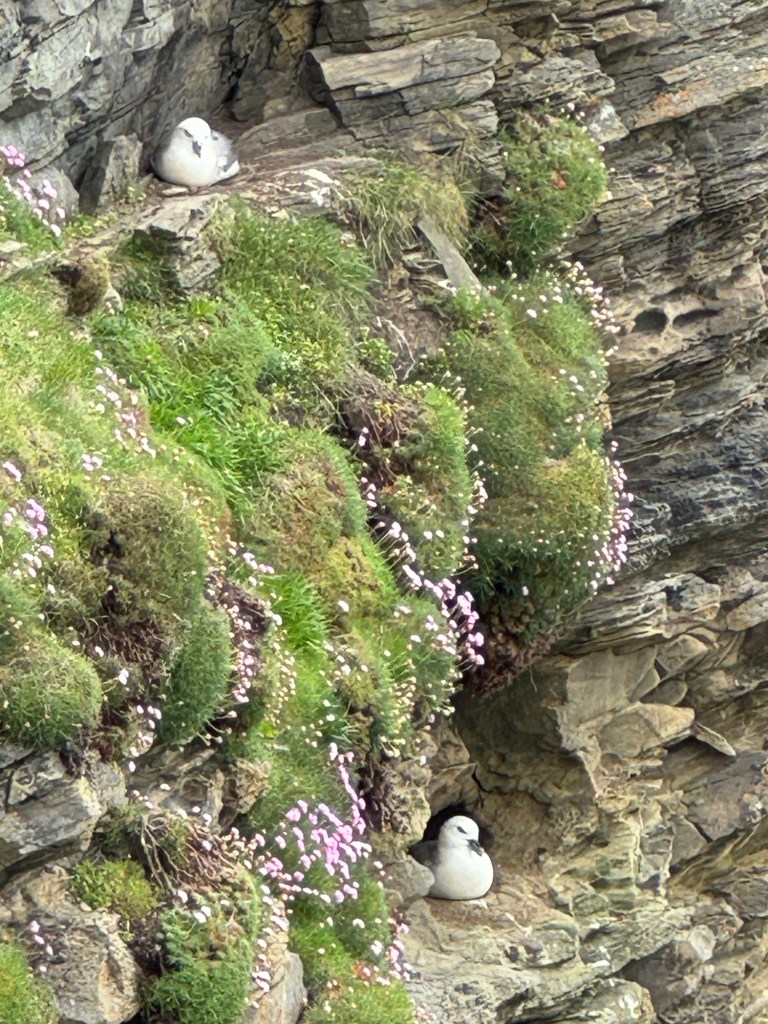
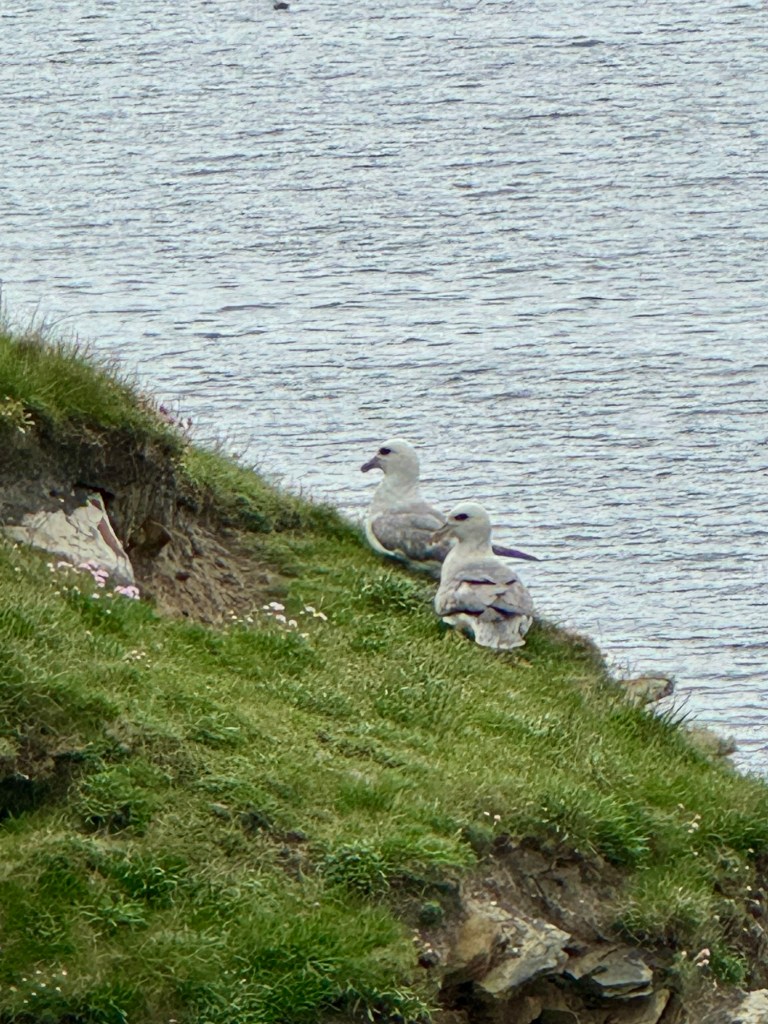
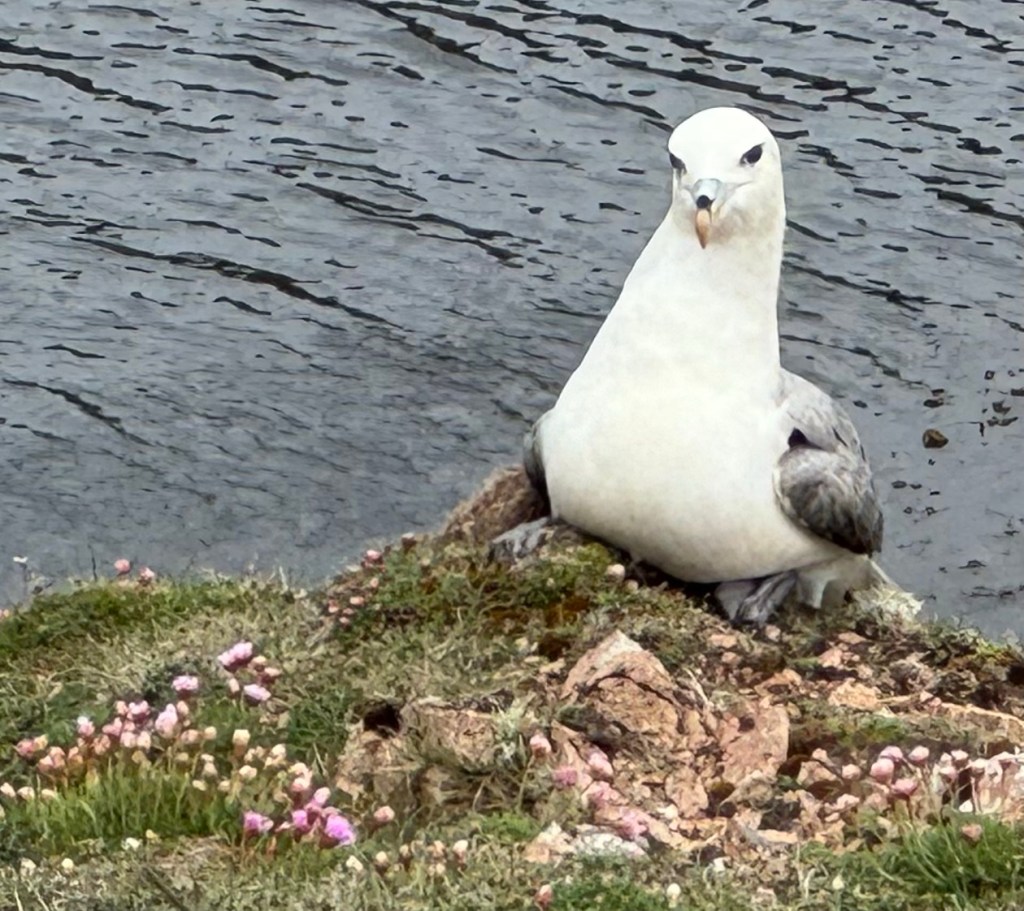
A coquettish fulmar
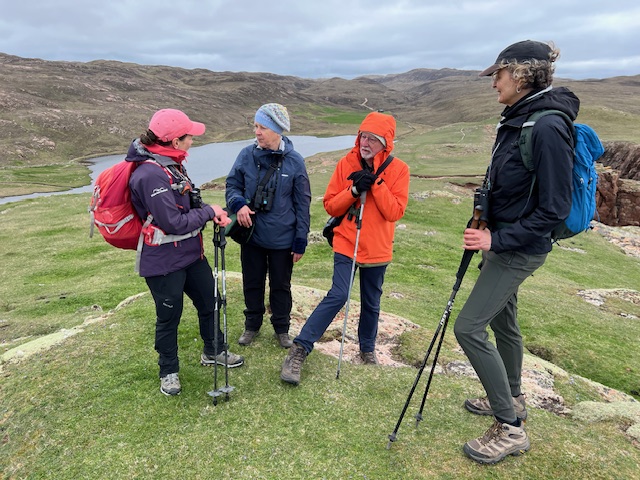
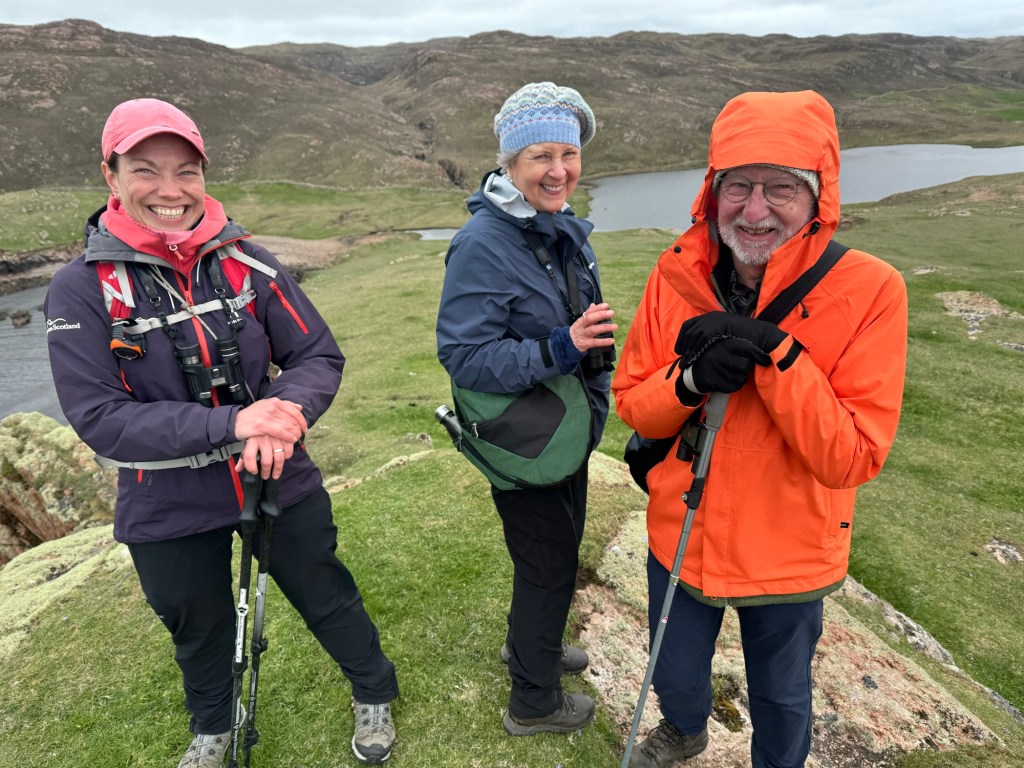
Kirsty and my delightful English couple, Richard and Jill. Jill hated getting her photo taken with a passion of a thousand suns but on day one she made an effort to be polite.
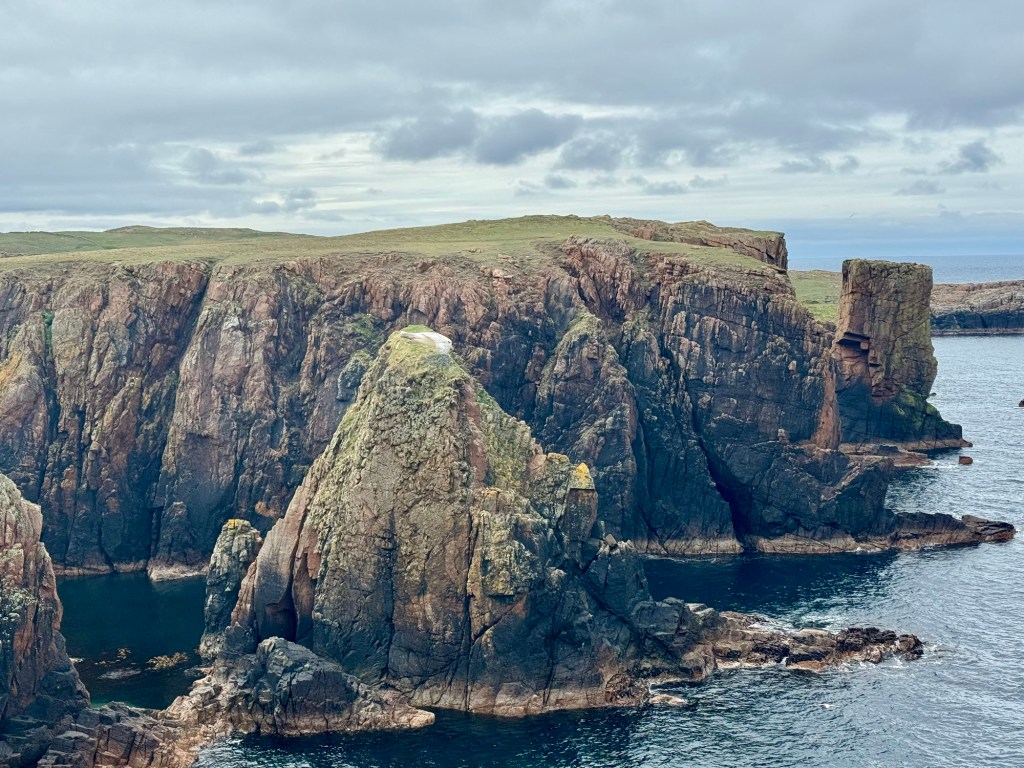
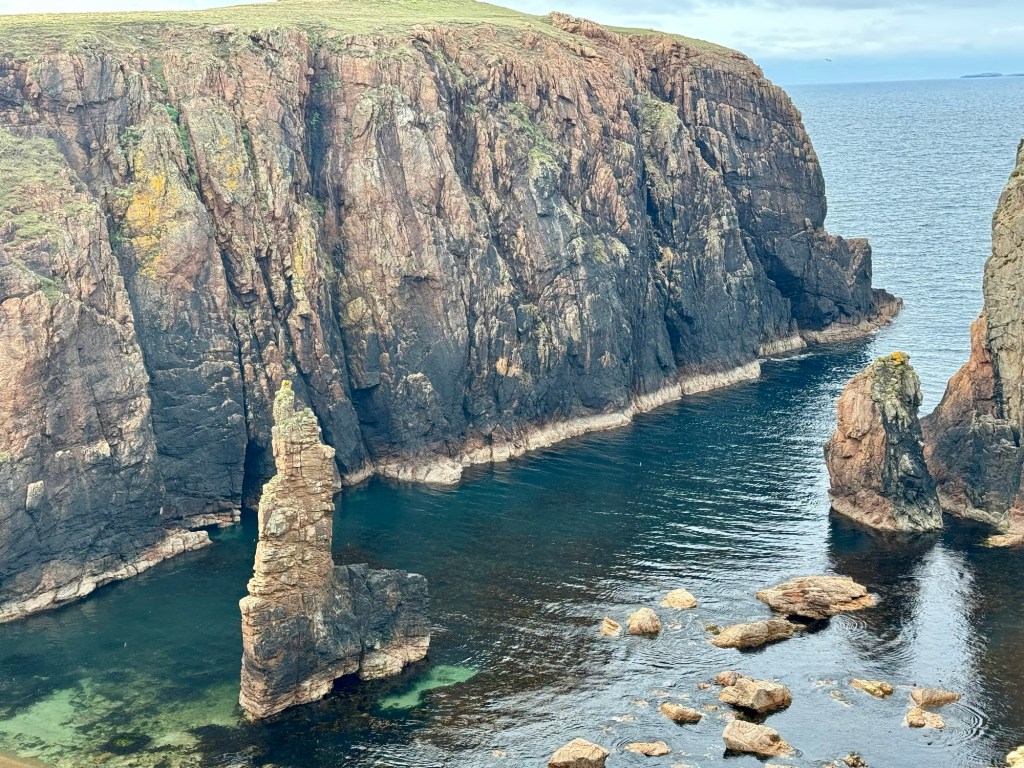
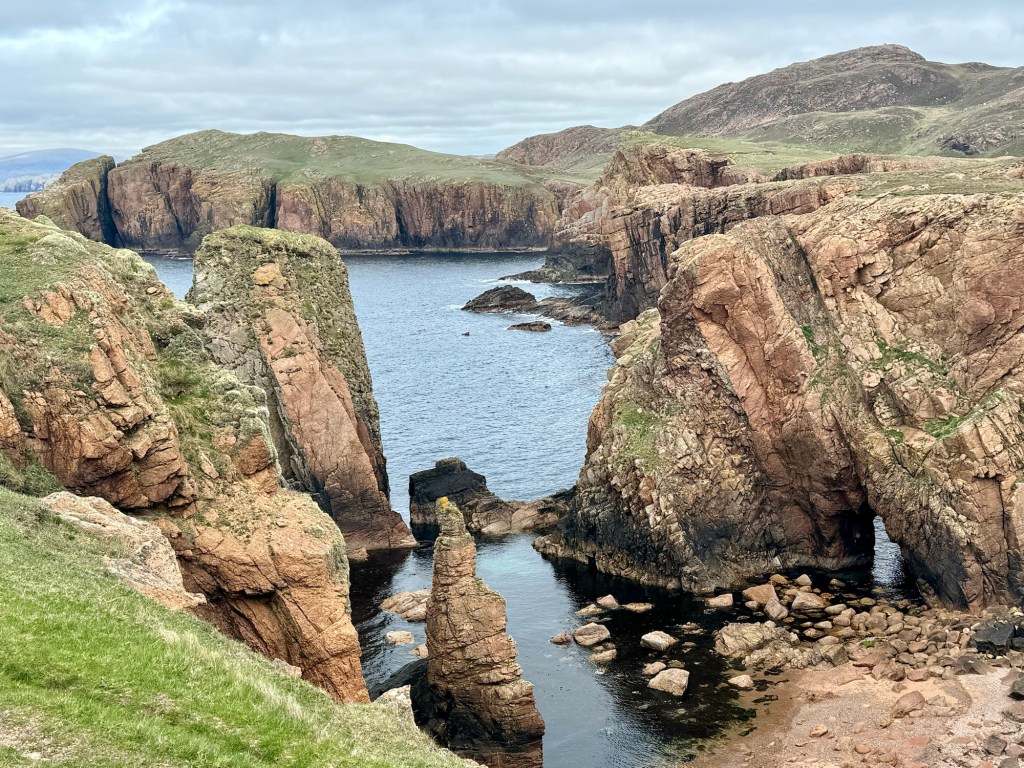
Shetland’s coastline is a festival of picturesque cliffs and rock formations.
Fulmar drama
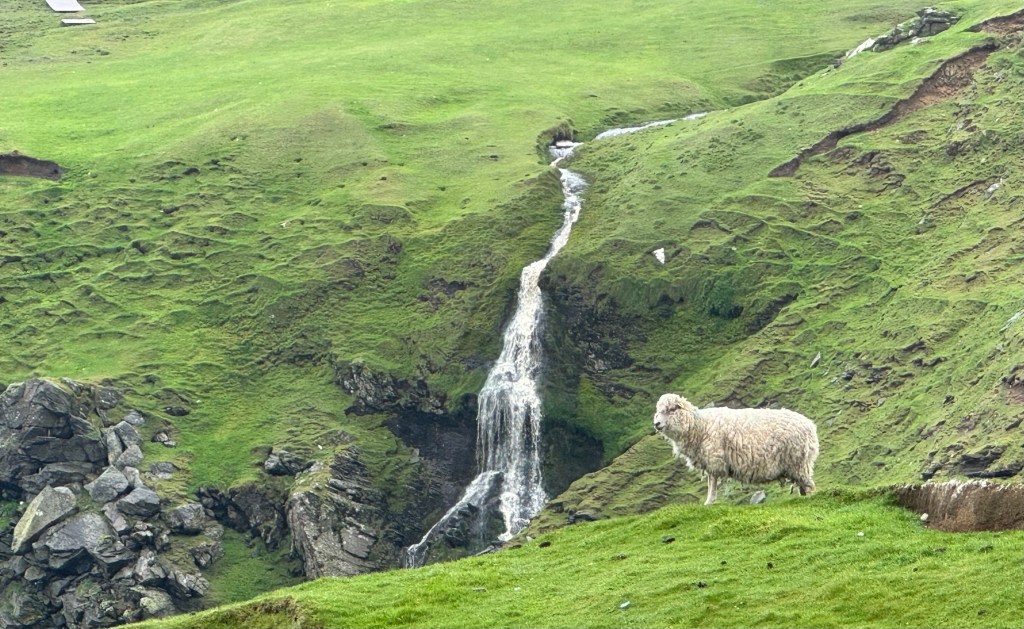
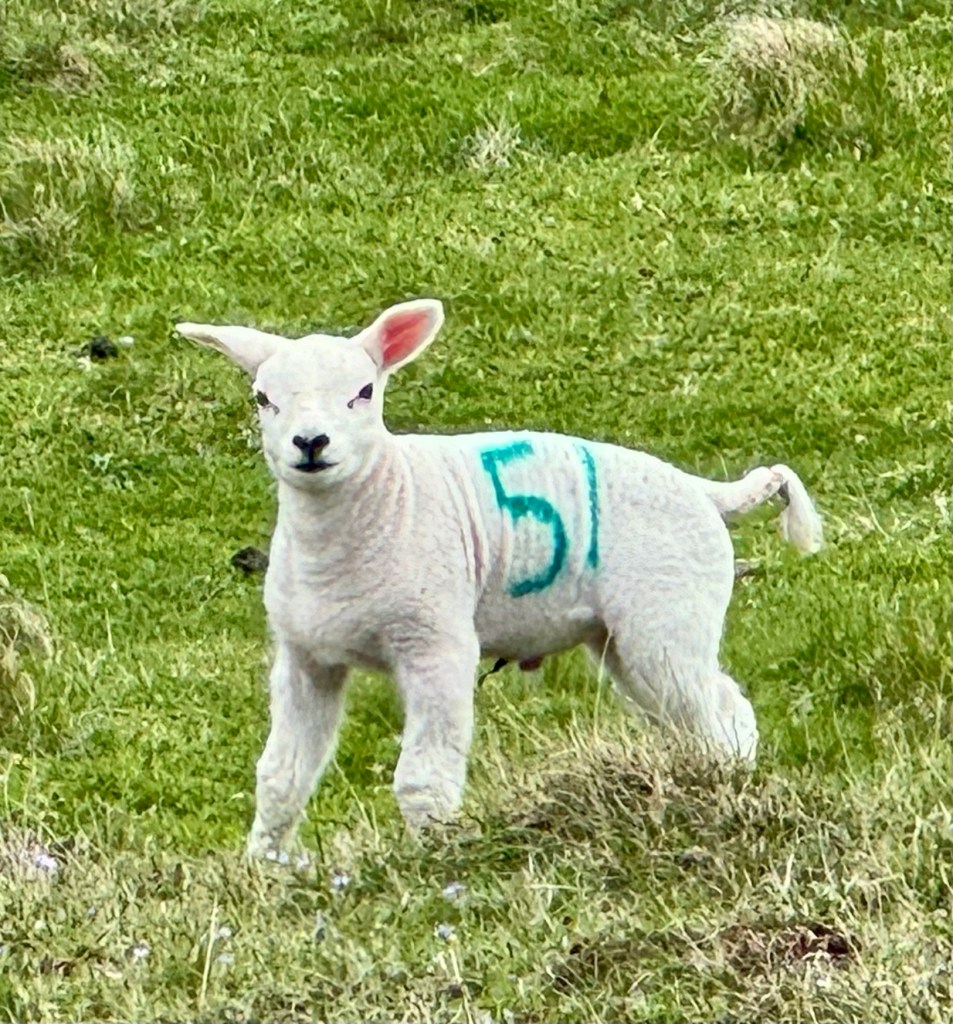
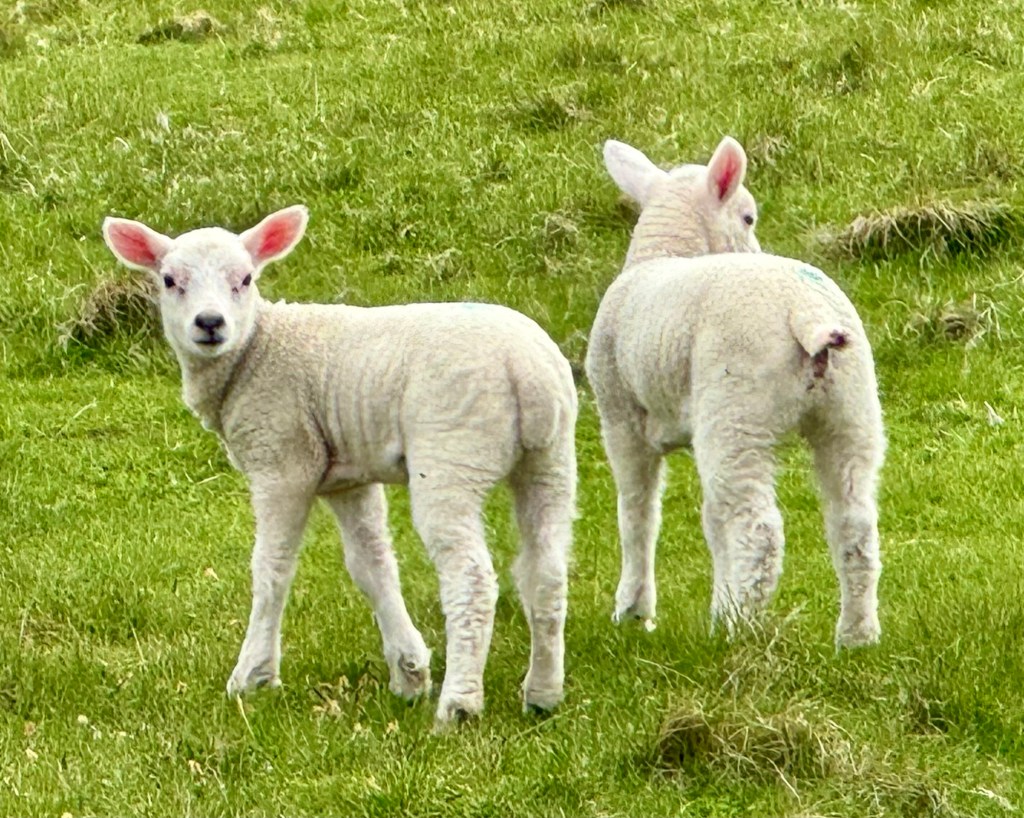
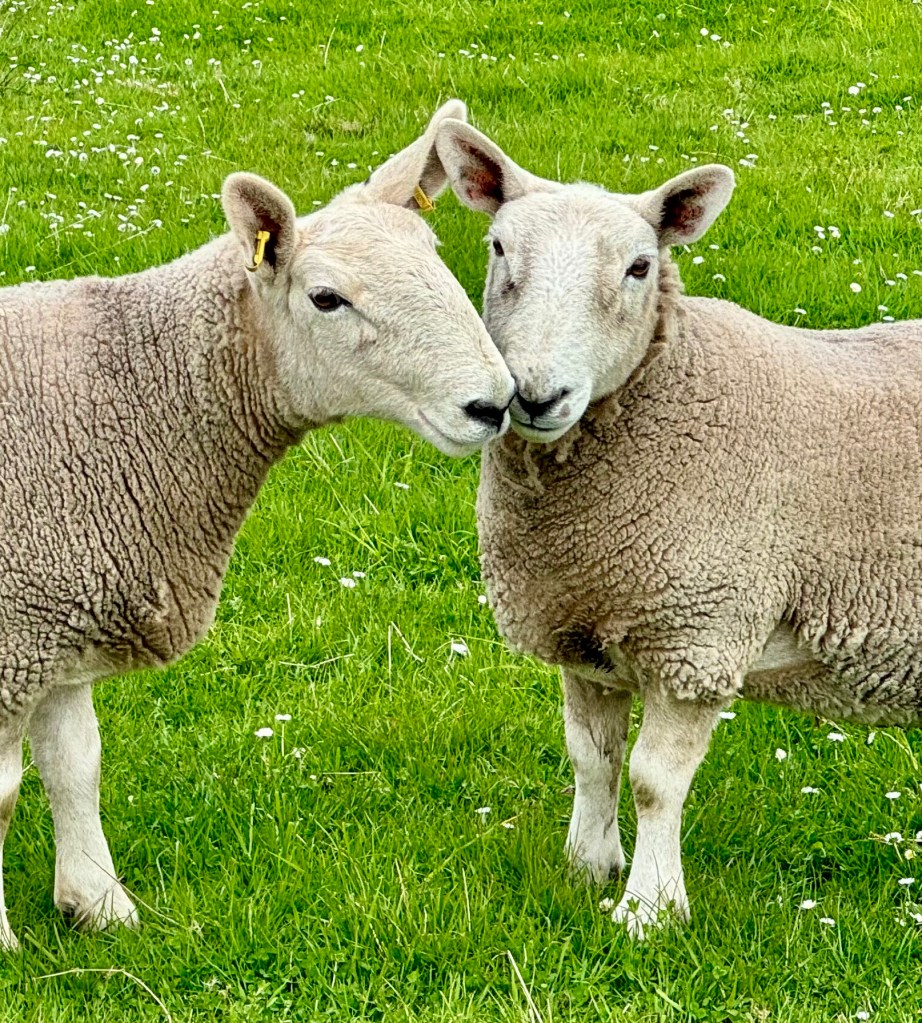
In Shetland they paint numbers on their sheepies instead of using dollops of paint. Here is sheepie number 51.
I cannot with the pink ears.
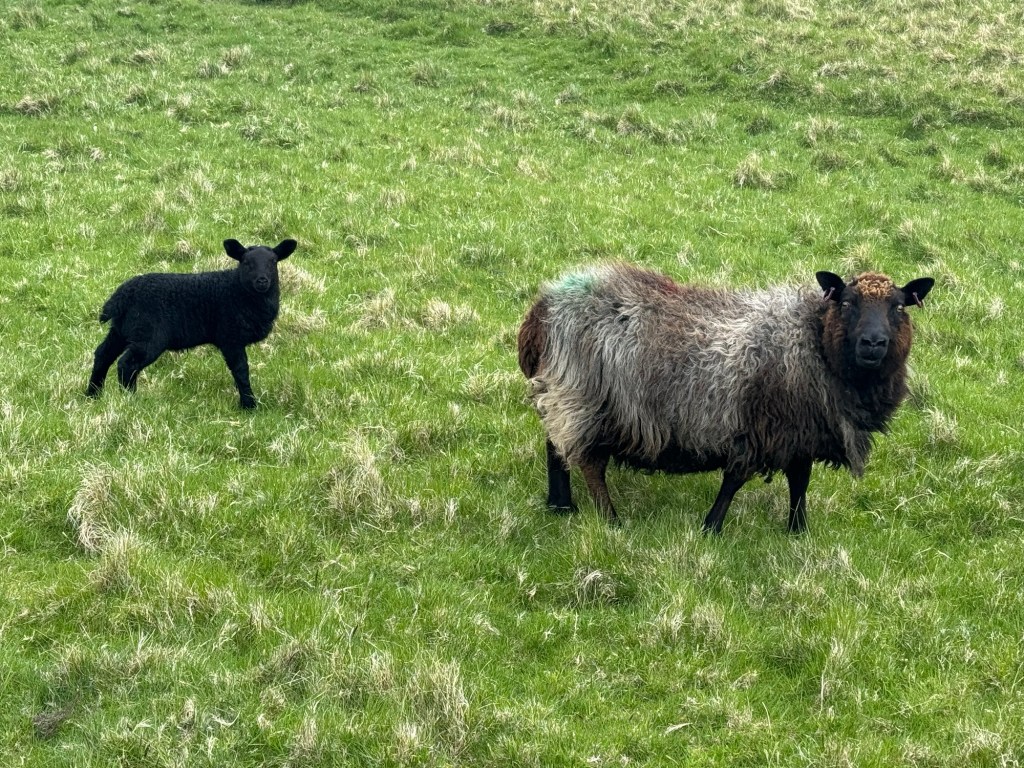
Mom looks more like a blue-assed boar.
Barb and I were partners in excessive sheep photography
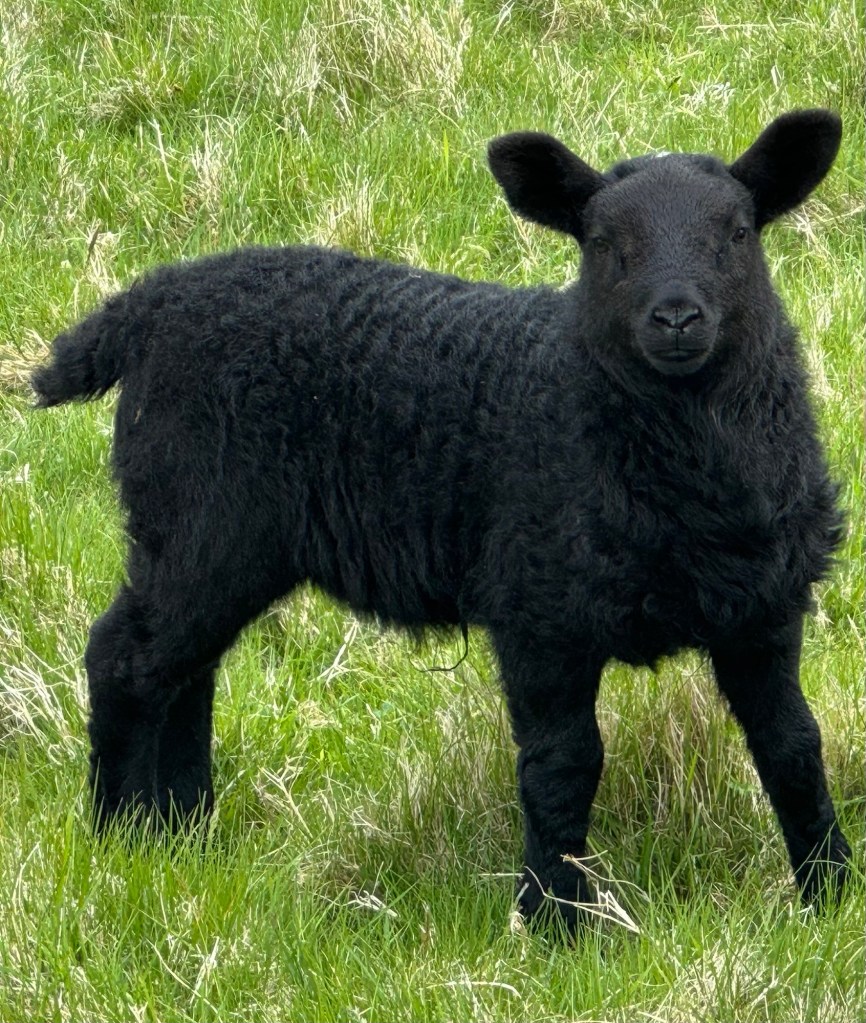
This is the last sheepie photo I shall subject you to. For the day.

After our lovely walk, we checked into our lodgings for the week, the Busta House Hotel in Brae, which was loaded with personality. The earliest part of the house was built in 1588 by John Gifford, a minister. In the 1950s the house was purchased by a member of parliament, and he was able to rescue, and install around the garden, gargoyles from the House of Commons which were being discarded during renovation work to repair wartime bombing damage. The Queen stopped by for tea in 1960, parking the Royal Yacht Britannia at the dock behind the hotel. A ghost named Barbara haunts the place, but honestly the backstory is too long and overly complicated and not that compelling.

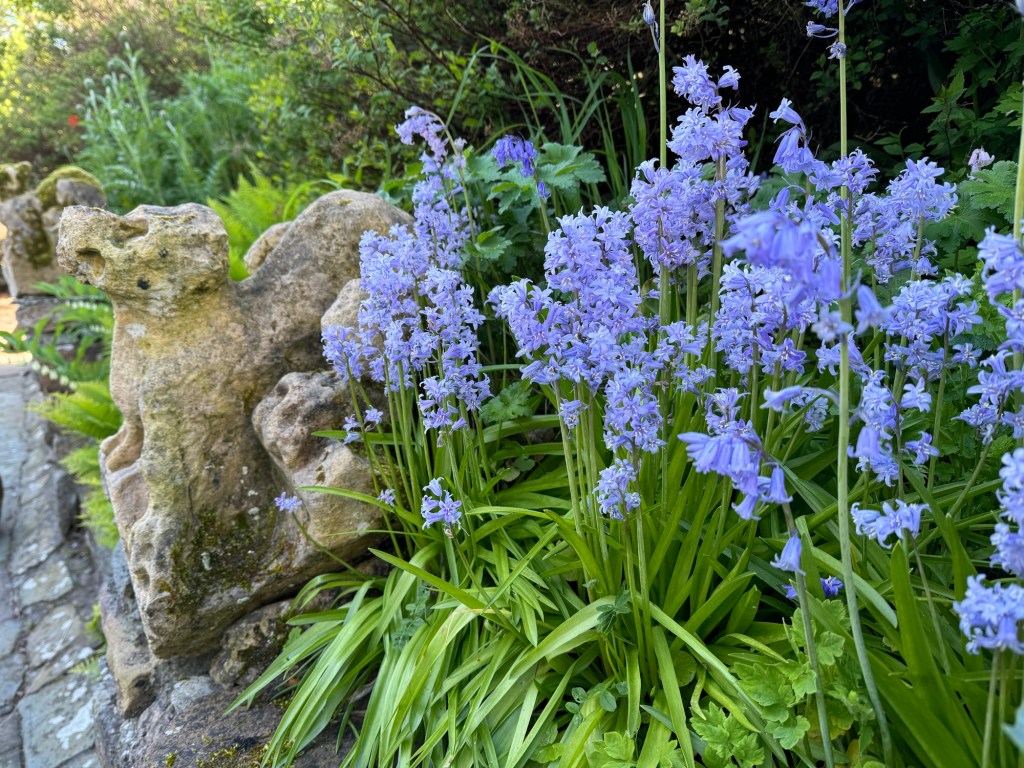
Bluebells alongside one of the House of Commons gargoyles
The Long Room, where the Queen had tea and we met before dinner every evening.
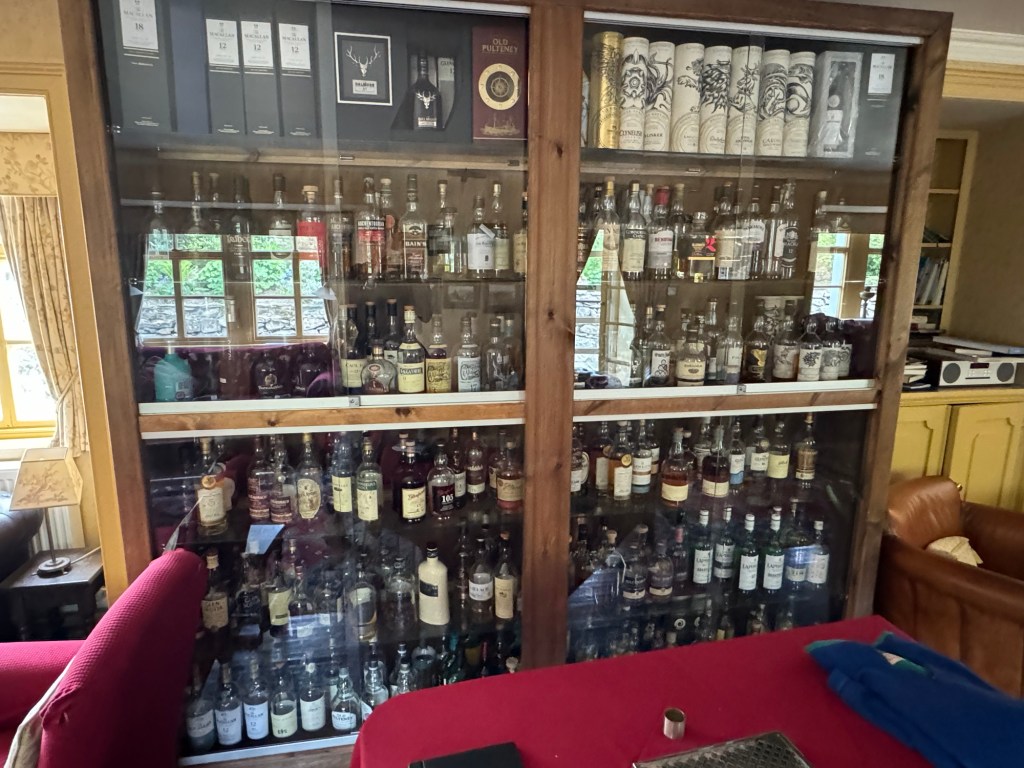
The whisky cabinet.

A brief word about my companions for the week. The Kiwis, Barb and Brent, spent some time in the Bay Area but now are back in New Zealand. Barb was very talkative and a funny storyteller always there with a little quip. Brent was the silent and reserved type but had a twinkle in his eye. When called into service he could be as funny as Barb with a finely honed sense of comic timing. Barb was a retired teacher and Brent had the foresight to be writing code for Apple around the time the first iPhone was released. I didn’t work this out until halfway through the trip, at which point, under the relentless pressure of my questioning, Brent finally shared that some of the code he wrote is in all of our phones and its job is to move photos around. Of course me: “Did you know Jobs?” Brent: “I held the door open for him once.” Pause. “He said thanks.” Barb said the best thing about being an Apple spouse in those days was the parties, the worst was the secrecy. She wasn’t allowed to visit Brent in his office or even raid the kitchen of its free food, much to her dismay.

The best bit of New Zealand slang I learned from them was “long drop,” a much more descriptive way to refer to an outhouse.

Barb and Brent

The Brits, Richard and Jill, were also a well-oiled comedy duo. Richard is a retired solicitor. They were both quite lovely and talkative and had worked out a conversational style over the many years of their marriage whereby Richard would carry the main points of a story while Jill would serve as the chorus, speaking over Richard, sotto voce, somehow not interruptive but rather additive. Color commentary as it were, delivered often with her head tilted back and a hand brushing back a strand of hair. It made me laugh every single time.

Richard and Jill

The Boston couple were dealing with a sad health situation. Bob, another retired lawyer, was suffering some neurological issues affecting his balance and cognition and his wife, a stoic woman of sturdy New England stock, was doing her best. He did not often join us and she split her time between staying with him and coming along on our walks. They seemed to enjoy themselves even with everything and the Wilderness Scotland folks arranged other activities for them.

Everyone was aligned politically which added a lot of freewheeling spice to our conversations.

The following day we visited Jarlshof, the best-known prehistoric archaeological site in Shetland, walked up to the Sumburgh Head Lighthouse in search of puffins and continued on up and over a hill behind the airport. What? I know, it’s so crazy, but there are ancient ruins in two separate locations a mere stone’s throw from the airport. The past and the present live in close quarters on an island with 5,000+ years of human history.

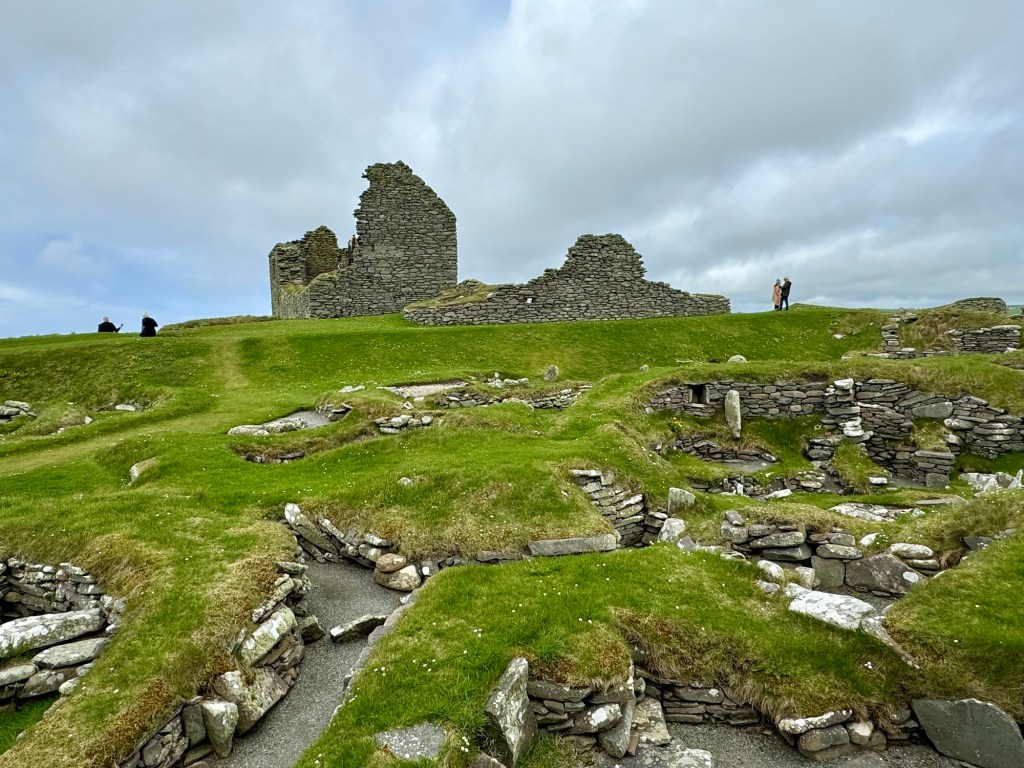
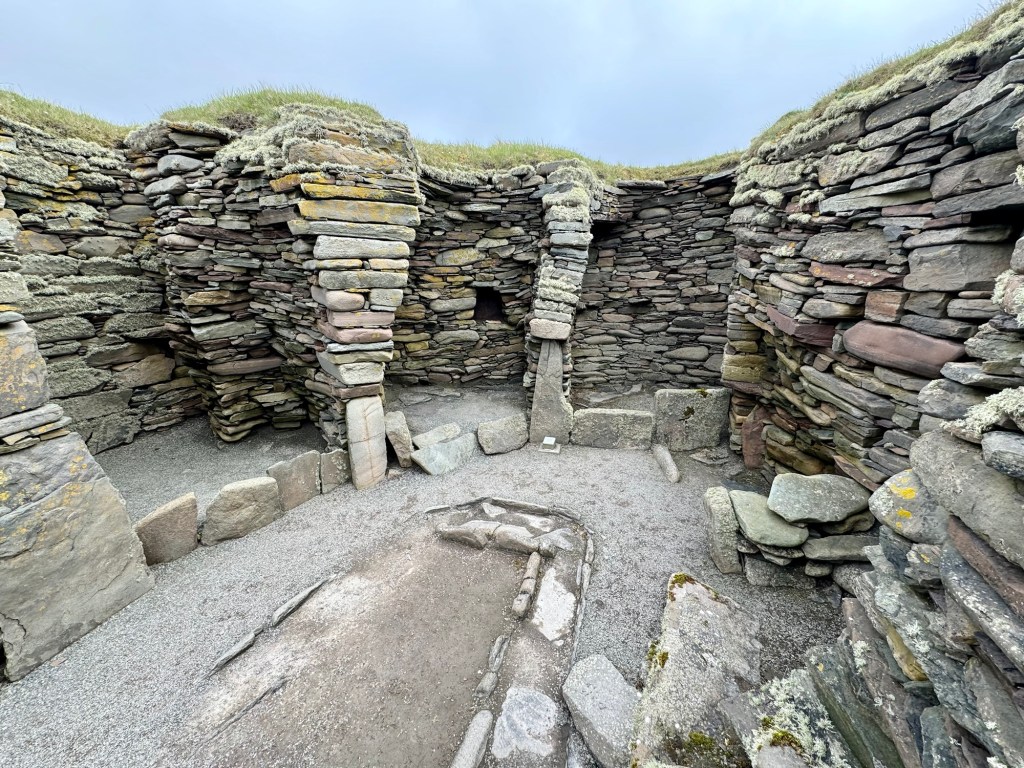
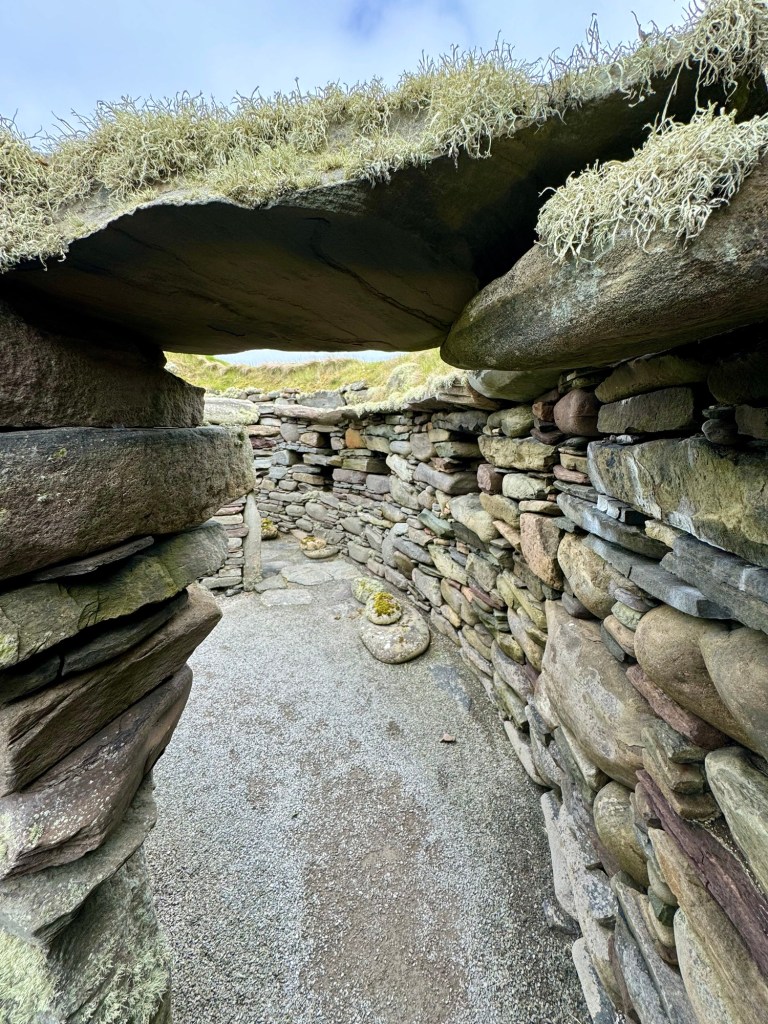
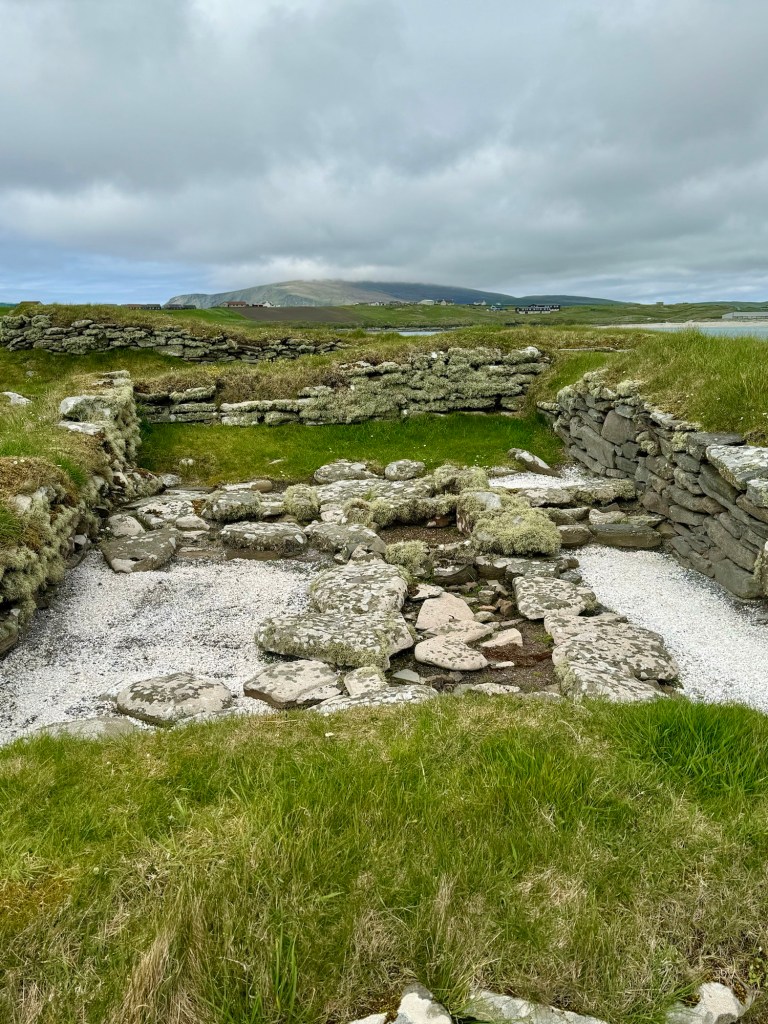
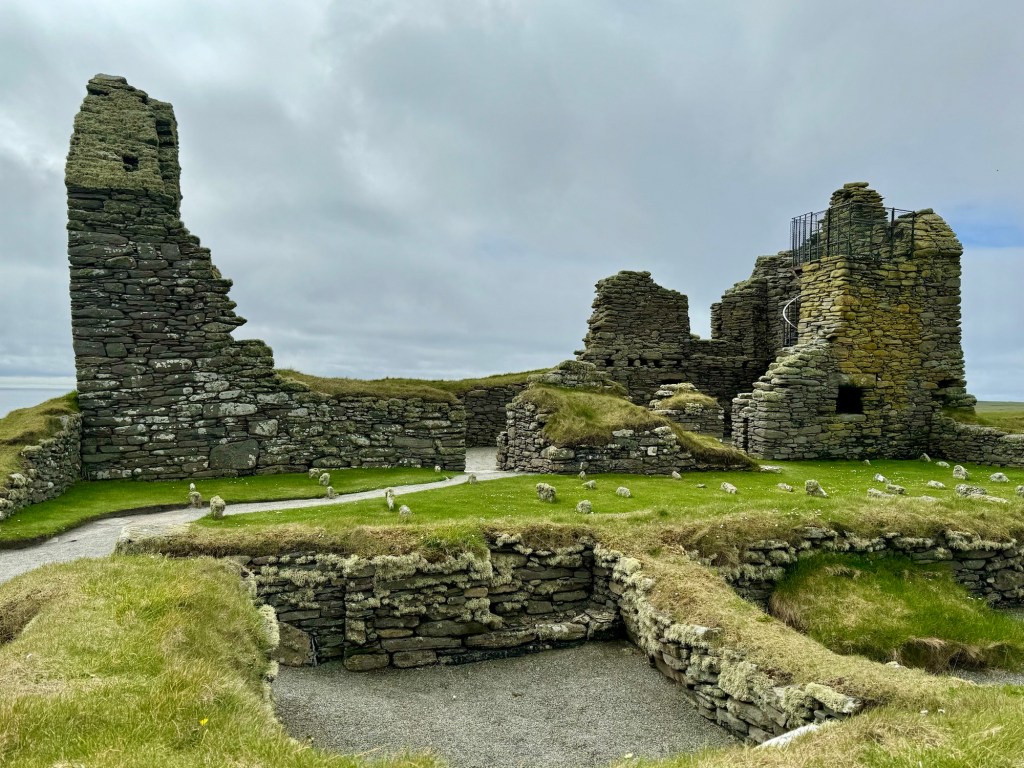
Jarlshof contains ruins dating from 2500 BC up to the 17th century and is sort of a microcosm of Shetland history. It means “Earl’s Mansion” which was coined by, who else, Sir Walter Scott who visited the site in 1814 and based it on the Scottish period name of “the laird’s house.” Similar to the discovery of Skara Brae in Orkney (see previous blog entry), the remains were discovered after a storm washed away part of the shore. Formal archaeological excavation began in 1925 and discoveries included a Bronze Age smithy, an Iron Age bothy and roundhouses, a complex of Pictish wheelhouses, a Viking longhouse and a medieval farmhouse, each visible in turn as you ascend the small hill, one age atop the next like a time machine layer cake.

Bronze Age ruins below a 17th century stone house.
A Pictish Wheelhouse
Viking Longhouse
Longhouse ruins below the farmhouse
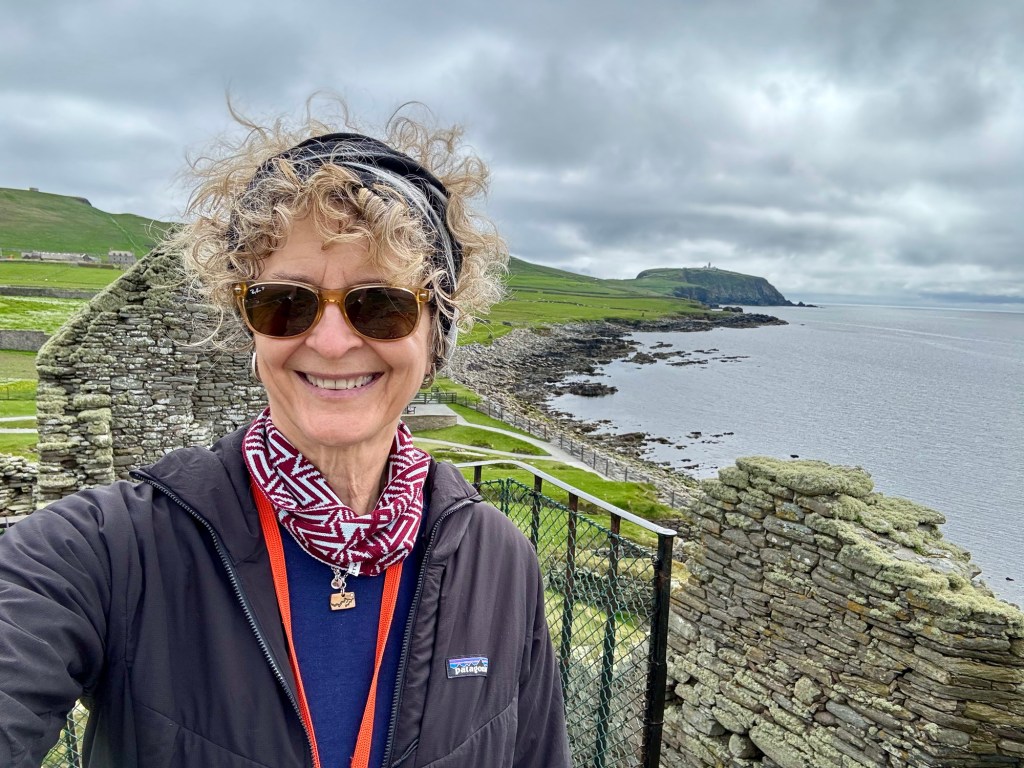
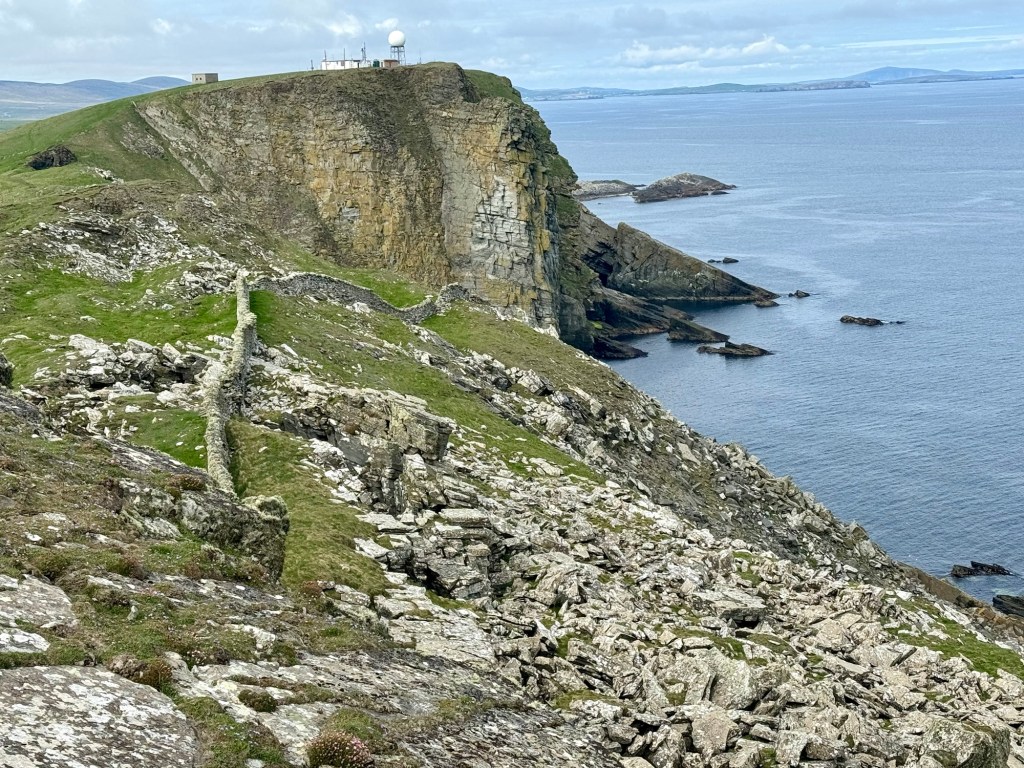
On top of the farmhouse with Sumburgh lighthouse a tiny dot in the distance

We walked from Jarlshof up to Sumburgh Head Lighthouse, another of many of Shetland’s nesting grounds for numerous species, including ….. puffins!!!

Fulmars not puffins.
Ditto.
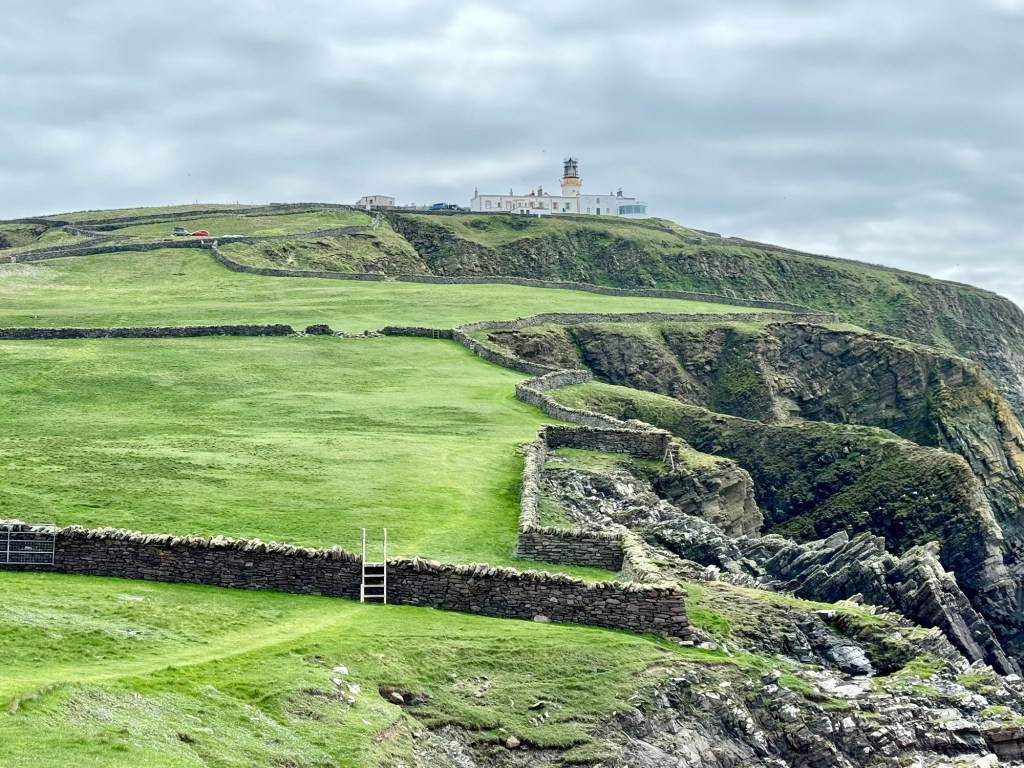
Sumburgh Lighthouse

We saw loads of puffins floating in the ocean in groups, and flying around the cliffs. They fly like you would imagine, a bit off-kilter, comical and flappy. Puffin wings are on the small side, so for them to stay aloft their flappers must be deployed at the rate of 400 beats per minute. This is not an impediment by any means, as puffins can fly up to 55 miles per hour and can dive to depths of 200 feet in search of fish. They spend two thirds of their year out at sea, coming back to the same burrow every year, where they lay exactly one egg. While they mate for life, they enjoy long-distance relationships, heading out to sea on their own and reuniting yearly to mate and raise their puffling. And while they are away they lose their bright beaks and the black markings around their eyes, which would render them rather difficult to identify. Interestingly, researchers know very little about their lives at sea so who knows what they are up to.

Now, I don’t know how many of you follow puffin-related instagram accounts, but if you do, you are treated to amazing close-up pictures of these adorable guys doing adorable things. Well – that’s because the photographers have ginormous cameras and are very very patient.

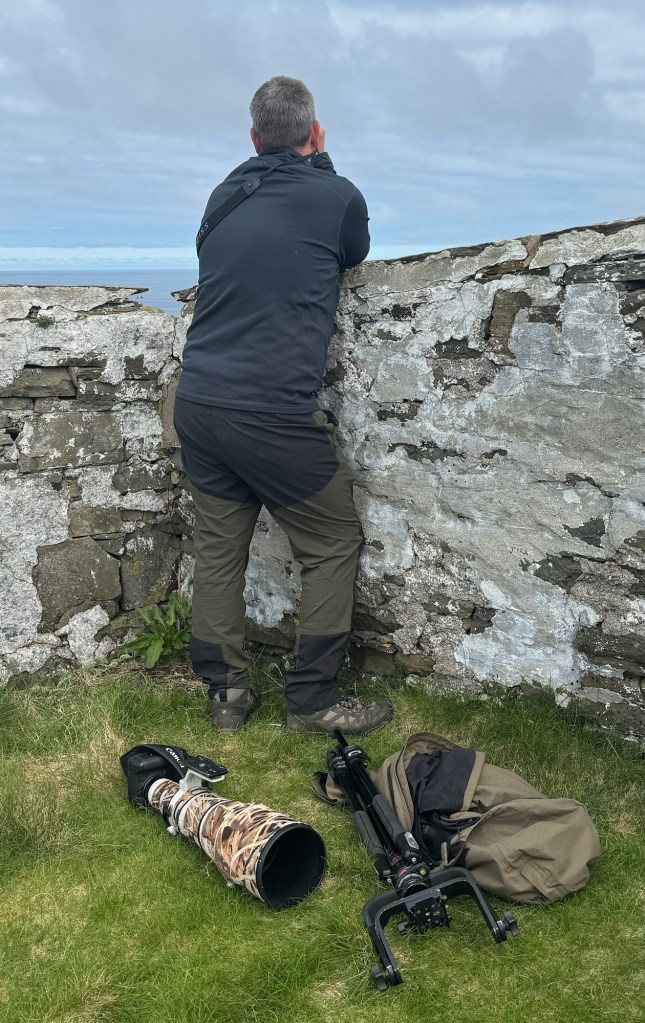
Looking through binocs for puffins, giant camera at the ready

But we did spot one of the little dudes just below the lighthouse, chilling in the opening of its burrow.

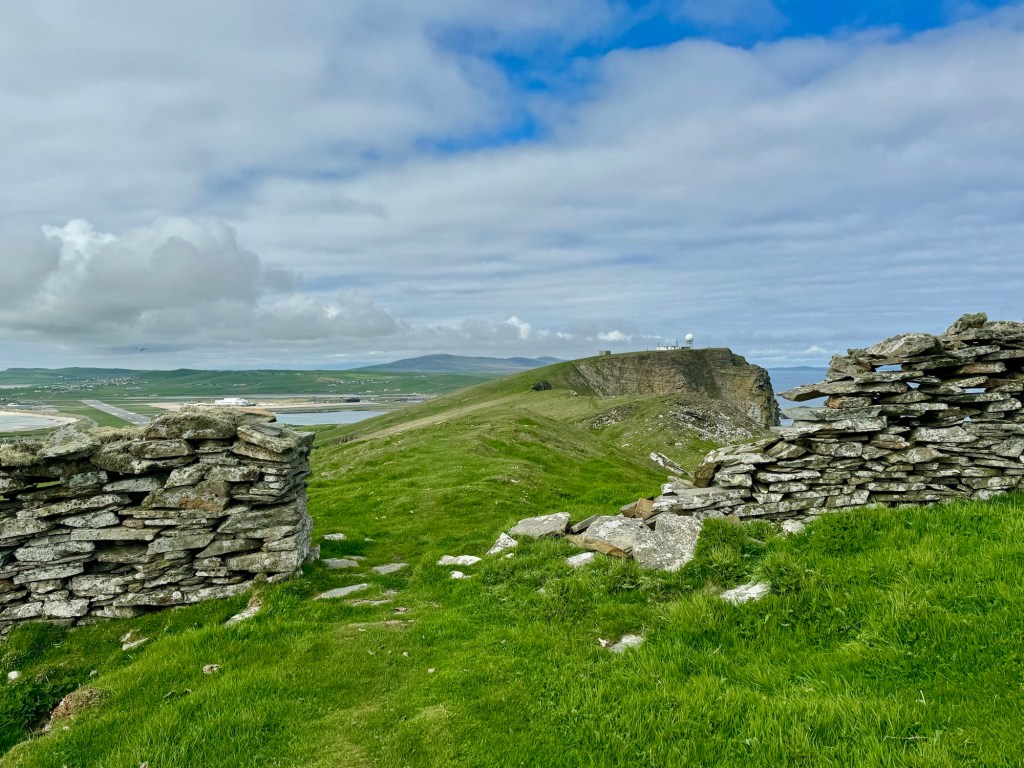
We walked on, continuing our loop around the point. Here are a few shots from our walk above the airport.

Above is one of Sunburgh’s runways. The A970, the only road to the airport, literally crosses over the bottom of the main runway. There are gates that go up and down when a plane needs the right of way. As you drive your car across, a sign warns “Positively No Stopping” and “Straight Ahead” is painted on the pavement.

Looking back toward the lighthouse

The following day we were to climb Ronas Hill, the highest point of Shetland, and then take a boat in the middle of the night out to Mousa to visit an Iron Age broch and watch kestrels come home to roost, arriving back at the hotel at 2:00 am. We were all game, even though none of us had stayed up that late in decades.

Lazy Days in Lerwick

Spent a few days solo in Shetland prior to joining my Wilderness Scotland trip and with the exception of a quick excursion to Scalloway I didn’t venture far. Lerwick is too cool to leave, I could easily spend a week here.

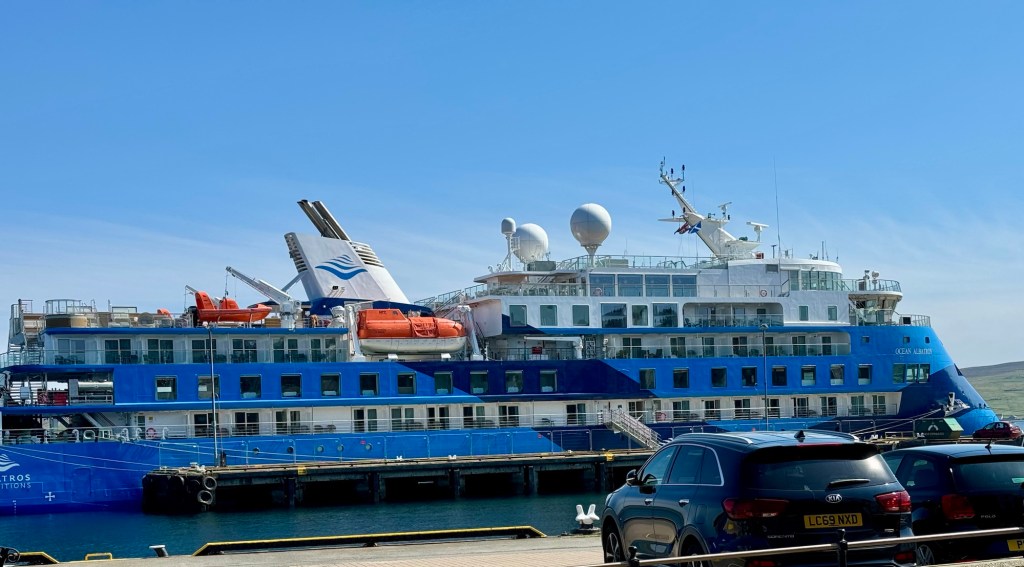
While Lerwick doesn’t seem overrun with tourists, the cruise ship season is upon us, which I say as if I live here. A local shop owner told me the town was expecting 147 ships this summer, some of them packed with as many as 4,000 people. I mean that makes my toes curl, but also they spend money in a community that is reliant on tourism, so classic double-edged sword. There’s one in this morning but at least it’s a semi-reasonable size as cruise ships go and it seems to have caused only a slight increase in people.

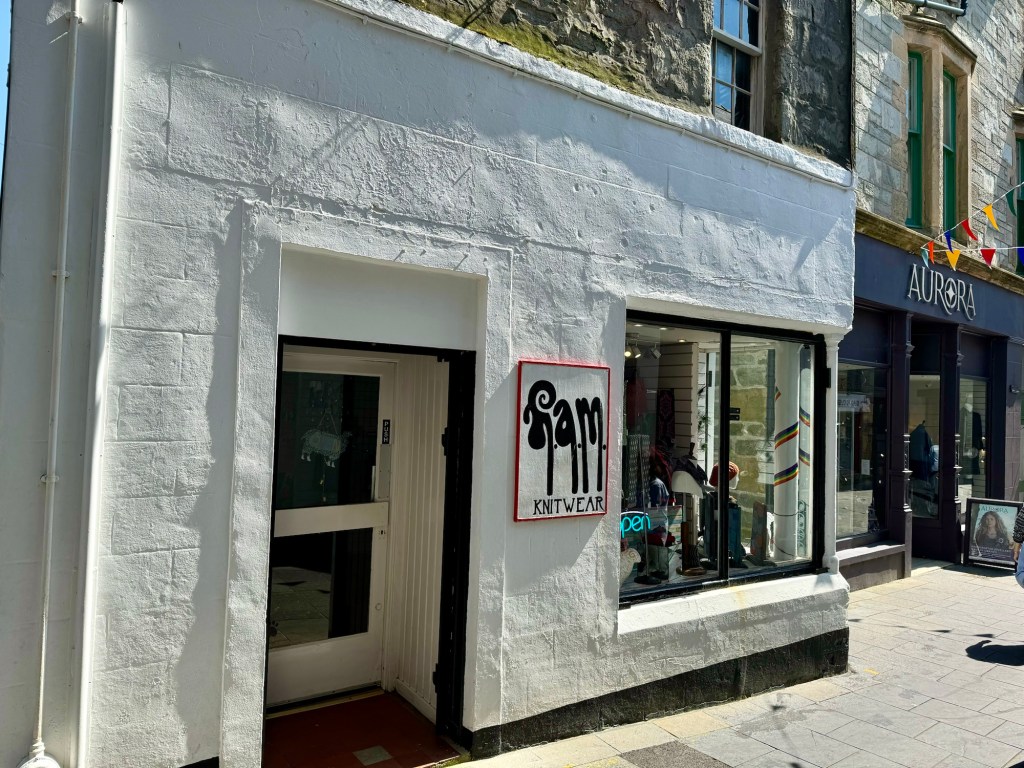
Shops and restaurants are given a schedule so they can adjust their hours and bring on staff. My shop owner told of a time she opened early on a Sunday to accommodate an arriving ship and found thirty people lined up when she arrived. R.A.M. Knitwear is a tiny shop that sells gorgeous scarves, buffs and accessories designed by her daughter (a couple of pieces of which I was forced to acquire) and could comfortably hold maybe five people.

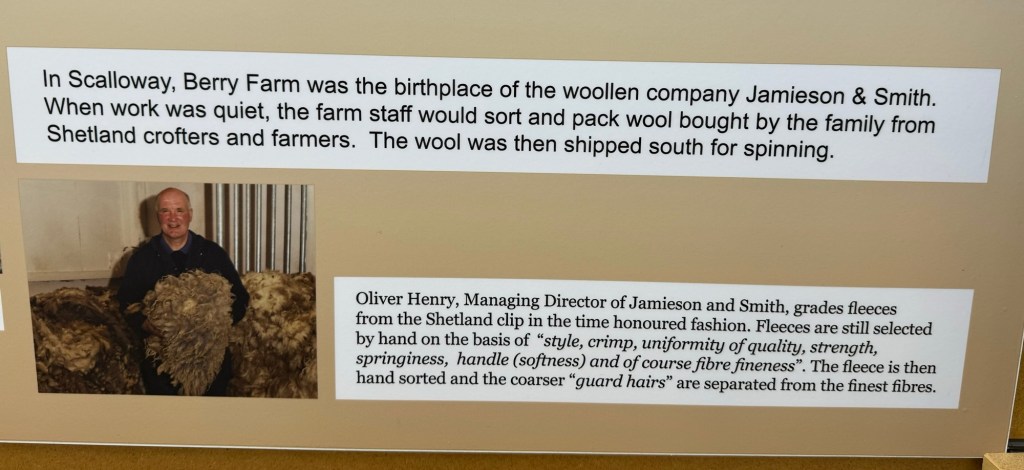
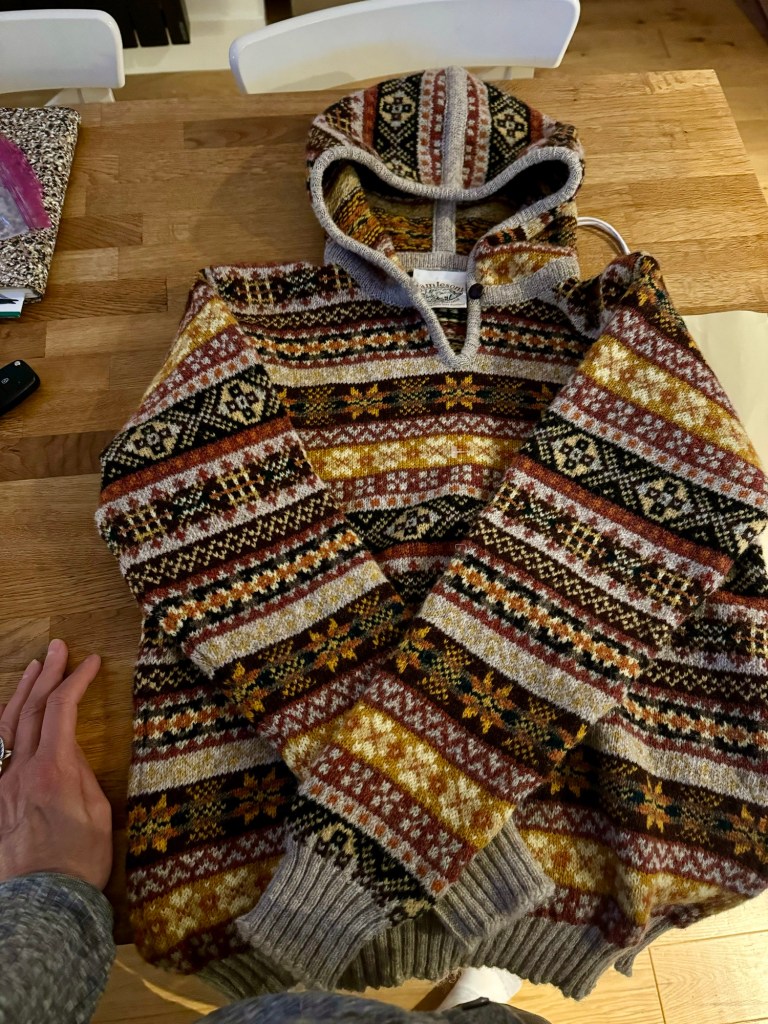
And here I’ll just admit that knitwear is apparently my splurge category for this trip. I also bought a real deal Shetland sweater made by a family owned company, Jamieson’s, that has been around since 1853. They are even featured in the Scalloway Museum.

A fellow shopper, a fabulous English woman with cool glasses, commented I would be so easy to spot in this sweater that I’d never get lost and also I had the personality to pull it off – which I decided to take as a compliment?

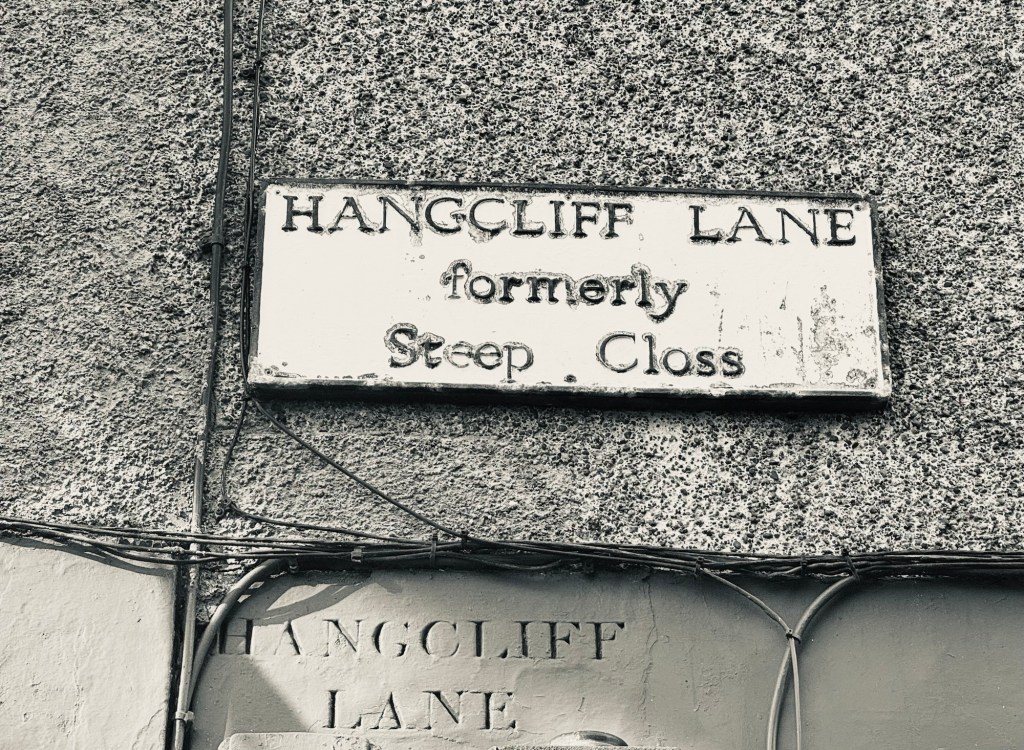
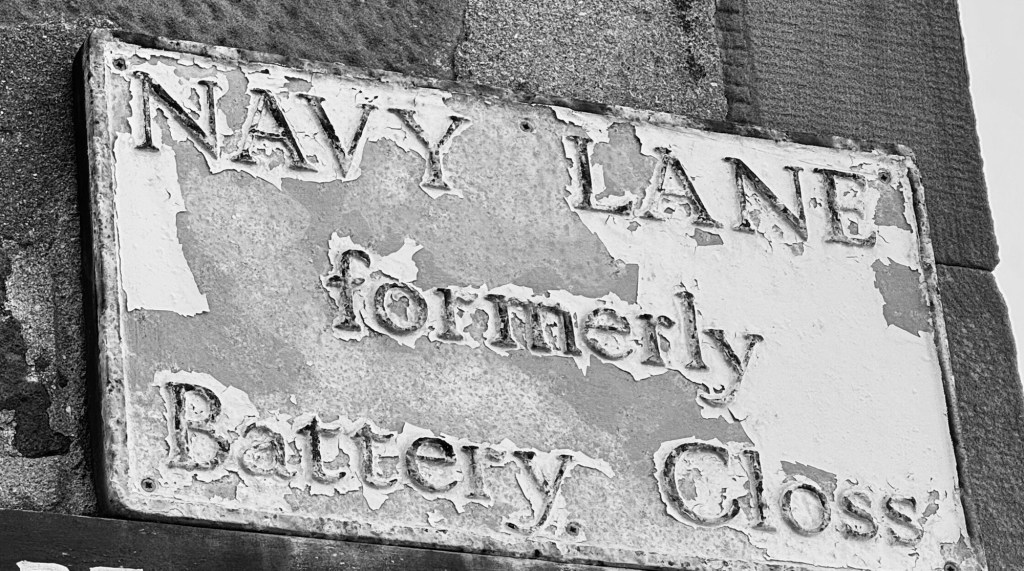
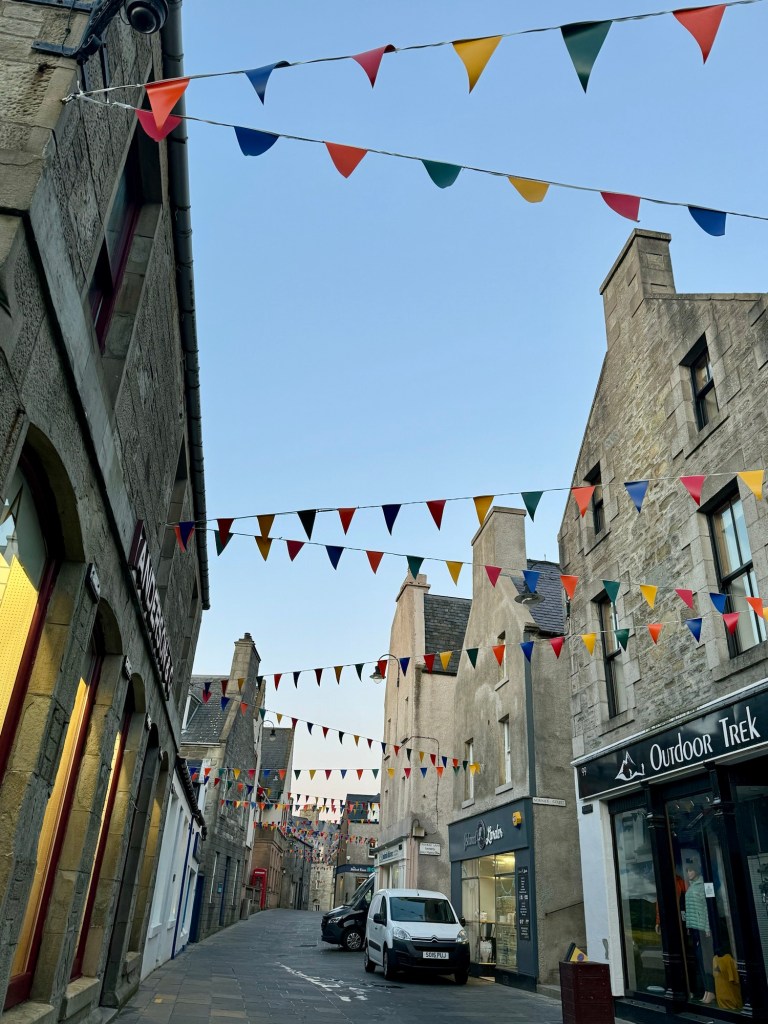
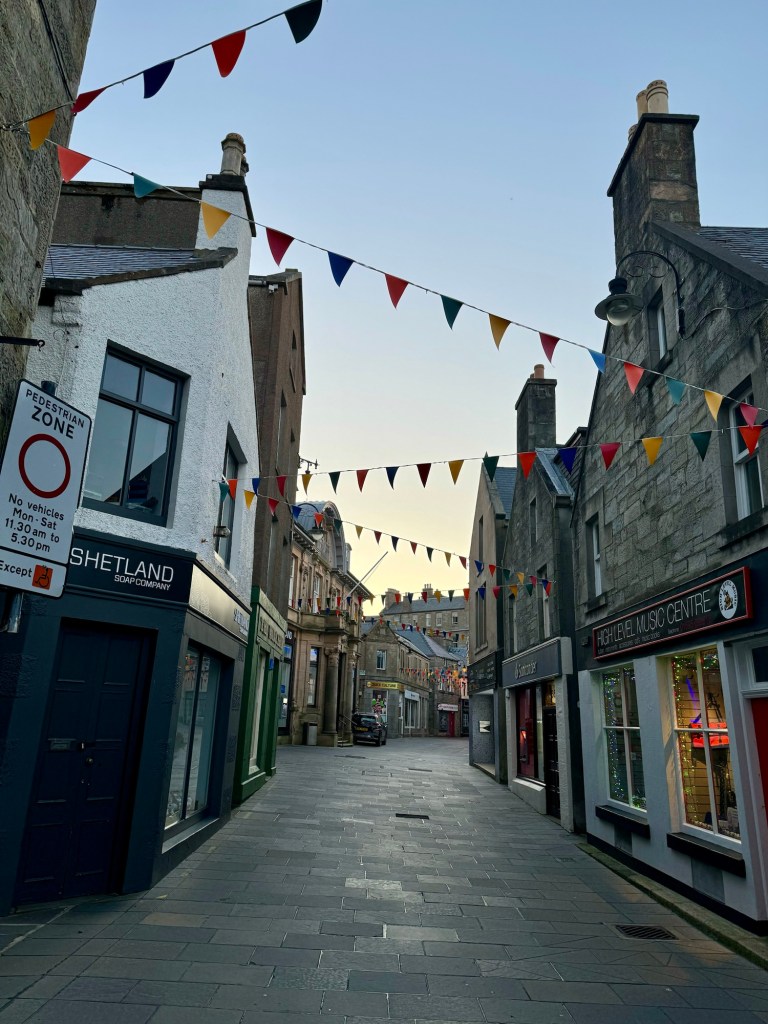
Speaking of the fabulous shopping here, part of the charm of Lerwick’s high street is its pedestrian-only access, delightful alleyways tumbling down from the hill above, and most of the shops are locally owned. Huzzah!

This was my lane of choice.

And god forbid that we stop with the Shetland filming locations.

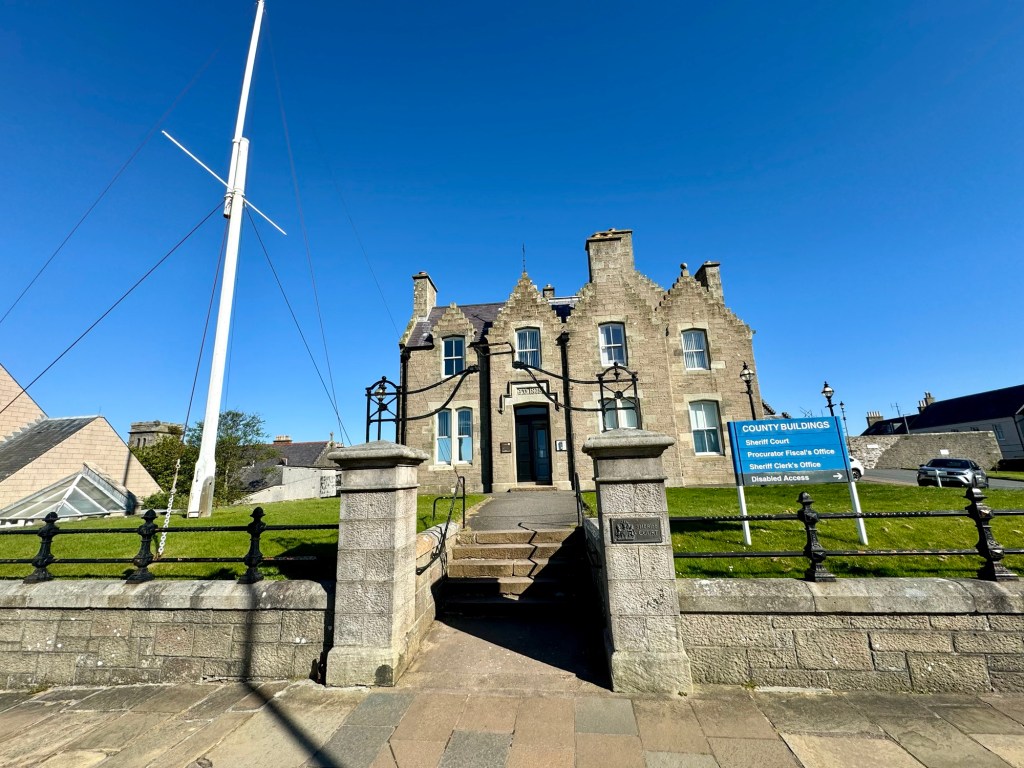
Jimmy, Tosh, Sandy and Billy’s office.

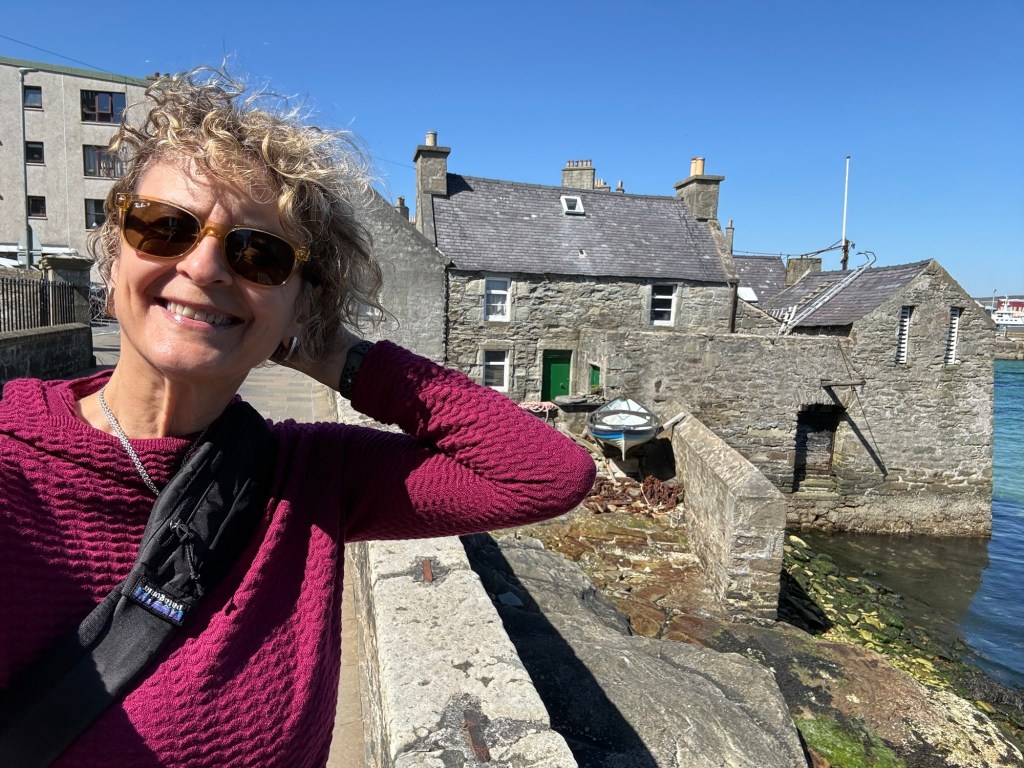
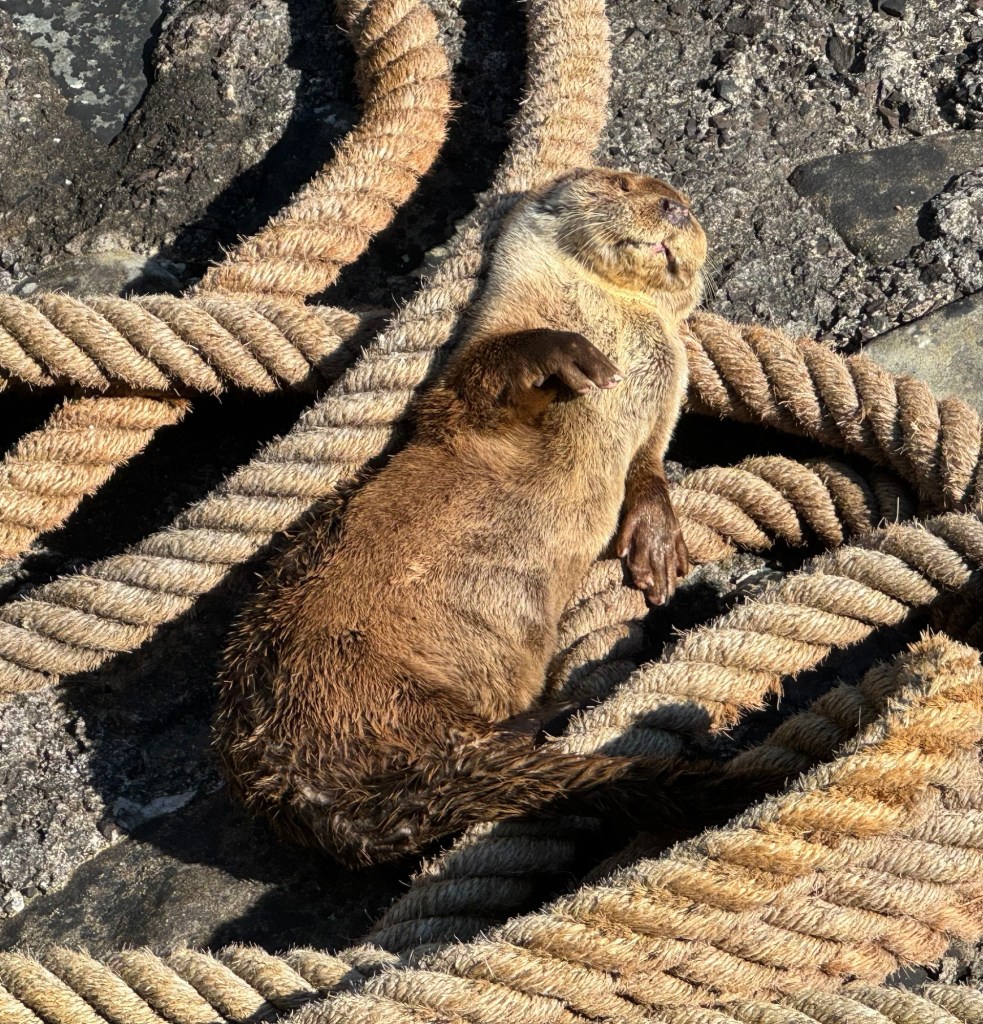
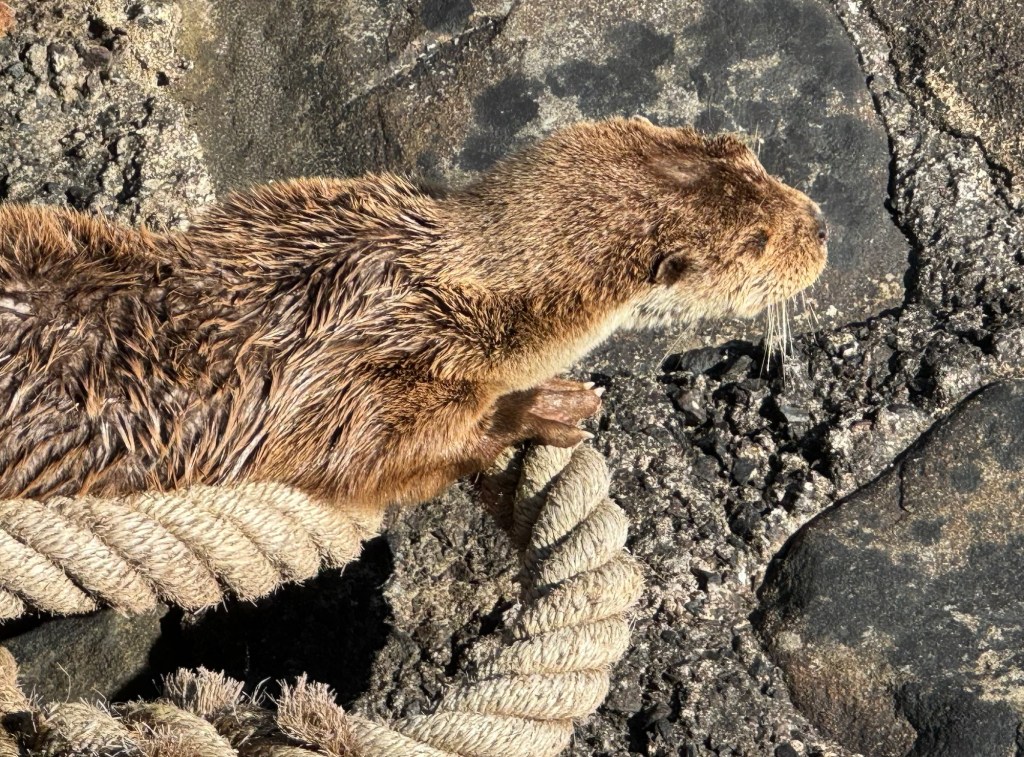
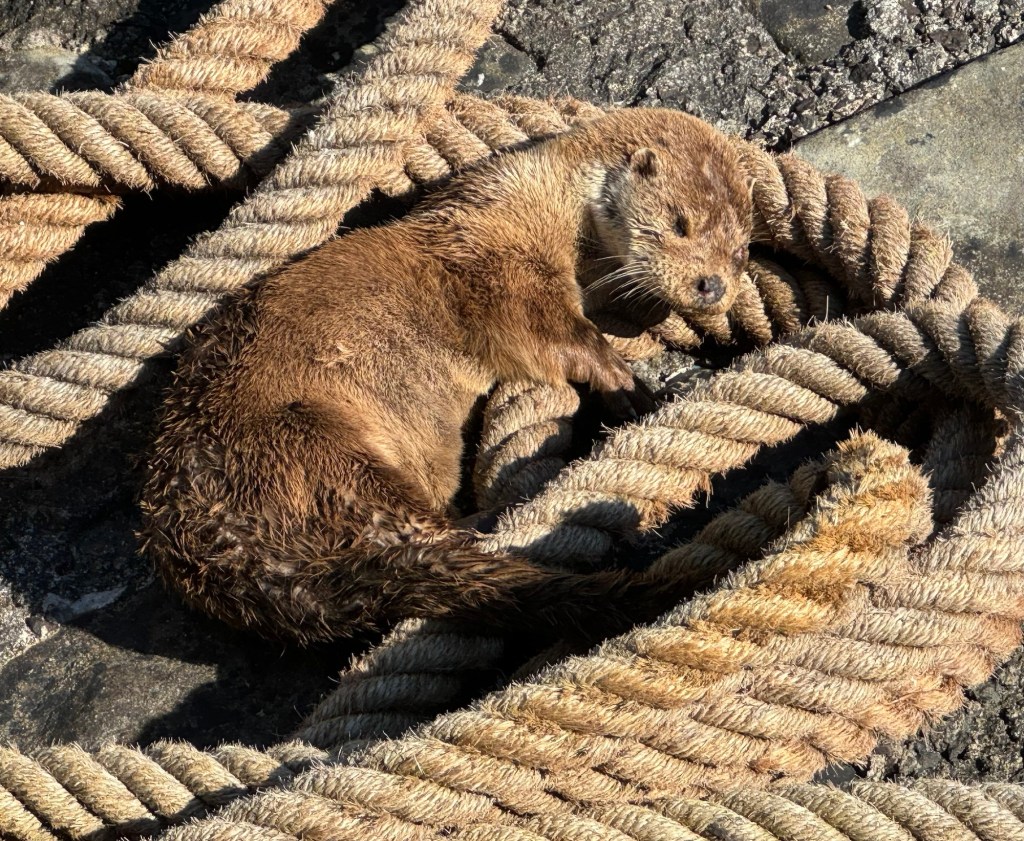
Glad I visited Jimmy’s house again because not only did it afford the opportunity to take selfies in a different outfit but a sea otter was rubbing himself like a cat against a rope near the front door.

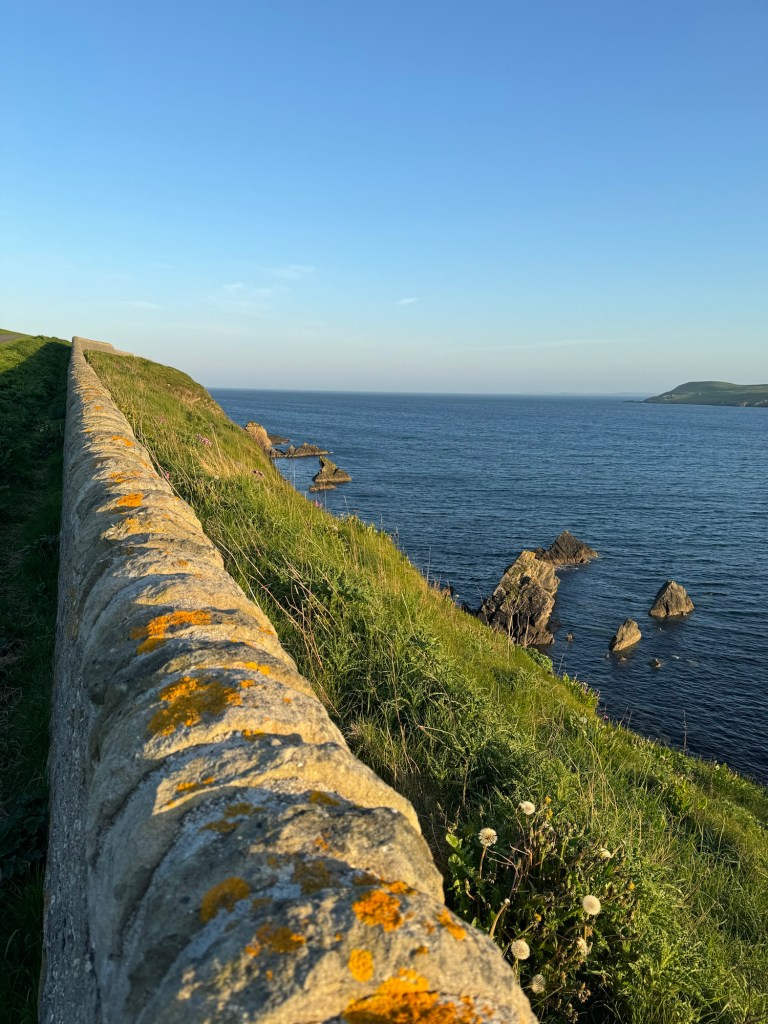
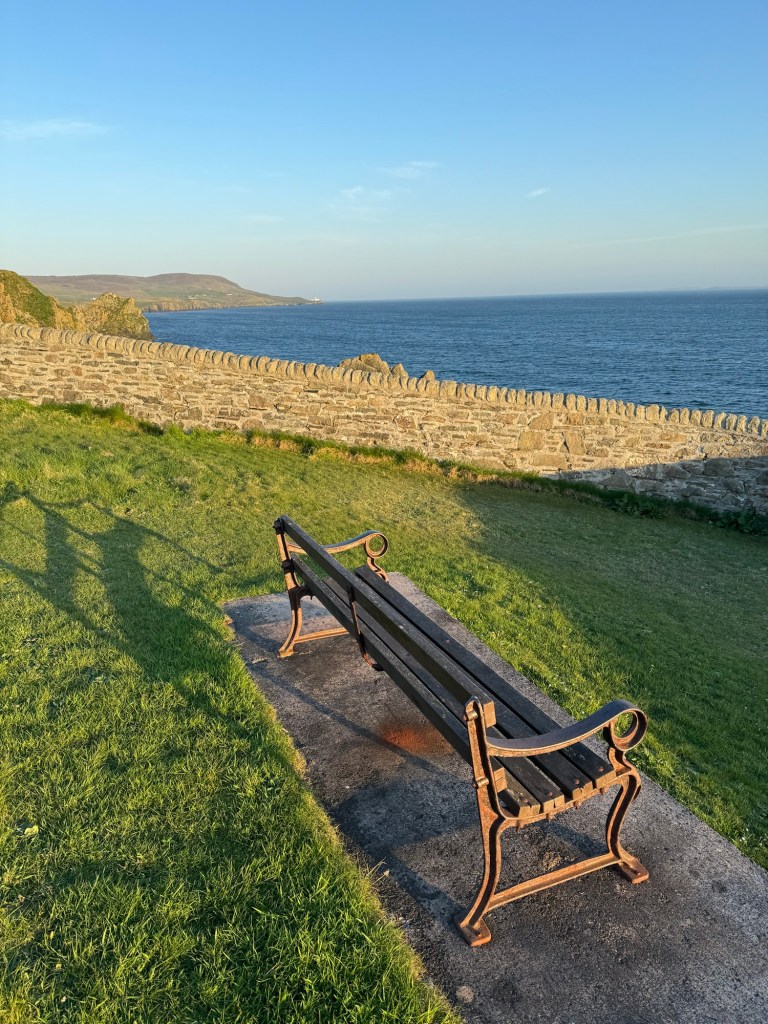
Lerwick also features many gorgeous areas to walk – which is helpful after a dinner where one has completely stuffed one’s face. I waddled around one of the coastal paths, the Knab, in the most beautiful magic hour light.

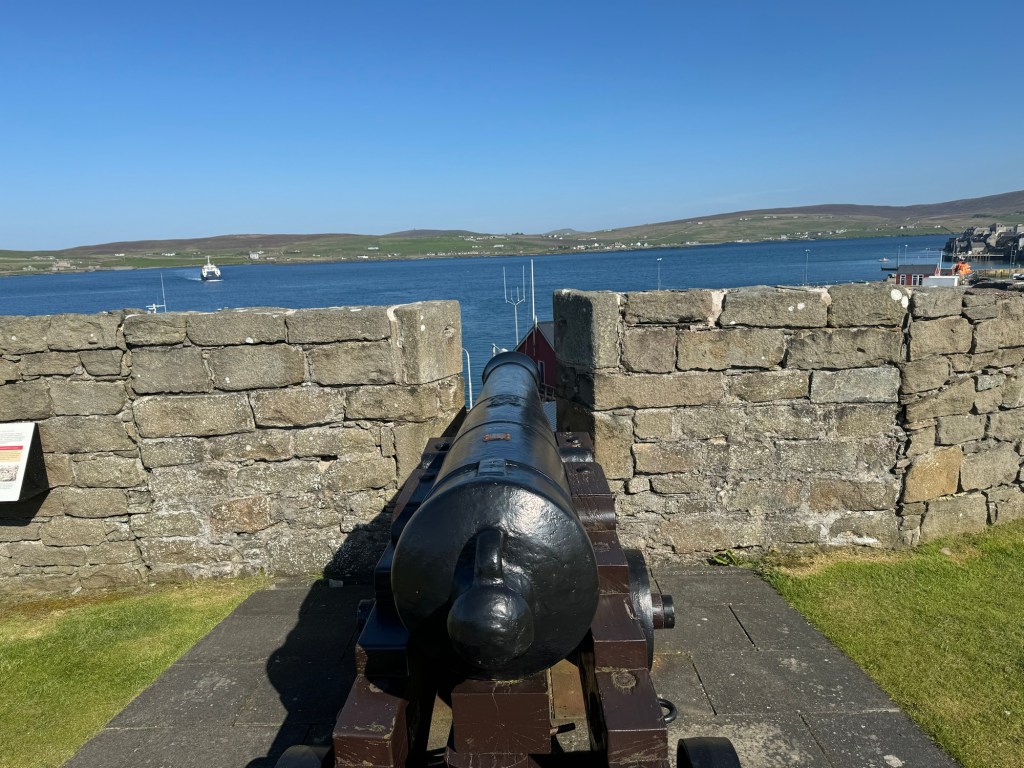
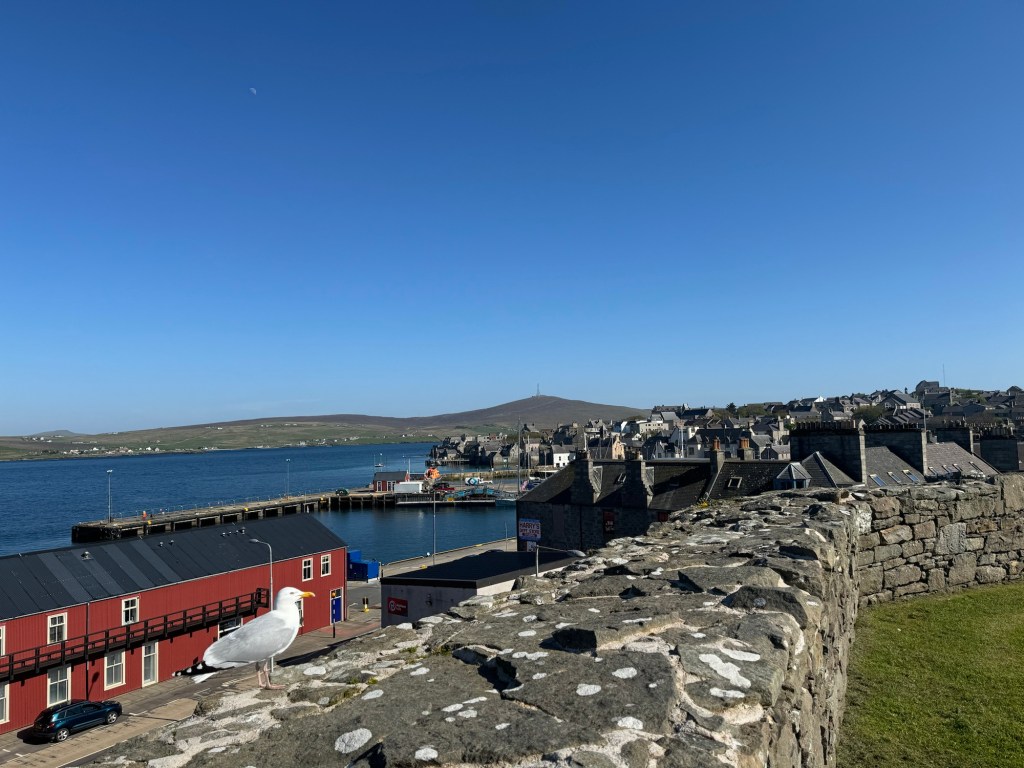
Also took a turn around Fort Charlotte in downtown Lerwick one evening. You remember Queen Charlotte. She was married to the unfortunately mad King George III who was not only engaged in a fruitless search for his faculties but also holds the dubious honor of losing the American Revolutionary War. Or, if you are a Bridgerton fan, you will also know her as the fabulous Golda Rosheuvel.

I like to think she was the one running the country. I’m sure she wasn’t allowed to run the war otherwise we would have lost and would now be enjoying universal health care. And I would have a British passport.

The history of the Fort Charlotte is brief and relatively uneventful as military forts go. It mostly involves three Anglo-Dutch wars that honestly I’m choosing to not learn more about, as I had no idea they existed in the first place. If you are curious, ask your AI.

The first incarnation of the fort was built in 1652 during the First Anglo-Dutch War. Nobody knows what happened, but that version of the fort is gone. The second was built under orders of Charles II at the start of the Second Anglo-Dutch War. It held off a Dutch fleet but was ultimately burned to the ground by the Dutch during the (wait for it) Third Anglo-Dutch War. Also you should know that there was a fourth war but it doesn’t figure into our story.

In 1781 the fort was rebuilt in its current incarnation and named after Queen Charlotte, but hasn’t seen service during hostilities since. It did house a garrison during the Napoleonic Wars and was later a base for the Royal Naval Reserve. It’s also been used as the town jail and courthouse (before they built Jimmy’s building) and a coastguard station. Today it’s managed by Historic Environment Scotland and is the base for Shetland’s Army Reserves.

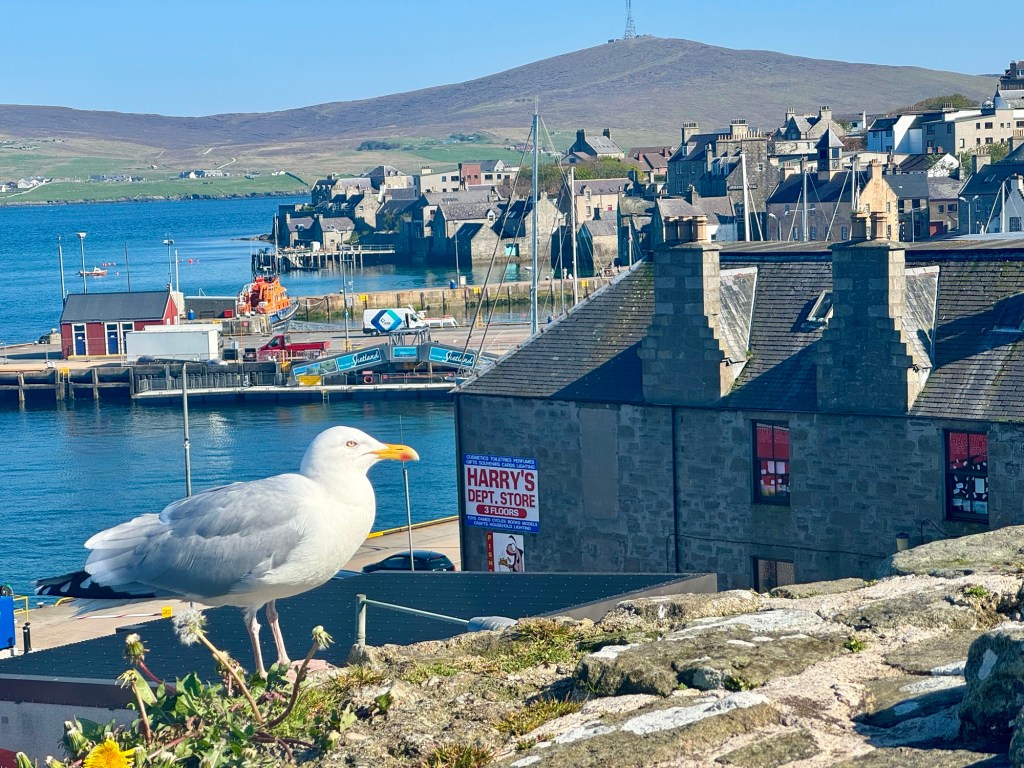
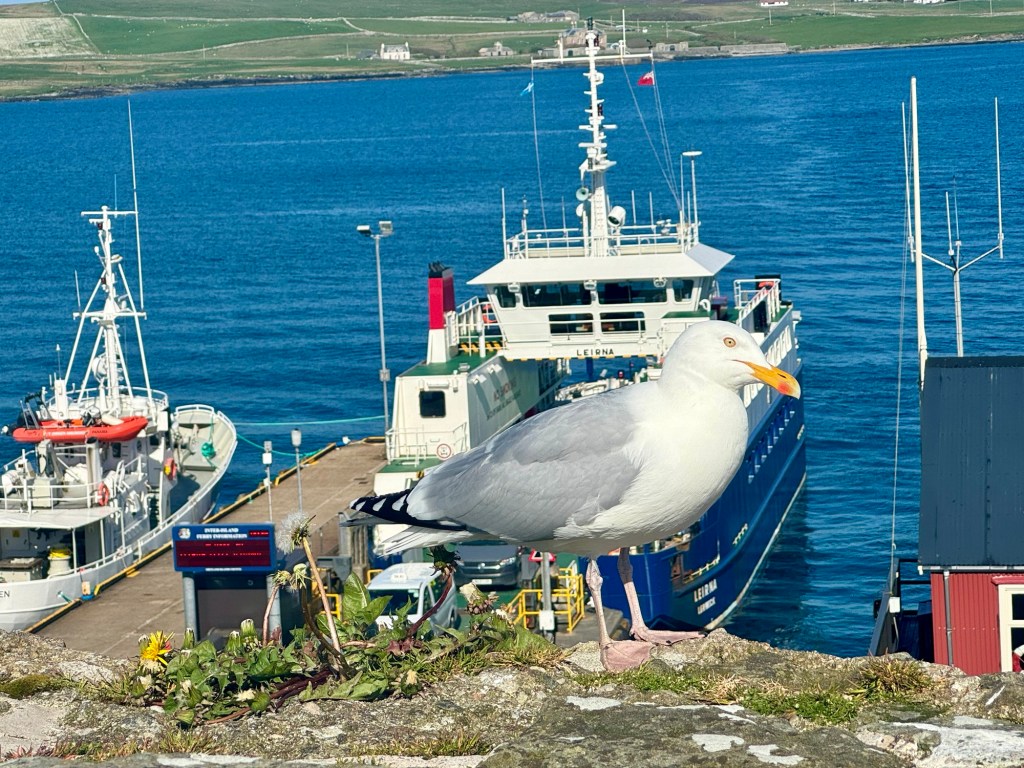
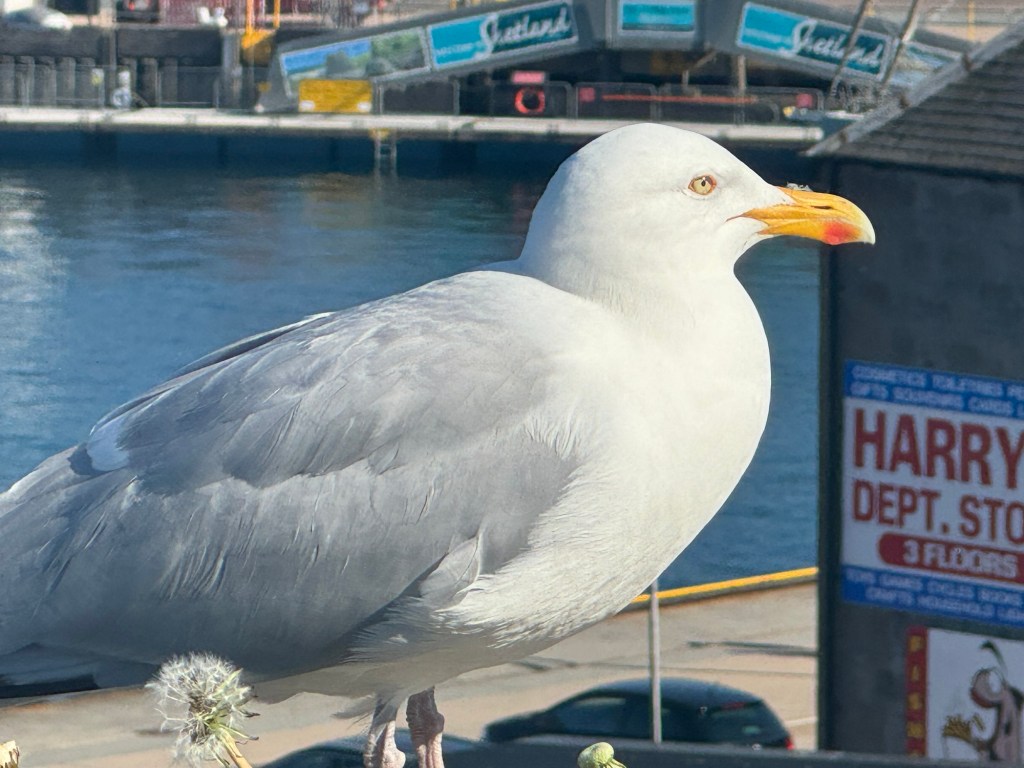
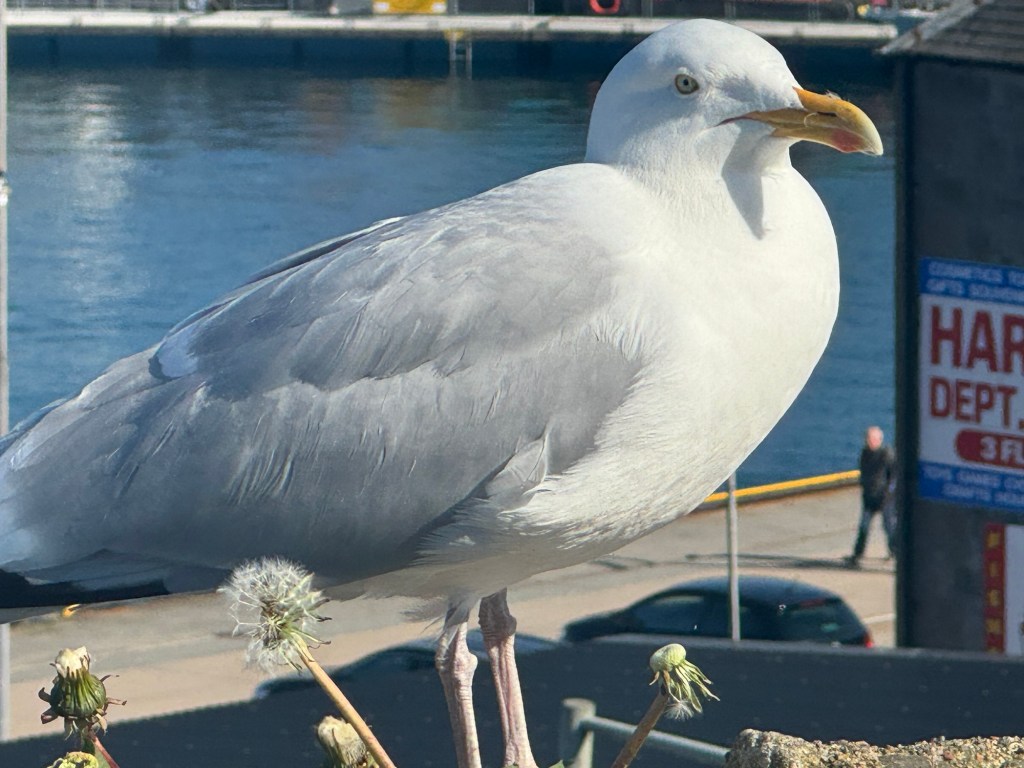
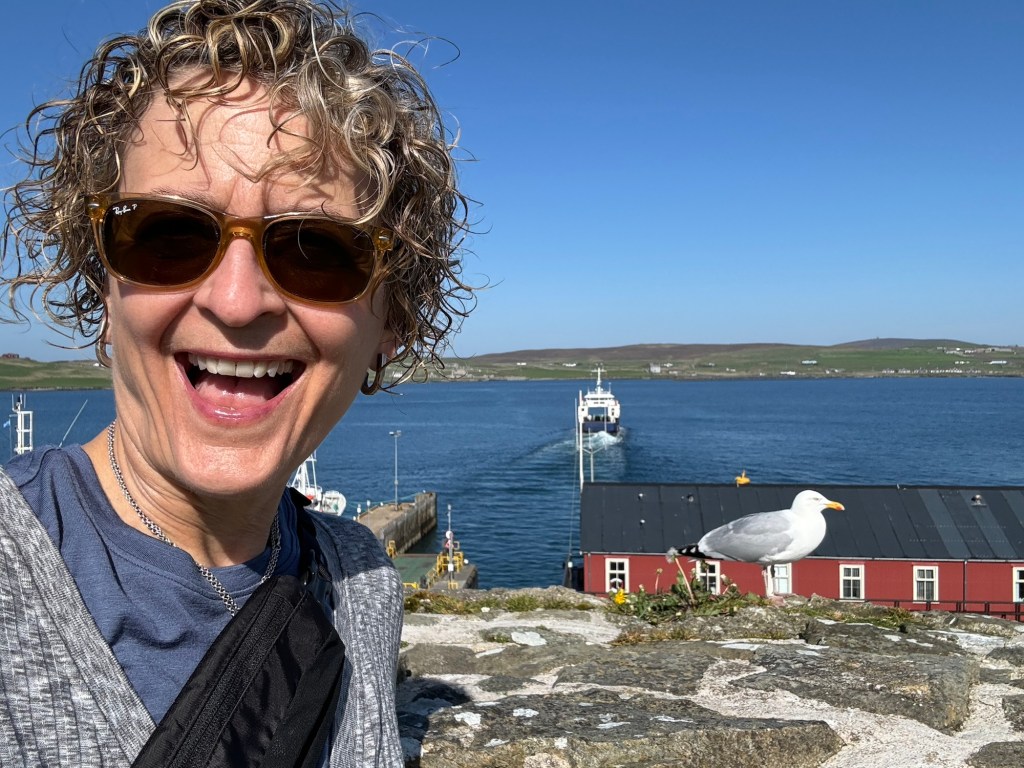
And then I had a moment with a seagull, which is documented in pictures below.

Noticed him here, on the wall of the Fort.
The pièce de résistance (or something).

My excursion to Scalloway was on the recommendation of a pal particularly because of its connection to the Shetland Bus – this history I am interested in.

The Shetland bus is one of the many remarkable success stories of World War II filled with tales of courage and valor in extreme circumstances. It all started when Germany invaded Norway in 1940. Norway did not ally itself with either the Allied or Axis powers in the war, but neutrality is not an awesome shield when you hold a strategic position in the North Sea. Norway fell quickly and resoundingly, sending King Halkon VII and his family to London where the government operated in exile.

Thousands of Norwegians escaped, mostly in fishing boats, and sailed west. Geography being what it is, Shetland was their landing zone. A resistance movement developed in Norway but it was disorganized, lacking leadership and expertise and perhaps more to the nitty gritty, guns and ammo. Churchill established a secret organization, the Special Operations Executive (SOE), to work with the Norwegian resistance behind enemy lines, and the Shetland Bus was an integral part of that effort.

The operation used the escaped and innocent-looking Norwegian fishing boats crewed by young Norwegian volunteers disguised as fishermen to make hazardous trips across the North Sea often in dreadful conditions with no lights and constant risk of discovery and capture. This ended in 1943 after 44 men lost their lives during 66 missions. Americans then got into the action by providing mini-destroyers known as “submarine chasers” and the Shetland Bus operation ran 144 additional missions with no further loss of life.

The boats shuttled agents, equipment and weaponry to Norway and often evacuated Norwegians under risk of capture.

The operation continued until the end of the war, delivering over 400 tons of weaponry and other supplies. Many of these brave guys lived in Scalloway during that time and as you can imagine, strong relationships formed between these men and people in the community.

The museum in Scalloway is largely devoted to the history of this operation.

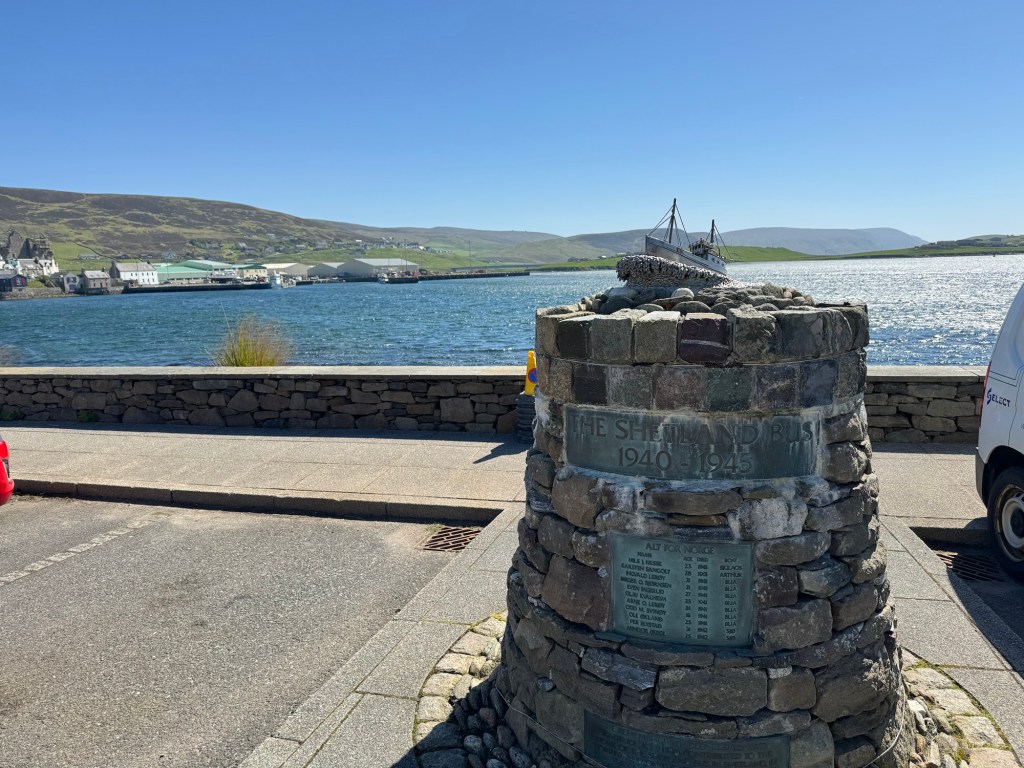
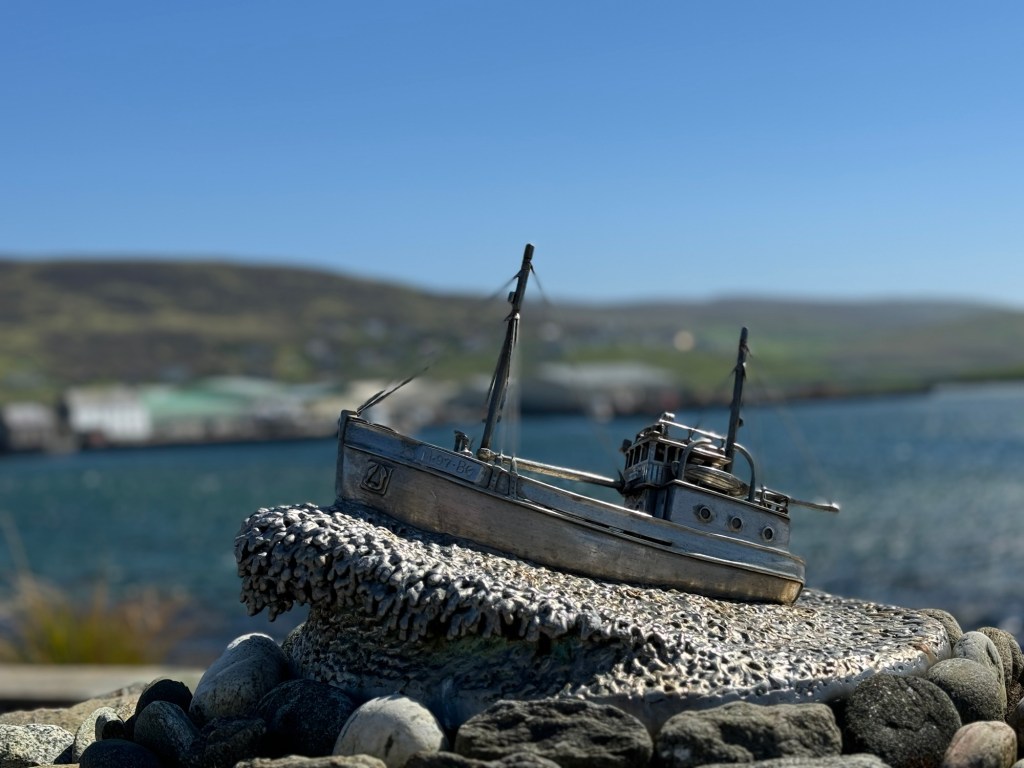
The Memorial was built in celebration of the legacy of this British-Norwegian resistance movement and incorporates stones from the towns of the 44 men who lost their lives, with their names also inscribed.

And just to break up the intensity, the museum also has a couple of Shetland ponies.

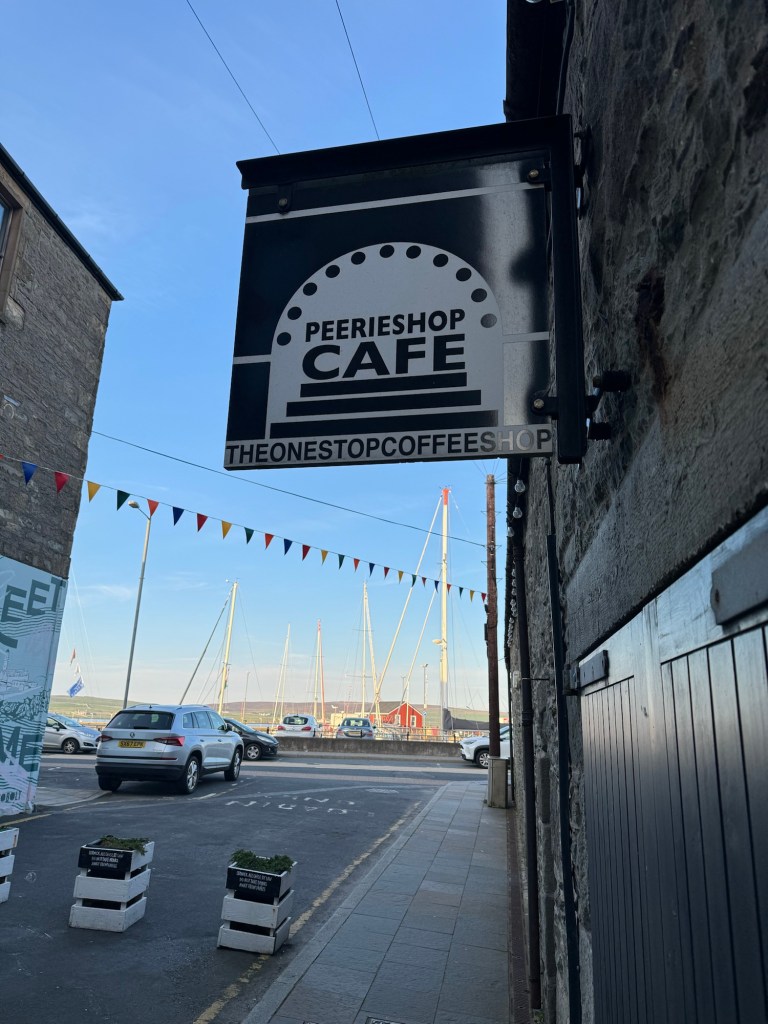
As we head back to Lerwick after our excursion, I’ll note that the town has a pretty impressive restaurant scene. I already told you about Fjara, but there’s more yumminess. Every morning I’ve had a flat white and softie egg sandwich at the Peerie Shop Cafe while sitting outside and looking at the boats in the harbor.

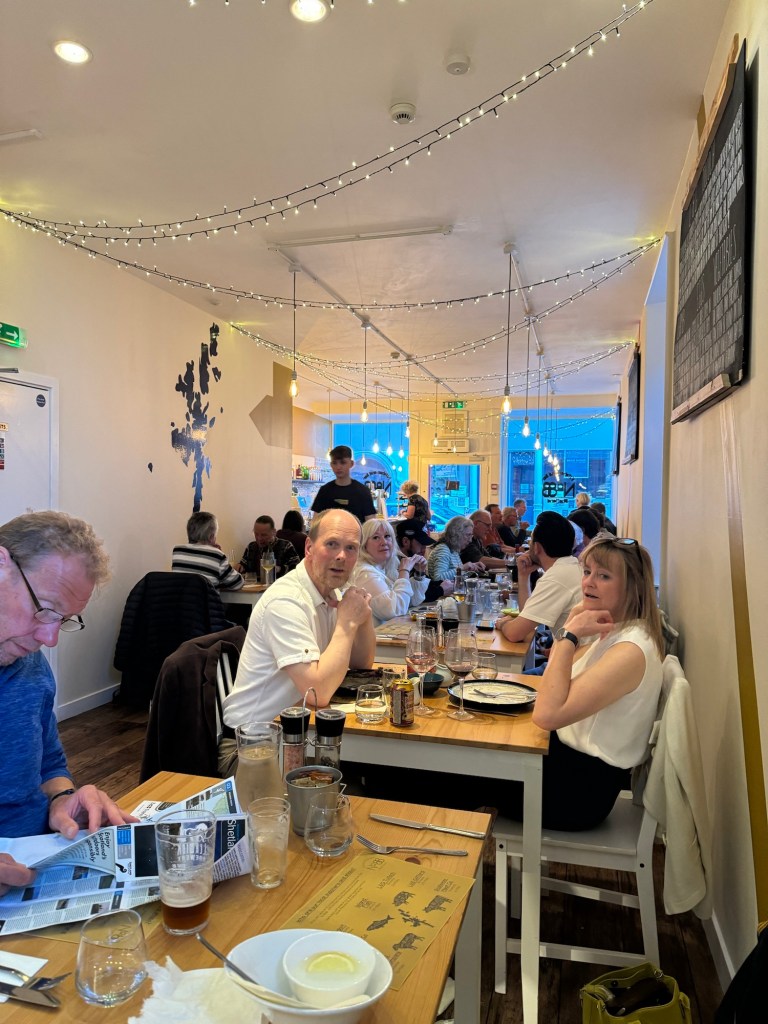
The most awesome restaurant in town has to be No. 88 Kitchen and Bar. I had the best Shetland mussels I’ve ever had and (whispers) locally sourced lamb – also the best.

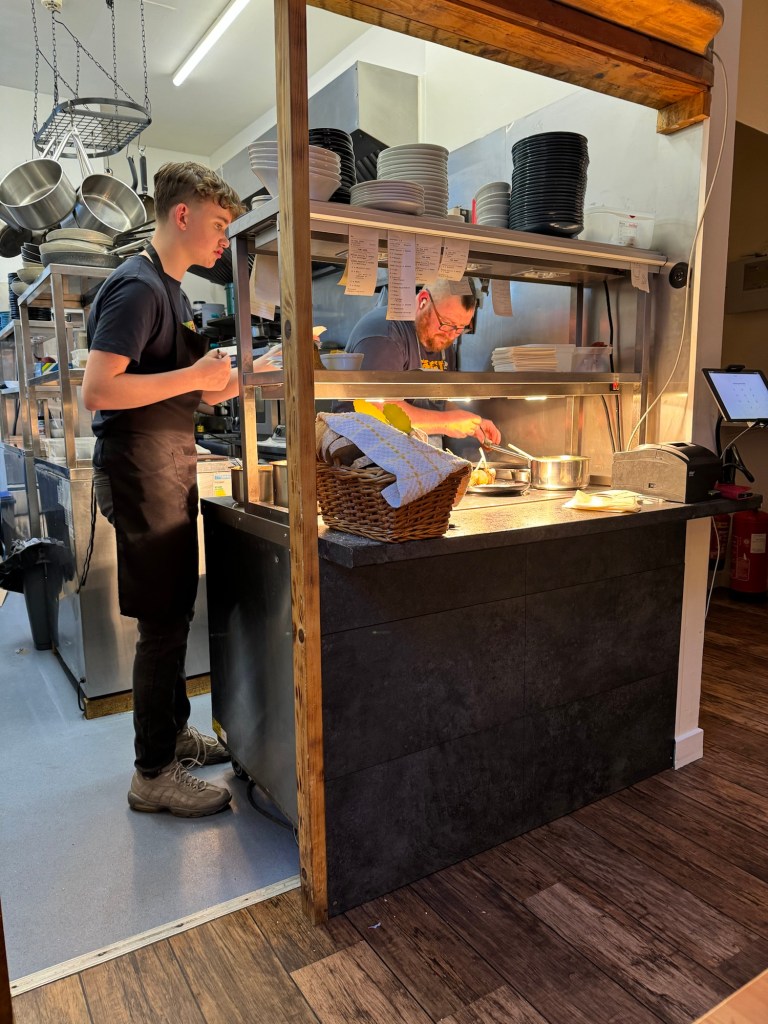
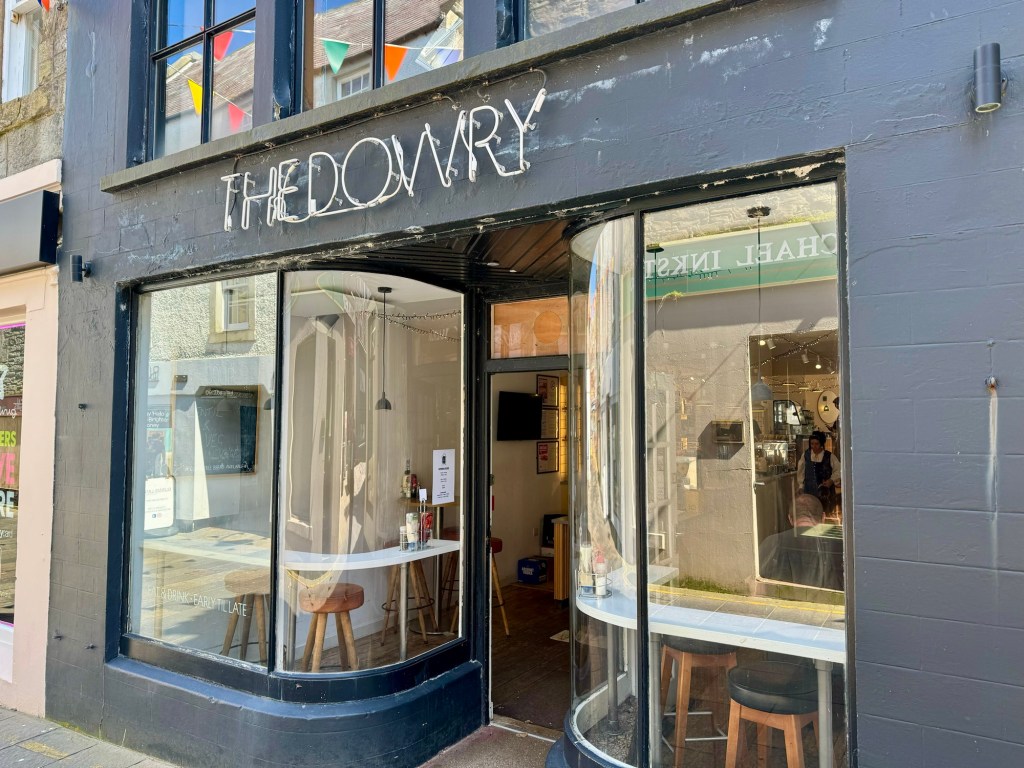
And The Dowry is pretty fine too, although the staff all seem to be under 18 and they talk to each other a lot. Why yes, I am old.

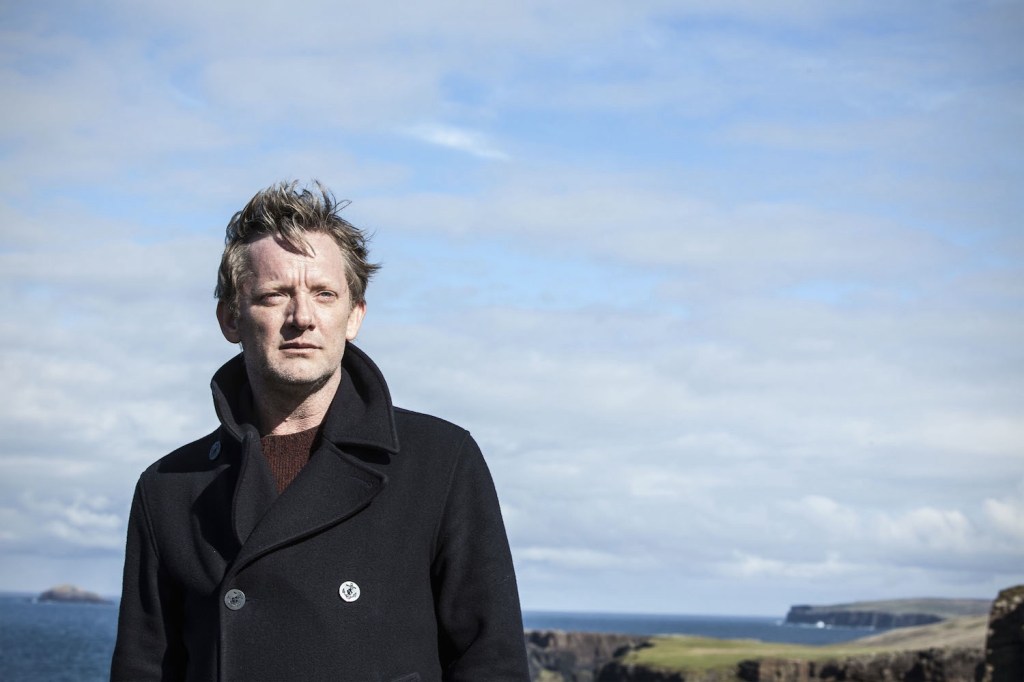
On my last full day, after relenting and finally buying sunscreen in Scotland for crying out loud, Drew, a local tour guide born and raised in Shetland, collected me at the airport after I dropped off my wee blue McRaggie. He drove me around parts of Mainland Shetland I hadn’t seen, including Brae and particularly Eshaness, which features unbelievable cliffs that have figured prominently in a certain show vis a vis someone plummeting to his death after being shot. We are also visiting this spot during the Wilderness Scotland trip, but who knows in what weather and also we’re doing a longer hike along the coast.

On the way to the cliffs we stopped in the middle of the road so I could pet Shetland ponies because I’m an American tourist.

This one particularly liked to have his butt scratched.

And here are the amazing cliffs.

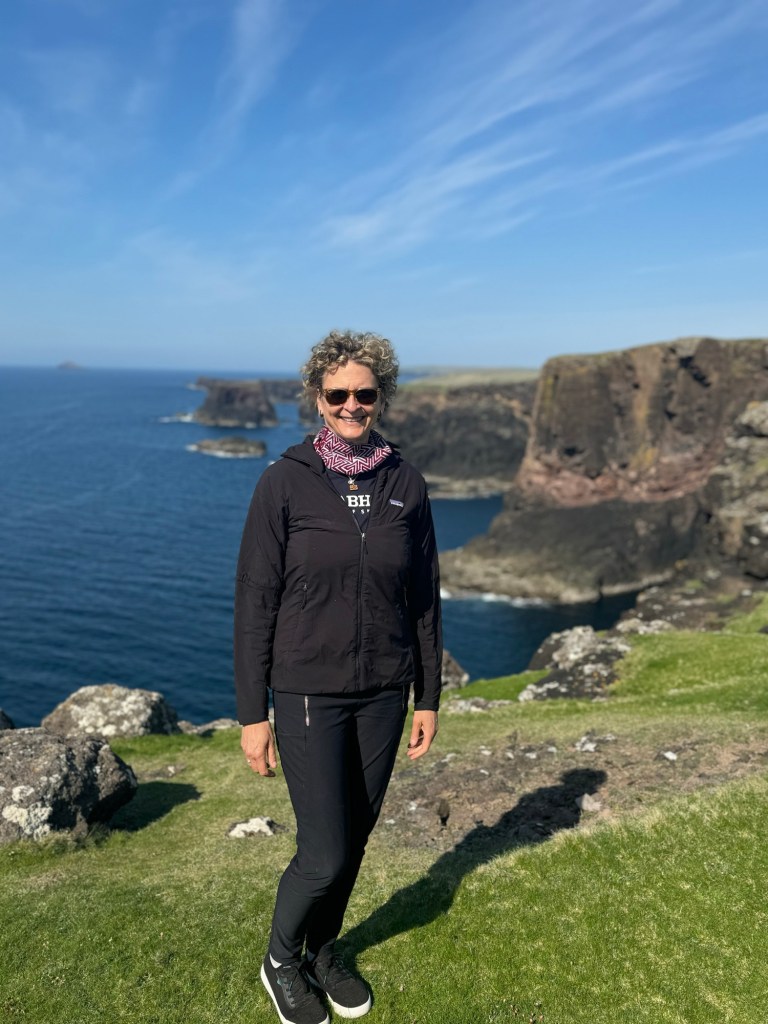
This is me standing in front of the amazing cliffs wearing one of the scarves I was forced to buy on the high street.

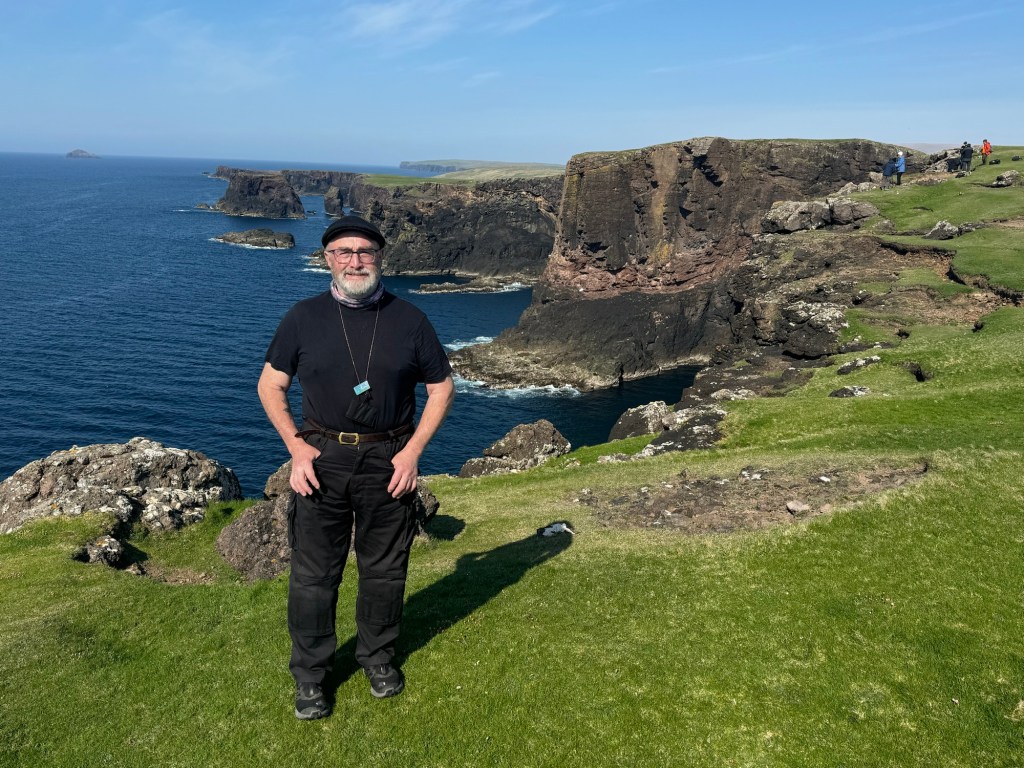
And this is Drew standing in front of the amazing cliffs being all Scottish with his headwear and beard.

Drew knew a lot about American politics so we had a great discussion about that particular shitshow and also British politics. He is excited for Labour to vanquish the Tories in the next election. He was himself a politician, serving on the Shetland Islands Council, and he pointed out a number of features in the area that he helped make happen. He also is very, very proud of Shetland the show. He pointed out a ruin on the side of the road that was used for Brian Cox’s home in one of the series, remarking that he appreciated how Brian, a born and bred Scot, “tried” to master the Shetland accent.

And now dear reader, not all was unicorns and rainbows on this tour. While Drew was a super interesting guy who clearly knows everyone on Shetland, he was also, shall we say, a confident driver. He spun his Rav-4 around corners and punched the accelerator like someone who was born here and happy to be driving a car with spectacular pick-up. Even sitting in the front seat, and as someone who isn’t necessarily prone to motion sickness, I got to the point where I couldn’t move my head and my voice was getting raspy. Did I say anything? Oh hell no because I’m FINE.

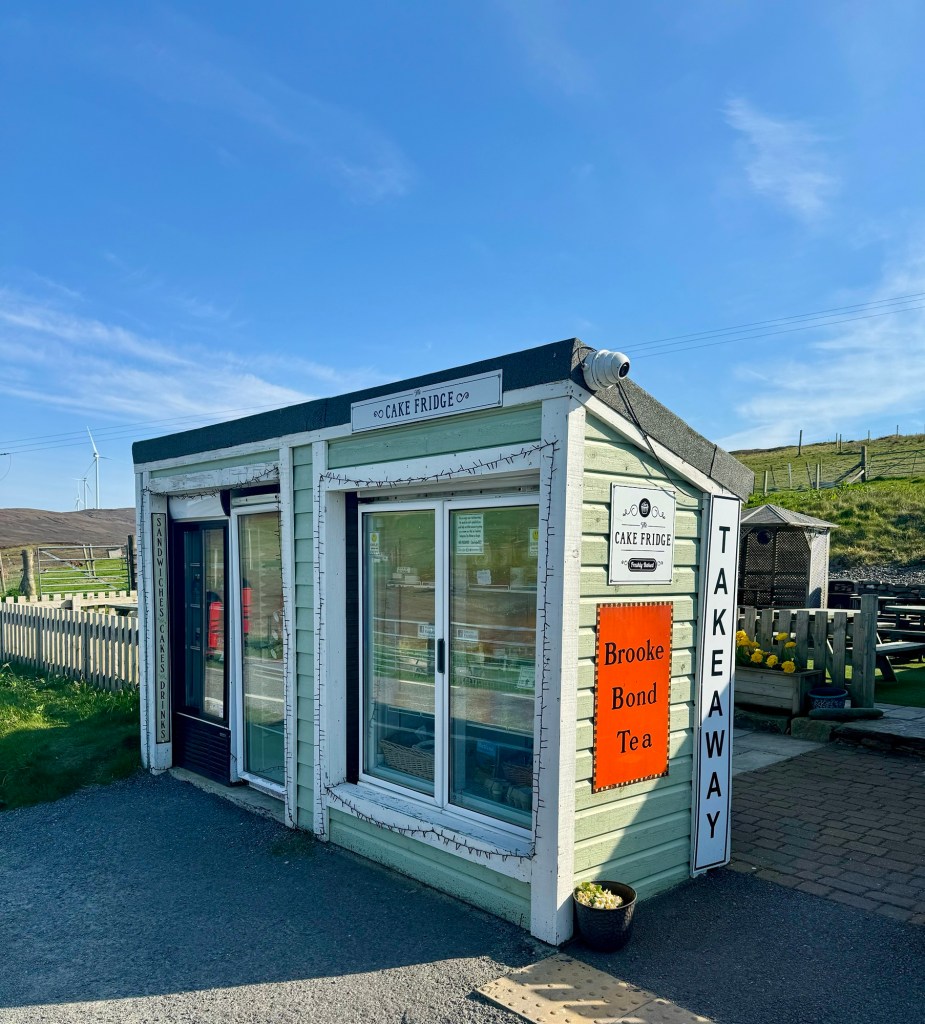
We stopped at the iconic Cake Fridge on the way back to Lerwick and I acquired a yummy something that would be eaten much, much later.

And that, my friends, is a wrap for the solo part of my journey for a while. Except for a little note – I just received an alert on my phone announcing there’s a good chance for Northern Lights in my location right now. Sadly, the sun doesn’t really go down here so it’s just salt on the wound.

Bye for now Lerwick.

Onward to Wilderness Scotland. Thanks for coming with me.

Shetland

We aren’t in Kansas anymore, my friends. In the best possible way.

Shetland (they must never be referenced as “the Shetlands” and only “the Shetland Isles” in case of dire emergency) is an archipelago of about 100 islands, 15 of them inhabited, located 130 miles north of the Scottish mainland and 400 miles south of the Arctic Circle. Shetland is, needless to say, the northernmost bit of the UK. The North Sea is off the east coast and the Atlantic off the west. More than 5,000 archaeological sites across Shetland provide evidence of human activity as far back as 4300 BC including the ubiquitous Picts from 300 AD. In the 7th century missionaries from Ireland or western Scotland began converting the previously (and gloriously) pagan population to Christianity only to have the place invaded by Vikings in the 8th and 9th centuries. They ruled the islands until the 15th century and the Norse influence is still strong in Shetland.

On September 8, 1468 the islands were mortgaged to Scotland for 8,000 florins as part of the marriage agreement between the future James III and Princess Margaret of Denmark. Fun fact, Margaret was only 13 at the time of their marriage at Holyrood in Edinburgh. In 1492 the Scots annexed both Shetland and Orkney.

In Shetland you are never more than 3 miles from the sea, and it’s nearer to Bergen, Norway than it is to Aberdeen. It’s at the same 60 degrees north latitude as Anchorage.

First of all, let me say that dropping off a rental car at Edinburgh airport is a pleasure and a breeze. Of course I had allotted too much time, so ended up in the airport for way longer than was strictly necessary. Luckily it’s a fun place! The duty-free has an incredible collection of whisky, for one. Even some pricey behind-glass bottles. The woman doing a tasting told me that distilleries make bottles you can only get in duty-free which was a heretofore unknown whisky fact.

Shared this with whisky-loving friends and told each that I bought them bottle.

Also, remember the AirPods story from earlier in this blog? Well, in the couple of hours I spent at the Edinburgh airport, I saw nary a pod. So not as important in Scotland maybe because people talk to each other and listen to their surroundings?

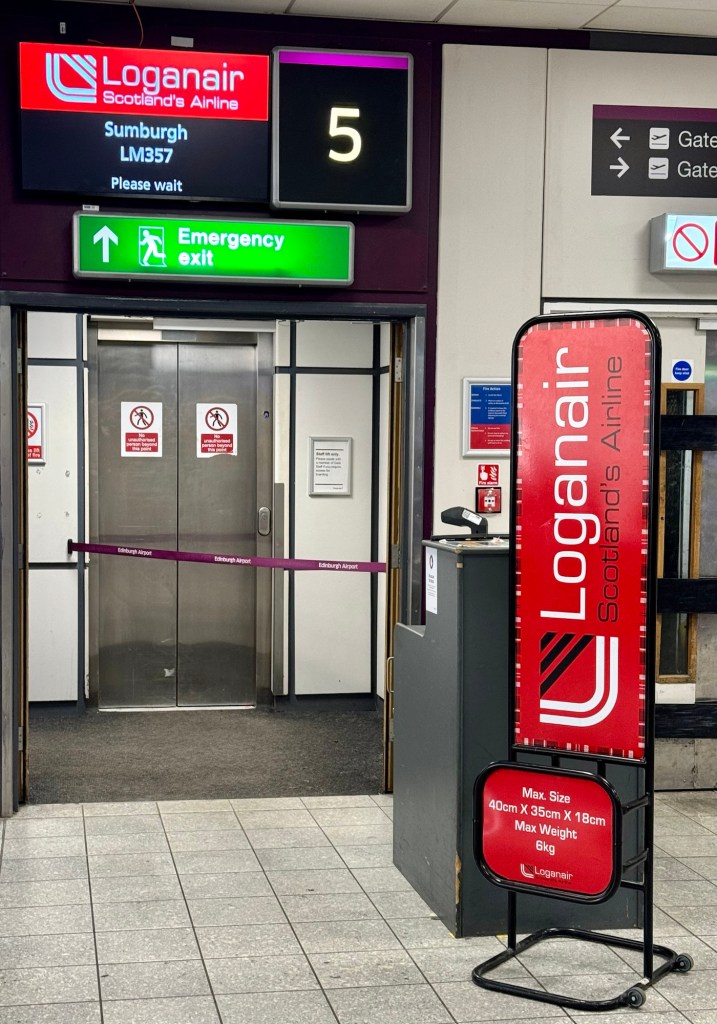
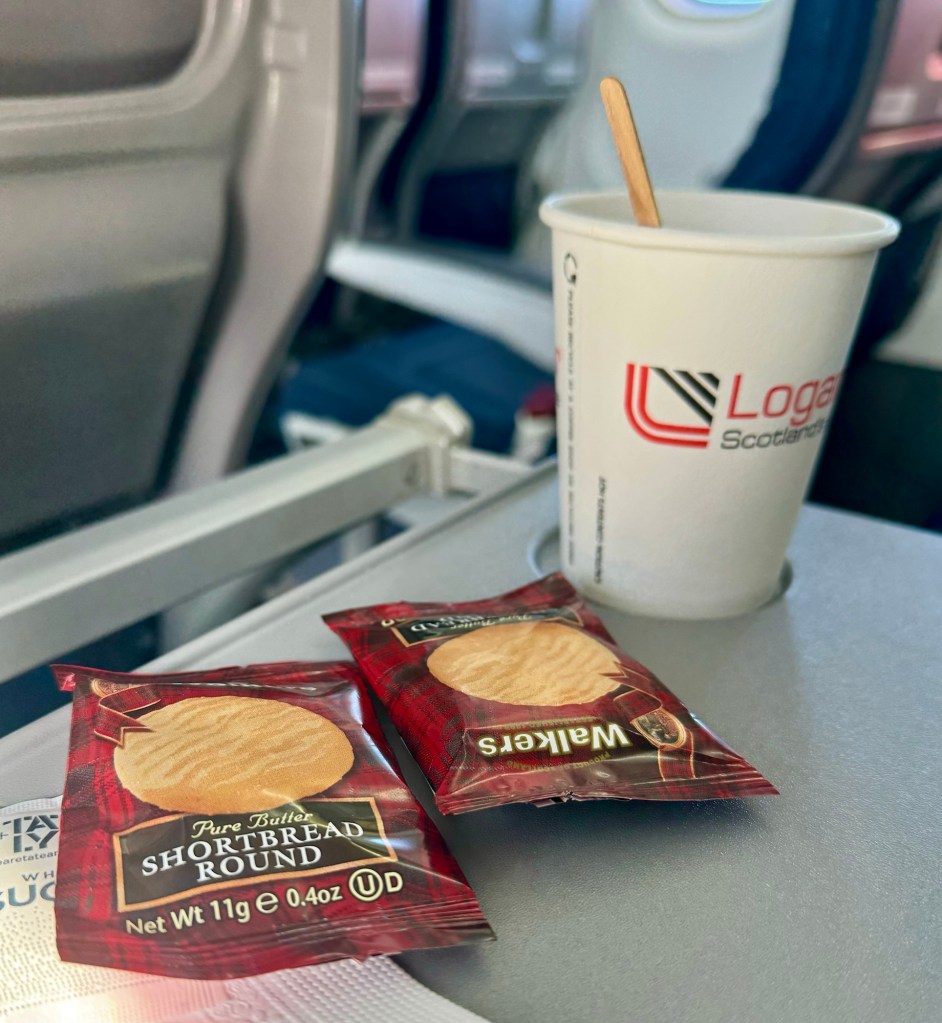
My hour-long flight to Sumburgh was delightfully uneventful. A prop plane! The Loganair planes are decorated appropriately, shortbread is served, flight attendants wear plaid vests, and each seat has a different bit of plaid as a headrest.

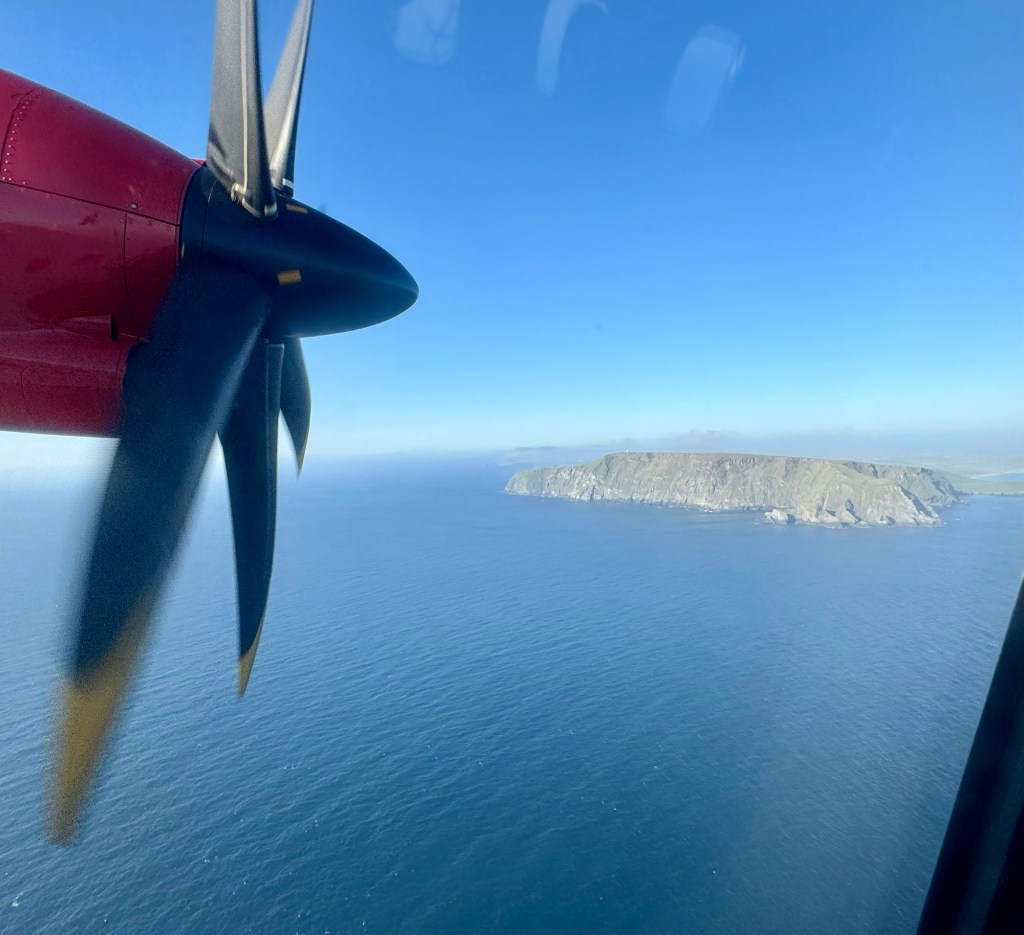
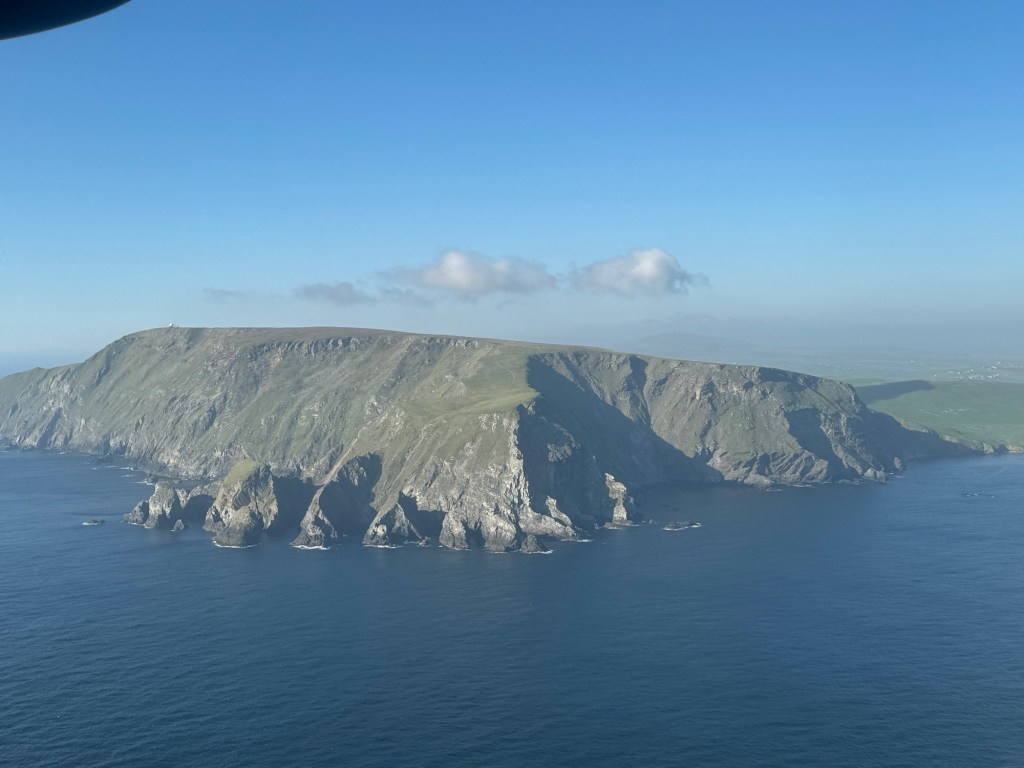
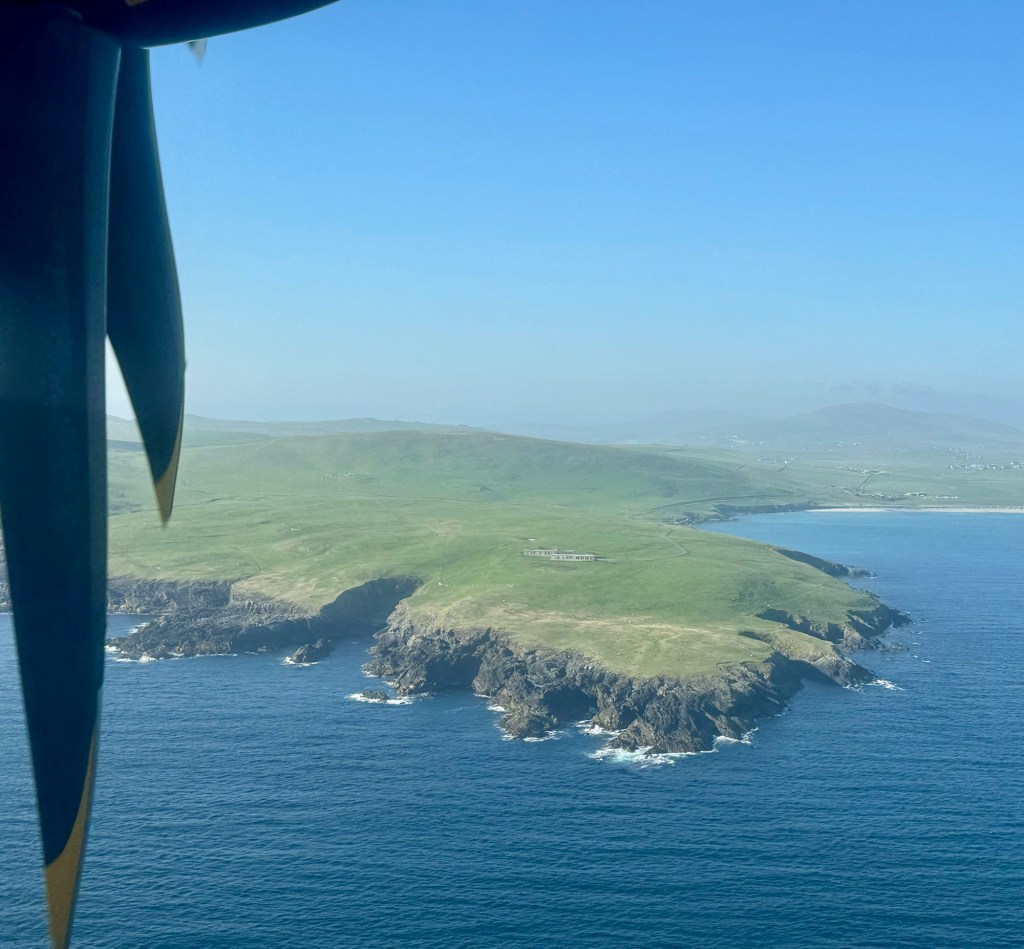
It was a ridiculously gorgeous day. Flying into Sumburgh you do wonder whether you might land in the actual ocean.

Sumburgh is a teensy airport and it took me a minute to adjust to the mellow vibe. There were two rental car windows, one for Bolt and one for Europcar. I didn’t see an Avis window. Dang! Moment of panic. Finally realized that next to the Bolt window there’s a typewritten sign that you have to squint to read saying they also handle Avis rentals. OK whew.

I arrive at the window ready to hear the overexplaining of all the things, like purchasing an excess damage waiver, a two hundred pound deposit plus a hold on your credit card for the full rental price, if I get a ticket I’m responsible, yadda yadda. Nope. I filled out a piece of paper that someone had typed up and xeroxed, was handed a one-page printed contract to sign in various places, and then the guy handed me a key, saying that I should just drop it down a hole in the counter when I returned the car. He told me where the parking lot was and shifted to the next customer. No car inspection, no checking the mileage, just here’s the key, the car is back there, kthxbai.

So I dragged my luggage out into the parking lot and looked dejectedly at a sea of cars. No numbered spaces, no rental company signs, just a garden variety parking lot. I clicked the key fob hopefully, alas to no avail. Another couple who had just located their car kindly helped me find mine. The only clues you have are the license plate number and the model of the car.

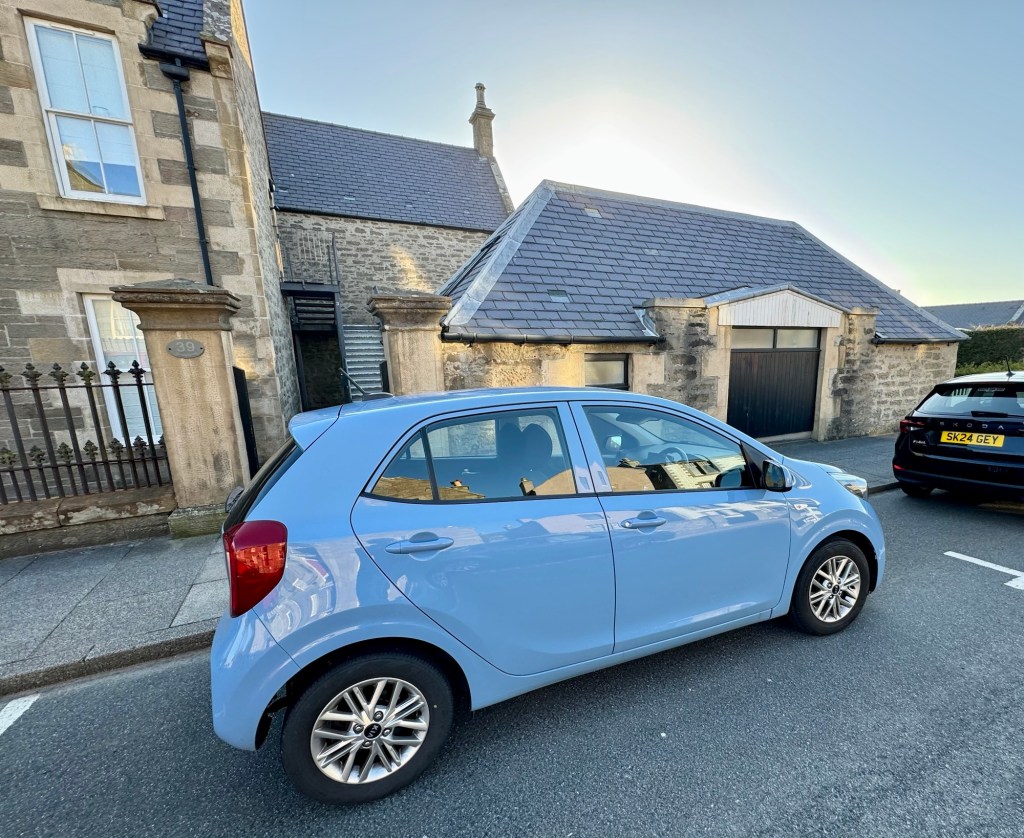
I rented a teensy little dude, a Kia Picante, and it was fairly analog. No screen on the inside so you have to hold your phone in your hand while navigating. No backup camera. You use your key like a key, sticking it in the ignition like in olden times. BUT THERE WAS ENTRANCE MUSIC so I was good.

My wee McRaggie Kia parked in front of the AirBnB

I drove twenty minutes from the airport to Lerwick. Roads mainly deserted, the sea was everywhere, and not a single tree. It’s a sparse and evocative landscape.

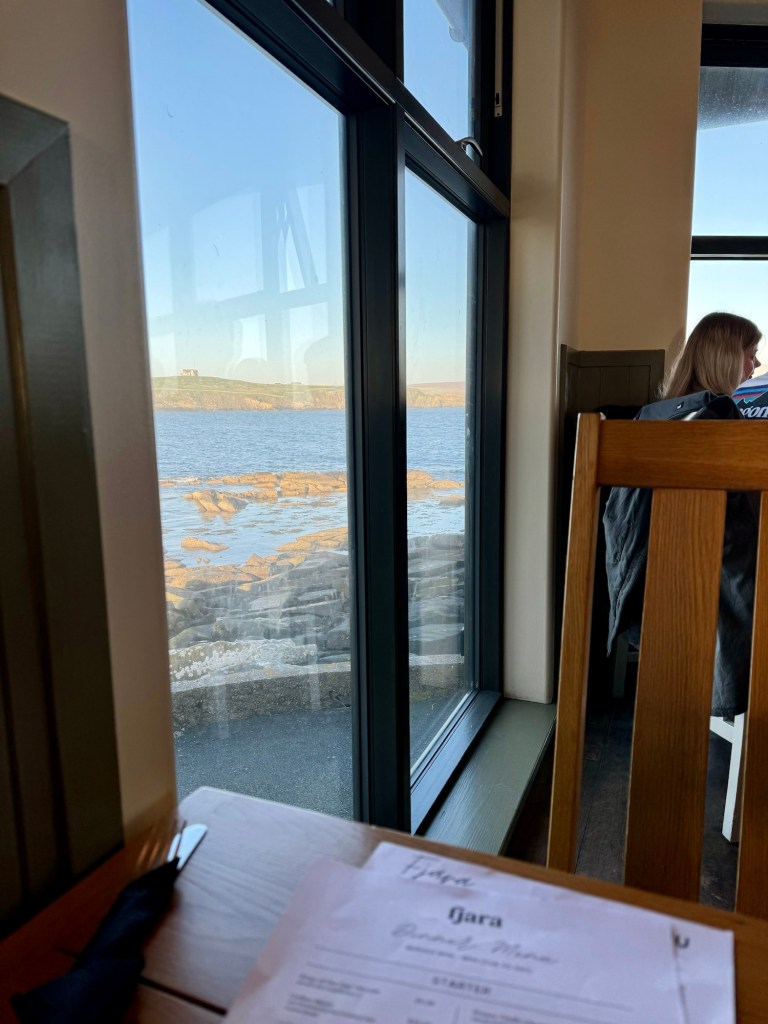
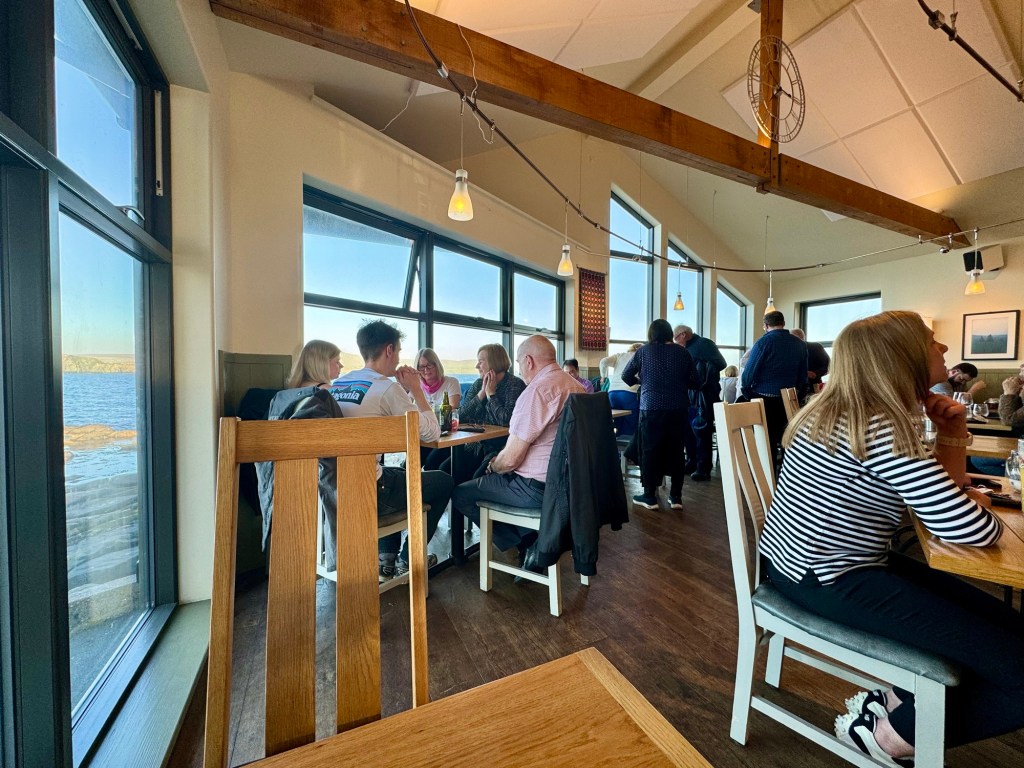
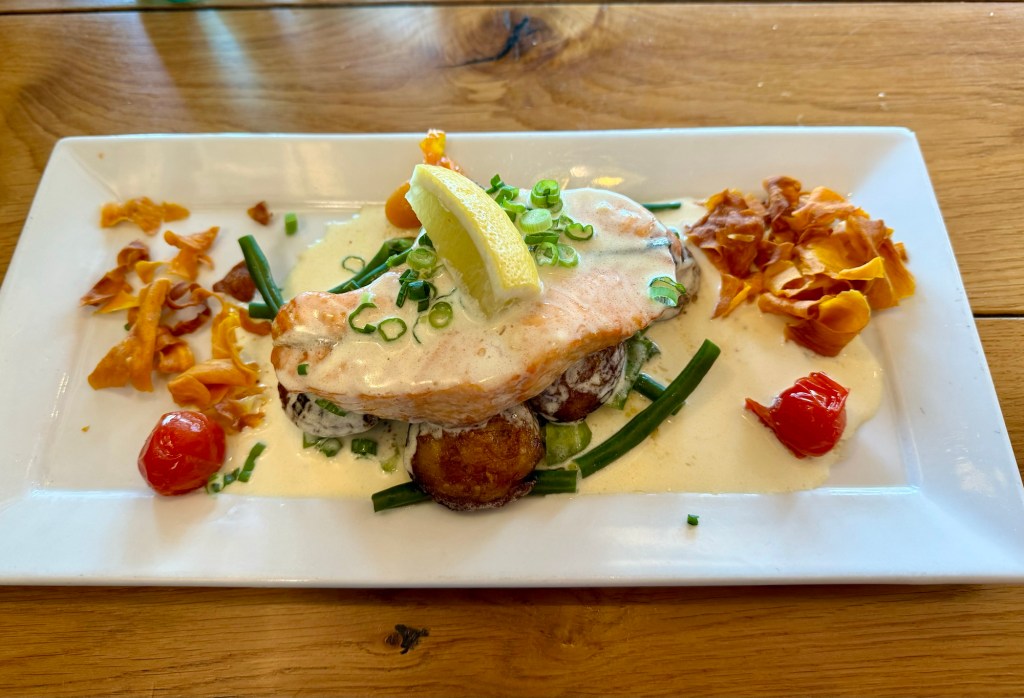
I successfully checked into my cute little Airbnb after an initial panic caused by being too dumb to operate a keypad, and drove to dinner at a gorgeous restaurant called Fjara, with spectacular sea views. The best Cullen skink I’ve had yet, and some incredible Shetland salmon.

View from my table

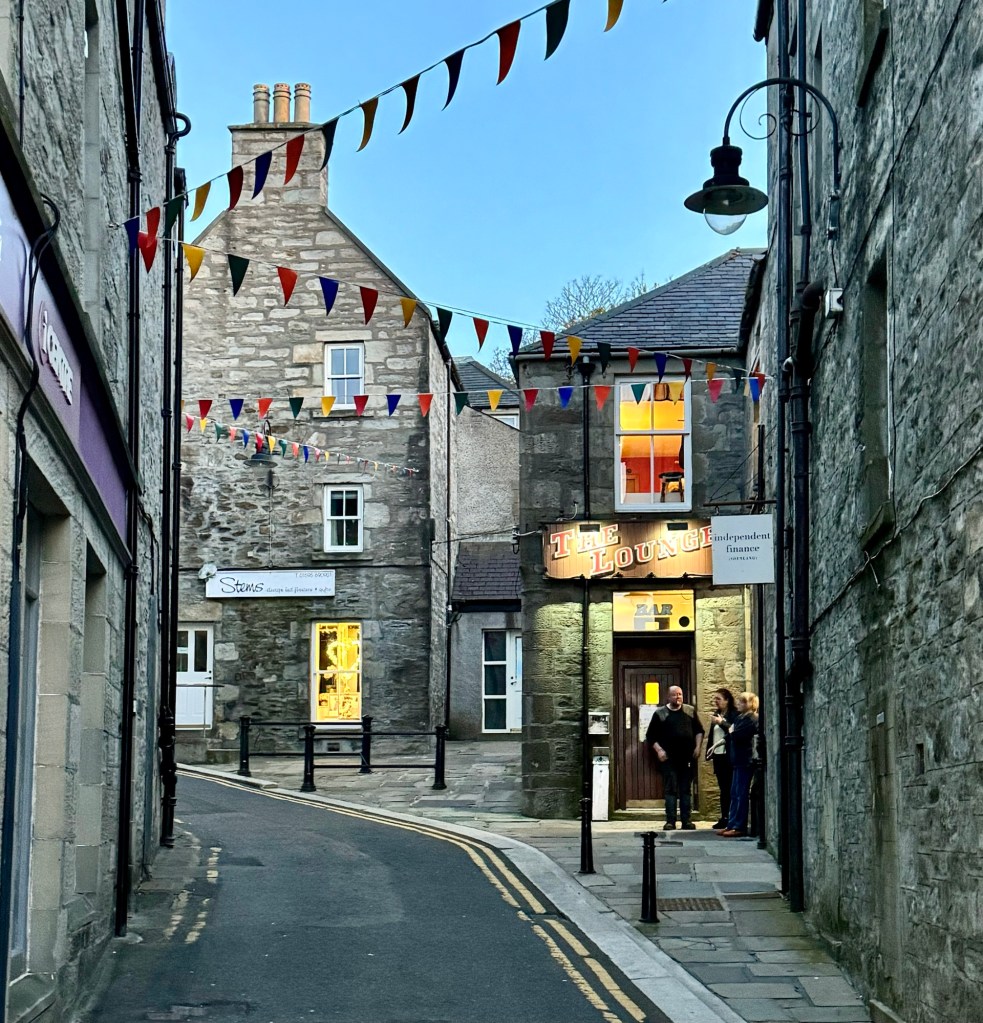
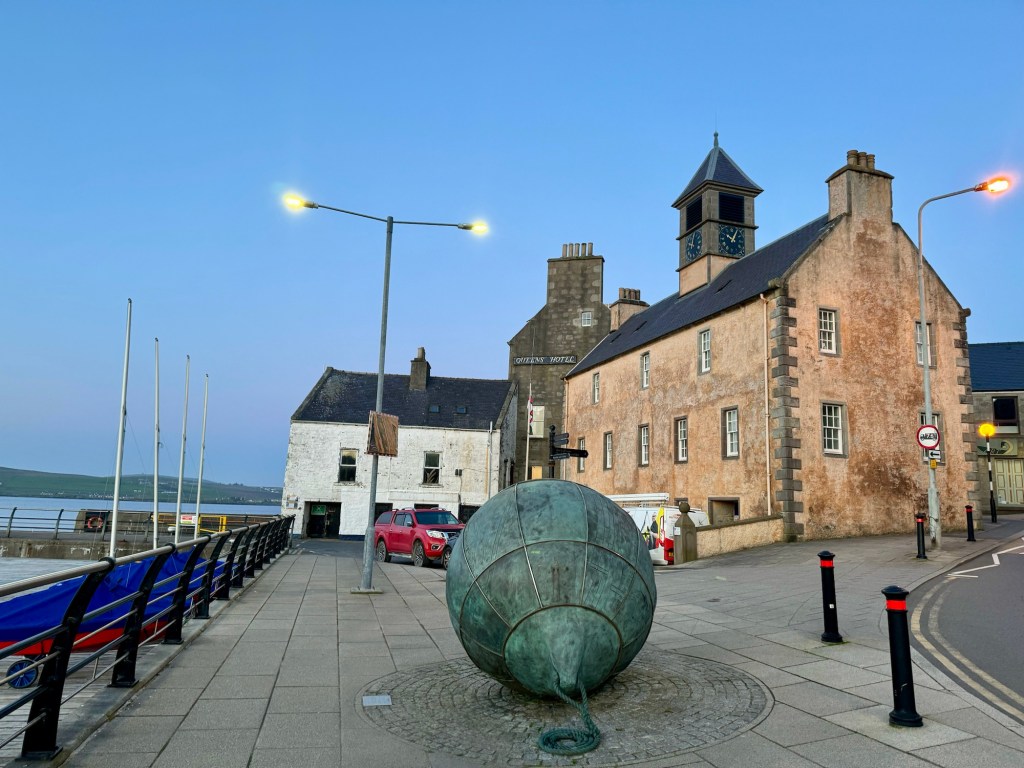
After dinner, around 9:30, it was still light so I walked around town. The high street is down by Lerwick Harbor, with the town rising on a hill behind. Many charming sloping alleyways, some with steep steps, provide access to Commercial Street, known locally as “Da Street.” Like magic, as I descended, I heard music. And lo, as I rounded the corner I saw the iconic pub in the Shetland TV series called The Lounge. The sleaziest possible name and yet the most brilliant pub.

Apologies, I am no DP.

The Lounge is a legend. Live music, locals, friendly, cheap and fabulous. The trad pick-up band was unusual in that it included three accordionists and a piano. They were great.

After a wee dram I visited the house where Jimmy Perez lives in the series, strolled around Da Street and snapped a few photos.

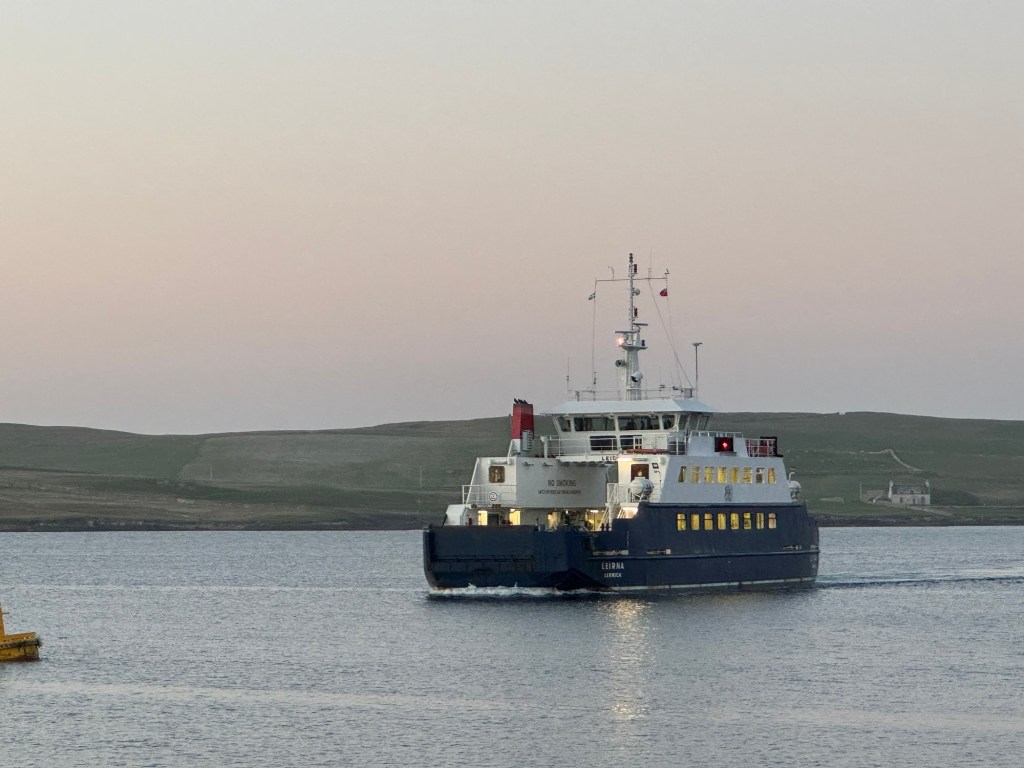
An inter-island ferry arrives
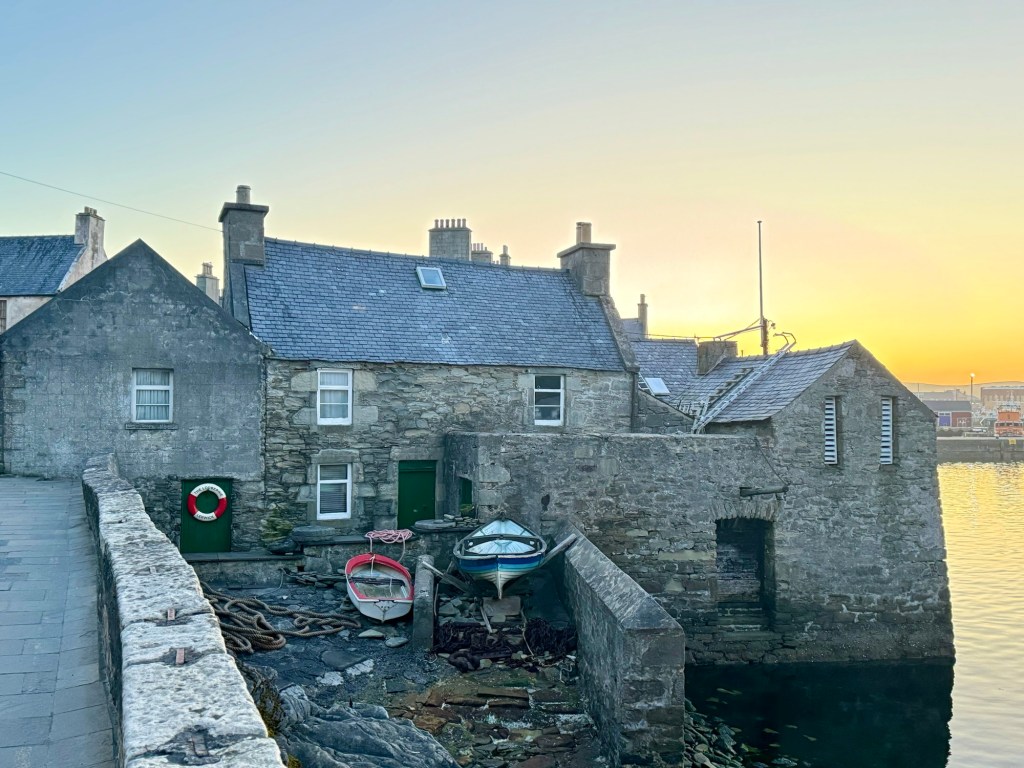
Jimmy’s house, built in the 1700s.
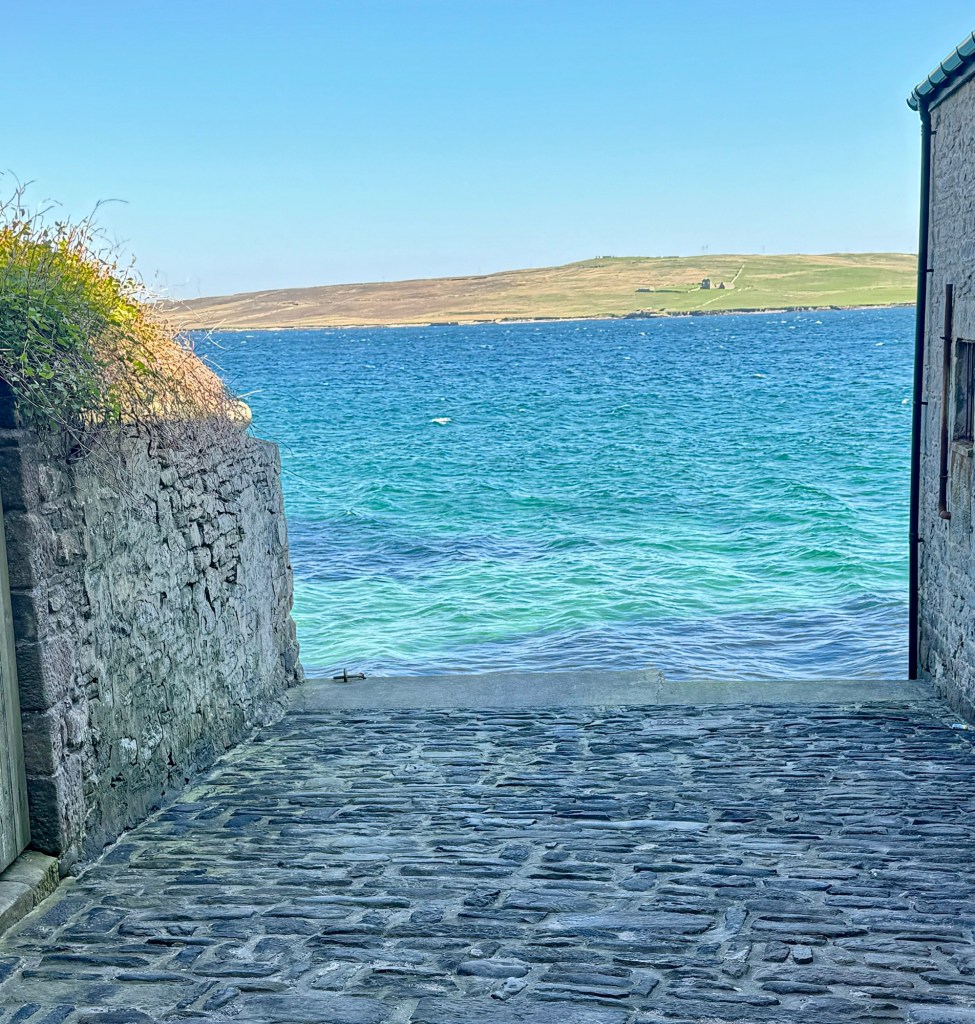
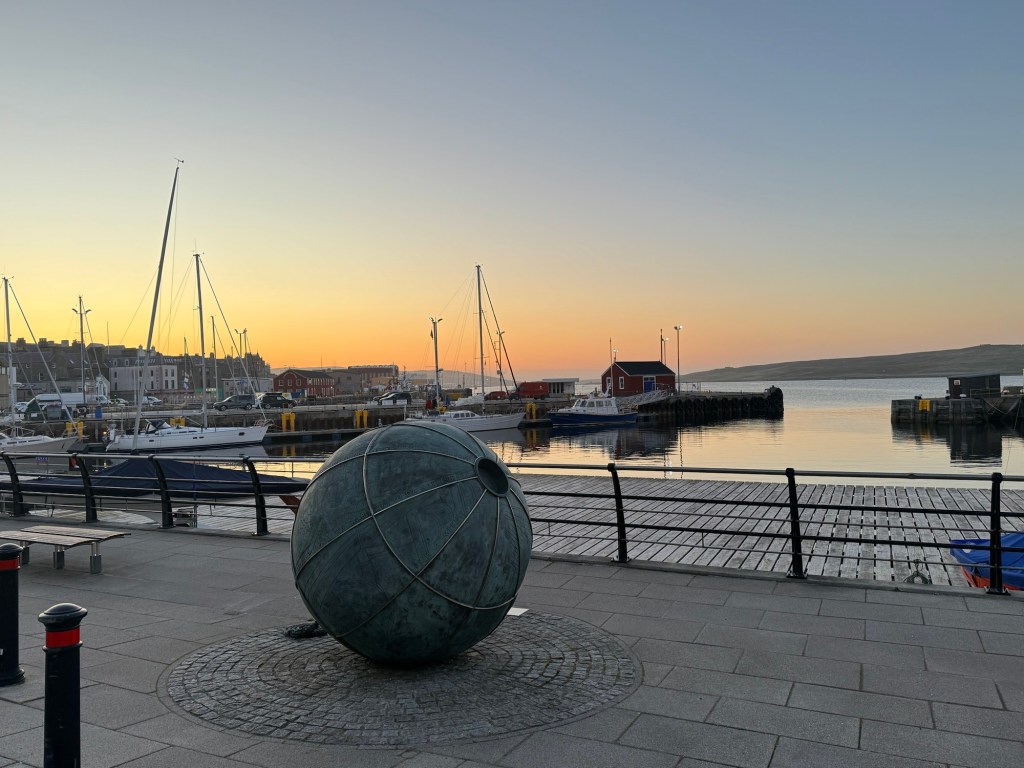
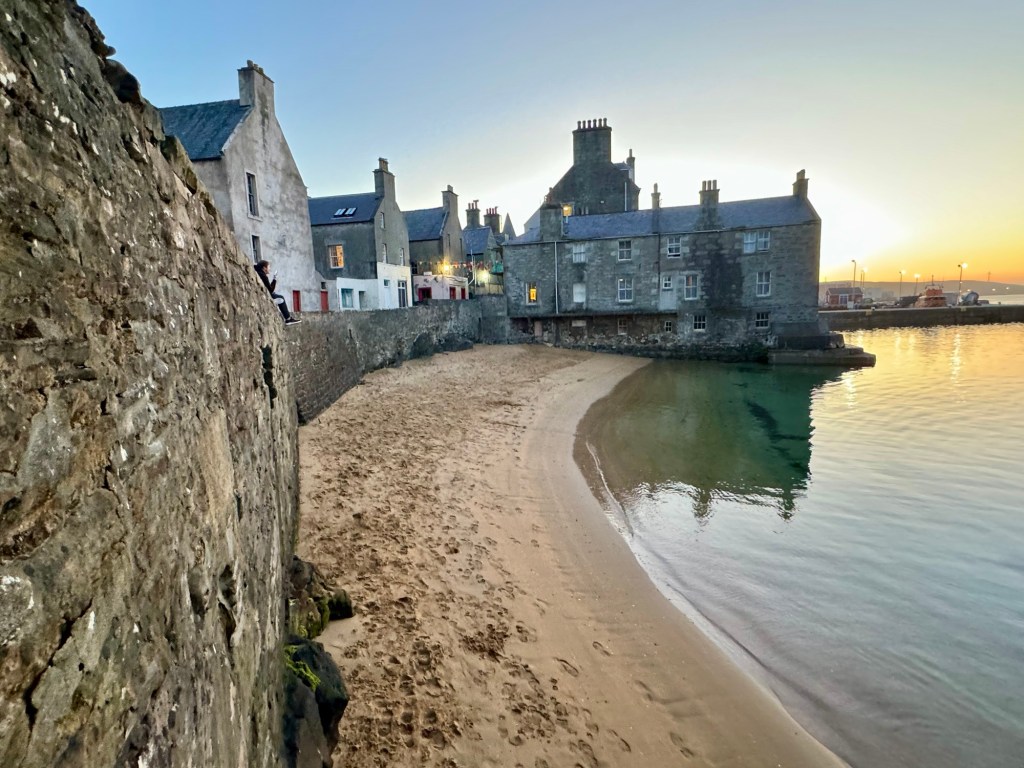
Bain’s Beach, where characters in the show have many deep conversations while gazing into the harbor.

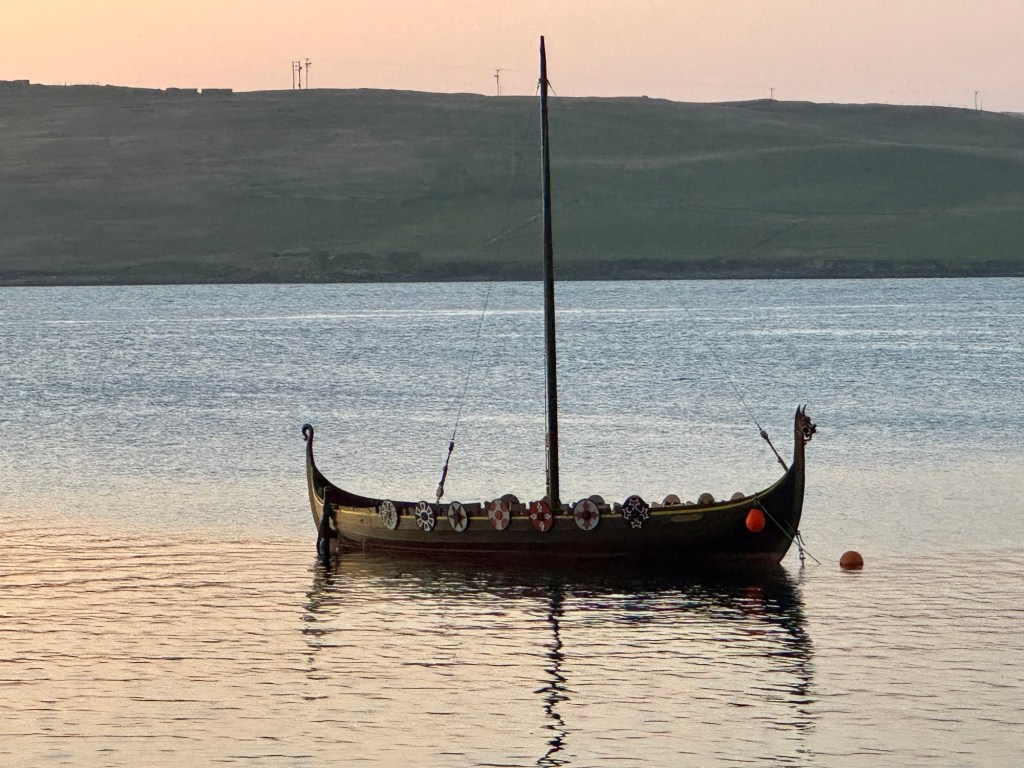
To top it all off, a Viking longship was anchored offshore.

Immediately quite taken with this place.