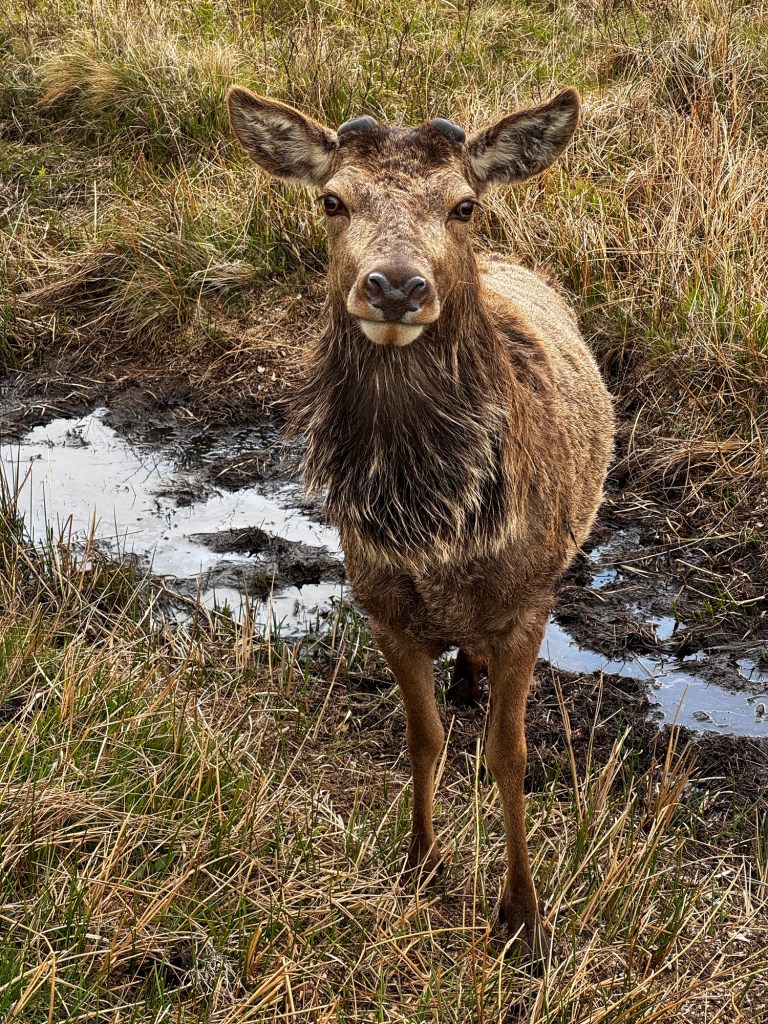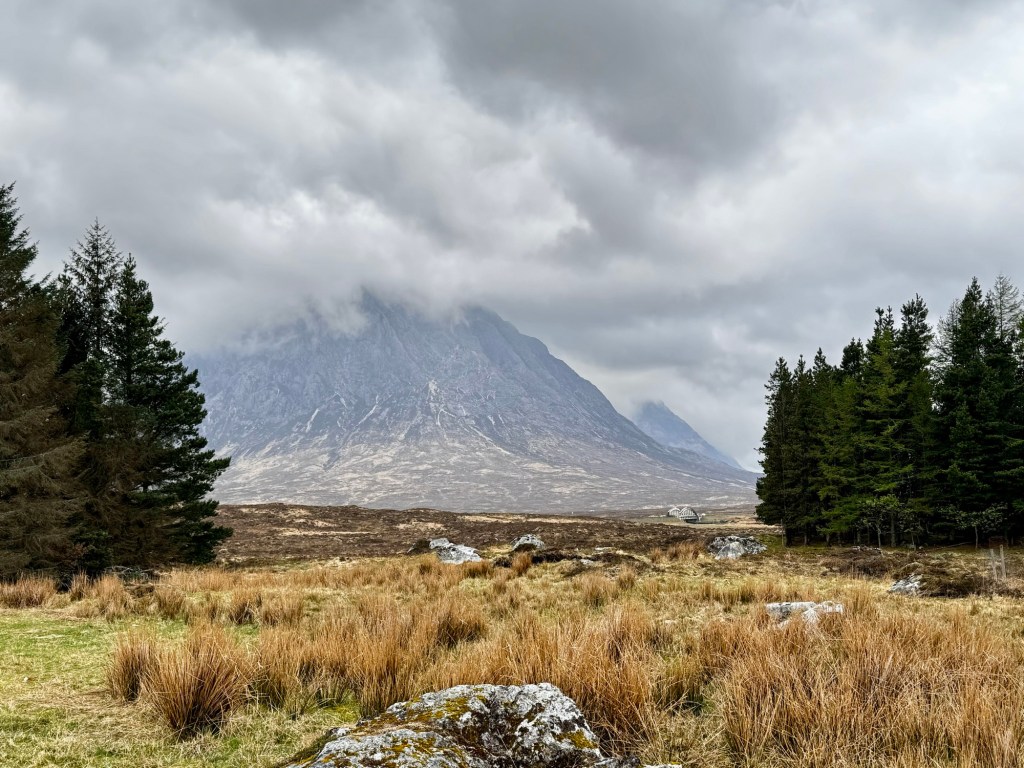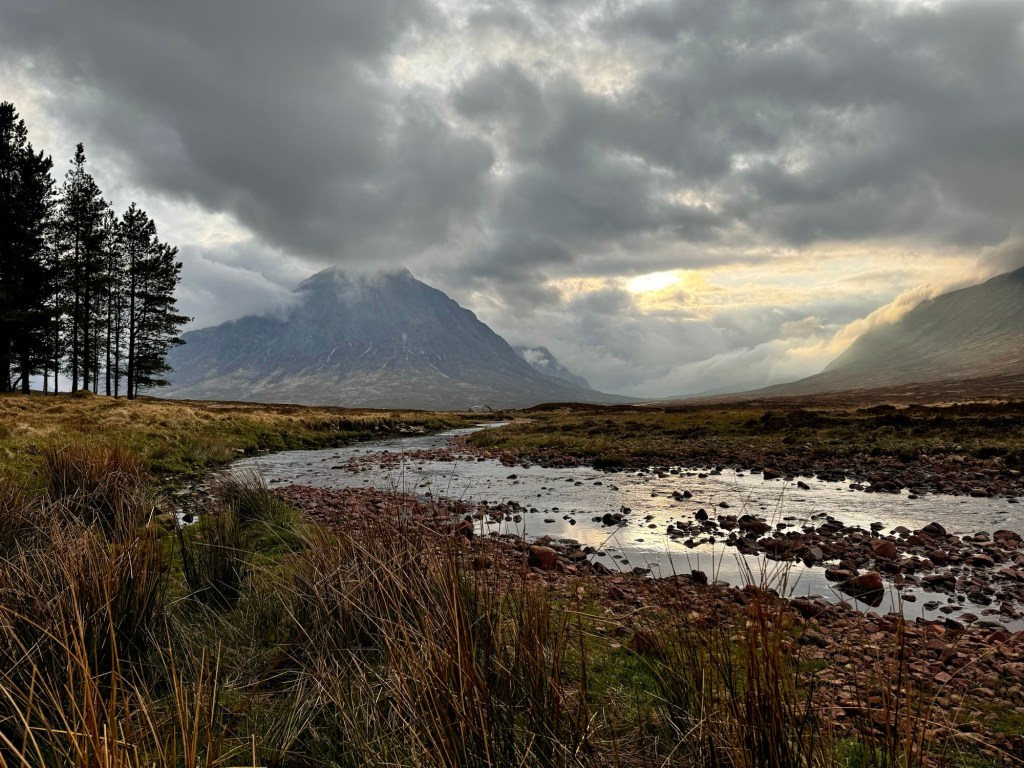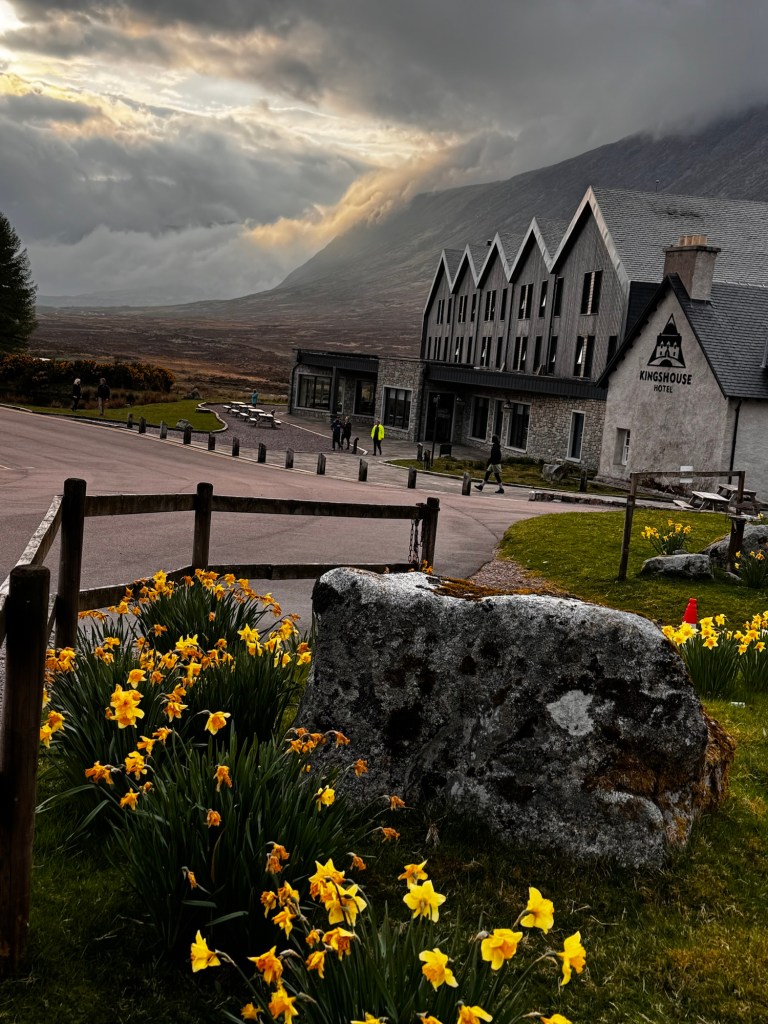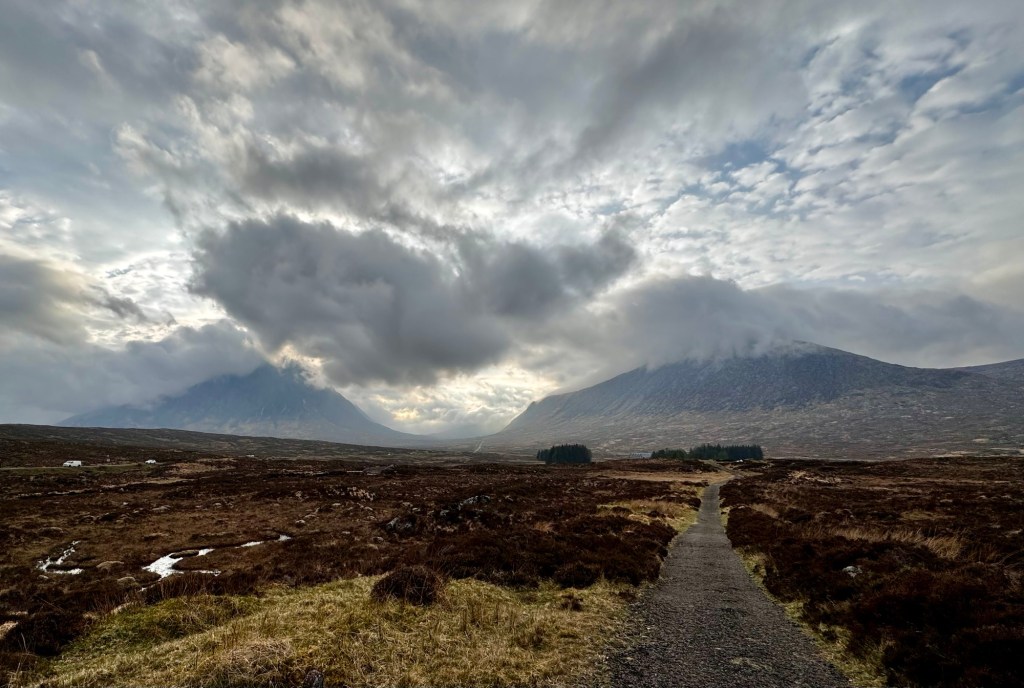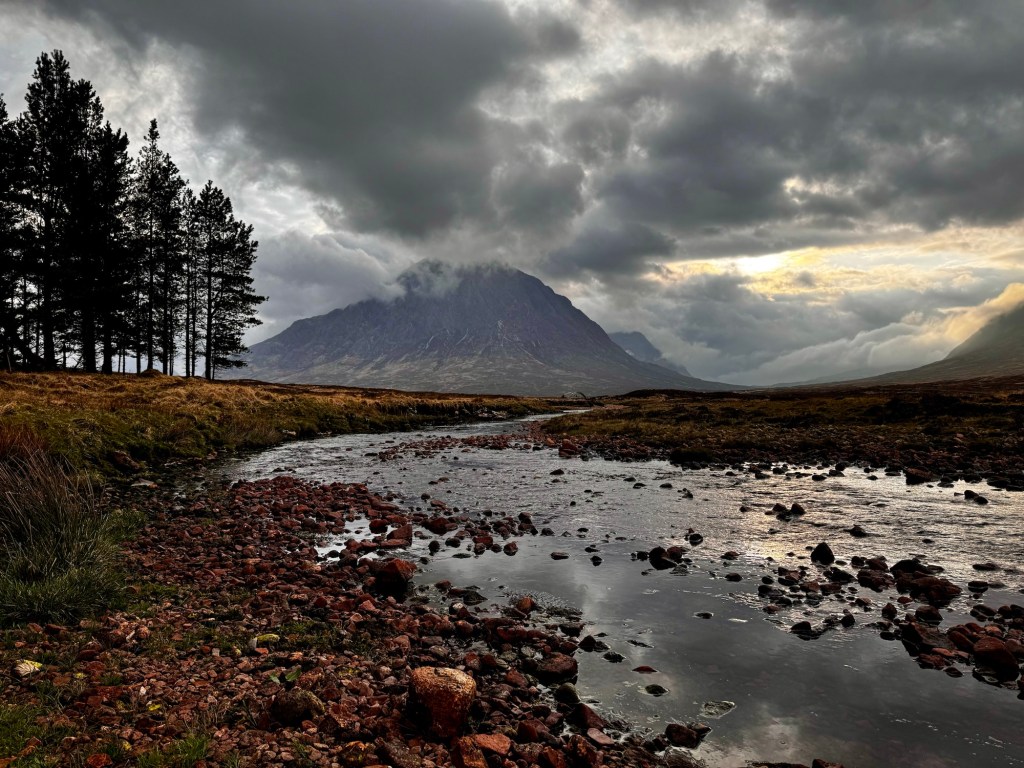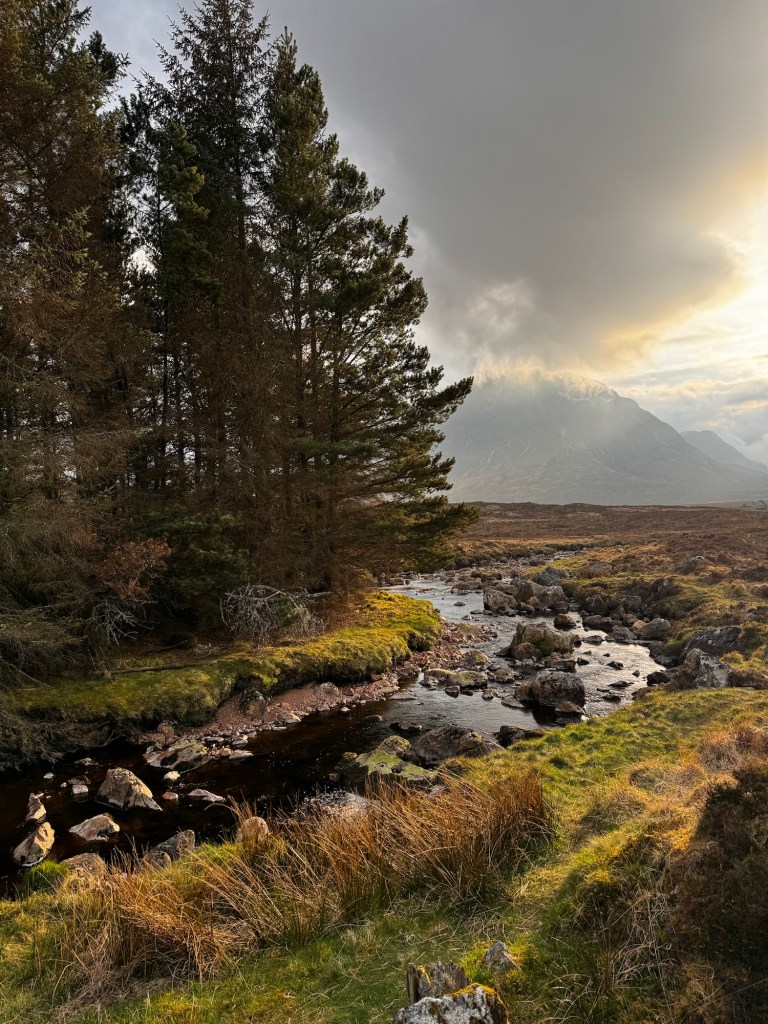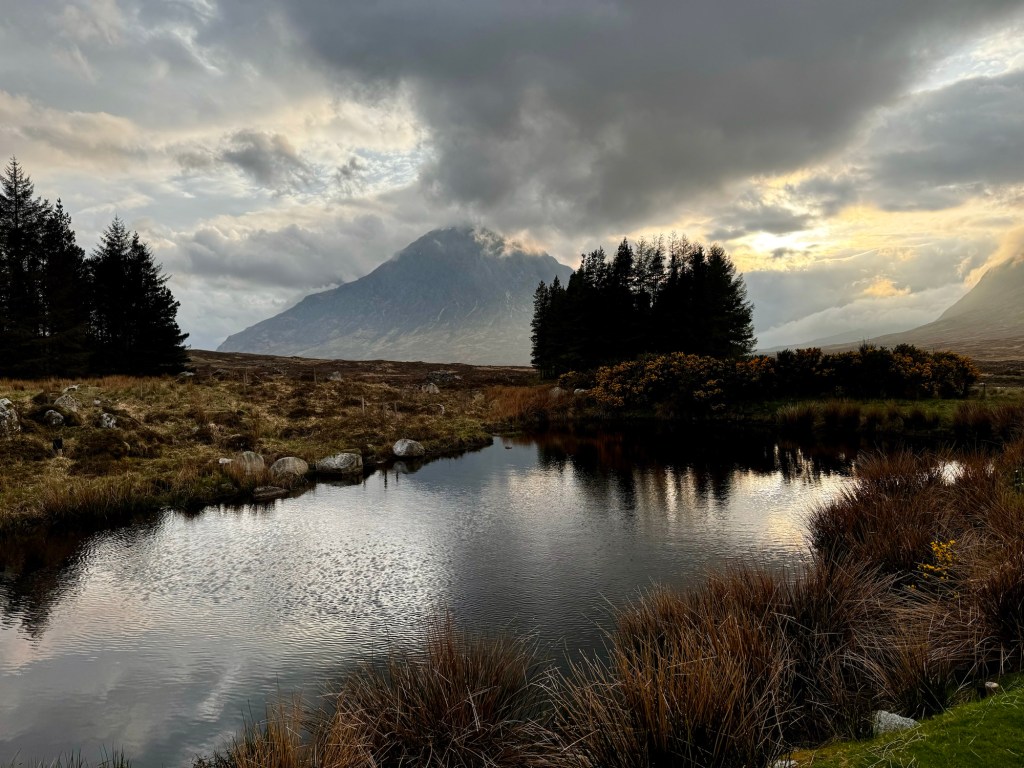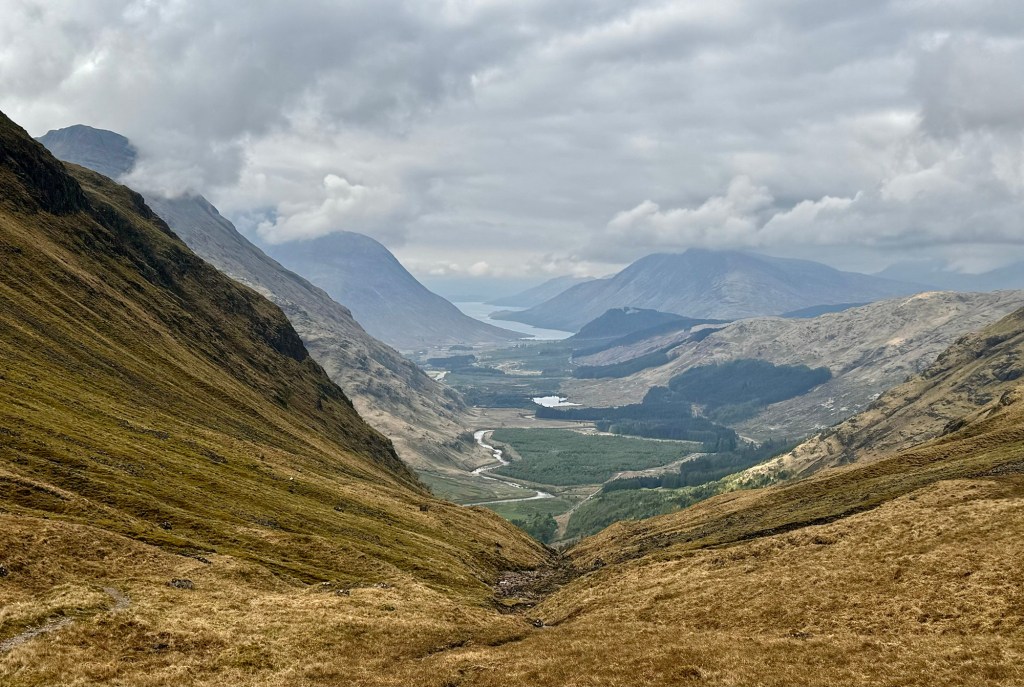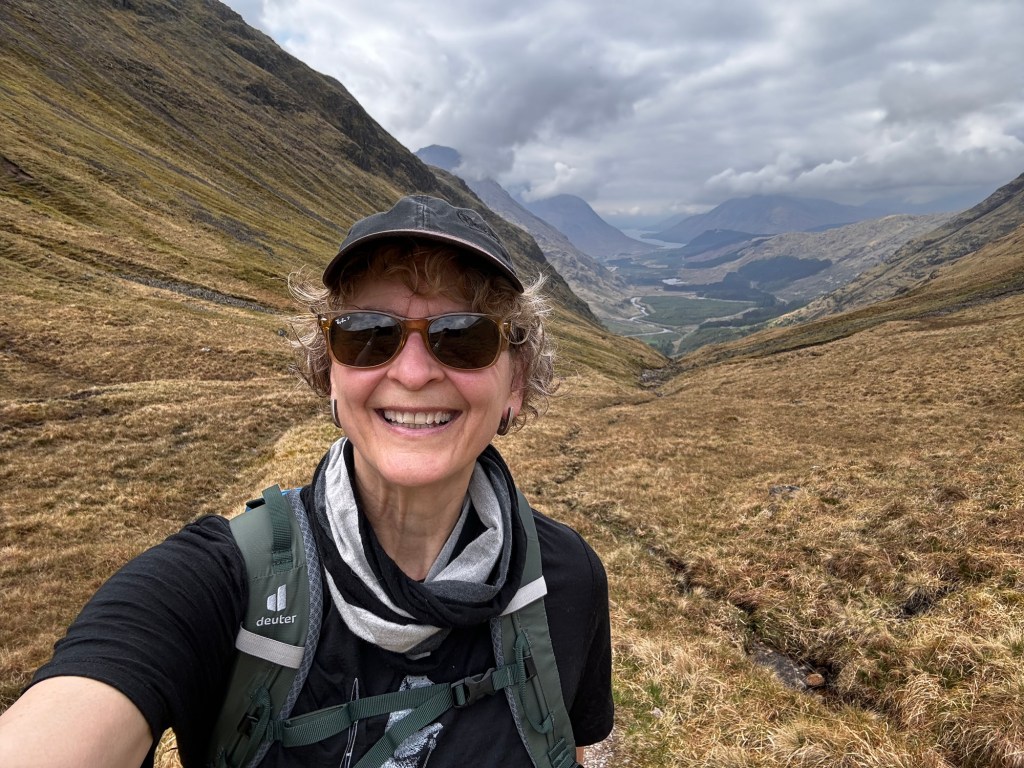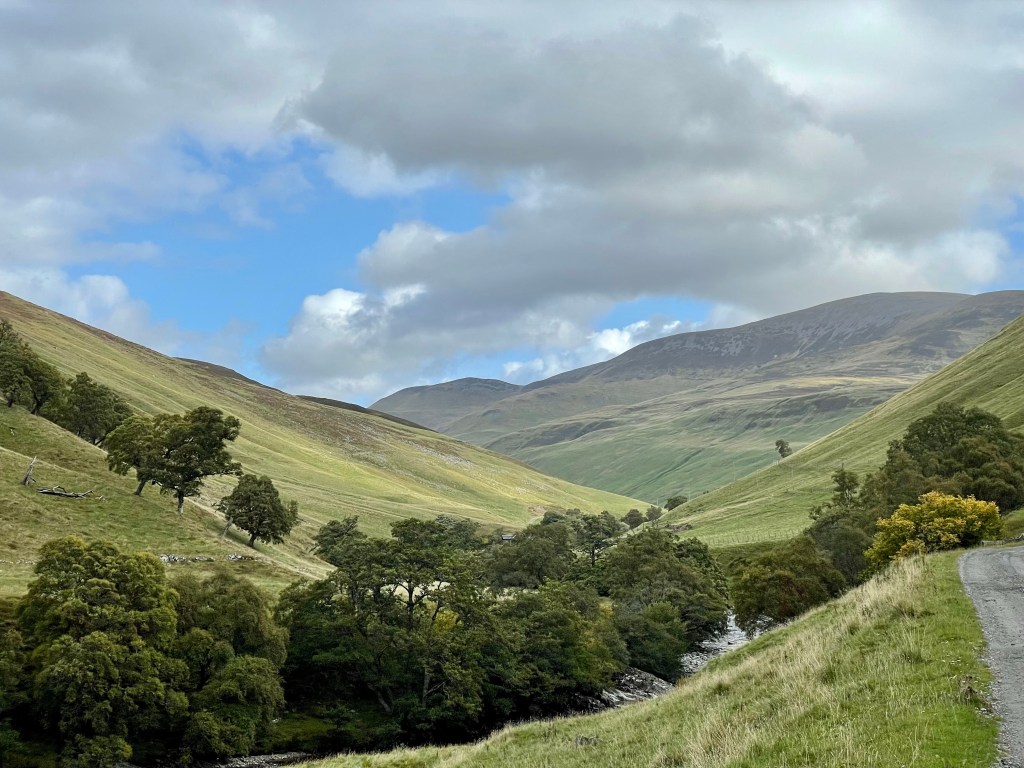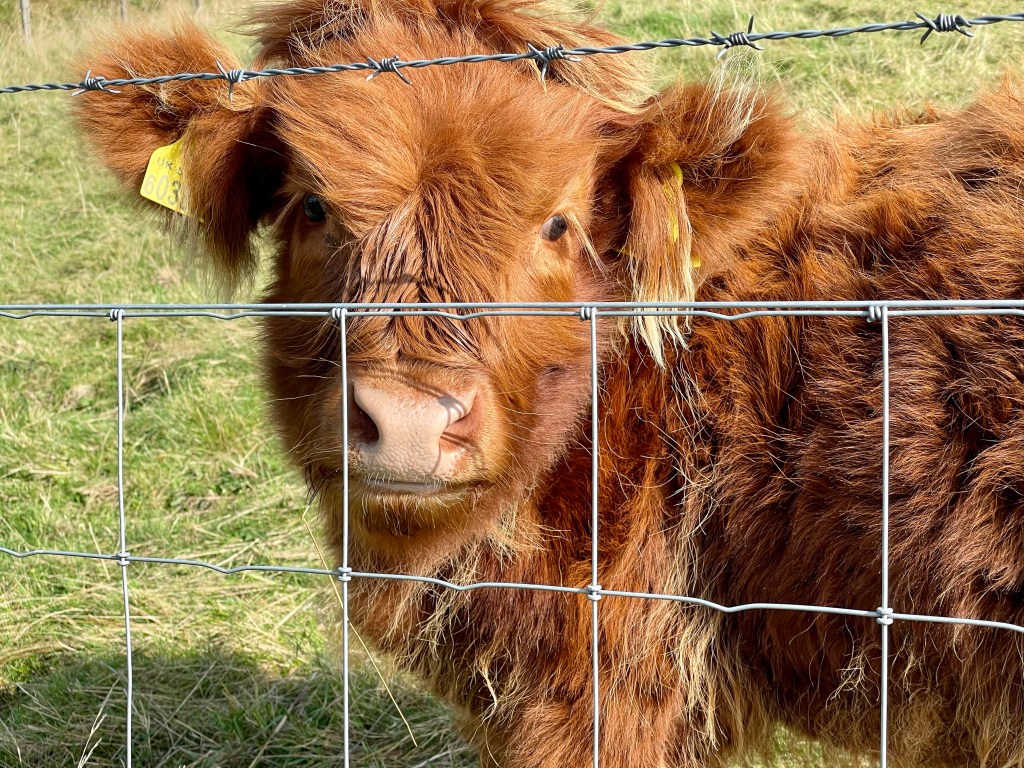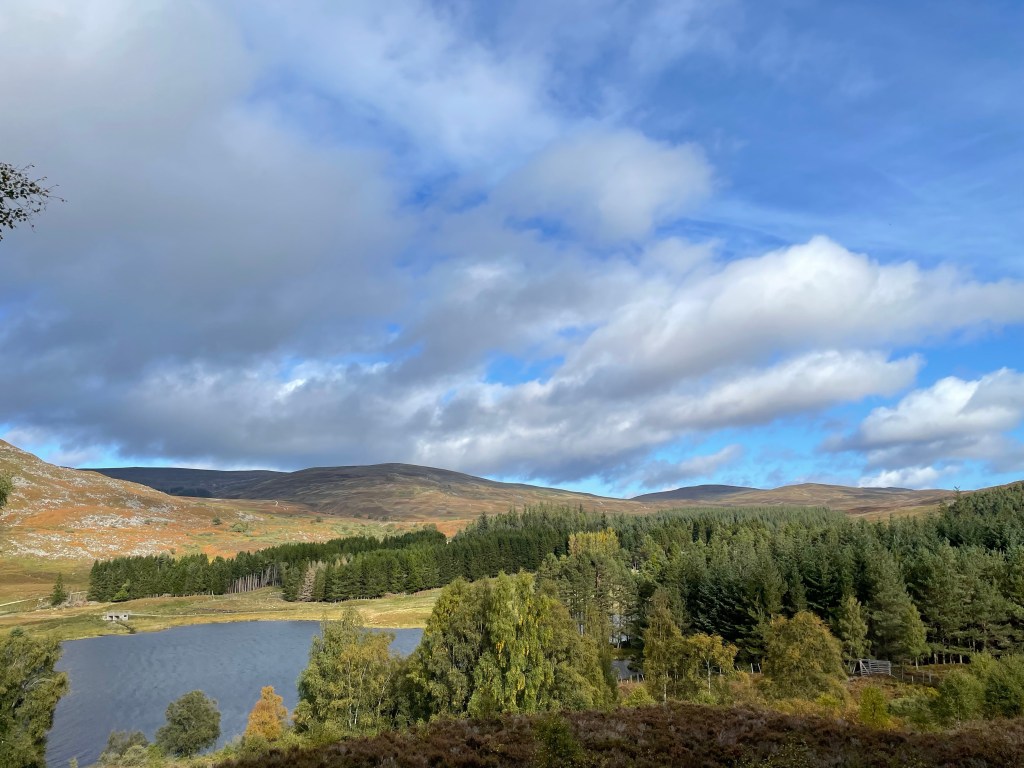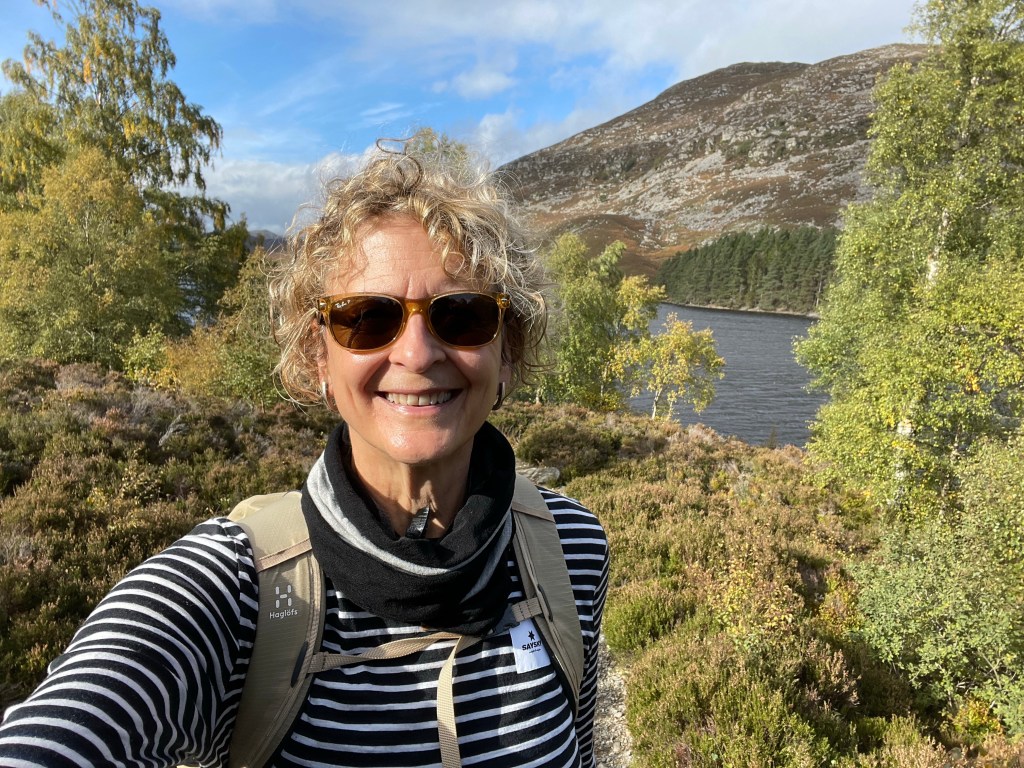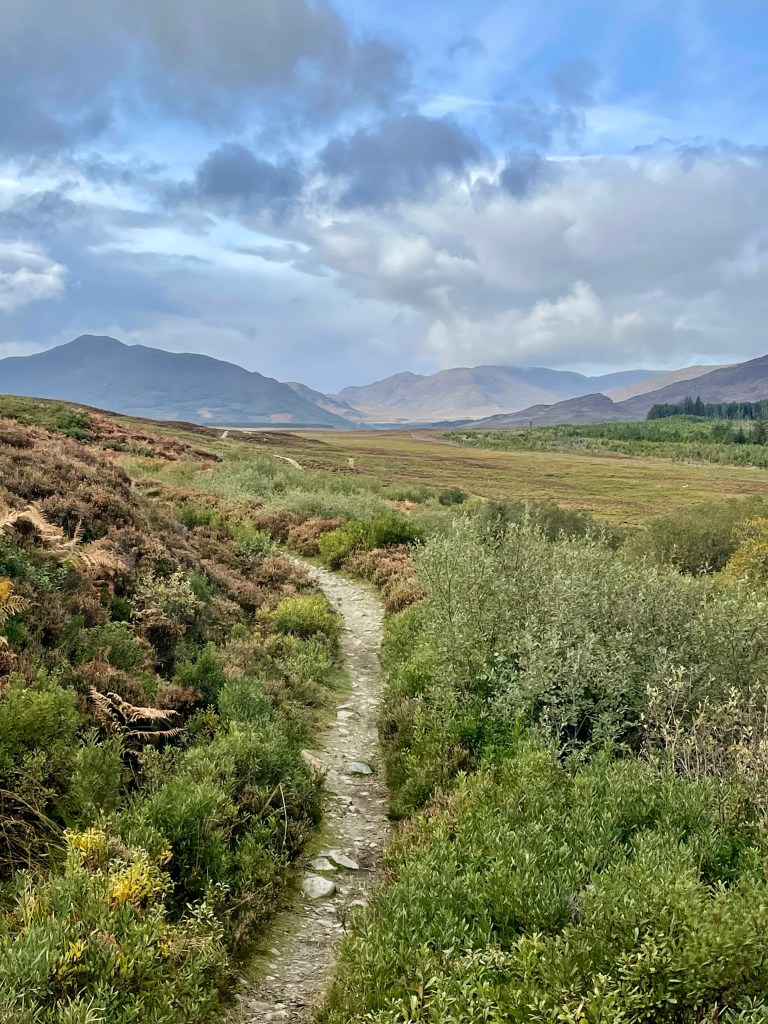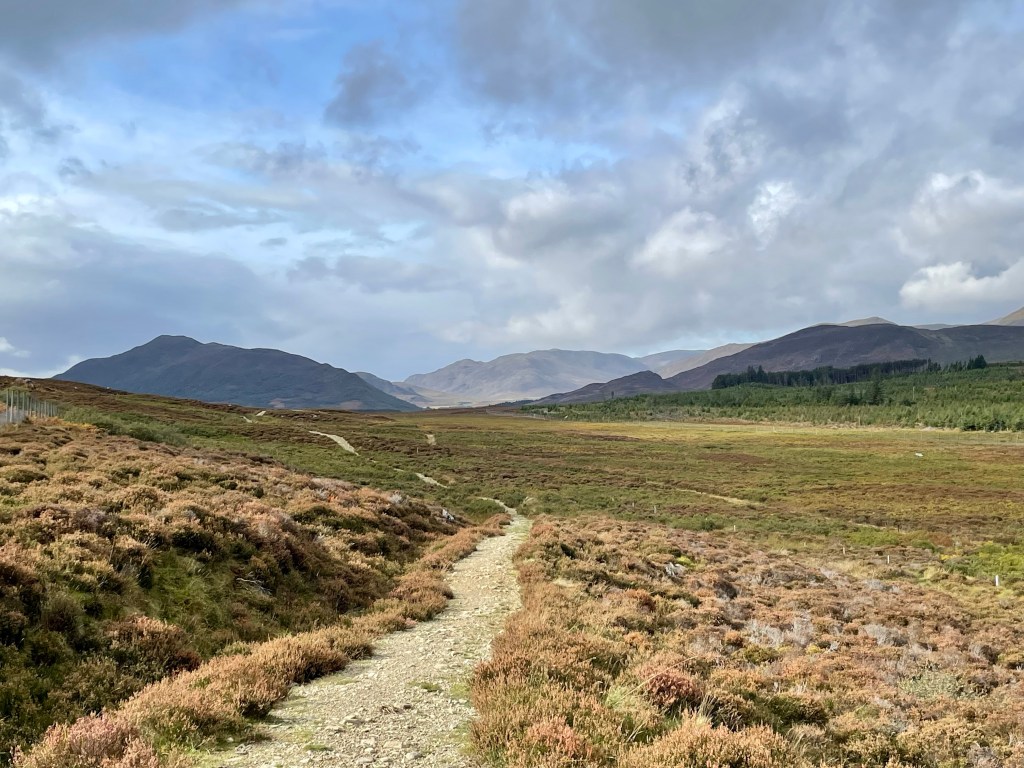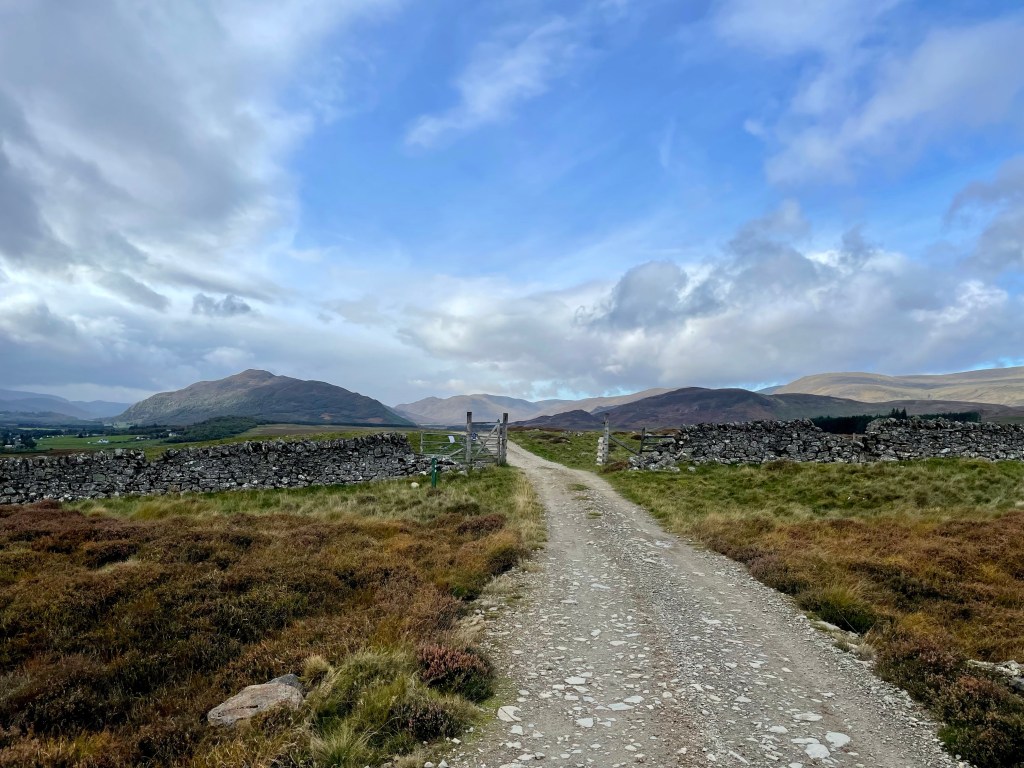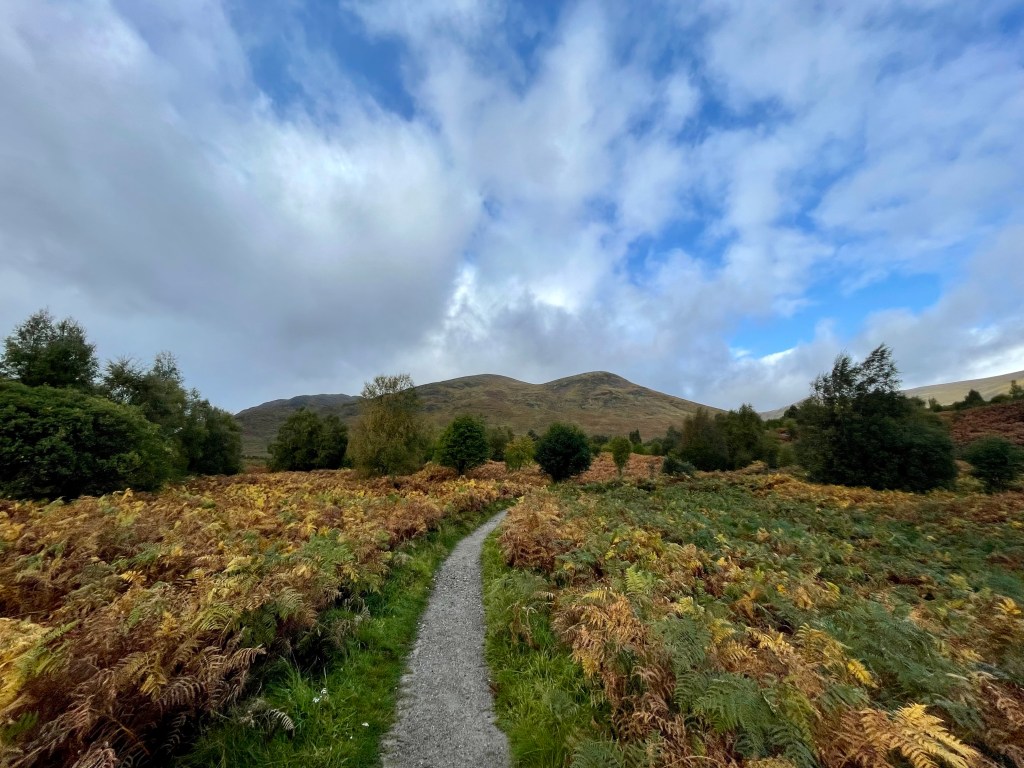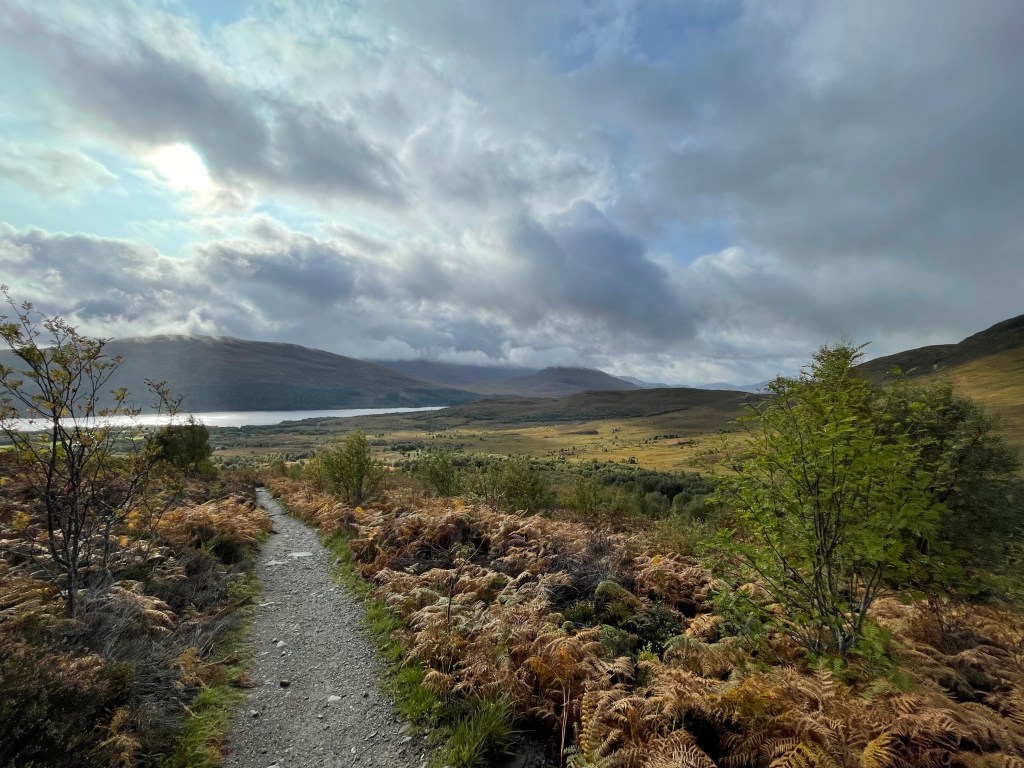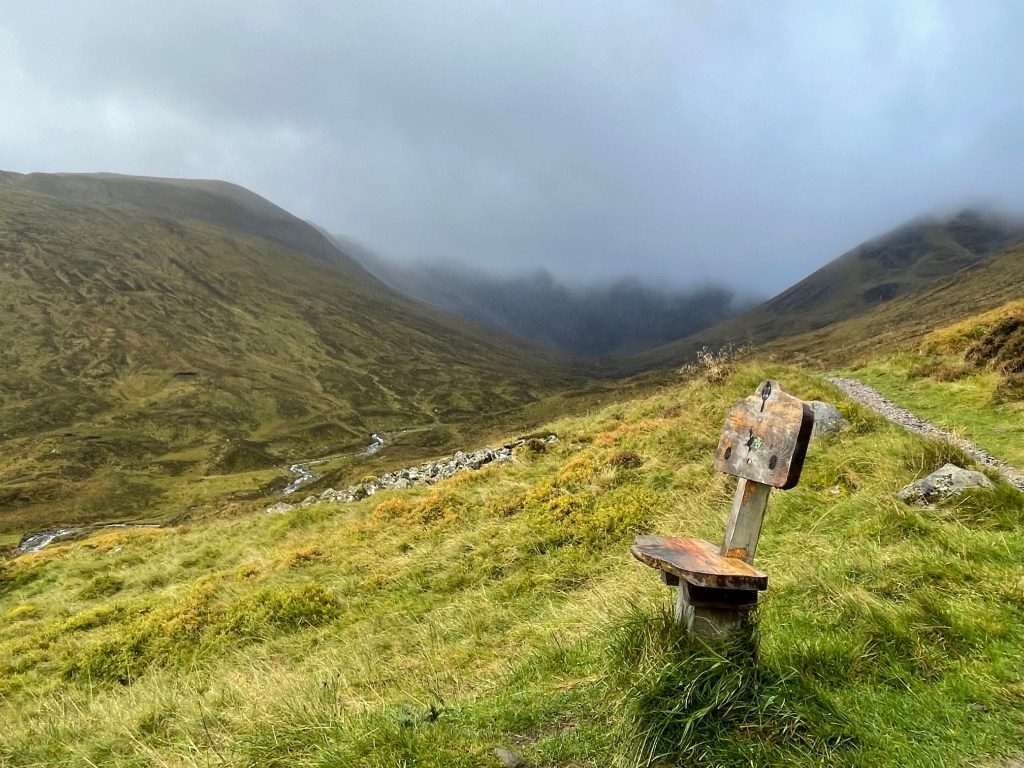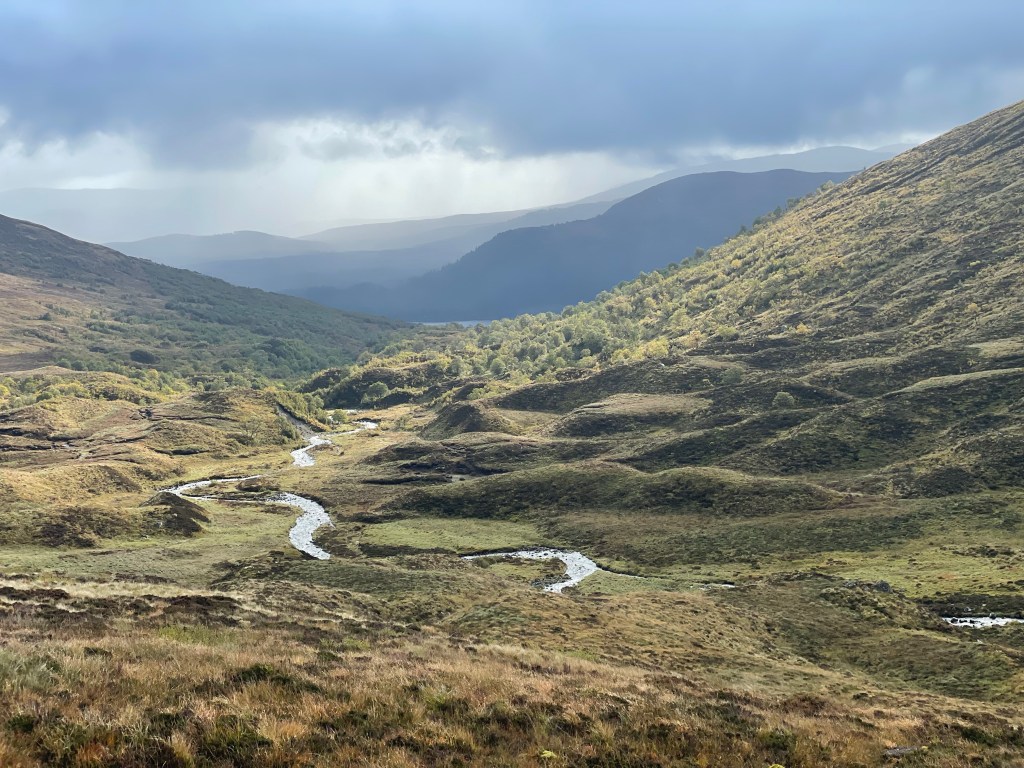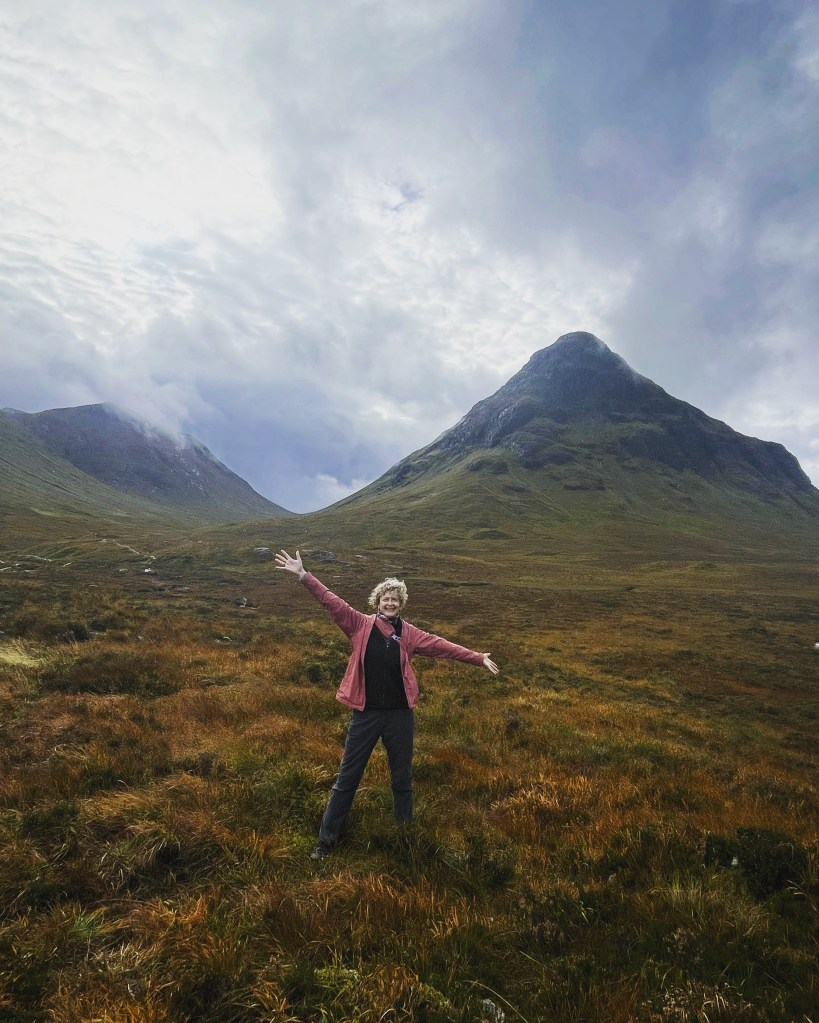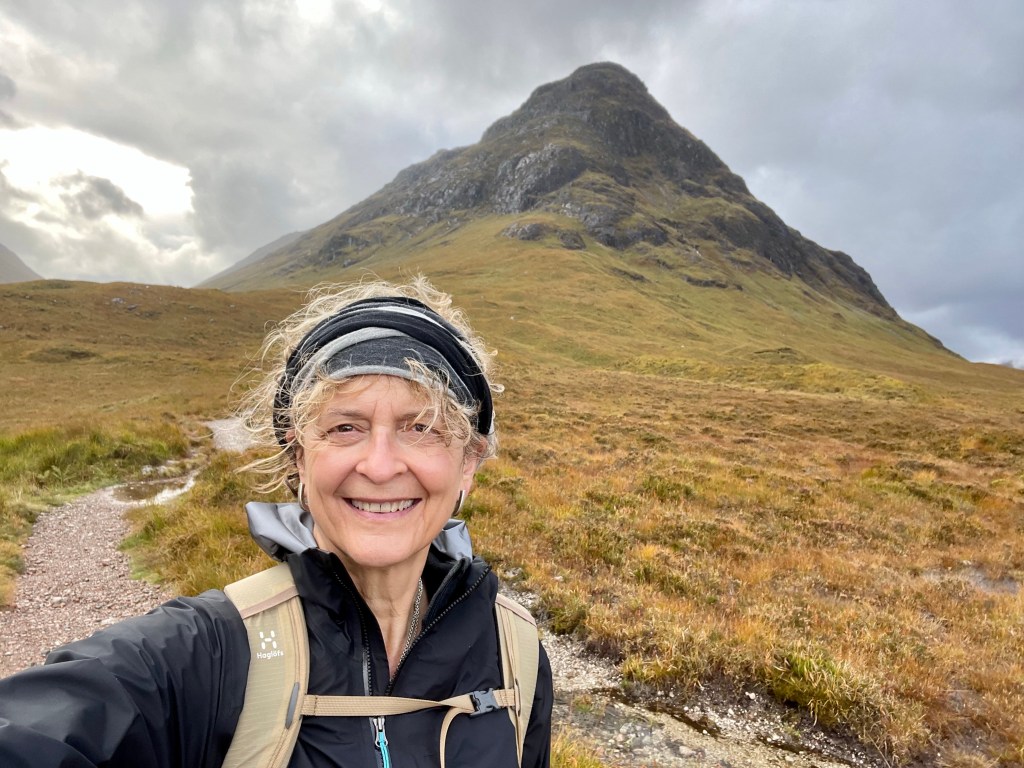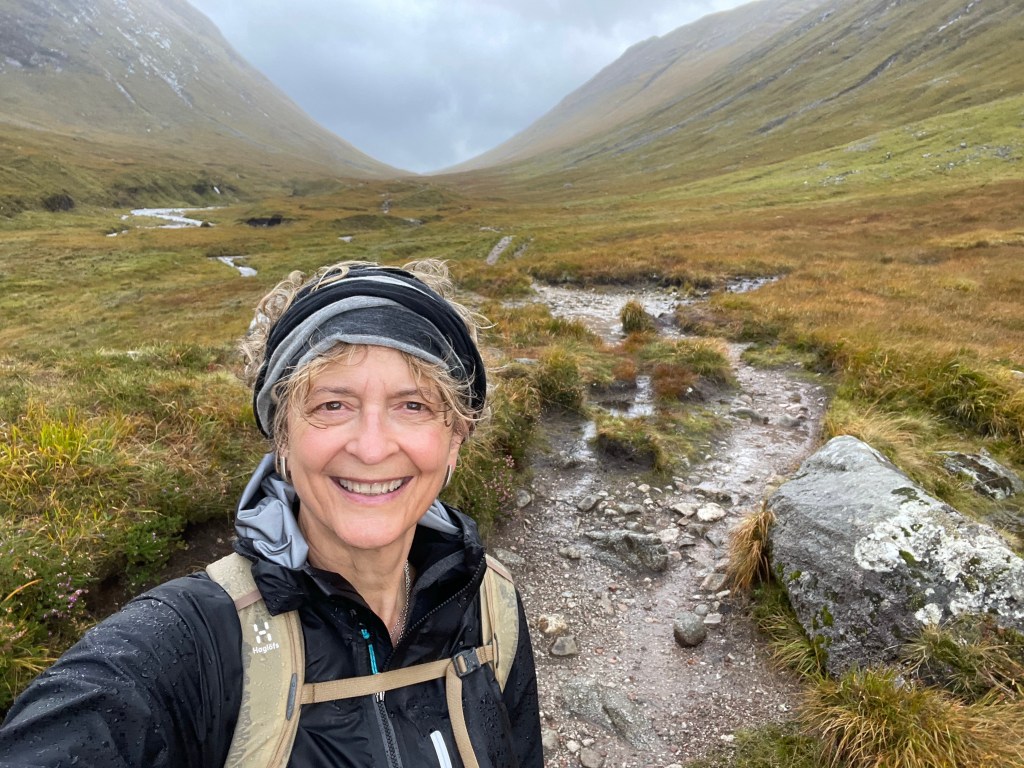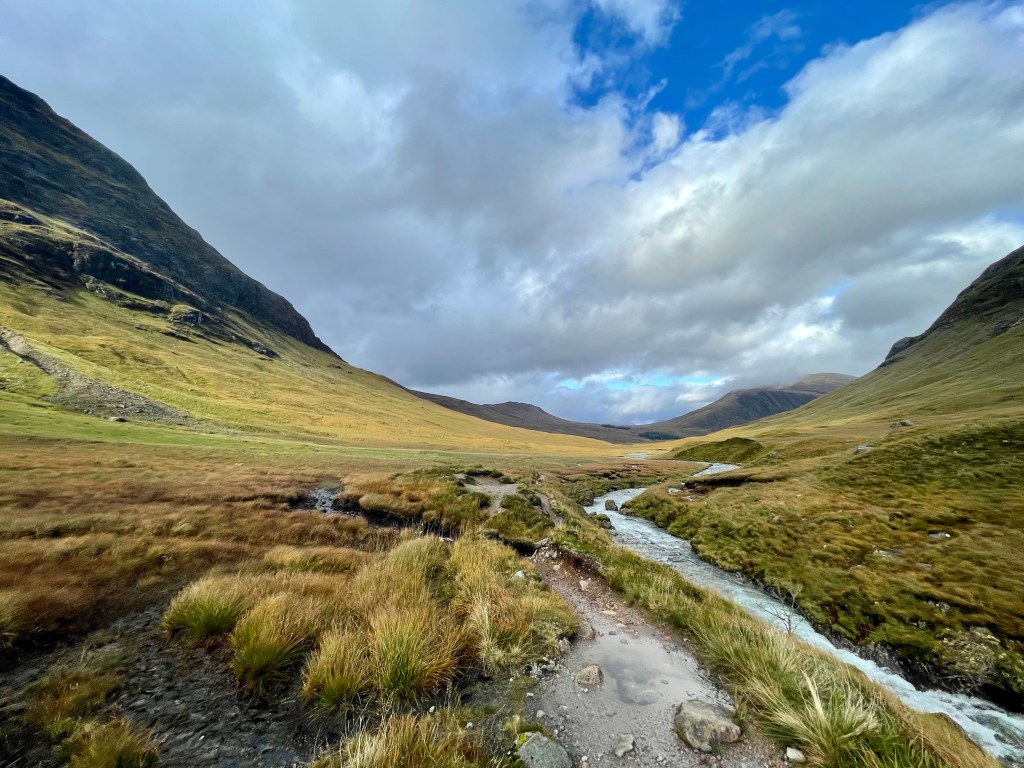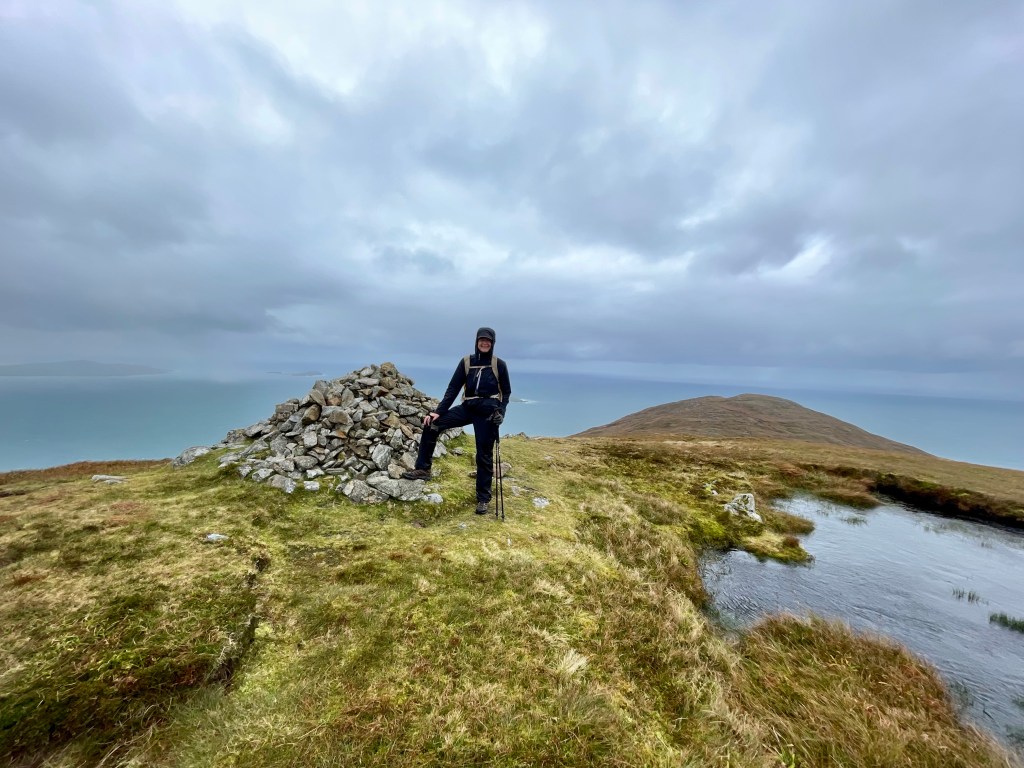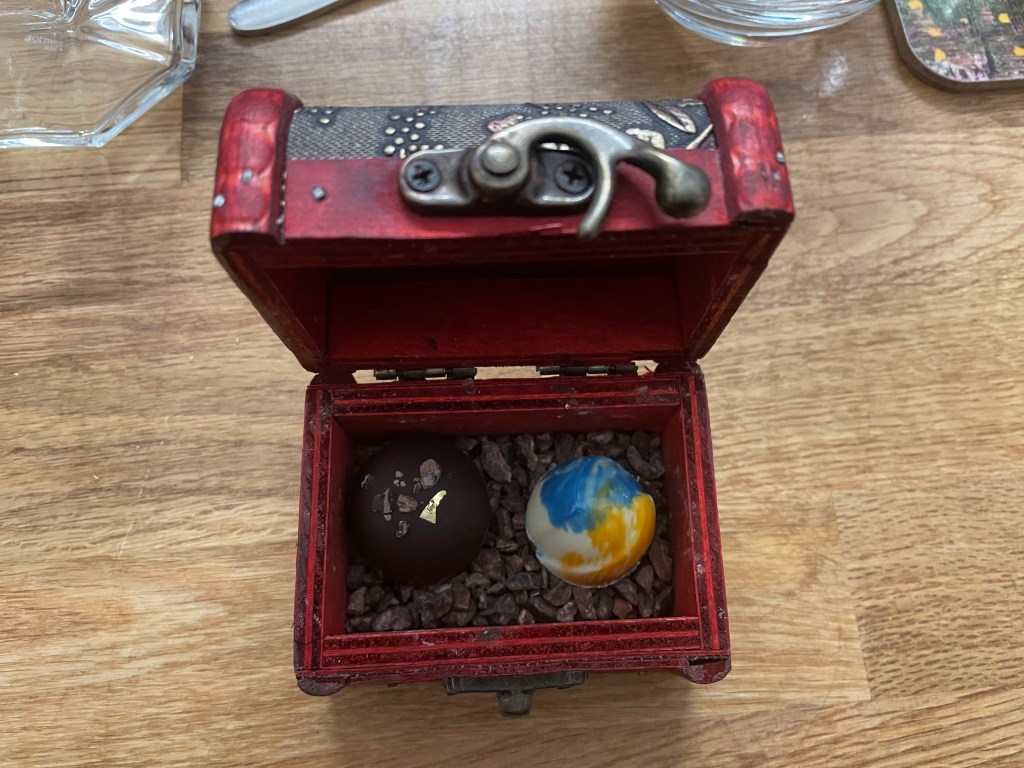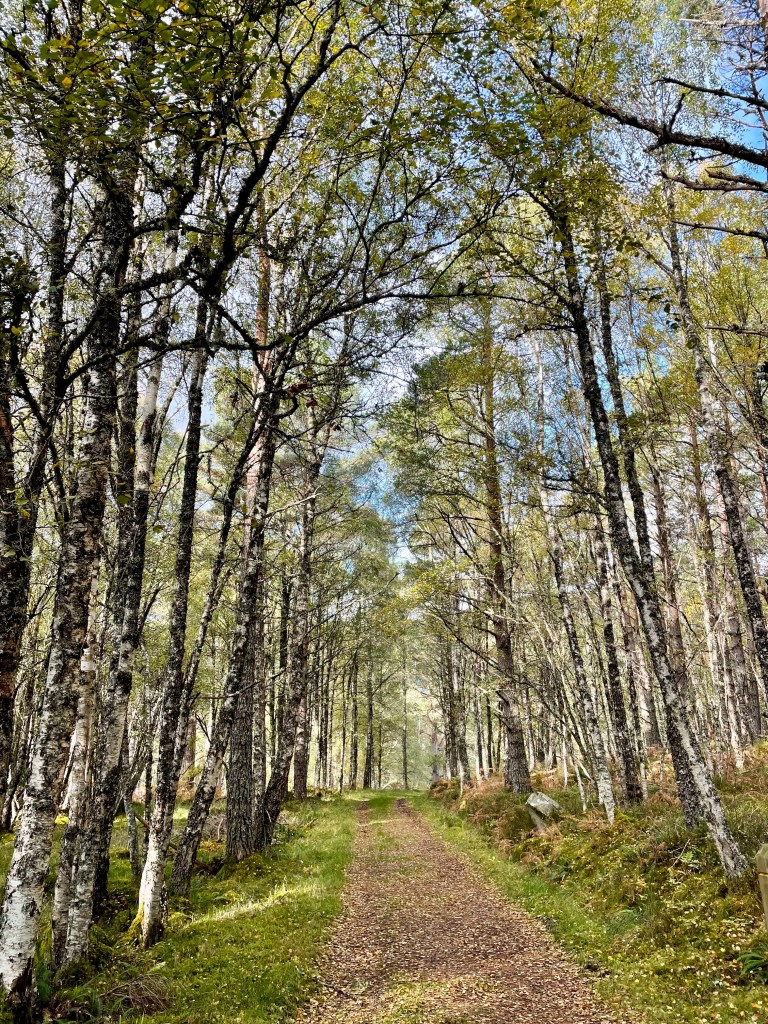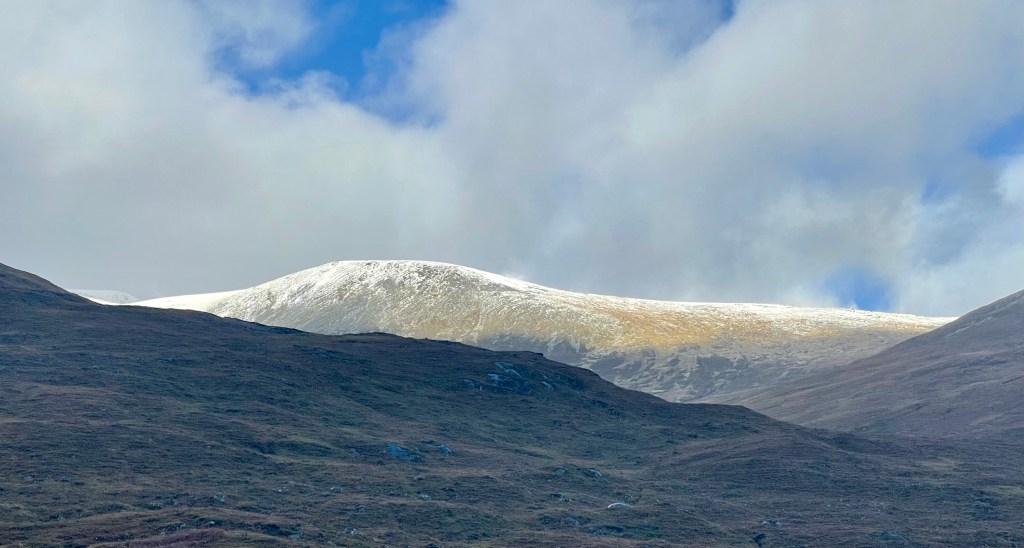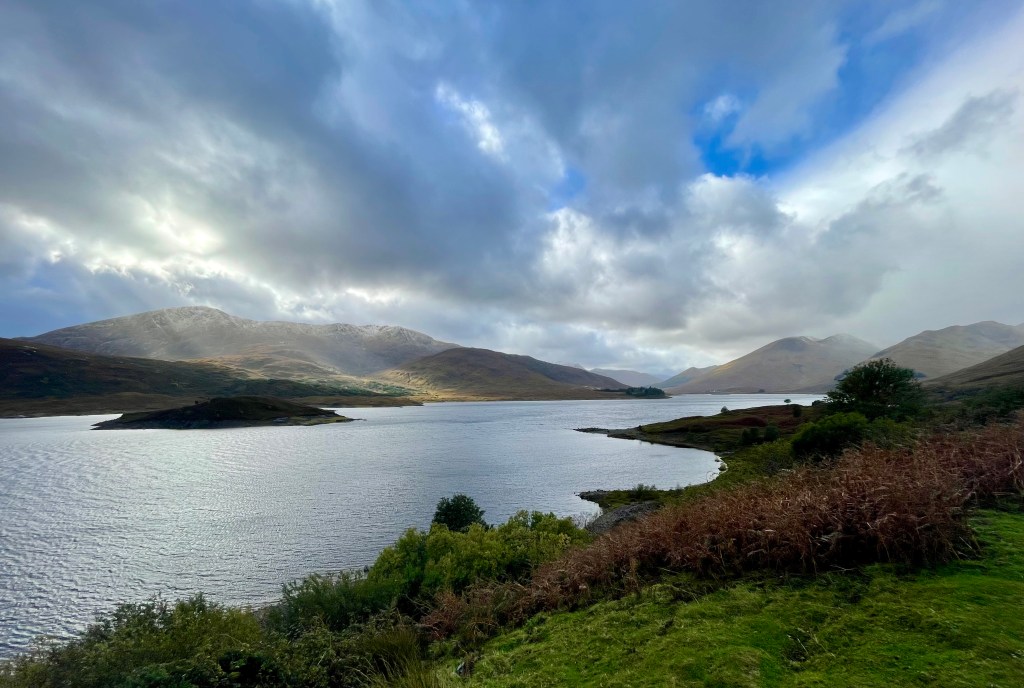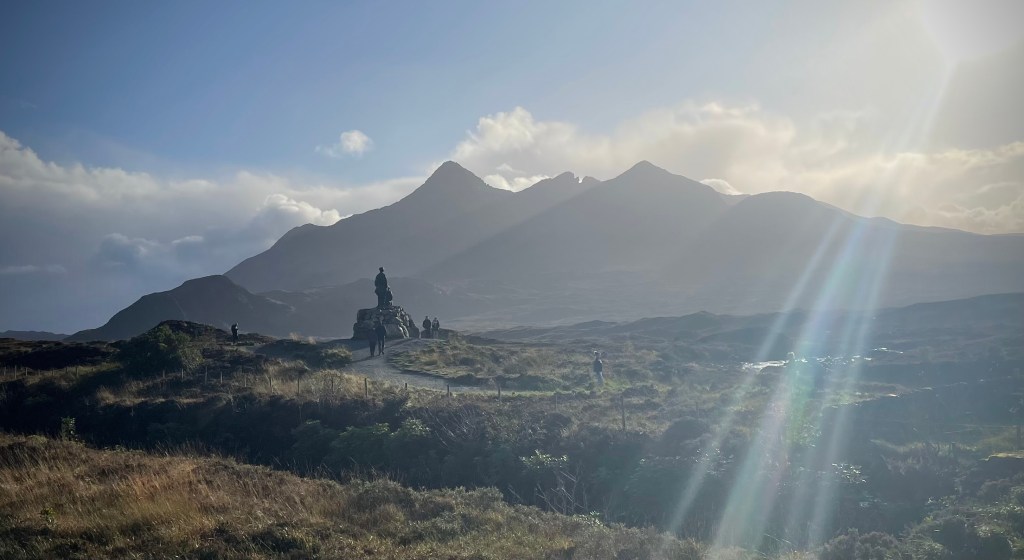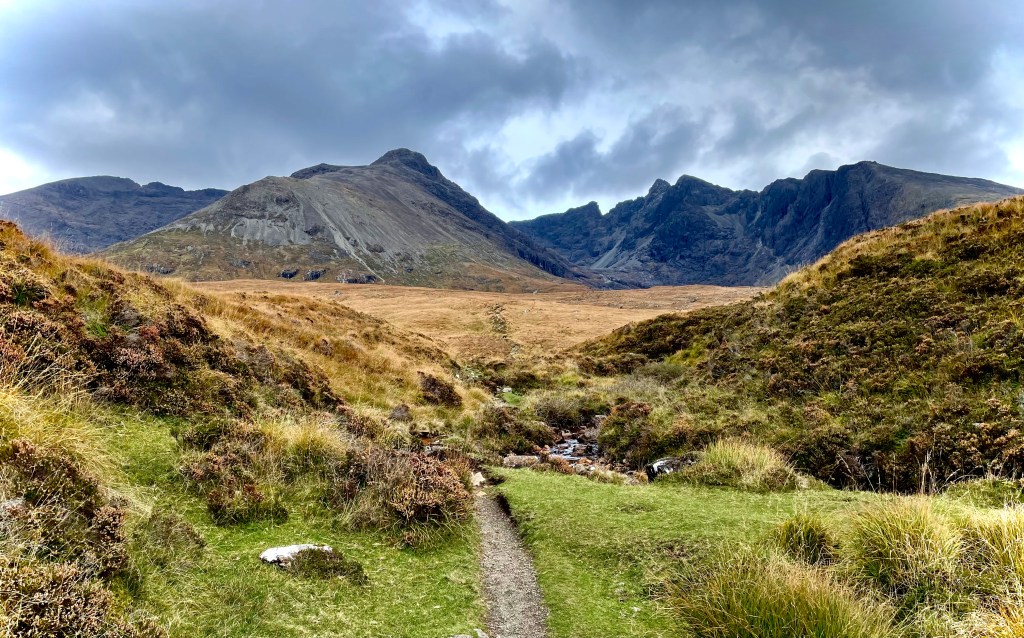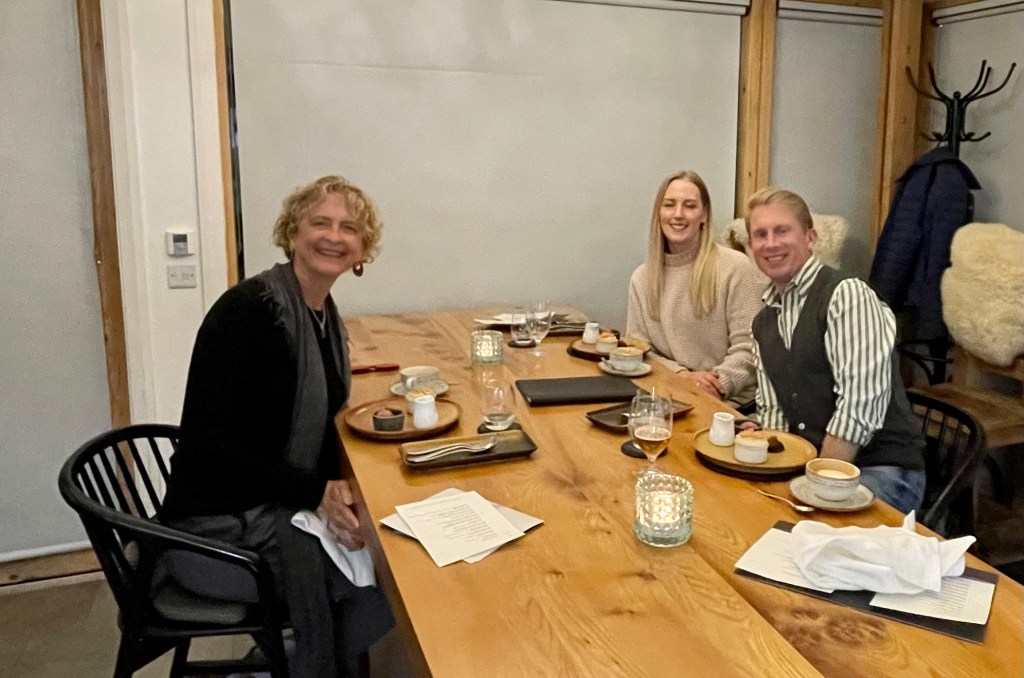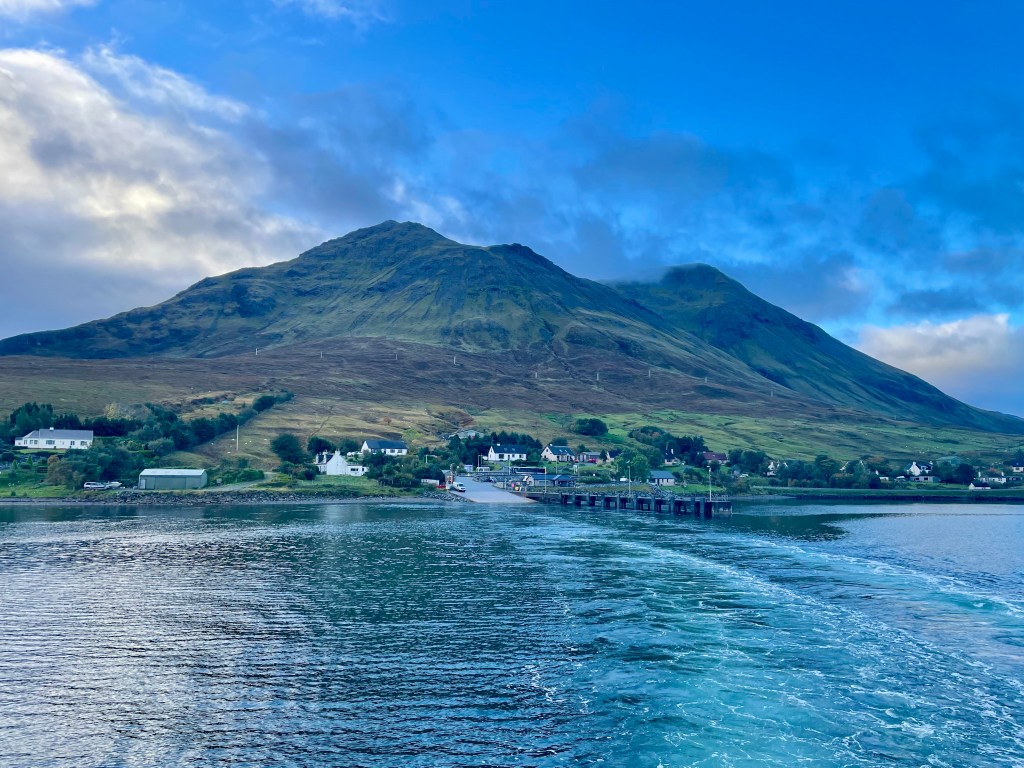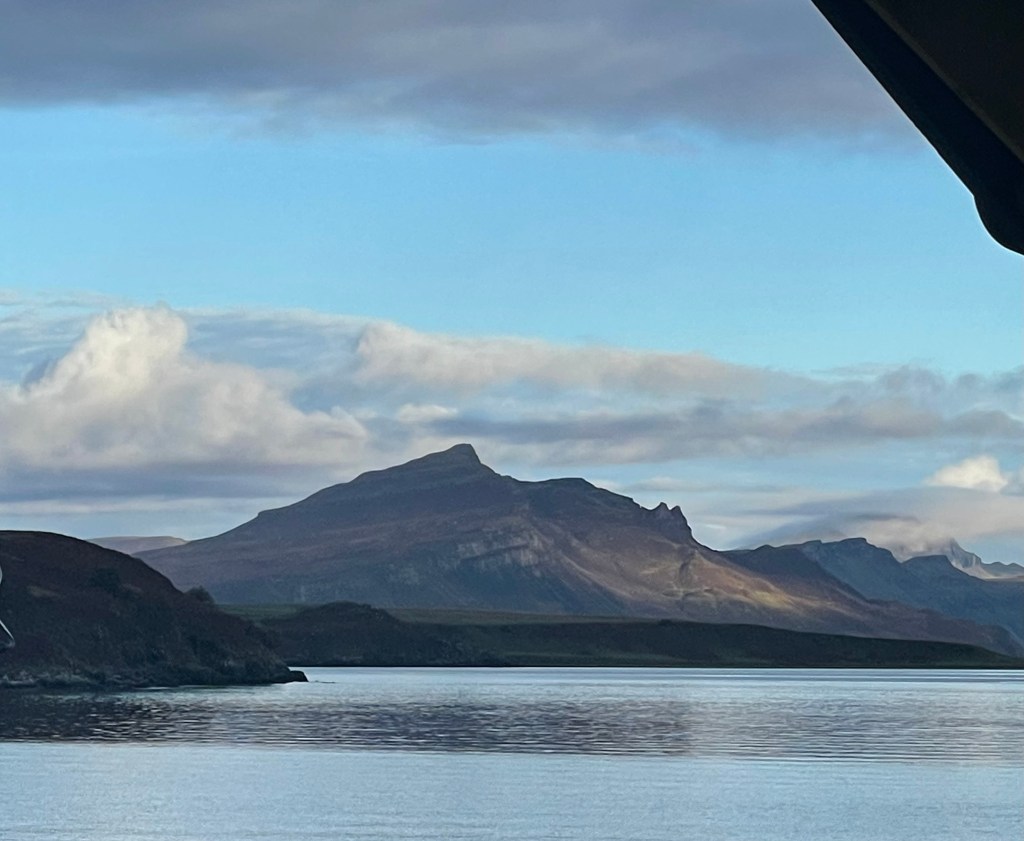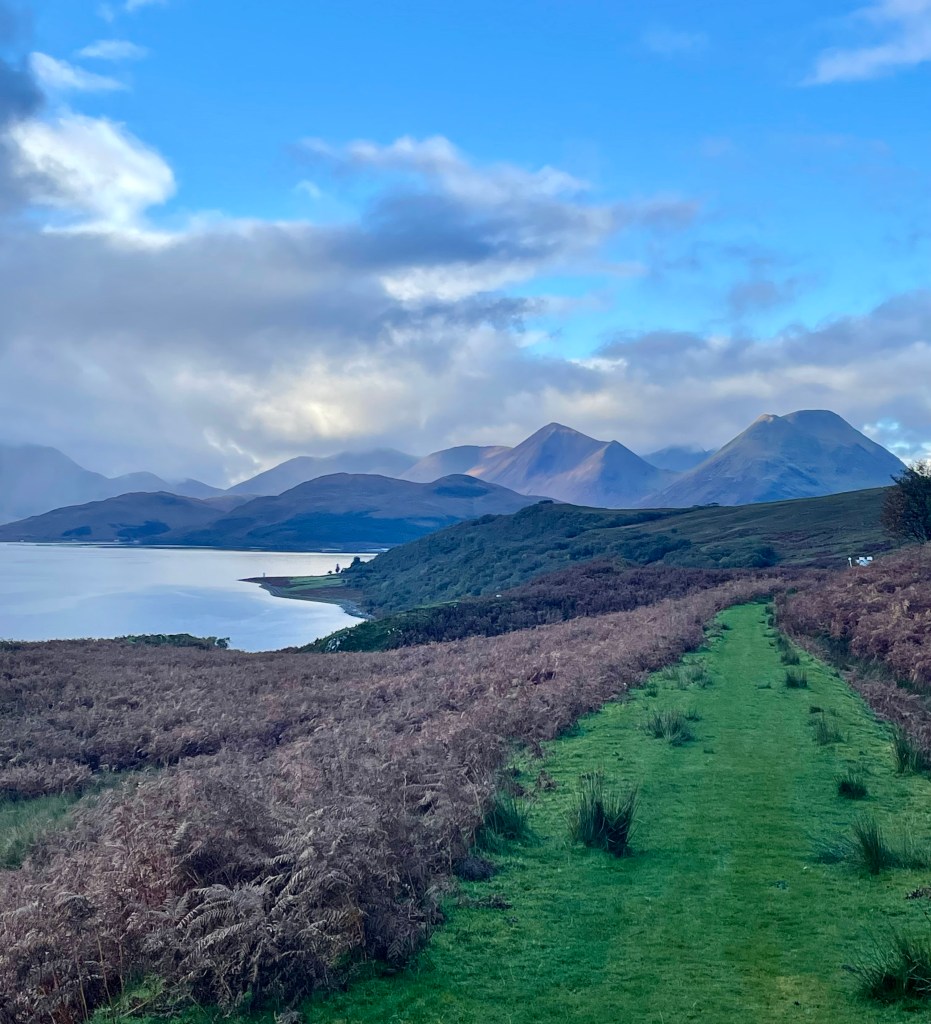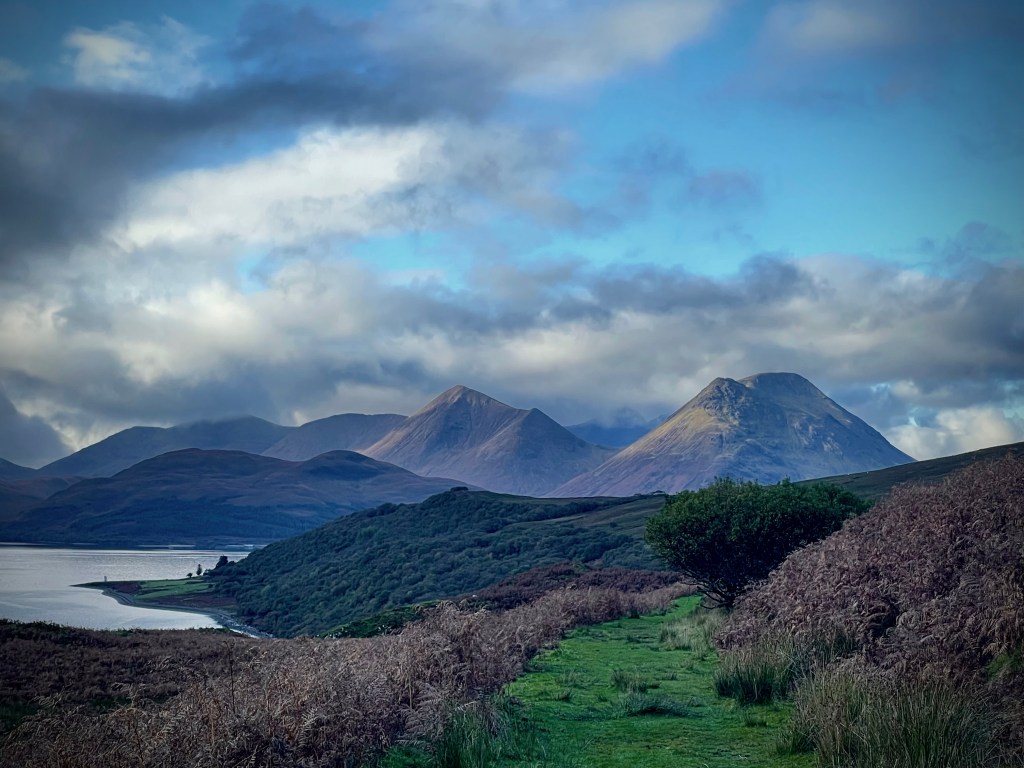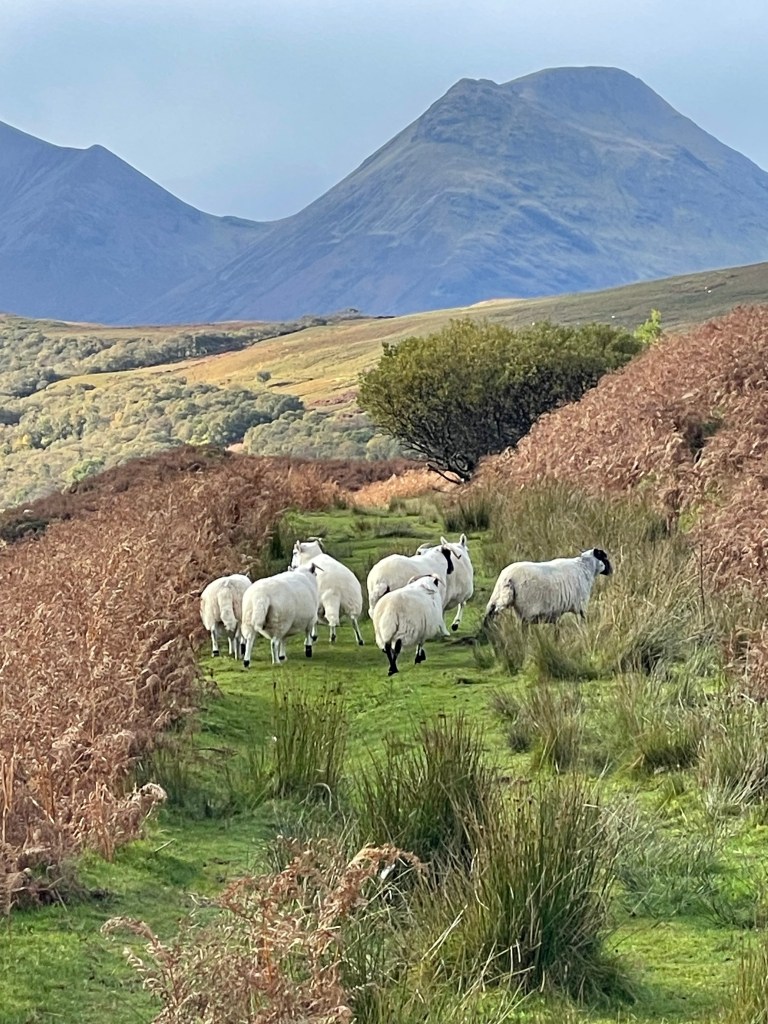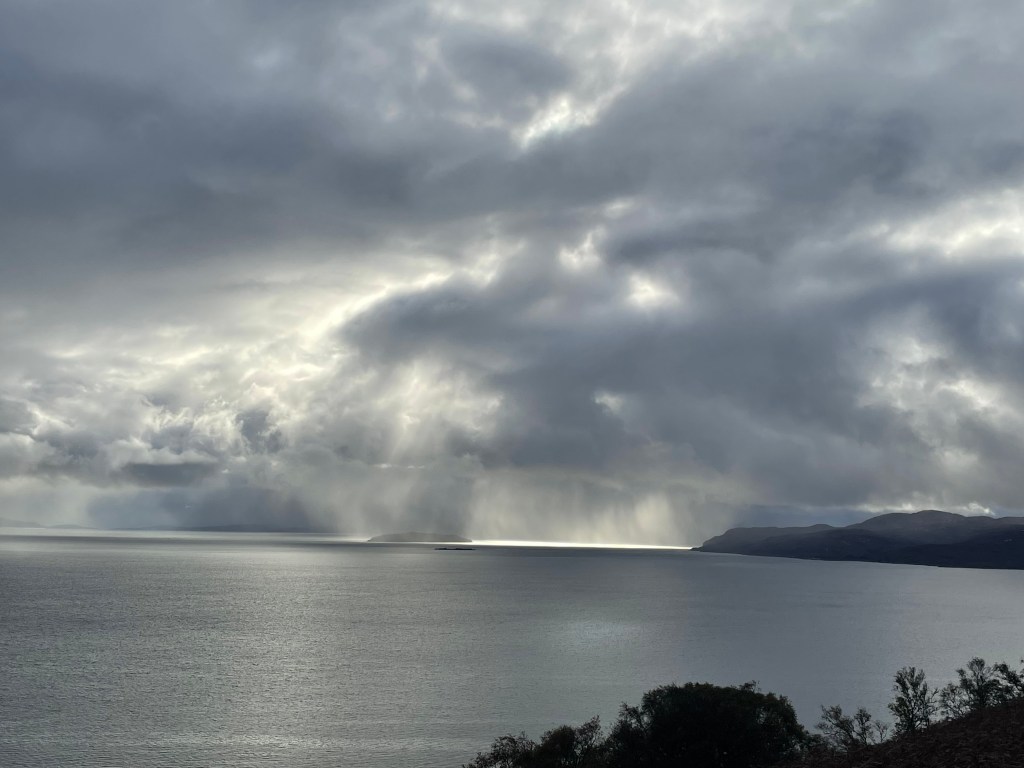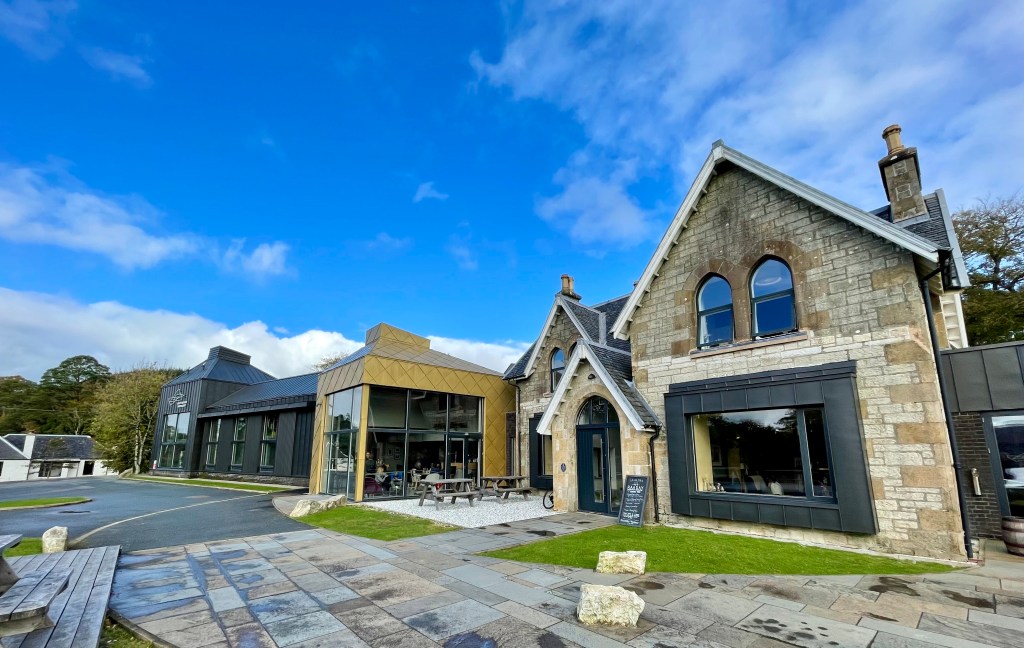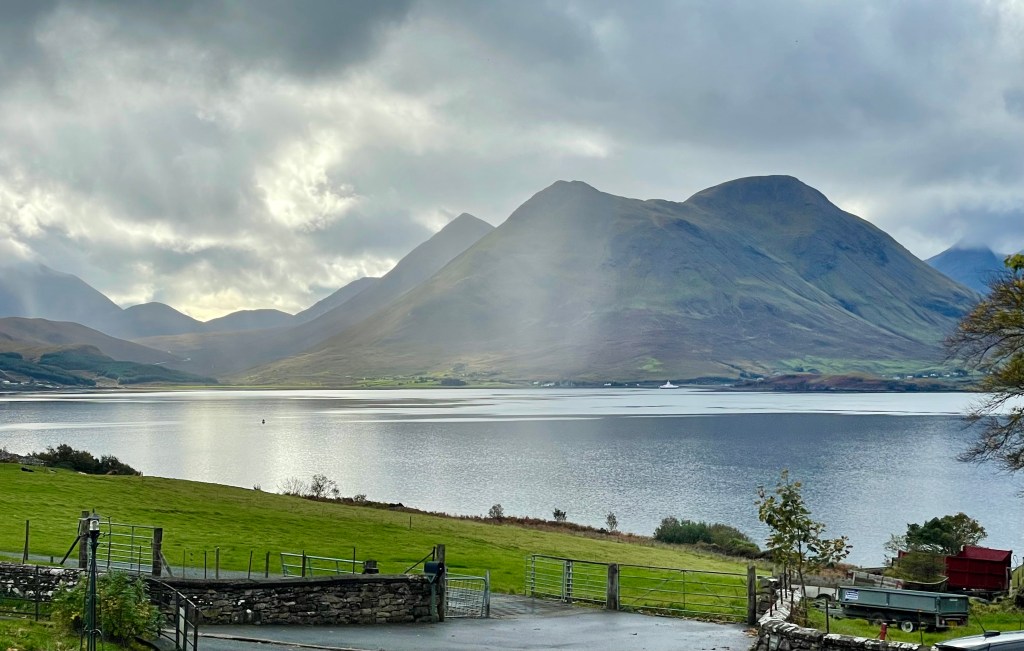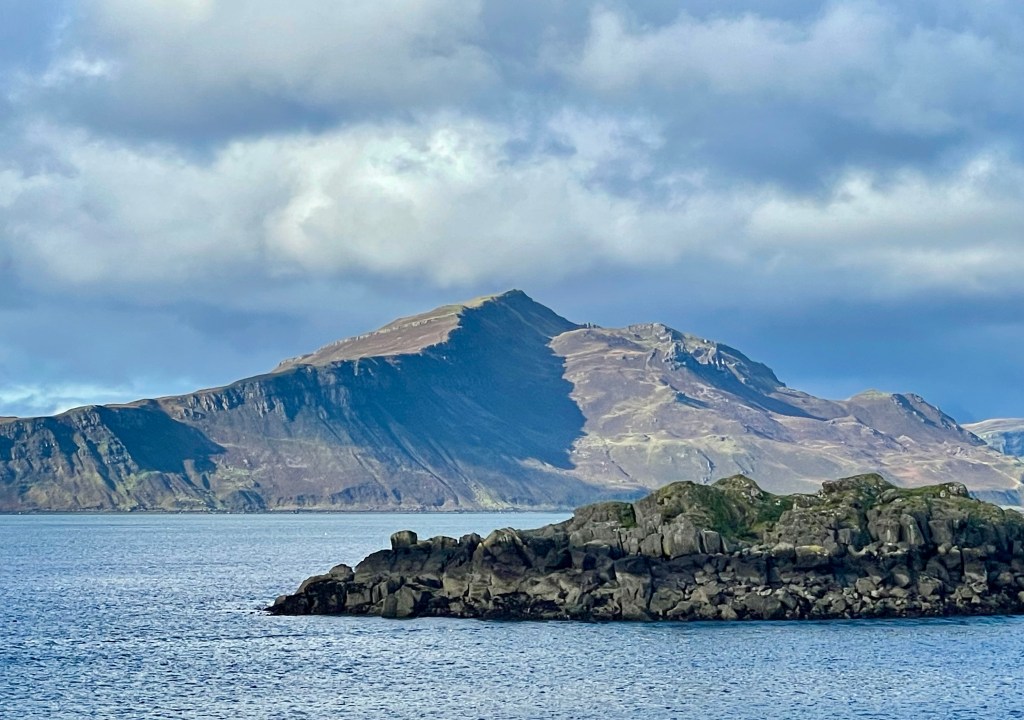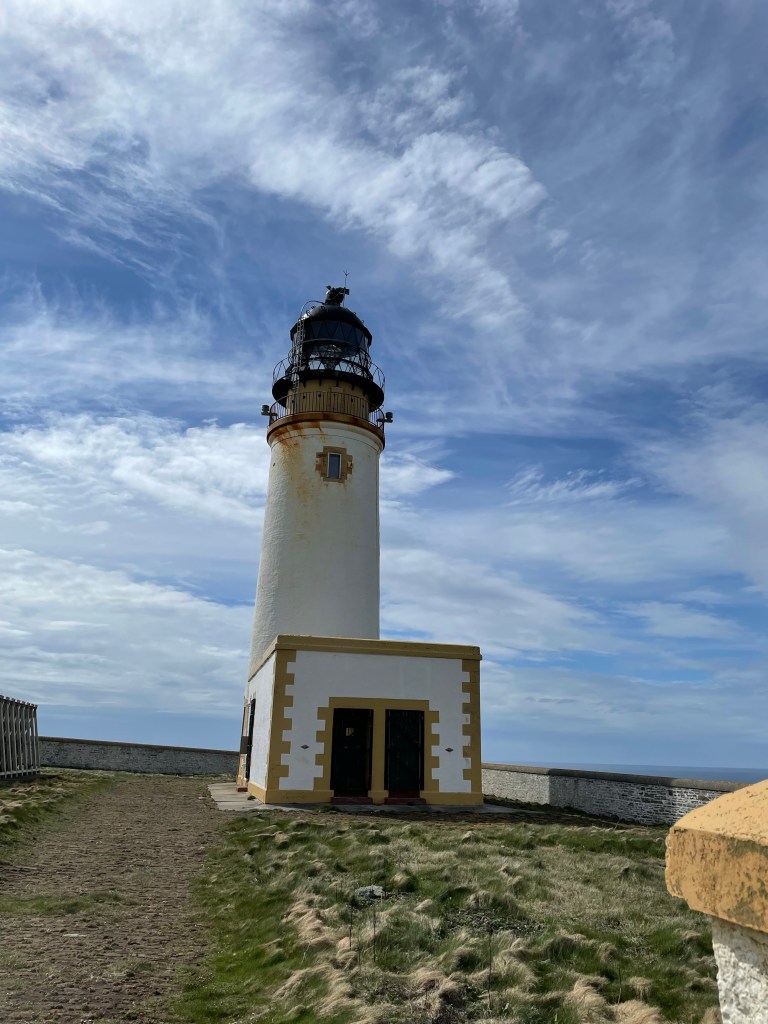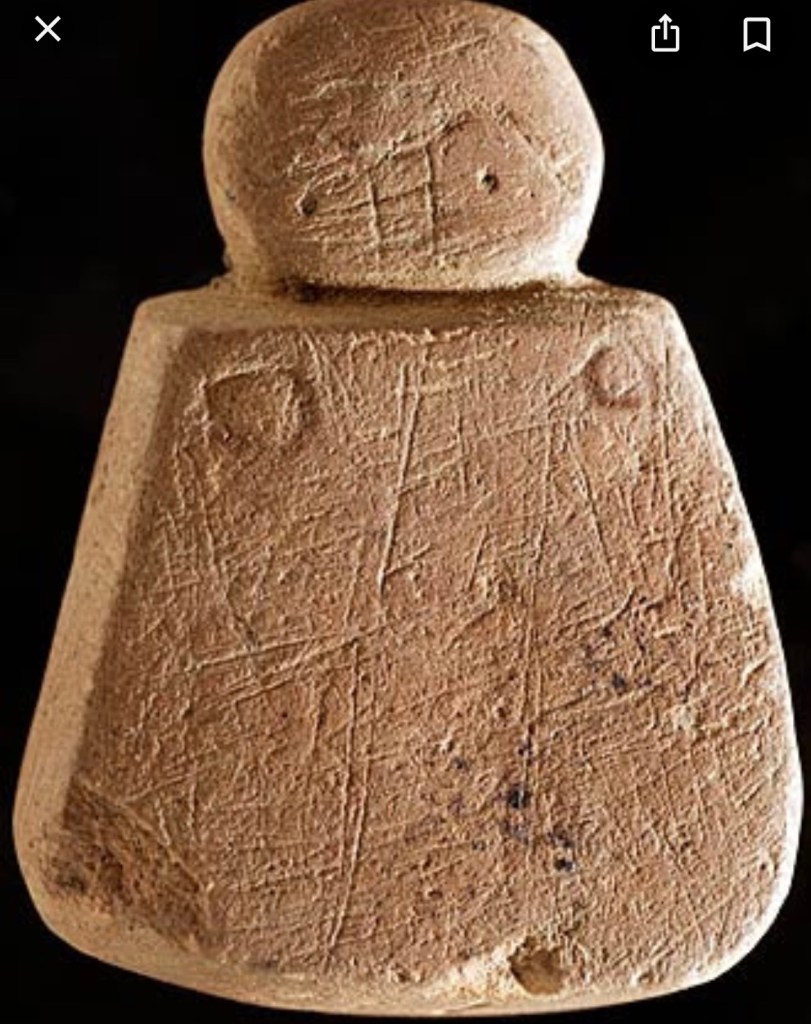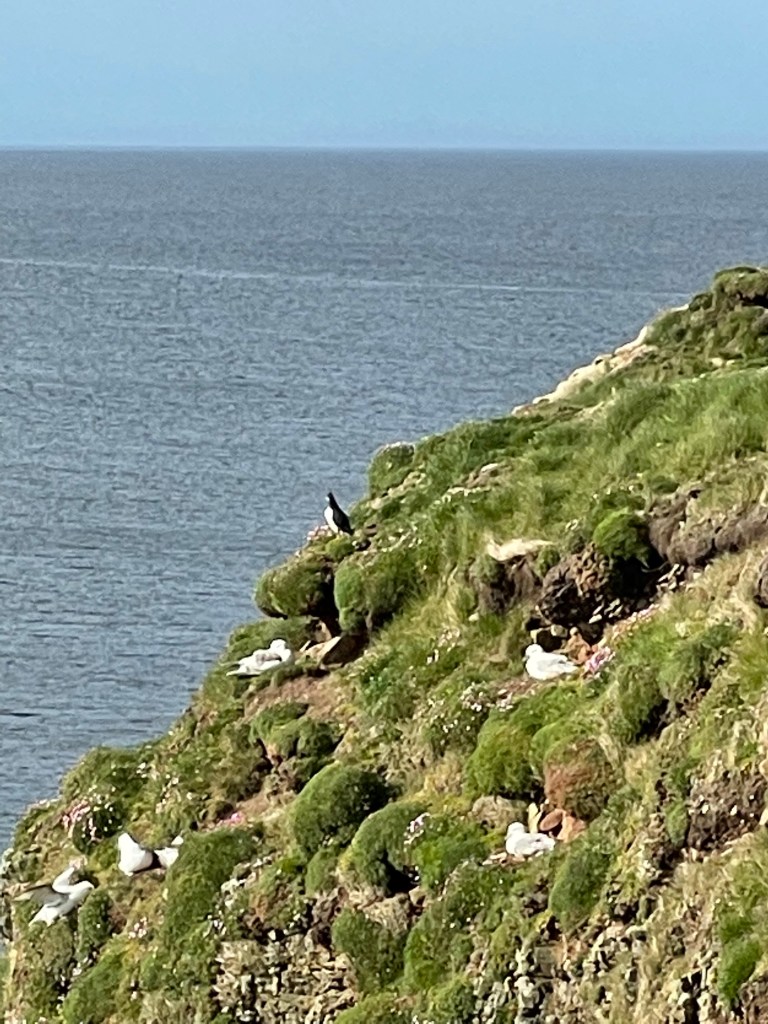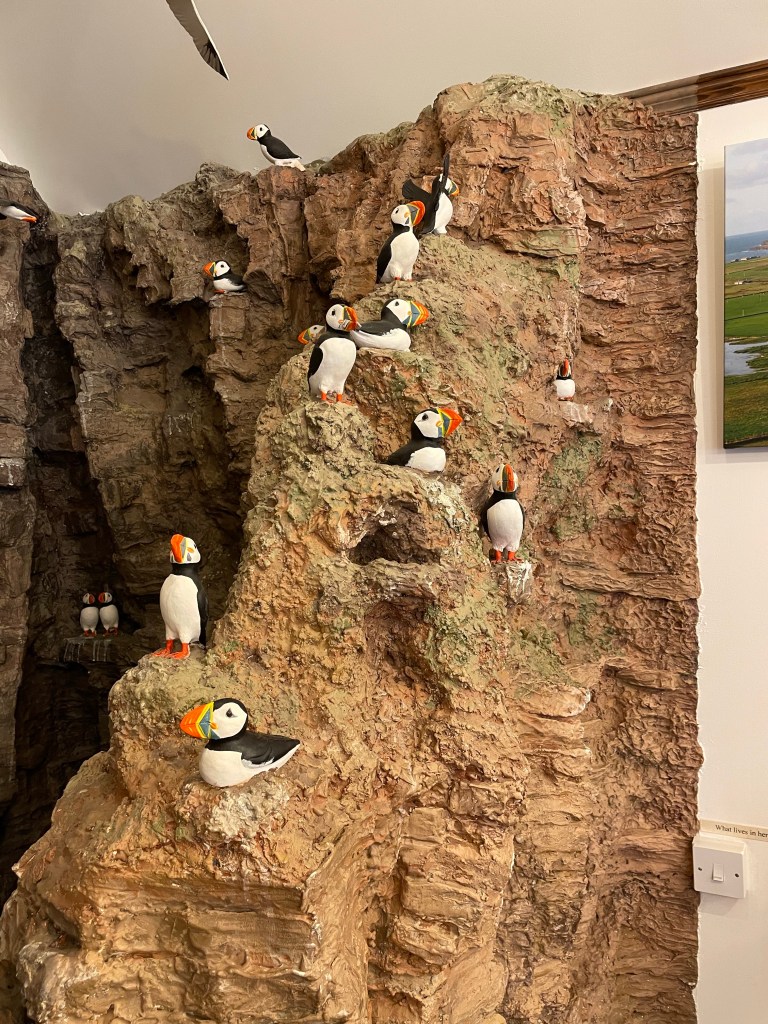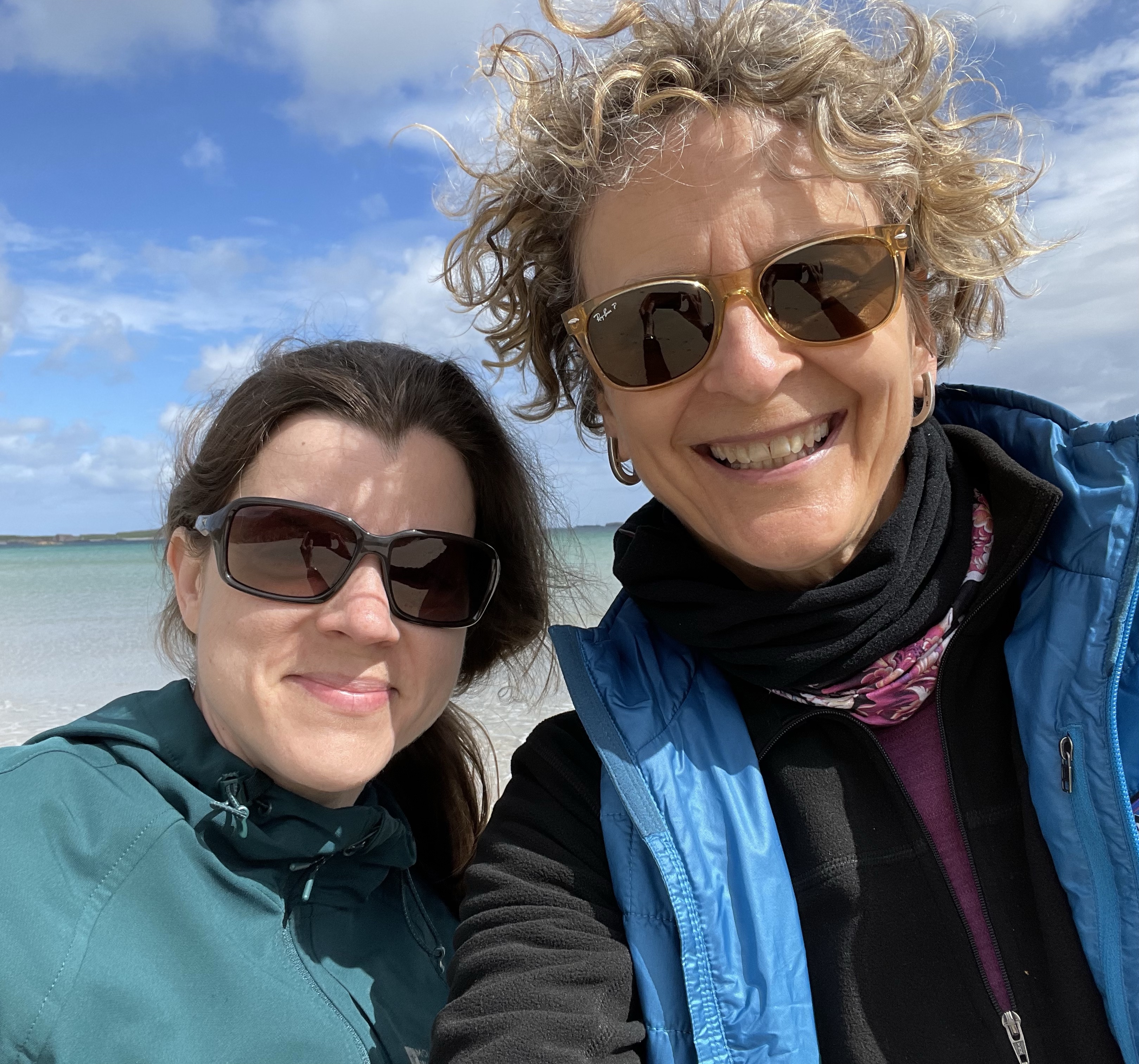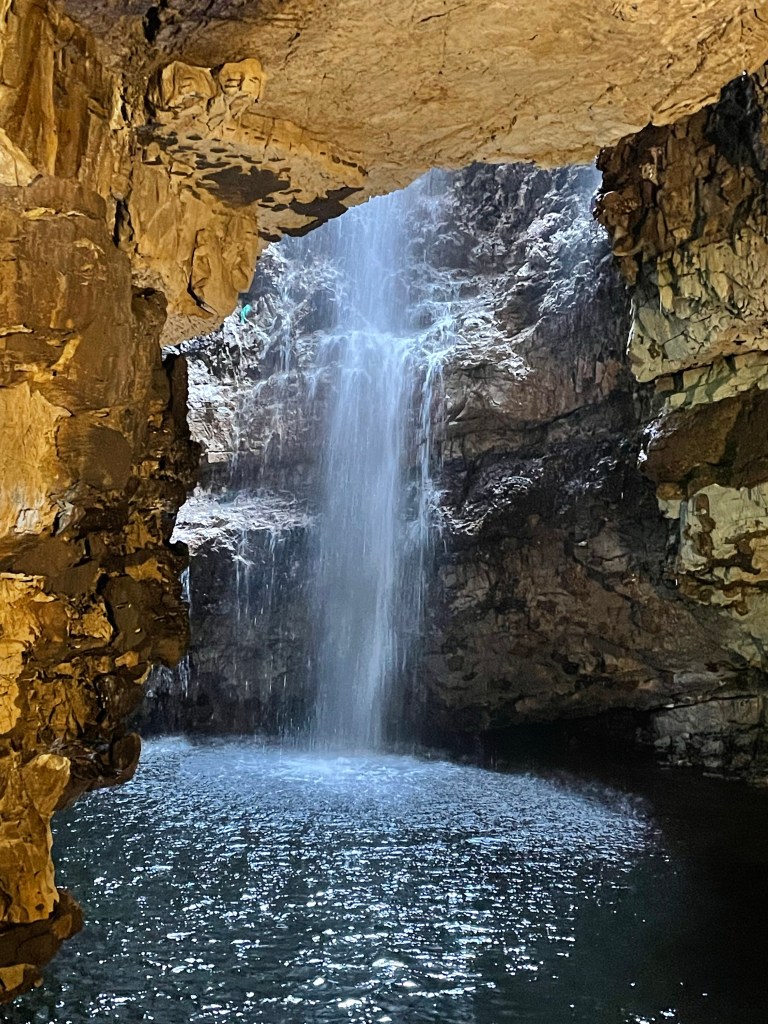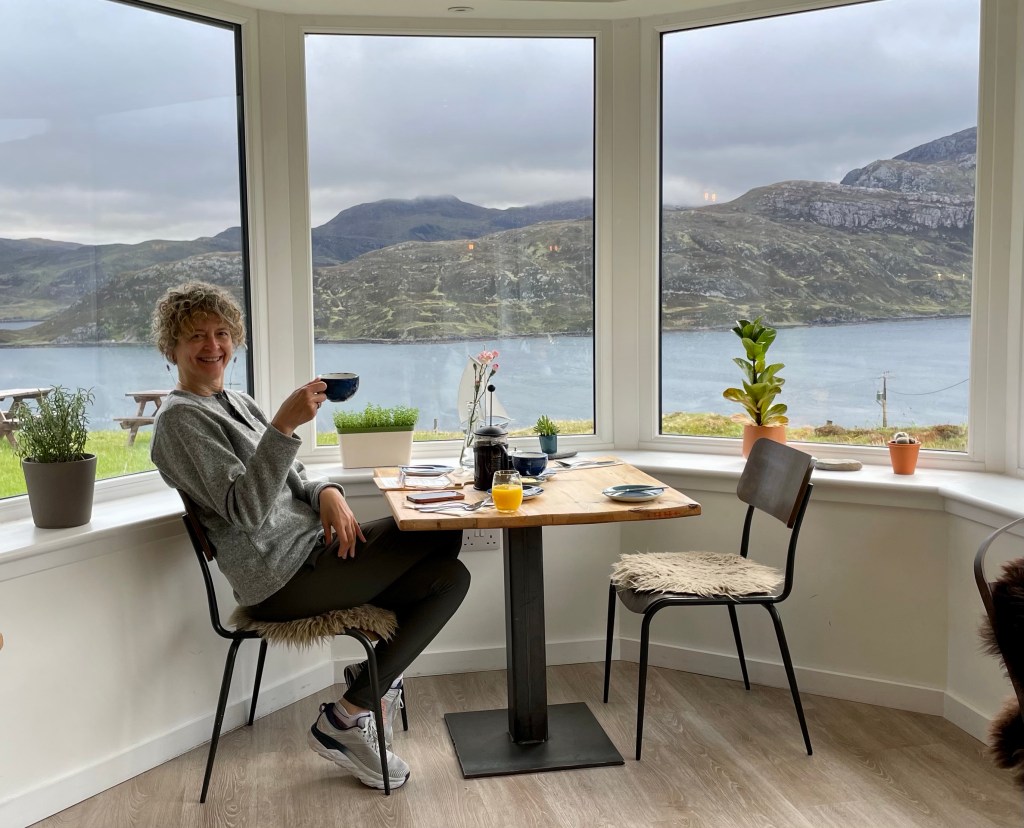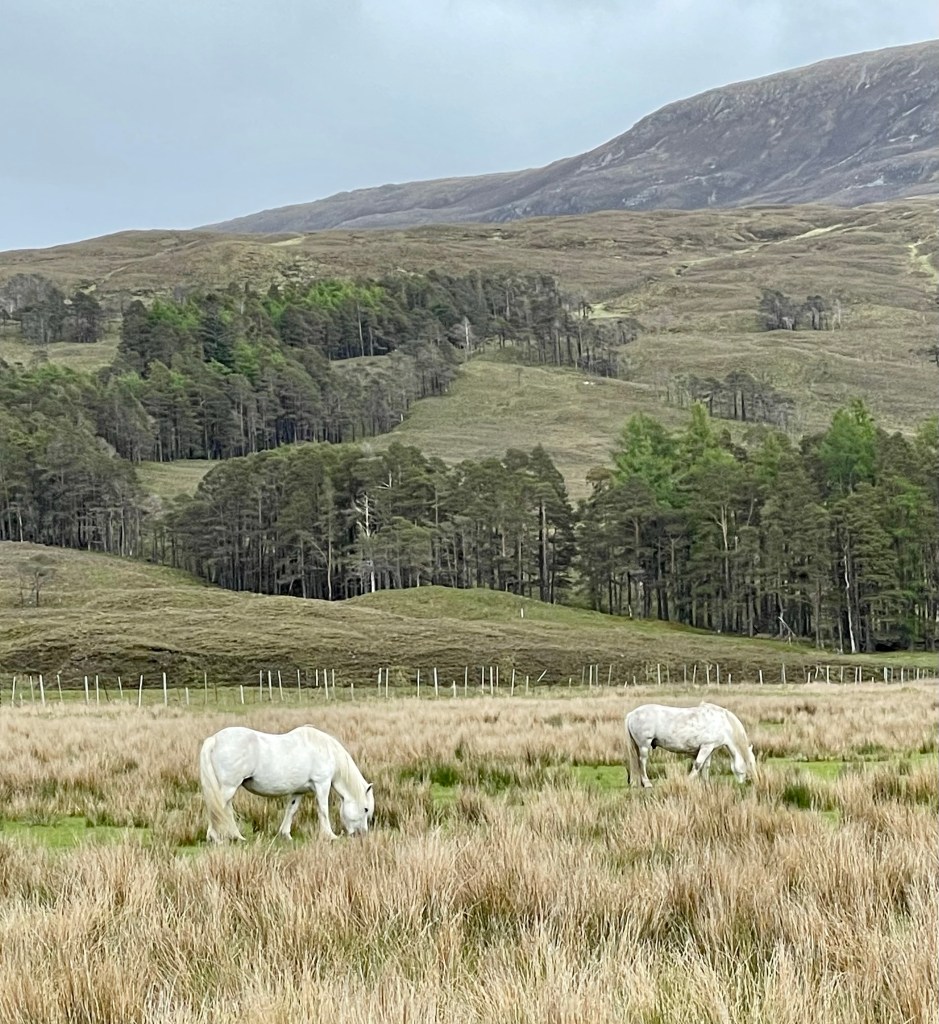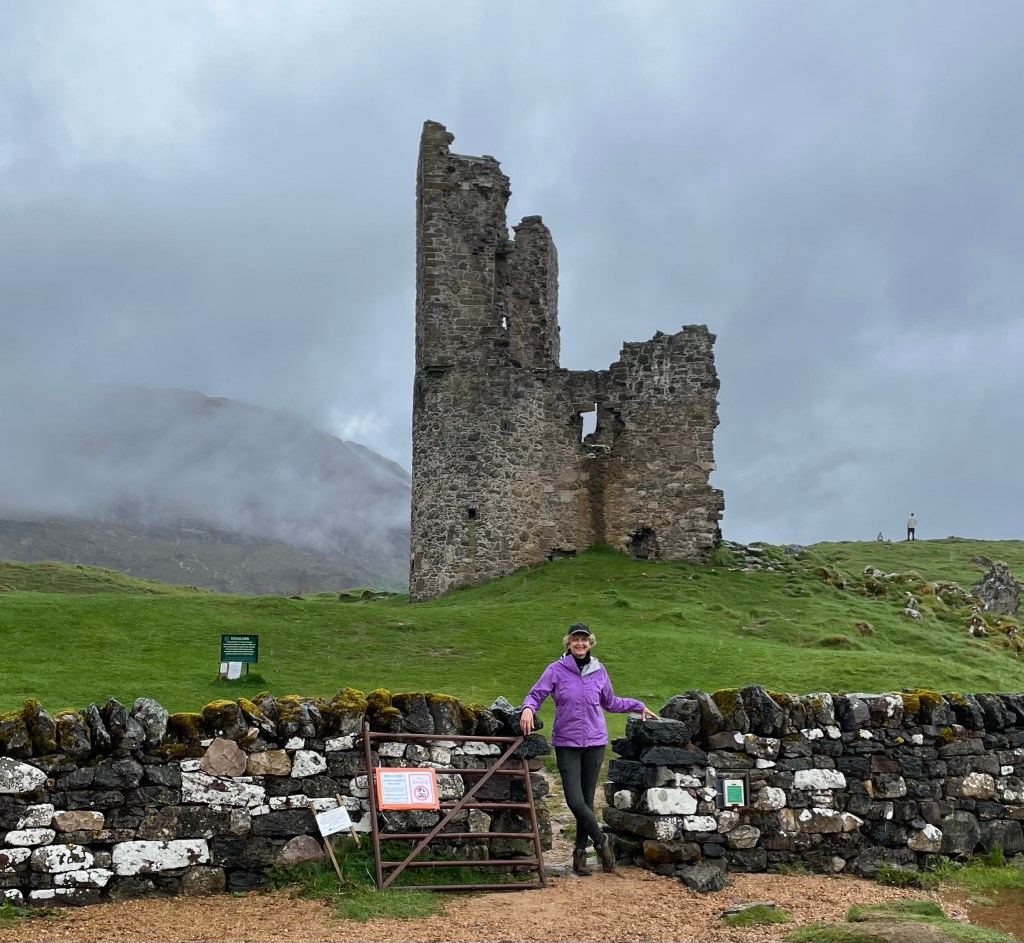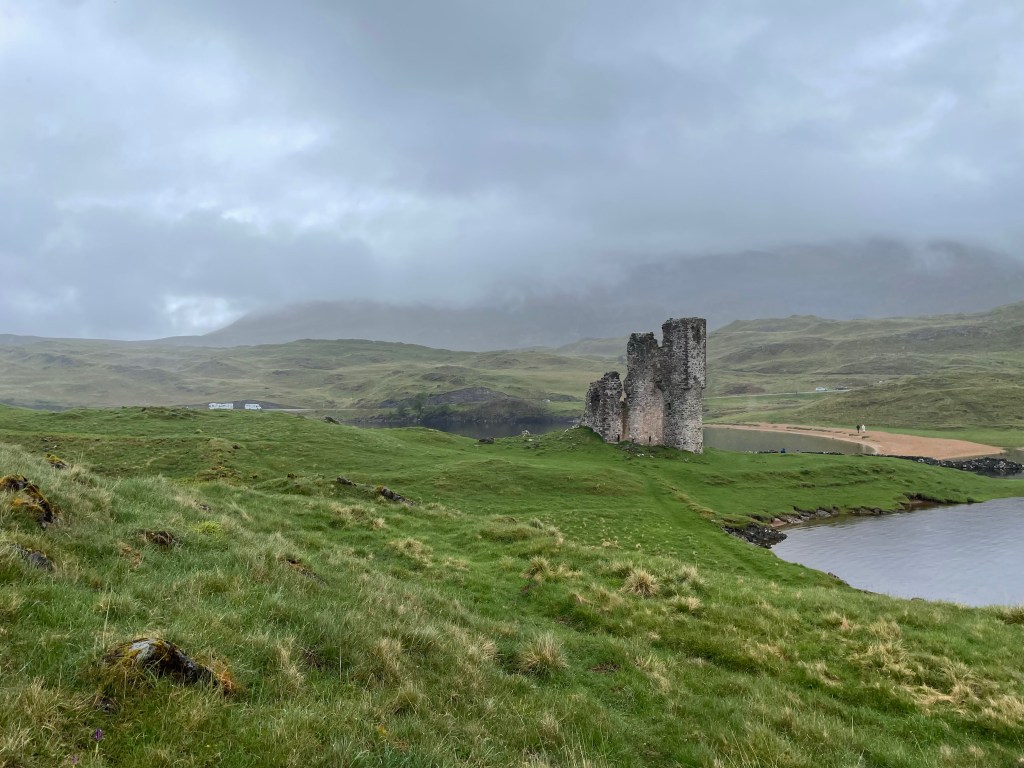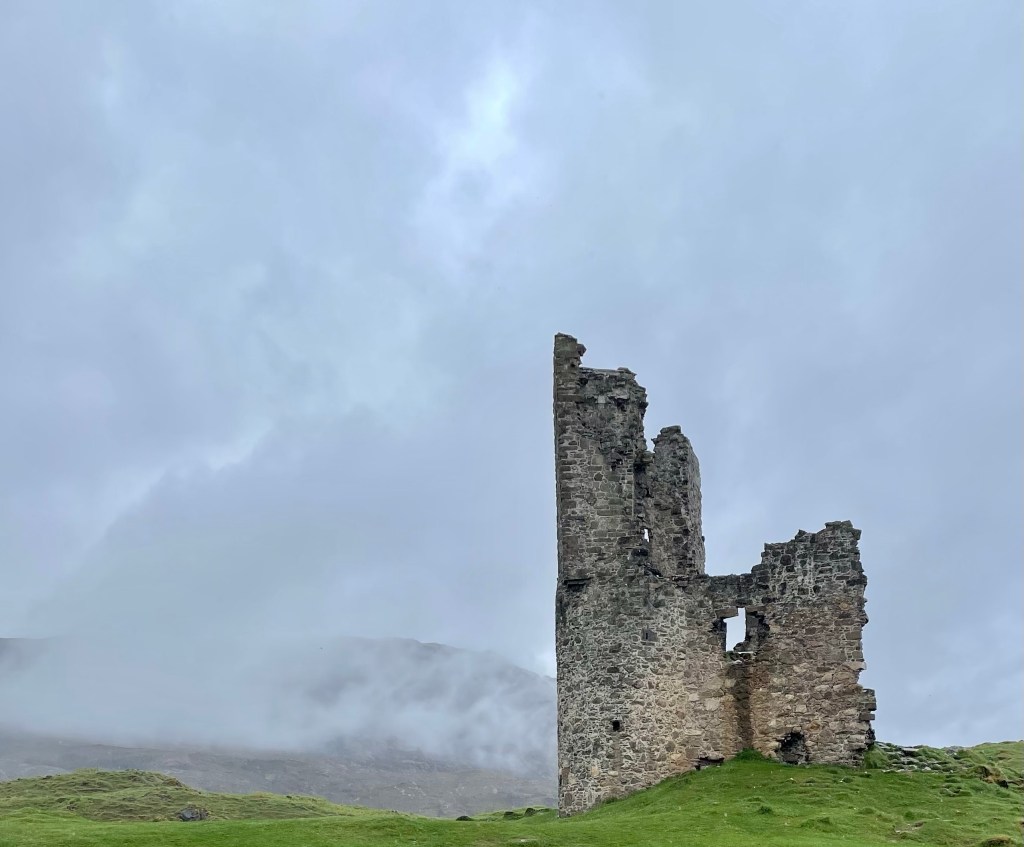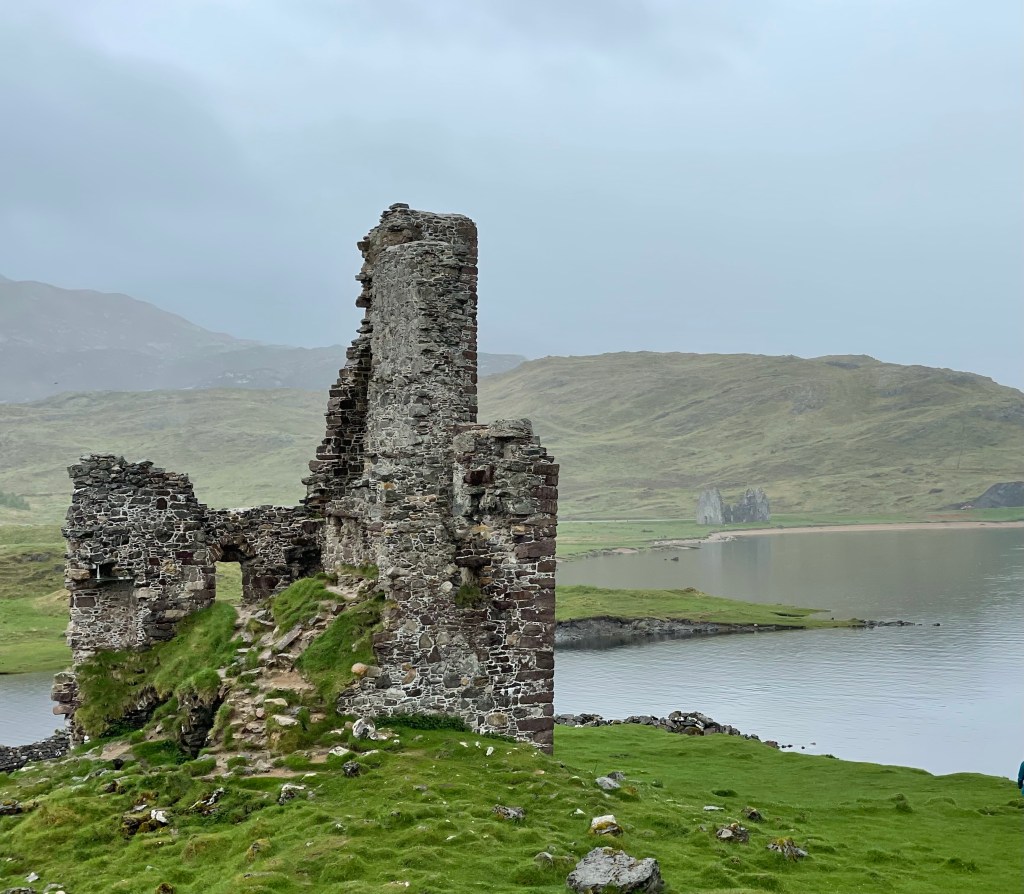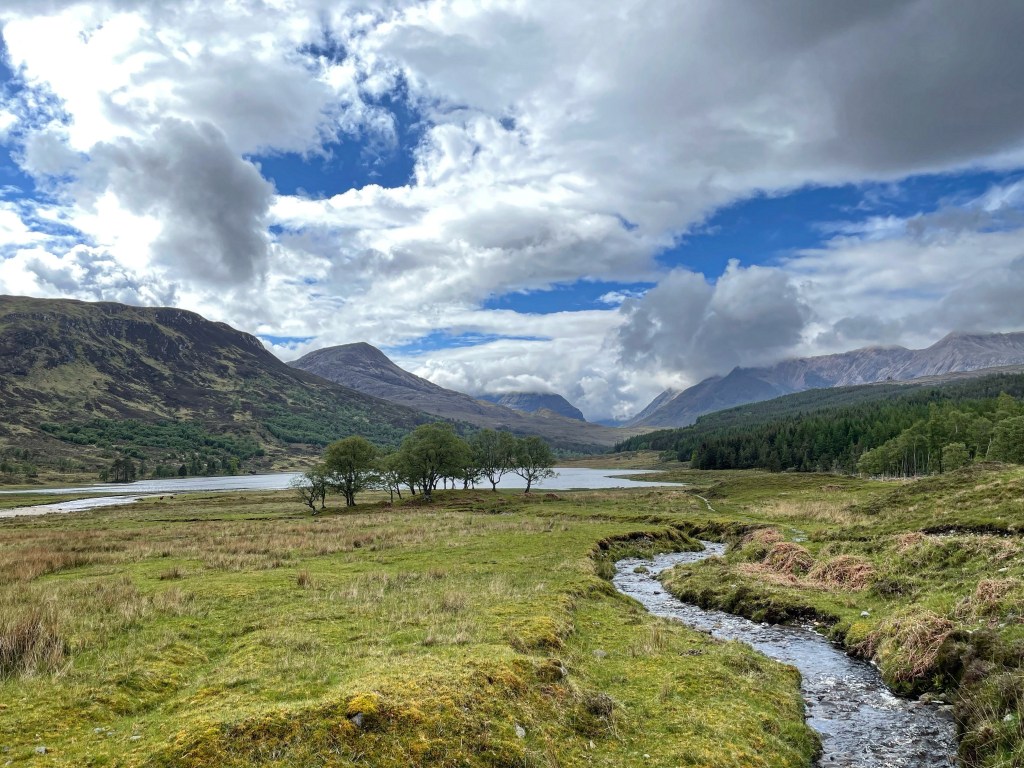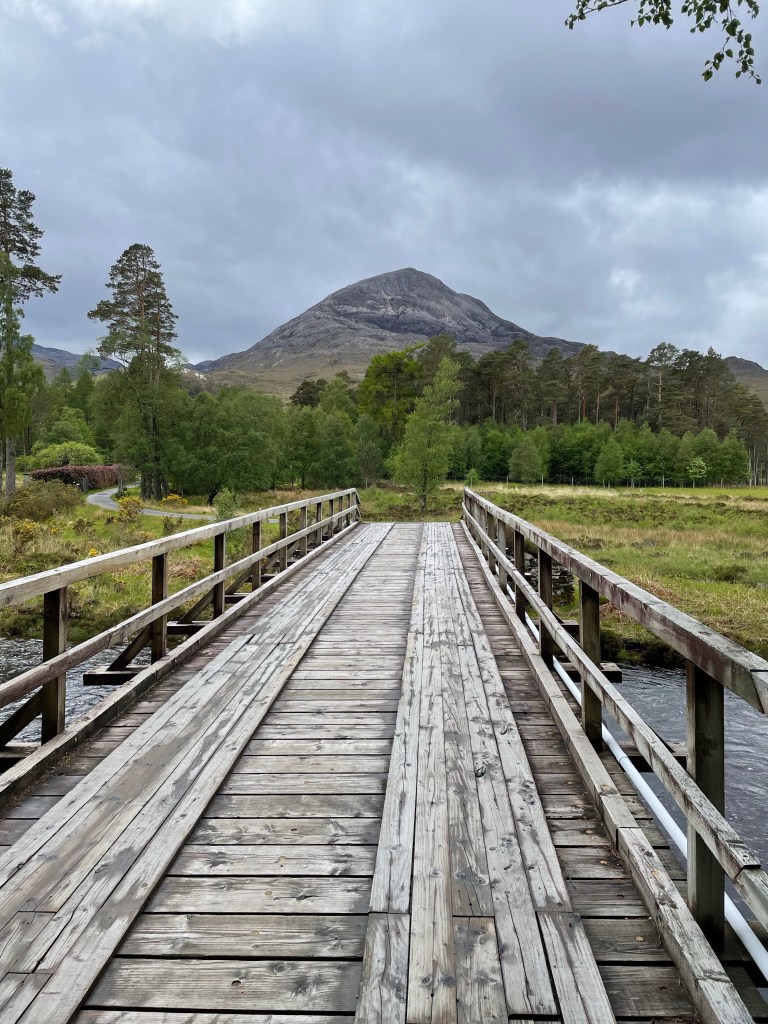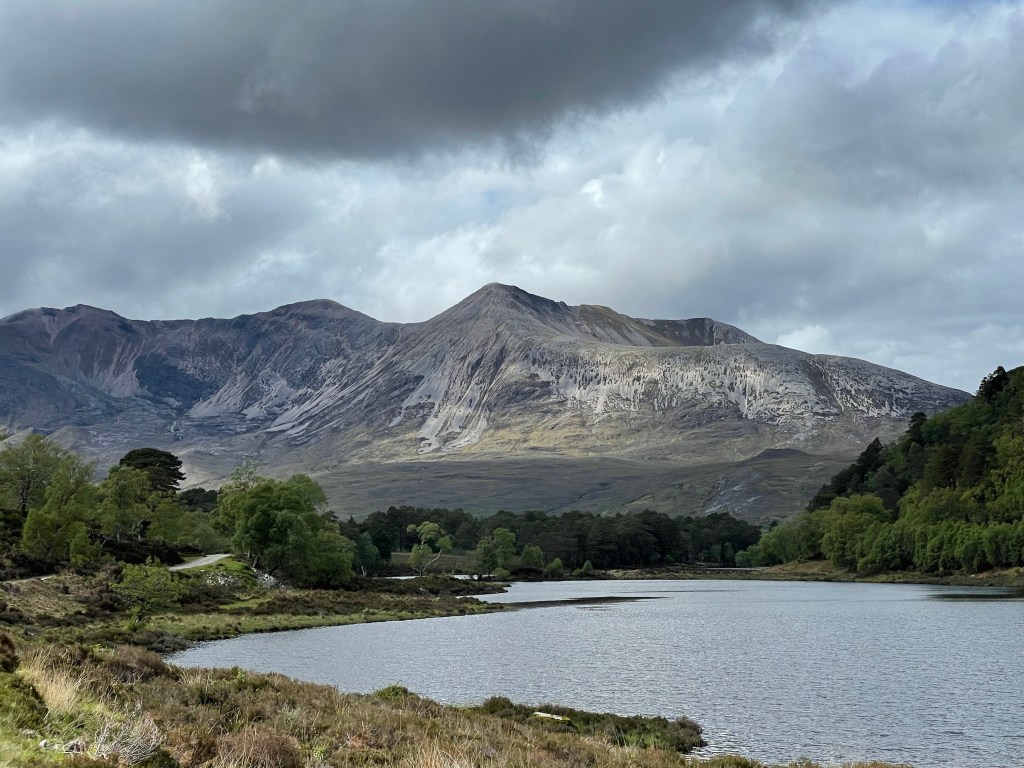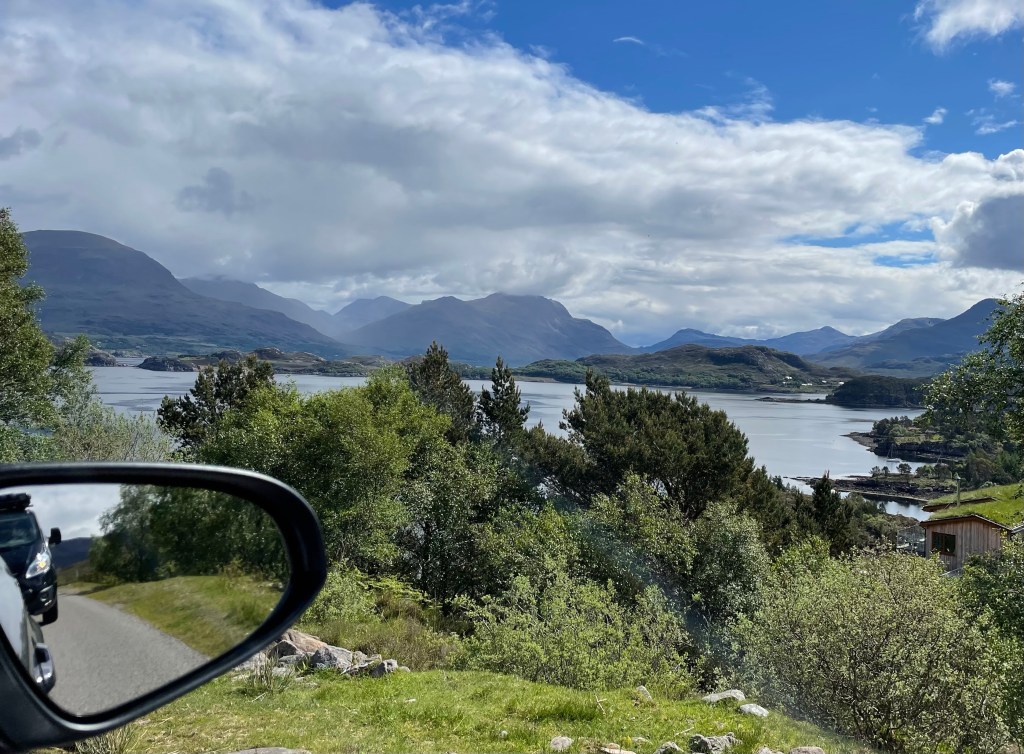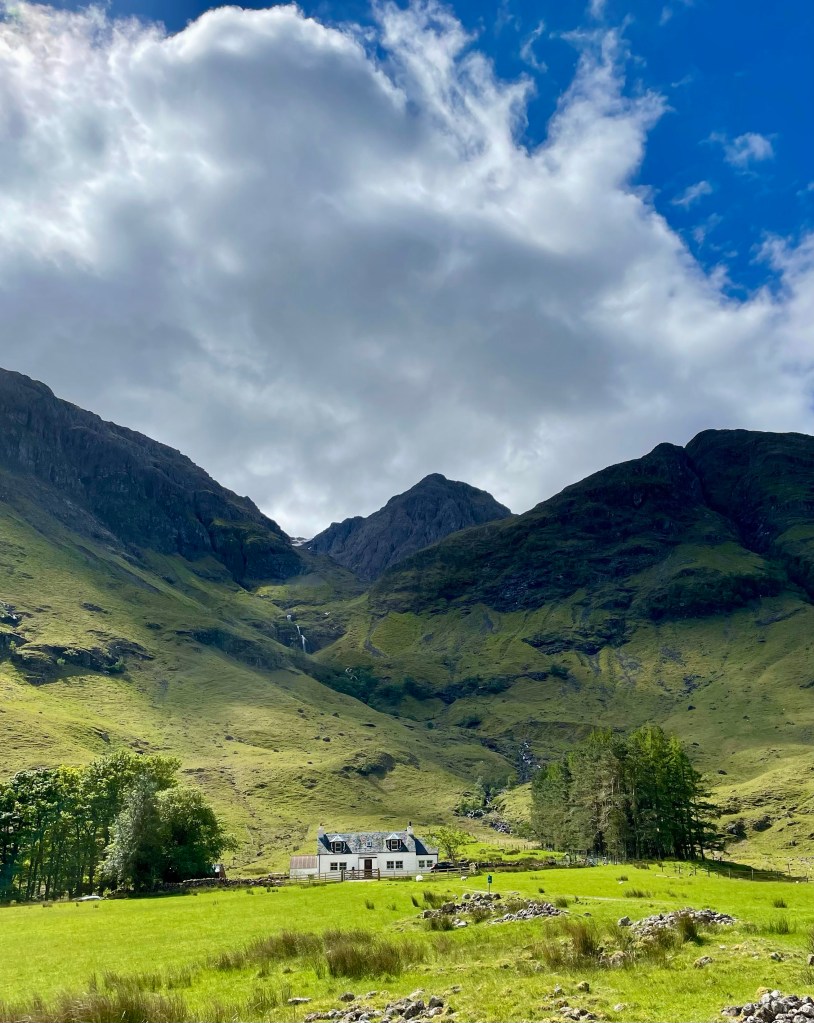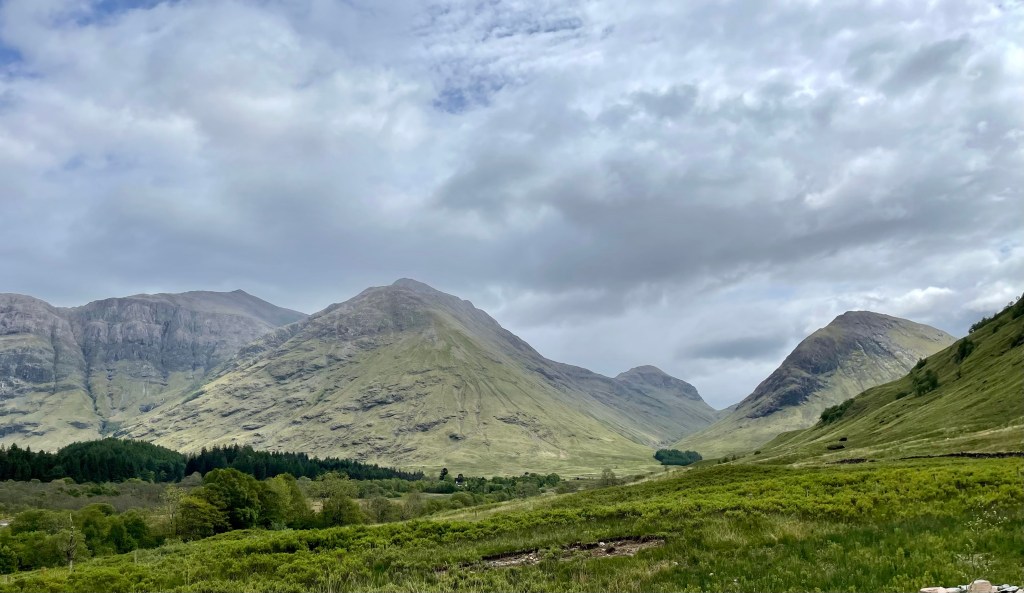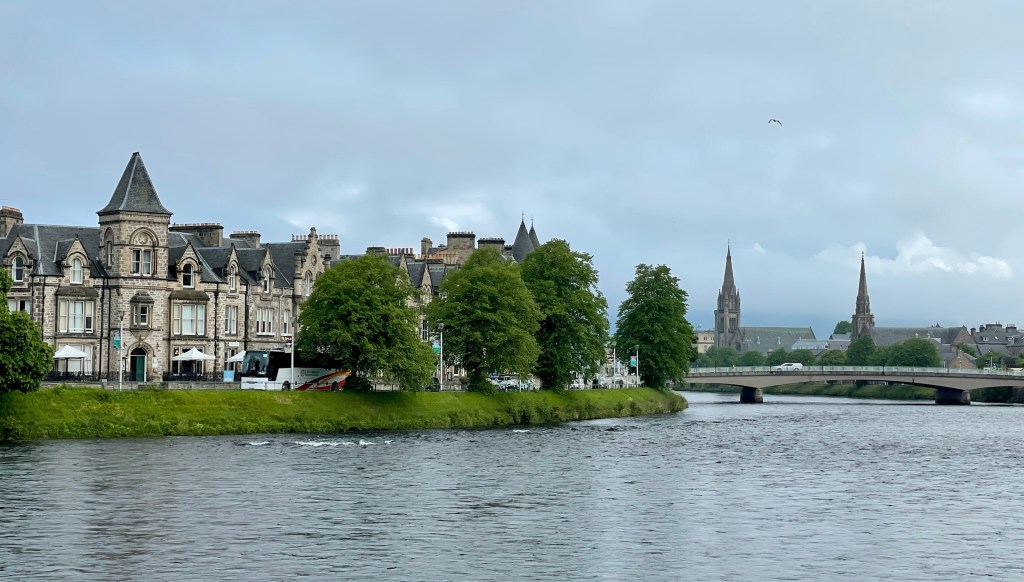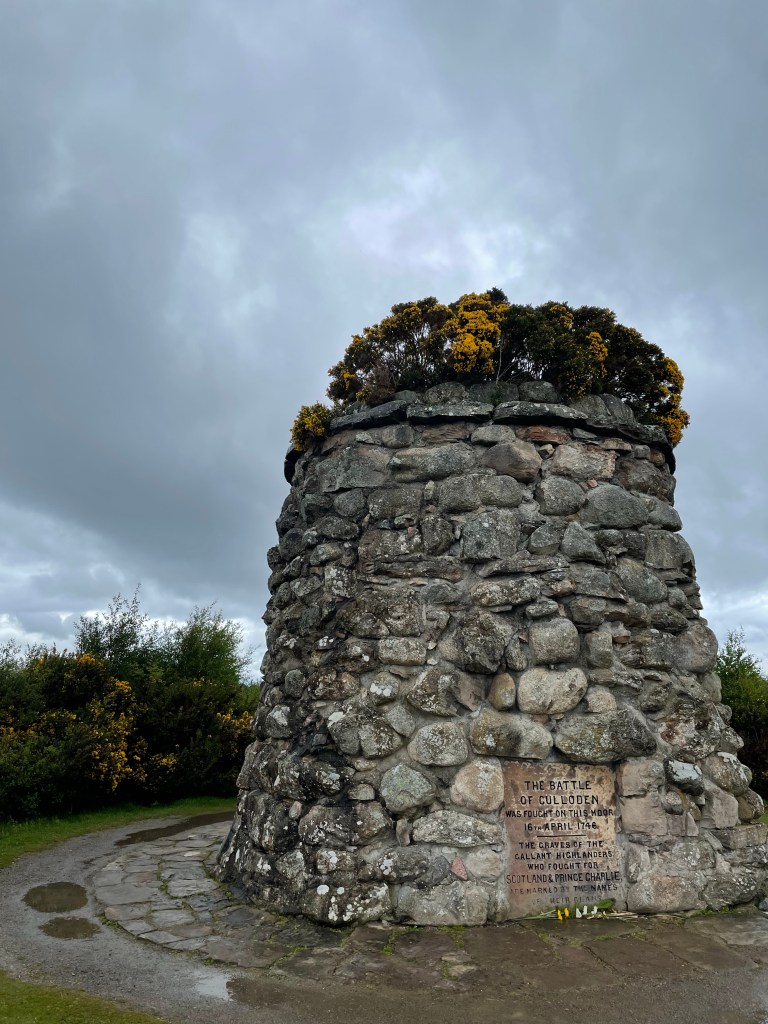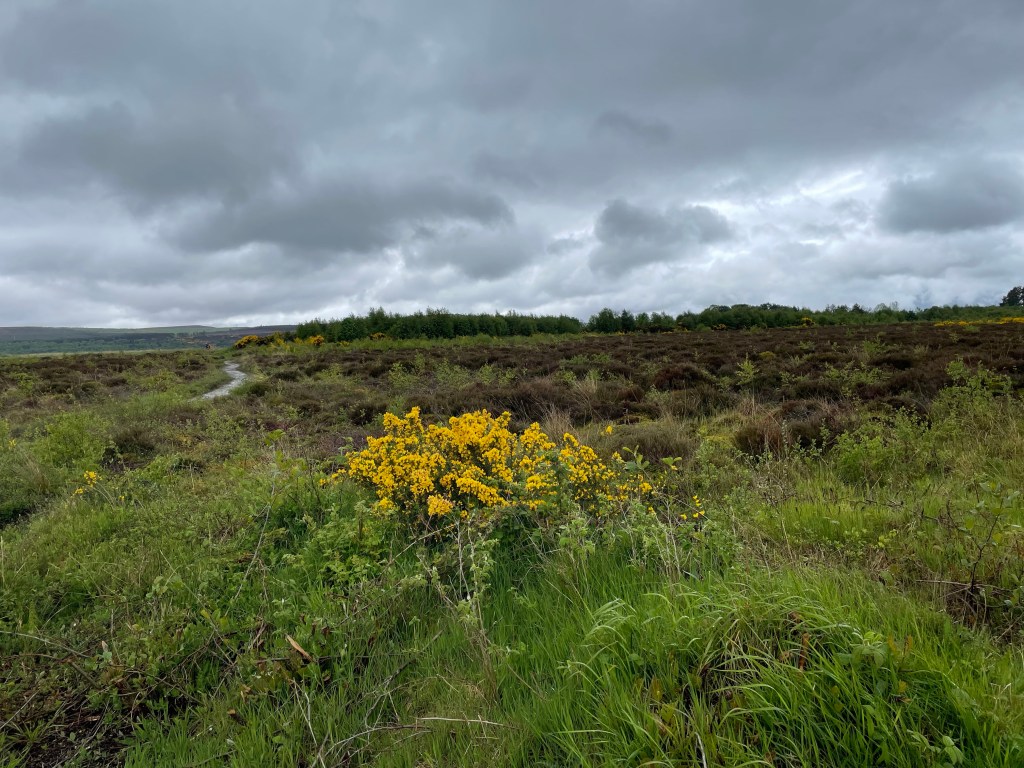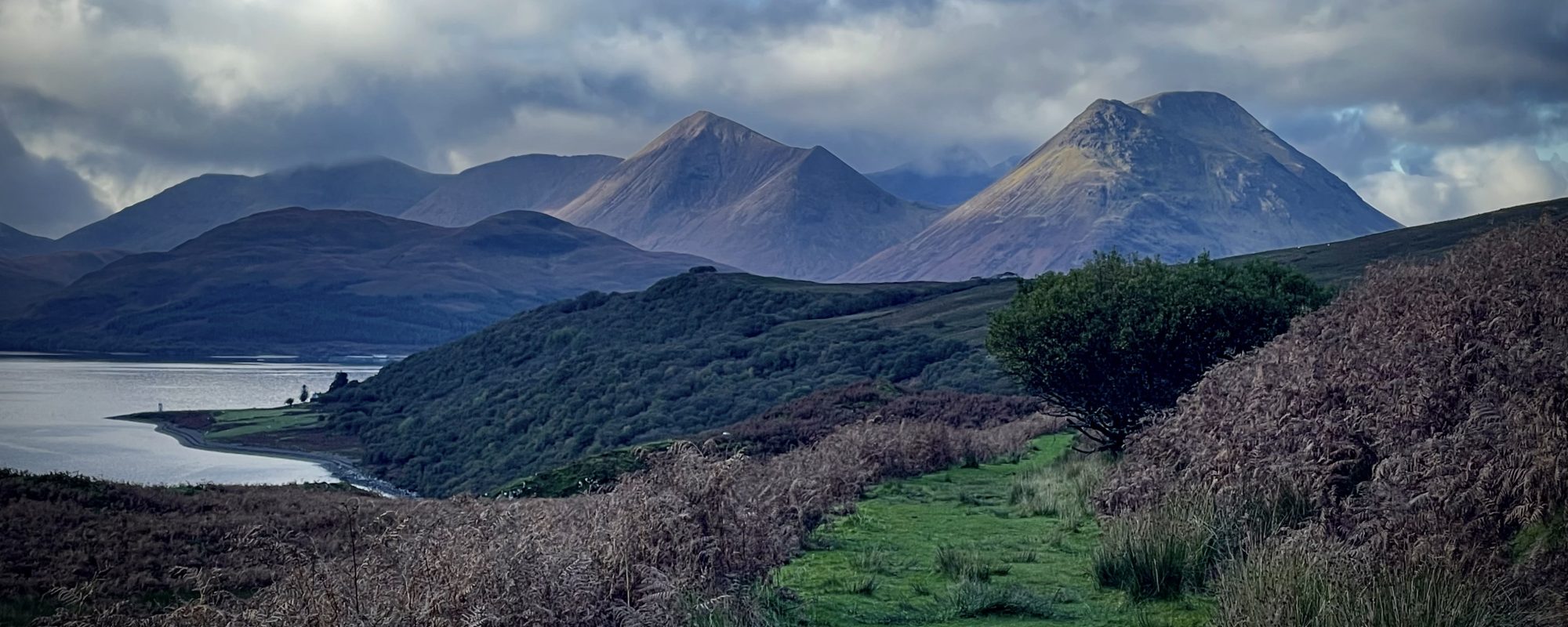
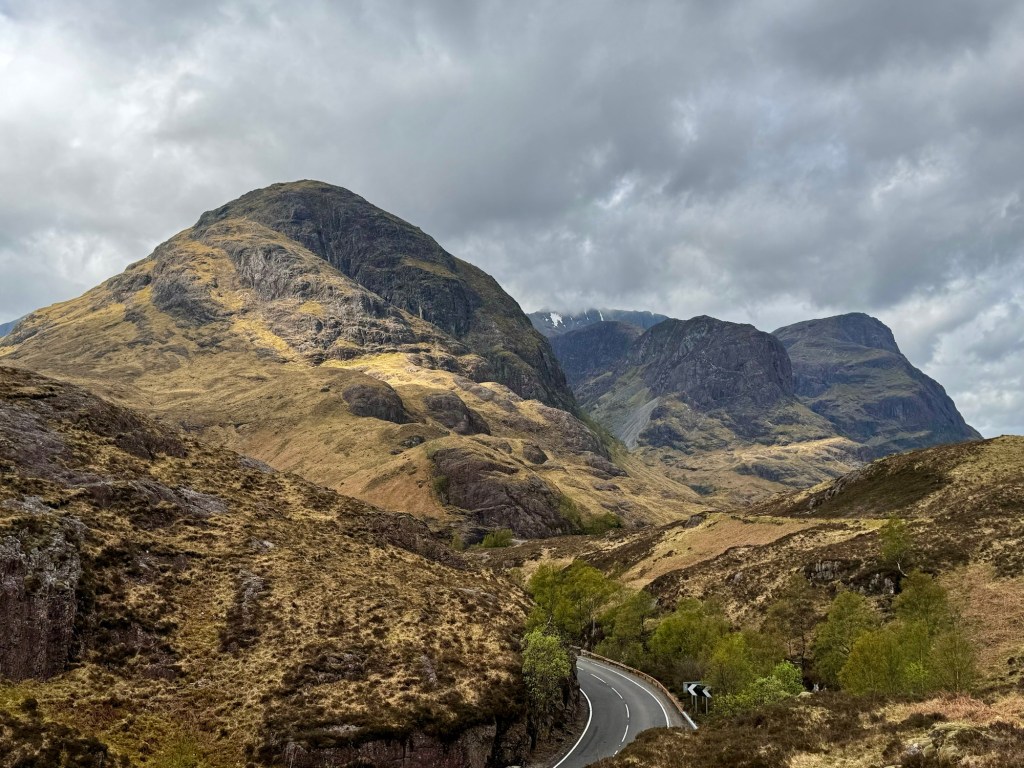
The Three Sisters of Glencoe, a Fairy Bridge and a Haunted Pub

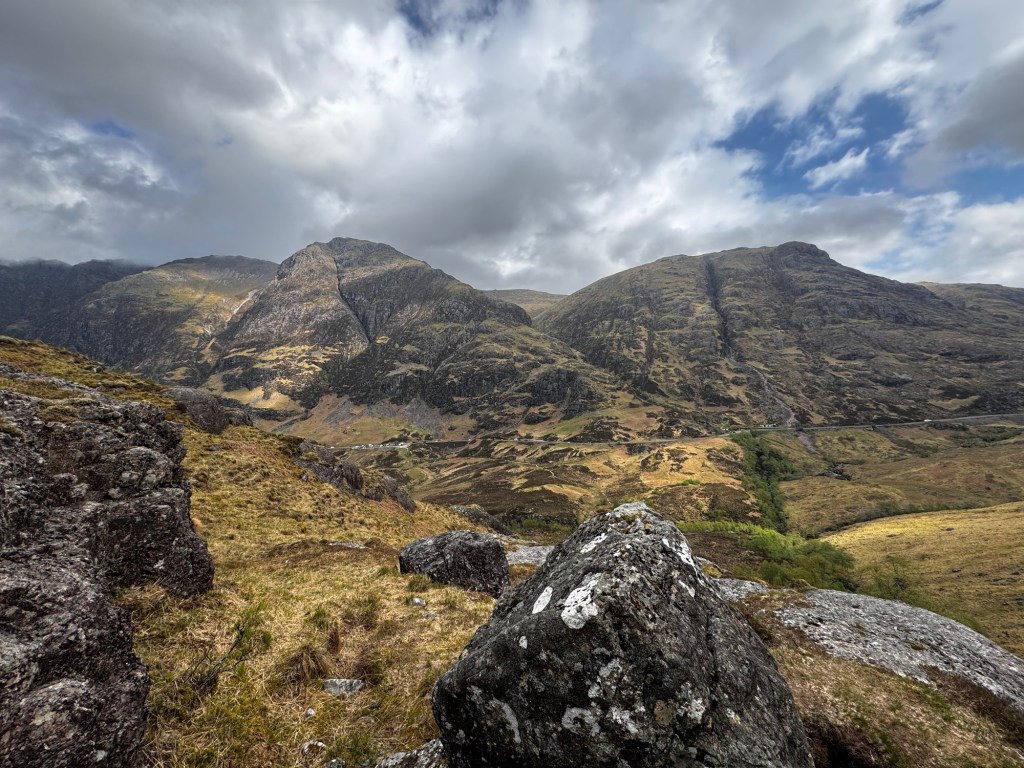
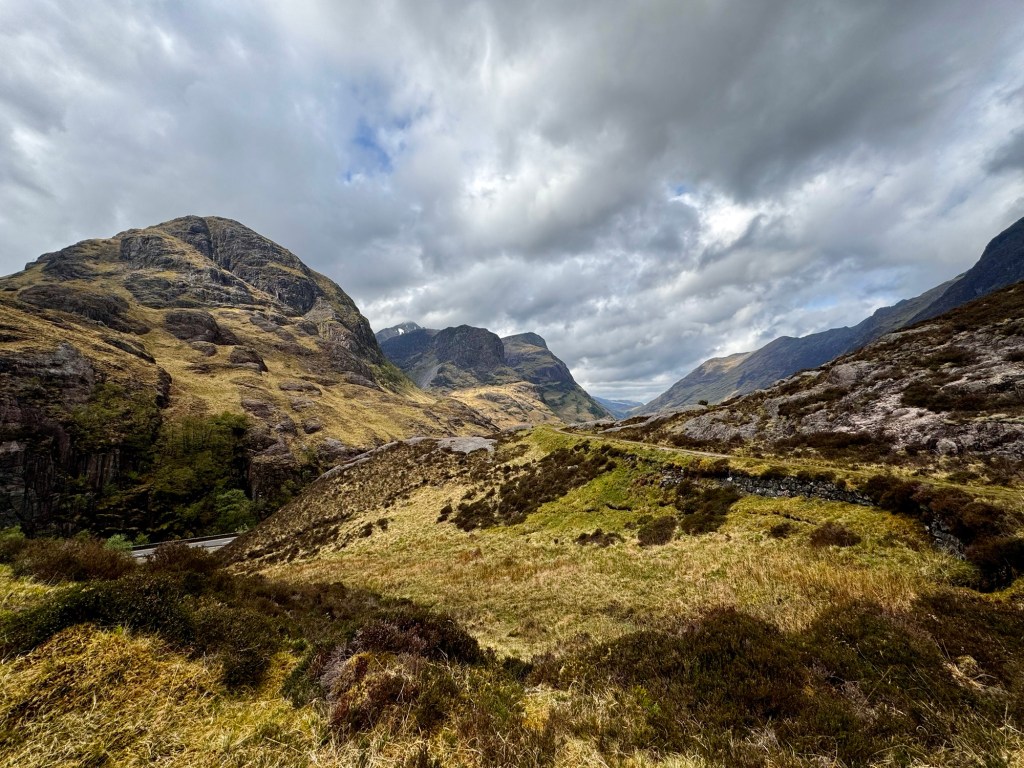
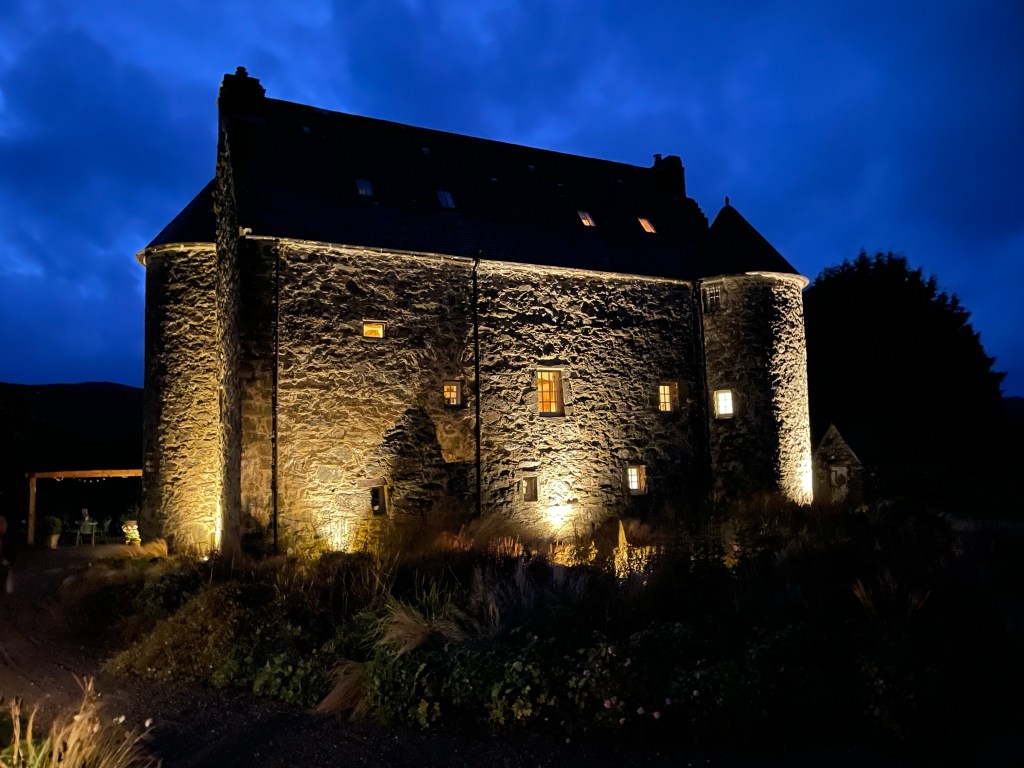
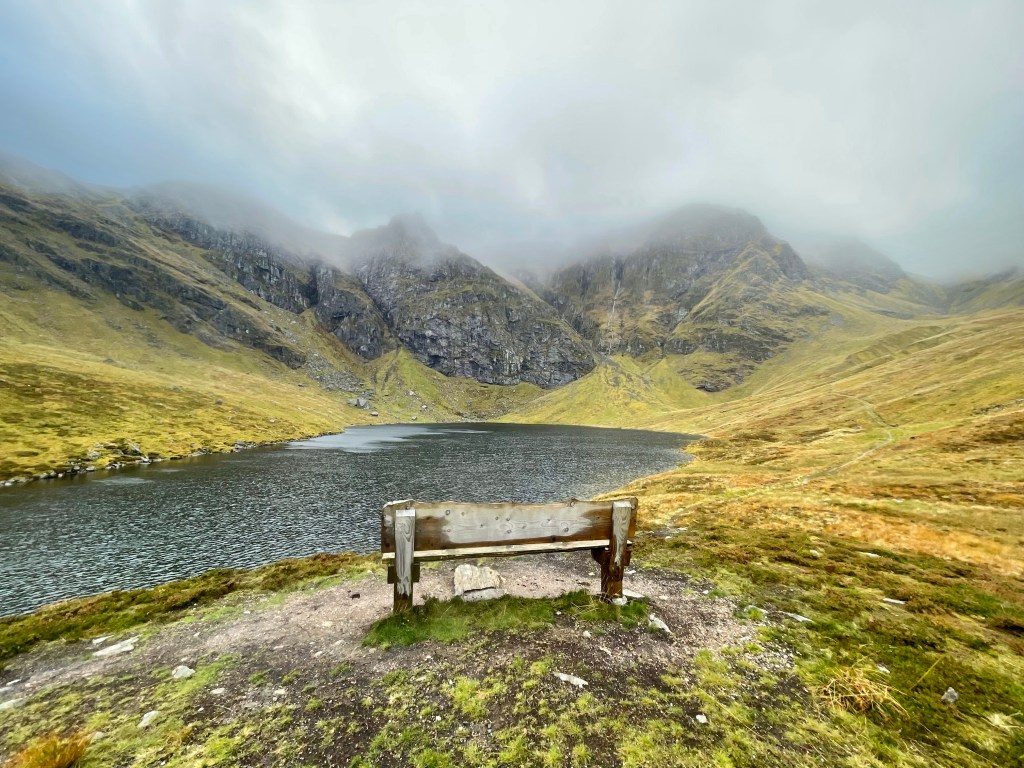
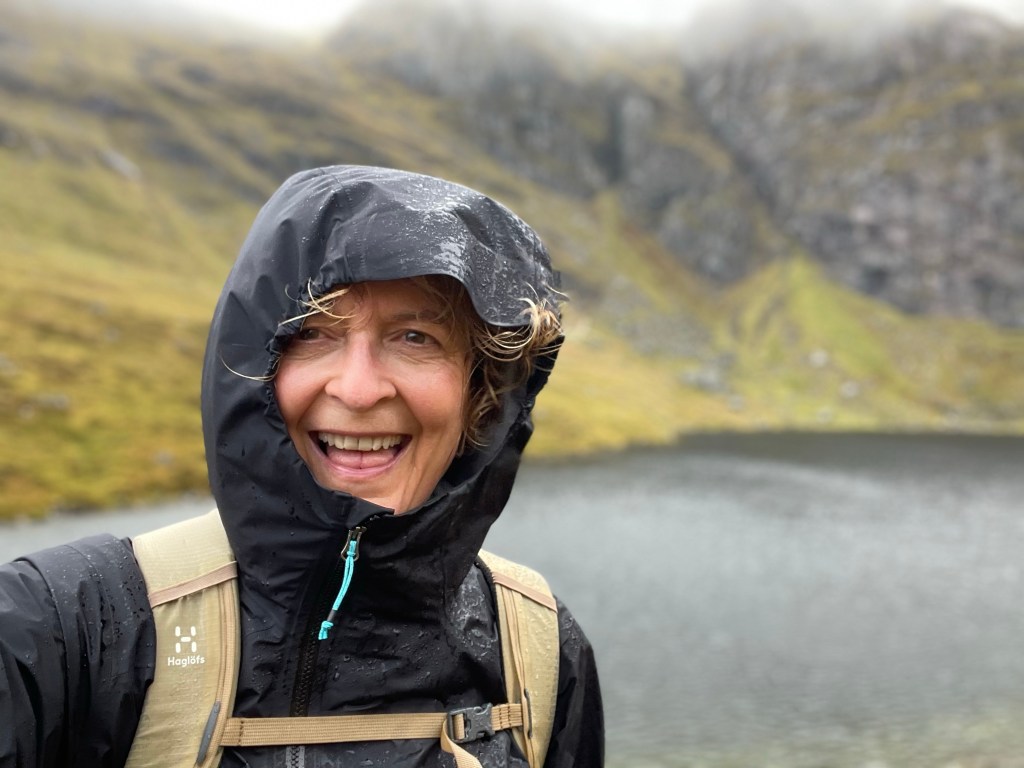
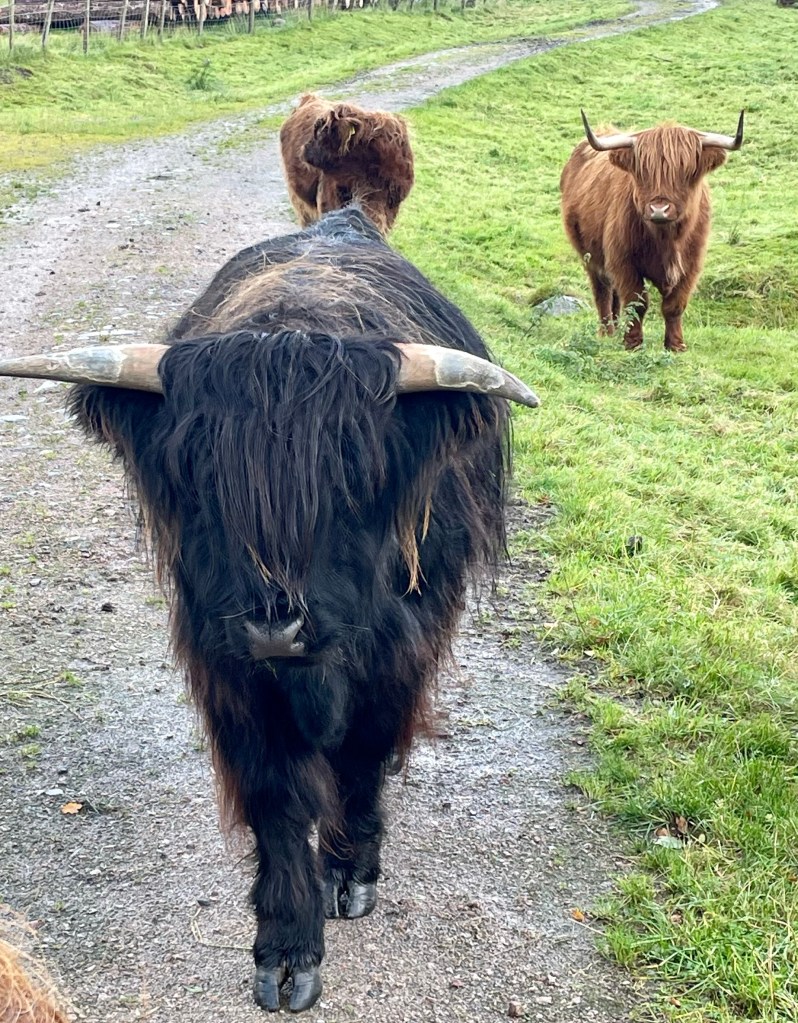
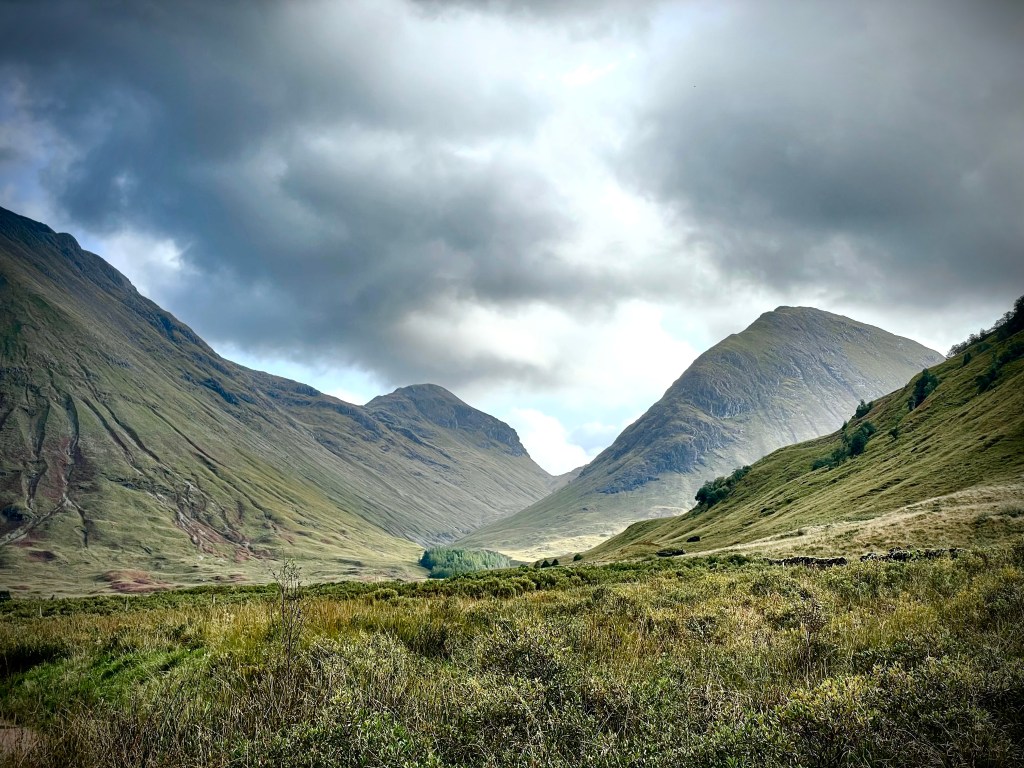
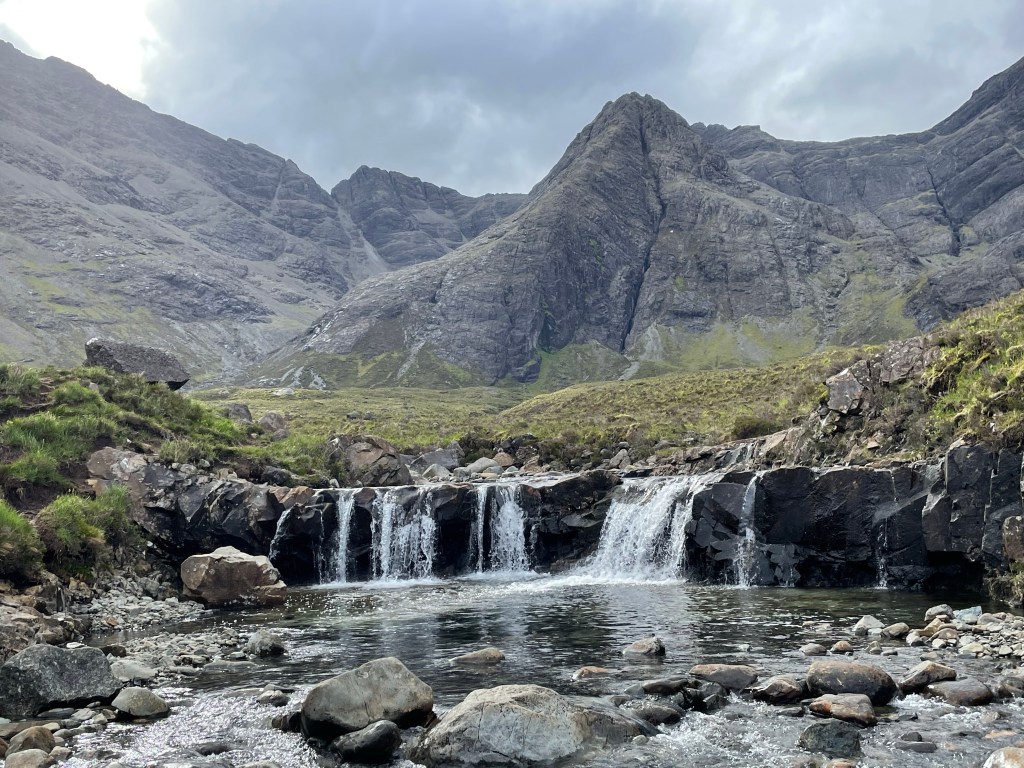
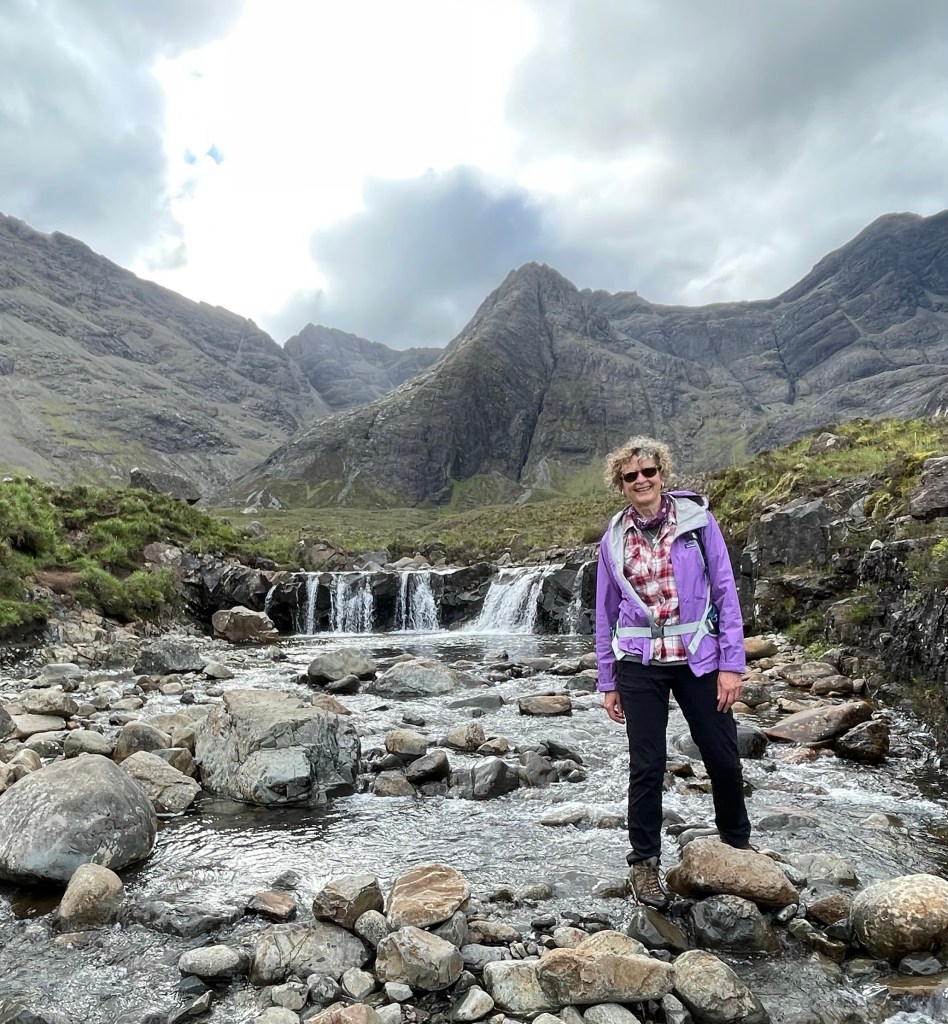
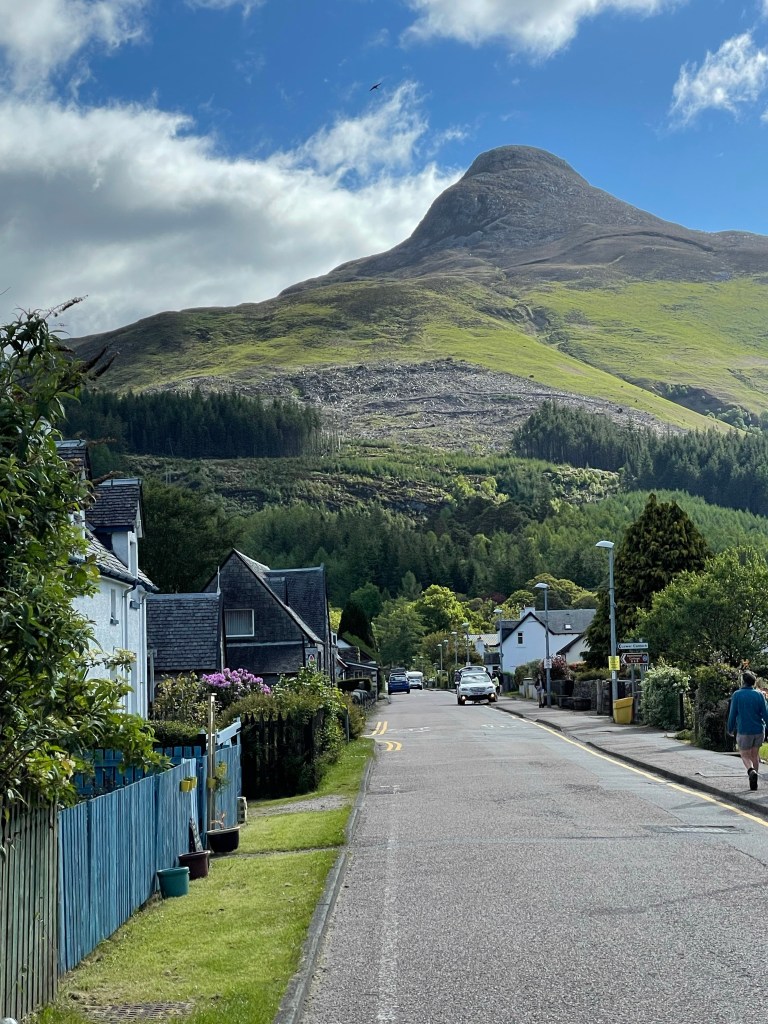
I spent today, my last in Glencoe, with the Three Sisters. As it came to a close, I left the glen and drove to Appin to find a fairy bridge and have dinner at a haunted pub on the shores of Loch Linnie with a castle view. These are the kinds of activities you can throw together in Scotland.

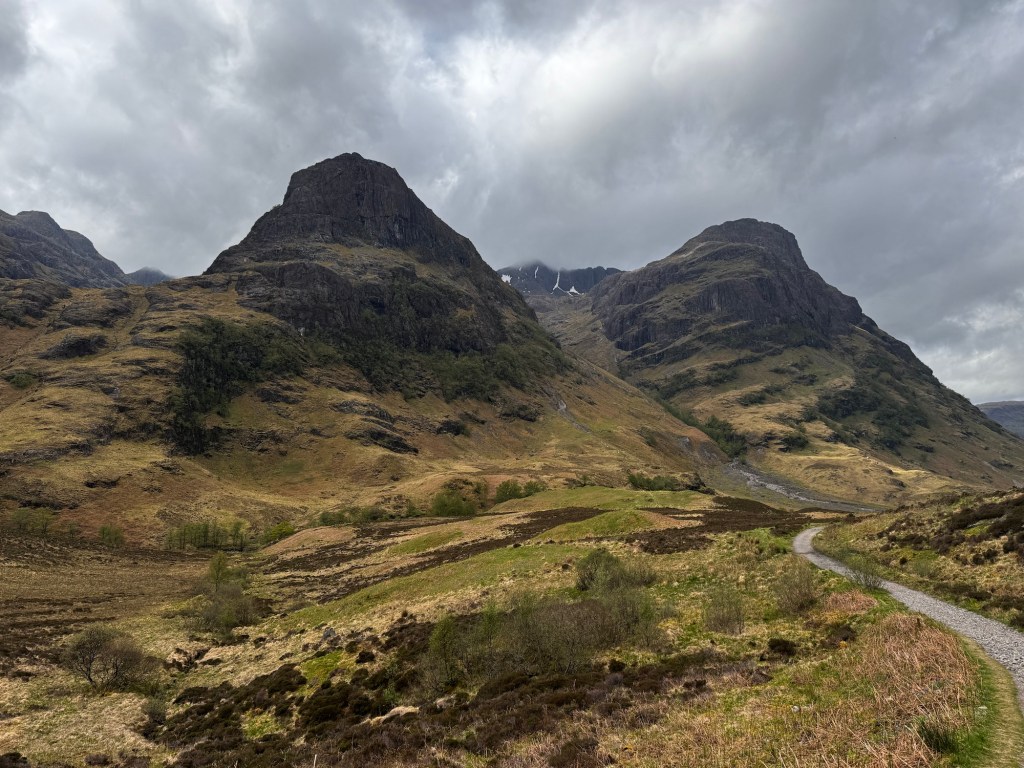
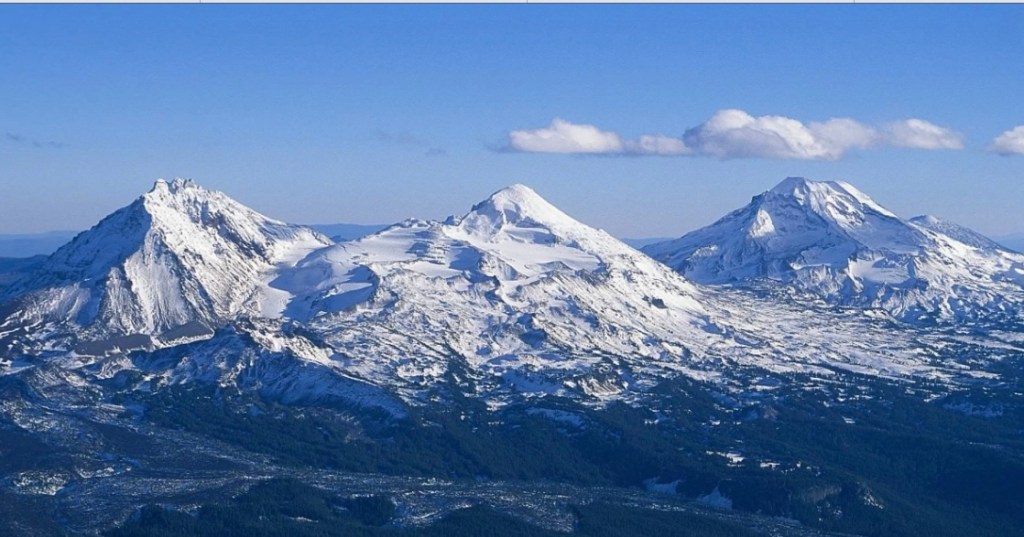
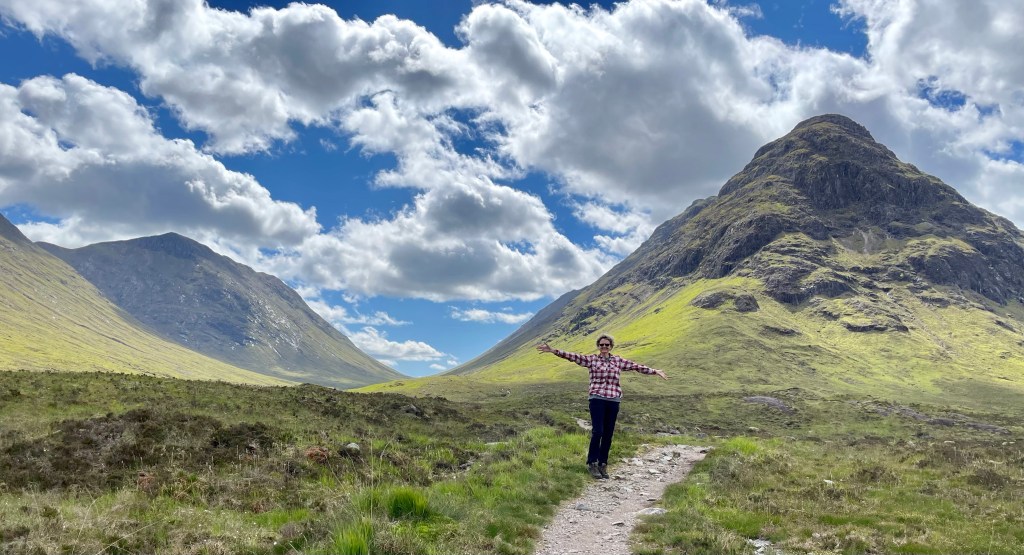
We have Three Sisters in the Central Oregon Cascades known as South, Middle and North – not the most original but people were probably tired from crossing the Oregon Trail and not feeling particularly creative. In Glencoe the sisters are known as Beinn Fhada (long hill), Gearr Aonach (short ridge) and Aonach Dubh (black ridge), all a part of a ridge known as Bidean Nam Bian, meaning “peak of the mountains.” Also more descriptive than creative but the Gaelic adds zhuzh.

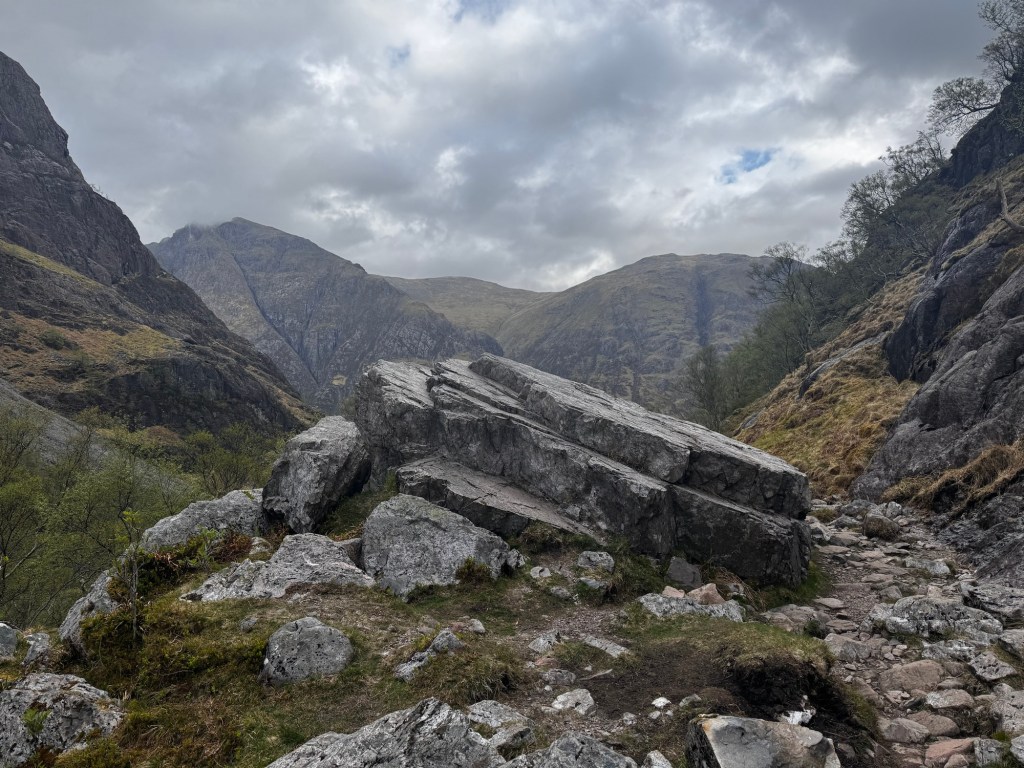
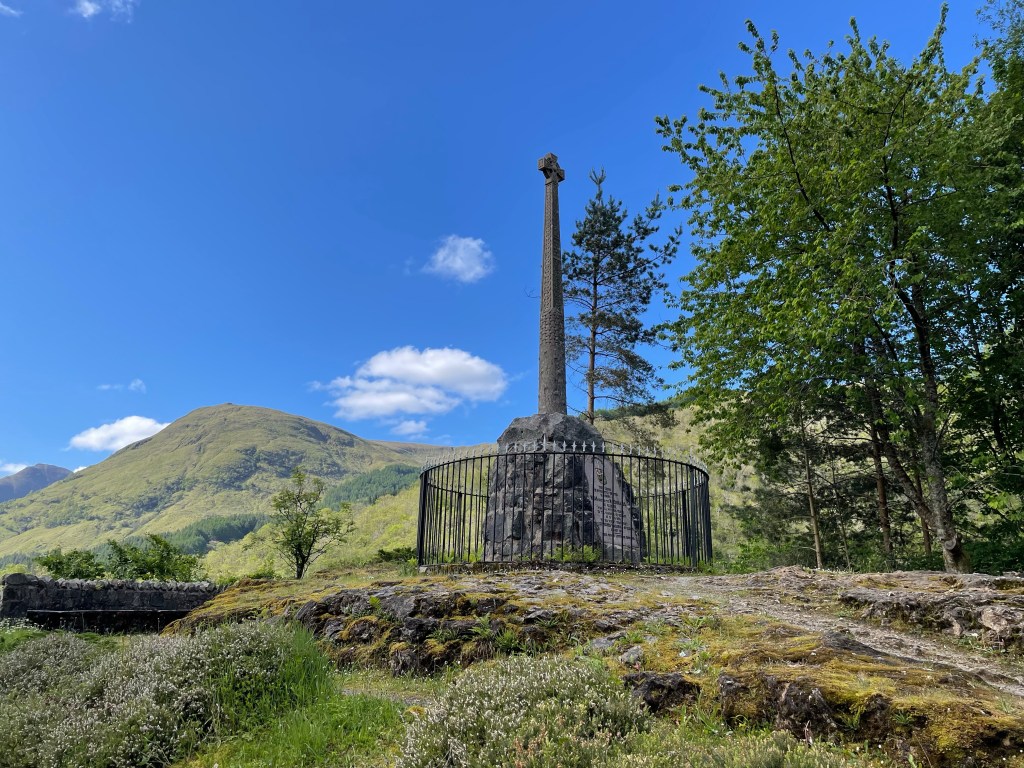
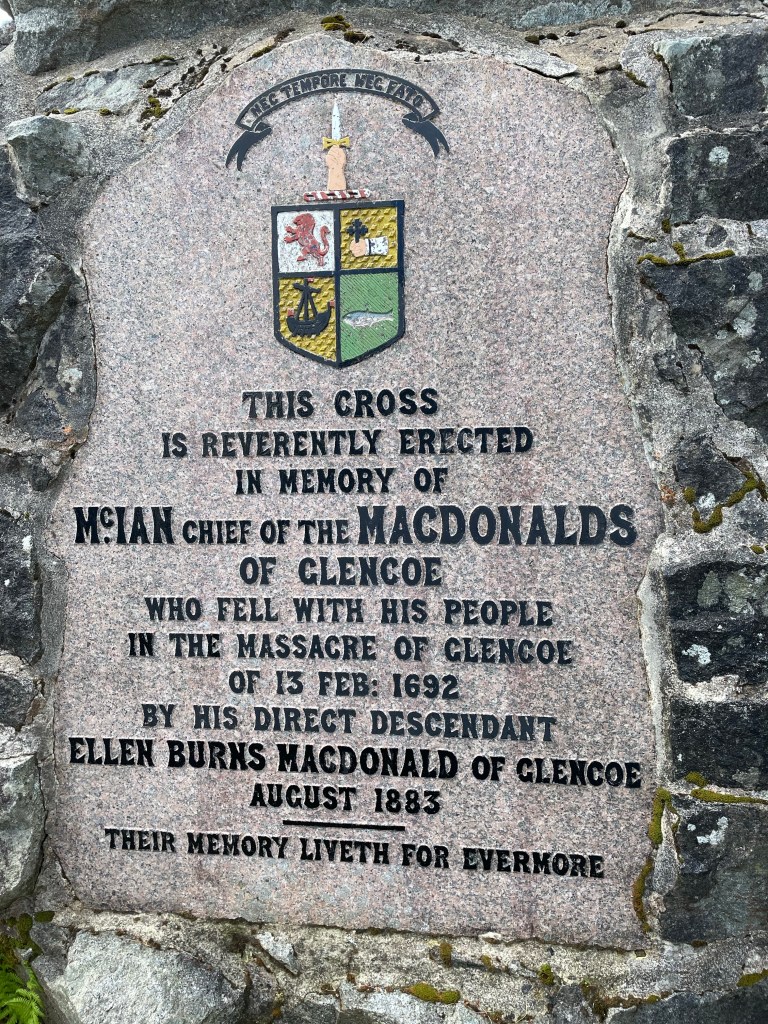
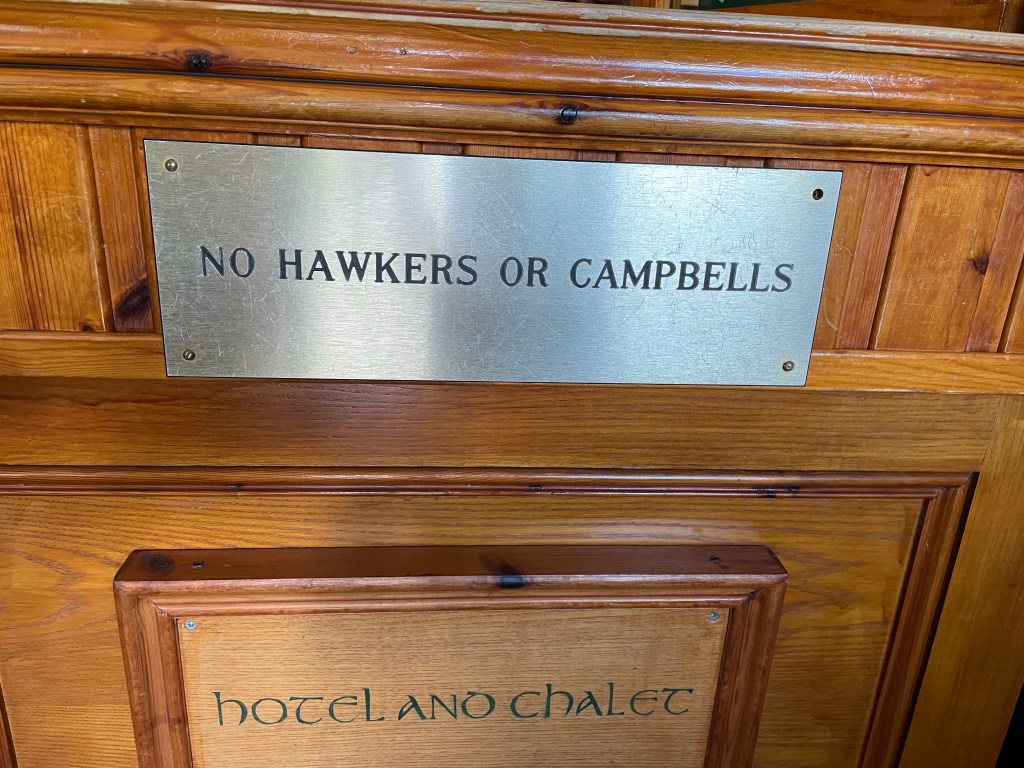
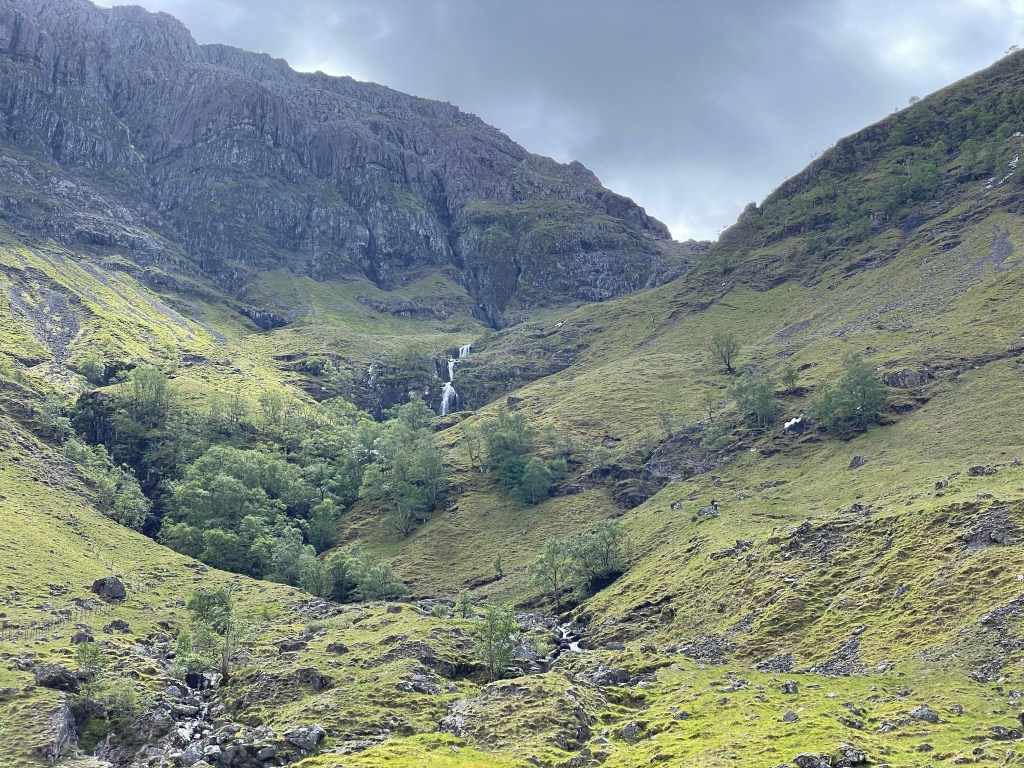
Morning commenced with a hike called The Lost Valley, or Coire Gabhail (pronounced “corry gale”), located between the easternmost sister and the middle one. The valley was not lost but a secret, and hard to access. It was used by the MacDonalds as a hiding place for rustled cattle (the family business) and it served as a refuge for those who escaped being murdered during the 1692 Massacre of Glen Coe. Although not really a refuge, as it turned out, since more folks froze to death after escaping than were killed by members of the Campbell Clan, aka rudest guests ever. Ah, but you know all about the Massacre because you read my previous blog and memorized all the facts.

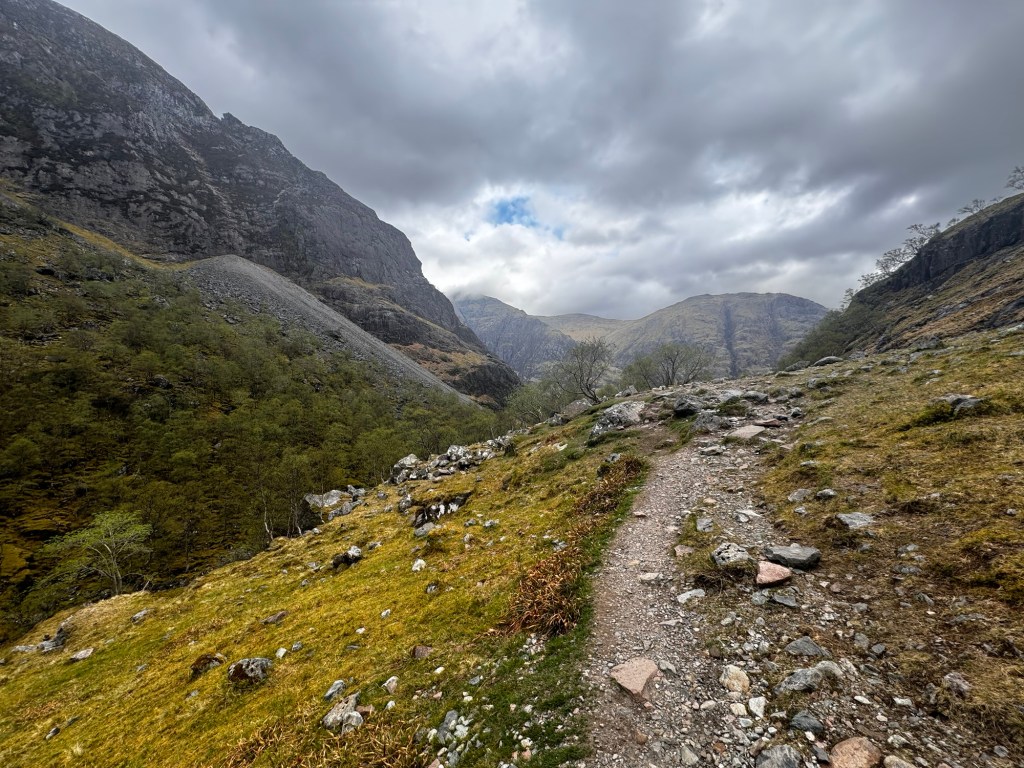
The hike featured some challenging moments and the idea of urging a herd of cattle up this canyon seems completely insane but back in the day maybe cows were tougher. And fleeing up into the canyon in the snow and dead of night with no light source sounds even more impossible.

While relatively short, the hike is a gnarly enough to merit installed hiking accessories along the trail which is not much of a thing in Scotland. There are steep metal steps, handrails, and metal cables drilled into rock next to a sheer slope so you can pull yourself up. Another bit of perilous business leaves you to your own devices as there was simply nothing for it. It’s a section of smooth, steep rock with a fun drop off down one side. Walkhighlands says, “the scrambling is pretty straightforward but some may find the situation airy.” Meaning too much air and not enough rock I guess? To make matters more exciting, the rock has been polished to a high sheen due to years and years of rear-end polishing thanks to all the butts that have slid down it. If you find yourself in Glencoe, do not attempt this hike if it’s been raining. This would be my advice.

And goodness gracious me it was beautiful.
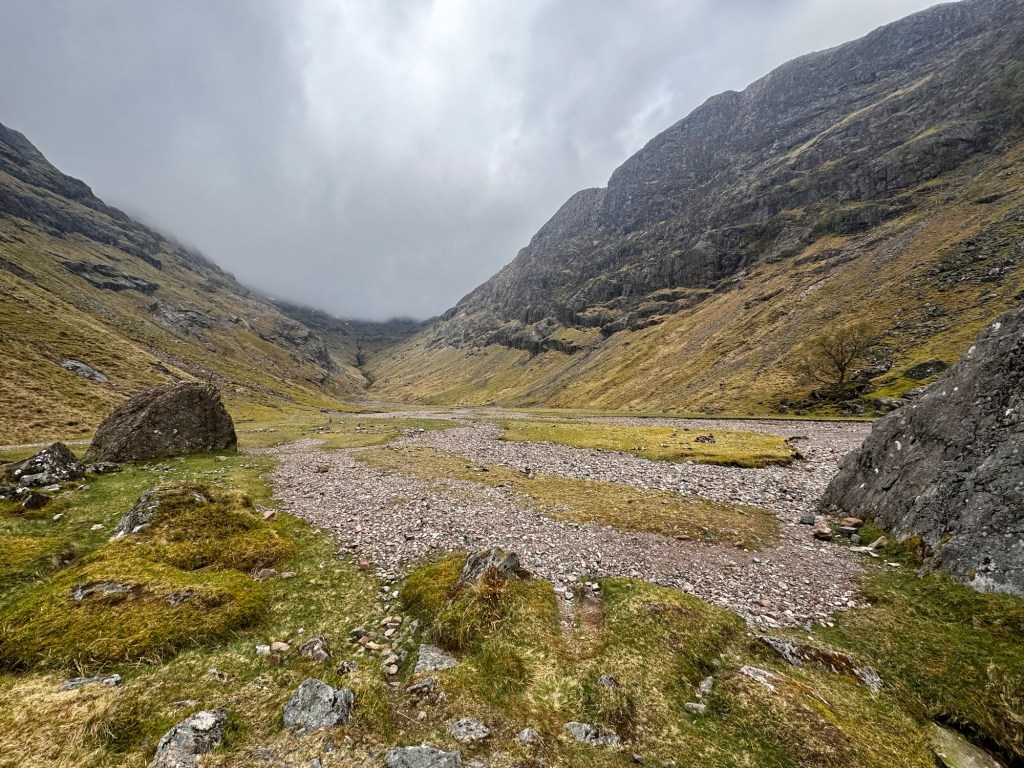
The Lost Valley itself was like a moonscape. Much larger than I expected, it could hold a fair few cattle. And by that I mean easily hundreds.
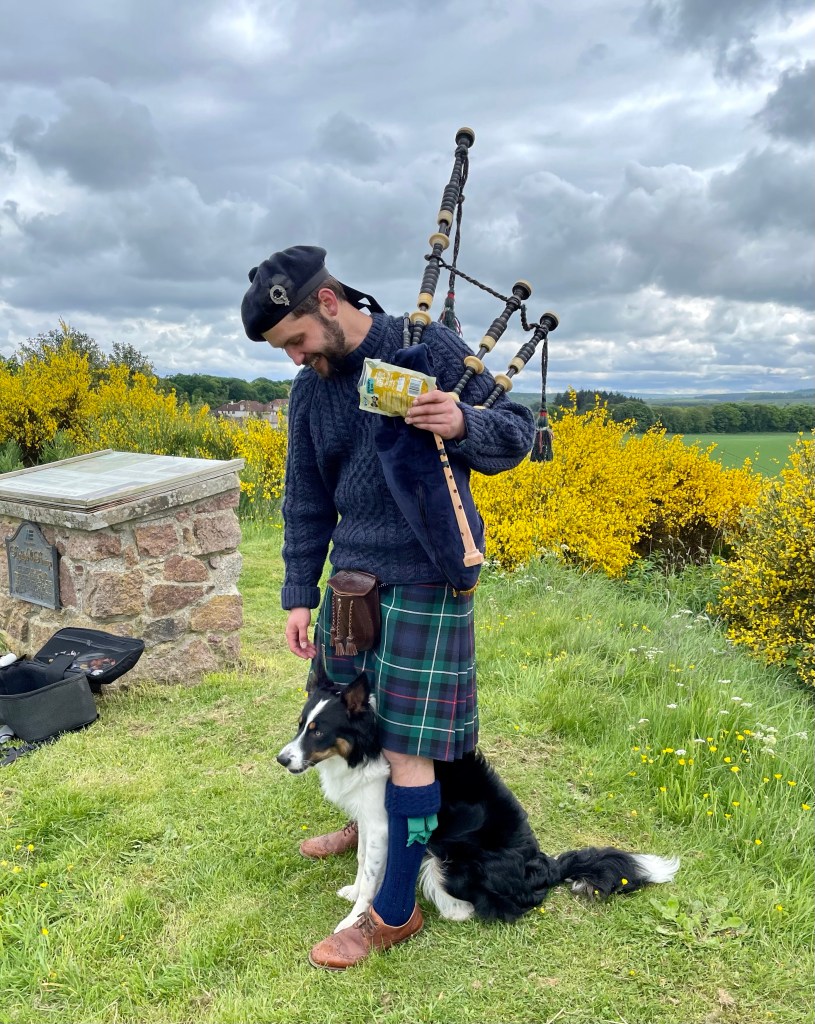
The descent was easier even with my knees not being fully stoked. And there is often a piper in that particular parking lot, as there was this day, and so my return was scored with a triumphant soundtrack. That’s right, I thought. I did it and now the pipes are playing me home.

By the way, McRaggie plays entrance music whenever I open the car door. More orchestral than bagpipes. It makes me smile every single time. And I play the NYTimes mini-crossword for the little jazzy piano tune it plays when you complete it. Maybe I should speak to a therapist about this.

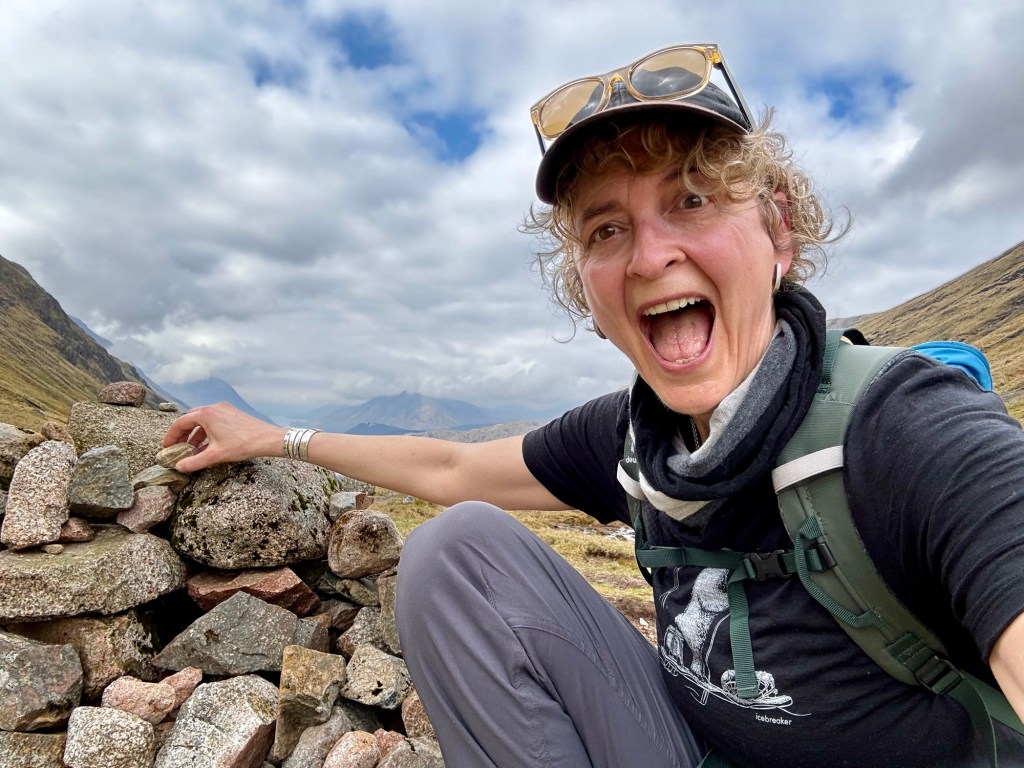
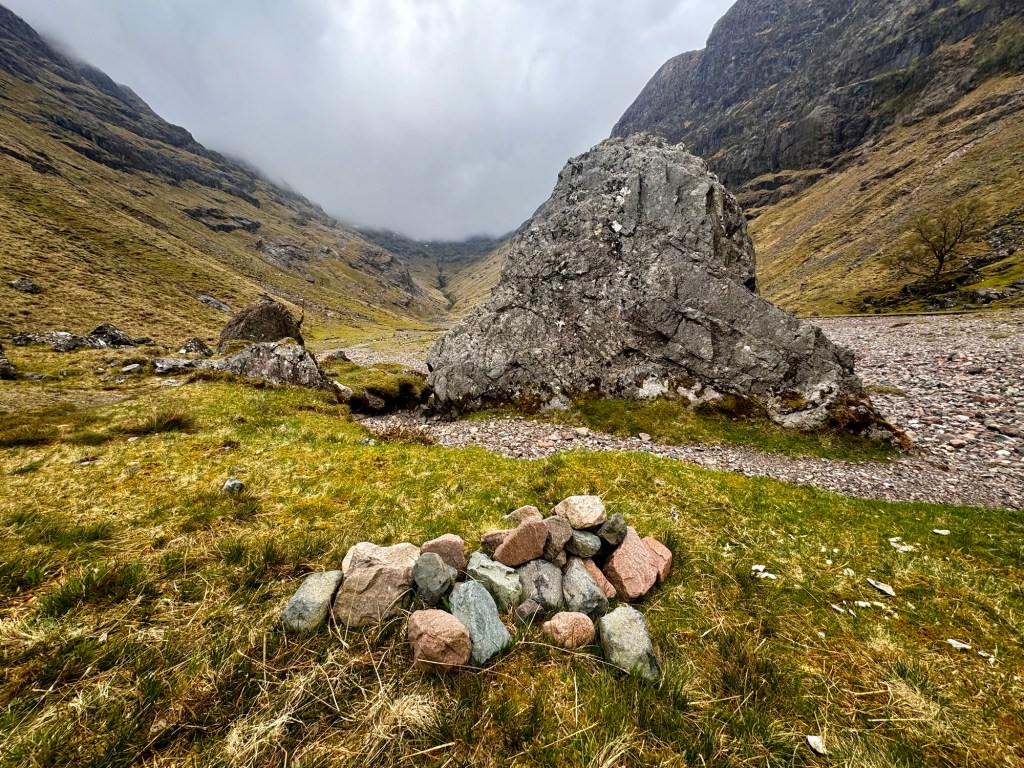
Buoyed by not dying, I thought another walk was totally reasonable and so stopped for a quick ramble to visit Ralston’s Cairn. And admittedly I never would have known it existed without Instagram. Ralston Claud Muir was a train driver on the West Highland Line and loved to hike in the hills of Glencoe. He sadly died unexpectedly at 32 and his friends and family erected a wee cairn and spread his ashes there. It’s a gorgeous spot, off the trail and a little hard to find, which he probably would have appreciated. I suspect other ashes have been surreptitiously added over the last twenty plus years.

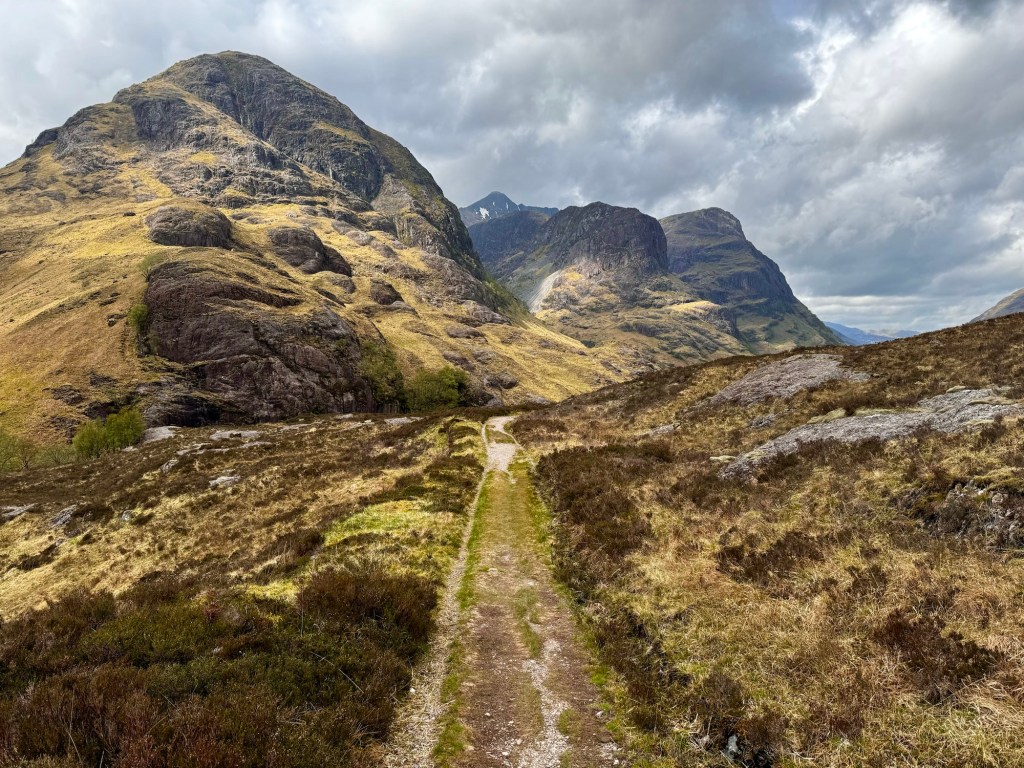
The cairn walk is a festival of Three Sisters views.
The trail is along the old military road that runs through Glencoe.
I feel this sentiment.

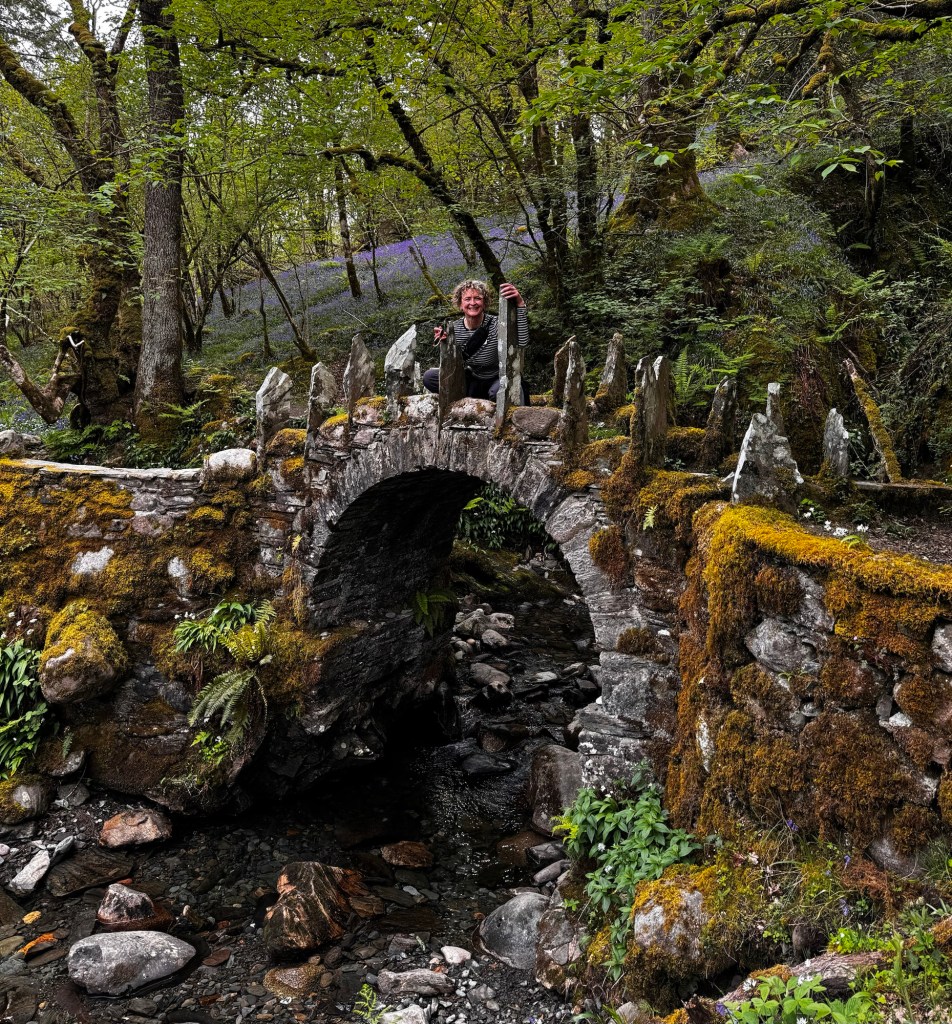
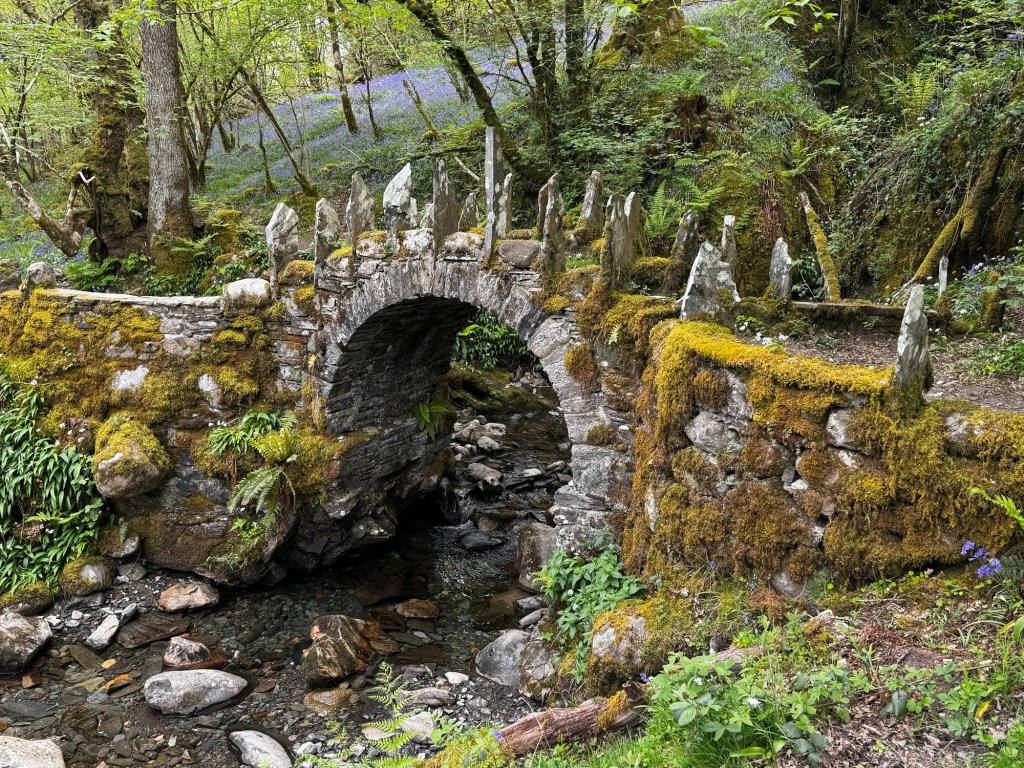
I planned to head to nearby Appin for dinner, and had recently learned there was a lovely walk in the area. It’s in Glen Creran Forest and features a 500 year old bridge known more specifically as, of course, the Fairy Bridge.

The hike is at the end of a single track road along Loch Creran lined by fabulous old homes with brilliant landscaping, azaleas in full bloom. Saw lots of ladies out and about tending their gardens. And so many border collies.

Arriving at the small car park, no sooner had I turned off the ignition than I was unexpectedly accosted by a blonde Norwegian woman who told me with great certainty tinged with agitation that this was the wrong car park. “I’m sorry?” “Are you going to the Fairy Bridge?” “Yes.” “Well, this is the wrong car park. We followed navigation but there’s no cell service here. Do you have different navigation?”

Forgive me, but I had absolutely zero interest in suggesting we should walk together even though I had downloaded the map and didn’t need cell service and I’ll fight anyone who says Walkhighlands.com would ever lead you to the wrong car park.

Plus I had to pee, so.

“Well, I’m just going to go for a little walk anyway to stretch my legs I think,” I said, trying to make her go away. She wandered off and then reappeared before I could lace up my boots, and shared more late breaking news. “I went up there,” gesturing vaguely behind her, “and there’s a board, and there’s a way you can get to the Bridge from here but it’s a detour (thus implicitly sticking to her wrong car park theory) so I’m sure you’ll find it.”

Does she want me to ask her to come with? Or is she leaving? If I can find it, why can’t she? What is happening? I saw she had a dude in her car because one of his legs was sticking out of the door and she kept going back and consulting it. I’m imagining he was rolling his eyes at this whole Fairy Bridge ordeal that she coerced him into (I mean to be fair how many men would be like, yes please, let’s go see the Fairy Bridge). Also he was no doubt exhausted by the disproportionate drama that invades much of his life due to this woman of certitude.

When she wandered off again to consult the leg I seized my chance, vaulted out of the car and hauled ass up the steep trail.
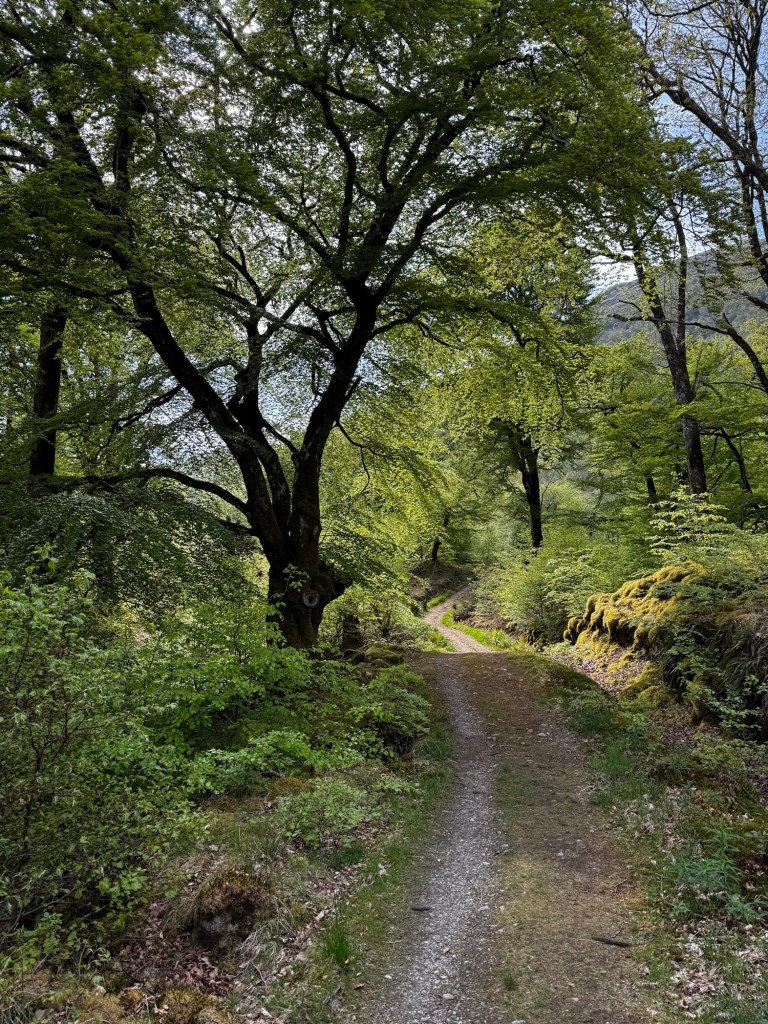
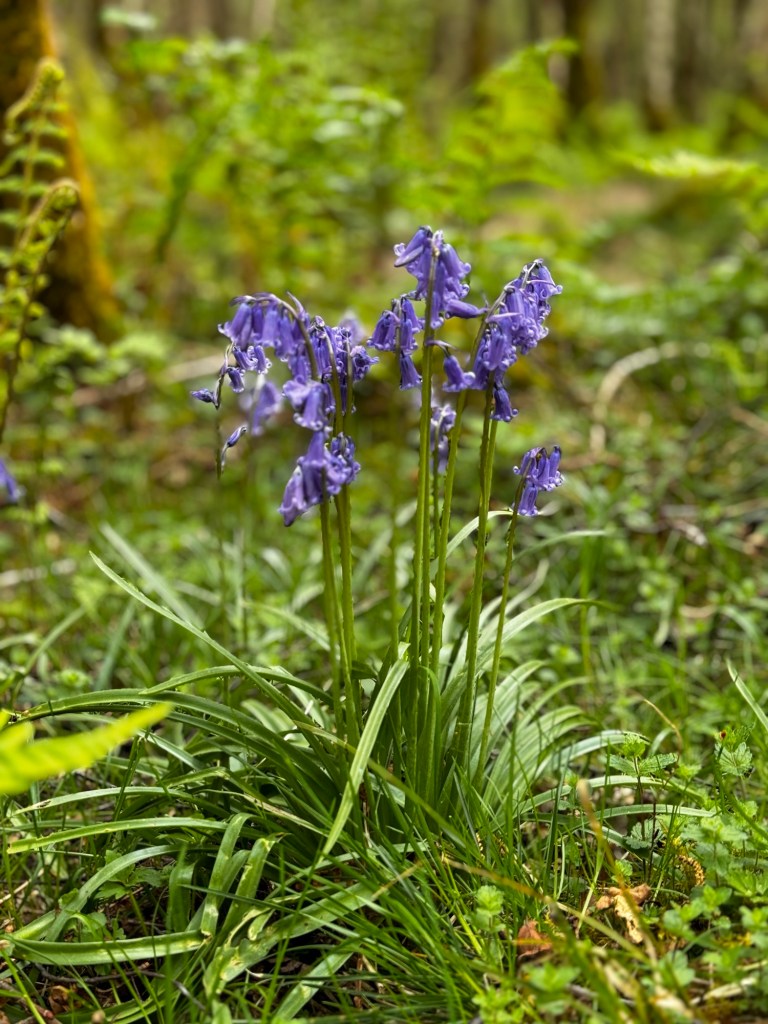
The real revelation on that walk, though, was not the bridge but the bluebells. They completely blanketed both sides of the trail along the entire walk. I couldn’t quite capture their beauty. Some things are just better in real life.

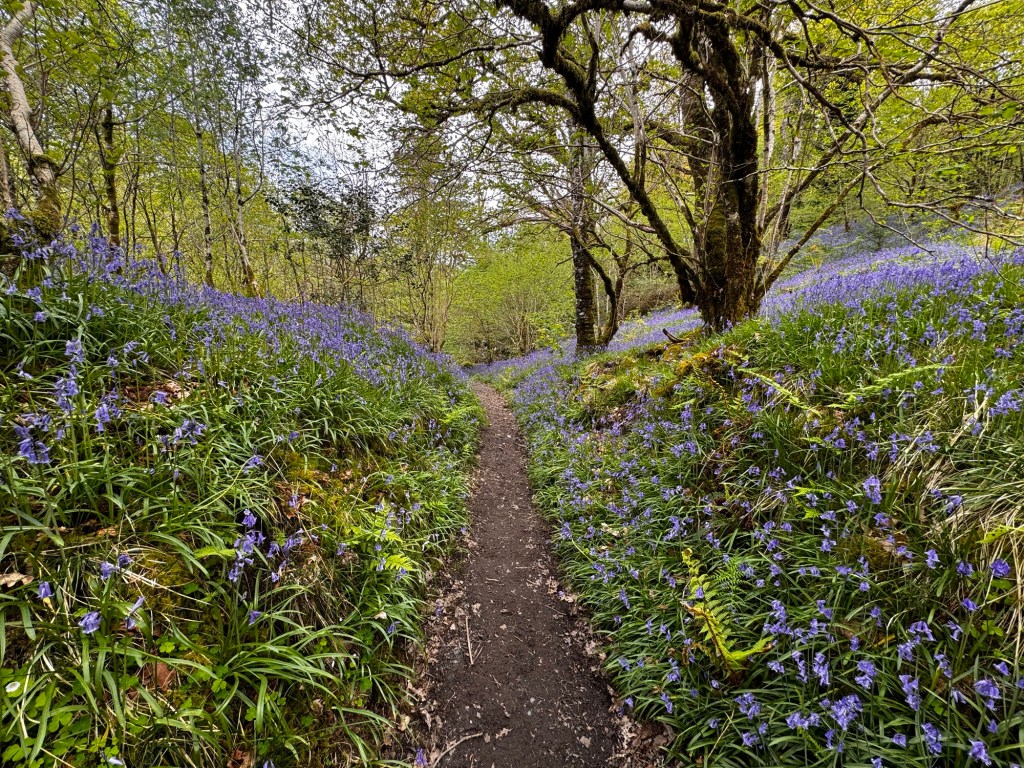
Not easy to outdo the bluebells but the Fairy Bridge was relatively nifty. And for the record, it wasn’t part of a “detour” or whatever. Walkhighlands remains invincible.
Coincidentally, the BBC just ran a piece on the couple who created (in 2006) and continue to maintain that invaluable hiking resource, Helen and Paul. You might enjoy taking a peek: https://www.bbc.co.uk/news/articles/c72py4xg2w4o
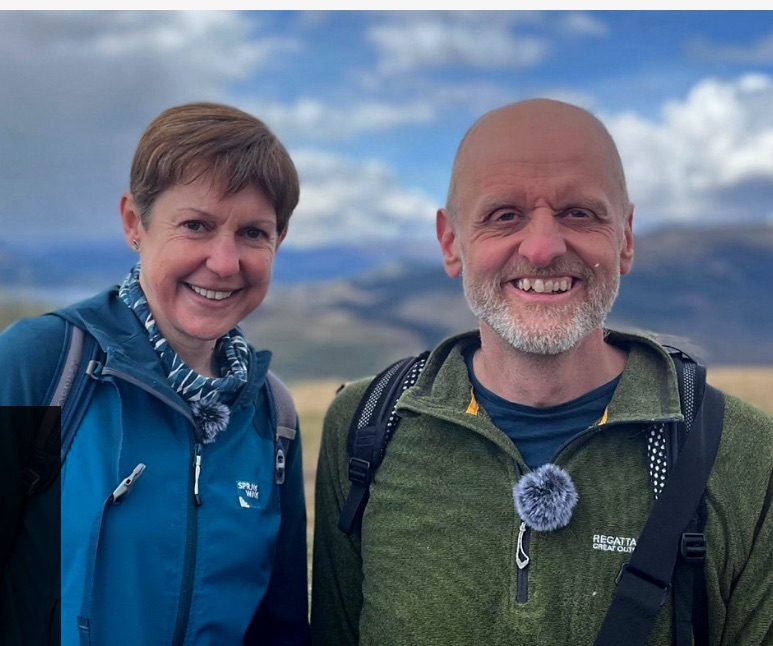
Helen and Paul, bless you.

I walked along the road for a bit on the way back to the car and tried to imagine what it must be like to live there…..and came to the conclusion that it wouldn’t be a hardship.

I should also mention, as it ties in beautifully with a story you’re about to hear, that I came upon a signpost along the Fairy Bridge trail which referenced nearby Glen Ure and included quite a detailed history. Back in the 1700s Colin Campbell was the Laird of Glen Ure and you might jot that down as we rejoin our pal McRaggie in the parking lot and head to dinner at the Old Inn.

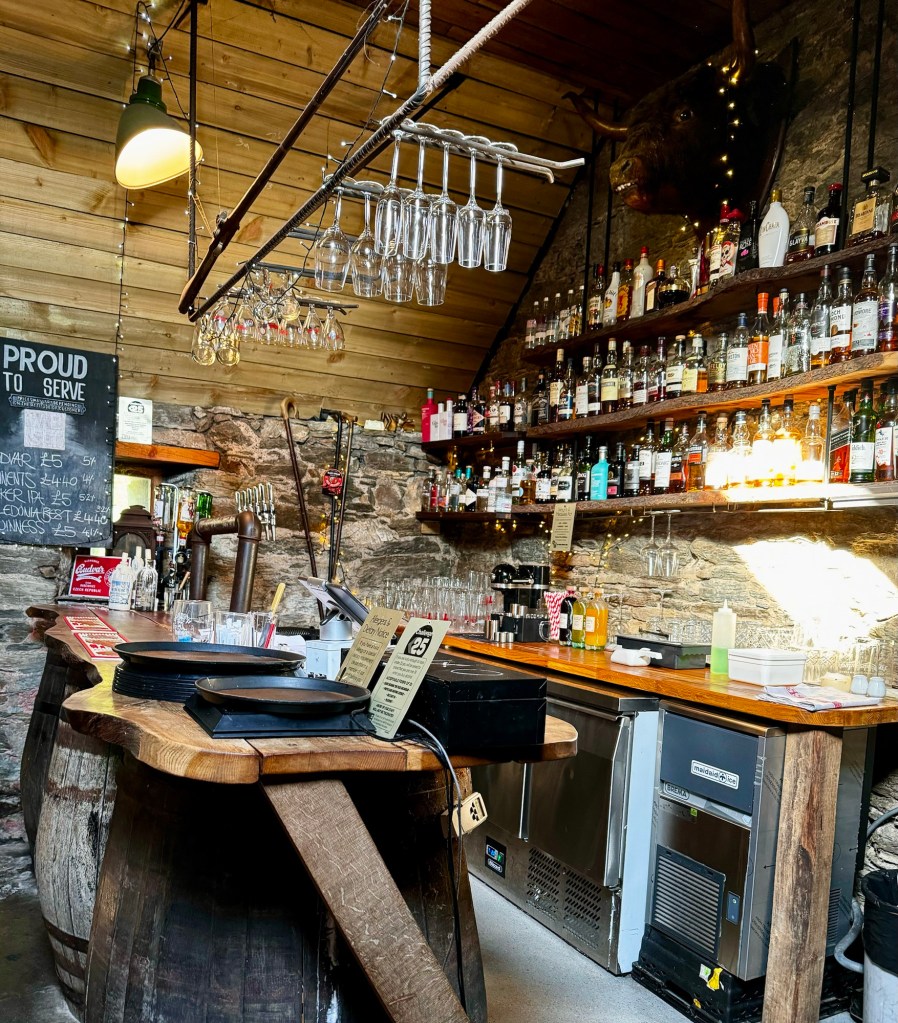
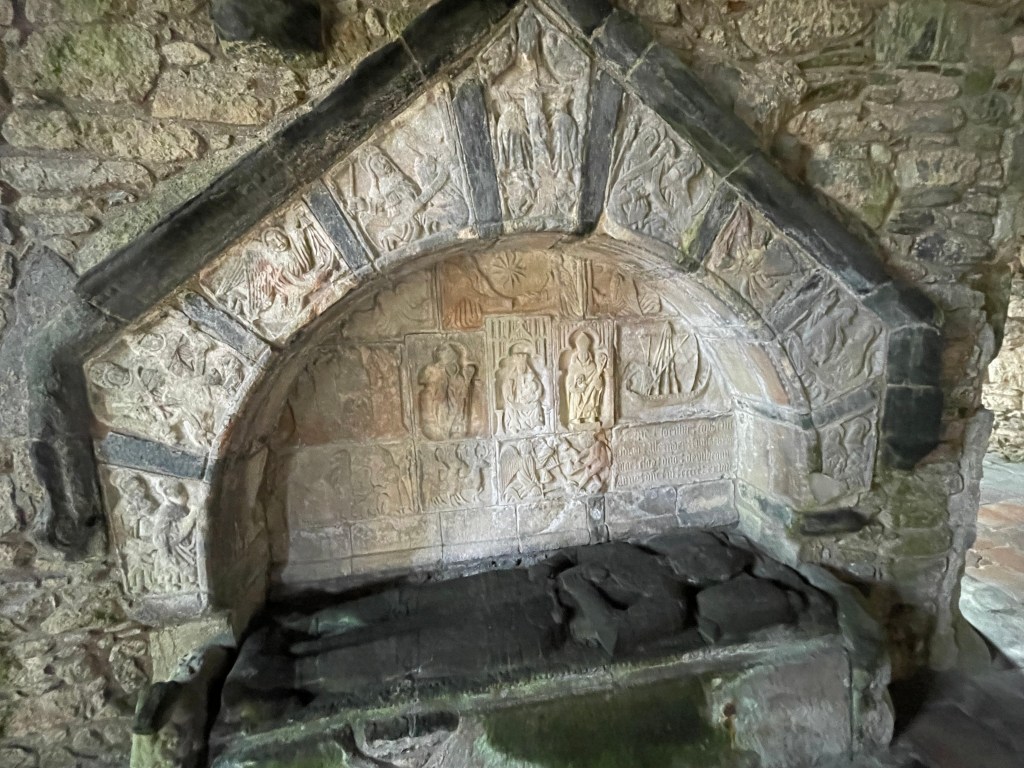
Appin, on the shores of Loch Linnie, is interestingly central – it’s 100 miles from Glasgow, Edinburgh and Inverness. The Old Inn, I had heard, is allegedly haunted by the ghost of a Highlander wrongly hanged for murder. Excellent. The pub was established in 1670, closed in 1880, and Jim Mulligan bought the property in 2016 and gamely undertook a $1.2 million restoration project. Jim believes he has identified the ghost. He thinks it’s James Stewart, known as “James of the Glen.” He was hanged for shooting Colin Campbell, “The Red Fox,” (honestly these monikers) in Appin in 1752.
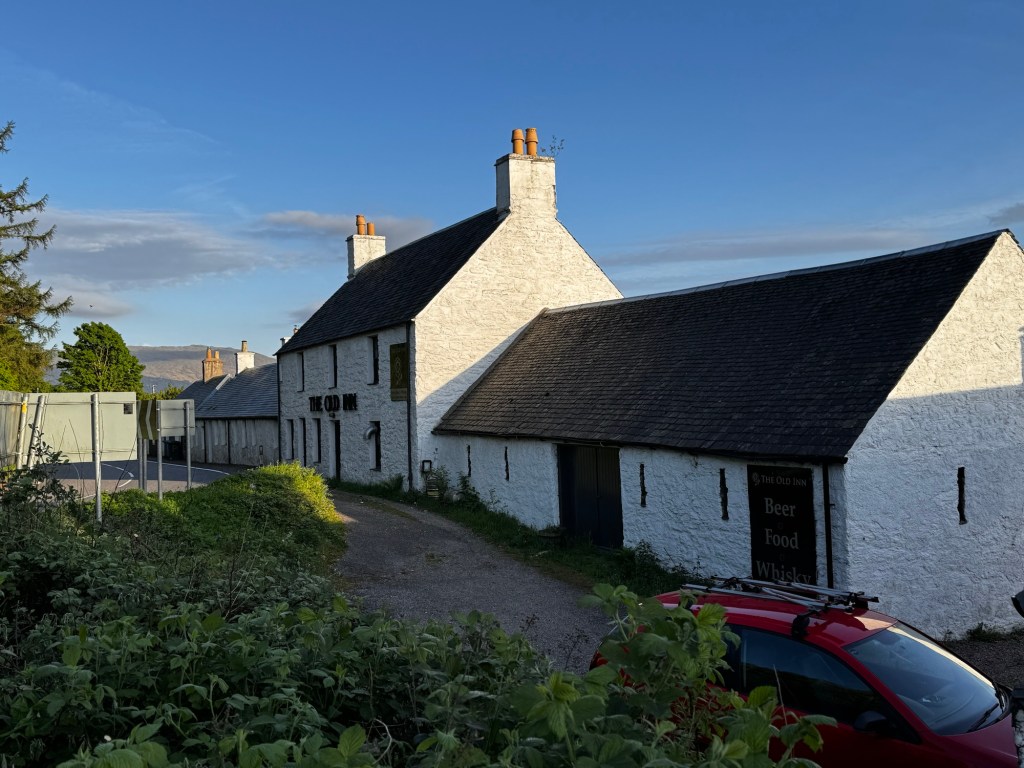
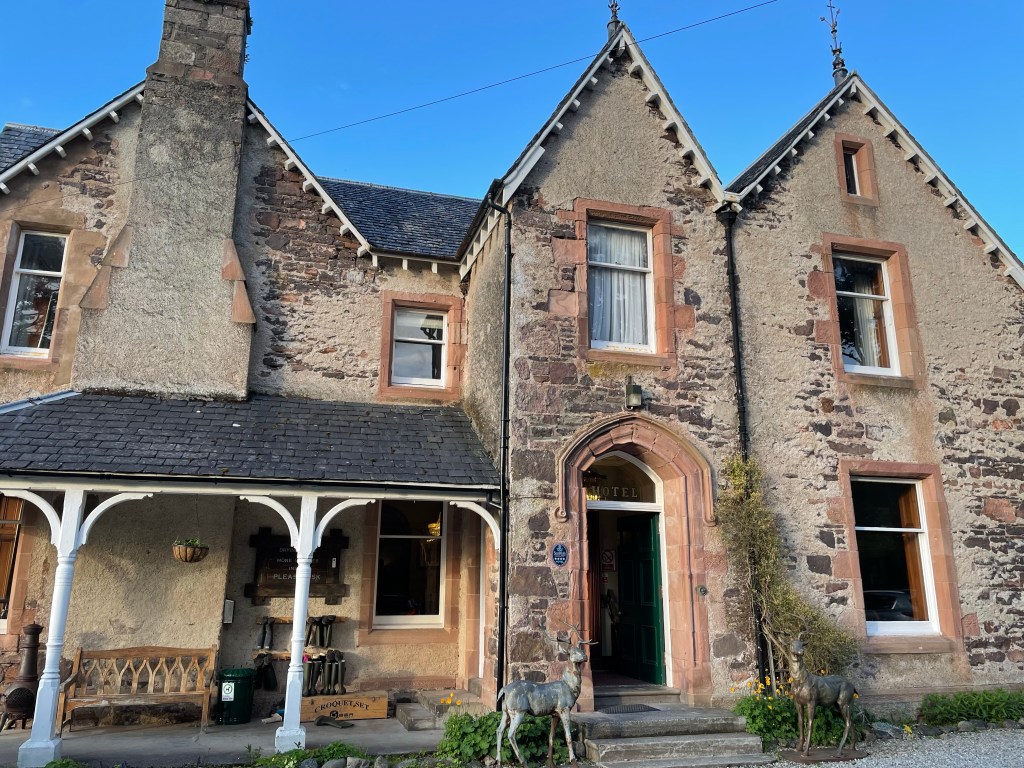
The Old Inn

This is what happened. Campbell, a government agent, was shot in the back while collecting rents from members of the Stewart family whose estates had been forfeited to the British government due to the clan’s support of the 1745 Jacobite rising. Upon being shot James allegedly informed everyone, “Oh, I am dead,” or words to that effect, and his alarmed compatriots observed a shadowy figure running away into the hills. George II’s government was jittery after the ‘45 and thought these could have been the first shots fired in another rebellion and so London sent word to do whatever was necessary to handle the situation, preferably making an example of the perpetrator. Shut it the hell down, in other words.

Our future ghost James, the most powerful Stewart in the area, had led local opposition to the evictions. In other words, he was a perfect mark. And so he was arrested and charged with aiding and abetting the murderous act of his foster son, Allan Breck Stewart. (Sounds odd but sons of clan members commonly lived under the protection of the clan chief). Allan fought on the Jacobite side at Prestonpans and so was another obvious scapegoat, although he wisely fled to France and so was beyond the reach of government authorities. After a four day trial, with most of the jurors being (ahem) Campbells, the verdict was a foregone conclusion for our poor James.

He was hanged near Glencoe (wee reminder here that the Campbells were also the bad guys in the Glencoe massacre sixty years earlier) and, dear readers, avert your eyes. His body was left dangling from the gallows under guard for three years. Under guard. Lest you think your company piffles FTE on unnecessary tasks.

It was known locally that neither Allan nor James were involved in the murder. You can see why James, in particular, would be super pissed about the chain of events but it’s hard to imagine that he’d live out his ghostly days haunting a renovated pub in Appin. Getting his sweet, sweet revenge by bothering its staff.

Ah but our story doesn’t end there. Many stories about Scottish history that have seeped into popular imagination are due to either Walter Scott or Robert Louis Stevenson wandering through the past in search of material. They wrote accounts about historical incidents which launched these mostly forgotten and not widely known events into worldwide notoriety. They were, in essence, the 24 hour news cycle of the early 1800s and had much to do with romanticizing Highland culture.

In this case, a hundred years after the murder, Stevenson’s father found, in Inverness, a slim volume called Trial of Stewart. He thoughtfully purchased it for his son who was writing a book on the history of the Highlands (instead of designing and building all the lighthouses in Scotland, see previous blog entries about this family).

As a result of this gift, our man Allan Breck Stewart, even though he managed to escape history for a time, became the lead character in “Kidnapped,” Stevenson’s book that dramatized the Appin murder. Thus Allan, who played quite a minor role in the Appin murder, became immortalized a hundred years after his death.

Also, now I have to read Kidnapped.

So not to cast aspersions on our friend Jim the pub owner, but his sly assertion that the ghost of the Appin Inn is James of the Glen – because he drank in the pub (as did everyone) and because some evidence for the trial was presented in the Inn’s back room, is clearly more about publicity than reality. But I mean good for him, if a famous ghost gets him butts in seats, all to the good.

Speaking of reality, let me be clear that this does not mean the pub is ghost-free. Staff have been creeped out by rattling glasses, pans flying through the air and chairs falling over. Mysterious footsteps in an empty upstairs room and shadowy ghost figures have caused people who aren’t paid enough for this crap to turn out the lights and skedaddle. Most creepily a nonbelieving staffer, alone at night, said, “The fire suddenly went down and the glasses in the gantry started rattling. We had a St. Andrew’s flag up above the gantry and, when the glasses stopped, the flag started billowing. I looked round and a chair was on its side.”

Yikes.

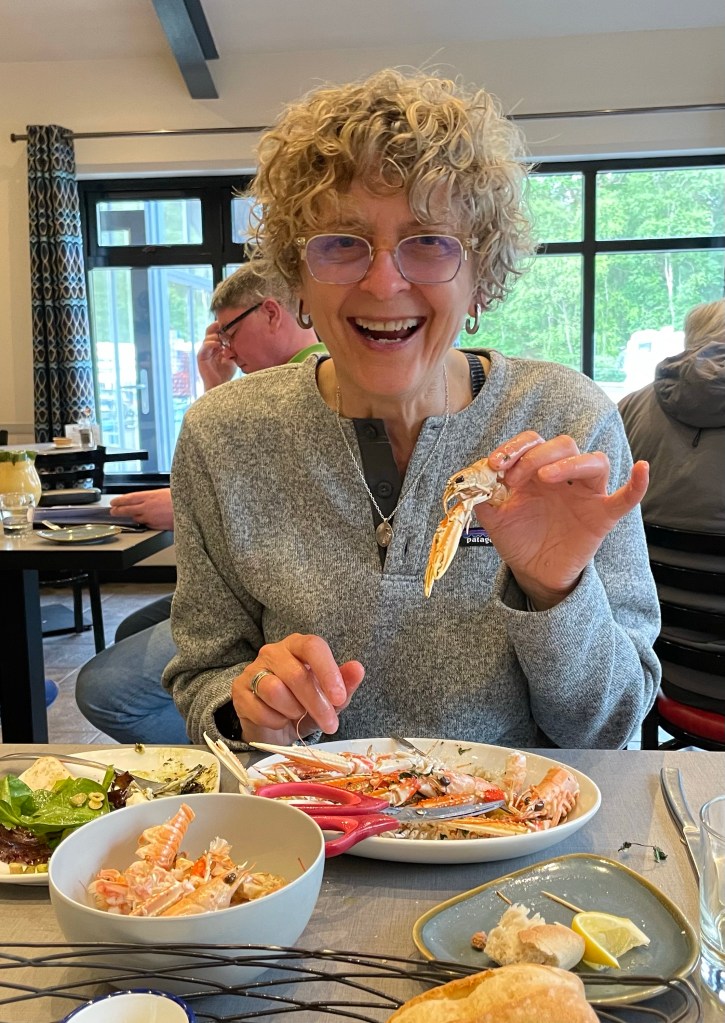
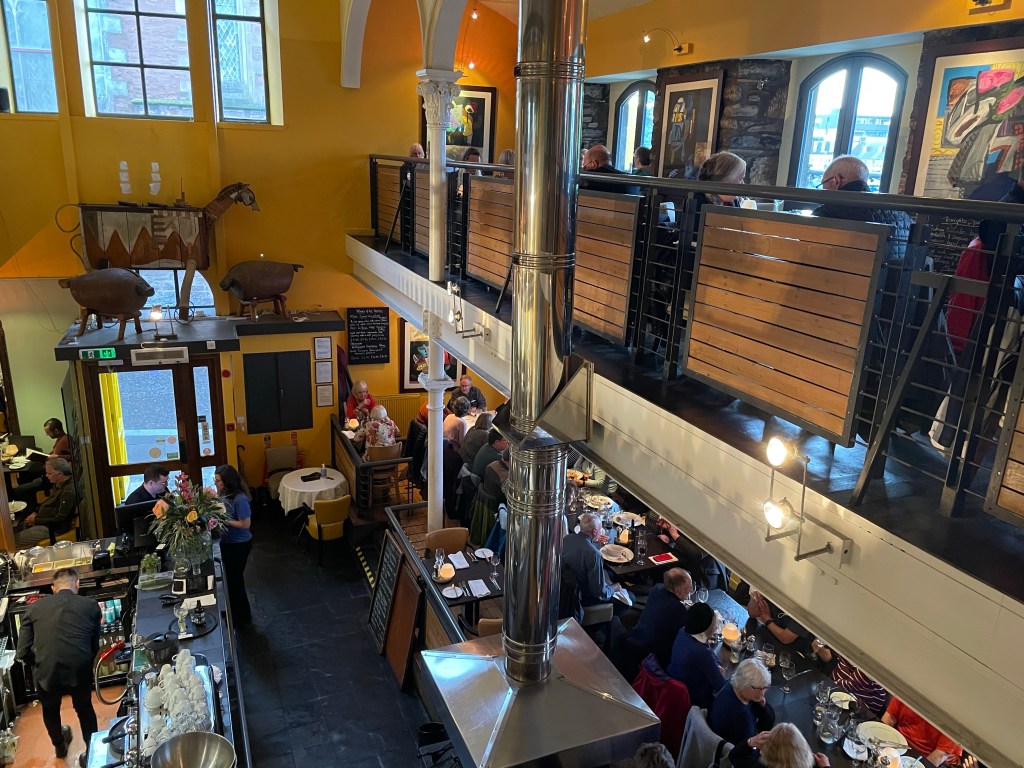
The last thing you should know about the Old Inn at Appin is that the food is excellent – they specialize in locally sourced grass fed steaks, which I ordered. So, dear reader, I have my first (confirmed) experience of eating a Highland Coo. Don’t judge. I feel bad about it.
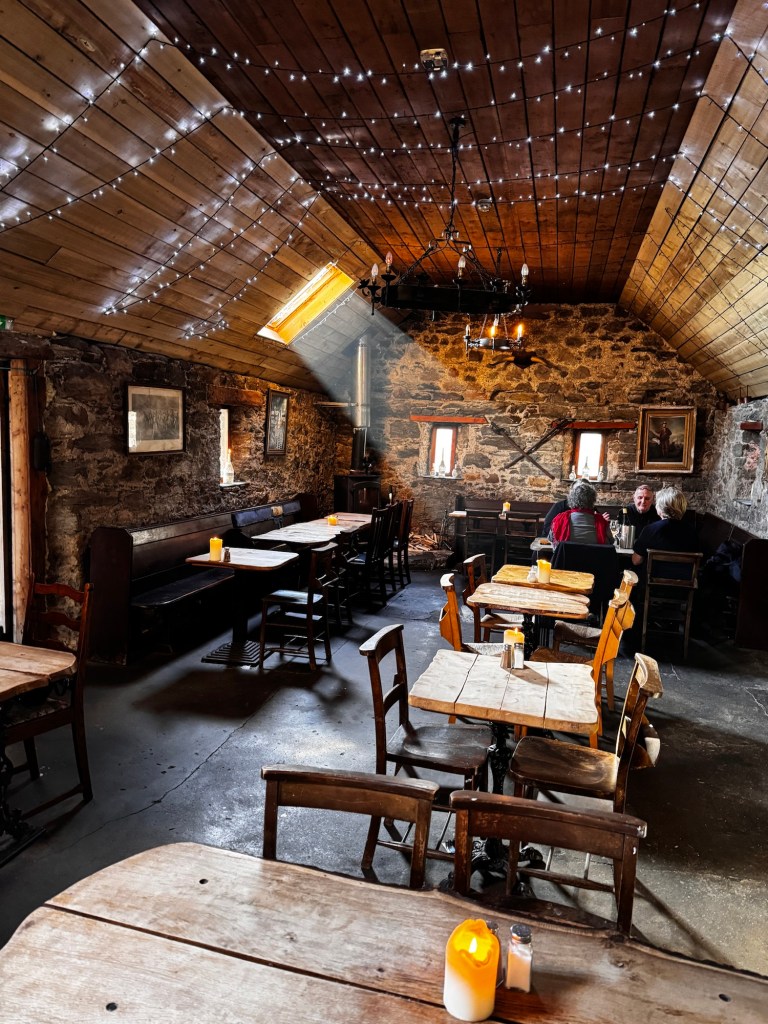
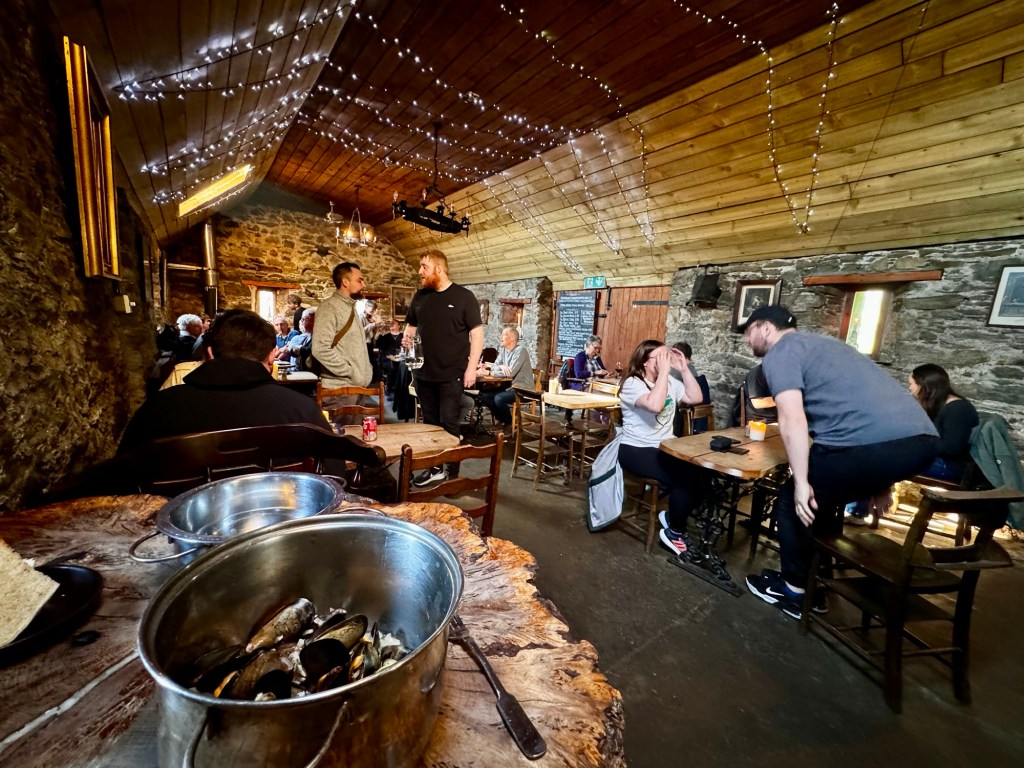
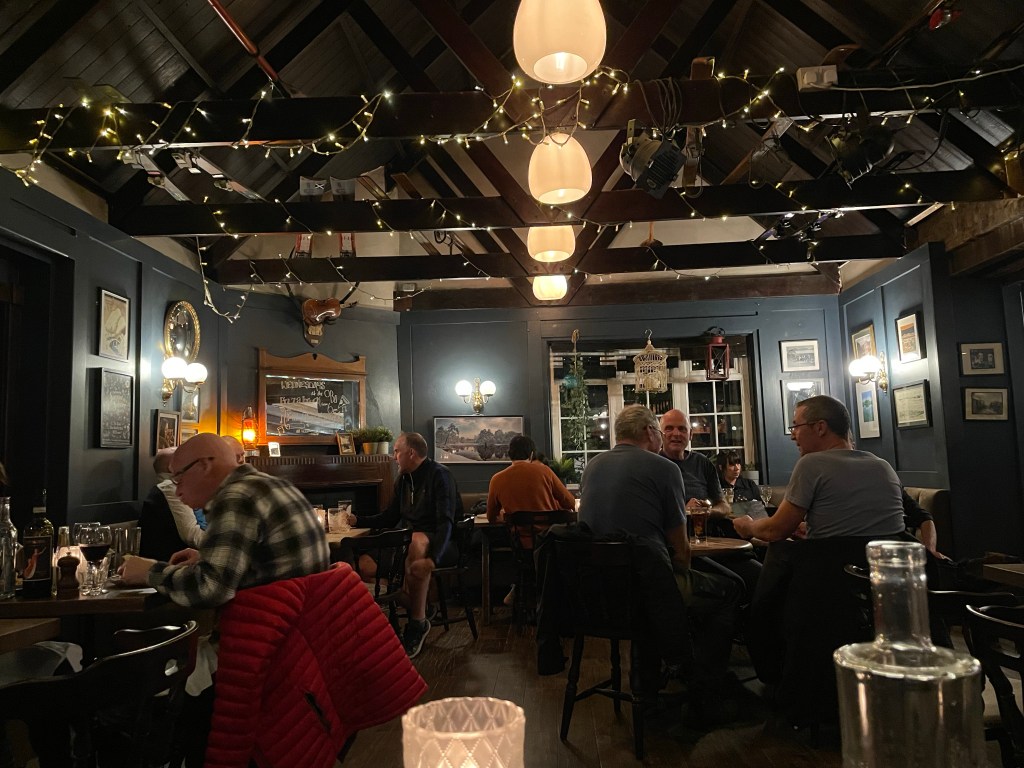
Early in the evening.
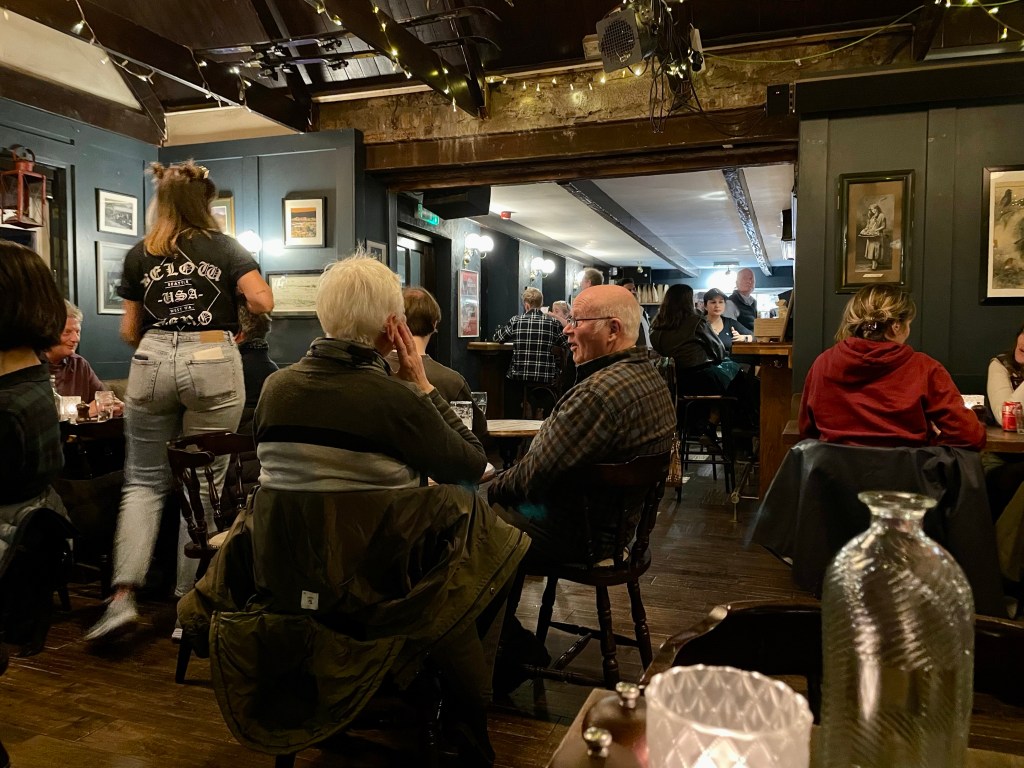
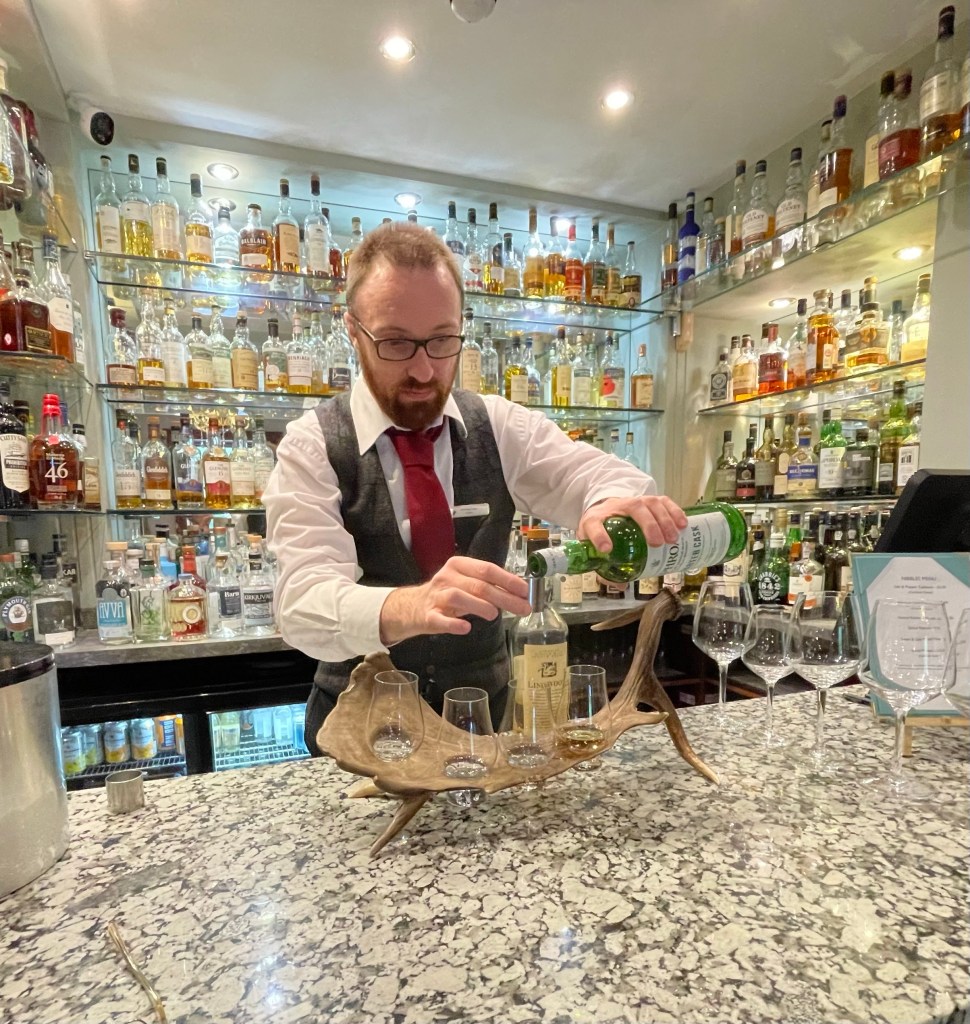
The ginger guy is the bartender.
The cool bar.
Flashback to my last trip – ahh the Hebrides.

The pub serves a DELICIOUS black pepper cream sauce to go with their steaks and chips. It’s a hefty portion served hot in a ramekin. I was contently dousing a bite of coo when something fell in with a splash. I stared, taking a second to clock that a dreaded yellow jacket had swan dived into my ramekin. I harbor quite a bit of hate in my heart for the aggressive meat-eating little dickheads, their families, and all they represent. I scooped it up into my spoon and flicked it onto the table where it staggered around drunkenly, coated in black-flecked white goo. My first thought, and I’m allergic to yellowjackets mind you, was that I need to have my cream sauce replaced as soon as possible. I waved down the waiter and explained – he nodded and whisked the ramekin away. Shortly thereafter the bartender brought me a new one filled to the brim and steaming hot. I dismissively gestured at the bee, still carving a drunken path around the table, he nodded, disappeared and came back with a paper towel. The bee found its footing and obligingly climbed onto it and he took it outside. He told me later he tried to wipe the peppercorn cream sauce off the bee but could not give me a solid prognosis as as to his recovery.

“He’ll probably be popular with the other bees,” I suggested, possibly batting my eyelashes. I mean seriously, my hero. An entire new ramekin of the best sauce in the world and a bee whisperer.

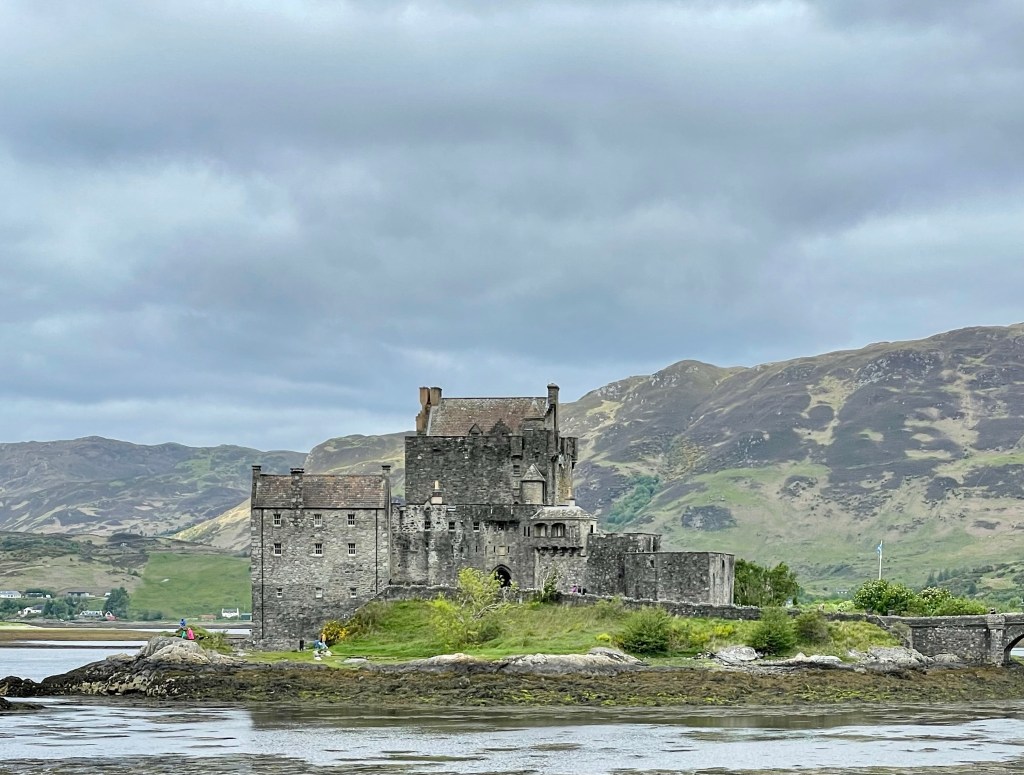
After basically drinking my weight in sauce, I wandered down to the Loch and snapped a few backlit photos of Castle Stalker. It’s privately owned but they do arrange tours and take people out there by boat during the summer.

And what is its history, you ask? We are at the end of our entry and possibly our tolerance for obscure Scottish history, so allow me to simply share the nutshell version. It was built in 1320 and many clans have passed through its halls since. There have been MacDougalls, Stewarts, King Bruce, the Lord of Lorn, a MacLaren, MacCouls, MacDonalds, Campbells, a dude called Donald of the Hammers, more than a few murders, battles, cattle rustling, a passage of title via a drunken wager and also a besiegement or two. It was occupied by government forces after Culloden and served as a local center for the surrender of weapons. The roof collapsed at one point and the owners didn’t bother repairing it because no roof meant no taxes. At last, in 1965, Lt. Colonel Stewart Allward purchased it from a Stewart and oversaw a ten-year restoration. It’s now fully habitable.
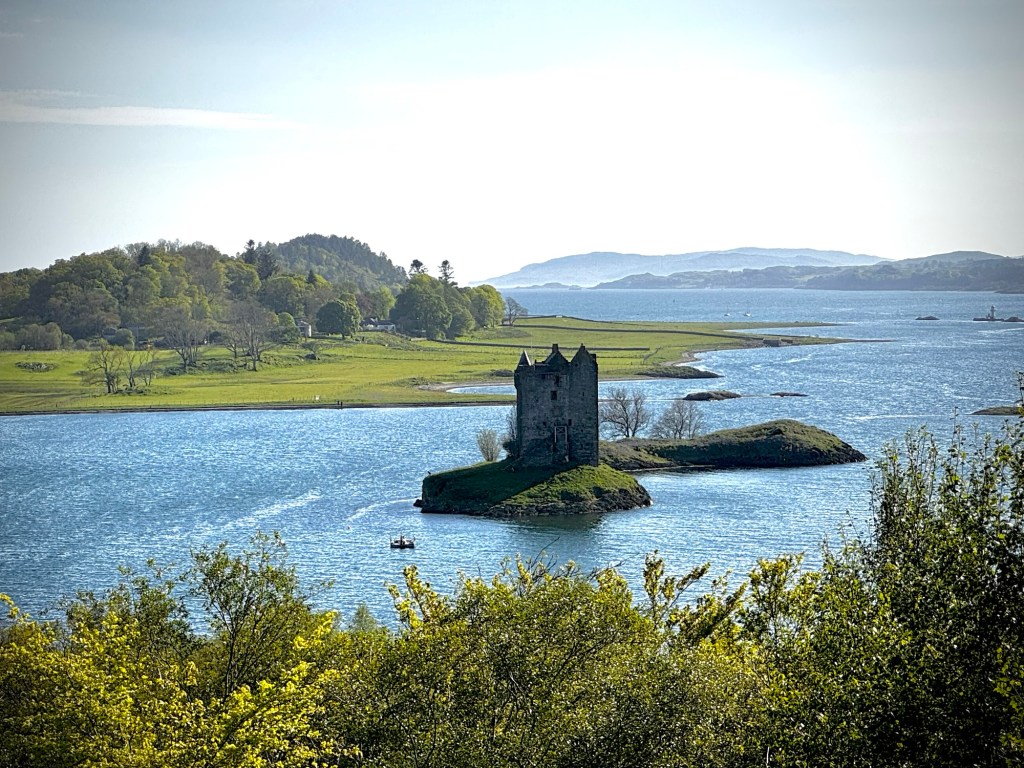
Castle Stalker. It’s larger than it looks.

The day’s adventures having at last come to a close, I headed back to Glencoe for one more night. It was such a beautiful evening I drove down Glen Etive and gave the Bookel a proper goodbye.
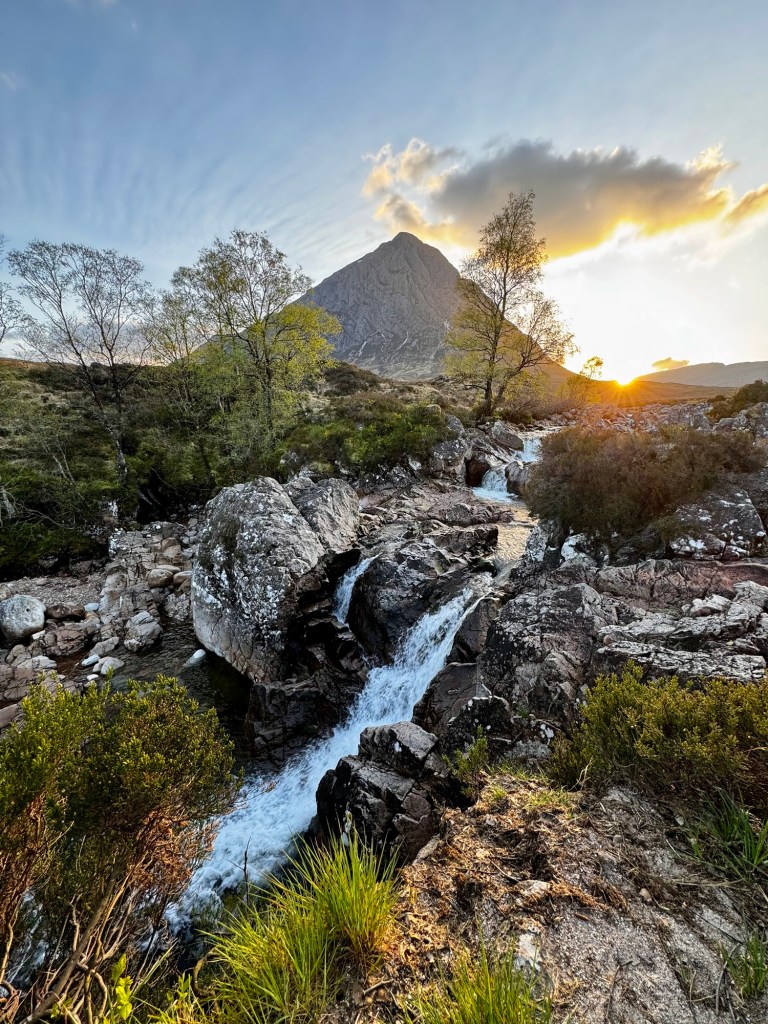
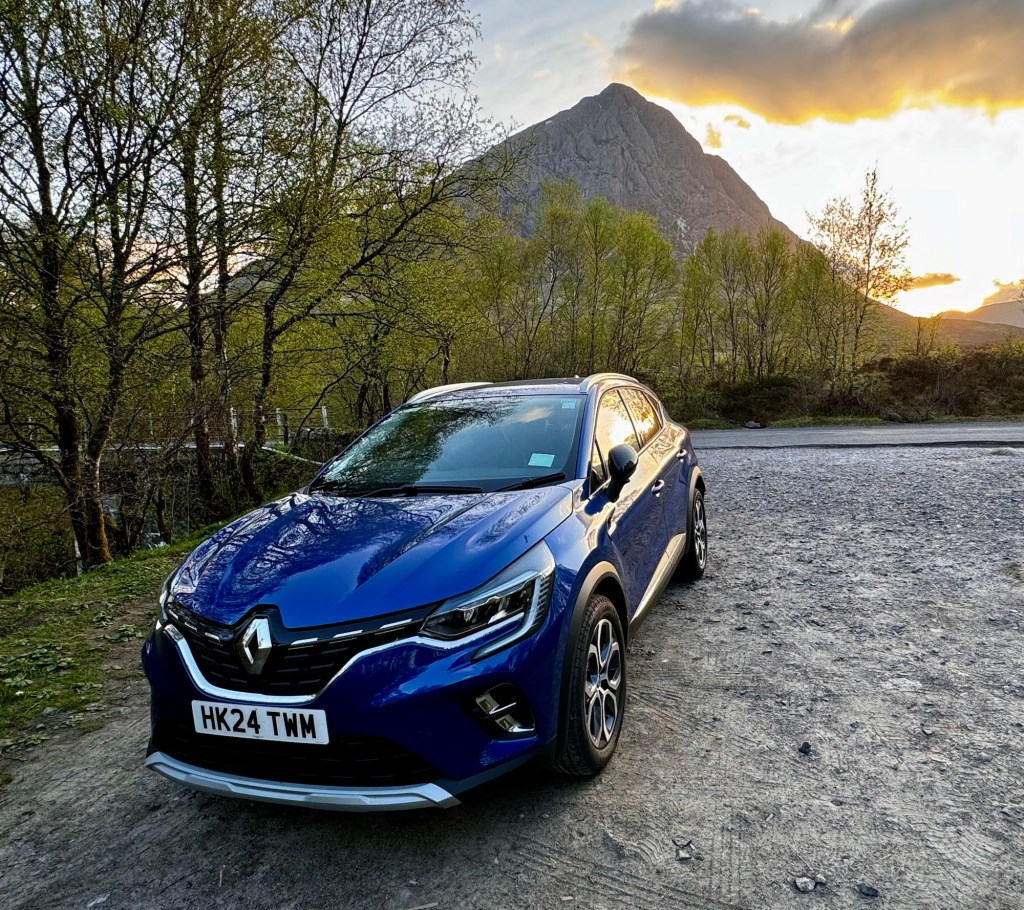
McRaggie and the Bookel.

May the Fourth Be With You

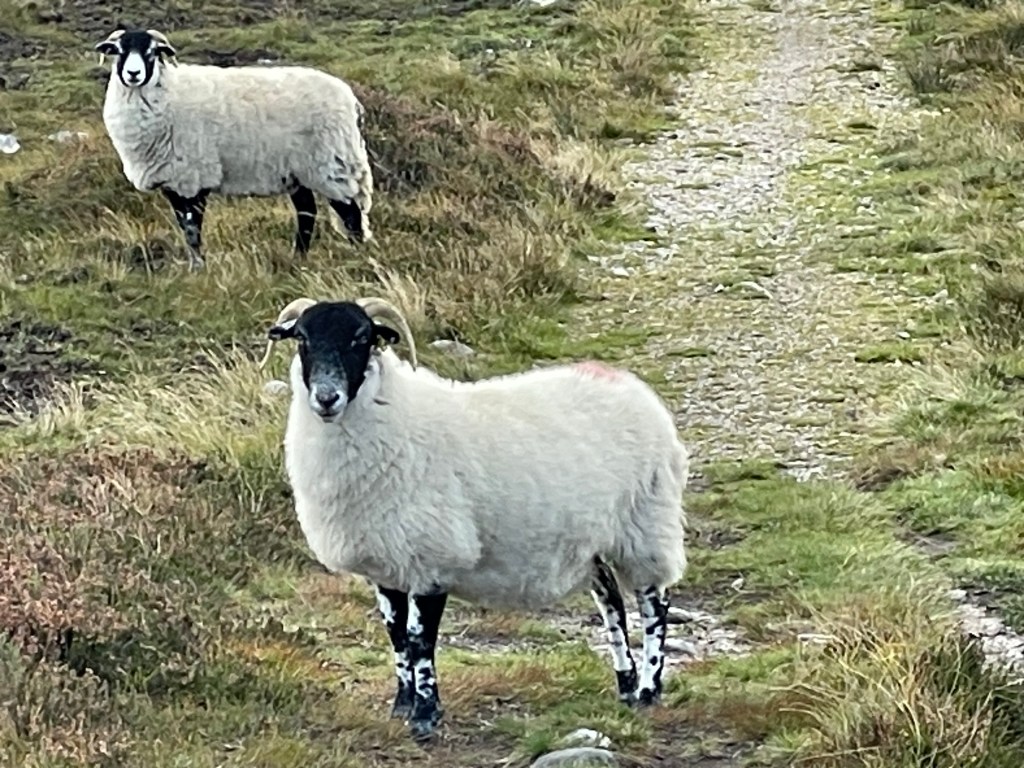
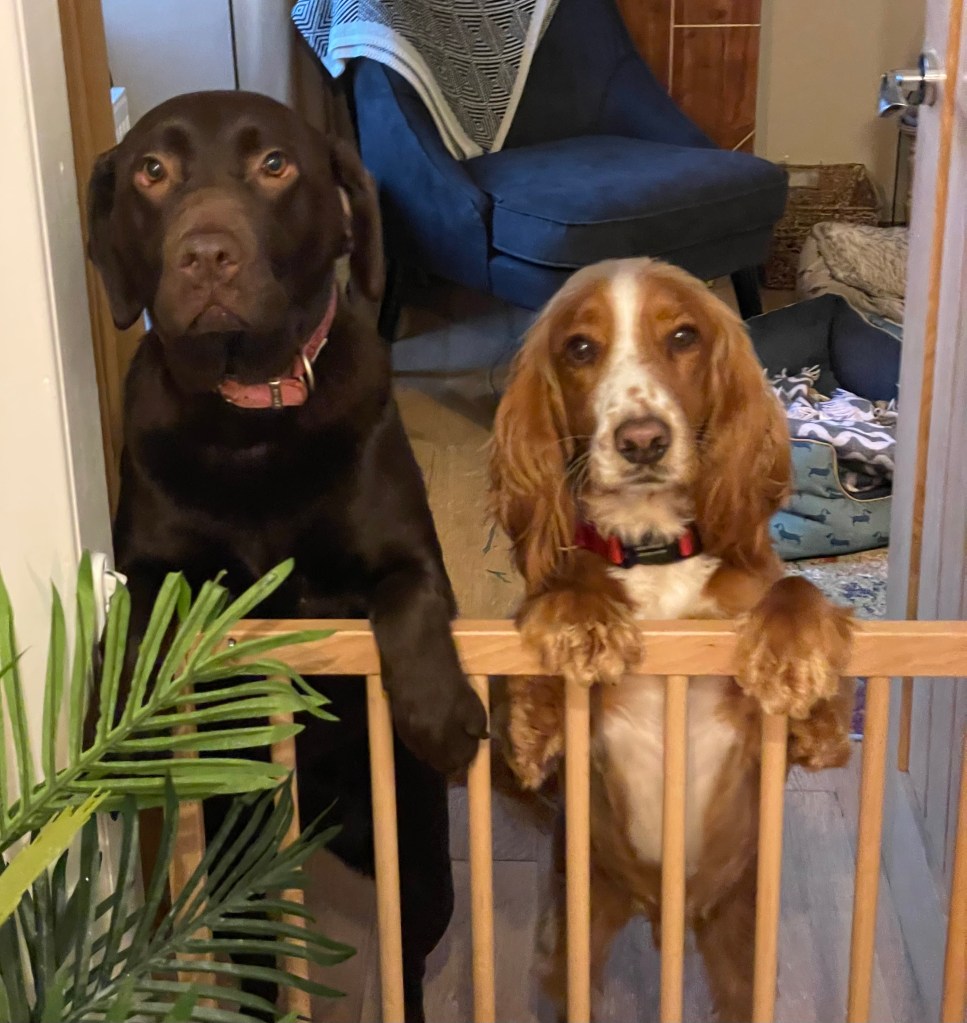
My Glencoe Welcoming Committee

I know it seems like only a few months have passed, which is accurate, and yet here we are again, thanks to the miracle of air travel.

Speaking of, even though you might be hoping to hear another tantalizing tale of a Swiss quantum computing seat-mate, alas you will have to be satisfied with an AirPods case. A friend and I recently agreed that the most crucial and nonnegotiable travel accessory, besides one’s passport, is a pair of noise-canceling AirPods. They are a matter of survival, even more so than fully bolted airplane doors. On my flight from Redmond to Seattle, after everyone boarded, the flight attendant addressed us all, holding an AirPods case aloft. It had been found in the boarding area, she tells us, so whose is it? As she regarded us expectantly, I joined my two seatmates, both pilots (also an excellent choice, Universe), in immediately double-checking to make sure we had our cases. Because the rule is, when someone says here’s a lost thing so who can’t keep track of their stuff, you immediately must assume that you are the culprit.

Our determined attendant announced the recovery of the case eleventy billion times and not a soul raised their hand. Finally a woman did, but ultimately this was a disappointment as she briefly looked at the case, considered it, and handed it back. Finally the attendant, like she was talking to a bunch of toddlers, waved the case in the air yet again and said in a sing-song voice, “Oh-kaaaay, I’m going to leave it here then,” and handed it to someone who took it off the plane.

One of my pilots said to the other, grinning, “let’s just GO” because at this point our flight was delayed. Over an AirPods case. There wouldn’t have been this much drama had someone had left a baby behind. THIS IS HOW VITAL THEY ARE.

Finally another woman raised her hand. The flight attendant quite understandably shrugged and said, “The airplane’s door is now closed,” and we all know come hell or high water, it will not be opening until Seattle.

But dear reader, the story didn’t end there. The flight attendant said one of the ground crew was going to try to throw the case up to the pilot who would try and catch it out of his side window.

I looked at my two pilots and asked, “Would you guys do this?” And they both nodded like “oh of course yeah,” being men I guess, and also HOW VITAL AIRPODS ARE.

Well, voila, the pilot caught the case and it was restored to the woman who cared so little that she couldn’t be bothered to check her things and decidedly broke the rule that you always have to assume it’s you.

A few hours later I wandered around the Seattle airport for hours in a daze after spending nearly $50 on lunch. Bought a lipstick from the Mac store that I don’t need. I know you feel me. I parked myself in the main terminal and glumly studied the floor. But then an official airport lady came up, handed me a little sticker and said, “May the Fourth Be With You.”

Suddenly my mood brightened considerably. May the 4th is also heavily celebrated in Scotland, as it turns out.

Did you all see Mark Hamill at the White House on this day of days? He visited the press room where 99% of the journalists were thrilled to be in the unexpected and thrilling presence of Luke Skywalker. And then the CBS White House reporter asked why Mark Hamill was there. The Press Secretary, the fabulous Karine Jean-Pierre, gave the sort of off-the-cuff answer you do when someone asks an odd question, at which point the reporter made the mistake of revealing she didn’t know Mark Hamill was in Star Wars and indeed had not seen the films. Our democracy is indeed doomed.

The long leg to London was fine, I was next to an older lady heading to Madrid whose voice was largely sub-audible which meant I could simply nod and smile most of the time. She also very sweetly asked if I minded if she tucked into her dinner “before it gets cold” before mine arrived. She scored hers early as it was a special gluten-free order. I mean really how beyond polite! I didn’t think that particular rule applied on airplanes, unlike the always-assume-it’s- you rule which applies everywhere.

A quick note to whine about the combat zone that is Heathrow when you are making a connection. Holy crap dear reader. You walk for miles even though your connecting flight is in the same terminal. It’s hot. It’s confusing. You have no idea what is happening. You just keep walking, passing through these checkpoints, following the purple “connecting flights” signs. Is this one of my recurring anxiety travel dreams? Am I still walking? Is this purgatory? Will I ever get out of here?

That’s nothing compared to the security screening. Listen, I know they don’t care that you are TSA pre-check or Global Entry or the Queen of Sheba. But don’t yell orders to a bunch of jet lagged people. Don’t aggressively challenge me on clothing categorization. “It’s a sweater.” “No it’s a coat, take it off, what you have on underneath is a sweater.” Then a guy walks over and tells me also to take off the sweater, which he categorized as a hoodie. I mean I legitimately could have had only a bra going on underneath. Also had to remove my boots. Put my phone inside a pocket of something that is in a bin. DO NOT LEAVE YOUR BIN you have to push it onto the belt personally. You CANNOT take anything out of your bag while it’s in a bin. Am I being checked into a prison?

I guess I’m used to Amsterdam with the bland but efficient indifference. Or Charles de Gaul with the barely concealed condescension. All way better than yelling arbitrary bossiness even with an English accent.

It all worked out, I found my flight to Inverness. Pro-tip – to avoid the crazy way the Brits load planes, agree to gate-check your carry-on. By this point you are happy to be rid of it anyway. And they let you board first. Hahahaha first class people, byeeee.

And one final transportation thing. I finally decided to pull the trigger on renting a standard transmission car. Automatics are more rare in the UK and thus more expensive. I learned to drive using a stick on a VW Fastback. (Am old). I was dizzy with the control it offered! But – this being the UK, the shift is on the left, I’m jet-lagged, it’s been 30 years, driving on the left….was it all a bridge too far? As it turns out, no. Driving a stick is apparently hardwired. I only stalled my shiny Blue Captur (a sporty car made by Renault) once, after I had been on a highway and just forgot completely I was driving a stick. The car juddered to a halt and by the time I clocked what was happening – it took a minute – McRaggie had turned himself back on like a boss! If only that had been a thing when I learned to drive, my dad would have been much less irritated with me.

McRaggie you ask? My car’s name is Ragnar, Raggie for short, and his spirit inhabits every vehicle I drive. In Scotland he is known by a slightly different name.

And at last, Glencoe where I am staying for three nights at my usual spot, the Kingshouse, which is marvelous. Had a lovely dinner, a wee walk from the hotel up the West Highland Way and reveled in the glorious (aka not raining) weather. Yes indeed, happy to be back.

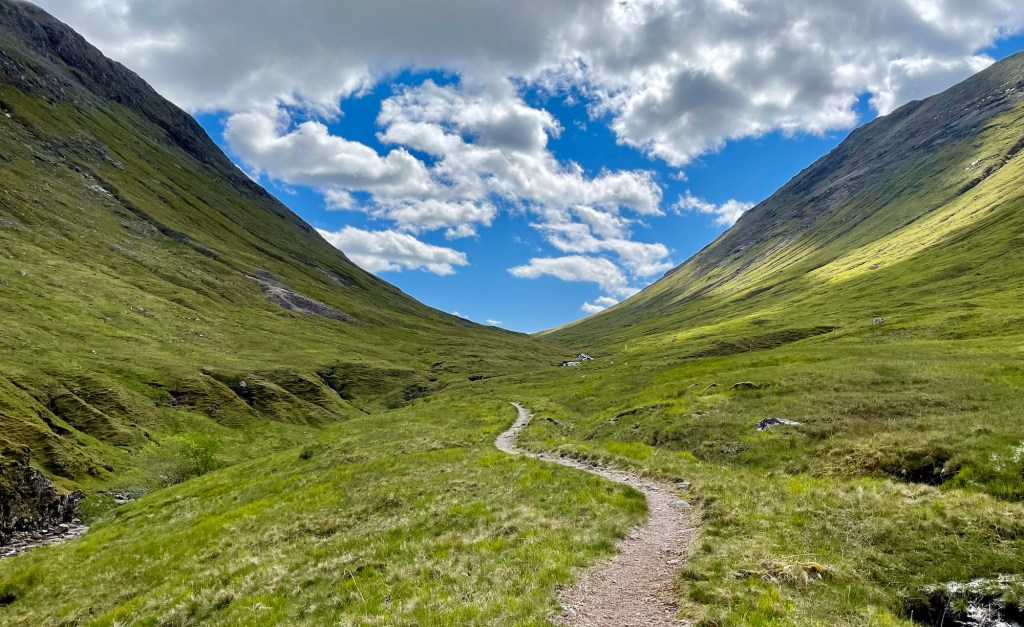
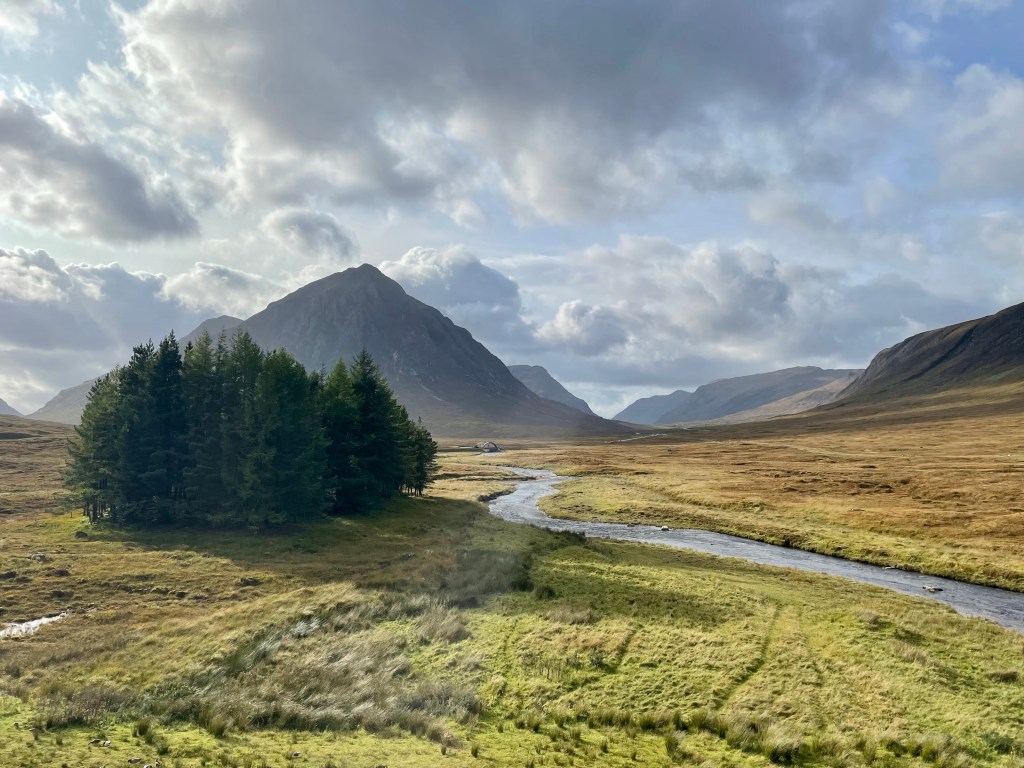
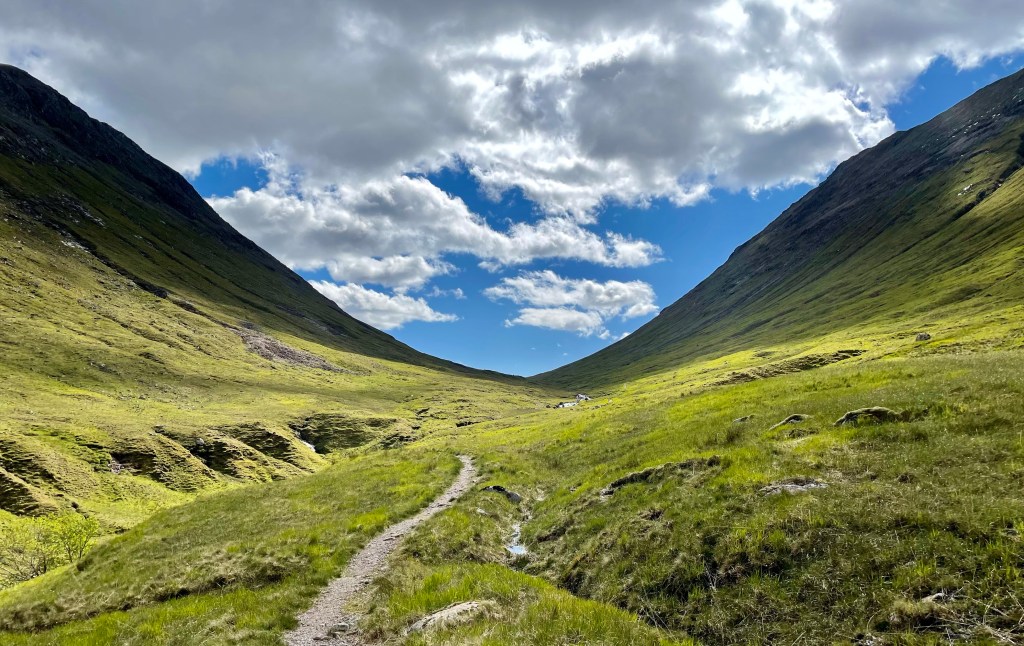
The following day I was finally able to complete a hike that I had started my last three trips. It’s a relatively level trail that runs down the glen between the two great ridges, the Buachaille Etive Mor and Etive Beag. It’s a magical path with a tantalizing notch in the hills ahead that seems to get further away the longer you walk toward it. I’ve always wanted to see what was there, but once all the streams you must cross along the way were in spate, and there simply wasn’t enough time the other two excursions. The trail is part of a nine-mile loop hike.

See how enticing? What is there, between them thar hills? (From 2022)

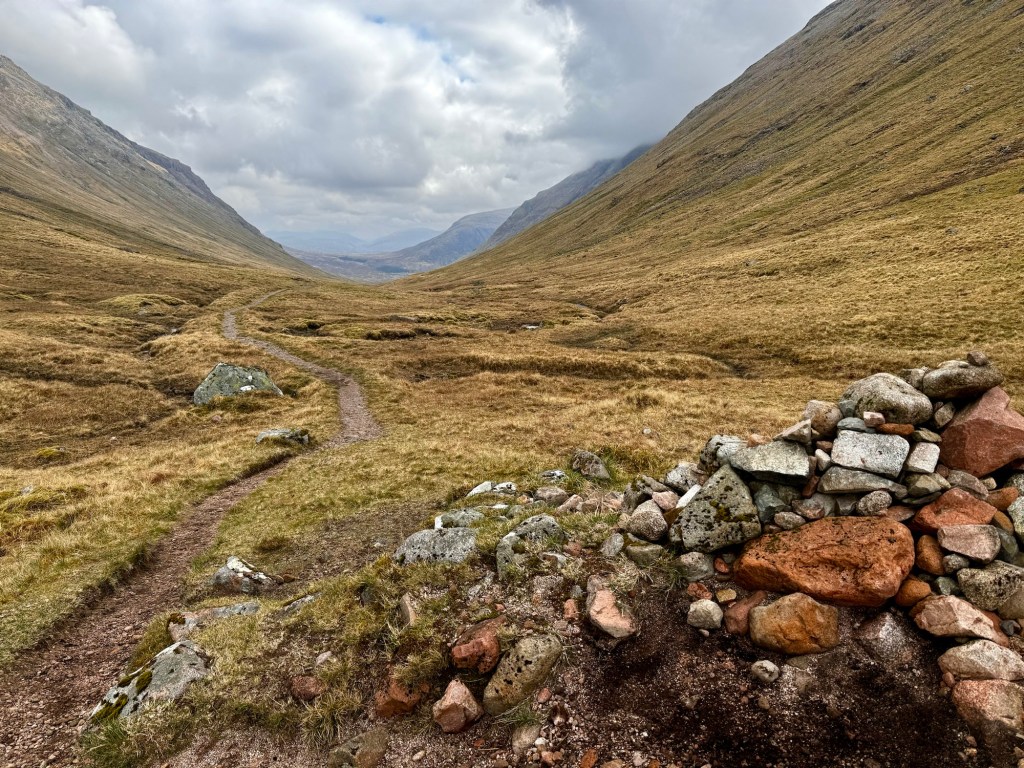
This miraculous day it hadn’t rained and there was all the time in the world. And it surpassed my imagination. At the end of the glen is a gorgeous cairn – and just beyond lies the neighboring valley of Glen Etive which is surprisingly far below like a doorway to freaking Narnia. I couldn’t believe it.

When Narnia is just there you don’t need a stinking wardrobe.

The loop hike takes you around the base of Buachaille Etive Beag and – I am happy to announce – it is done. At last.

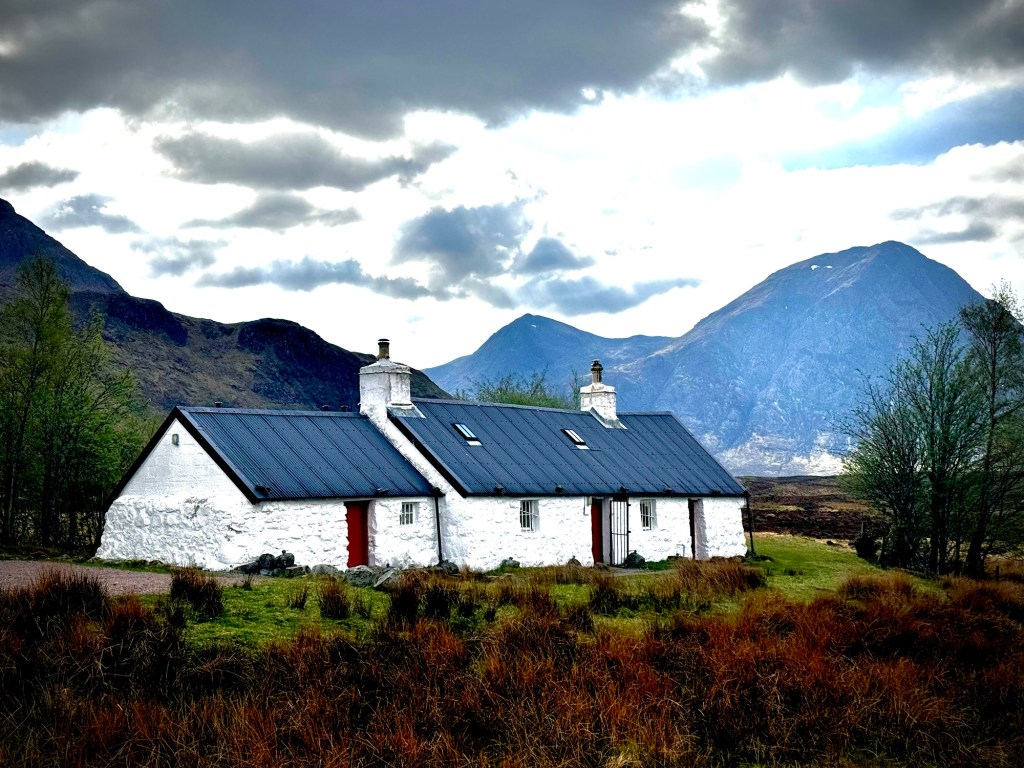
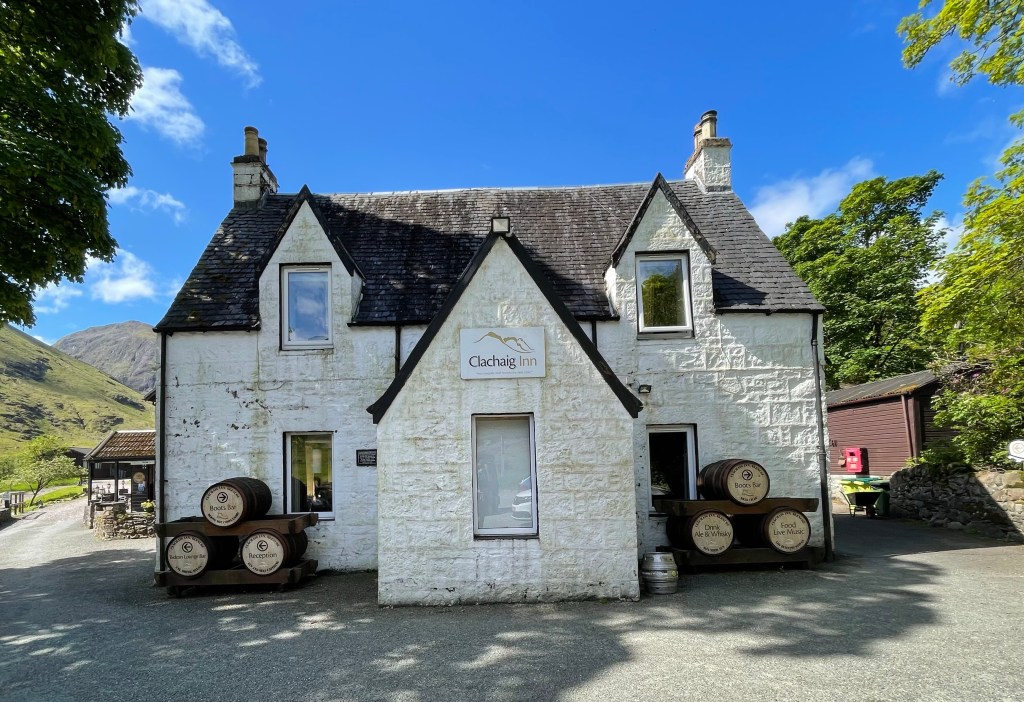
After a quick visit to the Glencoe Visitor Center (best gift shop ever) and a meal at the Boots Bar at the Clachaig Inn as per usual, I drove to the Glencoe Ski Area specifically to see a wee white house known as Black Rock Cottage because of Scottish landscape photographers on Instagram. There’s another heavily photographed white house in Glencoe called the Lagangarbh Hut (see blog from May) and another infamous white house, not as photographed because it’s falling down and covered with graffiti, known as Allt-na-Reigh. The latter was sold to famous mountaineer Hamish MacInnes in 1961 for $1,000 and later bought by dreadful serial sex offender Jimmy Savile in 1998, although the The National newspaper said he was seldom there and “there is no evidence that any of his offending took place [there].” It is now owned by a global convenience store company (sigh) and, sidebar, they plan to knock it down and build a “modernist luxury villa” which was well and thoroughly protested but hashtag private property.

Anyway, back to Black Rock. It is owned by the Ladies’ Scottish Mountain Club which I must try to join if I ever move here. The bottom of the driveway is blocked with a bar (not the fun kind) and a woman was just leaving the house as I arrived. If you feel like staying in a place that people are photographing quite a lot, it’s available as a holiday let. It sounds a little rustic – if you want drinking water you need to get it from the shower as there’s no running water in the kitchen. One also must bring all of one’s linens although mattresses are thoughtfully provided.

All in all, a quite excellent first day.

Onward, Solo – Aviemore, Glencoe and a Few Memories In Which Things Come Full Circle

View of the Buachaille from my balcony at the KingsHouse Hotel in Glencoe. Insanity.

While I truly loved the Backroads tour, I was very much looking forward to a week or so on my own plus yay driving! Being an extroverted introvert and a Gemini, a bit of both is just the ticket. If there were three or four additional personality types in this category I’d for sure want a teensy bit of each.

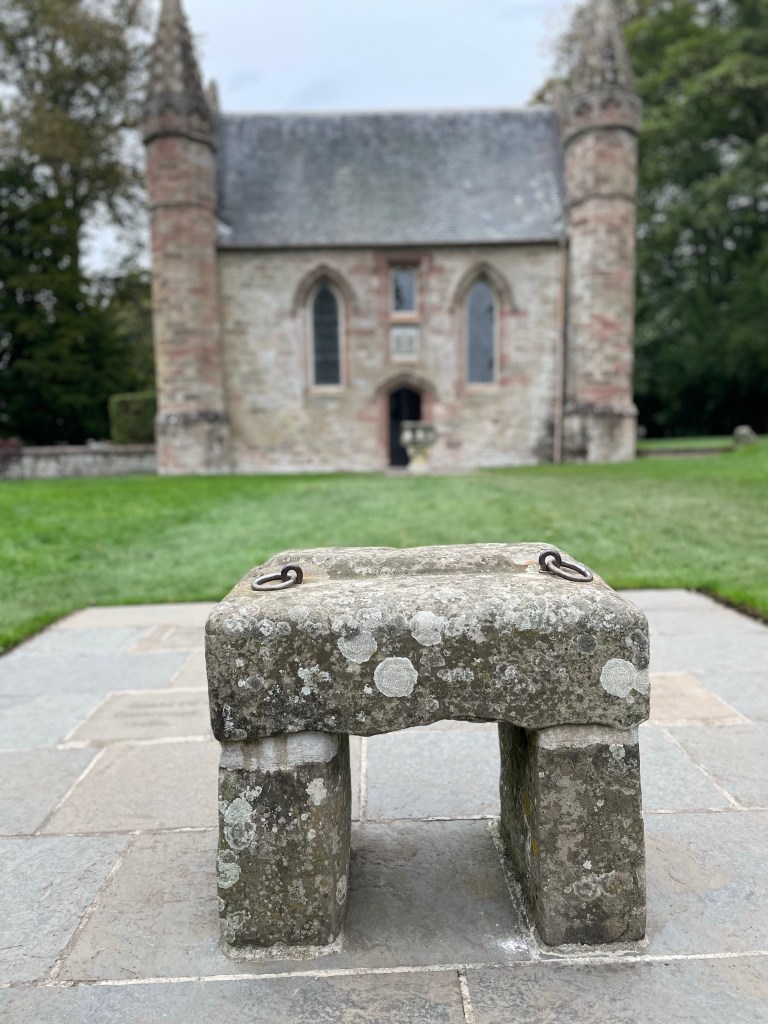
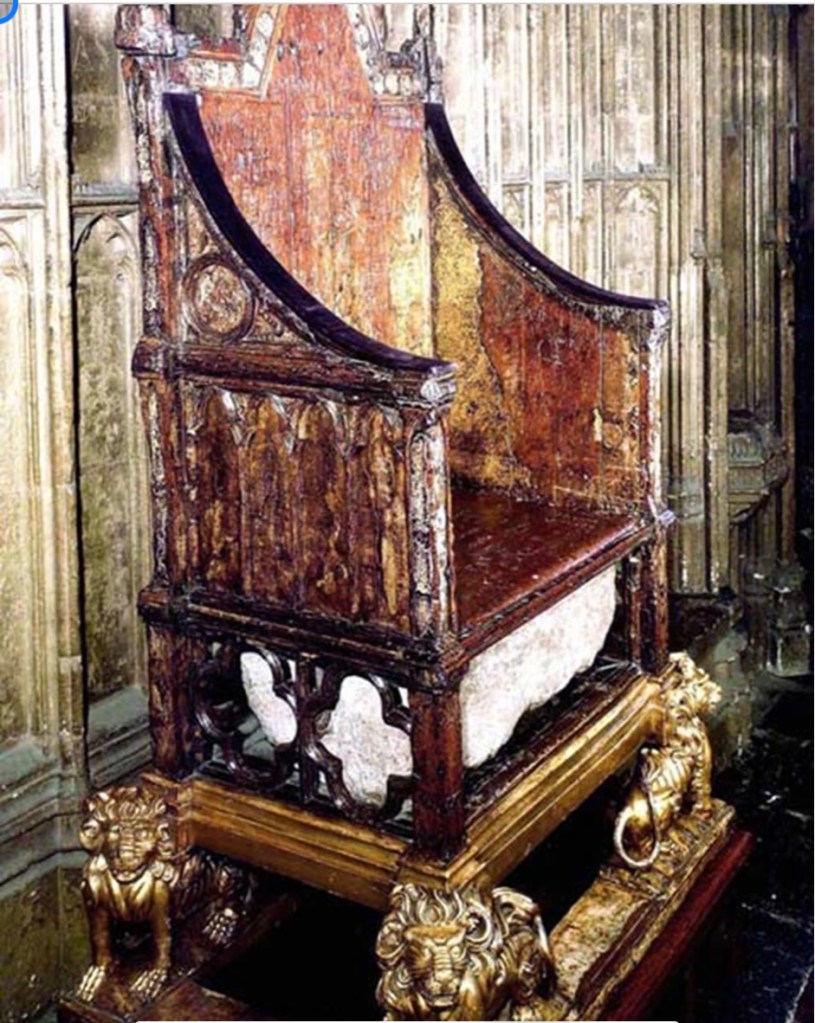
I headed toward lovely Aviemore in the northern Cairngorms to stay at one of my favorite B&Bs in all the world, with two of my favorite B&B owners, Kirsty and Kev. Along the way, I stopped at Scone Palace, the former home of the Coronation Stone, which you may be familiar with since we just coronated King Charles as he perched on top of it just to make it clear he was also King of Scotland. The stone was tucked away under an 725 year-old wooden high-backed and undoubtedly uncomfortable “Coronation Chair.”

Scone Abbey, coronation site for early Scottish Kings

The oblong block atop the bench above is a replica of the Stone of Scone (pronounced “skoon” in this instance), or the Stone of Destiny, depending on how dramatic you might be feeling. The real one (maybe) normally resides in Edinburgh Castle along with the Scottish Crown Jewels which is kind of hilarious because it’s just a block of old red sandstone. It is, however, a block of sandstone that has led the most interesting life of any other existing sandstone in the history of the world. It’s literally the symbol of Scottish sovereignty.

In this very spot, the Abbey at Scone Palace (it’s since been rebuilt), the stone witnessed the crowning of early Scottish Kings Kenneth McAlpin in 843 (!!), Constantine II in 900, Macbeth (the real one) in 1040 and David I in 1124. In 1296 the little asshole known as the Hammer of the Scots, Edward I, swiped it from Scone during the First Scottish (failed) War of Independence and built the aforementioned Coronation Chair in Westminster with the under-ass shelf for the stone upon which later monarchs of England and Scotland were crowned.

There’s a rumor, though, that wily monks at Scone Palace hid the real stone and the English troops took a substitute. Real or no, the English deigned to finally return it in 1996, seven hundred years after it was stolen, with the proviso that they could have it back whenever they crowned someone, which lately has been hardly ever.

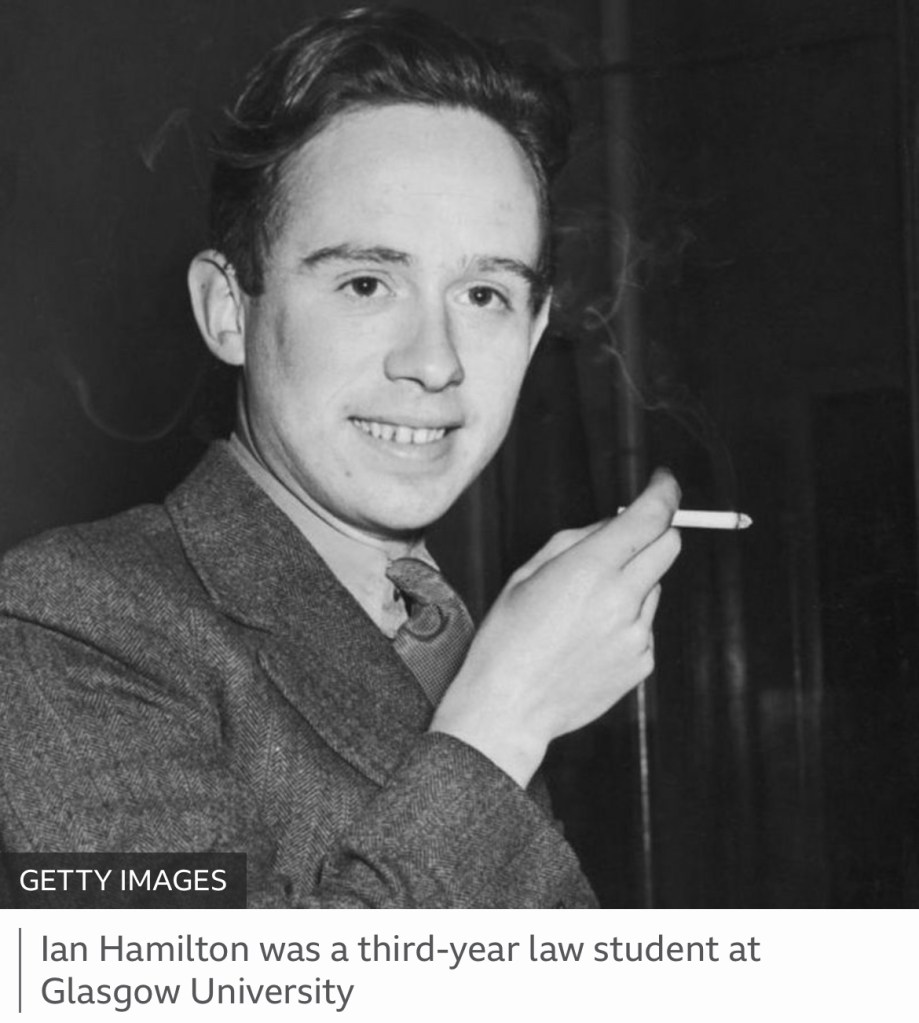
Before the official return, though, there was an exciting unofficial one. Fabulously, in 1950 some Glasgow students nicked it RIGHT OUT OF WESTMINSTER ABBEY and took it back to Scotland, leaving it at Abroath Abbey. The thing is so heavy they dropped it at one point, breaking it in half, necessitating a hasty repair by a Scottish stonemason. One can only imagine what he thought when the stone was presented for repair. When the theft was discovered, the English government literally closed the border with Scotland for the first time in 400 years.

Here is a photo of the unlikely ringleader of the Stone of Scone thieves.

And here is the stone “safely” back in English hands.

James Wiseheart, what a name! Of course, there are also rumors that the English got a replica back, not the real one.

Now that you know everything you’ve ever wanted to know about it, here’s a photo of Scone Palace, which is quite lovely.

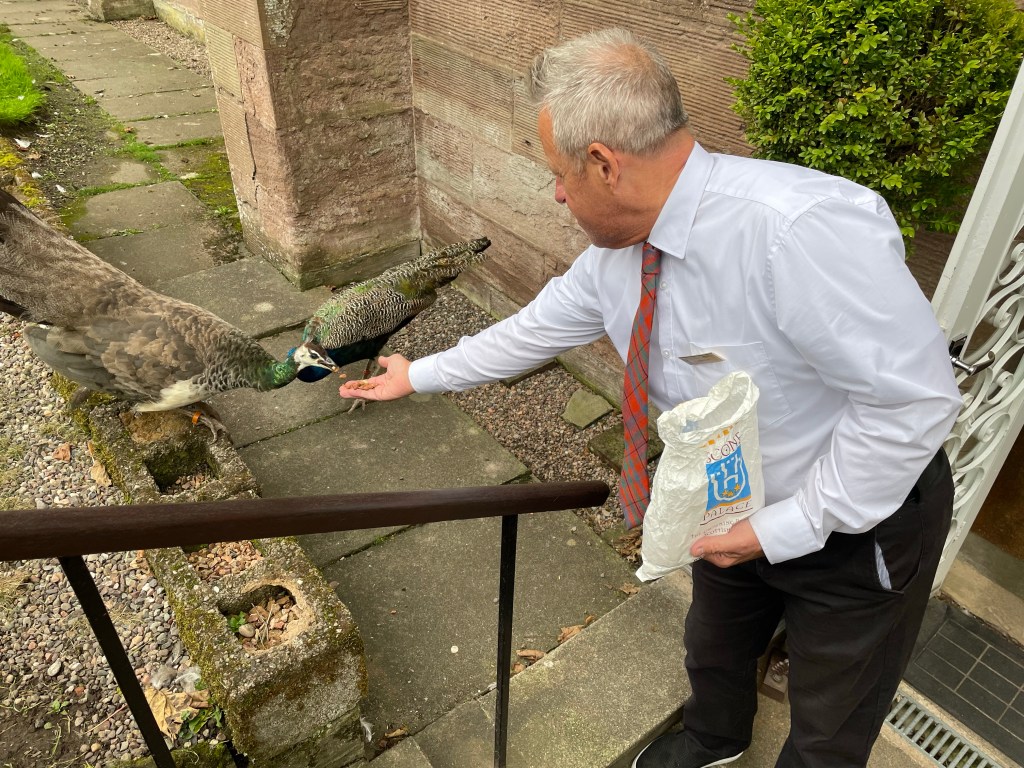
It’s the kind of place where the guy who runs the gift shop feeds the resident peacocks.

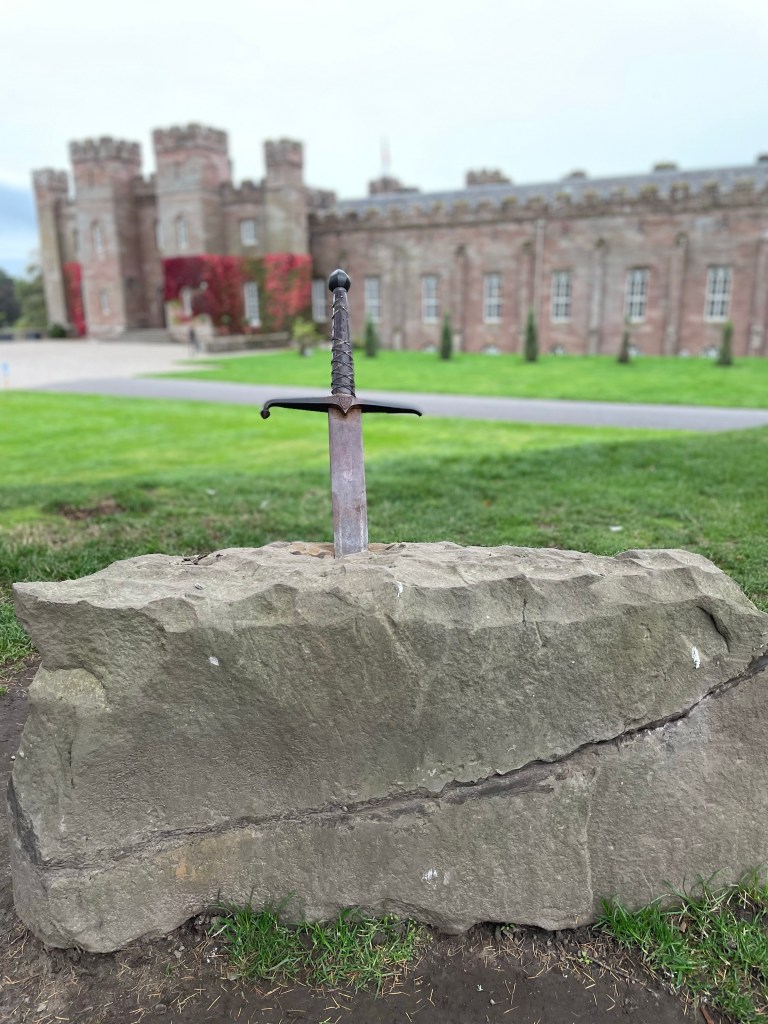
Also I’m not sure whether anyone realizes but the Sword in the Stone is also on the grounds.

Visiting Scone Palace was a little bit of a full circle that started last fall, when I traveled to Scotland with my pal Trish. We spent some time in Kilmartin Glen, which I would 100% recommend if you’d like to see Neolithic burial sites similar to those on Orkney, standing stones, photogenic highland cattle….

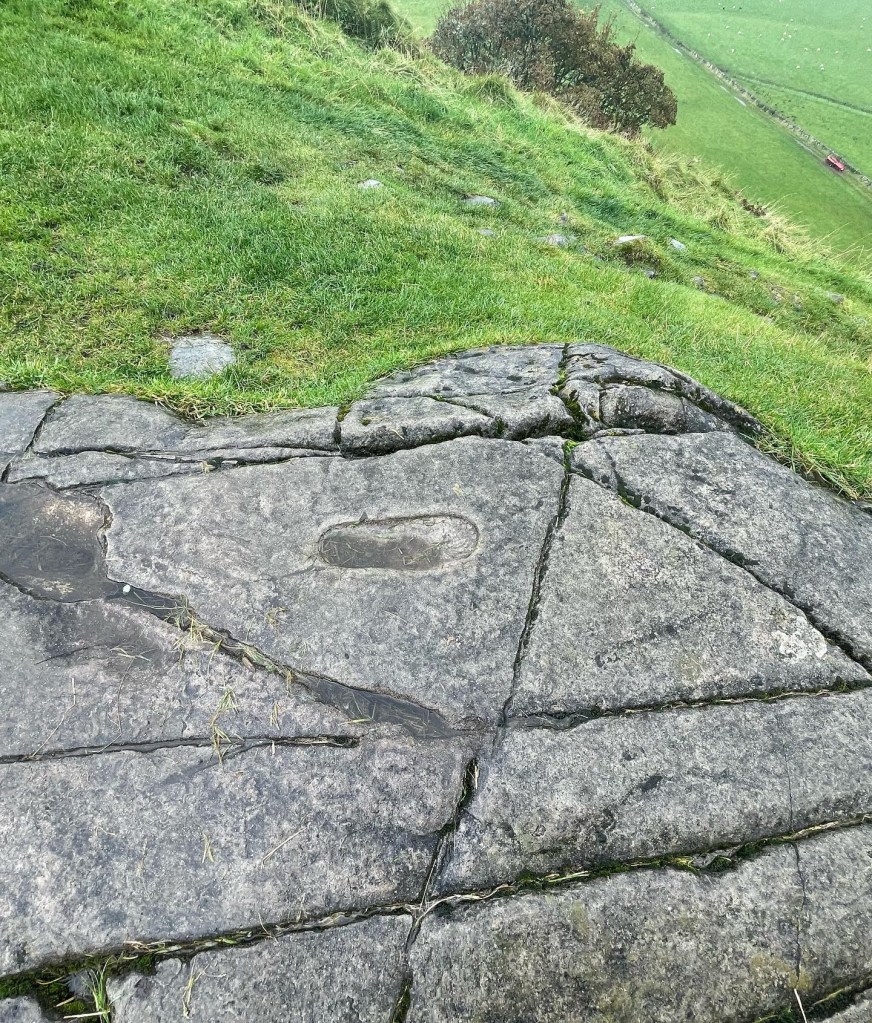
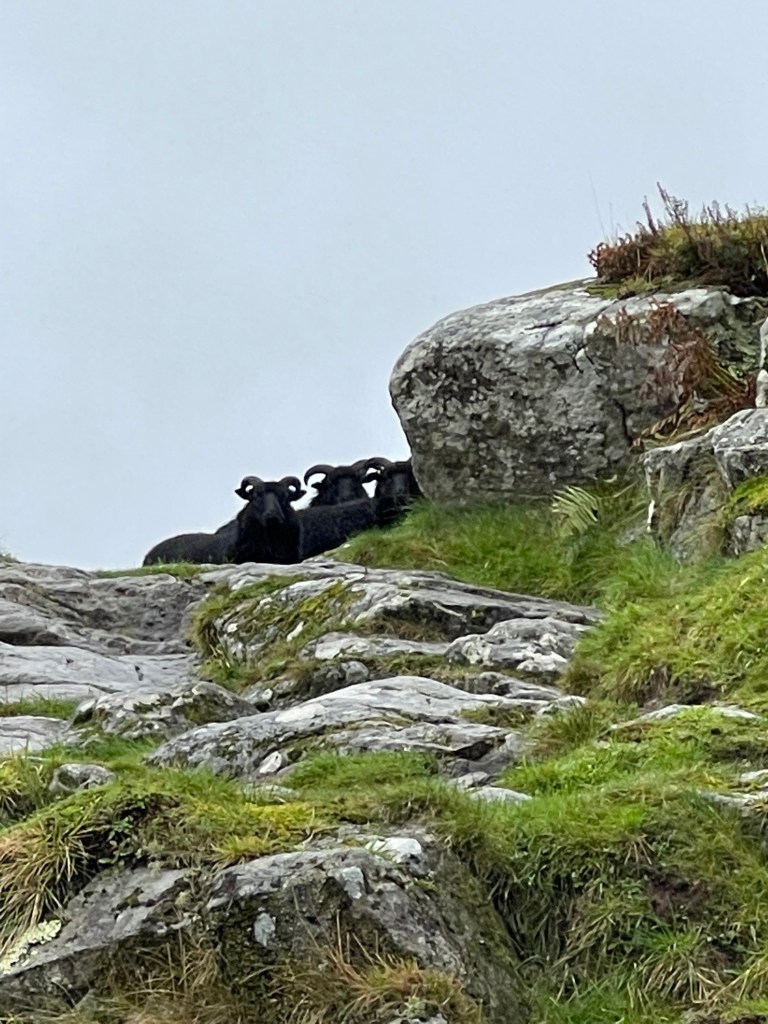
…and another, more ancient, coronation site of Scottish Kings, Dunaad Fort. The ruins are atop a hill in Kilmartin glen and we had the place to ourselves if you don’t count the (black) sheep. The fort was occupied 2,000 years ago and, as the capital city of the ancient kingdom of Dal Riata, was a royal power center of Gaelic kings in the 500s to 800s, and an international trade hub.

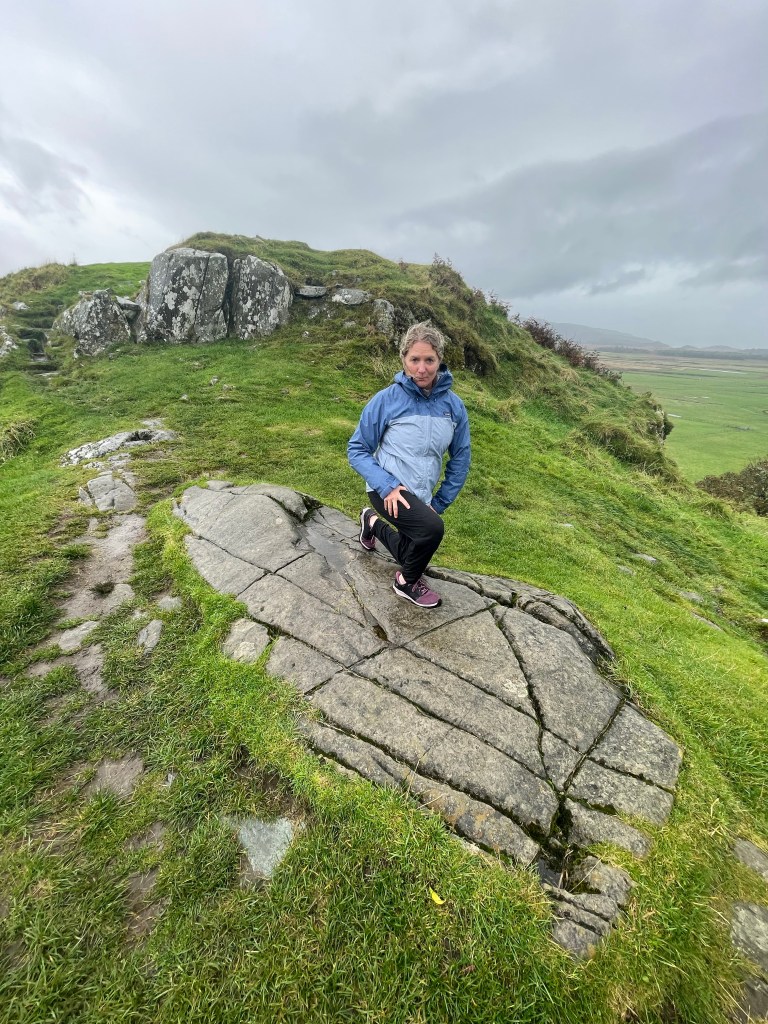
In the Fort’s ruins is a stone with a footprint carved into it (it’s actually a replica installed over the actual stone to protect it but I swear you would never know) and was thought to have been a part of Dal Riata’s coronation ritual whereby ancient kings knelt to declare that they were married to the land and would protect it against all enemies.

We also felt as though we were married to the land and so knelt to pledge our respective troths.

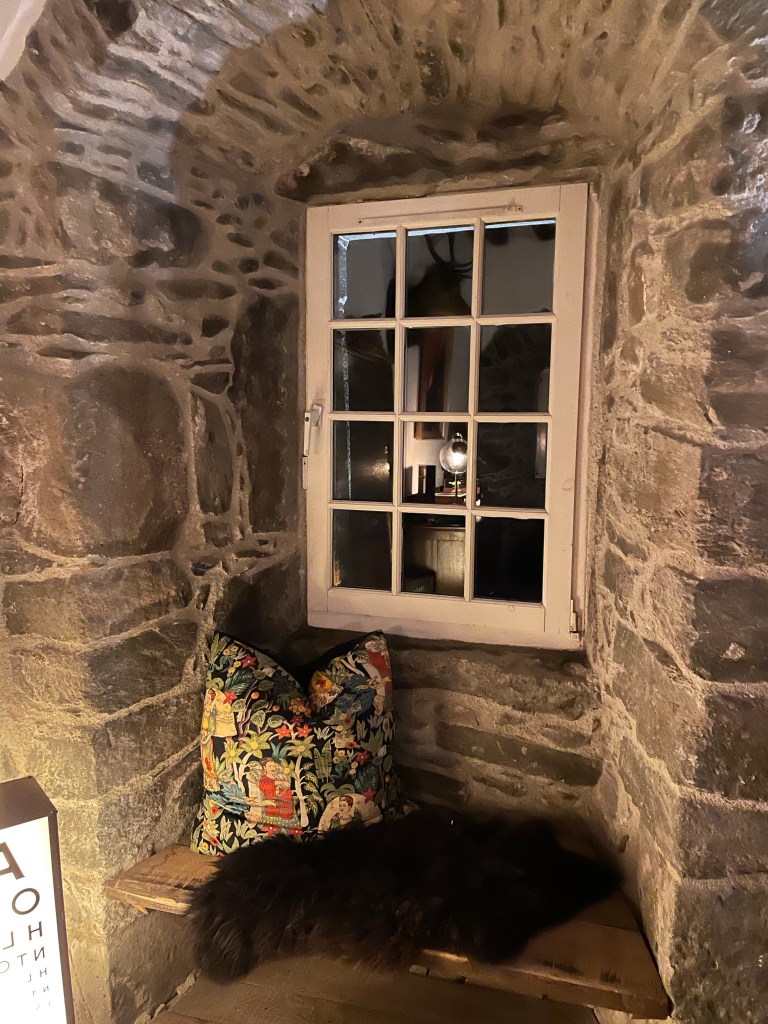
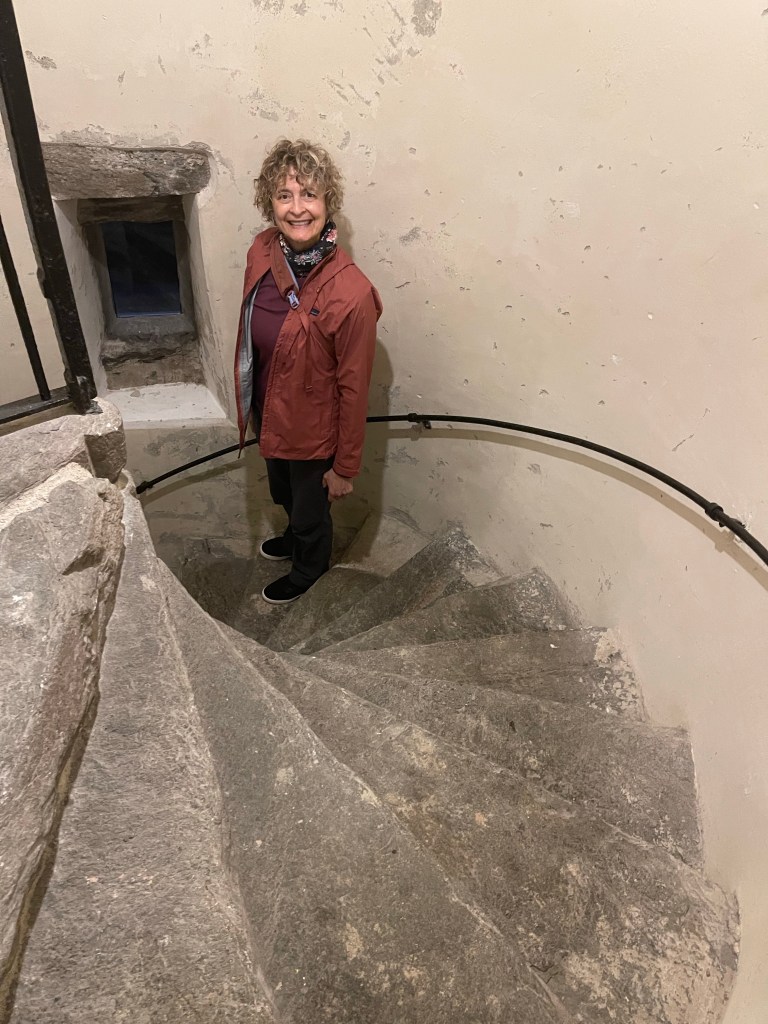
While we spent our days exploring the Glen, traveling to Oban and the Isle of Mull, visiting ruined castles, and driving up to Glencoe, we stayed at Kilmartin Castle. Built in 1550, it was restored by a fabulous couple we loved who took great care to make it look and feel like a castle inside as well as outside. Many inhabited castles in Scotland seem like a normal sort of mansion once you get inside, so I appreciated their aesthetic goals. There was a winding staircase, stone walls and floors, and I had to duck a LOT to avoid braining myself in low doorways. In short, completely brilliant.

Kilmartin Castle

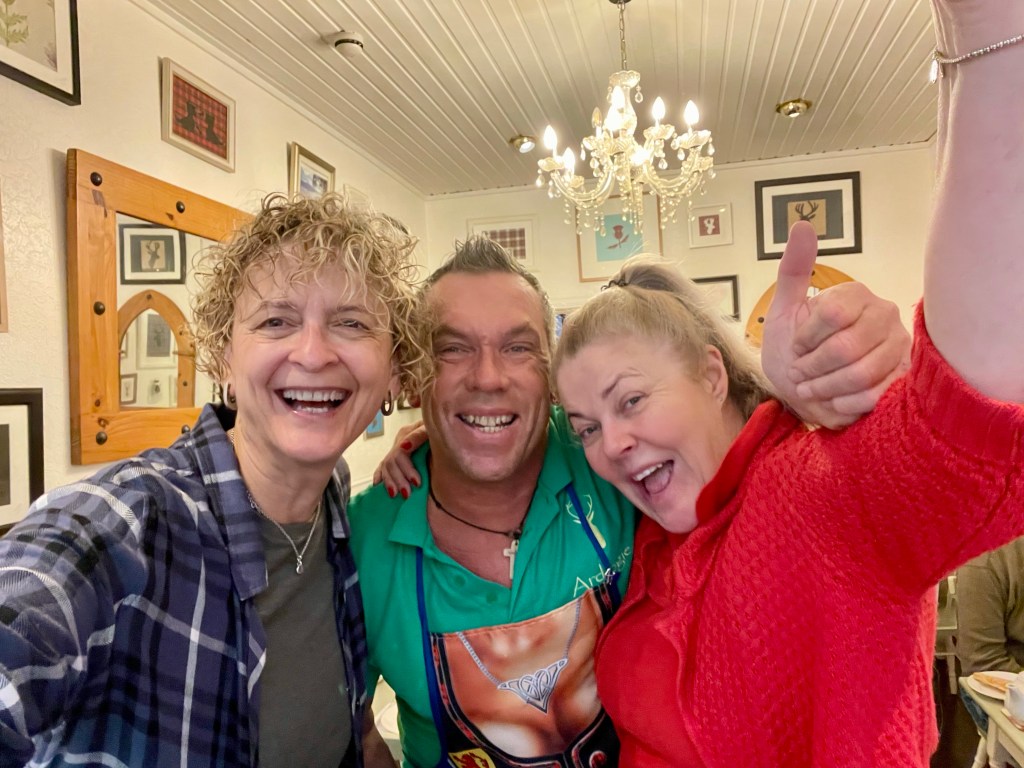
Anyway, bringing us back to the present, I was very happy to arrive at the Ardlogie Guest House in Aviemore, staying in my old room, and seeing Kirstie and Kev who are as lovable, kind and crazy as ever.

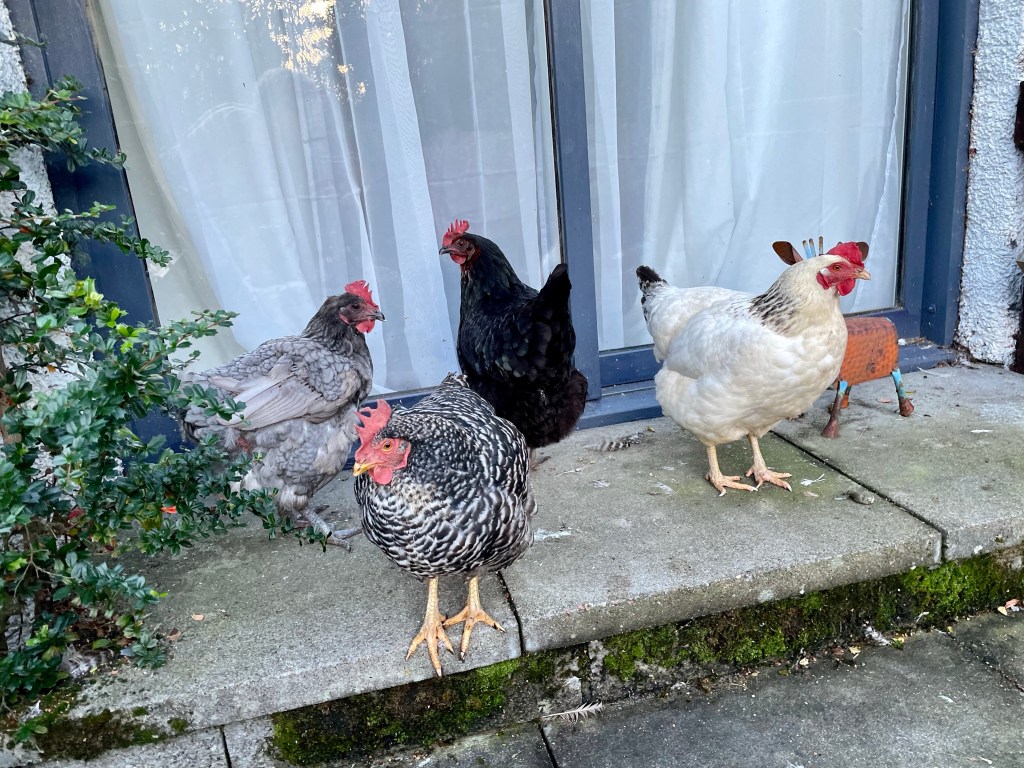
Their chickens waiting at the patio doors for Kev to feed them. Thanks for the yummy breakfast eggs, ladies!!!
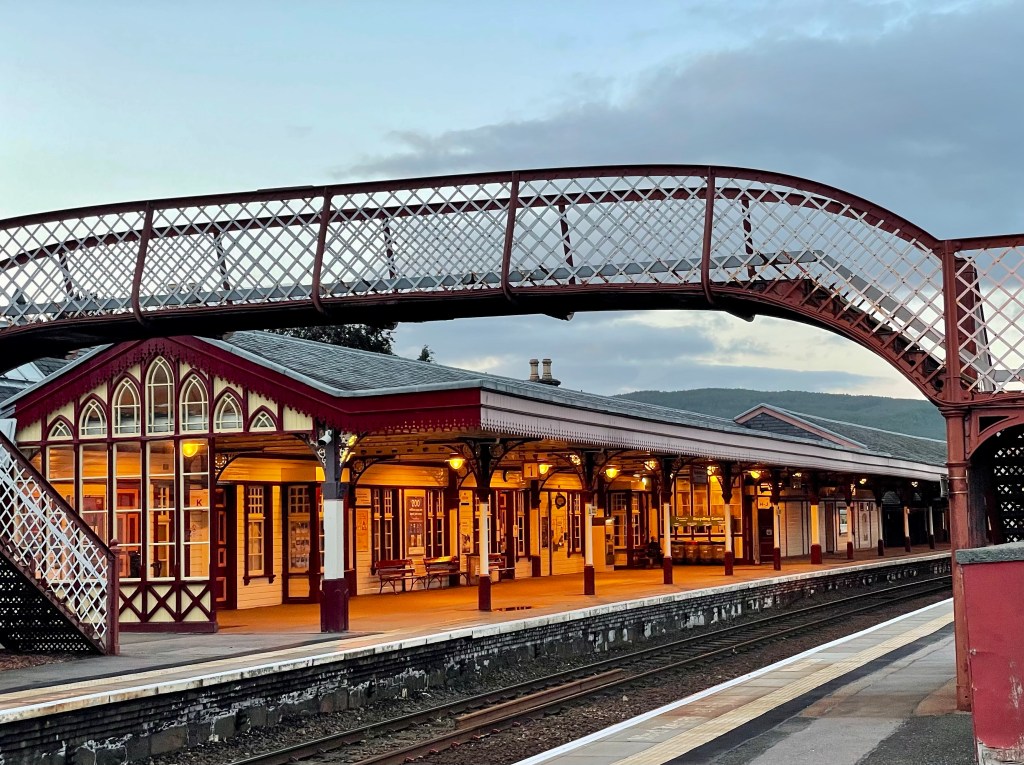
The lovely Aviemore train station

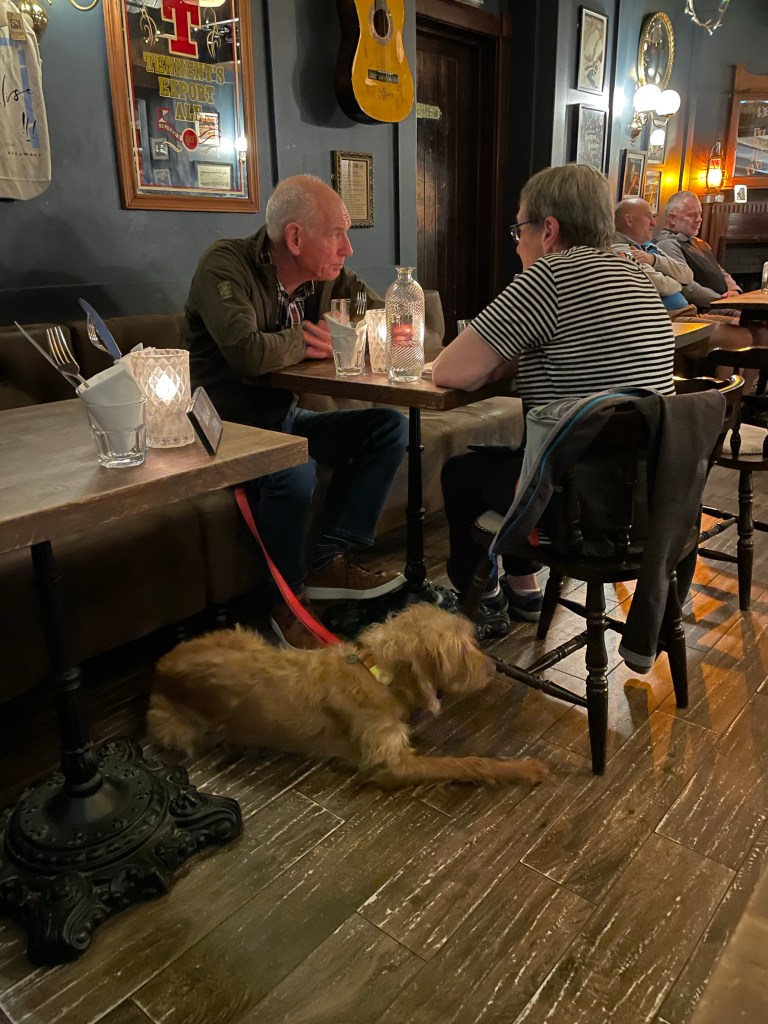
Unfortunately the northern Cairngorms, boasting the coldest climate in the UK, was experiencing high winds and thus the mountains were too unhospitable to climb. Kev ascends Munros on the regular and was like, no, this would be miserable, do not do it. So I saved those hikes for another time and stuck to some gorgeous glens, visited the Dalwhinnie Distillery and enjoyed a few meals at the Old Bridge Inn where you can reserve a table in the main restaurant where children are allowed or in the “lounge with dogs,” which has a fireplace. No-brainer.

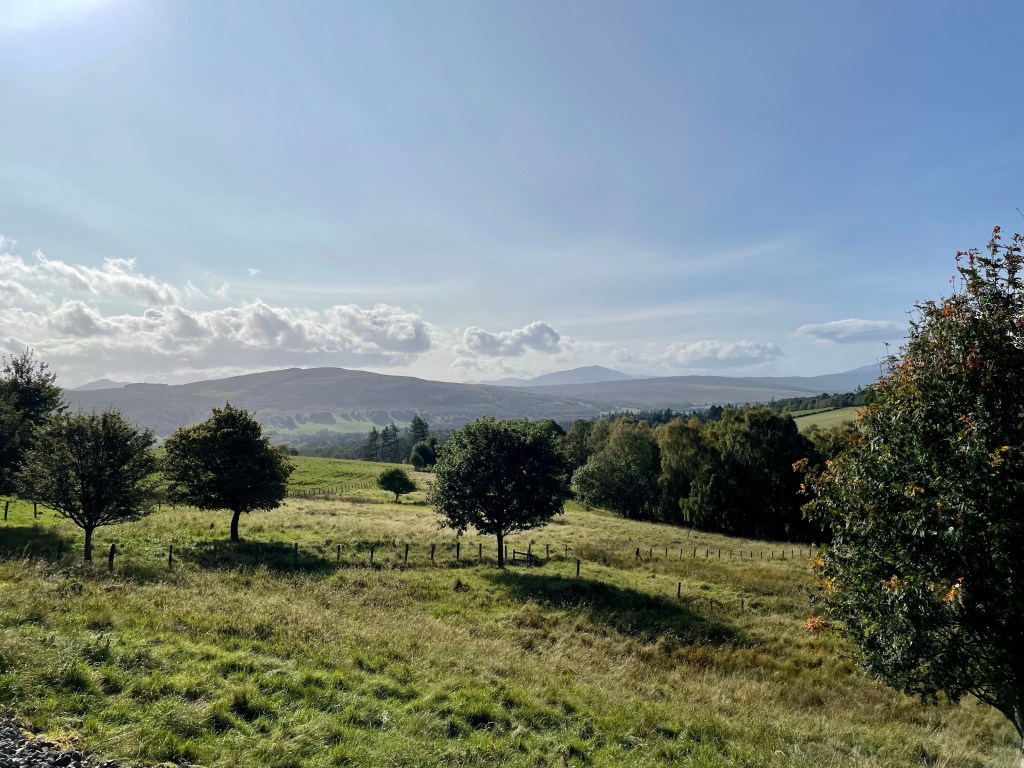
Here are some snaps from Glen Tilt:

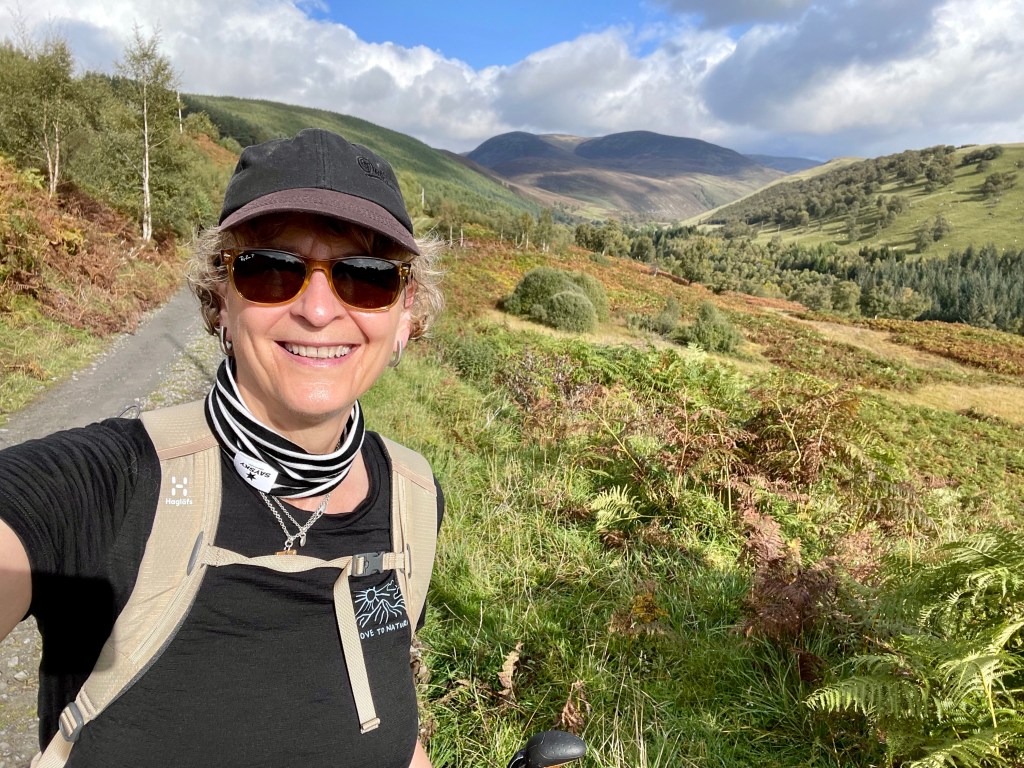
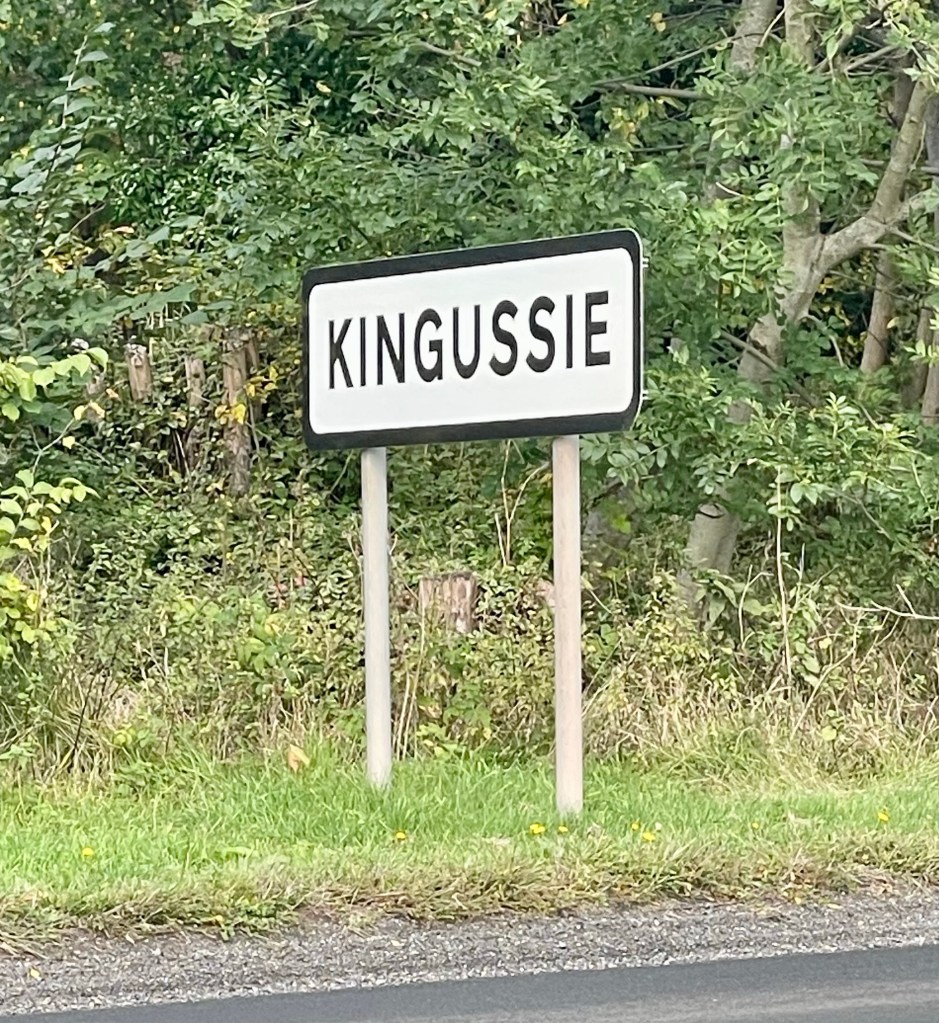
And some from a walk through a glen between Kingussie and Newtonmore, which featured that walking-across-moors vibe I love. And I did not run into one single other human.

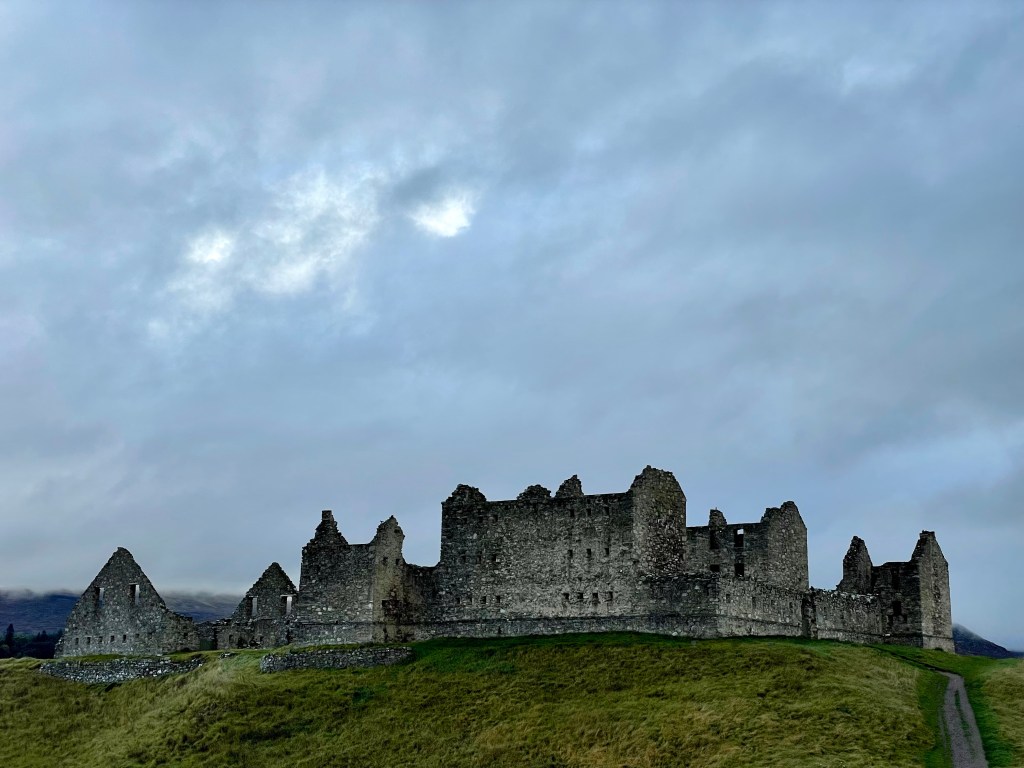
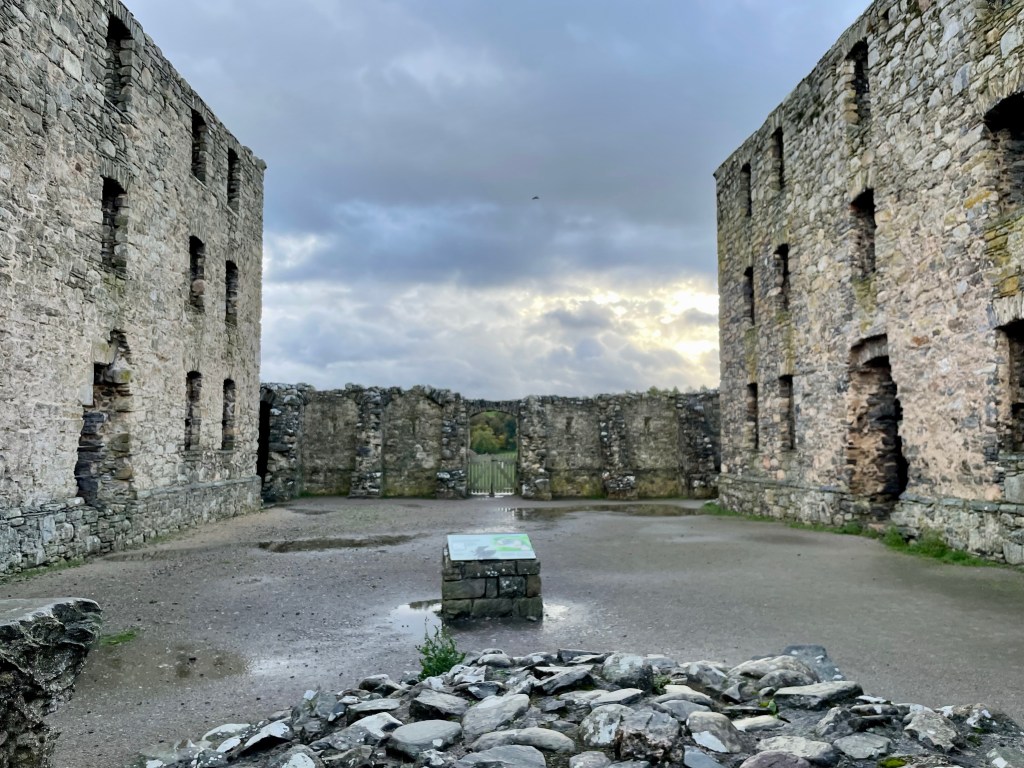
One morning I visited the Ruthven Barracks, a gorgeous ruin of a fort that was built by George II (not personally) on a hilltop visible for miles around. He ordered that it be constructed after the failed Jacobite uprising of 1715. The soldiers stationed there were to maintain law and order in the Highlands and squelch any further unsavory Jacobite activity. In perhaps another full circle moment, after the Battle of Culloden, the remnants of the Jacobite army met there, awaiting word from Prince Charles Edward Stuart about their next move. Not knowing that the Bonnie Prince had scarpered, they finally received word that the Fat Lady had sung and they should go home.

Here are a few photos.

The stables

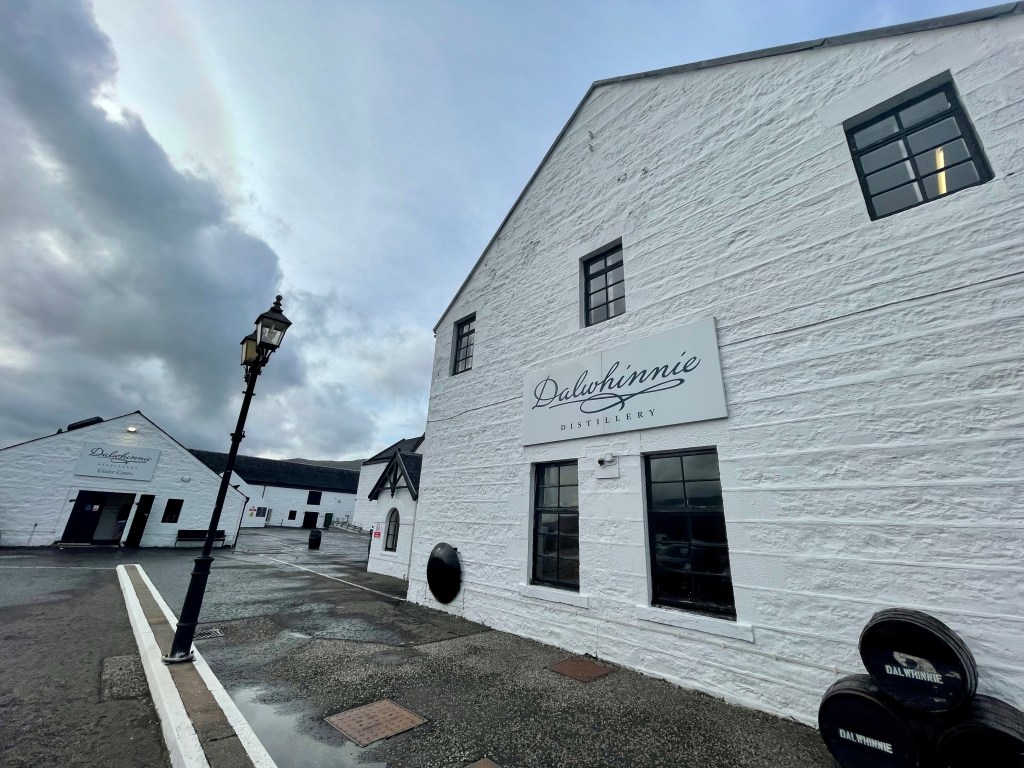
I also booked a tour and tasting at Dalwhinnie Distillery, which is perched on a moor in the Grampian Mountains in Cairngorm National Park – in the middle of nowhere but also entirely visible from the A9. I wanted to visit as this was the first whisky I had ever ordered in a restaurant. I was just beginning to learn about the golden liquid at the time, so I asked the waiter to make a recommendation for a drinkable, smooth and gentle dram. It was my birthday dinner in Bend at one of our finest restaurants and my parents were in town to help celebrate (my Mom and I share a birthday), so Dad had to pay an exorbitant price, which I know he heartily disapproved of but he managed to hold his tongue. Now that he is gone, it seemed like a yet another full circle thing to do.

Compared to other distillery tours I’ve done, this one was pretty performative and corporate. Dalwhinnie is owned by London-based mega-company Diagio, there was a huge visitor center and shop that can accommodate loads of bus tourists – and much of the whisky-making process is no longer done on-site. For example, unlike earlier in its history, they now get their barley already sprouted and dried from elsewhere in Scotland. Interestingly, all Diagio distilleries in Scotland (there are 28 out of 140’ish) store barrels all around the country at other distilleries to hedge against fires – which are not as isolated or rare instances as one might assume. In fact the Dalwhinnie distillery burned down in 1934 and it was more than 100 years until they were in production again. All that alcohol and everything. Boom.

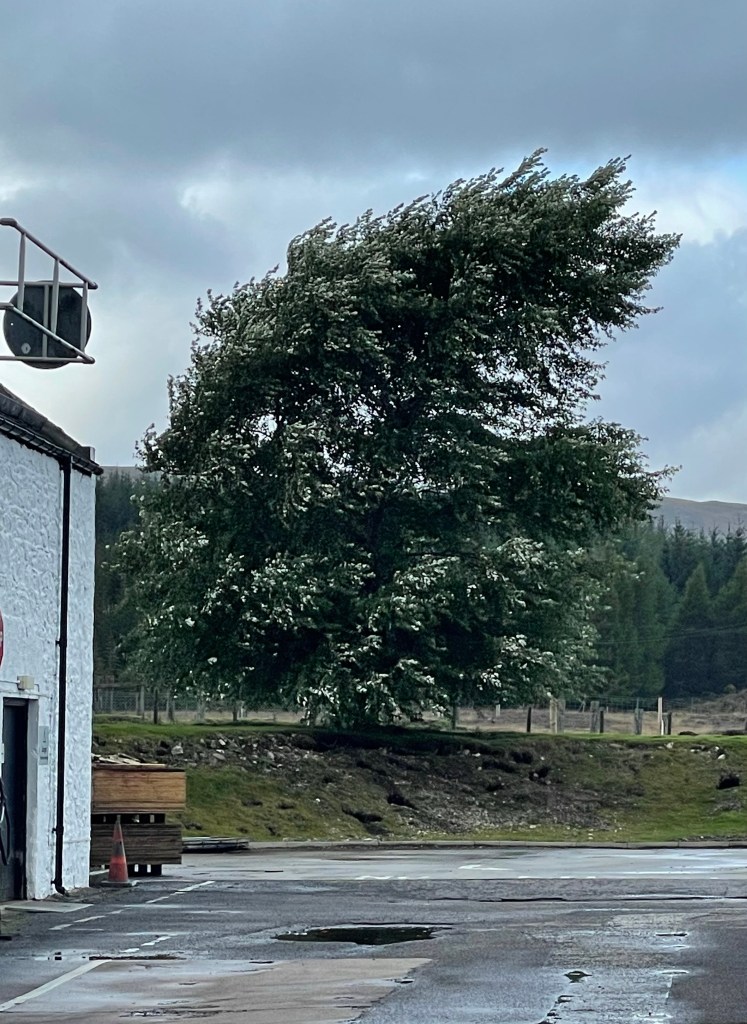
And speaking of the climate in the Cairngorms (Dalwhinnie holds the distinction of being the highest in Scotland, elevation-wise), there’s a tree on the grounds that has been impacted by the wind over time thusly:

The wind is NOT blowing in this photo.
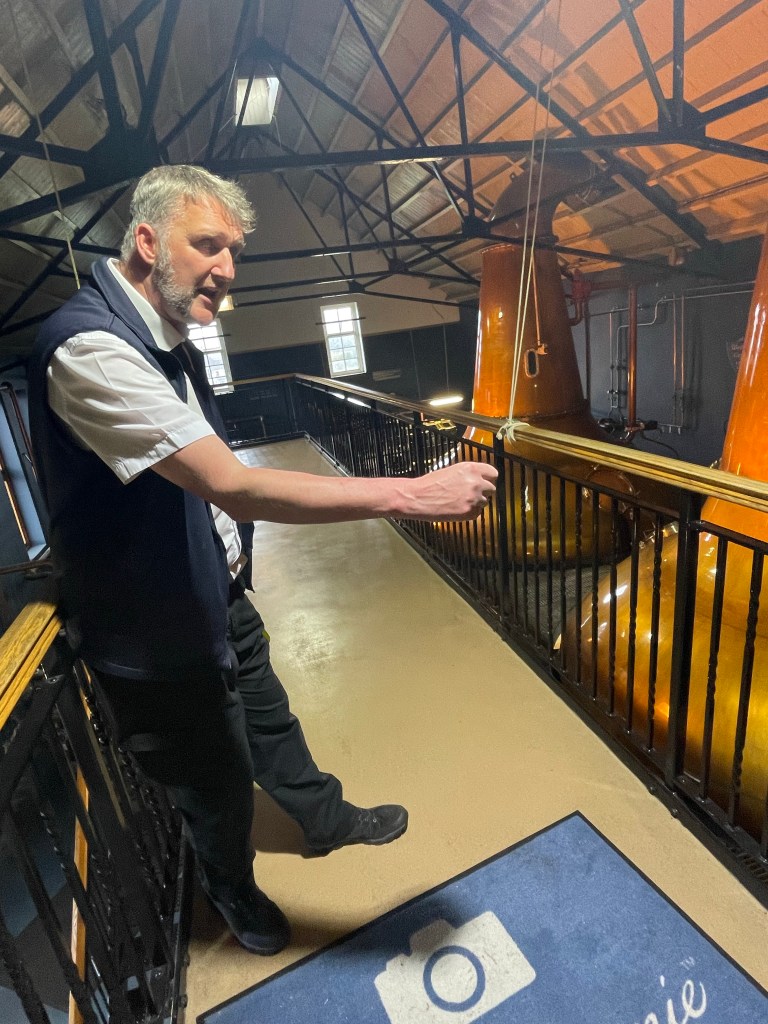
Our very animated tour guide, a Scot who told a lot of extraneous personal stories that sometimes were interesting.

And I’ll leave you in the Cairngorms at the Old Bridge Inn. I first visited five years ago, along with a guide who was squiring me to all the sights in the area. We had lunch there, but I wasn’t really clocking where we were, as we drove around quite a bit and it was my first time in the country. So when I walked in last May, upon Kirsty and Kev’s recommendation, it was like having a happy encounter with an unexpected friend. Oh it’s YOU!!! The place is a true community gathering zone filled with locals, and there’s a stand-up only bar ringing with jovial hilarity that can get quite loud in the best possible way. There is often live music outside, too. I just love it.

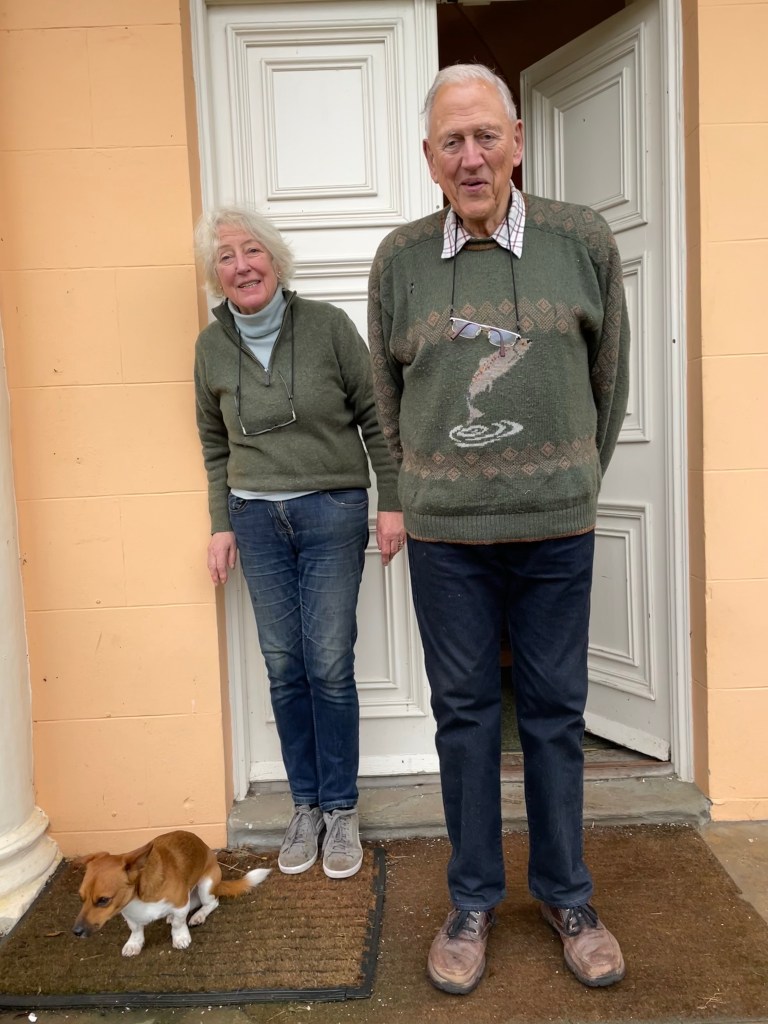
As I bid a fond farewell to Kirsty and Kev, I remembered another very different sort of couple who run a bed and breakfast of a particular sort near Glasgow. Trish and I stayed with them for one night last year. They are a legit Lord and Lady who possibly have come on hard times as it must be challenging and crazy expensive to run an olden times estate these days. They let out two of their bedrooms and also hold an outdoor rock festival on their grounds every summer. I feel sure they hate every minute of both things.

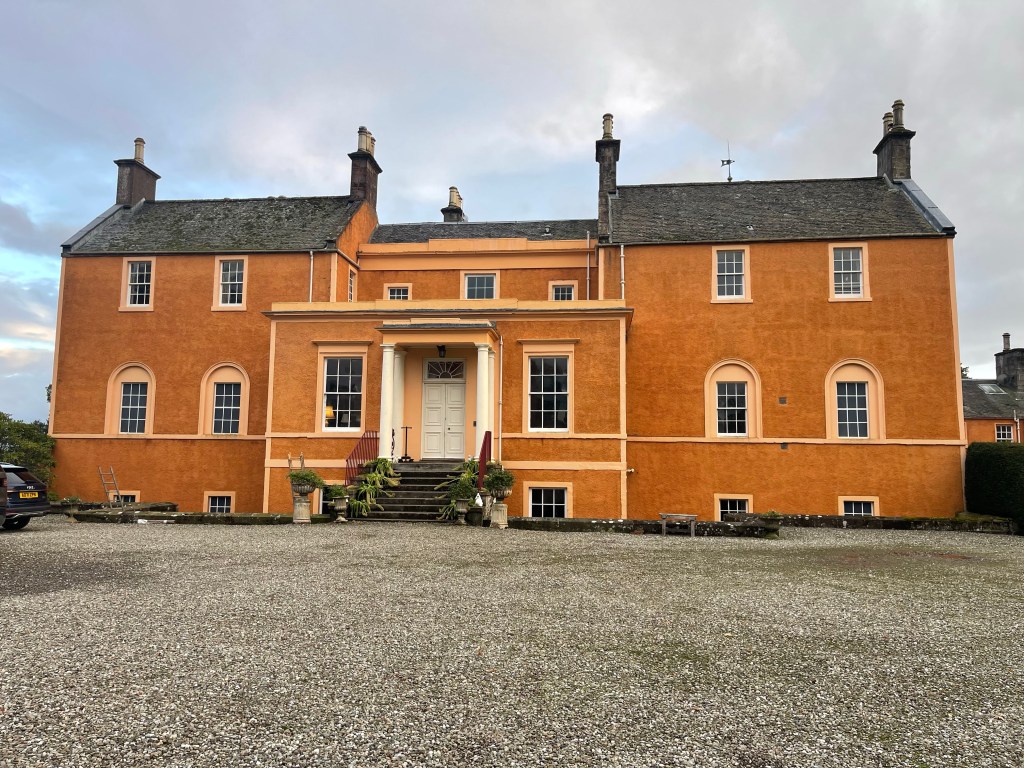
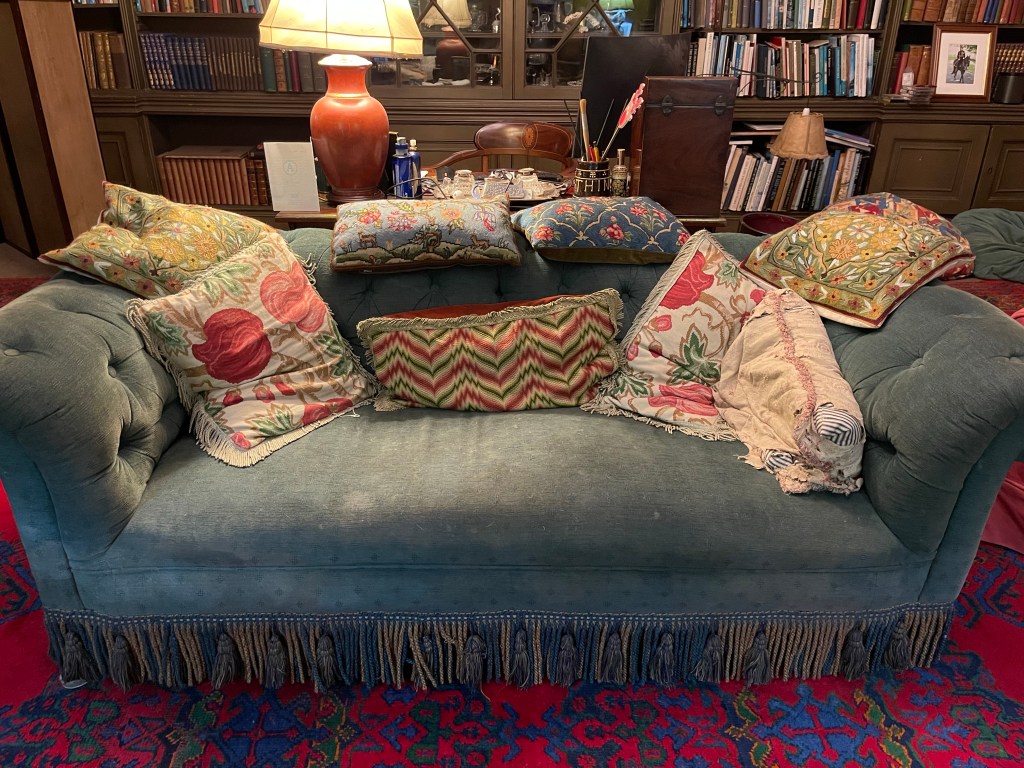
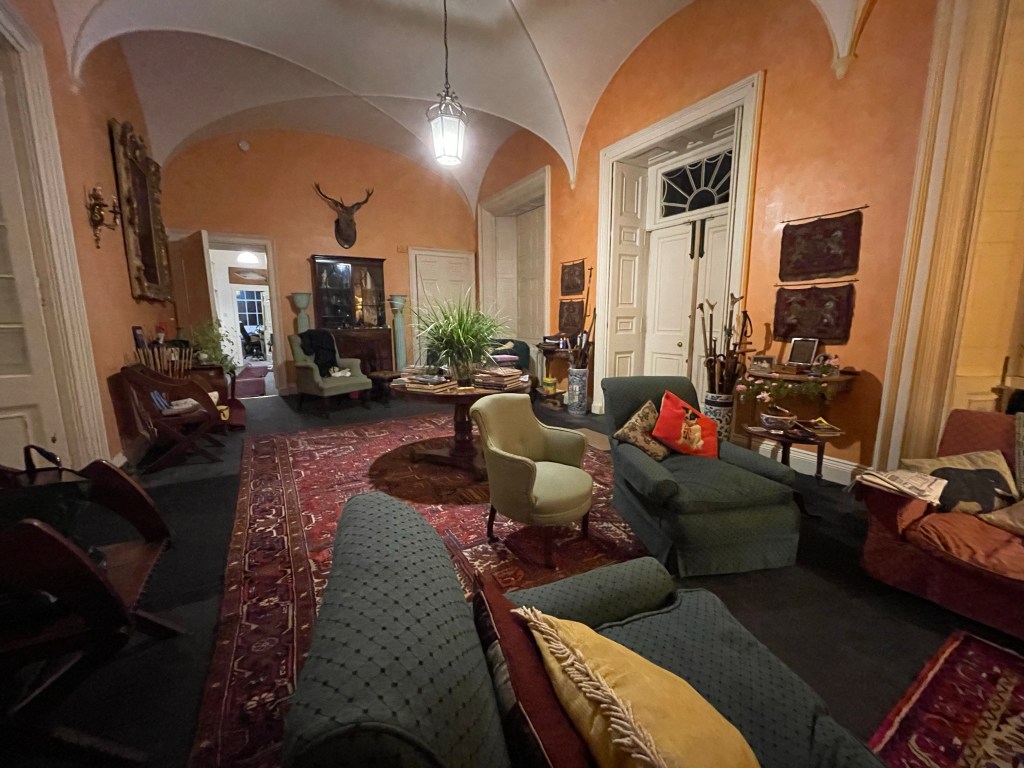
Their home is still quite beautiful although if you look too closely, you see a little fringe around the edges, a little dog-gnawing damage perhaps. The original shabby chic vibe.

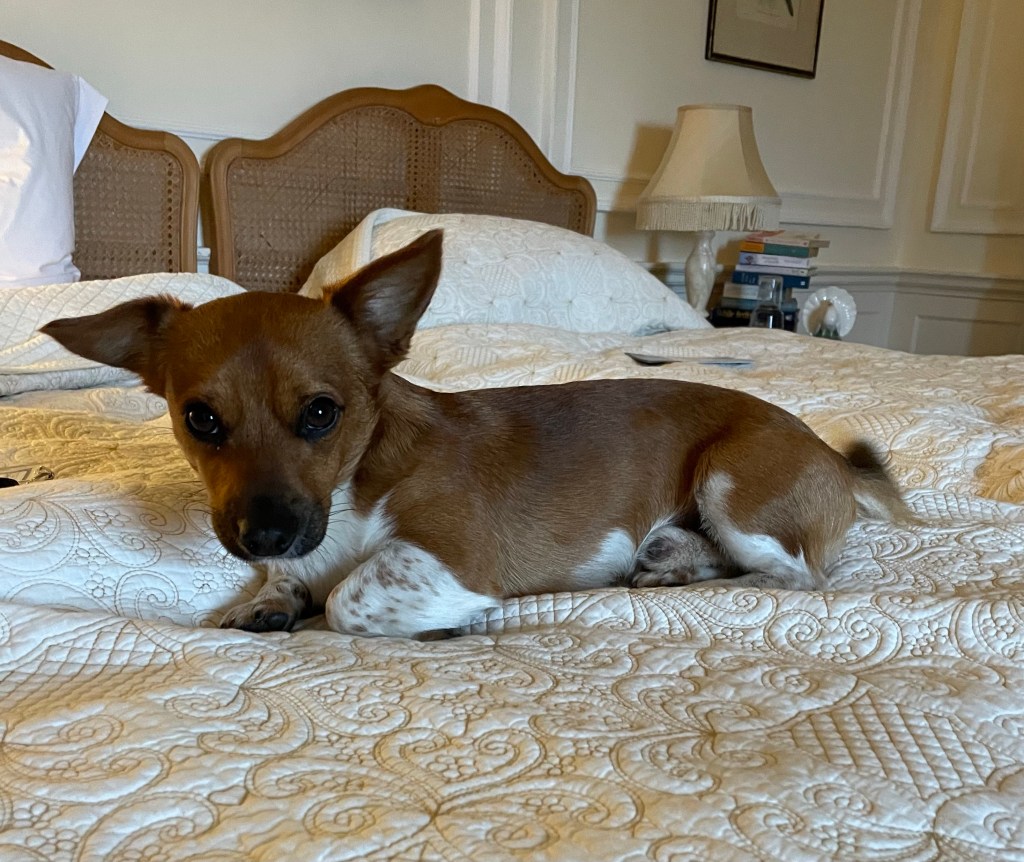
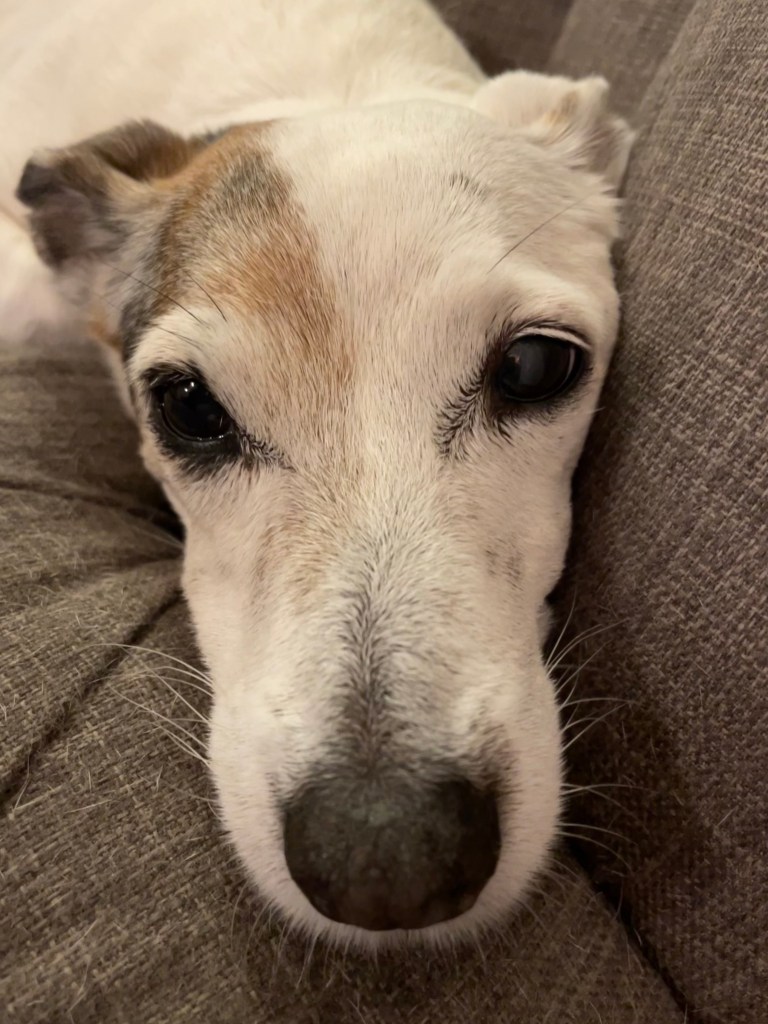
They have several dogs, one of which is a Jack Russell who stole Trish’s glasses from her upstairs bedroom and carried them downstairs, placing them carefully on the worn Oriental rug in front of the wood stove. We were kind of afraid to mention this suspected theft to the Lord and Lady. Luckily, I had taken a random photo of the dogs downstairs and we spotted Trish’s glasses in the photo, blending perfectly into the oriental carpet, and were able to retrieve them without incident and, most importantly, without casting aspersions on their dog.

The sweet little glasses-stealing culprit.

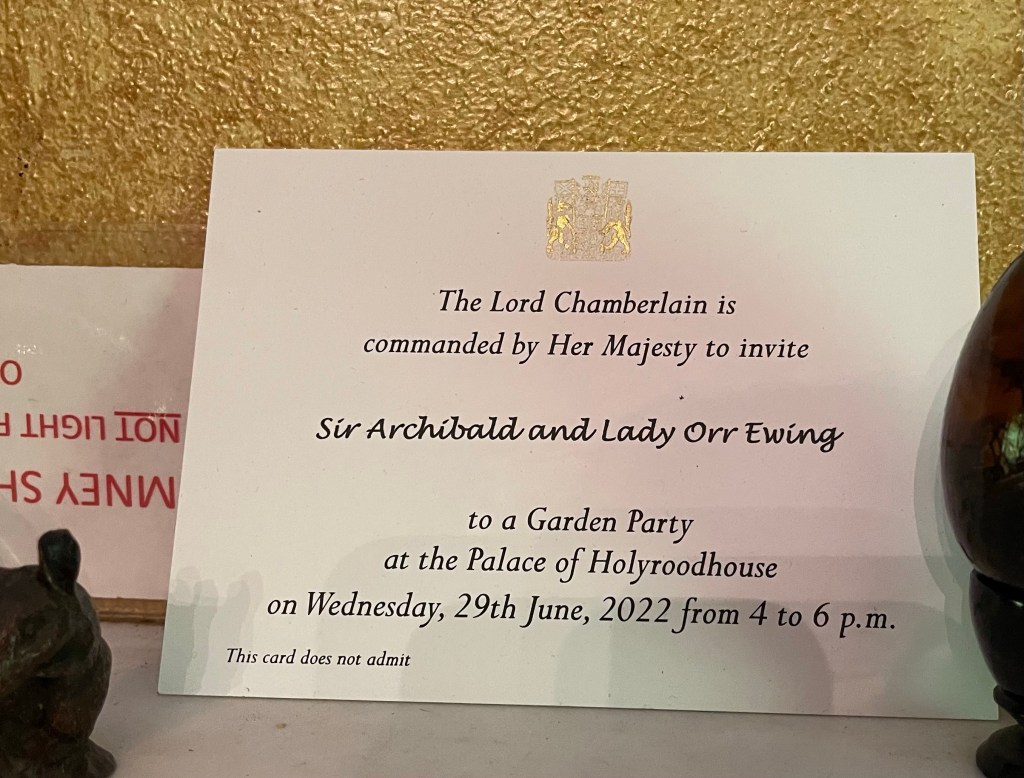
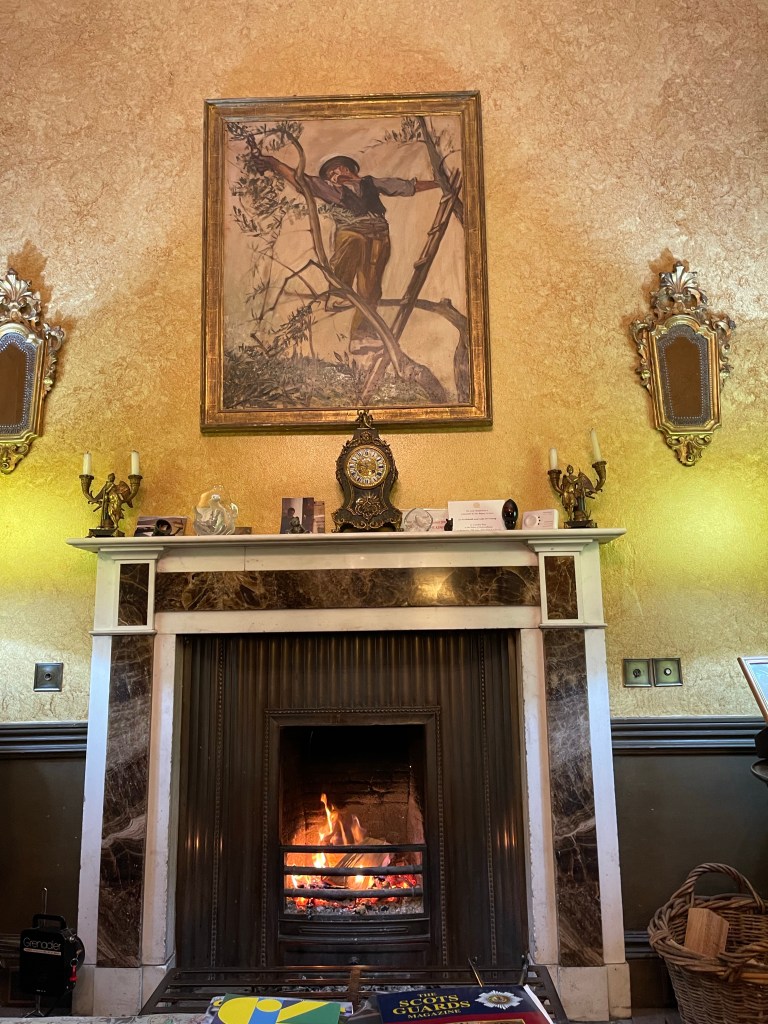
That evening we joined the Lord and Lady for drinks before dinner, where I spotted an invitation on their mantle from the Queen to join her at Holyrood Palace in Edinburgh for a garden party. I mentioned it to our hosts, and the Lady said she couldn’t recall what it was exactly, but that they had other plans for that evening.

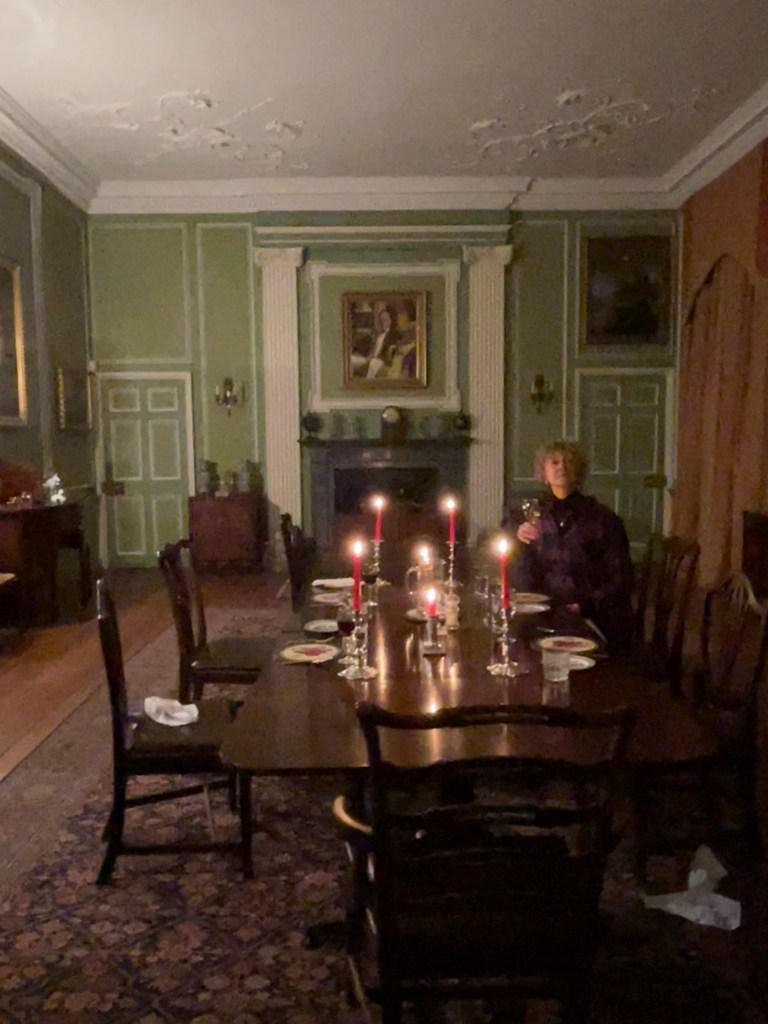
We met them for dinner in the huge dining room. They appeared, wheeling a serving trolley into the room and serving up what was a very nice dinner and we engaged in a lovely if somewhat stilted conversation. It was a little bit like Downton Abbey in the Upside Down. And they really were charming, the Lord was very very sweet and kind, the Lady a little more prickly, tending to snappily over-correct the Lord who remained pretty jovial in spite of it.

The rooms we saw in the house were generally quite lovely, although we wondered if much of the place had been closed off, as they only seemed to use a few. We continued to wonder whether they truly enjoyed having random guests in their home and so endeavored to be as low maintenance and well-behaved as possible, although I’m sure we used the wrong fork and committed other dreadful etiquette faux pas.

They bid us farewell the following morning and we took our leave. I will never forget this experience and again – travel is the best.

So back to the present, on the way to Glencoe, I stopped in the pouring rain at a nature reserve called Creag Meagaidh (roughly pronounced Creg Meggie). It’s one of Scotland’s many rewilding efforts, and includes a simply gorgeous hike up through planted trees, ferns and other foliage, up into another moors situation along a river with stunning views and as usual all the weathers, before finally dropping down to a gorgeous hidden lochan rimmed with dramatic cliffs. Had the place to myself (I know I keep saying that – I do really like people but not, like “people” if you know what I mean) and would highly recommend!

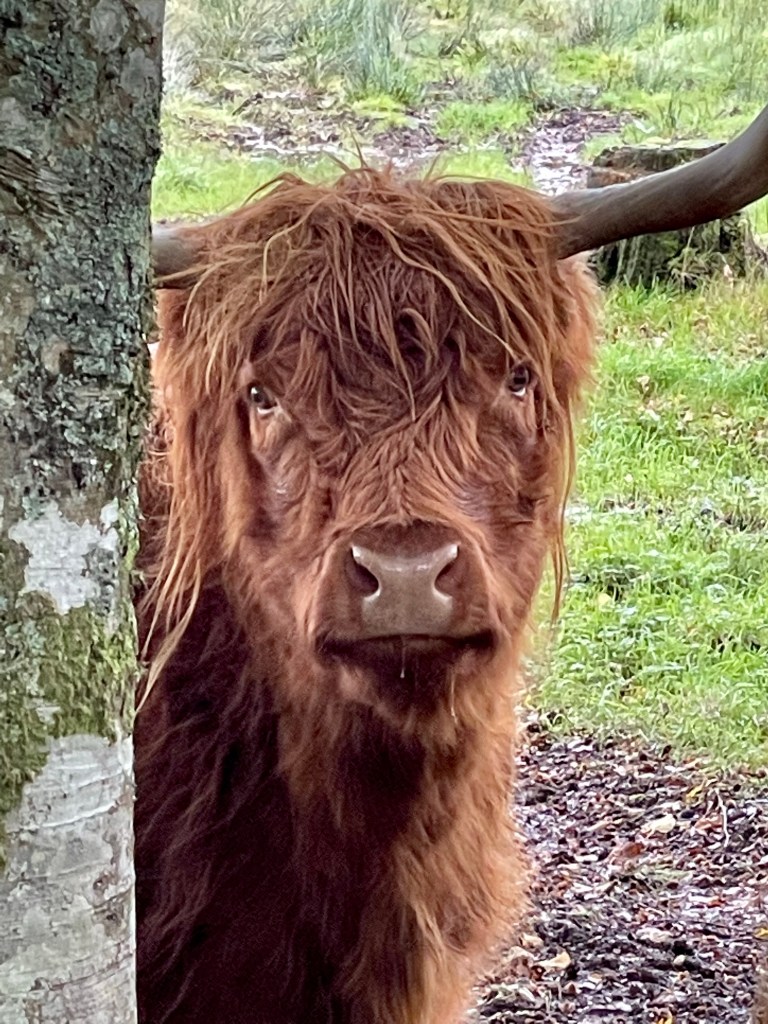
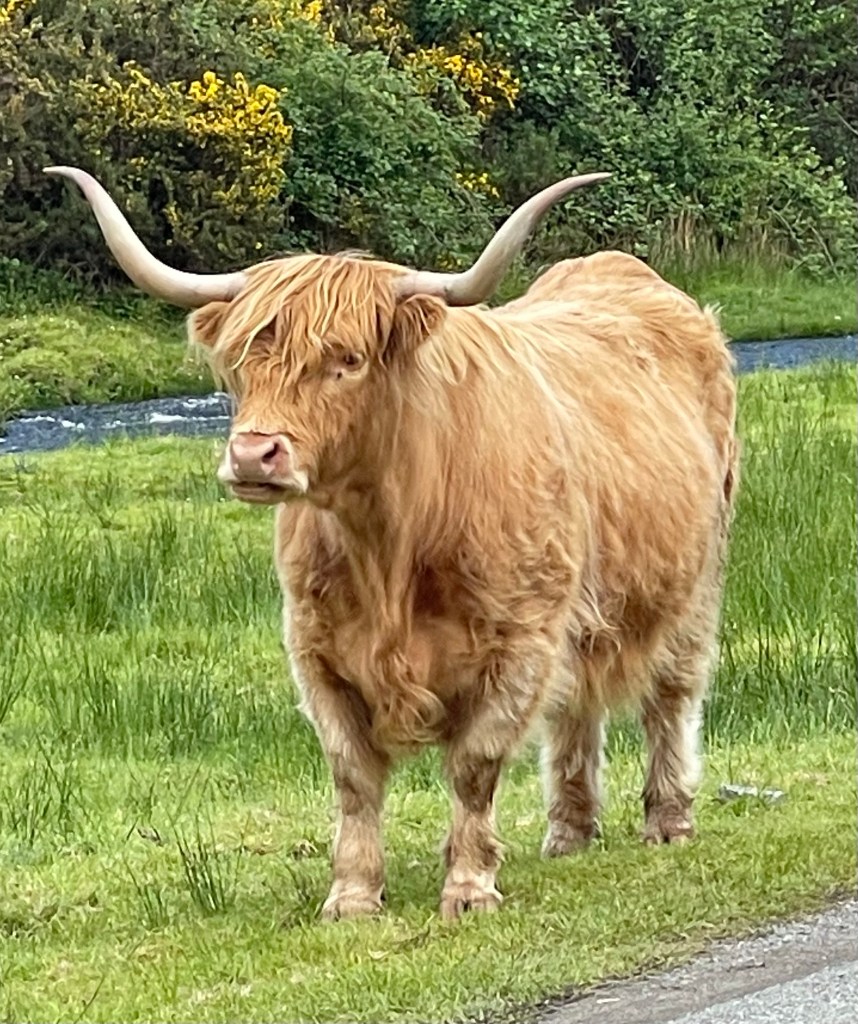
This being Scotland, of course there were coos.

And now we are off to Glencoe.

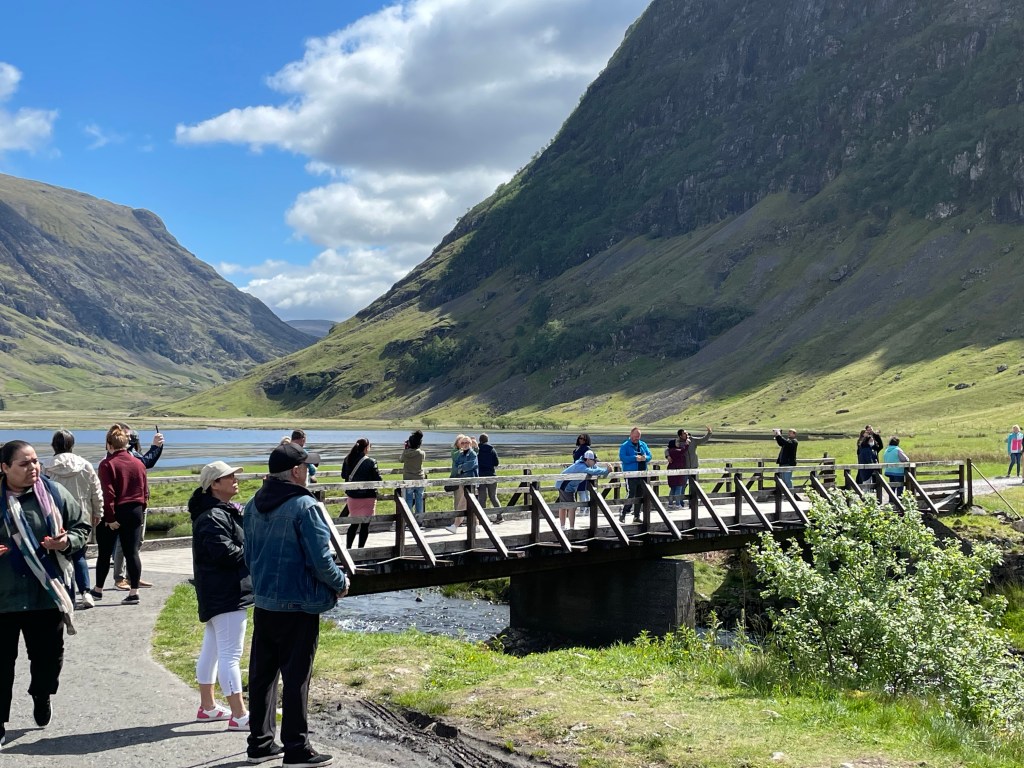
This glen is one of my very favorite spots in Scotland. It’s objectively wild and spectacular to be sure, and so attracts loads of visitors. Most of them pull off and snap photos and don’t step foot on the trails. Even though this is annoying, there’s something about the place that is more than its beauty – and overcomes the touristas. Scotland magic is strong here and not to be weird but I feel a physical reaction when I’m here. It has a deep and bloody history which I swear I won’t go into (google the Massacre of Glencoe because it is something), and some of the best and most dramatic hiking in the world. The iconic West Highland Way runs through, along with famous climbs, the most famous of them all being the Buachaillie Etive Mor, which is also the most photographed mountain in the UK, although not sure how we know this. The UK’s highest peak, Ben Nevis, is just one valley over.

The mountains are steep, dramatic, green and gaspingly spectacular. The weather is often sketchy so they can also be moody, looming and dangerous. Mountain rescue is busy, and recently three folks fell from a ridge in the glen, one of the most narrow in the UK . They had an experienced guide, but the weather was foggy and slippery.

I have made my way to Glencoe on every trip I’ve taken.

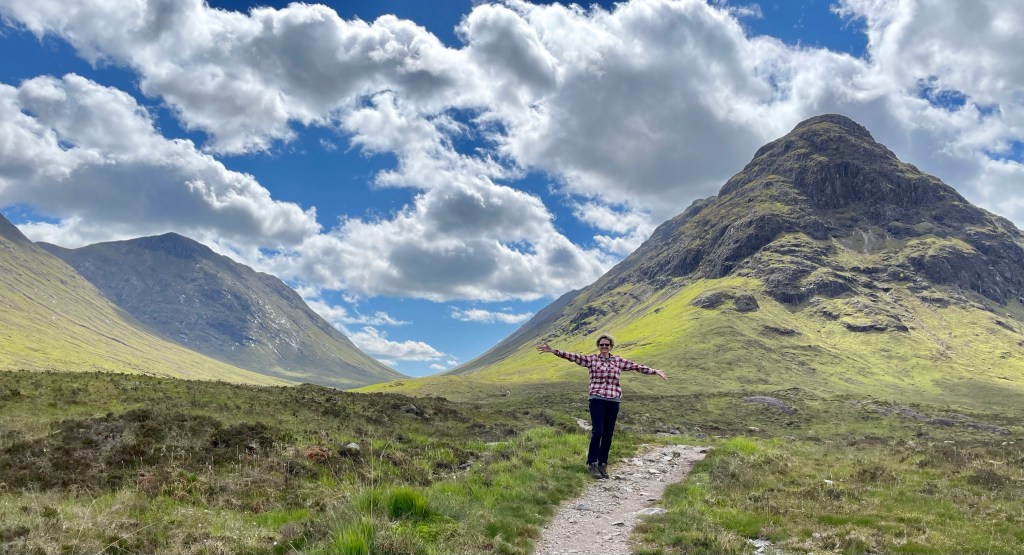
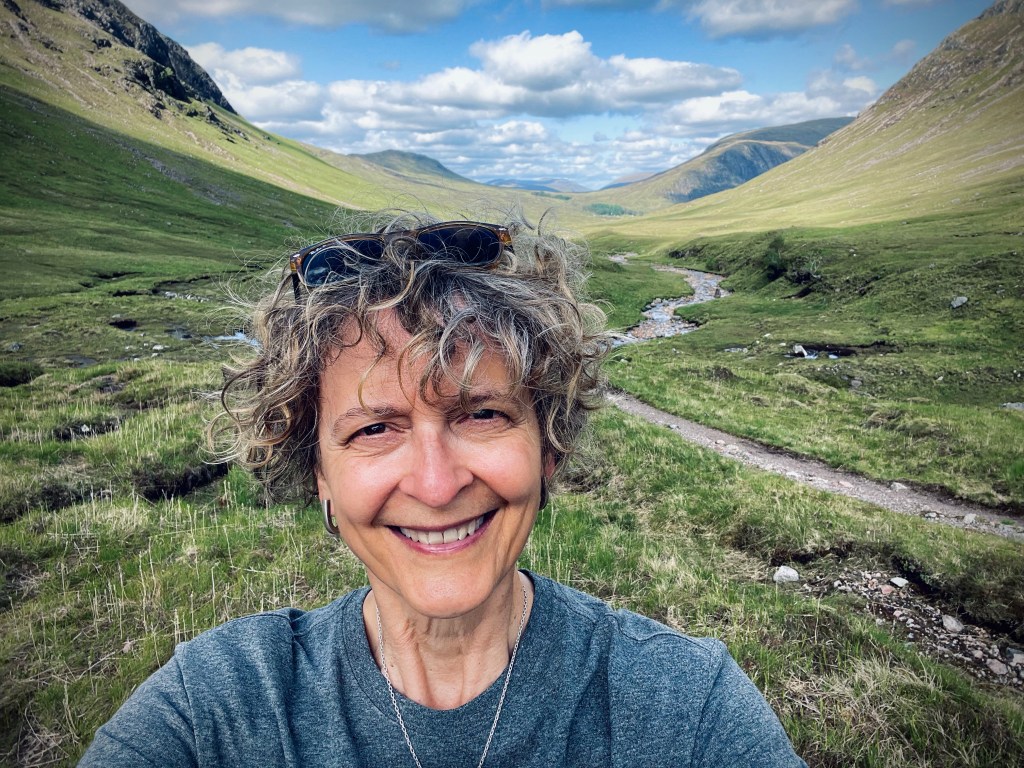
One of my favorite walks is along the River Coupal which cuts through the valley between Glencoe’s two mighty ridges, the Buachaille Etive Mor and the Buachaille Etive Beag. It looks wildly different every time.

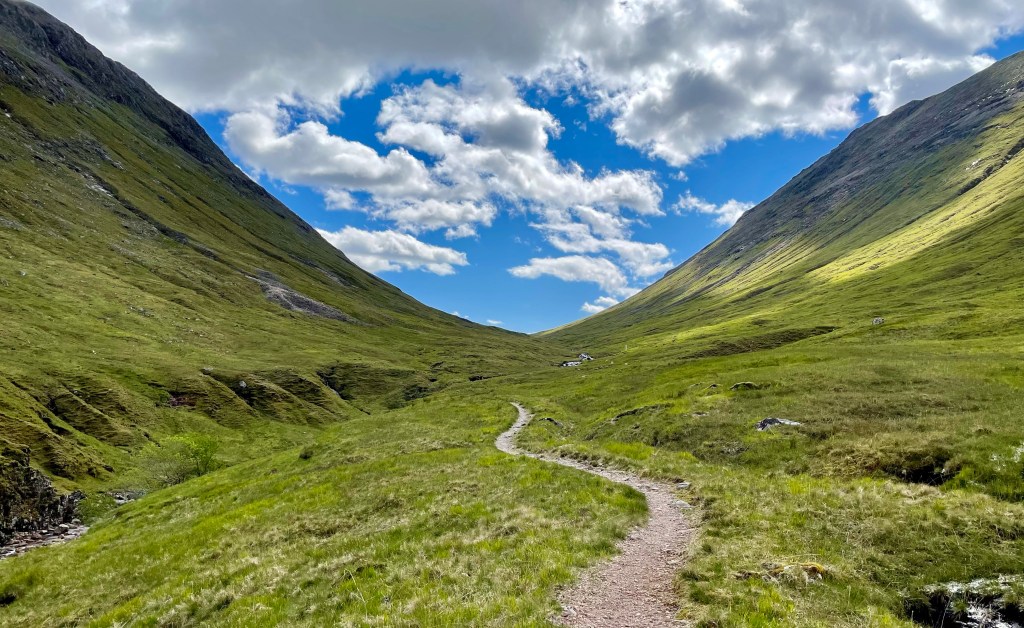
Last May it was bright and sunshiny and green.

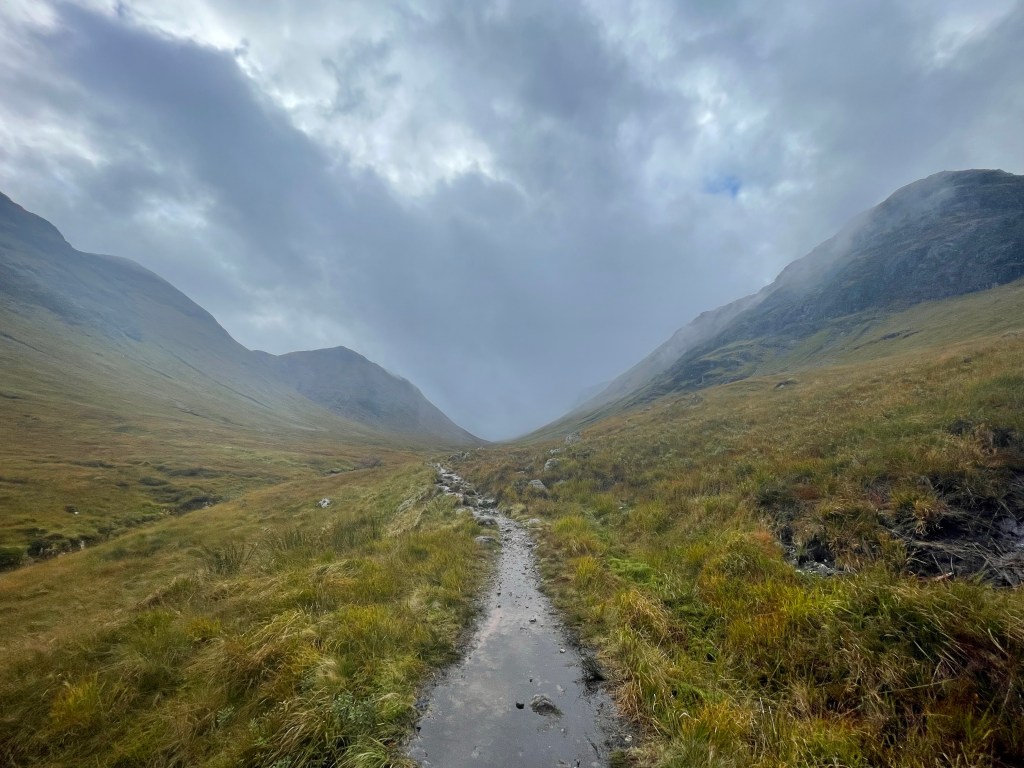
Last September it was misty, moody, and red deer bugled across the glen at one another.

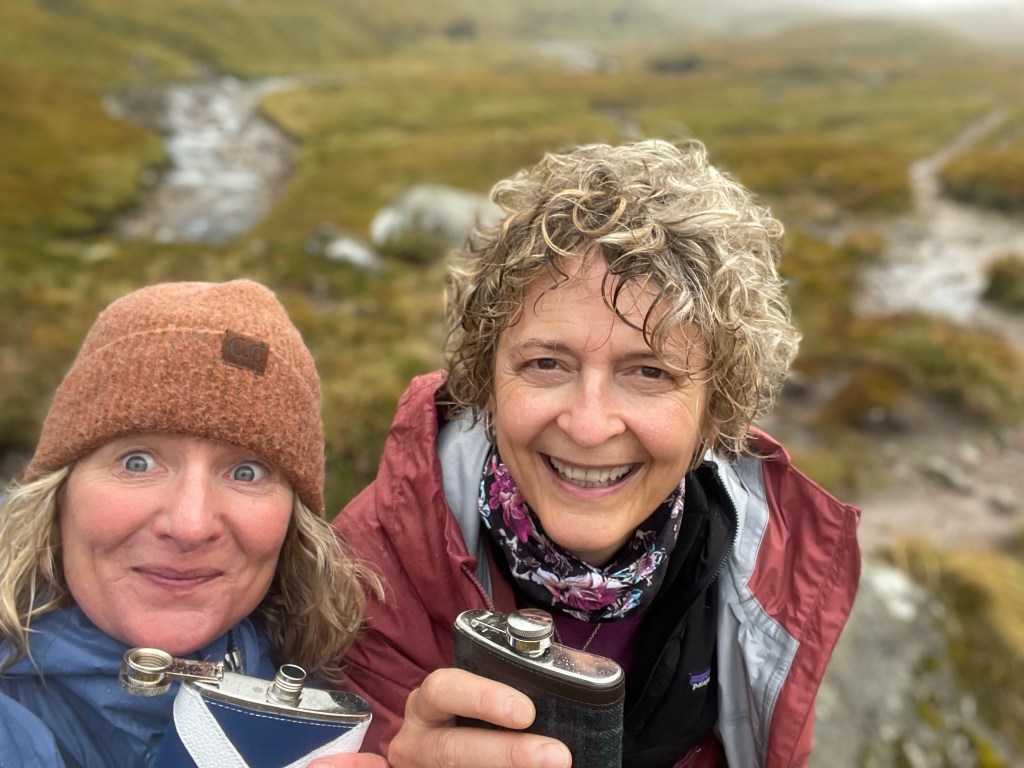
My friend Trish and I had a crazy experience on this one. Trish was walking ahead of me when suddenly she turned around and said something about a Highlander approaching us. I peeked around her and swear to God saw a man approaching in full Highland dress, including a kilt and a sword. We both totally saw it. And then – as he got closer he turned into a hiking dude with a jacket tied around his waist. But we know what we saw.

Raising a flask to the mystical Highlander
This year – not too terrible but it had been raining like mad and so rivers and streams were in spate
Made it further down the trail but finally came to a stream that was a no-go.
And yet…..

The Last Post: Peat, Standing Stones, Snow, Whisky and Back to Skye

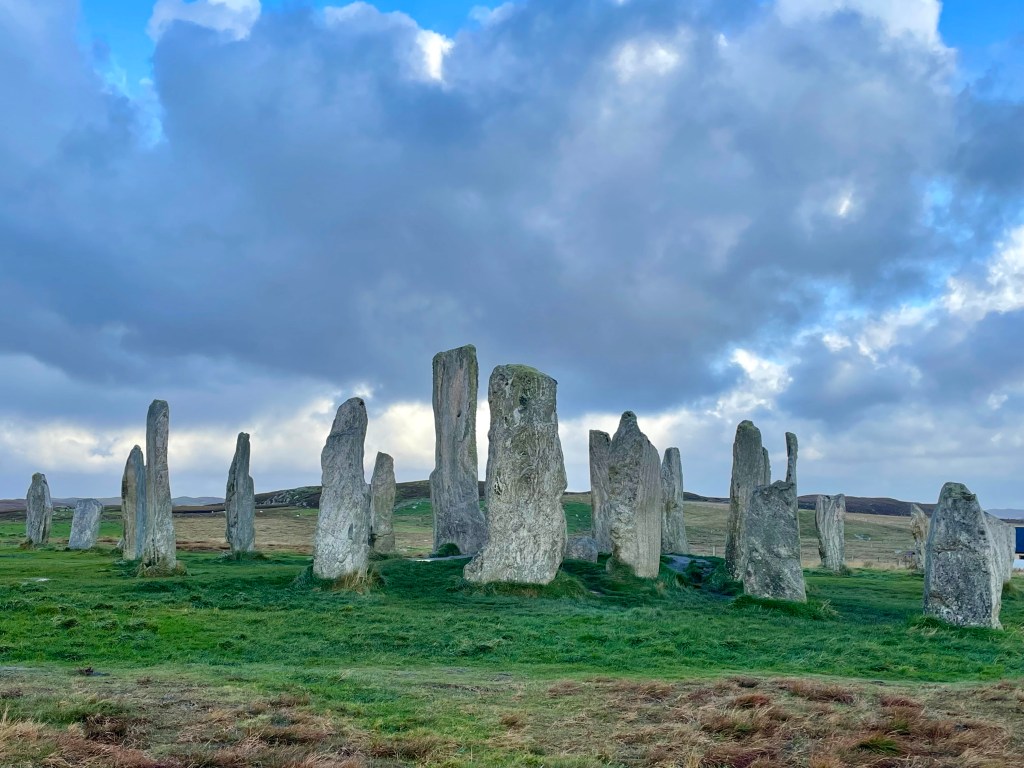
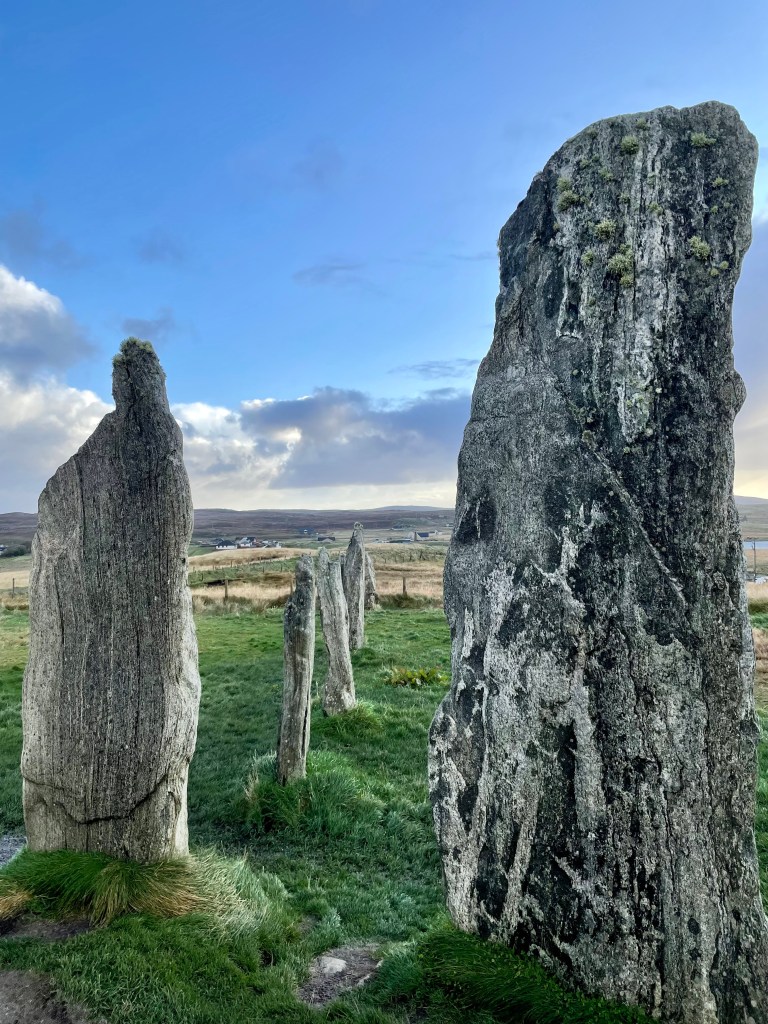
Callanais Stones, Isle of Lewis

Our last full day in the Outer Hebrides dawned with a bittersweet tinge. Wind-swept, isolated and bewitching Harris had started to seep into my bones and I felt strangely reluctant to leave. We had one more walk before us, followed by a drive down the Golden Road and a fancy farewell dinner.

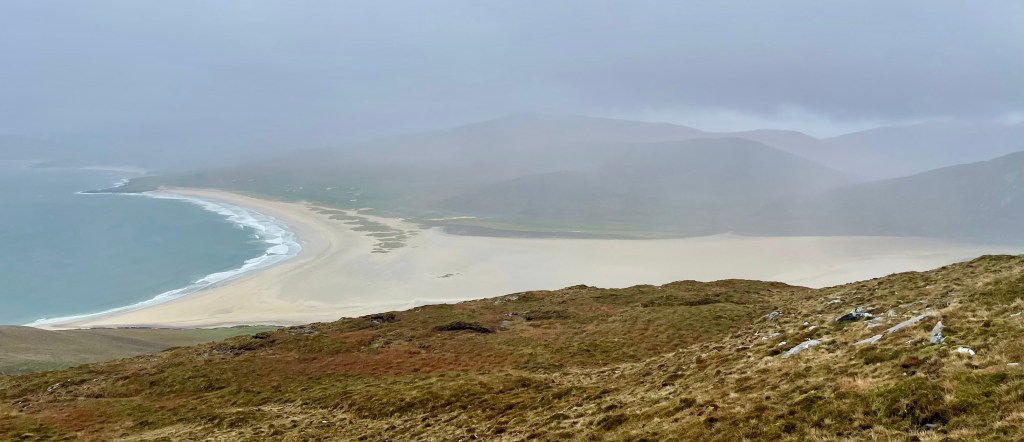
We headed to the southwestern corner of Harris, our destination an uninhabited peninsula connected to the rest of the island via a sandy machair in between two bays. A machair (pronounced “mach’ – like loch – er”) is fertile, well-drained grassland found in Scotland and Ireland which is formed by sand being blown over peat. It creates a unique habitat with diverse bird life and blankets of meadow flowers in early summer. However, with winter approaching, the flowers and birdies were long gone.

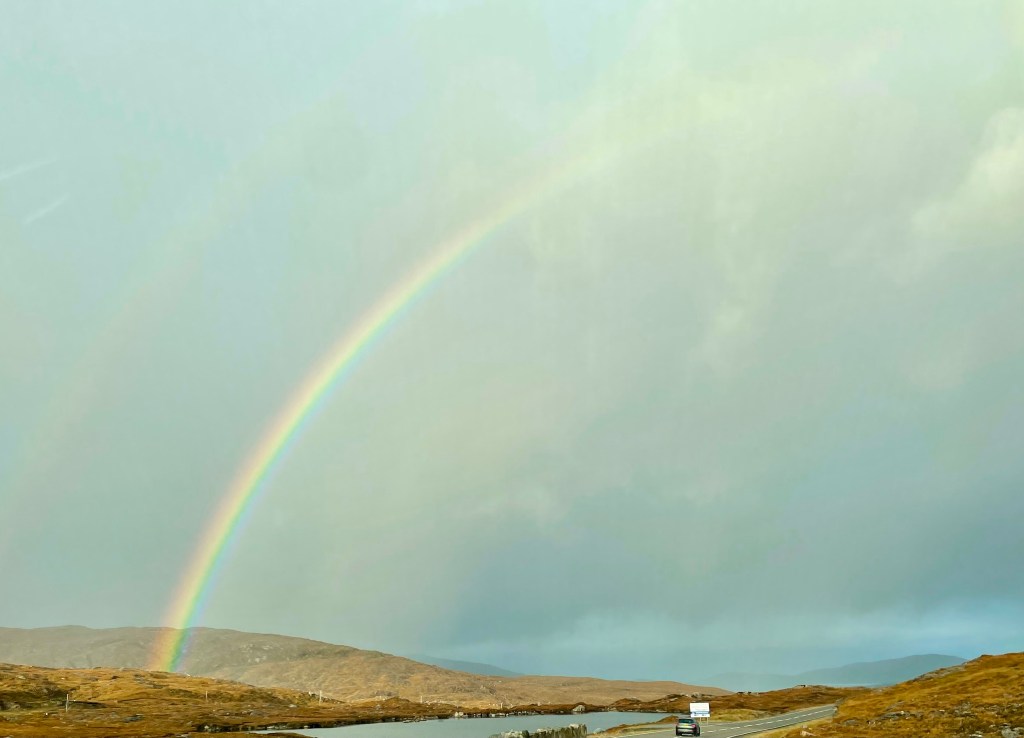
A double rainbow arched over the road on our drive there.

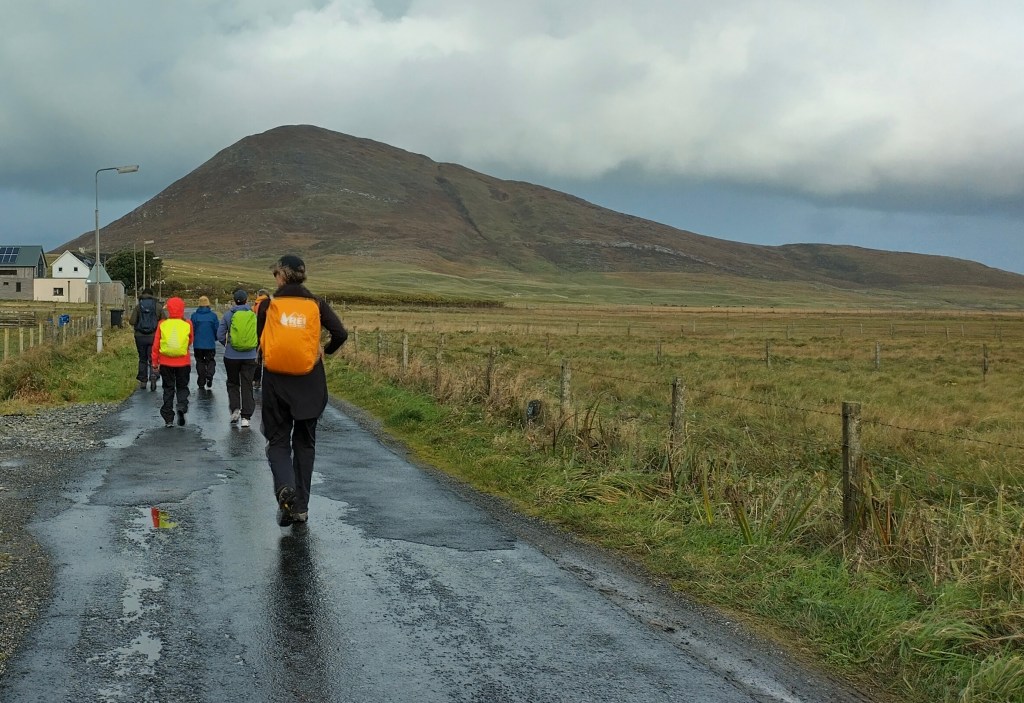
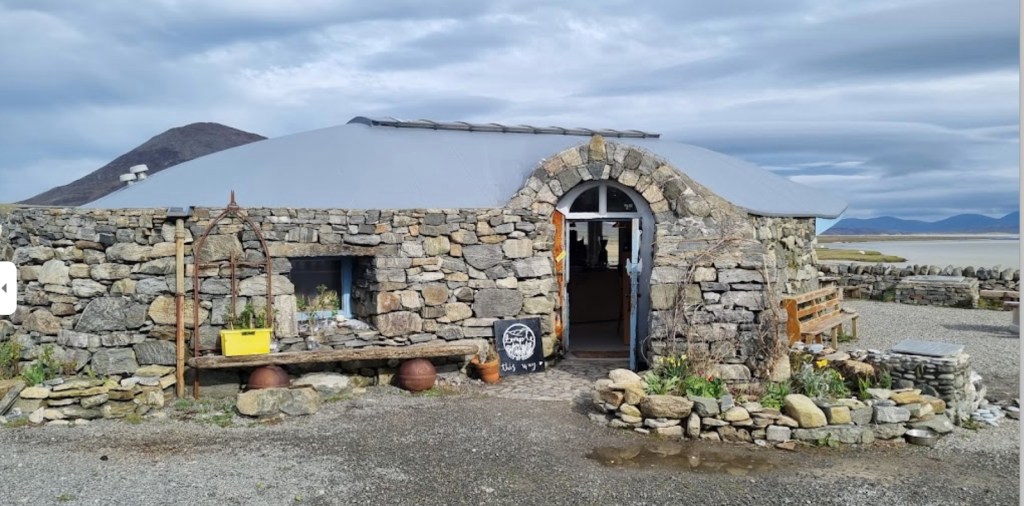
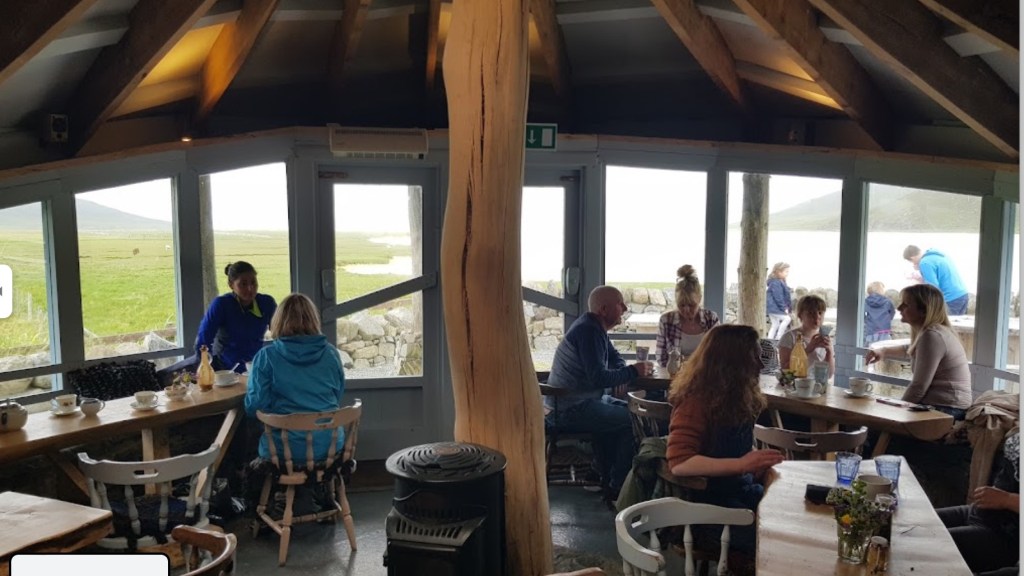
We parked the van next to a charming and quirky cafe snuggled in the middle of nowhere called Temple Harris, featuring a spectacular array of pastries and killer views over a sandy bay ringed with hills. We strolled down a road toward the westernmost summit of Harris and our climb of the day, Ceopabhal (pronounced Chaipaval – p.s., sorry for all these pronunciation tips but I want you to be the hit of your next cocktail party).

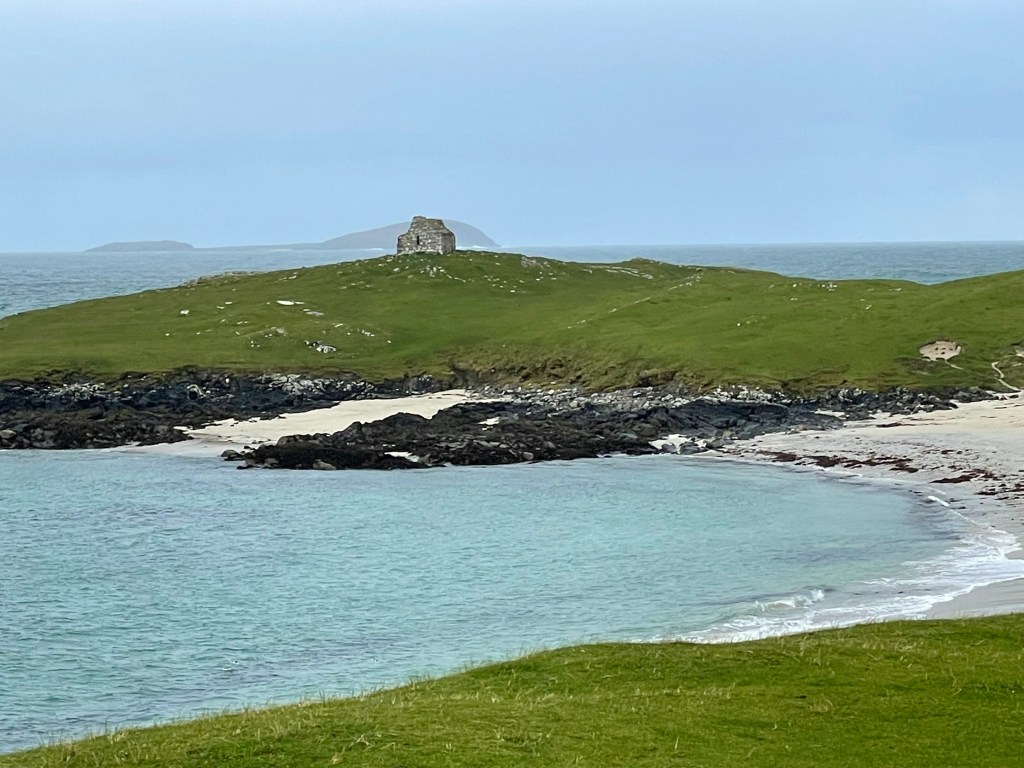
We walked across the machair in capriciously changing weather and made our way through a herd of colorful shaggy cows that appeared to be Highland Cattle/Belted Galloway crosses, which I am totally here for. Fighting our way through a sudden gusty squall, we crested a hill and Traig na Cleavag magically came into view, yet another pristine and deserted Harris beach. This one was guarded by an ancient sentinel – a ruined medieval chapel known as Rubh’ an Teampaill aka Northton Temple. It was built on the site where an Iron Age broch once stood, on land which has been continuously occupied since the Mesolithic era (as this particular era often comes up at cocktail parties, along with Gaelic pronunciation opportunities, a wee reminder this was 10,000 to 8,000 BCE, so very much olden times, or dare I say, days of yore).

Ceopabhal loomed over us for the entirety of our walk, and I eyed the hill with a slight amount of trepidation, mostly because I made the mistake of reading about it in advance on the Walkhighlands website (the bible of Scottish hillwalking).

The climb featured a 1,200 foot elevation gain over 6/10 of a mile. This is indisputably a bit on the steepish side, in fact Walkhighlands mentioned in passing that a “great amount of effort” was necessary to reach its summit. Also Liam made us stop and eat a protein bar just before the steep bit for “fortification.” Yikes. So once again the ascent was trail-free – we just zig-zagged our way up through clumps of heather. My main pro tip would be to make sure you lean forward into the hill. At least it was so rainy and windy that trying not to get blown off the trail to our deaths (only slightly exaggerating) served as an excellent distraction from the aggressive angle of the climb.

At the summit (yay!), the views were 360 degrees (largely into fantastic storms, but you could see the mountains of Skye). The wind had truly become a biblical sort of tempest, known in these parts as “blowing a hoolie,” although I did valiantly manage a few snaps and a cairn photo.

We walked to the lee side of the hill, mercifully sheltered from the hoolie, and sat in some soft comfy moss to enjoy a picnic looking out over a gorgeous bay.

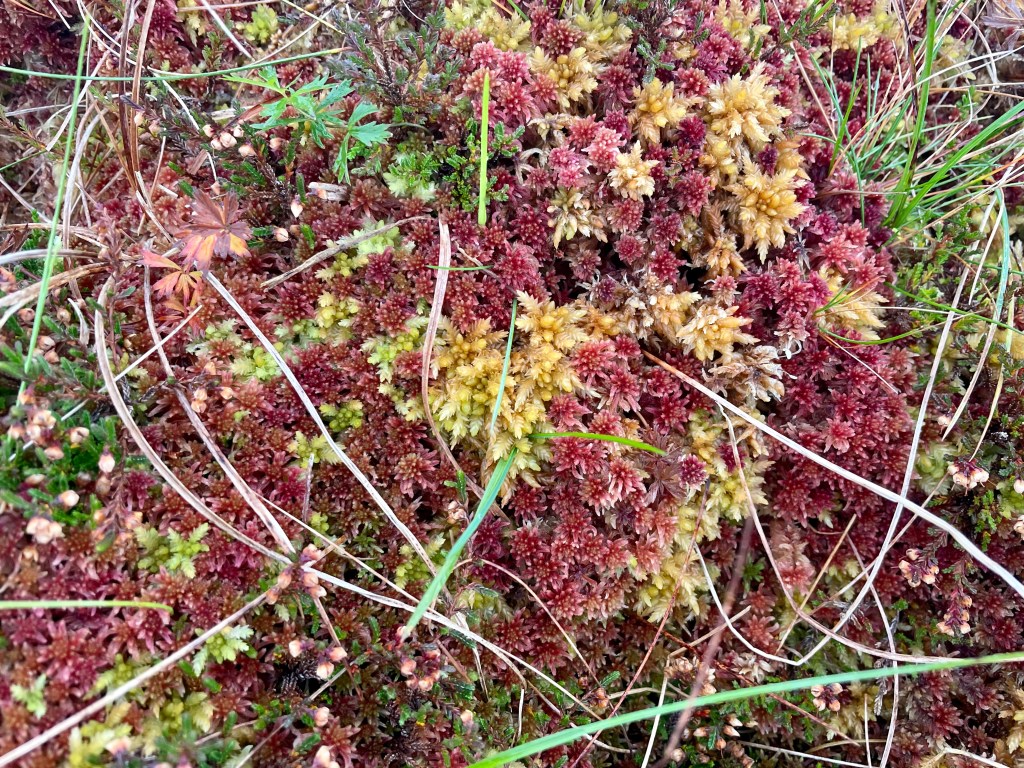
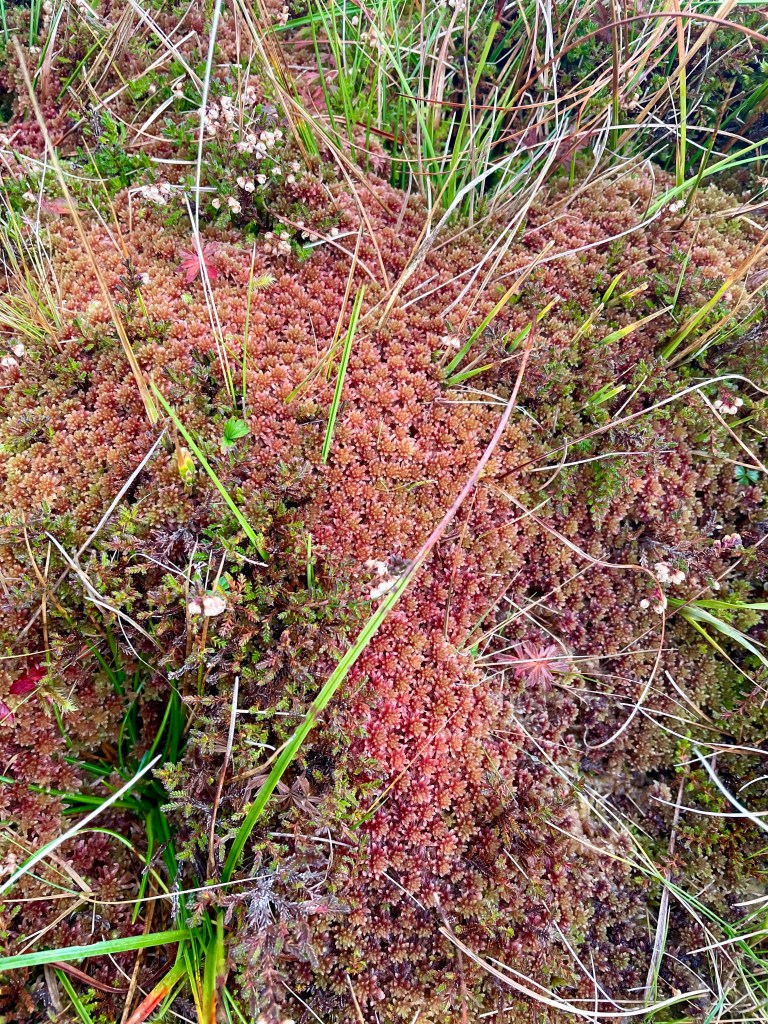
The fine folks at Walkhighlands.com recommended retracing one’s steps back down the hill. My knees were entirely dreading this prospect because going up a steep slope is one thing, going down (while being blown about by a hoolie) is an entirely different situation. This advice was based on their view that walking down the hill on its lee side would take one through “deep heather” and thus should be avoided. Mercifully, Liam had other ideas.  We indeed took the more gradual route toward the bay, winding our way through heather and floating across fluffy, deep mounds of sweet, sweet sphagnum moss. Let me tell you it was delightful. Imagine traipsing down a hill on living, breathing sponges of memory foam. That’s what it was like. I put my hiking sticks away.

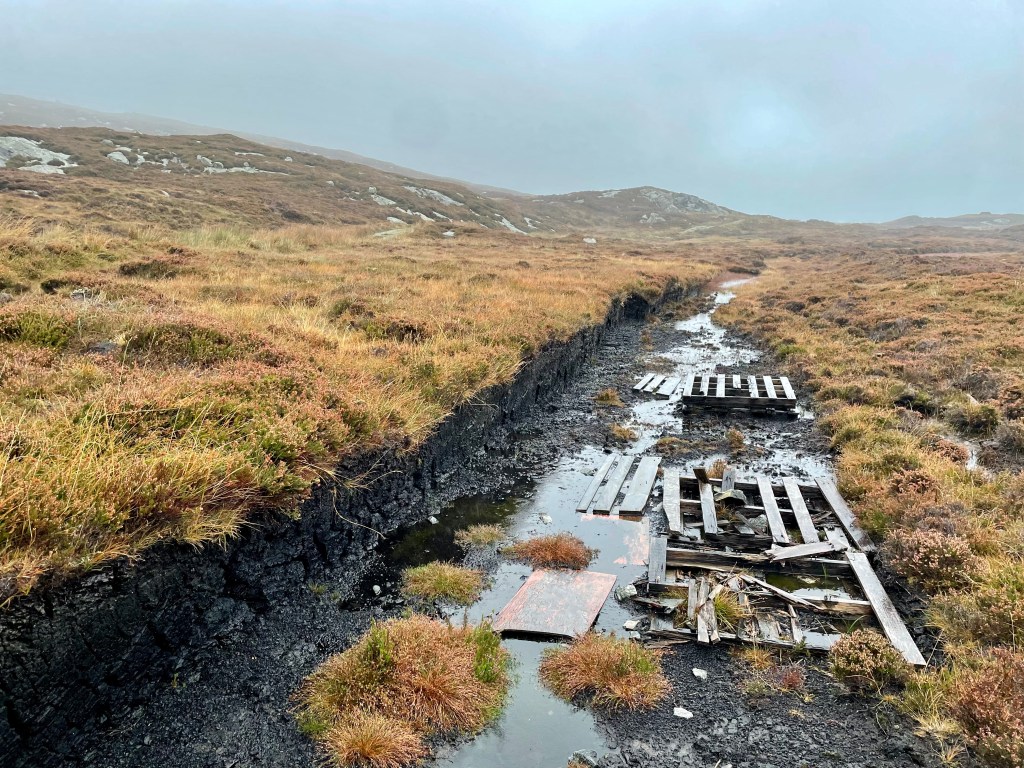
Speaking of moss, you can’t go to Scotland without considering peat. No seriously. Peat is formed from plant material throughout the ages that does not fully decompose, and sphagnum moss is one of its main ingredients.  Peatlands cover about 20% of Scotland and yet 80% has been degraded over time. It has been hacked away and drained since the 1800s to make room for agriculture. For centuries it has also been cut, dried, and used in fireplaces for heating homes. It still is. 

Peat harvesting on Harris.

Peatlands are among the most carbon-rich ecosystems on Earth and have a net cooling effect on climate.  Healthy peatlands can also reduce flood risk by slowing the flow of water from the uplands. If you hold a small handful of sphagnum moss and give it a squeeze, enough water will run out to fill a juice glass. Without peat, one is left with completely nonabsorbent bedrock which isn’t great in a country where it is usually raining. Peatlands also promote biodiversity by providing vital habitat for birds, insects and plants. Peat bogs are sometimes referred to as the rainforests of the UK.

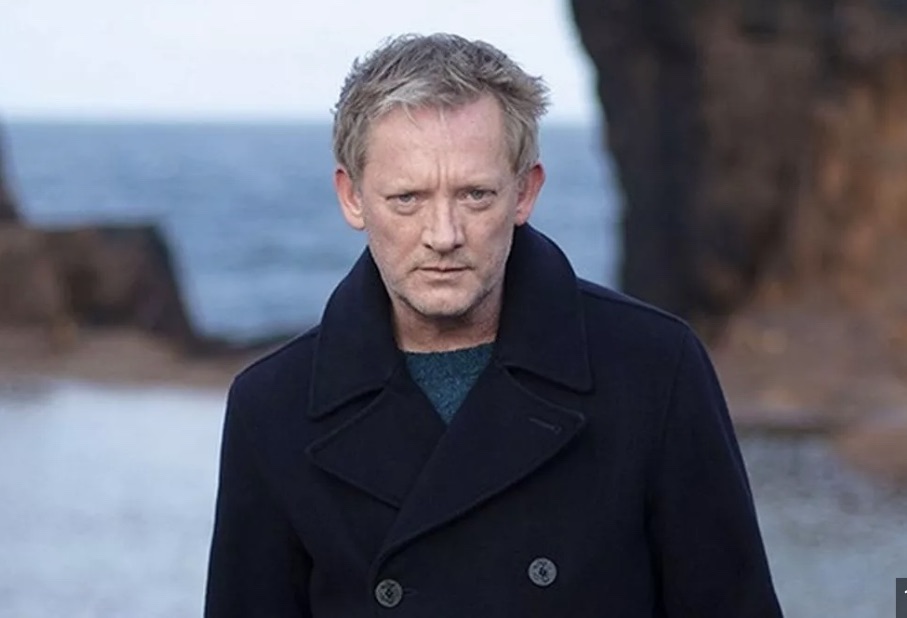
A few more cool things about peat. You may have seen an episode of the BBC mystery Shetland where a decades-old body was found perfectly preserved in a peat bog and wondered why.  (Fun fact: There have been only two murders in Shetland over the last 50 years, rather than the 1-2 murders per week as depicted in the show. This aside provides an excuse for a Douglas Henshall call out for a lot of reasons).

Doug Henshall as Jimmy Perez in Shetland.

The explanation for peat’s ability to preserve (ahem) organic matter is this. As a bog grows, and new peat replaces old peat, the older material underneath rots and releases humic acid, also known as bog acid, with pH levels similar to vinegar. Not to put too fine a point on it, but bog acid preserves human bodies in the same way fruit is preserved by pickling. And of course not just humans – a wooly mammoth was once discovered buried in peat that still had its fur and food in its mouth.

Peat also creates and stores iodine. The iodine causes sphagnum moss to look very yellow and even red when it’s waterlogged. This is why many Scottish rivers appear golden in color – it’s not tea, or (sadly) whisky – it’s iodine-laced runoff.  Also, iodine’s antiseptic properties mean that sphagnum moss acts as a water filtration system so in a pinch you can use water squeezed from moss for hydration – and even more interesting, it was used to pack wounds during wartime since it’s both sterile and absorbent.

Most crucially from a climate change perspective, Scotland’s peatlands store 16 million tonnes of carbon (one tonne is 9% larger than a metric ton) and possibly shouldn’t be released into the atmosphere at this particular juncture. Draining water away from peat bogs to support agriculture causes the peat to dry, resulting in the vegetation decomposing much faster – and the release of carbon. Similarly, burning peat has the potential to release hundreds of years of stored carbon back into the atmosphere. Ultimately it’s quite beneficial to have large land masses that actually capture and store carbon.

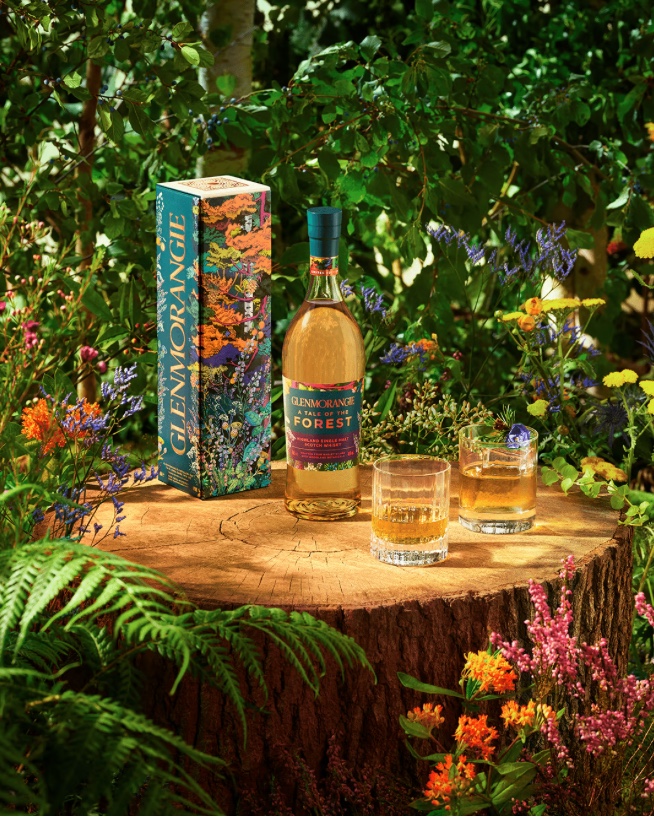
I know what you are thinking – what about (gulp) whisky? Much of Scotland’s whisky is made from sprouted barley that has been dried by peat fire. It imparts a lovely campfire vibe to the golden liquid which causes people to either fall in love or cough with watering eyes and an alarmed expression. An iconic flavor either way, especially with Islay whiskies. As it turns out, whisky accounts for only about 1% of the UK’s peat use and as you can imagine defending the cultural significance of Scotland’s whisky-making tradition has been the central pillar of the industry’s case during the government’s development of its peat policy. Distilleries have pledged to make peat use more sustainable, although given its glacial pace of regeneration (1mm a year) this is a matter of debate. Distilleries are also experimenting with using different botanicals to light on fire for barley drying. Glenmorangie has just released a “Taste of the Forest” expression where they used pine, juniper, woodland moss and eucalyptus as fuel.

The good news is that peatland restoration and preservation is very very big in the UK and heroic efforts are underway to preserve and increase the resource – with some measurable success.  So fingers crossed.

Thank you for coming to my Ted Talk.

So let’s rejoin our merry band of descending walkers as they bounce down Ceopabhal on cushions of sphagnum moss. Before I share a few photos, after hearing all this peat talk from Liam we were sensitive about trodding on this precious resource, but he assured us that it quite literally bounces right back due to its buoyant density. Phew.

Upon our triumphant return to the van, we snagged a coffee and pastry (and a wee bit of shopping) at Temple Harris.  Everyone leaves their packs outside on the wooden bench without worry of misadventure.

Duly fortified, we struck off down the Golden Road, a spectacularly winding single track route along Harris’s rocky east coast. It’s widely assumed it got its name due to its eye-wateringly spendy construction cost.   After Liam cheerfully told us that if anyone was going to barf in the van, this would likely be the time, he offered distraction from the terrifying prospect of public motion sickness by launching into storytelling mode. He regaled us with mystical tales of dubious provenance featuring two dangerous and wily Scottish creatures.

First on the agenda – kelpies. Typically residing in and lurking about black lochs, they take the form of a horse, appearing to unwary humans as being a helpful sort of creature. They entice travelers to ride them over the loch, seemingly a more expeditious route than walking around them. It’s a trap! Once a person mounts the horse, it gallops to the deepest end of the loch, dragging its hapless rider below the water to their death and, ultimately, consumption (yikes). This legend was used to keep children away from lochs and also provided therapy fodder for later in life.

You may have seen this gorgeous sculpture by Andy Scott. The Kelpies were installed in 2013 near Falkirk and are a ginormous 98 feet high. It’s beautifully lit at night, and even if you don’t have time to stop, the giant kelpies loom over the M9 between Edinburgh and Stirling.

Next we turned to tales of the more benign selkies. They are also water-dwelling shapeshifters, but transform between seal and human by shedding and replacing their skin. As humans, selkies are incredibly attractive, graceful, kind natured and (avert your eyes) seductive, and so humans tend to fall desperately in love with them.  Selkies have also been tricked into marrying humans, usually by a nefarious person who steals and hides their seal skin, preventing them from returning to the sea. Not cool. Selkies are known for their benevolence, saving the lives of children or fishermen who have fallen into the sea.

There you have it. Keep up your guard if you visit Scotland – as these mythical beings pose more danger than any other resident creatures other than – dreaded midges.

We took a break from the Golden Road at Clo Mor, the charming Harris Tweed Exhibition. I will admit to you that prior to my visit to Harris, I had presumed that Harris tweed, since it’s pretty ubiquitous, was mass-produced, probably in China. Luckily I didn’t say that out loud to anyone. In actual fact, to qualify as Harris tweed, the textile must be “handwoven by the islanders at their homes in the Outer Hebrides, finished in the Outer Hebrides, and made from pure virgin wool dyed and spun in the Outer Hebrides,” according to an actual Act of Parliament.  Approximately 400 islanders were working in this industry as of late 2017, and you can visit them in their home, see their looms and watch them work. Consider my eyes opened.

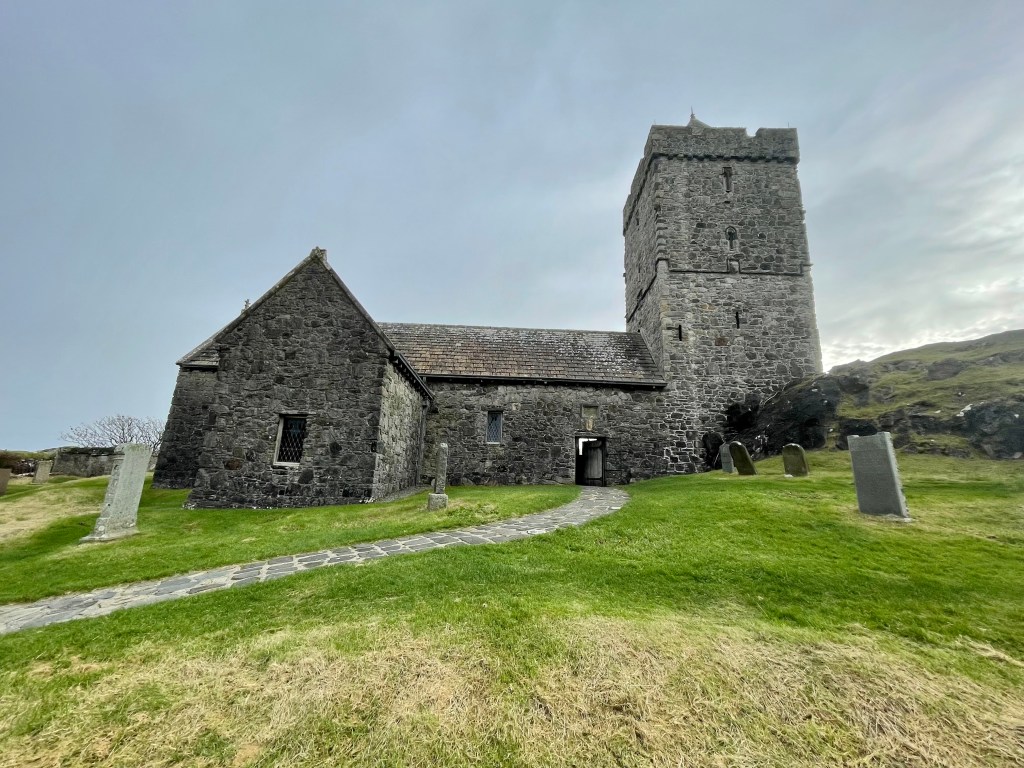
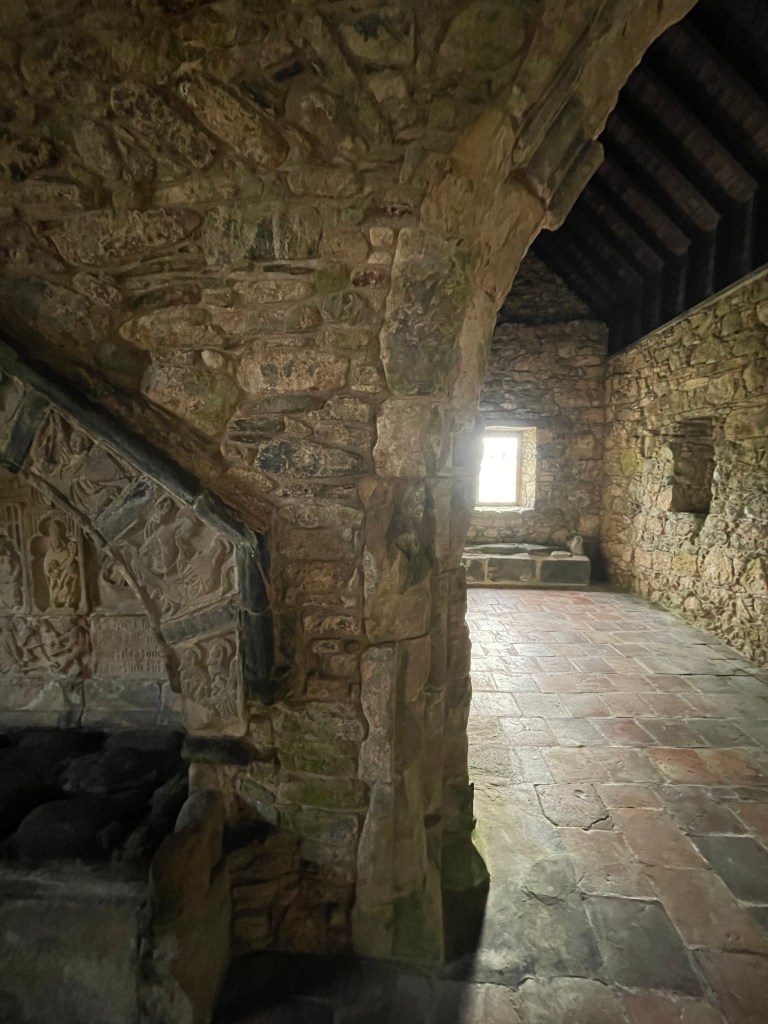
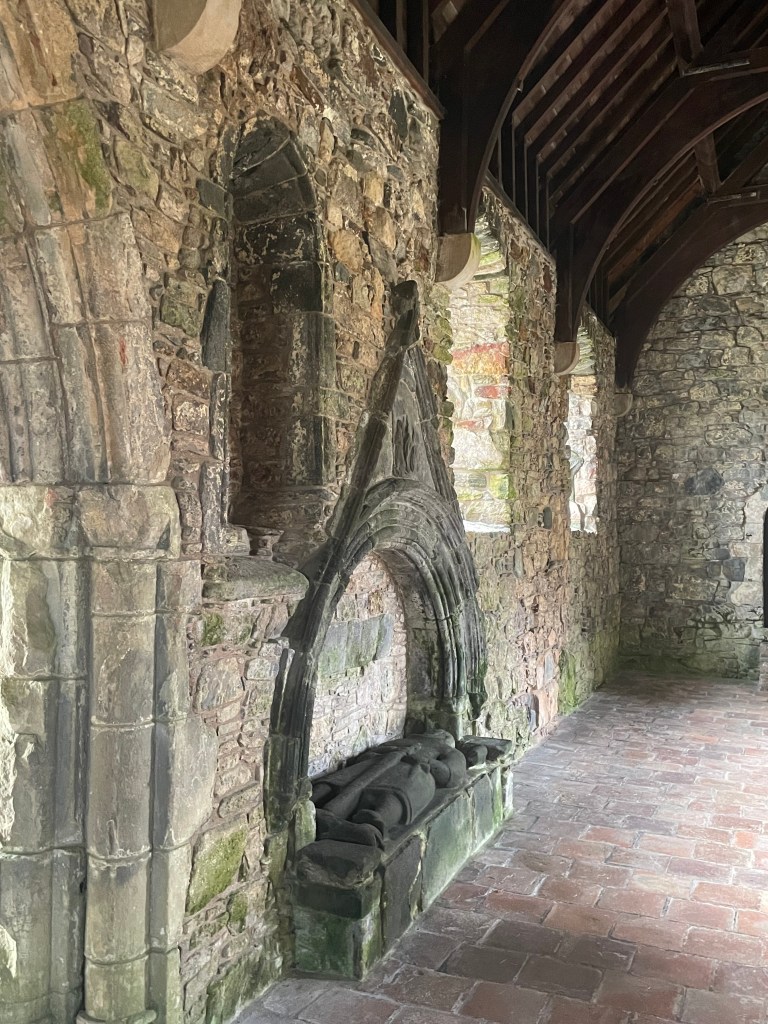
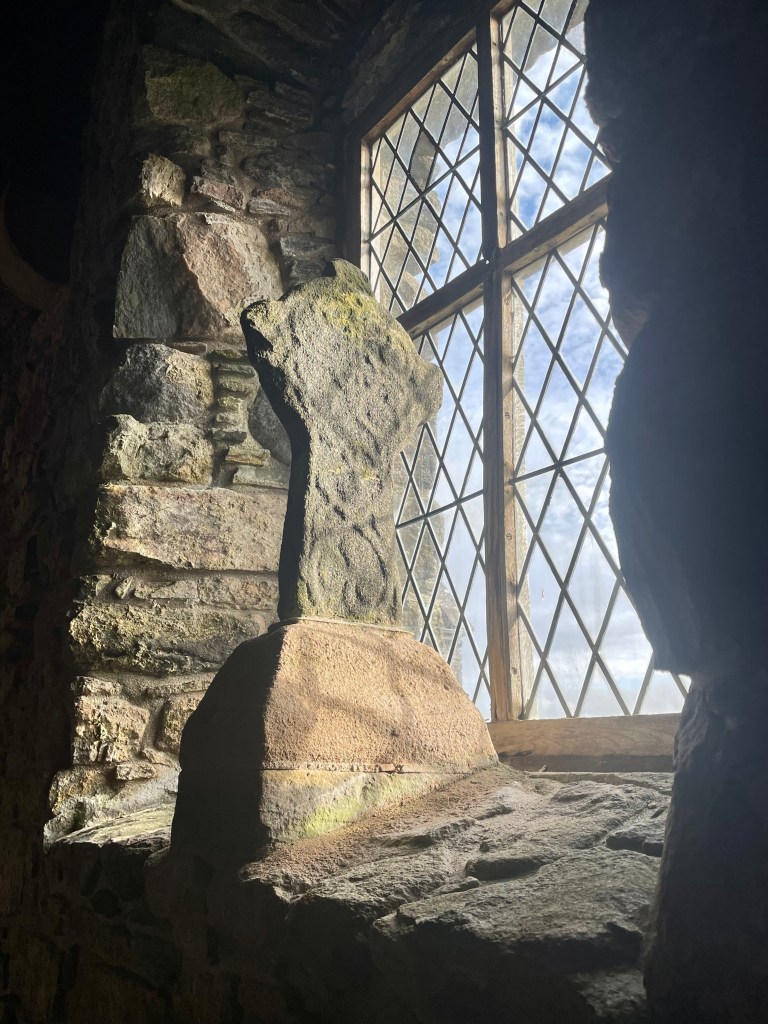
We next stopped at Hebrides People Visitors Center in Northton, a genealogical resource for folks researching their ancestry that tells the history of the people and landscapes of Harris and the Western Isles. Our last stop on the Golden Road was St. Clemens, a medieval church founded by Alasdair MacLeod, 8th chief of Clan MacLeod. He died in 1547, and his tomb is in the church, along with a passle of other ancient MacLeods.  One wonders where the 1st – 7th MacLeod clan chiefs are buried.

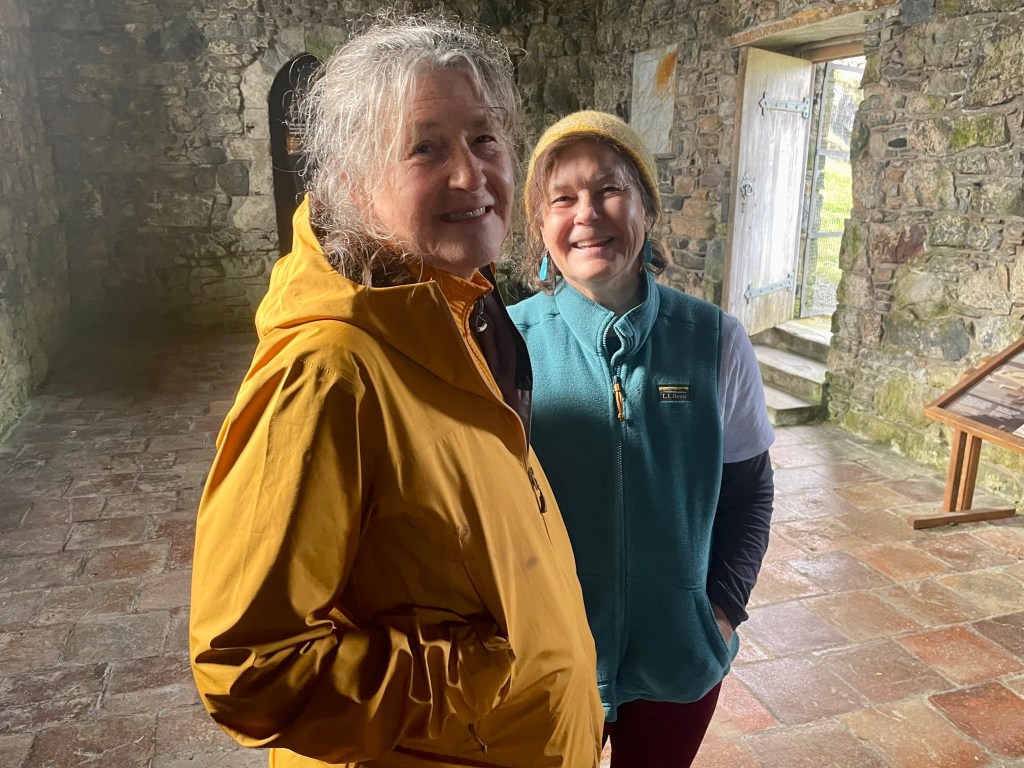
My favorite peeps – sisters Victoria and Margaret

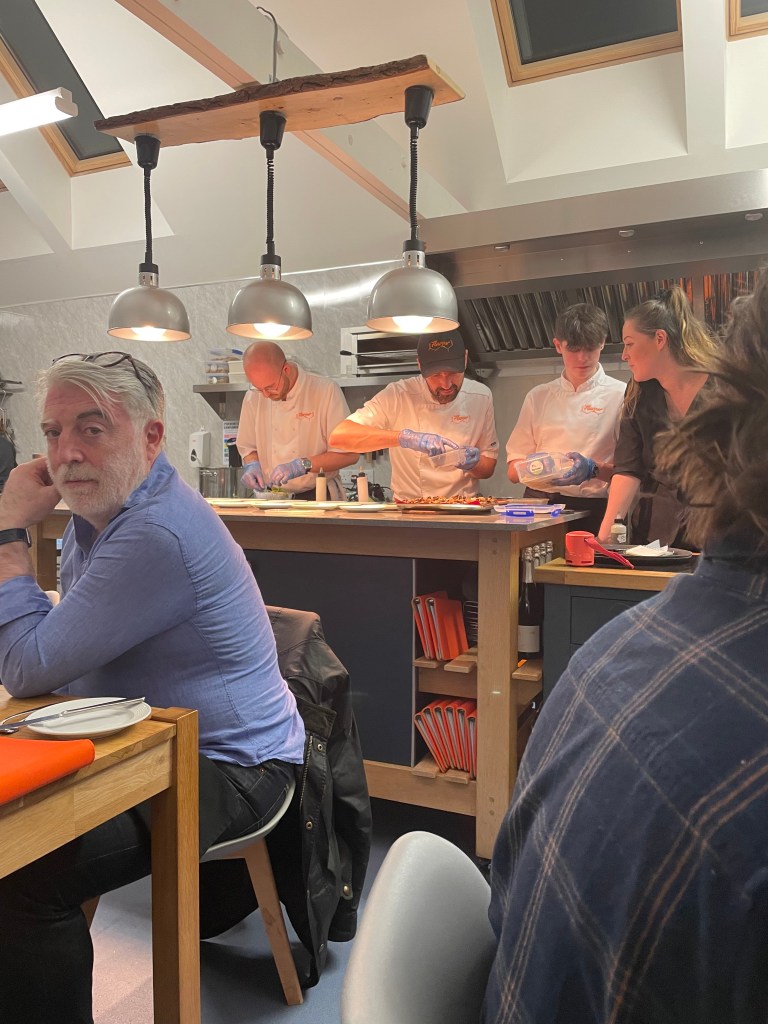
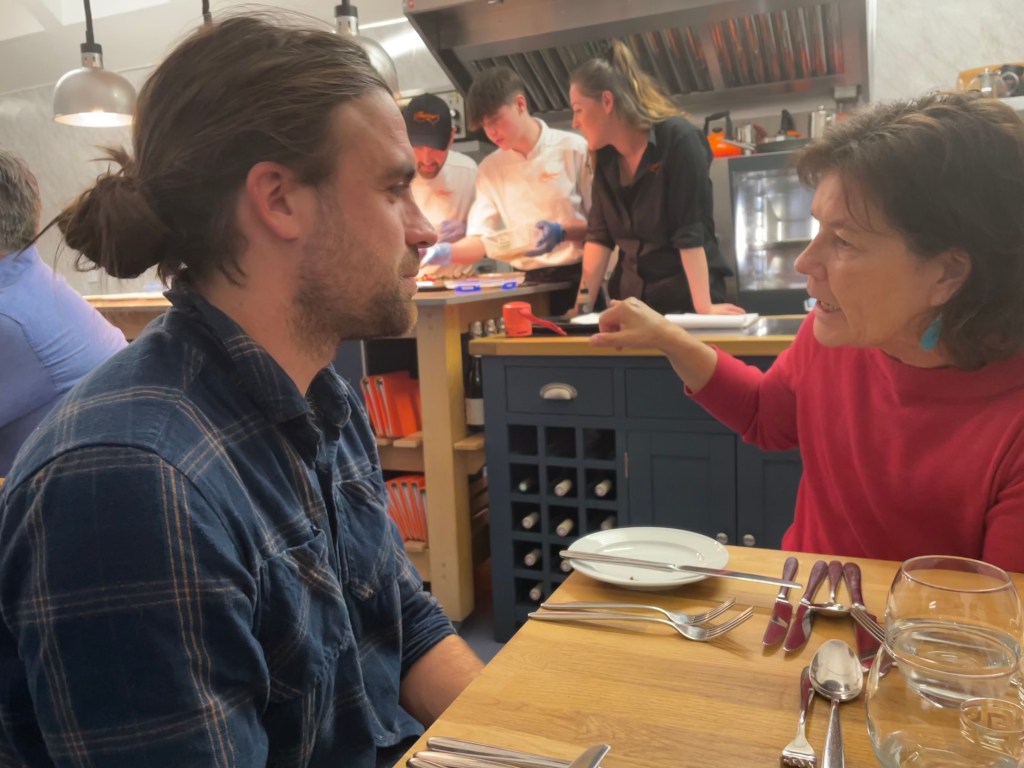
Our day ended in grand style with dinner at Flavour, an intimate restaurant on Harris with one seating and a chef, Chris Loye, who talked us through every beautiful and scrumptious dish on his tasting menu.  That night each dish incorporated, with pride, the newly released Heurach whisky from Harris Distillery. A woman from the distillery lovingly shared its story at the conclusion of our meal. She poured everyone a complimentary dram, clocking with a wry smile that I had been accidentally drinking a Talisker (from Skye).  Dang. As it turns out, she had been sitting at the table next to us with a couple who were right out of central casting for a show about a boring and very very rich English couple with plummy accents and unfortunate and ostentatious sartorial taste. I only wish I had been able to photograph the man’s pointy and aggressively shiny brown shoes.   We decided he was probably an investor in the distillery and so may be forgiven for his wardrobe choices.

Chris telling us All The Things about each course.  He and his wife spent four years on the road traveling to more than 30 countries learning about food. Back in Scotland, they started with a pop-up restaurant in their home and catering private dinners, finally securing a lease for this restaurant from the North Harris Trust. They built it during the pandemic and it opened in 2021. Now they are written up all over the place. They have Michelin dreams and I wouldn’t doubt it for a second.
The fabulous kitchen staff and obviously the dude busting me on the left is the English guy. Note the tight tight tight shirt which isn’t doing him any favors and I am terrible.

My friends, we have finally arrived on the last day of our fabulous Wilderness Scotland trip. We set off toward Stornaway, on Lewis, to catch the ferry to Ullapool on the mainland.  On our way we stopped at, in my humble opinion, the most magnificent stone circle in a country chocked full of them, the Calanais (Callanish) Stones.  Yes, yes, yes, replicas were made of these stones and then installed on the mainland at the fictitious site of Craig Na Dun for Outlander. Needless to say, they are so much more than that. Our little merry group had them to ourselves and they did not disappoint.

The stones are installed in the shape of a cross with an inner circle. They were erected 5,000 years ago and predate Stonehenge. It is thought that they were an important place of ritual activity for at least 2,000 years and possibly a kind of astronomical observatory.  They are incredibly photogenic, even in the (again) driving rain and wind.

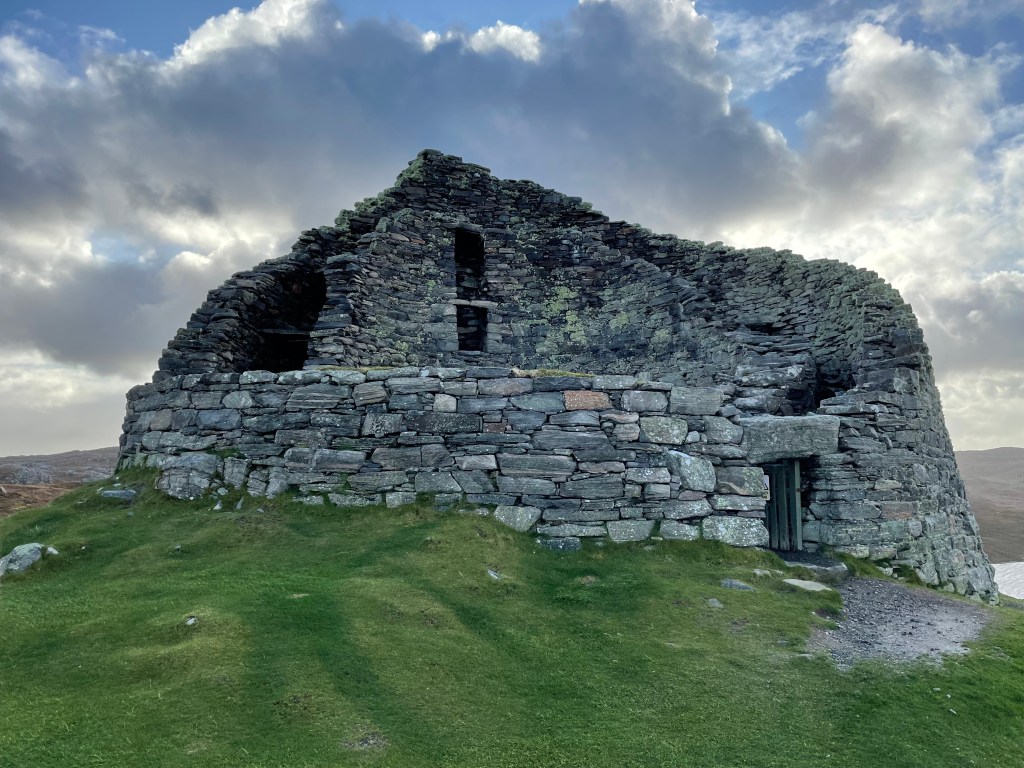
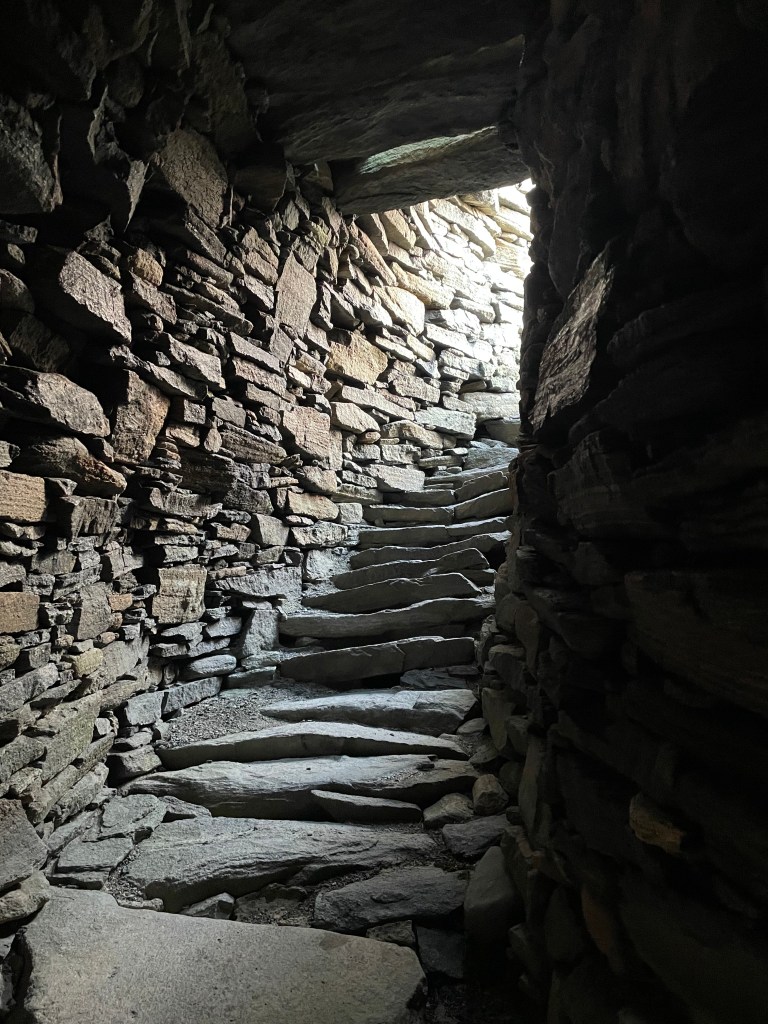
Our last official Outer Hebrides site was Dun Carloway Broch, one of the best preserved brochs in Scotland. These mysterious Iron Age monuments exist nowhere else but here. While these circular structures are as symbolic a feature as any in the highlands, their purpose remains unknown, although it is thought that they were residential structures for fancy people.

On the ferry back to the mainland, as we sailed through calm waters surrounded by hills on various land masses, Jacq, daughter of Margaret and niece of Victoria and awesome human being, turned to me and said incredulously, “There are mountains everywhere here.” I have told so many people about that comment because – I mean it’s true, yes there are. And that is one of the crazy unique Scotland things that for some reason I had never articulated. It doesn’t matter if you are on an island, in the middle of the mainland or on a ferry – there are indeed mountains everywhere. And as a person who needs mountains – that is a plus.

As all things do, the tour at last came to an end and we all bid a fond farewell in Inverness. I snagged dinner at Hootenanny’s, listening to some live music, and spent the night in my favorite B&B in Inverness, Castleview Guest House, run by the wonderful Eleanor and her 14 year old Jack Russell, Mia. I found the place back in 2018 because Rick Steves recommended it, and Eleanor said on his visit years ago he was most enamored of her hand-written, nearly illegible guest reservation book.

Sweet Mia

I know this sounds insane but the next day I rented a car and drove back to Skye. It’s actually not that far and Skye is Skye, so maybe not insane but only slightly eccentric. I stopped at Glen Affric, another splendid nature reserve on the mainland. And, best of all, there was snow on them thar hills.

Glen Affric, along with many other reserves I had visited over the past few weeks, is one of rewilding zones of Scotland. This restoration and conservation effort had become rather an unintended but very much appreciated mantra of my trip and thankfully is a government priority. Trees and other vegetation are planted in these areas with the goal of creating a landscape that more closely resembles the Scotland of thousands of years ago, which is not the bare hills of the highlands that we are accustomed to seeing, but rather a more forested landscape providing a more diverse habitat for a greater variety of flora and fauna. For example, trees are often planted along rivers to provide shade and cool the water so salmon can thrive.
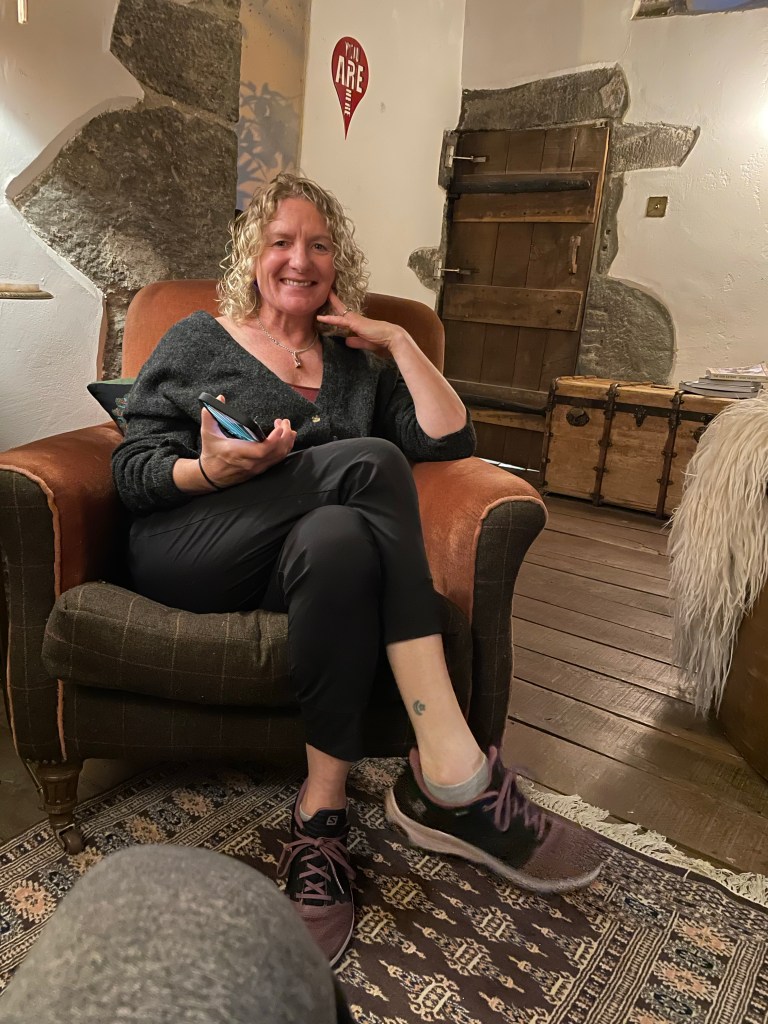
Some in the countryside advocate passionately for rewilding, others see it as an existential threat to their culture, history, and way of life. Farmers, deer stalkers, ghillies and gamekeepers are quite anxious about the impact these plans will have on their jobs. For example, Scotland is teeming with too many deer which denude the landscape – contributing to the problem – by eating foliage from the roots (as opposed to sheep whose style is more like a lawnmower) yet efforts to cull the herd have run into resistance from landowners and staff whose income is wedded to the deer stalking business.
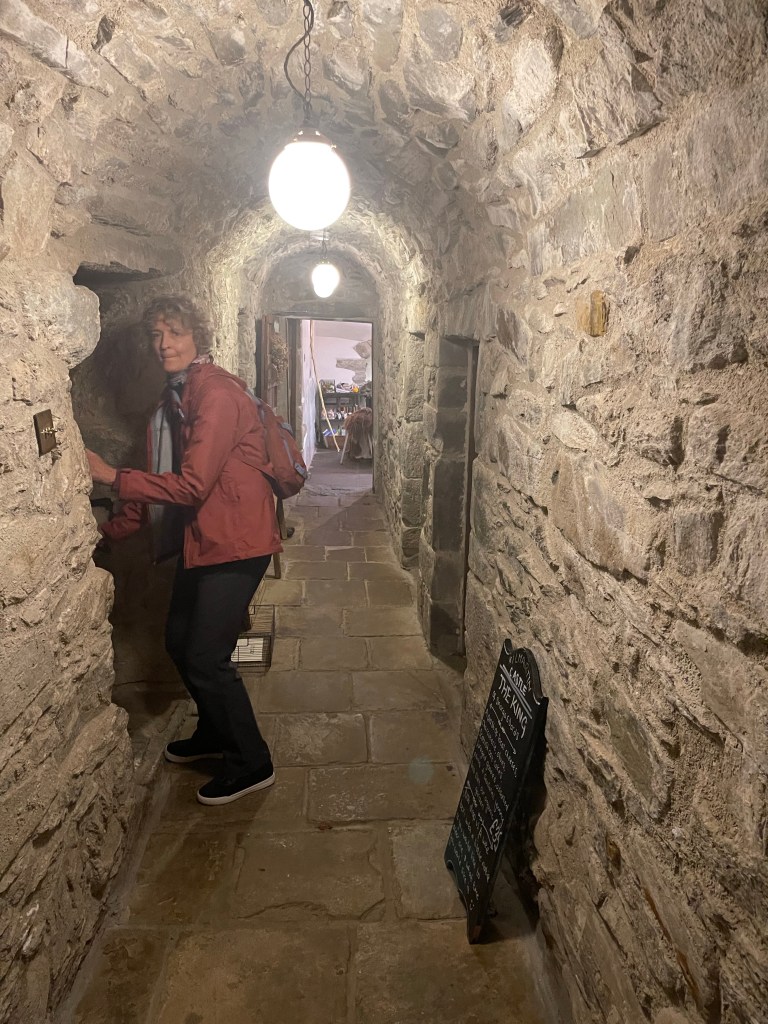
Be that as it may, rewilding efforts are grounded in the belief that land is not primarily for generating income from sporting activities, forestry or commercial agriculture, it’s for, you know, life writ large. Creating, nurturing and protecting wild land produces the oxygen and the biodiversity we need to survive and offers solace and inspiration for our imaginations and our souls. So there.

Returning to our beautiful drive back to Skye, there was also a sprinkling of snow on the peaks surrounding Glen Shiel. No matter how old I get, there is always something magical about the first snow of the year.

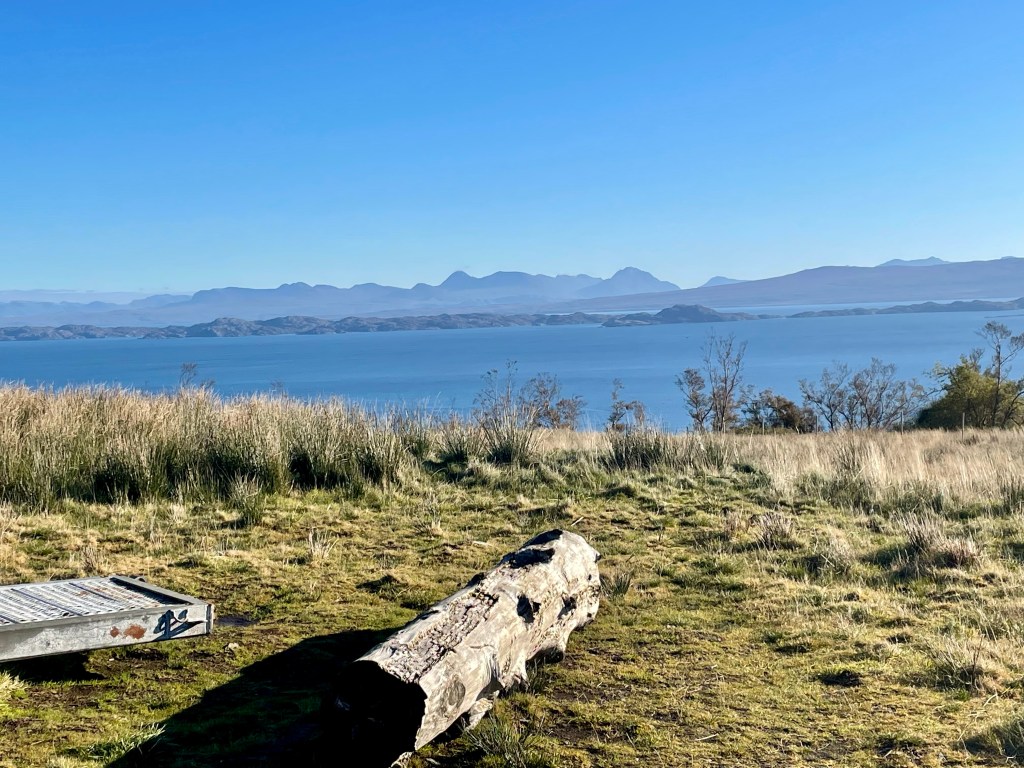
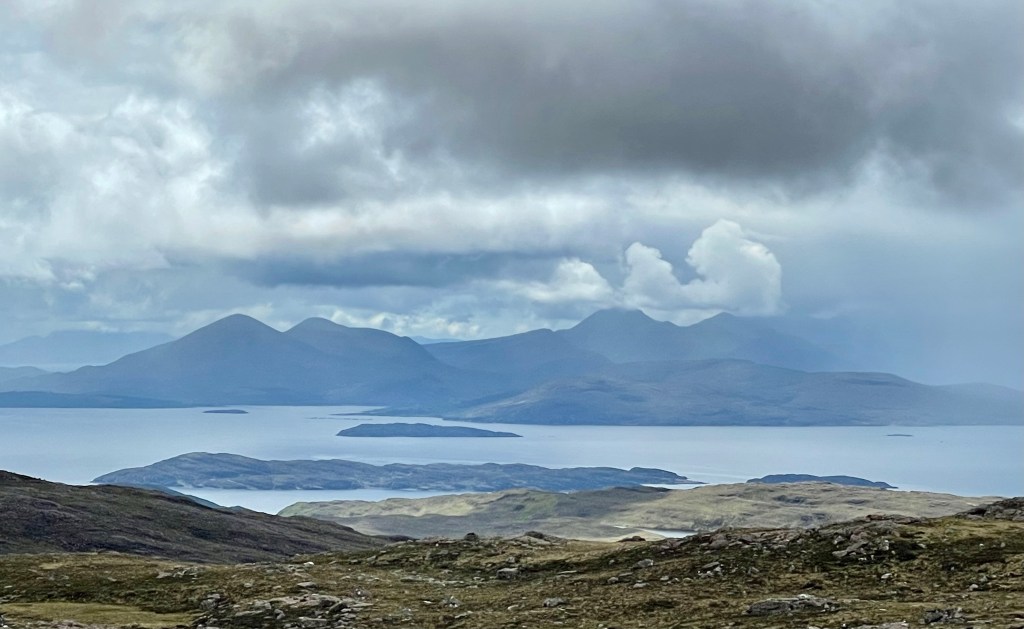
Once over the Skye Bridge, I drove through Glen Sligichan, this time in gorgeous weather and so stopped for a photo of the wily Black and Red Cuillins, since as you’ll remember they were shrouded in mist and dreich the week before.

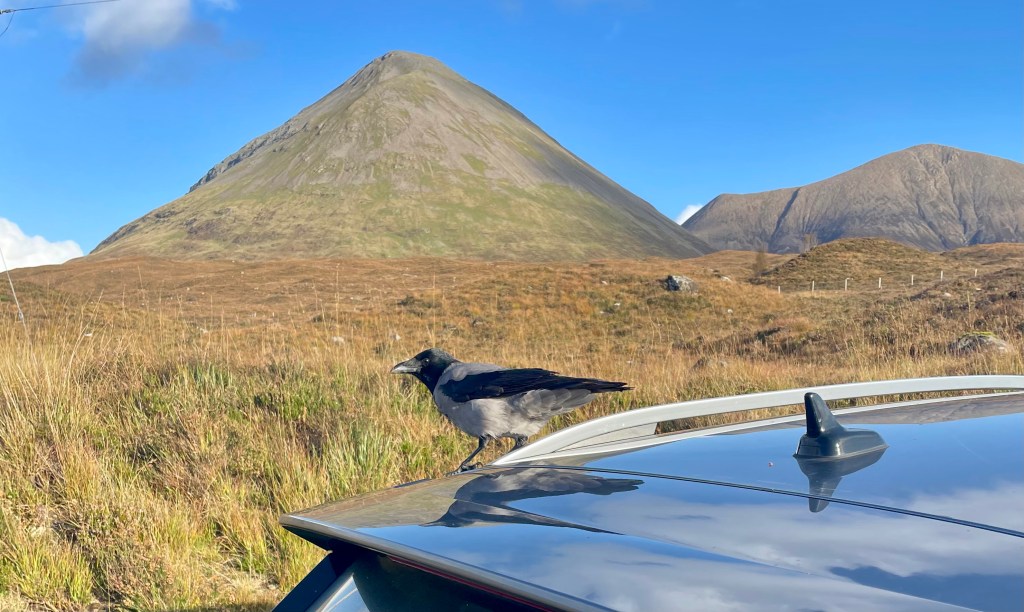
Full circle: a hooded crow on the car once again, this time in better conditions.

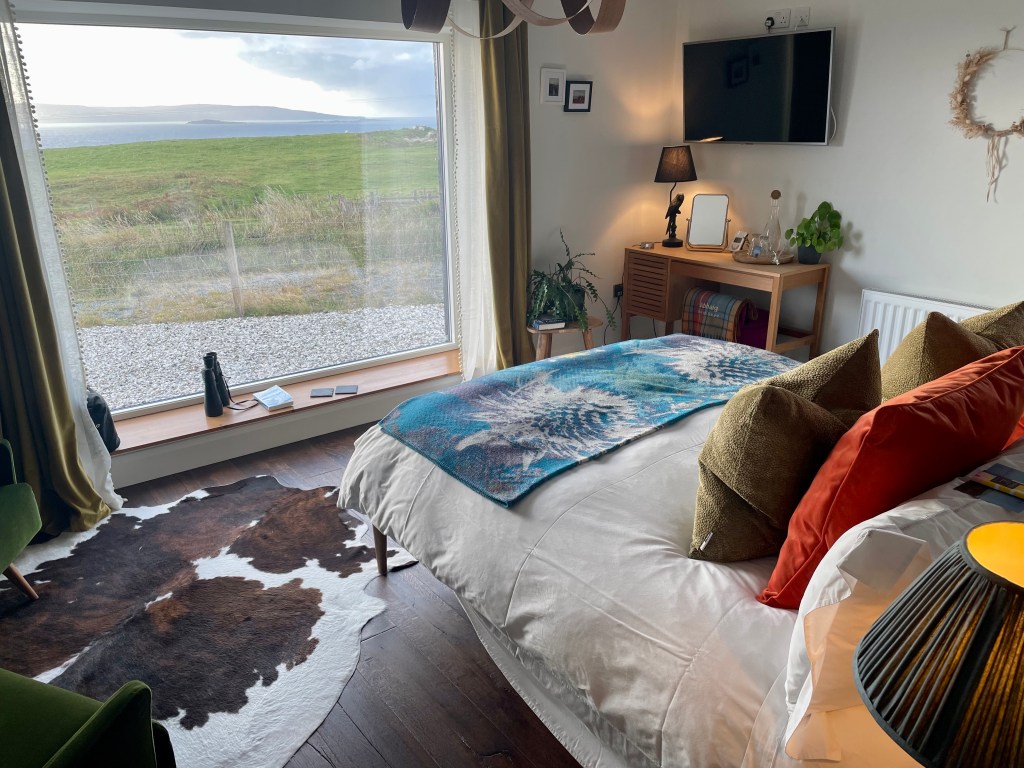
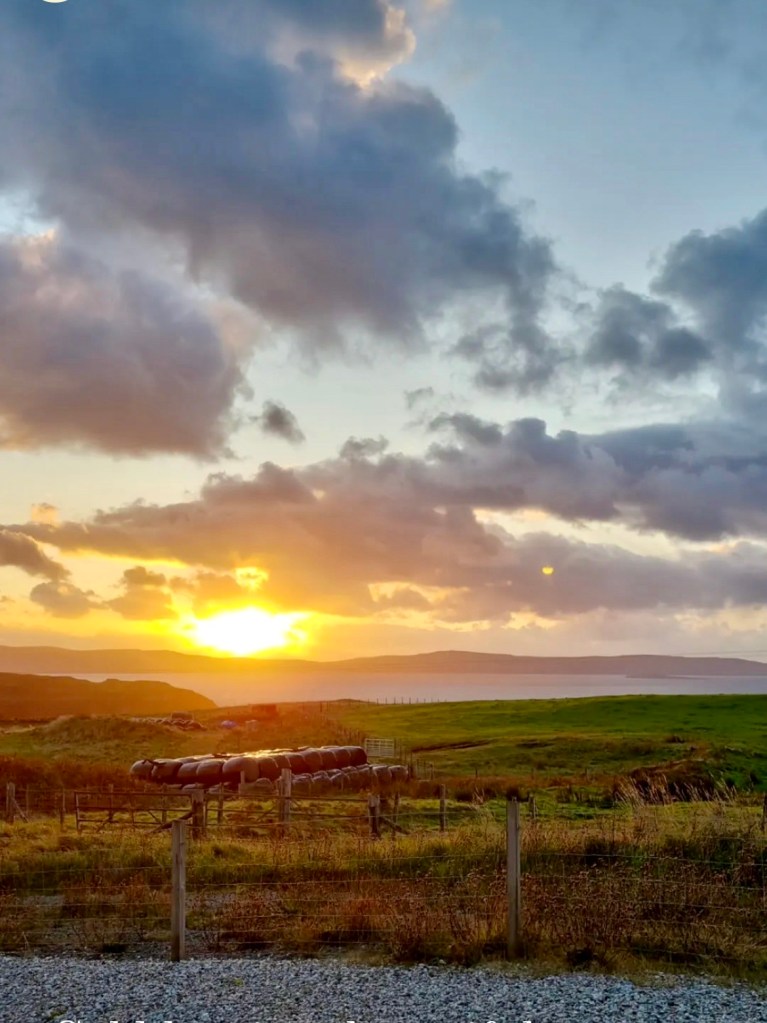
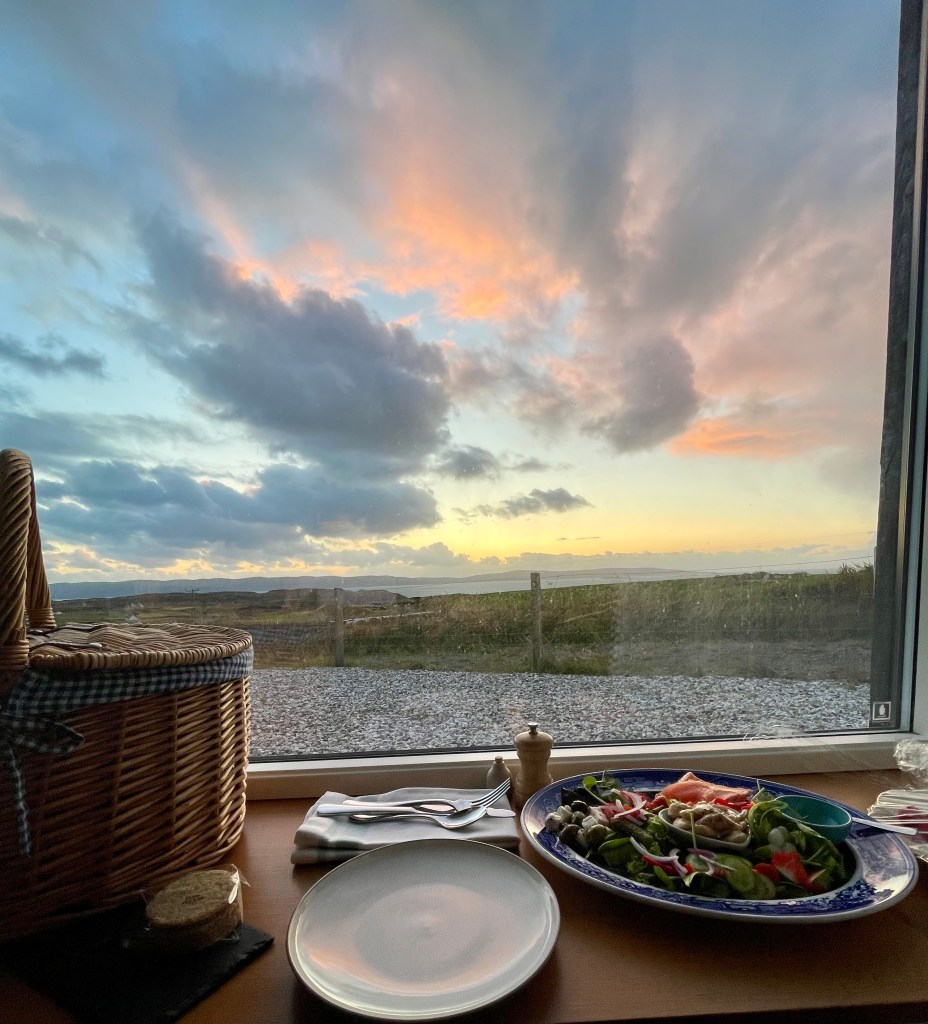
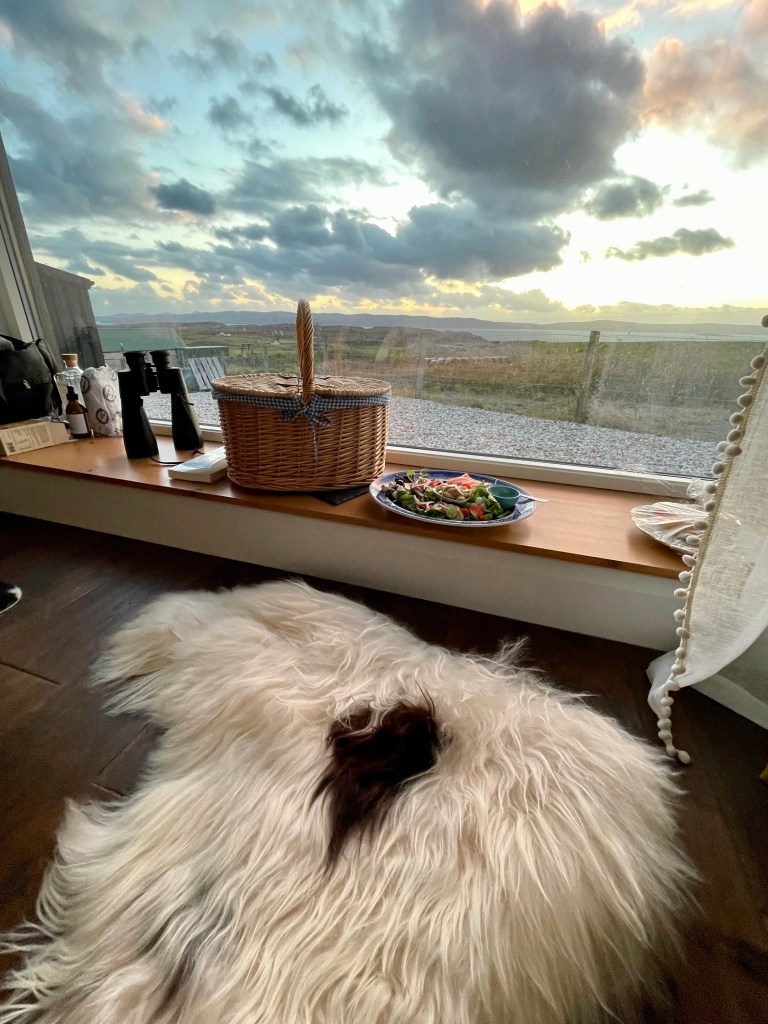
In Skye, I stayed in Uig, where we also stayed during the Wilderness Scotland trip, which I swear I didn’t realize in advance. I knew we were staying somewhere on Skye but no idea where. Crazy.  Clearly meant to be, yeah? Anyway, I stayed at a fabulous B&B, Abhaig House, run by an even more fabulous couple, Viv and Steve, who brought me a piece of a home-baked cake every single day. The view from my room was unbelievable, and I arrived to a charcuterie board with fresh salmon prepared by my hosts for a most delectable dinner, complete with a jaw-dropping sunset view.

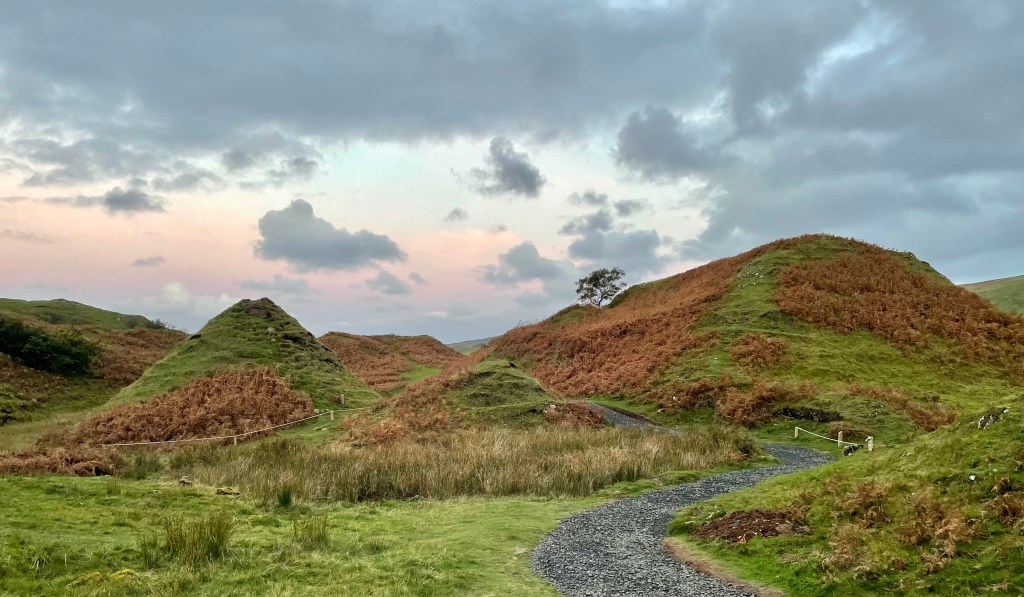
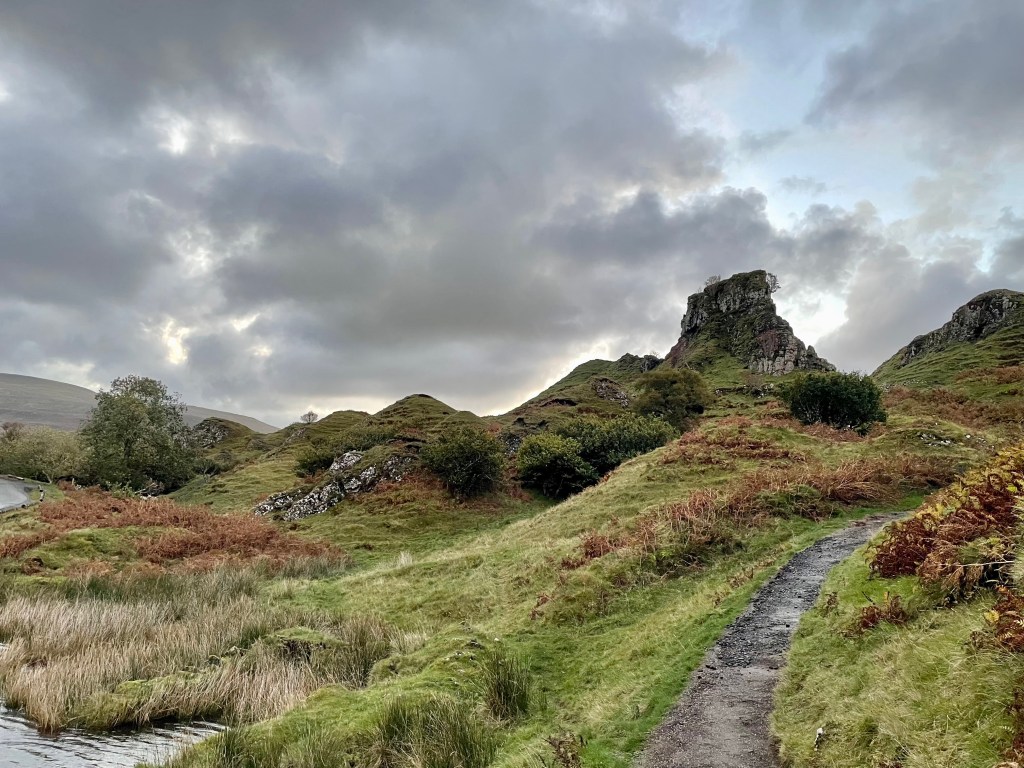
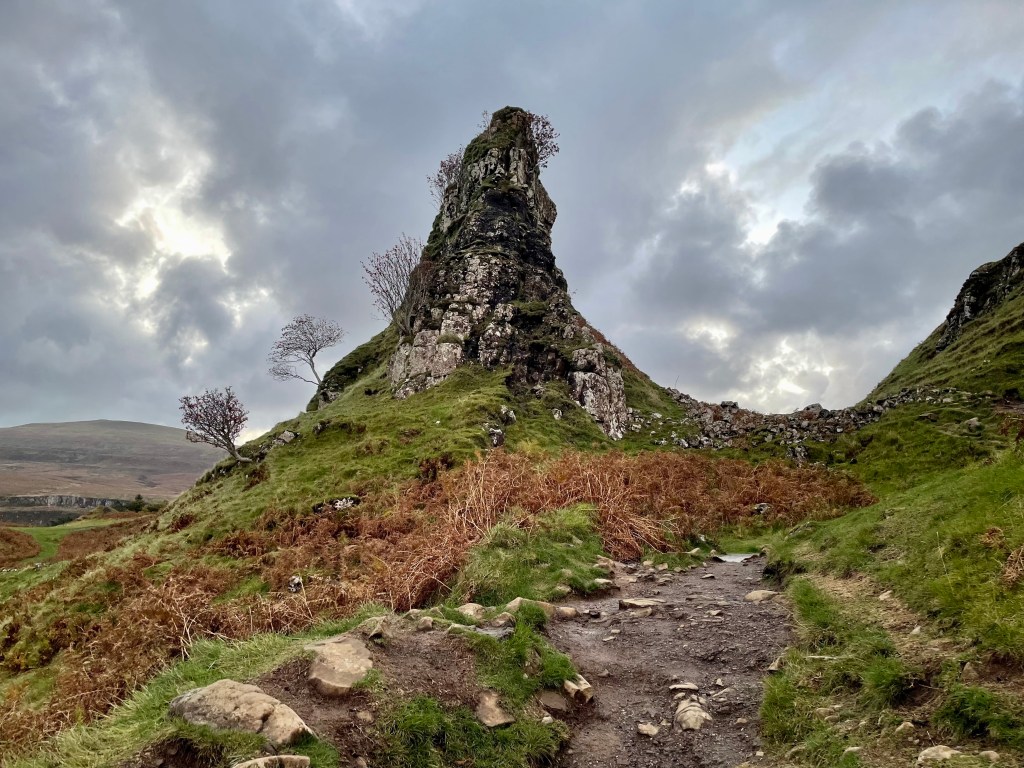
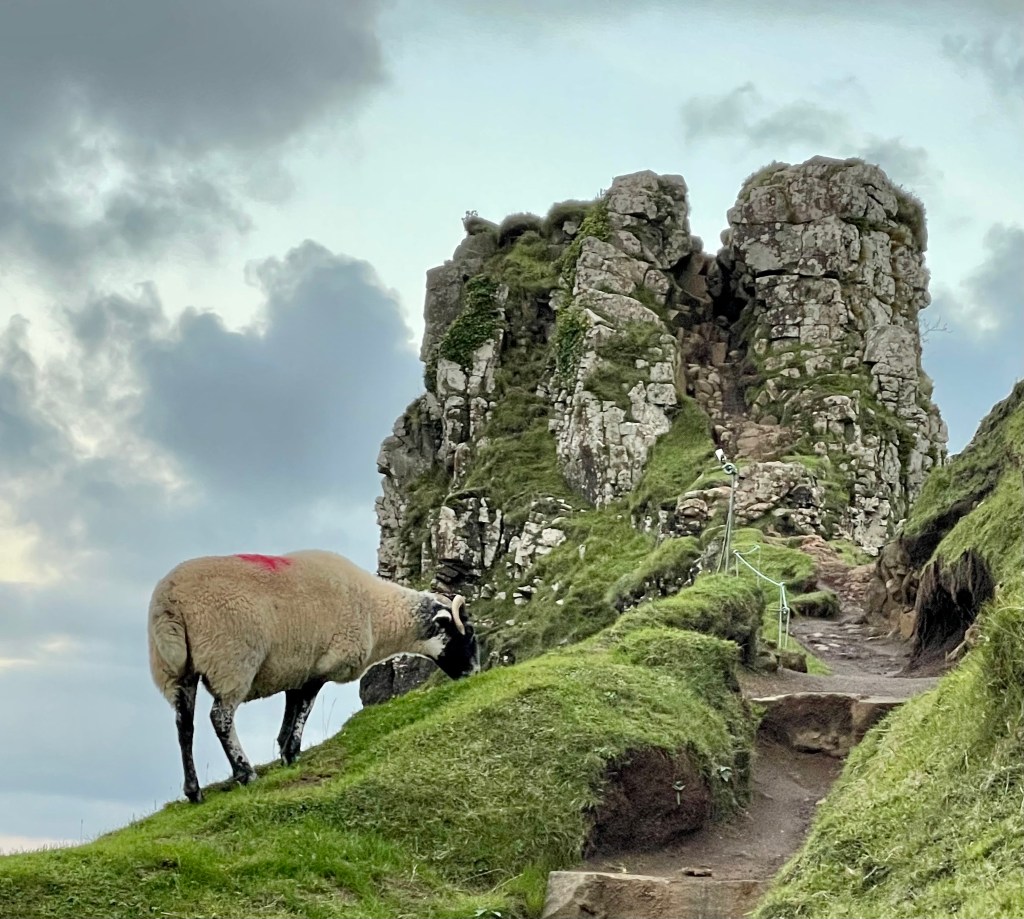
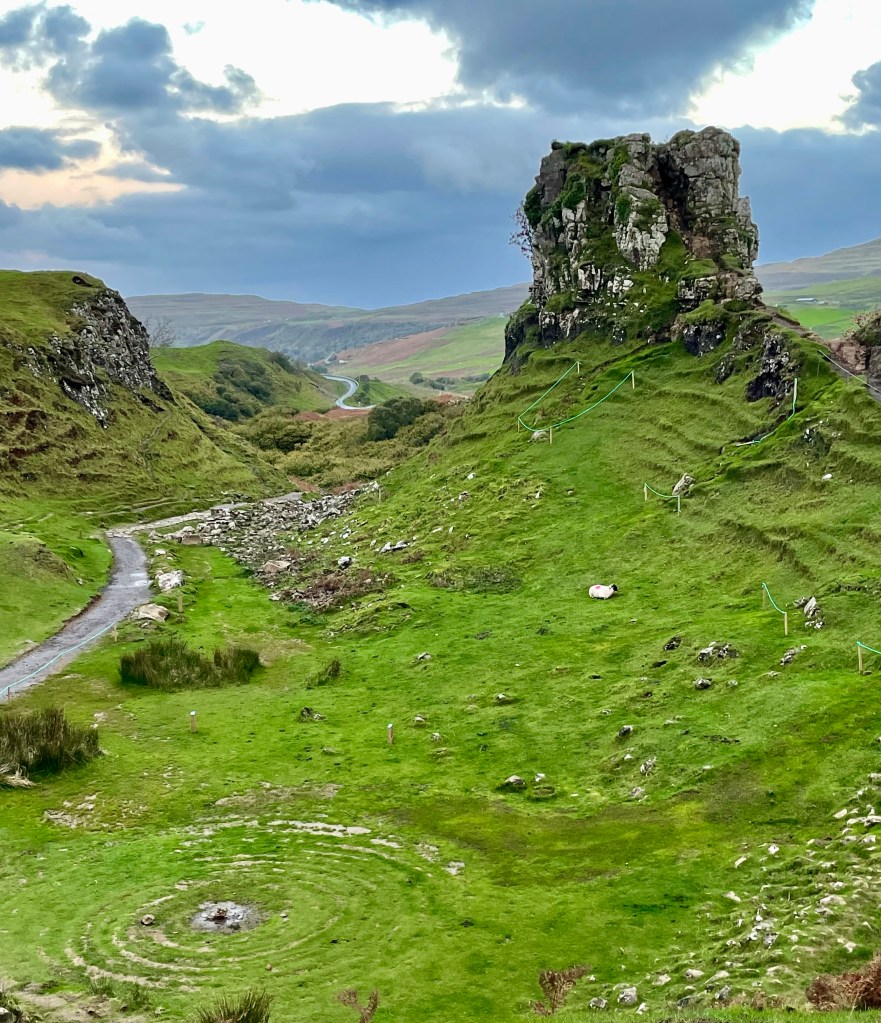
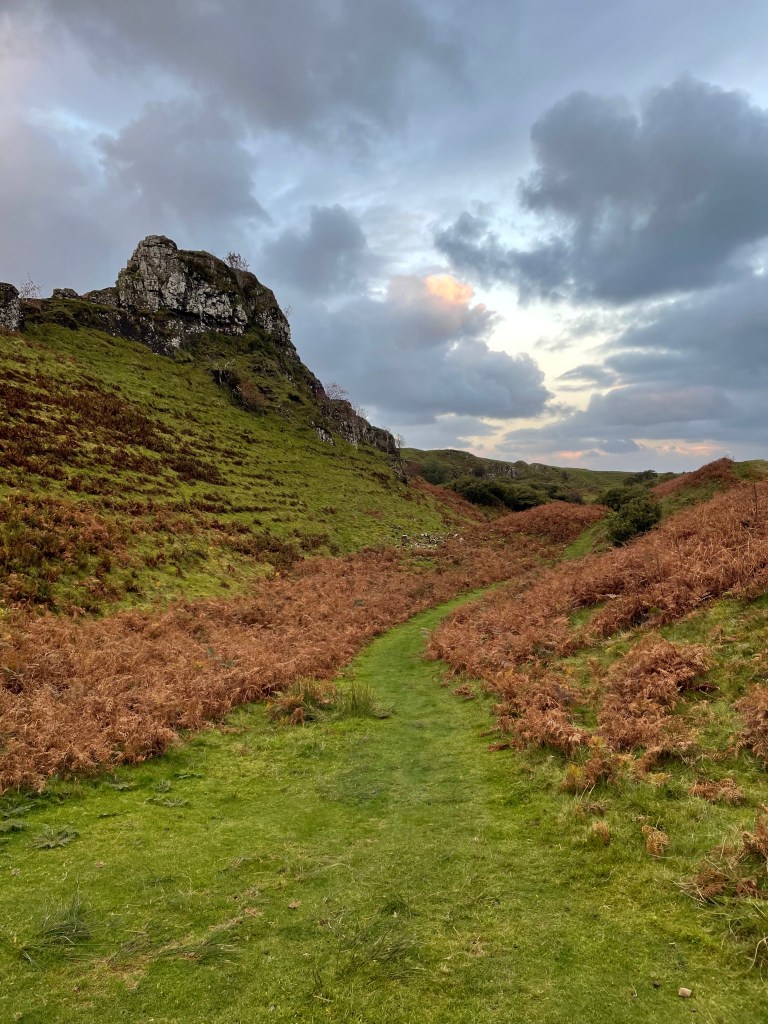
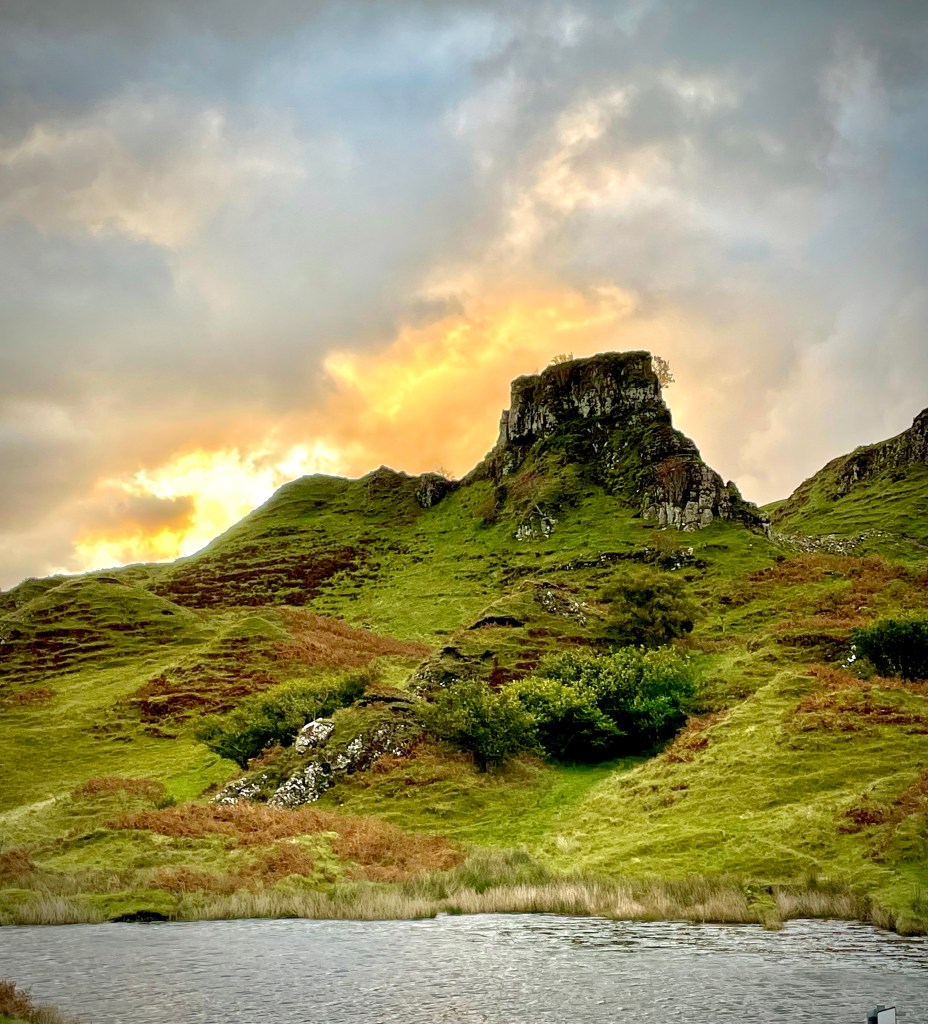
The next morning I woke up early and drove just a few minutes to one of Skye’s honeypots, the Fairy Glen. It’s usually crawling with ugh tourists but we are now in late October, and I arrived at sunrise so it was mine all mine.  Just a crazy beautiful and singular area on the backside of the Quiraing. Geology, my friend. Geology. I mean what IS this place.

After my little walk, a delightful breakfast at Abhaig.

I then drove southwest to Glenbrittle beach, where I thought I’d head partway up the hike to Coire Laggan in the Black Cuillins. I knew I didn’t have enough time to do the entire walk, sadly. I kept going a little bit further and a little bit further still – just to that ridge there, then I’ll turn around, oh wait there’s another little bit…..  And lo there came a time when I needed to pull slightly off the trail to drop trou and do a wee pee – and as looked up from my undignified squat toward the Cuillin ridge, to my horror descending walkers appeared in the distance WHO PROBABLY SAW ME and so I took that as my sign and scarpered back down to the car in giggly horror.

The black sands of Glenbrittle Beach

The reason I didn’t have enough time is because I had booked a reservation at the chef’s kitchen table at the renowned Three Chimneys restaurant, where I had enjoyed a wonderful meal with Danielle the previous spring. It was super fun sitting in the kitchen and the only other guests were a very blonde and adorable couple from London on their honeymoon. Both lawyers! Both liberal!  Brexit is terrible! Trump is terrible! Yay! A chef’s table can be risky, god knows, but we hit the jackpot and had a lively and interesting conversation for the entire meal. They were staying in the lovely rooms at the Three Chimneys, whereas I had a half hour drive back across Skye on single track roads in the pitch dark with silly sheepies snoozing like RIGHT there on the edge of the road like fuzzy doofuses.  But seriously – what a great night.

The next day I caught the ferry to Raasay, a small island with 192 denizens just to the east of Skye.  It’s a very short and very beautiful ferry ride.
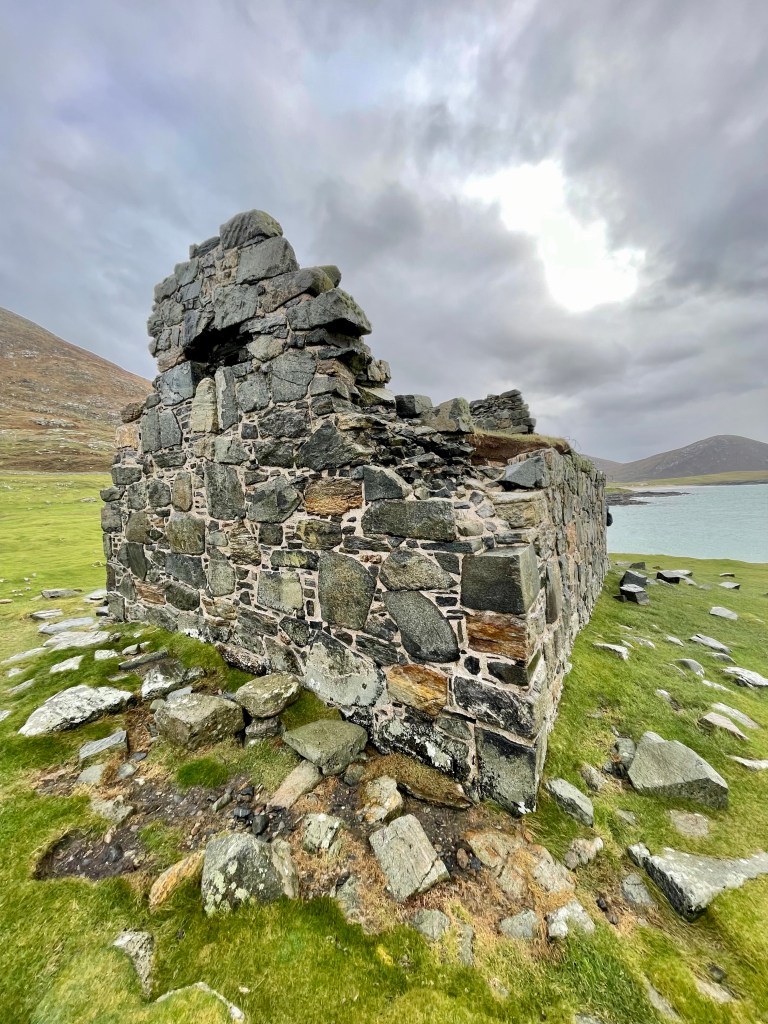
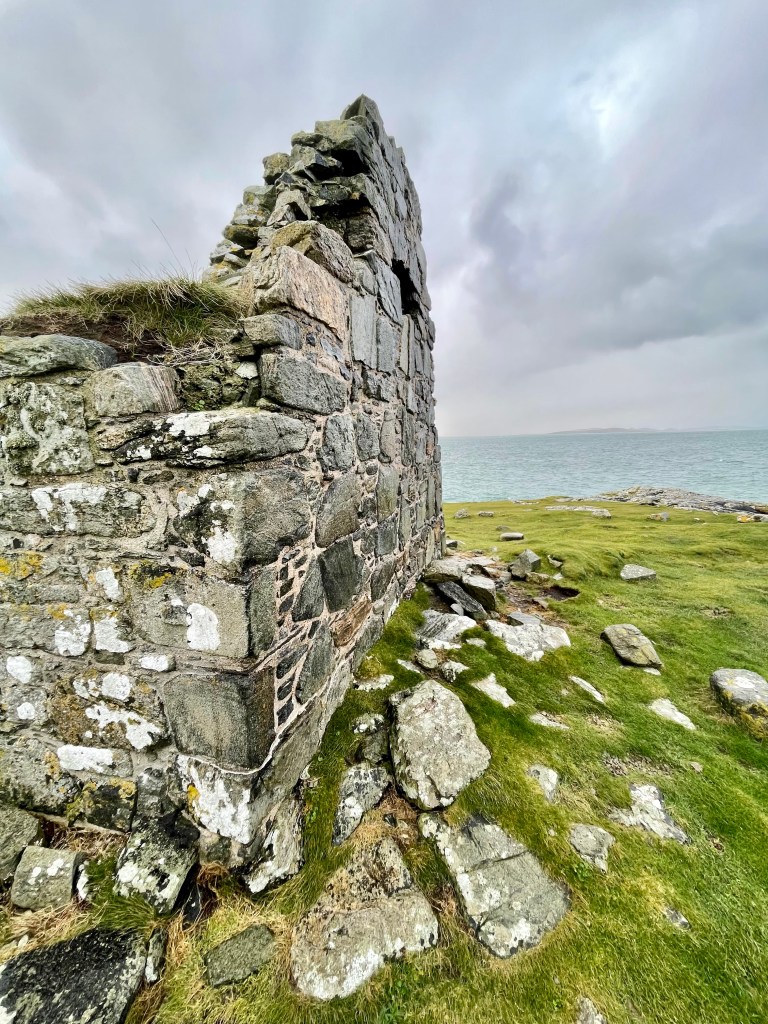
When we disembarked I set off down a crumbly wee road toward a short hike that looked pretty cool. I did not see another car or another person.

There was a tiny parking area at the end of the road, thus:

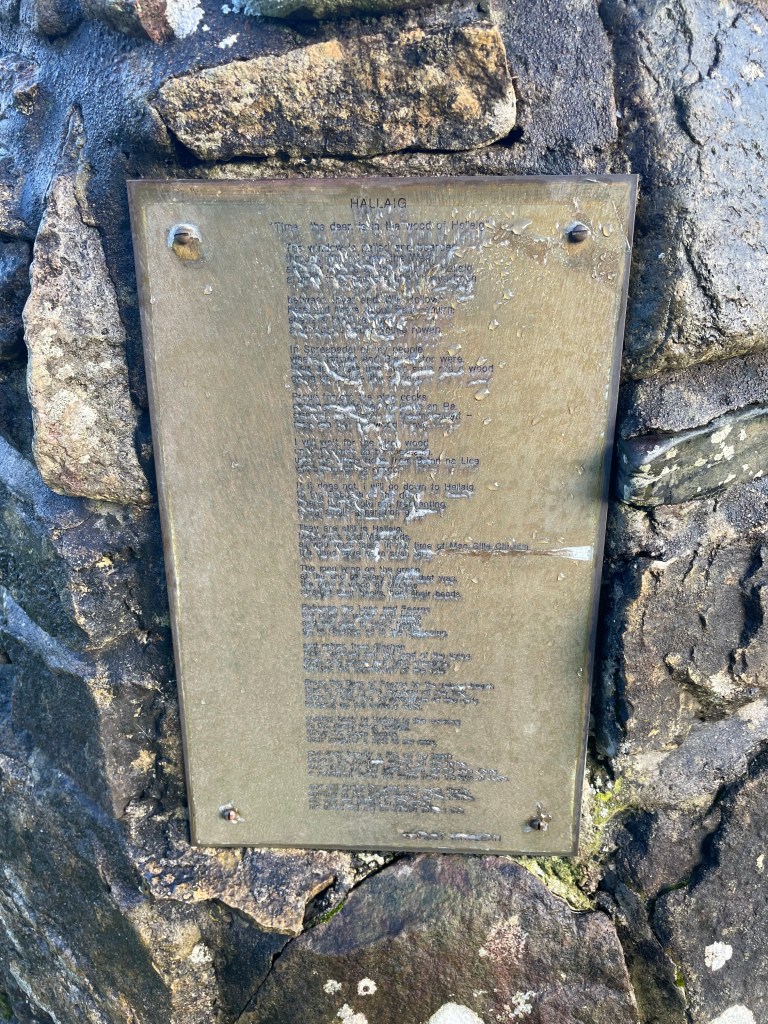
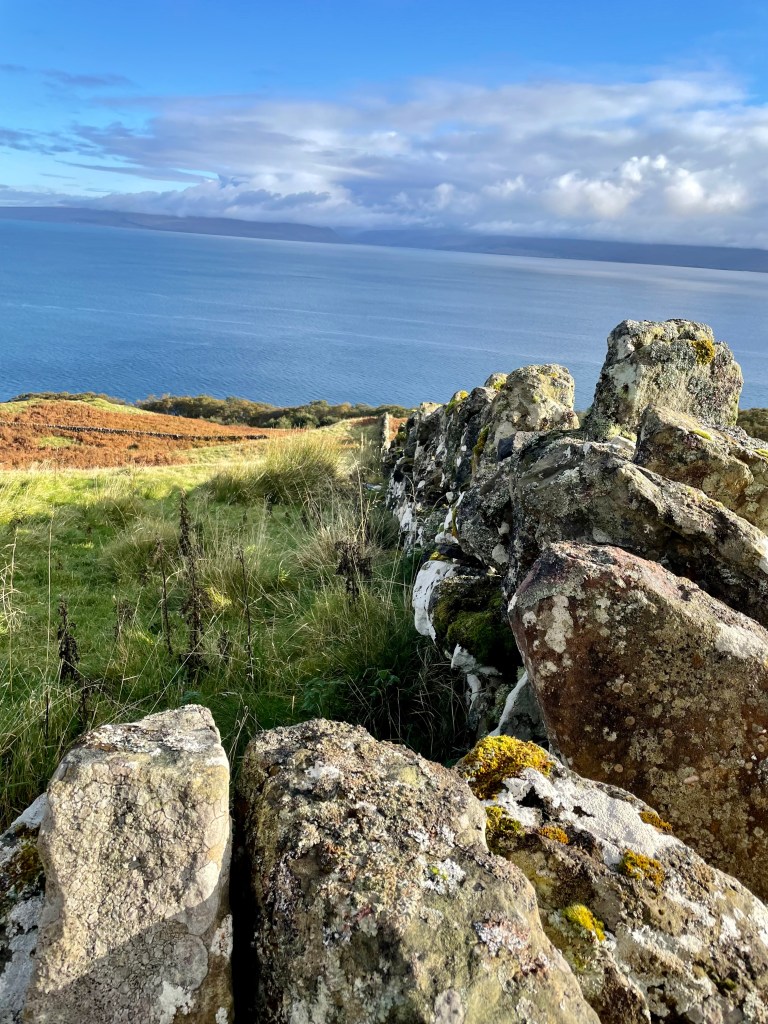
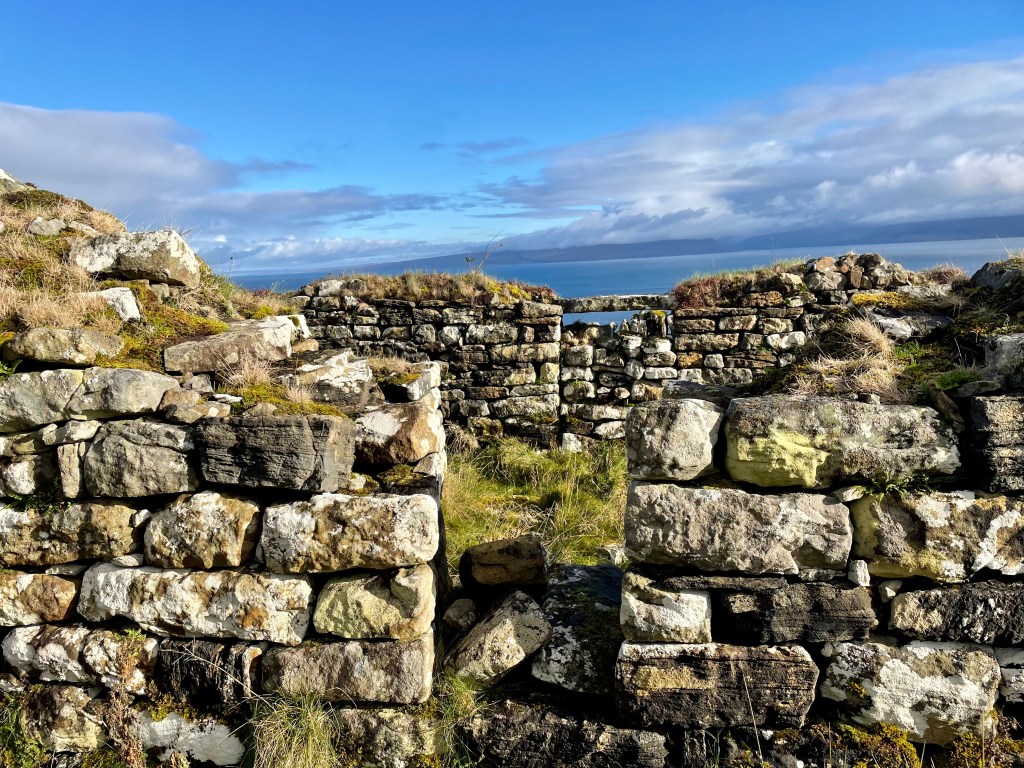
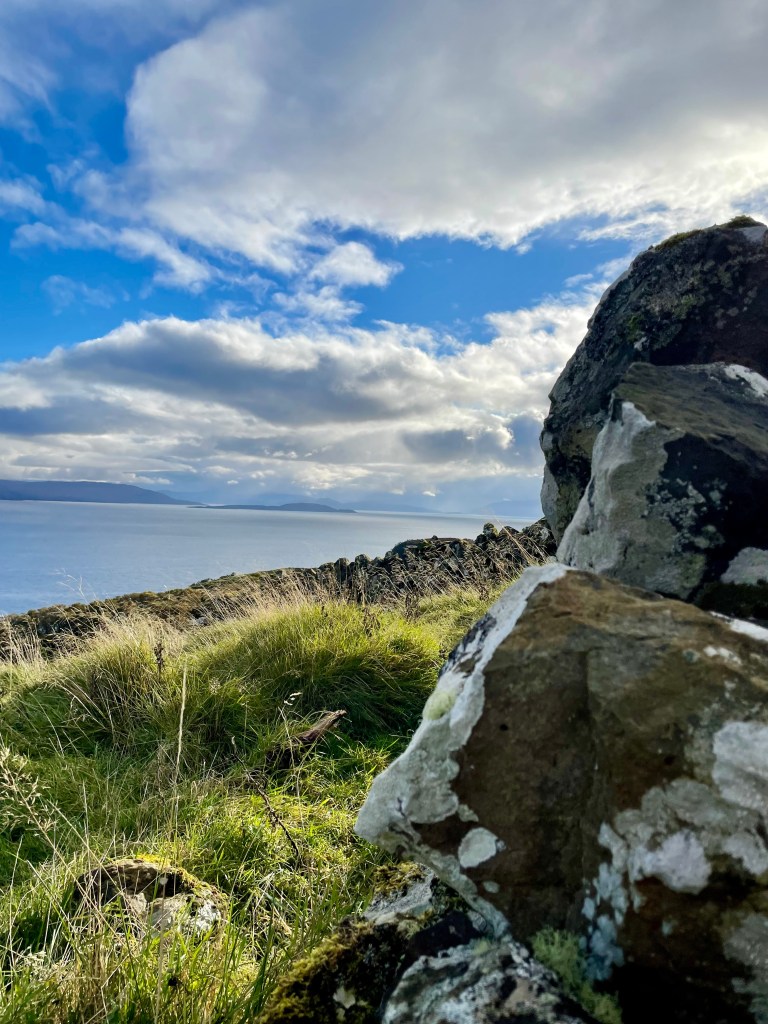
I embarked on yet another gobsmackingly gorgeous coastal hike to the ruins of Hallaig, a clearance village, one of several cleared communities on Raasay, where the residents were forcibly evicted or encouraged to move to make way for sheep grazing on the island in the 1800s.  There’s a monument along the trail that includes a poem about the ruins called “Hallaig,”by Sorley Maclean.

Back through the gloaming to Hallaig

Through the vivid speechless air,

Pouring down the steep slopes,

Their laughter misting my ear

And their beauty a glaze on my heart.

Then as the kyles go dim

And the sun sets behind Dun Cana

Love’s loaded gun will take aim.

A few photos of the ruins.

Could not resist a few smiley selfies in that sad and somber place because good god IT WAS SUNNY.

I think this walk resulted in some of the most incredible photos from my entire trip – the light, the location, the mountains, the ocean.

As you can see, this was another walk where I didn’t see another human being, which is absolutely my preference to be honest. My mom asked me to write about what it was like to hike alone in remote areas in a foreign country.  The answer is that it’s awesome and makes me blissfully happy and at peace.  An adventure in the best possible way because the risk level is very, very low and yet you are out in the wild! On the moors! Gazing across oceans and up mountains!  So many wild coos and sheepies! And I’m not naive, I know full well that folks have often found themselves in trouble hiking in the UK, involving mountain rescue teams, helicopter evacs, injury and even death. I don’t know what to say except that the thought never crosses my mind that something bad might happen because a) I’m in Scotland and b) there’s so much joyful zen in my brain. I’m so completely present in the moment as they say, that all thoughts of worry have nowhere to grab hold. For what it’s worth, my mom doesn’t worry about me either, which is quite literally unheard of. So ¯\_(ツ)_/¯

I sat in the car for a few minutes enjoying the bag lunch of a fresh salmon salad Viv and Steve prepared, and then started the short drive back toward the ferry so I’d make it to Raasay Distillery in time for my tour.  Along the way I came upon a Scottish traffic jam, but not to worry, I made it.

Opened in 2017, Raasay released its first whisky in 2020. The 2022 Scottish Whisky Awards named Rassay Distillery of the Year, and it’s a beautiful facility with drop-dead views. They released their first whisky in 2021 and their single malt combines six signature casks – maturing peated and unpeated spirit separately in ex-rye whisky, virgin Chinkapin oak and Bordeaux red wine casks. The first of this cask combination in Scotch whisky history. The exact proportions are, of course, top secret.

A lovely, sophisticated English woman with a dry wit was our tour guide. She had retired to Raasay a few years prior with her French husband and was obviously enjoying her retirement gig at the distillery. I talked with her afterward about what it was like, and how her Parisien husband was enjoying living on a remote barely populated island in the Hebrides. I shared that I was feeling a similar pull toward Scotland in general.  She immediately engaged an eye-lock and encouraged me to start doing something – taking actual measurable steps toward this goal. I don’t know, I got the tingles. Message received.

So the Raasay “Hebridean” is a very very good whisky and I fell in love with the distillery and with Raasay itself. As I had enough space in my luggage to bring one bottle home, I decided this would be The Chosen One. I did a quick search on my phone – without my glasses – to make sure you couldn’t buy Raasay in Oregon. Well. When I got home I looked it up again and sure enough, found that you could acquire a bottle in two local liquor stores.  Not only that but one of the liquor stores carried bottles of the single cask versions from the pleated bordeaux and rye casks. Good god. Coals to Newcastle. In retrospect, it’s almost a certainty that I misspelled Raasay as I was standing in line at the distillery on my phone with no glasses. I mean, there are a lot of “a’s” in fairness.

The view from Raasay Distillery. Literally. I can’t even.

The ferry back to Skye.

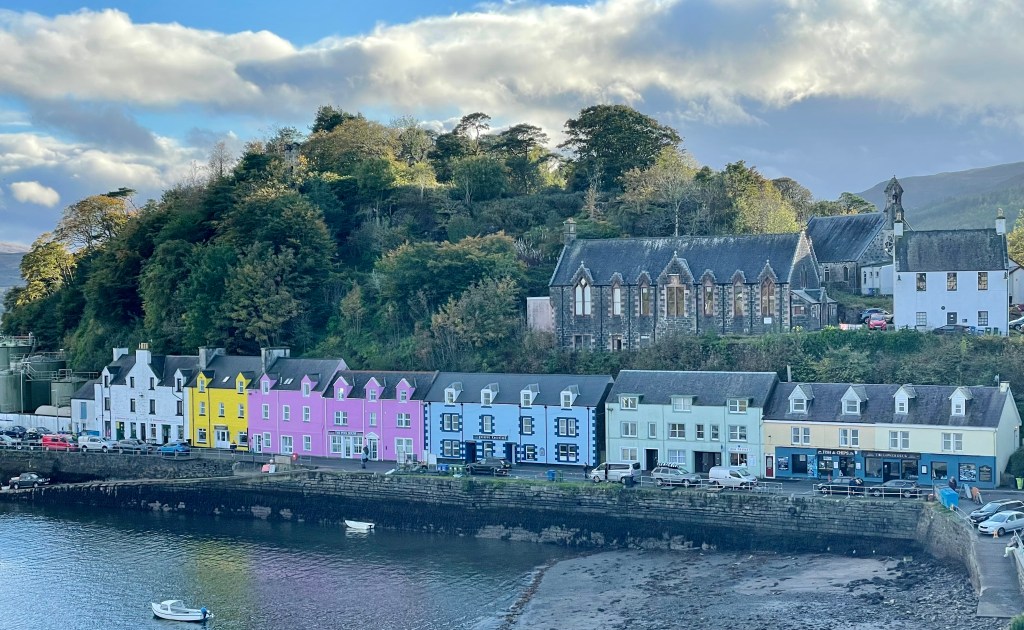
My car and I alighted from the ferry and drove to Portree where I had booked a table at Dulse & Brose, a lovely restaurant of past acquaintance.  I was there a bit early and so wandered around Portree seeking a pub.  The thing about shoulder season is that places are sometimes closed for the winter – rude! I finally walked along Quay Street, where the lovely painted buildings are, and found a teensy weensy pub inside the Pier Hotel. (The baby blue building below).

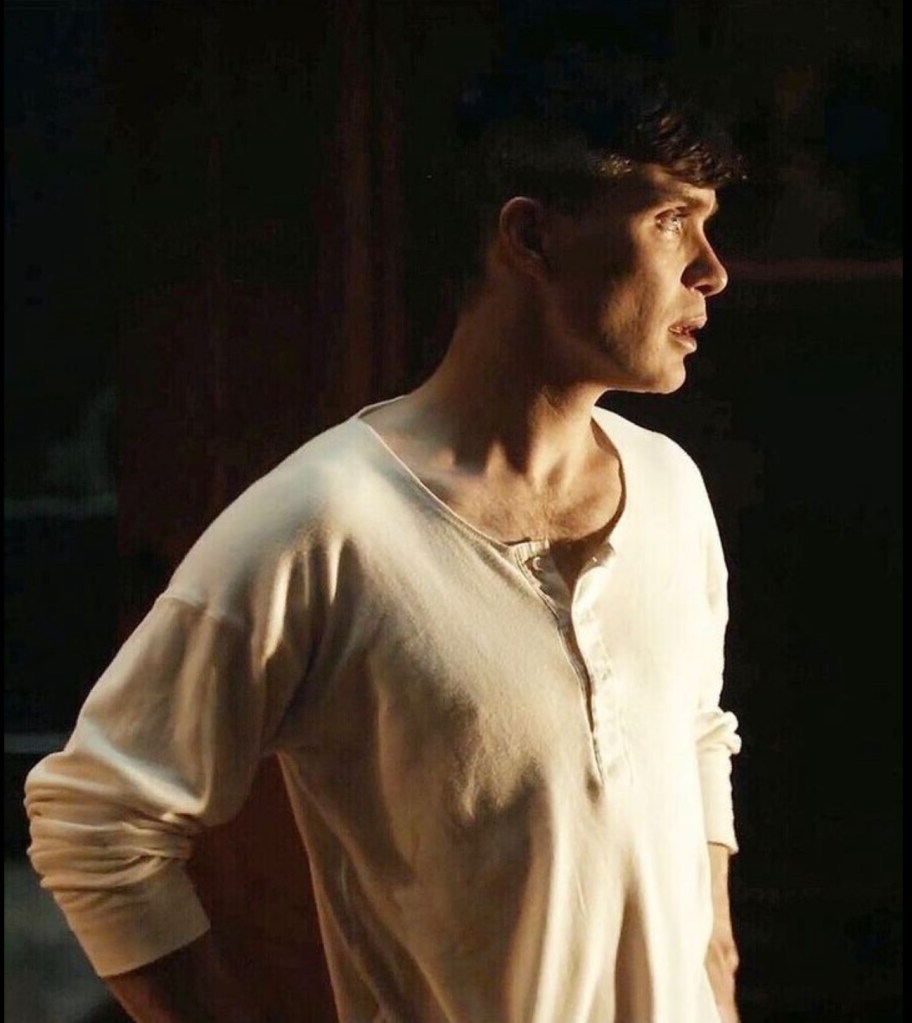
I sat at the bar and had a dram, eavesdropping on a hilarious conversation between a couple of older Scottish men with a fisherman vibe and a small family group from, of all places, Texas. The Texans were trying to explain to the Scots why the phrase, “bless your heart,” (which the Scots had never before heard) could, and often did, actually have a negative connotation. It’s one of those southern idioms that sound polite but are really a highly judgmental put-down. The Scots literally could not understand why we’d take something that sounded like a blessing and turn it into a smug slam.  The other conversation I enjoyed was between the bartender and his girlfriend about how amazing Peaky Blinders was.  Speaking of which,

Tommy Fookin’ Shelby makes the blog.

And now I think it’s high time to wrap this installment of The Wee Dram. My last full day had finally arrived, so I bid a sad farewell to Viv and Steve and the cute pups they were dog-sitting.

I then had the dumb idea of stopping by the Old Man of Storr on a gorgeous sunny day at 10:30, thinking I could just bound up the trail of the last Skye honeypot I hadn’t yet done. It was a sh*tshow. Could not believe the huge parking lot packed to the gills with humanity. Nooooooo.  No thanks. KThxBai. Next time. I pulled off the road across from the bulging parking lot, grabbed a coffee and had a final wee look across to the mainland where I was headed – and said goodbye to Skye for the fourth time in my life. I also said see ya next year.

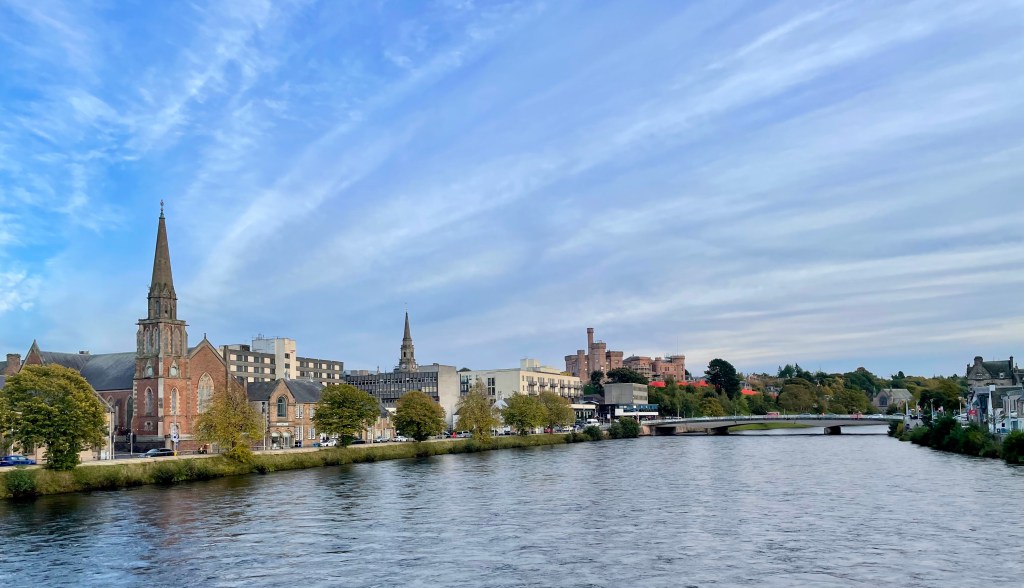
I drove through a bluebird day back to Inverness. It was honestly sort of weird seeing Scotland during a baldly sunny day. It didn’t look like itself.

My last night in Inverness I once again stayed with Eleanor and Mia, enjoying a lovely supper at the Mustard Seed. It was a gorgeous final night of my nearly month-long trip.

So, dear friend, thank you for reading this blog, for being patient with my many diversions down historical, geological, ecological, cultural, Gaelic pronunciation and whisky-related rabbit holes.  I’ll just end by saying that I’m headed back next May to Glencoe (have never missed), the Pentland Hills south of Edinburgh, and……(drum roll) Shetland. And next fall I’m returning with my pal Trish, mostly to visit Arran, Islay and Jura, since our last trip we were stymied by weather, and then back to Skye where I will probably feel drawn to the ferry to sail to the Outer Hebrides again, maybe this time to the Uists.

Because why would I go anywhere else.

Caledonia Calls Again

You guys. After a mere three+ years I’m headed back to the bonnie bonnie banks, glens, cols, beinns, lochs, isles and waterways of Scotland. Last we met it was the fall of 2018 where you provided excellent company on my solo trip. In 2019 I decided to upgrade my house a bit, possibly sensing that I’d be spending quite a lot of time inside its walls in future. As 2020 loomed with its gigantic birthday, I told anyone who would listen that in celebration I’d be saying YES to All The Things. Planned a birthday trip to Paris and another Scotland hiking trip (this one). Yoga retreat in Sedona. Yes yes and yes. And then. Cancel, cancel and cancel, your silly plans matter not. We all lived through the last two years together, and there’s nothing you don’t already know. Enough said.

This trip won’t be solo, but with Danielle, a friend who has accompanied me on many Central Oregon hikes in the Cascades. We are both recovering lawyers, and I think met at a yoga studio years ago. There’s a photo of us in said studio on our backs with our ankles tucked behind our heads and our hands in namasté. Needless to say it’s hilarious and also entirely inappropriate for our purposes here today so I couldn’t possibly post it. Danielle is dating an actual Viking and I still harbor hopes of meeting a Scottish lad with a castle so we remain in men-in-kilts territory. This blog, and Scotland, will continue to abide.

As the trip is growing closer, I’m focusing mostly on driving for the first time in the UK (yikes), and looking forward to hiking in the Cairngorms, the Orkney Islands, Skye, Torridon and Glencoe – and traversing the North Coast 500. I also want to see as many puffins as possible. There will be castles, neolithic ruins, stone circles and Viking stuff. In fact there will be a distillery tour of Highland Park in Kirkwall, which includes a tasting of their “Vikings” series, with special edition, largely cask-strength drams named after Odin, Thor, Freya and Loki. To top things off, I had to postpone my trip home because my intended flight was unceremoniously cancelled, so will be in Inverness solo for an extra day (on my birthday as it happens). On that day a man named Andrew Grant McKenzie (you heard me) a historian who plays the bagpipes and worked at Culloden Battlefield for years will be squiring me on a tour somewhere, honestly it doesn’t really matter where. I believe the chances of him showing up in a kilt are very very high.

So thank you for joining me yet again to explore a wee country the size of South Carolina that somehow contains a vast Universe of history, hiking trails, dazzling terrain, culture, wildlife, wonderful food and very kind and welcoming residents with comforting accents. Scotland is basically Hermione’s bag in the form of a country.

Castles, Eastern Highlands, and the NorthCoast 500 (shhhh)

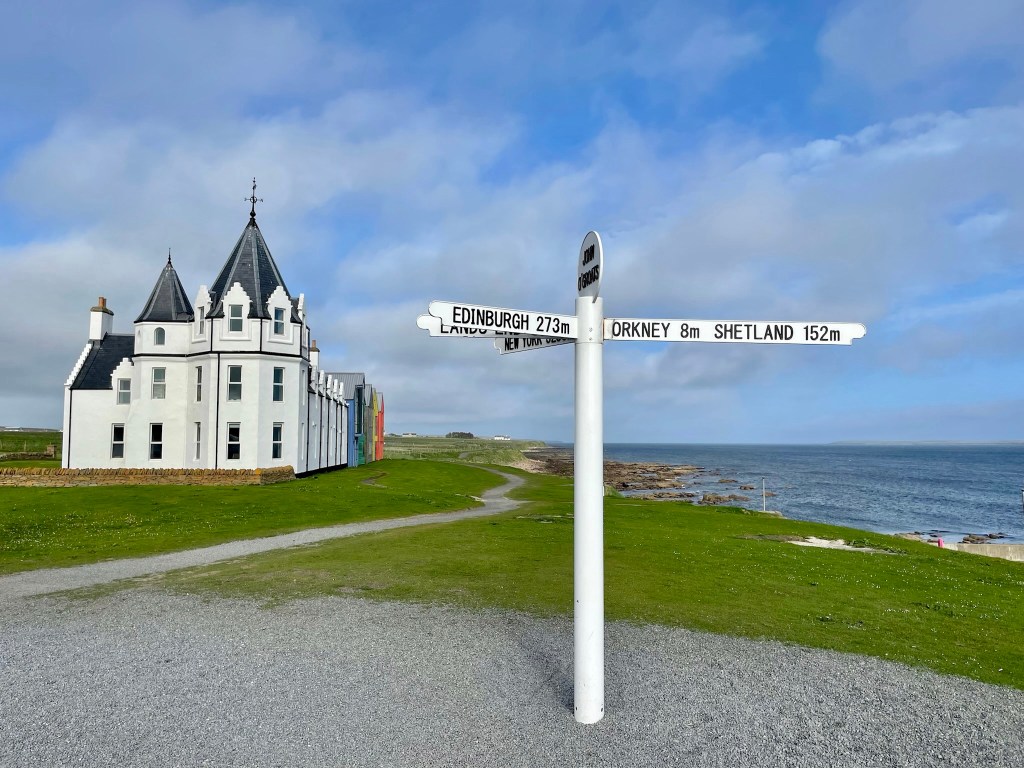
That place where you have to take a photo, John O’Groats

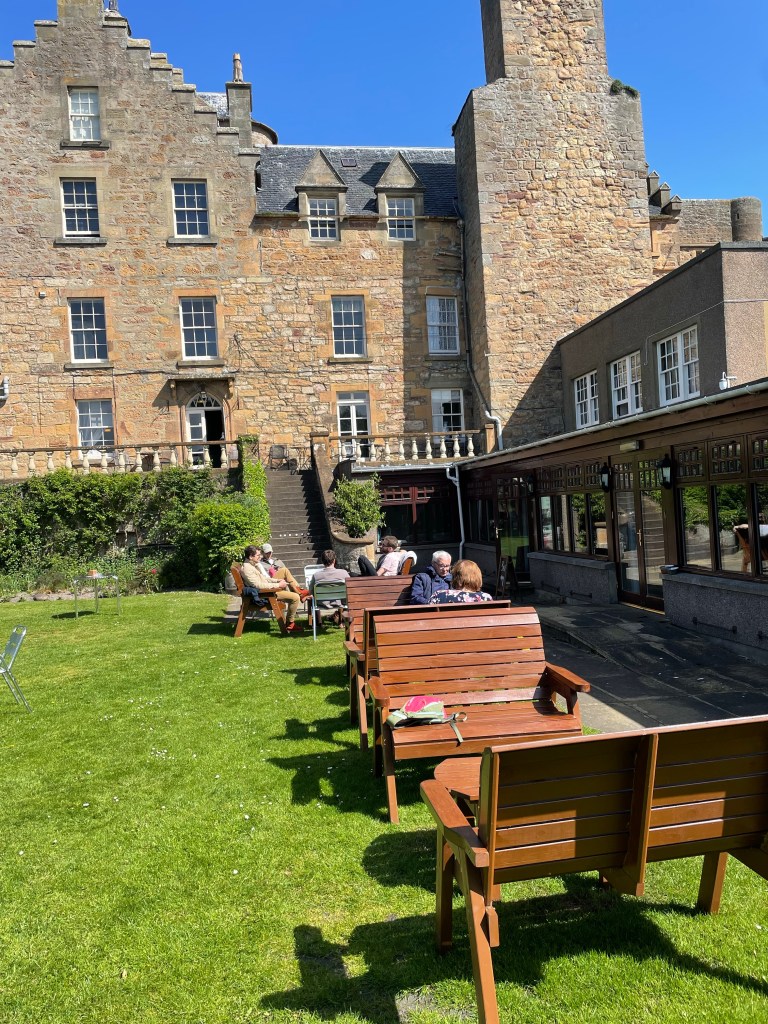
We bid a very sad farewell to our pals Kev and Kirsty in the Cairngorms and headed up the east coast, aiming for the Orkney Islands. We visited three castles along our way. Dornach Castle, which is now a 189 room hotel, was our lunch spot. It didn’t seem much like a castle any more, but it was a rare bluebird day, perfect for an outdoor lunch in the garden.

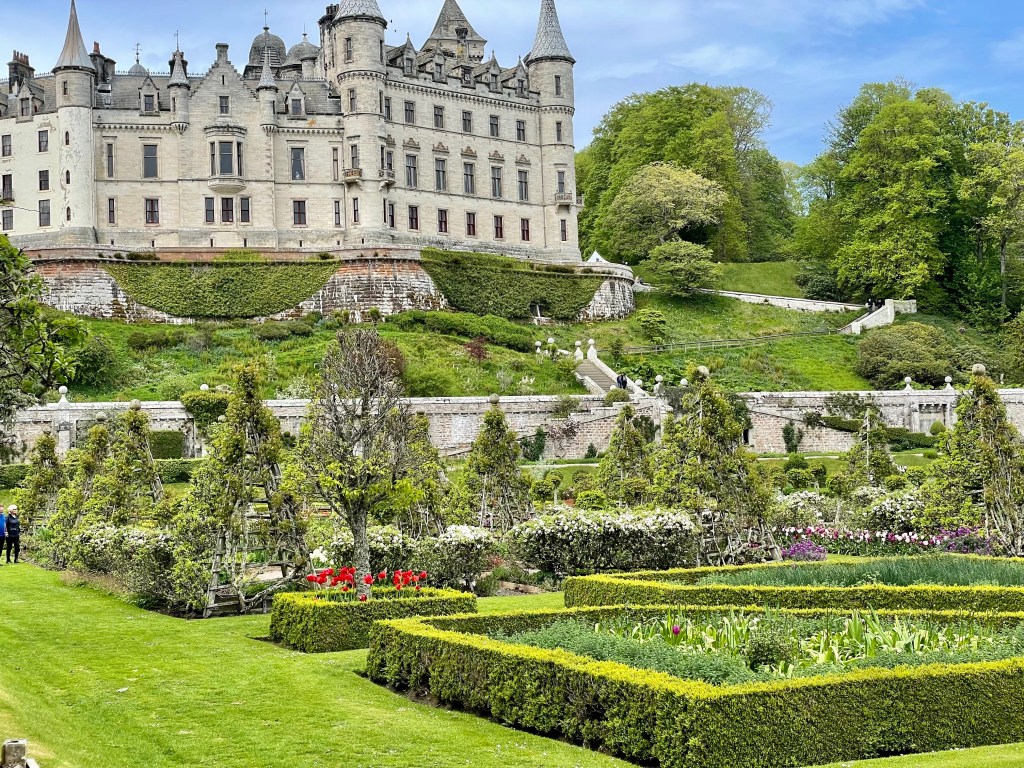
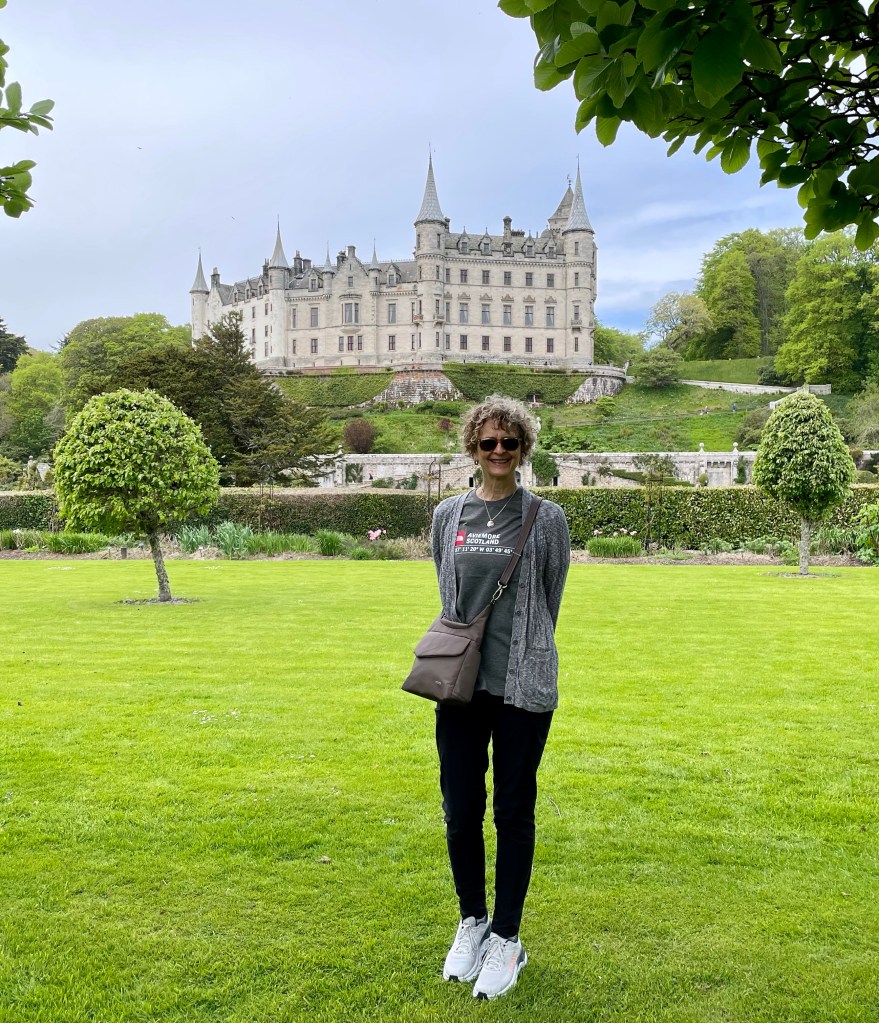
We then toured the fabulous Dunrobin Castle and Gardens, home to the Earls and Dukes of Sutherland throughout history. The earliest part of the castle was constructed in 1275. It was used as a naval hospital during World War I, and for a time, was a boys’ boarding school. The first Duke of Sutherland is sculpture-toppling notorious for his participation in the Highland Clearances, shipping off Scottish families in the late 18th century to make way for sheep since the cute fuzzy creatures made more money for wealthy landowners than crofters did.

Not our fault though.

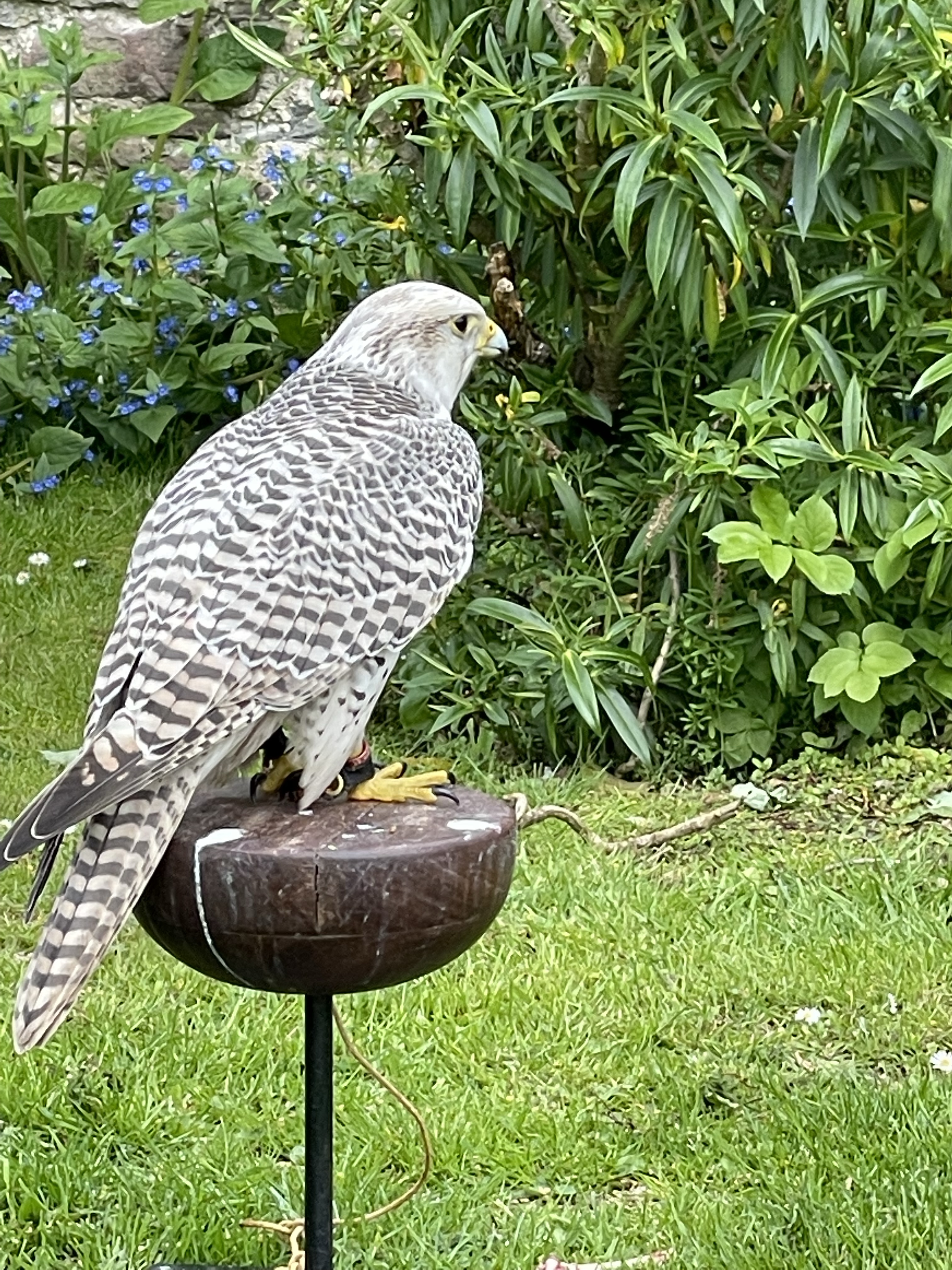
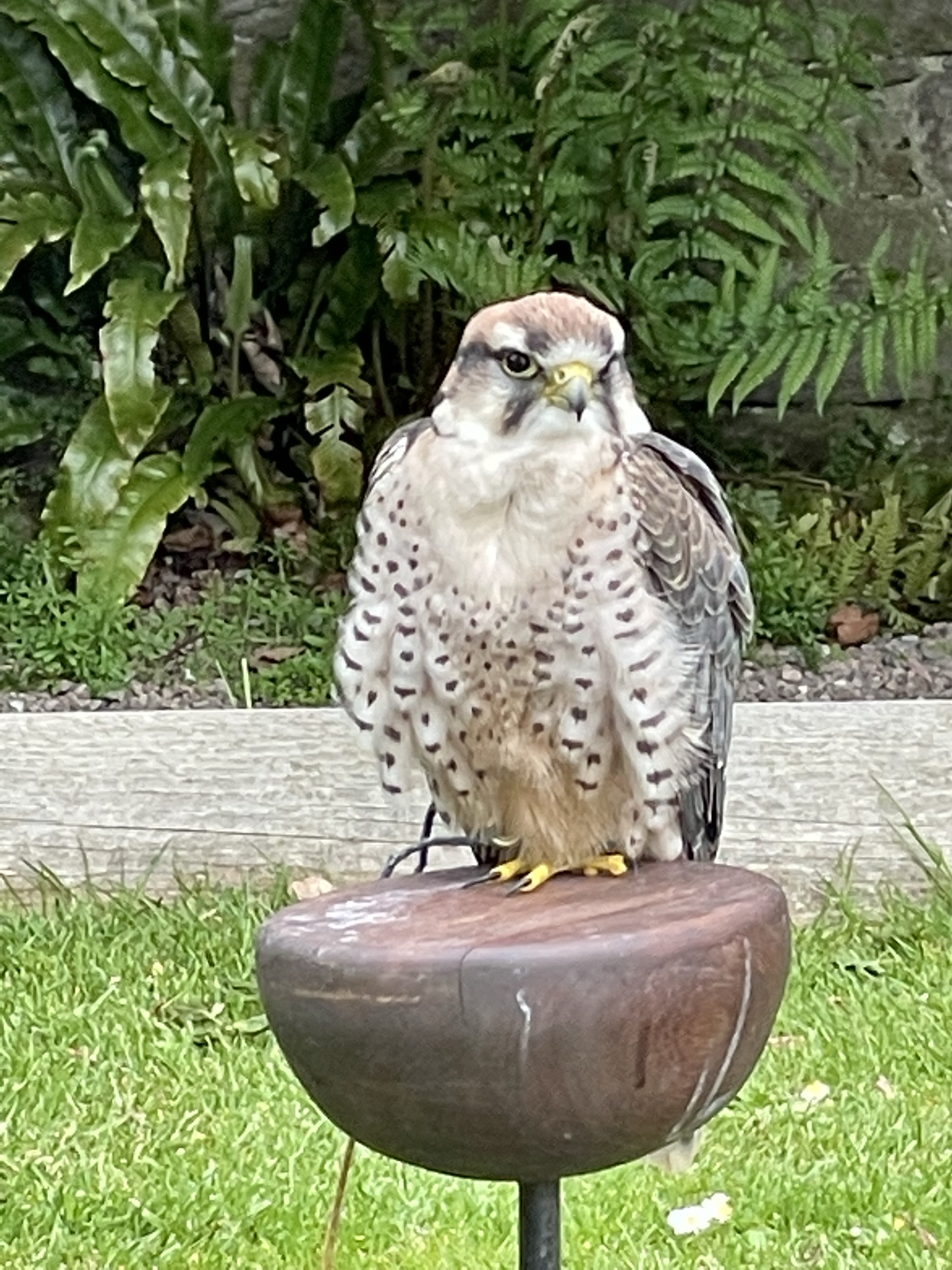
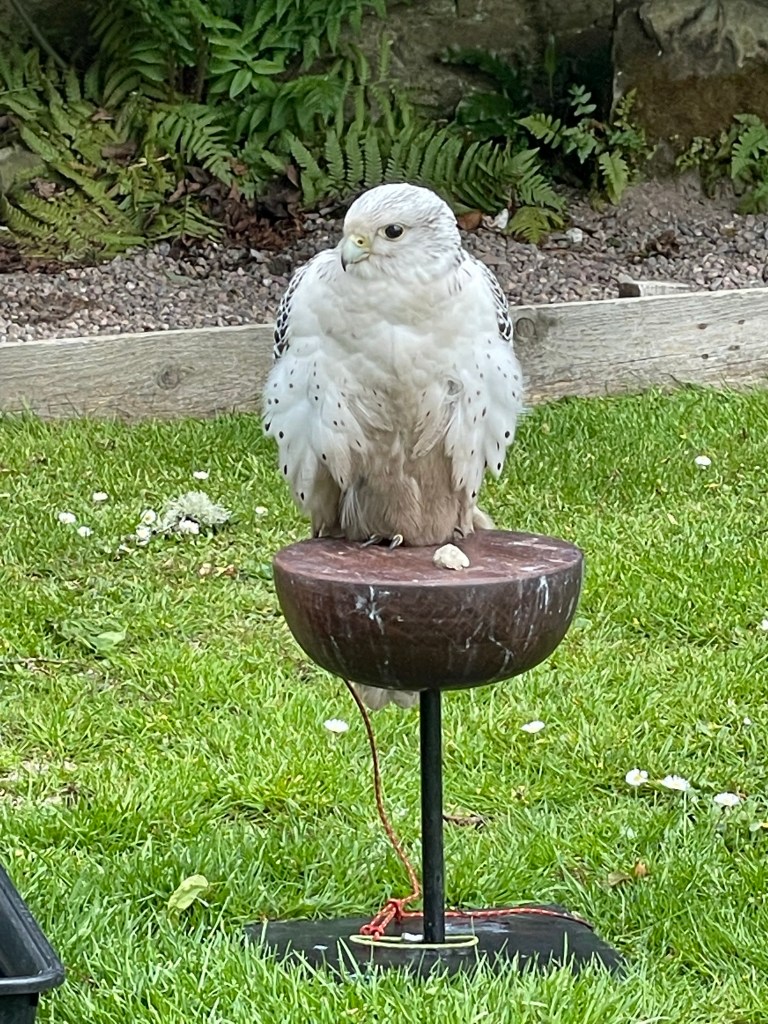
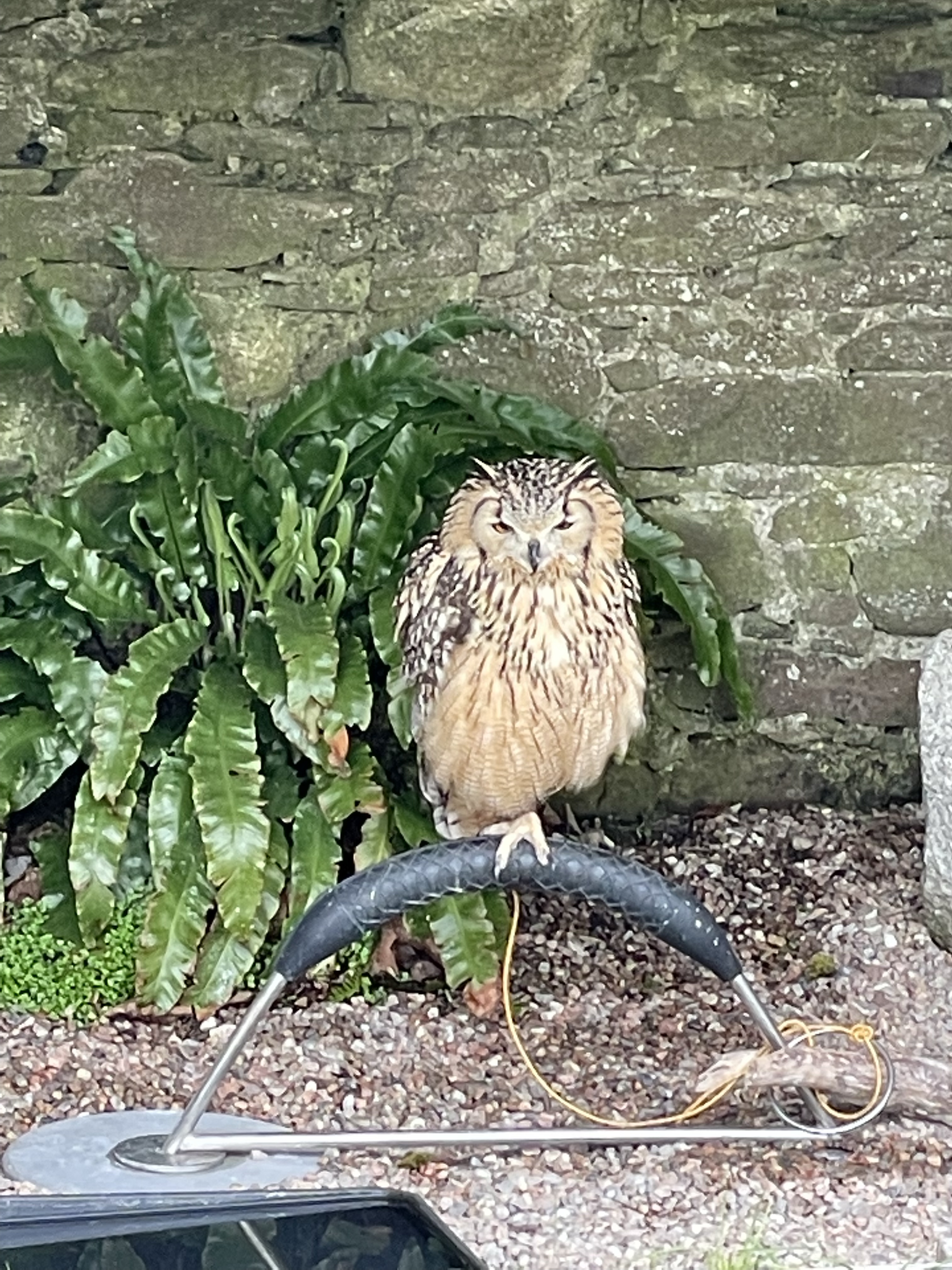
Even so, Dunrobin Castle is gorgeous with spectacular architectural gardens overlooking the North Sea, and is known for its falconry. I took an embarrassing number of photos of the resident falcons and owls.

Dunrobin Castle and Gardens
Not the worst view?
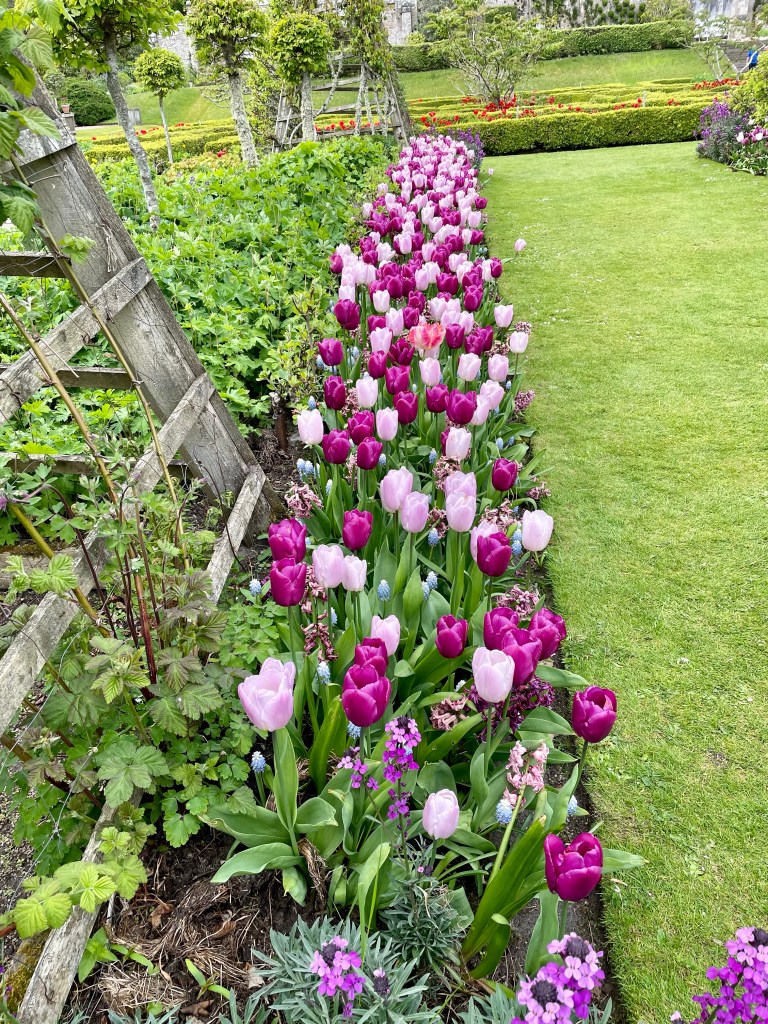
Gorgeous beds.

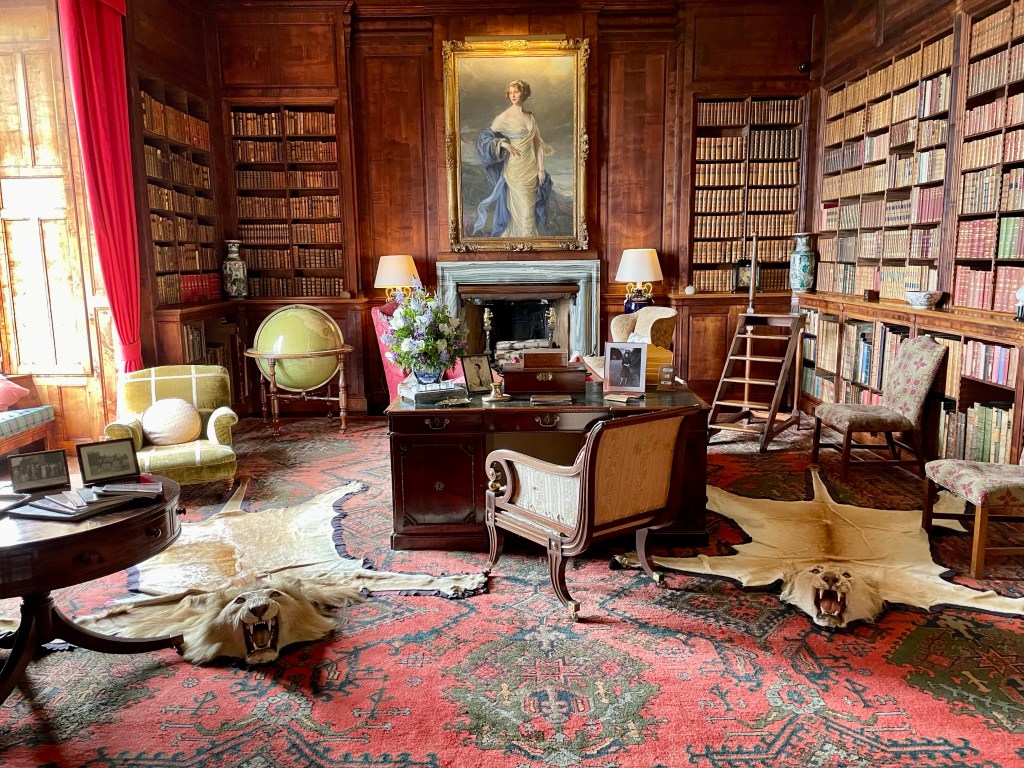
The indoor tour was quite something – so many rooms, so many paintings and photographs of Dukes, Duchesses, Earls, Kings and Queens. Check out the library – obviously the lion pair are a bridge too far on the decorating front.

Lions – no.

As with all estate-type museums, there were explanatory placards throughout. My favorite was outside the “Seamstress Room.” Why? Because it’s also known as the “Haunted Room.” Why? Because in the 15th century the Earl of Sutherland captured a young woman from the Mackay Clan after a battle and locked her up in in the seamstress room which was next to the night nursery which seems like an extraneous detail but it was on the placard. Apparently he wanted to marry her but she refused him. Earl, my dude, you need to up your wooing game. But wait, there’s more. One night he found her trying to extricate herself by climbing down a rope of sheets and I’m honestly wondering whether she invented this particular escape technique. Ego instantly bruised to the bone, the Earl whipped out his sword and cut the sheet rope, causing her to fall to her death. So obviously she became a ghost, and someone needs to turn this tale into a country song immediately.

The Sutherland boys, I fear, are the worst.

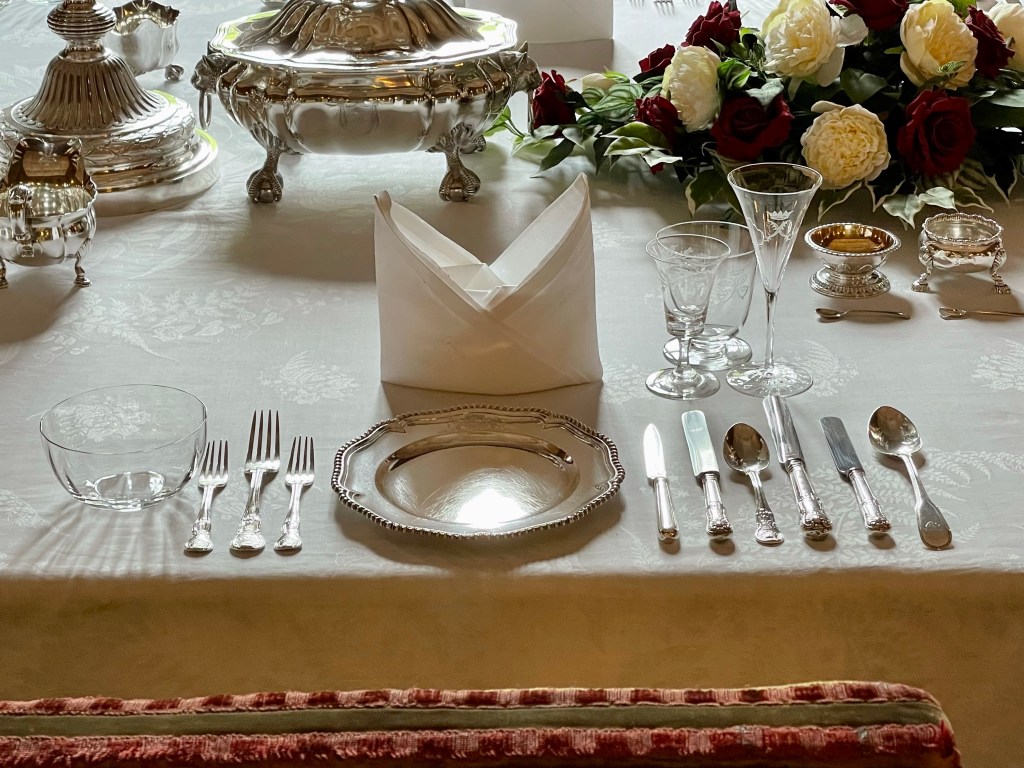
The dining room – does this make anyone else feel anxious?

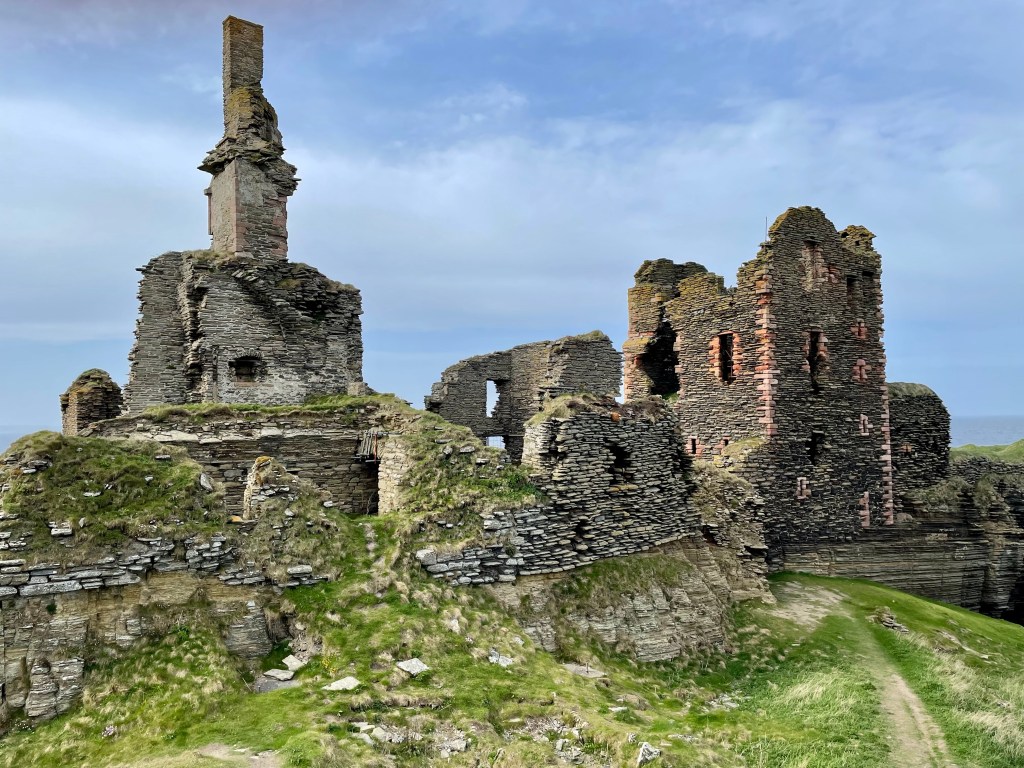
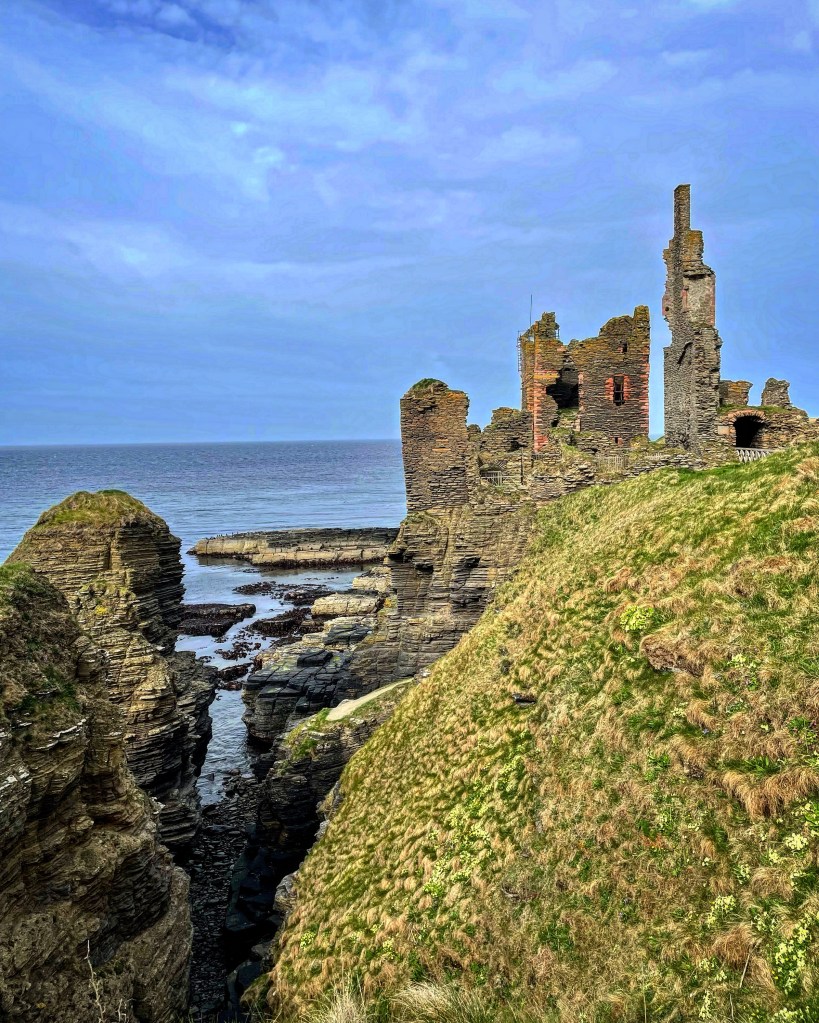
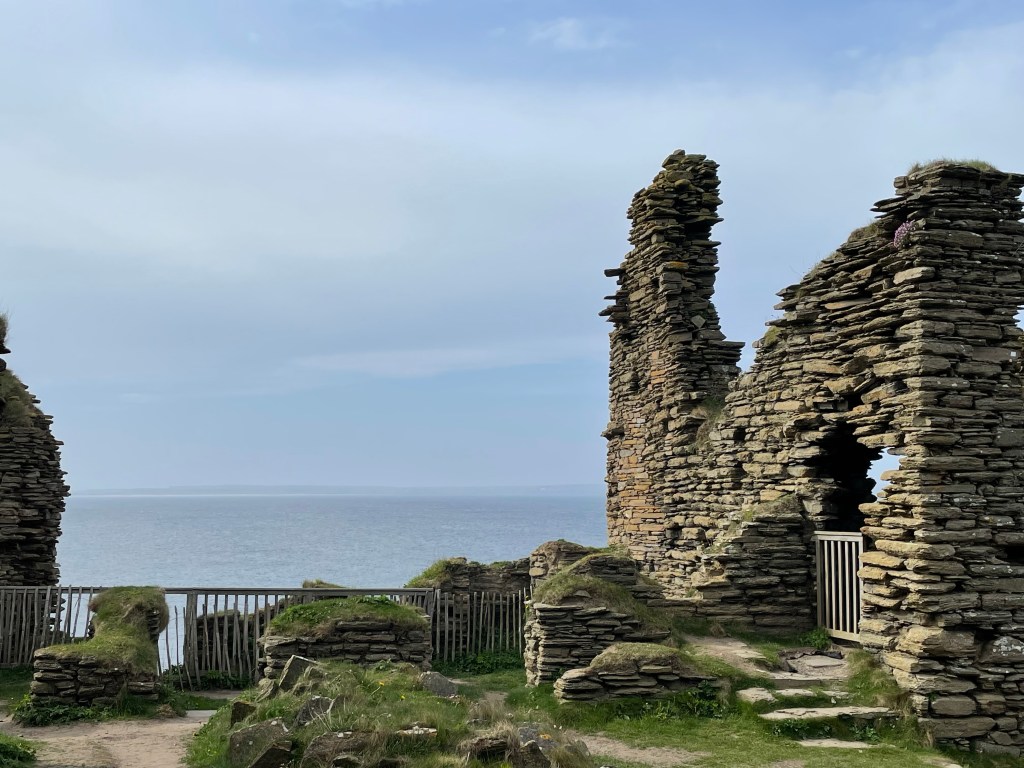
My favorite destination on our drive was a castle near Wick that very nearly fell into the sea. Thankfully it is being restored, not to its former glory, but to a ruin that will decay no more, Castle Sinclair.

Much of our route for this trip is along the NorthCoast 500, invented in 2015 by The Tourism Project Board of the North Highland Initiative to attract tourists to the less visited and economically depressed northern climes. It’s essentially a 500 mile circular driving route that begins and ends in Inverness. It has become incredibly popular rather too quickly and the locals, while benefiting from some positive economic impact, are Not Stoked. Living in a tourist town myself, I sympathize.

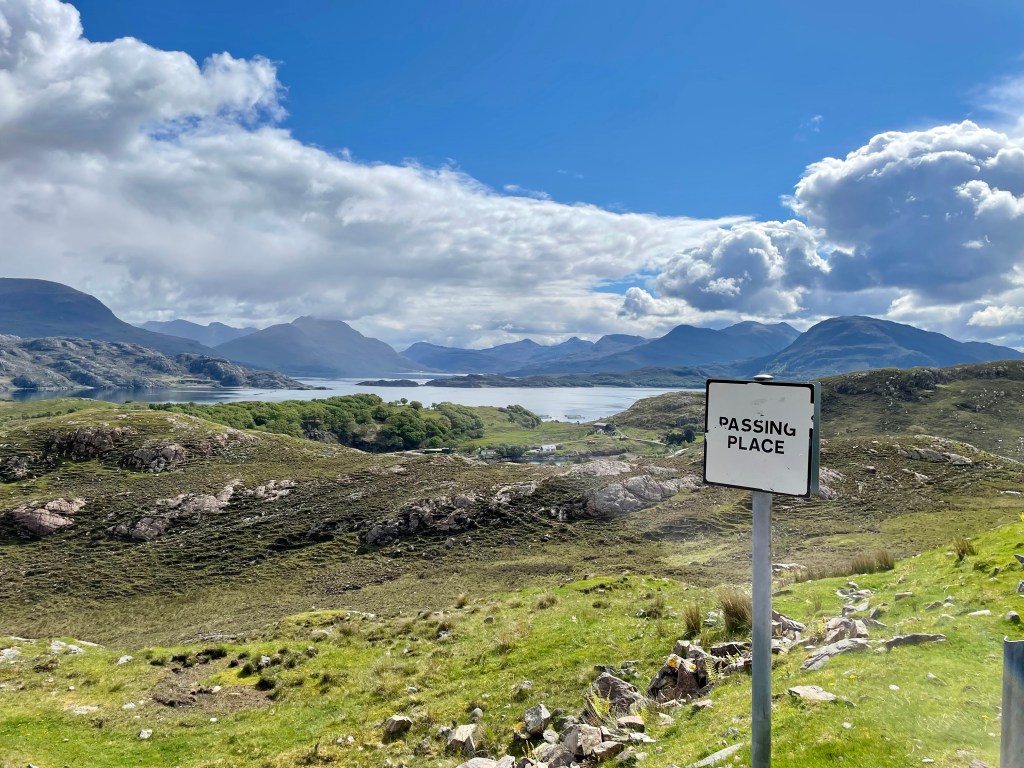
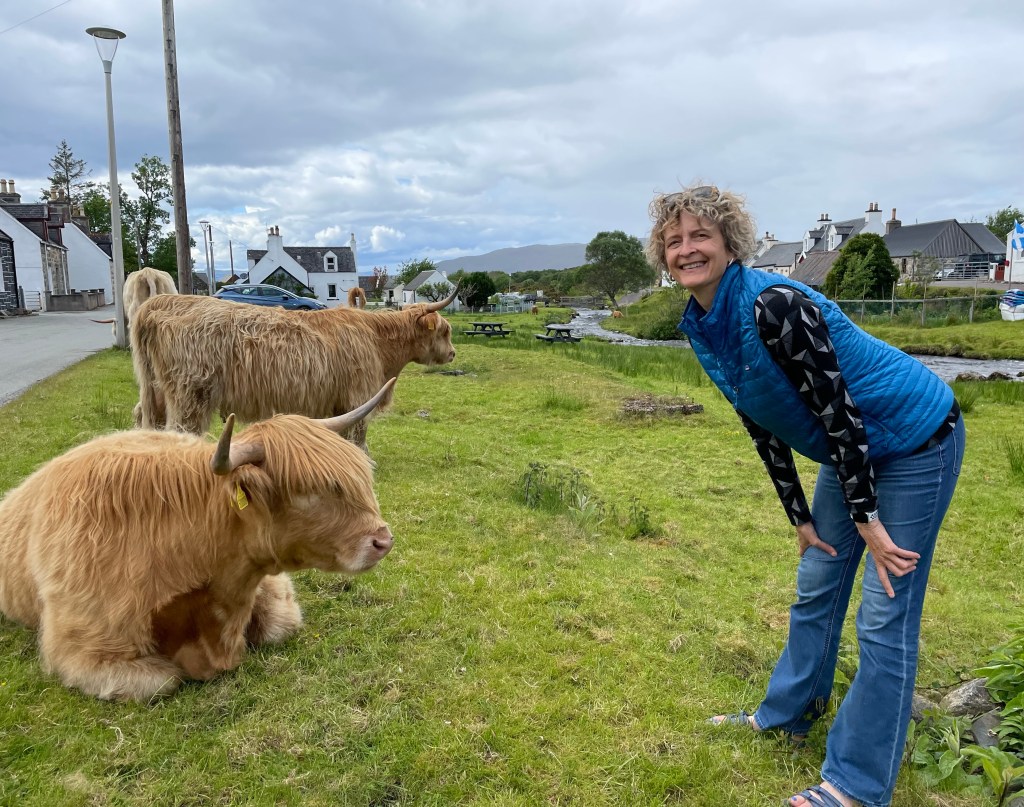
A particular enmity is reserved for all the camper vans inhabited by tourists not sleeping in B&Bs and making their own meals. These RVs are rented in Inverness by folks who have no idea how to back them up, and they are simply too big for single-track pot-holed roads. The area has also seen a huge increase in motorcycle and car traffic (especially “fancy cars” complained a group of men ruefully shaking their heads over breakfast in a Scrabster cafe). People are unfamiliar with how to navigate one-lane roads with “passing places’ where one person or another can pull over. The influx has placed a strain on infrastructure in general, particularly, ahem the delicate, often seaside, sewage system. Understandably irritating for folks living in a remote area who suddenly are facing challenges living their lives as usual. One man complained, “The tourists will stop suddenly in the road because they’ve seen a Highland cow and want to take a picture.”

Ahem. Me, circa 2018.

The route is also driven by people who go from attraction to attraction, stopping only for that Instagram moment and not really spending money or meaningfully interacting with the community. Here are a few examples.

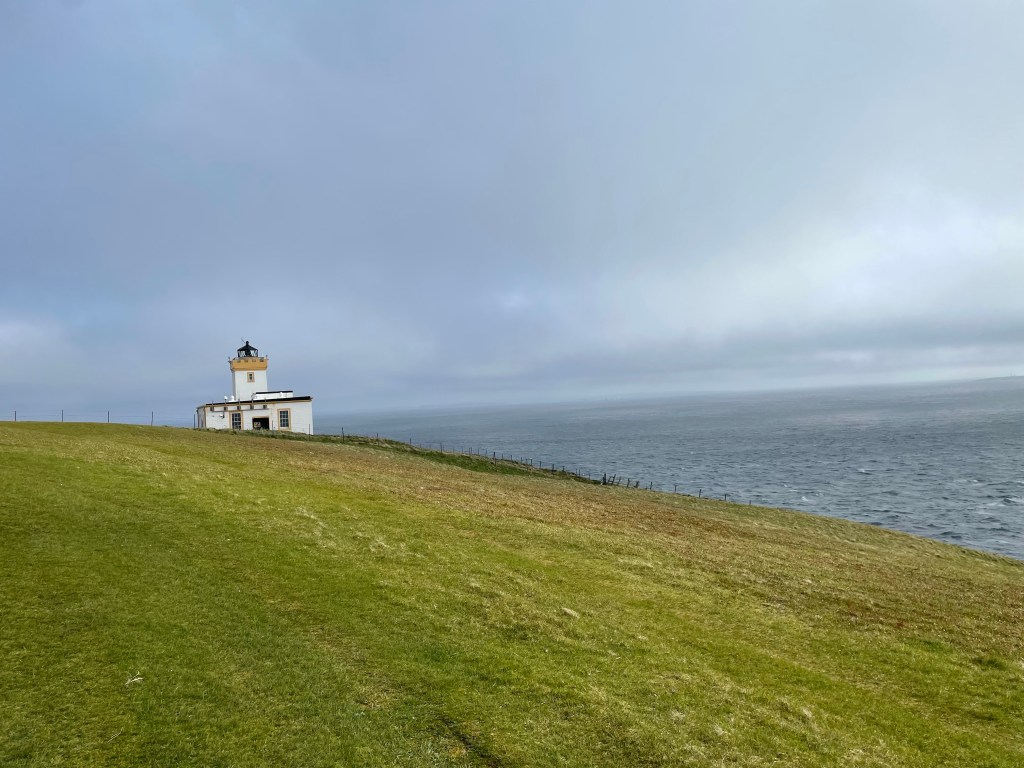
Duncansby Head Light House – the farthest northwesterly point of the mainland
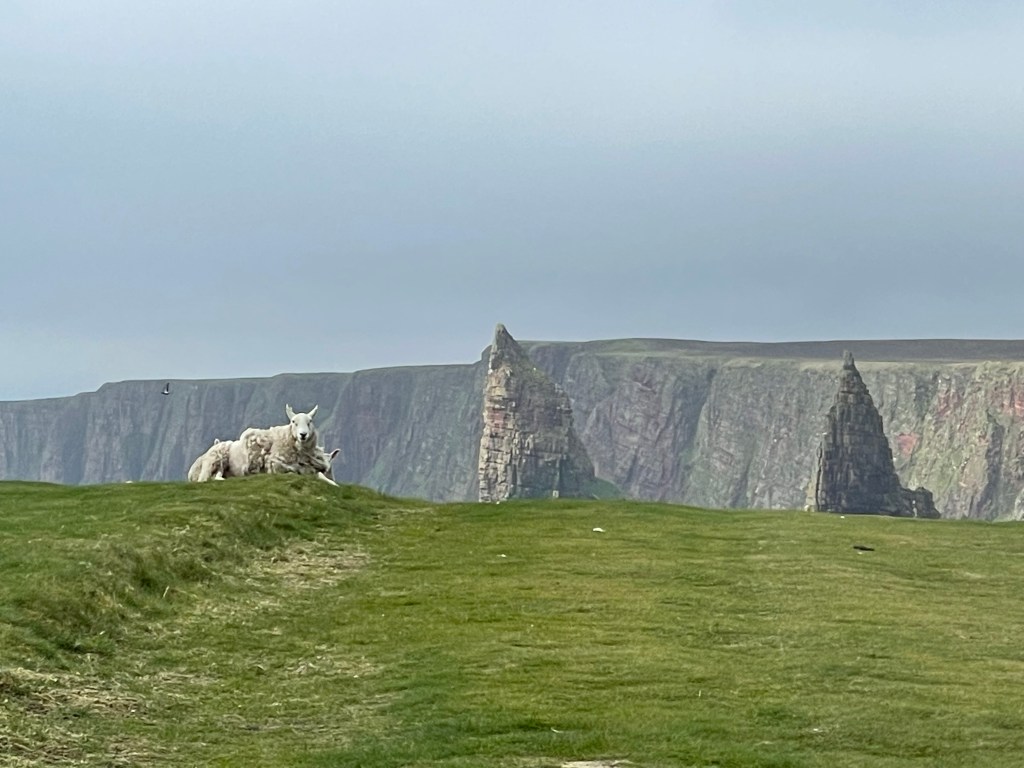
Duncansby Stacks plus sheep
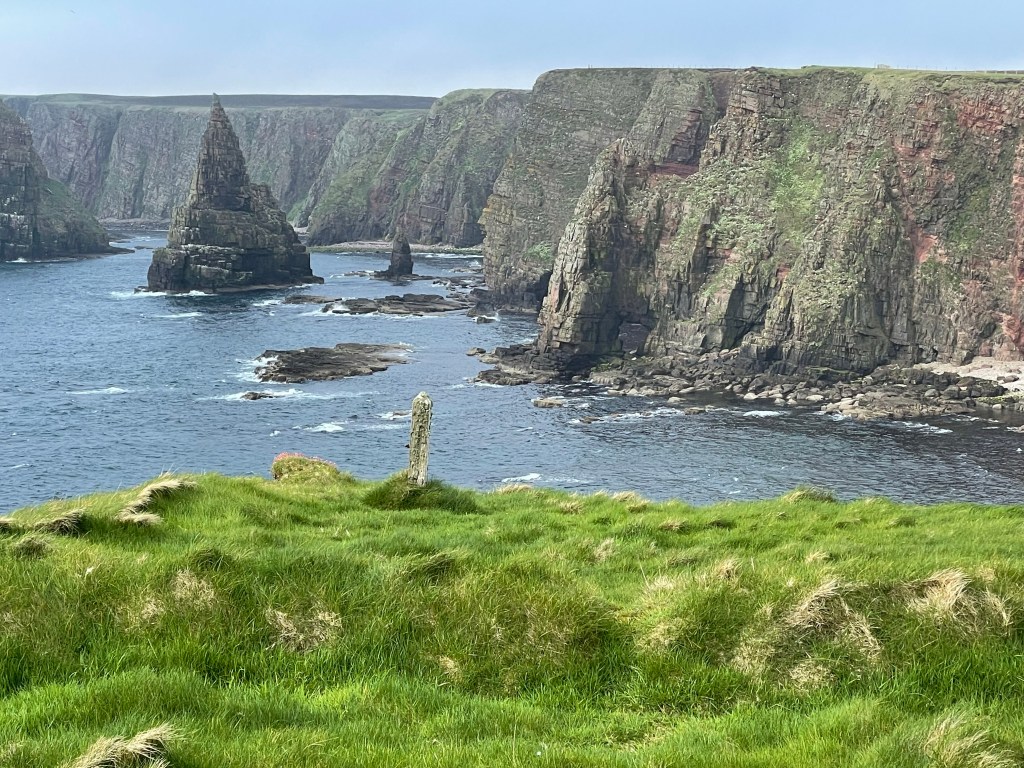
Duncansby Stacks, no sheep
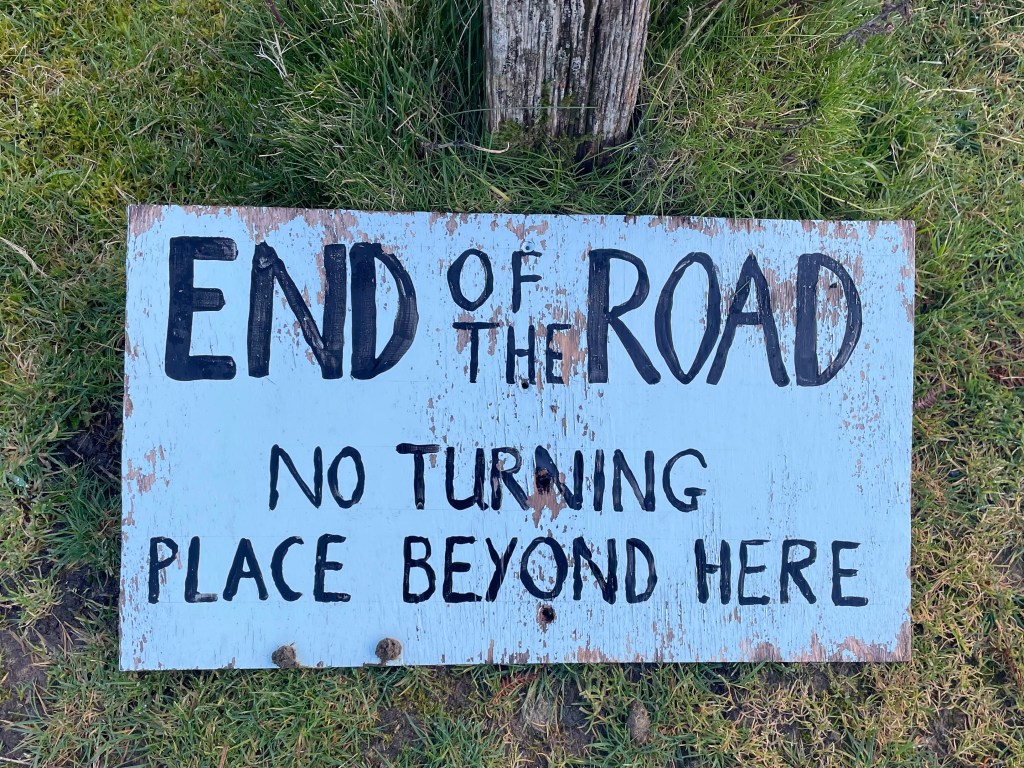
The End of the Road
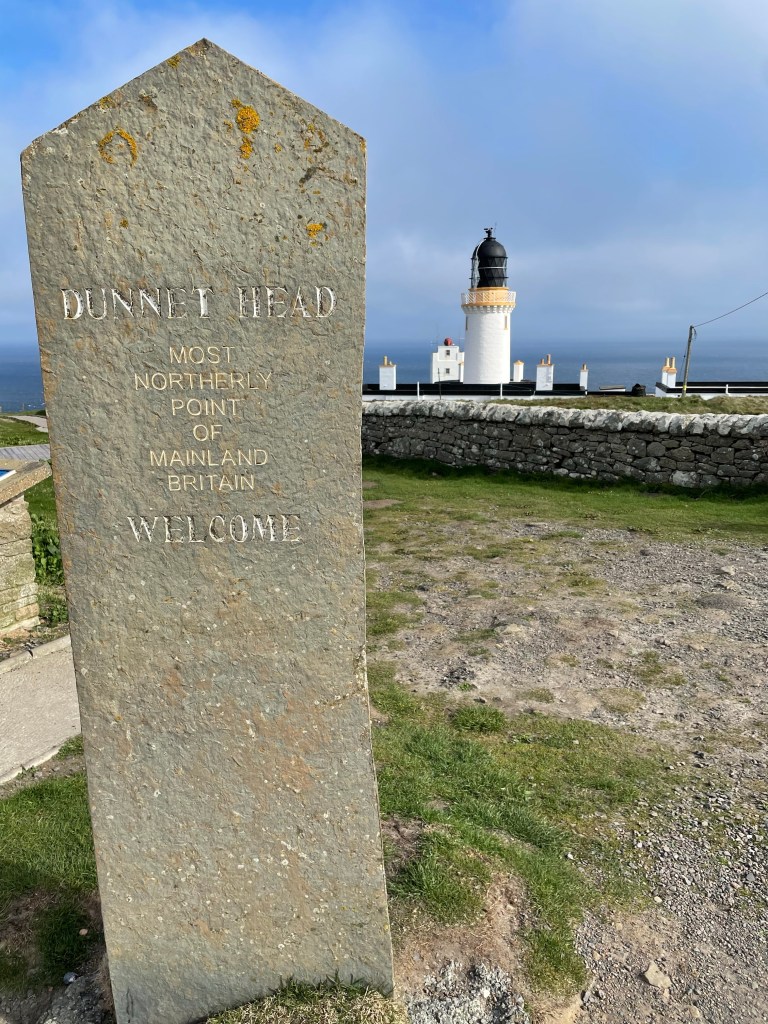
North no more.
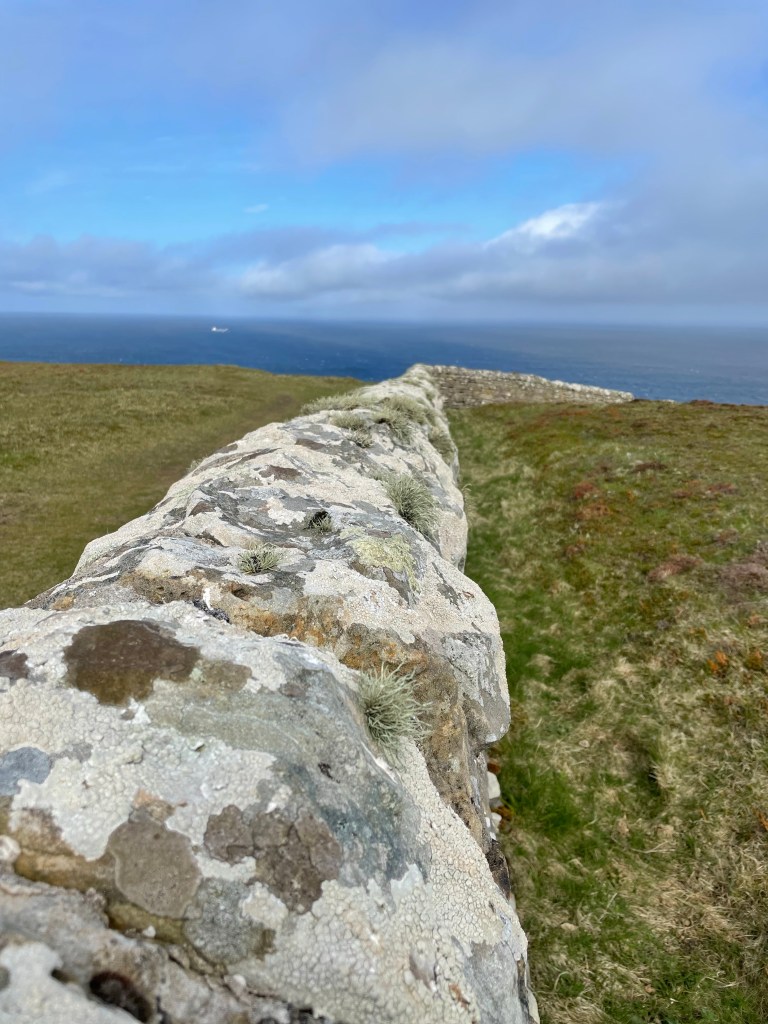
Wall to the sea.

The Eastern Highlands are gorgeous indeed and I apologize to everyone lucky enough to live there for stopping at a fair number of attractions listed in North Coast 500 brochures and snapping a photo. I can’t believe I am that person. At least Dougal is a small and not-fancy car.

For now, it’s time for our adventure in Orkney. We are officially here in Stromness and ready for three hikes and one day-long guided tour, all planned through Macs Adventure.

Stromness

I’ll leave you with the Old Man of Hoy, which we’ll see tomorrow, lord willing and the creeks don’t rise, from land.

How this came out I have no idea as the wind was blowing so hard I could barely stand. Just look at his cute face.

The People You Meet

Birdwatching on Westray

The best thing about traveling is chance encounters with fellow travelers, and meeting people lucky enough to live in the places where you have chosen to vacation. Interestingly, we’ve continued to encounter mostly other Brits, Norwegians and a few French. No Americans. Also the general age range has skewed older – many intrepid folks in their 70s and beyond, walking and biking through the Isles.

On our last day of adventure in Orkney we took the very early ferry north to Westray, known as the Queen of the Isles. Westray is eleven miles long and has 600 residents (down from over a thousand in the 1800s) and boasts the shortest scheduled flight in the world, the longest golf hole in the UK and a castle ruin steeped in history. More seabirds than anywhere I’ve ever been with a boggling range of species. Including – oh yes – the MIGHTY PUFFIN.

We were met at the ferry by Karen and Andy Penn, who run Westraak Tours. If you ever find yourself in Westray, book them. Karen was born in Orkney and Andy is an “incomer,” having moved to the island from Dumfries when they married six years ago. We swung by a local B&B and picked up Angela and Peter, a couple from Cornwall, and headed to “coffee,” which ended up being in Karen and Andy’s home, a lovely surprise. We sat around their table and got acquainted, also meeting Andy’s son Callum, who is in his twenties and has autism. It was lovely chatting with him and sharing our names and places of origin. It wasn’t long before Angela shared with the group that Peter, a retired physician, was struggling with early stages of Alzheimers. It was quite touching how he relied on Angela to fill in gaps. He looked to her and said, “do that thing you do,” and she riffed through words to help him find the right one. They were lovely and delightful, up for anything, and all-around excellent traveling companions.

We left Callum with a shopping list for lunch, which would also be at Karen and Andy’s, and set off across the Island. Our first stop was a bird-nesting area along the coastal cliffs.

Next we headed to Quoygrew, the ruins of a Viking settlement. One of its longhouses had been excavated between 1997 and 2005. On the way, we met the charismatic Miss Piggy and fed her dandelions.

Quoygrew was a settlement of farmers and fishermen first inhabited in the 10th century and lived in as late as the 1930s.

Remains of Viking longhouse.

Our lunch at Karen and Andy’s was utterly delicious thanks to Callum’s successful shopping excursion. Karen made sweet potato soup, accompanied by egg salad from chickens just up the road, locally made cheese, locally caught and smoked mackerel, rhubarb compote and possibly the best sticky toffee pudding in the world. Lunch was accompanied by a very animated political discussion about Boris Johnson (“a dreadful buffoon”) the current Tory government (“corrupt to the bone”) anti-immigration British home secretary Priti Patel, whose family immigrated to the UK but would not be able to do so under current policy (“a terrible hypocrite” and also “appalling”) and of course Brexit (“a complete disaster”). Angela expressed admiration for the qualified and educated Labour Party leader, Keir Starmer, and wondered, “why wouldn’t people want this type of person to lead the country,” as opposed to Johnson, who won votes because he was “a laugh” and would be an entertaining pub date. Angela also talked of the ever-growing wealth discrepancy in the UK. It all sounded wearyingly familiar.

We next visited Noltland Castle which was the biggest surprise of the tour. On our way we drove by a golf course, which perked up Peter, an avid golfer. Andy said the course boasted the longest hole in the UK at 738 yards. It’s a par 6. Andy said he got a 7 once, but with the constant winds a 15 is more likely.

All the gun holes.

Noltland Castle was constructed in the 1500s, so a bit late in the game as far as castles go. It was built by Gilbert Balfour, who at the time owned Westray and Shapinsay, both given to him by his brother-in-law, the Bishop of Orkney. It’s odd because apparently he ran out of money or interest because he never finished the castle – the Great Hall remains open to the stars, even while Gilbert lived there. Maybe he blew his budget on the gorgeous spiral staircase, one of the UK’s grandest of the period. Roofs are kind of boring and expensive for sure – but handy to have in place nonetheless. The castle boasts an incredible 71 gun holes. There’s even one in the WC. Was Gilbert paranoid? Or were his fears justified because he moved through life cultivating mortal enemies wherever he went? You be the judge.

The acoustics are amazing, and the local Kirk holds concerts here.
The never-roofed great hall.
The spiral staircase.
Castle grounds.

Balfour was the self-appointed Sheriff of Orkney, constable of Kirkwall Castle and master of Mary Queen of Scots’ household. Sounds good so far. But. He was also implicated in the murder of Cardinal Beaton at St. Andrews (mutilating his body and hanging it outside the window), after which he was captured by the French and condemned to be a navy galley slave for a few years. Fully not rehabilitated by that experience, he next helped murder Lord Darnley, Mary’s second husband, in Edinburgh.

You might be wondering why Mary didn’t dump Gilbert after he murdered her husband. The thing is she might have married Darnley mostly because he was also a Stuart and so would have given her a stronger claim to the English throne. Their son James did become James I of England, so that worked pretty well. Also, she had fallen in love with the Earl of Bothwell by that time and, who knows, perhaps she was in on the murder plot, as it was the only way to get rid of husbands back then.

Before Mary’s ultimate arrest, she was urged to flee to Noltland and some say that Gilbert was sweet on her and actually built the castle with her in mind. Sadly, she did not take this advice and was ultimately captured. You know the rest.

Balfour’s incurable habitual plotting continued apace, and he was implicated in the Mornay murder plot against King John III of Sweden. Karma finally caught up to him and he was executed in Stockholm.

Andy, Peter and Angela.

Next stop was Noup Head Lighthouse (one of over 200 built around the Scottish coastline). One family, the Stevensons, was responsible for designing all of Scotland’s lighthouses over a 150-year period – which explains why they all look alike. The lighthouses, not the Stephensons. The sole black sheep who rejected the family business in favor of a dodgy writing career was named Robert Louis Stevenson.

Here there were more dramatic cliffs and thousands of seabirds, transforming the cliffs into a layer cake of different types of birds, who clustered together by species in neat rows.

We next visited the Heritage Center, home of the Westray Wife, a small Neolithic figurine carved from sandstone, the first Neolithic carving of a human form to have been found in Scotland. It is also the earliest depiction of a face found in the UK.

Westray Wife

The center also featured rare china made for Edward VIII’s coronation. As we know, he abdicated after his ascension but before his coronation, in favor of his love Wallis Simpson. The American divorcee may have done the world a favor by removing a Nazi sympathizer from the board in favor of George VI, the beloved “Bertie,” who, along with the Queen Mum, refused to leave London during the Blitz and was photographed wandering amongst the rubble.

As we were leaving the Center, we spotted a small plane flying overhead – the shortest scheduled flight in the world from Westray to a (very) nearby island called Papa Westray. It’s scheduled for 1.5 minutes with actual flying time closer to a minute. The record for the fastest flight is 53 seconds.

Nearing the end of the day, we dropped off Angela and Peter, bidding them a very fond farewell. Angela was worried about her husband, as he had apparently been struggling more than usual during their trip, and they were headed to Shetland for another week. I hope they find that the familiarity of being back home in Cornwall will return him to form. They traveled extensively during their marriage, having many adventures around the world. Peter would smile happily, looking into the middle distance with fond remembrance as he shared some of their experiences. I dearly hope they are able to continue traveling for a bit longer before Peter’s illness makes it too challenging.

Our last stop on our way back to the ferry was the main puffin colony on the island. You know all those photos of puffins where they appear to be frolicking right underfoot? Sadly, my friends, these photos are largely due to high-powered zoom lenses and a lot of patience. Puffins nest in cliffs like the other birds, only they burrow rather than nesting on ledges. So you must wait for them to fly in and land, or perhaps pop out of their burrow to have a wee, which we witnessed and was adorable. The best time to see them is at dusk. But we still saw a good handful, and it was incredibly thrilling, and this is the best I could do with my iPhone.

The mighty puffin.

As consolation here’s a photo from an exhibit in the Heritage Center.

For illustrative purposes only.

Next morning we ordered a cab for 5:15 am to catch the ferry to the mainland. Happy to see Dougal waiting patiently for us in the car park, we drove off across the North Coast. Despite the occasional flare of irritation at campers, we mostly traveled along the single track road in complete solitude through moody landscapes, farmland and villages. We stopped at some spectacular, almost deserted beaches and visited Smoo Cave.

Farr Beach
Scotland you really are too much.
Ceannabeine Beach – Caribbean blue waters.

Smoo Cave was interesting although I’m not really a cave person. We opted against the hard hat tour. Lovely waterfall though.

At long last, we left the beaches of the north coast behind and dropped down into the rugged and spectacular Western Highlands I remember so fondly from my last trip.

We stayed the night at Newton Lodge, which is situated in an impossibly gorgeous location on Loch Glencoul.

The view from the common room.
Best breakfast spot ever.

I’ll leave you with a chance encounter we had with a cyclist we met as we arrived at Newton Lodge, John Loughran. We met him as he pulled up on his bike and tried to sort out where he had booked a room. As we were headed to nearby Kylesku Hotel for lunch, he asked for a ride. Of course we were happy to oblige, and John joined us for a lovely lunch. He is 78 years old, a retired engineer, and a Scot, although he has lived in England these past fifty years. He was riding the North Coast 500 in the opposite direction as we had done, riding valiantly through rain and wind and up and down serious hills on roads with no shoulders, or margins or verges as they are called, somewhat more descriptively than “shoulders.” John didn’t complain about any of it, just nodded and smiled, saying, “oh, it’s quite alright actually.” He told of a time when a local cyclist pedaled by who could see he was running out of steam on a climb. The guy rode alongside offering words of encouragement, and John said softly with a smile, “he got me through.”

John had planned the trip for 2020 along with a fellow cyclist. Sadly his friend bailed on the rescheduled ride, as his wife, whom John sweetly described as “a bit neurotic,” didn’t want to lose her husband for two weeks. John said proudly that his own wife, who was “very busy” and active in their community, was fine without him. He was “a bit disappointed” without his friend and his friend was “gutted” not be alongside him. I am slightly peeved by the clingy wife but like John’s wife very much. John added that he and his busy wife have five very successful children and seven grandkids spread around Scotland, England, Spain, Japan and Australia.

He showed us how he created a page for every day of his journey, carefully planning stops to recharge his electrical-assist bike. He shared many tales of his life, and how on this ride he was visiting spots in his home country that had meant a lot to his family over the years. John might be the sweetest man ever.

I’ll share one of his stories about a business trip he took to Rio in the fall of 2001. He was about to give a presentation to thirty of his colleagues when he heard someone say something bad had happened in the States. They all gathered around a television in time to watch the second plane hit the south tower. As he was telling the story, his mouth trembled and he broke down. He said he could not ever talk about that day without getting emotional, even after all this time. He said quietly, “of course, we cancelled the presentation, we simply could not go on.” When he was able to find a flight home, he remembers stepping over sleeping, marooned Americans in Schipol Airport. A reminder that the horrific 9/11 attacks took a psychic toll on humanity, even though they occurred on American soil. And the residual impact of that terrible day reverberates still, especially in empathetic souls.

Godspeed, John.

The best part of travel.

Western Highlands and Holy Crap Bealach Na Ba

After our night in Newton Lodge, we drove through the Western Highlands, stopping at Ardvreck Castle on Loch Assynt where QUITE a few photos happened. Perhaps an embarrassing number. In all fairness, constantly changing weather causes a continuing shift of light making everything look entirely different. Especially when the subject is dramatically stark and romantic castle ruins.

Next stop was the Knockan Crag Nature Reserve which featured a spectacular loop walk enhanced by sculptures, informative geological information and, oh yes, views. It’s largely a geological site, due to the discovery of a low cliff created when two continents crashed together millions of years ago, exposing layers of sediment and rock that told a very long story. I had particularly wanted to photograph the famous sphere sculpture along the trail but I blew right past it because I was engrossed by trailside markers detailing Scotland’s journey through time, starting 600 million years ago when it was parked in the climes of the South Pole. Just so you know, 500 million years ago Scotland was part of North America, it collided with England 400 million years ago, passed through the equator 300 million years ago, was populated with dinosaurs 200 million years ago and was submerged under the sea 100 million years ago. You’re welcome.

…..thus setting the stage for centuries of war and rebellion

And then highland deer appeared along the trail, also very distracting.

The views from the top were – as you are tired of hearing – stupendous.

10/10 would recommend.

Being obsessive, I hiked partway around the loop again, intent on finding that dang sculpture. I think it was worth it.

Our next lodging was a refurbished Victorian hunting lodge on a 26,000 acre estate called the Shieldaig Lodge. Our home for a couple of nights.

Complete with a Wellies Station on the front porch.

First things first, a whisky tasting curated by Alistair, who was bestowed with the exact right name.

The hotel had the most comfy beds so far and the staff tended to greet you with, “Hello there, you alright?” This made me wonder whether I looked wild-eyed or possibly about to fall over, but then realized no, it’s just what they say and it was actually very comforting.

The next day was a bit gloomy so we walked around Loch Coulin and Loch Clair near the mighty Benn Eighe. Backroads welcomed our group to the Highlands with this walk back in 2018. On that day the mountains were shrouded in clouds, so it was fabulous to see them this time. An entirely different situation!

September 2018
May 2022

A few more 2022 photos……

And now, my friends, comes the exciting part of the day. We drove the loop around the Applecross Peninsula. The drive west along the peninsula’s north coast featured narrow single track roads with no margins, steep cliffs, hairpin curves and freaking unbelievable views back toward the mountainous wilds of Torridon and out to sea. After stopping for lunch, we intended to complete our circumnavigation by driving the infamous Bealach Na Ba (Pass of the Cattle, aka only suitable for cows) which headed east along the peninsula’s south coast and featured even more adjectives-fail-me views – if you felt like lifting your eyes from the road and thus gloriously perishing.

After a successful navigation of the north road, we stopped in the beautiful little town of Applecross and had a delicious lunch at the Applecross Walled Garden which you all must do.

With apologies to the driver in the mirror – views toward Torridon.
Another view back toward Torridon, but this time I pulled over.

Before we leave Applecross and head down the Bealach Na Ba, yet another wee word about campers. Ready? As you might have noticed, I really do dislike them intensely. Too large for most Scottish roads, driven 100% of the time by couples in their twilight years, shall we say, and the drivers (men) have no idea where any part of the camper is relative to the road and cannot back them up. My only solace was imagining the wives scolding their husbands with the old chestnut, “I told you this was a bad idea,” and wondering whatever possessed them to marry this lame dude in the first place. I also laughed at them, not with them, when they got stuck. You would too.

They are even more irritating because at the bottom of Bealach Na Ba there is a large sign plastered with warnings about large vehicles and “learner drivers” which I believe would apply to every single tourist renting a camper. Travel books warn against taking this road unless you possess the ability to back your vehicle down curvy roads with steep drop-offs for 300 yards (to get to a “passing place”). This would dissuade me if I ever rented a camper which I would never, but I’m just saying. It does, however, not discourage literally anyone else.

A few stats for you – the Bealach Na Ba boasts the greatest ascent of any road in the UK, rising from sea level to 2,054 feet in about six miles with an average gradient of 7%, reaching 20% at its steepest. It was built in 1822 with rough gravel and paved (and I use that word loosely) in 1950. And yes there were cyclists making the climb.

Here is the view at the top, looking out toward the mountains of Skye.

Over the sea to Skye.

And now for a couple of videos featuring live narrative commentary should you care to have a wee listen.

Yes we were listening to the Outlander soundtrack.

Even with the campers, it was the most fun I’ve ever had while driving and I’d do it again in a second, maybe early morning or later in the day after the campers had found their parking spots for the night and the roads of Scotland are empty.

After we successfully survived that harrowing but fabulous drive, we stopped in Plockton, known as the “Jewel of the Highlands,” although I might tend to disagree but big ups to the Plockton tourism people and Instagram for the valiant effort.

Shortly before we reached the Skye bridge, the Highlands bid us a fond farewell by offering up a big herd of fuzzy heilan coos.

Mr. Coo loves me, this I know.

Fairy Pools, Glencoe and Hagrid

We planned an early launch from our AirBnb to beat the crowds to the famed Fairy Pools of Instagram, our last official stop on our Skye Grand Tour. We arrived at the car park around the sweet spot of 8:00, finding official flourescent-vested guys already directing folks where to park. We crossed the road and hit the trail, walking along a clear glass river with multiple waterfalls and translucent pools, surrounded, as ever, by mountains.

Apparently during summer months, the trail is very crowded with nary an unpopulated pool. On our way up, a single naked couple was taking a tentative dip in one of them. In full view of the trail, but sure. Also brr chilly. Other than this nudie tourist sighting, we had the place to ourselves.

We at last came to the most popular spot of the journey – for good reason.

On our return, many people were venturing up the trail clad in all manner of clothing and footwear, bringing along dogs, kids and so on. It’s hard not be feel concerned about the beating this magical place takes every single day.

Honestly the struggle against going full misanthrope is real.

To add grist to the argument in favor, our next stop was Eilean Donan Castle, another star of stage, screen and Instagram. I had thought it was a ruin. I had never seen shots of the inside of the castle, and generally exterior photos are entirely bereft of people, incredibly romantic, secluded and mysterious. Well. It’s a beautiful castle to be sure, but it has the honor of being the only thing in Scotland that hasn’t entirely exceeded my expectations.

The original castle was built in the thirteenth century. A founding legend tells us that the son of a chief of the Mathesons had the ability to communicate with birds, and as a result, after many adventures overseas, he gained wealth, power, and the respect of Alexander II, who asked him to build the castle to defend his realm. The castle later ended up in the hands of the MacKenzie and McRae clans. The MacKenzies claim that Robert the Bruce sought shelter there. Even though there is zero evidence of this, I’ll allow it.

At last, after hundreds of years of defending the realm, Eilean Donan’s story came to a close. In response to the MacKenzies’ involvement in the early Jacobite risings, government ships destroyed the castle in 1719. It was gone.

Or was it. Incredibly, the castle was rebuilt in the early 1900s. While the Edinburgh-based architect followed the extant ground plan, the details are different, as many of the original plans weren’t discovered until after the reconstruction. It looks cool, no doubt, and as such is one of the most visited castles in Scotland. It has also been a shooting location for a bunch of movies, including a stint as the Scottish headquarters of the MI6 in The World is Not Enough, filmed during James Bond’s unfortunate Pierce Brosnan period.

You guys. It’s like Disneyland and I mean that in the worst possible way. Besides the fact that the castle was recently entirely reconstructed, and so is pretty much fake, it’s flanked to the south by a giant car park. Giant. Packed to the gills with cars and buses. Directly in front of it is a visitor center campus, including a cafe and gift shop. Yuck.

Even so, since we were there and all, we toured the castle. Yet another lock of the Bonnie Prince’s hair is on display, even though Charles could not have had any connection to the castle since it didn’t exist during his lifetime. Unlike Flora MacDonald’s specimen, this one is substantial enough that I wondered whether someone had to hold the Prince down to get it. I suspected that it could be a prop for the tourists. Finally, in all fairness to me for my very mistaken impression of this place, the reason I’ve never seen photos of the inside of the castle is that you are strictly speaking NOT ALLOWED to take inside photos. This is the first such warning I’ve seen in laissez-faire Scotland.

So at last, after all the build-up, here are my pics. Note the absence of people. These photos might accurately reflect a brief moment in time, but they are, in their overall essence, a lie.

Eilean Disney Castle

A side note: my apologies for complaining about tourists. After all, I am one. And don’t get me wrong, the vast (seriously, vast) majority of our time in Scotland has been a marvel of existence in a remote, wild and magical place with very few people. All of my other photos are accurate representations of the solitude we experienced. It is this sense that you are the only person in the world which makes it so jarring and mellow-harshing to encounter other humans. The fact that there are tourists at tourist spots should be a surprise to nobody, including me. But it’s fun to rant.

We bailed from Eilean Disney Donan and fled toward Glencoe, our next destination. We drove down the stunning, impossibly green valley surrounded by towering mountains, completely in awe. And I would be remiss if I didn’t give a shout-out to the “Three Sisters” which I love because we have mountains by the same name in the Central Oregon Cascades.

Glencoe’s version of the Three Sisters.
Central Oregon Cascades version.

The glen holds eight of Scotland’s munros and thus is a haven for mountain-baggers. As you can see, the terrain is incredibly steep and the trails are vertical, none of this switchback nonsense.

Glencoe is beautiful, unreal and unspoiled even with tourists. It’s a wonder how so many of them pull over into the car park, snap a photo, and bounce. They can easily be ditched simply by taking a few steps down a trail. We hiked along one that borders the River Coupall (thanks for the recommendation Paul and Melisse!) which was otherworldly. I honestly don’t even know what to say about it.

After a couple of miles I continued on alone and Scotland was giving me all the magic. I kept thinking if I kept going I’d reach the notch of the valley, but the longer I walked, the more it retreated into the distance. Metaphor alert. Some things you can never reach because the journey is the thing.

Which brings to mind – and I haven’t yet mentioned this – my dad died in January of this year a few days after I lost a dear friend and it has all been extremely difficult. Sometimes I wonder whether I have fully processed their departures or what that even means really. Anyway, my dad has taken to showing up at random times, and he joined me as I finally abandoned my quest to reach the end of the valley, turned and headed back. Dad never expressed an interest in Scotland, but I think he would have loved it and I did miss telling him about Dougal and driving on the wrong side of the road. The loss hit me anew right there in the middle of one of the most beautiful spots on the planet. I know this will continue to happen forever and that’s okay. I have graduated from nearly debilitating grief to a sadness that dances near the edge of being comforting. The odd thing is that I’m still so surprised that he left. I knew he wouldn’t live forever but I also thought he would somehow.

Being in this place I love has brought me a lot of peace and maybe a smidge of healing. My patronus charm is easily cast here. I have no idea why, but I feel stronger, more connected and more fulfilled moving through these hills. And completely happy. When I see myself in photos the difference in my face is remarkable. A reminder to stop making life about moving from one thing to the next, errand after errand, accomplishment after accomplishment, dealing with thing after thing after yet another thing. It takes a toll to live like that. Much better to move through the hills and accept the solace they offer.

And so. Speaking of the patronus charm, here is your segue alert.

The next day we walked an embellished version of the Glencoe Orbital Track, which launches from the charming town itself and features fabulous stops and points of interest, including (spoiler alert) Hagrid’s Hut. You heard me. The track is billed as an hour-long walk but of course somehow we extended it to about eight miles. YES.

Main Street, Glencoe. The Pap of Glencoe overlooks the town.

Along our way, we stopped to pay our respects at the Glencoe Massacre Memorial. At this point I wonder whether you have grown weary of history. Too bad, it’s not your blog. Glencoe is perhaps most well-known, from a historical perspective, as the site of the infamous Glencoe Massacre of 1692. The story, stripped to its bones, is that the MacDonald clan, settled within the glen, was delayed in affirming its allegiance to the crown of William and Mary, demanded in the face of rising Jacobite sentiment around the Highlands. There was actually a massive misunderstanding about whether the clan had timely made the oath. The crown, nevertheless affronted, decided to make an example and ordered the 128 Scottish government forces who had been quartering there for 12 days – taking advantage of the legendary Highland hospitality – to kill everyone. While some soldiers refused, and others tried to warn the MacDonalds in preceding days, enough remained to do the job. The soldiers turned on their hosts in the early morning hours and butchered them, men, women and children up and down the glen. Many of those who made their escape froze to death. The leader of the massacre was one Archibald Campbell, 10th Earl of Argyll. The Campbells and the MacDonalds had been feuding since the days of Robert the Bruce, but the massacre was a bridge too far and the Campbells have not been forgiven to this very day.

Our trail passed the legendary 300 year-old Clachaig Inn, a favorite lodge for hikers and climbers. We enjoyed a lovely lunch after snapping a photo of the notorious “No Camerons” sign posted at check-in, much to the annoyance of the woman behind the desk who I fear would liked to have massacred me in the wee hours.

The Clachaig Inn

Next we walked to one of the iconic white houses in the glen, much photographed for obvious reasons, and then up to a waterfall.

One more parting shot (I swear) re: tourists on buses. Here they are piled up on the bridge leading to the house. Which, by the way, is privately owned and occupied.

Photo only shows only a fraction of the humans disgorged from two large buses. Query: why is this a fun way to travel?
Lovely waterfall just above the white house.

And shall we end with Hogwarts? As you probably know, many of the later Harry Potter movies were filmed in Scotland. Because obviously that is where Hogwarts would be. Along the trail we swung by the very spot where the set of Hagrid’s Hut was constructed. Most notably the location where Buckbeak almost lost his head in Prisoner of Azkaban. What I love the most is that “Hagrid’s Hut” is literally marked on Gaia, my hiking app.

Visiting Hagrid to inquire into the whereabouts of my Hogwarts letter.

That evening we had dinner at my favorite restaurant since the Michelins, Lochleven Seafood Cafe. The company started as supplier of shellfish to restaurants and gradually morphed into a fabulous restaurant in its own right. They mostly offer shellfish with some sides. It’s brilliant. The fresh langoustines were out of this world.

Looking ahead to the final days of our trip, I’m excited about my Inverness birthday plans but a little leery about having to test negative for COVID to return to the states. It’s actually the Binax home antigen test that we all have stockpiled in a bathroom drawer, but it’s five times more expensive and you take it on video with a medtech person verifying results. There’s a bar code so you can’t cheat. If you test positive you have to quarantine in your location for ten days, which wouldn’t be bad if there were any hotels rooms to be had and if you weren’t entirely sick of your clothes. This is out of whack with current science so is mostly performative, and we’re the only country that retains this requirement, but the CDC is standing firm. Even if that hurdle is cleared, my only-an-hour layover in Amsterdam is looming around the edges of my travel anxiety as well. But no time for that. It’s time to head back to Inverness.

Until next time Glencoe.

Inverness, Birthday Bagpipes and My Drunk Dude Angel

Inverness.

Back in Inverness, the first order of business was to bid a fond farewell to our faithful Dougal. I had grown quite fond of him despite the flaws he was born with – the back seat is worthless for anyone with legs, the hyper-annoying beepy lane monitor warning system, the cheaply finished interior etc. But I loved driving Dougal all over Scotland. I loved the entire experience, driving on the left, single track roads, no shoulders, glorious teeth-rattling potholes, all of it. Maintaining awareness of passing places, sorting out who should pull into one either by driving forward or backing up, and the subsequent mandatory wave to the other driver after you execute whatever you both silently agreed upon – it all makes navigating Scotland’s roads a delightfully communal experience. A very different situation than in the States where one’s car creates a bubble of isolation and basically drives itself.

Another driving-related thing I wish I could have shared with dad is the UK experience of getting gas. The pumps appear to be super-charged and sound like a jet engine when engaged – and they fill up your tank in literally ten seconds. Life-changer. Why can’t we have jet engine gas pumps? You can get your nails done while waiting for your gas tank to fill in the States.

Dougal. He’s been through a lot. Farewell my friend.

Before we relinquished Dougal, we visited Culloden Battlefield. This somber place is an incredibly rich and fascinating site. Since I wrote about it extensively during my last trip, I’ll simply leave you with a couple of photos.

We spent the afternoon puttering around Inverness in the rain, visiting Leakeys, its famous used bookstore. In addition to books they have bins and bins of prints and old maps, all “guaranteed” to be over 100 years old. OK maybe but does it matter really? I bought three.

Leakeys

I was excited to have a birthday-eve dinner at Mustard Seed, my favorite Inverness restaurant. Apparently I have my own table there, as they seated me exactly where I enjoyed a lovely meal in 2018. Maybe it’s the designated Mysterious Woman Eating Alone table. It has a nice view of all of the proceedings.

Mustard Seed Cafe, Inverness

And last but certainly not least, for my last full day in town I booked a tour with one Andrew Grant MacKenzie, who arrived to collect me with a kilt, a border collie named Sonas and bagpipes. Andrew is a legit historian and archaeologist, so he’s basically Indiana Jones. He’s also fluent in Gaelic (pronounced gallic, not gay-lic as it is in Ireland, similar to the whisky/whiskey thing). We had arranged a tour along the Moray Coast, east of Inverness, which Andrew dubbed, “Picts, a Wolf and the Covenanters.”

Andrew and Sonas

Andrew managed Culloden Battlefield for years for the National Trust of Scotland. He actually met with Diana Gabaldon as she was doing research for Outlander. (Segue: I eventually admitted to him that I had partaken of a Rabbies Outlander tour during my last trip which was a super embarrassing thing to disclose to a historian but he didn’t seem to judge.) He said that Culloden staff were the first people in the UK to see Outlander – it was released in the US first and Americans started visiting with particular questions about a fictionalized version of the ‘45 rising which the staff couldn’t answer, not having seen the series. I’m imagining fans asking to be shown the spot where Jamie and Black Jack Randall engaged in fatal hand-to-hand combat. Hopefully not, as both characters are 100% fictional but people are weird. Anyway, STARZ sent over the first two seasons and all employees had to watch it. Of course Diana’s tale is mostly about the love story, not a historically accurate depiction of events sufficient to pass muster with folks who live and breathe Culloden. Still I would have paid a lot of money to watch them watch Outlander.

Andrew also seemed to know everyone in Scotland – he knew the crazy guide we encountered on the aforementioned Outlander tour who had armed his little old lady passengers with plastic swords and reenacted various scenes (see previous blog), he knew the bagpiper Backroads arranged for us during that tour (ditto), he’s talked to the head of Visit Scotland about infrastructure issues related to the North Coast 500, and he has been invited to ceilidhs attended by members of the Peatbog Faeries. He also worked at Cawdor Castle for a while and so of course knew Lady Cawdor.

By now you are getting Andrew’s general awesomeness. And so onto the tour we go. He first drove us to Sueno’s Stone, the largest and most spectacular of the many carved stones that have survived from Scotland’s early medieval period. It stands about 21 feet high and is encased in a giant protective display case. Continuing in the Pictish vein we next traveled to Burghead, a quaint little town located on a spur of the Moray peninsula where a Pictish fort was located. You could see Orkney from the site.

Suenos Stone

Our next destination was the ruins of Elgin Cathedral, the place that our friend the Wolf of Badenoch (remember him?) burned down. I was picturing a quaint medieval chapel when it was actually more akin to Westminster Abbey.

The cathedral is a massive and gorgeous site. There’s one room with a domed ceiling, glass windows and perfect accoustics, which Andrew demonstrated via the dulcet tones of his singing voice.

After having lunch at Cawdor Castle Cafe, we finished the tour at the Auldearn battlesite. As a historian, Andrew cares a lot about this battle and doesn’t understand why more people don’t visit the site. Perhaps our friend Diana could do something about that although be careful what you wish for. The 1645 battle was fought between a Scottish Covenanter army allied with the English Parliament and the Royalist forces of Charles I. Covenanters were folks who signed the National Covenant in 1638 to confirm their opposition to the interference by the Stuart kings in the affairs of the Presbyterian Church of Scotland. The Stuarts believed all of that divine right of kings stuff and that monarchs were meant by God to be the spiritual heads of the Church of Scotland instead of that other guy Jesus. This was a sticking point even for Scots who supported the Stuarts. Andrew said it was the first time a battle had been fought between Gaels over an idea rather than land and resources.

In the peace and solitude of the ancient battlefield, Andrew liberated his bagpipes from their case and played an evocative and mournful tune about the battle itself. It was achingly lovely and sad. From the sublime to the you-know-what, his encore was a song you might recognize in honor ME GETTING EVEN OLDER.

Best rendition ever.

Over the course of the day we had some great conversations about history – and even delved into politics. Andrew said that most Scots struggle to comprehend what is happening in the States currently with MAGA, the insurrection, guns, individual rights and so on. Yeah same same.

We talked about the horrific 1996 Dunblane massacre, the deadliest mass shooting in British history. Sixteen students and one teacher were killed, with fifteen others injured. Directly afterward, Parliament passed two new firearms acts which outlawed the private ownership of most handguns within the UK, together with a buyback program. Thousands of weapons were incinerated. As we know, there have been no further mass shootings with a handgun in the UK since, even though we are told by NRA experts that guns don’t cause these horrific things. UK residents can still own hunting rifles, of course, but they are registered and owners must keep track of their shots. The guns are inspected every year to make sure the owners’ reported number of shots match the number of times the gun was actually fired. Can you imagine the cascading exploding heads in the States if something that restrictive were enacted? I guess in some countries the bother and inconvenience is worth not having people and children regularly mowed down by military-grade weapons. Imagine.

Andrew also talked about a few Gaelic concepts that inform his life and business. The words are about the sense of belonging to a place and to a people. There is no English translation. They resonated with some of the things I’d been thinking about and experiencing on this trip around why I feel so in sync with the hills of Scotland while lately feeling less connected to my home in Oregon.

Dùthchas is the connection to one’s ancestors, their lives, stories, the ground they lived on and one’s physical and emotional connection to that ground. I think ancestors can mean either a spiritual or blood lineage. Cianalas is the longing for dùthchas when you aren’t there. It’s a mournful longing but it’s not sad. Caim is the belief that wherever you are and whatever your current situation you can gain strength from encircling yourself in that longing and that connection to your dùthchas. Sonas is the sense of completeness and comfort you feel when you drop into dùthchas, cianalas and caim. These concepts echo throughout yogic/eastern spiritual traditions as well. My yoga teacher talks about his own spiritual lineage in the same way. I can’t explain why, but I feel and experience the truth of it.

Sonas.

If you find yourself in Scotland, consider Andrew and Sonas as guides. You can find more information about them at http://www.highlandhistorian.com.

I capped off this perfect day with a birthday dinner at Rocpool. After dinner I ordered an affogato because it’s unquestionably the perfect dessert. It arrived with a road flare in celebration of ME GETTING EVEN OLDER.

By all means let’s celebrate this fracking thing.

And now for the journey home. Let’s dispense with COVID. For the first time since the pandemic started, I let down my guard during this trip and didn’t don a mask the entire time I was in Scotland, throwing caution to the winds as it were. With bated breath, I took the test with the tele-health person monitoring. Negative. Never been happier to see a single red stripe.

And now for my dicey short layover in Schipol. I had an hour between my Inverness flight landing at Schipol and my flight to Salt Lake taking off. Not boarding, mind you. Flying away. As we sat on the runway in Inverness, I was feeling all the appreciation for how quickly Europeans get their asses settled onto airplanes. Everything was proceeding apace until, of all things, they couldn’t get a cargo door to latch properly. As time ticked by, inexorably shortening my layover like slow drips from the faucet of doom, I was about to volunteer to sit in the hold during the flight so I could keep the door closed with my body. Then, behold, the pilot took matters into his own hands and asked for the ladder to be brought back to the airplane so he could descend to the tarmac and “take a look.” He emerged from the cockpit, a burly central casting Viking with red hair, marched down the steps and totally took care of it. I need someone like that around me at all times.

So we arrived in Amsterdam a half an hour before my next flight. I was surprised to hear as we landed that only one connection was blown, a flight to Boston. I was instructed to “go right to the gate” for my Salt Lake flight. YES BY HELL I CAN DO THAT. The airplane landed in the “curtain” area of Schipol which is basically New Jersey, with a stinky bus that takes you to the terminal. I hit the ground running and arrived at the empty gate panting in a most unladylike manner and entirely disheveled and having to pee but I had apparently made it in time.

Ah but not so fast. The gate agent looked at my flight information in the system and reacted with a puzzled expression. She showed it to all of her gate agent friends and they were also visibly taken aback, shrugging their shoulders and saying things to one another in Dutch. What what what? I found out later that KLM, in its infinite wisdom, had decided that since my flight was delayed I ergo missed my connection and so they had rebooked me on the same flight the following day. Before my feet had even hit the tarmac. Like declaring someone dead when their heart is still beating.

So the lead gate agent (I presume) was summoned and he started calmly typing into his computer and talking on the phone. In Dutch. I still had zero idea what was happening. He finally looked at me and said, “Don’t worry, that plane is not going anywhere.” OK phew. Bless you sir.

Relaxing, it was then that I fully noticed the short t-shirted paunchy drunk dude standing several feet away and surrounded by no less than four tall, fit and woah quite handsome security agents. I gleaned that the drunk dude had been tossed from the plane due to stupid drunken behavior and it wasn’t the first time. And sad to say he was an American. Well of course he was.

He was doing that thing hammered people do, which is moving and gesturing very slowly while intoning super dumb things in an exaggerated rational-sounding tone. He of course had had two beers. From my years of lawyering, this exact quantity of alcohol is noted in every accident report. It’s a phenomenon really, that every single person who has ever caused a motor vehicle accident tells the cops that they have imbibed exactly two beers. Someone should do a study.

Anyway the dude was carefully explaining that he knew his own limits, that he was fine, that he hadn’t done anything wrong, that he would miss his daughter’s birthday party, and that he had had ONLY TWO BEERS. He also periodically dramatically extended his arm straight out in front of him and scolded the various security guys for not social distancing. For their part, the security guys appeared to be employing de-escalation techniques while at the same time trading spectacular insults with drunk dude. I literally think someone’s mother was mentioned at one point. The dude once tried to “get in line” behind me and I almost bodily moved the tallest and most woah handsome security guard so that he was more solidly between me and the dude.

Of course the dude was filming the whole interaction with his phone because obviously he’s going to file a complaint, so I might become famous as a background extra on social media.

Meanwhile the formerly calm senior gate agent finally exploded and yelled at the top of his voice, gesturing dramatically, spittle flying everywhere, for security to move the dude away because the whole drama was distracting him from getting me on the freaking plane. There was a spectacular amount of swearing. I was with him on this, and actually hoping the dude would be thrown into a Schipol holding cell where his fingernails would be slowly pulled out one by one. Do they have those? Do they do that? Hard to tell with those stoic Nederlanders.

Finally the dim light dawned and the dude managed to accurately assess the situation. He simply was not going to prevail either by his wits or physical prowess and so he wandered off down a moving walkway, throwing muddled parting threats over his shoulder. I said to my gate agent, “Americans are the worst.” He agreed so enthusiastically that I felt the need to add, as I hadn’t yet been given my boarding pass, “not me though.”

Anyway, once I triumphantly boarded the plane at last, the senior gate agent suddenly appeared onboard and high-fived me, saying none of it was my fault and asking whether I was happy. Don’t worry, why would I file a complaint about what ended up being a funny story I could share with you guys – and besides I AM ON THE PLANE.

Also, the thing is, the drunk guy was the reason the flight was delayed long enough for me to make it. They had to excavate and remove his bag. So, and I mean this from the bottom of my heart, thank you my dude. And I hope you find the help you need, for your daughter’s sake.

So after that wee bit of drama, I made it home with no further incident except my checked bag decided to remain in Amsterdam for a few extra days to see the sights. And except for the fact that I am no longer in Scotland, all is well. Best thing is getting to see this face.

I so enjoyed writing about my long-postponed trip and sharing it with you. Thanks for reading. I hope it inspires you to travel to Scotland or anywhere you feel dùthchas. Just don’t be a tourist.

And gird your loins, my friends, because I’m headed back to the UK in September.

Til we meet again.
Sláinte