Lothian and The Borders: Castles, Abbeys, Best and Happiest Towns, Bruce’s Heart, Walter Scott’s Crib and Roadside Attractions

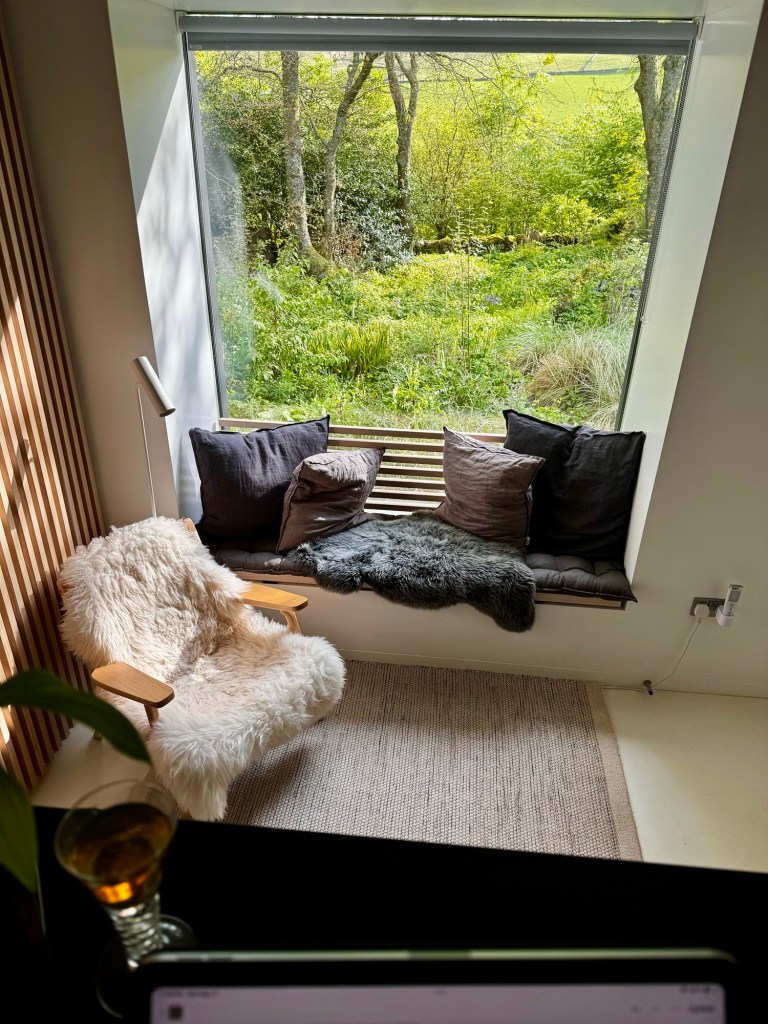
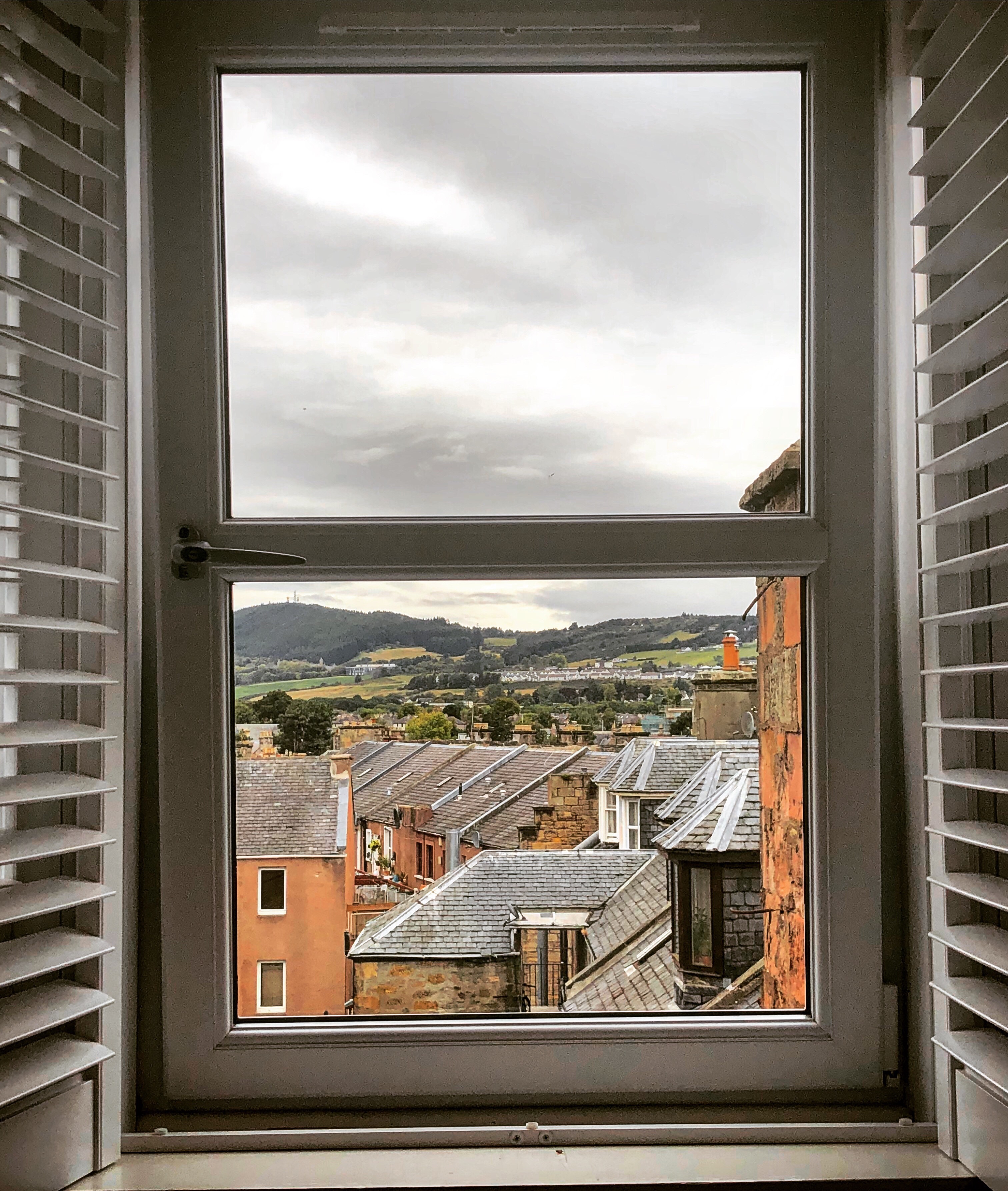
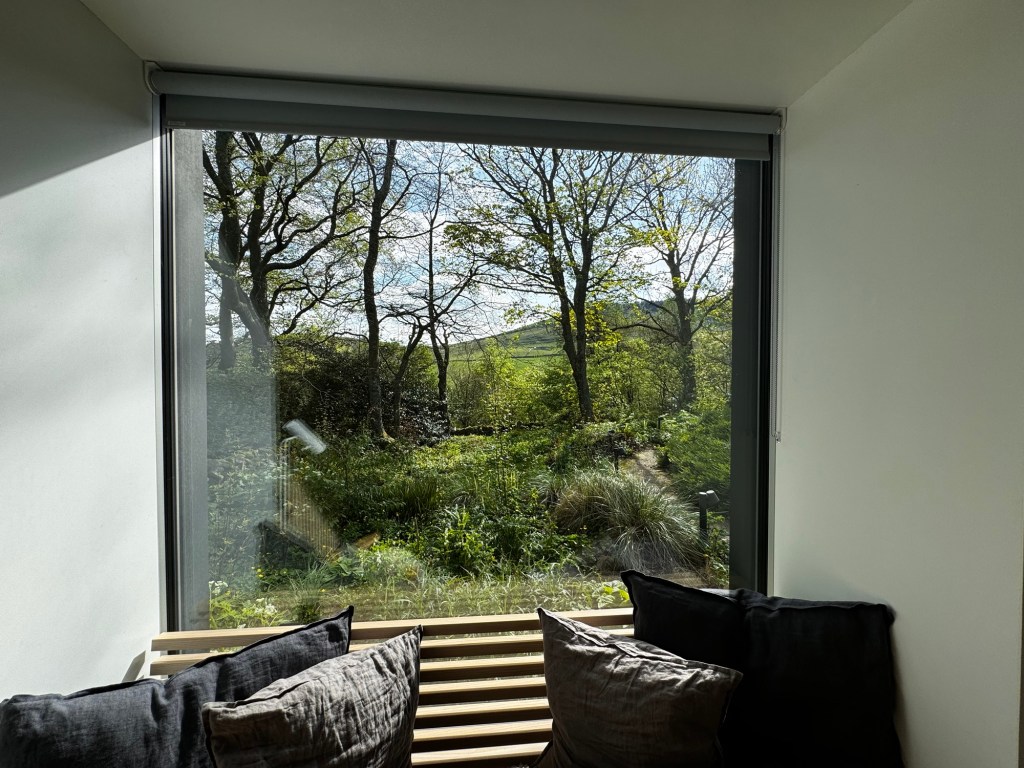
View from my abode at Eastside Cottages, Pentland Hills

On my way from Stirling to the Pentland Hills south of Edinburgh, I made a few stops to break up the brutally long 57 minute drive.

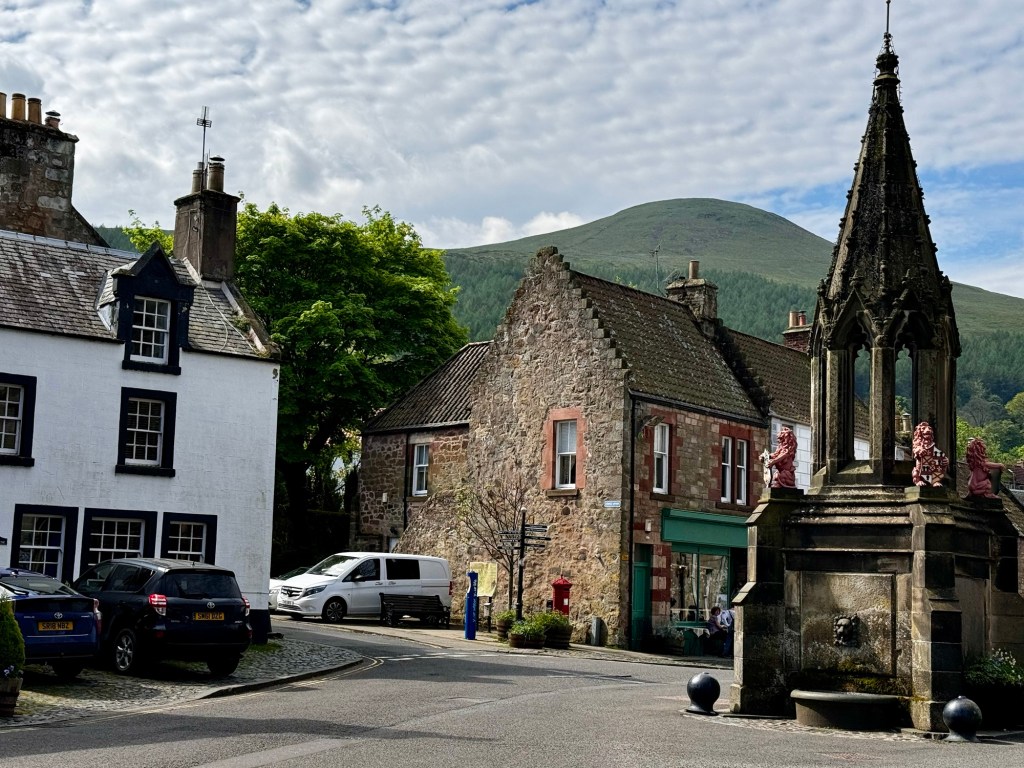
First was the picturesque little town of Falkland, a haven for Outlander film locations. Not only the town itself but also Falkland Palace, which was the Stuart Family’s Balmoral Castle in the 1600s.

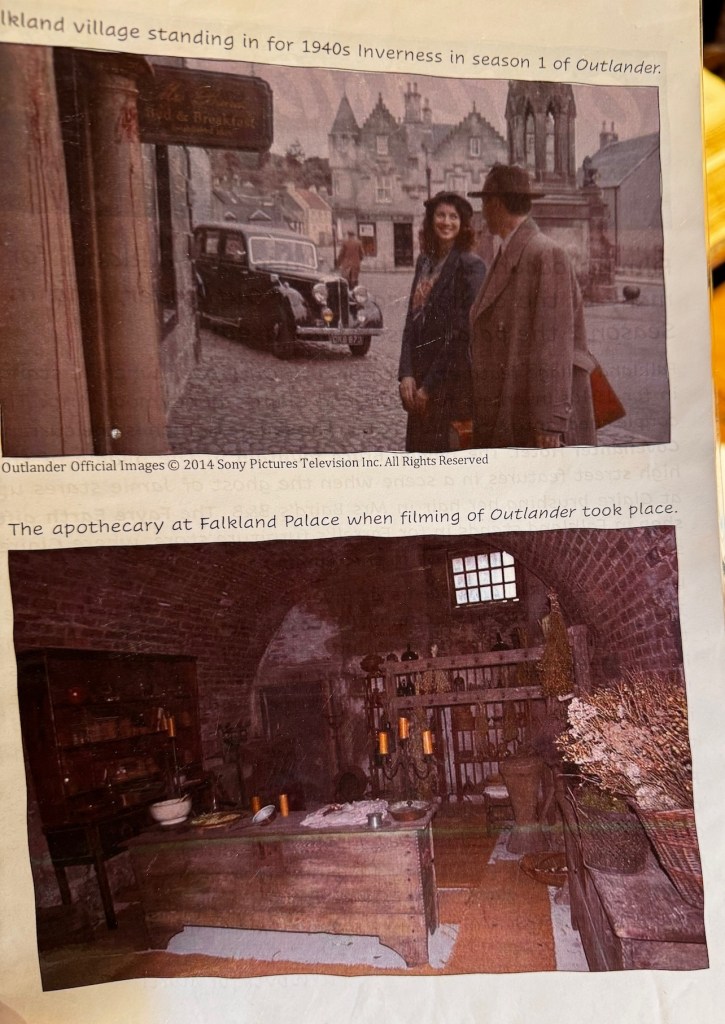
First, let’s do Outlander so you can roll your eyes and get it over with. Falkland was the main shooting location for Inverness because it looks more like how one imagines Inverness than Inverness itself.

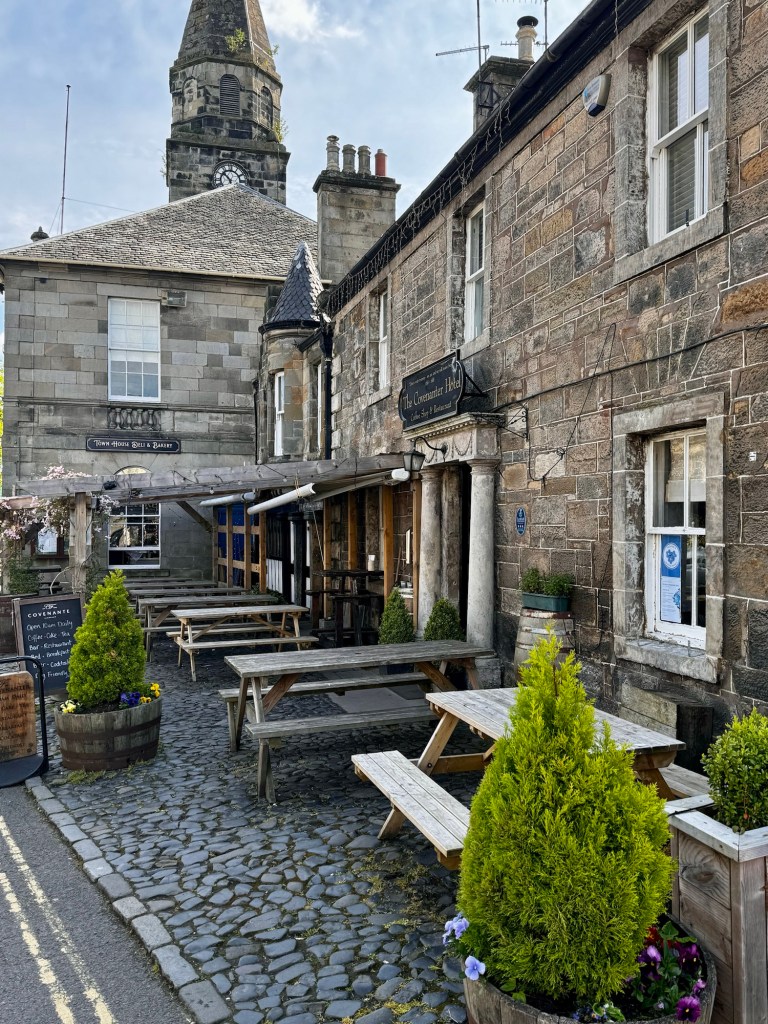
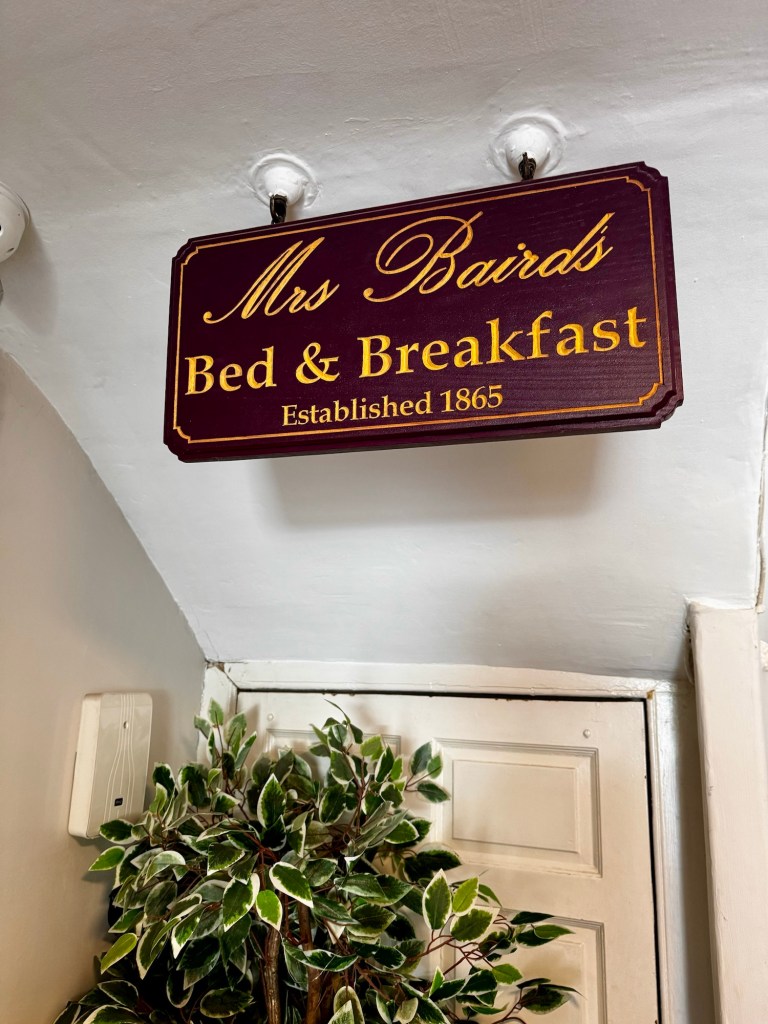
As many of you know, Claire and Frank, after the end of World War II, took a second honeymoon to Scotland and stayed at Mrs. Baird’s Bed & Breakfast, which was shot at the Covenanter Hotel. They display the sign used in the show inside. You will recognize other spots below.

I mean why not take advantage.
The window where Claire saw the blue vase.
One of the most romantic scenes ever. And it was just a kilted Highlander from the 1700s watching a woman in the post-war 1940s brush her hair in an upstairs window. In the rain.
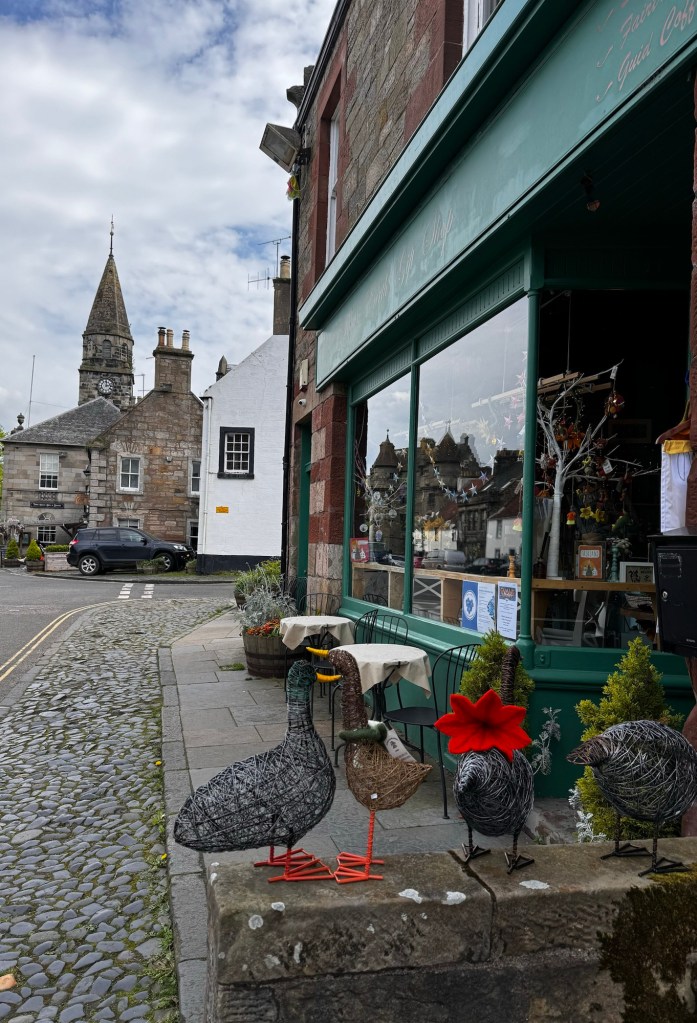
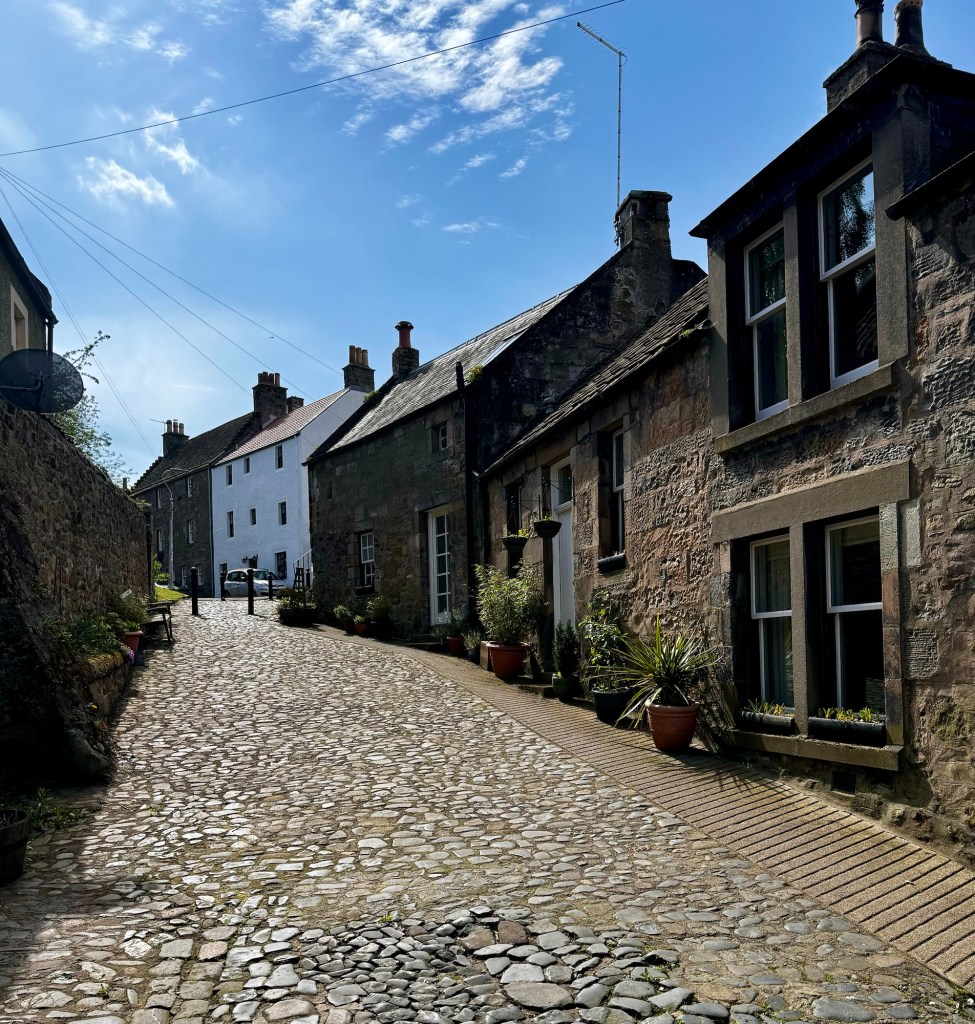
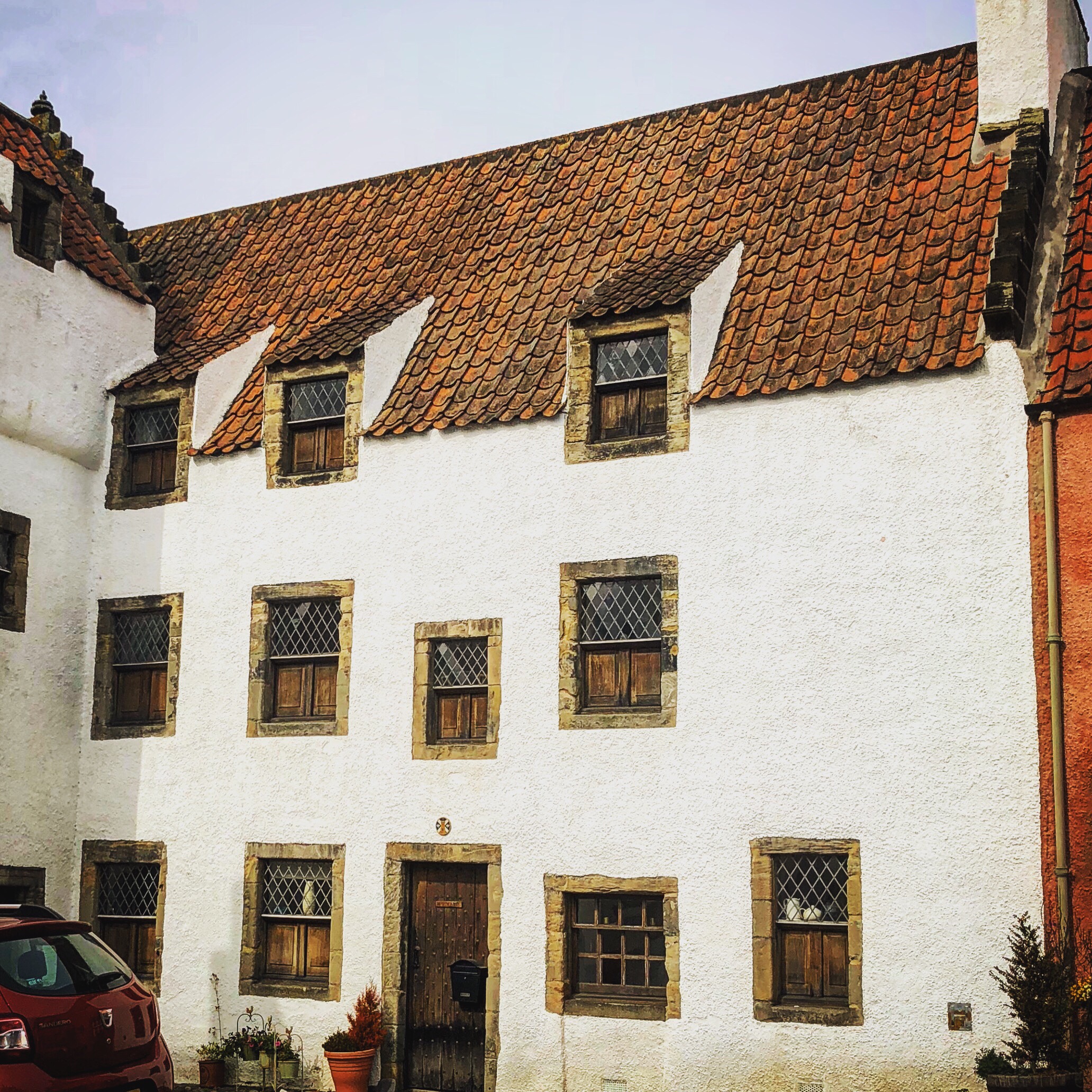
Claire and Murtagh walked down this street after visiting an ill Alexander Randall.
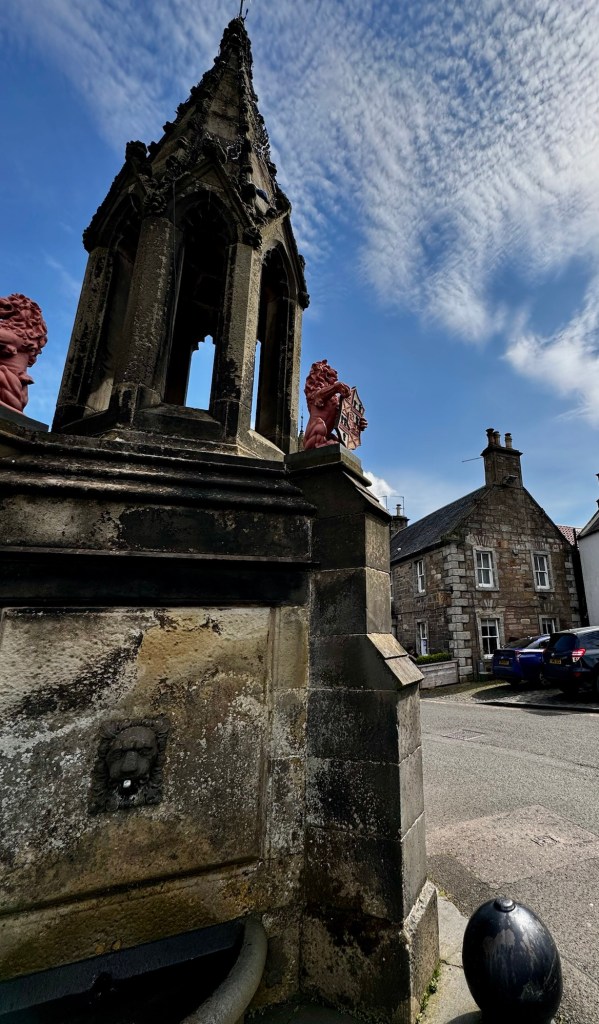
It’s a gorgeous little town, Falkland, Outlander aside.

And now to Falkland Palace, which is right in the center of town. Built in the thirteen century, James I (of Scotland) took possession of it for the crown two centuries later, after which it became a popular retreat for all the Stuart monarchs. This was one of Mary QOS’s favorite spots to get away from it all.
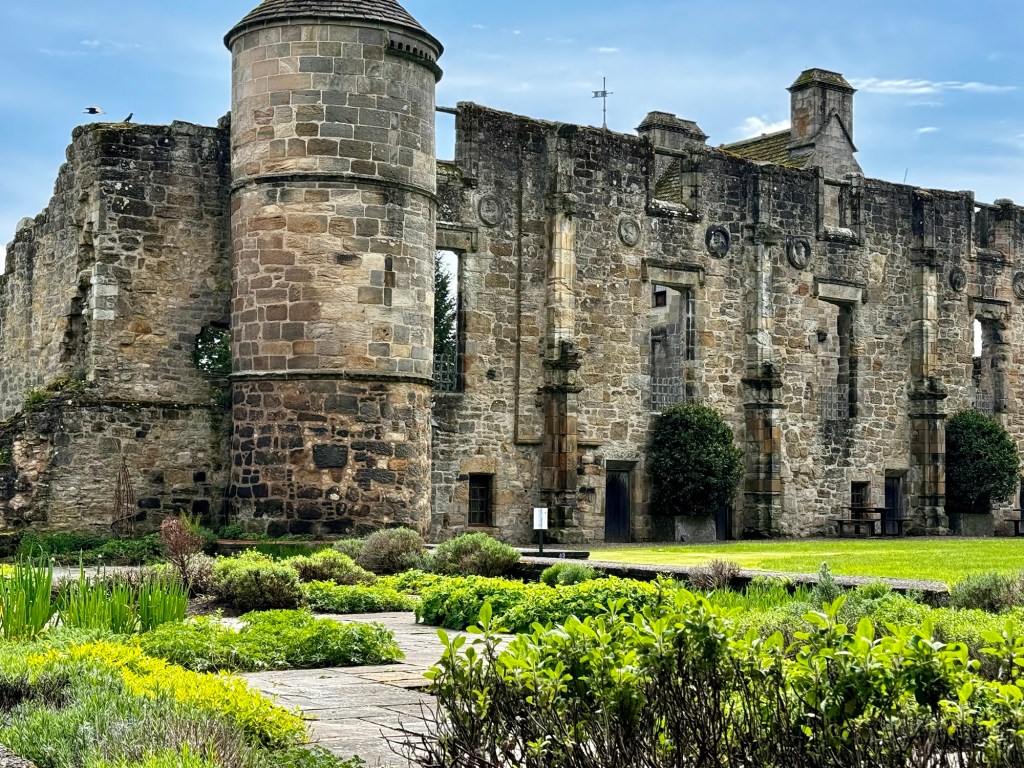
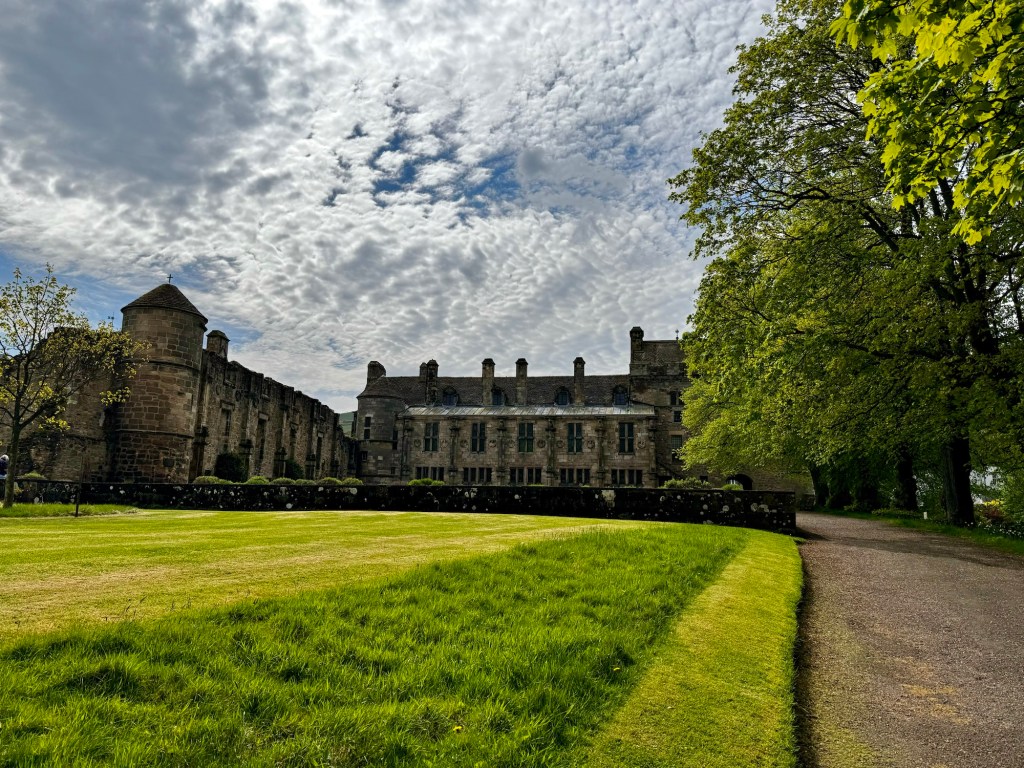
Falkland Palace

The palace is quite enchanting, and you’ll find the oldest tennis court in the UK on its grounds, built by James V in 1538 – and Mary, an accomplished athlete, often played here. Tennis was originally played by French monks before it became popular with nobility. The word comes from the French word tenez, or “hold on,” the warning that was shouted before every serve. (Let’s bring that back, shall we?) The game had different rules then, it was actually much more complicated – you can see a series of lines, numbers and crowns marked on the floor and walls, which were all used to calculate scores. All four walls and the roof of the spectator’s gallery were used (making it literally a dangerous spectator sport) plus players got extra points if they hit a ball through a hole in the wall. Also a servant would serve to avoid the fancy people having to bend their bodies in their ridiculous restrictive clothing. Mary QOS played in breeches for this reason – badass that she was.

A couple of lovely nooks inside the Palace.
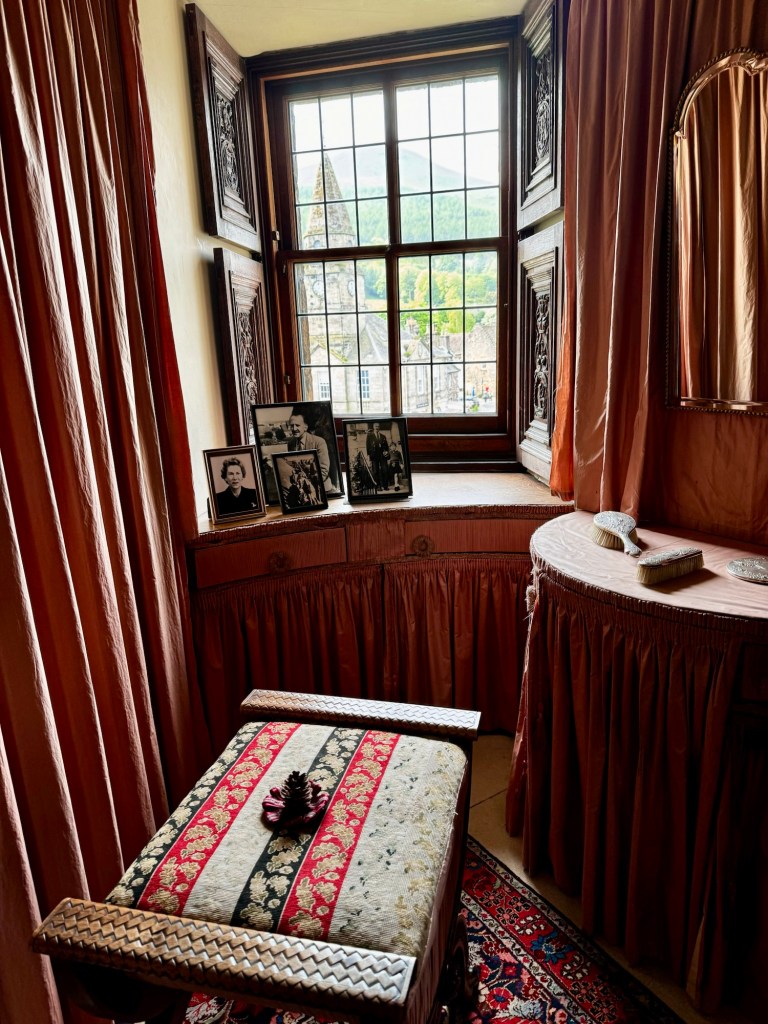
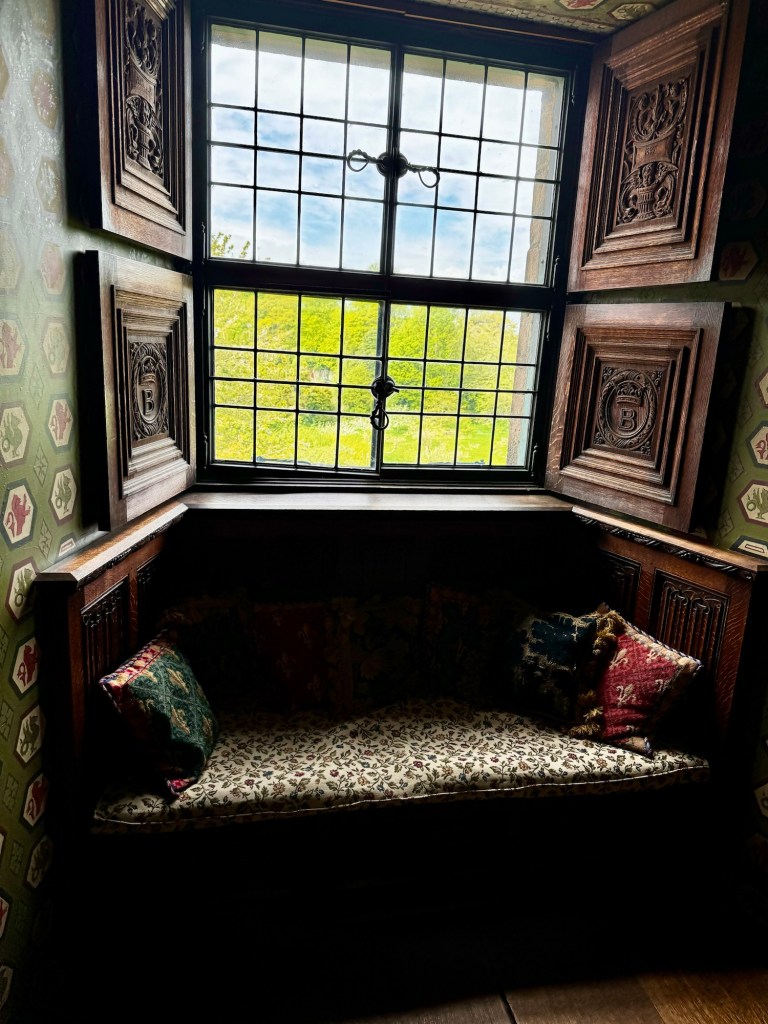
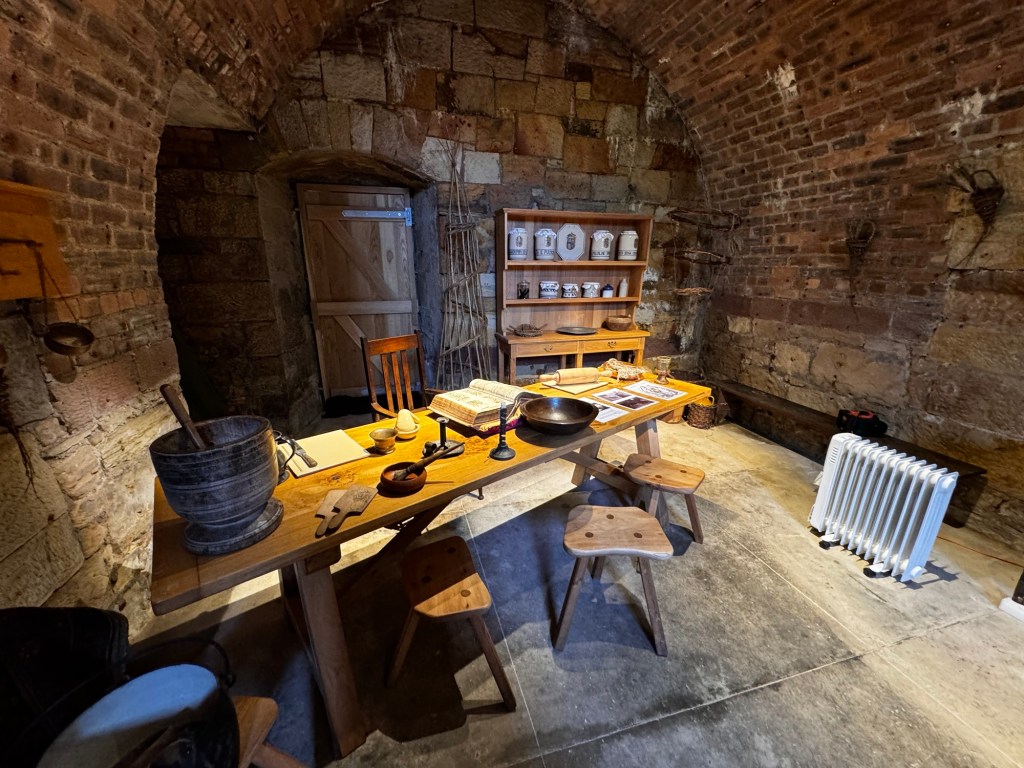
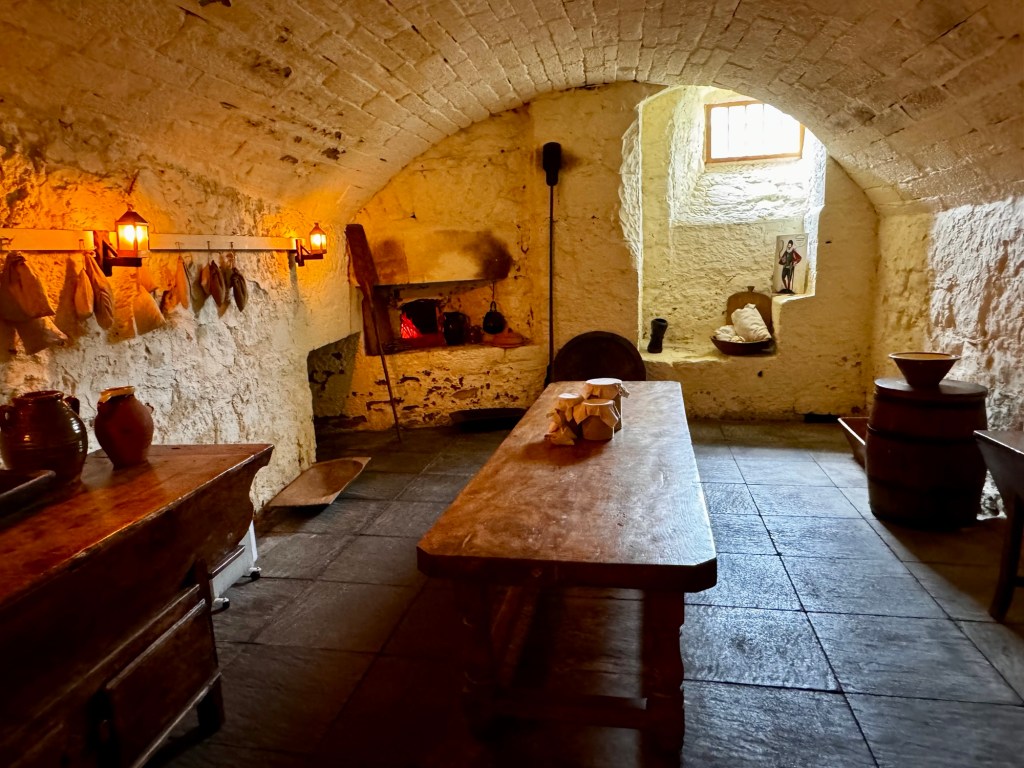
There’s one minor Outlander shooting location inside the Palace. The apothecary scene where Claire sees Mary Hawkins buying laudanum for Alex Randall is there, and the castle has kept the location roughly as it was during filming because why wouldn’t you.
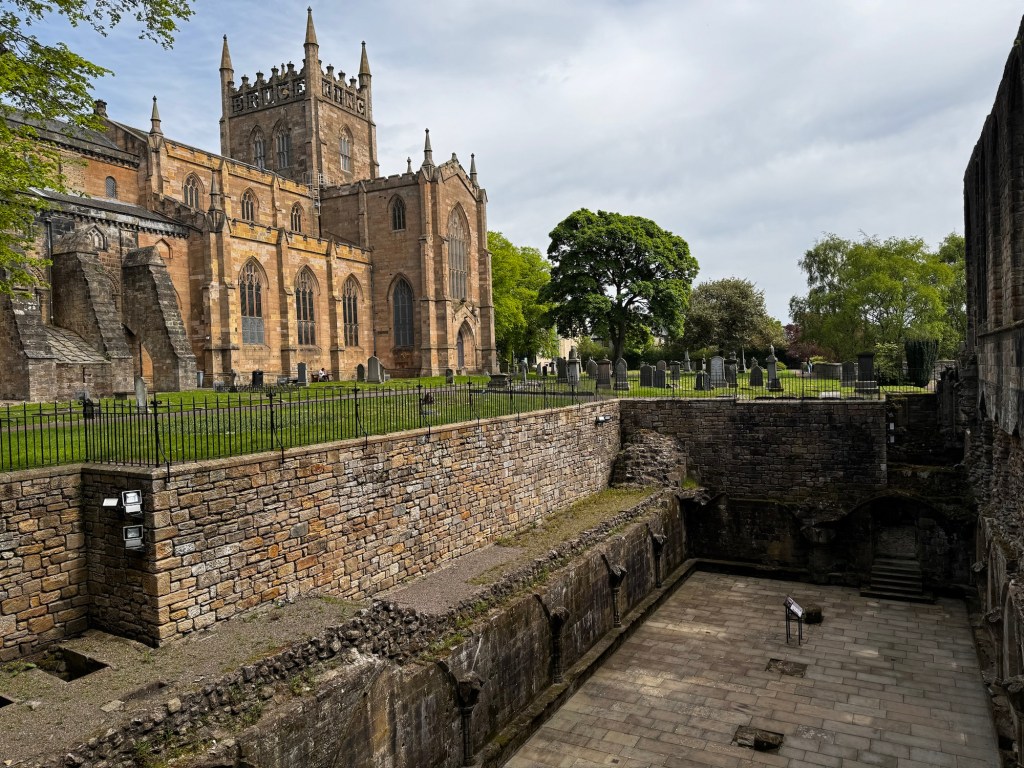
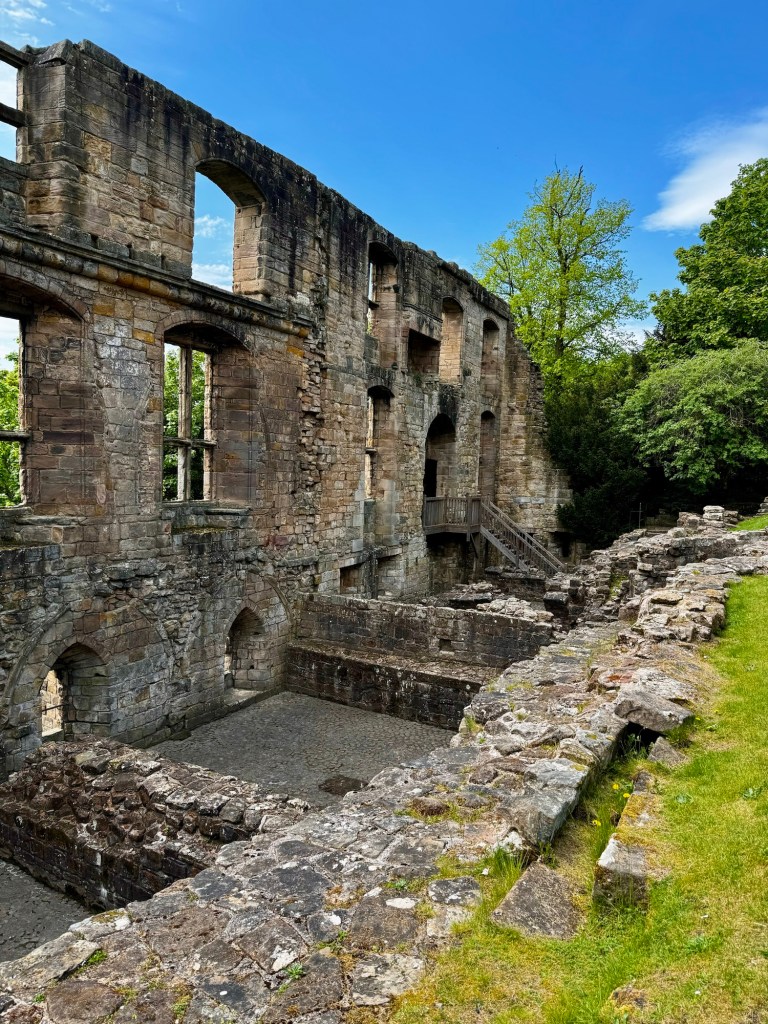
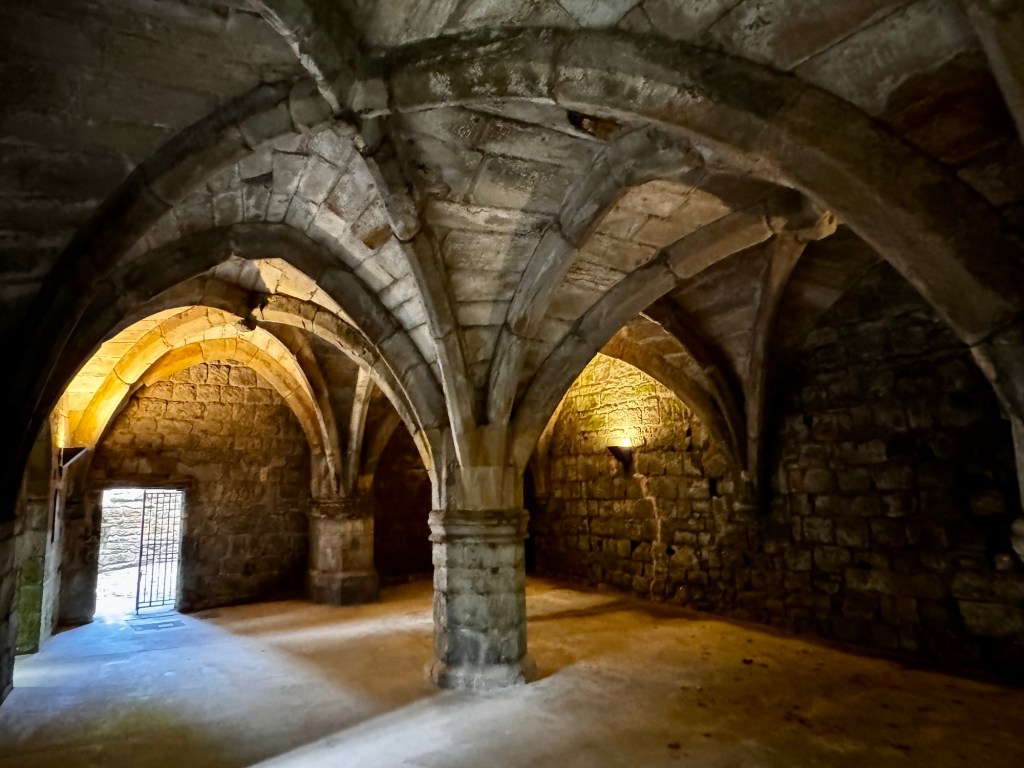
Next on our mini road trip is Dunfermline Abbey & Palace, which was given to Princess Anna of Denmark as a wedding present when she married James VI in 1589. The medieval Benedictine abbey still exists, even after being sacked by Cromwell, and it’s connected to a newer parish church still in use. You can also see ruins from numerous nearby structures, all built by Queen Anna. She turned Dunfermline into an incredible royal residence.

Many of the old kings of Scotland are buried here, including Malcom III and IV, Edgar I, Alexander I, and David I, Malcolm IV, Alexander III, although we don’t know the exact location of their graves, which is disappointing.

The ruins and abbey are stunning.
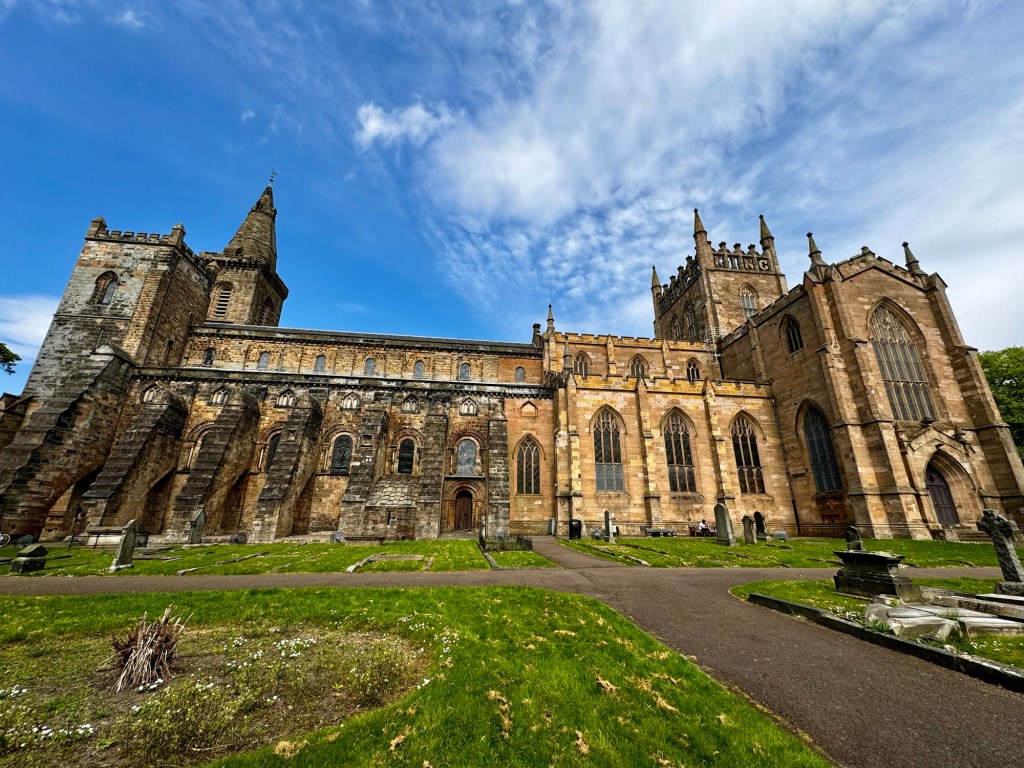
Dunfermline Abbey, the older section on the left.
Palace ruins.
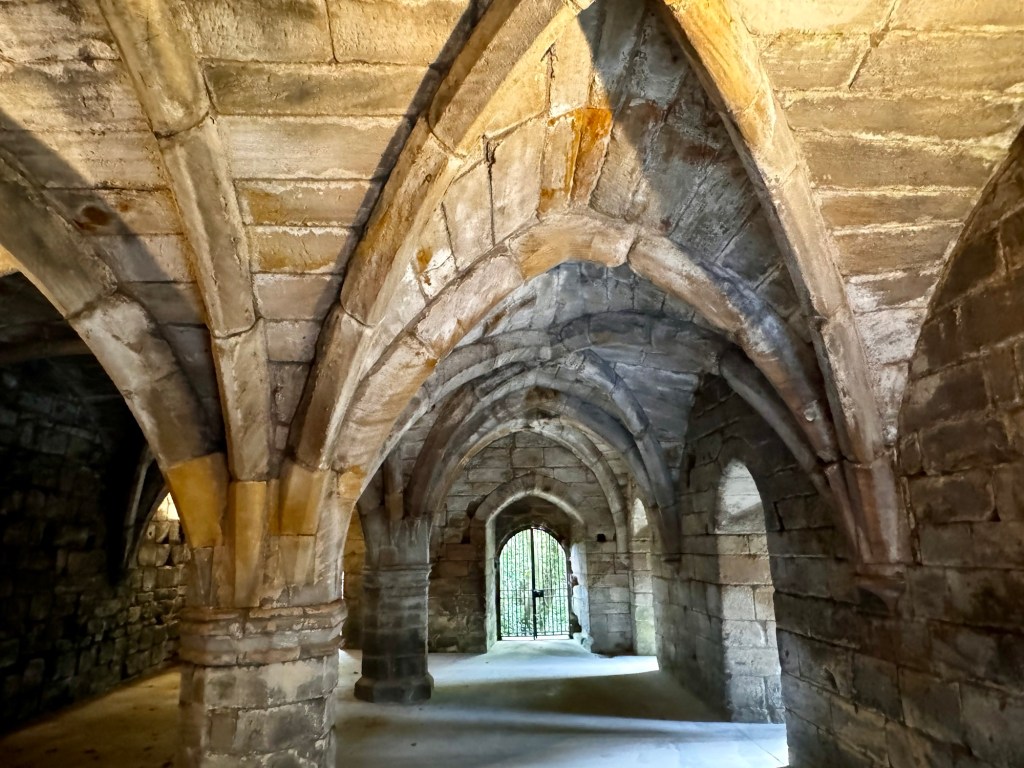
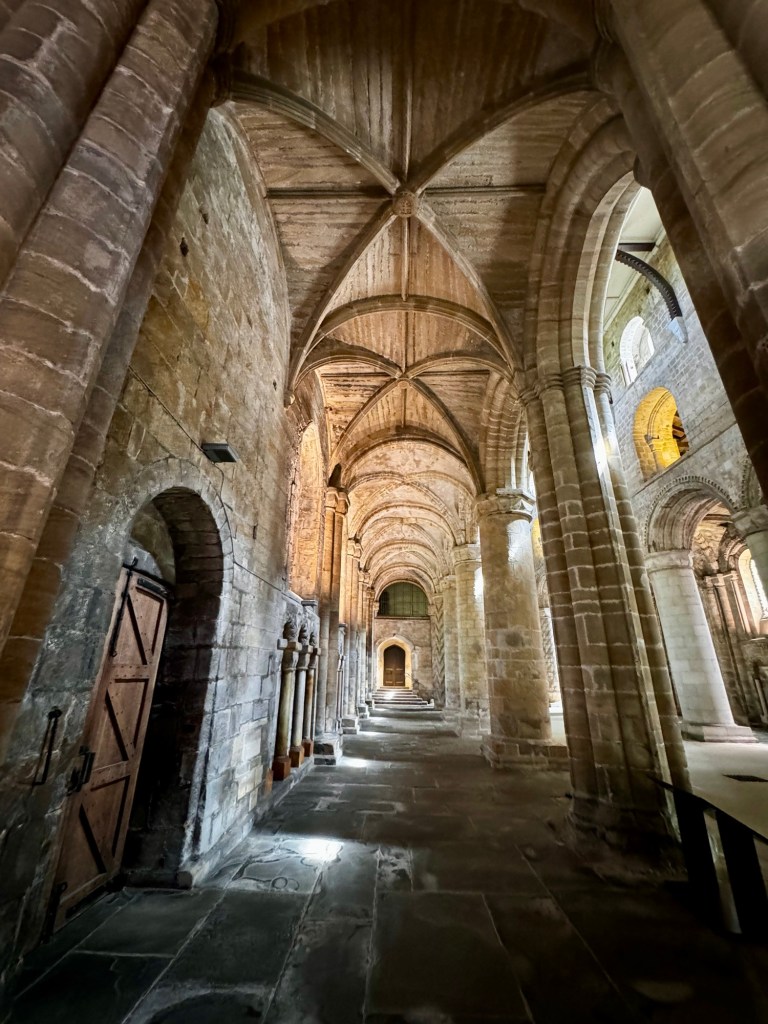
The Old Abbey. It’s big, dark and cold. Very cool.

While we may not know exactly who is buried where inside this gorgeous abbey, one dude we do know about, and that is King Robert the Bruce (minus his heart, stay tuned). This is the very incongruous part. His remains were moved around a bit, but he’s now interred in the more recent section of the church (let me tell you its jarring to walk from the ruins of the beautiful stone cathedral into the parish church, like stepping through a portal and not in a good way). The Bruce, man of legend, is installed beneath the raised platform the current pastor sermonizes from, otherwise known as the pulpit. He shouldn’t be underneath this tacky wooden thing. The church is all white walls and blue carpeting and also the shiny gold leaf does not seem like the appropriate vibe. Personally I wouldn’t have planted him there, aesthetically speaking.
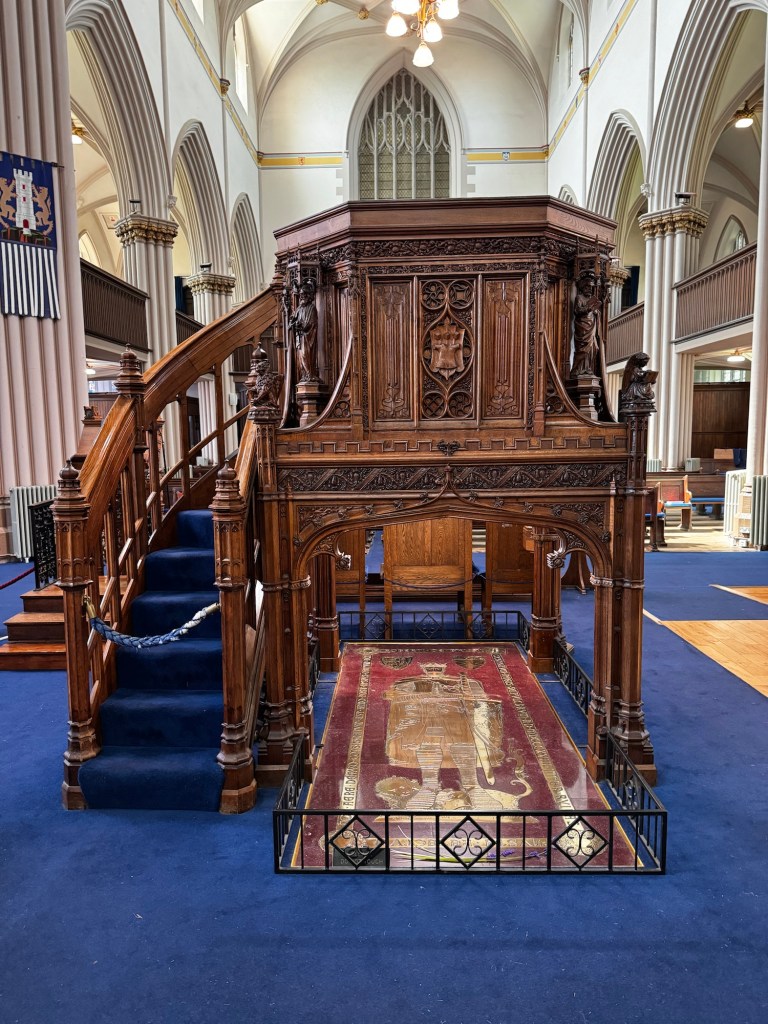
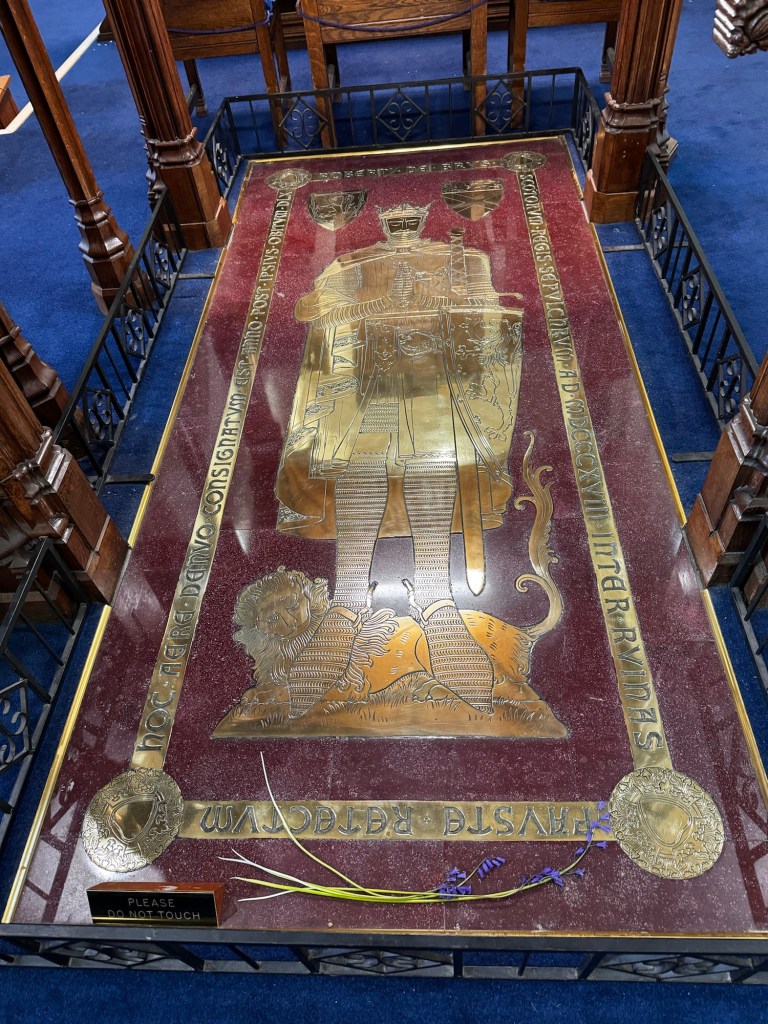
I object.

Having had my fill of old royalty, arriving at the beautiful Eastside Cottages was a balm for the soul. The owners of the farm have refurbished the outbuildings with a scandy vibe and it’s quite wonderful. During the pandemic they posted nature moments of Zen on instagram, several minutes of natural beauty, nothing more than a breeze, birdsong, hills and peace. I think I watched every one of them.

Here are a few photos from the lovely five days I spent here.
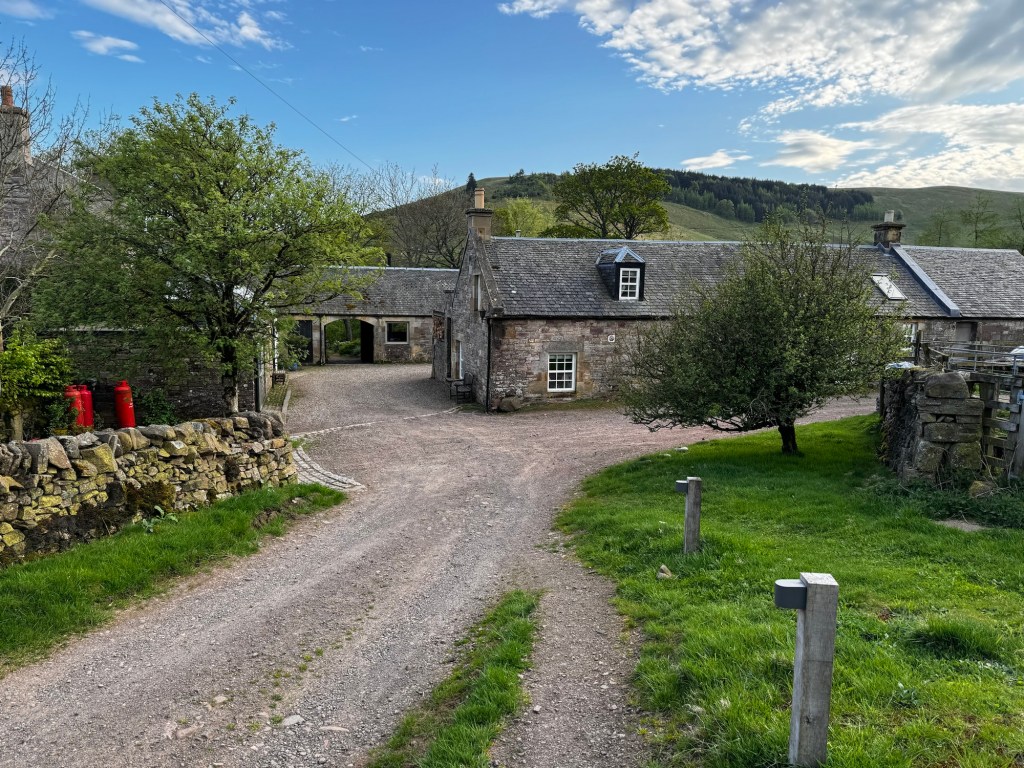
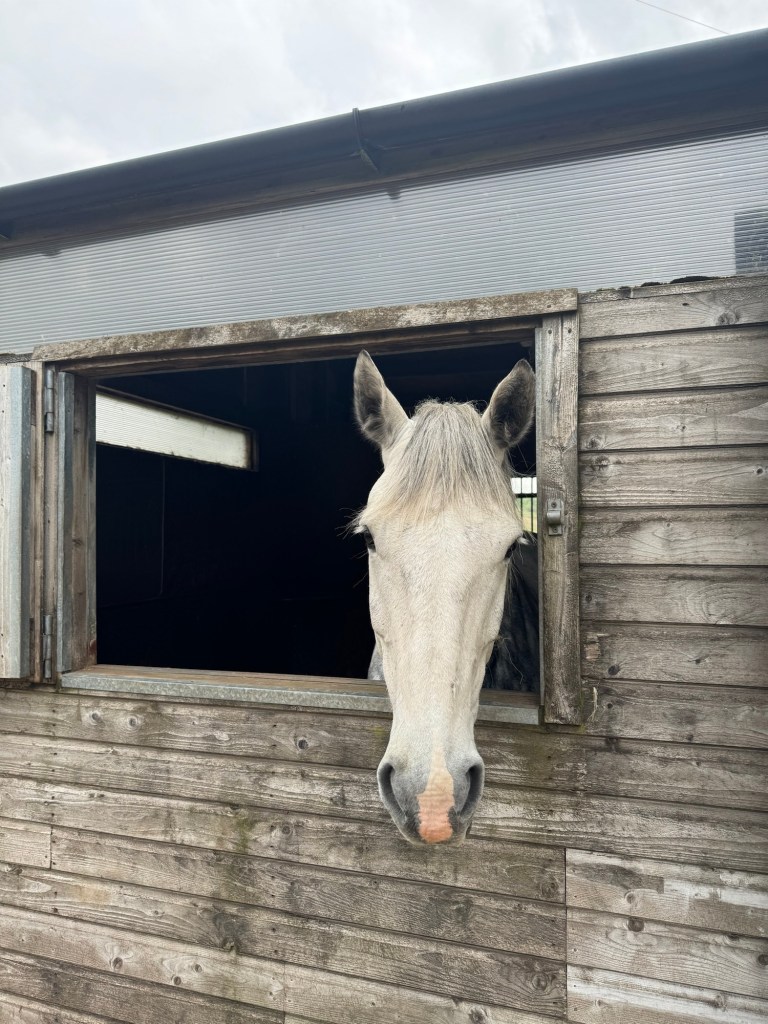
Meet Oscar the fabulous horse.

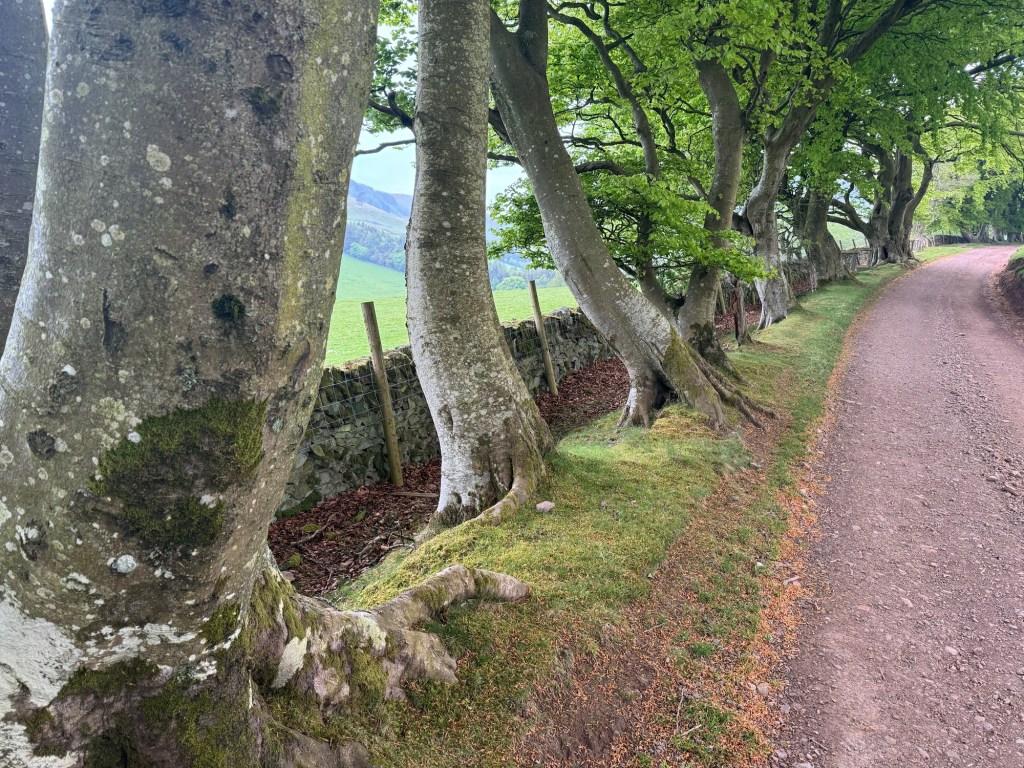
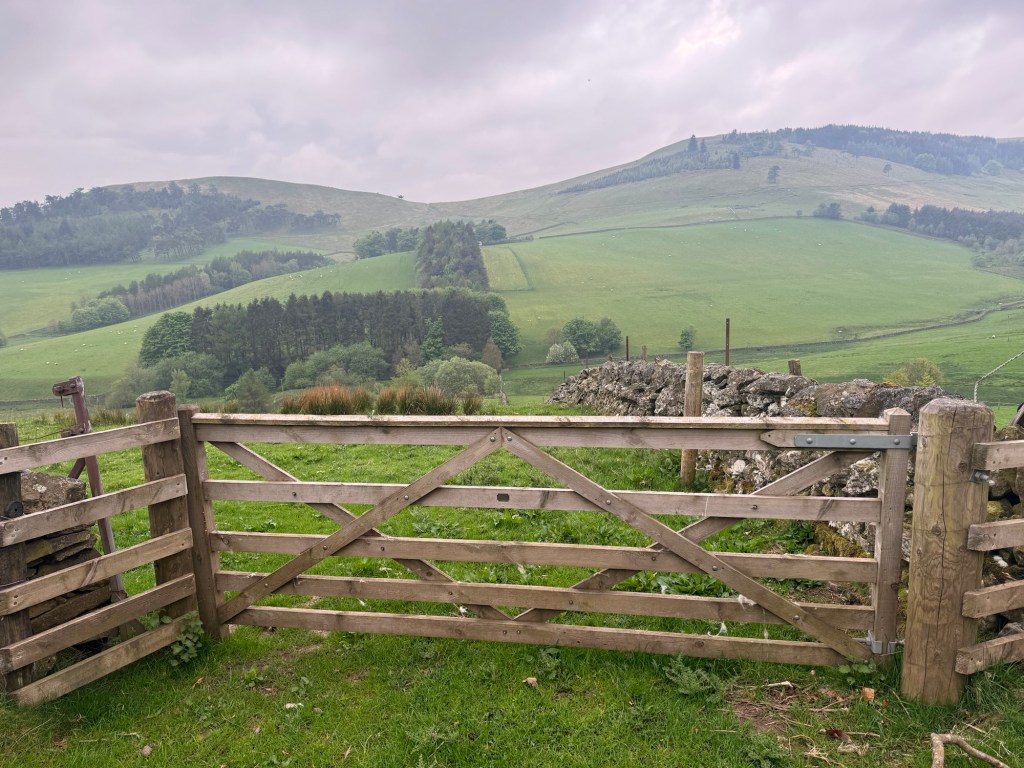
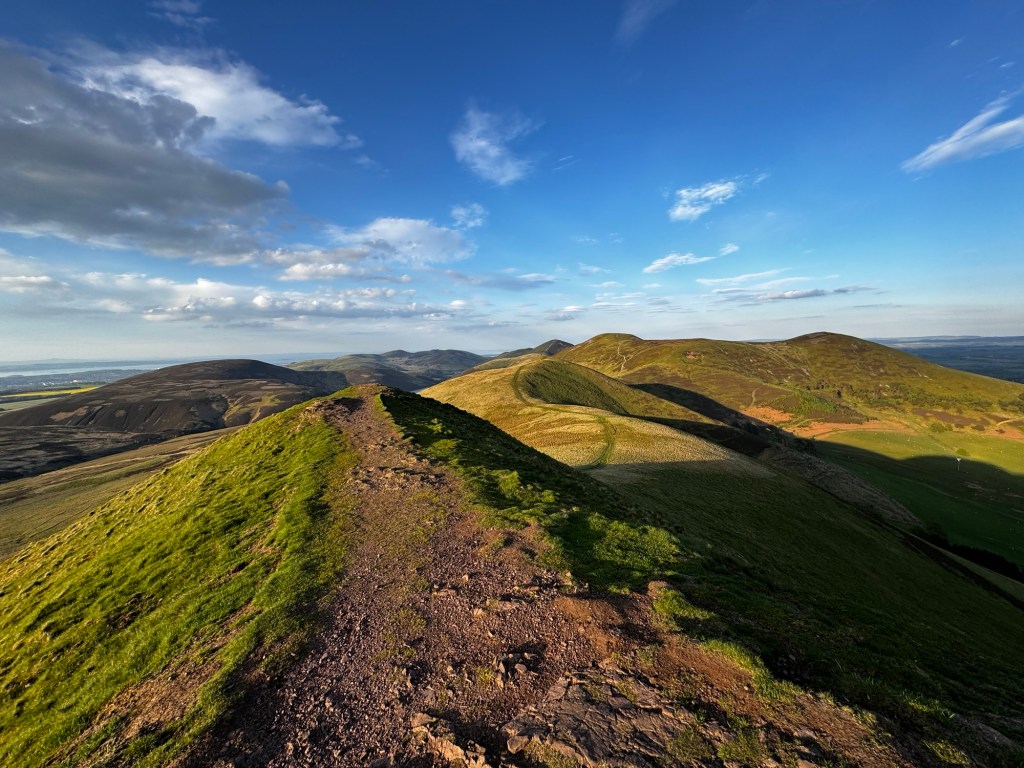
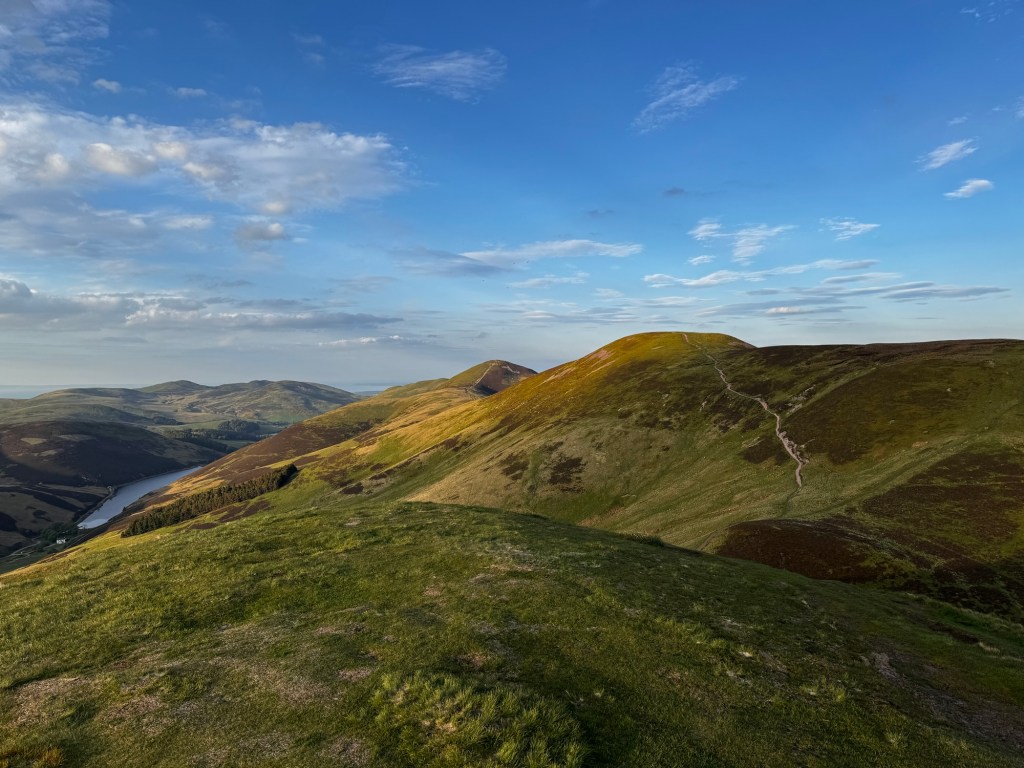
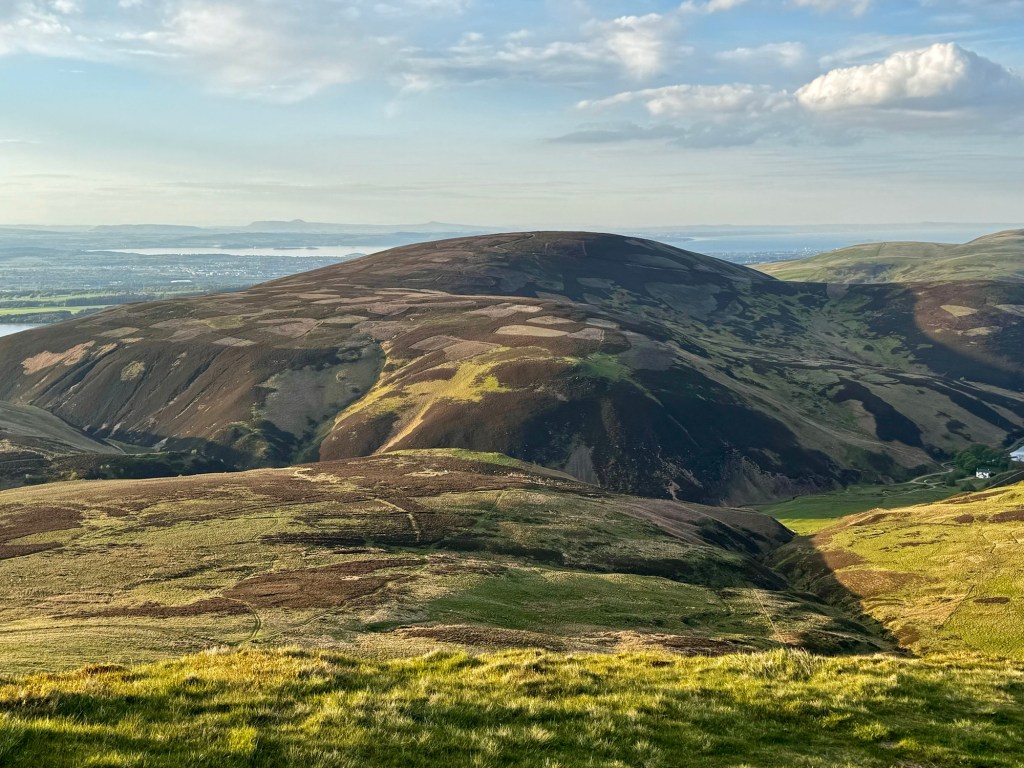
My first night, I walked up to the top of the two hills behind the farm, called West Kip and East Kip. A great walk with unbelievable views toward Edinburgh and the River Forth and across the Pentland Hills.

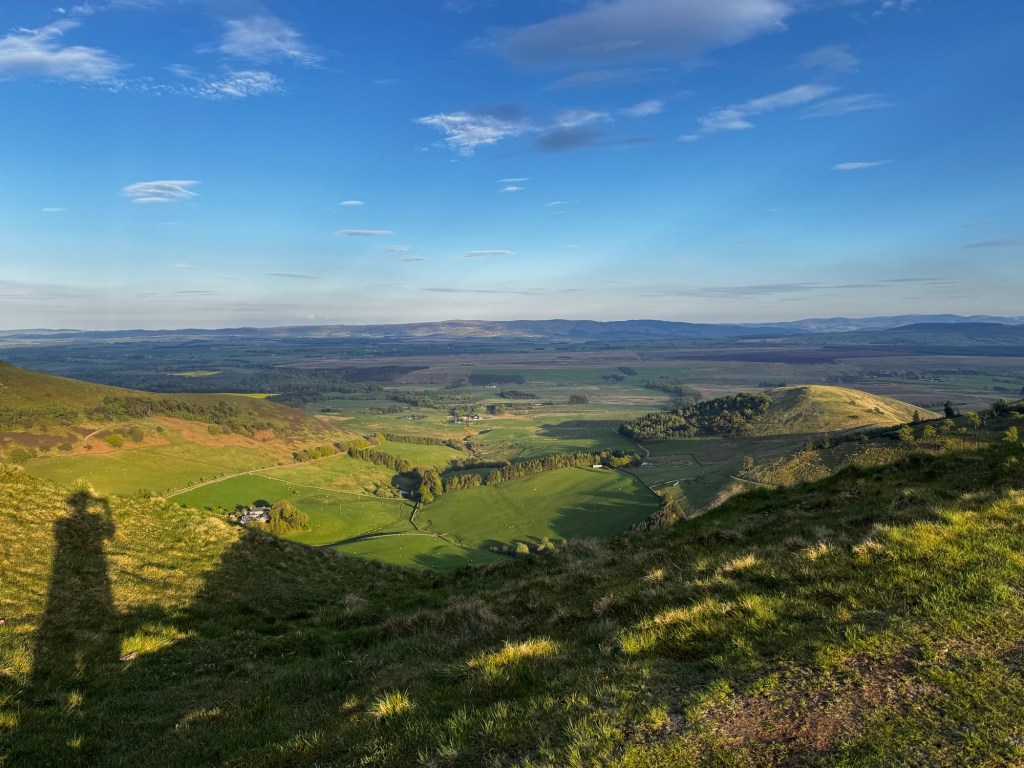
Frolicking sheepies.
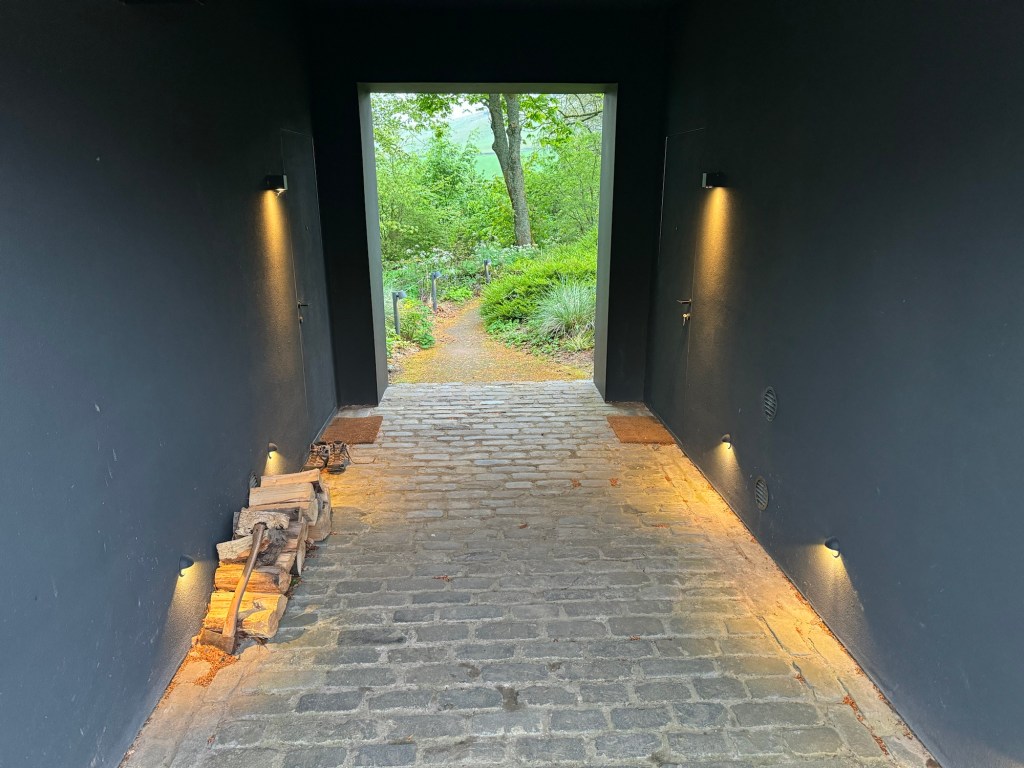
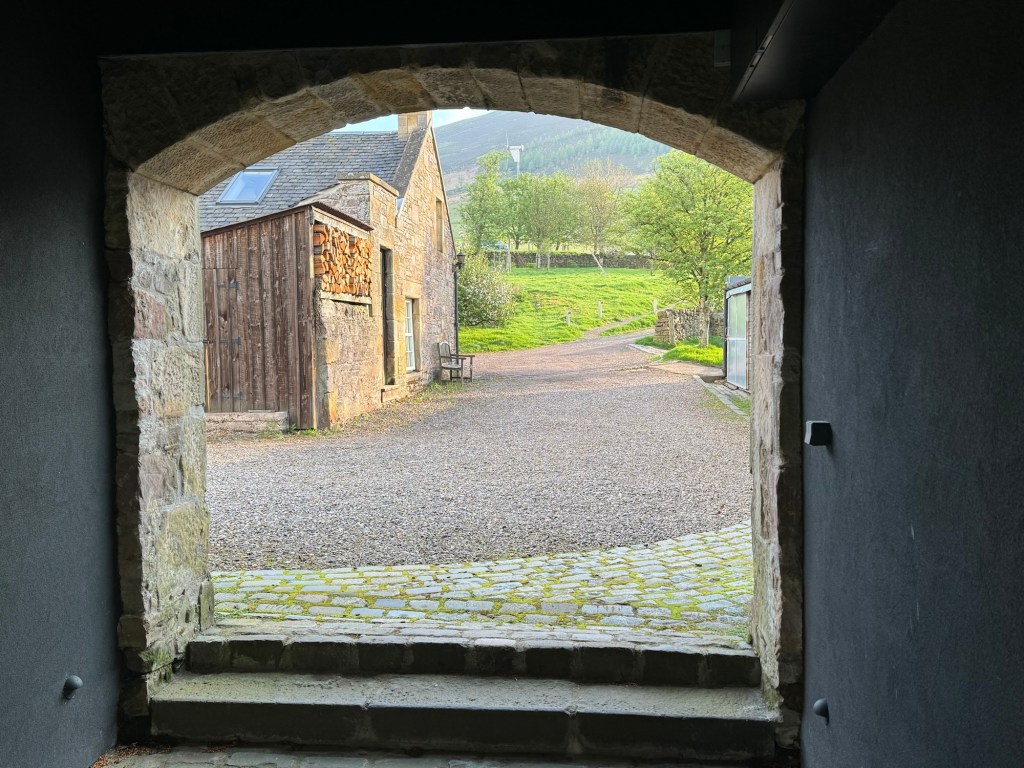
My room is to the left of this magical passageway. Sadly the weather was too warm to use that wood in my fireplace.

Now listen. This is the part where I missed the most spectacular Northern Lights display in the history of the freaking UK. Why? Largely because my news sources are all eight hours in the past. I simply didn’t realize and it was super irritating to wake up and see my instagram feed the next day. And here I am out in the country with no light pollution and gorgeous hills.

I don’t want to hear any more about it, okay?
So we’ll not speak of it again but will simply move onto the following morning when I took a boat out to Loch Leven Castle.
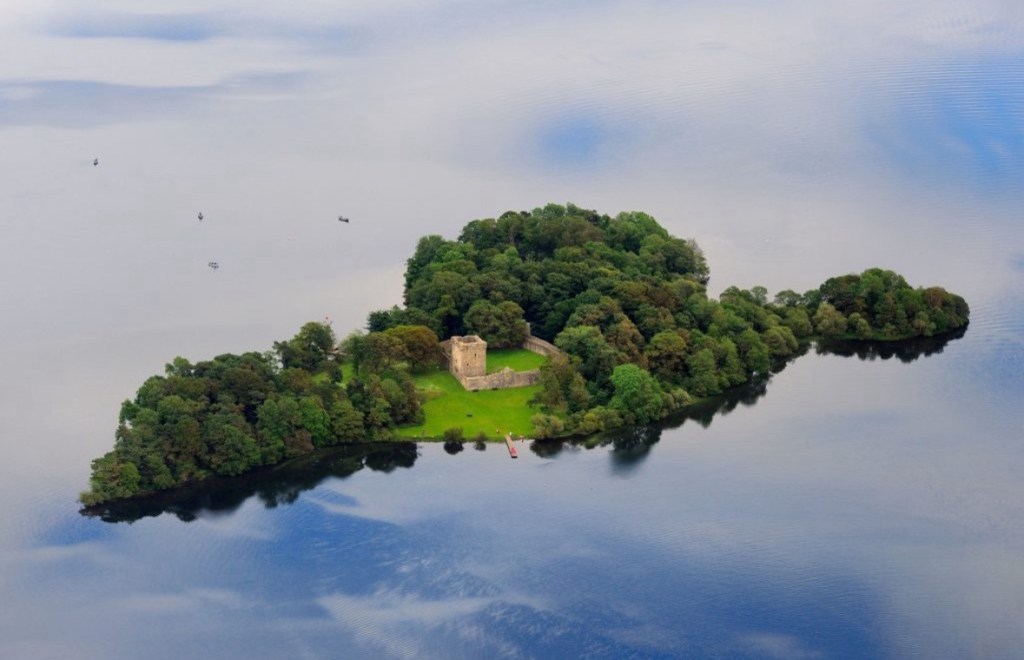
I wish I had a drone sometimes.

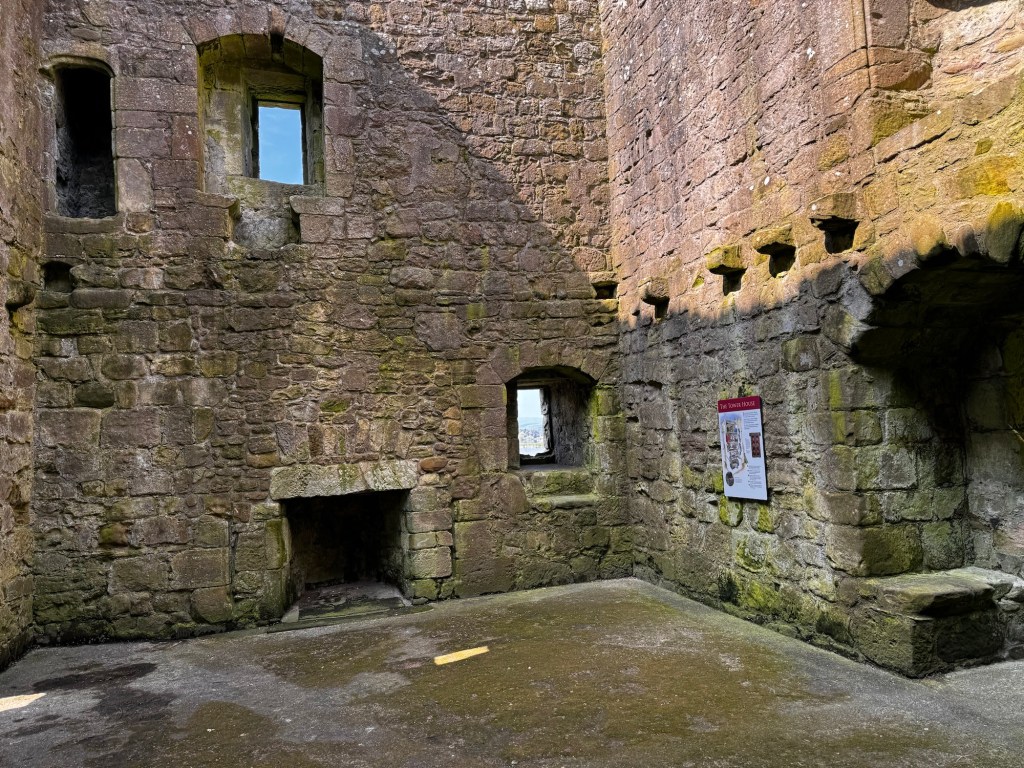
The castle was built in 1300 and was likely captured from the Edward I’s forces by William Wallace. The man was everywhere. It was later visited by Robert the Bruce (also everywhere) and his son David II. Mary QOS (ditto) was a guest there on three occasions, but the castle is most famous for her fourth involuntary return. Her marriage to Lord Bothwell after Darnley’s murder was too much for some of her lords and lo, they became rebellious. Mary ultimately surrendered to them after a battle and was taken prisoner and sent to Loch Leven under the watchful eye of its owner, Sir William Douglas. She was pregnant at the time, and during her year-long imprisonment she miscarried twins. She was also forced to abdicate in favor of her infant son James – he was crowned at Stirling five days later. The original annus horribilis.

With the help of the illegitimate son of her captor, the guy who took care of the boats, she managed to escape, and quickly raised six thousand troops. Sadly she was defeated at the Battle of Langside just two weeks later, and fled to England, never to return.

It was a gorgeous day for a visit, although a little on the warm side for the things in my suitcase.
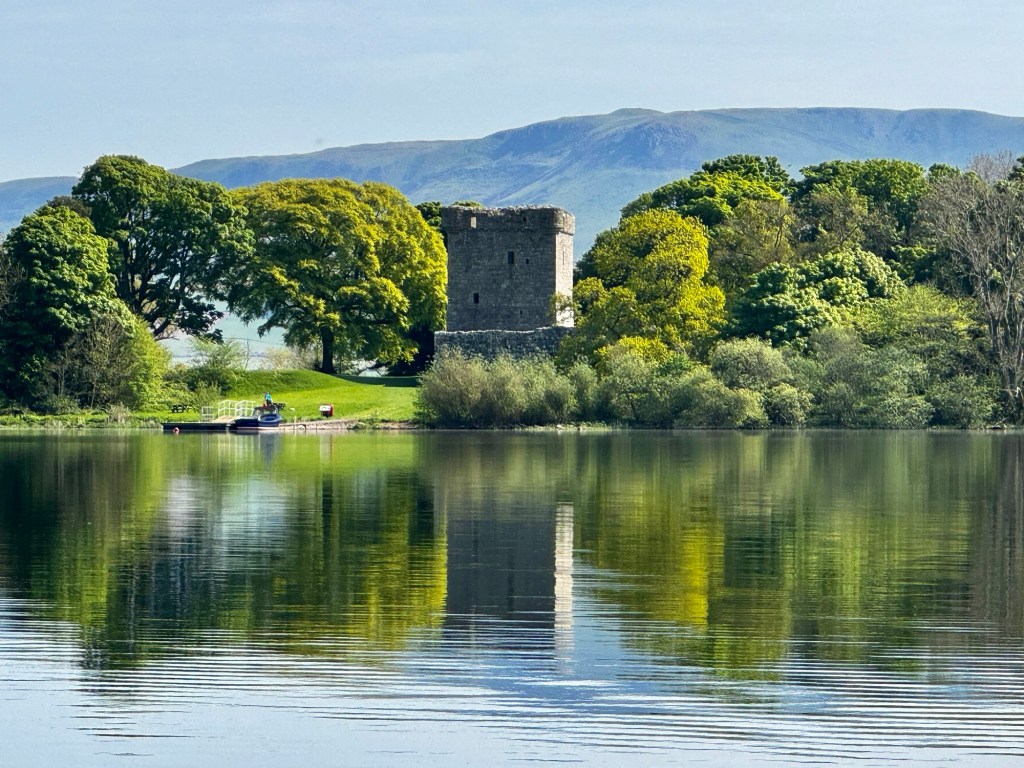
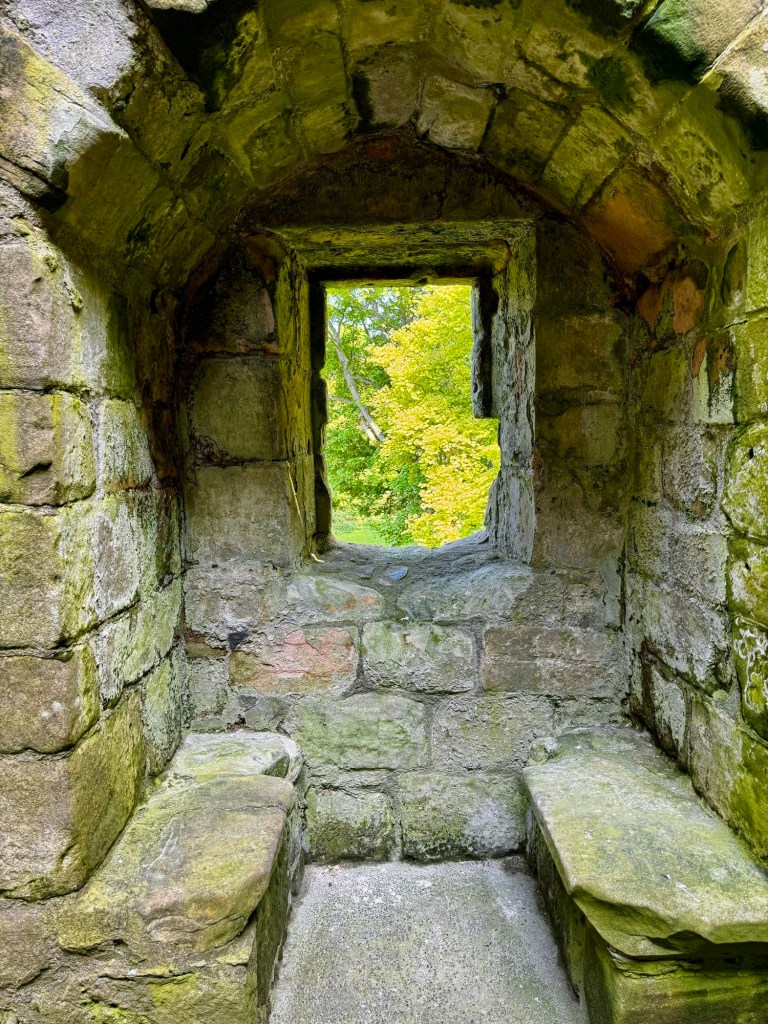
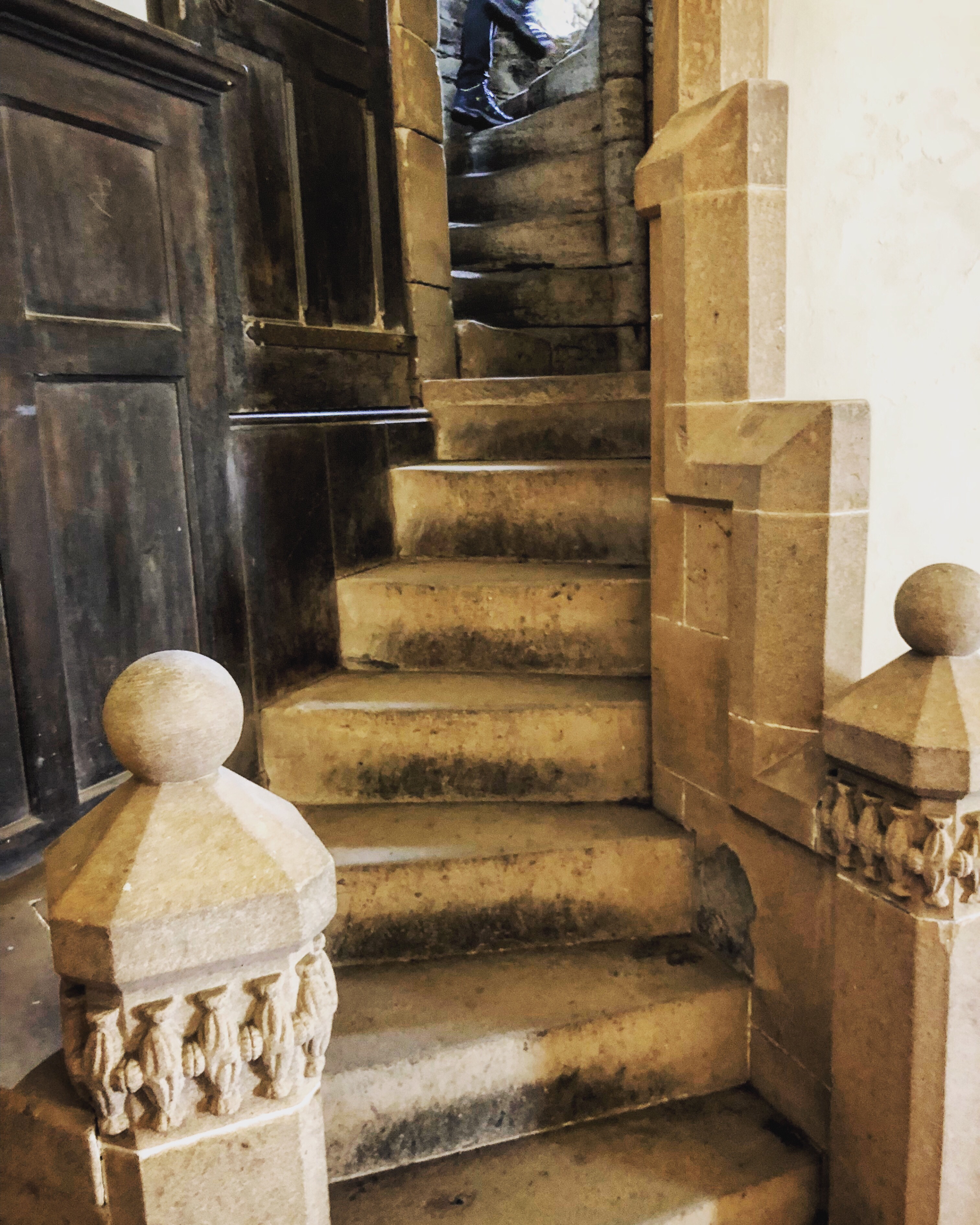
Douglas allowed Mary this oratory so she could attend Mass during her imprisonment

As I waited by the dock for the boat to arrive (yes they take twelve of us out there and then leave us all alone!), I had to appreciate this woman’s going-to-a-castle fashion. She deflected my compliment, as all women do, by telling me she bought it at H&M, and shrugged apologetically. Let’s stop doing that, shall we ladies?
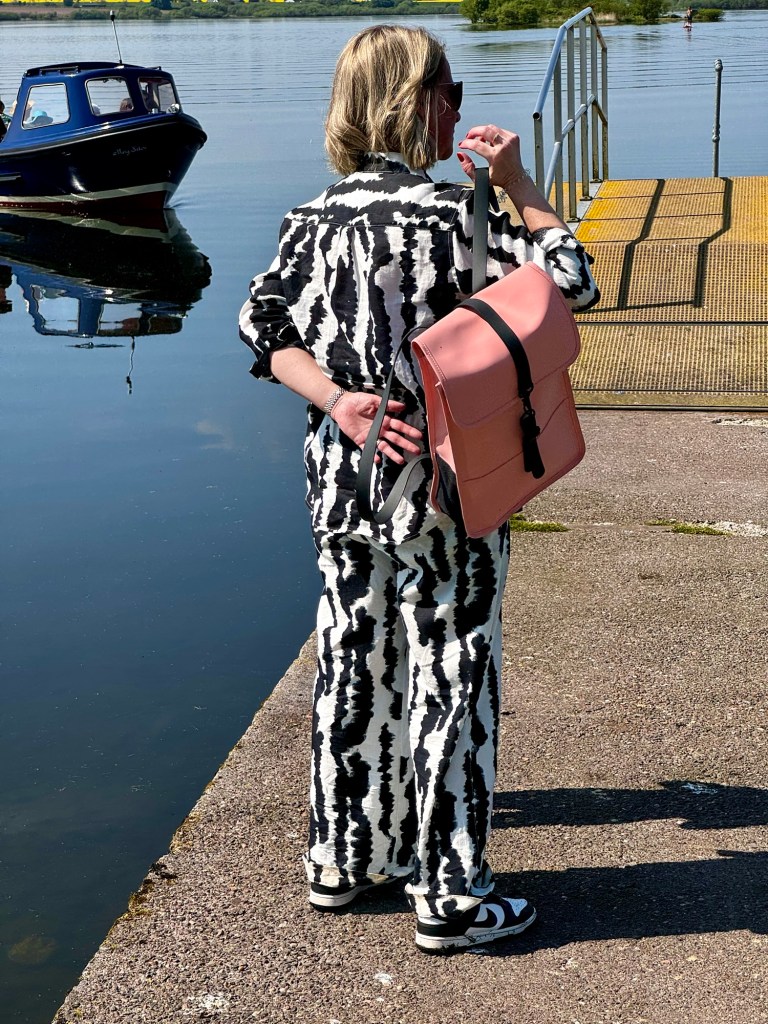
When our boat arrived, a dad and his son appeared at the dock on a paddleboard, basically crashing the party without paying Historic Environment Scotland ten pounds for the privilege. Our boat captain explained they couldn’t land there and kindly asked whether the young boy needed to use the restroom. The dad assured her they were just hanging out for a moment. As soon as the boat launched, we looked back, and sure enough, dad was pulling the board onto the shore. Both the captain and the fashion lady were appalled and agreed this was “quite cheeky” behavior. I know I’m pathologically charmed by a British accent and all, but really what a lovely way to cast shade.
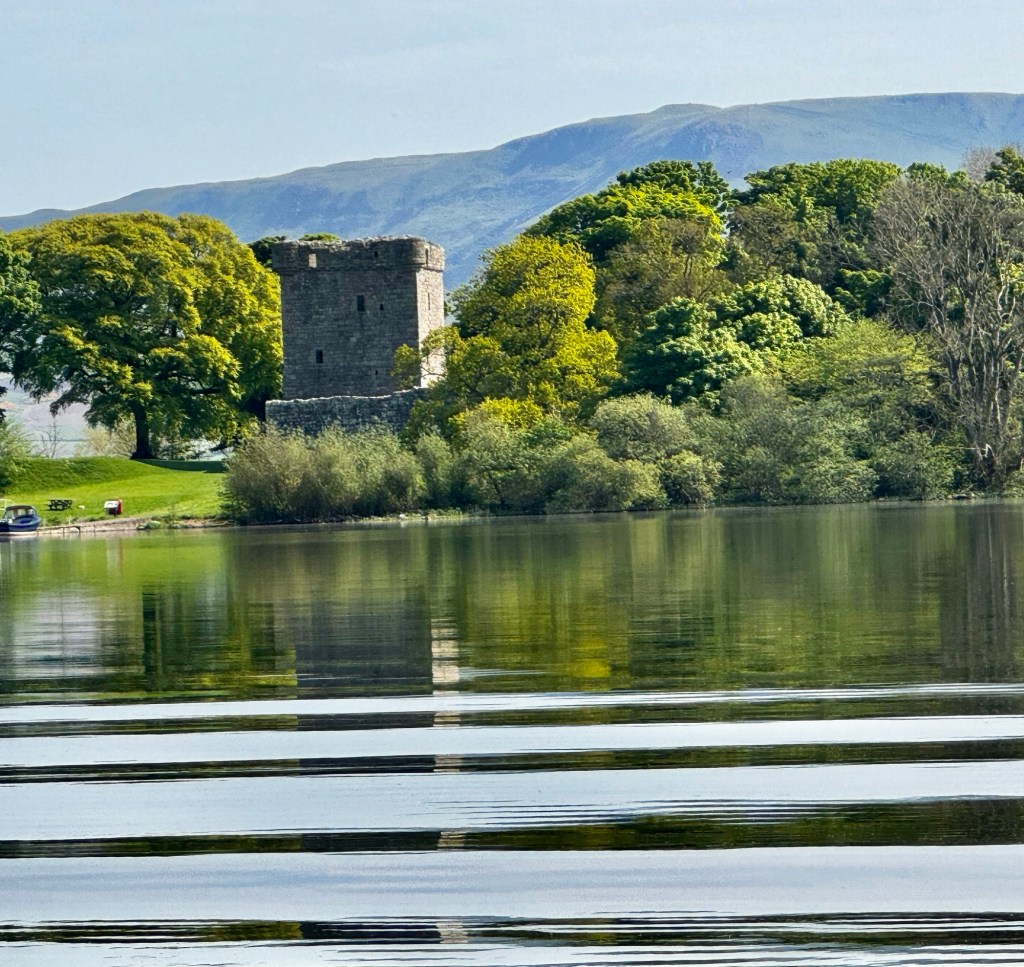
Farewell, Loch Leven Castle

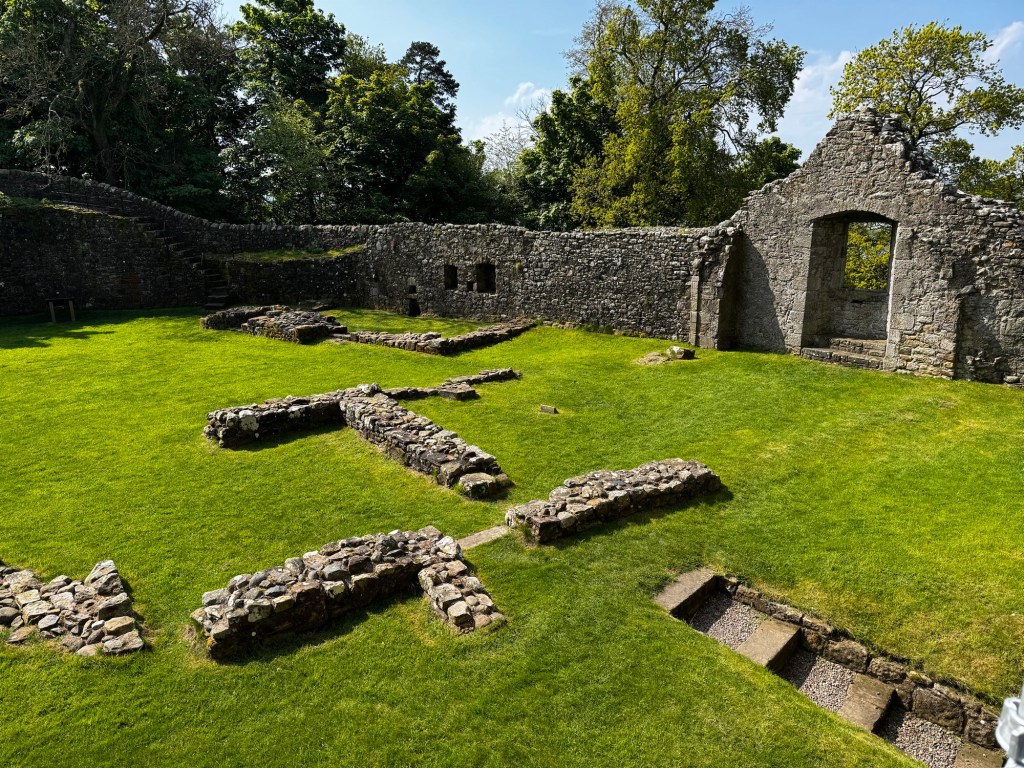
The next day I drove to the East Lothian coast to visit yet another castle and the best place to live in the UK.

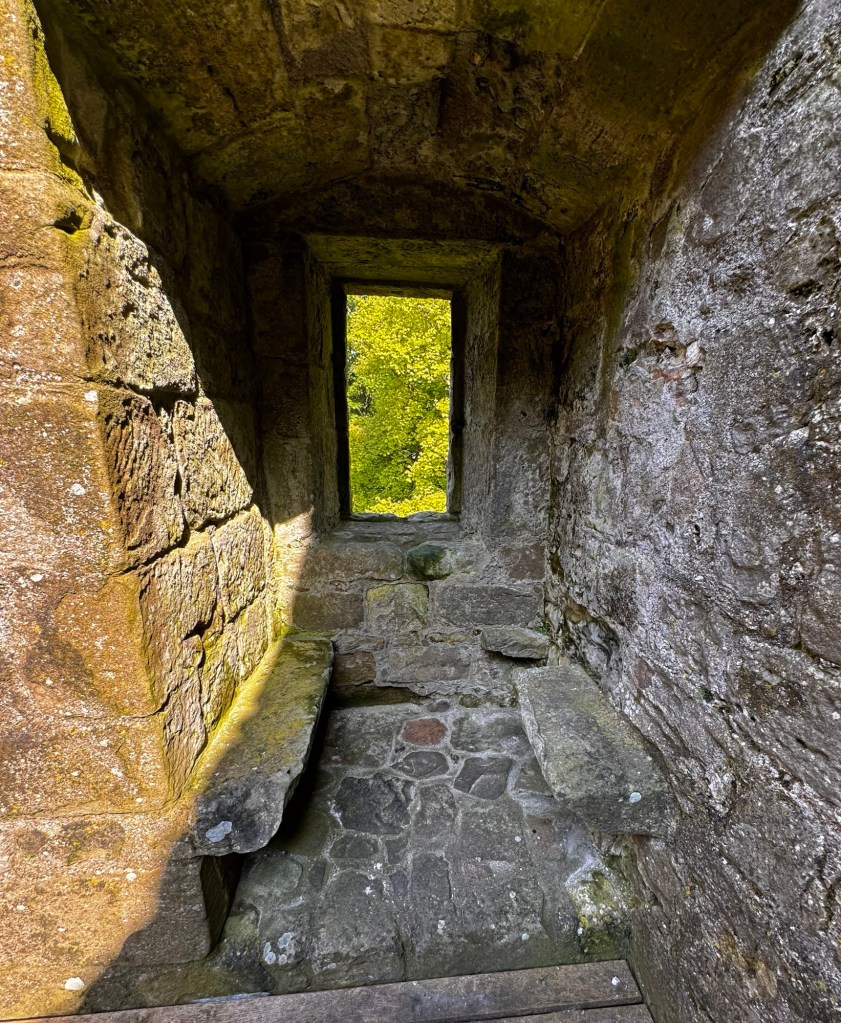
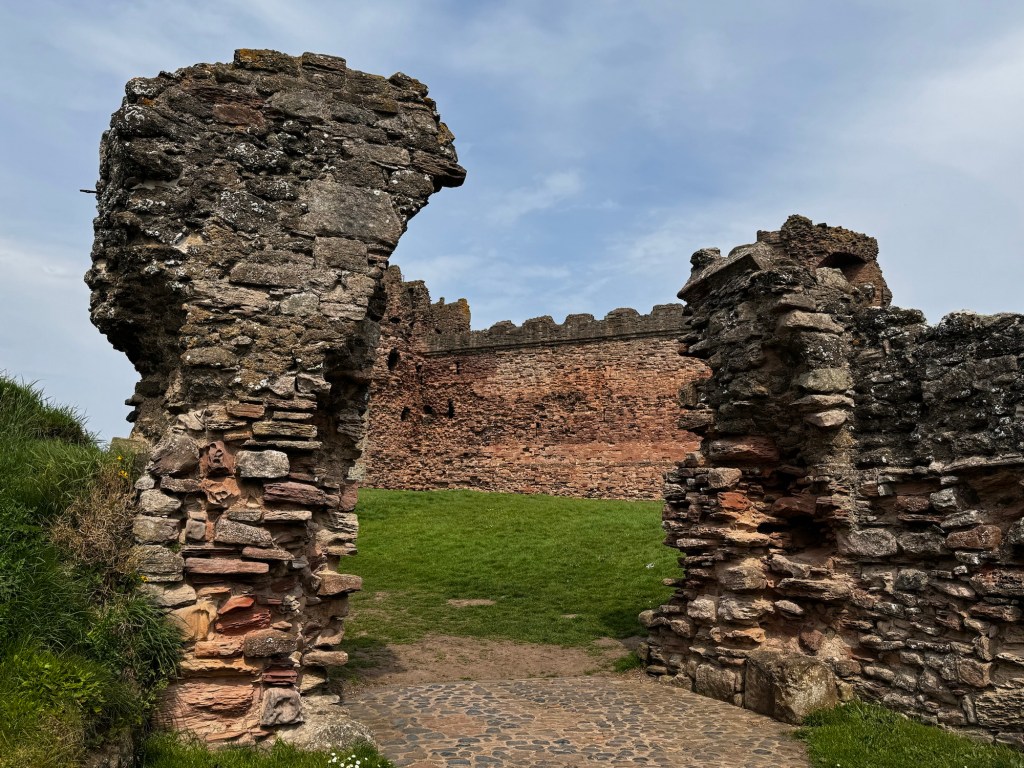
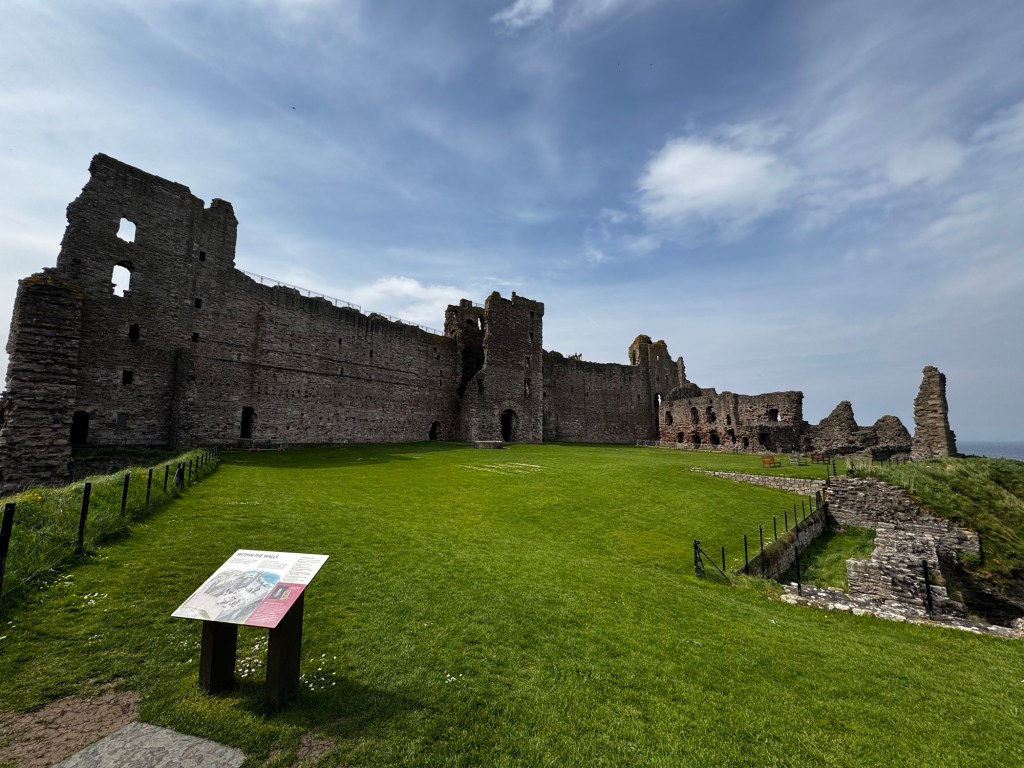
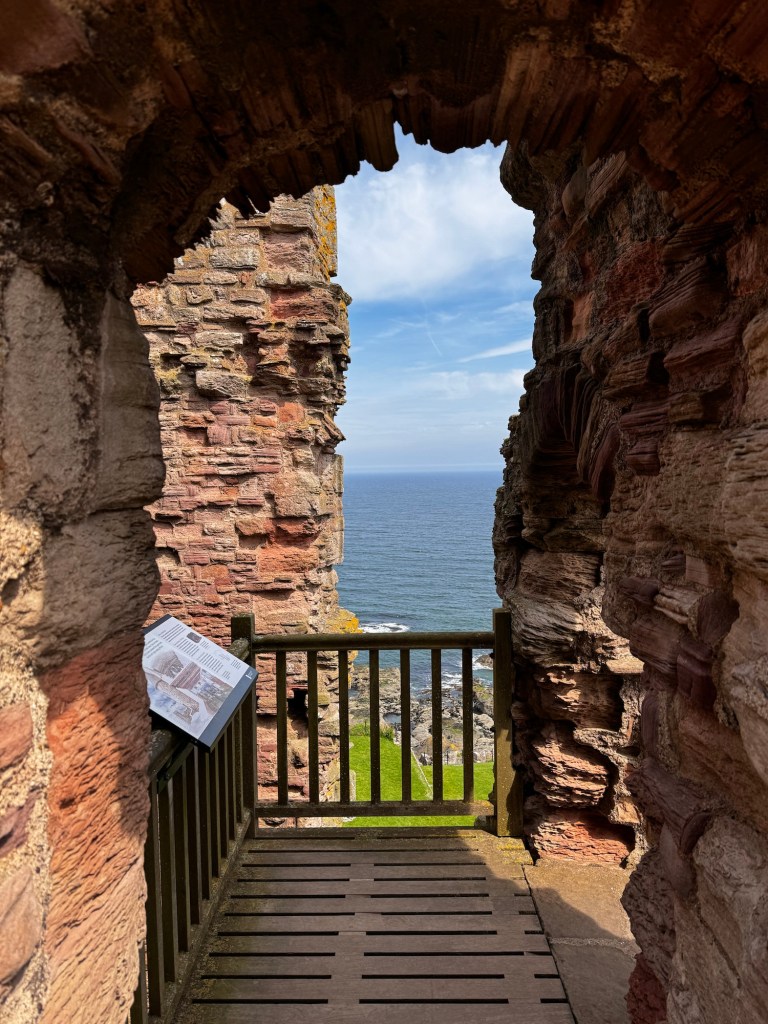
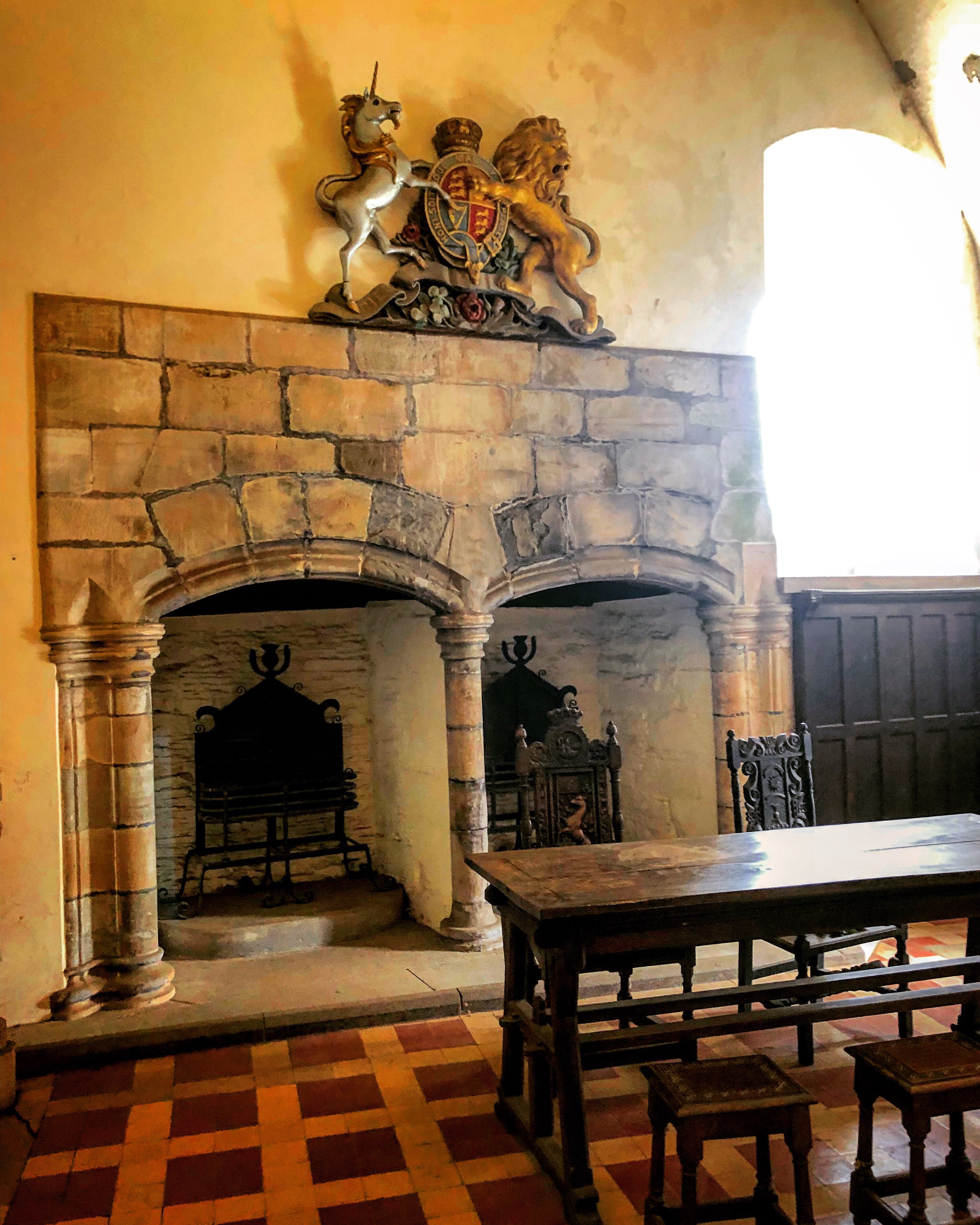
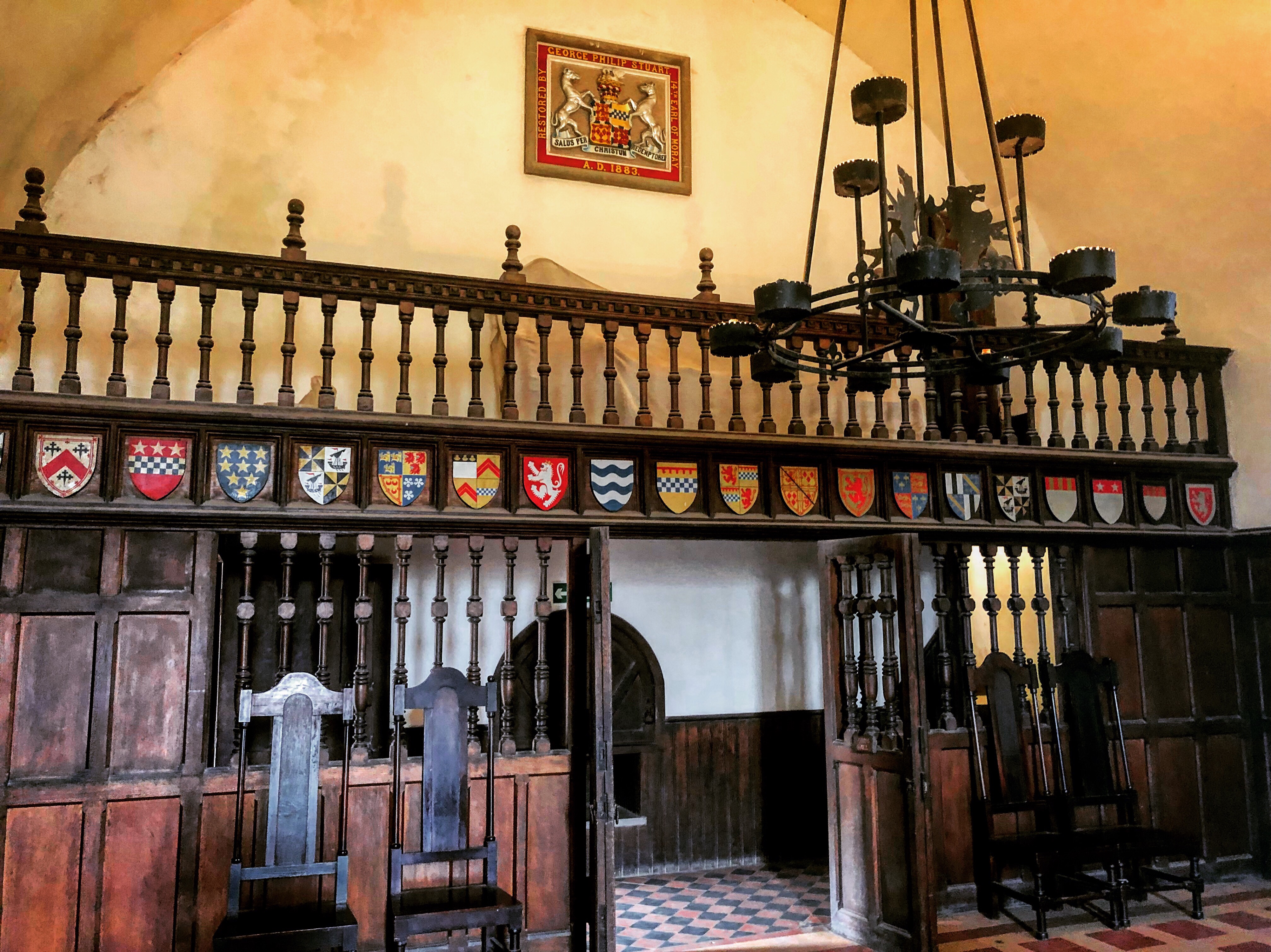
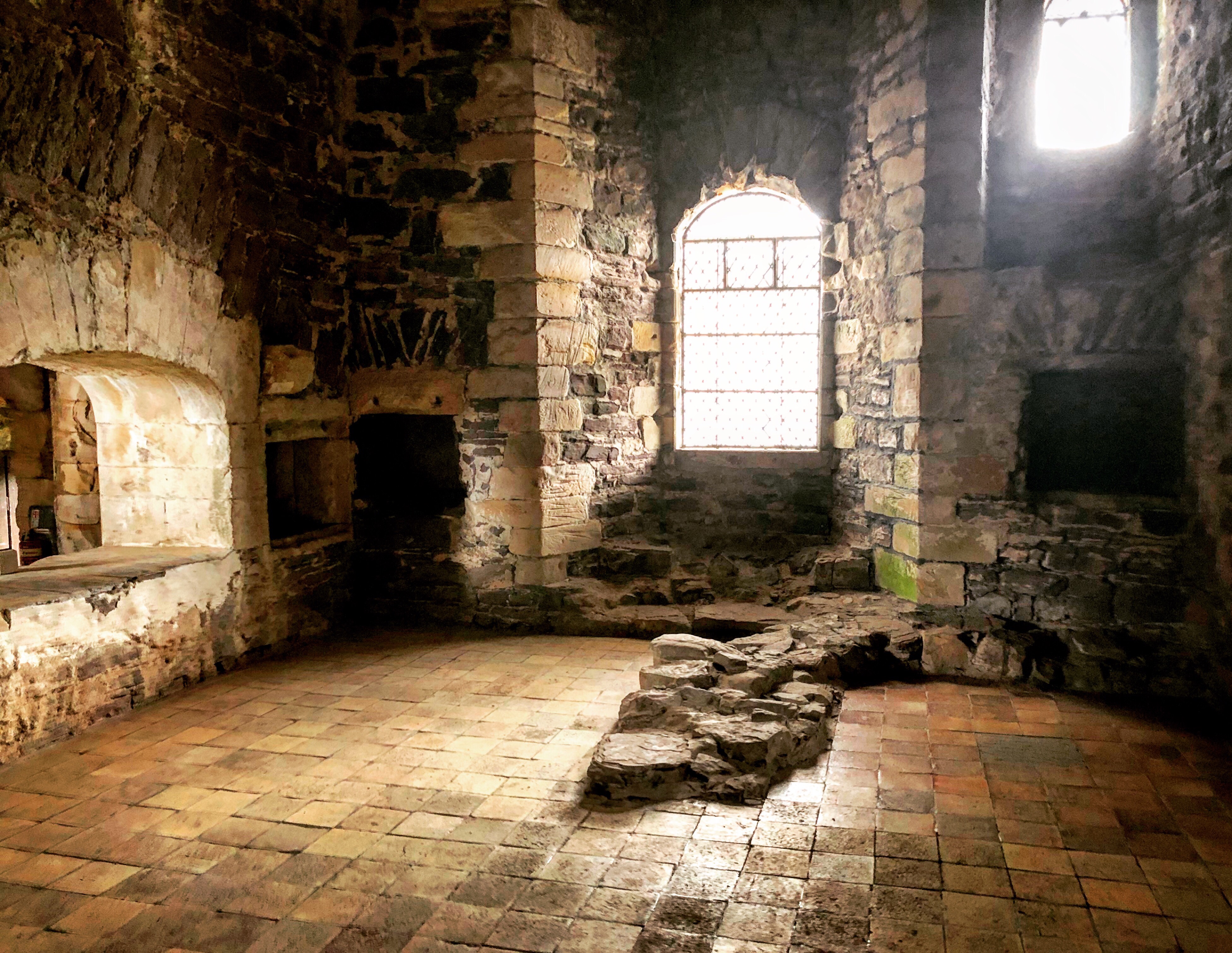
The castle is a ruin called Tantallon. It’s stunningly huge. Built in the mid-1300s by the “Red Douglas family,” it’s considered to be the last truly great castle built in Scotland. Besides one recorded visit from Mary QOS, it most notably was besieged a lot. James IV in 1491, James V in 1528 and of course Oliver Cromwell, which explains why there are no windows, just embrasures for cannons. Cromwell’s attack caused such destruction that the fortress was abandoned afterward.

Honestly, wouldn’t you like to tell Cromwell that this whole venture of his doesn’t end well and so he should stop being a destructive dickhead?

The Douglas family was in fact feeling all schadenfreude when they heard the news that Cromwell’s body was exhumed from Westminster Abbey by Charles II after the Restoration, hung and beheaded, with his gnarly old head displayed on a pike for 30 years. Ah olden times. (See previous blog)

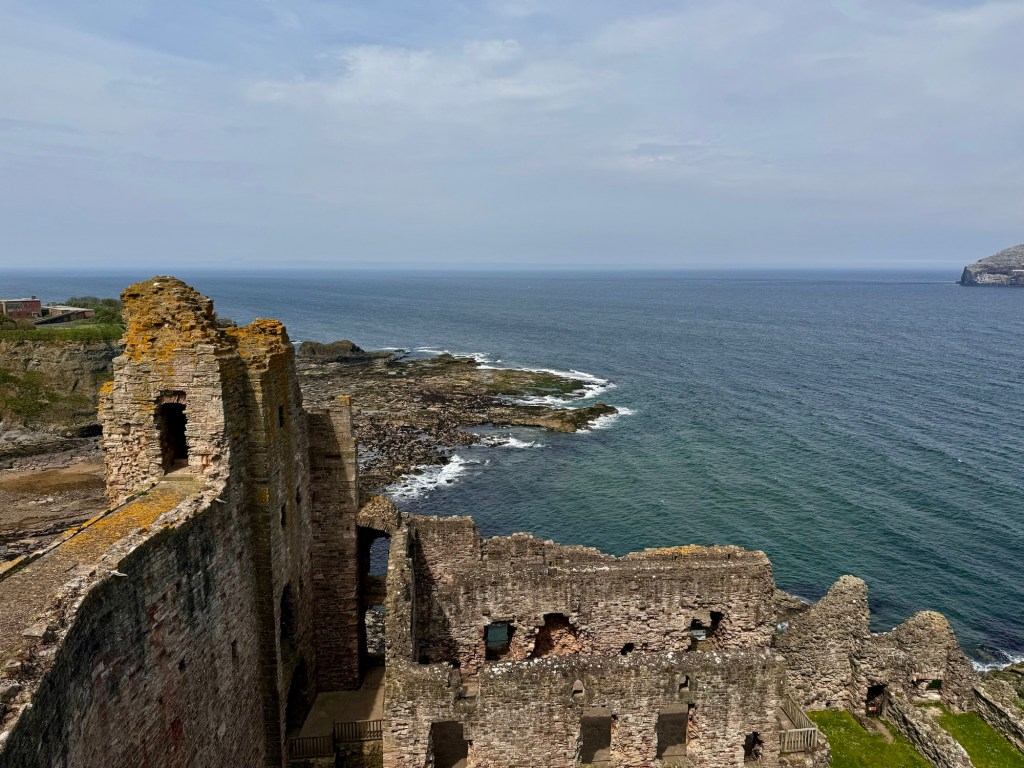
Some Tantallon photos:
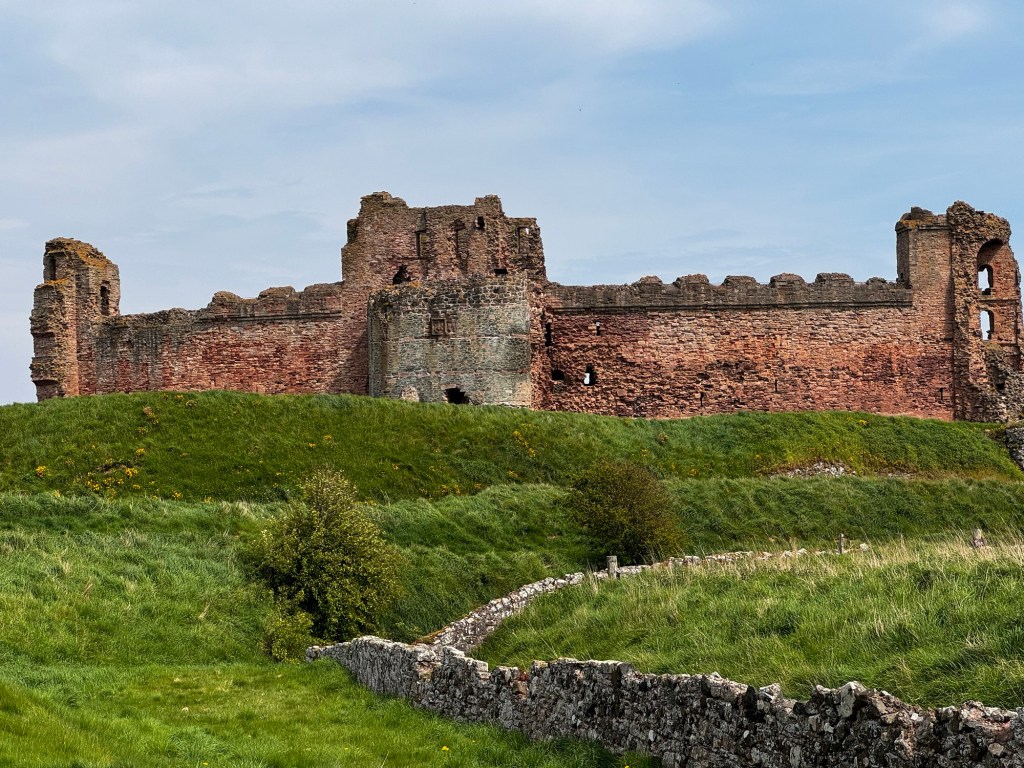
And again with the sketchy spiral staircases and big open climbs to the tippy top, and also, cliffs. Even the warning signs around the property are comical when seen through American eyes where everything is so regulated and guard-railed. Half the ruins in Scotland would be shut down under our public safety rules.
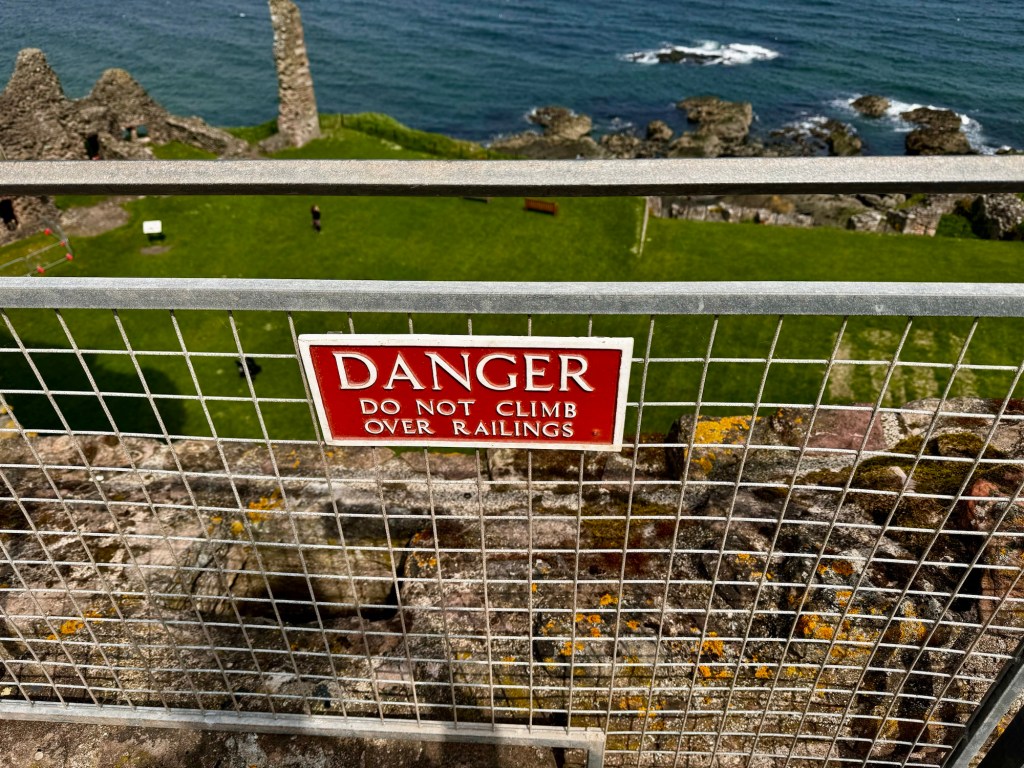
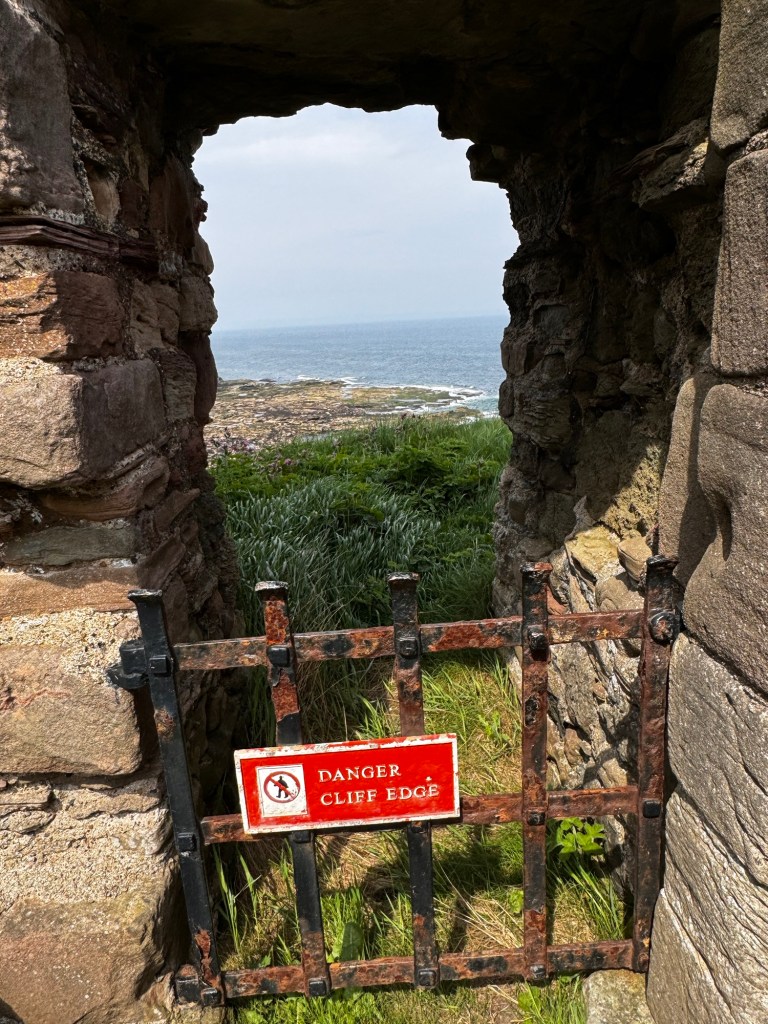
I mean, at least these ancient decrepit steps were blocked off, as they basically constitute a technical climb.

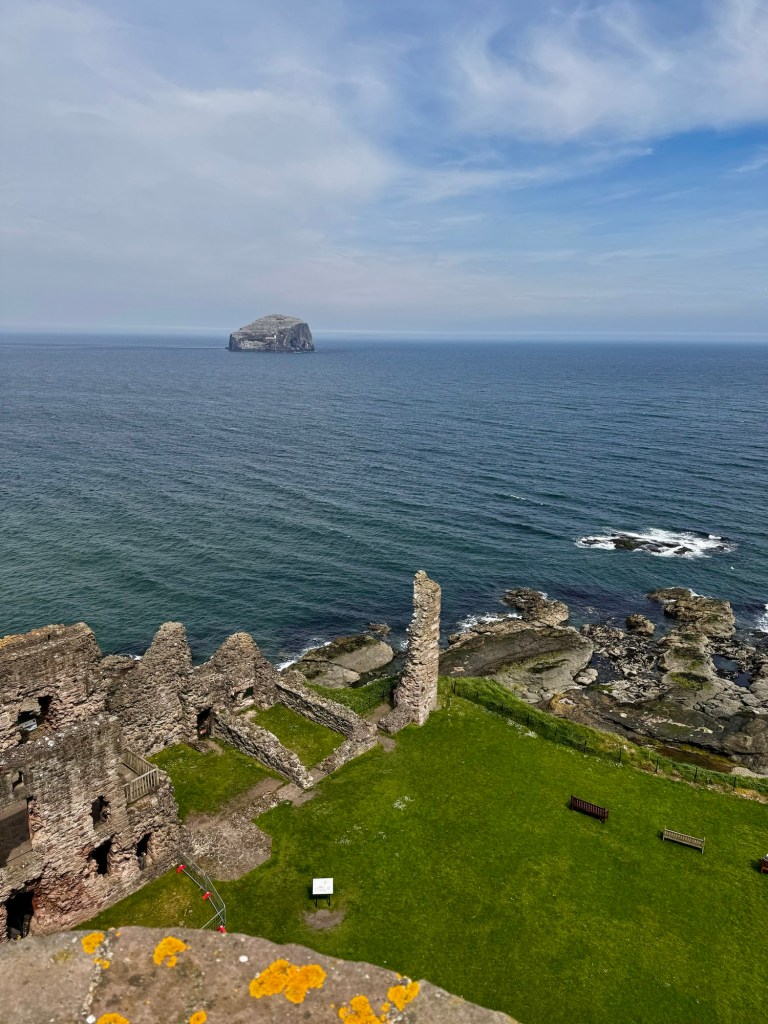
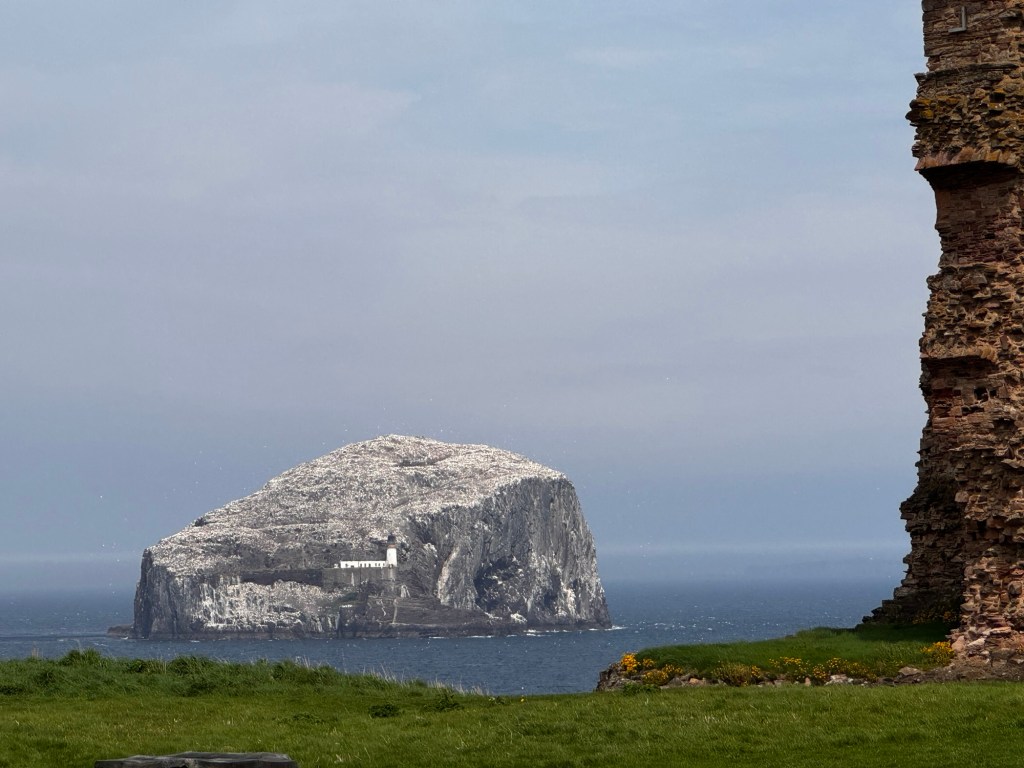
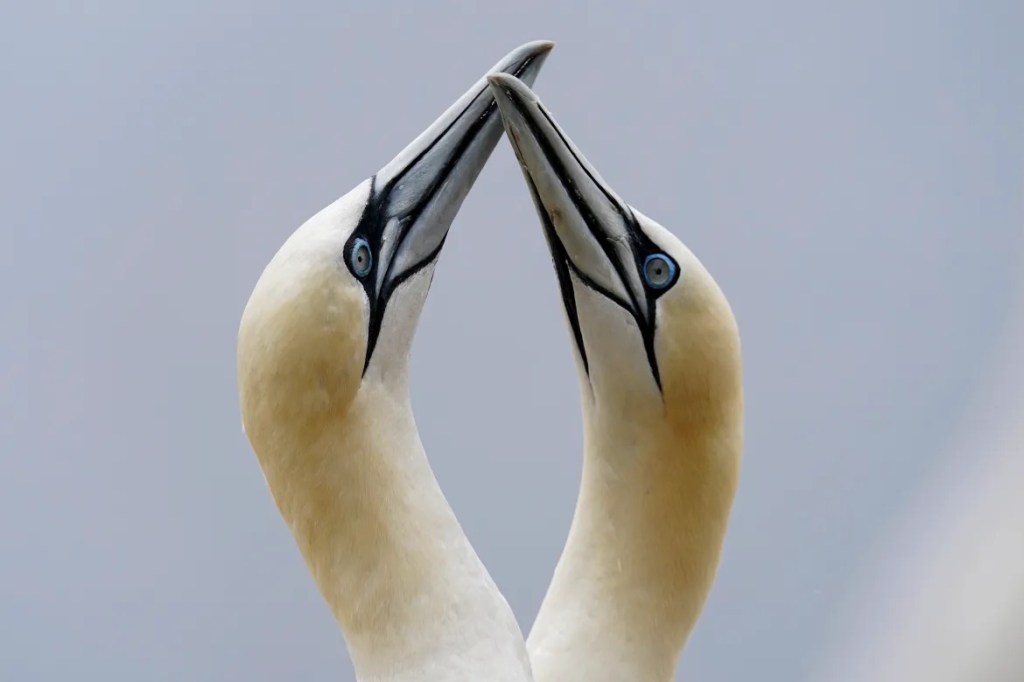
At least the last thing you saw as you plummeted to your death would be Bass Rock. Known as “The Bass,” it is an island in the Firth of Forth that plays host to the world’s largest colony of Northern gannets, namely, 150,000 of them.
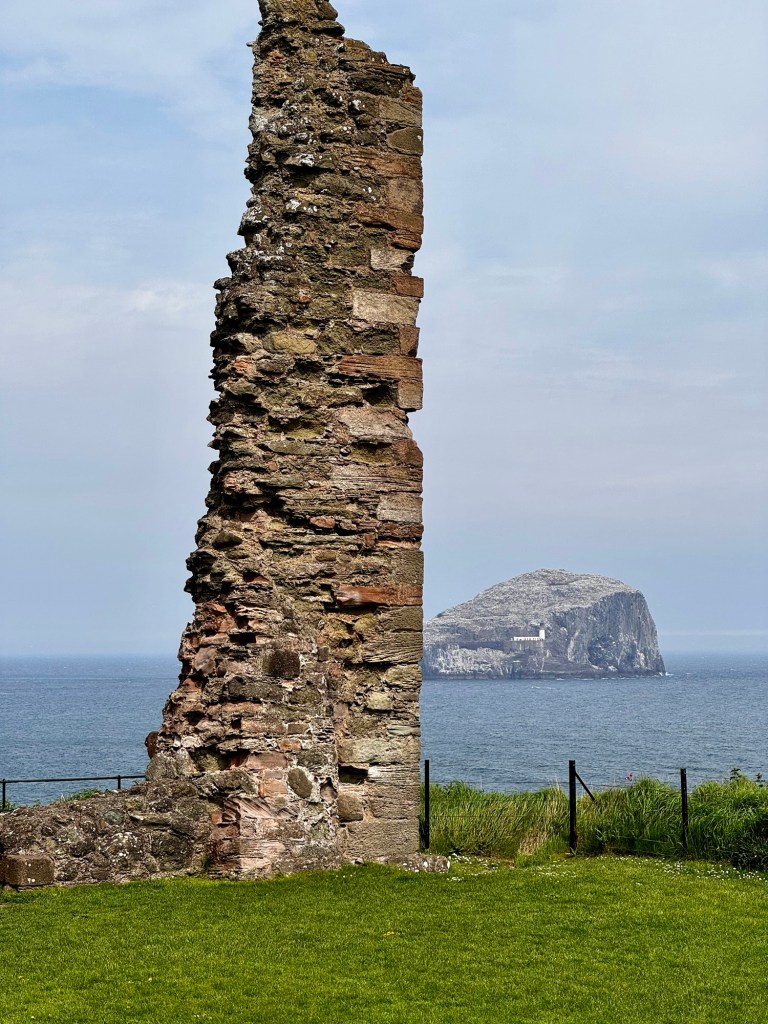
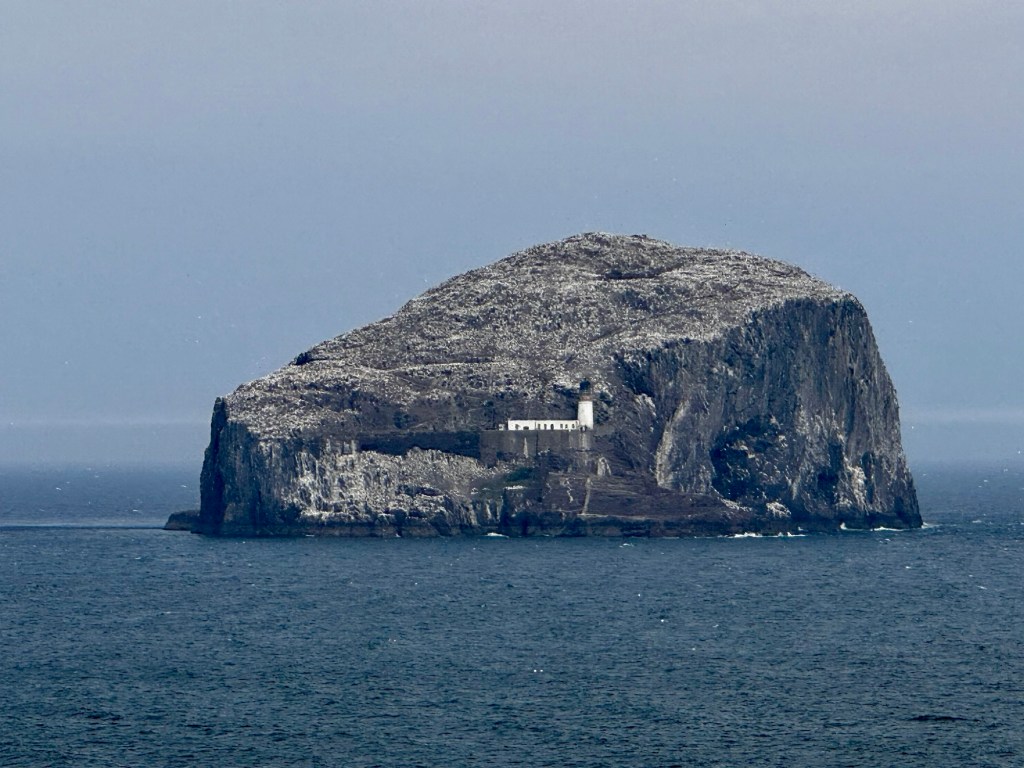
The lighthouse!
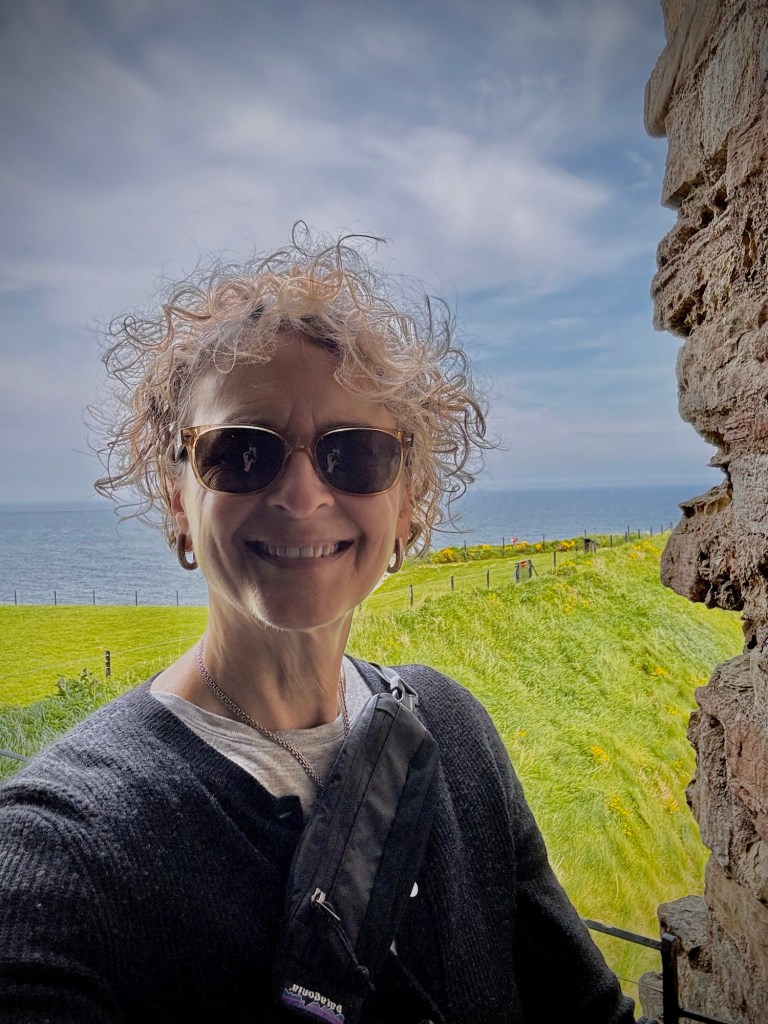
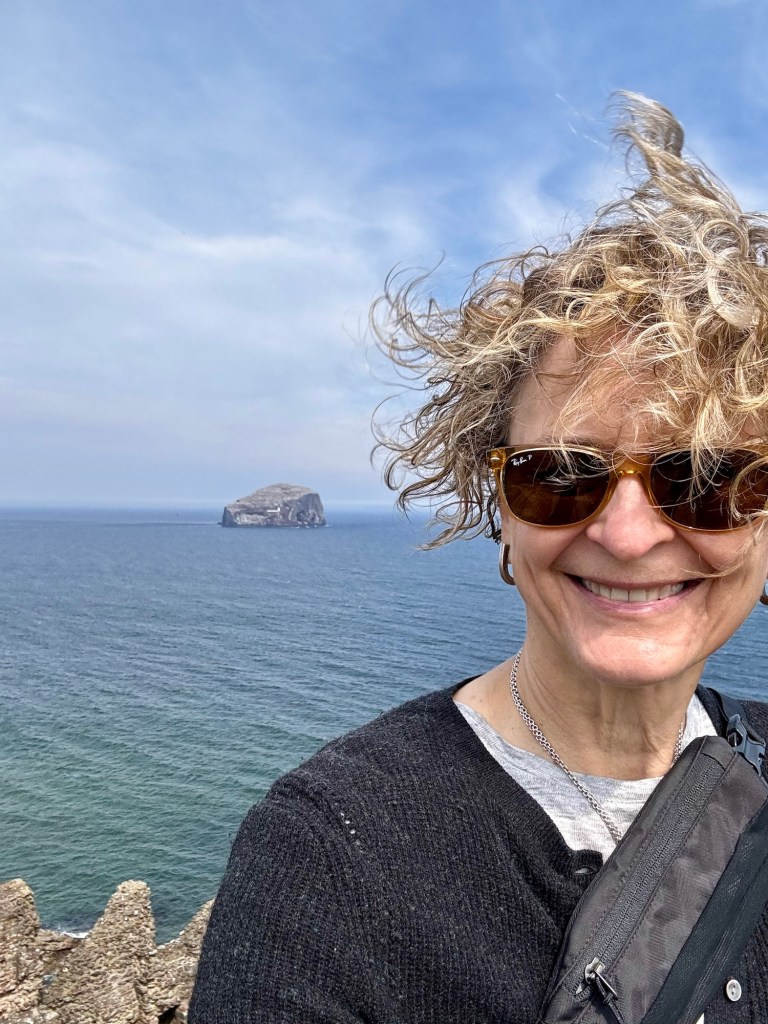
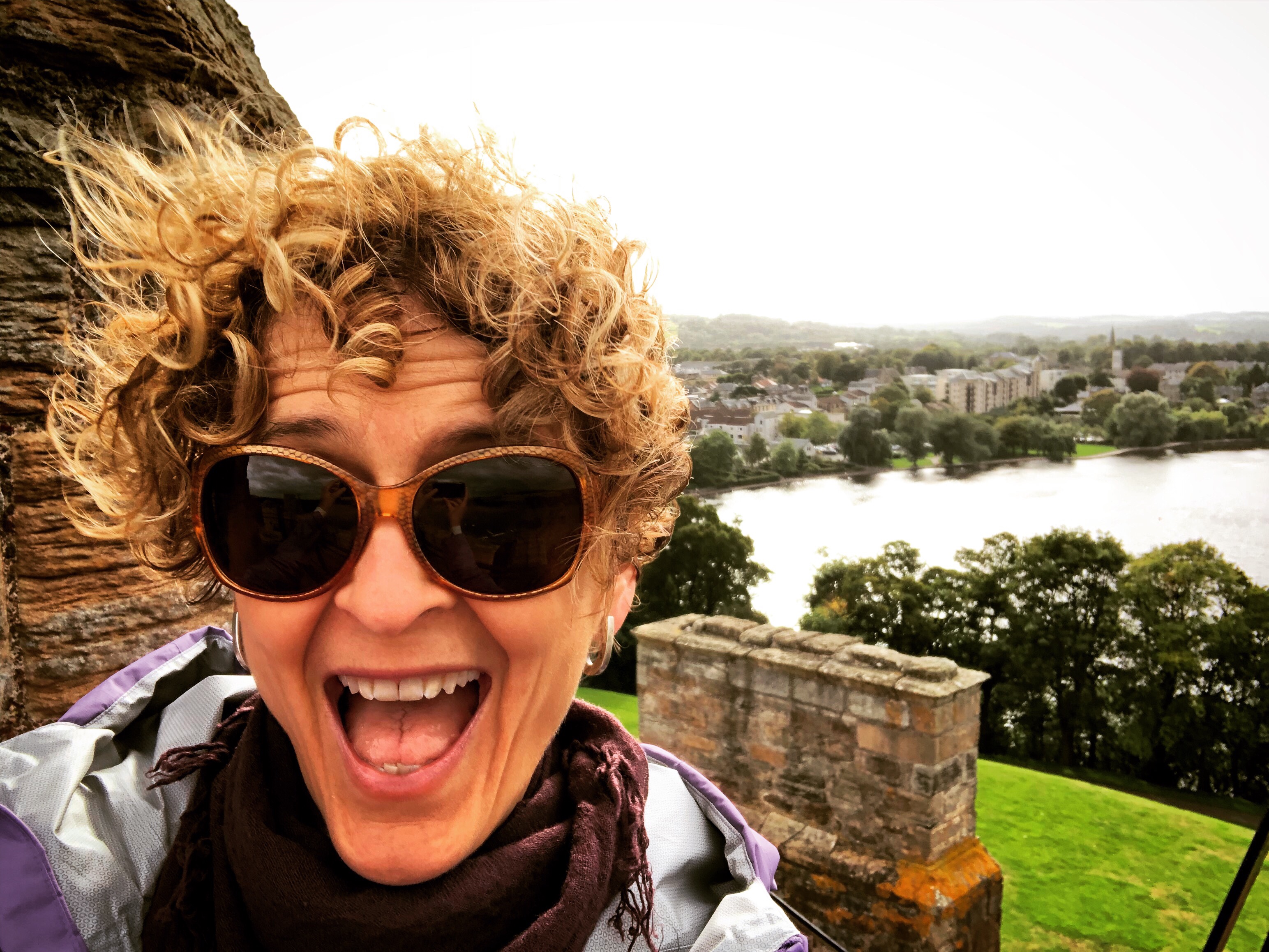
This is NOT a drone shot, it’s me at the tippy top.
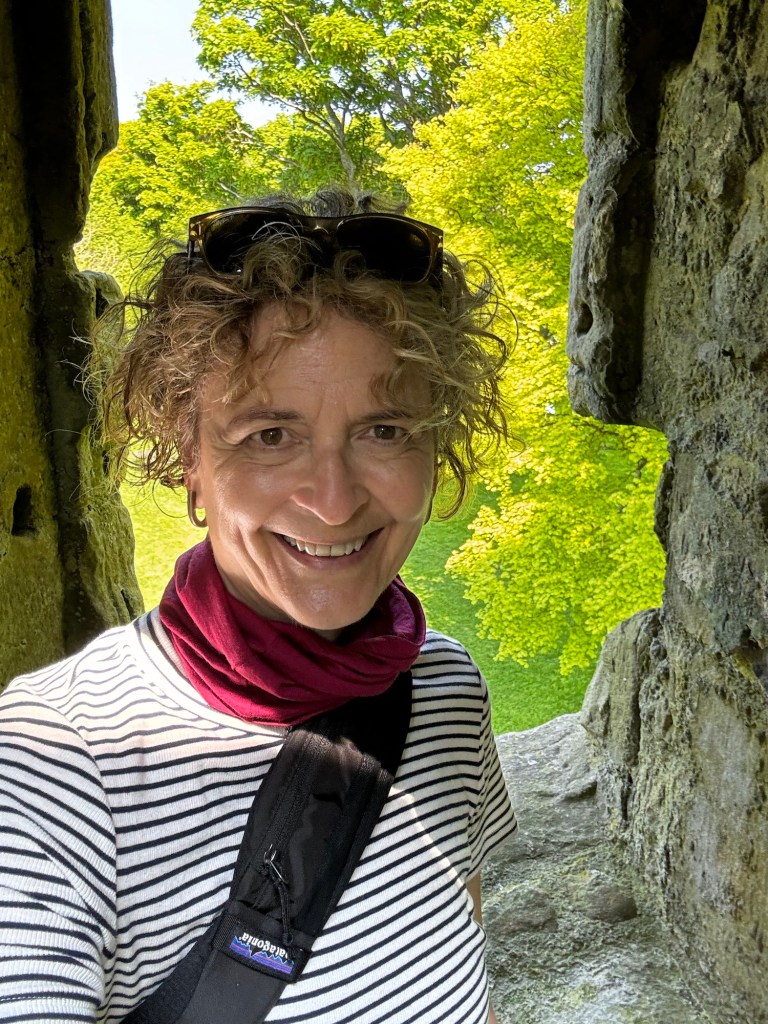
Here’s my hair in the high altitude breezes to prove it.

Probably too many photos, but it’s cool, right? Anyway, back to the giant gannet colony! As you can imagine, 150,000 gannets leave droppings that off-gas 152 kg of ammonia per year, and the Bass looks white from above. And the smell would be amazing.

One would think that the island would not have been inhabited throughout history for these reasons, but no. It was settled by an early Christian hermit and later was the site of an important castle, now in ruins. James I of Scotland used to imprison his enemies there in the 15th century. The island belonged to the Lauder family (not those Lauders) for six centuries. In the 1600s it was seized by four Jacobites imprisoned there, which they held against government forces for nearly three years. One of the Stevenson lighthouses is perched on a ledge, built in 1902.

Since 1706 the island has been owned by the Dalrymple family.

Before we leave, let’s return to the gannets. Sadly, in 2022 avian influenza was detected on the Bass and more than 5,000 dead birds were counted on a single day. The disease remains a concern in seabird colonies around the world.
Now onto the delightful seaside town of North Berwick, which topped a list of 72 locations in the Sunday Times’ annual report of best places to live in the UK. It was selected for its combination of community spirit, connections to nearby Edinburgh, a thriving high street with independent shops and two pretty beaches. I have to say I felt the community spirit while I walked around the pretty streets.

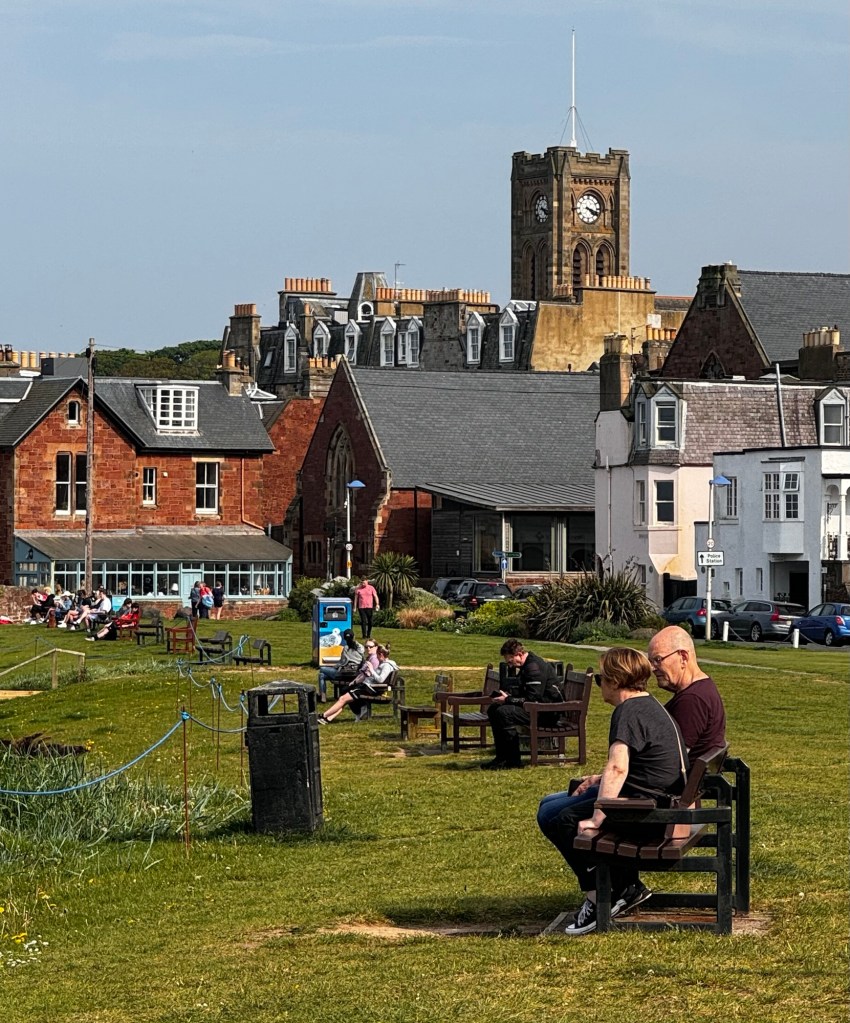
North Berwick
The coast is lined with benches where people hang out.
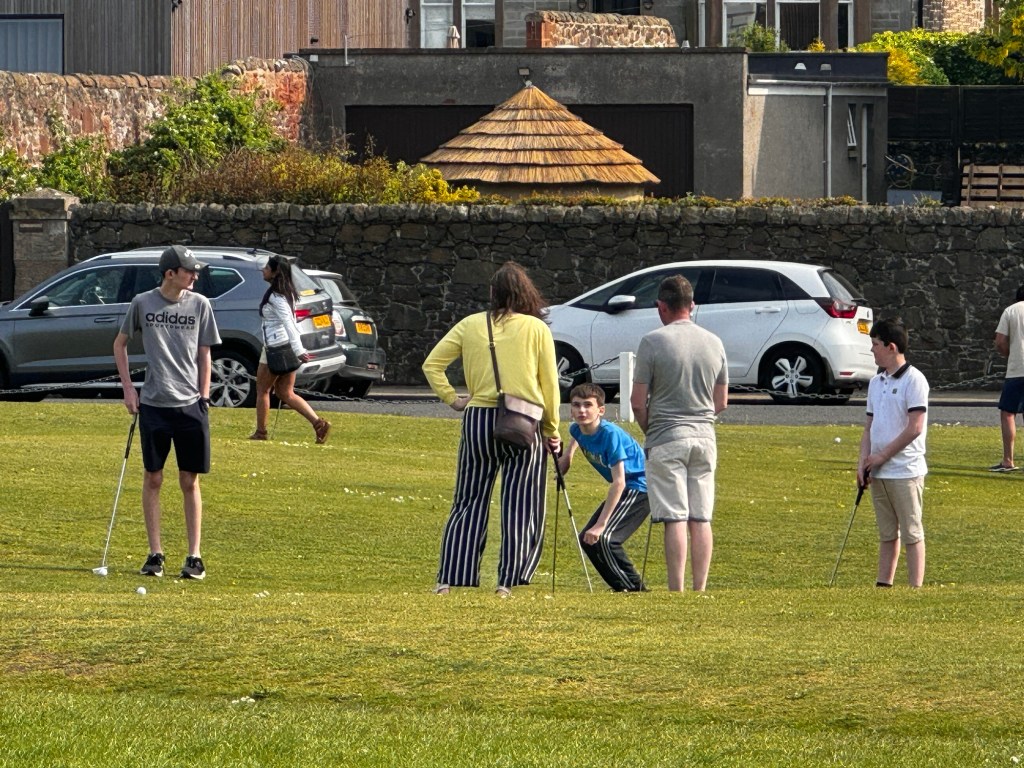
Along the shore, families gather to play tiny games of golf.
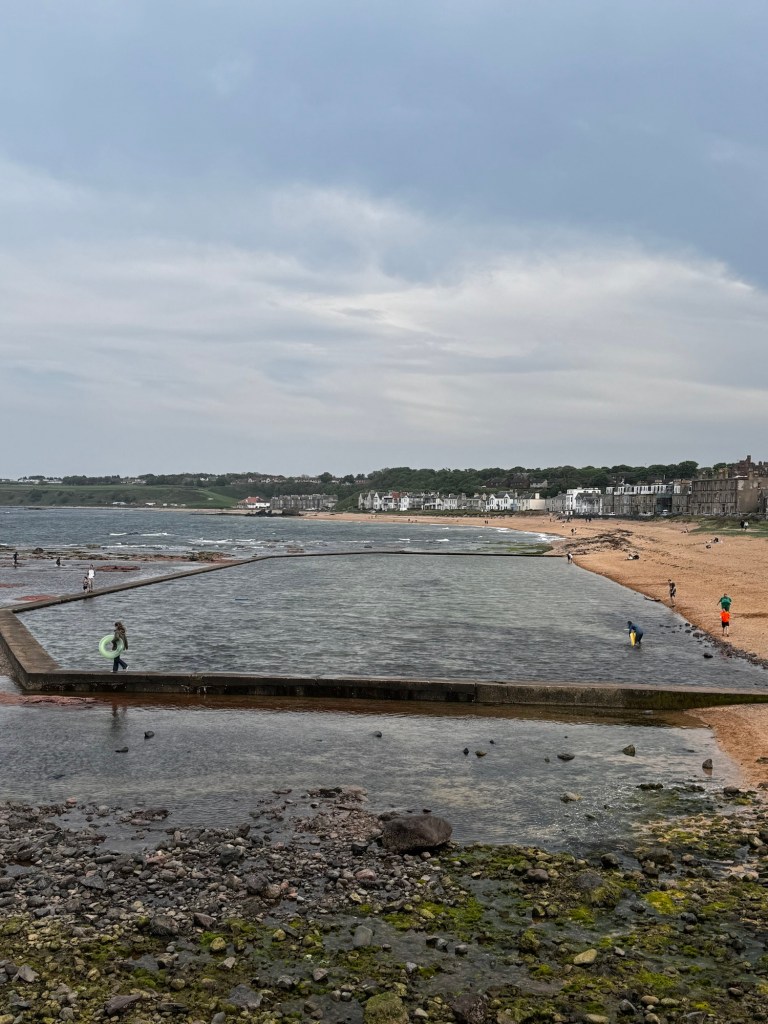
A saltwater pool next to the sea.

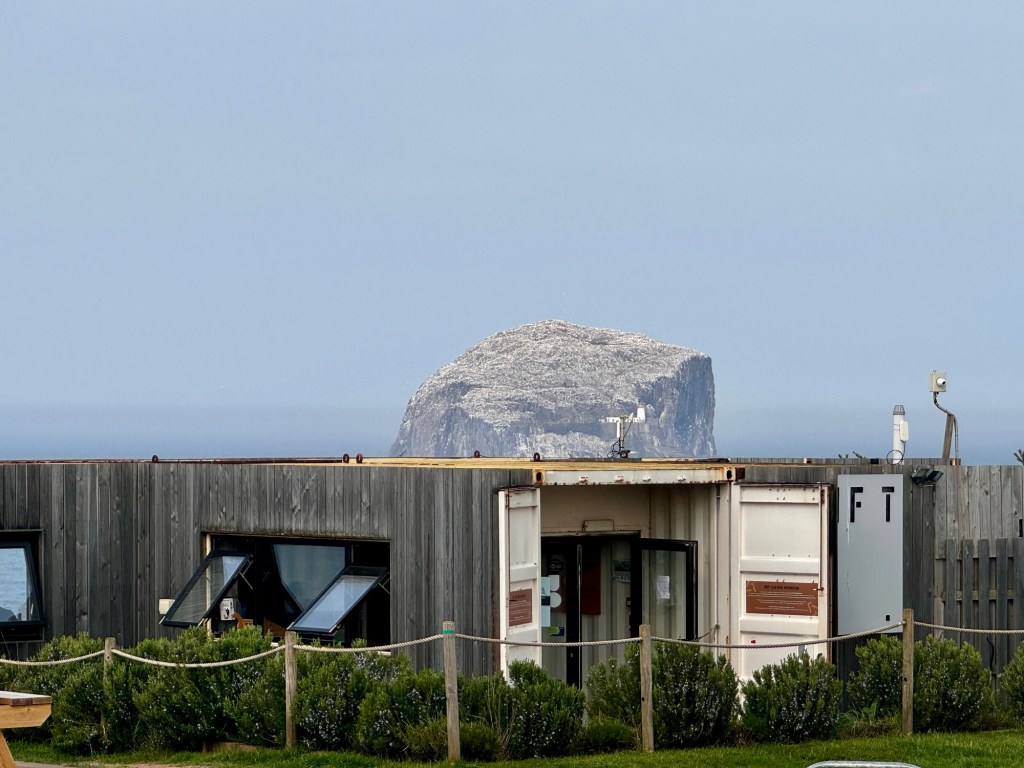
And if you ever find yourself in this beautiful part of Scotland, please have lunch at Drift, an awesome cafe on a cliff with views of the Bass.
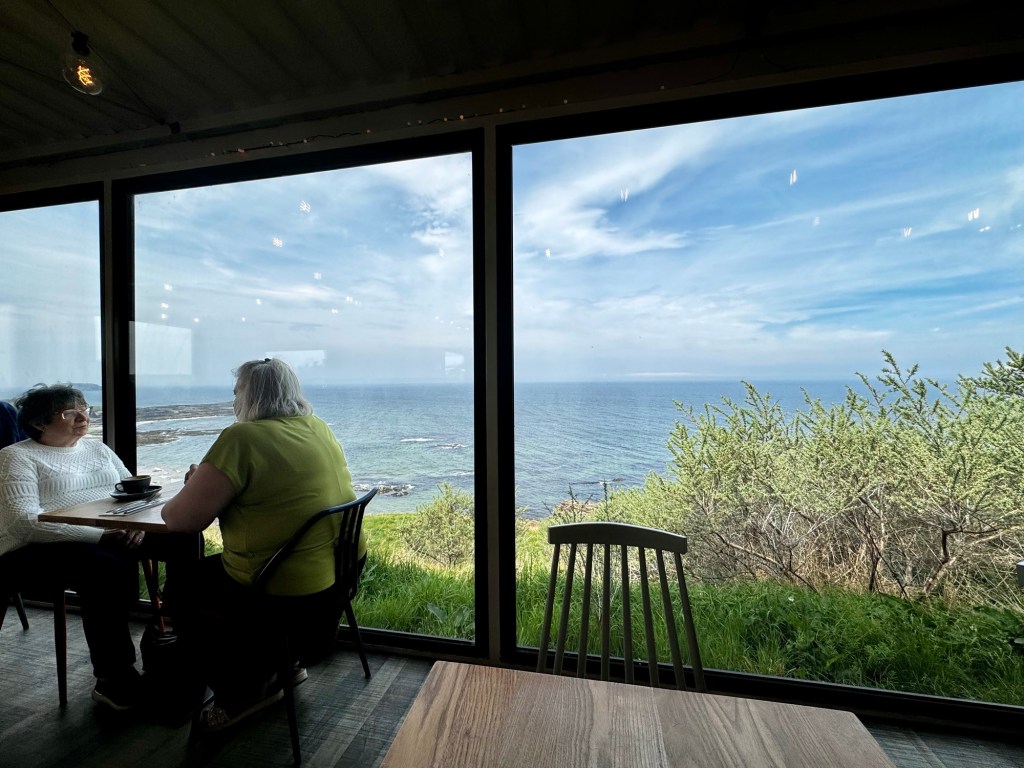
The view from my table at Drift.
Drift and Bass Rock
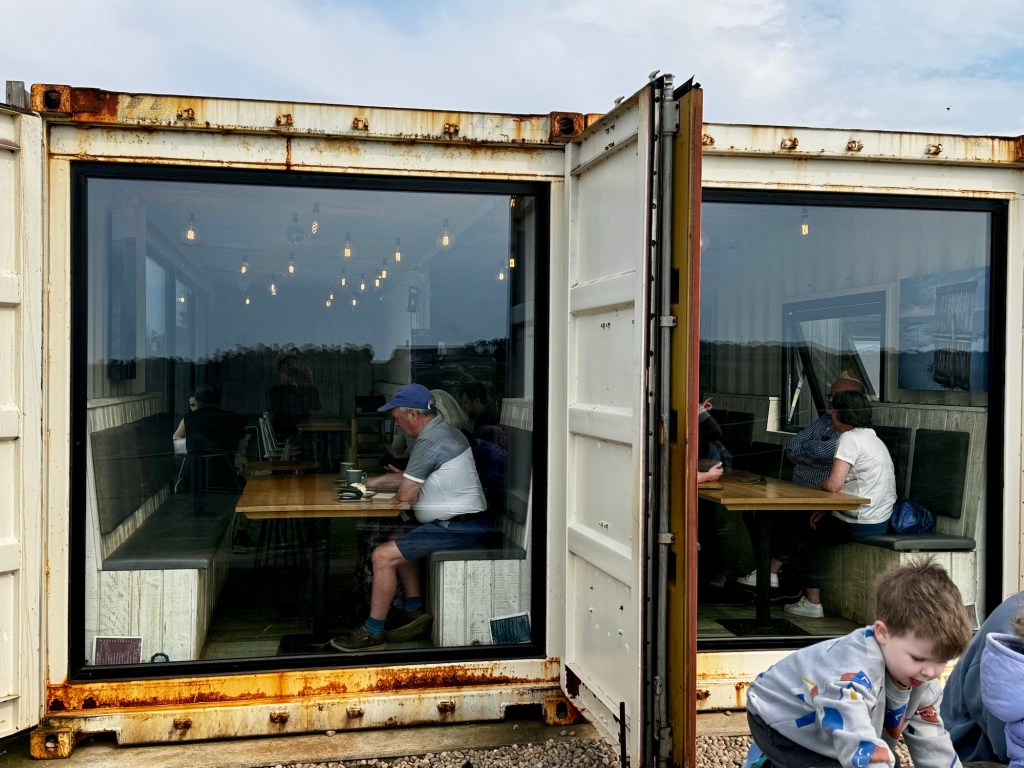
The cafe design takes full advantage of the views.

As the next day dawned, I drove to the Scottish Borders, a beautiful, fertile region featuring green, gorgeous hills and a meandering River Tweed. I visited Sir Walter Scott’s home, Abbotsford, a magnificent castle-like abode with gorgeous gardens.
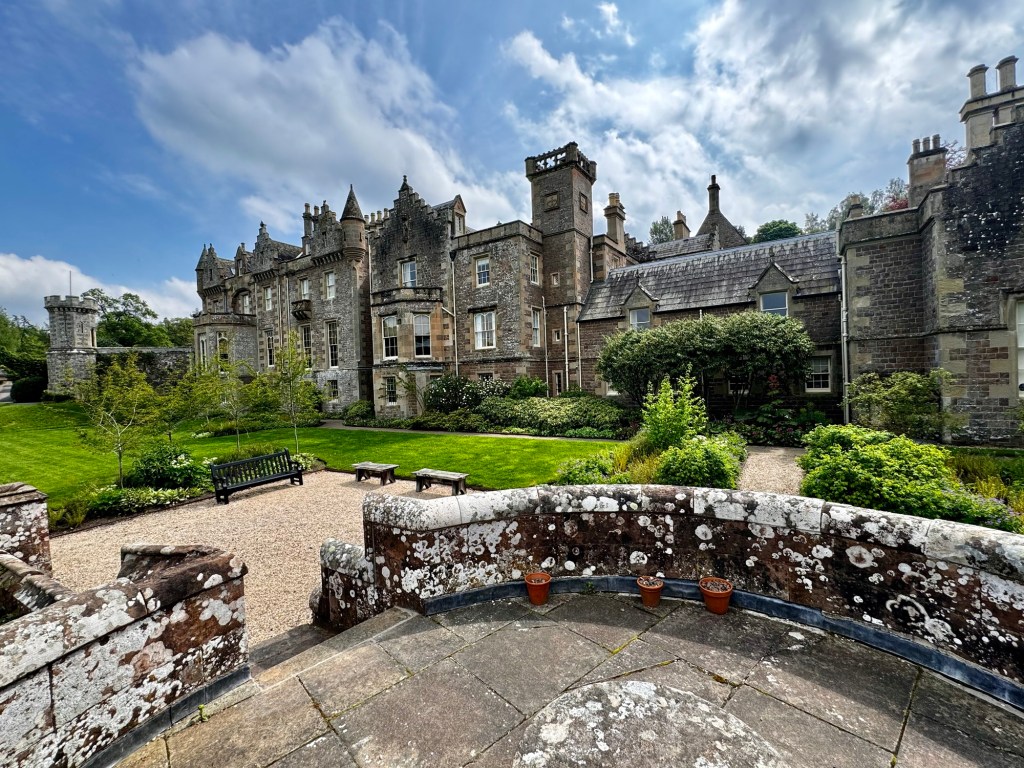
Since we’ve all only read Ivanhoe, it’s interesting to note that in fact Scott wrote 25 books and is considered to be the inventor of the historical novel. He was also a fine poet. In his spare time, he was also responsible for finding the Scottish Crown Jewels after they were lost for a wee while (see previous blog), and he stage-managed George IV’s trip to Scotland which helped rehabilitate and romanticize Highland culture. He wrote books and poems about the 1745 Jacobite rebellion, and our three lads and a lassie, Robert the Bruce, William Wallace, Rob Roy and Mary QOS.

After touring Abbotsford, I have the sense that he was a very cool guy with a cool wife and four successful kids and he’d be on my list of time machine meet-up people.
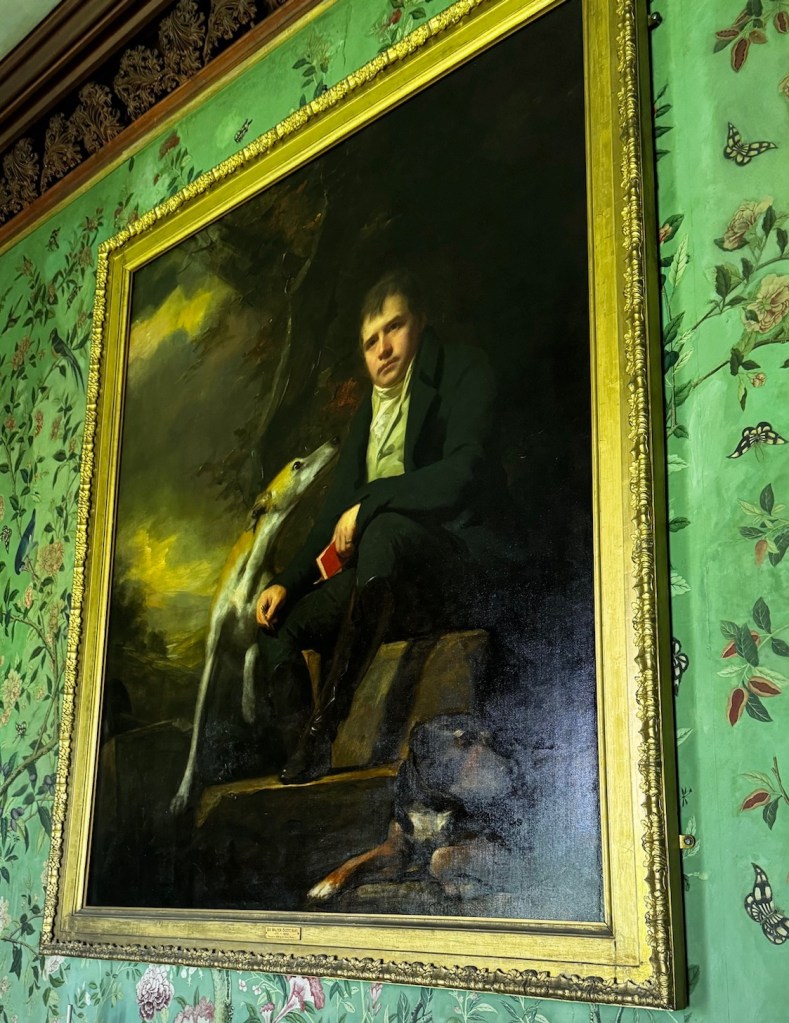
The nucleus of Abbotsford was 100 acres of farmland Scott purchased. He modestly, and then more aggressively expanded over the years, not only creating his large home but adding 900 acres along the River Tweed. Unfortunately, in 1825 a UK-wide banking crisis resulted in the collapse of the Ballantine printing business, of which Scott was the only partner with a financial interest. It had debts of 130,000 pounds (equivalent to 13.5 million today). He refused to accept financial help and instead placed Abbotsford into a trust in the name of his creditors and wrote his ass off. The debt was paid off shortly after he died.

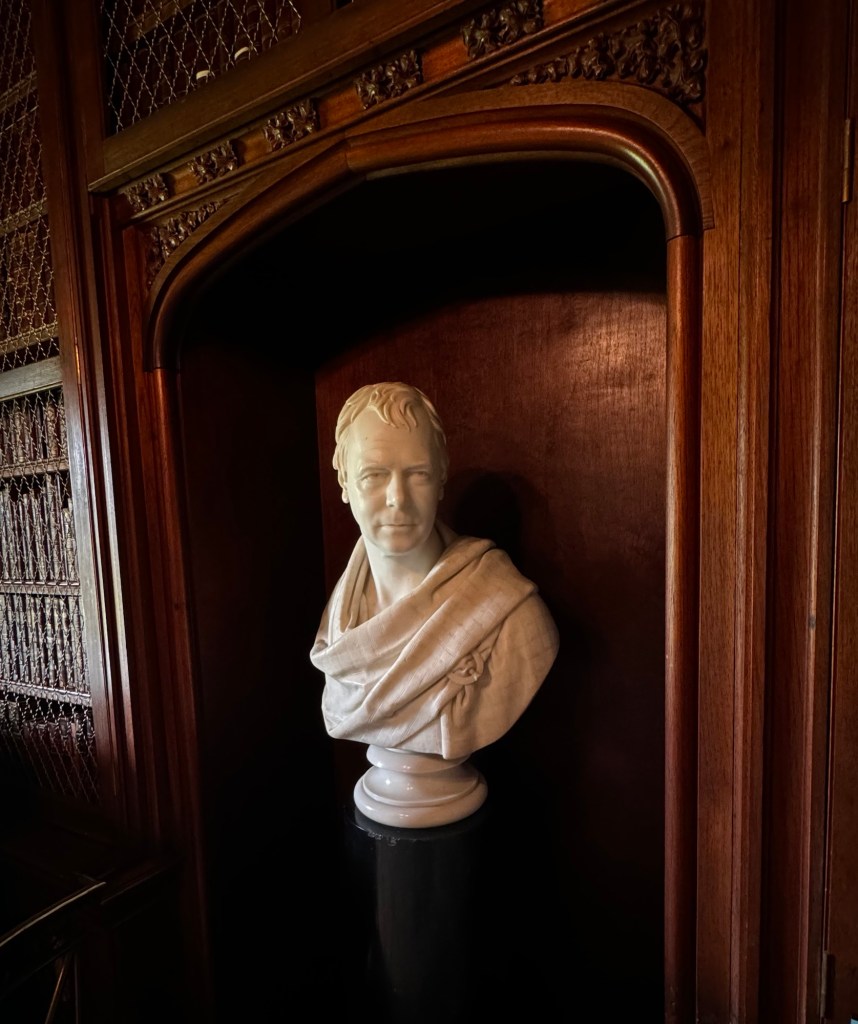
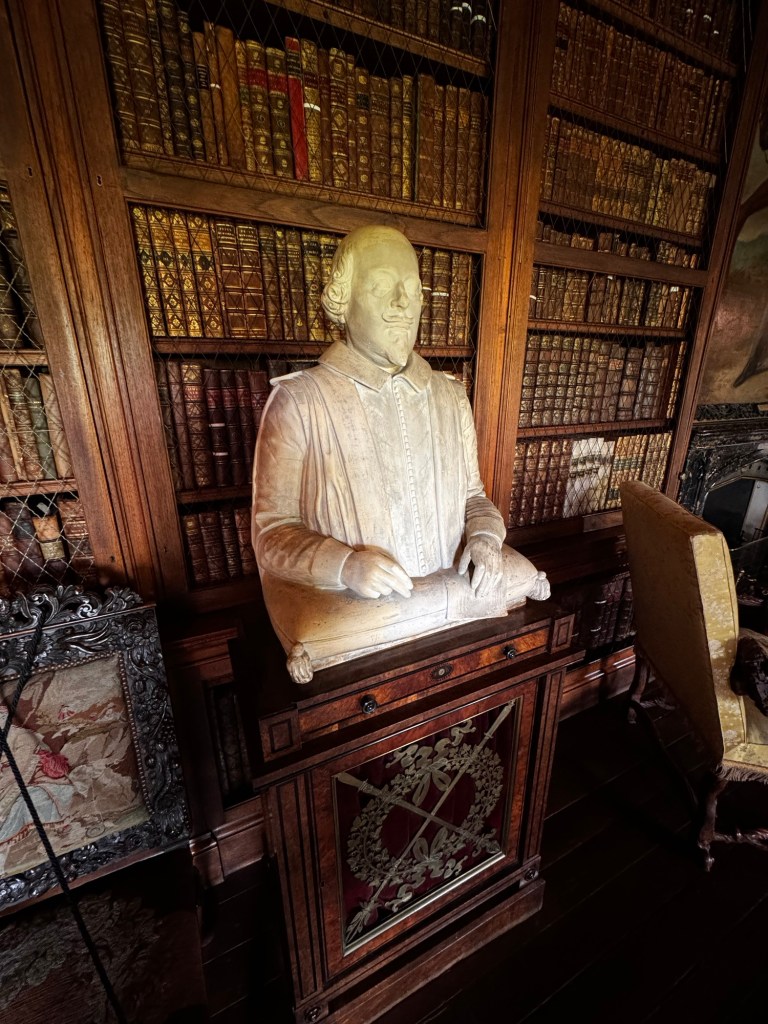
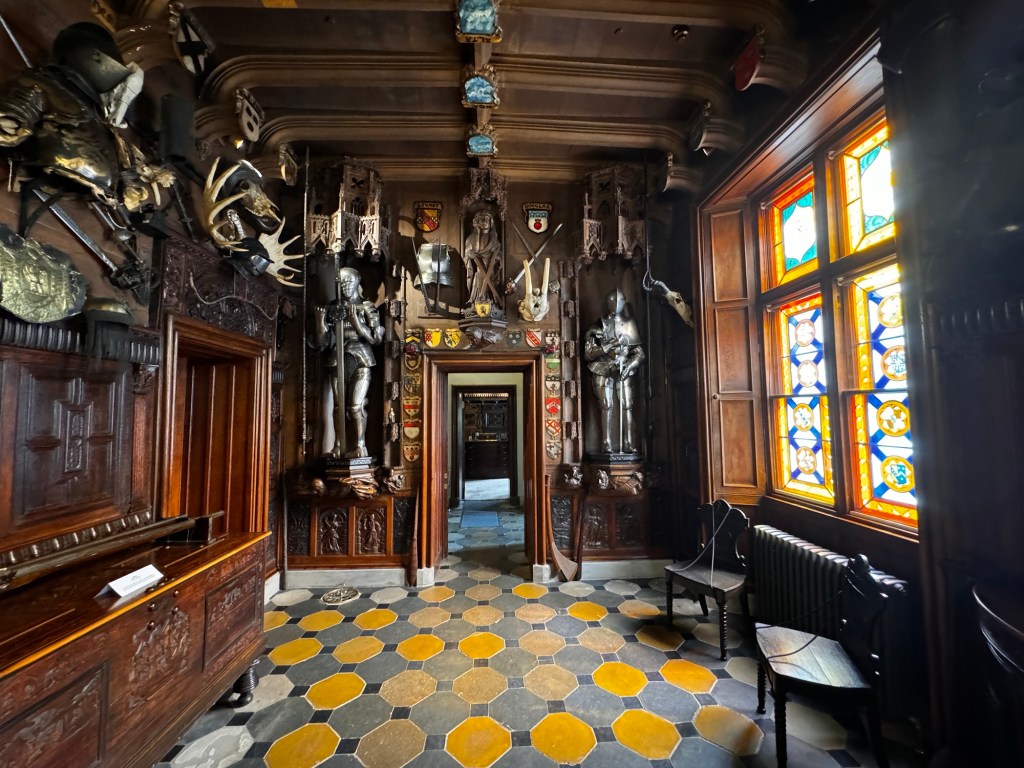
The house is gorgeous, and his interest in Scottish history apparent, as he had a fascinating collection of artifacts on display, including items apparently belonging to Peepaw Roy, Mary QOS and the Bonnie Prince. The lower floors of the house are on the tour, nothing upstairs. The house was exactly as he left it at his direction.

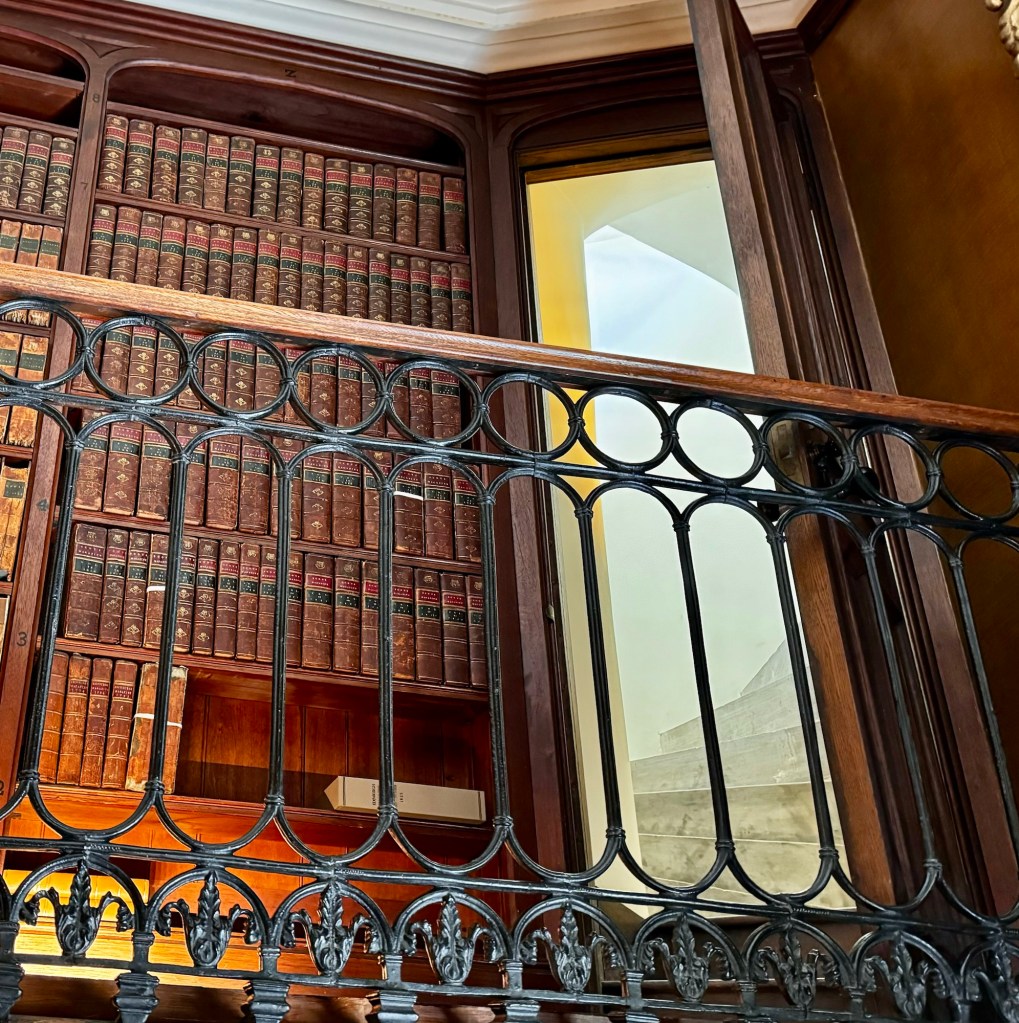
My favorite room was his study with an upper library lining the ceiling. There is a staircase up, and a door in the opposite corner leading to his dressing room, so he could escape uninteresting guests.

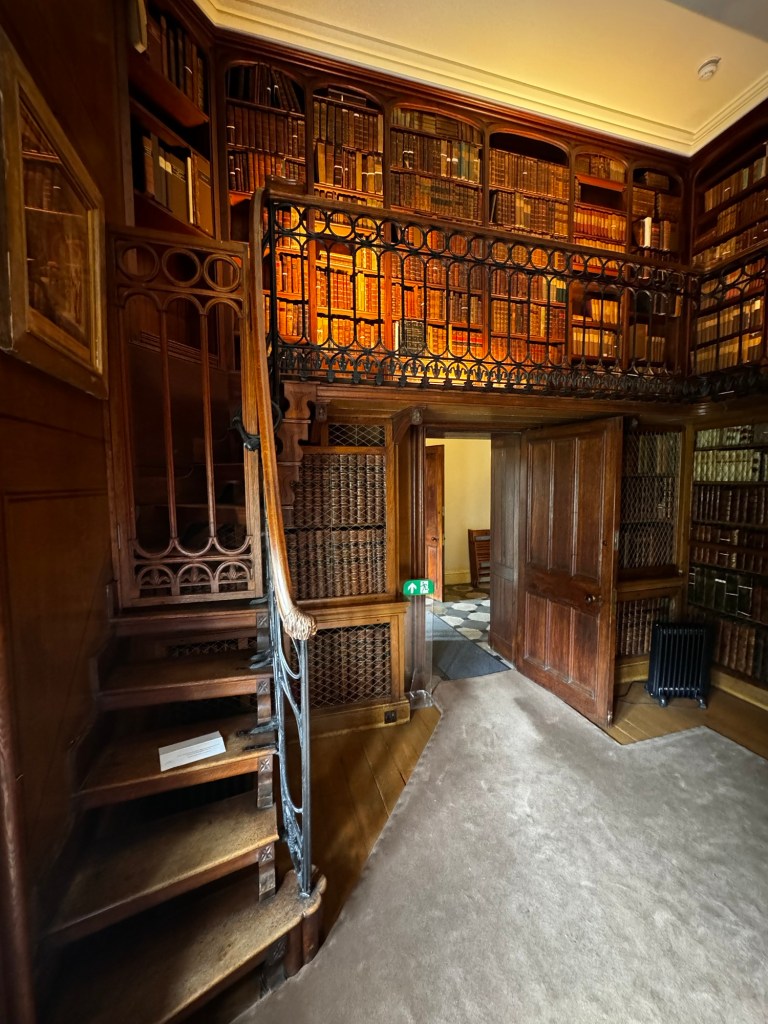
All of the rooms were remarkable.
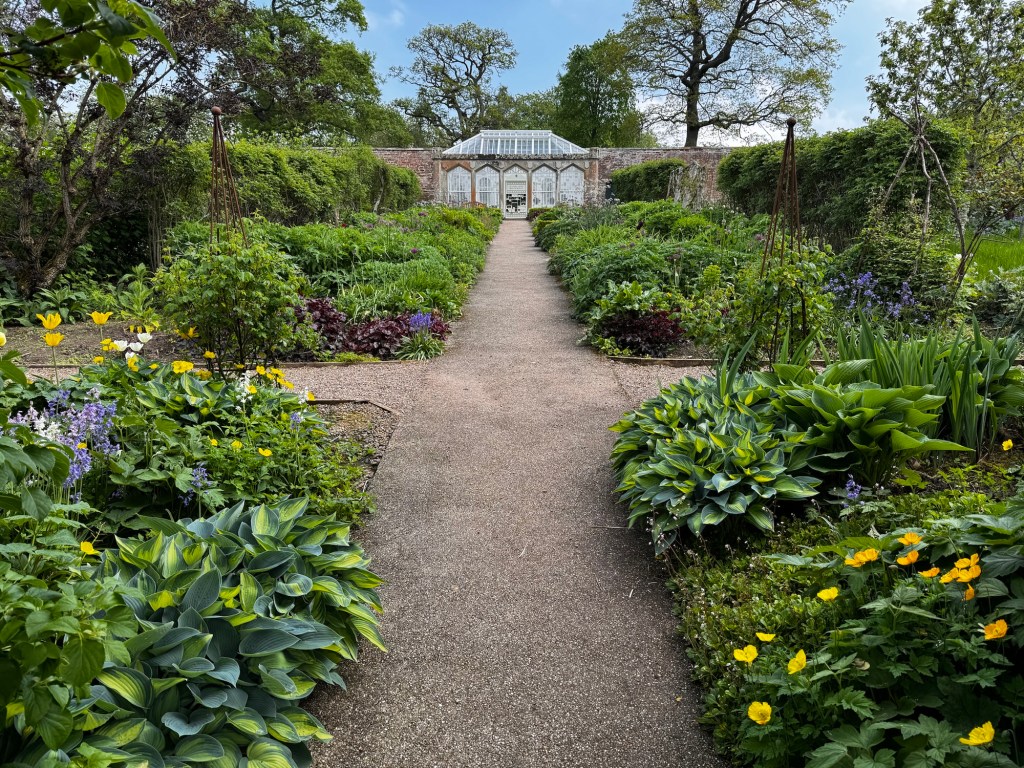
The gardens are dreamy and well tended.
I was surprised by the beauty and character of the Scottish Borders, largely because somehow I’ve turned into a Highlands snob. The Borders are a quaint small town showcase, with wonderful names like Upsettlington, Blyth Bridge, Teviothead, Innerleithen, Tweedbank, Peebles and Melrose.

Speaking of which, I had lunch in Galashiels, recently named the happiest place to live in Scotland, 15th overall in the UK. Called Gala, it’s the cheapest town on the list with average home price of 163,634 pounds, or just $205,000. In addition to a very reasonable cost of living, the town has a strong sense of belonging and community spirit. One resident referred to, “so many little acts of kindness that are carried out without fanfare.”

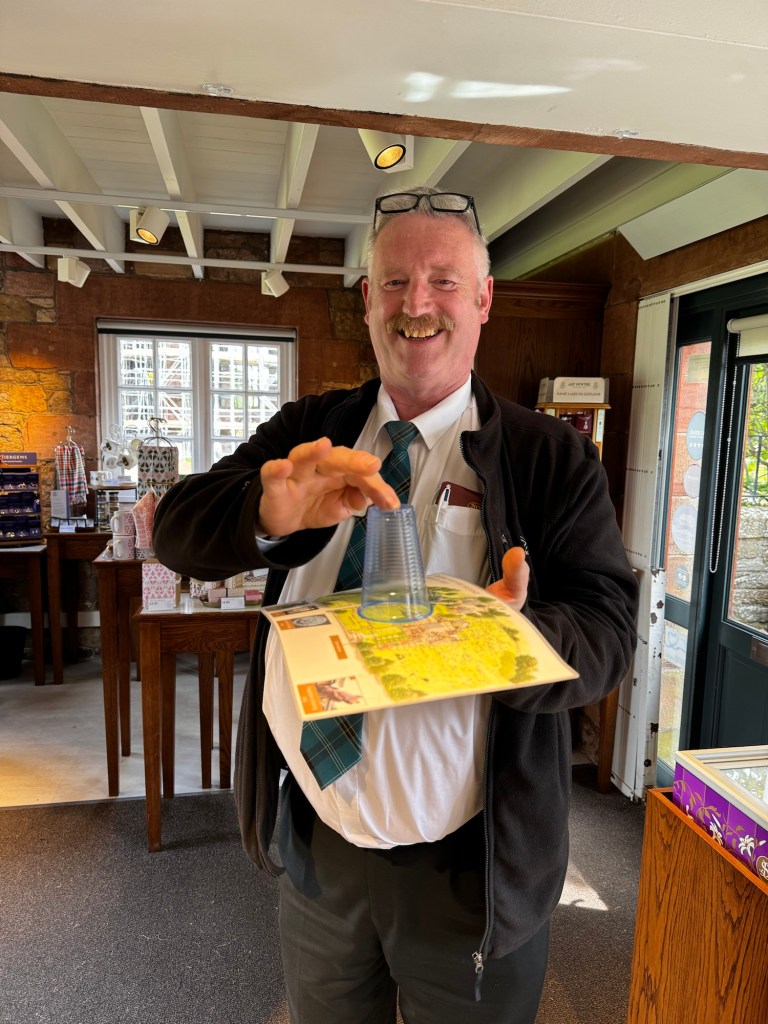
My last planned stop was the town of Melrose to visit the Abbey. As I walked into the gift shop to check in, a gallant gentleman staff member was capturing a yellow jacket between a map of the grounds and a plastic cup – ugh, those hateful bugs, they are a plague. He was adorable, congratulating me for being the 79th guest of the day and pretending to hand me his spoils as my prize.
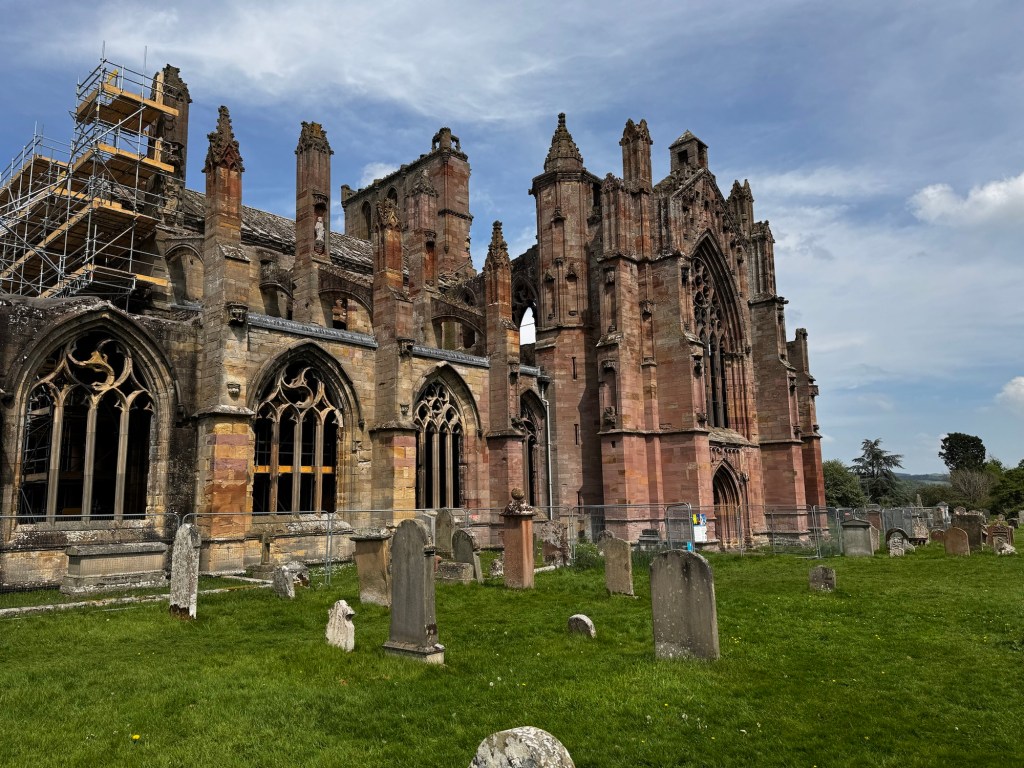
The Abbey is undergoing a wee bit of rehabilitation.
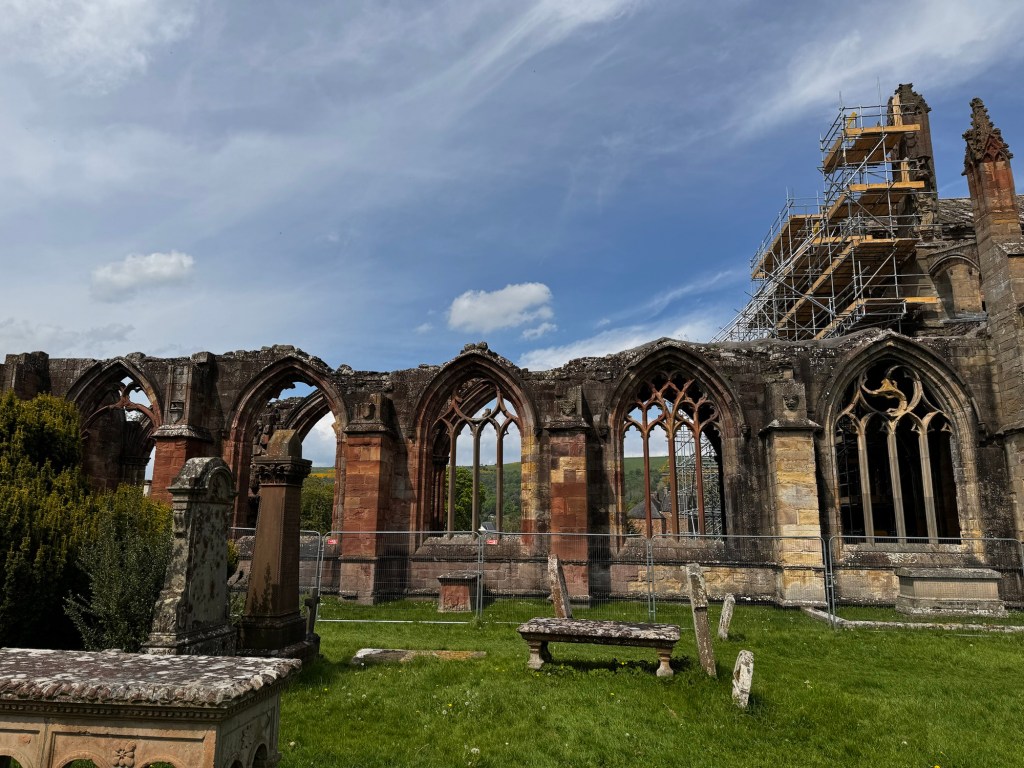
Guess what is buried on the grounds of the Abbey? The heart of Robert the Bruce. Apparently Robert had always wanted to go on Crusade but he had a hard time leaving Scotland because it required ongoing protection. So, on his deathbed, he asked his friend James Douglas to take his heart on one. Sadly the Pope hadn’t called for a crusade for a while and so Douglas intended to take it to Jerusalem’s Church of the Holy Sepulchre before burying it at Melrose Abbey. The heart was given to him in an urn to be worn as a necklace, a questionable choice. Unfortunately Douglas and his knights were instead called to fight against the Moors who were attempting to take Spain, so that’s where Robert’s heart went as well. Douglas was killed in a surprise attack but as he was dying he threw the heart into the air and shouted, “Lead on brave heart, I’ll follow thee.” THAT, my friends, is where Braveheart came from. Bruce’s heart, along with Robert’s remains, were carried back to Scotland.

The heart was buried with Douglas near the Abbey. The heart was exhumed in 1920 and then buried again without a marker, why is beyond me. Luckily, in 1996 during excavations of abbey ruins a canister was discovered with the urn inside along with a note saying it had been found in 1920. Ultimately, this was mostly confirmed to be Bruce’s heart.
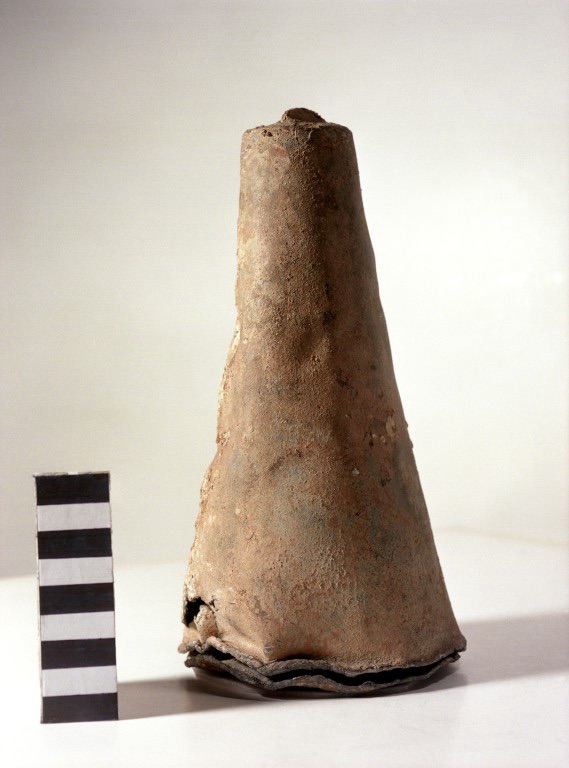
It was the right age, and nobody else had the idea to bury their heart there apparently. And thus here ya go:

The heart of The Bruce

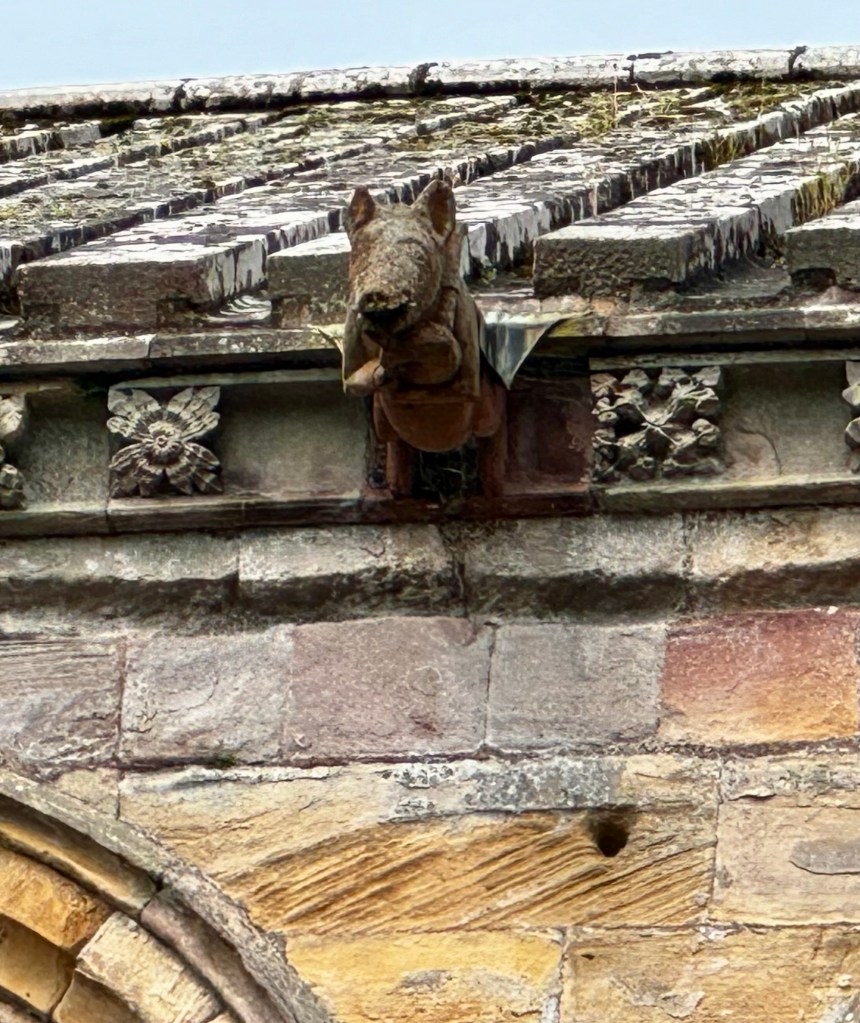
The other best thing about the Abbey is a 14th century gargoyle of a pig playing the bagpipes. It seems an odd thing for a serious place like a church, as medieval churches aren’t generally known for their wit and whimsy. The sculptor is another member of my time machine meet-up list.

I topped off the day with an unexpected visit to a slightly sad roadside attraction. One thing about traveling alone is that you can stop whenever you want without consulting anyone, even for an adventure that might end up being dumb. When I was a kid and we were piled in the car driving across country to visit grandparents, we never got to stop at a roadside attraction. There was really no stopping for any reason unless you convinced my dad you had to pee and it had been a respectable amount of time since you last did so. So forget the Largest Ball of Twine or whatever. So in Dad’s honor, I impulsively stopped at the Great Polish Map of Scotland.

The map was the brainchild of Jan Tomasik, a sergeant in the 1st Polish Armoured Division who was stationed in Galashiels (the happiest town) in WWII. He married a Scottish nurse and became a successful hotelier after the war. He bought the Hotel Black Barony, near Peebles, in 1968 and a few years later had the idea to create a large physical relief map of Scotland on the grounds of his hotel. Out of sculpted concrete. It took six years to build. He told hotel patrons, “I shall die, but I shall leave my map as a gift to the Scottish people to thank them for the hospitality they showed the Poles when it was needed,” which is really nice.

Like the mirror box sculpture, though, it’s a little worse for wear, and you can’t really get high enough to appreciate the full impact of the piece. It’s also supposed to be surrounded by water with even some of the major rivers filled, but it’s just mucky with bits of trash.
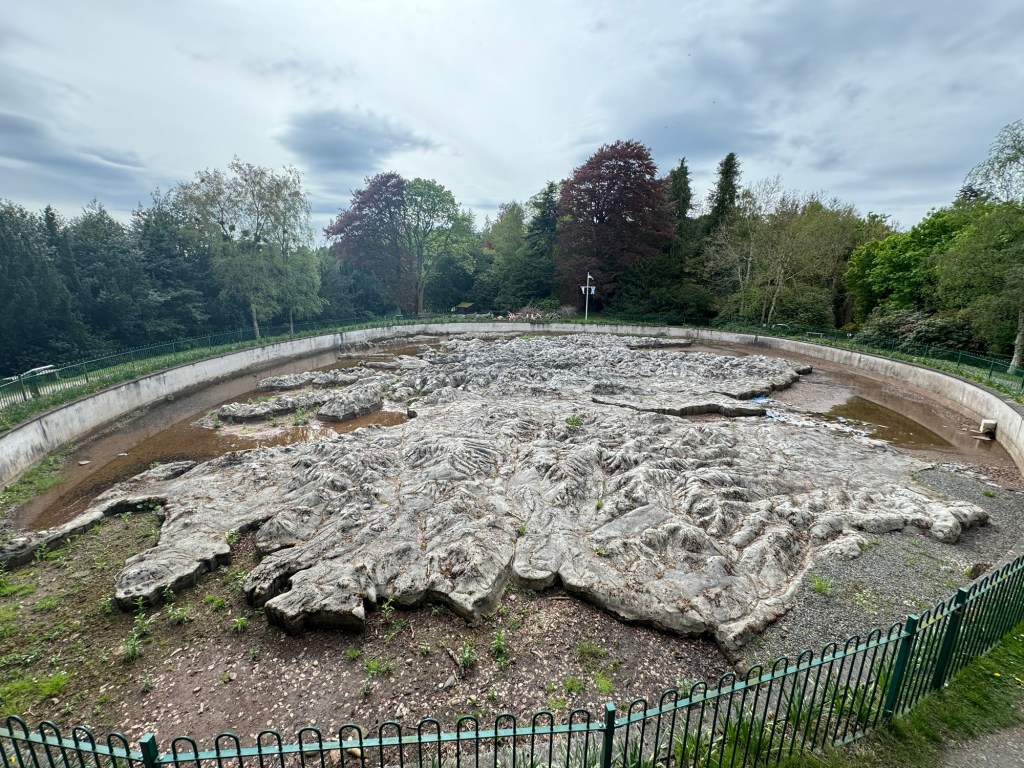
View from the viewing platform which needs to be higher.
A sad state of affairs for Lewis and Harris.

The hotel closed in 1985 and the map became overgrown. In 2010 a group of volunteers decided to save and restore it and they secured funding for it in 2013, ten years ago now. Even though the hotel is back in action, I fear maintaining this might be a lost cause.

Even though it’s the largest outdoor relief map in the world! A few steps up from the largest ball of twine.

And with that, a most excellent day in the Scottish Borders came to a conclusion.

Rosslyn Chapel was on the next day’s agenda.
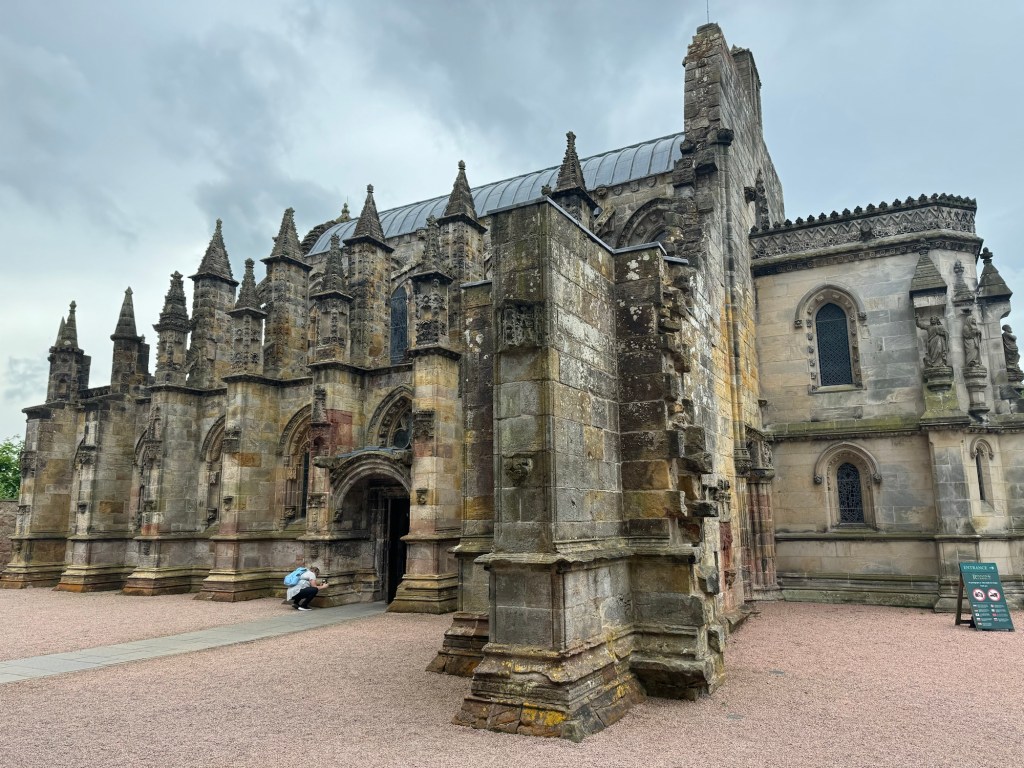
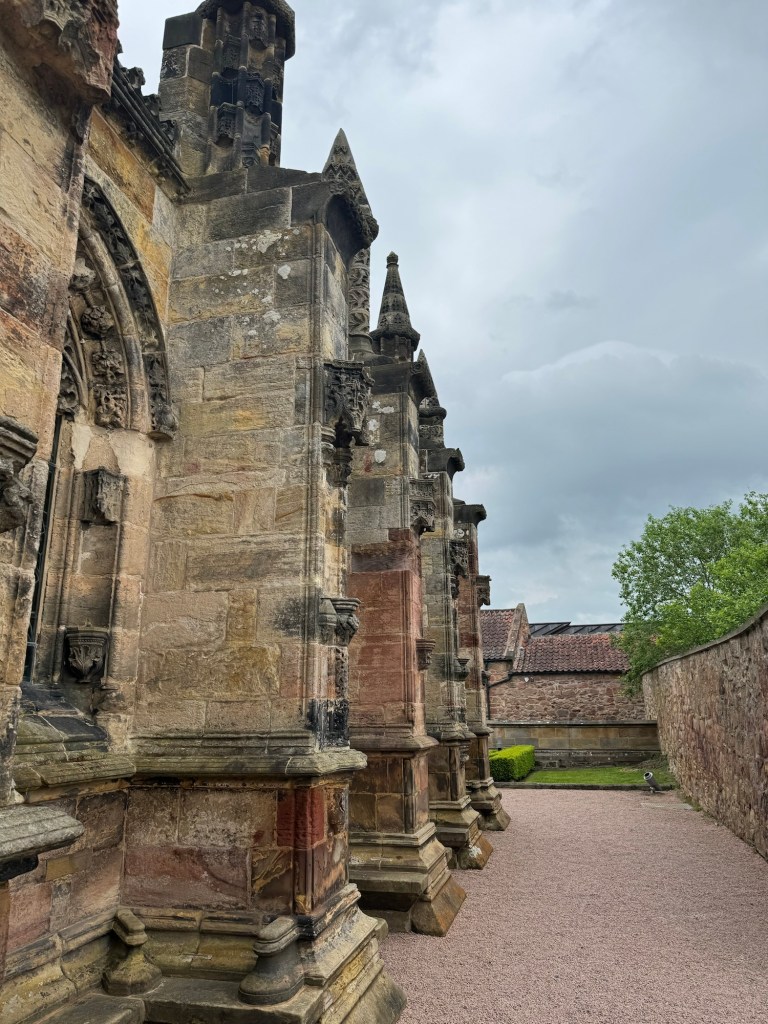
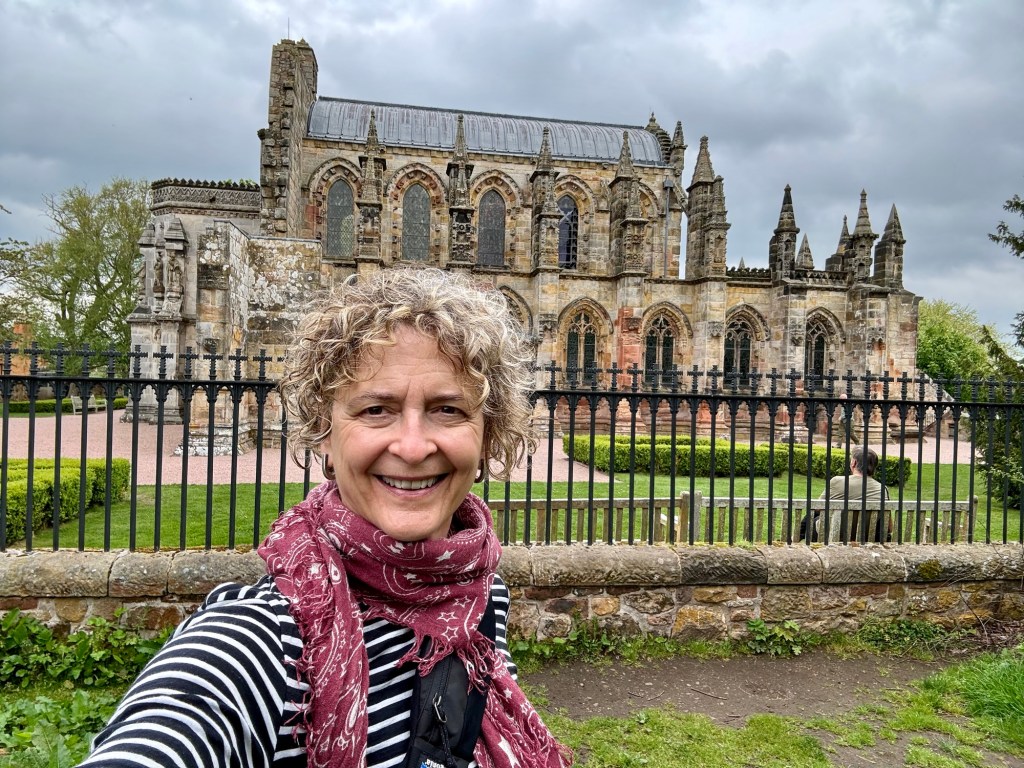
The chapel was designed and built (over a 40 year period) by Sir William St. Clair who had much grander plans than what you see, which is pretty freaking grand. His motivation was to attempt to secure his spot in heaven because that’s how you do it apparently.
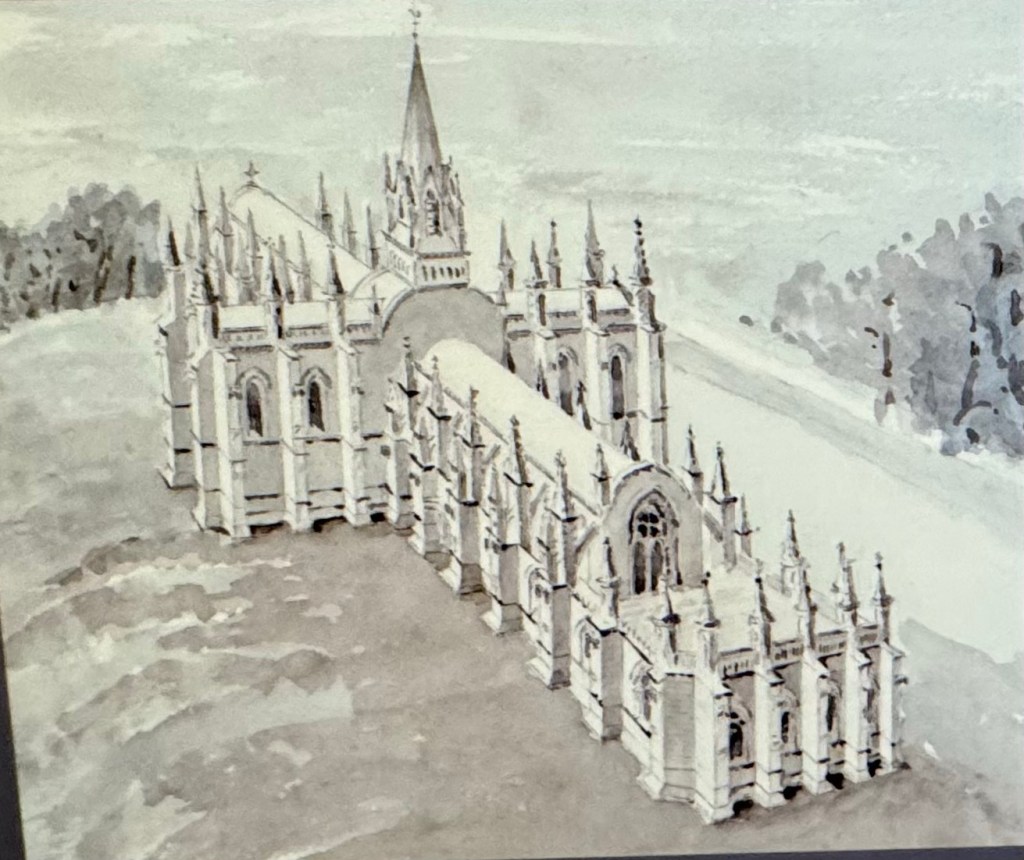
The ultimate dream, alas, unrealized.

The chapel is undeniably gorgeous – hands down the most incredible church-like situation I’ve ever seen. Yet interestingly, still, after all the time, 50% of visitors are there because of the DaVinci Code.

Tom Hanks makes his first appearance on the Wee Dram!

The chapel is the definition of Gothic with flying buttresses and whatnot, and so many gargoyles inside and out. As you aren’t allowed to snap photos inside, here are a couple of fantastic outdoor gargoyles.
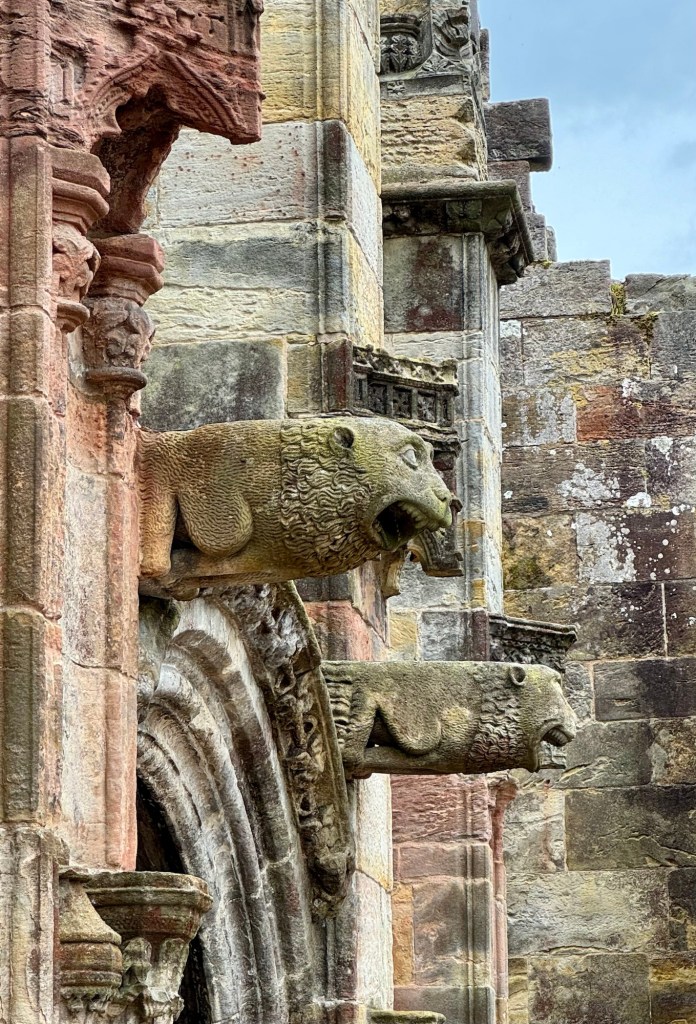
Legend tells us that a vault as deep as the chapel is high is carved out beneath the building, and inside is the final resting place of the medieval St. Clair knights who are laid out in their full suits of armor. Rumors also abound that other cool stuff is down there too, including the Holy Grail (!!), the Ark of the Covenant (!!!) and the head of Christ (!!!!!!!). Alert Dr Jones.
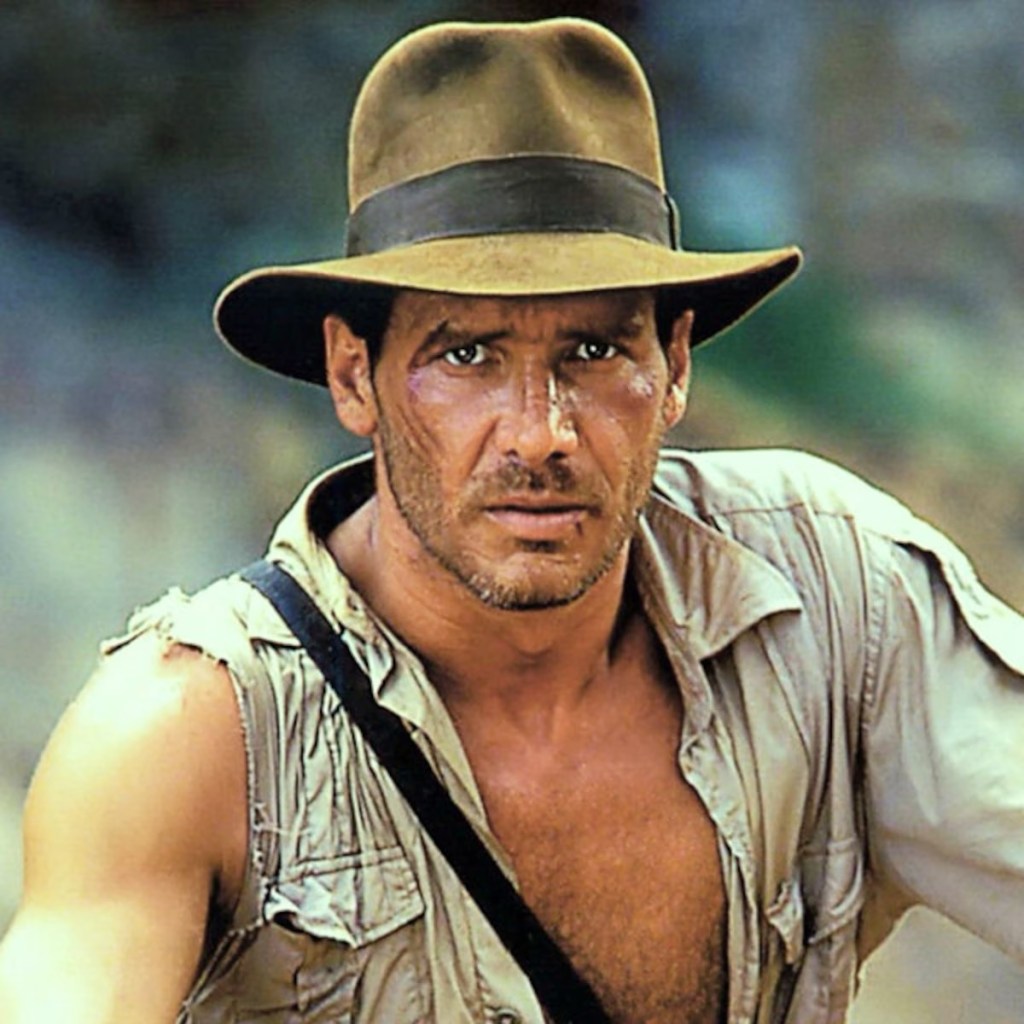
Ditto Harrison Ford!

Since I haven’t mentioned Henry VIII yet on this trip – now is the time. In 1544, the chapel was damaged during his so-called “rough wooing,” when he declared war on Scotland in an attempt to force the Scots to agree to a marriage between his son Edward (who died of tuberculosis at 15) and Mary QOS. Cromwell’s troops stabled their horses here while they ransacked nearby Rosslyn Castle (currently being restored), and, in 1842, Queen Victoria visited the Chapel and expressed the desire that it be preserved. Also, the adjacent Rosslyn Inn hosted Edward VII, Dr. Samuel Johnson, Robert Burns and Walter Scott as guests.
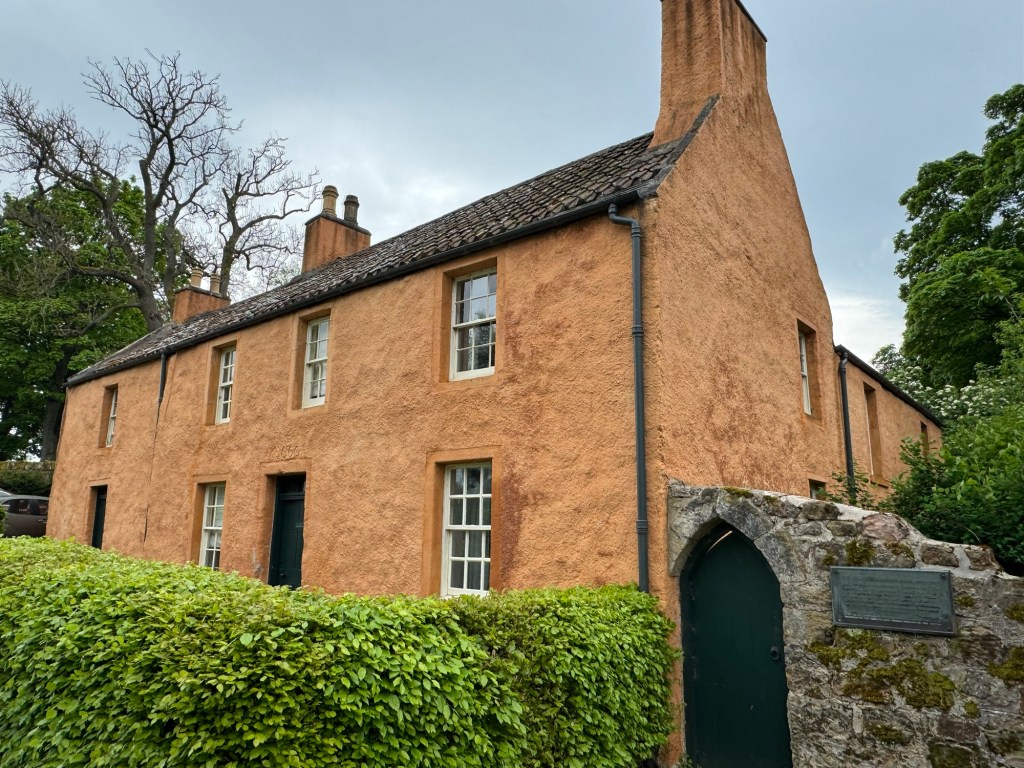
Rosslyn Inn

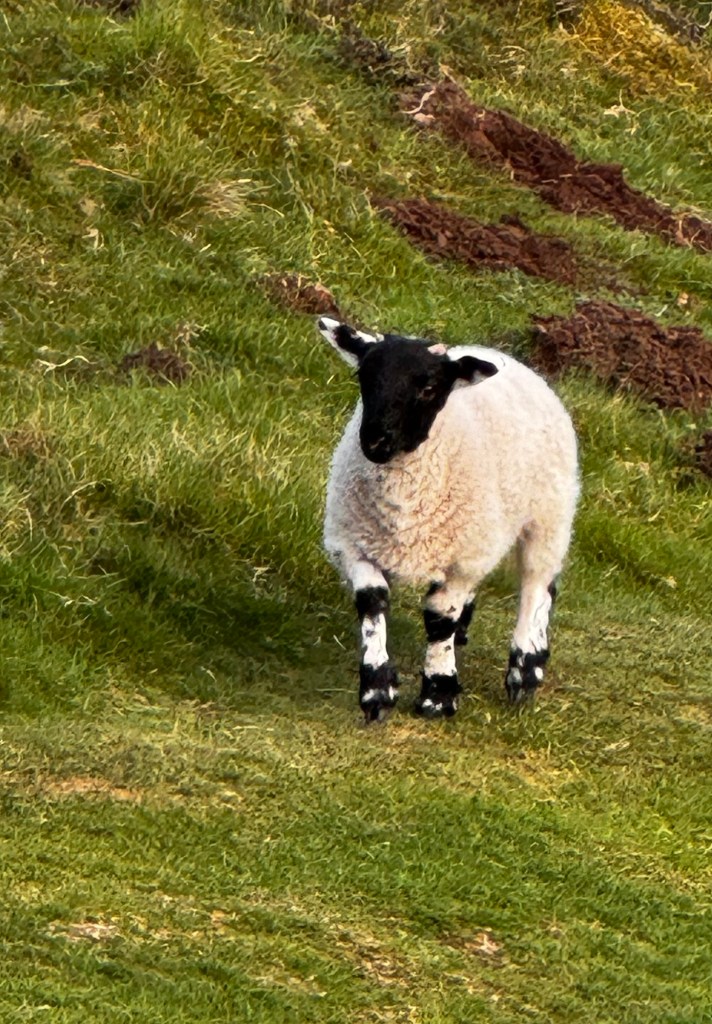
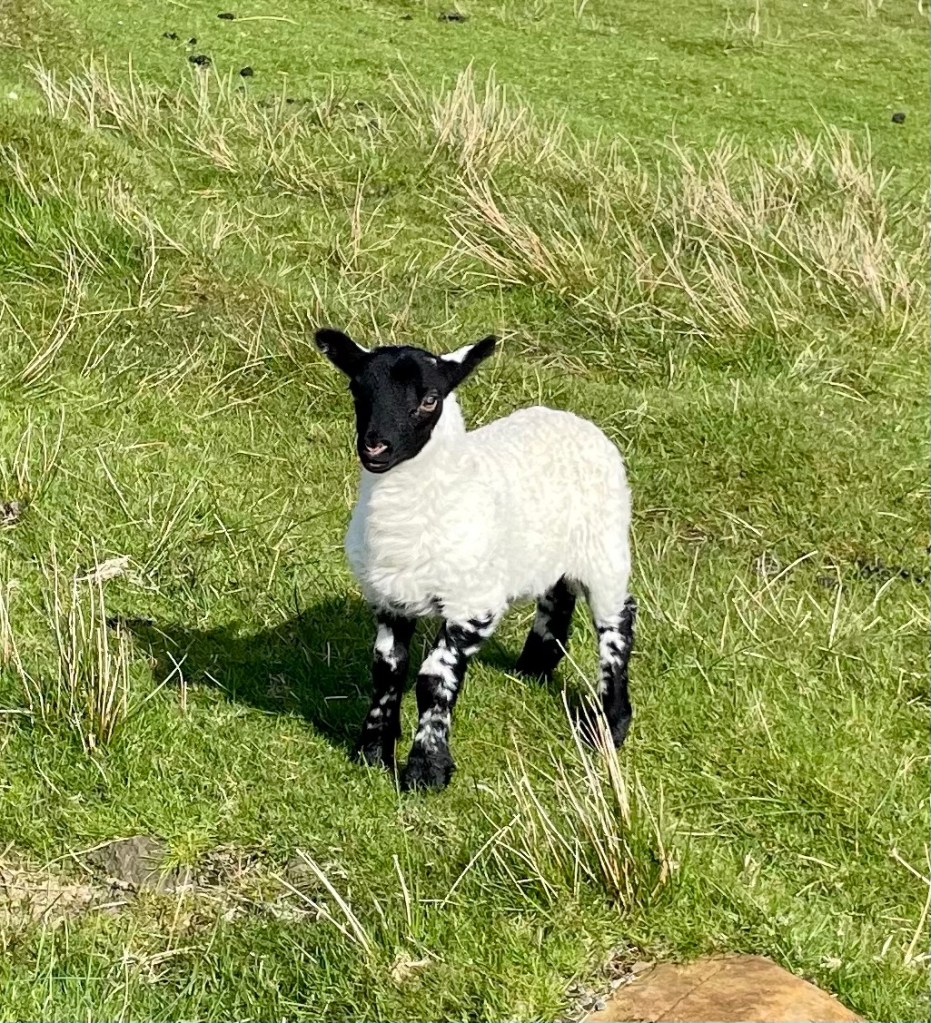
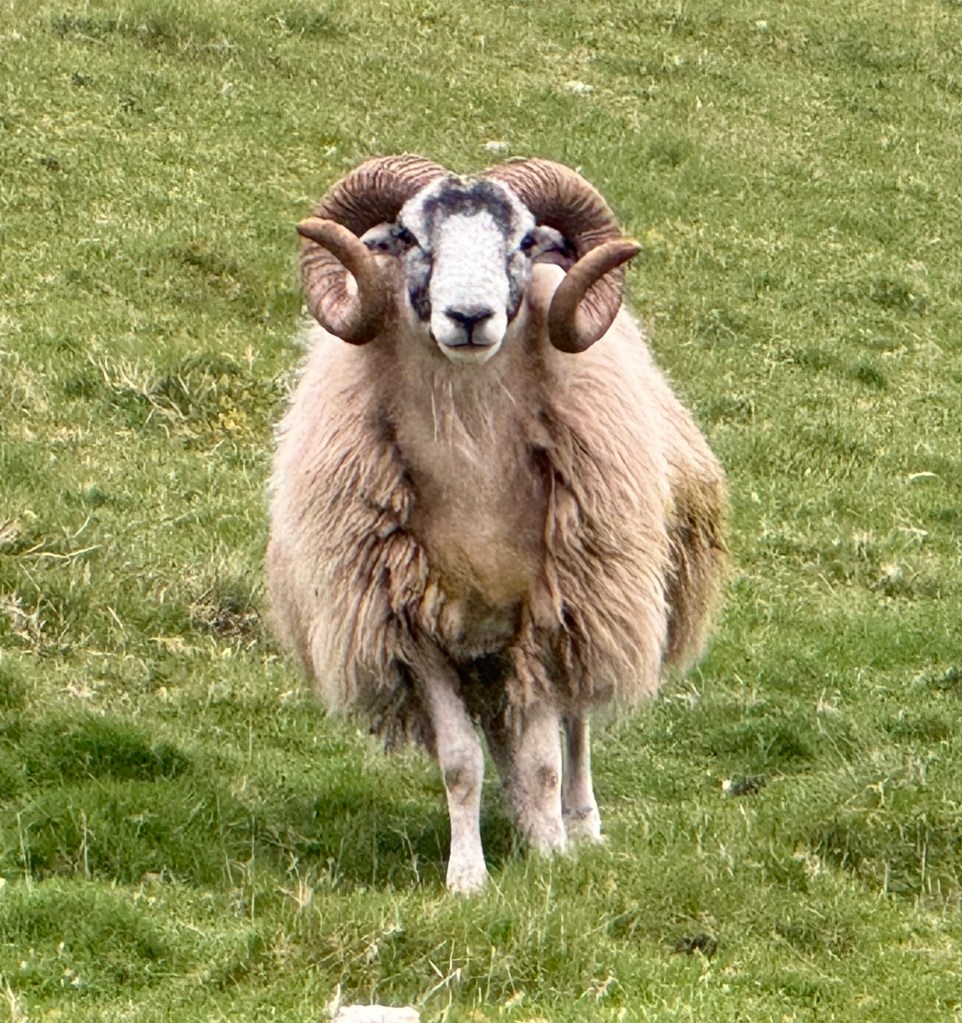
I returned to Eastside Farm, and had one last lovely walk. In my absence, they had moved the sheep around, and so now the males, which are separated from the females and their babies in the spring, were patrolling the road. I wasn’t entirely sure about this guy. We had to negotiate a few things.
And with that, dear readers, we are off to Shetland.

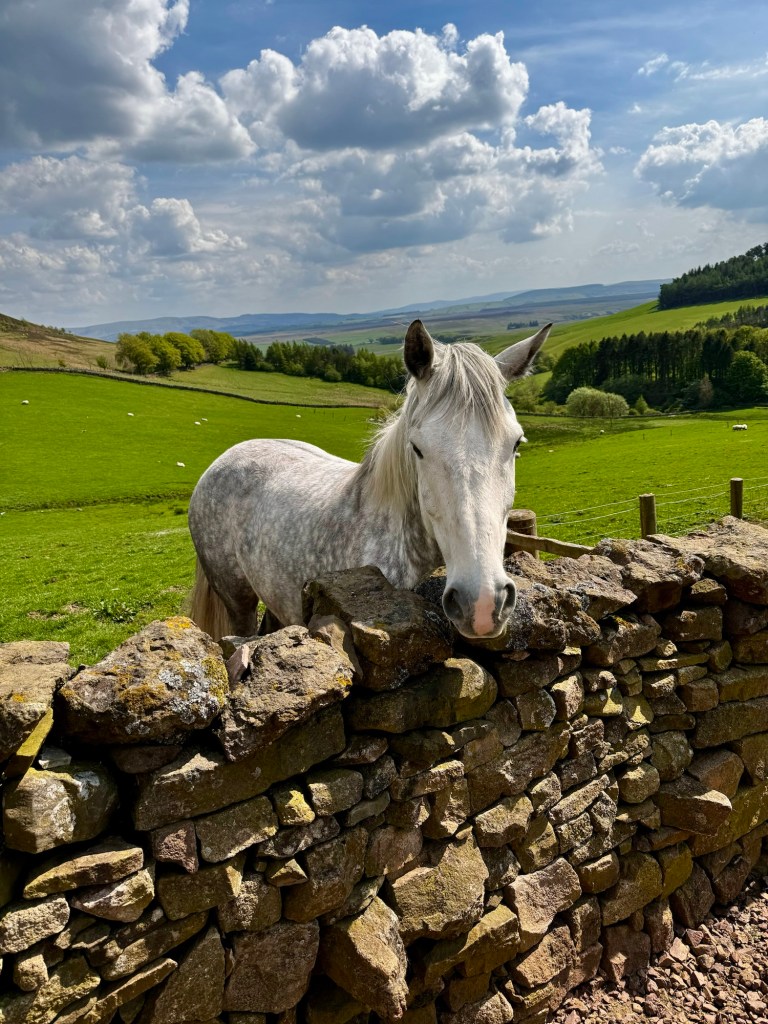
Say goodbye to Oscar.

The Best Backroads Day with Highland Games, Pipes and a Certain Golf Course

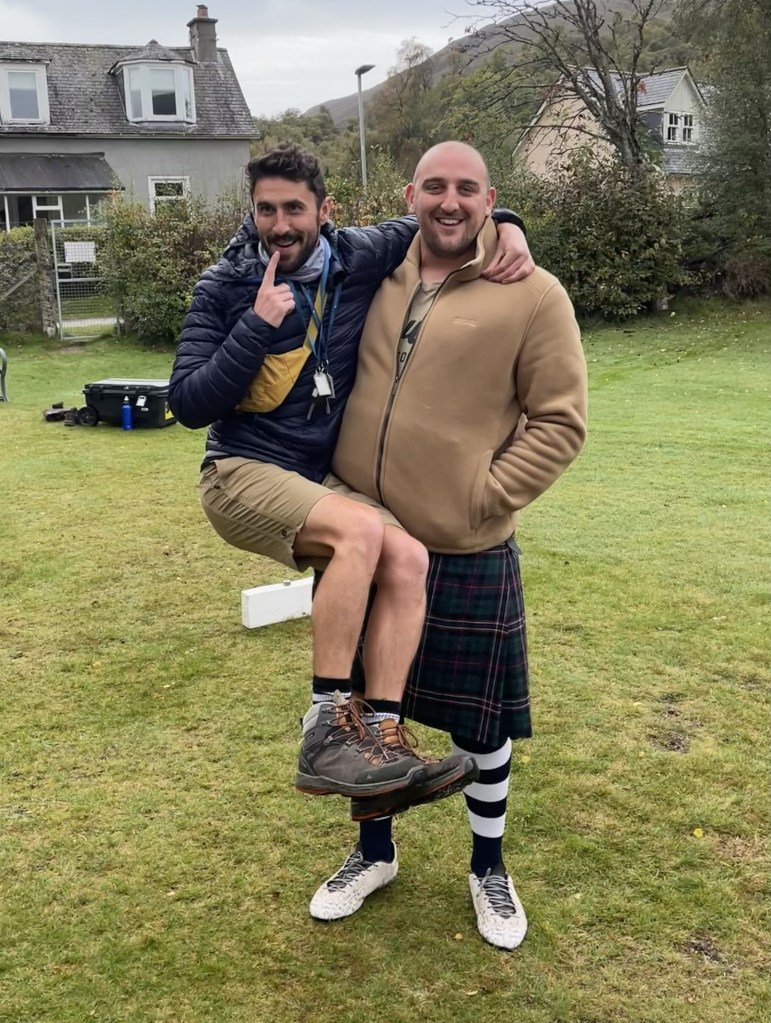
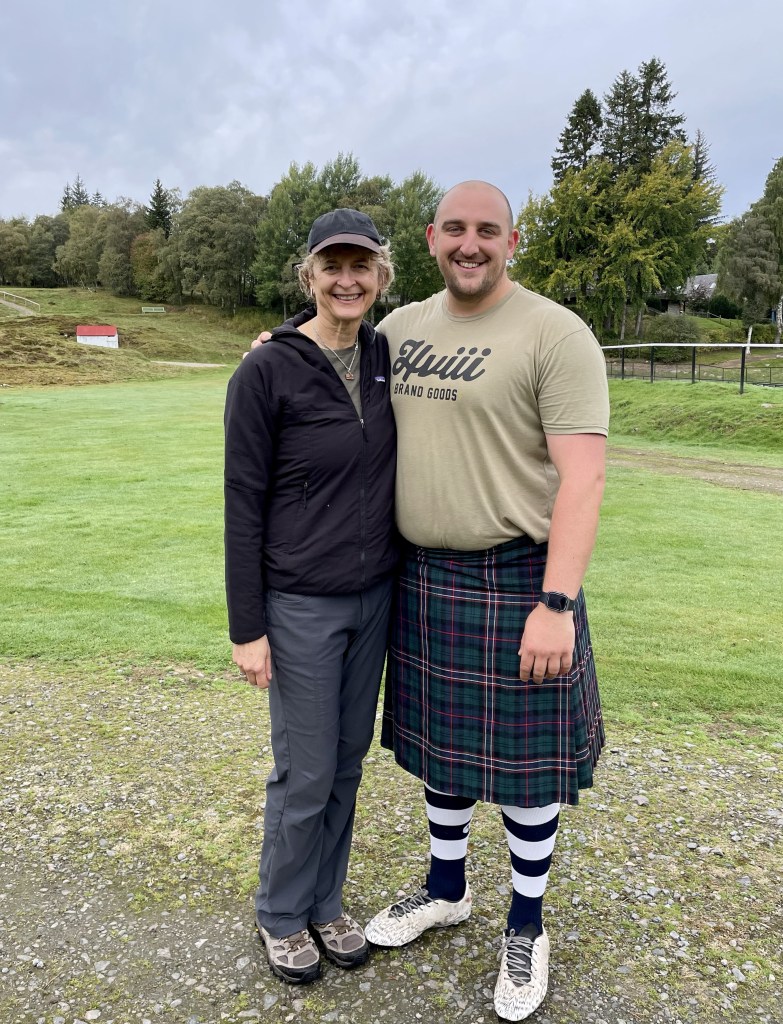
Kyle Randalls, Multiple Highland Games winner, and our leader Josh, the wiry one (in Kyle’s words)

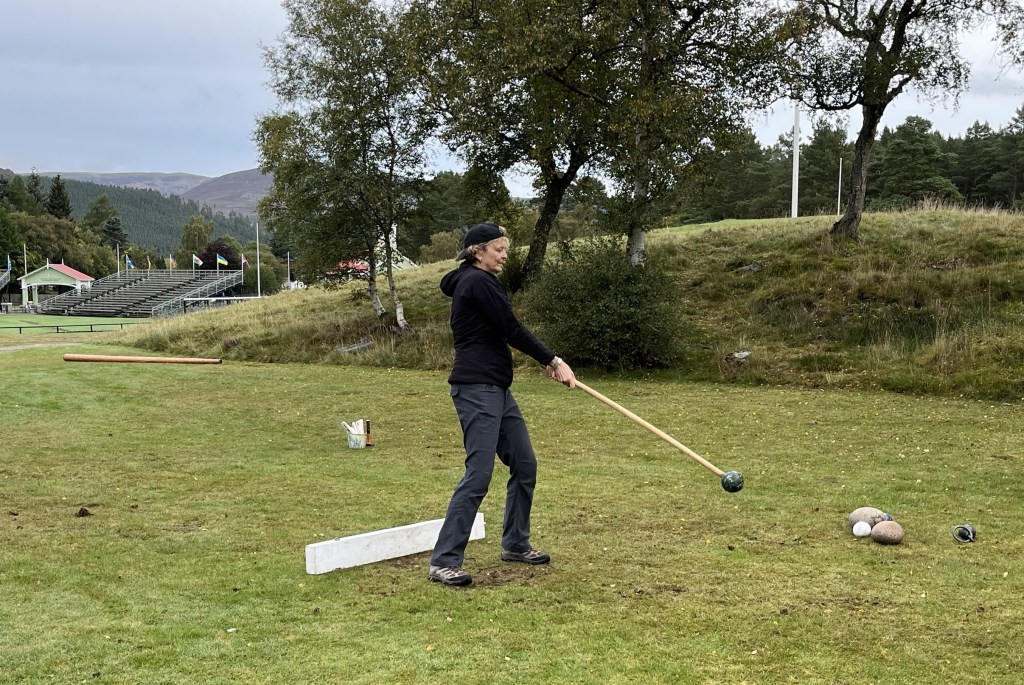
My favorite day of the Backroads trip was this one. The hike was a grand, wide open hill climb (see photos in previous entry), plus Backroads does a fabulous job bringing the most interesting, excellent and well-known locals to their trips. The highlight was 31 year-old Kyle Randalls, who has won the Braemar Highland Games five times and who appeared on Men In Kilts, teaching Sam Heughan (Jamie Frasier of Outlander fame) and Graham McTavish (Dougal McKenzie, ditto) how to throw various things at the Braemar Highland Games Centre. And so this morning our group found ourselves at the very same field (although not being famous ourselves, we were off to the side) with Kyle, who was delightful, sweet and insanely strong and graceful. He can throw all kinds of objects a very, very long way.

This post has a lot of videos, do turn the sound on if you’d like to hear Kyle’s voice, which I would recommend.

This almost ended up in the stadium seats. (Sound on!). This is Kyle’s best event, and he recently broke his own record with a 152’7” shot.

The hammer throw is also my best event and thus was my favorite. I have to say I threw it straight and a satisfactorily long way. On my first try.

Kyle made me turn my baseball cap around so the bill wouldn’t get caught. Inadvertent badassery right there.
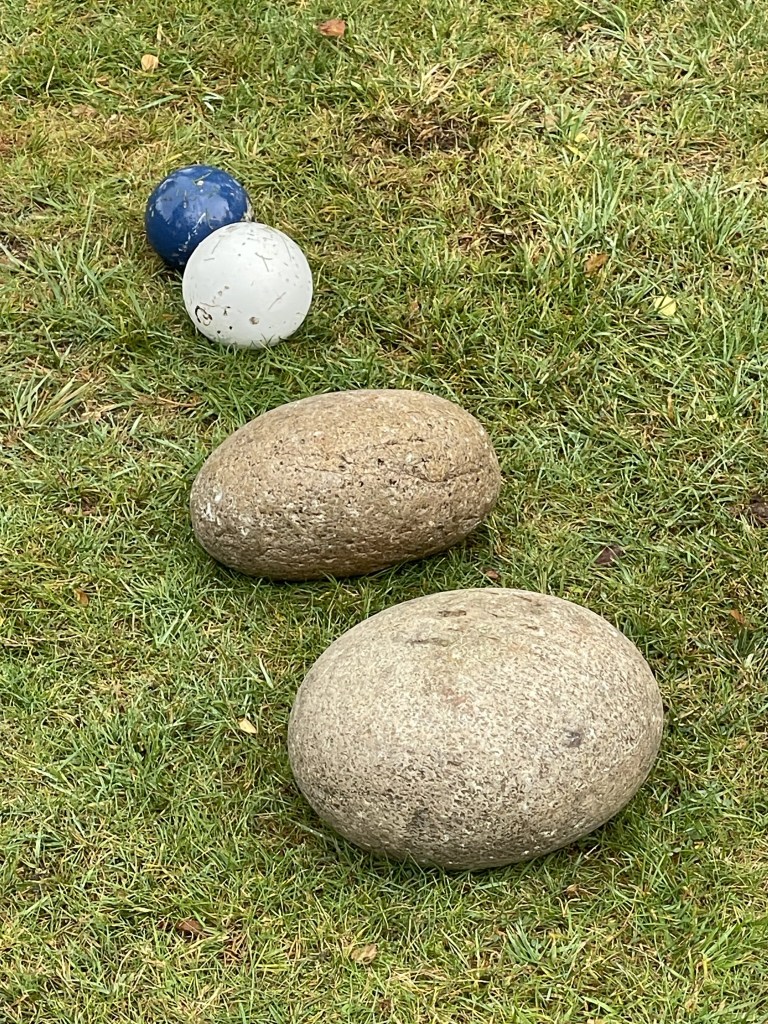
The shot put – competitors throw either a weighted ball or stone.
Kyle threw the largest stone obviously.

Everyone in our group did this one. We all took a turn, and then Kyle announced that a woman had never thrown either of the stones on a Backroads tour. I don’t know about you, but I find nothing more inspirational than that sort of comment. My intrepid compatriot Margot, a former rugby player, threw the first stone, and I was right behind her.

Challenge accepted.

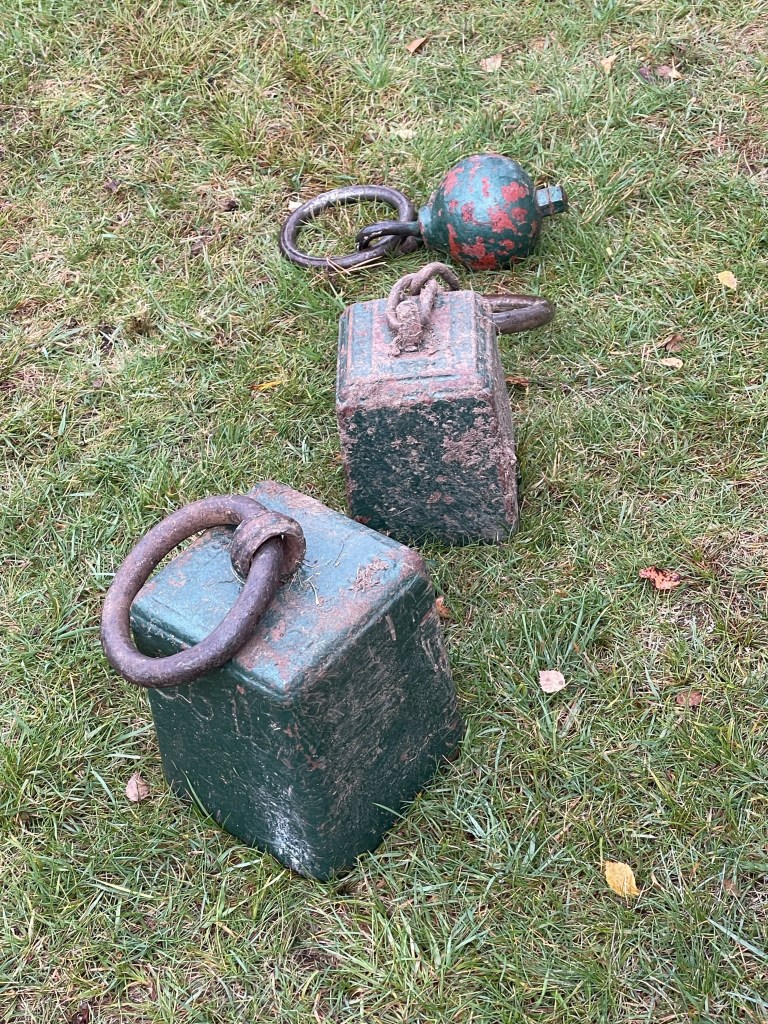
And that brings us to my absolute worst event which I think falls into the frisbee category because I can’t throw that either. It’s called a weight throw, and you can toss it for height and/or for distance.

The big one weighs 56 pounds.

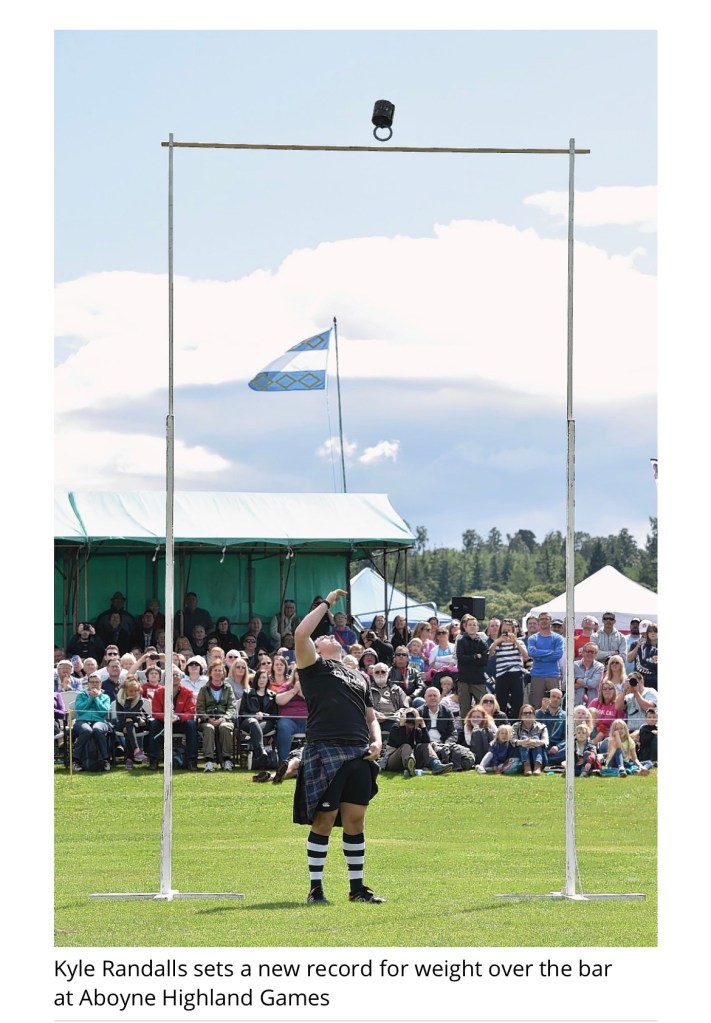
Kyle demonstrated the “weight for height” event where you pick up this giant kettlebell thing and throw it over a bar with one hand. Again, it’s fifty six pounds.

Kyle casually flips the huge weight over his head, dispenses kilt-wearing advice for the Games, and admits to not being a yoga instructor.

And here he is at the age of 23 to give you an idea of what throwing it over a bar looks like.

As for me, on the other hand, my first attempt (with the small one) resulted in the weight skittering over the ground like a bowling ball. It was so very sad that Kyle granted me a mulligan. However, the second one (and mind, I was doing weight for distance, not height) I released way too late so it went sailing up into the air pretty as you please. Our leader Fiona said later she almost had a heart attack because from her angle it looked like its trajectory would have brought it crashing down on my head.

Embarrassing, yes, but also some comic relief for everyone. You’re welcome.

And of course we ended with the caber toss!!! This one we weren’t allowed to try and I think you’ll see why.

This visit with Kyle was everyone’s favorite non-hiking activity of the entire trip. It’s hard to believe this, but the leaders told us that former Backroads groups were, for lack of a better word, totally lame. Many folks didn’t try anything and also didn’t seem that interested in the entire situation. Fiona said Kyle was pleased as could be with our group and way more animated than she had seen him, and shared some things she didn’t even know, like juicy stories about his main rival in the sport.

Not only did every single guest in our group try at least one event, we all took photos with Kyle and stood with him to hold up the caber – don’t have that photo yet.

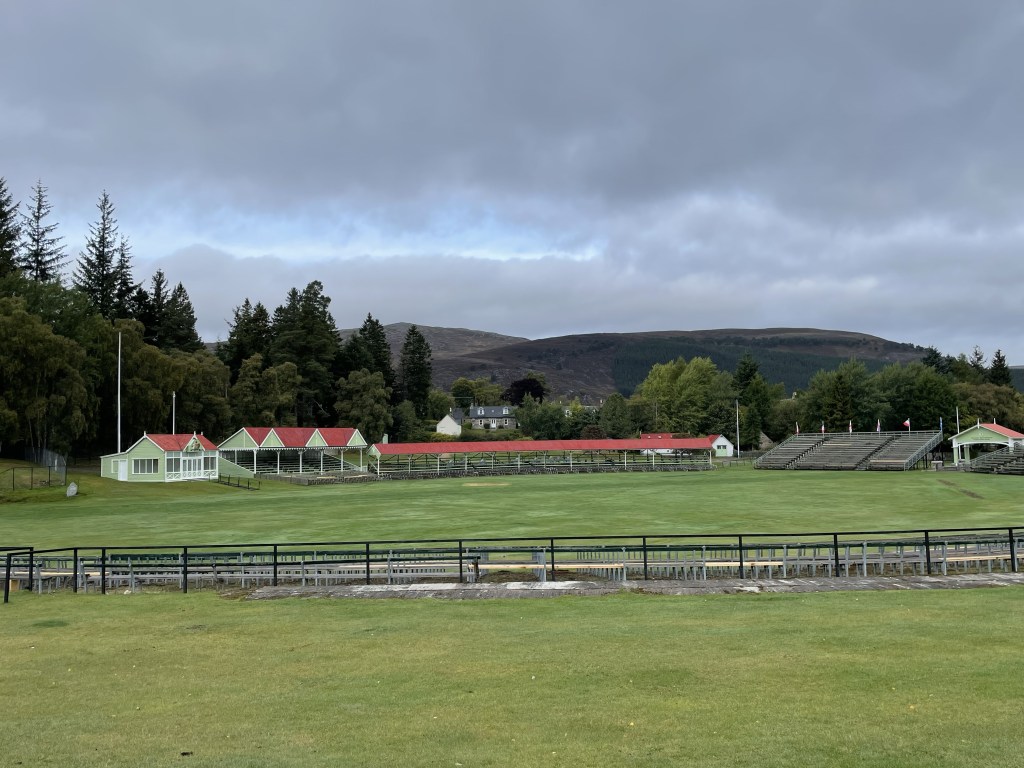
The Braemar Highland Games Centre, the Royal Box on the left.

We then drove to the Cateran Trail and hiked a six-mile section. The first bit was steep as we crested the hill, and then we dropped down into an expansive moor complete with a bothy to shelter hikers. (See last spring’s blog for an overly-detailed explanation of Scotland’s bothy system). I posted a few pictures in the last blog entry and totally forgot about it so for those who receive this blog via email, apologies. Yeesh.

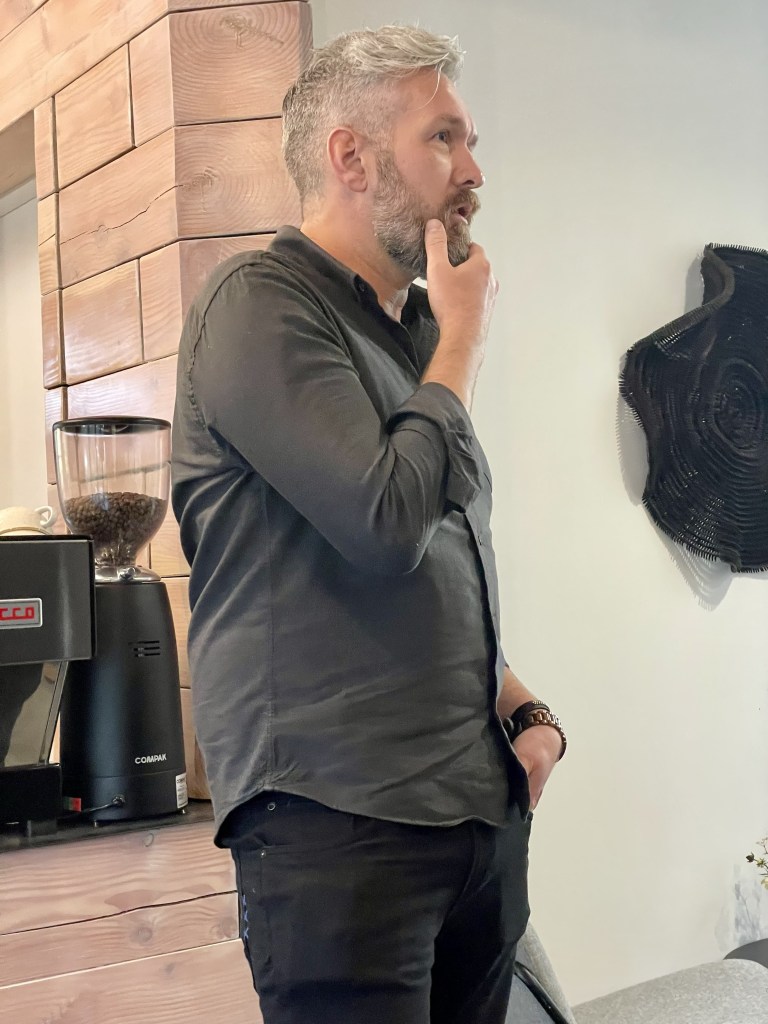
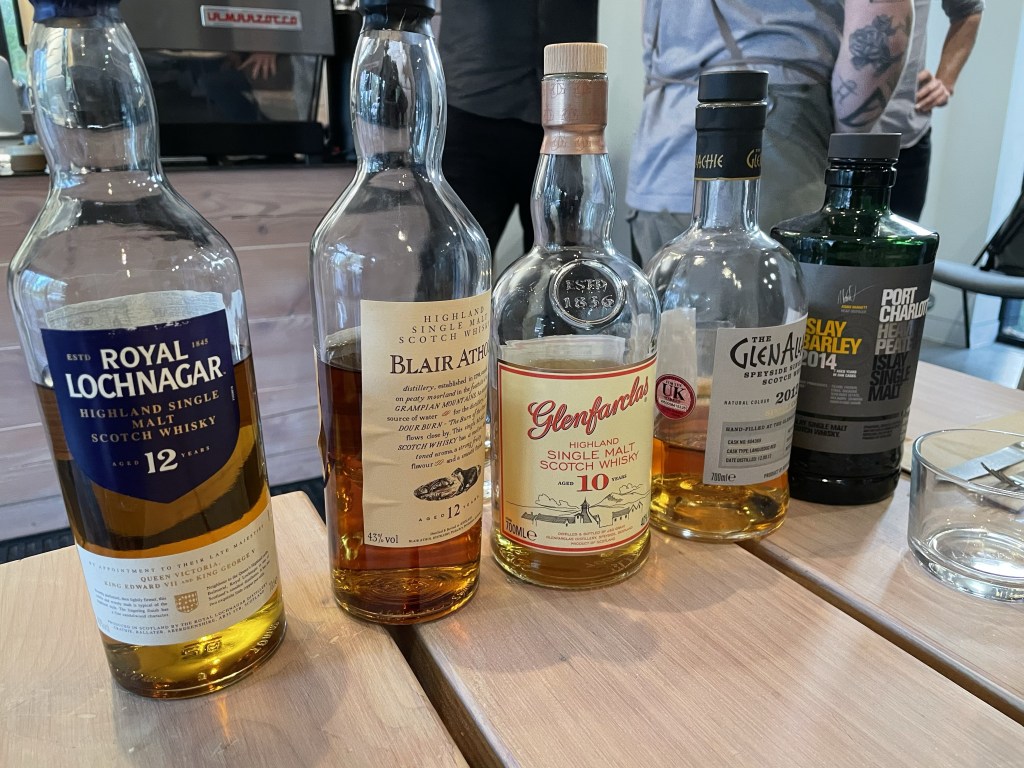
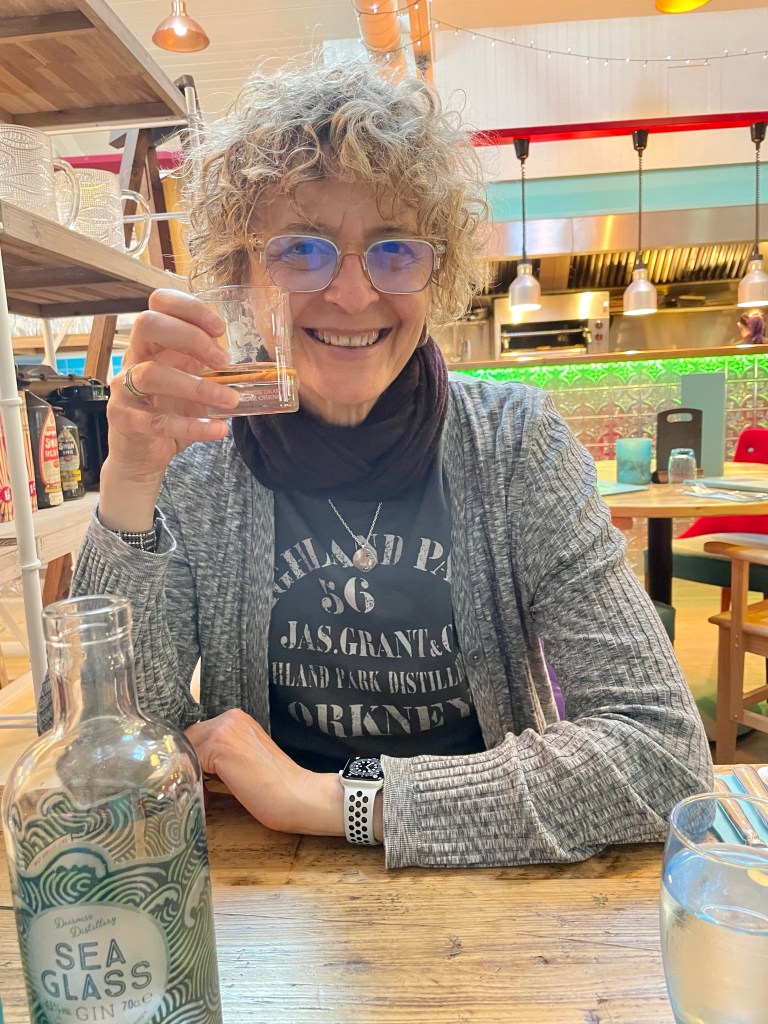
And as I said, Josh unveiled a Highland Park 10 from his pack at lunch, which almost everyone sampled, even folks who were reluctant earlier in the trip. Something about the Scottish air, and perhaps due to the fact that the night before we had enjoyed a whisky tasting with Frasier at a local cafe, followed by a scrumptious private dinner for our group.

Frasier. Right? I know.
The line-up.

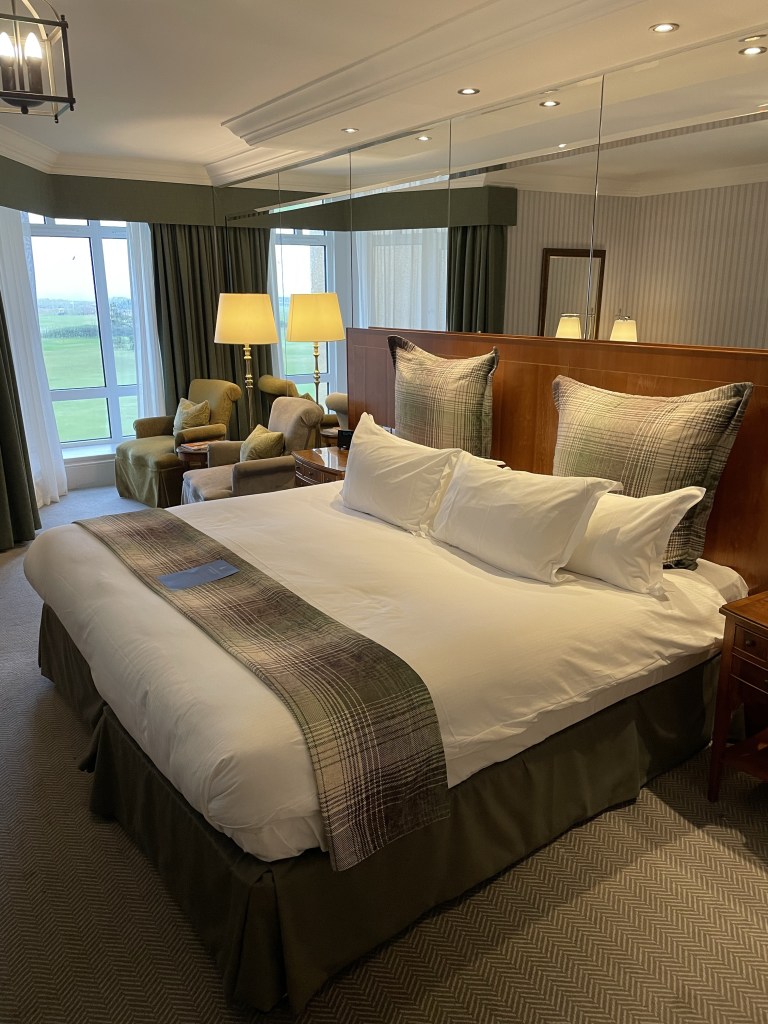
That afternoon we moved from our lovely B&B in Ballater to the Old Course Hotel in St. Andrews. While not a huge golfer, I appreciated the Holy Grail status of the birthplace of golf. Had I been unaware, the rapt, nay, ecstatic expressions on the faces of all the men wandering around the hotel in a daze would have made it pretty clear.

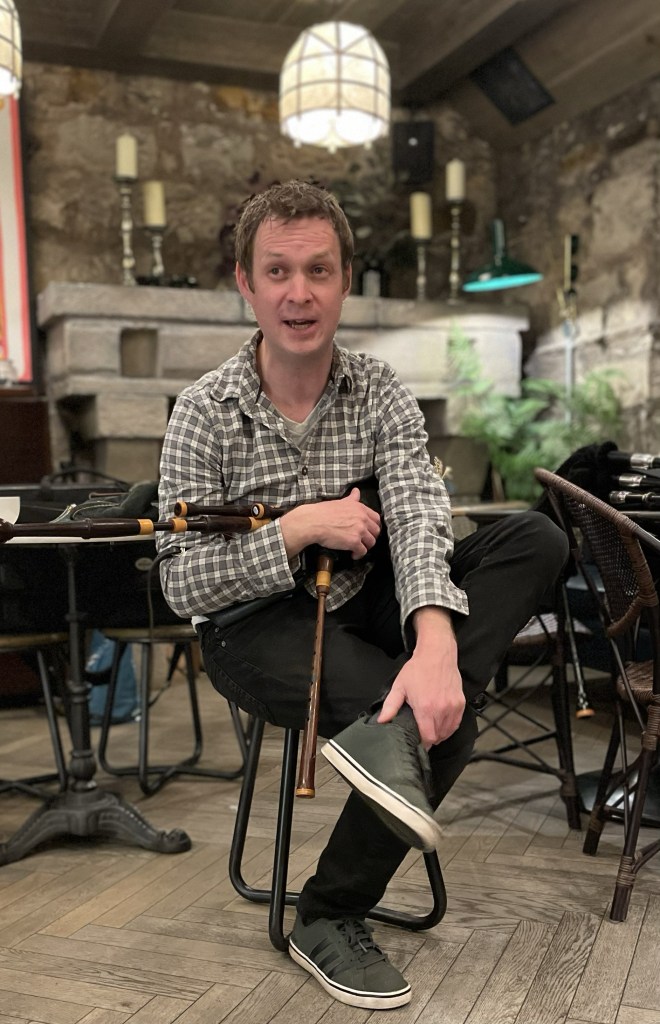
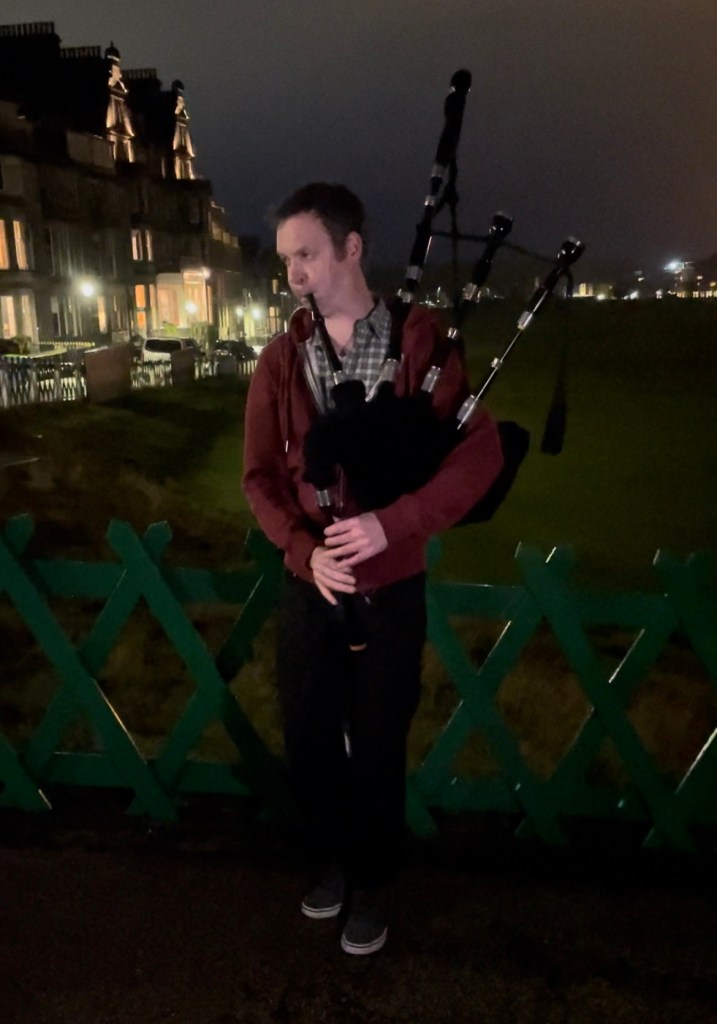
We ended the best day with a bagpipe demonstration from Finn Moore, who is considered one of the best pipers in Scotland and also builds pipes with his dad (if you want a set of small pipes, it’ll set you back a few grand and there’s a 3-4 year waiting list). We sat in a snug above a restaurant (with a whisky) while he walked us through all the different types of pipes, played a few tunes and answered questions. He was lovely. His wife plays the fiddle and their 3-year old daughter is already showing some musical talent. We reluctantly left the snug and walked down to the Old Course where Finn busted out the Highland Pipes (eardrum-blowing if played indoors) and played a tune written by his dad called Farewell to Decorum.

Finn.
Highland Pipes on the Old Course

I might note that Finn recently played the pipes (onscreen) in an upcoming episode of Outlander. Just to bring it back around.

A perfect end to a perfect day.

Inverness, Birthday Bagpipes and My Drunk Dude Angel

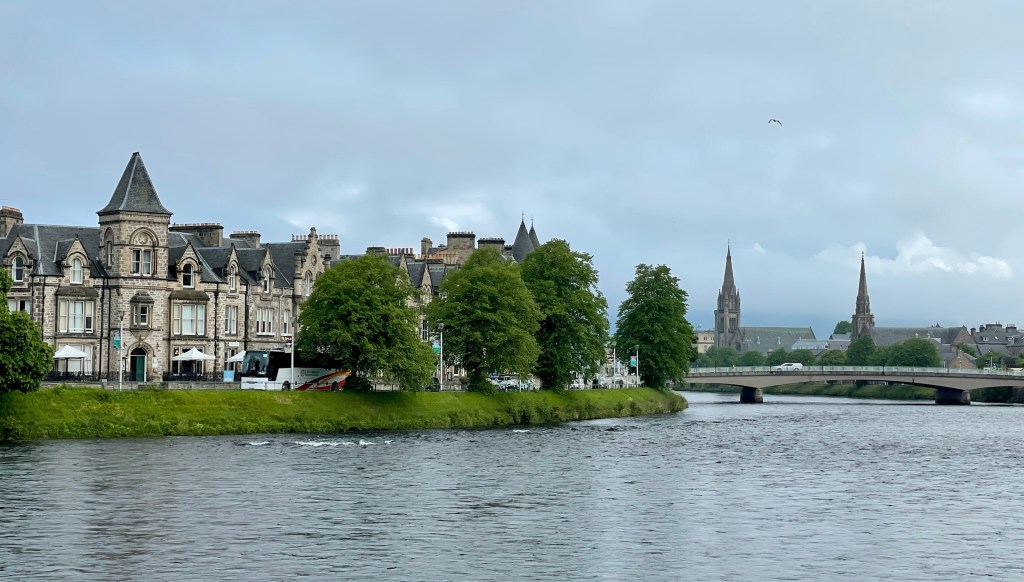
Inverness.

Back in Inverness, the first order of business was to bid a fond farewell to our faithful Dougal. I had grown quite fond of him despite the flaws he was born with – the back seat is worthless for anyone with legs, the hyper-annoying beepy lane monitor warning system, the cheaply finished interior etc. But I loved driving Dougal all over Scotland. I loved the entire experience, driving on the left, single track roads, no shoulders, glorious teeth-rattling potholes, all of it. Maintaining awareness of passing places, sorting out who should pull into one either by driving forward or backing up, and the subsequent mandatory wave to the other driver after you execute whatever you both silently agreed upon – it all makes navigating Scotland’s roads a delightfully communal experience. A very different situation than in the States where one’s car creates a bubble of isolation and basically drives itself.
Another driving-related thing I wish I could have shared with dad is the UK experience of getting gas. The pumps appear to be super-charged and sound like a jet engine when engaged – and they fill up your tank in literally ten seconds. Life-changer. Why can’t we have jet engine gas pumps? You can get your nails done while waiting for your gas tank to fill in the States.

Dougal. He’s been through a lot. Farewell my friend.

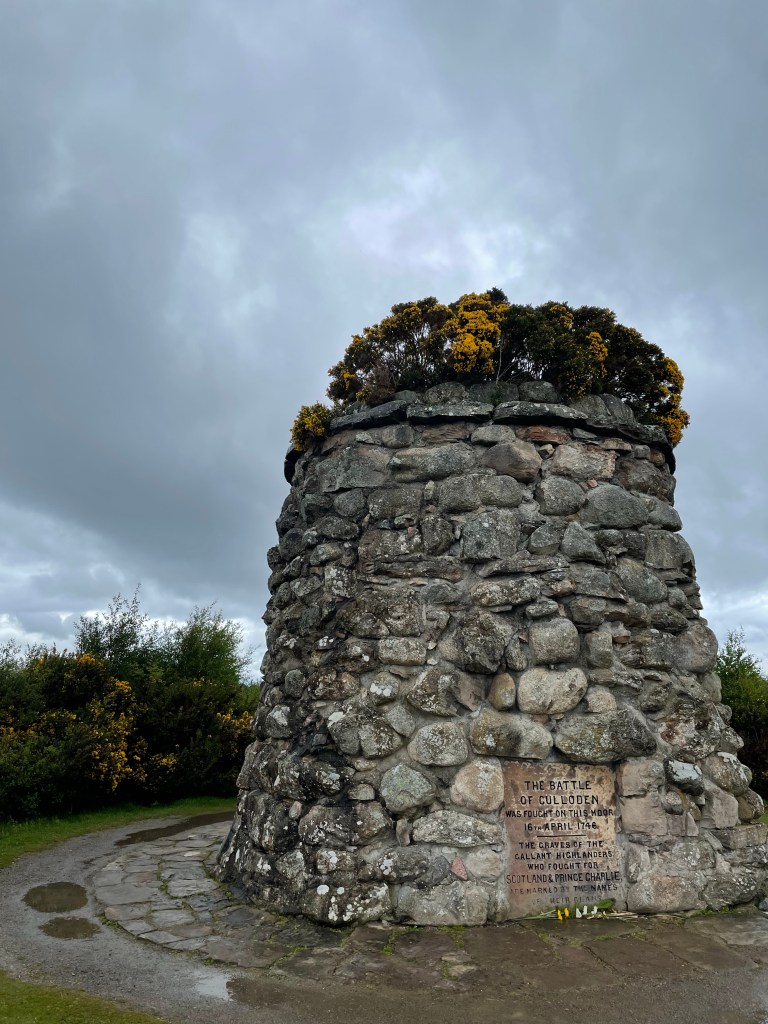
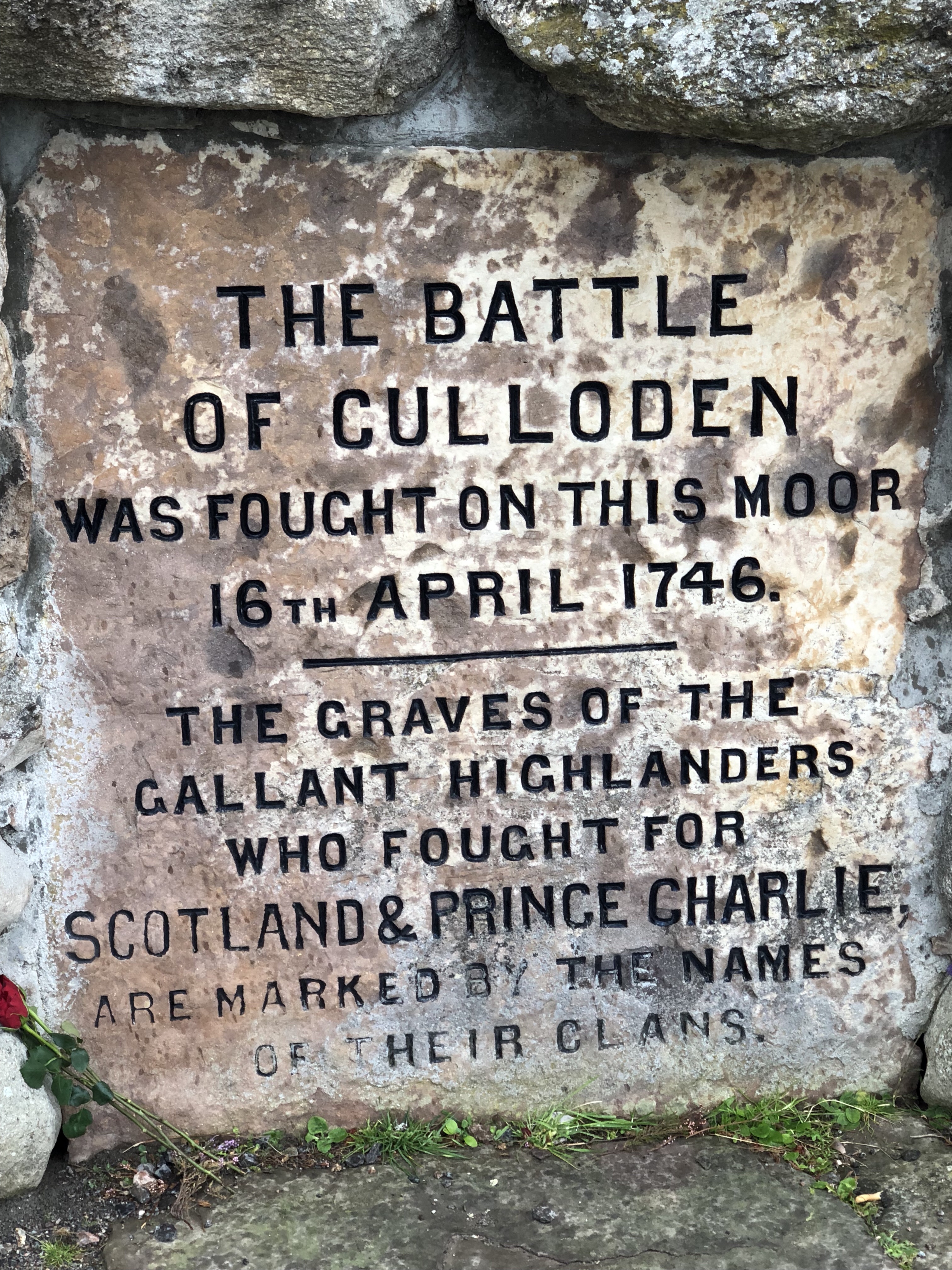
Before we relinquished Dougal, we visited Culloden Battlefield. This somber place is an incredibly rich and fascinating site. Since I wrote about it extensively during my last trip, I’ll simply leave you with a couple of photos.

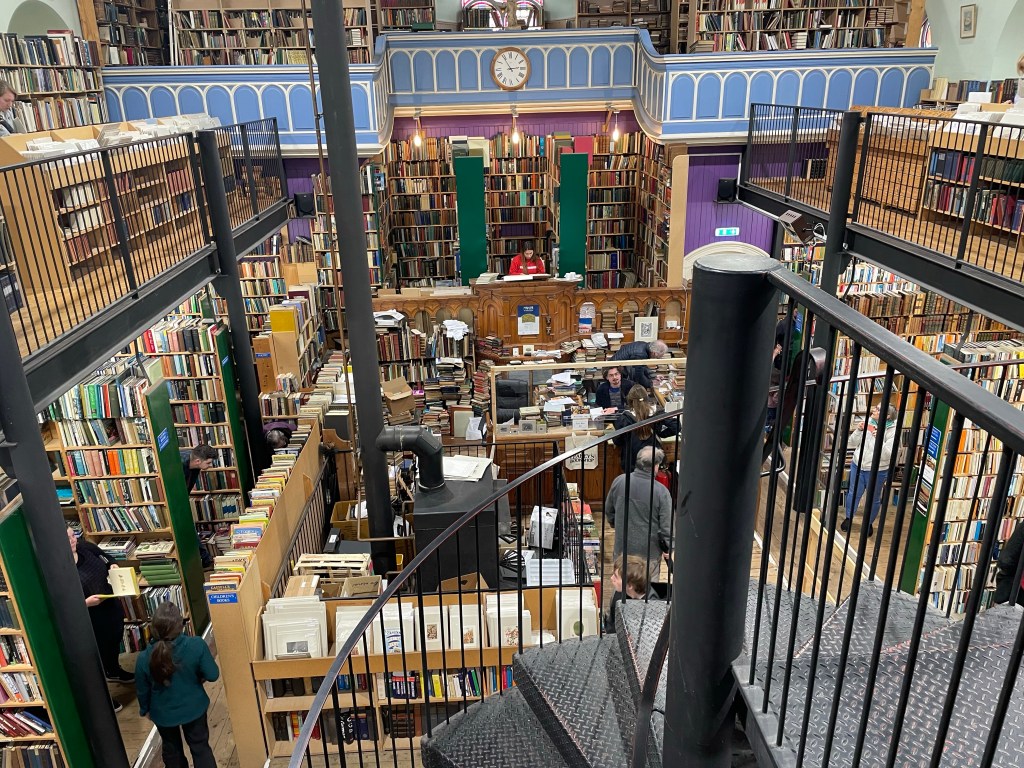
We spent the afternoon puttering around Inverness in the rain, visiting Leakeys, its famous used bookstore. In addition to books they have bins and bins of prints and old maps, all “guaranteed” to be over 100 years old. OK maybe but does it matter really? I bought three.

Leakeys

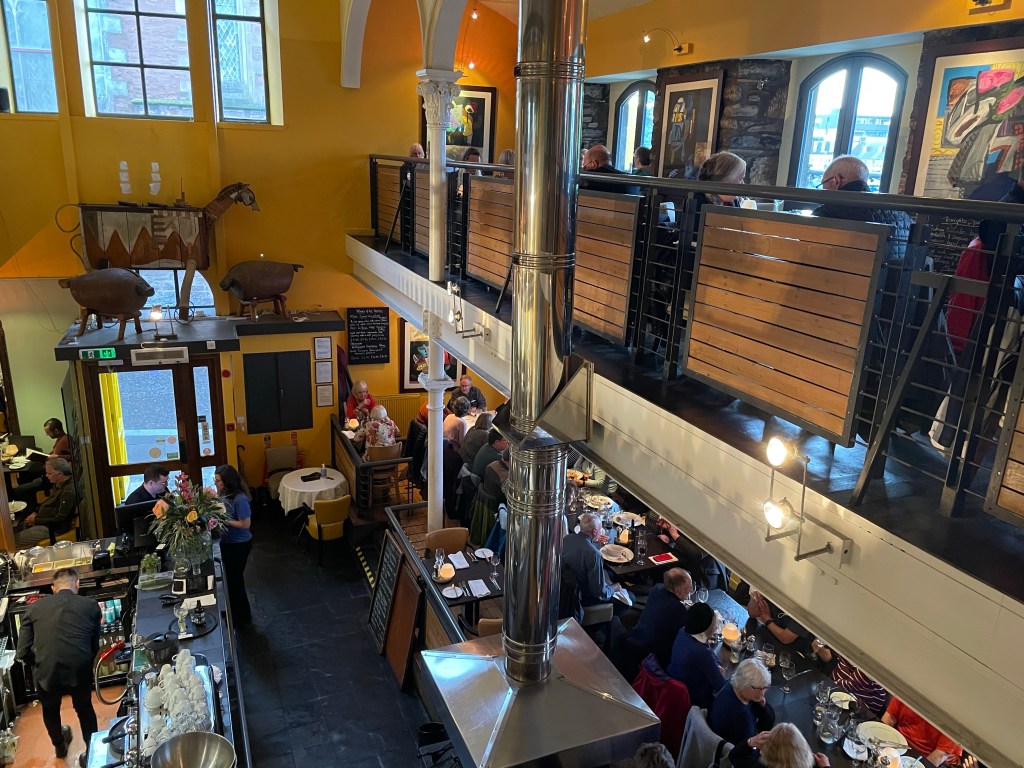
I was excited to have a birthday-eve dinner at Mustard Seed, my favorite Inverness restaurant. Apparently I have my own table there, as they seated me exactly where I enjoyed a lovely meal in 2018. Maybe it’s the designated Mysterious Woman Eating Alone table. It has a nice view of all of the proceedings.

Mustard Seed Cafe, Inverness

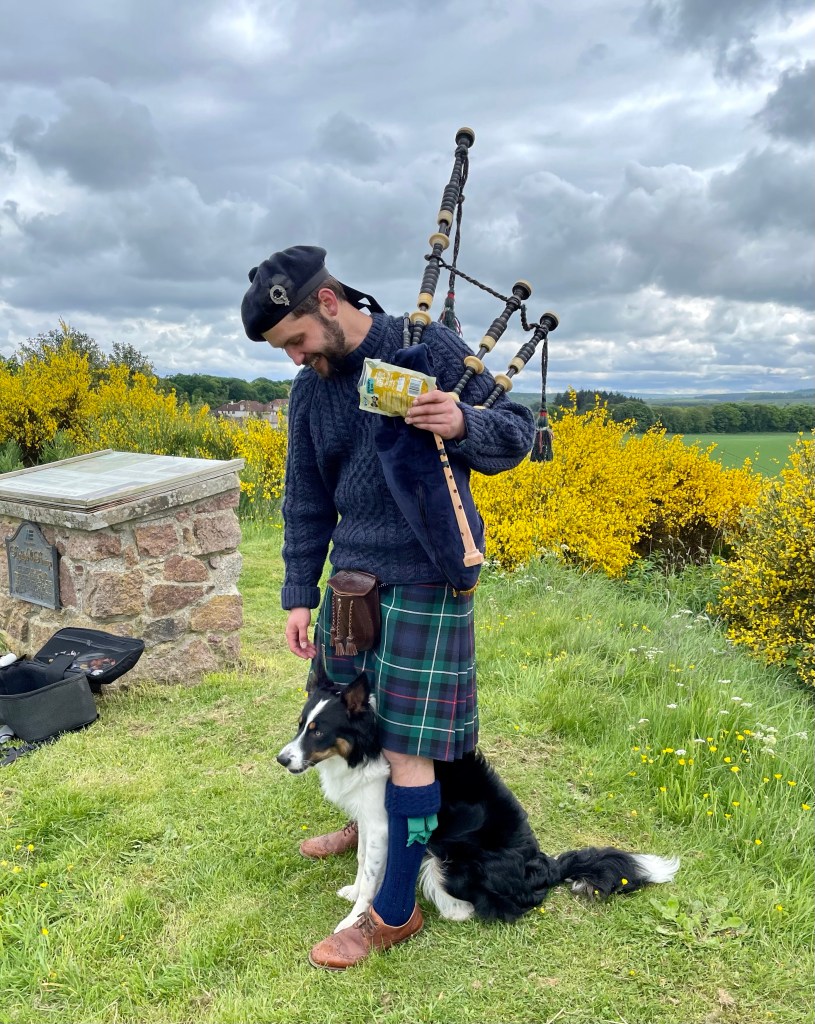
And last but certainly not least, for my last full day in town I booked a tour with one Andrew Grant MacKenzie, who arrived to collect me with a kilt, a border collie named Sonas and bagpipes. Andrew is a legit historian and archaeologist, so he’s basically Indiana Jones. He’s also fluent in Gaelic (pronounced gallic, not gay-lic as it is in Ireland, similar to the whisky/whiskey thing). We had arranged a tour along the Moray Coast, east of Inverness, which Andrew dubbed, “Picts, a Wolf and the Covenanters.”

Andrew and Sonas

Andrew managed Culloden Battlefield for years for the National Trust of Scotland. He actually met with Diana Gabaldon as she was doing research for Outlander. (Segue: I eventually admitted to him that I had partaken of a Rabbies Outlander tour during my last trip which was a super embarrassing thing to disclose to a historian but he didn’t seem to judge.) He said that Culloden staff were the first people in the UK to see Outlander – it was released in the US first and Americans started visiting with particular questions about a fictionalized version of the ‘45 rising which the staff couldn’t answer, not having seen the series. I’m imagining fans asking to be shown the spot where Jamie and Black Jack Randall engaged in fatal hand-to-hand combat. Hopefully not, as both characters are 100% fictional but people are weird. Anyway, STARZ sent over the first two seasons and all employees had to watch it. Of course Diana’s tale is mostly about the love story, not a historically accurate depiction of events sufficient to pass muster with folks who live and breathe Culloden. Still I would have paid a lot of money to watch them watch Outlander.
Andrew also seemed to know everyone in Scotland – he knew the crazy guide we encountered on the aforementioned Outlander tour who had armed his little old lady passengers with plastic swords and reenacted various scenes (see previous blog), he knew the bagpiper Backroads arranged for us during that tour (ditto), he’s talked to the head of Visit Scotland about infrastructure issues related to the North Coast 500, and he has been invited to ceilidhs attended by members of the Peatbog Faeries. He also worked at Cawdor Castle for a while and so of course knew Lady Cawdor.

By now you are getting Andrew’s general awesomeness. And so onto the tour we go. He first drove us to Sueno’s Stone, the largest and most spectacular of the many carved stones that have survived from Scotland’s early medieval period. It stands about 21 feet high and is encased in a giant protective display case. Continuing in the Pictish vein we next traveled to Burghead, a quaint little town located on a spur of the Moray peninsula where a Pictish fort was located. You could see Orkney from the site.

Suenos Stone

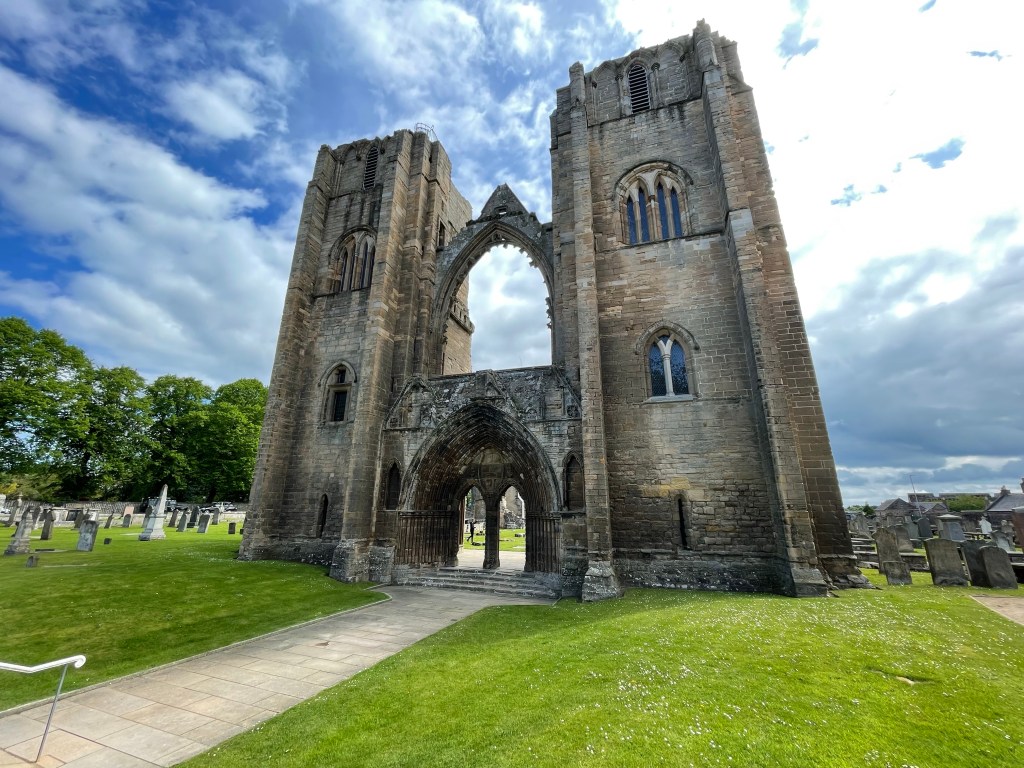
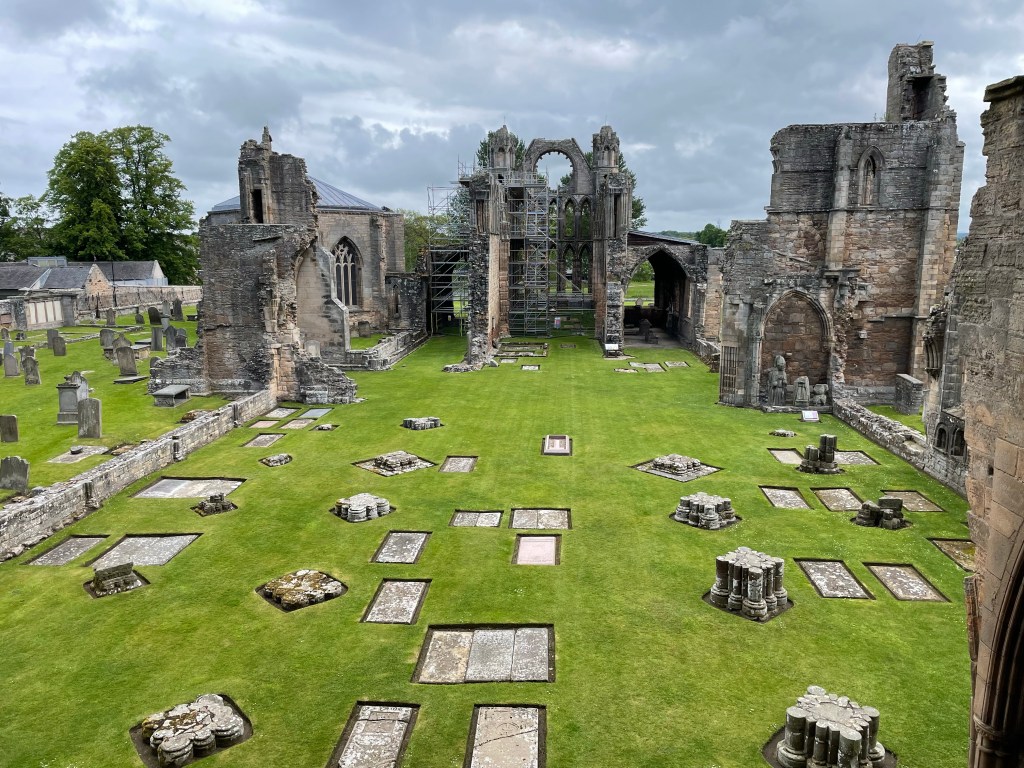
Our next destination was the ruins of Elgin Cathedral, the place that our friend the Wolf of Badenoch (remember him?) burned down. I was picturing a quaint medieval chapel when it was actually more akin to Westminster Abbey.

The cathedral is a massive and gorgeous site. There’s one room with a domed ceiling, glass windows and perfect accoustics, which Andrew demonstrated via the dulcet tones of his singing voice.

After having lunch at Cawdor Castle Cafe, we finished the tour at the Auldearn battlesite. As a historian, Andrew cares a lot about this battle and doesn’t understand why more people don’t visit the site. Perhaps our friend Diana could do something about that although be careful what you wish for. The 1645 battle was fought between a Scottish Covenanter army allied with the English Parliament and the Royalist forces of Charles I. Covenanters were folks who signed the National Covenant in 1638 to confirm their opposition to the interference by the Stuart kings in the affairs of the Presbyterian Church of Scotland. The Stuarts believed all of that divine right of kings stuff and that monarchs were meant by God to be the spiritual heads of the Church of Scotland instead of that other guy Jesus. This was a sticking point even for Scots who supported the Stuarts. Andrew said it was the first time a battle had been fought between Gaels over an idea rather than land and resources.
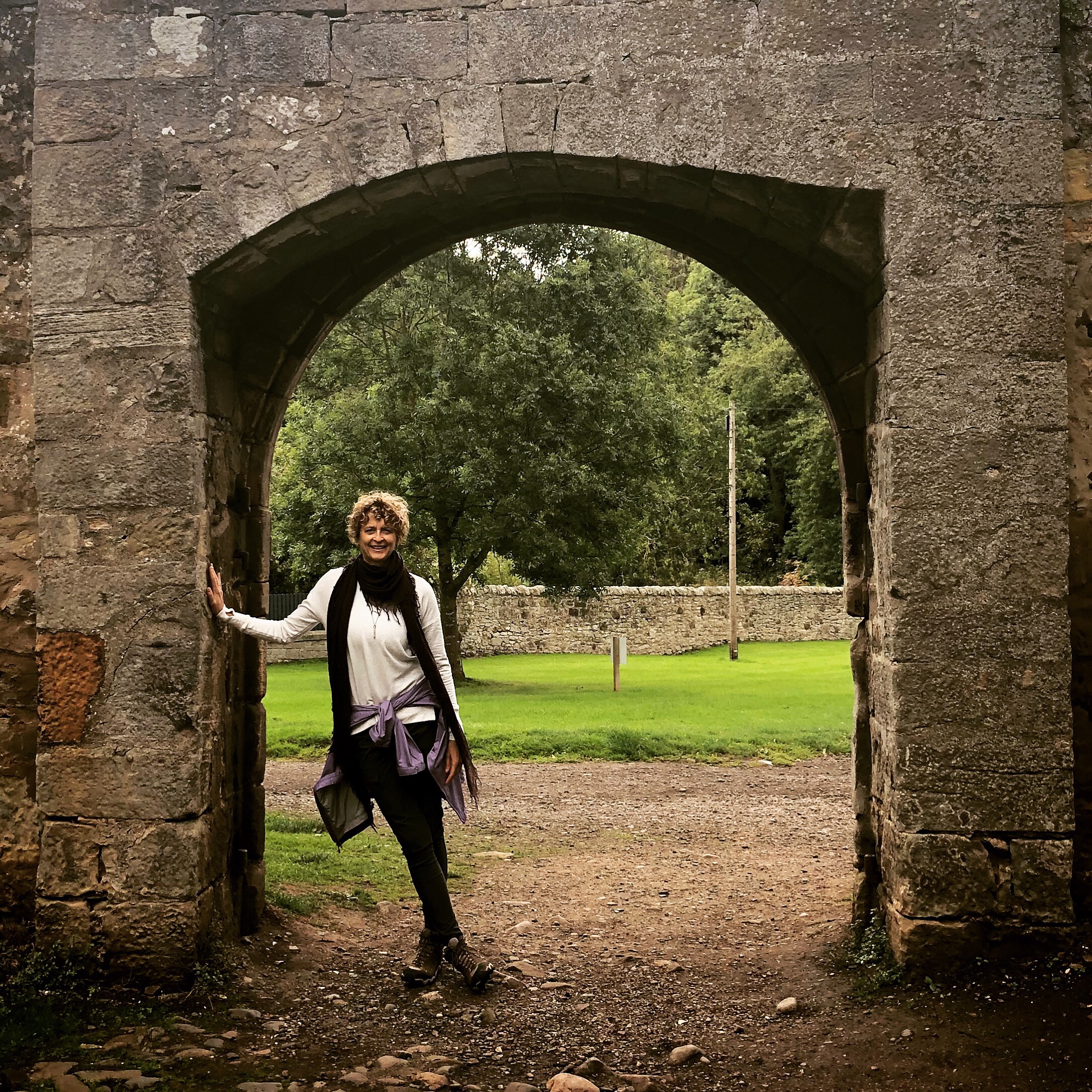
In the peace and solitude of the ancient battlefield, Andrew liberated his bagpipes from their case and played an evocative and mournful tune about the battle itself. It was achingly lovely and sad. From the sublime to the you-know-what, his encore was a song you might recognize in honor ME GETTING EVEN OLDER.

Best rendition ever.

Over the course of the day we had some great conversations about history – and even delved into politics. Andrew said that most Scots struggle to comprehend what is happening in the States currently with MAGA, the insurrection, guns, individual rights and so on. Yeah same same.

We talked about the horrific 1996 Dunblane massacre, the deadliest mass shooting in British history. Sixteen students and one teacher were killed, with fifteen others injured. Directly afterward, Parliament passed two new firearms acts which outlawed the private ownership of most handguns within the UK, together with a buyback program. Thousands of weapons were incinerated. As we know, there have been no further mass shootings with a handgun in the UK since, even though we are told by NRA experts that guns don’t cause these horrific things. UK residents can still own hunting rifles, of course, but they are registered and owners must keep track of their shots. The guns are inspected every year to make sure the owners’ reported number of shots match the number of times the gun was actually fired. Can you imagine the cascading exploding heads in the States if something that restrictive were enacted? I guess in some countries the bother and inconvenience is worth not having people and children regularly mowed down by military-grade weapons. Imagine.

Andrew also talked about a few Gaelic concepts that inform his life and business. The words are about the sense of belonging to a place and to a people. There is no English translation. They resonated with some of the things I’d been thinking about and experiencing on this trip around why I feel so in sync with the hills of Scotland while lately feeling less connected to my home in Oregon.

Dùthchas is the connection to one’s ancestors, their lives, stories, the ground they lived on and one’s physical and emotional connection to that ground. I think ancestors can mean either a spiritual or blood lineage. Cianalas is the longing for dùthchas when you aren’t there. It’s a mournful longing but it’s not sad. Caim is the belief that wherever you are and whatever your current situation you can gain strength from encircling yourself in that longing and that connection to your dùthchas. Sonas is the sense of completeness and comfort you feel when you drop into dùthchas, cianalas and caim. These concepts echo throughout yogic/eastern spiritual traditions as well. My yoga teacher talks about his own spiritual lineage in the same way. I can’t explain why, but I feel and experience the truth of it.
Sonas.

If you find yourself in Scotland, consider Andrew and Sonas as guides. You can find more information about them at http://www.highlandhistorian.com.

I capped off this perfect day with a birthday dinner at Rocpool. After dinner I ordered an affogato because it’s unquestionably the perfect dessert. It arrived with a road flare in celebration of ME GETTING EVEN OLDER.

By all means let’s celebrate this fracking thing.

And now for the journey home. Let’s dispense with COVID. For the first time since the pandemic started, I let down my guard during this trip and didn’t don a mask the entire time I was in Scotland, throwing caution to the winds as it were. With bated breath, I took the test with the tele-health person monitoring. Negative. Never been happier to see a single red stripe.

And now for my dicey short layover in Schipol. I had an hour between my Inverness flight landing at Schipol and my flight to Salt Lake taking off. Not boarding, mind you. Flying away. As we sat on the runway in Inverness, I was feeling all the appreciation for how quickly Europeans get their asses settled onto airplanes. Everything was proceeding apace until, of all things, they couldn’t get a cargo door to latch properly. As time ticked by, inexorably shortening my layover like slow drips from the faucet of doom, I was about to volunteer to sit in the hold during the flight so I could keep the door closed with my body. Then, behold, the pilot took matters into his own hands and asked for the ladder to be brought back to the airplane so he could descend to the tarmac and “take a look.” He emerged from the cockpit, a burly central casting Viking with red hair, marched down the steps and totally took care of it. I need someone like that around me at all times.

So we arrived in Amsterdam a half an hour before my next flight. I was surprised to hear as we landed that only one connection was blown, a flight to Boston. I was instructed to “go right to the gate” for my Salt Lake flight. YES BY HELL I CAN DO THAT. The airplane landed in the “curtain” area of Schipol which is basically New Jersey, with a stinky bus that takes you to the terminal. I hit the ground running and arrived at the empty gate panting in a most unladylike manner and entirely disheveled and having to pee but I had apparently made it in time.

Ah but not so fast. The gate agent looked at my flight information in the system and reacted with a puzzled expression. She showed it to all of her gate agent friends and they were also visibly taken aback, shrugging their shoulders and saying things to one another in Dutch. What what what? I found out later that KLM, in its infinite wisdom, had decided that since my flight was delayed I ergo missed my connection and so they had rebooked me on the same flight the following day. Before my feet had even hit the tarmac. Like declaring someone dead when their heart is still beating.

So the lead gate agent (I presume) was summoned and he started calmly typing into his computer and talking on the phone. In Dutch. I still had zero idea what was happening. He finally looked at me and said, “Don’t worry, that plane is not going anywhere.” OK phew. Bless you sir.

Relaxing, it was then that I fully noticed the short t-shirted paunchy drunk dude standing several feet away and surrounded by no less than four tall, fit and woah quite handsome security agents. I gleaned that the drunk dude had been tossed from the plane due to stupid drunken behavior and it wasn’t the first time. And sad to say he was an American. Well of course he was.

He was doing that thing hammered people do, which is moving and gesturing very slowly while intoning super dumb things in an exaggerated rational-sounding tone. He of course had had two beers. From my years of lawyering, this exact quantity of alcohol is noted in every accident report. It’s a phenomenon really, that every single person who has ever caused a motor vehicle accident tells the cops that they have imbibed exactly two beers. Someone should do a study.

Anyway the dude was carefully explaining that he knew his own limits, that he was fine, that he hadn’t done anything wrong, that he would miss his daughter’s birthday party, and that he had had ONLY TWO BEERS. He also periodically dramatically extended his arm straight out in front of him and scolded the various security guys for not social distancing. For their part, the security guys appeared to be employing de-escalation techniques while at the same time trading spectacular insults with drunk dude. I literally think someone’s mother was mentioned at one point. The dude once tried to “get in line” behind me and I almost bodily moved the tallest and most woah handsome security guard so that he was more solidly between me and the dude.

Of course the dude was filming the whole interaction with his phone because obviously he’s going to file a complaint, so I might become famous as a background extra on social media.

Meanwhile the formerly calm senior gate agent finally exploded and yelled at the top of his voice, gesturing dramatically, spittle flying everywhere, for security to move the dude away because the whole drama was distracting him from getting me on the freaking plane. There was a spectacular amount of swearing. I was with him on this, and actually hoping the dude would be thrown into a Schipol holding cell where his fingernails would be slowly pulled out one by one. Do they have those? Do they do that? Hard to tell with those stoic Nederlanders.

Finally the dim light dawned and the dude managed to accurately assess the situation. He simply was not going to prevail either by his wits or physical prowess and so he wandered off down a moving walkway, throwing muddled parting threats over his shoulder. I said to my gate agent, “Americans are the worst.” He agreed so enthusiastically that I felt the need to add, as I hadn’t yet been given my boarding pass, “not me though.”

Anyway, once I triumphantly boarded the plane at last, the senior gate agent suddenly appeared onboard and high-fived me, saying none of it was my fault and asking whether I was happy. Don’t worry, why would I file a complaint about what ended up being a funny story I could share with you guys – and besides I AM ON THE PLANE.

Also, the thing is, the drunk guy was the reason the flight was delayed long enough for me to make it. They had to excavate and remove his bag. So, and I mean this from the bottom of my heart, thank you my dude. And I hope you find the help you need, for your daughter’s sake.

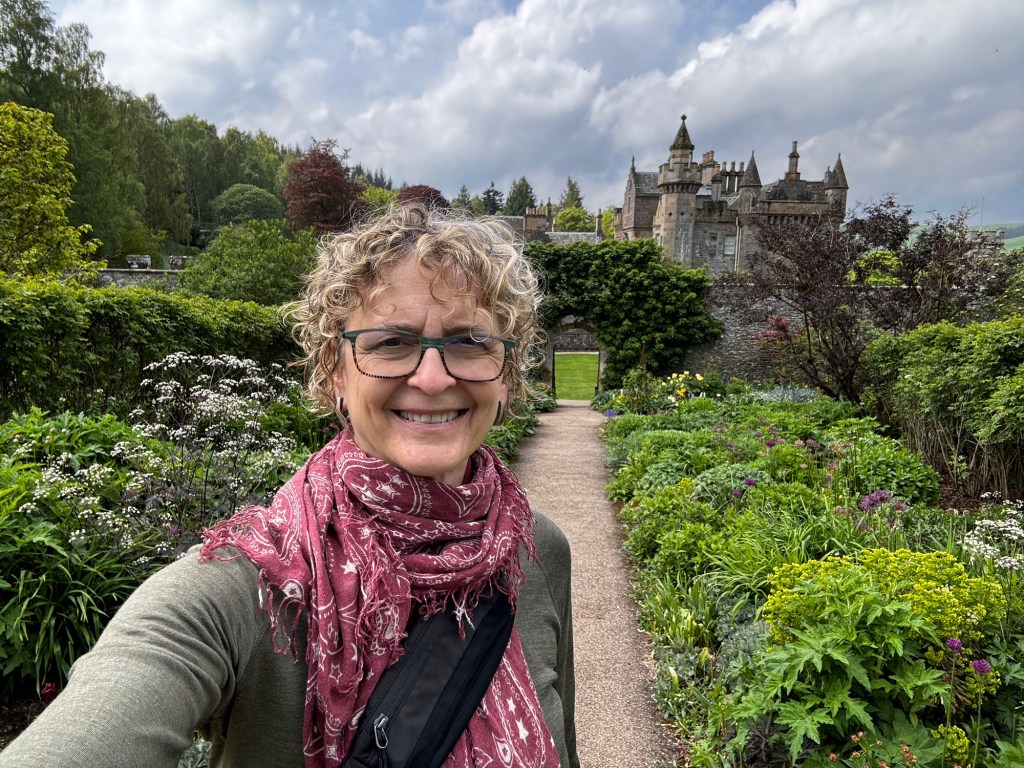
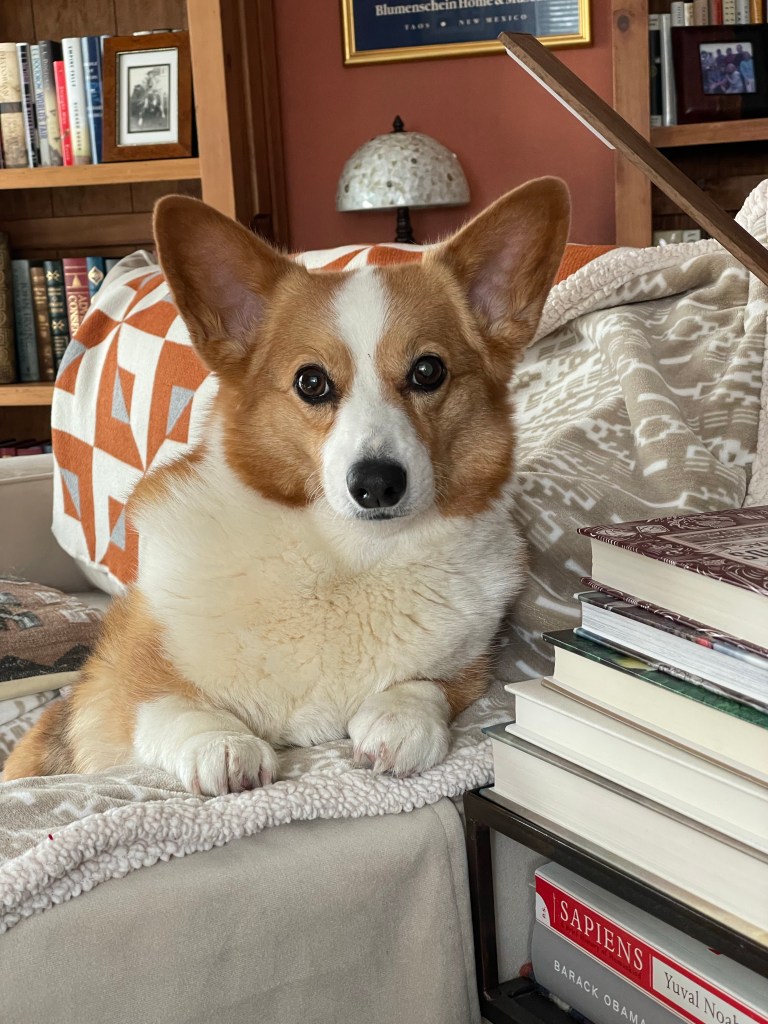
So after that wee bit of drama, I made it home with no further incident except my checked bag decided to remain in Amsterdam for a few extra days to see the sights. And except for the fact that I am no longer in Scotland, all is well. Best thing is getting to see this face.

I so enjoyed writing about my long-postponed trip and sharing it with you. Thanks for reading. I hope it inspires you to travel to Scotland or anywhere you feel dùthchas. Just don’t be a tourist.

And gird your loins, my friends, because I’m headed back to the UK in September.

Til we meet again.
Sláinte

Outlander and Whisky

I’m about 80% English/Scotch/Irish. If I were a paint color, I’d be Bland White. Long before I knew exactly how white (thank you Ancestry.com), I’ve been interested in British history. Used to be able to recite all the Kings and Queens of England. So Scotland was firmly on my travel list, but I admit it was the cinematography in Outlander, shot in Scotland, that put me over the edge. And maybe the kilts.

So what better way to spend my first full day in Scotland than booking an Outlander Tour like a geeky tourist? The tour included historic castles, forts and villages used as film locations for Outlander, Monty Python & the Holy Grail, and Game of Thrones. And then, as a topper, finishing the day with a whisky tasting at a bar named Edinburgh’s 2018 Whisky Bar of the Year.

I booked the journey through Rabbie’s, a company specializing in smaller tours using wee buses. I expected to be joined by a bunch of middle-aged women who talked about Jamie Fraser (a.k.a.the main character in the show who is widely believed to be the perfect man) the entire time. Instead, several couples, including one on their honeymoon, and one big family, the McGowans, all piled into the bus together. They were from Florida, Philly, South Carolina, France, England and Australia. I sat behind the guide and was joined by the head of the McGowan clan. The McGowan himself. Who was very quiet (his wife made up for it from the back of the bus) and went to great pains to avoid any physical contact, which I appreciated.

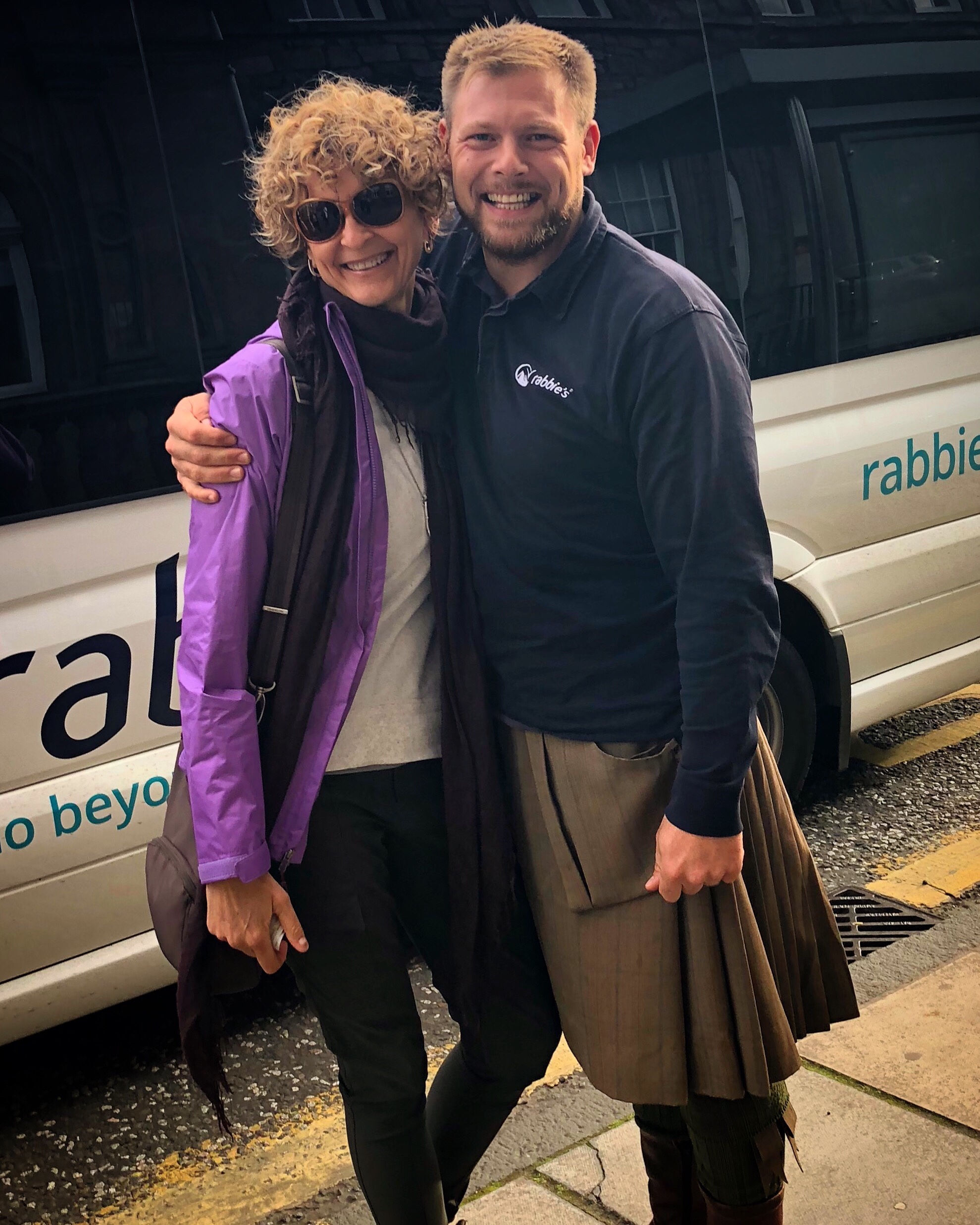
Of course, I instantly fell in love with our Scottish tour guide, Nicky. He just happened to be tall with reddish hair, very articulate, thoughtful and hilarious. Wearing a kilt that wasn’t a costume.

The first place we visited was Three Bridges, a town with, you guessed it, including a bridge that was built in the 17th Century. A marvel of engineering. The place has no connection with Outlander, just a cool spot.

Jamie Nicky took my photo in front of the old bridge.

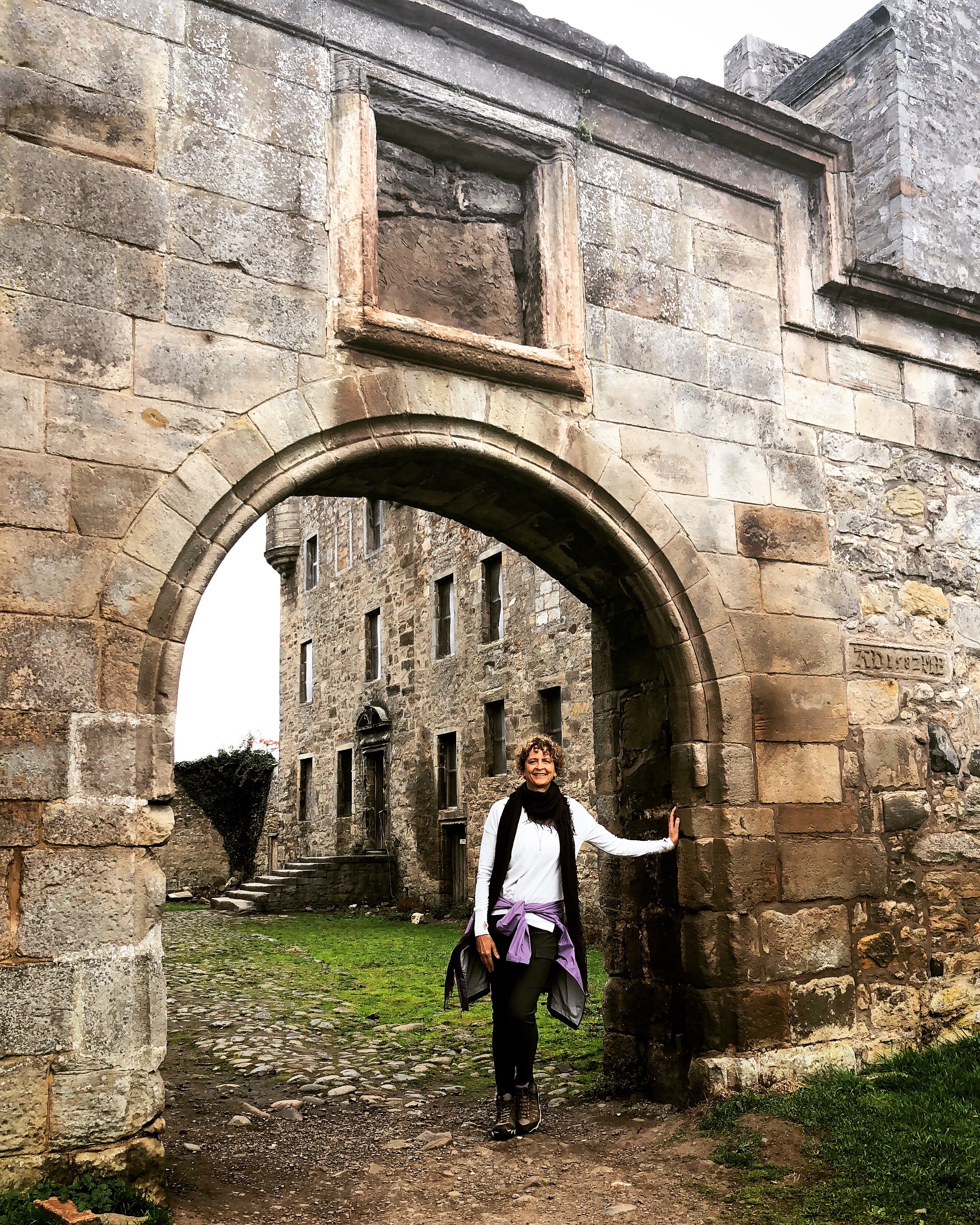
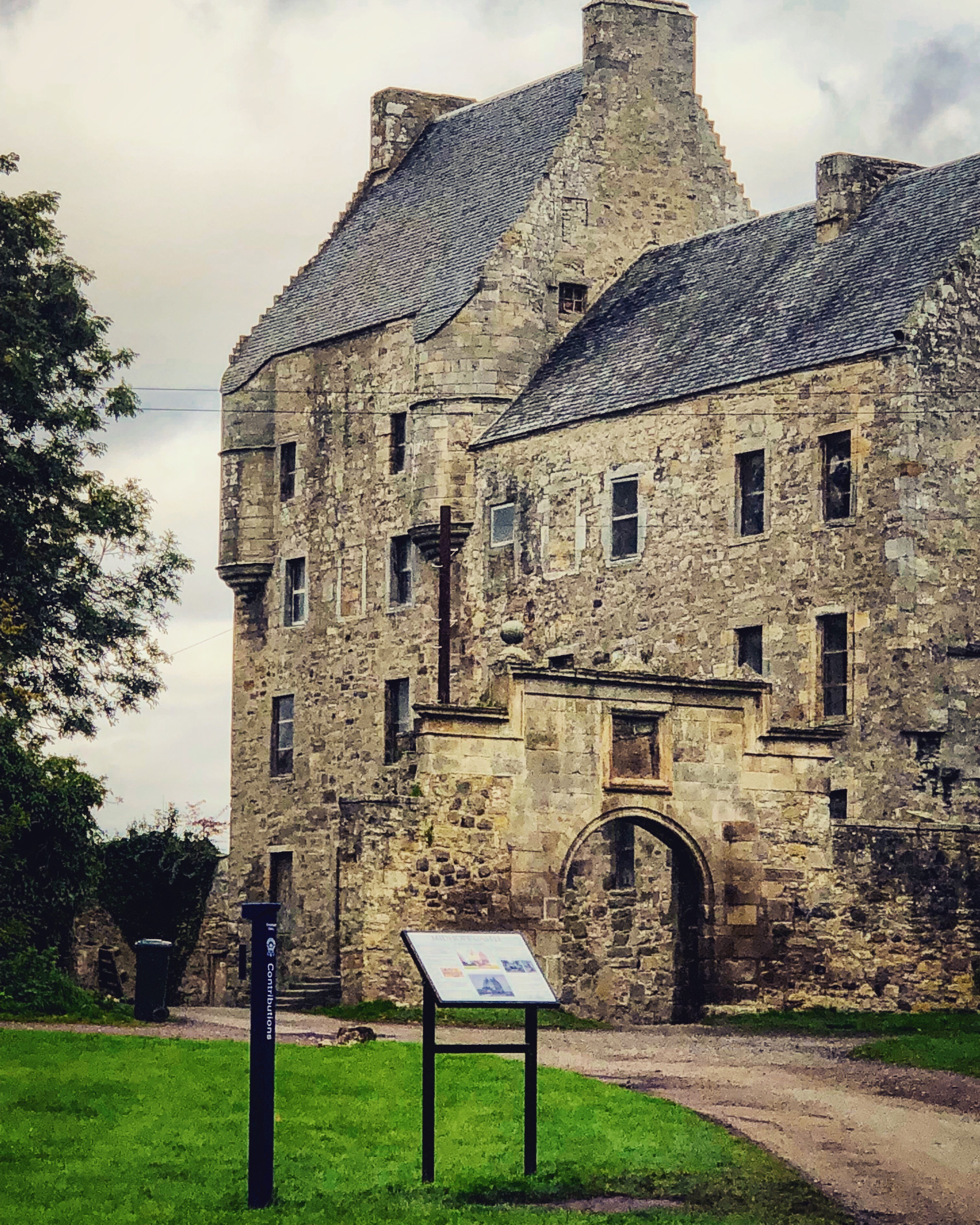
Then we journeyed to the most “all the feels” of Outlander settings, Lallybroch, the Fraser ancestral home. Otherwise known as Midhope Castle, still standing but entirely in ruins on the inside. The steps up to the door were built by the film crew. A beautiful and evocative place marooned out of time on a working farm. Surprisingly, there is a picturesque cottage right next to the Midhope ruins. Not next door, but right there on the edge of the lawn. Architectural Digest – Medieval beautiful. The owners were the luckiest people alive to own this gorgeous cottage in such a setting. Ach, no more, thanks to the fickle finger of fate. Their idyllic spot has been besmirched by Outlander and the tourists who followed in its wake.

Speaking of tourists, it soon became apparent that there were different sorts of Outlander tours. As we were leaving “Lallybroch,” another, larger group came down the path toward us, led by a guy in an over-the-top Highlander costume. He held a plastic shield and brandished a fake broadsword. He was a scenery-chewing Pirates of the Caribbean Johnny Depp version of an 18th century Jacobite. Johnny Depp Jamie had obviously dispensed plastic weaponry to everyone on his tour for them to, I guess, ineffectually arm themselves as they visited ruins. Two adorable little old ladies walked side by side, one brandishing two plastic axes, the other holding two pistols. I would have died had I booked this tour. Johnny Depp Jamie immediately challenged Jamie Nicky with his sword. Jamie Nicky, sensing danger, extended an arm in front of me to protect my life and virtue. I grabbed his arm with both hands and crouched down, because I’m not about to be left behind in a sudden acting opportunity. His arm was strong and thick and suddenly I had a new appreciation for the antics of Johnny Depp Jamie.

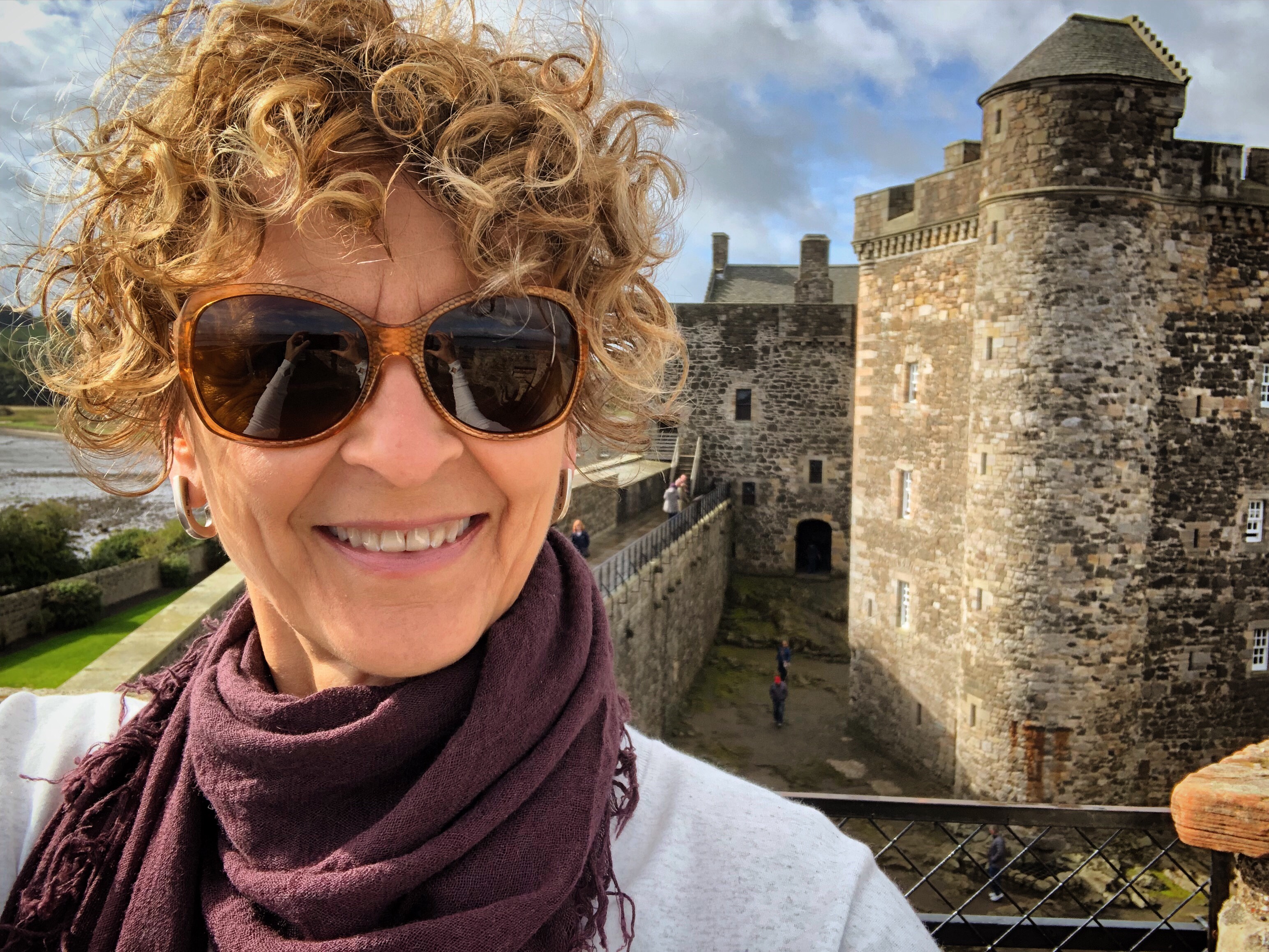
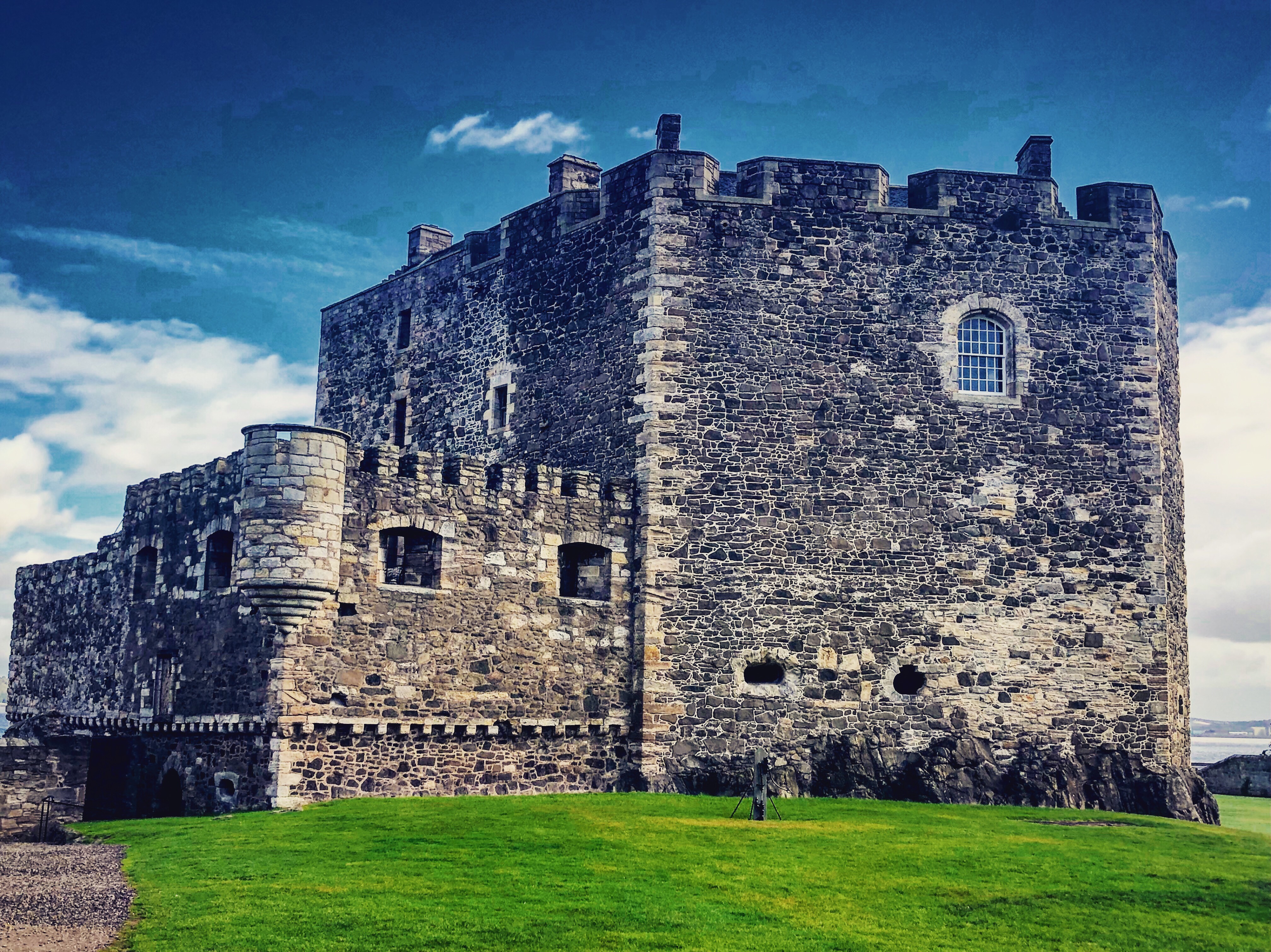
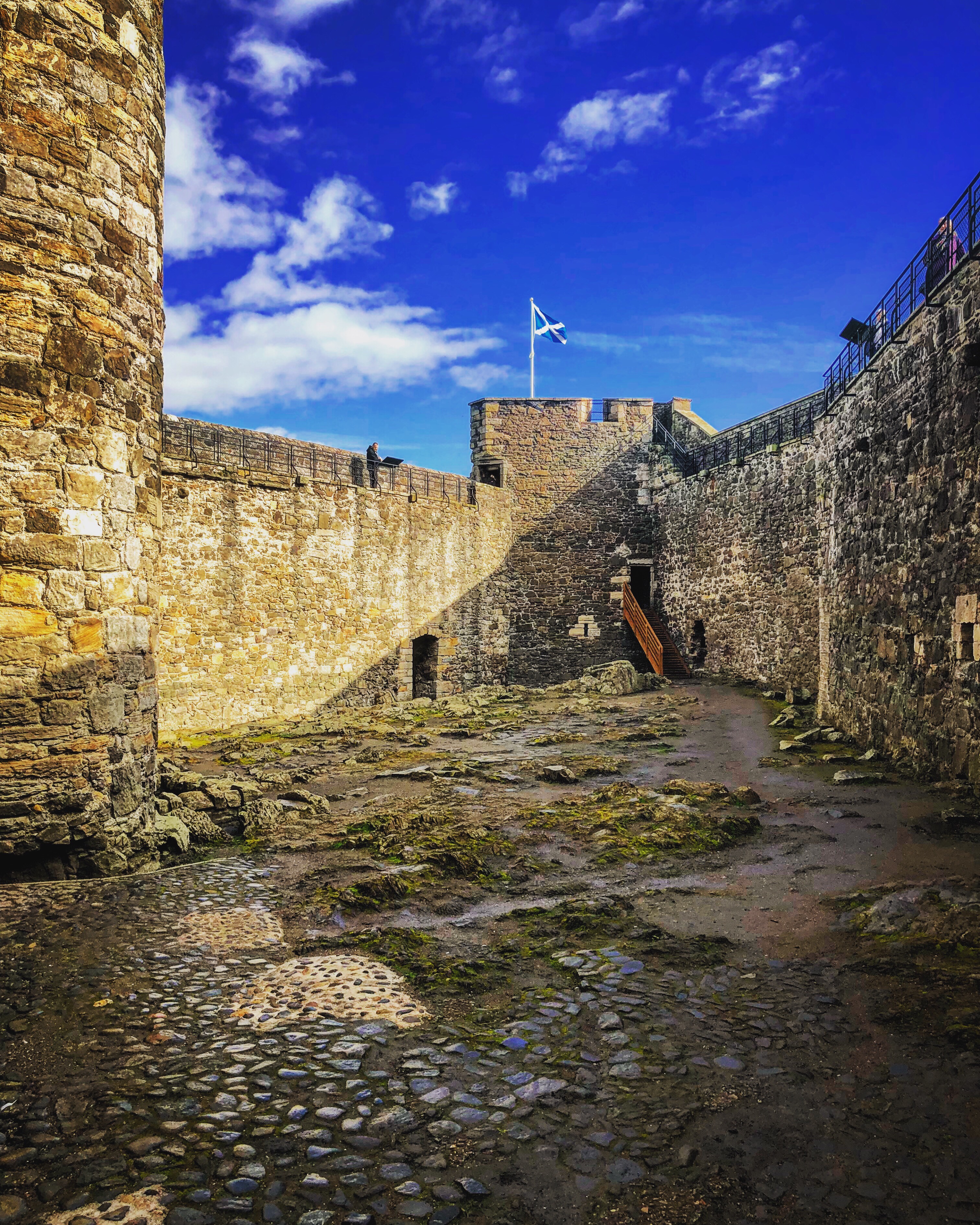
Our next stop was Blackness castle, a 15th century fort built on the south shore of the Firth of Forth. It protected Linlithgow, one of the main palaces of Scottish Royalty, especially the Stuarts. Because of its site, jutting into the Forth, and its long narrow shape, it has been dubbed the “ship that never sailed.” It was used to portray Ft. William in the series, including the scenes of Jamie being flogged nearly to death by Jack Randall (I know people who haven’t seen the show are wondering why on earth), and later the daring rescue of Claire by Jamie, Murtagh, Angus and Rupert with Jamie scaling the tower clutching an empty pistol. Speaking of which, I came upon Johnny Depp Jamie again just as he was reenacting the scene of Jamie clubbing a redcoat over the head after asking where Claire was being held. JDJ brushed people out of the way so he could rush up some steps in search of Claire.

All swashbuckling aside, Blackness Castle is a gorgeous structure in a beautiful setting with a nicely preserved Great Hall.

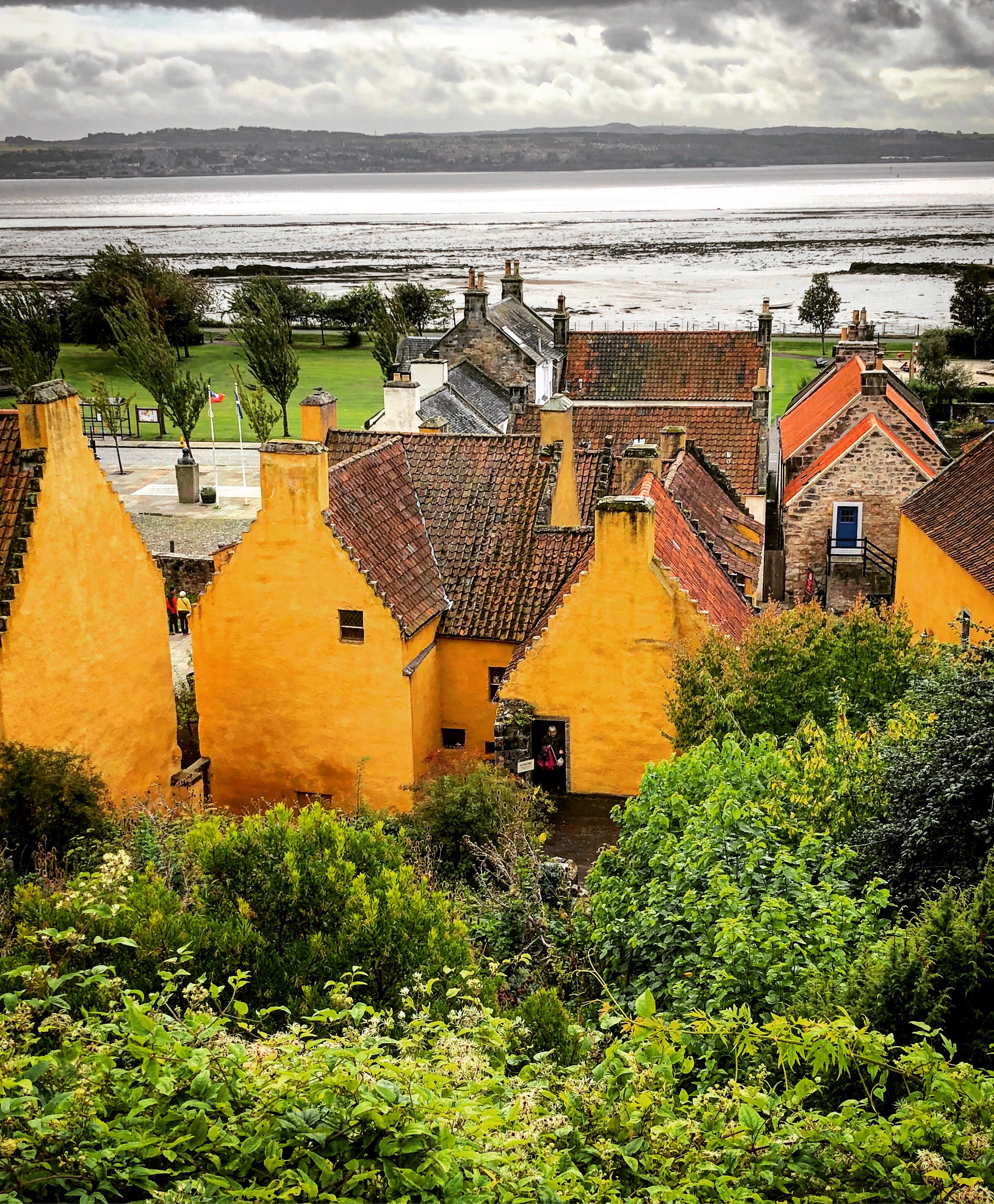
Next stop was the 100% charming town of Culross, where the scenes in Cranesmuir, the village near Castle Leoch, were filmed, including Geilis Duncan’s house, Claire’s herb garden, and the scene where the wee boy got his ear nailed to the pillory for stealing. The town has barely changed since the 17th century and is managed by the National Trust. I had the second best sandwich I’ve ever had there, in a charming little place called the Biscuit Cafe. I mistakenly took a table next to the loo. We all know this, but people truly have issues about bathrooms. One lady in her sixties ducked in and her friend had to stand in front of the door like in high school, holding it slightly ajar, explaining to the gentleman who was next in line, “She’s afraid of getting shut in.” Aren’t we all.

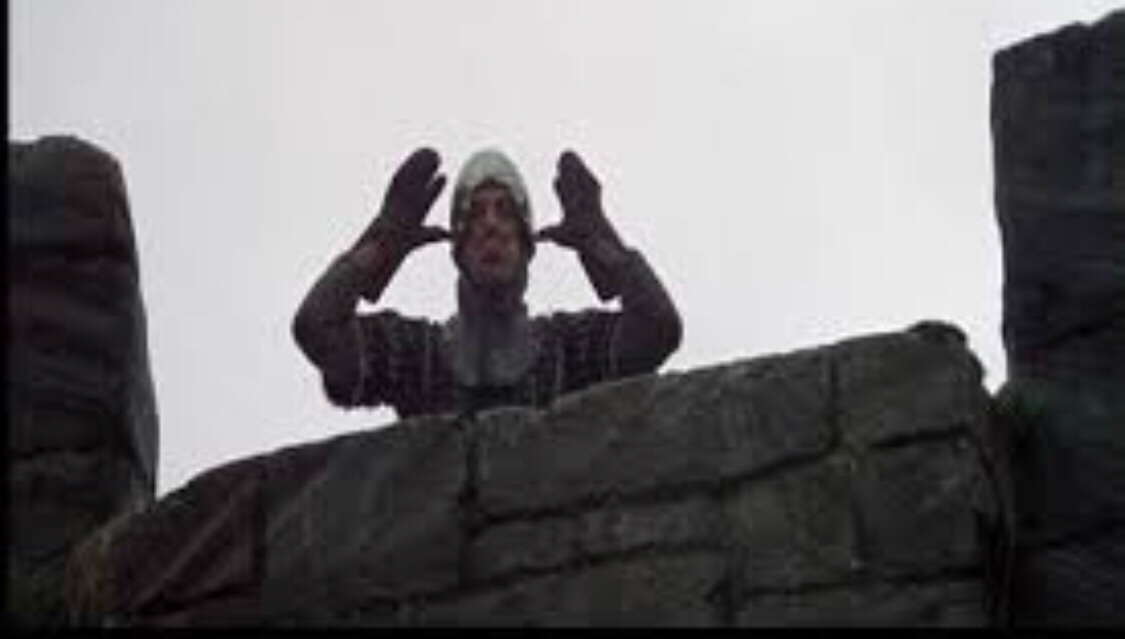
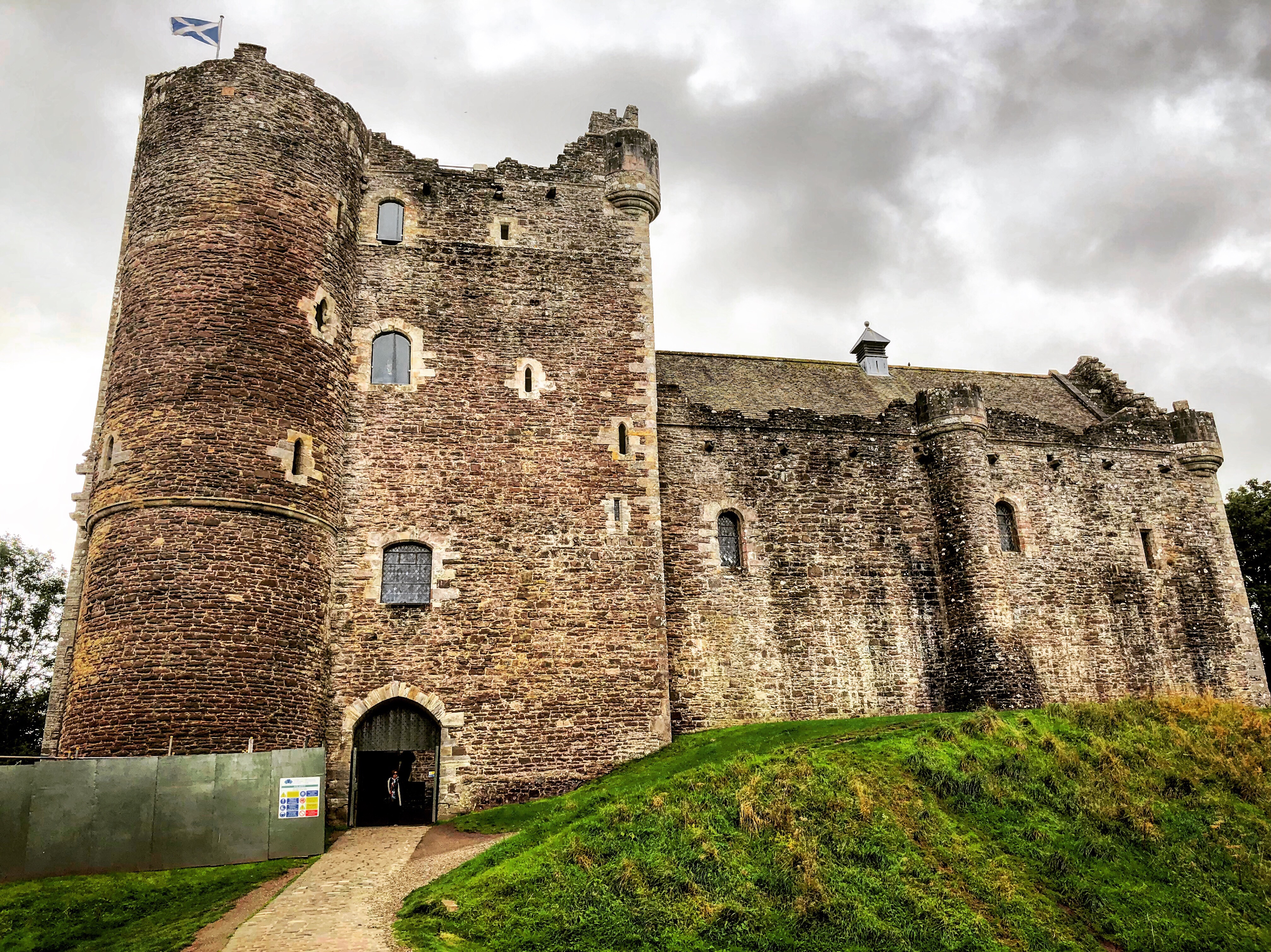
Next was the granddaddy of all film locations – Doune Castle, a medieval stronghold in the Stirling district of central Scotland. The most famous taunting scene in cinema was filmed here.

Starring our beloved John Cleese as the pitch-perfect French taunter, with many memorable lines, including that old chestnut, “Your mother was a hamster and your father smelt of elderberries!” Apparently the Pythons had booked several castles in Scotland for filming until someone wondered who they were and whether they could even pay, withdrawing permission from all except Doune. So basically the entire film was shot here.

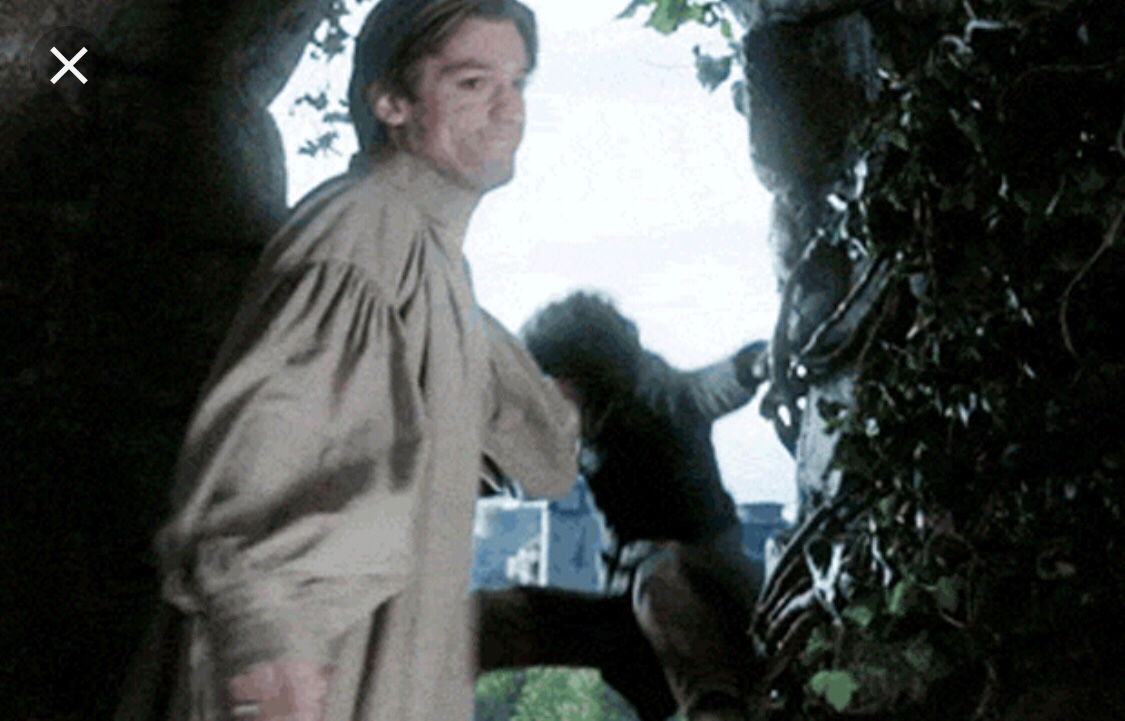
Also the most famous scene ever filmed depicting a guy shoving a boy out of a window because the boy caught him having sex with his sister. I know this scene is basically in every film, but this is truly the best version. Unfortunately, in Game of Thrones, the boy did not die and instead became the Three-Eyed Raven, which, we don’t know, but may result in the ultimate downfall of said guy in the long slow dance of karma.

In season 1 of Game of Thrones, Doune Castle was Winterfell. In season 2 they moved production to Ireland because it was cheaper.

Doune bounced right back, and became the home of the McKenzie clan in Outlander, Castle Leoch. It’s now the third most visited castle in Scotland, after Edinburgh Castle and Stirling Castle. The audio tour is narrated by Python’s Terry Jones, and by, of course, Sam Heughan, who plays Jamie. Inside the house is a fabulous Great Hall and a wonderfully preserved kitchen, including a giant fireplace large enough to roast an oxen. Many silly Python scenes were filmed inside, including the song-and-dance number “Knights of the Round Table,”and the Sir Galahad the Chaste’s seduction scene. I completely recognized them all.

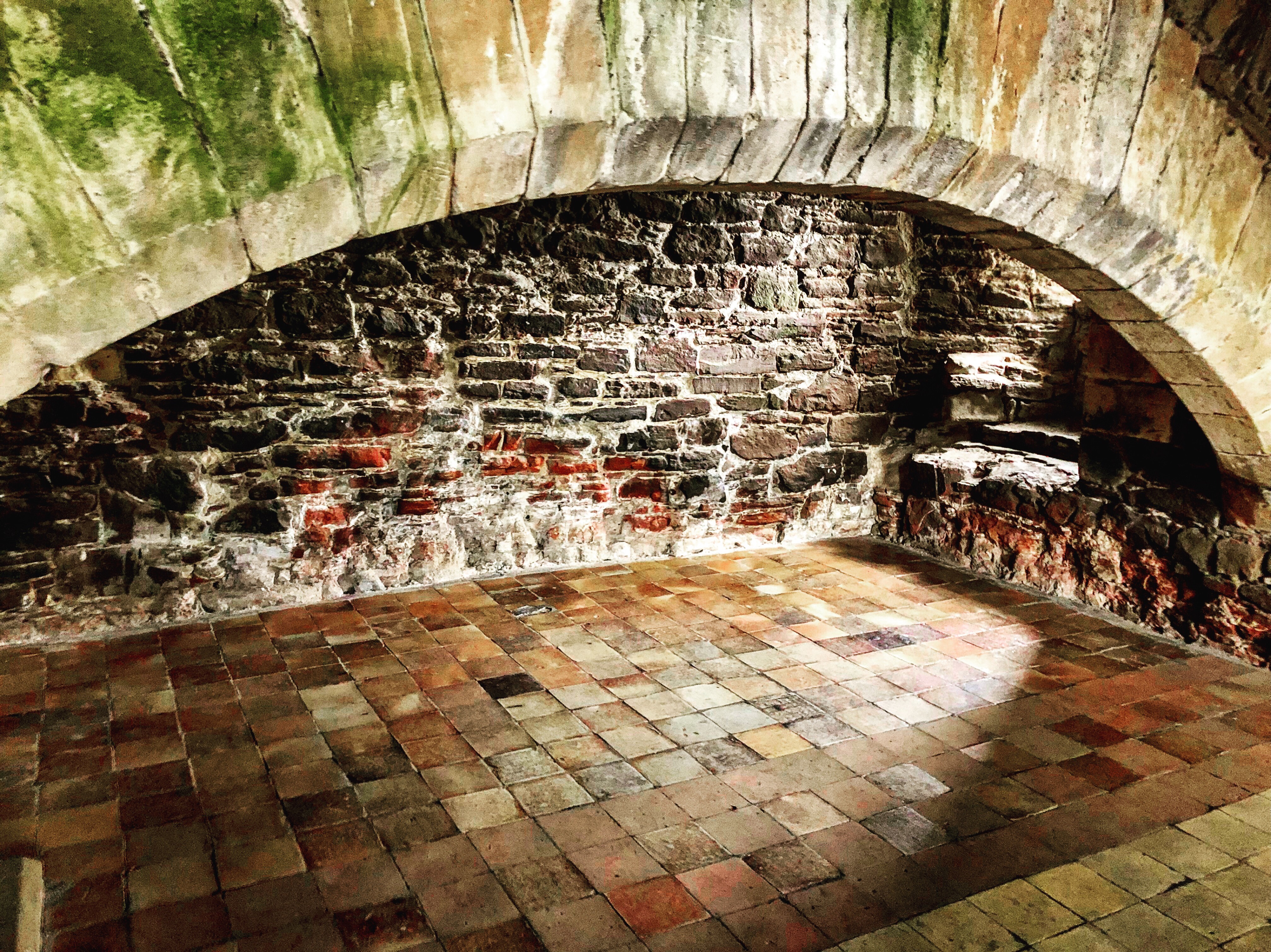
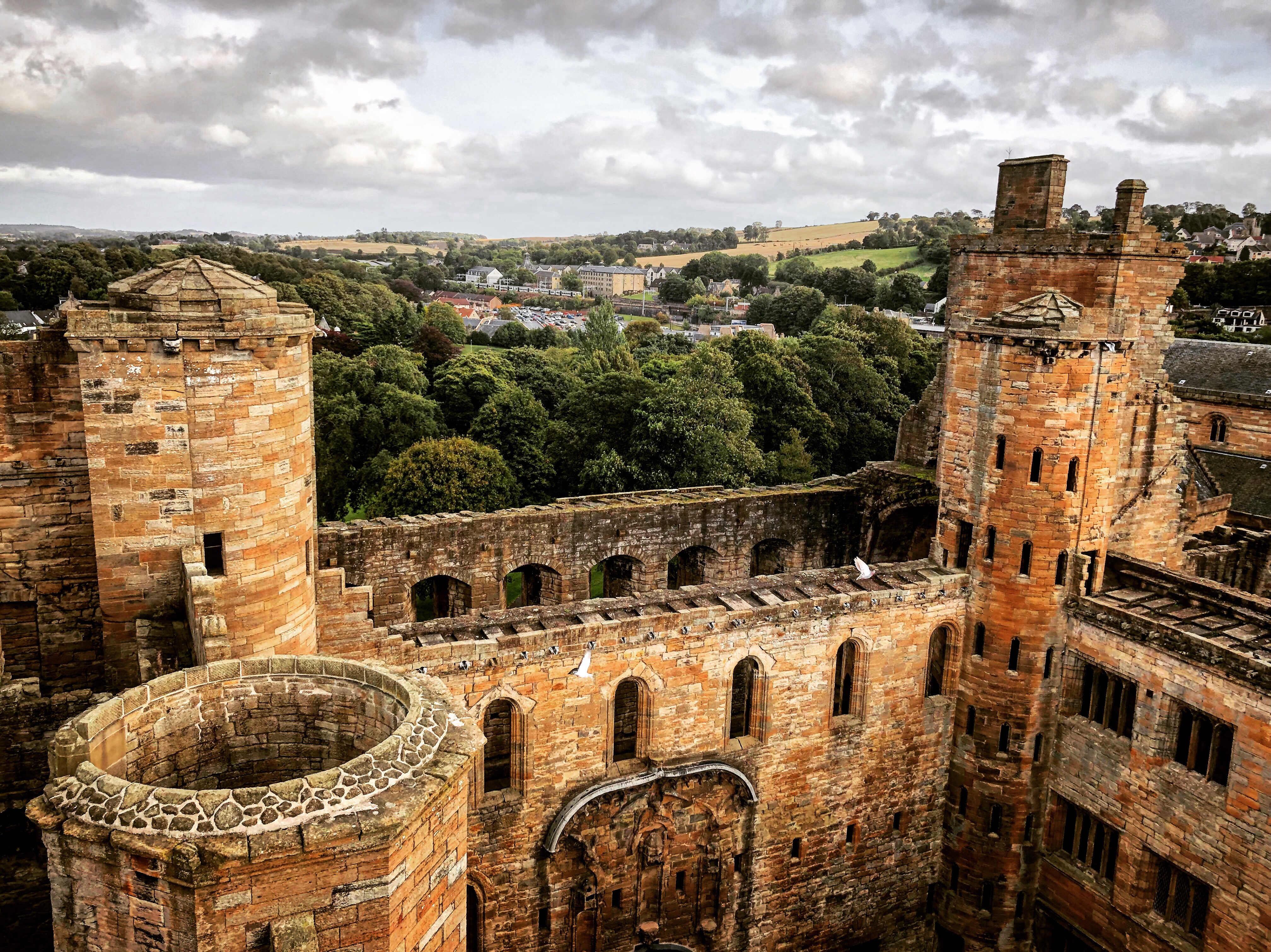
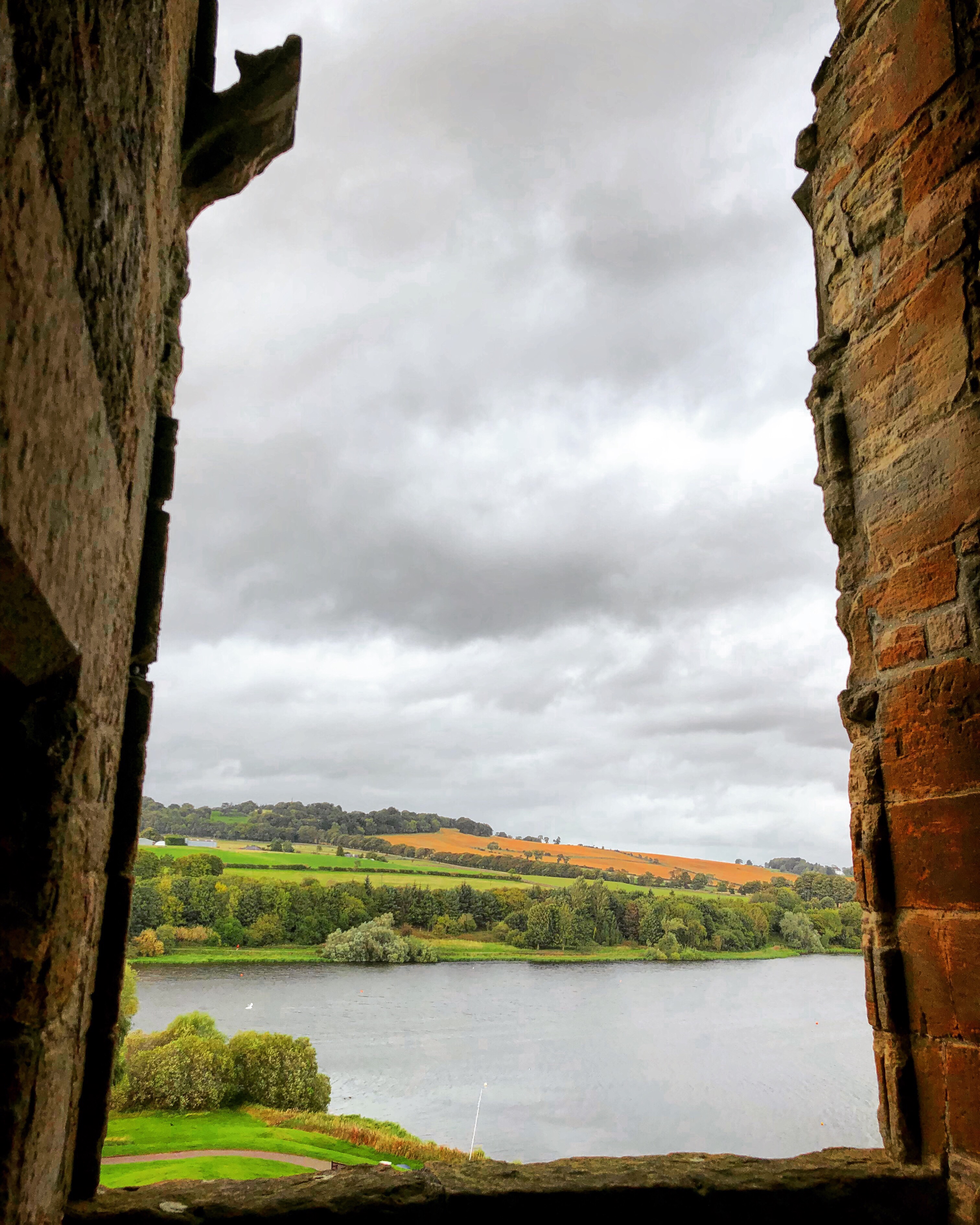
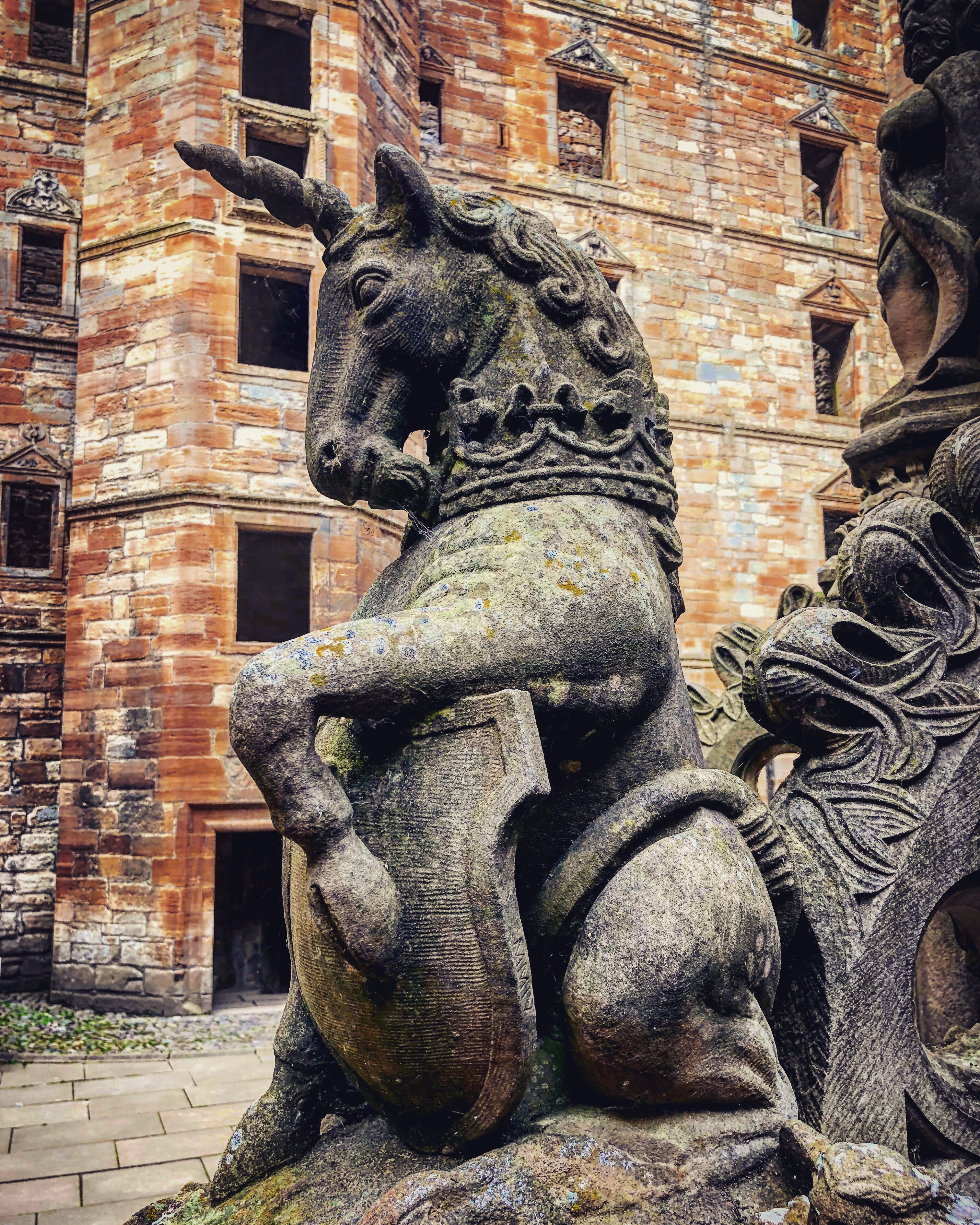
The last stop on our tour was Linlithgow Palace, where Mary Queen of Scots was born and lived for seven months, after which she was whisked away to Stirling, a more secure location. She was in danger the moment she was born, and for most of her life. It was another 20 years before she returned. A lot of Stuart history here. There’s a beautiful and drafty portico on the roof where legend has it Queen Margaret waited in vain for the return of James IV from Flodden Field. Bonnie Prince Charlie was the last Stuart to stay at Linlithgow. In 1746 the castle burned because the British duke of Cumberland’s troops failed to properly extinguish their campfires.

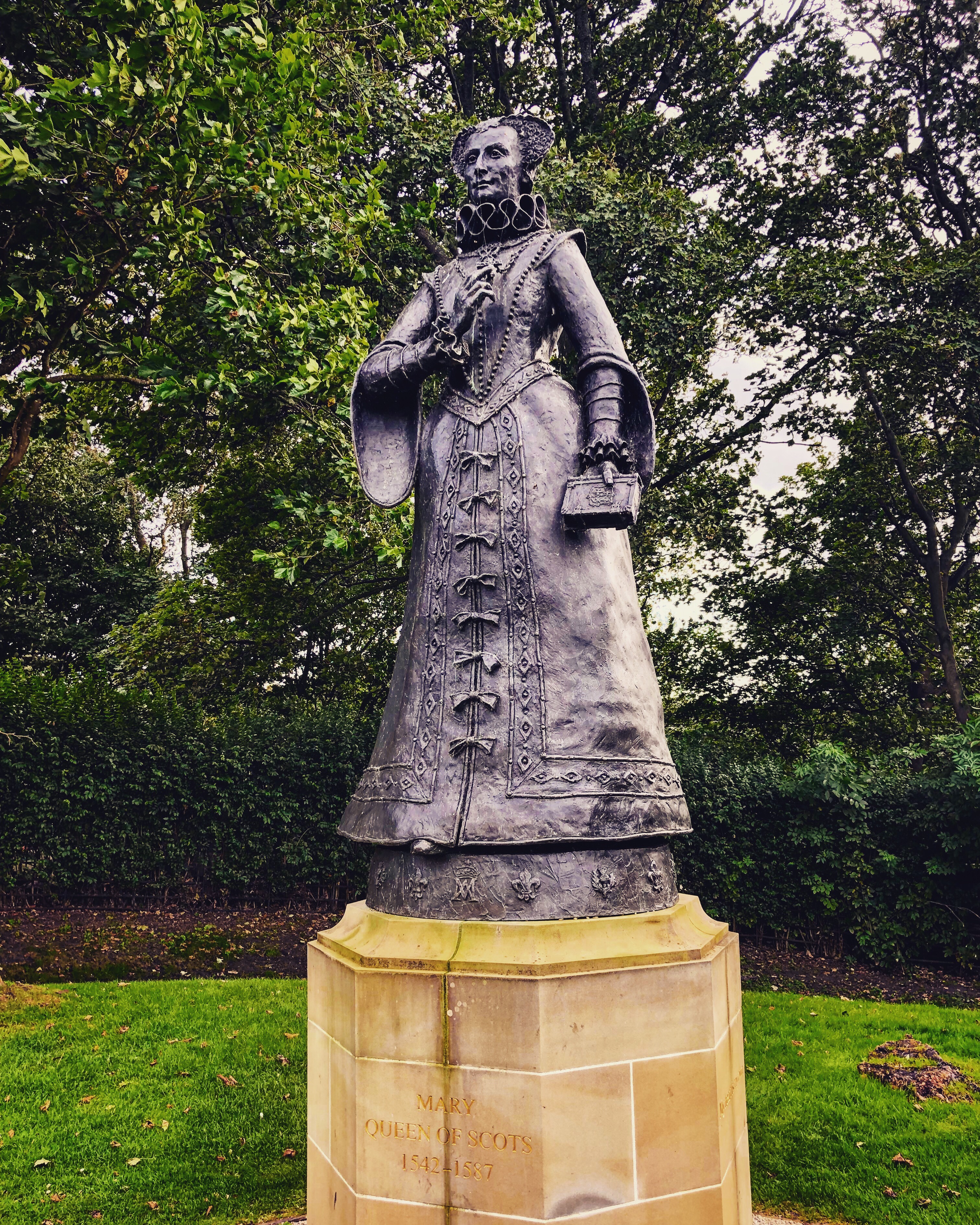
Gorgeous spot (Scots had great taste in castle sites), with a statue of Mary Queen of Scots on the grounds. In the UK you are allowed to scramble all over ruins, climbing up tiny staircases with flimsy railings that wouldn’t be allowed in the US. No posted warning signs, nothing roped off, I guess because you’re supposed to use common sense. The higher you go, the more pigeon poo there is, since all is exposed to the skies. Many ruined castles around Scotland don’t have roofs, not even if they’ve undergone restoration. Why? Because buildings with roofs are taxed.

In Outlander, the tunnels and cells underground were used for Wentworth Prison, where extremely terrifying things happened to Jamie.

It was a fabulous tour, largely because of the fabulous Nicky. He told us the entire history of the Jacobite rebellions. There were five between 1688 and 1745, all with the goal of returning one of the Jameses to the throne of Scotland and England and all failures, finally resulting in the Highland clearances. Nicky told the story with passion and emotion. History is still very much alive for Scots. As Robert Louis Stevenson wrote, “For that is the mark of the Scots of all classes: that he stands in an attitude towards the past unthinkable to Englishmen, and remembers and cherishes the memory of his forebears, good and bad; and there burns alive in him a sense of identity with the dead even to the twentieth generation.” Nicky also reflected on the current political situation in the UK and elsewhere (ahem), resolving to focus his efforts on things he could positively impact, like, for example, people’s lives. He also taught me a new word, “scuppered,” which originally meant to deliberately sink a ship, and has come to mean thwart. So many uses. Anyway, I adored him.

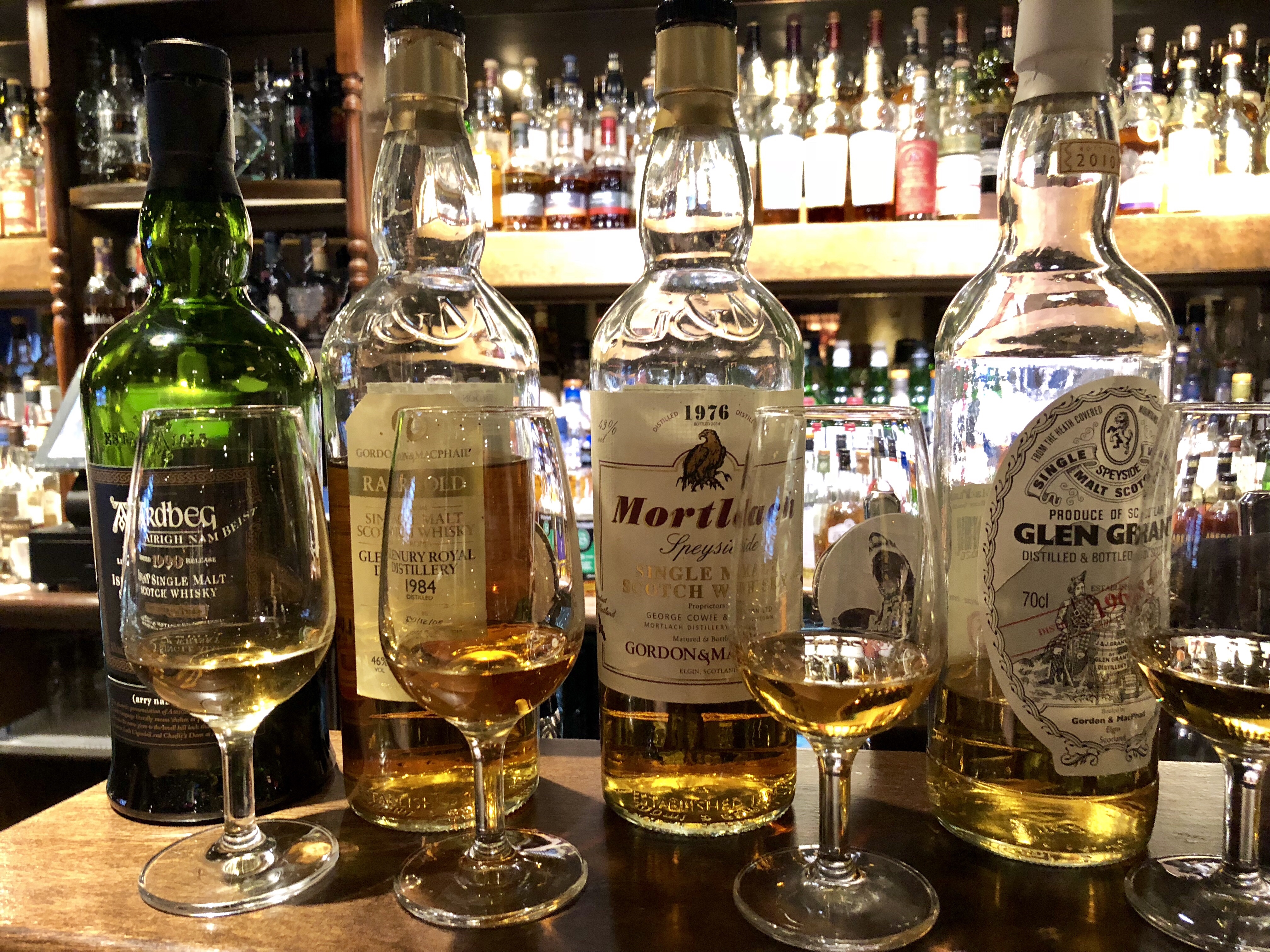
How to end such a day? By booking a very expensive whisky tasting at Usquabae, meaning water of life (Gaelic translation of Medieval Latin aqua vitae.) Sitting at the bar, I was regaled with tales of whisky and its historic impact on the Scottish economy and history. A couple of local boys chimed in, asking questions and giving their own opinions. It’s a very complex subject near and dear to the heart of Scots. I chose a tasting called “The Decades.” It included a whisky from the 60’s, 70’s, 80’s, and 90’s, which covers my entire life. The older whiskies were good, but as the bartender noted (he had tastes of all my drams to keep me company), they do get a bit “vegetal.”

One last observation about Scottish men. They look you right in the eye, steadily, when you’re talking to them. They don’t hang back, either, they are snuggled right into your personal American space. I love it.

Inverness, Jacobites and Culloden

Bidding farewell to Edinburgh, it was time to catch a train to Inverness, known as the gateway to the Highlands.

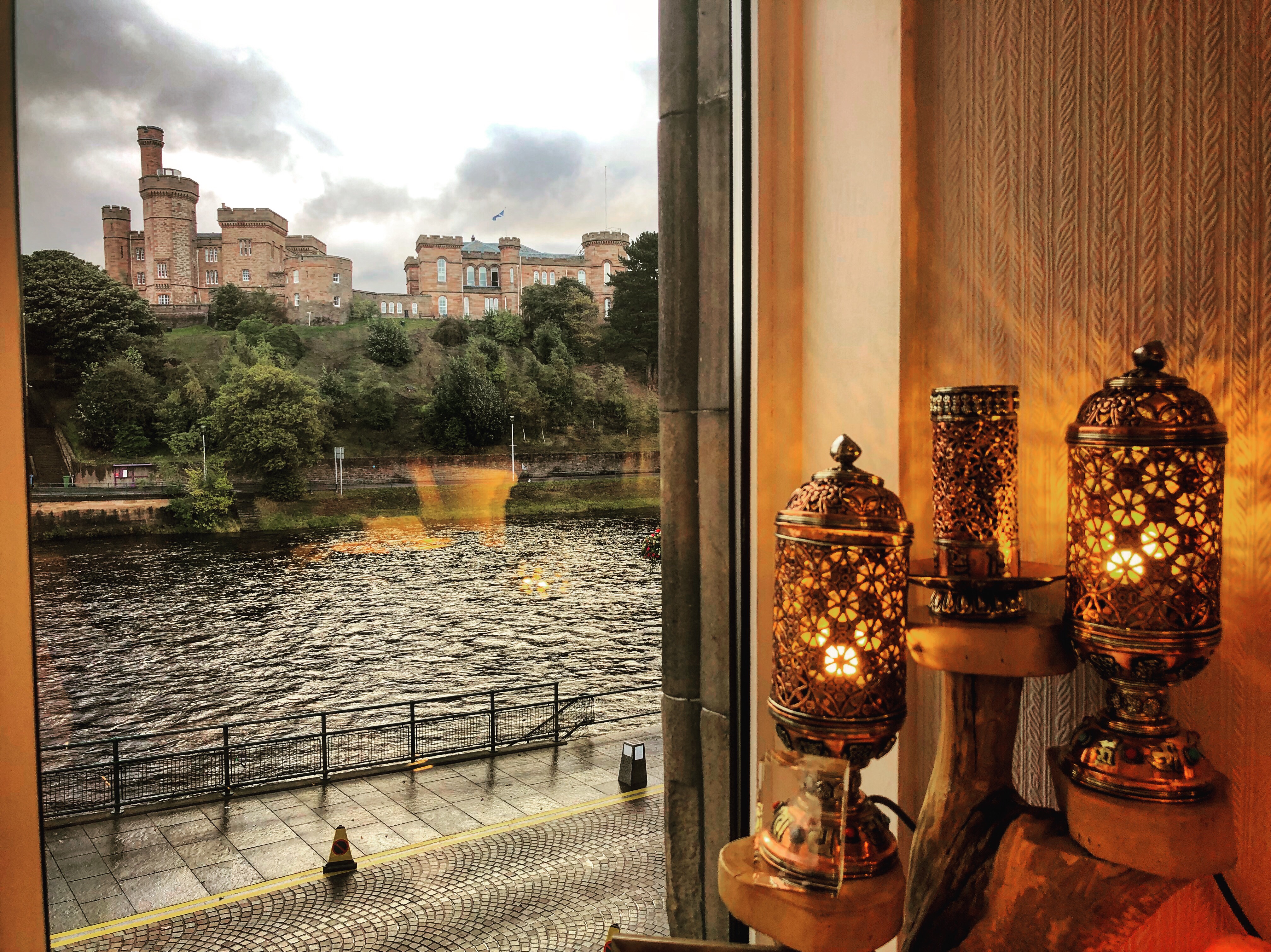
Arrived around supper-time and checked into the Castle View Hotel, run by the lovely Eleanor and her Jack Russell, Mia. The hotel is on the River Ness and pretty much everywhere was walkable. My room was on the top floor, with no lift. (PS same deal at the Inn on the Mile, just not a thing here).

The hotel boasted a lovely view of Inverness Castle, which houses the local courthouse and other offices. There are plans to build a new facility for the Courts so the castle can be opened to visitors. Fabulous rooftop views from my room, and gazing over the River Ness at the castle while enjoying a full and fabulous breakfast was perfection.

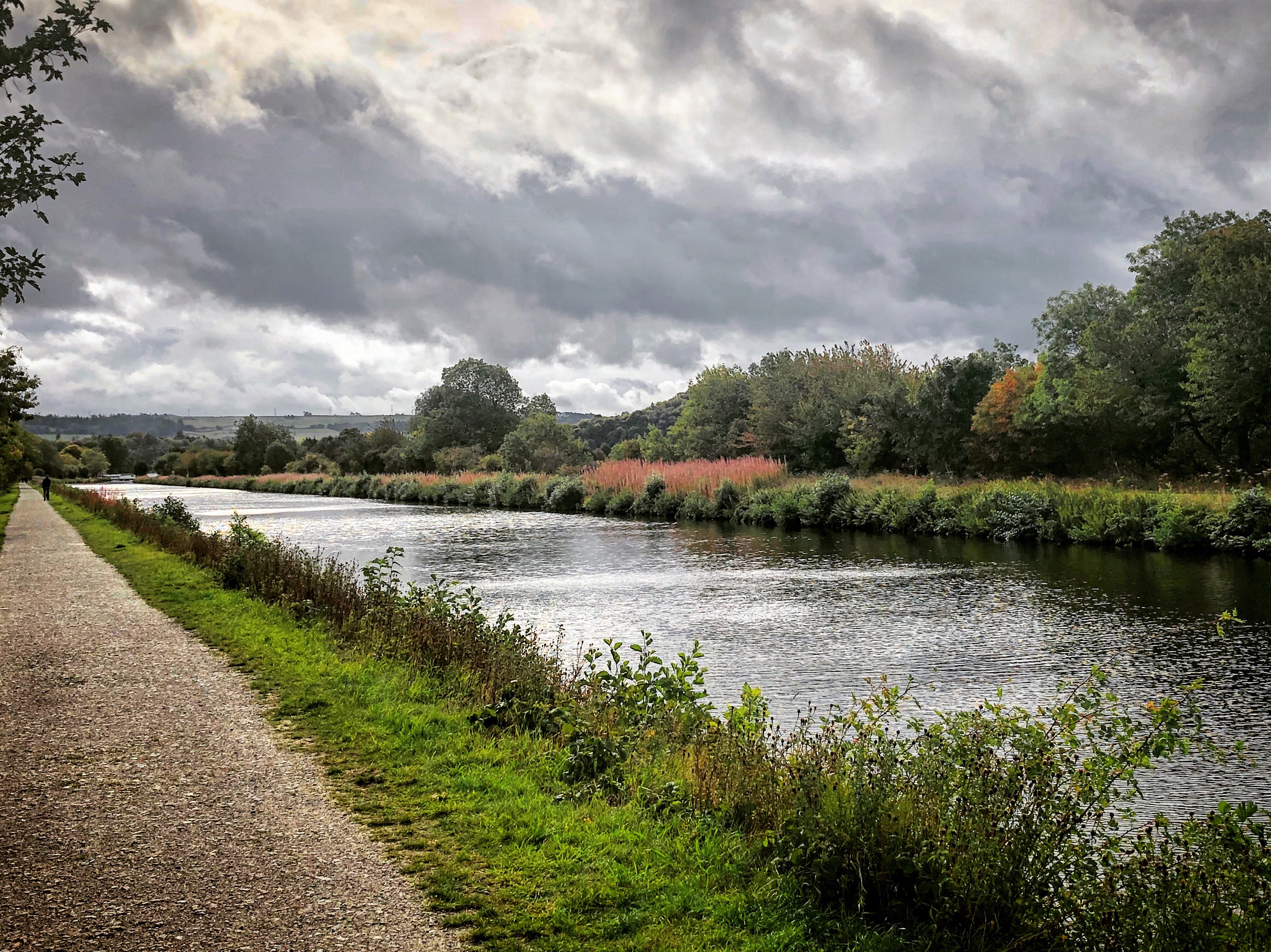
My first morning I walked about eight miles of the famed Great Glen Way, a lovely stroll along the River Ness to the park-like Ness Islands and then up the Caledonian Canal. The Way is a walking path that runs 78 miles, bisecting Scotland from Inverness to Ft. William. People in Scotland walk. And walk and walk. Trails go on for miles, and are so scenic you could die.

All the walking gives one time to ponder many things. For example, you know all the rules we have in the States, to protect us from one another’s presumed and inevitable bad behavior? In Europe, there are fewer rules, and amazingly, unregulated people actually rise to the occasion given the chance. For example, only a few dogs were on leash during my walk. Rather than being a catastrophe with dogs running wild and eating babies, every dog was on voice command. Dogs didn’t interact with other humans or with one another because they were looking at their owners. When they did have a bit of a run, the instant their owners whistled, they hit the brakes and ran back. Maybe Americans are boorish uncivilized barbarians and can’t be trusted to behave properly. We will never know.

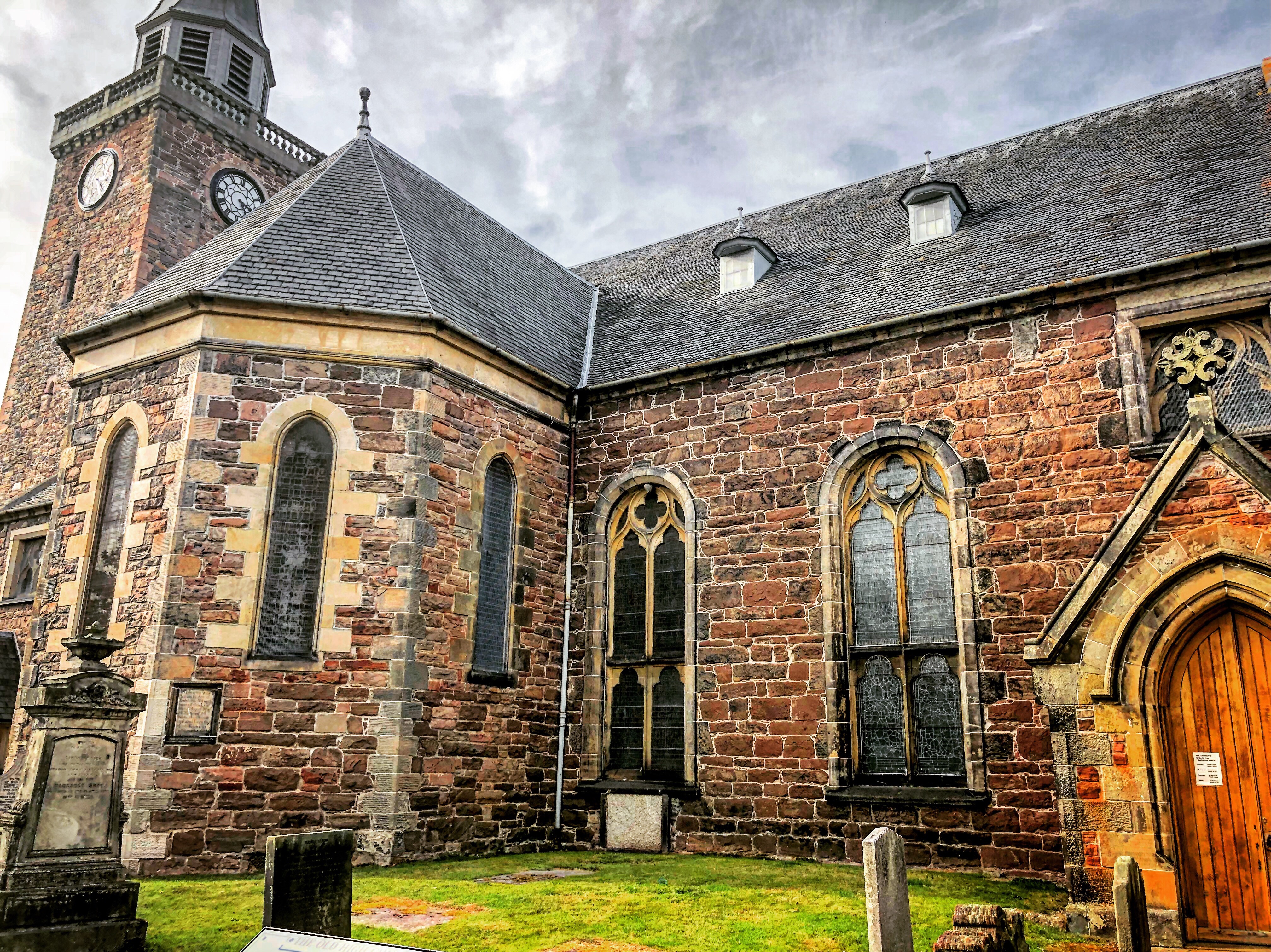
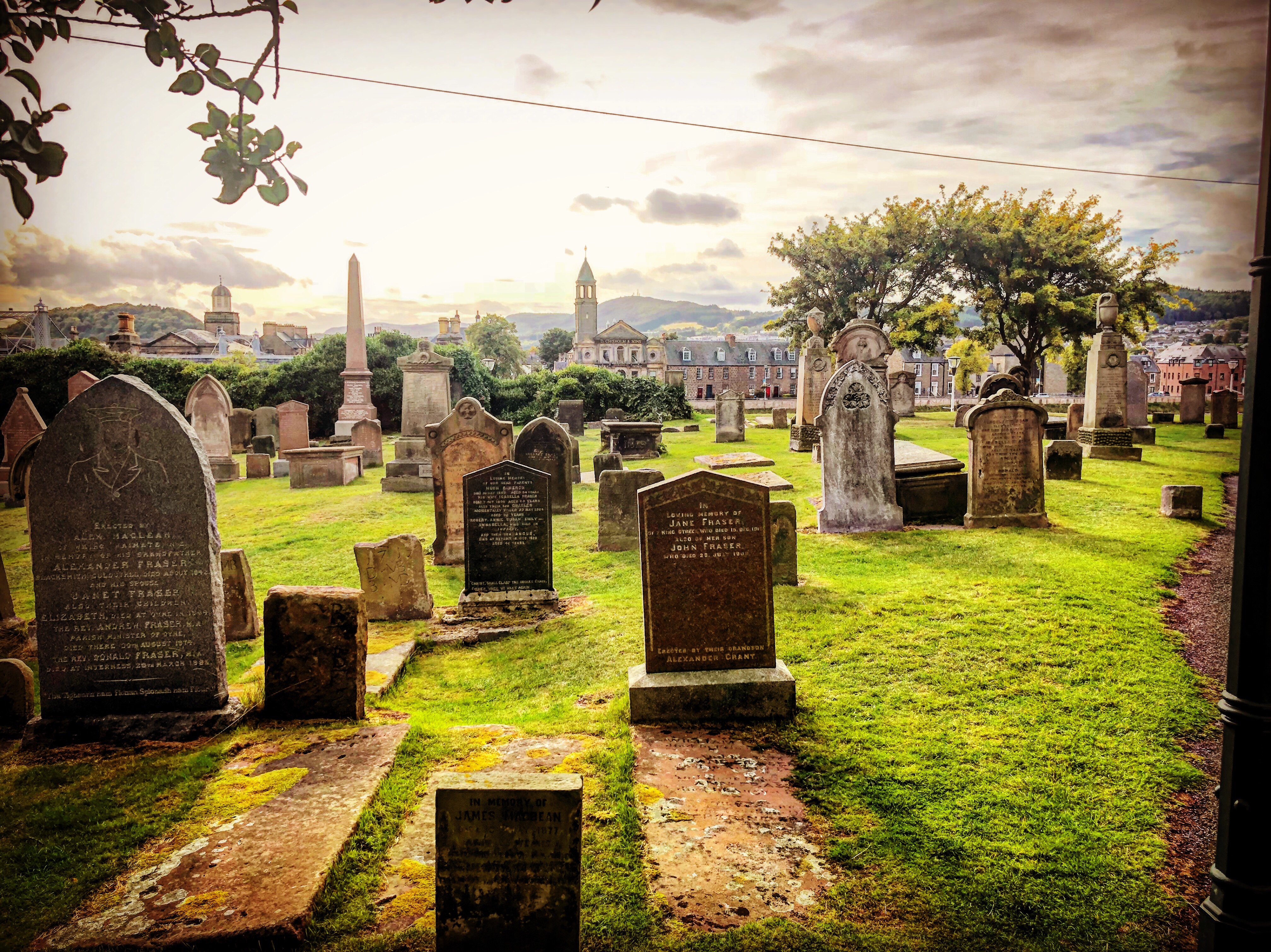
I then walked around Inverness, which unfortunately is pretty closed on Sunday because of God. This is too bad, mostly because there’s an amazing bookstore called Leakeys, located in a former church with floor to ceiling bookshelves and a wood stove. Next time. Visited the Old High Church, where Jacobites who survived the slaughter of Culloden were held before being executed in the churchyard. Because of God.

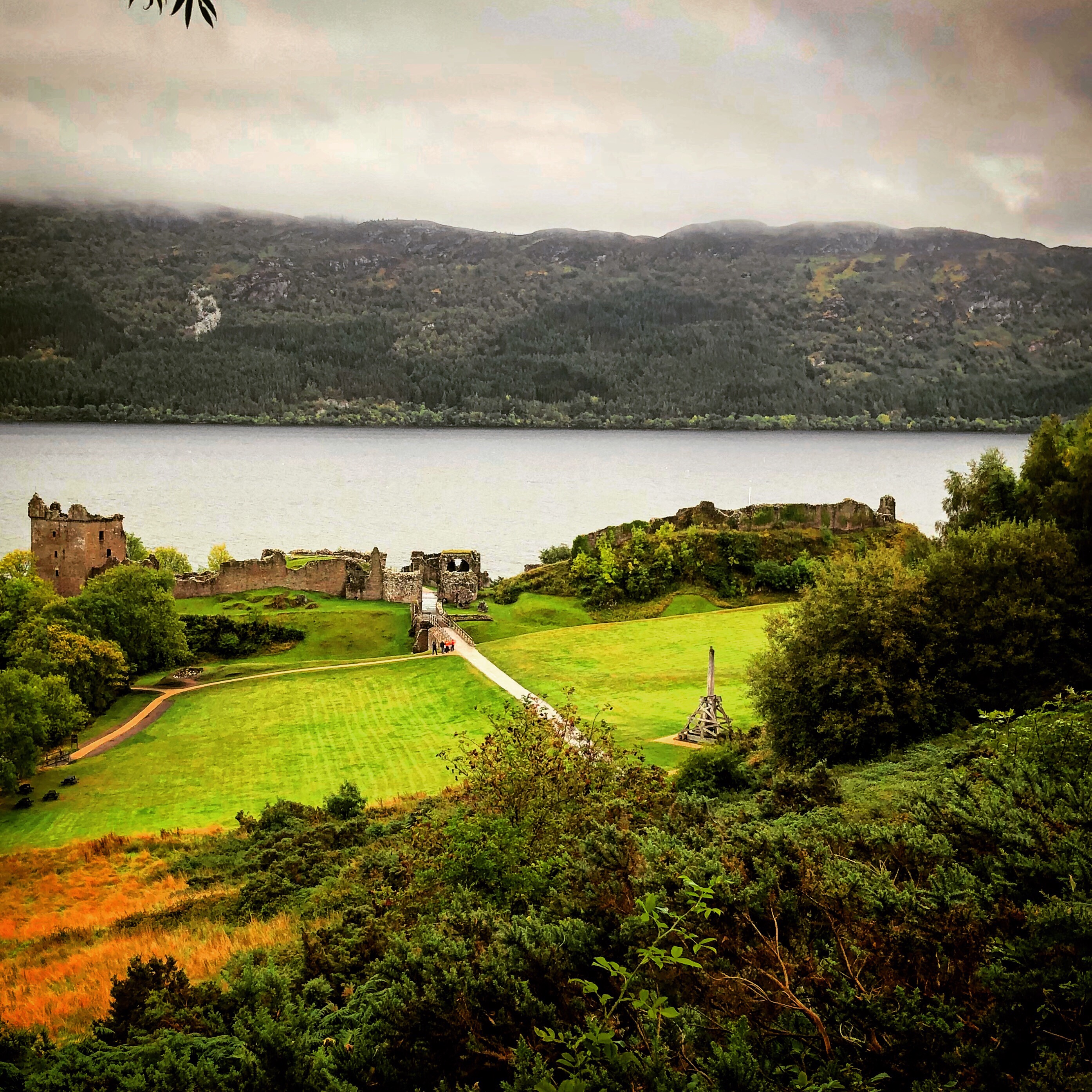
Next day I met George, a local guide, for a tour around the area. He arrived with coffee and croissants, so I liked him immediately. As we were emailing back and forth about logistics prior to my trip, I expressed a bit of ambivalence about visiting Loch Ness and Urquhart Castle because of all the tourists. George convinced me that it would be a shame if we didn’t at least do a drive-by before it opened. Even so, there were still a few tour buses, filled with loads of people who appeared to be checking sites off their lists, snapping photos and moving on, rather than really engaging, not that I’m being judgmental. The castle has 1,000 years of history under its belt. It’s the largest medieval castle in Scotland and the most important in the Highlands. Sadly, its owners blew it up in 1692 to keep the Jacobites from taking it. There’s a very cool old catapult on the grounds. Loch Ness is beautiful but so are many of the other 31,000-plus lochs in Scotland. No I’m serious. Scotland is a very watery land.

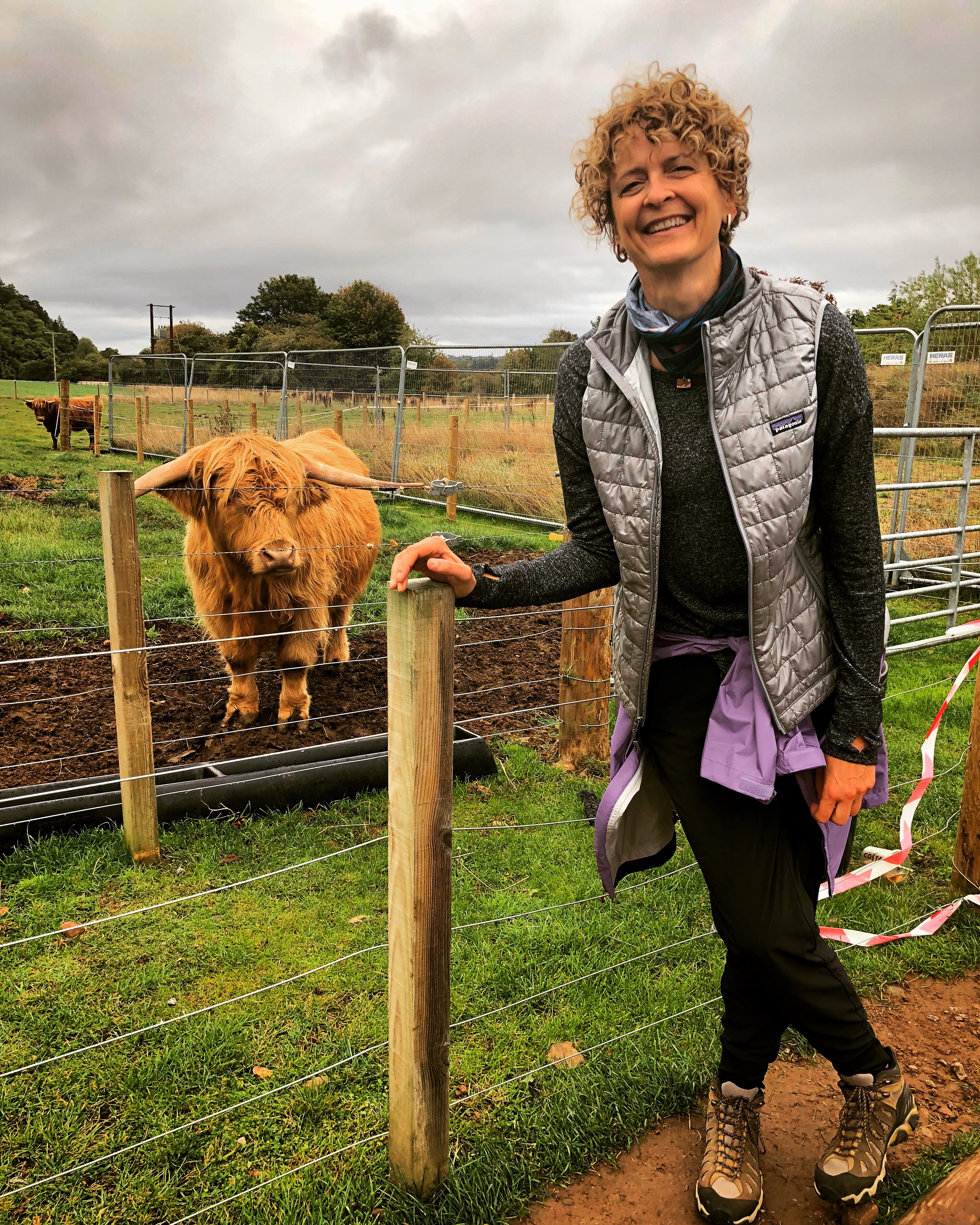
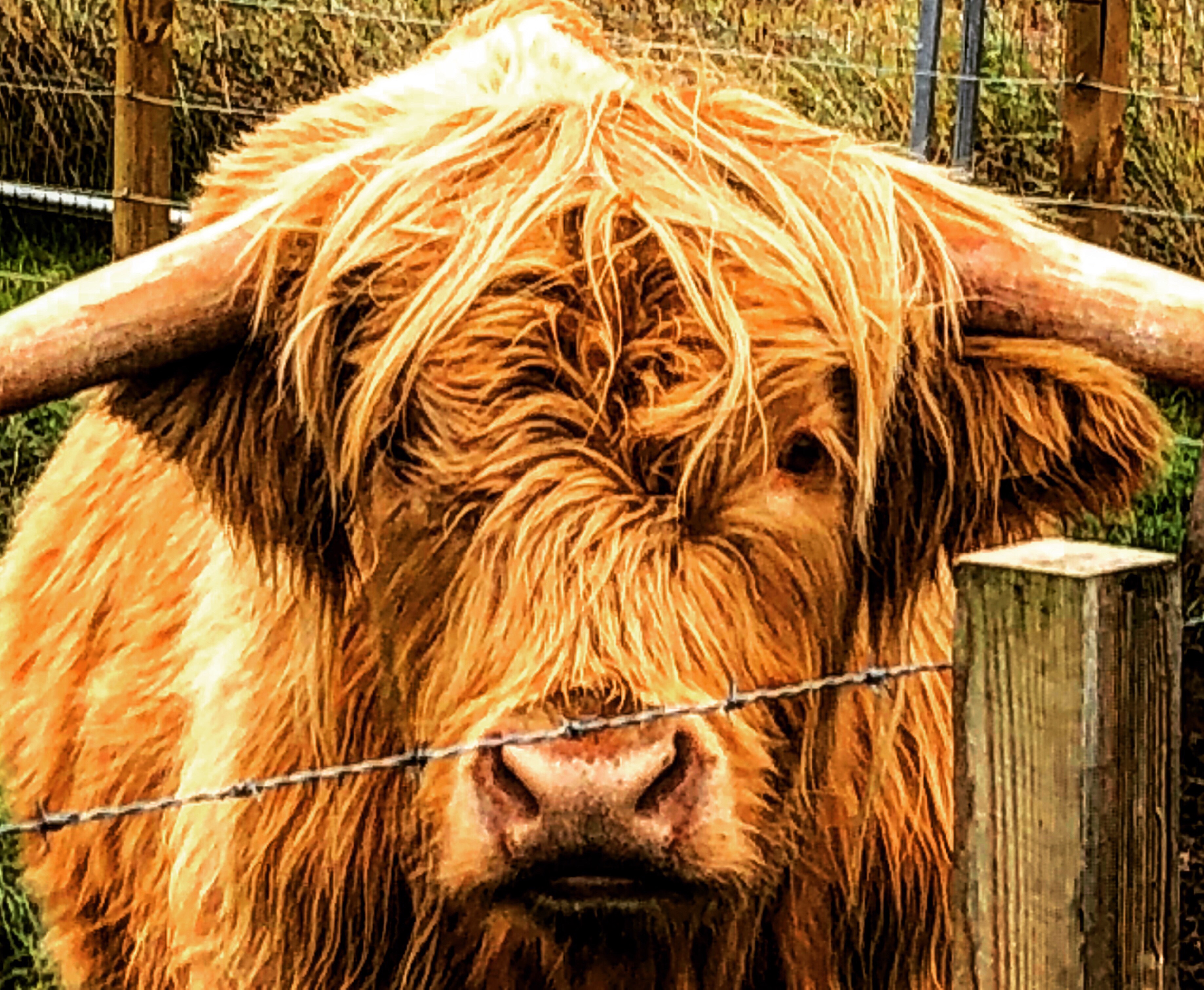
Like many visitors to Scotland, I was hoping to run across some Heilan coos, a.k.a Highland cattle. And they do not disappoint. Scotland’s animal population is full of extra-adorable creatures who seem to have been sprinkled with faerie dust. The hairy Coos originated in the Highlands and Outer Hebrides and were first mentioned in the 6th century AD. They are primarily bred for their meat, which is very lean, as they are largely insulated by their shaggy hair rather than by subcutaneous fat. Scotland does not appear to have industrialized its meat supply, so the coos have a pretty nice life until the end, grazing on the plentiful green grass and rounded bales of hay. Also posing for pictures.

Continuing my morning whisky tradition, we drove to Tomatin Distillery for a 10:00 a.m. tour and tasting. It was fascinating learning more about the making of Scotland’s national drink. Very complicated, time-consuming, lengthy and totally worth it. By law, Scottish whiskey must be made from water from Scotland and aged in oak barrels for at least three years. Of course, most whisky is aged much longer. There are lots of superstitions, for example, when the copper pot stills need to be replaced, if the old one is dented, the replacement must have a dent in exactly the same spot.

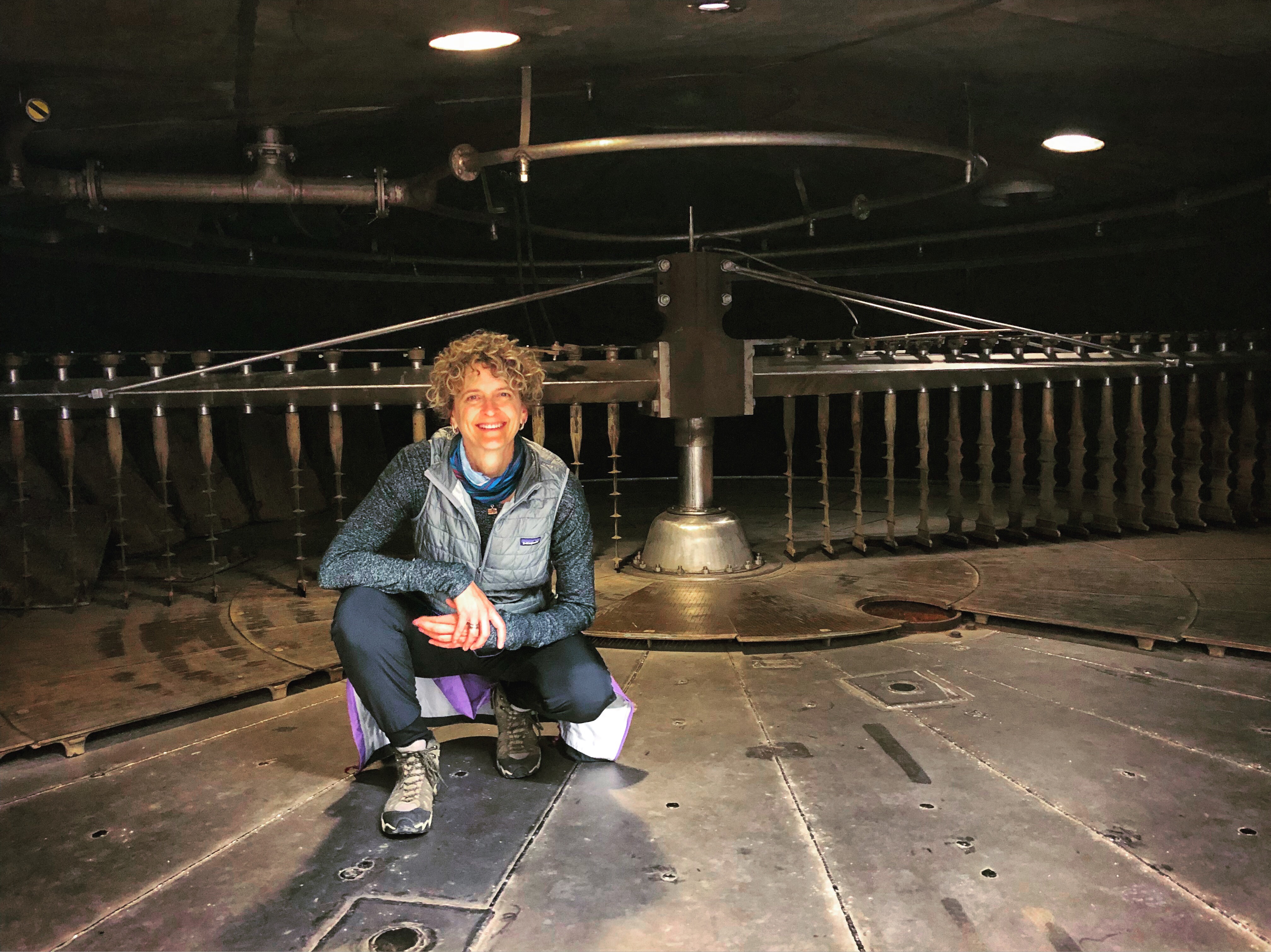
Tomatin has an old mash tun that you can climb inside. I was touring with a fellow from Germany who was very stoic about life and had no interest in getting his picture taken squatting inside a large tub. So what the heck is it? Ground down malted barley is fed into the mash tun with heated water. The temperature is high enough to dissolve many of the sugars in the grist but low enough to allow the enzymes to continue doing their thing. The liquid is collected and taken away to become whisky. The solid left over residue is given to local farmers for feed.

Since we did a fair bit of driving on this tour, a word about road signs. Of course, they are better than ours. They are gentler with more humor. Some examples: Instead of “travel time,” it’s “journey time.” Instead of detour, it’s diversion, which sounds way less annoying. Instead of “yield,” it’s “give way.” Instead of passing lane, it’s overtaking lane. We drove over several “weak bridges,” which means simply that it’s a one-way bridge. So drivers have to give way. But my favorite is this one.

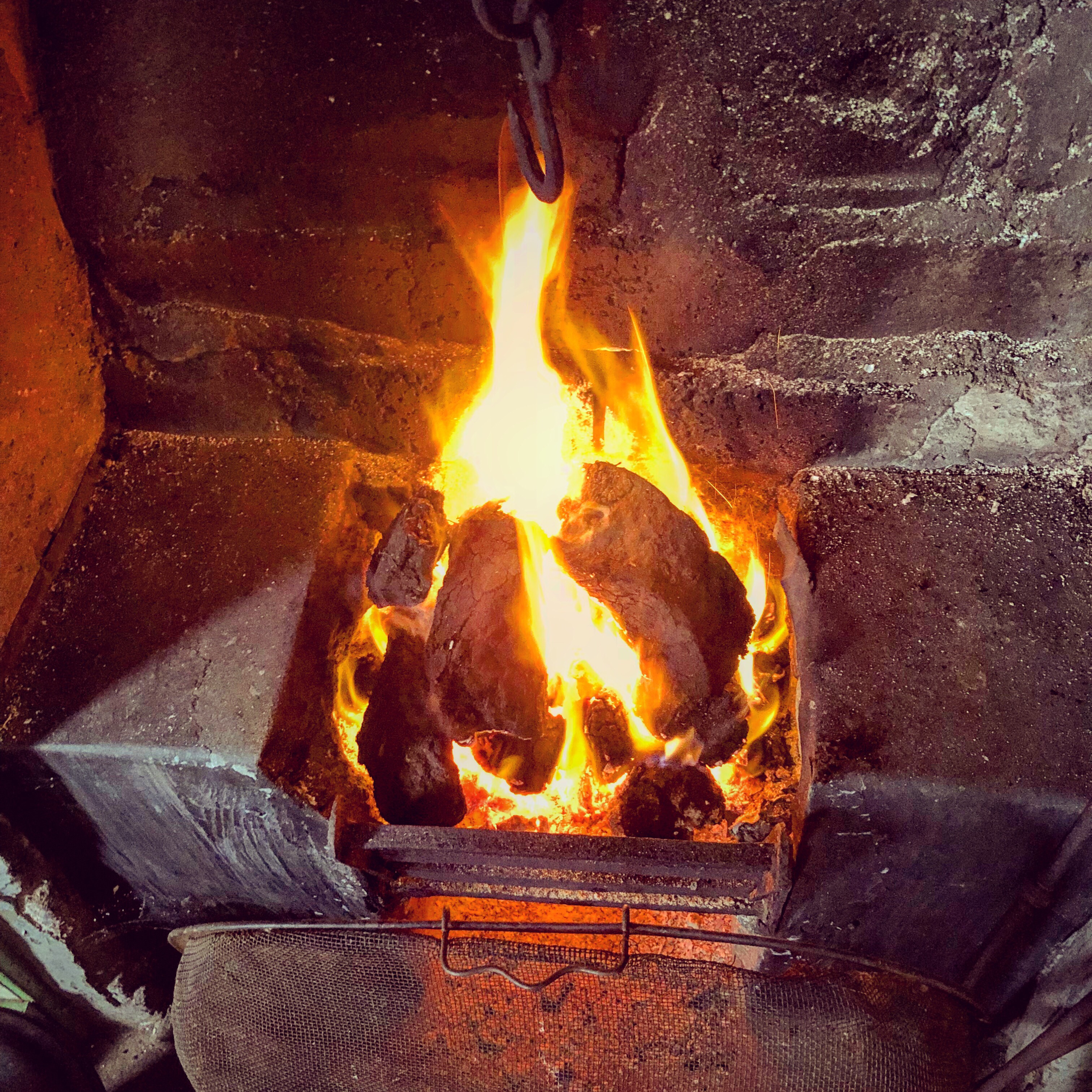
Our next stop was the Highland Folk Museum, Britain’s first open air museum. The museum gives a flavor of how Highland people lived and worked from the 1700’s through the 1950’s. Over 30 historical buildings are on the property, all furnished with items appropriate to their time period. Some have been built from scratch and some have been moved from other sites. It was fascinating looking inside these dwellings from throughout Scottish history, but my favorite was seeing an actual peat fire. It smells lovely, and it generates heat like you wouldn’t believe.

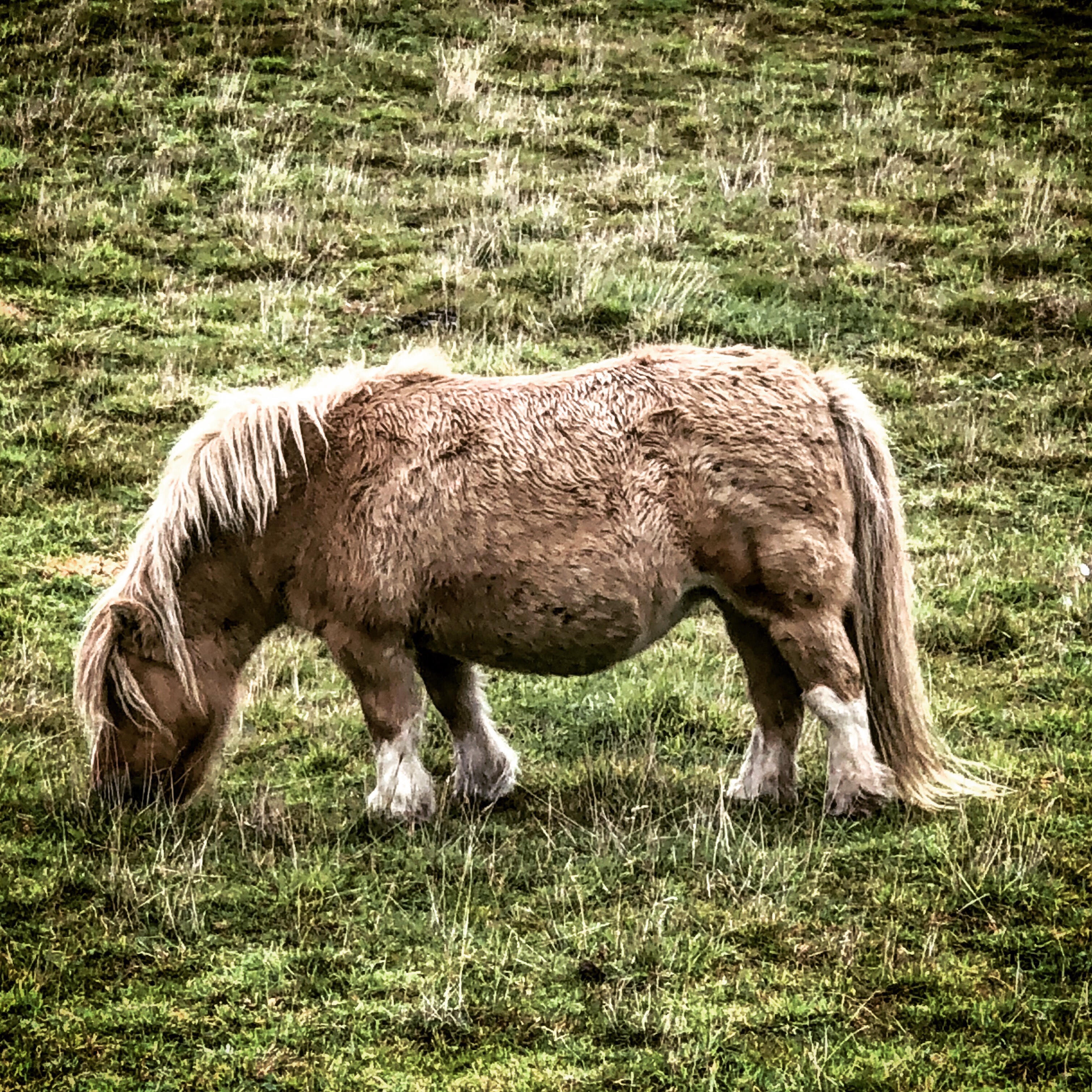
Also, there were Shetland ponies.

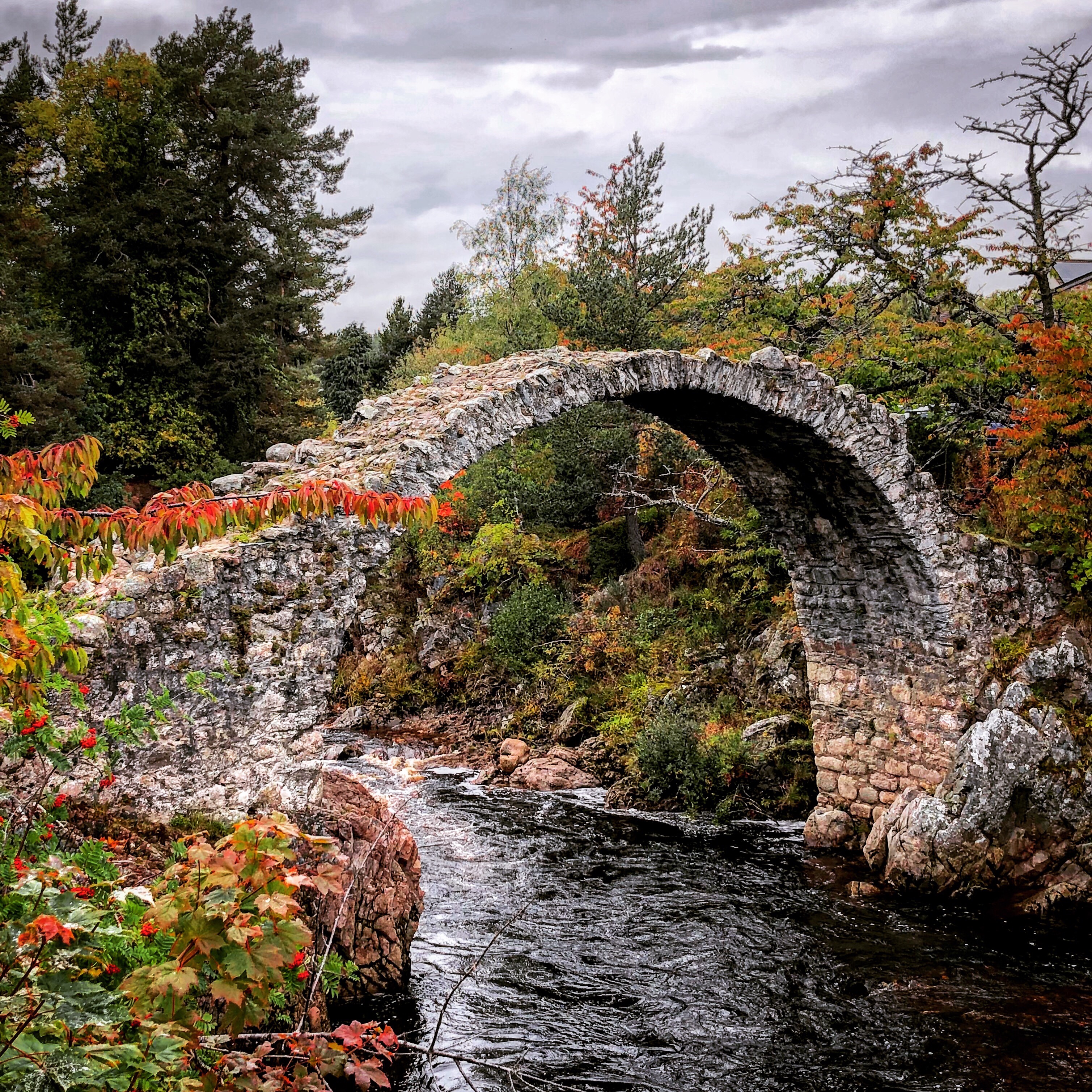
We next drove by Coffin Bridge, the oldest surviving packhorse bridge in the Highlands. It was built in 1717. Before the 18th century it was impossible to carry the deceased from the town of Carrbridge to the local cemetery when the river was high. So this bridge was constructed by one of the earliest Scottish members of Parliament, Alexander Grant of Grant.

George and I enjoyed a yummy lunch in a semi-fancy pub and now for another observation about rules and dogs. In Scotland, people can bring their dogs into restaurants. Not just little dogs. During lunch we were surrounded by a yellow lab, a sheep dog and a standard schnauzer. All perfectly well-behaved. Amazingly, I did not feel my health was in danger.

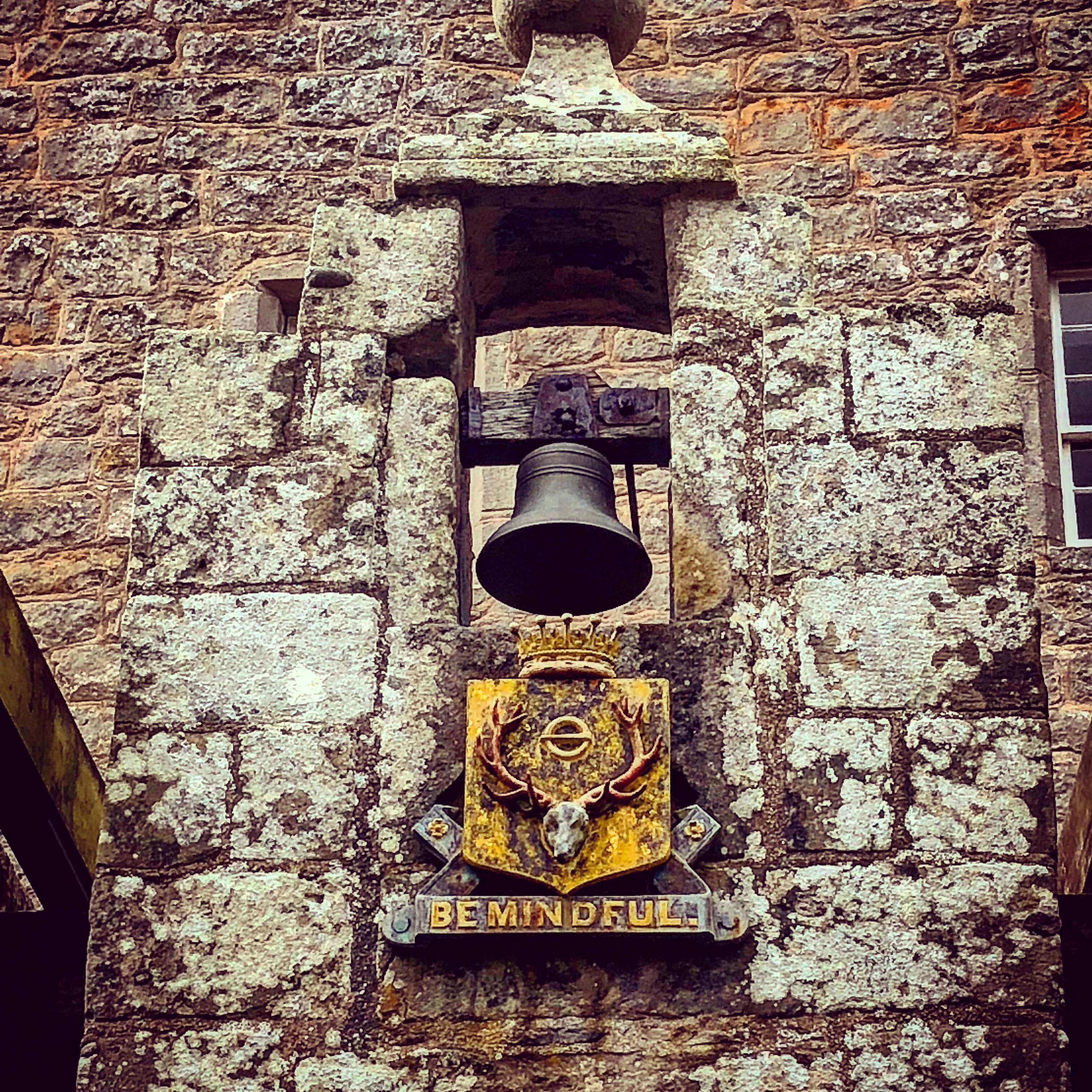
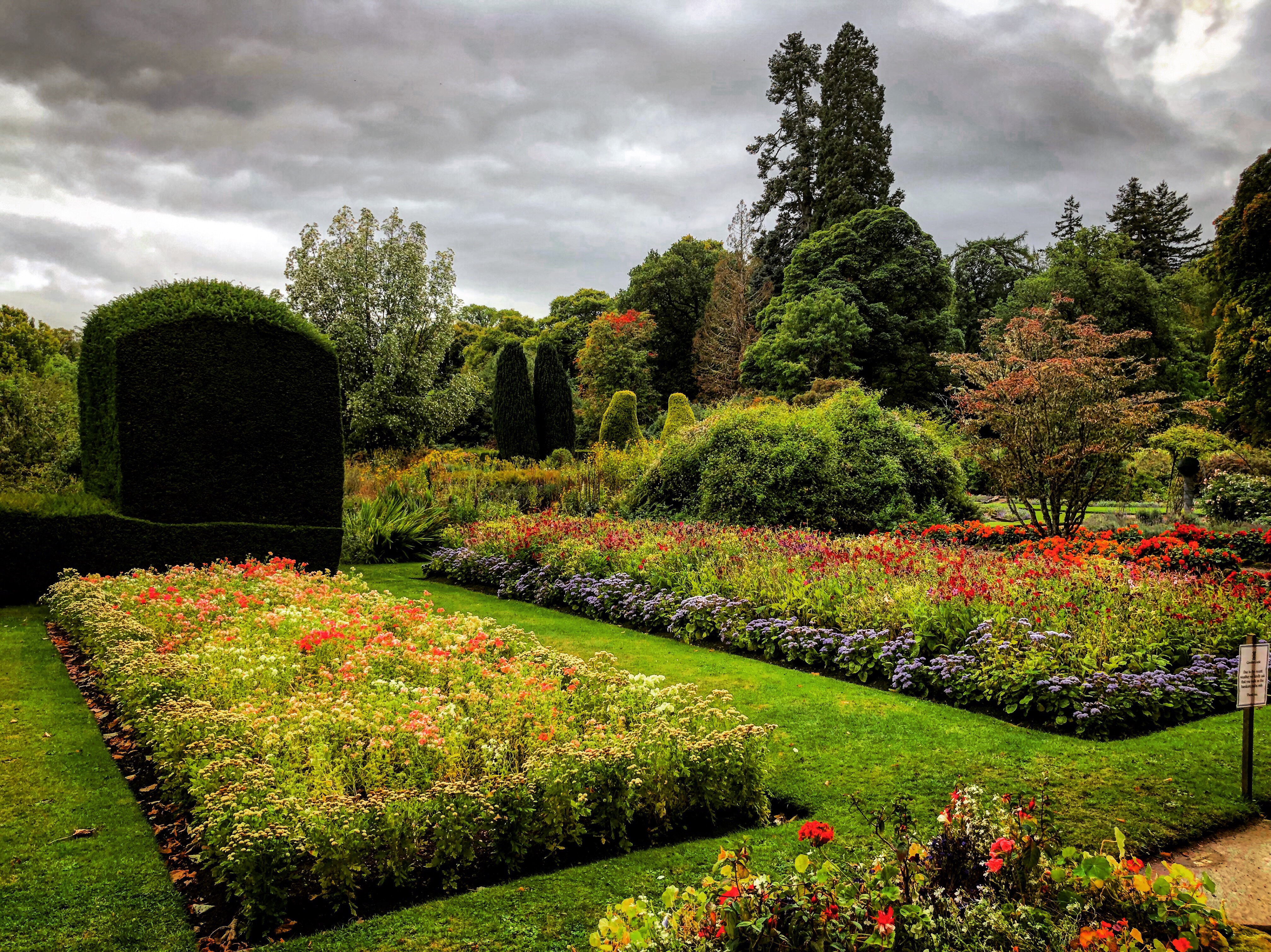
Next we were off to Cawdor Castle, currently owned by the Dowager Countess Cawdor, a woman in her 70’s who retires to another home on her estate during the summer months so she can charge tourists ten pounds each to enter. It’s fun to see a castle that is not in ruins and has never been attacked by Jacobites or redcoats, just a beautiful lived-in place with amazing gardens. Its other claim to fame is that Shakespeare refers to Macbeth as being the Thane of Cawdor in the Scottish play. However, the castle was built many years after the life of 11th century King Macbeth, so never mind. George told me he’s heard staff complain about the Dowager Countess and how difficult she is to work for, but I’m inclined to give her the benefit of the doubt because she installed a “be mindful” sign over the entryway.

Finally, we headed to Culloden Moor to visit the memorial to those who perished in the devastating battle that raged there. The Jacobite army was devastated, and their defeat marked the beginning of the end of Highland culture in the 1700’s. The Jacobite Forces (supporters of installing Charles Edward Stuart, aka Bonnie Prince Charlie, to the thrones of Scotland and England) were handily defeated by the Hanoverian English in under an hour. This was the last of five Jacobite rebellions that occurred in 17th and 18th century Scotland. It was a bloody battle. The Scots lost between 1,500 and 2,000 men and the English only lost 50. This after the Bonnie Prince’s forces had swept through Scotland and almost made it to London. At this point, though, a decision was made to retreat back to Inverness, even though Charles II had his bags packed and was ready to head into exile. One of those many moments in history easy to second-guess.

Over the years after the battle the Brits decided to deal with the Highlanders once and for all. The infamous Highland clearances were implemented, where Scottish crofters were cleared from their lands to make room for more lucrative sheep farming. Laws were passed preventing all Scots from owning weapons, wearing the plaid of their clans, speaking Gaelic, effectively wiping out the Highland culture. Many, many of them emigrated to the United States. It was essentially ethnic cleansing – George told me that there were discussions in Parliament about requiring the mandatory sterilization of Highland women.

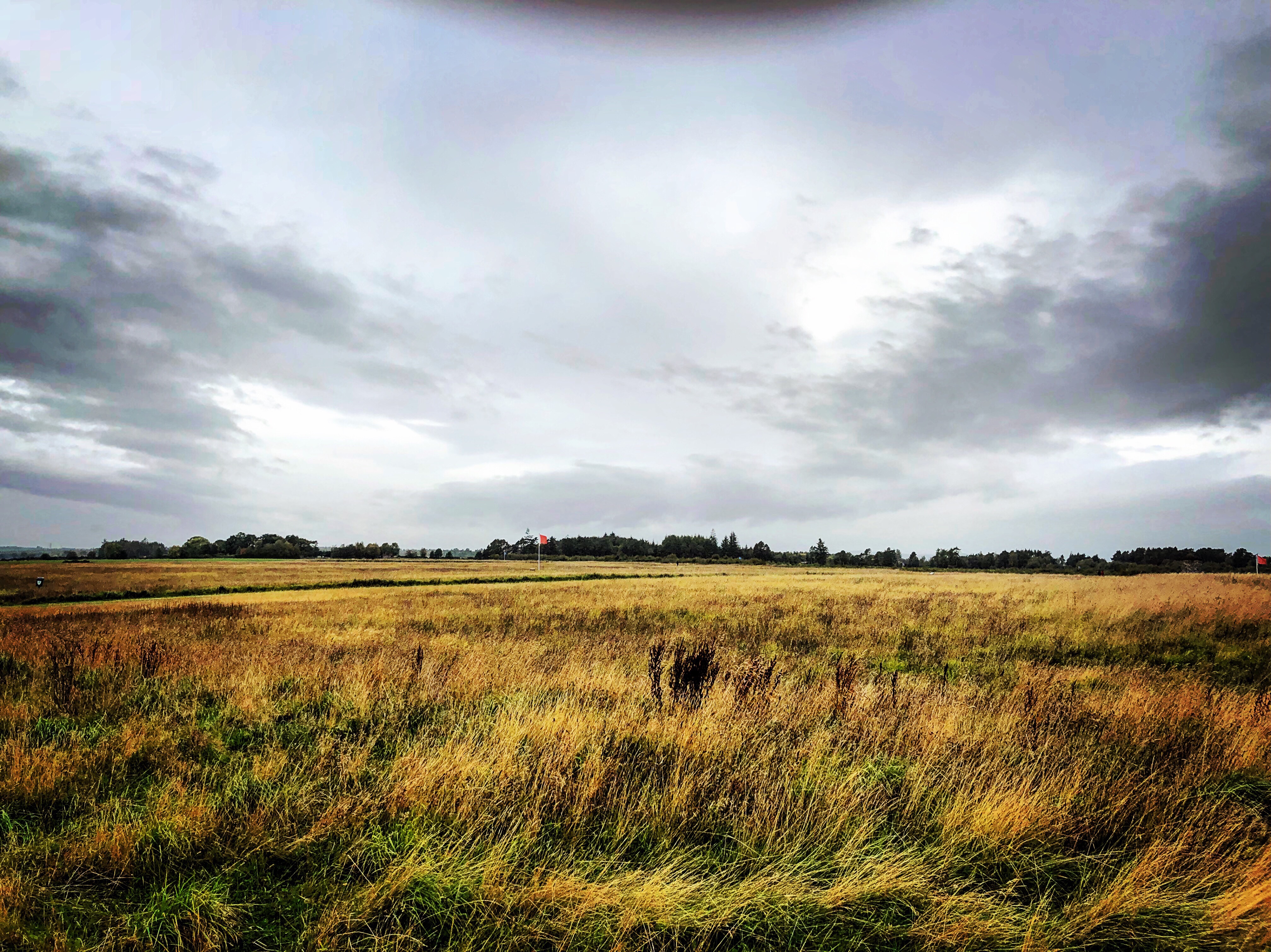
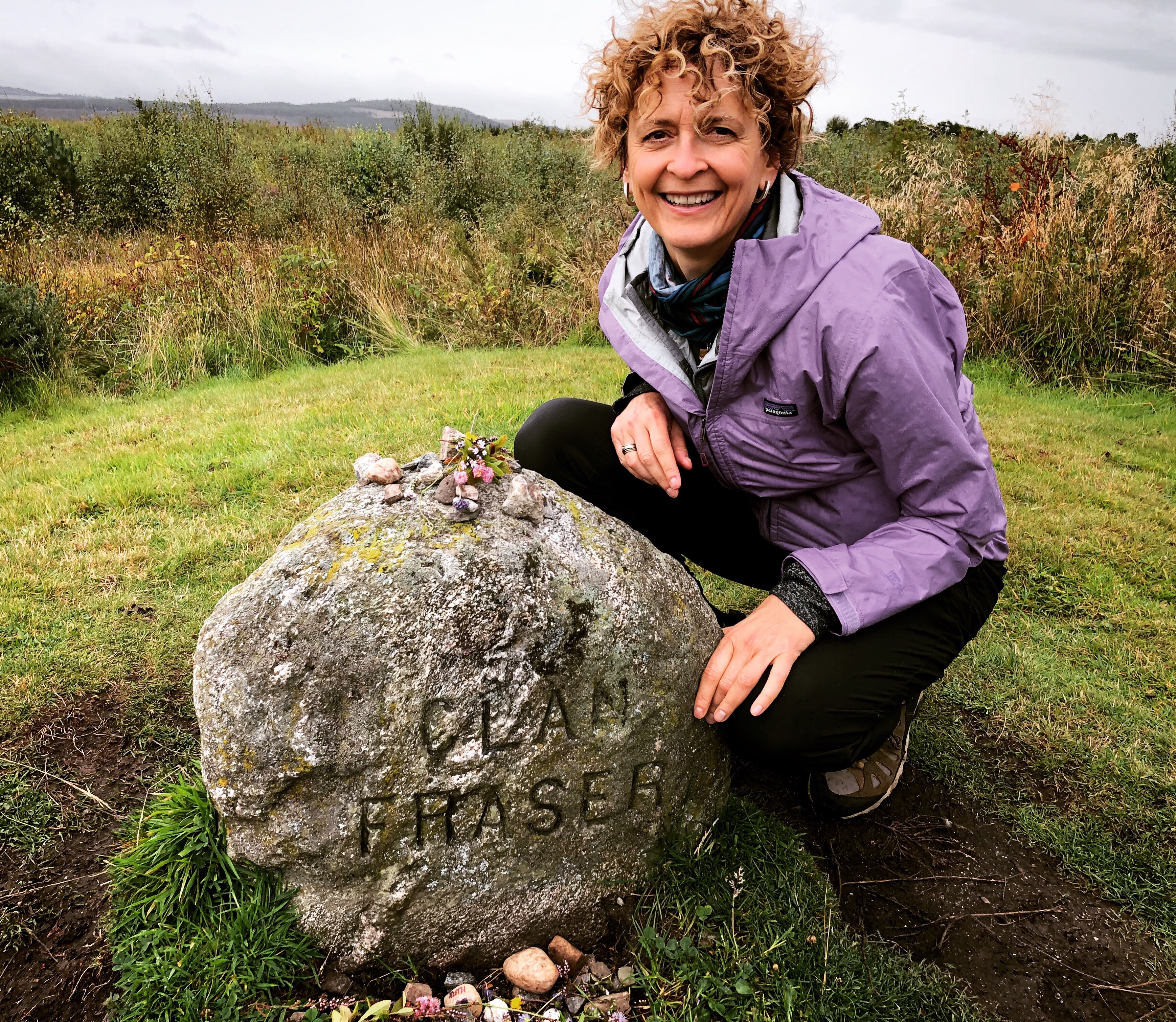
It is a somber place. Victorians installed a memorial, along with stones representing all the clans which were set about over the spot of mass graves. Thanks to the massive appeal of Outlander, the earth around the Fraser clan’s marker is denuded of grass, with little stones and flowers strewn over it. You’ll see my own disrespectful and inappropriate photograph below. The battlefield is very simple – a line of blue flags marking the spot where the Scots lined up, and a line of red flags marking the position of the British. It’s worth noting that the Bonnie Prince and the Duke of Cumberland, the commander of the British forces, were both just 25 years old. These days they would still be in college or back living with their parents while they found themselves. Hard to imagine.

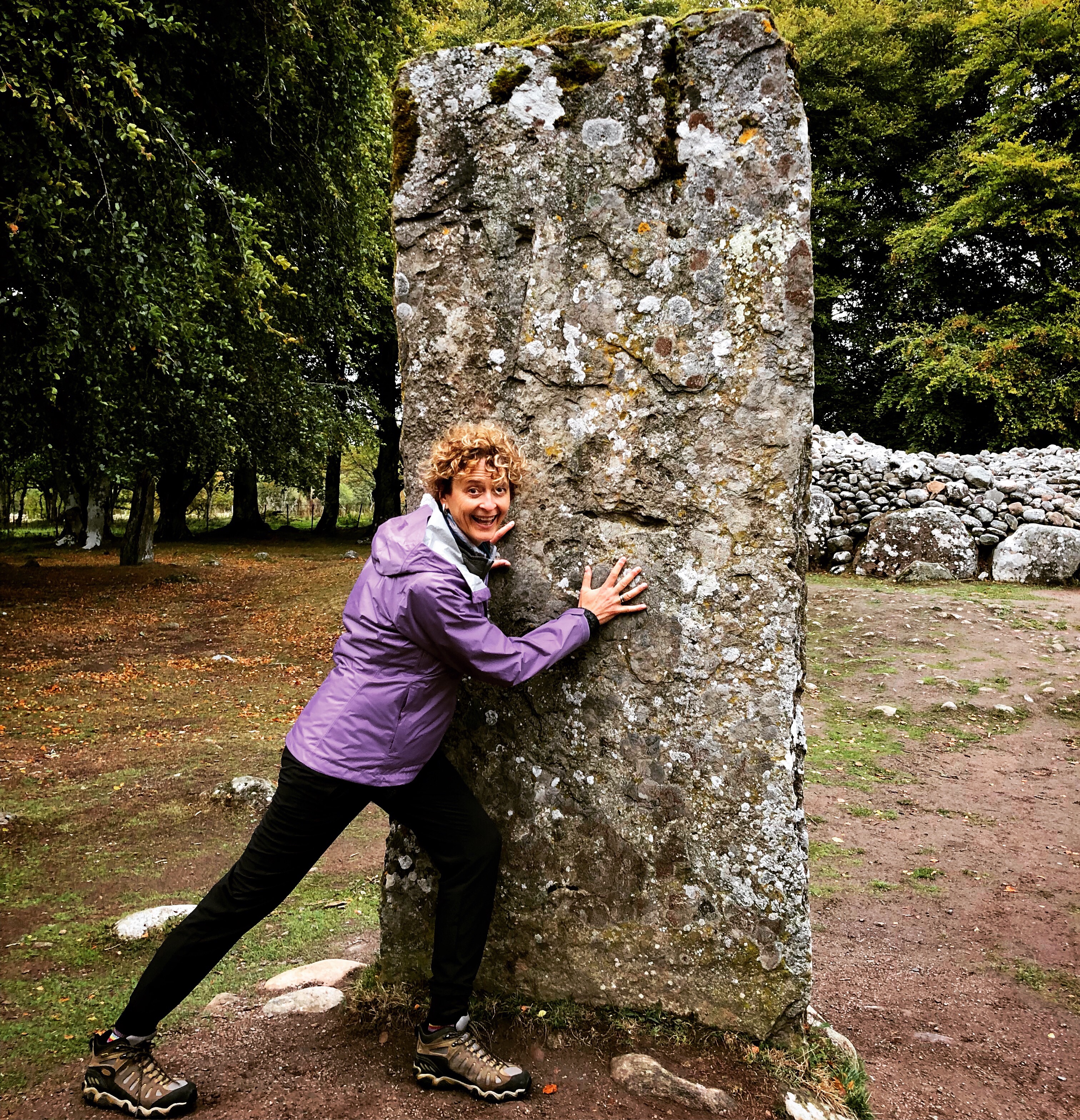
We ended the day at the 4,000 year old Clava Cairns just down the road. A clava cairn is a type of Bronze Age circular chamber made of stones. They are typically surrounded by standing stones, and their history is very murky. This area was the inspiration for Diana Galbadon’s books. So again, me with the dumb Outlander photo. (PS the stones don’t work at all). George said that local witches, wiccans and druids still gather here for dances and mystical ceremonies. A couple of local Scottish women talked to us for a while, and they were dead serious about the magic of the place. The veil between Druid magic and faeries of old and the 21st century is very thin in Scotland.

George dropped me at my hotel after 7:00 and I had a quick dinner and stopped in a local pub for literally 5 minutes to check out the nightly traditional Scottish folk music. It was pouring down rain and honestly George had slightly exhausted me with all the facts and history, as much as I loved it.

Next day, I was onto my Backroads hiking tour of the Highlands!