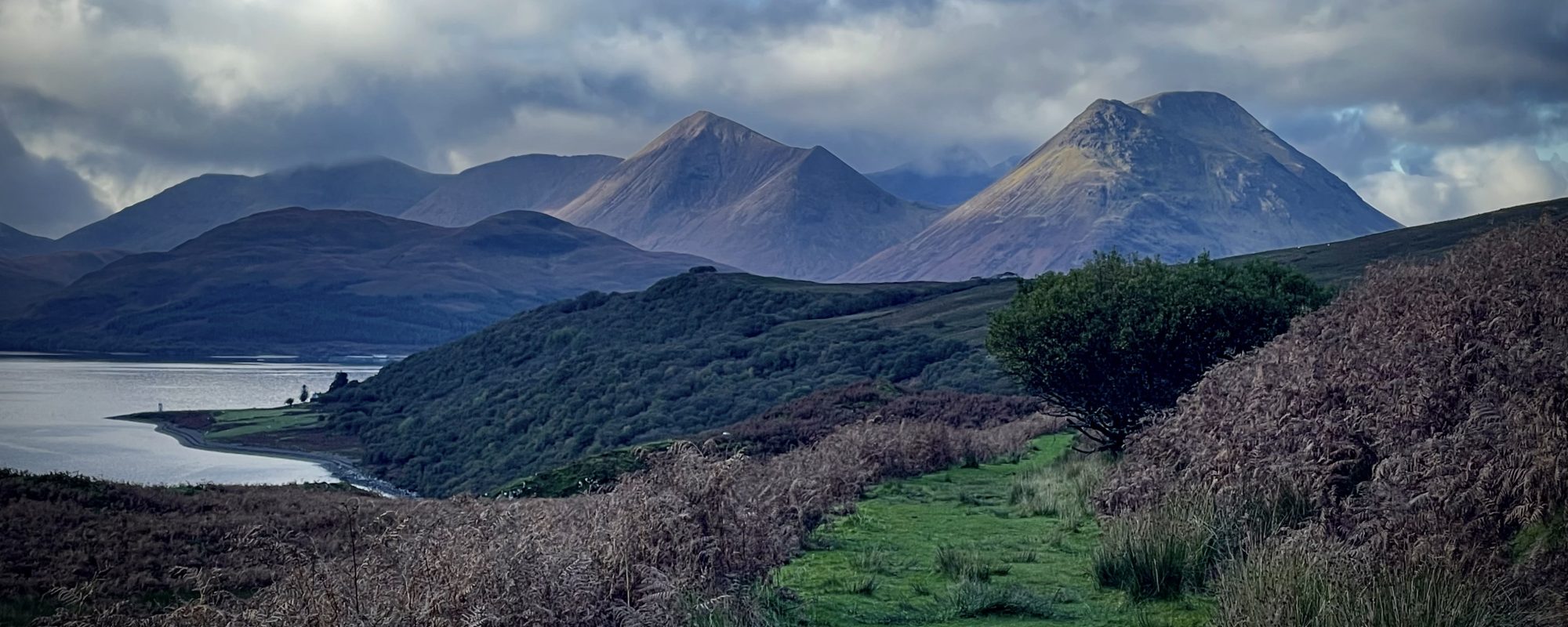
I’m about 80% English/Scotch/Irish. If I were a paint color, I’d be Bland White. Long before I knew exactly how white (thank you Ancestry.com), I’ve been interested in British history. Used to be able to recite all the Kings and Queens of England. So Scotland was firmly on my travel list, but I admit it was the cinematography in Outlander, shot in Scotland, that put me over the edge. And maybe the kilts.
So what better way to spend my first full day in Scotland than booking an Outlander Tour like a geeky tourist? The tour included historic castles, forts and villages used as film locations for Outlander, Monty Python & the Holy Grail, and Game of Thrones. And then, as a topper, finishing the day with a whisky tasting at a bar named Edinburgh’s 2018 Whisky Bar of the Year.
I booked the journey through Rabbie’s, a company specializing in smaller tours using wee buses. I expected to be joined by a bunch of middle-aged women who talked about Jamie Fraser (a.k.a.the main character in the show who is widely believed to be the perfect man) the entire time. Instead, several couples, including one on their honeymoon, and one big family, the McGowans, all piled into the bus together. They were from Florida, Philly, South Carolina, France, England and Australia. I sat behind the guide and was joined by the head of the McGowan clan. The McGowan himself. Who was very quiet (his wife made up for it from the back of the bus) and went to great pains to avoid any physical contact, which I appreciated.
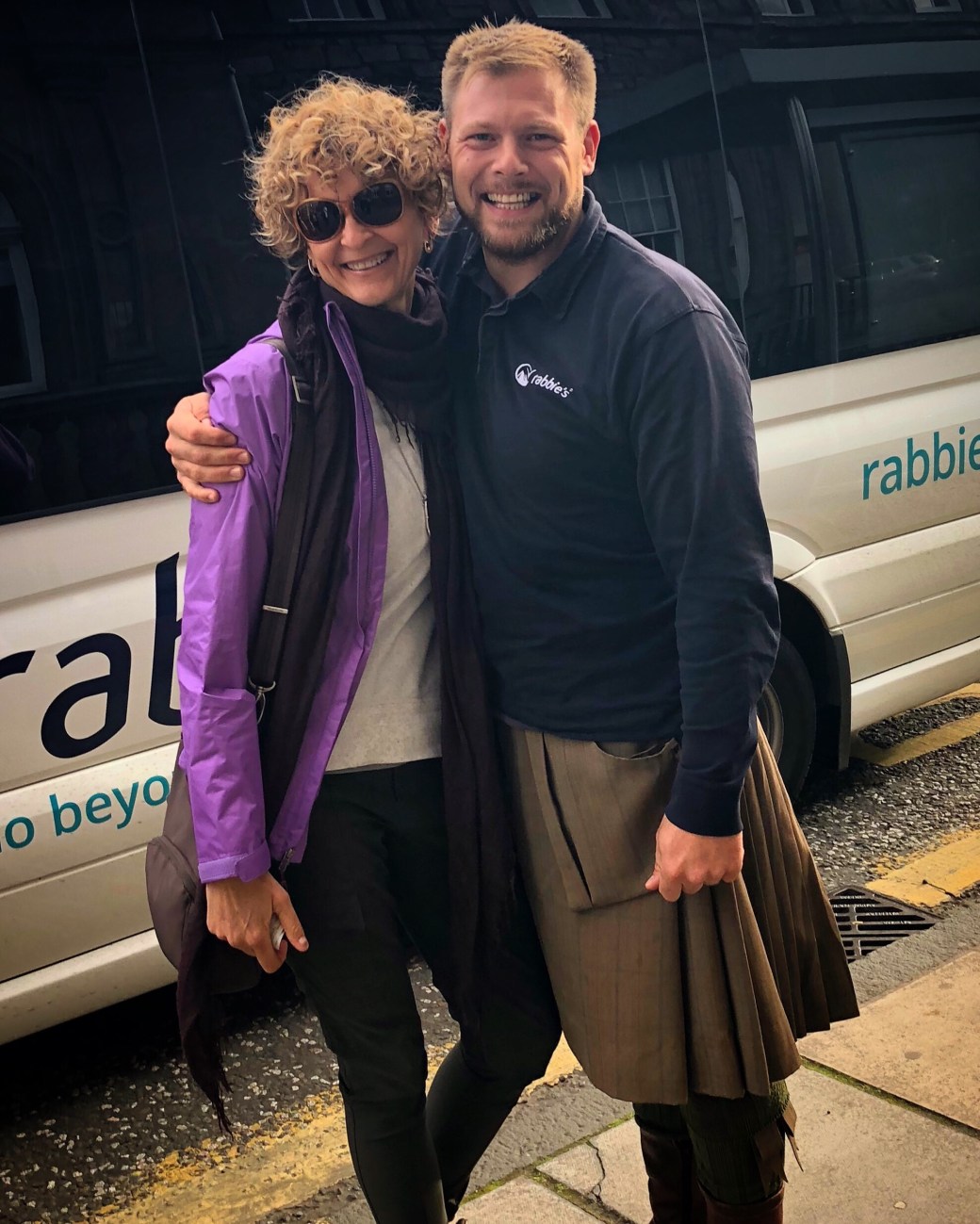
Of course, I instantly fell in love with our Scottish tour guide, Nicky. He just happened to be tall with reddish hair, very articulate, thoughtful and hilarious. Wearing a kilt that wasn’t a costume.
The first place we visited was Three Bridges, a town with, you guessed it, including a bridge that was built in the 17th Century. A marvel of engineering. The place has no connection with Outlander, just a cool spot.
Jamie Nicky took my photo in front of the old bridge.

Then we journeyed to the most “all the feels” of Outlander settings, Lallybroch, the Fraser ancestral home. Otherwise known as Midhope Castle, still standing but entirely in ruins on the inside. The steps up to the door were built by the film crew. A beautiful and evocative place marooned out of time on a working farm. Surprisingly, there is a picturesque cottage right next to the Midhope ruins. Not next door, but right there on the edge of the lawn. Architectural Digest – Medieval beautiful. The owners were the luckiest people alive to own this gorgeous cottage in such a setting. Ach, no more, thanks to the fickle finger of fate. Their idyllic spot has been besmirched by Outlander and the tourists who followed in its wake.

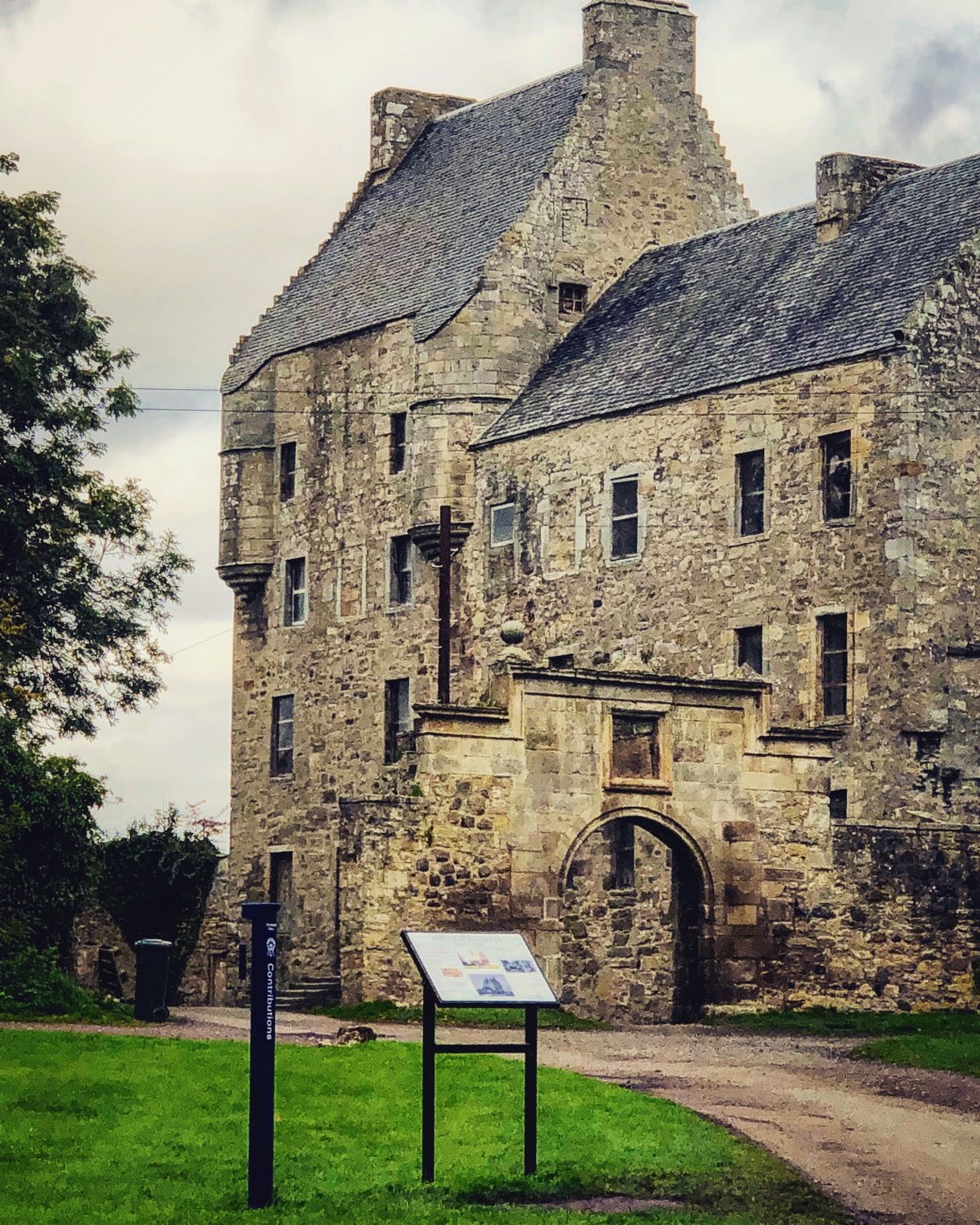
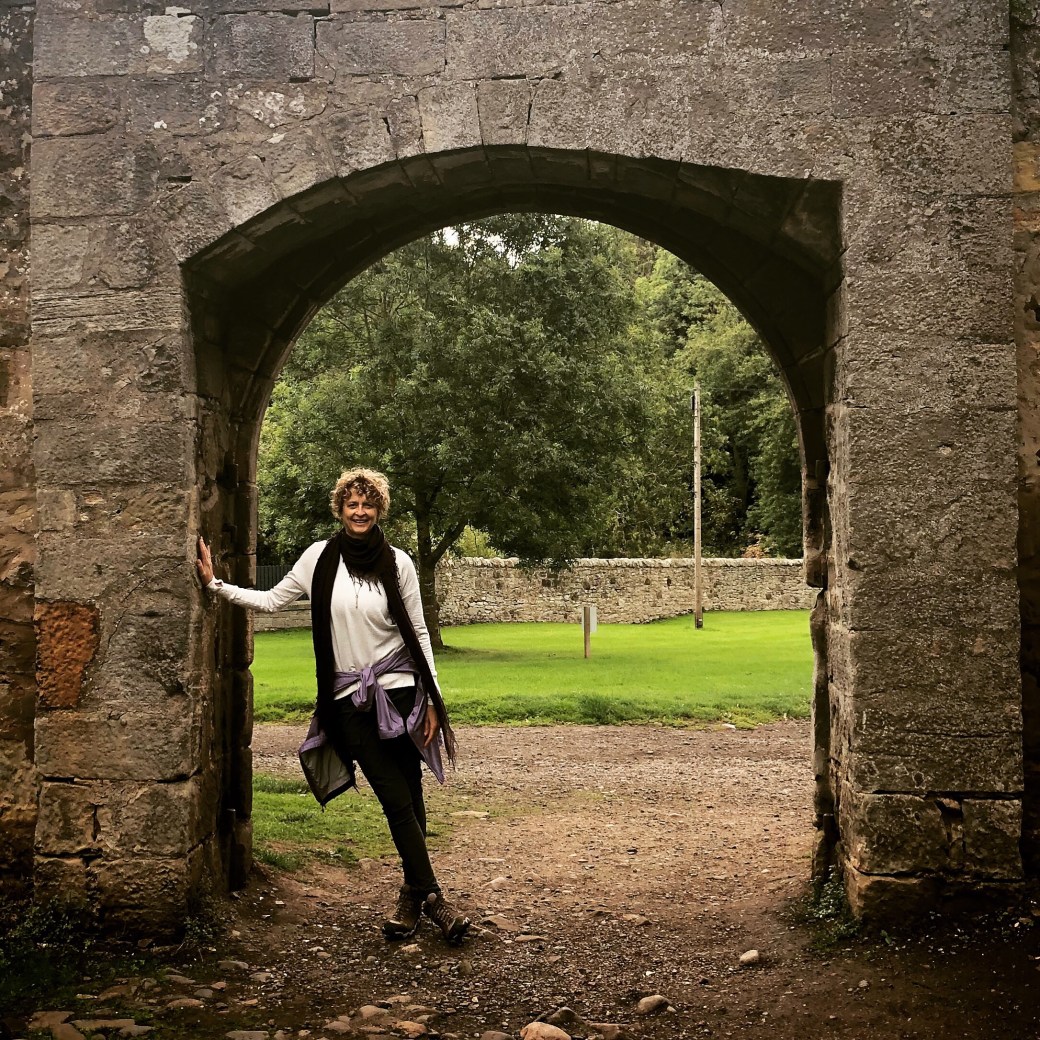
Speaking of tourists, it soon became apparent that there were different sorts of Outlander tours. As we were leaving “Lallybroch,” another, larger group came down the path toward us, led by a guy in an over-the-top Highlander costume. He held a plastic shield and brandished a fake broadsword. He was a scenery-chewing Pirates of the Caribbean Johnny Depp version of an 18th century Jacobite. Johnny Depp Jamie had obviously dispensed plastic weaponry to everyone on his tour for them to, I guess, ineffectually arm themselves as they visited ruins. Two adorable little old ladies walked side by side, one brandishing two plastic axes, the other holding two pistols. I would have died had I booked this tour. Johnny Depp Jamie immediately challenged Jamie Nicky with his sword. Jamie Nicky, sensing danger, extended an arm in front of me to protect my life and virtue. I grabbed his arm with both hands and crouched down, because I’m not about to be left behind in a sudden acting opportunity. His arm was strong and thick and suddenly I had a new appreciation for the antics of Johnny Depp Jamie.
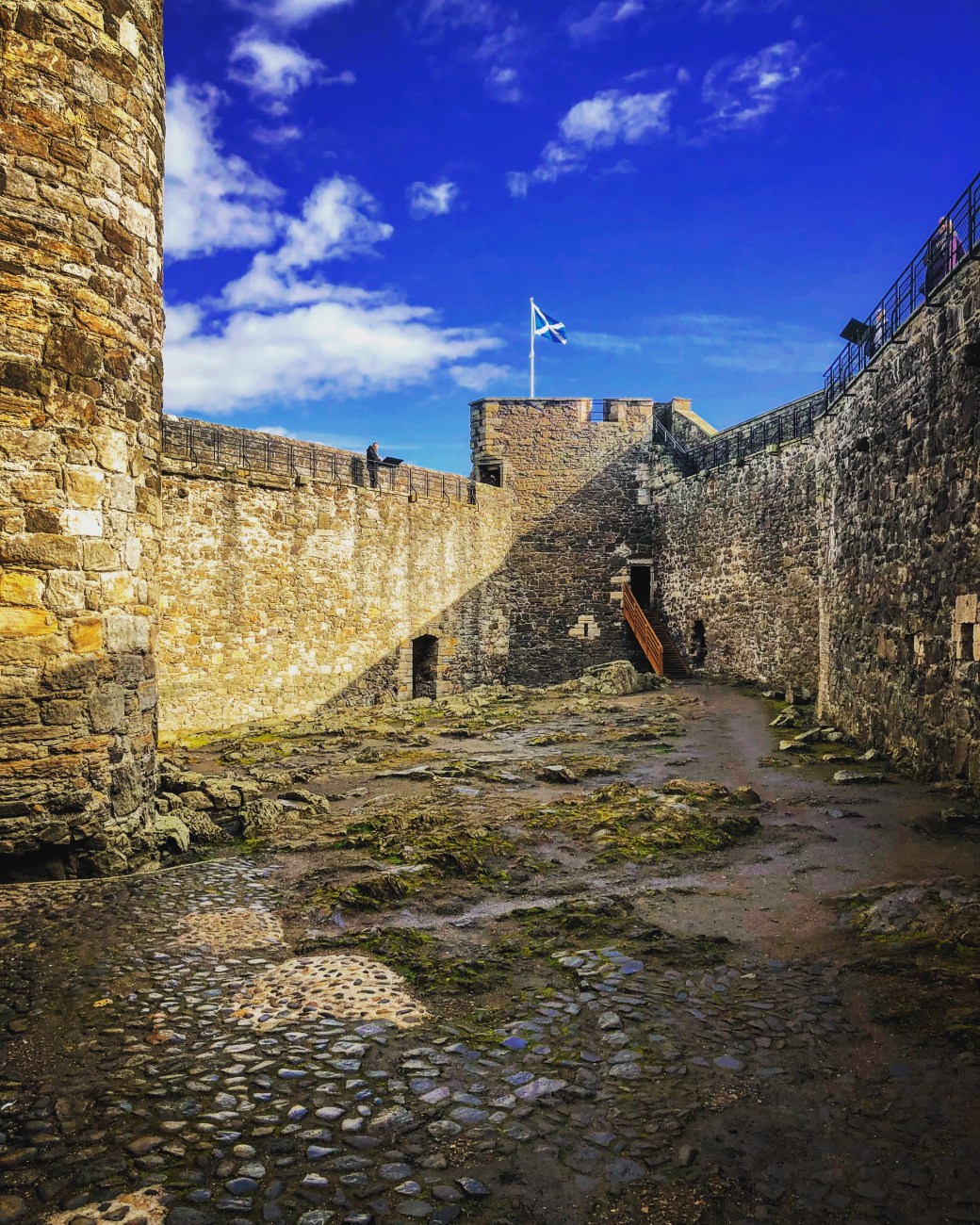
Our next stop was Blackness castle, a 15th century fort built on the south shore of the Firth of Forth. It protected Linlithgow, one of the main palaces of Scottish Royalty, especially the Stuarts. Because of its site, jutting into the Forth, and its long narrow shape, it has been dubbed the “ship that never sailed.” It was used to portray Ft. William in the series, including the scenes of Jamie being flogged nearly to death by Jack Randall (I know people who haven’t seen the show are wondering why on earth), and later the daring rescue of Claire by Jamie, Murtagh, Angus and Rupert with Jamie scaling the tower clutching an empty pistol. Speaking of which, I came upon Johnny Depp Jamie again just as he was reenacting the scene of Jamie clubbing a redcoat over the head after asking where Claire was being held. JDJ brushed people out of the way so he could rush up some steps in search of Claire.
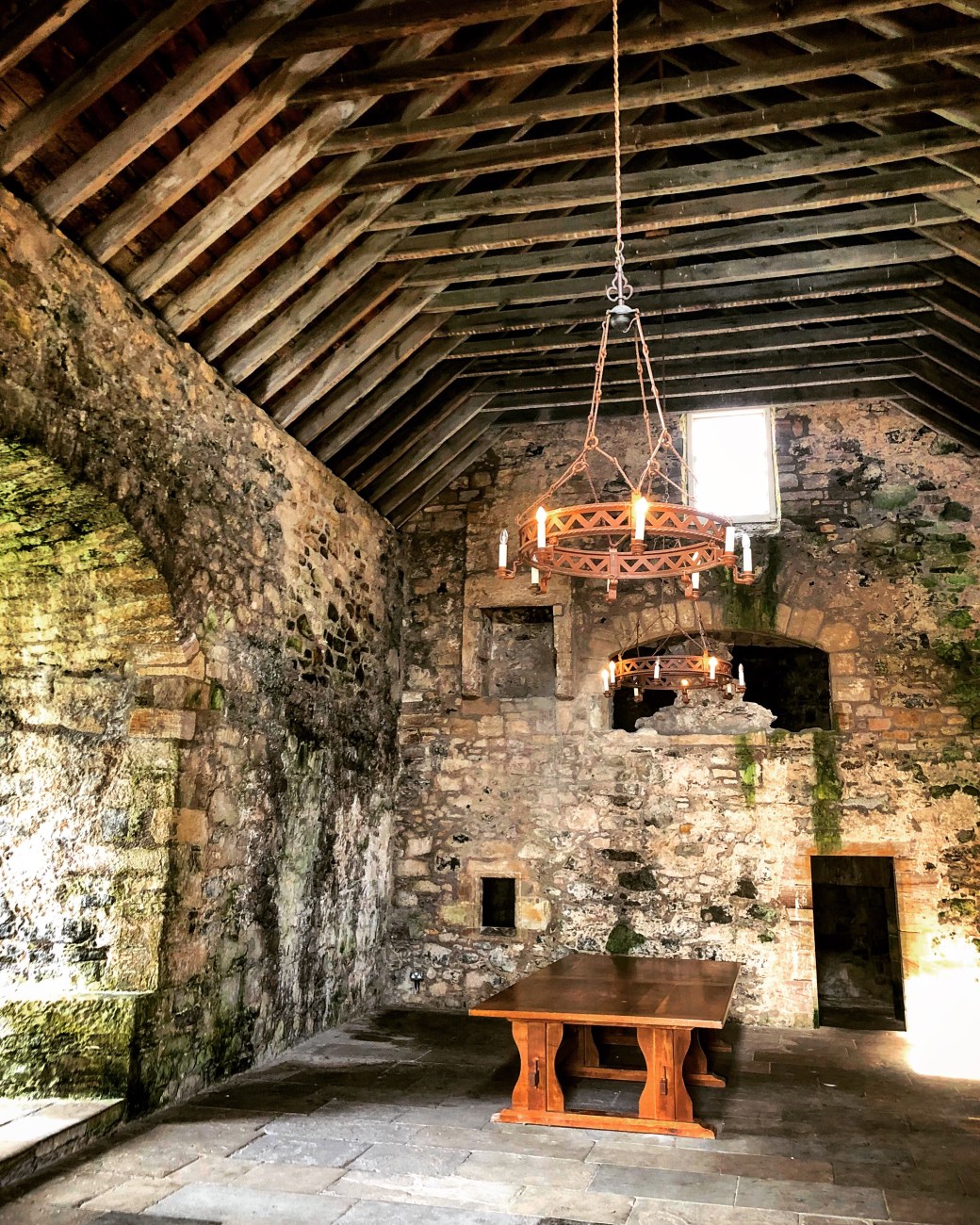
All swashbuckling aside, Blackness Castle is a gorgeous structure in a beautiful setting with a nicely preserved Great Hall.

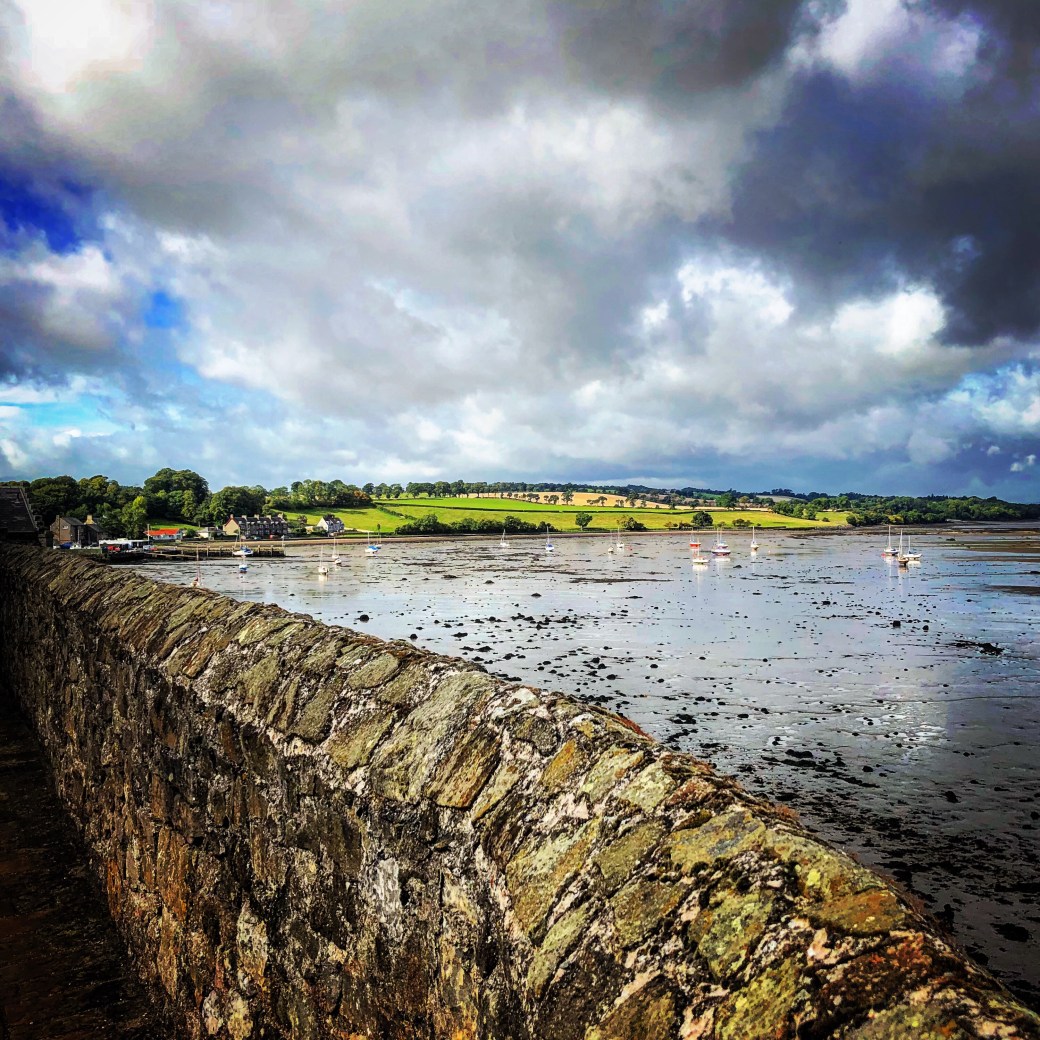

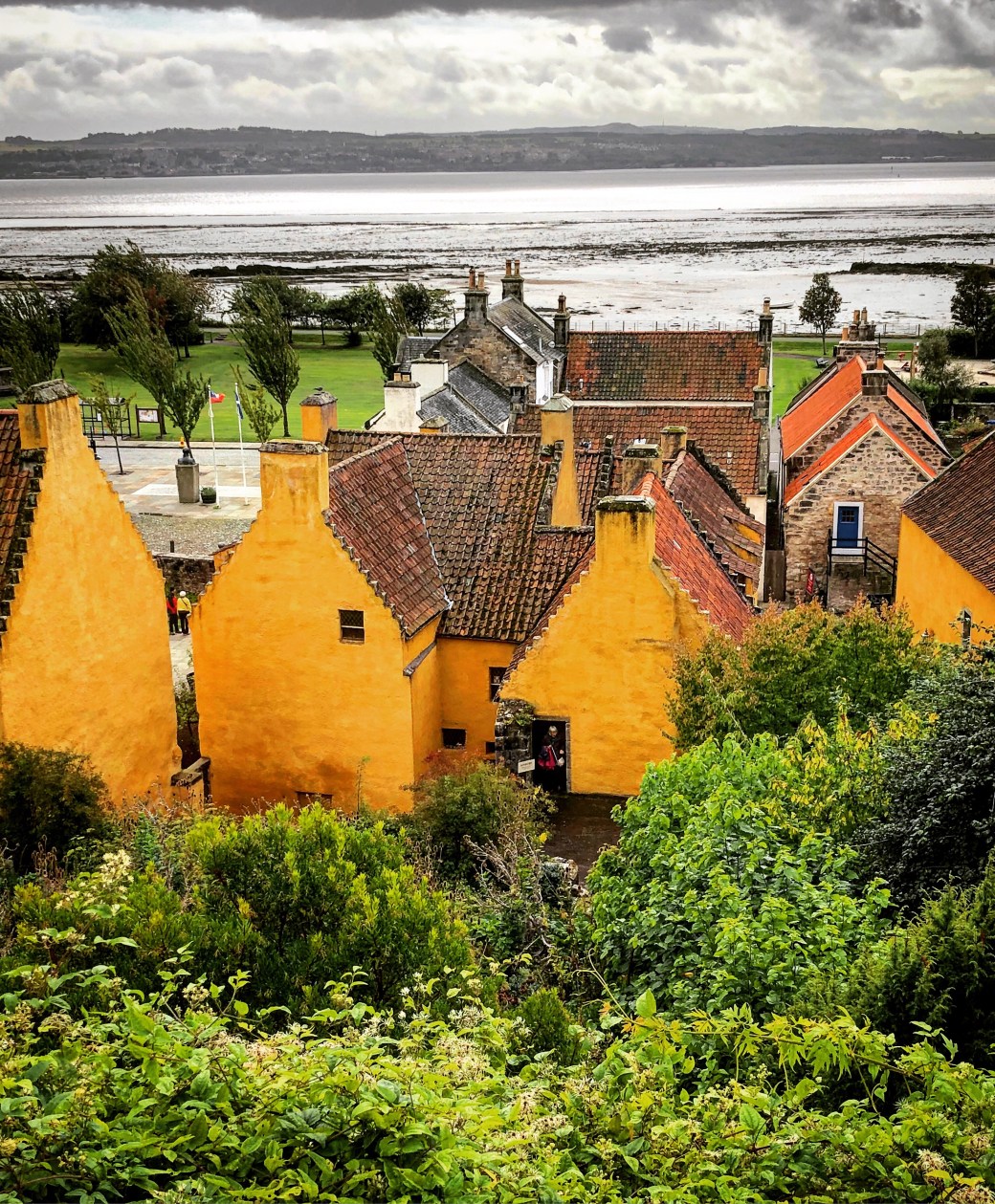
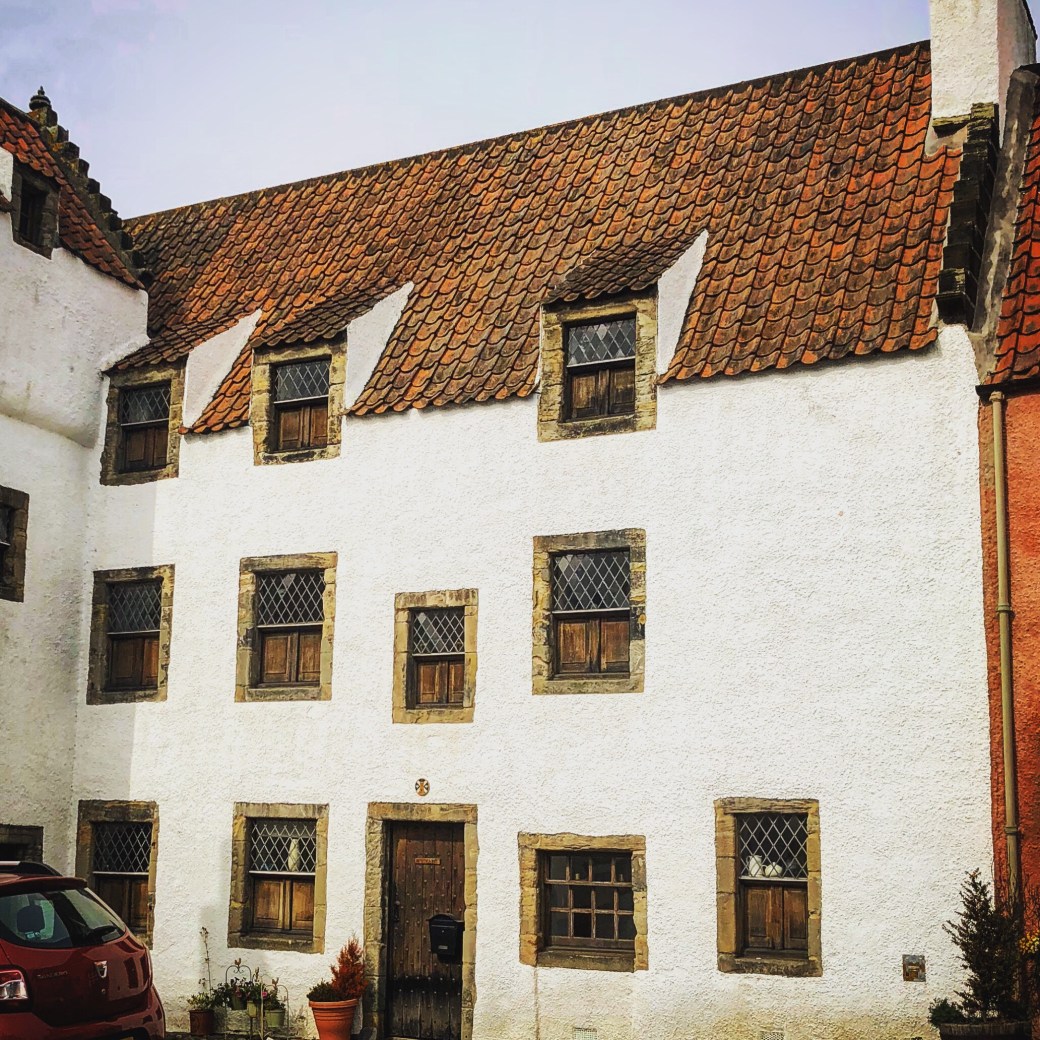
Next stop was the 100% charming town of Culross, where the scenes in Cranesmuir, the village near Castle Leoch, were filmed, including Geilis Duncan’s house, Claire’s herb garden, and the scene where the wee boy got his ear nailed to the pillory for stealing. The town has barely changed since the 17th century and is managed by the National Trust. I had the second best sandwich I’ve ever had there, in a charming little place called the Biscuit Cafe. I mistakenly took a table next to the loo. We all know this, but people truly have issues about bathrooms. One lady in her sixties ducked in and her friend had to stand in front of the door like in high school, holding it slightly ajar, explaining to the gentleman who was next in line, “She’s afraid of getting shut in.” Aren’t we all.
Next was the granddaddy of all film locations – Doune Castle, a medieval stronghold in the Stirling district of central Scotland. The most famous taunting scene in cinema was filmed here.
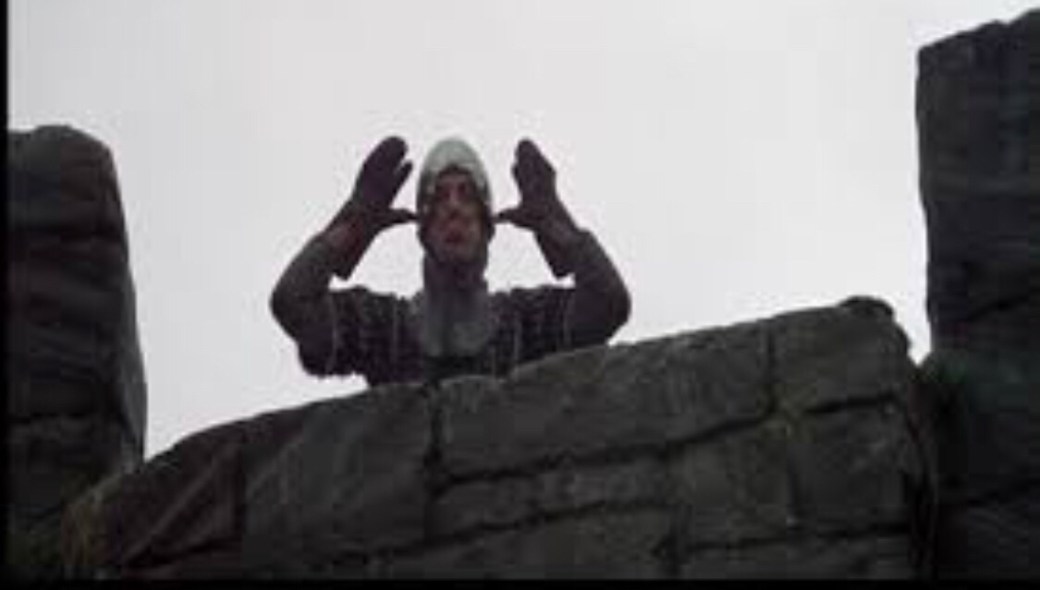
Starring our beloved John Cleese as the pitch-perfect French taunter, with many memorable lines, including that old chestnut, “Your mother was a hamster and your father smelt of elderberries!” Apparently the Pythons had booked several castles in Scotland for filming until someone wondered who they were and whether they could even pay, withdrawing permission from all except Doune. So basically the entire film was shot here.
Also the most famous scene ever filmed depicting a guy shoving a boy out of a window because the boy caught him having sex with his sister. I know this scene is basically in every film, but this is truly the best version. Unfortunately, in Game of Thrones, the boy did not die and instead became the Three-Eyed Raven, which, we don’t know, but may result in the ultimate downfall of said guy in the long slow dance of karma.

In season 1 of Game of Thrones, Doune Castle was Winterfell. In season 2 they moved production to Ireland because it was cheaper.
Doune bounced right back, and became the home of the McKenzie clan in Outlander, Castle Leoch. It’s now the third most visited castle in Scotland, after Edinburgh Castle and Stirling Castle. The audio tour is narrated by Python’s Terry Jones, and by, of course, Sam Heughan, who plays Jamie. Inside the house is a fabulous Great Hall and a wonderfully preserved kitchen, including a giant fireplace large enough to roast an oxen. Many silly Python scenes were filmed inside, including the song-and-dance number “Knights of the Round Table,”and the Sir Galahad the Chaste’s seduction scene. I completely recognized them all.

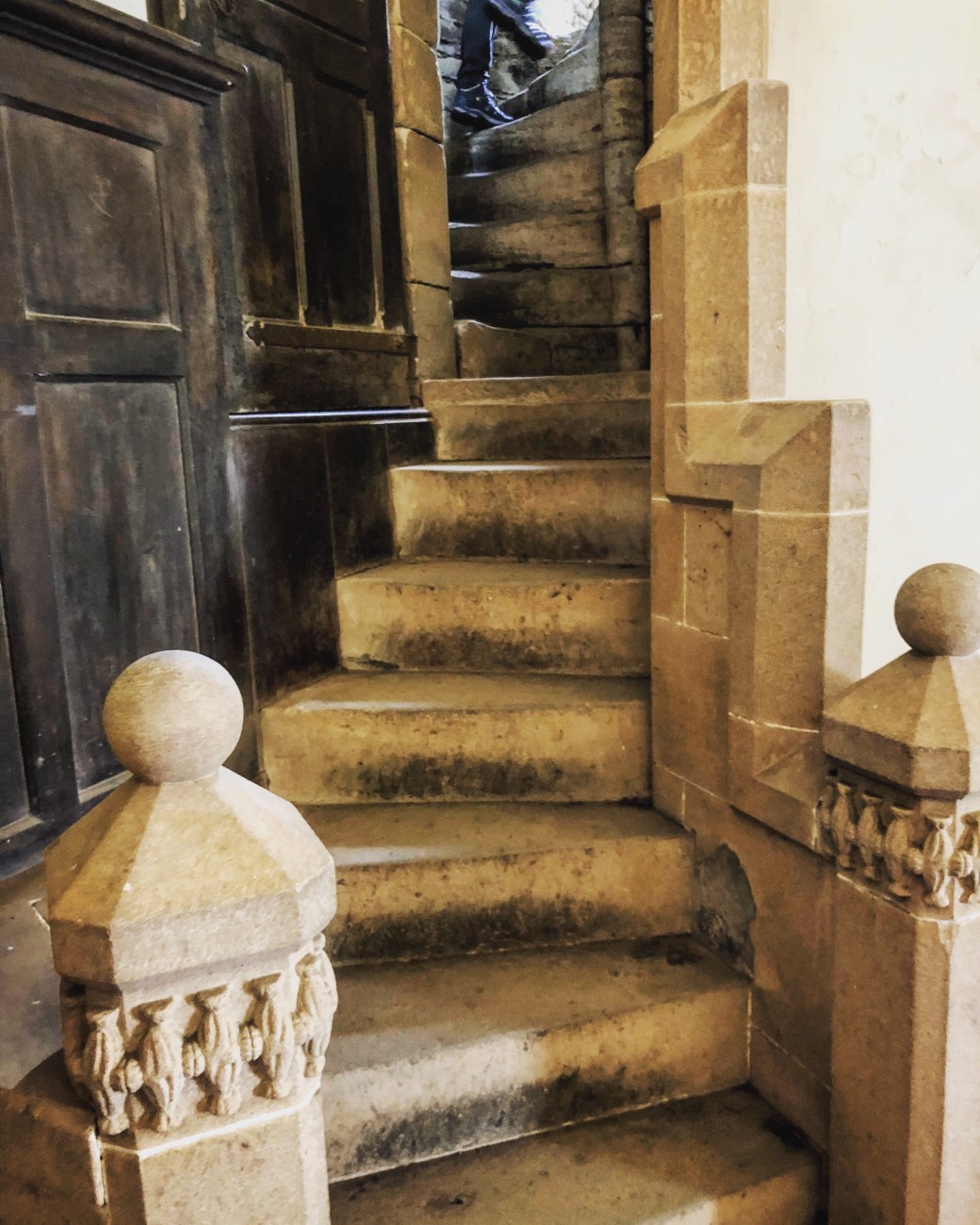
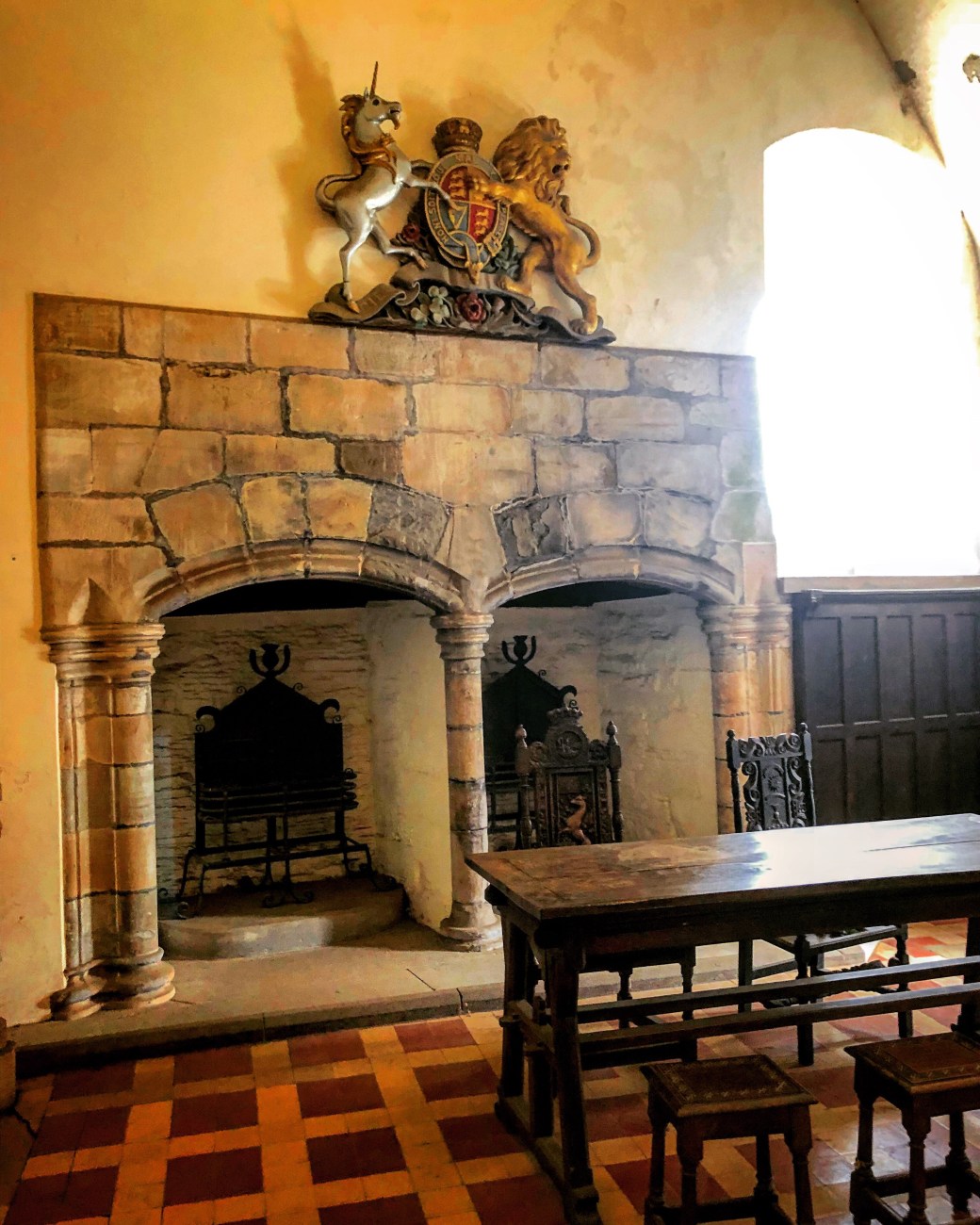

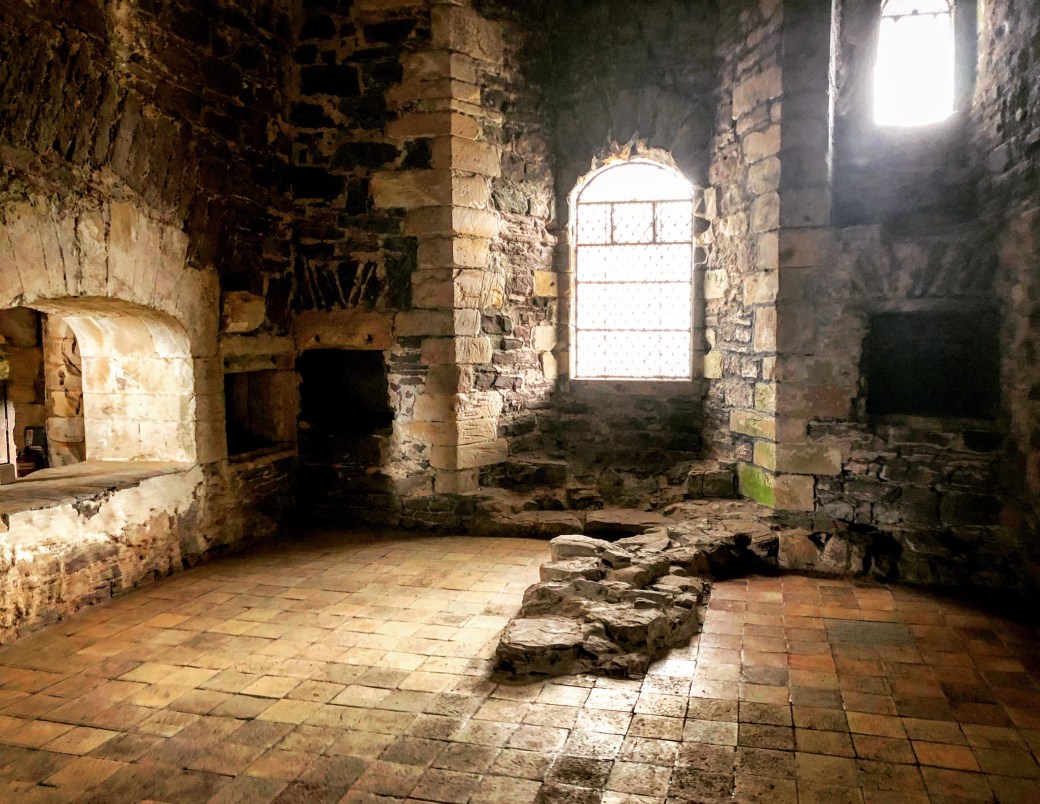
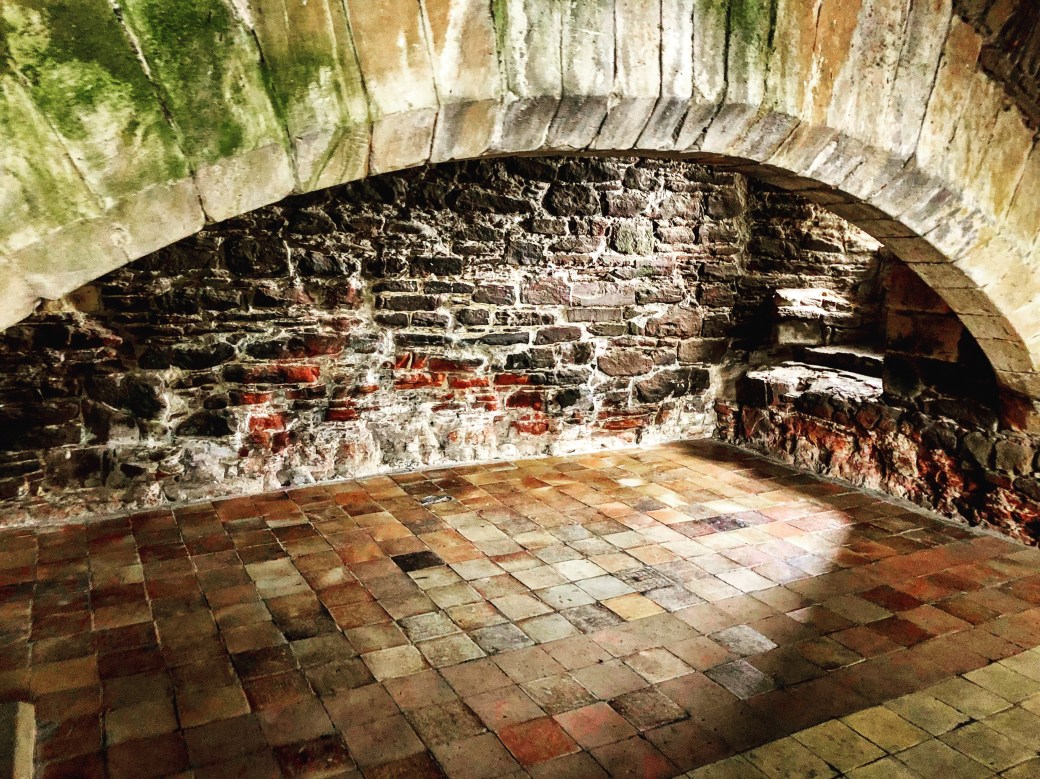
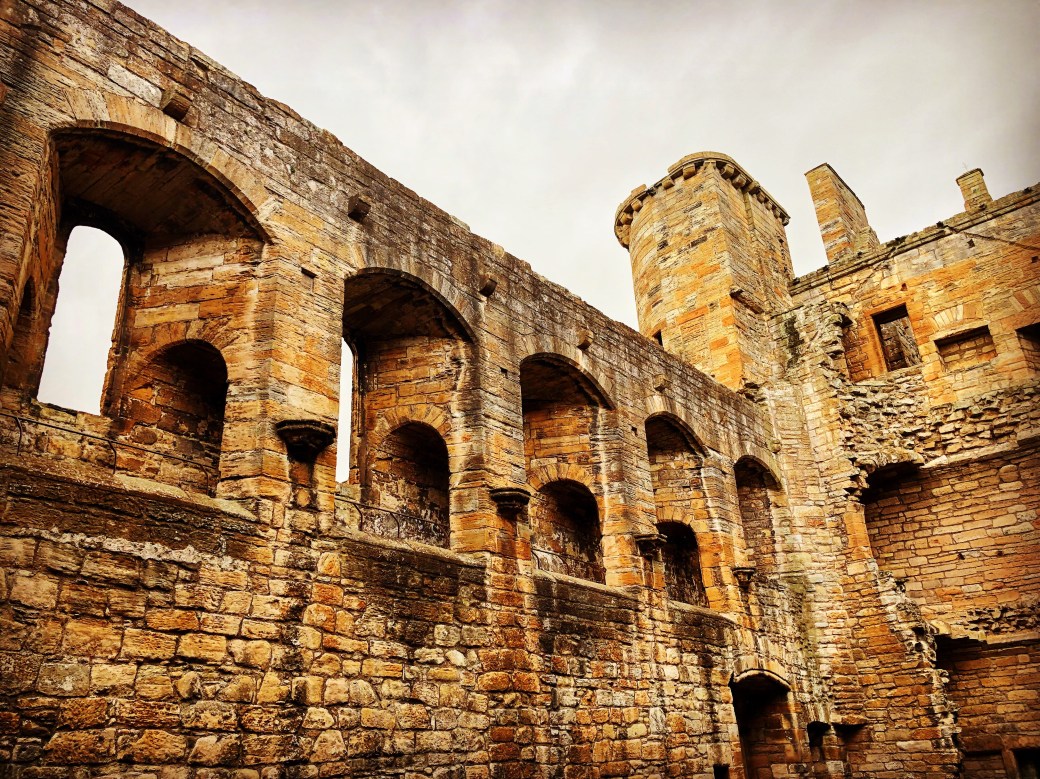
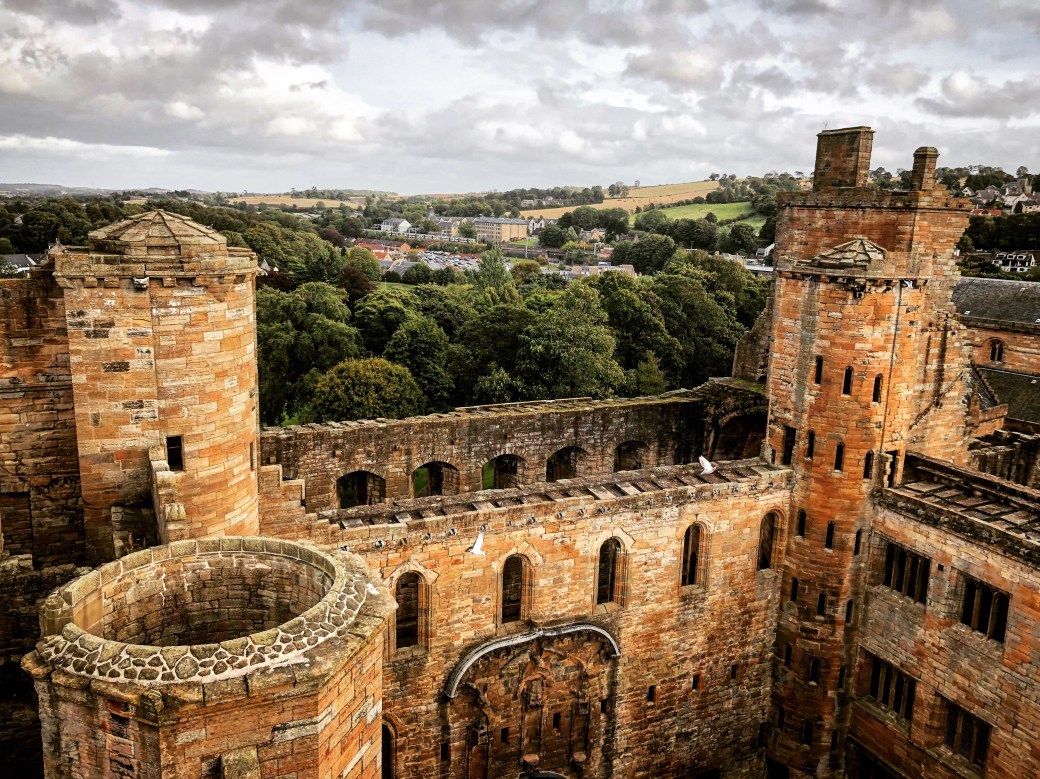
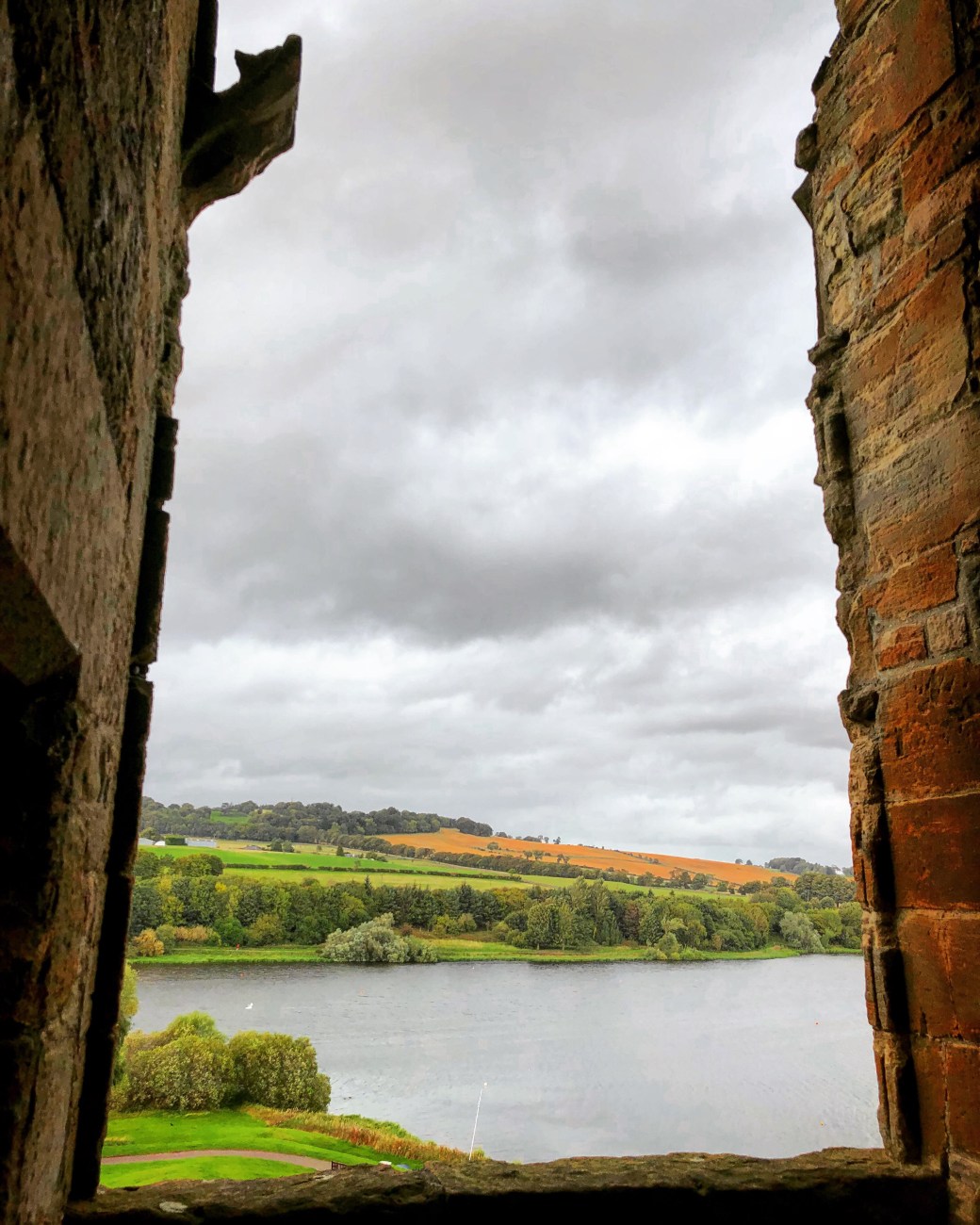
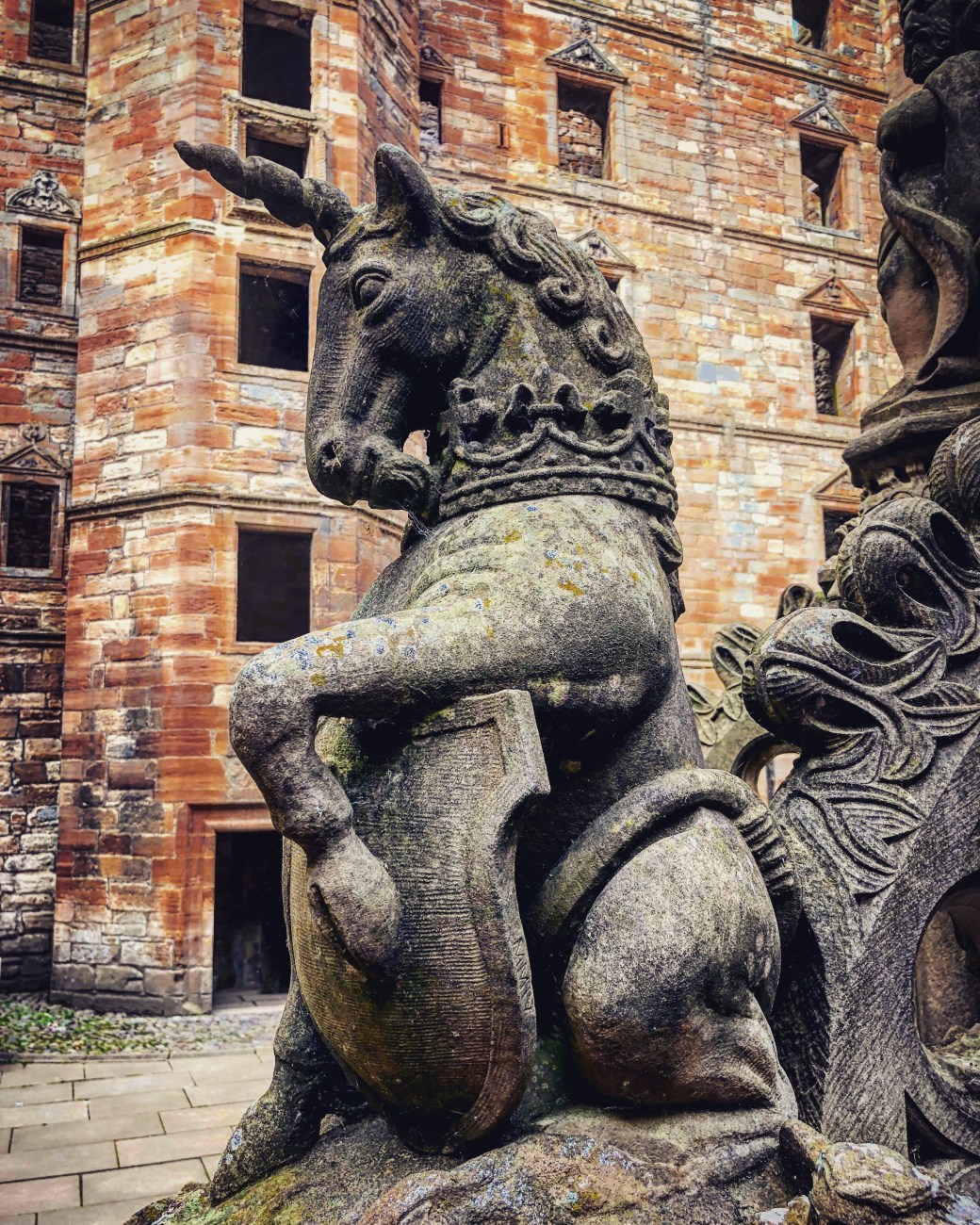
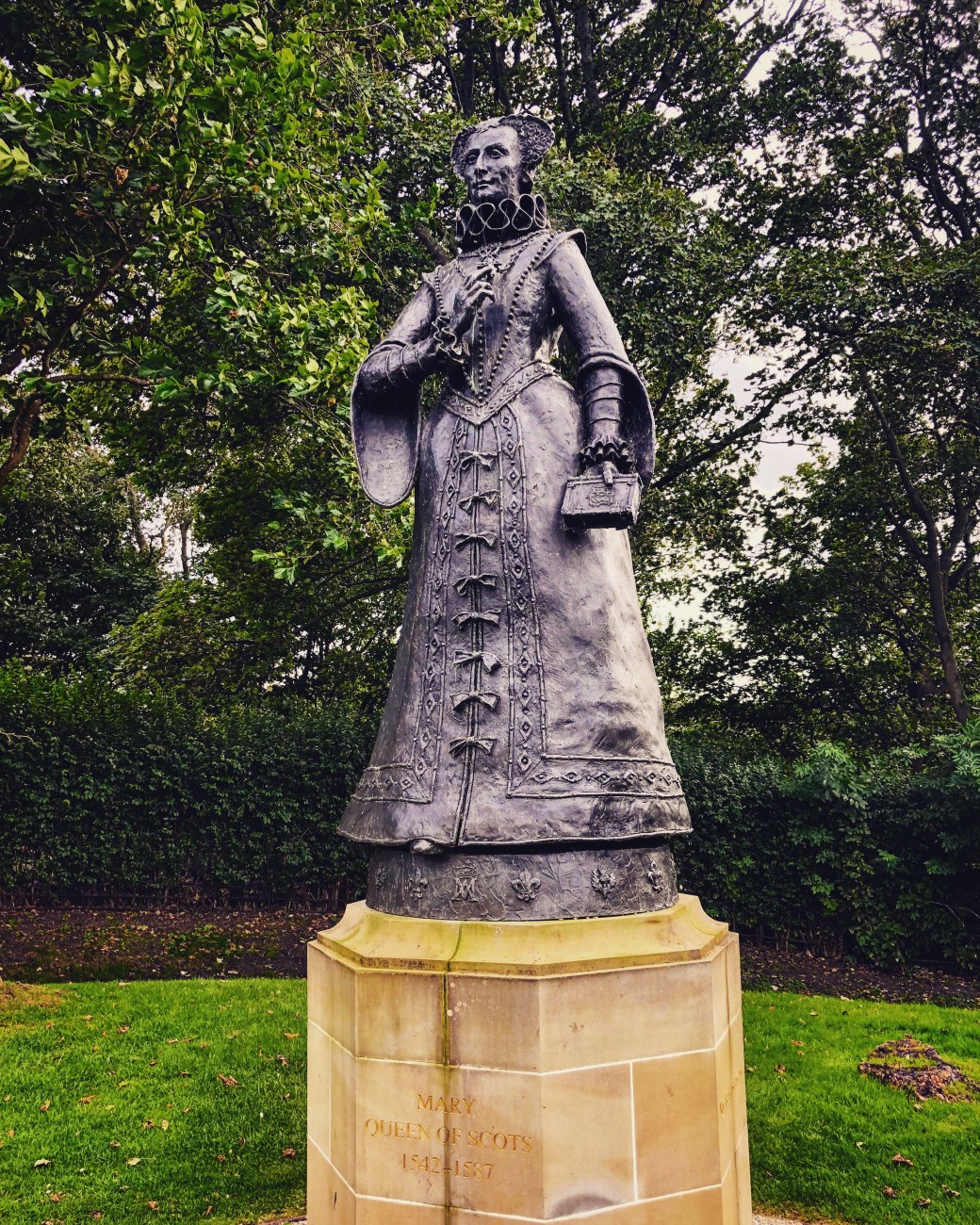
The last stop on our tour was Linlithgow Palace, where Mary Queen of Scots was born and lived for seven months, after which she was whisked away to Stirling, a more secure location. She was in danger the moment she was born, and for most of her life. It was another 20 years before she returned. A lot of Stuart history here. There’s a beautiful and drafty portico on the roof where legend has it Queen Margaret waited in vain for the return of James IV from Flodden Field. Bonnie Prince Charlie was the last Stuart to stay at Linlithgow. In 1746 the castle burned because the British duke of Cumberland’s troops failed to properly extinguish their campfires.
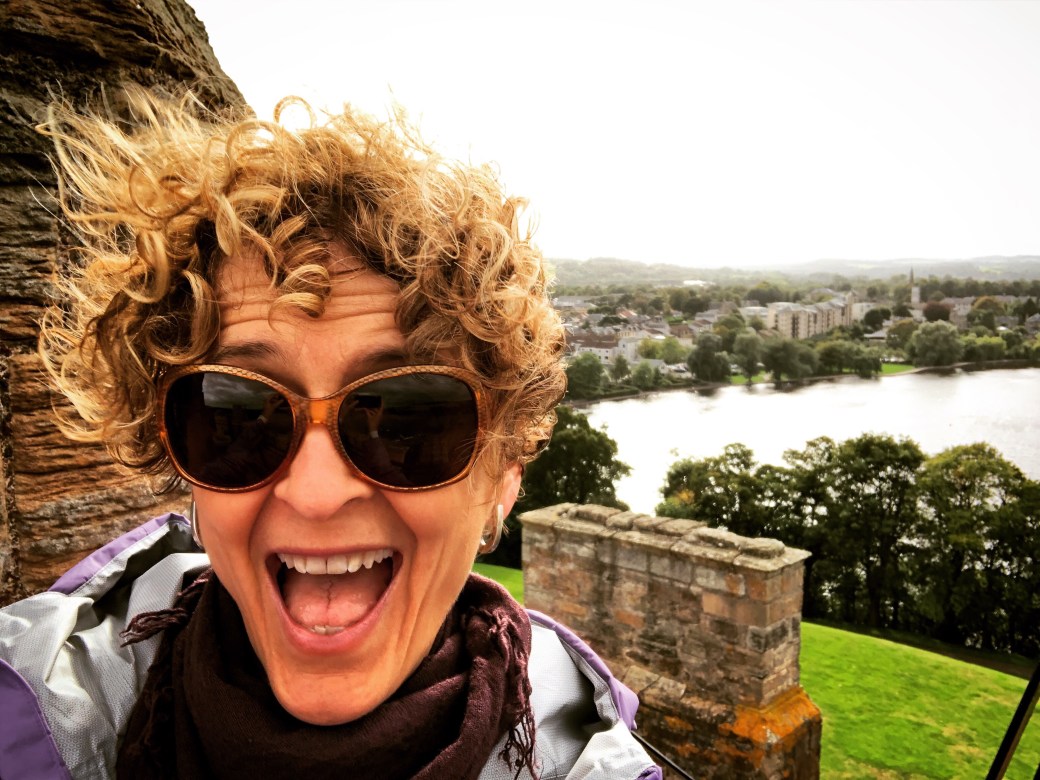
Gorgeous spot (Scots had great taste in castle sites), with a statue of Mary Queen of Scots on the grounds. In the UK you are allowed to scramble all over ruins, climbing up tiny staircases with flimsy railings that wouldn’t be allowed in the US. No posted warning signs, nothing roped off, I guess because you’re supposed to use common sense. The higher you go, the more pigeon poo there is, since all is exposed to the skies. Many ruined castles around Scotland don’t have roofs, not even if they’ve undergone restoration. Why? Because buildings with roofs are taxed.
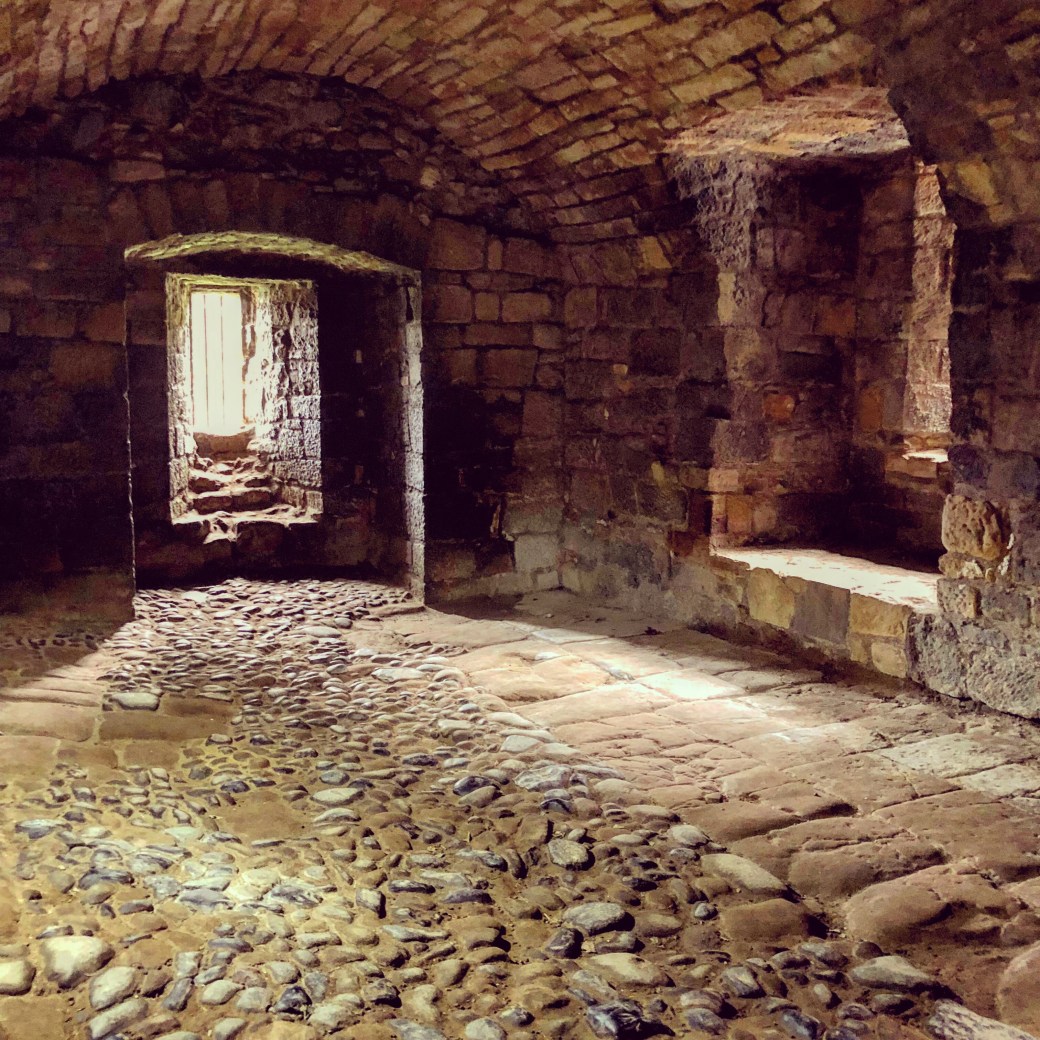
In Outlander, the tunnels and cells underground were used for Wentworth Prison, where extremely terrifying things happened to Jamie.
It was a fabulous tour, largely because of the fabulous Nicky. He told us the entire history of the Jacobite rebellions. There were five between 1688 and 1745, all with the goal of returning one of the Jameses to the throne of Scotland and England and all failures, finally resulting in the Highland clearances. Nicky told the story with passion and emotion. History is still very much alive for Scots. As Robert Louis Stevenson wrote, “For that is the mark of the Scots of all classes: that he stands in an attitude towards the past unthinkable to Englishmen, and remembers and cherishes the memory of his forebears, good and bad; and there burns alive in him a sense of identity with the dead even to the twentieth generation.” Nicky also reflected on the current political situation in the UK and elsewhere (ahem), resolving to focus his efforts on things he could positively impact, like, for example, people’s lives. He also taught me a new word, “scuppered,” which originally meant to deliberately sink a ship, and has come to mean thwart. So many uses. Anyway, I adored him.
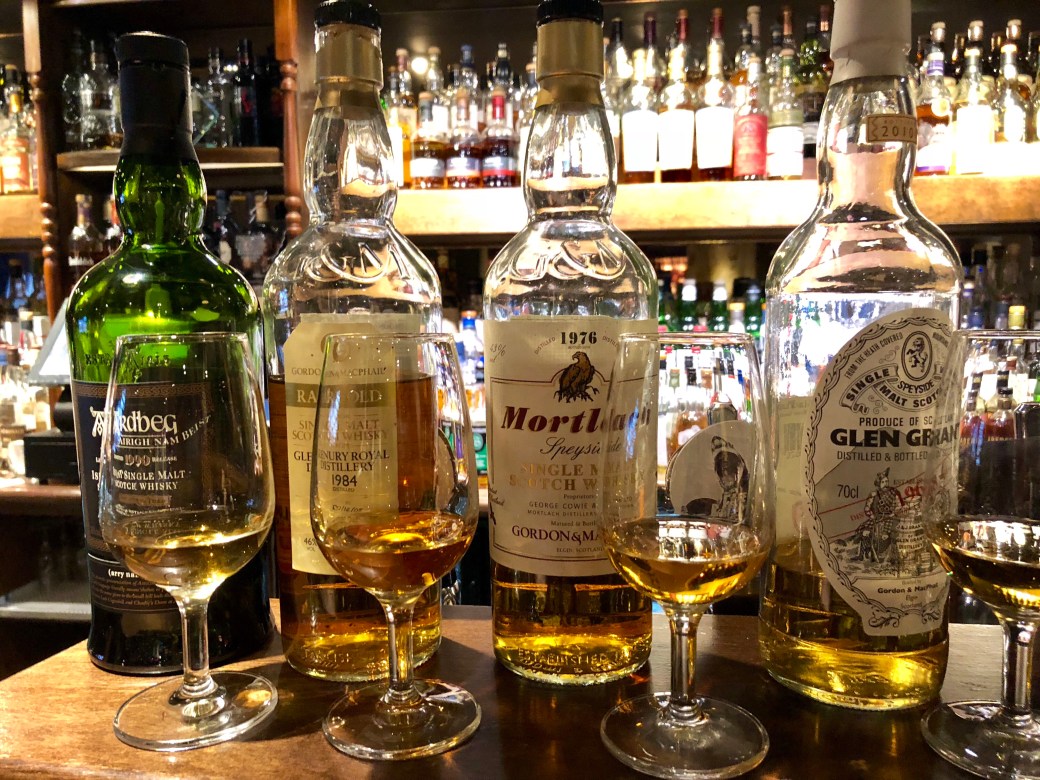
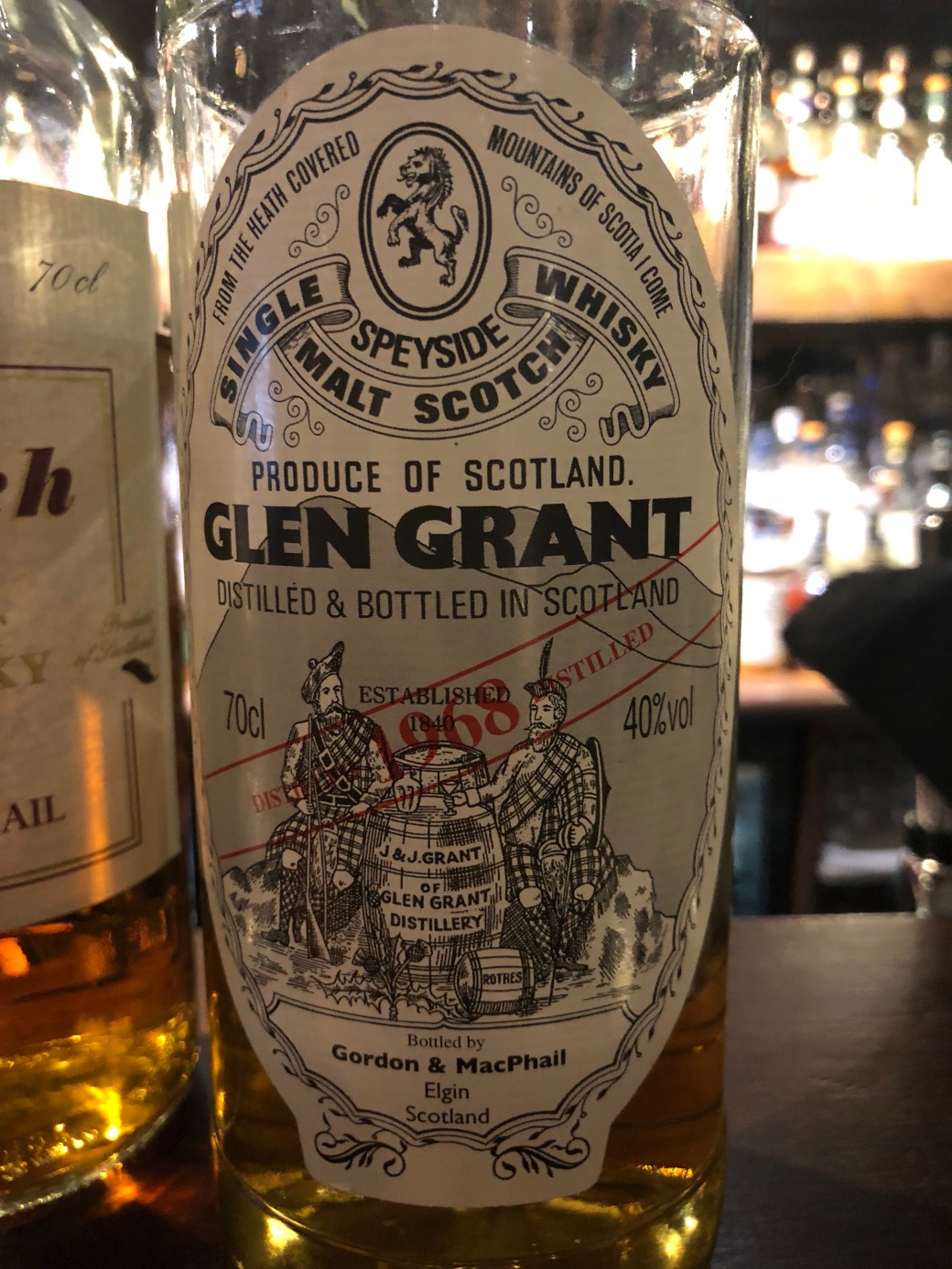
How to end such a day? By booking a very expensive whisky tasting at Usquabae, meaning water of life (Gaelic translation of Medieval Latin aqua vitae.) Sitting at the bar, I was regaled with tales of whisky and its historic impact on the Scottish economy and history. A couple of local boys chimed in, asking questions and giving their own opinions. It’s a very complex subject near and dear to the heart of Scots. I chose a tasting called “The Decades.” It included a whisky from the 60’s, 70’s, 80’s, and 90’s, which covers my entire life. The older whiskies were good, but as the bartender noted (he had tastes of all my drams to keep me company), they do get a bit “vegetal.”
One last observation about Scottish men. They look you right in the eye, steadily, when you’re talking to them. They don’t hang back, either, they are snuggled right into your personal American space. I love it.
 Wee Dram of Scotland