
Our epic hike to the Old Man of Hoy now in the books, we have two more days of hiking plus a guided tour of Westray to look forward to during our time in Orkney.
One note – we learned that one must never say, “Orkney Islands” or “Orkneys” or “Shetland Islands” or “Isle of Skye.” It’s Orkney, Shetland and Skye, and the same can be said for all 700 of the Isles of Scotland. This mistake is as irritating to Islanders as it is to Oregonians when others pronounce our state Ore-GONE. Ugh.
Our second day of hiking started at Skara Brae, magnificently preserved Neolithic ruins situated on a hill overlooking the Bay of Skaill. As we were en route, our cabbie Eddie told us that ancient Picts lived in harmony for thousands of years, not raising arms against anyone, “until my ancestors came over from Norway.” I accused him of being a Viking, which he completely acknowledged with a tinge of pride. When asked whether he’d lived his entire life in Orkney, he answered, “not yet.” By this time he was obviously our favorite. As he dropped us off, he intoned, “Welcome to 6,000 years ago.”
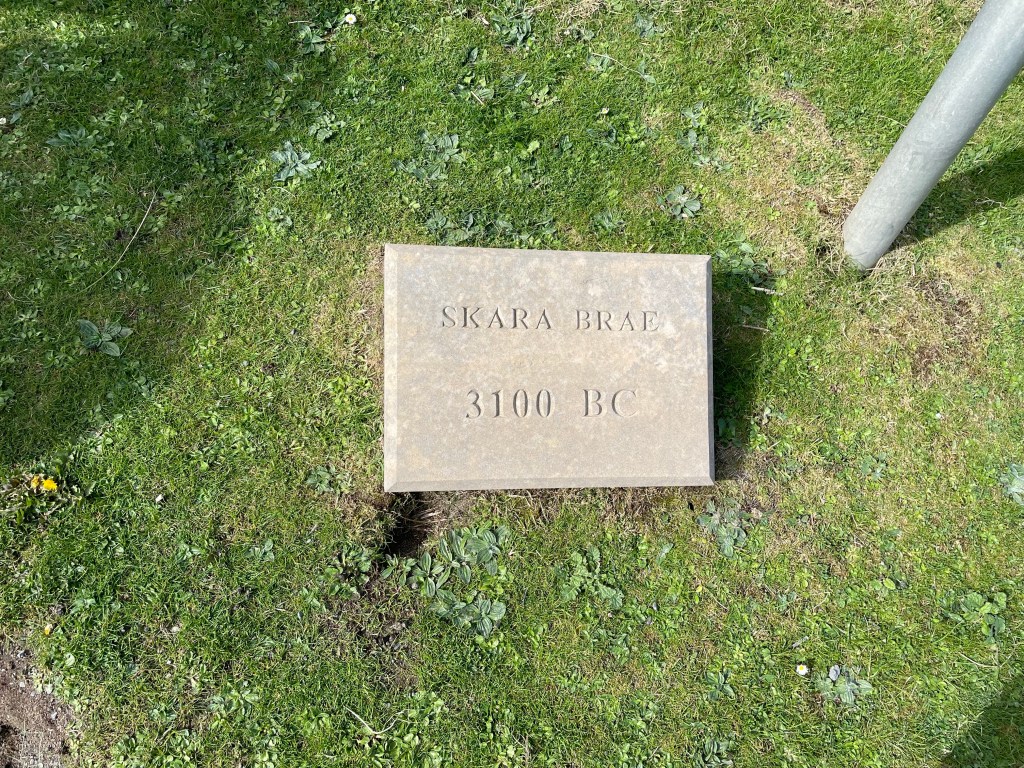
This seems like an unfathomable period of time, so to provide context, as you walk out to the ruins there are cleverly placed stones marking the progress of history such as the building of Stonehenge, the construction of the pyramids of Giza, the birth of Christ and the fall of Rome. Skara Brae was built and inhabited eons before all of these familiar markers of “ancient” history.
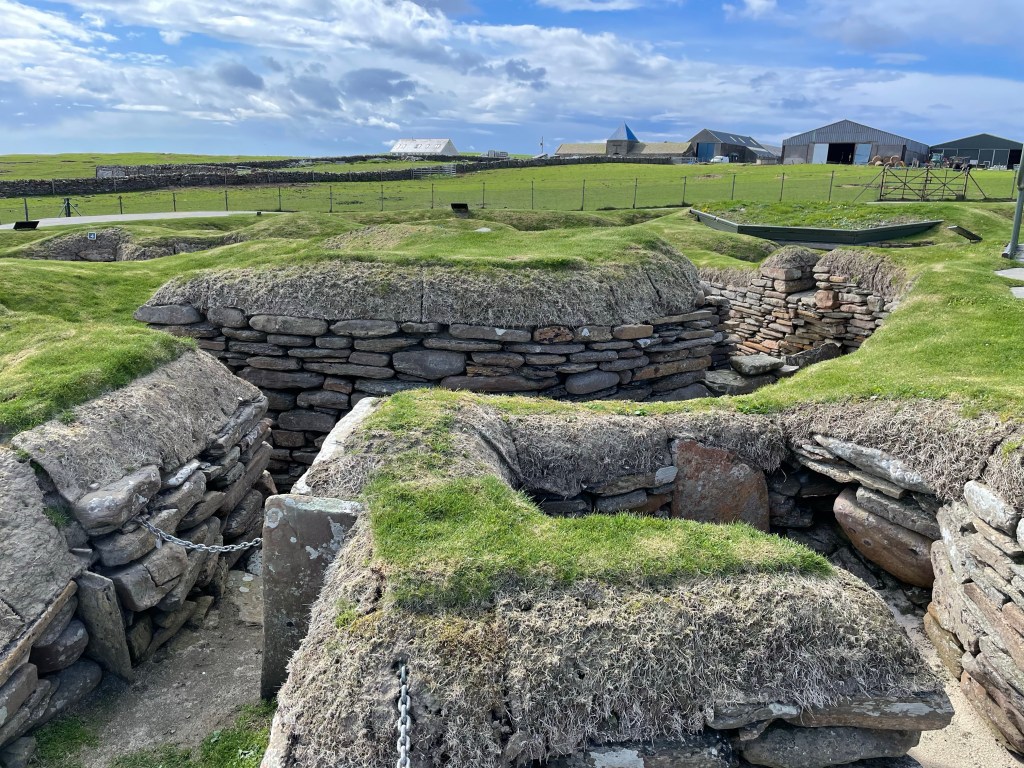
The ruin itself consists of ten clustered houses with stone hearths, beds and cupboards. There’s even a primitive sewage system, so, you know, I could have lived there. The site was occupied from 3180 BC through 2500 BC and it is Europe’s most complete Neolithic village.
The ruins were discovered in 1850 when a giant storm literally stripped the earth from the knoll, exposing the outline of the village. Incredible artifacts were discovered, including beautiful beaded necklaces fashioned from animal teeth or bone.

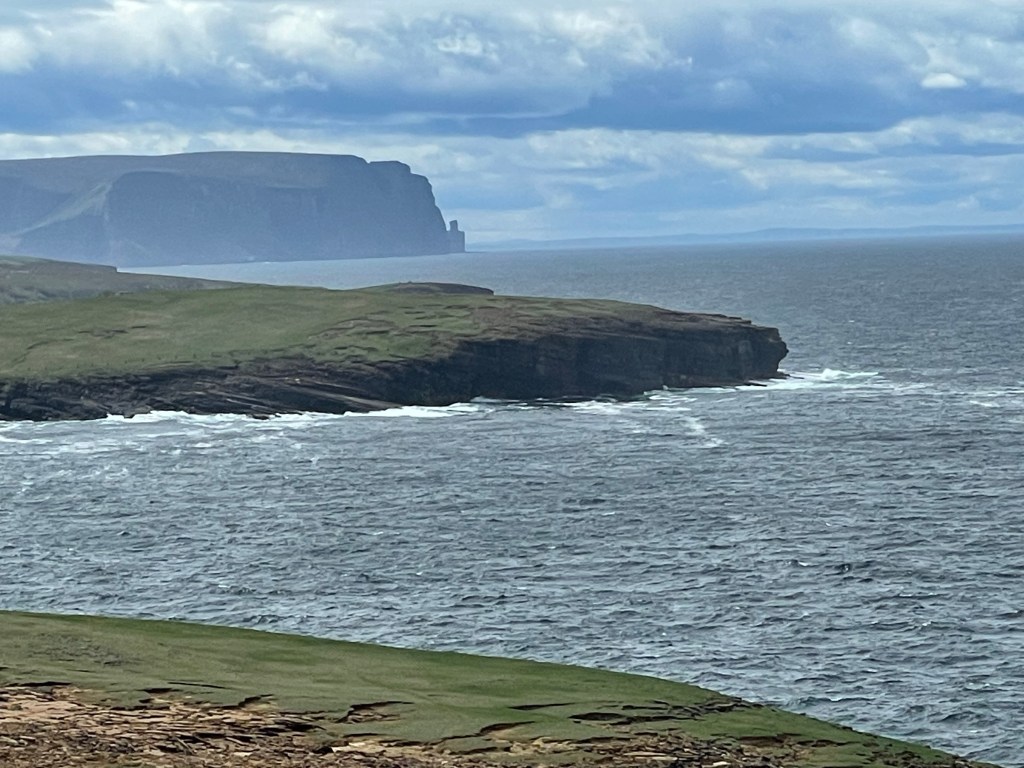
From the ruins, we joined the West Coast trail, which follows the Mainland coast all the way back to Stromness. The views were insane, the sea was azure blue, and there were more ruins along the way.
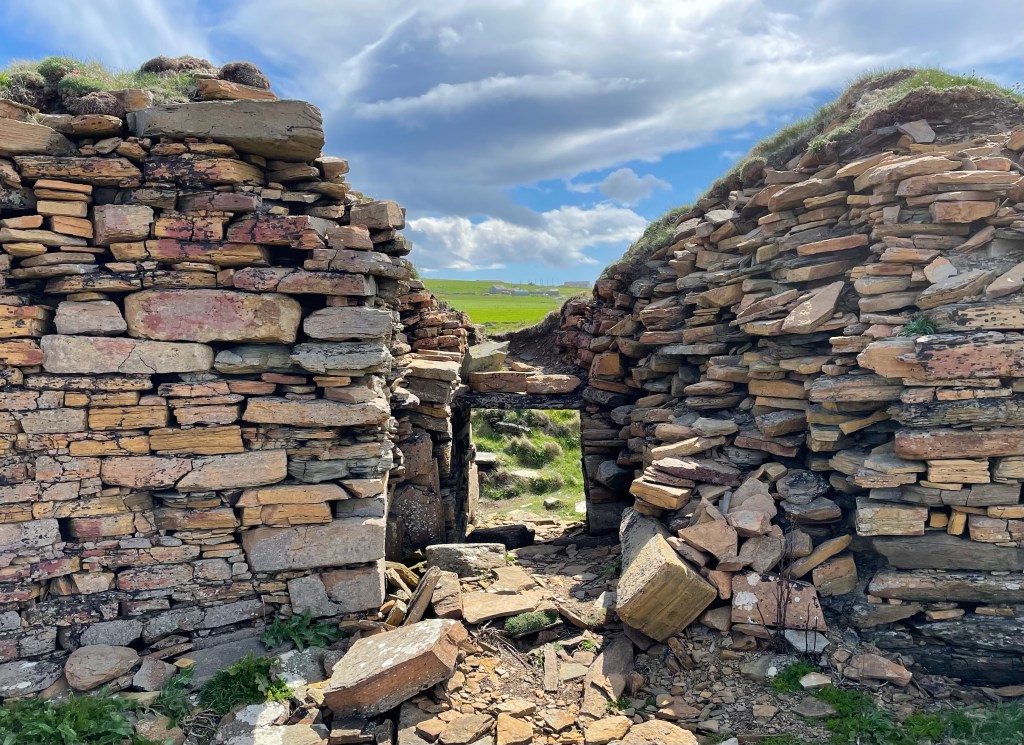
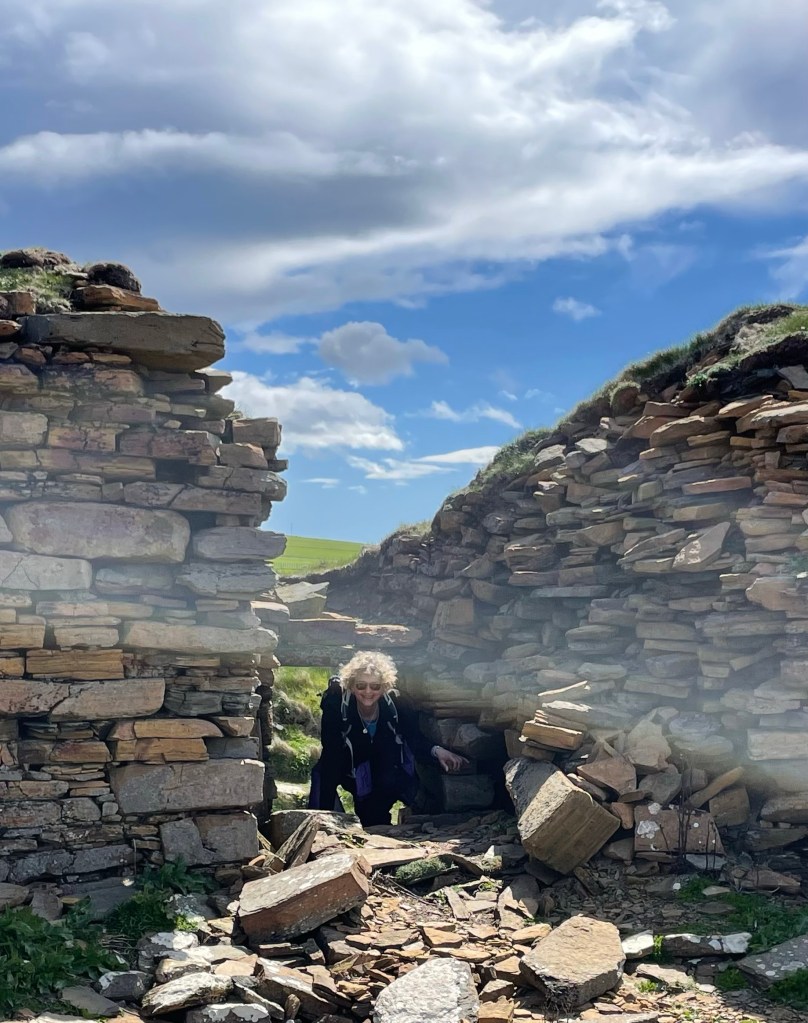
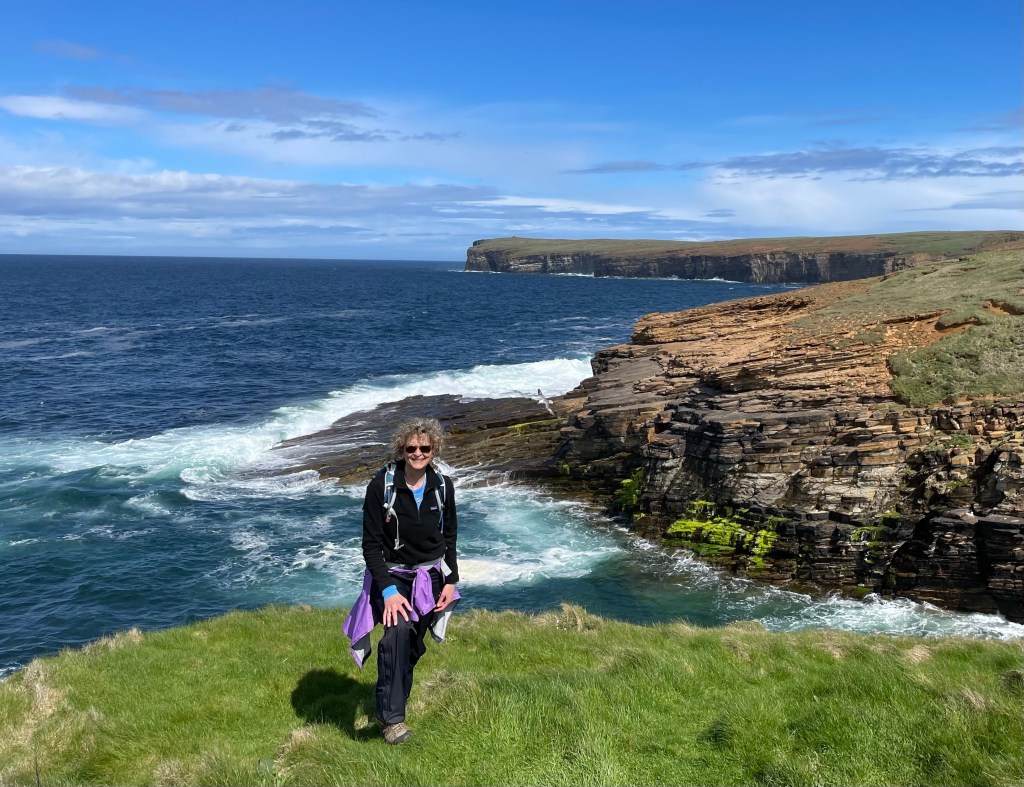
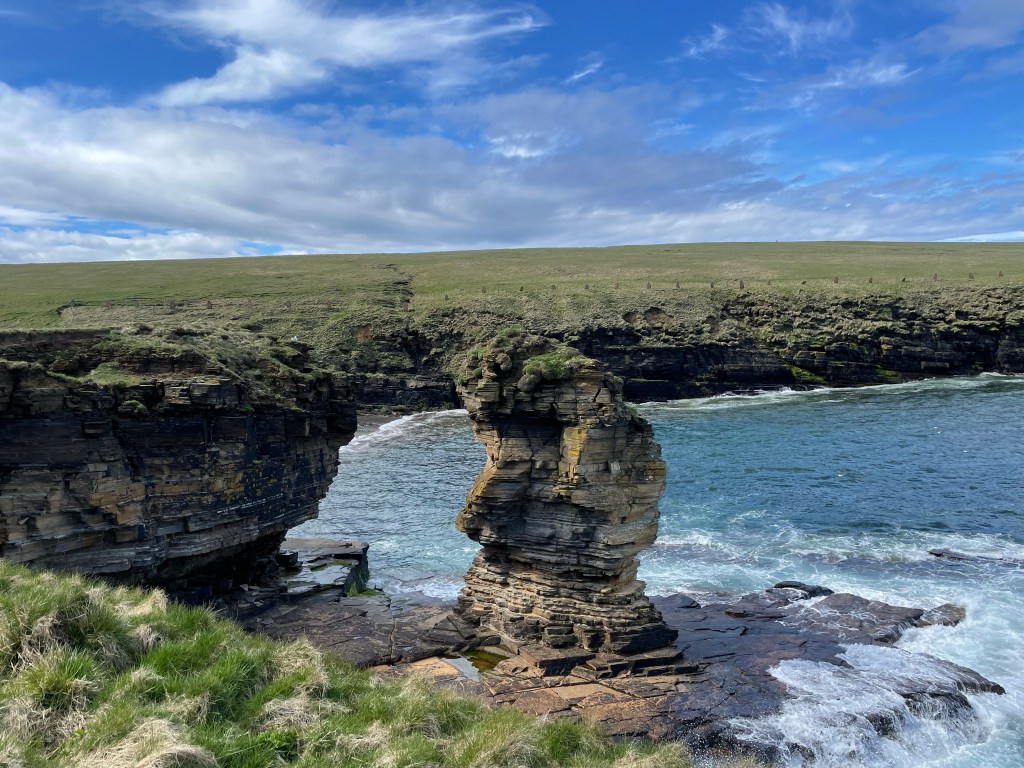
Just as we ended our walk, the weather changed from gorgeous to blustery – as is its wont.


The next day we continued our passage through days of yore by hiking between two stone circles very near Skara Brae – and possibly used by its residents. As with Stonehenge, nobody really knows for certain exactly how they were incorporated into the life of the community, although theories abound. You’ve heard them all. The Ring of Brodgar was likely constructed between 2600 and 2400 BC and the Stones of Stenness, which are considered to be the oldest henge in Britain, around 3100 BC.
The Ring of Brodgar was originally comprised of 60 stones, with 36 surviving today, still a startling sight. The Stones of Stenness originally had 12 upright stones with only four surviving. My favorite was the Ring of Brodgar.

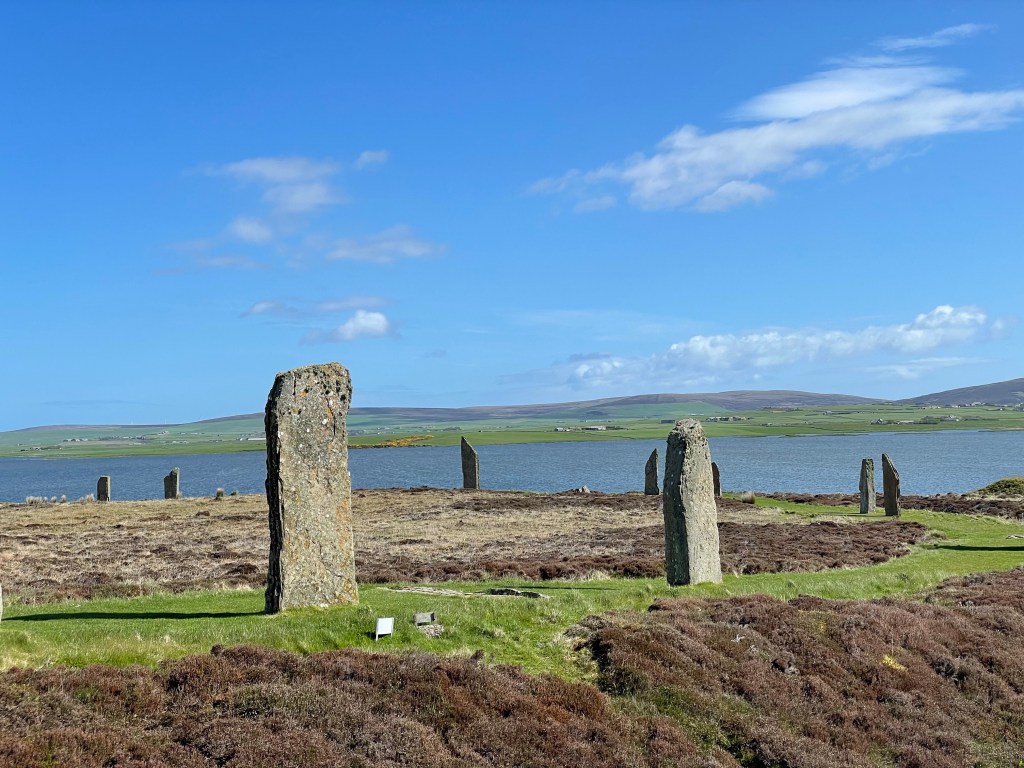

It’s miraculous really, that so many of the stones have survived for many thousands of years. Imagine! Of course, through the passage of time, random people have interrupted the flow of magic, as they do. The most heartbreaking tale was that which befell the Odin Stone. This fabulously named stone stood near Stenness Circle. Thought to have been erected around 3000 BC, it stood about 8 feet high and had a shoulder-high hole through which couples would clasp hands to provisionally marry one another until they could find a priest somewhere. Isn’t that lovely? Well, of course it is. However, in 1814 a silly man who leased the land upon which the stones stood found himself irritated by people tramping about amongst them. So he destroyed Odin’s Stone as well as a few others. Not stoked, the native Orcadians tried to burn his house down. Twice.
Another heartbreaking and irritating tale is the co-opting of ancient stone henges by weird barefoot hippies. We saw a pair of them during our visit to the Stenness Stones. They walked around with their eyes closed and tie-dyed garments flowing, demonstrating to all that they inhabited much higher planes of consciousness than the rest of us. Barefoot, likely days from their last shower, probably not vaccinated. They ostentatiously perched on the stones (leaving only two for others to photograph) communing with ancient spirits (I guess) and basically making horses’ patooties of themselves. Literally the dude did a headstand like an idiot. Obviously I had to take photos because – isn’t that what they want? To be noticed by lowly beings who are dazzled by their higher vibrational states and inspired by their oneness with the ancient spirits of the stones? You see, what appears to be a disrespectful act is actually the physical manifestation of advanced astral powers beyond our comprehension. I’ll stop now, but I mean seriously, the absolute worst. I suppose we should be grateful that they weren’t naked.

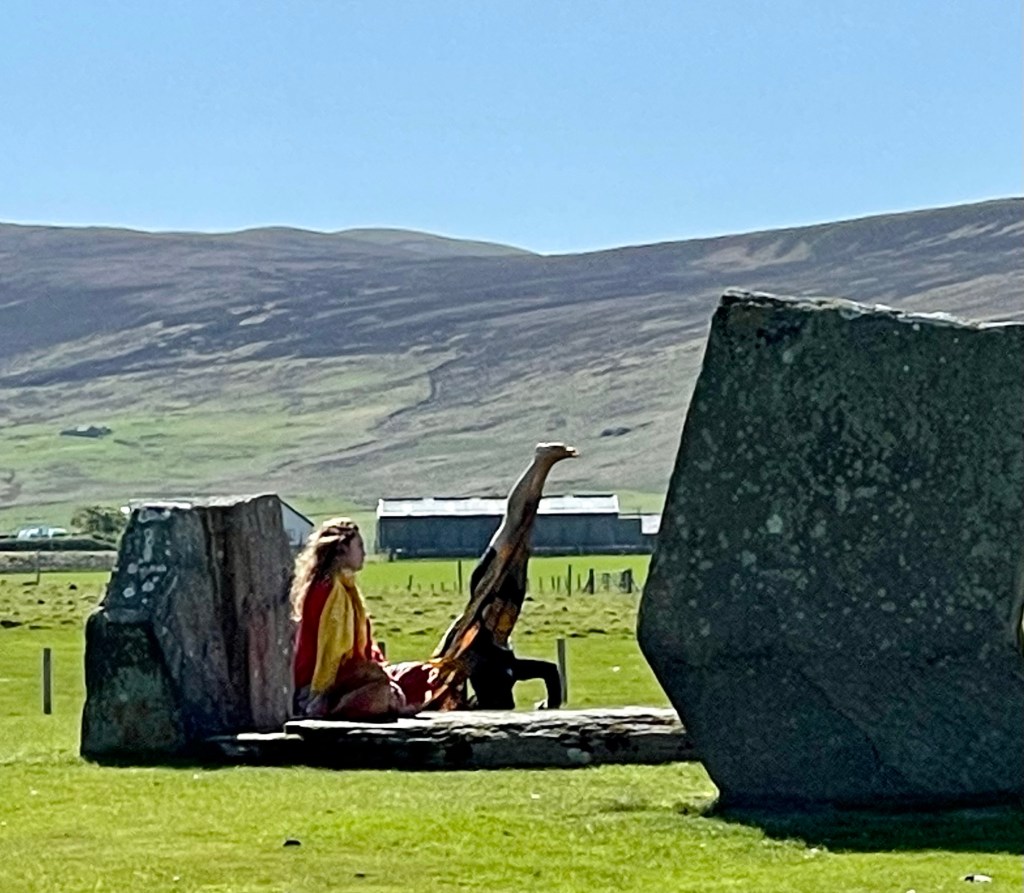
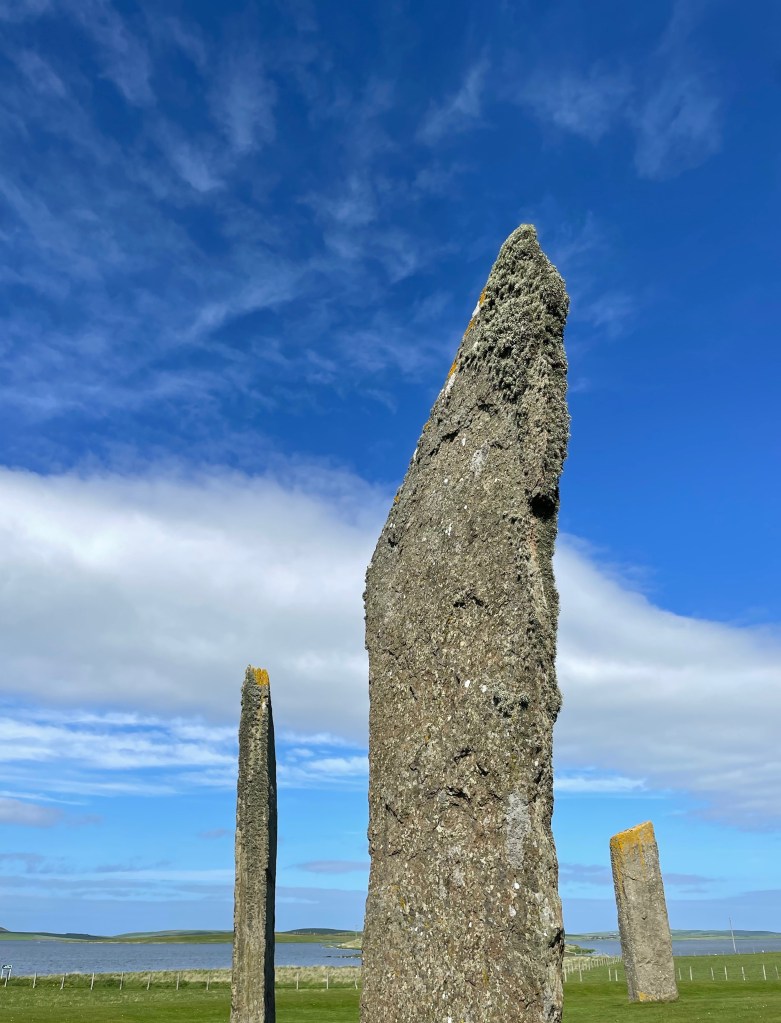
Cabbie Eddie, when Danielle told him of these shenanigans, said that these stones had nothing to do with yoga or “flower power” but instead represented the deepest beliefs of ancient peoples. He said that if you cut open the earth – or your arm – you see stone and bone covered with layers of strata, whether it is skin and muscle or earth and ruins of civilizations. This ephemeral strata comes and go while earth and bone endure and thus are deemed significant and worthy of reverence.
Before we leave Stromness for Kirkwall, here are a few photos of a simply lovely town.


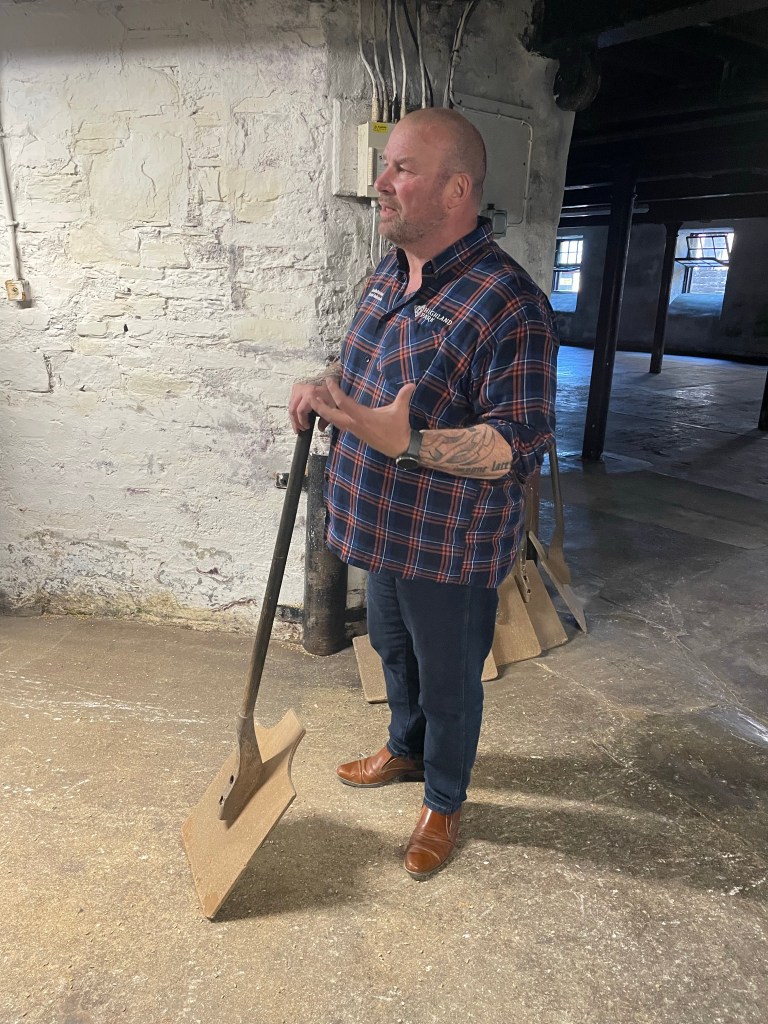
From the sublime to the whisky, I arranged a tour of Highland Park Distillery for the afternoon. I was ushered into a room with the guide and probably ten guys all standing in a circle. Some Danes, some Swedes and a Brit. The Danes had matching polo shirts with a “Prisoners of Whisky” logo which seemed rather melodramatic. I later learned it signified a posh Danish whisky appreciation group. They barely acknowledged my entrance (what?!?!) so I was determined to make them all love me and respect my whisky knowledge by the end of the tour. Spoiler alert: they did.
The guide told us of an incident that occurred a few days prior where a lorry driver who had attached a caravan to his roof drove under pipes that ran across the road and damaged them irreparably. He told us with a deeply exhausted expression that Highland Park won’t be able to resume normal operations until September. They are gradually emptying out all the washbacks, mash tuns and stills. Yikes.
Even in the face of this troubling news, the tour was fascinating as they always are. I learned that when there is the occasional “off” barrel of whisky (it happens), the contents aren’t poured down the drain because whisky has to stay in Scotland and god knows where it could end up. Rather, the bad stuff is distilled to almost 100% alcohol and sold to France for use in the making of perfume. French perfume made from bad scotch. C’est parfait.
After the tour we decamped to a lovely tasting room to have wee drams of the special edition Highland Park whiskies named after Norse gods Thor, Loki, Odin and Freya. Each dram was meant to represent the essence of its namesake god. All were cask strength and Thor was the best. I think because there were special Danes in attendance and the tour guide was also Danish, he busted out a 1968 bottle currently going for £ 5,000. It was good, yes, but in my estimation Thor prevailed. An old whisky is not necessarily the best whisky, it’s just the most expensive.
The guide told us of a time a beer company in Norway sued Highland Park because they had a beer named Thor and they thought people might be confused. This is a stretch of a legal argument even for our litigious country. Since Highland Park is owned by the same company that owns Macallan and others, their lawyers are pretty heavy duty compared to those of the small Norse brewery. Everyone got together in a room and agreed to settle if Highland Park gave each of the lawyers on the other side, and the brewery owners, a few bottles of the very rare Thor. Case dismissed.
Everyone was presented with a framed certificate with their name on it at the end of the tasting. It will be displayed next to my law school diploma.

In my cab ride home, I asked the driver what he thought the weather was going to be the next day for our trip to Westray. He said, “I’ve lived in Orkney for forty years. When it rains, it’s raining. If the sun is out, it’s sunny.” Alrighty then.
 Wee Dram of Scotland