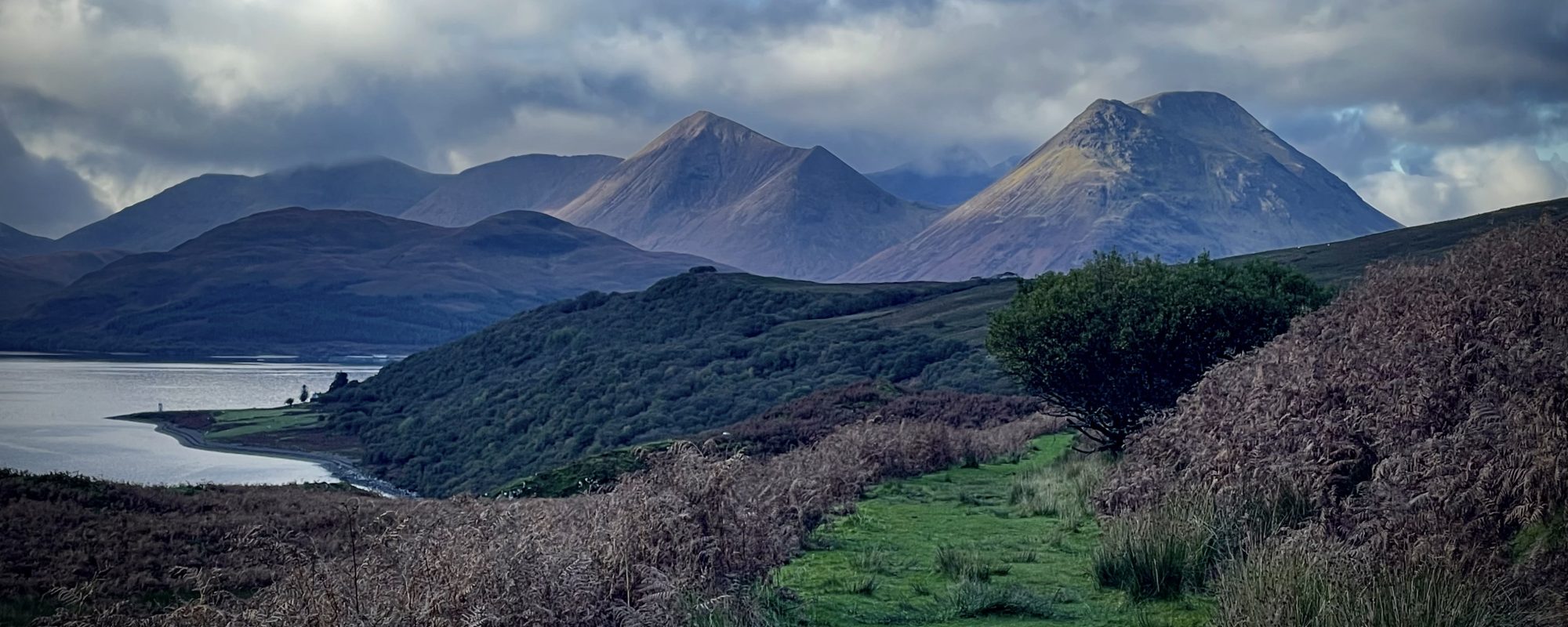
While I do wish I were still in Scotland, I’ve been back stateside for a couple of weeks enjoying a minor, but dumb virus I caught on the flight home (people were hacking up lungs all around me – could I have put on a mask? Why yes I could have.) Being a completist, it’s my pleasure to welcome you to the final blog posts of this trip in which I join some boon companions for a lovely guided walking tour around the Isles. To give you an overall sense of how it all went, at the end of each day, our Kiwi compatriot Barb announced, ‘This was the BEST day.”
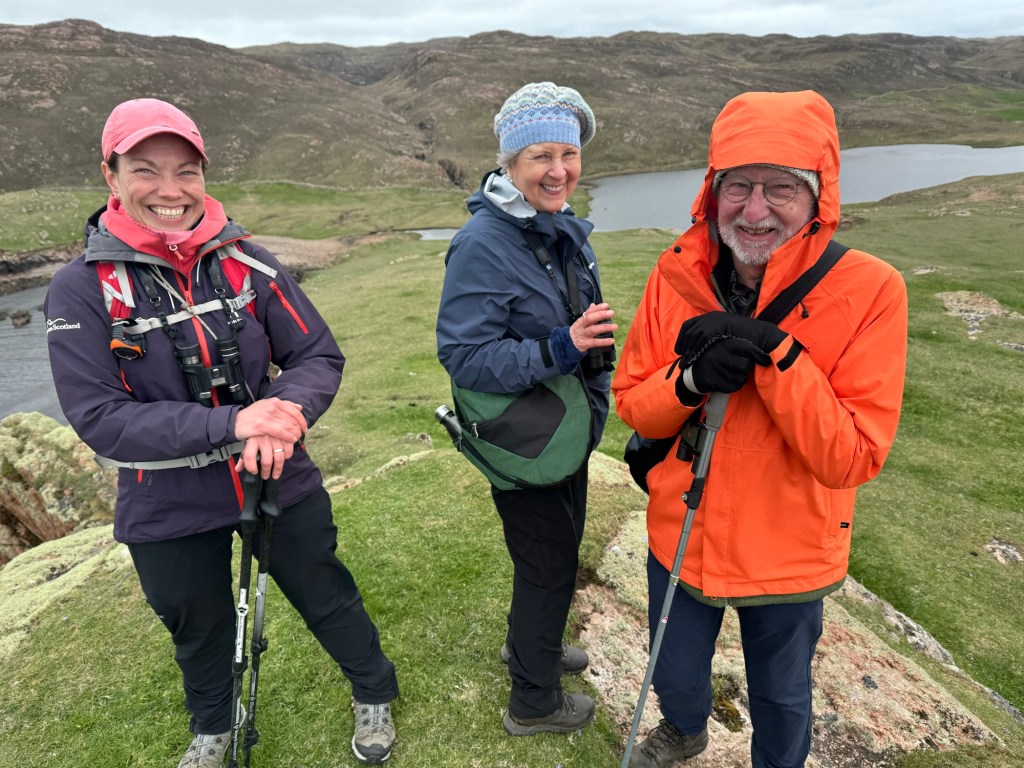
I met my fellow voyagers at the Holmsgarth Ferry Terminal in Lerwick where they had just disembarked from the overnight ferry from Aberdeen. We were an intrepid troupe of seven, a couple from New Zealand, a couple from the Scottish Borders who had moved from Wales in solidarity with the Scots’ (futile) vote against Brexit, and a couple from Boston. Our guide was a fabulous woman named Kirsty, who lives in Aviemore and has guided for Wilderness Scotland for years.

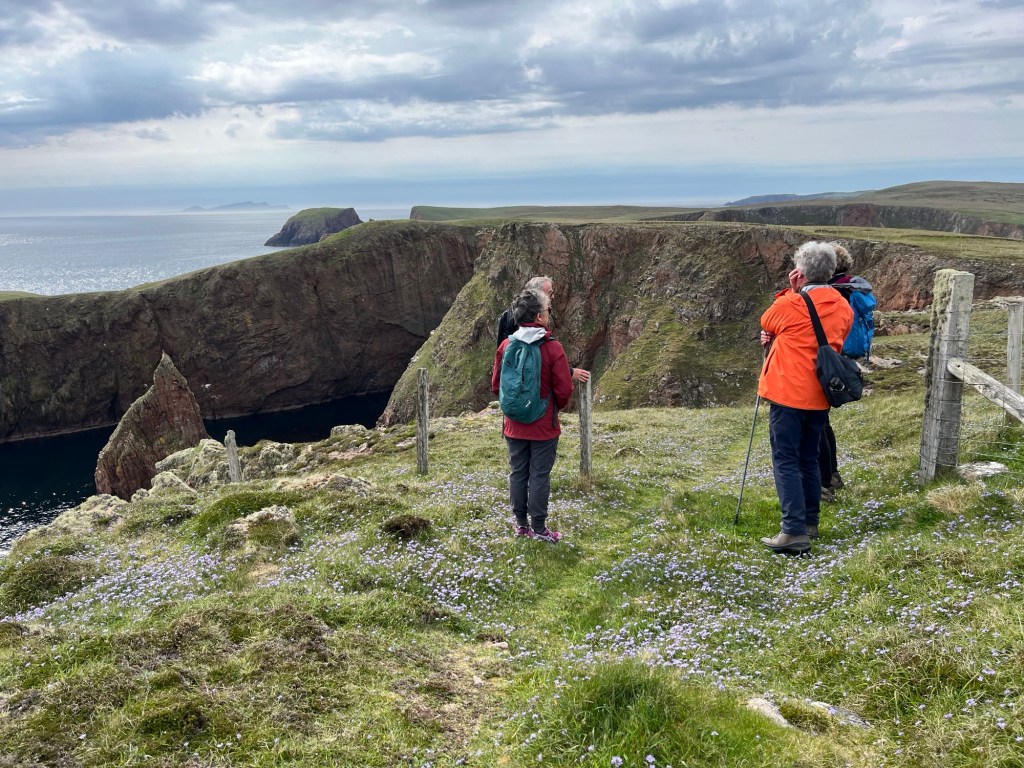
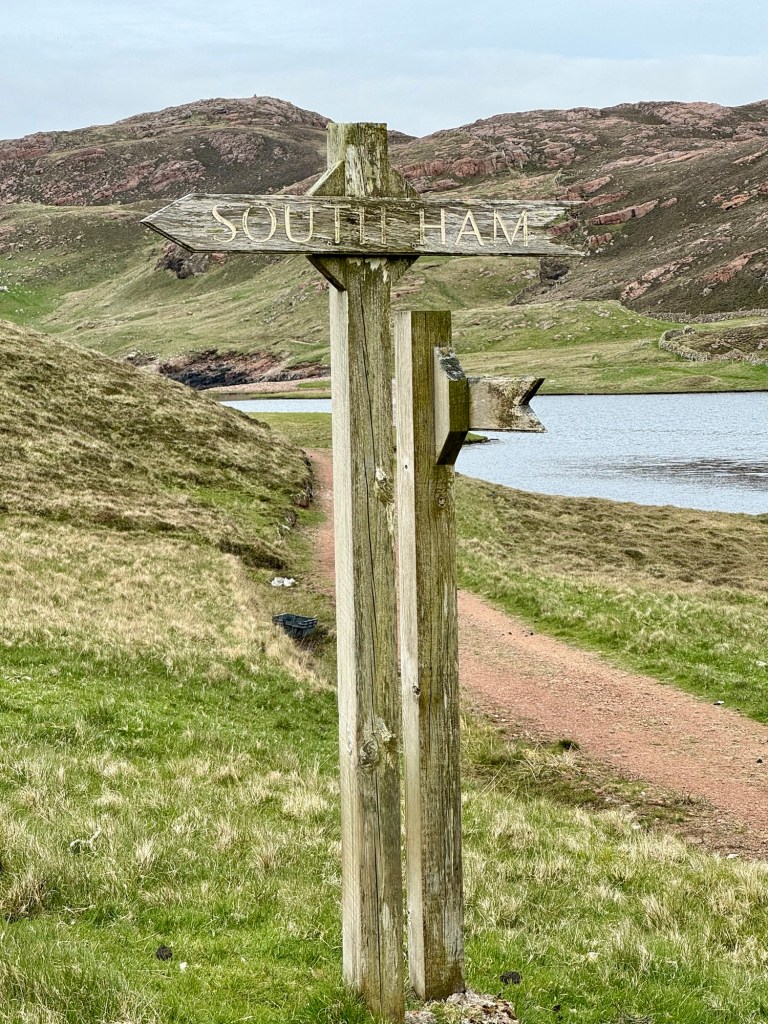
Our break-in walk was the Hams Circular on Muckle Roe, and just a warning, town names on Shetland are generally delightful. Just a taste – Brettabister, Bridge End, Dale of Walls, East Hogaland, Fladdabister, Funzie, Heglibister, Oddsta, Skarpigarth, Southpunds, Stebbligrind, Wadbister, Virkie and, weirdly, Ireland, and everyone’s favorite, Twatt.

The suffix “bister” is Old Norse for dwelling or farm.
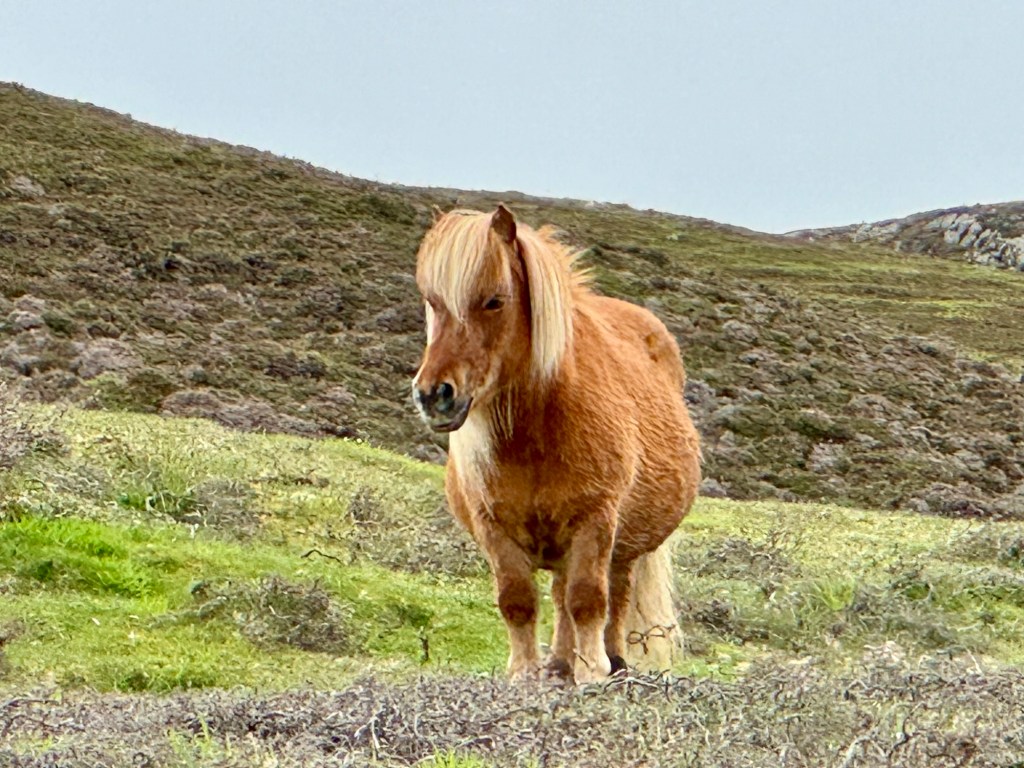
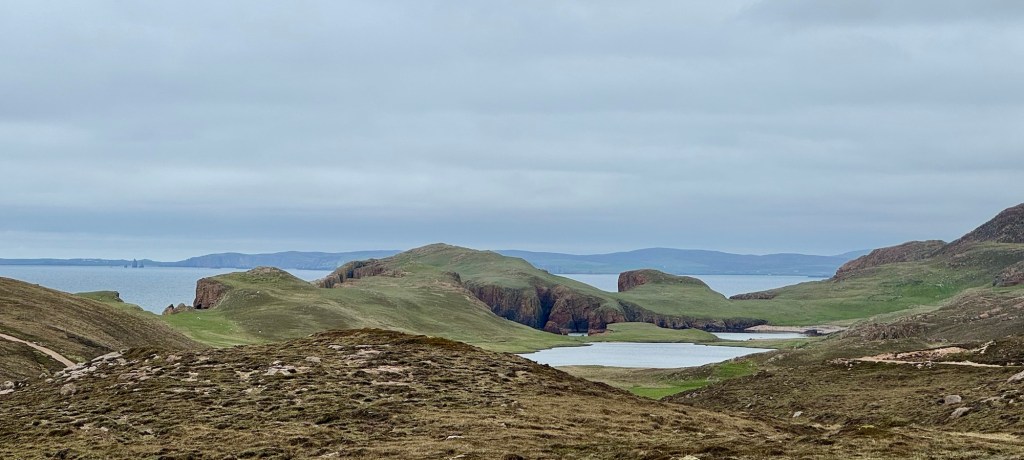
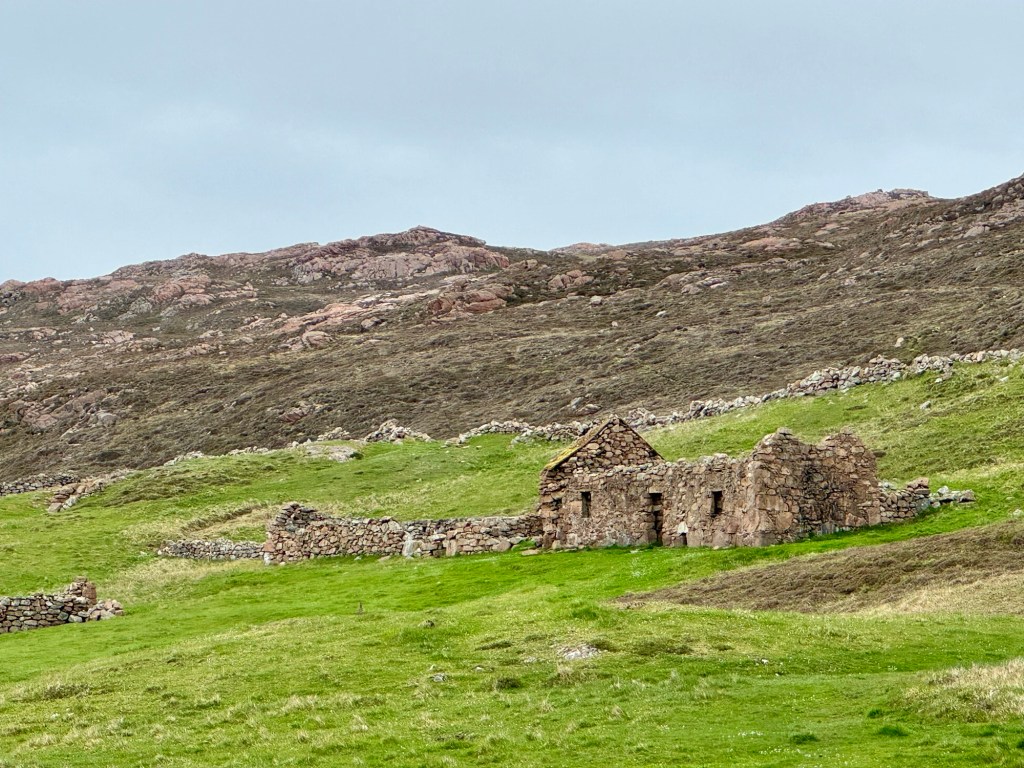
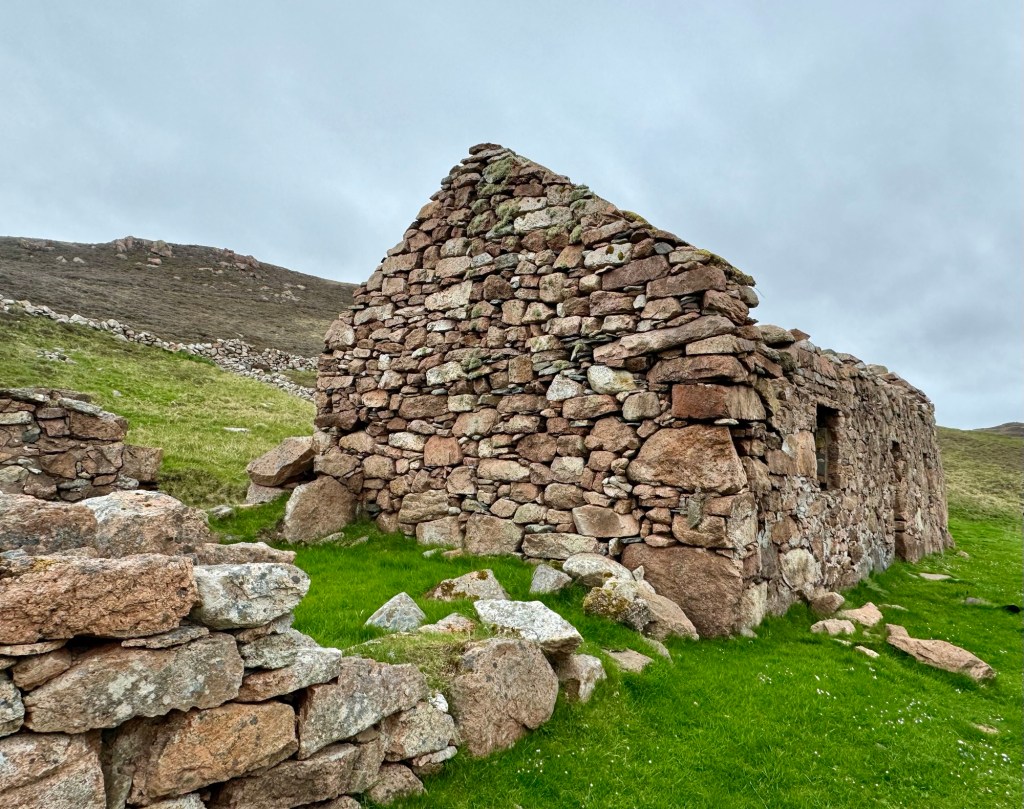
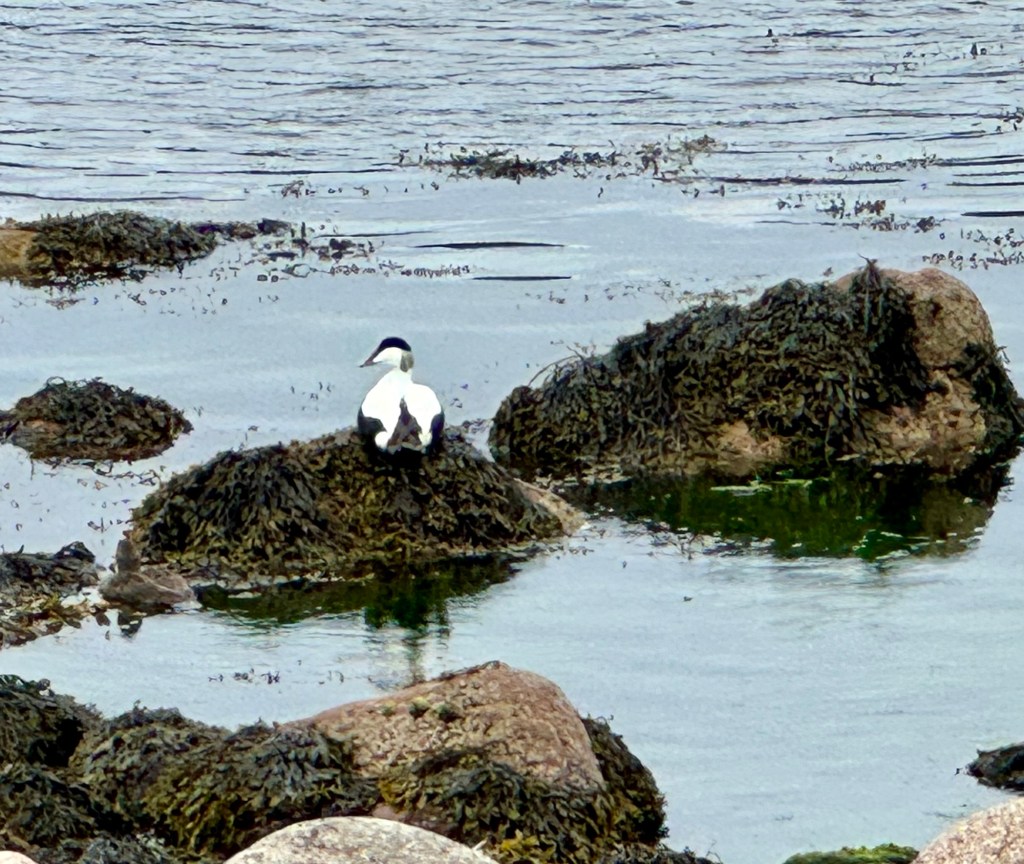
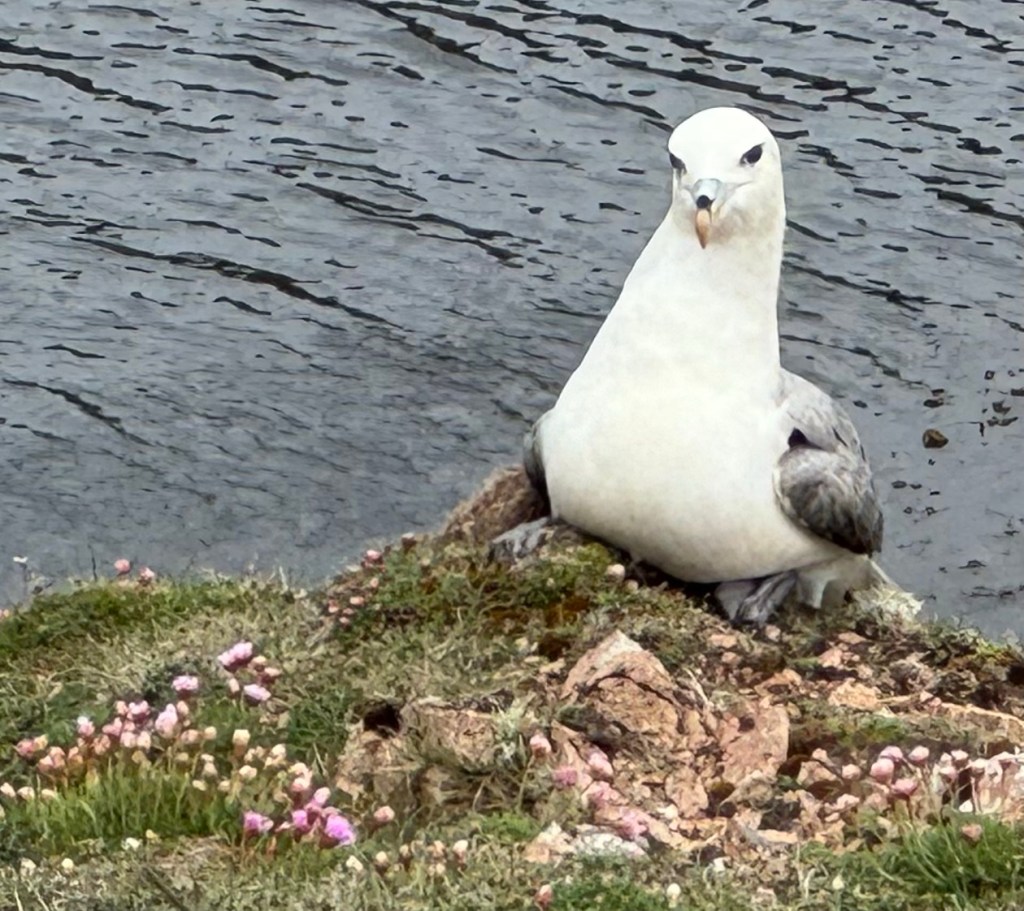
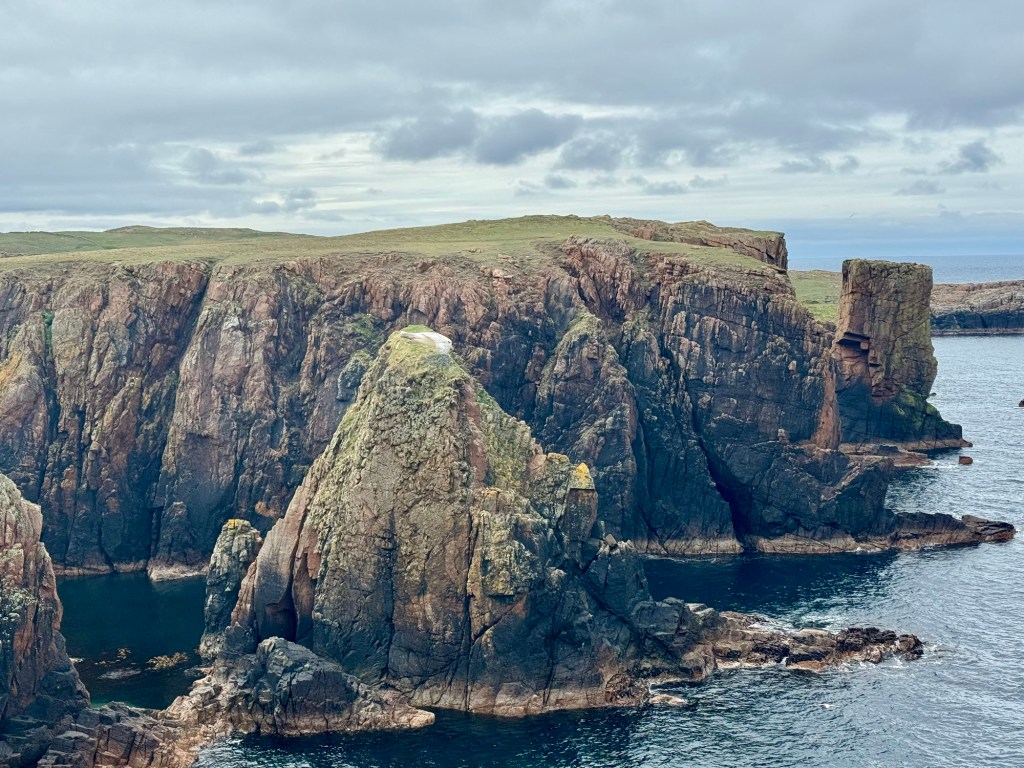
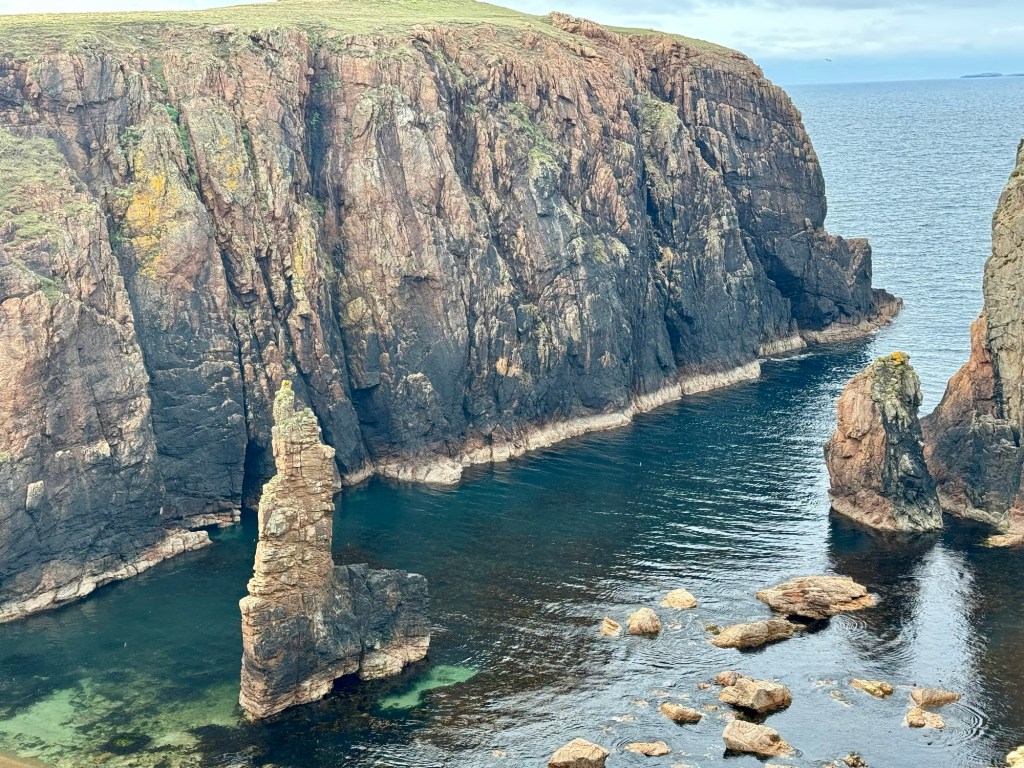
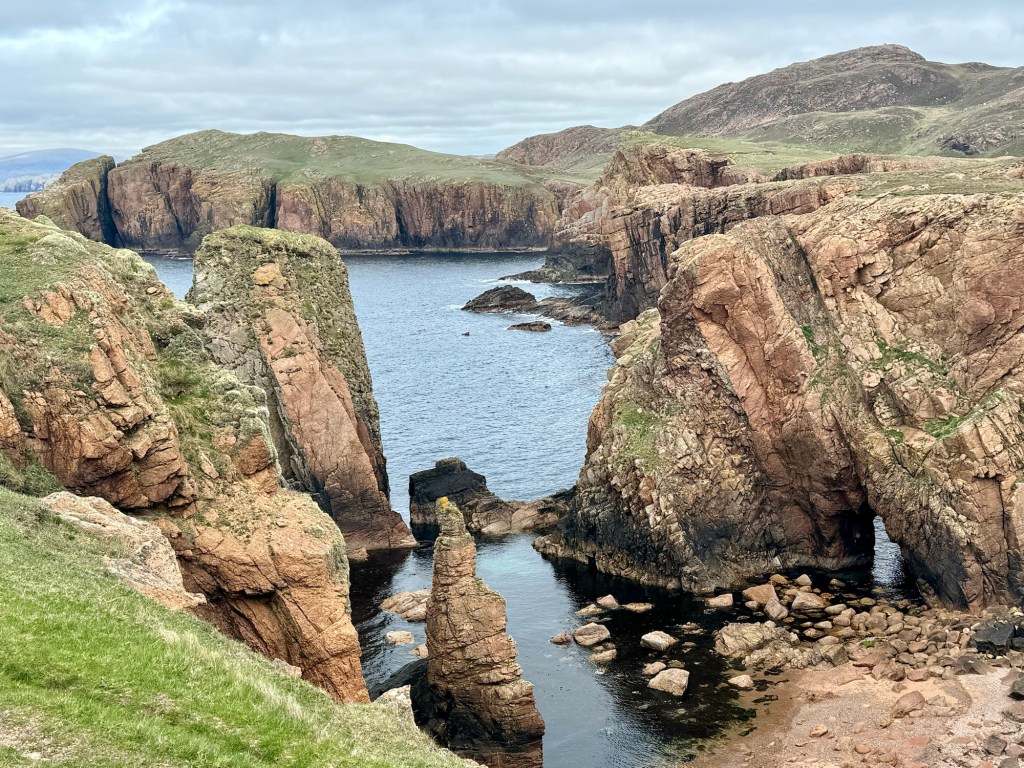
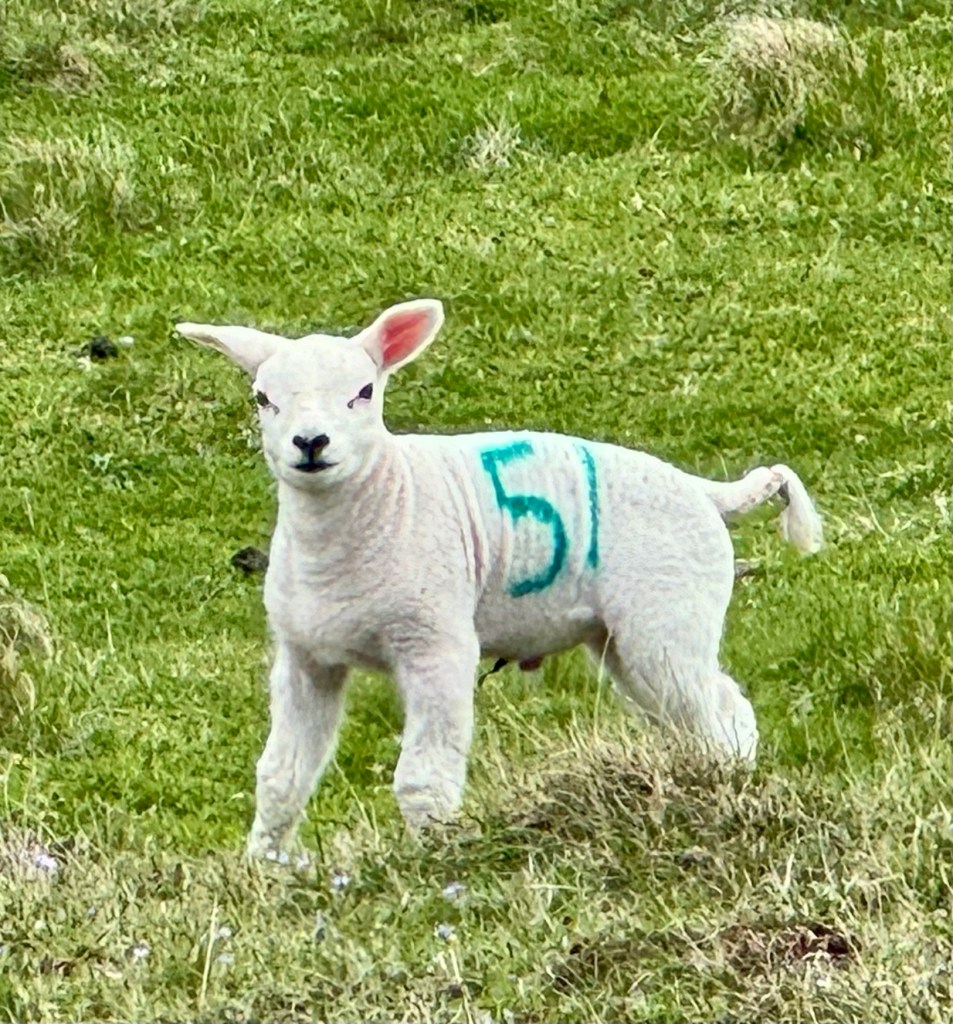
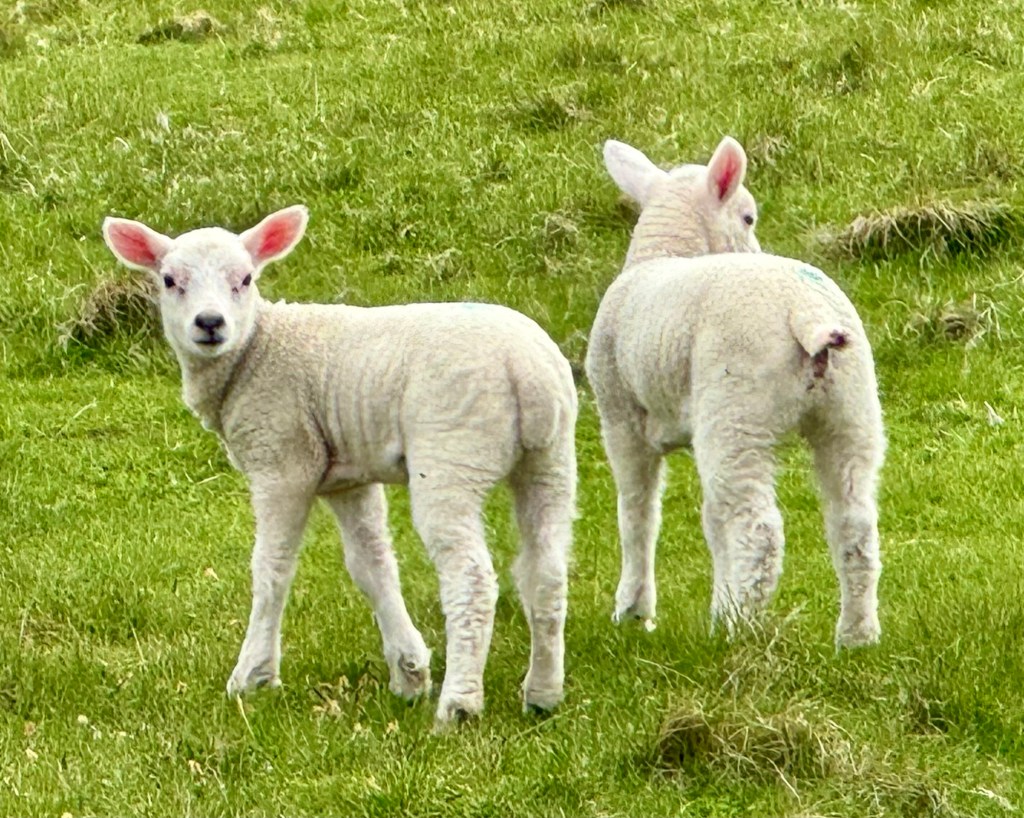
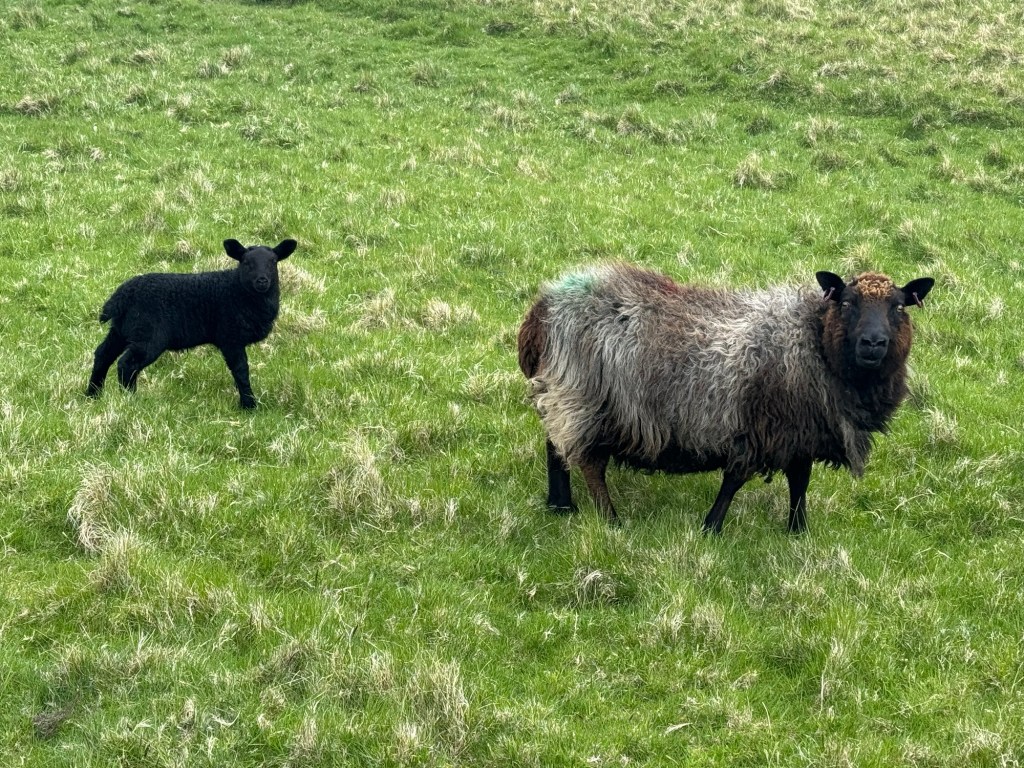
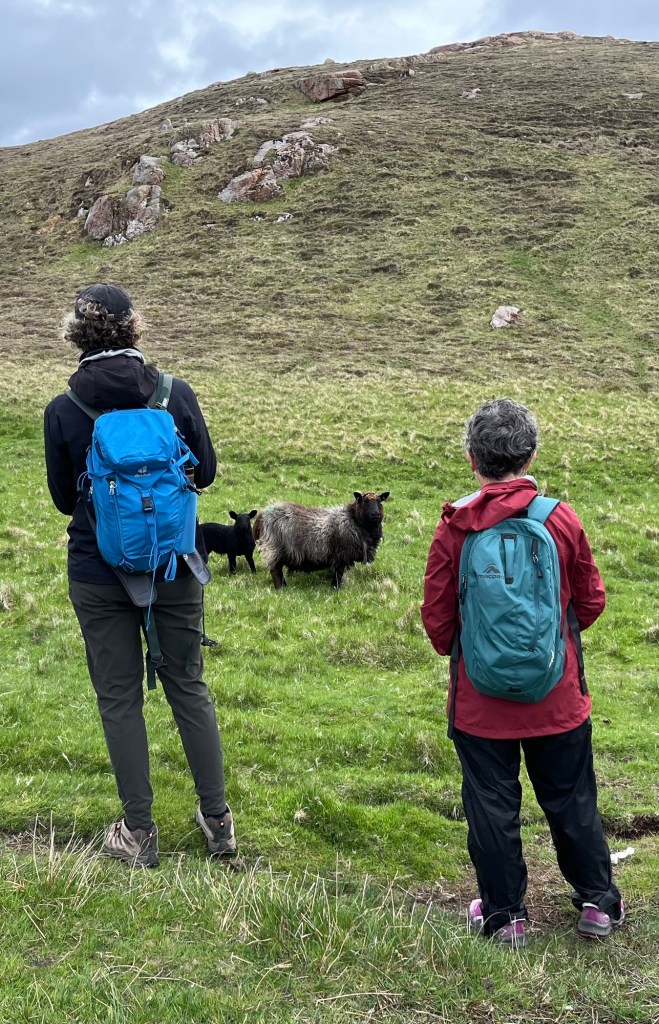
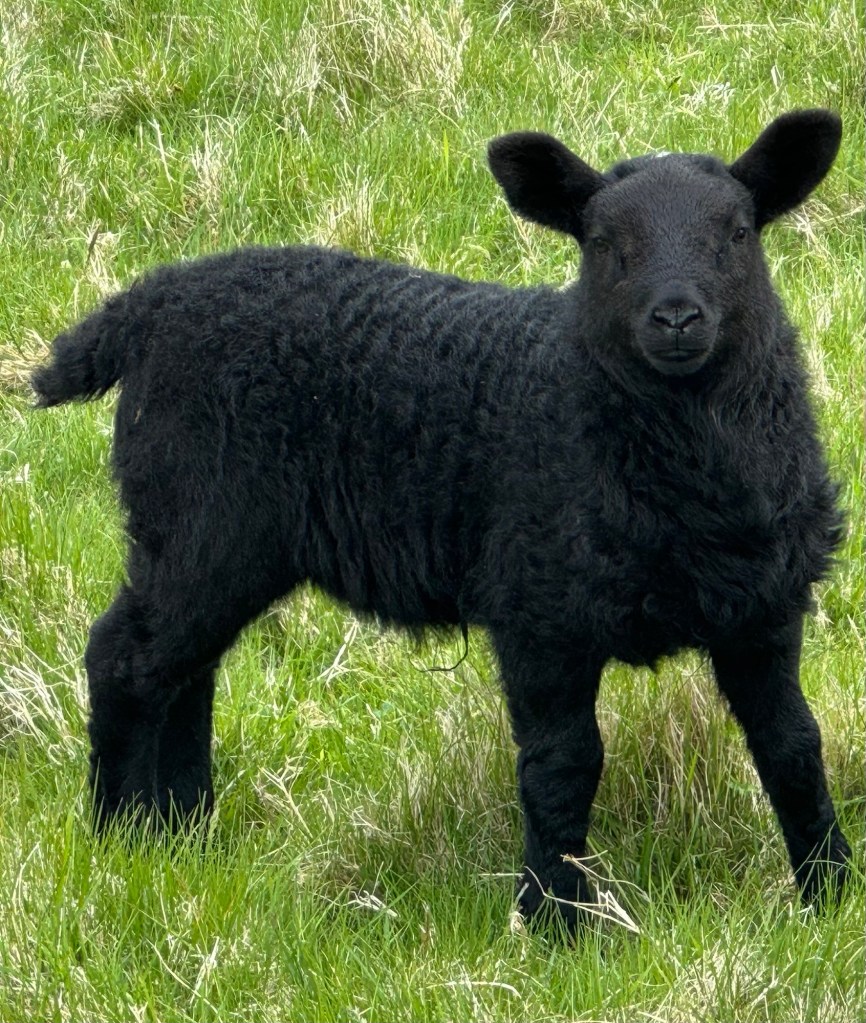
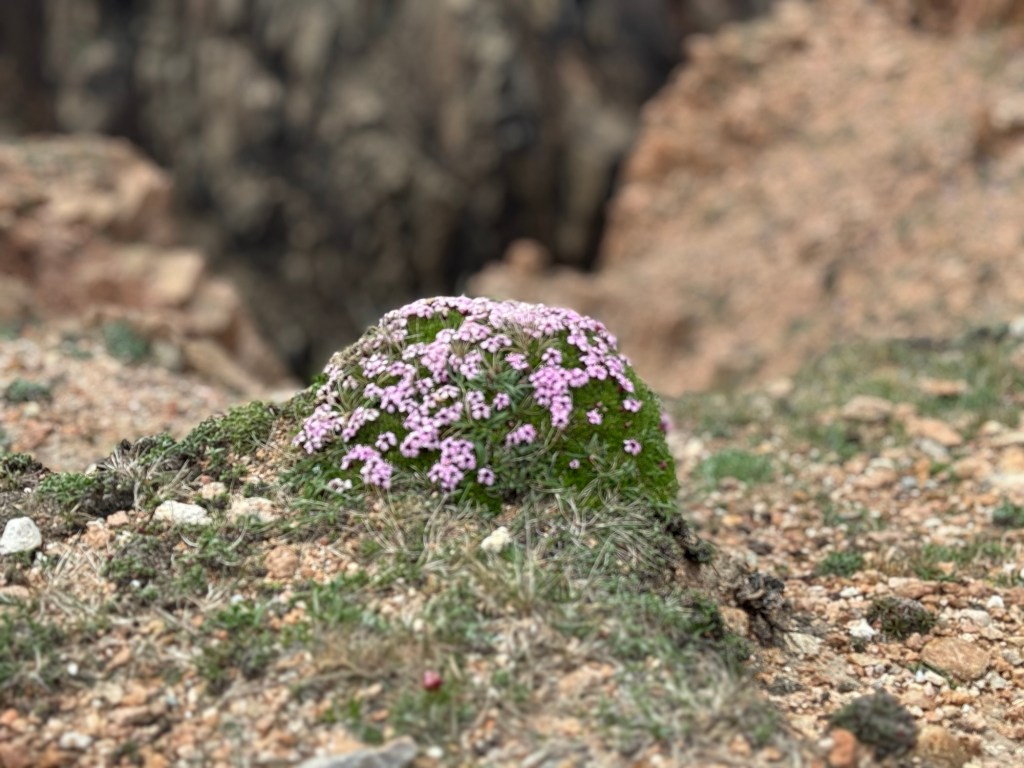
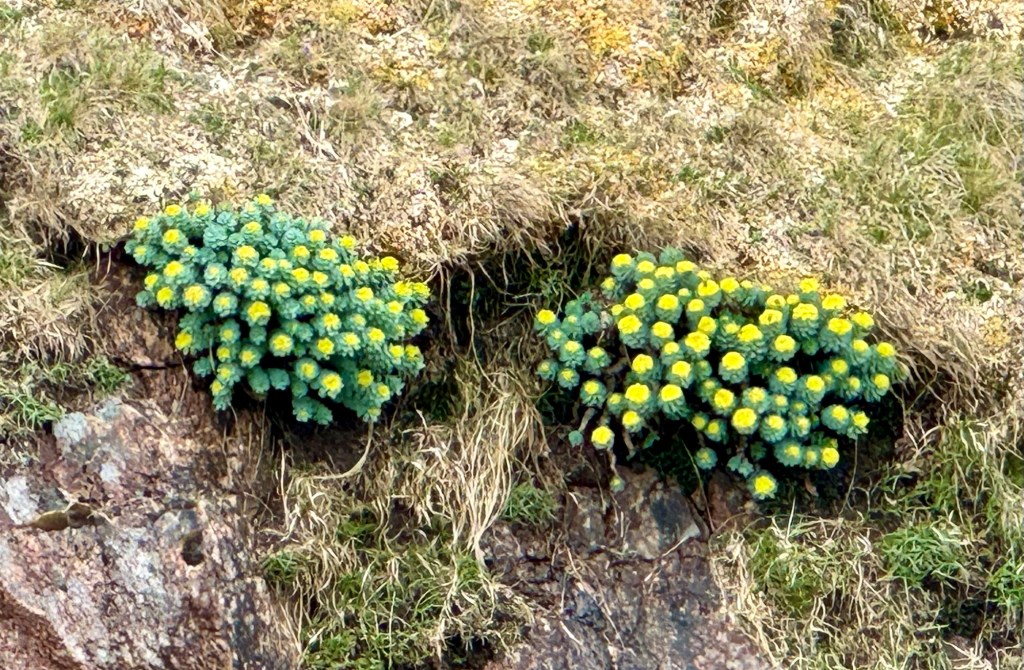
We walked across active peatlands to cliffs overlooking the sea, passing croft ruins, wildflowers, sheep and seabirds along the way. And of course a pony because Shetland.


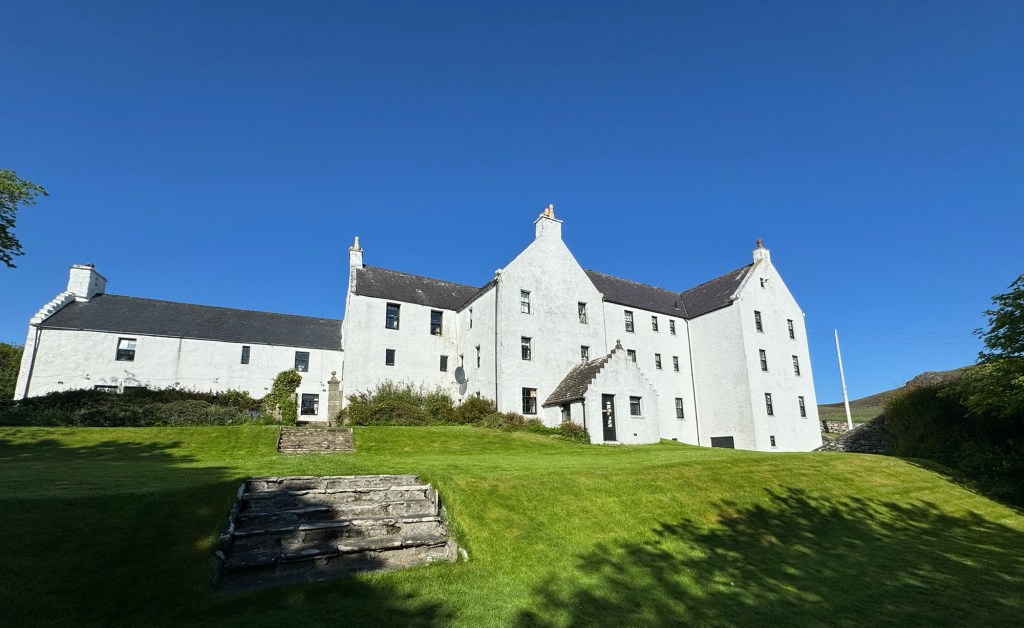
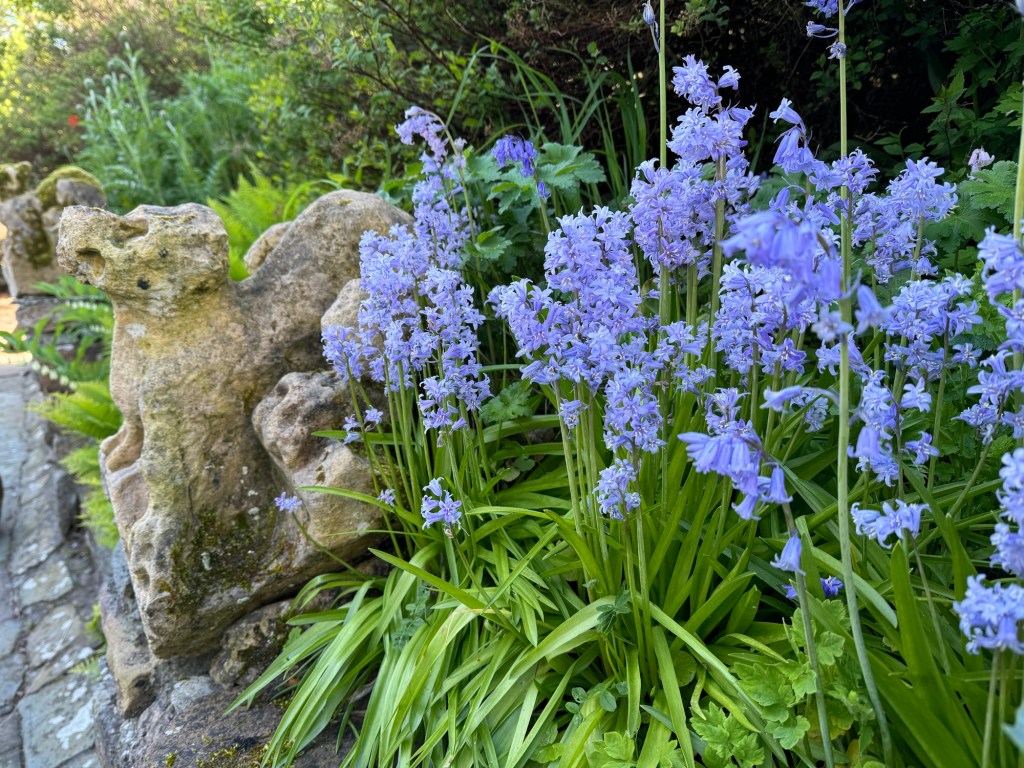
After our lovely walk, we checked into our lodgings for the week, the Busta House Hotel in Brae, which was loaded with personality. The earliest part of the house was built in 1588 by John Gifford, a minister. In the 1950s the house was purchased by a member of parliament, and he was able to rescue, and install around the garden, gargoyles from the House of Commons which were being discarded during renovation work to repair wartime bombing damage. The Queen stopped by for tea in 1960, parking the Royal Yacht Britannia at the dock behind the hotel. A ghost named Barbara haunts the place, but honestly the backstory is too long and overly complicated and not that compelling.

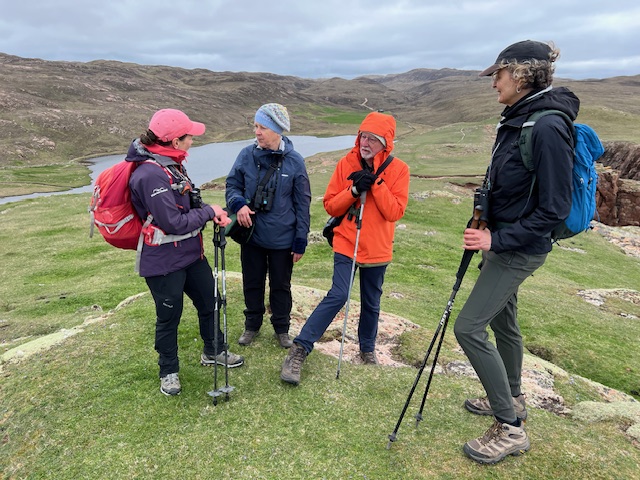
A brief word about my companions for the week. The Kiwis, Barb and Brent, spent some time in the Bay Area but now are back in New Zealand. Barb was very talkative and a funny storyteller always there with a little quip. Brent was the silent and reserved type but had a twinkle in his eye. When called into service he could be as funny as Barb with a finely honed sense of comic timing. Barb was a retired teacher and Brent had the foresight to be writing code for Apple around the time the first iPhone was released. I didn’t work this out until halfway through the trip, at which point, under the relentless pressure of my questioning, Brent finally shared that some of the code he wrote is in all of our phones and its job is to move photos around. Of course me: “Did you know Jobs?” Brent: “I held the door open for him once.” Pause. “He said thanks.” Barb said the best thing about being an Apple spouse in those days was the parties, the worst was the secrecy. She wasn’t allowed to visit Brent in his office or even raid the kitchen of its free food, much to her dismay.
The best bit of New Zealand slang I learned from them was “long drop,” a much more descriptive way to refer to an outhouse.
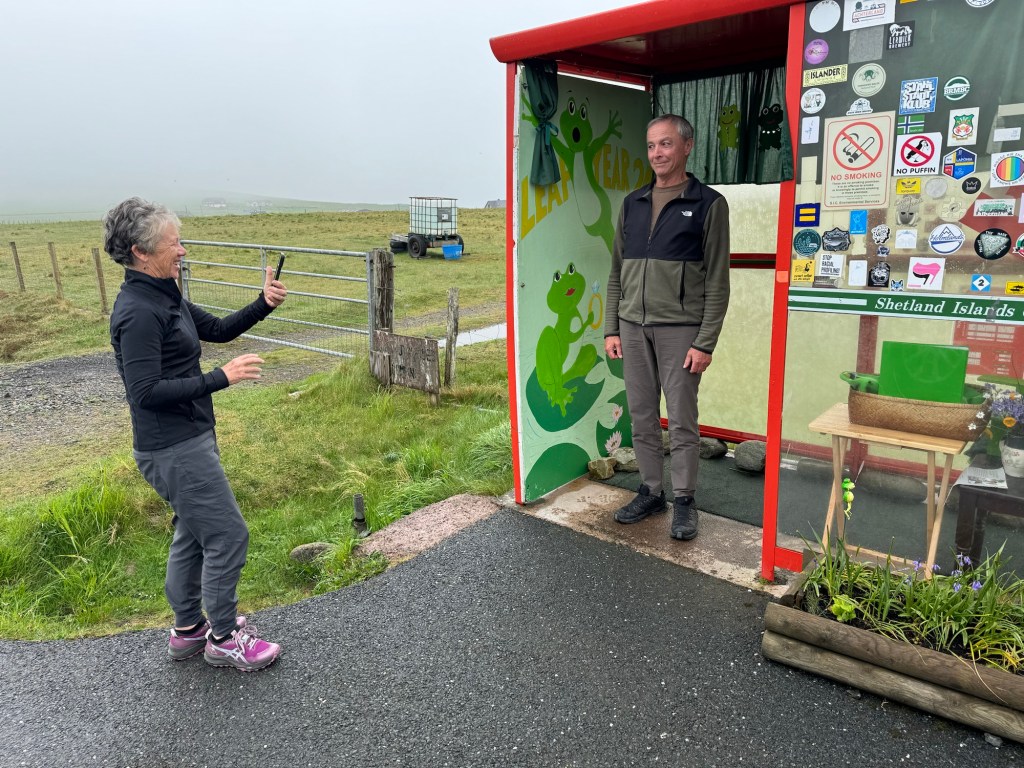
The Brits, Richard and Jill, were also a well-oiled comedy duo. Richard is a retired solicitor. They were both quite lovely and talkative and had worked out a conversational style over the many years of their marriage whereby Richard would carry the main points of a story while Jill would serve as the chorus, speaking over Richard, sotto voce, somehow not interruptive but rather additive. Color commentary as it were, delivered often with her head tilted back and a hand brushing back a strand of hair. It made me laugh every single time.
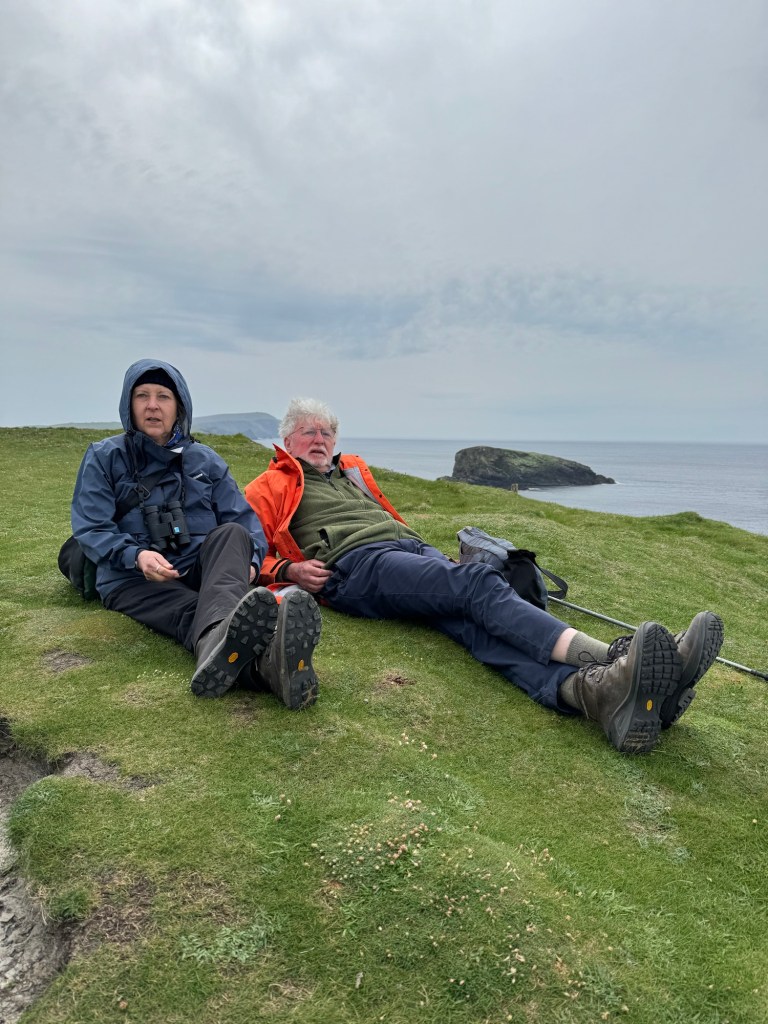
The Boston couple were dealing with a sad health situation. Bob, another retired lawyer, was suffering some neurological issues affecting his balance and cognition and his wife, a stoic woman of sturdy New England stock, was doing her best. He did not often join us and she split her time between staying with him and coming along on our walks. They seemed to enjoy themselves even with everything and the Wilderness Scotland folks arranged other activities for them.
Everyone was aligned politically which added a lot of freewheeling spice to our conversations.
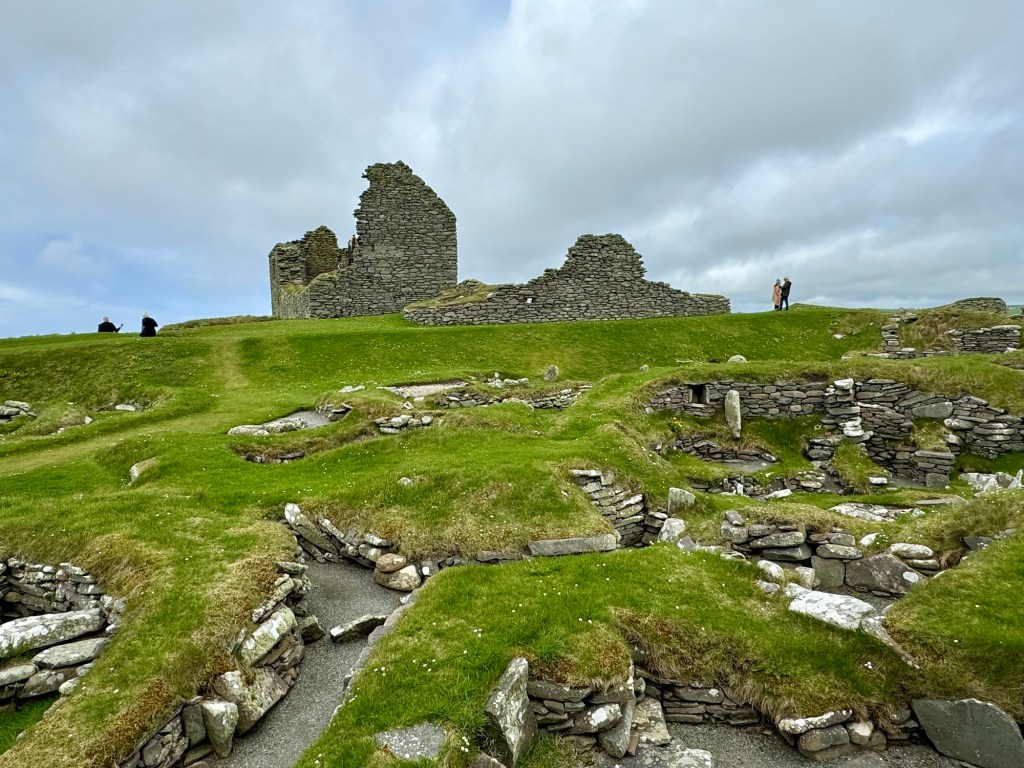
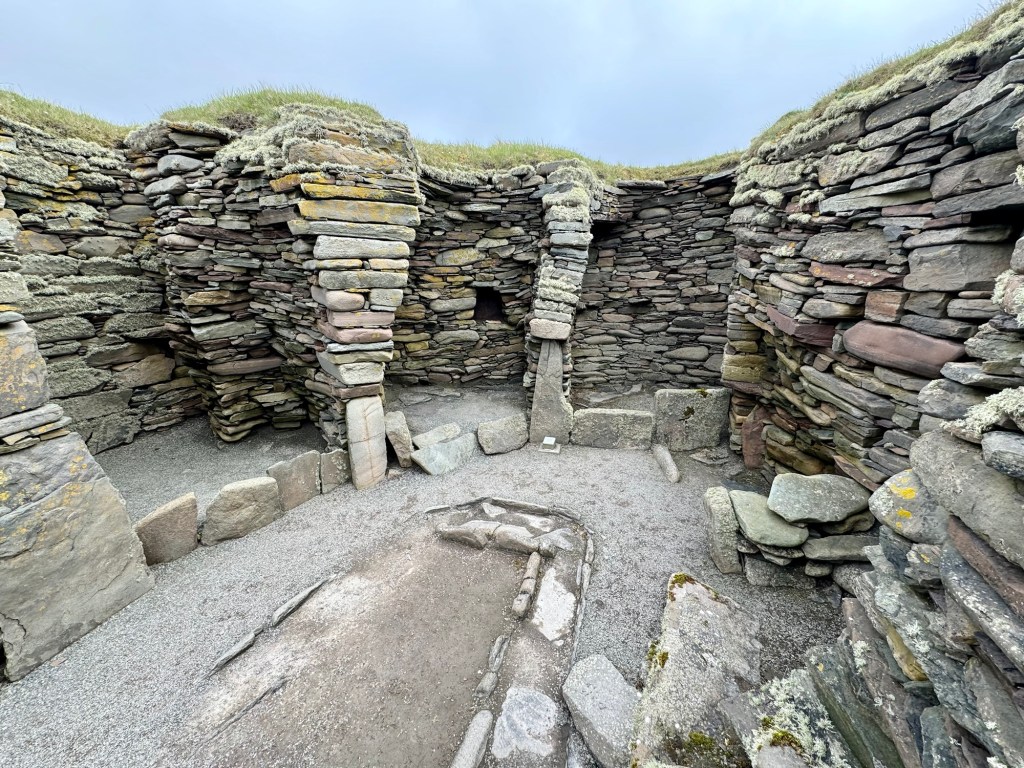
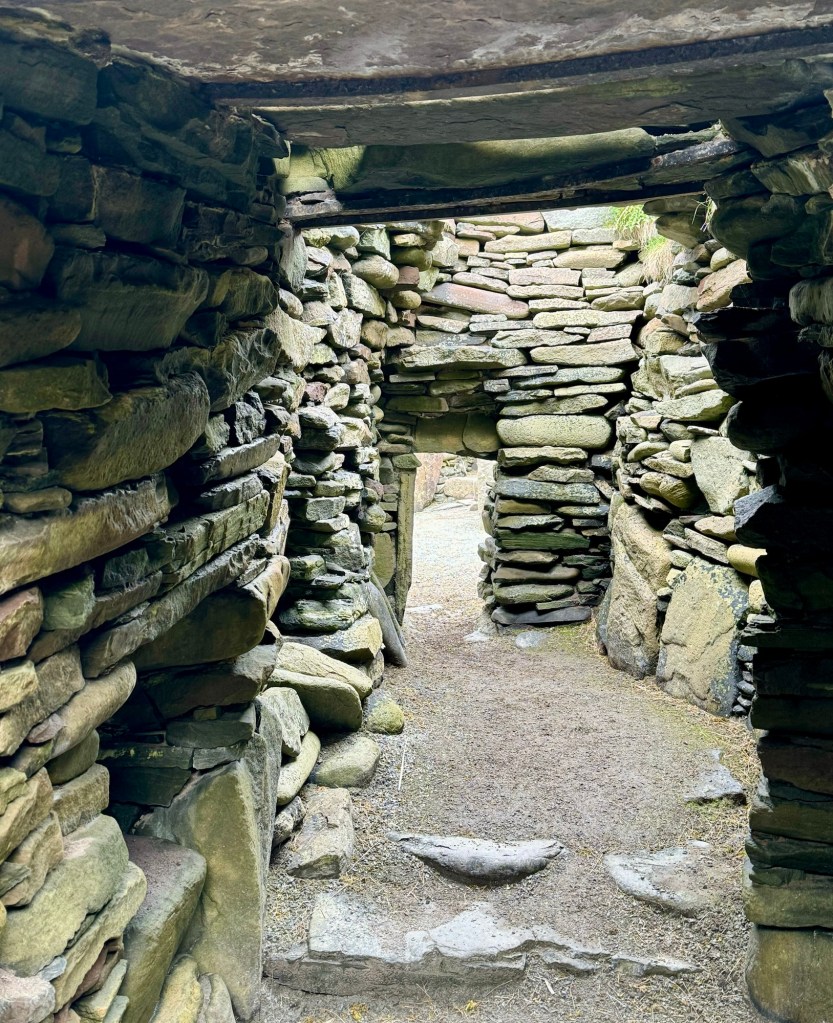
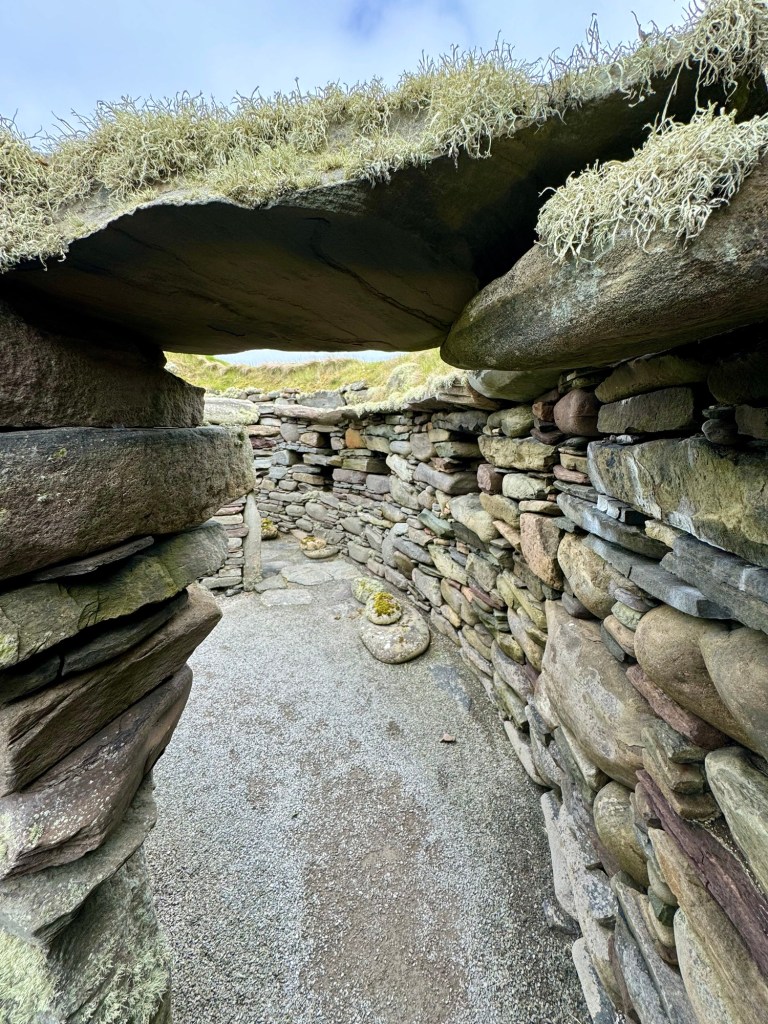
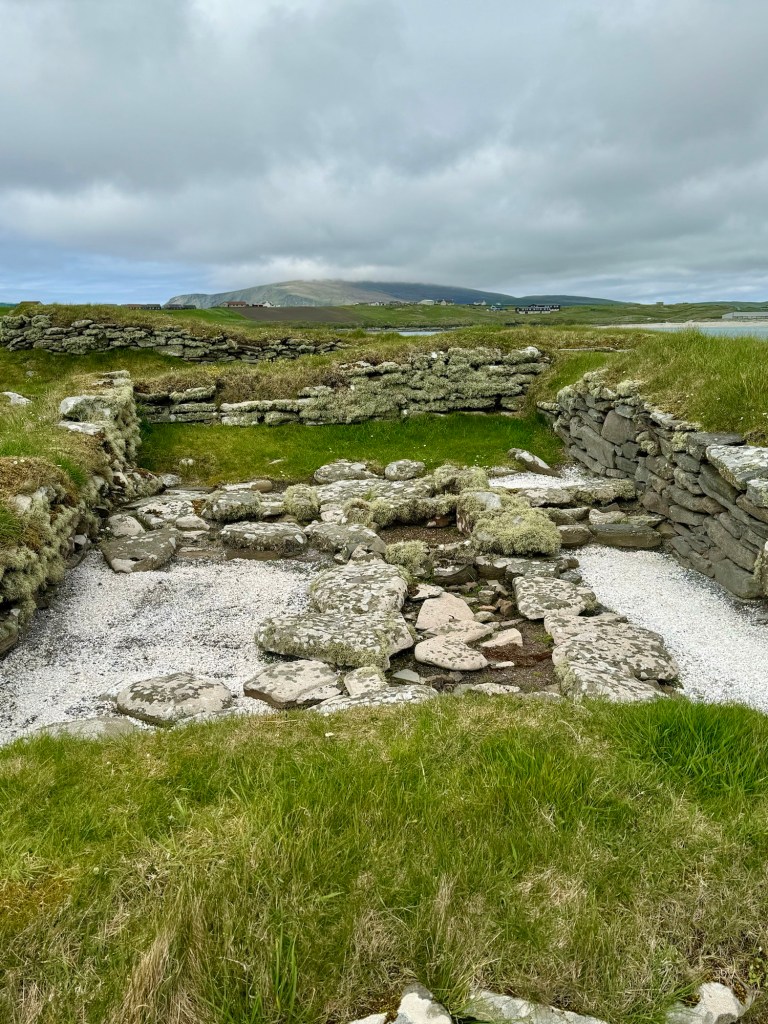
The following day we visited Jarlshof, the best-known prehistoric archaeological site in Shetland, walked up to the Sumburgh Head Lighthouse in search of puffins and continued on up and over a hill behind the airport. What? I know, it’s so crazy, but there are ancient ruins in two separate locations a mere stone’s throw from the airport. The past and the present live in close quarters on an island with 5,000+ years of human history.
Jarlshof contains ruins dating from 2500 BC up to the 17th century and is sort of a microcosm of Shetland history. It means “Earl’s Mansion” which was coined by, who else, Sir Walter Scott who visited the site in 1814 and based it on the Scottish period name of “the laird’s house.” Similar to the discovery of Skara Brae in Orkney (see previous blog entry), the remains were discovered after a storm washed away part of the shore. Formal archaeological excavation began in 1925 and discoveries included a Bronze Age smithy, an Iron Age bothy and roundhouses, a complex of Pictish wheelhouses, a Viking longhouse and a medieval farmhouse, each visible in turn as you ascend the small hill, one age atop the next like a time machine layer cake.

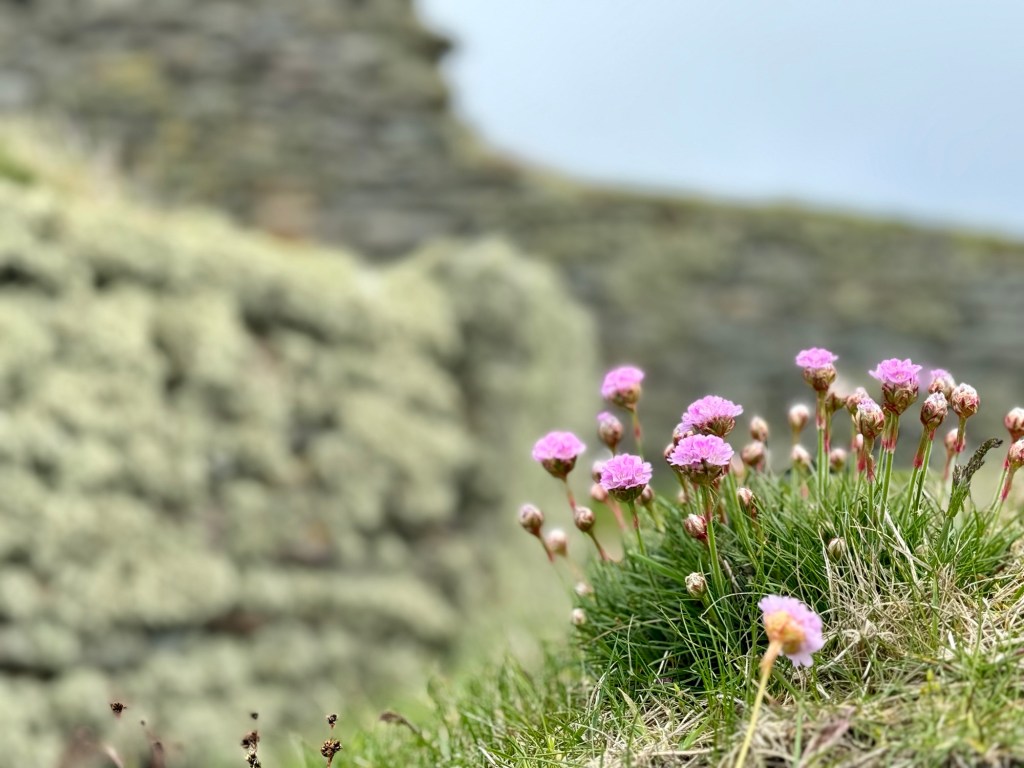
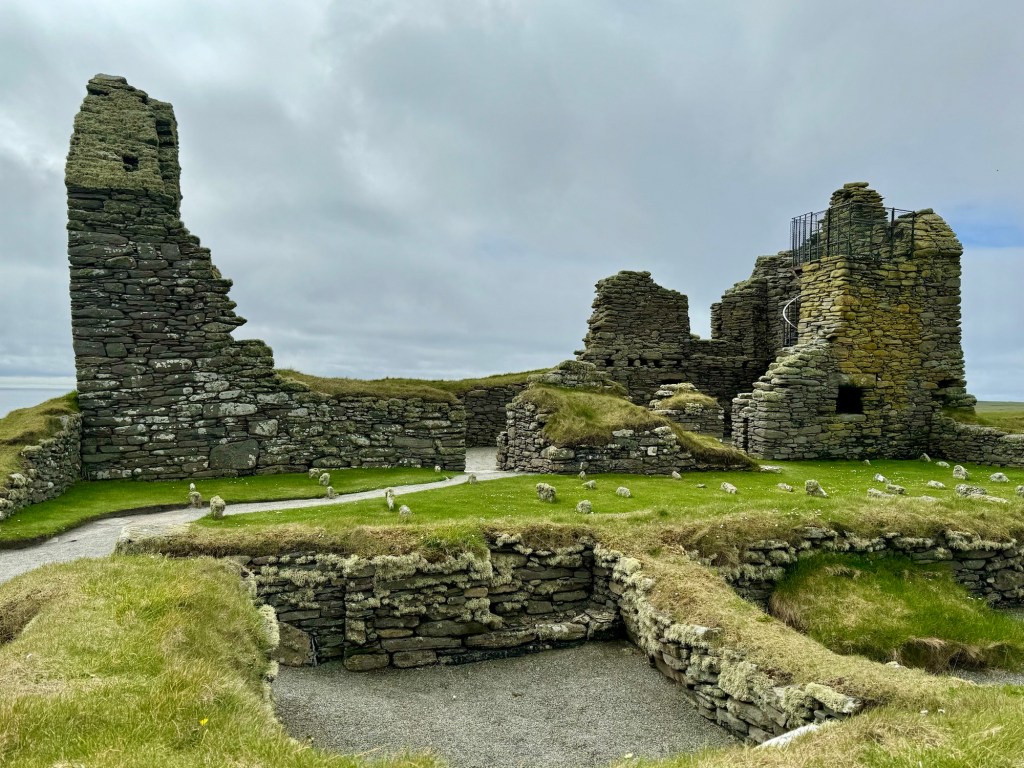
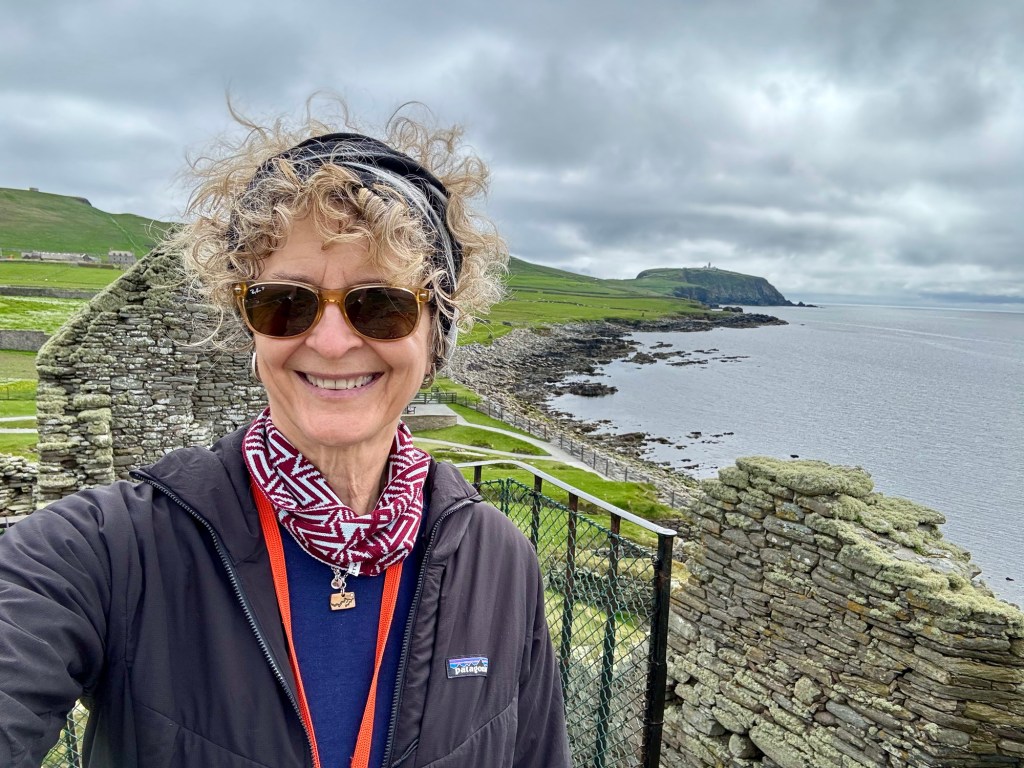
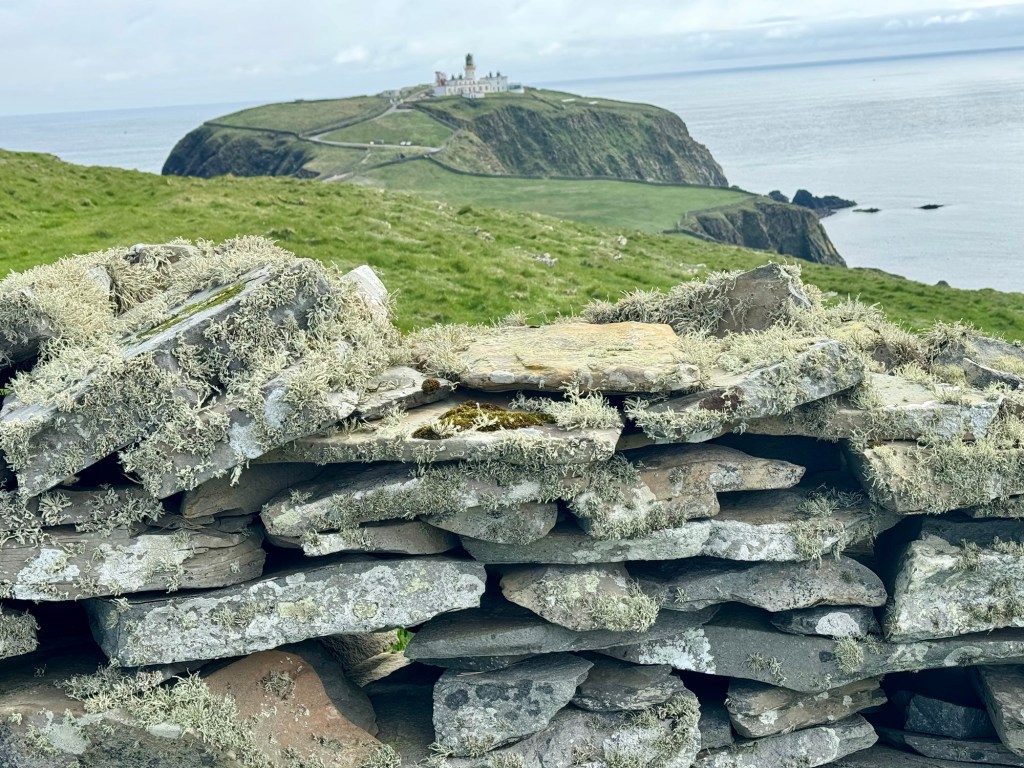
We walked from Jarlshof up to Sumburgh Head Lighthouse, another of many of Shetland’s nesting grounds for numerous species, including ….. puffins!!!
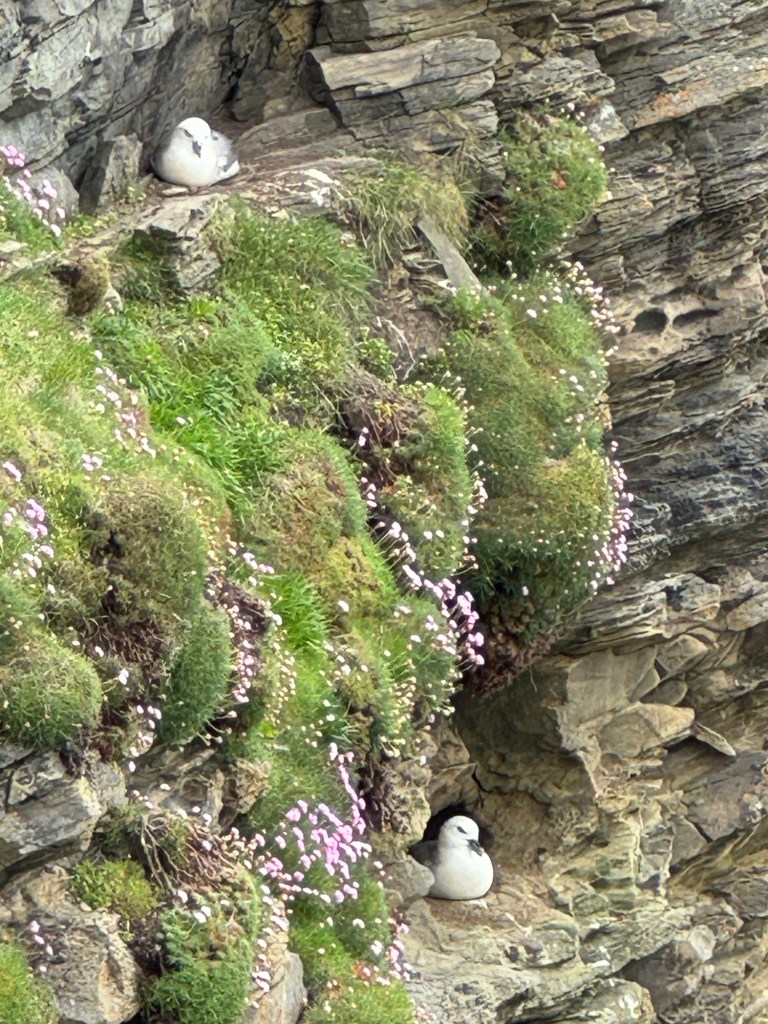
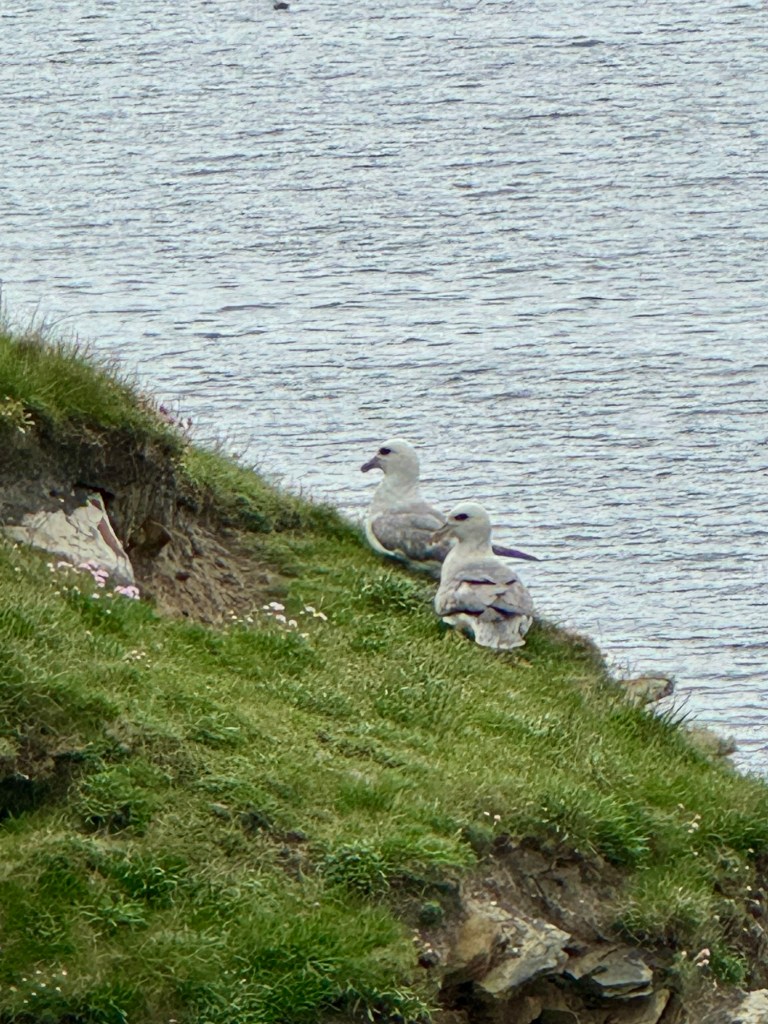

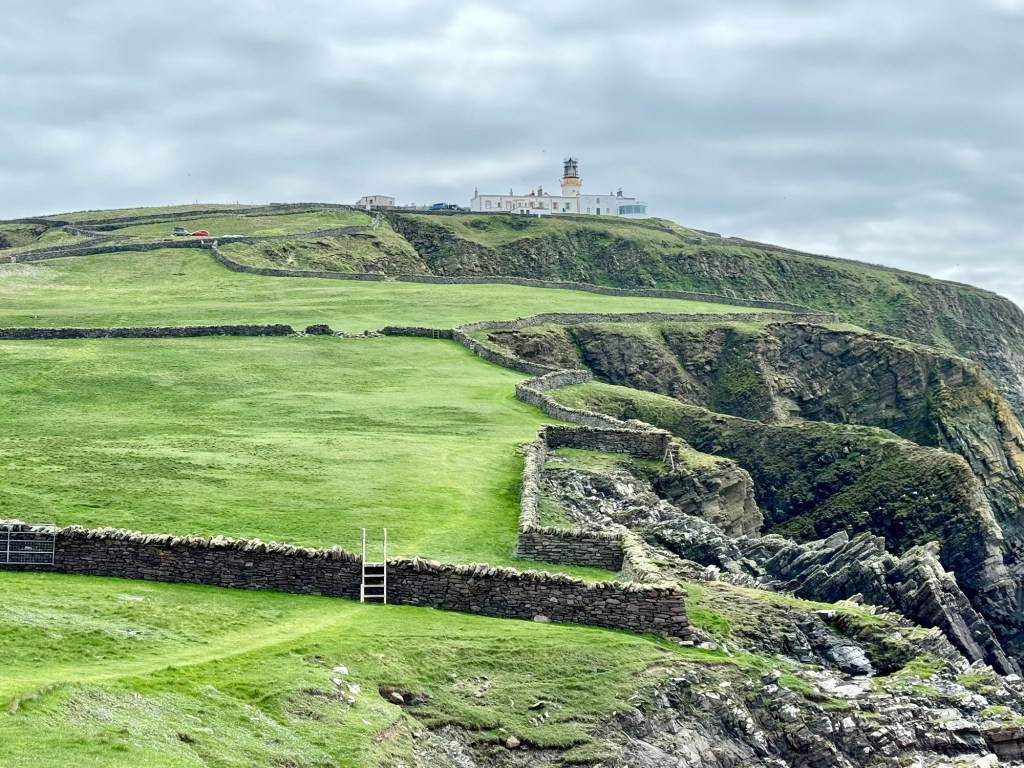
We saw loads of puffins floating in the ocean in groups, and flying around the cliffs. They fly like you would imagine, a bit off-kilter, comical and flappy. Puffin wings are on the small side, so for them to stay aloft their flappers must be deployed at the rate of 400 beats per minute. This is not an impediment by any means, as puffins can fly up to 55 miles per hour and can dive to depths of 200 feet in search of fish. They spend two thirds of their year out at sea, coming back to the same burrow every year, where they lay exactly one egg. While they mate for life, they enjoy long-distance relationships, heading out to sea on their own and reuniting yearly to mate and raise their puffling. And while they are away they lose their bright beaks and the black markings around their eyes, which would render them rather difficult to identify. Interestingly, researchers know very little about their lives at sea so who knows what they are up to.
Now, I don’t know how many of you follow puffin-related instagram accounts, but if you do, you are treated to amazing close-up pictures of these adorable guys doing adorable things. Well – that’s because the photographers have ginormous cameras and are very very patient.
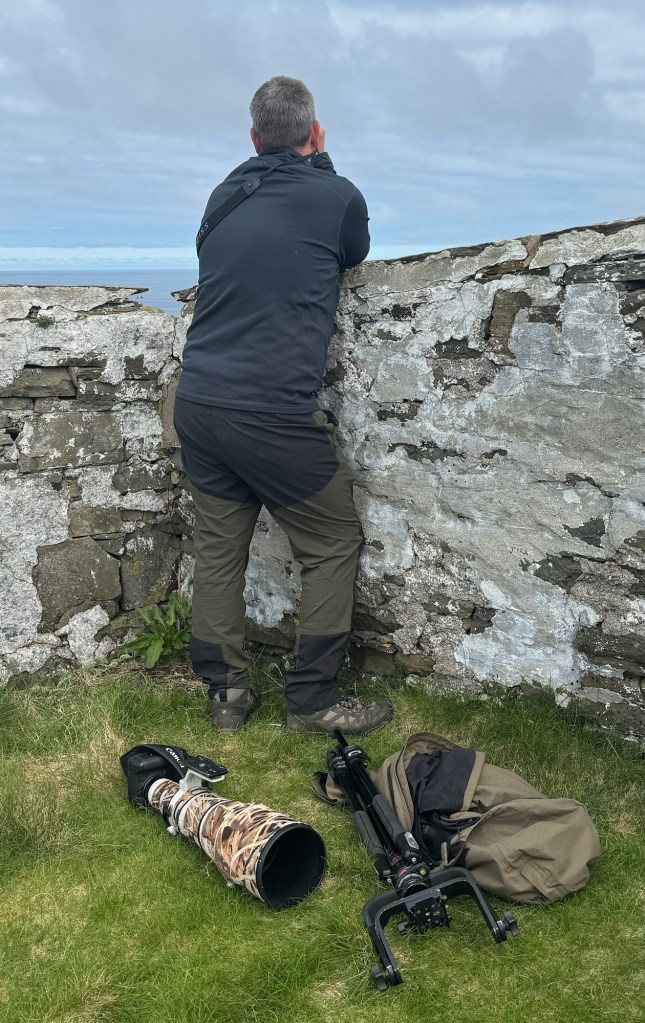
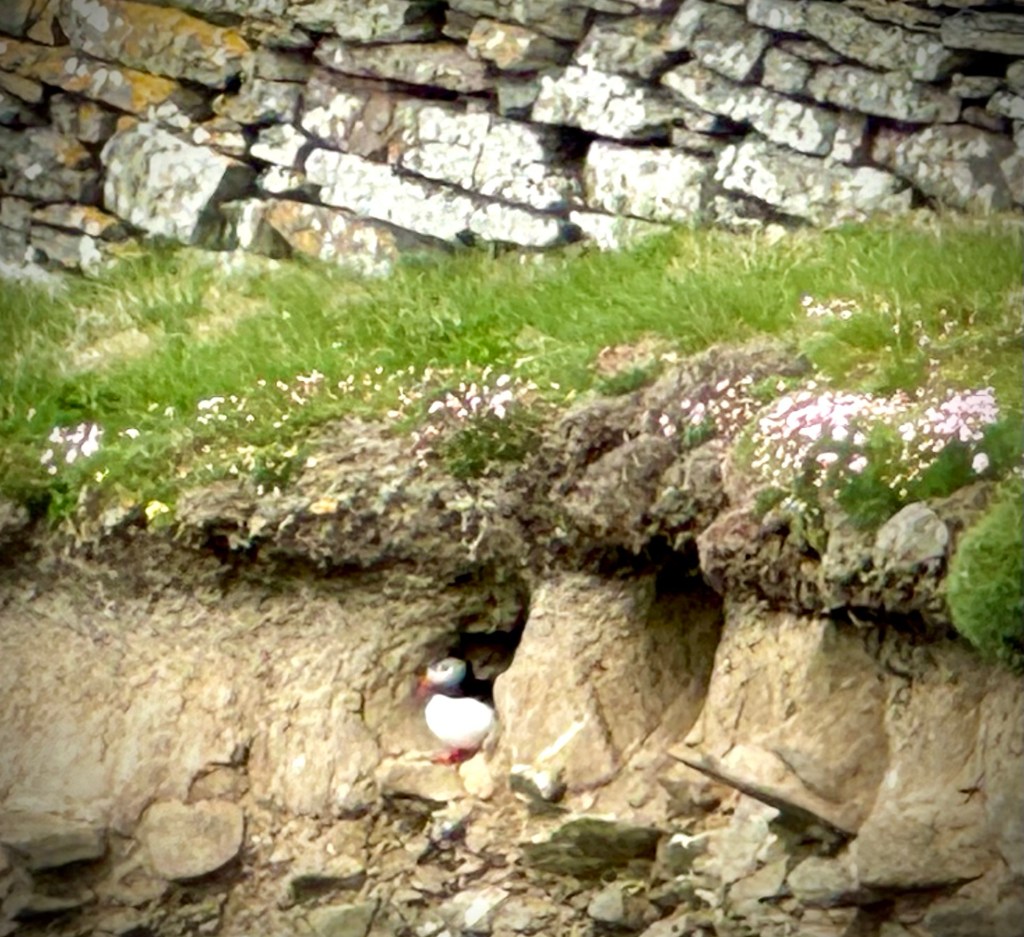
But we did spot one of the little dudes just below the lighthouse, chilling in the opening of its burrow.
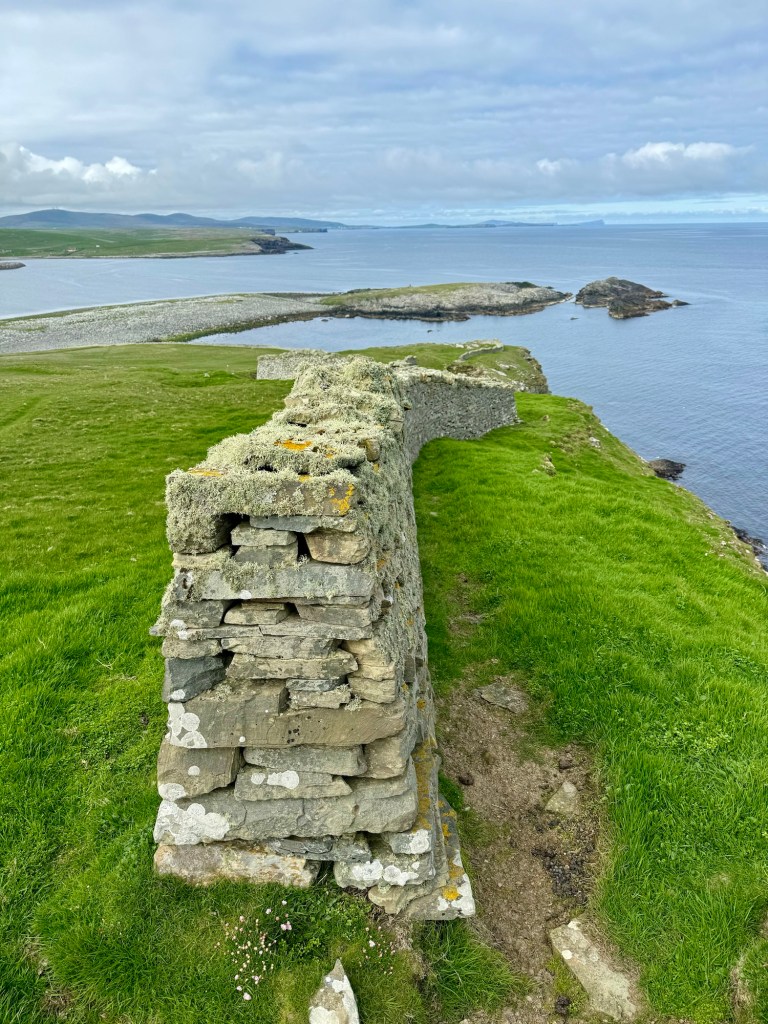
We walked on, continuing our loop around the point. Here are a few shots from our walk above the airport.
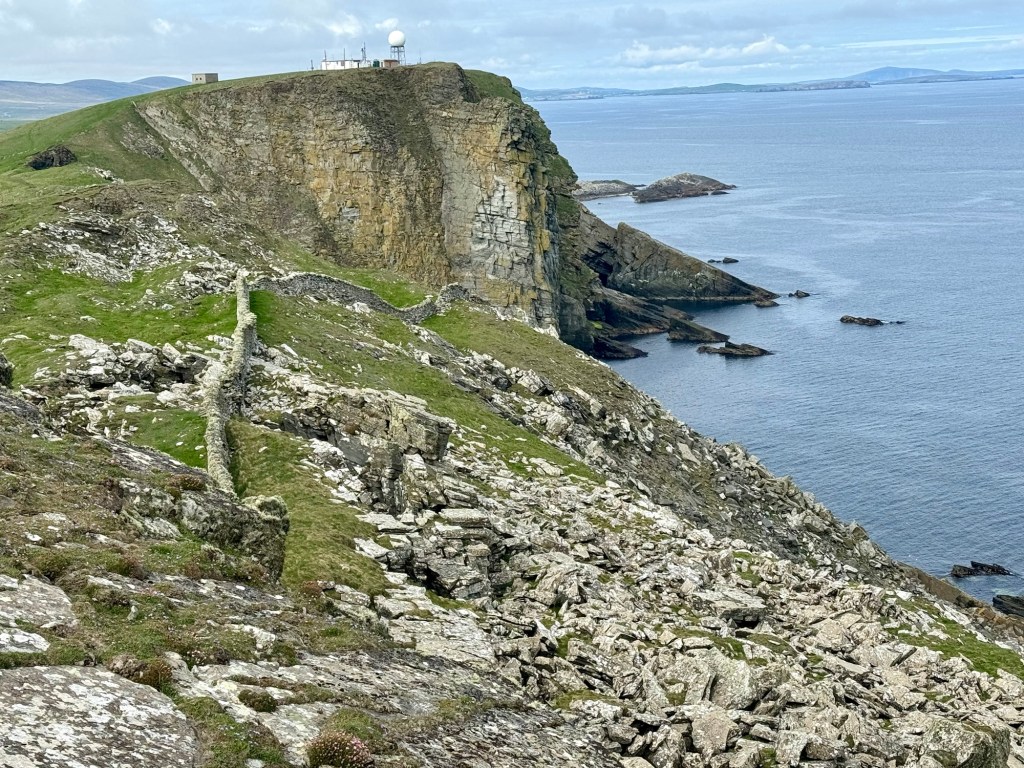
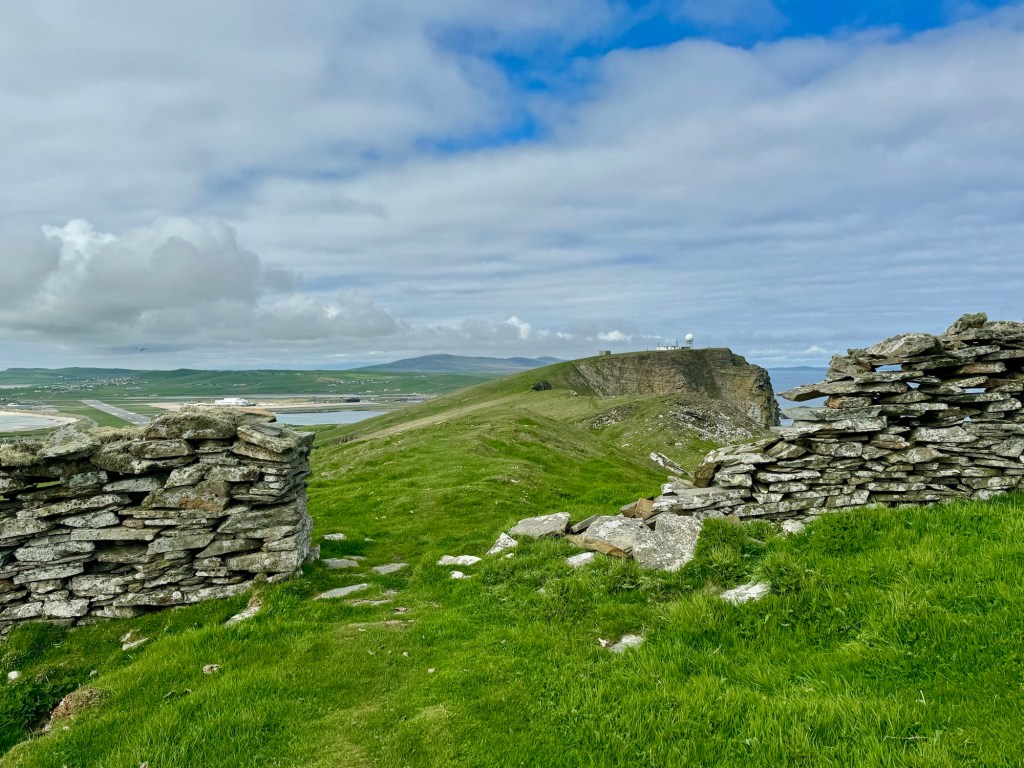
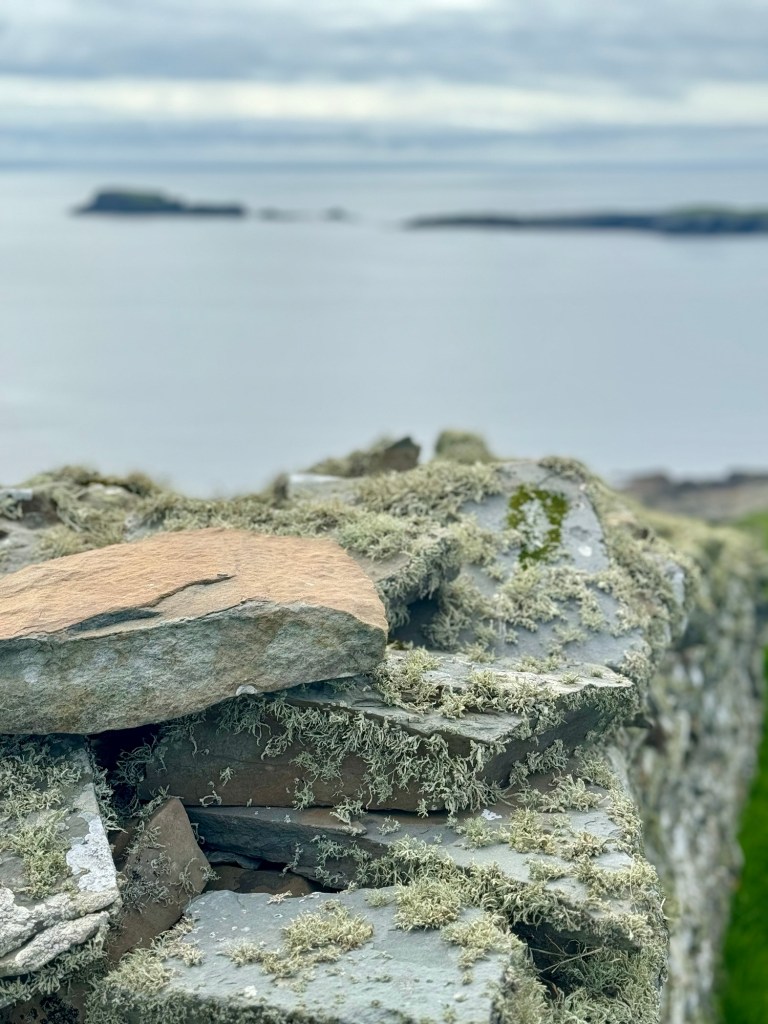
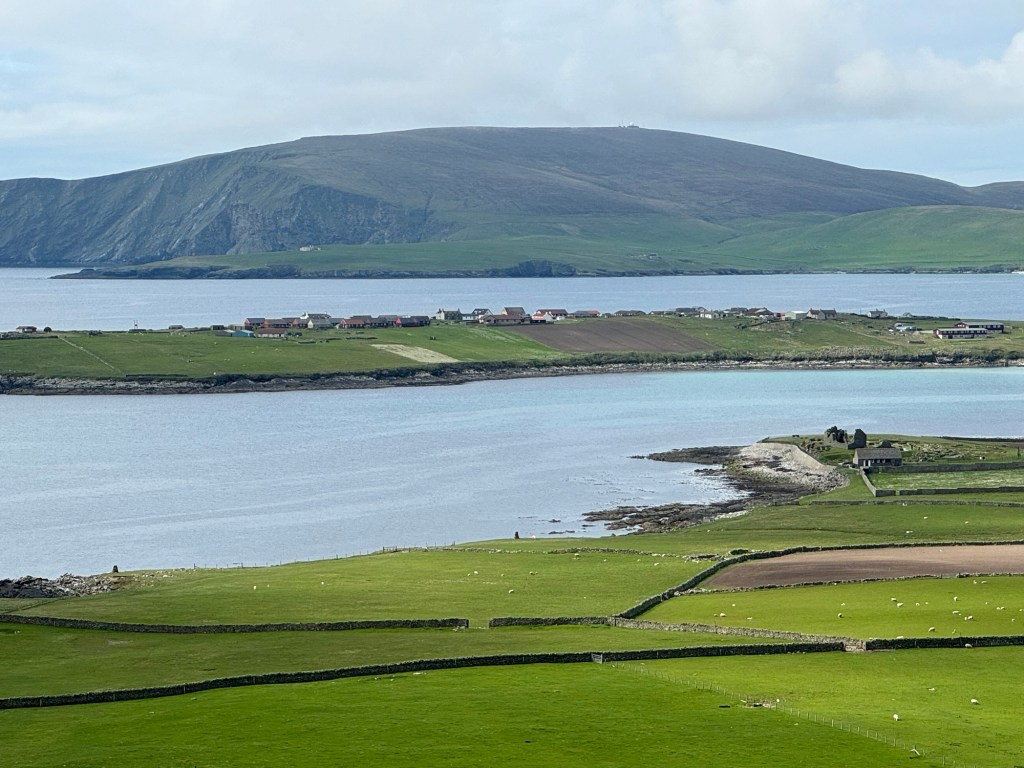

Above is one of Sunburgh’s runways. The A970, the only road to the airport, literally crosses over the bottom of the main runway. There are gates that go up and down when a plane needs the right of way. As you drive your car across, a sign warns “Positively No Stopping” and “Straight Ahead” is painted on the pavement.
The following day we were to climb Ronas Hill, the highest point of Shetland, and then take a boat in the middle of the night out to Mousa to visit an Iron Age broch and watch kestrels come home to roost, arriving back at the hotel at 2:00 am. We were all game, even though none of us had stayed up that late in decades.
 Wee Dram of Scotland