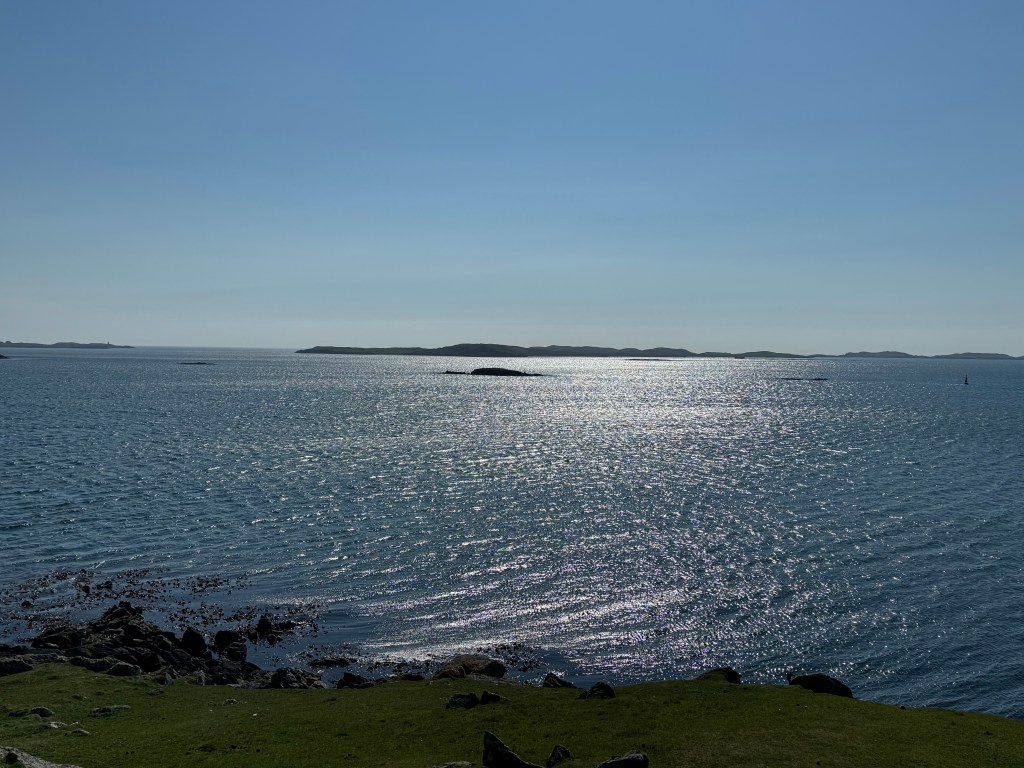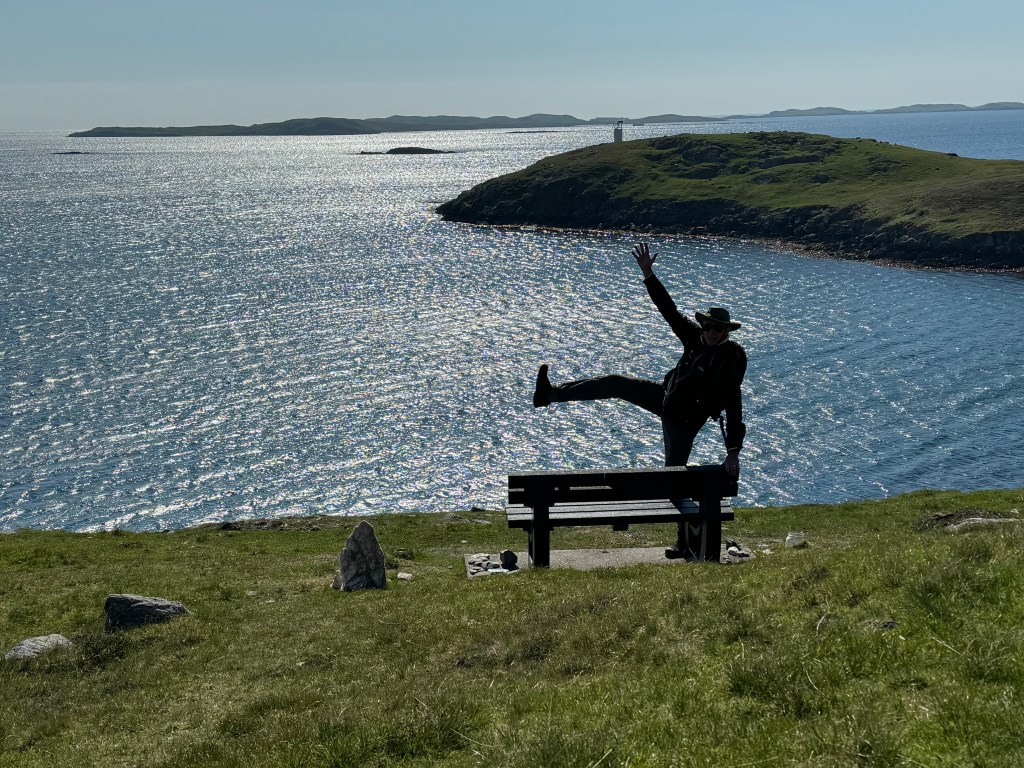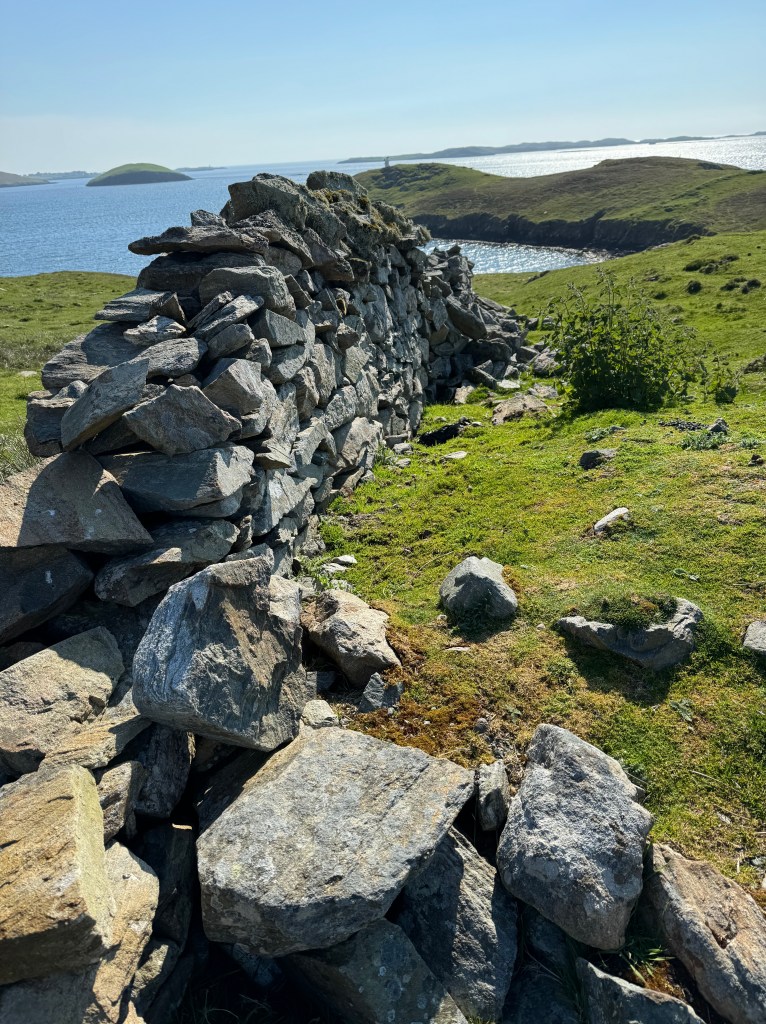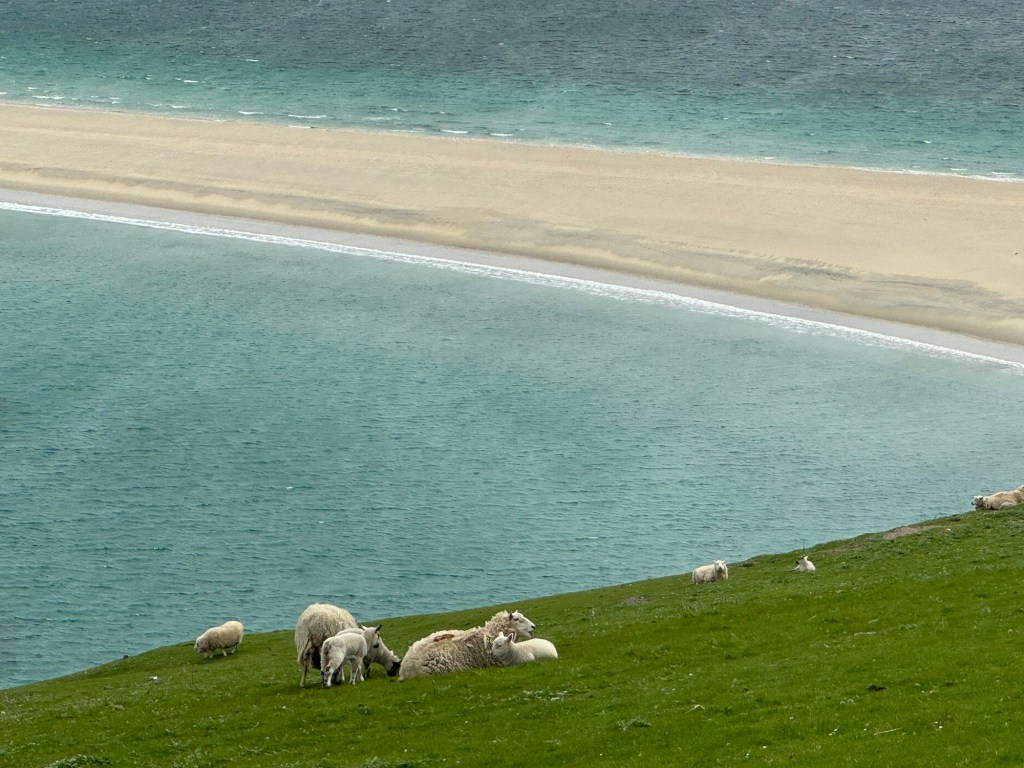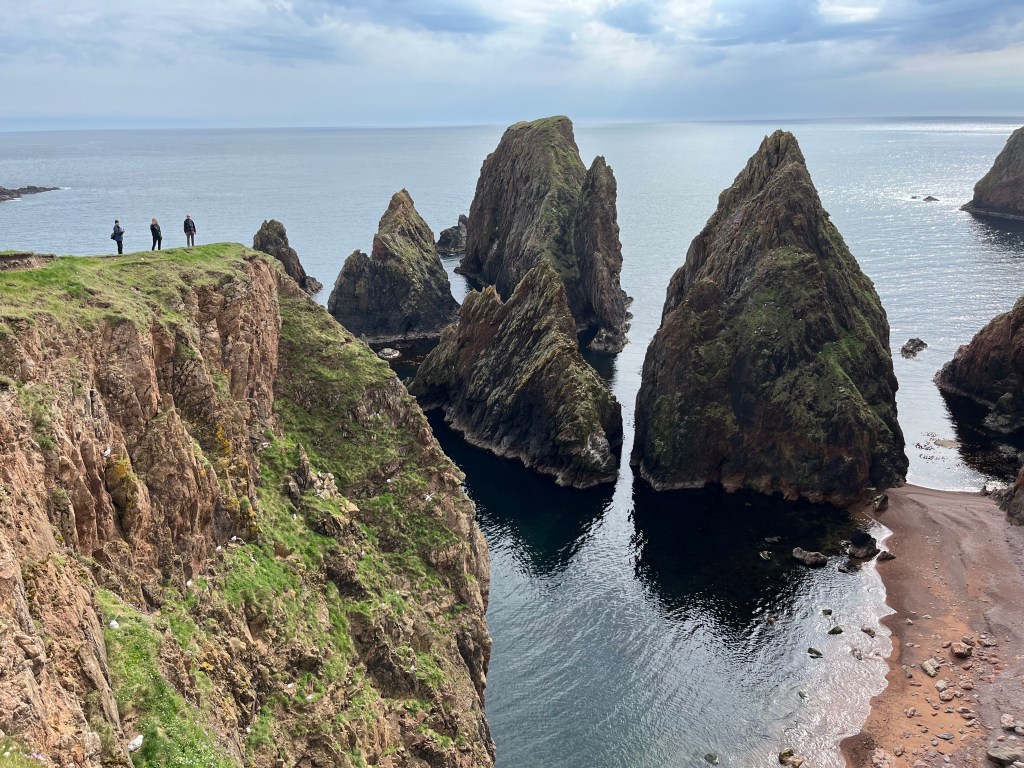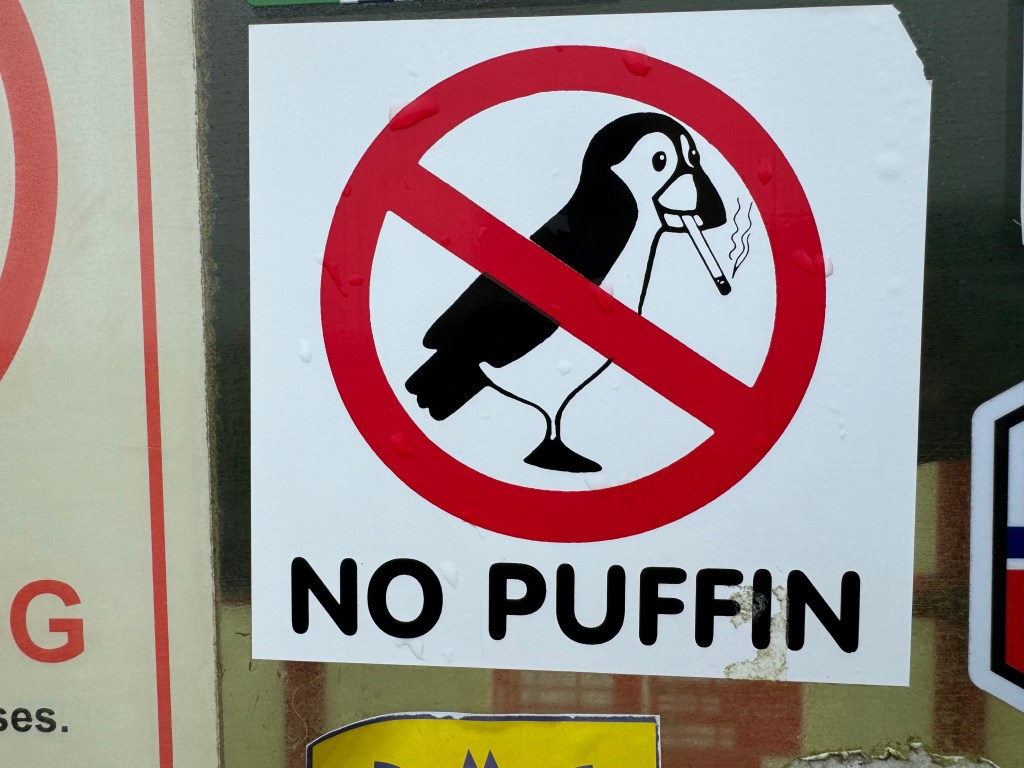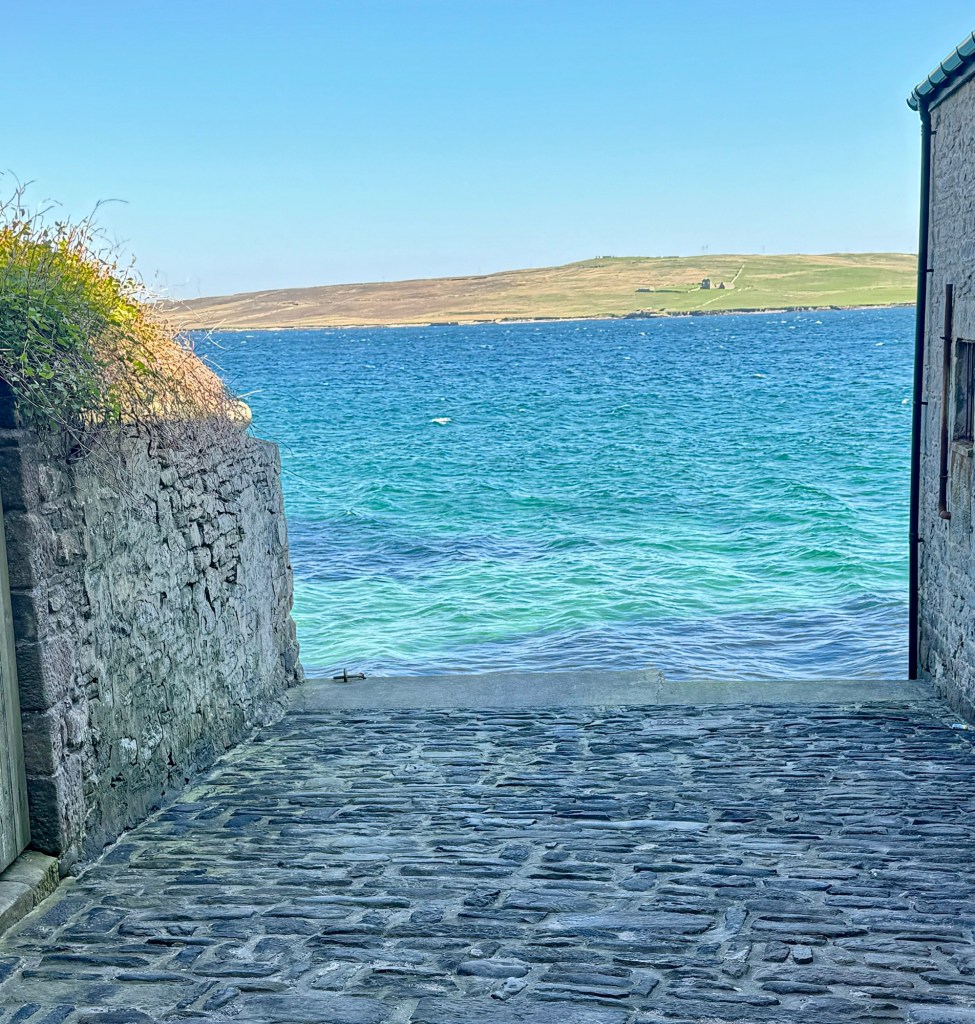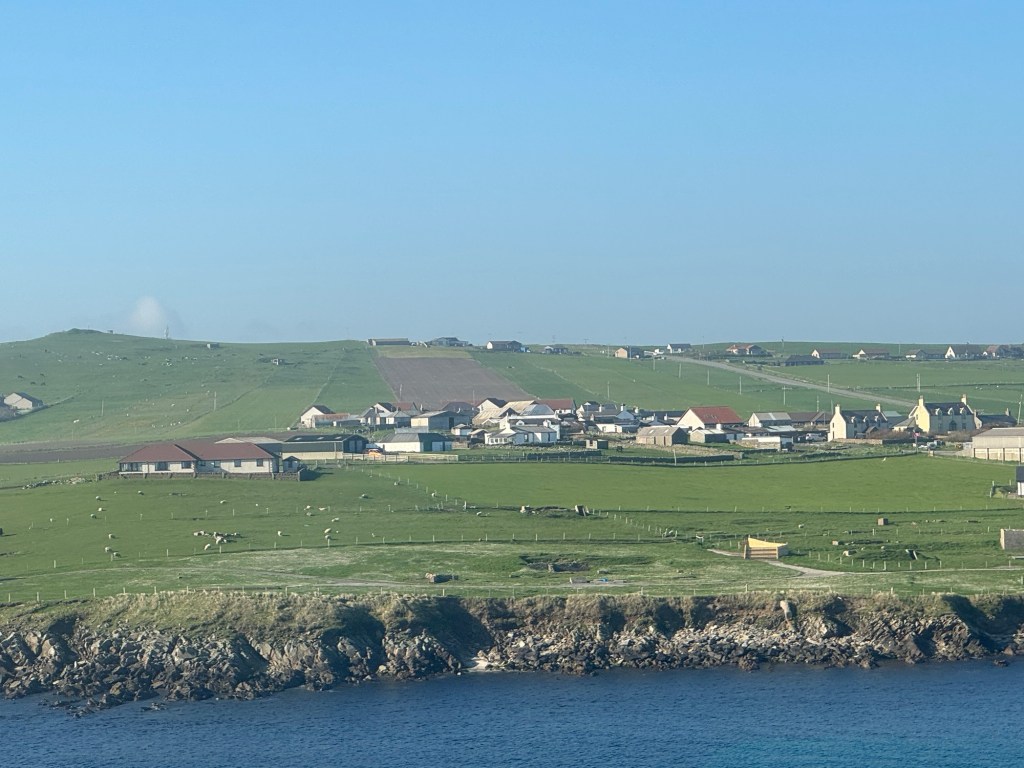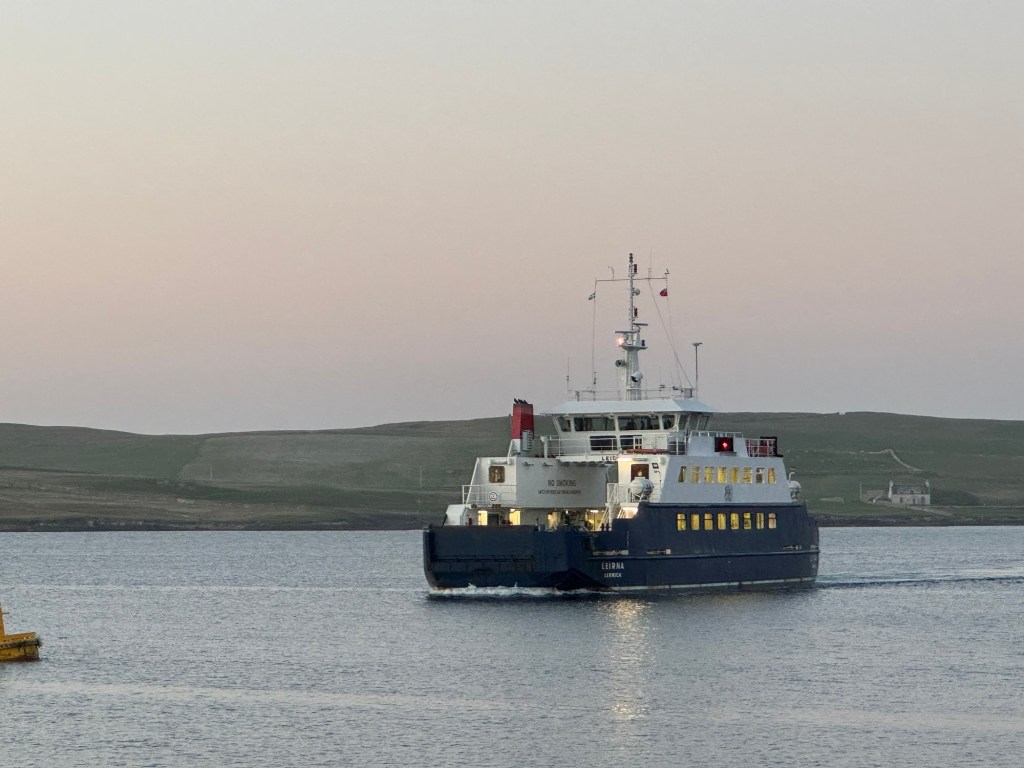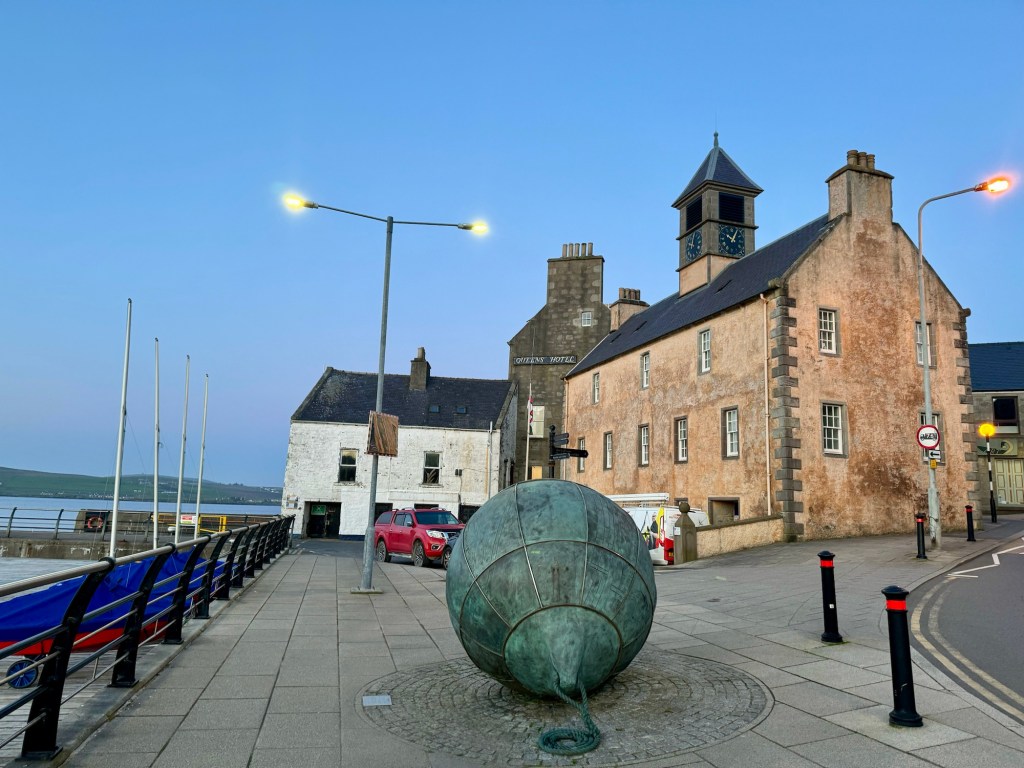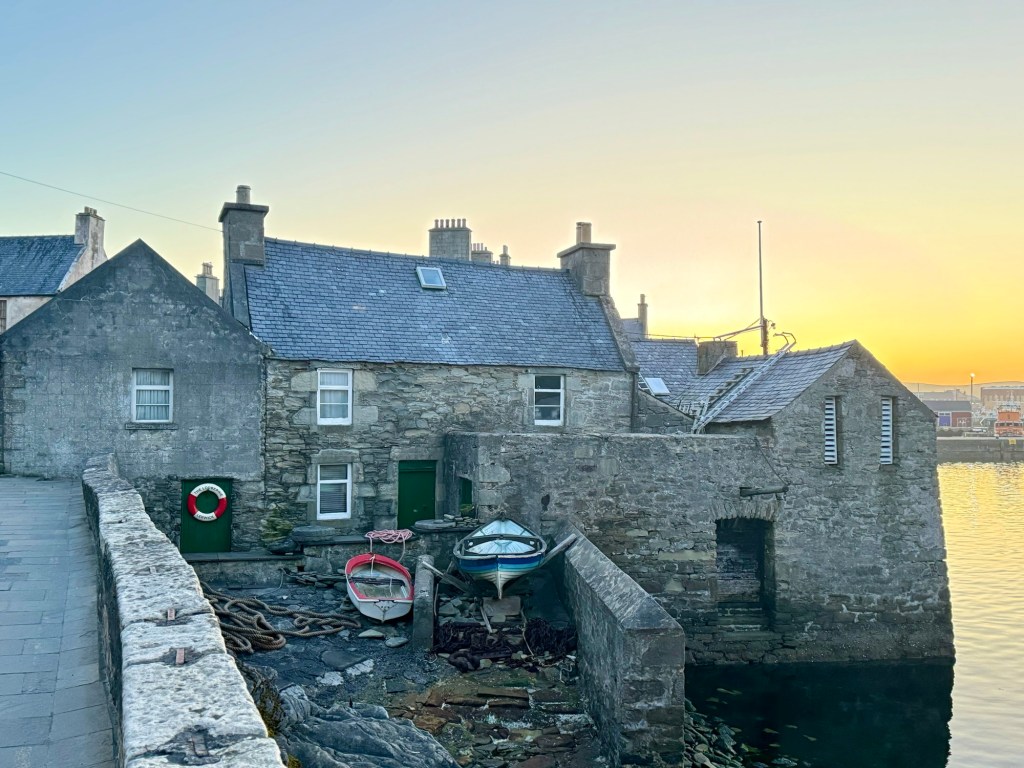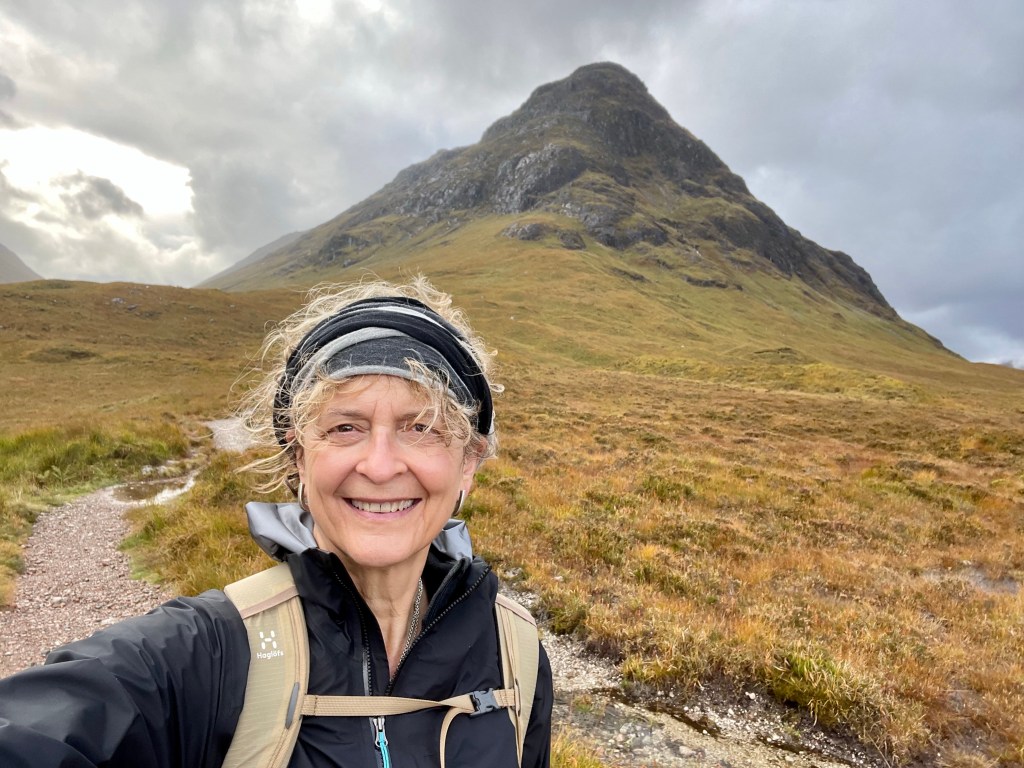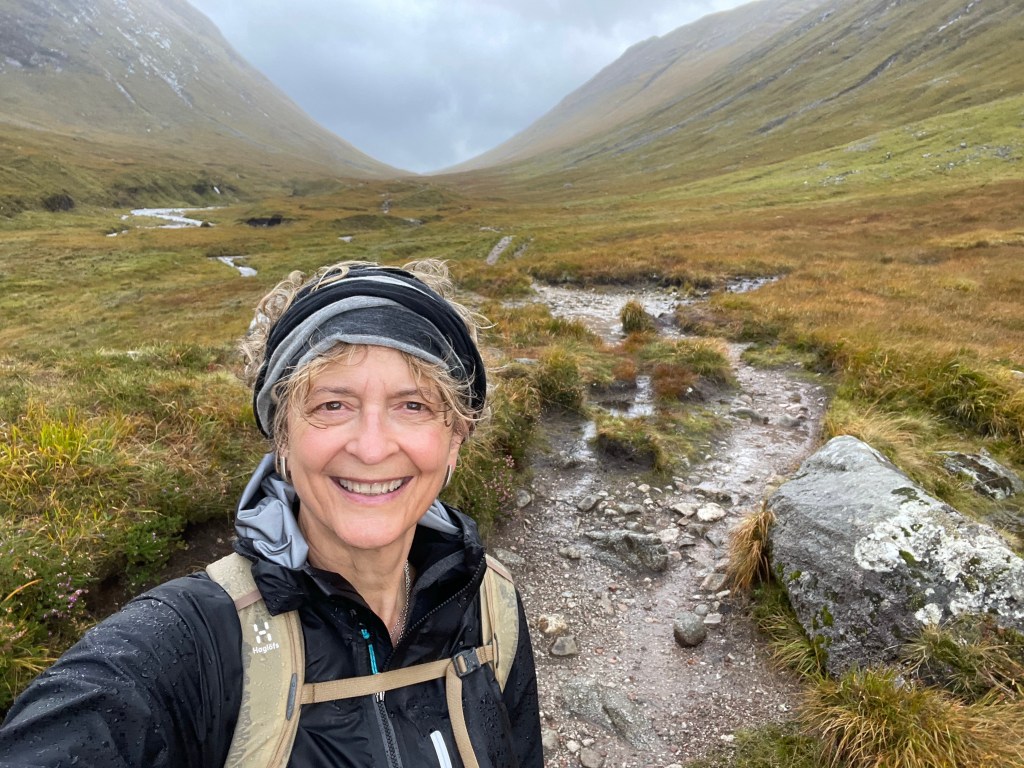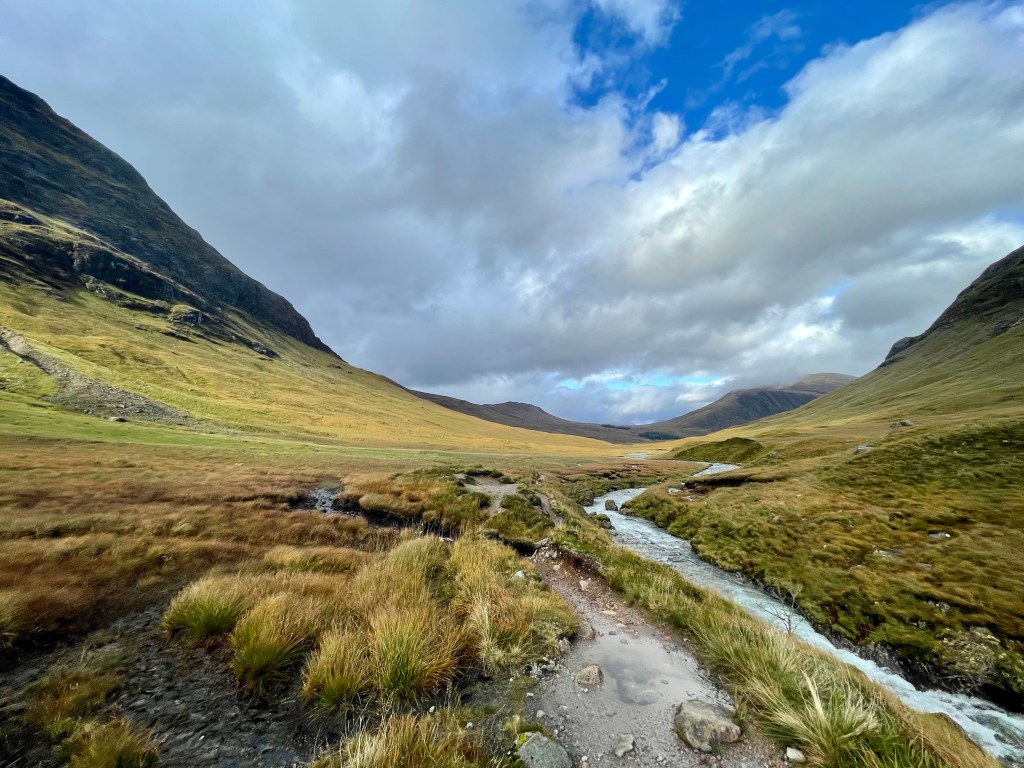
Gannet Woodstock, Unexpected Orcas, Public Bogs, Vikings, Puffins, the Most Northerly, one final Broch and a Spaceport. Featuring various isles: St. Ninian’s, Noss, Bressay, Unst & Yell. And a bit about Leith.

In the category of better late than never, it is time, at last, for a wrapping up of the final days of this trip. Thanks for coming along with me while I was there and now in fond remembrance. This will be a longish one, but hey it’s mostly pictures.

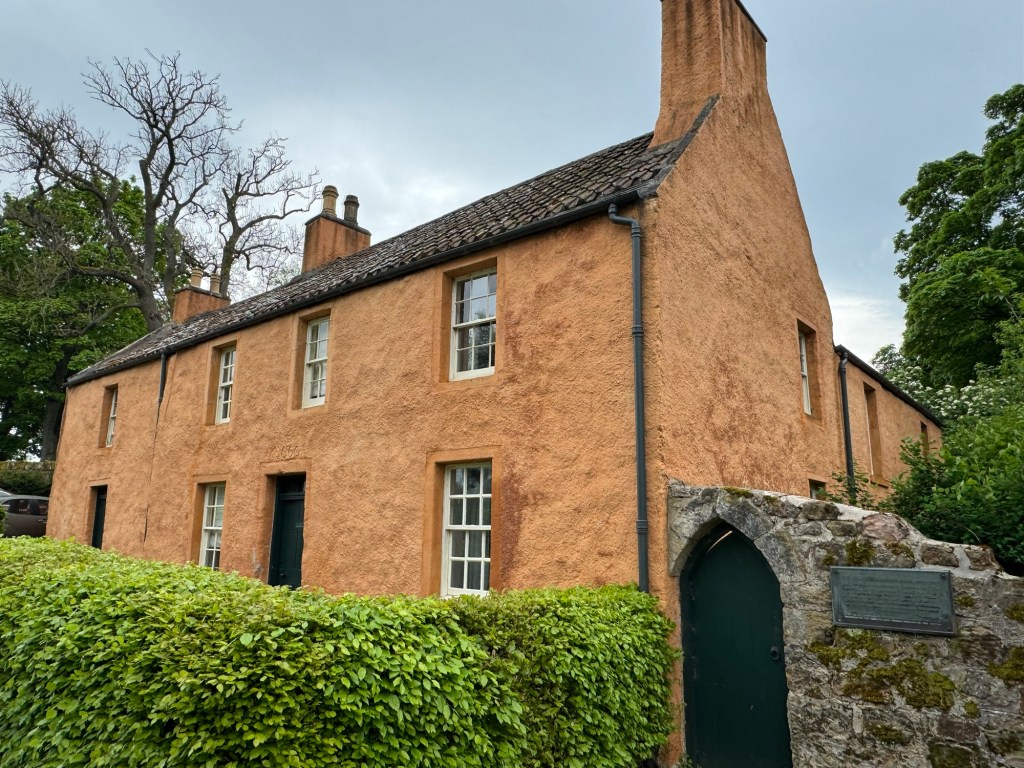
And so onward we go. The highlight of our next day was to be a wildlife boat trip around two nearby islands, Noss and Bressay. On our way to catch our boat we stopped at Lunna House, a 17th century Laird’s home that was requisitioned by the UK War office as the first location for Shetland Bus HQ during World War II.
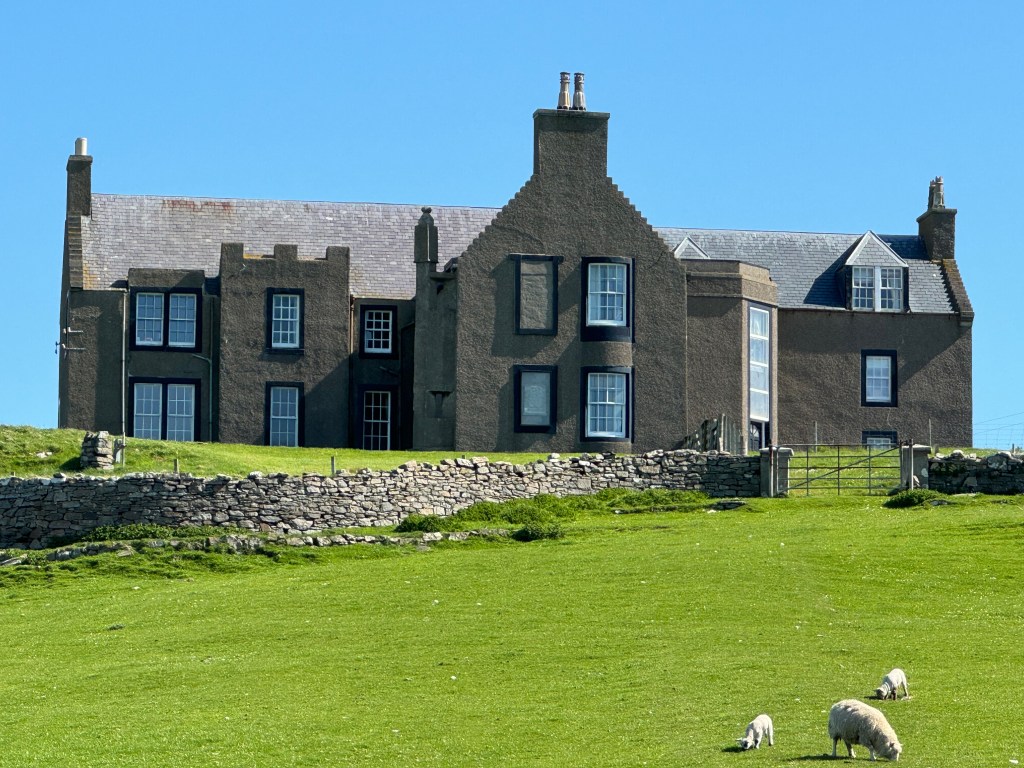
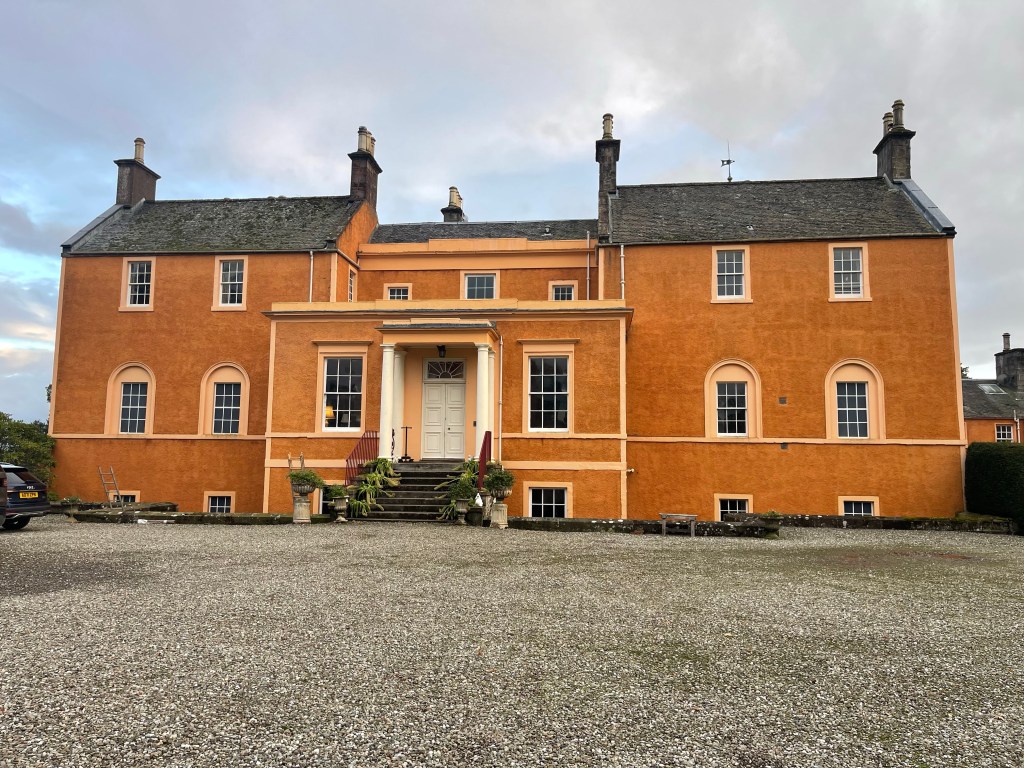
Lunna House

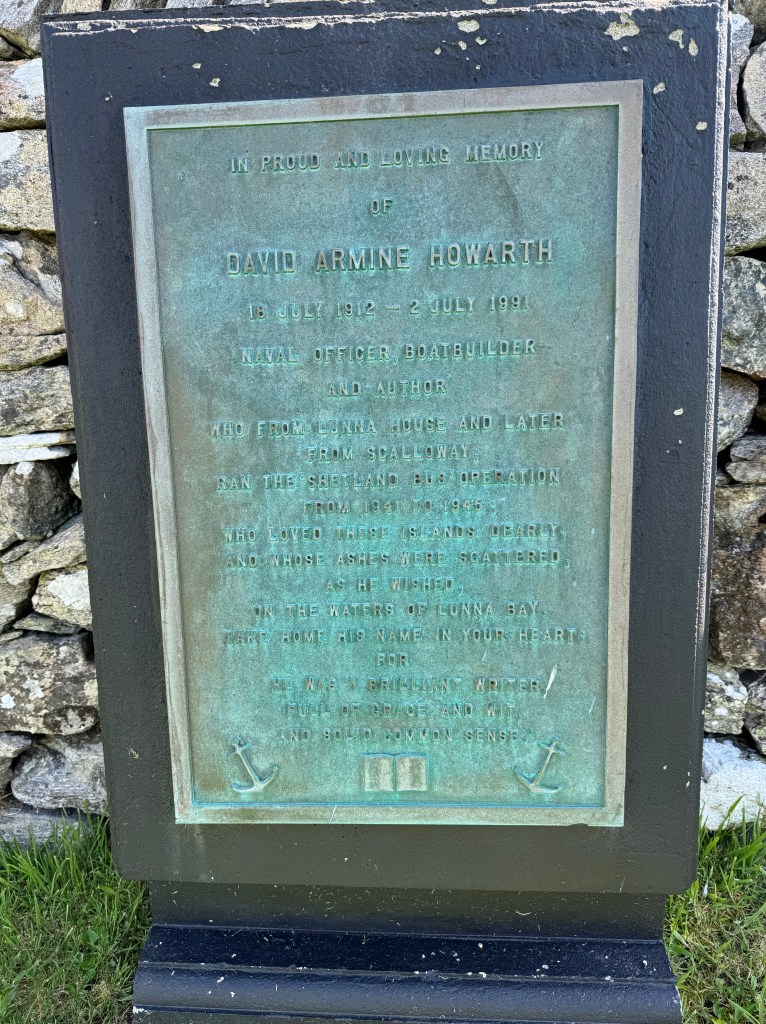
Operations were moved to Scalloway in 1942 (see previous entry), but this is where it all started. As often happened, the stones for the original Lunna House were pilfered from a nearby Iron Age Broch which is one of the reasons why so many broch ruins around the isles are quite a bit shorter than they might otherwise be. Lunna House base was established by David Howarth, who started his career as a BBC War Correspondent before joining the Navy after France fell to the Nazis. His memoir, “The Shetland Bus,” is a gripping account of his extraordinary life. A commemorative plaque for David Howarth can be found in the nearby cemetery of Lunna Kirk (the oldest continuously operated kirk in Shetland), but his ashes were scattered in Lunna Voe per his request.
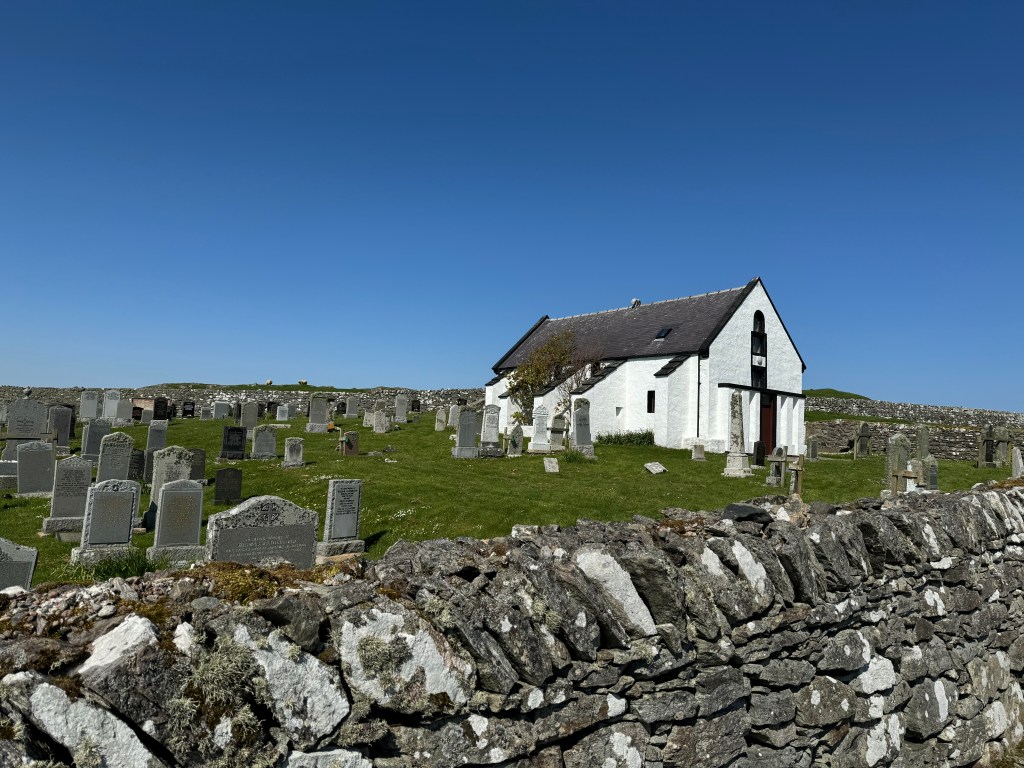
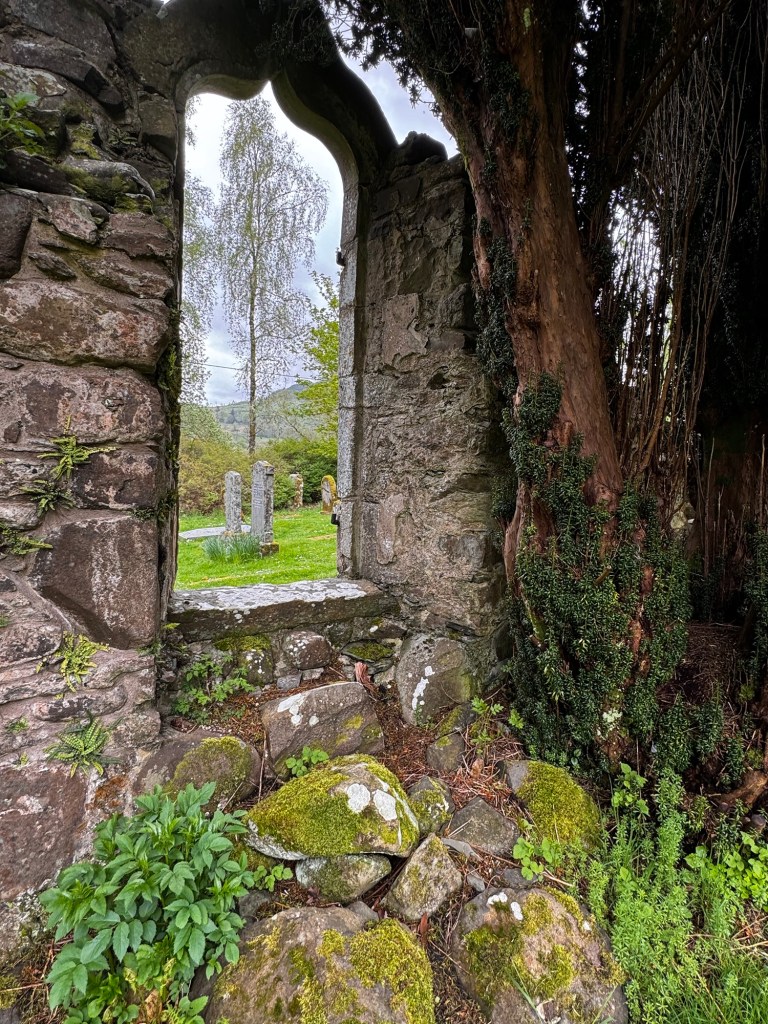
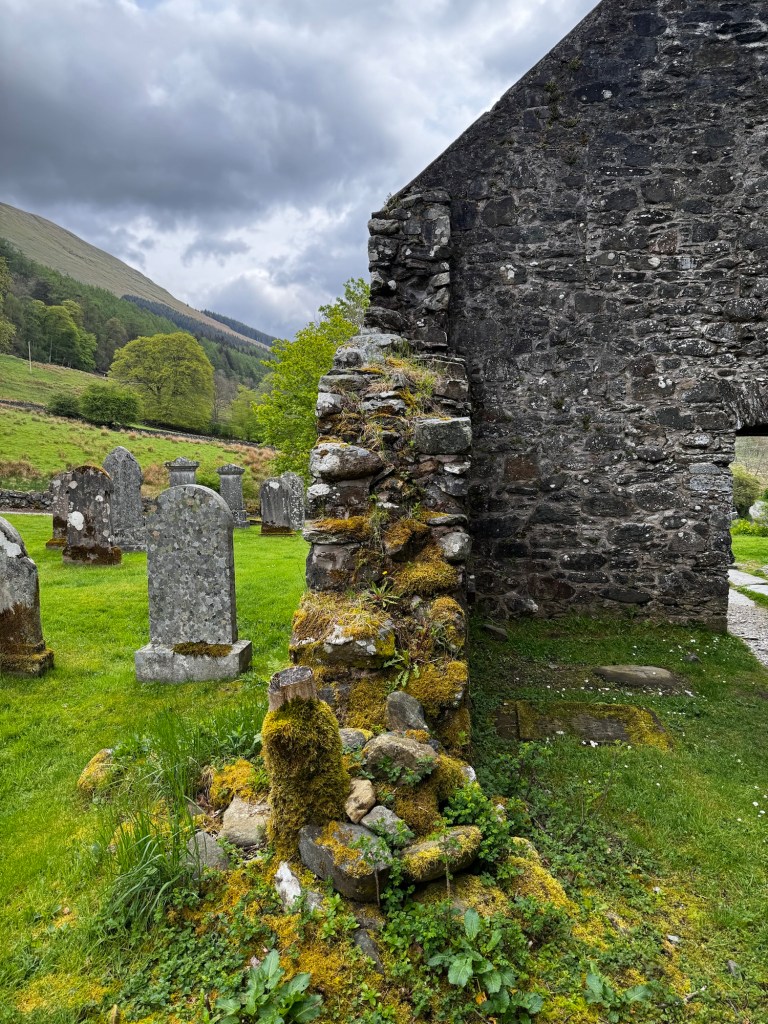
Lunna Kirk
Richard, Jill, Barb and Brent peruse David Howarth’s memorial plaque.

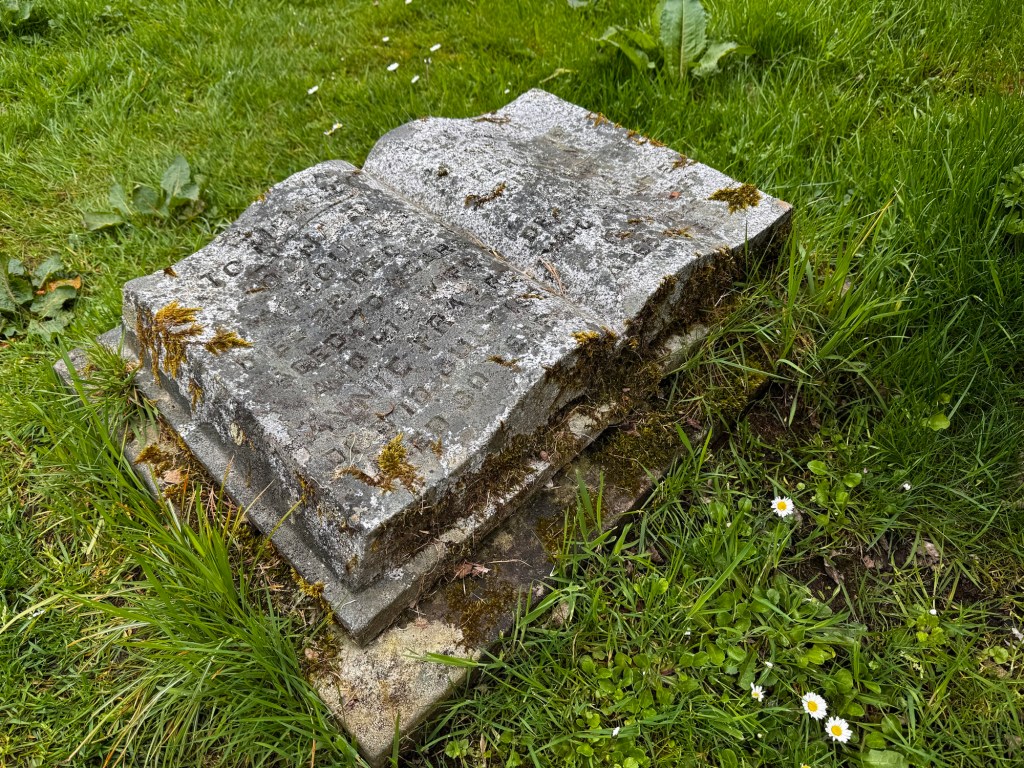
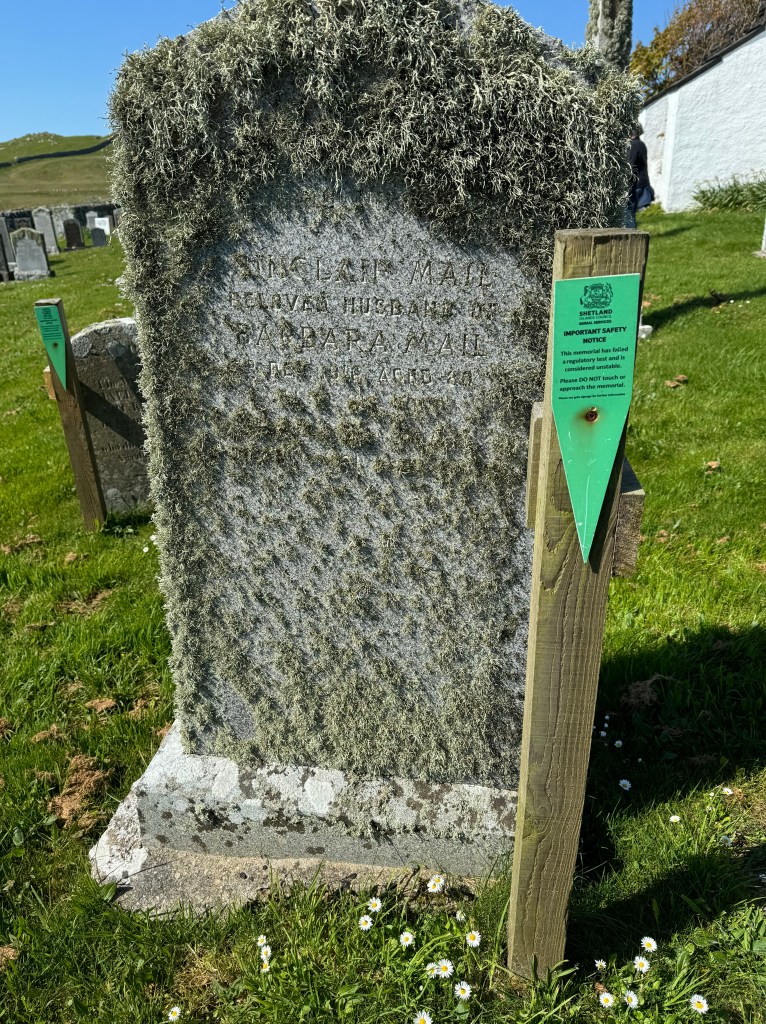
Many of the moss-capped headstones in the kirkyard have been tagged by authorities as having “failed a regulatory test” to the point where visitors are warned against even approaching them because I guess they might slooowly tip over? This strikes me as somewhat hilarious after navigating the Mousa broch steps yesterday. The headstones look pretty solid to me and this one’s hairdo brings to mind four particular lads from Liverpool.
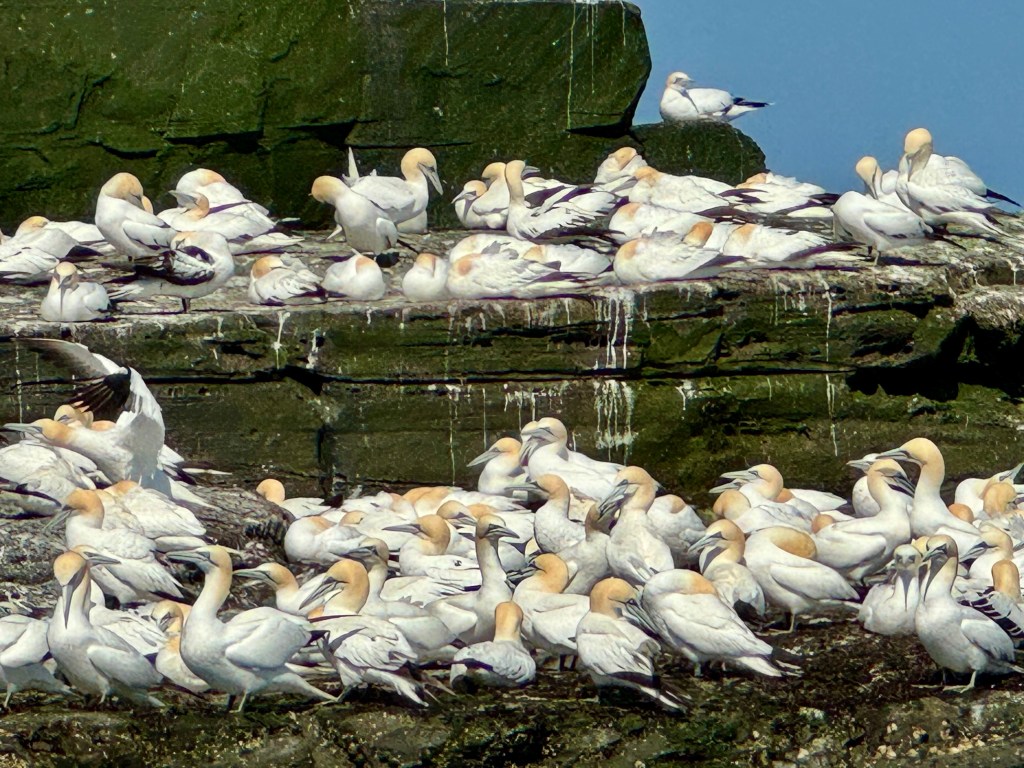
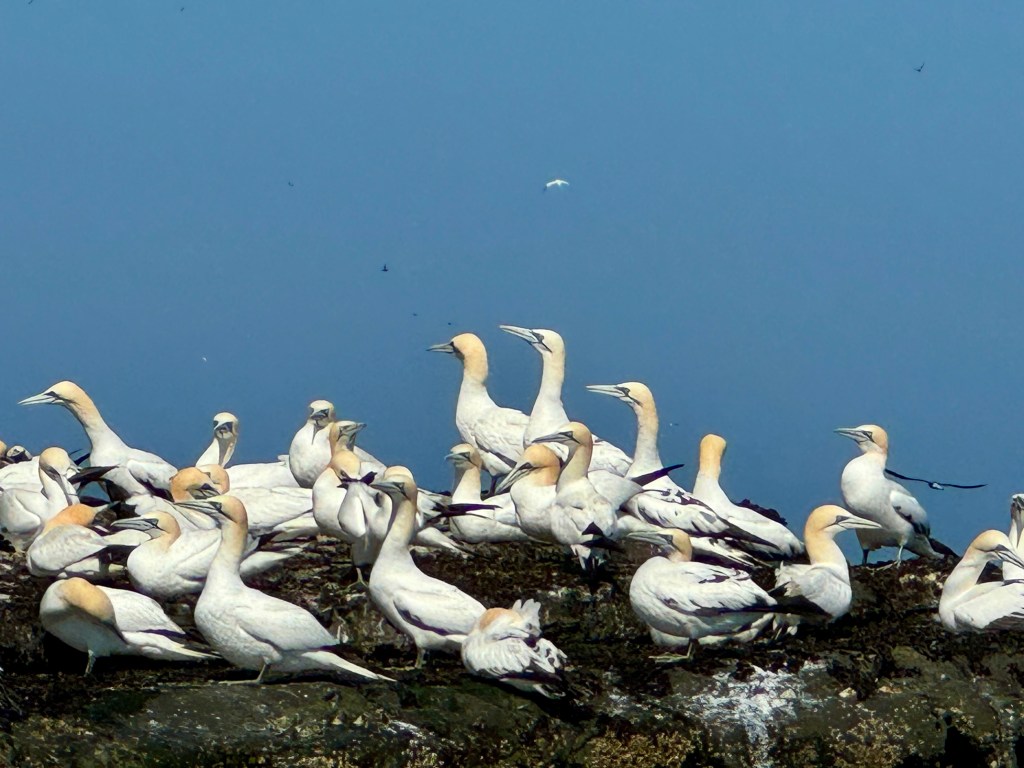
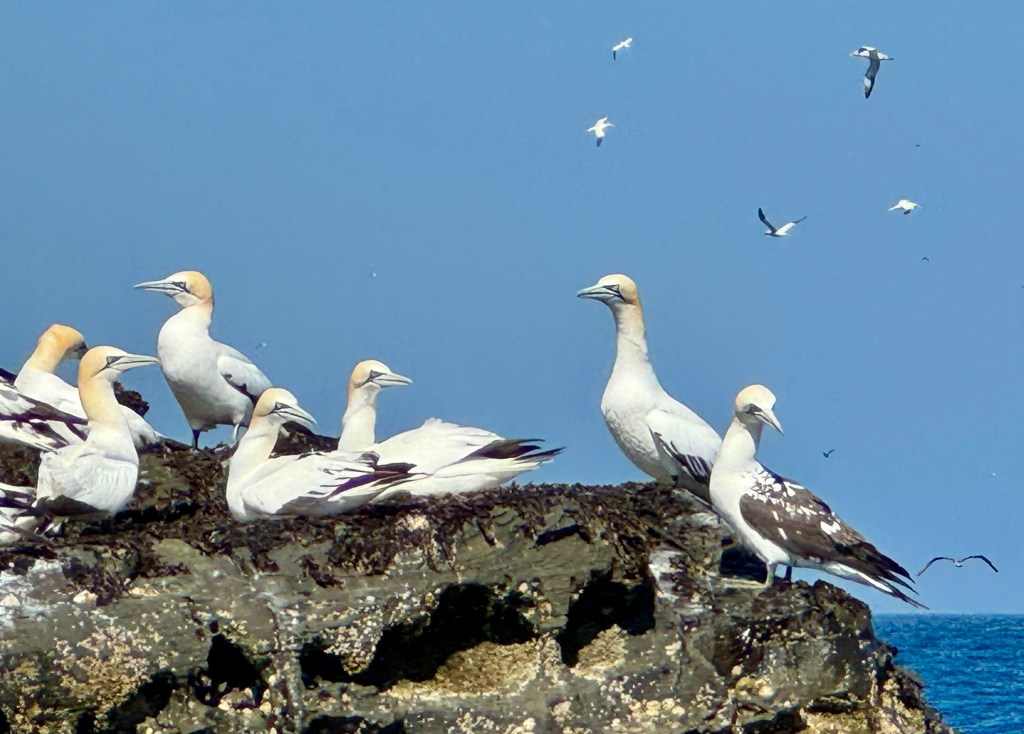
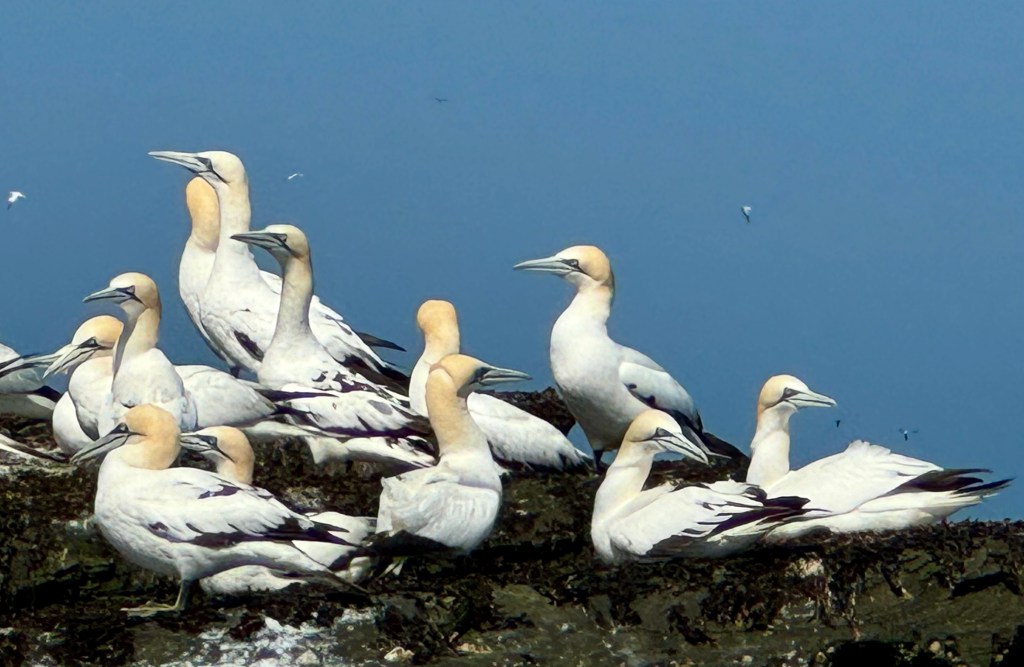
And that’s all the history you are getting for this day. I know you are sad! Wipe your tears away, for we are off to sail around the isles of Noss, an uninhabited nature reserve since 1955, and Bressay. The tides have been sketchy of late which we are told may force an early return to port so fingers crossed. The highlight of the tour is a ginormous gannet colony on Noss, where approximately 150,000 of the gorgeous, graceful seabirds nest along a mile-long stretch of cliffs. I feel a slight kinship with gannets because their 6 foot wingspan matches my own.
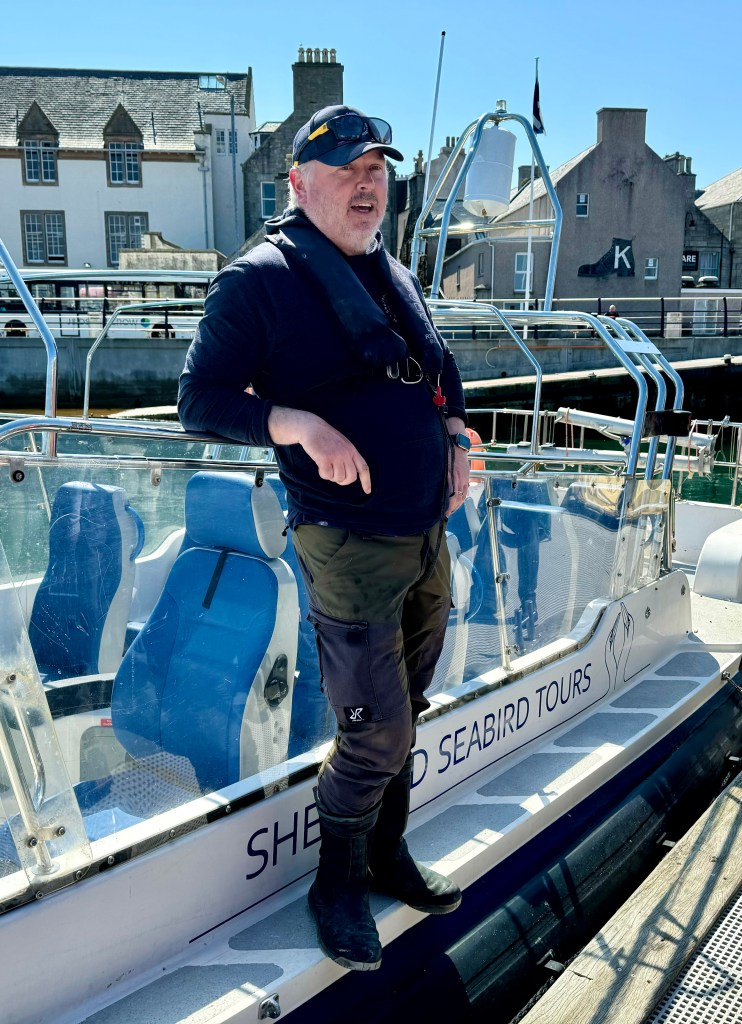
Mr. Nonchalance, our skipper Captain Phil

Phil Harris is the owner of Shetland Seabird Tours and is a life-long birder and naturalist. He started his career as a firefighter and then trained to pilot fast rescue boats in the rough seas around Shetland, so we were in expert hands in many categories. Plus he had a great sense of humor, regaling us on the dock with cheerful warnings about how seasick we were all likely about to become.

One of the many benefits of traveling alone is that you can validly call shotgun in situations like these and nobody gets mad, so just like that I was Captain Phil’s Number One.
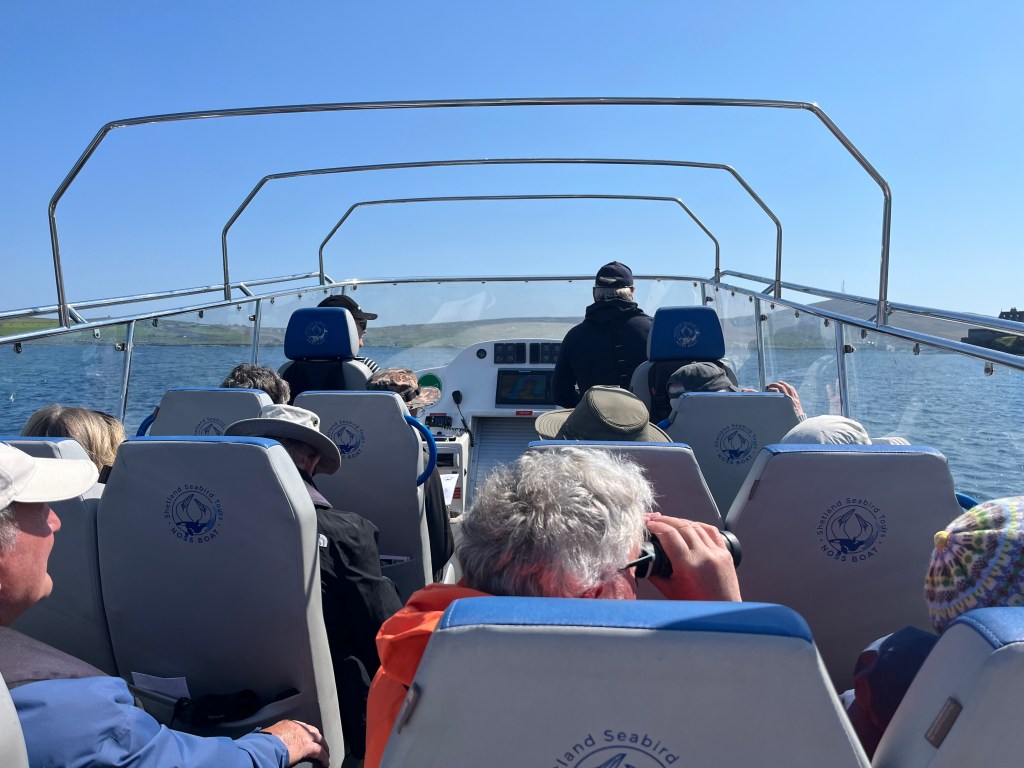
The very first thing that happened when we entered the bay was Phil completely losing his mind and grabbing his big-ass camera because we unexpectedly came across a family pod of orcas. The first orca we saw was a big male, who was bearing down on us with his giant fin piercing the water like freaking Jaws. I had recently seen David Attenborough’s Wild Isles featuring the famous Shetland Pod 27 and watched them brutally murder a baby seal in slow-motion. Circle of life and all but still it was a bit concerning watching the big guy heading straight for us, especially having heard about the orcas that had recently attacked boats near the Iberian peninsula.

Of course the big orca peeled off and Phil, in between snapping photos, reported the sighting in local WhatsApp and Facebook groups. Orca tracking in Shetland is a collegial community effort (as you can imagine, a lot of naturalists live here), and in fact orca-spotting groups were instrumental in assisting the Wild Isles crew in finding Pod 27 after a two-year effort. The community shares sightings and helps build a pool of information so scientists can gain a fuller picture of orcas’ behavior and track their movements. As it turned out, this pod was a new one, heretofore not observed in Shetland, which felt like a bit of good news.

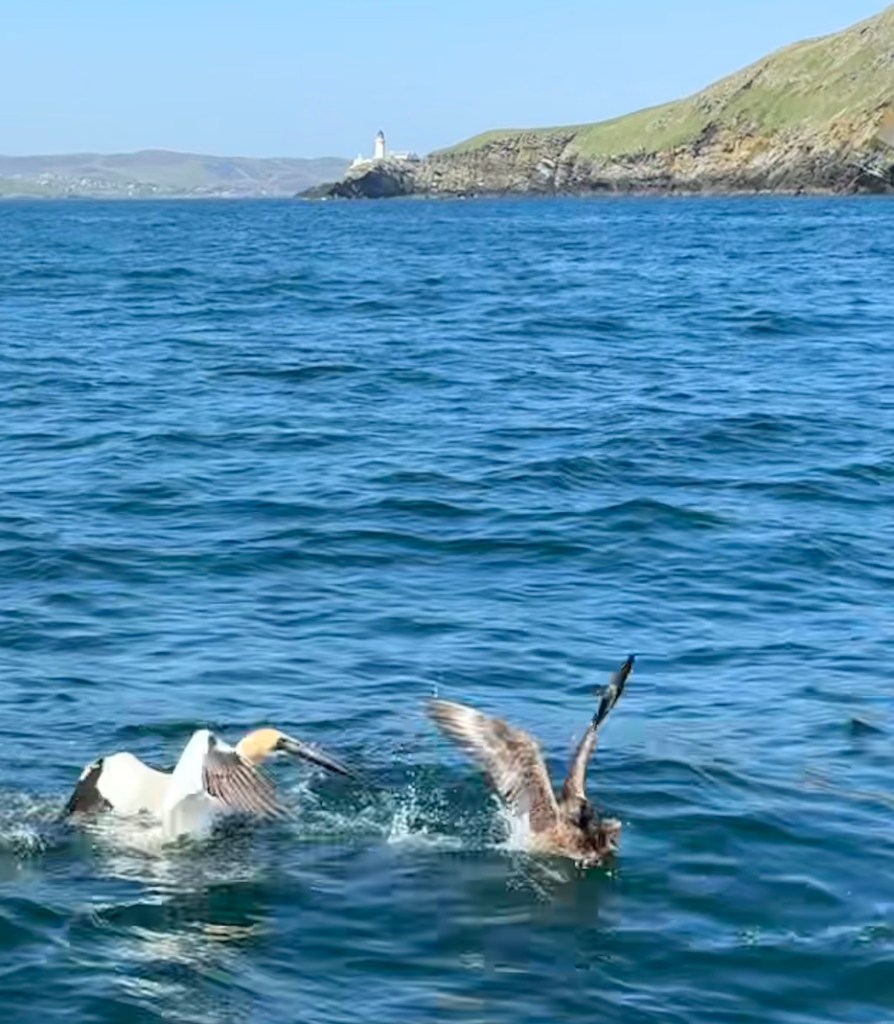
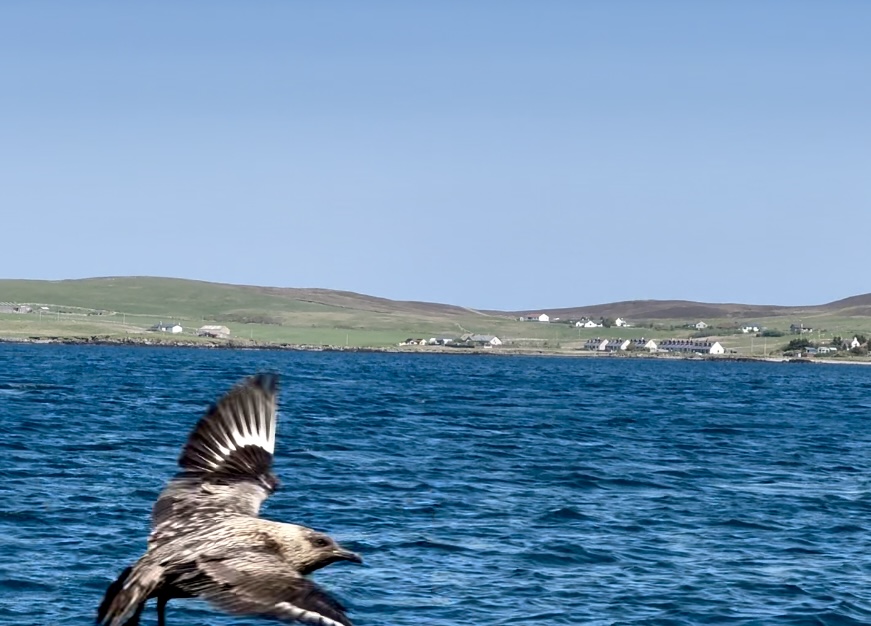
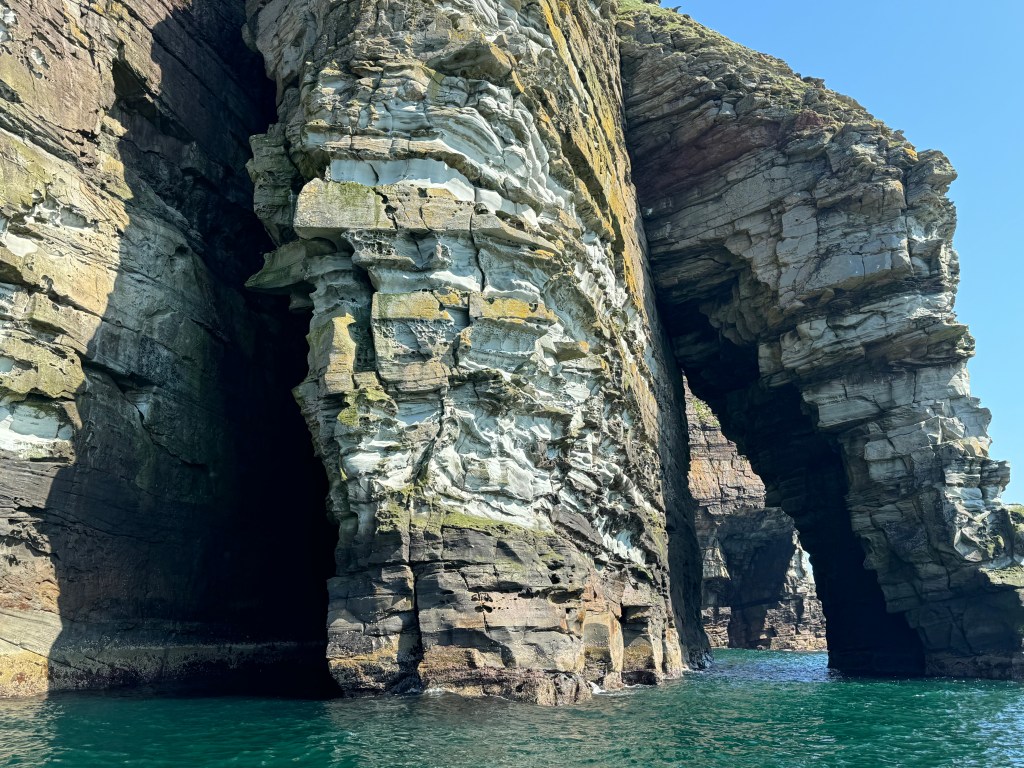
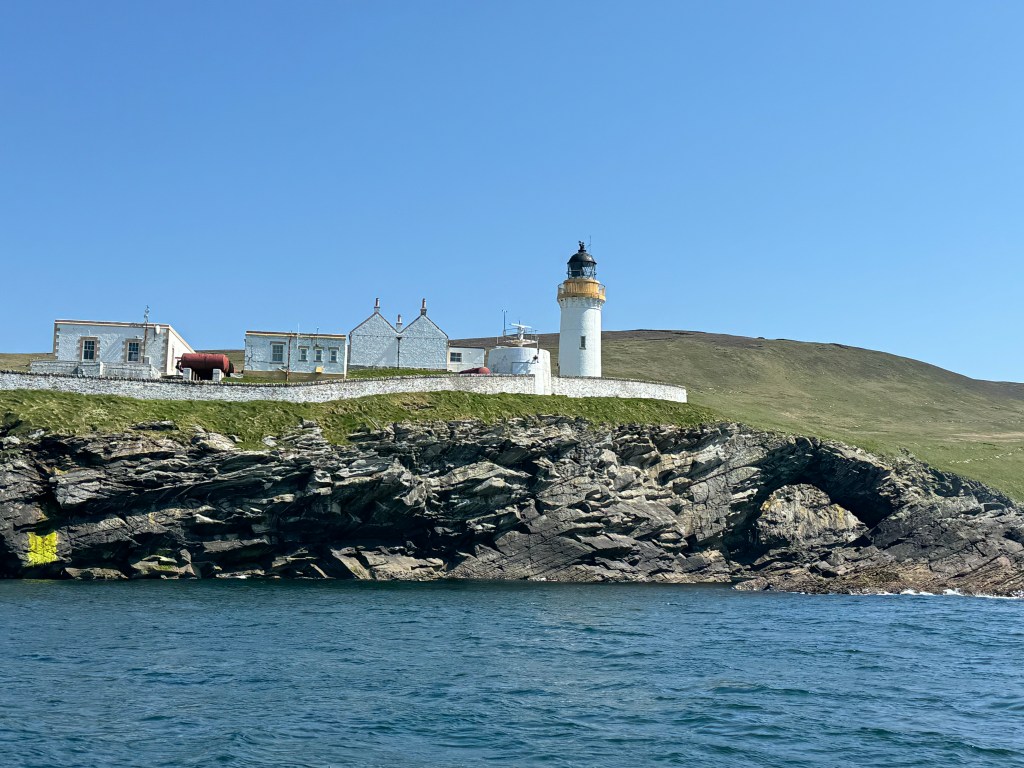
Reluctantly leaving the orcas (who hung around the area for the rest of the day) we sailed around some fabulous cliffs, the Bressay Lighthouse and watched a great skua (called a “bonxie” in Shetland-ese) fend off a gannet for a fish.
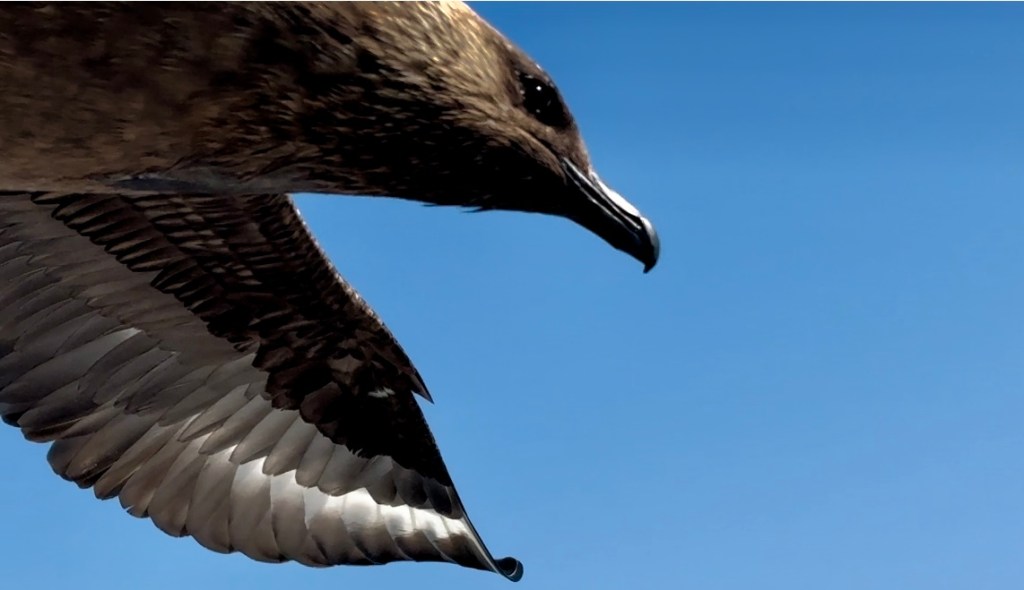
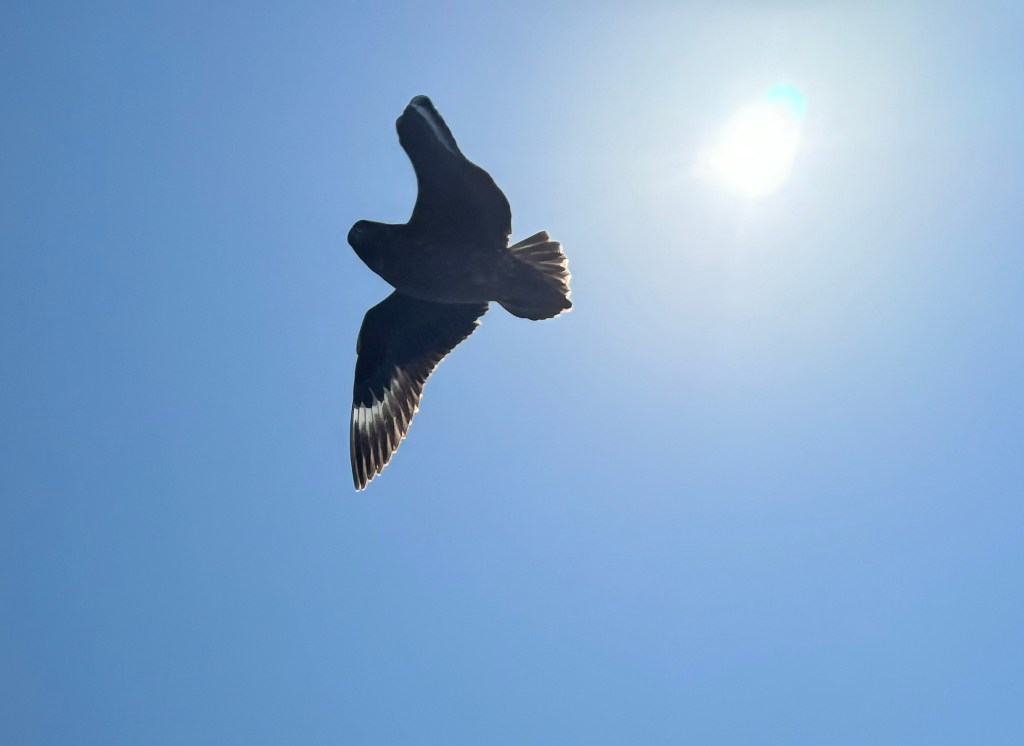
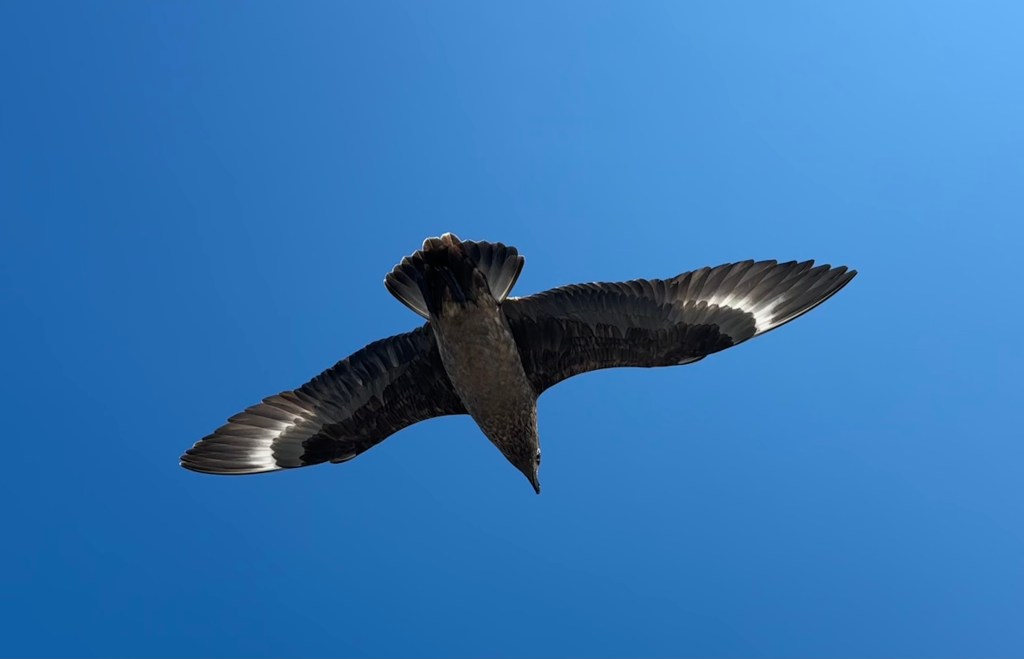
Speaking of bonxies, Phil calls them the assholes of the seabird kingdom due to their general aggression toward other birds. Also if you are dumb enough to walk too near their nest they will absolutely fly at your head. Phil also claimed that they poke the eyes out of puffins but I feel like this was merely a gruesome embellishment. They are kind of cool birds and right now Bonxie is the lead contender for my next dog’s name, so.
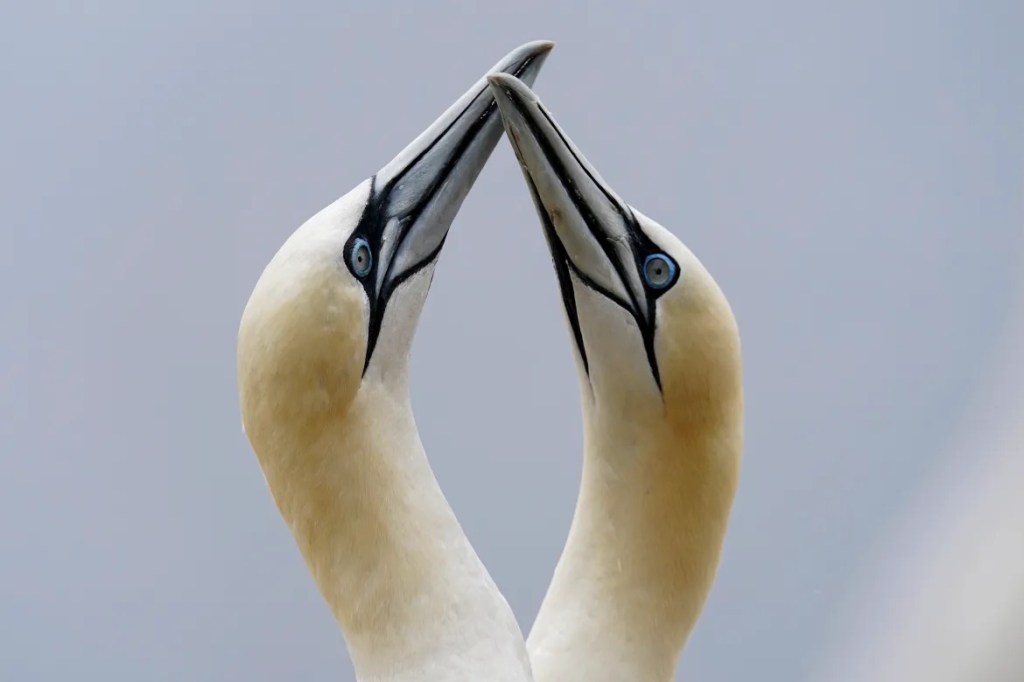
And now for the gannet colony. I’ve honestly never seen anything like it. I mean, 150,000 birds is a lot and they layer the cliff walls, packed in like sardines and yacking at each other having a ball like they are at an outdoor music festival. They are also gorgeous and incredible divers. And once they are submerged underwater, they keep flying while they fish. For a short video narrated by Scottish Obi-Wan Ewan McGregor, check this out: https://www.youtube.com/watch?v=mXXuK9eQVUw&t=9s
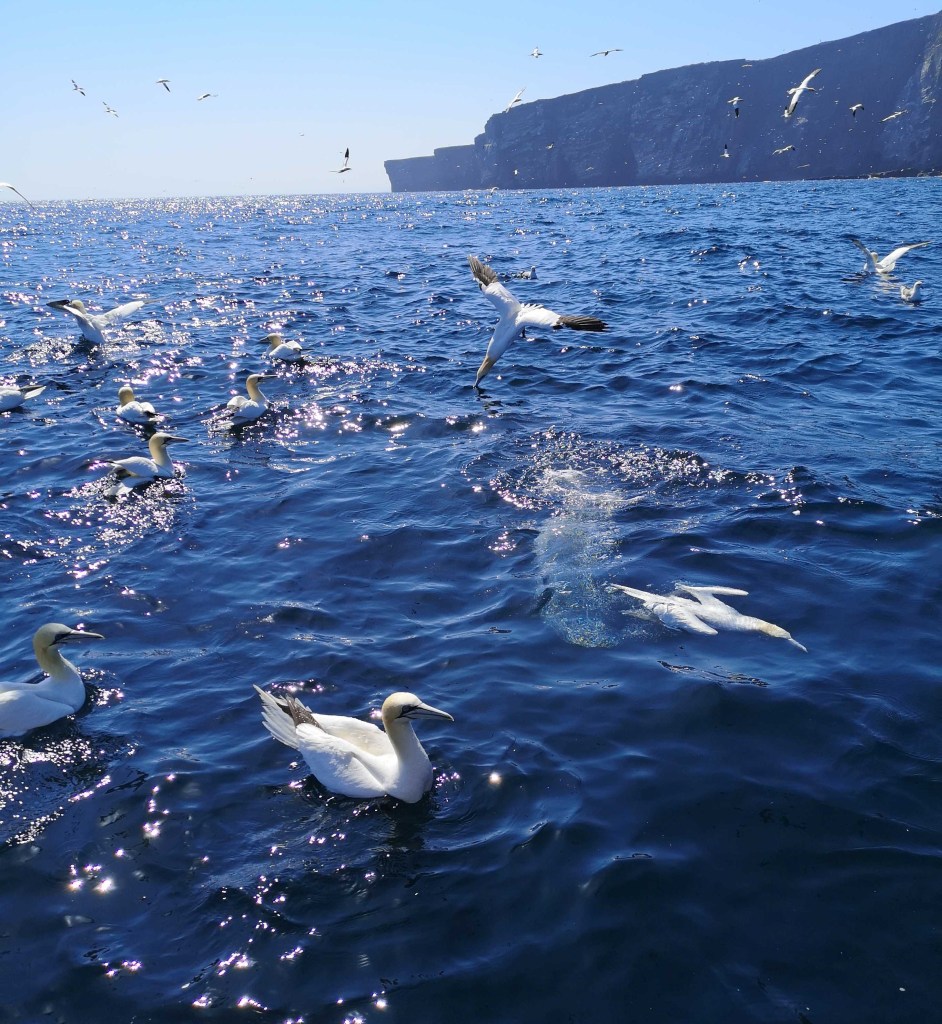
Below is one of those “wait for it” videos. If you are creeped out by slo-mo Exorcist talking, this is your trigger warning.

In and amongst the gannet colony were guillemots, members of the auk family, just like puffins. They are literally descendants of the Great Auk from days of yore. The birds nest in colonies to protect their eggs, which they lay directly on the ground, or in this case on top of cliff ledges. The eggs are shaped like pears and so roll in an arc, presumably to keep them from tumbling into the sea.
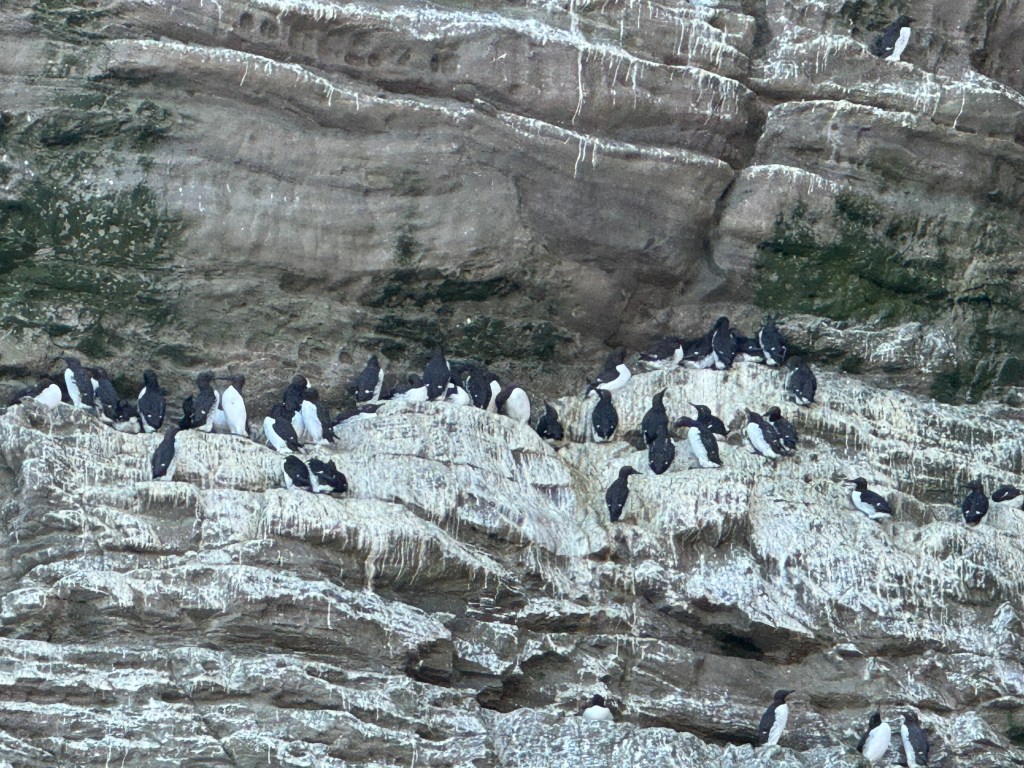
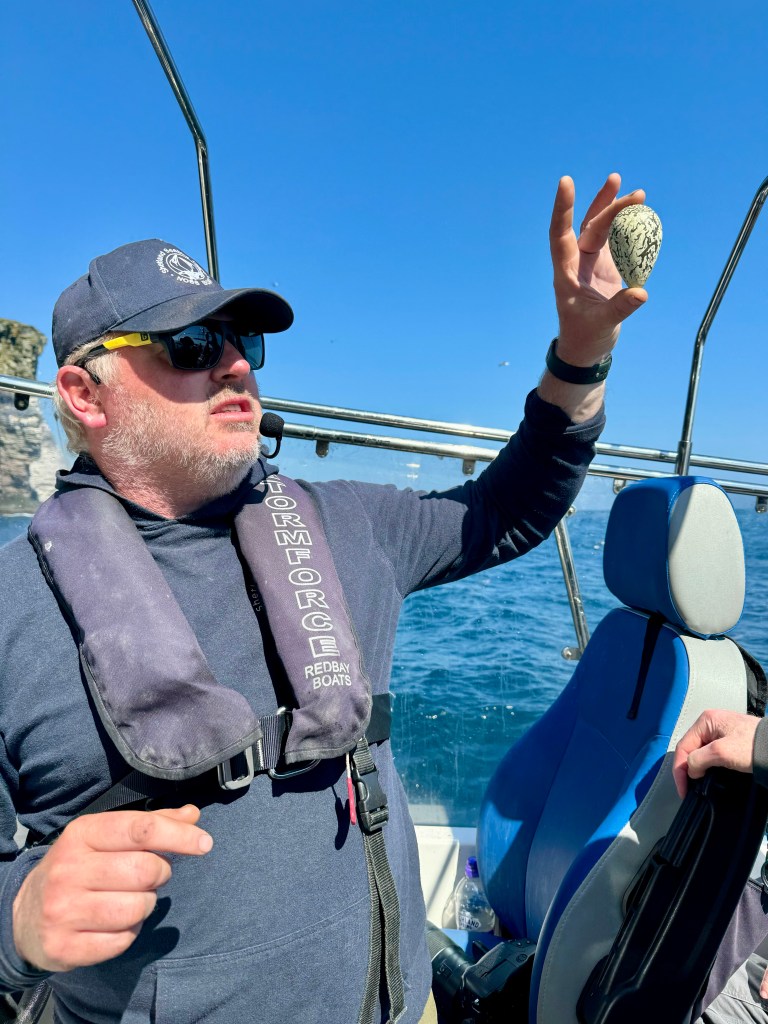
Guillemots!
Phil and his demonstration guillemot egg.
Captain Phil’s lecture about the spa-going habits of female guillemots.

As we continued sailing along the cliffs next to the gannet colony I managed a few awesome photos if I do say so, and have no idea how. Here are just a few.
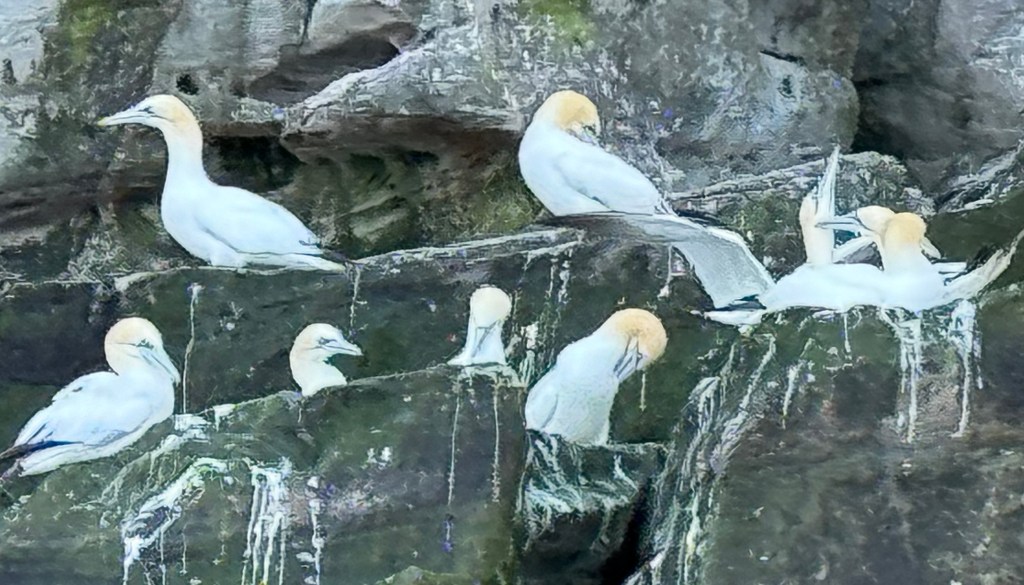
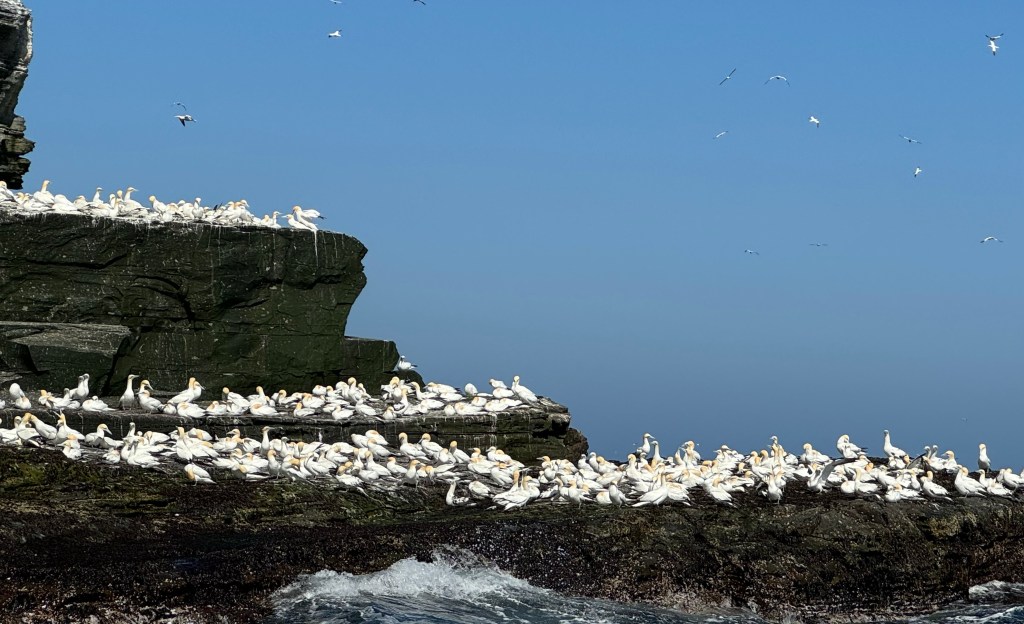
Gannet Woodstock

They flew alongside the boat as we pulled away from the cliffs to round the tip of Noss and head back to Lerwick.

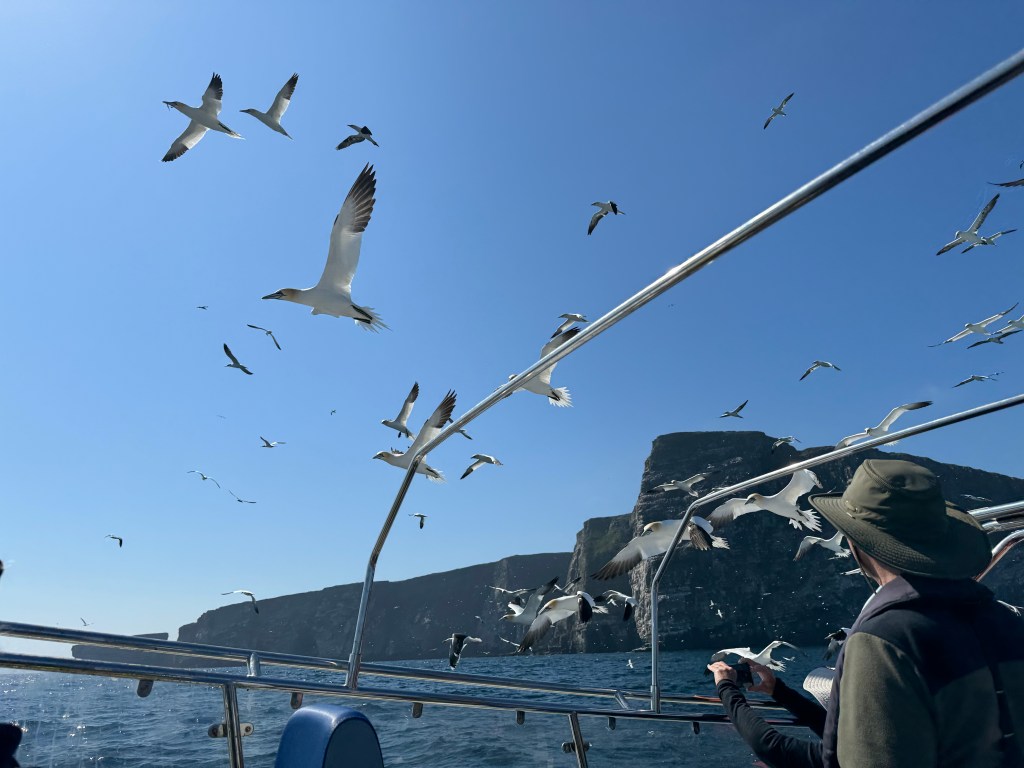
Sound on to experience full gannet exuberance.

I mean what a flipping awesome experience. It even remained fantastic through that one moment when, as I was facing backwards on rough seas taking photos of gannets flying overhead I suddenly realized I was seasick, sat my butt down and grimly faced forward. It passed.

As if we hadn’t seen enough magical wildlife, once we returned to the harbor we were greeted by a friendly and inquisitive seal. I think Phil called him “Freddie,” so he’s likely a regular.
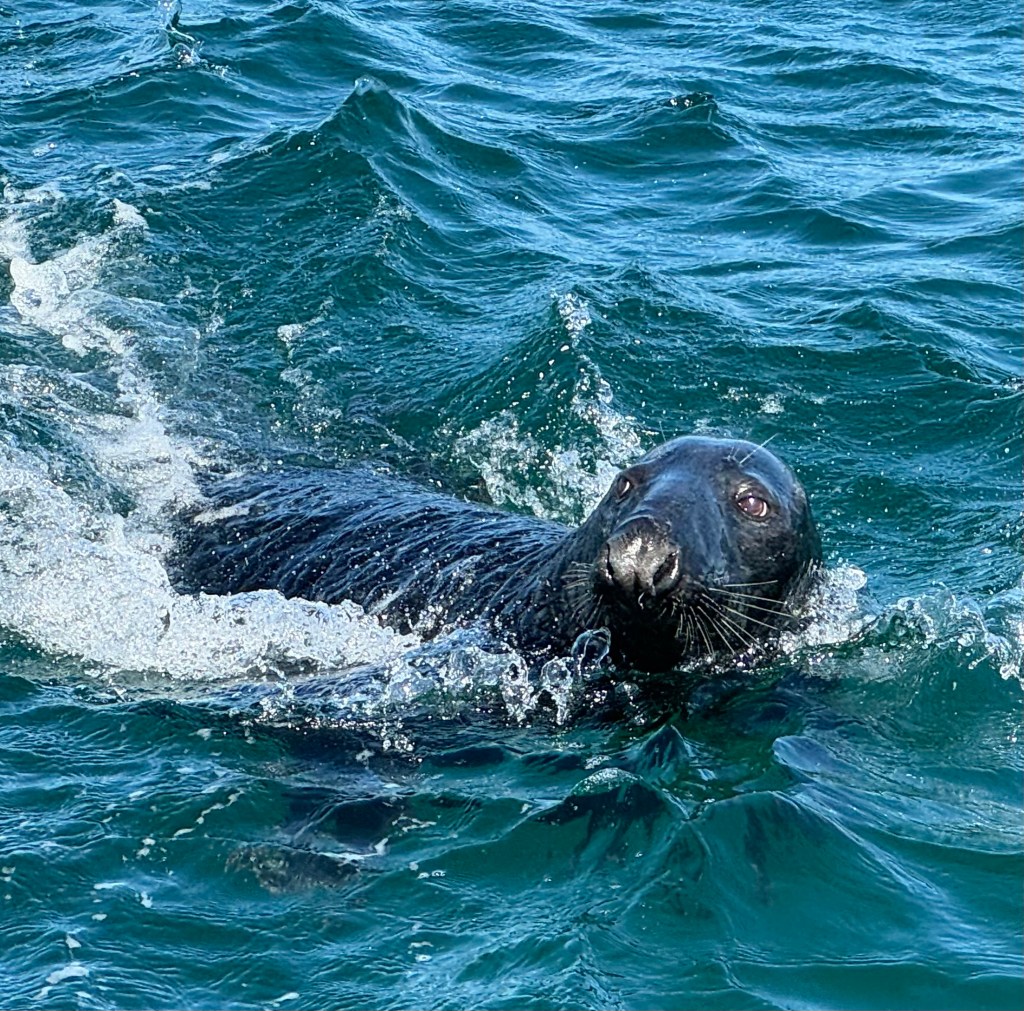
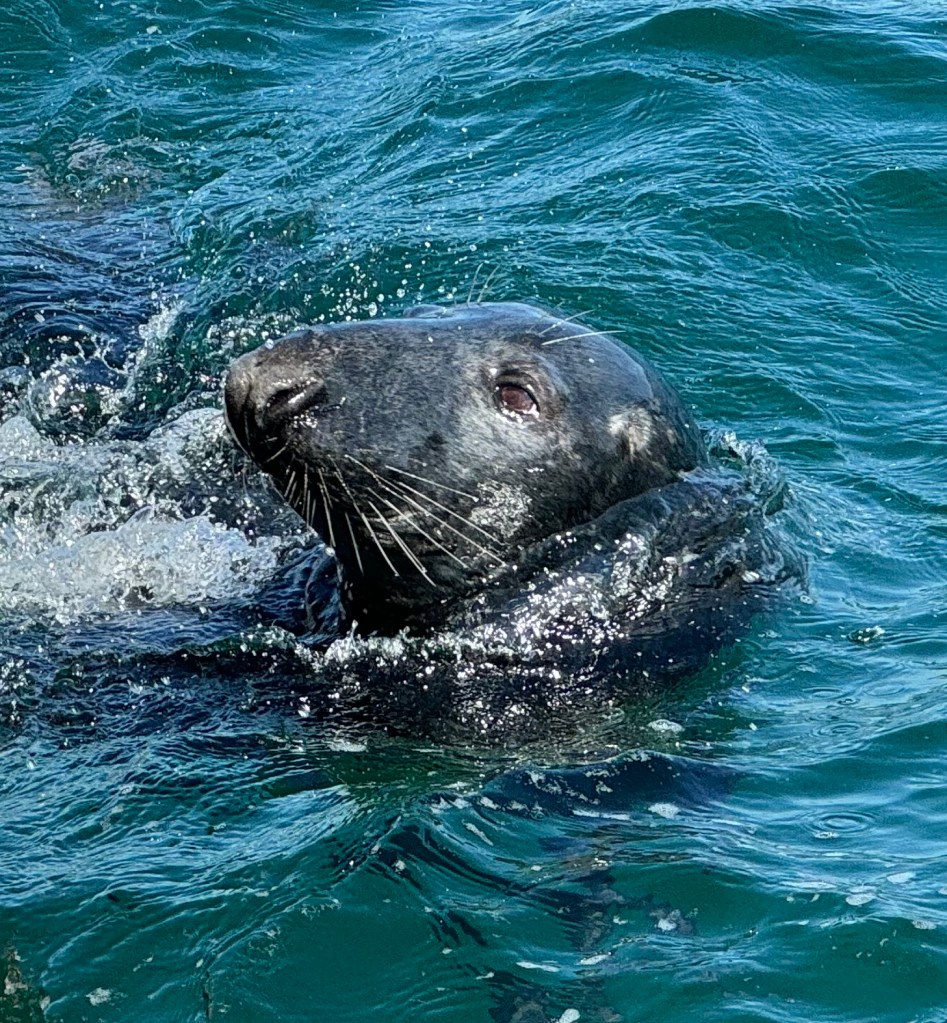
When we parked (is that the right word, I’m not a boat person) at the dock Phil climbed out, tied us off and instructed me to turn off the boat for which I received a round of applause. Aye aye, Captain.
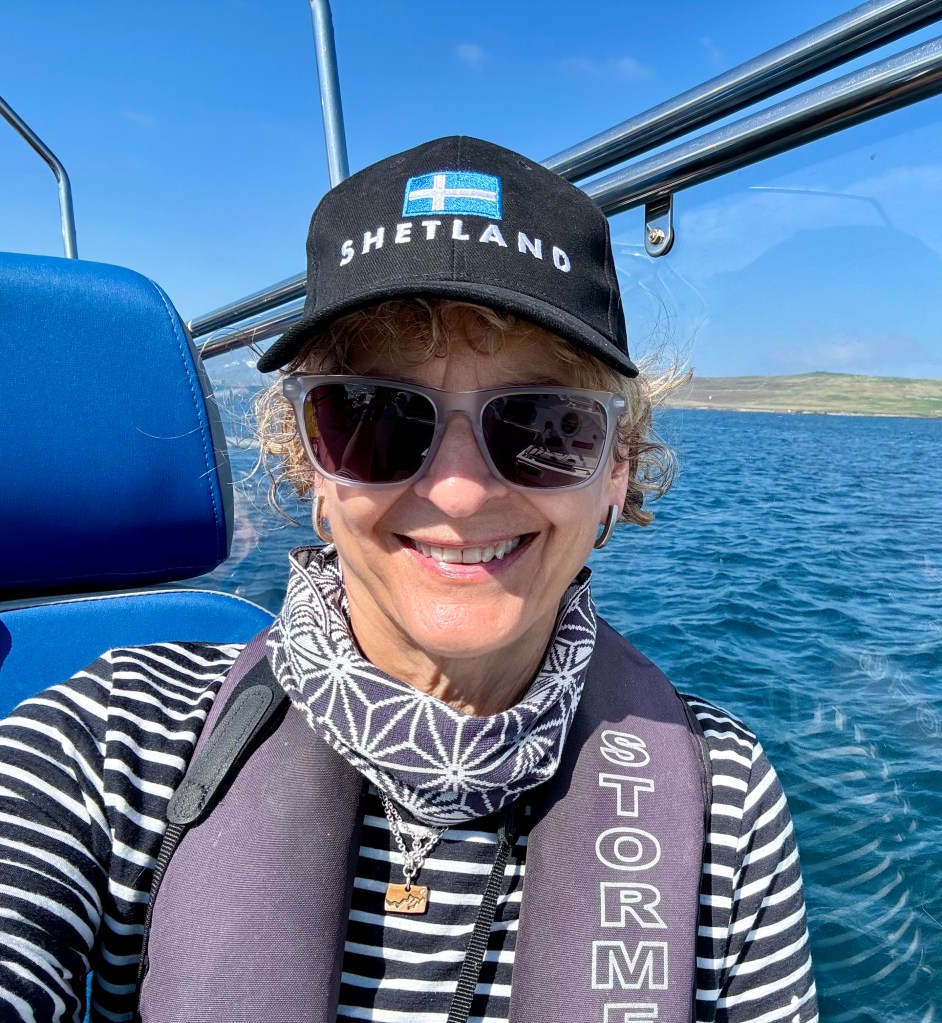
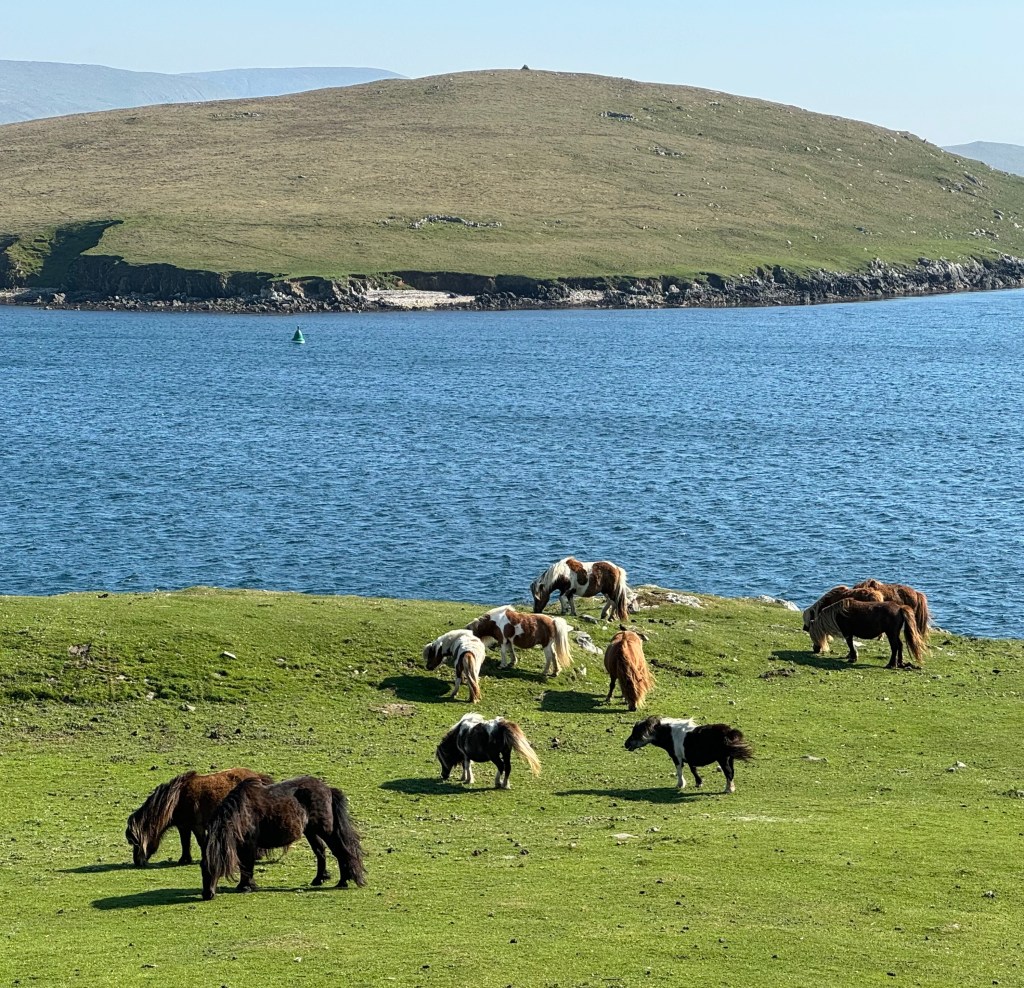
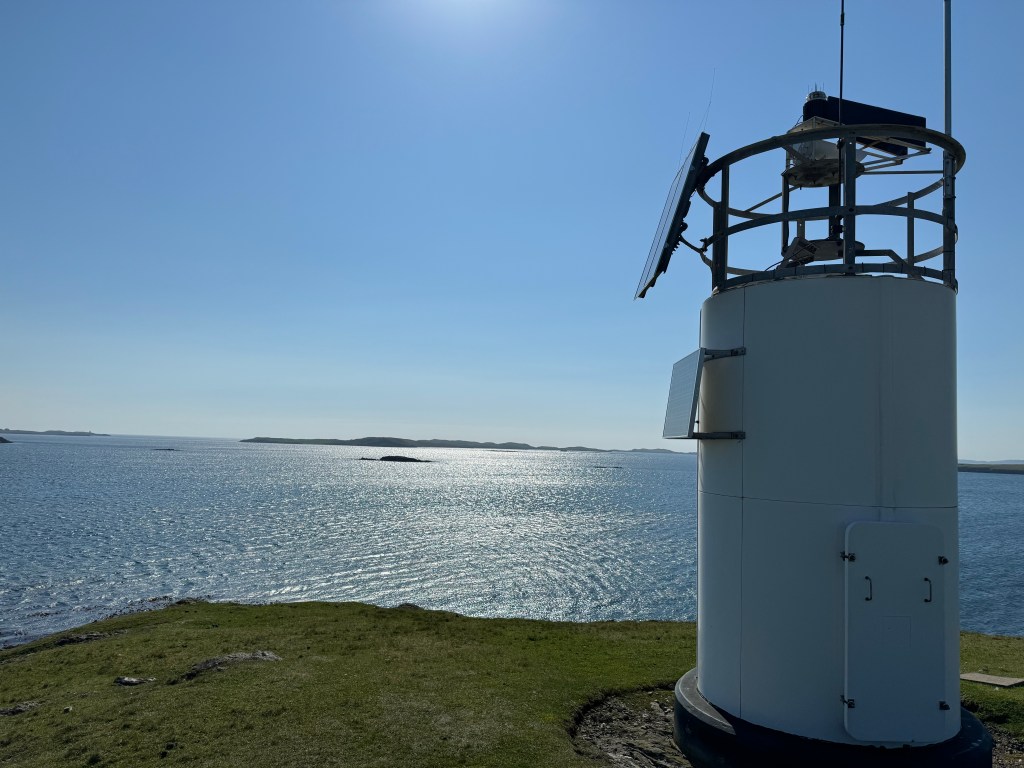
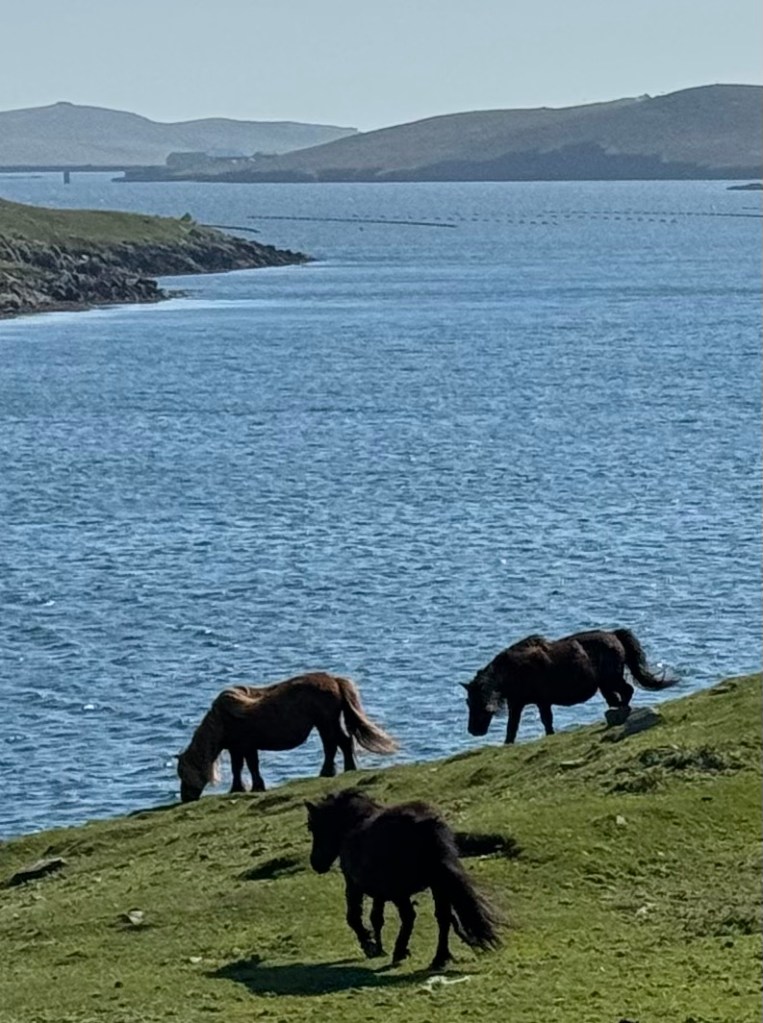
And the day wasn’t even over! We drove west to Scalloway and walked to a lighthouse on a grassy point, passing sheepies and ponies and marveling at the light.

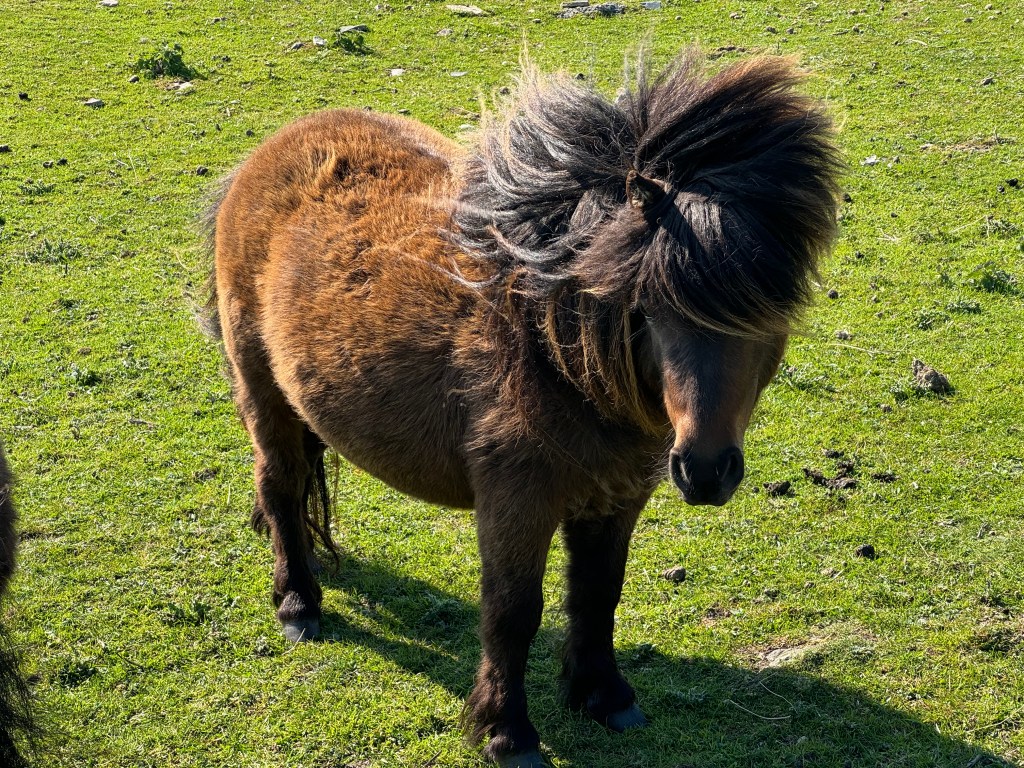
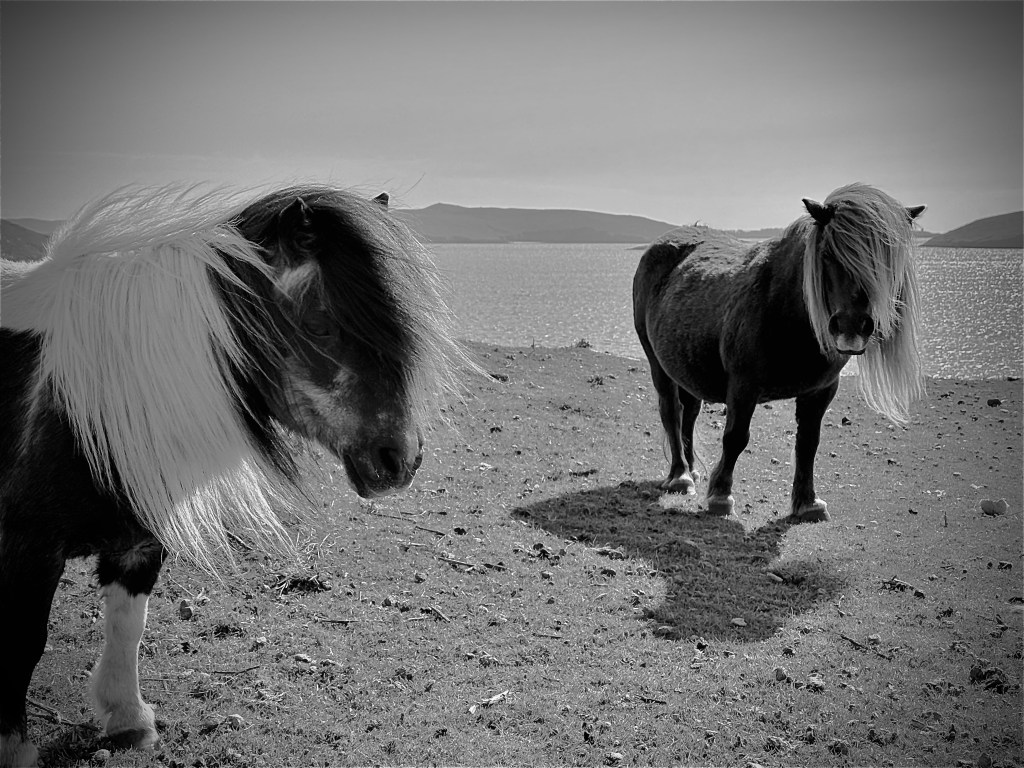
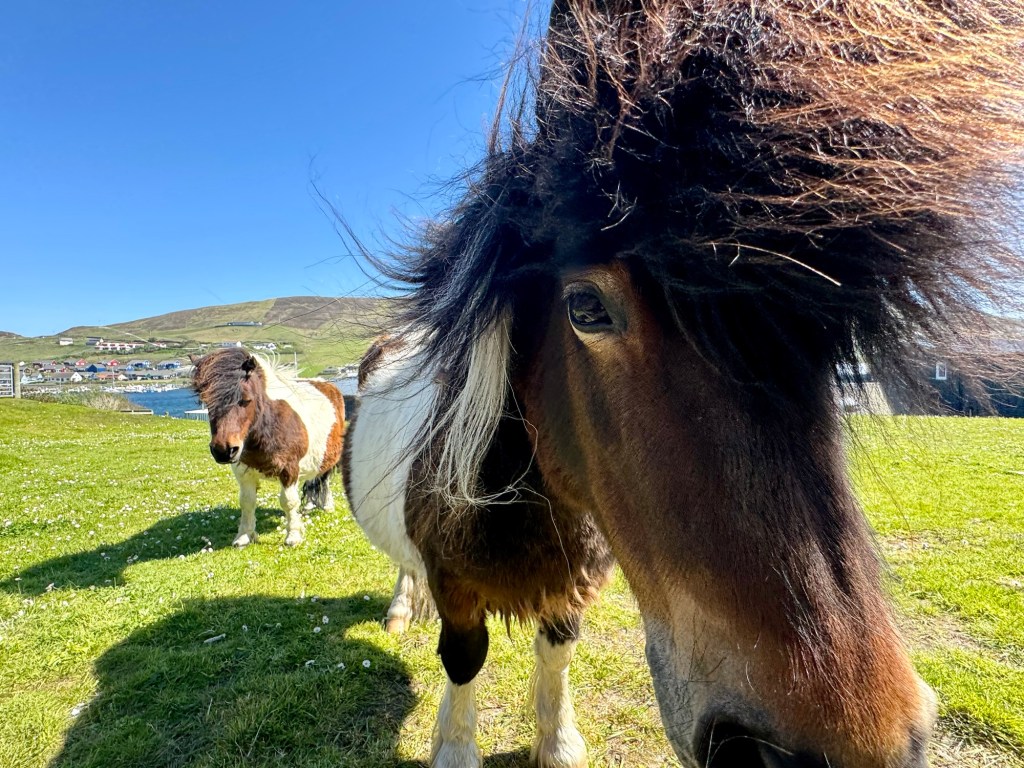
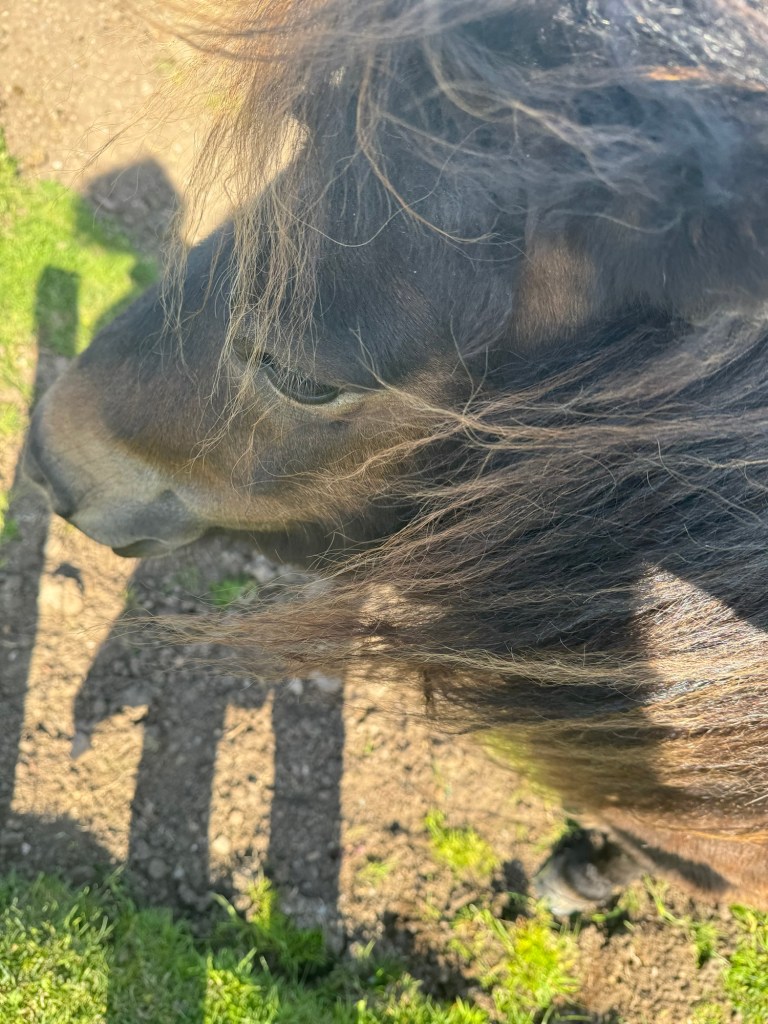
Let’s take a moment, shall we, to appreciate the product-free coiffures of the Shetland pony.
Lighthouse on Point of the Pund

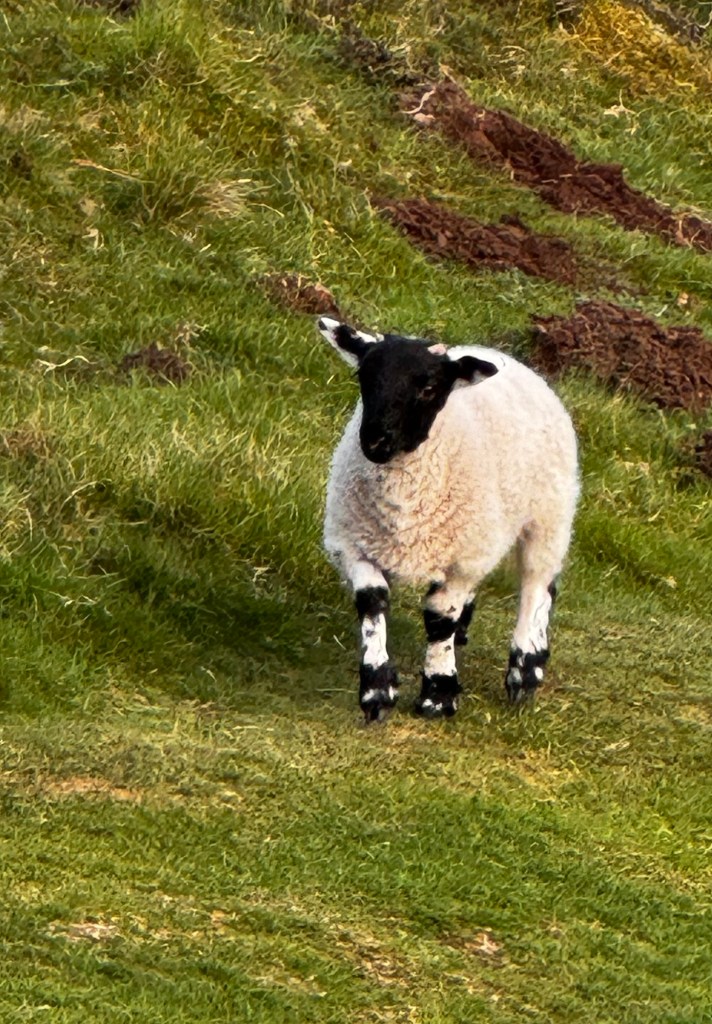
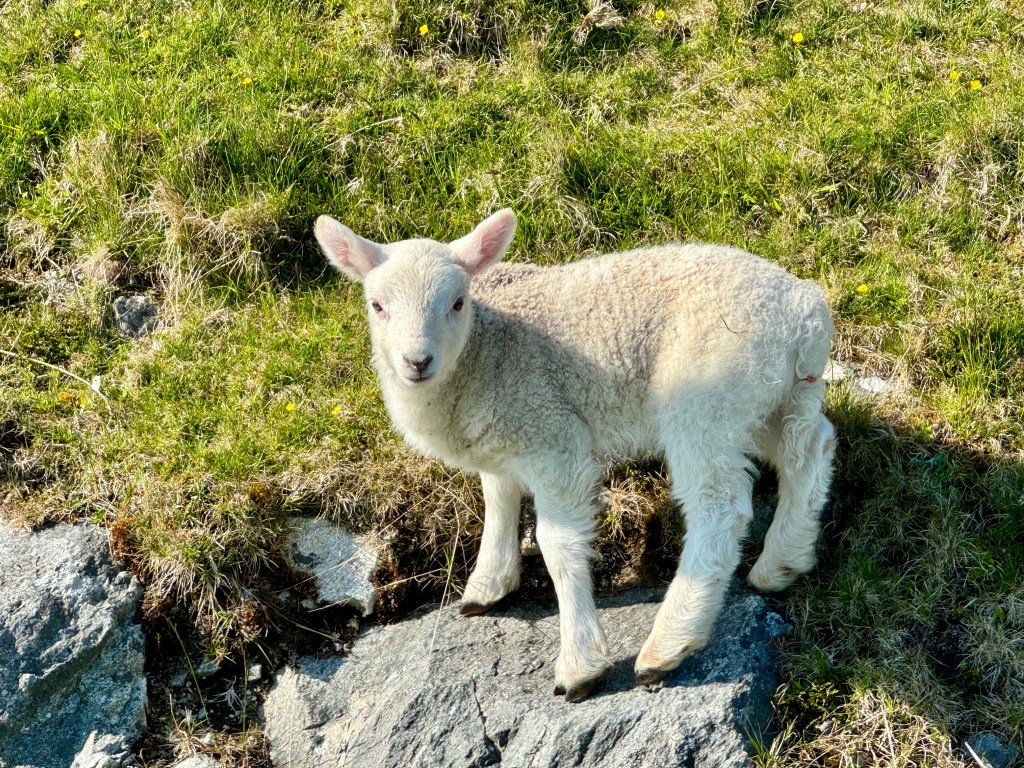
And lest you thought you were going to slip through a single solitary day without a sheepie photo, well that is obviously silly.
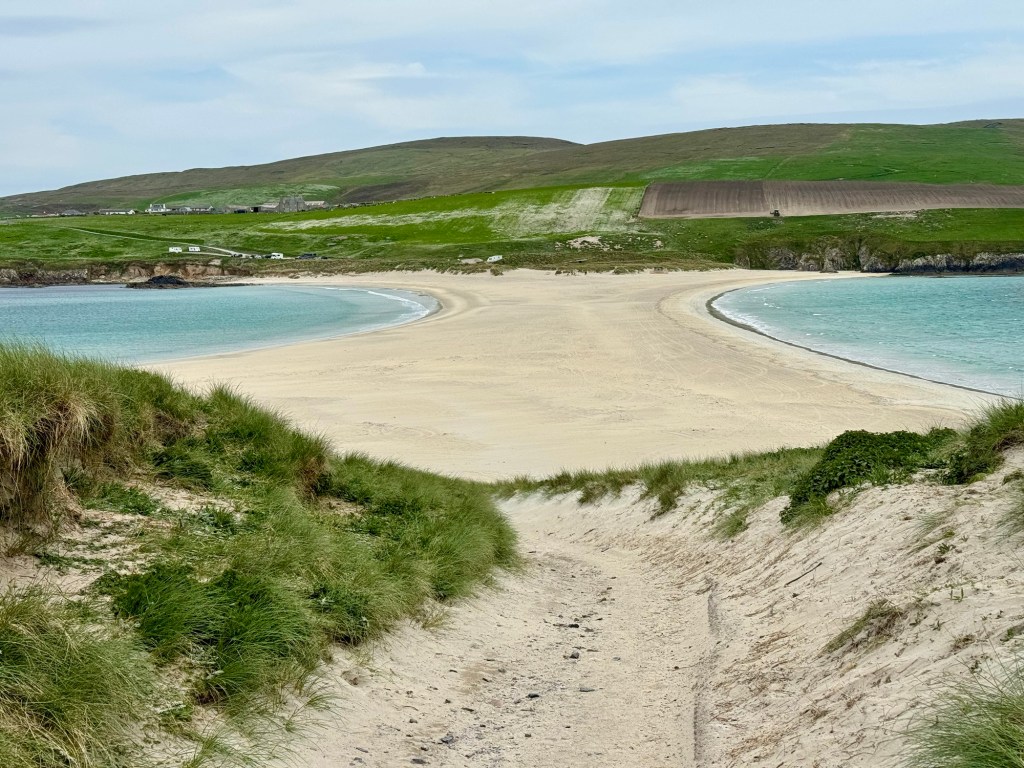
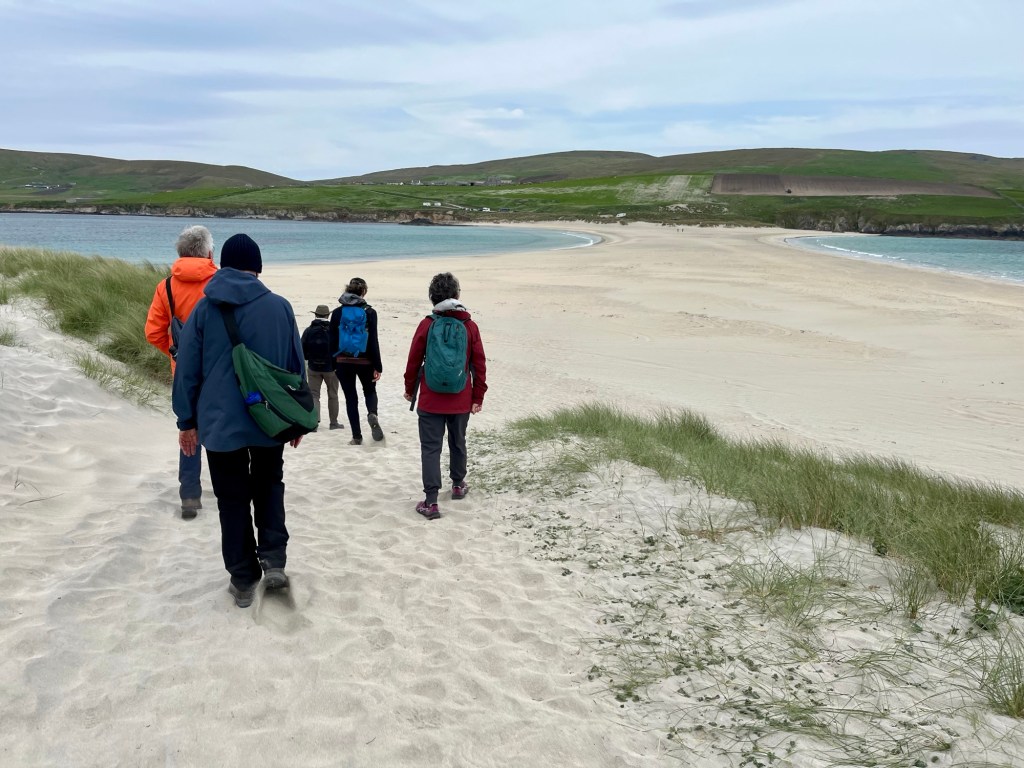
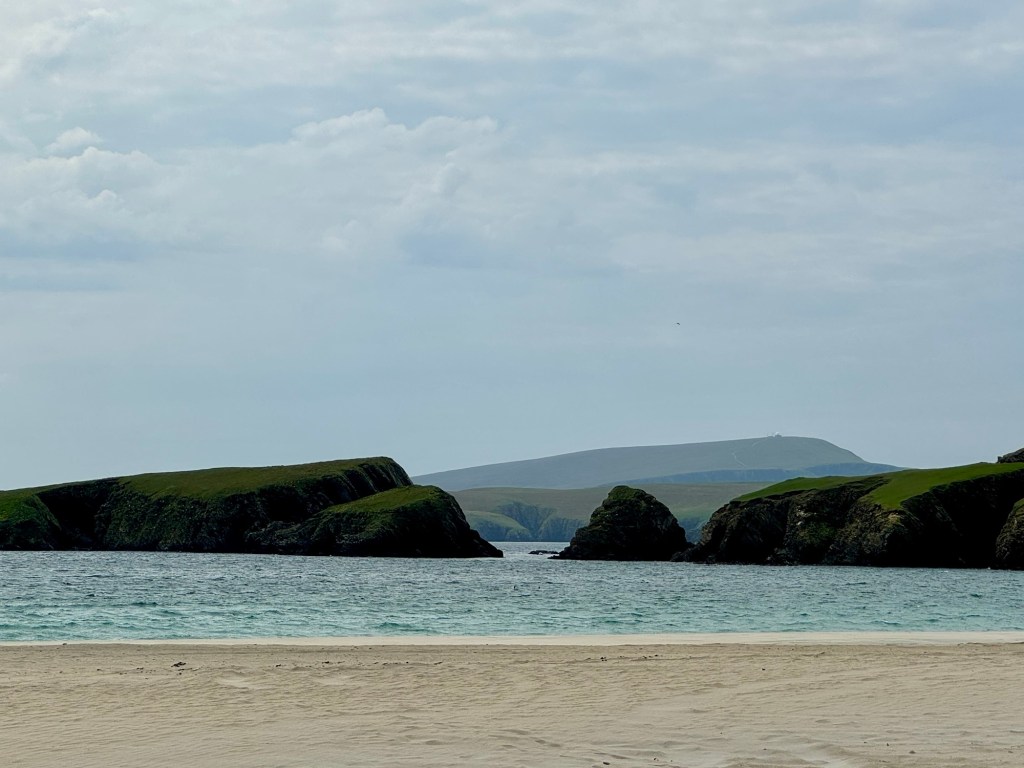
Next morning we were off for a walk around the perimeter of St. Ninian’s Isle, a small island connected to the south Mainland via the largest tombolo in the UK. It’s completely exposed all summer but generally submerged in winter. I can’t explain why, but it was fun to traverse.

St. Ninian is the patron saint of Shetland. While as usual, Neolithic artifacts have been found on the island, there’s also a ruin of a lovely 12th century chapel named after the saint. In 1958 an excavation on the chapel grounds found a horde of 8th century silver in a wooden box under a stone slab. Eighth century you say? Horde, you say? We know what this means – Vikings! The horde was possibly hidden from the Vikings or by the Vikings after being stolen, who knows. A local schoolboy, Douglas Coutts, who was assisting the grown-up archaeologists from Aberdeen University, made the find on his first day of being a helper. Apparently he wanted to lift up the stone slab to see what was underneath, possibly to find bugs, but the grown-ups ignored him. He did it anyway. You can see the horde at the National Museum of Scotland in Edinburgh. It’s considered to be the best example of surviving silver metalwork from Scotland’s early medieval period, and the pieces are quite intricate and beautiful. Here’s a little video if you’d like to learn more: https://www.youtube.com/watch?v=Fqw7cwYbWzo&list=TLGGrdK6ZEugXgIwNjA3MjAyNA&t=250s
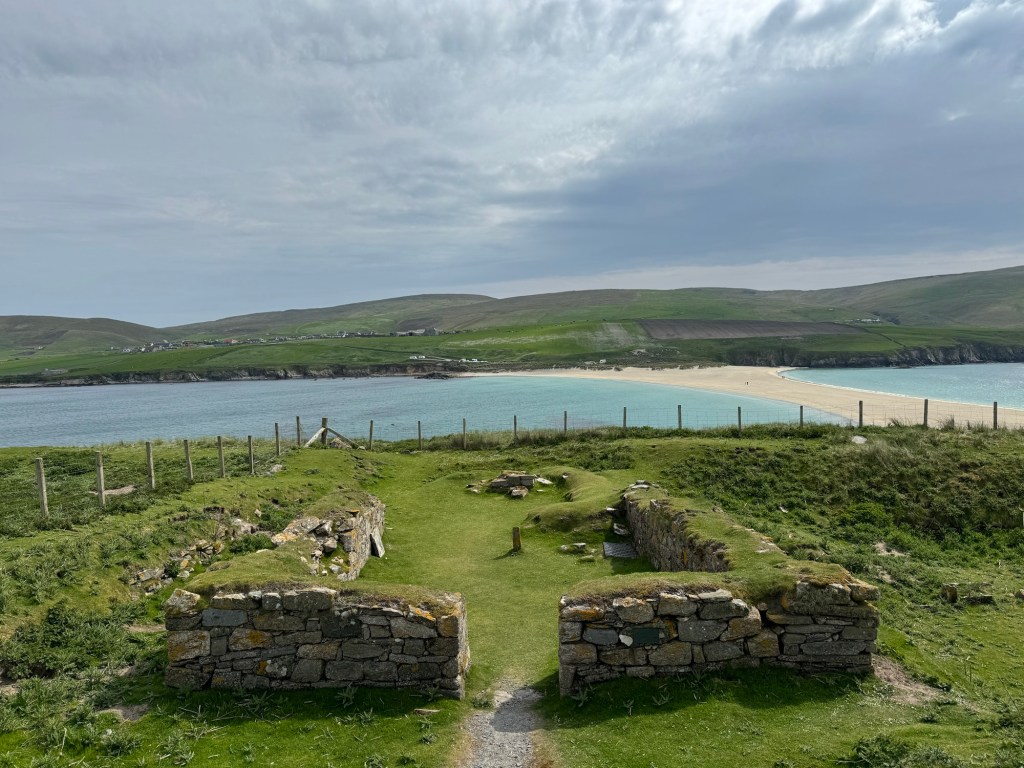
St. Ninian’s Chapel ruins

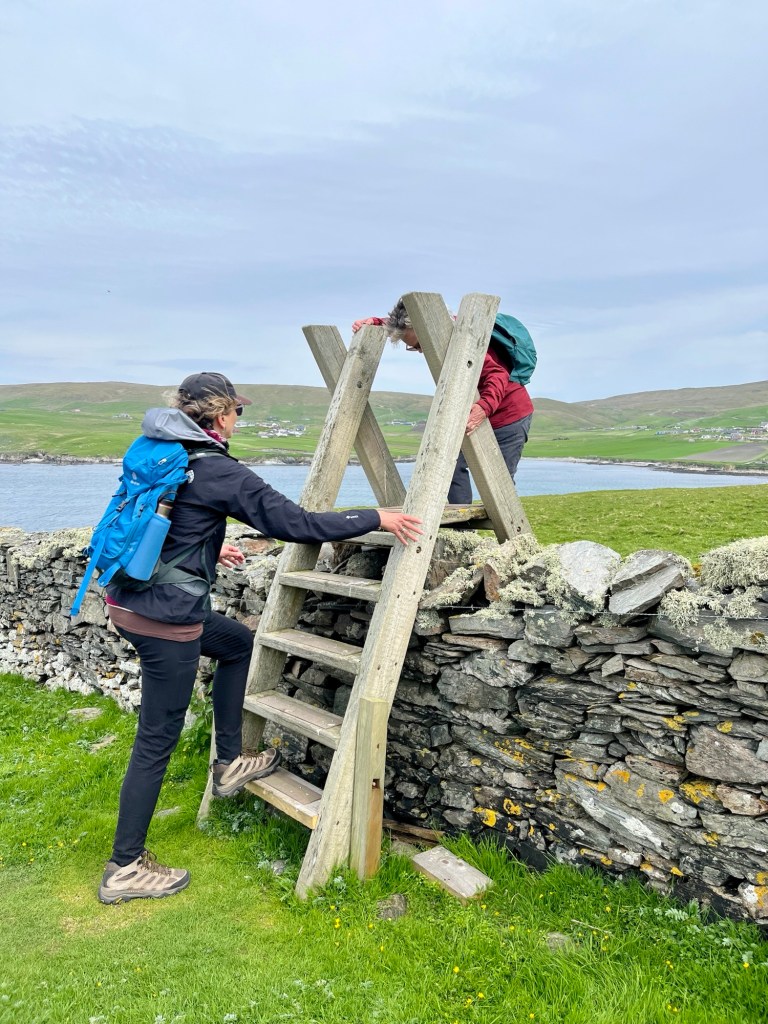
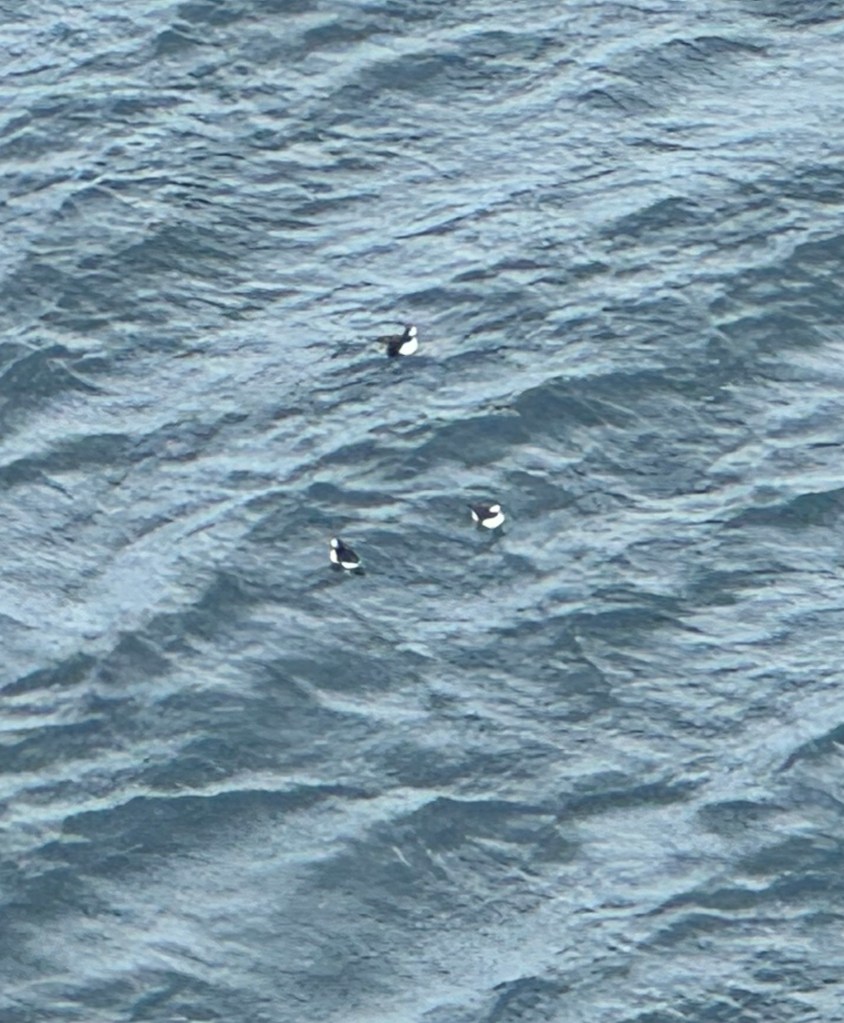
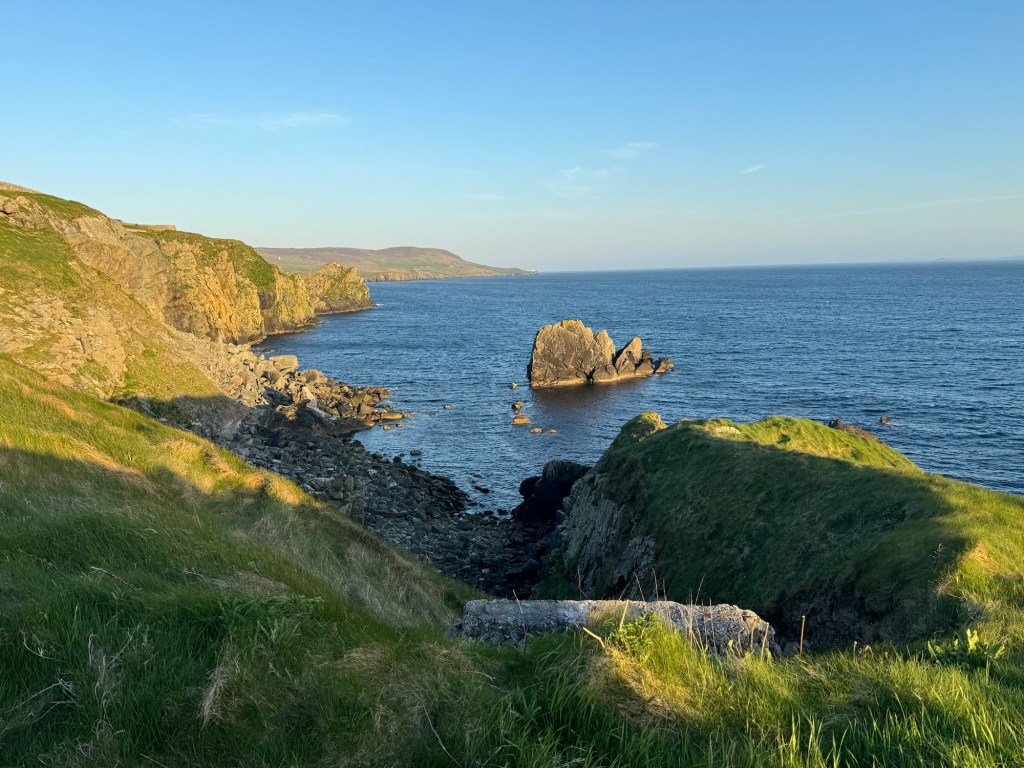
Our merry band set off around the island, taking in beautiful cliffs, a few swimming puffins, a stile or two, and stopping for lunch along the way with views across the sea.
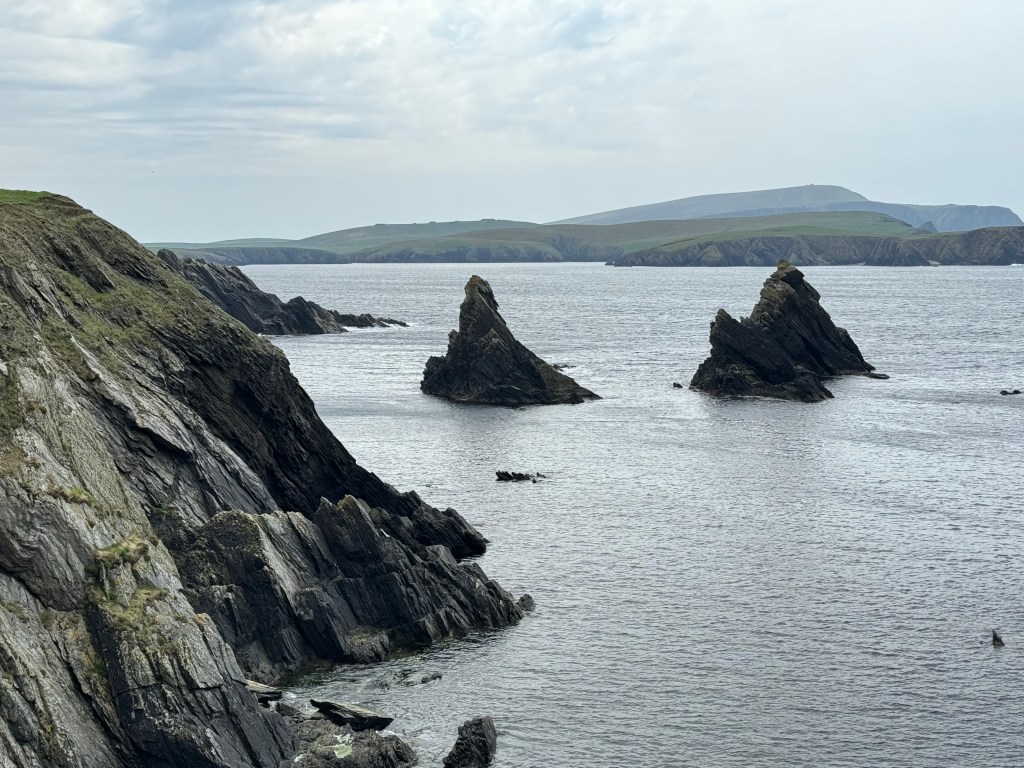
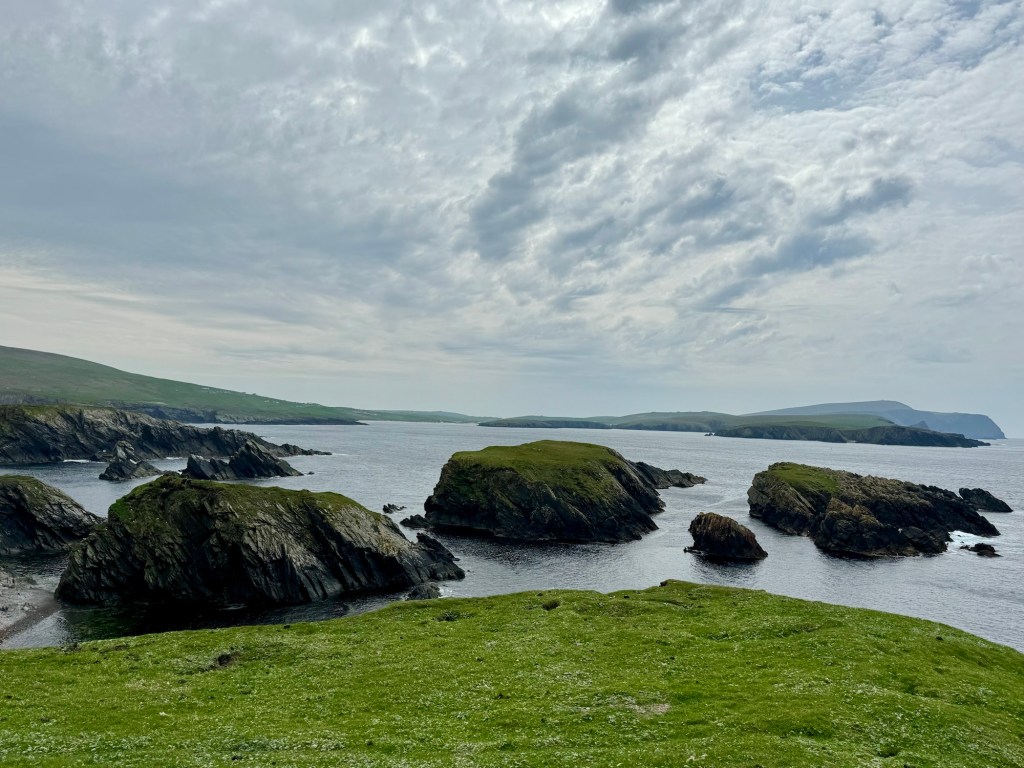
Blurry swimming puffins!
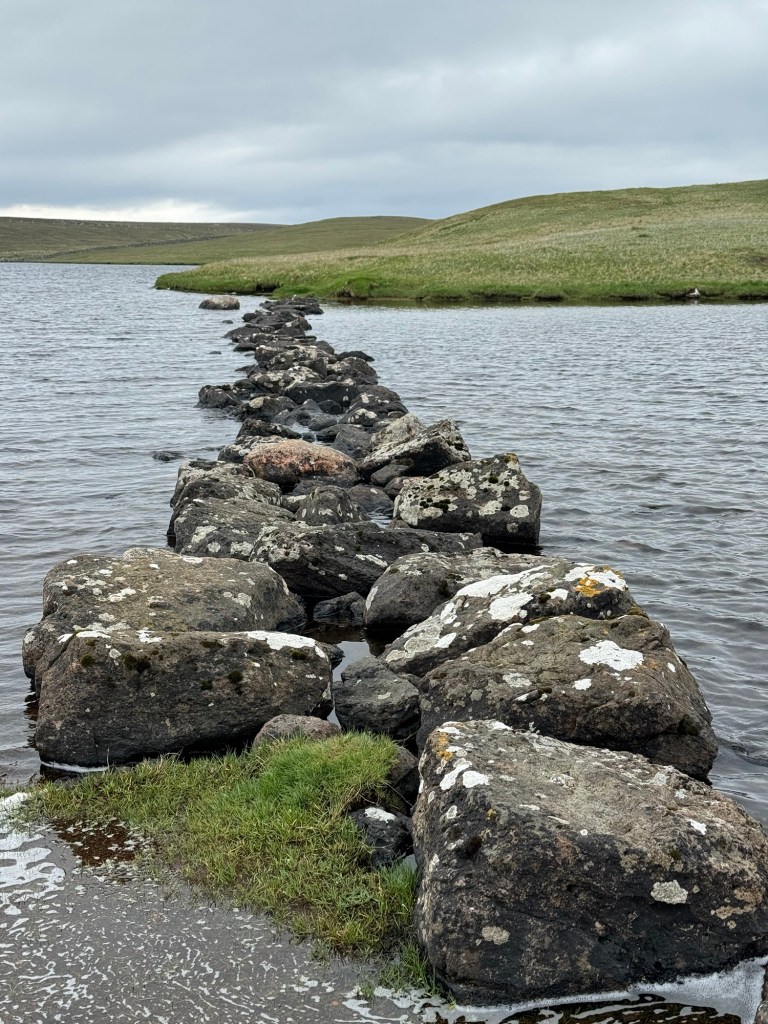
Back over the tombolo.

Kirsty told us she had been talking to a guy and he recommended a remote cliff walk, saying it was his favorite on the island. So we went off-book and drove down deserted roads with Kirsty periodically pulling over and consulting her phone to make sure we were on the right track. At one point she blew her cover about our off-the-grid situation by saying, with a wee bit of relief in her voice, “Oh, there we are.”

We drove through Silwick, a pretty much deserted settlement, and parked in front of a gate, girding our loins to face the only dangerous animal that inhabits Shetland.

Luckily, this was our only animal encounter on the walk.
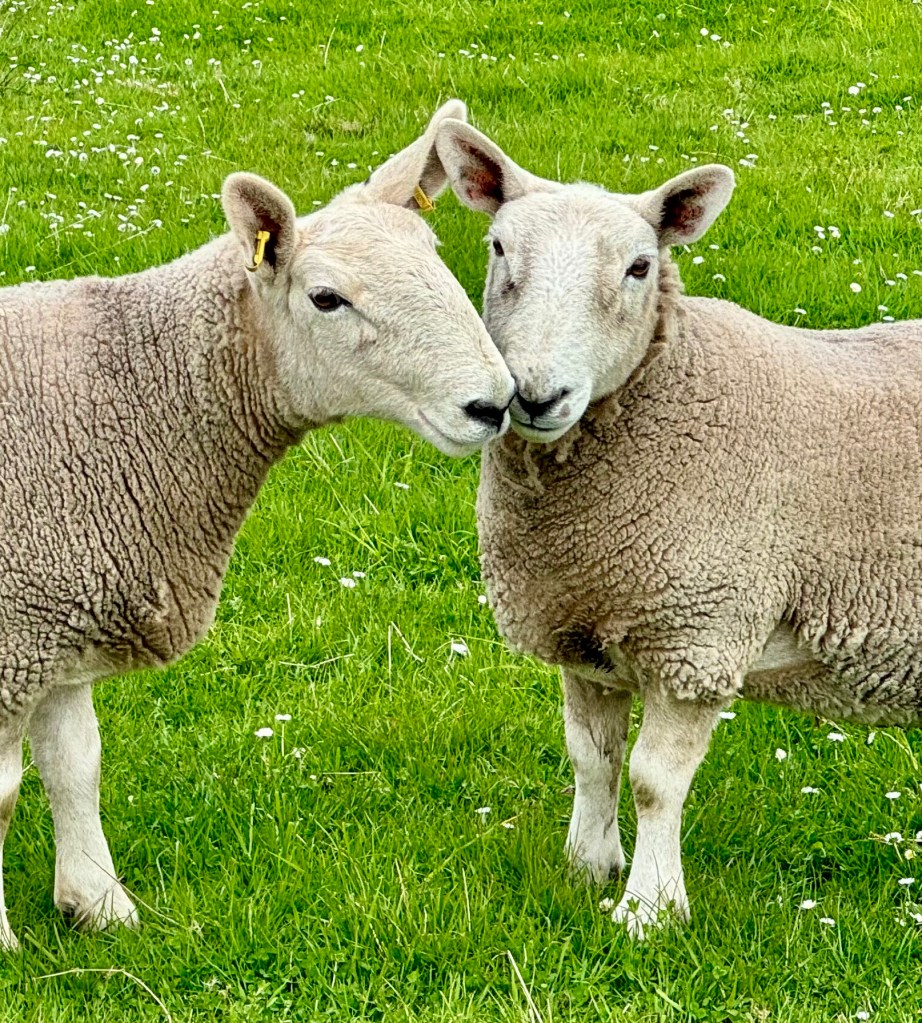
We walked up a hill and were greeted by some of the most spectacular views we had seen to date. Our rogue excursion was a smashing success. Kirsty plans to recommend that this walk be added to the official WS itinerary for future trips.
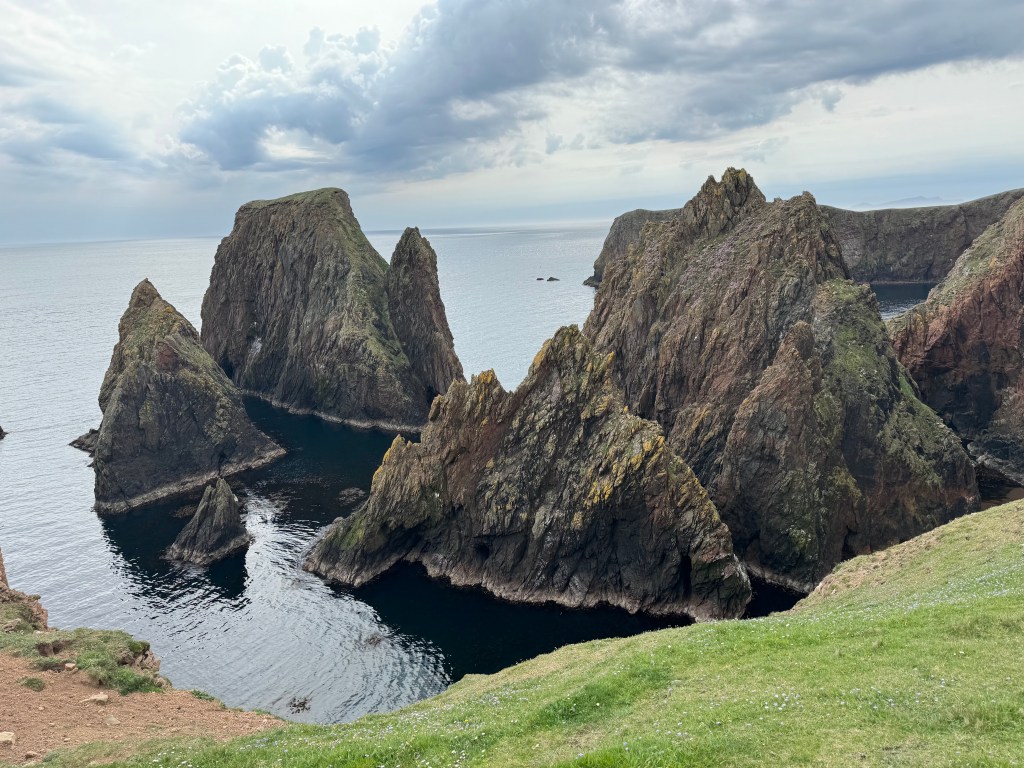
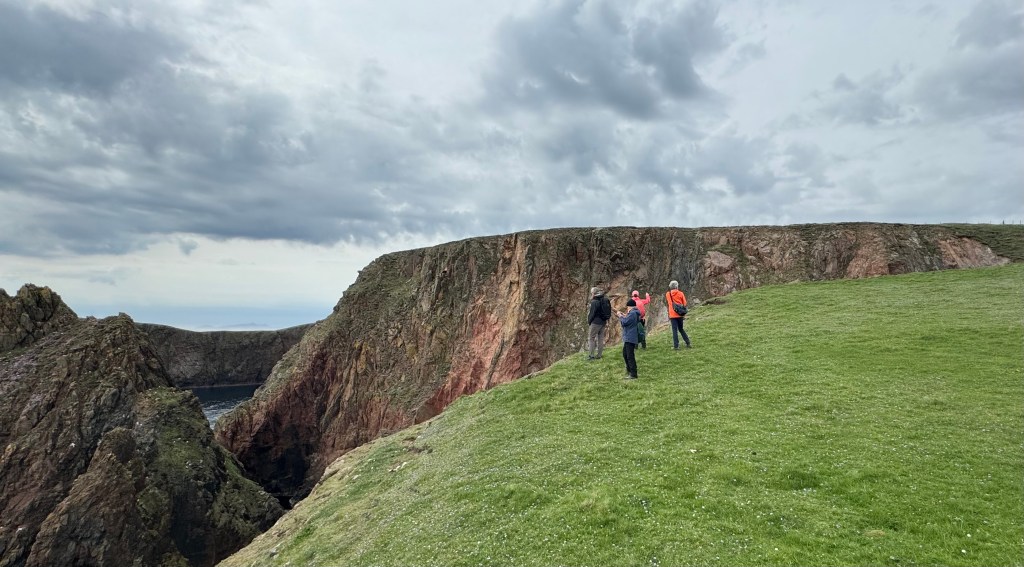
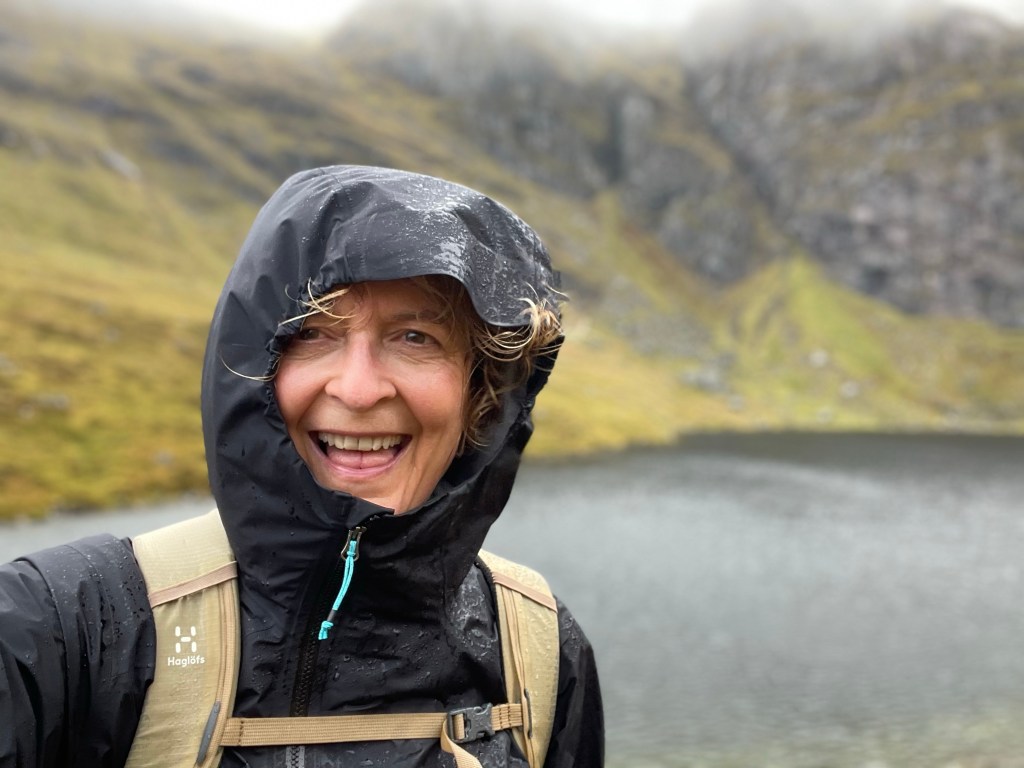
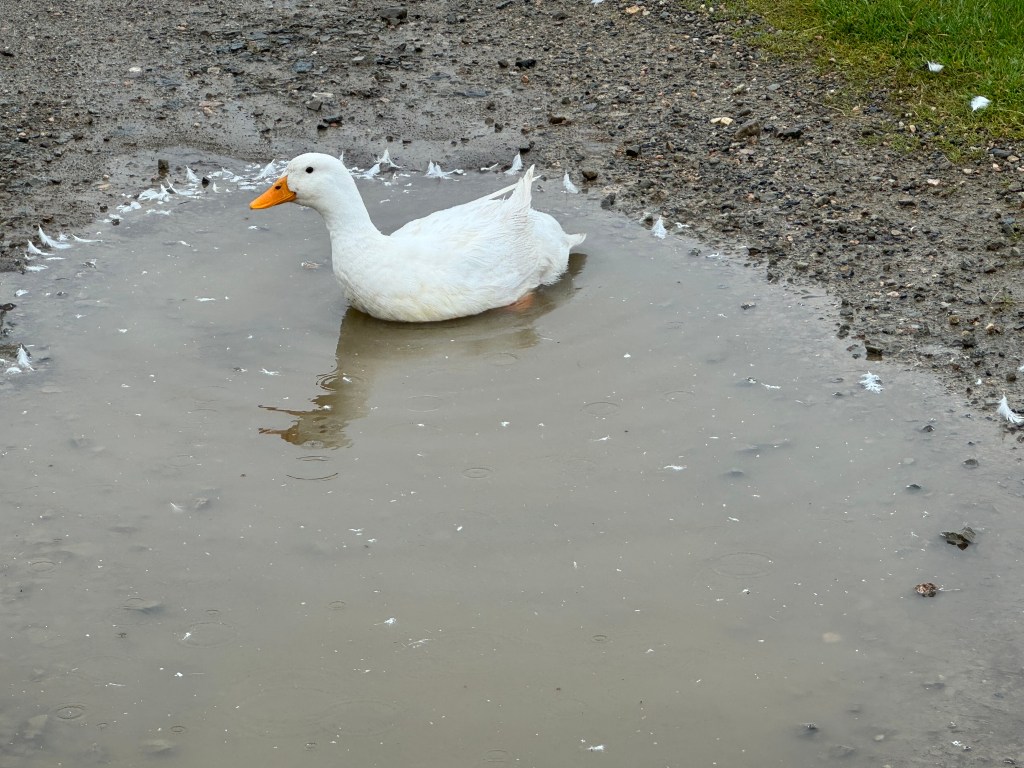
The next day was a momentous one because I was finally able to bust out my new raincoat for the first time this entire trip. And the weather was misty and moody at last! Also, yay, ferries! We took an early ferry to Yell and drove across that island to another ferry terminal to catch a ferry to another island, Unst. We stopped on Yell briefly to view a very, very rare Scottish puddle duck.
Another cool attraction on Yell is the Windhouse (pronounced “windhoose”), a derelict home perched atop a hill along the main road. It was built in 1707 and remodeled in 1885 with all the latest appliances. Silhouetted against the skyline, the creepy looming ruin can be seen for miles around. It has been deemed by experts to be the most haunted house in Shetland if not the entire British Isles. It’s built near the ruins of a broch and bodies are literally buried in the garden. As for ghosts, there’s a Lady in Silk – thought to be the skeleton of a woman with a broken neck who was discovered under the floorboards at the bottom of the staircase (!!), a dapper man in a top hat, a creepy child and a black dog probably named Sirius. There’s also a rumor that nobody can survive a sleepover on Christmas Eve night. The story is that in olden times a shipwrecked mariner turned up at Windhouse on December 24. He crossed paths with the home’s inhabitants getting the heck out. They explained that noone had ever been found alive on Christmas morning after spending the night because they were slain by an unidentified entity. The mariner decided to stay anyway, because this is a horror movie, and in the night he was startled awake by some kind of monster from the sea. He promptly dispatched said creature with an axe and buried it nearby. Sadly we don’t have a description, the body has not been found and it’s unclear whether the mariner’s actions reversed the curse.
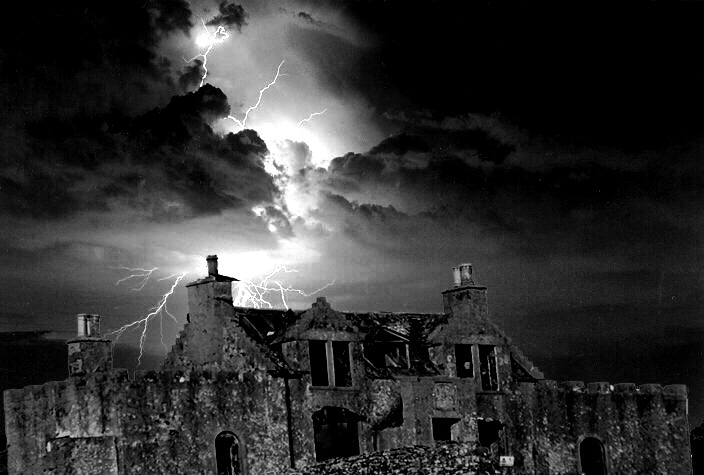
I wish we had been able to stop and wander around the ruin, but we had a ferry to catch and they wait for no one.

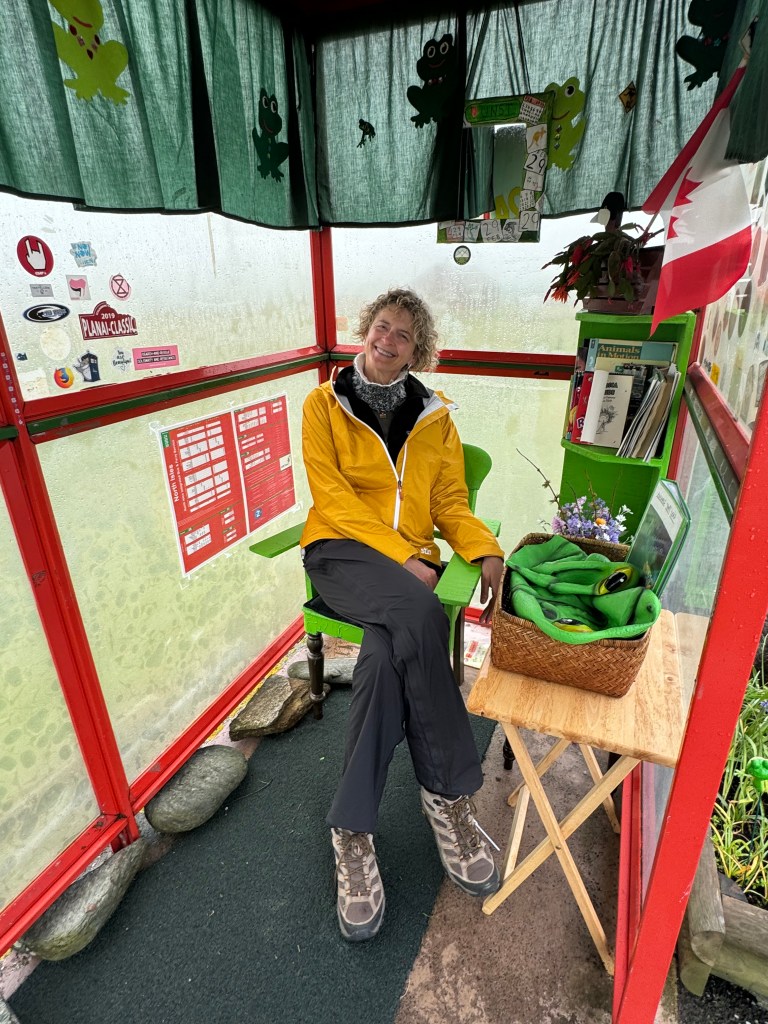
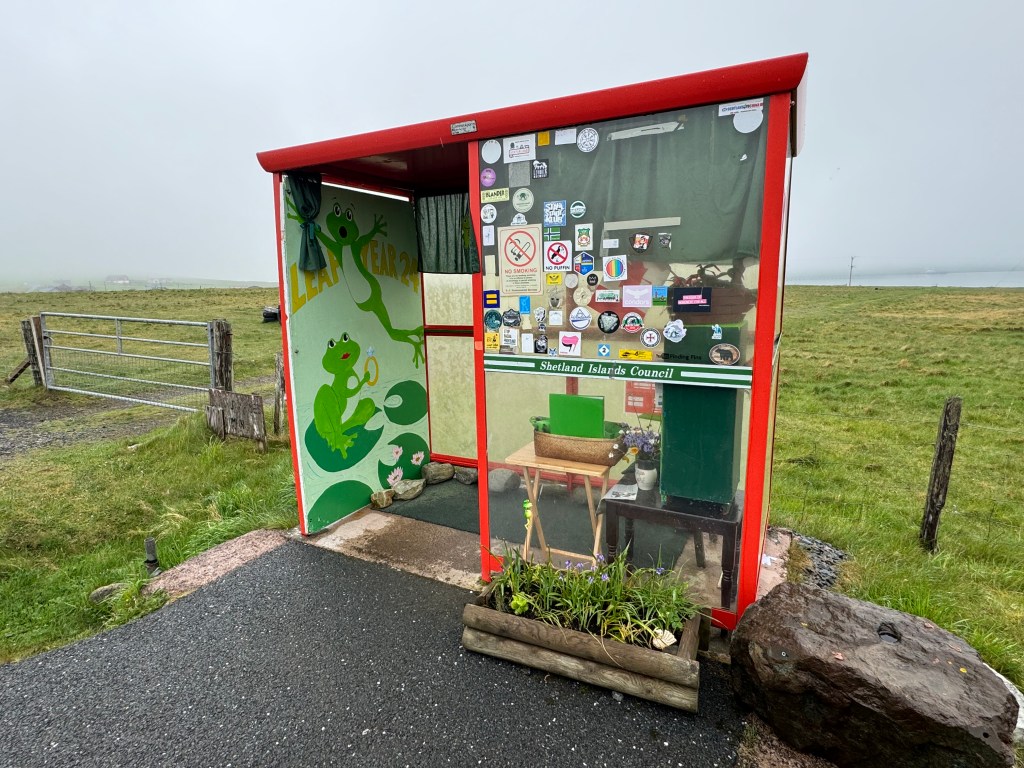
Upon arrival on Unst, the northernmost of the inhabited British Isles, we stopped briefly at Bobby’s Bus Shelter. It’s named after local boy Bobby McCauley. Bobby, who took the bus to school every day, grew weary of the often long, cold and wet waits every morning at the bus stop. He wrote a letter of complaint to the local newspaper requesting that a shelter be built.

What Bobby wants, Bobby gets. The shelter was duly built and, soon after, a sofa appeared, followed by a table, a microwave, a carpet and other comforts of home. Before long, the humble bus shelter was a warm and welcoming place with its own visitors’ book. Now it is one of the most photographed attractions on Unst.

This brilliant shelter is decorated with a different and imaginative theme every year. Some examples: the Queen’s Jubilee, outer space, women’s suffrage, the colour yellow and an underwater theme.

Bobby recently earned his PhD at the University of Glasgow, so the bus shelter served him well.
And now a rather violent segue from sweet bus shelters to Vikings, as Unst is one of the richest Viking heritage sites in Europe, with over 60 longhouses uncovered by archeologists so far. At 61 degrees north, the island was the perfect resting spot for Norse travelers on the trading route between Scandinavia, Greenland and Newfoundland. Many settled in this northerly outpost, working the land and making it their home.

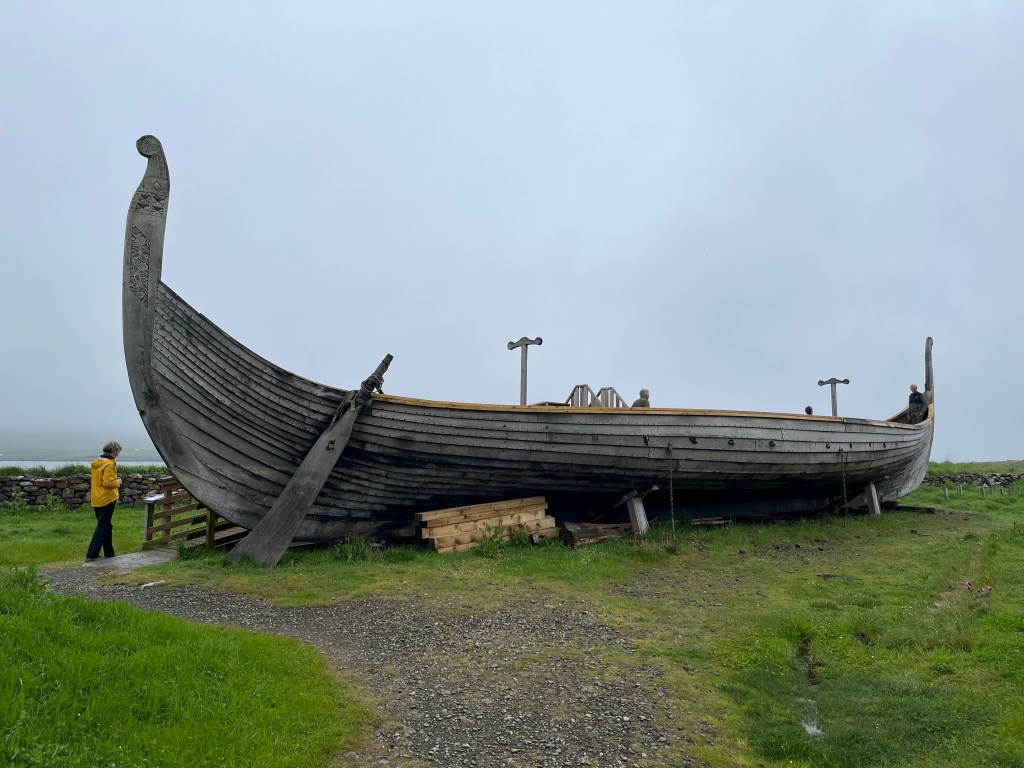
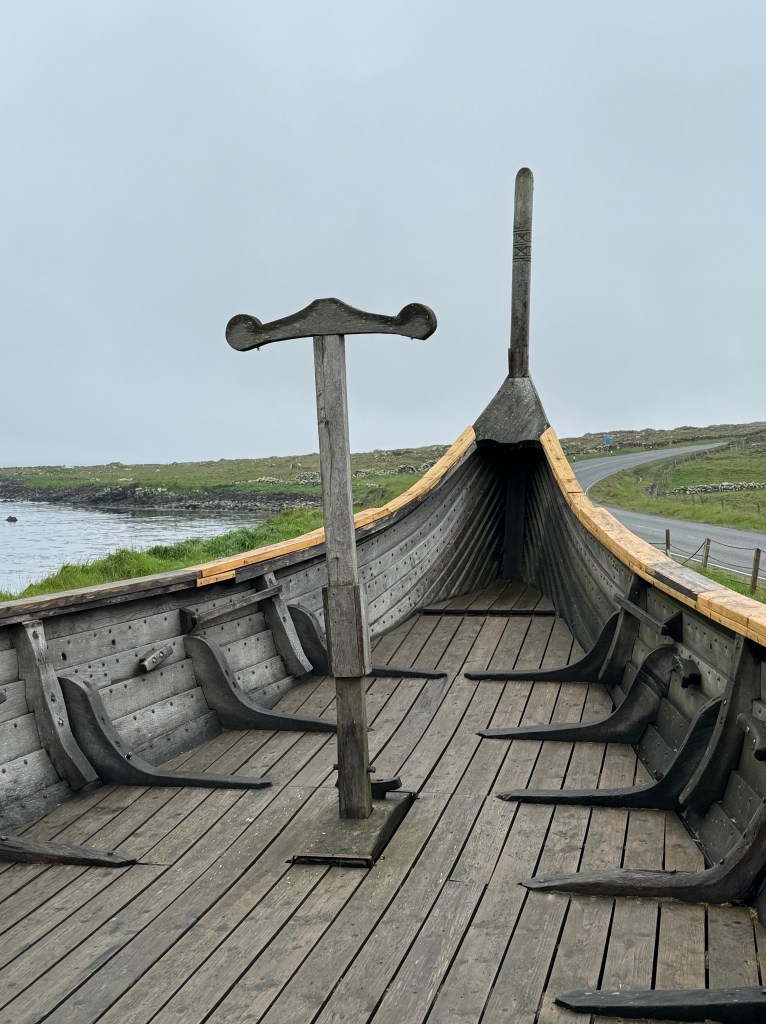
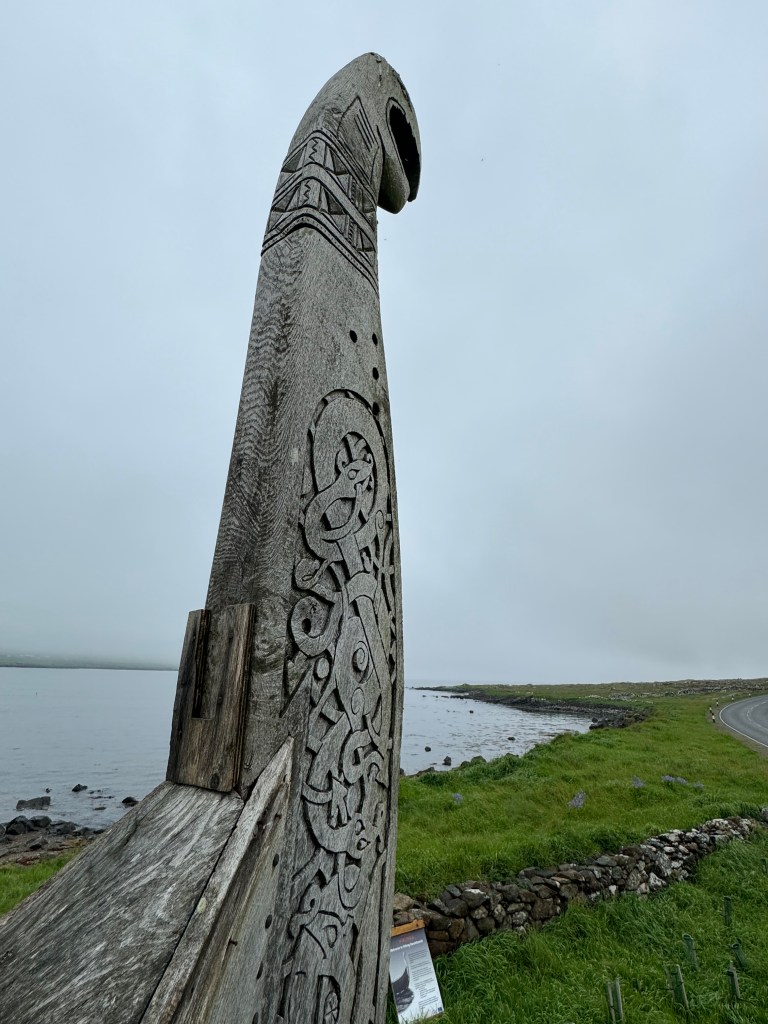
We stopped by the Skidbladner, a model Viking longship perched next to a longhouse replica just off the highway. After seeing all the longhouse ruins on this trip it was fun to see what they might have actually been like. Walking around the deck of the longship brought home how incredible, dangerous and possibly deeply irresponsible it was for the Vikings to set off in wooden ships and sail them westward into completely unknown northern waters. With no GPS, no motor and no idea the world was round they relied solely on a sense of adventure and perhaps too much testosterone. Since they managed to run into the UK, Iceland and further afield as far as Canada (at least), the gods were obviously in their favor.
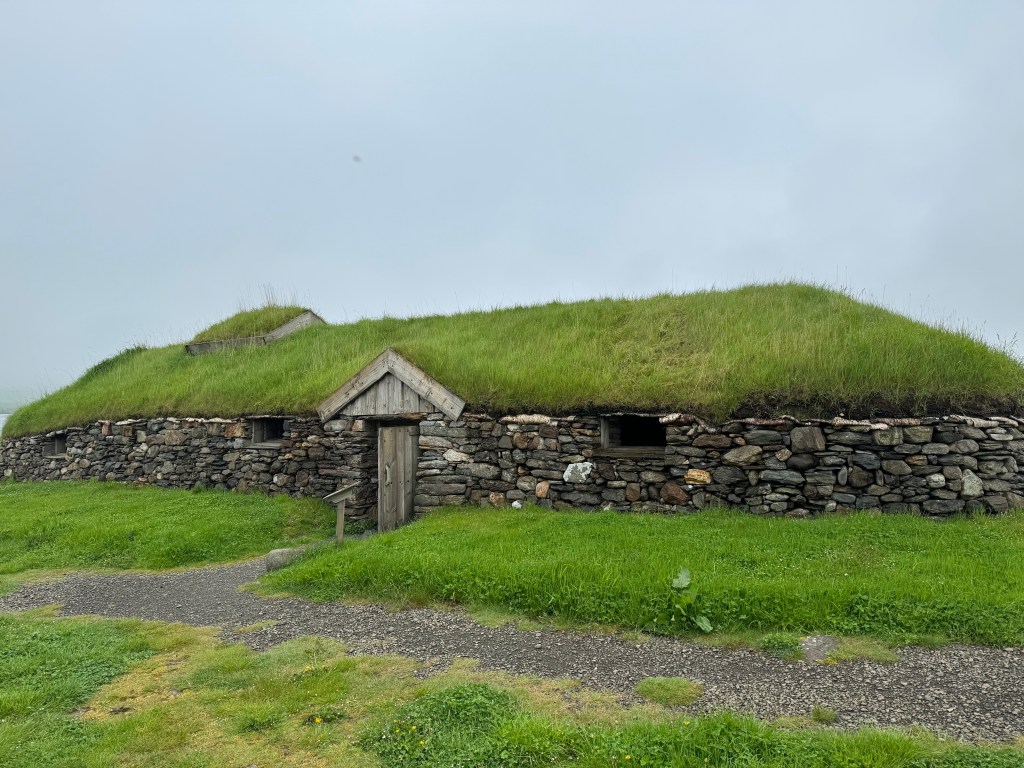
Boarding the longship

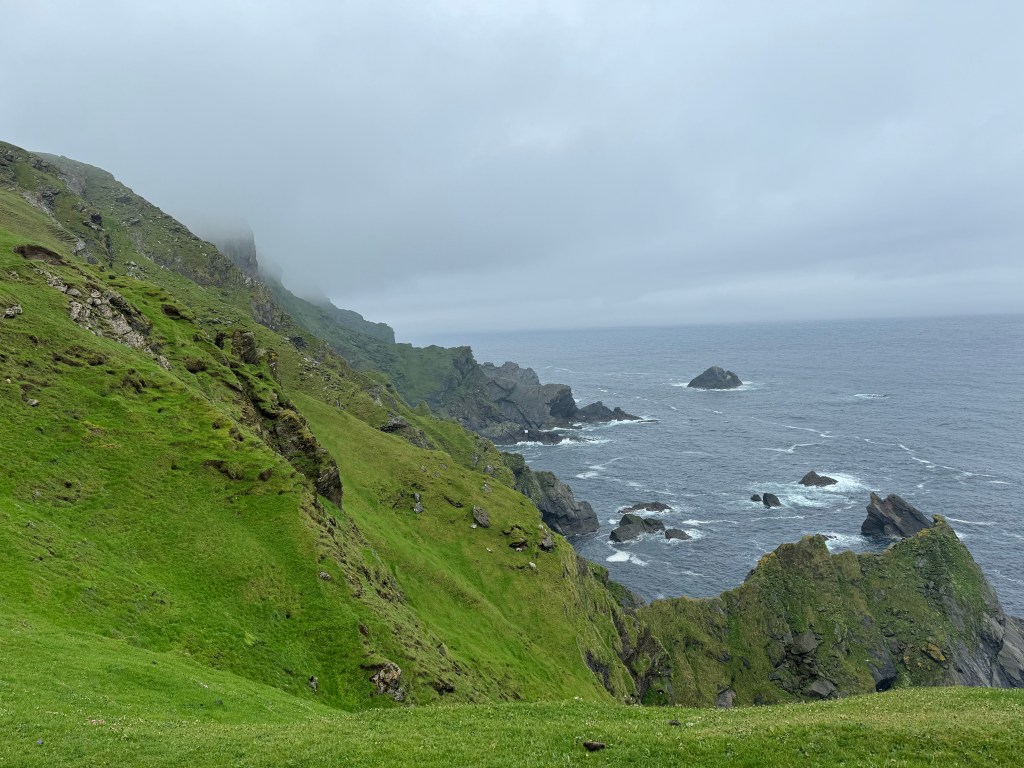
Our walk for the day was through Hermaness Nature Reserve to visit Unst’s northernmost point, which is also the furthest north you can go in Britain. From there we hoped to see the lighthouse on uninhabited Muckle Flugga, which is basically a rock in the sea and a wee bit further north.
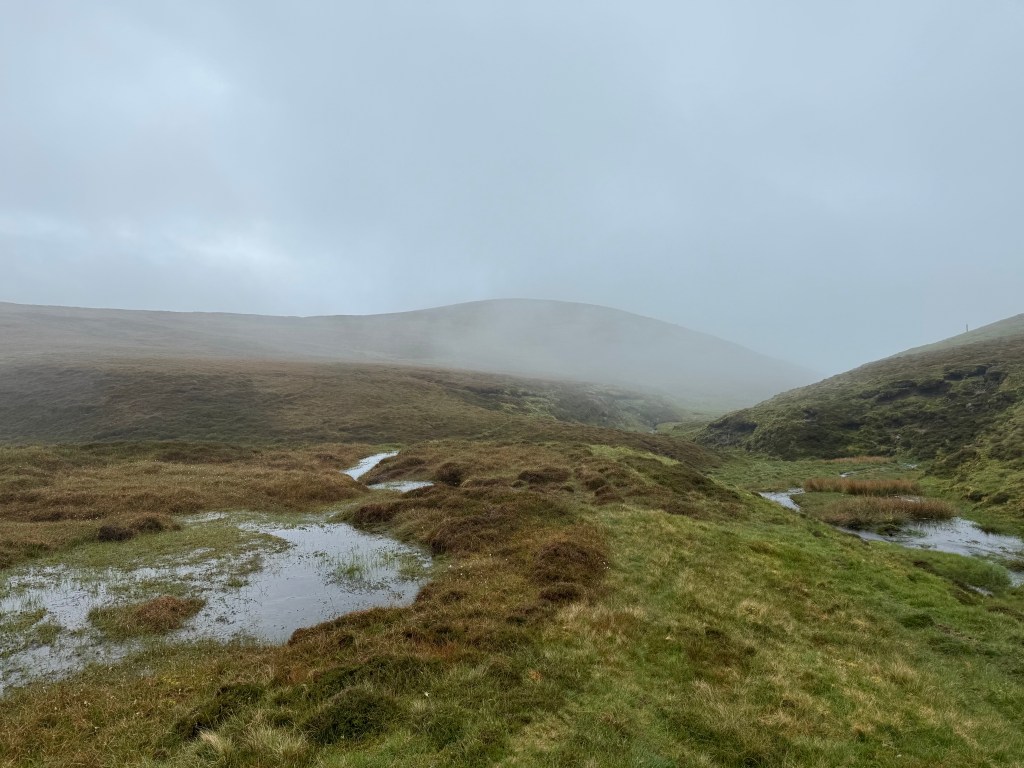
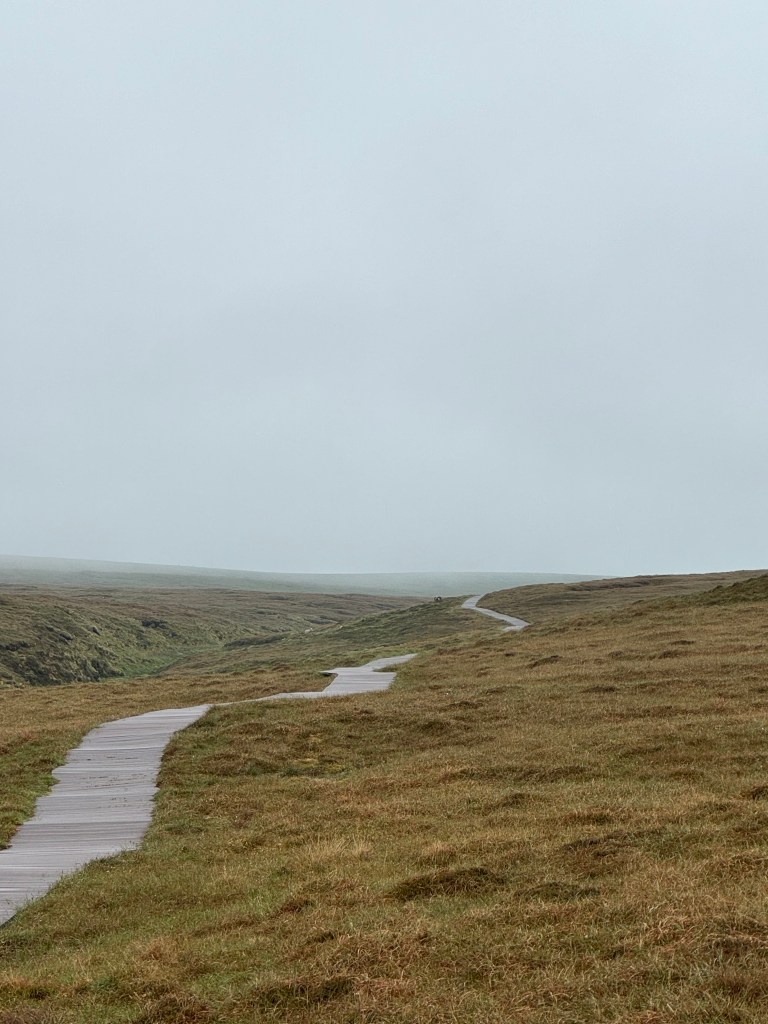
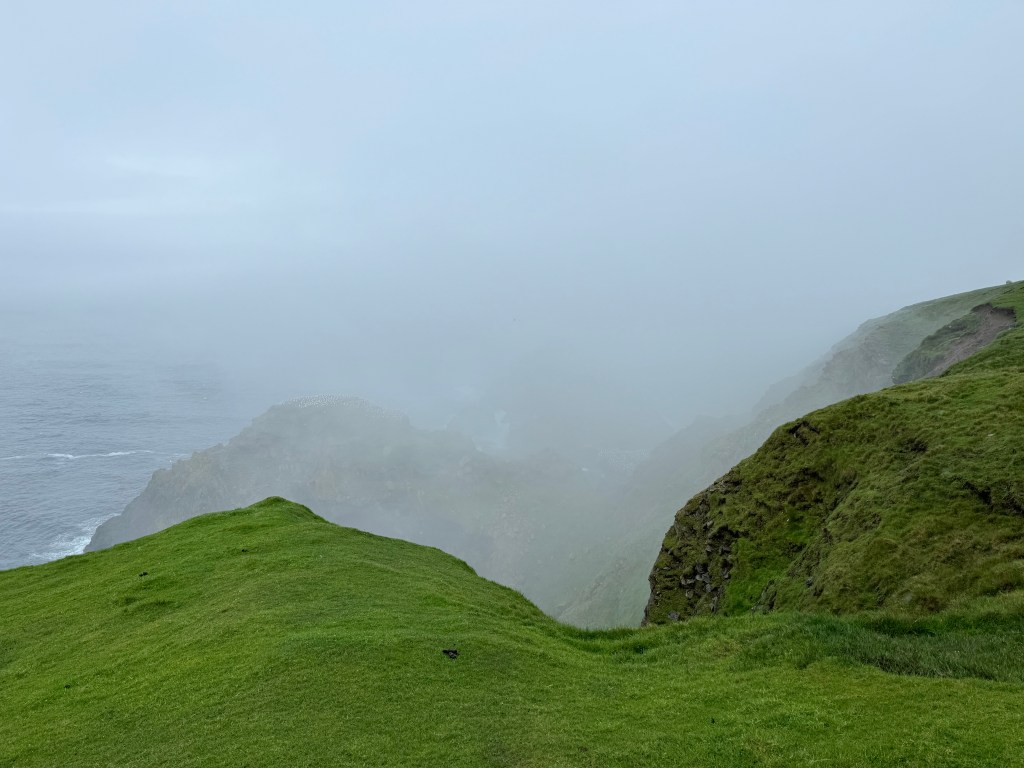
Moody and misty Scotland, my favorite.
It was super boggy for the first mile or so but this wonderful boardwalk keeps walkers on the path with dry feet and protects the plentiful birdlife.

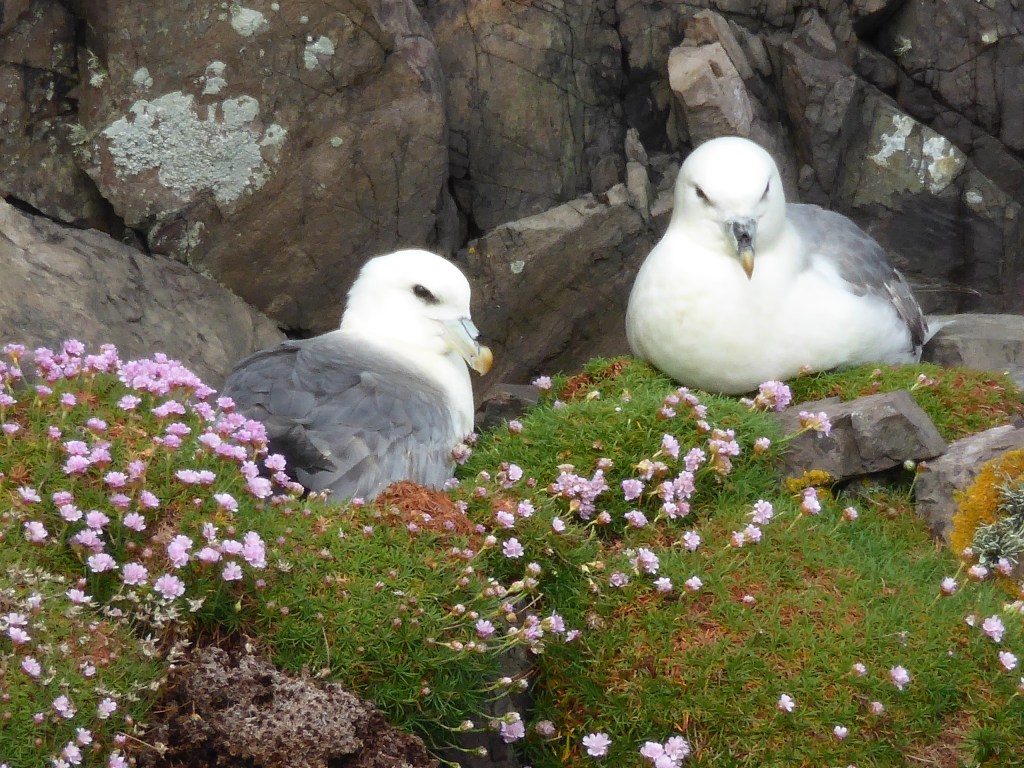
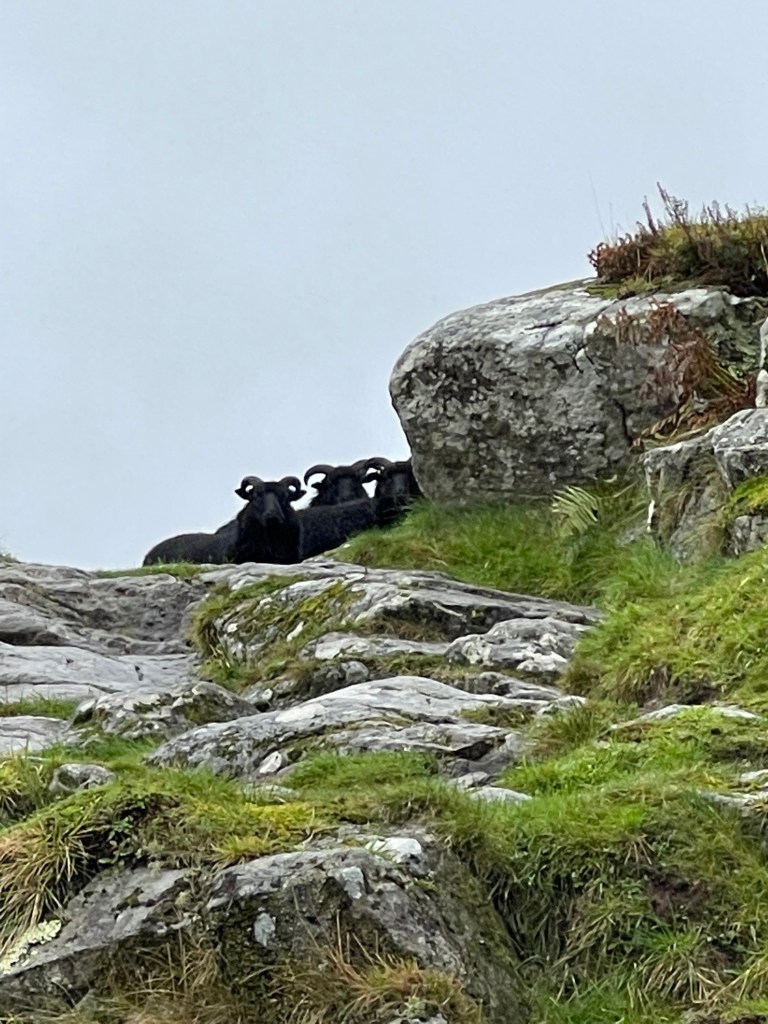
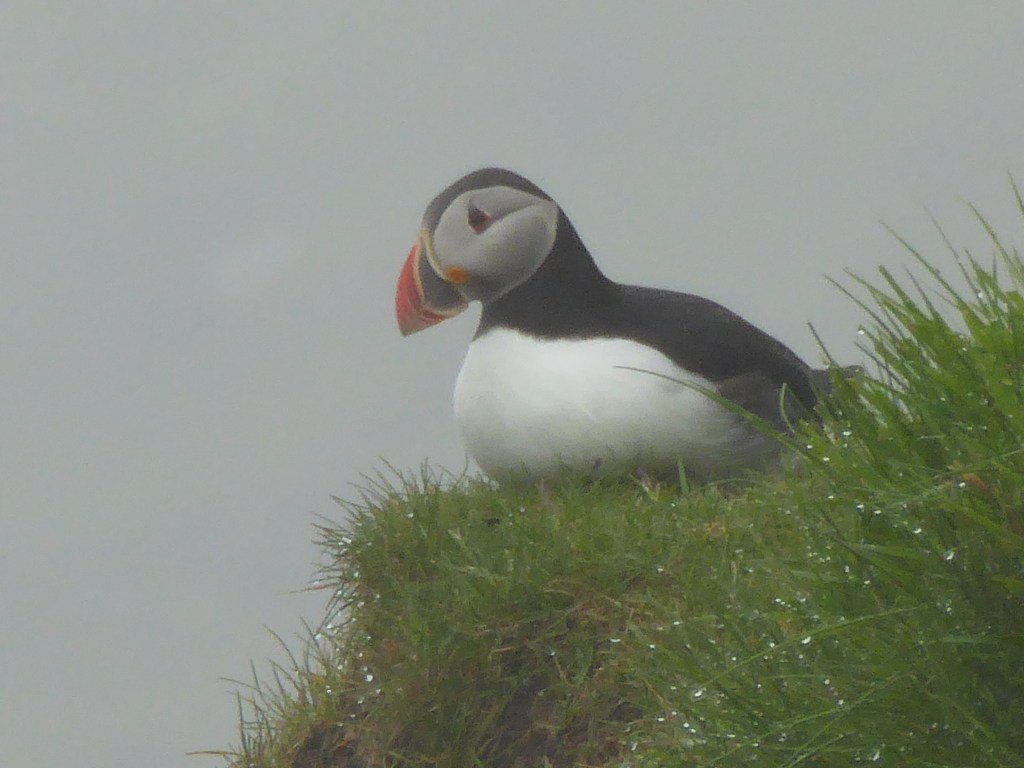
When we ascended to the clifftops, we were rewarded by a single puffin, featured at the beginning of this entry and below. It was thrilling.
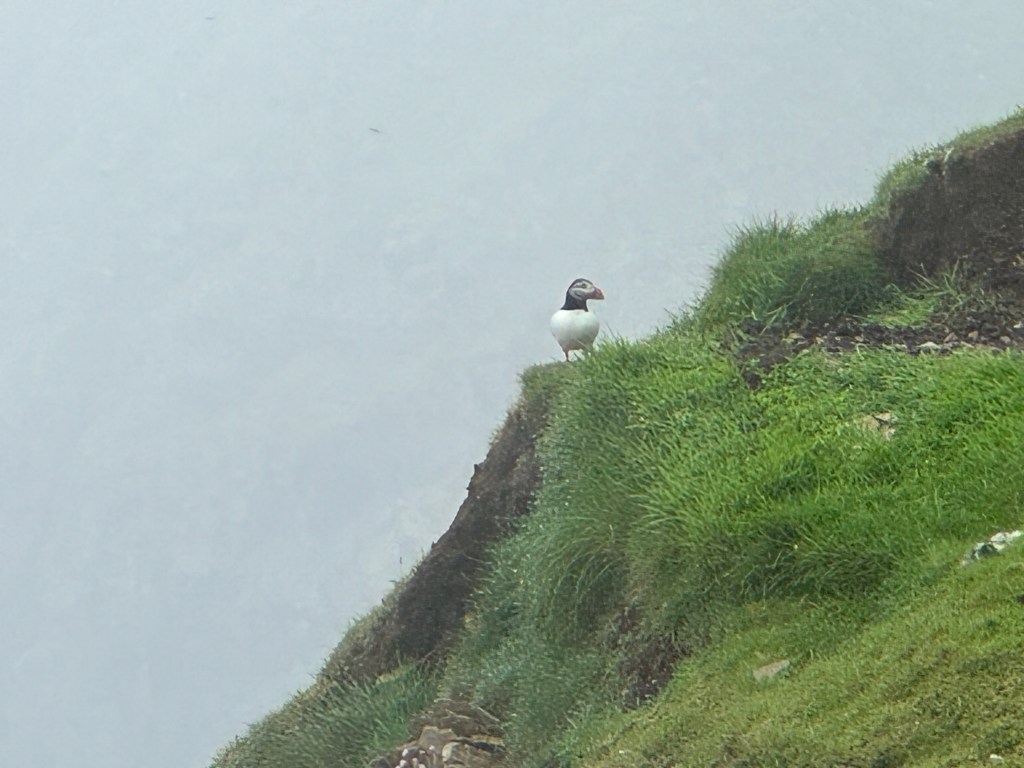
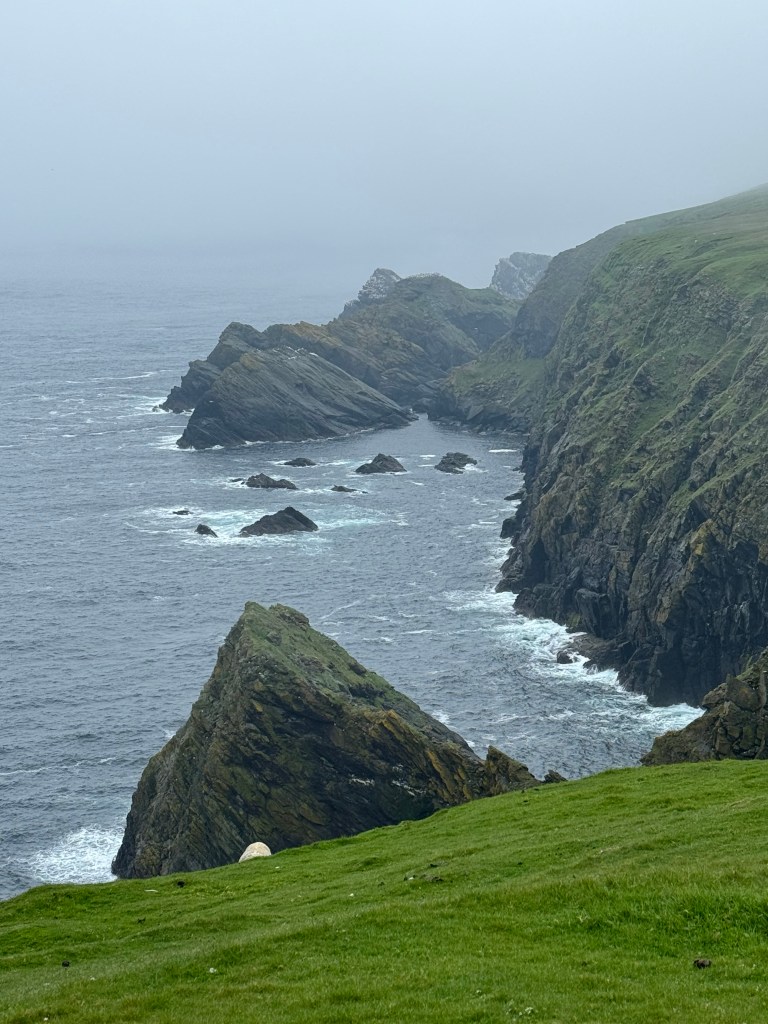
Our scenic lunch spot.
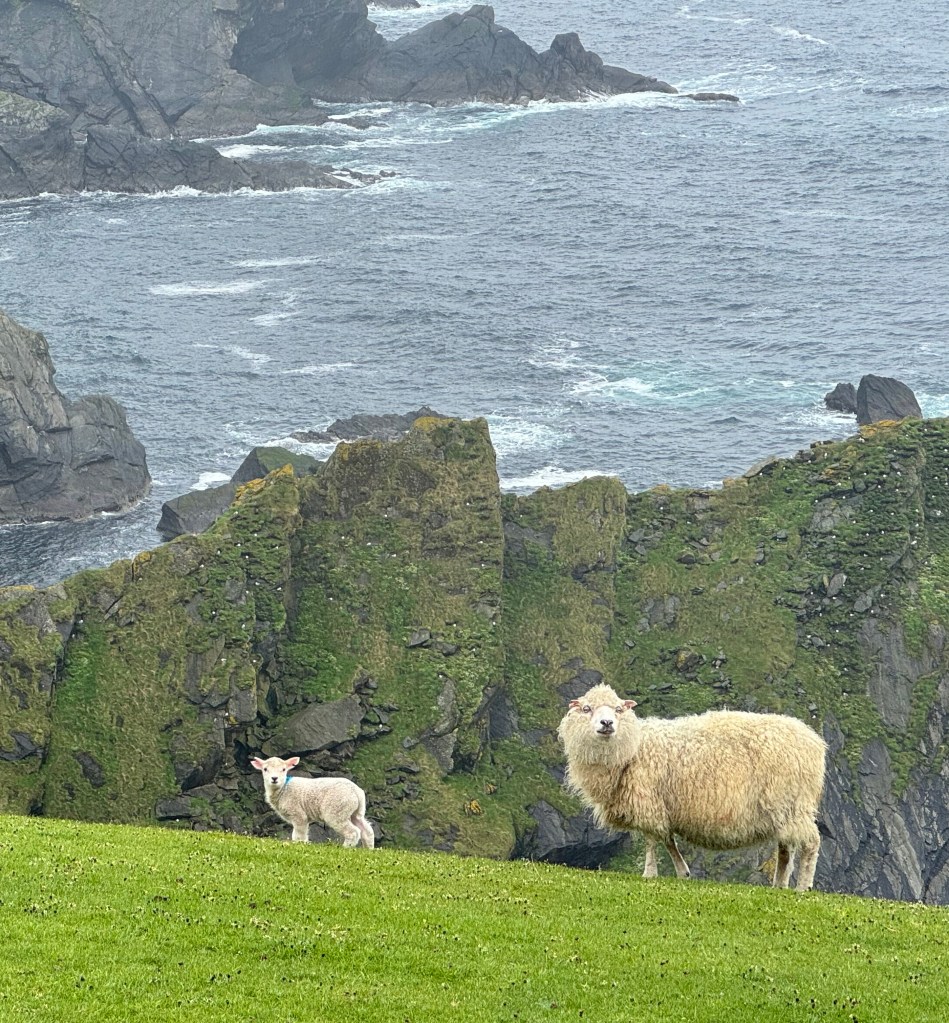
This sweet little baby sheepie perched on his mom’s back was totes adorbs.
Another bonxie!
The mist grew ever more pervasive as we walked, diminishing our chances of seeing the lighthouse.
The furthest north I’ve ever been, with Muckle Flugga in the mist behind me.
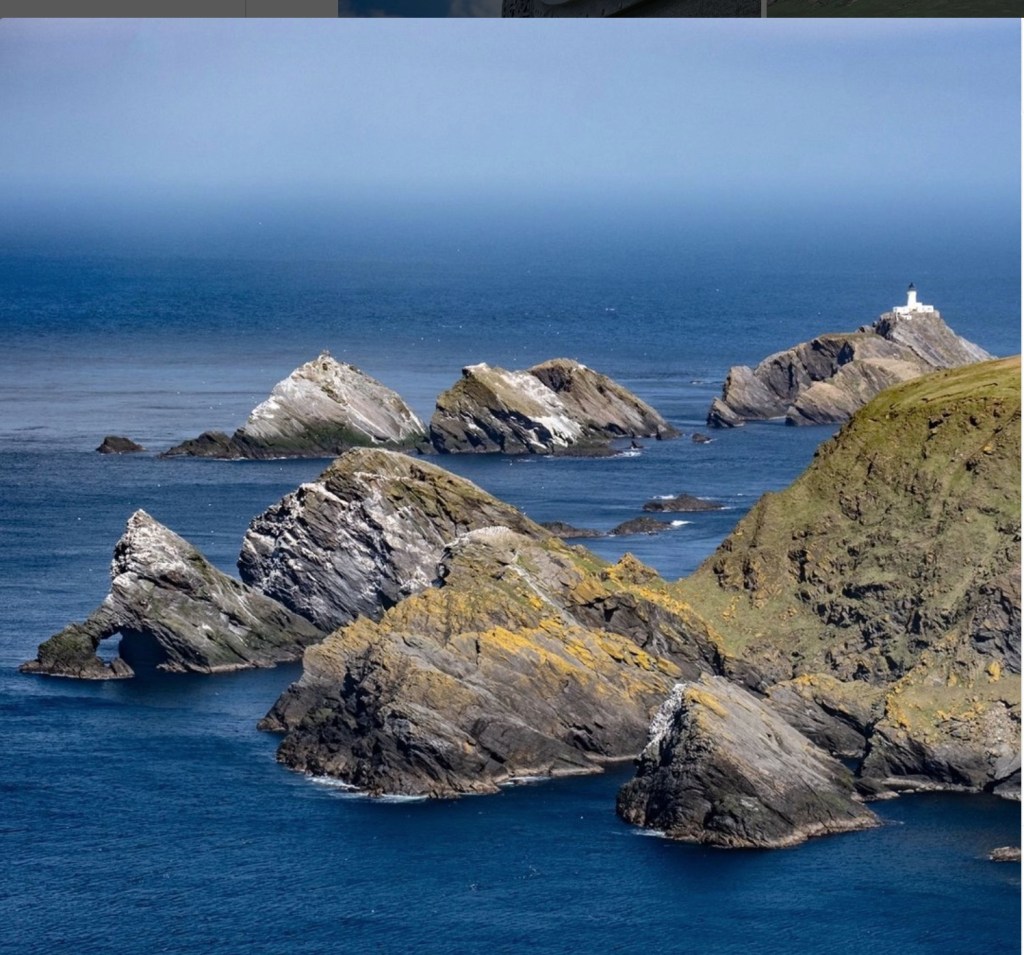
The lighthouse on a mist-free day.

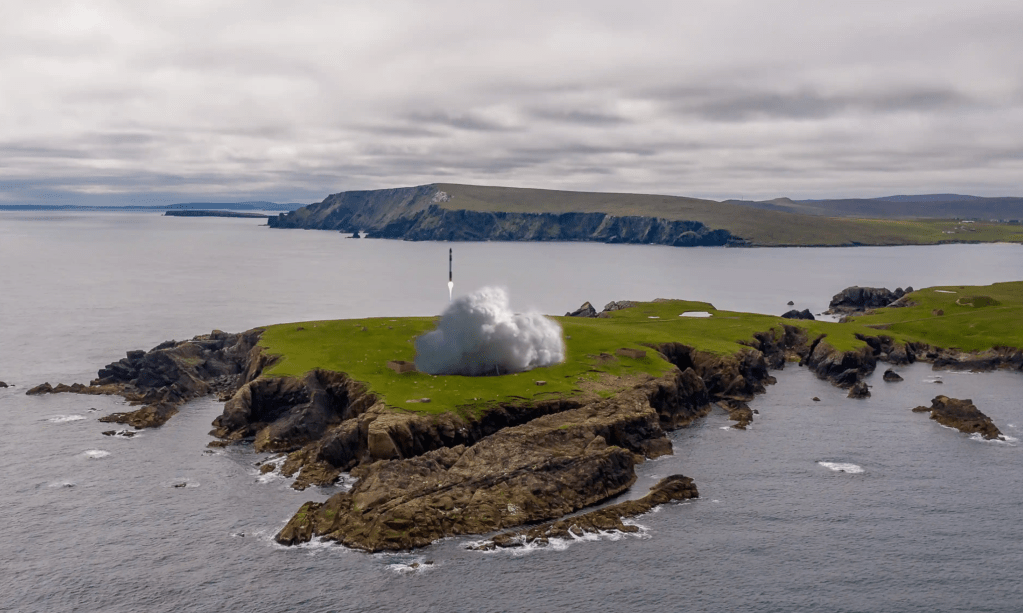
After the hike we intended to visit a teahouse, but overshot it and accidentally happened upon the Saxavord Spaceport, which was awesome. It is a former RAF base on a remote peninsula of Unst which has become the UK’s first licensed spaceport for vertical rocket launches. It will allow up to 30 satellites and other payloads to be launched into commercially valuable polar, sun-synchronous orbits (not taking any questions on that), which are in high demand from satellite operators for communications and Earth observation.

And, best of all, because this is Scotland, even serious rocket launchers have a sense of humor.
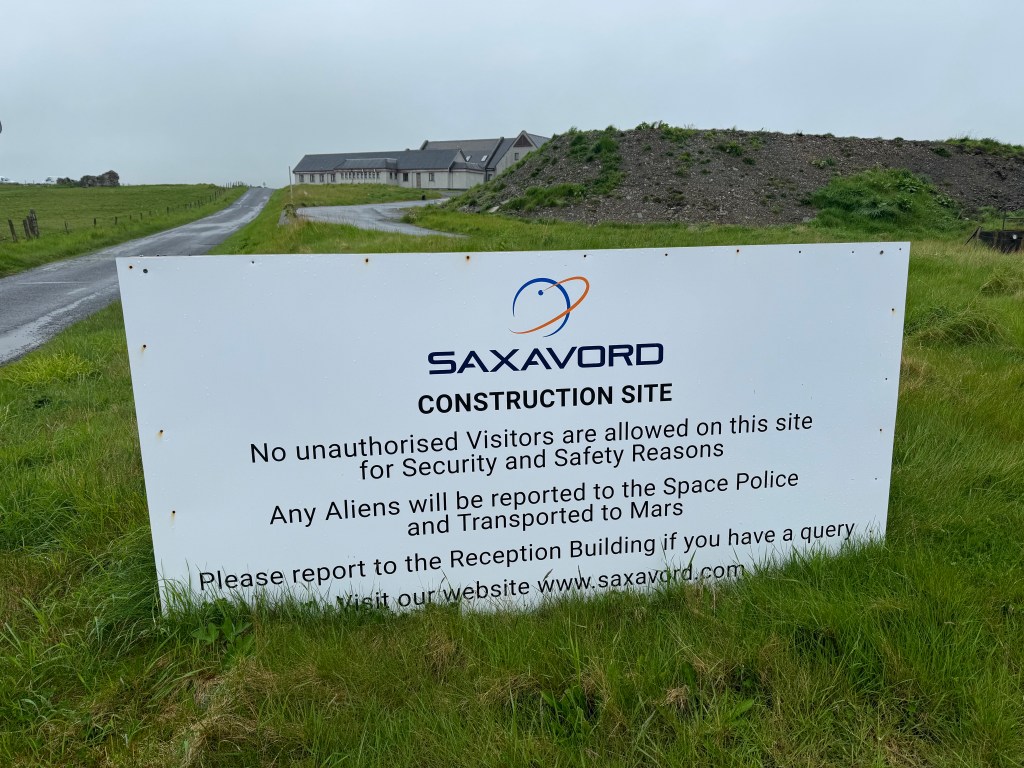
How awesome is this, I mean really.

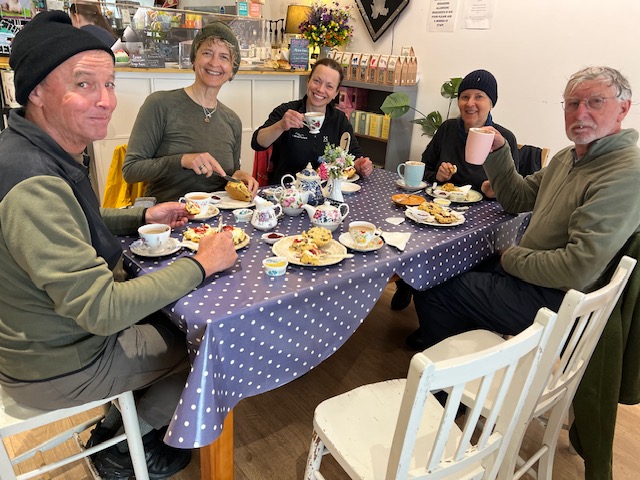
We found our way back to the route and headed to the teahouse. Almost every Unst business, it seems, advertises itself as being the “most northerly.” We even passed by the Most Northerly Kirk. Likewise, Victoria’s Vintage Tea Shop was advertised as the most northerly. And it served the most northerly, and delicious, scones.
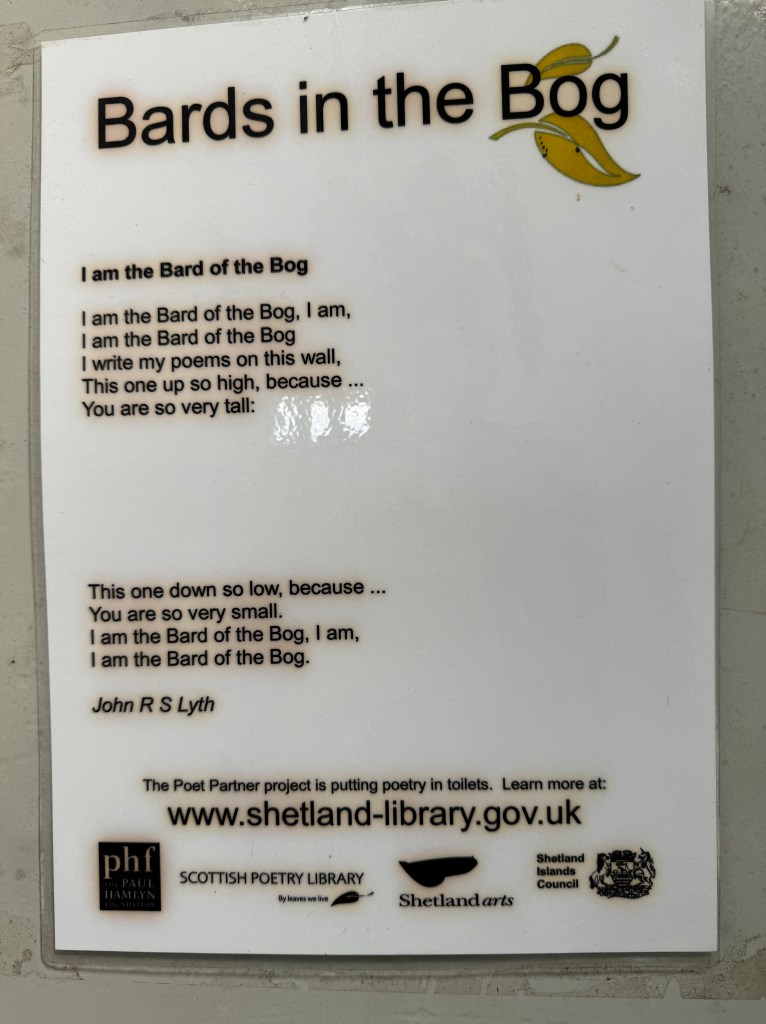
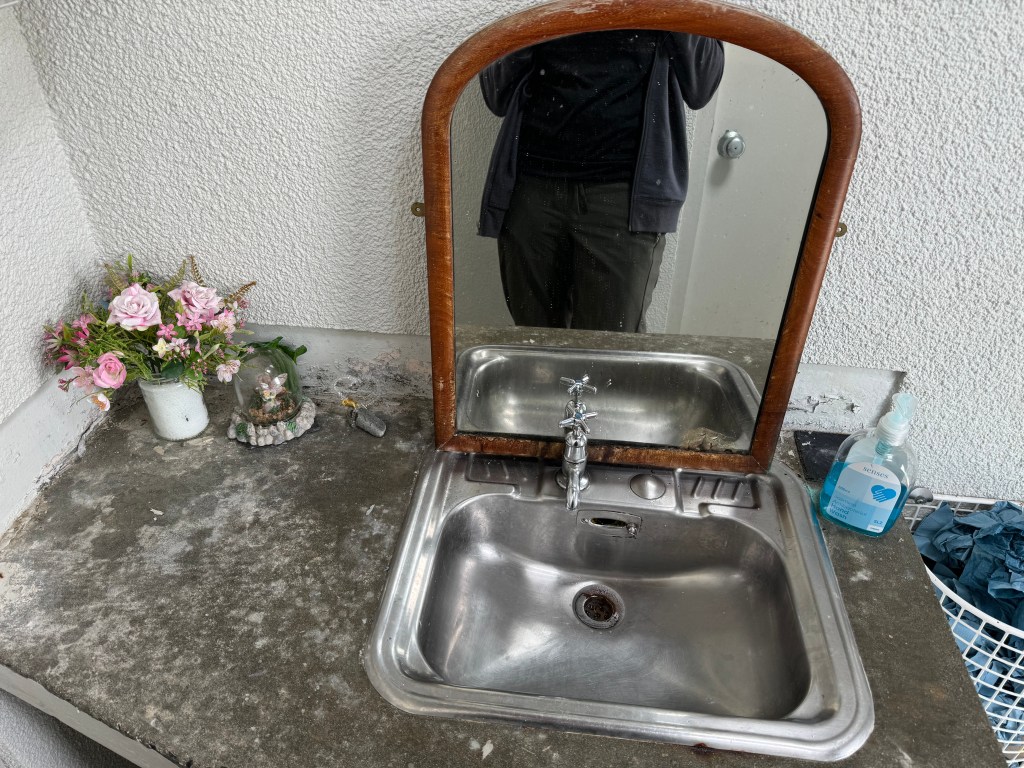
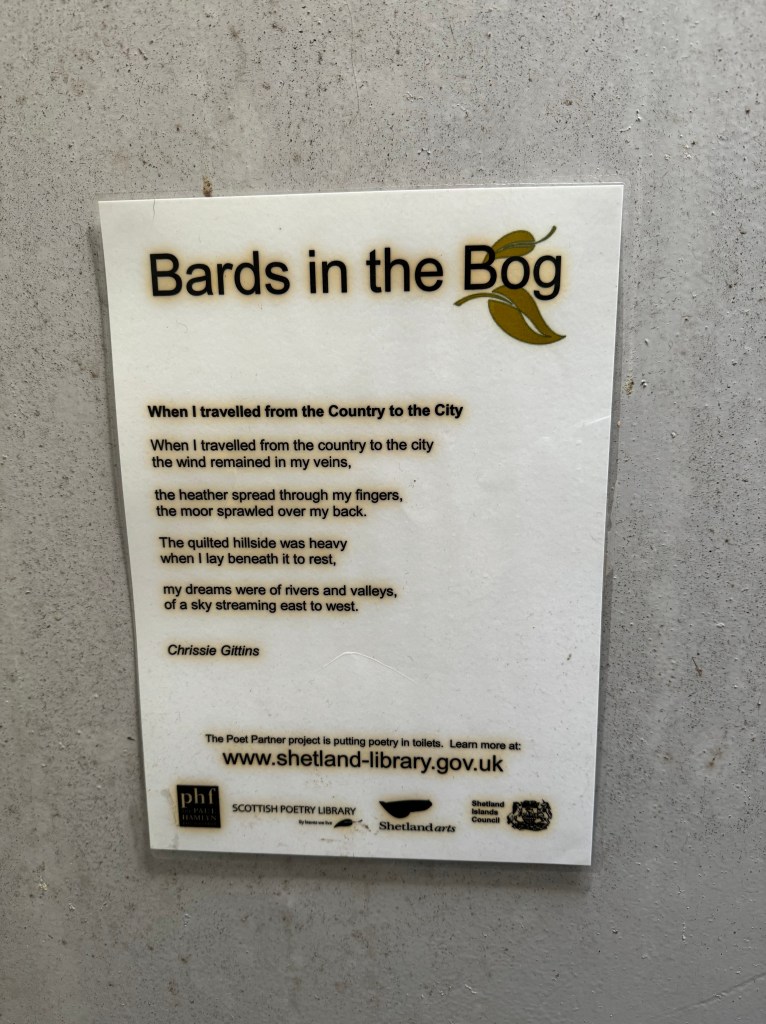
And so, my dudes, we at last find ourselves on our final day in Shetland. We spent our morning on a lovely walk near Eshaness. But first, a note about Shetland’s plentiful public toilets, or “bogs.” There are so many of them and they are all plumbed, well-cared for, and have plenty of parking. As remote as Shetland is, one never has to worry about drinking too much coffee in the morning. Some are quite creatively decorated with special bog poetry framed on the walls.

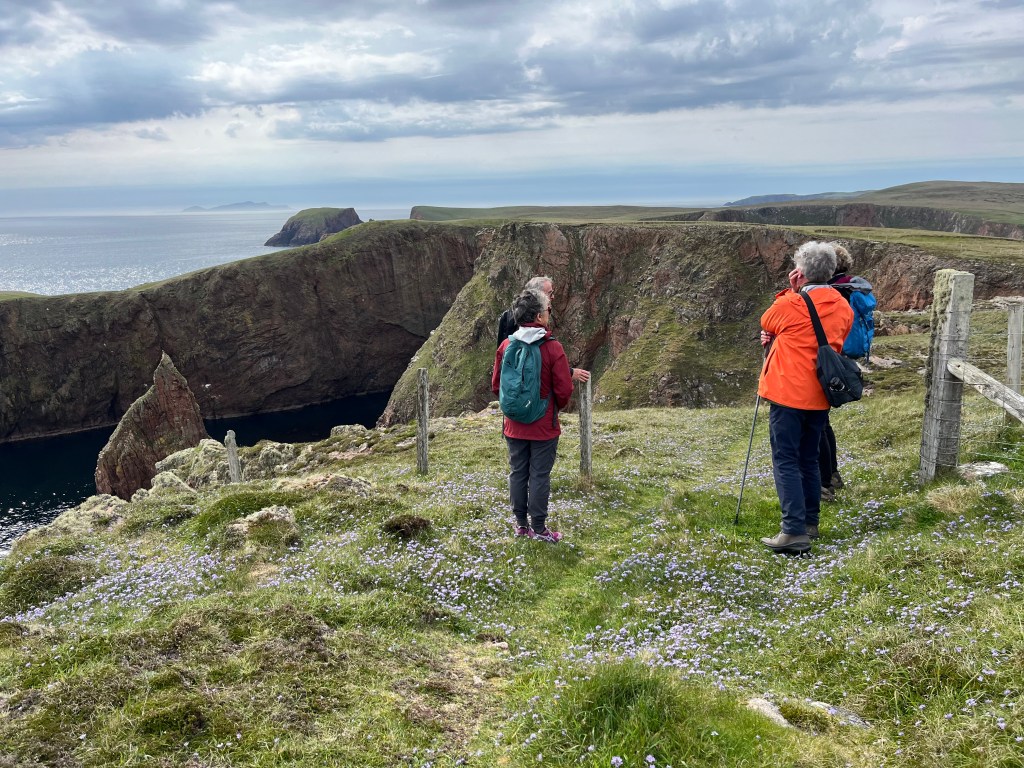
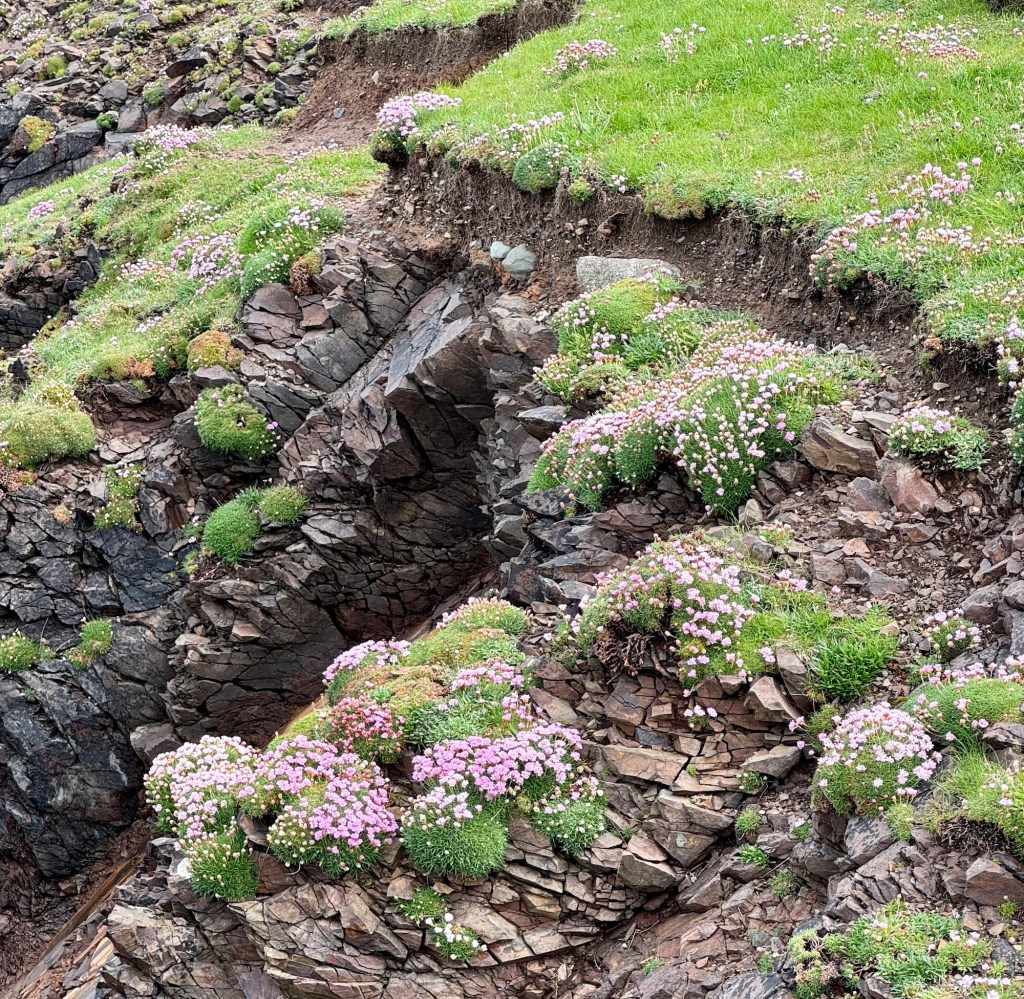
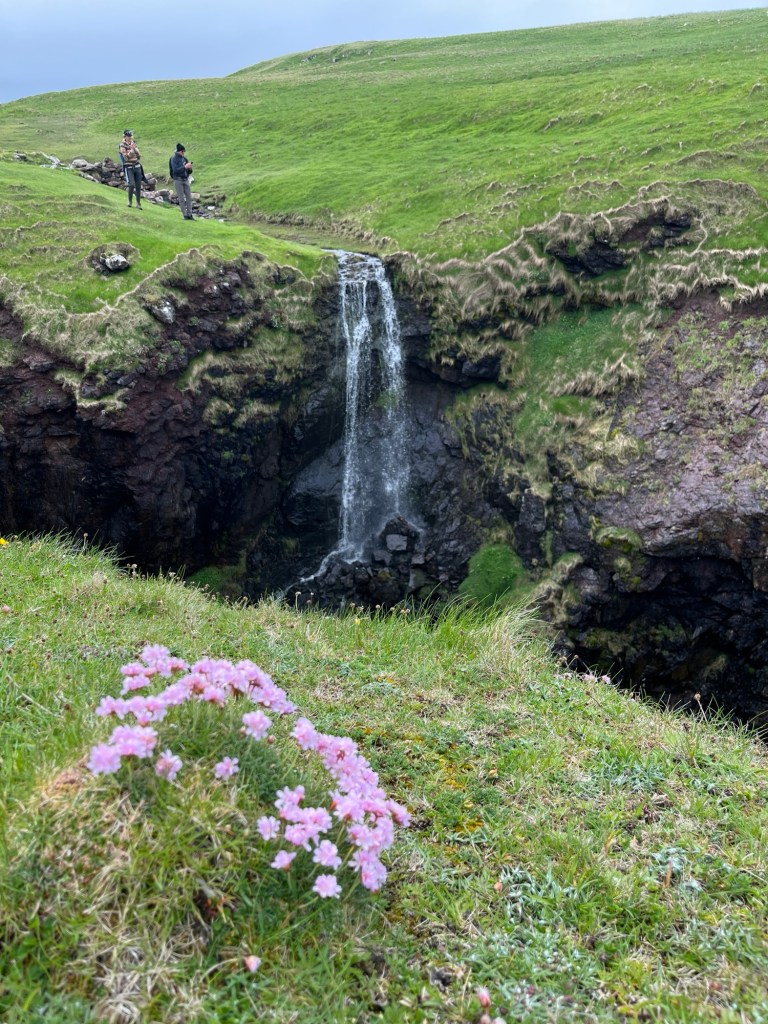
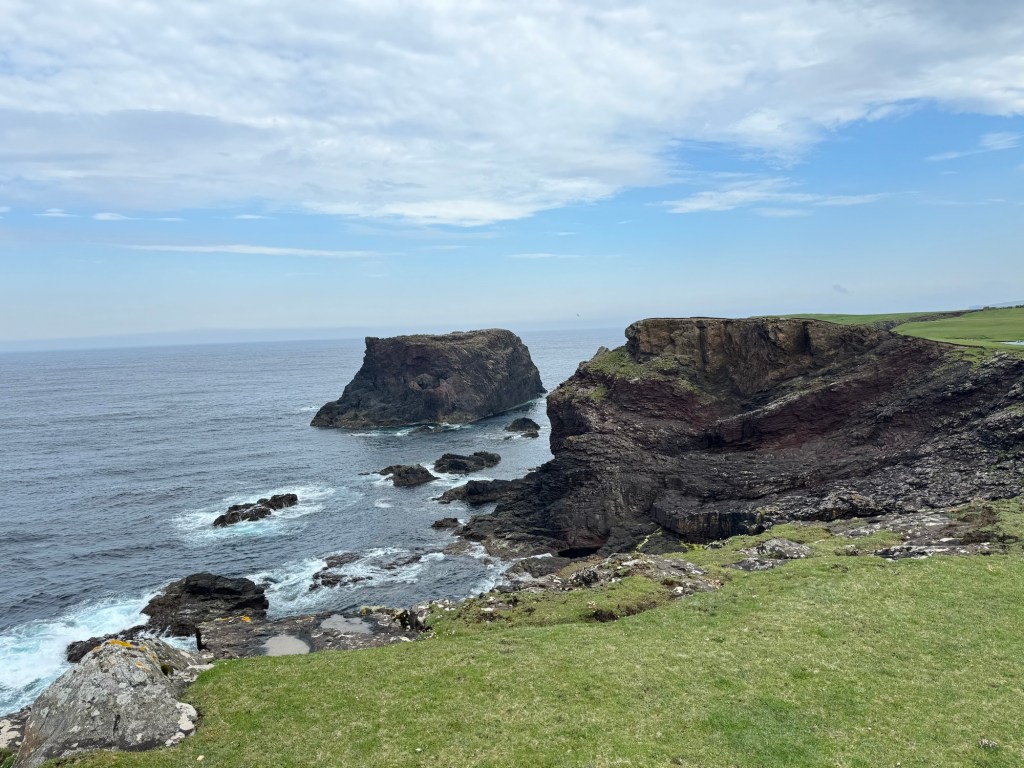
Our walk started at Eshaness Lighthouse, the spot I had visited earlier with Drew. We meandered along the volcanic clifftops, navigating lots of stiles (I love stiles) and reveling in the plentiful wildflowers.
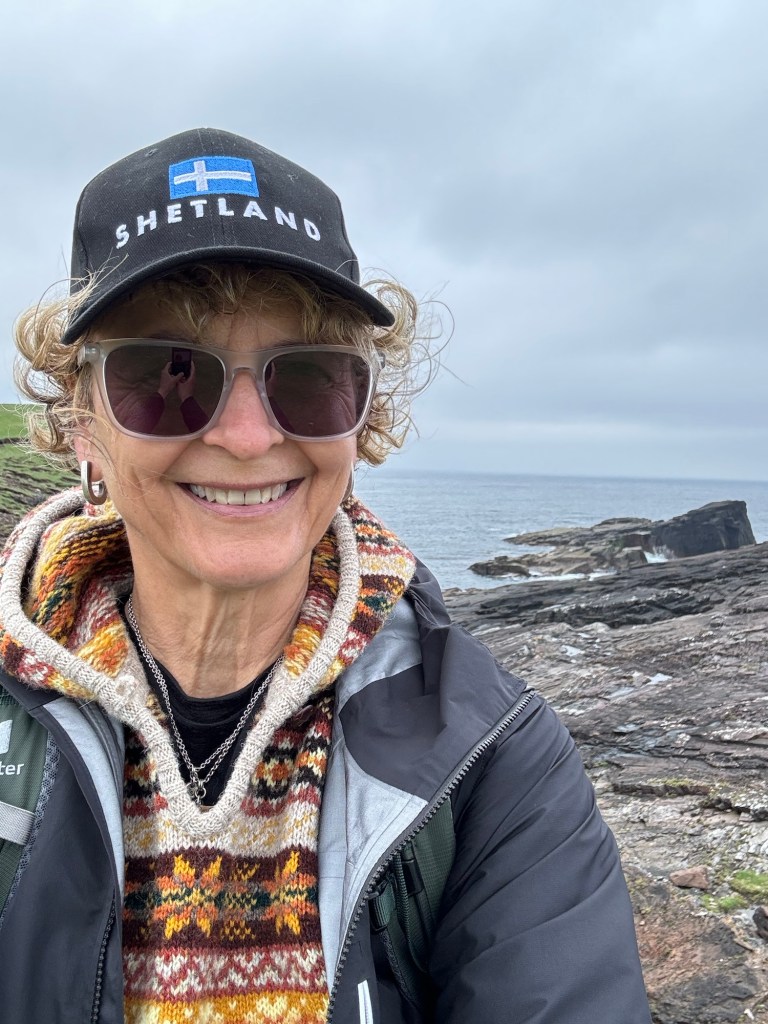
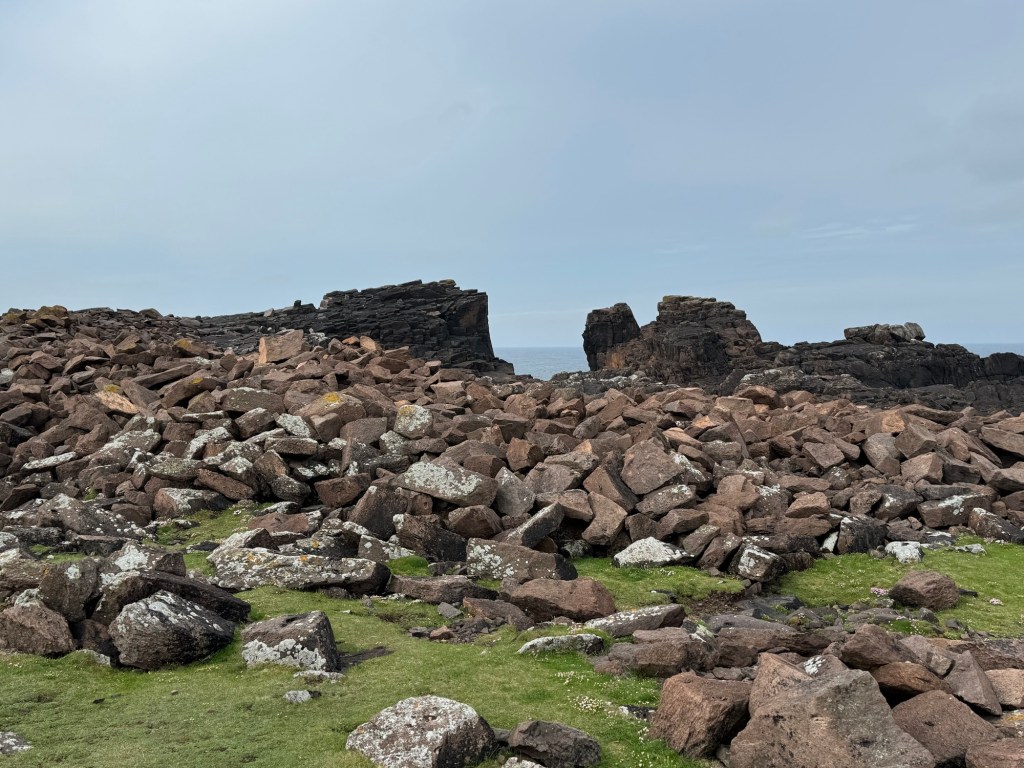
We came across a storm beach composed largely of giant boulders which had been tossed onshore by violent wind and waves over the years. Hard to imagine on this lovely calm day.
The trail then let us to the Holes of Scraada, a collapsed sea cave, apparently Britain’s largest.
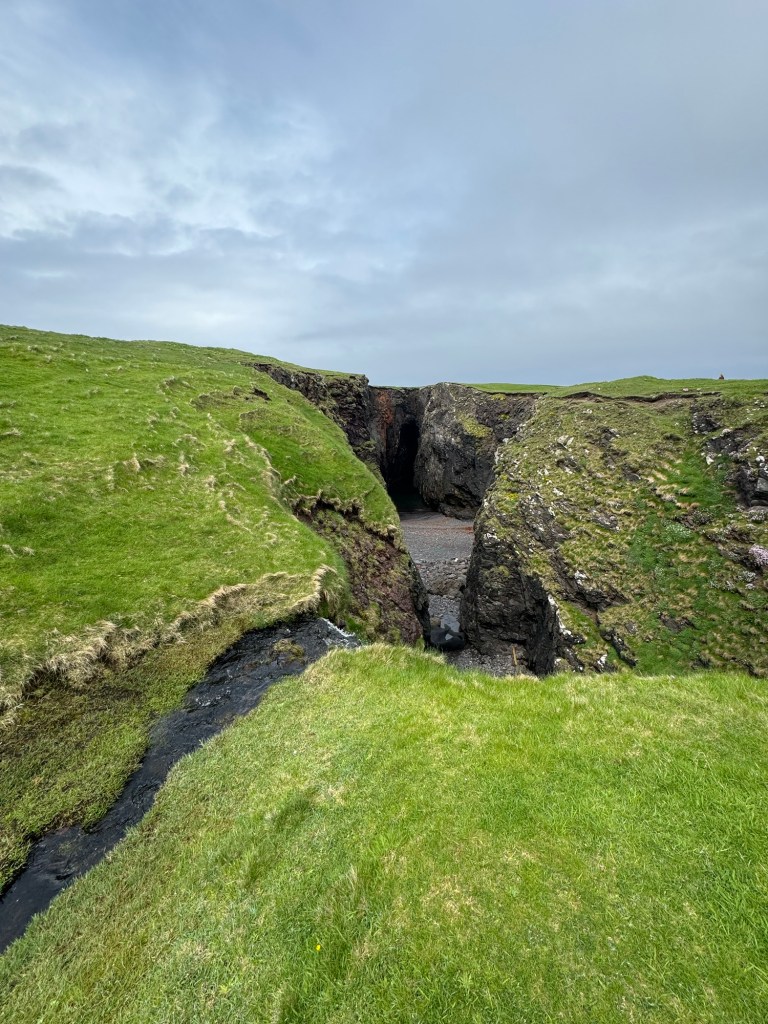
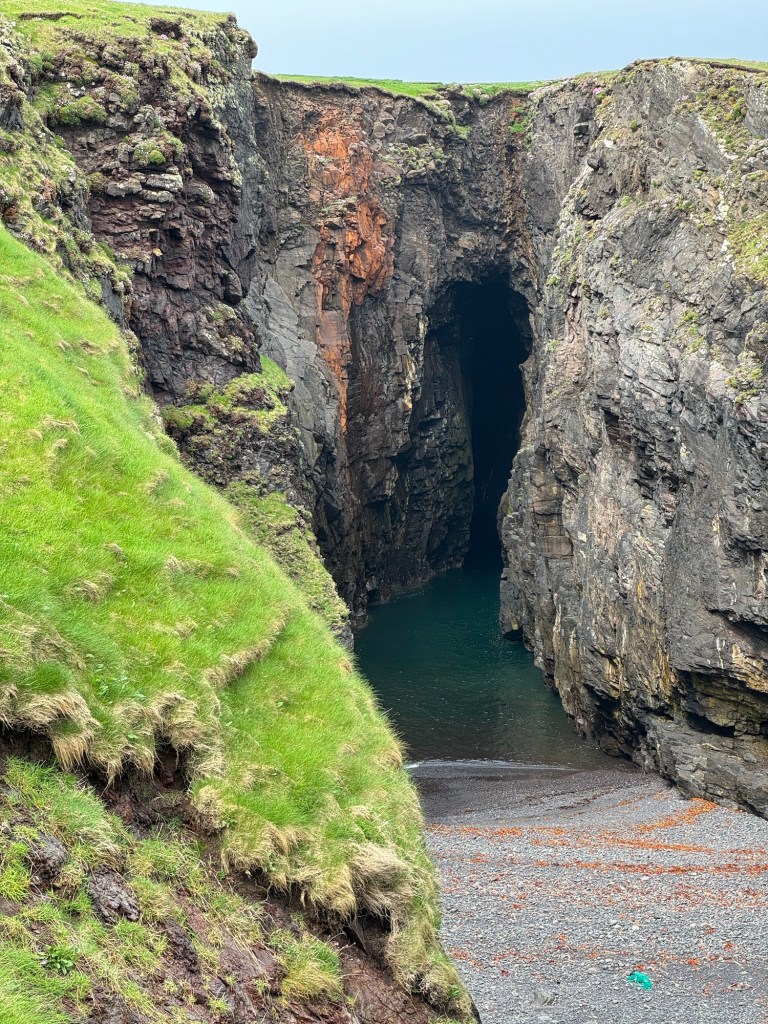
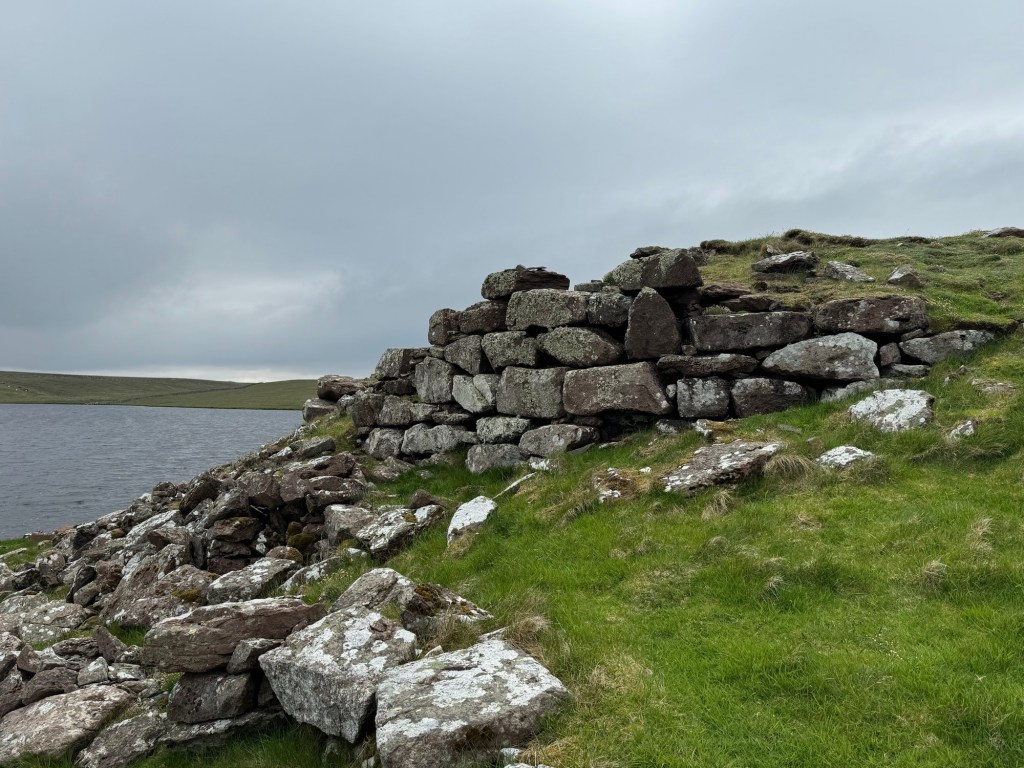
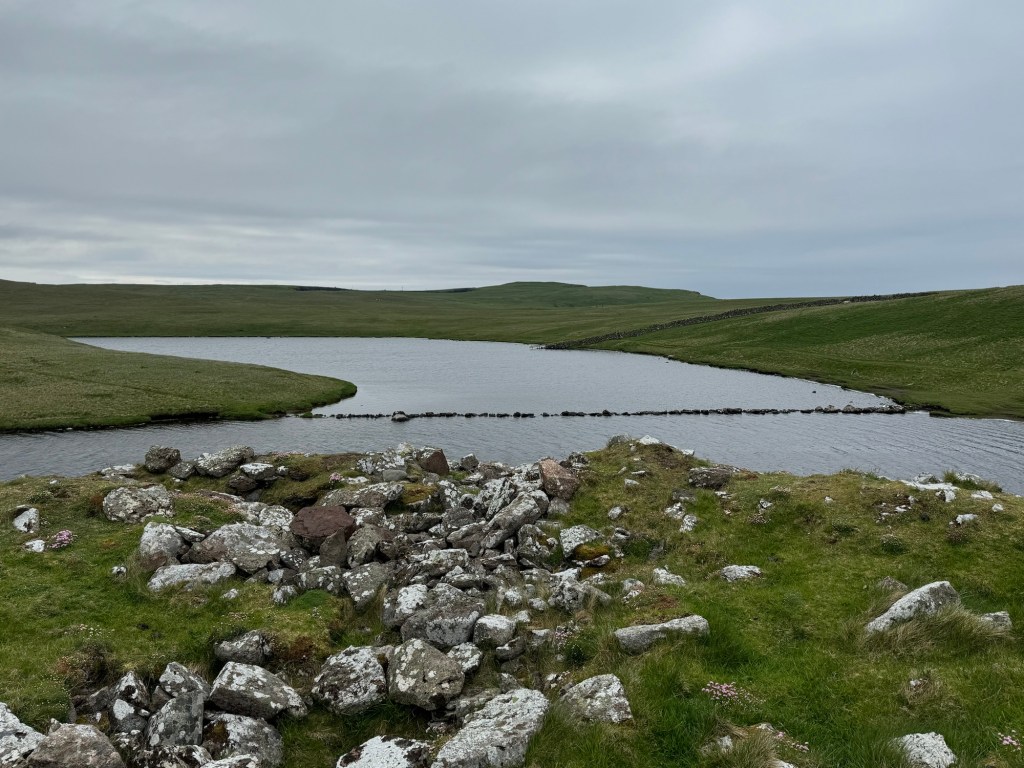
We next walked by the remains of an old water mill and then happened upon the Eshaness Broch, where we had our lunch.
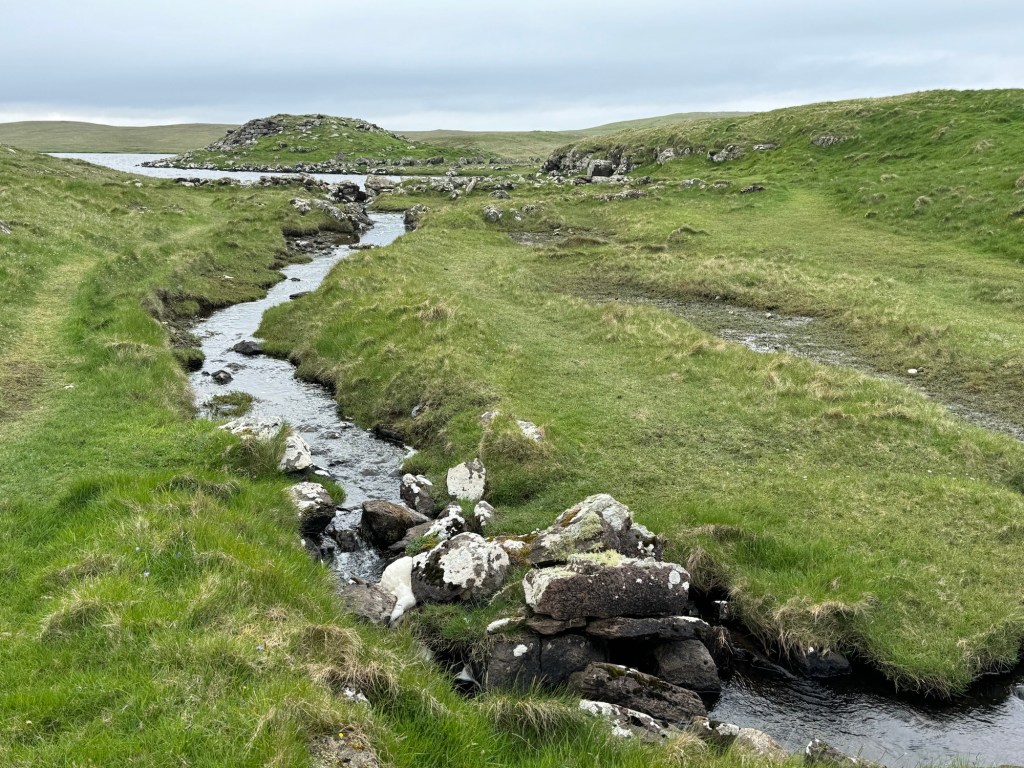
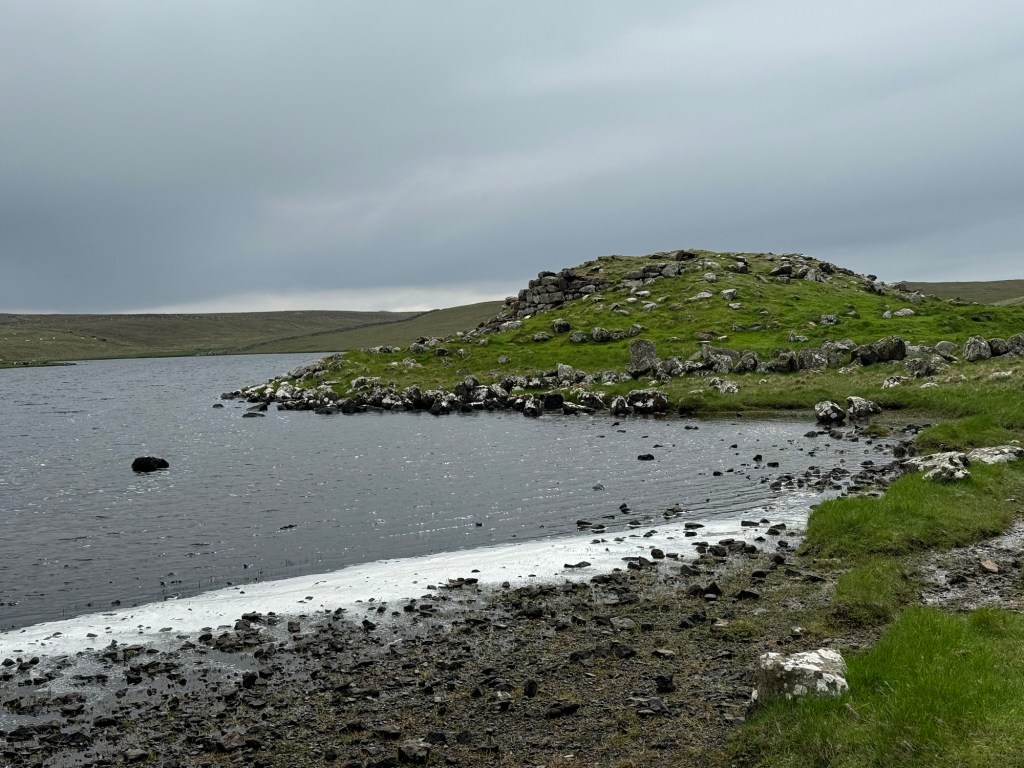
After our last lovely walk, we boarded the van and drove back to Lerwick, where Kirsty dropped folks off at the Shetland Museum and I had to bid a very fond farewell to my intrepid compatriots before heading to Sumburgh Airport for my flight to Edinburgh.

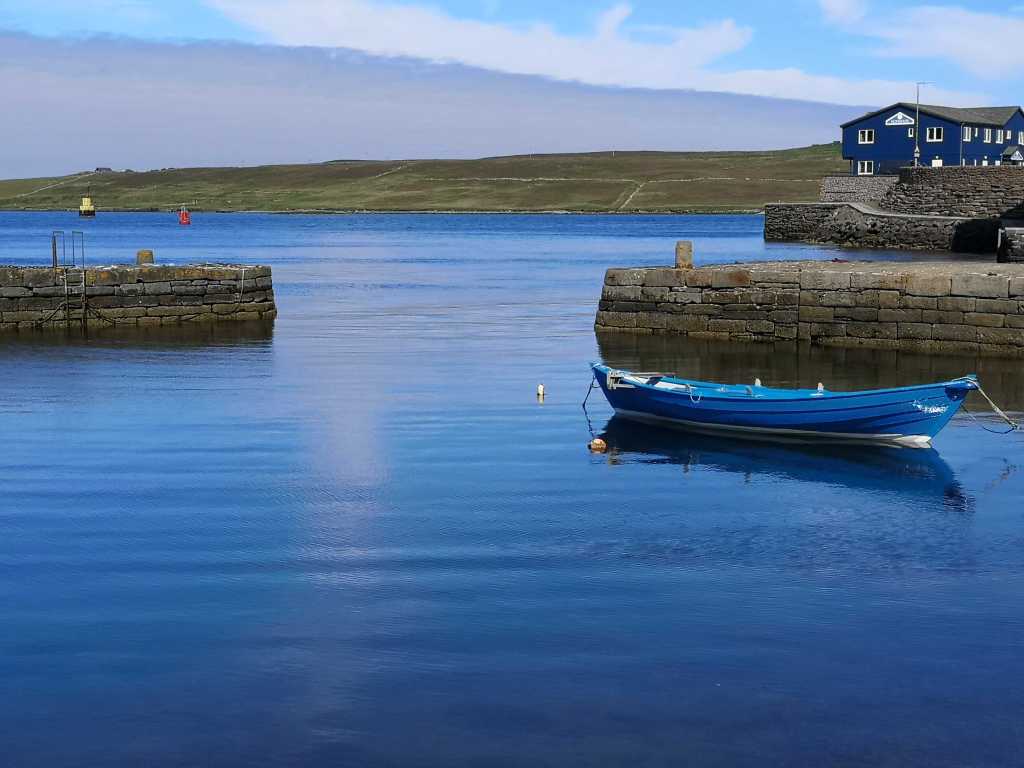
Sadly but fondly bidding farewell to my fellow travelers.
One last and lovely photo of Shetland, courtesy of Jill.
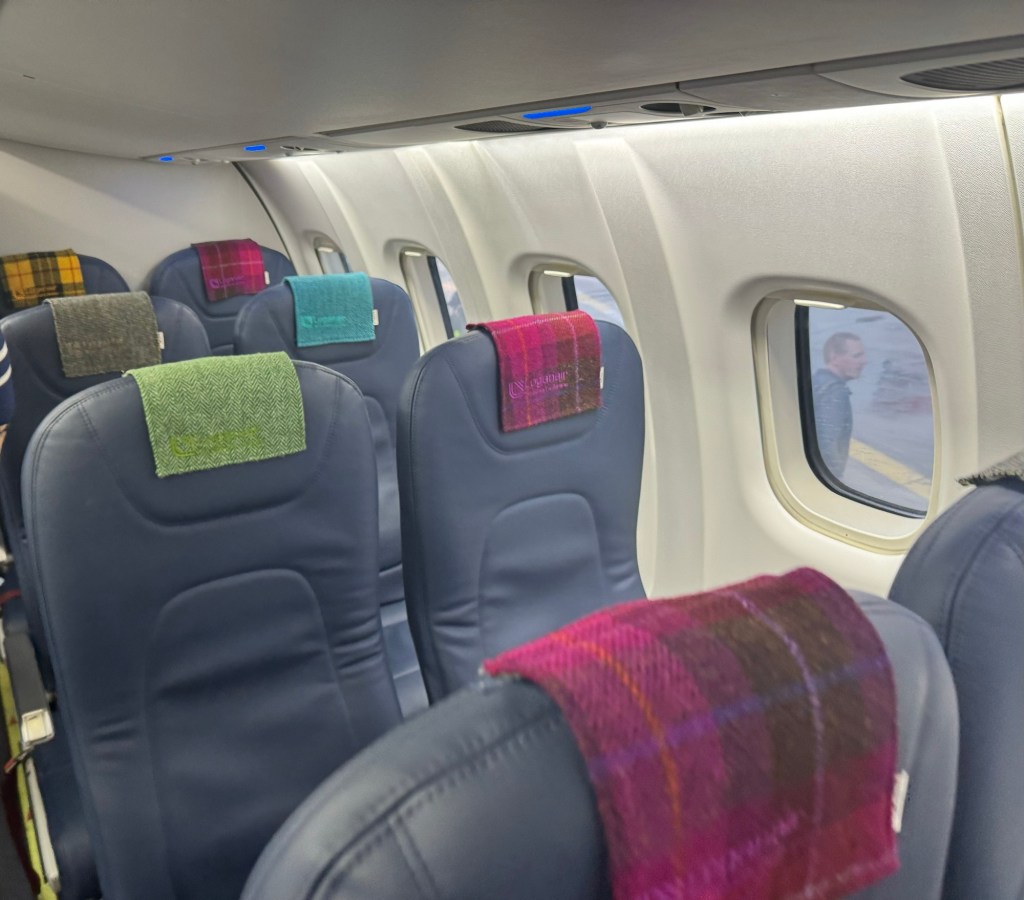
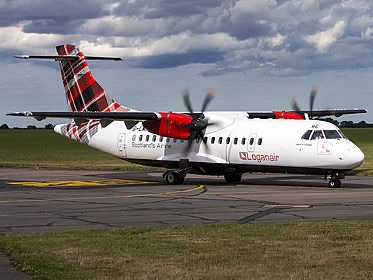
My flight back to Edinburgh on LoganAir – clearly will never get over the plaid headrest situation. It is everything.

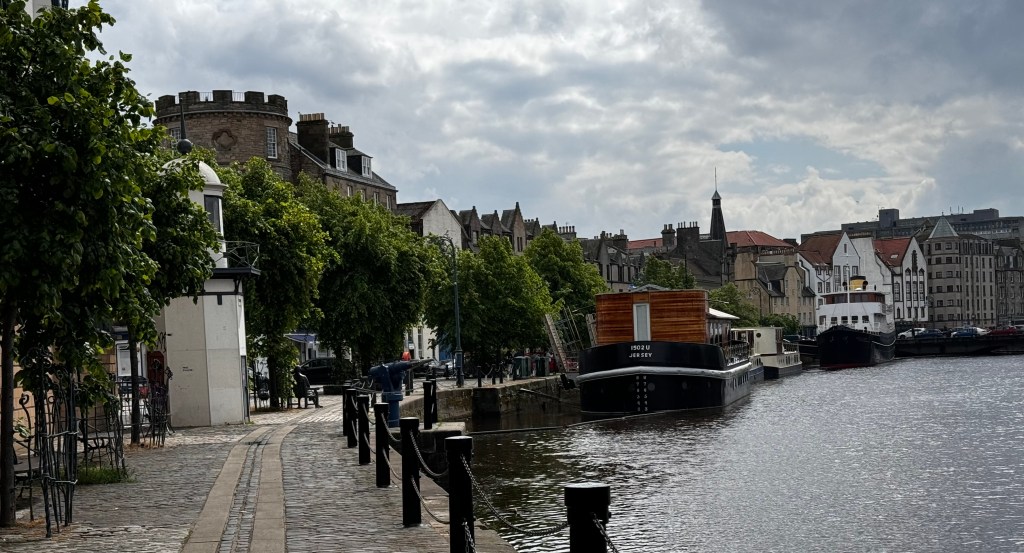
On my last two nights in Scotland I had decided to stay in Leith, a few tram stops and couple of miles north of Edinburgh. It used to be the gritty, druggy dock area of town (see “Trainspotting”) but it has undergone a massive redevelopment and is now known for its vibrant arts and culture scene, cool neighborhoods and a plethora of fabulous restaurants, coffee houses and bars. Edinburgh has five Michelin-starred restaurants and three of them are in Leith, and in fact Leith now has the highest concentration of said restaurants per square meter outside of London. (For the record I have had fabulous meals in two out of the three, Tom Kitchin’s last year, Heron this year and Martin Wishart still to come.)
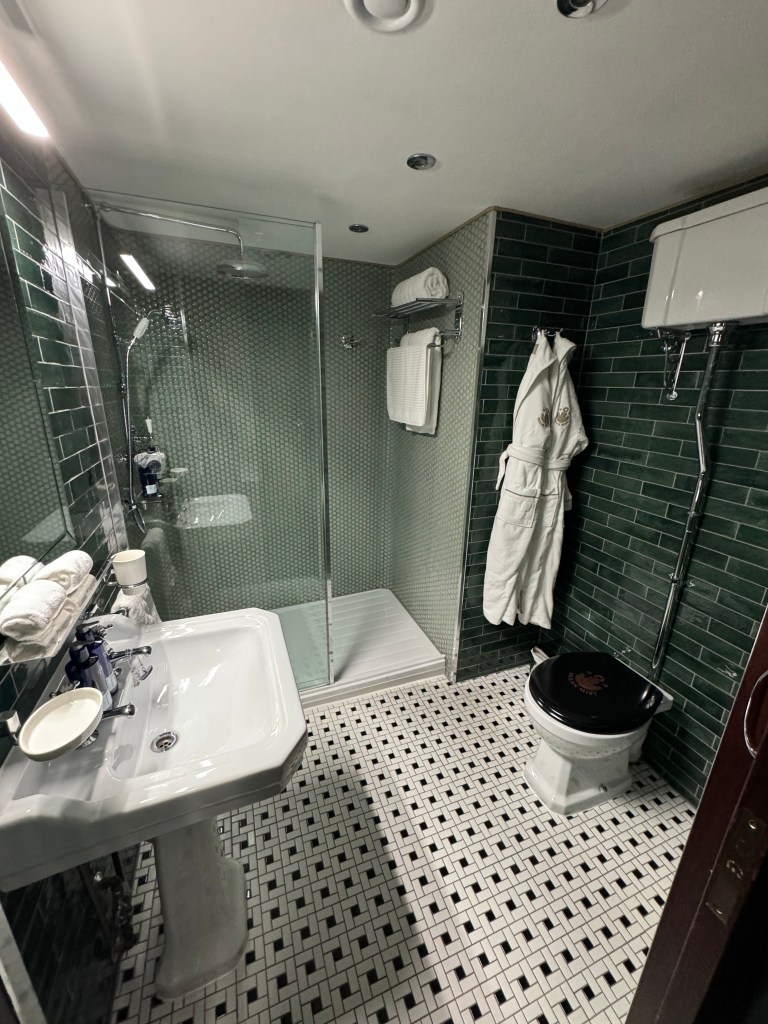
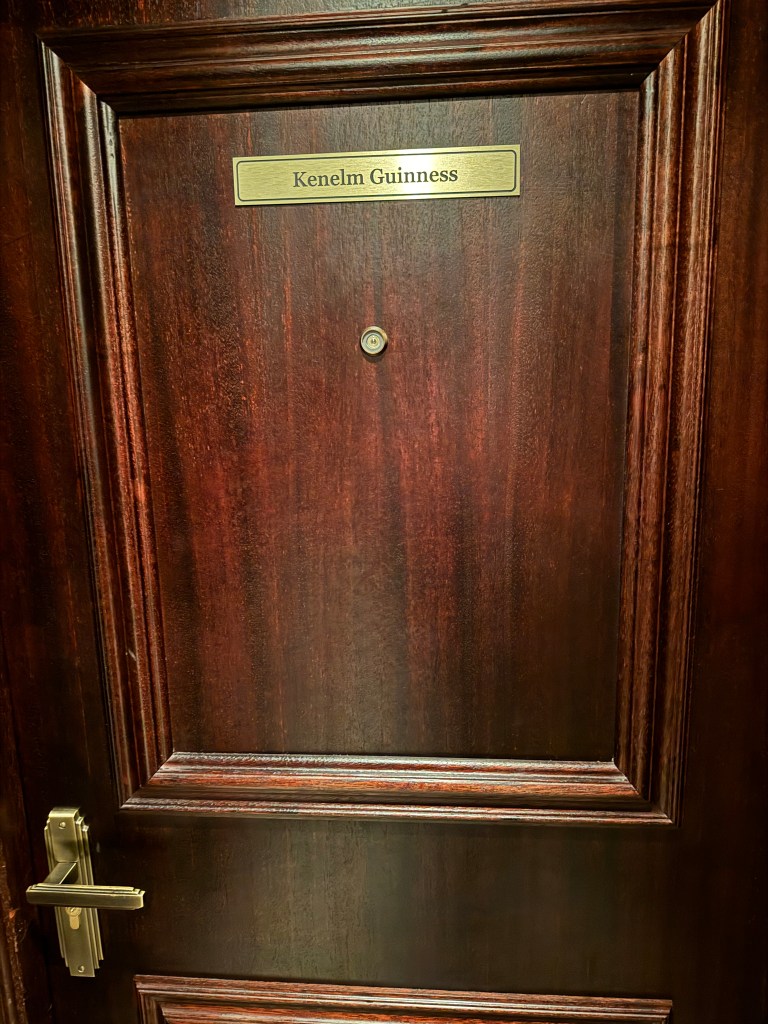
Leith is the home of the Royal Yacht Brittanica, and in honor of her being nearby I booked a room at Ocean Mist Leith, a boat with a singular history. It was built in 1919 as a minesweeper but a year later was sold to Kenelm Guinness (yes that family), a race car driver, inventor and playboy, the kinds of “occupations” men of his circumstances had the freedom to choose back in the day. I mean who wouldn’t choose to be an inventor if having an income didn’t matter? Kenelm converted the boat to a “gentleman’s pleasure yacht,” which – er, whatever.
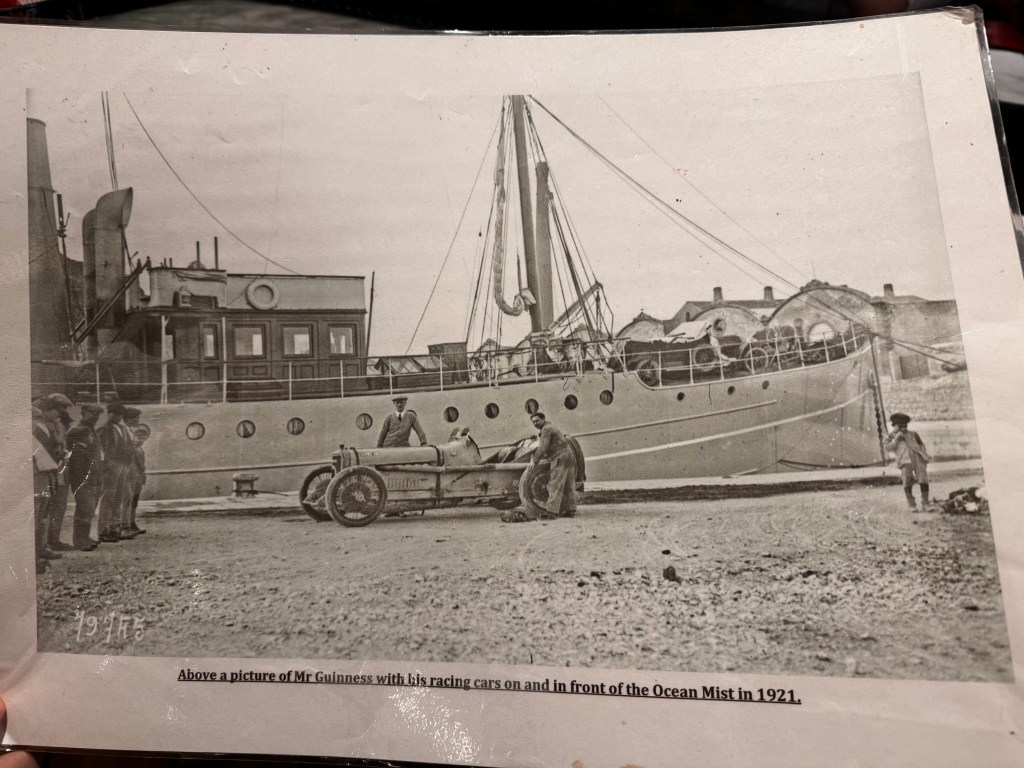
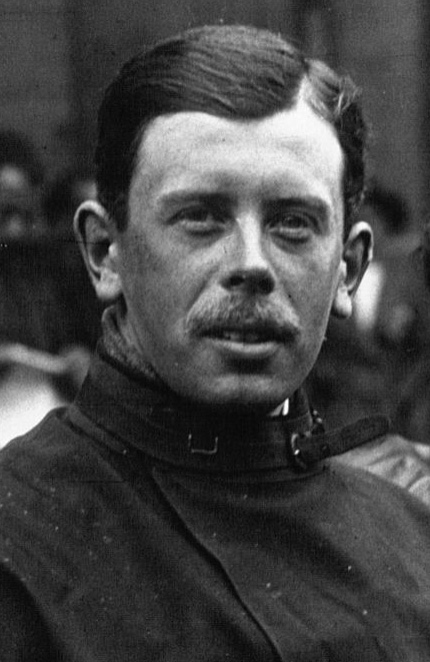
Abysmal haircut, a mustache is never a good idea, and yikes “bvb” alert. (before vital braces)

The boat next changed ownership through a series of Dukes, Sirs and MPs until it was requisitioned by the admiralty during World War II, finally fulfilling its original purpose as a torpedo recovery vessel. Then it changed hands through several businessmen, including one who ran whisky from Scotland to California during Prohibition. It docked in Leith in 1983 and became various nightclubs and restaurants before falling into disrepair. The current owners took it down to its bones for a complete, and gorgeous, renovation.

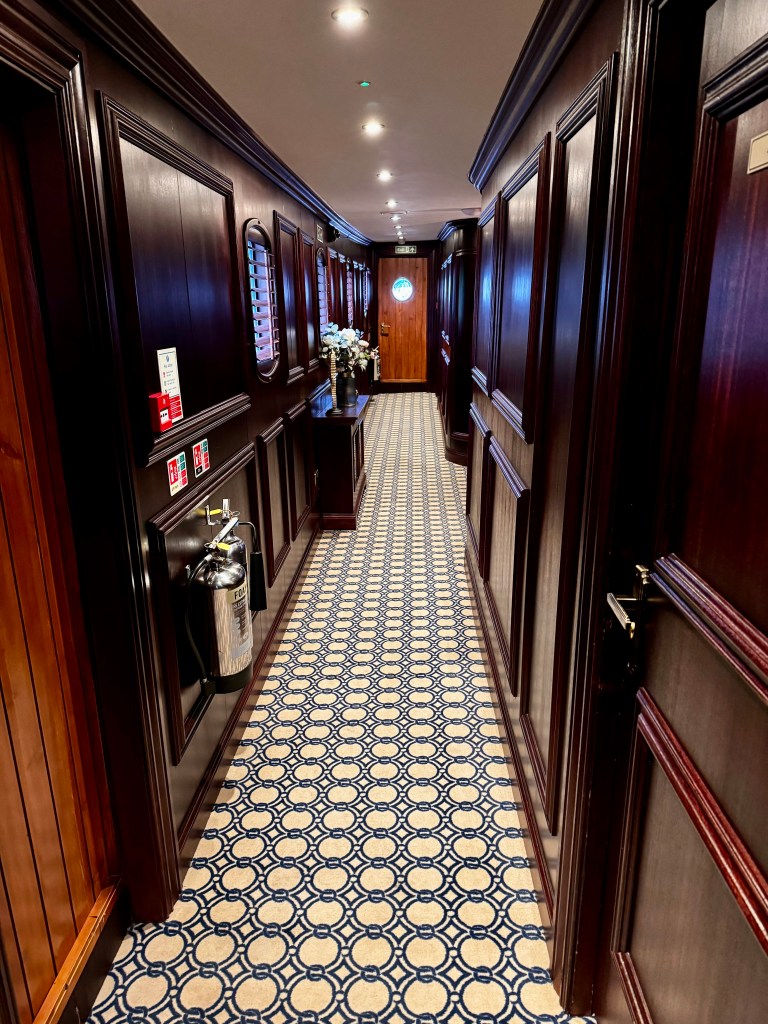
The hotel is extremely, extremely cool and somehow I was given the room at the bow of the boat that served as Captain Kenelm’s quarters.
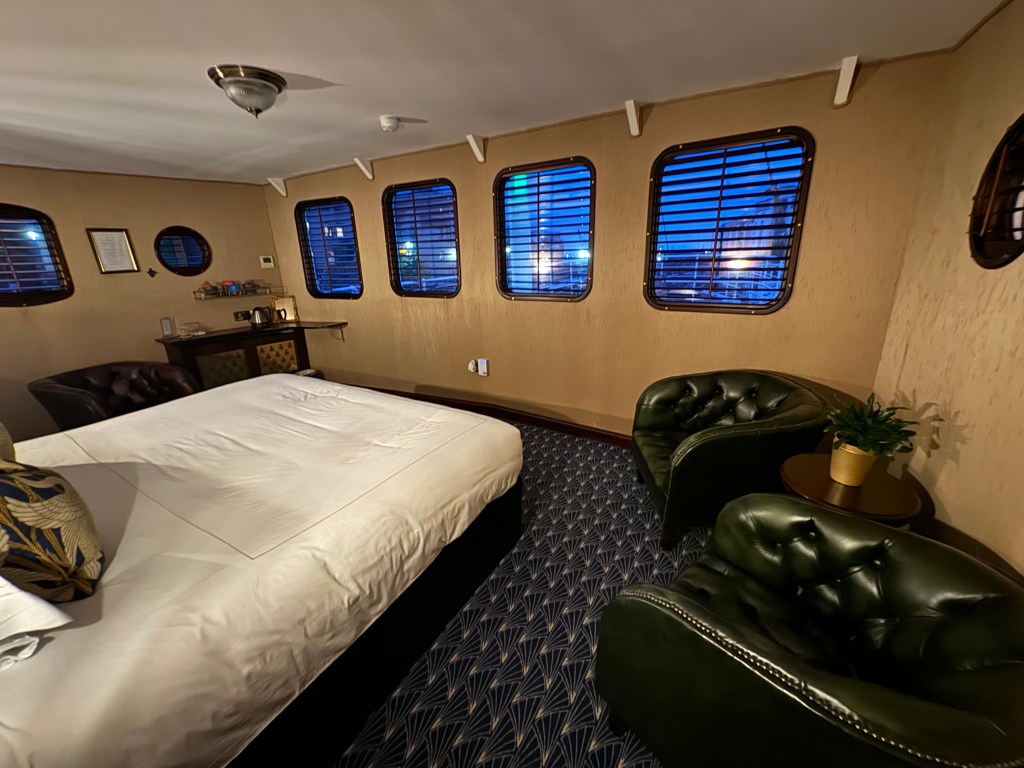
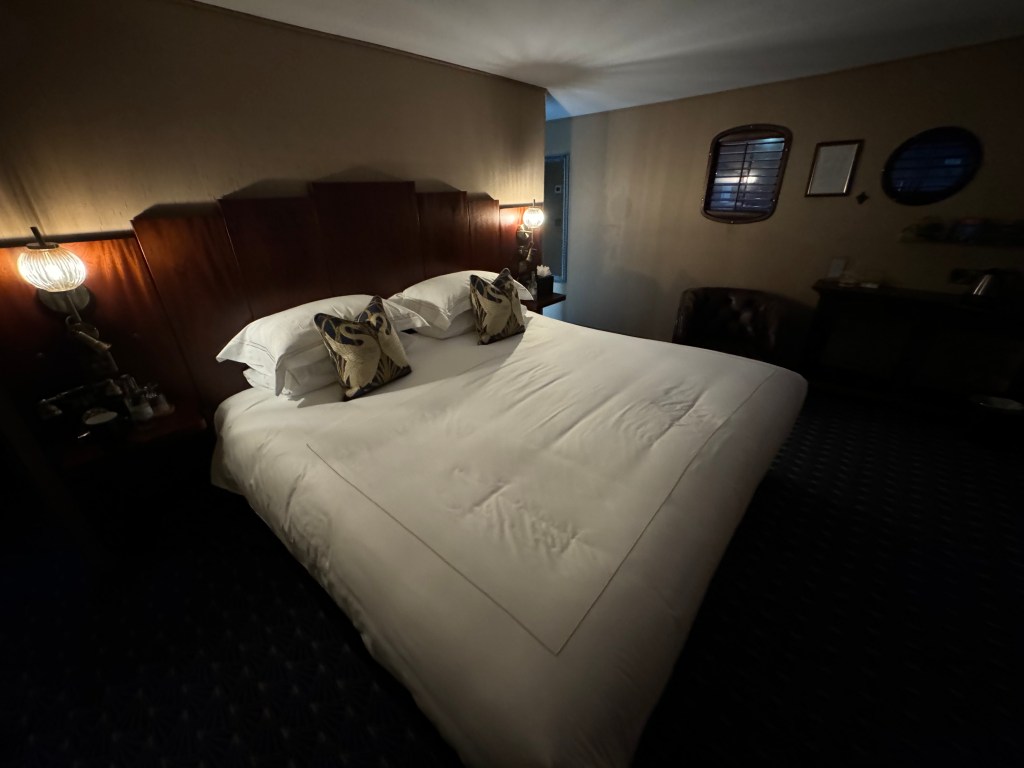
Since the room is at the bow of the ship, the floor slopes sharply upward to the windows.
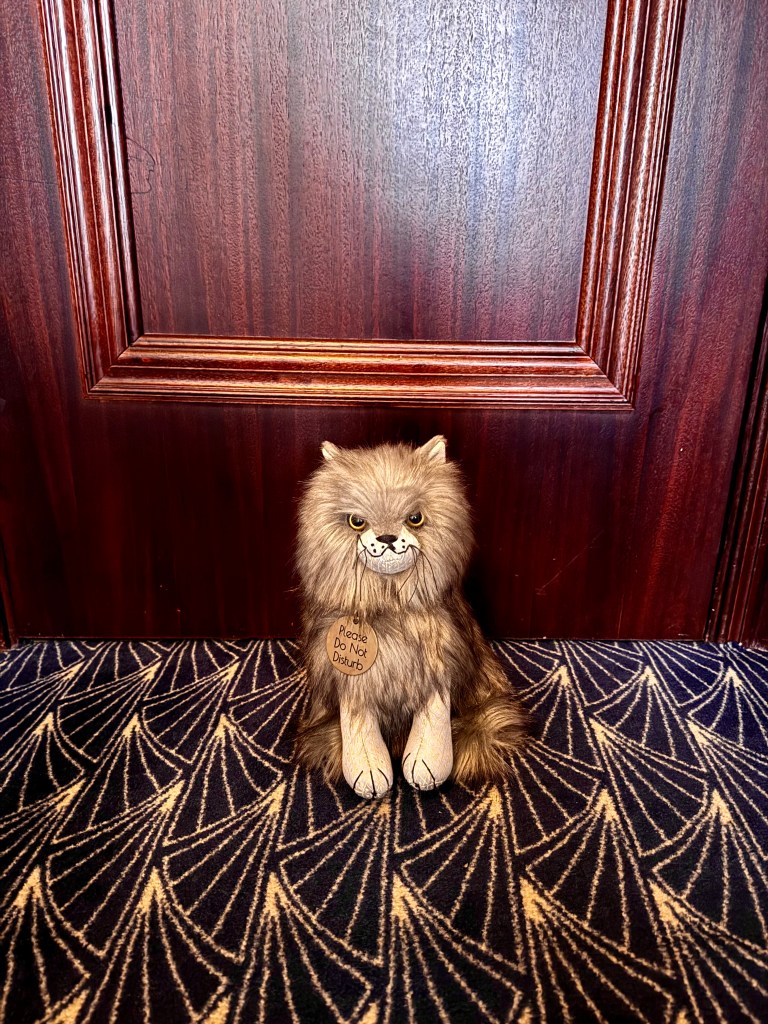
If you don’t want to be disturbed you must put this creepy weighted lion outside your door.

And my dudes, I had my own deck and I must say I was quite, quite fancy during my stay. Here I am enjoying a Guinness on my deck just because.

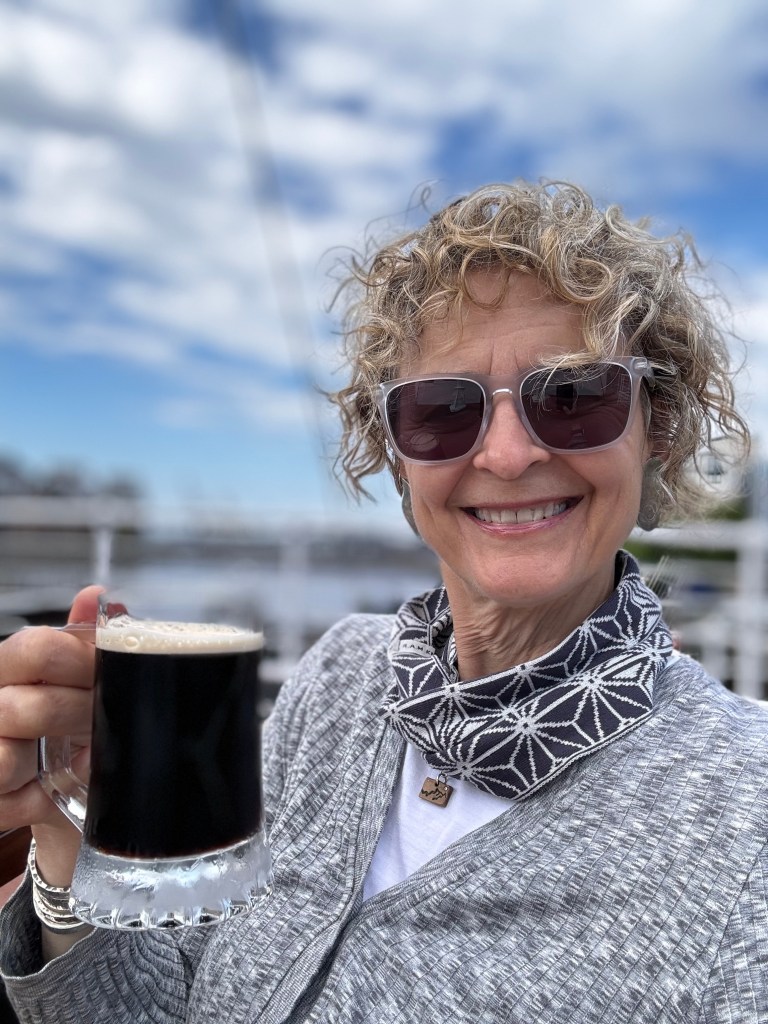
To you, Kenelm. I hope you invented something.

The following morning before heading to the airport I walked around town, grabbed a coffee and snapped a few last photos.
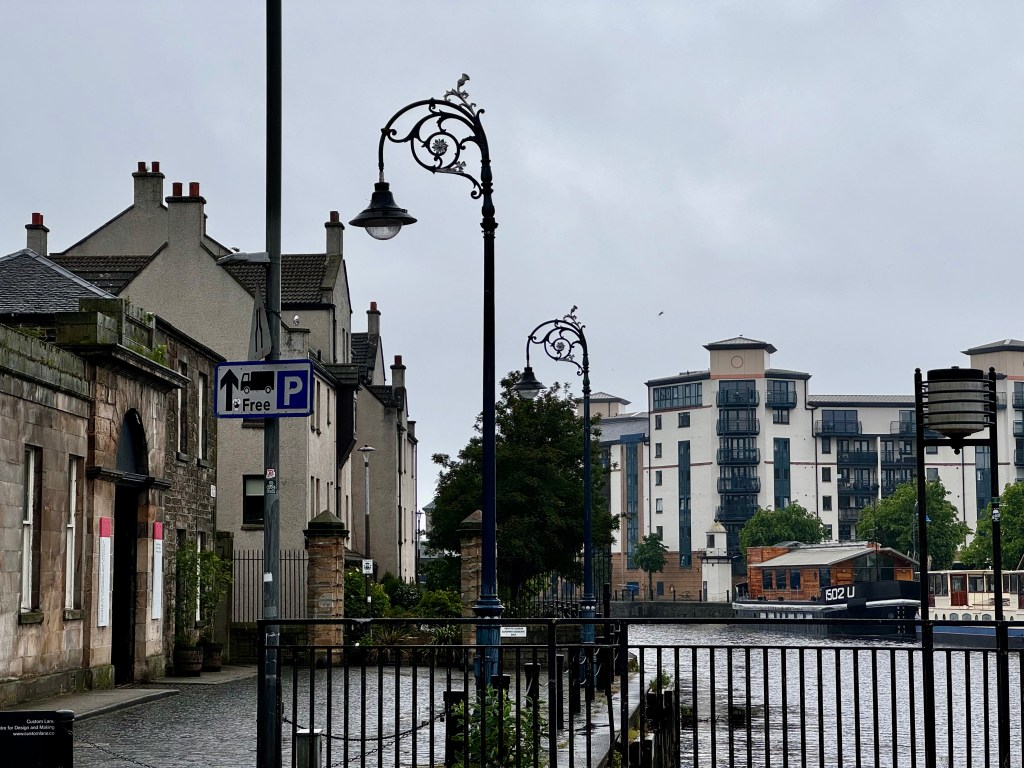
And at last we find ourselves at the end of this trip. So much gratitude to all of you for coming along with me, and for all your kind comments.

I’ll leave you with this sign inside a Leith coffee house called Toast, which is very – Scotland.

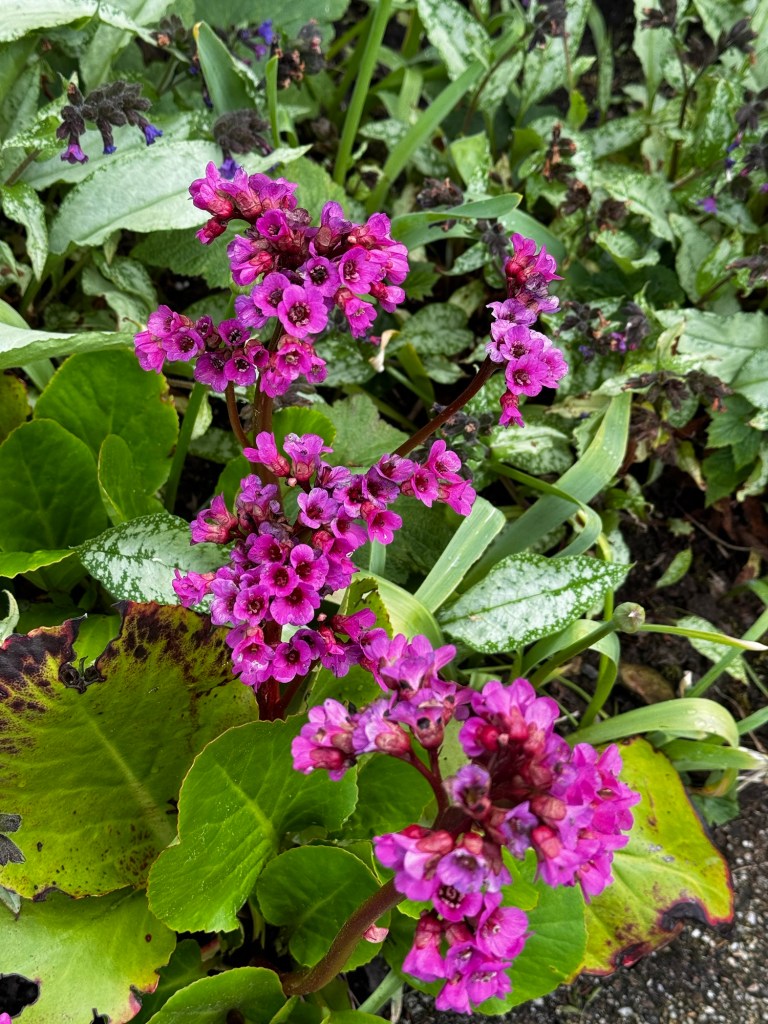
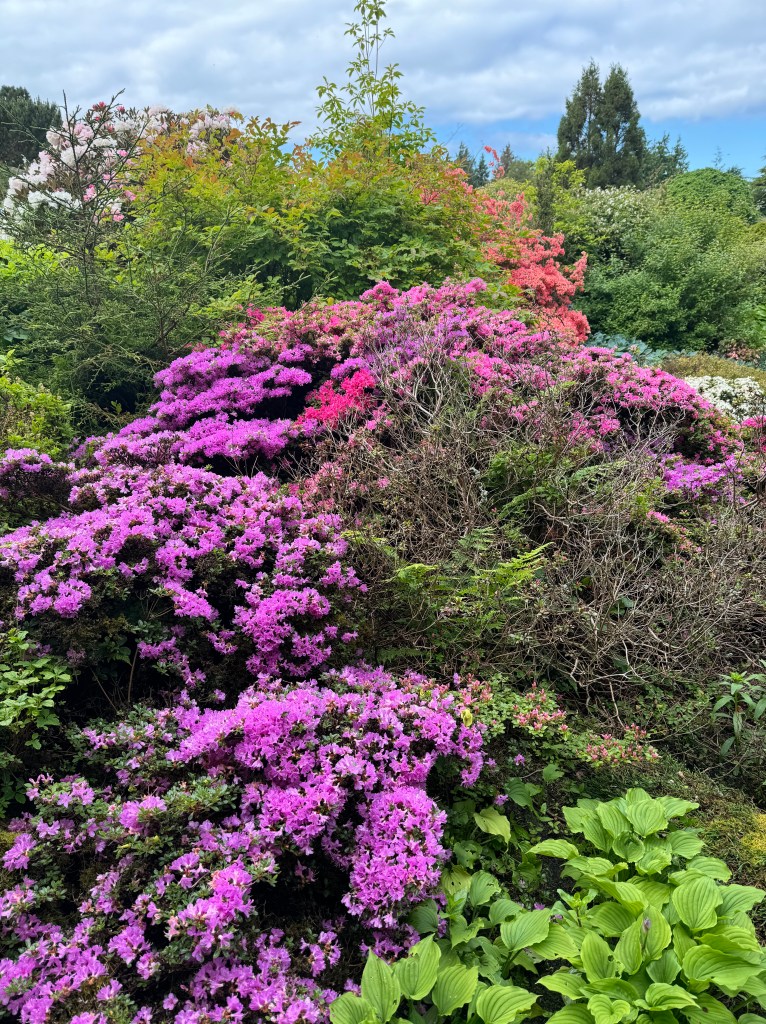
OK and maybe also some blooming azaleas from the Royal Botanical Gardens in Edinburgh.
At the risk of this blog ending like Lord of the Rings, just one more, a farewell poppy from the gardens of Busta House.

Until next time, safe travels, happy landings and all my good wishes.
Lazy Days in Lerwick

Spent a few days solo in Shetland prior to joining my Wilderness Scotland trip and with the exception of a quick excursion to Scalloway I didn’t venture far. Lerwick is too cool to leave, I could easily spend a week here.

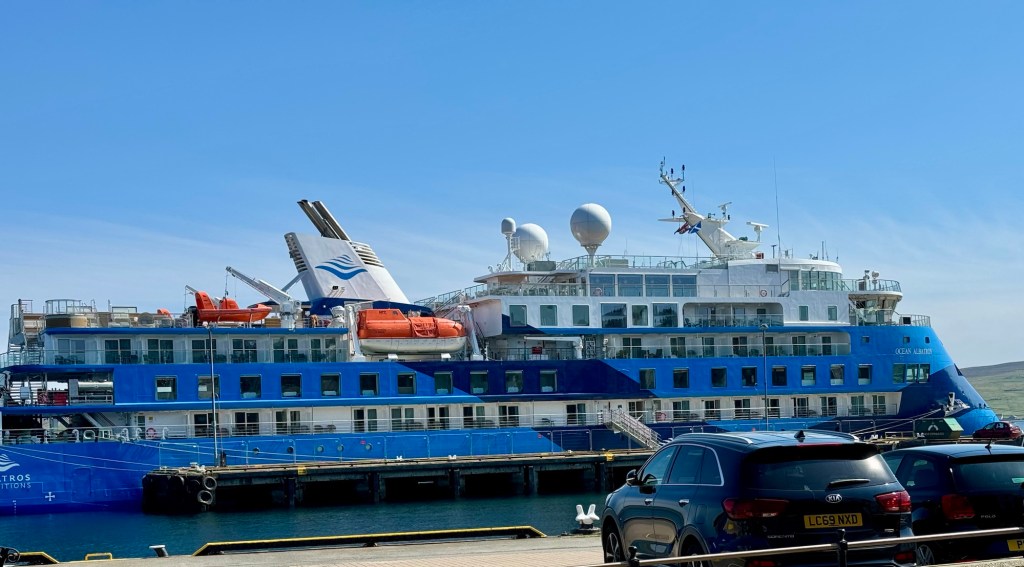
While Lerwick doesn’t seem overrun with tourists, the cruise ship season is upon us, which I say as if I live here. A local shop owner told me the town was expecting 147 ships this summer, some of them packed with as many as 4,000 people. I mean that makes my toes curl, but also they spend money in a community that is reliant on tourism, so classic double-edged sword. There’s one in this morning but at least it’s a semi-reasonable size as cruise ships go and it seems to have caused only a slight increase in people.

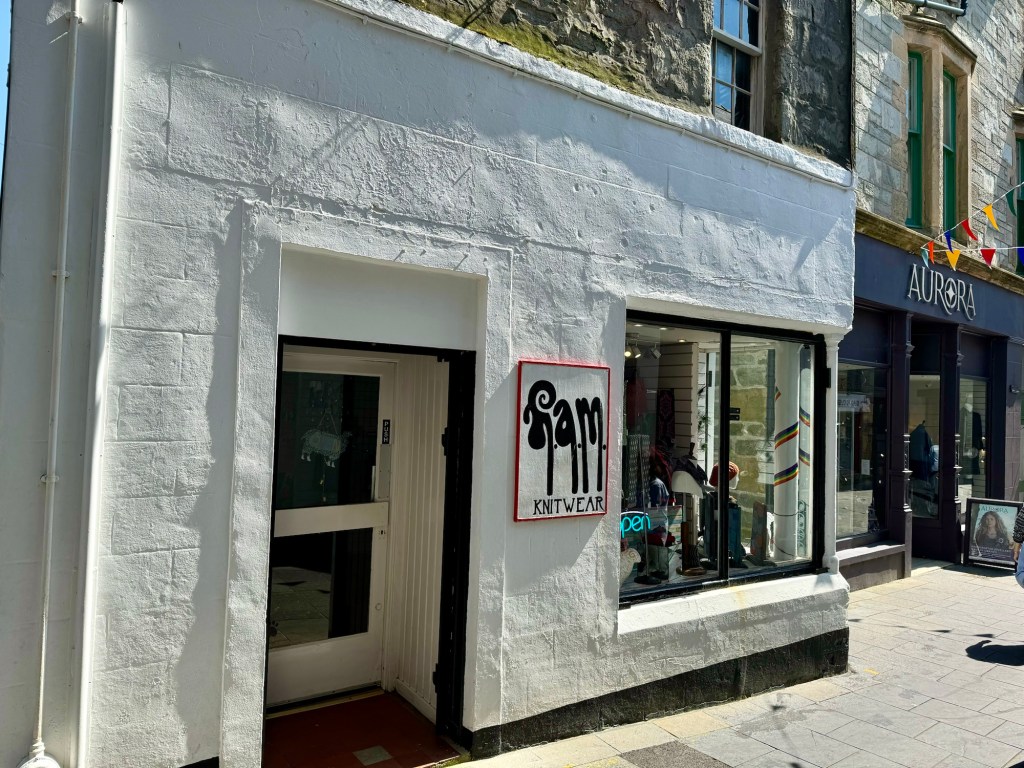
Shops and restaurants are given a schedule so they can adjust their hours and bring on staff. My shop owner told of a time she opened early on a Sunday to accommodate an arriving ship and found thirty people lined up when she arrived. R.A.M. Knitwear is a tiny shop that sells gorgeous scarves, buffs and accessories designed by her daughter (a couple of pieces of which I was forced to acquire) and could comfortably hold maybe five people.

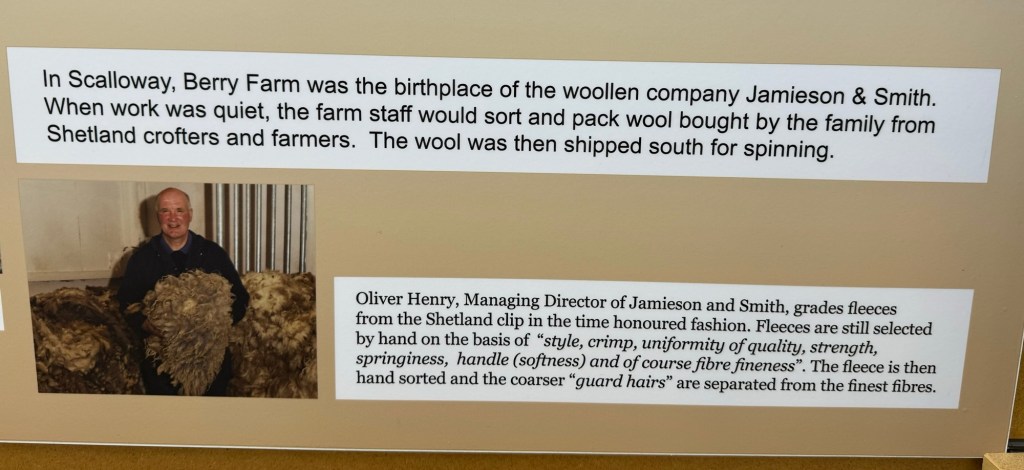
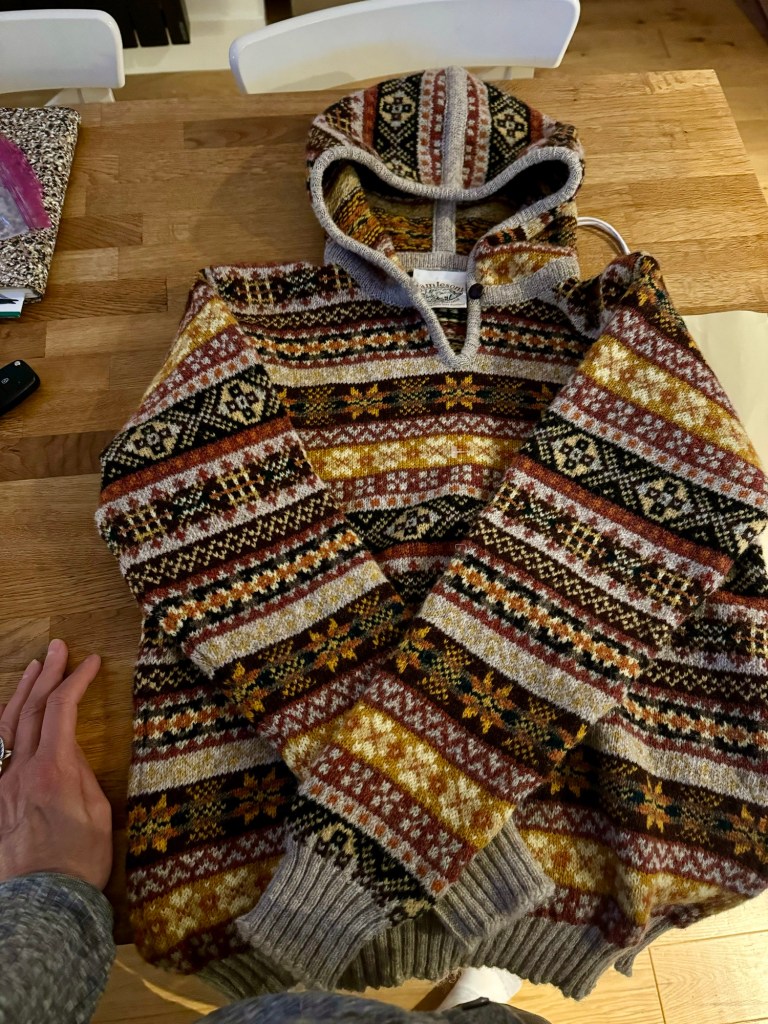
And here I’ll just admit that knitwear is apparently my splurge category for this trip. I also bought a real deal Shetland sweater made by a family owned company, Jamieson’s, that has been around since 1853. They are even featured in the Scalloway Museum.

A fellow shopper, a fabulous English woman with cool glasses, commented I would be so easy to spot in this sweater that I’d never get lost and also I had the personality to pull it off – which I decided to take as a compliment?

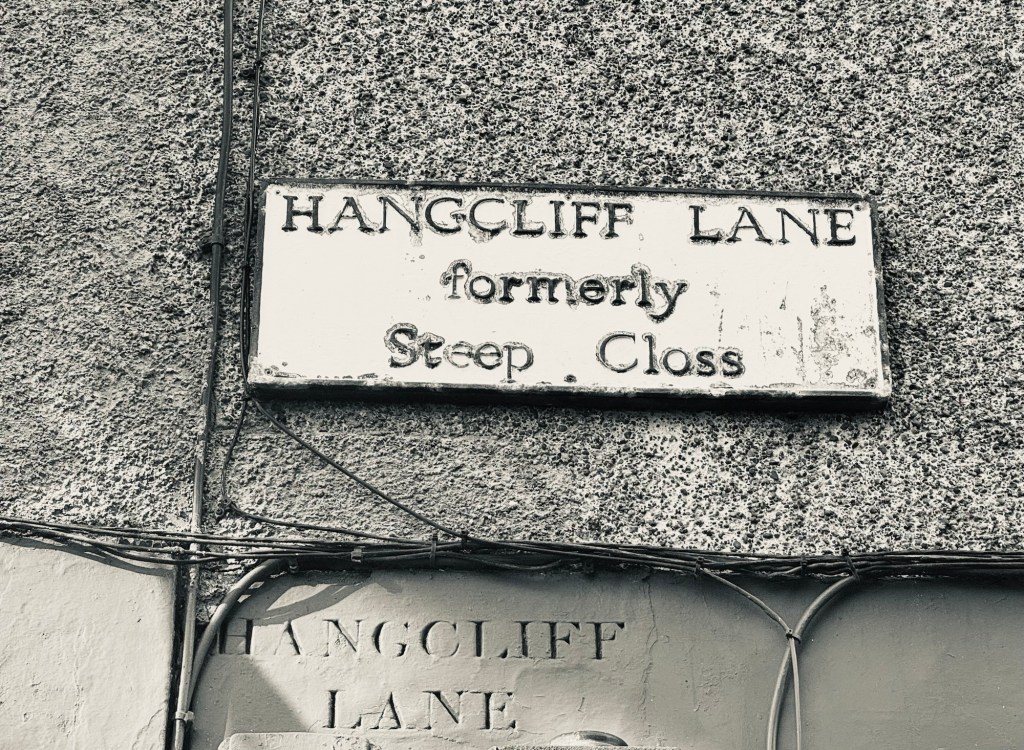
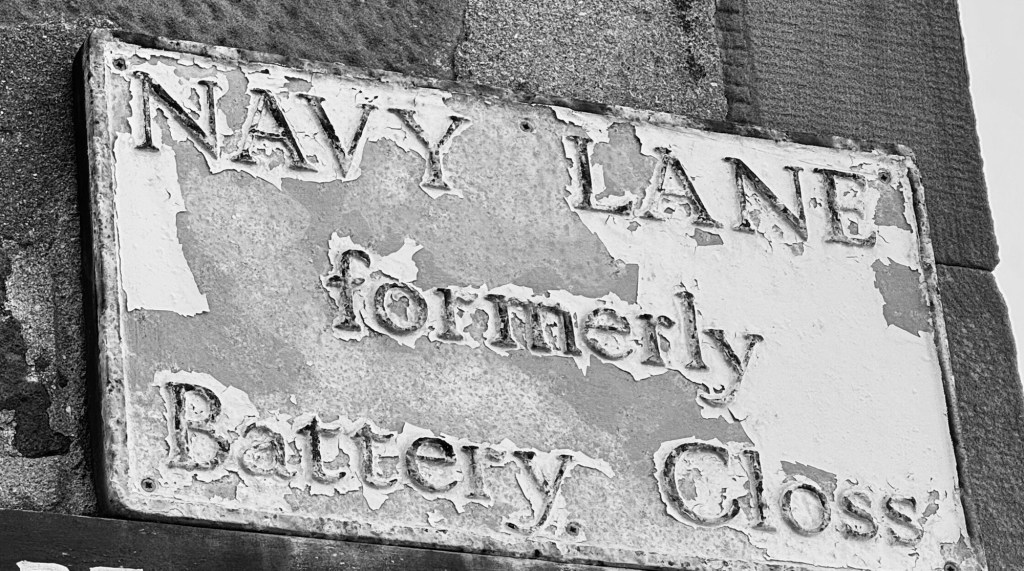
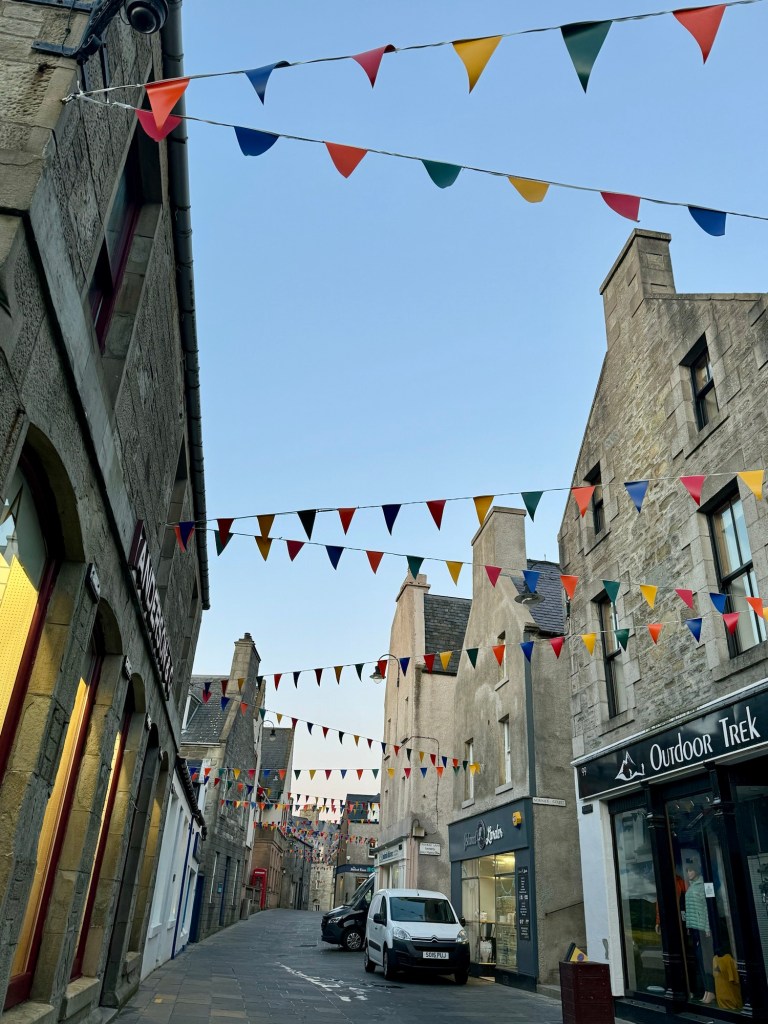
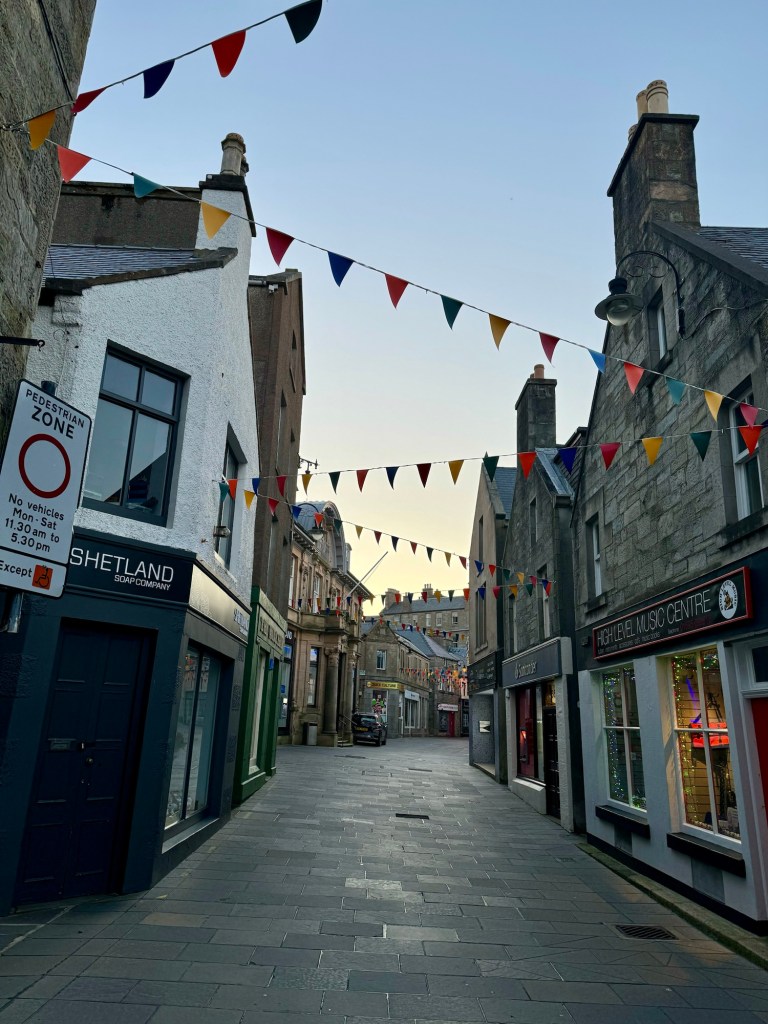
Speaking of the fabulous shopping here, part of the charm of Lerwick’s high street is its pedestrian-only access, delightful alleyways tumbling down from the hill above, and most of the shops are locally owned. Huzzah!

This was my lane of choice.

And god forbid that we stop with the Shetland filming locations.

Jimmy, Tosh, Sandy and Billy’s office.

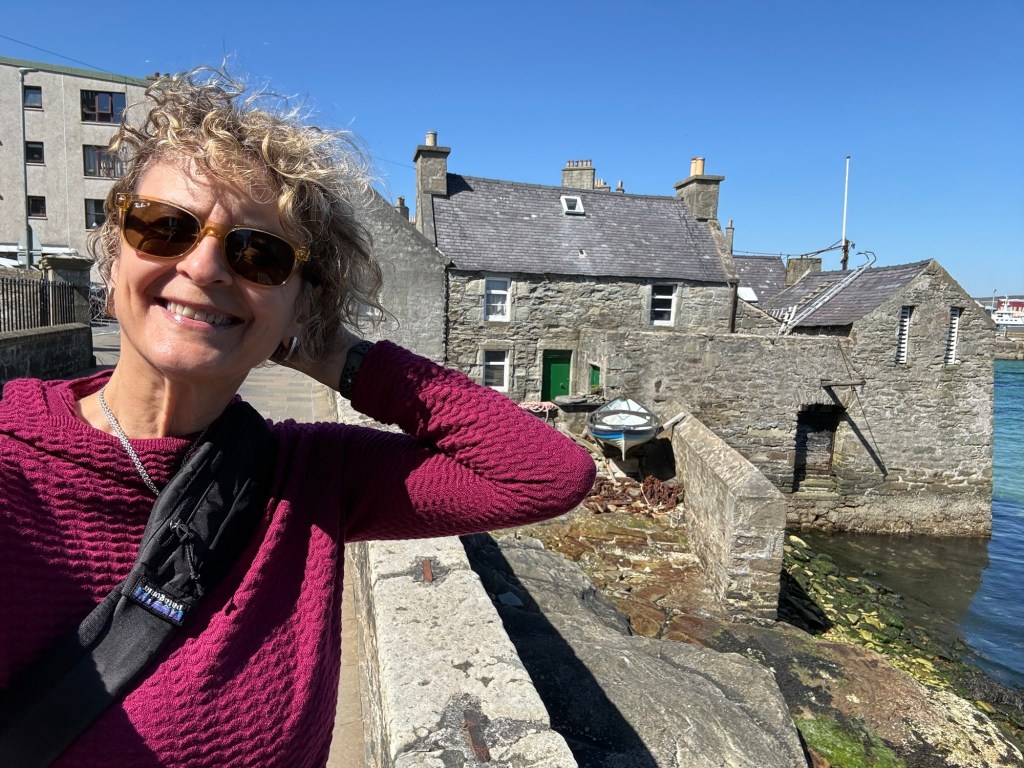
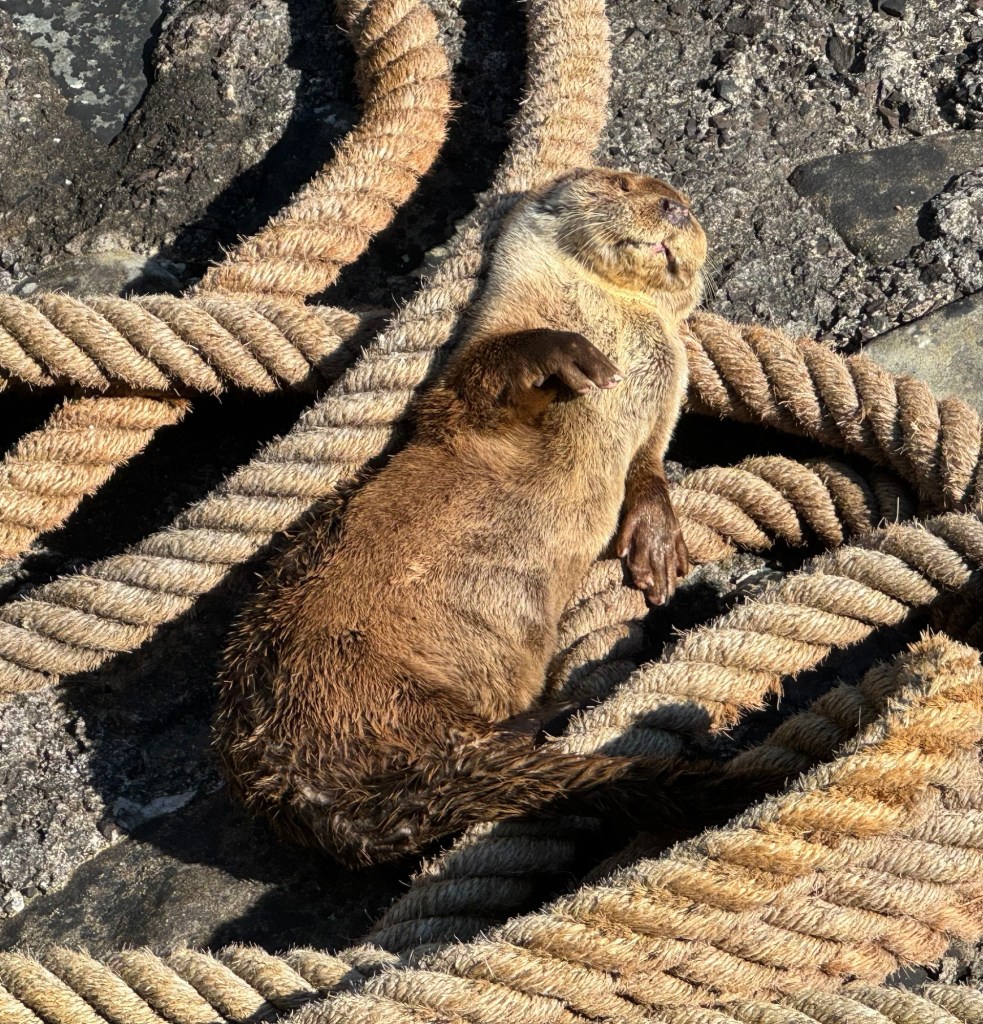
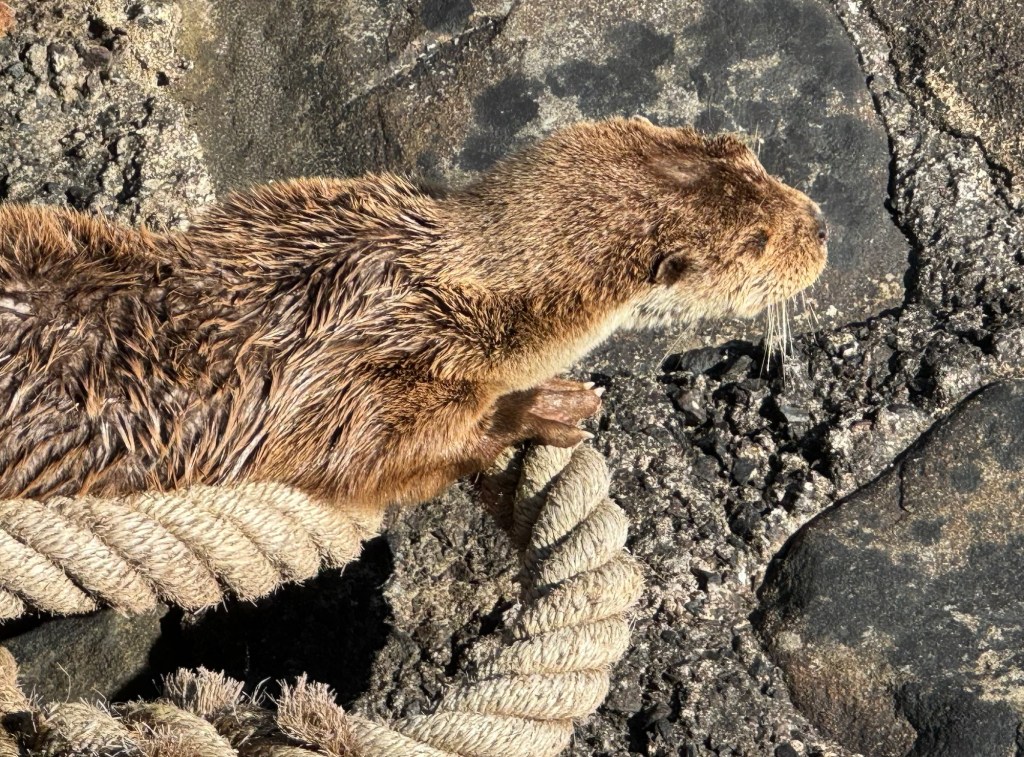
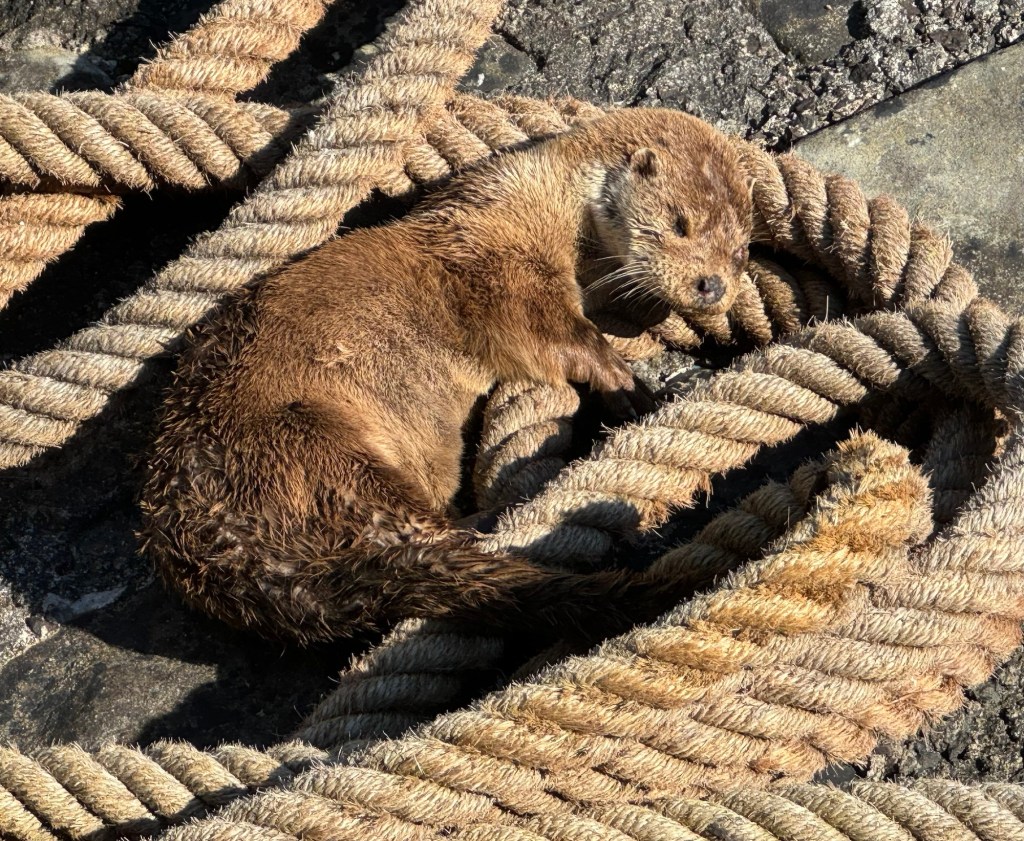
Glad I visited Jimmy’s house again because not only did it afford the opportunity to take selfies in a different outfit but a sea otter was rubbing himself like a cat against a rope near the front door.

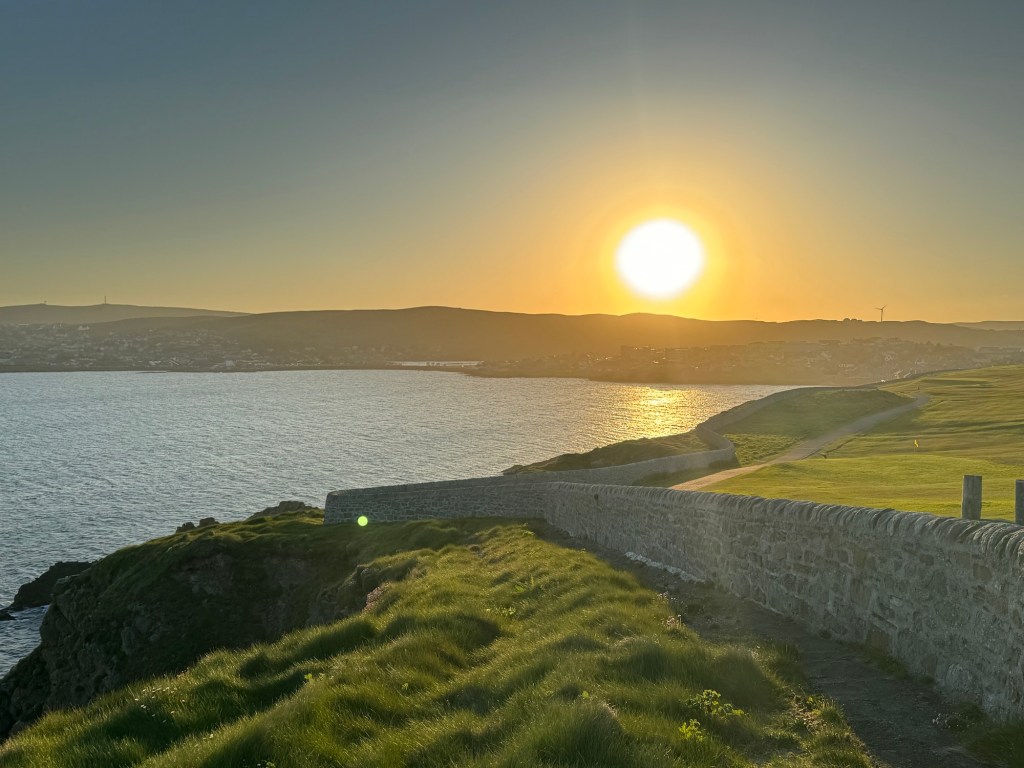
Lerwick also features many gorgeous areas to walk – which is helpful after a dinner where one has completely stuffed one’s face. I waddled around one of the coastal paths, the Knab, in the most beautiful magic hour light.

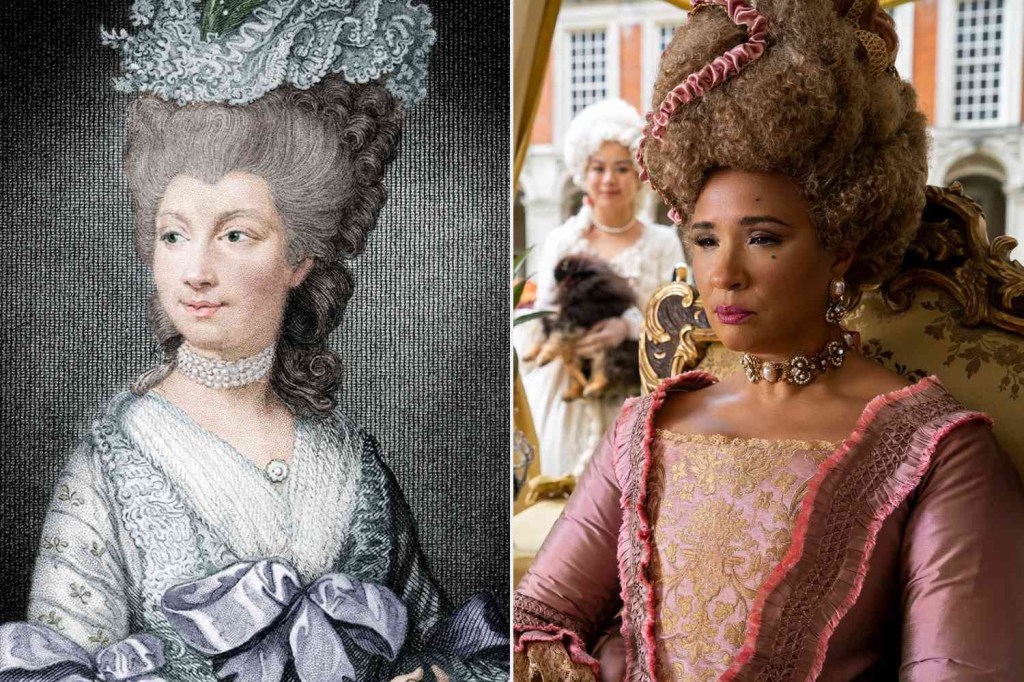
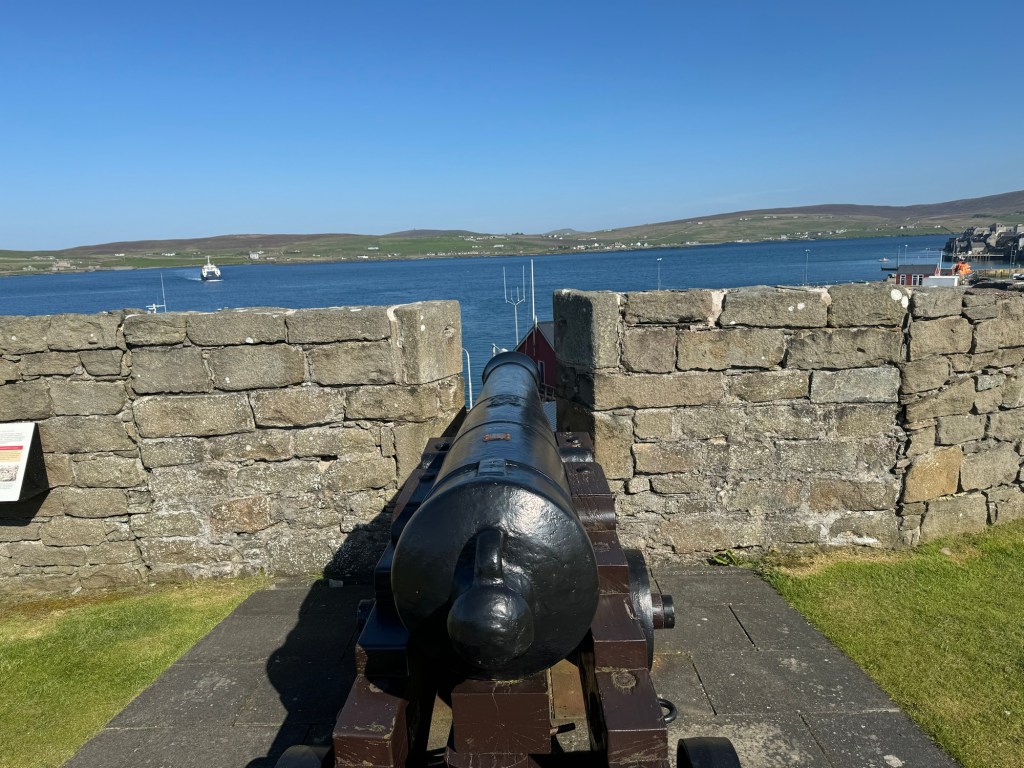
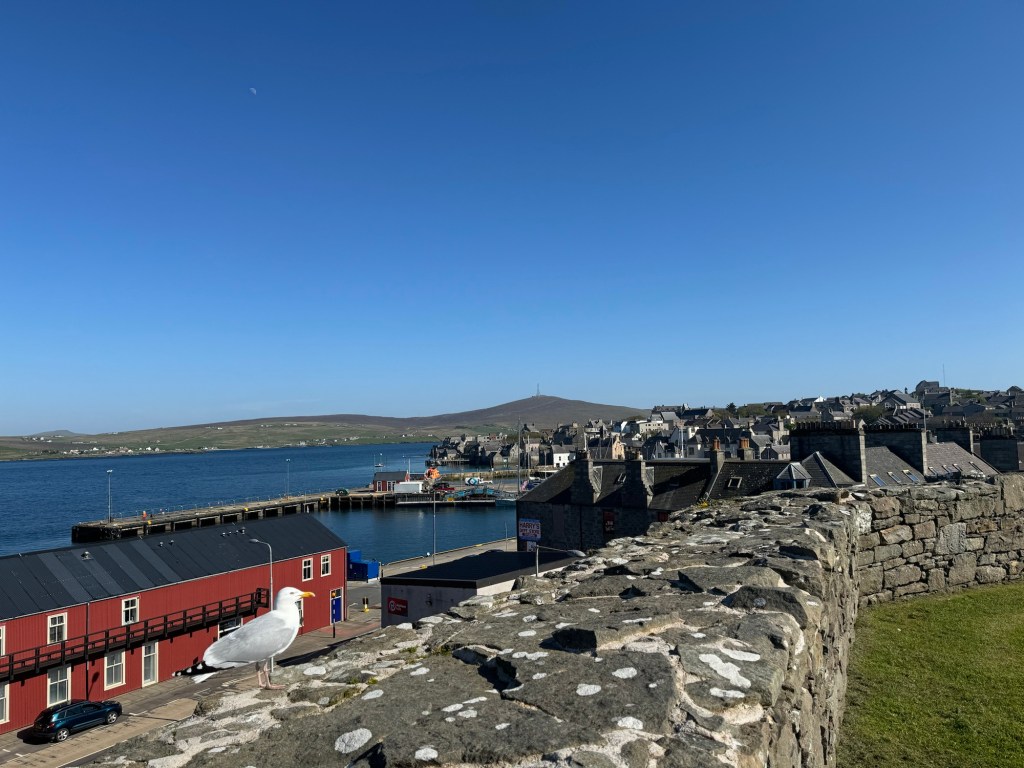
Also took a turn around Fort Charlotte in downtown Lerwick one evening. You remember Queen Charlotte. She was married to the unfortunately mad King George III who was not only engaged in a fruitless search for his faculties but also holds the dubious honor of losing the American Revolutionary War. Or, if you are a Bridgerton fan, you will also know her as the fabulous Golda Rosheuvel.

I like to think she was the one running the country. I’m sure she wasn’t allowed to run the war otherwise we would have lost and would now be enjoying universal health care. And I would have a British passport.

The history of the Fort Charlotte is brief and relatively uneventful as military forts go. It mostly involves three Anglo-Dutch wars that honestly I’m choosing to not learn more about, as I had no idea they existed in the first place. If you are curious, ask your AI.

The first incarnation of the fort was built in 1652 during the First Anglo-Dutch War. Nobody knows what happened, but that version of the fort is gone. The second was built under orders of Charles II at the start of the Second Anglo-Dutch War. It held off a Dutch fleet but was ultimately burned to the ground by the Dutch during the (wait for it) Third Anglo-Dutch War. Also you should know that there was a fourth war but it doesn’t figure into our story.

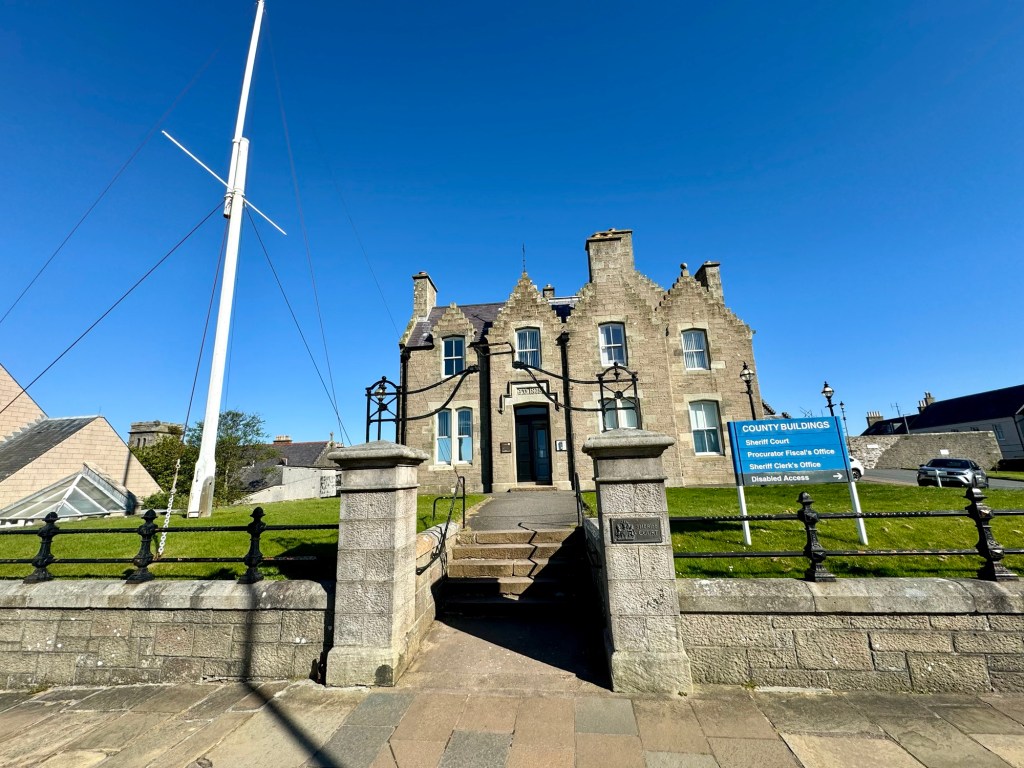
In 1781 the fort was rebuilt in its current incarnation and named after Queen Charlotte, but hasn’t seen service during hostilities since. It did house a garrison during the Napoleonic Wars and was later a base for the Royal Naval Reserve. It’s also been used as the town jail and courthouse (before they built Jimmy’s building) and a coastguard station. Today it’s managed by Historic Environment Scotland and is the base for Shetland’s Army Reserves.

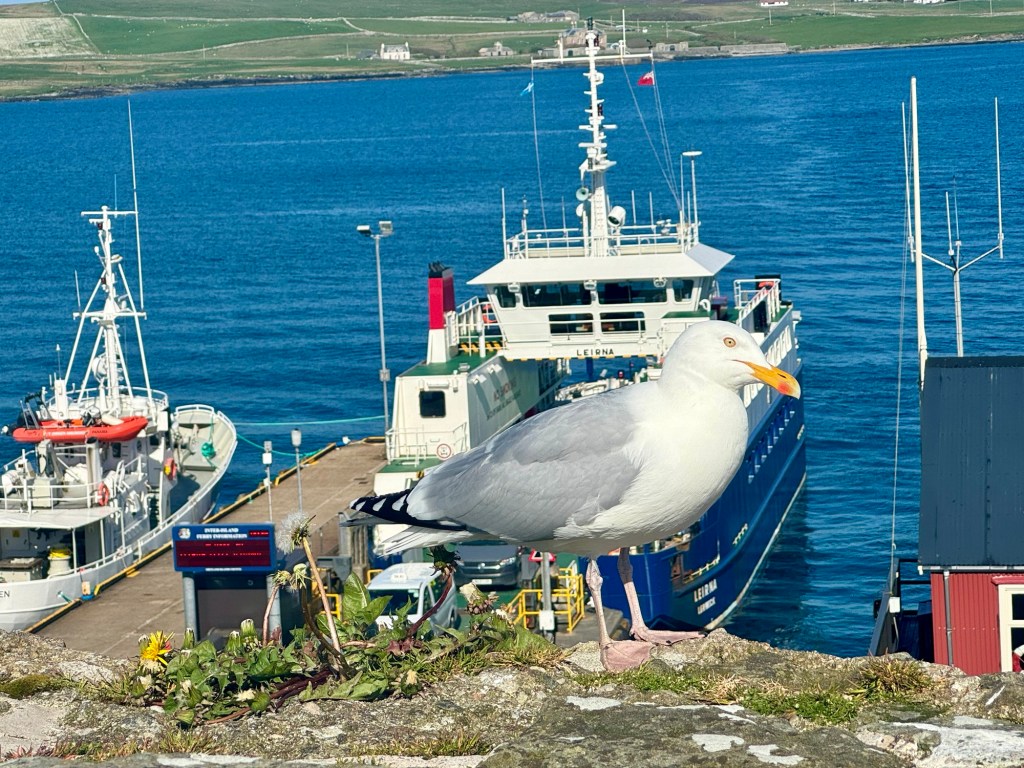
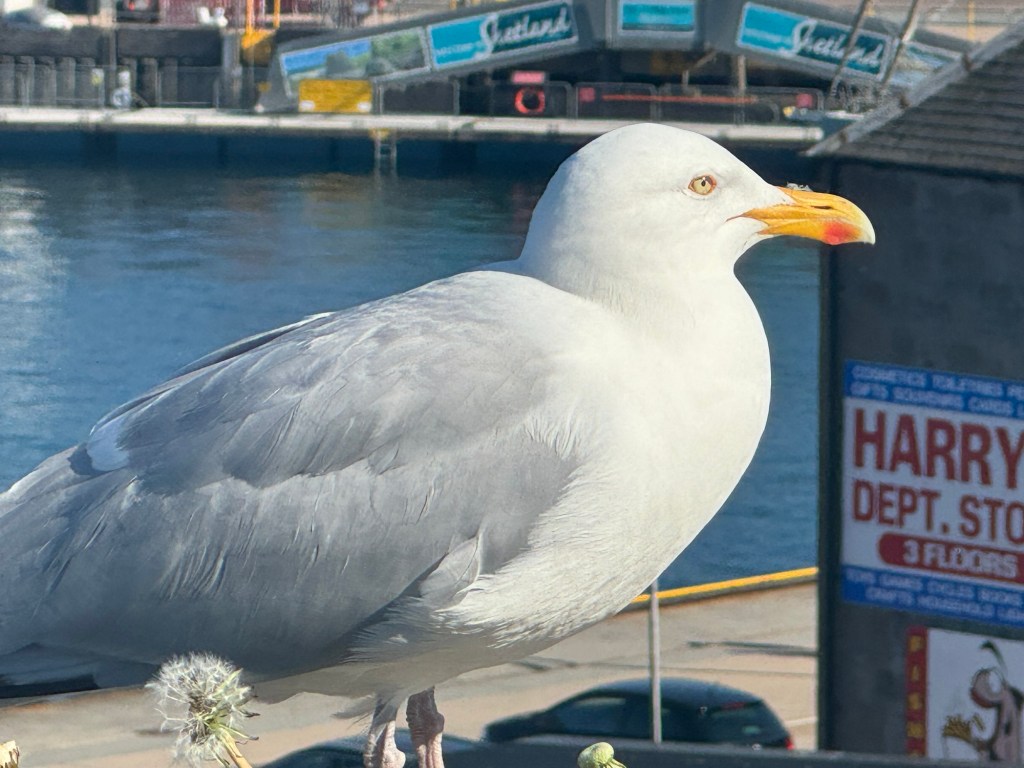
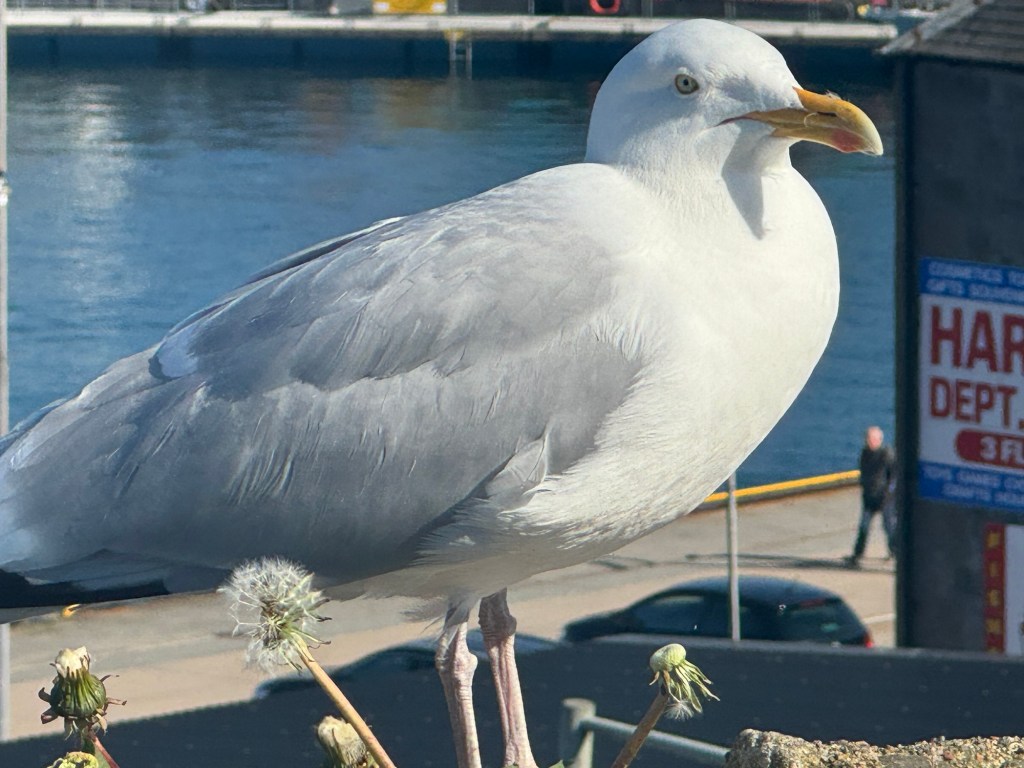
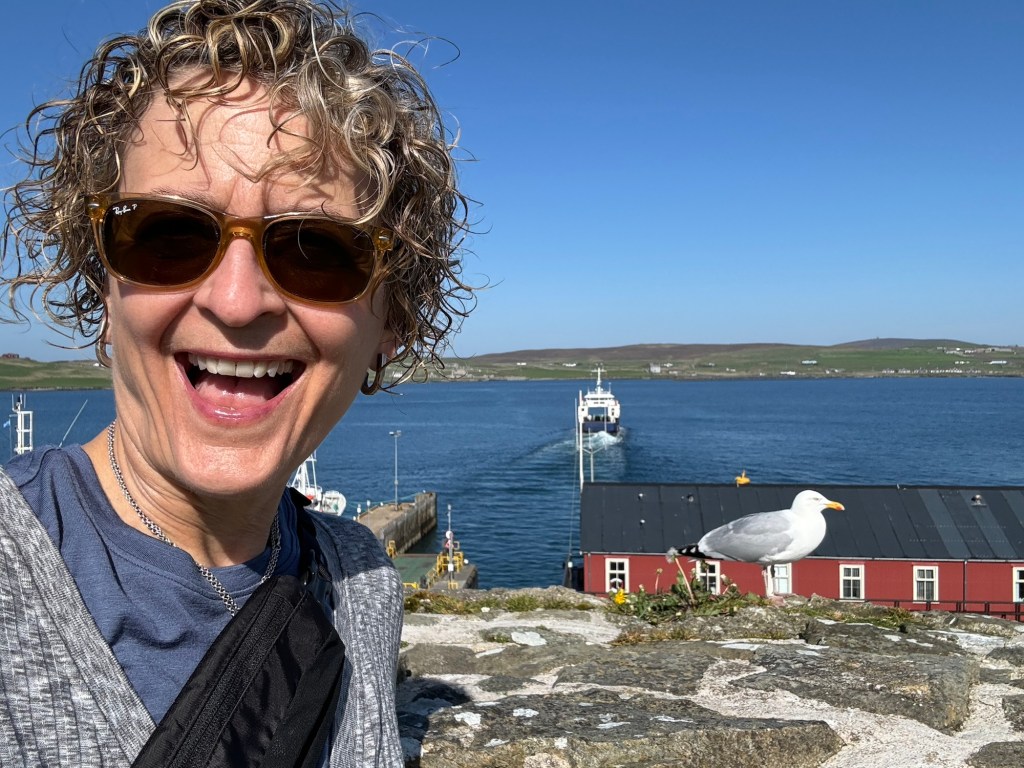
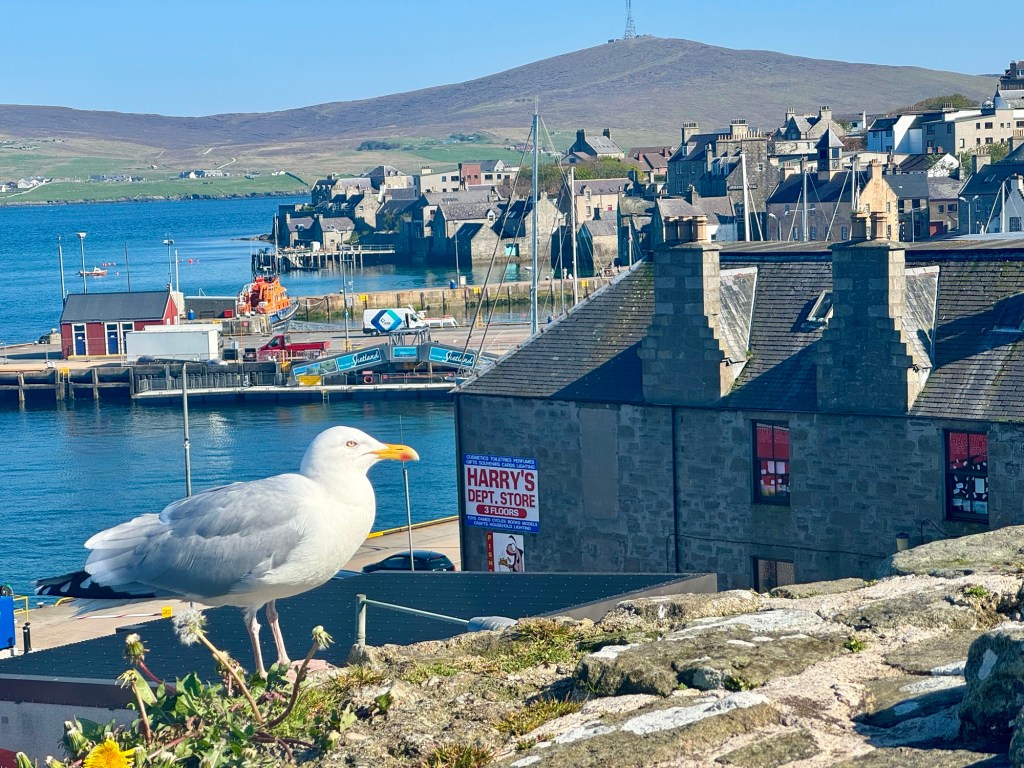
And then I had a moment with a seagull, which is documented in pictures below.

Noticed him here, on the wall of the Fort.
The pièce de résistance (or something).

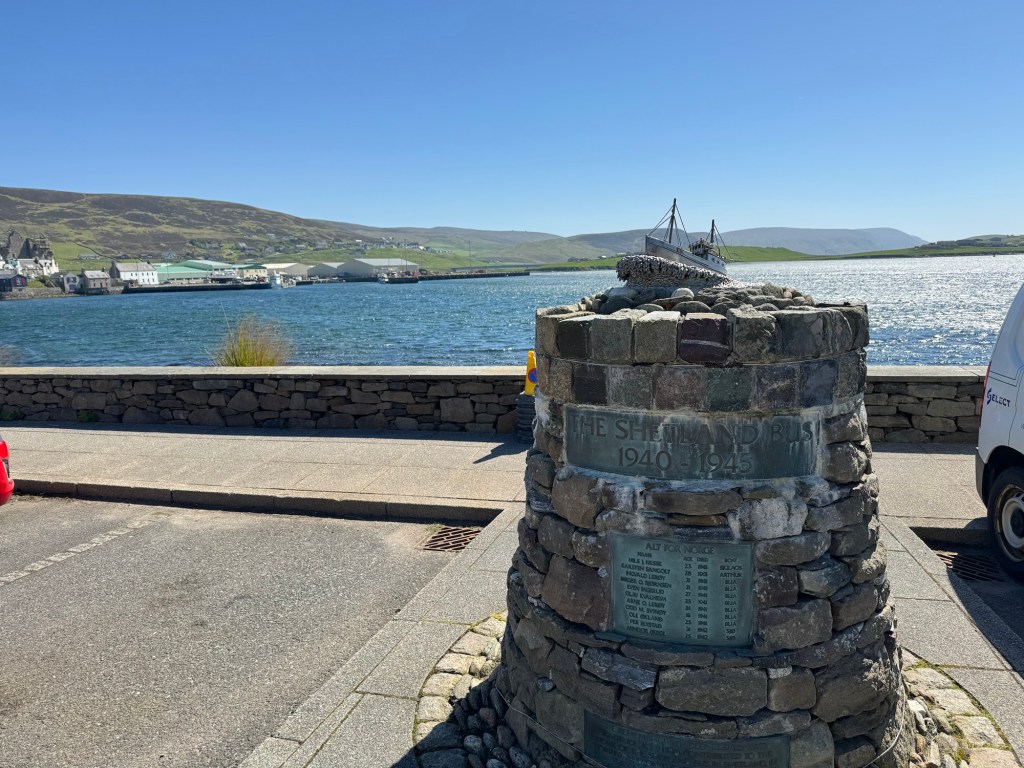
My excursion to Scalloway was on the recommendation of a pal particularly because of its connection to the Shetland Bus – this history I am interested in.

The Shetland bus is one of the many remarkable success stories of World War II filled with tales of courage and valor in extreme circumstances. It all started when Germany invaded Norway in 1940. Norway did not ally itself with either the Allied or Axis powers in the war, but neutrality is not an awesome shield when you hold a strategic position in the North Sea. Norway fell quickly and resoundingly, sending King Halkon VII and his family to London where the government operated in exile.

Thousands of Norwegians escaped, mostly in fishing boats, and sailed west. Geography being what it is, Shetland was their landing zone. A resistance movement developed in Norway but it was disorganized, lacking leadership and expertise and perhaps more to the nitty gritty, guns and ammo. Churchill established a secret organization, the Special Operations Executive (SOE), to work with the Norwegian resistance behind enemy lines, and the Shetland Bus was an integral part of that effort.

The operation used the escaped and innocent-looking Norwegian fishing boats crewed by young Norwegian volunteers disguised as fishermen to make hazardous trips across the North Sea often in dreadful conditions with no lights and constant risk of discovery and capture. This ended in 1943 after 44 men lost their lives during 66 missions. Americans then got into the action by providing mini-destroyers known as “submarine chasers” and the Shetland Bus operation ran 144 additional missions with no further loss of life.

The boats shuttled agents, equipment and weaponry to Norway and often evacuated Norwegians under risk of capture.

The operation continued until the end of the war, delivering over 400 tons of weaponry and other supplies. Many of these brave guys lived in Scalloway during that time and as you can imagine, strong relationships formed between these men and people in the community.

The museum in Scalloway is largely devoted to the history of this operation.

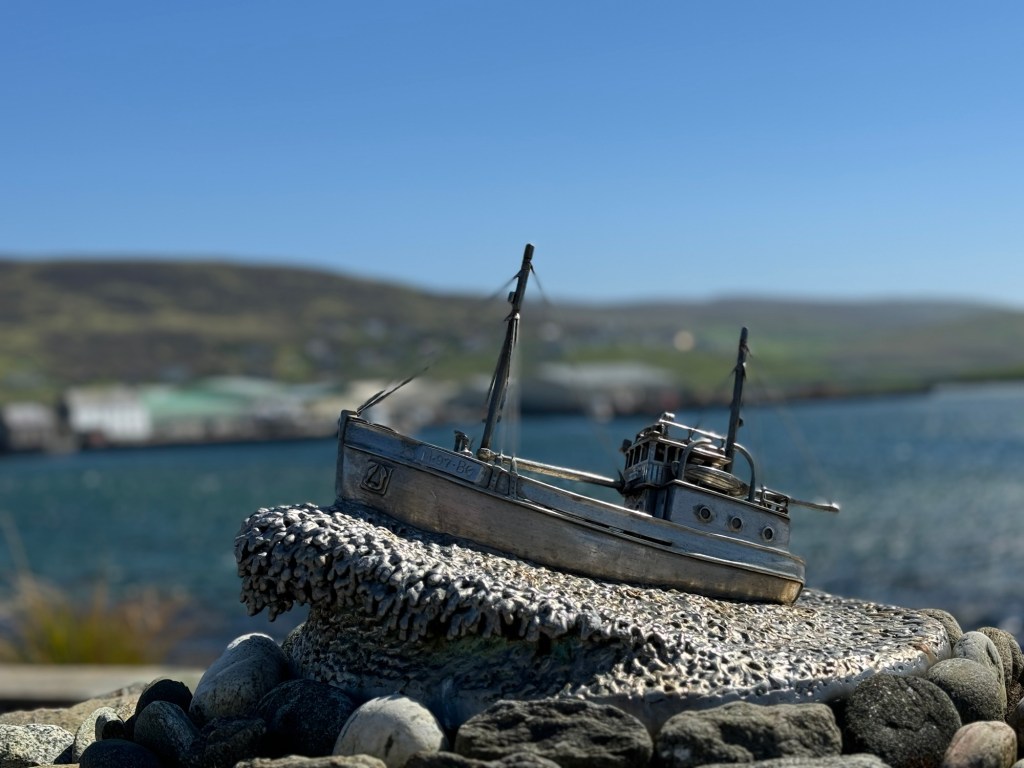
The Memorial was built in celebration of the legacy of this British-Norwegian resistance movement and incorporates stones from the towns of the 44 men who lost their lives, with their names also inscribed.

And just to break up the intensity, the museum also has a couple of Shetland ponies.

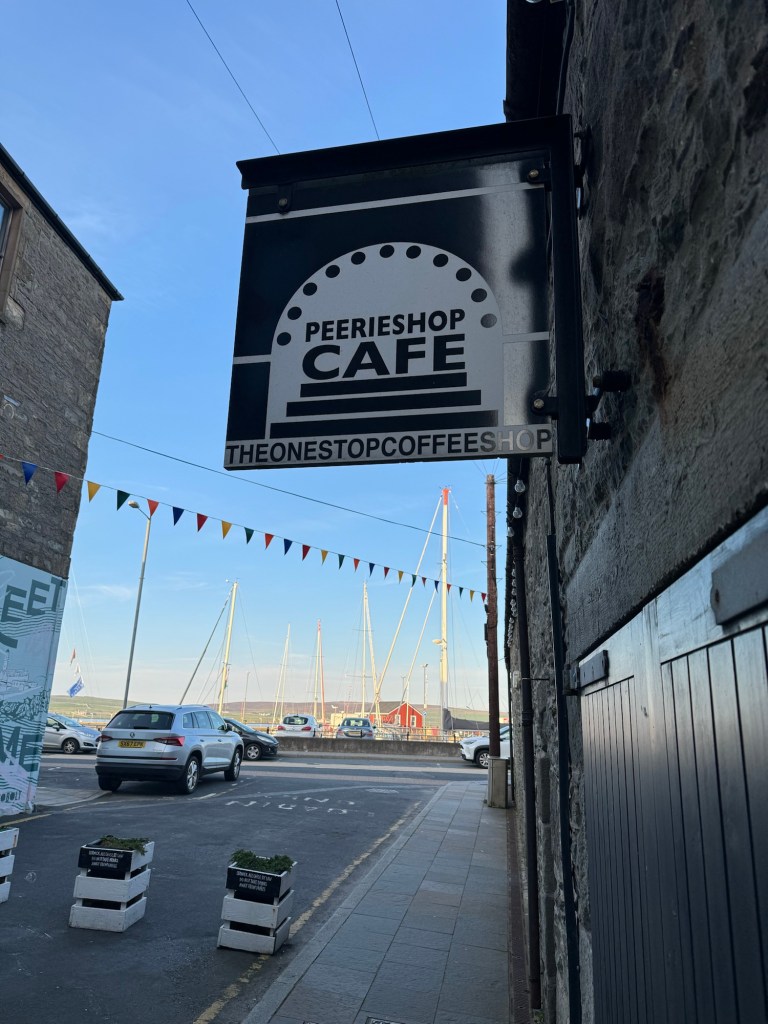
As we head back to Lerwick after our excursion, I’ll note that the town has a pretty impressive restaurant scene. I already told you about Fjara, but there’s more yumminess. Every morning I’ve had a flat white and softie egg sandwich at the Peerie Shop Cafe while sitting outside and looking at the boats in the harbor.

The most awesome restaurant in town has to be No. 88 Kitchen and Bar. I had the best Shetland mussels I’ve ever had and (whispers) locally sourced lamb – also the best.

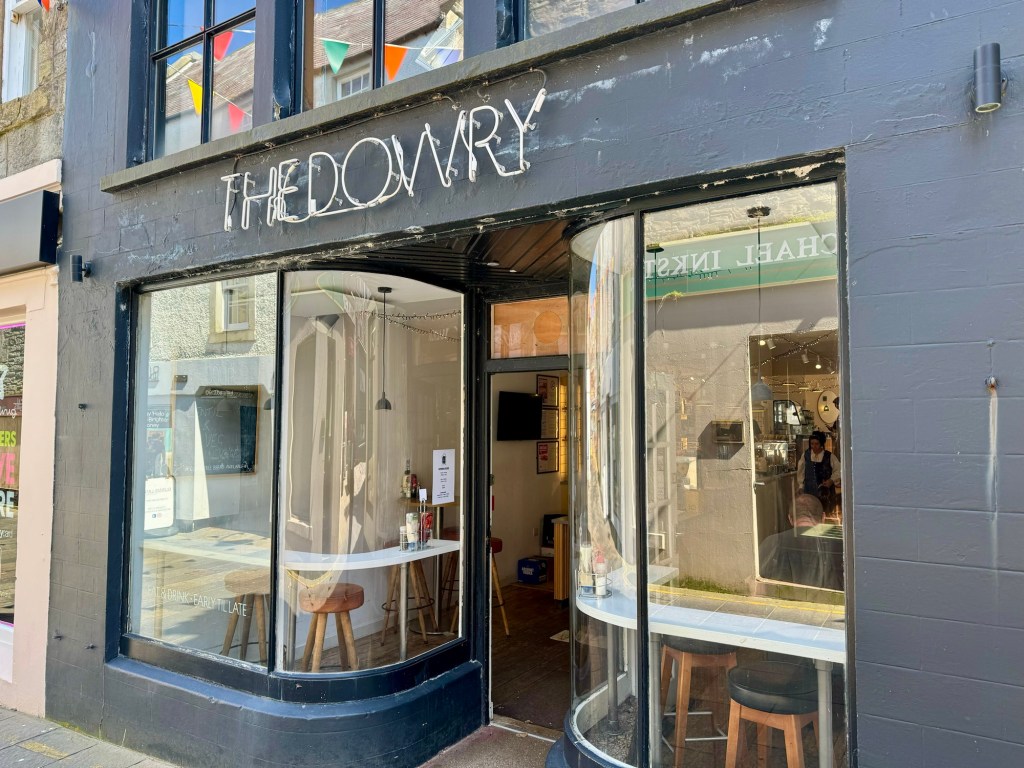
And The Dowry is pretty fine too, although the staff all seem to be under 18 and they talk to each other a lot. Why yes, I am old.

On my last full day, after relenting and finally buying sunscreen in Scotland for crying out loud, Drew, a local tour guide born and raised in Shetland, collected me at the airport after I dropped off my wee blue McRaggie. He drove me around parts of Mainland Shetland I hadn’t seen, including Brae and particularly Eshaness, which features unbelievable cliffs that have figured prominently in a certain show vis a vis someone plummeting to his death after being shot. We are also visiting this spot during the Wilderness Scotland trip, but who knows in what weather and also we’re doing a longer hike along the coast.

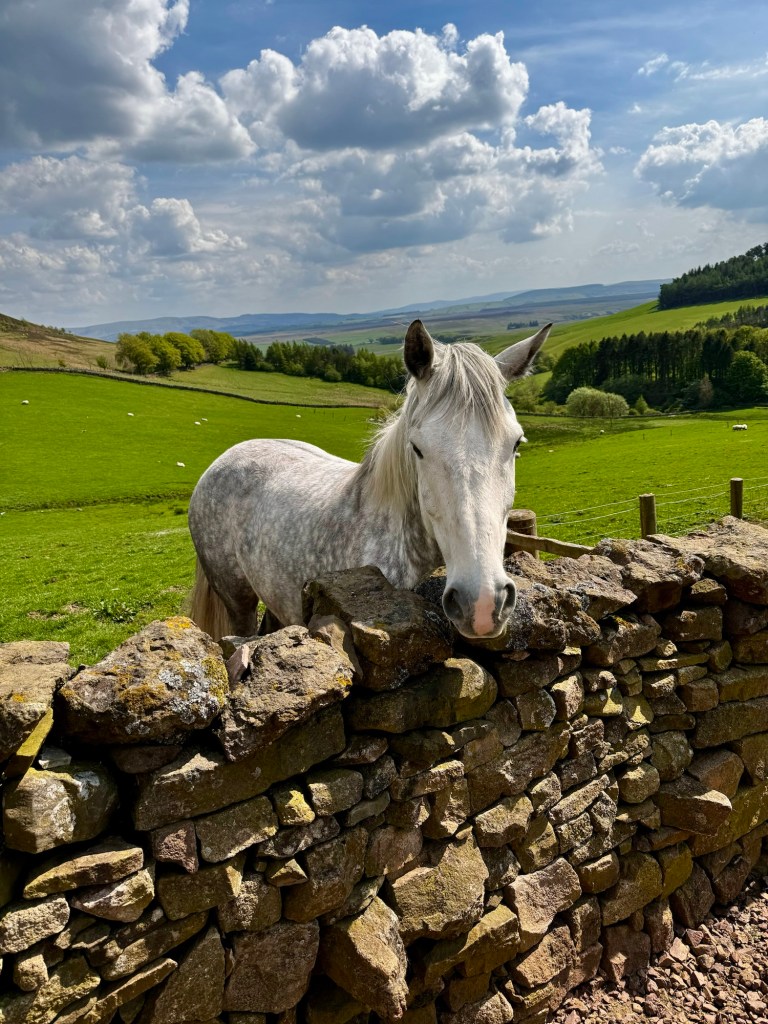
On the way to the cliffs we stopped in the middle of the road so I could pet Shetland ponies because I’m an American tourist.

This one particularly liked to have his butt scratched.

And here are the amazing cliffs.

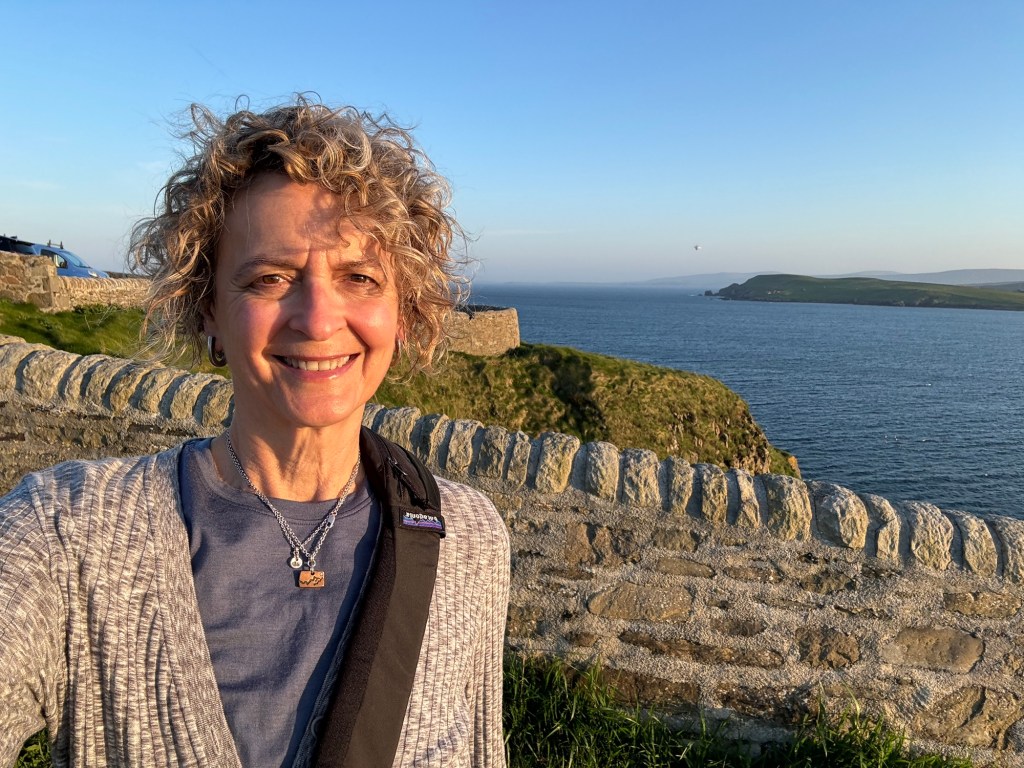
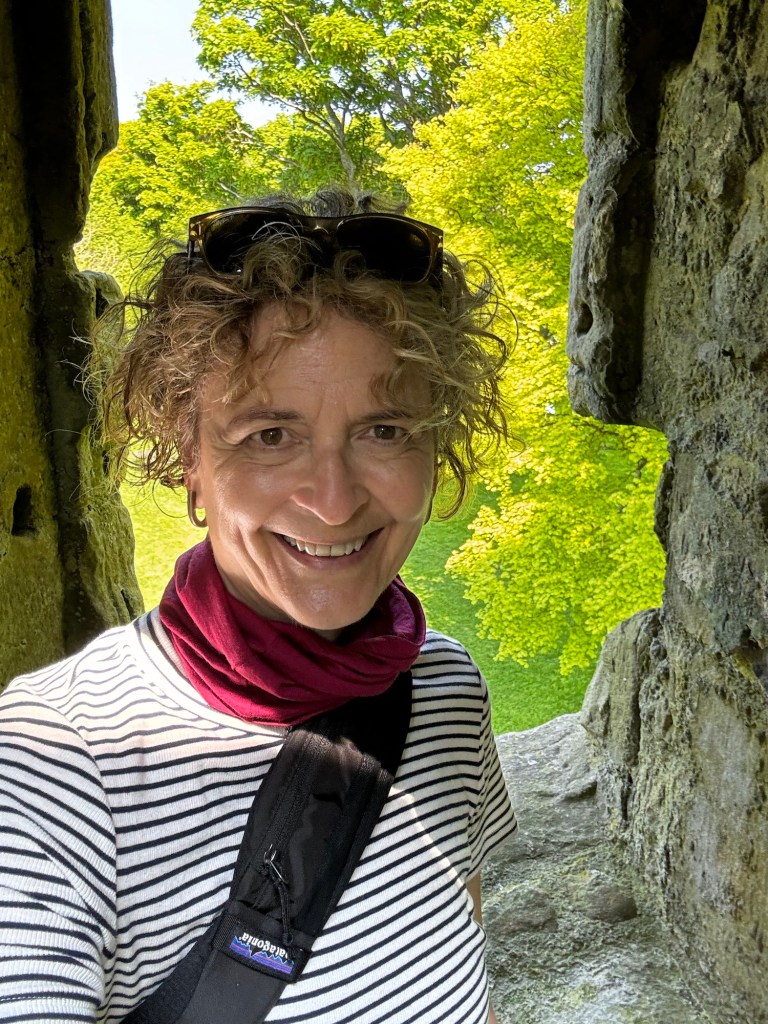
This is me standing in front of the amazing cliffs wearing one of the scarves I was forced to buy on the high street.

And this is Drew standing in front of the amazing cliffs being all Scottish with his headwear and beard.

Drew knew a lot about American politics so we had a great discussion about that particular shitshow and also British politics. He is excited for Labour to vanquish the Tories in the next election. He was himself a politician, serving on the Shetland Islands Council, and he pointed out a number of features in the area that he helped make happen. He also is very, very proud of Shetland the show. He pointed out a ruin on the side of the road that was used for Brian Cox’s home in one of the series, remarking that he appreciated how Brian, a born and bred Scot, “tried” to master the Shetland accent.

And now dear reader, not all was unicorns and rainbows on this tour. While Drew was a super interesting guy who clearly knows everyone on Shetland, he was also, shall we say, a confident driver. He spun his Rav-4 around corners and punched the accelerator like someone who was born here and happy to be driving a car with spectacular pick-up. Even sitting in the front seat, and as someone who isn’t necessarily prone to motion sickness, I got to the point where I couldn’t move my head and my voice was getting raspy. Did I say anything? Oh hell no because I’m FINE.

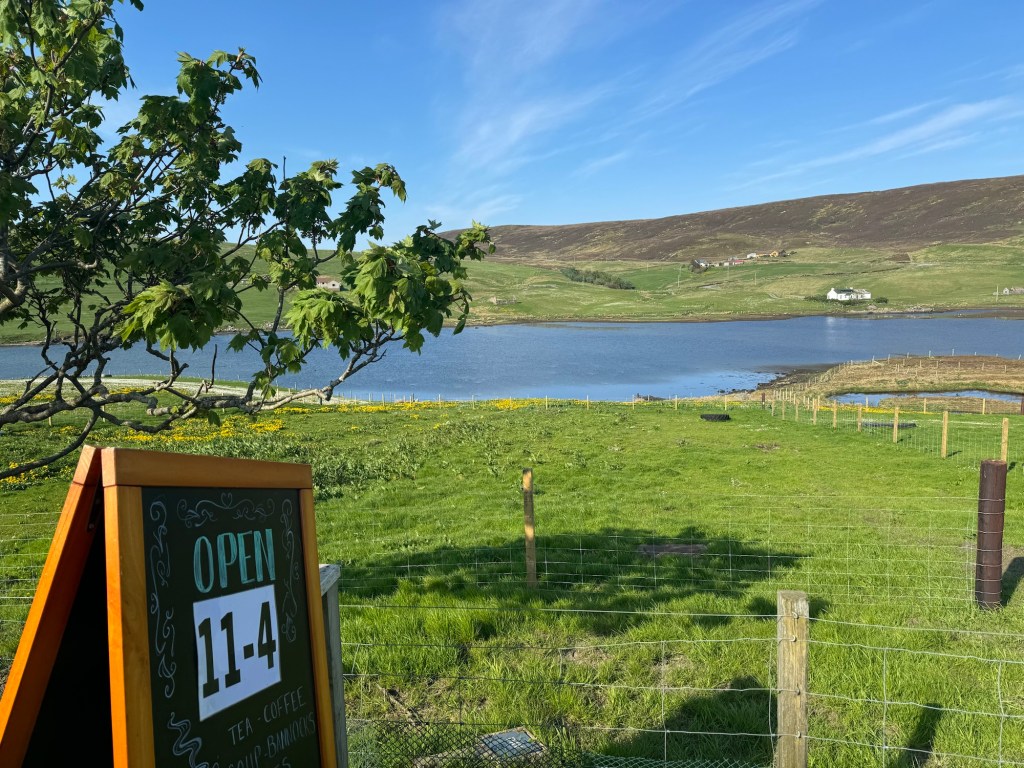
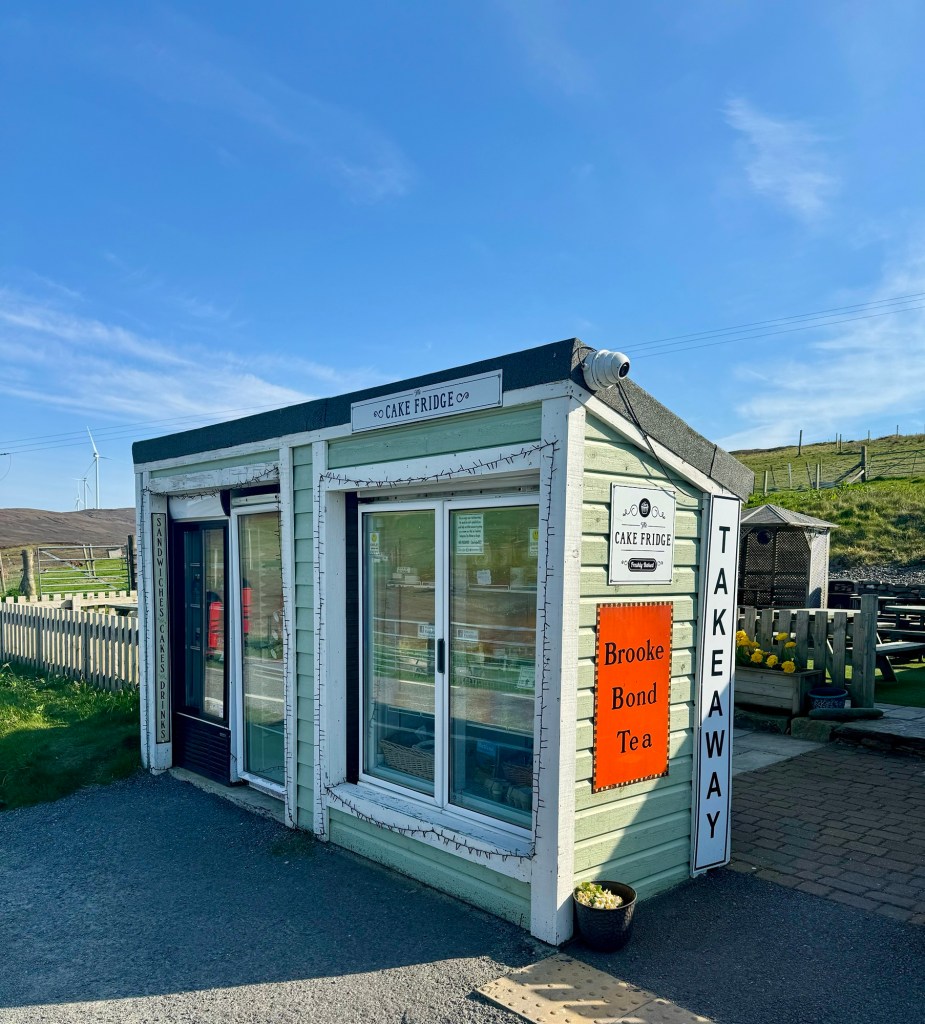
We stopped at the iconic Cake Fridge on the way back to Lerwick and I acquired a yummy something that would be eaten much, much later.

And that, my friends, is a wrap for the solo part of my journey for a while. Except for a little note – I just received an alert on my phone announcing there’s a good chance for Northern Lights in my location right now. Sadly, the sun doesn’t really go down here so it’s just salt on the wound.

Bye for now Lerwick.

Onward to Wilderness Scotland. Thanks for coming with me.

Shetland

We aren’t in Kansas anymore, my friends. In the best possible way.

Shetland (they must never be referenced as “the Shetlands” and only “the Shetland Isles” in case of dire emergency) is an archipelago of about 100 islands, 15 of them inhabited, located 130 miles north of the Scottish mainland and 400 miles south of the Arctic Circle. Shetland is, needless to say, the northernmost bit of the UK. The North Sea is off the east coast and the Atlantic off the west. More than 5,000 archaeological sites across Shetland provide evidence of human activity as far back as 4300 BC including the ubiquitous Picts from 300 AD. In the 7th century missionaries from Ireland or western Scotland began converting the previously (and gloriously) pagan population to Christianity only to have the place invaded by Vikings in the 8th and 9th centuries. They ruled the islands until the 15th century and the Norse influence is still strong in Shetland.

On September 8, 1468 the islands were mortgaged to Scotland for 8,000 florins as part of the marriage agreement between the future James III and Princess Margaret of Denmark. Fun fact, Margaret was only 13 at the time of their marriage at Holyrood in Edinburgh. In 1492 the Scots annexed both Shetland and Orkney.

In Shetland you are never more than 3 miles from the sea, and it’s nearer to Bergen, Norway than it is to Aberdeen. It’s at the same 60 degrees north latitude as Anchorage.

First of all, let me say that dropping off a rental car at Edinburgh airport is a pleasure and a breeze. Of course I had allotted too much time, so ended up in the airport for way longer than was strictly necessary. Luckily it’s a fun place! The duty-free has an incredible collection of whisky, for one. Even some pricey behind-glass bottles. The woman doing a tasting told me that distilleries make bottles you can only get in duty-free which was a heretofore unknown whisky fact.

Shared this with whisky-loving friends and told each that I bought them bottle.

Also, remember the AirPods story from earlier in this blog? Well, in the couple of hours I spent at the Edinburgh airport, I saw nary a pod. So not as important in Scotland maybe because people talk to each other and listen to their surroundings?

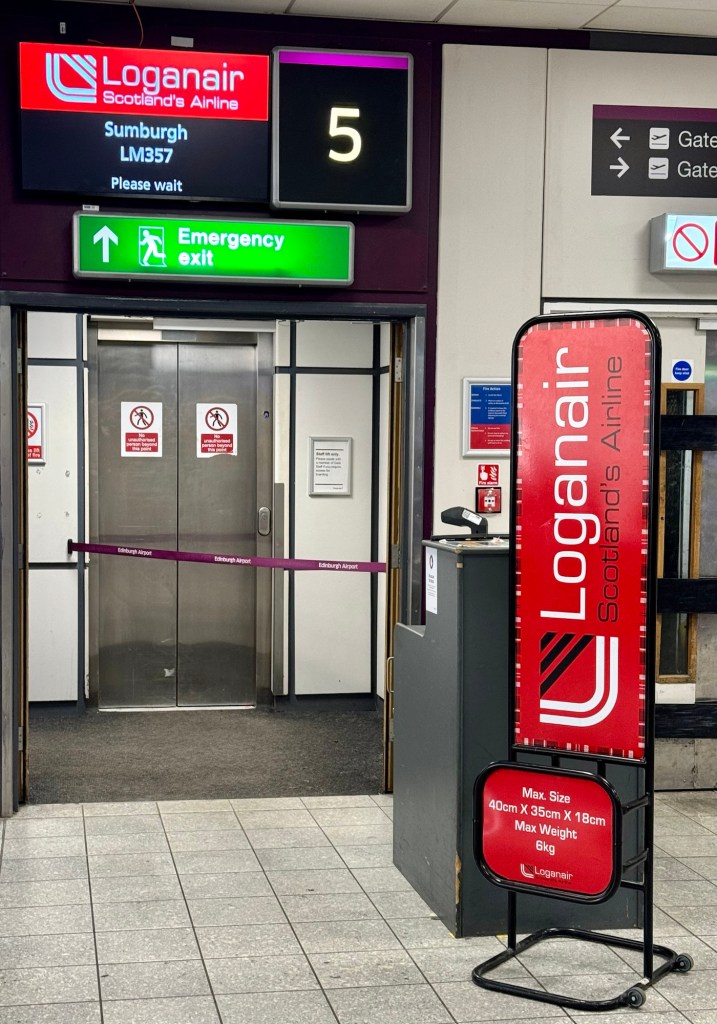
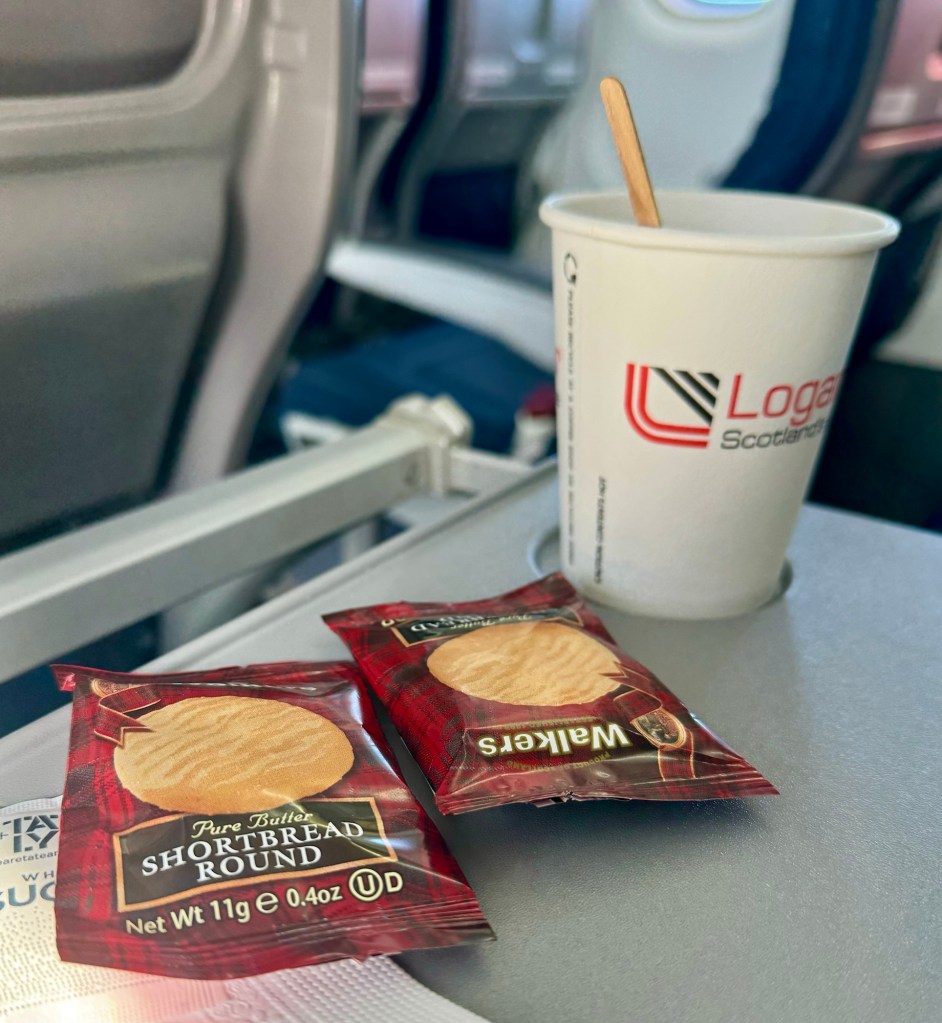
My hour-long flight to Sumburgh was delightfully uneventful. A prop plane! The Loganair planes are decorated appropriately, shortbread is served, flight attendants wear plaid vests, and each seat has a different bit of plaid as a headrest.

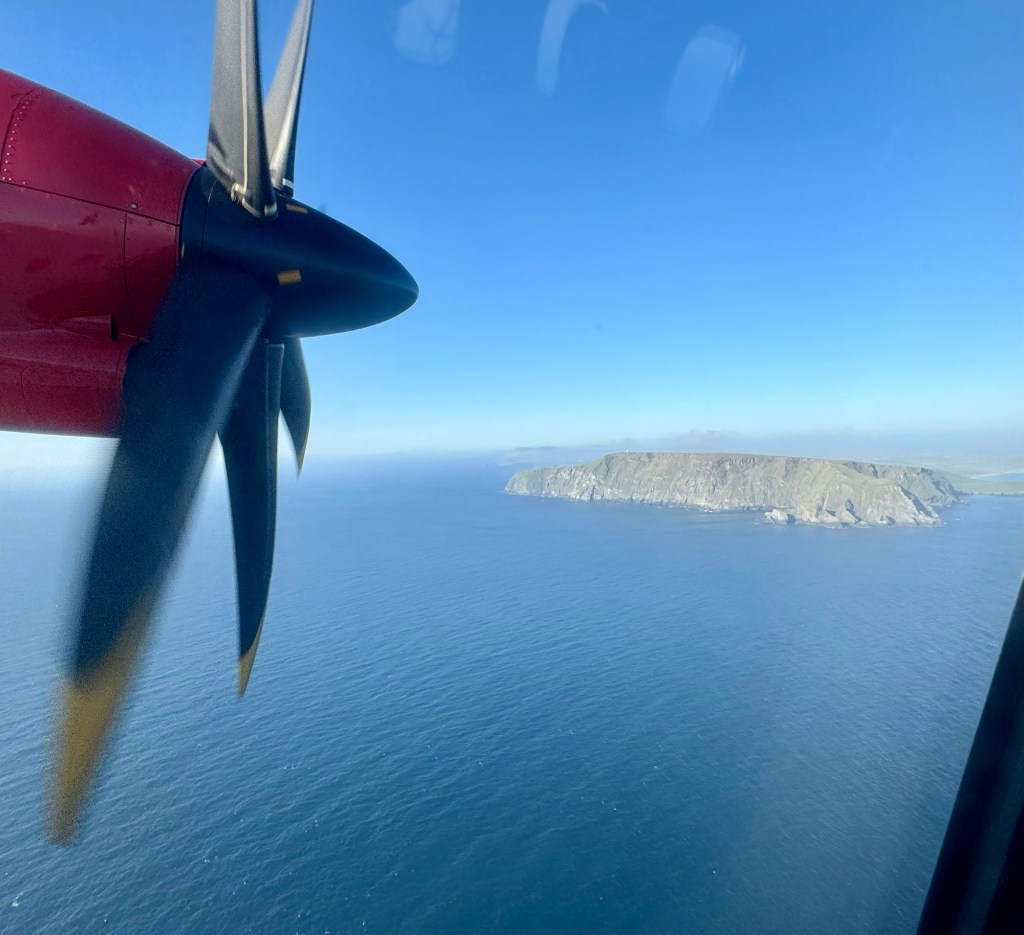
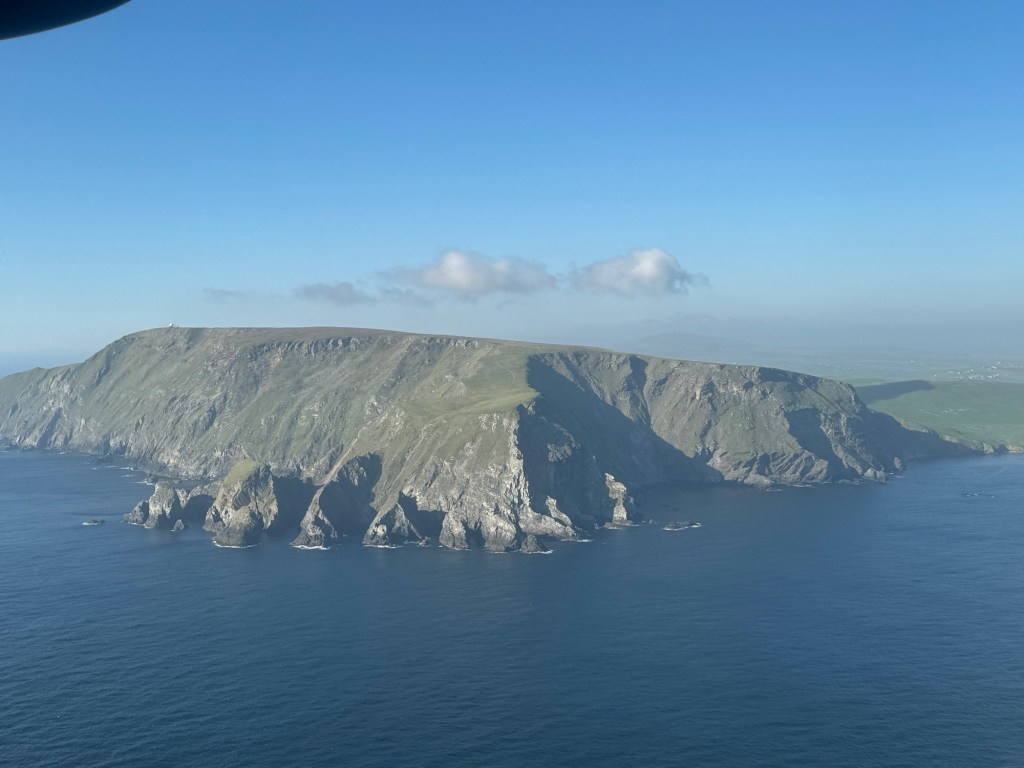
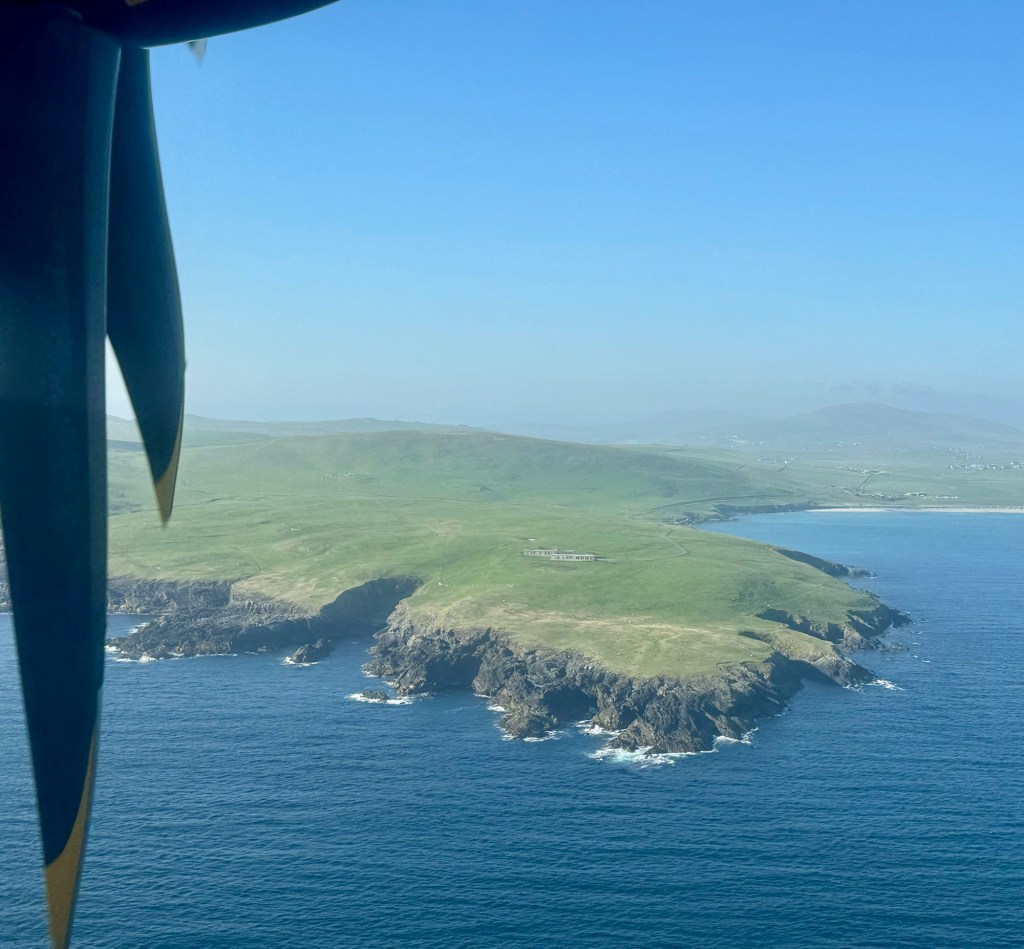
It was a ridiculously gorgeous day. Flying into Sumburgh you do wonder whether you might land in the actual ocean.

Sumburgh is a teensy airport and it took me a minute to adjust to the mellow vibe. There were two rental car windows, one for Bolt and one for Europcar. I didn’t see an Avis window. Dang! Moment of panic. Finally realized that next to the Bolt window there’s a typewritten sign that you have to squint to read saying they also handle Avis rentals. OK whew.

I arrive at the window ready to hear the overexplaining of all the things, like purchasing an excess damage waiver, a two hundred pound deposit plus a hold on your credit card for the full rental price, if I get a ticket I’m responsible, yadda yadda. Nope. I filled out a piece of paper that someone had typed up and xeroxed, was handed a one-page printed contract to sign in various places, and then the guy handed me a key, saying that I should just drop it down a hole in the counter when I returned the car. He told me where the parking lot was and shifted to the next customer. No car inspection, no checking the mileage, just here’s the key, the car is back there, kthxbai.

So I dragged my luggage out into the parking lot and looked dejectedly at a sea of cars. No numbered spaces, no rental company signs, just a garden variety parking lot. I clicked the key fob hopefully, alas to no avail. Another couple who had just located their car kindly helped me find mine. The only clues you have are the license plate number and the model of the car.

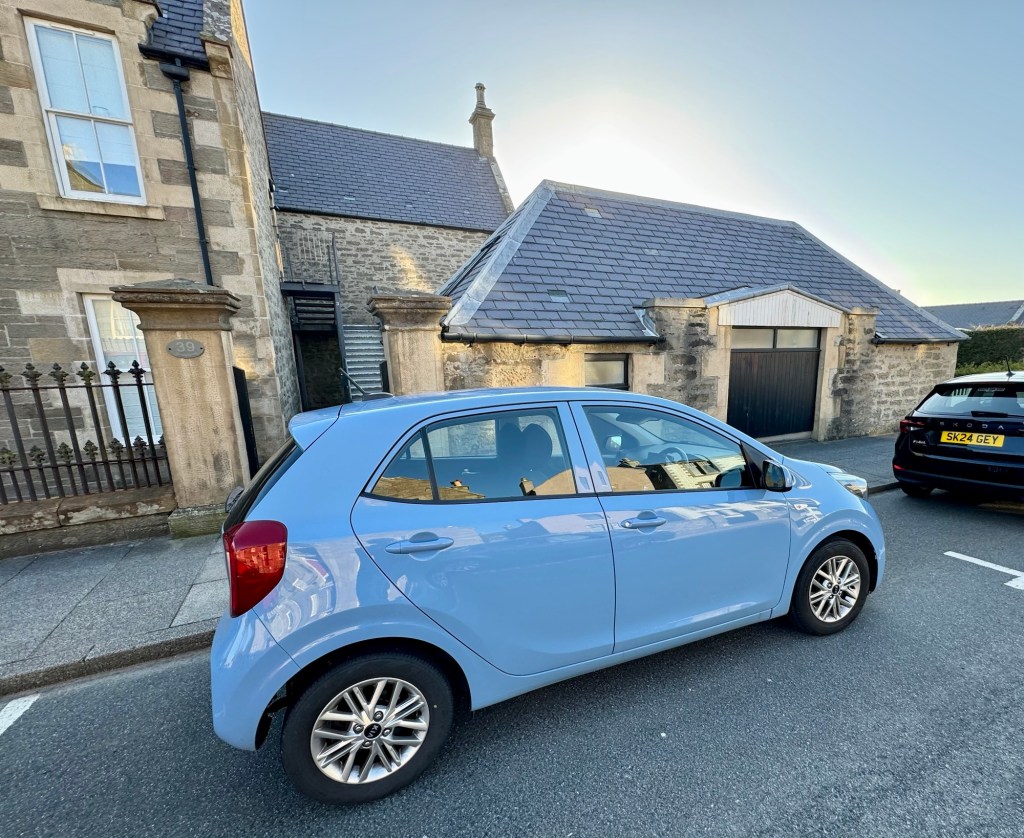
I rented a teensy little dude, a Kia Picante, and it was fairly analog. No screen on the inside so you have to hold your phone in your hand while navigating. No backup camera. You use your key like a key, sticking it in the ignition like in olden times. BUT THERE WAS ENTRANCE MUSIC so I was good.

My wee McRaggie Kia parked in front of the AirBnB

I drove twenty minutes from the airport to Lerwick. Roads mainly deserted, the sea was everywhere, and not a single tree. It’s a sparse and evocative landscape.

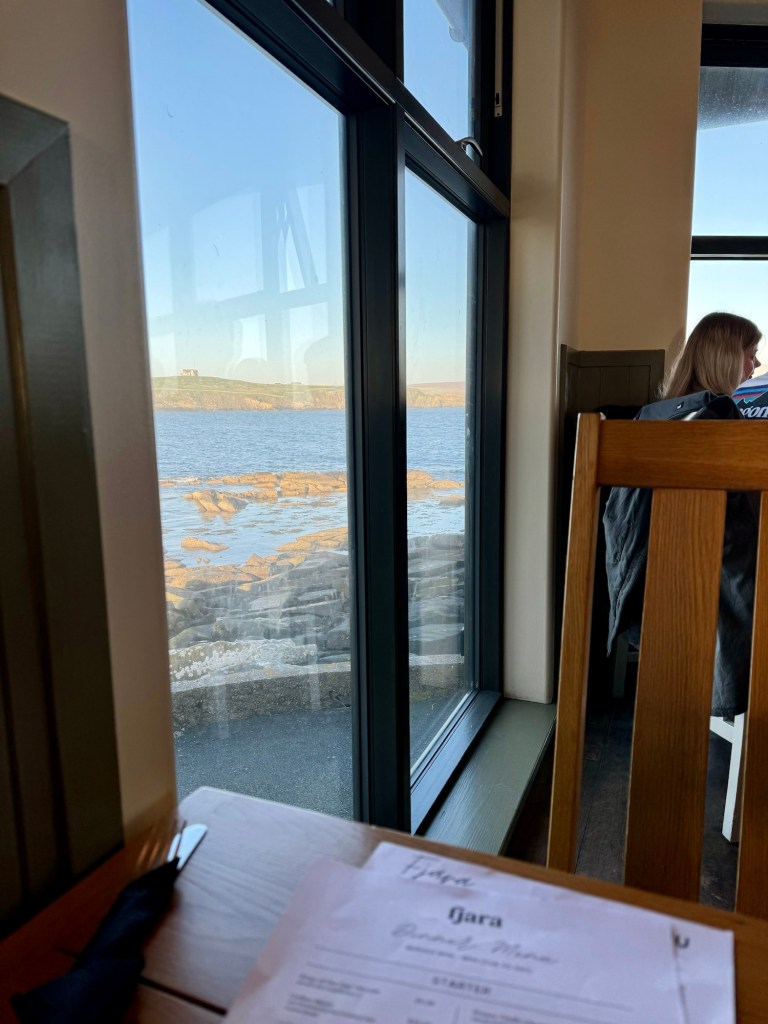
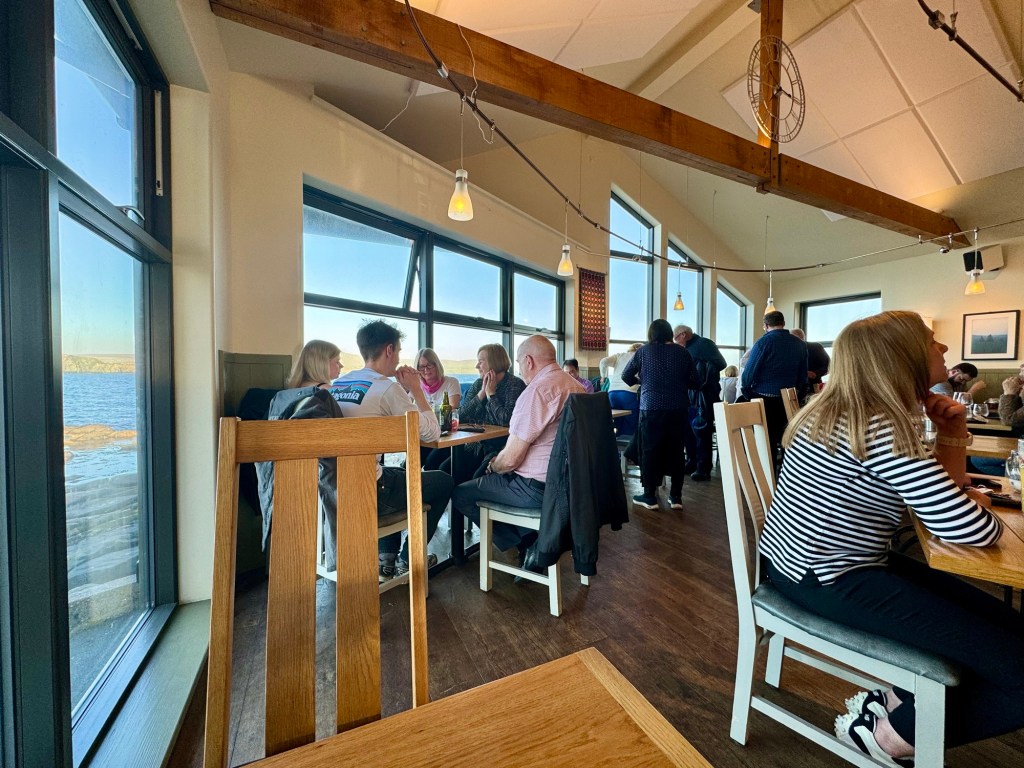
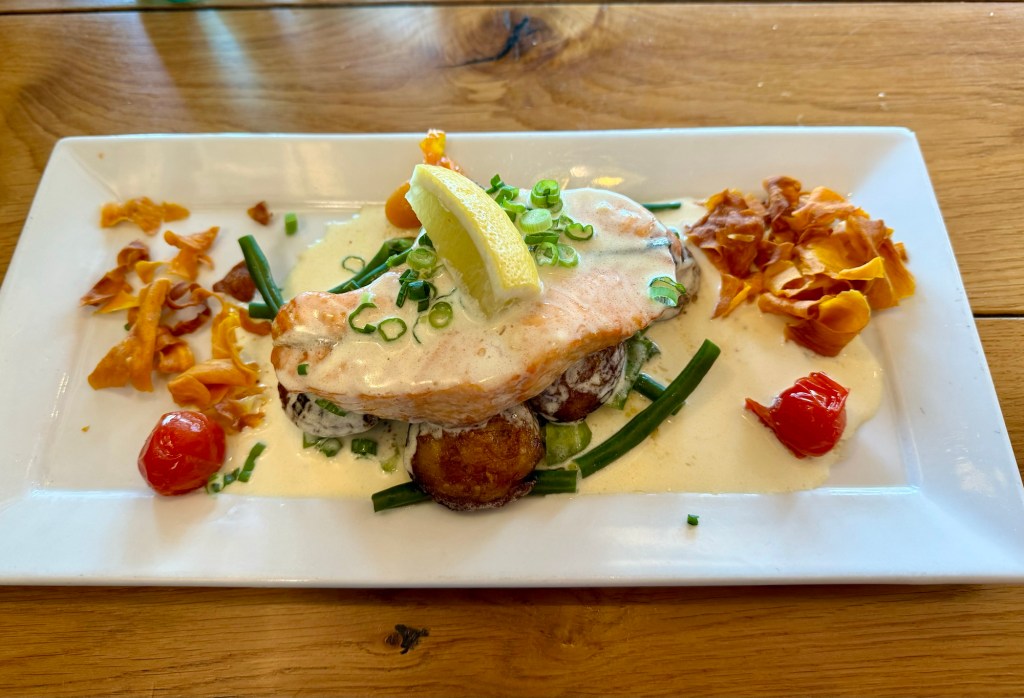
I successfully checked into my cute little Airbnb after an initial panic caused by being too dumb to operate a keypad, and drove to dinner at a gorgeous restaurant called Fjara, with spectacular sea views. The best Cullen skink I’ve had yet, and some incredible Shetland salmon.

View from my table

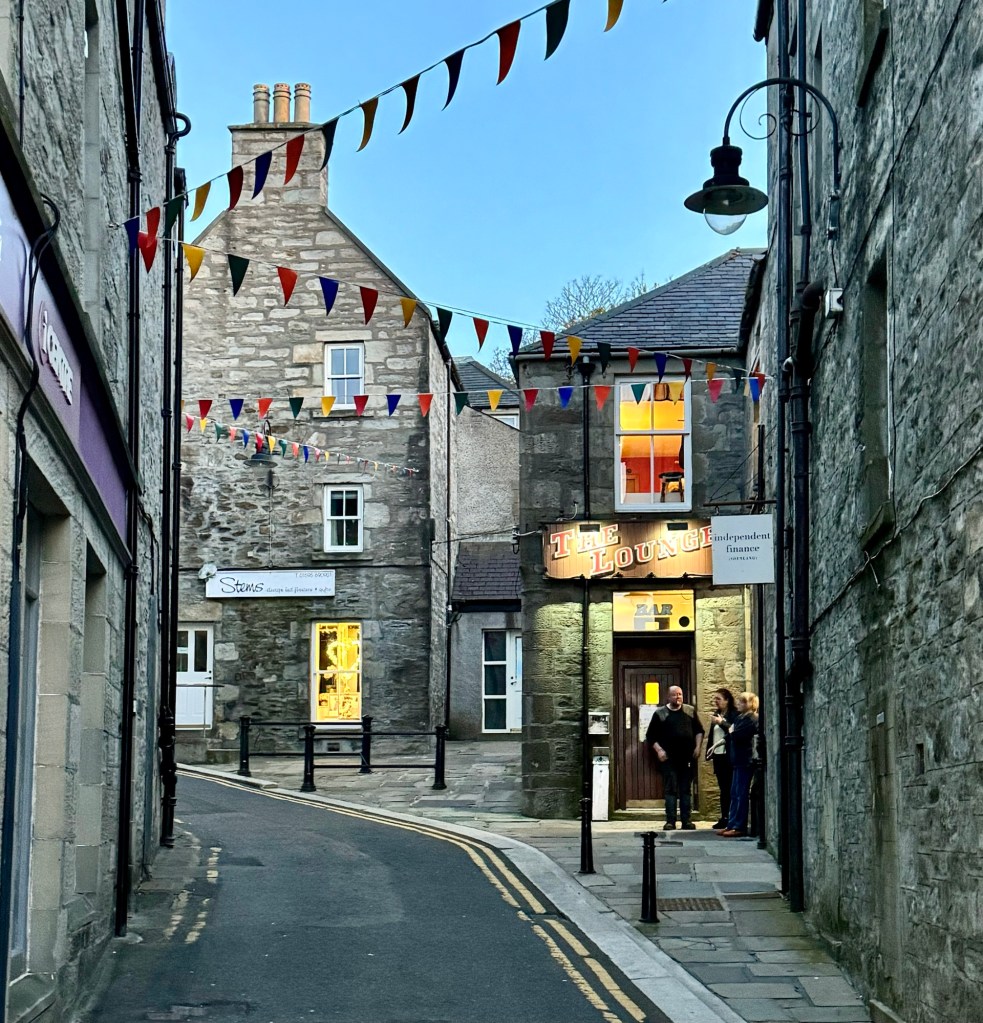
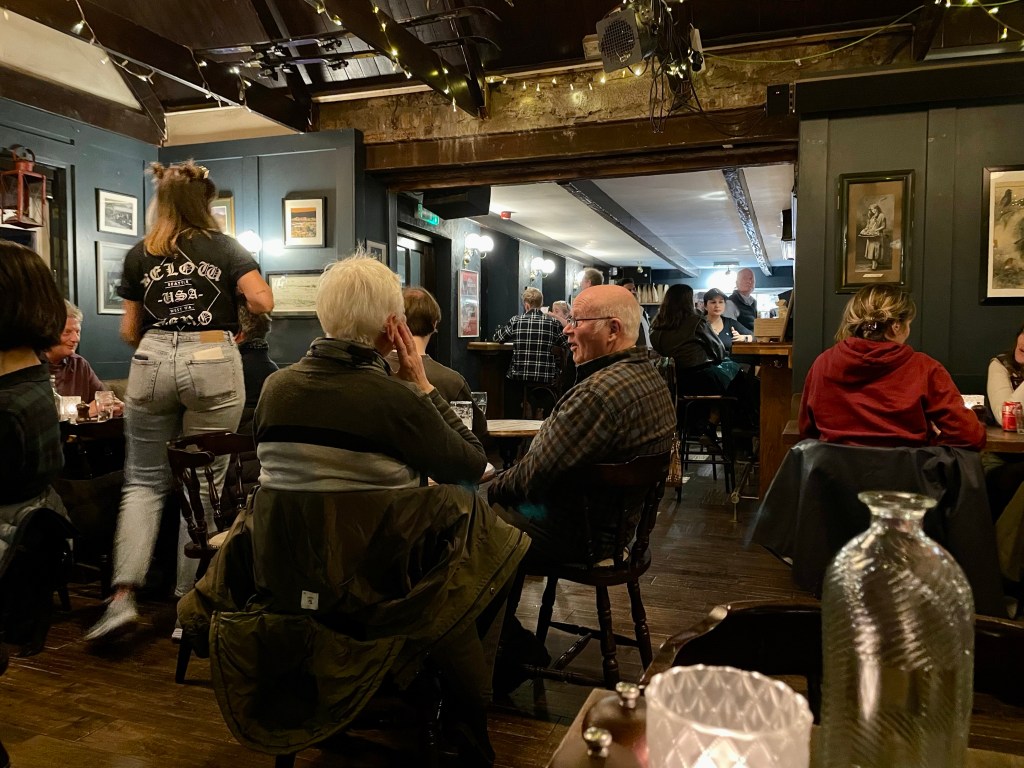
After dinner, around 9:30, it was still light so I walked around town. The high street is down by Lerwick Harbor, with the town rising on a hill behind. Many charming sloping alleyways, some with steep steps, provide access to Commercial Street, known locally as “Da Street.” Like magic, as I descended, I heard music. And lo, as I rounded the corner I saw the iconic pub in the Shetland TV series called The Lounge. The sleaziest possible name and yet the most brilliant pub.

Apologies, I am no DP.

The Lounge is a legend. Live music, locals, friendly, cheap and fabulous. The trad pick-up band was unusual in that it included three accordionists and a piano. They were great.

After a wee dram I visited the house where Jimmy Perez lives in the series, strolled around Da Street and snapped a few photos.

An inter-island ferry arrives
Jimmy’s house, built in the 1700s.
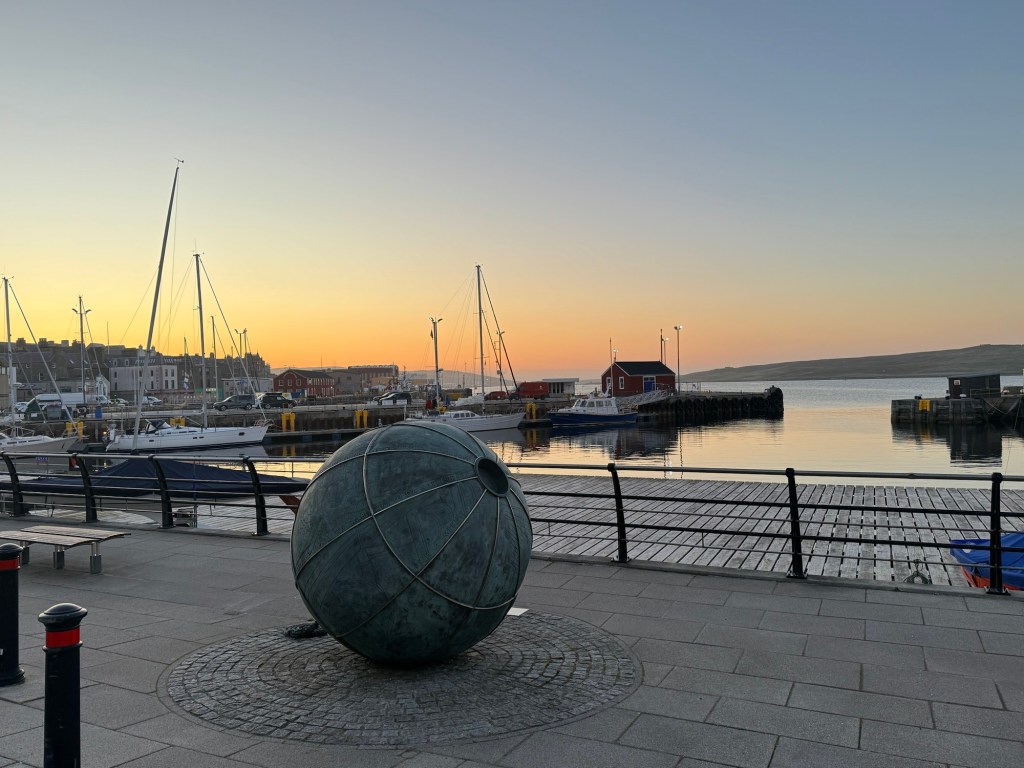
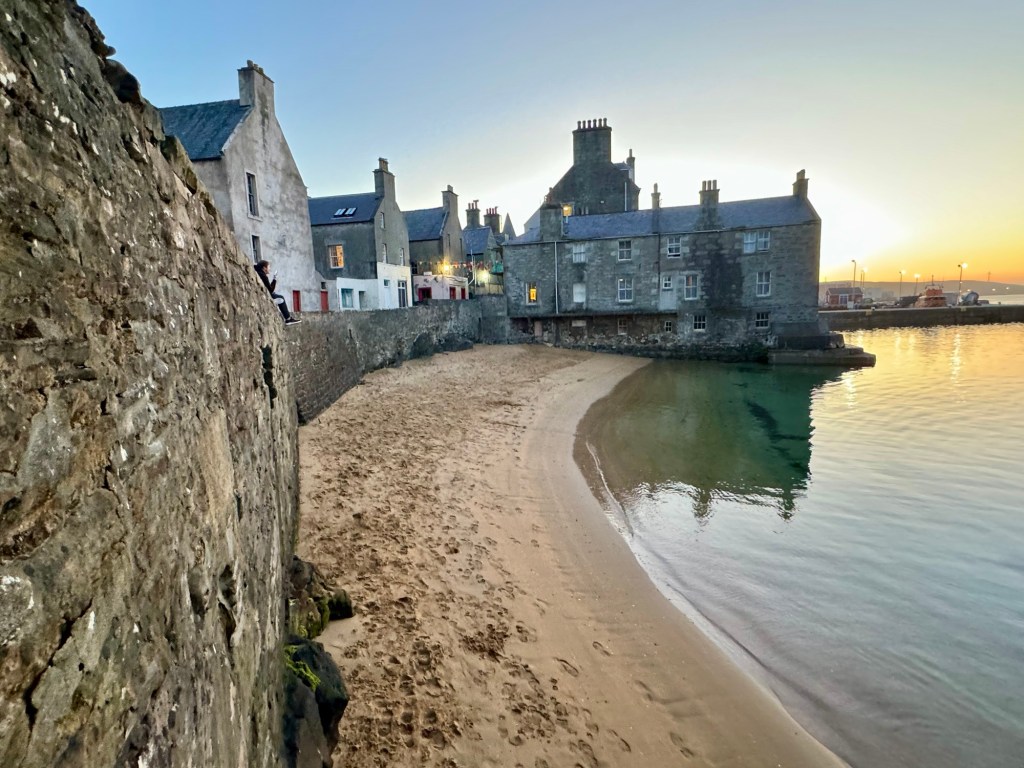
Bain’s Beach, where characters in the show have many deep conversations while gazing into the harbor.

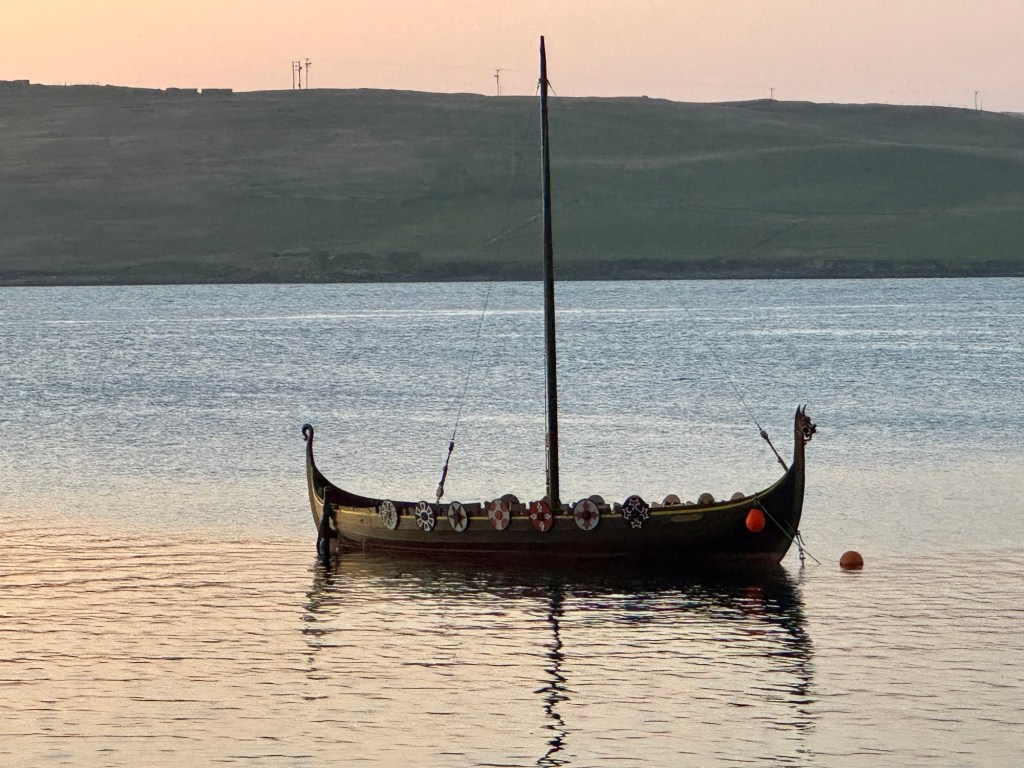
To top it all off, a Viking longship was anchored offshore.

Immediately quite taken with this place.

Lothian and The Borders: Castles, Abbeys, Best and Happiest Towns, Bruce’s Heart, Walter Scott’s Crib and Roadside Attractions

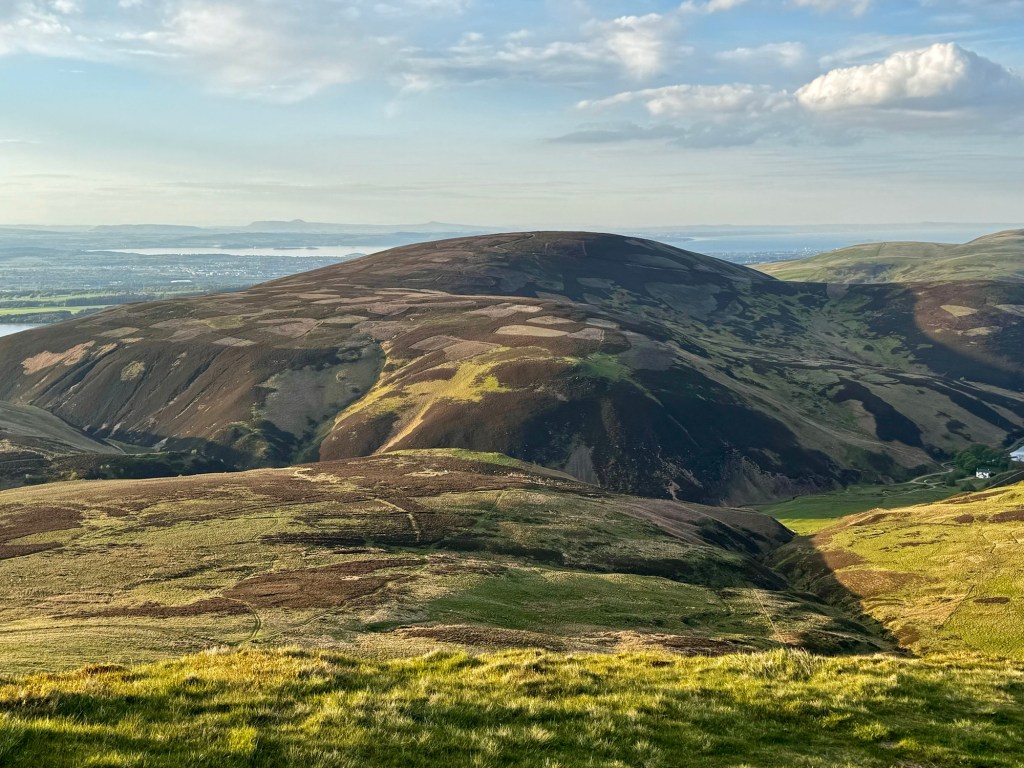
View from my abode at Eastside Cottages, Pentland Hills

On my way from Stirling to the Pentland Hills south of Edinburgh, I made a few stops to break up the brutally long 57 minute drive.

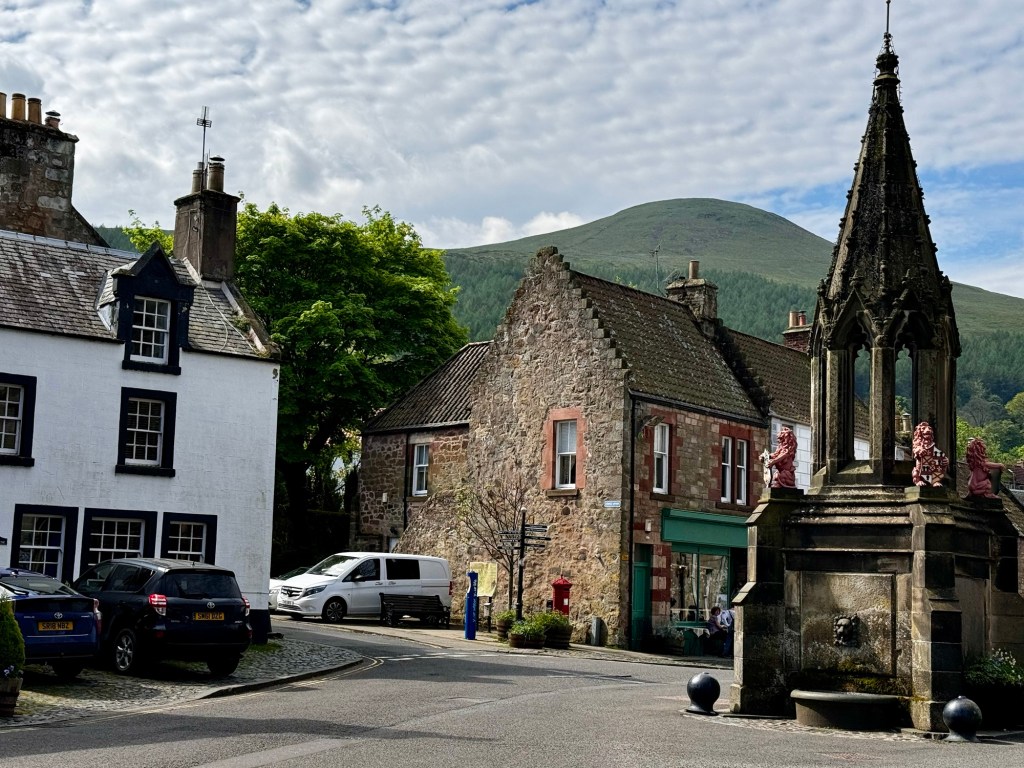
First was the picturesque little town of Falkland, a haven for Outlander film locations. Not only the town itself but also Falkland Palace, which was the Stuart Family’s Balmoral Castle in the 1600s.

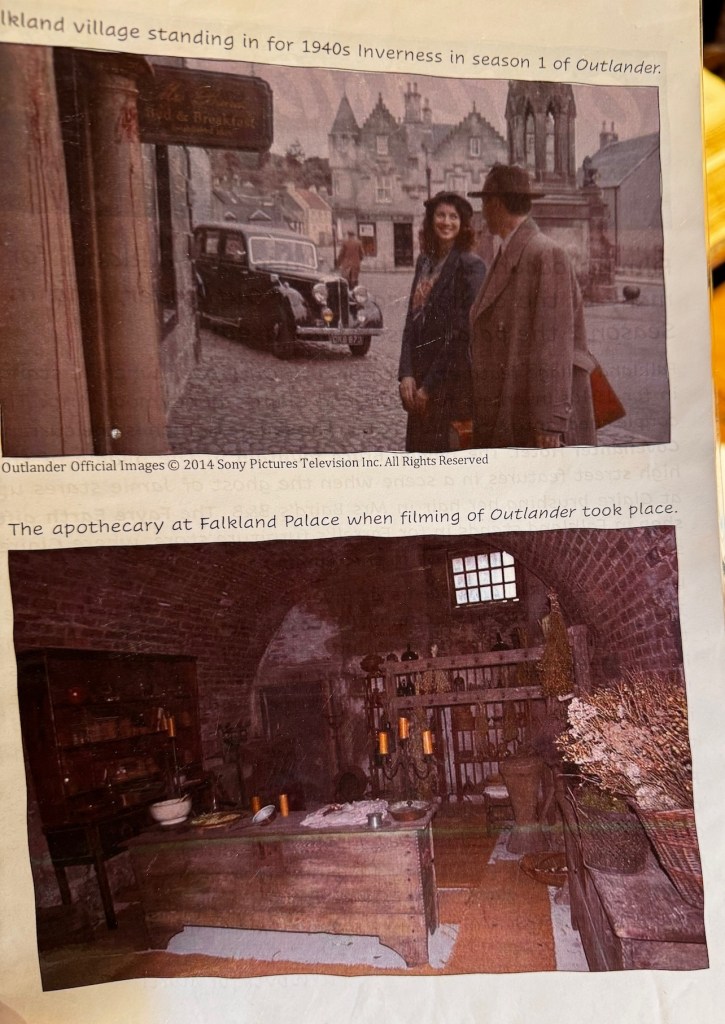
First, let’s do Outlander so you can roll your eyes and get it over with. Falkland was the main shooting location for Inverness because it looks more like how one imagines Inverness than Inverness itself.

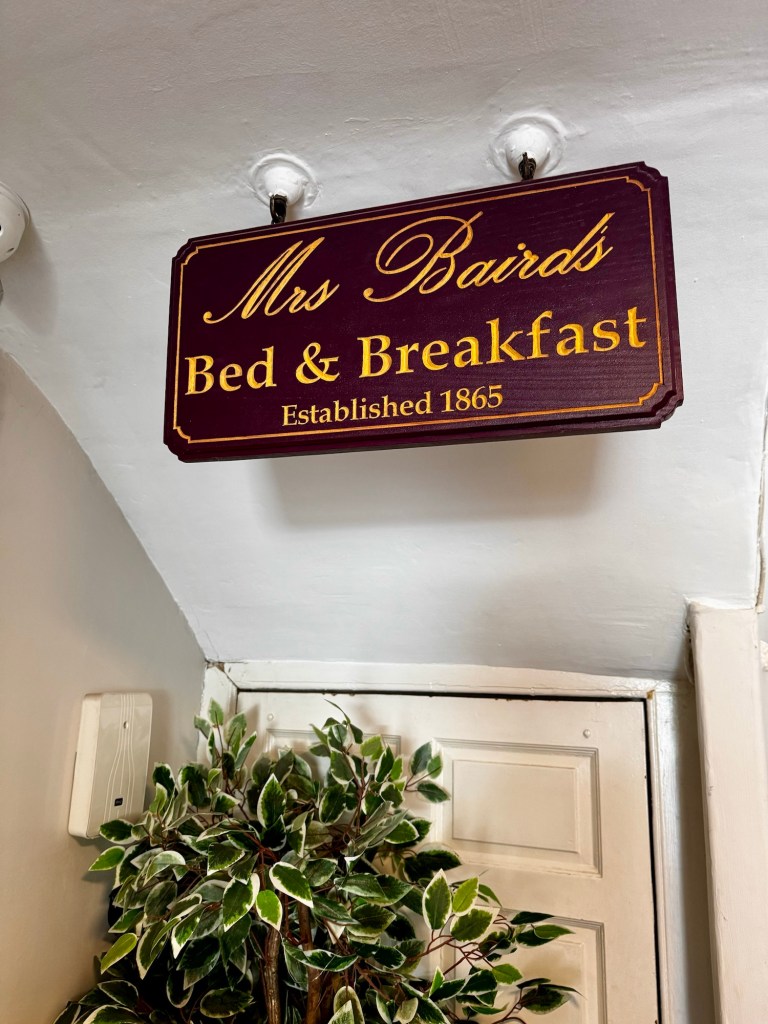
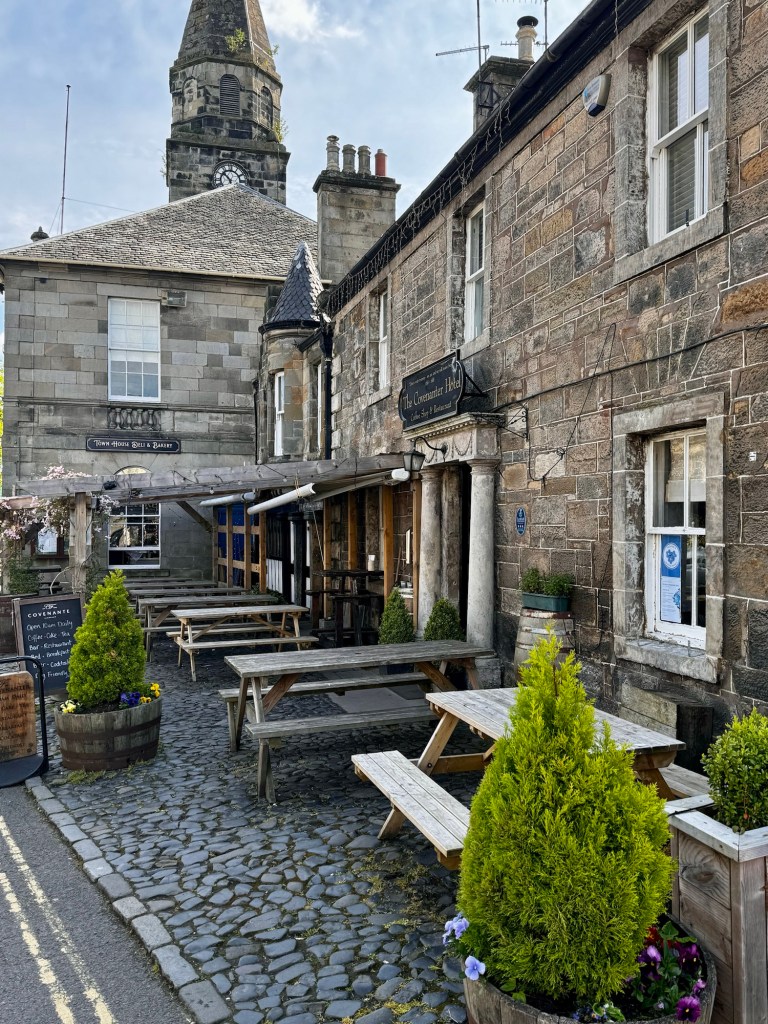
As many of you know, Claire and Frank, after the end of World War II, took a second honeymoon to Scotland and stayed at Mrs. Baird’s Bed & Breakfast, which was shot at the Covenanter Hotel. They display the sign used in the show inside. You will recognize other spots below.

I mean why not take advantage.
The window where Claire saw the blue vase.
One of the most romantic scenes ever. And it was just a kilted Highlander from the 1700s watching a woman in the post-war 1940s brush her hair in an upstairs window. In the rain.
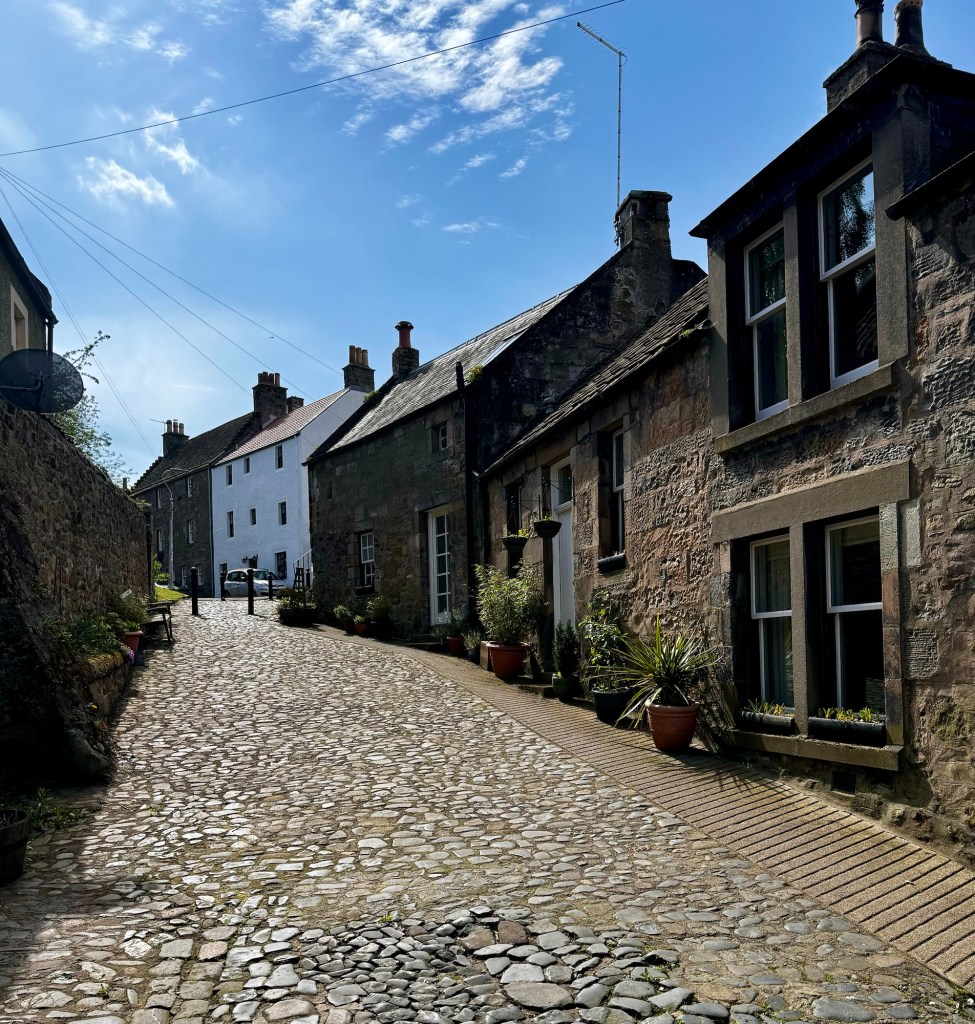
Claire and Murtagh walked down this street after visiting an ill Alexander Randall.
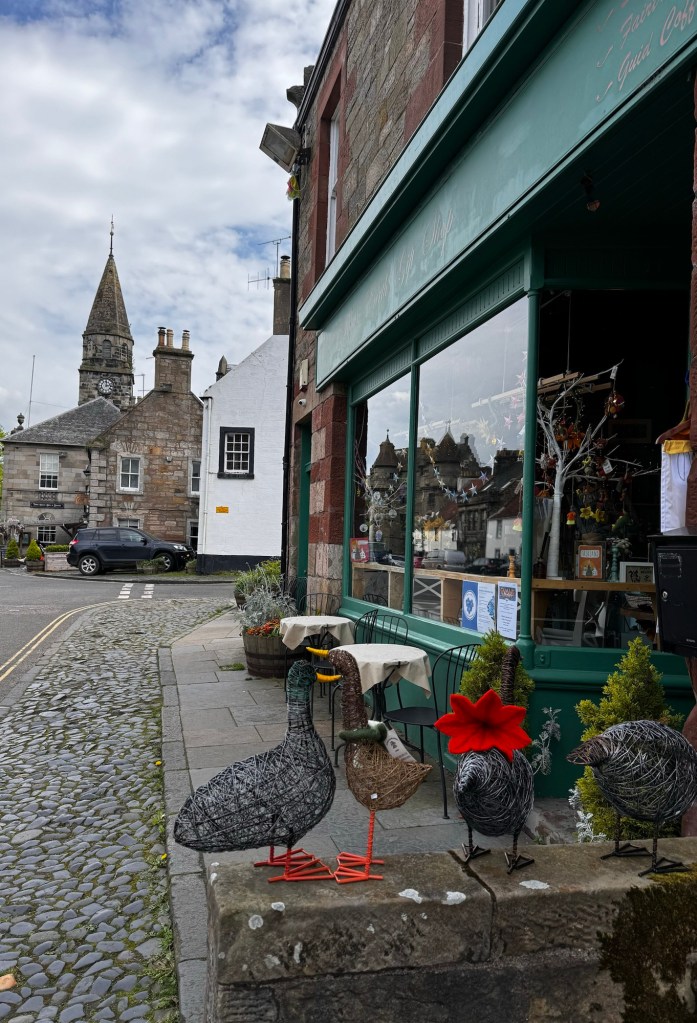
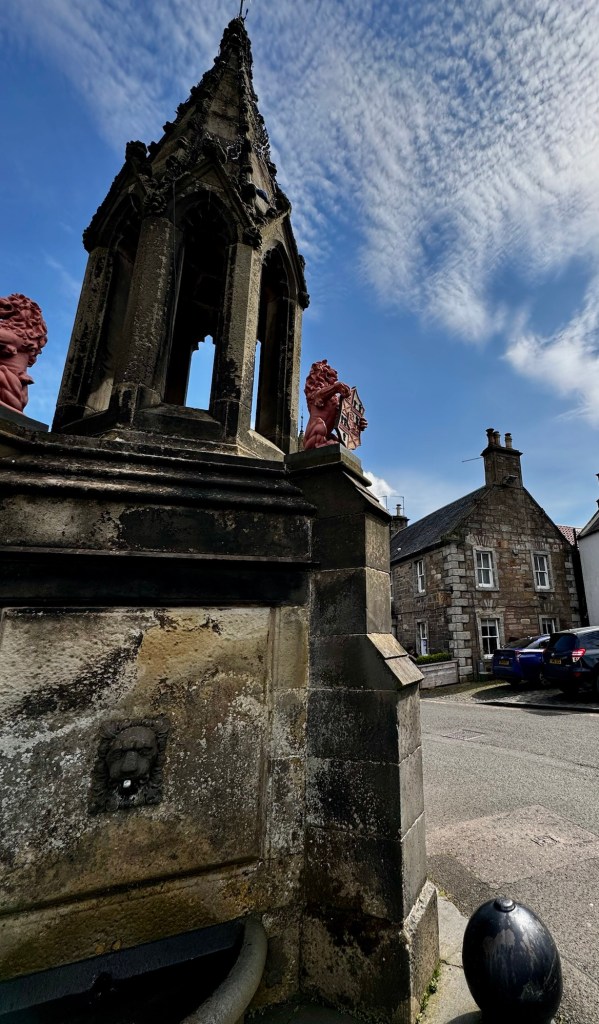
It’s a gorgeous little town, Falkland, Outlander aside.

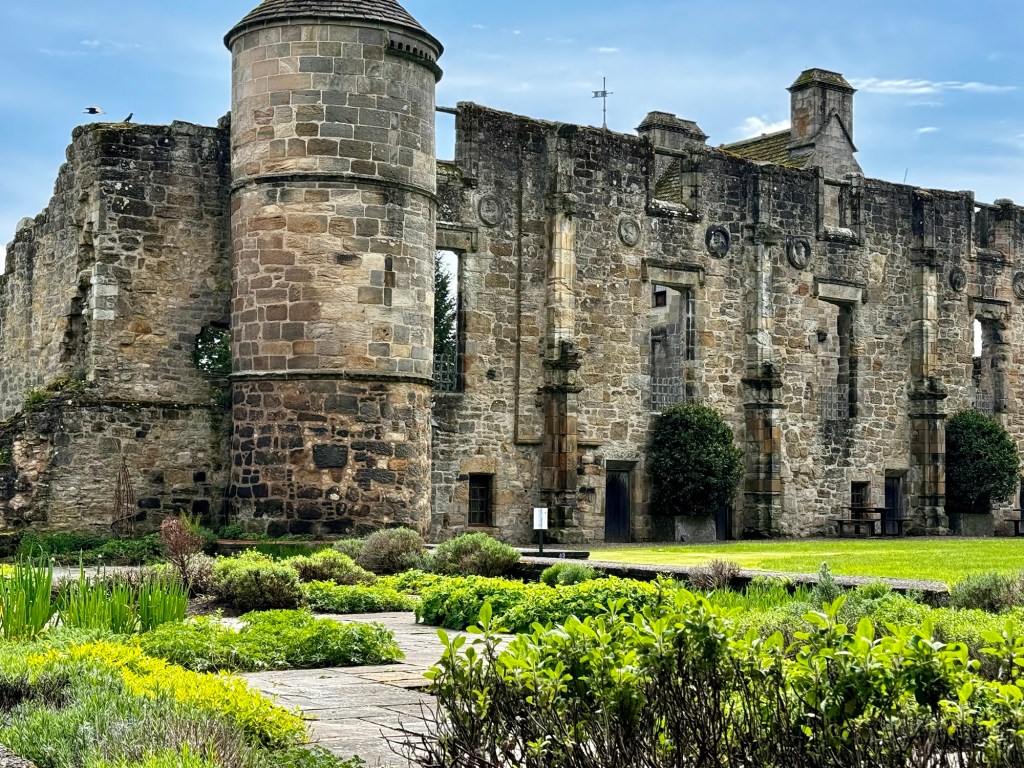
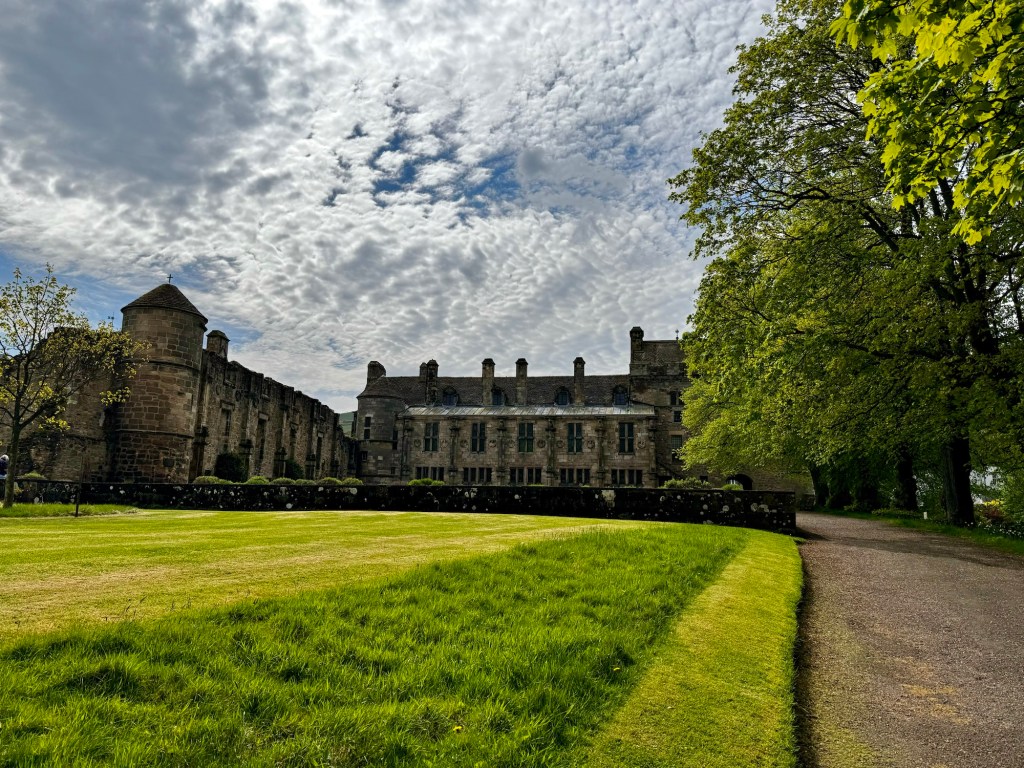
And now to Falkland Palace, which is right in the center of town. Built in the thirteen century, James I (of Scotland) took possession of it for the crown two centuries later, after which it became a popular retreat for all the Stuart monarchs. This was one of Mary QOS’s favorite spots to get away from it all.

Falkland Palace

The palace is quite enchanting, and you’ll find the oldest tennis court in the UK on its grounds, built by James V in 1538 – and Mary, an accomplished athlete, often played here. Tennis was originally played by French monks before it became popular with nobility. The word comes from the French word tenez, or “hold on,” the warning that was shouted before every serve. (Let’s bring that back, shall we?) The game had different rules then, it was actually much more complicated – you can see a series of lines, numbers and crowns marked on the floor and walls, which were all used to calculate scores. All four walls and the roof of the spectator’s gallery were used (making it literally a dangerous spectator sport) plus players got extra points if they hit a ball through a hole in the wall. Also a servant would serve to avoid the fancy people having to bend their bodies in their ridiculous restrictive clothing. Mary QOS played in breeches for this reason – badass that she was.

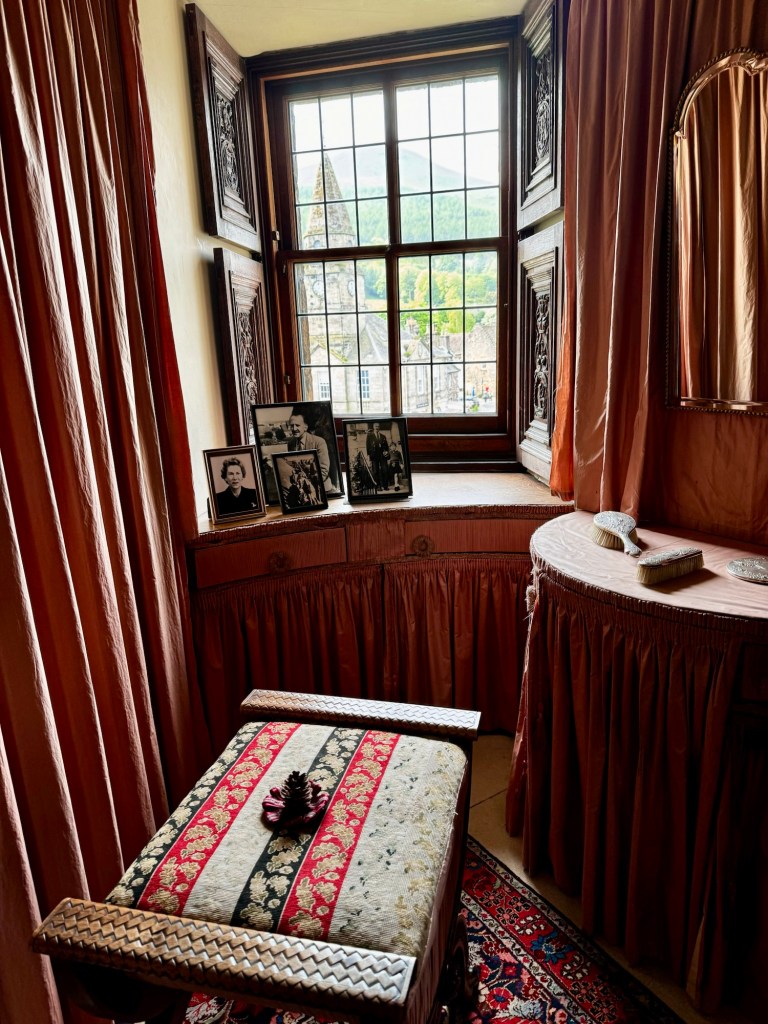
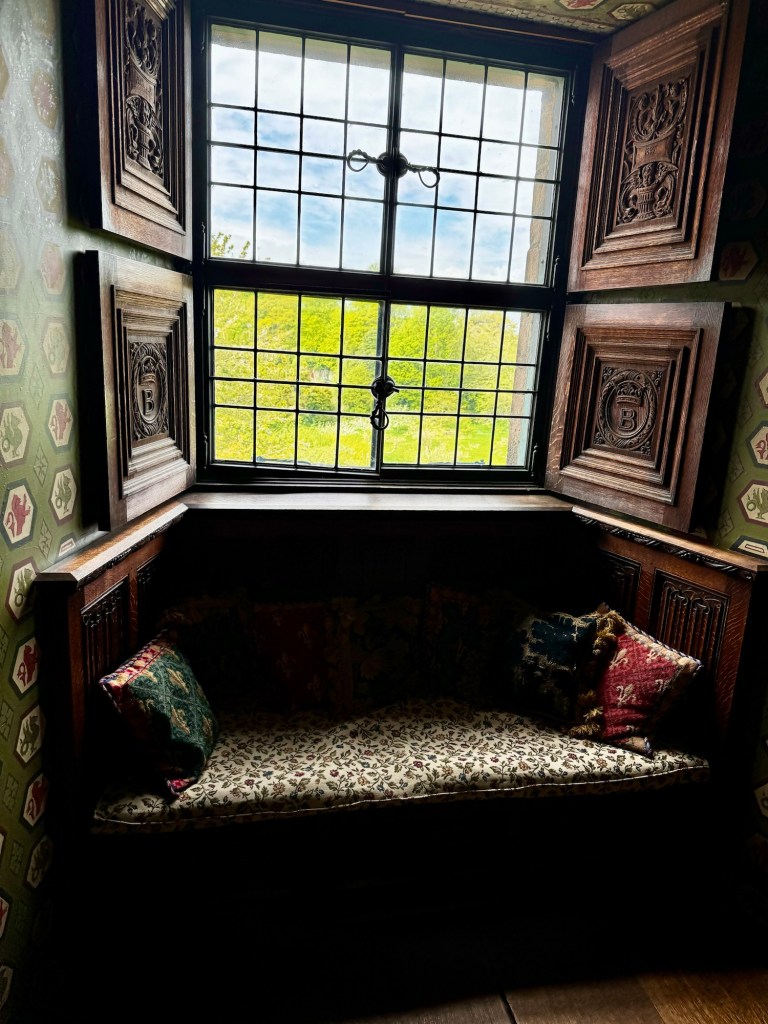
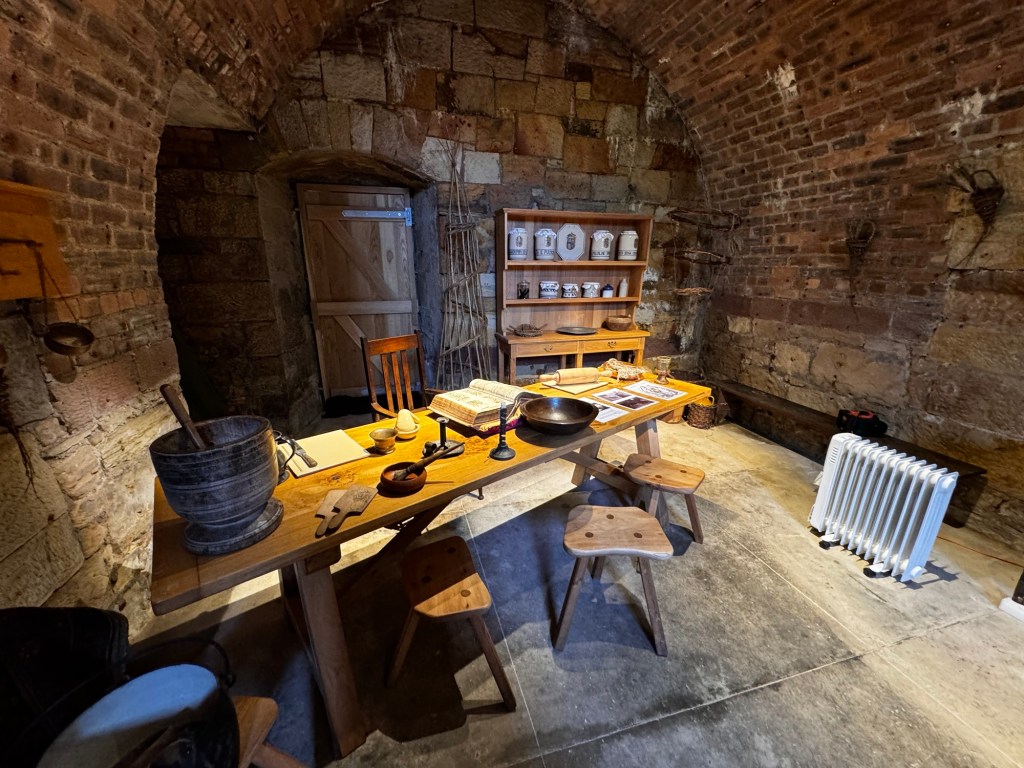
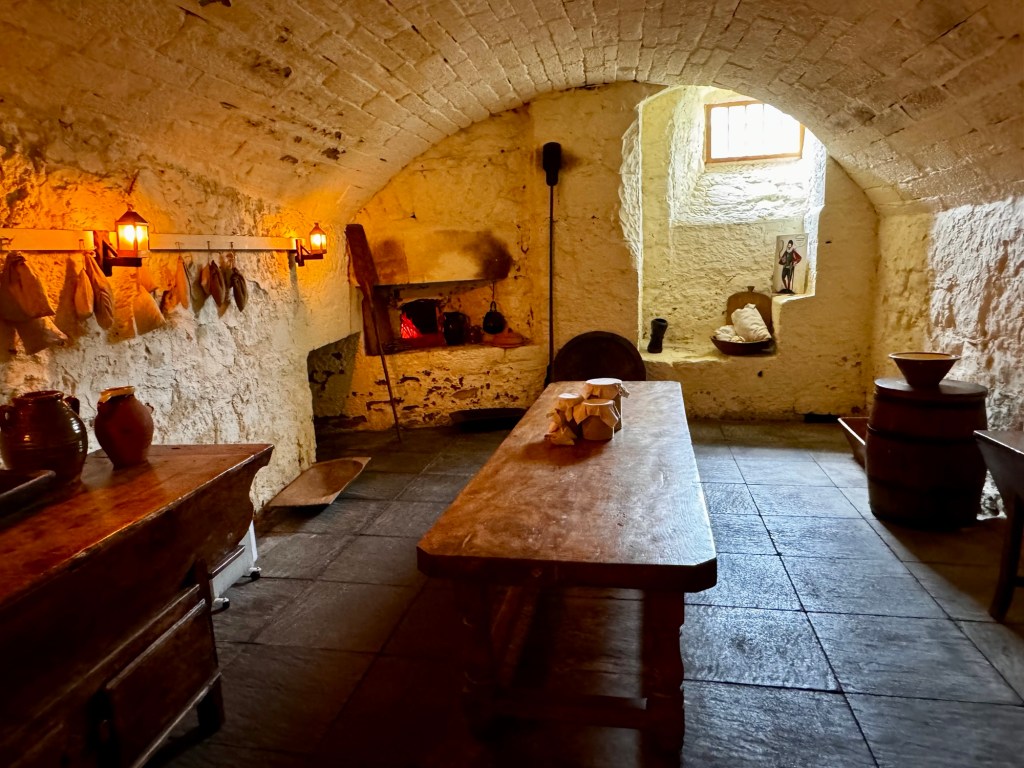
A couple of lovely nooks inside the Palace.

There’s one minor Outlander shooting location inside the Palace. The apothecary scene where Claire sees Mary Hawkins buying laudanum for Alex Randall is there, and the castle has kept the location roughly as it was during filming because why wouldn’t you.

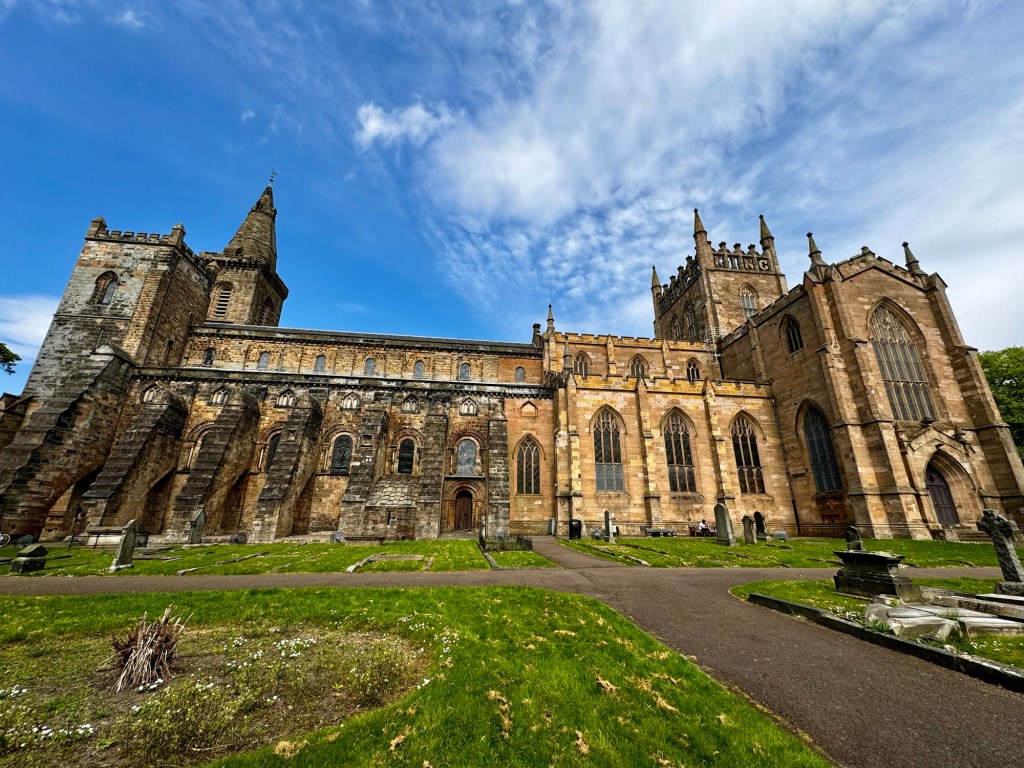
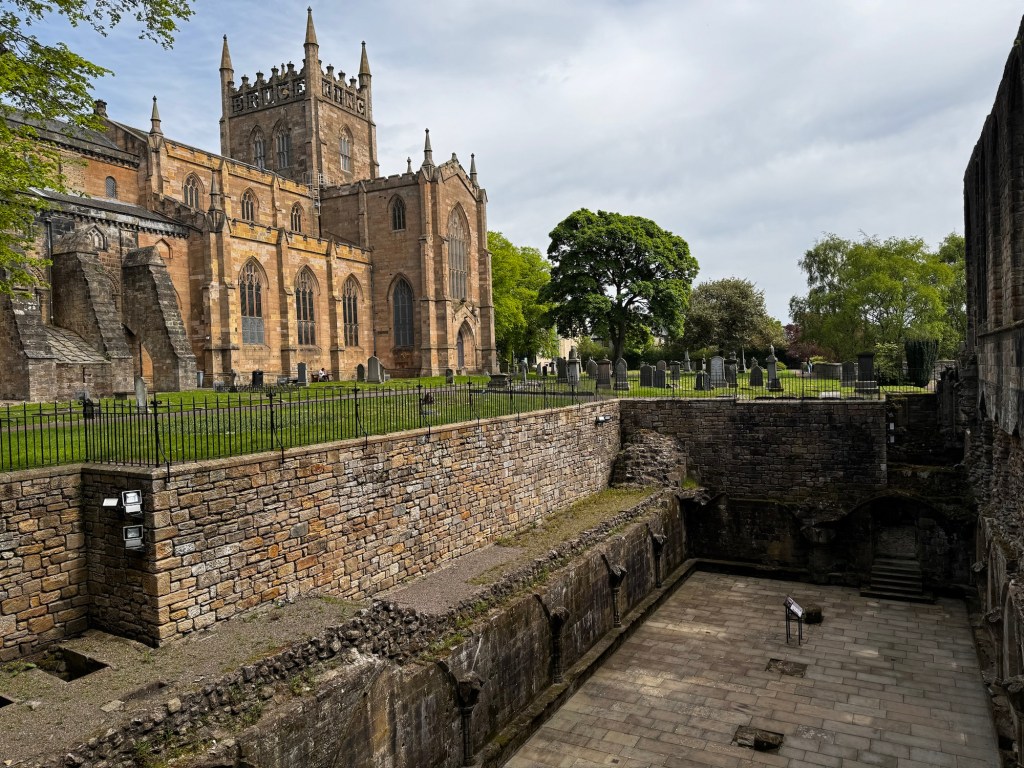
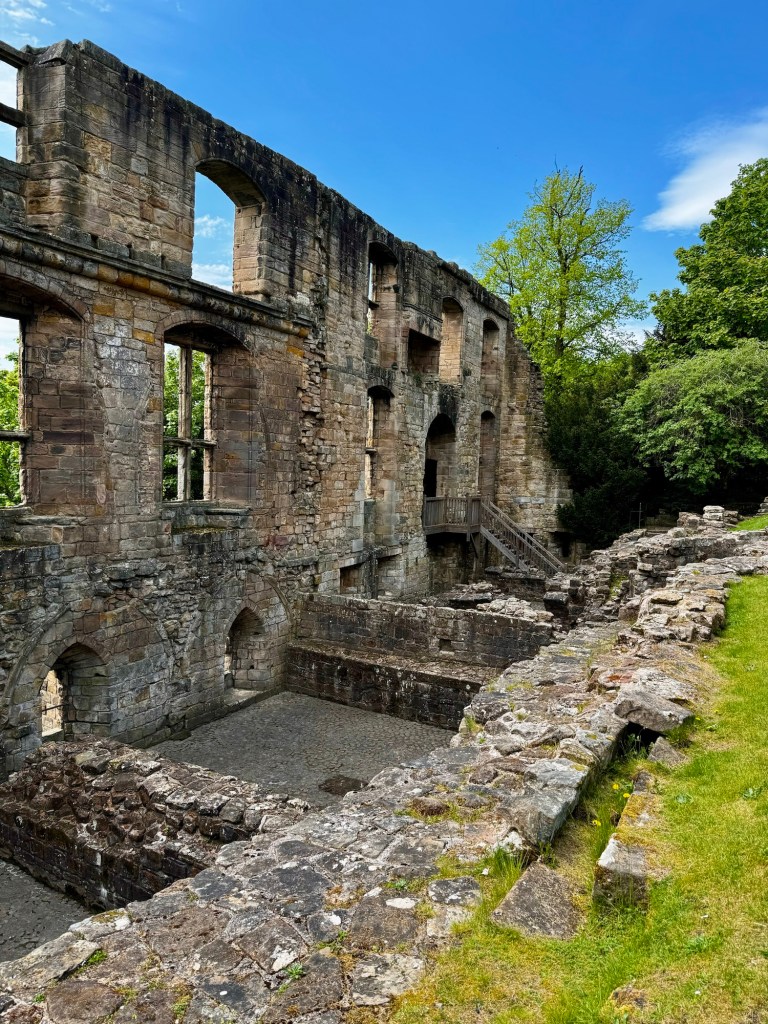
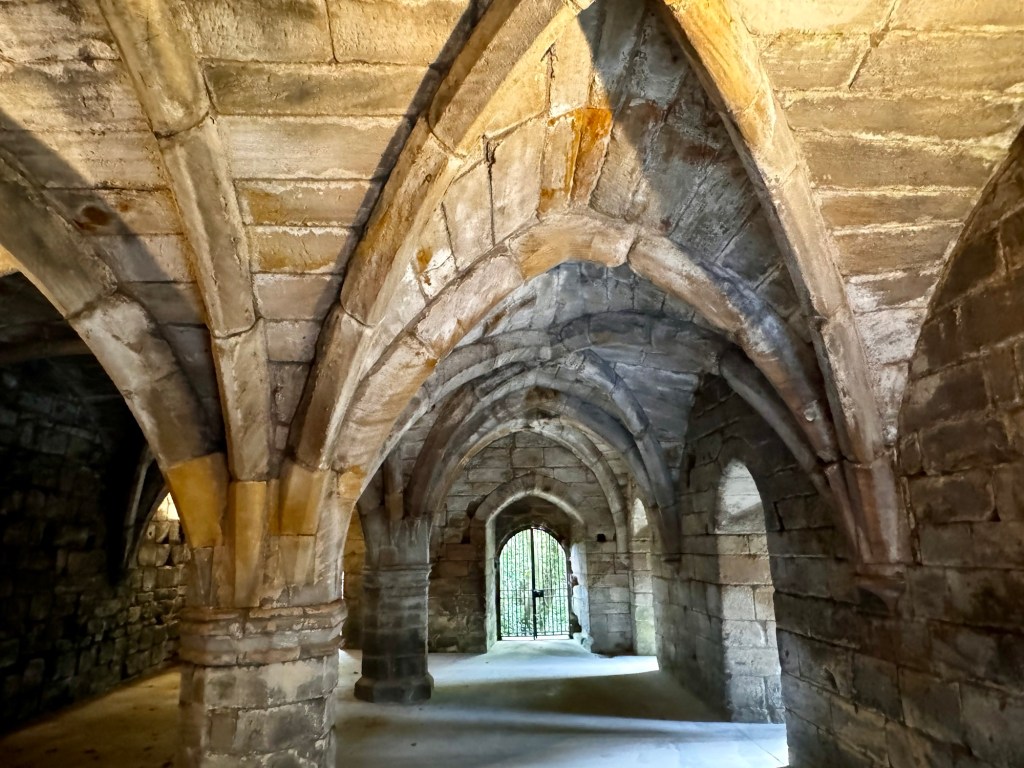
Next on our mini road trip is Dunfermline Abbey & Palace, which was given to Princess Anna of Denmark as a wedding present when she married James VI in 1589. The medieval Benedictine abbey still exists, even after being sacked by Cromwell, and it’s connected to a newer parish church still in use. You can also see ruins from numerous nearby structures, all built by Queen Anna. She turned Dunfermline into an incredible royal residence.

Many of the old kings of Scotland are buried here, including Malcom III and IV, Edgar I, Alexander I, and David I, Malcolm IV, Alexander III, although we don’t know the exact location of their graves, which is disappointing.

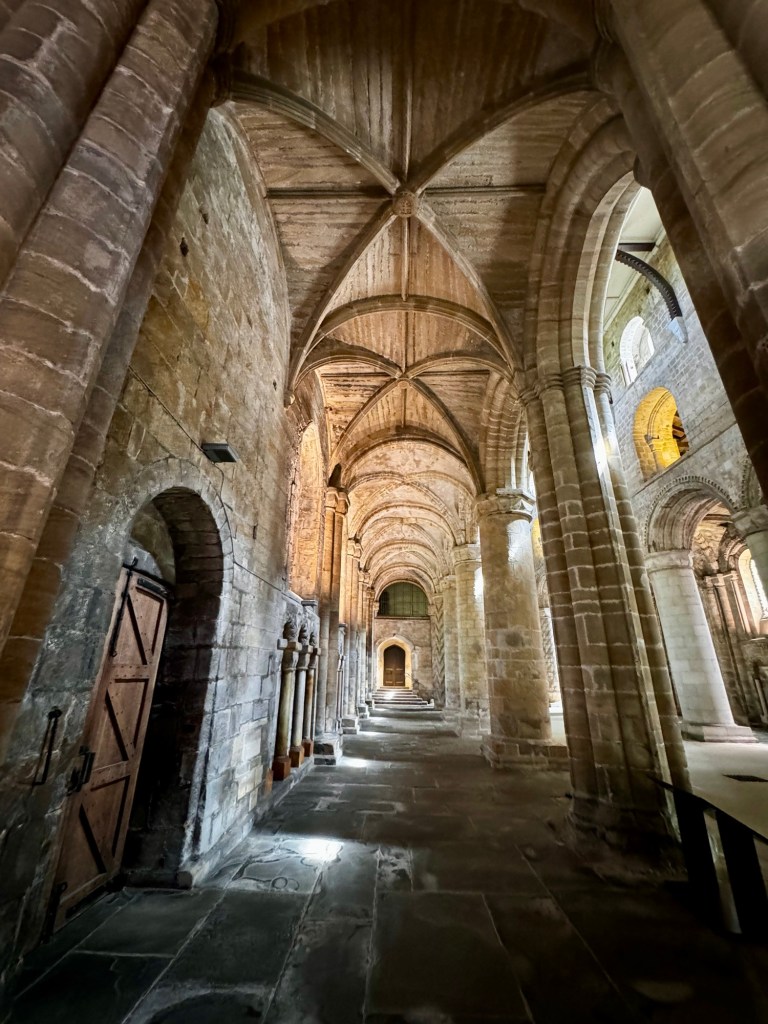
The ruins and abbey are stunning.

Dunfermline Abbey, the older section on the left.
Palace ruins.
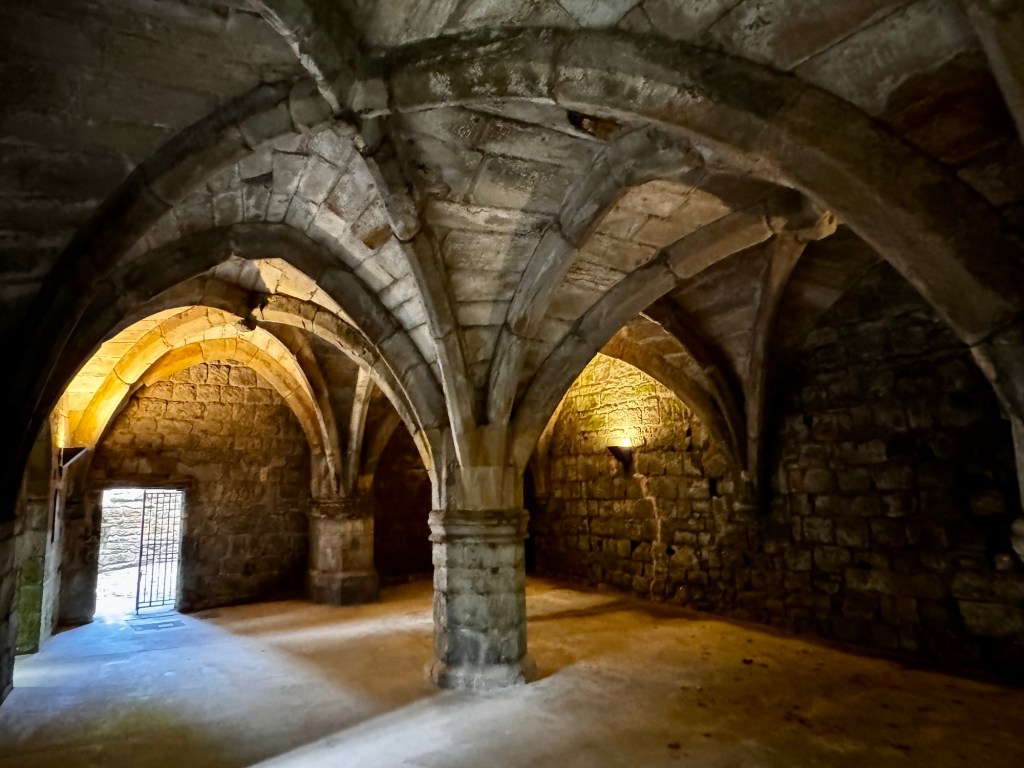
The Old Abbey. It’s big, dark and cold. Very cool.

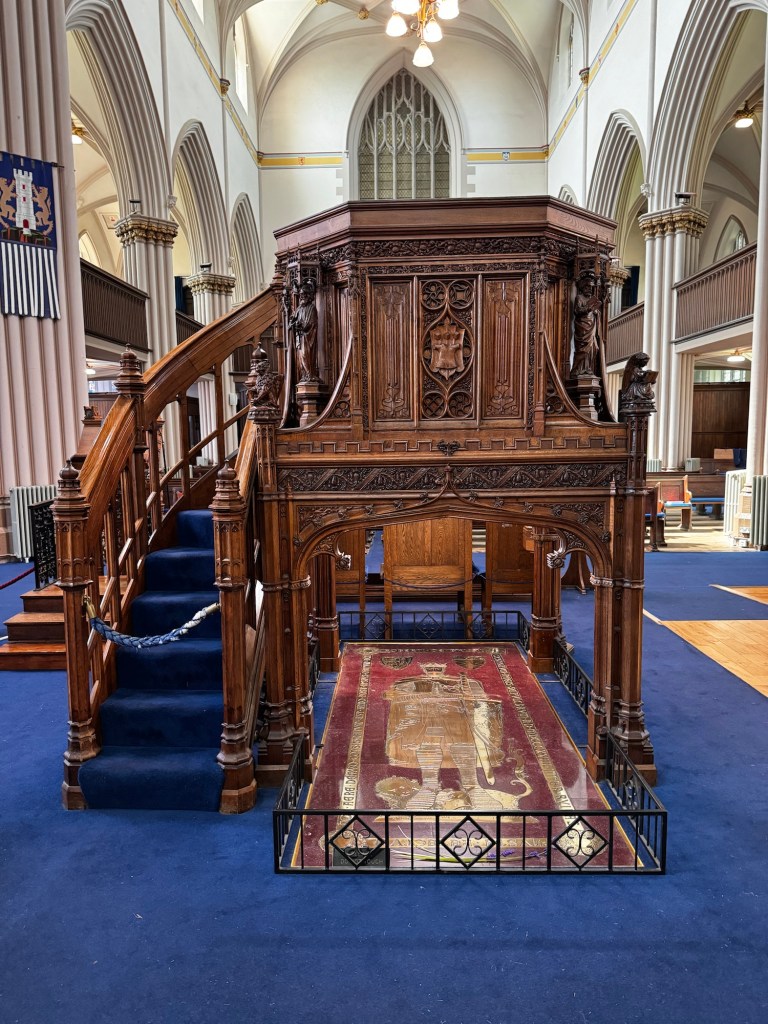
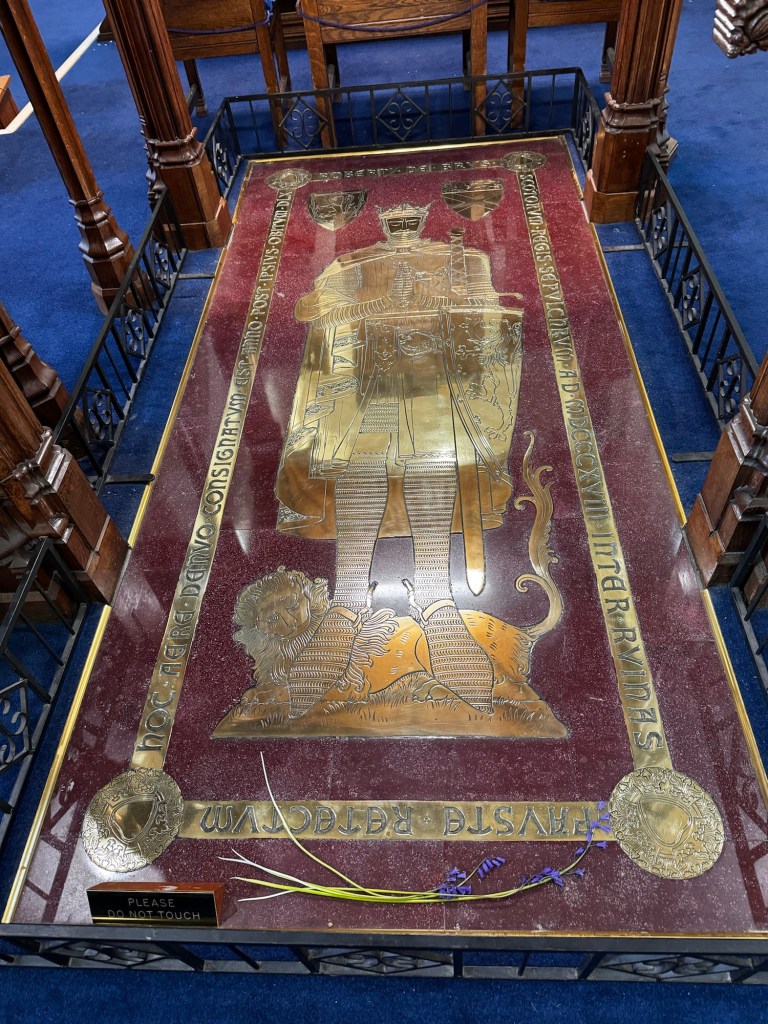
While we may not know exactly who is buried where inside this gorgeous abbey, one dude we do know about, and that is King Robert the Bruce (minus his heart, stay tuned). This is the very incongruous part. His remains were moved around a bit, but he’s now interred in the more recent section of the church (let me tell you its jarring to walk from the ruins of the beautiful stone cathedral into the parish church, like stepping through a portal and not in a good way). The Bruce, man of legend, is installed beneath the raised platform the current pastor sermonizes from, otherwise known as the pulpit. He shouldn’t be underneath this tacky wooden thing. The church is all white walls and blue carpeting and also the shiny gold leaf does not seem like the appropriate vibe. Personally I wouldn’t have planted him there, aesthetically speaking.

I object.

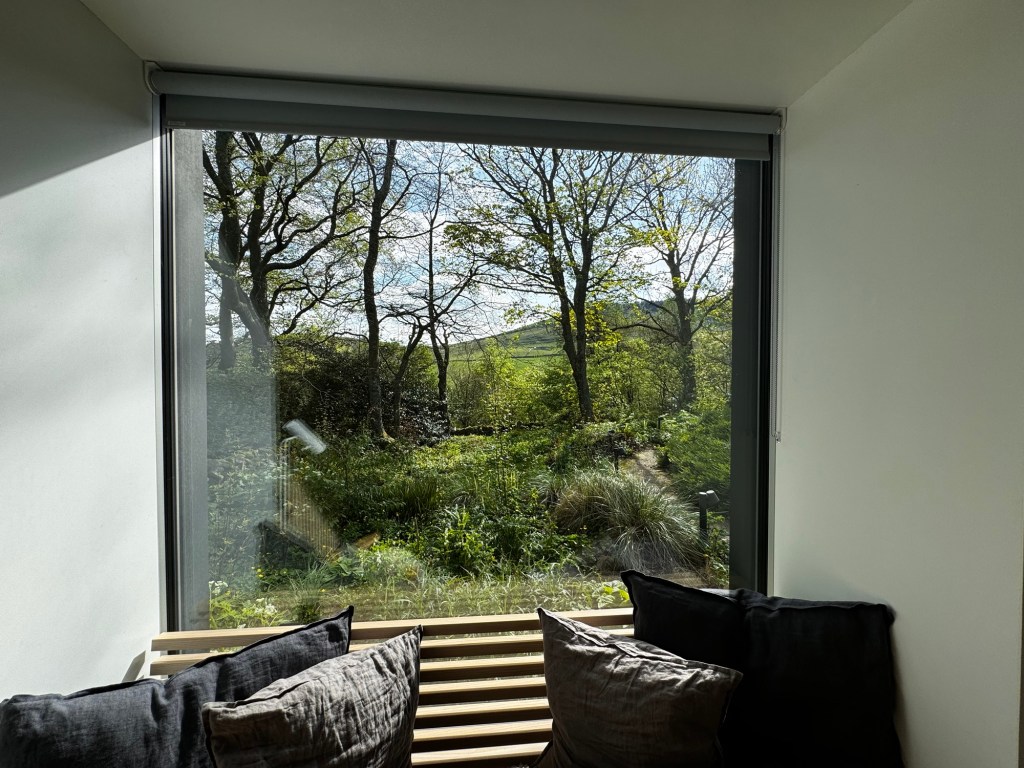
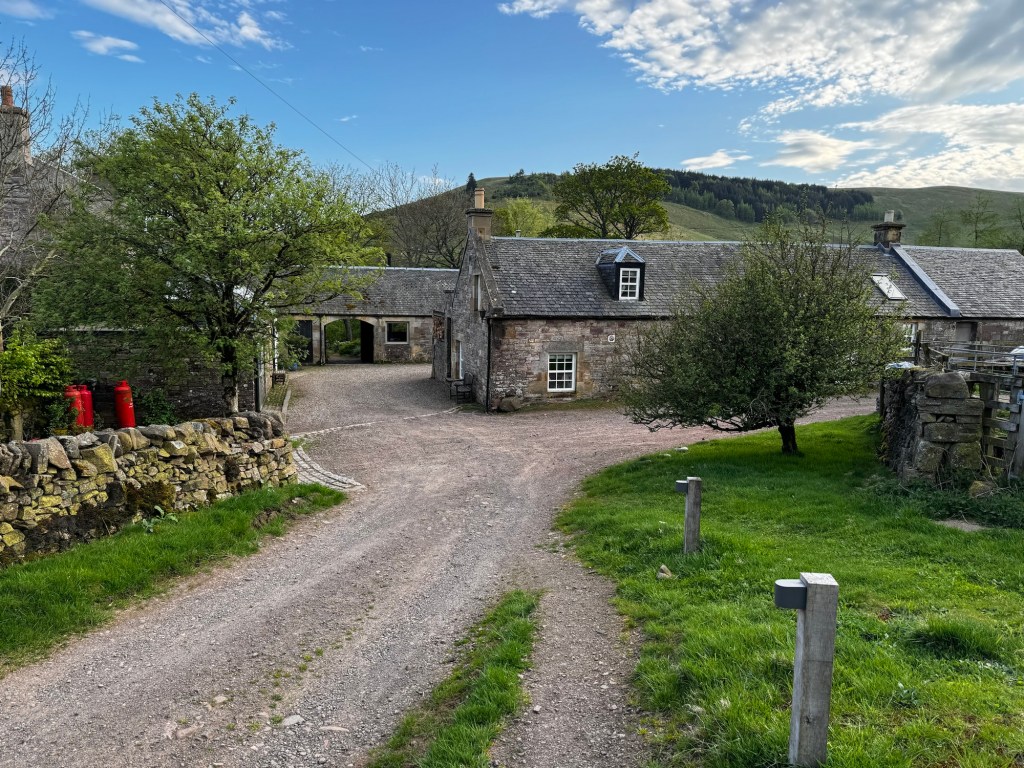
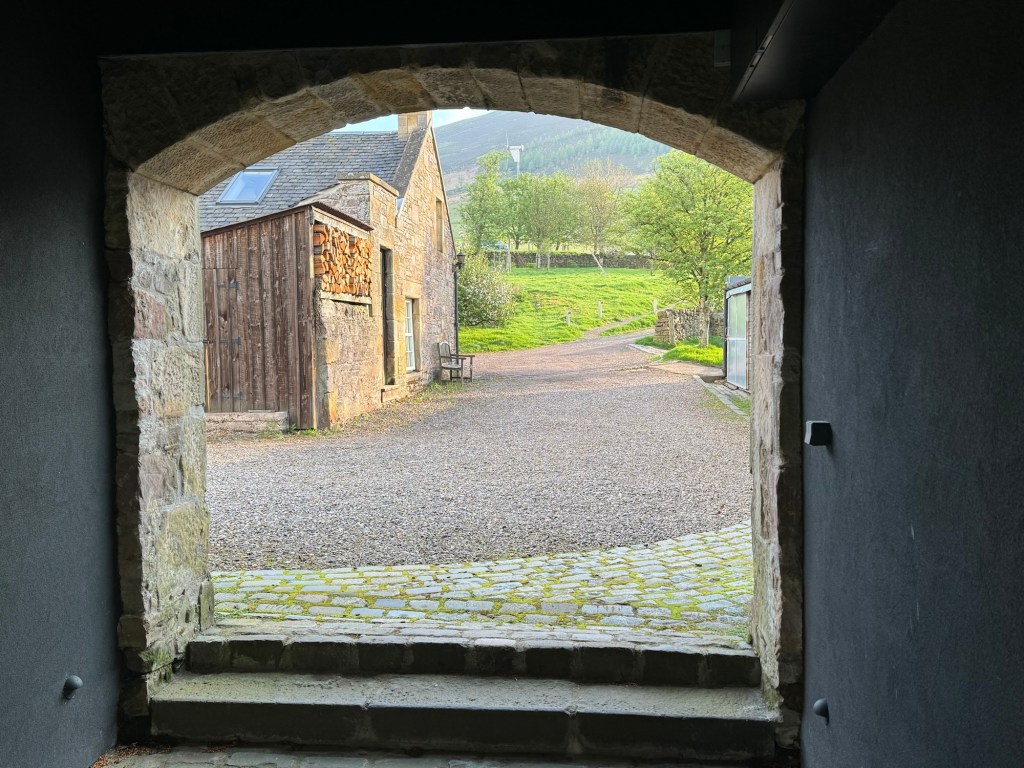
Having had my fill of old royalty, arriving at the beautiful Eastside Cottages was a balm for the soul. The owners of the farm have refurbished the outbuildings with a scandy vibe and it’s quite wonderful. During the pandemic they posted nature moments of Zen on instagram, several minutes of natural beauty, nothing more than a breeze, birdsong, hills and peace. I think I watched every one of them.

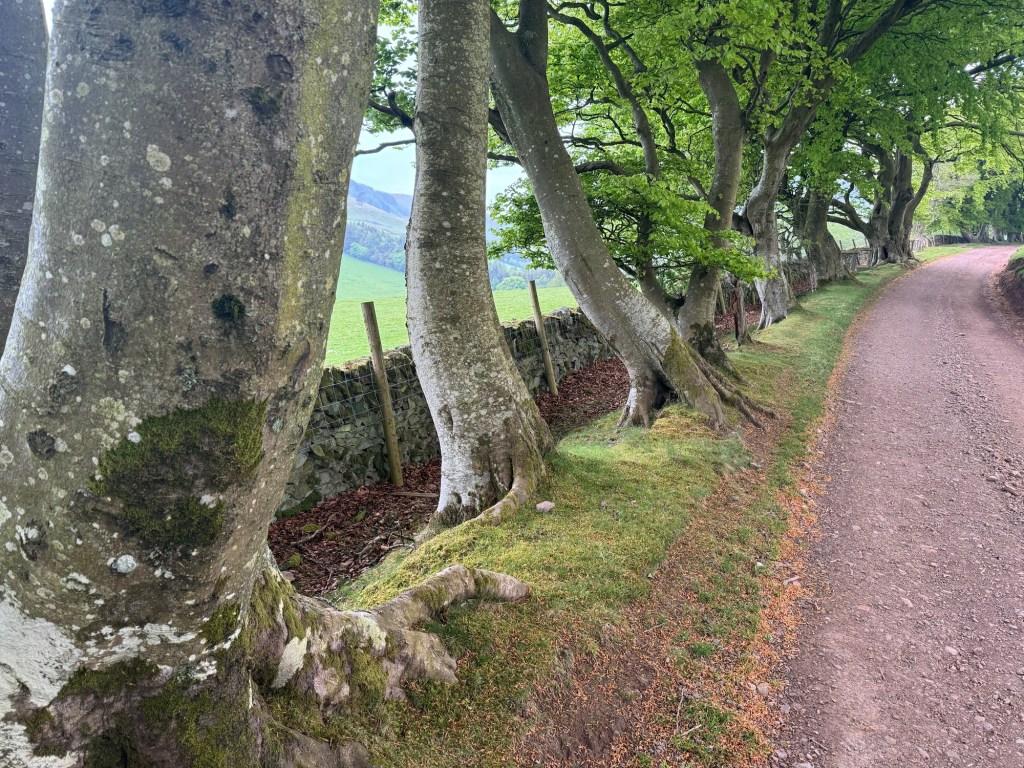
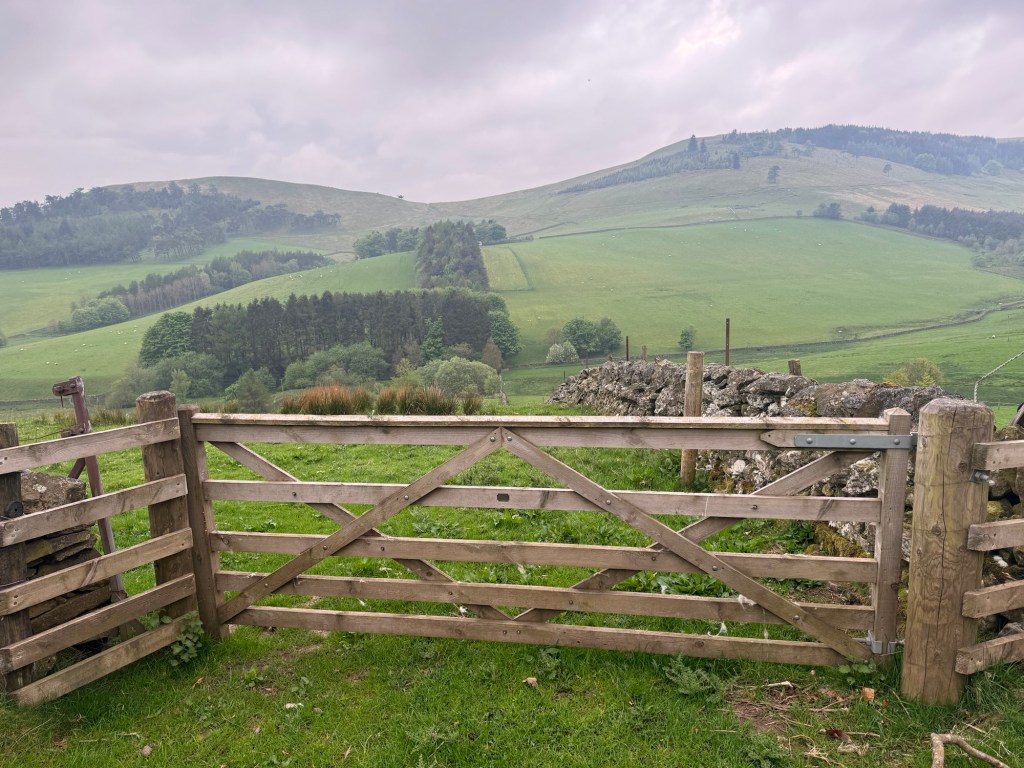
Here are a few photos from the lovely five days I spent here.

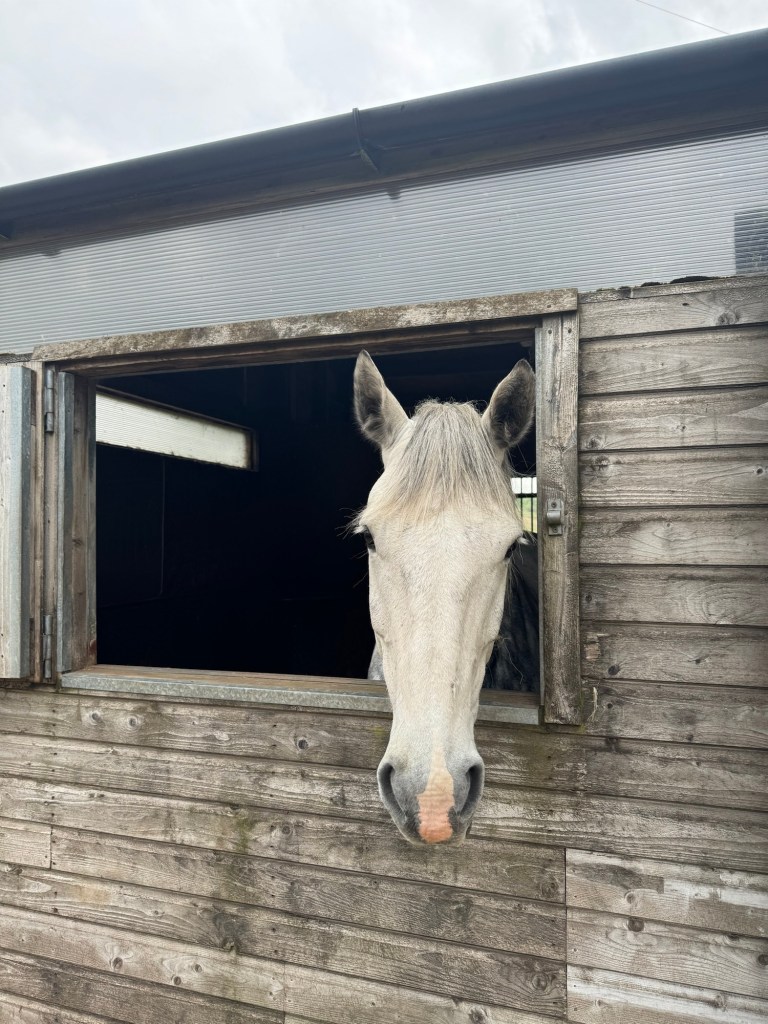
Meet Oscar the fabulous horse.

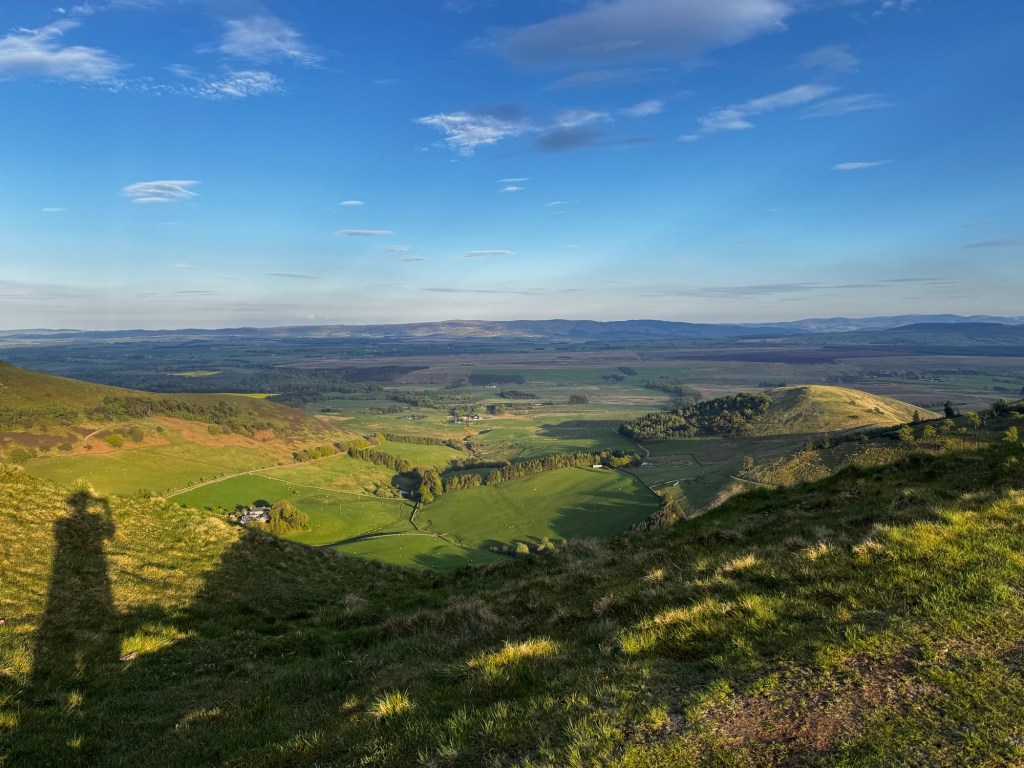
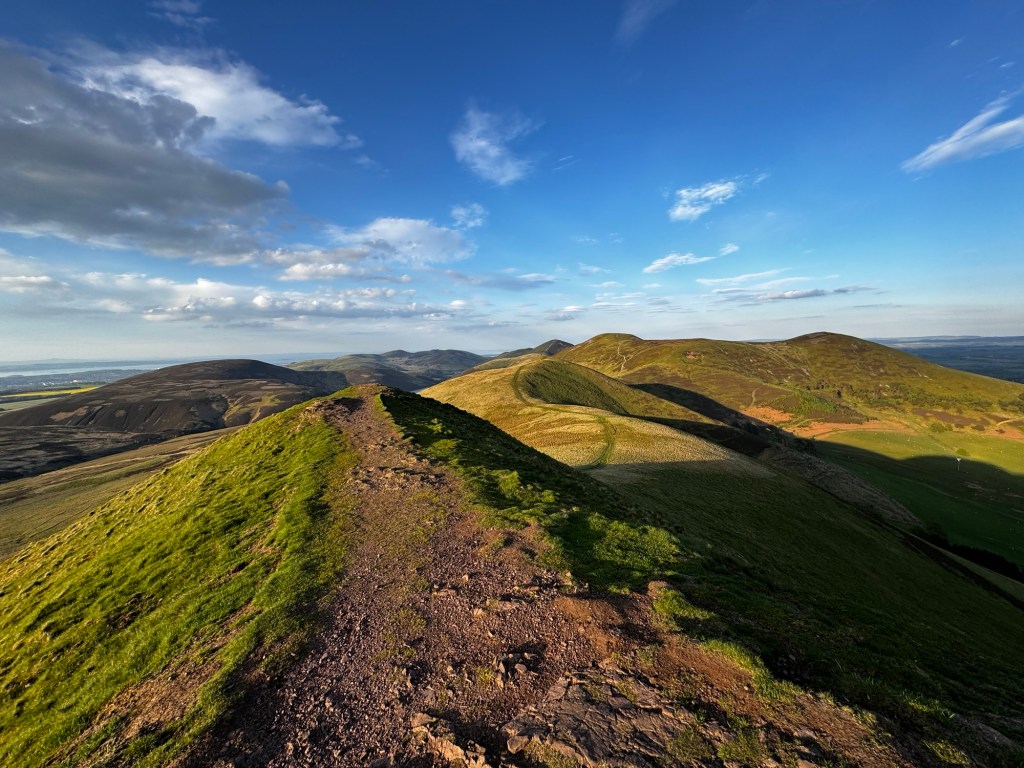
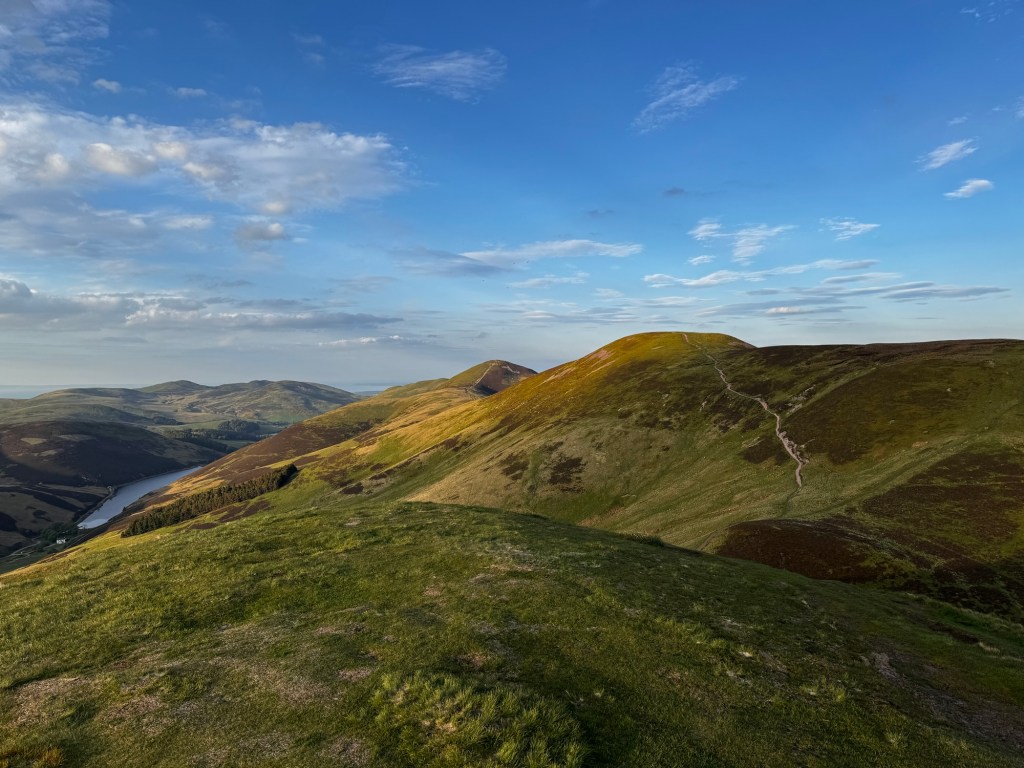
My first night, I walked up to the top of the two hills behind the farm, called West Kip and East Kip. A great walk with unbelievable views toward Edinburgh and the River Forth and across the Pentland Hills.

Frolicking sheepies.
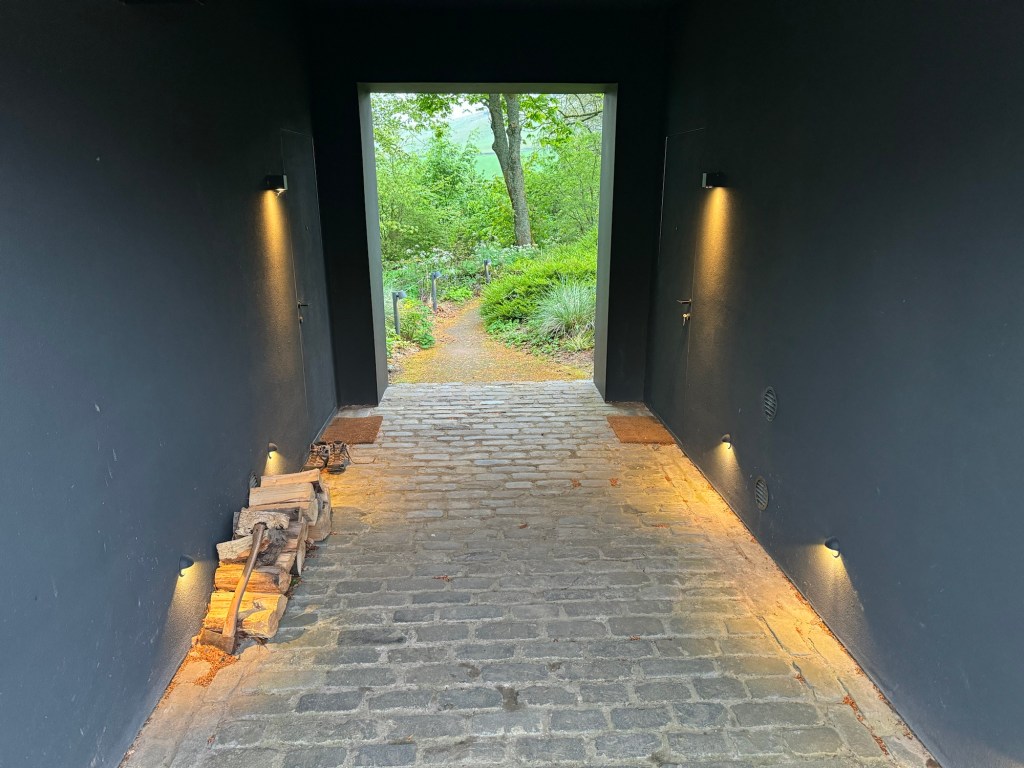
My room is to the left of this magical passageway. Sadly the weather was too warm to use that wood in my fireplace.

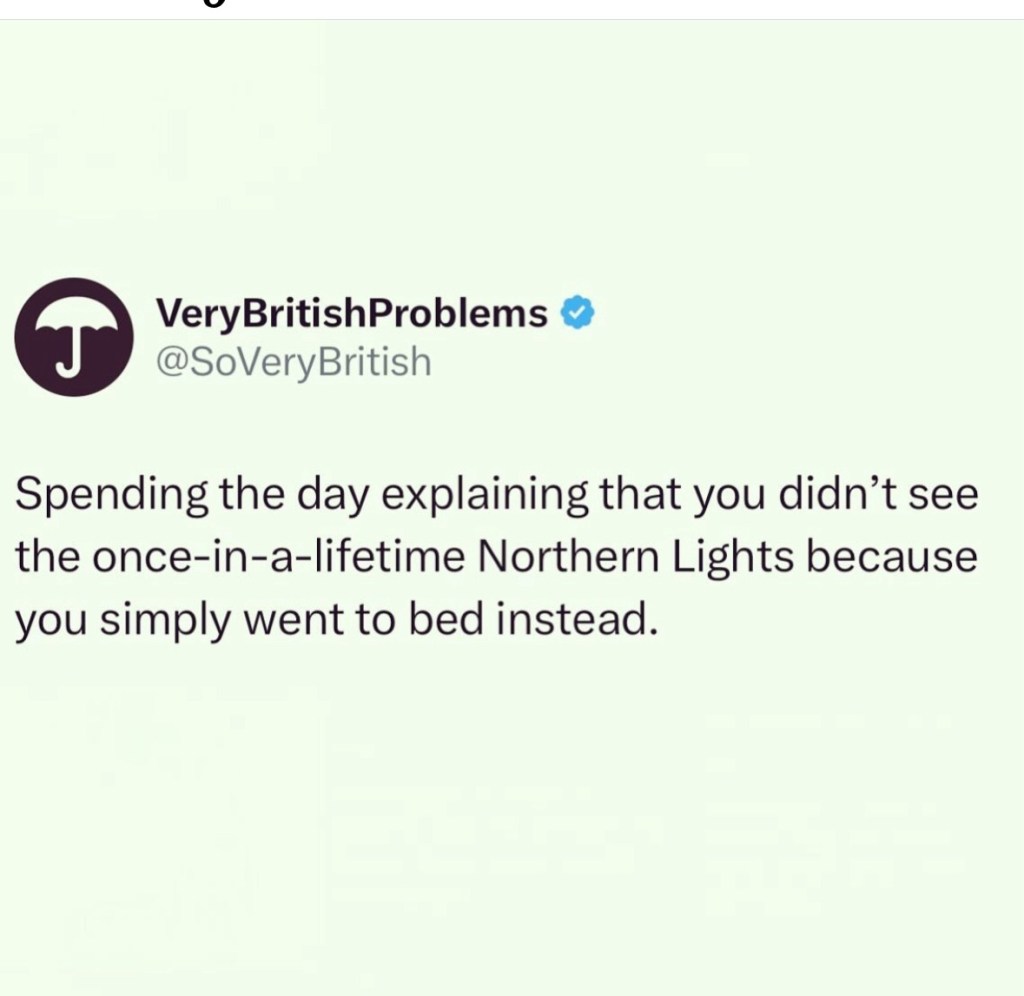
Now listen. This is the part where I missed the most spectacular Northern Lights display in the history of the freaking UK. Why? Largely because my news sources are all eight hours in the past. I simply didn’t realize and it was super irritating to wake up and see my instagram feed the next day. And here I am out in the country with no light pollution and gorgeous hills.

I don’t want to hear any more about it, okay?

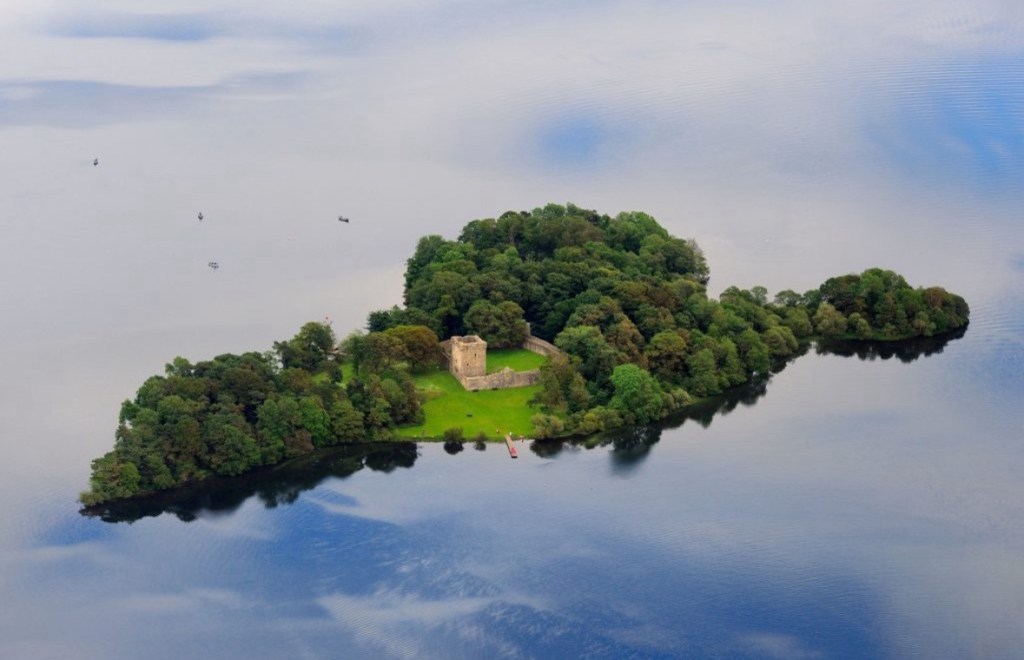
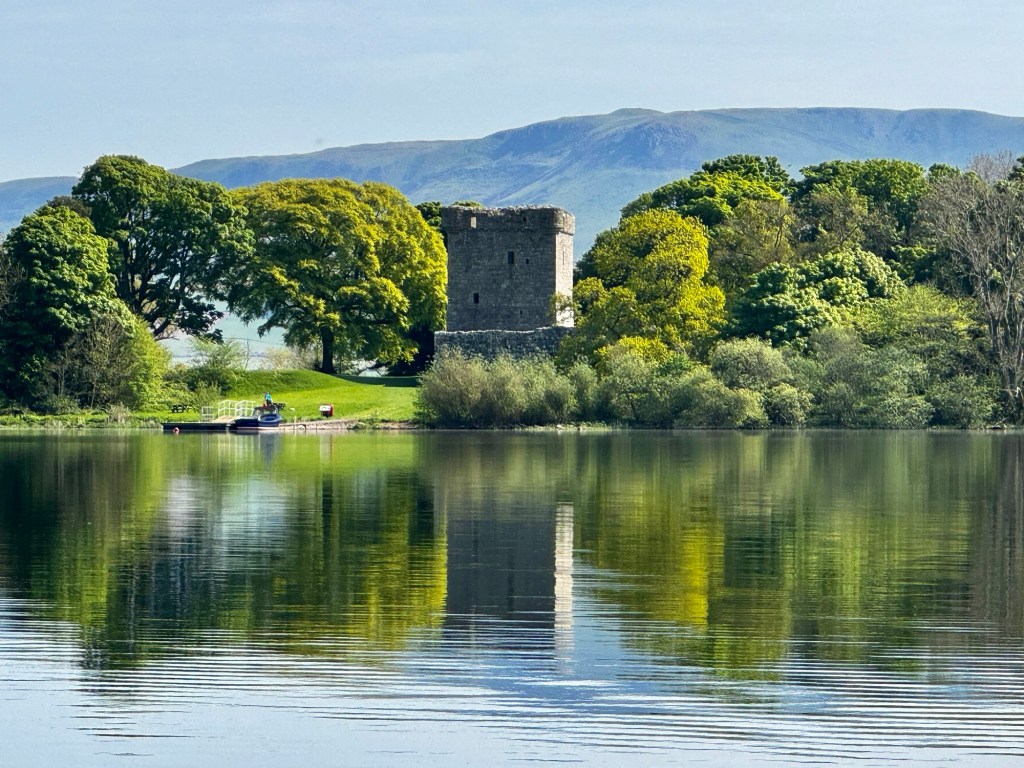
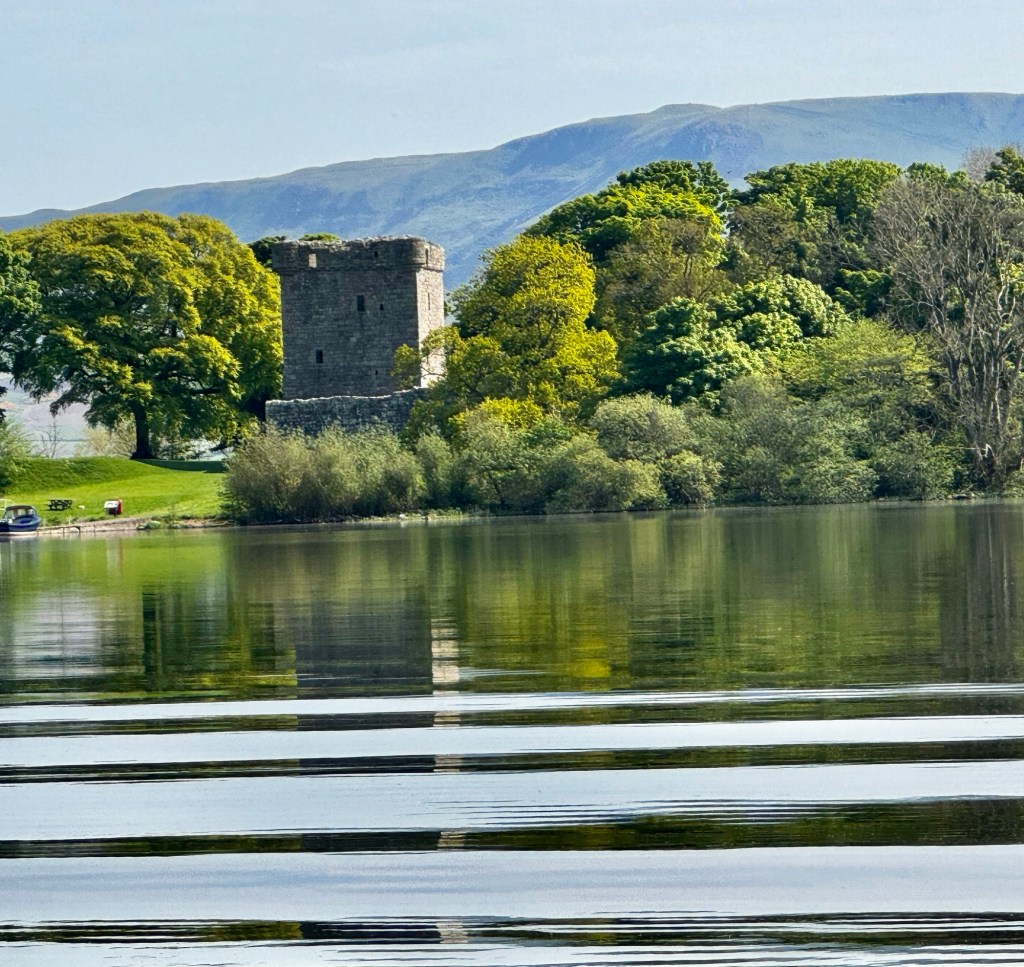
So we’ll not speak of it again but will simply move onto the following morning when I took a boat out to Loch Leven Castle.

I wish I had a drone sometimes.

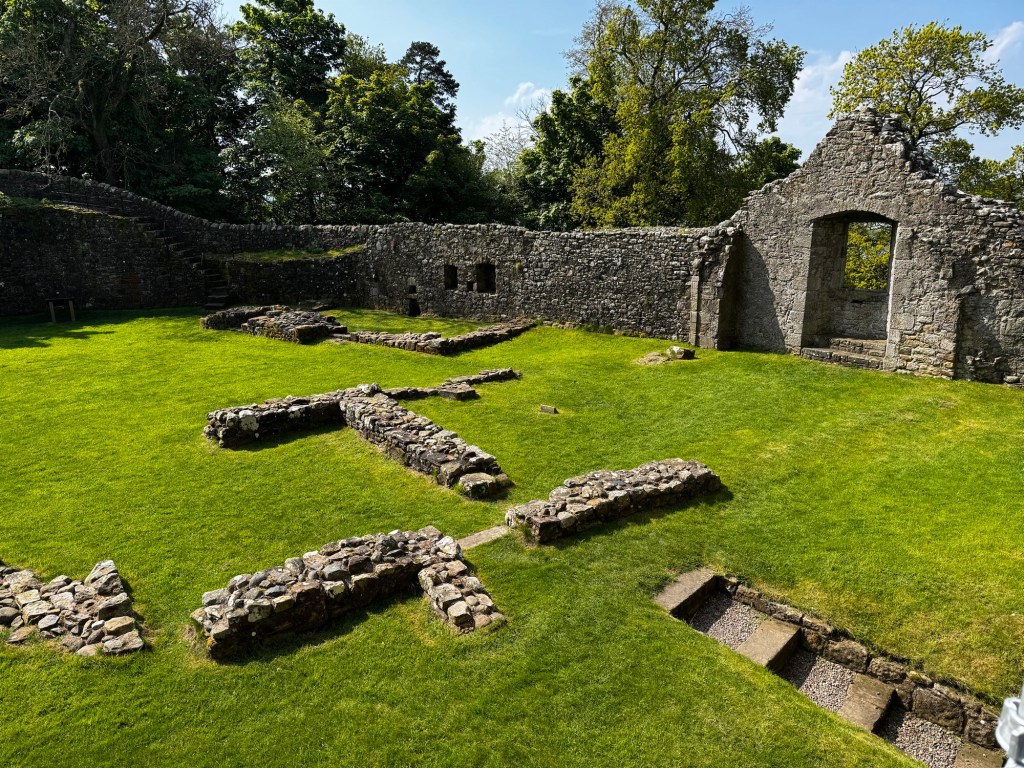
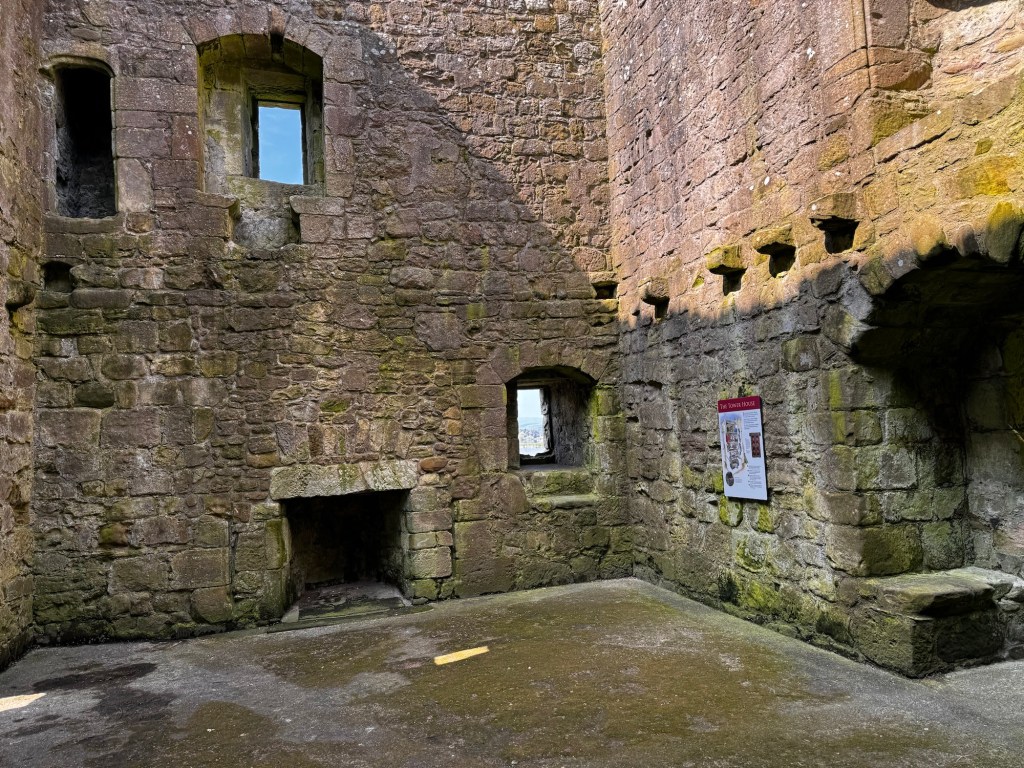
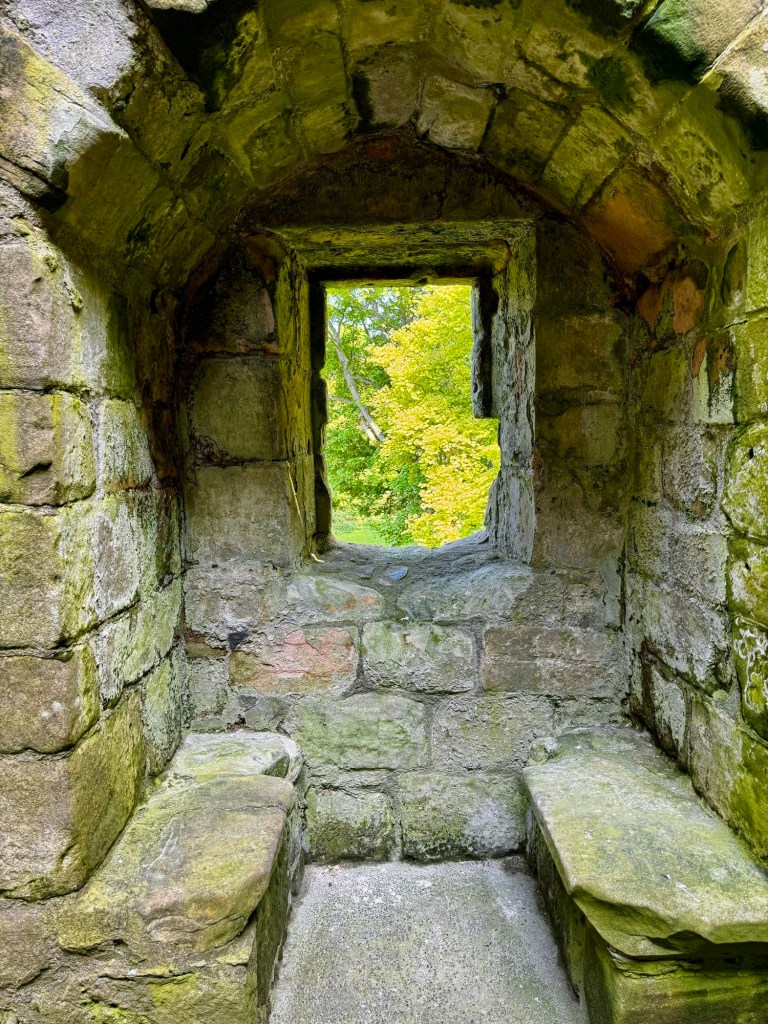
The castle was built in 1300 and was likely captured from the Edward I’s forces by William Wallace. The man was everywhere. It was later visited by Robert the Bruce (also everywhere) and his son David II. Mary QOS (ditto) was a guest there on three occasions, but the castle is most famous for her fourth involuntary return. Her marriage to Lord Bothwell after Darnley’s murder was too much for some of her lords and lo, they became rebellious. Mary ultimately surrendered to them after a battle and was taken prisoner and sent to Loch Leven under the watchful eye of its owner, Sir William Douglas. She was pregnant at the time, and during her year-long imprisonment she miscarried twins. She was also forced to abdicate in favor of her infant son James – he was crowned at Stirling five days later. The original annus horribilis.

With the help of the illegitimate son of her captor, the guy who took care of the boats, she managed to escape, and quickly raised six thousand troops. Sadly she was defeated at the Battle of Langside just two weeks later, and fled to England, never to return.

It was a gorgeous day for a visit, although a little on the warm side for the things in my suitcase.

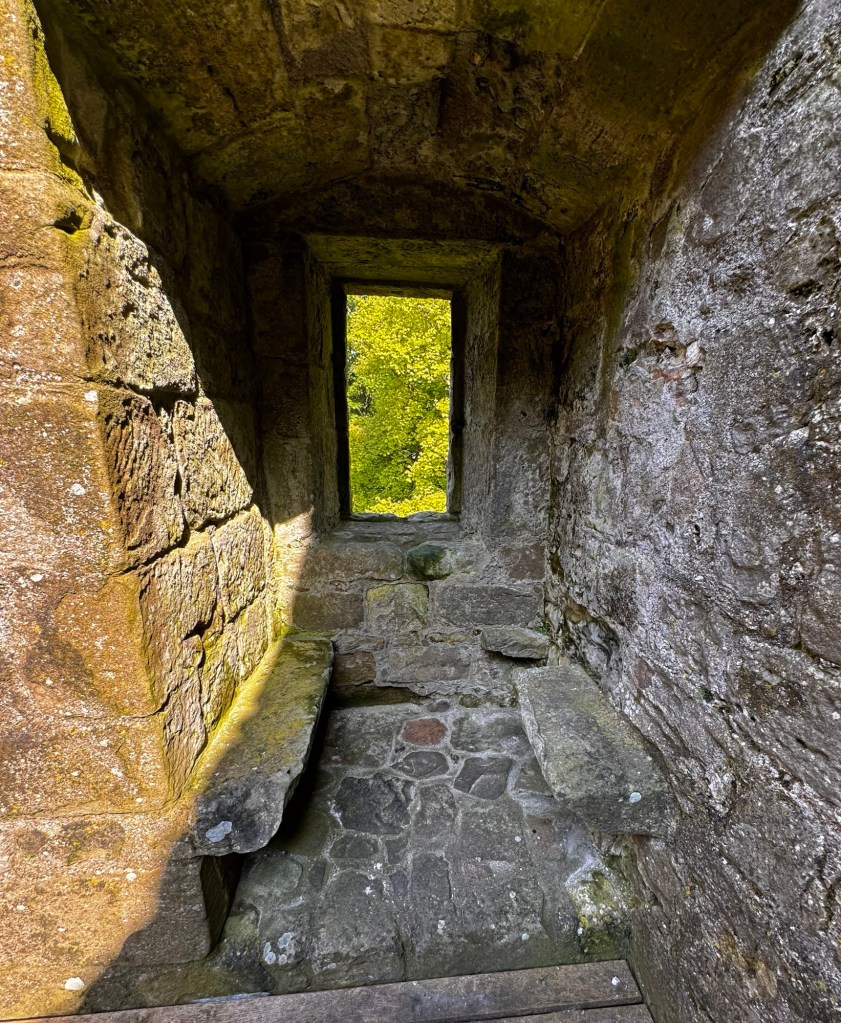
Douglas allowed Mary this oratory so she could attend Mass during her imprisonment

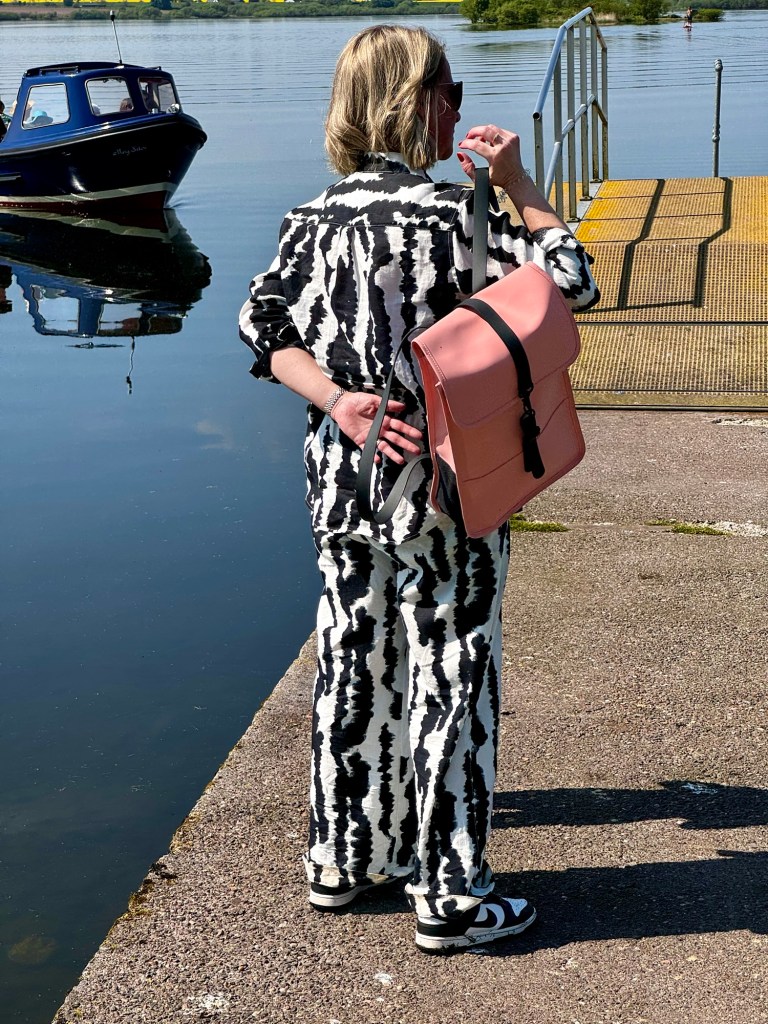
As I waited by the dock for the boat to arrive (yes they take twelve of us out there and then leave us all alone!), I had to appreciate this woman’s going-to-a-castle fashion. She deflected my compliment, as all women do, by telling me she bought it at H&M, and shrugged apologetically. Let’s stop doing that, shall we ladies?

When our boat arrived, a dad and his son appeared at the dock on a paddleboard, basically crashing the party without paying Historic Environment Scotland ten pounds for the privilege. Our boat captain explained they couldn’t land there and kindly asked whether the young boy needed to use the restroom. The dad assured her they were just hanging out for a moment. As soon as the boat launched, we looked back, and sure enough, dad was pulling the board onto the shore. Both the captain and the fashion lady were appalled and agreed this was “quite cheeky” behavior. I know I’m pathologically charmed by a British accent and all, but really what a lovely way to cast shade.

Farewell, Loch Leven Castle

The next day I drove to the East Lothian coast to visit yet another castle and the best place to live in the UK.

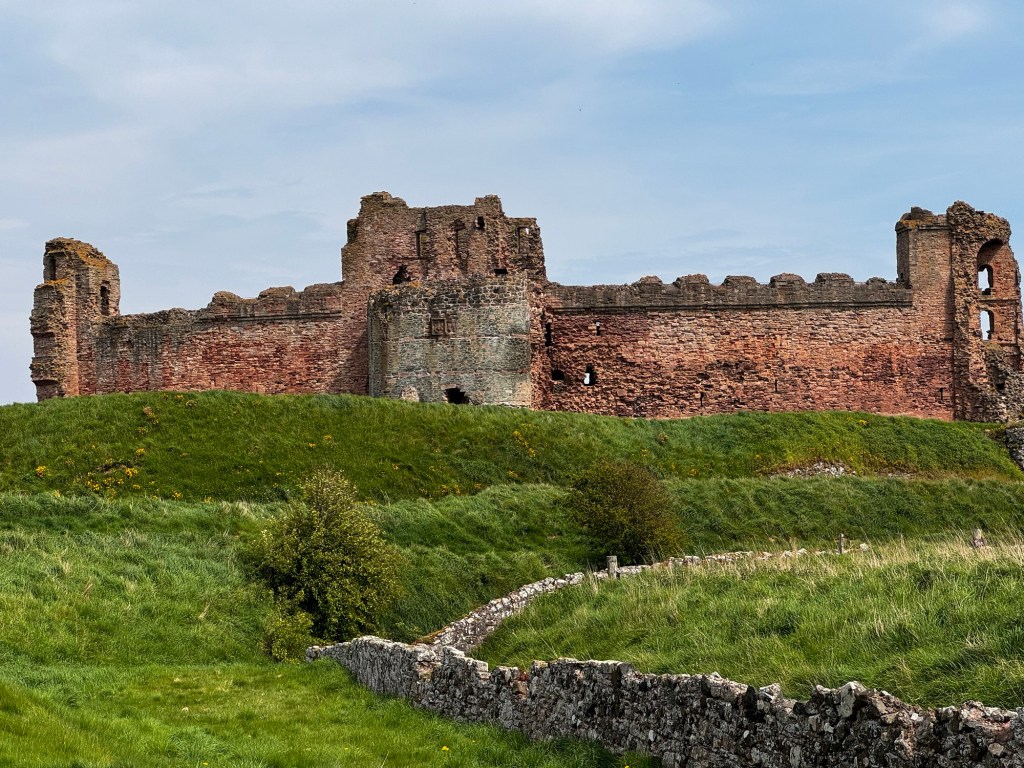
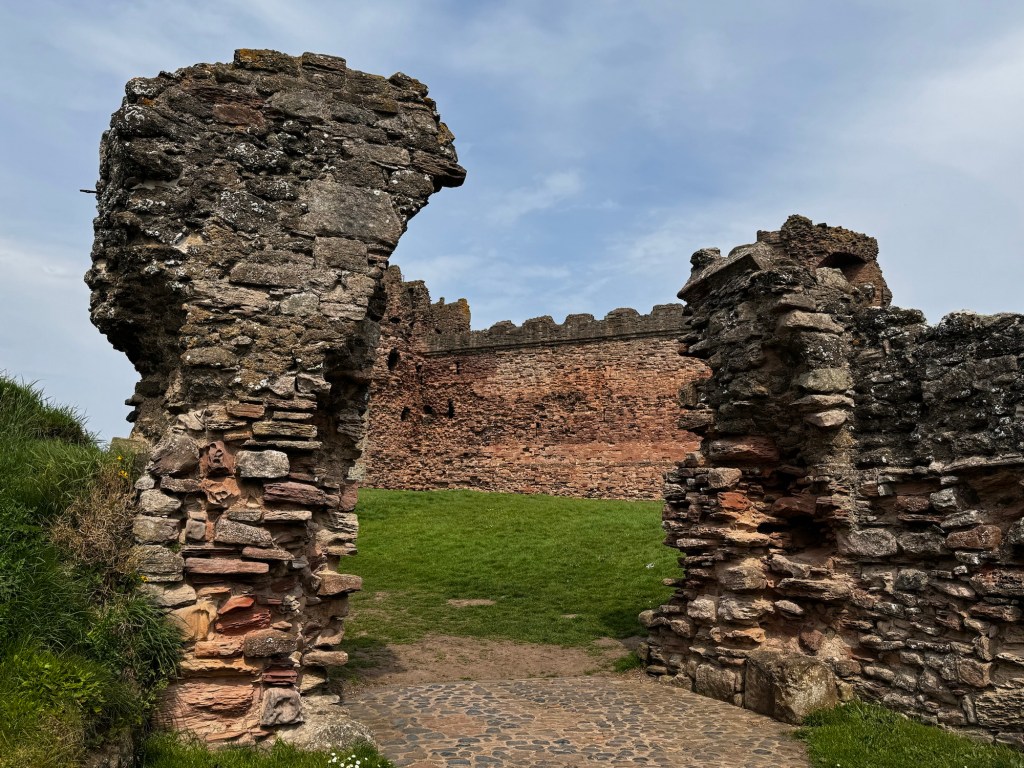
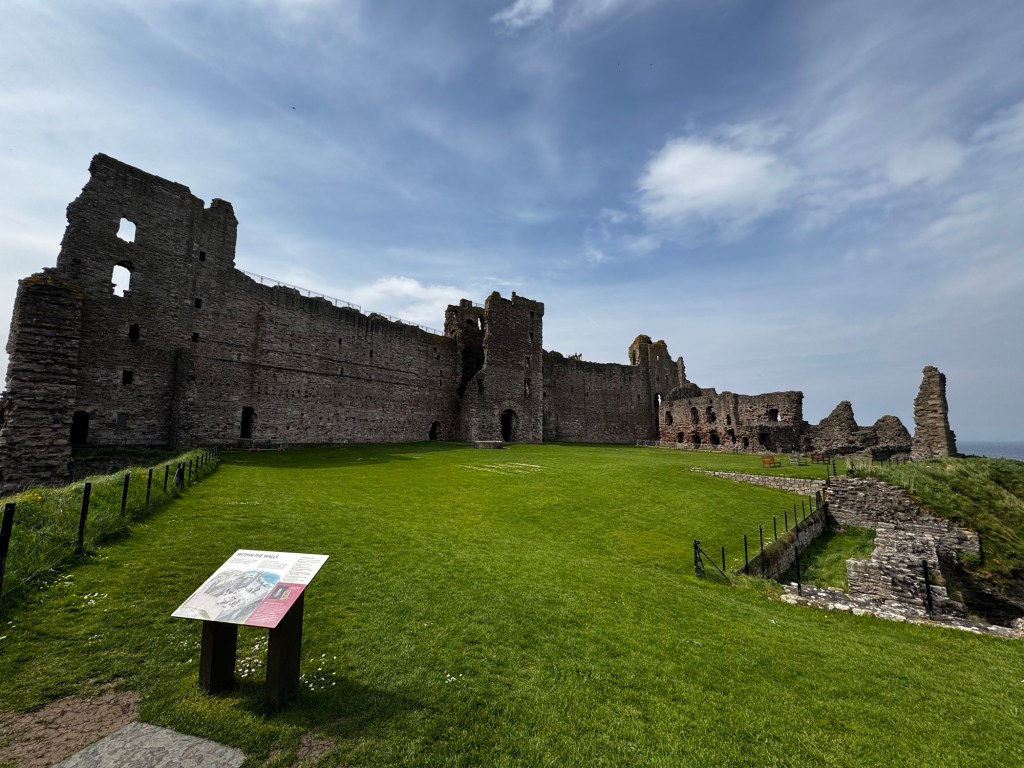
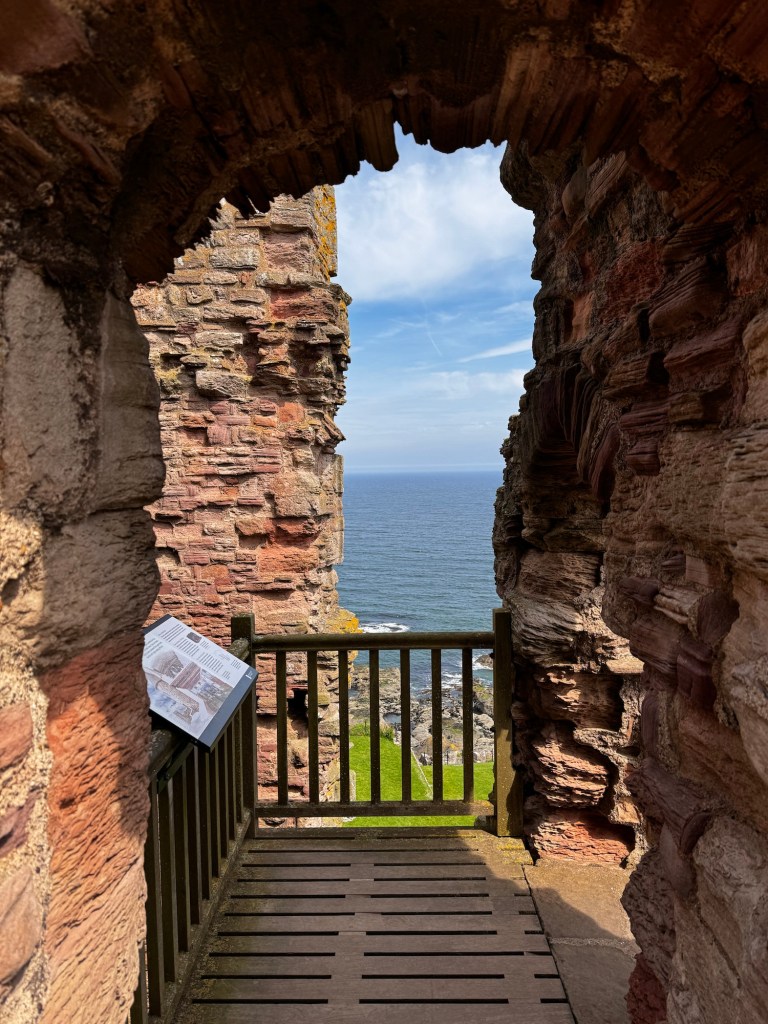
The castle is a ruin called Tantallon. It’s stunningly huge. Built in the mid-1300s by the “Red Douglas family,” it’s considered to be the last truly great castle built in Scotland. Besides one recorded visit from Mary QOS, it most notably was besieged a lot. James IV in 1491, James V in 1528 and of course Oliver Cromwell, which explains why there are no windows, just embrasures for cannons. Cromwell’s attack caused such destruction that the fortress was abandoned afterward.

Honestly, wouldn’t you like to tell Cromwell that this whole venture of his doesn’t end well and so he should stop being a destructive dickhead?

The Douglas family was in fact feeling all schadenfreude when they heard the news that Cromwell’s body was exhumed from Westminster Abbey by Charles II after the Restoration, hung and beheaded, with his gnarly old head displayed on a pike for 30 years. Ah olden times. (See previous blog)

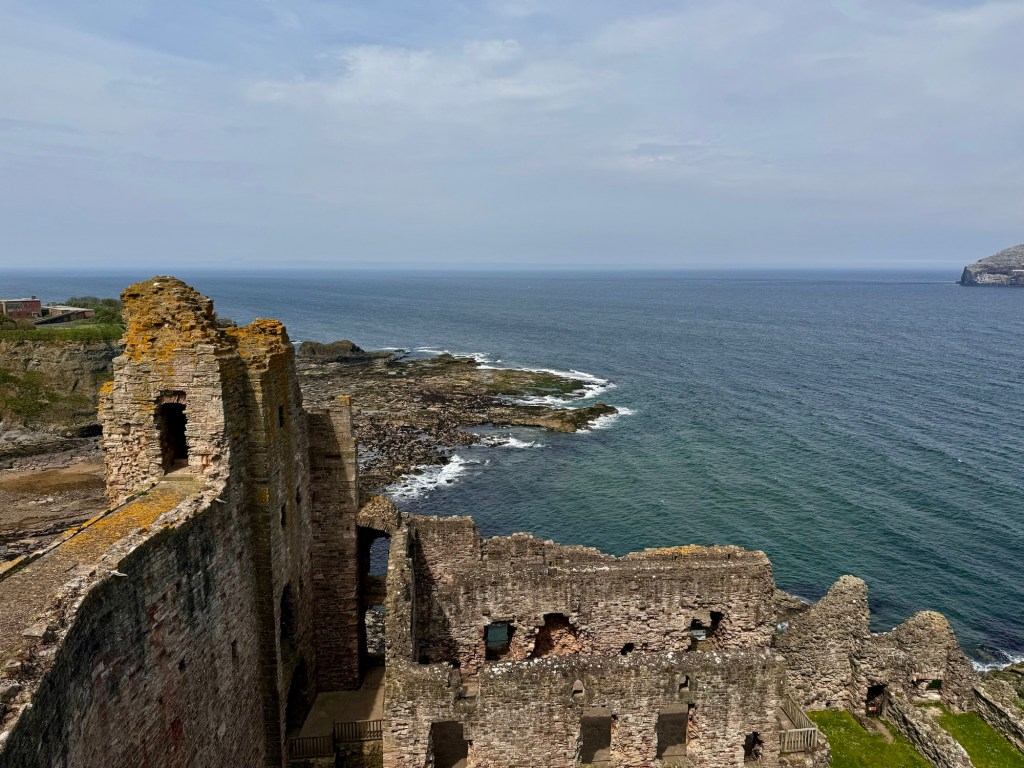
Some Tantallon photos:

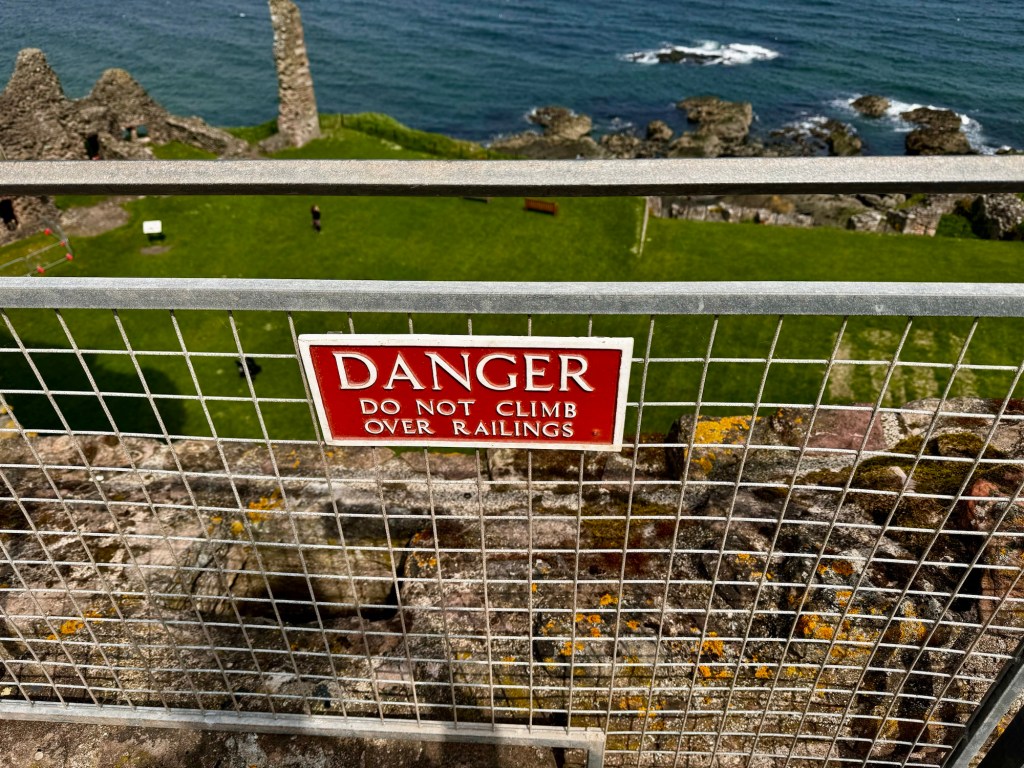
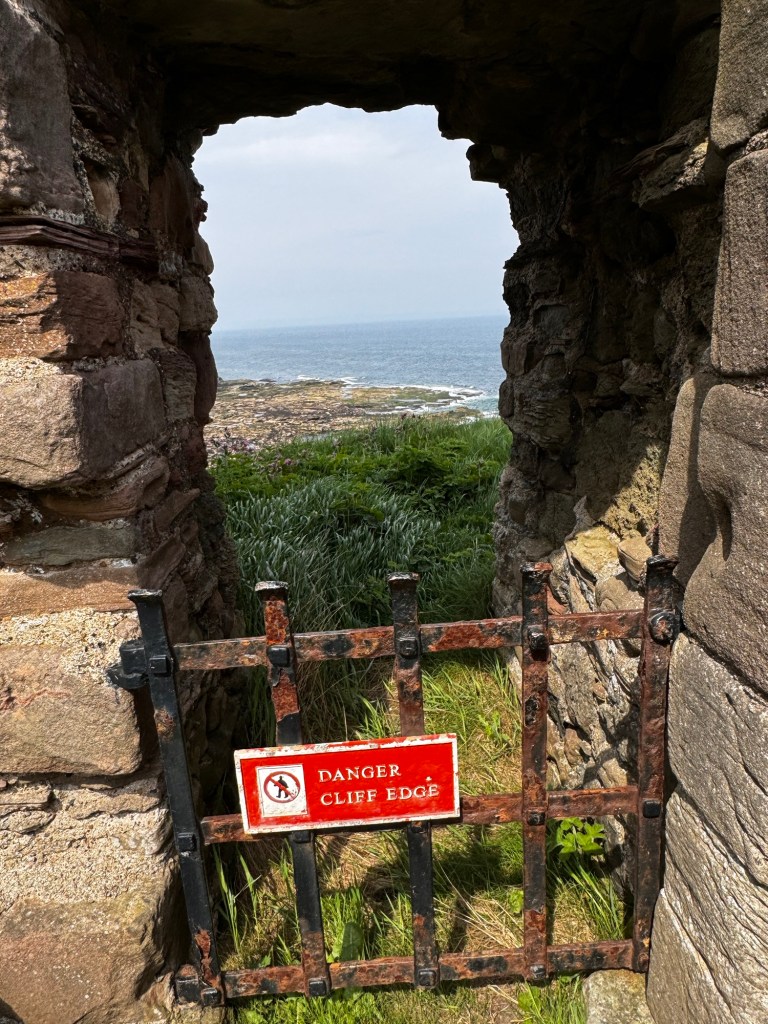
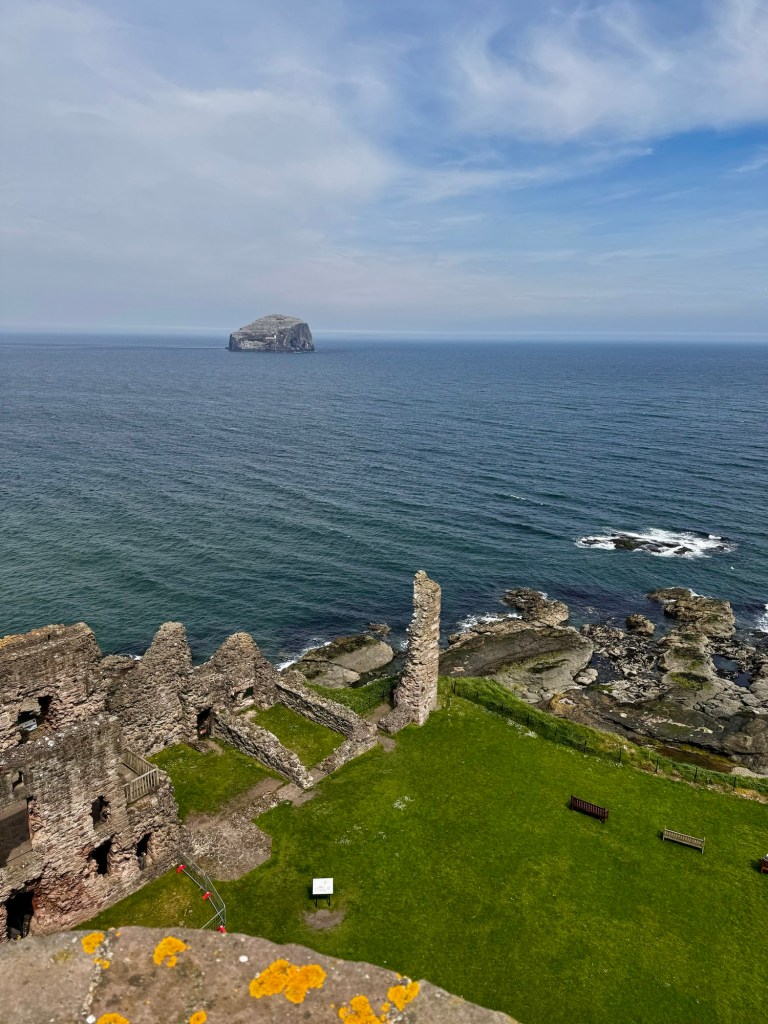
And again with the sketchy spiral staircases and big open climbs to the tippy top, and also, cliffs. Even the warning signs around the property are comical when seen through American eyes where everything is so regulated and guard-railed. Half the ruins in Scotland would be shut down under our public safety rules.

I mean, at least these ancient decrepit steps were blocked off, as they basically constitute a technical climb.

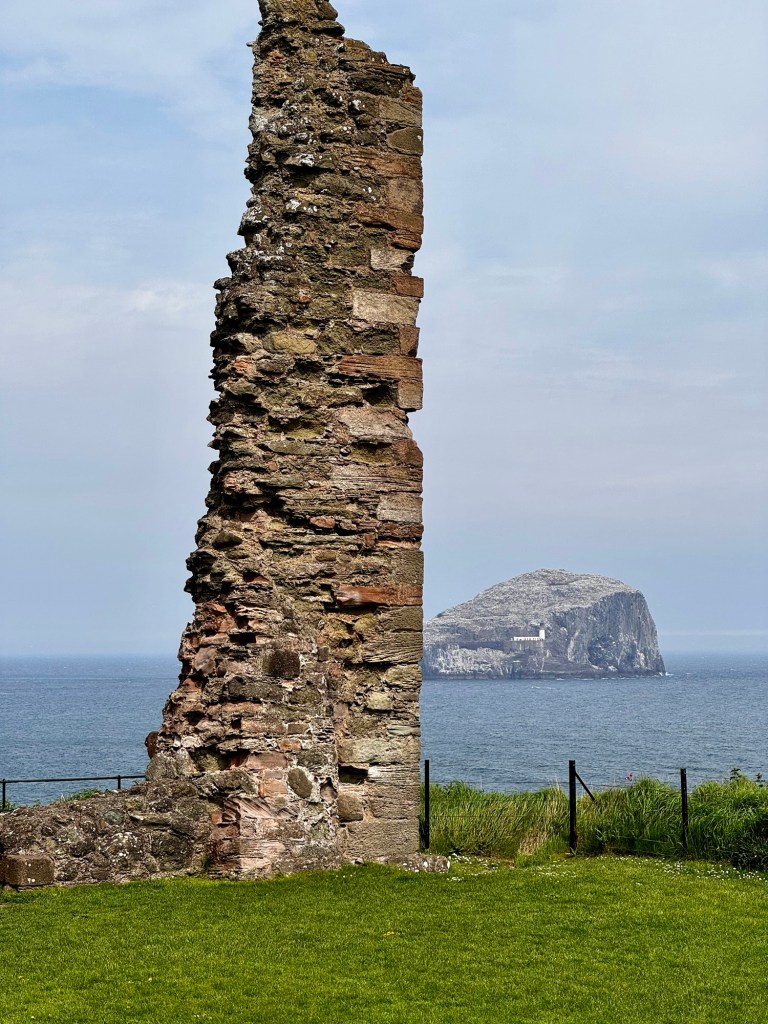
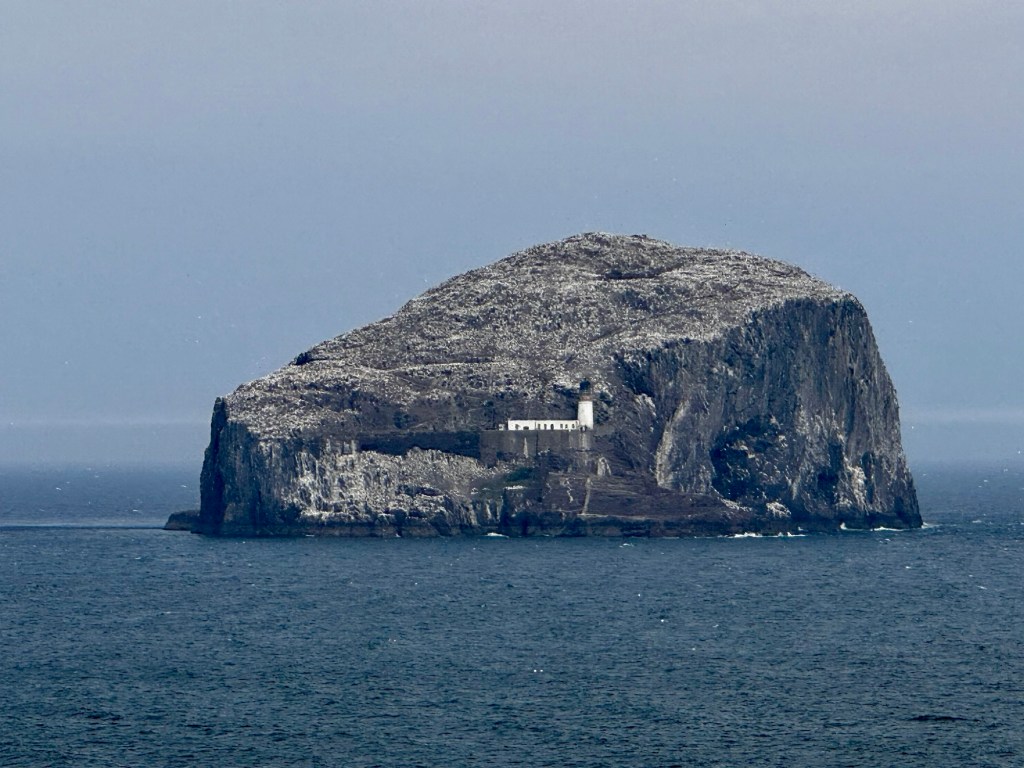
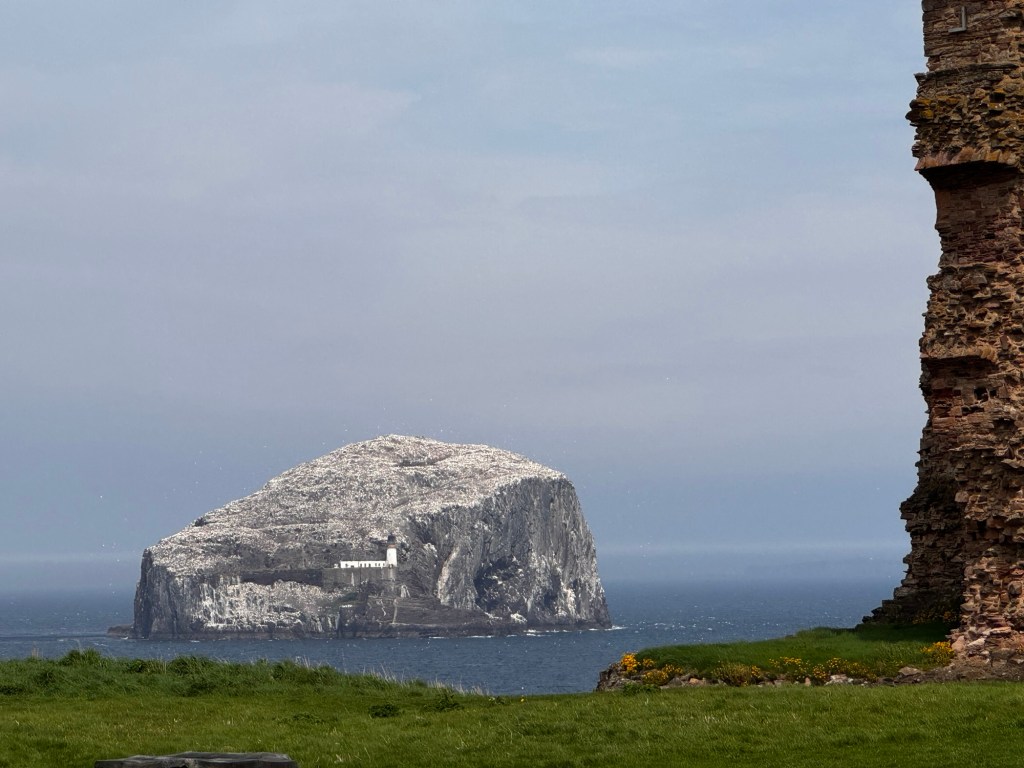
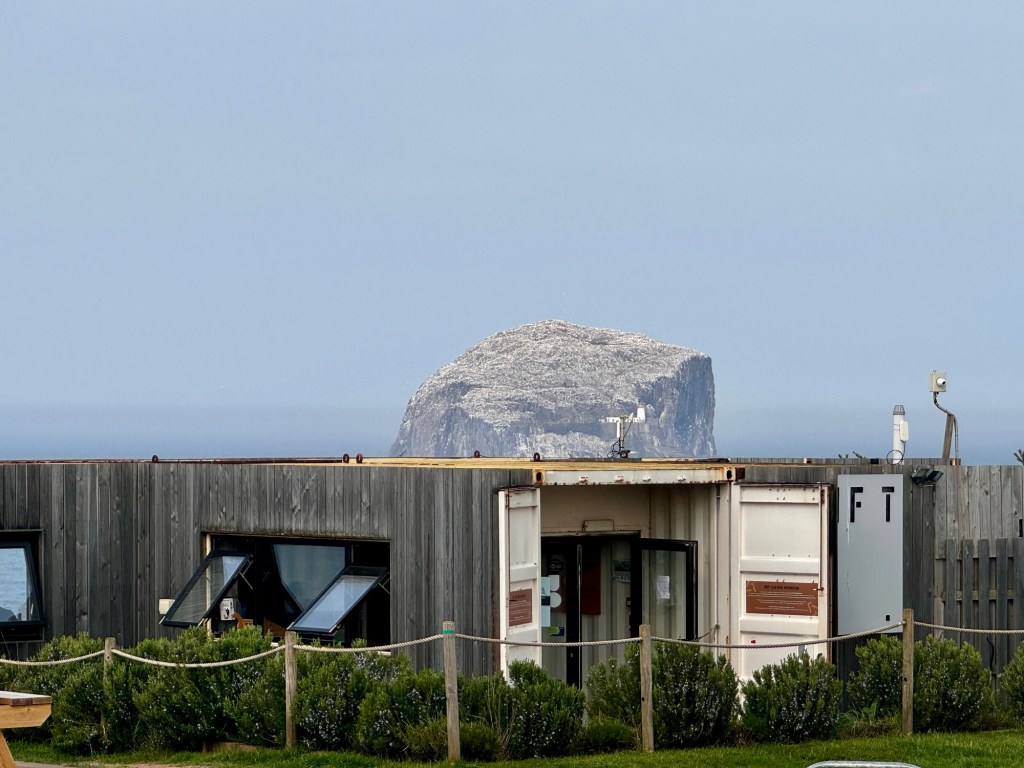
At least the last thing you saw as you plummeted to your death would be Bass Rock. Known as “The Bass,” it is an island in the Firth of Forth that plays host to the world’s largest colony of Northern gannets, namely, 150,000 of them.

The lighthouse!
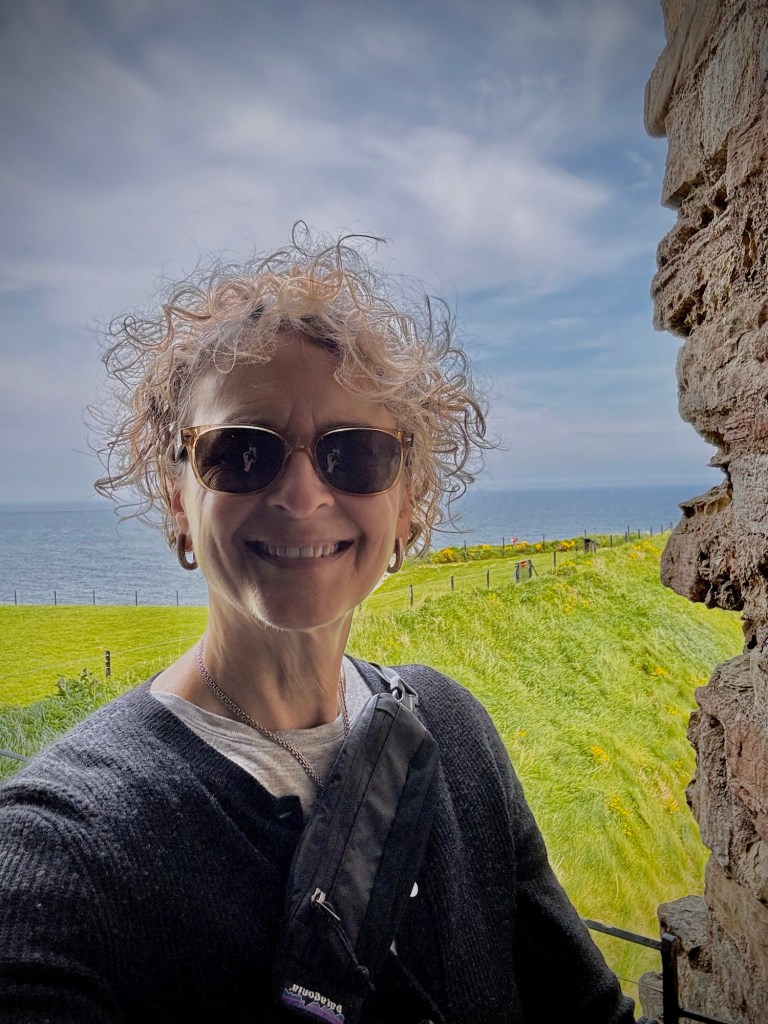
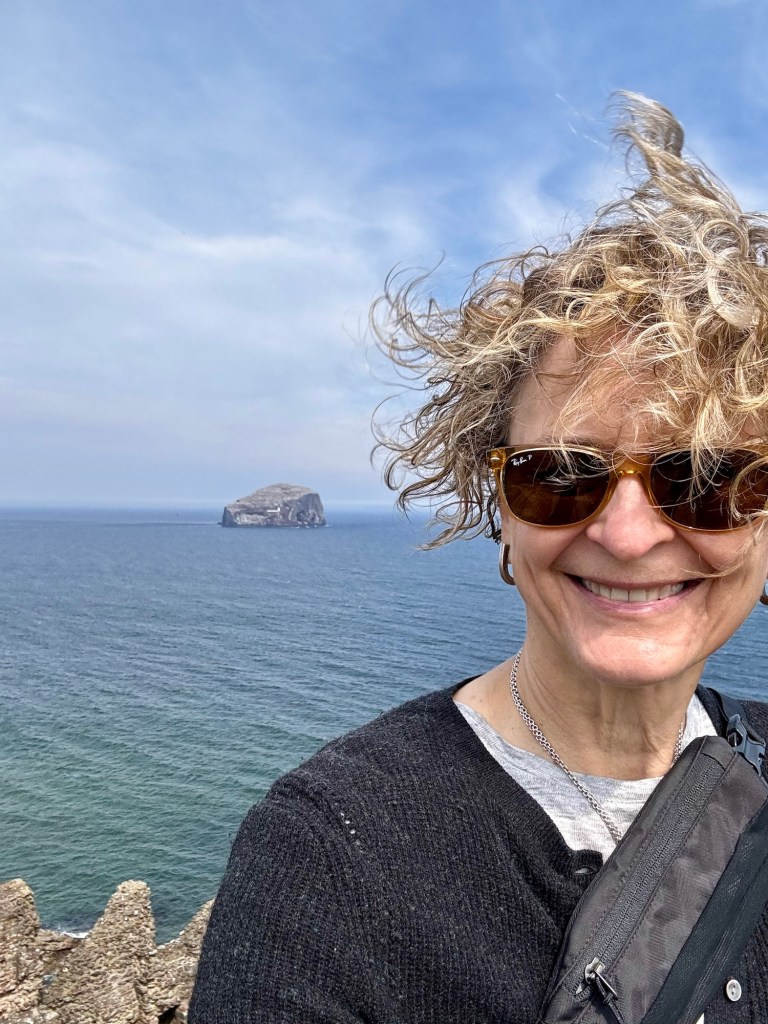
This is NOT a drone shot, it’s me at the tippy top.
Here’s my hair in the high altitude breezes to prove it.

Probably too many photos, but it’s cool, right? Anyway, back to the giant gannet colony! As you can imagine, 150,000 gannets leave droppings that off-gas 152 kg of ammonia per year, and the Bass looks white from above. And the smell would be amazing.

One would think that the island would not have been inhabited throughout history for these reasons, but no. It was settled by an early Christian hermit and later was the site of an important castle, now in ruins. James I of Scotland used to imprison his enemies there in the 15th century. The island belonged to the Lauder family (not those Lauders) for six centuries. In the 1600s it was seized by four Jacobites imprisoned there, which they held against government forces for nearly three years. One of the Stevenson lighthouses is perched on a ledge, built in 1902.

Since 1706 the island has been owned by the Dalrymple family.

Before we leave, let’s return to the gannets. Sadly, in 2022 avian influenza was detected on the Bass and more than 5,000 dead birds were counted on a single day. The disease remains a concern in seabird colonies around the world.

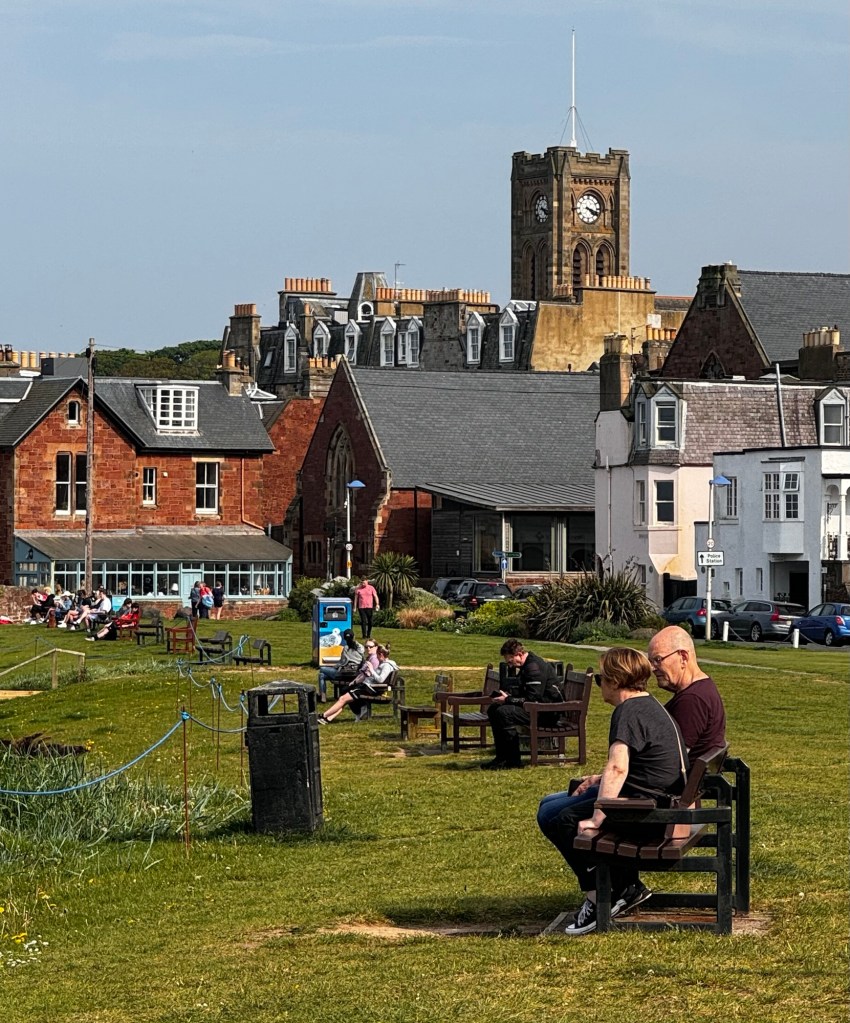
Now onto the delightful seaside town of North Berwick, which topped a list of 72 locations in the Sunday Times’ annual report of best places to live in the UK. It was selected for its combination of community spirit, connections to nearby Edinburgh, a thriving high street with independent shops and two pretty beaches. I have to say I felt the community spirit while I walked around the pretty streets.

North Berwick
The coast is lined with benches where people hang out.
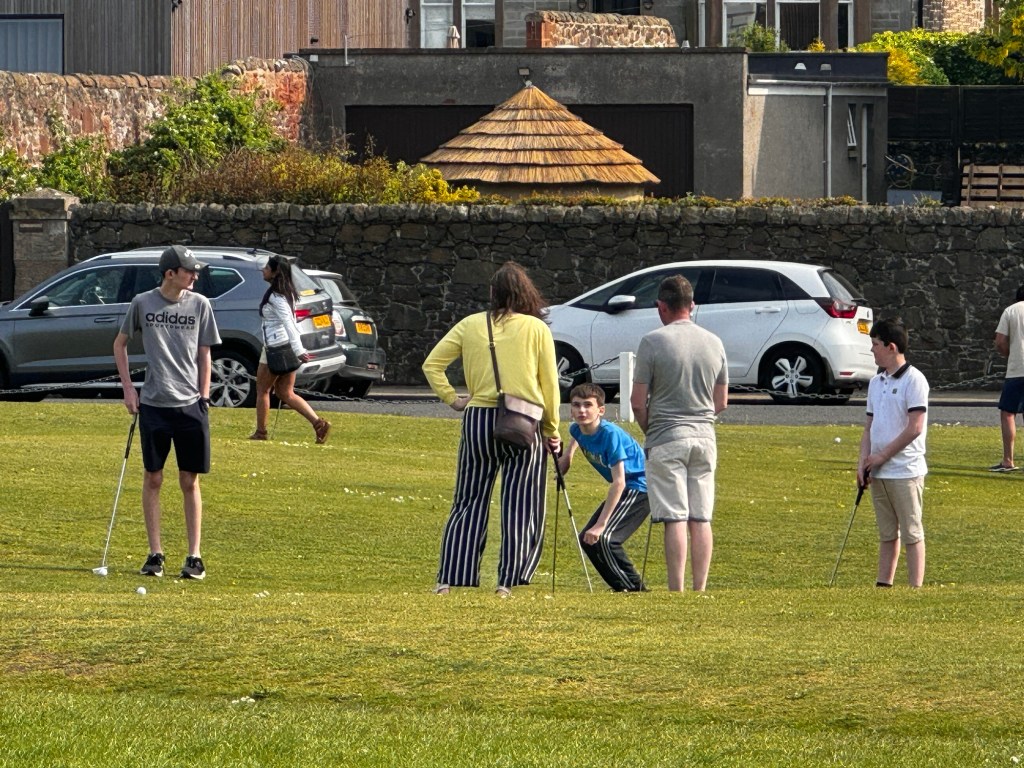
Along the shore, families gather to play tiny games of golf.
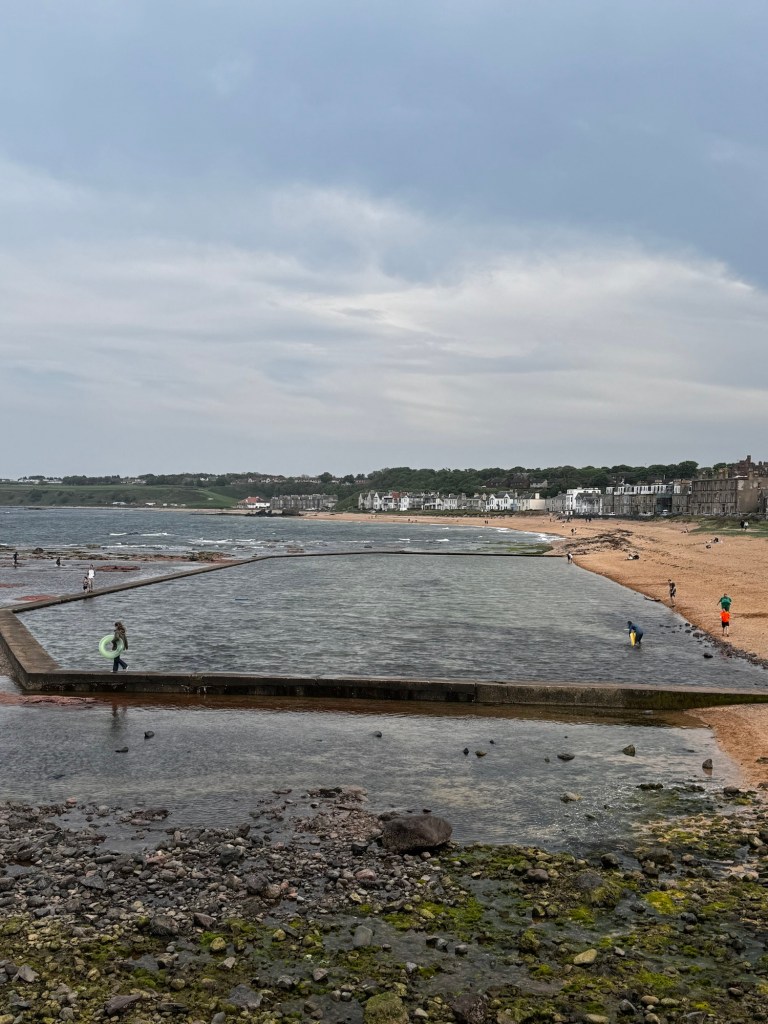
A saltwater pool next to the sea.

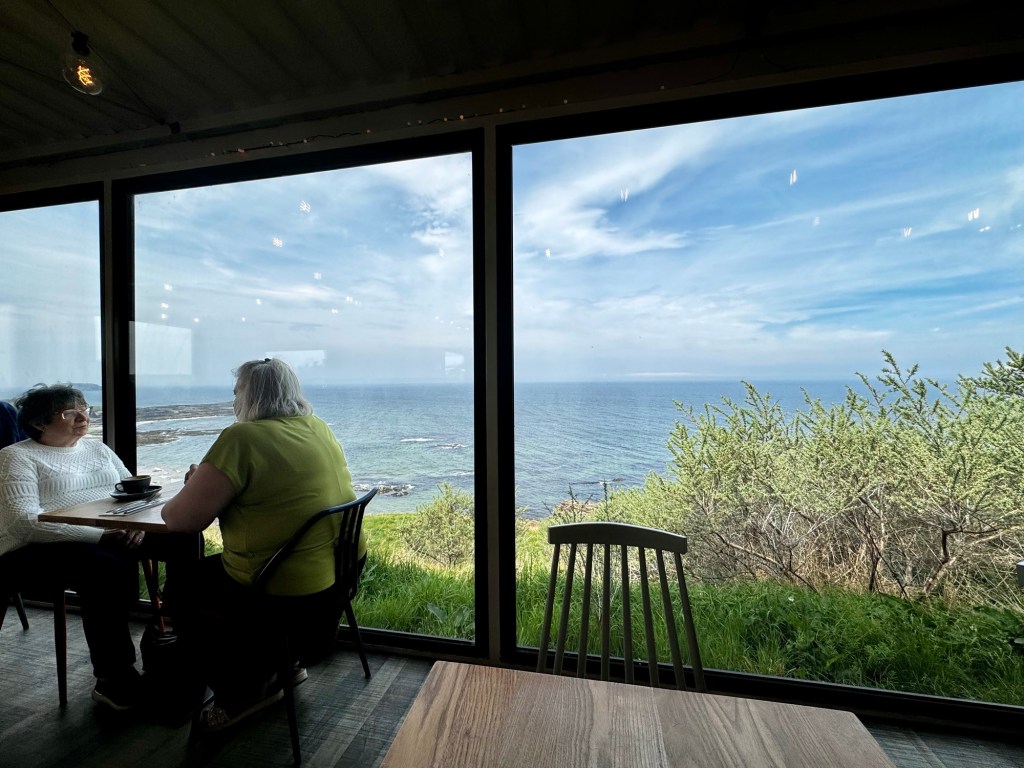
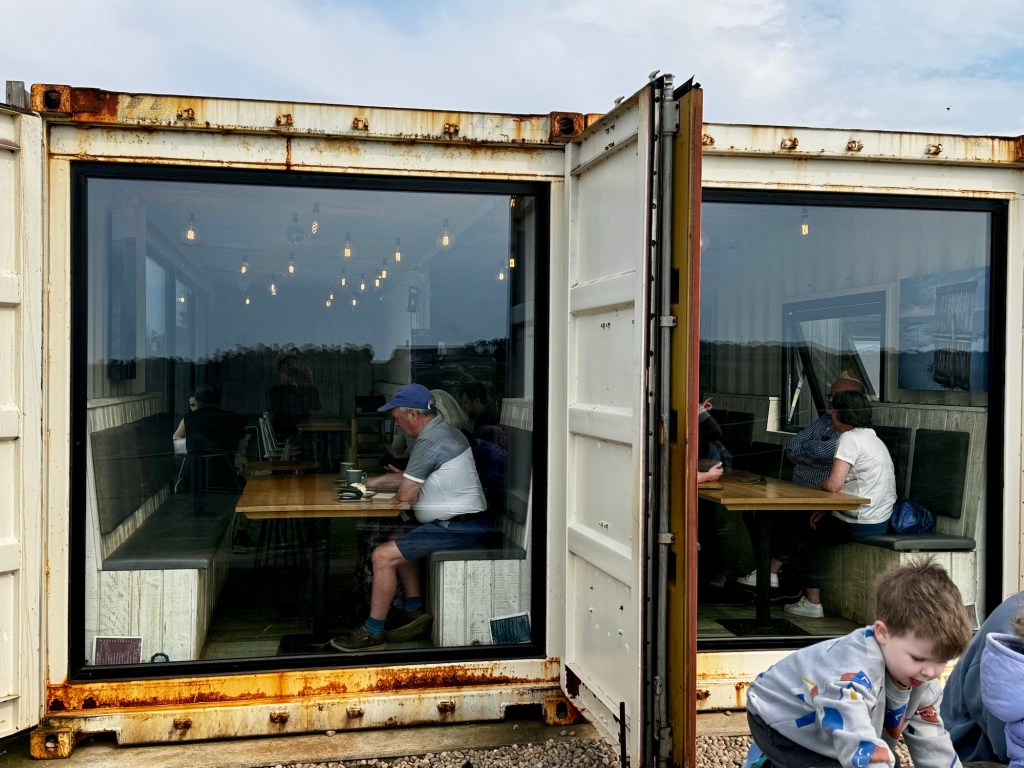
And if you ever find yourself in this beautiful part of Scotland, please have lunch at Drift, an awesome cafe on a cliff with views of the Bass.

The view from my table at Drift.
Drift and Bass Rock
The cafe design takes full advantage of the views.

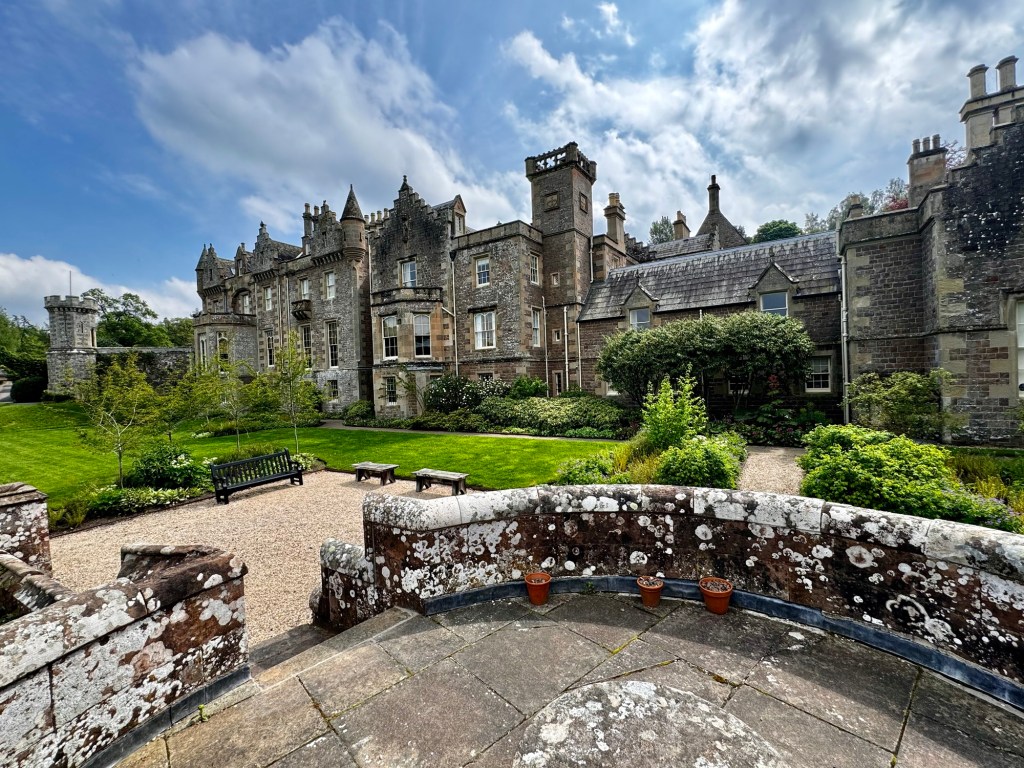
As the next day dawned, I drove to the Scottish Borders, a beautiful, fertile region featuring green, gorgeous hills and a meandering River Tweed. I visited Sir Walter Scott’s home, Abbotsford, a magnificent castle-like abode with gorgeous gardens.

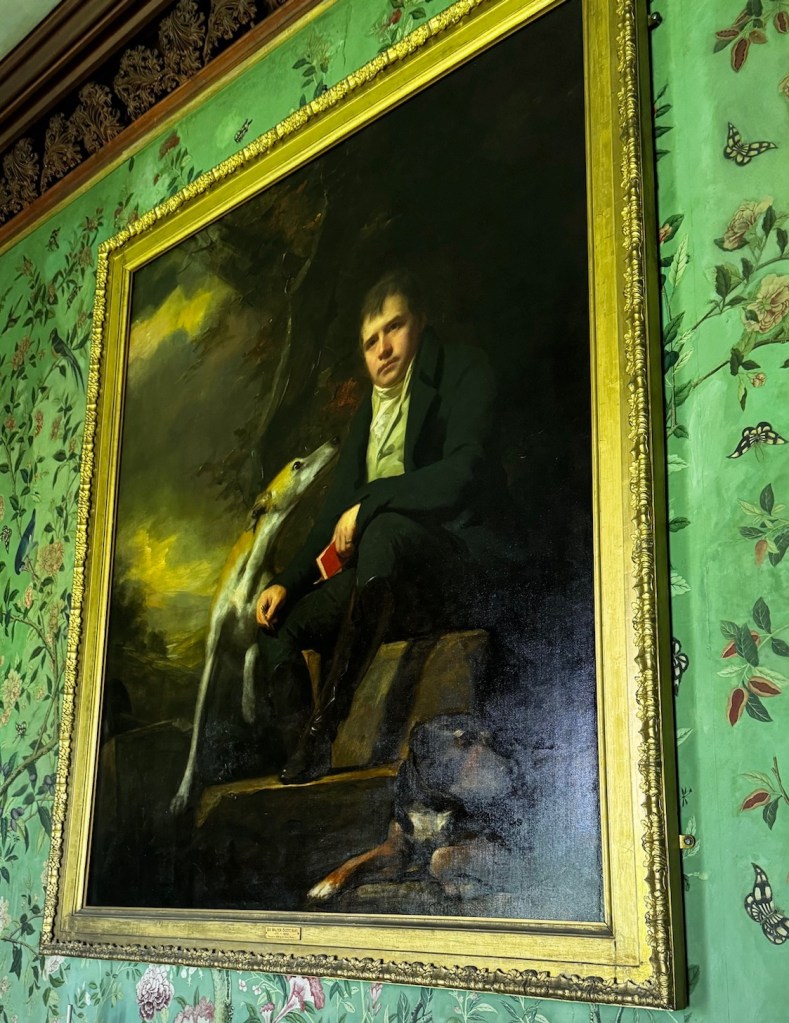
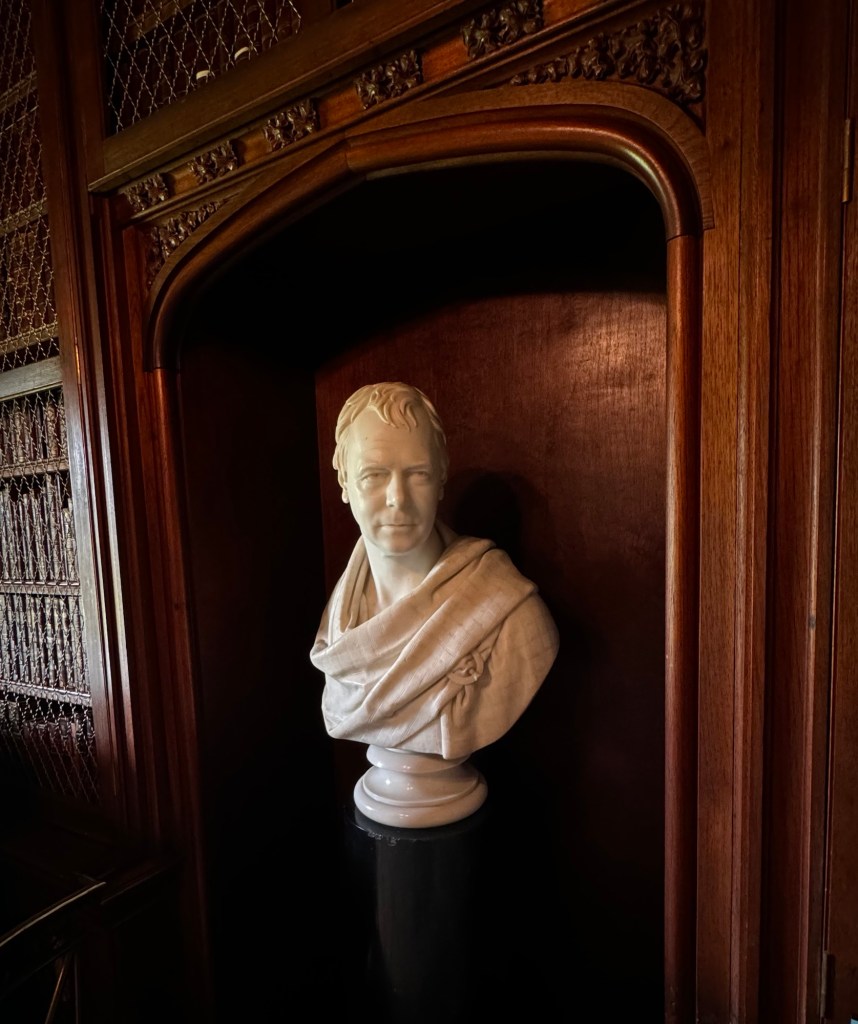
Since we’ve all only read Ivanhoe, it’s interesting to note that in fact Scott wrote 25 books and is considered to be the inventor of the historical novel. He was also a fine poet. In his spare time, he was also responsible for finding the Scottish Crown Jewels after they were lost for a wee while (see previous blog), and he stage-managed George IV’s trip to Scotland which helped rehabilitate and romanticize Highland culture. He wrote books and poems about the 1745 Jacobite rebellion, and our three lads and a lassie, Robert the Bruce, William Wallace, Rob Roy and Mary QOS.

After touring Abbotsford, I have the sense that he was a very cool guy with a cool wife and four successful kids and he’d be on my list of time machine meet-up people.

The nucleus of Abbotsford was 100 acres of farmland Scott purchased. He modestly, and then more aggressively expanded over the years, not only creating his large home but adding 900 acres along the River Tweed. Unfortunately, in 1825 a UK-wide banking crisis resulted in the collapse of the Ballantine printing business, of which Scott was the only partner with a financial interest. It had debts of 130,000 pounds (equivalent to 13.5 million today). He refused to accept financial help and instead placed Abbotsford into a trust in the name of his creditors and wrote his ass off. The debt was paid off shortly after he died.

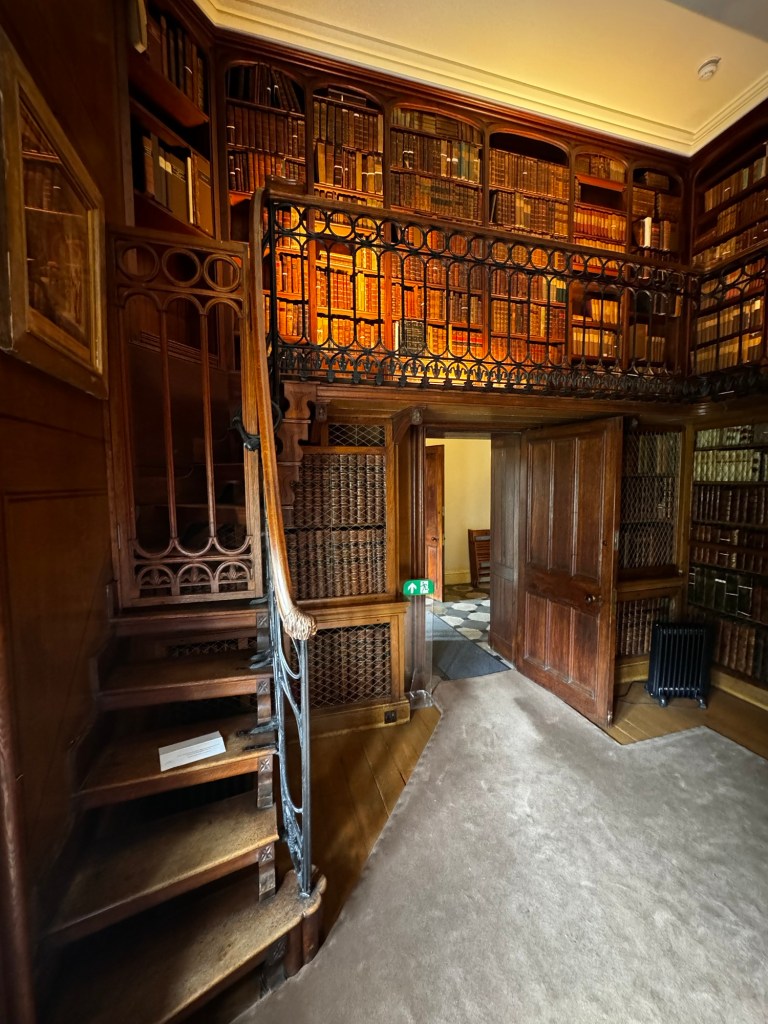
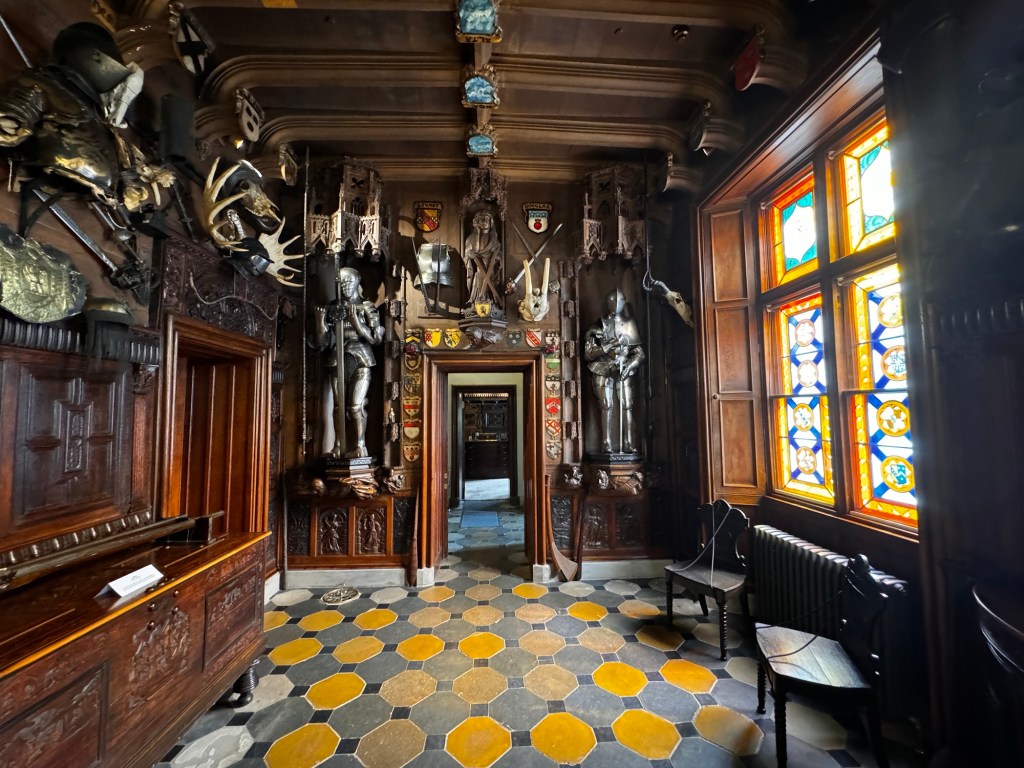
The house is gorgeous, and his interest in Scottish history apparent, as he had a fascinating collection of artifacts on display, including items apparently belonging to Peepaw Roy, Mary QOS and the Bonnie Prince. The lower floors of the house are on the tour, nothing upstairs. The house was exactly as he left it at his direction.

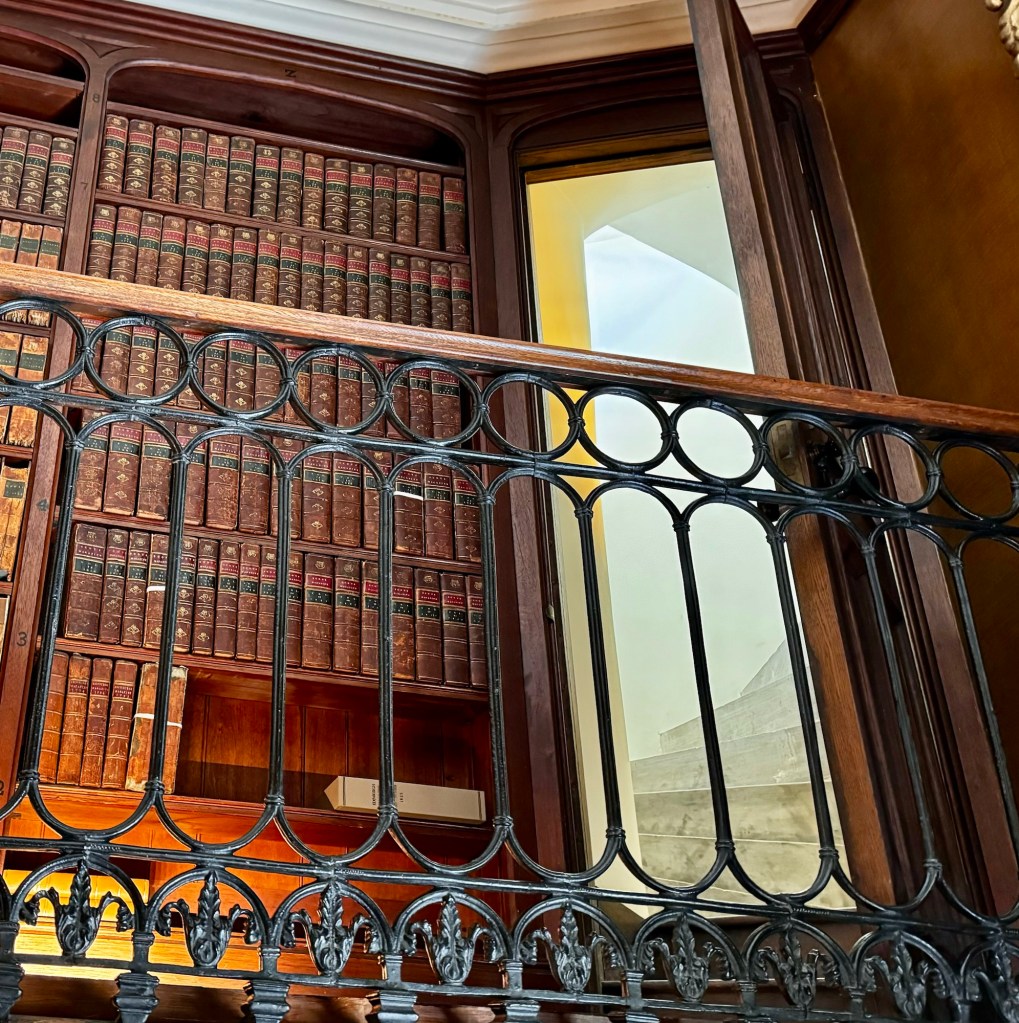
My favorite room was his study with an upper library lining the ceiling. There is a staircase up, and a door in the opposite corner leading to his dressing room, so he could escape uninteresting guests.

All of the rooms were remarkable.

The gardens are dreamy and well tended.

I was surprised by the beauty and character of the Scottish Borders, largely because somehow I’ve turned into a Highlands snob. The Borders are a quaint small town showcase, with wonderful names like Upsettlington, Blyth Bridge, Teviothead, Innerleithen, Tweedbank, Peebles and Melrose.

Speaking of which, I had lunch in Galashiels, recently named the happiest place to live in Scotland, 15th overall in the UK. Called Gala, it’s the cheapest town on the list with average home price of 163,634 pounds, or just $205,000. In addition to a very reasonable cost of living, the town has a strong sense of belonging and community spirit. One resident referred to, “so many little acts of kindness that are carried out without fanfare.”

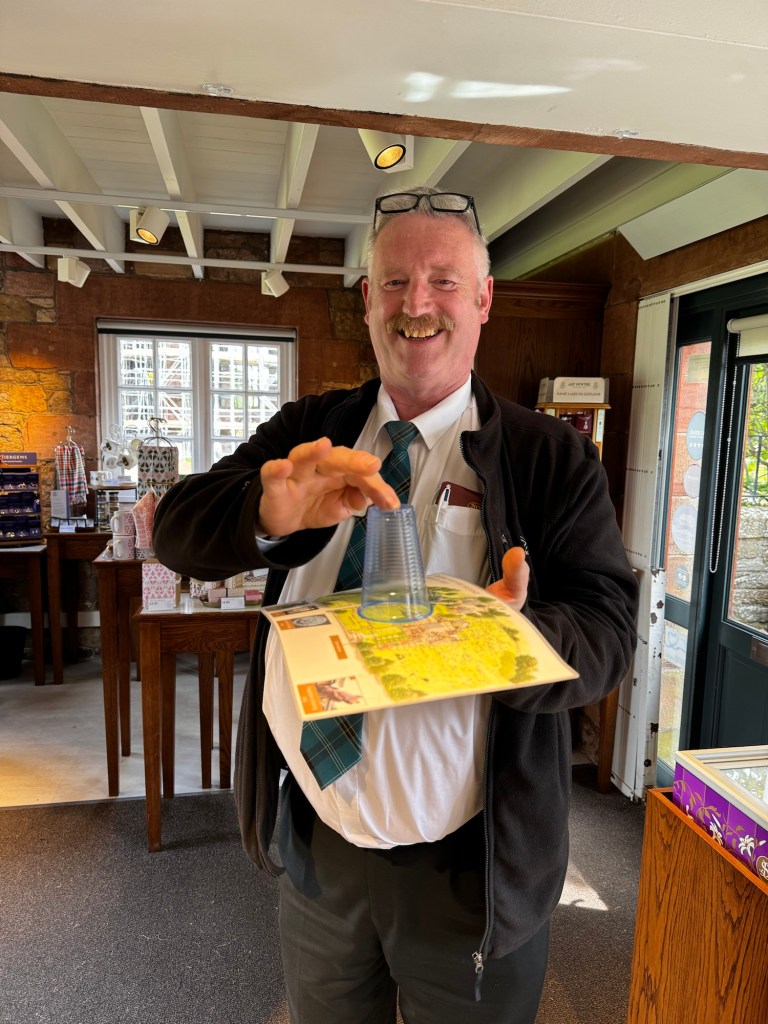
My last planned stop was the town of Melrose to visit the Abbey. As I walked into the gift shop to check in, a gallant gentleman staff member was capturing a yellow jacket between a map of the grounds and a plastic cup – ugh, those hateful bugs, they are a plague. He was adorable, congratulating me for being the 79th guest of the day and pretending to hand me his spoils as my prize.

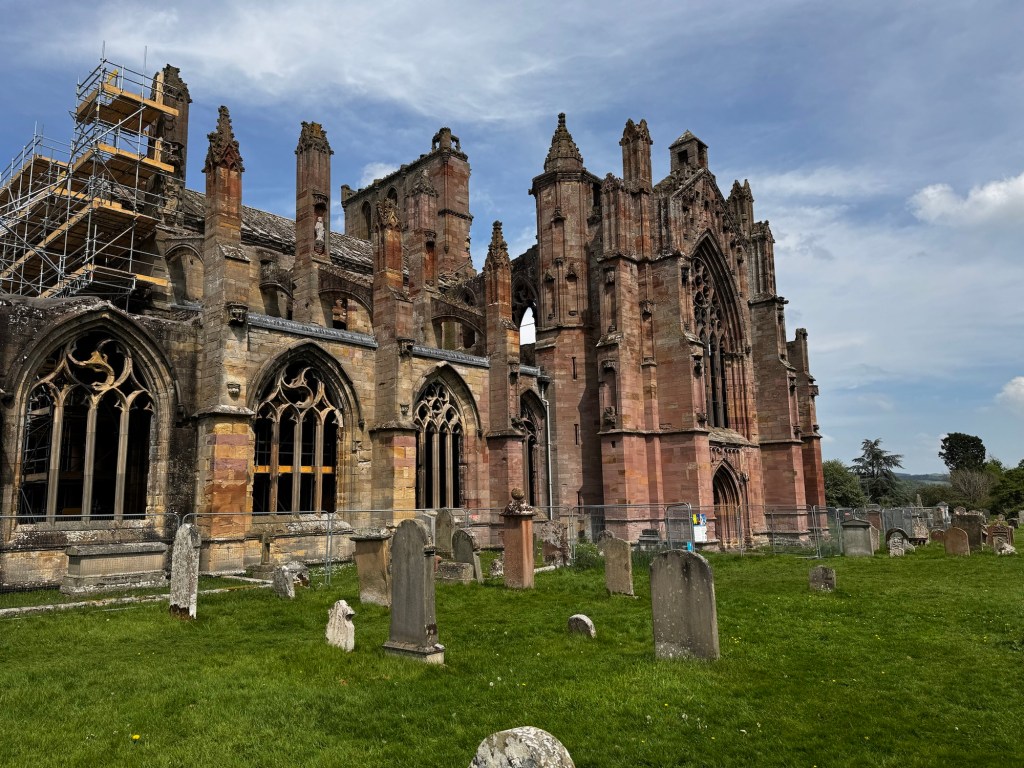
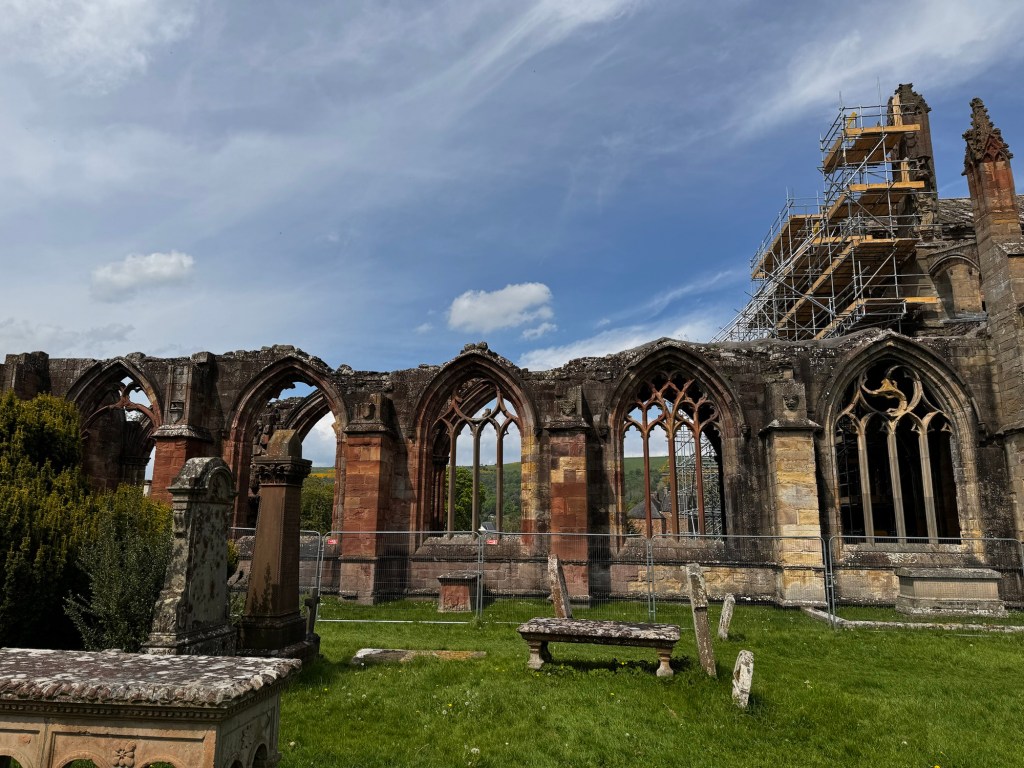
The Abbey is undergoing a wee bit of rehabilitation.

Guess what is buried on the grounds of the Abbey? The heart of Robert the Bruce. Apparently Robert had always wanted to go on Crusade but he had a hard time leaving Scotland because it required ongoing protection. So, on his deathbed, he asked his friend James Douglas to take his heart on one. Sadly the Pope hadn’t called for a crusade for a while and so Douglas intended to take it to Jerusalem’s Church of the Holy Sepulchre before burying it at Melrose Abbey. The heart was given to him in an urn to be worn as a necklace, a questionable choice. Unfortunately Douglas and his knights were instead called to fight against the Moors who were attempting to take Spain, so that’s where Robert’s heart went as well. Douglas was killed in a surprise attack but as he was dying he threw the heart into the air and shouted, “Lead on brave heart, I’ll follow thee.” THAT, my friends, is where Braveheart came from. Bruce’s heart, along with Robert’s remains, were carried back to Scotland.

The heart was buried with Douglas near the Abbey. The heart was exhumed in 1920 and then buried again without a marker, why is beyond me. Luckily, in 1996 during excavations of abbey ruins a canister was discovered with the urn inside along with a note saying it had been found in 1920. Ultimately, this was mostly confirmed to be Bruce’s heart.

It was the right age, and nobody else had the idea to bury their heart there apparently. And thus here ya go:

The heart of The Bruce

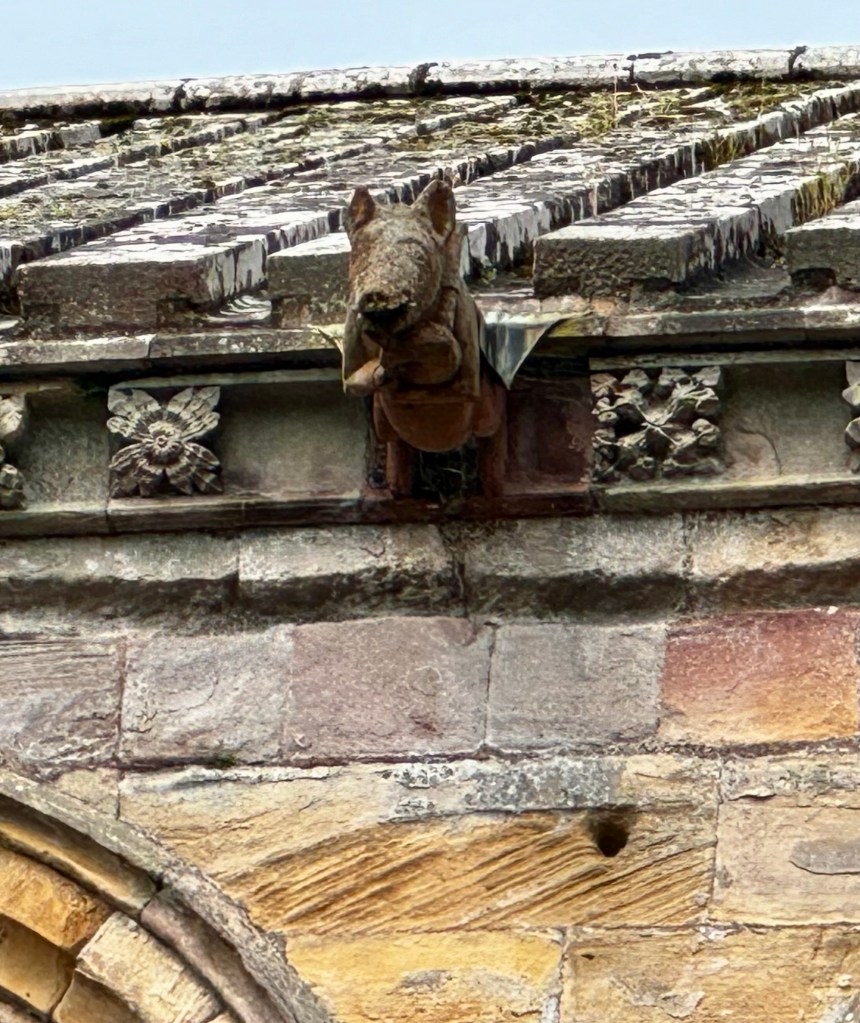
The other best thing about the Abbey is a 14th century gargoyle of a pig playing the bagpipes. It seems an odd thing for a serious place like a church, as medieval churches aren’t generally known for their wit and whimsy. The sculptor is another member of my time machine meet-up list.

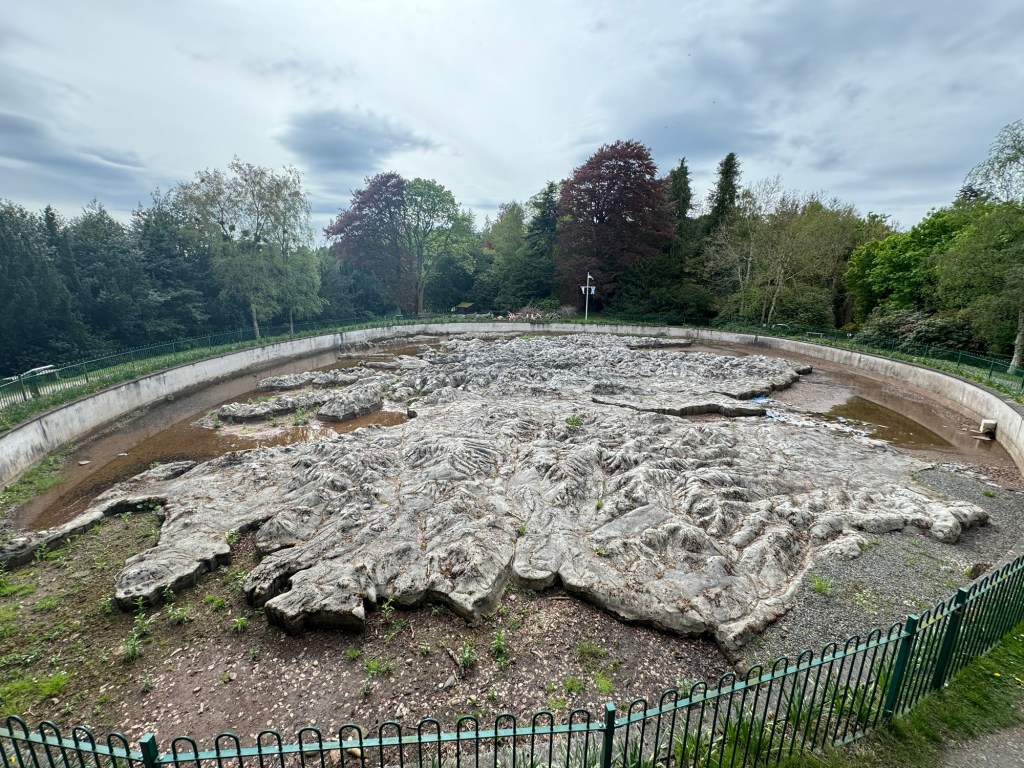
I topped off the day with an unexpected visit to a slightly sad roadside attraction. One thing about traveling alone is that you can stop whenever you want without consulting anyone, even for an adventure that might end up being dumb. When I was a kid and we were piled in the car driving across country to visit grandparents, we never got to stop at a roadside attraction. There was really no stopping for any reason unless you convinced my dad you had to pee and it had been a respectable amount of time since you last did so. So forget the Largest Ball of Twine or whatever. So in Dad’s honor, I impulsively stopped at the Great Polish Map of Scotland.

The map was the brainchild of Jan Tomasik, a sergeant in the 1st Polish Armoured Division who was stationed in Galashiels (the happiest town) in WWII. He married a Scottish nurse and became a successful hotelier after the war. He bought the Hotel Black Barony, near Peebles, in 1968 and a few years later had the idea to create a large physical relief map of Scotland on the grounds of his hotel. Out of sculpted concrete. It took six years to build. He told hotel patrons, “I shall die, but I shall leave my map as a gift to the Scottish people to thank them for the hospitality they showed the Poles when it was needed,” which is really nice.

Like the mirror box sculpture, though, it’s a little worse for wear, and you can’t really get high enough to appreciate the full impact of the piece. It’s also supposed to be surrounded by water with even some of the major rivers filled, but it’s just mucky with bits of trash.

View from the viewing platform which needs to be higher.
A sad state of affairs for Lewis and Harris.

The hotel closed in 1985 and the map became overgrown. In 2010 a group of volunteers decided to save and restore it and they secured funding for it in 2013, ten years ago now. Even though the hotel is back in action, I fear maintaining this might be a lost cause.

Even though it’s the largest outdoor relief map in the world! A few steps up from the largest ball of twine.

And with that, a most excellent day in the Scottish Borders came to a conclusion.

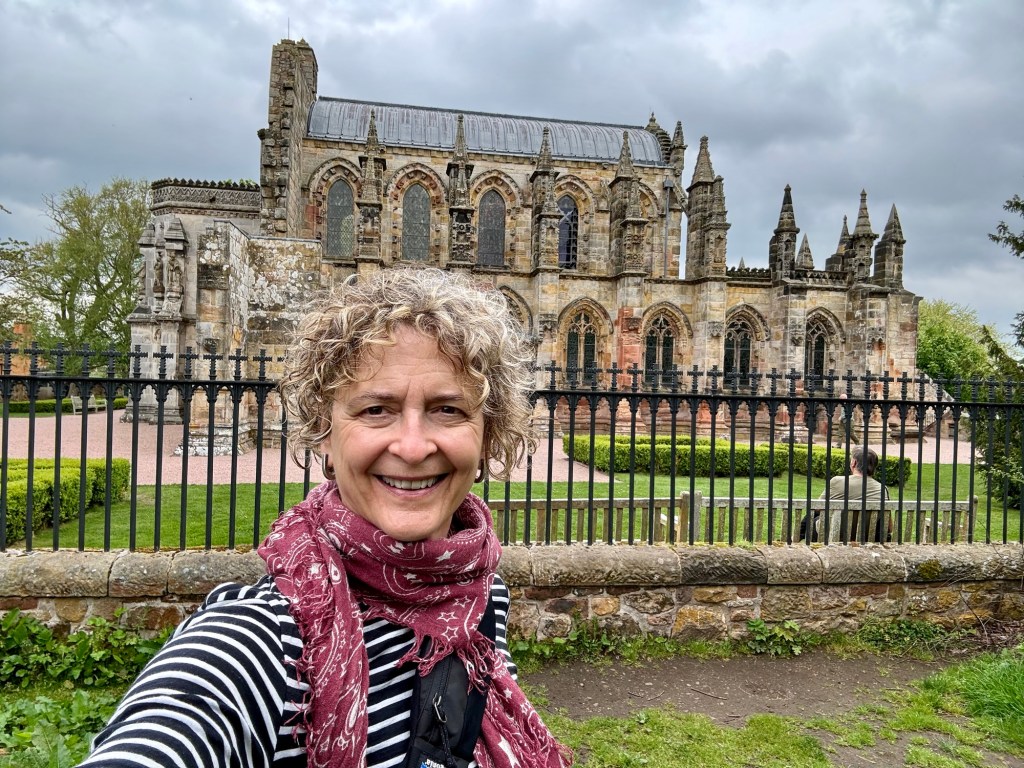
Rosslyn Chapel was on the next day’s agenda.

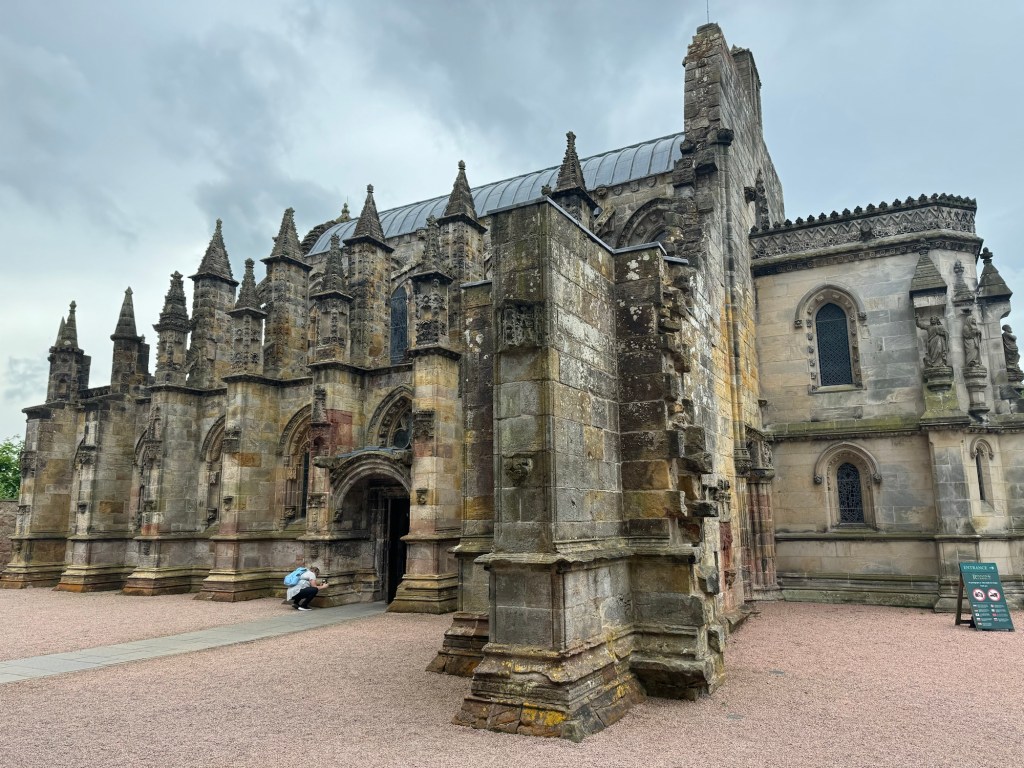
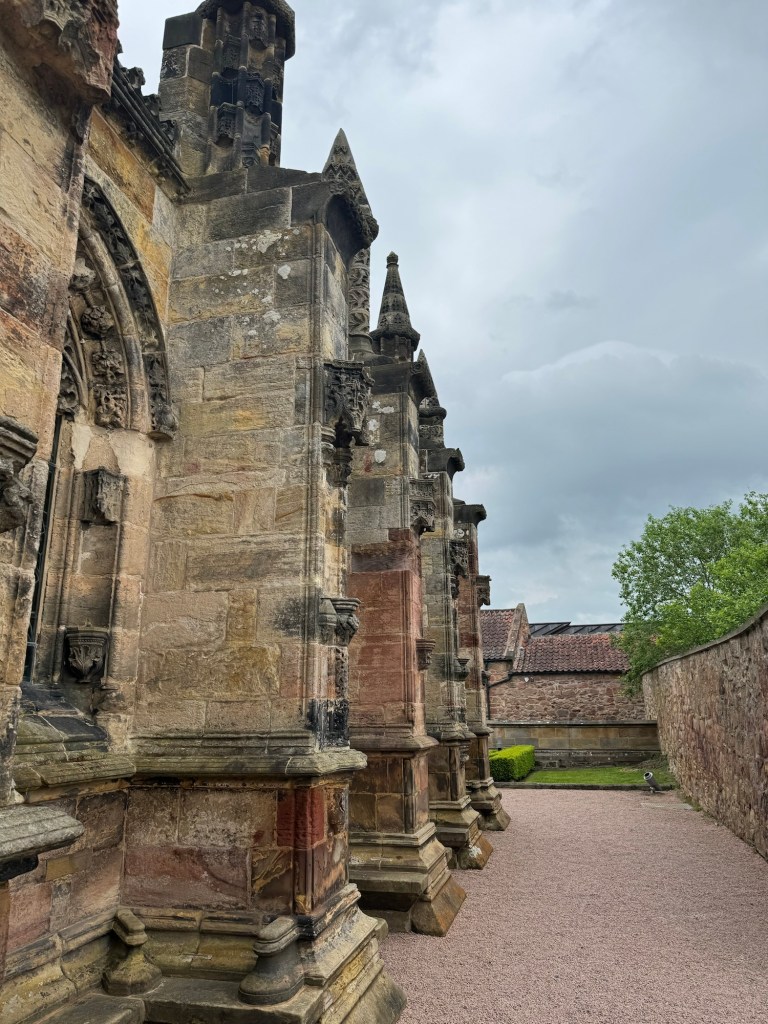
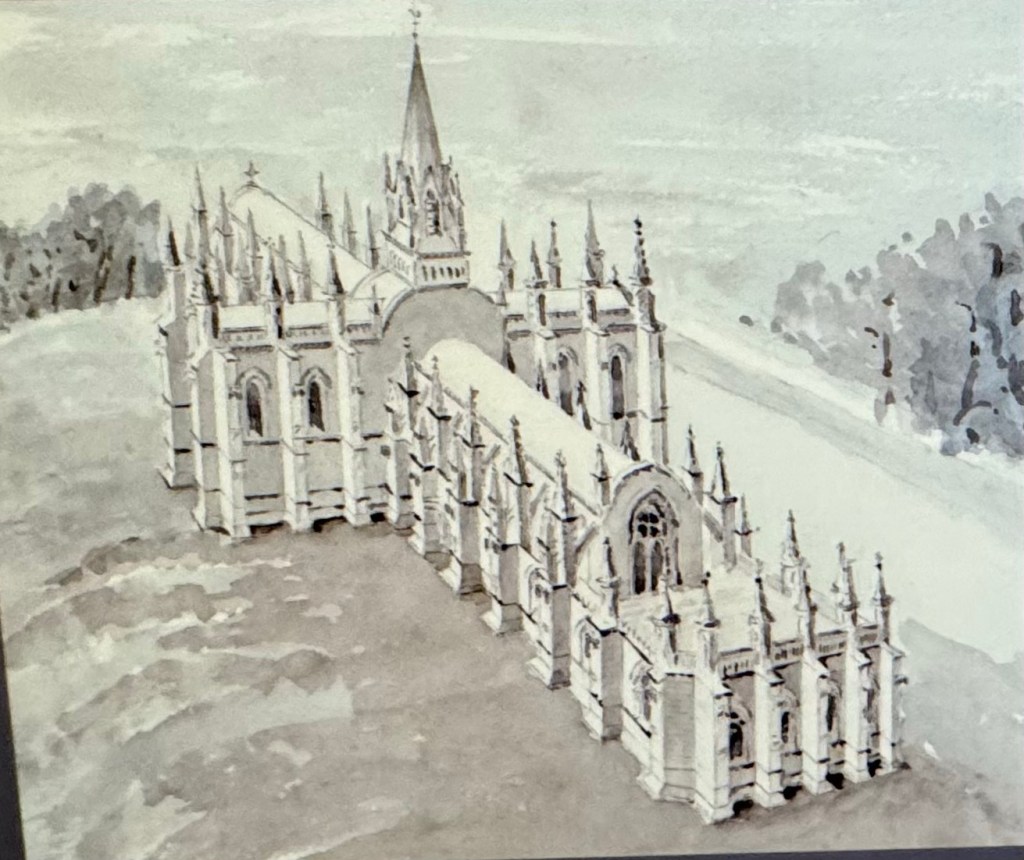
The chapel was designed and built (over a 40 year period) by Sir William St. Clair who had much grander plans than what you see, which is pretty freaking grand. His motivation was to attempt to secure his spot in heaven because that’s how you do it apparently.

The ultimate dream, alas, unrealized.

The chapel is undeniably gorgeous – hands down the most incredible church-like situation I’ve ever seen. Yet interestingly, still, after all the time, 50% of visitors are there because of the DaVinci Code.

Tom Hanks makes his first appearance on the Wee Dram!

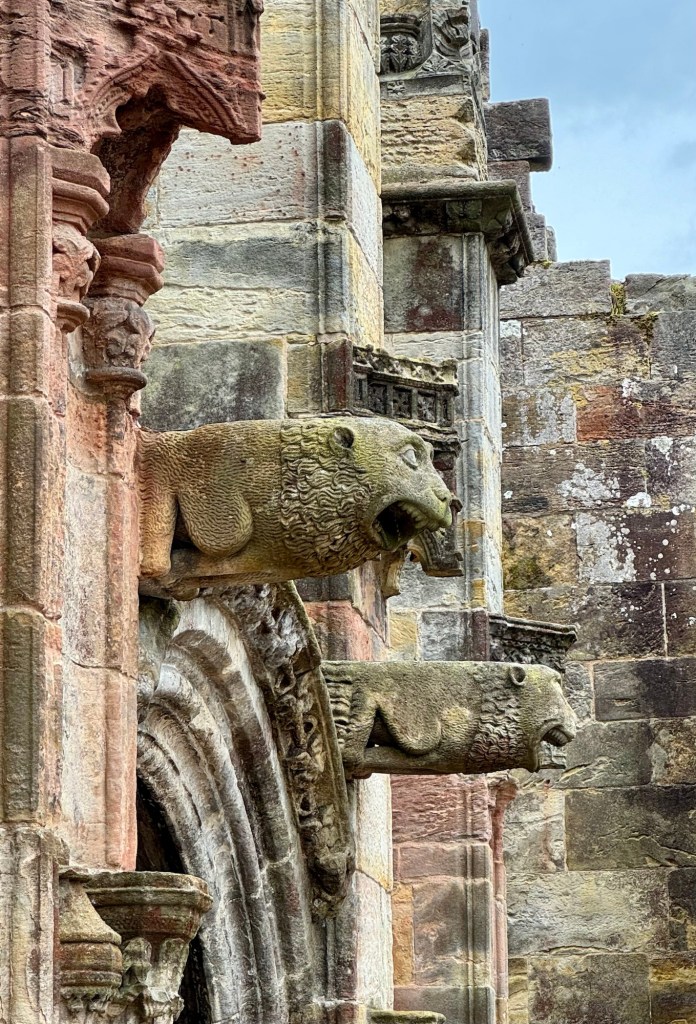
The chapel is the definition of Gothic with flying buttresses and whatnot, and so many gargoyles inside and out. As you aren’t allowed to snap photos inside, here are a couple of fantastic outdoor gargoyles.

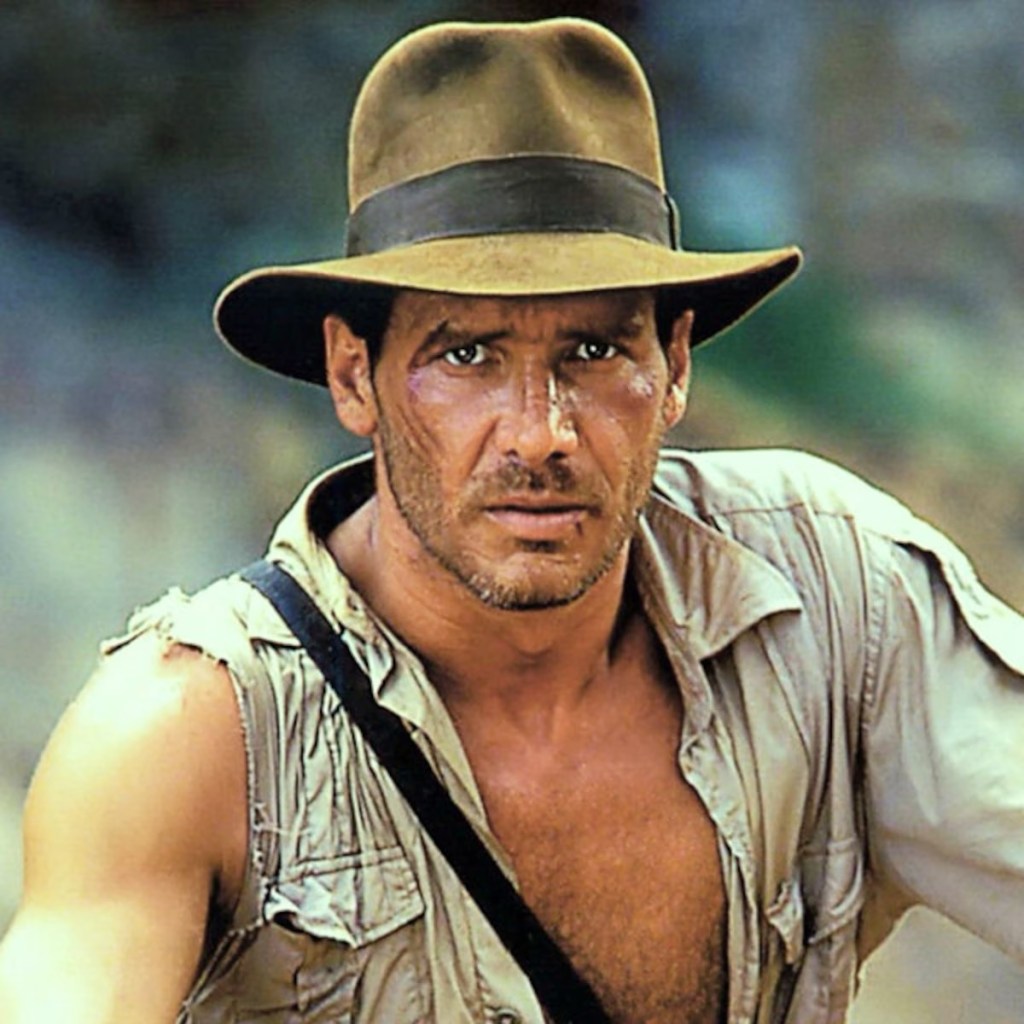
Legend tells us that a vault as deep as the chapel is high is carved out beneath the building, and inside is the final resting place of the medieval St. Clair knights who are laid out in their full suits of armor. Rumors also abound that other cool stuff is down there too, including the Holy Grail (!!), the Ark of the Covenant (!!!) and the head of Christ (!!!!!!!). Alert Dr Jones.

Ditto Harrison Ford!

Since I haven’t mentioned Henry VIII yet on this trip – now is the time. In 1544, the chapel was damaged during his so-called “rough wooing,” when he declared war on Scotland in an attempt to force the Scots to agree to a marriage between his son Edward (who died of tuberculosis at 15) and Mary QOS. Cromwell’s troops stabled their horses here while they ransacked nearby Rosslyn Castle (currently being restored), and, in 1842, Queen Victoria visited the Chapel and expressed the desire that it be preserved. Also, the adjacent Rosslyn Inn hosted Edward VII, Dr. Samuel Johnson, Robert Burns and Walter Scott as guests.

Rosslyn Inn

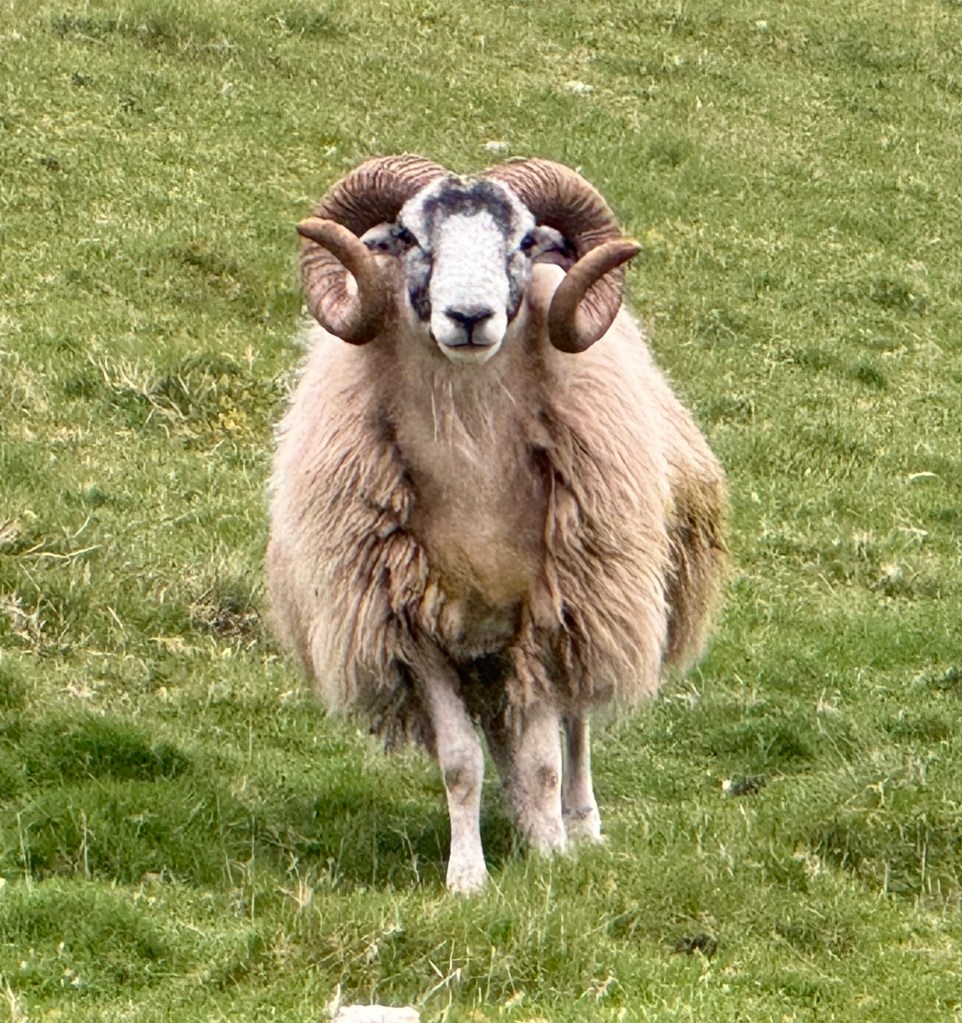
I returned to Eastside Farm, and had one last lovely walk. In my absence, they had moved the sheep around, and so now the males, which are separated from the females and their babies in the spring, were patrolling the road. I wasn’t entirely sure about this guy. We had to negotiate a few things.

And with that, dear readers, we are off to Shetland.

Say goodbye to Oscar.

Three Lads and a Lassie: Rob Roy, William Wallace, Robert The Bruce and Mary

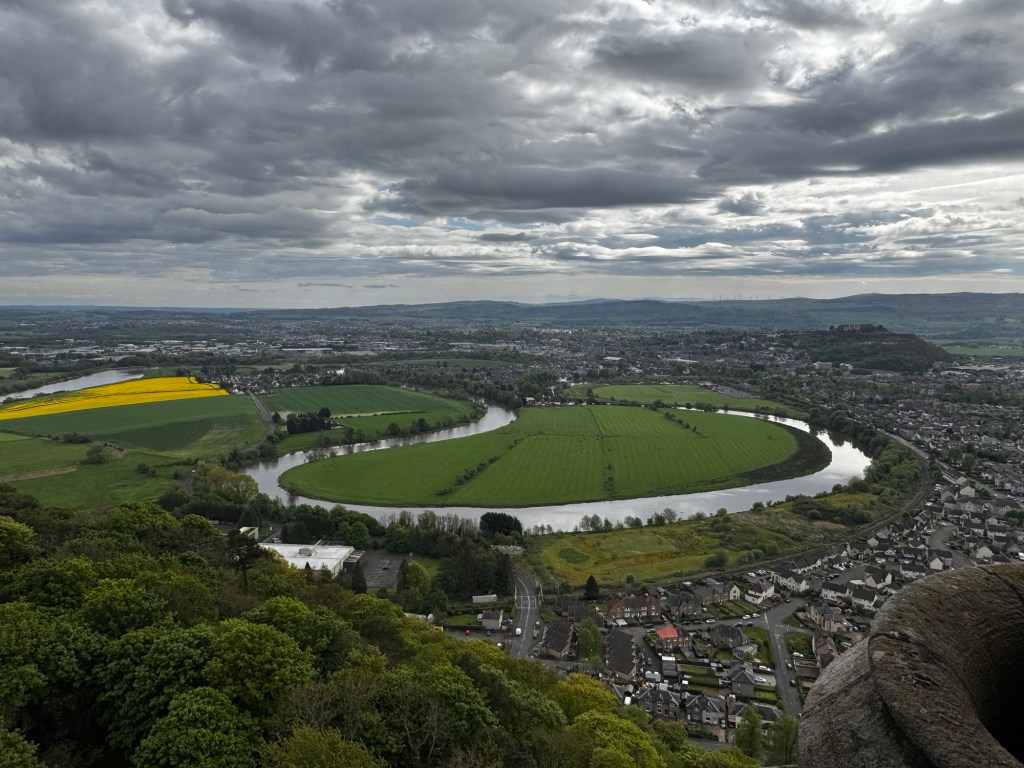
Stirling, from the National Wallace Monument

It’s quite striking how much of Scotland’s notable history over thousands of years occurred in the Isles. Back in the day, coastal routes were the country’s express lane – much quicker and easier to travel by sea than slogging overland across boggy, mountainous roadless terrain.

The other area of concentrated history is the Central Belt, the geographic center of Scotland. It’s the the lowland strip between the Firth of Forth (Edinburgh) in the east and the Firth of Clyde (Glasgow) in the west. It’s a relatively small area, the girlishly slim waist of the country, with Glasgow, on the west coast, being only 41 miles from Edinburgh, on the east. The area has been Scotland’s major population center forevs. As a result, wherever you visit in the Central Belt, chances are it has been previously frequented by Robert the Bruce, William Wallace, and/or Mary Queen of Scots as well as other long, long-ago personages.

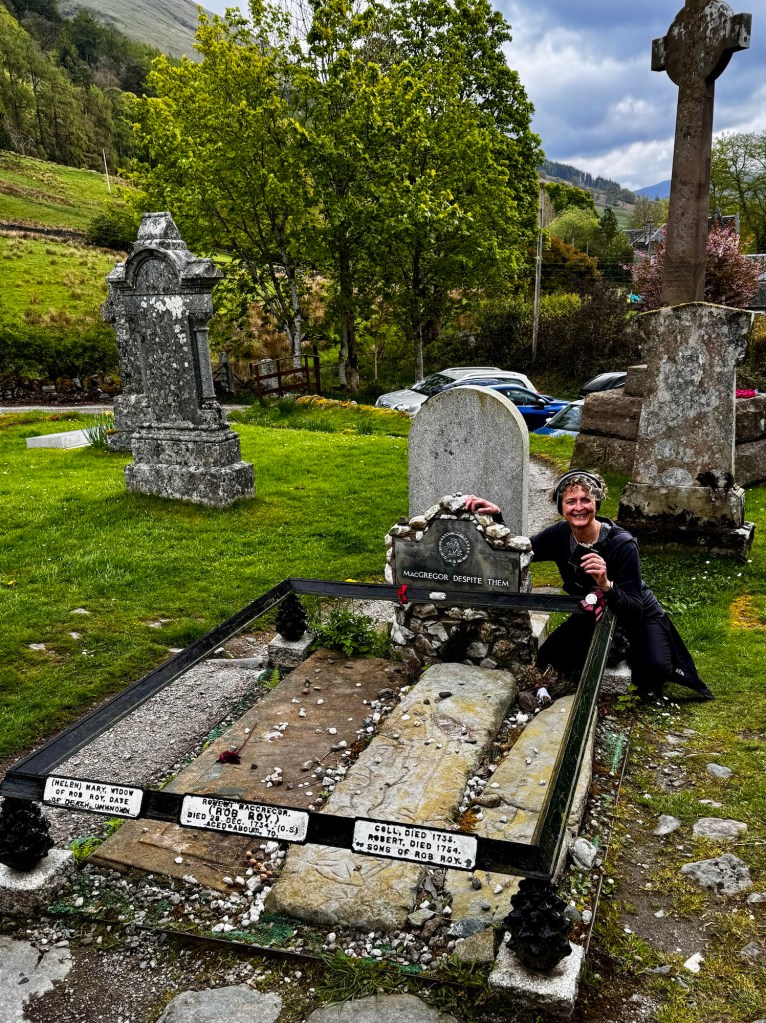
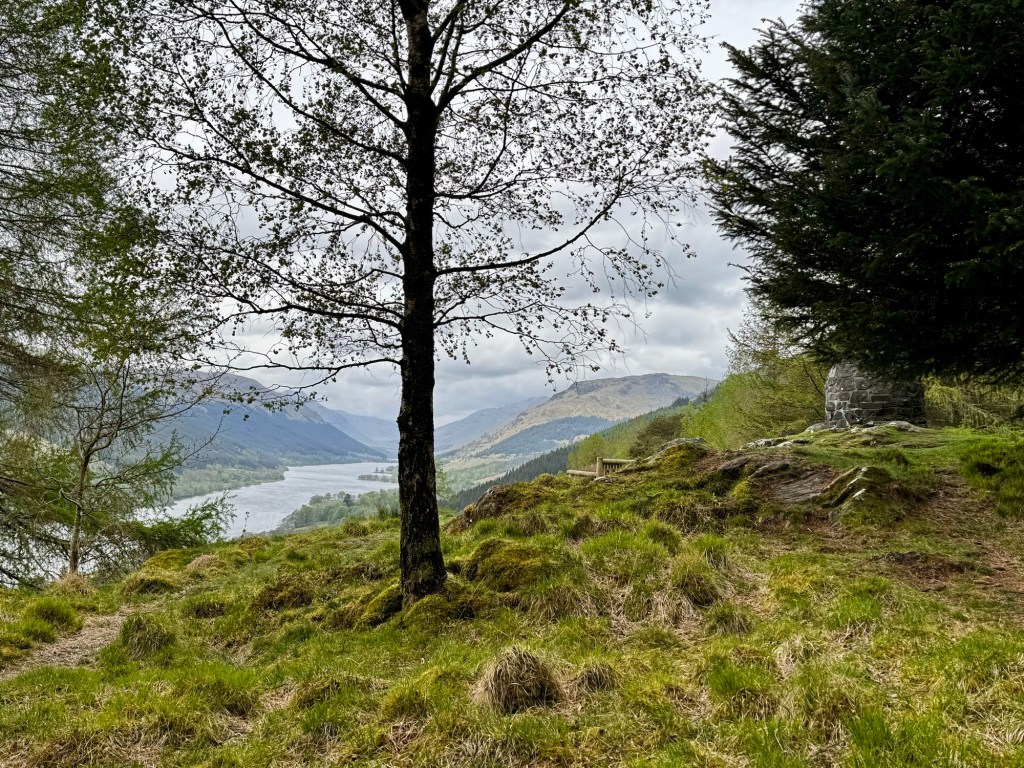
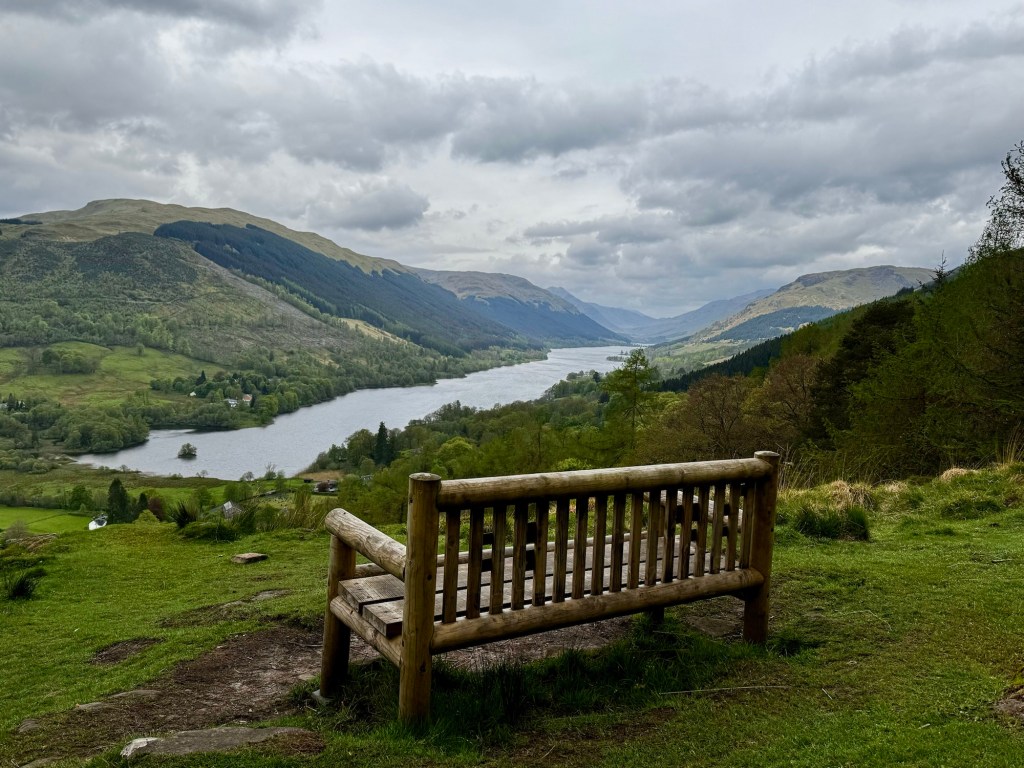
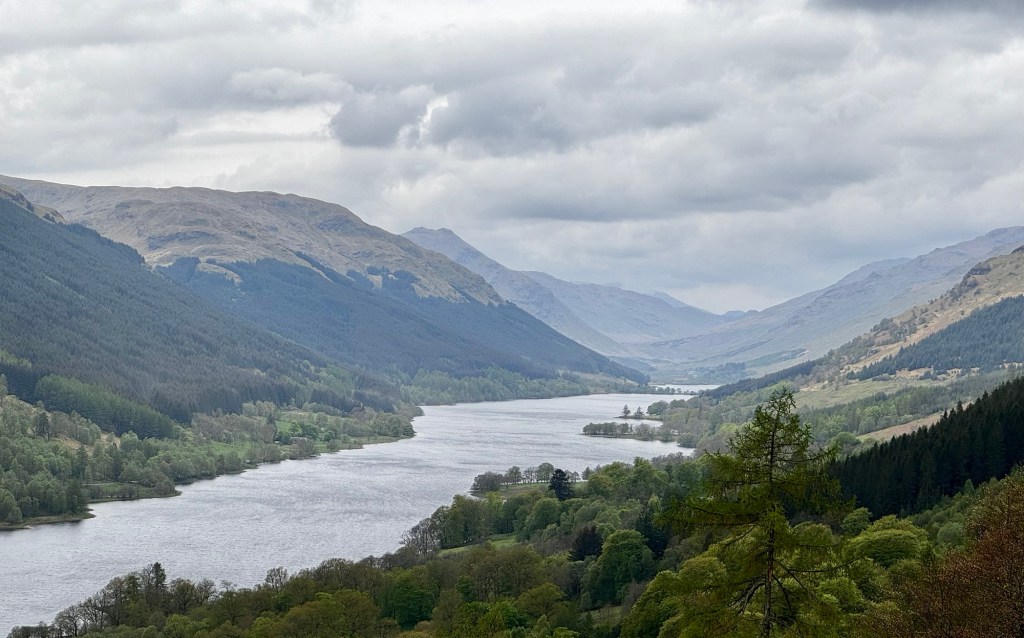
Rob Roy’s area of influence was pretty limited to the Highlands, but he’s included in this one-sided conversation of ours because he might be an ancestor (only in my mind and the invisibly slim fact that Gregory is a long-ago bastardization of MacGregor). Also because on my way to Stirling, today’s destination, I stopped to visit my great great great etc Peepaw’s grave at Balquhidder Parish Church and climb the hill behind it for one of my favorite views in Scotland, a drop dead vantage point overlooking Loch Voil. It’s a sweet, sweet spot and I’ll always check in when I’m passing, as you do with family.

Now, mind, Rob Roy was basically an outlaw who became a Robin Hood-esque folk hero during his lifetime thanks to a book written by Daniel Defoe and published in 1723 called The Highland Rogue. King George I pardoned him just as he was about to be involuntarily transported to the colonies, and the 1817 publication of Rob Roy by Walter Scott posthumously polished the sheen of his hero street cred.

Berlioz composed an overture in his name, Liam Neeson played him in a film and, the ultimate honor, in 1894 a bartender at the NYC Waldorf Hotel created a Rob Roy cocktail (whisky and vermouth garnished with a cherry which is a sad waste of whisky). He did fight in the 1689 Jacobite rising but like many other clan chiefs during the 17th and 18th centuries he also ran a protection racket, offering to safeguard cattle in exchange for cash he needed to feed his clan. This, along with cattle rustling, was common way to earn a living. He was declared an outlaw only when he defaulted on a loan because his chief herder absconded with the loan money.

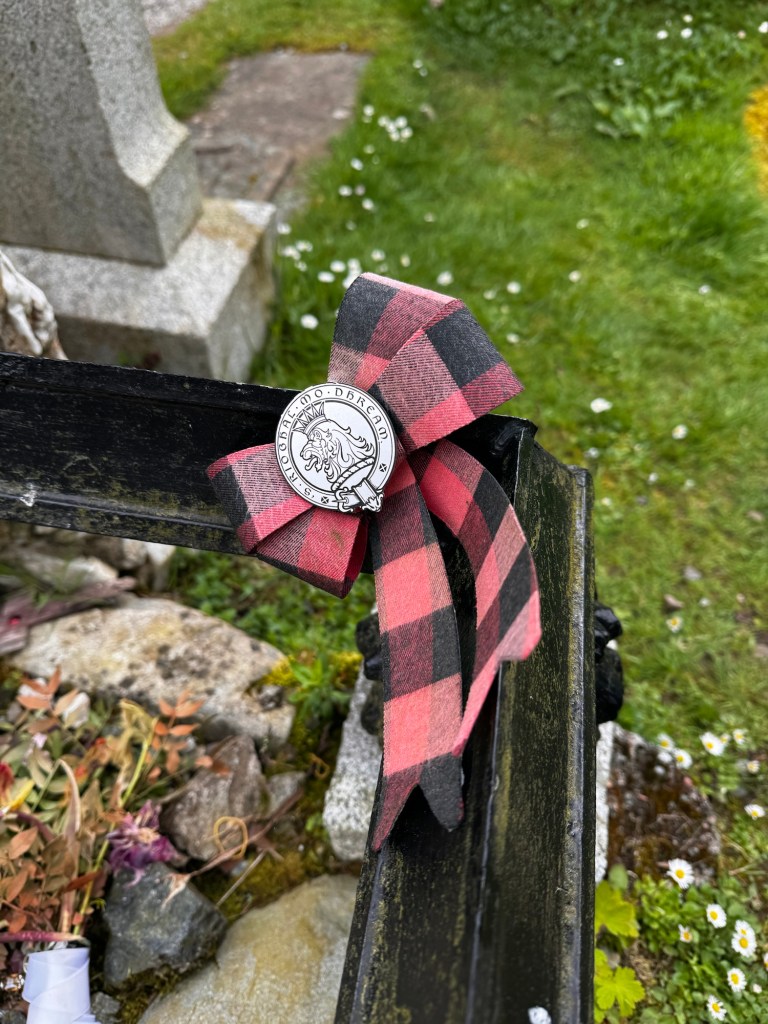
Graveside bling.
Loch Voil
Pathway to the top

This area was known by the Celts as being a “thin place” – where boundaries between earth and, shall we say, not-earth, however you define that, are especially narrow.

When you visit, you’ll understand why.

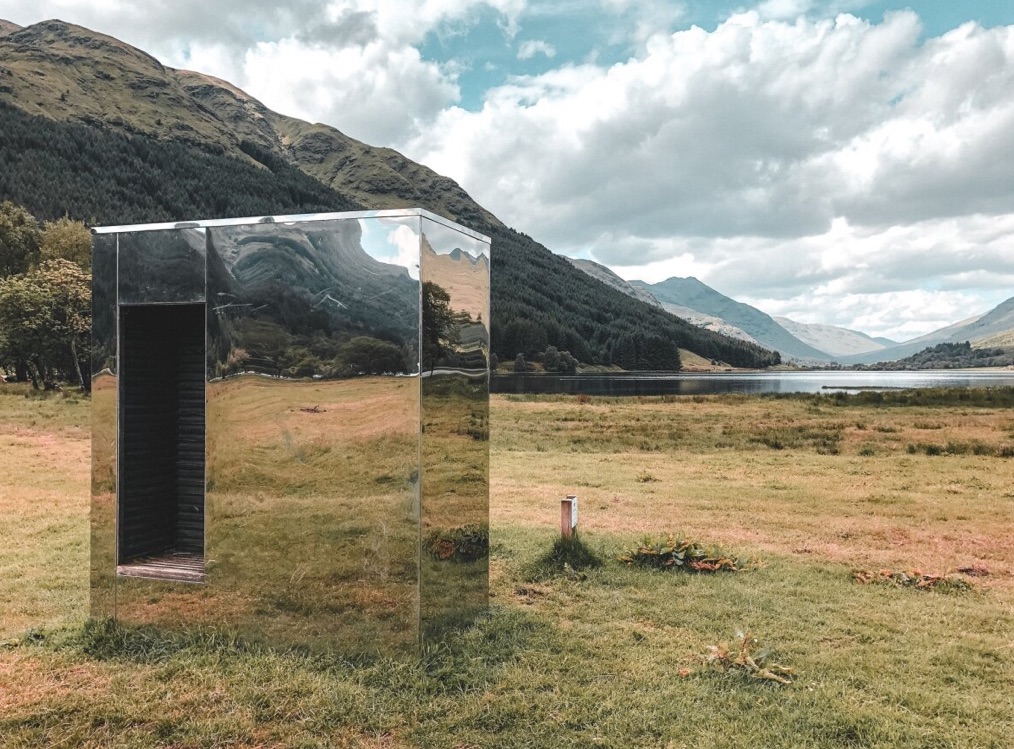
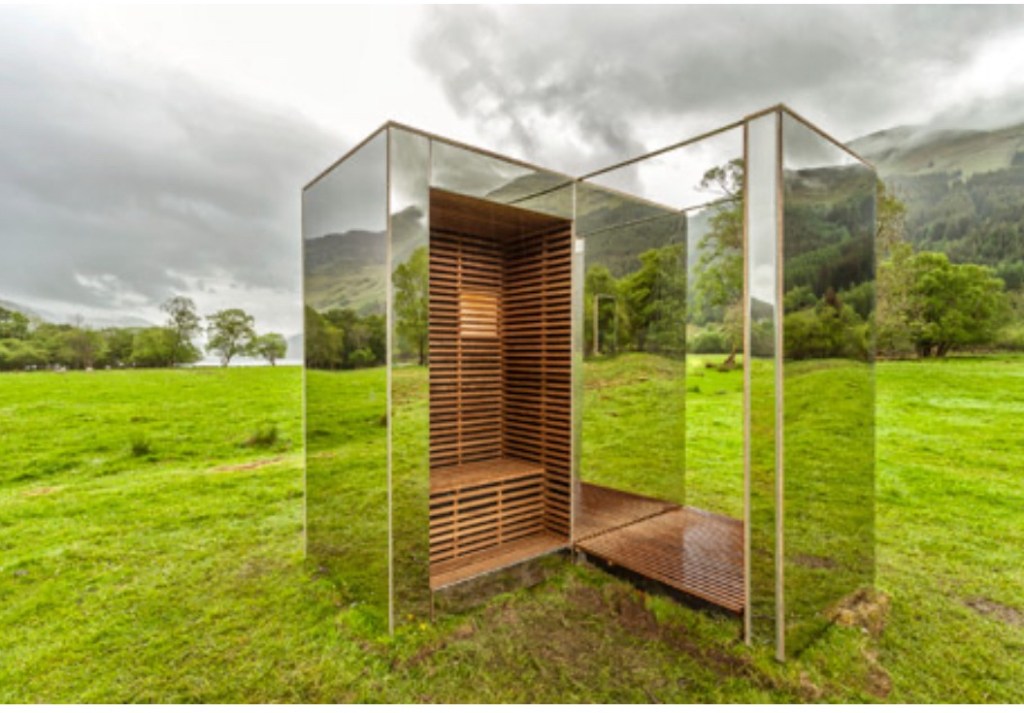
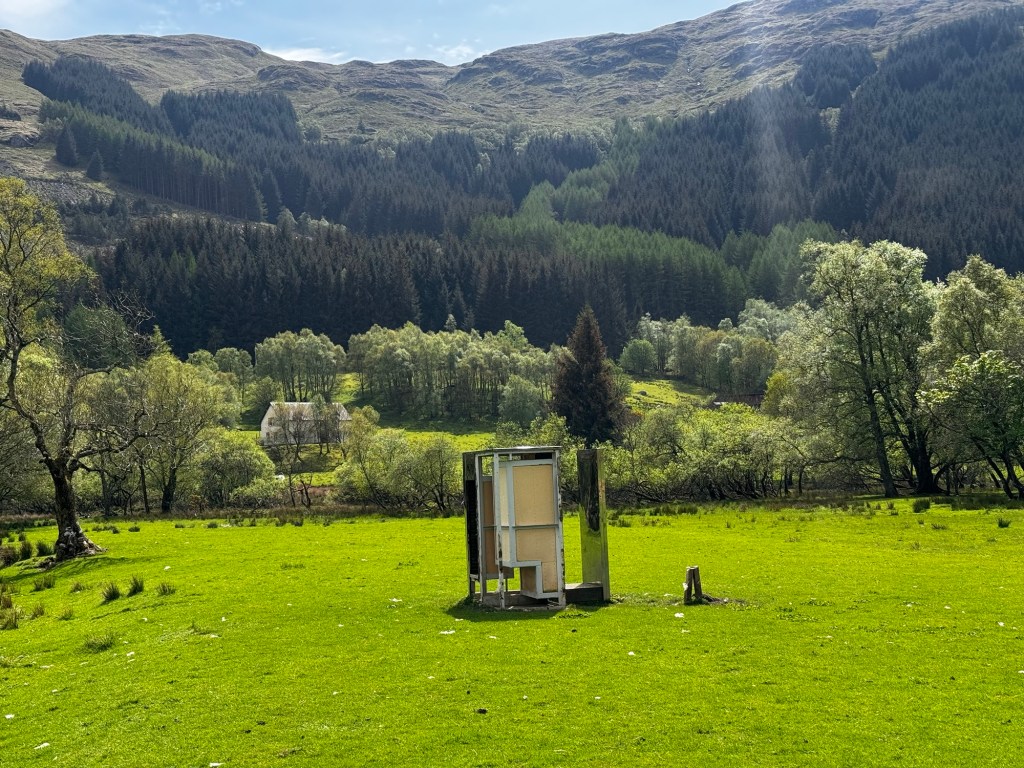
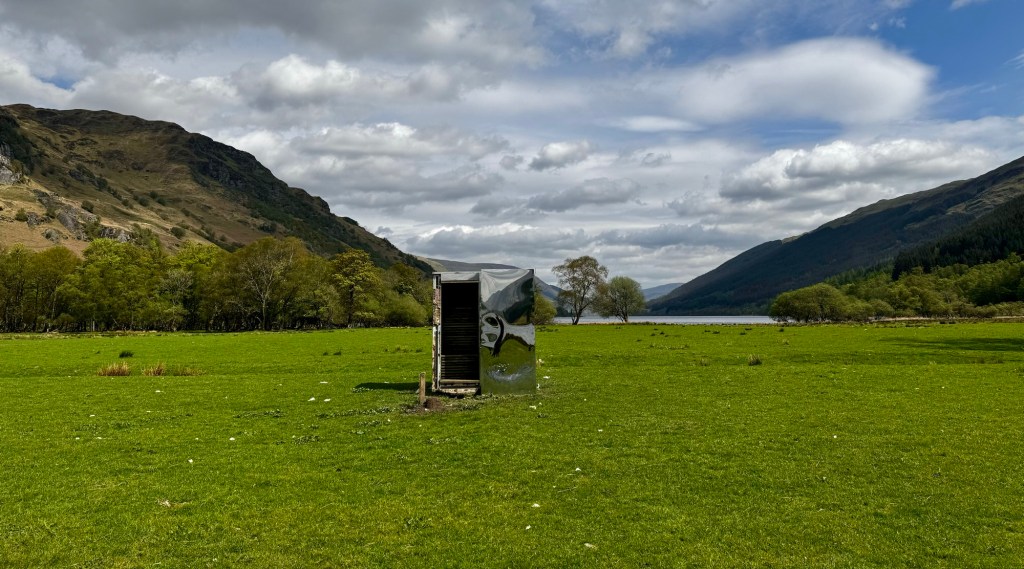
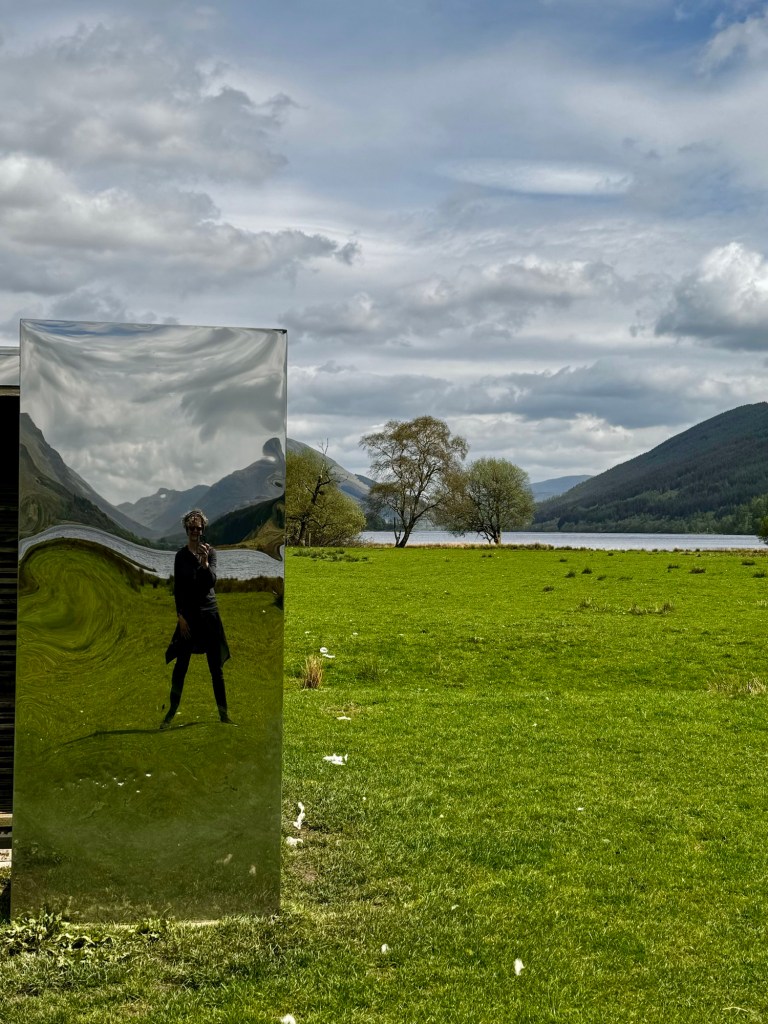
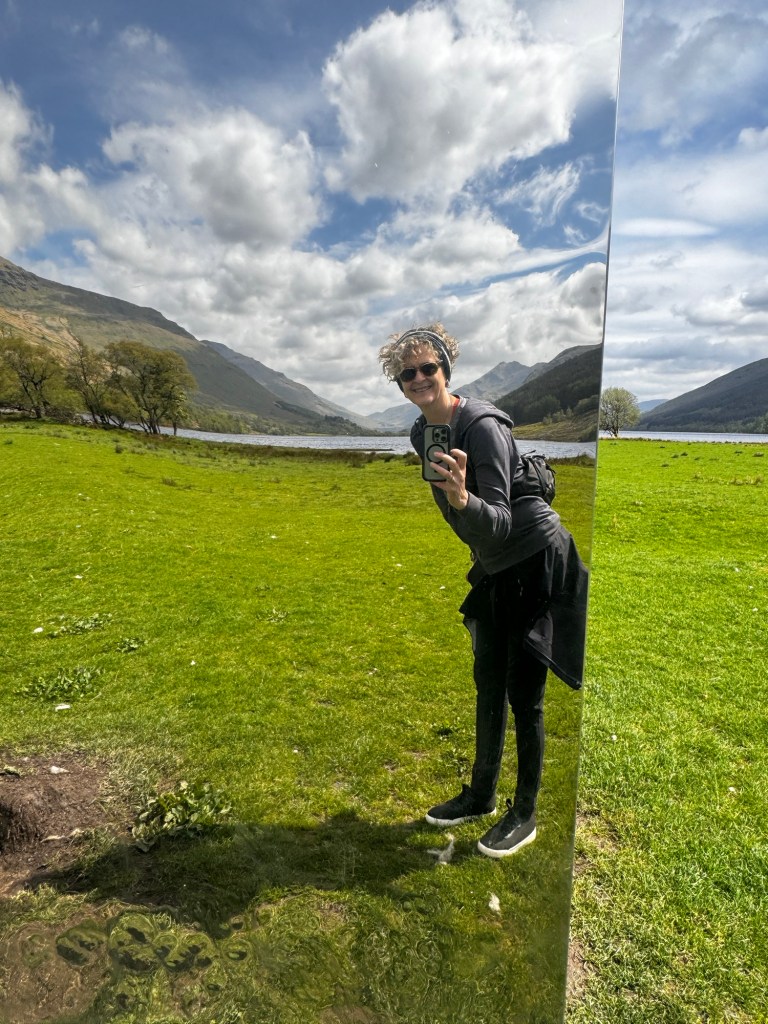
I also wanted to find a sculpture, one of many that have been installed throughout Trossachs National Park. The piece is a mirrored box called the Lookout, and it was designed, built and installed between two lochs by architecture students Angus Ritchie and Daniel Tyler. To say it’s a remote area is an understatement. Another drive down a curvy single track road on the edge of a loch, I am starting to specialize in them.

The sculpture was installed ten years ago, and I was sad to see that the elements have taken a toll over the years. But it’s still pretty cool.

Here’s what it looked like originally, so you know.

It’s gotten a wee bit rickety and downtrodden over time with many of the panels blown off. It may not be long for this world.

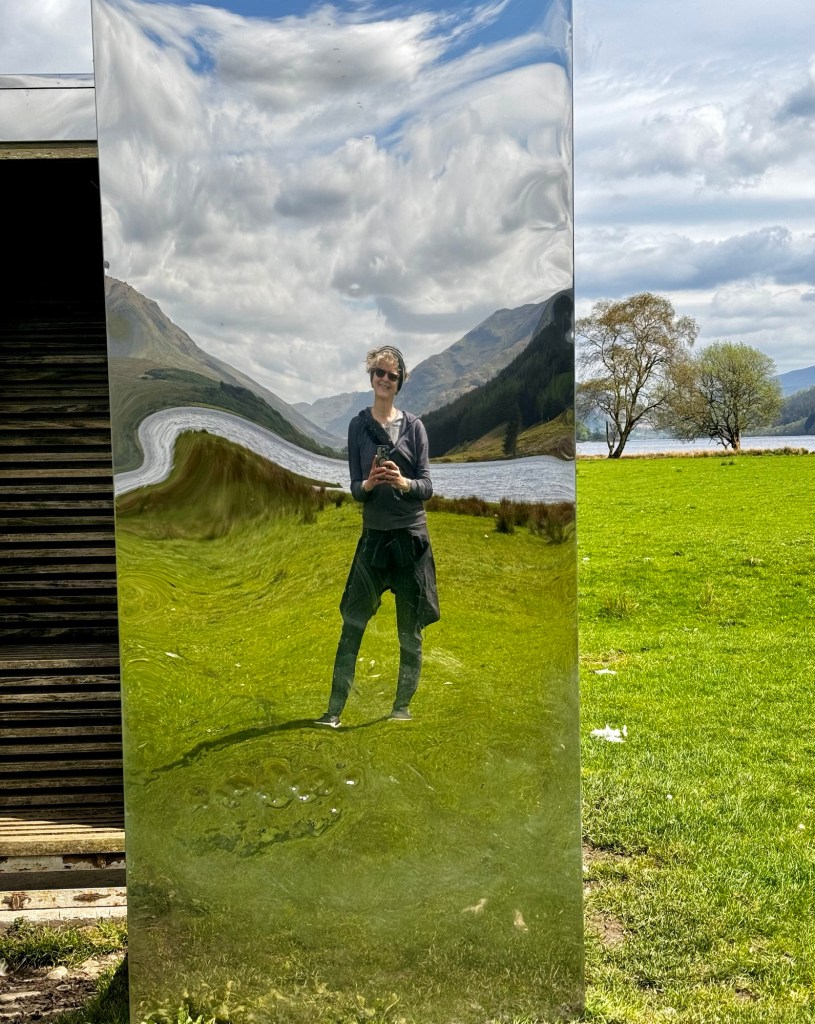
But still quite entertaining for those of us who are easily entertained.

What a beautiful place.

So enough meandering, let’s go to Stirling, the Schiphol of the Central Belt.

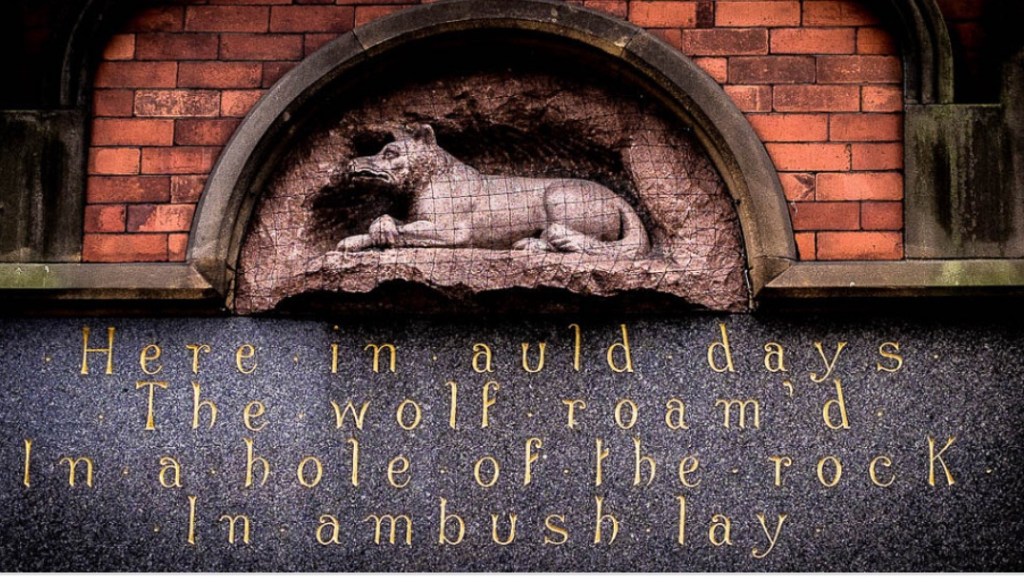
There’s the teensiest bit of history around Stirling. Its earliest catalogued artifact is a stone cist containing 4,000 year old human bones. The earliest surviving structure is a fort built by denizens of days of yore, and by that I mean the Iron Age, over 2,000 years ago. Stirling was declared a royal burgh by King David I in 1130 – and ps he’s a fascinating character but I’ll say no more. Stirling has always been of strategic importance due to its central location and control of the River Forth. The town’s mascot is the wolf because back in the 9th century, while under Anglo-Saxon rule, it was attacked by “Danish Invaders” aka Vikings. The sound of a wolf’s howl, legend has it, raised a sentry who alerted the garrison and fought the Vikings into a retreat.

There are SO many other things which I’ll spare you as you are always so patient with all the history. In keeping with our theme, though, this fine town is the location of the 1297 Battle of Stirling Bridge where William Wallace’s outnumbered forces were defeated the English army. Nearby was the 1314 Battle of Bannockburn, where Robert the Bruce did the same and ultimately became king because of it.

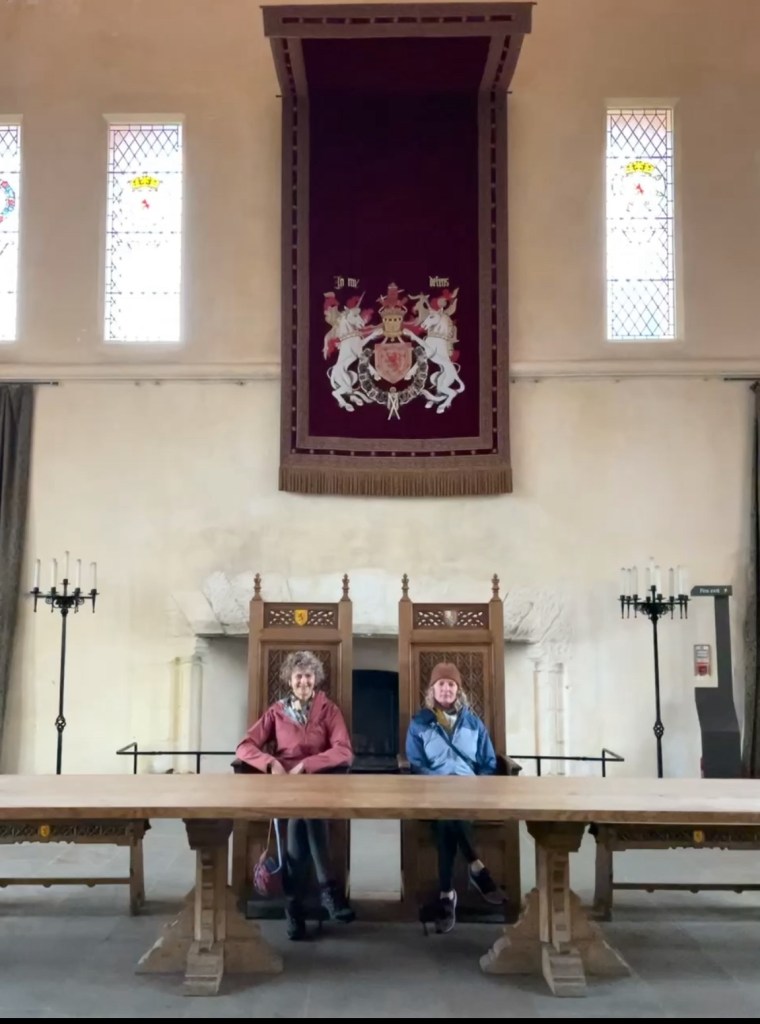
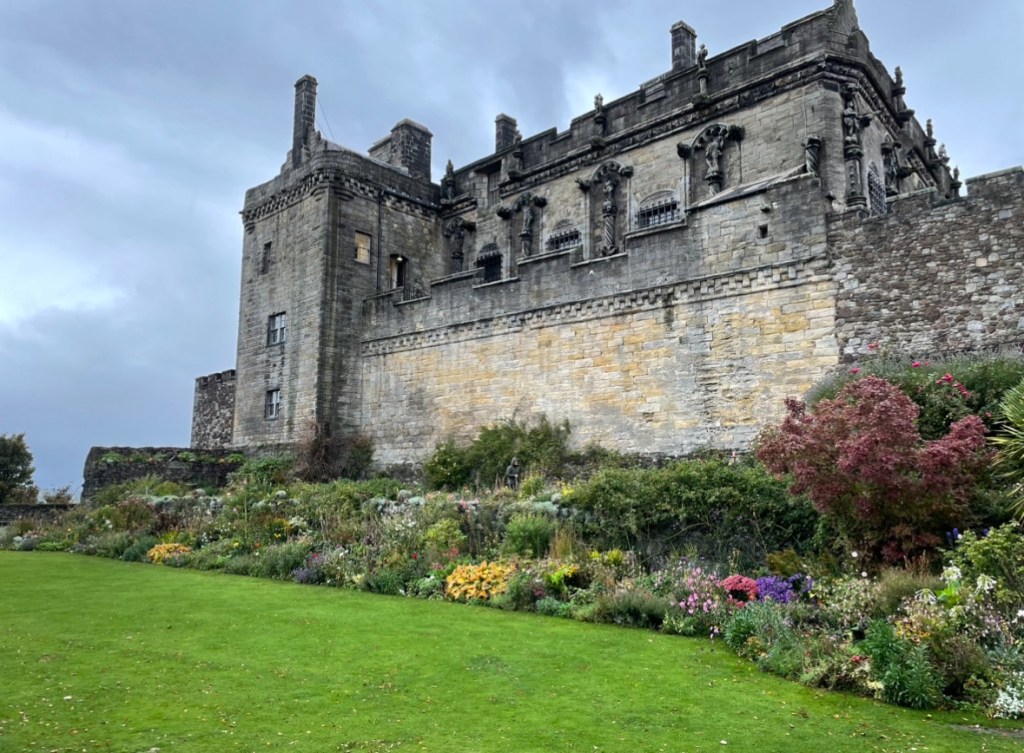
Stirling’s skyline is dominated by Stirling Castle, a more manageable version of Edinburgh castle, and if that rings your Robert the Bruce, William Wallace and Mary Queen of Scots bells, well, I am, as they say, well-chuffed. I toured the castle in October 2022 with my travel buddy Trish, and would highly recommend – although if you can, go during deep shoulder season and hire a tour guide. We pretty much had the castle to ourselves and our guide really made it come to life.

Here are a few snaps from that trip so you can see what I mean.

Fun fact- the chair seats flip up to reveal a chamber pot below. Nobody has to know.
Our lovely guide, who grew up in Stirling.

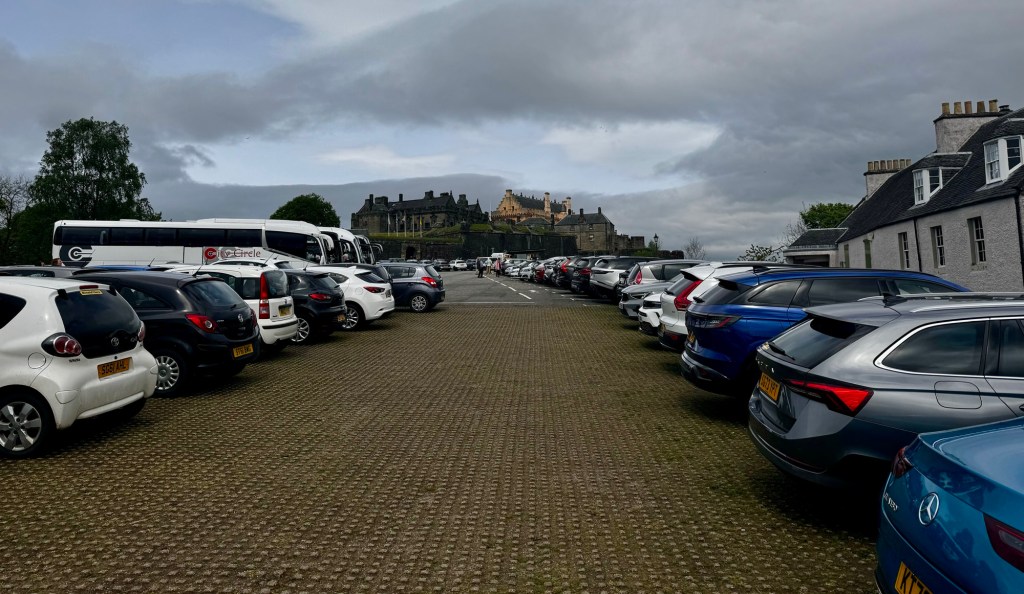
On the other hand I walked up to the castle today and discovered that it was, in a word, a zoo.

The castle is that tiny building behind the sea of cars

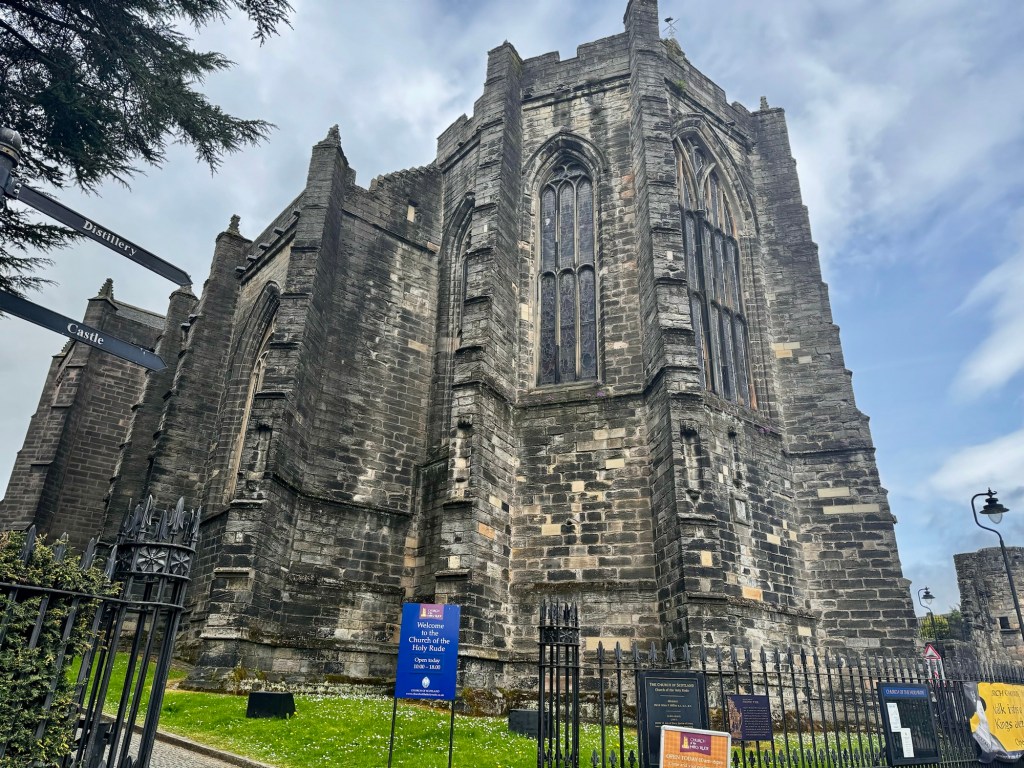
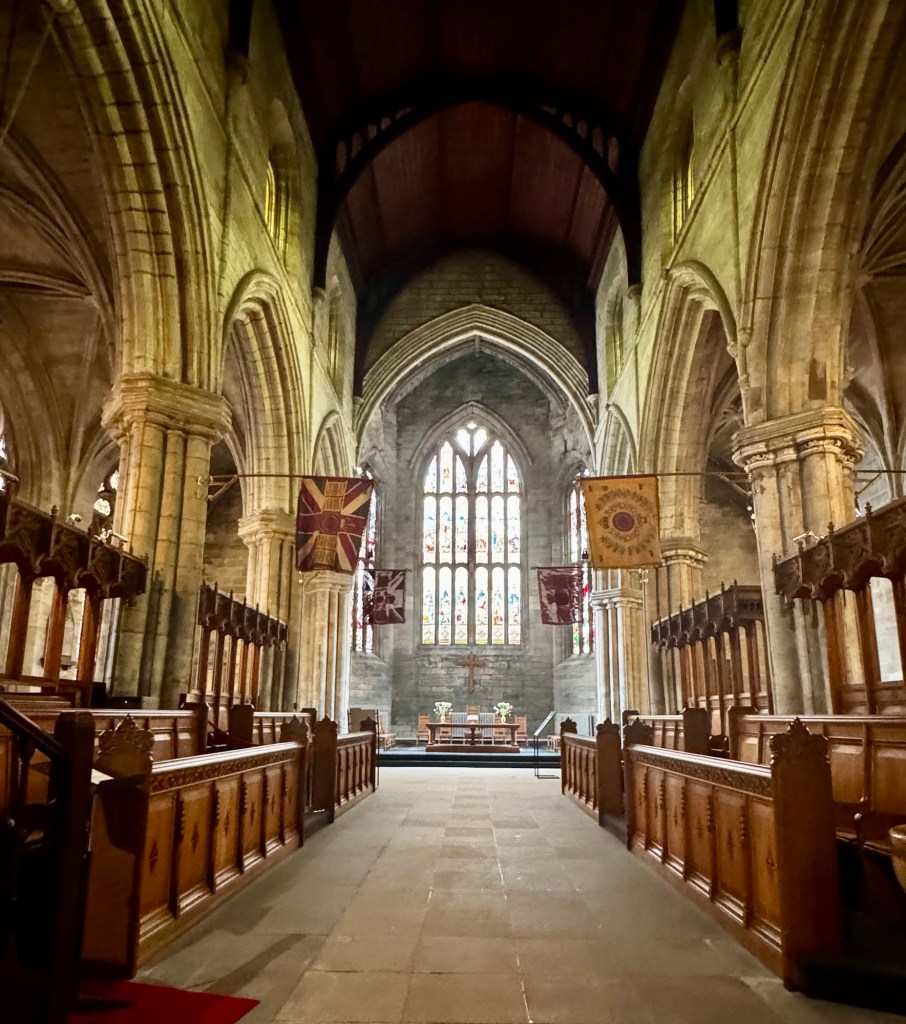
So I wandered back down the hill and popped into the nearby Church of the Holy Rude (named after the Holy Rood, a relic of the true cross), and yay it was empty. The church was founded in 1129 and rebuilt in the 15th century after a fire, and is the second oldest building in Stirling after the castle.

Not the most welcoming architecture.

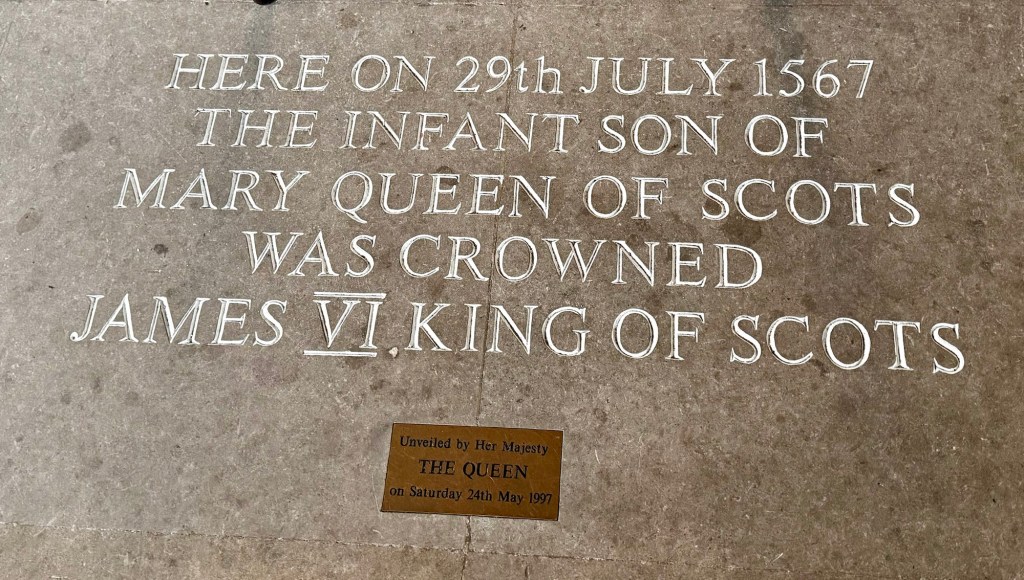
Interesting thing – it’s the only surviving church in the UK besides Westminster Abbey to have held a coronation. On July 29, 1567 the thirteen month old James VI, born in nearby Stirling Castle and whisked away (permanently) from Mary Queen of Scots (Mom), was anointed King of Scots and John Knox gave the sermon to mark the occasion. Mom wasn’t in attendance because she was imprisoned in Loch Leven Castle and had been forced to abdicate. She was allegedly invited to attend and refused which I think is an unlikely historical tidbit written by a man to make her look petty and like a bad mother. Bringing Mary to Stirling from captivity to attend the coronation of her infant son who was basically her usurper – I mean, oy, the optics! She had thousands of troops at her command. Too risky.

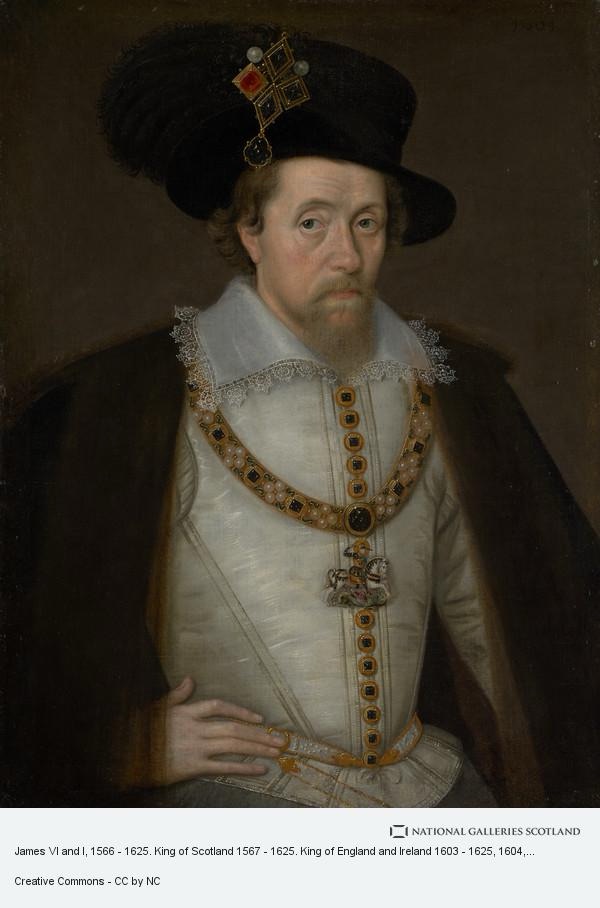
In 1603 James VI was also crowned King of England and Ireland, succeeding Elizabeth I, the last Tudor, and becoming James I. Ruling for 57 years (easier to do if you were a coronated baby), his reign in Scotland was the longest of any Scottish monarch. He wasn’t a bad king, necessarily, and did some interesting things like sponsor the first English translation of the Bible and order the refurbishment of William Wallace’s sword.

However, I think you’ll agree that we can’t forgive him for his role in ramping up witch trials to a spectacular degree for delusional personal reasons.

James VI was the worm-brained Robert F. Kennedy Jr. of the Stuart family.

Here’s the lame story. In 1589 Anne of Denmark, James’s bride to whom he was married by proxy, planned to sail to Scotland to meet her new husband. She didn’t make it because fierce storms, common in the fall, forced her to anchor in Norway. She tried again, but her boat sprung a leak and so back to Norway she went. At this point she decided to postpone the trip until spring. James was having none of this business and decided to go to Norway to pick her up. He stayed several months and eventually brought her back to Scotland even though storms again made the journey sketchy. Denmark actually prosecuted a bunch of woman for causing these storms via witchcraft, and when I say prosecuted, I mean executed.

James hears of this when he gets back to Scotland with his bride and even though everything is now FINE, he couldn’t move on and decided to copy Denmark. He decreed that witches deliberately conjured up the storms for the purpose of killing him and his queen. Regicide – a bad crime – to be avoided. So suddenly a previously unenforced law forbidding witchcraft was called back into action. Which is a lesson we still haven’t learned – if you aren’t enforcing a law anymore, repeal the damn thing to keep it from reemerging from the muck of shifting political sands.

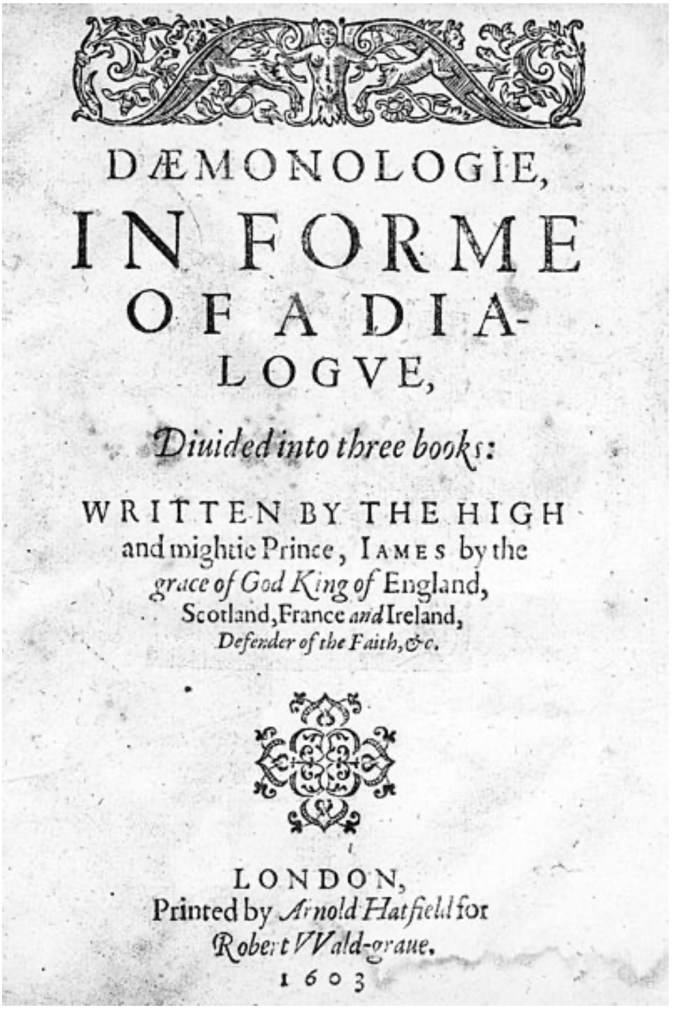
James became so witch-obsessed that in 1597 he wrote a book called Daemonologie which helpfully explained how to identify and punish a witch, using science, oh sorry I mean the Bible, as corroboration, e.g. “thou shalt not suffer a witch to live,” blah blah. Largely as a result of his efforts, thousands of women were prosecuted in Scotland and England over the next hundred years, with more than 1,500 executed.

Former Scottish First Minister Nicola Sturgeon, who probably would have been tried as a witch in those times herself, issued a formal apology to people accused of witchcraft, thus acknowledging an “egregious historic injustice.”

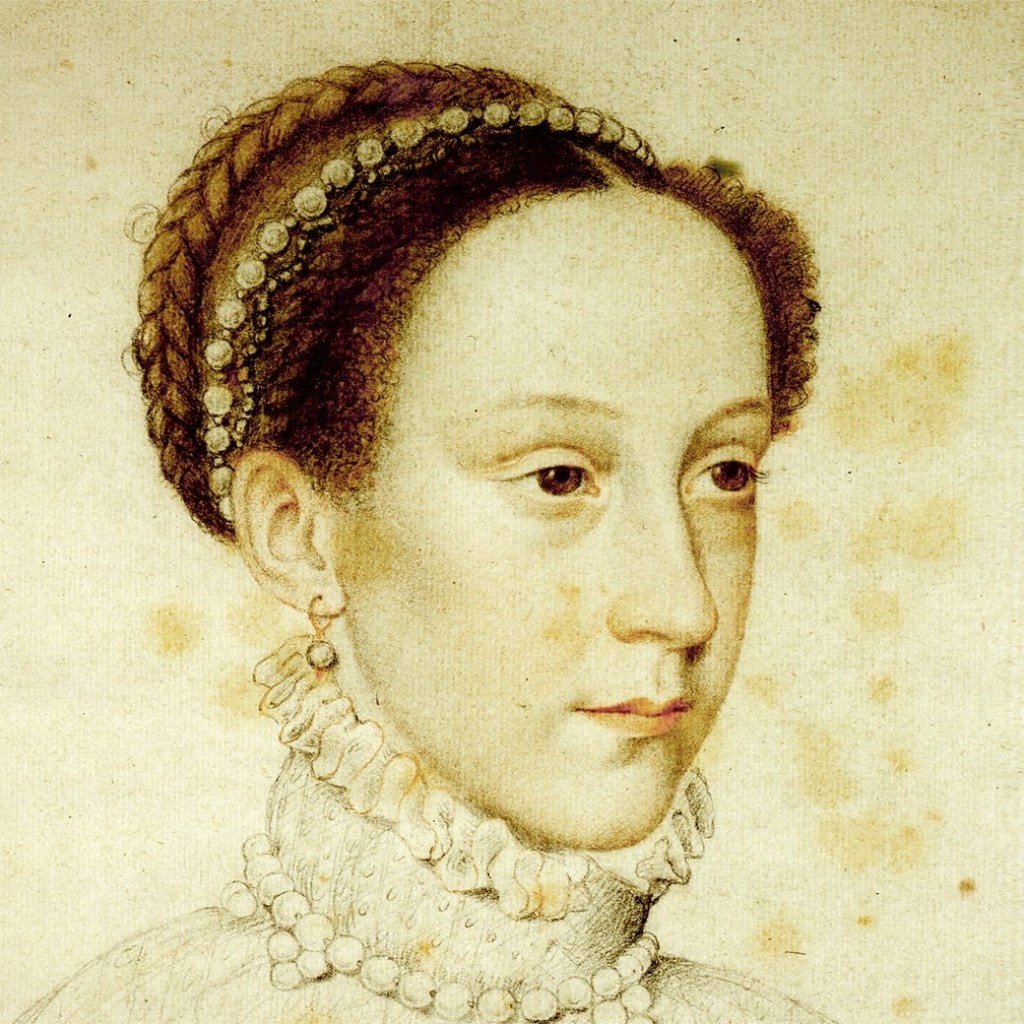
One wonders whether things would have been different if James had a maternal influence in his life. Would that have made him less dumb? Perhaps. James was 21 when his mother was executed and he had been raised to believe that she had arranged the murder of his father Henry Stuart, Lord Darnley so she could marry Lord Bothwell. What would that do to your head? What were his thoughts while his mother was imprisoned in the Tower and ultimately executed?

Mary QOS

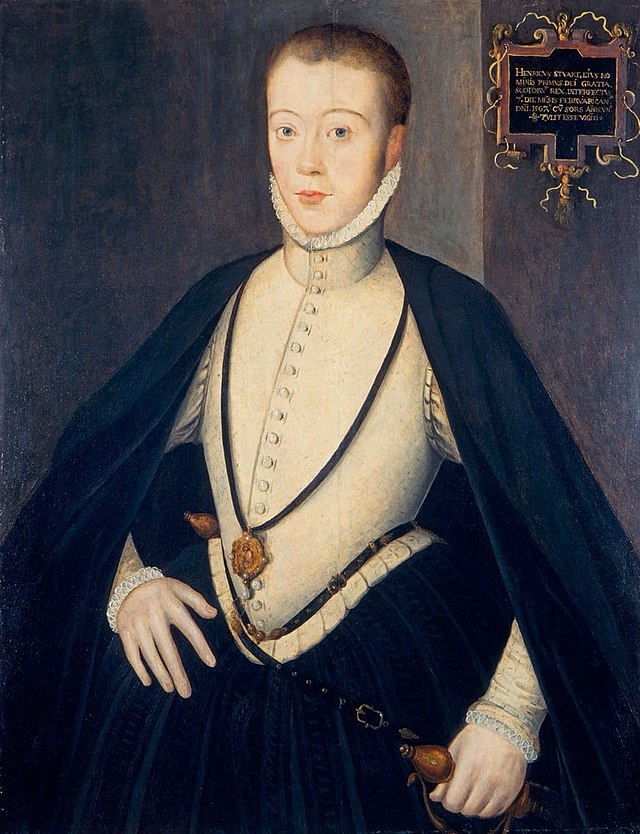
Speaking of which, he didn’t have a paternal influence either. Darnley’s parentage gave him a claim to both the English and Scottish thrones and so strengthened James’s ultimate ascension to both. And yet he was killed just eight months after James’s birth. What did James think of him, if anything, beyond thanks for the blood lines dad.

Darnley

I know that royal kids not having much exposure to their parents is a long and proud UK tradition. But these are pretty extreme circumstances, James was presumably a person with feelings and one without a therapist or prescribing physician. These are the interesting what-if riddles of the human condition in history.

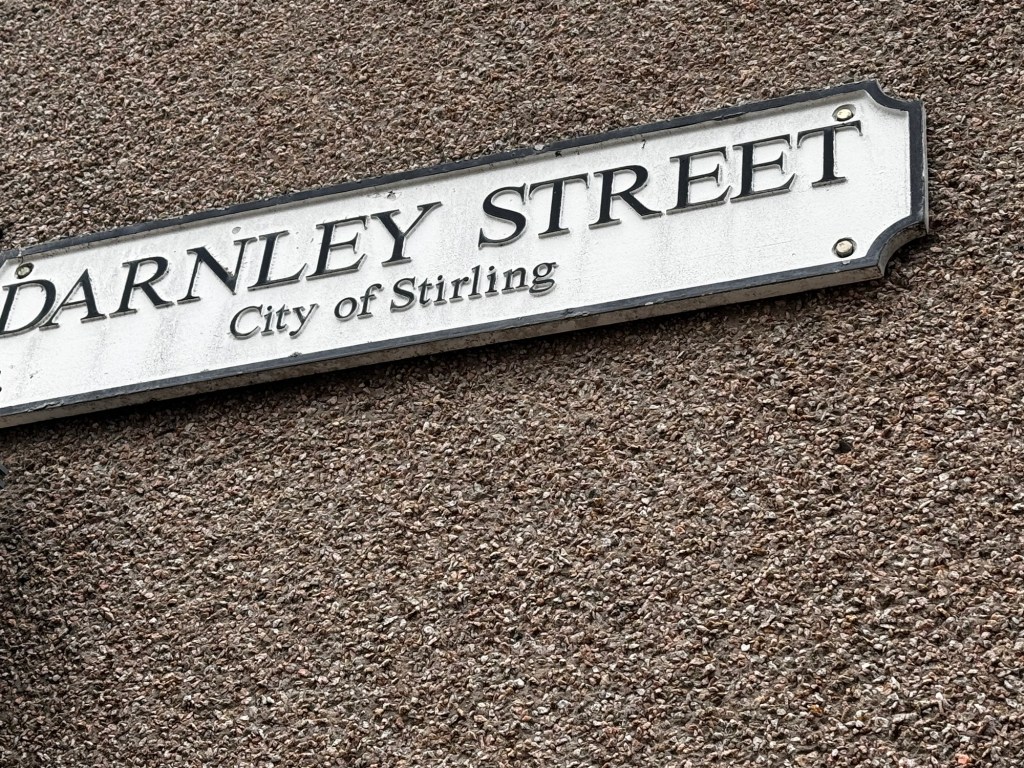
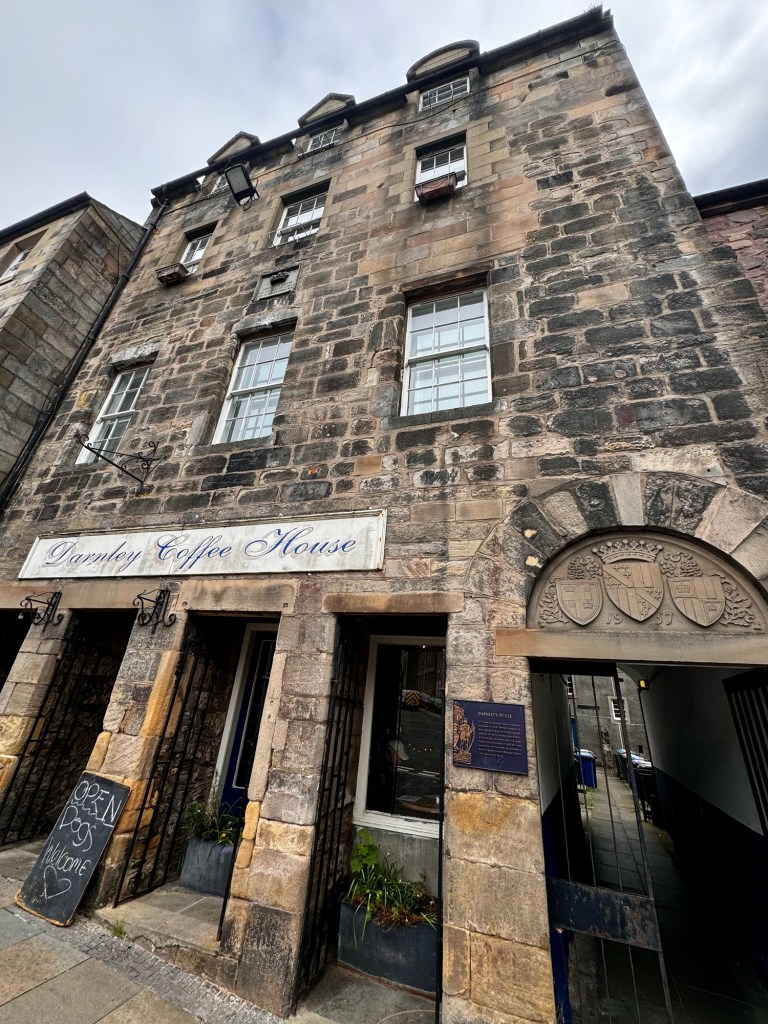
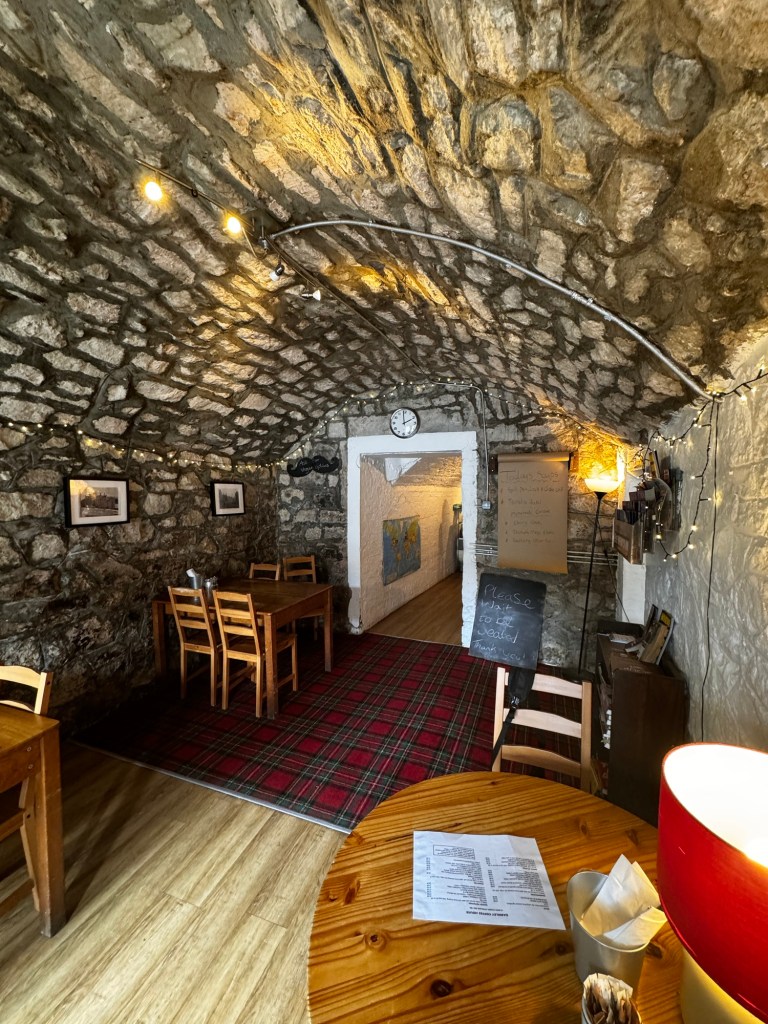
To mark this particular riddle, I had lunch in Stirling at a coffee shop located inside what has “traditionally” said to have been Darnley’s home. Which is a bougie word for “allegedly.”

The menu explains that not only was it the home of Lord
Darnley, but also baby James’s nursery which – maybe – but it’s outside the castle and his life was pretty much in danger from the jump. More realistically, it has also been a dairy, a brothel, and a tourist office.

I wondered what these historical figures would think if they could see their former homes, prisons, battlefields and such crawling with iPhone wielding tourists.

And now we sally forth to the National Wallace Monument. It was built between 1861 and 1869 and designed by Glasgow architect J.T. Rochead. It has to be one of the first examples of successful crowdsource fundraising, as it was entirely funded from contributions from the public totaling more than £15,000. This is largely due to the Victorians’ obsession with Highland culture and history.

The monument looms on a hill within view of the castle and it’s sited at the 1297 Battle of Stirling Bridge. It famously has 246 steps to the top, and I pictured a sort of Washington Monument situation, just a building filled with a relentless stuffy staircase and a killer view at the top.

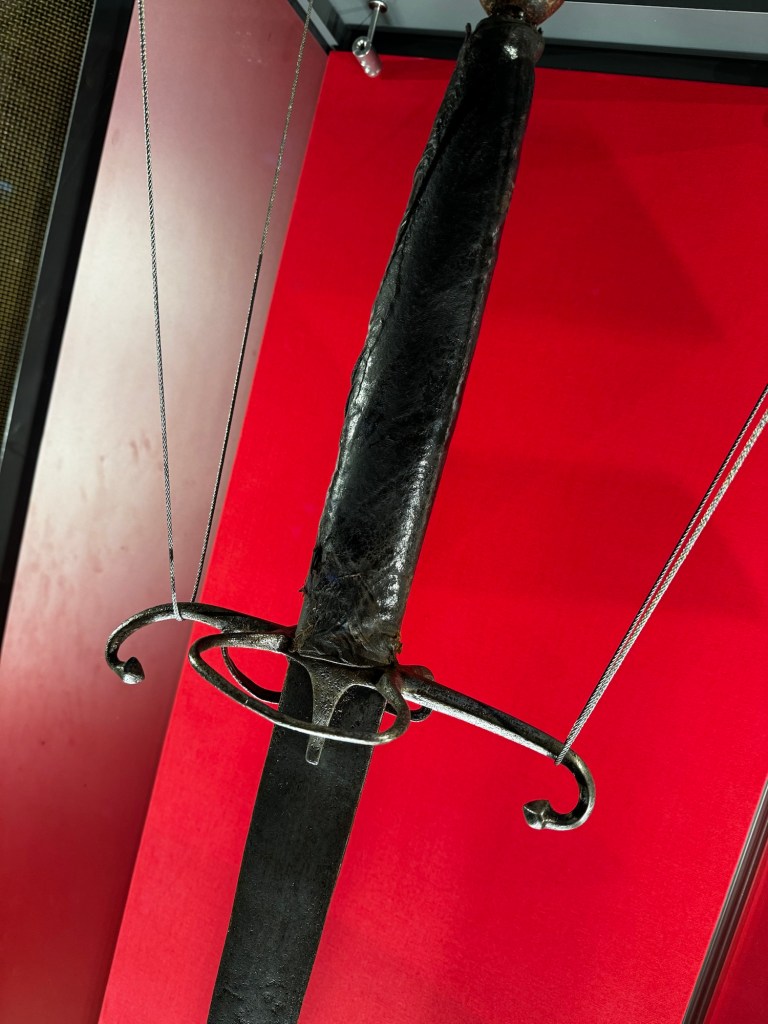
But actually there are three galleries, each with a different theme. The first, called The Hall Of Arms, is devoted exclusively to Wallace with a cool film that looks like it was animated by the same artist who did the Tale Of The Three Brothers in Harry Potter and the Deathly Hallows film. The gallery also features Wallace’s actual sword which is 5 feet 5 inches tall. He was tall. This is the sword James VI ordered to be refurbished. It’s legit.

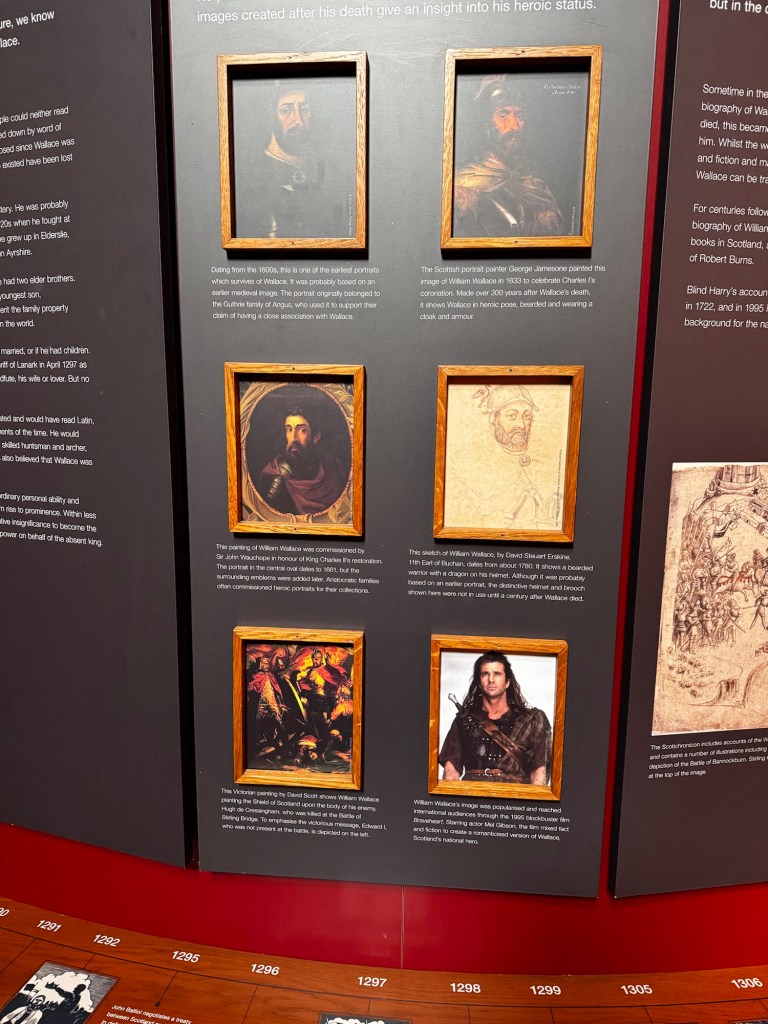
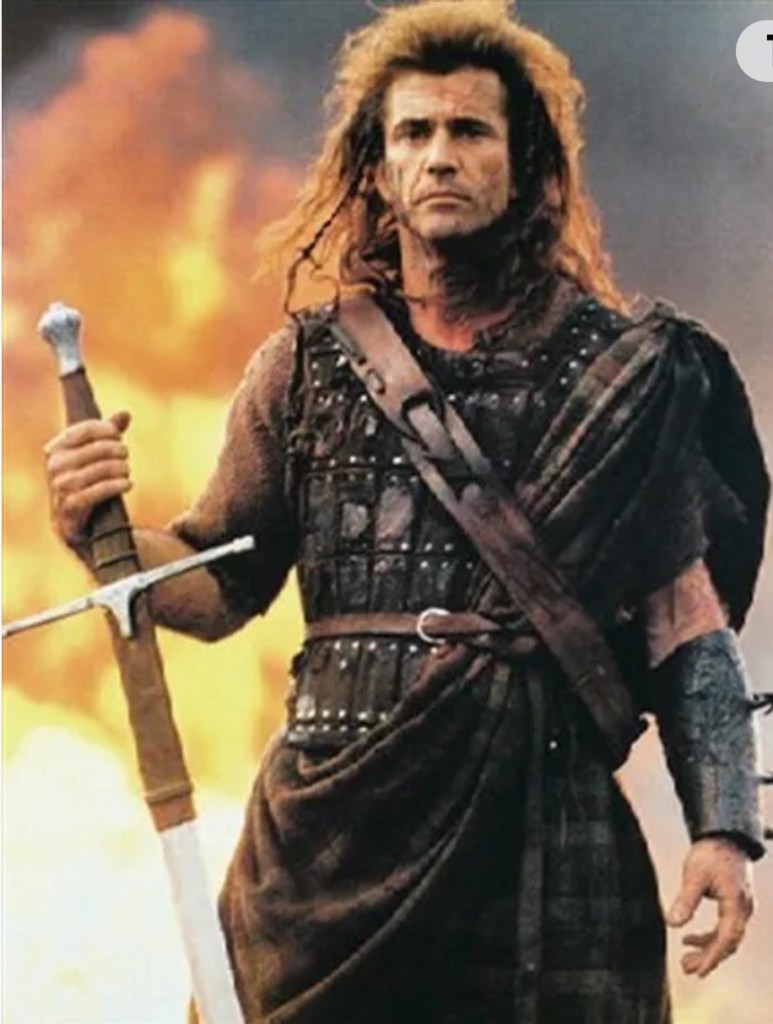
There’s also a sort of hilarious gallery of visual renderings of Wallace throughout the ages. Hilarious because it ends with a photo of Mel Gibson. I object.

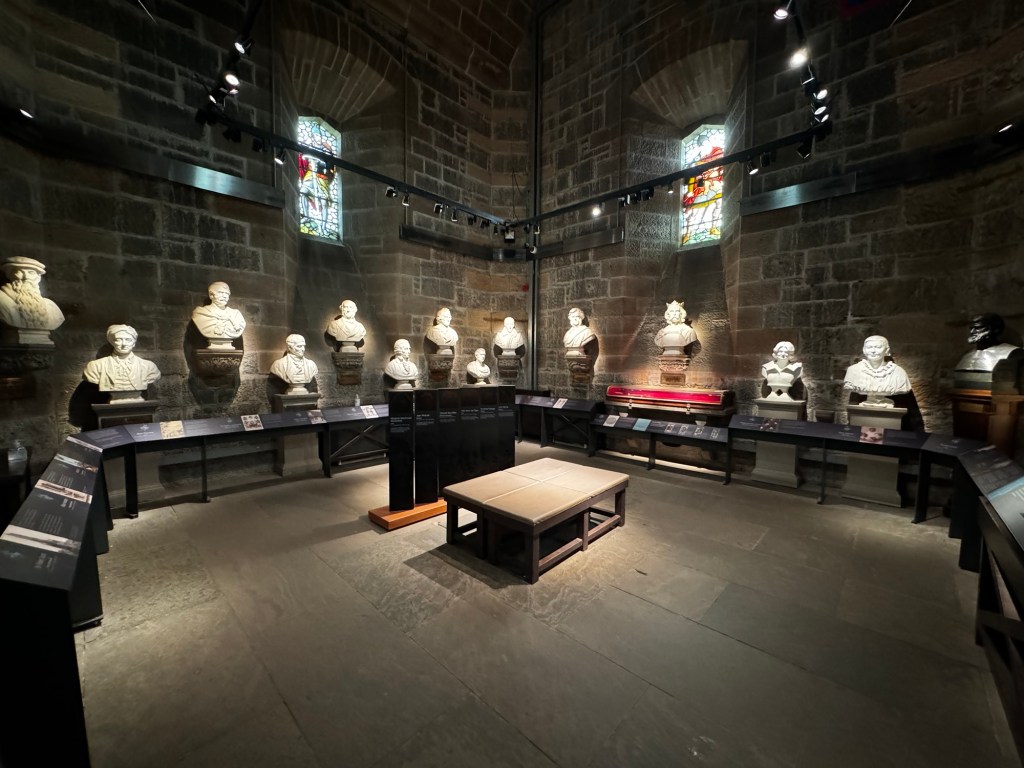
The second gallery is the Hall of Heroes and features busts of famous Scots throughout the ages who have invented everything. Seriously we might all still be living in caves but for Scots. Read “How Scots Invented the Modern World” by Arthur Herman if you don’t believe me.

The last gallery, The Royal Chamber, is not a reconstruction of Wallace’s bedroom as I had hoped but rather is devoted to the battle.

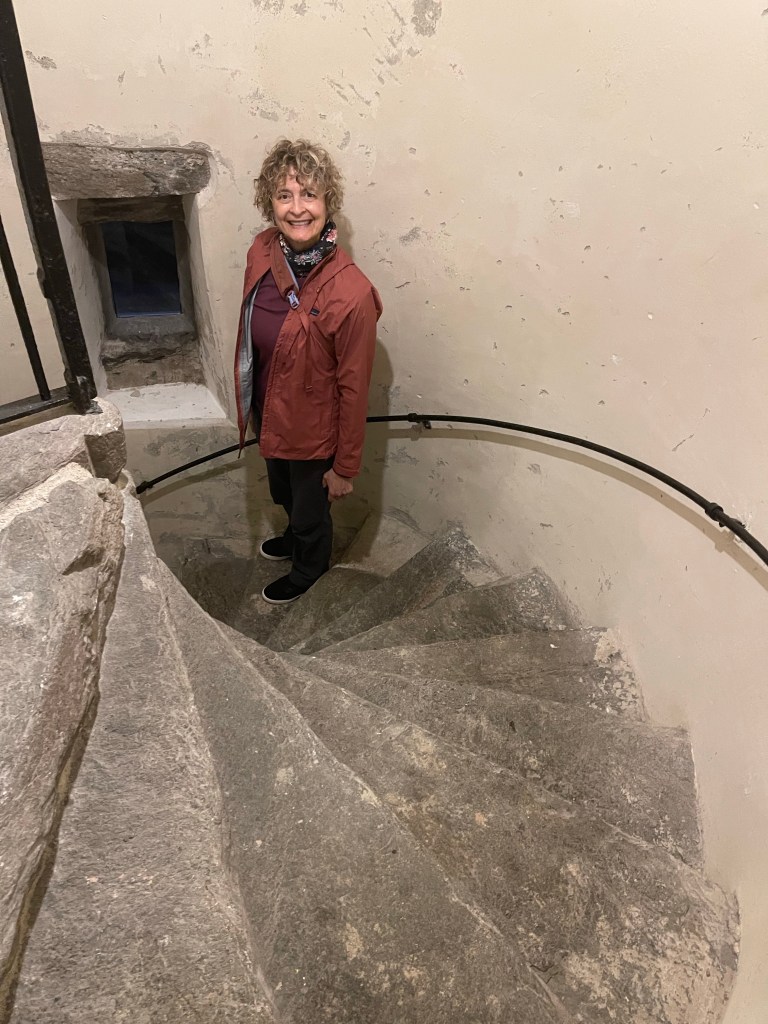
But before we chat about the battle, in between each of these galleries are definitely 246 steps. Up a narrow stone spiral staircase. The staircase is “narrow and may feel cramped,” the website tells us. There are ten billion narrow stone spiral staircases in castles, abbeys and estates all over the UK. I mean it was a popular and likely necessary design element. The steps are narrow because they were built in days when people, and their feet, were smaller – plus there often just wasn’t that much available space. In the Wallace tower, even the widest part of the stair, next to the outer wall, is too small for my size 11 feet. I gotta shift ‘em sideways. Forget about closer to the newel (I had to look that up) where the stair ultimately disappears completely. So the rule is that the coming down people “yield” to the going up people. This means descenders flatten themselves against the wall and avert their faces because the ascenders have to lean forward with their hands on either side of the wall, framing the heads of the descenders like there might be some smooching, and shimmy up sideways trying to avoid full body contact whilst hoping they don’t run out of stair under their feet because it’s just a few inches of real estate.

At least that’s how I handled it as an ascender. (Apologies to the descenders I smushed.). After that first experience I made a shit ton of stomping noise when I entered each spiral to scare people from coming the other way. It’s all I could do to not yell, “Fire in the hole!” or Gandalf it up with “You…shall…not….pass!”

Why people don’t plunge to their deaths in that stairwell every single day is a mystery. Also, in addition to being impaired by monstrous feet there were so many unsteady older folks who were gasping for breath. Good on them, though, they persevered and arrived at the top sweaty, pale and inches away from a cardiac event. For history.

So speaking of history – the battle. First of all if you’ve seen Braveheart you have no idea what happened so just let that go. The nutshell version is that The Battle of Stirling Bridge was fought during the First War of Scottish Independence when Edward I was determined to squelch the pesky Scots and their insistence on owning their own vibe.

As the troops massed around Stirling, the Scots had around 6,000 men, which included 300 cavalry at most, the English had 9,000 including 2,000 cavalry. Lopsided.

The English sent emissaries to Wallace and his compatriot Andrew Moray before the battle to parley, and Wallace reportedly responded, “We are not here to make peace but to do battle to defend ourselves and liberate our kingdom. Let them come on and we shall prove this to their very beards.”

I am adopting this turn of phrase. About proving things to beards.

The Scottish army was camped on Abbey Craig, the location of the Wallace Monument, so had a great vantage point over the river toward the government forces.

The head of the English forces rejected sage advice to send troops upstream to outflank the Scots and instead ordered a direct attack over the narrow Stirling Bridge. It was broad enough to allow only two horsemen to cross abreast, so it would have taken several hours for the entire English army to cross. I don’t know what the English thought the Scots would do during this time, just watch them cross and wait for them all to assemble on their side of the river like they were playing an organized team sport and needed an even number of players per side. I mean, I’m admittedly no military strategist, but. All the Scots had to do was hang out on the other side of the river until as many troops they believed they could overcome had crossed.

To add to the fun, the wooden bridge collapsed, whether via sabotage or natural causes no one knows for sure.

At the end of the day the English forces suffered massive losses and retreated, and Wallace was appointed, “Guardian of the Kingdom of Scotland and Commander of its Army.” And now, Edward I was super pissed and wanted to know who this William Wallace person was anyway. In retaliation, he personally led the next invasion of Scotland which ultimately led to the Battle of Falkirk which didn’t end great.

Now, as I warned, those of you who have seen Braveheart are thinking, I don’t think she’s right about any of this. There was no bridge in the battle in the film. Correct. The movie is gobsmackingly historically inaccurate and this is just one example. The battle in the film is more akin to the Battle of Bannockburn starring Robert the Bruce, although probably without the mooning scene because soldiers were not actually wearing kilts at that time so accomplishing the moon with the flair depicted in the film would have been a lot more trouble.

Also the Scots’ blue face make-up was based on the Picts, who were around back in AD 200 to AD 900, so a wee bit earlier. And Braveheart actually is a reference to Robert The Bruce. I’ll stop.

So we’ve talked a bit about mothers in this one – well, one mother. Which is apropos since it’s Mother’s Day. So happy Mother’s Day to my awesome Mom, from me in The Bonnie Badger.

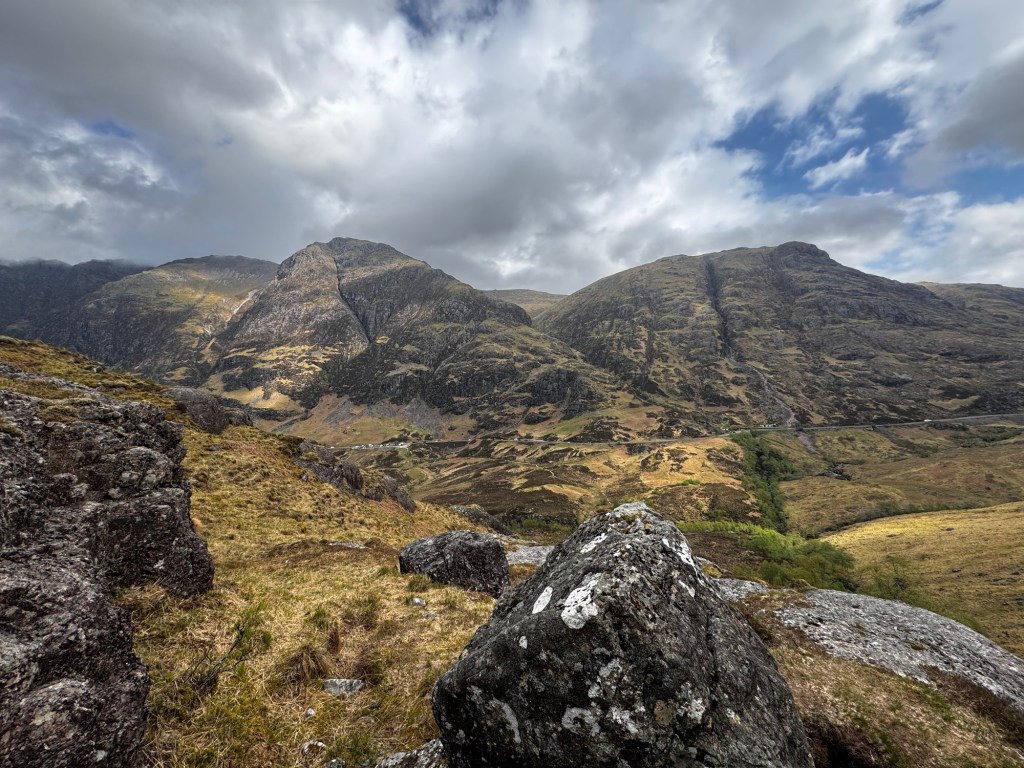
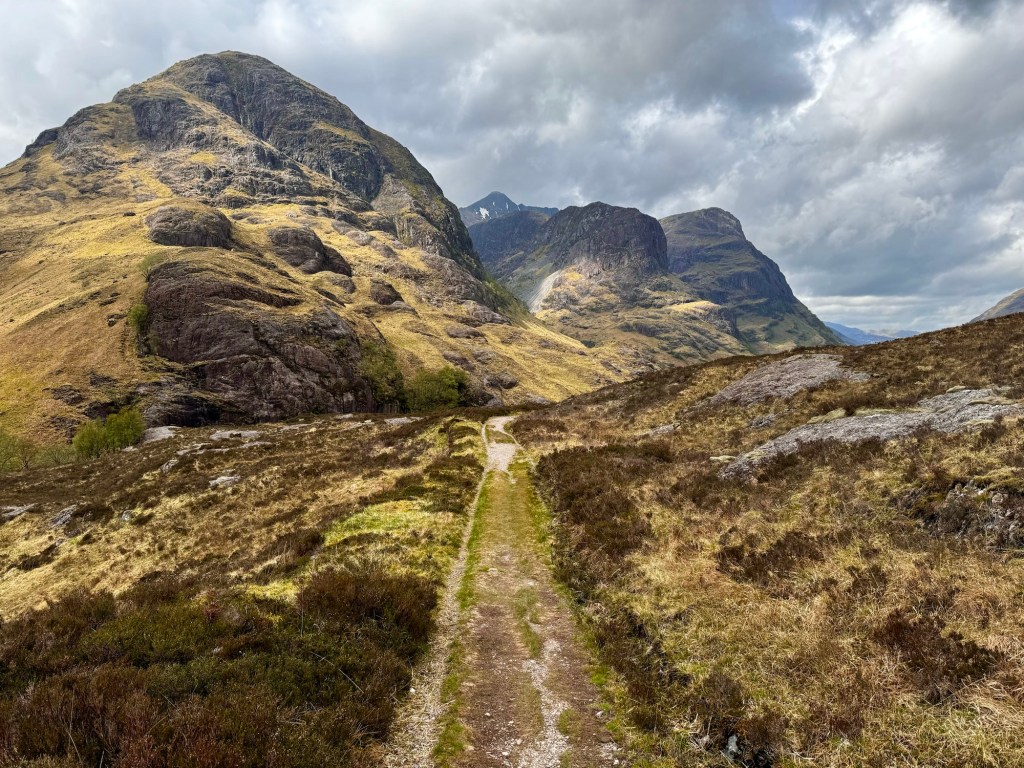
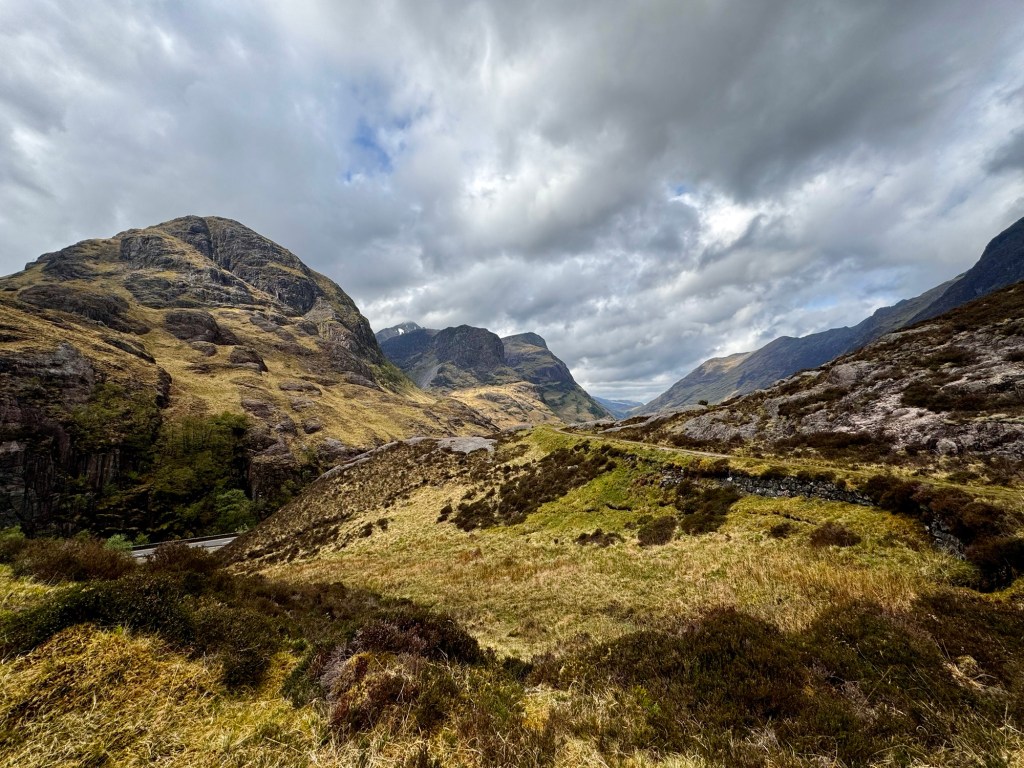
The Three Sisters of Glencoe, a Fairy Bridge and a Haunted Pub

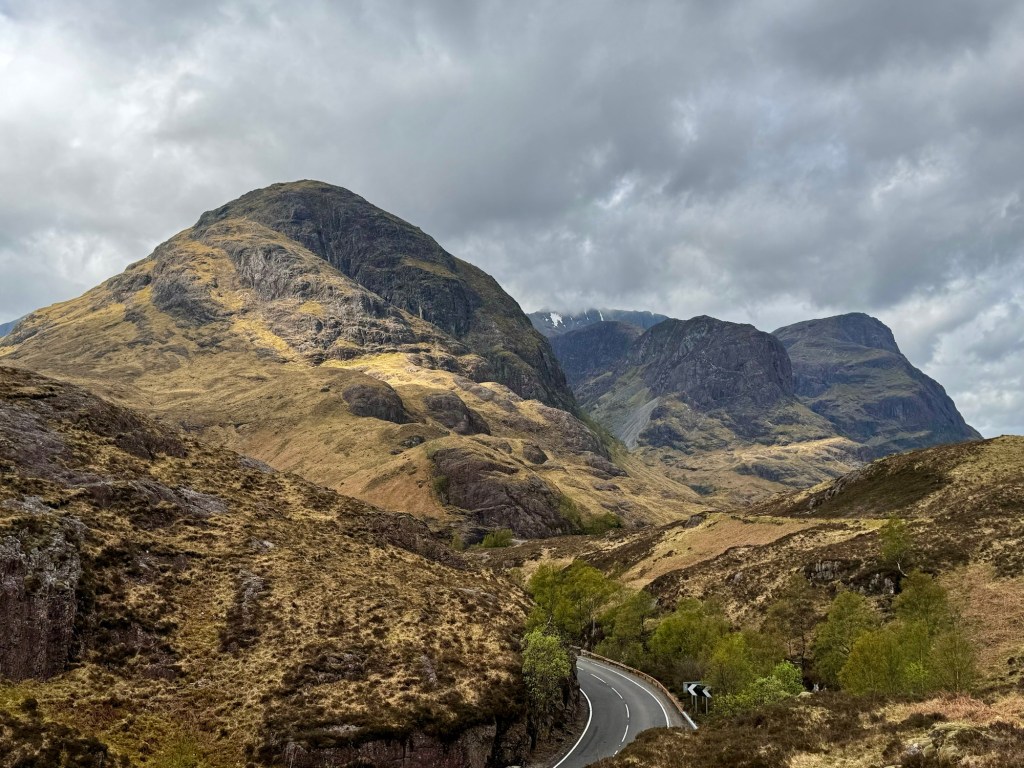
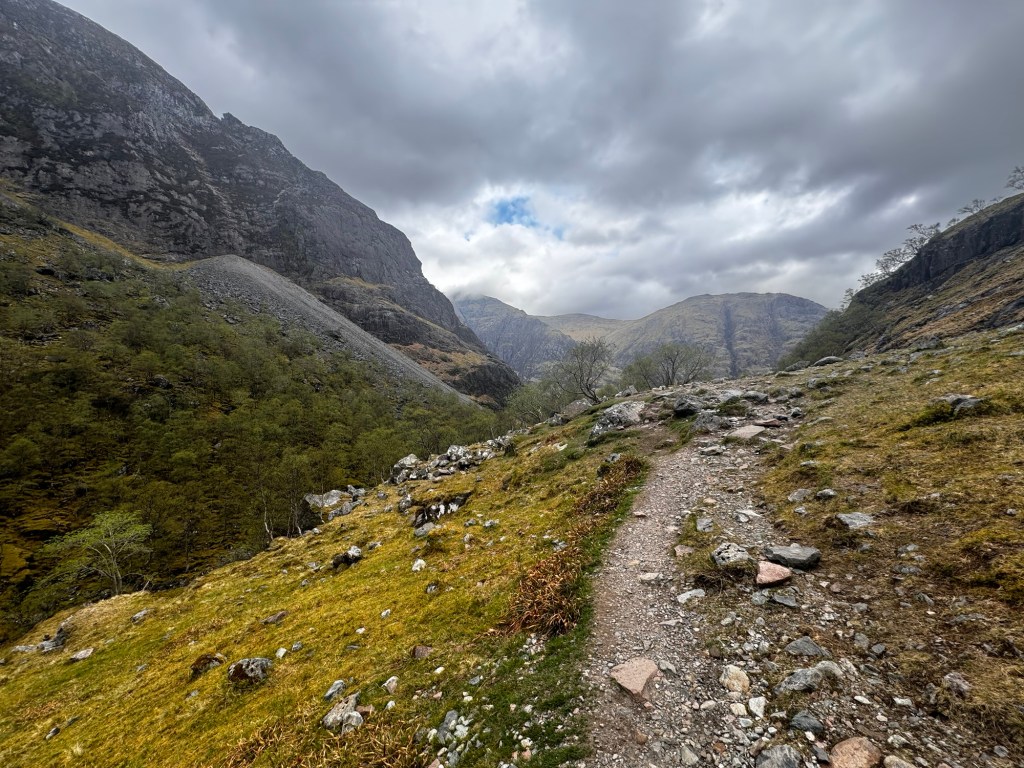
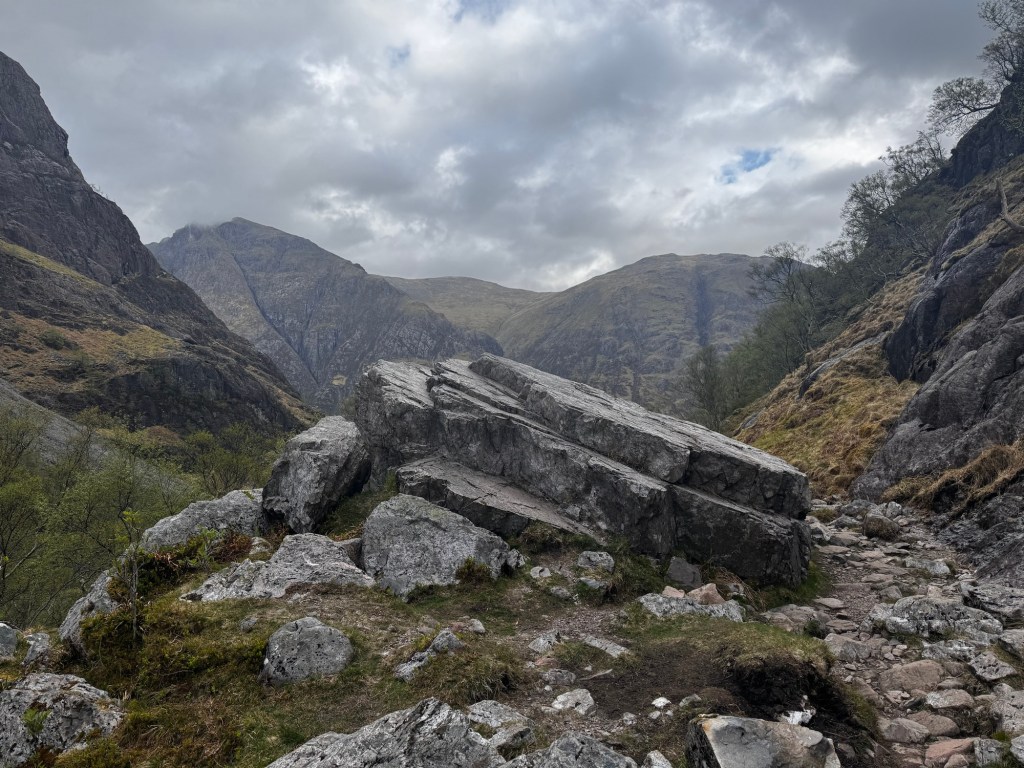
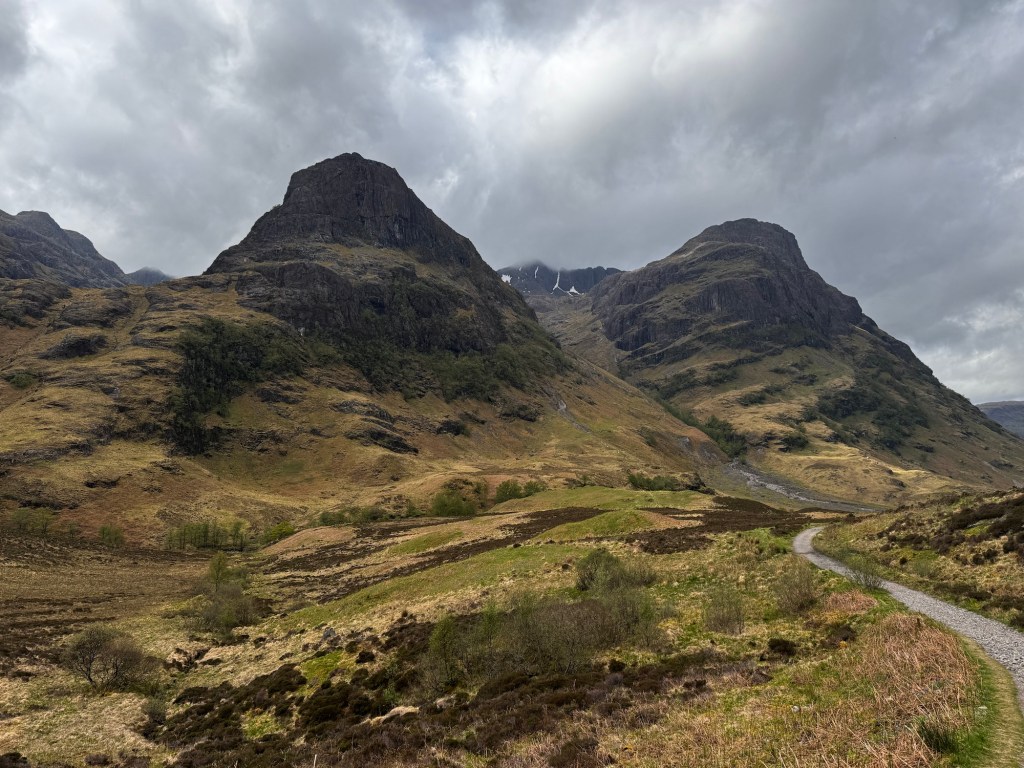
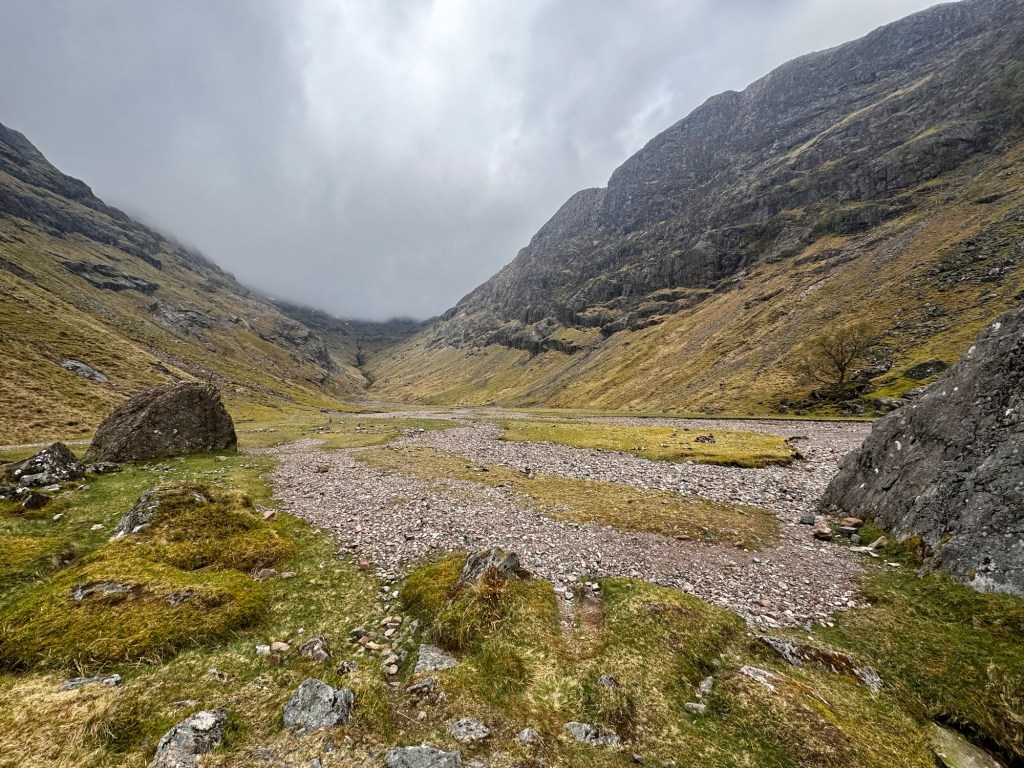
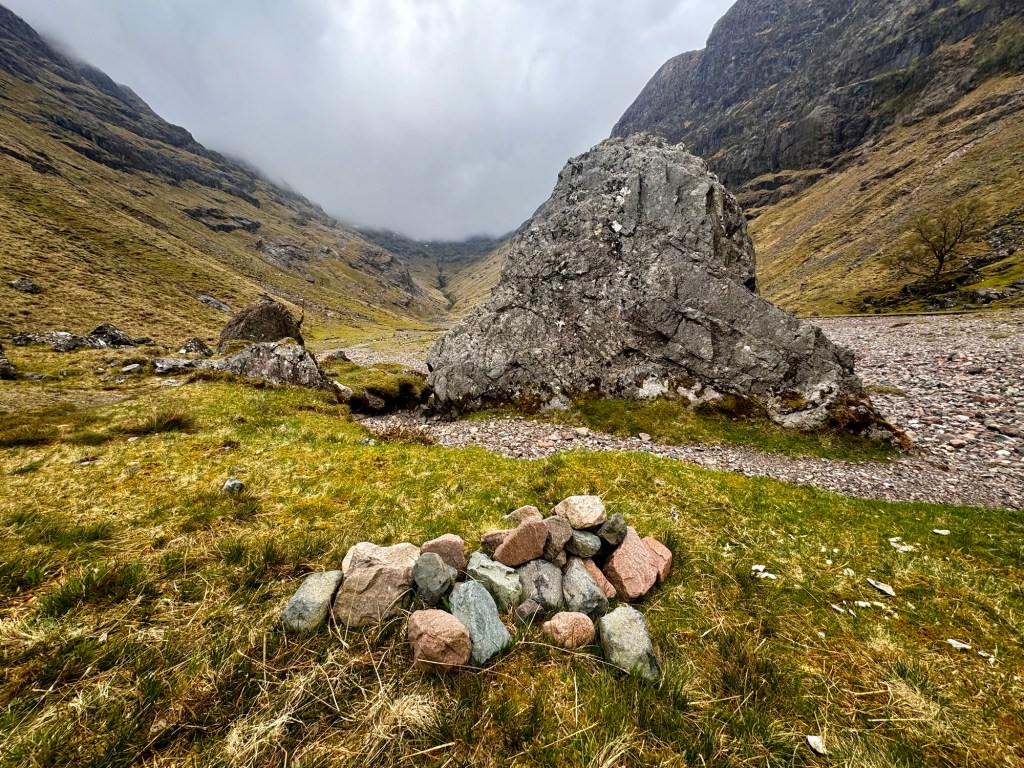
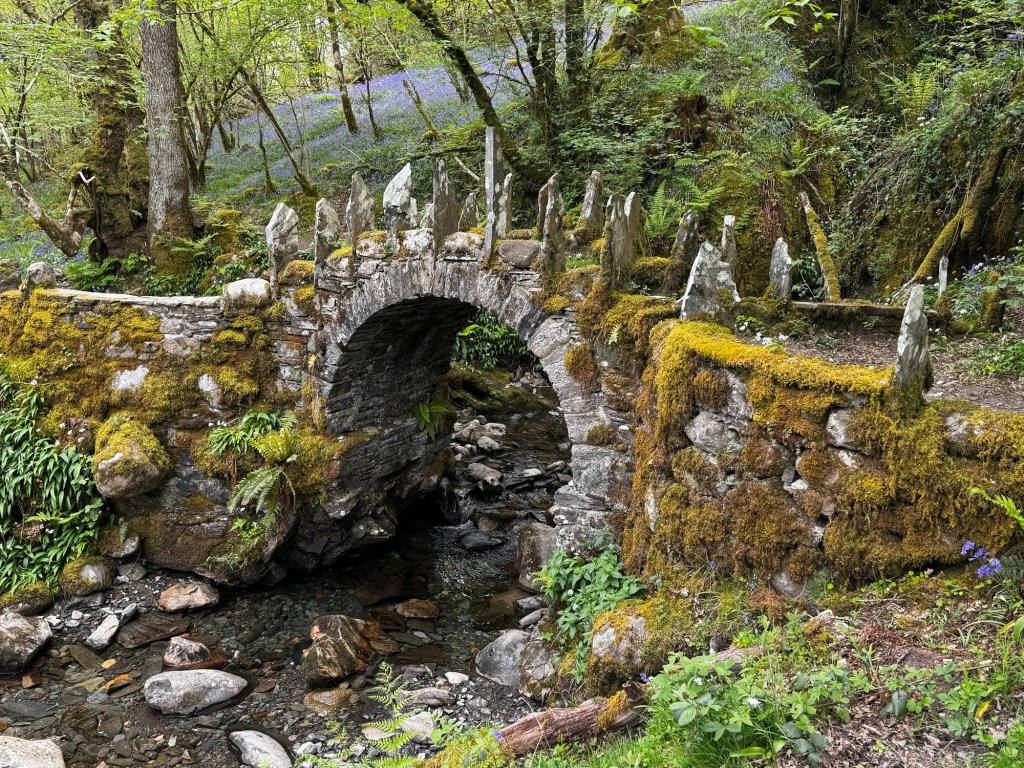
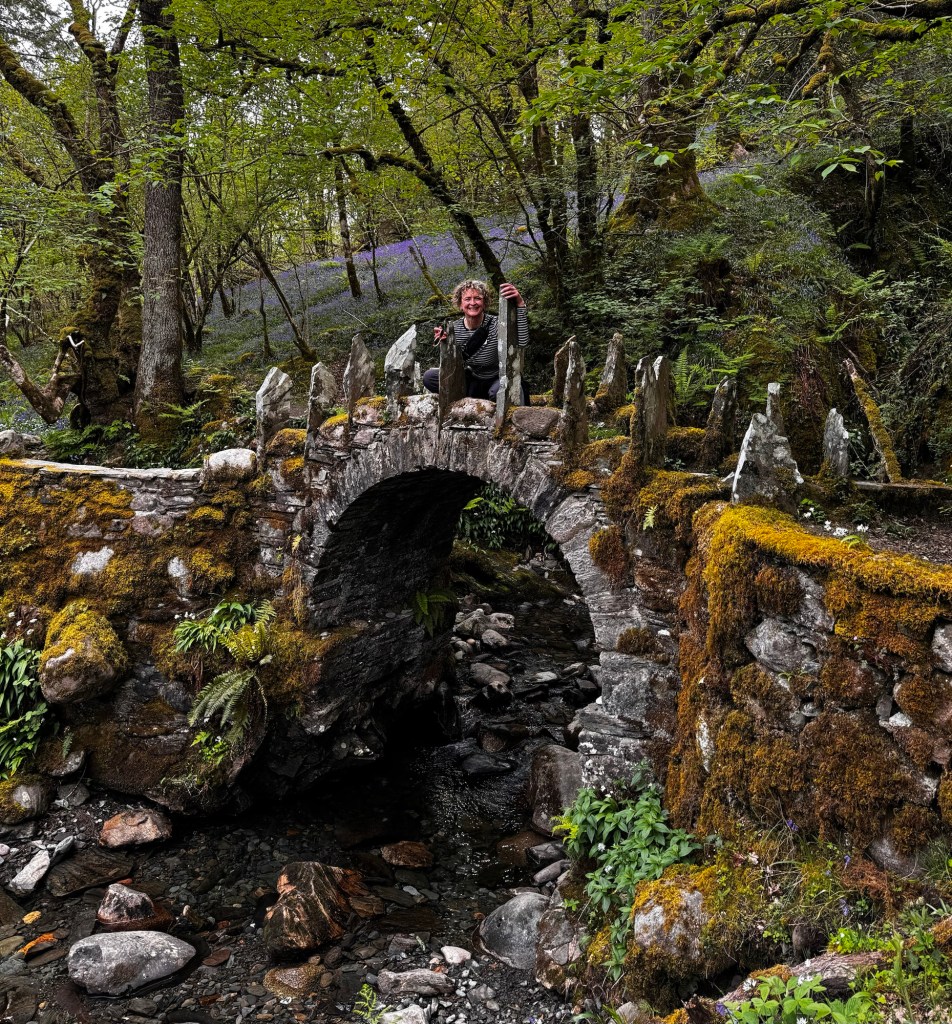
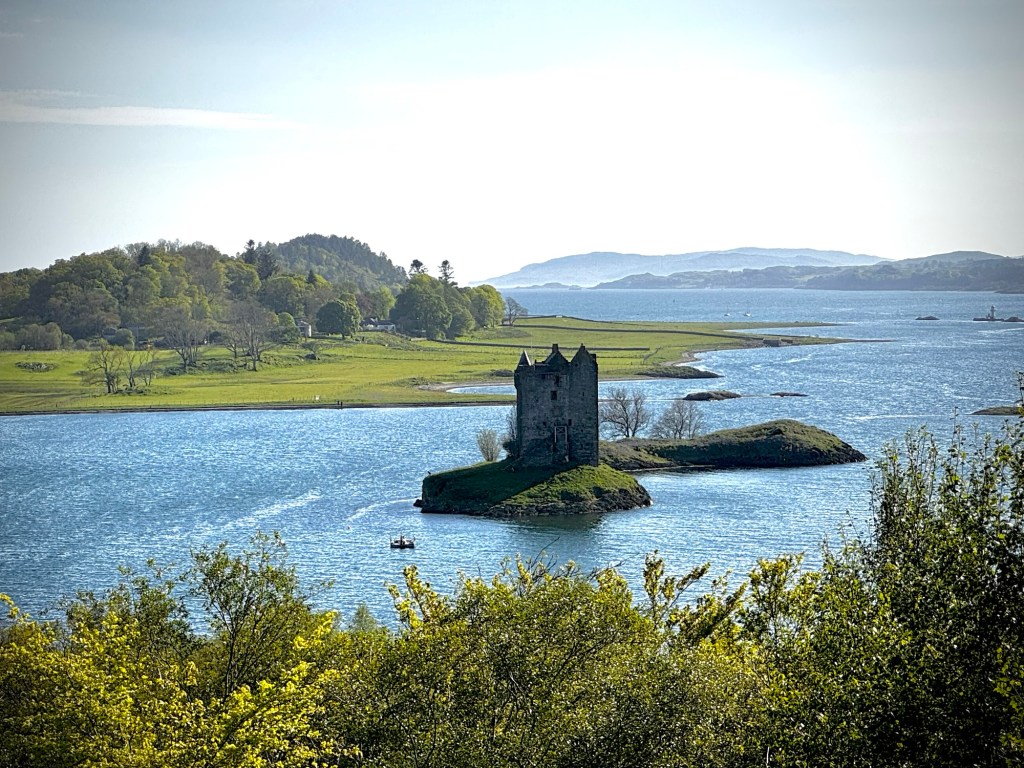
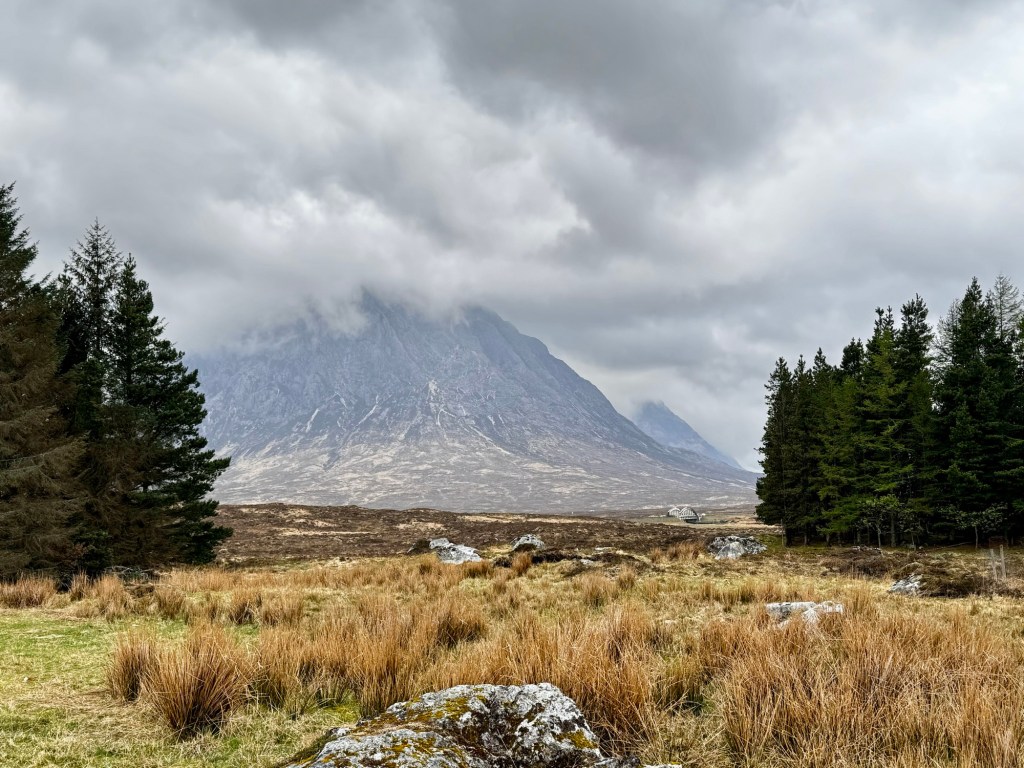
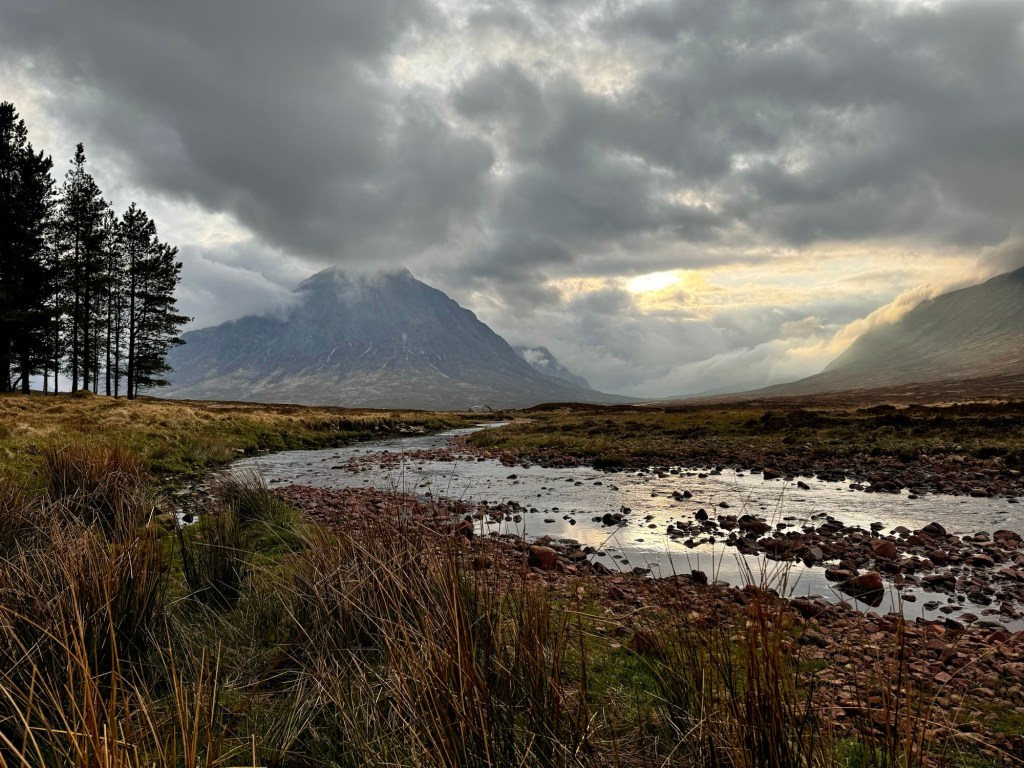
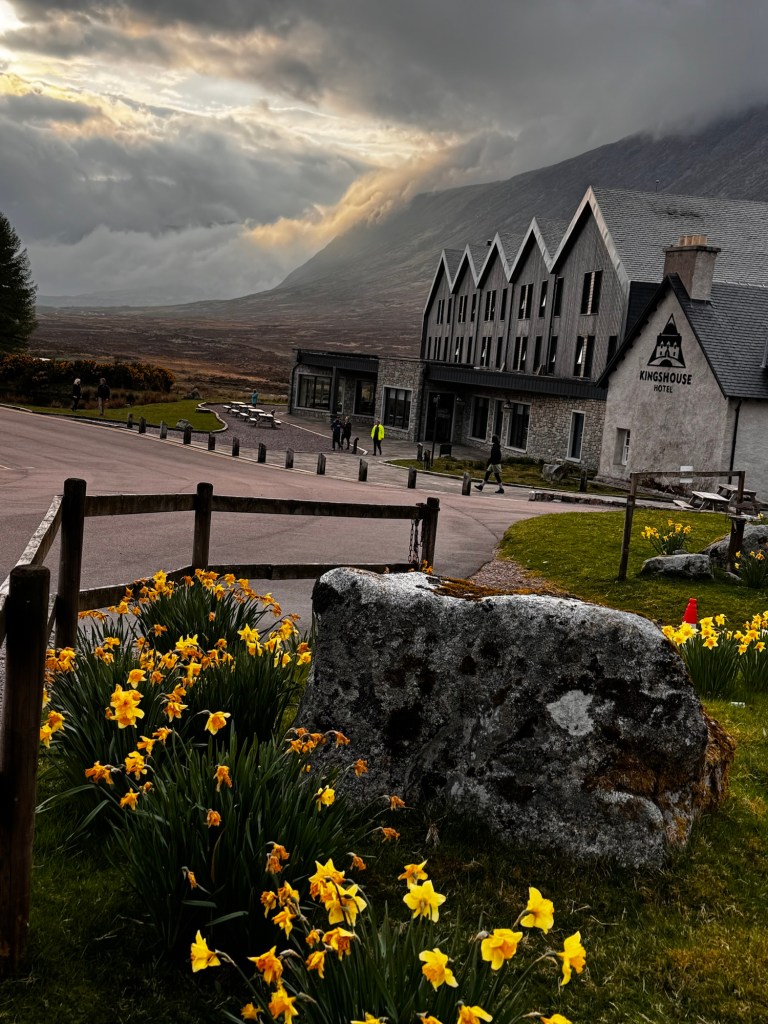
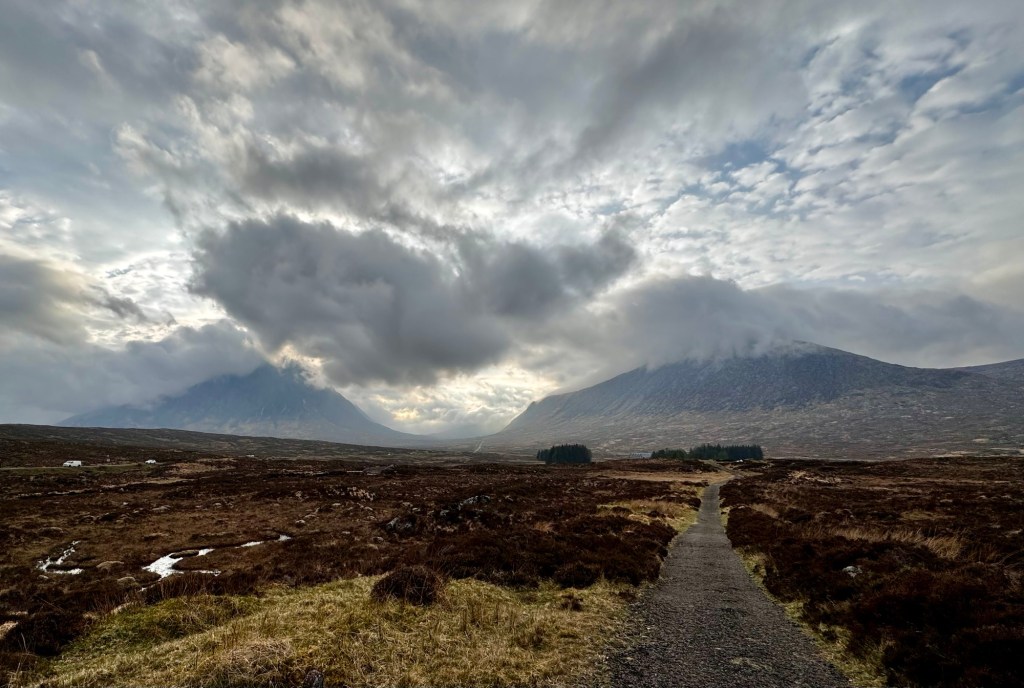
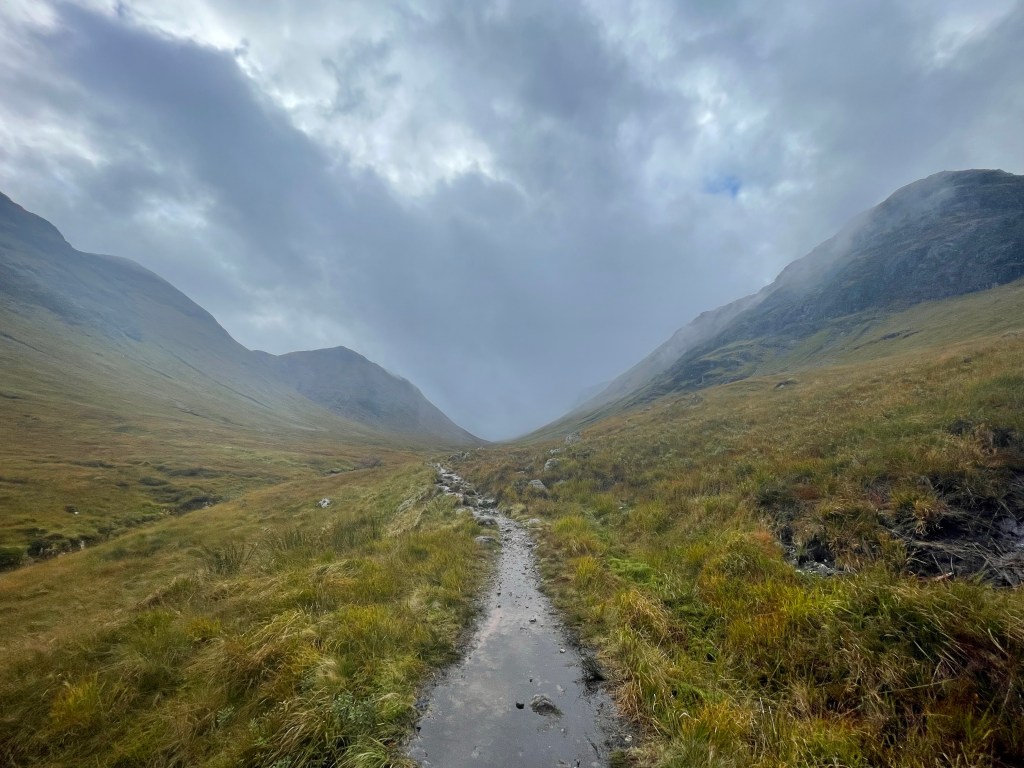
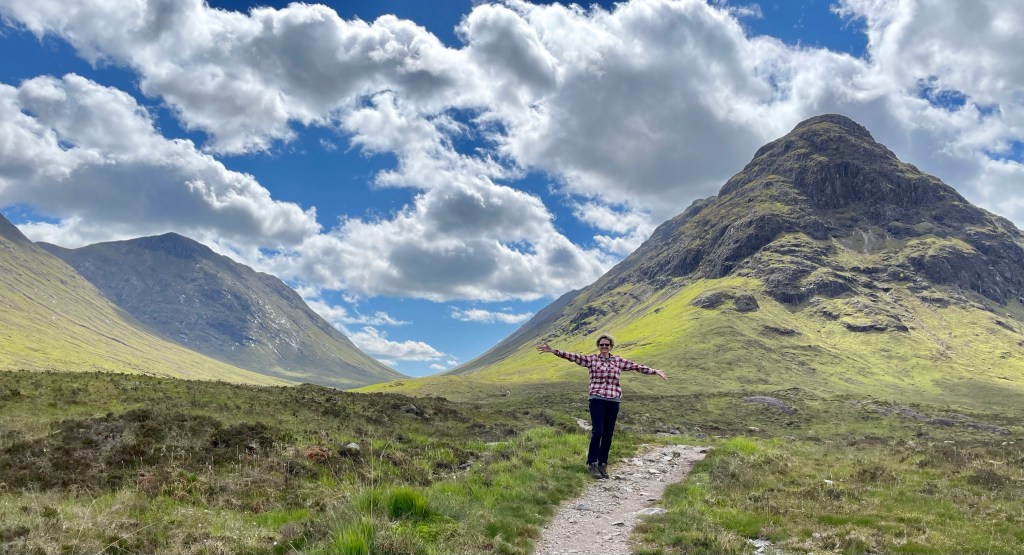
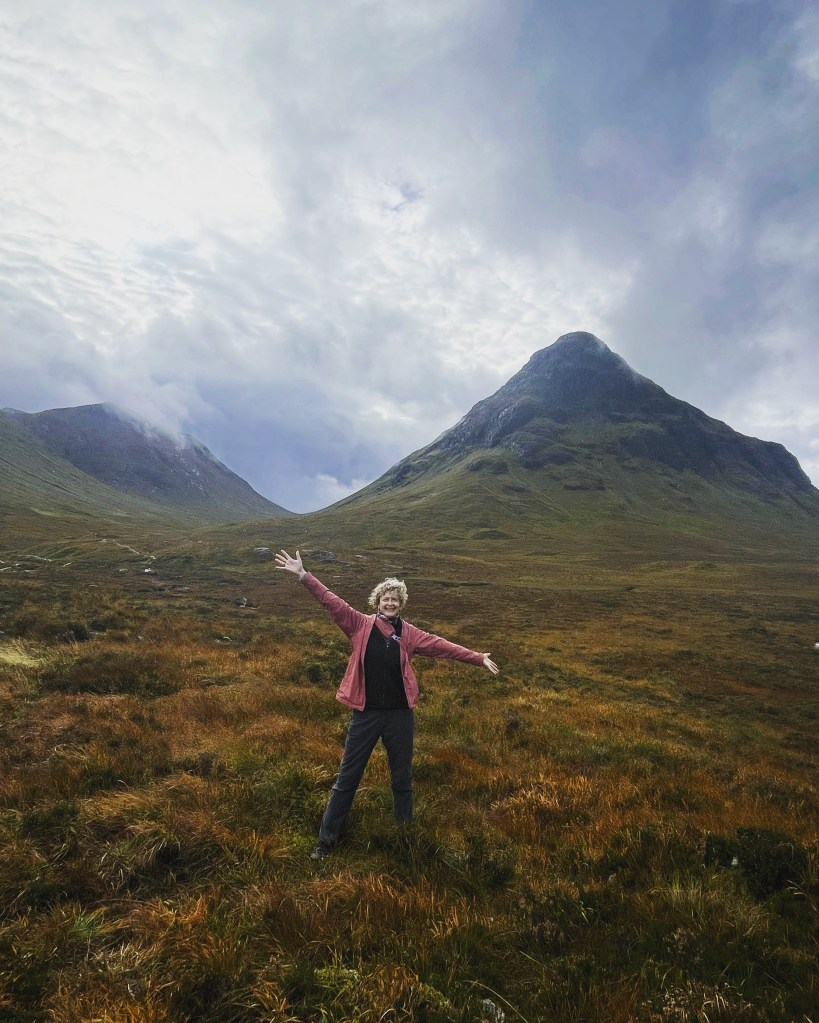
I spent today, my last in Glencoe, with the Three Sisters. As it came to a close, I left the glen and drove to Appin to find a fairy bridge and have dinner at a haunted pub on the shores of Loch Linnie with a castle view. These are the kinds of activities you can throw together in Scotland.

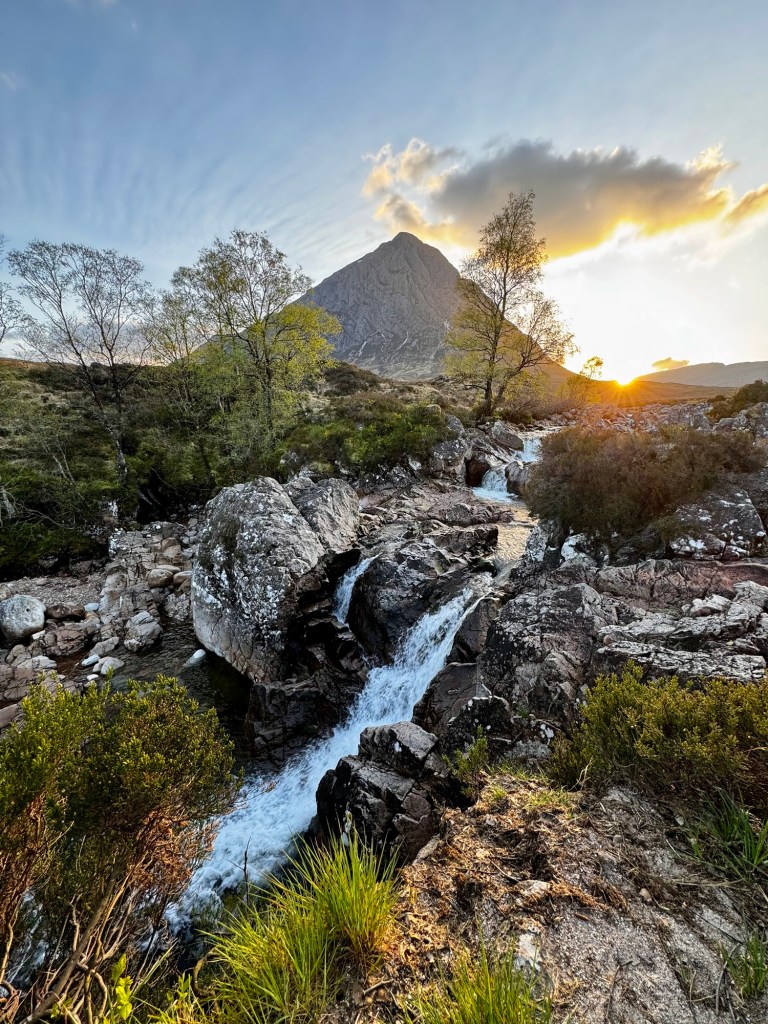
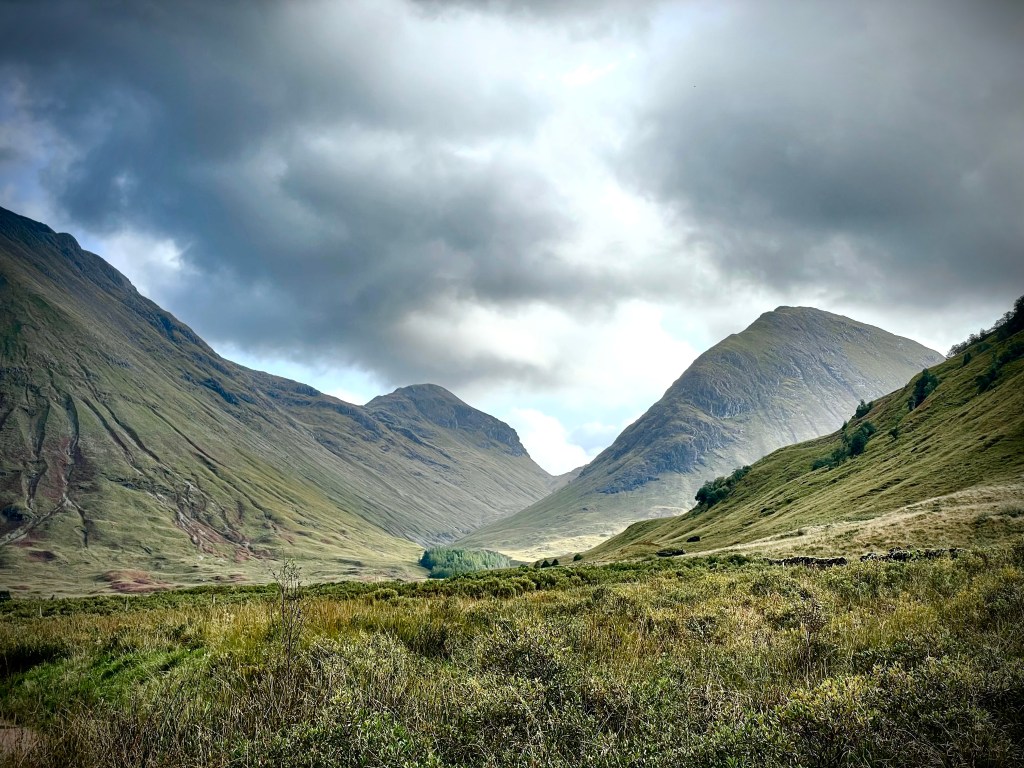
We have Three Sisters in the Central Oregon Cascades known as South, Middle and North – not the most original but people were probably tired from crossing the Oregon Trail and not feeling particularly creative. In Glencoe the sisters are known as Beinn Fhada (long hill), Gearr Aonach (short ridge) and Aonach Dubh (black ridge), all a part of a ridge known as Bidean Nam Bian, meaning “peak of the mountains.” Also more descriptive than creative but the Gaelic adds zhuzh.

Morning commenced with a hike called The Lost Valley, or Coire Gabhail (pronounced “corry gale”), located between the easternmost sister and the middle one. The valley was not lost but a secret, and hard to access. It was used by the MacDonalds as a hiding place for rustled cattle (the family business) and it served as a refuge for those who escaped being murdered during the 1692 Massacre of Glen Coe. Although not really a refuge, as it turned out, since more folks froze to death after escaping than were killed by members of the Campbell Clan, aka rudest guests ever. Ah, but you know all about the Massacre because you read my previous blog and memorized all the facts.

The hike featured some challenging moments and the idea of urging a herd of cattle up this canyon seems completely insane but back in the day maybe cows were tougher. And fleeing up into the canyon in the snow and dead of night with no light source sounds even more impossible.

While relatively short, the hike is a gnarly enough to merit installed hiking accessories along the trail which is not much of a thing in Scotland. There are steep metal steps, handrails, and metal cables drilled into rock next to a sheer slope so you can pull yourself up. Another bit of perilous business leaves you to your own devices as there was simply nothing for it. It’s a section of smooth, steep rock with a fun drop off down one side. Walkhighlands says, “the scrambling is pretty straightforward but some may find the situation airy.” Meaning too much air and not enough rock I guess? To make matters more exciting, the rock has been polished to a high sheen due to years and years of rear-end polishing thanks to all the butts that have slid down it. If you find yourself in Glencoe, do not attempt this hike if it’s been raining. This would be my advice.

And goodness gracious me it was beautiful.

The Lost Valley itself was like a moonscape. Much larger than I expected, it could hold a fair few cattle. And by that I mean easily hundreds.

The descent was easier even with my knees not being fully stoked. And there is often a piper in that particular parking lot, as there was this day, and so my return was scored with a triumphant soundtrack. That’s right, I thought. I did it and now the pipes are playing me home.

By the way, McRaggie plays entrance music whenever I open the car door. More orchestral than bagpipes. It makes me smile every single time. And I play the NYTimes mini-crossword for the little jazzy piano tune it plays when you complete it. Maybe I should speak to a therapist about this.

Buoyed by not dying, I thought another walk was totally reasonable and so stopped for a quick ramble to visit Ralston’s Cairn. And admittedly I never would have known it existed without Instagram. Ralston Claud Muir was a train driver on the West Highland Line and loved to hike in the hills of Glencoe. He sadly died unexpectedly at 32 and his friends and family erected a wee cairn and spread his ashes there. It’s a gorgeous spot, off the trail and a little hard to find, which he probably would have appreciated. I suspect other ashes have been surreptitiously added over the last twenty plus years.

The cairn walk is a festival of Three Sisters views.
The trail is along the old military road that runs through Glencoe.
I feel this sentiment.

I planned to head to nearby Appin for dinner, and had recently learned there was a lovely walk in the area. It’s in Glen Creran Forest and features a 500 year old bridge known more specifically as, of course, the Fairy Bridge.

The hike is at the end of a single track road along Loch Creran lined by fabulous old homes with brilliant landscaping, azaleas in full bloom. Saw lots of ladies out and about tending their gardens. And so many border collies.

Arriving at the small car park, no sooner had I turned off the ignition than I was unexpectedly accosted by a blonde Norwegian woman who told me with great certainty tinged with agitation that this was the wrong car park. “I’m sorry?” “Are you going to the Fairy Bridge?” “Yes.” “Well, this is the wrong car park. We followed navigation but there’s no cell service here. Do you have different navigation?”

Forgive me, but I had absolutely zero interest in suggesting we should walk together even though I had downloaded the map and didn’t need cell service and I’ll fight anyone who says Walkhighlands.com would ever lead you to the wrong car park.

Plus I had to pee, so.

“Well, I’m just going to go for a little walk anyway to stretch my legs I think,” I said, trying to make her go away. She wandered off and then reappeared before I could lace up my boots, and shared more late breaking news. “I went up there,” gesturing vaguely behind her, “and there’s a board, and there’s a way you can get to the Bridge from here but it’s a detour (thus implicitly sticking to her wrong car park theory) so I’m sure you’ll find it.”

Does she want me to ask her to come with? Or is she leaving? If I can find it, why can’t she? What is happening? I saw she had a dude in her car because one of his legs was sticking out of the door and she kept going back and consulting it. I’m imagining he was rolling his eyes at this whole Fairy Bridge ordeal that she coerced him into (I mean to be fair how many men would be like, yes please, let’s go see the Fairy Bridge). Also he was no doubt exhausted by the disproportionate drama that invades much of his life due to this woman of certitude.

When she wandered off again to consult the leg I seized my chance, vaulted out of the car and hauled ass up the steep trail.

The real revelation on that walk, though, was not the bridge but the bluebells. They completely blanketed both sides of the trail along the entire walk. I couldn’t quite capture their beauty. Some things are just better in real life.

Not easy to outdo the bluebells but the Fairy Bridge was relatively nifty. And for the record, it wasn’t part of a “detour” or whatever. Walkhighlands remains invincible.

Coincidentally, the BBC just ran a piece on the couple who created (in 2006) and continue to maintain that invaluable hiking resource, Helen and Paul. You might enjoy taking a peek: https://www.bbc.co.uk/news/articles/c72py4xg2w4o

Helen and Paul, bless you.

I walked along the road for a bit on the way back to the car and tried to imagine what it must be like to live there…..and came to the conclusion that it wouldn’t be a hardship.

I should also mention, as it ties in beautifully with a story you’re about to hear, that I came upon a signpost along the Fairy Bridge trail which referenced nearby Glen Ure and included quite a detailed history. Back in the 1700s Colin Campbell was the Laird of Glen Ure and you might jot that down as we rejoin our pal McRaggie in the parking lot and head to dinner at the Old Inn.

Appin, on the shores of Loch Linnie, is interestingly central – it’s 100 miles from Glasgow, Edinburgh and Inverness. The Old Inn, I had heard, is allegedly haunted by the ghost of a Highlander wrongly hanged for murder. Excellent. The pub was established in 1670, closed in 1880, and Jim Mulligan bought the property in 2016 and gamely undertook a $1.2 million restoration project. Jim believes he has identified the ghost. He thinks it’s James Stewart, known as “James of the Glen.” He was hanged for shooting Colin Campbell, “The Red Fox,” (honestly these monikers) in Appin in 1752.

The Old Inn

This is what happened. Campbell, a government agent, was shot in the back while collecting rents from members of the Stewart family whose estates had been forfeited to the British government due to the clan’s support of the 1745 Jacobite rising. Upon being shot James allegedly informed everyone, “Oh, I am dead,” or words to that effect, and his alarmed compatriots observed a shadowy figure running away into the hills. George II’s government was jittery after the ‘45 and thought these could have been the first shots fired in another rebellion and so London sent word to do whatever was necessary to handle the situation, preferably making an example of the perpetrator. Shut it the hell down, in other words.

Our future ghost James, the most powerful Stewart in the area, had led local opposition to the evictions. In other words, he was a perfect mark. And so he was arrested and charged with aiding and abetting the murderous act of his foster son, Allan Breck Stewart. (Sounds odd but sons of clan members commonly lived under the protection of the clan chief). Allan fought on the Jacobite side at Prestonpans and so was another obvious scapegoat, although he wisely fled to France and so was beyond the reach of government authorities. After a four day trial, with most of the jurors being (ahem) Campbells, the verdict was a foregone conclusion for our poor James.

He was hanged near Glencoe (wee reminder here that the Campbells were also the bad guys in the Glencoe massacre sixty years earlier) and, dear readers, avert your eyes. His body was left dangling from the gallows under guard for three years. Under guard. Lest you think your company piffles FTE on unnecessary tasks.

It was known locally that neither Allan nor James were involved in the murder. You can see why James, in particular, would be super pissed about the chain of events but it’s hard to imagine that he’d live out his ghostly days haunting a renovated pub in Appin. Getting his sweet, sweet revenge by bothering its staff.

Ah but our story doesn’t end there. Many stories about Scottish history that have seeped into popular imagination are due to either Walter Scott or Robert Louis Stevenson wandering through the past in search of material. They wrote accounts about historical incidents which launched these mostly forgotten and not widely known events into worldwide notoriety. They were, in essence, the 24 hour news cycle of the early 1800s and had much to do with romanticizing Highland culture.

In this case, a hundred years after the murder, Stevenson’s father found, in Inverness, a slim volume called Trial of Stewart. He thoughtfully purchased it for his son who was writing a book on the history of the Highlands (instead of designing and building all the lighthouses in Scotland, see previous blog entries about this family).

As a result of this gift, our man Allan Breck Stewart, even though he managed to escape history for a time, became the lead character in “Kidnapped,” Stevenson’s book that dramatized the Appin murder. Thus Allan, who played quite a minor role in the Appin murder, became immortalized a hundred years after his death.

Also, now I have to read Kidnapped.

So not to cast aspersions on our friend Jim the pub owner, but his sly assertion that the ghost of the Appin Inn is James of the Glen – because he drank in the pub (as did everyone) and because some evidence for the trial was presented in the Inn’s back room, is clearly more about publicity than reality. But I mean good for him, if a famous ghost gets him butts in seats, all to the good.

Speaking of reality, let me be clear that this does not mean the pub is ghost-free. Staff have been creeped out by rattling glasses, pans flying through the air and chairs falling over. Mysterious footsteps in an empty upstairs room and shadowy ghost figures have caused people who aren’t paid enough for this crap to turn out the lights and skedaddle. Most creepily a nonbelieving staffer, alone at night, said, “The fire suddenly went down and the glasses in the gantry started rattling. We had a St. Andrew’s flag up above the gantry and, when the glasses stopped, the flag started billowing. I looked round and a chair was on its side.”

Yikes.

The last thing you should know about the Old Inn at Appin is that the food is excellent – they specialize in locally sourced grass fed steaks, which I ordered. So, dear reader, I have my first (confirmed) experience of eating a Highland Coo. Don’t judge. I feel bad about it.

Early in the evening.
The ginger guy is the bartender.
The cool bar.
Flashback to my last trip – ahh the Hebrides.

The pub serves a DELICIOUS black pepper cream sauce to go with their steaks and chips. It’s a hefty portion served hot in a ramekin. I was contently dousing a bite of coo when something fell in with a splash. I stared, taking a second to clock that a dreaded yellow jacket had swan dived into my ramekin. I harbor quite a bit of hate in my heart for the aggressive meat-eating little dickheads, their families, and all they represent. I scooped it up into my spoon and flicked it onto the table where it staggered around drunkenly, coated in black-flecked white goo. My first thought, and I’m allergic to yellowjackets mind you, was that I need to have my cream sauce replaced as soon as possible. I waved down the waiter and explained – he nodded and whisked the ramekin away. Shortly thereafter the bartender brought me a new one filled to the brim and steaming hot. I dismissively gestured at the bee, still carving a drunken path around the table, he nodded, disappeared and came back with a paper towel. The bee found its footing and obligingly climbed onto it and he took it outside. He told me later he tried to wipe the peppercorn cream sauce off the bee but could not give me a solid prognosis as as to his recovery.

“He’ll probably be popular with the other bees,” I suggested, possibly batting my eyelashes. I mean seriously, my hero. An entire new ramekin of the best sauce in the world and a bee whisperer.
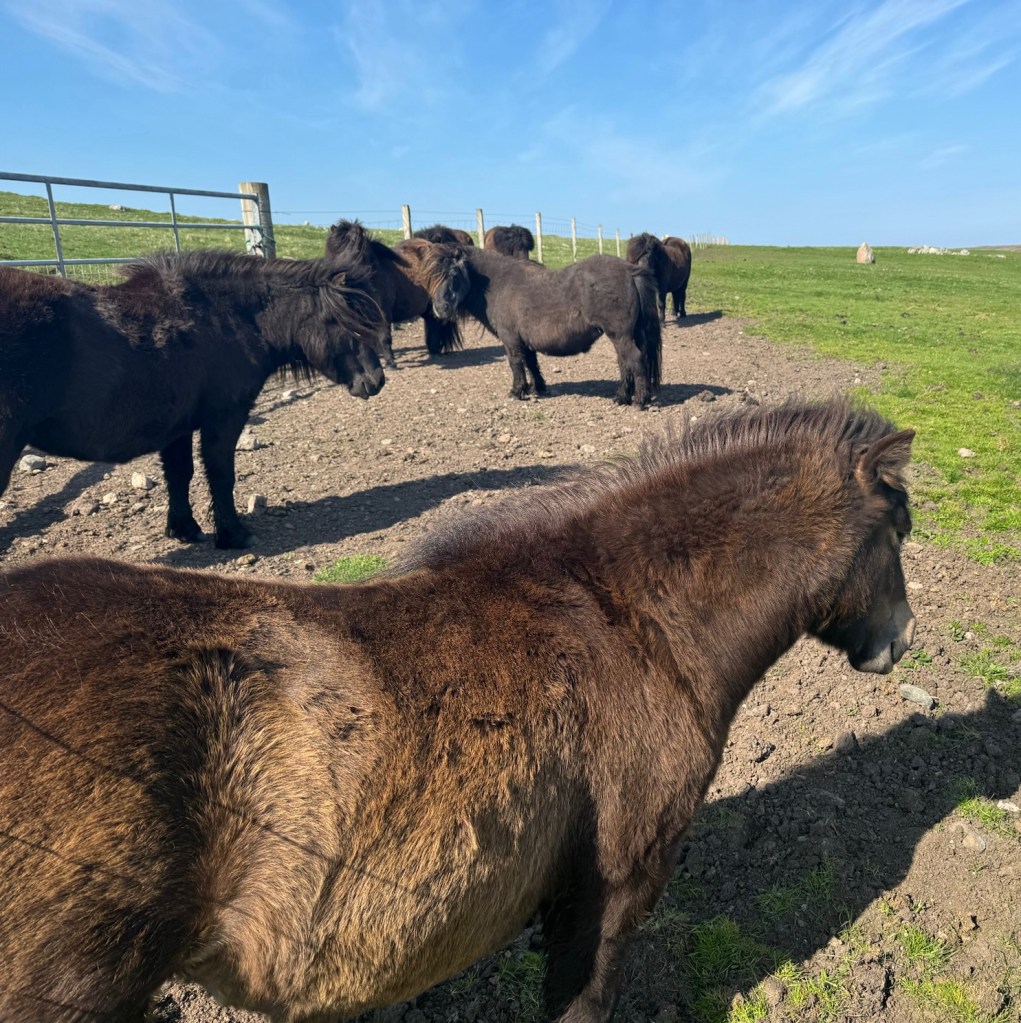
After basically drinking my weight in sauce, I wandered down to the Loch and snapped a few backlit photos of Castle Stalker. It’s privately owned but they do arrange tours and take people out there by boat during the summer.

And what is its history, you ask? We are at the end of our entry and possibly our tolerance for obscure Scottish history, so allow me to simply share the nutshell version. It was built in 1320 and many clans have passed through its halls since. There have been MacDougalls, Stewarts, King Bruce, the Lord of Lorn, a MacLaren, MacCouls, MacDonalds, Campbells, a dude called Donald of the Hammers, more than a few murders, battles, cattle rustling, a passage of title via a drunken wager and also a besiegement or two. It was occupied by government forces after Culloden and served as a local center for the surrender of weapons. The roof collapsed at one point and the owners didn’t bother repairing it because no roof meant no taxes. At last, in 1965, Lt. Colonel Stewart Allward purchased it from a Stewart and oversaw a ten-year restoration. It’s now fully habitable.

Castle Stalker. It’s larger than it looks.

The day’s adventures having at last come to a close, I headed back to Glencoe for one more night. It was such a beautiful evening I drove down Glen Etive and gave the Bookel a proper goodbye.

McRaggie and the Bookel.

May the Fourth Be With You

My Glencoe Welcoming Committee

I know it seems like only a few months have passed, which is accurate, and yet here we are again, thanks to the miracle of air travel.

Speaking of, even though you might be hoping to hear another tantalizing tale of a Swiss quantum computing seat-mate, alas you will have to be satisfied with an AirPods case. A friend and I recently agreed that the most crucial and nonnegotiable travel accessory, besides one’s passport, is a pair of noise-canceling AirPods. They are a matter of survival, even more so than fully bolted airplane doors. On my flight from Redmond to Seattle, after everyone boarded, the flight attendant addressed us all, holding an AirPods case aloft. It had been found in the boarding area, she tells us, so whose is it? As she regarded us expectantly, I joined my two seatmates, both pilots (also an excellent choice, Universe), in immediately double-checking to make sure we had our cases. Because the rule is, when someone says here’s a lost thing so who can’t keep track of their stuff, you immediately must assume that you are the culprit.

Our determined attendant announced the recovery of the case eleventy billion times and not a soul raised their hand. Finally a woman did, but ultimately this was a disappointment as she briefly looked at the case, considered it, and handed it back. Finally the attendant, like she was talking to a bunch of toddlers, waved the case in the air yet again and said in a sing-song voice, “Oh-kaaaay, I’m going to leave it here then,” and handed it to someone who took it off the plane.

One of my pilots said to the other, grinning, “let’s just GO” because at this point our flight was delayed. Over an AirPods case. There wouldn’t have been this much drama had someone had left a baby behind. THIS IS HOW VITAL THEY ARE.

Finally another woman raised her hand. The flight attendant quite understandably shrugged and said, “The airplane’s door is now closed,” and we all know come hell or high water, it will not be opening until Seattle.

But dear reader, the story didn’t end there. The flight attendant said one of the ground crew was going to try to throw the case up to the pilot who would try and catch it out of his side window.

I looked at my two pilots and asked, “Would you guys do this?” And they both nodded like “oh of course yeah,” being men I guess, and also HOW VITAL AIRPODS ARE.

Well, voila, the pilot caught the case and it was restored to the woman who cared so little that she couldn’t be bothered to check her things and decidedly broke the rule that you always have to assume it’s you.

A few hours later I wandered around the Seattle airport for hours in a daze after spending nearly $50 on lunch. Bought a lipstick from the Mac store that I don’t need. I know you feel me. I parked myself in the main terminal and glumly studied the floor. But then an official airport lady came up, handed me a little sticker and said, “May the Fourth Be With You.”

Suddenly my mood brightened considerably. May the 4th is also heavily celebrated in Scotland, as it turns out.

Did you all see Mark Hamill at the White House on this day of days? He visited the press room where 99% of the journalists were thrilled to be in the unexpected and thrilling presence of Luke Skywalker. And then the CBS White House reporter asked why Mark Hamill was there. The Press Secretary, the fabulous Karine Jean-Pierre, gave the sort of off-the-cuff answer you do when someone asks an odd question, at which point the reporter made the mistake of revealing she didn’t know Mark Hamill was in Star Wars and indeed had not seen the films. Our democracy is indeed doomed.

The long leg to London was fine, I was next to an older lady heading to Madrid whose voice was largely sub-audible which meant I could simply nod and smile most of the time. She also very sweetly asked if I minded if she tucked into her dinner “before it gets cold” before mine arrived. She scored hers early as it was a special gluten-free order. I mean really how beyond polite! I didn’t think that particular rule applied on airplanes, unlike the always-assume-it’s- you rule which applies everywhere.

A quick note to whine about the combat zone that is Heathrow when you are making a connection. Holy crap dear reader. You walk for miles even though your connecting flight is in the same terminal. It’s hot. It’s confusing. You have no idea what is happening. You just keep walking, passing through these checkpoints, following the purple “connecting flights” signs. Is this one of my recurring anxiety travel dreams? Am I still walking? Is this purgatory? Will I ever get out of here?

That’s nothing compared to the security screening. Listen, I know they don’t care that you are TSA pre-check or Global Entry or the Queen of Sheba. But don’t yell orders to a bunch of jet lagged people. Don’t aggressively challenge me on clothing categorization. “It’s a sweater.” “No it’s a coat, take it off, what you have on underneath is a sweater.” Then a guy walks over and tells me also to take off the sweater, which he categorized as a hoodie. I mean I legitimately could have had only a bra going on underneath. Also had to remove my boots. Put my phone inside a pocket of something that is in a bin. DO NOT LEAVE YOUR BIN you have to push it onto the belt personally. You CANNOT take anything out of your bag while it’s in a bin. Am I being checked into a prison?

I guess I’m used to Amsterdam with the bland but efficient indifference. Or Charles de Gaul with the barely concealed condescension. All way better than yelling arbitrary bossiness even with an English accent.

It all worked out, I found my flight to Inverness. Pro-tip – to avoid the crazy way the Brits load planes, agree to gate-check your carry-on. By this point you are happy to be rid of it anyway. And they let you board first. Hahahaha first class people, byeeee.

And one final transportation thing. I finally decided to pull the trigger on renting a standard transmission car. Automatics are more rare in the UK and thus more expensive. I learned to drive using a stick on a VW Fastback. (Am old). I was dizzy with the control it offered! But – this being the UK, the shift is on the left, I’m jet-lagged, it’s been 30 years, driving on the left….was it all a bridge too far? As it turns out, no. Driving a stick is apparently hardwired. I only stalled my shiny Blue Captur (a sporty car made by Renault) once, after I had been on a highway and just forgot completely I was driving a stick. The car juddered to a halt and by the time I clocked what was happening – it took a minute – McRaggie had turned himself back on like a boss! If only that had been a thing when I learned to drive, my dad would have been much less irritated with me.

McRaggie you ask? My car’s name is Ragnar, Raggie for short, and his spirit inhabits every vehicle I drive. In Scotland he is known by a slightly different name.

And at last, Glencoe where I am staying for three nights at my usual spot, the Kingshouse, which is marvelous. Had a lovely dinner, a wee walk from the hotel up the West Highland Way and reveled in the glorious (aka not raining) weather. Yes indeed, happy to be back.

The following day I was finally able to complete a hike that I had started my last three trips. It’s a relatively level trail that runs down the glen between the two great ridges, the Buachaille Etive Mor and Etive Beag. It’s a magical path with a tantalizing notch in the hills ahead that seems to get further away the longer you walk toward it. I’ve always wanted to see what was there, but once all the streams you must cross along the way were in spate, and there simply wasn’t enough time the other two excursions. The trail is part of a nine-mile loop hike.

See how enticing? What is there, between them thar hills? (From 2022)

This miraculous day it hadn’t rained and there was all the time in the world. And it surpassed my imagination. At the end of the glen is a gorgeous cairn – and just beyond lies the neighboring valley of Glen Etive which is surprisingly far below like a doorway to freaking Narnia. I couldn’t believe it.

When Narnia is just there you don’t need a stinking wardrobe.

The loop hike takes you around the base of Buachaille Etive Beag and – I am happy to announce – it is done. At last.

After a quick visit to the Glencoe Visitor Center (best gift shop ever) and a meal at the Boots Bar at the Clachaig Inn as per usual, I drove to the Glencoe Ski Area specifically to see a wee white house known as Black Rock Cottage because of Scottish landscape photographers on Instagram. There’s another heavily photographed white house in Glencoe called the Lagangarbh Hut (see blog from May) and another infamous white house, not as photographed because it’s falling down and covered with graffiti, known as Allt-na-Reigh. The latter was sold to famous mountaineer Hamish MacInnes in 1961 for $1,000 and later bought by dreadful serial sex offender Jimmy Savile in 1998, although the The National newspaper said he was seldom there and “there is no evidence that any of his offending took place [there].” It is now owned by a global convenience store company (sigh) and, sidebar, they plan to knock it down and build a “modernist luxury villa” which was well and thoroughly protested but hashtag private property.

Anyway, back to Black Rock. It is owned by the Ladies’ Scottish Mountain Club which I must try to join if I ever move here. The bottom of the driveway is blocked with a bar (not the fun kind) and a woman was just leaving the house as I arrived. If you feel like staying in a place that people are photographing quite a lot, it’s available as a holiday let. It sounds a little rustic – if you want drinking water you need to get it from the shower as there’s no running water in the kitchen. One also must bring all of one’s linens although mattresses are thoughtfully provided.

All in all, a quite excellent first day.

The Perfect Romance and Shield-Biting

Edinburgh Castle

Made it. Back to Scotland. And you guys. You know how when you are flying alone there’s that thing where as people are boarding you are sending prayers and entreaties into the Universe about your incoming seat mate especially those qualities you absolutely do not want? I’m here to tell you that sometimes this works. On a ten hour transcontinental and transatlantic flight I somehow drew a tall gorgeous German physicist with dark hair, sleepy eyes and long eyelashes. I am not even kidding. I was so gobsmacked that I could barely speak to or look at him at first. Until, that is, I couldn’t open our introductory snack of artisanal cheese crackers. No really I couldn’t. He Sir Walter Raleigh’ed the situation and gallantly surrendered his open packet to me while he struggled with mine since it didn’t have the “notch” or whatever – at which point we started talking.

Dear Reader, I will not hold you in suspense but instead will answer your immediate question by breaking the devastating news that he has a girlfriend. Also I can’t remember his name because his mother is from Pasadena and his father is Bosnian and his father won naming rights.

He was born in Germany and moved to Zurich for his PhD (!) in quantum physics (!!) and he owns his own quantum computing company (!!!) that sells parts to, among others, the NSA. His ten minute presentation to me about quantum computing, complete with eloquent hand gestures, made me die a little on the inside. He had been in Portland and Seattle for a conference and meetings with Intel and Microsoft. He planned to disembark in Paris and hop on a private prop plane to a small town in France where he was meeting a friend for a sail around the English Channel. He also is about to take possession of a new catamaran which will feature prominently in his plan to take a year off with the dreaded partner – whom I immediately liked when he said he thought sailing was fun but his girlfriend really liked to arrive at places.
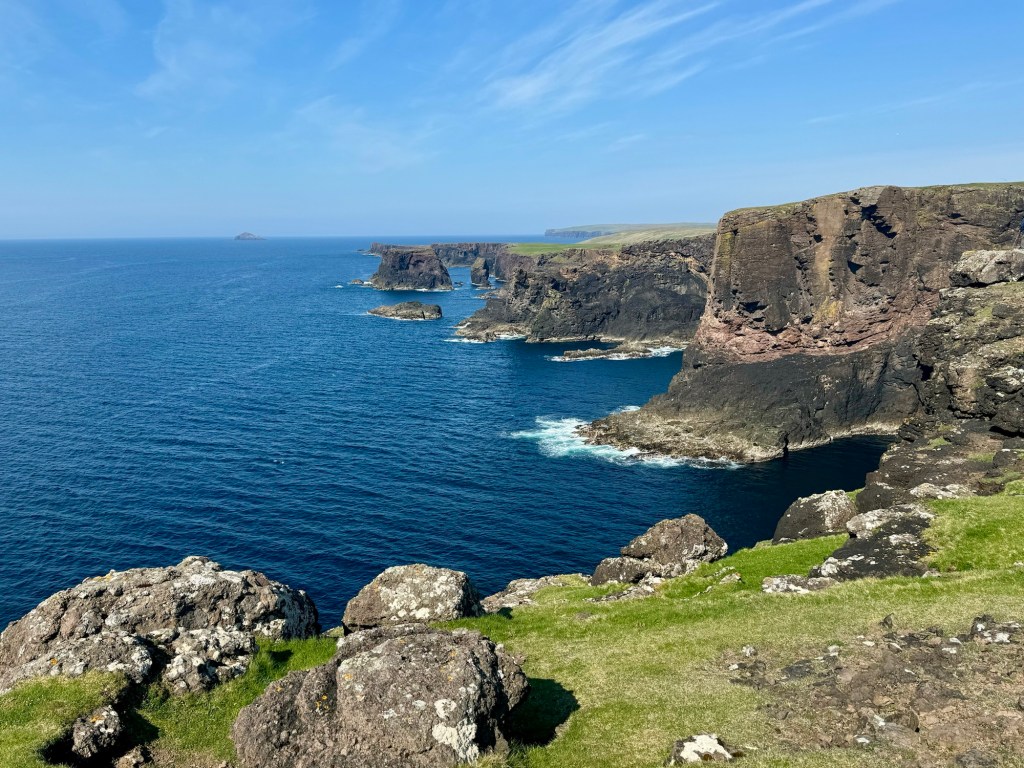
We had a great conversation wherein he said things like, “I usually don’t talk this much or share things like this.” To which I responded well that’s because we are soulmates (actually well that’s because I am a relentless question hamster). We both love the flight tracking thing and he reached over to my seatback screen and pinched and moved the map to show me various things like where his uncle lives and also the freaking Northwest Passage.

And obviously we slept together side by side after we ate our tiny portions of marginal food wrapped in foil. He had a very elaborate sleeping-on-a-plane system (he travels a lot) whereby he completely covered his head with his hoodie and put on weird sleep goggles but this charming quirkiness was easily forgiven.

In the morning he remarked about how well he had slept (because soulmates) and we embarked on a political discussion about the rise of white nationalism around the world and also how direct democracy works in Switzerland. While not in NATO because #neutrality he said their fighter jets were very old and this is the kind of national security thing that VOTERS DECIDE and they have refused to authorize modernization which seems risky since their defense is all on them and Russia is a two hour flight away. Also unsurprisingly the government has tons of excess tax money they’ve collected but can’t deploy because voters won’t greenlight anything.

He invited me to lean over and look out his window several times – and this was before we had brushed our teeth – once at a wind farm in the sea and once, in his sad words, at the “disappointing” English Channel which was like glass. While this would have been helpful during the Dunkirk evacuation, not so much when one has a sailing trip planned.
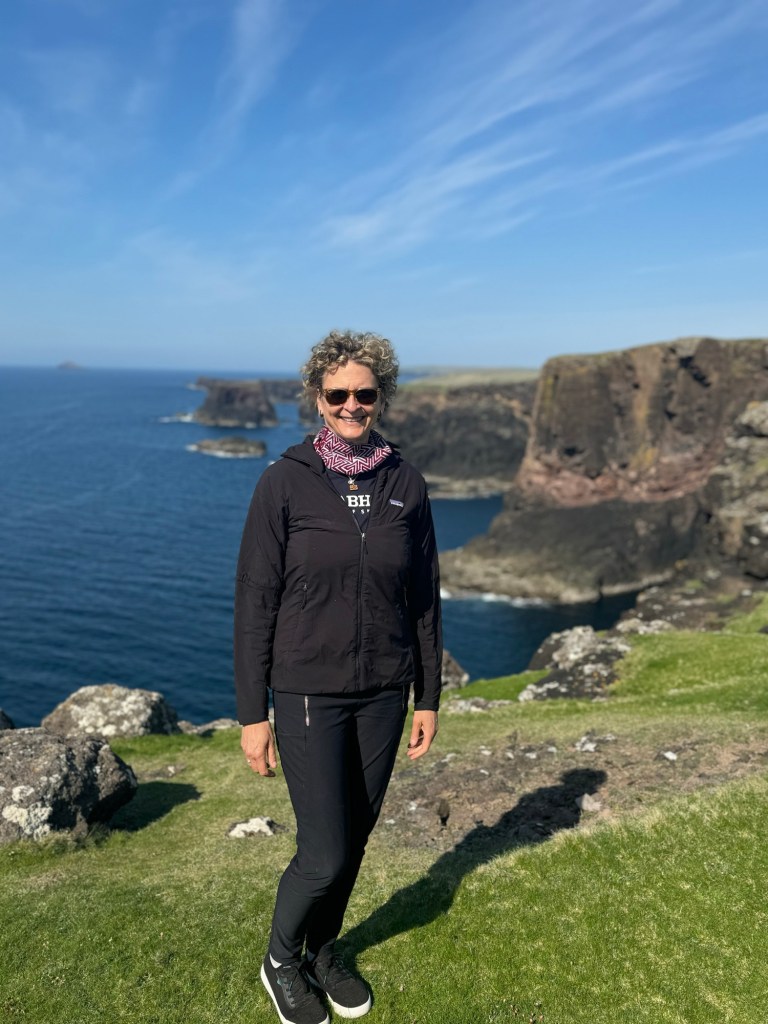
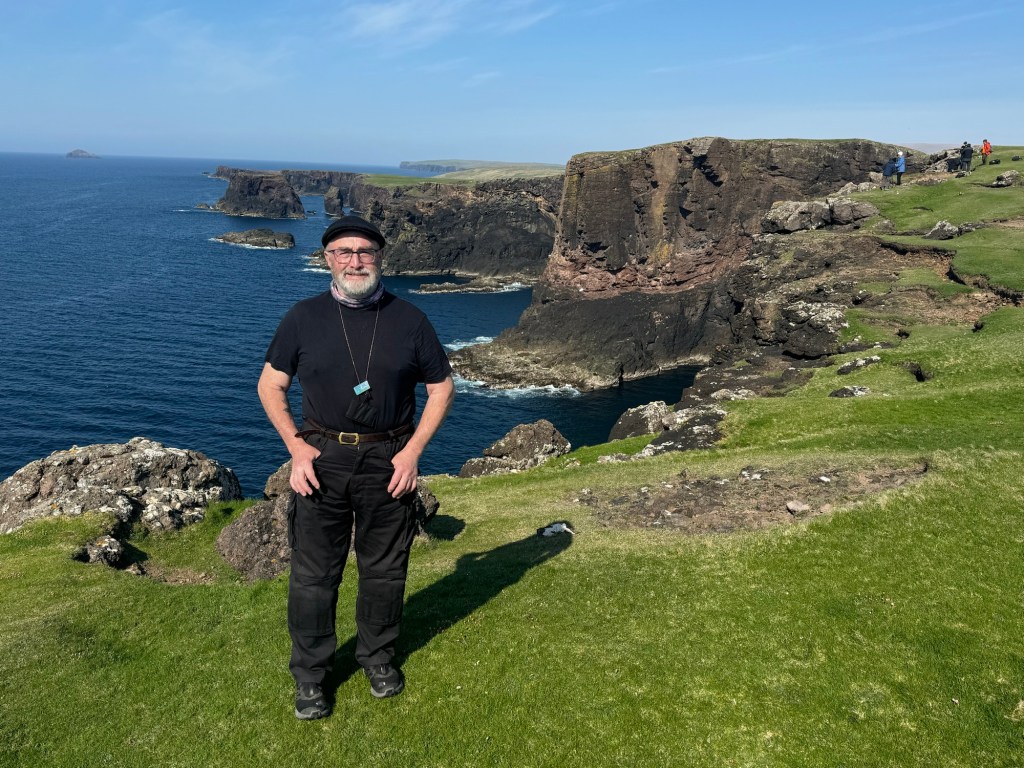
I also admittedly touched his shoe one time because he was wearing Tigers and I just got a pair and love that little flap over the heel, and also we both ordered our Starbucks airplane coffee black. I’m just saying.

Once we landed he helped me figure out my connecting gate because Charles de Gaulle is weird – as he described it the airport is organized in an unnecessarily complicated way for no reason except this is obviously a very French thing. Finally, I gave him a hug and we bid farewell forever.

I’m very sorry I don’t have a photo but I felt it would be a bridge too far and he was already, I could tell, being very Swiss/German about the hugging situation.

Travel, my friends, is the best.

And so I made it to Edinburgh in a very pleasant fashion, had a jet-lagged meal at Tom Kitchin’s new restaurant KORA, a lovely walk around parts of town I haven’t seen and spent some time at the Scottish National Museum.

The Museum is something. It’s like all the museums crammed into one. So you wander through quiet rooms devoted to fashion and design, through busy child-packed rooms featuring natural history, science and technology and finally through largely kid-free rooms devoted to Scottish history. So one minute there’s a dinosaur hanging from the ceiling or maybe an old airplane and the next you are looking at a silver box owned by Mary Queen of Scots and a sword allegedly carried by Robert the Bruce.

Dangling dinos
This silver box held the “casket letters” which implicated Mary in the murder of her husband Lord Darnley and resulted in her 19 year imprisonment which as we all know did not end well at all.

The coolest thing though is the Lewis Chessmen, 11th century hand-carved ivory chess pieces found in a Viking hoard on Lewis in the Outer Hebrides. The Scottish National Museum owns eleven of the pieces and the British Museum owns the remaining 82 (because that Museum has famously pilfered most of its collection from other countries’ stuff and I know that technically Scotland is part of the UK but still). Nobody knows the circumstances surrounding the find, the pieces just appeared one day in 1831 at a Society of Antiquaries of Scotland exhibit.

My favorites are these:

The Queen – who has apparently seen unimaginable horrors and has the same face as the King.
The Warder – aka the rook – who has seen so many horrors that he must bite his shield (Actually based, they think, on the berserkers of the Norse sagas)

Since this is Scotland, there is of course a Harry Potter connection. In Sorcerer’s Stone, Harry and Ron played their game of Wizard’s Chess with a replica of the Chessmen.

Onward, Solo – Aviemore, Glencoe and a Few Memories In Which Things Come Full Circle

View of the Buachaille from my balcony at the KingsHouse Hotel in Glencoe. Insanity.

While I truly loved the Backroads tour, I was very much looking forward to a week or so on my own plus yay driving! Being an extroverted introvert and a Gemini, a bit of both is just the ticket. If there were three or four additional personality types in this category I’d for sure want a teensy bit of each.

I headed toward lovely Aviemore in the northern Cairngorms to stay at one of my favorite B&Bs in all the world, with two of my favorite B&B owners, Kirsty and Kev. Along the way, I stopped at Scone Palace, the former home of the Coronation Stone, which you may be familiar with since we just coronated King Charles as he perched on top of it just to make it clear he was also King of Scotland. The stone was tucked away under an 725 year-old wooden high-backed and undoubtedly uncomfortable “Coronation Chair.”

Scone Abbey, coronation site for early Scottish Kings

The oblong block atop the bench above is a replica of the Stone of Scone (pronounced “skoon” in this instance), or the Stone of Destiny, depending on how dramatic you might be feeling. The real one (maybe) normally resides in Edinburgh Castle along with the Scottish Crown Jewels which is kind of hilarious because it’s just a block of old red sandstone. It is, however, a block of sandstone that has led the most interesting life of any other existing sandstone in the history of the world. It’s literally the symbol of Scottish sovereignty.

In this very spot, the Abbey at Scone Palace (it’s since been rebuilt), the stone witnessed the crowning of early Scottish Kings Kenneth McAlpin in 843 (!!), Constantine II in 900, Macbeth (the real one) in 1040 and David I in 1124. In 1296 the little asshole known as the Hammer of the Scots, Edward I, swiped it from Scone during the First Scottish (failed) War of Independence and built the aforementioned Coronation Chair in Westminster with the under-ass shelf for the stone upon which later monarchs of England and Scotland were crowned.

There’s a rumor, though, that wily monks at Scone Palace hid the real stone and the English troops took a substitute. Real or no, the English deigned to finally return it in 1996, seven hundred years after it was stolen, with the proviso that they could have it back whenever they crowned someone, which lately has been hardly ever.

Before the official return, though, there was an exciting unofficial one. Fabulously, in 1950 some Glasgow students nicked it RIGHT OUT OF WESTMINSTER ABBEY and took it back to Scotland, leaving it at Abroath Abbey. The thing is so heavy they dropped it at one point, breaking it in half, necessitating a hasty repair by a Scottish stonemason. One can only imagine what he thought when the stone was presented for repair. When the theft was discovered, the English government literally closed the border with Scotland for the first time in 400 years.

Here is a photo of the unlikely ringleader of the Stone of Scone thieves.

And here is the stone “safely” back in English hands.

James Wiseheart, what a name! Of course, there are also rumors that the English got a replica back, not the real one.

Now that you know everything you’ve ever wanted to know about it, here’s a photo of Scone Palace, which is quite lovely.

It’s the kind of place where the guy who runs the gift shop feeds the resident peacocks.

Also I’m not sure whether anyone realizes but the Sword in the Stone is also on the grounds.

Visiting Scone Palace was a little bit of a full circle that started last fall, when I traveled to Scotland with my pal Trish. We spent some time in Kilmartin Glen, which I would 100% recommend if you’d like to see Neolithic burial sites similar to those on Orkney, standing stones, photogenic highland cattle….

…and another, more ancient, coronation site of Scottish Kings, Dunaad Fort. The ruins are atop a hill in Kilmartin glen and we had the place to ourselves if you don’t count the (black) sheep. The fort was occupied 2,000 years ago and, as the capital city of the ancient kingdom of Dal Riata, was a royal power center of Gaelic kings in the 500s to 800s, and an international trade hub.

In the Fort’s ruins is a stone with a footprint carved into it (it’s actually a replica installed over the actual stone to protect it but I swear you would never know) and was thought to have been a part of Dal Riata’s coronation ritual whereby ancient kings knelt to declare that they were married to the land and would protect it against all enemies.

We also felt as though we were married to the land and so knelt to pledge our respective troths.

While we spent our days exploring the Glen, traveling to Oban and the Isle of Mull, visiting ruined castles, and driving up to Glencoe, we stayed at Kilmartin Castle. Built in 1550, it was restored by a fabulous couple we loved who took great care to make it look and feel like a castle inside as well as outside. Many inhabited castles in Scotland seem like a normal sort of mansion once you get inside, so I appreciated their aesthetic goals. There was a winding staircase, stone walls and floors, and I had to duck a LOT to avoid braining myself in low doorways. In short, completely brilliant.

Kilmartin Castle

Anyway, bringing us back to the present, I was very happy to arrive at the Ardlogie Guest House in Aviemore, staying in my old room, and seeing Kirstie and Kev who are as lovable, kind and crazy as ever.

Their chickens waiting at the patio doors for Kev to feed them. Thanks for the yummy breakfast eggs, ladies!!!
The lovely Aviemore train station

Unfortunately the northern Cairngorms, boasting the coldest climate in the UK, was experiencing high winds and thus the mountains were too unhospitable to climb. Kev ascends Munros on the regular and was like, no, this would be miserable, do not do it. So I saved those hikes for another time and stuck to some gorgeous glens, visited the Dalwhinnie Distillery and enjoyed a few meals at the Old Bridge Inn where you can reserve a table in the main restaurant where children are allowed or in the “lounge with dogs,” which has a fireplace. No-brainer.

Here are some snaps from Glen Tilt:

And some from a walk through a glen between Kingussie and Newtonmore, which featured that walking-across-moors vibe I love. And I did not run into one single other human.

One morning I visited the Ruthven Barracks, a gorgeous ruin of a fort that was built by George II (not personally) on a hilltop visible for miles around. He ordered that it be constructed after the failed Jacobite uprising of 1715. The soldiers stationed there were to maintain law and order in the Highlands and squelch any further unsavory Jacobite activity. In perhaps another full circle moment, after the Battle of Culloden, the remnants of the Jacobite army met there, awaiting word from Prince Charles Edward Stuart about their next move. Not knowing that the Bonnie Prince had scarpered, they finally received word that the Fat Lady had sung and they should go home.

Here are a few photos.

The stables

I also booked a tour and tasting at Dalwhinnie Distillery, which is perched on a moor in the Grampian Mountains in Cairngorm National Park – in the middle of nowhere but also entirely visible from the A9. I wanted to visit as this was the first whisky I had ever ordered in a restaurant. I was just beginning to learn about the golden liquid at the time, so I asked the waiter to make a recommendation for a drinkable, smooth and gentle dram. It was my birthday dinner in Bend at one of our finest restaurants and my parents were in town to help celebrate (my Mom and I share a birthday), so Dad had to pay an exorbitant price, which I know he heartily disapproved of but he managed to hold his tongue. Now that he is gone, it seemed like a yet another full circle thing to do.

Compared to other distillery tours I’ve done, this one was pretty performative and corporate. Dalwhinnie is owned by London-based mega-company Diagio, there was a huge visitor center and shop that can accommodate loads of bus tourists – and much of the whisky-making process is no longer done on-site. For example, unlike earlier in its history, they now get their barley already sprouted and dried from elsewhere in Scotland. Interestingly, all Diagio distilleries in Scotland (there are 28 out of 140’ish) store barrels all around the country at other distilleries to hedge against fires – which are not as isolated or rare instances as one might assume. In fact the Dalwhinnie distillery burned down in 1934 and it was more than 100 years until they were in production again. All that alcohol and everything. Boom.

And speaking of the climate in the Cairngorms (Dalwhinnie holds the distinction of being the highest in Scotland, elevation-wise), there’s a tree on the grounds that has been impacted by the wind over time thusly:

The wind is NOT blowing in this photo.
Our very animated tour guide, a Scot who told a lot of extraneous personal stories that sometimes were interesting.

And I’ll leave you in the Cairngorms at the Old Bridge Inn. I first visited five years ago, along with a guide who was squiring me to all the sights in the area. We had lunch there, but I wasn’t really clocking where we were, as we drove around quite a bit and it was my first time in the country. So when I walked in last May, upon Kirsty and Kev’s recommendation, it was like having a happy encounter with an unexpected friend. Oh it’s YOU!!! The place is a true community gathering zone filled with locals, and there’s a stand-up only bar ringing with jovial hilarity that can get quite loud in the best possible way. There is often live music outside, too. I just love it.

As I bid a fond farewell to Kirsty and Kev, I remembered another very different sort of couple who run a bed and breakfast of a particular sort near Glasgow. Trish and I stayed with them for one night last year. They are a legit Lord and Lady who possibly have come on hard times as it must be challenging and crazy expensive to run an olden times estate these days. They let out two of their bedrooms and also hold an outdoor rock festival on their grounds every summer. I feel sure they hate every minute of both things.

Their home is still quite beautiful although if you look too closely, you see a little fringe around the edges, a little dog-gnawing damage perhaps. The original shabby chic vibe.

They have several dogs, one of which is a Jack Russell who stole Trish’s glasses from her upstairs bedroom and carried them downstairs, placing them carefully on the worn Oriental rug in front of the wood stove. We were kind of afraid to mention this suspected theft to the Lord and Lady. Luckily, I had taken a random photo of the dogs downstairs and we spotted Trish’s glasses in the photo, blending perfectly into the oriental carpet, and were able to retrieve them without incident and, most importantly, without casting aspersions on their dog.

The sweet little glasses-stealing culprit.

That evening we joined the Lord and Lady for drinks before dinner, where I spotted an invitation on their mantle from the Queen to join her at Holyrood Palace in Edinburgh for a garden party. I mentioned it to our hosts, and the Lady said she couldn’t recall what it was exactly, but that they had other plans for that evening.

We met them for dinner in the huge dining room. They appeared, wheeling a serving trolley into the room and serving up what was a very nice dinner and we engaged in a lovely if somewhat stilted conversation. It was a little bit like Downton Abbey in the Upside Down. And they really were charming, the Lord was very very sweet and kind, the Lady a little more prickly, tending to snappily over-correct the Lord who remained pretty jovial in spite of it.

The rooms we saw in the house were generally quite lovely, although we wondered if much of the place had been closed off, as they only seemed to use a few. We continued to wonder whether they truly enjoyed having random guests in their home and so endeavored to be as low maintenance and well-behaved as possible, although I’m sure we used the wrong fork and committed other dreadful etiquette faux pas.

They bid us farewell the following morning and we took our leave. I will never forget this experience and again – travel is the best.

So back to the present, on the way to Glencoe, I stopped in the pouring rain at a nature reserve called Creag Meagaidh (roughly pronounced Creg Meggie). It’s one of Scotland’s many rewilding efforts, and includes a simply gorgeous hike up through planted trees, ferns and other foliage, up into another moors situation along a river with stunning views and as usual all the weathers, before finally dropping down to a gorgeous hidden lochan rimmed with dramatic cliffs. Had the place to myself (I know I keep saying that – I do really like people but not, like “people” if you know what I mean) and would highly recommend!

This being Scotland, of course there were coos.

And now we are off to Glencoe.

This glen is one of my very favorite spots in Scotland. It’s objectively wild and spectacular to be sure, and so attracts loads of visitors. Most of them pull off and snap photos and don’t step foot on the trails. Even though this is annoying, there’s something about the place that is more than its beauty – and overcomes the touristas. Scotland magic is strong here and not to be weird but I feel a physical reaction when I’m here. It has a deep and bloody history which I swear I won’t go into (google the Massacre of Glencoe because it is something), and some of the best and most dramatic hiking in the world. The iconic West Highland Way runs through, along with famous climbs, the most famous of them all being the Buachaillie Etive Mor, which is also the most photographed mountain in the UK, although not sure how we know this. The UK’s highest peak, Ben Nevis, is just one valley over.

The mountains are steep, dramatic, green and gaspingly spectacular. The weather is often sketchy so they can also be moody, looming and dangerous. Mountain rescue is busy, and recently three folks fell from a ridge in the glen, one of the most narrow in the UK . They had an experienced guide, but the weather was foggy and slippery.

I have made my way to Glencoe on every trip I’ve taken.

One of my favorite walks is along the River Coupal which cuts through the valley between Glencoe’s two mighty ridges, the Buachaille Etive Mor and the Buachaille Etive Beag. It looks wildly different every time.

Last May it was bright and sunshiny and green.

Last September it was misty, moody, and red deer bugled across the glen at one another.

My friend Trish and I had a crazy experience on this one. Trish was walking ahead of me when suddenly she turned around and said something about a Highlander approaching us. I peeked around her and swear to God saw a man approaching in full Highland dress, including a kilt and a sword. We both totally saw it. And then – as he got closer he turned into a hiking dude with a jacket tied around his waist. But we know what we saw.

Raising a flask to the mystical Highlander
This year – not too terrible but it had been raining like mad and so rivers and streams were in spate
Made it further down the trail but finally came to a stream that was a no-go.
And yet…..

Road to Nowhere, General Wade’s Military Roads (Damn Those Jacobites) and Rainbows

For ages I’ve wanted to drive down the so-called “Road to Nowhere,” a twelve mile single track road with crumbly edges which heads south off the A82, the scenic road traversing Glencoe west to Fort William, taking a hard right turn and heading east toward Inverness. (Scottish roads do not head in just one direction.) The RTN runs along Glen Etive, following the River Etive and perhaps not surprisingly comes to an abrupt end at Loch Etive.

Hollywood-wise, Glen Etive is probably most well-known for starring in Skyfall, the 2012 James Bond movie. Many scenes were shot here, although the fabulous lodge in the film is elsewhere if not entirely CGI.

Daniel Craig (incredibly well-tailored suit my man) and Dame Judi Dench (legendary goddess) taking in the view. This location is literally marked on Google Maps as “James Bond Skyfall Road” which has resulted in ten billion instagram photos of people in this spot and stance, and an unfortunate litter problem, at least for a while, according to The Guardian. Nappies, really people?

I hit the RTN early and so the glen, river and loch were mine all mine, except for my first red deer encounter of the trip and the inevitable professional photographer. He was setting up a tripod on the loch shore and settling in for the day due to Scotland’s constantly shifting light and weather conditions. (You could shoot a photo each minute and no two would look the same.)

Before we go, it would be an oversight not to mention that Loch Etive starred in its own film as one of the (many) spots Harry, Ron and Hermione camped in Deathly Hallows Part 1 while they were looking for horcruxes. This looking for horcruxes business went on for quite some time but luckily the scenery was amazing every time they disapparated because Scotland.

Since the rather relentless rain made a mincemeat out of my hiking plans due to rivers being in spate and conditions being too muddy and slippery for any sort of ascent, I decided to explore part way up a couple of iconic trails. Just to do a little recon.

One is the Devil’s Staircase, part of the West Highland Way and not as scary as it sounds. It’s an uphill jaunt up and over a ridge into Kinlochleven, a town in the neighboring glen.

Here it might be interesting to talk a little bit about a dude named General Wade and why he was directed by King George I to build about 250 miles of road and 40 bridges throughout the Highlands in the early eighteenth century. Of course, the answer is, why, the Jacobites of course. There were three risings before the ’45, and the English were forever trying to clamp down on that untidy situation and sought to figure out how best to deploy troops quickly in the event of the next inevitable uprising. The roads were meant to be 16 feet wide, although at many points they were narrower and were constructed of layers of progressively smaller stones covered with a layer of gravel. They connected military forts or barracks, including Fort William, Fort Augustus, Inverness and the Ruthven Barracks that we discussed earlier. The forts were often built or upgraded by Wade.

The roads were constructed by hundreds of soldiers, fondly dubbed “highwaymen” by Wade. They were beset by a plethora of obstacles – terrain, weather, Highlanders and midges.  This extremely tough duty necessitated many many drams and pints, and so camps were established every ten miles, known as “kingshouses” as they were along the king’s highway. The Kinghouse Hotel in Glencoe, my humble lodging, still retains this name.

Many of the bridges he constructed still exist today, including the Garva Bridge over the River Spey, Wade’s Bridge at Aberfeldy (which still carries traffic), Highbridge at Spean and Wade’s Bridge at Etteridge.

Wade’s Bridge at Aberfeldy – still in use after all these years.
General Wade himself. Honestly portraiture during this period didn’t do men any favors.

Irony being what it is, by the time the ’45 came around the roads probably served Jacobite troops better than government troops. That’s the impartiality of roads for you. Tragically, this final attempt was decisively crushed at Culloden and subsequent attempts to eliminate Highland culture . Afterwards, in addition to the roads helping the Hanoverians continue to exert control over Scotland, they also opened up routes for trade, travel and tourism. While miles of the military roads were abandoned over time, many were incorporated into the country’s civilian road network. It’s pretty remarkable that by and large General Wade’s military roads were the first major system built since the Romans.

As an aside, General Wade is the only person mentioned by name in an obscure verse of the British National Anthem and was also responsible for raising a Highland militia called the Highland Watches. The militia morphed into the Black Watch Regiment and this became the genesis of the British army’s crack highland regiments that continues today.
So the Devil’s Staircase was given its name by some of General Wade’s highwaymen who were charged with lugging stones and equipment up that hill path to turn it into a paved military road. Those who decided to stay for a dram at a pub in Kinlochleven and then stagger back over the ridge to Glencoe had a sketchy time of it apparently, more due to wobbly legs and impaired judgment rather than the path itself. And with the old saying about the devil coming to claim his own – the route was thusly named.

There you have it. And so we next cross the A82 to the start of another iconic Glencoe walk, the trail up the Buachaille Etive Mor. Before the ascent begins in earnest, you cross a bridge and stroll past the much-photographed “wee white house,” officially Lagangarbh Hut, now owned by the National Trust of Scotland. The trail runs close alongside the house and then stretches into the distance, aimed directly at the very same mountain I can see from my hotel balcony. My mountain, everyone’s mountain, that mountain. Another day perhaps. When it isn’t dumping buckets.

And so my last full day in Glencoe drew to a close. As excited as I was to embark on my Wilderness Scotland trip, I’m always sort of gutted to leave this place. And before I tell you the final thing – I will offer a preface admitting that there is literally almost always a rainbow situation happening in Scotland. And yet I still think it’s meaningful magic and you can’t convince me otherwise.

Last time I was here with my pal Trish, a rainbow opened up an archway for our exit. Also one of the things best friends do is take your photo while you are walking under a rainbow.

On this trip, as I was packing to leave, I glanced out my window to see this:

It does cushion the blow.