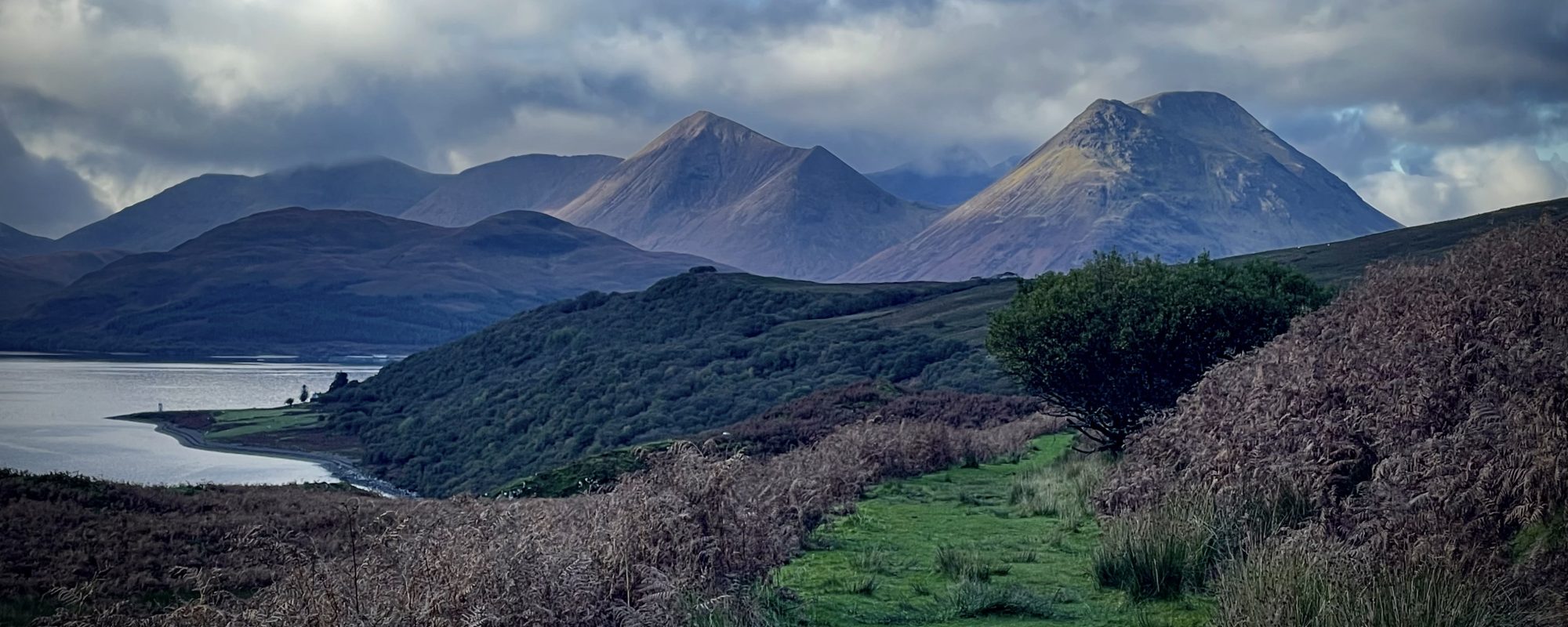

For ages I’ve wanted to drive down the so-called “Road to Nowhere,” a twelve mile single track road with crumbly edges which heads south off the A82, the scenic road traversing Glencoe west to Fort William, taking a hard right turn and heading east toward Inverness. (Scottish roads do not head in just one direction.) The RTN runs along Glen Etive, following the River Etive and perhaps not surprisingly comes to an abrupt end at Loch Etive.
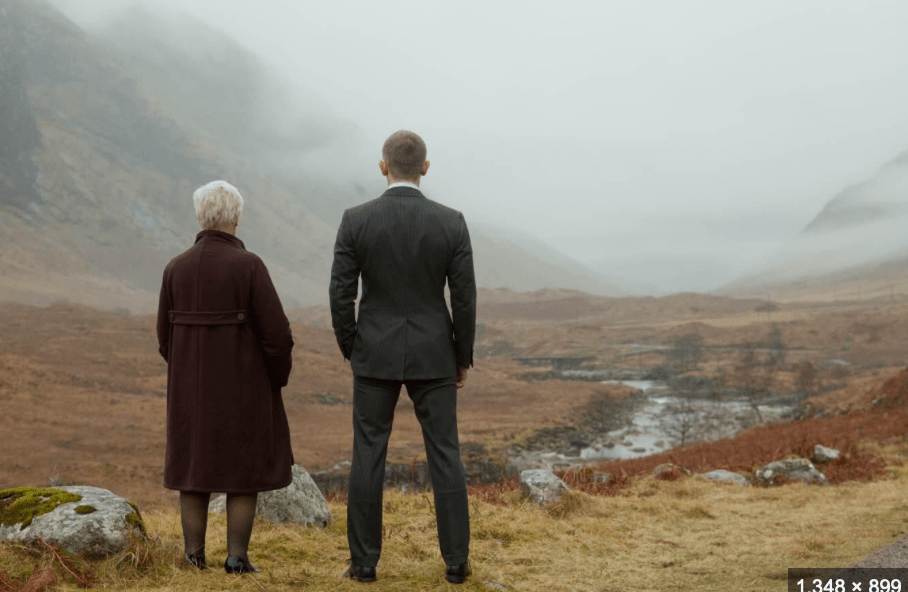
Hollywood-wise, Glen Etive is probably most well-known for starring in Skyfall, the 2012 James Bond movie. Many scenes were shot here, although the fabulous lodge in the film is elsewhere if not entirely CGI.
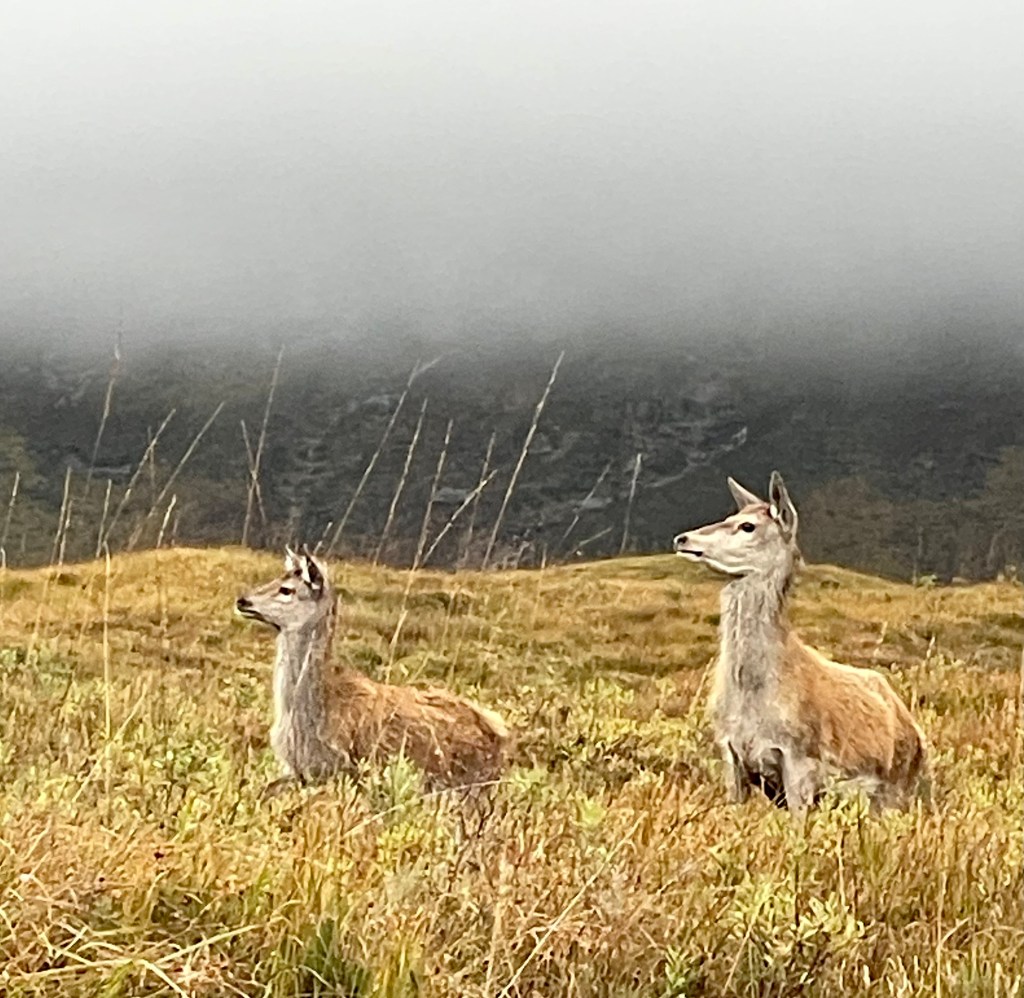
I hit the RTN early and so the glen, river and loch were mine all mine, except for my first red deer encounter of the trip and the inevitable professional photographer. He was setting up a tripod on the loch shore and settling in for the day due to Scotland’s constantly shifting light and weather conditions. (You could shoot a photo each minute and no two would look the same.)
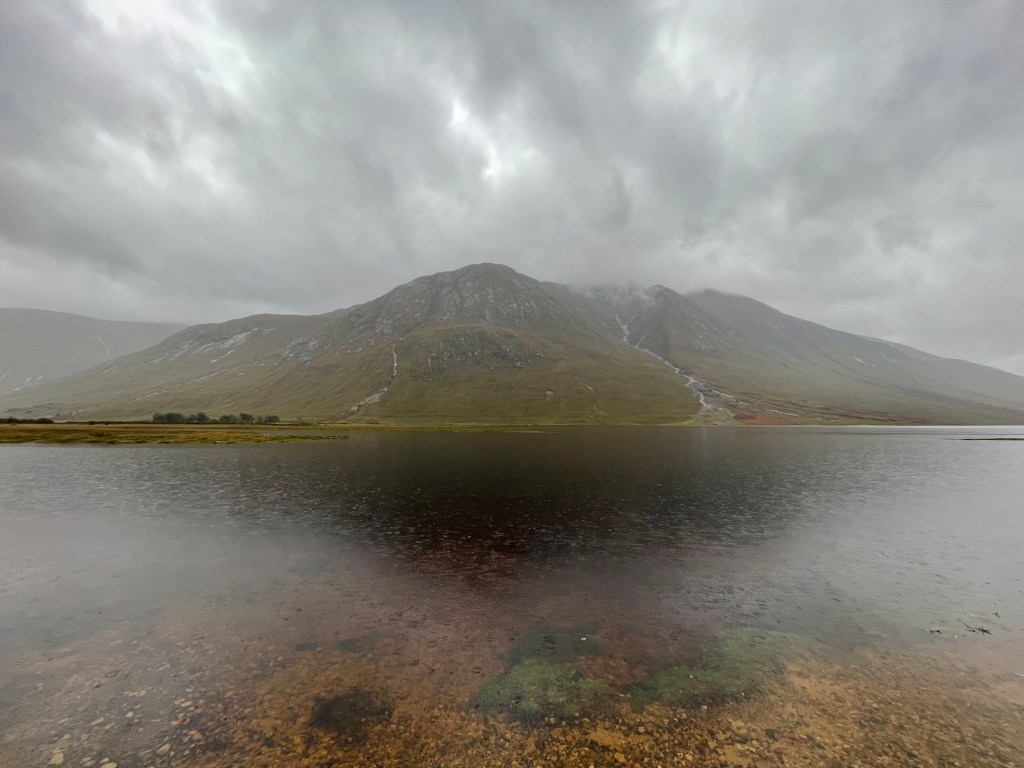

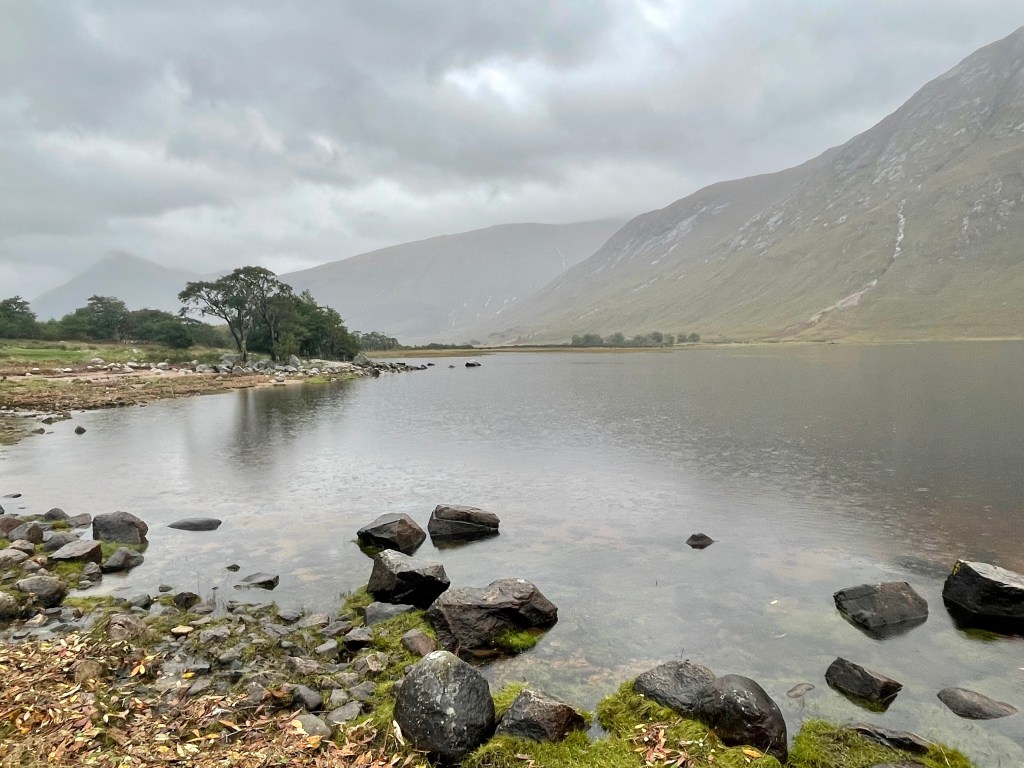
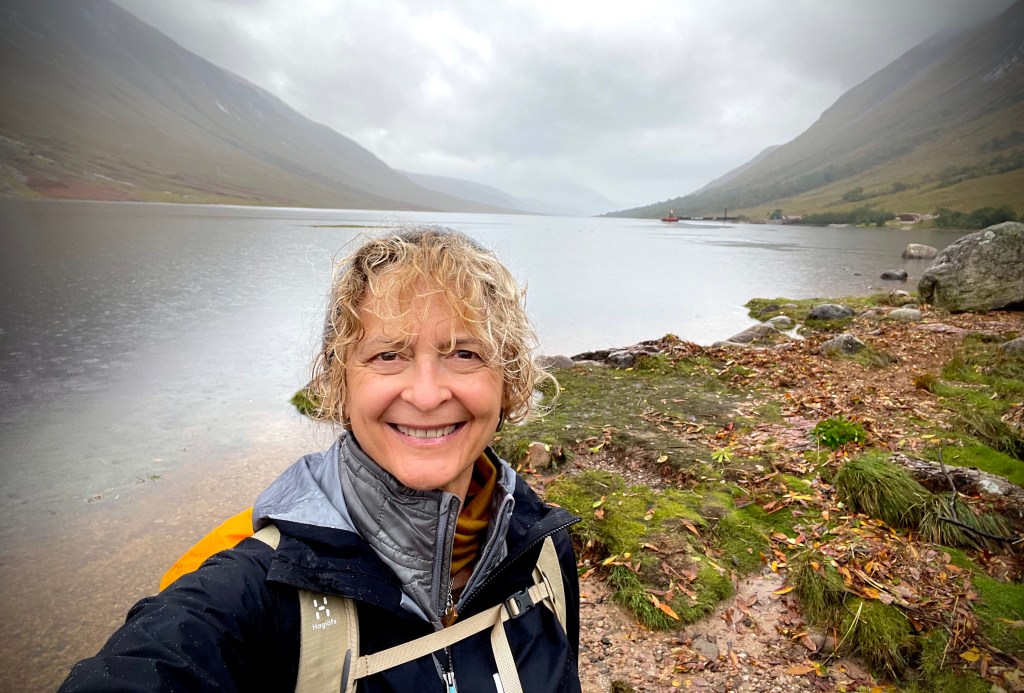
Before we go, it would be an oversight not to mention that Loch Etive starred in its own film as one of the (many) spots Harry, Ron and Hermione camped in Deathly Hallows Part 1 while they were looking for horcruxes. This looking for horcruxes business went on for quite some time but luckily the scenery was amazing every time they disapparated because Scotland.
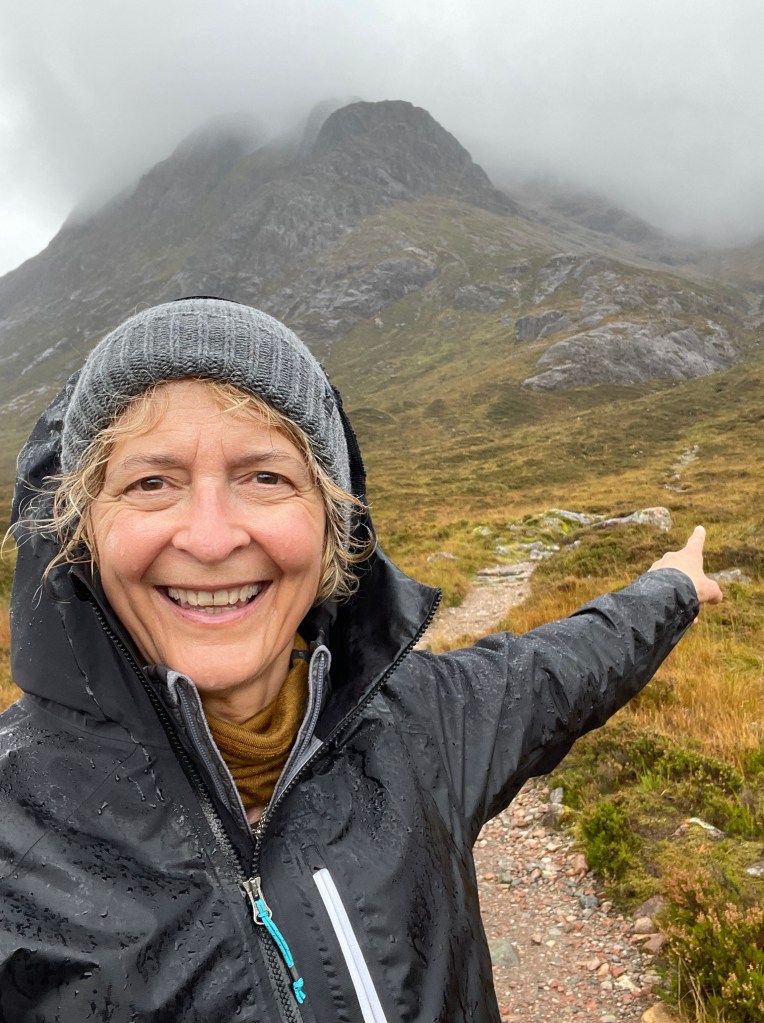
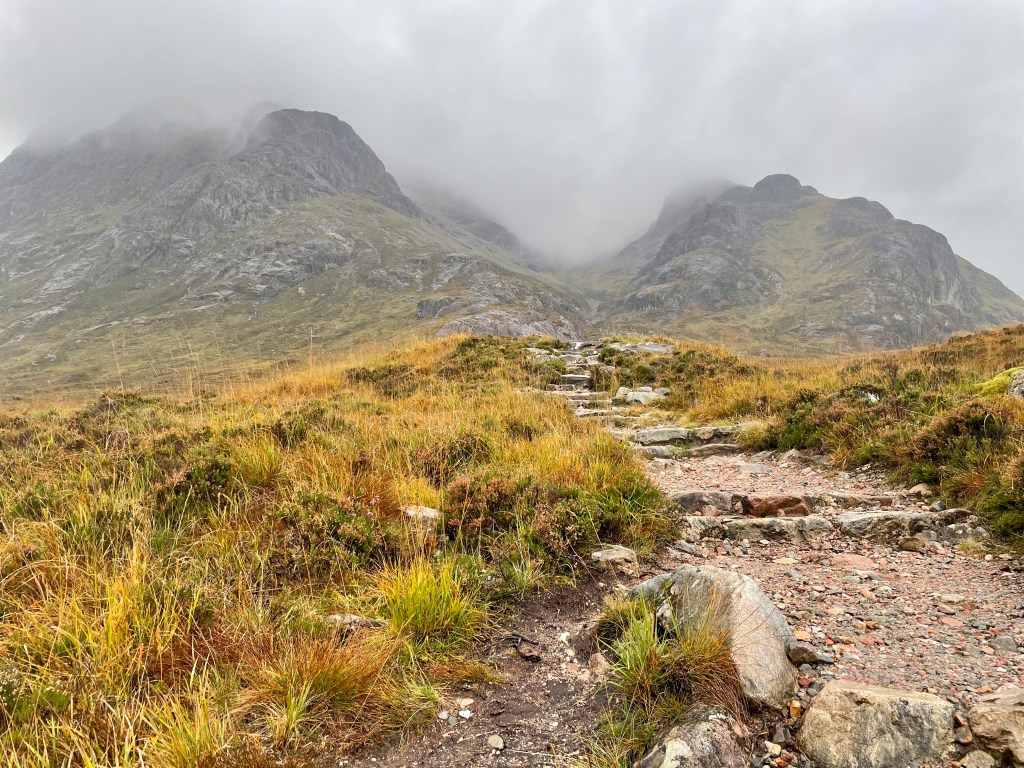
Since the rather relentless rain made a mincemeat out of my hiking plans due to rivers being in spate and conditions being too muddy and slippery for any sort of ascent, I decided to explore part way up a couple of iconic trails. Just to do a little recon.
One is the Devil’s Staircase, part of the West Highland Way and not as scary as it sounds. It’s an uphill jaunt up and over a ridge into Kinlochleven, a town in the neighboring glen.
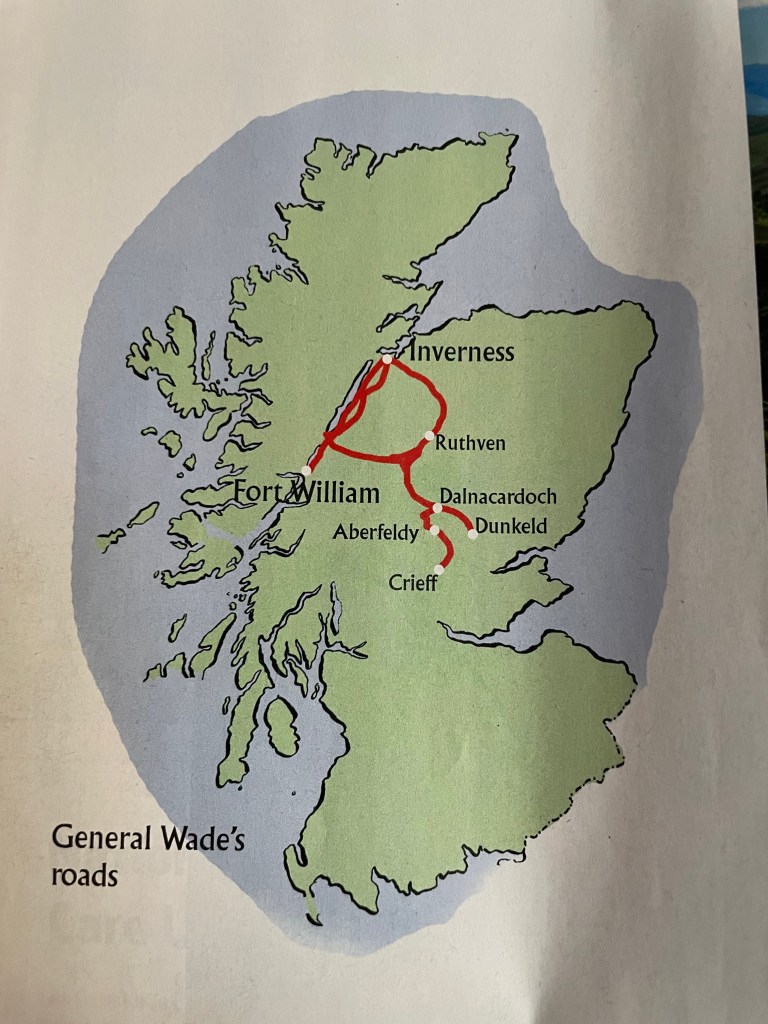
Here it might be interesting to talk a little bit about a dude named General Wade and why he was directed by King George I to build about 250 miles of road and 40 bridges throughout the Highlands in the early eighteenth century. Of course, the answer is, why, the Jacobites of course. There were three risings before the ’45, and the English were forever trying to clamp down on that untidy situation and sought to figure out how best to deploy troops quickly in the event of the next inevitable uprising. The roads were meant to be 16 feet wide, although at many points they were narrower and were constructed of layers of progressively smaller stones covered with a layer of gravel. They connected military forts or barracks, including Fort William, Fort Augustus, Inverness and the Ruthven Barracks that we discussed earlier. The forts were often built or upgraded by Wade.
The roads were constructed by hundreds of soldiers, fondly dubbed “highwaymen” by Wade. They were beset by a plethora of obstacles – terrain, weather, Highlanders and midges. This extremely tough duty necessitated many many drams and pints, and so camps were established every ten miles, known as “kingshouses” as they were along the king’s highway. The Kinghouse Hotel in Glencoe, my humble lodging, still retains this name.
Many of the bridges he constructed still exist today, including the Garva Bridge over the River Spey, Wade’s Bridge at Aberfeldy (which still carries traffic), Highbridge at Spean and Wade’s Bridge at Etteridge.


Irony being what it is, by the time the ’45 came around the roads probably served Jacobite troops better than government troops. That’s the impartiality of roads for you. Tragically, this final attempt was decisively crushed at Culloden and subsequent attempts to eliminate Highland culture . Afterwards, in addition to the roads helping the Hanoverians continue to exert control over Scotland, they also opened up routes for trade, travel and tourism. While miles of the military roads were abandoned over time, many were incorporated into the country’s civilian road network. It’s pretty remarkable that by and large General Wade’s military roads were the first major system built since the Romans.
As an aside, General Wade is the only person mentioned by name in an obscure verse of the British National Anthem and was also responsible for raising a Highland militia called the Highland Watches. The militia morphed into the Black Watch Regiment and this became the genesis of the British army’s crack highland regiments that continues today.
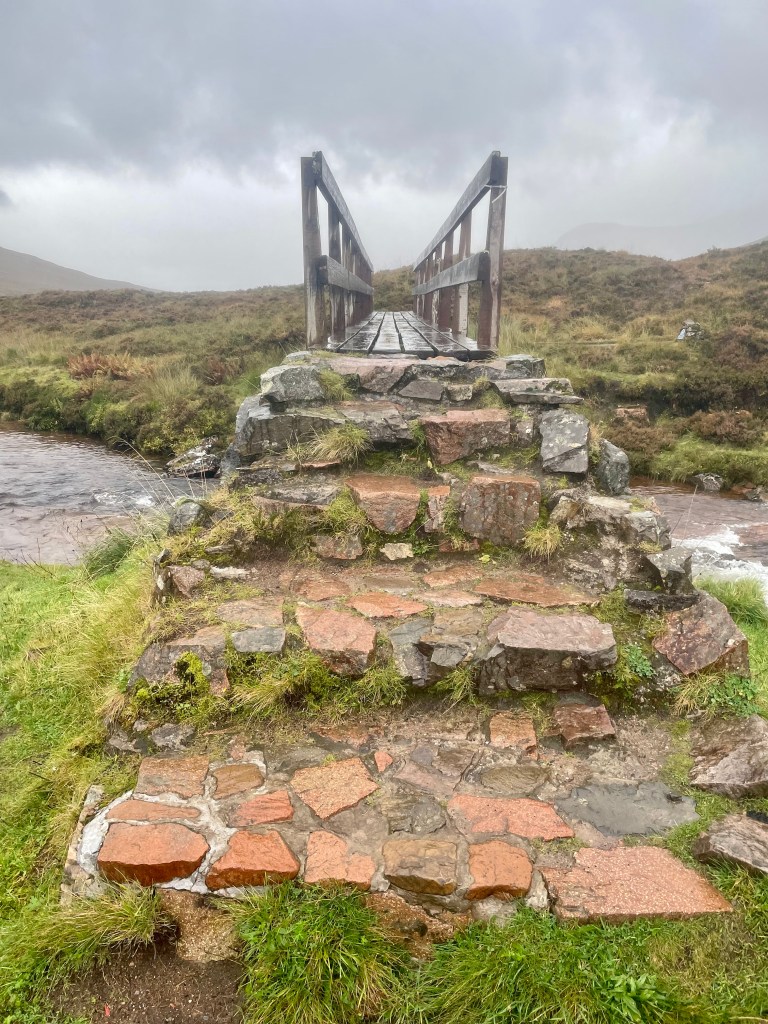
So the Devil’s Staircase was given its name by some of General Wade’s highwaymen who were charged with lugging stones and equipment up that hill path to turn it into a paved military road. Those who decided to stay for a dram at a pub in Kinlochleven and then stagger back over the ridge to Glencoe had a sketchy time of it apparently, more due to wobbly legs and impaired judgment rather than the path itself. And with the old saying about the devil coming to claim his own – the route was thusly named.
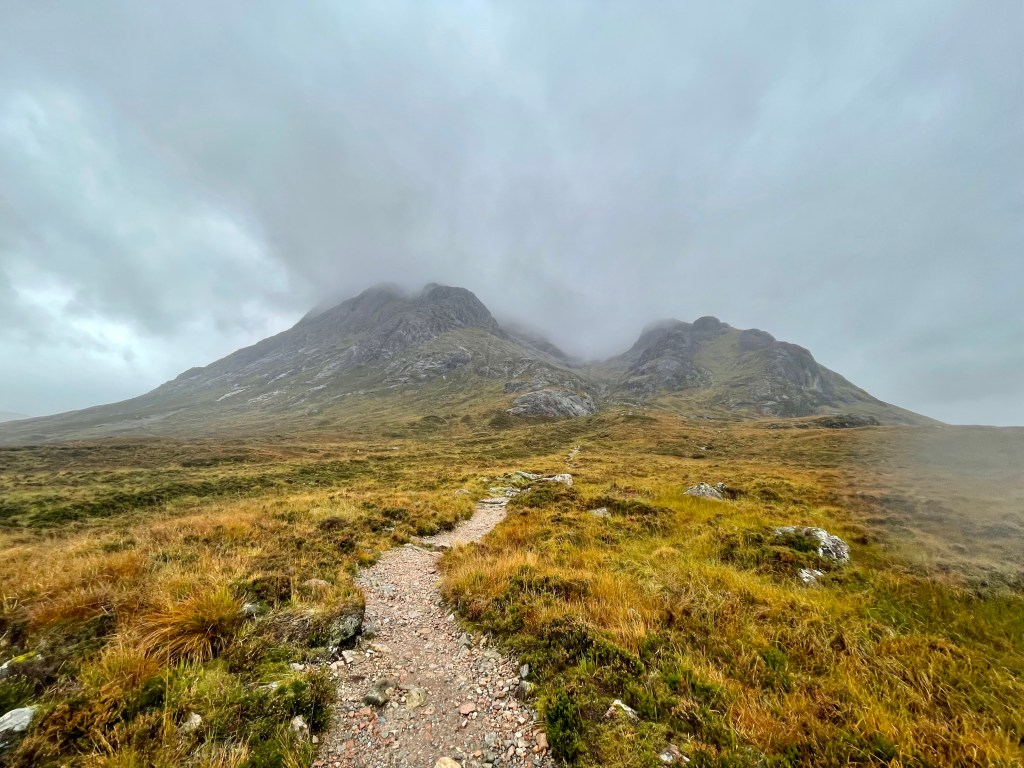
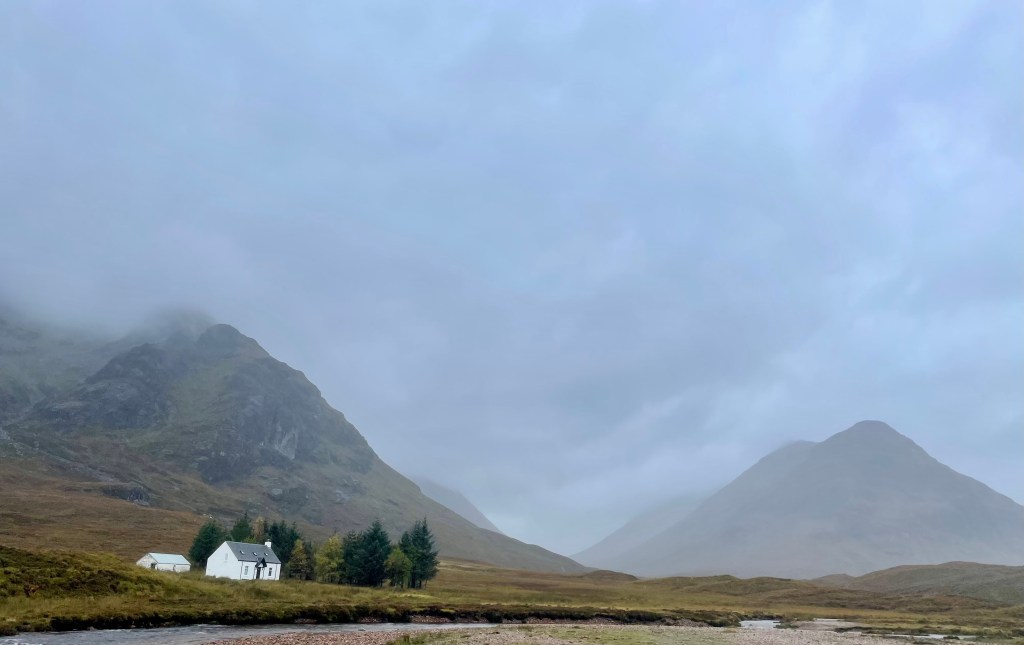
There you have it. And so we next cross the A82 to the start of another iconic Glencoe walk, the trail up the Buachaille Etive Mor. Before the ascent begins in earnest, you cross a bridge and stroll past the much-photographed “wee white house,” officially Lagangarbh Hut, now owned by the National Trust of Scotland. The trail runs close alongside the house and then stretches into the distance, aimed directly at the very same mountain I can see from my hotel balcony. My mountain, everyone’s mountain, that mountain. Another day perhaps. When it isn’t dumping buckets.


And so my last full day in Glencoe drew to a close. As excited as I was to embark on my Wilderness Scotland trip, I’m always sort of gutted to leave this place. And before I tell you the final thing – I will offer a preface admitting that there is literally almost always a rainbow situation happening in Scotland. And yet I still think it’s meaningful magic and you can’t convince me otherwise.
Last time I was here with my pal Trish, a rainbow opened up an archway for our exit. Also one of the things best friends do is take your photo while you are walking under a rainbow.
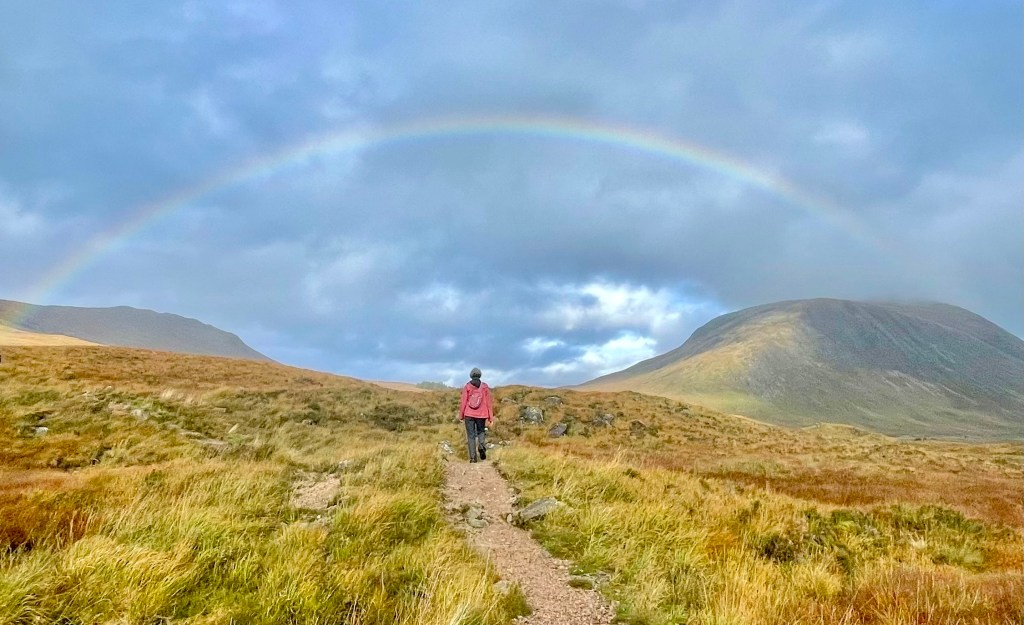
On this trip, as I was packing to leave, I glanced out my window to see this:
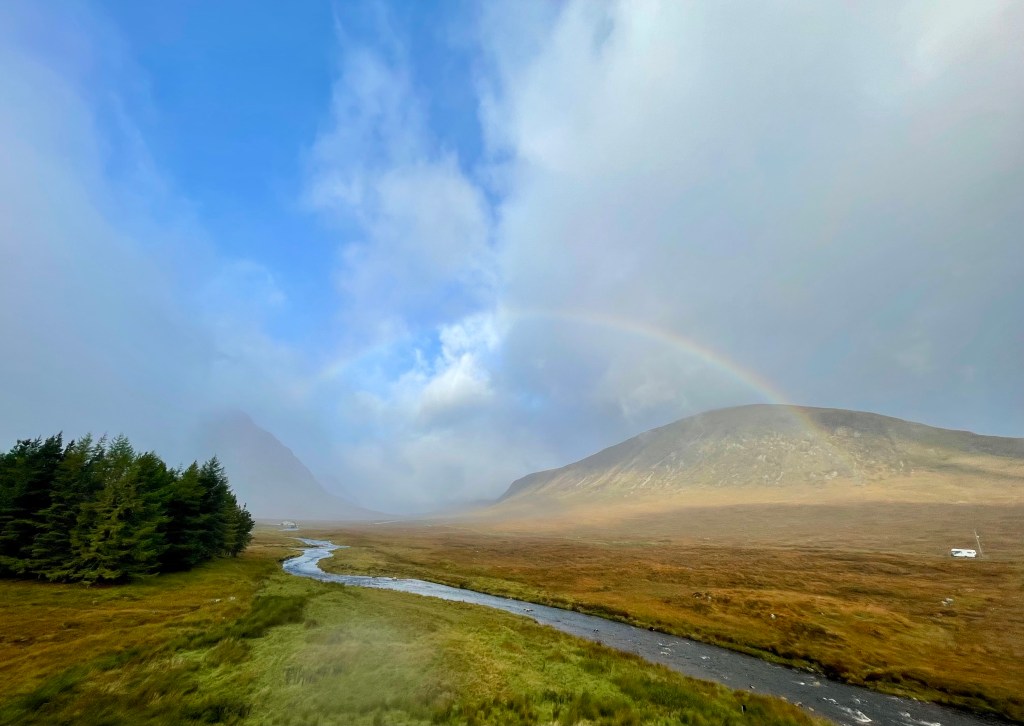
It does cushion the blow.
 Wee Dram of Scotland
And we need rainbows!!!!! Thx for the beautiful tour and history.
Sent from my iPhone
<
div dir=”ltr”>
<
blockquote type=”cite”>
LikeLike
The pics get better and better. Incredib
LikeLike
Love reading your posts. Beautiful pics.
http://www.rebeccarileyart.com
<
div dir=”ltr”>
<
blockquote type=”cite”>
LikeLike