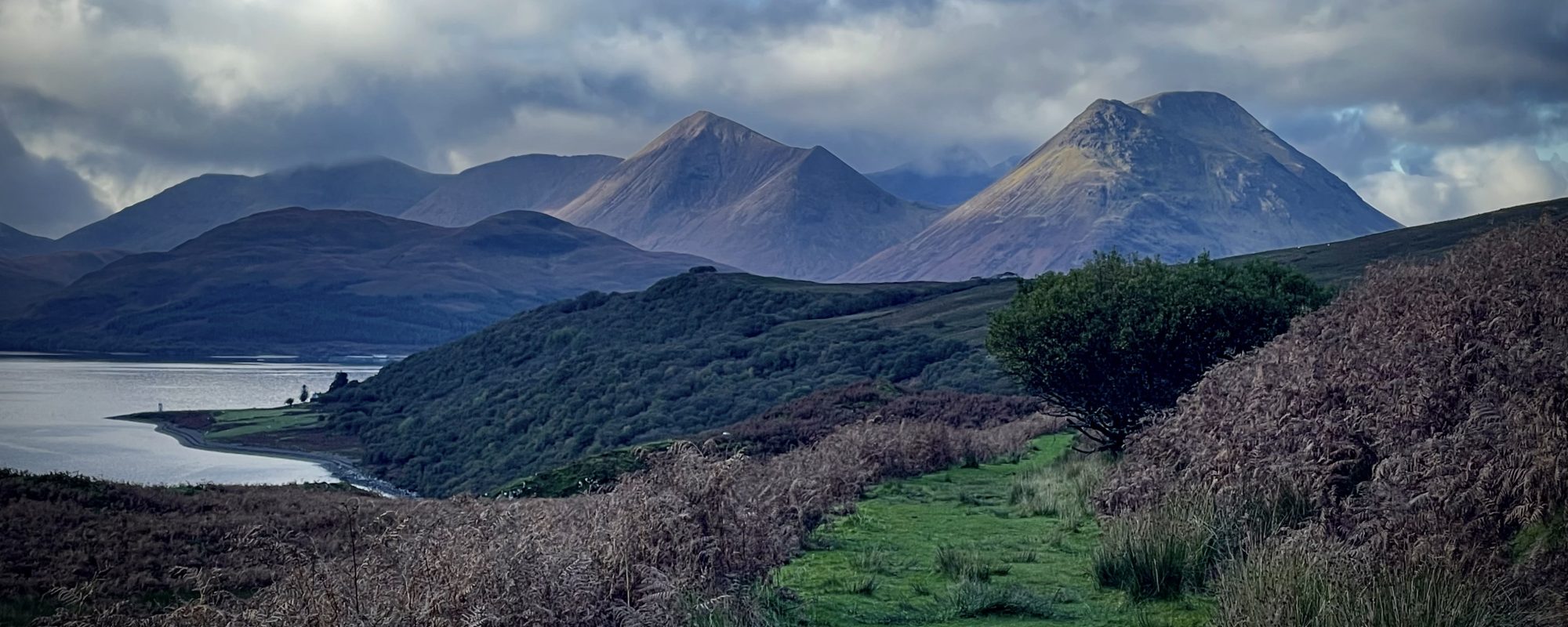
In the category of better late than never, it is time, at last, for a wrapping up of the final days of this trip. Thanks for coming along with me while I was there and now in fond remembrance. This will be a longish one, but hey it’s mostly pictures.
And so onward we go. The highlight of our next day was to be a wildlife boat trip around two nearby islands, Noss and Bressay. On our way to catch our boat we stopped at Lunna House, a 17th century Laird’s home that was requisitioned by the UK War office as the first location for Shetland Bus HQ during World War II.
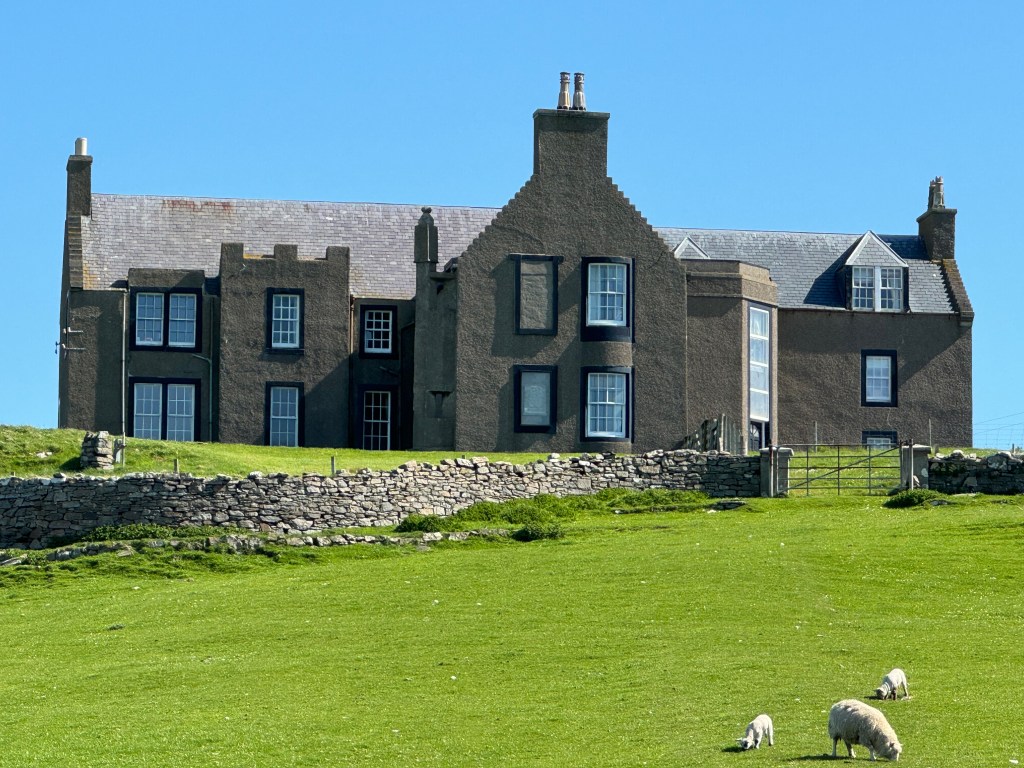
Operations were moved to Scalloway in 1942 (see previous entry), but this is where it all started. As often happened, the stones for the original Lunna House were pilfered from a nearby Iron Age Broch which is one of the reasons why so many broch ruins around the isles are quite a bit shorter than they might otherwise be. Lunna House base was established by David Howarth, who started his career as a BBC War Correspondent before joining the Navy after France fell to the Nazis. His memoir, “The Shetland Bus,” is a gripping account of his extraordinary life. A commemorative plaque for David Howarth can be found in the nearby cemetery of Lunna Kirk (the oldest continuously operated kirk in Shetland), but his ashes were scattered in Lunna Voe per his request.
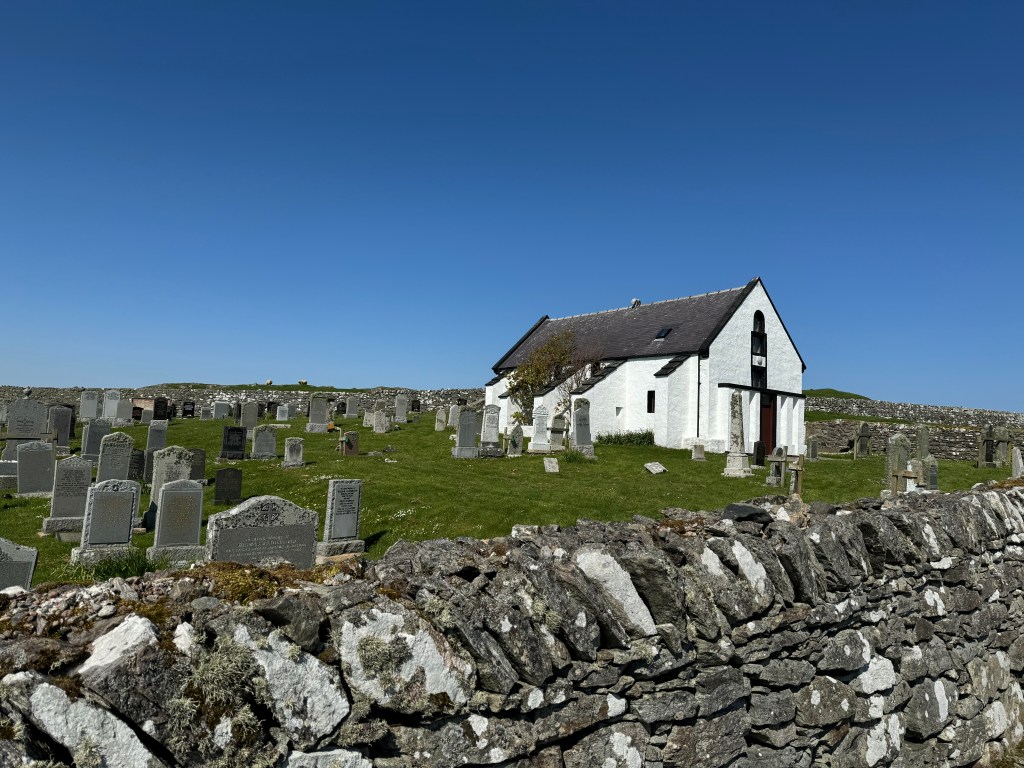

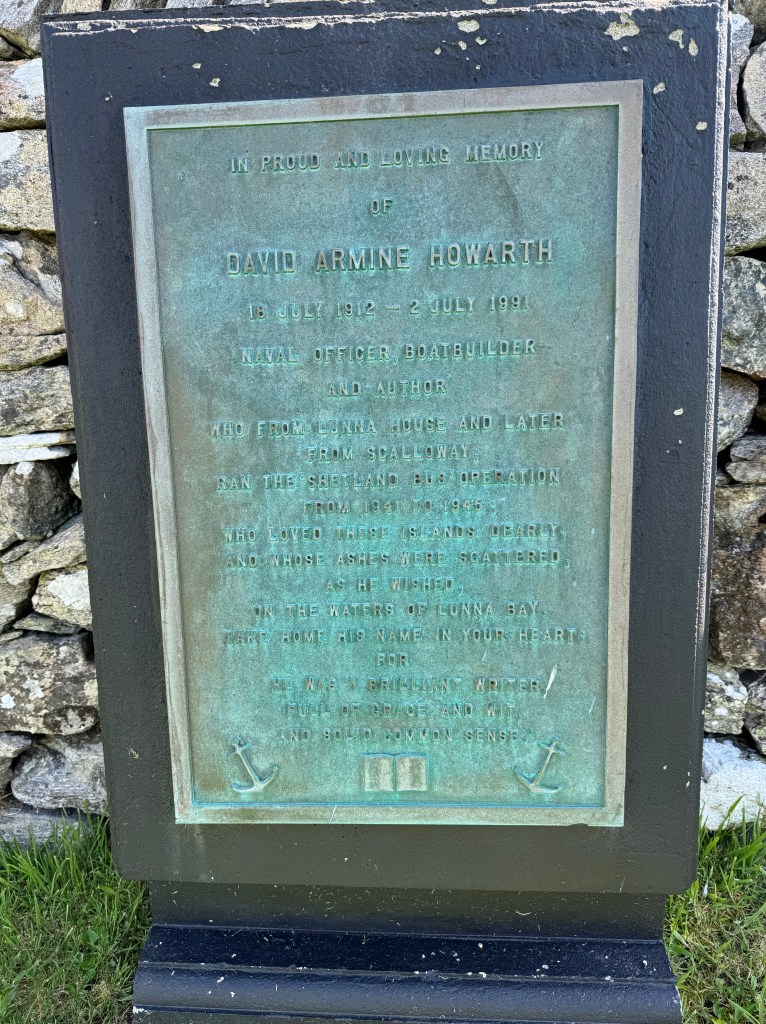
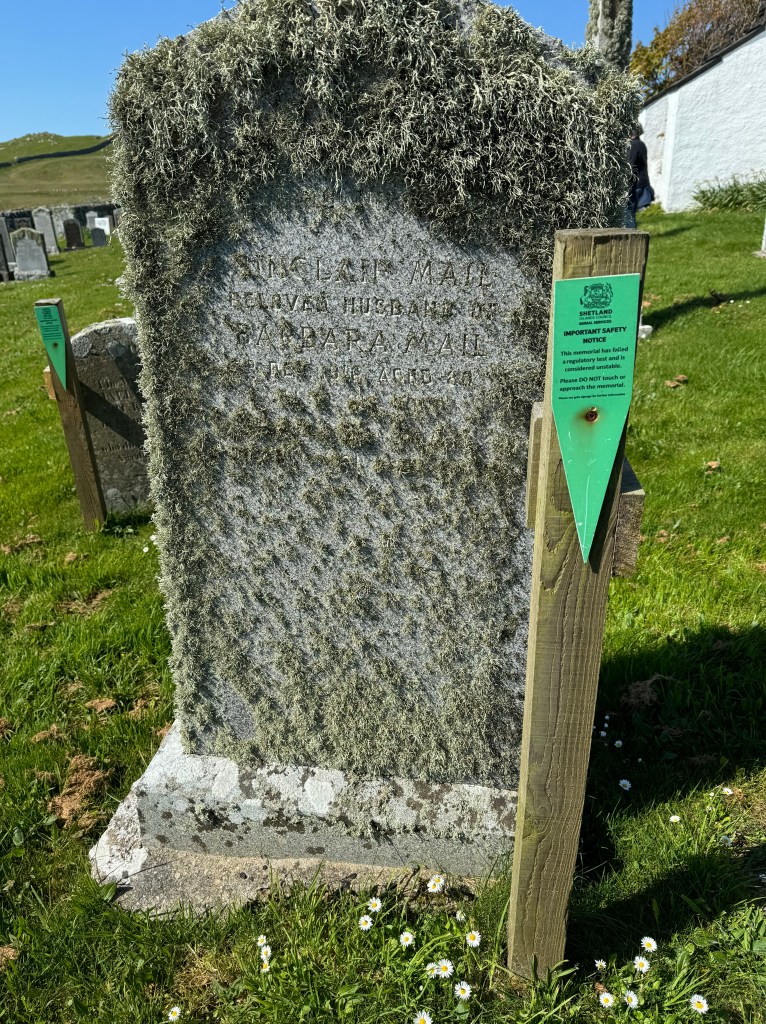
Many of the moss-capped headstones in the kirkyard have been tagged by authorities as having “failed a regulatory test” to the point where visitors are warned against even approaching them because I guess they might slooowly tip over? This strikes me as somewhat hilarious after navigating the Mousa broch steps yesterday. The headstones look pretty solid to me and this one’s hairdo brings to mind four particular lads from Liverpool.
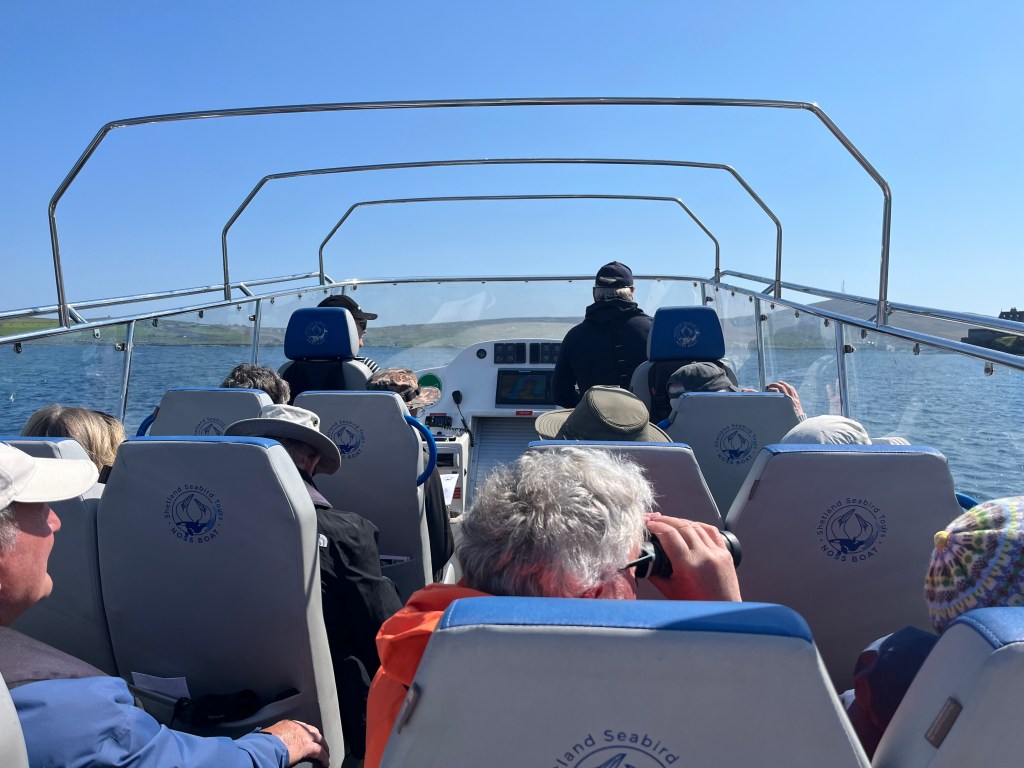
And that’s all the history you are getting for this day. I know you are sad! Wipe your tears away, for we are off to sail around the isles of Noss, an uninhabited nature reserve since 1955, and Bressay. The tides have been sketchy of late which we are told may force an early return to port so fingers crossed. The highlight of the tour is a ginormous gannet colony on Noss, where approximately 150,000 of the gorgeous, graceful seabirds nest along a mile-long stretch of cliffs. I feel a slight kinship with gannets because their 6 foot wingspan matches my own.
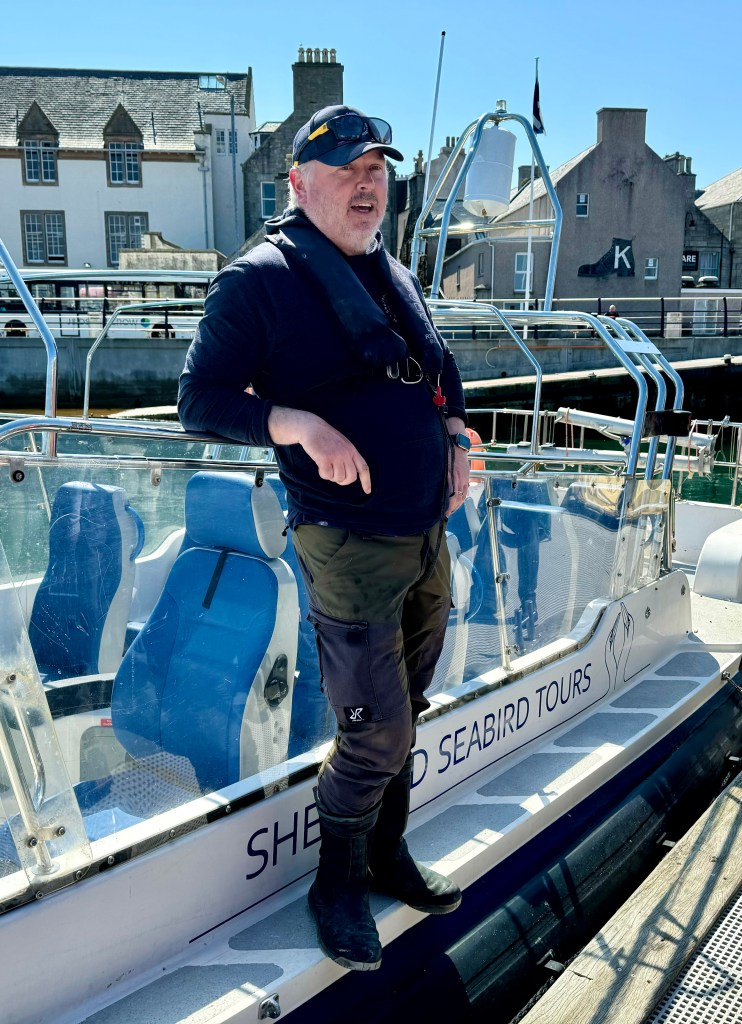
Phil Harris is the owner of Shetland Seabird Tours and is a life-long birder and naturalist. He started his career as a firefighter and then trained to pilot fast rescue boats in the rough seas around Shetland, so we were in expert hands in many categories. Plus he had a great sense of humor, regaling us on the dock with cheerful warnings about how seasick we were all likely about to become.
One of the many benefits of traveling alone is that you can validly call shotgun in situations like these and nobody gets mad, so just like that I was Captain Phil’s Number One.
The very first thing that happened when we entered the bay was Phil completely losing his mind and grabbing his big-ass camera because we unexpectedly came across a family pod of orcas. The first orca we saw was a big male, who was bearing down on us with his giant fin piercing the water like freaking Jaws. I had recently seen David Attenborough’s Wild Isles featuring the famous Shetland Pod 27 and watched them brutally murder a baby seal in slow-motion. Circle of life and all but still it was a bit concerning watching the big guy heading straight for us, especially having heard about the orcas that had recently attacked boats near the Iberian peninsula.
Of course the big orca peeled off and Phil, in between snapping photos, reported the sighting in local WhatsApp and Facebook groups. Orca tracking in Shetland is a collegial community effort (as you can imagine, a lot of naturalists live here), and in fact orca-spotting groups were instrumental in assisting the Wild Isles crew in finding Pod 27 after a two-year effort. The community shares sightings and helps build a pool of information so scientists can gain a fuller picture of orcas’ behavior and track their movements. As it turned out, this pod was a new one, heretofore not observed in Shetland, which felt like a bit of good news.

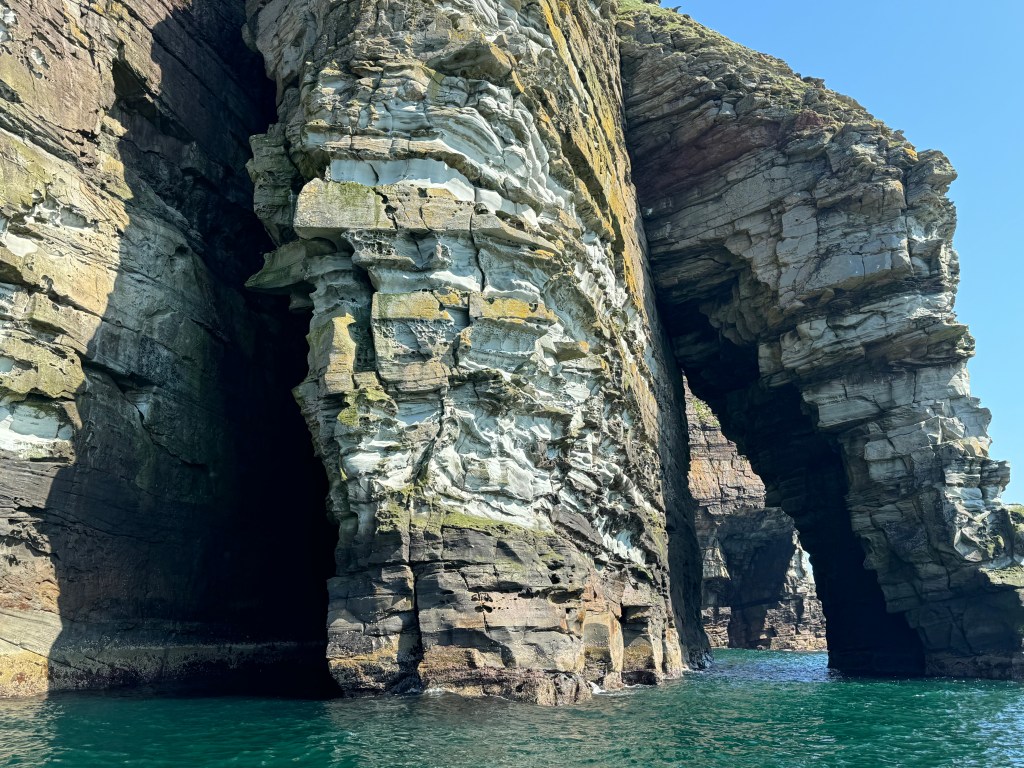
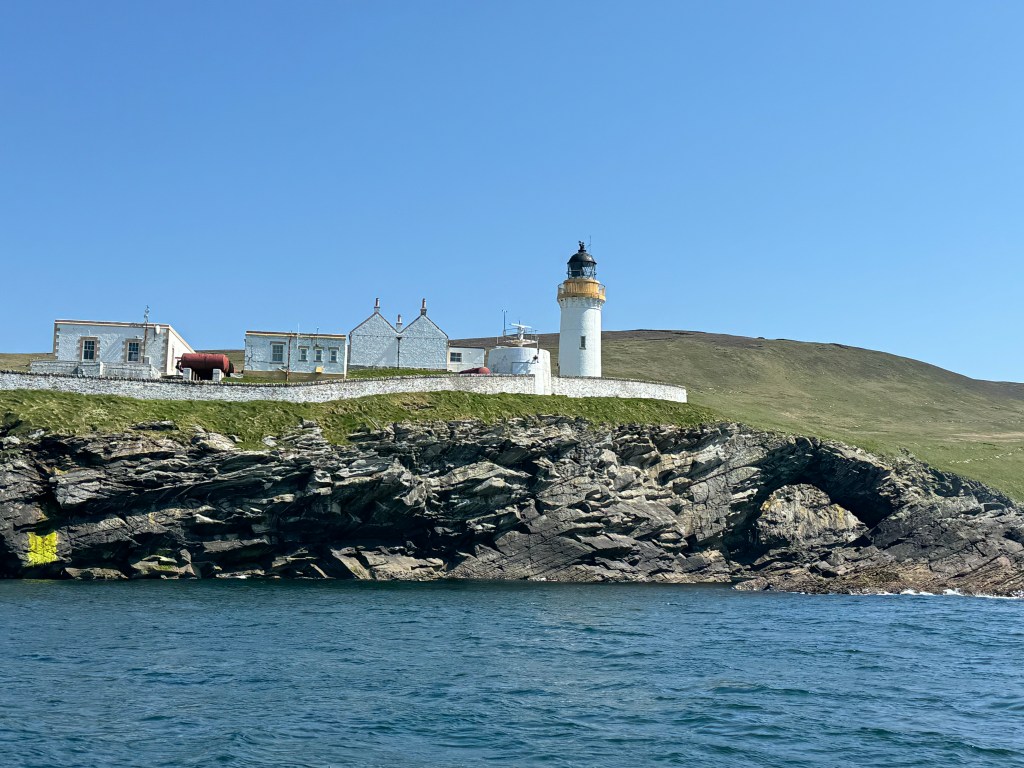
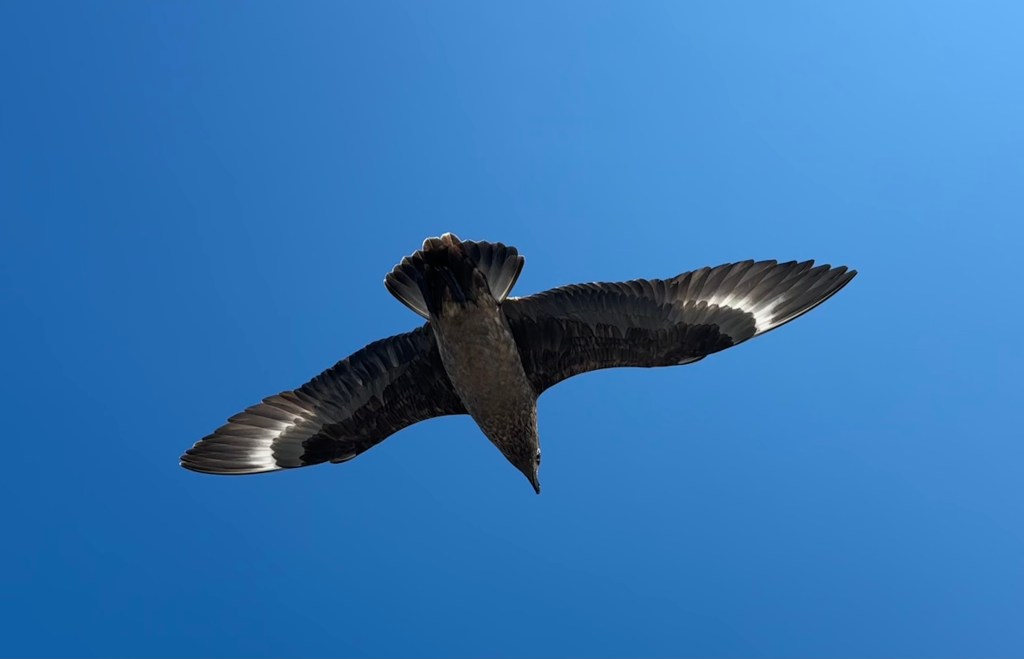
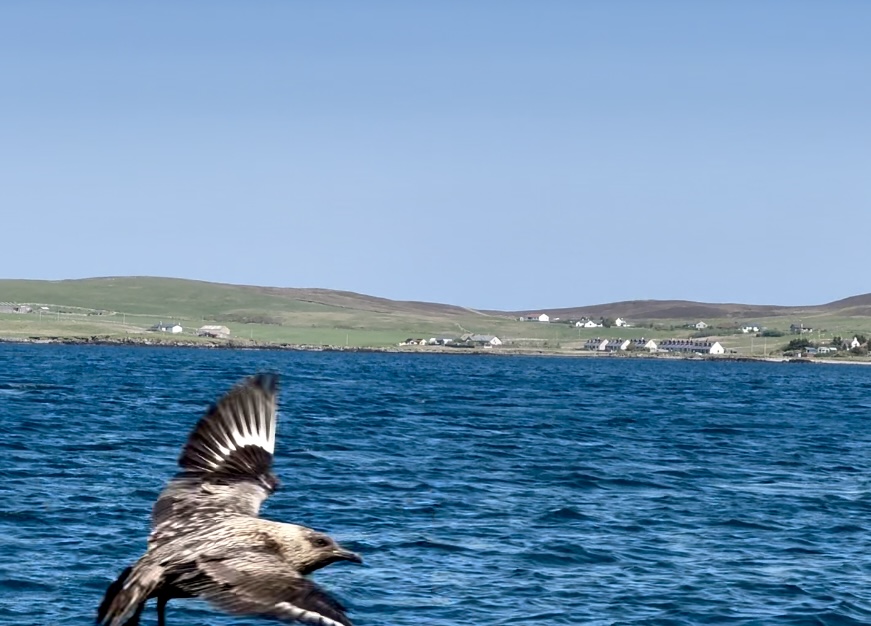
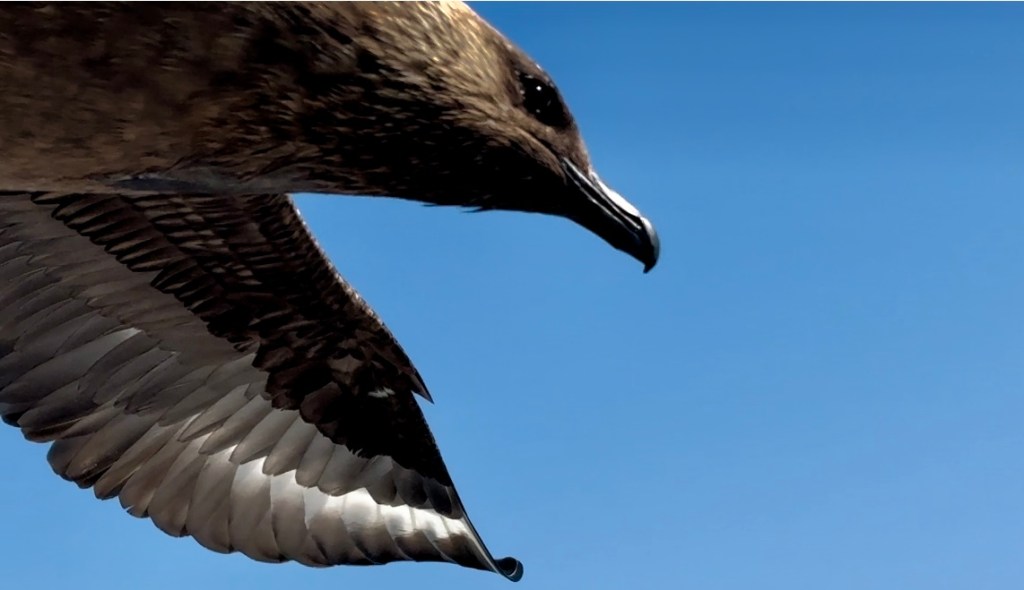
Reluctantly leaving the orcas (who hung around the area for the rest of the day) we sailed around some fabulous cliffs, the Bressay Lighthouse and watched a great skua (called a “bonxie” in Shetland-ese) fend off a gannet for a fish.
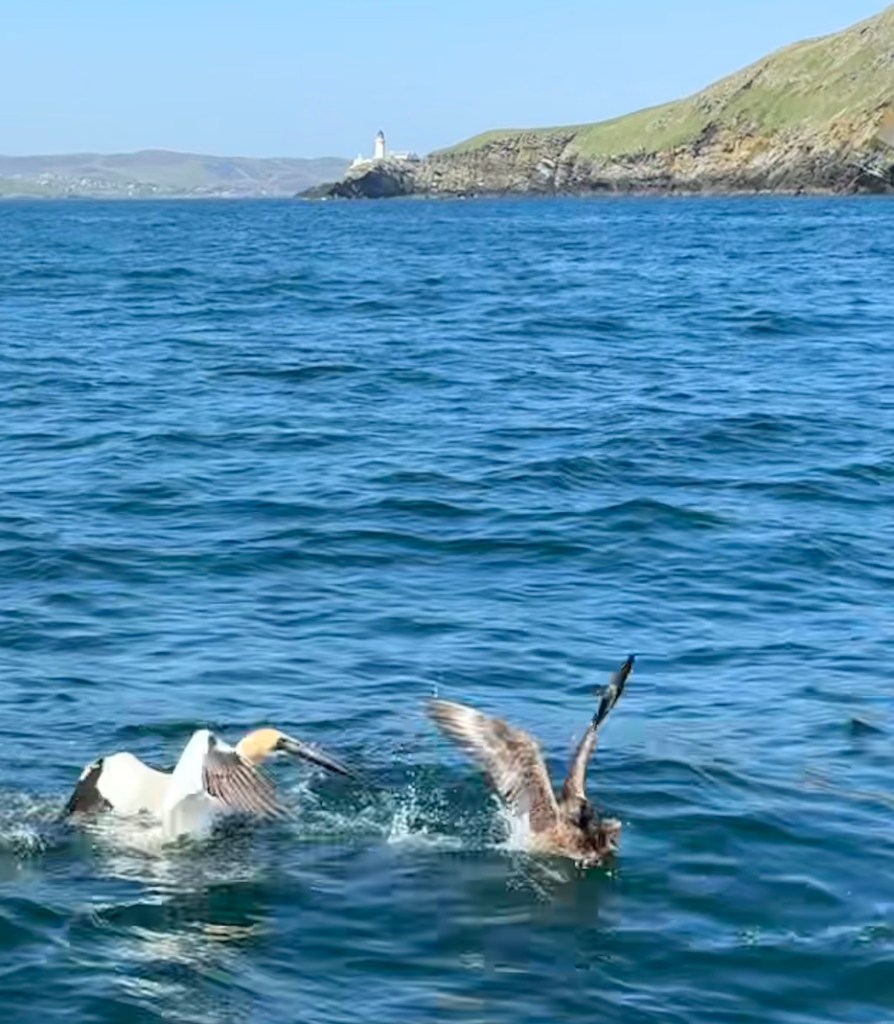
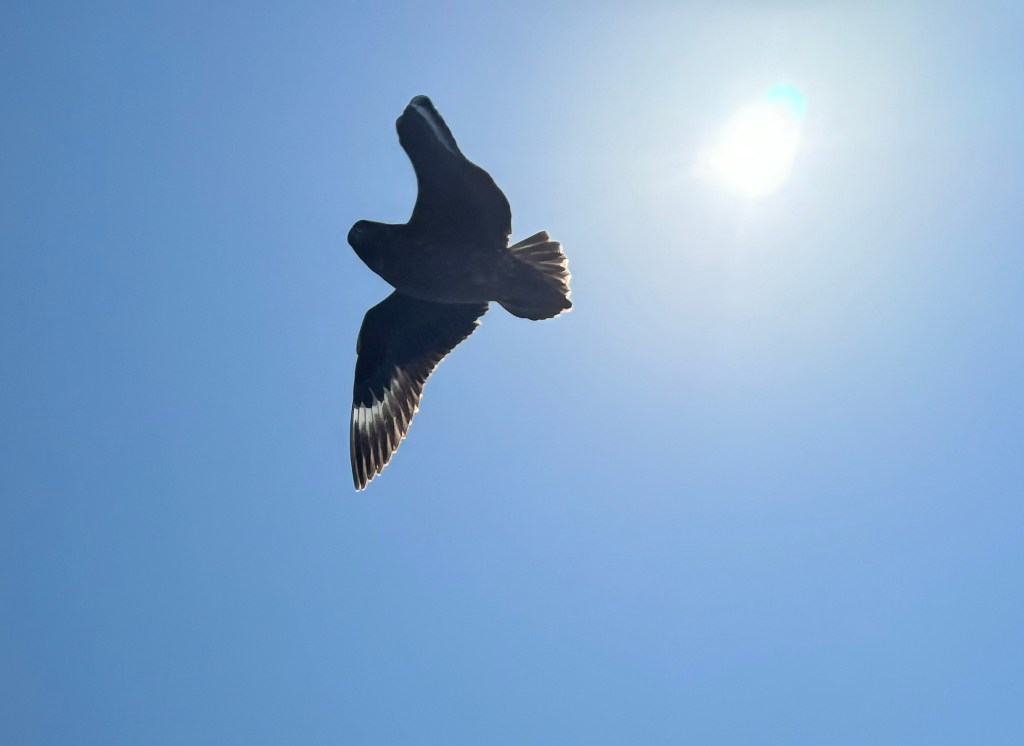
Speaking of bonxies, Phil calls them the assholes of the seabird kingdom due to their general aggression toward other birds. Also if you are dumb enough to walk too near their nest they will absolutely fly at your head. Phil also claimed that they poke the eyes out of puffins but I feel like this was merely a gruesome embellishment. They are kind of cool birds and right now Bonxie is the lead contender for my next dog’s name, so.

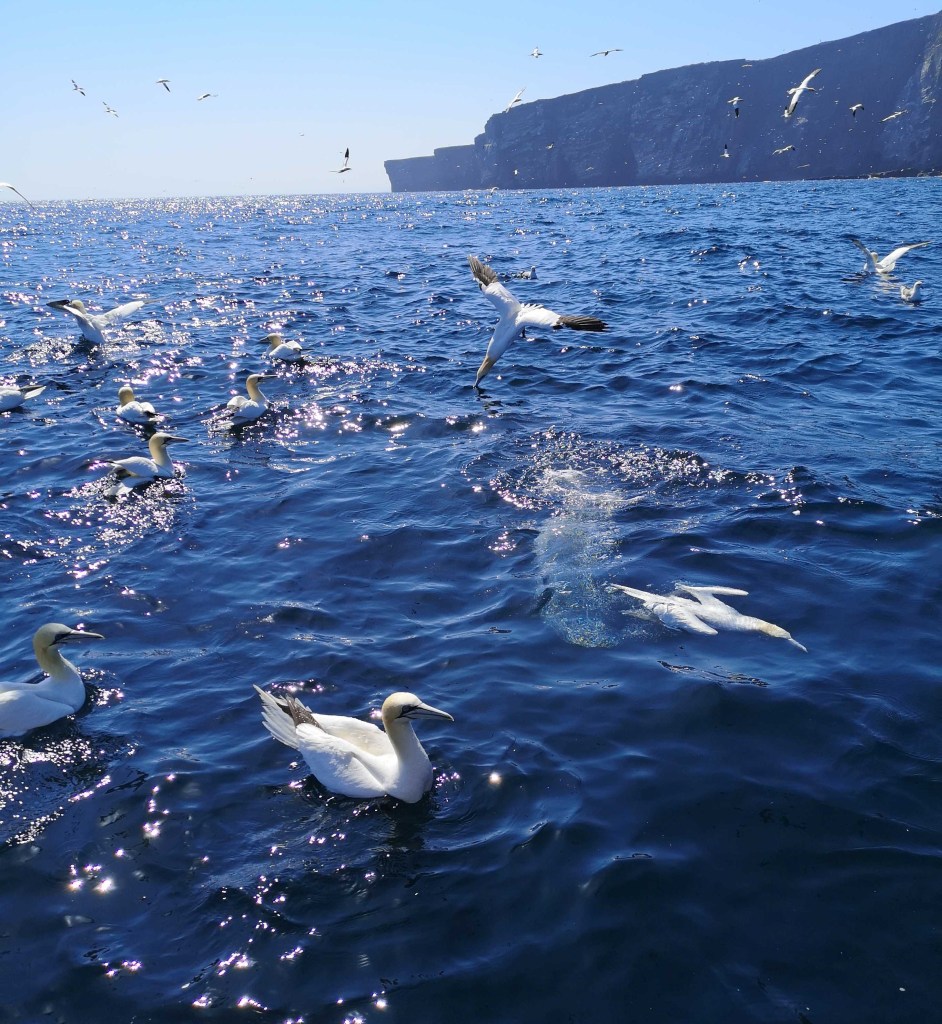
And now for the gannet colony. I’ve honestly never seen anything like it. I mean, 150,000 birds is a lot and they layer the cliff walls, packed in like sardines and yacking at each other having a ball like they are at an outdoor music festival. They are also gorgeous and incredible divers. And once they are submerged underwater, they keep flying while they fish. For a short video narrated by Scottish Obi-Wan Ewan McGregor, check this out: https://www.youtube.com/watch?v=mXXuK9eQVUw&t=9s
Below is one of those “wait for it” videos. If you are creeped out by slo-mo Exorcist talking, this is your trigger warning.
In and amongst the gannet colony were guillemots, members of the auk family, just like puffins. They are literally descendants of the Great Auk from days of yore. The birds nest in colonies to protect their eggs, which they lay directly on the ground, or in this case on top of cliff ledges. The eggs are shaped like pears and so roll in an arc, presumably to keep them from tumbling into the sea.
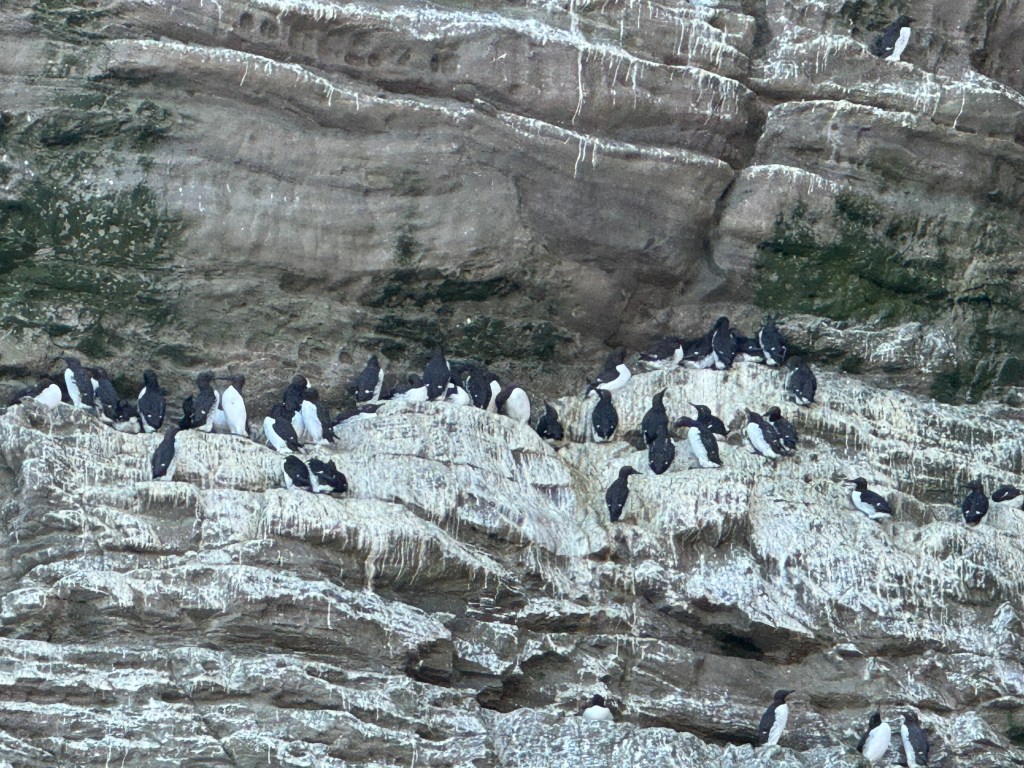
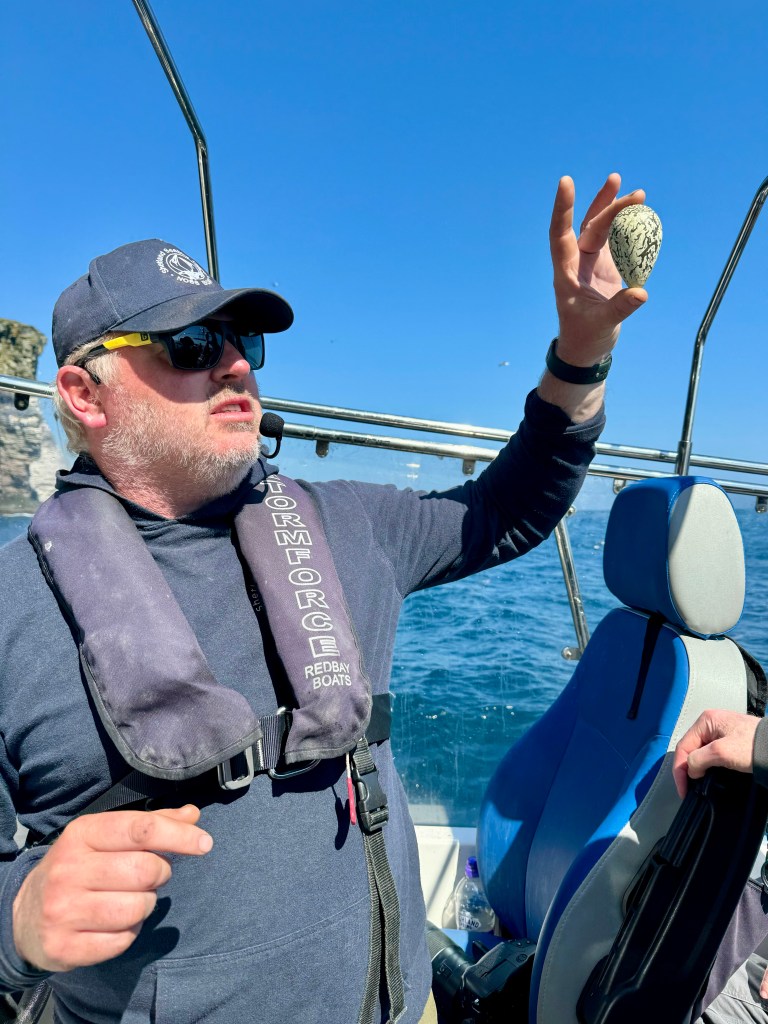
As we continued sailing along the cliffs next to the gannet colony I managed a few awesome photos if I do say so, and have no idea how. Here are just a few.
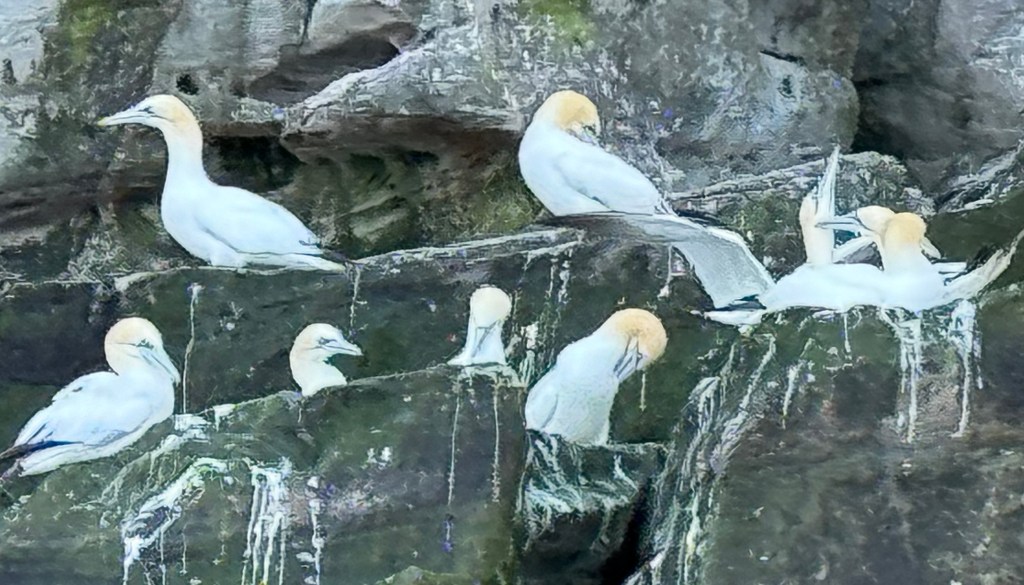
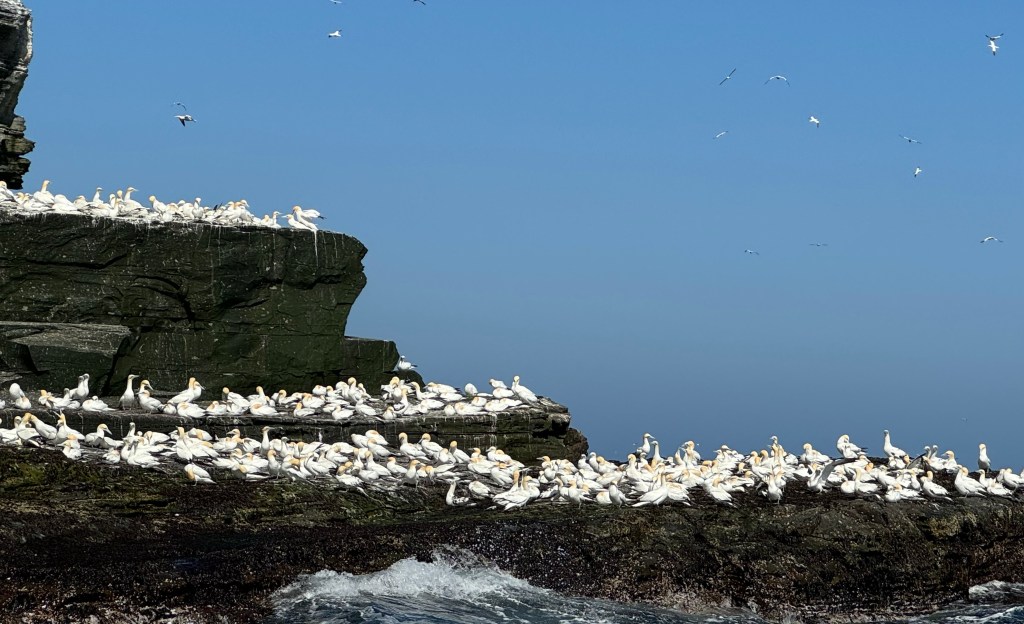
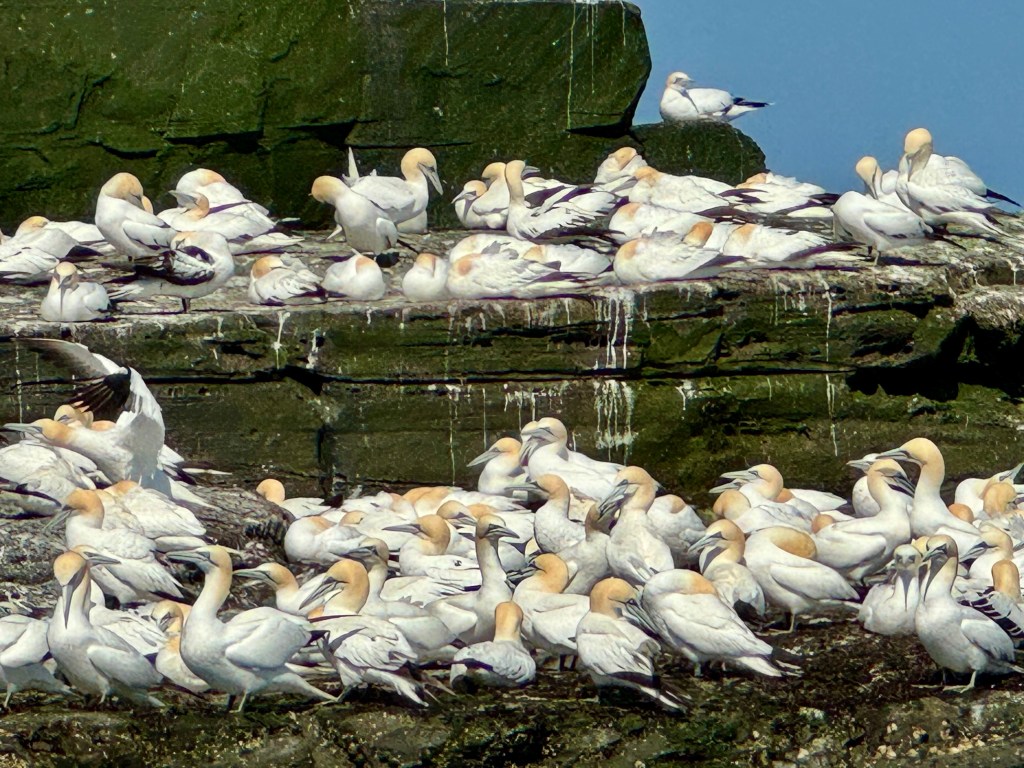
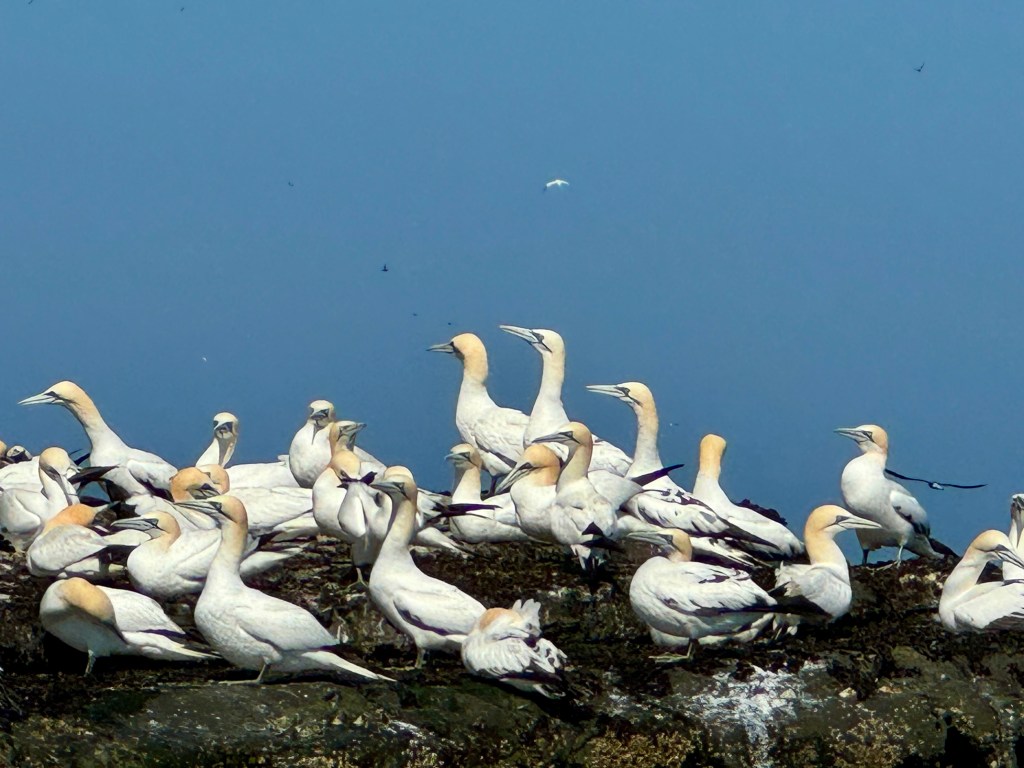
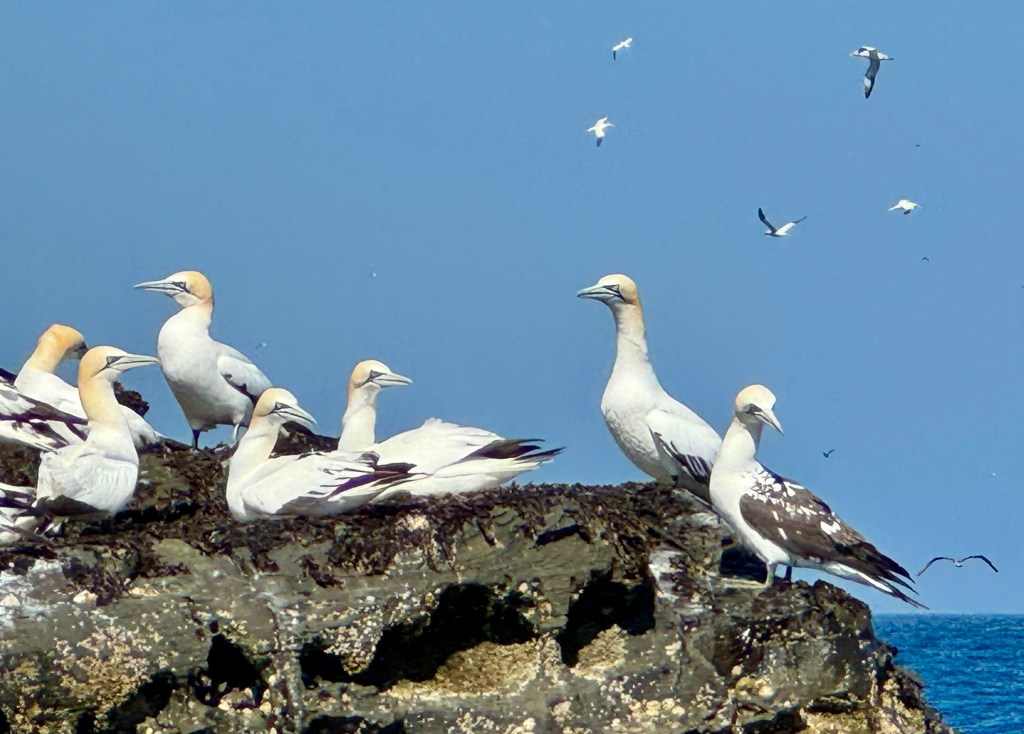
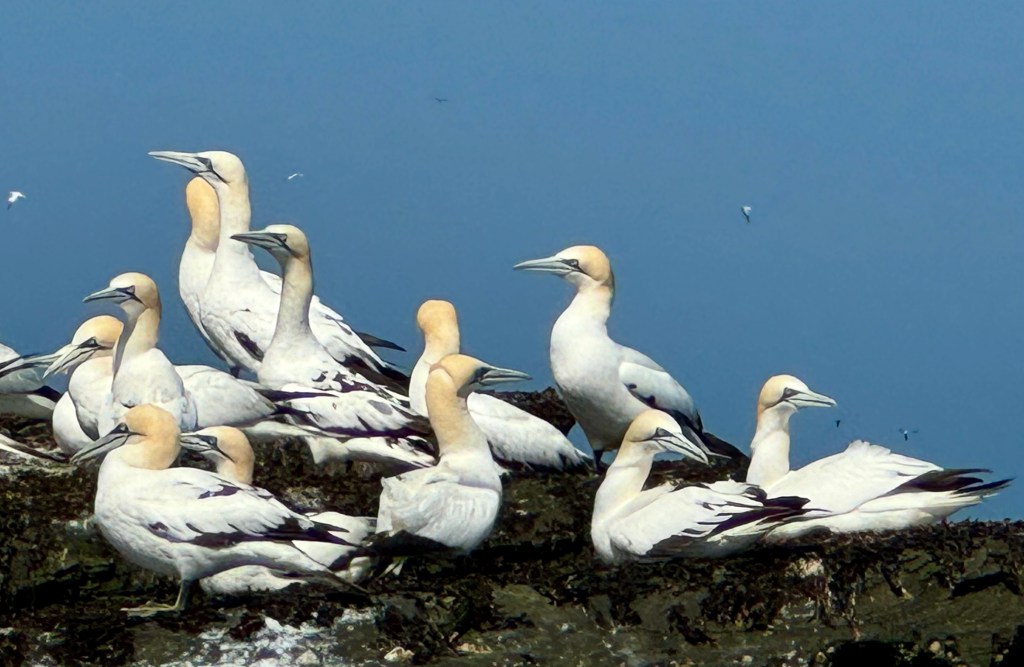
They flew alongside the boat as we pulled away from the cliffs to round the tip of Noss and head back to Lerwick.

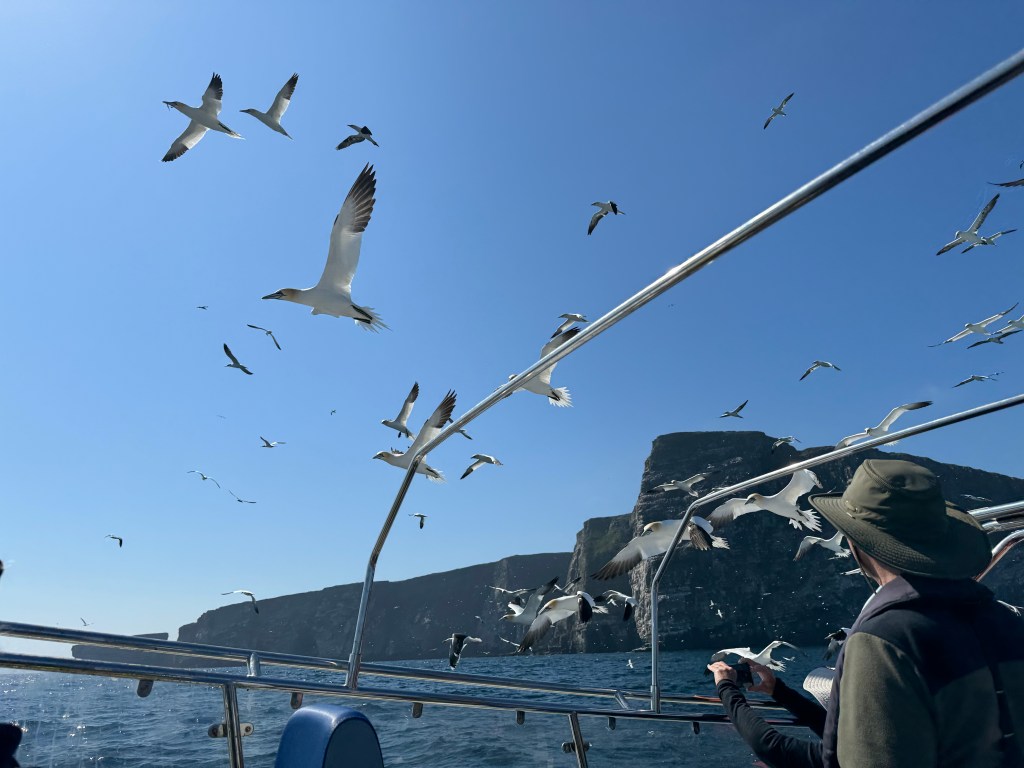

I mean what a flipping awesome experience. It even remained fantastic through that one moment when, as I was facing backwards on rough seas taking photos of gannets flying overhead I suddenly realized I was seasick, sat my butt down and grimly faced forward. It passed.
As if we hadn’t seen enough magical wildlife, once we returned to the harbor we were greeted by a friendly and inquisitive seal. I think Phil called him “Freddie,” so he’s likely a regular.
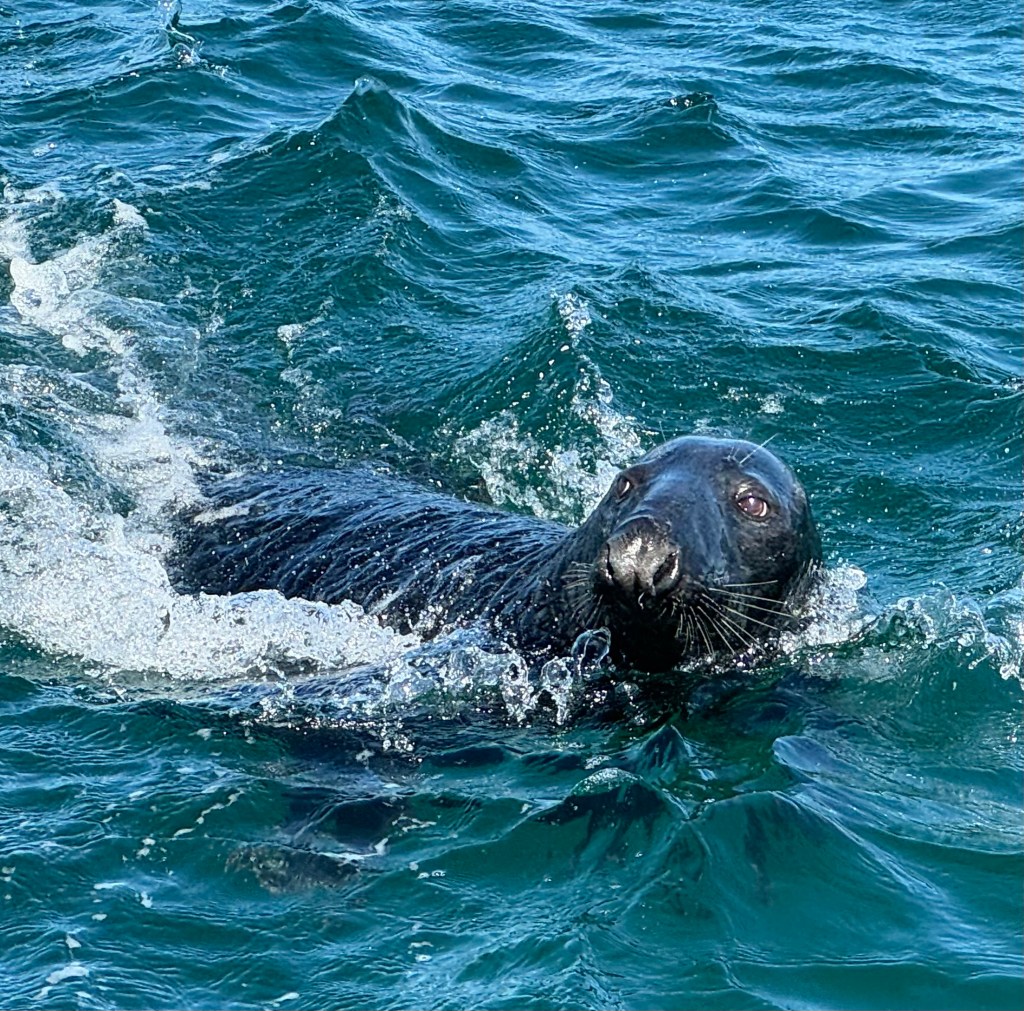
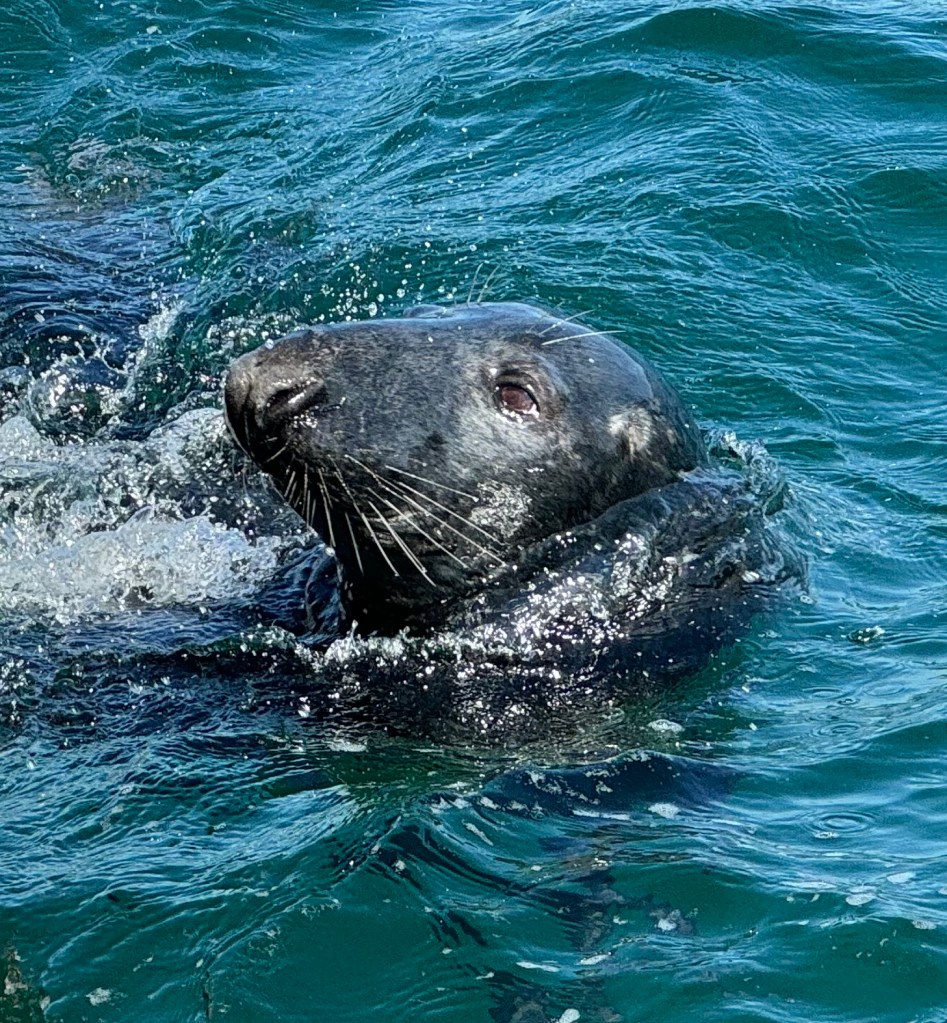
When we parked (is that the right word, I’m not a boat person) at the dock Phil climbed out, tied us off and instructed me to turn off the boat for which I received a round of applause. Aye aye, Captain.
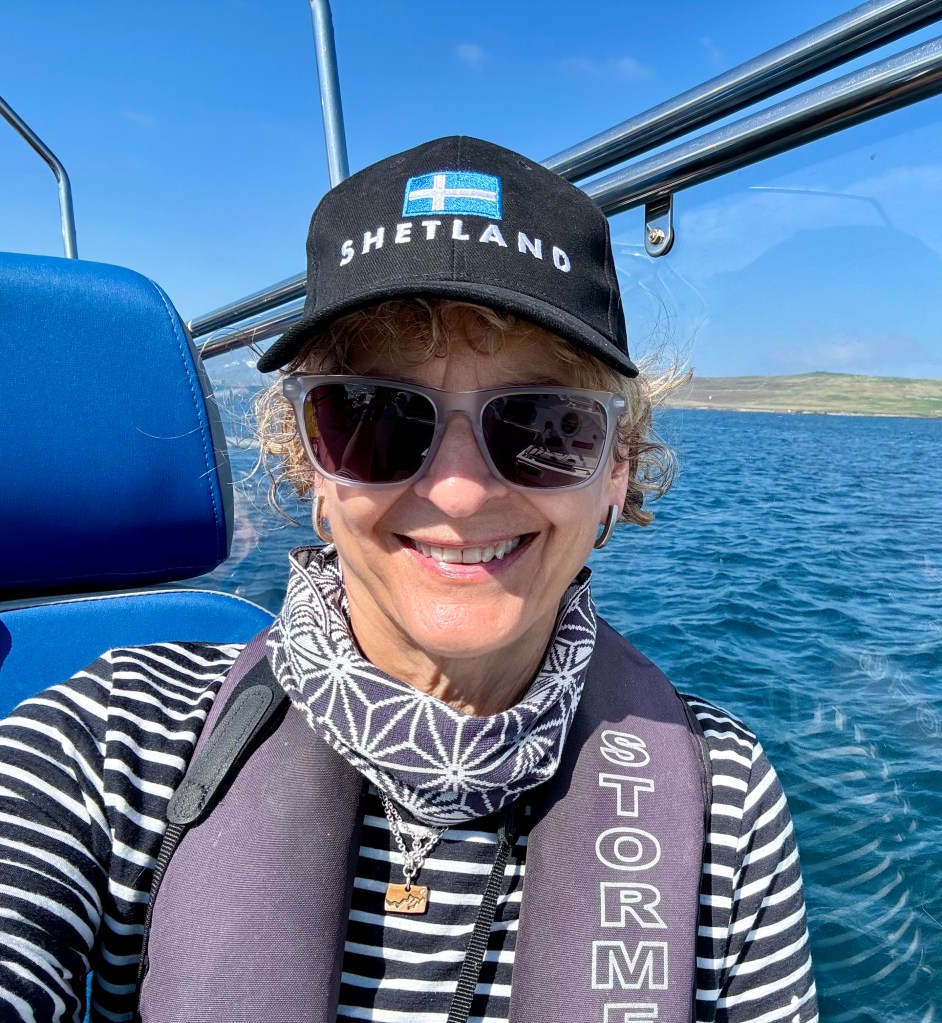
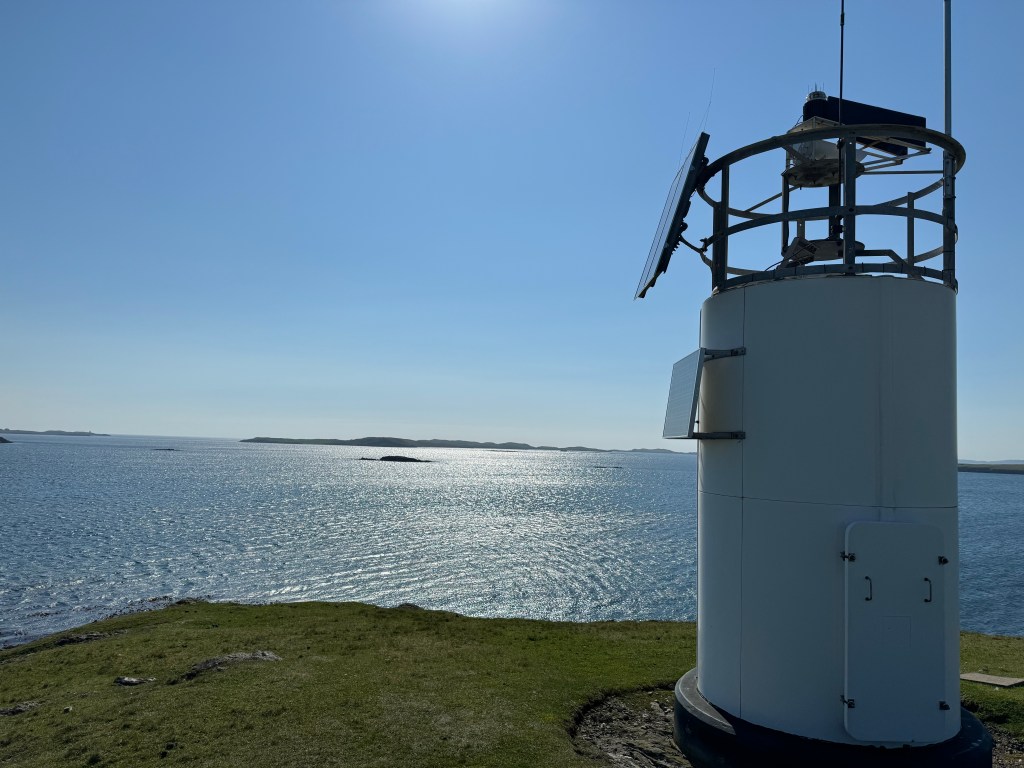
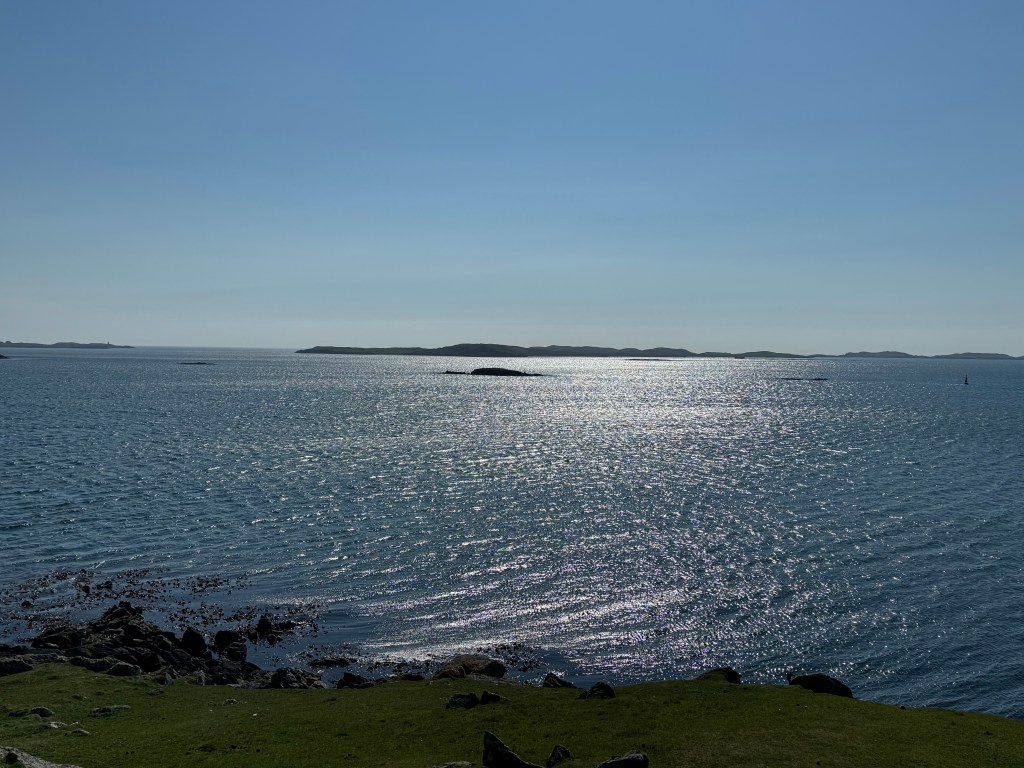
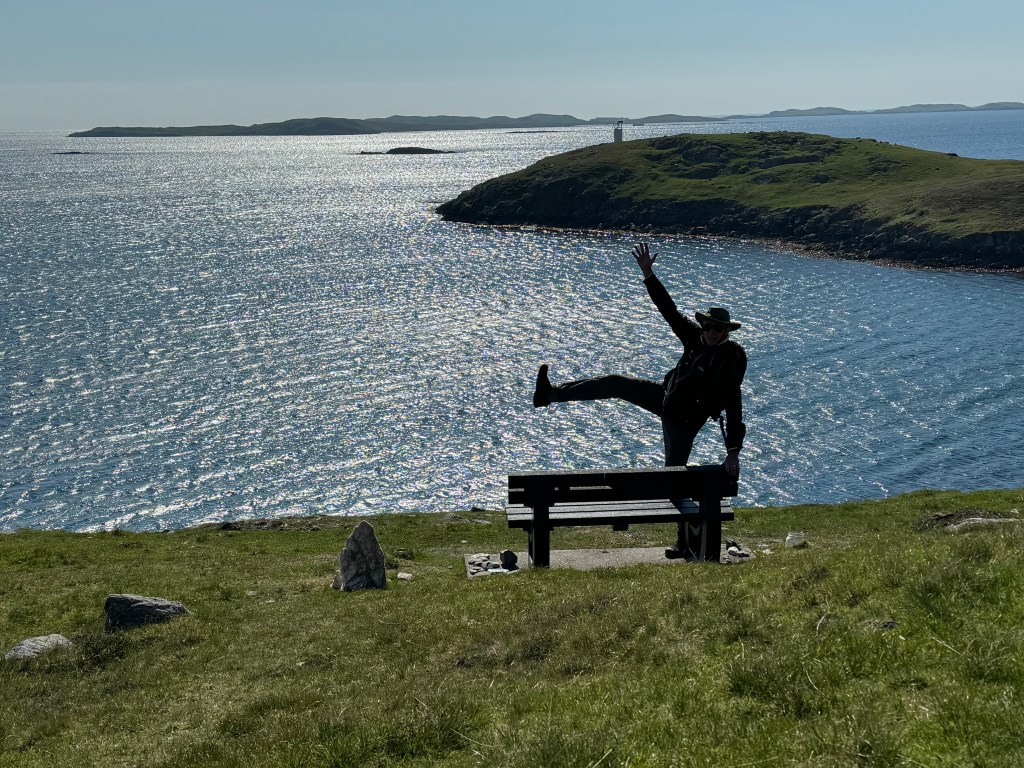
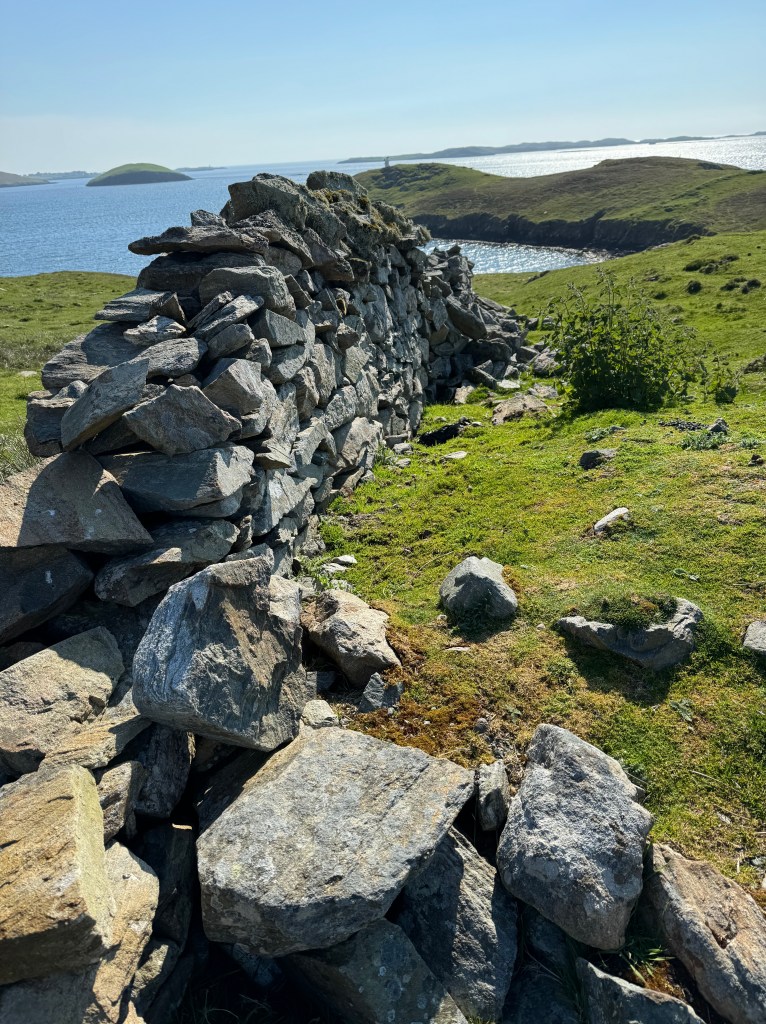
And the day wasn’t even over! We drove west to Scalloway and walked to a lighthouse on a grassy point, passing sheepies and ponies and marveling at the light.
Let’s take a moment, shall we, to appreciate the product-free coiffures of the Shetland pony.
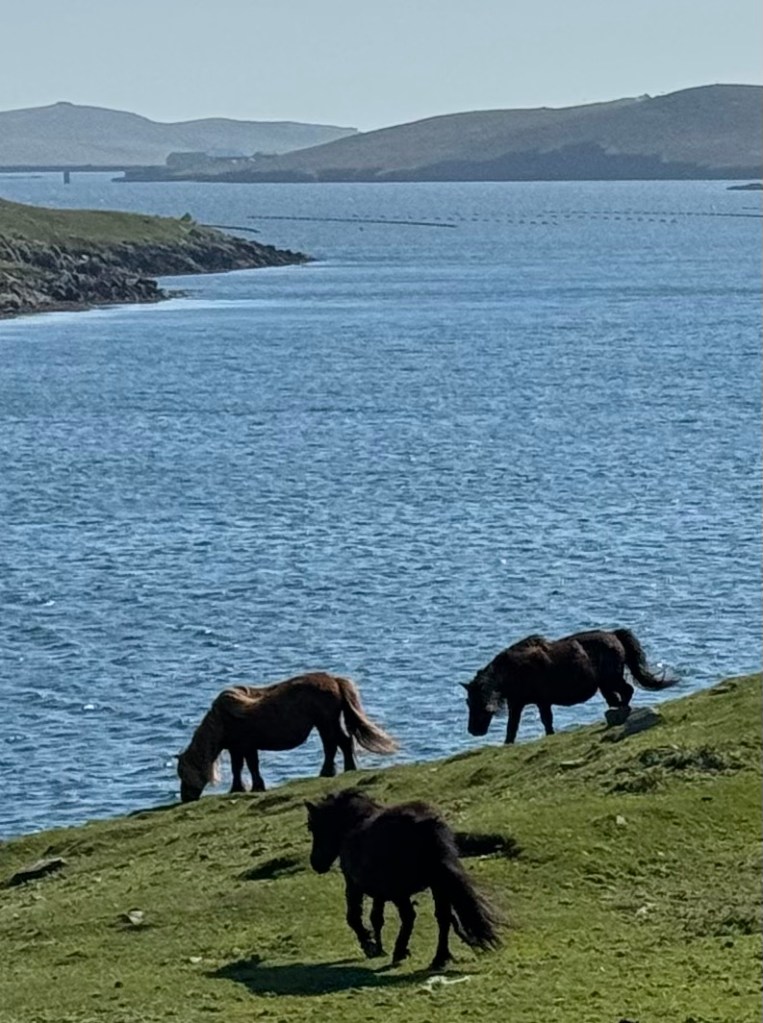

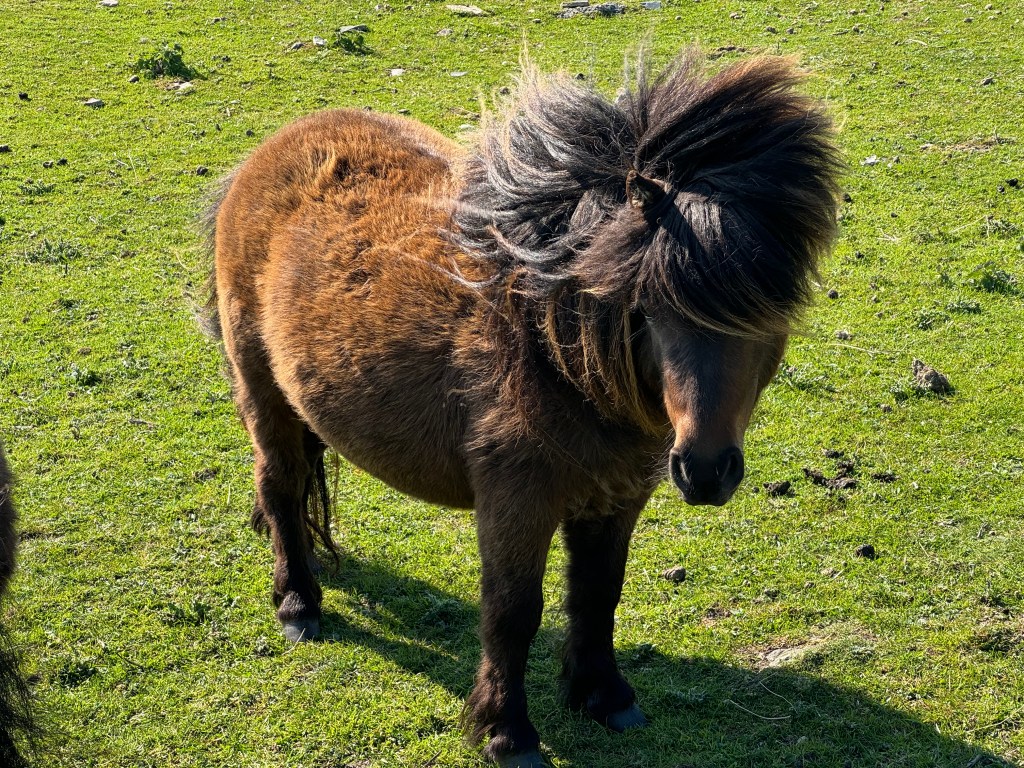
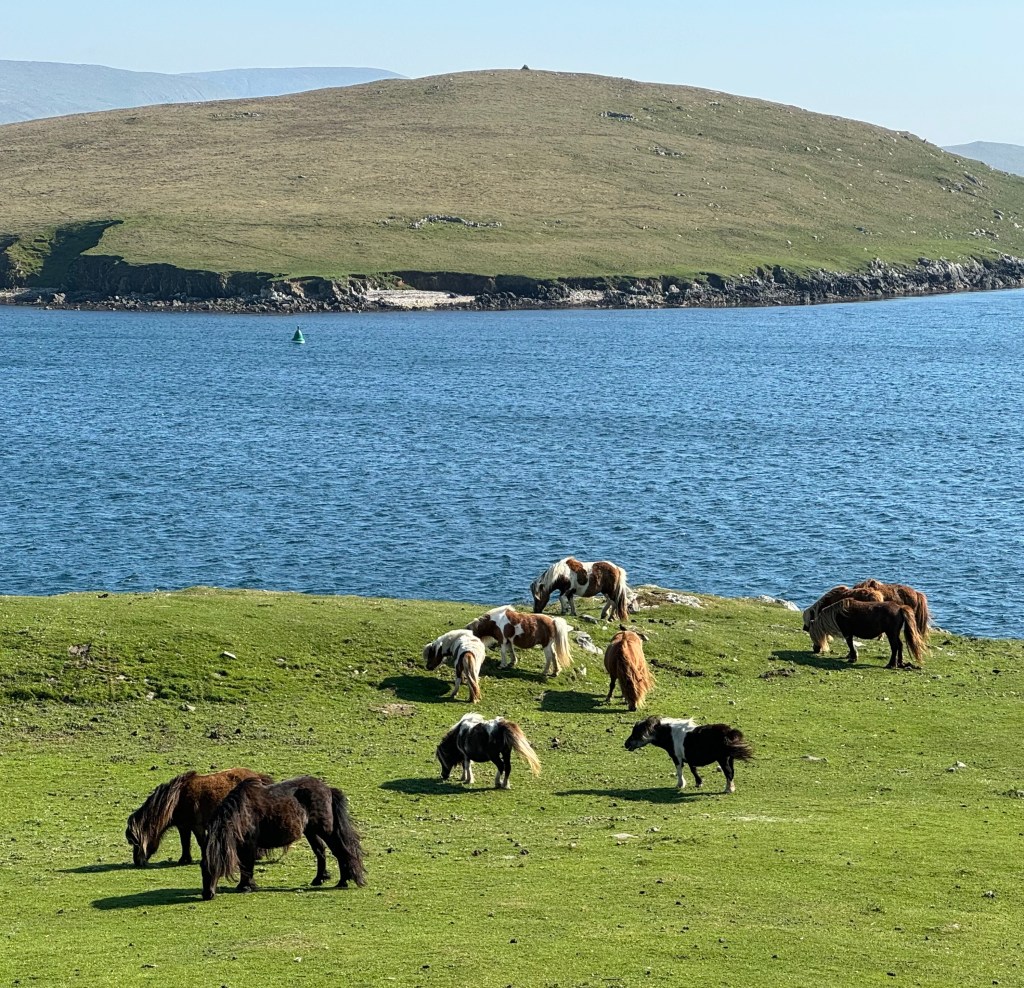
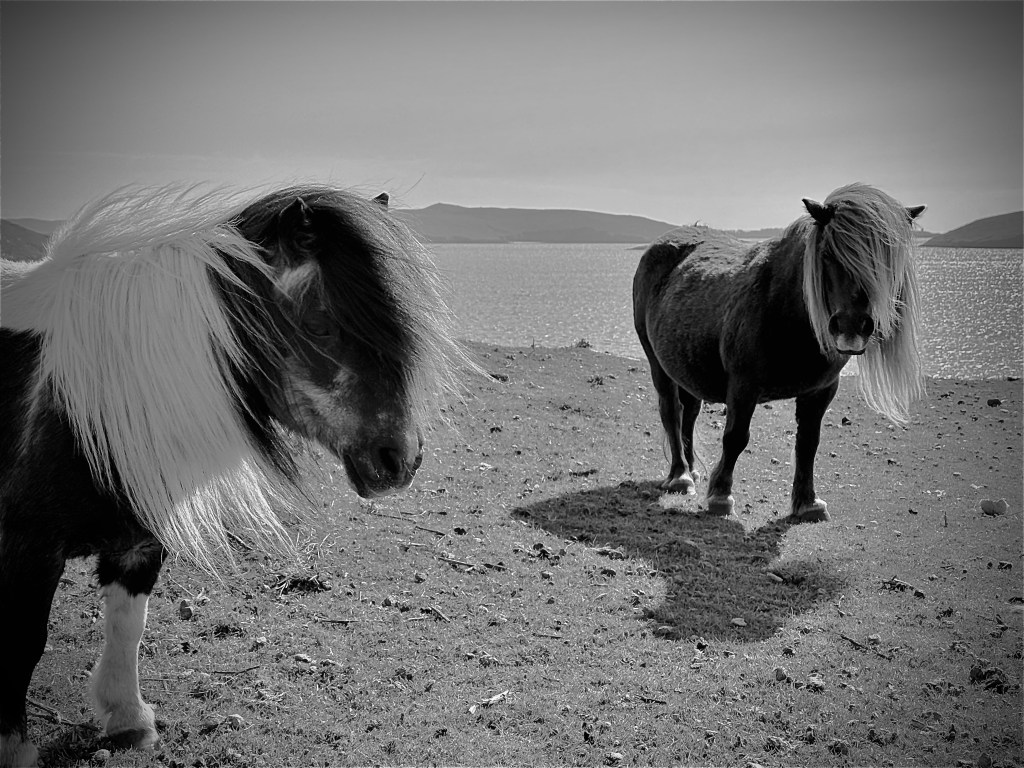
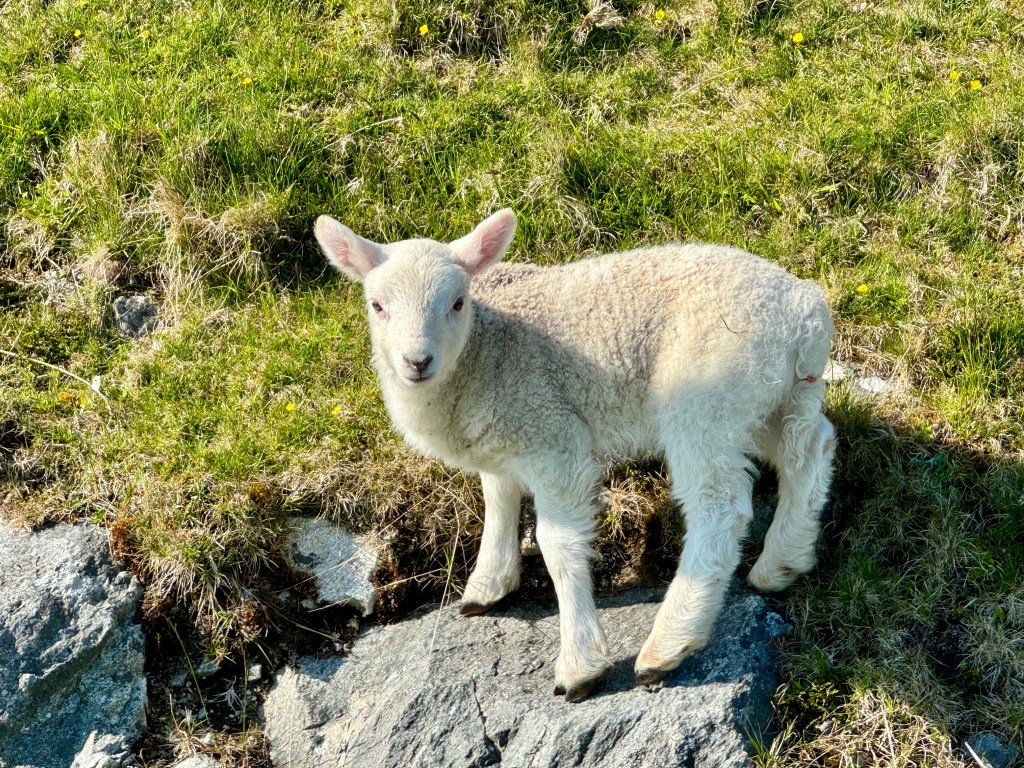
And lest you thought you were going to slip through a single solitary day without a sheepie photo, well that is obviously silly.
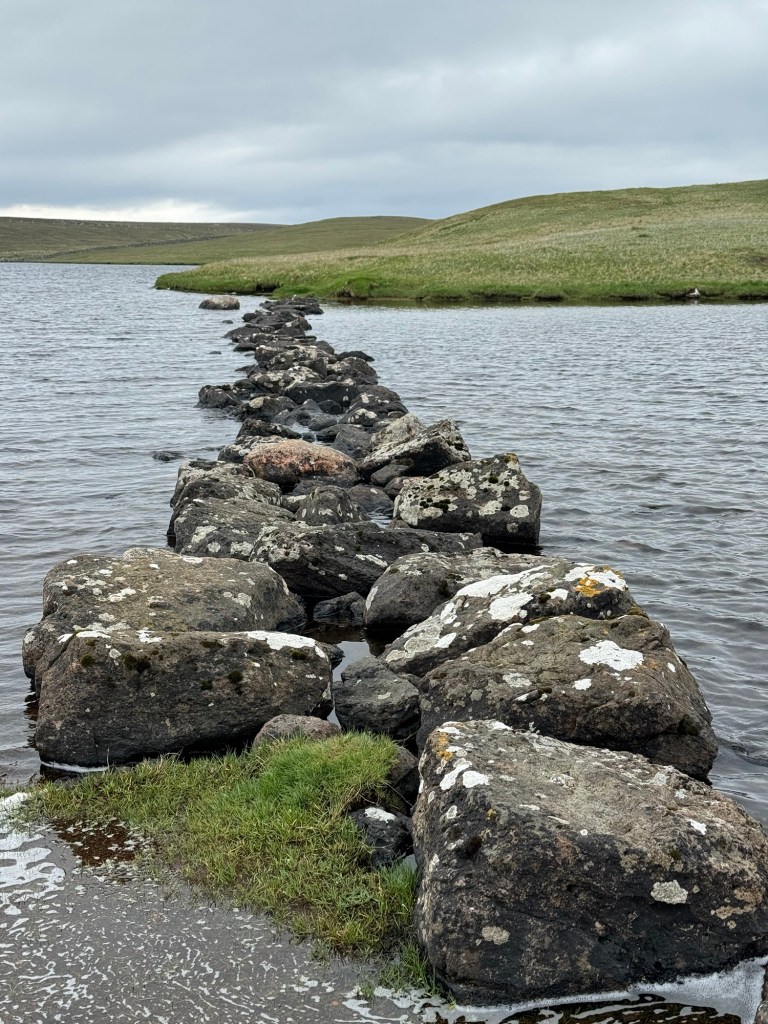
Next morning we were off for a walk around the perimeter of St. Ninian’s Isle, a small island connected to the south Mainland via the largest tombolo in the UK. It’s completely exposed all summer but generally submerged in winter. I can’t explain why, but it was fun to traverse.

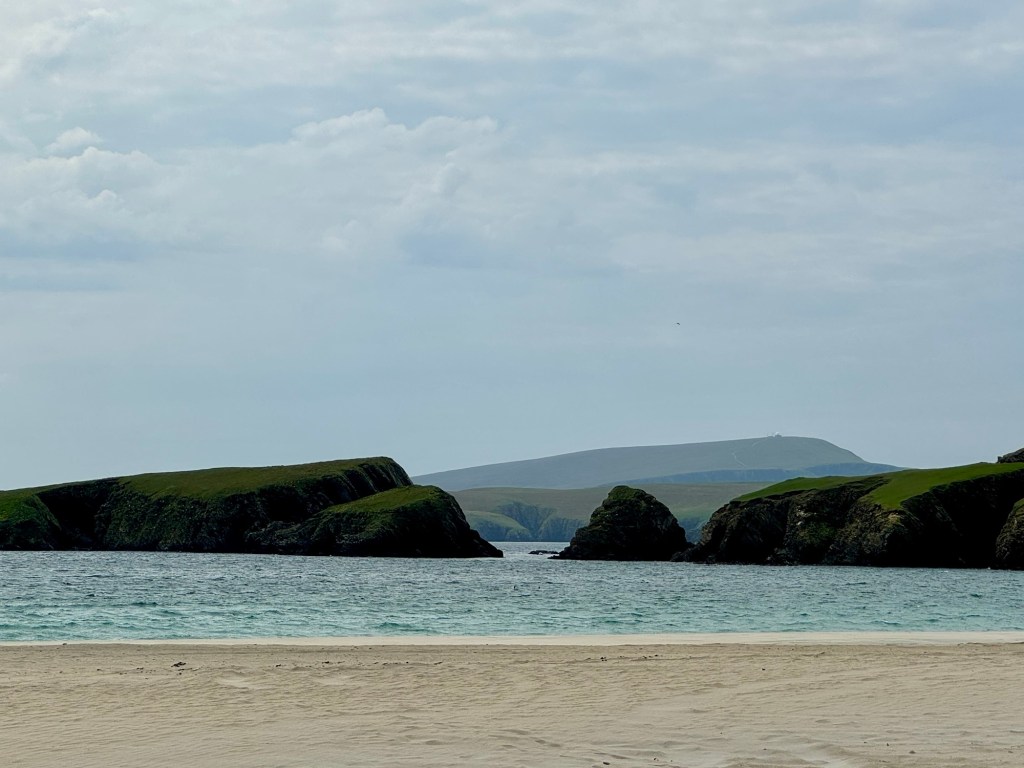
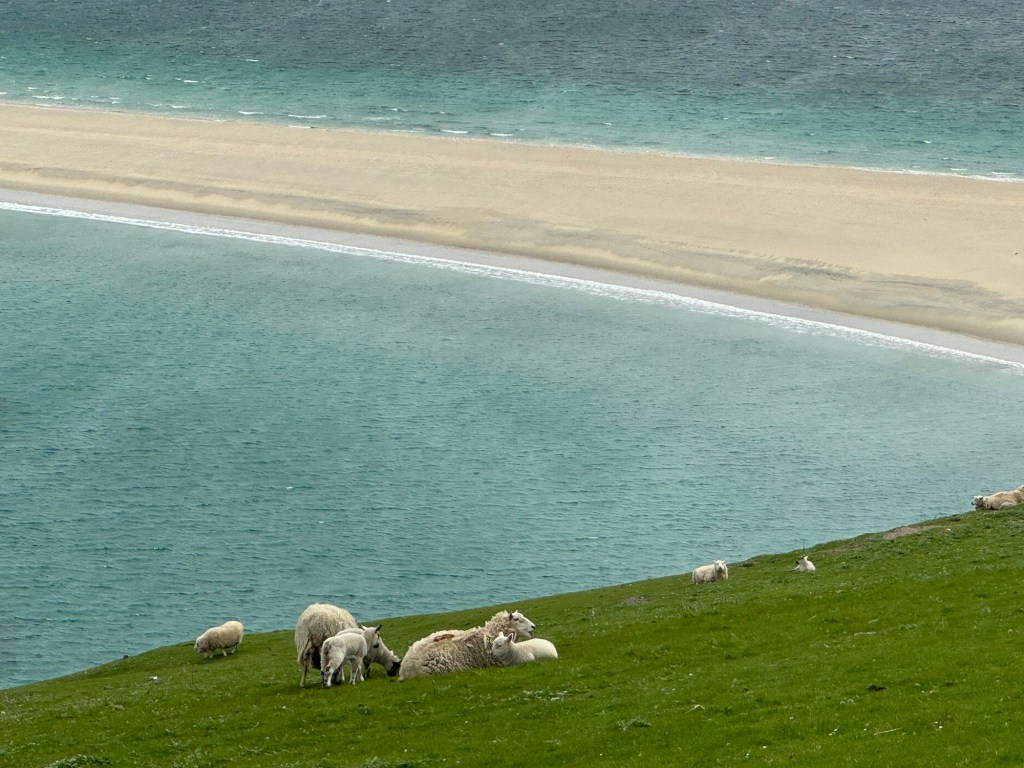
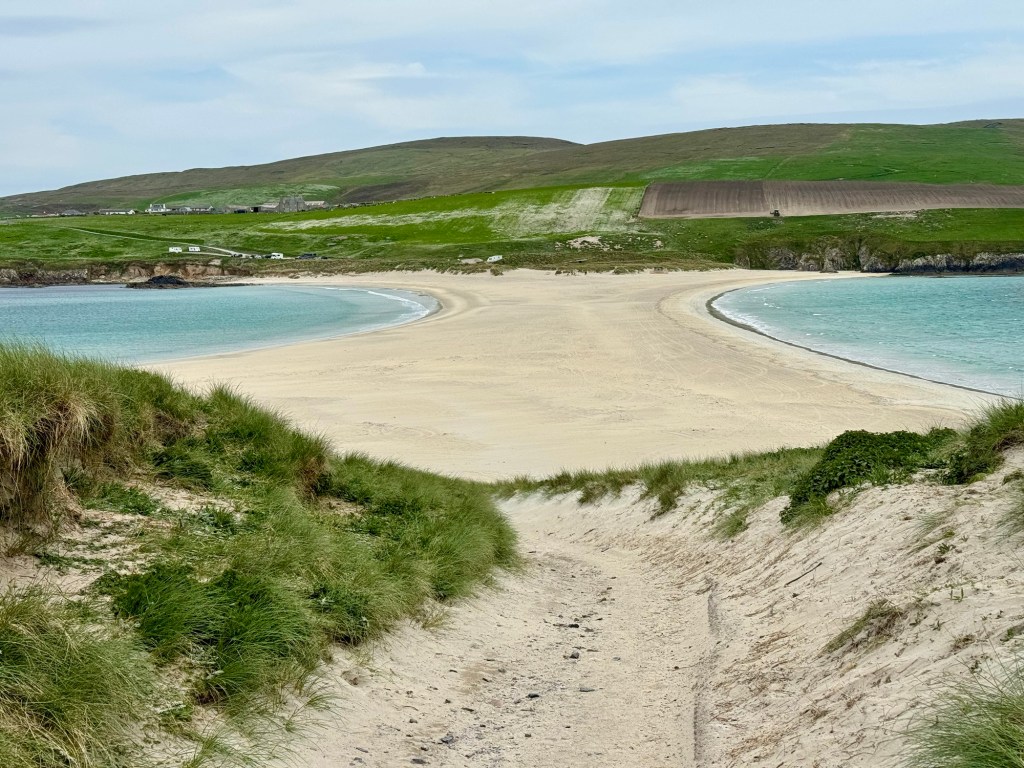
St. Ninian is the patron saint of Shetland. While as usual, Neolithic artifacts have been found on the island, there’s also a ruin of a lovely 12th century chapel named after the saint. In 1958 an excavation on the chapel grounds found a horde of 8th century silver in a wooden box under a stone slab. Eighth century you say? Horde, you say? We know what this means – Vikings! The horde was possibly hidden from the Vikings or by the Vikings after being stolen, who knows. A local schoolboy, Douglas Coutts, who was assisting the grown-up archaeologists from Aberdeen University, made the find on his first day of being a helper. Apparently he wanted to lift up the stone slab to see what was underneath, possibly to find bugs, but the grown-ups ignored him. He did it anyway. You can see the horde at the National Museum of Scotland in Edinburgh. It’s considered to be the best example of surviving silver metalwork from Scotland’s early medieval period, and the pieces are quite intricate and beautiful. Here’s a little video if you’d like to learn more: https://www.youtube.com/watch?v=Fqw7cwYbWzo&list=TLGGrdK6ZEugXgIwNjA3MjAyNA&t=250s
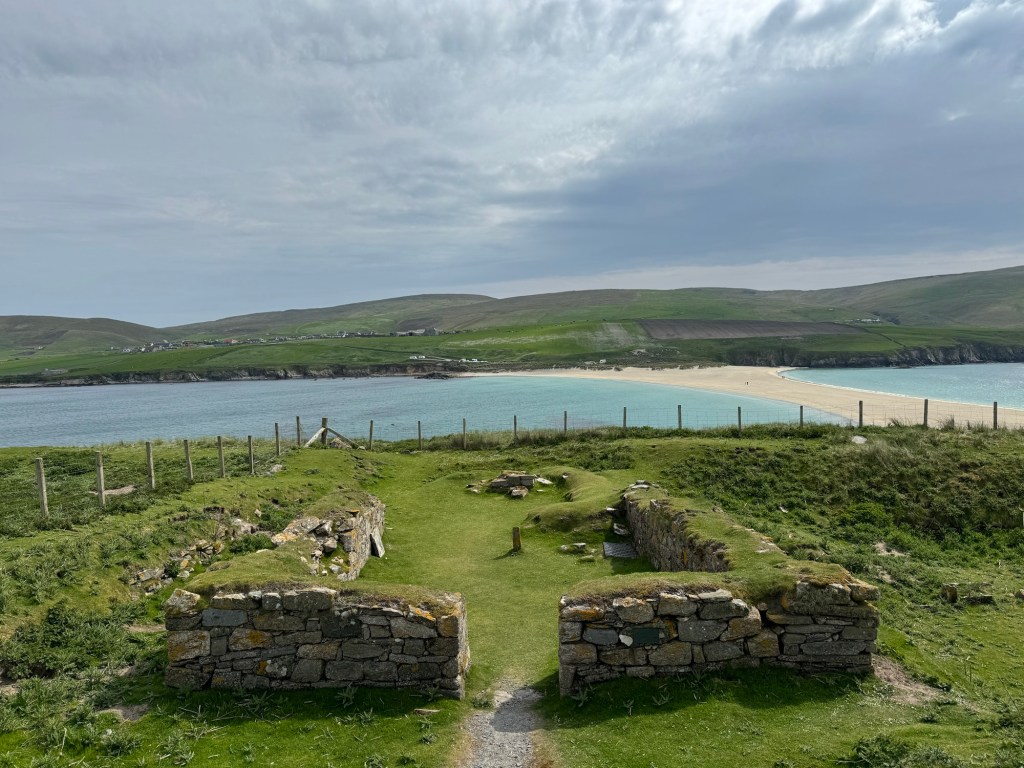
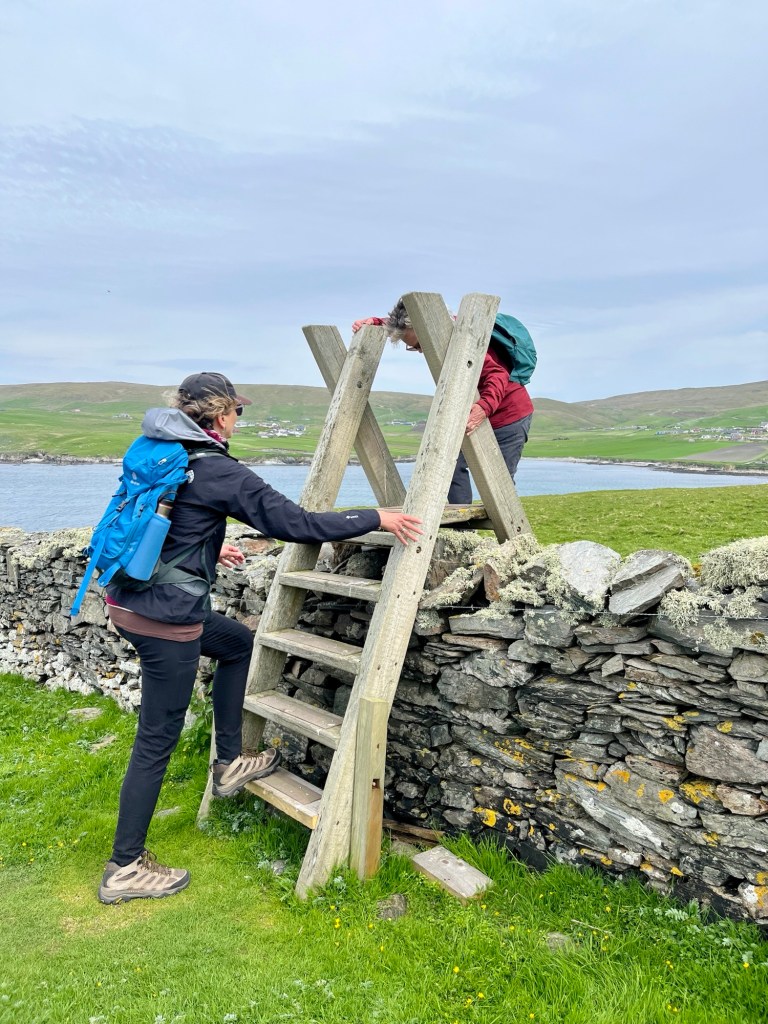
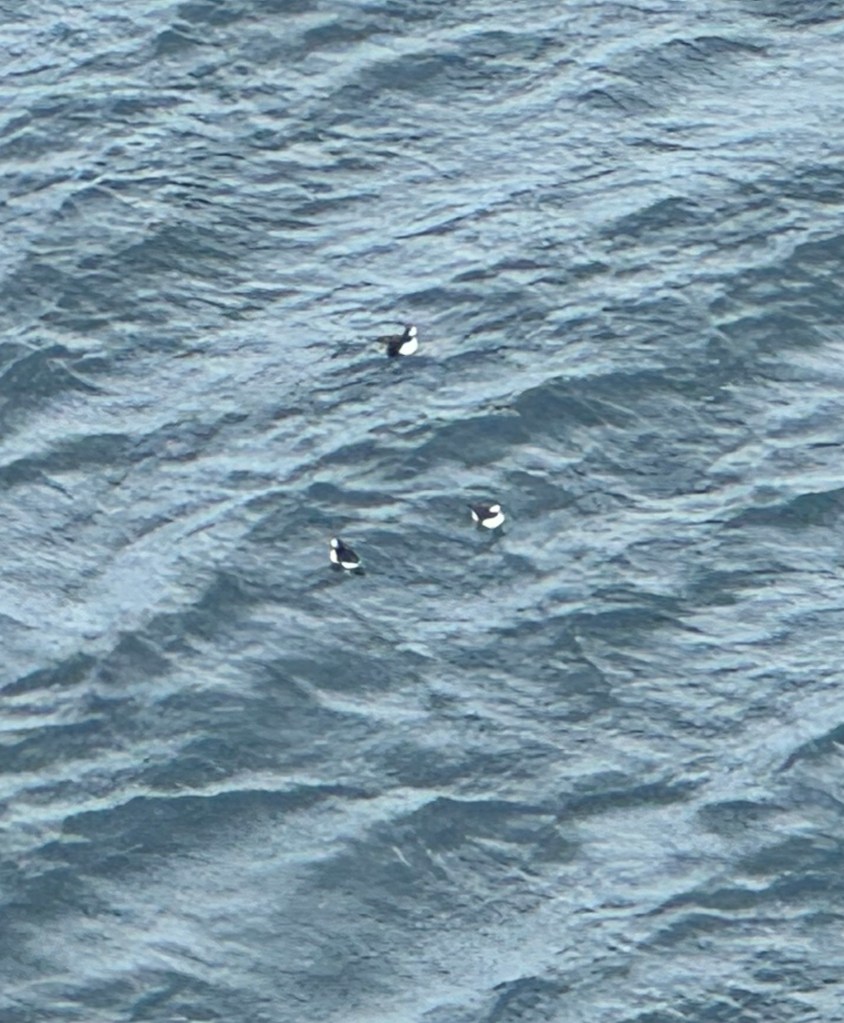
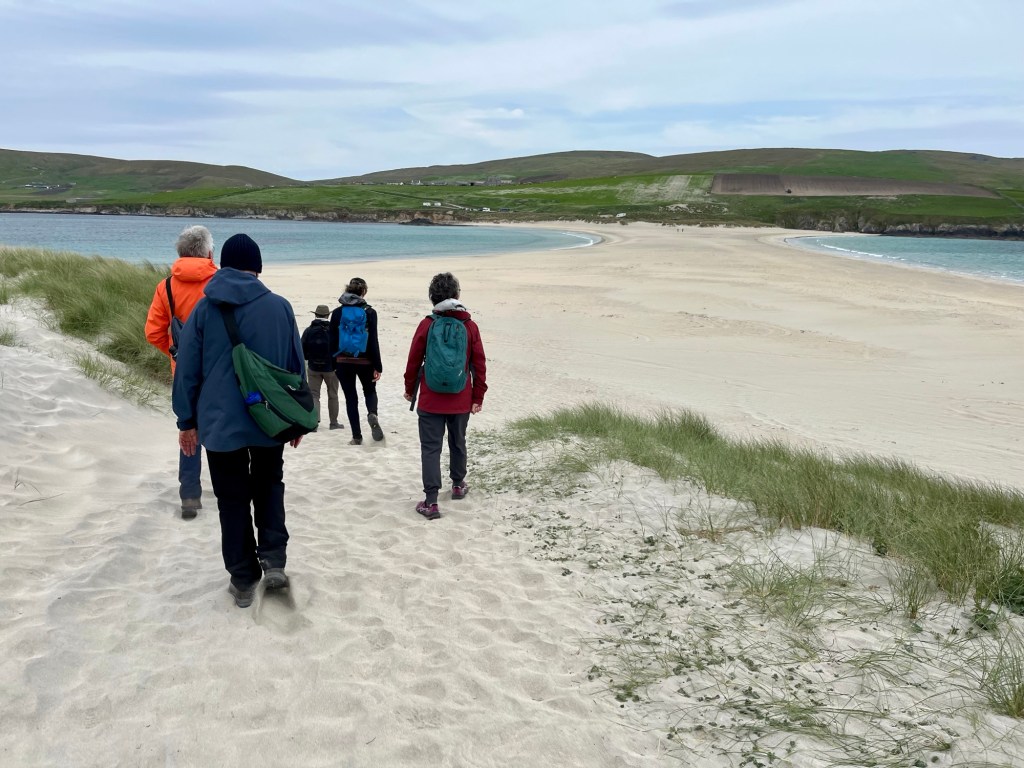
Our merry band set off around the island, taking in beautiful cliffs, a few swimming puffins, a stile or two, and stopping for lunch along the way with views across the sea.
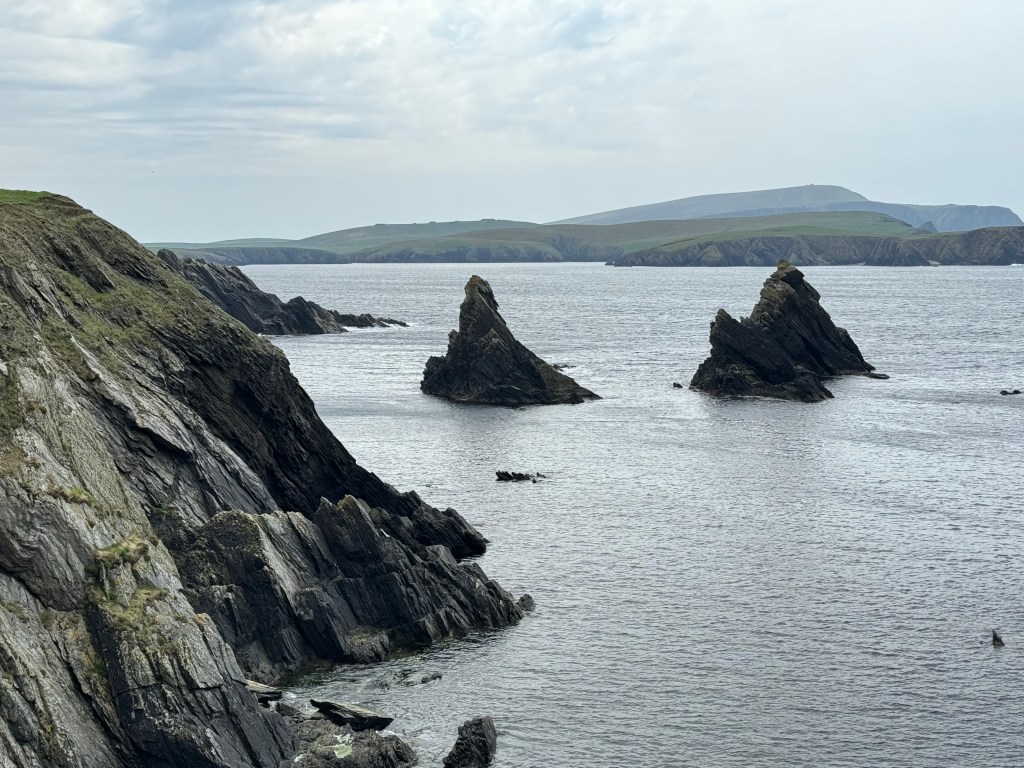
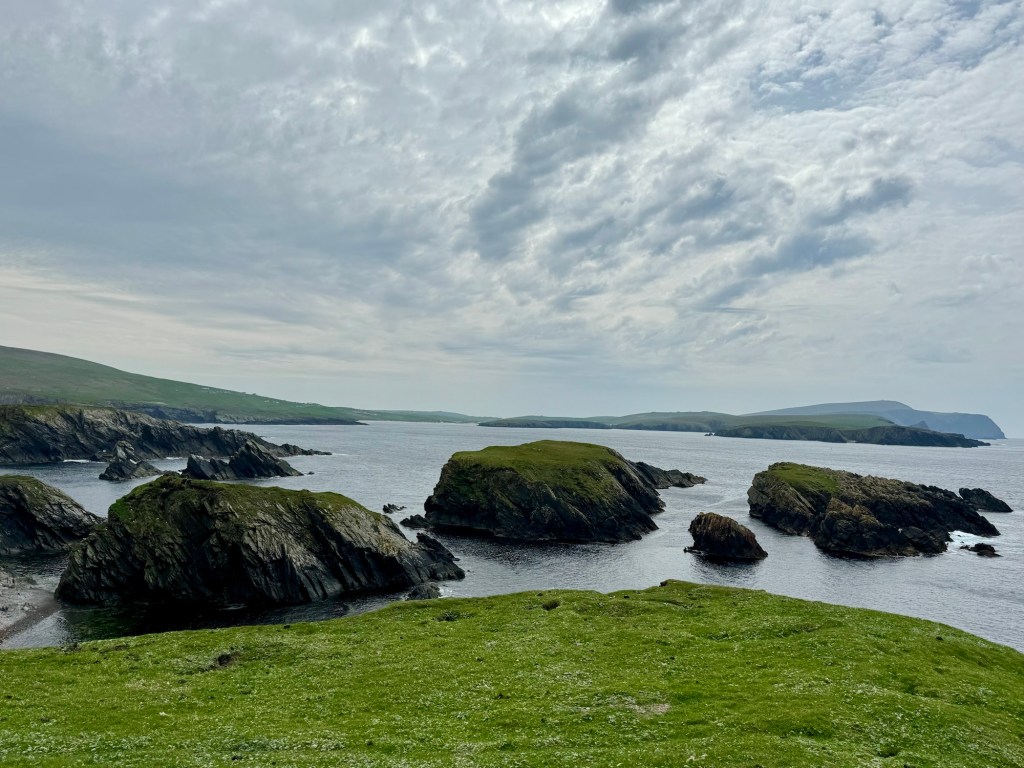
Kirsty told us she had been talking to a guy and he recommended a remote cliff walk, saying it was his favorite on the island. So we went off-book and drove down deserted roads with Kirsty periodically pulling over and consulting her phone to make sure we were on the right track. At one point she blew her cover about our off-the-grid situation by saying, with a wee bit of relief in her voice, “Oh, there we are.”
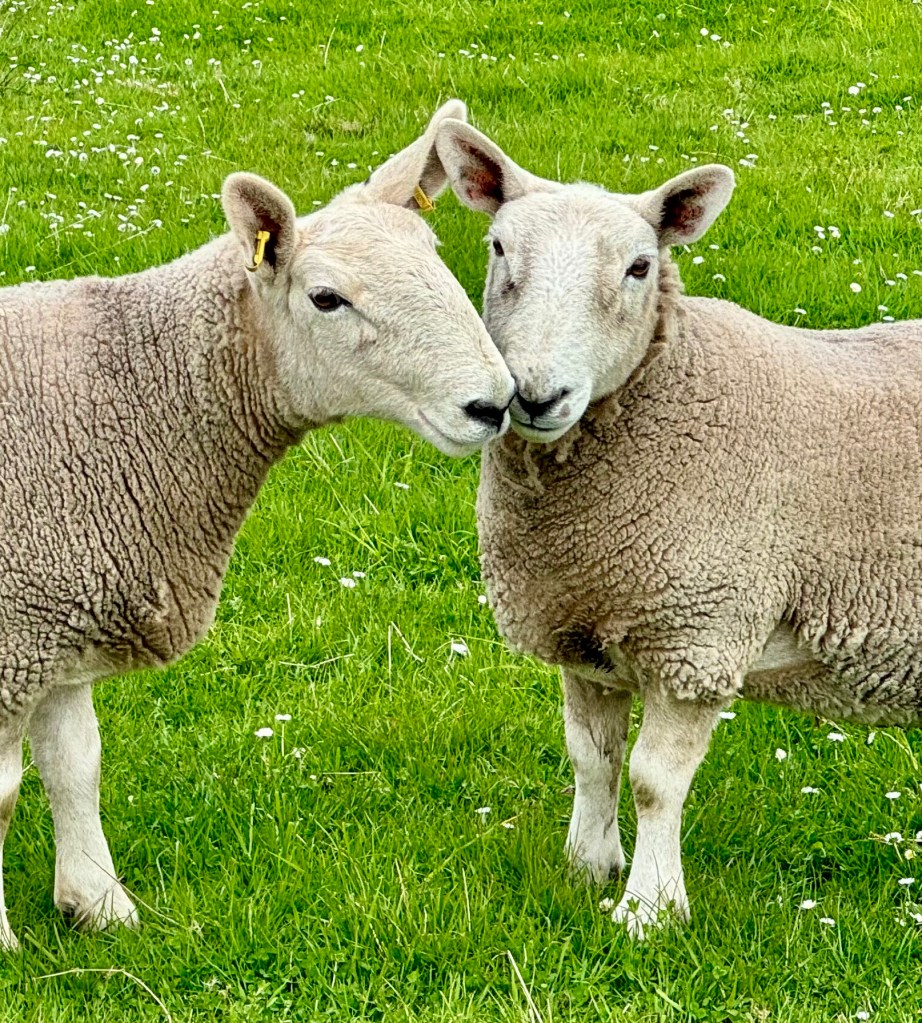
We drove through Silwick, a pretty much deserted settlement, and parked in front of a gate, girding our loins to face the only dangerous animal that inhabits Shetland.

Luckily, this was our only animal encounter on the walk.
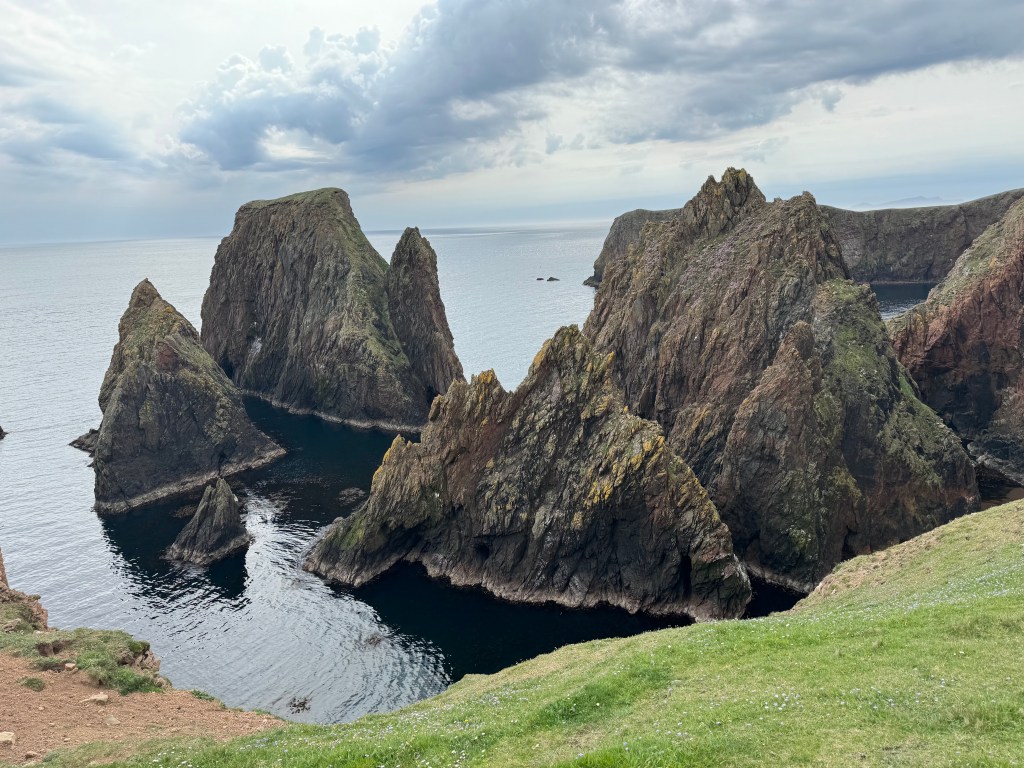
We walked up a hill and were greeted by some of the most spectacular views we had seen to date. Our rogue excursion was a smashing success. Kirsty plans to recommend that this walk be added to the official WS itinerary for future trips.
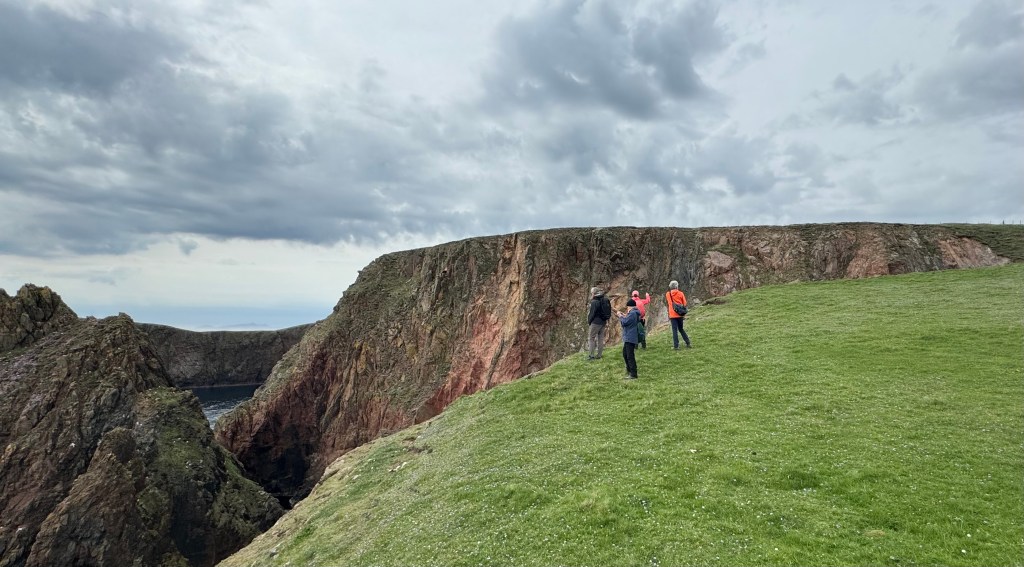
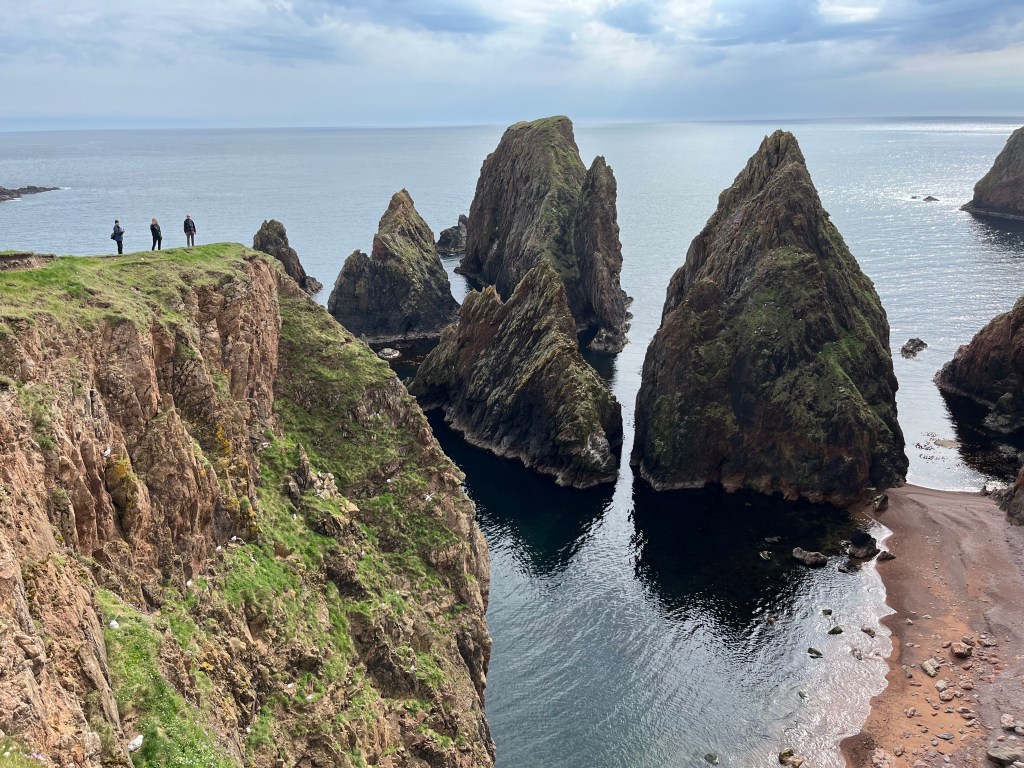
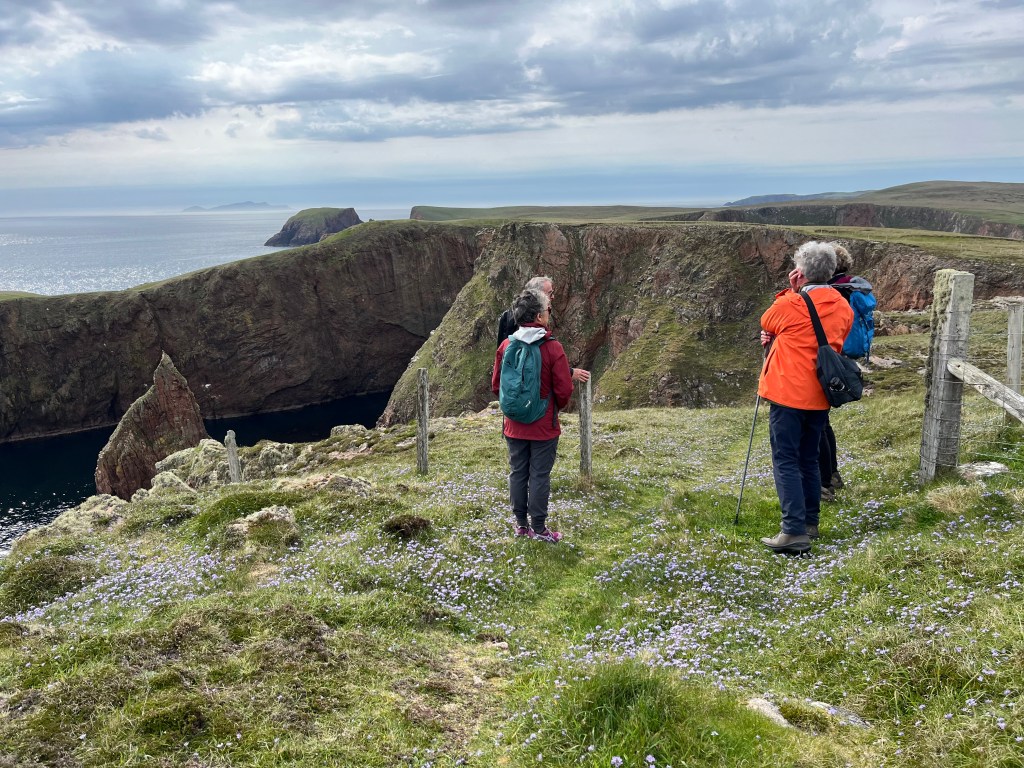


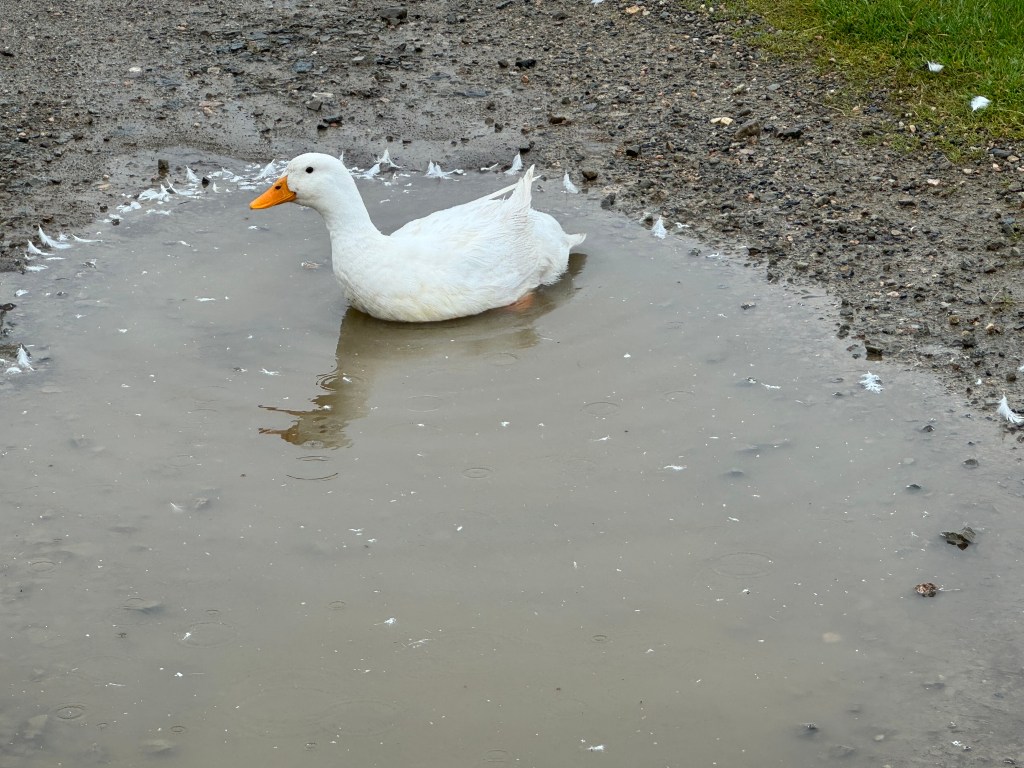
The next day was a momentous one because I was finally able to bust out my new raincoat for the first time this entire trip. And the weather was misty and moody at last! Also, yay, ferries! We took an early ferry to Yell and drove across that island to another ferry terminal to catch a ferry to another island, Unst. We stopped on Yell briefly to view a very, very rare Scottish puddle duck.
Another cool attraction on Yell is the Windhouse (pronounced “windhoose”), a derelict home perched atop a hill along the main road. It was built in 1707 and remodeled in 1885 with all the latest appliances. Silhouetted against the skyline, the creepy looming ruin can be seen for miles around. It has been deemed by experts to be the most haunted house in Shetland if not the entire British Isles. It’s built near the ruins of a broch and bodies are literally buried in the garden. As for ghosts, there’s a Lady in Silk – thought to be the skeleton of a woman with a broken neck who was discovered under the floorboards at the bottom of the staircase (!!), a dapper man in a top hat, a creepy child and a black dog probably named Sirius. There’s also a rumor that nobody can survive a sleepover on Christmas Eve night. The story is that in olden times a shipwrecked mariner turned up at Windhouse on December 24. He crossed paths with the home’s inhabitants getting the heck out. They explained that noone had ever been found alive on Christmas morning after spending the night because they were slain by an unidentified entity. The mariner decided to stay anyway, because this is a horror movie, and in the night he was startled awake by some kind of monster from the sea. He promptly dispatched said creature with an axe and buried it nearby. Sadly we don’t have a description, the body has not been found and it’s unclear whether the mariner’s actions reversed the curse.
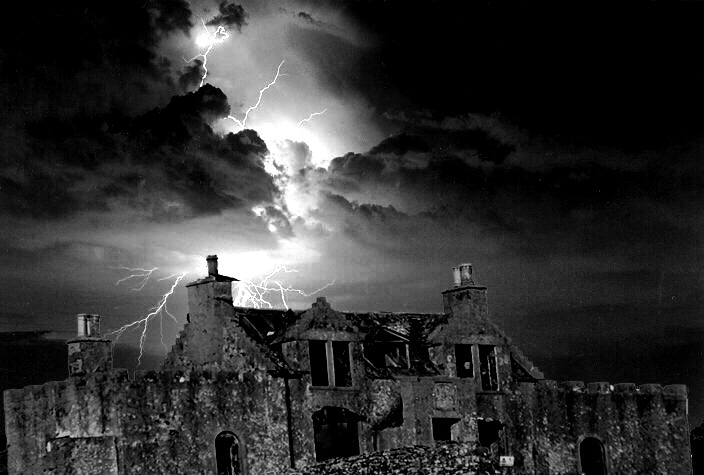
I wish we had been able to stop and wander around the ruin, but we had a ferry to catch and they wait for no one.
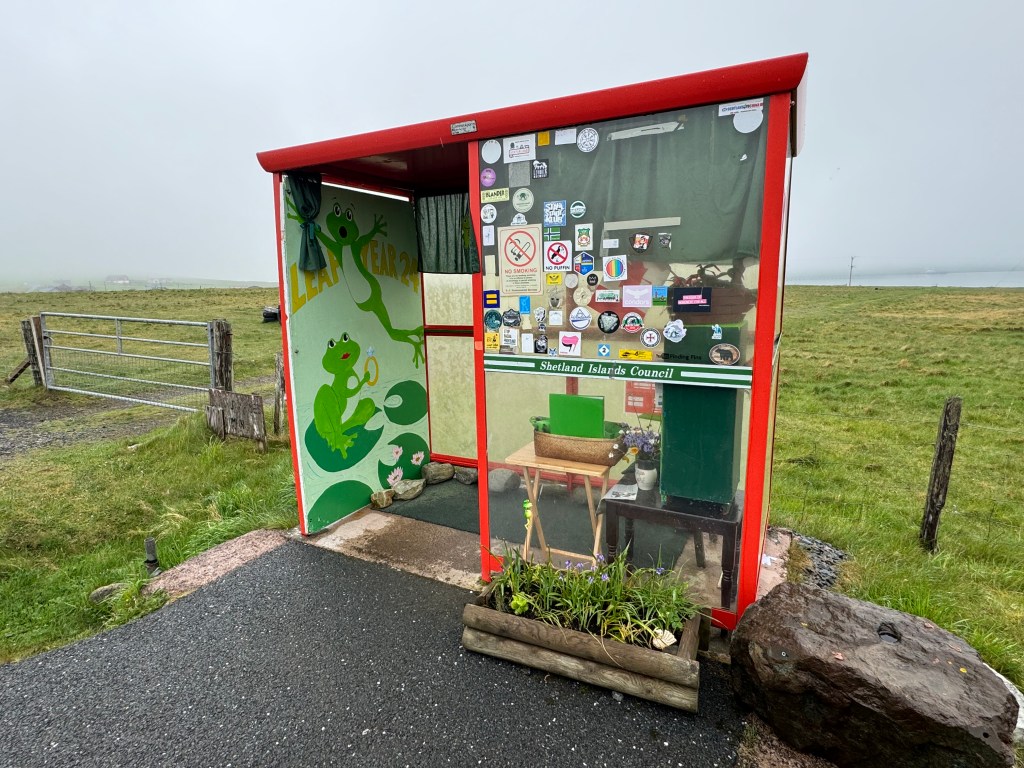
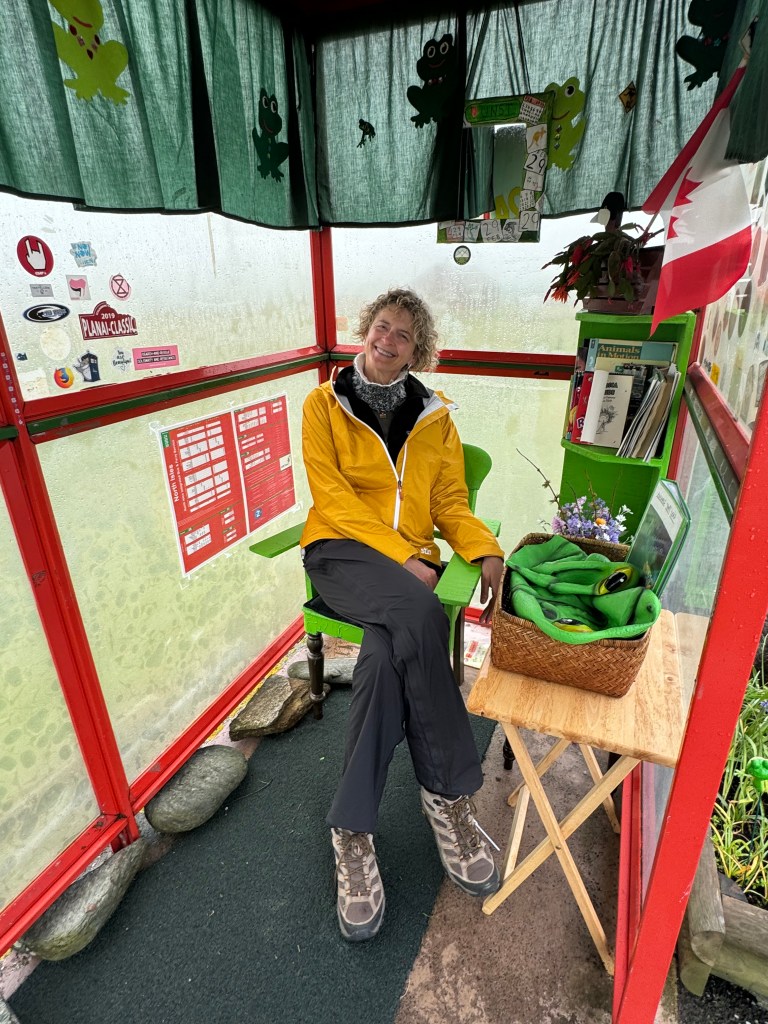
Upon arrival on Unst, the northernmost of the inhabited British Isles, we stopped briefly at Bobby’s Bus Shelter. It’s named after local boy Bobby McCauley. Bobby, who took the bus to school every day, grew weary of the often long, cold and wet waits every morning at the bus stop. He wrote a letter of complaint to the local newspaper requesting that a shelter be built.
What Bobby wants, Bobby gets. The shelter was duly built and, soon after, a sofa appeared, followed by a table, a microwave, a carpet and other comforts of home. Before long, the humble bus shelter was a warm and welcoming place with its own visitors’ book. Now it is one of the most photographed attractions on Unst.
This brilliant shelter is decorated with a different and imaginative theme every year. Some examples: the Queen’s Jubilee, outer space, women’s suffrage, the colour yellow and an underwater theme.
Bobby recently earned his PhD at the University of Glasgow, so the bus shelter served him well.
And now a rather violent segue from sweet bus shelters to Vikings, as Unst is one of the richest Viking heritage sites in Europe, with over 60 longhouses uncovered by archeologists so far. At 61 degrees north, the island was the perfect resting spot for Norse travelers on the trading route between Scandinavia, Greenland and Newfoundland. Many settled in this northerly outpost, working the land and making it their home.
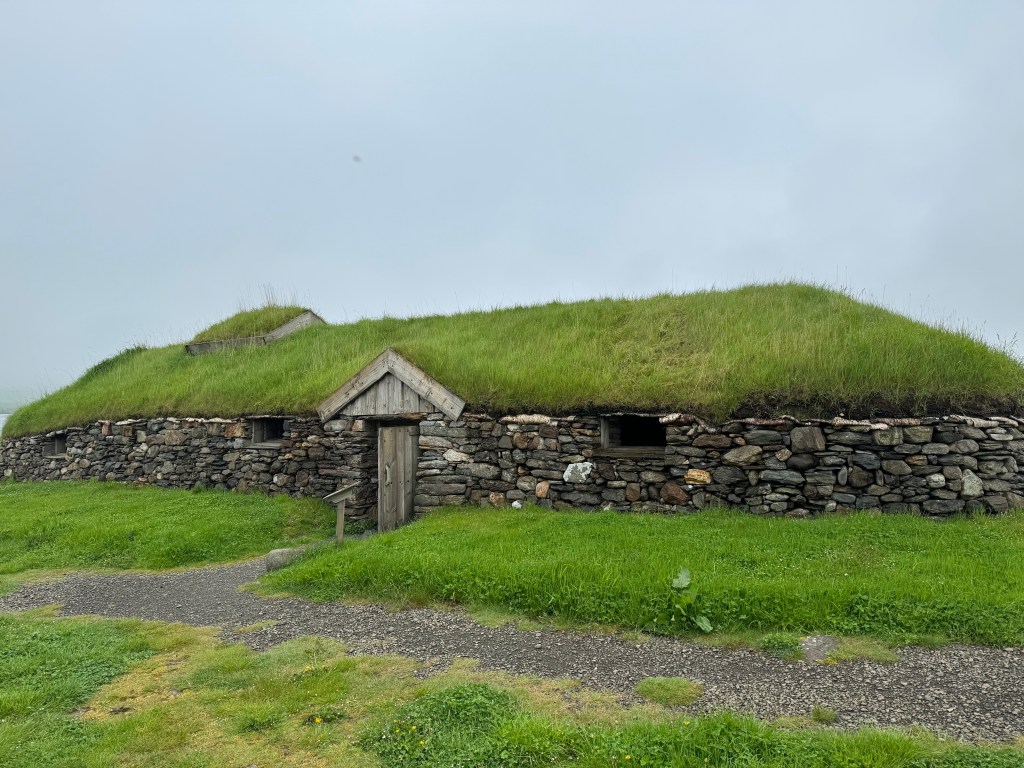
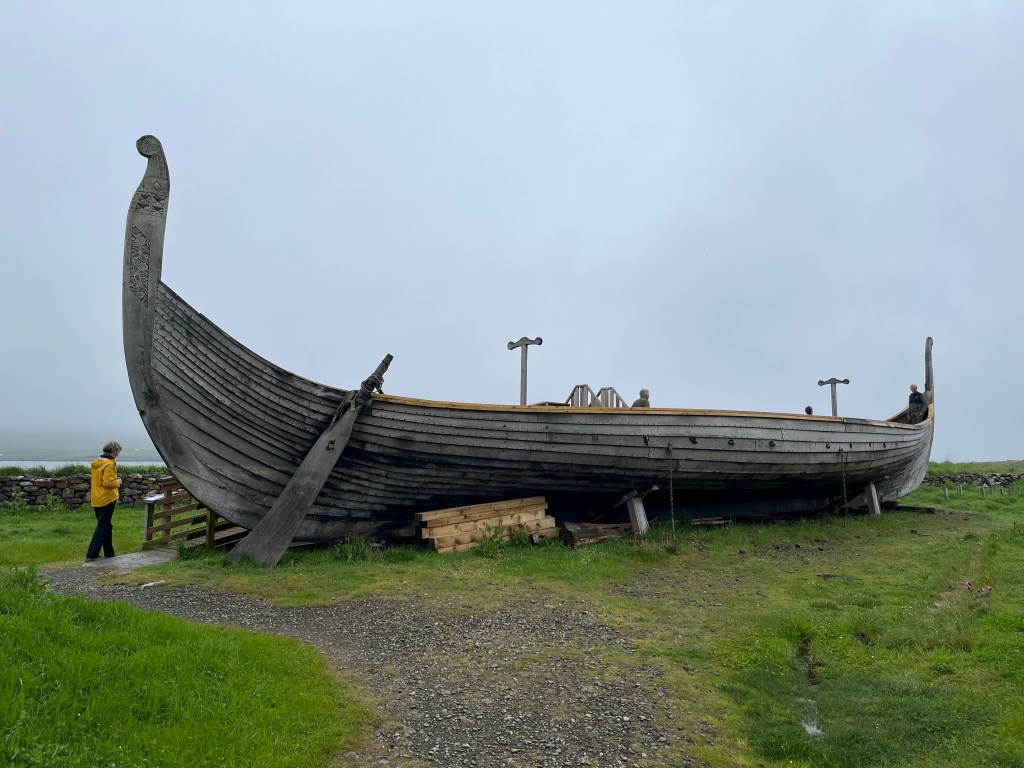
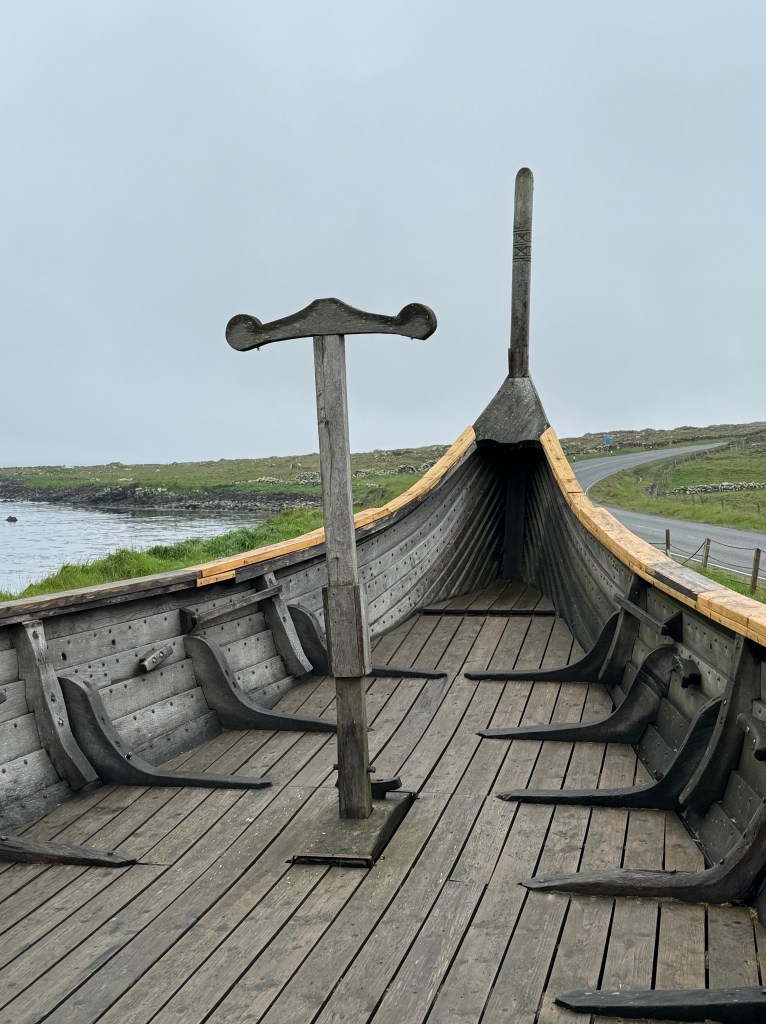
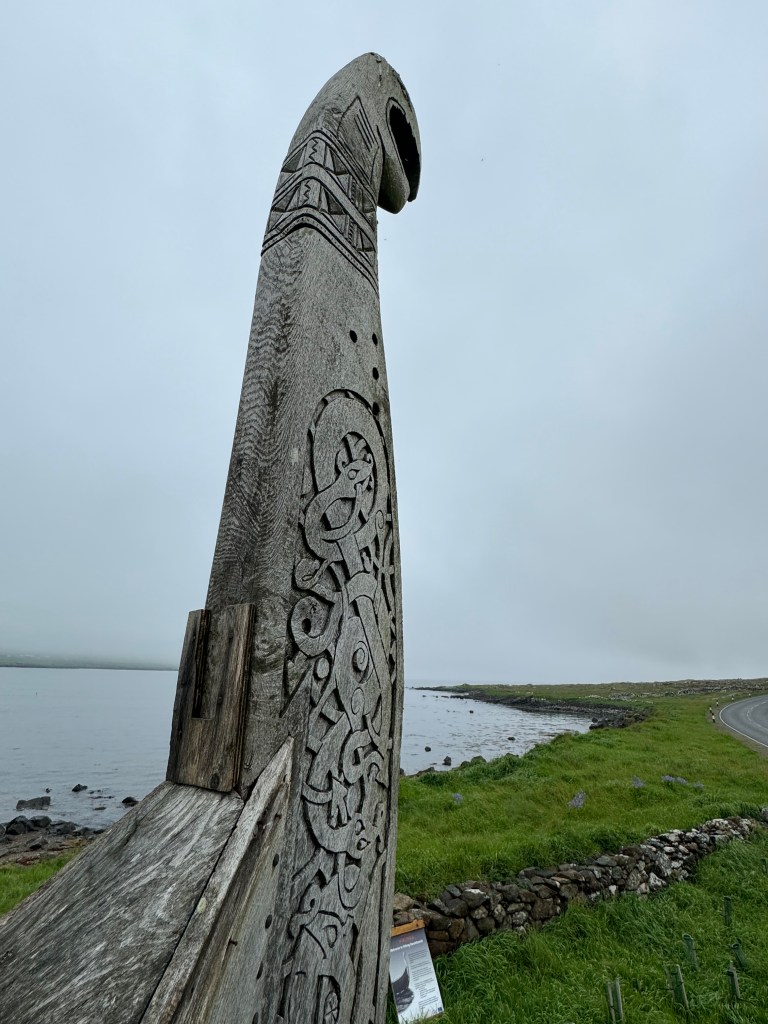
We stopped by the Skidbladner, a model Viking longship perched next to a longhouse replica just off the highway. After seeing all the longhouse ruins on this trip it was fun to see what they might have actually been like. Walking around the deck of the longship brought home how incredible, dangerous and possibly deeply irresponsible it was for the Vikings to set off in wooden ships and sail them westward into completely unknown northern waters. With no GPS, no motor and no idea the world was round they relied solely on a sense of adventure and perhaps too much testosterone. Since they managed to run into the UK, Iceland and further afield as far as Canada (at least), the gods were obviously in their favor.

Our walk for the day was through Hermaness Nature Reserve to visit Unst’s northernmost point, which is also the furthest north you can go in Britain. From there we hoped to see the lighthouse on uninhabited Muckle Flugga, which is basically a rock in the sea and a wee bit further north.
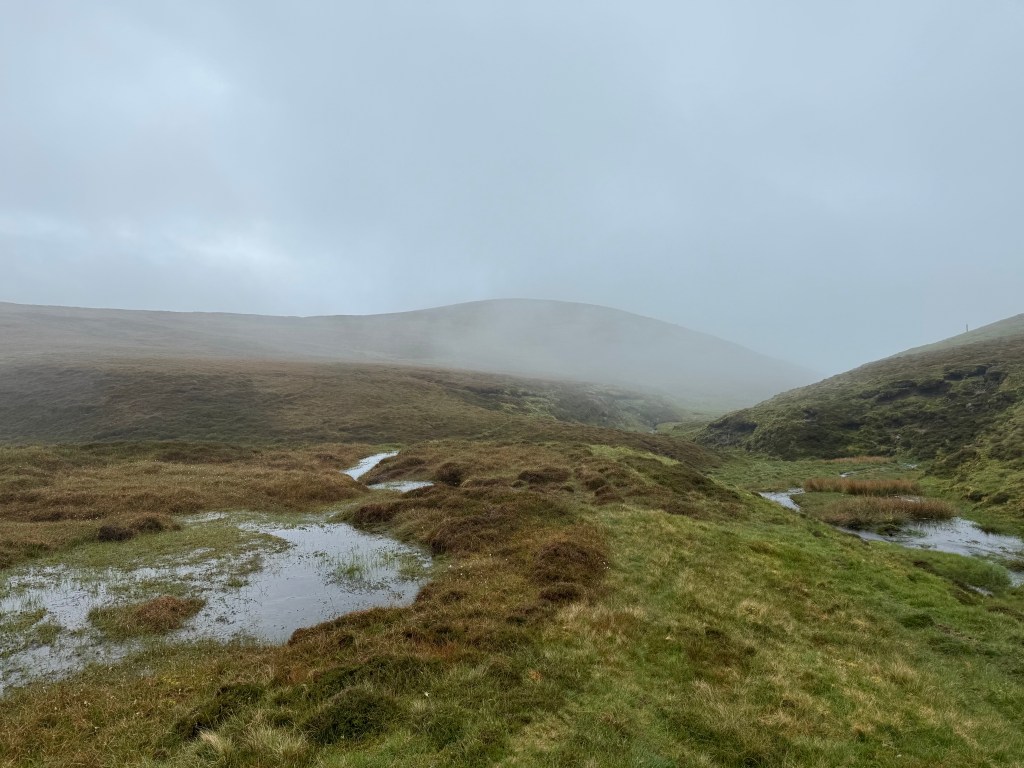
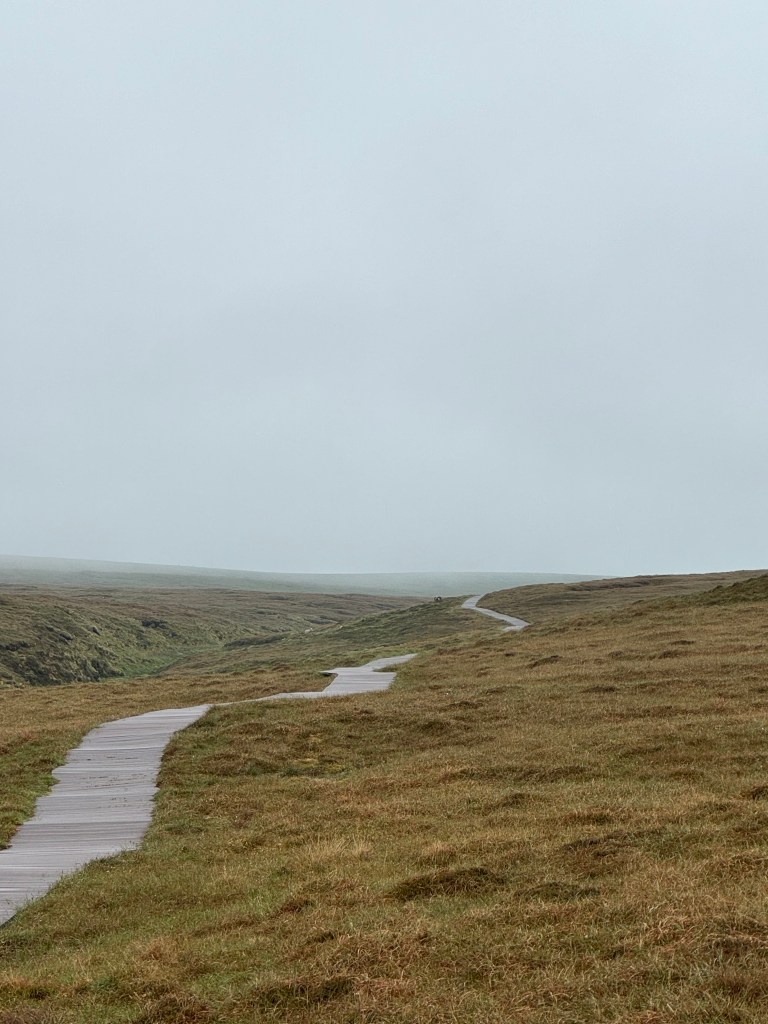
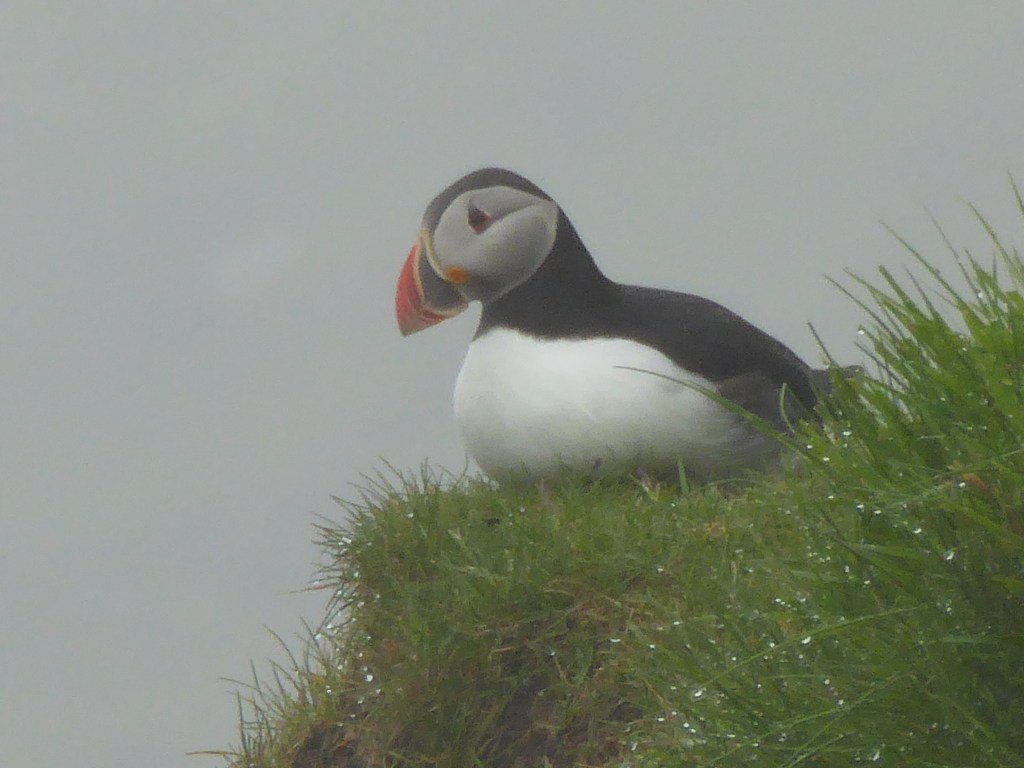
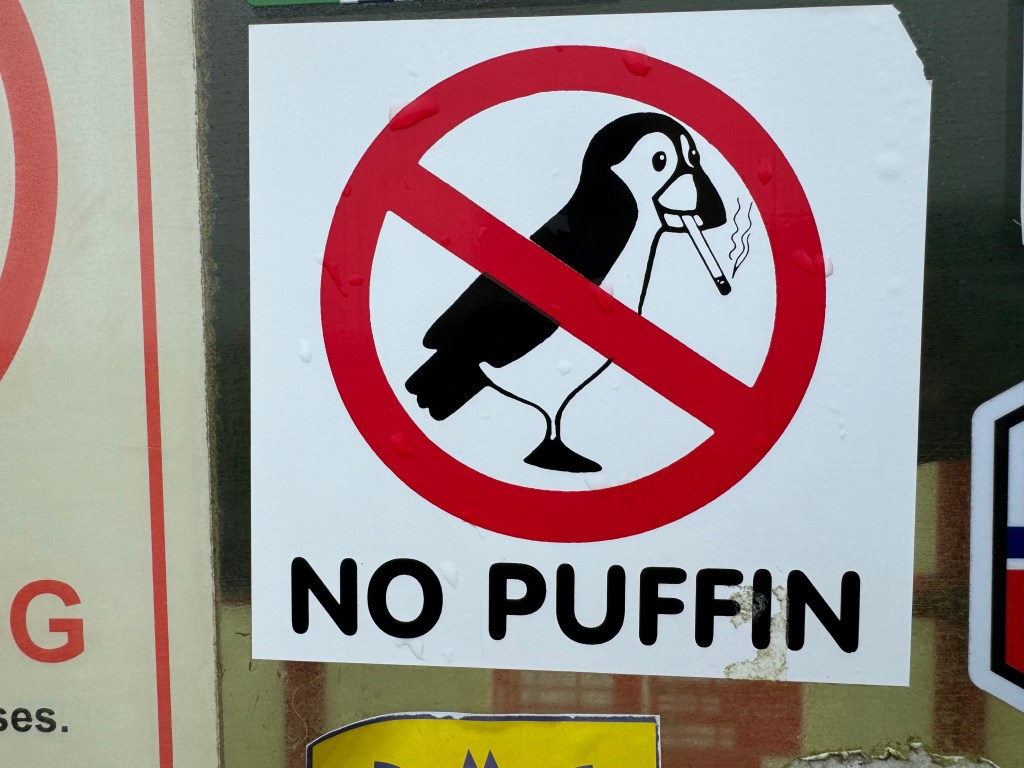
When we ascended to the clifftops, we were rewarded by a single puffin, featured at the beginning of this entry and below. It was thrilling.
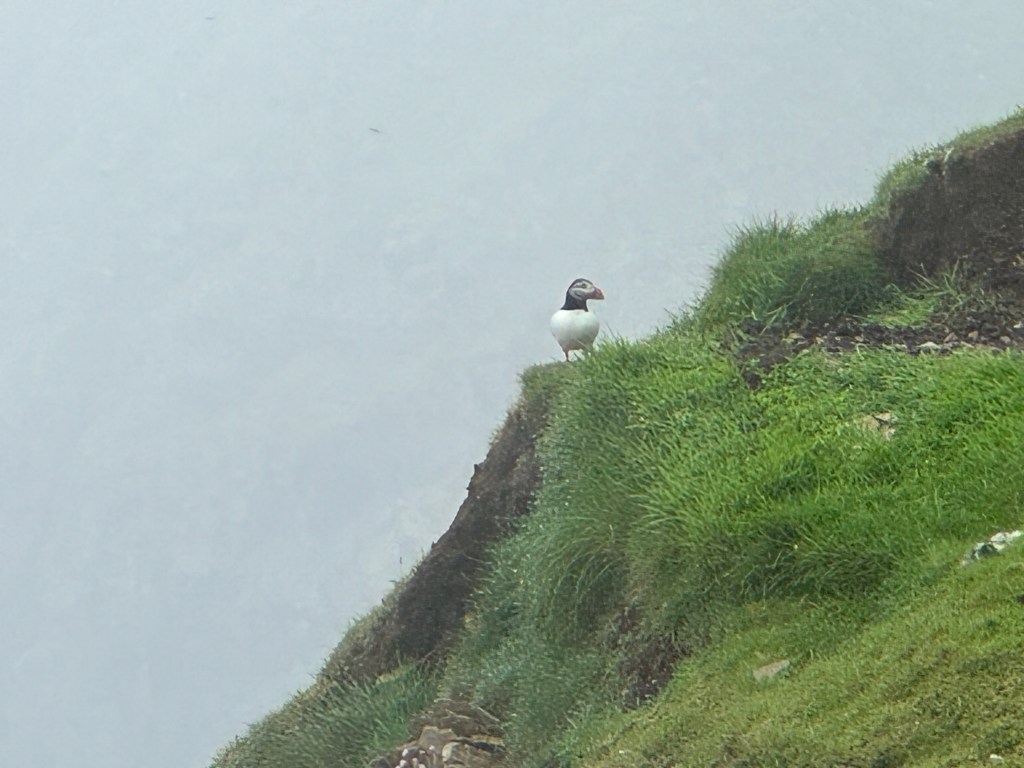
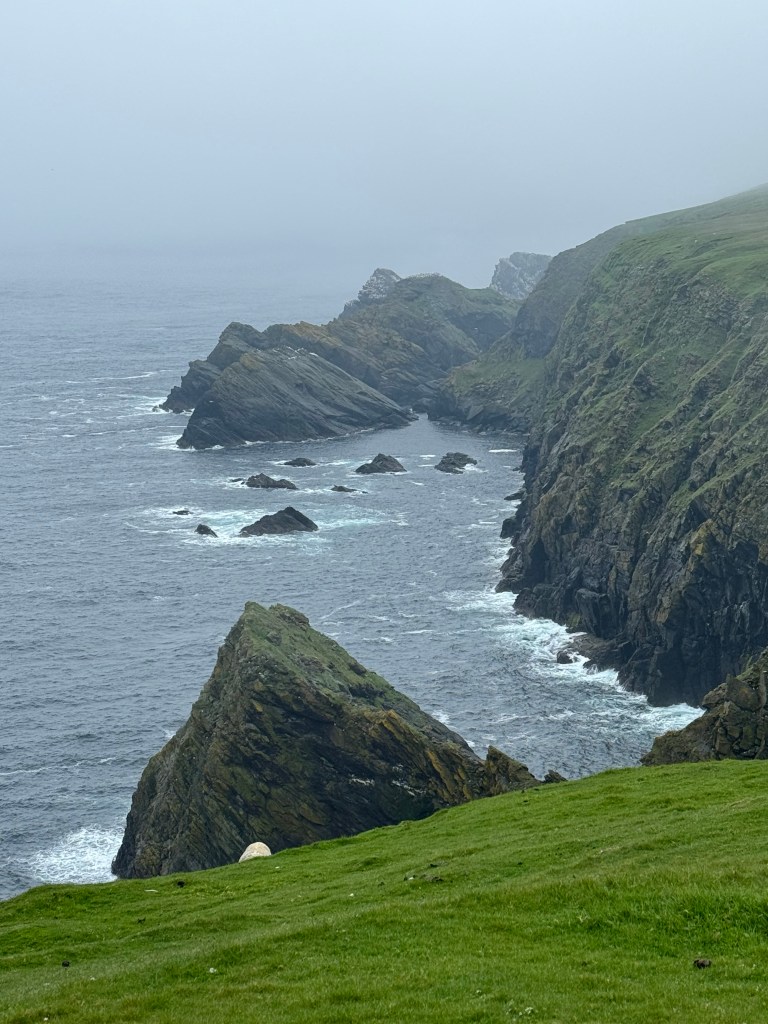
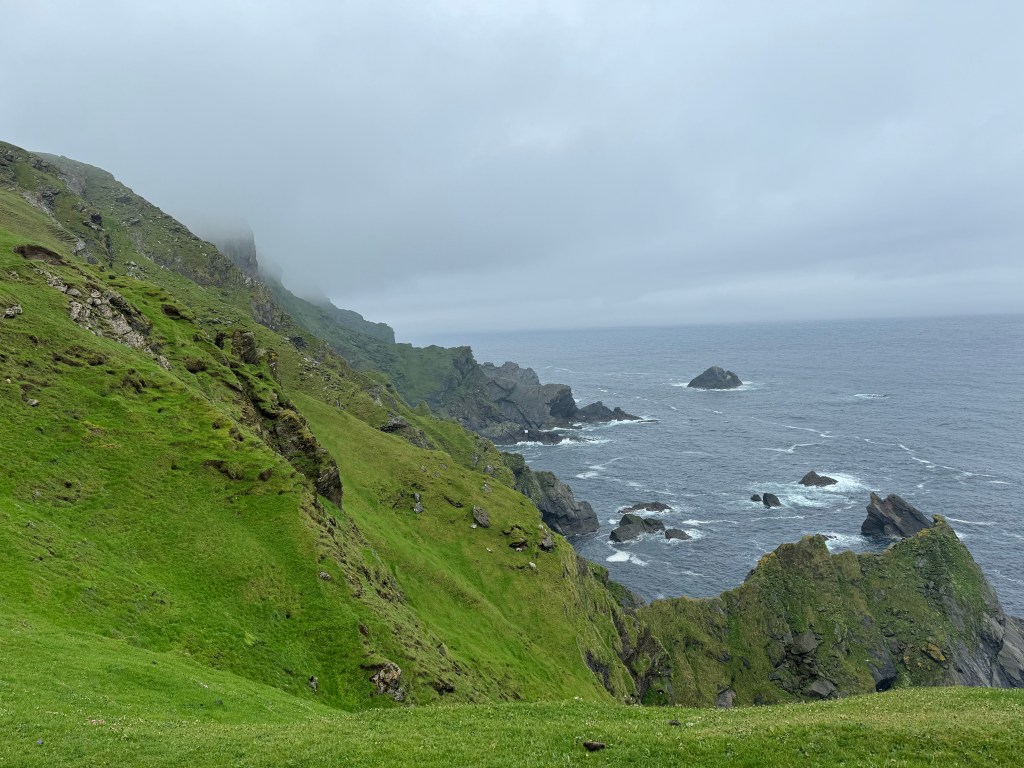
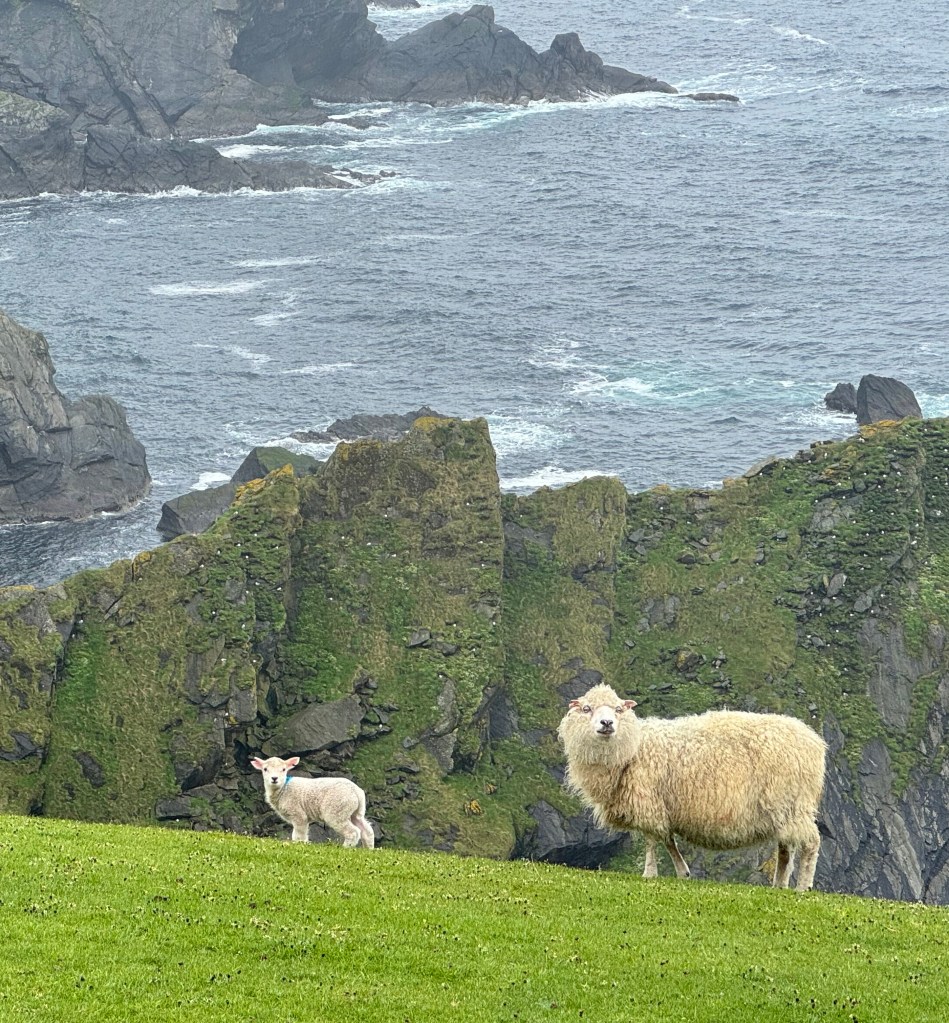
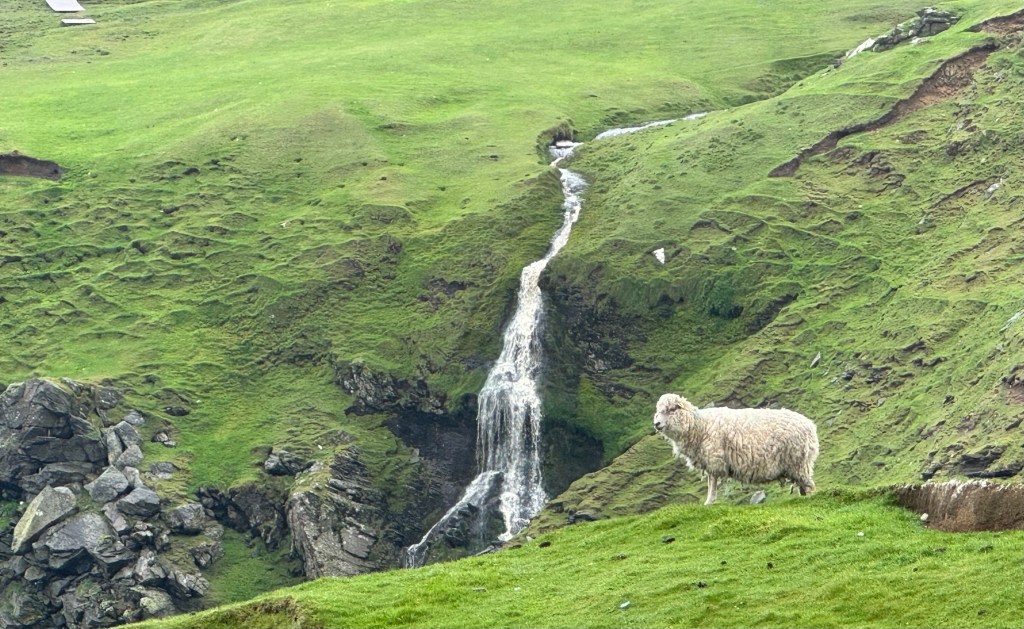


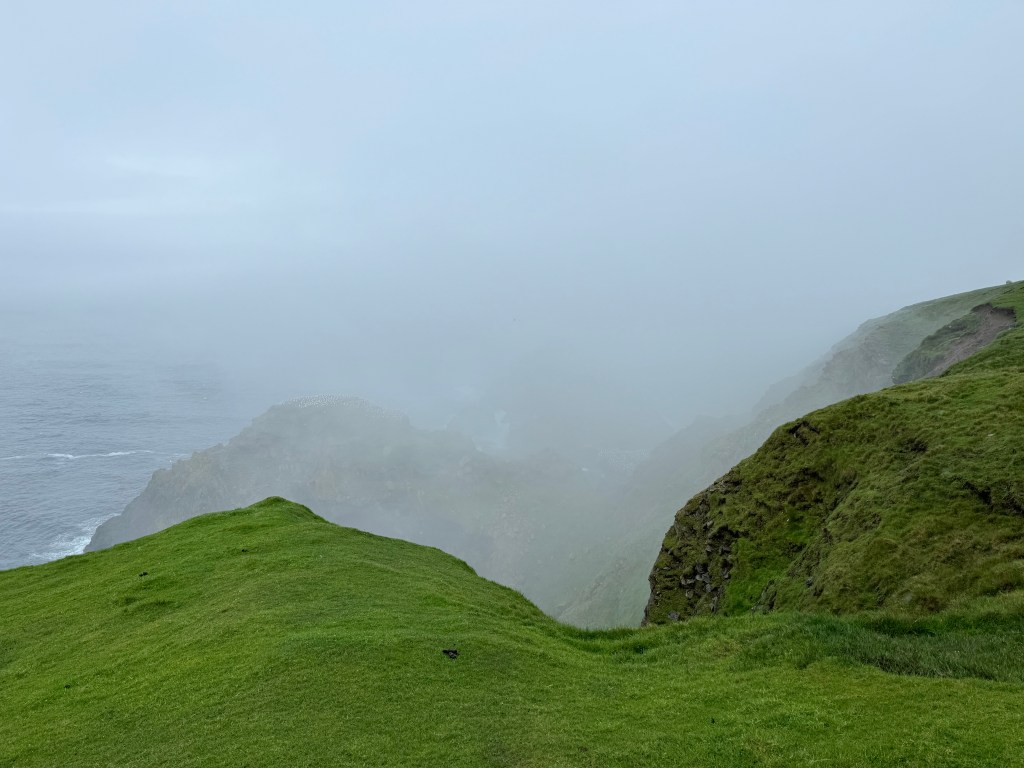

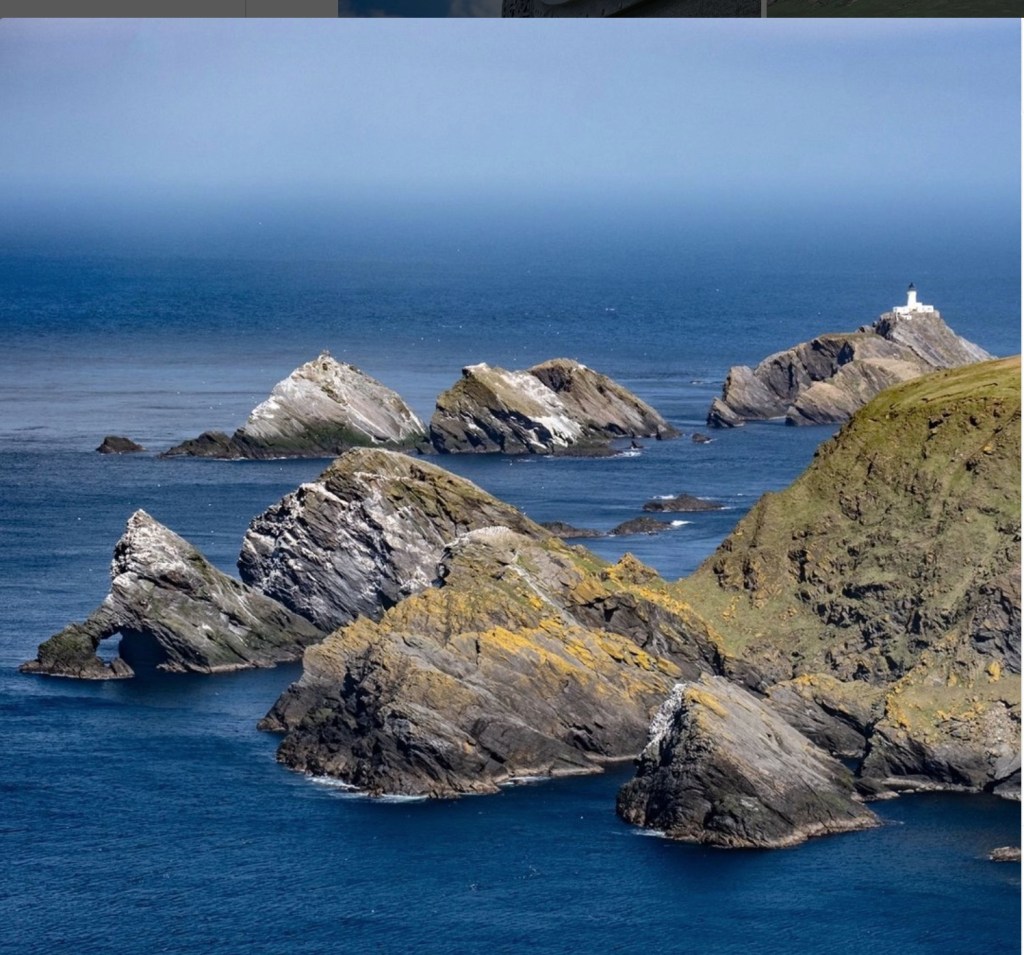
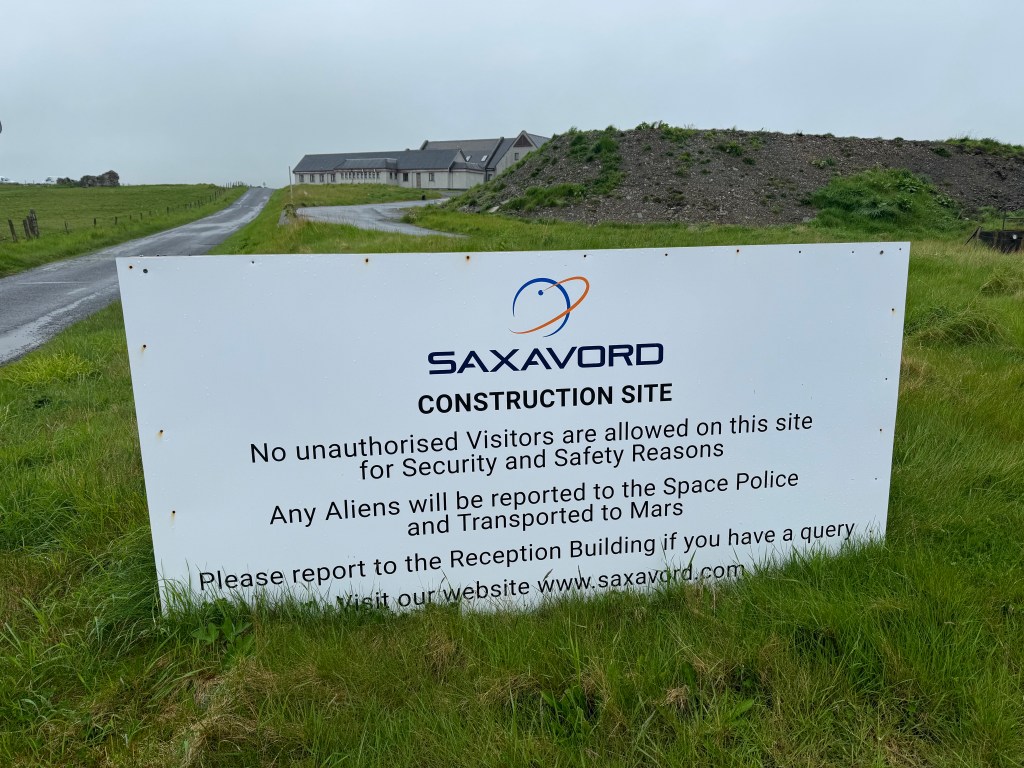
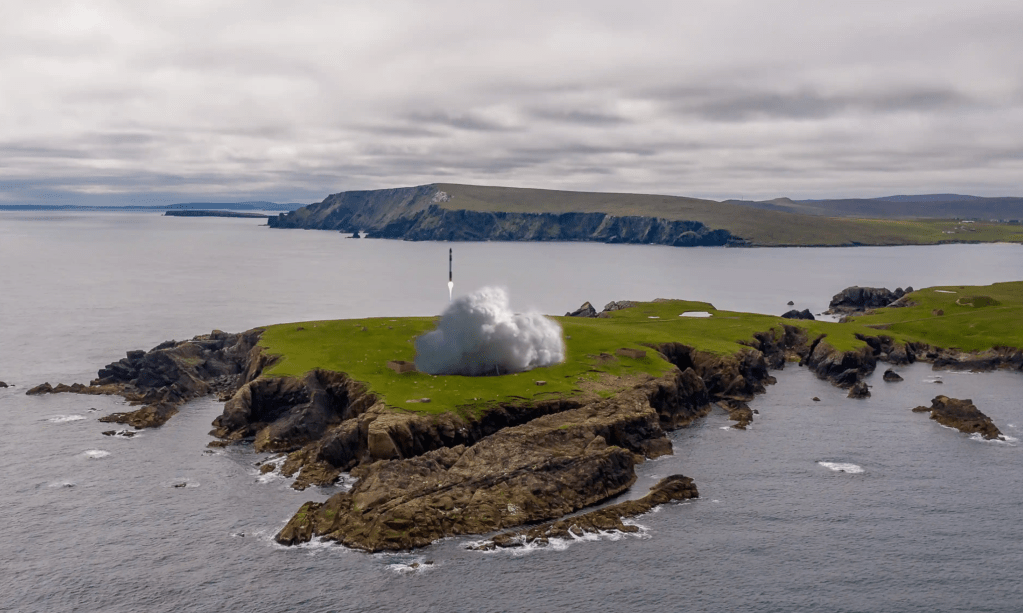
After the hike we intended to visit a teahouse, but overshot it and accidentally happened upon the Saxavord Spaceport, which was awesome. It is a former RAF base on a remote peninsula of Unst which has become the UK’s first licensed spaceport for vertical rocket launches. It will allow up to 30 satellites and other payloads to be launched into commercially valuable polar, sun-synchronous orbits (not taking any questions on that), which are in high demand from satellite operators for communications and Earth observation.
And, best of all, because this is Scotland, even serious rocket launchers have a sense of humor.
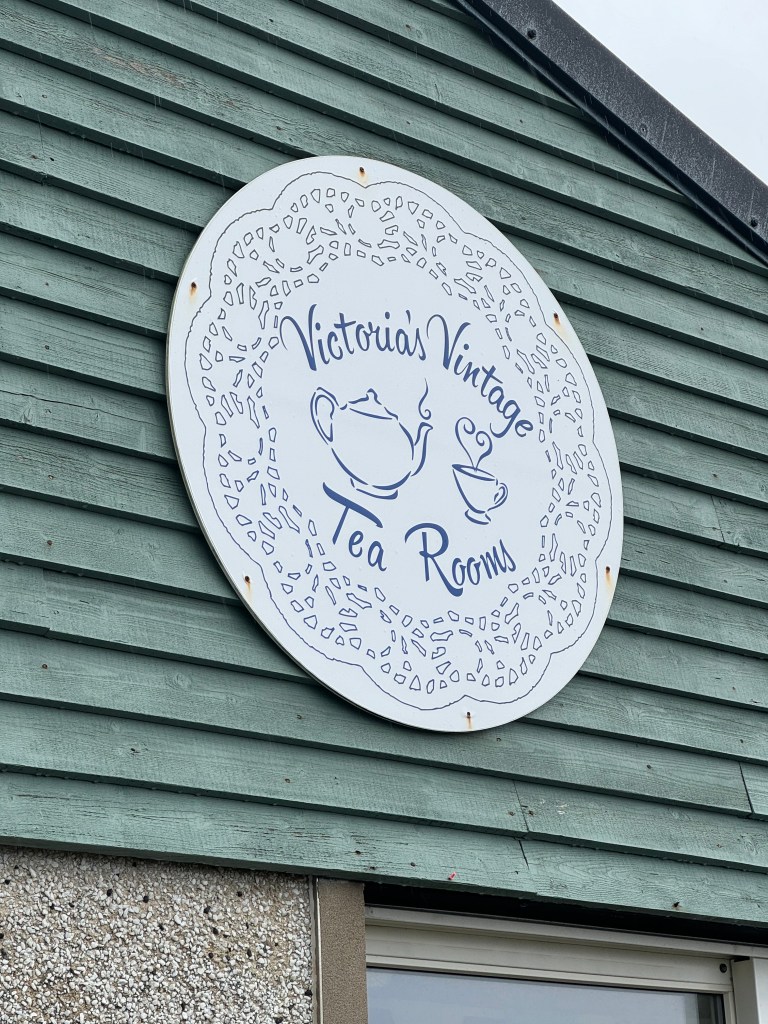
We found our way back to the route and headed to the teahouse. Almost every Unst business, it seems, advertises itself as being the “most northerly.” We even passed by the Most Northerly Kirk. Likewise, Victoria’s Vintage Tea Shop was advertised as the most northerly. And it served the most northerly, and delicious, scones.
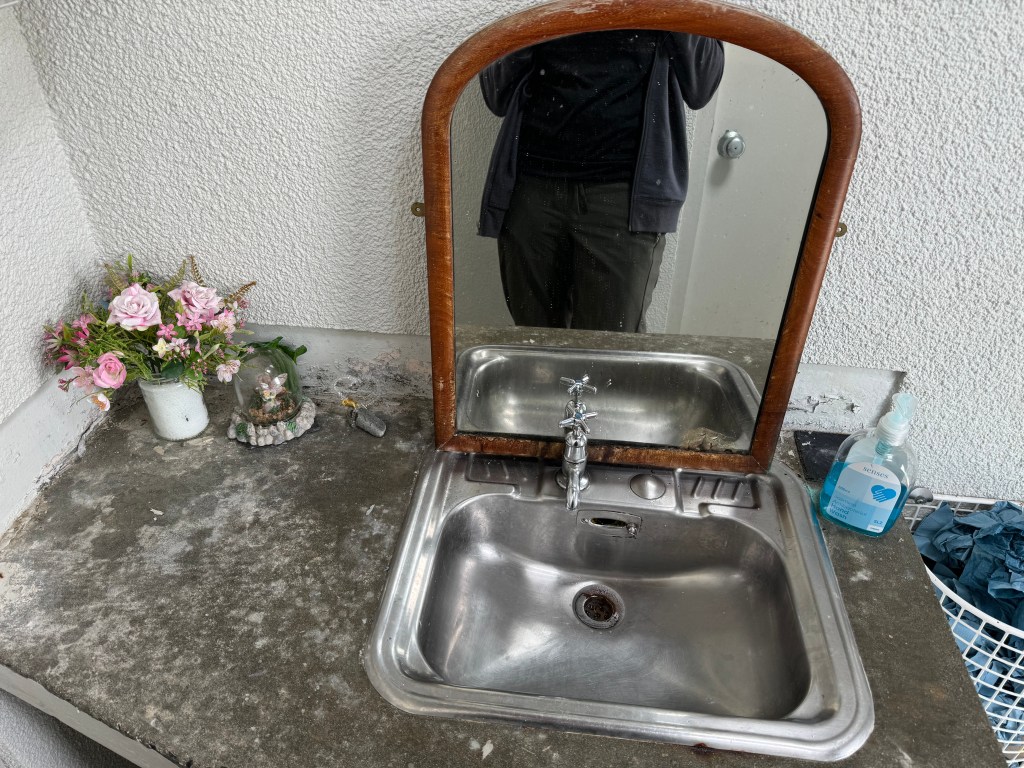
And so, my dudes, we at last find ourselves on our final day in Shetland. We spent our morning on a lovely walk near Eshaness. But first, a note about Shetland’s plentiful public toilets, or “bogs.” There are so many of them and they are all plumbed, well-cared for, and have plenty of parking. As remote as Shetland is, one never has to worry about drinking too much coffee in the morning. Some are quite creatively decorated with special bog poetry framed on the walls.

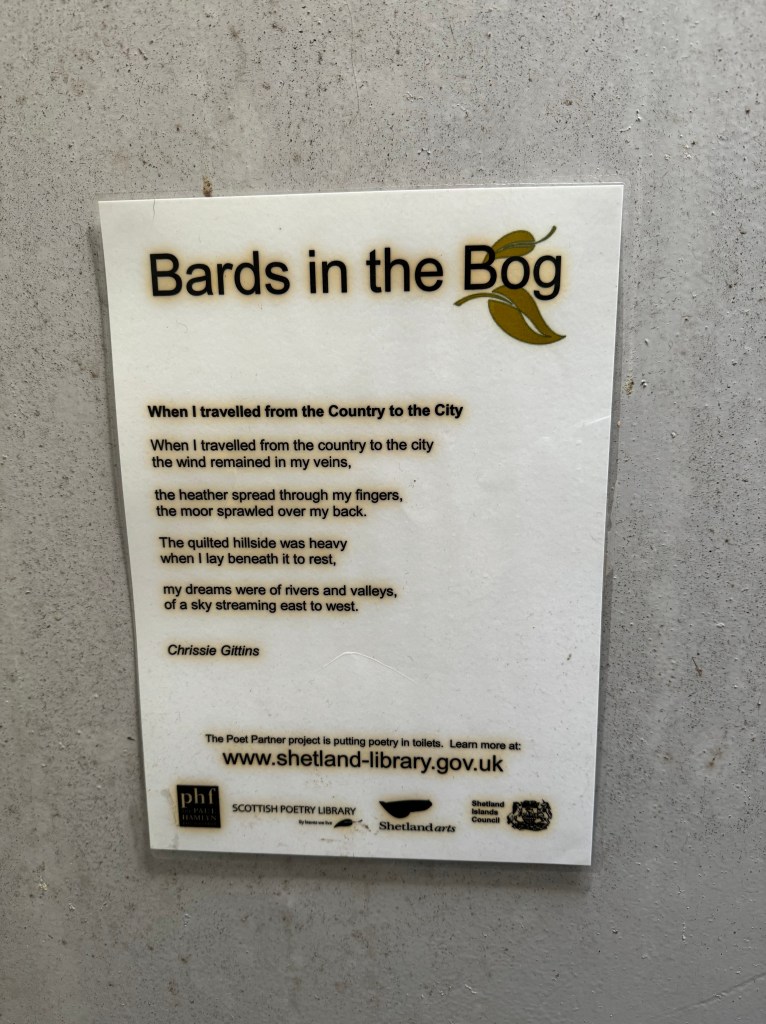
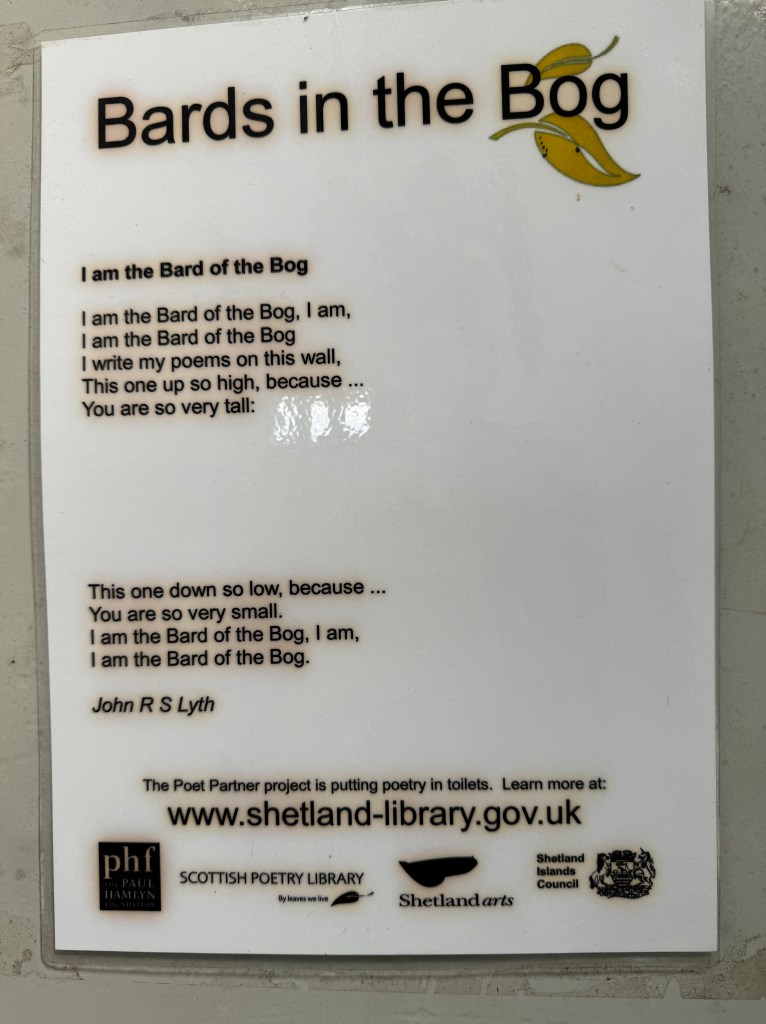
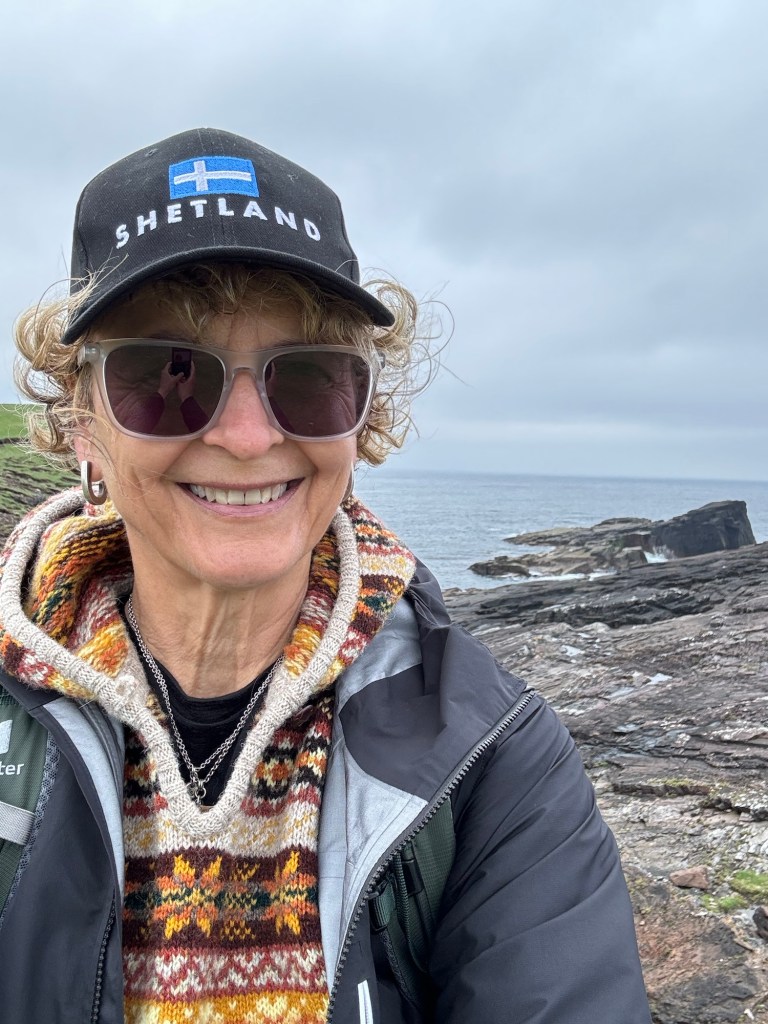
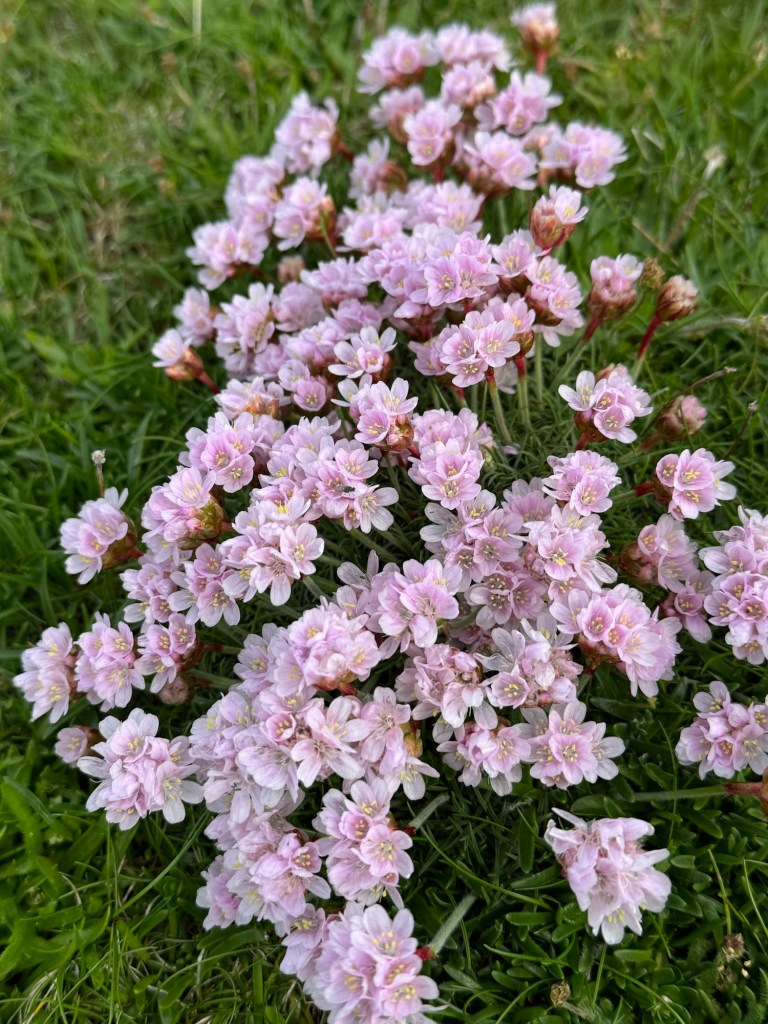
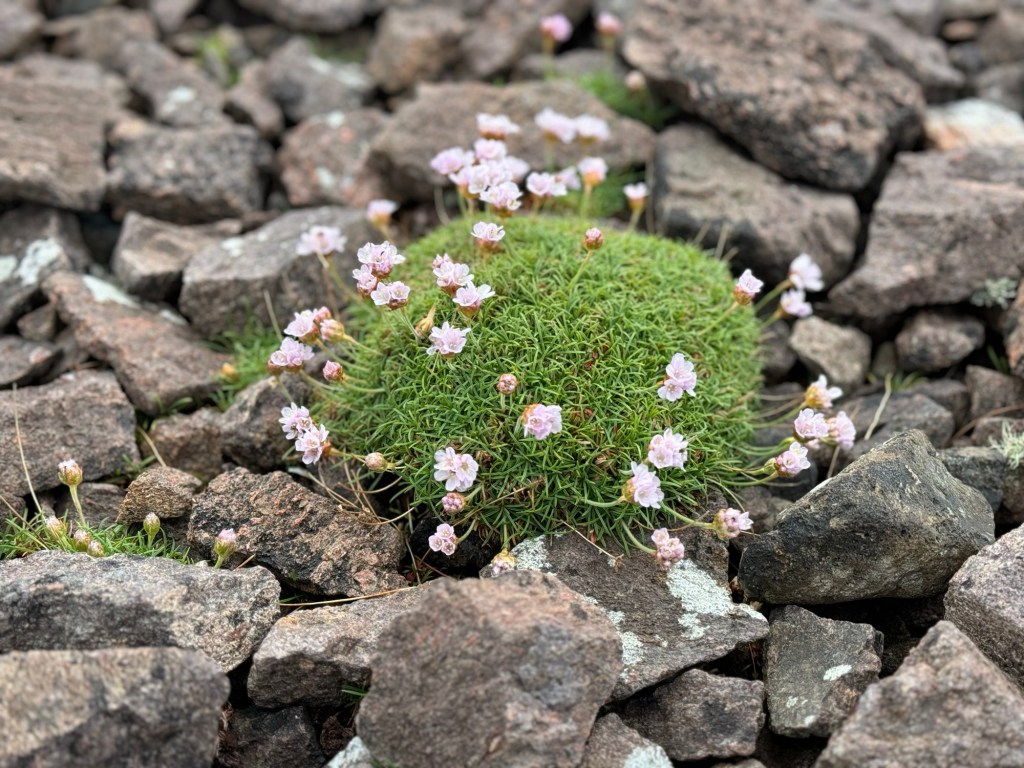
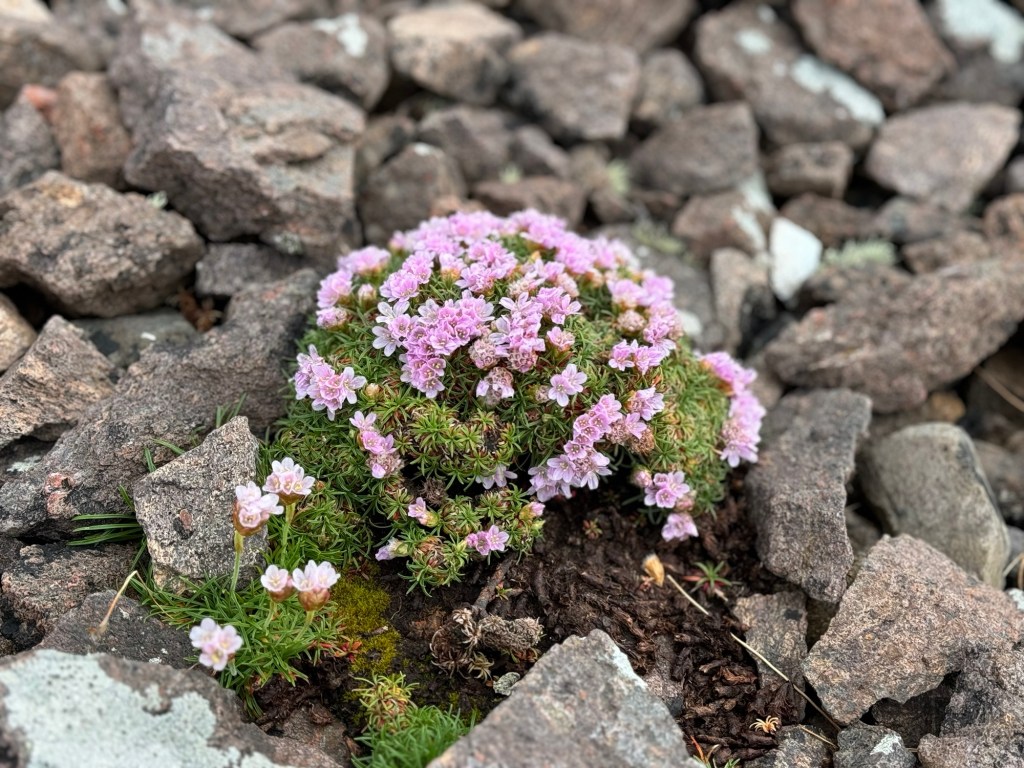
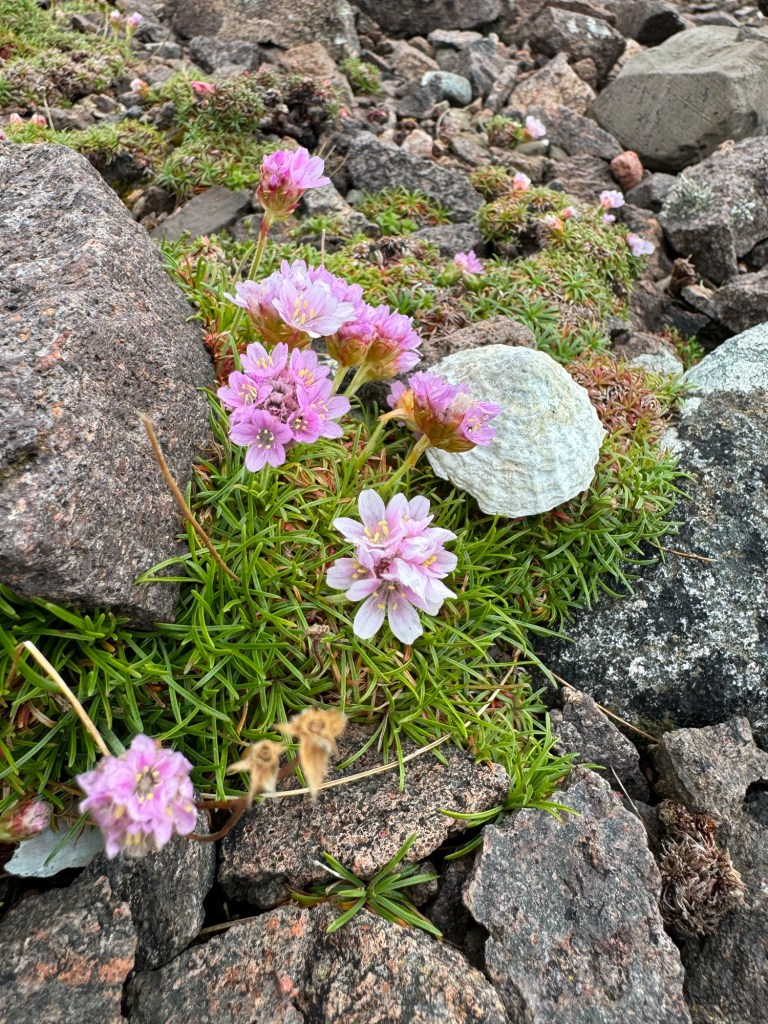
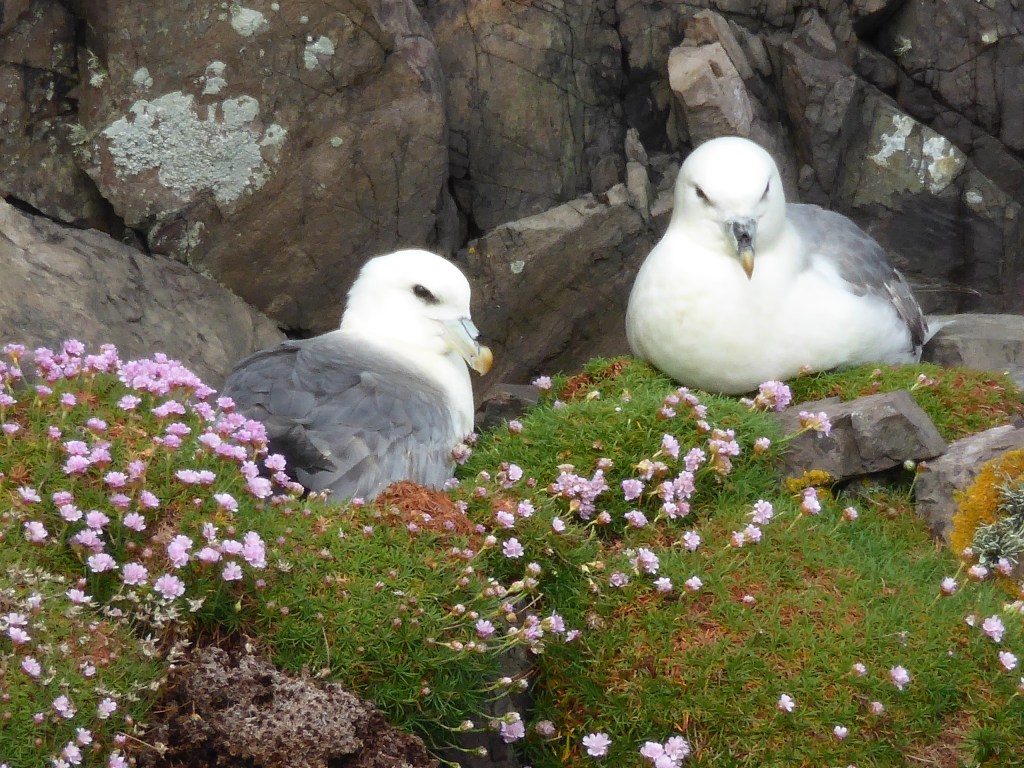
Our walk started at Eshaness Lighthouse, the spot I had visited earlier with Drew. We meandered along the volcanic clifftops, navigating lots of stiles (I love stiles) and reveling in the plentiful wildflowers.
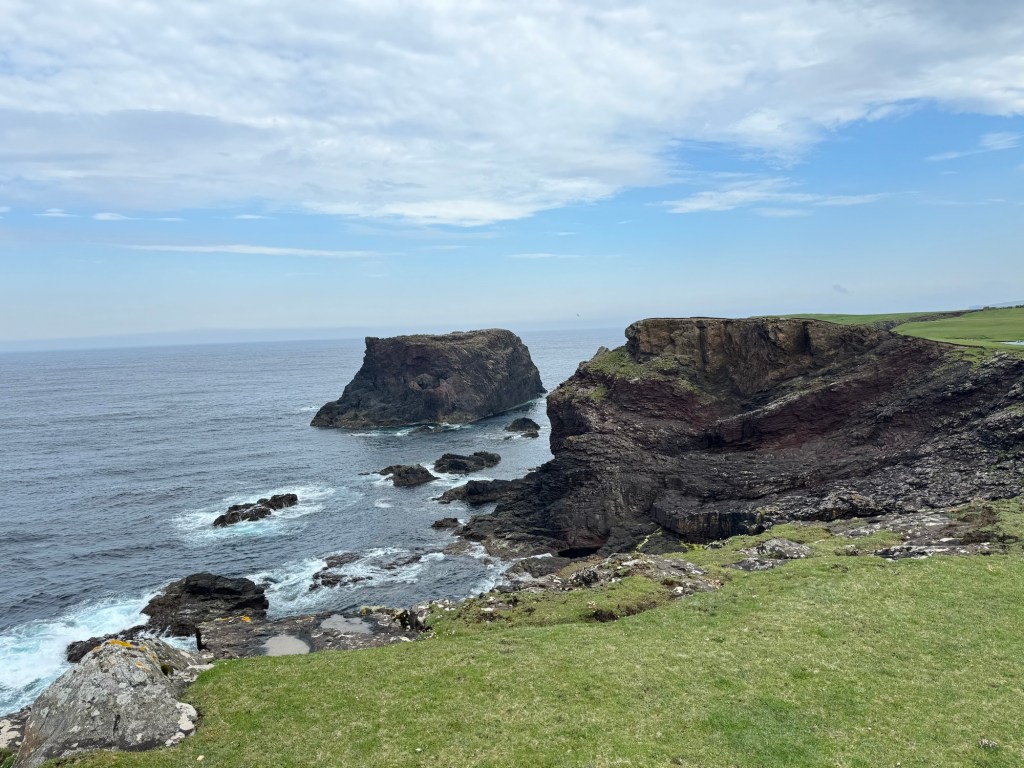
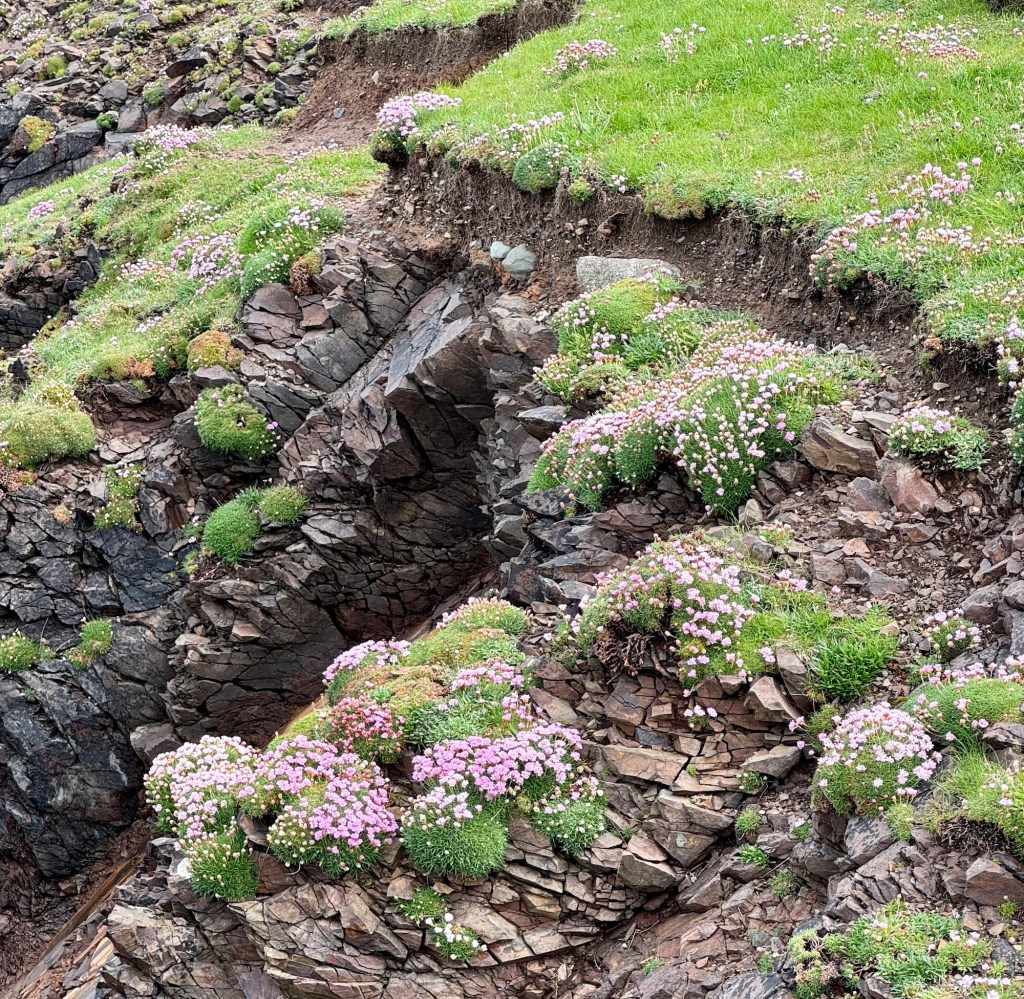
We came across a storm beach composed largely of giant boulders which had been tossed onshore by violent wind and waves over the years. Hard to imagine on this lovely calm day.
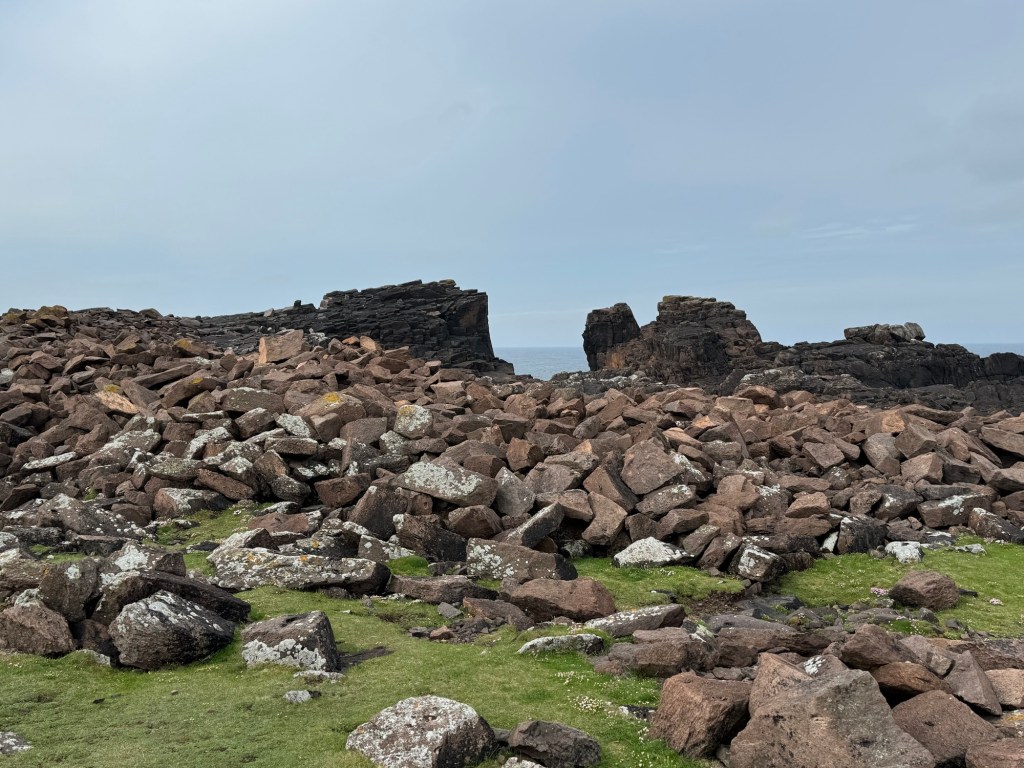
The trail then let us to the Holes of Scraada, a collapsed sea cave, apparently Britain’s largest.
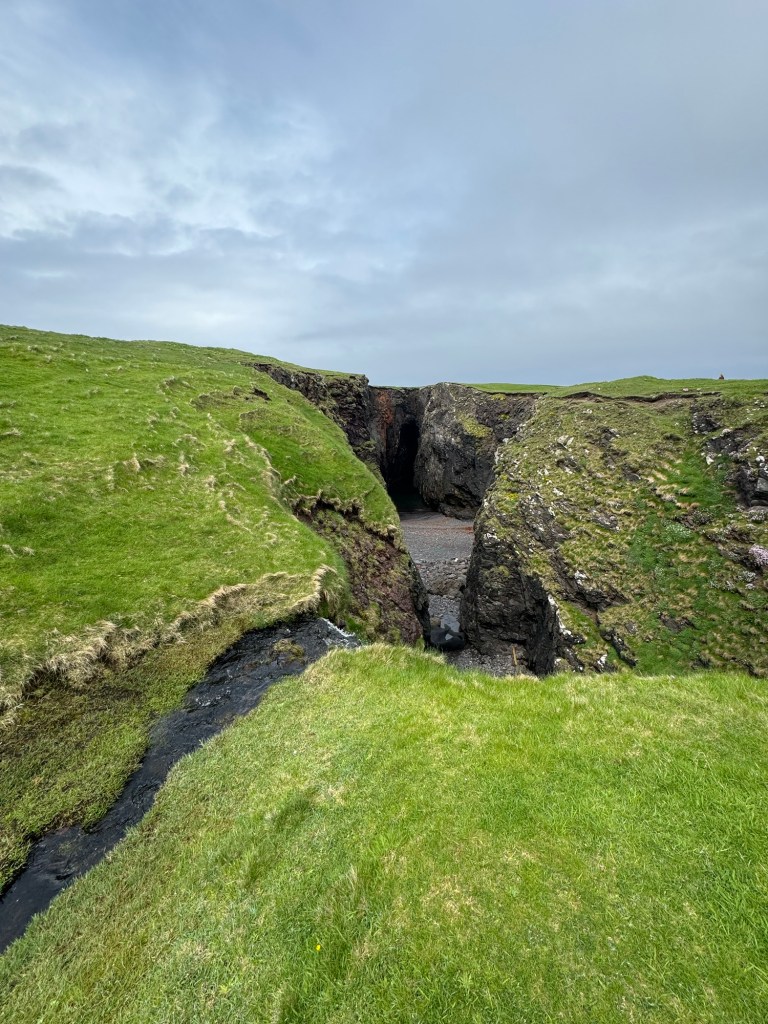
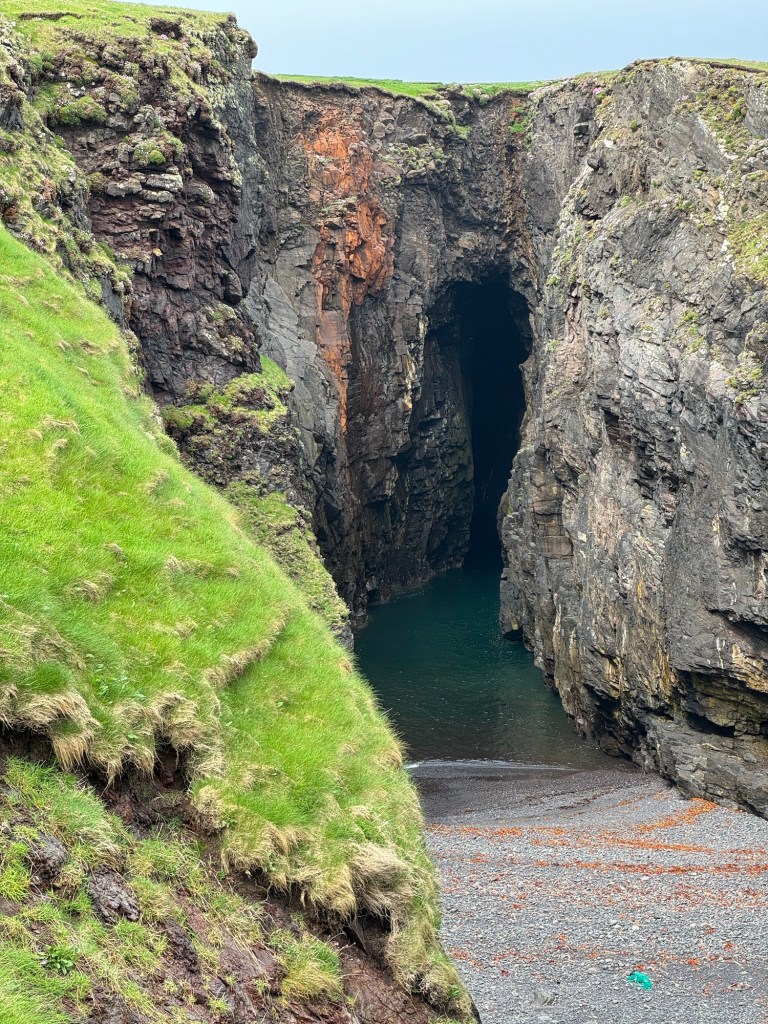
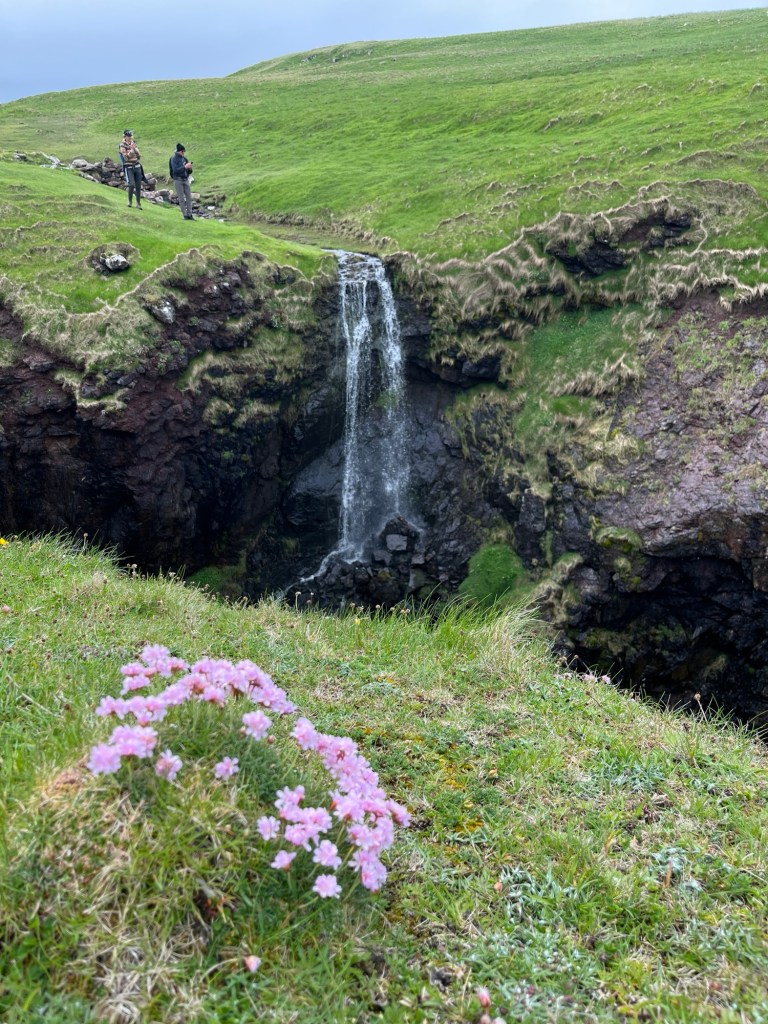
We next walked by the remains of an old water mill and then happened upon the Eshaness Broch, where we had our lunch.
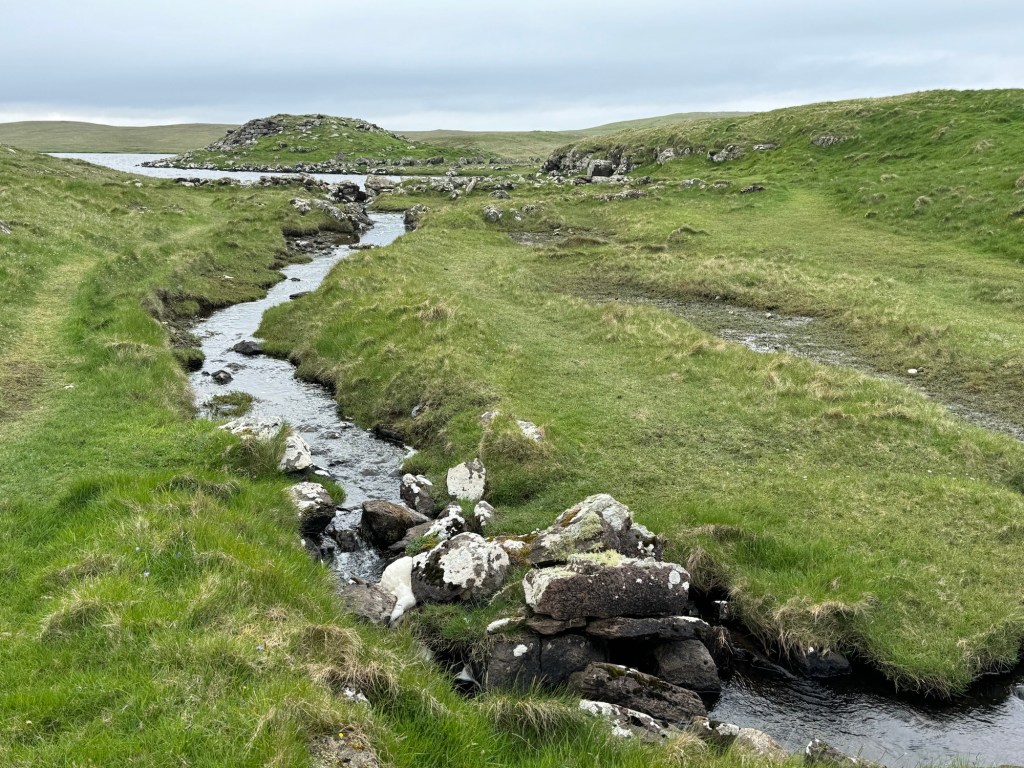
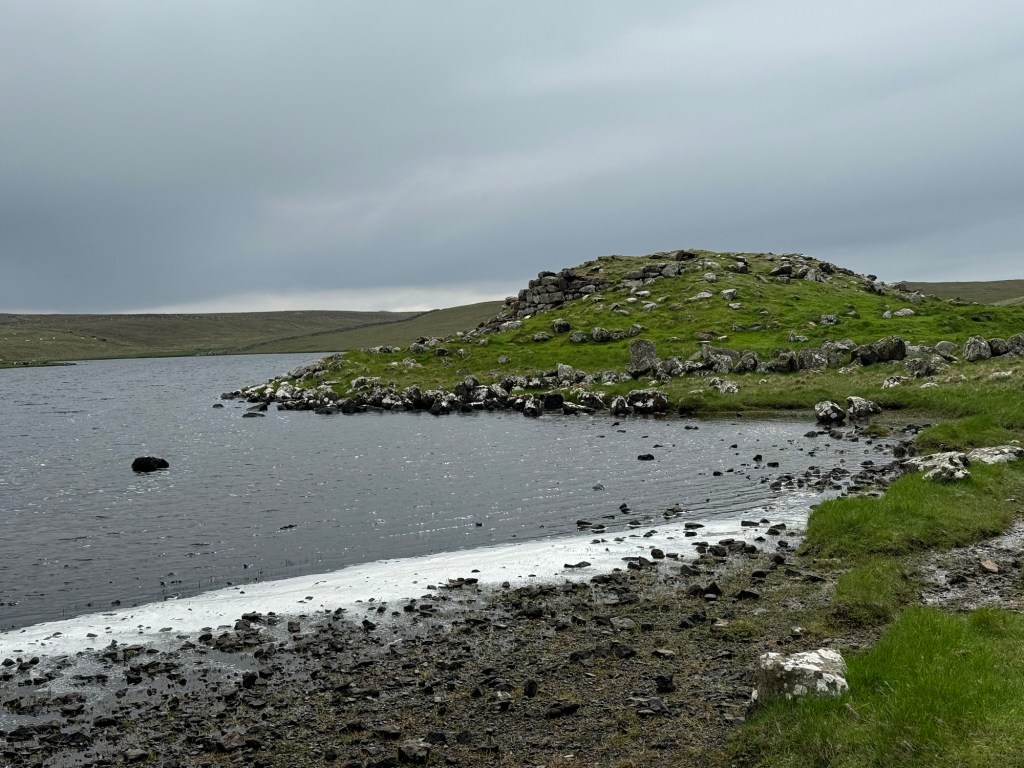
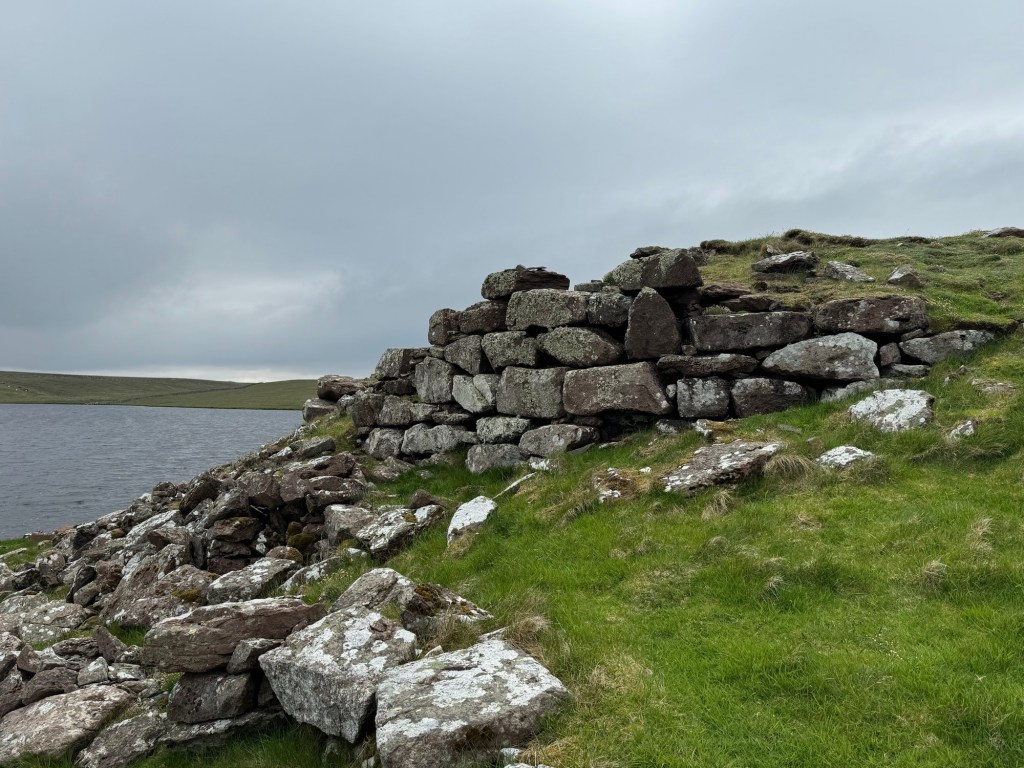
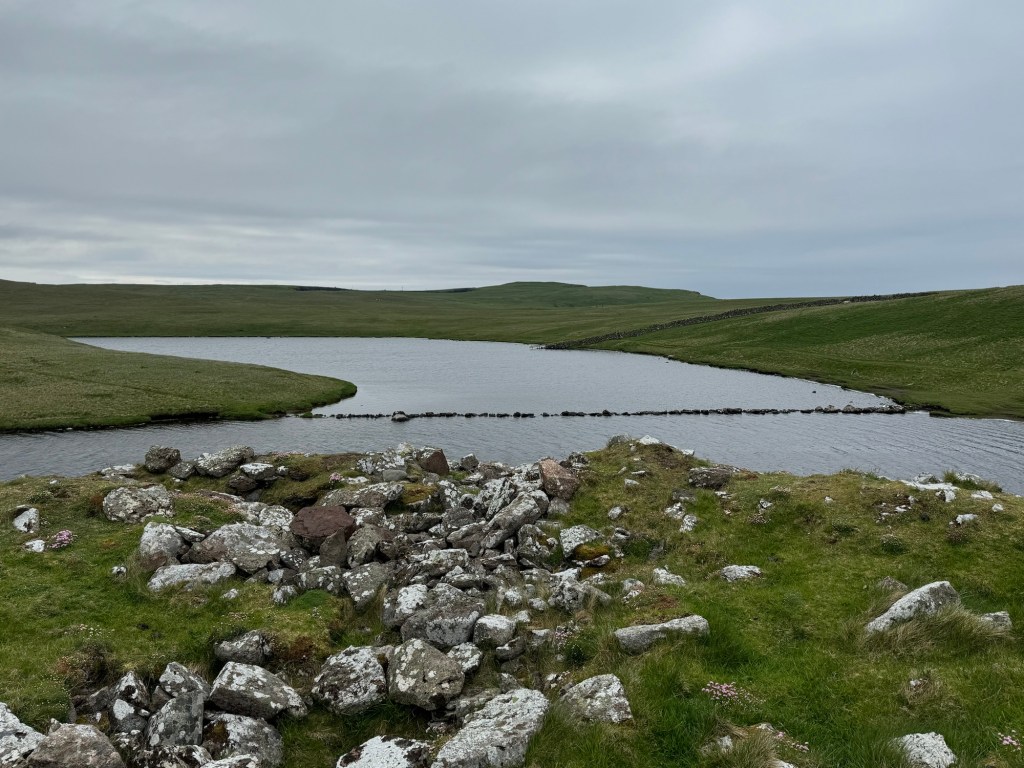
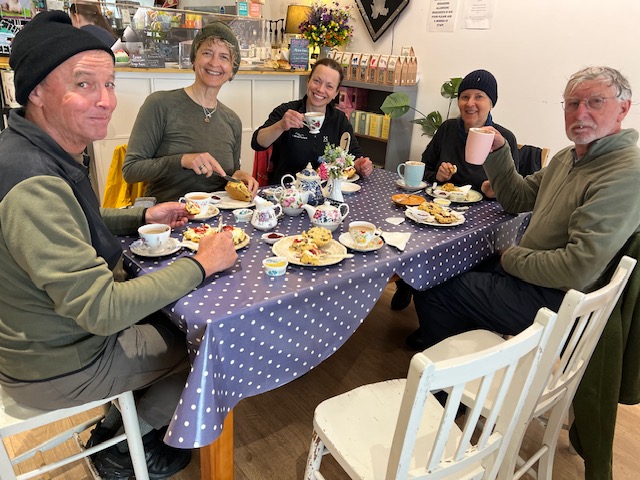
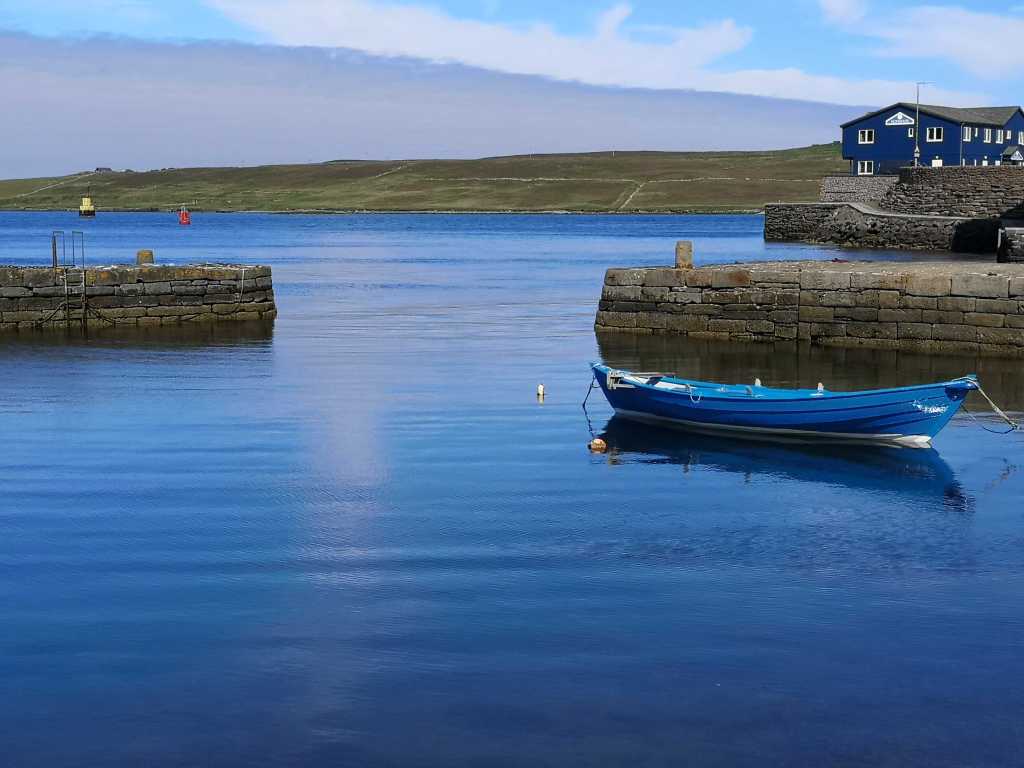
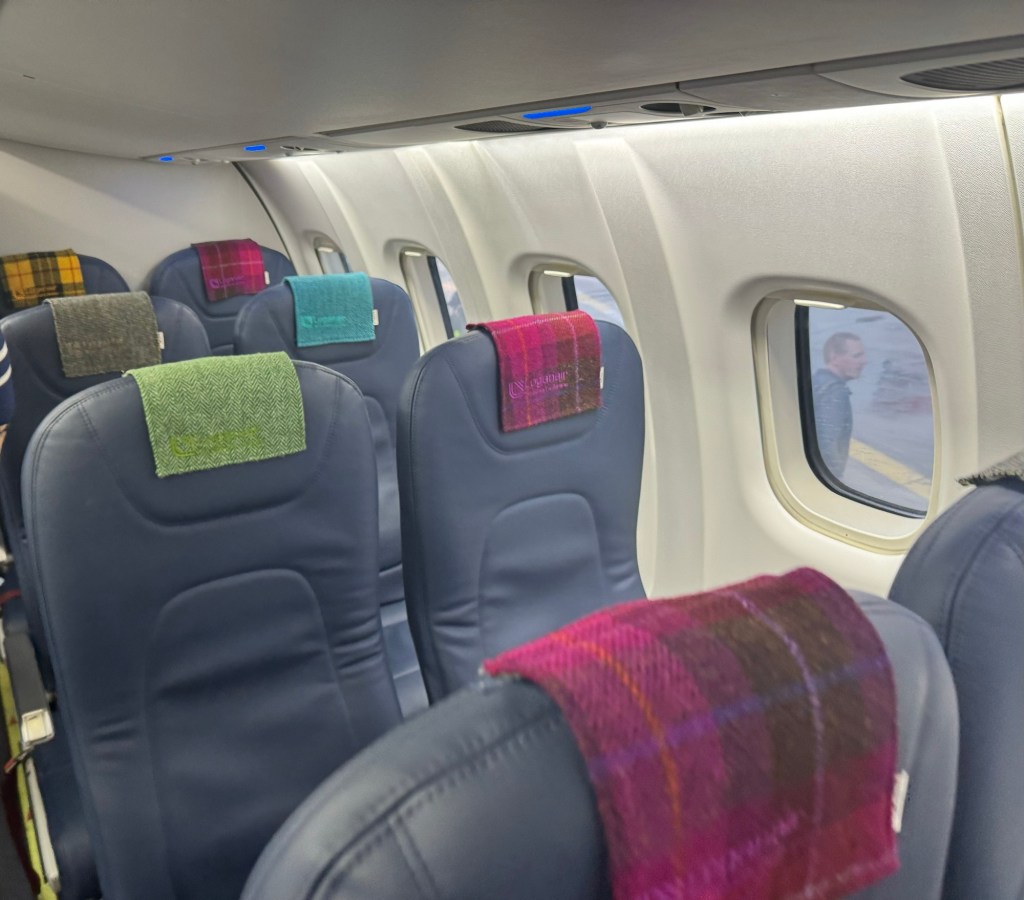
After our last lovely walk, we boarded the van and drove back to Lerwick, where Kirsty dropped folks off at the Shetland Museum and I had to bid a very fond farewell to my intrepid compatriots before heading to Sumburgh Airport for my flight to Edinburgh.

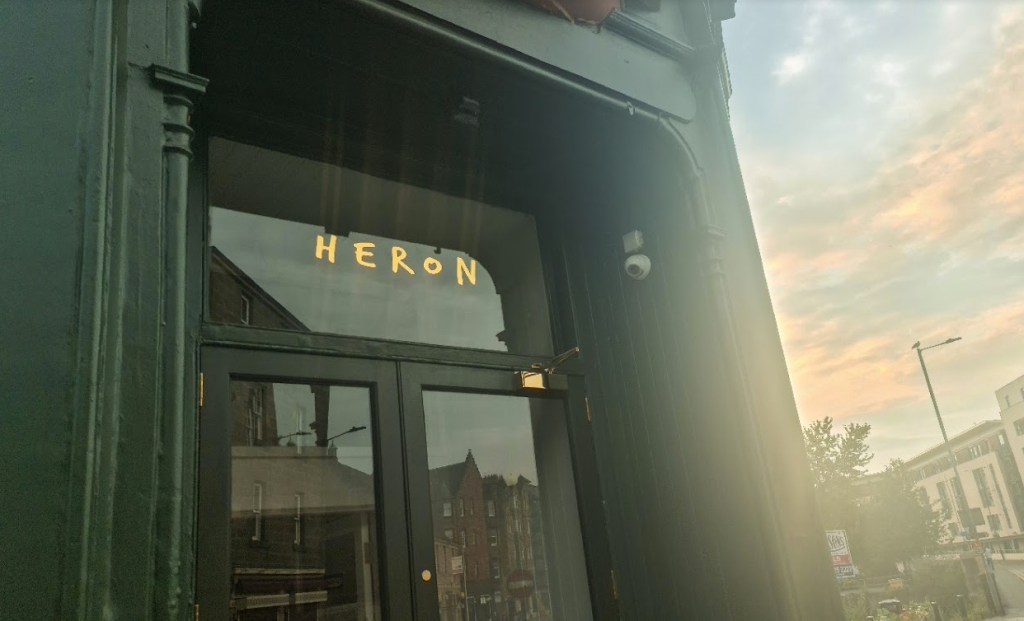
On my last two nights in Scotland I had decided to stay in Leith, a few tram stops and couple of miles north of Edinburgh. It used to be the gritty, druggy dock area of town (see “Trainspotting”) but it has undergone a massive redevelopment and is now known for its vibrant arts and culture scene, cool neighborhoods and a plethora of fabulous restaurants, coffee houses and bars. Edinburgh has five Michelin-starred restaurants and three of them are in Leith, and in fact Leith now has the highest concentration of said restaurants per square meter outside of London. (For the record I have had fabulous meals in two out of the three, Tom Kitchin’s last year, Heron this year and Martin Wishart still to come.)
Leith is the home of the Royal Yacht Brittanica, and in honor of her being nearby I booked a room at Ocean Mist Leith, a boat with a singular history. It was built in 1919 as a minesweeper but a year later was sold to Kenelm Guinness (yes that family), a race car driver, inventor and playboy, the kinds of “occupations” men of his circumstances had the freedom to choose back in the day. I mean who wouldn’t choose to be an inventor if having an income didn’t matter? Kenelm converted the boat to a “gentleman’s pleasure yacht,” which – er, whatever.
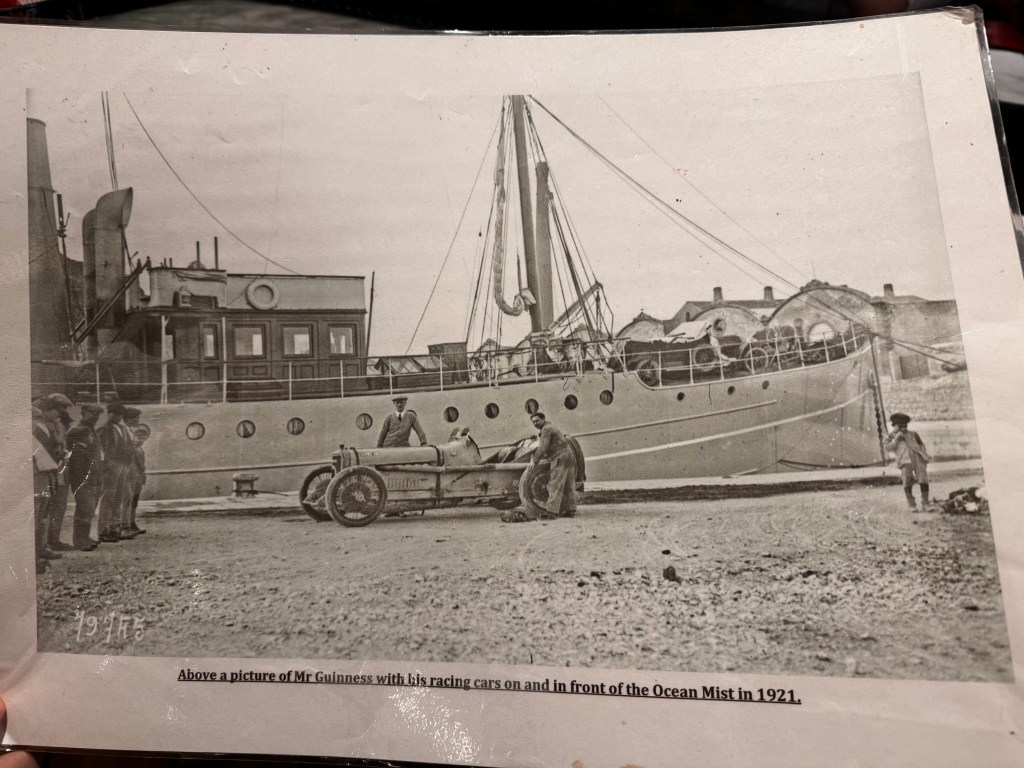
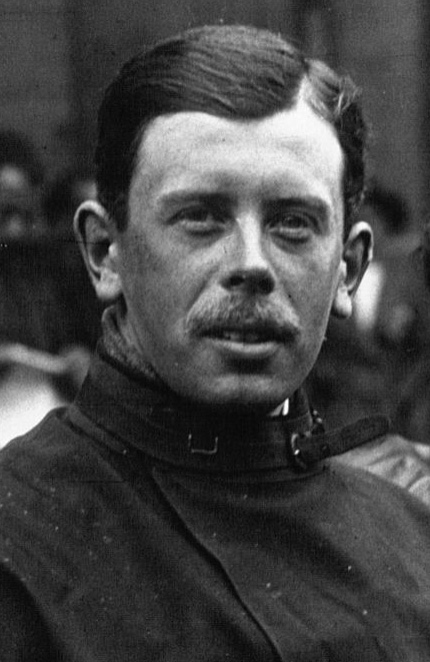
The boat next changed ownership through a series of Dukes, Sirs and MPs until it was requisitioned by the admiralty during World War II, finally fulfilling its original purpose as a torpedo recovery vessel. Then it changed hands through several businessmen, including one who ran whisky from Scotland to California during Prohibition. It docked in Leith in 1983 and became various nightclubs and restaurants before falling into disrepair. The current owners took it down to its bones for a complete, and gorgeous, renovation.

The hotel is extremely, extremely cool and somehow I was given the room at the bow of the boat that served as Captain Kenelm’s quarters.
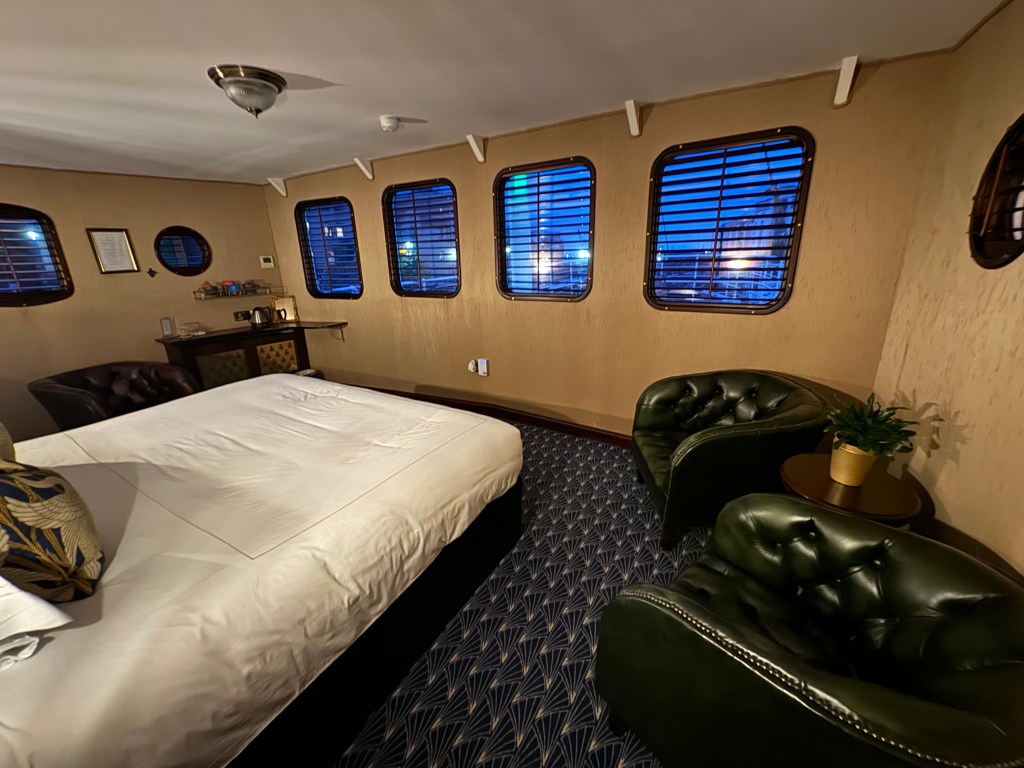
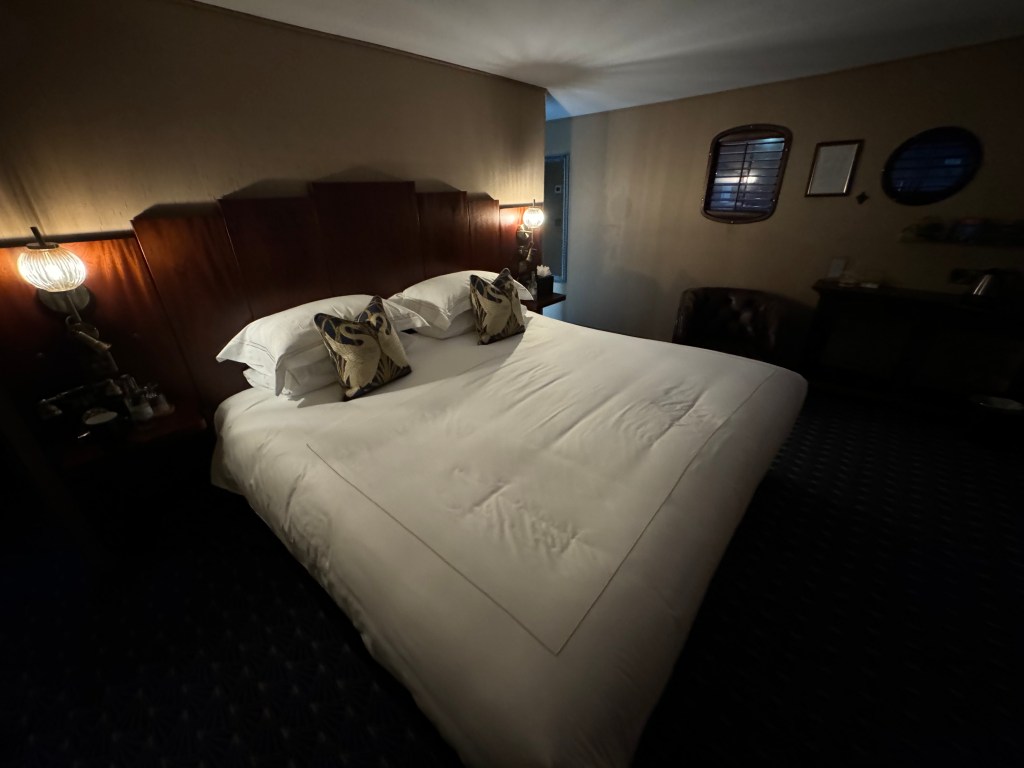
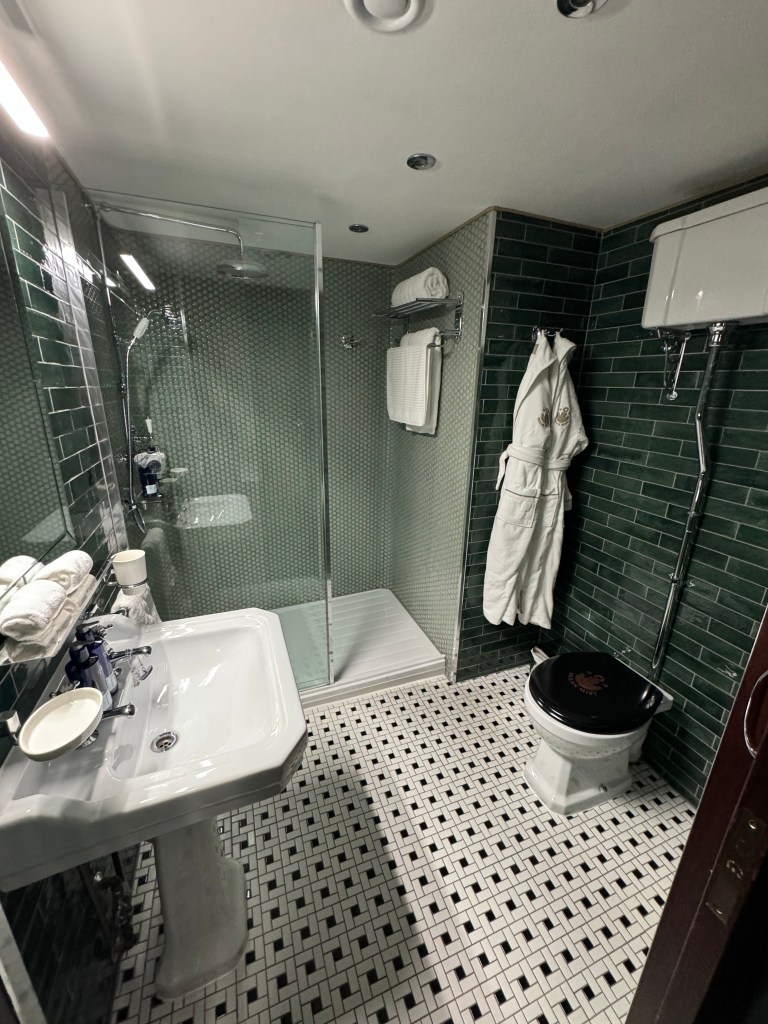
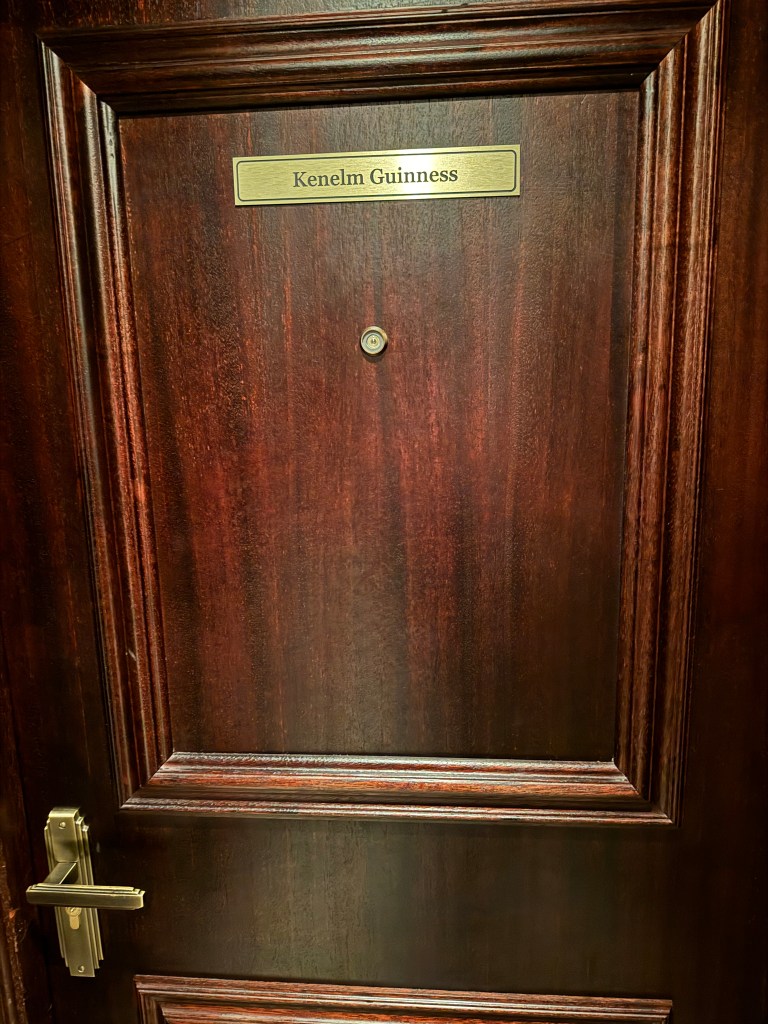
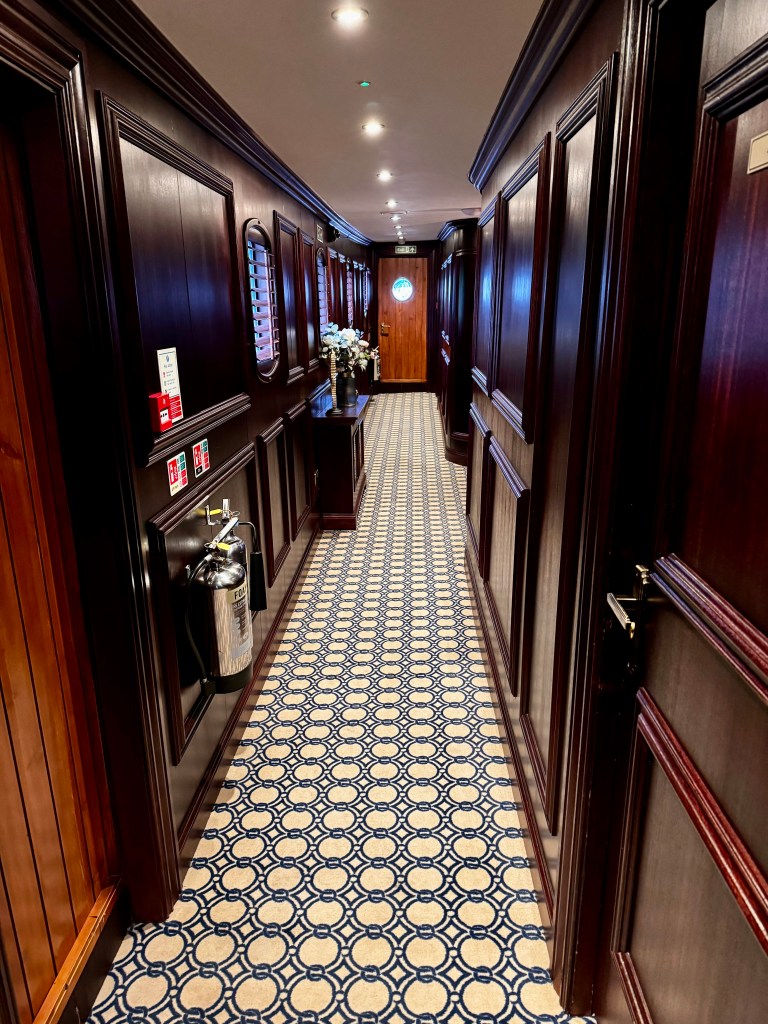
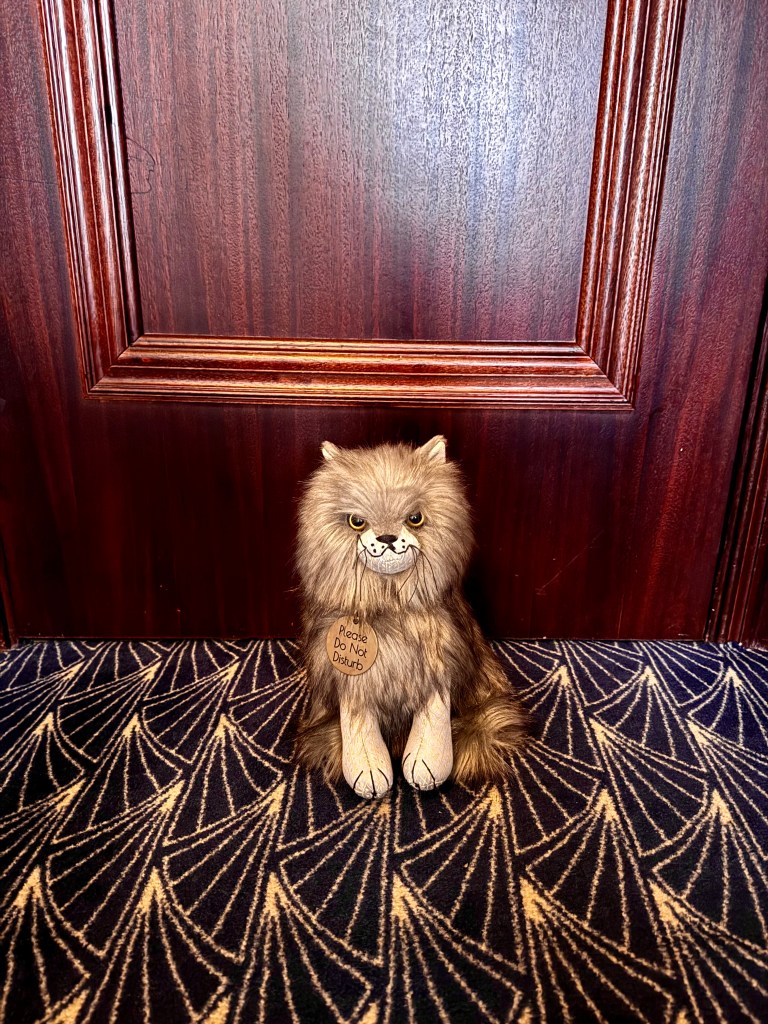
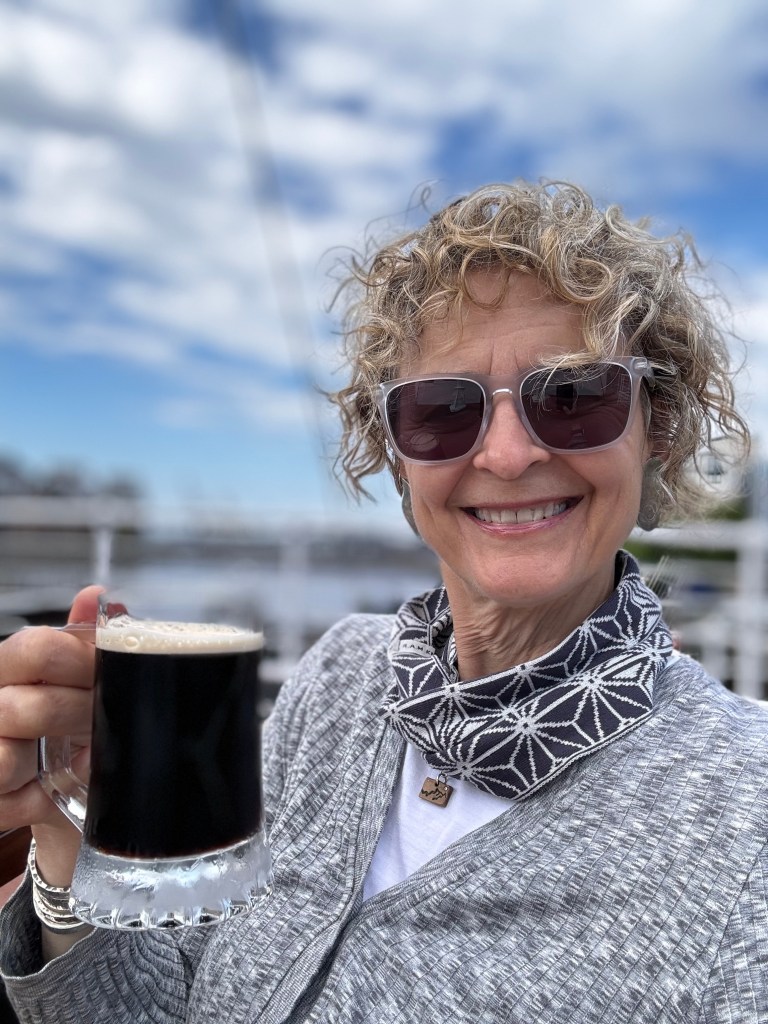
And my dudes, I had my own deck and I must say I was quite, quite fancy during my stay. Here I am enjoying a Guinness on my deck just because.

The following morning before heading to the airport I walked around town, grabbed a coffee and snapped a few last photos.
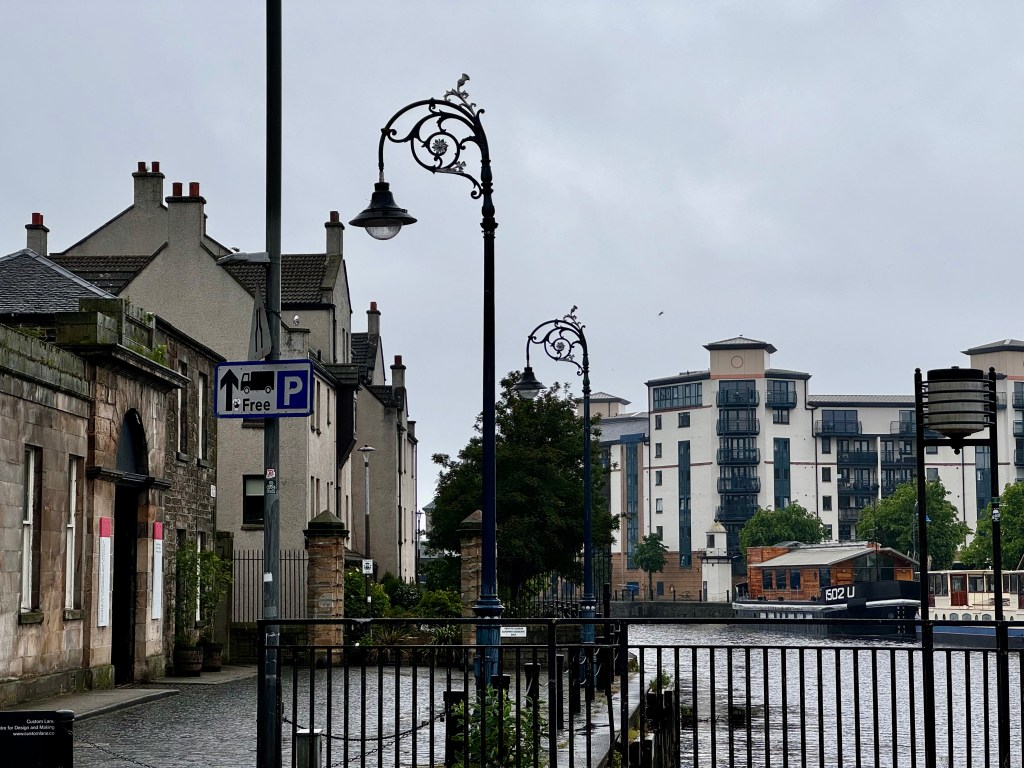

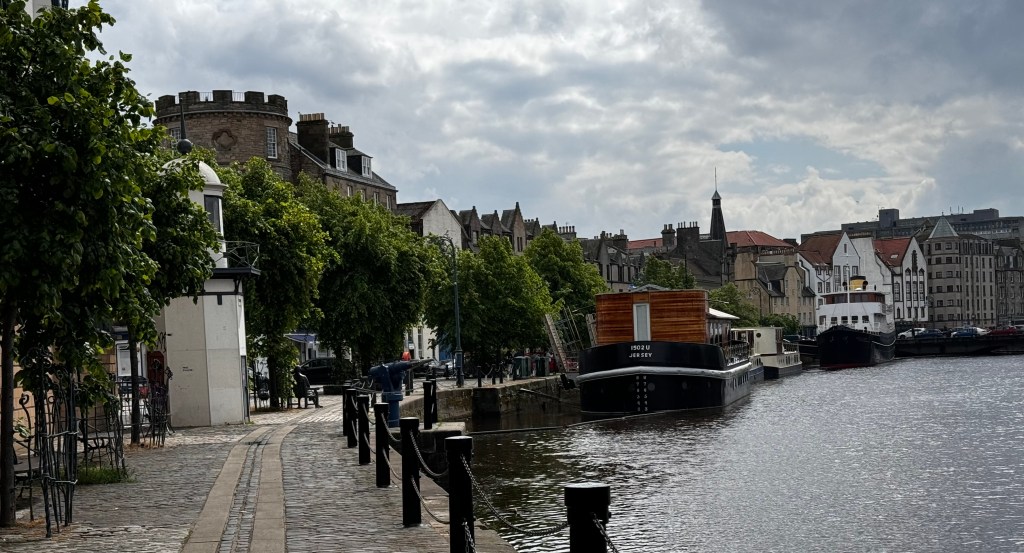
And at last we find ourselves at the end of this trip. So much gratitude to all of you for coming along with me, and for all your kind comments.
I’ll leave you with this sign inside a Leith coffee house called Toast, which is very – Scotland.

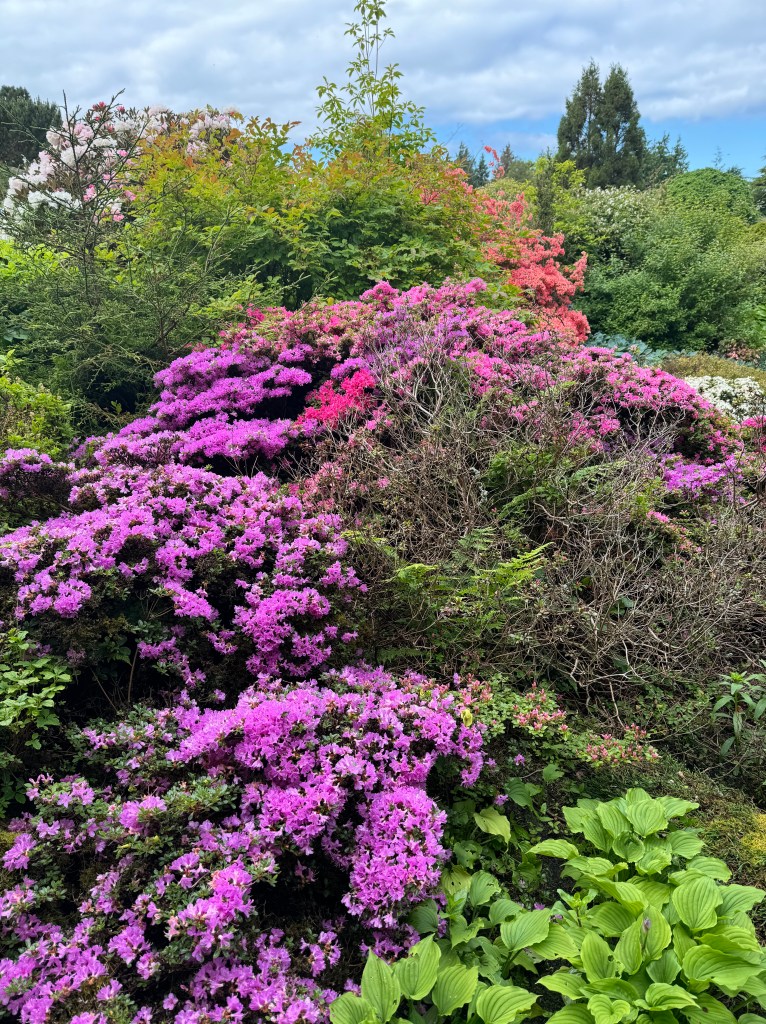
OK and maybe also some blooming azaleas from the Royal Botanical Gardens in Edinburgh.
At the risk of this blog ending like Lord of the Rings, just one more, a farewell poppy from the gardens of Busta House.

Until next time, safe travels, happy landings and all my good wishes.
 Wee Dram of Scotland
<
div dir=”ltr”>I thoroughly enjoy every one of your extremely well written posts! Beautiful pics!
<
div dir=”ltr”>
<
blockquote type=”cite”>
LikeLike